
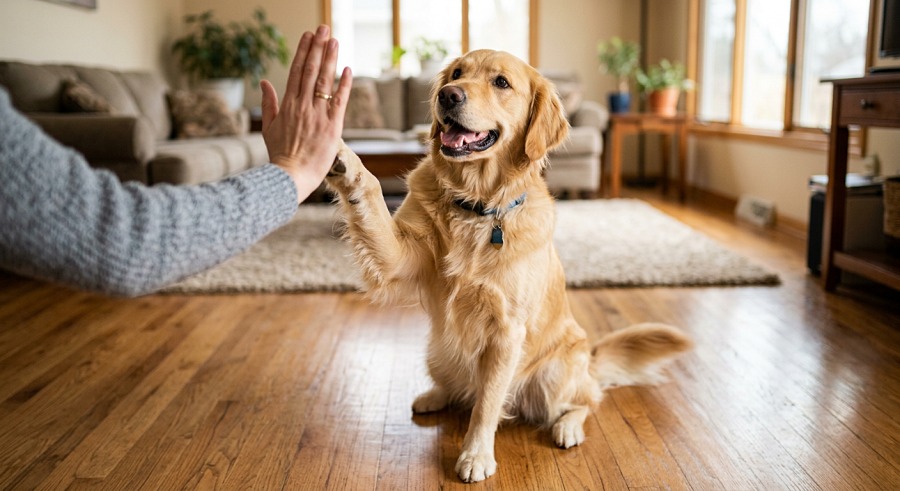
There’s a reason coming home to a wagging tail feels like therapy. Dogs have this uncanny knack for flipping even your worst day upside down, greeting you with that full-body wiggle as though you’ve been away for years rather than hours. Few relationships in life are quite this forgiving.
And because dogs live to please the humans they adore, trick training becomes a two-way gift. Your pup gets to earn your praise (which, let’s be honest, he craves more than the treats themselves), while you get a mentally sharper, better-behaved companion. Beyond the essentials like sit, stay, and heel, there’s a whole world of quirky skills worth exploring.
The twenty tricks below go well beyond the basics. Some are genuinely useful, others are pure entertainment, and a few will have guests convinced your dog is secretly plotting world domination. Ready? Let’s get into it.
Table of Contents
1. High Five
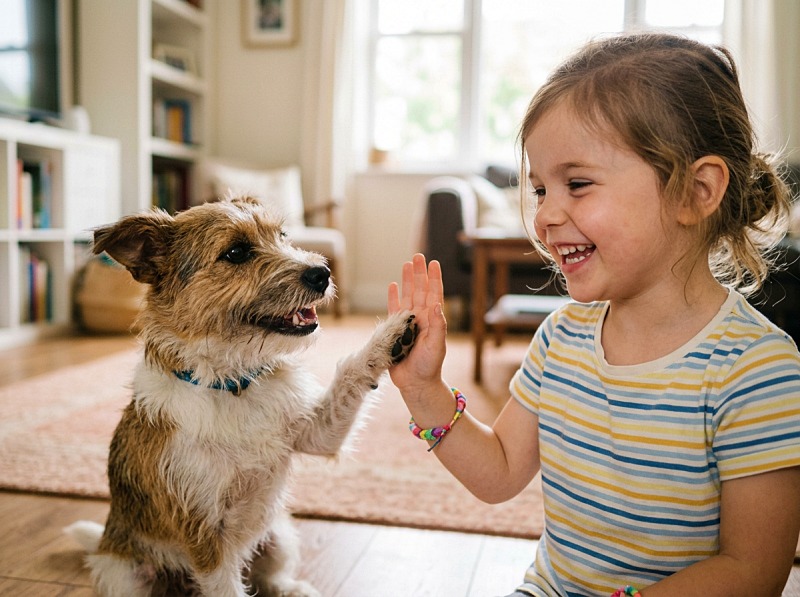
The high five is usually the first “party trick” owners teach, and for good reason—it’s quick to pick up and endlessly charming, especially to kids.
Begin with your dog in a sit. Praise him, then hold a treat in your closed fist just slightly out of his reach. As you say “high five,” tap one of his front paws gently. Most dogs will naturally lift that paw, trying to figure out where the treat went. The moment his paw leaves the floor, catch it mid-air with your free hand, release the treat, and pile on the praise.
If your dog seems glued to the ground, a light finger-tap behind his knee usually does the trick. Once his paw is up, a quick tickle along the pad often encourages him to lift higher.
After enough repetitions, many dogs skip the command entirely. You’ll sit down, raise your hand, and bam—instant high five.
2. Army Crawl
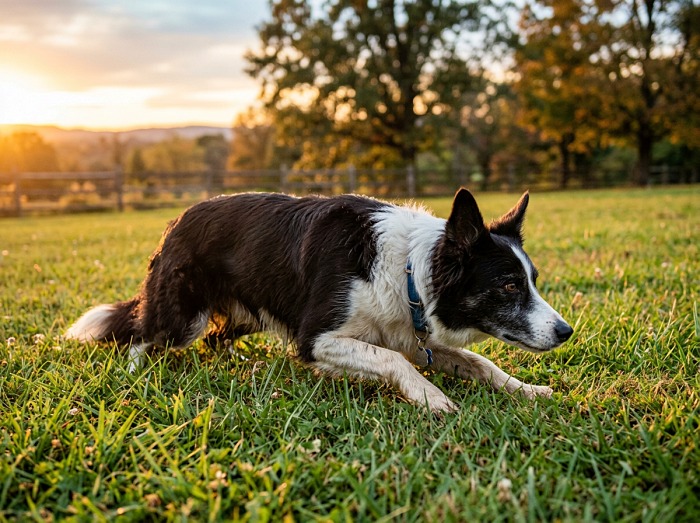
The army crawl is equal parts entertaining and surprisingly practical. Some dogs already do this instinctively when sneaking onto furniture or hunting crumbs under the sofa.
Start by asking your dog to lie down. Pinch a treat between your fingers in a way that lets him smell it but not grab it. Hold that treat right at his nose, then slowly drag it along the floor away from him. The goal is for him to scoot forward on his belly to follow it.
Even a couple of inches counts at first. The instant he shuffles forward without standing, reward him. If he pops up to walk, calmly withdraw the treat and restart. Dogs are quick to figure out that bellies-on-the-ground is the paying behavior.
Gradually stretch the distance. Eventually you should be able to give the “crawl” cue from across the room and watch him commando his way over. Hikers and hunters especially will appreciate this skill—it can genuinely matter in narrow passages or low-clearance terrain.
3. Dance
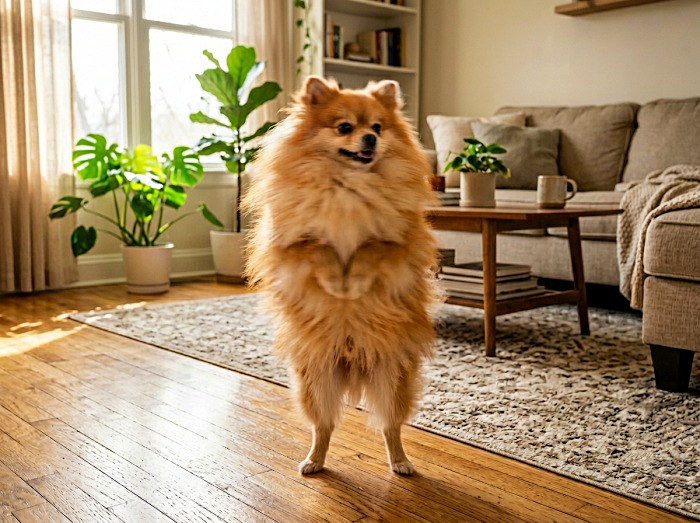
Dancing tends to suit smaller breeds, but plenty of larger dogs pull it off with patience. Skip this one if your dog carries extra weight or has any hip or knee issues—it’s not worth the strain.
From a sit, slowly lift a treat up and back over your dog’s head. Use a cue word like “up” or “dance.” As his nose follows the treat, his front end will rise. Hold the treat just high enough to keep him balanced on his back legs. Reward the moment he’s steady.
Once standing becomes easy, you can add the spin. Circle the treat around his head and he’ll pivot to follow it. Bigger breeds need to build their balance first, so let them get comfortable standing before asking for rotations.
One word of caution with larger dogs: excited pups sometimes use their front paws on your shoulders, which can become a wrestling match you’ll lose. Smaller breeds like Yorkies, poodles, and Bichons generally take to this one with the most grace.
4. Tidy Up the Trash
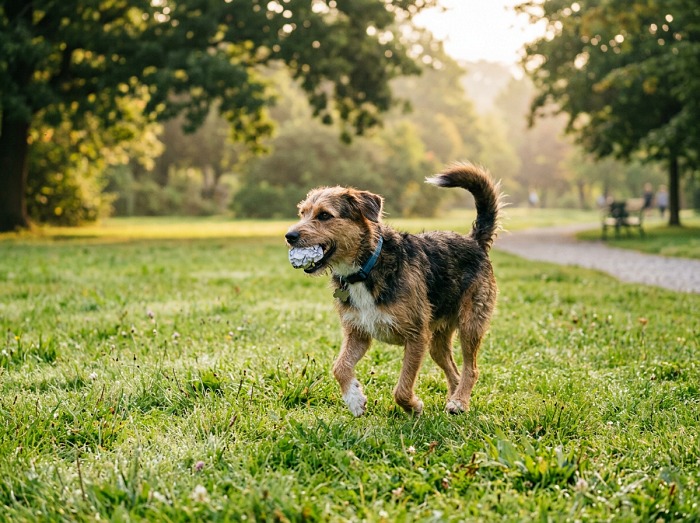
If your dog already snatches tissues off the counter or makes a beeline for every stray wrapper on the sidewalk, you can channel that habit into something genuinely useful.
The foundation here is fetch. Head to an open space with a few tissues or pieces of paper. Toss one a short distance and ask your dog to retrieve it. If fetch isn’t yet in his repertoire, walk over to the item together and coax him to pick it up. Offer gentle praise the moment it’s in his mouth.
Once he’s comfortable holding objects, start adding distance. Ask him to stay while you step back, then call him to you. The treat only appears when he returns with the item—dropping it halfway means starting over.
Just be careful what you ask him to pick up. Stick to your own discarded paper. Anything with sharp edges, chemical residue, or unknown contents is firmly off-limits.
5. Salute
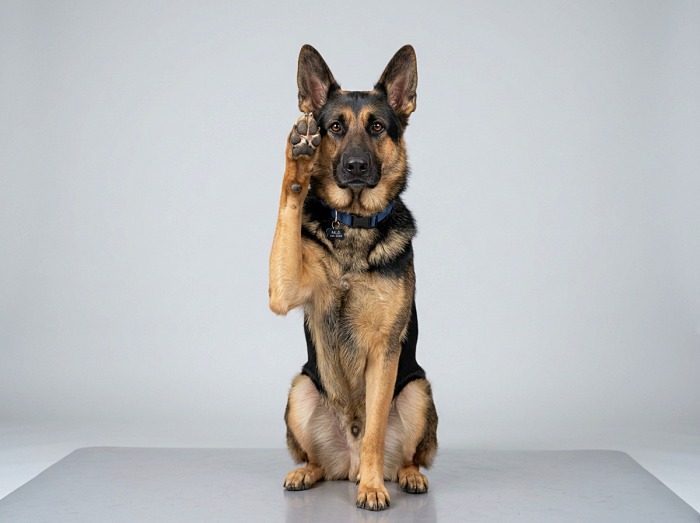
A saluting dog is a touching little performance, especially for greeting family returning from deployment or welcoming guests home.
Ask your dog to sit. Place a small sticky note or a light piece of tape just above one eye. Most dogs will instinctively swipe at it with a paw. The second that paw reaches his forehead, mark it with praise and hand over a treat.
For dogs with long fur or those bothered by tape, there’s a gentler path. Cue him to “shake,” take his offered paw, and guide it slowly up to his brow. Reward him there. After enough reps, your cue alone will do the work.
Quick cultural footnote: choose your verbal cue thoughtfully. There’s a now-infamous case of a German pensioner who ended up in legal trouble for training his shepherd to respond to a notorious historical phrase. Stick with something neutral like “salute” and you’ll avoid awkwardness.
6. Skateboard
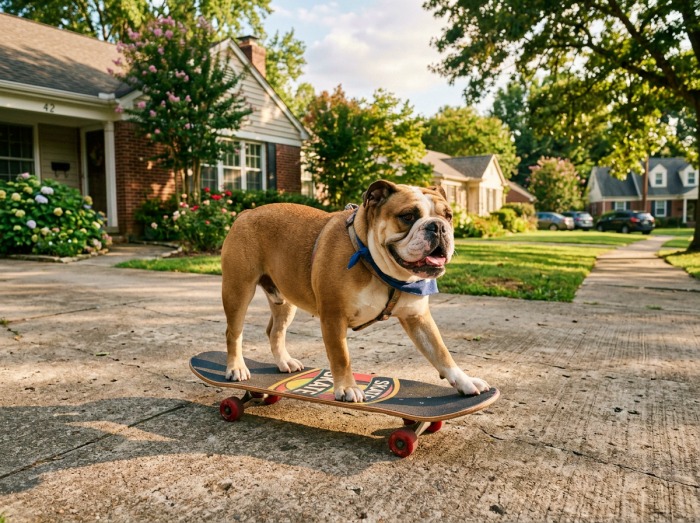
Skateboarding dogs go viral for a reason. Low-slung breeds with a stable center of gravity—bulldogs, pugs, corgis—tend to be naturals. The key is patience. A board that moves and rattles can look genuinely scary the first time around.
Begin with the skateboard flipped upside down on carpet. Let your dog sniff, paw, and investigate it at his own pace. Spin the wheels occasionally so he gets used to the sound. Don’t rush. A few short sessions just exploring the object go a long way.
When he’s at ease, flip the board upright on carpet and roll it slowly away from him—never toward him, which reads as a chase. Every curious approach earns a reward.
Once he’s voluntarily putting paws on the board, gently lift him on and treat generously the moment he stays put. Only after he’s comfortably standing should you introduce motion. Soft, slow pushes forward and back, tons of praise, and over time you’ll have a dog who hops on the deck on his own.
7. Kiss
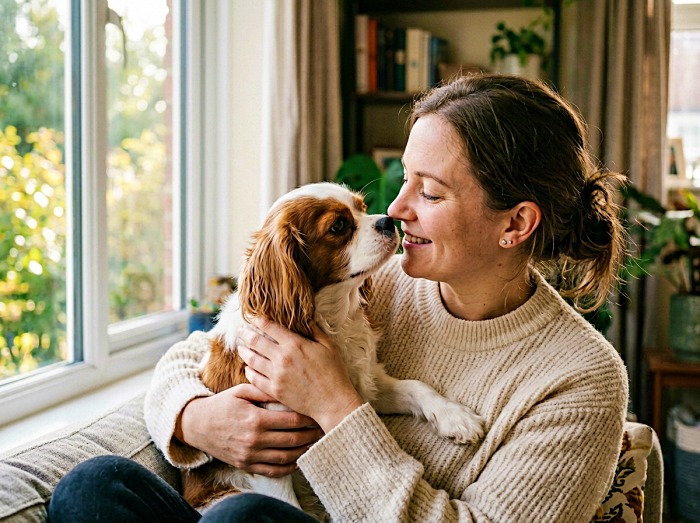
Getting a slobber-free kiss is surprisingly tricky. Most dogs default to enthusiastic face-licking, and the goal here is a polite nose-touch instead.
Hold a treat up near your face and lean your cheek toward your dog as you give the cue. The second his nose makes contact, pull back and deliver the reward—speed matters, because you want to beat the tongue. After enough reps, he’ll learn that a clean little nose-press is what unlocks the treat.
A few cautions: if your dog nips when excited, keep this trick adults-only. And with giant breeds, a “kiss” can accidentally turn into a headbutt, so proceed gently.
Once the concept clicks, you can extend it. Point to a family member, give the cue, and let them hold the treat for the first few tries. Soon you’ll have a dog making the rounds distributing kisses on command.
8. Handstand
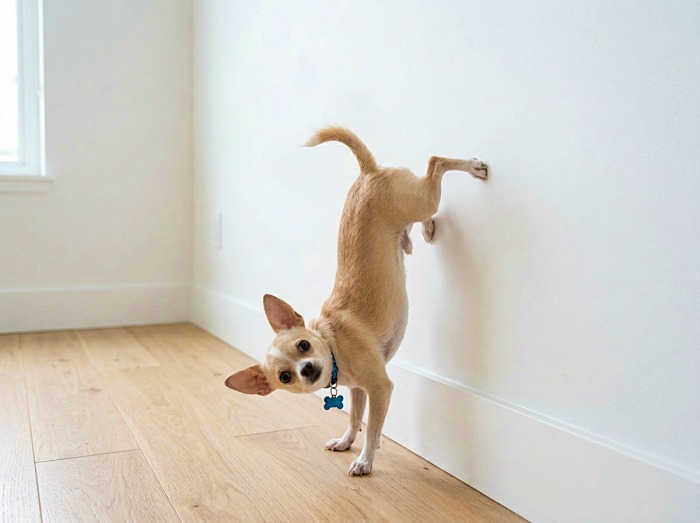
A handstand is a showstopper, but it needs to be approached slowly—muscles must be built, and rushing this trick can hurt your dog.
Start with your dog standing facing a wall, his front paws on the ground and his back paws propped on a thin book. Let him get comfortable in this position over several sessions. Gradually swap in thicker books to raise those back legs higher and higher.
When he’s easily tolerating a significant height, guide his back paws onto the wall itself. He’ll feel the shift in balance, so be ready to steady him with a hand on his belly. Treats right at his nose help hold his attention forward.
The final step is inching away from the wall. For most dogs this is a months-long project, not a weekend trick, and honestly not every dog will get there. That’s fine. Even the wall-assisted version is impressive.
9. Water Fetch
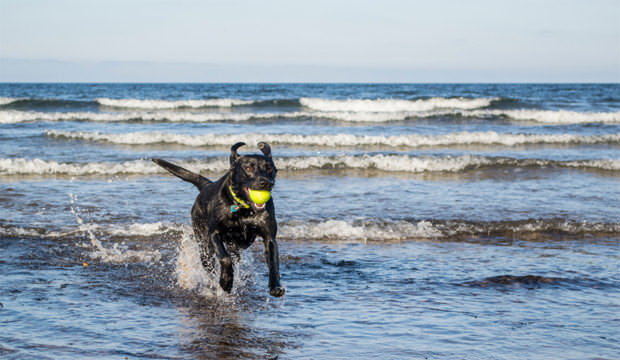
Few games beat water fetch on a hot afternoon. If you’re heading to a lake, pool, or shoreline this summer, it’s the perfect opportunity.
Before anything else, make sure your dog can actually swim. Retrievers and spaniels are typically built for it, but short-legged or heavy-chested breeds—pugs, bulldogs, bassets—can genuinely struggle. A canine life jacket is a smart investment for those dogs, and frankly not a bad idea for any dog new to open water.
Wade in yourself first. Your presence in the water is the biggest confidence boost he’ll get. If you have access to a dog who already loves swimming, bring him along as a model—dogs learn a lot by watching other dogs.
From the shore, toss a floating toy into shallow water and celebrate every successful retrieve. Build up distance gradually. Watch for signs of fatigue; swimming burns far more energy than running, and a tired dog in water is a dangerous combination.
10. Play the Piano
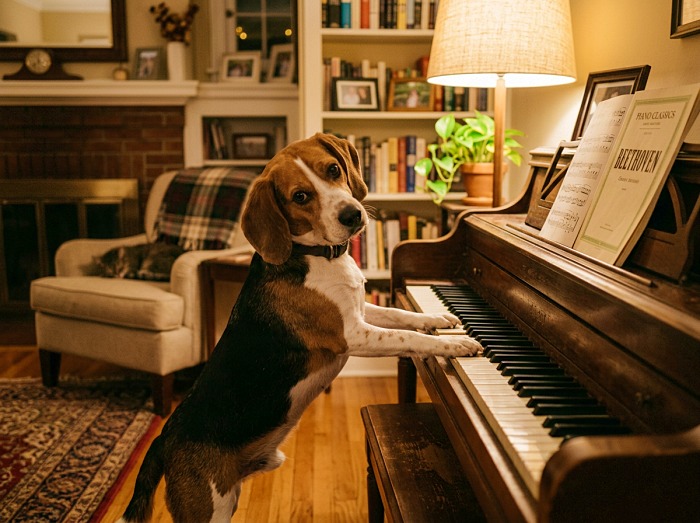
If there’s a keyboard in the house, you’ve got the makings of a very theatrical trick.
Put the piano (or a small toy keyboard for smaller dogs) in a quiet, distraction-free room. Reward any interest at all—sniffing, looking, approaching. Keep early sessions short so he doesn’t lose interest.
A useful technique: toss treats away from the piano, then generously reward every return. This builds the habit of the piano being “home base.” Once he’s consistently coming back, you can start holding out rewards until he actually touches a key with his nose or paw.
Stubborn or uninterested dogs often respond to treats placed directly on the keys. He has to press down to reach them, which produces a sound, which earns him the treat, which teaches him that pressing keys is the whole game. The moment a key rings out, say “play” and celebrate like he’s just performed at Carnegie Hall.
11. Peek-a-Boo
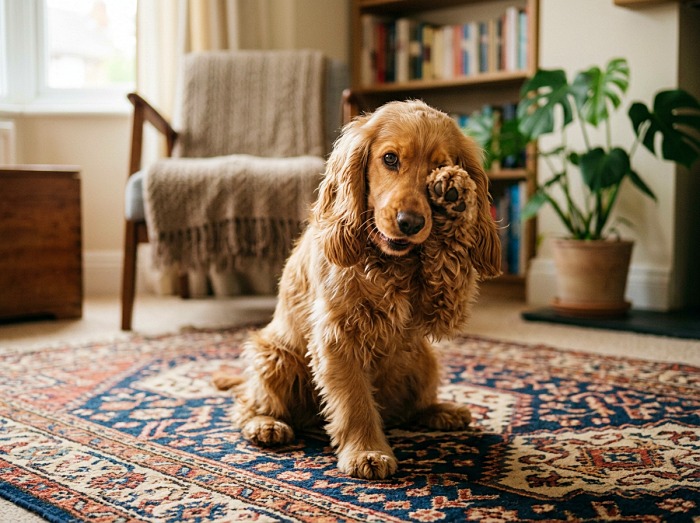
Peek-a-boo is that trick that reliably melts both adults and kids. There are two main paths in.
If your dog already offers a paw on cue, start there. Ask for his paw, then gently guide it up and over his eyes while repeating the command. Reward the instant contact happens. Over enough reps, the physical guidance fades and the cue alone takes over.
The alternate method uses a gentle strip of low-tack tape or a sticky note on his nose. The mild irritation prompts most dogs to paw at their face immediately—the exact motion you want. Mark that paw-to-face moment, reward, repeat. As he starts to anticipate the action, replace the tape with a light tap on his nose, and eventually just the verbal cue.
Either path works; it’s mostly about which method feels more natural for your particular dog.
12. Walk Backwards
Walking backwards actually belongs in every dog’s training. It builds coordination, rear-end awareness, and gives you a safety tool for scooting him away from something dangerous—a broken glass, a wild animal, a closing door.
Call your dog to you and ask him to stay. Take a few steps back, then walk toward him while saying “back.” Many dogs instinctively retreat when someone walks into their space. If yours plants his feet, a soft nudge with your knees will get the idea across without any force.
Another approach is holding a treat just over and slightly behind his head. Reaching for it with his nose naturally pushes his body backwards.
If he keeps spinning to face away, practice in a narrow corridor, between parked cars, or alongside a wall. The limited space removes the option to turn. Once the basic back-up is solid, stand to his side and walk him backwards in a circle around you—a party trick with actual utility.
13. Open and Close Doors
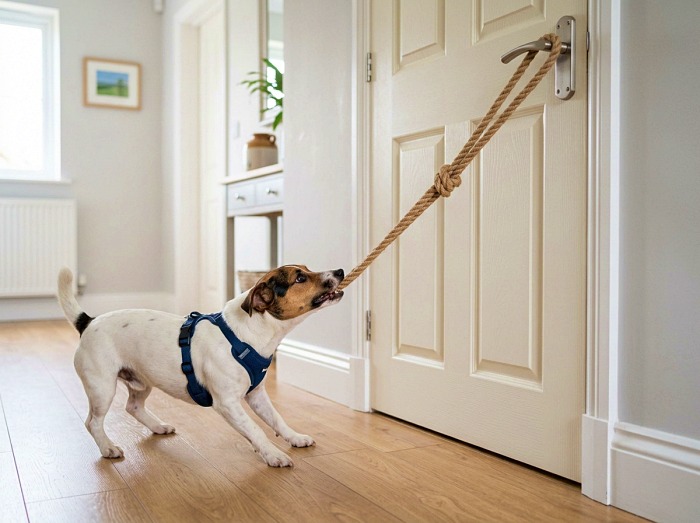
A dog who opens doors is impressive. A dog who opens the front door and bolts is a nightmare. Teach this one only if you’re confident in his impulse control, and only on interior doors.
The safer method uses a rope or tug toy tied to the handle. That way your dog isn’t learning to jump at doorknobs—which ruins paint and leaves scratch marks—and he’s only equipped to open doors you’ve specifically prepared. Exterior doors stay off the menu.
Attach the rope, then encourage him to tug. Lever-style handles work more easily than round knobs; if yours are round, crack the door open slightly first so the rope-pull finishes the job. The second the door swings, mark and reward.
To teach closing, hold a treat flat against the outside face of an open door. Ask him to jump up for it. His paws hit the door, it swings shut, he gets the treat. Simple mechanically, but dogs love the clear cause-and-effect.
14. Fetch a Drink from the Fridge
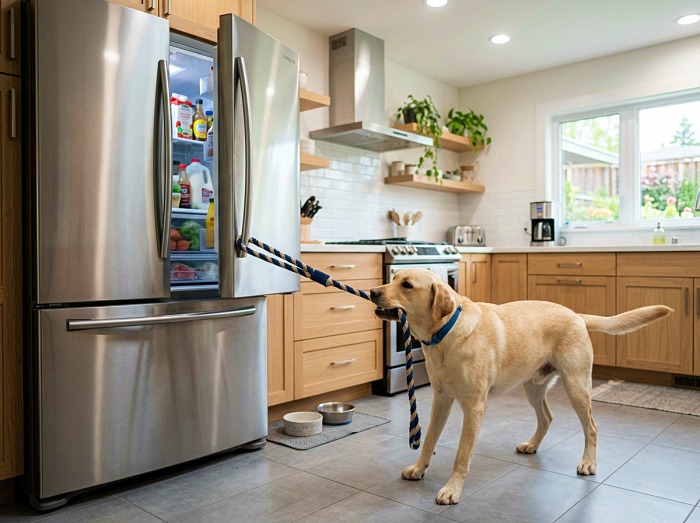
Once your dog understands the door-opening concept, the fridge version is mostly a combination trick.
Attach a sturdy rope to the fridge door handle. Encourage him to tug until it pops open, then reward. Next, show him how to close it by holding a treat against the outside of the door so he jumps up and swings it shut. Practice these two actions until they’re smooth and cue-only.
Now add the retrieve. Place his favorite toy inside the fridge where he can see it. After opening, point it out if he doesn’t spot it. Ask him to bring it to you carefully, then close the door.
Once the toy version is dialed in, swap in a small plastic water bottle. Stick to plastic bottles exclusively—never pressurized cans, which a gripping tooth can puncture in a second, and never glass. Dogs with gentler mouths can graduate to sports drinks or anything else you’d like delivered; dogs who crunch everything should stick to toys.
15. Use the Toilet
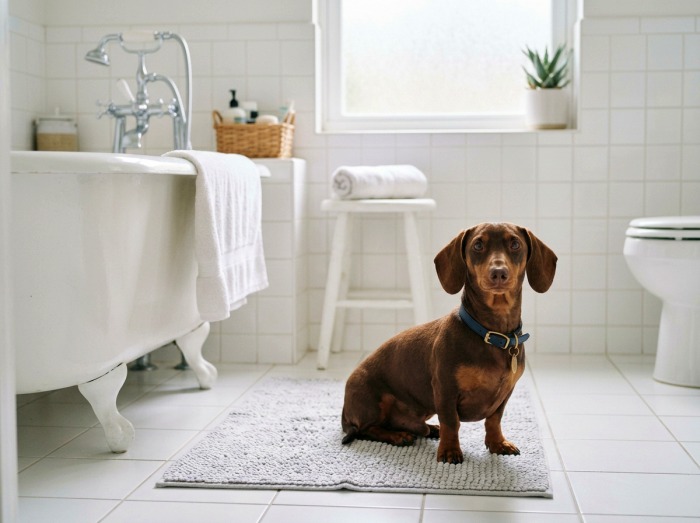
Yes, this is real. Yes, people actually do it. And yes, it’s mostly practical for owners with mobility limitations or very long work hours.
The groundwork is a verbal cue during normal outdoor bathroom breaks. Every single time your dog relieves himself outside, repeat your chosen phrase—”go potty,” “do your business,” whatever sounds least embarrassing to say in public. After a few weeks, he’ll associate the phrase with the action strongly enough to produce it on cue.
Next, introduce a shallow indoor training tray outside. Coax his front paws into it while he goes. Once he’s using it reliably, move the tray gradually toward the house, then inside, then a little closer to the bathroom each day. Rushing collapses the whole chain, so don’t.
The final step is lifting the tray onto the toilet seat itself. Eventually the tray disappears and you have a dog who hops up and uses the toilet like a very small, very hairy roommate. Expect the process to take weeks, not days.
16. Play Soccer
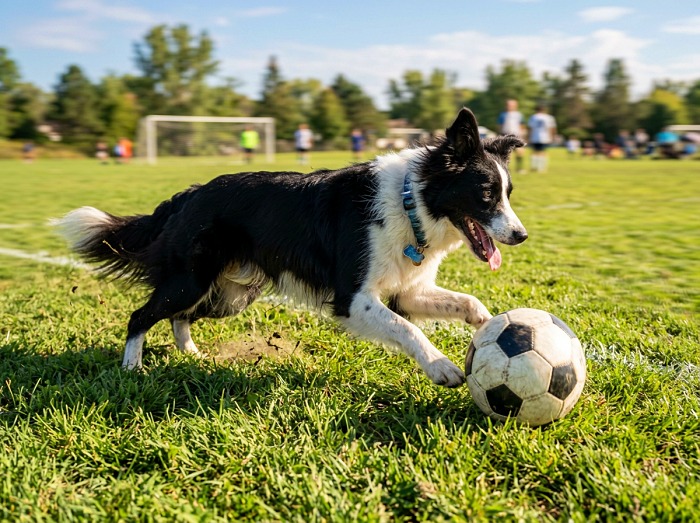
Some dogs take to a ball like they were born on a pitch. Others need convincing. Either way, the key is choosing a ball slightly too big to pick up—about the size of a standard soccer ball for medium dogs, a mini version for smaller breeds. You want him nosing and pushing, not carrying.
Head outside with a pocket of treats. Let him approach the ball on his own terms first. Any contact—a sniff, a nose poke, a tentative paw—earns praise. If he’s uninterested, roll it gently toward him to create motion and curiosity.
As soon as he’s actively pushing the ball around, you can start directing the action. Kick it a short distance and encourage him to chase it down and “dribble” back. Reward generously each time.
Be patient. Some dogs crack this in a session; others take a couple of weeks to realize the ball itself is the game. Both are normal.
17. Say Prayers
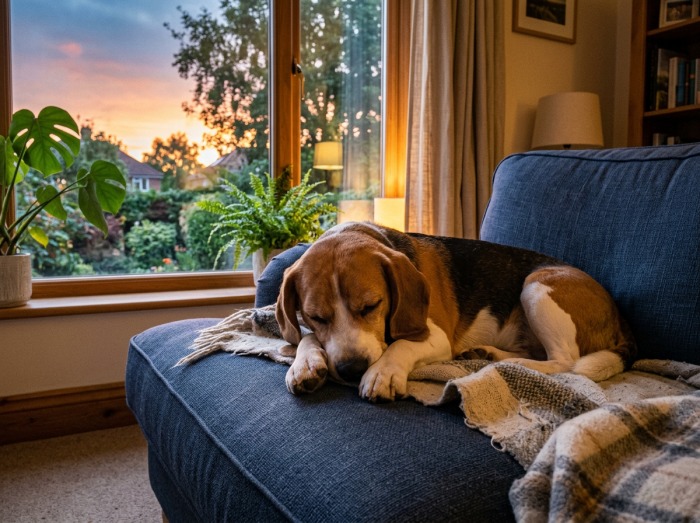
This one’s tailor-made to delight kids and grandparents alike. Teaching it cleanly requires that your dog already sits on cue and offers paws comfortably.
Sit in front of your dog and extend your forearm across his eye-line. Encourage him to rest his front paws on your arm—a kind of elevated “beg” position. This alone may take a few sessions to get right. Once he’s comfortable there, you’re halfway done.
Now add the bow. With his paws still on your arm, hold a treat at nose level, then slowly lower it under your forearm. His head follows the treat downward, tucking between his paws. That’s the praying posture. Reward the instant he’s there.
If he keeps taking his paws off your arm, start over—the paws staying put is non-negotiable. Slight adjustments to his paw placement can give his head more room to tuck through.
18. Sing to Music
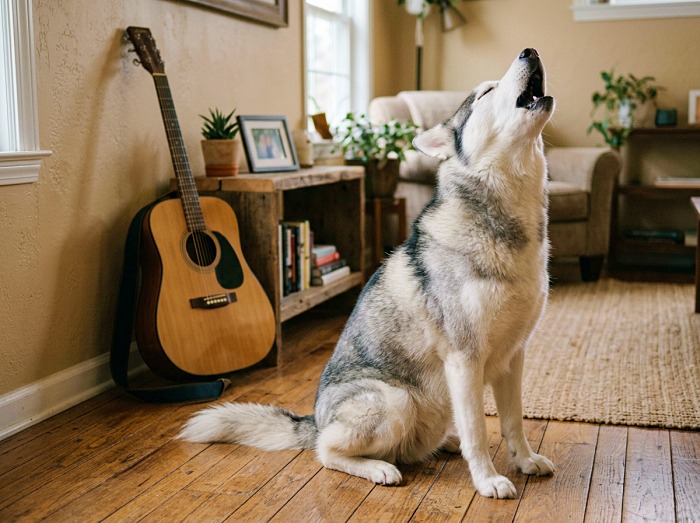
Some dogs are just born performers. Others need coaxing out of their shells. This trick really depends on your dog’s temperament—and possibly on how much your neighbors like you, because apartment dwellers may want to reconsider.
Start experimenting. Different songs, different instruments, different pitches. Harmonicas and certain high-frequency notes are famously effective at triggering howls. Sirens work too, though that’s harder to summon on demand.
Because you’re the pack leader, lead by example. Howl first. It feels silly, but dogs often join in once someone else starts. Also pay attention to when your dog is already vocal—many dogs fuss loudly around dinner or walk time. Mark those moments with your cue, reward, and you’ve connected the sound to the word.
Fun aside: the New Guinea Singing Dog, a distant relative of the dingo, is genuinely famous for its melodic howl with distinct high notes. Every domestic dog carries some of that wolf-song ancestry. Most just need permission to remember it.
19. Slalom
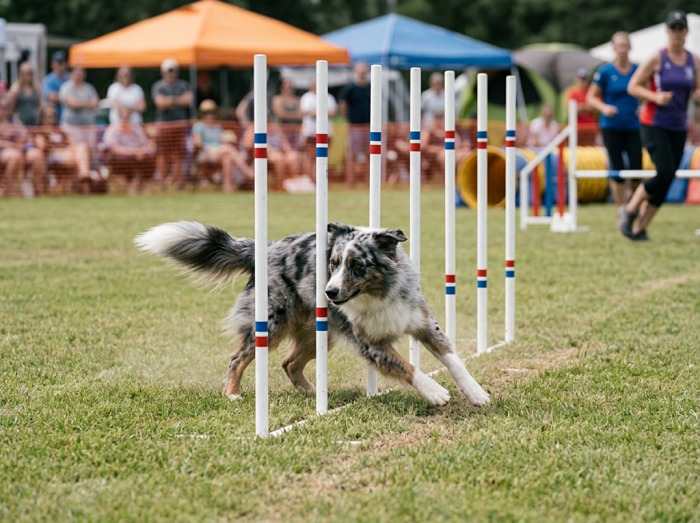
Slalom is the trick that builds real athleticism—agility, speed, and the kind of focus that transfers to everything else you train. It’s the single most useful “fun” skill on this list.
Start with proper flexible agility poles if possible. They bend on impact, so a miscalculation doesn’t hurt anyone. Set up four poles at equal distances, which is important: uneven spacing confuses the rhythm your dog needs to learn.
With a treat at his nose, guide him in a weave pattern—right of pole one, left of pole two, right of pole three, and so on. Go slowly. Reward at the end. After a dozen successful runs, add a few more poles. Work up to ten or twelve total.
Once the pattern is automatic, you can tighten the spacing to create sharper turns, or speed up to develop real pace. If you eventually move to improvised outdoor slalom—trees, cones, bollards—keep the speed lower than on proper poles, because running into a tree at full tilt is a vet bill waiting to happen.
20. Pick Up His Toys
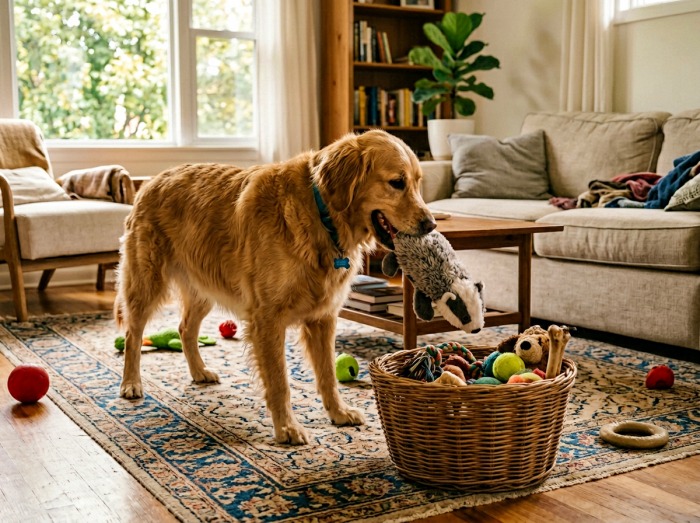
Every dog owner knows the routine: the toy basket is organized for about ninety seconds in the morning, and then it’s a chaos field for the rest of the day. Teaching clean-up is genuinely possible, and it’s a fantastic capstone trick because it combines fetch, drop, and targeting.
Sit on the floor with the toy basket in front of you. Toss one toy across the room. When your dog grabs it, hold a treat directly over the basket and call him back. The treat’s position is the key—he’ll naturally aim his head where the reward is.
If he drops the toy on the way, pull the treat out of sight and cue him to fetch it again. He’ll quickly figure out that delivery matters.
Once he’s bringing the toy to you, hold the treat right above the basket opening and give your “drop it” cue. The moment the toy lands inside, release the treat with big praise. From there, slowly move the basket further from you. Eventually, a simple point toward the basket is enough to get the whole routine going—fetch, carry, drop, done.
Final Thoughts
Training tricks isn’t really about the tricks. It’s about the time you spend together, the problem-solving you do side by side, and the way your dog learns to watch you for signals. Every session—even the ones that fall apart laughing—strengthens the working partnership between you.
Pick one trick to start. Work it until it’s solid before moving to the next. Keep sessions short, end on wins, and never let training feel like a chore for either of you. The goal is a happier, more engaged dog—and a few genuinely impressive skills along the way.