
Most people buy the wrong wide format printer for blueprints because they start with the price tag instead of the sheet size. They order a 13×19 machine, then a set of ARCH D drawings lands on the desk and the whole set has to go out to a reprographics shop, one sheet at a time.
Width is the decision that cannot be revised later. Everything else – ink type, cartridge size, roll feed versus sheet feed – is negotiable. Get the width right first and the rest of the buying process takes an afternoon.
Our team compared ten machines across the full width range, from compact 13×19 desktop units to 36-inch A1 roll plotters, and read the owner reviews closely for the two things spec sheets never tell you: how the machine behaves when it sits idle for a month, and what a set of cartridges really costs over three years. This guide is the best wide format printers for blueprints ranking we would hand to an architect, a surveyor or an in-house reprographics lead in 2026.
Table of Contents
Top 3 Best Wide Format Printers for Blueprints (October 2026)
The three machines below cover the most common blueprint jobs. The DesignJet T210 handles full ARCH C work straight from a 24-inch roll, the EcoTank ET-15000 is the cheapest way to get 13×19 output with a working scanner, and the WorkForce Pro WF-7820 is the entry price for a home studio.

HP DesignJet T210 24-inch Plotter
- 24-inch roll plus 13x19 sheets
- 2400 x 1200 dpi
- Wi-Fi and Ethernet
- HP Click CAD workflow

Epson EcoTank ET-15000
- 13x19 sheet printing
- Refillable ink tanks
- Print scan copy and fax
- 4800 x 2400 dpi

Epson WorkForce Pro WF-7820
- 13x19 wide format
- Print scan copy and fax
- 25 ppm black and white
- 250-sheet cassette
Best Wide Format Printers for Blueprints (October 2026)
All ten picks in this roundup, with the specs that matter for drawing work rather than photography.
| Product | Specifications | Action |
|---|---|---|
| HP DesignJet T210 24-inch Plotter |
|
Check Latest Price |
 Canon imagePROGRAF TA-30 36-inch with Stand Canon imagePROGRAF TA-30 36-inch with Stand |
|
Check Latest Price |
 Epson SureColor T3170x 24-inch Epson SureColor T3170x 24-inch |
|
Check Latest Price |
 HP DesignJet T630 36-inch Bundle HP DesignJet T630 36-inch Bundle |
|
Check Latest Price |
 HP DesignJet T650 36-inch HP DesignJet T650 36-inch |
|
Check Latest Price |
 Canon imagePROGRAF TM-240 24-inch Canon imagePROGRAF TM-240 24-inch |
|
Check Latest Price |
 Canon imagePROGRAF TC-21M 24-inch MFP Canon imagePROGRAF TC-21M 24-inch MFP |
|
Check Latest Price |
| Epson EcoTank ET-15000 |
|
Check Latest Price |
| Epson WorkForce Pro WF-7820 |
|
Check Latest Price |
 Epson Artisan 1430 Epson Artisan 1430 |
|
Check Latest Price |
1. HP DesignJet T210 – Best Wide Format Printer for Blueprints Overall
HP DesignJet T210 Large Format 24-inch Plotter Printer, for Easy CAD & Poster Prints (8AG32D)
- Sharp line work and text on CAD drawings
- Handles 24-inch roll and 13x19 sheets
- HP Click with PDF error checking and auto-nesting
- Wireless job submission from phone or PC
- Locked to HP 712 cartridges with no third-party option
- Some owners find 24-inch media loading awkward
- Listed dimensions reported as reversed on the retail page
This is the machine we keep coming back to. HP lists technical line drawings, maps and GIS as a named use case for the T200 series, and that claim holds up on paper. It prints at 2400 x 1200 dpi in both colour and monochrome, which is the right resolution band for drawing output viewed at arm’s length on a desk.
The T210 handles 24-inch roll media and, with the optional sheet feeder, 13×19-inch cut sheets. That combination is what makes it the sensible default: you can plot ARCH C sheets straight from the roll for site use, and feed a small title block or detail sheet from the tray when the drawing is too big to plot full size.
Owners consistently describe the output as crisp for blueprints and CAD drawings, and the network setup as straightforward enough that anyone in the office can send a job to it. HP Click adds PDF error checking before a job enters the queue, plus auto-nesting so several small drawings share one sheet of media. For a small practice that is a real saving.
Speed works out to roughly one page per minute in colour and up to 59 A1 or D-size prints per hour from 500MB of memory. That is fast enough for a working office, not fast enough for a reprographics room handling whole sets.
What the T210 does well on drawing work
Line quality is the headline. Thin wall lines, hatching and dimension strings come out clean without the stair-stepping you get on cheaper desktop inkjets, because the plotter lays ink down at a resolution designed for vector work rather than photographs.
The dual feed also means you are not forced to choose between plotting and cutting paper. HP Click’s PDF checking catches the corrupt file that would otherwise waste an entire roll, and wireless submission means nobody walks over to the machine to start a job.
Where the T210 will frustrate you
The cartridge restriction is the thing to think hardest about. The T210 takes HP 712 cartridges only, and third-party cartridges are rejected outright, so your ink cost per sheet is set by HP and rises over time. Buyers who plot monochrome plans weekly should run the numbers on cartridges before committing.
Reviewers also report occasional difficulty loading 24-inch media, and one noted that the dimensions on the retail page appear reversed. Measure the desk or shelf before you order – at 40 inches wide and 17 inches tall it needs a real surface, not a credenza.
2. Canon imagePROGRAF TA-30 – Best 36-Inch Plotter for Posters and Site Plans
Canon imagePROGRAF TA-30 with Stand 36” Large Format Inkjet Printer
- Prints up to 113 24x36 posters per hour
- Refillable tanks with 250 ml of ink in the box
- Matte black channel suits signage and backlit work
- Printer stand included in this configuration
- Print-only with no scanner or copier
- Large 36-inch format footprint and weight
- Warranty support is one year only
The TA-30 is the fastest 36-inch machine in this list, and it is built for throughput rather than for scanning or copying. Canon quotes up to 113 24×36 posters per hour, and owner reviews put a D-size sheet at roughly 27 seconds. If you plot signage or large site plans all day, that speed is the whole argument.
It uses a refillable tank system rather than cartridges. Six tanks at 55 ml each are standard, with more than 250 ml of ink supplied in the box, and refill bottles cost far less per millilitre than sealed cartridges. That is why the running cost story on this machine is good despite the higher purchase price.
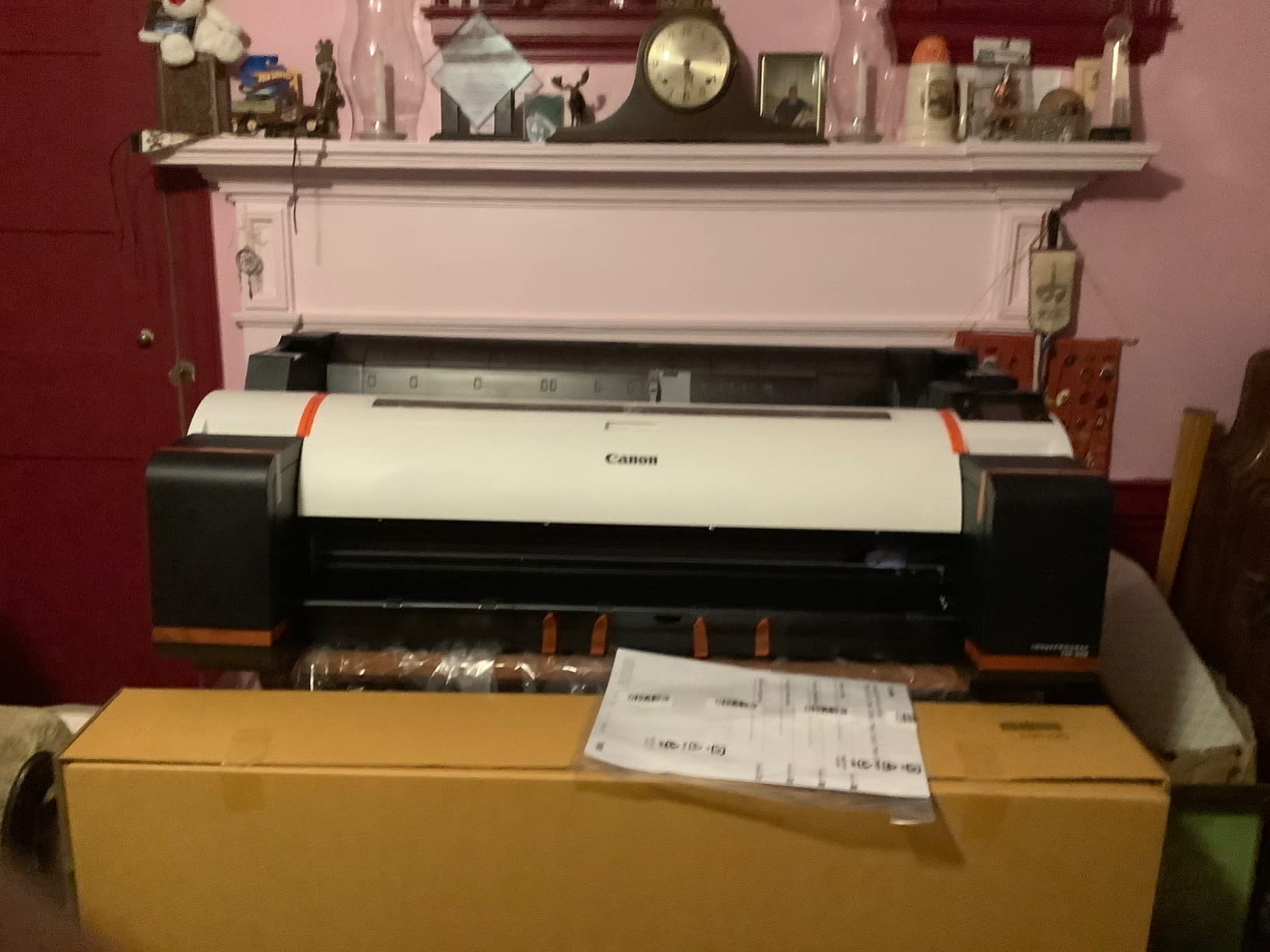
The five-colour set includes a matte black channel, which is unusual at this price and useful for anything that will be laminated, backlit or left outdoors. Media handling covers 8-inch to 36-inch rolls on a 2-inch core, and Wi-Fi printing is supported alongside USB and Ethernet.
Where the rating is held back is durability and setup. Across the reviews there is a spread of comments about units struggling with sustained use and about the initial set-up process, and the 3.9 average reflects that more than any single fault.
Who should plot on the TA-30
Signage shops, event print houses and construction offices that output large colour boards in volume. The matte black channel gives better coverage on heavy stock and vinyl than a standard four-ink set, and the tank system keeps ink costs predictable month to month.
It also suits anyone who needs 36-inch width but does not want a sheet feeder. You plot, let the built-in cutter separate the sheet, and go again. Fewer moving parts means fewer things to go wrong in a busy room.
Where the TA-30 falls short
There is no scanner, no copier and no 13×19 tray. If your workflow includes taking in a drawing, marking it up and sending it back out, this machine will not do that, and you would need a separate flatbed or a wide-format scanner elsewhere.
Footprint is the other issue. At 36 inches deep and 113 inches wide it needs floor space and a stand, which this configuration includes, but it is not something you tuck beside a desk. Check the room before you order.
3. Epson SureColor T3170x – Best 24-Inch Plotter for Low Ink Spend
Epson SureColor T3170x 24 in Wide Format Wireless Color Inkjet Printer
- Cartridge-free tank system with auto-stop filling
- Over a litre of ink supplied in the box
- LCD panel and compact desktop-friendly footprint
- Handles canvas vinyl and coated gloss media
- Modest speed for large CAD drawings
- Cluster of reports about units failing after delivery
- Warranty support reported as difficult outside the United States
If running cost is your first question, the T3170x has the most favourable arithmetic in this roundup. It is a tank machine with no cartridges at all, and more than 1,120 ml of ink comes in the box. That is a large head start on the cost of every sheet you plot afterwards.
It handles 24-inch roll media and prints A1 or D-size sheets in as little as 34 seconds, with a stated black-and-white speed of six pages per minute. The 4.3-inch colour LCD makes it far easier to set media type and scale than the small displays on competing plotters, and the auto-stop bottles mean you cannot overfill a tank.
Owners also like the media range. Canvas, adhesive vinyl and coated gloss media all print well, which makes this the pick if your blueprint work is joined by presentation boards and material samples for a client meeting.
The 3.8 rating is driven less by output quality than by buying experience. Reviews describe a cluster of defective or refurbished machines arriving from third-party sellers, and warranty support that was hard to reach outside the United States. Buy from a seller with an easy return path and check the machine on arrival.
Where the T3170x makes sense
Solo practices, surveyors and design studios that plot frequently and want predictable ink costs. The tank system removes the cartridge-price anxiety that dominates owner reviews of cartridge-based plotters, and the included litre of ink means most small offices never buy a first bottle.
It is also a good teaching machine. The panel is clear, the driver is straightforward, and the footprint of 20 by 38 inches means it can live on a desk or on a small stand rather than taking floor space.
Where the T3170x disappoints
Speed is the weak point for full construction sets. Thirty-four seconds sounds quick until you are plotting forty sheets of an A1 set, and the modest pages-per-minute figure reflects that. For a single plan or a small revision, it is fine.
There is no scanner or copier, and the 1-year next business-day on-site repair warranty is shorter than some rivals. For a machine that will sit idle between projects, that warranty length matters more than it would on a busy device.
4. HP DesignJet T630 – Best 36-Inch Bundle for Studios That Print Patterns
HP DesignJet T630 Large Format 36-inch Plotter Printer, with Auto Sheet Feeder, Media Bin & Stand (5HB11D)
- Bundle includes auto sheet feeder media bin and stand
- Plots full-size sewing and tailoring patterns without tiling
- Wireless job submission from desktop and mobile
- Automatic sheet and roll switching with horizontal cutter
- Locked to HP 712 cartridges
- One owner needed a replacement printhead within a year
- 123-pound weight means two people to position it
The T630 configuration sold here is the useful one: 36-inch roll, an automatic sheet feeder for 13×19 cut sheets, a media bin and the stand. Buyers report printing full-size sewing and tailoring patterns without having to tile pages, which tells you the roll path handles long jobs without babysitting.
Output is 2400 x 1200 dpi at up to two colour pages per minute, and the same HP Click software as the T210 gives you PDF error checking and auto-nesting. Wireless submission from both desktop and mobile is one of the more reliable implementations we came across at this width.
Reviewers rate the colour and line quality as crisp and accurate for blueprints and posters. The specification sheet names technical line drawings and CAD, maps and GIS as intended uses, which is the vocabulary you want to see on a machine for drawings.
What the bundle adds over a bare plotter
The auto sheet feeder and media bin are the difference between a machine that only plots and a machine that works all day. You can queue a 36-inch roll job, then feed small drawings from the tray into the same queue without a manual media change.
Automatic switching between roll and sheet, combined with the horizontal cutter, means finished drawings come off the machine ready to hand or post. For a small studio running work out to clients, that workflow matters more than raw speed.
Where the T630 will cost you
It takes HP 712 cartridges only, and that is the single biggest running cost in this list for a machine of this class. One owner also reported needing a replacement printhead within the first year, which is a reminder to check what warranty and printhead cover apply where you live.
At 123 pounds and 52 inches wide, this is a floor-standing machine. It is a serious piece of furniture for a small office, and it competes directly with the 24-inch options on a much smaller footprint.
5. HP DesignJet T650 – Best 36-Inch Plotter for Warranty Cover
HP DesignJet T650 Large Format 36-inch Plotter Printer, Includes 2-Year Onsite Warranty Support (5HB10T) – New Model
- Two-year HP Care Pack with onsite support included
- 25-second first page and 82 A1/D prints per hour
- 1GB print memory handles complex drawing files
- Sheet feed roll feed media bin and horizontal cutter
- Only certain 2-inch core rolls are reported to fit
- Assembly brackets reported as fragile out of the box
- Locked to HP 712 cartridges
The T650 is the T630 class of machine with the two-year HP Care Pack and onsite support attached, and for a business that cannot afford downtime on a plotter that warranty is worth real money. Onsite service means somebody comes to you rather than you loading a 123-pound machine onto a van.
Throughput is a step up: a 25-second first page on A1 or D size and up to 82 A1/D prints per hour, backed by 1GB of print memory. That memory figure is the part that matters for large site plans and detailed drawings with many layers, which can choke a machine with 500MB.
Owners value being able to print from a phone or PC without walking to the machine, and the sheet feed, roll feed, media bin and horizontal cutter are all included. The specification names technical line drawings and CAD, maps and GIS as target applications, and the resolution is 2400 x 1200 dpi in colour.
The negatives are specific rather than general. Media compatibility is the main one: some owners report that only certain 2-inch core rolls load properly, which matters if you buy media yourself. Assembly brackets have also been reported as fragile straight out of the box.
Why the two-year cover changes the decision
Printhead failure is the top ownership risk in this category and the main reason we include this section at all. A plotter that sits idle between projects can develop blocked nozzles, and a machine without support to fix it becomes a paperweight. Two years of onsite cover converts that risk from a crisis into a service visit.
For practices where one person handles printing, design and project management, the value of not arranging a repair is worth comparing against the small price gap between this and a one-year-warranty alternative.
Where the T650 is not the right buy
If your media supply is not 2-inch core, or you plan to use unusual heavy or banner stock, check roll compatibility before ordering. The restriction is a genuine annoyance in a machine at this level.
It also carries the HP 712 cartridge restriction and the same 123-pound weight as the T630, so the footprint question applies here too. If you only need 24-inch output, a 24-inch machine will serve you at a fraction of the space.
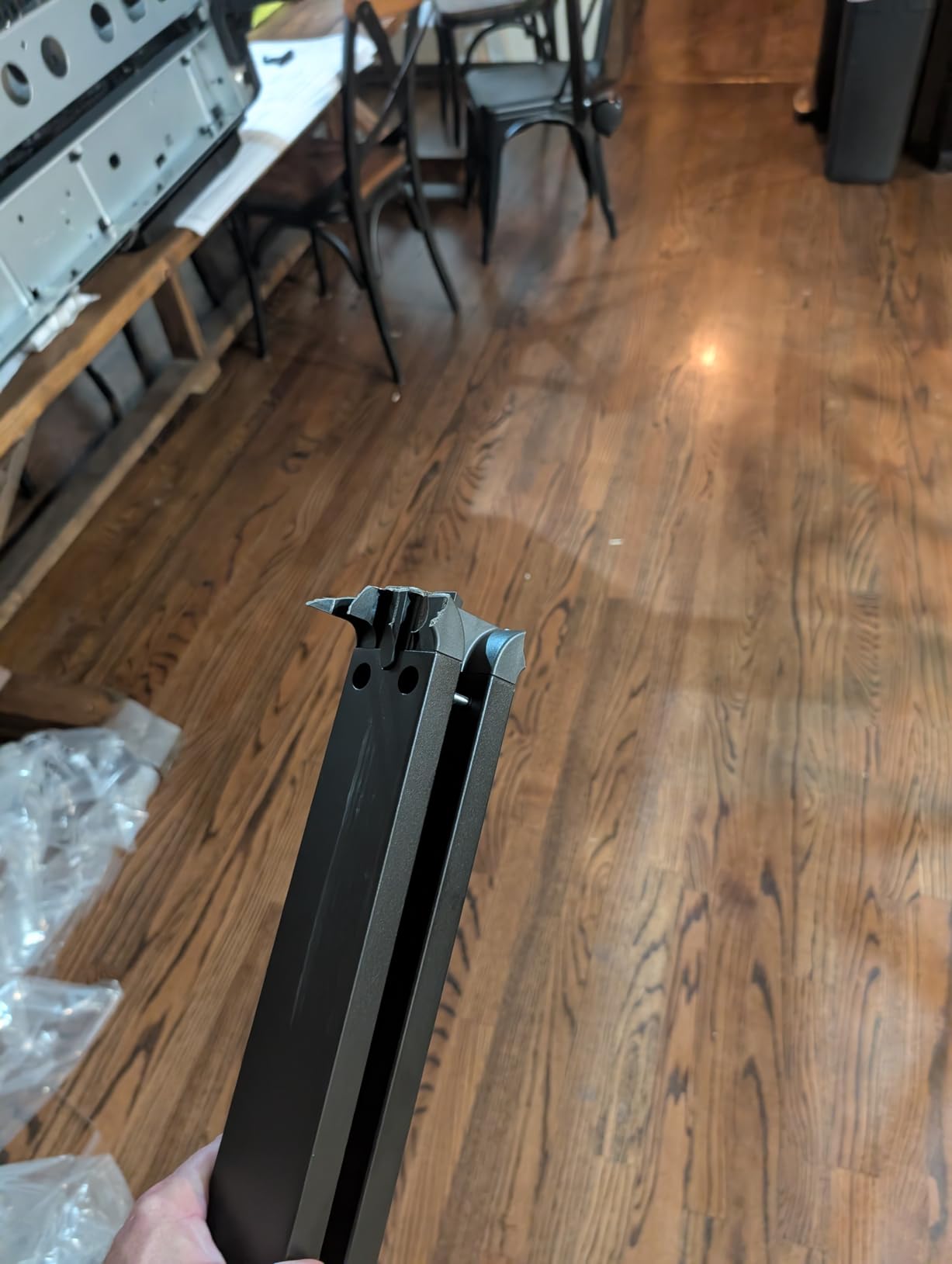
6. Canon imagePROGRAF TM-240 – Best 24-Inch Plotter for Line Sharpness
- L-COA PRO II processor makes it roughly 30 percent faster than earlier models
- Six-channel PF-06 head with 15360 nozzles at 2400 x 1200 dpi
- UV and water resistant ink for documents handled on site
- Onboard colour calibration keeps output consistent over time
- Print-only class unit with limited sheet capacity
- 88-pound chassis
- Only one sheet in the input path
Every review of the TM-240 is a five-star review, and the reason is consistent: line sharpness. The PF-06 head is a high-density six-channel design with 15,360 nozzles firing five-picolitre droplets, which produces clean, narrow lines and text at 2400 x 1200 dpi. On a dimension string or a hatched wall section, that density shows.
The L-COA PRO II processor is quoted at roughly 30 percent faster than earlier TM models, with output up to 2.4 pages per minute. For a 24-inch machine that is genuinely quick, and it is why we rate this one highest for pure drawing fidelity at 24 inches.
Ink durability is the quiet advantage here. The five-colour set is UV and water resistant, which matters for plans that go to a site, get rained on, and come back in a portfolio. Built-in colour calibration also keeps output consistent across devices and over years, so a job replotted next month still matches the original.
Why the nozzle count changes drawing output
Blueprint quality is about how well a printer can place ink in a narrow, continuous stroke. More nozzles means smaller droplets and tighter control at the edges of a line, which reduces the broken or ragged look you get on light lineweights. The 15,360-nozzle six-channel layout is built for exactly that.
Automatic media detection removes a common source of bad jobs. The machine reads media type, length and width itself, so a drawing that would have printed faintly onto the wrong stock now prints correctly the first time.
Where the TM-240 falls short
Sheet capacity is one, and it is a print-only class unit. There is no 13×19 sheet feeder in this configuration and no scanner, so if you need cut-sheet printing alongside your roll work, you will need the optional feeder or a different machine.
At 88.2 pounds it is not a light object, and Canon lists a two-year manufacturer limited warranty, which is one of the longer coverages in this roundup. The trade is features for precision: this is the sharpest 24-inch line work here, not the most convenient office machine.
7. Canon imagePROGRAF TC-21M – Best All-in-One Wide Format Printer with Scanning
Canon imagePROGRAF TC-21M – 24″ Large Format Multifunction Printer
- Plotter flatbed scanner and copier in one machine
- One owner replaced a much costlier Epson unit with it
- Auto sheet feeder holds 100 letter or 50 11x17 sheets
- Ink lasts a long time even with daily use
- Scanner is letter-size flatbed only not 24 inches wide
- Recurring paper feed errors reported by some owners
- Custom sheet sizes must be set manually
The TC-21M is the only machine here that prints, scans and copies in one body, and for a small practice that handles handwritten markups and existing drawings on paper, that combination removes a second device from the budget. One owner reports replacing a much more expensive Epson unit with it and getting faster, higher-quality output.
On the print side it handles roll media up to 24 inches wide or cut sizes from letter up to A1, and the auto sheet feeder takes 100 letter sheets or 50 11×17 sheets. The enlarge-copy function lets you take a small sketch up to a plot-able size straight from the flatbed.
Connection options are sensible for a shared office machine: Wi-Fi for the room, Ethernet and USB behind it, plus cloud printing and scanning and a USB flash drive port for direct large-format jobs when there is no network.
What all-in-one really buys you
The workflow win is annotation. Scan a marked-up drawing on the flatbed, then re-plot the corrected version at full size. That loop is awkward with a print-only plotter and a separate desktop scanner, and impossible if you do not own either.
Ink economy is the other quiet benefit. Owners report that ink lasts a long time even with daily use, which makes sense for a machine that alternates between scanning and plotting rather than running full sheets constantly.
Where the TC-21M disappoints
The built-in scanner is letter-size flatbed only. It cannot scan a 24-inch drawing, so for large-format capture you still need a separate scanner or a hybrid machine. Anyone buying this thinking they get a 24-inch MFP will be disappointed.
Some owners also report recurring paper feed errors that need roller cleaning, and there is no dedicated roll-saving function, so custom sheet sizes must be set by hand each time. The 2.7-inch tiltable touchscreen is small for a machine this capable.
8. Epson EcoTank ET-15000 – Best Value Wide Format Printer with a Scanner
- Refillable tanks cut per-page cost far below cartridges
- Reliable 13x19 sheet handling on thicker stock
- Auto duplex plus 50-sheet document feeder
- Simple Wi-Fi setup from the control panel
- No dedicated 11x17 tray so larger sheets load in the rear holder
- Some owners report frequent paper jams
- Manufacturer support reported as unreachable in some regions
With more than 2,500 reviews behind it, the ET-15000 has the largest evidence base of anything in this roundup, and the feedback is unusually consistent. The refillable EcoTank system is the headline: bottled ink costs a fraction of what sealed cartridges do in the same class, and that advantage compounds every month you own it.
It prints up to 13×19 inches at 4800 x 2400 dpi in black and white and 4800 x 1200 in colour, with 17 pages per minute in monochrome. Auto duplex, a 50-sheet document feeder, Wi-Fi, USB and LAN cover everything a small office needs, and the 250-sheet capacity means you are not refilling it daily.
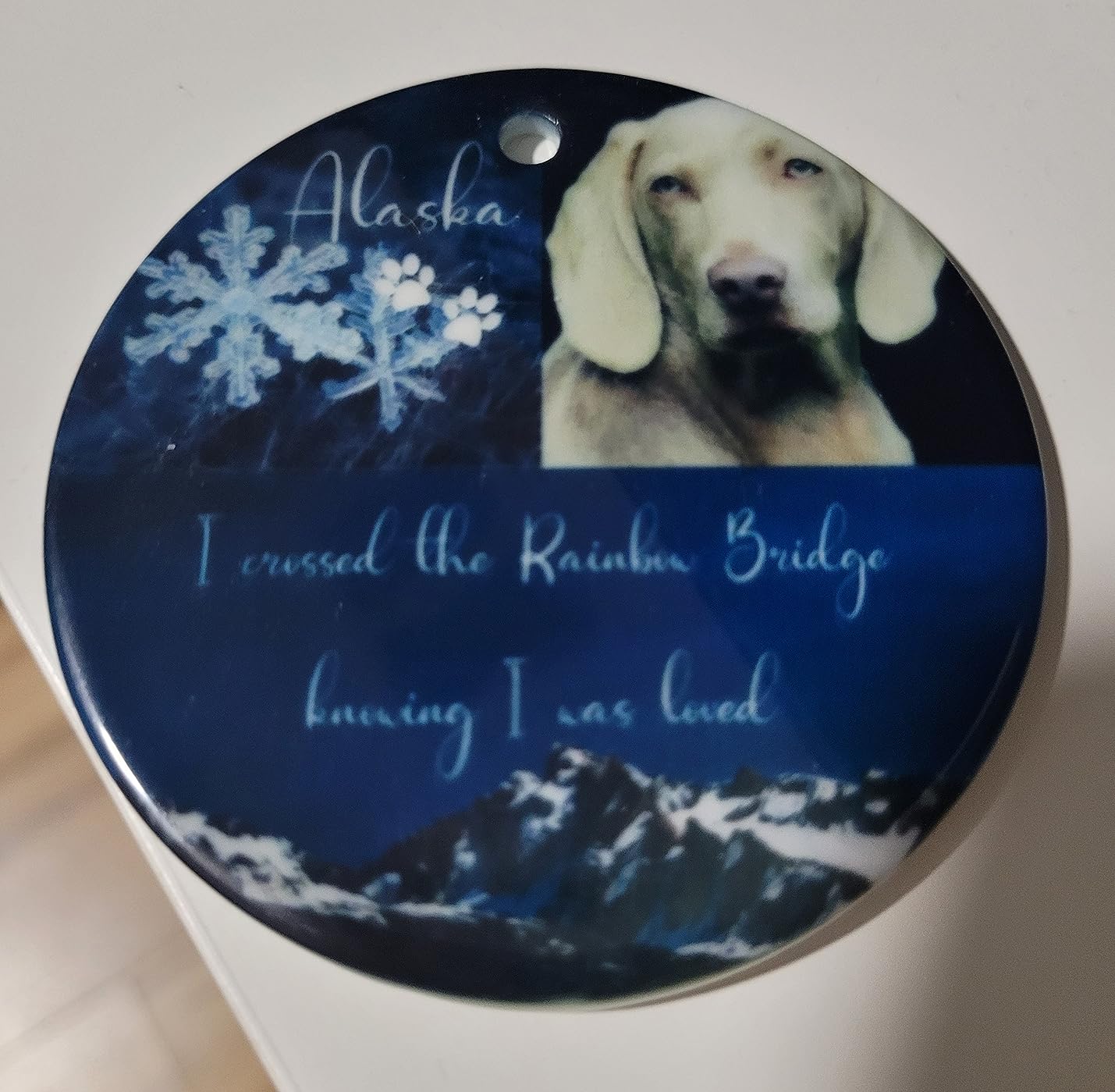
Paper handling is described as reliable on thicker stock, which is the detail that matters for drawing work. Bond and heavier sheets behave predictably, and owners repeatedly mention that larger media feeds without drama. At 26.5 pounds it is also the smallest machine here, easy to move and set up in a corner.
The 4.2 average is a good result for a machine this size, and the negatives are narrow: paper jams reported by some owners, and support access problems in certain regions.
Why the tank system changes the maths
Cartridge-based 13×19 machines charge a premium per millilitre precisely because the cartridges are small. A tank machine moves the cost into bulk bottles, and the per-sheet figure for a typical line-art plan drops to a small fraction of the cartridge equivalent. Over a year of regular plotting that gap is the entire difference between the two approaches.
It also removes a specific anxiety that shows up repeatedly in plotter reviews. Nobody enjoys budgeting for ink, and a machine that drinks from bottles is easier to reason about.
Where the ET-15000 is the wrong tool
It stops at 13×19 inches and has no roll feed. That is fine for plans, sections, details and client hand-outs, but an ARCH D drawing at 24×36 has to be tiled or outsourced. If your work is mostly full-size architectural sets, this is one class too small.
There is no dedicated 11×17 tray either, so larger sheets go into the rear paper holder, and some owners report jams. Check the paper path on a test page before you commit to a heavy plotting schedule.
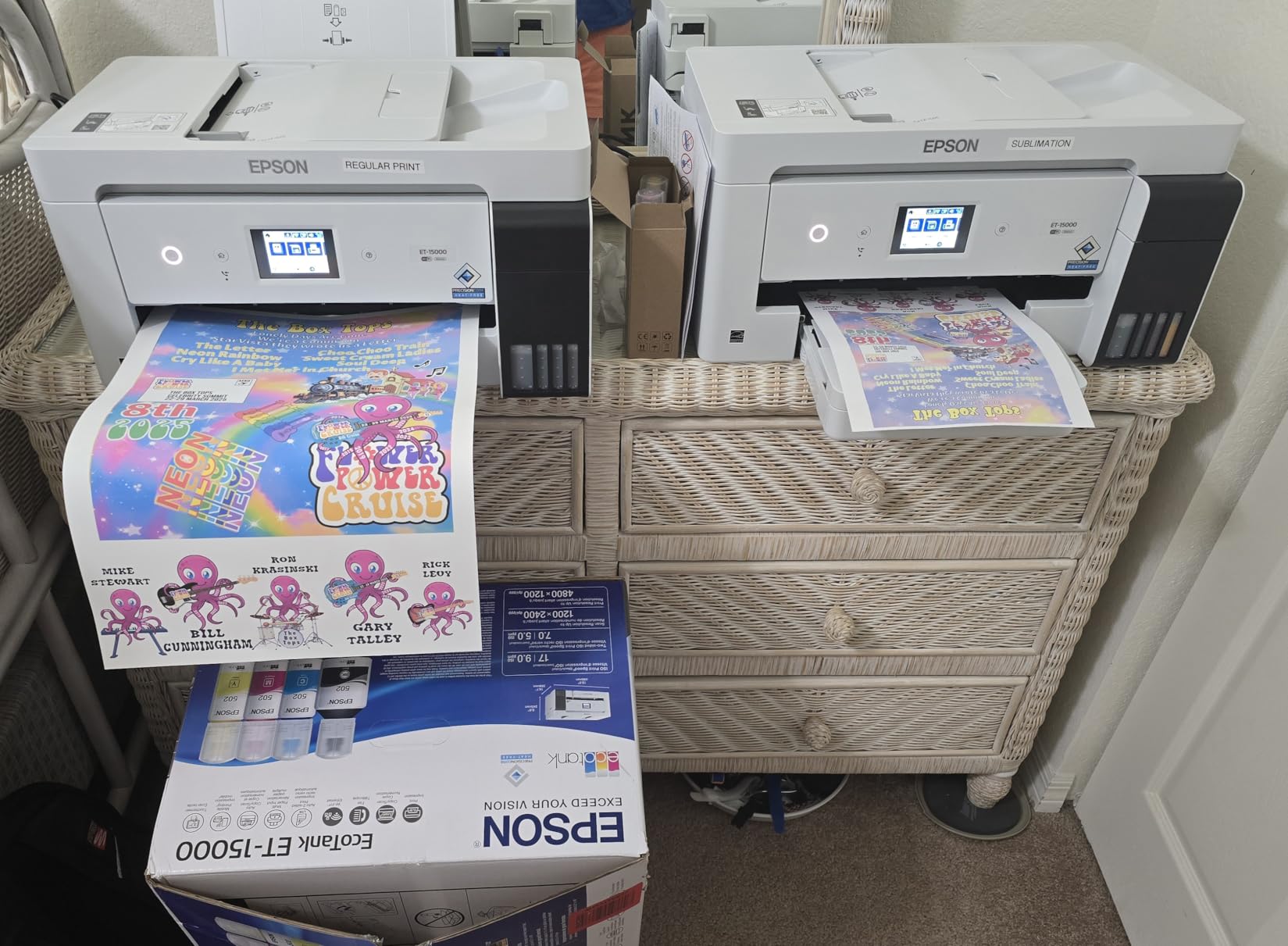
9. Epson WorkForce Pro WF-7820 – Best Budget Wide Format Printer for a Home Studio
Epson Workforce Pro WF-7820 Wireless All-in-One Wide-Format Inkjet Printer
- Lowest entry point to 13x19 printing and scanning in this roundup
- 25 pages per minute in black and white
- 250-sheet cassette plus rear feed with auto duplex
- Sharp output on quality paper stock
- Cartridges run out quickly and cost more over time
- Firmware updates have locked out genuine cartridges
- Document feeder pulls pages in crookedly
- Bulk footprint is large for a home office
The WF-7820 does the four things a small studio needs – wide-format print, scan, copy and fax – for the least money in this list, and with 25 pages per minute in black and white it is fast on a purely monochrome workload. At 39.9 pounds it is still a substantial object, but it is far less of a commitment than a floor-standing plotter.
Durabrite Ultra instant-dry pigment inks mean a sheet can be handled immediately after printing, which is useful when drawings go straight to a client. The 250-sheet cassette, rear feed, auto duplex and 50-sheet document feeder give a complete office machine rather than a printer with add-ons.
What holds it back is ink. Owners repeatedly note the proprietary cartridges run out quickly and cost more per page over time, and a separate cluster of reviews reports that firmware updates locked out genuine cartridges. That second issue is the reason this is not higher in the ranking despite the low price.
The 3.7 average is the lowest of the ten, and it comes from those cartridge problems rather than from print quality. Sharp output on quality paper stock is a common comment among satisfied buyers.
What the WF-7820 does for a small practice
It covers the 13×19 work that fills most of a solo architect’s or surveyor’s week: plans, sections, details and site photographs. Scan and copy functions mean the same machine handles incoming documents, which removes a second device from a one-desk setup.
Speed is a genuine advantage. Twenty-five pages per minute in monochrome means a batch of hand-outs or a set of reduced drawings clears in minutes rather than an hour.
Where the WF-7820 will let you down
Ink economics are the core weakness. If you plot every day, the cartridge running cost will overtake any saving on the machine itself within a year. If your plotting is occasional, the cartridge cost is a much smaller share of the total.
Two further issues show up in reviews: the document feeder pulls pages in crookedly, so duplex scans are not square, and the 38-inch-wide chassis is large for a home office. If you need true architectural sheet sizes, this stops at 13×19 and cannot roll.
10. Epson Artisan 1430 – Best 13×19 Printer When Colour Output Matters More Than Plots
Epson Artisan 1430 Wireless Color Wide-Format Inkjet Printer (C11CB53201)
- Borderless 13x19 photos with six-colour Claria inks
- Wireless plus direct mobile printing without a computer
- Flatbed scanner built in
- Compact 27.8-inch wide body
- No roll media support and sheet feed only
- No automatic duplex printing
- Cartridge-based ink in a machine at this class
The Artisan 1430 is the one machine here that is a photo printer with plotter dimensions, and we include it because a lot of blueprint buyers also need presentation boards. It prints borderless 13×19 sheets using six Claria inks, which gives far smoother gradients than a four-ink set on a rendered image or a material board.
With 881 reviews averaging 4.2, owner feedback centres on photo print quality and painless wireless setup. Mobile printing works without a computer, and the flatbed scanner handles small originals for copying or for producing a working reference.
Resolution is listed at 5760 x 1440 optimised dpi in both colour and monochrome. That figure is impressive but largely irrelevant to line art, because the extra resolution is doing work on tonal detail rather than on the thin strokes a blueprint depends on.

The 50-sheet capacity and 27.8-inch width keep it manageable in a small room, and at 35.3 pounds it is one of the lighter machines here. Setup is straightforward, which matters for anyone installing their first wide-format machine at home.
When a six-ink machine is the right call
Rendered images, material samples, mood boards and photographic site records. Anything with continuous tone, where banding between ink colours would be visible at close range, is where six inks earn their extra cost. A blueprint never needs it.
It also suits a practice that wants a home office machine for 13×19 output and does not need roll media, sheet feeders or a cutter. The flatbed is a bonus rather than a compromise.
Where the Artisan 1430 is the wrong buy
It is sheet-fed only, with no roll media support, so every drawing is a separate sheet of paper and there is no integrated cutter. For someone plotting sets of drawings, the paper cost and handling time add up quickly against a roll machine.
There is no automatic duplex, and the cartridge-based ink system is expensive per page for a machine in this class. If linework is the job, spend the money on a plotter with a tank system or large cartridges instead. Our guide to large format photo printers covers the photo-first end of this category in more detail.
Line Drawings vs Photos: Why Four Ink Beats Ten for Blueprints
Most wide-format marketing is aimed at photographers, and most buyers of that marketing are looking for something else. A blueprint is a small number of very thin, very dark lines on white paper. Extra ink channels exist to render smooth tonal transitions, and a plan has almost none.
That makes a four-ink CMYK plotter the right tool. It deposits less ink per sheet, needs fewer cartridges to keep on hand, and spends your money on resolution and line quality rather than on chromatic accuracy you will never see. The money a multi-ink machine would cost per cartridge is better spent on larger cartridge sizes or a tank system.
The exception is the render. If your deliverable is a presentation board with a photorealistic image on it, a six to twelve ink set will show smoother gradients. Many practices handle both jobs, which is a fair argument for a tank-based 13×19 all-in-one like the EcoTank ET-15000 rather than a dedicated photo machine.
How to Choose a Wide Format Printer for Blueprints
Work through these steps in order. Each one either rules a machine out or tells you which spec to prioritise on the ones that survive.
Start with width, not price. Match the largest sheet you actually plot. 13×19 covers small studios, 24 inches covers ARCH C and ANSI C, 36 inches covers ARCH D and ANSI D, and 42 to 44 inches is only justified by ARCH E or A0 work.
Decide roll feed versus cut sheets. Roll feed plus an integrated cutter scales far better for sets. A sheet feeder matters only if you plot mostly small drawings.
Check lineweight and resolution. Look for 2400 x 1200 dpi as the practical band for drawing output. Higher resolution figures mostly benefit photographic printing.
Count inks against the job. Four CMYK channels for line art. More only if you also print renders and boards.
Model the running cost. Cartridge machines with small 20 ml cartridges are the worst case. Tank systems and 300 ml-plus cartridges are dramatically better per sheet.
Check cartridge availability for the exact model. This is the single biggest long-term risk and the easiest to research before you buy.
Verify driver and PostScript support against the CAD packages you actually run, and check the OS you run them on.
Measure the footprint and weight before ordering. Floor-standing plotters need floor space and two people to move.
Drivers, PostScript and CAD compatibility
AutoCAD, Revit and Bluebeam all talk to a printer driver, and the driver decides how lineweights are converted to dots. A plotter with a PDF or PostScript RIP gives better fidelity on complex files, correct font embedding and far smaller driver-side data. Without it you generally still get accurate output, but font substitution and file handling are more likely to bite you.
The practical advice is to test with your own files before the machine is committed. Send a real drawing set to a demo unit and inspect a dimension string and a hatched section at full size. Forum discussion around legacy CAD packages on modern plotters shows how often software mismatch, rather than hardware, is the real problem.
Printhead reliability and end-of-life risk
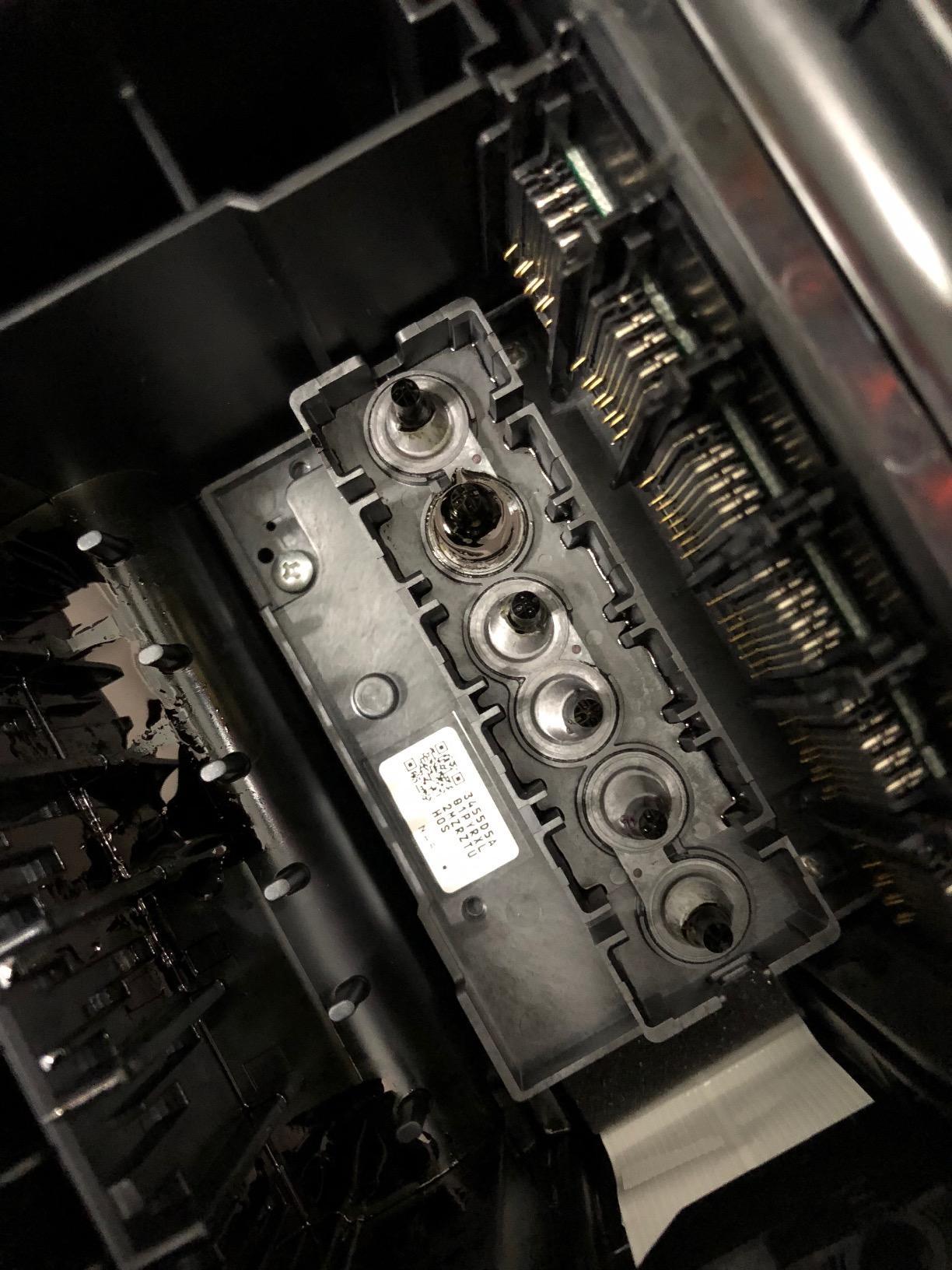
This is the risk nobody ranks and everybody meets. Inkjet nozzles clog when a machine sits idle, and a plotter that plots twice a month is idle most of the time. The number one long-term failure story in this category is an end-of-life model where the printheads are no longer manufactured, so one hardware fault ends the machine’s working life.
Before buying, check three things. Confirm OEM printheads and cartridges are still listed for the exact model. Check whether the model is end-of-life and what the manufacturer’s support window is. And price a replacement printhead against the machine value, because on some older models the head costs more than the printer.
For an idle machine, run a nozzle check and a small print-off once a month. It takes two minutes and it is the cheapest insurance in this guide.
Total cost of ownership for blueprint printing
Standard cost-per-page formulas are written for text and graphics. Blueprints invert the picture: ink use is very low because a plan is mostly white paper, while paper use is high because every sheet is a full sheet. Paper is often the larger share of the per-sheet cost.
So when you compare two machines, calculate two numbers. First, ink cost per sheet, based on the cartridges you would actually fit and the coverage of a typical line drawing rather than a photo. Second, media cost per sheet, including the waste from cut sheets that do not fit the drawing. A machine with a sheet feeder and no cutter can waste a surprising share of a 24×36 sheet on a small detail drawing.
Then divide the combined figure by the number of sheets you expect in year one. At very low volume the per-sheet numbers matter less than reliability. At higher volume they decide the purchase.
Do you need scanning and copying too?
Only if your workflow includes taking drawings in. Most dedicated plotters here are print-only, and the 13×19 all-in-ones scan at letter or tabloid size at best. The Canon TC-21M is the only machine in this list with a scanner built in, and even its flatbed is letter-size. If you are digitising existing drawings or photographic negatives as well as plotting, our guide to medium format film scanners covers the capture side of the workflow.
Be honest about this before buying a hybrid. A 13×19 all-in-one is an office machine with wide-format added, not a CAD plotter, and it will not handle roll media or full architectural sheets.
Brand comparison: HP DesignJet vs Epson SureColor vs Canon imagePROGRAF
Community experience strongly favours HP DesignJet for architectural and engineering line work, and our owner reviews broadly support that. The summary below is the honest version of the comparison.
CAD linework reputation: HP DesignJet is strong and the default choice for AEC; Epson SureColor is strong on the T-series; Canon imagePROGRAF is sharp, strongest on the TM head design.
Cartridge versus tank: HP DesignJet uses cartridges, HP 712 only. Epson mixes cartridges and tank systems across the range. Canon uses a tank system on the TA and TC models.
Width range: all three brands cover 24-inch and 36-inch models, so width alone will not separate them.
Colour and photo quality: fine for plans and posters on HP, good across the Epson range, and very good on Canon imagePROGRAF.
Warranty options: HP offers one or two years with an onsite Care Pack available, Epson is typically one year, and Canon reaches up to two years on selected models.
Best fit for blueprints: HP for offices plotting sets regularly, Epson for practices optimising ink cost, and Canon for buyers prioritising line sharpness.
If you also work with large photographic files, our guide to large-format output for physical models covers the adjacent side of this market.
Own the plotter or pay a reprographics shop per sheet?
Calculate it simply. Multiply the reprographics per-sheet charge by the number of sheets you would plot in a year, and compare that with the media and ink cost of owning a machine, plus a rough share of the purchase price and your time. Practices plotting regularly almost always come out ahead owning, mainly because they get instant revisions instead of a delivery delay.
The argument for outsourcing is turnaround and capital. A one-off project, a tight deadline, or a single ARCH E sheet does not justify buying a 44-inch machine. Use the shop for the exceptions and buy for the routine work.
Frequently Asked Questions
What kind of printer do you need for blueprints?
A CAD/GIS plotter, which is a wide format inkjet built to print line art. Size it to your largest sheet: 13×19 inches for small practices, 24 inches for ARCH C, 36 inches for ARCH D and ANSI D, and 42 to 44 inches for ARCH E or ISO A0. Four-ink CMYK models are enough because blueprints are lines on white paper, not tonal images.
What printer is commonly used for architectural blueprints?
A 24-inch or 36-inch four-ink CMYK plotter from HP DesignJet, Epson SureColor or Canon imagePROGRAF is the standard tool. These machines are built around CAD linework, take roll media with an integrated cutter, and ship drivers tuned for lineweight accuracy. Photo-oriented multi-ink printers are the wrong tool because their extra ink channels do nothing for a line drawing.
What is the best all-in-one wide format printer?
The Canon imagePROGRAF TC-21M is the clearest all-in-one option here, combining 24-inch plotting with a flatbed scanner and copier. Be aware that its scanner is letter-size only, so it cannot capture a 24-inch drawing. 13×19 office all-in-ones are cheaper and better for scanning, but they are not CAD plotters and have no roll feed.
Is HP or Epson better for printing blueprints?
HP DesignJet has the stronger reputation for architectural and engineering line work and is widely treated as the default AEC plotter, with optional two-year onsite warranty cover. Epson wins on ink economics, because tank-based models refill from bottles at a far lower cost per sheet. Canon imagePROGRAF sits between them on line sharpness and two-year cover on selected models.
How much does it cost to print a blueprint sheet?
For line art, paper usually costs more than ink because a drawing is mostly white space. Work out two figures: ink cost per sheet at the cartridge size you would actually fit, and media cost per sheet including waste from cut sheets that do not match the drawing. A tank-based 24-inch plotter has a markedly lower ink cost per sheet than a cartridge machine with small 20 ml cartridges.
Conclusion: The Best Wide Format Printer for Blueprints
The HP DesignJet T210 remains our pick for the best wide format printers for blueprints search in 2026. It plots 24-inch roll media and 13×19 cut sheets, prints CAD linework at 2400 x 1200 dpi, and ships with the HP Click workflow that catches bad PDFs before they waste a roll. Its weakness, the HP-only cartridge restriction, is real but predictable and easy to budget for.
Match the width to the work rather than the budget. Small studios should take the EcoTank ET-15000 for cheap 13×19 output with a working scanner, and the WorkForce Pro WF-7820 if the purchase price is the deciding factor. Practices plotting ARCH D sets want 36 inches, and the DesignJet T650 is the one with two-year onsite cover behind it.
Before you order any of them, check OEM printhead availability for the exact model and price a replacement head. That single check has saved more plotter owners than any spec comparison, and it is the one piece of advice we would give first to anybody buying in this category.