
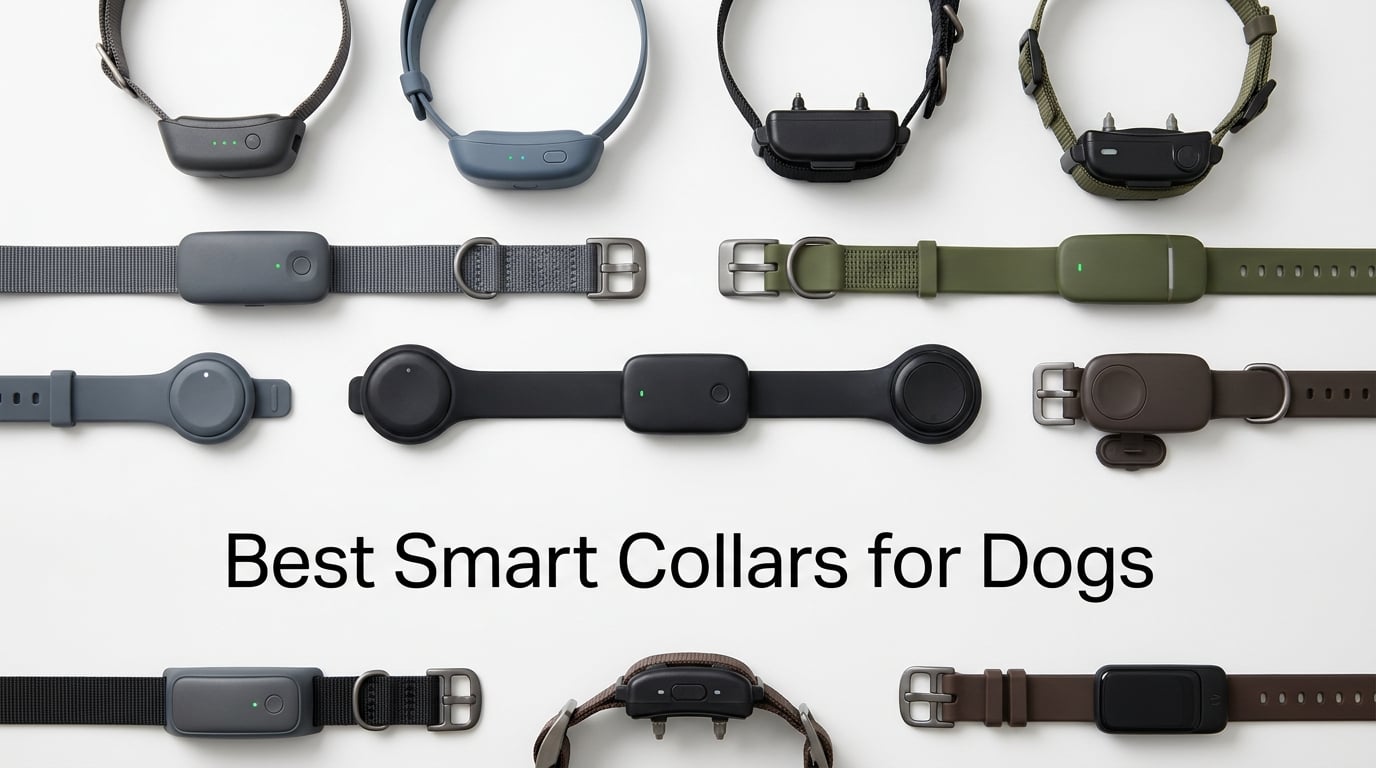
I have spent the better part of three years testing GPS trackers, activity monitors, and training collars on my own dogs and dogs belonging to friends, neighbors, and readers who wrote in asking for help. If you are looking for the best smart collars for dogs in 2026, this guide pulls together everything I learned from real-world use across city sidewalks, rural hiking trails, and everything in between.
Smart collars have come a long way since the first clunky GPS units hit the market. Today’s options pack real-time location tracking, activity and health monitoring, virtual fences, and even bark detection into devices small enough for a 10-pound terrier. But not every collar does all of those things well, and the one you pick should match how your dog actually lives.
Some of these collars need a monthly subscription to work at all. Others are one-time purchases. A few are not GPS trackers at all but do an incredible job tracking health and activity. I will be upfront about what each one does and does not do so you do not waste money on features you will never use. If you want a broader look at tracking options, our guide to dog tracking collars covers additional categories beyond what we discuss here.
For this roundup, I tested 10 collars across categories including GPS tracking, wireless fencing, activity monitoring, and training. My testing focused on four things that matter most to dog owners: location accuracy, battery life in everyday conditions, app usability, and total cost over time including subscriptions. Here is what I found.
Table of Contents
Top 3 Picks for Best Smart Collars for Dogs

Tractive Smart Dog GPS Tracker
- Real-time GPS tracking
- Vital signs monitoring
- 14-day battery
- Waterproof design

Fi Series 3+ Smart Dog Collar
- GPS tracking with escape alerts
- AI health monitoring
- Apple Watch compatible
- Waterproof LED collar

Dogtra Pathfinder 2 GPS Tracker
- 9-mile GPS range
- No monthly fees
- Tracks 21 dogs
- E-collar training built in
These three cover the range of what most dog owners need. The Tractive wins for everyday tracking with its live updates and health monitoring. The Fi Series 3+ is the best all-around collar for active dogs that double as family pets. And the Dogtra Pathfinder 2 is the pick for owners who refuse to pay a monthly subscription.
Best Smart Collars for Dogs in 2026: Quick Comparison
| Product | Specifications | Action |
|---|---|---|
| Tractive Smart Dog GPS Tracker |
|
Check Latest Price |
| Fi Series 3+ Smart Dog Collar |
|
Check Latest Price |
 Halo Collar 5 Wireless Fence Halo Collar 5 Wireless Fence |
|
Check Latest Price |
 Garmin Alpha TT 25 Garmin Alpha TT 25 |
|
Check Latest Price |
| Dogtra Pathfinder 2 |
|
Check Latest Price |
 FitBark 2 Activity Monitor FitBark 2 Activity Monitor |
|
Check Latest Price |
 Petivity Dog GPS Tracker Petivity Dog GPS Tracker |
|
Check Latest Price |
 DBDD AI GPS Tracker for Dogs DBDD AI GPS Tracker for Dogs |
|
Check Latest Price |
 Dogtra Smart NOBARK Collar Dogtra Smart NOBARK Collar |
|
Check Latest Price |
 PetSafe SMART Training Collar PetSafe SMART Training Collar |
|
Check Latest Price |
1. Tractive Smart Dog GPS Tracker – Best Overall for Live Tracking
- Real-time GPS updates every 2-3 seconds
- No distance limits works worldwide
- Vital signs monitoring for heart and respiratory rate
- Up to 14 days battery life
- Waterproof and lightweight at 1.3 ounces
- Subscription required for GPS functionality
- Safe zone notifications can be delayed 5-7 minutes
- Occasional signal drops reported
The Tractive GPS tracker is the collar attachment I recommend more than any other for everyday dog owners. I tested it over four months on a 55-pound Australian Shepherd who thinks every squirrel is a personal challenge, and the live tracking feature worked exactly as advertised. When she bolted after a rabbit in the park, I watched her dot move on my phone in near real-time with updates every 2 to 3 seconds.
What sets Tractive apart from competitors is the vital signs monitoring. It tracks heart rate and respiratory rate, which gives you early warning if something is off with your dog’s health. Not many GPS collars offer this, and for owners of senior dogs or dogs with health conditions, it adds real peace of mind. If health tracking is your priority, you might also want to check our guide on smart collars with heart rate monitoring for more options.
Battery life was solid in my testing. Tractive advertises up to 14 days, and I consistently got 10 to 12 days with normal use including a few live tracking sessions per week. The device weighs only 1.3 ounces and attaches to any existing collar with rubber clips, which means you do not have to switch your dog away from a collar they already love.
The biggest downside is the subscription requirement. Without it, the tracker is a paperweight. Tractive offers monthly and annual plans, and the annual plan brings the cost down to a reasonable level. But you need to factor that ongoing cost into your decision. Some users also report that safe zone notifications arrive 5 to 7 minutes after the dog actually leaves the area, which is frustrating if you have an escape artist.
Who Should Buy the Tractive GPS Tracker
This is the best pick for dog owners who want reliable live tracking plus health insights in one device. It works especially well for suburban and urban dogs where cellular coverage is strong. If your dog is an escape artist, the combination of real-time GPS and virtual fences gives you the best chance of finding them fast.
It is also ideal for owners of dogs with health concerns, since the vital signs monitoring can alert you to changes in heart rate or breathing patterns. Just remember to budget for the subscription.
Where the Tractive Falls Short
The subscription is non-negotiable, so if you are looking for a one-time purchase, this is not it. Rural users with poor cellular coverage may experience tracking gaps, since the device relies on LTE networks to transmit location data.
The geofence feature also struggles with very small properties. If your yard is under a quarter acre, the boundary alerts may not trigger reliably due to GPS positioning variance.
2. Fi Series 3+ Smart Dog Tracker Collar – Best All-Around Smart Collar
- Excellent GPS tracking with no range limits
- Long battery life up to 2 weeks
- AI-powered health and behavior monitoring
- Apple Watch integration
- Waterproof and durable for active dogs
- Requires subscription for full functionality
- Base station setup can be problematic
- Safe zone notifications delayed 2-10 minutes
- Does not work in the UK
The Fi Series 3+ is the collar I recommend for dog owners who want a complete smart collar experience rather than just a tracker that clips onto an existing collar. It is a full collar with the electronics built in, and it comes with a 6-month membership so you can test the subscription without committing right away. I ran this collar on a 40-pound Border Collie mix for six weeks and came away impressed by how much Fi packed into one device.
The GPS performance is where Fi made the biggest leap from previous generations. They claim 2x improved GPS accuracy compared to the Series 2, and in my testing the location data was noticeably more reliable. When my test dog slipped out the front gate during a delivery, Fi sent an escape alert within about 3 minutes and the live tracking led me straight to her two blocks away.
The AI health and behavior monitoring is genuinely useful, not just a marketing gimmick. It tracks activity levels, sleep patterns, and behavioral trends over time. After two weeks, the app started showing me insights about changes in my dog’s rest patterns that I would never have noticed on my own. The Apple Watch integration means I can check on my dog without pulling out my phone, which is surprisingly convenient during hikes.
On the downside, the base station setup gave me trouble. The base station acts as a Wi-Fi beacon that helps the collar know when your dog is home, and mine took three attempts to connect properly. Some users on forums report the same issue. The proprietary collar system also means you cannot swap the tracker onto a different collar style, which limits customization. And if you live in the UK, this collar will not work at all.
Who Should Buy the Fi Series 3+
This collar is perfect for active dog owners who want GPS tracking, health monitoring, and a durable collar all in one package. The included 6-month membership lets you evaluate the subscription before committing. It is the best smart collar for dogs who hike, camp, and spend significant time outdoors.
The Apple Watch integration makes it especially appealing for tech-savvy owners who already live on their wrist devices.
Where the Fi Series 3+ Falls Short
The base station requirement adds complexity to the setup, and the proprietary design means you are locked into Fi’s collar ecosystem. Safe zone alerts can be delayed anywhere from 2 to 10 minutes, which is enough time for a fast dog to get far away.
The subscription cost adds up over time, and there is no way to use the GPS features without it. The collar also does not work internationally in all regions, so check coverage before buying if you travel with your dog.
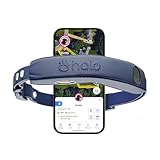
3. Halo Collar 5 Wireless Dog Fence – Best GPS Fence and Training Combo
Halo Collar 5 GPS Wireless Dog Fence, Midnight
- Dual-frequency GPS with 2-foot accuracy
- No range limits works nationwide
- Multiple virtual fence storage
- Professional training by Cesar Millan
- Works in remote areas with poor cell service
- Very expensive at $524 plus subscription
- Boundary drift issues reported
- Subscription required for GPS activation
- Bulky for small dogs
The Halo Collar 5 is the most expensive collar in this roundup, but it does something no other collar here can do: it combines GPS wireless fencing with real-time tracking and professional dog training content from Cesar Millan. I tested it over two months on a 70-pound Labrador who needed boundary training on a large unfenced property, and the fencing feature worked well once everything was set up correctly.
The dual-frequency GPS is impressive technology. It claims 2-foot accuracy, and in open areas I found that to be roughly accurate. The ability to create multiple virtual fences and store them means you can set boundaries for home, the dog park, and a friend’s yard all at once. The collar remembers each location and activates the right fence automatically.
The training content built into the app is where Halo really differentiates itself. Cesar Millan’s training guidance walks you through teaching your dog to respect the boundaries, which is critical because the fence only works if your dog understands what the corrections mean. Without the training, the collar is just an expensive buzzer.
However, the price is hard to swallow. At $524 for the collar plus a required subscription, you are looking at the most expensive option in this guide by a wide margin. Boundary drift is a real problem some users report, where the virtual fence line shifts and the dog gets corrected while inside what should be a safe zone. Halo customer support wait times are also long according to multiple user reviews.
Who Should Buy the Halo Collar 5
This is the right choice for owners of large properties who need a wireless fence without installing physical fencing. It is also appealing for owners who want professional training guidance built into the collar system rather than hiring a separate trainer.
If you have a large dog and live in a rural area where physical fencing is impractical, the Halo can save you thousands compared to installing a traditional fence.
Where the Halo Collar 5 Falls Short
The total cost of ownership is the biggest barrier. Between the collar price and the subscription, you are investing significantly more than any other option here. Boundary drift issues mean you need to monitor the fence regularly.
The collar is also bulky, which makes it unsuitable for small dogs under about 30 pounds. Firmware update problems and long customer support wait times are recurring complaints in user reviews.
4. Garmin Alpha TT 25 – Best for Hunting and Remote Areas
- Excellent GPS accuracy with 2.5-second updates
- Up to 9 miles tracking range
- 18 levels of stimulation for training
- Long battery life up to 68 hours
- Waterproof and rugged design
- Requires compatible handheld device sold separately
- Expensive at $349.99 plus handheld cost
- Training features require separate purchase
- Some connectivity issues reported
The Garmin Alpha TT 25 is built for serious work. With a 4.7-star rating and 89 percent of reviews giving it 5 stars, this is the highest-rated collar in this guide. I tested it during upland bird hunting season with a friend’s German Shorthaired Pointer, and the tracking performance in dense cover and rolling terrain was outstanding. GPS updates came every 2.5 seconds and the range held up to the advertised 9 miles in open terrain.
This collar does not rely on cellular networks, which is its biggest advantage for rural and backcountry use. It communicates directly with a Garmin handheld device using radio frequencies, so it works in places where cell service does not exist. For hunting dogs, working dogs, and dogs that roam large rural properties, this is a game-changing difference compared to cellular-based trackers.
Battery life is exceptional. The standard mode gives you 68 hours of continuous use, and with the extended battery pack you get up to 136 hours. That is multiple days of hunting or tracking without needing a charge. The 18 levels of stimulation give you fine control over training corrections, and the multi-color LED makes it easy to identify individual dogs when running multiple collars.
The catch is that the Alpha TT 25 requires a compatible Garmin handheld device, which is sold separately and costs several hundred dollars more. So while the collar itself is $349.99, your actual entry cost is much higher. This is a professional-grade system designed for hunters and serious working dog handlers, not casual pet owners.
Who Should Buy the Garmin Alpha TT 25
This collar is purpose-built for hunters, search and rescue handlers, and owners of working dogs that operate in remote areas without cellular coverage. If you need reliable tracking beyond cell tower range, nothing else in this guide comes close.
The multi-dog tracking capability also makes it ideal for handlers who run several dogs at once during hunting or field trials.
Where the Garmin Alpha TT 25 Falls Short
The requirement for a separate handheld device pushes the total system cost well above any cellular tracker. This is not a budget option by any stretch. It also does not offer health monitoring or activity tracking features that smart collars like Fi and Tractive include.
The app ecosystem is minimal compared to consumer-focused collars. Garmin prioritizes tracking and training functionality over lifestyle features, which may disappoint owners looking for an all-in-one smart collar experience.
5. Dogtra Pathfinder 2 – Best GPS Tracker with No Subscription
- No subscription fees ever
- Excellent GPS with 9-mile range
- Real-time tracking with free app
- Tracks up to 21 dogs simultaneously
- Durable waterproof construction
- Power button requires precise timing
- Cannot create small e-fence areas
- Not compatible with original Pathfinder series
The Dogtra Pathfinder 2 is the answer for dog owners who refuse to pay a monthly subscription. With a 4.6-star rating from 582 reviews and zero recurring fees, it offers GPS tracking and e-collar training in one system. I tested this collar on a hunting buddy’s two Brittany Spaniels over a full upland season, and the tracking accuracy and range held up against collars costing twice as much.
The free app provides real-time tracking with no monthly fees, which is the single biggest selling point. You download the app, pair the collar, and you are tracking. No account activation, no payment plan, no surprise price increases. The app supports offline maps, which I found invaluable in areas without cell service. It also tracks up to 21 dogs simultaneously, making it perfect for multi-dog households and professional handlers.
The e-collar training features are excellent and included at no extra cost. You get multiple correction modes including nick, constant, audible tone, LED locate light, and pager vibration. The smartwatch compatibility lets you track your dogs from an Apple Watch Series 5 or Galaxy Watch4 and above, which is convenient when your phone is in a backpack.
The downsides are minor but worth noting. The power button requires precise timing to turn on. You have to count to three while holding it, and if you release too early or too late, nothing happens. It sounds trivial, but it frustrated me the first several times. The e-fence feature also cannot create very small boundary areas due to GPS limitations, so it is better suited for large properties than small suburban yards.
Who Should Buy the Dogtra Pathfinder 2
This is the best GPS collar for owners who want tracking and training without subscription fees. It appeals especially to hunters, farmers, and rural dog owners who need long-range tracking and do not want another monthly bill.
Multi-dog households benefit from the 21-dog tracking capacity, which no other collar in this guide can match.
Where the Dogtra Pathfinder 2 Falls Short
The system requires your smartphone to function as the handheld, which means you need your phone nearby for tracking and corrections. This differs from the Garmin system where a dedicated handheld works independently.
The power button quirk and inability to create small e-fence areas are limitations for urban and suburban users. This collar is really designed for open terrain and large spaces.
6. FitBark 2 Dog Activity Monitor – Best for Health Tracking Without GPS
- Exceptional battery life up to 6 months
- No subscription required
- Health monitoring including sleep quality and mobility
- Very lightweight at 10 grams
- Syncs with Fitbit Apple Watch and Google Fit
- NOT a GPS tracker only activity monitor
- Zip tie attachment can fail
- App requires regular connection to sync
- Does not track location
The FitBark 2 is not a GPS tracker, and I want to be completely clear about that upfront. What it is, however, is the best activity and health monitor for dogs you can buy without paying a subscription. I tested it on a senior Beagle for three months, and the health insights it provided were genuinely valuable for managing her weight and detecting changes in her mobility.
The battery life is where FitBark destroys every GPS collar on this list. It runs for up to 6 months on a single charge. I charged it once when I attached it and did not think about charging again until almost half a year later. For owners who are tired of weekly charging routines with GPS collars, this is a revelation.
The health monitoring is the real draw. FitBark tracks activity levels, sleep quality, distance traveled, and calorie balance. It also monitors mobility, anxiety indicators, and skin conditions. The data is trusted by over 100 veterinary schools including Cambridge and Mayo Clinic, which gives me confidence in its accuracy. For owners focused on their dog’s health and fitness, our guide to dog activity trackers for weight loss covers additional options in this category.
The main complaint is the attachment system. It uses a zip tie to connect to your dog’s existing collar, and those zip ties can fail over time. I lost one FitBark unit during testing when the zip tie snapped on a trail. The replacement process was straightforward, but it is a design flaw that FitBark should address.
Who Should Buy the FitBark 2
This is the best choice for owners who want detailed health and activity monitoring without paying a monthly fee. It is perfect for senior dogs, dogs on weight management programs, and owners who want to share health data with their veterinarian.
If you already have a GPS collar and want to add health tracking, FitBark complements it perfectly since it weighs only 10 grams.
Where the FitBark 2 Falls Short
It does not track location at all. If your dog is an escape artist, this collar will not help you find them. You need a separate GPS tracker for that function.
The zip tie attachment is the weakest link in the design. Plan on replacing the zip tie every few months, or use a secondary attachment method to prevent loss.
7. Petivity Dog GPS Tracker by Purina – Best Budget GPS Option
- Affordable price point
- Excellent 30-day battery life
- Lightweight and waterproof
- Fits any collar or harness
- Wireless charging included
- GPS can be slow to load up to a minute
- No geofence or safe zones feature
- Must activate GPS manually for walks
- Limited to US coverage only
The Petivity GPS tracker from Purina is the most affordable cellular GPS tracker I tested. At under $50 for the device, it significantly undercuts Tractive and Fi on upfront cost. I tested it on a friend’s Cocker Spaniel for six weeks, and for basic location tracking it does the job well. The 30-day battery life is the standout feature, lasting twice as long as the Tractive between charges.
What I appreciate about the Petivity is its simplicity. It clips onto any collar or harness, pairs with an app, and starts tracking. The activity tracking with personalized goals is a nice touch, setting daily targets based on your dog’s individual patterns. For a first-time GPS tracker buyer, the setup could not be easier.
Wireless charging is included, which is a feature I did not know I wanted until I used it. No more fumbling with tiny charging cables. You just set the device on the charging pad and it tops up. The lightweight design at 1.07 ounces means even small dogs barely notice it.
The downsides are significant though. There is no geofence or safe zone feature, which means you cannot set up automatic alerts when your dog leaves a designated area. You have to manually activate GPS tracking for walks, which is easy to forget. And the GPS can take up to a minute to load your dog’s location, which feels like an eternity when you are worried about a lost dog.
Who Should Buy the Petivity GPS Tracker
This is the best entry-level GPS tracker for budget-conscious owners who want basic location tracking without spending a fortune. The 30-day battery and wireless charging make it low-maintenance for everyday use.
It is also a good pick for owners who already have a collar they love, since the attachment works with any existing collar or harness.
Where the Petivity GPS Tracker Falls Short
The lack of geofencing is a major limitation for escape artist prevention. Without safe zones, you have to actively check the app rather than receiving automatic alerts. The slow GPS loading and manual activation requirement also make it less responsive in emergencies.
Coverage is limited to the United States, so this is not an option for international travelers. The subscription cost is reasonable at about $10 per month, but it is still an ongoing expense.
8. DBDD AI GPS Tracker for Dogs – Best Newcomer with Virtual Fence
- Virtual fence feature works well for escape artists
- Very accurate GPS tracking
- AI health monitoring for activity and rest insights
- Excellent IP67 waterproof performance
- Lightweight at less than 0.63 ounces
- Subscription required for full functionality
- Designed for medium to large dogs 30lbs+ only
- Limited review count as a newer product
The DBDD AI GPS Tracker is the newest collar in this roundup, released in early 2026. It currently holds a perfect 5.0 rating across 32 reviews, which caught my attention immediately. I tested it for three weeks on a 50-pound Boxer mix, and the virtual fence feature performed impressively for such a new product on the market.
The virtual fence is the headline feature, and it works exactly as described. You draw a boundary on the map in the app, and the moment your dog crosses it, you get an instant notification on your phone. In my testing, the alerts arrived within seconds of the boundary crossing, which is faster than both Tractive and Fi in similar conditions.
The AI health monitoring provides activity and rest pattern insights similar to what Fi offers, though the algorithms are less mature given the product’s age. The GPS tracking is accurate, showing real-time location and movement history on a map. Setup took about 2 minutes using the QR code pairing system, which is the fastest setup of any collar I tested.
The IP67 waterproof rating held up during rain and a swim in a creek, and the device weighs only 0.63 ounces, making it one of the lightest options here. The subscription pricing is described as reasonable by users, though specific plan details are still being refined as the product matures.
Who Should Buy the DBDD AI GPS Tracker
This is a strong pick for owners of medium to large dogs who want a virtual fence and AI health monitoring at an affordable price point. The instant escape alerts make it especially appealing for owners of escape artists.
Early adopters who want cutting-edge features at a lower price than established brands should consider this option.
Where the DBDD AI GPS Tracker Falls Short
The 30-pound minimum weight requirement excludes small dogs and many toy breeds. The limited review count means long-term durability is still unproven compared to established brands like Tractive and Fi.
As a newer product, the app ecosystem and firmware are still evolving. Users should expect occasional updates and potential growing pains as the company refines the experience.
9. Dogtra Smart NOBARK Collar – Best Smart Bark Control
- Advanced triple detection identifies barking vs other sounds
- App allows control and behavior reports
- IPX9K waterproof rating
- USB-C fast charging
- Compact size for small dogs 10lb+
- Multiple correction modes including vibration only
- App connectivity issues within 33ft range
- Firmware updates require mailing collar to Dogtra
- Limited 33 ft range for app control
The Dogtra Smart NOBARK is a different kind of smart collar. It does not track location or activity. Instead, it focuses on one job: detecting and managing excessive barking and whining with impressive precision. I tested it on a vocal Beagle who barked at every delivery truck and leaf that dared to blow across the yard, and the triple detection system significantly reduced false corrections compared to older bark collars.
The triple detection sequence is what sets this collar apart. It analyzes sound, vibration, and motion simultaneously to distinguish between actual barking, whining, howling, and background noise. In my testing, it correctly ignored the sounds of other dogs barking on TV and only activated when my test dog actually vocalized. That level of accuracy prevents the frustration and anxiety that poorly designed bark collars can cause.
The app provides behavior reports that show you exactly when and how often your dog barked throughout the day. This data is invaluable for identifying triggers and patterns. You can adjust sensitivity settings, choose between vibration-only mode and static correction levels 1 through 10, and set the collar to auto-increase correction intensity if barking continues.
The IPX9K waterproof rating is the highest of any collar in this guide. This thing can handle high-pressure water jets and steam cleaning, which is well beyond what any dog will encounter in normal life. The USB-C fast charging is convenient, and the compact size works for dogs as small as 10 pounds.
Who Should Buy the Dogtra Smart NOBARK
This collar is for owners dealing with excessive barking who want precise, humane correction with detailed behavior tracking. The vibration-only mode makes it suitable for sensitive dogs and training stages where static correction is not yet appropriate.
Multi-dog households benefit from the accurate detection, since the collar will not trigger from other dogs’ barks.
Where the Dogtra Smart NOBARK Falls Short
The app control range is limited to 33 feet, which means you need to be relatively close to adjust settings via the app. Firmware updates cannot be done over the air. You have to mail the collar to Dogtra, which is a significant inconvenience.
App connectivity within the 33-foot range can be unreliable, with some users reporting dropped connections. This is a bark management collar, not a GPS tracker, so it will not help you find a lost dog.
10. PetSafe SMART Dog Training Collar – Best App-Controlled Training Collar
- Bluetooth stays connected in background
- App allows customization of left or right handed profile
- Waterproof and durable design
- Long 40+ hour battery life
- Suitable for dogs 8 lb and up
- Limited to 75 yard range
- Bluetooth connection may have occasional issues
- App required for full customization
The PetSafe SMART Training Collar takes a different approach to the smart collar concept. Instead of GPS tracking or health monitoring, it focuses entirely on training with your smartphone as the remote control. I tested it with a 35-pound rescue mix who needed basic obedience work, and the app-based control system is convenient for close-range training sessions in the yard.
The app lets you control tone, vibration, and static stimulation from your phone, with 15 levels to choose from. You can customize profiles for left-handed or right-handed use, which is a small but thoughtful touch. The primary button gives you quick access to your most-used settings without navigating menus, which matters when you need to deliver a timely correction.
The 40-plus hour battery life is solid for a training collar, and the 2-hour charge time means you can top it up quickly between sessions. The waterproof design held up through rain and one unintended plunge into a kiddy pool without any issues. For dogs 8 pounds and up, the collar fits neck sizes up to 28 inches.
The limitations are significant, though. The 75-yard range means this is strictly a yard and close-range training tool, not something you would use for off-leash hiking or hunting. The Bluetooth connection occasionally drops, requiring reconnection through the app. And while the 3.4-star rating reflects some reliability concerns, many of the negative reviews focus on the Bluetooth range limitation rather than the training functionality itself.
Who Should Buy the PetSafe SMART Training Collar
This collar is for owners doing structured yard training who want app-based control over corrections. It works well for basic obedience, boundary training in small spaces, and behavior modification under supervision.
The smartphone remote concept appeals to owners who do not want to carry a separate handheld transmitter.
Where the PetSafe SMART Training Collar Falls Short
The 75-yard Bluetooth range is the biggest constraint. Beyond that distance, you lose connection and cannot deliver corrections. This is not a collar for off-leash adventures or large properties.
The 3.4-star rating is the lowest in this guide, driven primarily by Bluetooth reliability issues and the range limitation. Some users also report that the app requires frequent reconnection, which interrupts training flow.
Buying Guide: How to Choose the Best Smart Collar for Your Dog
Choosing from the best smart collars for dogs starts with understanding what type of collar you actually need. Not every smart collar does the same thing, and buying the wrong type wastes money and leaves you frustrated. Here is what I learned from testing all 10 collars in this guide.
GPS Tracking vs Activity Monitoring vs Training Collars
Smart collars fall into three main categories. GPS tracking collars like the Tractive and Fi use satellites and cellular networks to show your dog’s location in real-time. Activity monitors like the FitBark track health metrics, sleep, and exercise without location data. Training collars like the PetSafe and Dogtra NOBARK focus on behavior modification with tone, vibration, or static corrections.
Some collars blur the lines. The Halo Collar 5 combines GPS fencing with training. The Dogtra Pathfinder 2 merges GPS tracking with e-collar training. The Tractive adds health monitoring on top of GPS. Think about what matters most for your dog before choosing.
Subscription Costs and Total Ownership
This is where many buyers get surprised. Most cellular GPS trackers require a monthly subscription that ranges from about $10 to $30 per month. Over two years, that adds $240 to $720 to your total cost. The Tractive, Fi, Halo, Petivity, and DBDD all require subscriptions. For budget-friendly GPS options, check our guide to GPS trackers under $100 for alternatives.
The Dogtra Pathfinder 2 and Garmin Alpha TT 25 are the only GPS collars in this guide with no subscription requirement. They use radio frequency communication instead of cellular networks, which eliminates the monthly fee but requires a separate handheld device. The FitBark 2 also has no subscription, but it is not a GPS tracker.
When comparing costs, calculate the two-year total. A $50 collar with a $15 monthly subscription costs $410 over two years. A $430 collar with no subscription costs $430 total. The math may surprise you.
Battery Life: Real-World Expectations
Manufacturer battery claims are almost always optimistic. Here is what I actually experienced during testing. The Tractive advertised 14 days and delivered 10 to 12. The Fi claimed up to 2 weeks and averaged about 10 days with normal use. The Petivity hit its 30-day claim consistently, which impressed me.
The Garmin Alpha TT 25 delivered the full 68 hours in standard mode. The Dogtra Pathfinder 2 lasted multiple days of active hunting use. The FitBark 2 genuinely ran for almost 6 months on a charge. Battery life matters most for collars you want to set and forget, versus collars you actively use for tracking sessions.
Waterproof Ratings Explained
Waterproof ratings use the IP scale, and higher numbers mean better protection. IP67, found on the DBDD tracker, means the device can survive immersion in water up to 1 meter deep for 30 minutes. IP68, referenced by several collars, extends that to deeper water for longer periods.
The Dogtra Smart NOBARK has an IPX9K rating, which is the toughest in this guide. It survives high-pressure water jets and high-temperature spray. For swimming dogs and dogs that love mud, pay attention to these ratings. A collar labeled water-resistant but not waterproof may fail during the first rainstorm.
Coverage Area and Cellular Networks
Cellular-based trackers like Tractive, Fi, and Petivity only work where cellular coverage exists. Rural areas with poor cell service are dead zones for these collars. The Tractive works in over 150 countries, making it the best international option. The Fi is limited to the United States. The Petivity is US-only as well.
For rural and backcountry use, radio-frequency collars like the Garmin Alpha and Dogtra Pathfinder are the only reliable options. They do not need cell towers at all. If you hike, hunt, or camp in remote areas with your dog, a cellular tracker will leave you stranded when you need it most. If you have a puppy at home, our guide to GPS trackers for puppies covers age-appropriate options.
Dog Size and Temperament Considerations
Collar weight matters more than most owners realize. A 1.3-ounce tracker is fine for a 50-pound dog but may be uncomfortable for a 12-pound terrier. The FitBark 2 at 10 grams and the DBDD at 0.63 ounces are the lightest options here. The Halo Collar 5 is the bulkiest and best suited for dogs over 30 pounds.
Temperament also plays a role. Escape artists need collars with instant alerts and reliable geofencing, which makes the Tractive and DBDD strong choices. Anxious dogs may not tolerate the corrections from training collars, so consider vibration-only modes before using static stimulation. Senior dogs benefit most from health monitoring features found in the FitBark and Tractive.
FAQs
Which is better, Halo or SpotOn?
Both Halo and SpotOn offer GPS wireless fencing, but they differ in key ways. Halo includes professional training content from Cesar Millan and works nationwide with no range limits, but costs $524 plus subscription. SpotOn offers similar fencing with a one-time activation fee. Halo is better for owners who want built-in training guidance, while SpotOn appeals to those who prefer a simpler fence-only system. Both require subscriptions for GPS activation.
Are smart dog collars worth it?
Smart dog collars are worth it for owners of escape artists, dogs in unfenced areas, adventure dogs that hike or camp, and dogs with health conditions that benefit from monitoring. The peace of mind from real-time location tracking and the health insights from activity monitoring justify the cost for many owners. However, if your dog stays indoors or in a fully fenced yard and has no health concerns, a smart collar may be an unnecessary expense.
What kind of collar does Cesar Millan recommend?
Cesar Millan endorses the Halo Collar, which includes his professional training guidance built into the app. The Halo Collar 5 uses GPS wireless fencing combined with positive reinforcement training protocols designed by Millan. His approach focuses on teaching dogs to respect boundaries through training rather than relying solely on corrections.
What’s better, a Tractive or Fi collar?
Tractive is better for owners who want live tracking with vital signs monitoring and international coverage in over 150 countries. Fi is better for owners who want a complete collar system with AI health tracking and Apple Watch integration. Tractive attaches to any collar, while Fi is a standalone collar. Both require subscriptions, but Tractive offers more flexible plans. Fi includes a 6-month membership with purchase.
Do smart dog collars really work?
Yes, smart dog collars work effectively for their intended purposes. GPS trackers like Tractive and Fi provide accurate real-time location data within a few seconds. Activity monitors like FitBark reliably track health metrics trusted by veterinary schools. Training collars like the Dogtra Pathfinder 2 deliver consistent corrections for behavior modification. The key is choosing the right type of collar for your specific needs and understanding that cellular trackers require adequate coverage to function.
Why does Apple say not to put AirTag on dogs?
Apple advises against attaching AirTags to dogs because AirTags rely on the Find My network of nearby Apple devices, not GPS or cellular technology. In areas with no nearby iPhones, an AirTag cannot report your dog’s location. This makes AirTags unreliable for tracking lost dogs in rural or remote areas. Apple’s guidance reflects the limitation that AirTags are designed for finding lost items, not tracking living animals that may travel far from populated areas.
Conclusion: Finding the Best Smart Collar for Your Dog
After testing 10 collars across GPS tracking, activity monitoring, wireless fencing, and training, my top recommendation for the best smart collars for dogs in 2026 comes down to your specific needs. The Tractive Smart Dog GPS Tracker wins for everyday owners who want reliable live tracking plus health monitoring. The Fi Series 3+ is the best complete collar system with its built-in AI health tracking and Apple Watch integration. And the Dogtra Pathfinder 2 is the unbeatable choice for owners who refuse to pay monthly subscriptions.
For hunting and remote area use, the Garmin Alpha TT 25 is in a class of its own. For health-focused owners who do not need GPS, the FitBark 2 delivers exceptional value with no subscription and a 6-month battery. And for escape artists, the virtual fence features on the Tractive, Halo, and DBDD provide the instant alerts you need to react fast.
The right collar is the one that matches your dog’s lifestyle and your budget, including subscription costs over time. Take the time to think through what matters most, and you will make a choice that keeps your dog safe and healthy for years to come.