
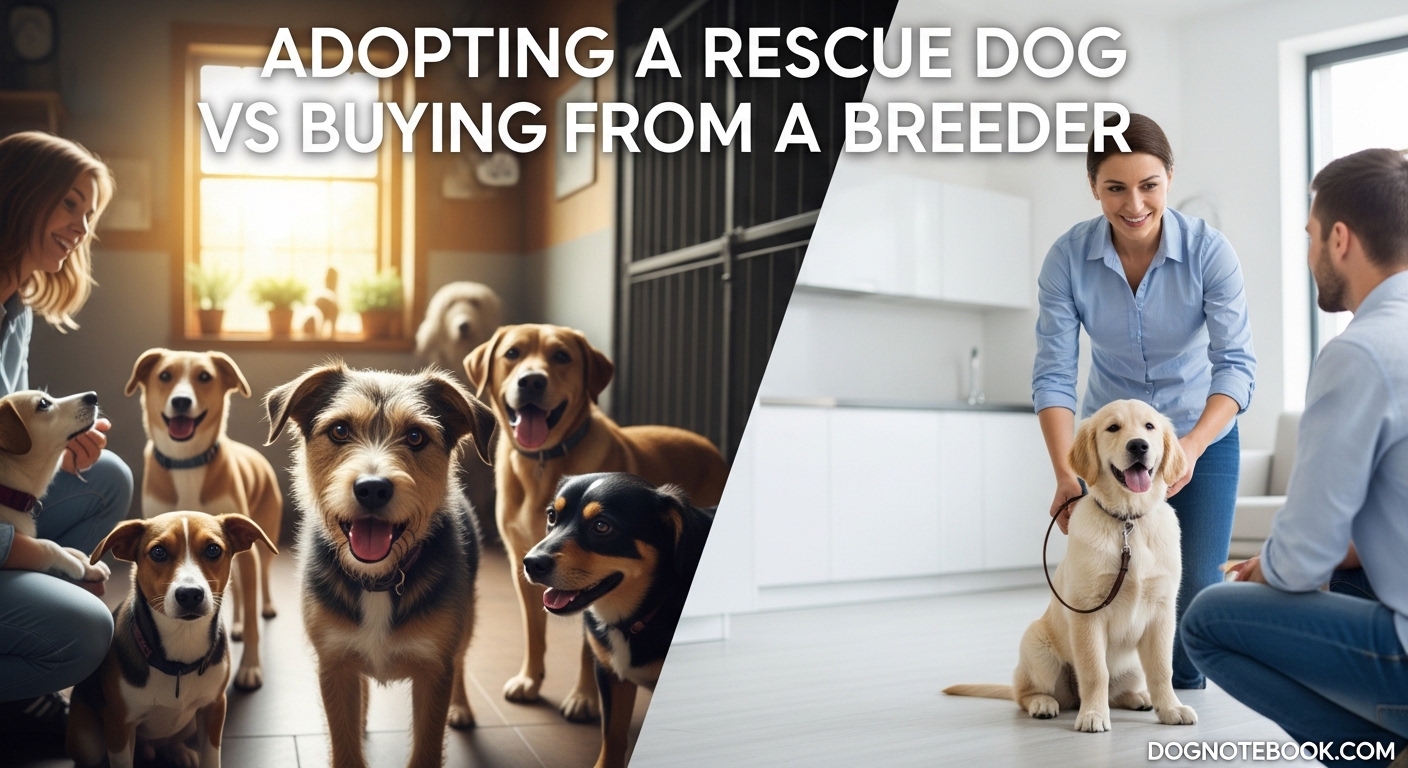
Bringing a dog into your life is one of the most rewarding decisions you will ever make. But once you start researching, you quickly realize there are two very different paths: adopting a rescue dog vs buying from a breeder. Each option comes with its own set of advantages, trade-offs, and considerations that go far beyond the initial price tag.
I have spent years talking with dog owners who chose both routes. Some rescued senior dogs and found their soulmates. Others waited months for the right breeder puppy and would do it again in a heartbeat. The truth is, neither choice is universally better. What matters is making an informed decision that fits your lifestyle, experience level, and expectations.
This guide breaks down everything you need to know about adopting a rescue dog vs buying from a breeder in 2026. We will compare costs, health backgrounds, behavioral considerations, training needs, and the transition process so you can move forward with confidence.
Table of Contents
Why This Decision Matters So Much
A dog is a 10 to 15 year commitment, sometimes longer. The path you choose to find your companion affects your daily routine, your budget, and the kind of relationship you build with your pet from day one. This is not a decision to rush.
Rescue dogs and breeder dogs can both become incredible family members. But they often arrive in your life at different stages, with different needs, and with very different backstories. Understanding those differences before you commit saves you stress and gives your future dog the best possible start in your home.
Our team has spoken with first-time owners who felt overwhelmed by a rescue’s behavioral challenges, and experienced handlers who found breeder puppies surprisingly demanding. Your personal situation matters more than any general rule. Let’s get into the specifics.
Cost Comparison: Adoption Fees vs Breeder Costs
Adoption fees from shelters and rescue organizations typically range from $200 to $500, which usually includes spaying or neutering, initial vaccinations, microchipping, and sometimes a basic health exam. Buying a dog from a reputable breeder generally costs between $1,000 and $3,500 or more, with some popular breeds exceeding $5,000.
The upfront difference is significant. But the real cost picture becomes clearer when you look at what each fee includes and what you still need to pay for separately.
What Adoption Fees Usually Cover
Most shelters and rescue organizations bundle several services into their adoption fee. You can typically expect spay or neuter surgery, age-appropriate vaccinations (rabies, distemper, parvo), microchip registration, and a basic veterinary checkup. Some rescues also include flea and tick treatment, deworming, and even a short period of pet insurance.
This means your out-of-pocket medical costs in the first few months are often limited to a regular wellness visit and whatever supplies you need for your new companion.
What Breeder Costs Include (and What They Do Not)
A reputable breeder’s fee reflects the cost of genetic health testing for the parents (OFA certifications for hips and elbows, CERF eye exams, breed-specific DNA panels), prenatal care, quality nutrition for the mother and puppies, early socialization programs, and sometimes the first round of vaccinations and deworming.
However, you will still need to pay for spaying or neutering, additional vaccinations, microchipping, and your own initial vet visits. Those extra costs can add another $500 to $1,000 in the first year.
Long-Term Cost Outlook
Over the lifetime of your dog, the difference in initial cost becomes less dramatic. Annual veterinary care, food, grooming, toys, boarding, and unexpected medical expenses apply equally to both rescue and breeder dogs. A dog with known genetic health clearances from a breeder may have fewer inherited conditions, but any dog can face illness or injury.
Budget for $1,000 to $2,000 per year in ongoing costs regardless of where your dog comes from. Emergency vet visits can push that number much higher in any given year.
Health Considerations: Genetic Testing and Screening
One of the most common reasons people choose a breeder is the ability to know and verify the health history of their dog’s parents. Reputable breeders invest in genetic testing and health screenings that can predict and reduce the risk of inherited conditions.
What Reputable Breeders Test For
A responsible breeder will have OFA (Orthopedic Foundation for Animals) certifications for hip and elbow dysplasia in both parents. They should also provide CERF eye exam results and breed-specific DNA testing for conditions common to that breed. For example, Labrador Retrievers should be tested for exercise-induced collapse and progressive retinal atrophy, while German Shepherds should be screened for degenerative myelopathy.
You should receive documentation for all of these tests, not just a verbal assurance that the parents are healthy. If a breeder cannot produce this paperwork, that is a warning sign.
What You Know (and Do Not Know) With a Rescue Dog
Rescue dogs often come with limited or no health history. Shelters perform basic wellness exams and treat immediate medical needs, but they rarely have access to the dog’s full genetic background or parental health records. This means you accept some unknowns when you adopt.
That said, many rescue dogs live long, healthy lives with no major issues. Mixed-breed dogs in particular often benefit from genetic diversity, which can reduce the risk of inherited conditions that purebreds face. Our team has heard from countless owners whose rescue dogs stayed healthy well into their teen years.
If you adopt from a foster-based rescue, the foster family can often give you detailed observations about the dog’s current health, energy level, eating habits, and any medical concerns they noticed during the foster period. This real-world information is sometimes more useful than a pedigree chart.
Behavioral Considerations and Temperament
Temperament is where the rescue vs breeder conversation gets personal. Both paths can lead to dogs with wonderful personalities, but the way you evaluate and predict behavior differs significantly.
Predictability With Breeder Puppies
Breeder puppies offer something rescue dogs usually cannot: the ability to meet the parents and observe their temperament firsthand. If both parent dogs are calm, friendly, and well-socialized, there is a reasonable expectation that their puppies will carry similar traits. Breeders who prioritize temperament in their breeding program can give you a strong sense of what to expect.
You also get to raise the puppy from 8 to 10 weeks old, which means you control the entire socialization window. This is the critical period between 3 and 14 weeks when puppies form their lasting impressions of the world. A well-socialized puppy raised in a home environment with positive exposures to people, sounds, and experiences has a strong foundation for good behavior.
What You See Is What You Get With Adult Rescues
One advantage of adopting an adult rescue dog is that their personality is already developed. You can observe their actual temperament, energy level, and behavior rather than predicting based on breed traits and parent observation. A 3-year-old rescue dog who is calm, affectionate, and good with children is going to stay that way. You are not rolling the dice on what a puppy might become.
The challenge is that some rescue dogs carry behavioral baggage from previous experiences. Fear, anxiety, resource guarding, and leash reactivity are common in dogs who had difficult early lives. These behaviors are manageable with patience and often with professional training, but they require a commitment that not every owner is prepared for.
Forum discussions on r/dogs consistently highlight that predictability in size and temperament is one of the top reasons people choose breeders. At the same time, many experienced owners report that their rescue dogs became the most loyal and loving companions they have ever had, despite initial behavioral hurdles.
The 3-3-3 Rule for Rescue Dog Transitions
If you decide to adopt a rescue dog, understanding the 3-3-3 rule will transform your experience. This framework describes the typical adjustment pattern for dogs entering a new home, and it is one of the most practical tools for setting realistic expectations.
First 3 Days: Overwhelm and Shutdown
During the first three days, your new rescue dog is likely overwhelmed. They may refuse to eat, hide under furniture, or seem completely shut down. Some dogs do the opposite and become frantic with excitement. Both reactions are normal.
This is not the time to introduce them to every friend and family member. Keep things quiet and predictable. Set up a safe space with a crate or a bed in a low-traffic area. Let the dog approach you on their terms. Offer food and water but do not force interaction.
First 3 Weeks: Settling In and Testing Boundaries
By the third week, most dogs start to settle into a routine. They learn where to go to the bathroom, when mealtime happens, and who the people in the household are. This is also when some dogs begin testing boundaries. They might ignore commands they seemed to understand, chew on things they should not, or show new behaviors you did not see in the shelter.
Stay consistent with rules and routines. This is the time to establish a predictable schedule for feeding, walks, play, and rest. Positive reinforcement training should begin during this phase, even if it is just the basics: sit, stay, come, and leash manners.
First 3 Months: True Personality Emerges
At around three months, most rescue dogs finally show their true personality. The anxious or shut-down behavior fades. Their real energy level, play style, and attachment patterns become clear. This is when many owners say their rescue dog finally feels like family.
If you are still dealing with significant behavioral issues at the three-month mark, it may be time to consult a professional trainer who specializes in rescue dogs. The investment in professional help during this period can prevent years of frustration.
How to Find a Reputable Breeder (and Avoid Puppy Mills)
If you decide that buying from a breeder is the right path for your family, finding a reputable one is the single most important step you will take. A good breeder is a partner in your dog’s life, not just a seller. A bad one can leave you with a sick puppy and no support.
Signs of a Reputable Breeder
A responsible breeder will welcome your questions and ask you just as many in return. They want to know where their puppy is going. They should be happy to show you where the dogs live, introduce you to the puppy’s parents, and provide complete health testing documentation.
Look for breeders who are members of their national breed club, participate in dog sports or conformation events, and produce one or two litters per year rather than operating at high volume. They should provide a written health guarantee and be willing to take the puppy back at any point in its life if you can no longer keep it.
Questions to Ask Any Breeder
Before committing, ask these specific questions:
1. Can I see the OFA and health testing results for both parents?
2. How many litters do you produce per year?
3. Can I visit your facility and meet the puppy’s parents?
4. What socialization do the puppies receive before they go home?
5. What health guarantee do you provide, and what does it cover?
6. At what age do puppies go to their new homes?
7. Can I talk to previous puppy buyers as references?
Red Flags That Signal a Puppy Mill or Backyard Breeder
Run, do not walk, if you encounter any of these warning signs. The breeder refuses to let you visit their facility or meet the parents. They always have puppies available in multiple breeds. They cannot produce health testing documentation. They pressure you to make a quick decision or offer to ship a puppy without meeting you. They sell puppies younger than 8 weeks old.
Puppy mills prioritize profit over health. Dogs from these operations often have serious health issues, poor temperaments, and no socialization. Buying from one perpetuates the cycle. If something feels off about a breeder, trust your instincts and look elsewhere.
What to Ask a Rescue Organization Before Adopting
Just as you should vet a breeder, you should ask questions before adopting from a rescue. Good rescue organizations want you to make the right match and will be transparent about each dog’s needs.
Ask about the dog’s medical history, including vaccinations, spay/neuter status, and any known conditions. Find out whether the dog has been living in a shelter environment or a foster home. Foster-based rescues can give you detailed behavioral insights because the dog has been living in a normal household.
Ask specifically about how the dog behaves around children, other dogs, cats, and strangers. Request information about any behavioral assessments or temperament tests the rescue has performed. Finally, ask about the organization’s return policy and whether they offer post-adoption support. A rescue that stands behind its animals will help you troubleshoot issues after you bring your dog home.
Training and Time Commitment Differences
Training is where the rescue vs breeder conversation shifts from theory to daily reality. Both paths require time and patience, but the type of training you will do differs in important ways.
Starting From Scratch With a Breeder Puppy
A breeder puppy is essentially a blank slate. You will handle house training, crate training, basic obedience, leash manners, and socialization from the very beginning. This process takes most of the first year and requires a consistent daily commitment. Puppies need multiple training sessions per day, frequent potty breaks (including middle-of-the-night outings for young puppies), and constant supervision.
The advantage is that you shape every behavior from day one. No bad habits to unlearn. No mystery trauma to work through. If you have the time and patience, raising a puppy is incredibly rewarding.
Unlearning and Rebuilding With a Rescue Dog
Rescue dogs often come with some training already in place. Many know basic commands, are house trained, and walk reasonably well on a leash. But some also carry unwanted behaviors from previous homes: jumping on people, pulling on the leash, anxiety-based habits, or fear responses to certain triggers.
Your training time with a rescue dog may focus more on building trust and reshaping existing behaviors than teaching fundamentals from scratch. This work can be slower and requires more patience, but many owners find it deeply fulfilling. Rescue dogs who learn to trust after a difficult past often form exceptionally strong bonds with their new families.
Reddit users on r/puppy101 frequently note that the first three months with a rescue dog are the most challenging but also the most transformative. Consistent, positive training during this window sets the stage for years of companionship.
Adopting a Rescue Dog vs Buying from a Breeder: Which Is Right for You
There is no single right answer to this question. The best choice depends on your experience, your household, your schedule, and what you want from the relationship with your dog.
Rescue Adoption May Be Right for You If
You are open to a dog of any age and are willing to work through an adjustment period. You want to give a second chance to a dog in need. You appreciate knowing an adult dog’s actual personality rather than predicting from breed traits. You are comfortable with some unknowns in health and behavioral history. Your budget favors a lower upfront cost.
A Breeder Puppy May Be Right for You If
You need predictable size, energy level, or breed-specific traits for activities like agility, hunting, or service work. You want to raise a puppy from the earliest possible age and control the entire socialization process. You have specific health requirements and want documented genetic testing. You have the time and flexibility to devote to a puppy’s intensive first year.
If you are still exploring which breed might suit your family, you may want to compare dog breed options before making this bigger decision. Understanding breed characteristics can help whether you adopt or buy.
FAQ
What are the benefits of adopting a rescue dog?
Adopting a rescue dog saves a life, costs significantly less upfront ($200-500 vs $1,000-3,500+ from a breeder), and often includes spay/neuter, vaccinations, and microchipping in the adoption fee. Adult rescue dogs have established personalities so you know what you are getting, and many are already house trained with basic manners. Rescue adoption also reduces demand for puppy mills and opens a shelter space for another dog in need.
How much does it cost to adopt vs buy from a breeder?
Adoption fees typically range from $200 to $500 and include spaying/neutering, vaccinations, and microchipping. Buying from a reputable breeder costs $1,000 to $3,500 or more, plus you will pay separately for spay/neuter surgery, additional vaccinations, and microchipping ($500-1,000 extra in the first year). Over the dog’s lifetime, ongoing costs of $1,000-2,000 per year apply equally to both.
What are the risks of buying from a breeder?
The main risks include unknowingly supporting a puppy mill or backyard breeder if you do not research thoroughly, paying a high price for a puppy with undocumented health issues, and dealing with inherited genetic conditions if the breeder did not perform proper health testing. Some breeders also prioritize appearance over temperament, which can lead to behavioral challenges despite the higher cost.
What should I know before adopting a rescue dog?
Before adopting, understand the 3-3-3 rule: expect 3 days of overwhelm, 3 weeks of settling in, and 3 months before the dog’s true personality emerges. Ask the rescue about medical history, behavioral assessments, and how the dog does with children and other pets. Be prepared for an adjustment period that requires patience, consistency, and possibly professional training. Have a safe space set up at home before bringing your new dog through the door.
Why do people choose breeders over rescues?
People choose breeders for predictable size, temperament, and energy level tied to specific breeds. Breeders provide documented genetic health testing (OFA certifications, DNA panels) that reduces the risk of inherited conditions. Buyers can meet the puppy’s parents, raise the dog from 8-10 weeks old, and control the entire socialization process. This predictability is especially important for first-time owners, families with young children, or people who need specific breed traits for work or sport.
Making Your Decision with Confidence
Whether you choose adopting a rescue dog vs buying from a breeder, you are making a commitment to care for a living being for the next decade or more. Both paths lead to incredible companions. What matters most is that you make your choice with open eyes and honest self-assessment.
If you decide on rescue, prepare for the 3-3-3 adjustment period and find a support system for the early weeks. If you choose a breeder, do your homework on health testing and visit the facility before committing. Either way, you are about to gain a loyal friend who will change your life in ways you cannot yet imagine.
Take your time with this decision. Talk to rescue organizations and breeders alike. Visit shelters, attend dog events, and spend time with dogs of different ages and backgrounds. The right dog for you is out there, and now you have the tools to find them.