
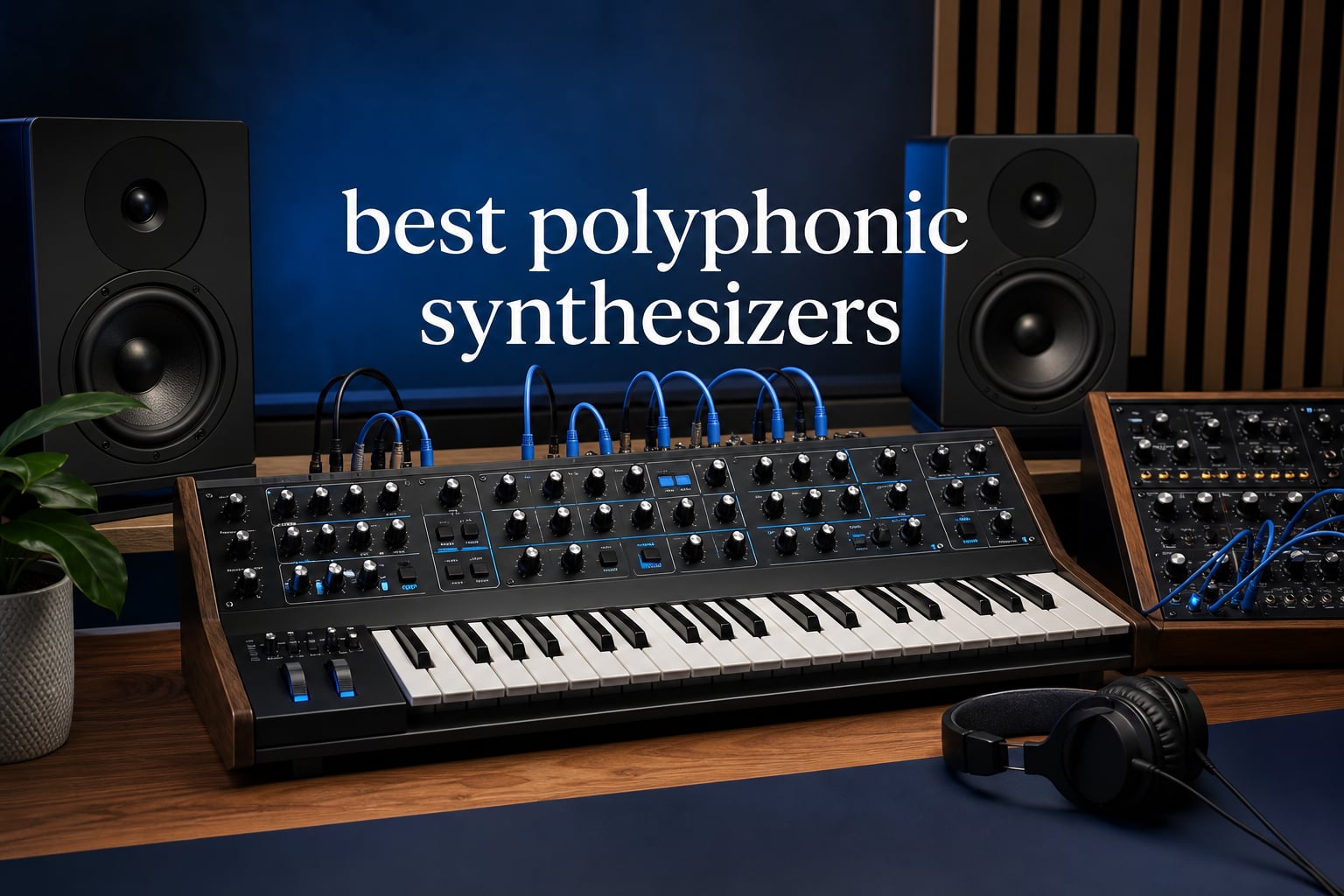
If you have ever tried playing a full chord on a mono synth and felt that immediate frustration, you already know why polyphonic synthesizers exist. A polyphonic synthesizer is an electronic instrument capable of playing multiple notes simultaneously, typically ranging from 4 to 16 or more voices, which lets you form chords, build layered pads, and craft rich harmonic textures that a monophonic instrument simply cannot produce. Whether you are producing ambient soundscapes in the studio or performing live with full harmonic arrangements, polyphony is what makes that possible.
Our team spent months comparing 12 of the best polyphonic synthesizers on the market, covering everything from sub-$400 budget modules to flagship workstations pushing past $4,000. We looked at voice count, sound engine type, key feel, modulation depth, connectivity, and real-world usability for both studio and stage. We also dug into forum discussions on Reddit and GearSpace to see what actual owners say after living with these instruments daily.
What we found is that there is no single winner for everyone. The best polyphonic synthesizers in 2026 span analog warmth, digital flexibility, and hybrid engines that blend both worlds. Some musicians want fat analog bass and leads, while others need deep wavetable morphing or FM textures for sound design. This guide breaks down exactly what each synth does well, who it is built for, and where it falls short so you can make the right call for your setup and budget.
Table of Contents
Top 3 Picks for Best Polyphonic Synthesizers in 2026
Before we dive into all 12 reviews, here are our three standout picks across different price points and use cases. These three earned their spots through a combination of sound quality, build, value, and community consensus across forums like r/synthesizers.

The ASM Hydrasynth Explorer took our top spot because it packs 8-voice polyphony, genuine polyphonic aftertouch, and MPE compatibility into a compact instrument that costs far less than competitors with similar depth. The Korg minilogue remains the community favorite for first-time analog buyers who want real voltage-controlled oscillators without breaking the bank. And the Yamaha Montage M8X sits at the flagship end with 400 notes of polyphony across three engines and an 88-key graded hammer action that rivals any stage piano.
Best Polyphonic Synthesizers in 2026: Quick Overview
Here is a side-by-side look at all 12 synthesizers we tested. This comparison table covers the core specs so you can quickly narrow down which models fit your needs before reading the full reviews below.
| Product | Specifications | Action |
|---|---|---|
 Behringer PRO-800 Behringer PRO-800 |
|
Check Latest Price |
 Roland JX-08 Roland JX-08 |
|
Check Latest Price |
 Yamaha REFACE CS Yamaha REFACE CS |
|
Check Latest Price |
 Arturia MiniFreak Arturia MiniFreak |
|
Check Latest Price |
 Korg minilogue Korg minilogue |
|
Check Latest Price |
| ASM Hydrasynth Explorer |
|
Check Latest Price |
 Behringer DEEPMIND 12 Behringer DEEPMIND 12 |
|
Check Latest Price |
 Elektron Digitone II Elektron Digitone II |
|
Check Latest Price |
 Roland JUNO-X Roland JUNO-X |
|
Check Latest Price |
 Novation Summit Novation Summit |
|
Check Latest Price |
 Arturia PolyBrute Arturia PolyBrute |
|
Check Latest Price |
 Yamaha Montage M8X Yamaha Montage M8X |
|
Check Latest Price |
1. Behringer PRO-800 – Budget 8-Voice Analog Powerhouse
- Pure analog signal path
- Massive unison bass tones
- Great value for 8 voices
- Built-in sequencer
- Knob-per-function layout missing
- Plastic build quality
- Limited modulation routing
The Behringer PRO-800 caught us off guard in the best way possible. Getting 8 voices of true analog polyphony at this price point felt almost too good to be true when we first unboxed it. The synth is based on the architecture of the legendary Sequential Prophet-600, and that lineage shows in the warm, vintage character of the oscillators.
Each voice carries two VCOs with up to six simultaneous oscillator shapes, which gives you a surprisingly wide tonal palette. The unison mode stacks all 8 voices into a single massive monophonic patch that sounds enormous for bass lines and lead work. We spent an afternoon just exploring unison patches and were genuinely impressed by the weight and thickness.
Now, the trade-offs. The build quality is functional but clearly budget-oriented, with plastic knobs and a lightweight chassis that does not feel like a premium instrument. There is no full knob-per-function control surface, which means you will be doing some menu diving to access deeper parameters. The 400 preset slots are generous, though many of the factory patches lean heavily into 1980s nostalgia.
For sound alone, the PRO-800 punches well above its price tag. The classic VCF filter has a musical sweep that responds beautifully to resonance, and the built-in arpeggiator and sequencer add real creative value. If you are shopping for one of the best polyphonic synthesizers on a tight budget, this is where your search should start.
Who This Synth Is Built For
The PRO-800 is ideal for producers and hobbyists who want authentic analog polyphony without spending thousands. It fits well in a home studio setup where sound character matters more than build luxury. If you primarily work in electronic, synthwave, or retro-inspired genres, the vintage Prophet-style tone will feel right at home.
It is less suited for live performers who need rugged build quality and instant knob access during a gig. The lack of aftertouch and limited hands-on control surface means you will rely on presets more than real-time tweaking on stage.
Sound Architecture and Patching
The dual VCO architecture per voice gives you sawtooth, square, and pulse wave options alongside noise generation. The classic ladder-style VCF provides low-pass filtering with a smooth resonance curve that never feels harsh. Two envelopes and an LFO per voice handle modulation duties, which covers the basics but lacks the deep routing found on more expensive instruments.
The 400 program memories let you store plenty of custom patches, and patch management is straightforward even without a full editor. We recommend downloading the available editor software for deeper programming sessions, as the front panel alone does not expose every parameter.
2. Roland JX-08 – Vintage JX-8P Sound in Your Pocket
- Authentic vintage JX-8P sound
- Incredibly compact and portable
- Battery powered for anywhere play
- Built-in PG-800 programmer
- Mini keys feel cramped
- No aftertouch
- Limited hands-on control surface
The Roland JX-08 is a Boutique-series tabletop module that recreates the sound of the classic 1985 JX-8P synthesizer. Roland modeled the original DCO architecture and chorus circuitry with impressive accuracy, and the result is that unmistakable late-80s analog-adjacent character that defined countless records of the era.
What makes the JX-08 special is how much Roland packed into such a small footprint. The module runs on batteries, includes a USB-C audio and MIDI interface, and even ships with the PG-800 programmer interface built in. You get up to 20 voices of polyphony, which is more than double what the original hardware offered. That headroom matters when you are layering pads and holding sustained chords.
The two-part multitimbral capability means you can split the synth into two separate sounds running simultaneously. We tested this with a bass patch on the lower half and a pad on the upper register, and the separation was clean and useful for live performance or sketching arrangements.
The main limitation is the physical interface. The JX-08 uses mini keys and a compact control layout that can feel cramped for players with larger hands. There is no aftertouch, and while the PG-800 programmer is included, accessing deeper parameters still involves some menu navigation. This is fundamentally a sound module with a keyboard attached, not a full-performance instrument.
Portability and Live Use
Battery operation and compact size make the JX-08 one of the most portable polyphonic synths available. It fits in a backpack and can run for hours on a set of AA batteries, making it perfect for mobile production, hotel-room songwriting sessions, or small live setups.
The USB-C audio and MIDI interface means you can connect directly to a computer without any external interface. This eliminates cable clutter and makes the JX-08 an excellent travel companion for producers who work on laptops.
Sound Quality vs Original
Roland modeling technology captures the essential character of the original JX-8P, including the slightly gritty DCO sound and the lush stereo chorus that defined the instrument. Side by side with recordings of the original hardware, the differences are subtle enough that most listeners would never notice in a mix.
The expanded 20-voice polyphony and dual-part multitimbral mode actually give the JX-08 capabilities the original never had. This is one case where the recreation arguably surpasses the source material in practical terms.
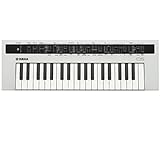
3. Yamaha REFACE CS – Portable Analog Modeling Fun
- Genuinely portable with speaker
- 8 oscillator types to explore
- Built-in phrase looper
- Battery powered operation
- Mini keys not for everyone
- Limited patch storage
- No aftertouch
- Limited onboard effects
The Yamaha REFACE CS is the kind of instrument you pick up for five minutes and end up playing for an hour. It uses an analog physical modeling engine that delivers 8-note polyphony across eight different oscillator types, ranging from classic sawtooth waves to complex multi-sync and ring modulated tones.
What sets the REFACE CS apart is its sheer playability and instant gratification factor. The front panel is almost entirely knob-per-function, which means every parameter you tweak produces an immediate and audible change. There is no menu diving whatsoever, which makes it one of the most approachable synthesizers we have ever tested.
The built-in speaker system and battery operation mean you can play the REFACE CS anywhere without connecting to an amp or interface. Yamaha also included a phrase looper that lets you layer parts in real time, which is genuinely useful for practice, performance, and capturing ideas on the fly.
The limitations are real, though. Patch storage is minimal, with only a handful of slots for saving your creations. The mini keys have a decent feel for their size but will frustrate players accustomed to full-size keyboards. There is no aftertouch, and the onboard effects are limited to a single delay and reverb. This is a sketchpad instrument, not a full production workstation.
Learning Curve for Beginners
The REFACE CS has possibly the flattest learning curve of any synthesizer on this list. The knob-per-function layout means you can understand signal flow just by looking at the panel, and the oscillator type selector gives you instant access to eight distinct sound engines without programming knowledge.
This is the synth we would hand to someone who has never touched a hardware synthesizer before. Within minutes, most beginners are creating sounds they actually like, which builds confidence and encourages deeper exploration of synthesis concepts.
Onboard Speaker and Portability
The built-in speaker is surprisingly full-sounding for its size, though it obviously cannot replace a proper monitor or amplifier. It is perfect for couch playing, hotel rooms, or outdoor sessions where setting up a full rig is impractical.
Battery life is solid, running approximately five hours on six AA batteries. The entire instrument weighs under four pounds, making it one of the most travel-friendly polyphonic synths on the market.
4. Arturia MiniFreak – Dual-Engine Hybrid Synthesis
Arturia MiniFreak 37 Key Polyphonic 6-Voice Hybrid Synthesizer Keyboard (Standard, 37 Key)
- Two powerful sound engines working together
- Polyphonic aftertouch at this price
- Includes software VST counterpart
- Deep modulation matrix
- Menu diving required for deep editing
- Keys feel slightly spongy
- Only 6 voices may feel limiting
The Arturia MiniFreak is a 6-voice hybrid synthesizer that runs two independent sound engines simultaneously, combining them into a single voice architecture. Each voice can blend wavetable synthesis, virtual analog, FM, and several other engine types, which gives you an enormous range of sonic possibilities from a compact 37-key instrument.
Forum consensus on r/synthesizers consistently recommends the MiniFreak as one of the best beginner-friendly polyphonic synthesizers that also satisfies advanced sound designers. We agree with that assessment after spending several weeks programming patches and testing it across different musical contexts. The sound quality is detailed and modern, with a clarity that sits well in dense mixes.
The 37 slim keys feature velocity sensitivity and aftertouch, which is remarkable at this price point. The aftertouch response is polyphonic, meaning each held note can independently trigger modulation based on pressure. This opens up expressive possibilities that most comparably priced synths simply do not offer.
The included MiniFreak VST plugin is a genuine value-add, not a gimmick. It mirrors the hardware exactly and lets you recall your patches inside a DAW for recording and further production. The integration between hardware and software is smooth, and having both versions of the same instrument is useful for studio workflows.
The main drawbacks are the menu-based editing for deeper parameters and the 6-voice limit. While the front panel provides good access to primary controls, getting into the modulation matrix and advanced engine settings requires navigating menus on the OLED display. And with only 6 voices, complex pads and layered sounds can exhaust polyphony quickly when using unison modes.
Dual Engine Sound Design
The dual-engine architecture is what makes the MiniFreak special. You can assign different engine types to each oscillator and blend them, modulate one with the other, or process one through the other. This creates sounds that no single-engine synth can produce, particularly for evolving pads and complex textures.
The SVF filter sounds musical across its range and responds well to audio-rate modulation. Combined with the three built-in effects slots, you can build complete, polished patches that need minimal external processing.
Software Integration
The MiniFreak VST runs as a standard plugin in any major DAW and communicates with the hardware over USB. Patch changes sync both ways, so edits on the hardware update the plugin and vice versa. This bidirectional integration makes the MiniFreak equally useful as a stage instrument and a studio production tool.
The 64-step sequencer also integrates with the software, letting you build and arrange patterns on screen when the hardware sequencer feels limiting. For producers who split time between hardware and software workflows, this is a meaningful advantage.
5. Korg minilogue – The Analog Community Favorite
- True analog sound at accessible price
- OLED oscilloscope is genuinely useful
- 200 ready-to-play presets
- Built-in tape-style delay sounds great
- Only 4 voices of polyphony
- No aftertouch
- Plastic chassis feels budget
The Korg minilogue is arguably the synthesizer that made true analog polyphony affordable for the masses. Since its release, it has become the benchmark that other budget analog synths are measured against, and the community on r/synthesizers consistently recommends it as the safest first analog polysynth purchase you can make.
What makes the minilogue special is the combination of real voltage-controlled oscillators, a musical low-pass filter, and that brilliant OLED oscilloscope display. The oscilloscope shows you the actual waveform you are shaping in real time, which is both visually satisfying and genuinely educational for understanding how synthesis works.
The 4-voice polyphony is the main constraint, and it is one you need to take seriously. Four voices means you can play four-note chords, but sustained pads with release tails will quickly steal voices and cut notes short. The unison mode reduces you to a single voice, which sounds huge for leads but eliminates polyphonic playing entirely.
The 200 factory presets cover a wide range of sounds, from warm analog pads to aggressive bass and sequenced arpeggios. The 16-step polyphonic sequencer is surprisingly capable and allows per-step parameter changes, which makes it useful for generating evolving patterns. The built-in tape-style delay adds character and space without needing external effects.
Build quality is acceptable but clearly designed to hit a price point. The plastic chassis feels light and slightly hollow, and there is no aftertouch on the keys. However, the knobs have a good tactile feel and the overall layout is logical and intuitive. For the price, the compromises are reasonable and well-considered.
Workflow and Sequencing
The minilogue workflow is one of its strongest assets. Nearly every parameter has a dedicated knob, which means you can shape sounds in real time without touching a menu. This hands-on approach makes the synth feel like an instrument rather than a computer, and it encourages experimentation.
The 16-step polyphonic sequencer supports motion sequencing, meaning knob movements can be recorded and played back per step. This creates evolving patterns that change over time, which is especially powerful for ambient and electronic music production.
Who This Synth Suits Best
The minilogue is ideal for first-time analog buyers, hobbyists, and producers who want real analog sound without a major investment. It excels at lead sounds, bass, arpeggios, and simple pads. The 4-voice limit means it is not the best choice for players who need sustained chord work or dense layered arrangements.
For live performance, the minilogue works well as a secondary synth for leads and textures, where voice stealing is less of an issue. As a primary instrument for complex arrangements, you may find yourself wanting more polyphony.
6. ASM Hydrasynth Explorer – Deep Digital Sound Design
- Incredibly deep wavemorph synthesis
- Polyphonic aftertouch on compact keybed
- MPE opens expressive possibilities
- Mutators create unique modulation
- Steep learning curve for beginners
- Complex menu structure
- Digital sound may lack analog warmth
The ASM Hydrasynth Explorer is our editor’s choice for the best polyphonic synthesizer overall, and the reasons become clear within minutes of playing it. The wavemorph synthesis engine is unlike anything else at this price, offering three oscillators per voice that can morph between wavetables in real time with audio-rate modulation.
The POLYTOUCH polyphonic aftertouch system is genuinely transformative for expressive playing. Each key responds to pressure independently, which means you can add vibrato to one note while opening a filter on another within the same chord. This level of expression was previously available only on instruments costing several times more.
MPE compatibility takes the expression even further when paired with an MPE controller or used with software that supports per-note modulation. Forum users on r/synthesizers consistently recommend the Hydrasynth for sound designers who want deep modulation capabilities, and we completely agree. The mutator system, which applies wave transformations like FM, sync, and waveshaping, opens sonic territory that standard subtractive synths cannot reach.
The 8-voice polyphony provides enough headroom for most playing situations, though heavy unison use will eat through voices quickly. The digital sound engine is pristine and detailed, which some players may find lacks the warmth and character of true analog. This is a matter of preference, not a flaw, but it is worth noting if your ears are tuned to vintage analog tones.
The learning curve is the main barrier to entry. The Hydrasynth has a deep menu structure and complex routing options that can overwhelm beginners. We recommend watching tutorial videos and working through the manual systematically rather than expecting instant results. Once you understand the architecture, the creative possibilities are staggering.
Modulation Depth
The modulation system on the Hydrasynth is one of the deepest we have encountered on any synthesizer at any price. You can route multiple sources to multiple destinations with independent depth and polarity controls. The mutators function as additional modulation stages that transform oscillator waveforms in ways that feel almost modular in scope.
For sound designers and film composers who need unique, evolving textures, this modulation depth is the primary reason to choose the Hydrasynth over simpler instruments. Patches can develop over minutes rather than seconds, creating living, breathing soundscapes.
Key Action and Aftertouch
The 37 mid-sized keys have a solid, consistent feel that works well for both fast lead playing and sustained chord work. The polyphonic aftertouch response is adjustable per patch, letting you set sensitivity thresholds and response curves to match your playing style.
Compared to the Korg minilogue and Arturia MiniFreak, the Hydrasynth keybed feels more substantial and responsive. The aftertouch implementation is smoother and more musical, without the sudden threshold jump that plagues cheaper aftertouch systems.
7. Behringer DEEPMIND 12 – 12 Analog Voices on a Budget
- 12 analog voices at remarkable price
- Built-in TC Electronic effects
- Deep modulation per voice
- Full-size keyboard with decent action
- Interface requires menu diving
- Effects quality is inconsistent
- Build quality varies between units
The Behringer DEEPMIND 12 delivers 12 true analog voices at a price that still feels aggressive years after its release. No other synthesizer on the market matches this voice count at this price point, which alone makes it worth serious consideration for anyone who needs polyphonic headroom for pads, chords, and layered arrangements.
Each voice carries two oscillators, two LFOs, and three ADSR envelope generators, which gives you substantial modulation options per note. The analog signal path produces warm, full-bodied sounds that work particularly well for pads, strings, and brass-type patches. We were impressed by the depth and richness of the factory presets, many of which are genuinely usable without modification.
The built-in effects engine is a collaboration with TC Electronic and Klark Teknik, offering four simultaneous effects from a library of over 30 algorithms. This is where opinions divide. Some effects sound professional and polished, while others feel dated or thin. The reverbs and delays are generally strong, but the modulation and distortion effects are more hit or miss.
The interface is the biggest weakness. Despite having a full complement of knobs and buttons, many parameters require menu navigation on a small display. This menu diving becomes frustrating during sound design sessions, especially when you are trying to make quick adjustments. The companion app helps for iPad users, but it is not a replacement for a well-designed hardware interface.
Build quality reports from the community are mixed. Some units feel solid and reliable, while others have issues with knob alignment, key action consistency, and firmware bugs. We recommend buying from a retailer with a good return policy and testing your unit thoroughly within the return window.
Effects Engine Quality
The four simultaneous effects slots give you considerable processing power without external gear. The TC Electronic reverbs are the standout, offering lush, spacious ambience that enhances pads and atmospheric sounds. Delays are clean and flexible, with multiple timing and modulation options.
The weaker effects categories include distortion, which tends to sound harsh and digital rather than warm and musical. Modulation effects like chorus and phaser are adequate but lack the richness of dedicated hardware units. Overall, the effects add genuine value but are best treated as a starting point rather than a final mix-ready solution.
Voice Count and Layering
Twelve voices is a meaningful upgrade over 4 or 6 voice instruments, especially for players who work with sustained pads and complex chord voicings. You can hold six-note chords with release tails without voice stealing becoming a problem in most musical contexts.
The unison mode reduces polyphony but produces enormous bass and lead sounds by stacking voices. With 12 voices available, even a 4-voice unison stack leaves you with 3-note polyphony, which is enough for simple chord work.
8. Elektron Digitone II – 16-Track FM Powerhouse
- Elektron sequencer is best in class
- 16 tracks of polyphonic FM
- Built-in effects sound professional
- Compact desktop format
- FM synthesis has steep learning curve
- No keyboard included
- Pricey for a desktop module
The Elektron Digitone II is a 16-track polyphonic digital synthesizer that combines FM synthesis with Elektron legendary sequencing capabilities. It is a desktop module without a keyboard, designed for producers who want to build complex, evolving patterns and arrangements from a single compact unit.
The FM synthesis engine offers four different synth machines, each with its own character and algorithm set. FM synthesis has a reputation for being intimidating, and the Digitone II does not fully escape that reputation. However, Elektron has made the architecture more approachable than classic FM instruments by providing visual feedback and logical parameter grouping.
The 128-step sequencer is the real star of the show. Elektron sequencers are widely considered the best in the hardware world, and the Digitone II continues that tradition. You can program parameter locks per step, create probability-based triggers, and build arrangements that evolve automatically over time. For electronic producers who think in patterns and sequences rather than keyboard performances, this workflow is addictive.
Sixteen tracks of polyphony means you can build entire arrangements within a single unit, combining bass, drums, leads, and pads across separate tracks. Each track can have its own sound, effects routing, and sequencer pattern, which makes the Digitone II function almost like a groovebox with serious sound design depth.
The built-in effects include a saturator, delay, and the Supervoid reverb, all of which sound excellent. The reverb in particular adds space and atmosphere that elevates FM sounds, which can otherwise feel dry and clinical. The lack of a keyboard means you will need an external controller for live playing, or you can work entirely within the sequencer.
Sequencer Workflow
The Elektron sequencing workflow is parameter-lock based, meaning every step can have unique values for any parameter. This allows for patterns where filter cutoff, oscillator pitch, effects levels, and modulation depths all change on every single step if desired.
The result is patterns that feel alive and organic, with movement and variation that would require extensive automation in a DAW. Once you internalize this workflow, returning to conventional step sequencers feels limiting by comparison.
FM Programming Approach
The Digitone II simplifies FM programming by exposing the most musically useful parameters directly on the front panel. You do not need to understand every detail of operator algorithms to create compelling sounds, though deeper knowledge certainly helps for complex patching.
The four synth machines offer different tonal starting points, from bell-like digital tones to warmer, analog-adjacent character. This variety helps the Digitone II serve as a versatile production tool rather than a one-trick FM machine.
9. Roland JUNO-X – Stage-Ready Modeling Synthesizer
- Authentic JUNO-60 and 106 models
- Scenes workflow built for live use
- ZEN-Core gives massive sound palette
- Build quality feels professional
- Premium pricing for modeled sounds
- Not true analog
- Menu diving for advanced features
The Roland JUNO-X is a programmable polyphonic synthesizer built around the ZEN-Core synthesis system, with authentic models of the legendary JUNO-60 and JUNO-106 built in. For players who have always wanted the classic JUNO sound without tracking down and maintaining 40-year-old hardware, the JUNO-X delivers that experience with modern reliability and features.
The JUNO-60 and JUNO-106 models are impressively accurate, capturing the warm, chorused character that made those instruments staples of 1980s pop and electronic music. The Super Saw model adds the aggressive, wide sound of the JP-8000, giving you access to trance and EDM lead tones without needing a separate instrument.
The Scenes workflow is what makes the JUNO-X a genuine stage instrument. Each Scene combines a sound, effects settings, and performance parameters into a single recallable state. You can switch between Scenes instantly during performance, with smooth transitions that eliminate the awkward gaps and cut-offs that plague many synthesizers when changing patches.
ZEN-Core synthesis gives the JUNO-X access to a massive library of sounds beyond the vintage models, including Model Expansions from Roland Cloud that add additional instrument recreations. This makes the JUNO-X a versatile workstation that can cover virtually any musical genre from a single stage position.
The main criticism is value. The JUNO-X uses digital modeling rather than true analog circuitry, which means you are paying a premium price for software-emulated sounds. Whether that matters depends on your priorities. If authentic analog circuitry is essential, there are true analog alternatives. If sound quality and reliability matter more than the underlying technology, the JUNO-X delivers convincingly.
Modeling Accuracy
Roland modeling technology has matured significantly, and the JUNO-60 and 106 recreations are close enough to the originals that most players would struggle to identify them in a blind test. The chorus modes, which are central to the JUNO character, sound particularly authentic.
The Super Saw model captures the wide, detuned sawtooth sound that defined late-1990s trance and remains essential for certain genres. Having this alongside vintage models gives the JUNO-X an unusually broad tonal range.
Stage Performance Features
The Scenes system allows instant patch switching without audio interruption, which is critical for live performance. You can organize Scenes into setlists and recall them in sequence, making the JUNO-X practical for full shows rather than just individual songs.
The built-in arpeggiator, chord memory, and rhythm pattern features add performance tools that reduce the need for external sequencing during live sets. The keybed action is solid and responsive, with good velocity sensitivity that handles both delicate and aggressive playing styles.
10. Novation Summit – 16-Voice Hybrid Flagship
- 16 voices of hybrid synthesis
- Three synthesis types in one
- Excellent 61-note keybed
- Analogue multimode filter sounds rich
- Large and heavy for gigging
- Interface can feel overwhelming
- Premium price bracket
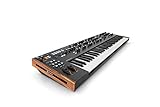
The Novation Summit is a 16-voice, two-part multitimbral polyphonic synthesizer that combines three synthesis types into a single instrument. It offers subtractive synthesis, wavetable synthesis, and FM, all processed through an analogue multimode filter that adds warmth and character to the digital sound engines.
Forum users consistently praise the Novation Peak, the desktop sibling of the Summit, for sound quality and value. The Summit takes that same engine and adds a full 61-note semi-weighted keybed, making it a complete performance instrument rather than just a sound module. The sound quality lives up to the reputation, with a richness and depth that surprised us during testing.
Three NCO oscillators per voice give you enormous sound-shaping potential. You can blend wavetables, analog-style waves, and FM carriers within a single patch, creating textures that evolve and transform over time. The analogue multimode filter provides low-pass, high-pass, and band-pass options with a musical resonance character that complements both warm pad sounds and aggressive lead tones.
The 16-voice polyphony with two-part multitimbral capability means you can run two completely independent sounds simultaneously. We tested this with a bass patch on part one and a pad on part two, split across the keyboard range. The result was a full, rich sound that felt like playing two synthesizers at once.
The five-octave semi-weighted keybed is one of the best we have played on any synthesizer in this price range. The action is smooth and consistent across the entire range, with velocity sensitivity that captures playing dynamics accurately. Aftertouch adds another layer of expression for sustained notes and evolving pad sounds.
The main drawback is size and weight. The Summit is a large, heavy instrument that requires serious consideration for gigging musicians. It weighs over 33 pounds and takes up significant stage space. For studio use, the size is less of a concern, but you will need a sturdy stand and adequate desk or floor space.
Sound Design Depth
The three synthesis types give the Summit a versatility that few single instruments can match. Subtractive synthesis handles traditional analog-style sounds, wavetable synthesis creates evolving, motion-rich textures, and FM adds bell-like tones and metallic character that the other engines cannot produce.
The modulation options are extensive, with multiple envelopes and LFOs routable to virtually any parameter. The analogue filter serves as a unifying element that ties the different synthesis types together sonically, giving all sounds a consistent warmth and cohesion.
Keybed Quality
The five-octave semi-weighted keybed is a genuine highlight. The action feels professional and responsive, comparable to keybeds on instruments costing significantly more. Velocity sensitivity is consistent across the range, and the aftertouch response is smooth without the sudden threshold jumps found on cheaper implementations.
For players who perform with both hands and need the full five-octave range, the Summit keybed is one of the strongest arguments for choosing this instrument over its competitors. It transforms the Summit from a sound module into a complete performance instrument.
11. Arturia PolyBrute – Morphing Analog Synthesis
Arturia PolyBrute 6-Voice Polyphonic Morphing Analog Synthesizer Natural Wood
- Morphing between two patches is magical
- Morphee controller adds expression
- Massive modulation matrix
- Six voices of pure analog
- Only 6 voices at premium price
- Learning curve for morphing system
- Heavy instrument
The Arturia PolyBrute is a 6-voice morphing analog synthesizer that introduces a genuinely unique feature: the ability to morph between two complete patches in real time. Each preset contains two distinct sound states, and you can blend between them continuously using the Morphee touch controller, a dedicated ribbon, or an expression pedal.
This morphing capability changes how you think about sound design. Instead of creating a single static patch, you create a journey between two sonic destinations. A soft pad can morph into an aggressive lead, a warm bass can transform into a metallic texture, and the transition can be controlled live during performance. We have not encountered this capability on any other hardware synthesizer.
The 12×32 modulation matrix provides extensive routing options, with 12 sources and 32 destinations available for creating complex, evolving patches. This depth places the PolyBrute in territory usually occupied by modular systems, where patch cables would handle the same routing duties. Having it all integrated into a single instrument with recallable presets is a significant workflow advantage.
The 61-key keybed features velocity sensitivity and aftertouch, which pairs naturally with the morphing system. You can use key pressure to drive morphing, modulation depth, or any other matrix destination, creating a playing experience that feels deeply connected to the sound generation process.
Six voices of polyphony feels limited at this price point, especially when competitors like the Novation Summit offer 16 voices for less money. The pure analog signal path produces warm, rich sounds that justify the voice count to some extent, but players who need dense chord work and sustained pads may find the limit frustrating.
Morphing Capabilities
The Morphee controller is a three-axis touch surface that responds to X, Y, and Z pressure. You can assign it to control morphing position, modulation destinations, or both simultaneously. The tactile response is smooth and precise, making it feel like a natural extension of your playing technique rather than a separate control to manage.
The morphing system preserves the character of both endpoint patches while creating entirely new sounds in between. The intermediate states are not simple crossfades but genuine interpolations of every modulated parameter, which produces sonic results that would be impossible to achieve manually.
Modulation Matrix
The 12-source, 32-destination modulation matrix gives you modular-level routing depth without patch cables. Sources include envelopes, LFOs, keyboard velocity, aftertouch, the Morphee controller, and several internal signals. Destinations cover virtually every sound parameter, from oscillator pitch to filter cutoff to effect levels.
This depth makes the PolyBrute a sound designer dream instrument. Patches can evolve over long timeframes, with multiple modulation sources interacting to create sounds that never repeat exactly. For ambient, cinematic, and experimental music, this capability is difficult to overstate.
12. Yamaha Montage M8X – 88-Key Flagship Workstation
- Massive polyphony across three engines
- 88-key graded hammer action
- Polyphonic aftertouch expression
- Seamless Sound Switching for live use
- Very expensive investment
- Heavy and large footprint
- Complex system to master
The Yamaha Montage M8X is the flagship of this lineup, an 88-key music synthesizer that combines three synthesis engines with 400 notes of total polyphony. It is a complete production and performance instrument designed for professional musicians who need maximum capability in a single stage or studio unit.
The three engines include the AN-X analog modeling engine, AWM2 sample-based synthesis, and FM-X frequency modulation synthesis. Together, they cover virtually every synthesis approach in a single instrument, from warm analog pads to realistic acoustic instrument reproductions to complex metallic FM textures. The AN-X engine in particular adds genuine analog character that previous Montage models lacked.
The 88-key GEX graded hammer action is one of the best keyboard actions available on any synthesizer. It provides a weighted, piano-like feel that responds to velocity with precision and musicality. Combined with polyphonic aftertouch, the keybed offers an expressive range that few synthesizers can match. Players coming from acoustic piano backgrounds will feel immediately comfortable.
Seamless Sound Switching is a feature that eliminates audio gaps when changing patches during live performance. This addresses one of the most frustrating limitations of traditional synthesizers, where changing sounds mid-song creates an awkward silence. For performing musicians, this capability alone can justify the investment.
The complexity of the Montage M8X is both its greatest strength and its most significant barrier. Mastering three synthesis engines, the motion control system, the scene-based performance architecture, and the extensive effects routing requires serious time investment. This is not an instrument you can fully exploit in a weekend. But for players willing to put in the work, the creative ceiling is effectively limitless.
The physical footprint and weight are substantial. The M8X weighs over 53 pounds and requires a sturdy stand for stage use. This is a commitment instrument, designed for dedicated studio installations or professional touring rigs where its capabilities are fully utilized. For casual players or small home studios, it may be more instrument than necessary.
Performance Workflow
The Montage M8X performance workflow centers on Scenes, which combine sounds, effects, motion sequences, and performance settings into recallable states. The Seamless Sound Switching feature ensures that transitions between Scenes produce no audible gaps, which is essential for live performance continuity.
The motion control system allows complex, automated parameter changes that can transform sounds over time without manual intervention. This creates evolving textures and dynamic arrangements that respond to the musical context, blurring the line between performance and production.
Sound Engine Architecture
The AN-X engine provides authentic analog modeling with all the warmth and character of vintage analog instruments. It handles pads, basses, and lead sounds with a richness that previous Yamaha digital synths could not achieve. The addition of AN-X to the Montage platform represents a significant upgrade in analog sound capability.
AWM2 remains one of the most capable sample-based synthesis systems available, with massive polyphony and realistic acoustic instrument reproductions. FM-X adds the metallic, bell-like textures and complex harmonic content that defined the classic Yamaha DX7 and its descendants. Having all three engines in a single instrument means the Montage M8X can cover virtually any sonic requirement.
How to Choose a Polyphonic Synthesizer?
Choosing from the best polyphonic synthesizers means understanding your own needs before comparing specs. The right instrument depends on your musical style, playing environment, budget, and experience level. Here is what we recommend considering before making a purchase.
Analog vs Digital vs Hybrid
Analog synthesizers use voltage-controlled oscillators and filters to generate sound, which produces the warm, fat tones that many musicians associate with classic synth sounds. Instruments like the Behringer PRO-800, Korg minilogue, and Arturia PolyBrute use true analog signal paths. The trade-off is that analog synths typically offer fewer voices per dollar and limited sound engine variety.
Digital synthesizers use software-based sound generation, which allows for more voices, more sound types, and features like FM and wavetable synthesis that are difficult or impossible in the analog domain. The ASM Hydrasynth Explorer and Elektron Digitone II represent the digital approach, offering deep sound design capabilities that analog instruments cannot match.
Hybrid synthesizers combine digital sound generation with analog filtering and processing, attempting to capture the best of both worlds. The Novation Summit and Arturia MiniFreak are strong examples, offering digital flexibility with the warmth of an analog filter stage. For many players, hybrid instruments represent the ideal balance.
How Many Voices Do You Need
Voice count determines how many notes can sound simultaneously. Four voices, like the Korg minilogue, limits you to four-note chords with no release tail overlap. Six voices, as found on the MiniFreak and PolyBrute, gives slightly more headroom but still constrains complex pad work. Eight voices or more, like the Hydrasynth Explorer and DEEPMIND 12, provides comfortable headroom for most playing situations.
For studio production and sound design, 6 to 8 voices is usually sufficient. For live performance with sustained pads and dense chord voicings, 12 or more voices eliminates voice stealing concerns. The Yamaha Montage M8X with 400 notes of polyphony is effectively unlimited for any practical musical purpose.
Key Action and Aftertouch
Key action quality affects how connected you feel to the instrument during performance. Mini keys, found on the REFACE CS and Roland JX-08, save space but can feel cramped for players with larger hands or those accustomed to piano keyboards. Full-size keys with graded hammer action, like the Montage M8X, provide the most piano-like experience.
Aftertouch adds a dimension of expression by responding to key pressure after the initial note strike. Monophonic aftertouch applies pressure to the lowest held note, while polyphonic aftertouch responds to each key independently. The Hydrasynth Explorer, PolyBrute, and Montage M8X all offer polyphonic aftertouch, which is a significant advantage for expressive playing.
Modulation Matrix Depth
Modulation routing determines how complex and evolving your sounds can become. Simple synths offer fixed routing paths, while instruments with modulation matrices let you assign any source to any destination. The Arturia PolyBrute with its 12×32 matrix and the ASM Hydrasynth Explorer with its mutator system offer the deepest modulation capabilities on this list.
For sound designers and producers who create evolving textures and complex patches, modulation depth is often the deciding factor. For players who primarily use presets and make simple real-time adjustments, basic modulation routing is sufficient.
Portability for Gigging Musicians
Weight and size matter if you plan to transport your synth regularly. Forum discussions reveal that portability is a top concern for gigging musicians, yet few buyer guides address it thoroughly. The Yamaha REFACE CS at under four pounds and the Roland JX-08 as a compact tabletop module are the most portable options on this list.
At the other end, the Yamaha Montage M8X at over 53 pounds and the Novation Summit at over 33 pounds require serious consideration for transport. Desktop modules like the Elektron Digitone II offer sound power without keyboard weight, though you will need a separate controller.
Desktop Module vs Keyboard
Desktop modules like the Roland JX-08 and Elektron Digitone II save space and money by eliminating the keyboard. They work well when you already own a controller keyboard or when you plan to use the synth primarily through a sequencer or DAW. The trade-off is that you lose the integrated playing experience of a self-contained instrument.
Keyboard versions provide a complete, standalone instrument that you can play without any additional gear. For live performance and immediate creative inspiration, having keys attached to your sound engine creates a more satisfying and immediate musical experience.
FAQs
What is the best affordable polyphonic synth?
The Behringer PRO-800 at around $379 is the most affordable true analog polyphonic synthesizer we tested, offering 8 voices of analog polyphony. For a few hundred dollars more, the Korg minilogue and ASM Hydrasynth Explorer provide excellent value with strong community backing. For absolute budget portability, the Yamaha REFACE CS delivers 8-note polyphony with a built-in speaker.
What synthesizer does Billie Eilish use?
Billie Eilish and her production team have used various synthesizers across their recordings, including the Roland Juno series and software instruments. The vintage Roland JUNO-60 sound is closely associated with her atmospheric production style, and the Roland JUNO-X on this list recreates that sound authentically with modern reliability.
Are most synths polyphonic?
No, not all synthesizers are polyphonic. Many classic and modern synthesizers are monophonic, meaning they play only one note at a time. Monophonic synths are common in bass and lead applications. Polyphonic synthesizers can play multiple notes simultaneously for chords and pads, and they tend to be more expensive due to the additional voice circuitry or processing power required.
What is the best modular polyphonic synth?
True polyphonic modular synthesis is rare because modular systems are typically monophonic by design. The closest alternatives are instruments with modular-level modulation depth in a fixed architecture, such as the ASM Hydrasynth Explorer with its mutator system or the Arturia PolyBrute with its 12×32 modulation matrix. The Elektron Digitone II also offers modular-style sequencing and sound design in a compact format.
How many voices do I need in a polyphonic synthesizer?
For simple lead and bass playing, 4 voices is sufficient. For chord work and pads, 6 to 8 voices provides comfortable headroom. For dense, sustained arrangements and live performance with layered sounds, 12 or more voices eliminates voice stealing. Most players find 8 voices to be a practical sweet spot that handles most musical situations without frustration.
Final Thoughts
Finding the best polyphonic synthesizers for your needs comes down to matching sound character, voice count, and workflow to your specific musical goals. The ASM Hydrasynth Explorer remains our top overall pick for its unmatched depth, polyphonic aftertouch, and value. The Korg minilogue is the safest bet for first-time analog buyers, and the Yamaha Montage M8X stands as the ultimate flagship for players who need everything in one instrument.
Whatever you choose in 2026, invest time in learning your instrument beyond the factory presets. The real magic of a polyphonic synthesizer emerges when you understand its architecture and start creating sounds that are uniquely yours. Every synth on this list rewards that exploration with sounds no software plugin can quite replicate.