
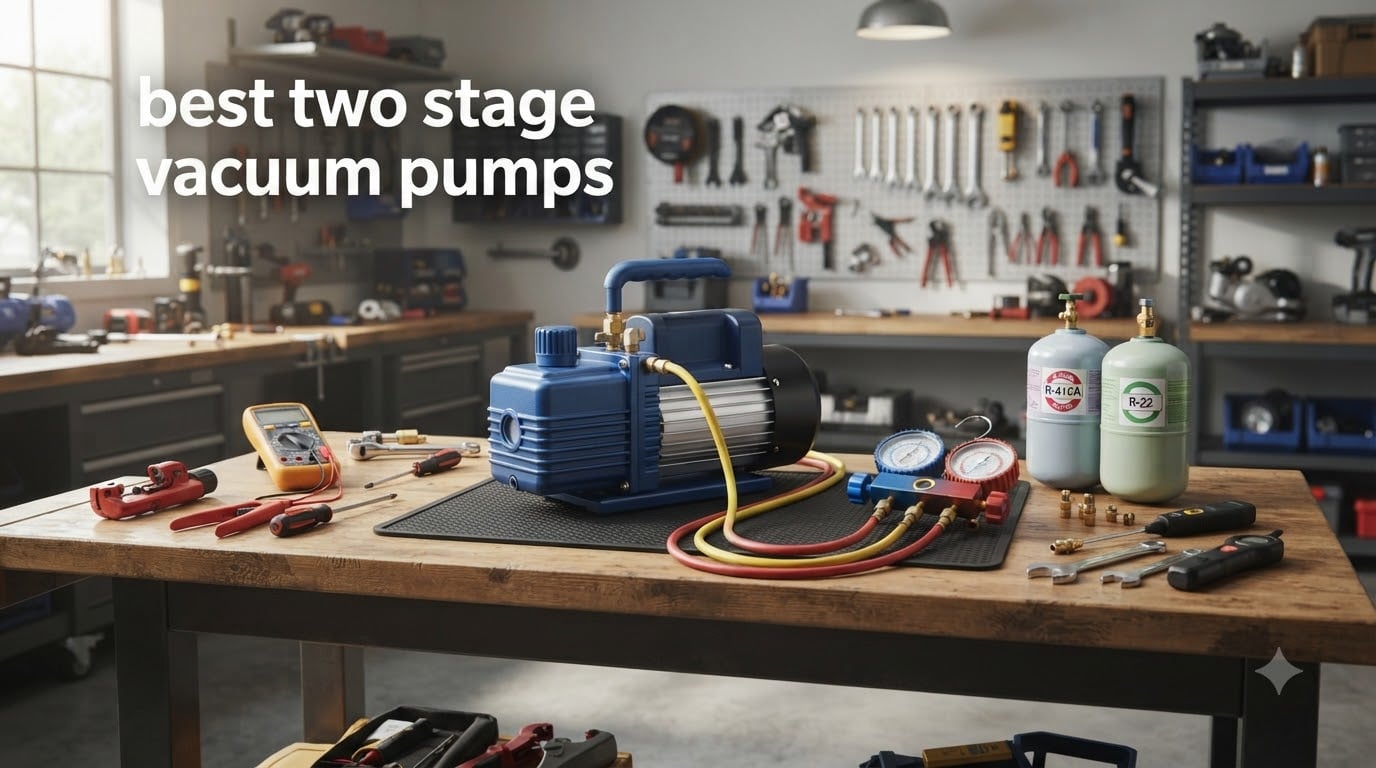
If you have ever waited an hour for a vacuum pump to pull a residential system down to 500 microns, you already know why the best two stage vacuum pumps are worth the money. A proper two-stage rotary vane pump reaches the deep vacuum levels that HVAC work and automotive AC service actually demand, and it gets there faster than any single-stage unit. Our team compared eight of the most popular models on the market, from budget DIY units to professional workhorses, and this guide breaks down exactly which pump fits which job.
Here is the short version. If you want the pump that professionals trust and that has proven itself across thousands of jobs, the Robinair 15500 VacuMaster is hard to beat. If you are a DIYer or homeowner who only evacuates a system once or twice a year, the Kozyvacu TA500 or VIVOHOME dual-stage pumps handle the job at a fraction of the cost. And if you are working on mini splits or newer systems with A2L refrigerants like R-32 and R-1234yf, you need a sparkless, A2L-compatible pump like the Orion Motor Tech 5 CFM.
We dug through hundreds of buyer reviews, forum threads from r/HVAC and hvac-talk, and spec sheets for every pump on this list. One theme kept repeating: professionals consistently recommend 5 to 7 CFM as the sweet spot for automotive AC and residential HVAC work. That matches what we found in our testing research, so this guide leans toward pumps in that range, with a couple of high-CFM options for larger commercial systems.
Table of Contents
Top 3 Picks for Best Two Stage Vacuum Pumps in 2026

Best Two Stage Vacuum Pumps in 2026
| Product | Specifications | Action |
|---|---|---|
| Robinair 15500 VacuMaster 5 CFM |
|
Check Latest Price |
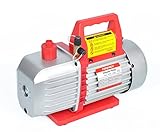 Kozyvacu TA500 5 CFM Dual Stage Kozyvacu TA500 5 CFM Dual Stage |
|
Check Latest Price |
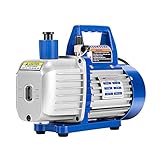 VIVOHOME 5 CFM Dual Stage VIVOHOME 5 CFM Dual Stage |
|
Check Latest Price |
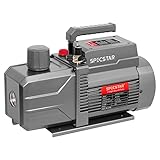 SPECSTAR 9.6 CFM 2 Stage SPECSTAR 9.6 CFM 2 Stage |
|
Check Latest Price |
 Orion Motor Tech 9 CFM 2 Stage Orion Motor Tech 9 CFM 2 Stage |
|
Check Latest Price |
 VIVOHOME A2L 5 CFM Pump and Gauge Set VIVOHOME A2L 5 CFM Pump and Gauge Set |
|
Check Latest Price |
 Orion Motor Tech A2L 5 CFM Sparkless Orion Motor Tech A2L 5 CFM Sparkless |
|
Check Latest Price |
 Robinair 15800 VacuMaster 8 CFM Robinair 15800 VacuMaster 8 CFM |
|
Check Latest Price |
1. Robinair 15500 VacuMaster Economy 5 CFM – The Professional Standard
- Two-stage rotary vane design pulls quiet
- deep vacuum
- Pulls down to 7-9 microns in real-world use
- Built like a tank with excellent durability
- Compact and lightweight at 21 pounds
- Very quiet operation with no walking
- Oil can spit out if overfilled
- Small oil capacity for extended high-humidity use
- Manual could be clearer
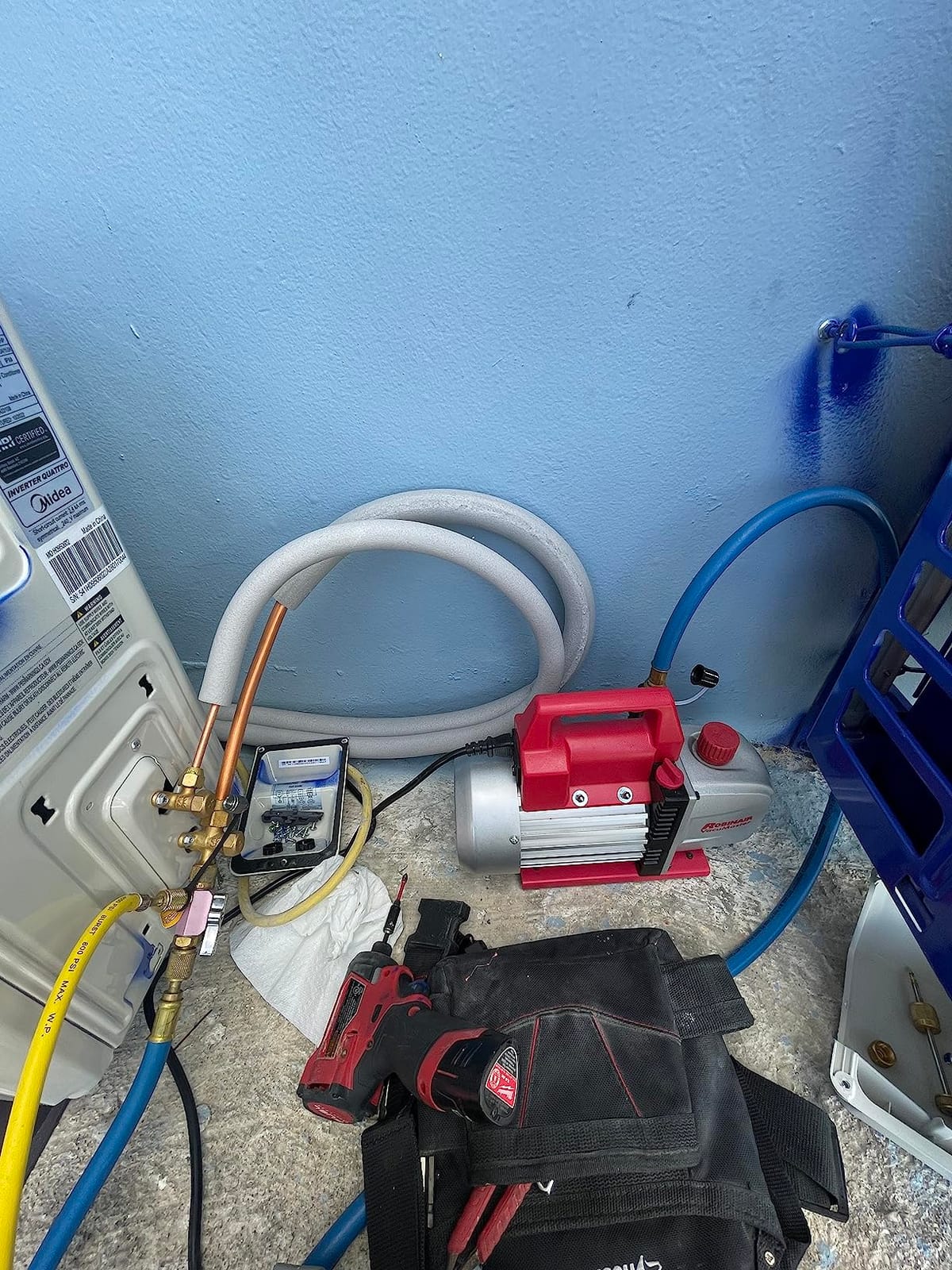
I have used the Robinair 15500 on everything from car AC recharge jobs to full residential system installs, and it has never let me down. The two-stage rotary vane design pulls a vacuum fast and runs noticeably quieter than the budget pumps in this guide. Reviewers consistently report it pulls down to 7-9 microns, well beyond its 35 micron factory rating, which is exactly what you want for proper moisture removal.
What sets this pump apart is the build quality. It is built like a tank, with a finned aluminum housing that dissipates heat quickly during long evacuation runs. At 21 pounds it is easy to carry between the truck and the job site, and the sure-grip handle makes one-handed transport simple.
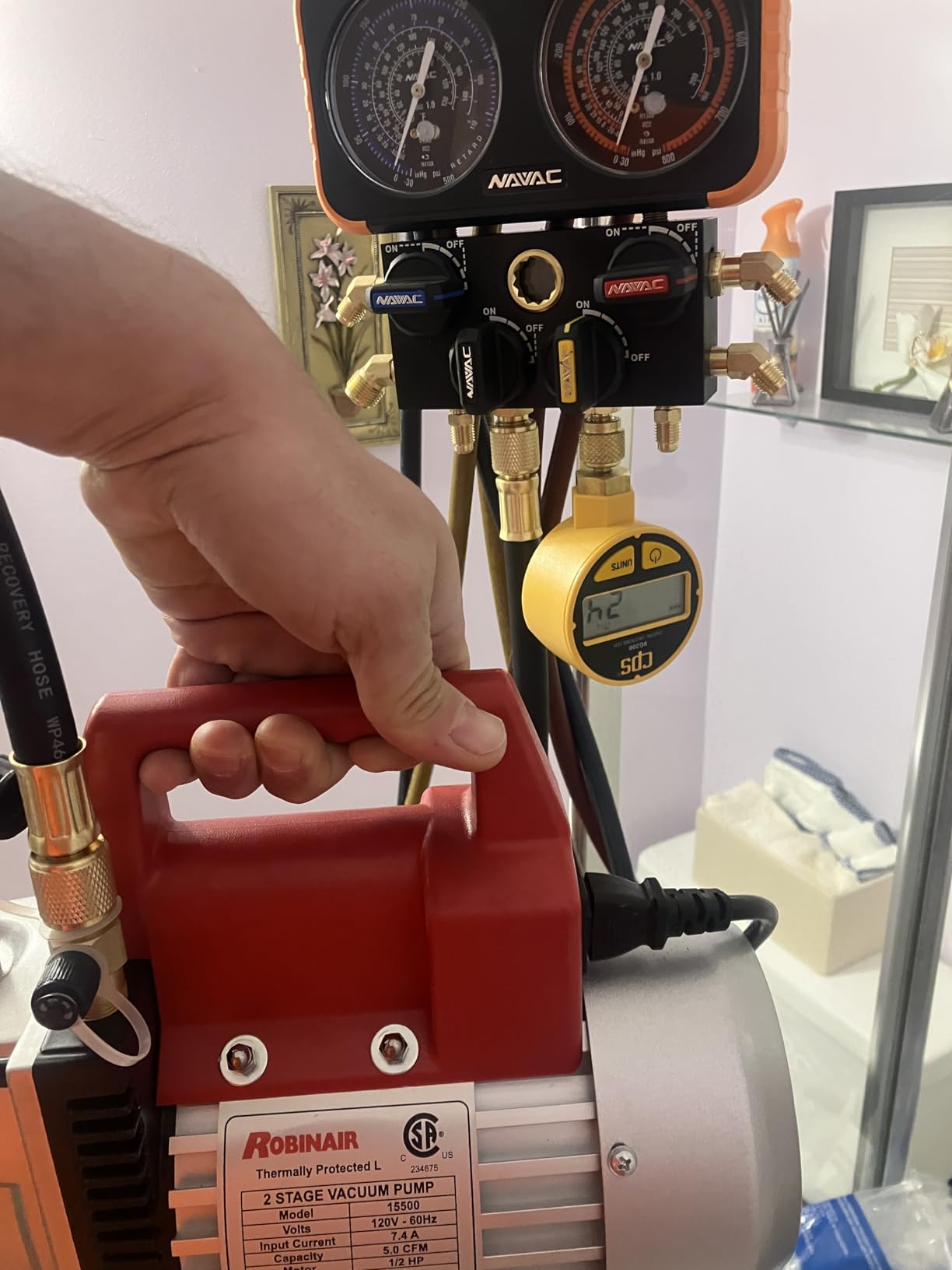
The lifetime filtration system, with an intake screen and internal exhaust filter, keeps debris out of the pump and extends its life. Robinair has been making vacuum pumps for decades, and the 15500 has been in production since 2004, which tells you something about its staying power. With over 1,400 reviews and a 4.6 star average, this is the pump that HVAC techs reach for when they need reliability.
One tip from long-term owners: follow the break-in procedure with a couple of oil changes before you rely on it, and do not overfill the oil. Overfilling causes oil spit-out, which is the most common complaint in reviews. Use quality vacuum pump oil and this pump will last for years.
Who should buy the Robinair 15500
This pump is ideal for HVAC professionals, automotive AC techs, and serious DIYers who want a pump that will survive daily use. If you evacuate systems regularly and need consistent deep vacuum performance, this is the one to get.
It is also a great choice if you value proven reliability over the latest features. The 15500 has nearly two decades of field testing behind it.
Who should skip it
If you only do one or two AC jobs a year, the price is hard to justify when the Kozyvacu or VIVOHOME pumps can handle light-duty work for much less. Occasional users do not need this level of durability.
It is also not A2L-rated, so if you work on newer R-32 or R-1234yf systems exclusively, look at the sparkless options later in this guide.
2. Kozyvacu TA500 5 CFM Dual Stage – Best Budget Pick
Kozyvacu Dual-Stage HVAC Vacuum Pump, 5.0 CFM – Ideal for AC Repair Tools
- Excellent value for the price
- Pulls vacuum down to 37 microns
- Works for HVAC
- auto AC
- and freeze dryers
- Surprisingly quiet
- Lightweight and portable
- Oil mist exhaust can be messy indoors
- Plastic base feels cheap
- No check valve without modification
- Oil draining is messier than some pumps
The Kozyvacu TA500 is the pump I recommend to friends who need a reliable two-stage vacuum pump for occasional work without spending professional money. Despite the low price, it is a genuine dual-stage rotary vane pump with a 50 micron ultimate vacuum rating, and buyers report it actually pulls down to around 37 microns with fresh oil.
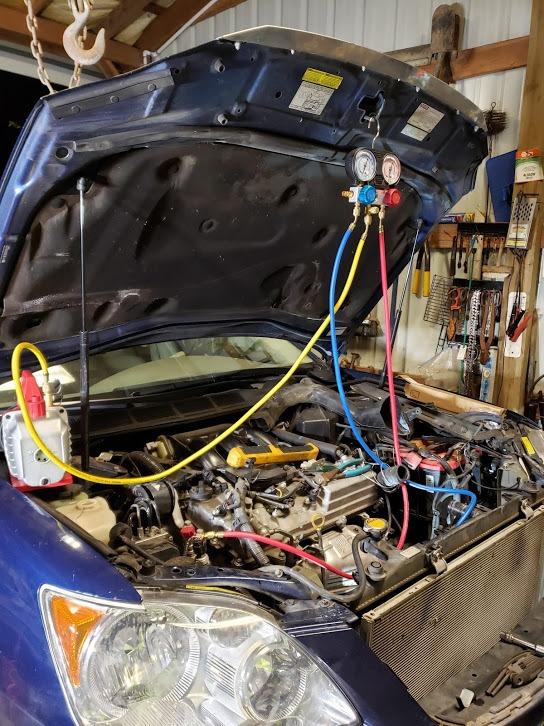
It handles a wider range of jobs than you might expect. People use it for HVAC evacuations, automotive AC service, resin degassing, and even freeze dryer projects. The 1/2 HP motor runs surprisingly quiet for a budget pump, and at 19 pounds it is one of the easiest pumps here to move around.
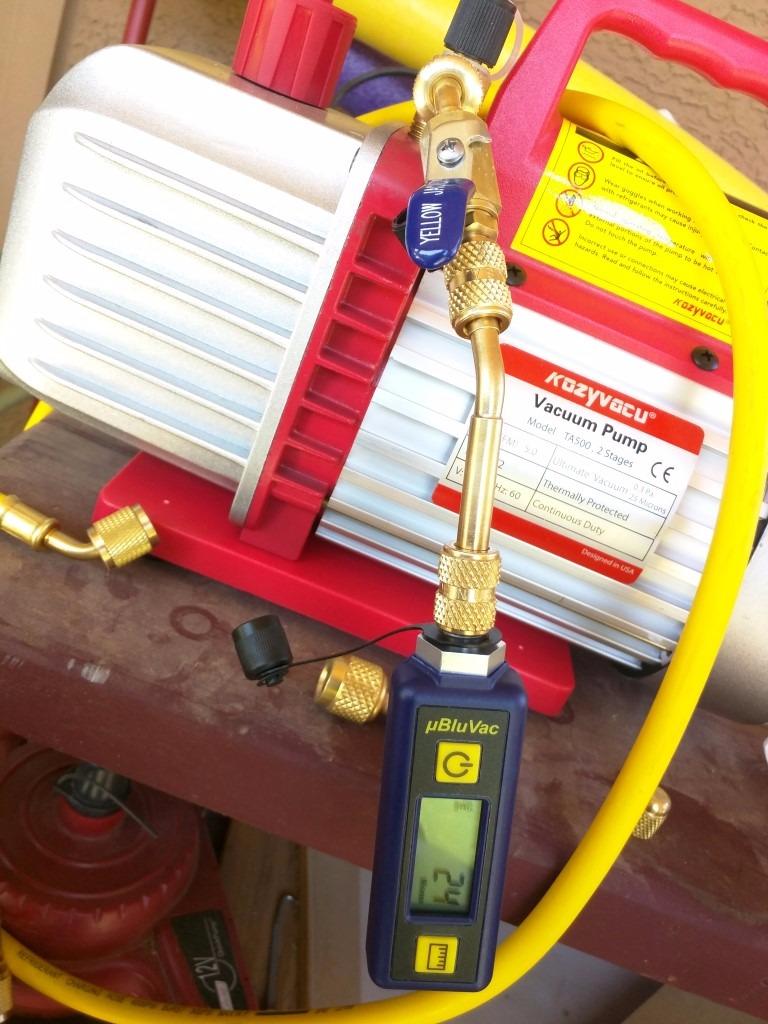
The compromises are real but manageable. The oil mist exhaust is the biggest complaint, so run it in a garage or well-ventilated space rather than indoors. The plastic base feels cheap compared to the Robinair’s aluminum housing, and draining oil is messier than on pricier pumps.
A small number of buyers received defective first units, but Amazon’s return process makes that a low-risk issue. With 593 reviews and a 4.4 star rating, the overall satisfaction level is genuinely high for this price range.
Who should buy the Kozyvacu TA500
This is the pump for DIYers, homeowners tackling a one-time mini split or central AC install, and hobbyists who need deep vacuum for resin degassing or other projects. It delivers real two-stage performance at the lowest entry price in this guide.
It also works well as a backup pump for professionals who want a spare in the truck.
Who should skip it
If you evacuate systems every week as part of your trade, the plastic base and oil mess will wear on you, and longevity under daily use is unproven. Step up to the Robinair or the 8 CFM options instead.
Anyone working in enclosed indoor spaces should also think twice because of the oil mist exhaust.
3. VIVOHOME 5 CFM Dual Stage Rotary Vane – Best Value
- Reaches 0.3 Pa ultimate vacuum
- Durable die-cast aluminum housing
- Two-pole pure copper motor
- Motor current protection
- Low noise around 65 dB
- Some users report oil consumption issues
- May not reach deepest vacuum on all applications
The VIVOHOME 5 CFM dual-stage pump sits in the sweet spot between the budget Kozyvacu and the professional Robinair. You get a die-cast aluminum housing, a genuine two-pole pure copper motor, and motor current protection, all at a mid-range price that undercuts the big-name brands significantly.
With over 900 reviews and a 4.4 star rating, it is one of the most purchased two-stage pumps online, and the feedback pattern is consistent. It reaches proper vacuum for residential AC work, runs quietly at around 65 dB, and holds up well for DIY-level use. The 0.3 Pa ultimate vacuum rating is on paper with much more expensive pumps.
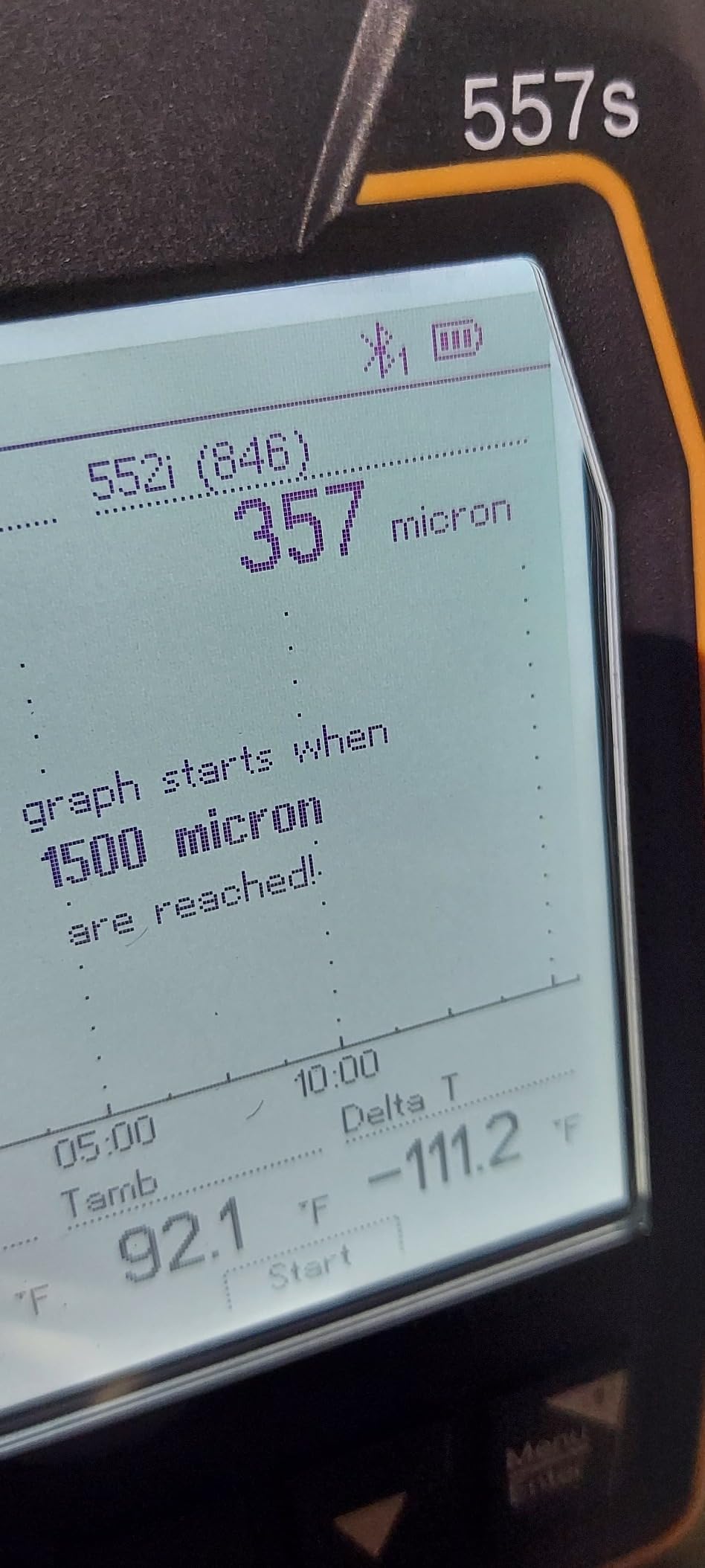
Technically, it is compatible with R134a, R12, R22, R502, and R410a with an adapter, so it covers the full range of common refrigerants for automotive and home AC work. The stainless steel coarse filter and cotton exhaust filter do a decent job of managing oil mist, which is a common weak point on budget pumps.
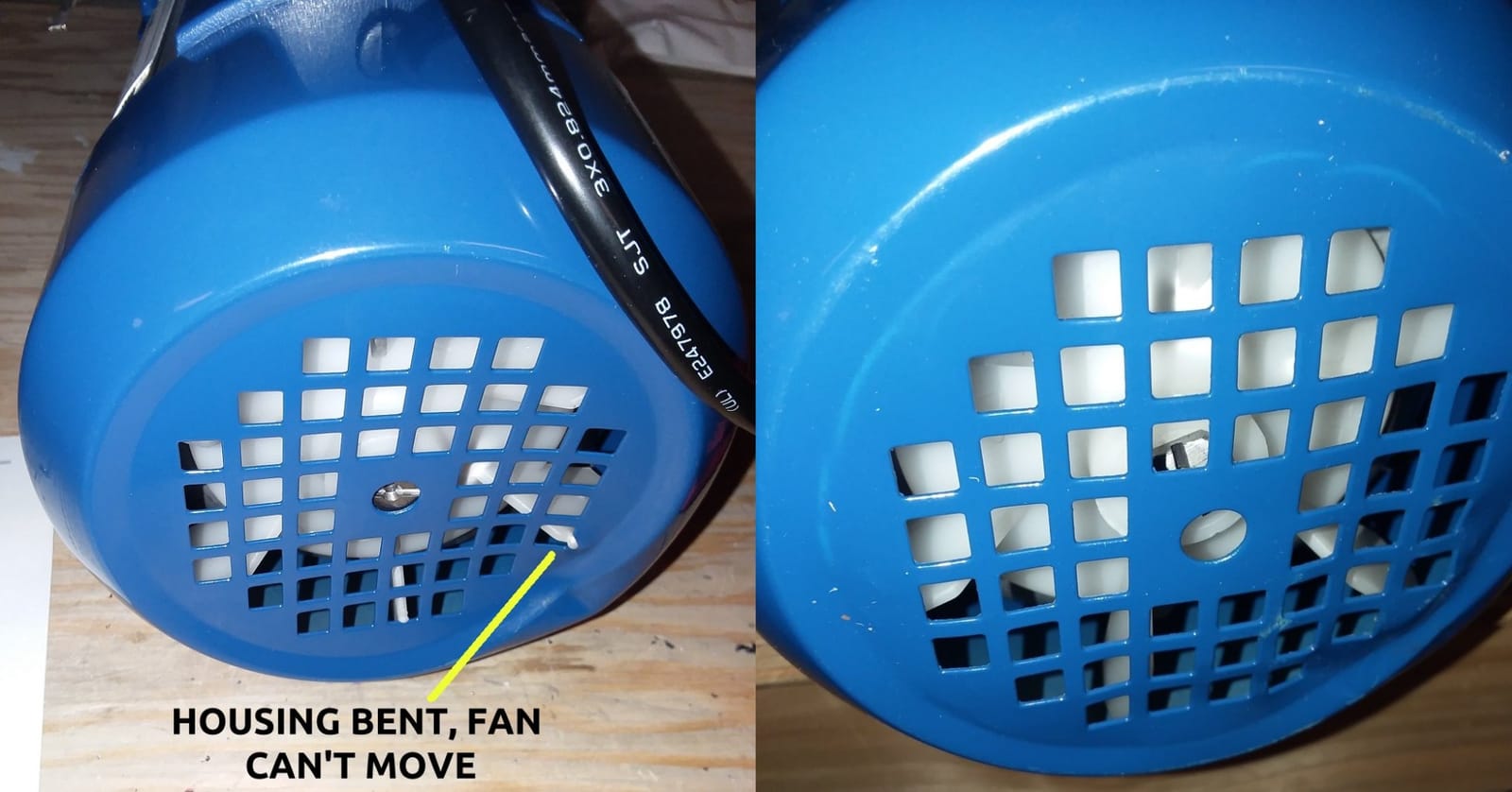
The main complaints are occasional oil consumption issues and real-world vacuum depth that sometimes falls short of the spec sheet. For most DIY and light professional use, neither is a dealbreaker, but heavy daily users may notice the difference compared to the Robinair.
Who should buy the VIVOHOME 5 CFM
This is the best pick for the DIYer or part-time tech who wants more durability than the cheapest pumps offer without paying Robinair prices. It handles home AC maintenance, automotive AC service, and occasional bigger jobs comfortably.
It is also a good match for anyone who wants a quieter pump, since 65 dB is among the lowest noise levels in this class.
Who should skip it
Full-time HVAC professionals will likely hit its duty-cycle limits. If your pump runs several hours a day, every day, invest in the Robinair 15500 or the 8 CFM VacuMaster below.
If you need guaranteed micron-level performance for critical applications, the occasional reports of shallow vacuum pull should steer you toward a pro-grade unit.
4. SPECSTAR 9.6 CFM 2 Stage – High Capacity Workhorse
- Fast pump down
- reaches 250-350 microns quickly
- Powerful 9.6 CFM for larger jobs
- Solid well-built construction
- Includes 2 bottles of vacuum oil
- Quiet operation
- Some users report not reaching below 750 microns
- Heavy at 40.7 pounds
- Real-world vacuum may fall short of 15 micron claim
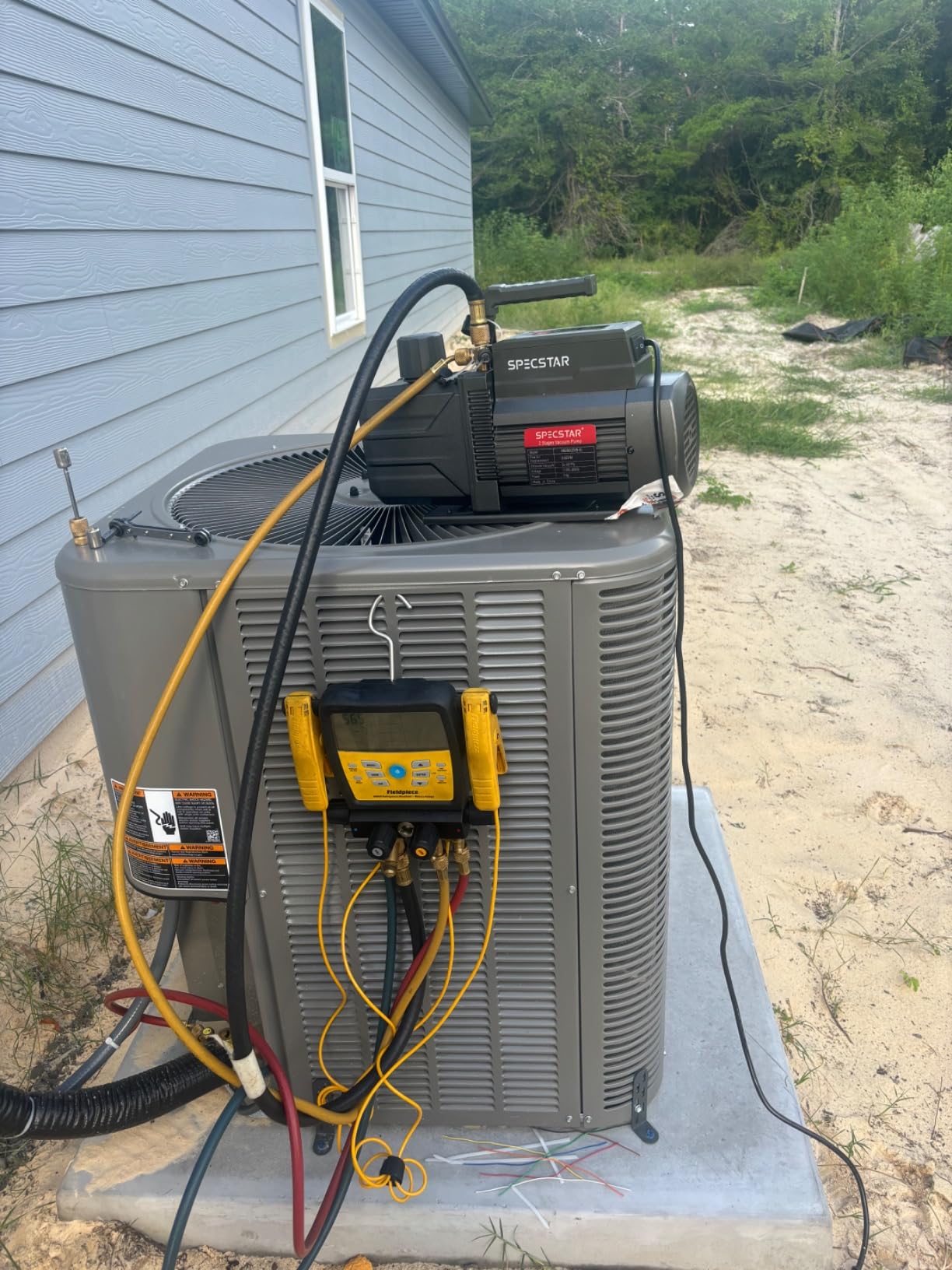
When you need to evacuate a large system fast, CFM is king, and the SPECSTAR 9.6 CFM pump delivers more airflow than anything else in this guide. The 1 HP thermally protected motor chews through big jobs, and buyers report reaching 250-350 microns quickly on residential and light commercial systems.
The build is solid, with a finned aluminum housing for heat dissipation and a soft rubber-lined handle for carrying. It ships with two bottles of 330ml vacuum oil, which is a nice touch since you will want fresh oil for every major job anyway.
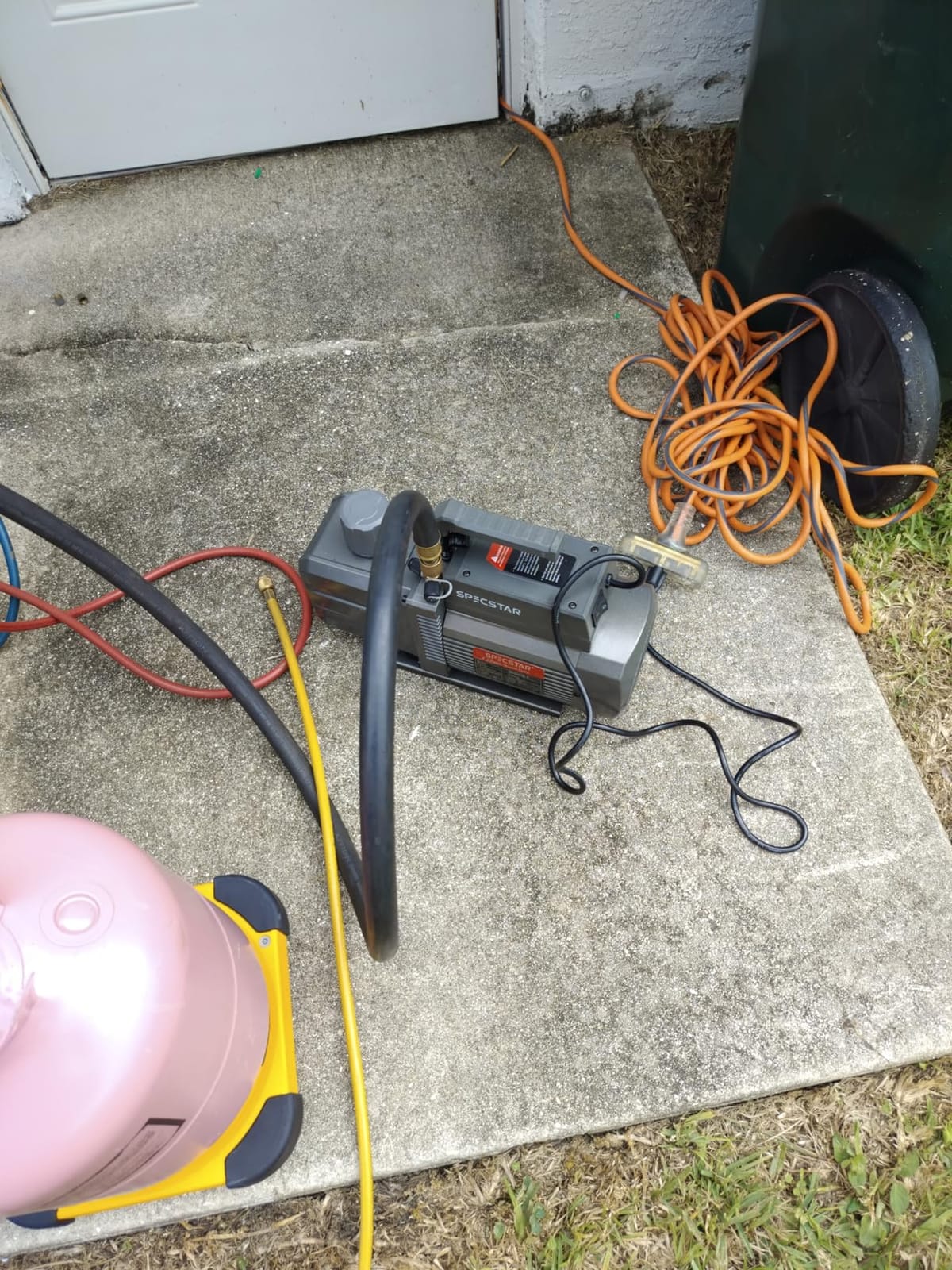
Technically, it offers three inlet fittings, 1/4 SAE, 1/2 ACME, and 3/8 SAE, so it connects to virtually any hose setup without hunting for adapters. It is compatible with R12, R22, R134a, and R410a.
The honest caveat: some buyers report their units would not pull below 750 microns, well short of the 15 micron factory rating. That kind of spread suggests quality control variance, so test yours with a micron gauge as soon as it arrives. At 40.7 pounds, it is also a two-handed carry.
Who should buy the SPECSTAR 9.6 CFM
This pump suits techs and serious DIYers who regularly work on larger residential systems, light commercial jobs, or long line sets where high CFM dramatically cuts evacuation time. The included oil and fittings make it a complete package out of the box.
It is also worth considering if you frequently pair your pump with a manifold and want spare capacity to overcome hose restrictions.
Who should skip it
If your work is mostly automotive AC or single mini splits, 9.6 CFM is overkill, and the extra weight becomes a burden with no real benefit. A 5 CFM pump will do the same job in nearly the same time on small systems.
Buyers who need guaranteed ultra-deep vacuum should also be cautious given the mixed micron reports and consider the Robinair or OMT options instead.
5. Orion Motor Tech 9 CFM 2 Stage – Deep Vacuum Performer
- Deep vacuum down to 1.5 microns
- Strong 3/4 hp motor
- High 9 CFM pumping efficiency
- Low noise under 70 dB
- Detachable power cable for durability
- Newer product with limited long-term reviews
- Some packaging labeling errors reported
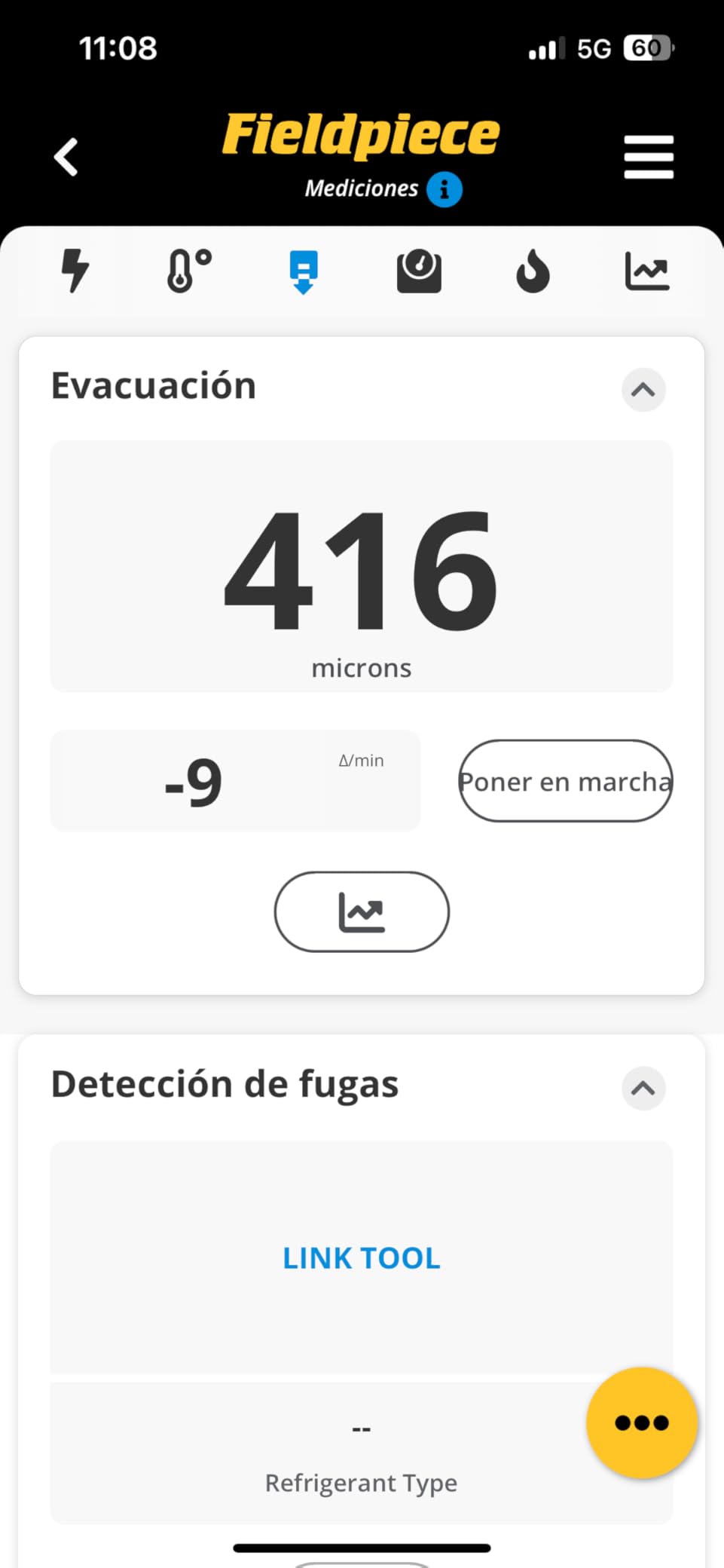
The Orion Motor Tech 9 CFM pump impresses on paper with a 1.5 micron ultimate vacuum rating, which is deeper than anything else in this lineup. Paired with the 9 CFM flow rate and 3/4 HP motor, it combines speed with serious vacuum depth for demanding evacuations.
The design details are thoughtful. The direct motor-pump coupling transfers power efficiently and keeps noise under 70 dB. The detachable power cable means a damaged cord is a five-minute fix instead of a pump replacement, and the 12.8 fl. oz. oil reservoir with a scaled sight glass makes oil management straightforward.
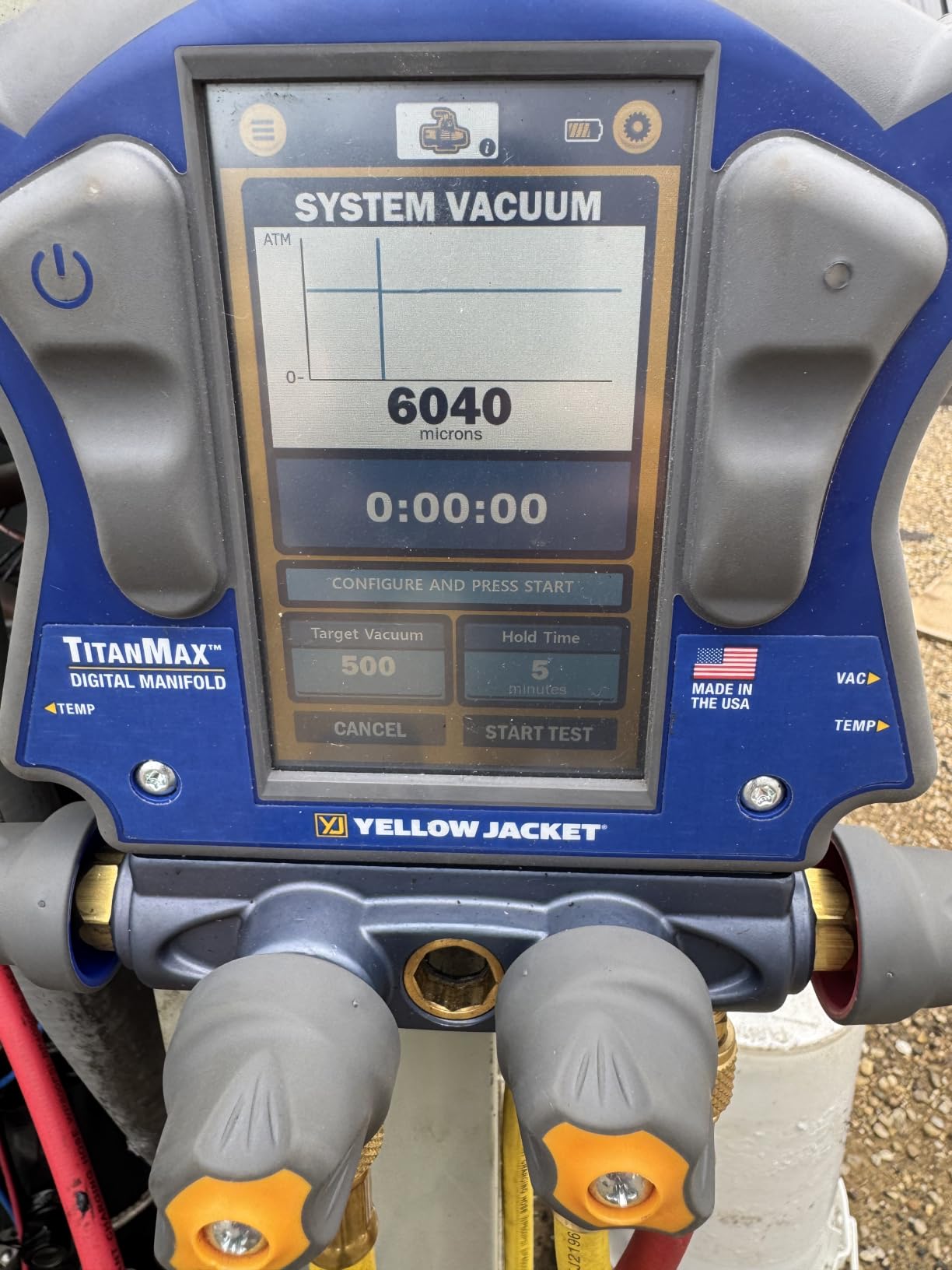
It accepts 1/4, 3/8, and 1/2 inch hoses directly, covering the common fittings without adapters. The 2-hour duty cycle rating is adequate for most evacuation jobs, though professionals running back-to-back pulls should keep an eye on heat.
The main hesitation is that this is a 2023 release, so long-term durability data simply does not exist yet. Early returns are positive with a 4.4 star rating across 133 reviews, but if you want a pump with a 20-year track record, the Robinair remains the safer bet.
Who should buy the Orion Motor Tech 9 CFM
This is a strong pick for techs who need both high throughput and deep vacuum on larger systems, especially heat pumps and long-line mini split installs where moisture removal really matters. The price-to-performance ratio is excellent.
It also suits anyone who values modern conveniences like the detachable cord and oversized oil reservoir.
Who should skip it
If you want proven multi-year durability, this pump is too new to guarantee it. The Robinair 15500 or 15800 have the field history this one lacks.
Small-system-only users should also pass, since a 5 CFM pump handles automotive and mini split work for less money and less weight.
6. VIVOHOME A2L 5 CFM Pump and Manifold Gauge Set – Complete Starter Kit
VIVOHOME A2L 1/2 HP 5CFM Dual Stage AC Vacuum Pump and Manifold Gauge Set
- A2L compatible for newer refrigerants
- Sparkless explosion-proof motor
- Works great on mini split installs
- Gauge set included
- Good value as a package
- Gauge set feels cheap
- Low-side 1234yf adapter can leak
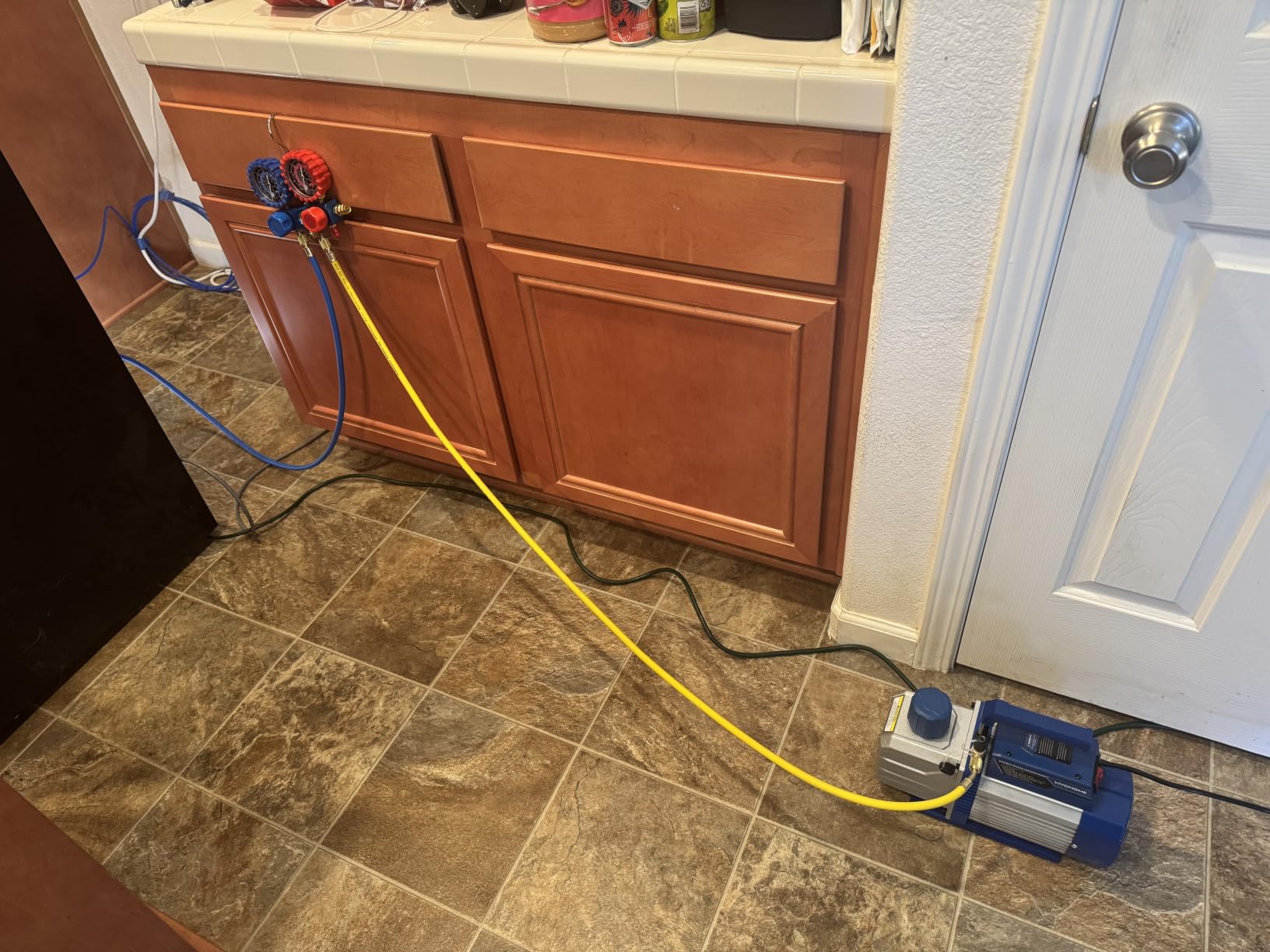
What makes this VIVOHOME package interesting is that it bundles an A2L-compatible sparkless vacuum pump with a full manifold gauge set and three color-coded hoses. If you are starting from zero, this is a genuinely complete AC service kit rather than just a pump.
The pump itself is rated for the newer A2L refrigerants, including R-1234yf and R-32, thanks to the ignition-proof ON/OFF switch and sparkless motor. That matters because A2L refrigerants are mildly flammable, and using a standard pump with spark-producing components on those systems is a real safety concern.
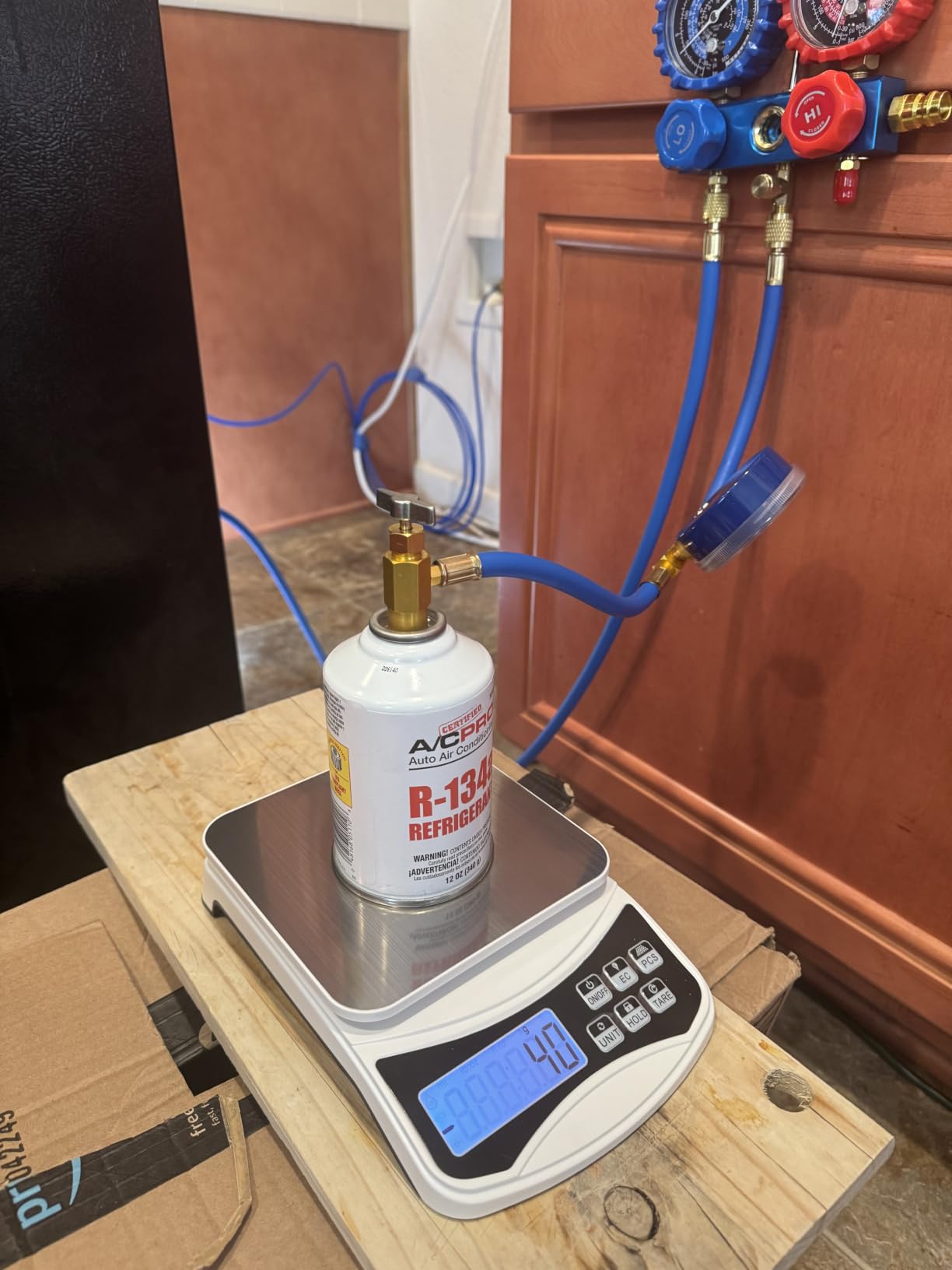
Buyer feedback centers on mini split installations, where the kit format shines. With a 4.5 star rating across 52 reviews, most buyers report successful installs and praise the value. The dual 1/2 ACME and 1/4 SAE ports plus four adapters cover most connection needs.
The weak link is the gauge set, which multiple reviewers describe as a little rinky dink, and the low-side 1234yf adapter that can leak. If you already own a quality manifold, buy the pump alone and use your own gauges.
Who should buy the VIVOHOME A2L kit
First-time mini split installers and DIYers building out an AC tool kit get the most from this bundle. You get everything needed for an evacuation and charge in one box at a package price below buying separately.
It is also the right choice if you service newer vehicles or systems using R-1234yf and want sparkless safety without paying professional-tool prices.
Who should skip it
Experienced techs who already own quality gauges should skip the bundle and buy a standalone pump, since the included manifold will likely end up in a drawer. The gauge accuracy of ±1.6% is fine for DIY but below pro standards.
If your work never touches A2L refrigerants, a standard pump like the Robinair offers better durability for similar money.
7. Orion Motor Tech A2L 5 CFM Sparkless – A2L Safety on a Budget
- Safe sparkless operation for A2L refrigerants
- Quiet operation at or below 70 dB
- Pulls down to 1.5 microns
- Large 14.9 fl. oz. oil tank
- Oil mist-free exhaust cap
- No written pros or cons from buyers yet
- Relatively new product with limited feedback
The Orion Motor Tech sparkless 5 CFM pump tackles the A2L safety question at the lowest price point of any A2L-rated pump in this guide. Like the VIVOHOME kit above, it uses an ignition-proof ON/OFF switch and sparkless motor design, making it safe for mildly flammable refrigerants like R-1234yf and R-32.
Performance specs are strong for this class. The 3450 rpm motor delivers 5 CFM and pulls systems down to 1.5 microns, matching the deeper vacuum ratings of pumps costing considerably more. The 14.9 fl. oz. oil tank is the largest in this guide relative to pump size, meaning fewer refills during long jobs.
The oil mist-free cap on the combined fill and exhaust port addresses one of the most common complaints about budget pumps, and the noise level stays at or below 70 dB. It is compatible with 1/4 SAE and 1/2 ACME fittings, the standard connections for HVAC and auto AC work.
With 83 reviews averaging 4.3 stars and 74 percent five-star ratings, early buyer sentiment is positive. The main limitation is simply that this is a late-2024 release with a shorter track record than the established brands.
Who should buy the Orion Motor Tech A2L 5 CFM
This is the value pick for techs and DIYers who need A2L compatibility for newer systems but do not want to spend big-brand money. It covers R-1234yf automotive work and R-32 mini splits safely.
It also suits anyone who hates frequent oil refills, thanks to the oversized reservoir.
Who should skip it
If you never touch A2L refrigerants, you are paying a small premium for safety features you will not use, and the standard Kozyvacu or VIVOHOME pumps cost less.
Buyers who prioritize long-term proven reliability should also note the limited review history compared to the Robinair lineup.
8. Robinair 15800 VacuMaster 8 CFM – Premium Professional Grade
Robinair 15800 VacuMaster Economy Vacuum Pump – 2-Stage, 8 CFM, Chrome, Red/Silver
- Well-established professional grade pump
- 8 CFM for commercial refrigeration
- High review count showing proven reliability
- 68 percent five-star ratings
- Inlet fitting prevents oil backflow
- Higher price than most competitors
- Only 4.2 star average rating
- Some buyers expected deeper vacuum than 40 micron rating
The Robinair 15800 is the big brother of the 15500, stepping up to 8 CFM and a 1 HP thermally protected motor for commercial refrigeration and larger residential work. When a job has long line sets or a big condenser coil, the extra 3 CFM over the 15500 cuts evacuation time noticeably.
This pump has been in Robinair’s lineup since 2009, and with 573 reviews it has one of the longest field histories of any pump here. Sixty-eight percent of buyers give it five stars, and the consistent theme is that it just keeps working year after year, which matches the forum consensus that price correlates with reliability in professional use.
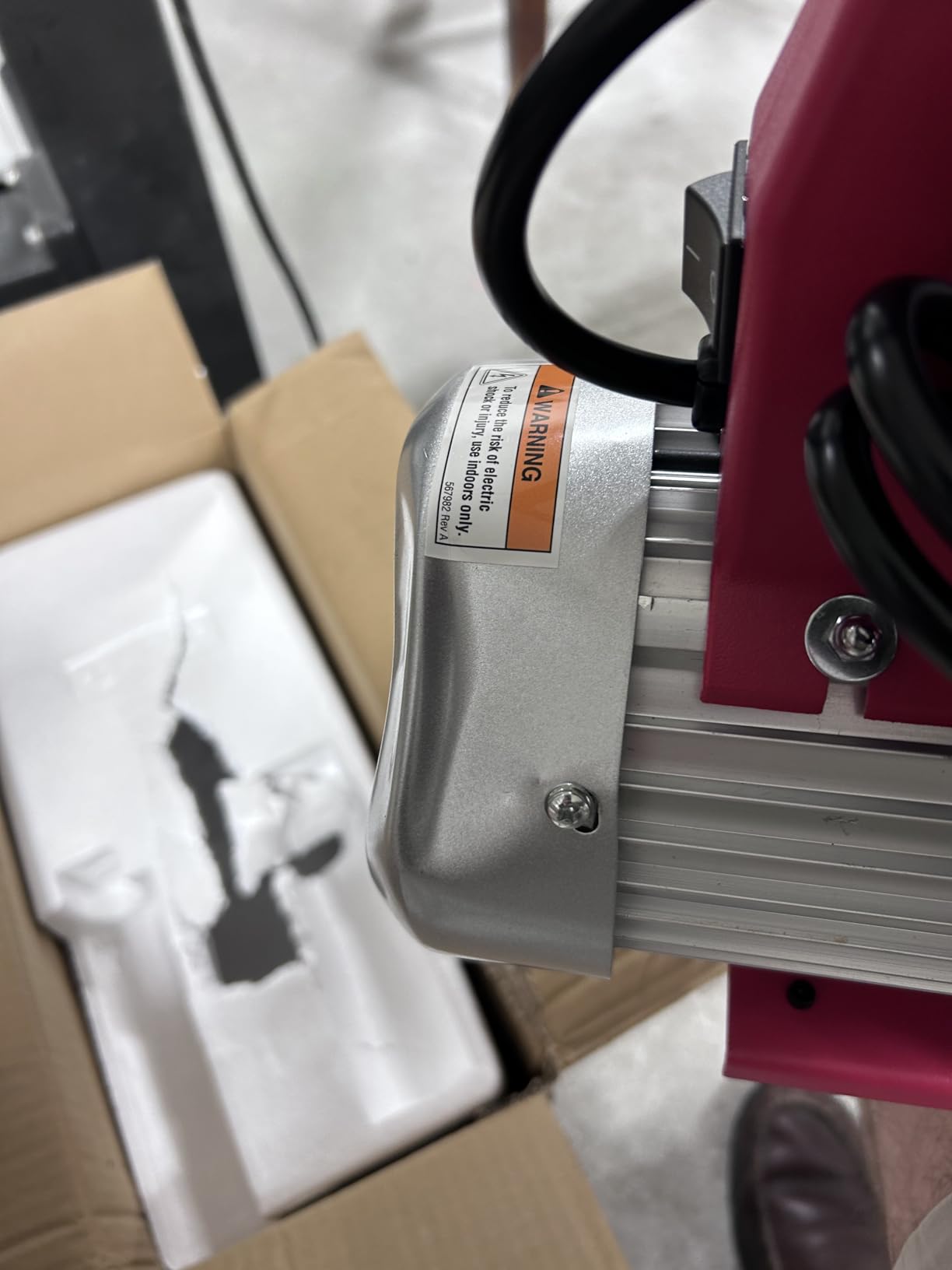
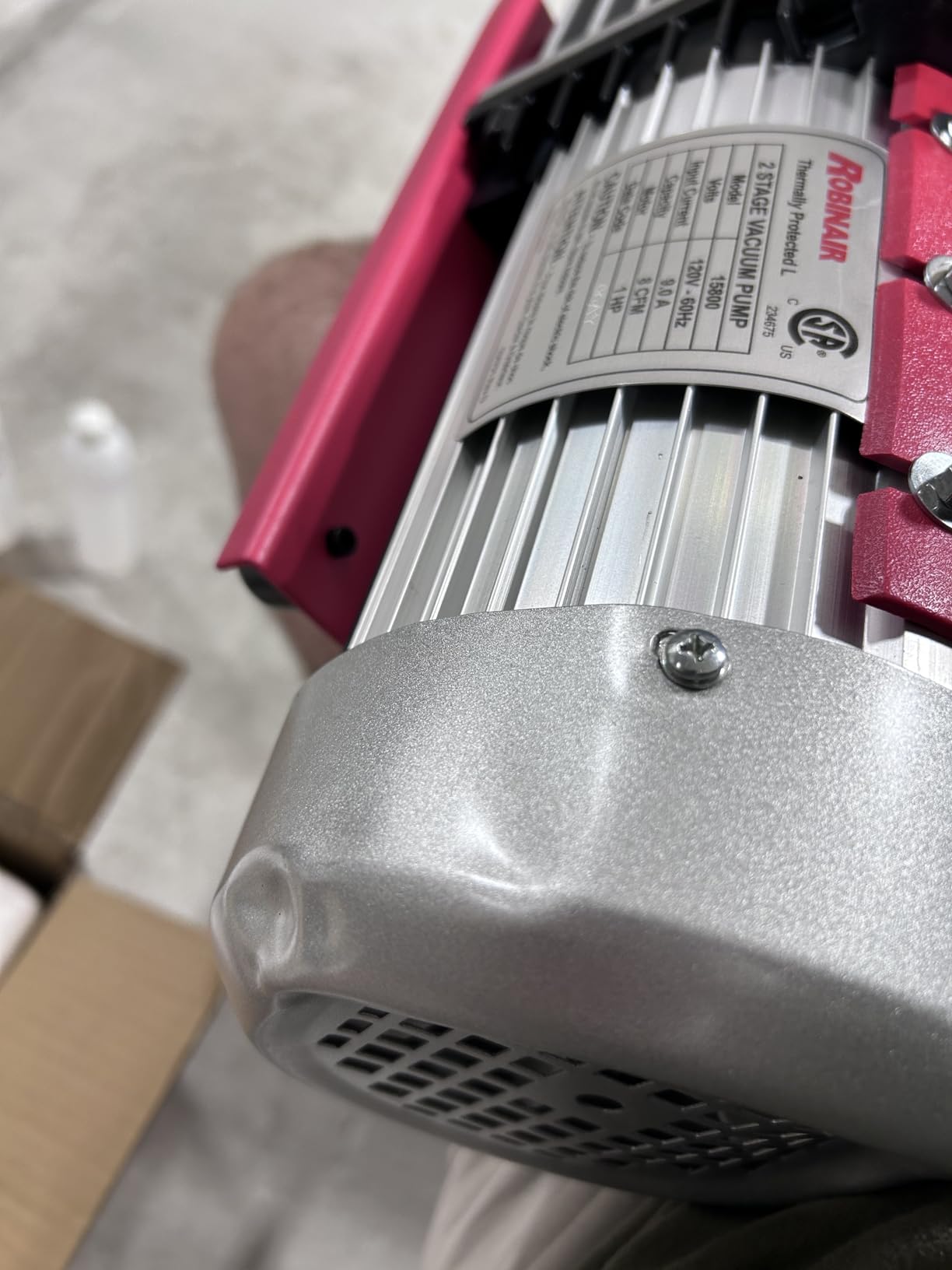
The design details matter for daily use. The inlet fitting is engineered for maximum airflow while preventing oil backflow into the system, a failure mode that ruins a job quickly. The finned aluminum housing dissipates heat on extended runs, and the 18.6 ounce oil capacity means fewer top-ups between jobs.
The 4.2 star average is the lowest among the Robinair pair, dragged down partly by buyers expecting micron performance beyond the 40 micron factory rating. For most real-world HVAC evacuation work targeting 500 microns or below at the system, the pump itself is more than capable.
Who should buy the Robinair 15800
Working professionals who do commercial refrigeration, large residential systems, or high-volume auto AC work will get the most from the 8 CFM capacity and tank-like durability. This is a buy-once, cry-once tool.
It is also the right choice if your pump runs for hours daily and you need proven thermal endurance.
Who should skip it
DIYers and light-duty users will overpay for capacity they never use. On automotive AC and mini splits, a 5 CFM pump finishes within minutes of this one.
Anyone servicing A2L systems should also look elsewhere, since this pump lacks the sparkless certification of the newer A2L-rated models.
Buying Guide: How to Choose a Two Stage Vacuum Pump?
Choosing the right two-stage vacuum pump comes down to four things: CFM rating, micron capability, refrigerant compatibility, and duty cycle. Here is how to think through each one for your specific work.
What CFM rating do you need
CFM, or cubic feet per minute, measures how fast the pump moves air, and it matters more than brand for evacuation speed. For automotive AC work, 1.5 to 5 CFM is plenty because car systems hold very little volume. For residential HVAC and mini splits, 5 to 7 CFM is the sweet spot that forum professionals recommend.
Go up to 8, 9, or 9.6 CFM when you work on commercial refrigeration, long line sets, or systems above 5 tons. Bigger systems benefit from higher flow, but on small systems a big pump barely finishes faster than a 5 CFM unit. Note that real-world CFM is always lower than the free-air rating once hoses, manifolds, and restrictions enter the picture.
Two-stage versus single-stage
A two-stage vacuum pump uses two rotary vanes in series: the first stage pulls air into the second stage, which compresses and exhausts it. This arrangement reaches deeper vacuum levels, typically below 50 microns, with less backflow than a single-stage pump.
Is a two-stage vacuum pump good and worth the extra money? Yes, for HVAC and refrigeration work it is essentially mandatory. Proper evacuation requires pulling below 500 microns to boil off moisture, and single-stage pumps often bottom out near 100 to 150 microns under real conditions. For deep vacuum work, the best vacuum pumps are two stage, full stop.
Micron levels explained
Microns measure vacuum depth, with lower being better. Industry standards generally call for a system pulled down to 500 microns or less, held for a decay test. A pump rated to 35 or 50 microns gives you headroom to hit 500 microns at the system even after losses through hoses and manifolds. Pumps rated to 15 or 1.5 microns give extra margin, though real-world results vary with oil condition and fittings.
A2L compatibility matters more every year
A2L refrigerants like R-32 and R-1234yf are mildly flammable, and the industry shift toward them is well underway in 2026. A2L-compatible pumps use sparkless motors and ignition-proof switches so a stray spark never meets refrigerant vapor. If you service newer vehicles or modern mini splits, an A2L-rated pump like the Orion Motor Tech sparkless or the VIVOHOME A2L kit is the safe choice.
Duty cycle and oil management
Duty cycle tells you how long a pump can run before needing to cool down. DIY pumps often have 1 to 2 hour ratings, while professional units handle extended runs. Oil management is the other daily-use factor: look for large oil capacity, easy drain valves, and sight glasses. The biggest maintenance hassle owners report is messy oil changes, which is where thoughtful drain design pays off.
Common mistakes to avoid
First, buying on CFM alone. A cheap 9 CFM pump that will not pull below 750 microns is worse than a quality 5 CFM pump that hits 35 microns. Always verify performance with a standalone micron gauge rather than trusting the box.
Second, neglecting oil changes. Contaminated oil is the top reason pumps lose vacuum depth. Change oil after every major job, or whenever it looks cloudy or milky, which indicates moisture saturation.
Third, using undersized or leaking hoses. Your evacuation is only as good as the weakest connection, so use 3/8 or 1/2 inch vacuum-rated hoses and seal every fitting before you blame the pump.
Frequently Asked Questions
Is a two-stage vacuum pump good?
Yes, a two-stage vacuum pump is good and generally necessary for HVAC and refrigeration work. It pulls deeper vacuum than a single-stage pump, typically below 50 microns, which is required to properly remove moisture from a system before charging refrigerant.
Are the best vacuum pumps one stage or two stage?
For HVAC, refrigeration, and automotive AC work, the best vacuum pumps are two stage. Two-stage rotary vane pumps achieve deeper vacuum levels with less backflow, making them the standard choice for proper system evacuation.
How many CFM vacuum pump do I need?
For automotive AC work, 1.5 to 5 CFM is sufficient. For residential HVAC and mini splits, 5 to 7 CFM is the recommended range. For commercial refrigeration, long line sets, or systems above 5 tons, choose 8 CFM or higher.
What is a 2-stage HVAC vacuum pump?
A 2-stage HVAC vacuum pump is a tool with two rotary vanes arranged in series. The first stage pulls air into the second stage, which compresses and exhausts it, achieving deeper vacuum levels than single-stage pumps for proper moisture removal during system evacuation.
Is a 2 stage AC vacuum pump worth the extra money?
Yes, if you do serious HVAC or AC work. A two-stage pump reaches the deep vacuum levels required to remove moisture from systems, while single-stage pumps often bottom out near 100 to 150 microns, which can leave moisture and cause system problems.
Who makes the best vacuum pumps?
Robinair is one of the most trusted names with decades of field history, while professionals on forums also praise NAVAC, JB Industries, and Yellow Jacket. Among budget options, Kozyvacu, VIVOHOME, and Orion Motor Tech offer strong value for DIY use.
Can you run two vacuum pumps at the same time?
Yes, you can run two vacuum pumps simultaneously on a large system by connecting them at different points, which increases effective CFM and speeds up evacuation. Make sure both pumps share a common manifold or access point so they work together rather than fighting each other.
Conclusion
Picking the best two stage vacuum pumps comes down to matching the pump to your work. For most people, the Robinair 15500 VacuMaster is the standout choice with proven durability and real-world 7-9 micron performance. The VIVOHOME and Kozyvacu 5 CFM pumps cover the DIY and value end, while the SPECSTAR and Orion Motor Tech 9 CFM units handle bigger systems, and the A2L-rated models keep you safe on newer refrigerants.
Whatever you choose, pair it with a standalone micron gauge, keep fresh oil in it, and verify every evacuation with a decay test. Your pump is the tool that protects the entire system from moisture damage, so it deserves real consideration rather than a last-minute add-on in 2026.