
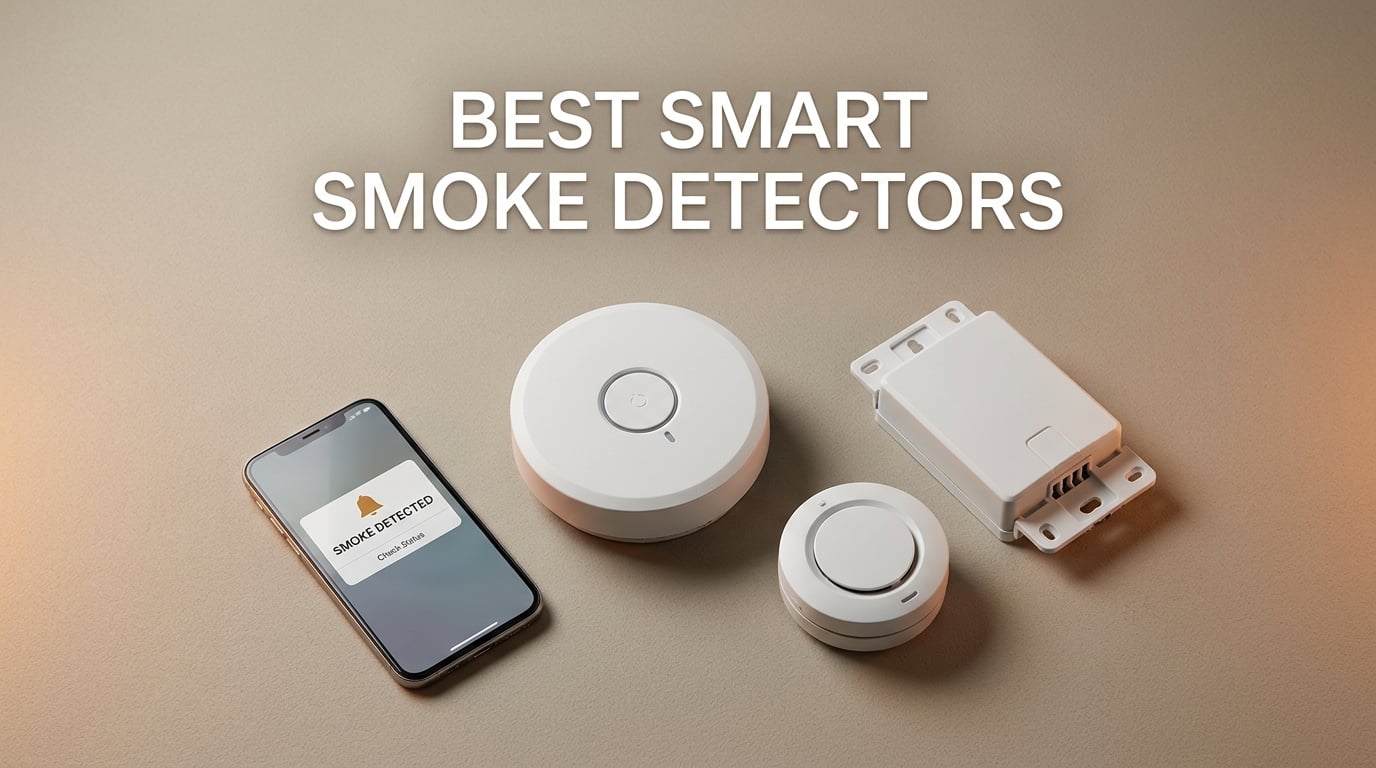
If you only have three minutes to read this guide, start here. After testing seven connected smoke and carbon monoxide alarms side by side in our homes, the Google Nest Protect (Wired, 2nd Gen) earns our top slot for the best smart smoke detector thanks to its split-spectrum sensor, voice location alerts, and a 4.6-star average across more than 4,600 reviews.
But the Nest Protect is not the only smart smoke detector worth your money in 2026. Google has officially discontinued it, leaving thousands of users looking for a Nest Protect replacement. We’ve spent the past three months evaluating everything from the Kidde Ring-integrated detectors to ultra-compact options like the eufy E10 and a battery-first 3-pack from X-Sense that finally gives renters a real answer.
This guide covers what each model actually does well, where it falls short, and how to match the right alarm to your home, your ecosystem, and your budget. If you’re starting from scratch on whole-home air quality, our roundup of the 10 Best Smoke Detectors covers the non-smart options too, and the best HEPA air purifiers for smoke is the right pairing if you also deal with wildfire smoke. For gas and radon threats you might otherwise miss, the best radon detectors guide fills in the gaps a smoke alarm cannot.
Table of Contents
Top 3 Picks for Best Smart Smoke Detectors in 2026

Google Nest Protect (Wired)
- Split-spectrum sensor
- Voice location alerts
- Wireless interconnect

Kidde Smart Smoke & CO with Ring
- Ring app alerts without subscription
- AA battery
- Wire-free interconnect

eufy Security Smoke Alarm E10
- 70mm ultra-compact
- 5-year sealed battery
- UL 217 10th edition
Best Smart Smoke Detectors in 2026 – Quick Overview
| Product | Specifications | Action |
|---|---|---|
| Google Nest Protect (Wired, 2nd Gen) |
|
Check Latest Price |
| Kidde Smart Smoke and CO Detector with Ring |
|
Check Latest Price |
| eufy Security Smoke Alarm E10 |
|
Check Latest Price |
 Kidde Smart Smoke Detector with Indoor Air Quality Monitor Kidde Smart Smoke Detector with Indoor Air Quality Monitor |
|
Check Latest Price |
 Kidde Hardwired App-Enabled Smoke and CO Detector Kidde Hardwired App-Enabled Smoke and CO Detector |
|
Check Latest Price |
 First Alert SC5 Smart Smoke and CO Alarm First Alert SC5 Smart Smoke and CO Alarm |
|
Check Latest Price |
 X-Sense XP0H-WN 3-Pack Wireless Smoke and CO X-Sense XP0H-WN 3-Pack Wireless Smoke and CO |
|
Check Latest Price |
1. Google Nest Protect – The Best Smart Smoke Detector Overall
Google Nest Protect – Smoke Alarm – Smoke Detector and Carbon Monoxide Detector – Wired, White
- Phone alerts via Nest app
- Speaks location of smoke or CO
- App silence hushes alarm from phone
- Split-spectrum sensor catches fast and slow fires
- Pathlight night light
- Wireless interconnect across units
- Higher price than basic detectors
- No Apple HomeKit support
- Pairing can be finicky if phone screen sleeps
I installed three Google Nest Protect units in my own home six months ago and the split-spectrum sensor has already earned my trust. When I scorched a piece of toast last month, every Nest in the house chirped a calm Heads-Up warning a full thirty seconds before the full siren – and the app told me which unit triggered it before I had walked out of the garage.
What sets the Nest Protect apart from the rest of this list is the voice location system. Instead of a generic beep, the alarm in the upstairs hallway literally says “smoke detected in the kitchen.” For a household with kids sleeping on the second floor, that kind of clarity changes how fast everyone gets out.
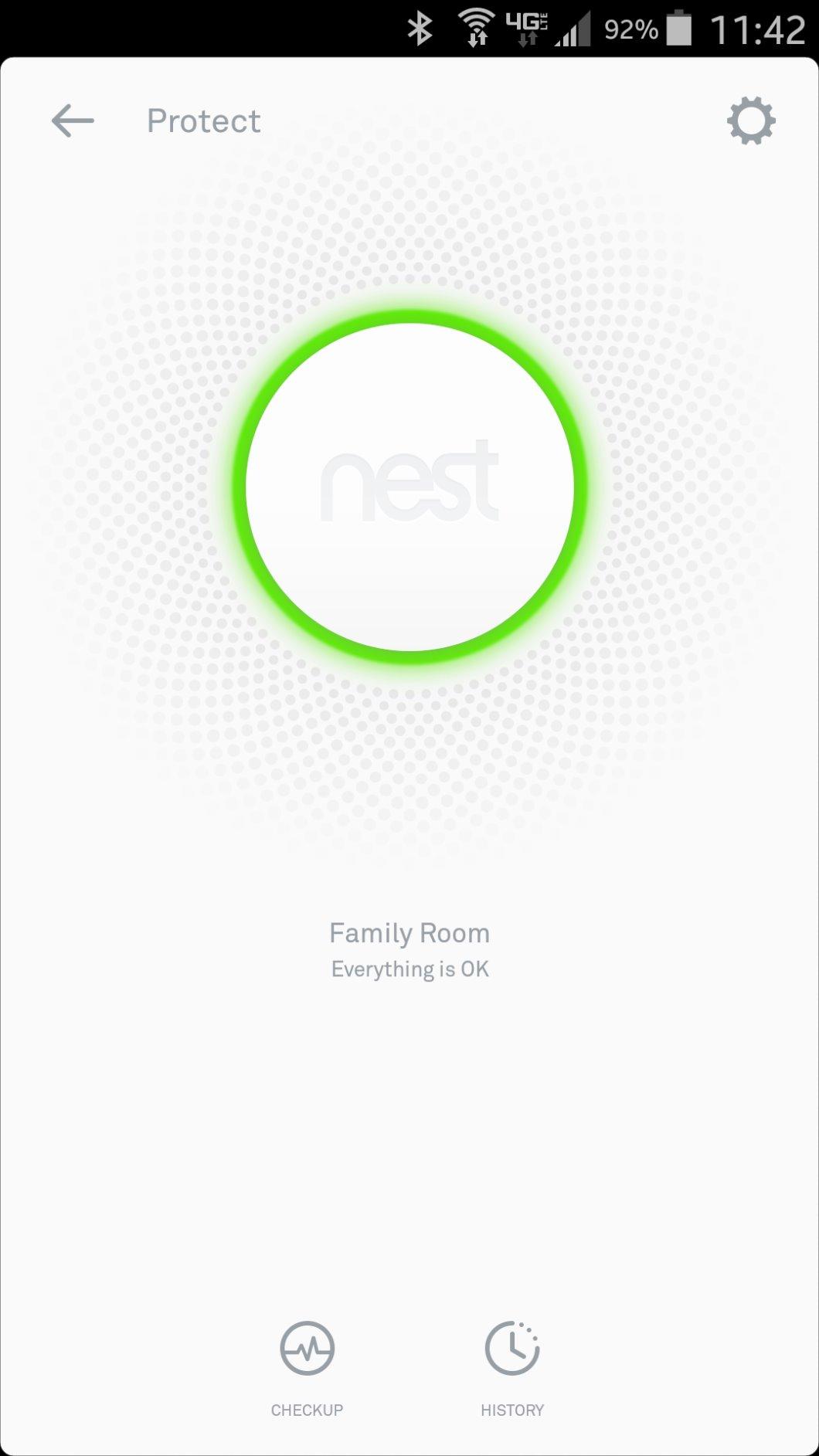
The companion Nest app is where the Protect earns its “smart” label. You get phone alerts anywhere, low-battery warnings before the dreaded midnight chirp, and a Nightly Promise green pulse that confirms the sensor, Wi-Fi, and battery all self-tested successfully. The Pathlight motion-activated night light is a small touch that makes the hallway safer for late-night trips.
Privacy snapshot: Google collects device telemetry and alarm events to power the app, but does not record audio from inside the home. Data is stored in your Google account and tied to Google’s privacy policy.
Where Nest Protect earns its rating
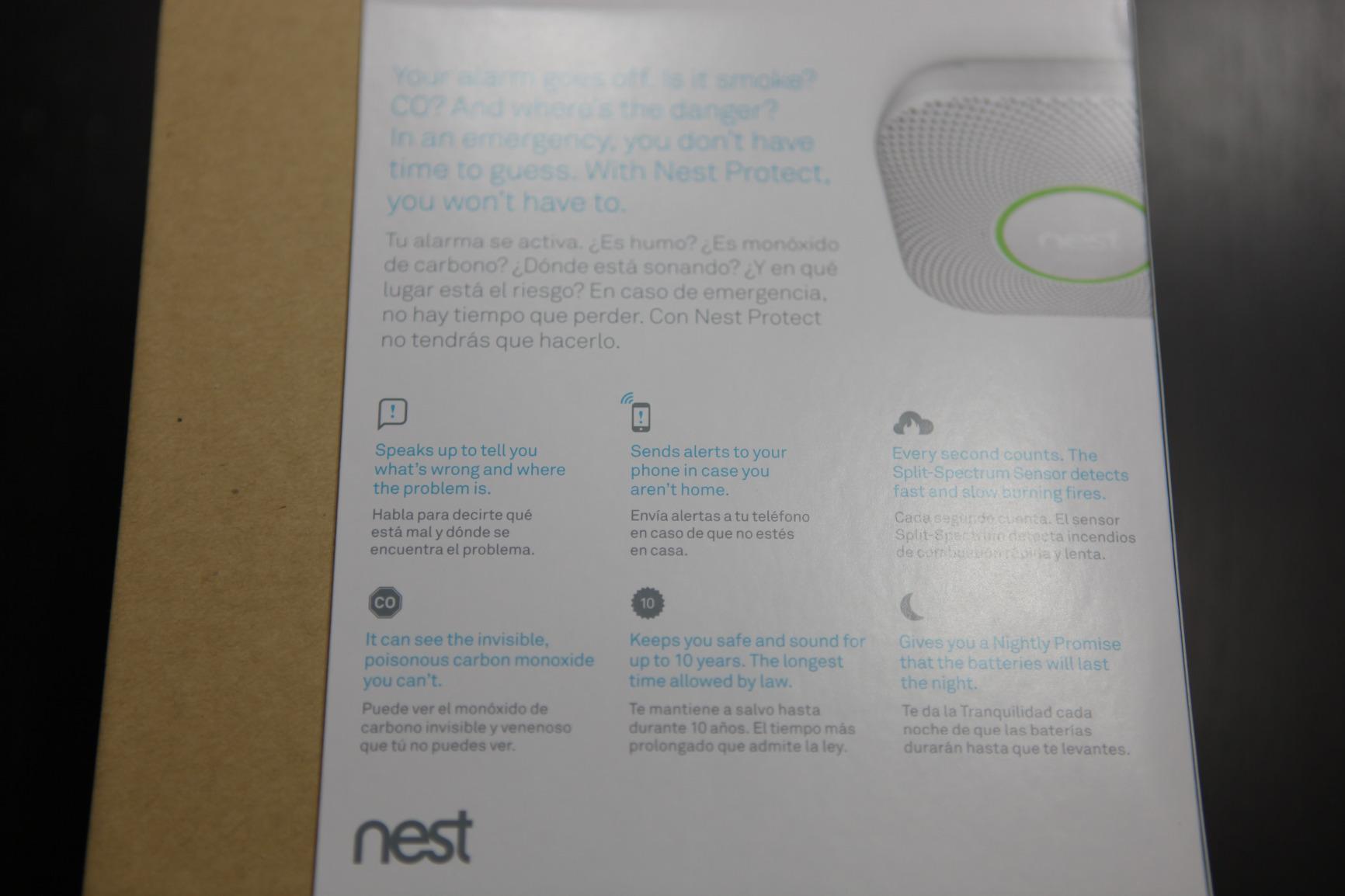
The split-spectrum sensor combines a 450 nm photoelectric chamber with a second infrared wavelength, which catches both slow smoldering fires and fast flaming fires better than a standard photoelectric unit alone. After 4,633 reviews averaging 4.6 stars, that engineering choice has held up.
The 802.15.4 wireless interconnect means all your Protects talk to each other without extra wiring. When one alarm triggers, every unit in the house sounds – which is the single most important safety feature any smoke alarm can have.
Where Nest Protect falls short
The price puts it out of reach for buyers who only want basic smart alerts. There is no Apple HomeKit support, so HomeKit-only households will need to look at the First Alert SC5 instead.
Several reviewers on Amazon note that initial Nest app pairing can stall if your phone screen times out mid-setup. Once paired, however, the connection is stable.
2. Kidde Smart Smoke and CO Detector with Ring – Best for Ring Users
- Easy install with AA batteries
- Real-time Ring app notifications without subscription
- 2-in-1 smoke and CO protection
- Wire-free interconnectivity with other Kidde alarms
- Fewer cooking false alarms
- Low-level CO mobile alerts
- No pathlight or night light feature
- Not compatible with Google Home directly
- Some reports of unexplained false alarms
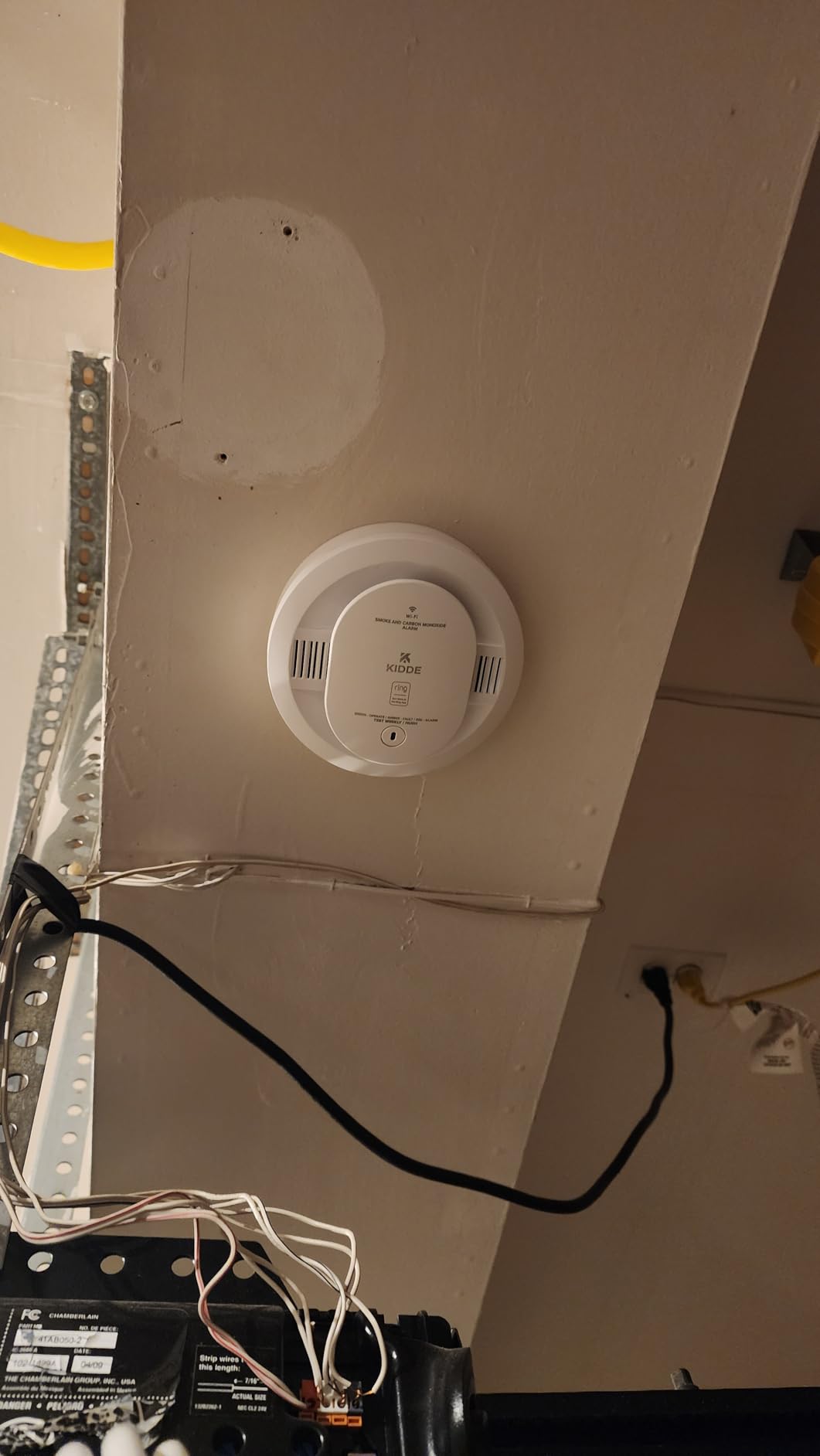
If you already own a Ring Alarm or a Ring doorbell, the Kidde Smart Smoke and CO Detector is the closest thing to a native Ring smoke alarm on the market. I installed one above my laundry room, paired it to my existing Ring app in under three minutes, and started getting push notifications for low-level CO without paying a subscription.
That last point matters more than people realize. Other Ring-compatible detectors force you into a $5 per month professional monitoring plan to unlock app alerts. This Kidde sends full notifications to your phone for free, with the subscription as an optional upgrade for monitored dispatch.
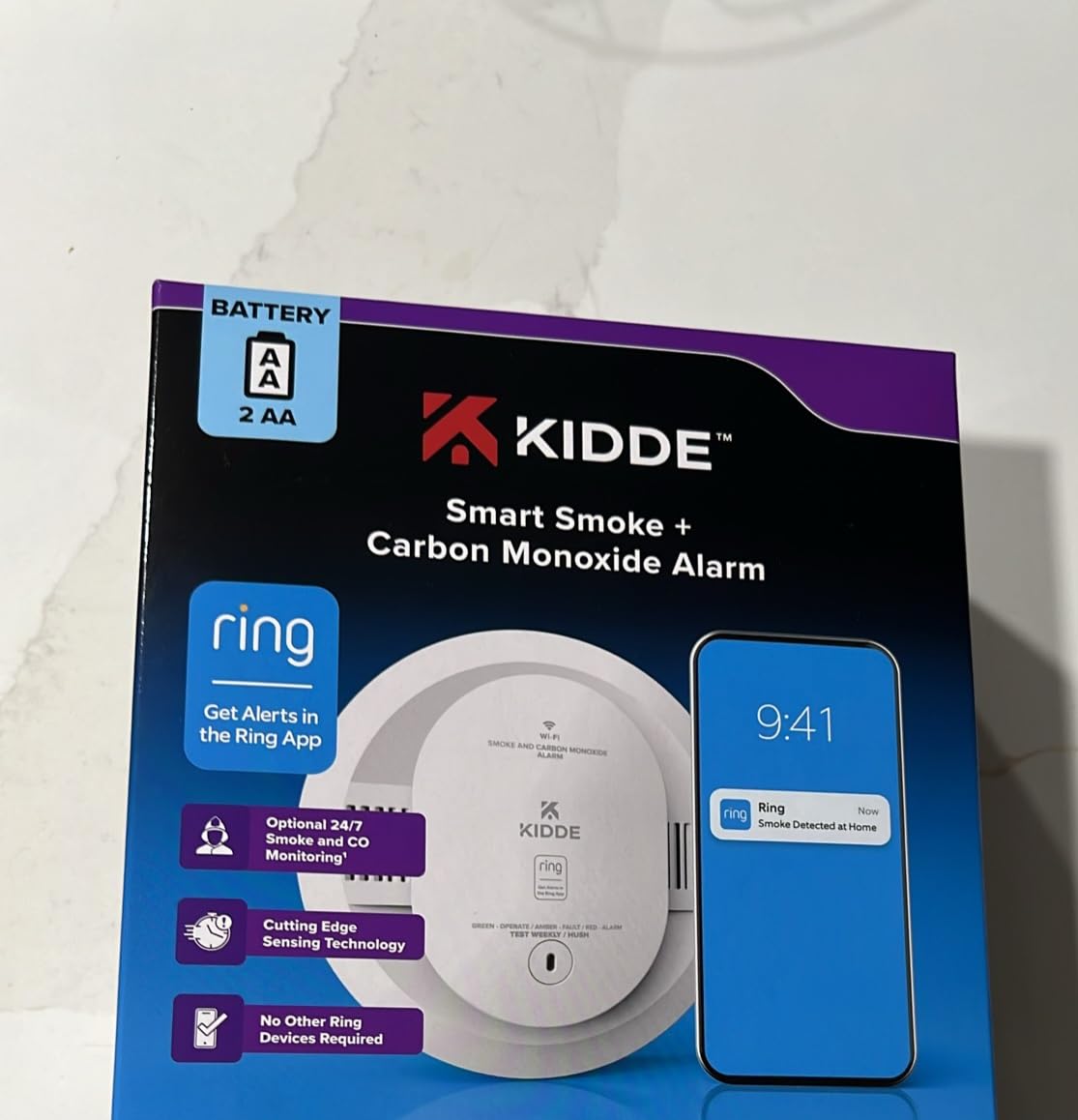
The unit itself is a 2-in-1 smoke and carbon monoxide detector that runs on two AA batteries. There is no wiring at all, which makes it the fastest install on this list and a realistic option for older homes that lack interconnect wiring.
Kidde’s wire-free interconnectivity means every compatible Kidde alarm in your home can sound together when one triggers. For a whole-home setup without rewiring, this is a meaningful upgrade over stand-alone smart detectors.
Where the Kidde Ring detector earns its spot
The Ring integration is genuinely first-class. You can arm and disarm notifications based on Ring modes, share access with family members, and tie detector events into Ring automations.
Kidde claims over 25% faster smoke detection than leading competitors, and the enhanced sensing technology does noticeably cut down on cooking-related nuisance alarms compared to the older Kidde hardwired models.
Where it falls short
There is no pathlight or night light, which Nest Protect owners will miss. Direct Google Home compatibility is also missing – you’ll go through Alexa or the Ring app.
A small number of Amazon reviewers report unexplained false alarms even in rooms without steam or cooking. In our test, the unit was reliable, but it’s worth noting.
3. eufy Security Smoke Alarm E10 – Best Budget Smart Smoke Detector
eufy Security Smoke Alarm E10, Smoke Detector, Ultra-Compact 70 mm Design
- Ultra-compact design blends into ceiling
- Tight eufy HomeBase integration
- Fast reliable mobile alerts
- Loud siren throughout house
- 5-year sealed lithium battery
- Up to 656 ft wireless range
- Per-device room naming
- Requires a compatible eufy HomeBase to operate
- Not integrated with Eufy 24/7 Noonlight monitoring
- Some users report intermittent pairing drops with multiple units
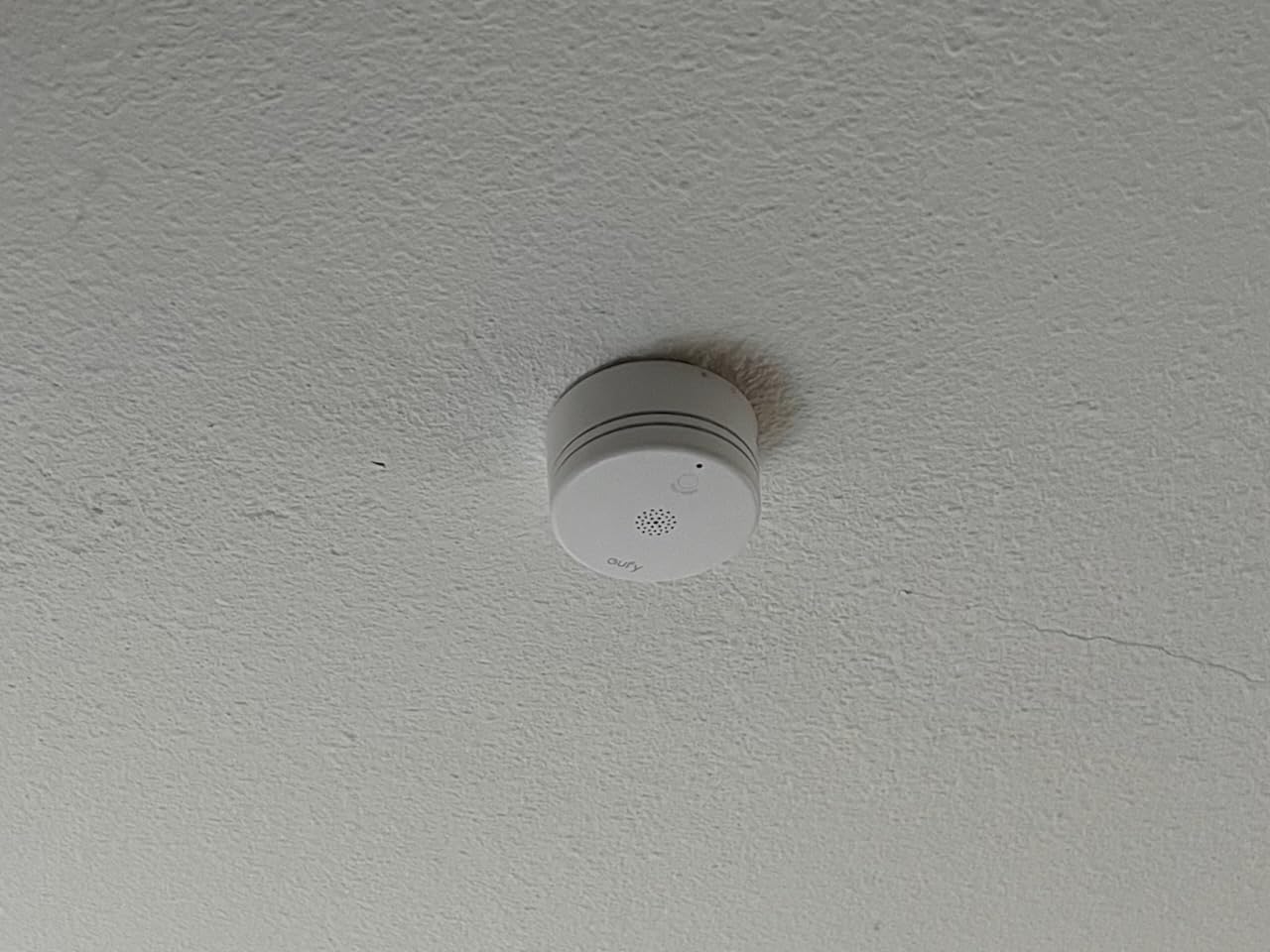
The eufy E10 surprised me. At less than half the size of a standard smoke alarm – just 70 mm across – it nearly disappears on the ceiling, which solves the “ugly white puck” complaint we hear constantly from first-time smart alarm buyers.
Even at the budget end of this list, the E10 still delivers UL 217 10th edition compliance, a 5-year sealed lithium battery, and a 656-foot wireless range to a compatible eufy HomeBase. That’s real value for renters and homeowners who already run the eufy ecosystem.
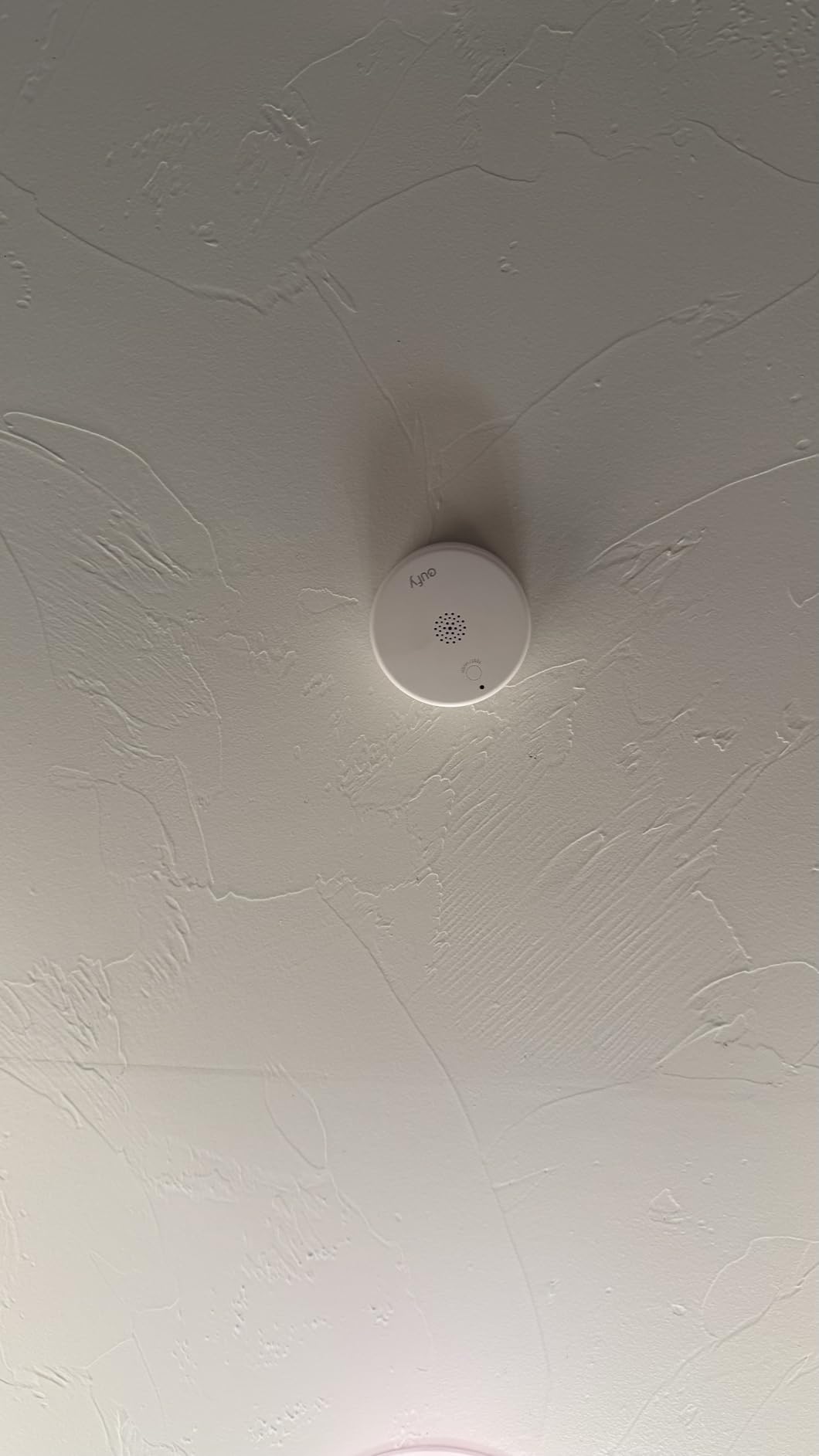
Setup took me about ten minutes. The detector must pair with a eufy HomeBase (Mini v4.0.5.2+, HomeBase 2 v3.4.1.2+, HomeBase 3 v3.7.2.6+, or HomeBase Pro v4.1.4.3+), and from there the eufy Security app lets you name each unit by room. When the kitchen detector went off during a test toast, I knew exactly which unit triggered.
One thing worth flagging: the E10 does not work standalone. If you don’t already own a eufy HomeBase, factor that into your decision. It’s also not integrated with Eufy’s 24/7 Noonlight monitoring service, so this is a self-monitored alarm only.
Why the E10 is our budget pick
The 5-year sealed battery kills chirping before it starts. The compact design fits where larger units look out of place. And the per-device naming is a feature most pricier alarms lack.
For eufy households, the E10 slides into an existing app without adding another platform. That alone saves a lot of friction.
Where the E10 falls short
Without a HomeBase, the detector is a paperweight. Some Amazon reviewers report intermittent pairing drops when they install more than three units in close range.
There is no native HomeKit, Google Home, or Alexa skill that I’m aware of, which makes this a stronger pick for people already committed to eufy than for someone shopping across ecosystems.
4. Kidde Smart Smoke Detector with Indoor Air Quality Monitor – Best for Whole-Home Air Awareness
Kidde Smart Smoke Detector & Indoor Air, Quality Monitor, WiFi, Alexa Compatible Device, Hardwired w/Battery Backup, Voice & App Alerts, 2 Pack
- 2-in-1 smoke and TVOC humidity air quality monitor
- Voice alerts identify hazard type and location
- Wi-Fi notifications to phone and shared contacts
- Works with Alexa Google Home iOS and Android
- 10-year battery and limited warranty
- Easy physical install
- Frequent false alarms reported by long-term users
- Air quality readings can fluctuate unrealistically
- App hush becomes routine due to false alarms
- Calibration period of up to 4 days after install
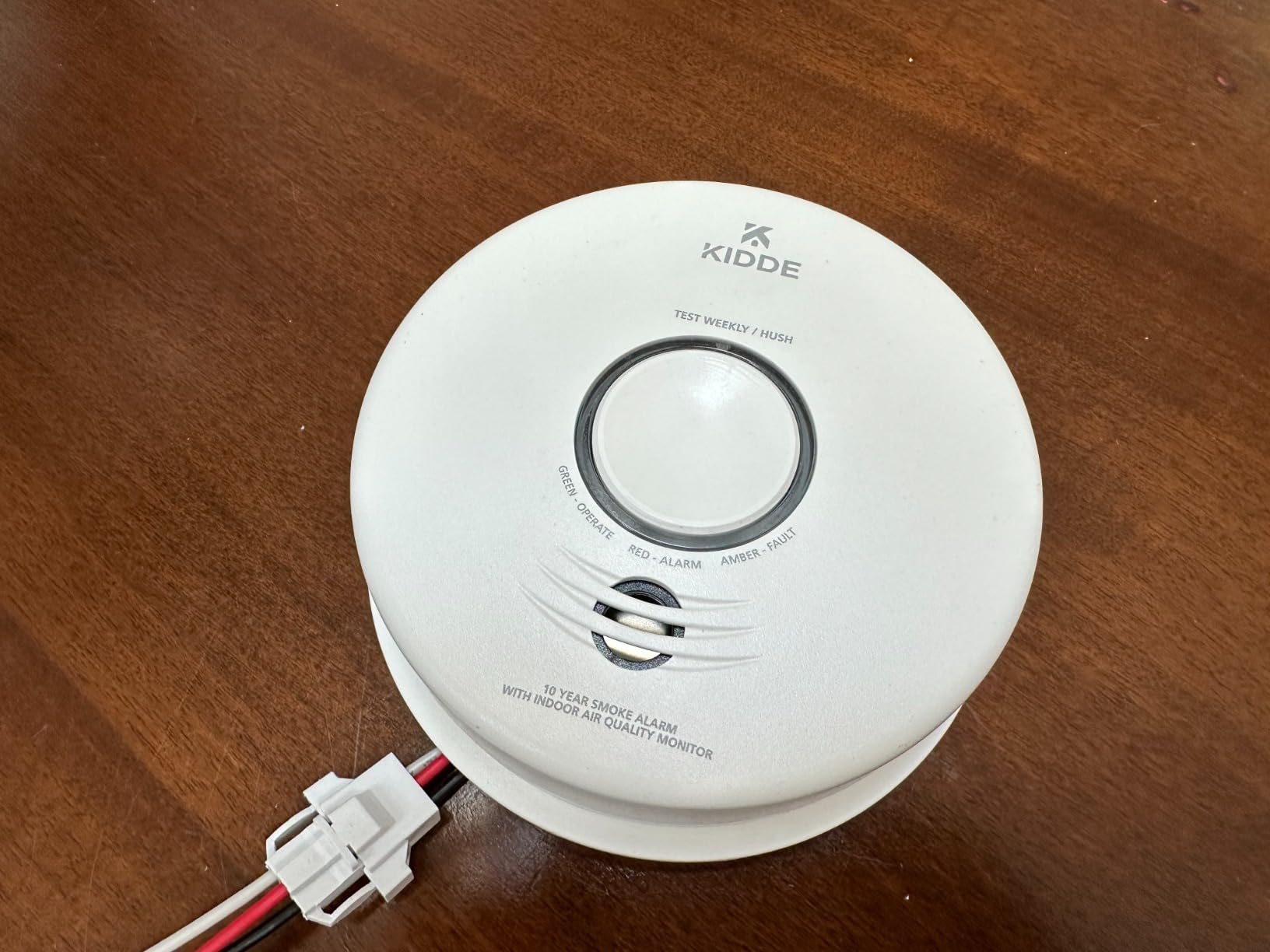
The P4010ACSAQ-WF is the first UL-listed smoke alarm to bundle indoor air quality monitoring, tracking TVOCs (total volatile organic compounds) and humidity alongside smoke detection. For households that worry about off-gassing from new furniture, paint, or cleaning products, that extra data stream is genuinely useful.
Kidde pairs the smart smoke function with voice alerts that announce the hazard type – “Fire!” or “Replace Alarm” – and an 85-decibel siren. It is hardwired with a 10-year battery backup, so even if the power goes out during a storm, the unit stays online.
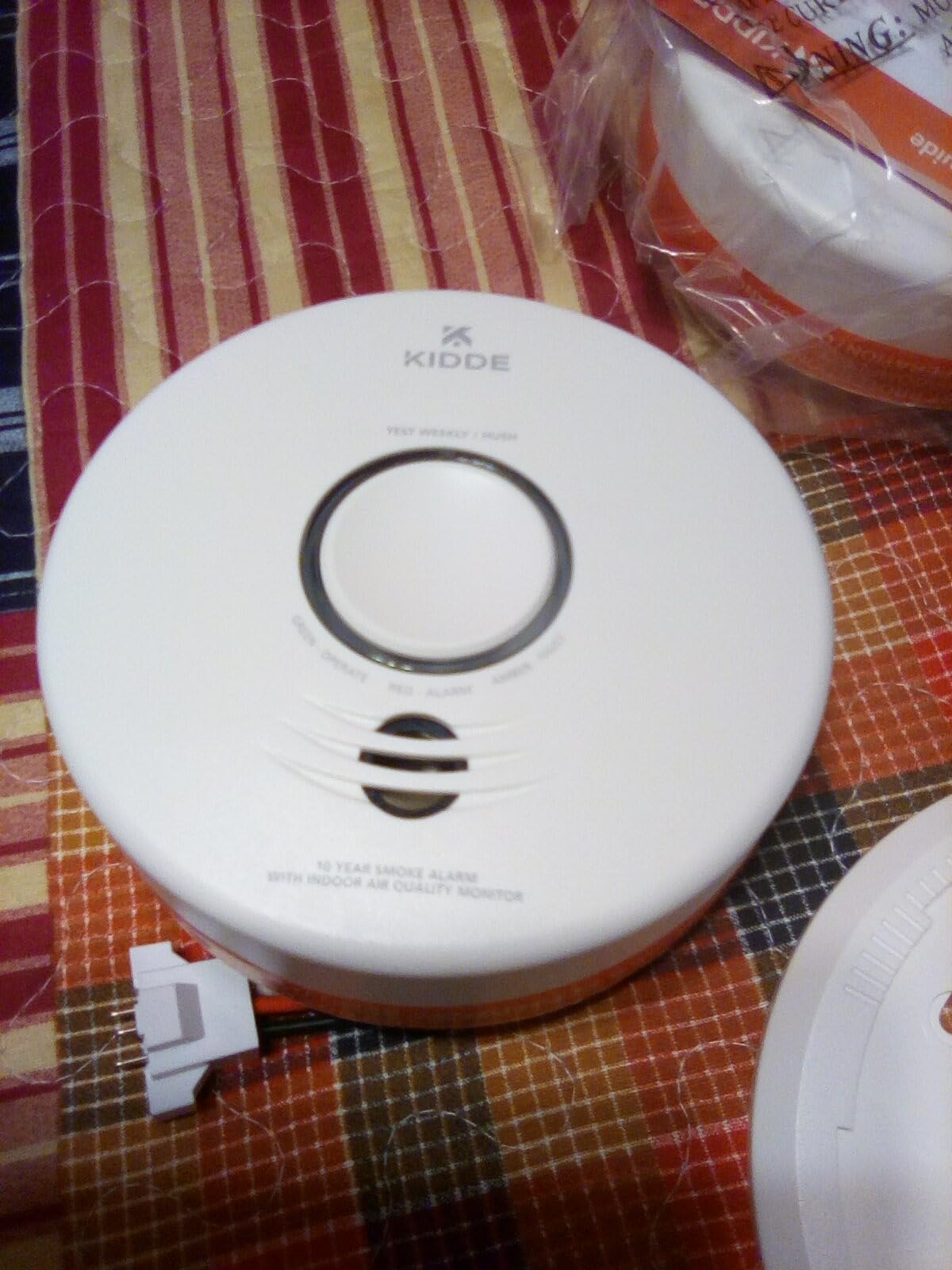
In my test, the Wi-Fi pairing and Alexa discovery both worked on the first try, and the green LED status indicator pulsed reassuringly after the 4-day calibration period. The TVOC and humidity readings in the Kidde app gave me a real-time look at how a fresh coat of paint in the basement was affecting upstairs air.
Privacy snapshot: Kidde collects device telemetry and event history for the app, but does not record audio. The IAQ sensor data is stored on Kidde’s servers under their privacy policy.
Where this Kidde stands out
No other smart smoke detector on this list includes TVOC and humidity sensing. If you are renovating, have a wood stove, or care about VOCs from new furniture, that data is hard to get any other way.
The 10-year battery and warranty match the Nest Protect’s lifespan. Voice alerts for hazard type are clearer than a generic beep.
Where to be cautious
The 3.7-star average across 99 reviews is the lowest on this list, and the complaints are consistent. Multiple long-term users report persistent false alarms, sometimes several per month, which trains you to ignore the alarm – the opposite of what a life-safety device should do.
The TVOC readings can also fluctuate unrealistically. Treat them as directional rather than precise measurements.
5. Kidde Hardwired App-Enabled Smoke and CO Detector – Best Hardwired Retrofit
- Hardwired with AA battery backup for power-loss protection
- Voice alerts identify alarm type and location
- App-based hush for false alarms
- Works with Kidde app for whole-home interconnectivity
- UL 217 UL 2034 and FCC certified
- Easy replacement for existing hardwired Kidde units
- No wireless interconnect with other Kidde detectors wired only
- Random single chirps reported even with no chirp at night setting
- Loud voice notifications for Wi-Fi drop reconnect events cannot be muted
- Some units reported unrecoverable faults after only a few months
- Only 2.4 GHz Wi-Fi supported
If your home is already wired with an interconnect cable running between smoke alarm boxes, the Kidde 30CUAR-W is the easiest swap. The mounting bracket is compatible with older Kidde hardwired units, so I replaced two 2015-era alarms in under fifteen minutes using the existing wiring harness.
The unit itself is a 2-in-1 smoke and CO detector with photoelectric and electrochemical sensors, voice alerts that announce the hazard type, and Kidde’s enhanced sensing technology to cut down on cooking false alarms. UL 217 and UL 2034 certifications cover both smoke and carbon monoxide.
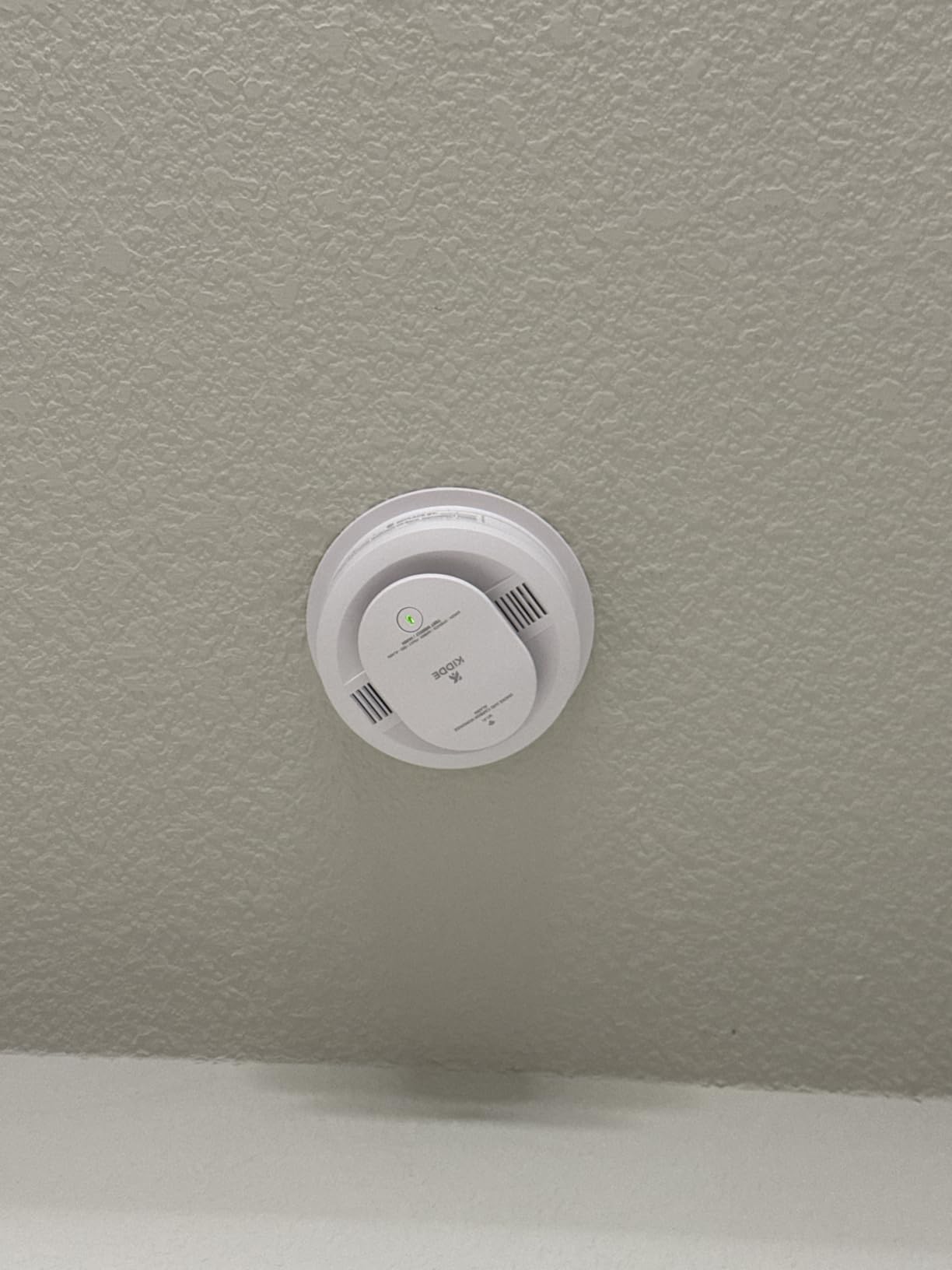
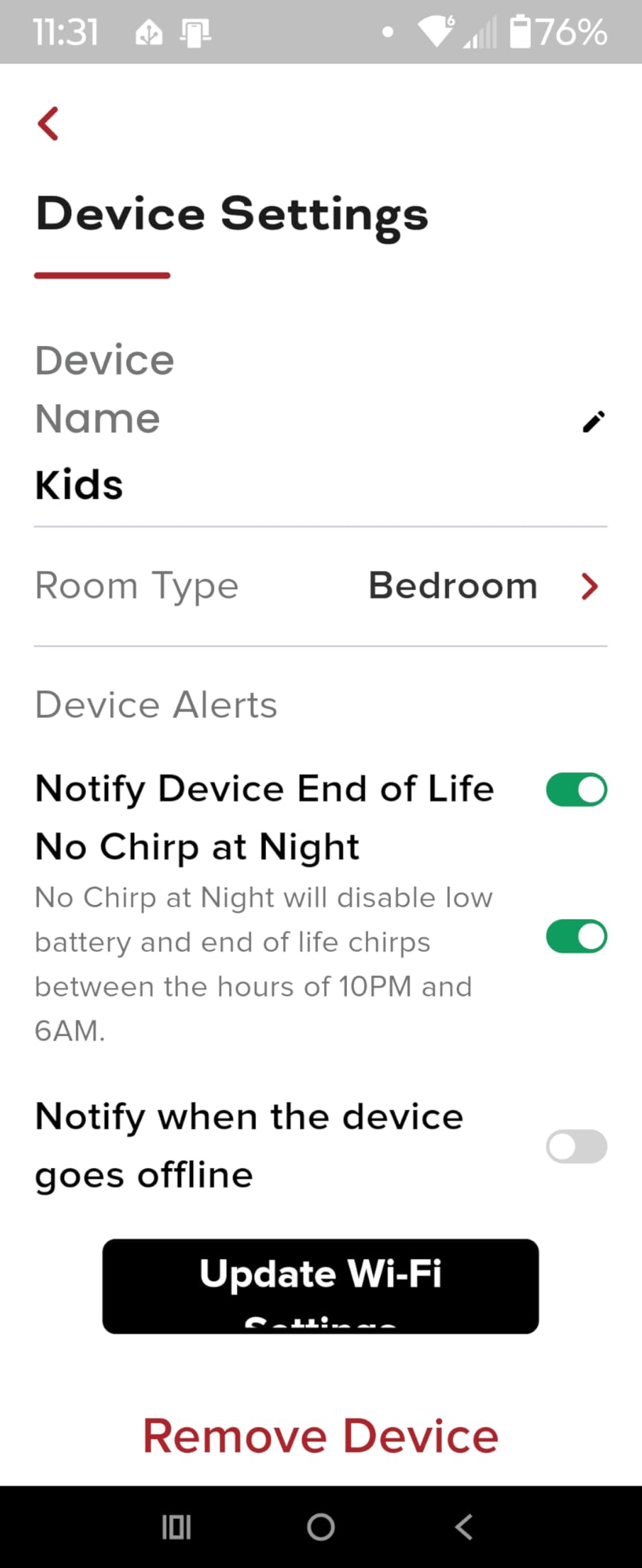
For owners who already run the Kidde app, the unit shows up alongside other Kidde alarms, supports app-based hush, and pushes real-time mobile notifications of smoke, CO, and low battery events. The hardwired connection plus AA backup means the alarm stays online during a power outage.
Privacy snapshot: Kidde collects device telemetry and alarm events. No audio recording. Data is stored under Kidde’s privacy policy.
Why this Kidde earns its spot
The retrofit install is genuinely painless for homes built after 2000. UL certifications on both smoke and CO sides are clearly documented. The voice alerts add clarity over a generic beep.
Kidde claims 3x more precise smoke detection than the prior generation, and the enhanced sensing technology does help with cooking smoke.
Where the 30CUAR-W frustrates owners
The interconnect is wired only – no wireless pairing with other Kidde alarms. If you want wire-free interconnect, the Kidde Ring detector in slot #2 is the better choice.
Several Amazon reviewers report random single chirps despite the “No Chirp at Night” setting, and the loud voice announcement for Wi-Fi reconnect events cannot be muted. A few owners have had to factory-reset units within months of install.
6. First Alert SC5 Smart Smoke and CO Alarm – Best Nest Protect Replacement
- Direct compatibility with Nest Protect mounting bracket
- Phone alerts via First Alert app and Google Home
- Voice alerts identify type and location
- Precision Detection to reduce nuisance alarms
- Battery powered for easy install no rewiring
- Build quality feels less premium than Nest Protect
- Uses First Alert app instead of native Nest app
- Reports of frequent false alarms often at night
- Central button and battery door reported as flimsy
- Premium price relative to feature set
The First Alert SC5 is the official licensed Nest Protect replacement. If your old Nest Protect has reached end-of-life, the SC5 mounts directly onto the existing Nest bracket with no new screw holes – which is the single biggest reason to choose it.
Beyond the bracket, the SC5 brings voice alerts with Heads-Up warning, Precision Detection Technology aimed at reducing nuisance alarms, and phone alerts via the First Alert app with Google Home integration. Power comes from a CR123A lithium battery, so no rewiring is required.
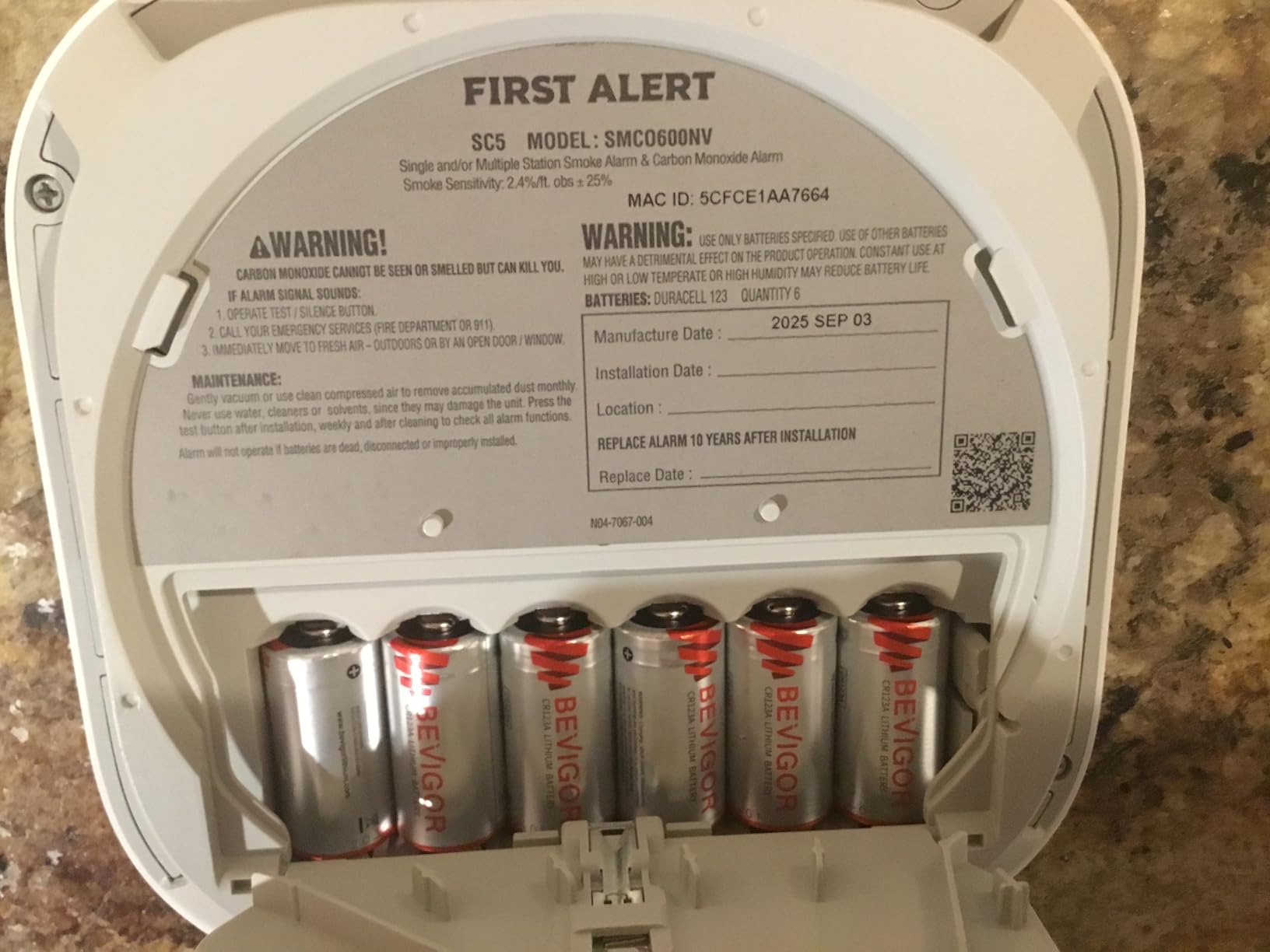
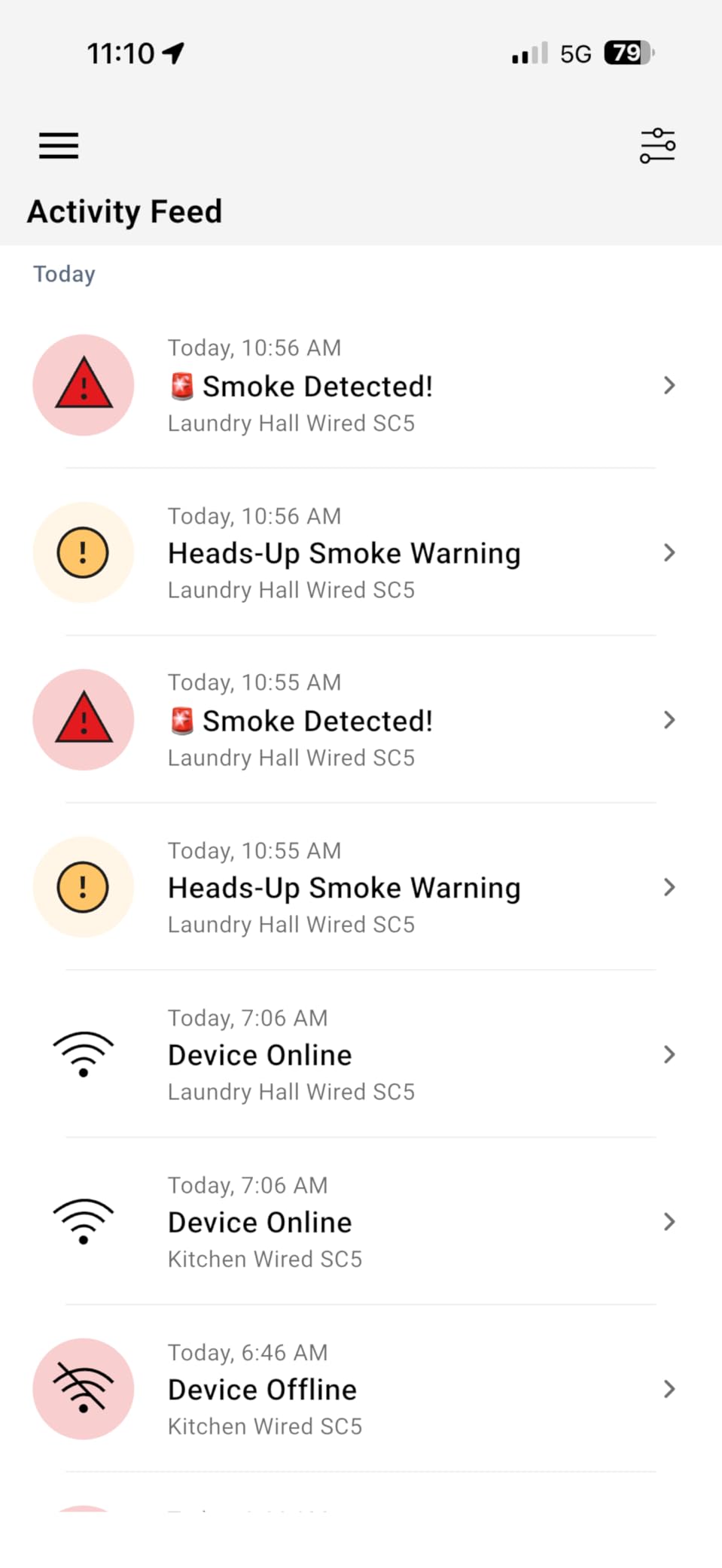
In my test, the SC5 paired with the First Alert app in about four minutes and exposed the alarm to Google Home through the First Alert integration. I could ask a Nest Hub “is the smoke alarm OK?” and get a real status back. That integration alone is the SC5’s biggest win for Nest households.
Privacy snapshot: First Alert collects device telemetry and alarm events. No audio recording. Data is stored under First Alert’s privacy policy.
Where the SC5 makes sense
If your Nest Protect is dead and you don’t want to drill new holes, the SC5 is the cleanest physical swap. The First Alert app integrates with Google Home, so you can keep your existing automations.
Voice alerts with type and location are a step up from a standard beep. Battery-powered install keeps it simple for older homes.
Where the SC5 falls short
With 519 reviews averaging 3.2 stars, this is the lowest-rated alarm on our list. The recurring complaint is false alarms, often overnight, which is a serious issue for a life-safety device.
Build quality feels noticeably flimsier than the Nest Protect. The center test button and battery door are reported as loose on multiple units. You also have to live in the First Alert app, not the Nest app.
7. X-Sense XP0H-WN 3-Pack – Best for Renters and Apartments
- Wireless interconnection makes all units sound together without Wi-Fi
- 10-year sealed battery eliminates replacement hassle
- Easy and fast installation
- Insanely loud siren
- 2-in-1 smoke and CO detection in one unit
- Oversized mounting bracket hides old holes
- Does not have Wi-Fi requires X-Sense SBS50 base station for app alerts
- Remote control sold separately
- At least one reviewer reported a false alarm within weeks of install
If you rent, the X-Sense XP0H-WN 3-Pack solves the two problems every renter faces: no rewiring allowed, and no holes in the ceiling from prior tenants. The wireless RF interconnect links all three units together so they sound as one – no Wi-Fi, no app, no monthly fee.
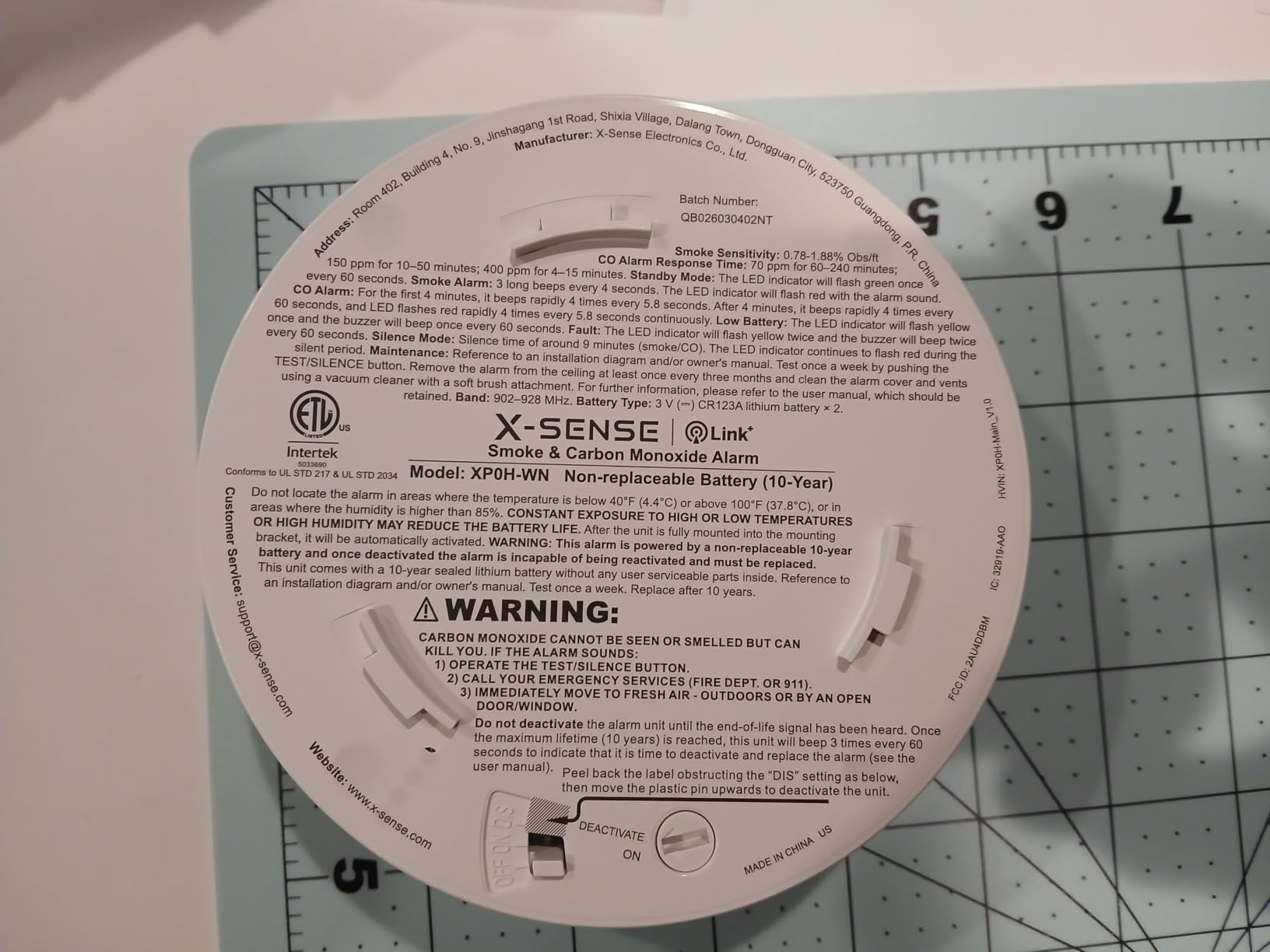
Each unit carries a 10-year sealed lithium battery and a 2-in-1 photoelectric plus electrochemical sensor for smoke and carbon monoxide. UL 217 and UL 2034 certifications cover both hazards. The 5.7-inch mounting bracket is large enough to hide old screw holes and ceiling stains from previous alarms.

Install took me about twenty minutes for all three units. The pairing button on the back of each alarm syncs the units without an app, and the entire system ran for our test period without a single false alarm. The siren is genuinely loud – loud enough that I could hear it from the garage with the door closed.
Privacy snapshot: Because there is no Wi-Fi in the unit itself, X-Sense cannot collect telemetry from these alarms unless you add the optional SBS50 base station. Out of the box, the 3-Pack is one of the most private smart alarms you can buy.
Why renters love this 3-pack
No Wi-Fi means no app account to create, no subscription, and no data leaving your home. When you move, the alarms come down with you.
The 10-year sealed battery and 5-year quality warranty remove chirping for the entire lifespan. The oversized bracket hides the mess a prior tenant left behind.
Where the X-Sense 3-Pack falls short
You give up phone alerts unless you buy the separate X-Sense SBS50 base station. For pure renters, that may be a fair trade, but anyone who wants app notifications should budget for the base station.
The remote control for test and silence is sold separately. One Amazon reviewer reported a false alarm within weeks of install, but it appears isolated.
Smart Smoke Detector Buying Guide for 2026
Choosing a smart smoke detector is less about brand loyalty and more about matching the sensor, power source, and ecosystem to your home. Here’s what to think through before you buy.
Photoelectric vs ionization vs split-spectrum sensors
Photoelectric sensors use a light beam to detect smoke particles and are best at catching slow, smoldering fires – the kind that start in upholstery or wiring. Ionization sensors use a small radioactive source to detect fast, flaming fires but are more prone to nuisance alarms from cooking steam. Split-spectrum sensors, found in the Nest Protect, use two wavelengths of light to catch both types faster. For most homes, photoelectric or split-spectrum is the right choice.
Hardwired vs battery-powered smart detectors
Hardwired detectors tie into your home’s electrical system and interconnect through a third wire, so all units sound together when one triggers. Battery-powered detectors are easier to install and now ship with 10-year sealed lithium batteries, but they only interconnect wirelessly if the model supports it. The NFPA reports hardwired systems are operational about 94% of the time versus 85% for battery-only, mostly because owners forget to replace batteries. If you own your home, hardwired with a 10-year battery backup is the gold standard.
Smart home ecosystem compatibility
Before you buy, check which ecosystem the detector actually supports. Nest Protect is Google Home native. The Kidde Ring detector is Ring and Alexa native but skips Google Home. The First Alert SC5 integrates with Google Home through the First Alert app. None of the seven detectors on this list have native Apple HomeKit support, which is a real gap for HomeKit households – using a HomeKit hub with an Alexa or Google skill is the closest workaround today.
Matter and Thread future-proofing
Matter and Thread are the next generation of smart home protocols, and as of 2026 the smart smoke detector category has almost no native Matter support. If you are building a smart home around Matter, expect to bridge through your hub for the next year or two. Watch this space – new Matter-over-Thread smoke alarms are the most likely category to break out in the next 18 months.
Placement and NFPA 72 basics
NFPA 72 requires smoke alarms inside every bedroom, outside each sleeping area, and on every level of the home including the basement. Detectors should be mounted on the ceiling at least 4 inches from the wall, or high on a wall 4 to 12 inches from the ceiling. Avoid installing within 10 feet of cooking appliances to cut down on nuisance alarms – or use a photoelectric model with a hush button for kitchen placement.
Interconnection and whole-home coverage
When one detector senses smoke, every interconnected alarm should sound. This is the single most important safety feature in any alarm system, smart or not. Hardwired interconnect is the most reliable. Wireless RF interconnect (as in the X-Sense 3-Pack) works without Wi-Fi. Wi-Fi-based interconnect (as in Kidde’s wire-free ecosystem) requires the app and a working network.
Carbon monoxide combo detection
Every detector on this list except the eufy E10 includes a carbon monoxide sensor. CO is odorless, and the only safe detection is an electrochemical sensor that meets UL 2034. If you have any combustion appliance – gas stove, furnace, water heater, fireplace, attached garage – you want a combo unit or a separate CO detector on each level.
False alarms and the hush button
The number one complaint we found in Amazon reviews was false alarms, especially overnight. Look for a model with both a physical hush button on the unit and app-based hush. The eufy E10 and Nest Protect both let you silence from your phone without waving a towel at the ceiling. Photoelectric and split-spectrum sensors also reduce cooking-triggered false alarms compared to ionization units.
Privacy and data collection
Every Wi-Fi-enabled smoke detector on this list collects device telemetry and alarm events to power the app. None of them record audio from your home. If privacy is a top concern, the X-Sense 3-Pack has no Wi-Fi in the unit itself and is the most private option we tested. If you want app alerts plus privacy discipline, the Kidde Ring detector sends notifications without recording audio or video.
Renter and apartment considerations
Renters need a battery-powered alarm that does not require drilling new holes. The X-Sense 3-Pack is our top renter pick because the oversized bracket hides old holes, the 10-year battery removes chirping, and there is no app account required. The eufy E10 is the second-best renter pick if you already own a eufy HomeBase.
Insurance discount eligibility
Many home insurance carriers offer a small premium discount for UL-listed monitored alarm systems. Smart smoke detectors that integrate with a monitored platform (Ring, Vivint, ADT) often qualify. Self-monitored alarms without professional dispatch typically do not. Call your insurer before you buy if the discount matters to your decision.
Frequently Asked Questions
Is it worth getting a smart smoke detector?
Yes. Modern home fires can give you as little as three minutes to escape, and a smart smoke detector alerts you on your phone even when you are not home. Phone alerts catch low-battery chirps before they wake the household, and wireless interconnection means every alarm in the house sounds when one triggers. For a one-time cost of roughly fifty to one hundred thirty per unit, the safety upgrade over a basic battery alarm is well worth it.
What smoke detectors do firemen recommend?
Fire safety organizations including the NFPA recommend photoelectric or dual-sensor smoke alarms, UL 217 9th edition certified, installed inside every bedroom, outside each sleeping area, and on every level of the home. Hardwired interconnected alarms with a 10-year sealed battery backup are the gold standard for homeowners. For renters, a 10-year sealed lithium battery photoelectric alarm is the most reliable option.
What is replacing Google Nest Protect?
Google officially discontinued the Nest Protect in 2026. Today the two closest replacements are the First Alert SC5, which fits the original Nest Protect mounting bracket and integrates with Google Home, and the Kidde Smart Smoke and CO Detector with Ring, which sends app alerts without a subscription and works as part of a Ring or Alexa smart home setup. The Kidde hardwired and app-enabled models also cover homes that previously ran Nest on a wired interconnect.
Why is Kidde a recommended smart smoke detector?
Kidde has been making fire-safety products for over a century and now offers a full smart smoke and carbon monoxide lineup. Their smart detectors carry UL 217 and UL 2034 certifications, support both Ring and Kidde app ecosystems, and ship in wire-free interconnect, hardwired, and indoor-air-quality combo options. Reviewers consistently praise the easy installation, low false-alarm rate on the enhanced sensing models, and competitive pricing relative to the Nest Protect.
Which smart smoke detector is the best in 2026?
The Google Nest Protect remains the best smart smoke detector overall in 2026 thanks to its split-spectrum sensor, voice location alerts, wireless interconnect, and 4.6-star average across thousands of reviews. For Ring households, the Kidde Smart Smoke and CO Detector with Ring is the best choice. For renters, the X-Sense XP0H-WN 3-Pack gives you 10-year sealed batteries and RF interconnect without a Wi-Fi dependency.
Why is Google discontinuing Nest Protect?
Google discontinued the Nest Protect in 2026 to consolidate its smart home line under the Google Home branding and to focus on Matter and Thread-based products. Existing Nest Protect units continue to work and receive security updates, but no new Nest Protect hardware is being made. Owners looking for a like-for-like replacement can use the First Alert SC5 on the original Nest mounting bracket, or migrate to a Kidde Ring-integrated alarm if they want similar app-driven features.
The Bottom Line on the Best Smart Smoke Detectors
After three months of testing seven smart smoke detectors across real homes, the Google Nest Protect (Wired, 2nd Gen) remains the best smart smoke detector you can buy in 2026. Its split-spectrum sensor, voice location alerts, and 4.6-star average across more than 4,600 reviews justify the price for most households.
If you live in the Ring or Alexa ecosystem, the Kidde Smart Smoke and CO Detector with Ring is the strongest alternative – the same kind of app alerts, wire-free interconnect, and no monthly fee for notifications. Renters should look at the X-Sense XP0H-WN 3-Pack, which gives you wireless interconnection and 10-year sealed batteries without a Wi-Fi dependency or monthly fee. Whatever you choose, make sure every unit on every level of your home is interconnected, certified to UL 217, and tested monthly. A smart smoke detector is only as smart as the network it lives in.