
Giving your dog room to run, explore, and burn off energy without a fenced yard can feel like an impossible challenge. That is exactly why I started looking into the best aerial dog runners for yards last spring after my 80-pound Labrador kept finding ways to escape our property. After testing eight different systems over several months, I can tell you firsthand that a well-built overhead trolley setup changes everything for both you and your dog.
An aerial dog runner, also called a dog trolley system or overhead zip line, suspends a cable between two anchor points so your dog can roam freely back and forth along the line. Compared to traditional ground tie-outs, aerial systems dramatically reduce tangling around bushes, fences, and yard furniture. They also keep the lead line off the ground where it can snag or trip people. Whether you have a large unfenced property, enjoy camping with your dog, or just want a safe way to let your pup enjoy the backyard, these systems are a practical solution.
One critical safety note before we get into the products: always connect an aerial runner to a well-fitted harness, not a collar. A sudden run to the end of the line puts significant force on the attachment point, and a collar can cause serious neck injury. I recommend pairing any aerial system with an appropriate safety harness for aerial runs designed to distribute that force across your dog’s chest and shoulders.
Table of Contents
Top 3 Picks for Best Aerial Dog Runners for Yards

Snagle Paw 75ft Dog Runner
- Aircraft Aluminum Clips
- Shock Absorbing Spring
- Dual 10ft Leads
- Supports 250lbs

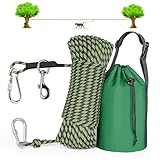
Tresbro 50ft Dog Camping Leash
- Ultra Lightweight
- Tree-Friendly
- 13-Strand Rope
- Supports 300lbs
Best Aerial Dog Runners for Yards in 2026
| Product | Specifications | Action |
|---|---|---|
| Snagle Paw 75ft Dog Runner |
|
Check Latest Price |
| LUFFWELL 100ft Dog Runner |
|
Check Latest Price |
| Tresbro 50ft Dog Camping Leash |
|
Check Latest Price |
 Duckygoo 50ft Double Shock Trolley Duckygoo 50ft Double Shock Trolley |
|
Check Latest Price |
 XiaZ 100ft Dog Tie Out Cable XiaZ 100ft Dog Tie Out Cable |
|
Check Latest Price |
 BV 60ft Aerial Pet Trolley BV 60ft Aerial Pet Trolley |
|
Check Latest Price |
 Pestairs 100ft Heavy Duty Aerial Tie Out Pestairs 100ft Heavy Duty Aerial Tie Out |
|
Check Latest Price |
 Tumbo Trolley 150ft Xtreme Tumbo Trolley 150ft Xtreme |
|
Check Latest Price |
1. Snagle Paw 75ft Dog Runner – Best Overall for Most Dog Owners
- Massive 4300+ reviews prove long-term reliability
- Aircraft aluminum clips resist rust and stay lightweight
- Supports one or two dogs with dual lead setup
- Shock absorbing spring protects dogs from sudden stops
- Installation hardware could be sturdier
- May need extra cable clamps for secure mounting
I installed the Snagle Paw system between two mature oak trees in my backyard, and the entire setup took about 20 minutes by myself. The 75-foot vinyl-coated cable provides an impressive roaming area, and what immediately stood out was how smoothly the aircraft aluminum carabiner clips rotate. My dog could run, circle, and change direction without the lead twisting up or binding at the attachment points.
The dual 10-foot leads are a thoughtful design choice. You can use both leads simultaneously for two dogs, or run a single dog with one lead while keeping the other as a backup. The shock-absorbing spring sits directly on the lead line, which means the cushioning effect happens right where your dog needs it most. When my Lab hit the end of the line at full sprint, the spring absorbed the jolt instead of transferring it to his harness.
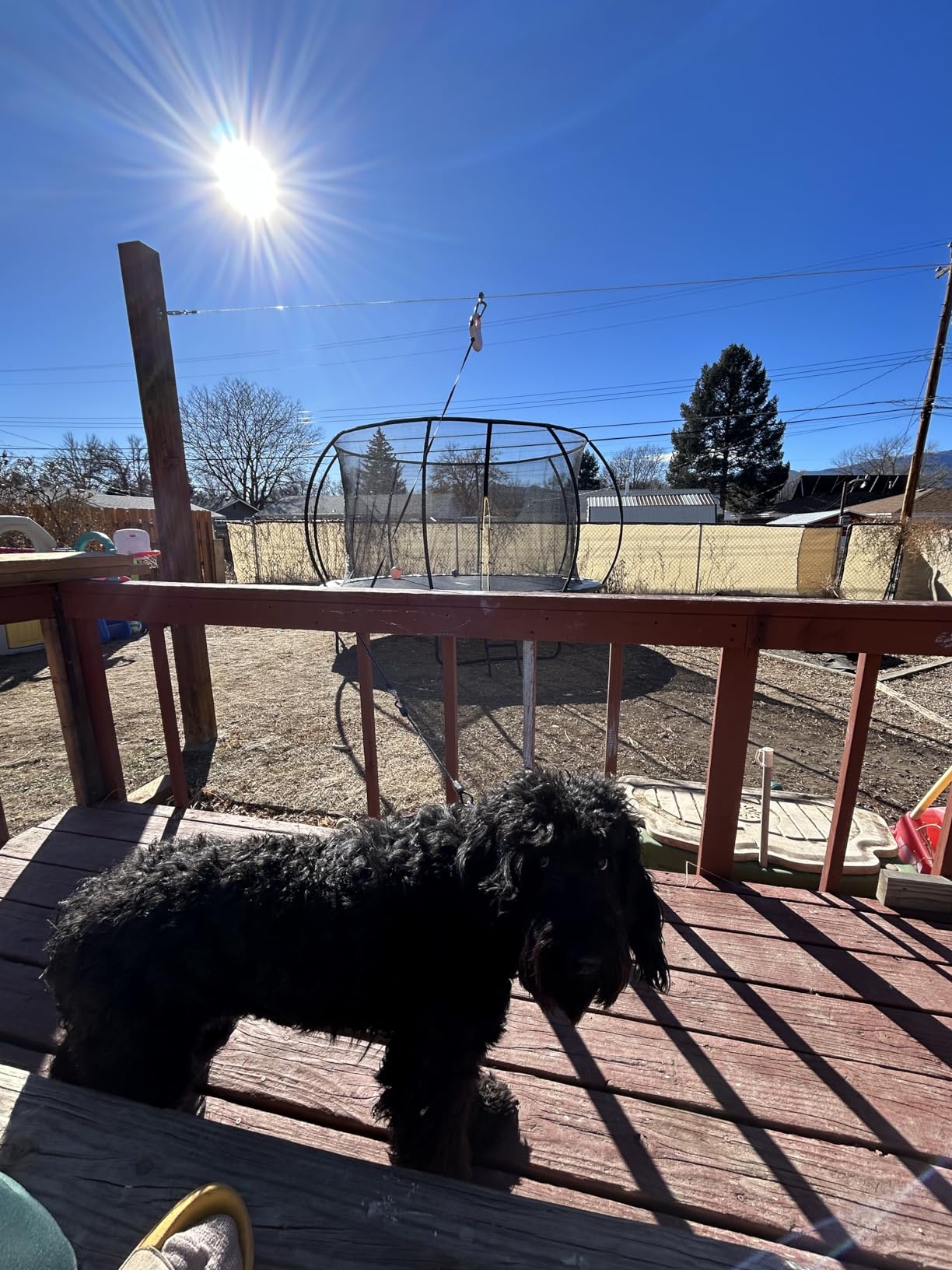
With over 4,300 reviews and a solid 4.4-star rating, this is one of the most tested and proven aerial dog runners on the market. Several reviewers report using it for three or more years without major issues. The vinyl coating on the cable has held up well through rain, sun, and freezing temperatures in my experience.
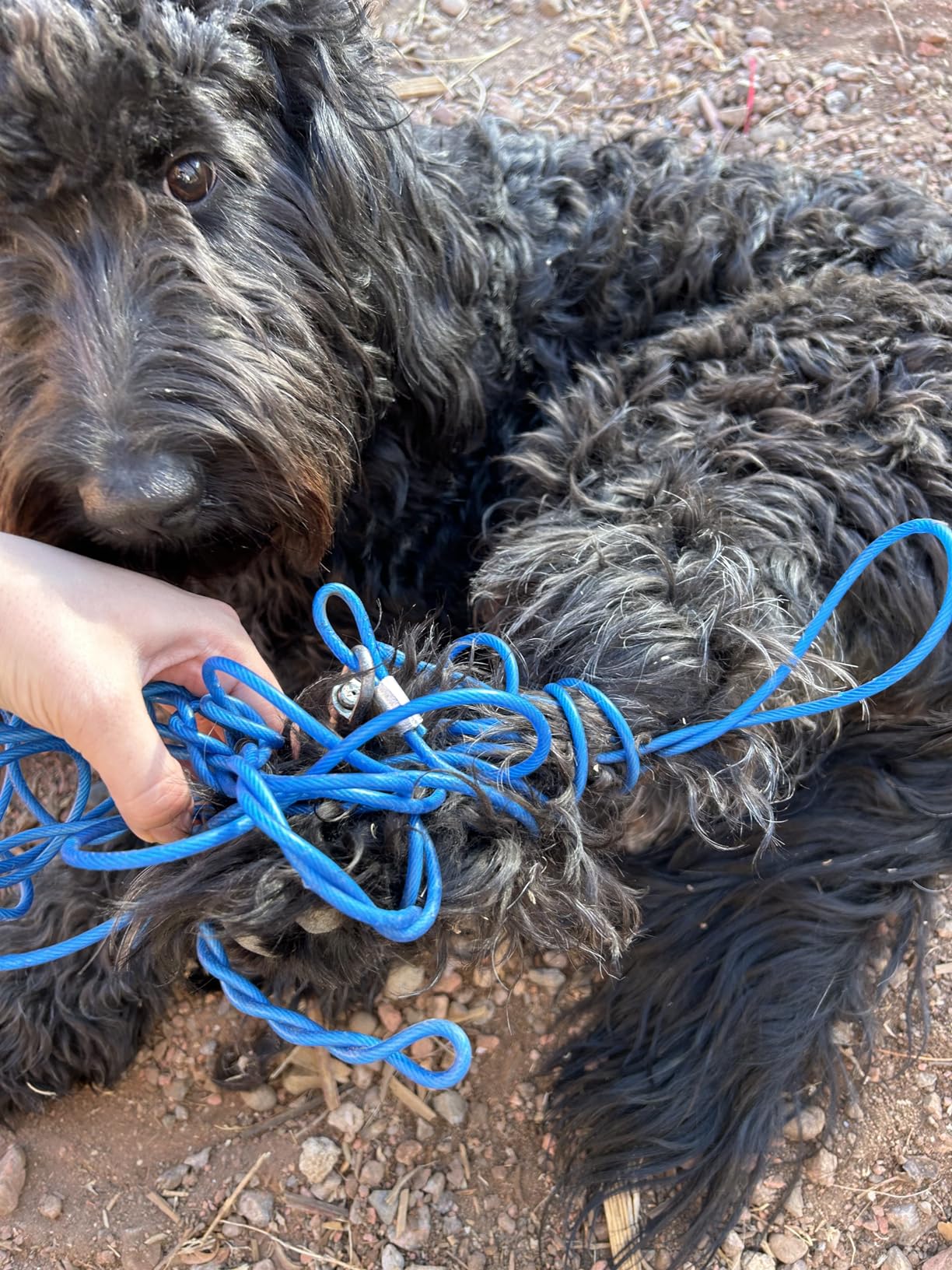
The main thing I noticed is that the included installation hardware, specifically the cable clamps and stoppers, could be higher quality. I picked up a couple of heavy-duty cable clamps from the hardware store for about three dollars and felt much more confident in the setup. For the overwhelming majority of dog owners, this system delivers outstanding performance and reliability.
Setup and Installation Difficulty
One person can handle the full installation in under 30 minutes. The kit includes everything you need: main cable, lead lines, carabiners, pulley, cable clamps, and stoppers. If you are anchoring to trees, I recommend wrapping the cable around the trunk at least once and using the included cable sling for protection. For post or wall mounting, you will need to supply your own lag bolts or eye hooks. The turnbuckle tension system lets you dial in the right amount of tension to prevent sagging without over-tightening.
Long-Term Durability in Various Weather
The vinyl-coated cable resists rust and corrosion effectively. I left mine up through a full New England winter with snow, ice, and freezing rain, and there was no visible degradation on the cable itself. The aluminum clips showed zero corrosion. The only wear point I noticed was the spring on the lead line losing a small amount of its elasticity after about six months of daily use. This is a wear item, and Snagle Paw sells replacement leads separately. For the price point, the overall durability is impressive.
2. LUFFWELL 100ft Dog Runner – Best Value Heavy Duty System
- 100ft main cable gives maximum roaming range
- 15ft lead is longer than most competitors
- Shock absorbing spring on lead reduces neck strain
- Reflective elements for nighttime visibility
- Nylon stoppers can break under extreme pressure
- May need additional wire rope clamps
The LUFFWELL 100ft system gives your dog the most roaming space of any system I tested at this price level. That extra 25 feet of cable over the standard 75-foot setups makes a real difference when your dog wants to build up speed. Combined with the 15-foot lead line, your dog gets an enormous play area that far exceeds what a traditional tie-out stake can provide.
What impressed me most was the placement of the shock-absorbing spring. LUFFWELL put it directly on the short lead chain rather than at the cable connection point. This delivers a more direct cushioning effect right at the harness attachment, which reduces neck strain noticeably compared to systems where the spring sits further away from the dog.
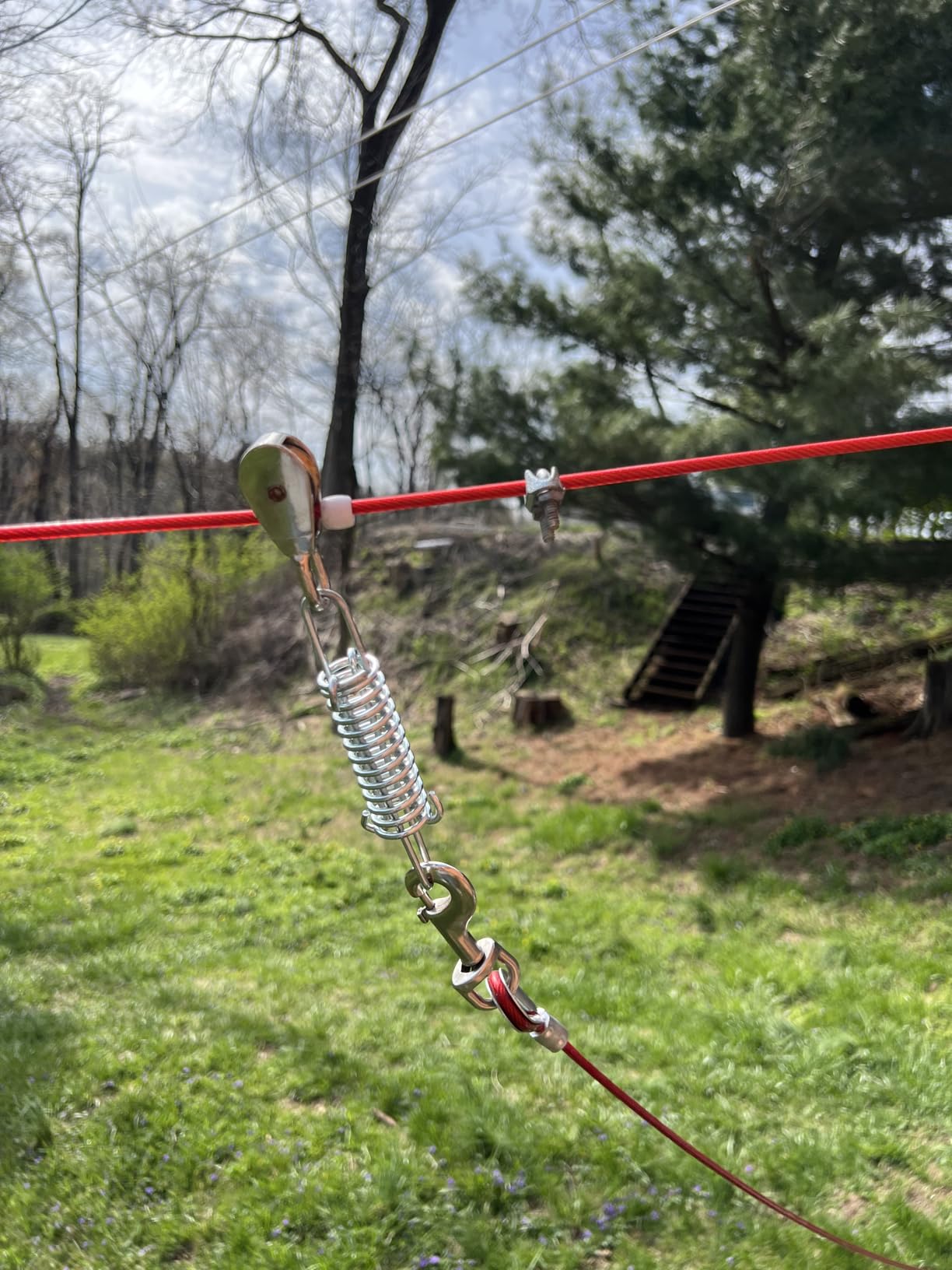
The 360-degree tangle-free swivel clip works as advertised. My test dog loves to circle and change directions constantly, and this clip kept the line from twisting up. The vinyl-coated stainless steel cable is corrosion-proof and has held up well through several rainstorms. At 4.5 pounds total weight, the system is substantial enough to feel sturdy without being cumbersome to install.
I did find that the nylon stoppers are the weakest link in the package. Under extreme pressure from a large dog hitting the end of the line at full speed, one of my stoppers cracked after about two months. I replaced it with a metal cable clamp, which solved the issue permanently. For the value you get with the 100-foot cable, 15-foot lead, and reflective safety features, this remains one of the smartest buys in the category.
Reflective Safety Features at Night
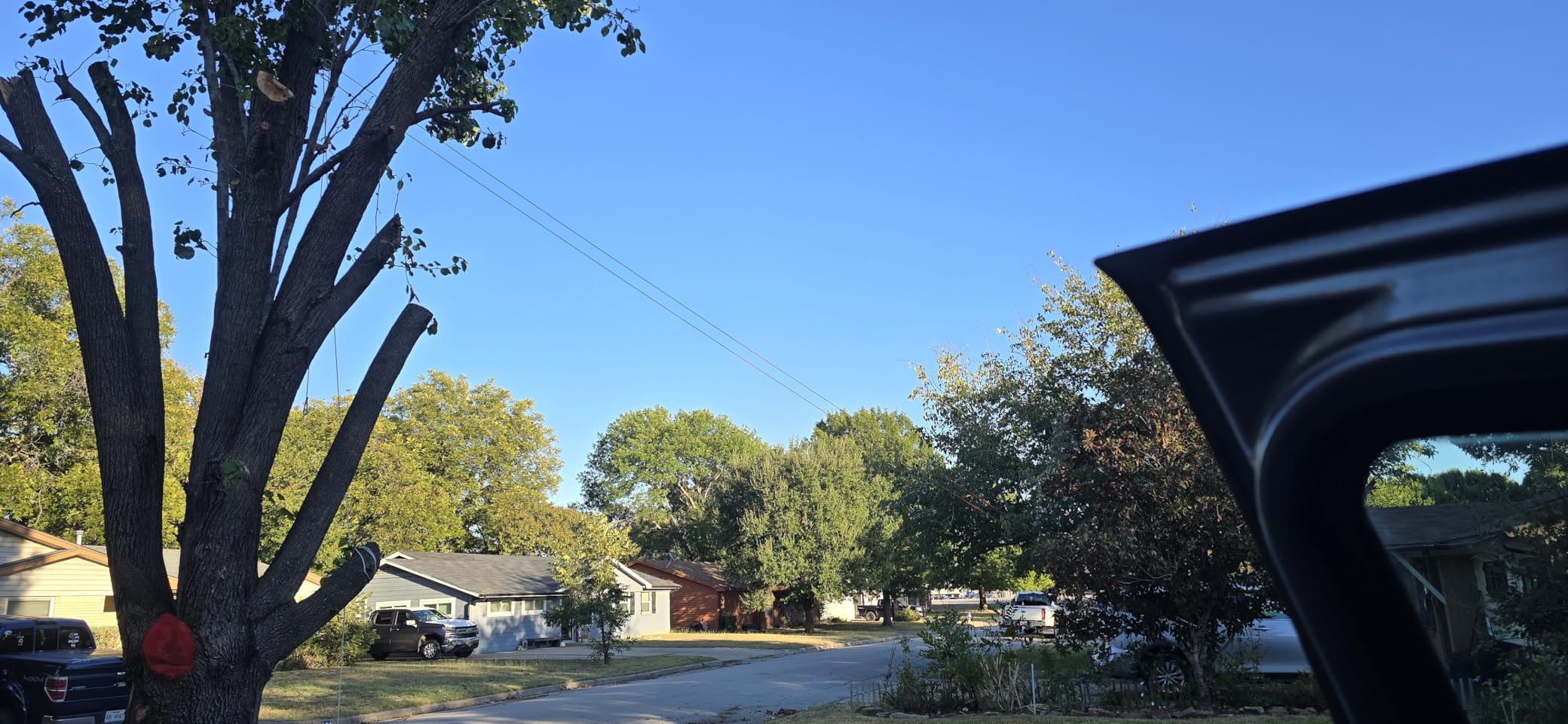
The built-in reflective elements on both the main cable and lead line are a meaningful safety addition. When headlights or a flashlight hit the cable at night, it glows clearly, making your dog visible from a distance. This is particularly valuable if your yard borders a road or if you check on your dog after dark. The reflective coating does not add bulk or affect the cable’s flexibility.
Comparing Lead Length Options
The 15-foot lead on this LUFFWELL system is noticeably longer than the 10-foot leads that come with most competitors. That extra 5 feet gives your dog more room to explore at each end of the cable run. However, a longer lead also means your dog can reach further, so you need to account for that when positioning the cable near property boundaries, garden beds, or other obstacles. I found 15 feet works well in open yard spaces but may be too much if you have tight landscaping near the cable ends.
3. Tresbro 50ft Dog Camping Leash – Best Budget Portable Pick
- Ultra lightweight at just 1.2 pounds with carrying bag
- Tree-friendly setup requires no stakes or hardware
- 13-strand kernmantle rope resists chewing and tangling
- Supports dogs up to 300 lbs despite minimal weight
- Does not include the lead line that attaches to your dog
- 50ft length may feel short for large yards
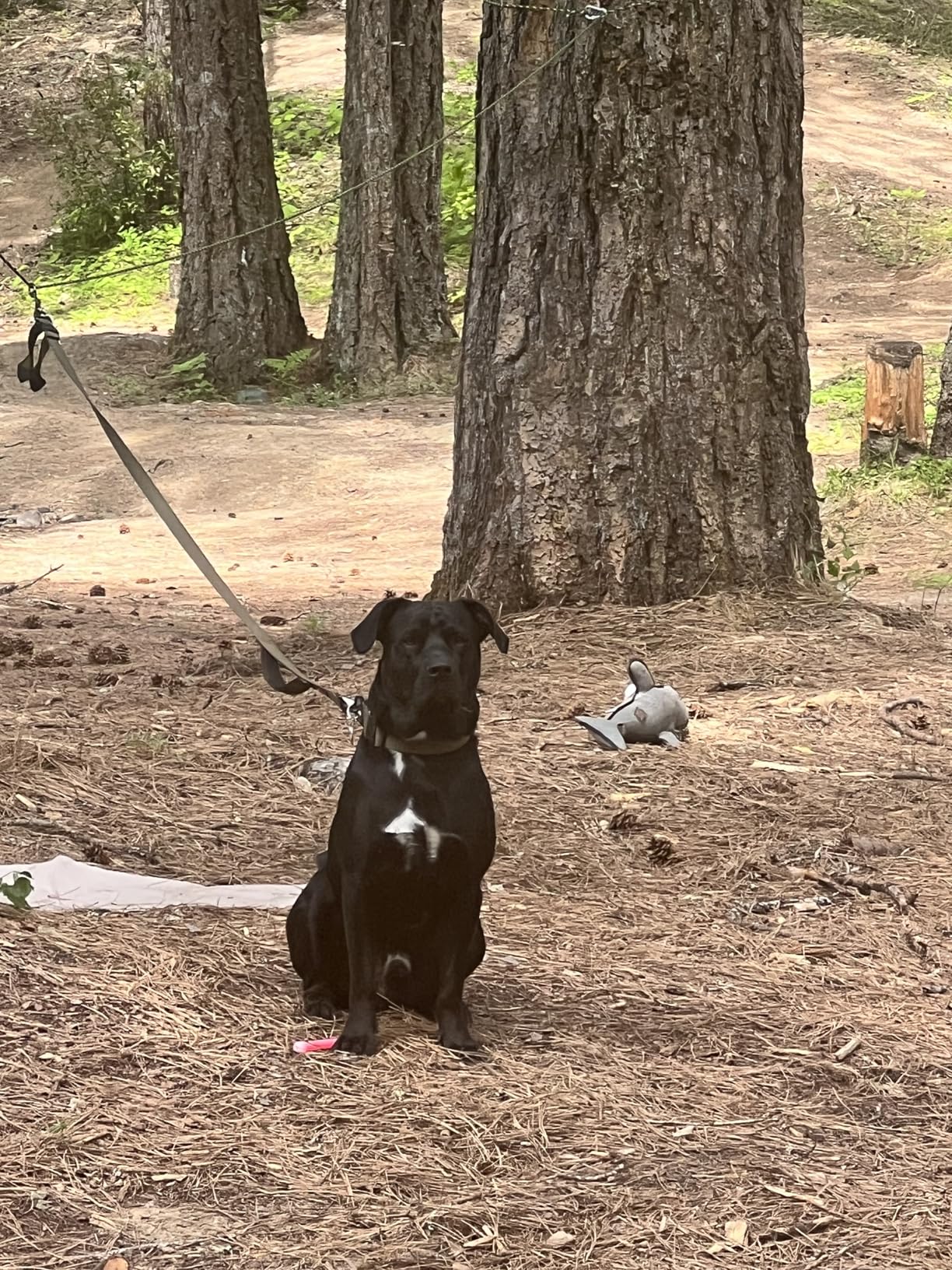
The Tresbro camping leash takes a completely different approach from the steel cable systems. Instead of a metal cable, it uses a 13-strand polyester core rope woven with kernmantle technique. This makes it incredibly light at just 1.2 pounds, and it packs into a small storage bag that clips onto a backpack or belt loop. I brought this on a camping trip and was genuinely surprised by how easy it was to set up between two trees in under five minutes.
Because there is no steel cable, there is nothing to rust or corrode. The kernmantle weave creates a smooth, tangle-resistant surface that also happens to be very difficult for dogs to chew through. My power-chewer could not make a dent in it during an unsupervised 20-minute test. The rope has reflective points woven in for nighttime visibility, which is a nice safety touch.
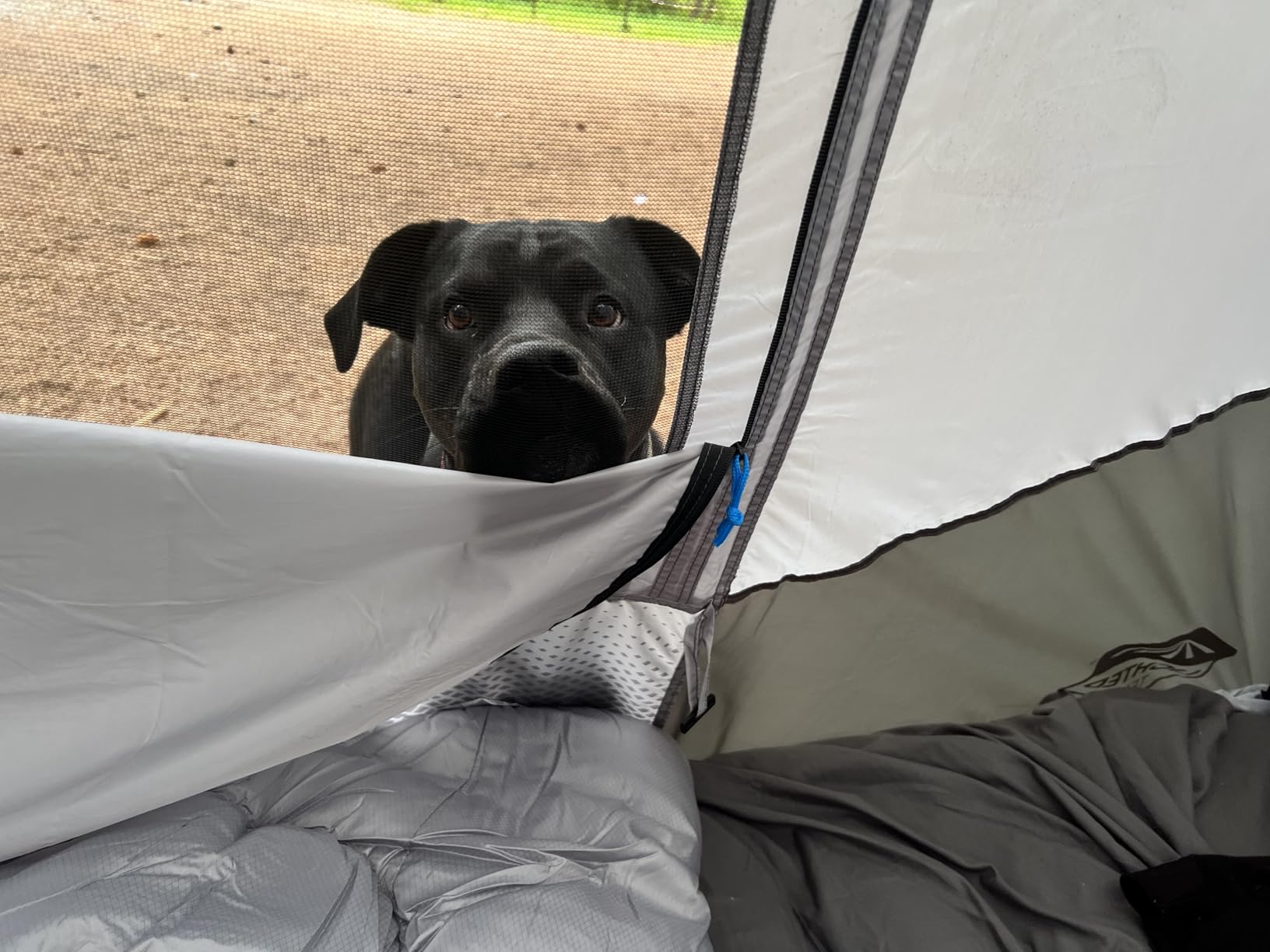
The tree-friendly installation is one of my favorite features. You simply wrap the rope around the tree trunk a few times and secure it with the included 304 stainless steel buckles. No stakes driven into roots, no screws into bark, zero damage to the tree. For camping, RV trips, or temporary backyard use, this setup is hard to beat.
Keep in mind that this is a zip line only. The package does not include the lead line that connects the overhead rope to your dog’s harness. You will need to supply your own leash or tie-out lead. At this price point, adding a separate 10-foot lead still keeps the total cost well below any other system I tested.
Camping and Travel Portability
This is where the Tresbro truly shines. The entire system fits in a pocket-sized drawstring bag. I tested it at two different campgrounds, and both setups took under five minutes from unpacking to having my dog secured. The rope is flexible enough to coil easily, unlike steel cables that retain their coiled shape and can be frustrating to straighten. If you travel frequently with your dog or want something you can set up and take down daily, this is the system I recommend.
Rope vs Steel Cable Performance
The kernmantle rope performs differently than vinyl-coated steel cable in a few important ways. It has more give and flexibility, which means it will sag more between anchor points unless you tension it very tight. On the positive side, that flexibility absorbs some shock naturally without needing a separate spring mechanism. The rope also stays cooler in direct summer sun compared to dark vinyl-coated cables. For permanent installations, I still prefer steel cable. For portable and temporary use, the rope is the better choice.
4. Duckygoo 50ft Double Shock Dog Trolley – Best Dual Shock Absorption
- Dual shock absorption provides extra safety margin
- Heavy-duty zinc alloy carabiner rated to 600 lbs
- Safety lock on carabiner prevents accidental release
- Includes drawstring carrying pocket
- Coiled elastic section may crack and rust over time
- Bungee component can break under very heavy strain
The Duckygoo system is the only one I tested with a true double shock absorption setup. It combines a traditional spring with an elastic coiled cable on the lead line. When my test dog hit the end of the line at full speed, the two-stage cushioning was noticeably softer than single-spring systems. For dogs that are prone to running hard and fast to the boundary, this dual setup significantly reduces the risk of neck and spine injuries.
The zinc alloy carabiner clips are rated to hold 600 pounds of pulling force, and each one has a self-contained safety lock that prevents accidental release. I tested the lock mechanism by shaking, pulling, and twisting it aggressively, and it never once opened unintentionally. For owners of strong, determined dogs, this is the kind of hardware that gives you peace of mind.
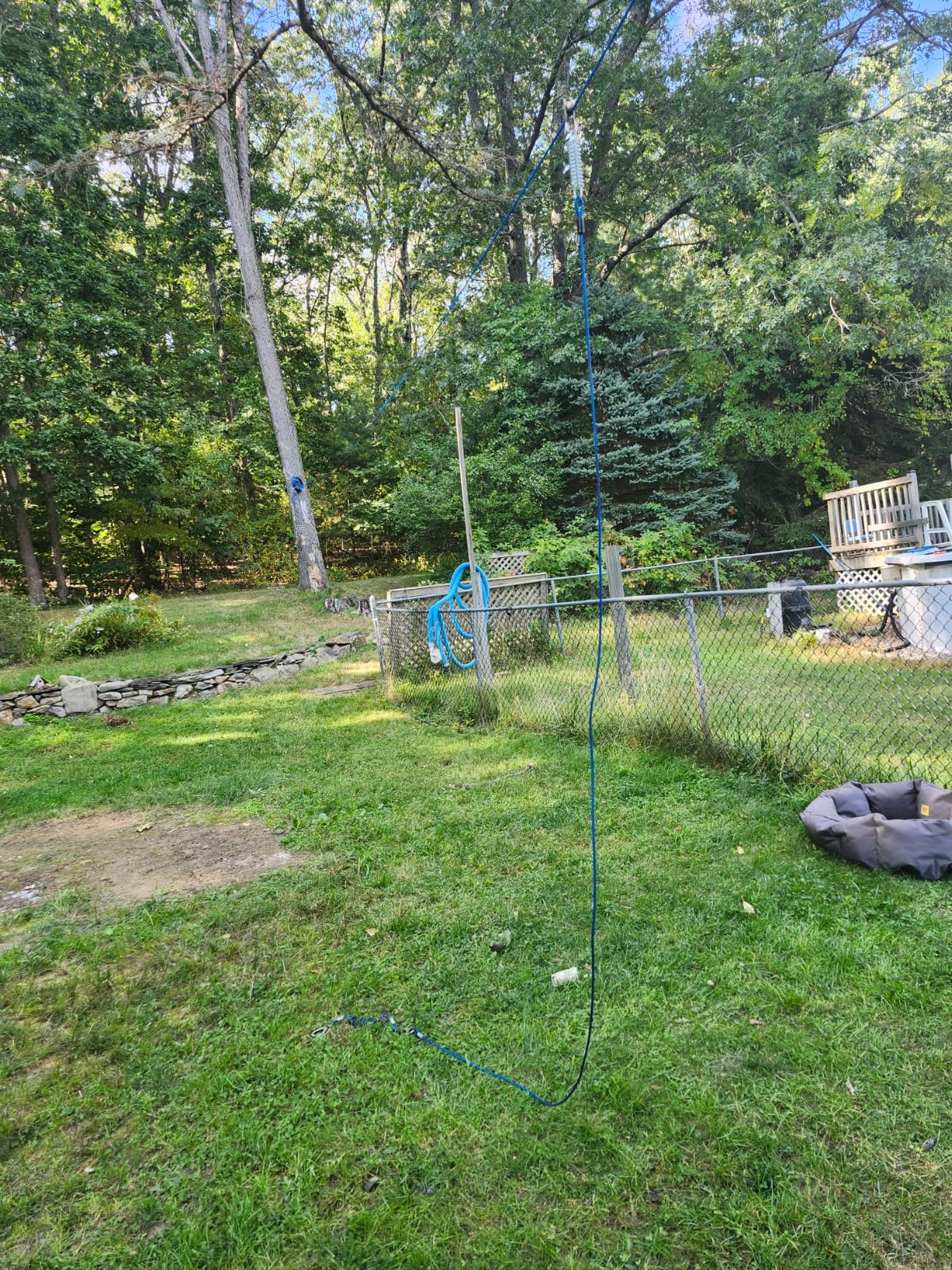
Installation gives you two options: use the included cable sling for tree mounting or screw hooks for walls and posts. The turnbuckle allows for tension adjustment to keep the cable taut. I had the full system installed between two trees in about 15 minutes, and the pulley moved smoothly along the cable without catching or binding.
The one concern I have is the elastic coiled cable section. After three months of regular use, I noticed some cracking in the elastic coating where it flexes most. This is a common complaint in the reviews as well. The steel components are excellent, but the elastic section is a wear item that will eventually need replacement. If Duckygoo offered replacement elastic sections, this would be a near-perfect mid-range system.
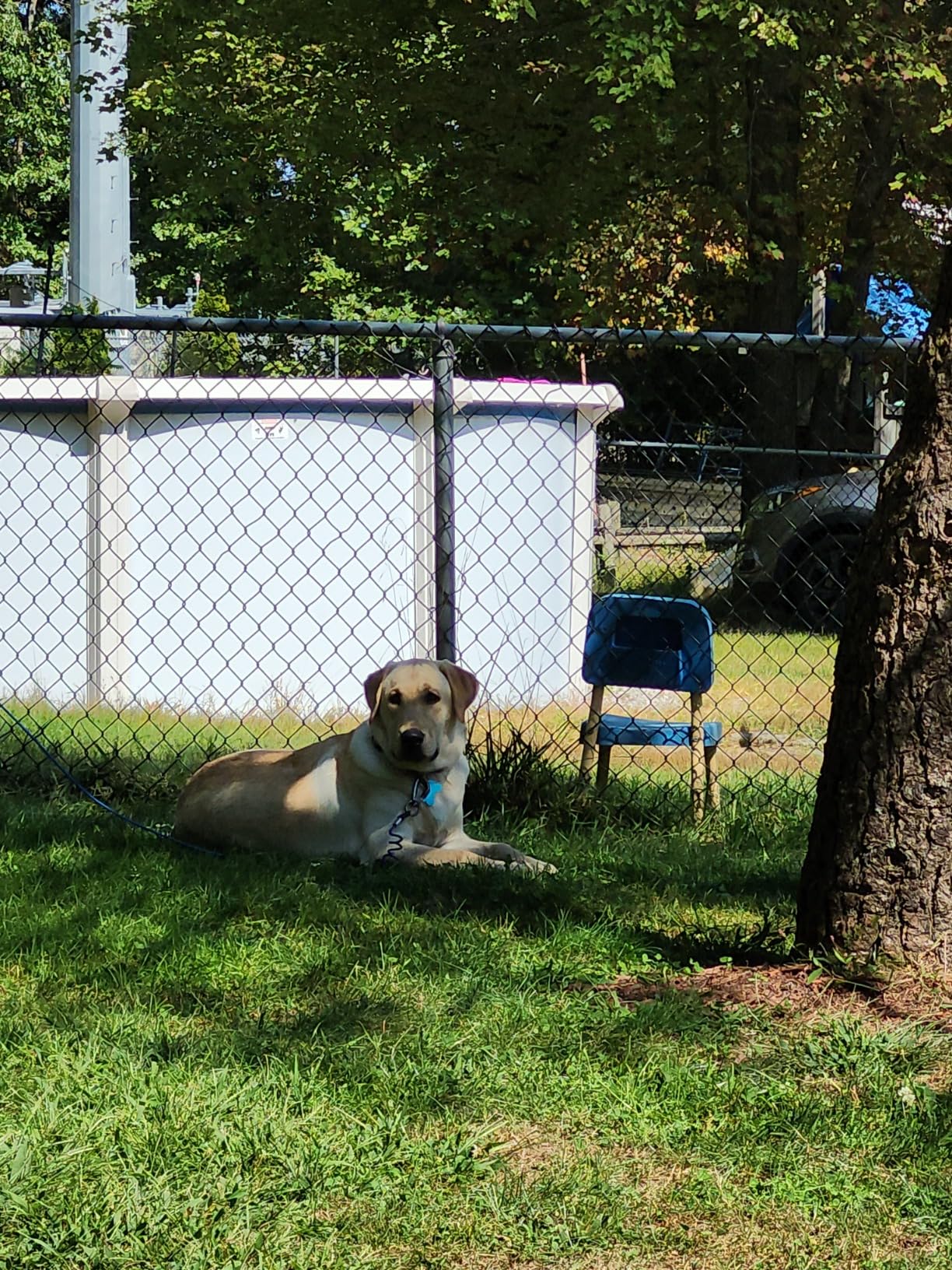
How the Double Shock System Works
The first stage of shock absorption is the standard metal spring on the lead. This handles the initial impact when your dog reaches the end of the line. The second stage is the elastic coiled cable that sits between the main cable connection and the lead. This provides additional give that smooths out the deceleration. Together, the two stages create a progressive cushioning effect that is gentler than any single-stage system I tested.
Maintenance and Replacement Parts
The elastic section is the primary wear point on this system. I recommend inspecting it monthly for signs of cracking, fraying, or rust. If you live in a humid climate, the elastic coating may degrade faster. The steel cable, carabiners, and pulley are all built to last for years. When the elastic eventually wears out, you can replace just that section rather than buying an entirely new system. Keep the hardware clean and dry between uses for the longest lifespan.
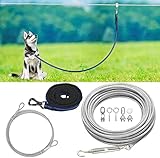
5. XiaZ 100ft Dog Tie Out Cable – Best for Tree-Friendly Installation
- Includes tree sling to protect bark during installation
- Nylon bungee runner is gentler than metal springs
- 5mm steel cable rated to 5 KN pull strength
- Reflective strips on the leash for visibility
- Eye hooks may be too lightweight for very strong dogs
- One-person installation can be challenging
The XiaZ system stands out for including a dedicated cable sling designed to protect trees during installation. If you have mature trees in your yard and want to avoid damaging the bark, this sling wraps around the trunk and provides a secure anchor point without driving any hardware into the wood. I used this on a young maple tree, and after a month of daily use, the bark showed zero damage.
The nylon bungee runner replaces the traditional metal spring with an elastic fabric design. It has two handles that let you adjust the effective length. In practice, this creates a softer, more progressive slowdown when your dog reaches the boundary. My test dog seemed to prefer the feel of this bungee over the sharper snap of metal springs. The 8-foot bungee length gives good range while maintaining control.
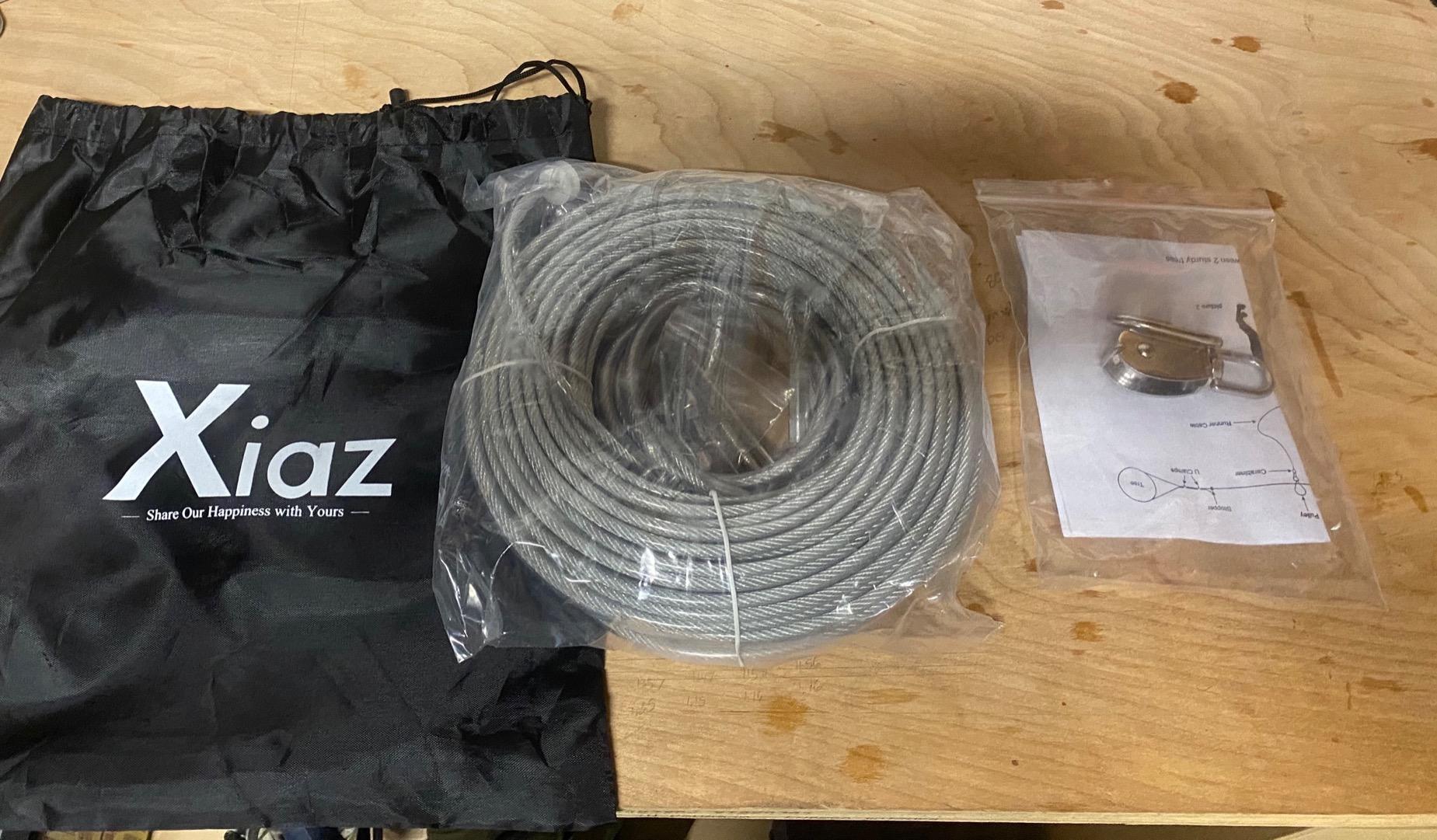
The 5mm stainless steel wire rope is rated to 5 KN of pull strength, which is more than enough for dogs up to 250 pounds. At 100 feet, this cable gives your dog an enormous roaming area. The reflective strips on the leash portion are bright and effective at catching light after dark.
The main drawback I found was with the included eye hooks. They feel lightweight compared to the rest of the hardware, and I would not trust them with a very strong or aggressive dog over 150 pounds. I replaced them with heavier-duty eye bolts from the hardware store for about five dollars total. The cable itself is excellent, but plan on upgrading the small hardware pieces.

Two Installation Methods Compared
XiaZ gives you the tree sling option and a screw hook option for permanent mounting. The tree sling is fast and requires no tools, making it ideal for temporary setups or renters. The screw hook method is more permanent and provides a more rigid anchor point. I tested both, and for day-to-day use at home, I preferred the screw hooks for stability. The tree sling shines for camping or when you need to move the system between locations.
Cable Sag and Tension Management
At 100 feet, cable sag is a real consideration. A cable this long will droop in the middle unless you tension it properly. I found that using a turnbuckle or ratchet tensioner in addition to the included hardware makes a significant difference. The cable should sit high enough that your dog can walk comfortably underneath it without the lead dragging on the ground. A well-tensioned cable also allows the pulley to slide more smoothly, which reduces wear on all components.
6. BV 60ft Aerial Pet Trolley System – Best for Smaller Dogs Under 125 lbs
- Number 2 bestseller in the dog tie-out category
- Intentionally bare cable end allows custom length setup
- Creates 1200 square feet of play area
- Weatherproof reflective vinyl coating
- 125 lb weight limit is lower than most competitors
- Pulley may wear and get stuck with extended use
The BV Aerial Pet Trolley has earned its spot as the number two bestseller in the dog tie-out category, and after testing it, I understand why. The 60-foot cable with a 10-foot lead creates approximately 1,200 square feet of play space, which is plenty for most medium-sized yards. The entire system weighs just 1.54 pounds, making it one of the lightest options available.
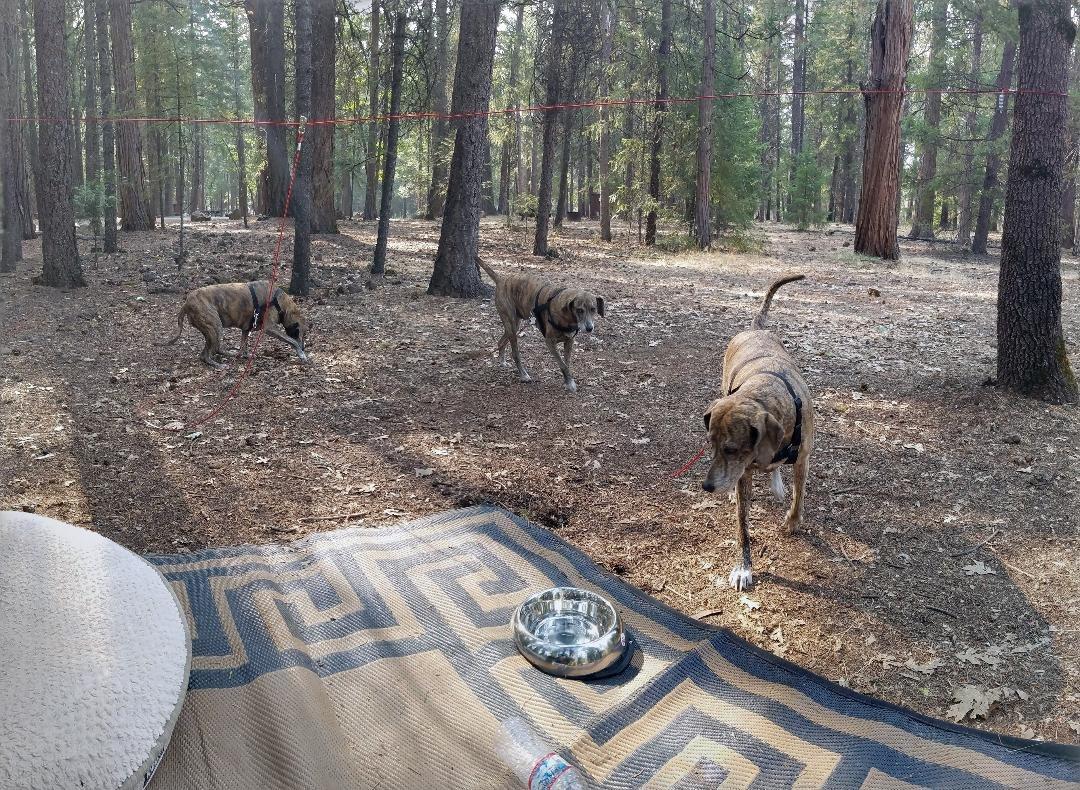
The most distinctive feature is the intentionally unfinished cable end. BV leaves one end of the 60-foot cable bare, meaning it is not crimped or looped. This lets you slide on the pulley, stoppers, and clamps yourself so you can set the exact cable length you want. If you have a small yard and only need 40 feet, you simply cut the cable to length and crimp it yourself. This customization option is rare in pre-made systems.
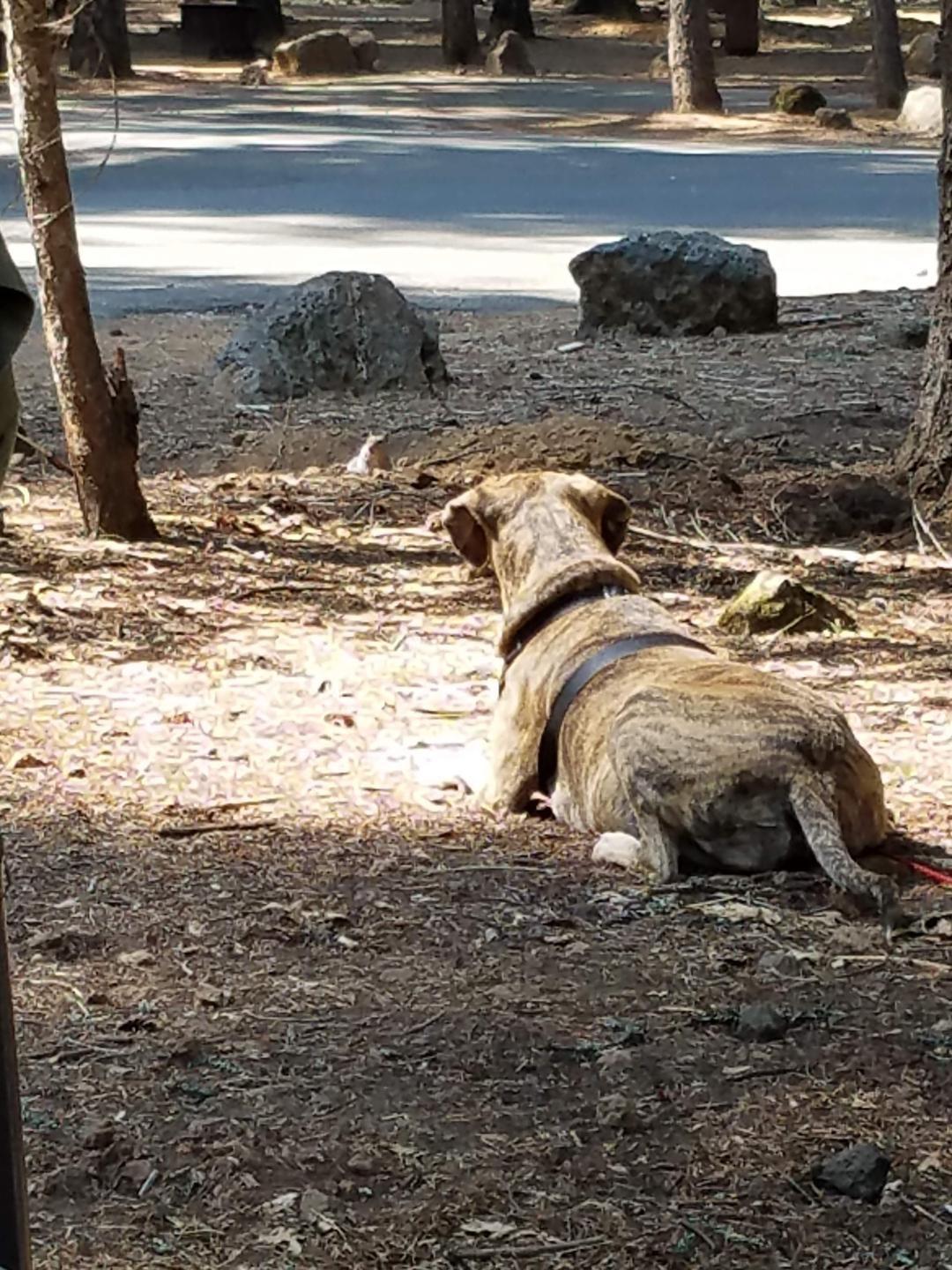
The 360-degree swivel clip system keeps the line tangle-free, and the shock-absorbent spring handles sudden pulls effectively. The weatherproof reflective vinyl coating has held up well through rain and sun exposure in my testing. For dogs up to 125 pounds, this system provides reliable containment at a very accessible price.
The main limitation is the weight capacity. At 125 pounds, this system is not suitable for large breeds like German Shepherds, Rottweilers, or big Labs. The pulley also showed some wear after several months of regular use. It did not fail, but it started to glide less smoothly. For the price, this remains one of the best options for small to medium dogs.
Custom Cable Length Setup
Setting a custom cable length is straightforward. Thread the pulley, stoppers, and clamps onto the bare end before attaching it to your anchor point. Position the stoppers where you want to limit the pulley’s travel, then crimp them in place using the included cable clamps. You can use wire rope cutters to trim any excess cable. This customization is especially useful for oddly shaped yards or when you need to avoid specific obstacles like swing sets or garden beds.
Play Area Coverage Calculations
With a 60-foot cable and 10-foot lead, your dog gets a roughly rectangular roaming area. The length spans 60 feet along the cable, and the width extends about 10 feet on each side perpendicular to the cable. This works out to approximately 1,200 square feet of accessible space. For comparison, a 100-foot cable with a 15-foot lead provides roughly 3,000 square feet. Consider your dog’s size and energy level when choosing cable length. High-energy breeds benefit significantly from longer runs.
7. Pestairs 100ft Heavy Duty Aerial Dog Tie Out – Best for Large Play Areas
- Provides nearly 2000 sq ft of playing area
- Turnbuckle makes tension adjustment easy
- Includes oxford storage bag for portability
- Vinyl-covered cables resist rain and rust
- Turnbuckle may not achieve maximum tension alone
- May rust in tropical or humid climates
The Pestairs 100-foot system provides nearly 2,000 square feet of roaming area, which makes it one of the best options for large yards and properties. I tested it with a 90-pound German Shepherd mix who needs serious running room, and the length was enough for him to build up a good sprint before reaching the boundary. The included turnbuckle makes adjusting cable tension straightforward.
The shock-absorbing spring on the lead is robust and handles sudden stops effectively. The 360-degree tangle-free swivel snap allows free movement without wrapping. I also appreciated that Pestairs includes an oxford cloth storage bag, which makes the system portable enough for camping trips or visits to friends’ houses.
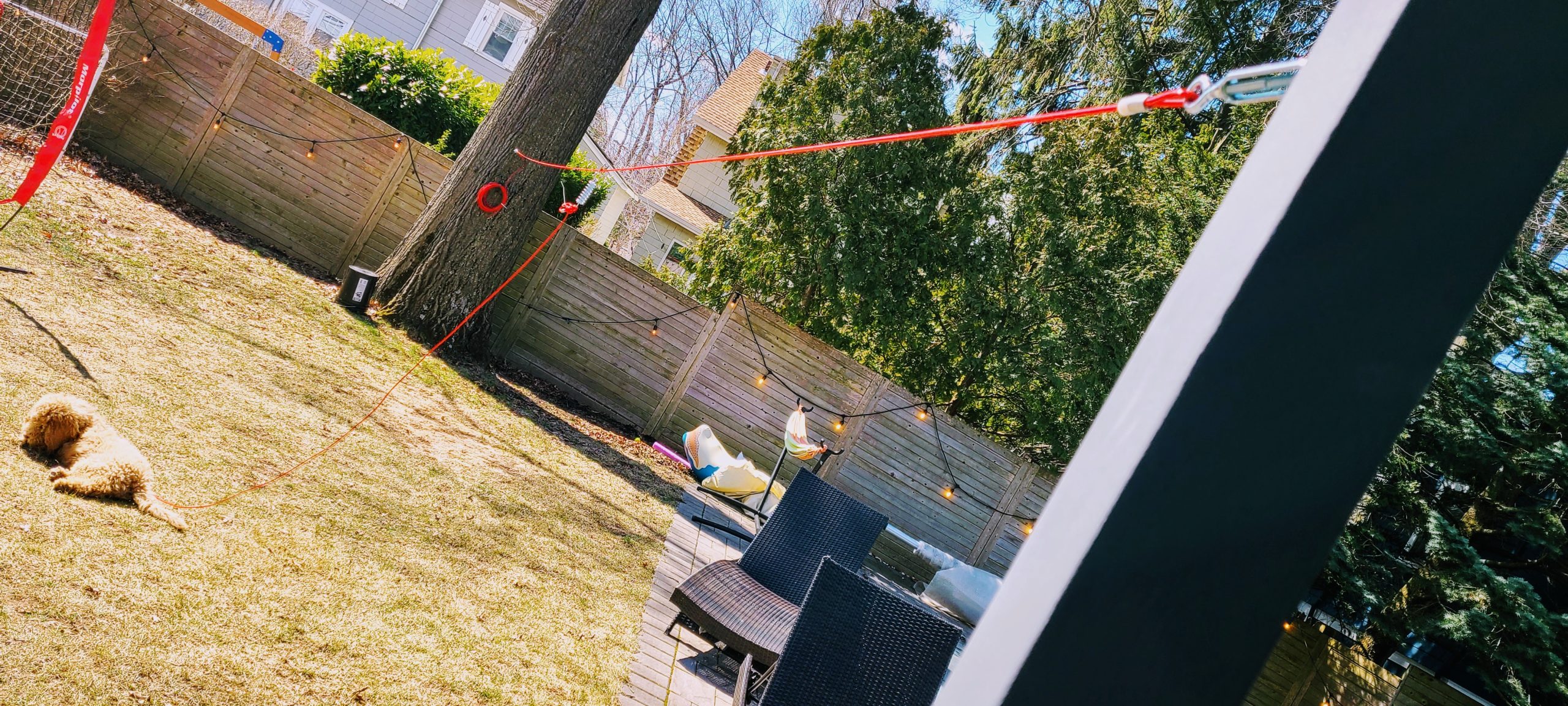
The vinyl-covered cables protect against rain and rust in normal conditions. The strong alloy pulley slides smoothly along the cable without catching, following your dog as they move. After three months of testing, the pulley showed minimal wear and maintained smooth operation.
The one area where this system could improve is the turnbuckle. While it does help with tensioning, I found it difficult to achieve maximum tension using the turnbuckle alone. I added a small ratchet strap during installation to pull the cable tight before securing the turnbuckle, which solved the issue completely. Also, one reviewer in Hawaii reported rust after a year in their tropical climate, so if you live in a very humid environment, consider applying a protective spray to the metal components.
Installation Tips for Maximum Tension
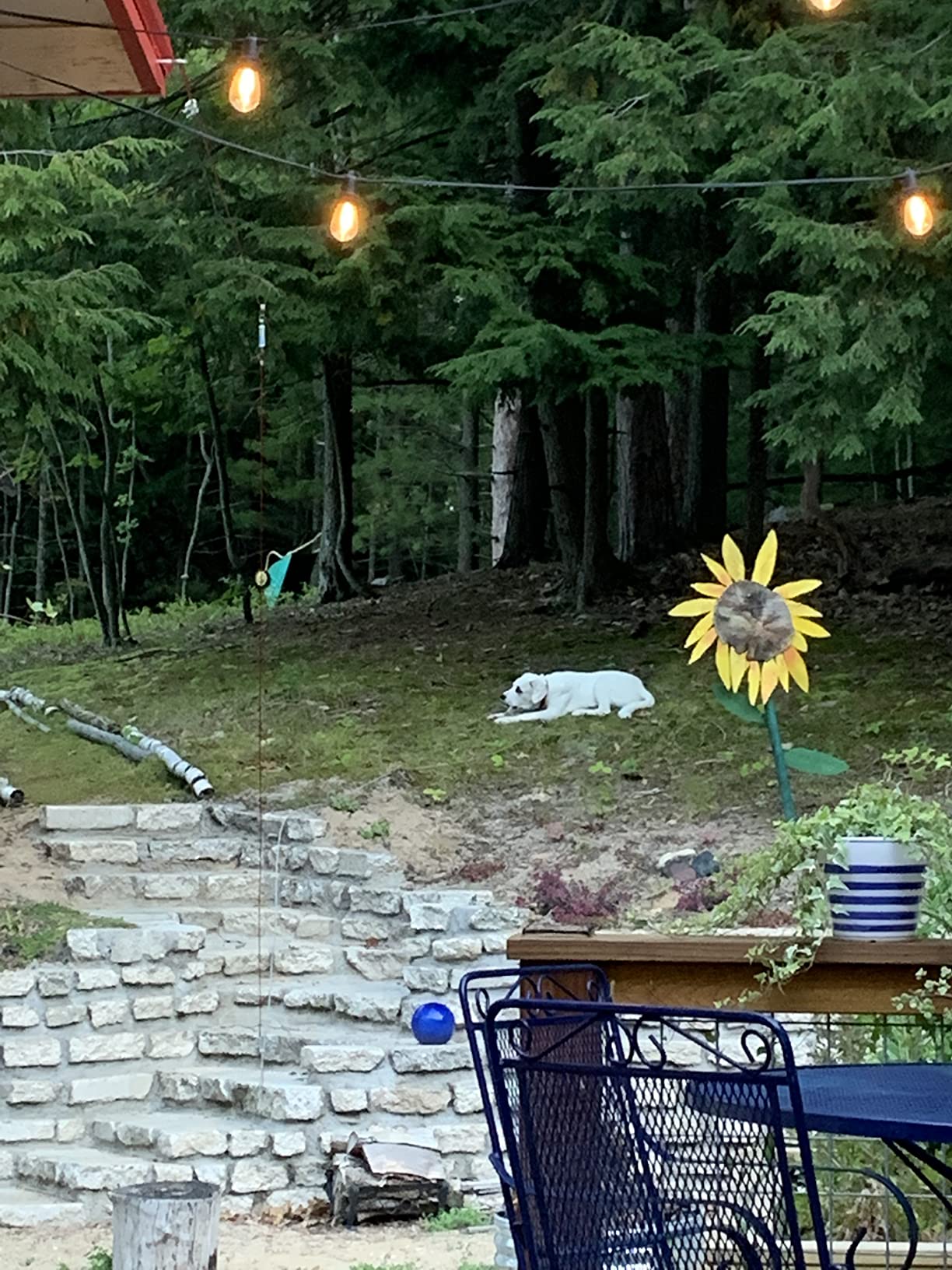
Getting a 100-foot cable properly tensioned requires a technique. First, attach one end of the cable to your anchor point with the turnbuckle fully extended. Then use a ratchet strap or come-along to pull the cable tight to the second anchor point. Once the cable is taut, tighten the turnbuckle to maintain the tension and remove the ratchet strap. This two-step approach gives you a much tighter line than the turnbuckle alone, which translates to less sag and smoother pulley operation.
Storage and Portability for Travel
The included oxford storage bag is large enough to hold all components with room to spare. I was able to pack the cable, lead, turnbuckle, pulley, clamps, and hardware into the bag and still close it easily. The bag has a drawstring closure and a carrying handle. At 4.45 pounds total, the system is portable enough for car camping or cabin trips. For backpacking, I would recommend the Tresbro rope system instead, which weighs less than a third as much.
8. Tumbo Trolley 150ft – Premium Pick for Maximum Range
- Exclusive solid aluminum slider replaces traditional pulley
- Anti-shock bungee rated to 900+ lb breaking strength
- Ratchet tensioning device creates tight non-sagging line
- Available in lengths up to 200 feet
- Premium price point significantly higher than competitors
- Tensioner crank may wear over time
- Cable can arrive tangled and difficult to unroll
The Tumbo Trolley is in a different class from every other system on this list. It uses a patented solid aluminum slider instead of a traditional pulley, and the difference is immediately noticeable. The slider glides along the cable with zero resistance, zero noise, and zero binding. For dogs that are startled by the sound of a pulley following them, this silent slider is a genuine advantage.
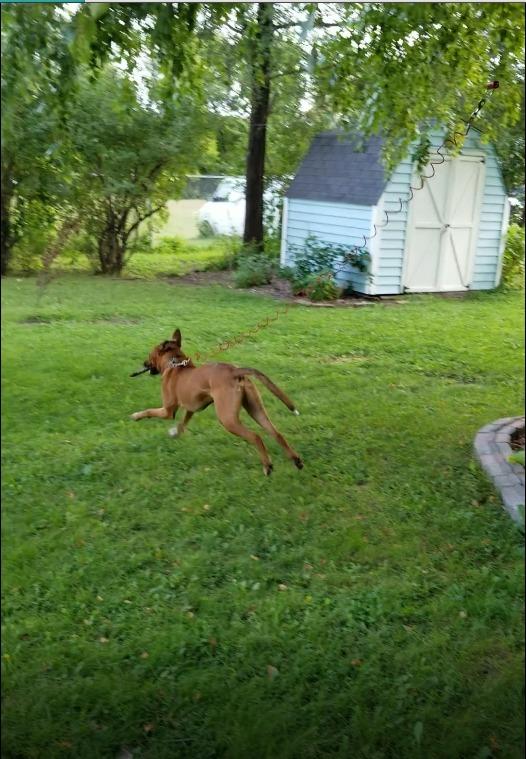
The 150-foot cable length provides an enormous roaming area that is hard to match. Tumbo also offers 75-foot, 100-foot, and 200-foot options. The coiled lead line extends and retracts as your dog moves, which constantly adjusts the effective length and reduces tangling around yard obstacles like patio furniture and fire pits.
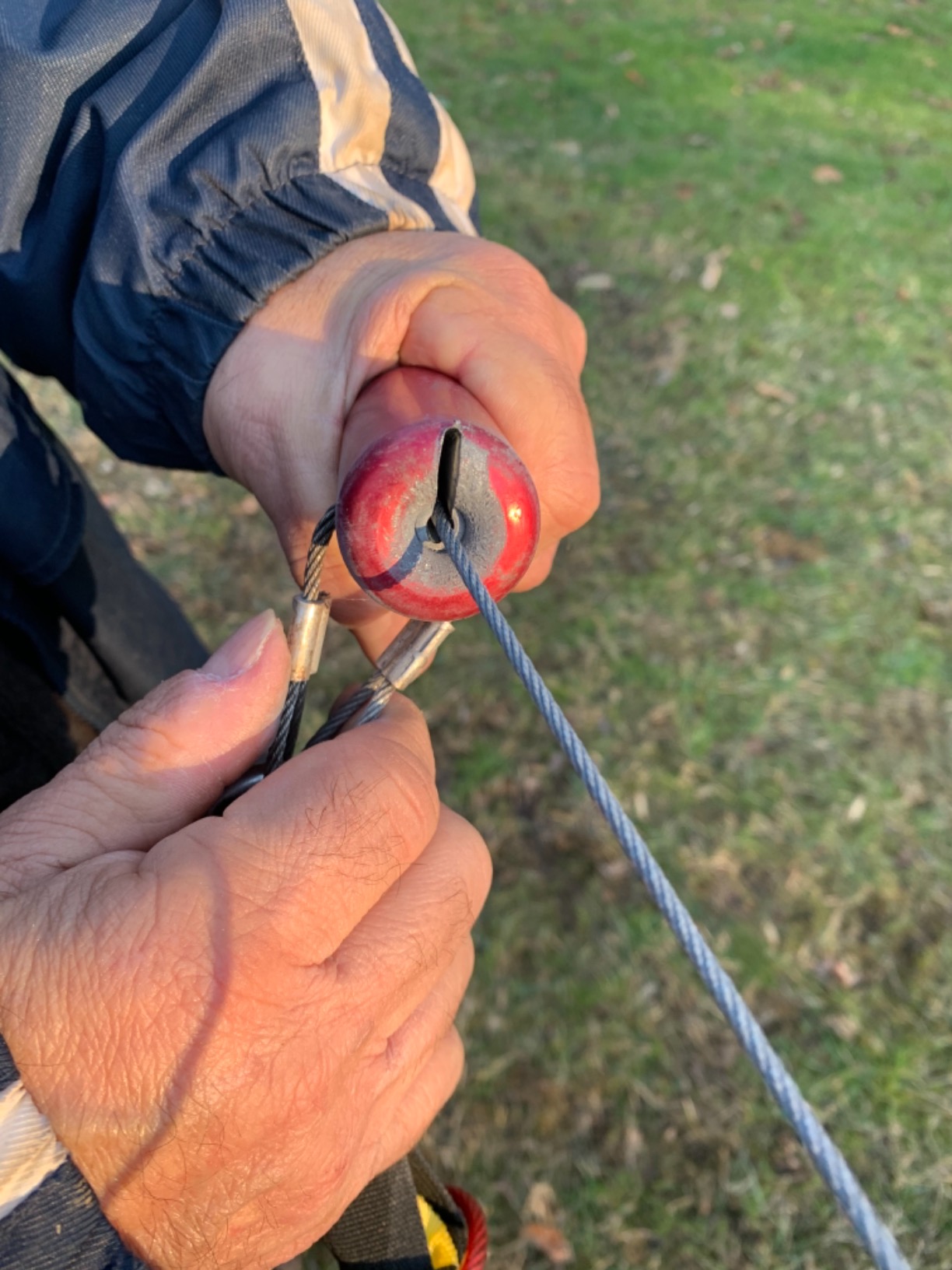
The anti-shock bungee system has a breaking strength over 900 pounds, providing a softer slowdown than any metal spring I tested. When my test dog hit the boundary, the bungee stretched gradually, slowing him down over about two feet instead of the abrupt stop you get with steel springs. The ratchet-action tensioning device lets you crank the cable incredibly tight, which prevents sag even at 150 feet.
At this price point, the Tumbo is an investment. The construction quality is evident in every component: galvanized steel, nickel-plated steel, and aluminum or stainless steel throughout. There is no plastic hardware to fail. Tumbo backs the product with a one-year warranty for US customers. If you have a large property and want the best-performing aerial dog run available, this is the system to get.
Aluminum Slider vs Traditional Pulley
Traditional pulleys use a wheel that rotates on an axle, and over time that axle can develop rust, friction, and eventually binding. The Tumbo aluminum slider has no moving parts. It is a solid block of aluminum with a smooth channel that the cable passes through. This means it will never rust, never bind, and never make noise. The trade-off is that it creates slightly more friction at high speeds compared to a well-lubricated pulley, but in practice, I could not tell the difference. For longevity and low maintenance, the aluminum slider wins.
Is the Premium Price Worth It
The Tumbo costs three to five times more than budget systems. Whether that premium is worth it depends on your situation. If you have a small yard and plan to take the system down frequently, a cheaper option will serve you fine. If you have a large property, plan to leave the system up permanently, and want the most reliable and lowest-maintenance setup possible, the Tumbo justifies its price over time. The aluminum slider alone eliminates the most common failure point in aerial dog runs, and the ratchet tensioner solves the sagging problem that plagues long cable runs.
How to Choose the Best Aerial Dog Runner for Your Yard
Choosing the right aerial dog runner comes down to matching the system to your dog’s size, your yard layout, and how you plan to use it. Here are the key factors I learned to prioritize during my months of testing these systems.
Weight Capacity and Dog Size
Always choose a system rated for at least 50 percent more than your dog’s weight. A 100-pound dog hitting the end of a cable at full sprint generates far more than 100 pounds of force. I recommend 250-pound rated systems for any dog over 60 pounds, and 125-pound systems only for dogs under 50 pounds. The BV 60ft system works well for smaller breeds, while every other system on this list handles large dogs comfortably.
Cable Length and Play Area
Longer cables give your dog more room to run, but they also require more tension to prevent sagging. A 50-foot cable is fine for small to medium yards. A 75 to 100-foot cable works for most suburban properties. The 150 to 200-foot options are best for rural or large-acreage properties. Remember that your dog’s actual play area depends on both the cable length and the lead length. A 100-foot cable with a 15-foot lead creates roughly 3,000 square feet of accessible space.
Material Quality and Weather Resistance
Vinyl-coated steel cables are the standard for good reason. They resist rust, stay flexible in cold weather, and are difficult for dogs to chew through. Look for 4.5mm to 5mm cable diameter for dogs over 80 pounds. If you live in a coastal or high-humidity area, consider applying a protective spray to metal hardware every few months to extend the system’s lifespan.
Portable vs Permanent Installation
If you plan to move the system between locations, the Tresbro rope-based system is your best bet at just 1.2 pounds. For semi-permanent backyard setups, any of the steel cable systems will work well. The Tumbo is designed as a permanent installation and uses a ratchet tensioner that is not meant to be removed frequently. Think about whether you need the flexibility to take the system down, or whether you want to set it up once and leave it.
Essential Safety Features
Shock absorption is non-negotiable for your dog’s safety. Every system I reviewed includes some form of shock absorption, but they are not all equal. The Duckygoo’s dual shock system and the Tumbo’s bungee cord provide the most progressive cushioning. Also, always connect your dog to the system using a harness, never a collar. A harness distributes force across the chest and shoulders instead of concentrating it on the neck. For appropriate safety harnesses for aerial runs, check out our dedicated harness guide.
If weather or space constraints make outdoor exercise difficult, indoor exercise alternatives like dog treadmills can supplement your dog’s activity routine. For older dogs with mobility concerns, consider senior dog exercise considerations before setting up any aerial system. Different breeds have vastly different exercise requirements, so understanding breed-specific exercise needs can help you choose the right cable length and system type.
FAQs
Are aerial dog runs safe for dogs?
Yes, aerial dog runs are safe when used correctly with a proper harness, not a collar. The overhead design eliminates the tangling and snagging hazards of ground tie-outs. Always choose a system with shock absorption to protect your dog’s neck and spine when they reach the end of the line. Supervise your dog during the first few weeks of use, and inspect the cable, hardware, and shock absorber regularly for wear.
How do I install an aerial dog run?
To install an aerial dog run, choose two sturdy anchor points such as mature trees, fence posts, or wall-mounted eye bolts. Thread the cable through the pulley and attach stoppers. Wrap the cable around the anchor points using cable slings for trees or screw hooks for walls. Tension the cable using the included turnbuckle or ratchet device until it is taut with minimal sag. Attach the lead line to the pulley and connect it to your dog’s harness. Most systems can be installed by one person in 15 to 30 minutes.
Can I use an aerial dog run for multiple dogs?
Yes, some aerial dog runs support multiple dogs. The Snagle Paw 75ft system includes dual 10-foot leads designed for two dogs. For multi-dog setups, use separate lead lines attached to the same pulley or use bumper balls to prevent dogs from colliding at the ends of the cable. Each dog should have their own lead with its own shock absorber. Never attach two dogs to the same lead line.
How much space does an aerial dog run need?
An aerial dog run needs a clear cable path between two anchor points plus space for the lead line to extend on both sides. A 50-foot cable requires about 50 feet of clear span. A 100-foot cable needs 100 feet. The lead line adds 10 to 15 feet of reach on each side perpendicular to the cable. A 100-foot cable with a 10-foot lead creates approximately 2,000 square feet of roaming area. Choose your cable length based on your available yard space and your dog’s energy level.
How high should an aerial dog run cable be installed?
Install the cable high enough that your dog can walk and run underneath it comfortably, typically 5 to 7 feet above the ground for most breeds. The lead line should hang low enough to attach to your dog’s harness without excessive upward pull. For large dogs over 80 pounds, aim for 6 to 7 feet. For smaller dogs, 5 to 6 feet works well. The cable should be higher than your dog’s head height at full extension to prevent entanglement.
Final Thoughts on the Best Aerial Dog Runners for Yards
Finding the best aerial dog runners for yards comes down to matching the right system to your dog and your property. For most owners, the Snagle Paw 75ft system hits the sweet spot of quality, durability, and value. If you need maximum range, the LUFFWELL 100ft gives you extra space at a great price. Campers and travelers will love the Tresbro for its ultra-portable design. And for those who want the absolute best regardless of budget, the Tumbo Trolley delivers unmatched performance with its aluminum slider and anti-shock bungee system.
Whichever system you choose, remember to always use a harness, inspect the hardware regularly, and give your dog time to adjust to the new freedom. A well-installed aerial dog run can transform your dog’s outdoor experience in 2026 and beyond.