
It starts the same way every humid summer night. You focus, drop in a low-power eyepiece, and the faint fuzzy thing you were hunting has turned into a soft grey smudge. A flashlight check confirms it: a film of dew across the corrector. Then the bright stars grow halos, and the session is effectively over.
That is what this roundup is for. I have gone through seven dew heaters for telescopes, covering USB strips, 12V bands and one purpose-built aluminum dew ring, and worked out which one belongs on which kind of optical tube. The short version: the heater is a small piece of resistive wire that holds glass a few degrees above the local dew point, and matching its size to your aperture matters more than anything else on the spec sheet.
Whether you picked up your scope from our verified telescope reviews or you are still deciding between a Dobsonian and something computerized from our computerized telescope roundup, the dew question comes up the same night. Last updated for 2026.
Table of Contents
What Is a Dew Heater?
A dew heater is a flexible, low-wattage heating strip, also sold as a heater band or dew ring, that wraps around a telescope tube near the optics and keeps that surface a few degrees above the ambient dew point, stopping condensation from forming on the glass.
Underneath the fabric sleeve is a resistive element, most often alloy fiber or nichrome, fed from a controller. Most controllers run on 12V DC and use pulse-width modulation to vary output, while simpler strips take 5V straight from a USB port. The job is deliberately small: hold the surface just above the dew point, not cook the optics.
Why dew forms at all is the part most product pages skip. Air temperature is not what your telescope feels. A tube radiating directly into a night sky that sits a few degrees above absolute zero keeps losing heat, and its glass can drop below the surrounding air. Once that glass falls below the air’s dew point, condensation starts. A cold bottle taken out of a refrigerator behaves the same way: the wet skin is not the fridge doing anything special, it is the glass radiating into a room.
That physics is also why a dew heater is not about heat for heat’s sake. Run one gently and the glass stays near the temperature of the air around it, which keeps star images steady. Run one at full blast and warm air rises off the tube, creating internal currents that blur the view. The dial matters.
Top 3 Best Dew Heaters for Telescopes (October 2026)

Celestron 8in Dew Heater Ring
- Heats the Schmidt corrector plate directly
- Aluminum ring for 8in SCT EdgeHD RASA
- Runs on external 12V DC
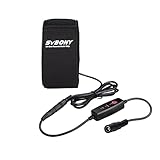
SVBONY SV192 Dew Heater Strip
- 480mm band for mirrors up to 152mm
- 12V with 5.5x2.1mm plug
- 3-speed heating regulator

SVBONY SV172 Dew Heater Strip
- 240mm USB strip at 5V
- 1.9A to 2.0A input current
- Fits optics under 76mm
Best Dew Heaters for Telescopes at a Glance
| Product | Specifications | Action |
|---|---|---|
| Celestron 8in Aluminum Dew Heater Ring |
|
Check Latest Price |
| SVBONY SV192 480mm Dew Heater Strip |
|
Check Latest Price |
| SVBONY SV172 240mm USB Dew Heater Strip |
|
Check Latest Price |
 Move Shoot Move 350mm Neoprene Lens Warmer Move Shoot Move 350mm Neoprene Lens Warmer |
|
Check Latest Price |
 KIWIFOTOS USB Lens Warmer KIWIFOTOS USB Lens Warmer |
|
Check Latest Price |
 NEEWER 23.6in USB Lens Heater HW-23B NEEWER 23.6in USB Lens Heater HW-23B |
|
Check Latest Price |
 LOSHARP USB Dew Heater Strip LOSHARP USB Dew Heater Strip |
|
Check Latest Price |
Where to Put a Dew Heater on a Telescope
This is the question that fills most astronomy forum threads, and the answer depends entirely on what kind of telescope you own. Work down the list that matches your setup.
Refractor objective. Wrap the band around the front cell, behind the dew shield rather than on the lens itself. A shield keeps rain and spindrift off; the heater handles the radiative loss that gets past it.
Schmidt-Cassegrain corrector. A ring that sits against the corrector plate is the strongest option here, because it heats the exact surface that fogs. If your tube does not take a ring, wrap a band around the front cell instead.
Newtonian secondary mirror. Put the band around the mirror holder at the top of the spider, or use a secondary holder with a built-in heater. Heating the tube wall near the mirror cell does very little for a secondary that fogs first.
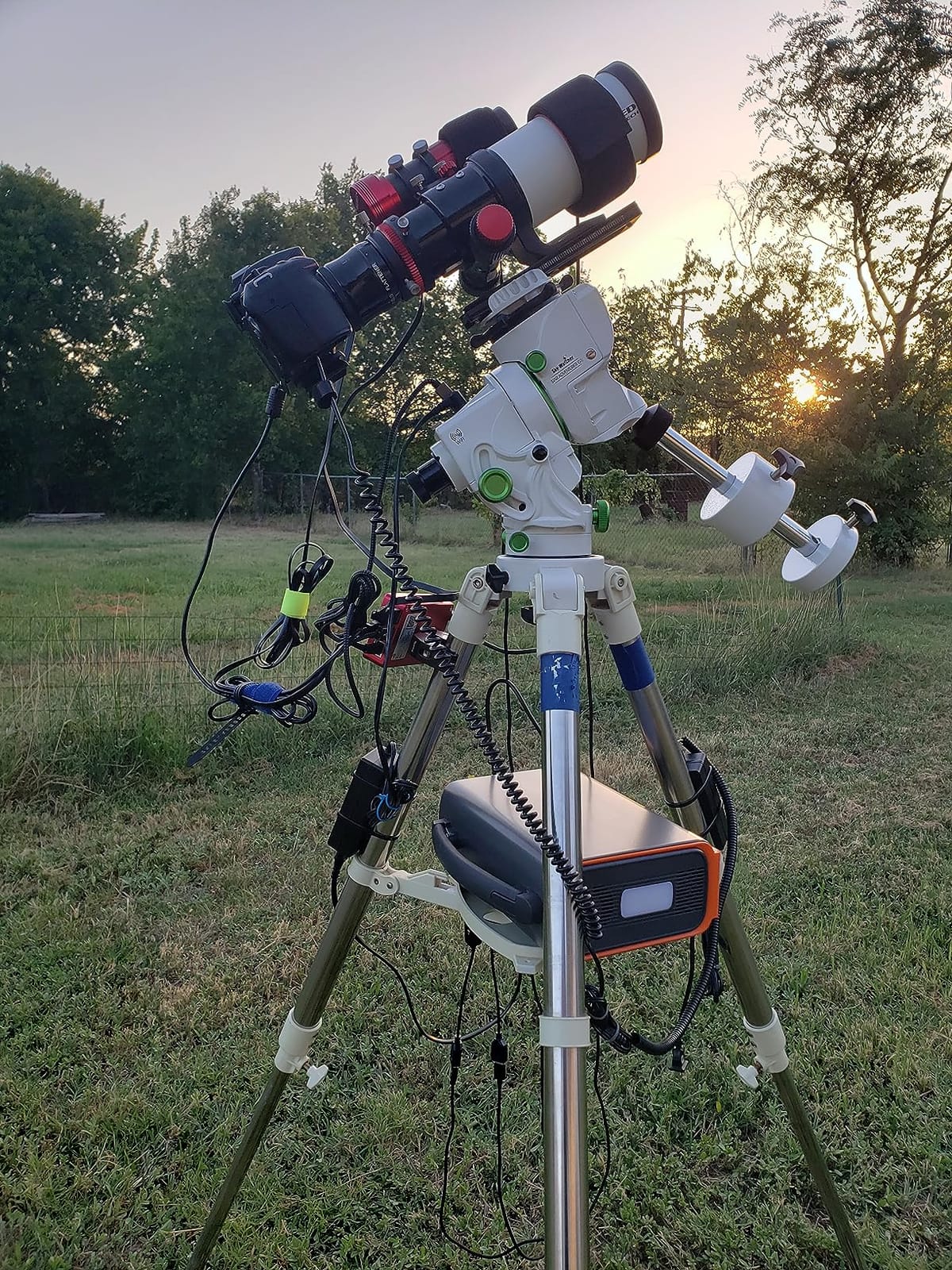
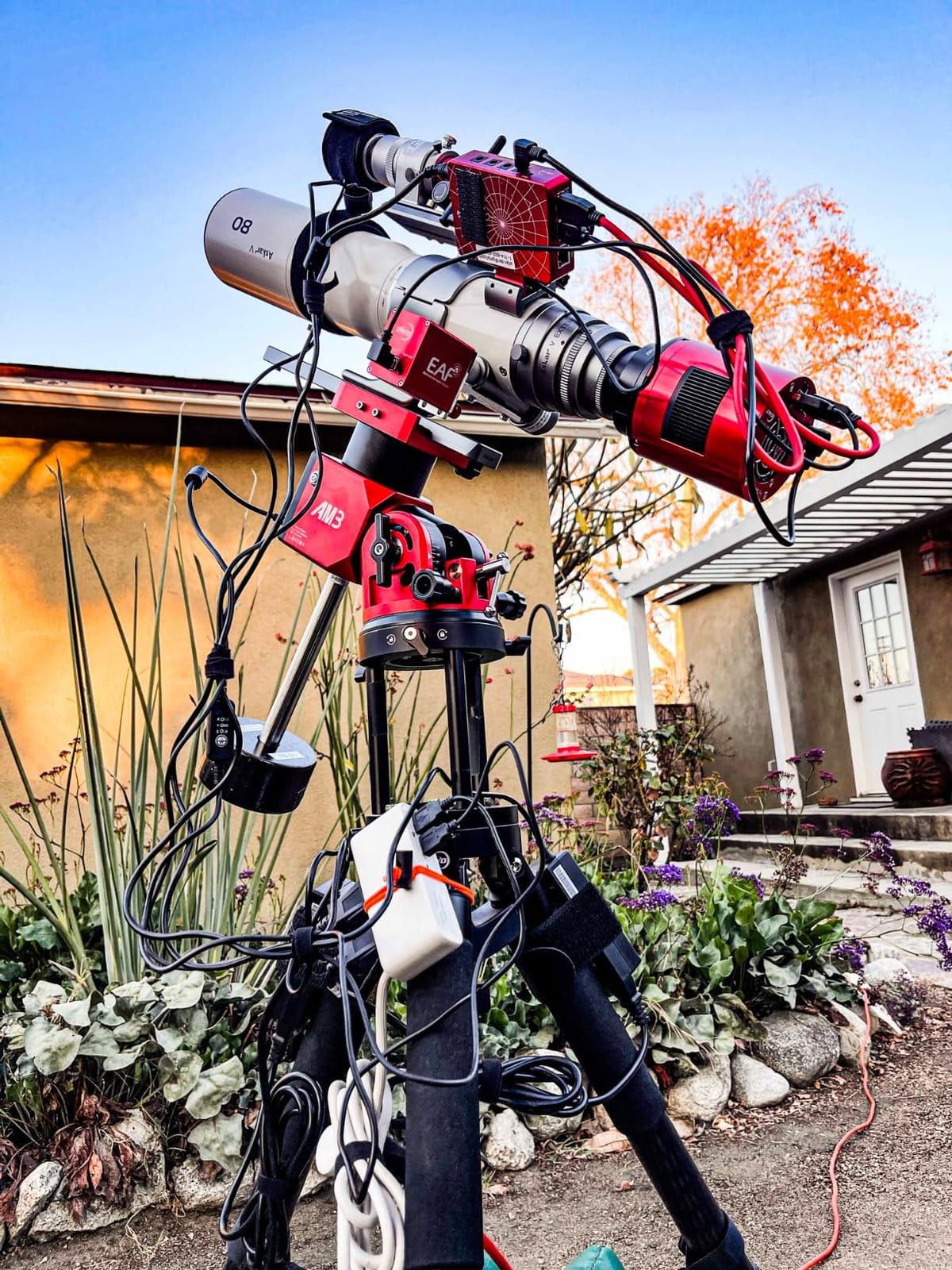
Camera lens, guide scope and finder. Small eyepiece-sized straps are enough. A guide scope that dews will wreck guiding, and one astrograph user on a Facebook group reported losing roughly 18 five-minute subframes in a single night after guiding collapsed from dew.
One placement tip worth remembering: heating a dew shield can work as well as heating the tube, because the shield gives warm air a surface to exchange heat with instead of letting it radiate straight to space. Several owners pair a strip on the cell with a strip on the shield for exactly this reason.
1. Celestron 8 Inch Aluminum Dew Heater Ring – Best for Schmidt-Cassegrains
- Only heater here built to sit against a Schmidt corrector
- Straight swap of the factory retaining ring in about 10-15 minutes
- Largest review pool in this group at 316 reviews
- Rigid aluminum doubles as cable strain relief
- Works with common third-party 12V controllers
- Fits only Celestron 8in SCT
- EdgeHD and RASA tubes
- Replacing the retaining ring means angling the OTA upward
- Owners advise against leaving it on high output continuously
This is the one heater in the group that heats the glass itself rather than the tube around it. It replaces the factory retaining ring on an 8-inch Celestron Schmidt-Cassegrain, EdgeHD or RASA, and the aluminum ring sits directly against the corrector so heat goes into the surface that actually fogs.
Installation is the part that puts people off, and it is more straightforward than it sounds: two screws, roughly ten to fifteen minutes, with the tube pointed upward so nothing falls onto the corrector. The included cable clip is a small touch that matters more than expected once you are running a 12V lead down an 8-inch tube at midnight.
Reviewers consistently describe the output as even and gentle, with correctors staying clear through humid nights without constant adjustment. It also carries the largest review base of any heater in this roundup at 316 reviews, and it comes with a 2-year US warranty from an established telescope maker.
Will it fit my telescope?
Only if you run a Celestron 8-inch Schmidt-Cassegrain, EdgeHD or RASA. The ring is machined to a specific tube diameter, so on a refractor, a Newtonian or another brand it does nothing at all. Check your model number before you order.
You will also need an external 12V DC supply and a controller, since the ring ships as a heating element alone. It works with Celestron’s own four-channel unit, with Thousand Oaks units, and with generic 12V in-line controllers.
How hot should I run it?
High enough to keep the corrector clear, low enough to avoid warming the air inside the tube. Owners caution against leaving it on continuous high output, and there are reports of star optical aberrations when it is run that way for hours. A controller with a probe on the corrector lets you set the threshold once and stop thinking about it.
Best for: anyone running an 8-inch Celestron SCT, EdgeHD or RASA on humid nights, especially for imaging, and who wants heat on the corrector rather than on the tube wall.
2. SVBONY SV192 Dew Heater Strip – Best 12V Band for Large Mirrors
- Highest average rating here at 4.7 stars with 86 percent five-star
- Covers primary mirrors up to 152mm outside diameter
- Built for telescopes rather than repurposed camera gear
- Three-layer heat insulation cuts power draw
- Inner surface resists wrinkling when bent
- Needs a 12V supply and barrel connector rather than plain USB
- Only three preset speeds with no fine or automatic control
- 480mm is still short for large Schmidt correctors
This strip was designed for astronomical tubes rather than adapted from camera accessories, and you can tell from the details: the 480mm length wraps a primary mirror up to 152mm in outside diameter, and the 5.5×2.1mm female socket is what most 12V telescope accessories use.
Heat retention is where it earns its keep. The SBR and Black-T three-layer material means it holds temperature with less current than a single-layer sleeve, which matters if you are running from a battery. Buyers also note the inner surface stays smooth after bending, so it does not crease and print a hot line across the glass.
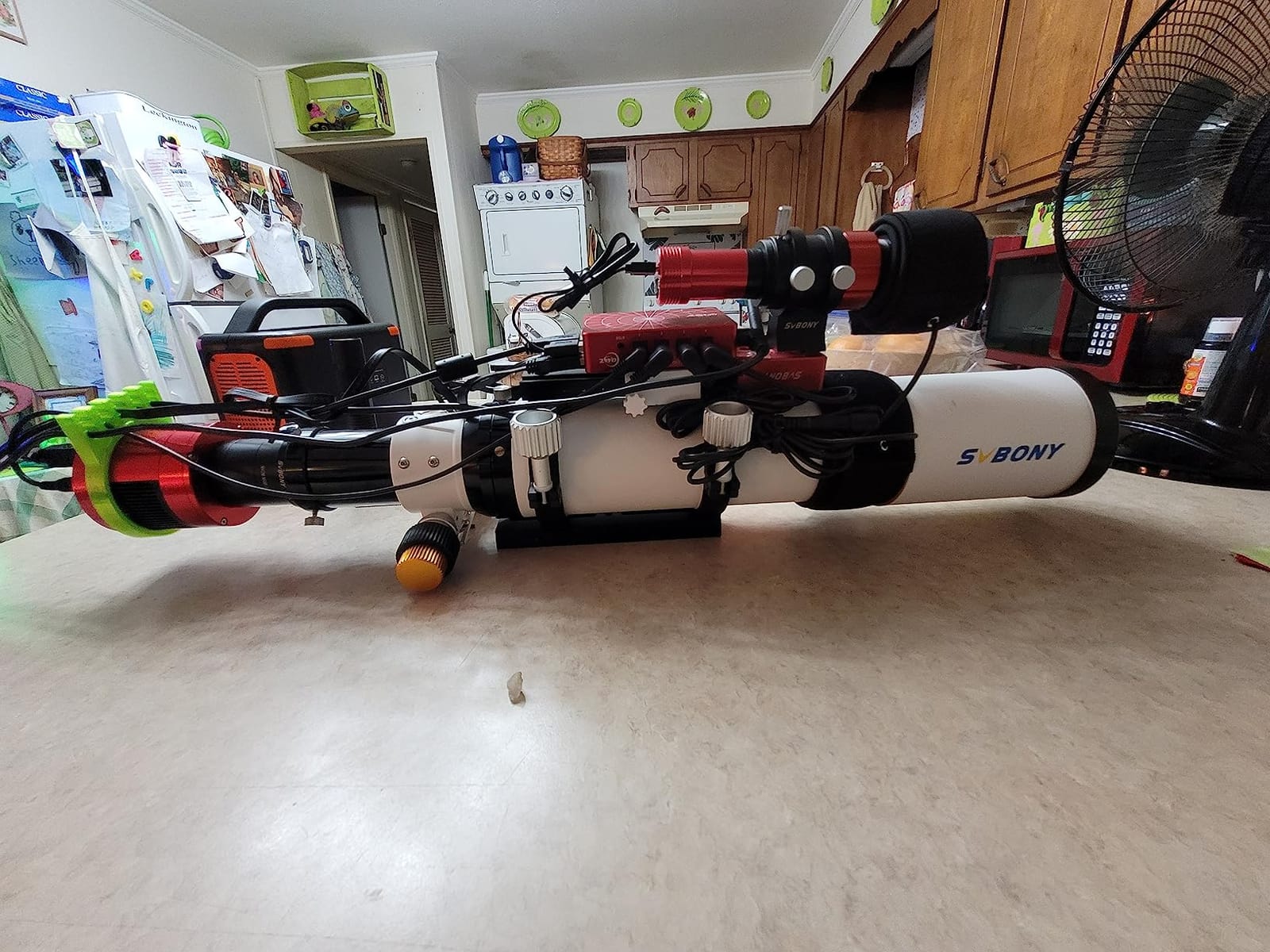
The 4.7 star average is the highest rating among these seven, with 86 percent of its reviews at five stars. If you already run a 12V supply and a controller, this is the most purpose-built band here for larger optical tubes, and it can also serve a camera lens on a long astrograph.
What does it need to run?
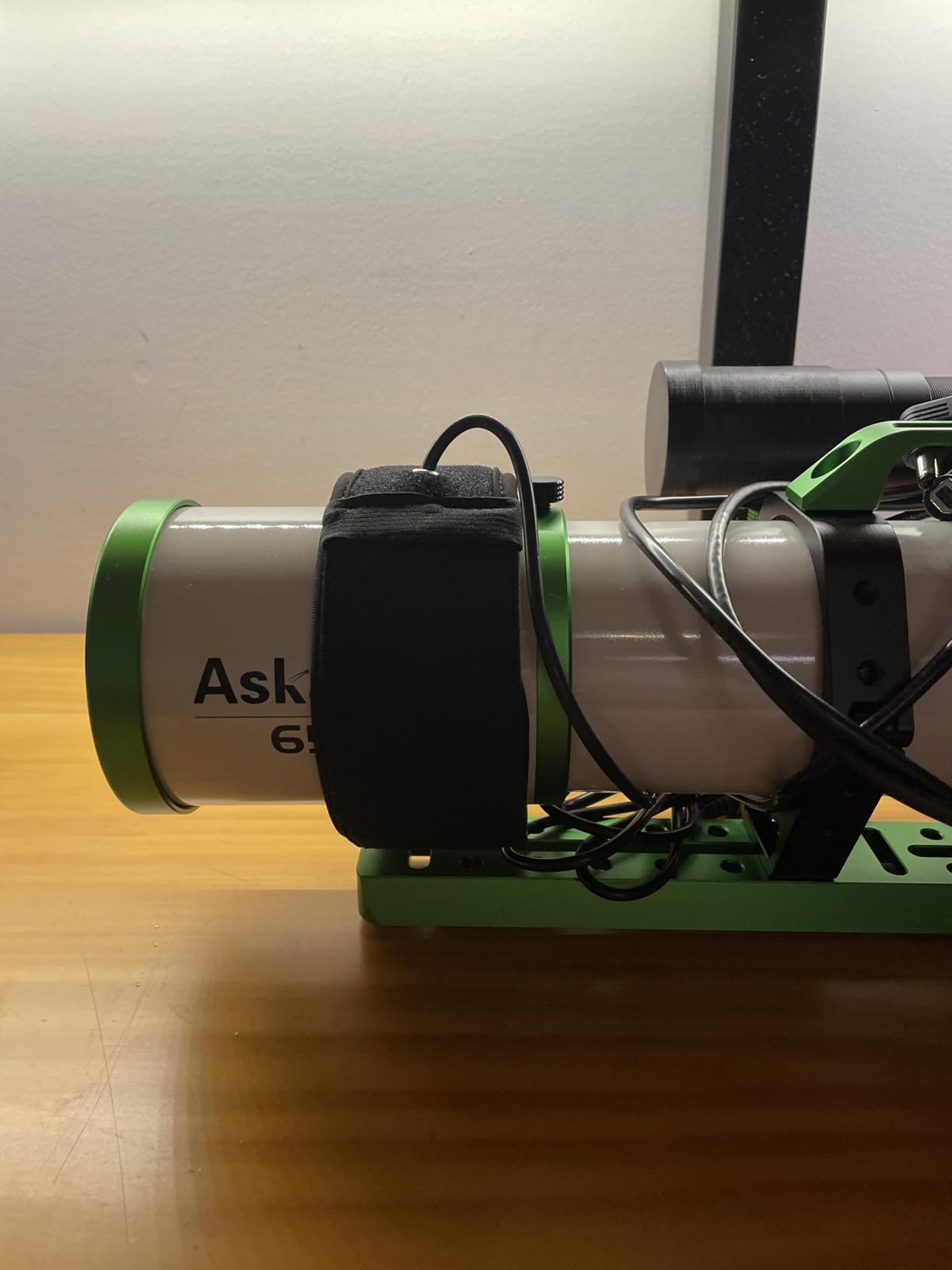
A 12V DC source and a 5.5×2.1mm barrel connection. That means a standard power bank will not drive it directly, so budget for either a 12V battery pack or a controller that outputs 12V. Owners running the Pegasus Ultimate Power Box with velcro-strap heaters from specialist retailers report that pairing as a proven one, and AstroBin forum posts describe the same combination working night after night.
How precise is the control?
Three preset speeds, no probe and no fine adjustment. On a marginal night you will be stepping between those three settings rather than trimming output, which is the main reason to buy a probe controller if you image regularly. It is fine for visual sessions and for moderate dew.
Best for: owners of mid-size Newtonian tubes and Dobsonian telescopes with mirrors around 150mm, who already have 12V power available.
3. SVBONY SV172 USB Dew Heater Strip – Best USB Setup for Small Optics
SVBONY SV172 Dew Heater, Lens Warmer 240mm, Universal for Telescope Camera
- Runs from any USB power bank with no separate controller
- Narrow 50mm band leaves focusing clearance free
- Three heat gears let you tune output to conditions
- Only 66g so it adds no load to a portable setup
- Built-in aluminum with alloy fiber wire warms fast
- Sized for optics under 76mm only
- Three coarse gears instead of adjustable output
- High current draw means a large power bank for all-night use
For a small refractor, a finder scope, an eyepiece or a short astrograph lens, the appeal of this strip is simplicity. Plug the 1.8m USB lead into a power bank and the heater runs. No 12V supply, no controller, no extra cable routing to work out at the base of the tripod.
The 50mm band width is the detail that gets noticed most. It is narrow enough that it does not foul the focuser or the tube rings, and because it covers only a slim ring of the glass it will not put dark corners in the field. Buyers on small Newtonians and Dobsonians in particular mention this as the reason the strip is invisible in the eyepiece.
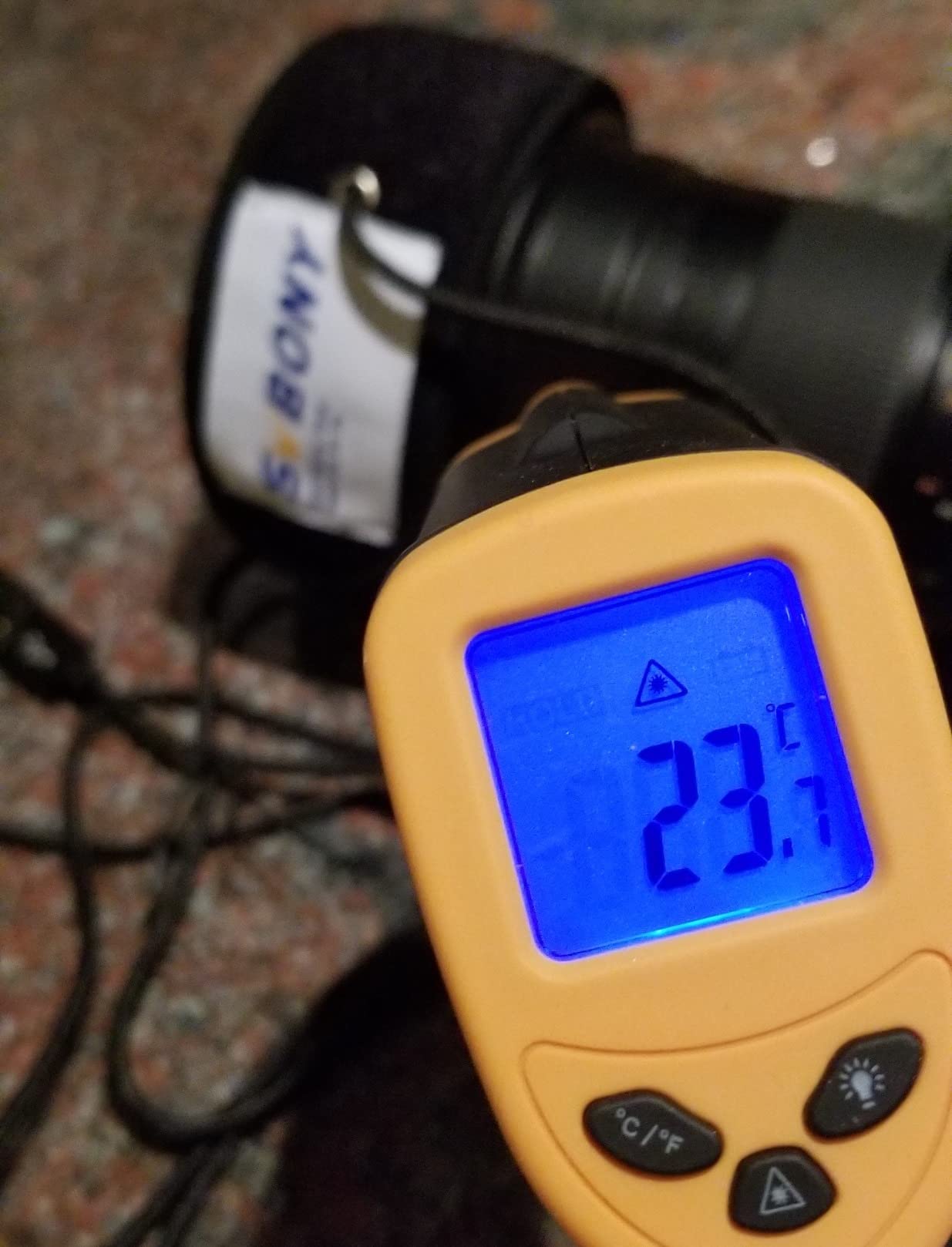
The construction is better than the format suggests: built-in aluminum spreads heat evenly, alloy fiber wire warms quickly, and three layers of insulation cut how much power it needs. With 307 reviews and a 4.6 average, it is one of the most proven options in this class. Owners in r/telescopes describe USB strips as being sufficient unless your site drops below freezing, and this is the model they most often name for that role.
How long can it run?
At 1.9A to 2.0A on 5V, the strip asks for roughly 10 watts. Over a ten-hour night that is around 100 watt-hours, so a mid-size power bank will handle it with room to spare and you can keep a second one as a swap. This is the main power budgeting fact for any USB dew heater and it is easy to underestimate.
Will it fit a big corrector?
No. Anything under 76mm external diameter is in range, which covers small refractors, finders and most astrograph lenses, but a Schmidt corrector or a large front element is far outside it. Measure the outside diameter of the part you want to heat, not the aperture, before you buy.
Best for: portable visual setups, small refractors, finder scopes and eyepieces, and anyone who wants to power dew control from a power bank instead of a 12V battery.
4. Move Shoot Move 350mm Neoprene Strip – Best for Deep Cold
- Cable and strip stay flexible down to about -25C
- Neoprene construction conserves heat on a small power bank
- Three heat levels on the inline regulator
- Very long 60in cable reaches a pack at the tripod base
- Users report clearing a fogged lens in about 30 minutes
- Outer face runs warm so some heat is lost outward
- Strap is not elastic and can gap on smaller lenses
- Overlap can bump a lens dovetail and affect focus clearance
Winter is where cheap strips tend to fail, because the cable stiffens and the sleeve cracks long before the glass fogs. This one was field-tested with both the cable and the neoprene strip staying flexible down to about -25C, which is the number that matters for anyone observing in frost.
Neoprene is the same material used in diving suits, and it does two things here: it insulates, so less power is needed, and it stays soft enough to wrap around a lens without any fuss. At 2.0A on 5V it is the same power budget as the SV172 but it wraps a larger 4.26 inch maximum diameter.
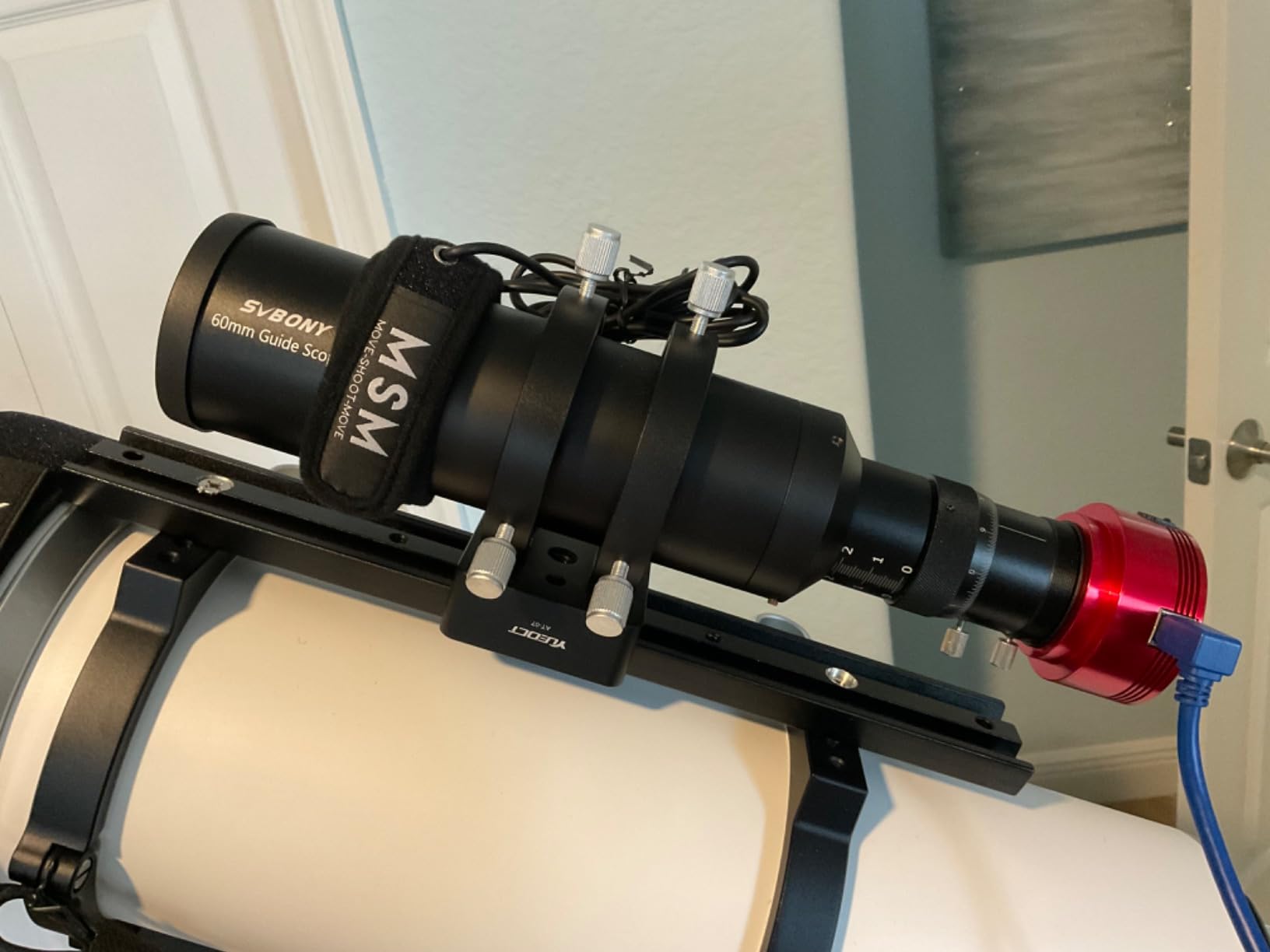
Photographers working in humid coastal climates report it holding lenses clear for whole sessions off a small power bank. The inline regulator on a 60 inch cable gives three levels, which is enough to back off output on a clear night, and the adhesive hook-and-loop strap makes it quick to move between a guide scope and a camera lens mid-session.
Is it too hot to touch?
Worth knowing before you mount it on a sensitive camera front. The outer side of the strip runs warm, so a good share of the heat goes outward rather than into the glass. In practice users find the medium setting sufficient for dew and reserve high for the coldest nights, which is exactly the case where you are not running a cooled camera anyway.
Does the fit stay tight on small lenses?
Not as tight as an elastic band. Because the strap is not elastic, on an item much smaller than the 4.26 inch maximum you can end up with a loose overlap. On a lens dovetail the overlap can also contact the barrel and steal focus clearance, so wrap it a little further back than the front element.
Best for: observers in cold or coastal climates, and astrophotographers running a camera lens and guide scope on a single small power bank.
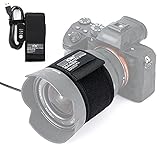
5. KIWIFOTOS USB Lens Warmer – Most Versatile
- Well-reviewed budget option with 271 reviews at 4.5 stars
- Adjustable hook-and-loop strap fits different tube sizes
- Wire rated to -40C for winter use
- Long cord reaches a battery pack at the mount
- Includes a storage pouch
- Bright blue controller LEDs spoil dark adaptation unless covered
- Cord is short and not modular so an extension is often needed
- Some buyers report weak output on high in the coldest conditions
This strip does the basic job for very little money. It fits optics under 80mm in diameter, which covers a lot of small refractors, finder scopes, eyepieces and short imaging lenses, and the adjustable strap lets you dial the circumference in or extend it by wrapping the band around itself.
The cold rating is the spec that separates it from the very cheapest strips. The wire is rated to -40C, which is far beyond what most coastal or damp nights require, and the 1.5m regulator cable gives low, medium and high modes rather than a single on-off switch.
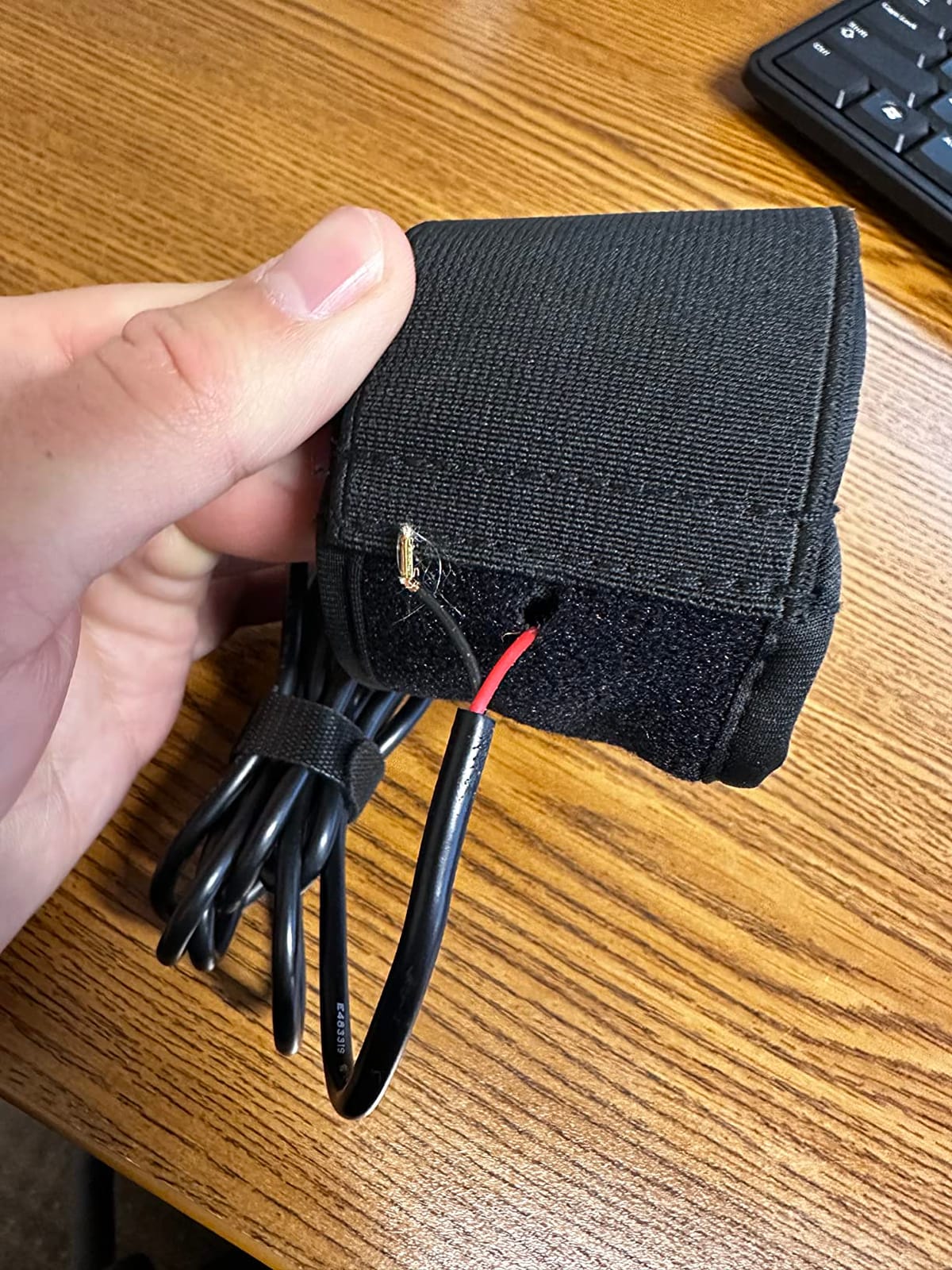
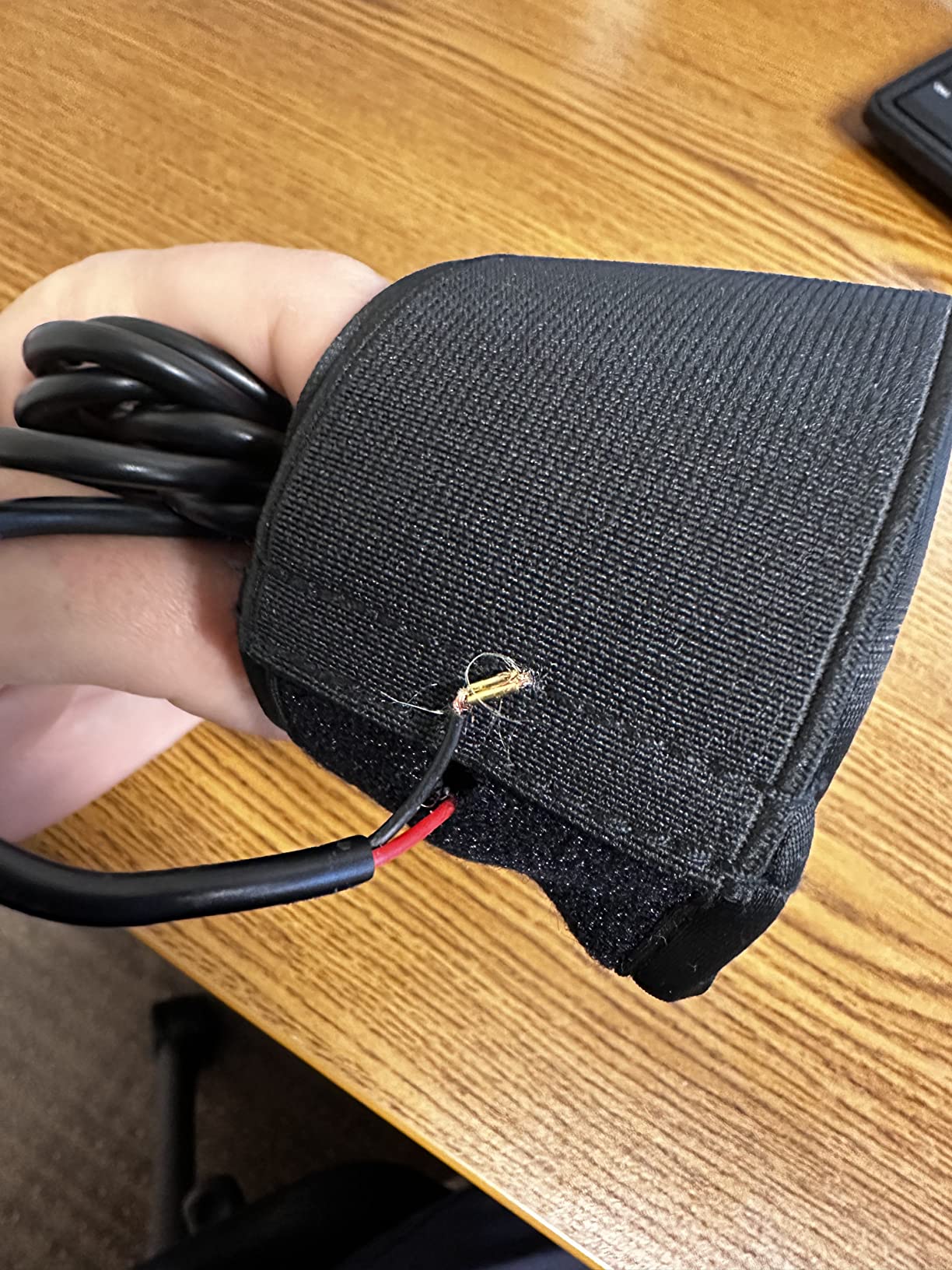
With 271 reviews at 4.5 stars it carries more history than most products in this category, and owners on 8-inch Dobsonian tubes mention it as a routine addition. A storage pouch is included, which sounds minor until you are packing a tripod at midnight in a wet field.
What will ruin your night vision?
The blue LED indicators on the controller. They are bright enough to be genuinely disruptive at a dark site, and several buyers cover them with tape. If you observe visually from a dark location, put the controller somewhere out of your eyepiece line or plan on masking it before you leave home.
How much heat can it actually deliver?
Plenty at low and medium, and occasionally not enough at high. A few buyers in genuinely freezing conditions report the top setting coming up short, and one reviewer reported the strip running hot enough to feel on removal. Treat the regulator as a real dial rather than a three-position formality, and check the glass after twenty minutes on the first night.
Best for: budget-first owners with optics under 80mm who want a working heater before they spend on a controller setup.
6. NEEWER 23.6 Inch USB Heater – Best for Large Camera Lenses
- Longest strip here at 600mm so one band covers large front elements
- Documented temperature ranges for each of the three settings
- Only 4.9 ounces for a 600mm band
- Runs off any 5V USB source with no 12V supply
- Newest design in the lineup with a modern heating element
- Smallest review base here at 30 reviews
- Lowest average rating apart from the LOSHARP strip
- High setting of 55-65C needs care around sensitive sensors
This is the heater to look at if your dew problem is on a long astrograph lens rather than on a telescope. At 600mm long with 500mm of effective coverage, it wraps optics up to 150mm in diameter or 475mm of circumference, and it reaches past the front element of anything short of a large Schmidt corrector.
The useful engineering decision here is the published temperature bands. Rather than three vague levels, the settings are specified at 35-45C, 45-55C and 55-65C, so you can pick a band by the weather instead of guessing. On a clear night the low band is enough; on a muggy coastal one you can reason about the top band.
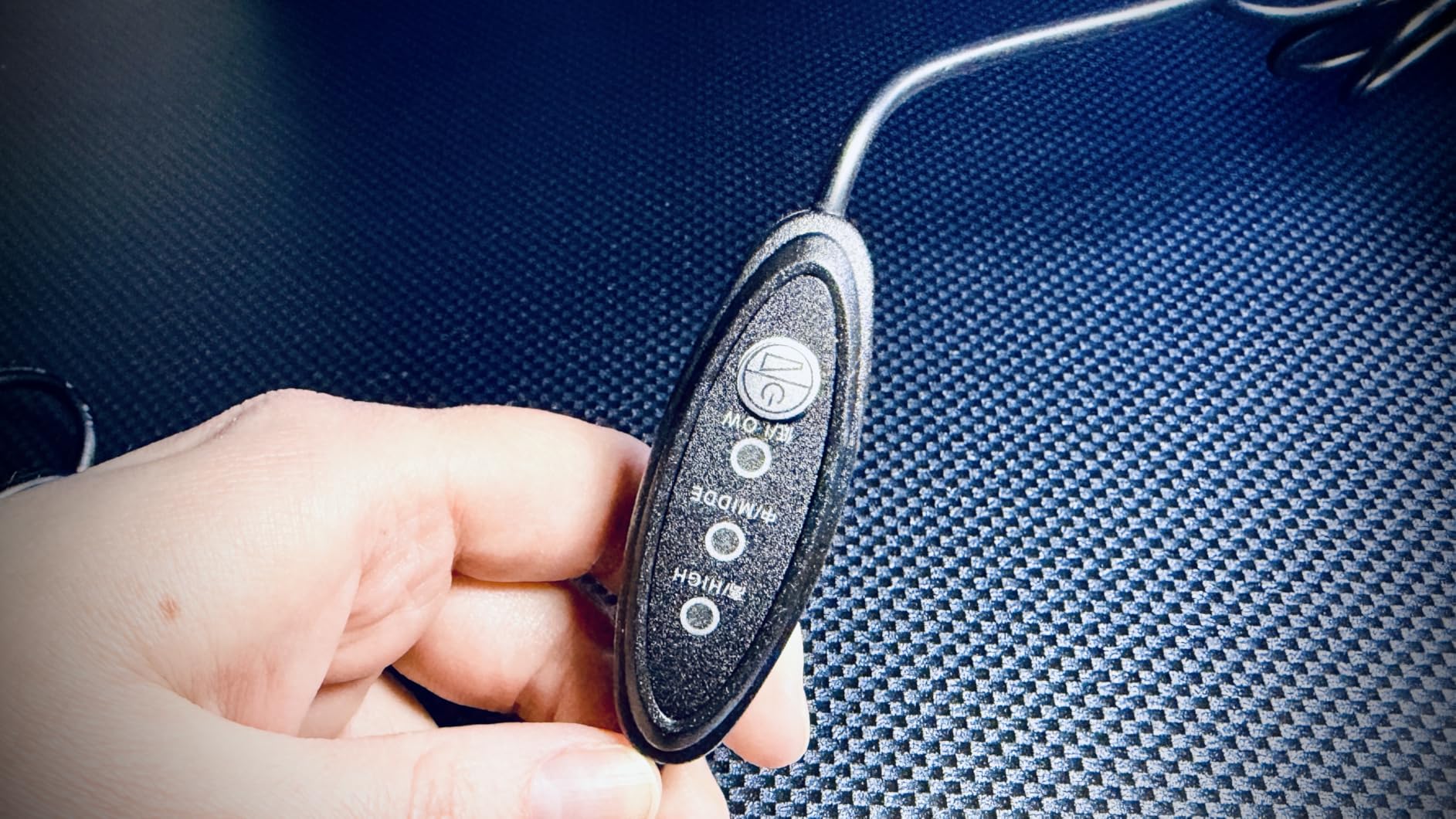
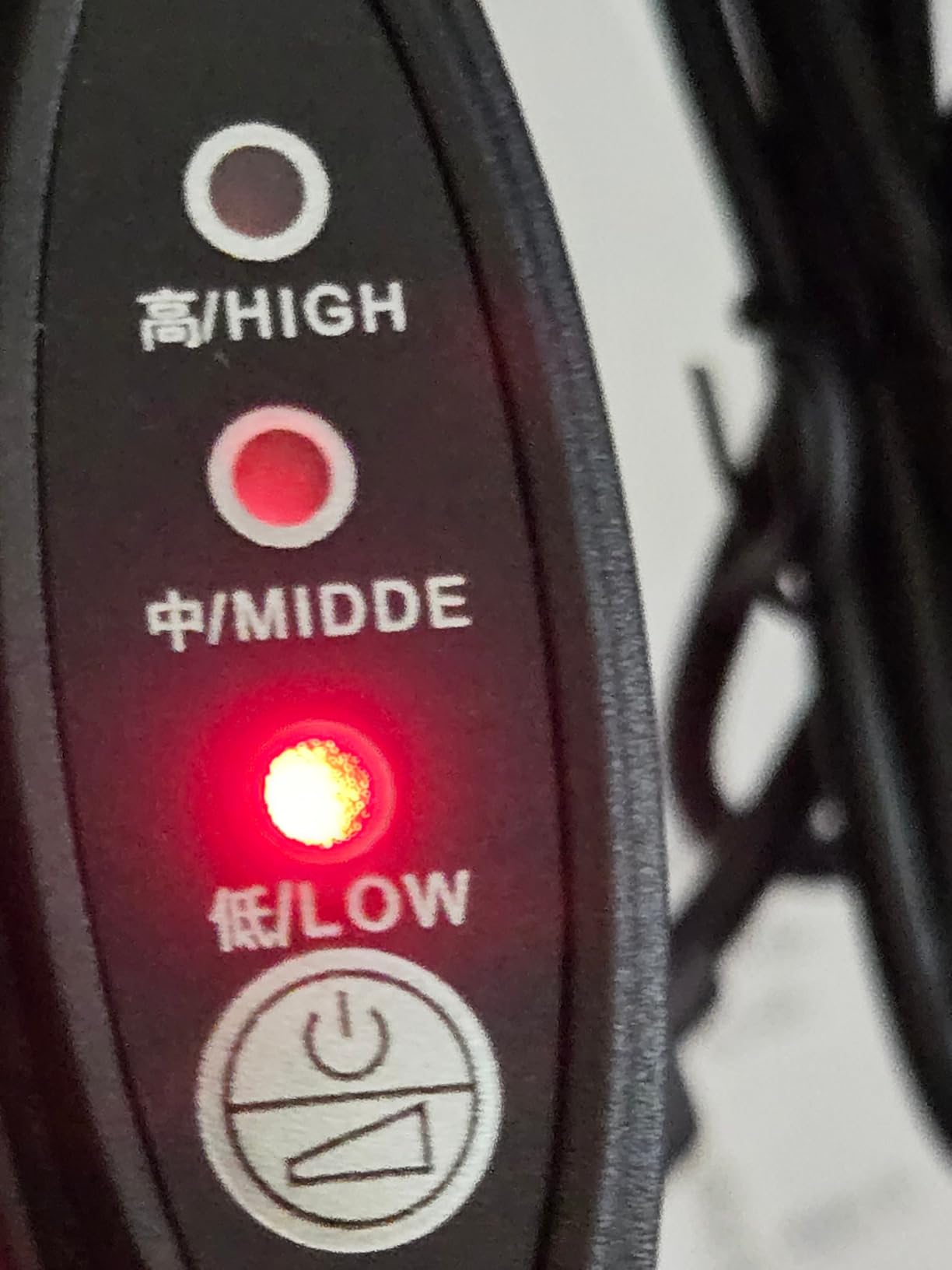
It runs from any 5V USB source with a 1.5m cable, and at 4.9 ounces the 600mm band adds almost nothing to an imaging train. The catch is provenance: this is the newest item here, and 30 reviews is a thin record for a component you would trust on an eight-hour shoot.
Is the top setting safe on a camera lens?
Use the low or medium band around a cooled or uncooled camera front. The stated 55-65C on high is very hot for optical glass and for the coatings on a front element, and it is far more heat than dew control normally needs. Start low, confirm the glass is clear, and only climb if the lens keeps fogging.
How much confidence should you place in it?
Less than in the older strips, for now. Thirty reviews and a 4.4 average means early buyers like the coverage but long-term durability is not yet documented. If your imaging nights matter, treat this as the one to test over a full season before you rely on it, or pick an older design with a deeper review pool.
Best for: astrophotographers dewing out on long camera lenses where a shorter band will not reach around the barrel.
7. LOSHARP USB Dew Heater Strip – Best for Eyepieces and Finder Scopes
- Fits everything from an eyepiece to a 110mm objective
- Stated 5-second warm-up is useful when clouds roll in mid-session
- Documented peak and average temperatures
- Composite fiber heats evenly with no hot spots
- 2-year warranty and it runs off an imaging controller hub
- Lowest rated product here at 4.1 stars
- 3-star reviews are 14 percent of the total
- Modest 30C average output in severe dew
- Not water resistant for damp field use
The case for this strip is range. A single 16.5 inch band covers an eyepiece, a finder scope, a guide scope, or a telescope objective up to 4.3 inches, which makes it easy to move between roles during a night with one strip in the bag.
Its stated warm-up time is 5 seconds, which matters when a bank of cloud rolls in and you need the eyepiece clear before the next object. The heating element is composite fiber that spreads warmth without hot spots, and the outer layer stays comfortable to hold.
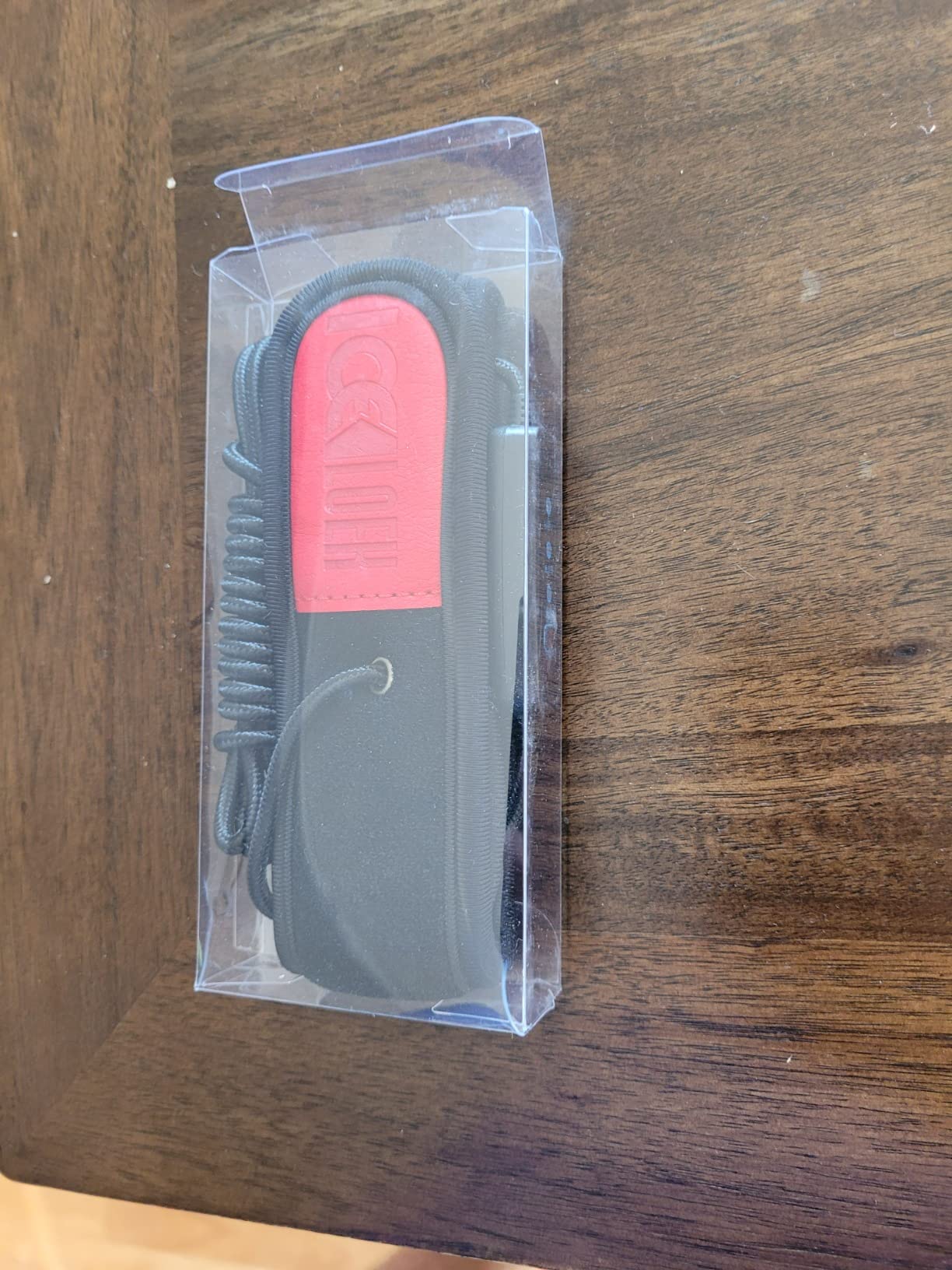
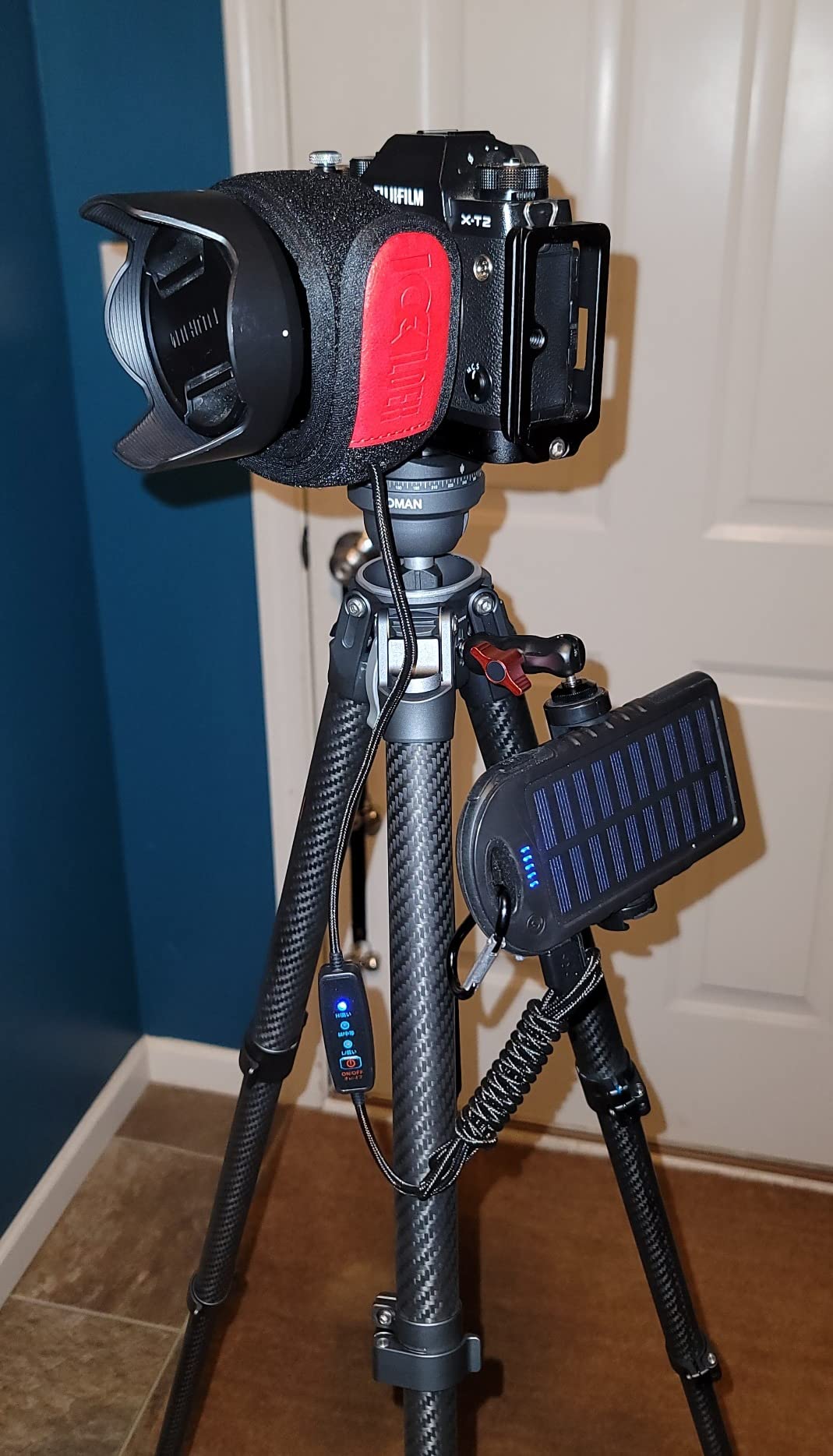
One practical advantage for imagers: it runs directly off a controller hub such as an ASIAIR, so you can add it to an existing imaging train without another battery or cable. The 59 inch lead reaches back to the mount, and the 2-year warranty is longer than most budget strips offer.
Why is the rating lower than the rest?
Consistency between setups. At 4.1 stars with only 59 percent five-star and 8 percent one-star reviews, the gap between this and the other strips is real. Three-star reviews are the second-largest bucket at 14 percent, which usually points to output that is adequate in some conditions and marginal in others rather than a faulty unit.
How strong is the output really?
It peaks at 122F and averages 86F, which is modest for severe dew. On a typical damp night the weak and medium gears are enough for a finder or eyepiece; on a genuinely wet night with a larger objective, look for something with more headroom. It is also not water resistant, so keep it off the tube during any drizzle.
Best for: covering the small stuff, an eyepiece, a finder or a guide scope, especially for imagers who want one strip fed from an existing controller hub.
Dew Shield or Dew Heater? Do You Need Both?
Start with the shield. A dew shield costs far less, draws no power, and for a properly shielded refractor it solves the problem outright. Plenty of owners never buy a heater after fitting a good one, and for visual work that is often the end of the story.
Size matters more than people expect. The rule of thumb from Sky & Telescope is a shield at least 1.5 times the aperture in length, flared open about 3 degrees so it does not vignette the edge of the field. A short, un-flared shield mostly just adds weight.
A shield also earns its keep on things a heater cannot fix. It cuts stray light from nearby sources, which improves contrast on faint targets, and it keeps spindrift and rain off the glass. A long dew shield is useful on any night, dew or not.
Add a heater when the shield stops being enough. Open tubes, Newtonian secondaries, Schmidt correctors and anything on a long lens dew despite shielding, and that is the moment the heater becomes necessary rather than optional.
Do You Need a Dew Heater for Visual Observing?
Usually not. A correctly sized dew shield handles most visual sessions, and running a heater adds a cable, a power source and a controller to a setup that does not otherwise need power. This is an active question on astronomy forums, and the consensus leans toward shielding first.
There are two good reasons to run one while observing anyway. The first is frost, which is a different problem from dew: below freezing, condensation arrives as ice crystals that no amount of passive shielding will prevent, and a heater is the practical answer.
The second is image quality. Gentle heating keeps the optics near the temperature of the surrounding air, and Sky & Telescope reported a historical observation that warmed optics actually gave a magnitude more light grasp before any visible damp appeared. Warm a Newtonian or a Dobsonian tonight and see whether the view steadies.
For imaging the answer is completely different, because a dewed corrector or guide scope degrades or destroys every subframe you take.
How to Choose a Dew Heater
1. Match the band to your aperture. Measure the outside diameter of the part you want to heat, not the telescope aperture, then pick a band that wraps it with a little overlap. Small refractors, finders and eyepieces live under 80mm. A 4.3 inch band covers most mid-size tubes. Anything approaching a Schmidt corrector needs a purpose-built ring, which is exactly what the Celestron unit is.
2. Decide between USB 5V and 12V DC before anything else. USB strips need nothing but a power bank and are the simplest option for visual work and portable setups. They are limited in length and in diameter coverage, and at 1.9A to 2.0A they draw real current from the bank. A 12V band covers more, feeds into a controller, and is what you want for imaging.
3. Budget the power. Do the arithmetic. A 5V strip at 2.0A is 10 watts, and ten hours of that asks for roughly 100 watt-hours from your pack. Two heaters running together double it, and a guide scope strap plus a camera lens heater is the usual pair. If your battery is marginal, that math is the difference between a full night and a dead pack at two in the morning.
4. Think about a controller. A strip with three gear positions works for visual observing and for a night where you can check on it. If you image, a controller with a temperature probe and adjustable output per channel saves the whole session from a dewed corrector. Owners pairing velcro-strap heaters with a Pegasus Ultimate Power Box, and imagers feeding strips from an ASIAIR hub, both describe set-ups that run unattended all night.
5. Do not overheat your optics. This is the mistake almost everyone makes on the first night, because the instinct is to crank it until the fog is gone and then leave it there. Warm air rising off the tube creates currents inside the optics that blur the view, and there are owner reports of star aberrations from running a corrector heater continuously at high output. Start at the lowest setting that works, and add heat only when the glass actually starts to fog.
6. Check the accessory and storage habits. Keep the heating element from ever resting directly against glass with no sleeve between, and never seal a wet tube into a case. Trapped moisture against coatings causes etching. Let the scope dry before it goes in the car.
Frequently Asked Questions
What is a dew heater?
A dew heater is a flexible, low-wattage heating strip, also sold as a heater band or dew ring, that wraps around a telescope tube near the optics and holds that surface a few degrees above the ambient dew point so condensation never forms on the glass. Most take 12V DC through a controller; simpler strips run on 5V USB. The goal is the smallest amount of heat that keeps the surface clear.
Where to put a dew heater on a telescope?
It depends on the telescope. On a refractor, wrap a band around the front cell behind the dew shield. On a Schmidt-Cassegrain, a ring sitting against the corrector plate works best, or a band on the front cell if your tube takes no ring. On a Newtonian, heat the secondary mirror holder at the top of the spider. Small straps handle the focuser, finder, guide scope and camera lens.
Do I need a dew shield for my telescope?
Yes, as a first line of defence. A dew shield is cheaper, draws no power and needs no controller, and on a properly shielded refractor it often solves the problem on its own. A long shield also cuts stray light from nearby sources, which improves contrast on faint targets. A heater becomes necessary when dew forms anyway, when frost is likely below freezing, or for long-exposure imaging.
How long should a telescope dew shield be?
The rule of thumb is at least 1.5 times the aperture in length, and flared open about 3 degrees. The flare keeps the shield from vignetting the edge of the field, which a straight-walled shield of the same length would cause. On a 6-inch telescope that means roughly 9 inches of shield, ideally with the widest opening furthest from the lens.
Do I need a dew heater for visual observing?
Usually not. A correctly sized dew shield handles most visual sessions, and a heater adds a cable, a power source and a controller to a setup that needs none of them. Exceptions are frost below freezing, which no passive shield will prevent, and scopes such as open Dobsonians that dew at the secondary anyway. Gentle heating can also steady the view by keeping optics near air temperature.
Do I need a dew heater for a guide scope?
If dew is forming on it, yes. A dewed guide scope degrades or destroys guiding, and every subframe taken while it is fogged is wasted. One astrograph user reported losing roughly 18 five-minute subframes in a single night after guiding collapsed from dew. The fix is inexpensive: a small eyepiece-sized strap, fed from the same controller that runs the rest of the train.
Should I buy a USB 5V dew heater or a 12V one?
USB if you are observing visually or running a portable setup. A 5V strip plugs into a power bank and needs no controller, which keeps the rig simple. Choose 12V if you are imaging, because 12V bands cover larger diameters, pair properly with controllers, and can be fed from the same hub that runs your camera and filter wheel. Remember that a 5V strip at 2.0A asks for about 100 watt-hours over a ten-hour night.
Do dew heaters affect image quality?
It cuts both ways. Gentle heating keeps the glass near the temperature of the surrounding air, which stabilises star images, and Sky and Telescope reported a historical observation that warmed optics gave a magnitude more light grasp before any visible damp appeared. Run a heater too hot and rising warm air off the tube creates currents that blur the view, with owner reports of star aberrations from continuous high output.
Final Verdict: Which Dew Heater Should You Buy
The decision rule is simple: fit a dew shield first, and buy heat only when the shield is not enough. Then match the heater to the surface that actually fogs rather than to a brand or a headline price.
For an 8-inch Celestron Schmidt-Cassegrain, EdgeHD or RASA, the Celestron aluminum ring is the clear winner in this lineup, because it is the only unit that heats the corrector plate itself. For a mid-size Newtonian or Dobsonian with 12V power on hand, the SVBONY SV192 is the most purpose-built band. For USB-only portable setups, the SV172 covers small optics cleanly and the Move Shoot Move strip covers larger ones and colder nights.
Whatever you choose in 2026, start on the lowest setting that keeps the glass clear, watch for thirty minutes before you trust it, and you will get the full benefit without paying for the tube currents that come from running heat at maximum all night.