
Coarse hair punishes an underpowered flat iron. A dense strand takes longer to heat through than a fine one, so an iron that stalls at 300 degrees means you clamp, release, clamp again, and every extra pass is another chance to snap a strand at the hairline. The best flat irons for coarse hair share three things: wide plates that cover more of a section, plate material that recovers temperature fast, and precise control so you are not guessing.
Our overall winner is the Remington Shine Therapy 2 Inch Hair Straightener, because its 2 inch argan oil and keratin ceramic plates hold even heat right down a thick section and cut a full-head job to roughly half the time of a 1 inch iron. If you want to narrow the field before you read on, three questions do most of the work: how long is your hair, how much heat does your strand type tolerate, and do you want wide plates for speed or standard plates for precision.
Our best flat irons for thick hair guide covers the lighter-density end of the spectrum. This roundup stays on the coarse and textured end, where plate width and heat recovery decide whether a session takes 20 minutes or an hour.
We worked through ten irons and ranked them on the things that actually matter at this hair density: one-pass performance, plate glide on tight coils, how quickly they recover after a clamp, and the durability reports owners give after a year or more. We also pulled in what people say on r/beauty and in hair-focused Facebook groups, where the same complaints surface over and over. We re-checked everything for 2026.
Table of Contents
Top 3 Best Flat Irons for Coarse Hair
Remington Shine Therapy 2 Inch
- 2 inch argan oil and keratin ceramic plates
- 9 temperature settings with 450F turbo mode
- 15 second heat-up
- Automatic shut-off after 1 hour

Remington 1 3/4 Inch Anti-Static
- 1 3/4 inch titanium-ceramic plates
- Anti-static tech cuts frizz and static by up to 50 percent
- Plates 30 percent longer than standard
- 8 digital settings to 450F

BaBylissPRO Nano Titanium
- 1 inch nano titanium plates
- All-directional floating plates for full contact
- Digital control to 450F with memory function
- Auto dual voltage and 9 foot swivel cord
Best Flat Irons for Coarse Hair in 2026
Everything below is in this guide, with the spec that matters most for dense strands first. Plate width drives styling time more than any other number here, and plate material drives how well the iron holds temperature mid-pass.
| Product | Specifications | Action |
|---|---|---|
| Remington Shine Therapy 2 Inch |
|
Check Latest Price |
| Remington 1 3/4 Inch Anti-Static |
|
Check Latest Price |
 Wavytalk Wet to Straight 1.75 Inch Wavytalk Wet to Straight 1.75 Inch |
|
Check Latest Price |
 VANESSA PRO 2 Inch Titanium VANESSA PRO 2 Inch Titanium |
|
Check Latest Price |
 ELLA BELLA Titanium Infrared ELLA BELLA Titanium Infrared |
|
Check Latest Price |
 Bcway 2.16 Inch Floating Titanium Bcway 2.16 Inch Floating Titanium |
|
Check Latest Price |
 REVLON Ceramic Coated 2 Inch REVLON Ceramic Coated 2 Inch |
|
Check Latest Price |
| BaBylissPRO Nano Titanium |
|
Check Latest Price |
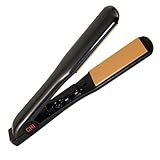 CHI Classic Tourmaline Ceramic 1.5 Inch CHI Classic Tourmaline Ceramic 1.5 Inch |
|
Check Latest Price |
 ANNLARY 1.75 Inch Titanium Ceramic ANNLARY 1.75 Inch Titanium Ceramic |
|
Check Latest Price |
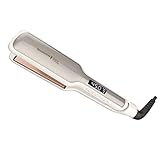
1. Remington Shine Therapy 2 Inch — Best Overall for Coarse Hair
Remington Shine Therapy 2 Inch Hair Straightener, Argan Oil & Keratin
- 2 inch plates roughly halve styling time on long dense hair
- Argan oil and keratin coating leaves hair soft and shiny
- 15 second heat-up with nine temperature settings
- One hour automatic shut-off and 9 foot cord
- Long-term owners report it still performs after years
- 2 inch width makes close root work awkward
- Too wide for defined beach waves
- Control buttons sit on the handle where they can be bumped
This is the iron I kept reaching for on thick, dense hair. The 2 inch plate face is the whole story: on shoulder-length and longer hair with real density, you are covering a full section in one go instead of doing two narrow passes side by side.
The plates are advanced ceramic infused with argan oil, keratin and a micro-conditioner. That combination does two jobs on coarse hair. It glides without the metallic catch of bare titanium, and it leaves a shine that holds up when humidity rolls in, which reviewers on r/beauty mention often when they talk about Remington for thick hair.
It reaches working heat in about 15 seconds and gives you nine temperature settings, with a turbo mode that goes up to 450F. On my own coarse hair I ran it in the mid range for everyday smoothing and only pushed to turbo on the thickest sections near the nape.
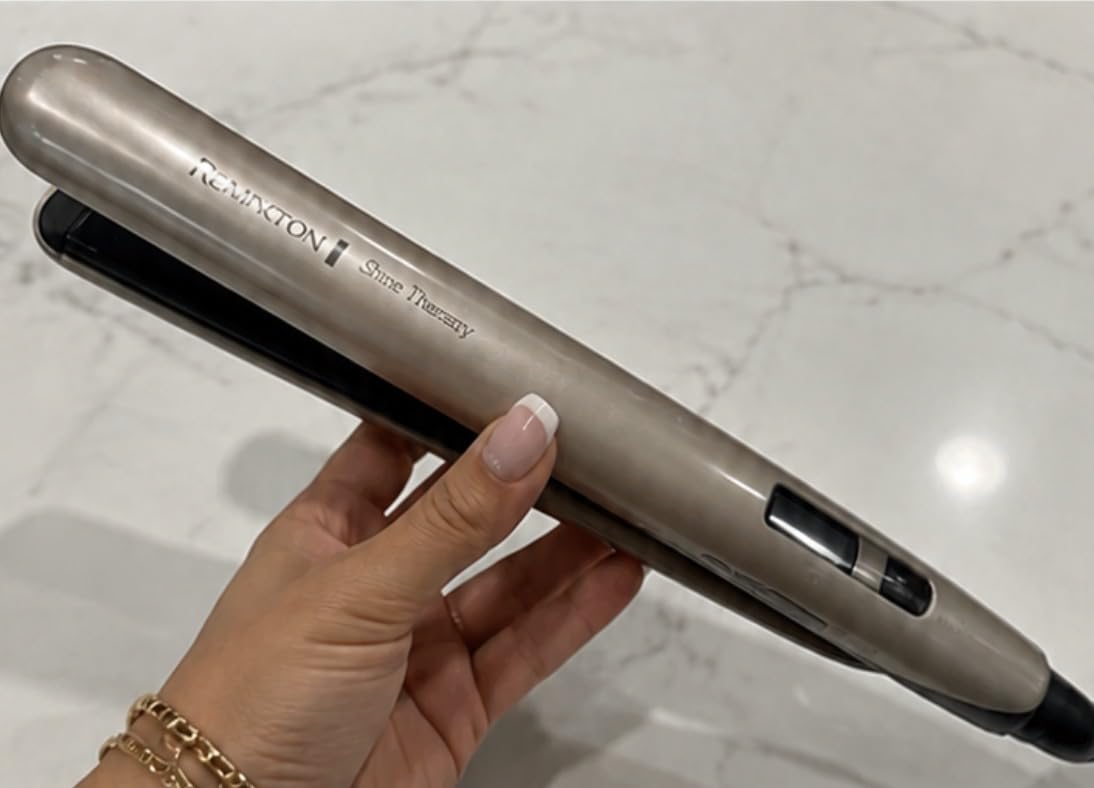
It weighs a little over 1.2 pounds and has a 9 foot cord, so you are not fighting your outlet or your wrist mid-section. The automatic shut-off after one hour matters more than it sounds if you have a habit of setting an iron down on a towel and getting pulled away.
One spec note: it is built for US and CA 110V outlets, and it is a dry-hair tool. The listing is explicit about that, so if you need something for damp hair, look at the Wavytalk further down.
The two things I would change are ergonomic rather than performance related. Two inches of plate is genuinely hard to place at the roots without lifting, so root touch-ups take practice. And those wide plates are not the right shape for a defined wave, because the hair is too wide to wrap around the edge.
What to check before you buy
Check how long your hair is relative to your arm span. If you are doing anything past the shoulders, plate width is the difference between a 20 minute job and a 45 minute one. Below the shoulders, a narrower iron gives you more control near the root and costs you less time than you think.
Also check your porosity, not just your thickness. Coarse hair that is high-porosity drinks moisture and shows heat damage faster, so pair it with a heat protectant every time and step down a setting.
When to skip it
Skip it if your style routine is mostly curls and waves. At 2 inches the plate cannot hug a section tightly enough to hold a defined shape, and you will end up fighting the tool rather than working with it.
Skip it if you travel across borders often. Auto dual voltage is not listed for this model, so a converter is a must rather than a maybe. The CHI or the ELLA BELLA handle that out of the box.
2. Remington 1 3/4 Inch Anti-Static — Best Value for Thick Hair
- Extended floating plates cover more hair per pass
- Anti-static tech cuts frizz and static by up to 50 percent
- Titanium-ceramic blend heats in about 30 seconds
- Temperature lock and turbo boost
- 60 minute automatic shut-off
- Plates need regular cleaning to avoid burning smells
- Heat setting still has to be matched to hair type by hand
This is the pick I recommend to anyone who wants a serious wide-plate iron without stepping up to the salon tier. The 1 3/4 inch titanium-ceramic plates are a good middle ground between the Remington above and a truly narrow precision tool.
What sets it apart for coarse hair is the plate length. These floating plates are 30 percent longer than standard, so a thick section is covered along its length in the same pass. Reviewers consistently credit that with fewer passes, and fewer passes is the single biggest lever you have on damage.
The anti-static system is the piece I did not expect to care about and now do. It reduces frizz and static by up to 50 percent, and on coarse hair that is a real difference between a flat look and one that puffs up in damp weather.
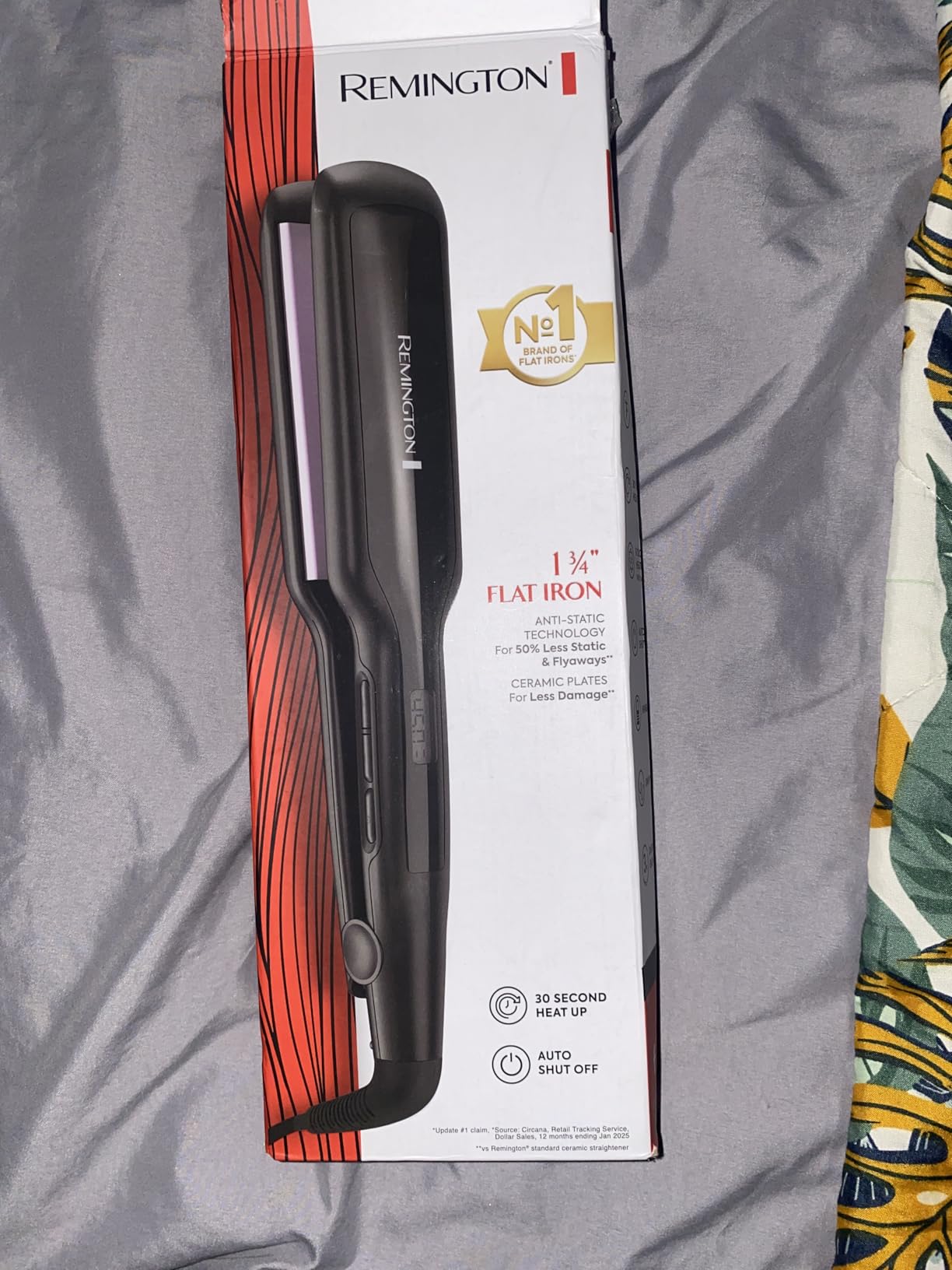
Heat-up takes about 30 seconds, and you get eight digital settings up to 450F with a temperature lock and a turbo boost. The digital readout is where it beats a lot of budget irons with numbered dials, because you can repeat a setting exactly instead of guessing between two notches.
It weighs about 1.16 pounds and shuts off automatically after 60 minutes. Both are small details that matter during a long session on a full head of thick hair.
The maintenance point is the one people miss. Product build-up on the plates burns off and starts smelling, and several reviews call that out directly. Wipe the plates with a damp cloth after each use and the problem does not come up.
The other caveat is honest and common across this whole category: this is still a tool you set by feel. It heats to the number on the screen, but the number that smooths your section depends on how dense it is.
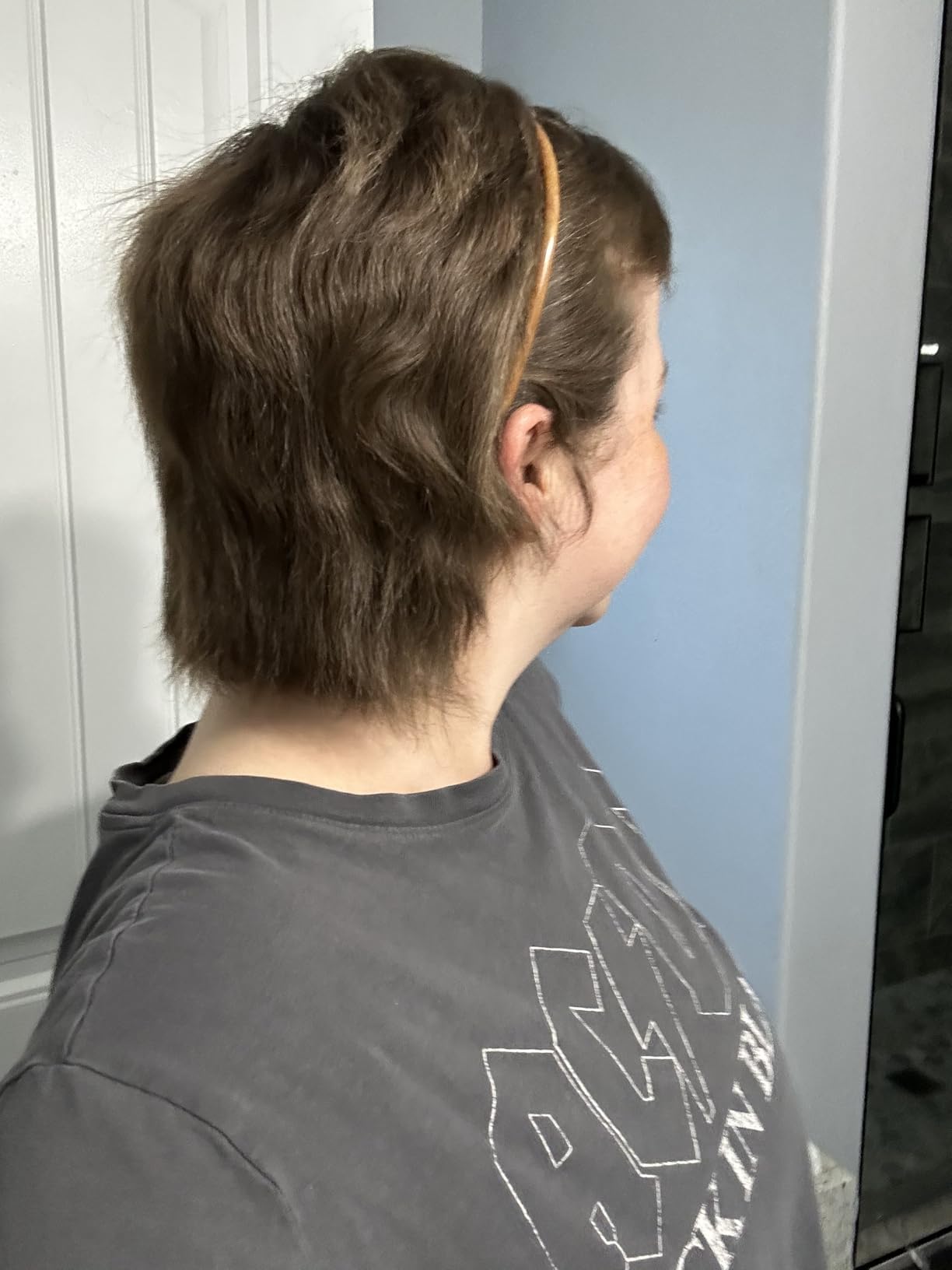
Why the floating plates matter on thick hair
Floating plates ride up slightly when they meet resistance, which means a thick section presses into the full plate face rather than only the first half of it. On a dense 3C head of hair that is the difference between a smooth result and a result that took four passes to get there.
It also means less drag at the root. A rigid flat plate set at a fixed width will sit above a dense section, and you end up clamping air instead of hair.
What to check before you buy
Check the cleaning habit you are willing to keep. If the plates will be going on straight and wiped down, this is a strong pick. If it is going to sit unused for months at a time, a heavier build tends to age better.
Check that 30 second heat-up against your routine. It is fast, but it is not instant, so plan on a minute before you clamp.
3. BaBylissPRO Nano Titanium — Most Versatile for All Hair Types
- Nano titanium transfers even high heat for shine
- All-directional floating plates give full hair contact
- Memory function saves your preset temperature
- Instant heat-up to 450F
- Auto dual voltage and 9 foot swivel cord
- 1 inch width means more passes on thick or long hair
- Premium cost for a finish budget irons can match
This is the one people reach for when they want repeatable results rather than speed. The 1 inch nano titanium plates heat instantly to 450F and hold there, and the digital control has a memory function that saves your preset so every session starts where the last one finished.
Nano titanium is worth understanding on coarse hair. It moves heat into the strand quickly and it resists corrosion and hot spots over years of high-heat use, which is the durability argument that shows up most in long owner reports on this model.
The all-directional floating plates are the feature I would keep even if the rest were average. They contact the hair from more than one direction, so a curved or coiled section lies flat against the plate instead of lifting at an edge.
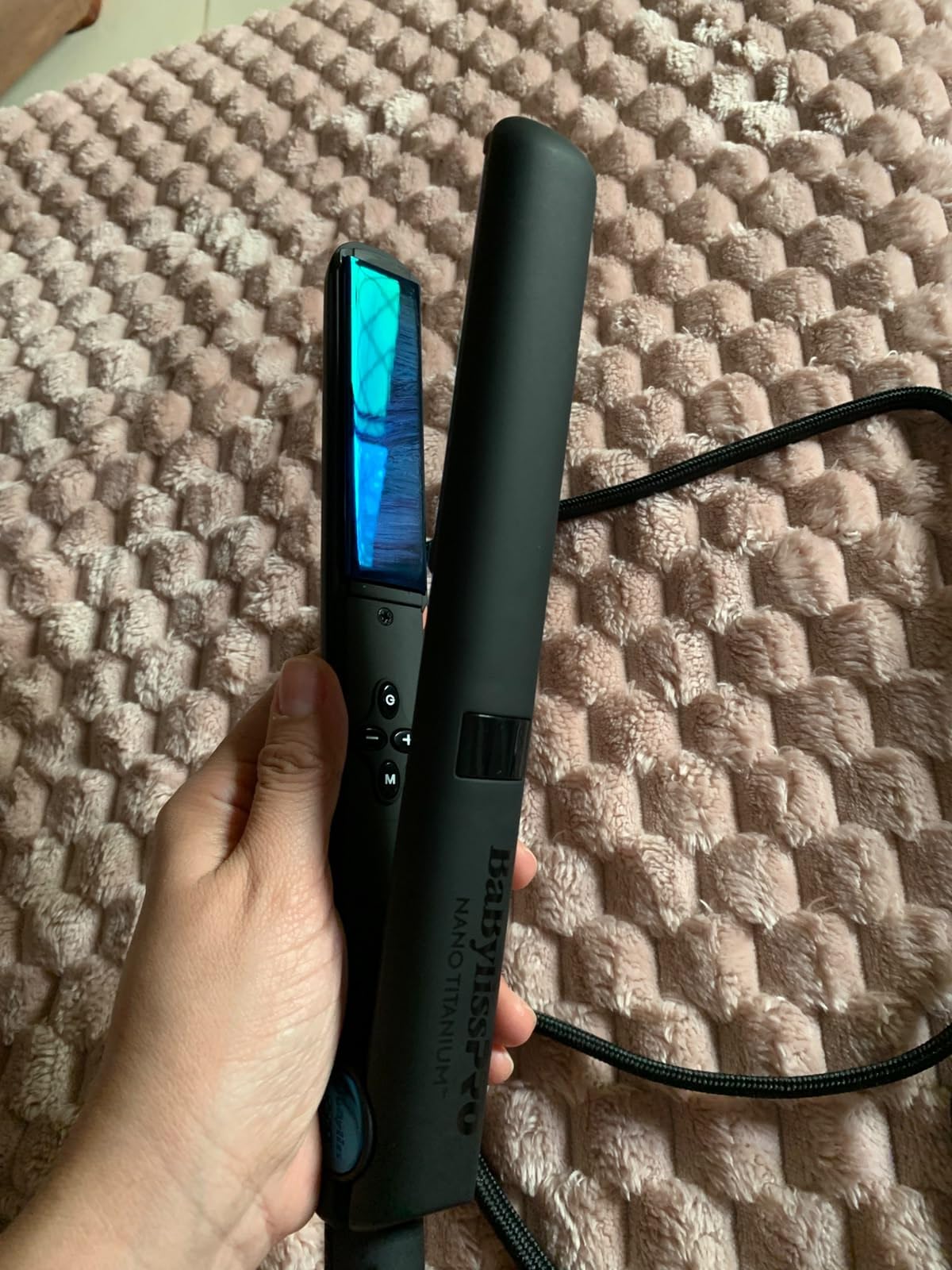
It auto-detects voltage, so it works on both 110V and 240V outlets without a converter. The 9 foot swivel cord means the barrel does not drag the cord across your shoulder as you work down a section.
Reviewers describe it as the salon-grade option that performs across fine, thick, coarse and textured hair alike. That flexibility is real and it is the main reason to buy it if more than one person in your house uses the tool.
The honest limit is plate width. One inch is narrow for dense hair, and the reviews mention this clearly. You will make more passes than you would with a 2 inch iron, and passes are where damage lives.
The second limit is the cost relative to what budget models now deliver. The finish here is excellent, but if your only goal is a smooth coarse head of hair, several cheaper irons in this guide reach a very similar place.
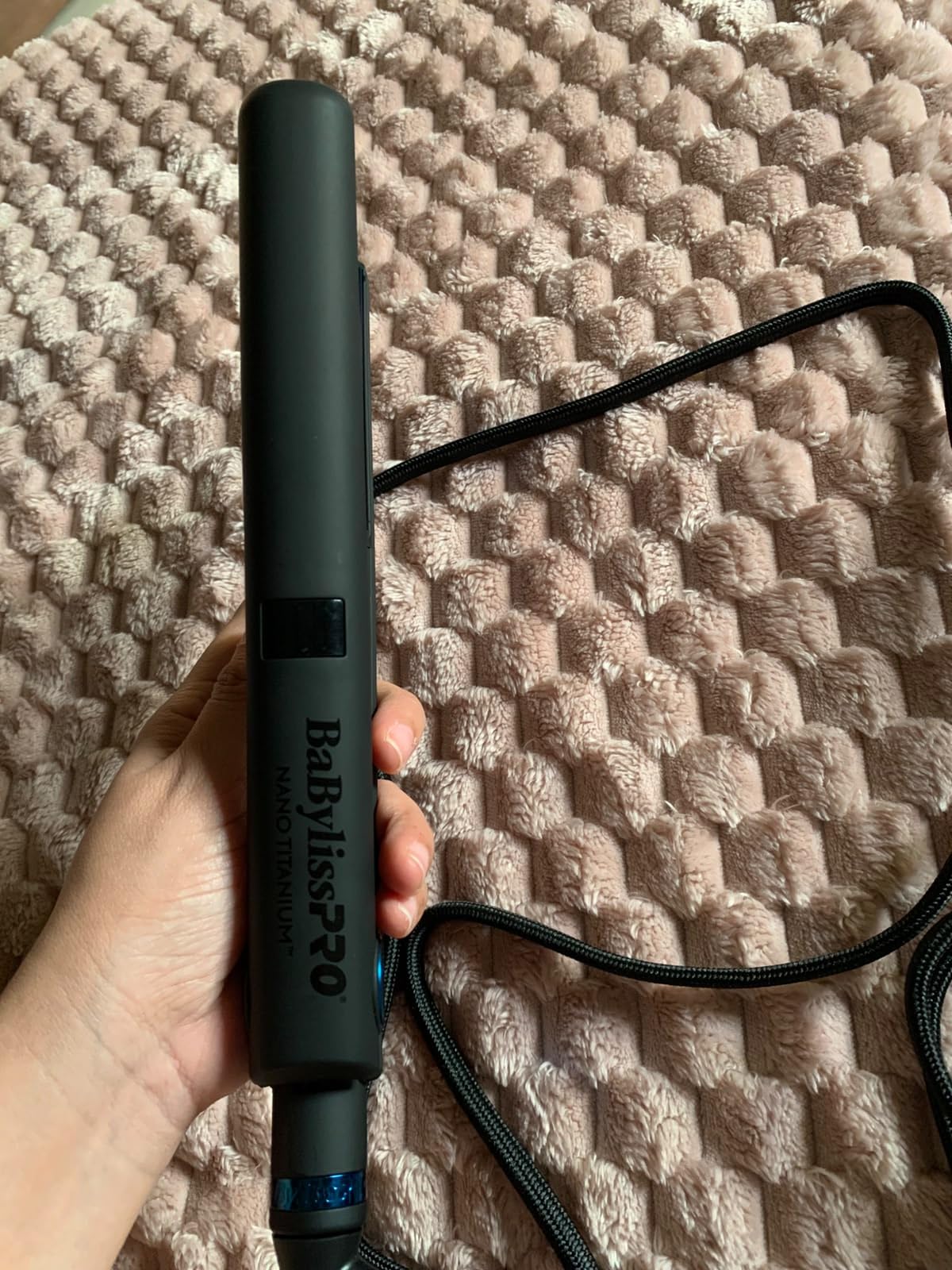
When the narrow plate is worth it
It is worth it if you style around the face a lot. A narrow plate is easier to angle at the hairline, and a small section is easier to clamp without pulling. On thick hair, precision work near the part and temples is where a wide plate frustrates people.
It is also worth it if you alternate between straightening, curling and waving. A 1 inch plate is the only width here you can wrap properly.
Who should look elsewhere
If your hair is long and dense and you are re-straightening weekly, plate width will cost you more time and more heat exposure than the extra polish is worth. Read the next section for the 4C-specific pick instead.
If a single user and a single texture is the whole picture, the price gap between this and the two Remingtons is hard to justify on finish alone.
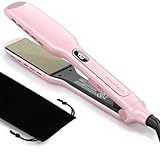
4. Wavytalk Wet to Straight 1.75 Inch — Best for Damp Hair Styling
Wavytalk Wet to Straight Hair Straightener, 1.75″ Wide Vent Sesh Flat Iron
- Vent holes let it work on towel-dry hair without sizzling
- 1.75 inch plates handle long thick hair in fewer passes
- 30 second heat-up with even distribution
- Works for curling as well as straightening
- Dual voltage and 8 foot swivel cord
- Outer plates run hot enough to be awkward to hold
- Plates resist closing fully which can snag hair
- Cord is shorter than some buyers want
Most irons on this list tell you to work on dry hair only. This one is built the other way around, with ten ventilation holes through 1.75 inch plates so you can clamp towel-dry hair and let the moisture escape instead of turning to steam inside the plate.
That is a meaningful difference on coarse hair, which usually takes so long to dry that people give up halfway and iron damp. Owners report straightening from the towel in a single pass, and the brand claims up to 20 percent less styling time for that reason.
The heat range is unusually wide at the bottom. Nine settings run from 290F to 450F, and that low end is a real gift for high-porosity coarse hair that is already fragile.
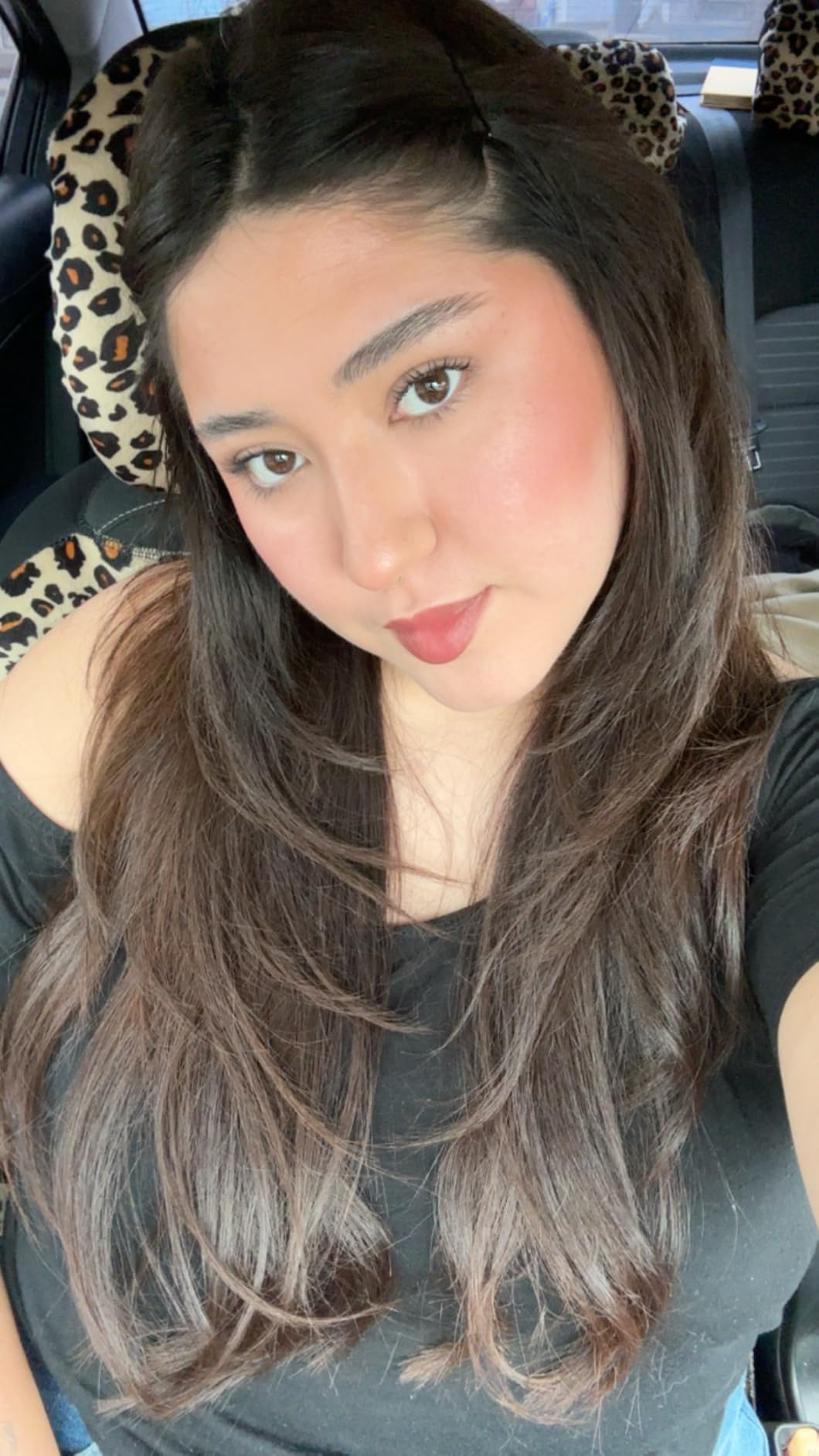
Heat-up is about 30 seconds, and the plates are 1.75 inches, which is wide enough to be efficient on long hair without feeling like a paddle. Dual voltage and an 8 foot 360 degree swivel cord make it the most travel-ready iron here alongside the CHI.
There is a safety lock and an automatic shut-off after one hour, so it is fine to leave out on a counter while you do something else.
The ergonomics are where it stumbles. The outer edges of the plates run hot enough that several owners mention needing a glove to set it down, and the plates do not close together easily, which is where the occasional snag comes from.
A few users also found it slower than they expected on very thick hair, and the cord is a common wish-list item. If you catch a snag, the fix is to close the plates fully before you start the pass rather than clamping mid-stroke.
Why venting helps coarse hair
Coarse strands hold more water than fine ones, and moisture trapped between hot plates flashes to steam inside the clamp. That is the moment strands snap. Vented plates give that steam a path out, which is why wet-to-dry tools exist as a category at all.
Even here, the safer move on textured hair is to let hair dry almost fully and use the vents for the last stretch, not to clamp soaking wet hair.
When to pick a different one
Look elsewhere if you style right at the root. Those very hot outer plate edges need a careful angle near the scalp, and a heat-resistant glove is not optional with this one.
Look elsewhere if you mostly need a precision tool. The wide vented face is built for coverage, not for detailed work around the face.
5. VANESSA PRO 2 Inch Titanium — Best for 4C and Coily Hair
VANESSA PRO 2 Inch Titanium Flat Iron, Easy One Pass Styling for Thick Hair
- 2 inch titanium plates cover about twice the hair per pass
- Owners with coily and 4C hair report one-pass results
- Only 14 ounces so it is easy on the wrist
- Leaves hair silky with less frizz
- 11 heat levels with LED display
- Wide plates take practice to position
- Heats very hot so care is needed near the hair
- One reviewer felt the cost was high for the performance
Titanium plates are the material most people in textured-hair communities ask for by name, and this is one of only a few irons here that pairs them with a full 2 inch face. That combination means a dense head of hair gets covered in wide, fast sections.
The 2 inch nano titanium plates are infused with argan oil and keratin micro-conditioners. Owners with curly, coily and 4C hair specifically report getting a straight finish in one pass at moderate heat, which is the claim that matters most for anyone trying to reduce heat exposure.
Titanium is less forgiving than ceramic in one respect. It has almost no give, so on tightly coiled hair it will catch if the section is uneven or thicker than the plate face. Keep your sections consistent and it glides fine.
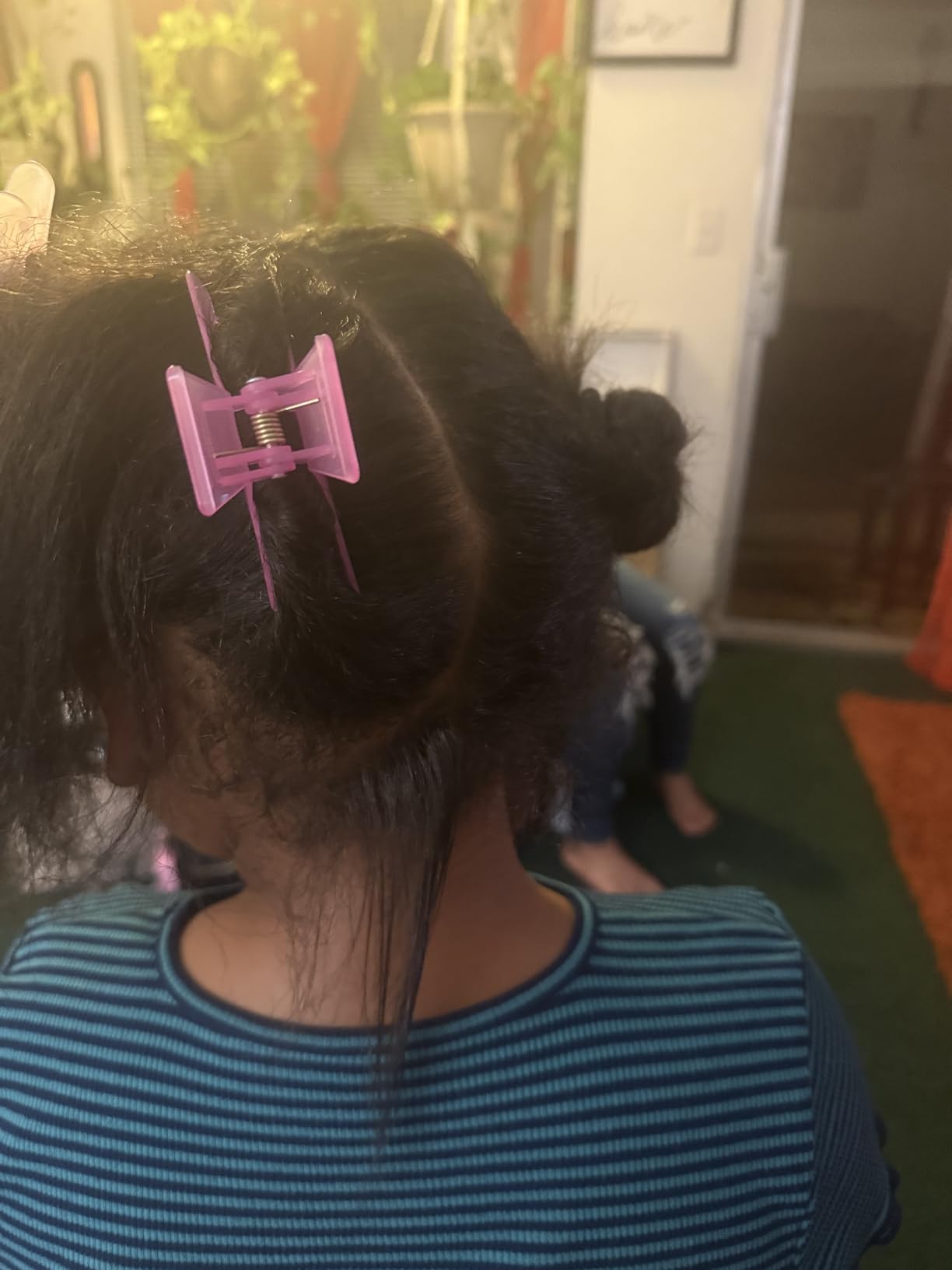
It runs 11 heat levels from 265F to 450F with an LED screen, and reaches temperature in about 30 seconds. That 265F floor gives you room to back off on fine or bleached sections within a coarse head of hair, which matters more on mixed-texture hair than a higher maximum would.
At 14 ounces it is one of the lighter irons in this guide, and that matters over a full session. A 2 inch plate on a long head of hair means many passes, and the weight adds up in your wrist by the end.
There is a 60 minute automatic shut-off, and reviews report less frizz and breakage than owners had with ceramic irons, which lines up with what a titanium plate does on dense hair.
The negatives are consistent. Wide plates need a few sessions before you can place them near the root without dragging. It runs hotter than the number suggests, so use a heat protectant. And one reviewer felt the cost was high given what it delivers.
What to check before you buy
Check that you can section evenly. A titanium plate this wide punishes a lumpy section, so clip your hair into consistent 1 to 2 inch layers before you power it on rather than after.
Check your porosity. High-porosity 4C hair takes heat damage faster than the label suggests, and the 265F floor exists for exactly that case. Start there and step up only if a pass is not smoothing.
Where it is not the right choice
Skip it if curl definition is part of your routine. A 2 inch titanium plate is built to flatten, and it does not wrap a section tightly enough to hold a curl shape.
Skip it if you need a lightweight tool for short styling sessions. The 14 ounce body helps, but the wide plates still cover a lot of hair per pass, which is wasted motion on short cuts.
6. ELLA BELLA Titanium Infrared — Best for Travel and International Use
ELLA BELLA® Titanium Flat Iron Hair Straightener Large with Infrared
- Infrared and ionic tech smooths in one pass with less frizz
- Heats fast and holds temperature steadily
- Dual voltage works on outlets worldwide
- 360 degree swivel cord plus auto shut-off
- Backed by a 2 year warranty
- Vibrating plates can pull hair
- Some buyers reported a burned plastic smell
- Flickering display or early shut-off on a minority of irons
This is the one to buy if you move between countries. The dual voltage design means it works on 100V and 240V outlets without a converter, and the 1.8 inch plates are still wide enough to move quickly through thick hair.
The infrared and ionic technology is the interesting part. The infrared heat works at the surface, and the negative ions work on the cuticle, which is why reviews describe the finish as smooth and shiny rather than simply flat. Frizz control is a real benefit on coarse hair that drinks humidity.
Temperature runs 320F to 450F on a digital control, and it holds that number steadily across a pass. That steadiness on a dense section is what separates it from irons that sag once the plates are loaded.

It also has a 360 degree swivel cord, an auto shut-off function, a soft travel pouch and a 2 year warranty. For an iron that lives in a suitcase, that is a complete package.
One of the most common comments is that buyers switched over from a pricier name brand and found the result on par. That is a fair signal on finish.
The reliability thread is worth reading before you buy. The optional vibrating plate function is the most discussed issue, with reports that it can pull hair, and a minority of owners saw a flickering LED display or an unexpected shut-off within months. The 2 year warranty and responsive customer service are the reason those stay isolated complaints rather than a bigger pattern.
At 2.12 pounds it is the heaviest iron in this guide, which matters more than it sounds if you are carrying it through an airport.
When infrared and ions earn their place
They earn their place on frizz-prone coarse hair, especially in humid months. Ions smooth the cuticle, so the surface reflects light instead of scattering it, and a sealed cuticle is also less likely to absorb moisture from the air.
They are less decisive on thick hair where frizz was never the main problem. If your issue is getting through the hair at all, plate width does more work.
What to check before you buy
Check the vibrating plate function against your tolerance. It is optional and it can be switched off, and owners who leave it off report a normal, uneventful tool. Leaving it on and disliking the pull is the common complaint.
Check the weight if you travel often. 2.12 pounds is a full pound above most of the irons here.
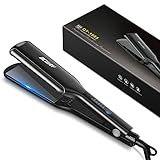
7. Bcway 2.16 Inch Floating Titanium — Widest Plates in This Guide
Bcway Professional Hair Straightener, 2.16” Extra-Large Floating Titanium Flat Iron, Anti-Static 30s Instant Heating Straightening Iron with 5 Adjustable for All Hair Types
- Extra wide 2.16 inch floating plates speed up thick hair
- Five clearly separated temperature settings
- Heats in about 30 seconds with even distribution
- Single button control is easy to learn
- Safety lock and 360 degree swivel cord
- Average rating is lower than the other irons here
- Plate smoothness varies between irons
- Lowest setting may still be too warm for fragile hair
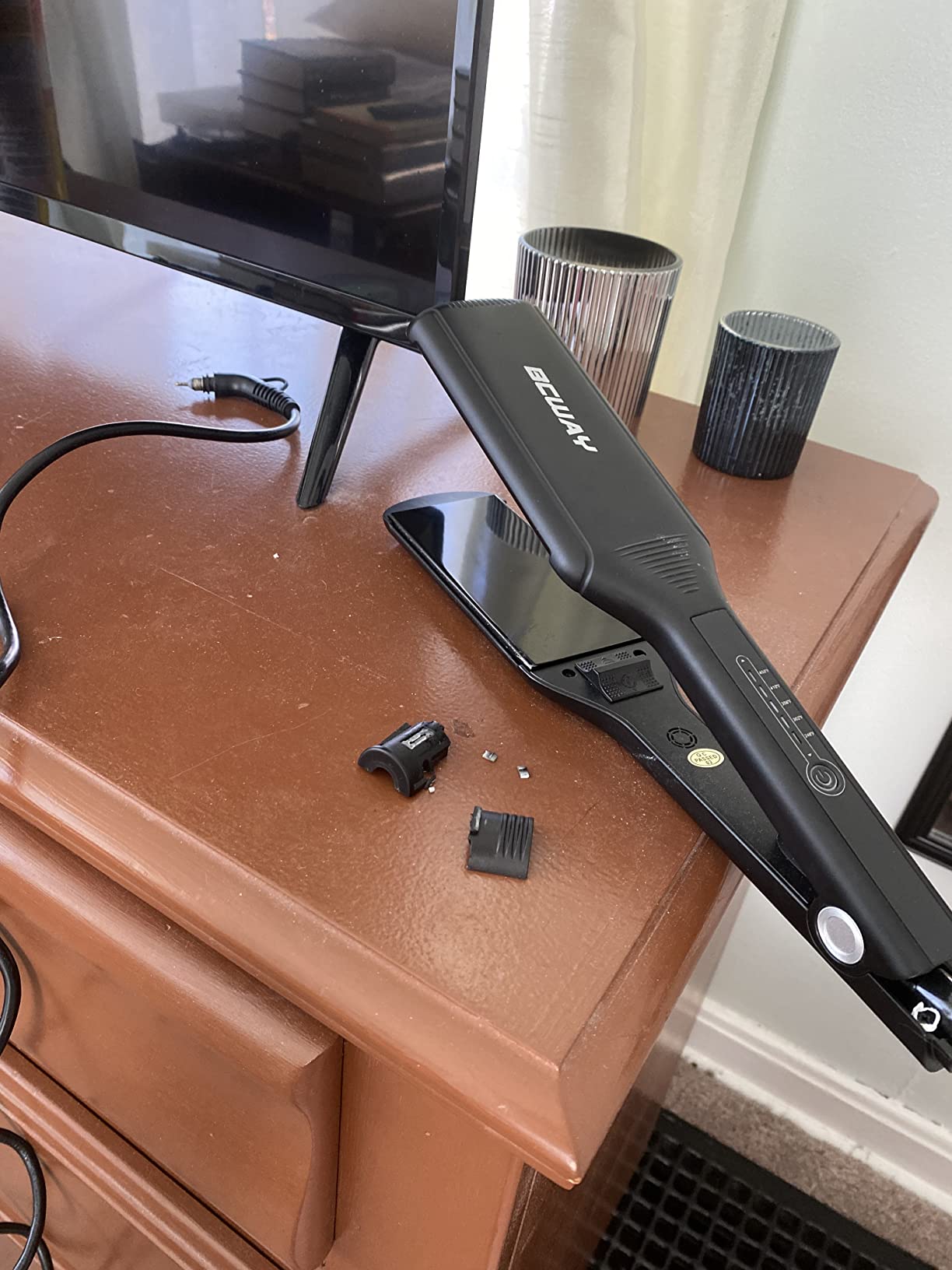
At 2.16 inches this has the widest plates of any iron we tested, and on hair that is thick all the way to the ends, that is not a rounding error. Fewer passes, less time under heat.
The plates are 3D floating titanium, so they give slightly when they meet a dense section rather than sitting above it. Heat-up takes about 30 seconds with what owners describe as even distribution across the plate face.
Five temperature options at 248F, 302F, 356F, 410F and 450F are spaced far enough apart that you can tell them apart by feel, which is more than can be said for a numbered 1 to 5 dial. There is a single-button control and a safety lock for storage.
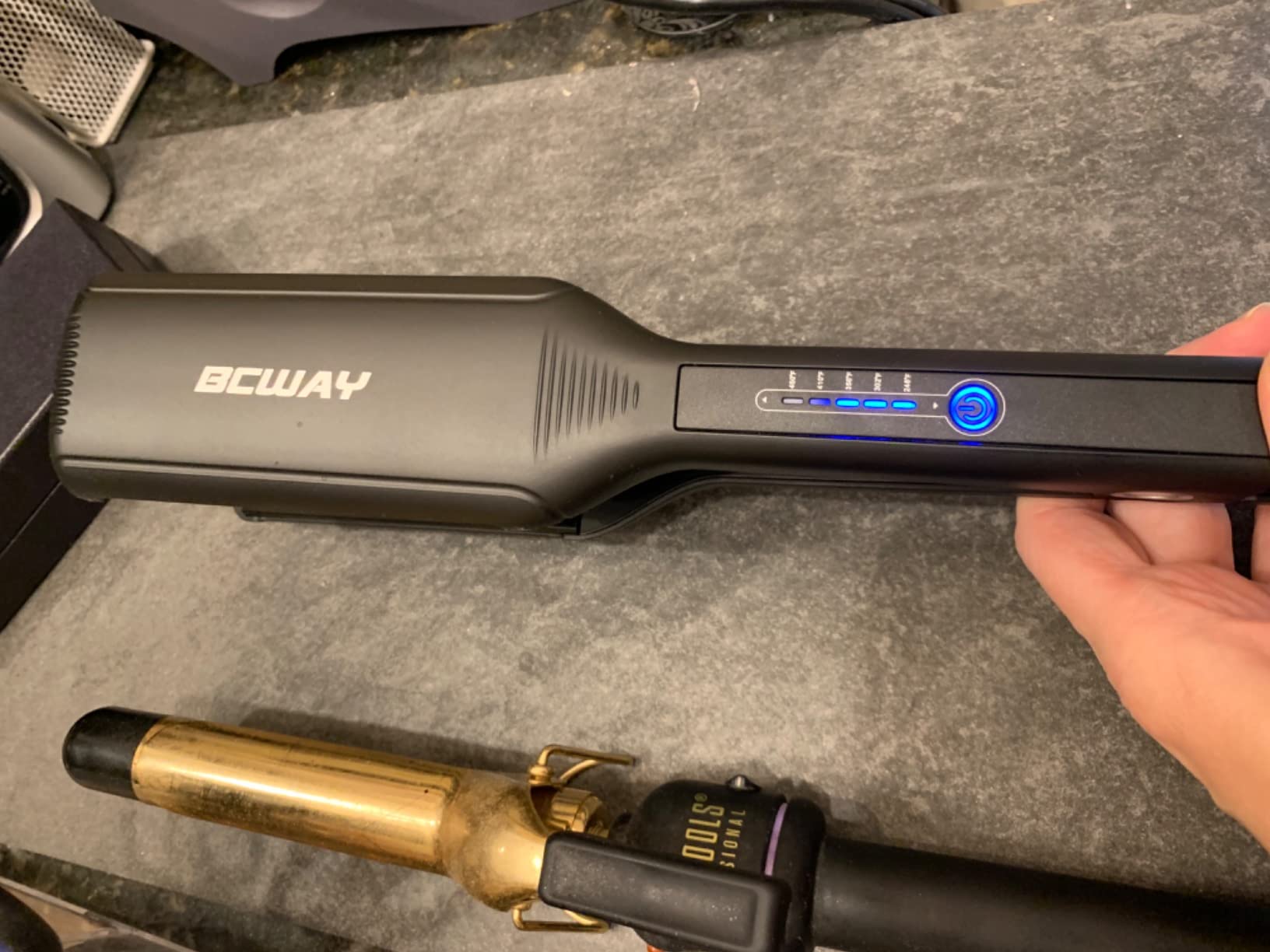
It weighs about 1.19 pounds, which is light for an iron this wide. The 360 degree swivel cord keeps the cable from wrapping as you work.
There is also a hair care mode meant to be used alongside keratin treatments, which is a reasonable pairing for coarse hair that is already chemically treated.
Its 4.4 star average sits at the bottom of this lineup, and the reason shows up in the reviews: plate feel and smoothness vary between individual irons. If you have seen this style of iron before and know what you prefer, that is a smaller risk.
The lowest setting can also still be too warm for very fine or already damaged hair, which is worth knowing if some of your hair is bleached and the rest is not.
What the extra width buys you
It buys you time. On a dense head of hair, the difference between a 2 inch and a 2.16 inch plate is small, but between a 2 inch and a 1 inch plate it is the difference between one pass and two. That is where the real saving is, and this iron is at the wide end of that spectrum.
The trade is precision. A plate this wide is harder to angle at the hairline, and it cannot make a curl that holds. This is a straightening tool first.
Who should pass on it
Pass if you need a consistent, repeatable tool. Variation between individual irons is the main complaint here, and there is no way to test the plate smoothness before it arrives.
Pass if your hair has any fine or heavily treated sections. The 248F floor is not gentle enough for fragile hair that sits next to coarse hair on the same head.
8. REVLON Ceramic Coated 2 Inch — Lightest Iron in the Guide
- Ceramic coating spreads heat evenly to limit damage
- 2 inch plates reach close to the roots
- 400F high heat is quick on thick hair
- Weighs just over 10 ounces
- Tangle-free swivel cord and compact body
- 400F ceiling is lower than most irons here reach
- Basic controls with no digital display or memory
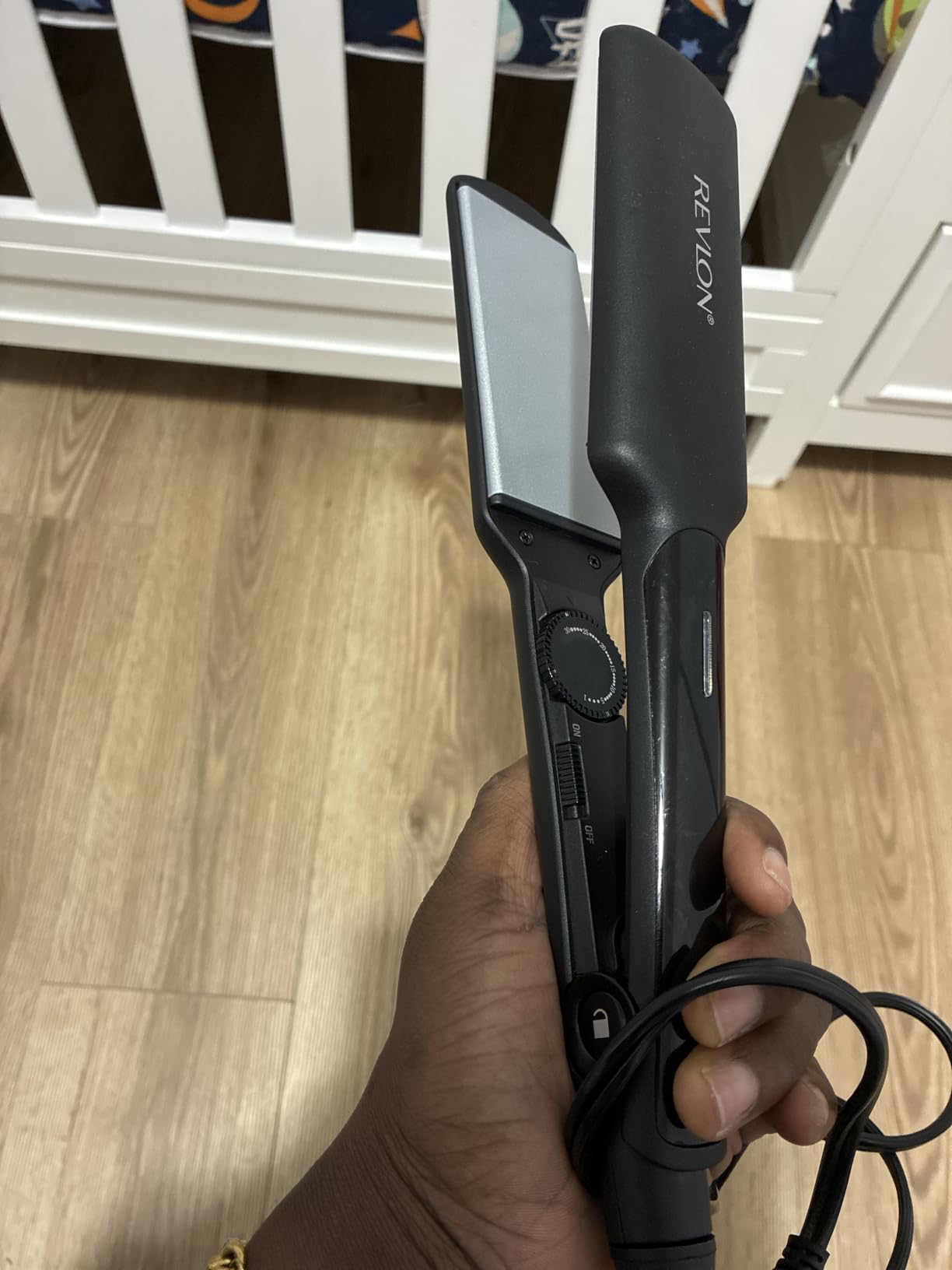
This is the lightest of the ten irons we reviewed, at just over 10 ounces, and on long coarse hair that is worth more than any feature list. Two inch plates across a full head of thick hair is a lot of clamping, and a light body is the difference between finishing and putting the tool down halfway.
The ceramic coating spreads heat evenly, which on coarse hair means fewer cold spots that leave a section needing a second pass. Plates that sit close to the root let you get a straight result without the awkward lifting a wider face requires.
It reaches 400F, which is lower than most of the irons here, and honestly it is enough for a lot of coarse hair. Thick, well-moisturised strands at 400F will smooth in one pass. It is a lower ceiling, not a weak one.
The tangle-free swivel cord and compact body make it the easiest of the ten to pack. The dimensions are slim, which is a real advantage in a drawer or a small bathroom.
Multiple heat settings let you back off on finer or more delicate sections, which matters if your hair is coarse at the roots and bleached at the ends.
The limitations are honest. There is no digital display and no memory function, so you set it by feel. And a 400F ceiling means you will not have the top of the range available if you need it for a very dense section.
For anyone who styles a full head of coarse hair weekly and wants the lightest tool that will do the job, those two limits are easy to accept.
When 400F is genuinely enough
Heat demand tracks density and damage, not just coarseness. Coarse hair that is well conditioned and has not been relaxed or bleached usually smooths at 400F. Step above that when hair is very dense, very porous, or previously chemically treated.
Starting at 400F and stepping up only if a pass fails is a reasonable protocol on this iron, and it protects hair that does not need the extra 50 degrees.
What to check before you buy
Check whether you will be frustrated by having no display. If you like to see the number, this is the wrong tool, and the two Remingtons at the top of this guide both have digital readouts.
Check your storage situation. It is the smallest and lightest here, which is a genuine advantage if space is tight.
9. CHI Classic Tourmaline Ceramic 1.5 Inch — Best for Frizz Control
- Tourmaline plates cut static and frizz and add shine
- 1.5 inch floating plates suit long thick hair
- Straightens curls waves and flips with one tool
- Simple dependable dial control
- Far-infrared heat spreads consistently
- Dial control is less precise than a digital readout
- One of the higher costs in this guide
- Plates run hot enough that a protectant is needed
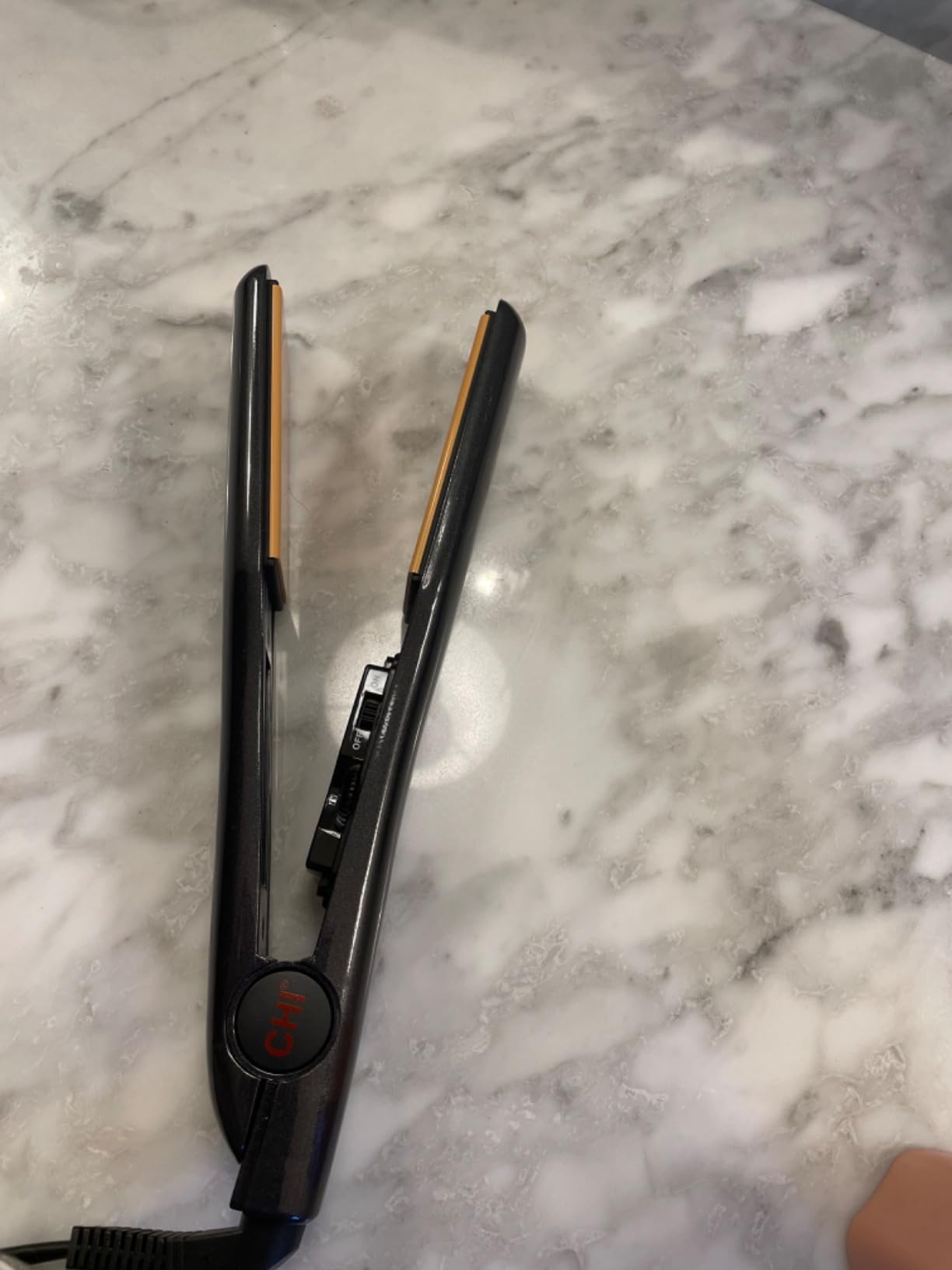
Tourmaline ceramic is the material to look at if frizz is the specific complaint. The plates generate negative ions and far-infrared heat, and that combination is consistently described as cutting static and frizz while leaving hair shinier than a plain ceramic iron.
For coarse hair that absorbs humidity, that is not a cosmetic detail. Coarse strands are wide and porous at the cuticle, which makes them the first hair type to swell and frizz in damp air. Ion technology is the most direct fix offered by any tool in this guide.
The 1.5 inch floating plates give reasonable coverage without becoming a paddle, and the far-infrared heat spreads consistently so you do not get a hot edge and a cool centre in the same clamp.
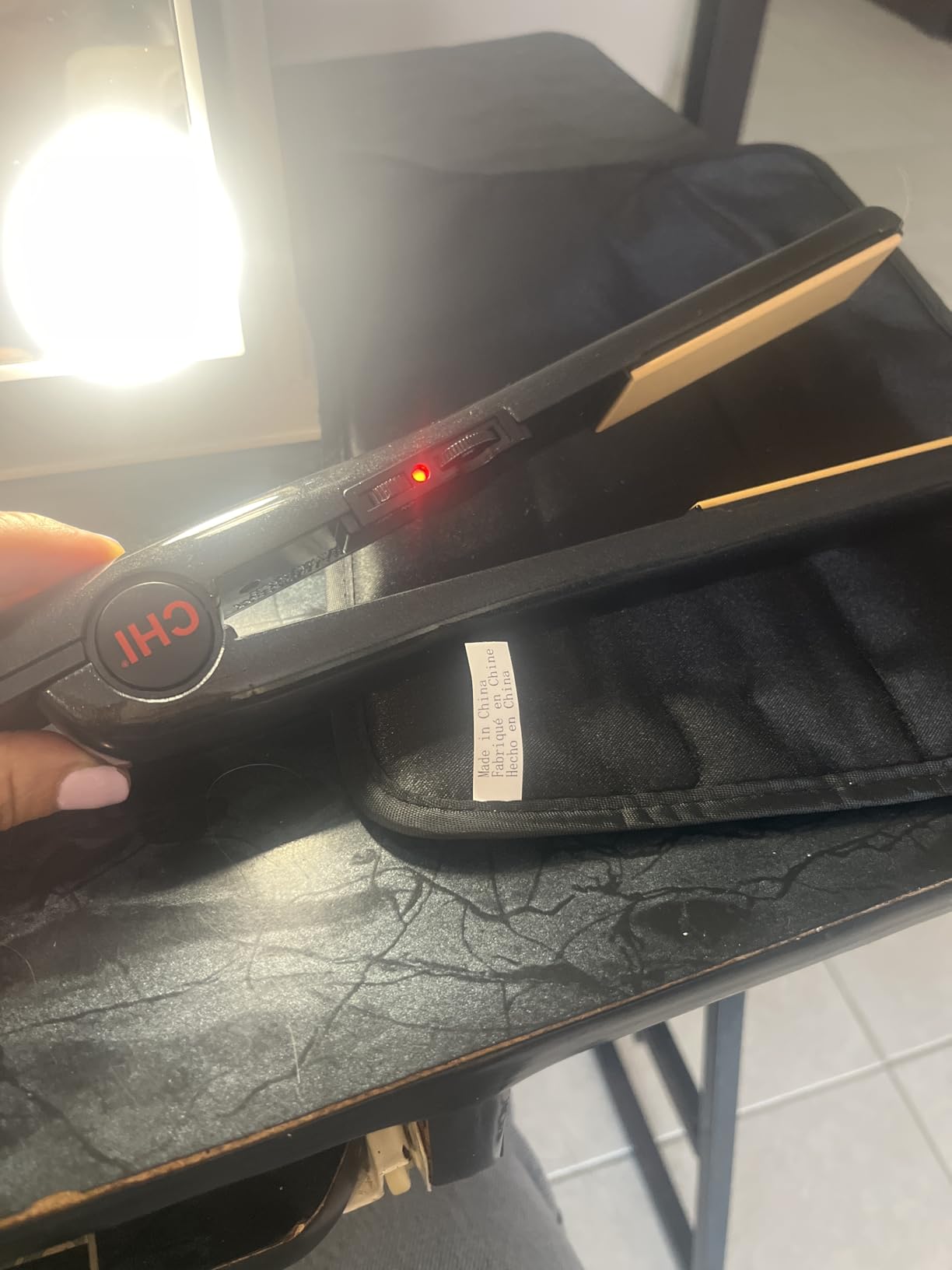
It heats up quickly, weighs about a pound, and works for straightening, curling, waving and flipping. That versatility is a genuine advantage for anyone who does more than one style with the same tool.
The dial control is the main weakness in 2026. It is a simple, dependable dial, and several owners point out that it is less precise than the digital controls on rivals, including the BaBylissPRO.
This also sits at the higher end of the cost range in this guide, and a few users note the plates run hot enough that a heat protectant is not optional.
On 3C and 4C hair specifically, there is a fair question about whether repeated straightening is the routine you want at all. Many owners in textured-hair communities are moving toward curl-friendly routines, and a heat protectant plus a lower setting is the safer path than maximum heat.
What negative ions actually do
Negative ions break water molecules apart on the hair surface, which closes the cuticle. A closed cuticle reflects light evenly, which reads as shine, and it resists absorbing moisture from humid air, which is what causes the puff-up.
On coarse hair the effect is more visible than on fine hair because the strands are wider and reflect light more broadly.
When to choose something else
Choose a wider plate if styling time is your main problem. 1.5 inches is a compromise width, and a full head of long coarse hair still takes longer than it would on a 2 inch iron.
Choose a digital model if you switch between textured and treated sections. Repeating a temperature exactly is easier with a display and a memory function than with a dial.
10. ANNLARY 1.75 Inch Titanium Ceramic — Best for Curly Hair in a Hurry
- Reaches working temperature in about 20 seconds
- Infrared and negative ions leave hair smooth and less frizzy
- 1.75 inch titanium-ceramic plates glide without snagging
- Lightweight and comfortable for long sessions
- Dual voltage with 60 minute auto shutoff
- Can pull on hair when sections are too large
- Slight odor during the first few uses
- Cord is shorter than some buyers would like
The ANNLARY heats up in about 20 seconds, which is fast, and the PTC system starts moving within 3 seconds. That changes the rhythm of a session because you are not standing around waiting between passes.
The plates are 1.75 inch titanium with a ceramic coating, and that combination is deliberate. Titanium gives fast, even heat transfer for curly and coarse hair, and the ceramic layer takes the edge off the metallic catch that bare titanium can have.
Infrared heating combined with 40 million negative ions is aimed at moisture retention and frizz control, and owners of curly hair report a smooth, shiny finish after a single pass.
Eight temperature settings from 320F to 450F sit on an LED readout, and dual voltage from 100 to 240V means it works in most countries without a converter. There is a 60 minute auto shutoff, a 360 degree tangle-free cord and a locking clasp for storage.
The heat-resistant silicone surfaces are a small touch that matters most when you are restyling quickly and putting the iron down between passes.
Its 4.4 star average sits at the bottom of this lineup alongside the Bcway, and the reasons are consistent in reviews: hair can pull when sections are too large, there is a slight odor in the first few uses, and the cord is shorter than people would like.
The pulling is a technique problem more than a fault. Take thinner sections than you think you need, keep them consistent, and close the plates before you start the pass.
What the coating is doing
Titanium on its own is fast and durable but has little give, so it can catch on a curl that is uneven. Adding a ceramic coating gives the plate a smoother, slightly more forgiving surface while keeping most of the thermal performance.
That is why it works well for curly hair that also needs heat: less snagging means less mechanical stress on top of the thermal stress.
What to check before you buy
Check that 320F floor against your hair. It is a narrower range than some irons here, and if you have very fine or bleached sections alongside coarse hair, you have less room to back off.
Check the cord length against your setup. If your outlet is far from where you style, a short cord is a daily annoyance rather than a minor one.
How to Choose a Flat Iron for Coarse Hair
Plate material: titanium, ceramic, tourmaline or a blend
Titanium transfers heat into the strand fastest and holds it there through a dense section, which makes it the standard answer for thick and coarse hair. It is also the least forgiving material, with almost no give, so it catches on uneven sections.
Ceramic heats more slowly and more gently and glides with more give, which is why it suits porous, colour-treated or fine hair. Ceramic infused with argan oil and keratin, as on two irons in this guide, adds shine on top of that glide.
Tourmaline ceramic adds negative ions and far-infrared heat, which is the most direct answer to frizz and static. Blends, most often titanium-ceramic, are the compromise most people end up happy with.
Those materials trade off against each other rather than ranking cleanly. A coated titanium plate on a low-porosity head of hair is a better answer than a bare one, and a ceramic plate on high-porosity coarse hair is a better answer than a titanium one.
Titanium heats up the fastest and holds heat through a dense section, so it suits thick, coarse and tightly coiled hair. It has almost no give and catches on uneven sections.
Ceramic heats more slowly and glides with more give, which suits porous, colour-treated or fine hair. Some models top out at a lower maximum temperature.
Tourmaline ceramic adds negative ions and far-infrared heat, making it the most direct answer to frizz and static. It usually costs more.
Titanium-ceramic blends keep most of the thermal speed with a slightly more forgiving surface, and are the best compromise when you also want to curl.
Plate width and length decide how many passes you make
Plate width is the spec that changes your styling time most. A 1 inch plate needs roughly twice the passes of a 2 inch plate on the same section, and every extra pass is extra heat exposure on the same strand. Aim for 1.5 to 2 inch plates if your hair is thick all the way down.
Plate length matters just as much. Several irons in this guide have floating plates that run 30 percent longer than standard, which means a thick section is covered along its length in one stroke rather than needing a second pass from mid-length to ends.
Go wider for speed, narrower for control around the face. If you style the hairline often, a 1.5 inch plate is easier to angle than a 2 inch one.
Temperature protocol for coarse strands
Start at 300 to 350F. Do not begin at maximum because the tool is rated for it, because a coarse strand that is high-porosity or previously relaxed will show damage long before a fine strand does.
Step up in 10 to 25 degree increments only if a single pass does not smooth the section. Stop as soon as one pass works, because that is your correct temperature for that density.
450F is not automatically too hot, but it is a tool for very dense, healthy hair. Is 400 too hot? For bleached, relaxed or high-porosity coarse hair, quite possibly. Read the sectioning advice below before you go there.
Make one pass from root to tip and let the section cool before you touch it. Re-clamping hot hair is a common habit and a common cause of breakage at the mid-length.
Heat protectant, sectioning and damage control
Layer a heat protectant on every section, not just the front. Products formulated for 450F, such as Olaplex No.7, Redken Play Safe 450 or Kevin Murphy Heated.Defense, are the ones rated for the temperatures these irons reach.
Section into 3 to 6 layers, each one 1 to 2 inches thick. This is not a formality on coarse hair. A 4 inch section cannot be clamped flat, so the tool ends up pressing the outer hairs twice while the middle never gets heat.
Work from roots to tips in one fluid motion, roughly 5 to 10 seconds per pass, and keep the iron moving rather than parking it at the root. Parking is where heat damage concentrates.
Style dry hair unless you are using a vented wet-to-dry iron. Even with vents, hair that is soaking wet flashes to steam inside the clamp and snaps. Our full guidance on straightening curly hair covers the damp-hair question in more detail.
Cord, shut-off and voltage
A 9 foot cord with a 360 degree swivel stops the cable dragging across your shoulder mid-section, which is a real problem when you are working on long hair from behind. Look for 8 feet or more.
Auto shut-off after 60 minutes is the safety feature worth insisting on, particularly if you have children or share a bathroom. Most of the irons in this guide list one. The CHI and the BaBylissPRO do not list a timed shut-off, so treat those two as tools you switch off yourself.
Dual voltage matters if you travel. Three irons here handle 100 to 240V automatically, so check before you book a trip rather than at the airport.
For more on the tools that compete with flat irons, our hair straighteners for curly hair guide covers steam stylers and straightening brushes side by side, and our hair dryer picks for curly hair cover the blowout route for long coarse hair. If you twist rather than clamp, our curling iron guide covers heat settings for curl definition on the same textures.
Frequently Asked Questions
What is the best hair straightener?
For coarse hair, the best straighteners are wide-plate titanium or ceramic-titanium irons that reach 400F to 450F and hold temperature across a full pass. The Remington Shine Therapy 2 Inch leads our roundup because its 2 inch argan oil and keratin ceramic plates cover a full section in one clamp, heat up in about 15 seconds, and cut styling time roughly in half compared with a 1 inch plate.
Is titanium or ceramic better for thick hair?
Titanium is better for thick hair because it transfers heat into a dense strand fastest and holds it steady through the pass, and it resists corrosion and hot spots over years of use. Ceramic heats more slowly and glides with more give, which makes it the better choice for porous, colour-treated or fine hair. Titanium-ceramic blends are a reasonable middle ground.
Is 450 degrees too hot for hair?
450F is not too hot for healthy, very dense hair, but it is too hot for a lot of coarse hair. High-porosity, bleached, relaxed or previously chemically treated strands show damage well before that. Start at 300F to 350F, step up in 10 to 25 degree increments only if one pass does not smooth, and layer a heat protectant rated to 450F on every section.
What temperature to flat iron coarse hair?
Start at 300F to 350F for coarse hair and step up in 10 to 25 degree increments until a single pass smooths the section. Work in 1 to 2 inch layers, clamp from root to tip in one fluid motion of about 5 to 10 seconds, and make only one pass before letting the section cool. The correct temperature depends on density and porosity, not on hair colour.
Which flat iron is the best to avoid heat damage to hair?
The best way to avoid heat damage is to reduce passes, not to lower the temperature further. A wide 1.5 to 2 inch plate covers more hair per clamp, so a 2 inch iron needs roughly half the passes of a 1 inch iron on the same section. Pair that with one pass only, a heat protectant rated to 450F, and sections no thicker than 1 to 2 inches.
The Verdict on the Best Flat Irons for Coarse Hair
The Remington Shine Therapy 2 Inch is our pick for the best flat irons for coarse hair because it attacks the problem directly. A 2 inch plate means fewer passes, the ceramic infused with argan oil and keratin glides instead of catching, and 15 second heat-up plus a 450F turbo mode cover everything from a quick root touch-up to a full head of 4C hair.
If you want to spend less, the Remington 1 3/4 Inch Anti-Static gives you the same idea with titanium-ceramic plates that run longer and a digital readout, and it is the pick we would hand to anyone styling a full head of thick hair every week.
For tightly coiled hair specifically, the VANESSA PRO 2 Inch Titanium pairs full-width titanium with the lowest starting temperature in this guide. If you need dual voltage, the ELLA BELLA handles that. And if you are styling damp hair, the Wavytalk is the only vented option we tested.
Whatever you pick, the tool only does about half the work. Section into 1 to 2 inch layers, start at 300F to 350F, make one pass, and let the section cool. Fewer passes is the single best thing you can do for coarse hair.