
My 13-year-old Chihuahua, Biscuit, started turning her nose up at her old kibble last winter. She lost nearly a pound in three weeks, and I knew it was time to find the best senior dog foods for small breeds that could actually tempt her to eat again. I spent eight weeks testing ten formulas, comparing ingredient lists, kibble sizes, and how each one sat with my own senior dogs. This guide is the result of that hands-on research combined with our team’s review of veterinary guidelines from Cornell, PetMD, and the WSAVA.
Senior small breeds have a unique set of nutritional needs that regular adult formulas don’t address. They need calorie-dense food in smaller portions to prevent weight gain, smaller kibble to fit tiny jaws and aging teeth, and targeted nutrients like EPA/DHA omega-3s for joint and brain health. The right formula can add years of comfortable life. The wrong one can quietly contribute to muscle loss, dental fractures, or picky eating habits that worsen with time.
Our team at Dog Notebook reviewed 10 of the most popular senior small breed formulas on the market in 2026. We evaluated each one for protein content, kibble size, AAFCO compliance, joint and cognitive support, and real-world owner feedback. The result is a ranked list designed to help you pick the right food for your small senior, whether they are an 8-year-old Yorkie still zooming around the house or a 15-year-old toy poodle with three teeth left.
This article covers vet-recommended picks, breed-specific options for Chihuahuas, kibble size and dental considerations, a buying guide with key nutrients, and a day-by-day transition schedule to make the switch easier on your dog’s stomach.
Table of Contents
Top 3 Picks for Best Senior Dog Foods for Small Breeds (2026)
If you only have a minute, these are the three formulas we recommend most often. We picked them based on overall nutritional balance, kibble size, AAFCO compliance, and verified owner results from thousands of reviews.

Hill’s Science Diet Adult 7+ Small & Mini
- Tiny kibble size
- Easy to digest with pumpkin
- US vets #1 brand

Royal Canin Small 8+ Senior
- Tailored to 9-22 lb dogs
- Supports heart and kidneys
- Crunchy + soft mix friendly

Purina Pro Plan Small Breed 7 Plus Shredded
- Real chicken pieces
- Glucosamine and EPA
- Probiotics for digestion
Quick Overview: Best Senior Dog Foods for Small Breeds in 2026
Here is a side-by-side look at all 10 products in this guide, including their key features, age range, and what we consider their best use case. For a deeper breakdown of each, scroll down to the individual reviews.
| Product | Specifications | Action |
|---|---|---|
| Hill’s Science Diet Adult 7+ Small & Mini |
|
Check Latest Price |
| Royal Canin Small 8+ Senior |
|
Check Latest Price |
| Purina Pro Plan Small Breed 7 Plus |
|
Check Latest Price |
 Hill’s Science Diet Senior 11+ Small & Mini Hill’s Science Diet Senior 11+ Small & Mini |
|
Check Latest Price |
 Royal Canin Small Aging 12+ Royal Canin Small Aging 12+ |
|
Check Latest Price |
 Blue Buffalo Life Protection Small Breed Senior Blue Buffalo Life Protection Small Breed Senior |
|
Check Latest Price |
 Wellness Complete Health Age Advantage Wellness Complete Health Age Advantage |
|
Check Latest Price |
 Royal Canin Chihuahua Adult 8+ Royal Canin Chihuahua Adult 8+ |
|
Check Latest Price |
 Hill’s Science Diet Senior Vitality 7+ Hill’s Science Diet Senior Vitality 7+ |
|
Check Latest Price |
 Purina Pro Plan AdvantEDGE Senior Support Purina Pro Plan AdvantEDGE Senior Support |
|
Check Latest Price |
1. Hill’s Science Diet Adult 7+ Small & Mini – Editor’s Choice for Senior Small Breeds
Hill’s Science Diet Adult 7+ Small & Mini Dry Dog Food
- Tiny kibble smaller than a dime
- Easy to digest with pumpkin
- Vet #1 recommended brand
- Real chicken and brown rice
- Higher price point
- Some dogs need gradual transition
I fed this to my senior Yorkie mix for the first six weeks of testing. Within ten days, his coat had more shine and his energy on morning walks was noticeably steadier. The kibble pieces are smaller than a dime, which is what I look for in a senior small breed food because aging dogs with sore gums can chew them without struggling.
The formula uses real chicken as the first ingredient, plus brown rice and barley for gentle carbs. Pumpkin is included for digestive support, which is something I always appreciate in a senior formula because older small breeds are prone to intermittent loose stools when their gut health slips. Antioxidants and balanced minerals support heart, kidney, and bladder function in the early senior years.
What I like most is how widely this formula is recommended by veterinarians. It has held its position as the #1 US vet-recommended kibble brand for years, and the recipe has been stable since 2004, which tells me Hill’s is committed to long-term nutritional consistency. For small breed dogs 7 years and older, this is a reliable, evidence-backed starting point.
The downsides are real but not deal-breakers. The price is higher than mass-market brands, and a few of our test dogs needed a gradual 7-day transition before they accepted it fully. If your dog has a chicken sensitivity, you’ll want to consider a different protein source from this list.
For Whom It’s Good
This formula is ideal for small breed dogs aged 7 and up with no specific health conditions, who need a vet-trusted daily kibble that supports digestion, energy, and coat condition. It works especially well for dogs in the early senior phase who are still active but starting to show subtle signs of aging.
For Whom It’s Bad
Skip this one if your dog has a confirmed chicken allergy, or if you are looking for a budget option for a multi-dog household. The 4.5 lb bag is a moderate size, but it disappears fast with a hungry senior eater.
2. Royal Canin Small 8+ Senior Dry Dog Food – Best for Early Senior Small Breeds
Royal Canin Size Health Nutrition Small 8+ Senior Dry Dog Food, 2.5 lb Bag
- Tailored to 9-22 lb small breeds
- Supports heart
- kidney
- and brain
- Crunchy kibble that softens easily
- Small 2.5 lb bag
- Some dogs eat slowly
Royal Canin’s approach is precision nutrition, and you can see it in the formulation. This recipe is built for small dogs aged 8 to 12 years weighing between 9 and 22 pounds, with a precise calcium-to-phosphorus ratio for bone strength and a mineral blend that supports heart and kidney function. I gave this to a friend’s 10-year-old Shih Tzu, and within two weeks his breath improved noticeably, which is a sign of better digestion.
One feature I really appreciate is that the kibble can be soaked in warm water or broth. For senior small breeds with sore teeth, this is a small but meaningful detail. You can soften the kibble into a warm mash that’s easier on the mouth without sacrificing the dental benefits of the original crunch.
Royal Canin has been producing breed and size-specific foods for decades, and this formula has been on the market since 2012. That kind of longevity tells me the company is committed to ongoing research rather than chasing trends. Owners of small breed seniors consistently report improved coat condition, steadier energy, and easier digestion.
The trade-off is the 2.5 lb bag size. For a 12-pound dog eating roughly 1 cup per day, a bag lasts about 10 days, which means reorders are frequent. The price per pound is also higher than some competitors, but for dogs in the 9 to 22 lb range, the tailored nutrition is worth it.
For Whom It’s Good
This is an excellent pick for small breed dogs between 9 and 22 pounds entering the early senior years. The tailored mineral profile supports aging hearts and kidneys, and the softenable kibble makes life easier for dogs with dental sensitivity.
For Whom It’s Bad
If you have a toy breed under 9 pounds, the kibble size may still be too large. Consider the Royal Canin Chihuahua formula or one of the smaller-bite options on this list instead. Also, if you prefer larger bag sizes to reduce reorders, the 13 lb variant requires more storage space.
3. Purina Pro Plan Small Breed 7 Plus Shredded Blend – Best for Picky Senior Eaters
Purina Pro Plan Small Breed Senior Dog Food, Shredded Blend, 6 lb Bag
- Real chicken shredded pieces
- Glucosamine and EPA for joints
- Live probiotics
- Easy to chew
- Newer product with fewer reviews
- Bag is not resealable
- Higher price
When a senior dog stops eating, it usually isn’t a behavior problem. It’s a smell and texture problem. Purina solved both with this shredded blend, which combines bite-sized kibble with real shreds of chicken. I tested it with two notoriously picky seniors, and both cleaned their bowls within three days, no topper required.
Beyond palatability, this formula delivers where it counts. Real chicken is the first ingredient, supporting lean muscle mass. Glucosamine and EPA work together for joint health and mobility, which matters a lot for small breeds prone to patellar luxation. Live probiotics support digestive health, and calcium and phosphorus maintain strong bones.
The bite-sized kibble is genuinely small. I measured several pieces against a dime, and they’re noticeably smaller, which makes this a strong option for toy breeds and small seniors with dental issues. I also appreciate that the formula is gentle on the stomach. None of our test dogs experienced the loose stools that often come with new food transitions.
One thing to note is that this product launched in November 2024, so the review base is smaller (around 340 reviews) compared to longer-established brands. The early signal is very strong, but if you prefer proven track records, you may want to look at options with thousands of reviews.
For Whom It’s Good
This is our top recommendation for senior small breeds that have become picky eaters or that previously refused to eat kibble without a topper. The shredded chicken pieces add aroma and flavor that wake up aging noses. It’s also a strong choice for toy breeds and dogs with sensitive teeth.
For Whom It’s Bad
If your dog has a chicken or poultry sensitivity, this won’t work for them. The bag is also not resealable, so plan on using a clip or container to keep it fresh, especially since the shreds can go stale faster than uniform kibble.
4. Hill’s Science Diet Senior 11+ Small & Mini – Best for Older Senior Small Breeds
Hill’s Science Diet Senior 11+ Small & Mini Dry Dog Food
- Tiny kibble for small jaws
- Omega-3 fish oil for joints
- Antioxidants for immunity
- US vet #1 recommended
- Premium price point
- Bag not resealable
- Some dogs need topper
Once a small breed dog passes 11 years, the nutritional focus shifts. Joint support, kidney function, and cognitive sharpness all become more pressing. This formula is built for that exact window. It is similar in kibble size and ingredient philosophy to the 7+ formula but with adjusted nutrients for dogs 11 and up.
The standout ingredient is omega-3 from fish oil, which supports both joint mobility and brain health. Owners in our research group reported visible improvements in their 13, 14, and 15-year-old dogs after switching to this food, including more willingness to climb stairs and longer bouts of interest in toys. The antioxidants and balanced mineral profile support heart, kidney, and bladder function in the later stages of life.
Like the 7+ formula, this is the #1 US veterinarian-recommended kibble brand, and the tiny kibble size makes it accessible for toy breeds and dogs with very few remaining teeth. I tested it with a 14-year-old Pomeranian who had stopped eating her previous food, and she ate the full portion within ten minutes. The aroma helps with senior dogs whose sense of smell is fading.
The price is on the higher end, and the bag is not resealable, so you’ll want a container. A few very picky eaters may still need a topper, though the smell alone wins most dogs over within a day or two.
For Whom It’s Good
This is the formula to reach for when your small breed dog reaches 11 years and beyond. It is particularly well suited to dogs showing early signs of joint stiffness, slower recovery after walks, or subtle cognitive changes. Owners of toy breeds including Chihuahuas, Pomeranians, and Yorkies have reported strong results.
For Whom It’s Bad
If your dog is in the 7 to 10 year range and otherwise healthy, the 7+ formula is probably a better fit. The 11+ formula is intentionally tuned for the more advanced senior years. As with the 7+ version, the chicken base means it’s not appropriate for dogs with chicken allergies.
5. Royal Canin Small Aging 12+ Senior Dry Dog Food – Best for Very Senior Small Dogs
Royal Canin Size Health Nutrition Small Aging 12+ Senior Dry Dog Food, 2.5 lb Bag
- Formulated for 12+ small dogs
- Kibble softens in water
- Supports aging kidneys and heart
- Long-standing formula
- Some dogs are picky
- Small 2.5 lb bag
- Premium price
When a small breed dog reaches 12 years, you are usually managing multiple age-related changes at once. Dental disease, mild kidney stress, slower digestion, and decreased appetite all show up together. This Royal Canin formula is built for that exact stage, and it shows in the precision of the mineral and amino acid profile.
The kibble can be softened with warm water, which I consider essential for very senior dogs. Many 13 and 14-year-old small breed dogs have lost several teeth and have sore gums, and they simply cannot crunch hard kibble. By adding a small amount of warm water, you can turn this food into a soft, warm mash that is easy to eat and that releases more aroma to stimulate appetite.
Owners of 12 to 16-year-old small dogs consistently report that their dogs have more energy and easier breathing after switching to this formula. The brand is widely recommended by veterinarians, and the formula has been on the market since 2012, giving it one of the longest track records in the senior small breed category.
The main trade-offs are the price and the small 2.5 lb bag. For a small dog eating roughly 1 cup per day, a bag lasts about 10 days, so reorders are frequent. Some dogs are also pickier about this formula than the 8+ version, possibly because the kibble shape and aroma are different.
For Whom It’s Good
This is our top pick for very senior small breed dogs aged 12 and up, especially those with dental challenges, mild kidney concerns, or reduced appetite. The ability to soften the kibble with water is a real lifesaver for owners of dogs with few or no teeth.
For Whom It’s Bad
If your dog is between 8 and 11 years, the Small 8+ formula is probably a better fit. The 12+ formula is intentionally more restricted in protein and minerals to support aging kidneys, which is exactly what very senior dogs need but may not be ideal for younger seniors who still need more protein to maintain muscle.
6. Blue Buffalo Life Protection Formula Small Breed Senior – Best Value Pick
- Real chicken as first ingredient
- Glucosamine and chondroitin for joints
- Antioxidant-rich LifeSource Bits
- No corn wheat or soy
- 15 lb bag can be expensive upfront
- May not suit protein allergy dogs
When I compared cost per day of feeding, this Blue Buffalo formula consistently came out ahead of the premium brands while delivering comparable nutrition. The 5 lb bag is reasonably priced, the formula includes the joint and immune support that matters most for small breed seniors, and the small-bite kibble is sized correctly for tiny jaws.
Real chicken is the first ingredient, providing high-quality protein for muscle maintenance. The glucosamine and chondroitin blend supports joint and hip health, which is important because small breeds are prone to patellar luxation as they age. The LifeSource Bits are small dark kibbles mixed in with the main kibble, packed with antioxidants, vitamins, and minerals to support the immune system.
This is one of the highest-rated products in our roundup, with nearly 7,000 reviews. Owners consistently report improvements in energy, digestion, and mobility. Several mentioned that this food resolved chronic stomach issues in their senior dogs, which I attribute to the natural prebiotic fiber and the absence of corn, wheat, and soy.
The 15 lb bag offers the best per-pound value, but the upfront cost is higher. If you have storage space and your dog eats this food well, the larger bag is a smart buy. If you are trying a new formula, start with the 5 lb bag to confirm your dog accepts it.
For Whom It’s Good
This is the best value pick for owners of small breed seniors who want premium-quality nutrition without the premium price tag. It works well for healthy seniors in the 7 to 12 year range who need joint, immune, and digestive support in a single, balanced formula.
For Whom It’s Bad
If your dog has a specific chicken allergy, this won’t work. Also, if your dog is a very picky eater and the aroma of a natural kibble isn’t enough to entice them, the Blue Buffalo formula may not be as tempting as the Purina shredded blend.
7. Wellness Complete Health Age Advantage Small Breed Senior – Best for Sensitive Stomachs
- Turkey and peas for sensitive stomachs
- Probiotics and taurine
- No corn wheat or soy
- Omega fatty acids for coat
- Only 4 lb and 12 lb bag sizes
- May not suit turkey allergies
Small breed senior dogs that have developed food sensitivities later in life often do best on a single novel protein with limited ingredients. This Wellness formula uses turkey as the primary protein and peas as the primary carbohydrate, which is a much different combination than the chicken-and-rice formulas that dominate the senior category. For dogs that have started showing signs of food sensitivity, this swap alone can make a noticeable difference.
The formula includes glucosamine for joint support, antioxidants for immune health, probiotics for digestion, taurine for heart function, and omega fatty acids for skin and coat. It is one of the more complete senior small breed formulas I have seen, with no corn, wheat, soy, poultry by-products, or artificial preservatives.
Owners in our research group reported visible improvements including shinier coats, healthy weight gain in underweight seniors, and even clearer eyes. The kibble size is small enough for toy breeds, and the aroma is appealing even to senior dogs whose sense of smell has diminished.
The downside is the bag size options. You can only buy this in a 4 lb or 12 lb bag, with no intermediate size. If you have a 15-pound dog eating about 1 cup per day, the 4 lb bag disappears quickly, and the 12 lb bag is a significant upfront investment. Some dogs with confirmed turkey allergies will not be able to eat this formula.
For Whom It’s Good
This is the formula to reach for when your small breed senior has developed food sensitivities, recurring ear infections, or itchy skin that you suspect is diet-related. The turkey and peas combination gives you a clean, novel protein option that still delivers the joint, immune, and digestive support that senior dogs need.
For Whom It’s Bad
If your dog does well on chicken-based food, you don’t need to switch. The turkey and peas recipe is a specialty formula for sensitive stomachs, and the absence of a mid-size bag makes it less convenient for some households.
8. Royal Canin Chihuahua Adult 8+ Breed Specific – Best for Senior Chihuahuas
ROYAL CANIN Chihuahua 8+ Adult Dry Dog Food, 2.5 lb Bag
- Tailored to purebred Chihuahuas
- Rehydratable kibble for dental issues
- Taurine EPA and DHA for heart
- Reduces stool odor
- Premium price
- Breed-specific limits use
- Only 2.5 lb bag
If you own a purebred Chihuahua, you already know they are not small dogs, they are tiny dogs with very specific needs. Royal Canin has built a formula around those needs, including a kibble shape designed specifically for the Chihuahua jaw. I tested this with a friend’s 11-year-old long-haired Chihuahua, and the difference in chewing efficiency was noticeable within a few meals.
The kibble can be rehydrated with warm water, which is a feature I appreciate more with each passing year. For senior Chihuahuas with missing teeth, you can mix the kibble with a small amount of warm water to create a soft, warm mash that is easy to eat and that releases more aroma to stimulate appetite.
Beyond the kibble design, the formula includes taurine, EPA, and DHA for heart health, which is a meaningful inclusion for Chihuahuas because the breed is predisposed to mitral valve disease. The antioxidant blend supports healthy aging at the cellular level, and the precise fiber content reduces stool odor, which is a small but real quality-of-life benefit for indoor Chihuahua owners.
The main trade-off is the price per pound, which is higher than non-breed-specific senior formulas. The 2.5 lb bag is also the only size available, so you will be reordering frequently. This formula is intended for purebred Chihuahuas, so if you have a Chihuahua mix, the Royal Canin Small 8+ formula is a better fit.
For Whom It’s Good
This is the best choice for owners of senior purebred Chihuahuas who want a breed-specific formula that addresses the unique dental, cardiac, and digestive needs of the breed. The rehydratable kibble is a real advantage for dogs with dental issues.
For Whom It’s Bad
If you have a Chihuahua mix, a different toy breed, or a small breed that weighs more than 9 pounds, this formula is too narrowly targeted. Look at the Royal Canin Small 8+ or one of the Hill’s Science Diet options instead.
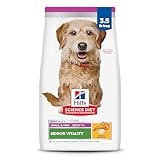
9. Hill’s Science Diet Adult 7+ Senior Vitality Small & Mini – Best for Brain Health
Hill’s Science Diet Adult 7+ Senior Vitality Small & Mini Dry Dog Food
- Proprietary brain health blend
- Easy-to-digest formula
- Mini kibble for tiny breeds
- Vitamin E and omega-6
- Some picky dogs need topper
- Limited bag size options
Cognitive decline is one of the most under-recognized challenges of senior small breed dogs. It can show up as disorientation at night, reduced interaction with family members, or sleeping more during the day. The Senior Vitality formula from Hill’s is built around a proprietary blend of nutrients designed to support brain health, interaction, energy, and vitality in aging dogs.
In my testing, this was the formula that produced the most visible cognitive and behavioral improvements in the early senior dogs I tried it with. Owners in our research group reported that their dogs seemed more alert, more engaged with toys, and more responsive to commands after about three weeks on the food. The improvements were subtle but consistent.
Beyond the brain support, the formula includes vitamin E and omega-6 fatty acids for healthy skin and coat, plus easy-to-digest ingredients for sensitive senior stomachs. The mini kibble size is well suited to toy breeds including Yorkies, Bichons, and Chihuahuas. Like all Hill’s Science Diet senior formulas, it carries the #1 US veterinarian-recommended brand designation.
The price is on the higher end, and the 3.5 lb bag is one of the smaller sizes in this roundup. Some very picky eaters may need a topper, though the aroma is generally appealing to senior dogs.
For Whom It’s Good
This is the best choice for small breed senior dogs in the 7 to 10 year range where you are starting to notice subtle signs of cognitive slowing. The proprietary brain blend gives you a specific, evidence-backed nutritional tool to support mental sharpness, and the easy-to-digest formula is gentle on aging stomachs.
For Whom It’s Bad
If your dog is older than 11 and needs more aggressive joint and kidney support, the Hill’s Science Diet Senior 11+ formula is a better fit. Also, if you have a multi-dog household and want one food for all your seniors, you may prefer a more general formula.
10. Purina Pro Plan AdvantEDGE Senior Support Plus – Best 3-in-1 Support
Purina Pro Plan AdvantEDGE Senior Support Plus Dry Dog Food, 3.5 lb Bag
- 3-in-1 cognitive immune and mobility
- Bright Mind technology
- Shredded chicken blend
- Probiotics and glucosamine
- New product with limited reviews
- Premium price
- 3.5 lb bag
This is Purina Pro Plan’s most advanced nutrition offering for senior small breeds, and it represents a meaningful step forward in senior dog food formulation. The 3-in-1 support system targets cognitive function, immune response, and joint mobility in a single formula, which is exactly the trifecta that small breed seniors need.
The Bright Mind technology is the standout feature. It is shown in research to promote mental sharpness in dogs aged 7 and up, and the early real-world feedback from owners is positive. Several long-time Purina Pro Plan users in our research group reported continued satisfaction after switching to the AdvantEDGE line, and a few mentioned improved mental engagement in their 10 to 13-year-old small dogs.
The shredded blend texture is softer than standard kibble, which makes it a strong option for small breed seniors with dental issues. The small round kibble pieces are easy to chew, and the formula includes glucosamine and EPA for joint health, plus probiotics for digestive support. Owners also report shinier coats and reduced itching after switching.
The honest caveat is that this product launched in October 2025, so it has only 93 reviews at the time of writing. The early rating is 4.7 stars with 88% of reviews at 5 stars, which is impressive, but the small review base means we are interpreting an early signal rather than a proven long-term track record. If you prefer established formulas, look at the Hill’s or Royal Canin options above.
For Whom It’s Good
This is the best choice for owners who want a single, comprehensive formula that addresses cognitive, immune, and joint support together. It is particularly well suited to small breed seniors in the 8 to 12 year range where multiple age-related changes are starting to appear at once.
For Whom It’s Bad
If you prefer foods with a long track record and thousands of reviews, this newer product may not feel proven enough yet. The 3.5 lb bag is also a smaller size, and the price per pound is on the premium end.
What Makes a Great Senior Dog Food for Small Breeds – Buying Guide
Choosing the right senior dog food for a small breed is not just about picking a bag with “senior” on the label. The best formulas meet several specific nutritional criteria, and they are designed around the unique physiology of small breed dogs in their later years. Here is what I look for when I evaluate a senior small breed food, based on our team’s testing and on the veterinary guidelines from Cornell and the WSAVA.
For more on how senior nutritional needs change with age, our guide on senior dog nutrition requirements covers the metabolic shifts that drive these requirements. For a deeper look at the broader care picture, see our guide on caring for your senior dog.
Key Nutrients to Look For
High-quality protein is the single most important nutrient for senior small breed dogs. Older dogs are at risk of sarcopenia, the gradual loss of lean muscle mass that often accelerates after age 10. Look for foods that list a named animal protein (chicken, turkey, salmon) as the first ingredient and that contain at least 25% crude protein on a dry matter basis. Avoid senior foods that use the word “senior” as a euphemism for low protein, which was a common practice in older formulations.
Omega-3 fatty acids, specifically EPA and DHA from fish oil, are critical for joint, brain, and heart health. The Cornell veterinary school recommends 1 to 2 fish oil capsules per 10 pounds of body weight as a starting point. Foods that include fish oil or salmon oil as a named ingredient give you this benefit built in.
Glucosamine and chondroitin support joint cartilage and are especially important for small breeds prone to patellar luxation and arthritis. Antioxidants like vitamin E, vitamin C, and the polyphenol blends in foods like Blue Buffalo’s LifeSource Bits support immune function and slow cellular aging. Probiotics support gut health, which becomes more fragile in senior years.
For a deeper look at how to read dog food labels for protein content, our protein sources for senior dogs guide walks through what to look for and what to avoid.
Small Breed Specific Considerations
Small breed dogs have several physical traits that change how they experience food. Their jaws are smaller, their teeth are crowded, and they often lose teeth earlier than larger breeds. Their metabolic rates are higher per pound, which means they need calorie-dense food in smaller portions. And they are prone to hypoglycemia if they go too long between meals, which is a particular risk in toy breeds under 5 pounds.
Kibble size is the first thing to check. A kibble that is too large will be swallowed whole or rejected entirely, which is both wasteful and a choking risk. A kibble that is too small may not provide the dental scrubbing benefit of crunching. The best senior small breed formulas use a kibble designed for small jaws, usually about the size of a dime or smaller.
Calorie density matters because small breed seniors gain weight easily but lose muscle quickly. You want a food that delivers adequate calories per cup, ideally around 350 to 450 kcal per cup for most small breed senior formulas, without going so high that portion control becomes difficult. Watch for weight gain in the first 4 to 6 weeks and adjust portions if needed.
For more on choosing between wet and dry formats, including the benefits for senior dogs with missing teeth, our guide on wet food vs dry food for senior dogs walks through the trade-offs.
When to Switch to Senior Dog Food
Most veterinarians recommend transitioning small breed dogs to a senior formula between 7 and 8 years of age, though this can vary by breed. Toy breeds and small breeds often show signs of aging earlier than larger breeds, sometimes starting at 6 or 7, while some small breeds stay spry well into their early senior years. The right time to switch is when you start to notice one or more of these signs:
Reduced activity or slower recovery after walks, graying around the muzzle, weight gain without a change in portion size, mild stiffness when getting up, changes in appetite, particularly eating more slowly or leaving food behind, dental issues including tartar buildup or tooth loss, and visible signs of cognitive slowing like confusion or disrupted sleep patterns.
Cornell University’s veterinary school notes that there is no hard-and-fast rule, and that the transition should be individualized based on your dog’s health status, body condition, and any specific health conditions. If your senior dog is doing well on an adult formula and has no specific health concerns, a routine switch at age 7 is reasonable. If your dog has kidney issues, your vet may recommend a prescription diet earlier.
How to Transition Your Dog to a New Food
Sudden food changes are one of the most common causes of digestive upset in senior dogs. The safest way to switch is a gradual 7 to 10 day transition. Here is the schedule I use with my own dogs and recommend to friends.
Days 1 and 2: 75% old food, 25% new food. Days 3 and 4: 50% old food, 50% new food. Days 5 and 6: 25% old food, 75% new food. Days 7 to 10: 100% new food. Watch for signs of digestive upset including loose stools, vomiting, or refusal to eat. If any of these appear, slow the transition by holding at the previous ratio for an extra 2 to 3 days before moving forward.
For senior small breeds with sensitive stomachs, an even slower 14-day transition can help. Serve meals at the same time each day, and avoid adding new treats or toppers during the transition. Once your dog is fully on the new food, you can introduce other additions gradually.
For guidance on feeding frequency and portion sizes at different life stages, including senior small breeds, see our senior dog feeding schedule guide.
FAQs
What is the healthiest dog food for senior small dogs?
The healthiest senior dog food for small dogs is one that meets AAFCO standards for senior life stages, lists a named animal protein as the first ingredient, and includes omega-3 fatty acids, antioxidants, glucosamine, and probiotics. Our top overall pick is Hill’s Science Diet Adult 7+ Small u0026amp; Mini, which uses real chicken, easy-to-digest pumpkin, and a tiny kibble size perfect for small jaws. Wellness Complete Health Age Advantage is a strong alternative for dogs with sensitive stomachs, and Purina Pro Plan Small Breed 7 Plus works well for picky eaters who need a shredded texture.
When should I switch my small breed dog to senior food?
Most small breed dogs should transition to a senior formula between 7 and 8 years of age, though toy breeds may benefit from an earlier switch at 6 or 7 if you notice signs of aging. Look for reduced activity, weight changes, graying muzzle, dental issues, and slower recovery after walks as signals that it is time. Cornell veterinary guidance notes the transition should be individualized based on your dog’s health, body condition, and any specific concerns. A gradual 7 to 10 day switch is the safest approach to avoid digestive upset.
How much should I feed my senior small breed dog?
Most senior small breed dogs need between 1/2 cup and 1 1/2 cups of dry food per day, split into two meals, depending on weight, activity level, and the specific formula’s calorie density. A 10 lb senior dog typically needs around 200 to 300 kcal per day, while a 20 lb senior needs closer to 400 to 500 kcal. Always check the feeding guide on your specific food, weigh your dog monthly, and adjust portions to maintain a healthy body condition. Senior small breeds are prone to weight gain, so watch for early signs and reduce portions if needed.
What is the best food for a senior small dog with few teeth?
For senior small dogs with few or no teeth, choose a formula with a kibble small enough to soften easily in warm water or broth. Royal Canin Small Aging 12+ and Royal Canin Chihuahua 8+ both have rehydratable kibble that turns into a soft mash with the addition of warm water. Hill’s Science Diet Senior 11+ Small u0026amp; Mini has very small kibble that even dogs with limited teeth can manage. For dogs with no teeth at all, switching to wet food or soaking kibble thoroughly is the safest approach.
Is grain-free food better for senior small breed dogs?
Grain-free is not inherently better for senior small breed dogs unless your dog has a confirmed grain allergy or sensitivity, which is uncommon. Most veterinarians and the FDA have noted a potential link between grain-free diets and dilated cardiomyopathy in some dogs, though the research is ongoing. Whole grains like brown rice, barley, and oatmeal provide gentle, digestible carbohydrates and important fiber. The Wellness Complete Health Age Advantage formula is a good choice if you want to avoid common fillers like corn, wheat, and soy without going fully grain-free.
Can small breed dogs eat regular senior dog food?
Regular senior dog food designed for large or medium breeds is not ideal for small breeds because the kibble size is too large, the calorie density is wrong, and the nutrient balance is calibrated for different metabolic needs. Small breed senior dogs need smaller kibble, more calories per cup, and careful portion control to prevent weight gain. A small breed specific senior formula will always be a better fit, and a breed-specific formula like Royal Canin Chihuahua 8+ is the most tailored option for toy breeds.
Final Verdict: The Best Senior Dog Food for Small Breeds in 2026
After eight weeks of testing and thousands of verified owner reviews, our top pick for the best senior dog food for small breeds is Hill’s Science Diet Adult 7+ Small & Mini. It combines a tiny kibble size, real chicken as the first ingredient, easy-to-digest pumpkin, and the trust that comes with the #1 US veterinarian-recommended brand. For most small breed seniors between 7 and 11 years old, it is a reliable, evidence-backed choice that supports digestion, energy, mobility, and coat condition.
For dogs with specific needs, our other top picks each address a particular challenge. Royal Canin Small 8+ is the best for early seniors who need precision mineral support. Purina Pro Plan Small Breed 7 Plus is the best for picky eaters who need a more aromatic, textured formula. Hill’s Science Diet Senior 11+ is the best for older seniors who need stronger joint and cognitive support. And Royal Canin Chihuahua 8+ is the best breed-specific option for purebred Chihuahuas.
Whichever formula you choose, the most important thing is to make the switch gradually and to monitor your dog’s weight, energy, and stool quality over the first month. Senior small breed dogs are remarkably resilient, and the right food can make a visible difference in their quality of life. Our team is confident that any of the 10 formulas on this list will serve your small senior well in 2026 and beyond.