
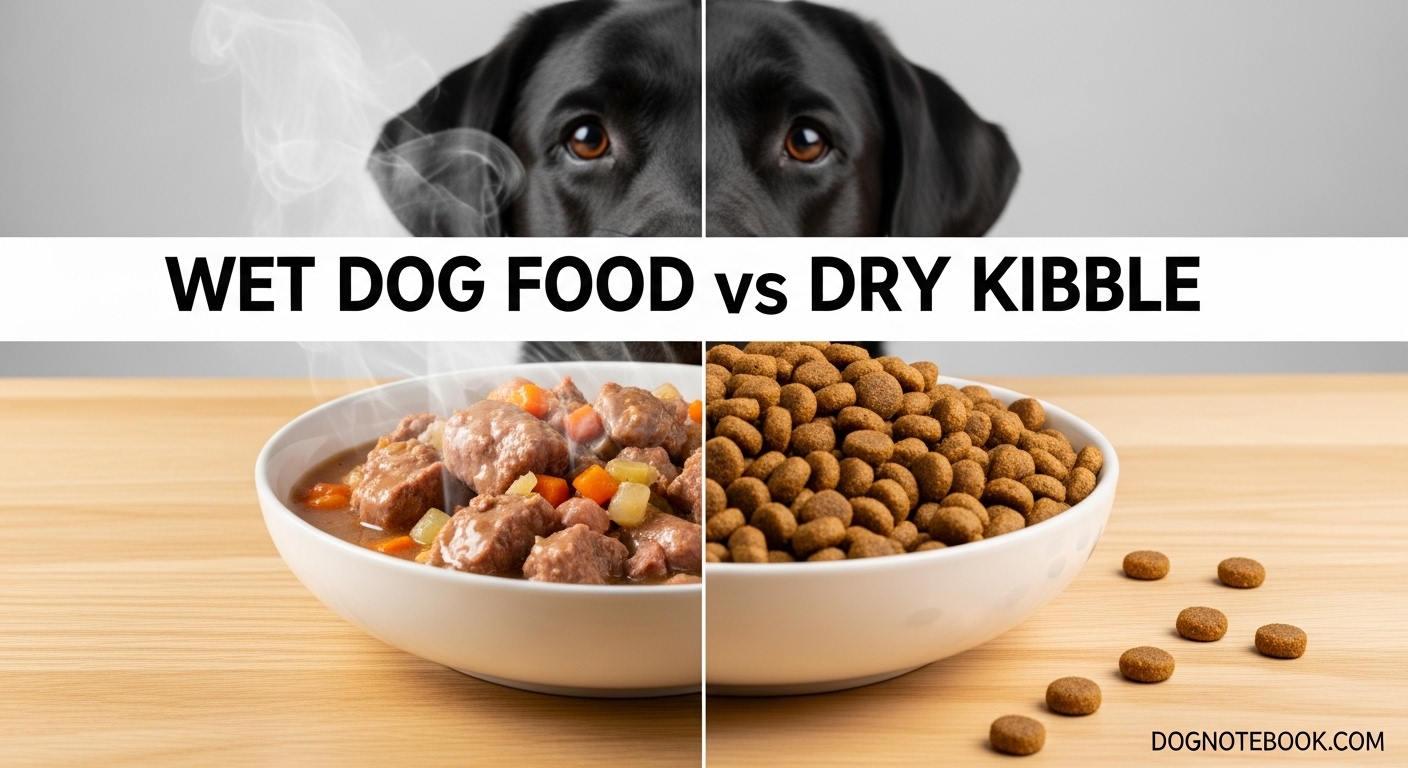
If you have ever stood in the dog food aisle wondering whether to grab canned food or a bag of kibble, you are not alone. The wet dog food vs dry kibble debate is one of the most common questions dog owners face, and for good reason. What you feed your dog affects their hydration, dental health, energy levels, and even your monthly budget.
Both wet and dry dog food can provide complete and balanced nutrition when you choose reputable brands. The real difference comes down to moisture content, ingredient density, cost, convenience, and your individual dog’s needs. I have spent months researching veterinary guidelines, forum discussions, and nutritional data to put together this comprehensive comparison for 2026.
In this guide, we will break down the nutritional differences, pros and cons of each option, cost considerations, dental health facts, and special advice for puppies, seniors, and dogs with health conditions. By the end, you will have a clear answer for your specific situation.
Table of Contents
What Is Wet Dog Food?
Wet dog food, often called canned dog food, is a type of commercially prepared food with a high moisture content ranging from 75% to 85% water. It is cooked and sealed in cans or pouches, then sterilized at high temperatures to eliminate bacteria and preserve freshness without the need for artificial preservatives.
Because of the canning process, wet food typically contains more animal-based protein and fewer carbohydrates than dry kibble. The soft, meaty texture makes it highly palatable, meaning most dogs find it more appetizing than dry food. You will often see it recommended for picky eaters, senior dogs with chewing difficulties, and dogs that need extra hydration in their diet.
Wet food comes in several forms including pate, chunks in gravy, stews, and sliced options. Each style offers a slightly different texture and moisture level, but all share that characteristic high water content that sets them apart from kibble.
What Is Dry Kibble?
Dry kibble is the most widely fed type of dog food worldwide. It is made by mixing ingredients like meat, grains, vegetables, and vitamins into a dough, which is then extruded through a machine under high pressure and heat, and finally baked to remove most of the moisture. The result is a hard, dry product with only about 10% to 12% water content.
The low moisture content gives kibble a long shelf life, often lasting 12 to 18 months unopened. It does not require refrigeration, is easy to store in bulk, and can be left out in a bowl for hours without spoiling. These practical advantages make it the go-to choice for many households.
Dry kibble tends to contain more carbohydrates than wet food because starches are needed to hold the kibble shape during extrusion. However, many premium kibble brands now offer grain-free or high-protein formulas that are closer to wet food in their nutritional profile. The key is reading the ingredient list and guaranteed analysis panel on the bag.
Wet Dog Food vs Dry Kibble: Nutritional Comparison
Understanding the nutritional differences between wet and dry food requires looking beyond the label. Because wet food contains so much water, you cannot directly compare the protein percentage on a can of wet food to the protein percentage on a bag of kibble. You need to compare them on a dry matter basis, which removes the water from the equation.
Here is how the two typically compare when you look at the numbers on a dry matter basis:
- Moisture: Wet food 75-85% vs dry kibble 10-12%
- Protein (dry matter): Wet food 30-50% vs dry kibble 25-35%
- Fat (dry matter): Wet food 20-40% vs dry kibble 10-20%
- Carbohydrates (dry matter): Wet food 15-30% vs dry kibble 40-60%
- Caloric density: Wet food roughly 25-35 calories per ounce vs dry kibble roughly 90-100 calories per ounce
On a dry matter basis, wet food generally contains more protein and fat while containing significantly fewer carbohydrates. This is one reason many dog nutrition enthusiasts prefer wet food. However, dry kibble is more calorie-dense per ounce, meaning you need to feed less volume to meet your dog’s caloric needs.
The moisture difference is the most striking contrast. A dog eating only dry kibble gets about 10% of their daily water intake from food, while a dog on wet food gets roughly 70% to 80% of their hydration from meals alone. For dogs that do not drink much water on their own, this is a meaningful difference that can affect kidney function and urinary tract health over time.
Both types of food can meet AAFCO (Association of American Feed Control Officials) standards for complete and balanced nutrition. The quality of the food depends far more on the specific brand and formula than on whether it comes in a can or a bag. Always look for brands that meet WSAVA guidelines, which include companies like Purina, Royal Canin, and Hill’s Science Diet.
Benefits of Wet Dog Food
Wet food has several clear advantages that make it the preferred choice for many dog owners and veterinarians in specific situations.
Superior hydration. The high moisture content in wet food helps keep your dog hydrated, especially important for dogs that are reluctant water drinkers. This extra hydration supports kidney function and can help prevent urinary tract infections and crystal formation.
Higher palatability. Most dogs simply find wet food more appealing. The strong aroma, soft texture, and meaty flavor make it an excellent option for picky eaters or dogs that have lost their appetite due to illness or medication.
More animal protein. On a dry matter basis, wet food typically contains a higher proportion of animal-based protein. This is closer to a dog’s natural dietary needs as a species that evolved eating meat-heavy diets.
Easier to chew and digest. The soft texture makes wet food ideal for senior dogs with missing teeth, puppies transitioning from milk, and dogs recovering from oral surgery or gastrointestinal issues. It requires less mechanical breakdown before digestion.
Fewer artificial preservatives. The canning process naturally preserves wet food, so many canned formulas do not need the artificial preservatives commonly found in dry kibble. This can be a benefit for dogs with sensitivities to certain additives.
Lower carbohydrate content. For dogs that need a lower-carb diet due to conditions like diabetes or obesity, wet food is often the easier option since it naturally contains fewer carbs than most kibble formulas.
Drawbacks of Wet Dog Food
Despite its benefits, wet food comes with real trade-offs that every dog owner should consider before committing.
Significantly higher cost. Wet food costs roughly two to three times more per calorie than dry kibble. For a medium-sized dog weighing around 40 pounds, feeding exclusively wet food can cost $90 to $150 per month compared to $30 to $60 for dry kibble. This cost difference adds up fast, especially for owners of large or giant breed dogs.
Refrigeration required after opening. Once you open a can or pouch of wet food, it needs to be refrigerated and used within two to three days. This limits flexibility and requires planning around meal times.
Messier feeding experience. Wet food sticks to bowls, requires more thorough cleaning, and can attract flies or ants if left out. Many owners find the cleanup noticeably more involved than with dry kibble.
No dental benefits. Wet food does not provide the mechanical cleaning action that crunching on kibble can offer. Dogs eating exclusively wet food need regular dental care through brushing, dental chews, or professional cleanings.
Difficult to transition away from. Forum discussions on Reddit and dog food communities consistently mention that once a dog gets used to wet food, switching them back to kibble can be a challenge. Many owners report their dogs refusing dry food entirely after a period on canned food.
Benefits of Dry Kibble
Dry kibble remains the most popular dog food format for several practical reasons that matter to everyday dog owners.
More affordable. Dry kibble delivers more calories per dollar than wet food. For a 40-pound dog, a quality dry food diet might cost $30 to $60 per month, making it a realistic long-term option for most budgets.
Long shelf life and easy storage. Unopened bags of kibble last 12 to 18 months, and once opened, a bag can stay fresh for four to six weeks when stored properly. No refrigeration needed, and you can buy in bulk to save even more.
Convenient for free-feeding. If your dog is a grazer rather than a gulper, you can leave kibble out all day without worrying about spoilage. This is not possible with wet food, which needs to be picked up within a couple of hours.
Dental cleaning action. The crunching action of chewing kibble provides some mechanical abrasion against tooth surfaces. While it is not a replacement for brushing or professional dental care, it does offer a modest benefit over wet food. Some brands even offer dental-specific kibble formulas designed to reduce plaque buildup.
Less mess, easier cleanup. Kibble does not stick to bowls the way wet food does. A quick rinse is usually enough to keep bowls clean, and there is no sticky residue to scrub.
Widely available with more options. Walk into any pet store or grocery store and you will find dozens of kibble brands and formulas for every life stage, breed size, and dietary need. The variety available in dry food far exceeds what is typically available in canned options.
Drawbacks of Dry Kibble
Dry food is not without its disadvantages, and some of these are important enough to influence your feeding decision.
Lower moisture content. This is the most significant drawback. Dogs eating only dry kibble must drink enough water to compensate for the lack of moisture in their food. Dogs that are not enthusiastic water drinkers can become chronically dehydrated over time, which may contribute to kidney strain and urinary issues.
Higher carbohydrate content. The extrusion process requires starches to bind the kibble together, which means most dry foods contain 40% to 60% carbohydrates on a dry matter basis. This is substantially more than what a dog would eat in the wild and can be a concern for overweight or diabetic dogs.
Variable ingredient quality. While premium brands use high-quality ingredients, many budget kibble brands rely on fillers, meat by-products, and artificial additives. The range of quality in dry food is much wider than in wet food, so you need to be a more careful label reader.
Less appealing to picky eaters. Some dogs simply do not enjoy dry food as much as wet food. The lower aroma and harder texture can make kibble less appetizing, particularly for dogs that have been exposed to wet food or table scraps.
Processing concerns. The high heat used during extrusion can degrade some heat-sensitive nutrients like certain vitamins and antioxidants. While manufacturers add these back after processing, some pet nutrition advocates argue that the overall nutrient bioavailability may be slightly lower than in less-processed wet food.
Dental Health: Does Kibble Really Clean Teeth?
One of the most common arguments in favor of dry kibble is that it helps clean your dog’s teeth. The idea is that the crunchy texture scrapes plaque off teeth as the dog chews. But how much of this is actually true?
The reality is more nuanced than many people think. Regular kibble does provide some mechanical cleaning action, but the benefit is modest. A study published in the Journal of Veterinary Dentistry found that while dry food may reduce plaque accumulation slightly compared to wet food, it does not prevent periodontal disease on its own. Most dogs swallow kibble whole or crack it in a few bites, which limits the abrasive contact with tooth surfaces.
Dental-specific kibble formulas, such as Hill’s t/d or Royal Canin Dental, are engineered with larger kibble sizes and a fibrous texture that forces the dog to chew more thoroughly. These prescription dental diets have been shown to reduce plaque and tartar buildup more effectively than standard kibble. However, they are still not a substitute for regular tooth brushing.
If you feed wet food exclusively, your dog can still maintain good dental health through daily brushing, dental chews approved by the Veterinary Oral Health Council (VOHC), and regular professional cleanings by your veterinarian. Many dog owners on forums report their wet-food-fed dogs have excellent teeth because they commit to a consistent dental care routine.
The takeaway: kibble offers a small dental advantage, but it should not be the primary reason you choose dry food over wet food. Dental health depends much more on active care like brushing and professional cleanings than on food texture alone.
Cost Comparison: Wet vs Dry Dog Food
Cost is one of the biggest factors dog owners consider when choosing between wet and dry food, and the difference is substantial. Understanding the real numbers can help you make an informed decision for your budget.
For a medium dog weighing about 40 pounds, here is a rough monthly cost comparison:
- Dry kibble only: $30 to $60 per month for a quality brand
- Wet food only: $90 to $150 per month for a comparable quality brand
- Mixed feeding (50/50): $60 to $105 per month
The cost gap grows dramatically with larger dogs. A Great Dane eating exclusively wet food could easily cost $200 or more per month to feed, while the same dog on quality kibble might cost $60 to $80. This is why many owners of large breeds default to dry food or use a mixed approach.
When comparing costs, always look at the price per calorie, not the price per can or per bag. A 13-ounce can of wet food might cost $1.50 and contain about 400 calories, while a cup of dry kibble might cost $0.40 and contain about 400 calories. On a per-calorie basis, wet food is typically two to three times more expensive.
However, cost should not be the only factor. Some dogs have medical conditions that genuinely benefit from wet food, and the long-term savings on veterinary bills for conditions like urinary tract disease or kidney problems can offset the higher food cost. Talk to your vet about whether the health benefits of wet food justify the expense for your dog’s specific situation.
Special Considerations: Puppies, Seniors, and Health Conditions
The wet versus dry decision becomes even more important when your dog falls into certain categories. Puppies, seniors, and dogs with health conditions each have unique nutritional needs that might tip the scales toward one option or the other.
Puppies
Puppies benefit from wet food during the weaning process because the soft texture is easy to lap up and gentle on developing teeth. Many breeders start puppies on a mixture of wet food and softened kibble before transitioning to dry food as their adult teeth come in. Once a puppy is comfortable chewing, either food type works well as long as it meets AAFCO growth standards and is formulated specifically for puppies or all life stages.
Senior Dogs
Older dogs often develop dental disease, reduced sense of smell, and decreased appetite. Wet food addresses all three issues. The strong aroma stimulates appetite, the soft texture is gentle on worn or missing teeth, and the high moisture content supports kidney function, which becomes increasingly important as dogs age. Many veterinarians recommend incorporating wet food for senior dogs, even if they have been on kibble their entire lives.
Dogs With Specific Health Conditions
For dogs with kidney disease, urinary tract issues, or a history of bladder stones, wet food is almost always the better choice. The extra moisture helps flush the urinary system and keeps the kidneys working efficiently. Dogs with diabetes may benefit from wet food’s lower carbohydrate content, which can help stabilize blood sugar levels. Dogs prone to obesity, on the other hand, might do better on carefully portioned dry kibble because it is easier to measure and control caloric intake precisely.
If your dog has a sensitive stomach, the right choice depends entirely on the individual. Some dogs tolerate wet food better because it is easier to digest, while others do better on a consistent kibble diet. Work with your veterinarian to identify the best approach for your dog’s specific gastrointestinal needs.
Can You Mix Wet and Dry Dog Food?
Yes, you can absolutely mix wet and dry dog food together, and many veterinarians actually recommend it. Mixed feeding combines the benefits of both food types: the hydration and palatability of wet food plus the convenience and dental advantages of kibble. It is also a practical middle ground for owners who want some of the benefits of wet food without committing to the full cost.
If you want to try mixed feeding, start with a ratio of about 75% dry kibble to 25% wet food by calorie. This gives your dog the flavor boost and extra moisture without dramatically increasing your feeding costs. You can adjust the ratio over time based on your dog’s preferences and health needs.
When mixing, keep a few important guidelines in mind:
- Reduce both portions to avoid overfeeding. Calculate the total calories your dog needs per day and subtract the wet food calories from the dry food portion accordingly.
- Transition gradually over seven to ten days if you are switching from one type to the other. Sudden changes can cause diarrhea, vomiting, or loss of appetite.
- Do not leave mixed food out for more than 30 minutes. Once wet food is mixed with kibble, it begins to spoil at room temperature much faster than dry kibble alone.
- Choose compatible formulas from the same brand or with similar ingredient profiles to minimize the risk of stomach upset.
Many dog owners on forums like Reddit and The Labrador Forum report great success with mixed feeding. Their dogs enjoy the taste variety, and the owners appreciate the balance between cost and nutrition.
How to Choose Between Wet and Dry Dog Food
There is no single right answer in the wet dog food vs dry kibble debate because the best choice depends on your individual dog and your personal circumstances. Here is a practical framework to help you decide:
Choose wet food if: your dog is a senior, has dental problems, does not drink enough water, is a picky eater, has kidney or urinary issues, or needs to gain weight. Wet food is also great if budget is not a primary concern and you prefer food with fewer artificial preservatives.
Choose dry kibble if: you are feeding a large breed dog and cost is a significant factor, you want the convenience of easy storage and free-feeding, your dog has healthy teeth and drinks plenty of water, or you want the widest variety of formula options from trusted brands that meet WSAVA guidelines.
Choose mixed feeding if: you want the benefits of both options without the full cost of an all-wet diet. This is increasingly popular among owners who want to boost palatability and hydration while keeping costs manageable.
Whatever you choose, the most important factor is selecting a food that meets AAFCO standards for complete and balanced nutrition and comes from a reputable manufacturer. Both wet and dry food can support a long, healthy life for your dog when chosen wisely.
Always consult your veterinarian when making significant changes to your dog’s diet, especially if your dog has existing health conditions. Your vet knows your dog’s medical history and can provide personalized recommendations that no online guide can match.
FAQ
Do vets recommend dry or wet dog food?
Most veterinarians do not universally recommend one over the other. Both wet and dry dog food can provide complete and balanced nutrition when you choose reputable brands. Vets typically recommend wet food for dogs with kidney issues, urinary problems, or dental difficulties, and dry kibble for owners concerned about cost and convenience. Many vets suggest mixed feeding as a balanced approach that combines the benefits of both types.
Should I feed my dog wet food as well as dry food?
Yes, feeding a combination of wet and dry food is perfectly safe and often beneficial. Mixing the two gives your dog the hydration and palatability of wet food along with the convenience and dental benefits of kibble. Start with a 75% dry to 25% wet ratio by calories and adjust based on your dog’s preferences and your vet’s guidance. Just remember to reduce both portions so you do not overfeed.
What is the 80/20 rule for dog food?
The 80/20 rule in dog food generally refers to the idea that 80% of your dog’s daily calories should come from a complete, balanced commercial food, and the remaining 20% can come from treats, toppers, or supplements. This guideline helps prevent nutritional imbalances while still allowing some variety. Some people also use the term to describe feeding ratios when mixing wet and dry food, but the treat guideline is the more common usage.
What are the disadvantages of wet dog food?
The main disadvantages of wet dog food are the significantly higher cost (roughly two to three times more per calorie than dry kibble), the need for refrigeration after opening, messier bowl cleanup, lack of dental cleaning benefits, and the difficulty of transitioning back to dry food once a dog develops a preference for wet food. Wet food also cannot be left out for free-feeding since it spoils quickly at room temperature.
Is dry food better for dogs’ teeth?
Dry kibble does provide some mechanical cleaning action as dogs chew, which can help reduce plaque buildup modestly compared to wet food. However, the benefit is limited because many dogs swallow kibble whole or with minimal chewing. Dental-specific kibble formulas are more effective than standard kibble. Regardless of food type, regular tooth brushing, VOHC-approved dental chews, and professional veterinary cleanings are the most important factors in maintaining your dog’s dental health.
Can I switch my dog from wet to dry food?
Yes, you can switch your dog from wet to dry food, but it should be done gradually over seven to ten days to avoid stomach upset. Start by mixing a small amount of kibble into the wet food and slowly increase the kibble proportion while decreasing the wet food each day. Some dogs may resist the change initially because wet food is more palatable. Adding warm water to the kibble during the transition can help make it more appealing.
The Bottom Line on Wet Dog Food vs Dry Kibble
So, is wet dog food or dry kibble better? The honest answer is neither one is universally superior. The wet dog food vs dry kibble decision comes down to your dog’s age, health, eating habits, and your household budget.
Wet food excels at keeping your dog hydrated, appealing to picky eaters, supporting dogs with kidney or urinary conditions, and providing easier chewing for seniors. Dry kibble wins on cost-effectiveness, convenience, shelf life, and offering modest dental benefits through the crunching action.
Mixed feeding is a strong middle-ground approach that many owners and veterinarians recommend. It gives you the best of both worlds without the full financial commitment of an all-wet diet.
The single most important factor is choosing a food from a reputable manufacturer that meets AAFCO and WSAVA nutritional standards. Whether it comes from a can or a bag, quality nutrition is what keeps your dog healthy for years to come. When in doubt, have a conversation with your veterinarian about the best feeding plan for your specific dog.