
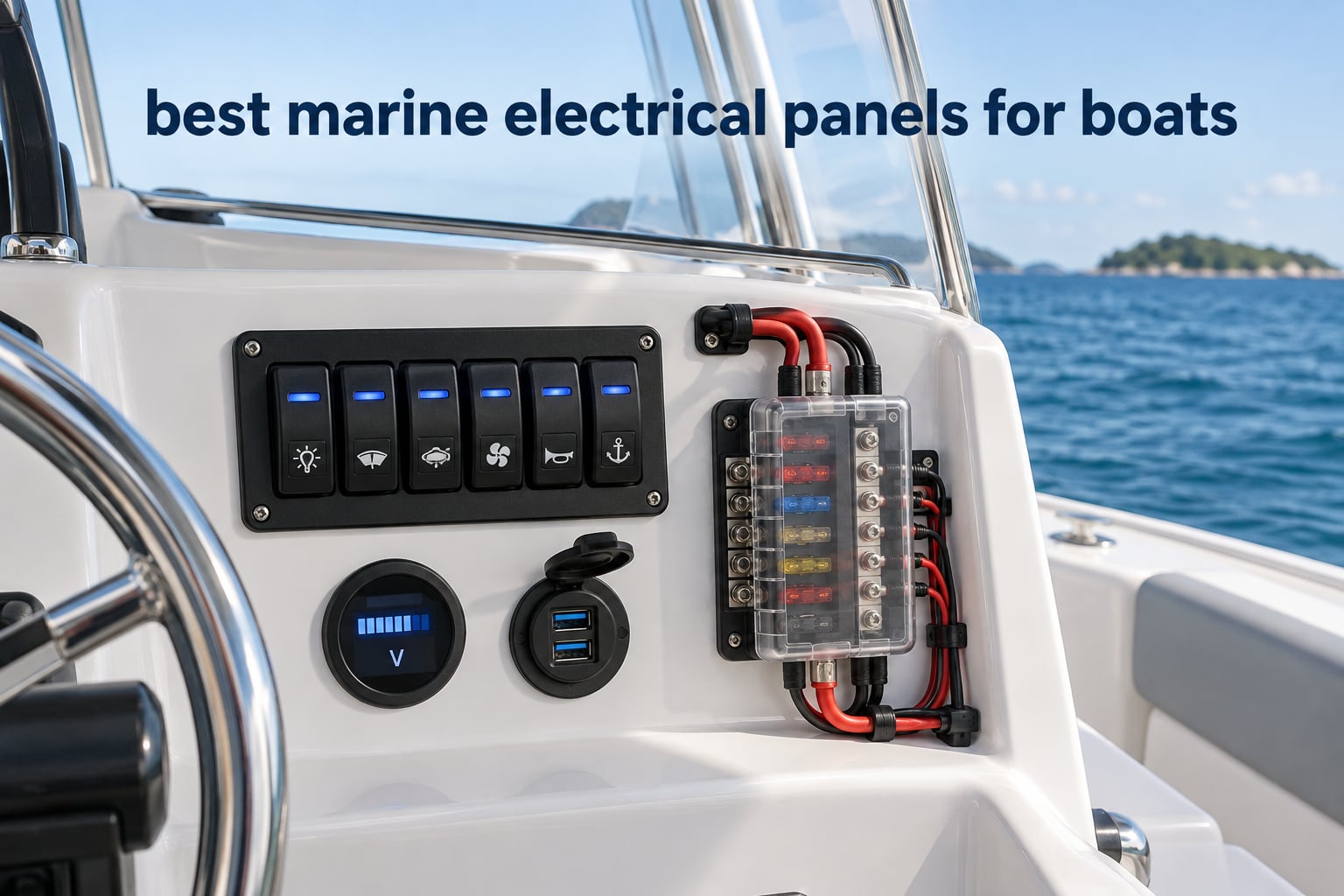
A marine electrical panel is the central hub on a boat that distributes power from batteries and shore power to the boat’s circuits, combining switches, circuit breakers or fuses, and status indicators inside a corrosion-resistant, marine-grade enclosure. It is the one place where every circuit on the boat is switched, protected and labelled, which is why it is also the first thing to inspect when something goes wrong at anchor.
We spent several weeks reading owner feedback, spec sheets and forum threads to put together our 2026 list of the best marine electrical panels for boats. The ten picks below split cleanly into two families: DC fuse blocks that take the main feed and hand out protected branch circuits, and pre-wired rocker switch panels that put switches, USB charging, a voltmeter and a 12V socket on a single faceplate. Both belong on a boat, and they solve different problems.
That distinction matters more than most shopping guides admit. A fuse block is a distribution point that lives in a dry compartment, while a rocker switch panel is a user interface that lives where spray lands. Putting the wrong one in the wrong place is the single most common wiring mistake we found in owner threads on The Hull Truth, alongside the perennial complaint about no-name marketplace panels that were never built for a saltwater environment.
Read on for the ten picks, then the buying guide, where we answer the sizing questions that actually decide your purchase: whether you need a breaker panel or a fuse block, how many positions your load list justifies, and what the 80% continuous-load rule means for the wire behind each circuit.
Table of Contents
Top 3 Best Marine Electrical Panels for Boats (October 2026)

Blue Sea Systems 5026 Fuse Block
- 12 circuits with integrated negative bus
- 100 A total capacity
- Tinned copper buses and clear cover

WUPP CS-664A1 Waterproof Fuse Block
- 6 circuits with LED fault indicators
- LED per circuit
- 12V-32V DC
- 100 A total capacity

Kohree HY0406 12-Way Fuse Block
- 12 circuits
- IP86 housing and clear cover
- 30 fuses included
- Per-circuit LED indicators
The Blue Sea Systems 5026 takes the top slot because it is the panel forum regulars name first, and because it is the only unit in this group built around tinned copper buswork rather than plated steel. The WUPP and Kohree blocks earn their places on circuit count per dollar and on the LED indicators that turn a fault hunt into a glance.
Marine Electrical Panels in 2026 at a Glance
| Product | Specifications | Action |
|---|---|---|
| Blue Sea Systems 5026 Fuse Block |
|
Check Latest Price |
| WUPP CS-664A1 Waterproof Fuse Block |
|
Check Latest Price |
| Kohree HY0406 12-Way Fuse Block |
|
Check Latest Price |
 Kohree HY1024-JP 5-Gang Rocker Panel Kohree HY1024-JP 5-Gang Rocker Panel |
|
Check Latest Price |
 FXC KG0149 5-Gang Waterproof Panel FXC KG0149 5-Gang Waterproof Panel |
|
Check Latest Price |
 Nilight 90101E 5-Gang Multi-Function Panel Nilight 90101E 5-Gang Multi-Function Panel |
|
Check Latest Price |
 DaierTek PN-L6S3-2 6-Gang Rocker Panel DaierTek PN-L6S3-2 6-Gang Rocker Panel |
|
Check Latest Price |
 DaierTek FB-1714 12-Way Fuse Block DaierTek FB-1714 12-Way Fuse Block |
|
Check Latest Price |
 Nilight 90117G 4-Gang Pre-Wired Panel Nilight 90117G 4-Gang Pre-Wired Panel |
|
Check Latest Price |
 DaierTek FB-1713 6-Way Fuse Block DaierTek FB-1713 6-Way Fuse Block |
|
Check Latest Price |
Four of these are fuse blocks and six are pre-wired switch panels, and the table above is the fastest way to see which side of the split a given boat needs. If your circuits terminate in a dry compartment and you want labelled branch protection, start with the fuse blocks. If you want switches, charging ports and a voltage readout on a dash, start with the rocker panels.
1. Blue Sea Systems 5026 ST Blade Fuse Block: The One Most Boats End Up With
- Integrated negative bus saves a second distribution point
- Clear cover stores spare fuses and shields the bus
- Decades of owner reports in saltwater use
- Compact at 3.31 x 1.5 inches
- Mounting holes are small and hardware is not included
- 30 A per circuit ceiling limits high-draw accessories
This is the panel we kept coming back to. The Blue Sea Systems 5026 carries a 4.8 rating across 6.7k+ ratings, and that volume matters here because marine electrical hardware is a category where failure is expensive and slow, so a huge owner base becomes a kind of field test report.
The core decision is architecture rather than brand. This block accepts twelve ATO or ATC blade circuits, caps total load at 100 A and allows up to 30 A per circuit. That last number is the one to check against your load list before buying anything else, and it is the reason we would not put a windlass or a bank of cabin heaters on this block.
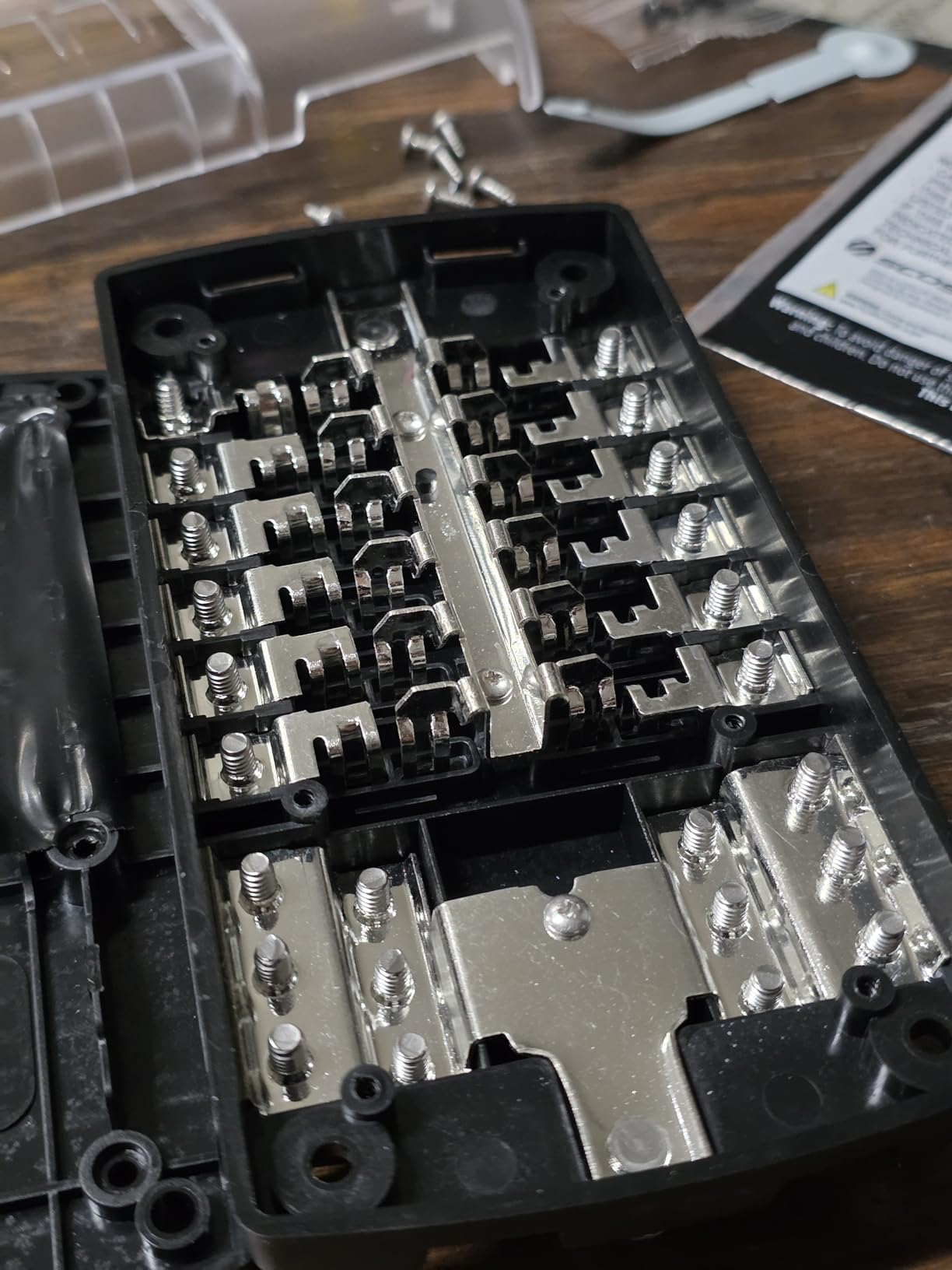
What separates it from the cheaper blocks in this list is bus material. The buses are tin-plated copper with corrosion-resistant fuse clips, and the unit is specced to SAE and ISO 9000 standards, which tells you the assembly was designed for a damp, salty environment rather than adapted from an automotive part.
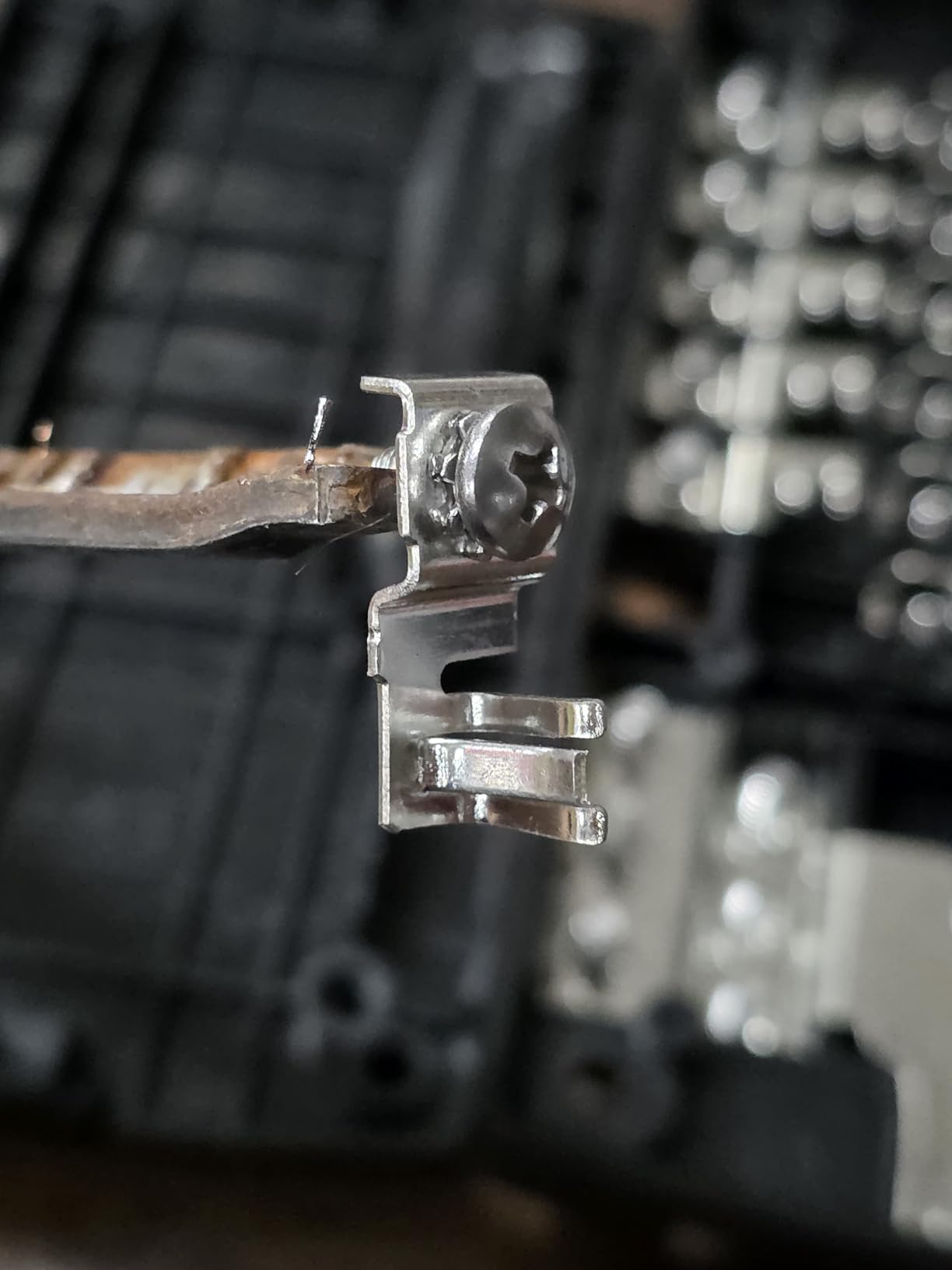
Owners also talk about the cover and the label areas more than you would expect. The clear latching cover shields the bus when you work in a bilge, holds spare fuses in the lid, and leaves recessed spaces for the write-on circuit labels included in the box, so the wiring stays identifiable years later.
Reviewers also describe the practical effect on electrical health. Fitting a proper ground distribution point in the same block as the fused positives tidies the harness, removes daisy-chained splice points, and cuts voltage drop across long runs, which is a measurable improvement rather than a cosmetic one.
Why owners keep repurchasing it
The recurring theme across reviews is predictability. Owners report fitting one, forgetting about it for years, and buying the same block again when a second boat or a rewire comes along. For hardware that lives in an unattended compartment, that is the most valuable trait a component can have.
Owners also rate the wiring quality. Comments describe clean, professional terminations and a layout that keeps ring terminals and snap forks tidy, which matters more than it sounds because a cramped terminal block is where a chronic high-resistance fault starts.
Where it falls short
The most repeated criticism concerns installation, not design. The mounting holes are relatively small, and the mounting hardware is not included, so you may need to fabricate your own stainless fasteners rather than reusing whatever the boat came with.
Second, the 30 A per-circuit limit is a genuine ceiling. If your load list includes anything that pulls more than that through a single branch, this block cannot be the right answer no matter how well it is made, and you should be sizing to a higher-rated block instead.
2. WUPP CS-664A1 Waterproof Fuse Block: Best Value for Small 12V Jobs
- LED on every circuit finds a blown fuse instantly
- Includes 12 fuses plus labels and screws
- Flame-retardant PBT housing rated to 150 degrees
- Six circuits and a negative bus in one tidy block
- Mounting holes sit close to the positive bus
- Cover fit is described as tight
- Small residual voltage at unused circuits from the LED circuit
If you are outfitting a small centre console or a jon boat and your entire accessory list would fit on six circuits, this is the block we would buy first. It rates 4.7 across 6.2k+ ratings and it sits at the affordable end of our list while still giving you per-circuit fault indication.
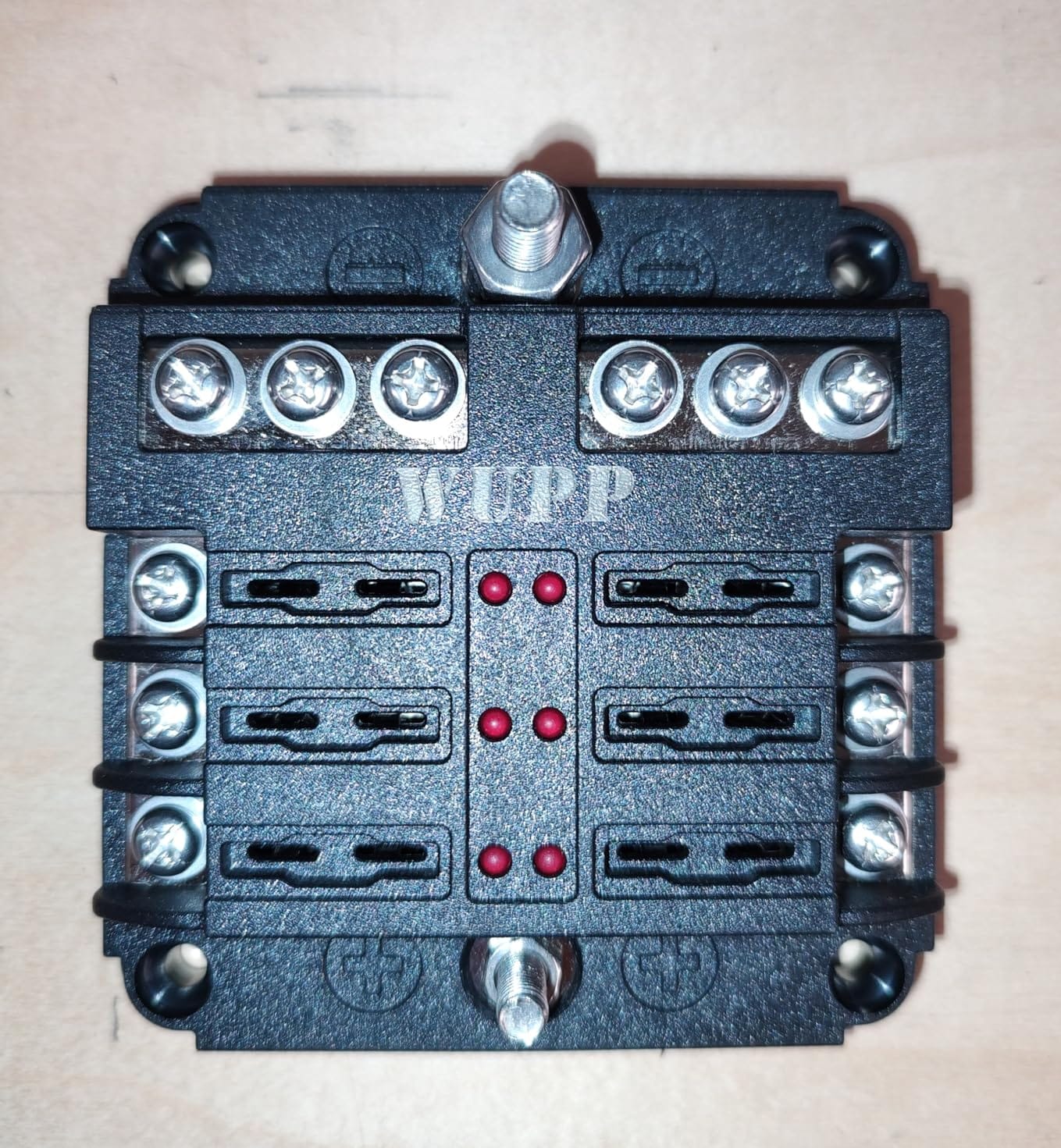
Those LEDs are the feature that changes daily life on the water. Instead of tracing circuits with a multimeter in a dark compartment, you open the cover and see which light is out. On a boat with a dozen circuits feeding a console, a livewell pump and a few accessory sockets, that saves real time when something quits.
The electrical envelope is wider than the 12V label suggests. It operates from 12V to 32V DC, carries 100 A total continuous, and limits to 30 A per circuit, with a flame-retardant PBT base and nickel-plated copper busbars doing the conducting.
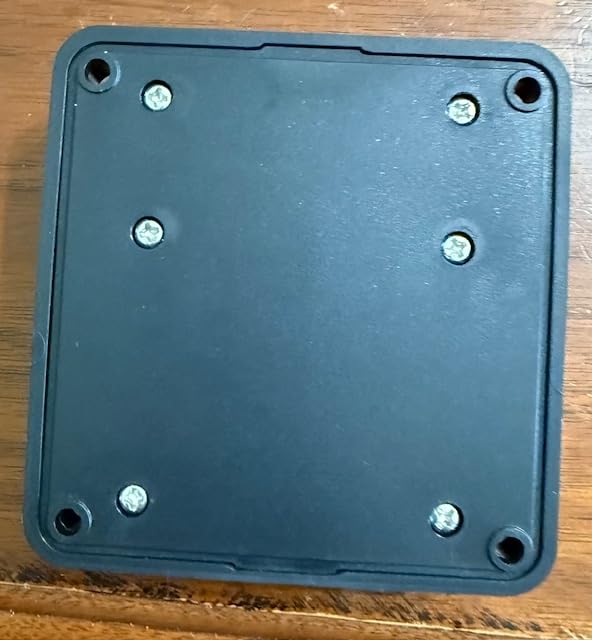
Owners consistently describe it as a tidier alternative to a row of inline fuse holders, and the accessory pack reinforces that: 12 assorted blade fuses, label stickers and mounting screws all come in the box, so nothing else has to be ordered to finish the job.
The diagnostic behaviour is also praised for its limits. Because each circuit has its own indicator, an empty position still shows a small residual reading, which some first-time installers mistake for a fault until they understand it is simply the indicator path.
Why the LED indicators matter more than they look
Troubleshooting a boat electrical system is mostly a matter of deciding where to start. With indicators, the first diagnostic step is free and instant, which on a night trip in rough water is the difference between a five-minute fix and a wet, cold hour of probing harness with a test light.
It also changes how you wire. Many owners report running essential circuits through this block and feeding radios and displays from the same protected bus, which frees switch positions on the dash panel for things that genuinely need switching.
Watch the ground clearance
The single most repeated caveat is spacing. The mounting holes sit close to the positive power routing, and several owners found they had under half an inch of clearance to ground on a metal panel, which prompted them to mount the block on a non-conductive surface or add a stand-off.
That is not a defect, it is a layout constraint you should design around before drilling. Measure the back of the block against your mounting surface, and if the clearance is tight, use a mounting insulator rather than forcing a screw into a live clearance path.
3. Kohree HY0406 12-Way Fuse Block: Most Circuits for the Money
- Twelve circuits is the highest count in this price class
- Includes 30 fuses across six amperage ratings
- IP86 housing with clear PC cover
- One year warranty and label stickers included
- Surface mount only
- so it needs a flat panel
- Needs a flat mounting surface rather than a direct through-hull fix
The Kohree HY0406 solves a different problem from the previous two blocks: what to do when six circuits is not enough but twelve is more than you need today. It is a 4.7-rated, twelve-way block that is IP86 rated, and it arrives with 30 blade fuses covering six different amperages.
That fuse assortment alone changes the install. Instead of buying a mixed box of blade fuses, matching amperage to each device by hand, you have the range on the bench, so bilge pump, livewell pump, navigation lights and accessory sockets can each get the correct fuse from the first attempt.
Electrical limits are honest ones: 30 A maximum per circuit, 100 A per panel, and a 32V DC operating voltage. Housing is a heat and flame resistant PBT body under a clear polycarbonate cover that resists splash and dust.
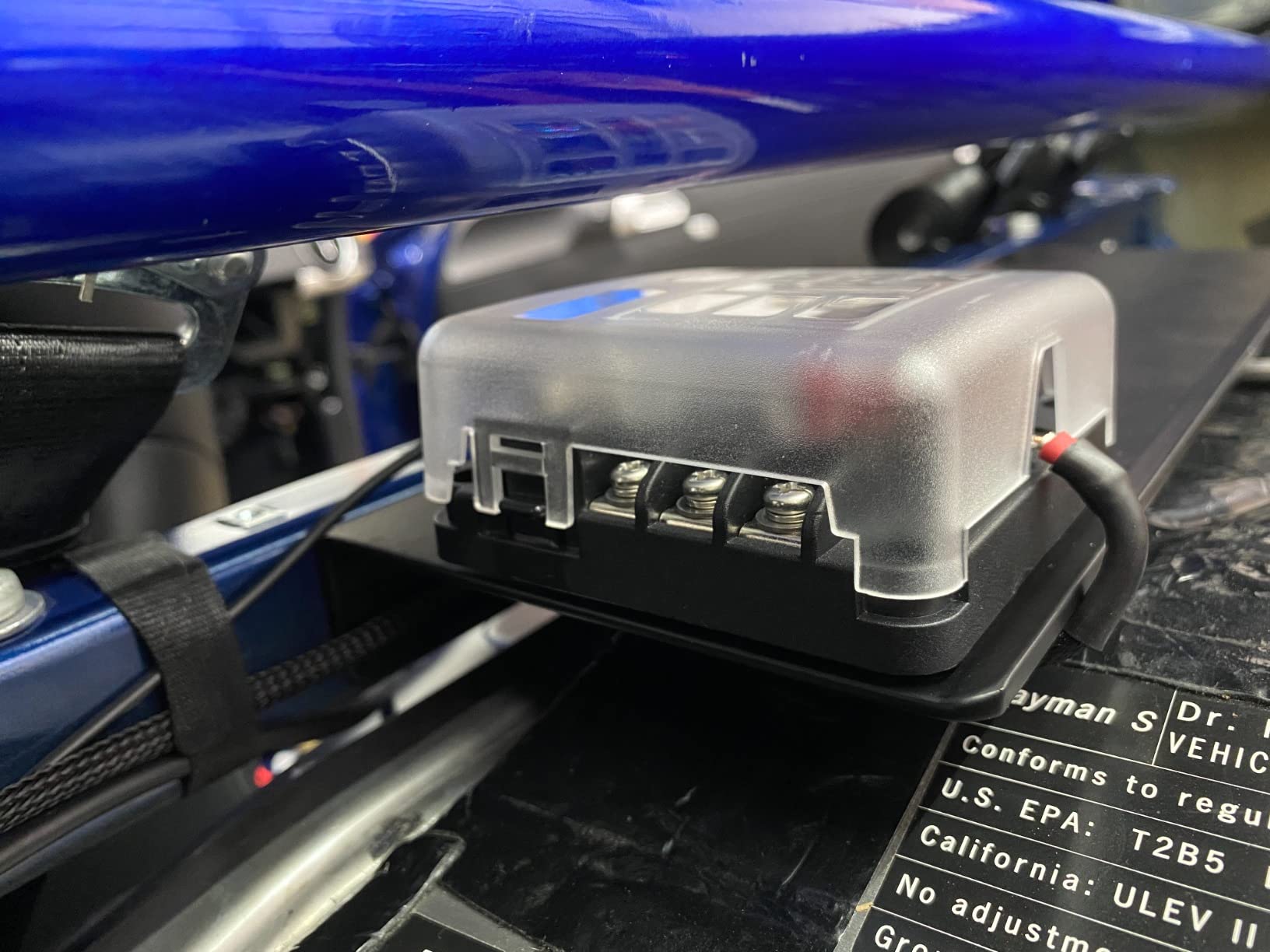
The per-circuit LED pins point to the failed circuit as soon as the cover is off. On a twelve-way block that matters more than on a six-way one, because the odds of guessing right are worse as the circuit count rises.
Reviewers repeatedly highlight the combination rather than any single spec, describing the circuit count, the fuse assortment and the indicators as the most capable feature set they could find in this class.
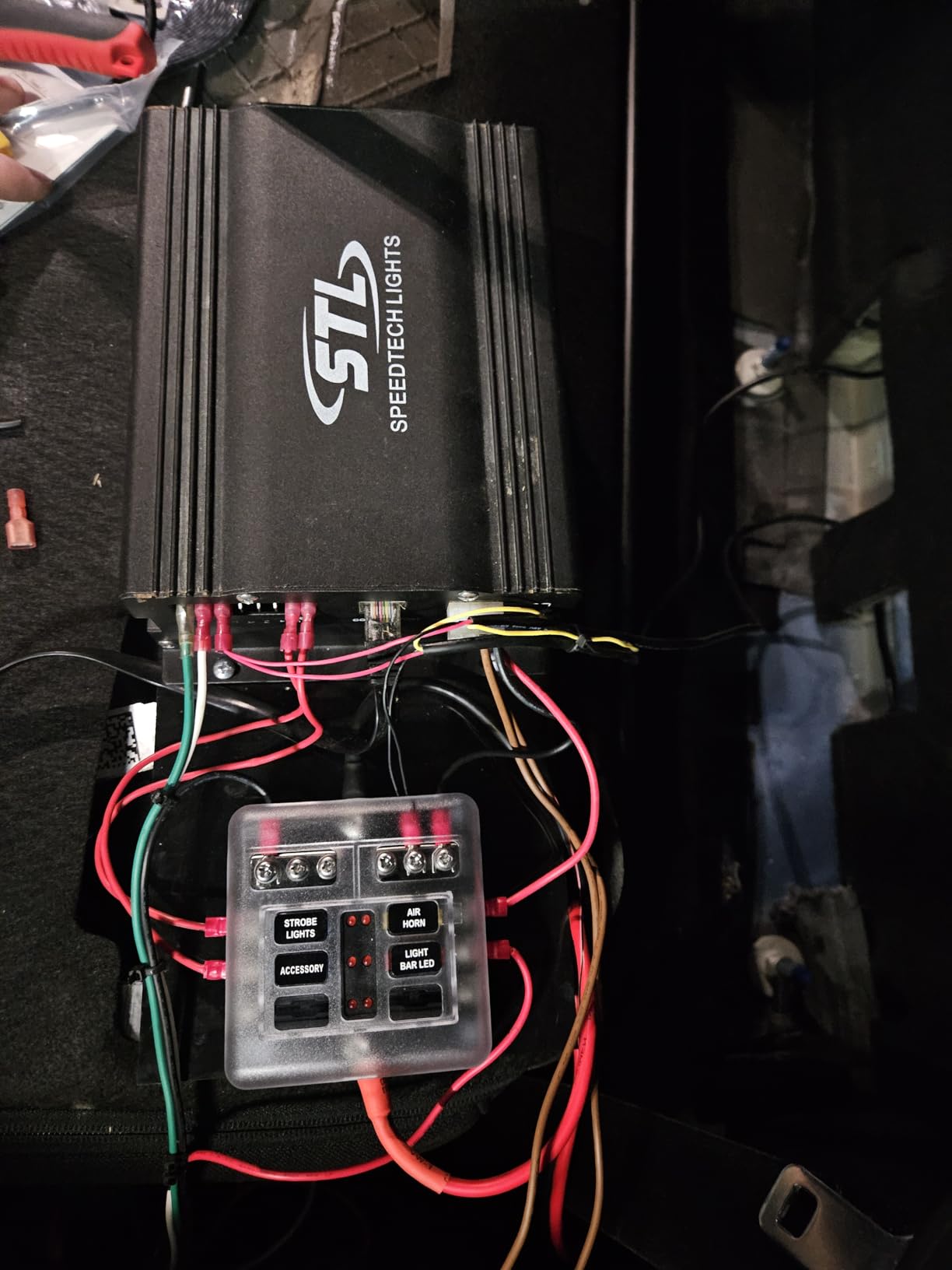
Most circuits per dollar
On pure expansion maths, nothing else in this list wins. Twelve positions means you can wire today’s loads and still have blank positions for the gear you will add next season, which is the position most owners are in when they first open the console.
Spare positions also have a diagnostic benefit. A block sized to the exact number of current loads forces you to double up circuits, and doubling up circuits is how a single tripped device takes out an unrelated piece of equipment.
The mounting style limit
This is a surface-mount block. It needs a flat panel to bolt to, so if your wiring runs inside a console cavity with no flat face, you will be building a small mounting plate as part of the job.
For a boat under construction that is a five-minute job. For a retrofit into a moulded console already full of hoses and harnesses, it is a real constraint, and it is the reason we would choose a through-hole block instead.
4. Kohree HY1024-JP 5-Gang Rocker Panel: Best for a Working Helm
Kohree 5 Gang 12V Marine Switch Panel, Waterproof Boat Rocker Switch Panel
- Five-gang aluminum panel with a clean OEM-style dash look
- Dual QC 3.0 ports deliver up to 18 W each
- USB touch switch cuts charging to protect the battery
- Each switch leg has its own fuse
- Backlighting is very bright at night
- Voltmeter digits are hard to read in daylight
- Pre-wired voltmeter and aux ports sit on constant power
This is the panel to buy when the job is helm control rather than distribution. The Kohree HY1024-JP puts five rocker switches, dual QC 3.0 USB ports, a USB touch switch, a 12V socket and a voltmeter on one aluminum faceplate, and it rates 4.6 across more than 3,400 ratings.
The USB touch switch is the part owners single out. It lets you kill the charging outputs without pulling a fuse, so you can stop USB devices from sitting on a house bank all day in a marina and draining it while the boat is switched off.
Protection is built in rather than assumed. Each switch leg carries its own fuse, and the panel includes a 15A fuse with overload and reverse polarity protection, which matters more on a boat than on a trailer because a reversed battery connection is a common marine mishap.
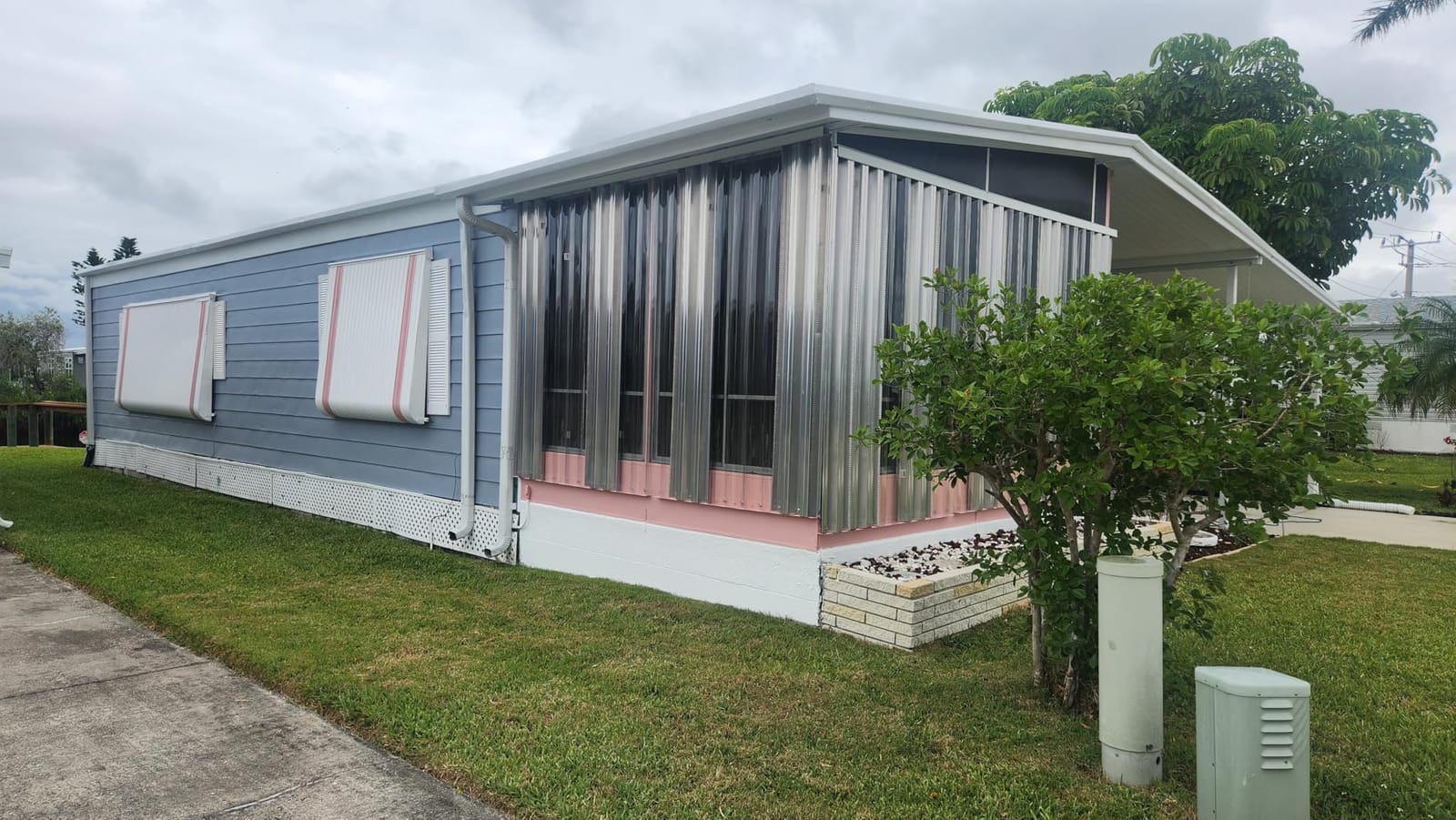
Installation is described as straightforward, with a conventional dash cutout and screw-down mounting. The face is aluminum rather than plastic, so it holds its shape in a helm cavity and does not flex when you press a switch.
What is genuinely useful is the per-switch fusing. Because each leg is individually protected, a fault on the livewell circuit does not take the electronics with it, which is the most common complaint we saw about generic multi-function panels.
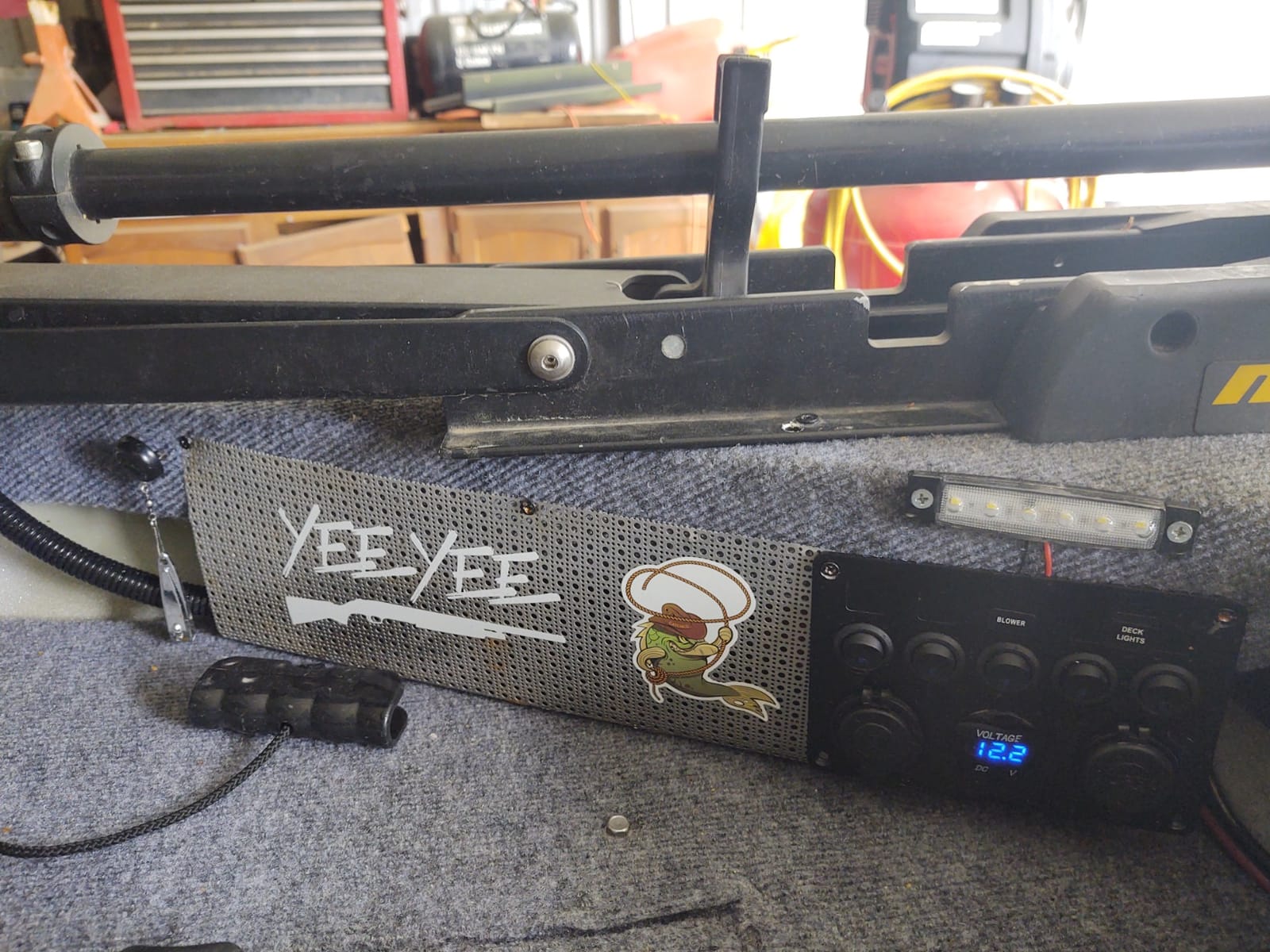
Built for a working helm
Owners across boat, campervan and utility trailer builds describe it as sturdy for the money, with the USB touch switch and per-switch fuses receiving particular praise. The layout suits a console where a helm does not want to reach into a switch panel deeper in the boat.
Label stickers are included, so you can mark NAV, LIVEWELL, PUMP, ACC and CABIN rather than leaving a row of identical rockers. The included set skews marine, and owners note that boat-specific labels are where you may want to add your own.
The backlighting problem
Blue backlighting on this panel is bright at night, and the voltmeter digits are reported as hard to read in daylight. That is a lighting design trade-off rather than a fault, but it is the detail to check before a night-fishing trip.
The standard fix is dimmer wiring rather than a different panel. Route the illumination feed through a panel light dimmer or a small adjustable LED driver so the labels glow without destroying night vision, which is the technique experienced owners use on every bright panel they fit.
5. FXC KG0149 5-Gang Waterproof Panel: Best for Exposed Cockpit Use
FXC Waterproof Marine Boat Rocker Switch Aluminum Panel 5 Gang with Dual USB Slot Socket 3.1A + Volt Meter Blue LED Light for Car Rv Vehicles Truck (KG0149-5B Blue)
- IP66 sealing is the highest verified rating in this group
- Pre-wired so no separate harness is needed
- 20 A per circuit beats most rivals in the same bracket
- CE and RoHS certified with a one year warranty
- Listed wattage of 74.4 W is a low ceiling for high-draw loads
- Only four assembly screws are included
- Blue LED display is not dimmable
When a panel is going in an open cockpit rather than a sheltered console, the sealing figure is the number that matters. The FXC KG0149 is rated IP66, and that is the highest verified ingress rating among the switch panels we reviewed for 2026.
The faceplate is marine-grade aluminum with an ABS and rubber body, and the switches use brass contacts. A pre-wired harness means you are bolting down a finished assembly rather than building a panel from loose rockers and crimped leads, which is where most home-built dash panels go wrong.
Convenience hardware is included: a 12V cigarette socket, a digital voltmeter and a dual USB charger rated at 3.1 A. Reverse polarity, short circuit, overload and over-current protection are all present, and the panel carries CE and RoHS certification.
Owners put the 20 A per-switch rating ahead of most competitors at this bracket. Several competing panels are rated at 15 A, and that gap is what decides whether a deck light or a small compressor can live on one switch.
Sealing you can measure
IP66 means protection against dust ingress and powerful water jets, which in practical terms is the difference between a panel that survives a rogue wave washing over the helm and one that does not. For a fishing boat that routinely takes green water, that is not a minor specification.
It is worth checking the rating in the listing rather than trusting a marketing phrase. We compare the stated international protection rating across the panels here, and some listings advertise waterproof while listing a far lower figure in the spec sheet.
The voltage and warranty gaps
The listed wattage of 74.4 W is a modest ceiling if you plan to run anything more substantial than lights, small pumps and electronics from a single switch. Check that figure against your largest planned load before committing.
The warranty is one year, which is shorter than the two years offered by some panels in the same group, and the package includes only four assembly screws. Neither is a dealbreaker, but both are worth knowing before you cut a dash hole.
6. Nilight 90101E 5-Gang Multi-Function Panel: Best for the Fastest Install
Nilight 5 Gang Multi-Function Rocker Switch Panel On Off Toggle Blue
- Pre-wired all-in-one panel shortens install time
- 2 year warranty is among the longest here
- Real-time LED voltmeter shows system state
- Works across 12V to 24V DC systems
- Push-on terminals limit the wire types you can attach
- 15 A per circuit is below several rivals
- Blue backlighting is fixed rather than dimmable
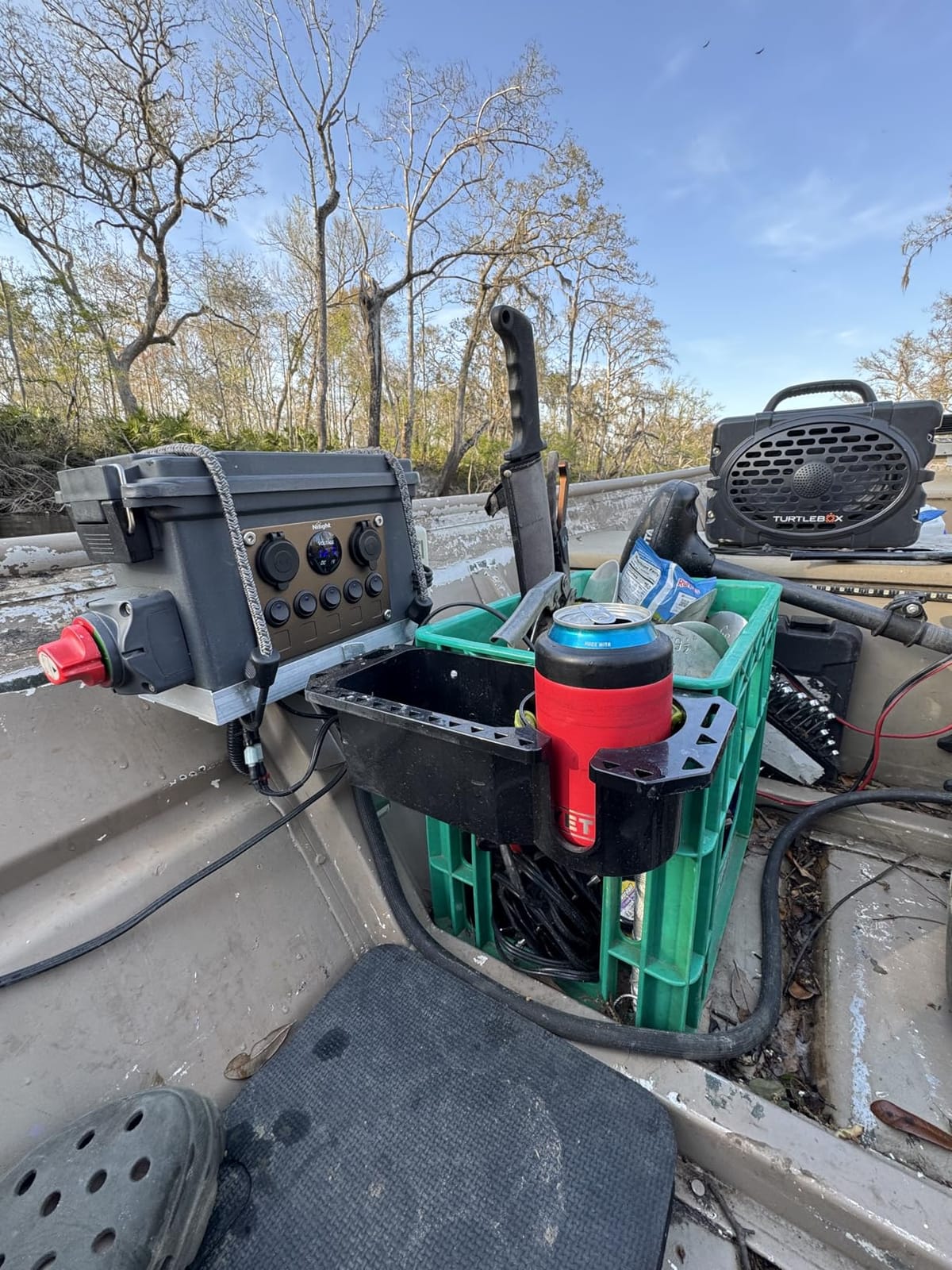
Everything on this panel arrives wired. The Nilight 90101E lands as a single assembly with five rocker switches, a digital voltmeter, a dual USB port and a 12V outlet, so the electrical work is mounting the panel and landing six conductors rather than building a harness circuit by circuit.
It carries a 4.6 rating from more than 2,200 ratings, and the two year warranty is longer than most panels in this group. Splash protection is IP65, with water-resistant switch caps on a marine-oriented aluminum body.
Reviewers point to the integrated 15A fuse handling overload, over-current and short circuit protection, plus the LED voltmeter that gives you a live readout of system voltage from the helm instead of a trip to the battery.
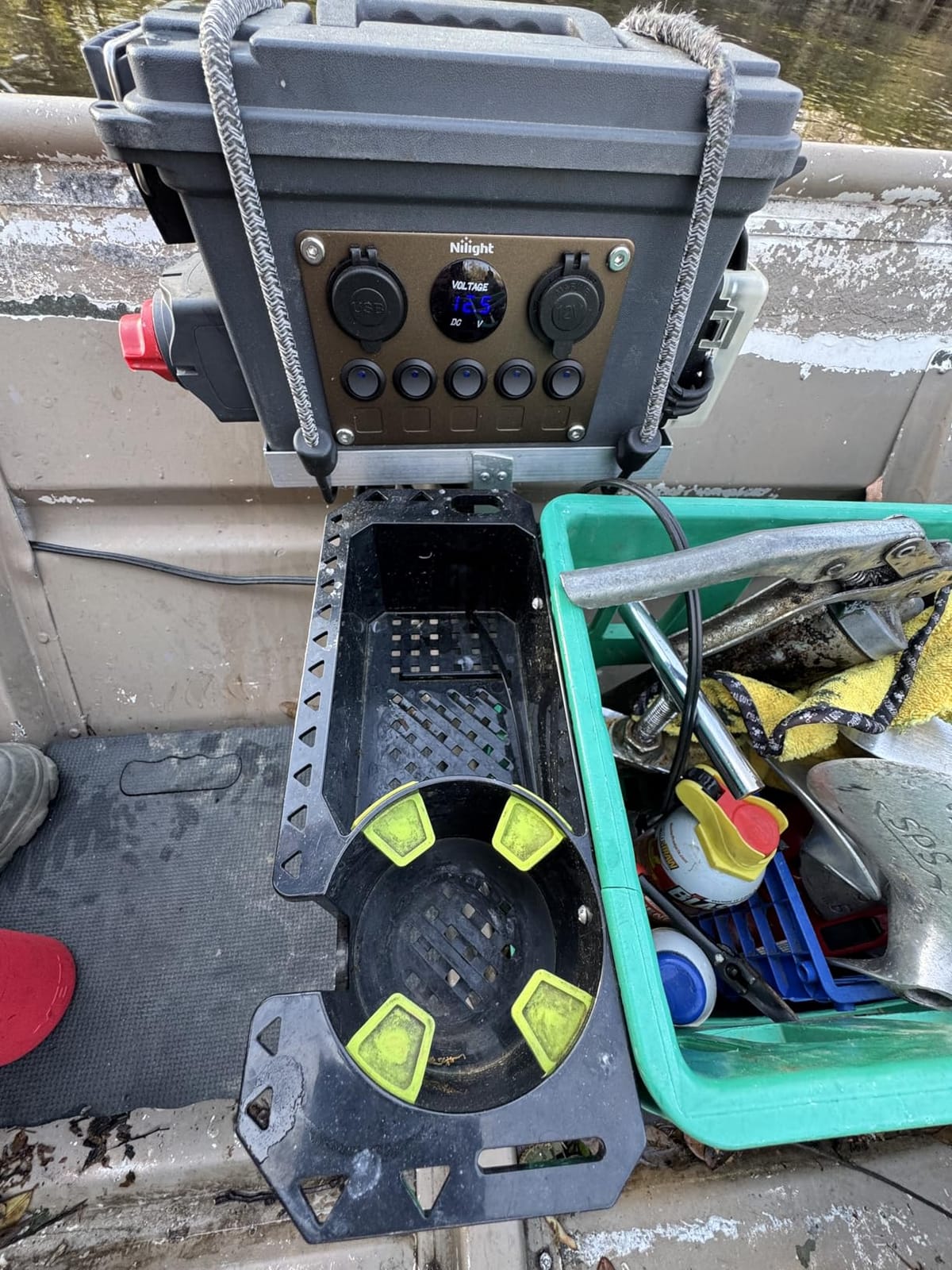
One convenience we appreciate is that the panel works across 12V to 24V DC systems, so the same faceplate fits a 12V accessory boat or a 24V vessel with a voltage-appropriate converter for the USB side.
The package includes the panel, DIY stickers and four screws, so the install list is short. That matters when you are doing the work in a marina with a deadline for the next ramp slot.
Fastest install in the group
For a retrofit where you are replacing a faded OEM plastic dash panel, pre-wired is the difference between an afternoon and a weekend. There is no harness to build, no terminal order to plan, and no chance of a polarity mistake buried in a bundle of identical wires.
The four assembly screws and included stickers mean the cutout is the only measurement you need to take before ordering, which removes the most common cause of a wrong-order return.
Terminals and amperage limit
The push-on terminal style limits the wire types you can attach, and that is a real constraint for anyone who wants to land custom tinned-copper marine wire rather than standard spade connectors.
The 15 A per-circuit rating is also below the 20 A offered by some panels at a similar cost. If a planned load exceeds 15 A, this panel is the wrong choice no matter how convenient the install is, so size the load list first.
7. DaierTek PN-L6S3-2 6-Gang Rocker Panel: Best for More Circuits on the Dash
DaierTek 6 Gang Marine Rocker Switch Panel Waterproof 12 Volt, Boat Toggle Switch Panel 12V Blue LED Lighted for Boat Car RV UTV with USB Cigarette Lighter Socket Voltmeter
- Six gangs give more circuit control than 4-5 gang panels
- Dual LED design makes switches easy to find in the dark
- Voltmeter reads 8V to 48V for wide battery monitoring
- Includes 50 transparent symbol label stickers
- Plastic body is less rigid than aluminum rivals
- Only one USB port reaches 2.1 A
- 100 megaohm insulation rating is not a marine spec
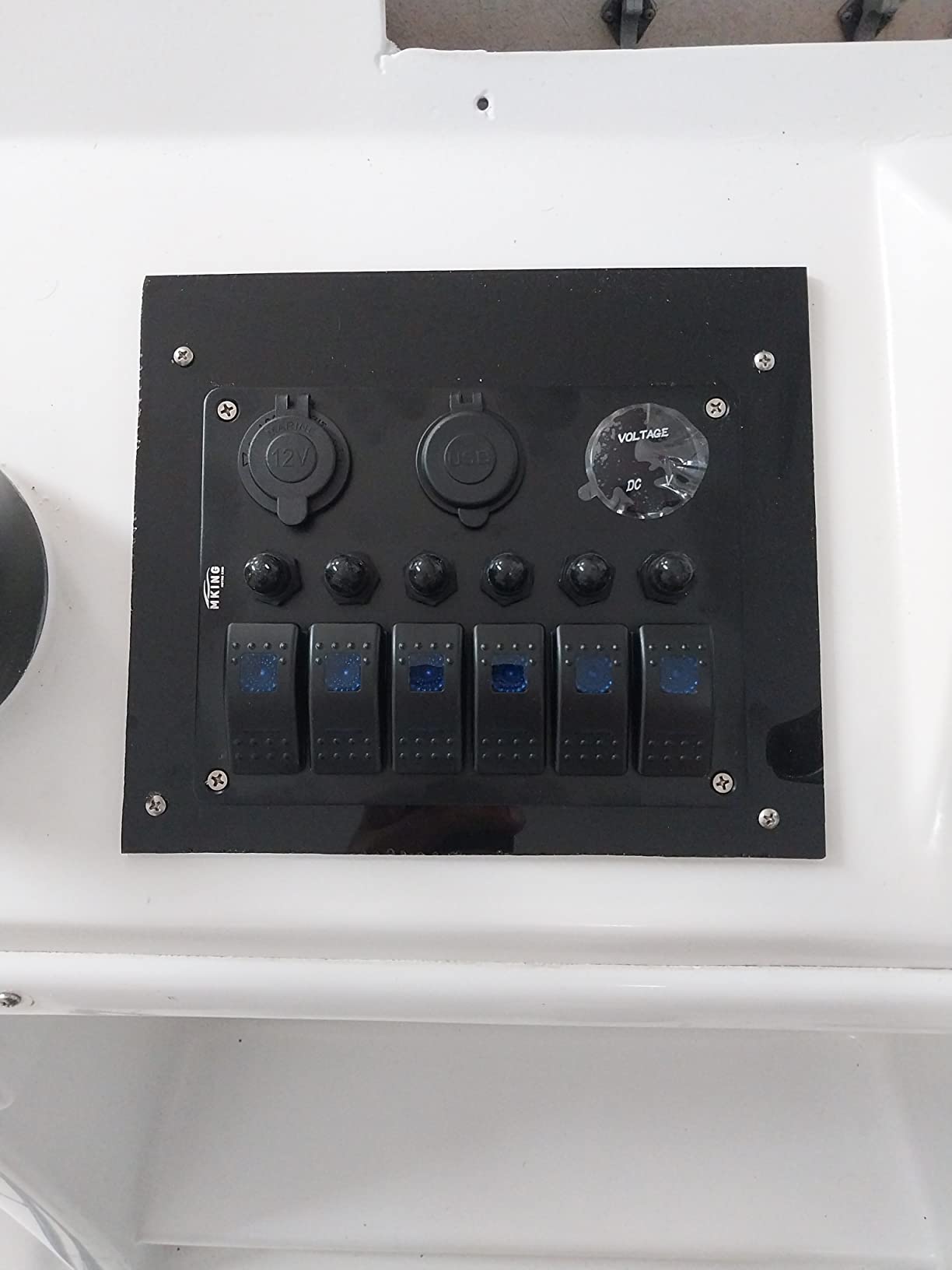
Six circuits is the sweet spot on many center consoles, and this is the panel that gives you six without stepping up in size. The DaierTek PN-L6S3-2 rates 4.6 across 860 ratings, with a rock-and-toggle switch layout, dual LED illumination and a voltmeter that reads from 8V to 48V.
That wide voltmeter range is the quietly useful specification. On a boat with a 12V start bank and a separate house bank, or on a vessel with a 24V system feeding a converter, a meter that tracks 8V to 48V tells you what the charger is actually doing instead of just whether the light is on.
Charging is covered by a cigarette lighter socket for 12V to 24V accessory plugs plus two USB ports rated 5V 2.1A and 5V 1A. Fifty transparent symbol label stickers come in the box, which is the largest label set in our list and covers a lot of non-marine naming.
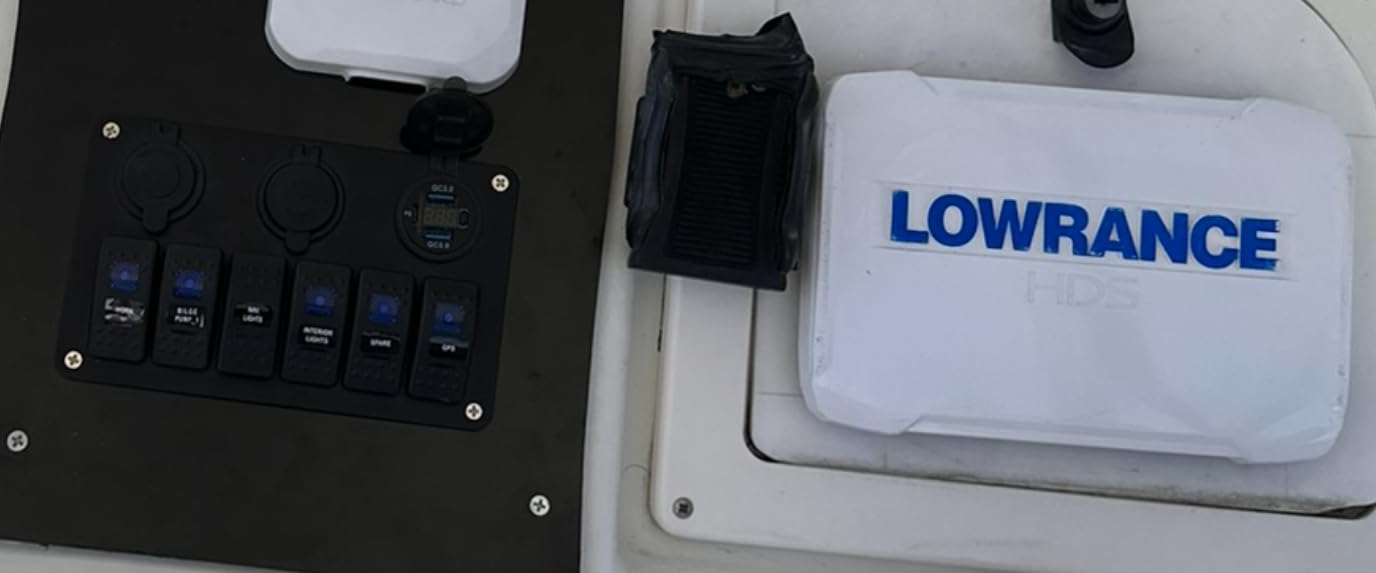
Owners across boat, UTV and RV builds describe the six-gang layout as the main draw, with the dual LED switches praised for being easy to locate in darkness without aiming a torch at the console.
Insulation resistance is listed at 100 megaohms, and the panel carries an IP65 water and dust resistance marking with brass contact construction on the switches.
Wide-range voltmeter advantage
A voltmeter that reads 8V to 48V turns a decorative gauge into a diagnostic tool. Sagging voltage under load points at a tired battery or a charging problem, and having that number visible at the helm is how you catch it before a device browns out.
It also removes the guesswork when you have more than one battery bank. Reading each bank in turn tells you whether the isolator and the charger are doing their jobs, which is otherwise invisible until something fails.
Plastic body and modest USB
The panel body is plastic rather than aluminum, so it is less rigid than the metal-bodied alternatives and will flex slightly in a hard-working helm. For a boat that is cosmetically tight, that difference is visible and some owners prefer aluminium.
Total USB output is modest, with only one port reaching 2.1 A. Several phones will charge slowly on it, so if charging speed matters, budget for a separate fast charger rather than assuming the panel will cover the whole helm.
8. DaierTek FB-1714 12-Way Fuse Block: Best for 12-Circuit Expansion
- Twelve circuits with a negative side at a low price
- Comes with 36 fuses and a full terminal set
- Red LED shows which circuit blew
- Push-lock cover keeps wiring protected
- Included fuses are inconsistent and may need replacing
- Cover resists splash rather than true waterproofing
- Separate negative terminals instead of one common bus
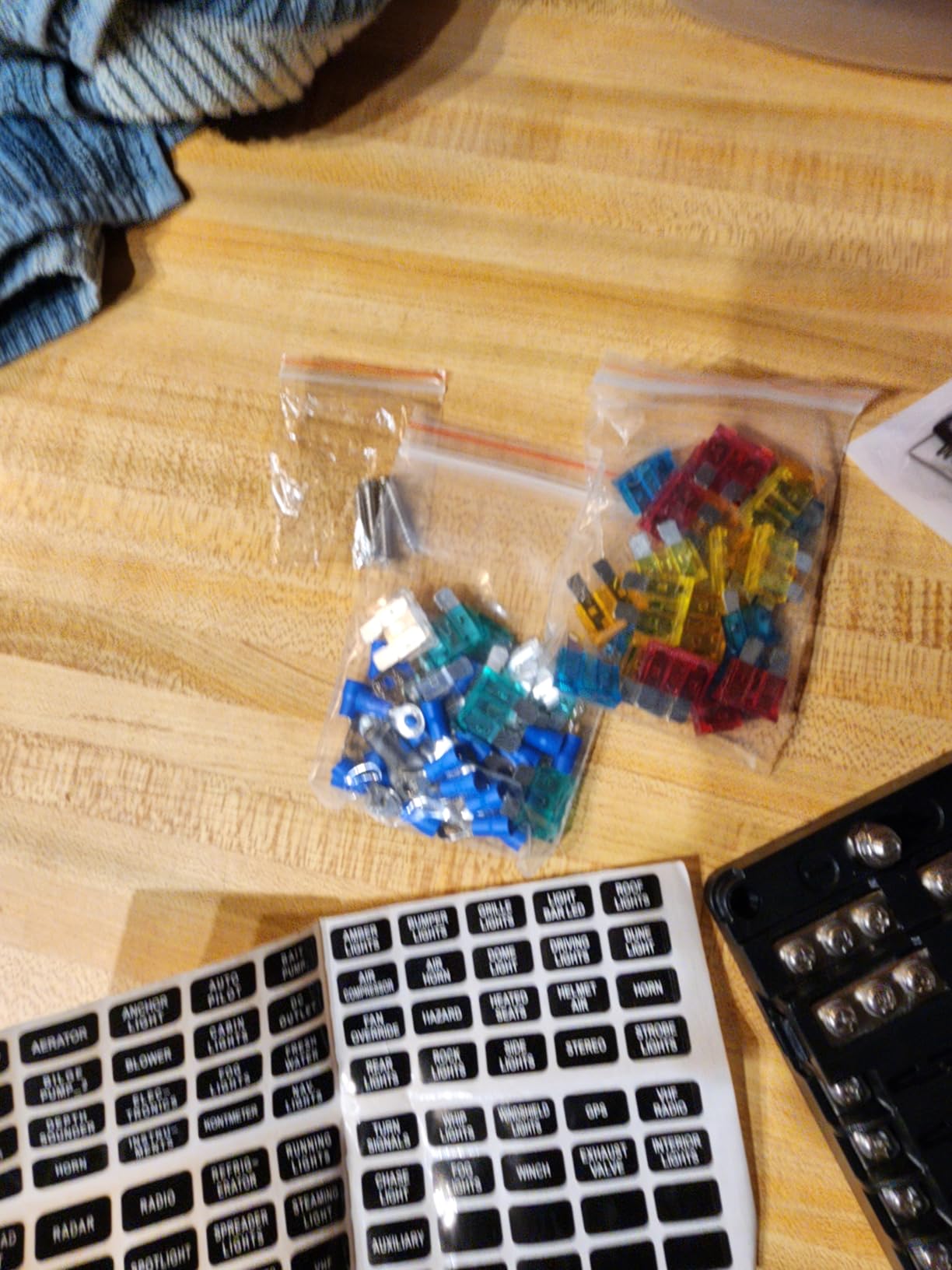
This is the most complete box in the list, and completeness is the reason to buy it. The DaierTek FB-1714 gives you twelve fuse positions, two power terminals, 24 device terminals and 36 blade fuses in six amperages, six of each from 5A to 30A.
That means you can wire the boat without a second trip to an electrical supplier. Electrical limits are 32V DC maximum, 100 A per panel and 30 A per circuit, which matches the class leader on paper while sitting in a much lower bracket.
A red warning LED lights on the affected circuit when a fuse blows, and a push-lock protective cover sits over the wiring. Owners report fitting it successfully in boats, golf carts and off-grid cabins, so it is not confined to one application.
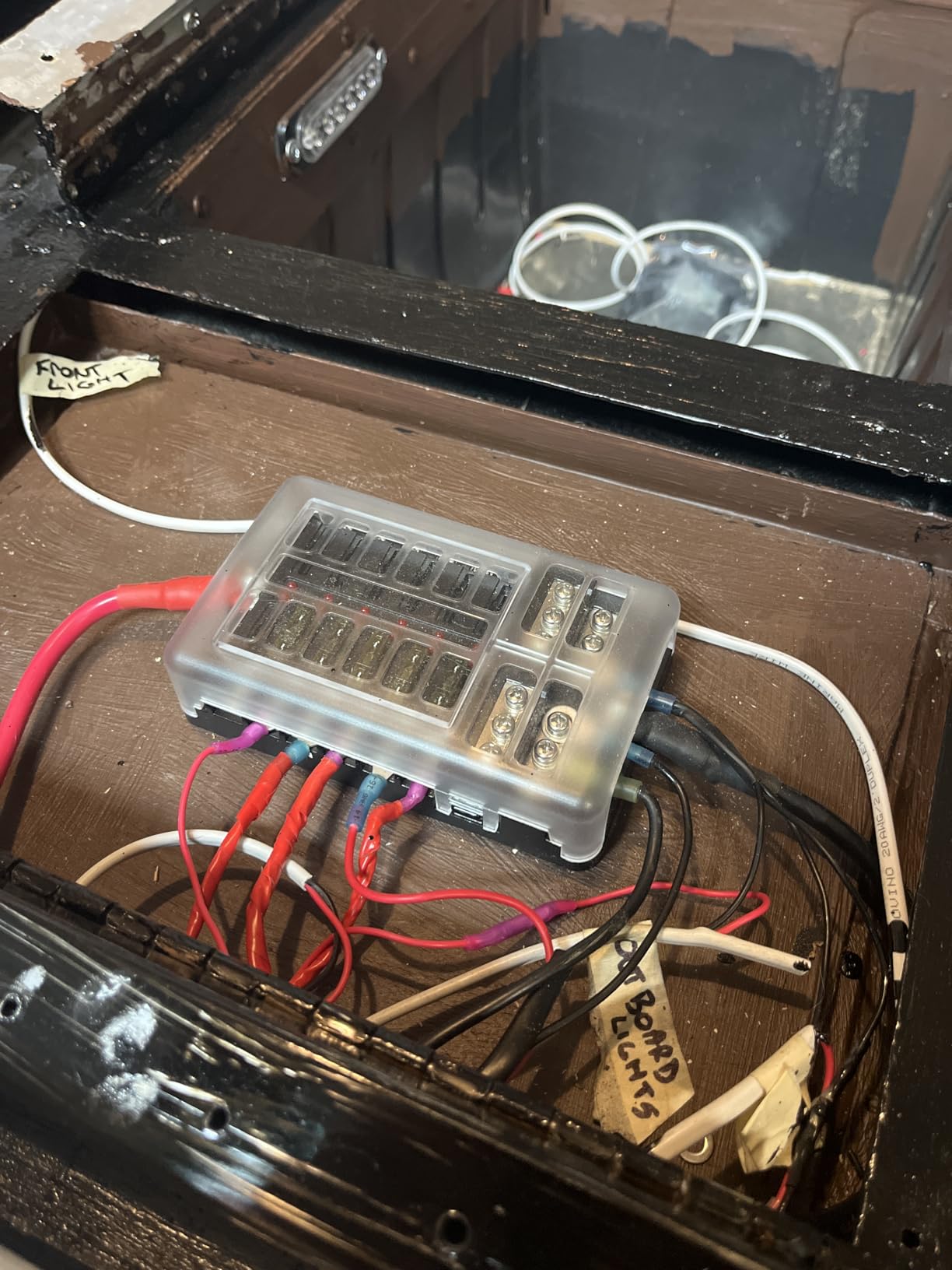
The terminal set is what reviewers mention most. With matching terminals supplied, the common complaint about hunting for the right connector disappears, and for a first-time installer that is a bigger time saver than it sounds.
Twelve positions with a negative side gives room for bilge pumps, livewell pumps, navigation and cabin lighting, plus four blank circuits for whatever gets added next season.
Most complete box in the list
Fuse quality is the specification to check rather than the feature to boast about. A block that ships with a full assortment saves a trip, but the fuses inside are the consumable part of the system and the ones that decide whether a short circuit is properly interrupted.
Our advice is simple. Use the supplied fuses to get the boat running, then replace any that sit on a critical circuit with name-brand units from a known maker, keeping the same amperage rating.
Splash resistance is not waterproofing
The clear cover resists splash and dust but is not genuinely waterproof, so for an exposed installation you would need to add a silicone seal around the edges. Inside a console or a dry compartment it needs nothing further.
Second, the negative side uses separate terminals rather than a single common bus. That is workable, but it means the ground side takes more connections than the fused side, and a bus bar handles that job more neatly.
9. Nilight 90117G 4-Gang Pre-Wired Panel: Best for a Tight Dash Fit
- 4.7 rating from 674 ratings is strong for the class
- Compact 4 gang layout suits smaller systems
- Pre-wired harness mounts horizontally or vertically
- 2 year warranty plus two sticker sets
- Only four circuits
- fewer than most panels at the same cost
- Listed dimensions of 0.39 x 0.39 x 0.39 inches do not match reality
Some dashboards simply do not have room for six rockers. This four-gang panel is the answer to that constraint, and at 4.7 from 674 ratings it is one of the better-rated units in the group despite being among the smallest.
You get five functions in four spaces: four rocker switches, a 12V cigarette socket, a digital voltmeter and a dual USB charger on a pre-wired harness. The harness mounts horizontally or vertically, which is genuinely useful in a narrow console side panel.
Construction is marine-grade aluminum with ABS and PC switches, rated IP65, described as scratch-proof and corrosion resistant. That is the panel to pick when the face will be handled constantly and exposed to a little spray.
The pre-wired approach means one cutout and a handful of connections, and the package includes two sets of DIY stickers along with a two year warranty.
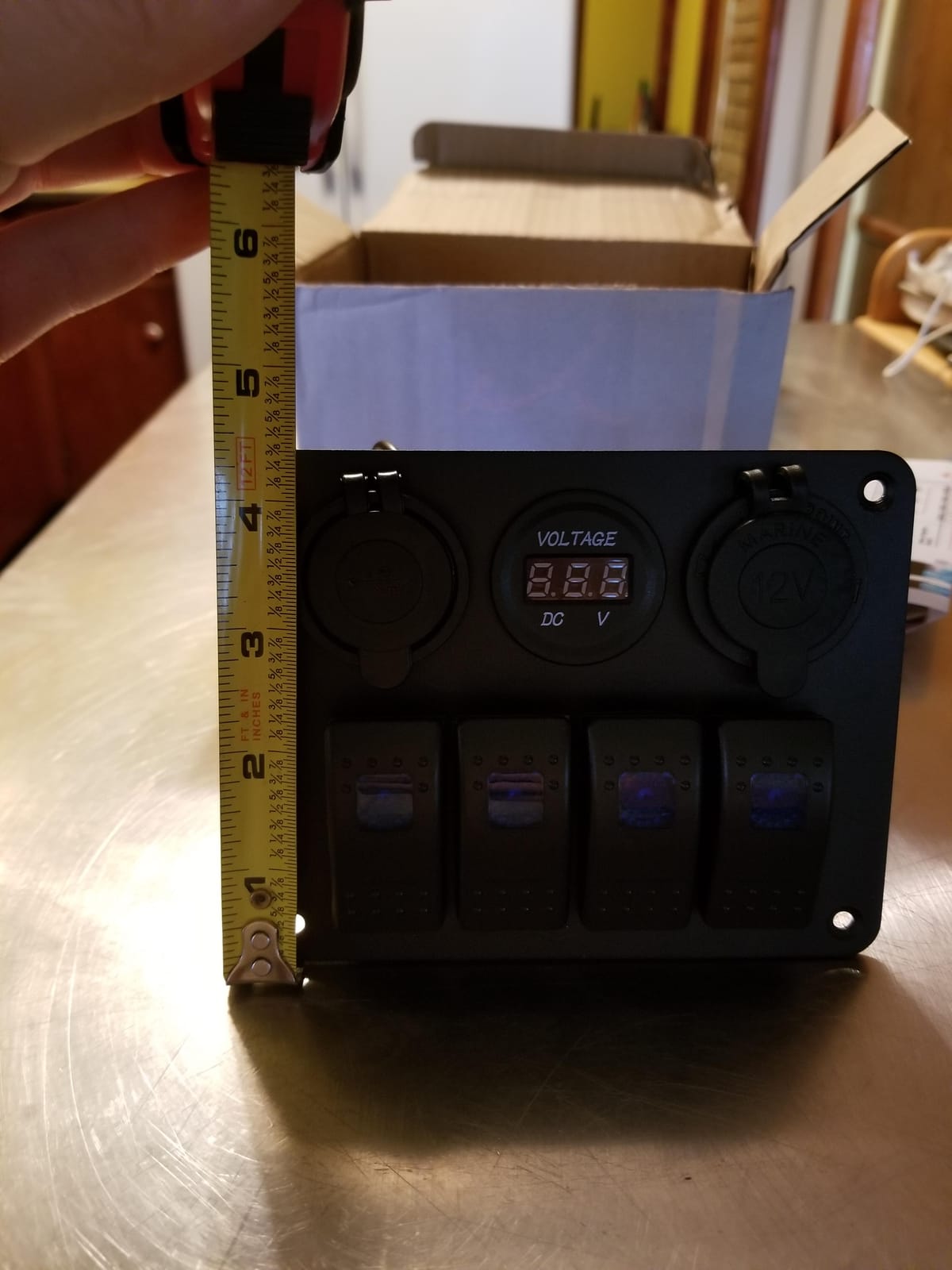
Owners point to the compact format, the pre-wired harness and the aluminum build as the reasons for the rating. On a small boat where helm real estate is the binding constraint, those are exactly the three things that matter.
Twenty amps per circuit is also a step up from the 15 A panels in this group, so the four circuits are each capable of carrying more than a light and a socket.
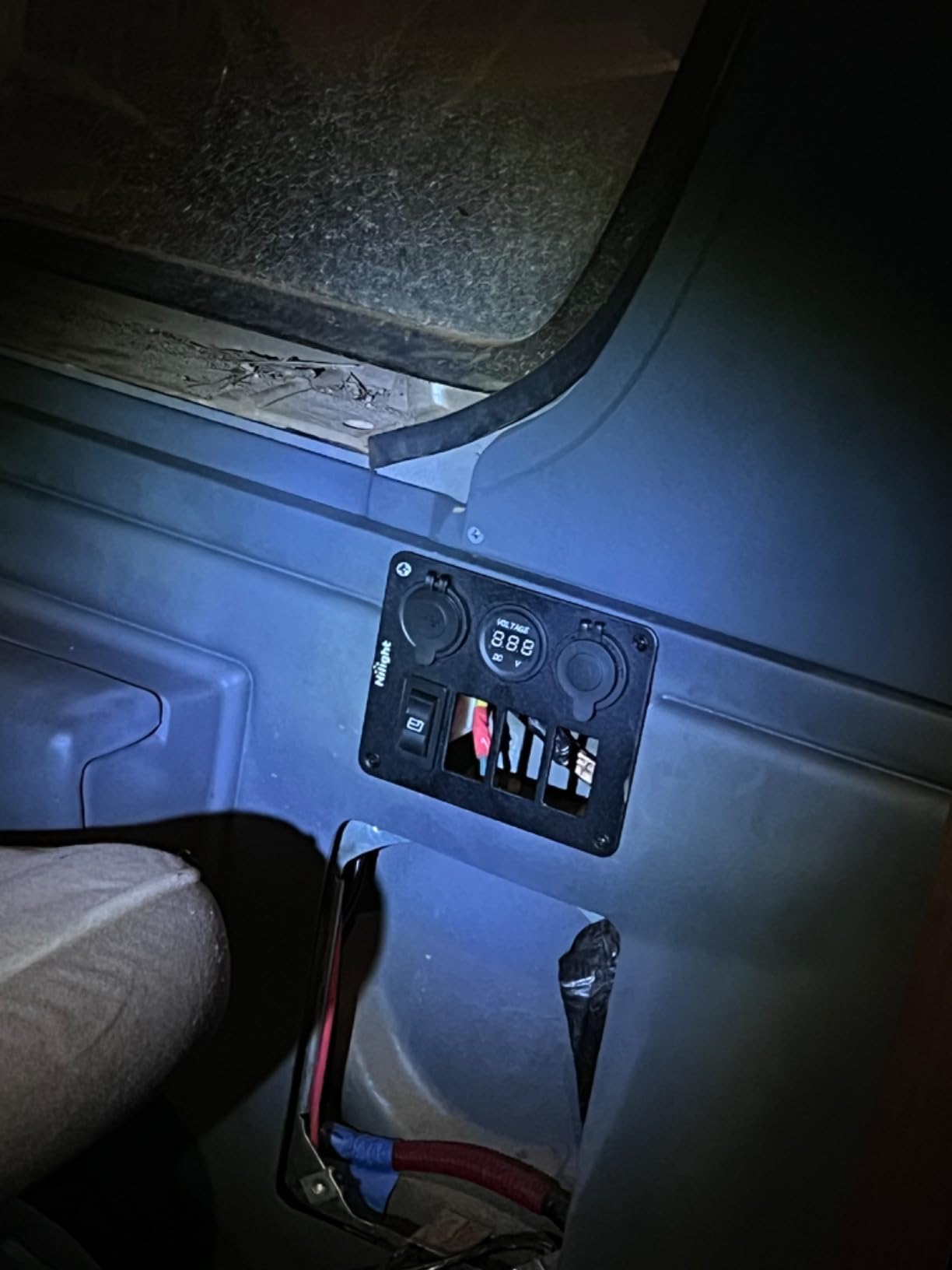
Compact where space is tight
Four circuits is enough for a boat with a disciplined load list: navigation and running lights, a bilge pump, a livewell pump and a general accessory circuit. Anything beyond that and you are back to a larger panel or a second faceplate.
The IP65 aluminum body is the reason we would choose it over a plastic four-gang in the same bracket. In a helm that gets wet, the metal face does not crack or flex, and the seals are rated rather than claimed.
Fewer circuits and an unreliable size figure
Fewer circuits than most panels at the same cost is the trade-off, and it is a real one if your load list is long. Measure the space, then count the loads, in that order, before choosing this over a five or six gang.
The listed dimensions of 0.39 x 0.39 x 0.39 inches do not reflect the panel’s actual size, so do not template a dash cutout from the listing. Order the panel first, or ask the seller for a physical dimension, and cut once.
10. DaierTek FB-1713 6-Way Fuse Block: Best for Small Boats and First-Time Builds
- Lowest entry point for a proper fused distribution block
- LED per circuit speeds up fault finding
- Includes 12 fuses and identification stickers
- Simple through-hole mounting with screw terminals
- Splash-resistant only and not sealed against submersion
- Tight fuse slots can block name-brand fuses
- Terminal screws are hard to reach and not fully included
Not every boat needs twelve circuits, and a first build should not start with an oversized panel. This six-way block covers the common small-boat load list and it is the least expensive way to get proper fused distribution with fault indication.
The operating range is 12V to 36V, with 100 A maximum continuous total and 30 A maximum per way, so it is not a toy despite the entry-level bracket. Twelve blade fuses come in the box along with a transparent cover and two sheets of identification stickers.
Owners describe it as a budget six-circuit distribution point that performs well for boat accessory circuits, golf carts and small RV rewires, and the LED indication per circuit is the feature they praise most.
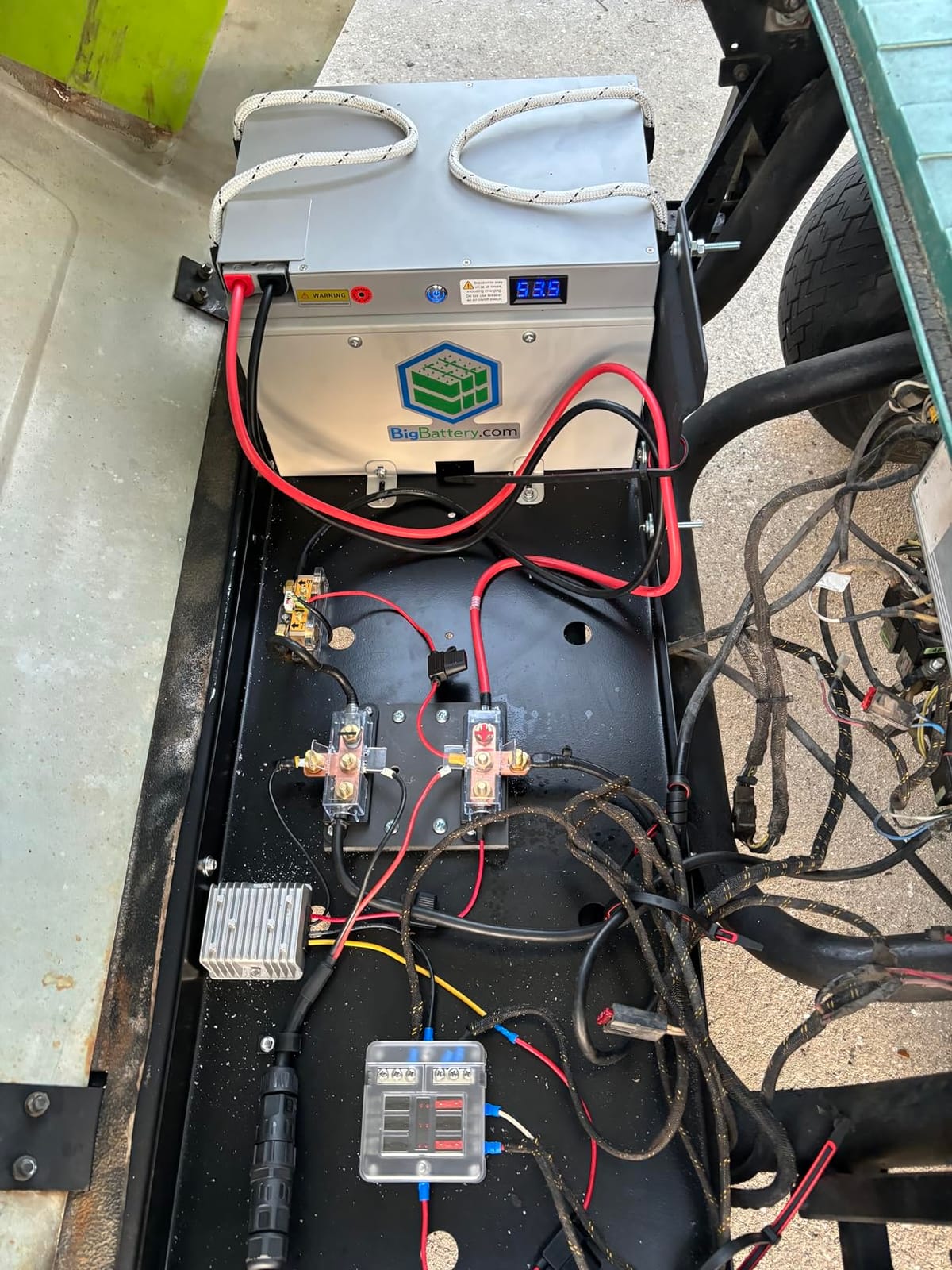
Through-hole mounting with screw terminals is the straightforward part. Unlike surface-mount designs, it fixes to a drilled flat and lands in a cramped console cavity without building a mounting plate first.
The included fuse assortment is skewed to practical values: two 5A, two 10A, four 15A and four 20A, which covers pumps, lights and accessory circuits without a separate purchase.
Right-sized for a jon boat or skiff
If your list is bilge pump, livewell pump, nav lights, a radio feed and one accessory socket, six circuits is the honest number. Buying twelve and using five leaves you paying for capacity you will never call on and mounting a larger face in a smaller console.
As a first build it is also the least intimidating. Screw terminals, one fault LED per circuit and a supplied fuse pack mean there is nothing specialist to learn beyond tightening each screw properly and torque-checking it later.
Tight slots and splash-only sealing
The fuse slots are tight, and name-brand fuses may need the plastic opening enlarged slightly before they seat properly. Budget a few minutes with a file or a small reamer, and test a fuse from your preferred brand before final assembly.
It is also splash-resistant rather than truly waterproof, so it needs a dry location or an added silicone seal. Terminal screws are difficult to reach with closed-eye terminals, so plan your ring or fork terminations accordingly.
How to Choose a Marine Electrical Panel?
Build the load list before you pick a panel
Write down every device the boat will carry, then decide for each one whether it needs a switch at the helm. Navigation and running lights, the bilge pump, the livewell pump, cabin lighting, a radio, a VHF, USB charging and any accessory socket are the usual entries on a small boat. A center console with outriggers or a tower adds more, and so does refrigeration, a windlass or an inverter.
Sum the current for everything on the list, then add 25 to 30 percent headroom. Headroom is not wasted capacity, it is the margin that stops a panel running at its limit on a hot afternoon with every accessory going at once. Finally, add two to four blank positions so the next device you add does not mean a new panel.
One habit worth adopting comes straight from owner experience: feed a radio, a VHF or a display directly from a protected fuse block rather than through a switch, and reserve panel positions for loads you genuinely want to turn off. That approach is widely recommended on The Hull Truth wiring threads because it keeps helm positions available for future equipment.
Breaker panel or fuse block: which architecture fits
These two devices look similar and solve different problems. A DC breaker panel gives you a resettable breaker per circuit and a switch at the same time, so it installs faster with less wiring. A fuse block gives you a blade fuse per circuit with no switching, so it is smaller, cheaper per position and lets you choose the exact fuse rating for each device after the load is known.
That last point is the real trade-off. With a fixed-breaker panel, every circuit gets the same breaker amperage unless you buy a different panel, which makes it awkward when a livewell pump needs 10 A and a nav circuit needs 3 A. A fuse block lets you match each device exactly, and it is why experienced owners often pair a fuse block for protection with a separate switch panel for control.
There is a lifespan argument too. Breakers used as routine on/off switches wear faster than breakers left alone to do their overcurrent job, which is the point made repeatedly in the competitor buying guides and echoed in owner threads. If your design leans heavily on panel switches as controls, a fuse block for protection plus a switch panel for the helm is the arrangement that ages best.
AC panels, ELCI protection and why they are a separate buy
Every panel in our roundup is a DC device, because shore power hardware is a different category. AC panels take the 120V feed from a marina pedestal or an inverter, distribute it to outlets, and must include leakage protection.
That protection is called an ELCI, sometimes sold as a GFCI, and it trips when current finds a path to ground outside the intended circuit, which is how a person who touches a live conductor and the water at the same time is protected. ABYC requires this on modern builds, and a panel without it is a compromise you will eventually replace.
For boats that plug into a marina, the AC side deserves the same scrutiny as the DC side: tinned copper buswork, corrosion-resistant fasteners, a labelled main breaker and a legible circuit list. If you are specifying AC hardware, the brands forum owners name most often for DC work, including Blue Sea Systems, NewWireMarine for custom work, and BEP and Marinco for value tiers, all build AC panels to the same marine standard.
If you are also planning the rest of the electrical upgrade, our picks for marine solar panels and marine speakers cover the two other circuits most owners are adding in the same refit.
The 80% continuous-load rule in plain English
The 80% rule means you size each breaker so that the load it protects draws no more than 80 percent of the breaker rating on a continuous basis. A 10 A breaker therefore supports 8 A of continuous draw, a 15 A breaker supports 12 A, and a 30 A breaker supports 24 A.
The reason is heat. A breaker sitting permanently near its rating runs warm, and a warm breaker in a hot, enclosed helm cavity runs warmer still. Marine wiring is often long and routed through hot compartments, so the margin protects both the wire and the device that trips the breaker.
Ambient temperature derating works on top of this. A breaker mounted in a console in direct sun, or inside an engine bay, is already operating in a hotter environment than a breaker on a bulkhead, and manufacturers publish derating curves for exactly that situation. The practical advice is to never size a breaker to the bare ampacity of the device it protects, and to check the panel’s own derating guidance before you commit to a position count.
What actually drives the price gap
The spread between panels in this category is wide, and the reason is bus material, sealing standard and how much of the assembly is pre-wired. A tinned copper bus with a corrosion-resistant housing in a twelve-circuit block sits at the top of the range. A plated block with a splash-rated cover and a supplied fuse pack sits at the bottom.
Pre-wiring is a separate cost driver. A panel that arrives as a finished assembly with USB, voltmeter and socket already connected saves a large block of labour, and that labour is what the price difference between a basic rocker panel and a multifunction panel is actually paying for.
On the residential question that keeps appearing in search data, neither Eaton nor Square D is the right answer for a boat. Those are residential panel brands, and the honest response is to use marine-grade panels from Blue Sea Systems, BEP, Marinco, Paneltronics, Newmar or a custom builder such as NewWireMarine, which forum owners consistently rate highest for laser-etched, prewired work.
Retrofitting an existing OEM panel
Most panel replacements are driven by a faded, cracked or non-serviceable OEM plastic dash panel rather than by a capacity problem. The job is straightforward once you know what you are matching, because the boat’s existing cutout and switch spacing decide which panels are candidates.
Measure the cutout width and height, note the centre-to-centre spacing of the existing switch holes, and photograph the back of the panel before removing anything. The back is where you will find the existing fusing, the number of conductors and the ground arrangement, and that information determines whether you can reuse the harness or need to re-terminate every circuit.
Two safety rules are worth stating plainly. If you are using a lower-cost panel downstream of existing protection, install it in a dry location away from spray, and do not exceed half the rated amperage. And if the panel handles AC at all, it needs ELCI protection and tinned terminals, because corrosion on a single AC connection is enough to cause a fault that DC-only hardware will never reveal.
If your refit also touches the audio side of the console, our guides to marine stereos and marine subwoofers cover the parts of that job that sit either side of the new panel cutout.
Frequently Asked Questions
Which brand of electrical panels is considered the best?
Blue Sea Systems is the most widely recommended marine electrical panel brand, and the reason is bus material and serviceability rather than marketing. For custom, laser-etched and prewired work, NewWireMarine is consistently rated highest by owners. BEP and Marinco cover the value tiers, and Newmar and Paneltronics sit at the premium end. For a typical boat, a Blue Sea or equivalent tinned-copper fuse block paired with a pre-wired rocker switch panel is the most common combination.
Do I need a circuit breaker panel or a fuse block on a boat?
A breaker panel installs faster and puts protection and switching in one device, but every circuit gets the same breaker amperage unless you change panels. A fuse block is smaller and cheaper per position, has no switching to wear out, and lets you choose the exact fuse rating for each device once you know the load. A common approach is a fuse block for protection in a dry compartment plus a separate pre-wired switch panel for helm control.
What is the 80% rule for electrical panels?
The 80% rule means a continuous load should draw no more than 80 percent of the breaker or fuse rating protecting it, so a 10 A breaker carries 8 A of continuous draw. The margin exists because breakers near their rating run warm, and marine wiring is often long and routed through hot compartments. Ambient temperature derating applies on top of this for panels mounted in a sunlit console or an engine space.
What size electrical panel do I need for my boat?
List every device the boat will carry, decide which ones need a helm switch, then sum the current for the switched loads. Add 25 to 30 percent headroom for simultaneous use and heat, then add two to four blank positions for future equipment. Match the result to the nearest available panel size, and check that no single load exceeds the per-circuit rating of the panel you choose.
Are cheap switch panels safe to use on a boat?
Panels with no identifiable marine brand are widely considered unsuitable for a saltwater environment because they are built to a price rather than a standard, and owners on The Hull Truth consistently warn against them. If one is used at all, install it only in a dry location away from spray, downstream of existing protection, and do not exceed half the rated amperage. Marine-grade fasteners, sealed terminals and a documented ingress rating are the minimum for exposed positions.
The Verdict: Which Marine Electrical Panel Fits Your Boat
For most boats the answer is two devices rather than one. A tinned-copper fuse block such as the Blue Sea Systems 5026 handles protection in a dry compartment, and a pre-wired rocker switch panel such as the Nilight 90101E or the DaierTek PN-L6S3-2 handles control, charging and monitoring at the helm.
If you are on a strict budget, the WUPP CS-664A1 and the DaierTek FB-1713 give you six properly fused circuits with LED fault indication for the least money in this list, and the Kohree HY0406 is the pick when you want twelve positions to grow into.
Whatever you fit, write the load list first, apply the 80% rule to every continuous circuit, and keep anything handling AC behind proper leakage protection. Our picks for the best inflatable boats and other gear roundups cover the rest of the build, and this 2026 guide will be updated as new panels reach the water.