
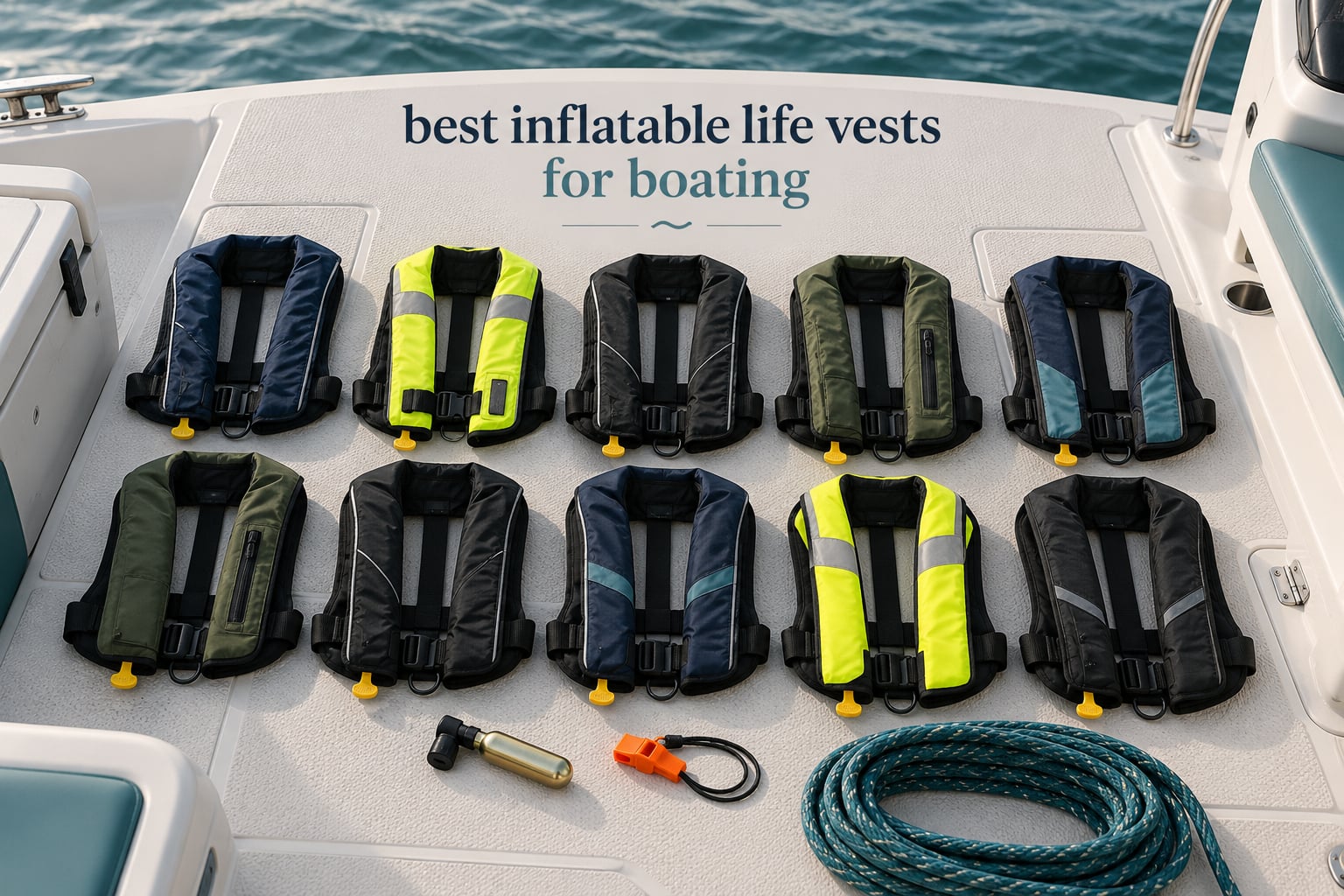
An inflatable life vest is a personal flotation device that stays flat and cool against your body until you hit the water, then fires a CO2 cartridge to push you to the surface in a few seconds. Compared with a foam PFD it is lighter, narrower and far easier to wear for a full day on deck, which matters because most boating drownings happen to people who simply were not wearing anything. After comparing the ten models below on buoyancy, inflation method, fit range and owner feedback, the Onyx A/M-24 came out ahead as the best inflatable life vest for boating in 2026 for anyone who wants one vest that works on deck, in a cockpit and offshore.
That is the whole argument for inflatables, and it is worth being blunt about the tradeoff. A foam vest is a passive object: it cannot fail, it cannot need servicing, and it floats the moment it hits salt water. An inflatable is a small mechanical device, and a mechanical device needs a live cartridge, a clean inflator and an annual inspection. Buy the wrong one and you will either wear a manual-only belt you cannot reach in an emergency, or store an automatic unit somewhere damp that eventually fires on its own.
Everything in this roundup is a current-production inflatable from a brand that prints a US Coast Guard approval label on the shell. We did not include soft non-approved flotation cushions, and we did not include any model whose only claim is that it floats. If you are choosing for a boat, the type label matters more than the price, so each review below leads with the USCG type and the buoyancy figure.
One note before we get into the list: if you also have a dog on board, our dog life jacket boating guide covers the canine side, and cooling vests for flat-faced breeds is worth a read in hot weather. For handlers whose dogs find engine noise and boat motion stressful, our anxiety vest guide completes the onboard kit, and ballistic vests for working dogs covers long working days on the water.
Table of Contents
Top 3 Inflatables for Boating in 2026

The Onyx A/M-24 wins the top slot because it is the only vest in this group that lets you choose the inflation method per outing. Leave it on automatic for open water, pop in the supplied conversion cap when you are poling a skiff in flat calm, and it still inflates on immersion if you forget.
The Onyx M-16 is the one most people should actually buy. At 7.2 ounces with a 16 gram cartridge it disappears under a life jacket, and the pull handle clips to the belt so it cannot snag on a tiller or a hatch.
The BLUESTORM Cirrus26 is the flotation upgrade. Its 26 pounds of buoyancy is roughly double a Type III foam vest, and the internal pocket holds a spare cylinder so a single failure does not end the trip.
All 10 Inflatables at a Glance in 2026
| Product | Specifications | Action |
|---|---|---|
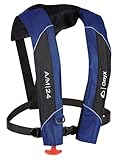 Onyx A/M-24 Onyx A/M-24 |
|
Check Latest Price |
 Onyx M-16 Onyx M-16 |
|
Check Latest Price |
| BLUESTORM Cirrus26 |
|
Check Latest Price |
 Eyson Slim Automatic Eyson Slim Automatic |
|
Check Latest Price |
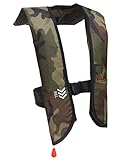 Eyson Basic Manual Eyson Basic Manual |
|
Check Latest Price |
 BLUESTORM Arcus 40 BLUESTORM Arcus 40 |
|
Check Latest Price |
 Eyson Highly Visible Automatic Eyson Highly Visible Automatic |
|
Check Latest Price |
 BLUESTORM Cirro 26 BLUESTORM Cirro 26 |
|
Check Latest Price |
 Mustang M.I.T. 100 Mustang M.I.T. 100 |
|
Check Latest Price |
 Owntop Belt Pack Owntop Belt Pack |
|
Check Latest Price |
Two things stand out in that spread. Buoyancy ranges from 17 pounds on a belt pack to 40 pounds on a full-coverage Type II, which is a bigger gap than most buyers expect. And three of the ten use a 150 newton rating, a European-style figure that converts to roughly 33 pounds, comfortably above what a US Type III foam vest delivers.
What Is an Inflatable Life Vest?
An inflatable life vest is a personal flotation device built around a sealed air chamber. In normal wear it is a flat belt or a slim vest. On activation, a CO2 cartridge adds enough gas to inflate the chamber, and the resulting buoyancy holds your shoulders and head clear of the water.
The US Coast Guard sorts flotation devices into five types, and the type label tells you far more than the marketing copy does.
Type I is a bulky offshore jacket with a collar, designed for rough water and for people who may not be able to right themselves. Type II is a near-total coverage vest that is rated to turn most unconscious wearers face-up. Type III is the general boating and fishing special with a thin foam or inflatable core. Type IV is a throwable buoyancy aid that is worn with one hand, not a wearable PFD. Type V is a performance label, not a standalone type: a Type V garment is approved for specific uses such as offshore work, racing or extreme weather, and it must be worn to count.
Two details trip people up. A life jacket and a PFD are the same object under different names; the Coast Guard uses PFD, the public uses life jacket. And an inflatable that has been deployed is a used device until you fit a new cartridge and bobbin, which is why rearming is part of ownership, not a repair job.
How We Picked and Compared These Vests
We built this list from ten inflatable PFDs that are current, USCG labelled and available to boaters, then compared them on the specs that actually change survival outcomes: the type label, the buoyancy in pounds or newtons, the inflation method, the chest and waist range, the shell fabric and the size of the owner review base.
Review volume mattered, because a mechanical safety device deserves more than three comments. Five of the ten models here have fewer than 310 written reviews, and we have said so plainly in each entry rather than treating a thin review base as a strong endorsement. Where owners consistently describe the same limitation, we put it in the cons line even when the marketing never mentions it.
Forum signal shaped the shortlist as well. Recurring questions on sailing and boating boards in 2026 cluster around the same four things: false automatic inflation in humid storage, rearming cost, whether universal sizing actually fits, and whether belt packs are acceptable offshore. Each of those has a section in the buying guide below.
1. Onyx A/M-24 Automatic/Manual Inflatable Life Jacket
- Convert from automatic to manual-only with the included cap
- 22.5 lbs of buoyancy with face-up turning
- Neoprene neckline stays cool on long days
- Most owner reviews in this roundup at 3280
- Rearming kit sold separately for testing and reuse
- Pull handle sits near the front buckle
- Needs dry storage in humid climates
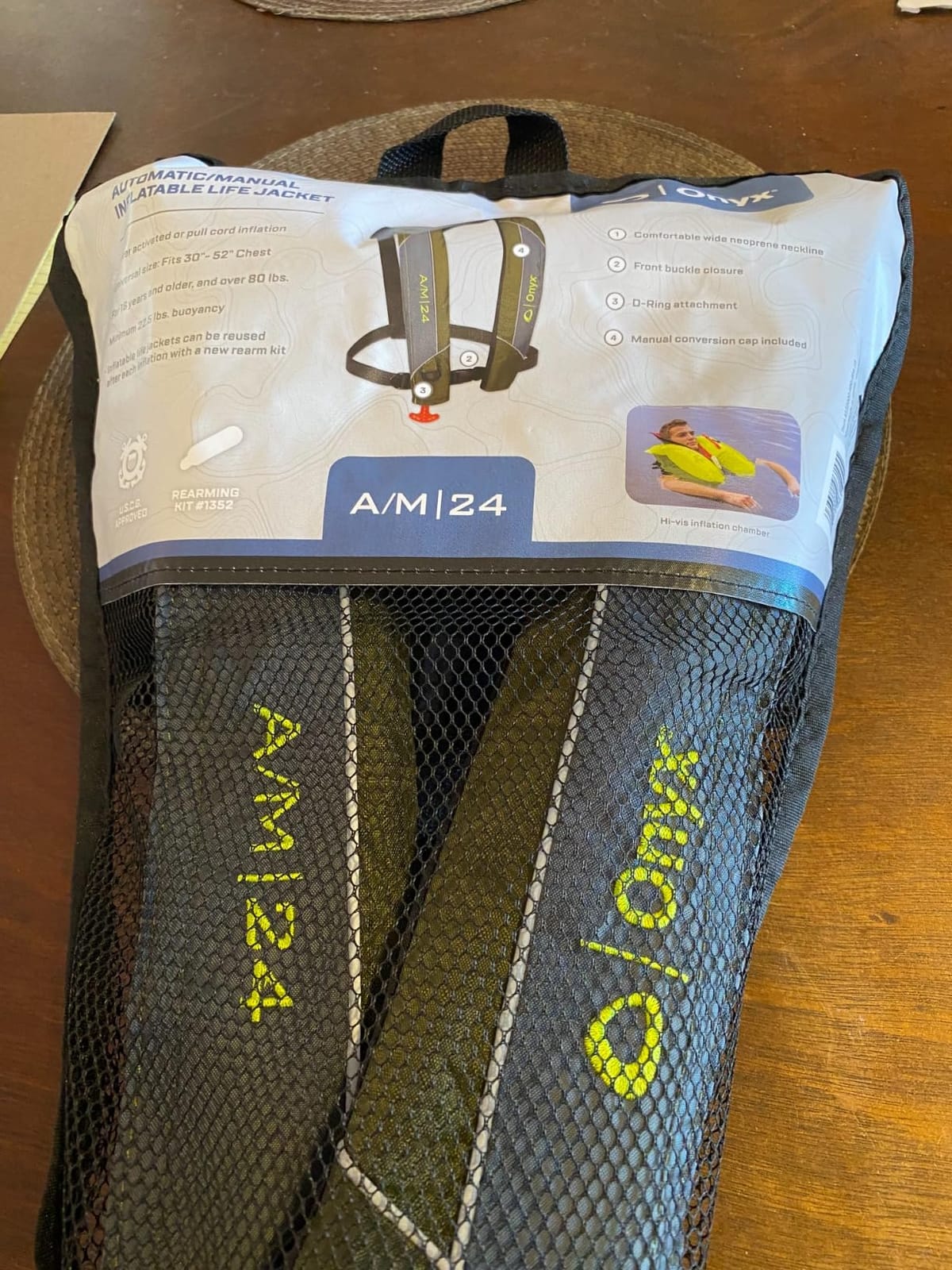
This is the vest we ended up recommending to friends, and the reason is flexibility rather than raw numbers. Out of the box it is an automatic inflatable with a manual override, and the supplied conversion cap turns it into a manual-only unit in about a minute. That single feature covers more boating situations than any other design choice in the group.
Buoyancy is 22.5 pounds, which sits between a foam Type III vest and the 26-pound Bluestorms. The stated chest range is 30 to 52 inches and the approval covers users 16 and older over 80 pounds up to 350 pounds, so it covers nearly every adult you will put in a boat. The shell is 200 denier nylon ripstop over 200 denier nylon oxford, which is tougher than most fabric at this level.
The stretchable Flex-Back insert is what makes it wearable for a full day. Owners on sailing forums describe putting it on at the dock and forgetting it was there, which is the highest compliment a life jacket can earn. A neoprene neckline takes the sting out of a collar that would otherwise rub raw by mid-afternoon.
Comfort here comes from low bulk rather than padding. There is no foam layer to trap heat, so in warm weather you can keep it on while the rest of the crew strips down. The buckle closure and adjustable body belt let one vest fit a range of crew, which matters on a boat with mixed body sizes.
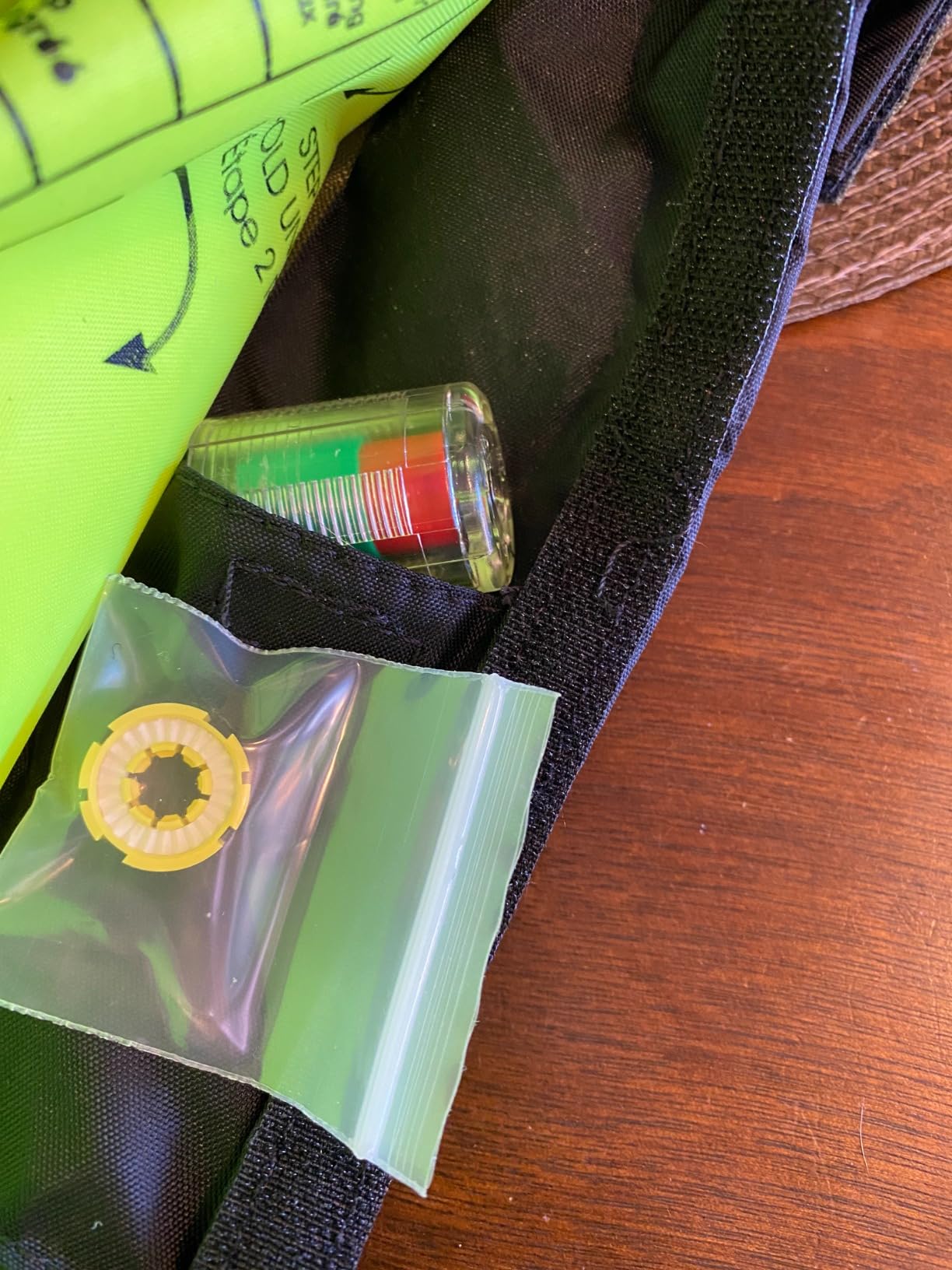
The trade-offs are honest ones. Reviewers note the pull handle sits close to the front buckle, so you need to look down when donning to avoid catching it. You also need Onyx Rearming Kit 1352 to test the vest in a pool, and to put it back in service after any deployment. The yellow bobbin has to stay sealed somewhere dry, because a damp compartment can trigger it without any water involved.
On safety detail, the vest is rated to turn an unconscious wearer face-up, and the back-up oral inflation tube adds a third path to buoyancy. That combination of face-up performance, an oral backup and a convertible inflation method is why it takes the top spot in our comparison of the best inflatable life vests for boating.
Who this vest suits
It suits the skipper who wants a single vest for both the harbour and the crossing. Families with mixed body sizes on one boat get a 30-to-52-inch range that most universal vests cannot match, and the stretch back panel stops the belt riding up when you are hiking or reaching.
It is also the easiest automatic inflatable in this group to service. Onyx kits are widely available, the conversion cap ships in the box rather than as an add-on, and owners report pool-testing the automatic function before every season.
Where it falls short
It is not the flotation choice for heavy weather offshore. If your passages take you well offshore in rough conditions, a 40-pound Type II such as the Bluestorm Arcus 40 gives you far more reserve and a formal face-up rating.
It is also not the choice for cold water without a plan. An inflatable provides buoyancy, not thermal protection, and 22.5 pounds will not keep a hypothermia-prone crew member warm for long. Treat it as one layer of a cold-water system rather than the whole system.
2. Onyx M-16 Manual Inflatable Belt Pack
- Weighs 7.2 ounces and vanishes under a jacket
- Clipped pull handle reduces snag and accidental pulls
- Oral inflation tube adds a second buoyancy path
- D-ring for whistle knife or strobe
- Manual only so it will not help an unconscious wearer
- Needs a 16g cartridge after every deployment
- 16g cartridges are harder to find outside the US
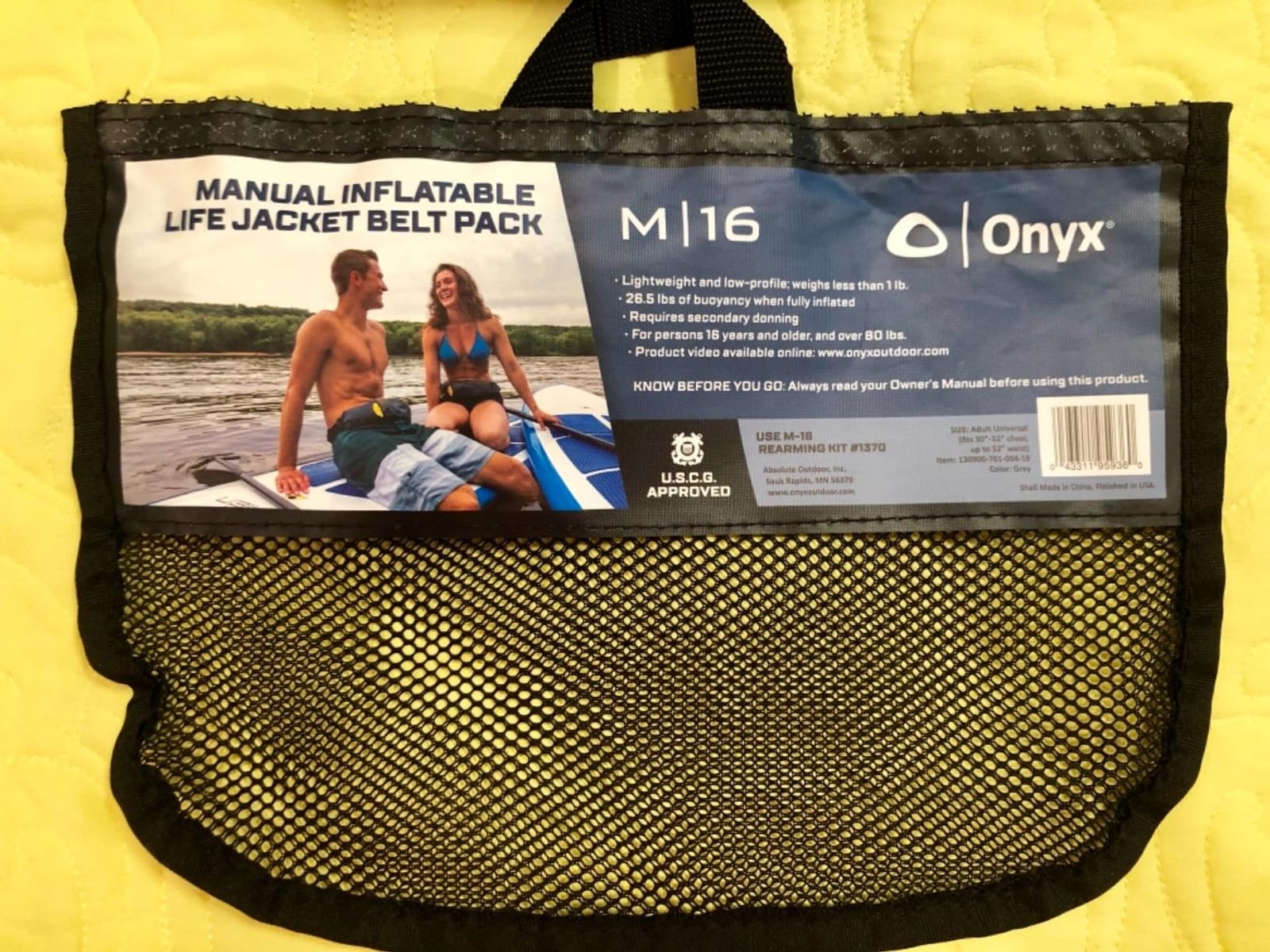
The M-16 is the model we see recommended most often for small boats and paddle craft, and it is the one we would put on a daysailer, a small powerboat or a fishing kayak without hesitation. It is a belt, not a vest. You strap it around your waist and the flat pack simply disappears.
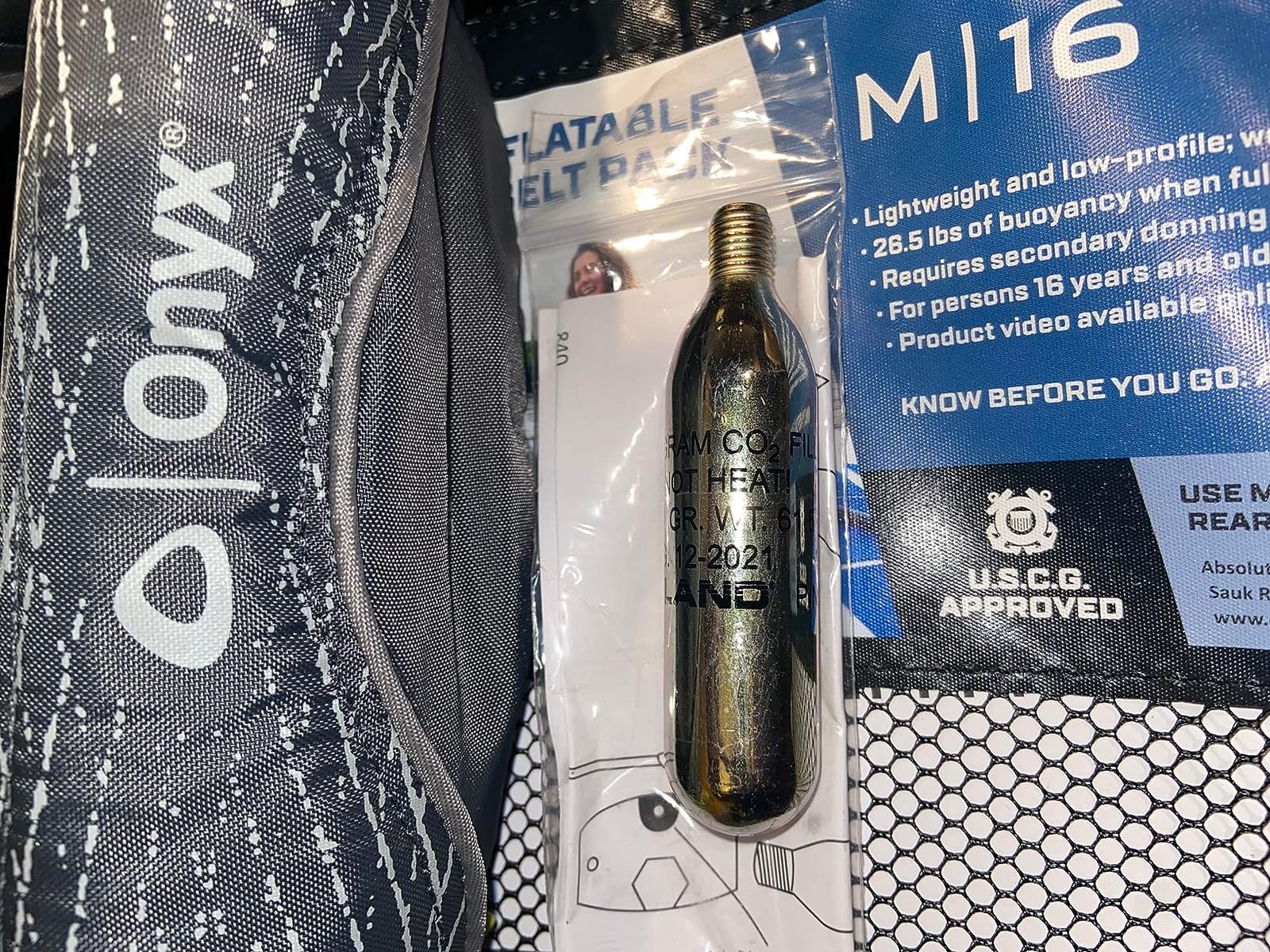
The 16 gram CO2 charge delivers 17 pounds of buoyancy, and blowing into the oral inflation tube raises that to 26.5 pounds if you need it. For a competent adult on protected water that is ample, and the belt format means your chest is completely free for casting lines, tiller work or paddle strokes.
Two design choices stand out. The inflation handle clips to the belt itself, so it cannot swing loose and catch on a throttle, a hatch or a spreader bar. And the attached D-ring gives you somewhere to hang a whistle, a knife and a light rather than strapping them somewhere else.
Owners repeatedly describe forgetting they are wearing it, which is exactly the behaviour you want from flotation. The lining is mesh, the shell is nylon over heavy-duty polyester, and the whole thing rinses, dries and stows in a compartment in a way a vest never can.
One reviewer recounted the belt keeping both himself and a sinking folding kayak on the surface. That is the use case this vest was designed for, and the low-profile form is why it works where a foam belt would ride up and pinch.
The USCG certification label sits inside the belt, so you need to take the unit off to show an inspector. Minor, but worth knowing before a boarding check. It is also manual-only, which rules it out for anyone who might be incapacitated and unable to reach a pull handle.
Who this vest suits
It suits paddlers, small-boat skippers, inshore anglers and anyone who is dry, competent and within reach of their own belt. On a centre console or a daysailer where crew are wearing foul-weather gear, a belt often fits better than any vest.
For a crew that wants a spare, the identical belt stows flat in a dry bag alongside the life raft. We would carry one as a backup on any boat where the main inflatable is the only one aboard.
Where it falls short
It falls short offshore and in cold water, where a manual pull cord and a 17-pound baseline are not enough margin. It also does not turn an unconscious wearer face-up, so it is the wrong tool if capsize might knock you out.
Replacement 16 gram cartridges can be awkward to source outside the US, and the shipped cartridge may be close to its date. Check the cylinder stamp before the season, not after.
3. BLUESTORM Cirrus26 Inflatable PFD
- 26 lbs of buoyancy is roughly double a Type III foam vest
- Automatic inflation with a manual jerk cord backup
- Internal pocket holds a spare CO2 cylinder
- Mesh back strap keeps the waist belt low
- CO2 cylinder must be replaced after every deployment
- Manual-only mode needs a separate conversion cap
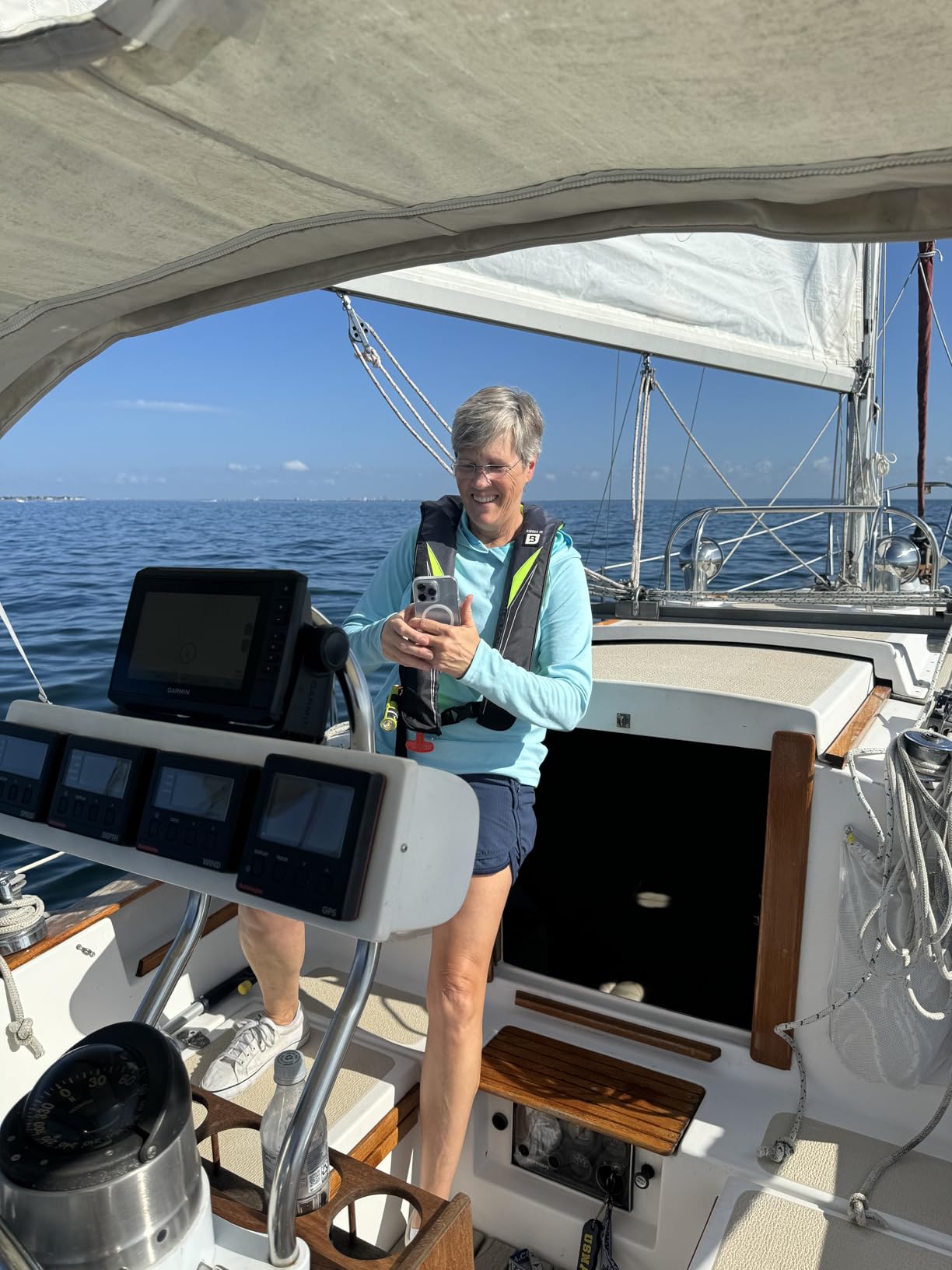
The Cirrus26 is the first model here where the buoyancy number genuinely changes the safety conversation. Twenty-six pounds is close to twice what a standard Type III foam jacket delivers, and the vest is labelled as a Type V PFD with Type III performance, which widens the approved use set.
It inflates automatically on immersion from a replaceable CO2 cylinder, with one cylinder included, and can also be fired by a jerk cord or an oral tube. A manual-only conversion cap is available for duck hunting and shore work where spray in the storage compartment could set off an automatic inflator.
Construction is nylon over foam with an ergonomic collar and a mesh upper back strap. That strap is the reason the waist belt sits low instead of riding up under a tiller, and it stays comfortable through long days on the water according to owners.

Extra flotation is not just for heavy people. More reserve air means a slower return to the surface, a better chance of keeping your head clear in a following sea, and more time to be found by a rescuer. For an adult in foul-weather gear, the difference between 22 and 26 pounds is not academic.
The approved user weight runs to 350 pounds with a universal adult fit, and the color options cover hi-vis, camo and solids, so matching a boat interior is straightforward.
The main ongoing cost is a replacement cylinder after any deployment, and owners mention this more than any complaint about the vest itself. Buy two or three spare cylinders at the start of the season and the inconvenience largely disappears.
Who this vest suits
It suits offshore powerboat and coastal cruising crew who want more flotation than a Type III vest gives without moving up to a bulky Type II jacket. The Type V label also suits owners who participate in regattas or work trips where special-use approval matters.
The internal spare cylinder pocket is genuinely useful for long passages. Carry a second 24 gram cylinder in the pocket and you have a second chance if the first unit misfires.
Where it falls short
It falls short for anyone who needs a formal face-up turning rating. A Type V with Type III performance is not the same thing as a Type II, and the difference matters if you are offshore in a seaway where a face-down float is a real risk.
The manual-only cap is an add-on rather than an included item, and the vest has less review history than the Onyx models, so long-term owner data is thinner.
4. Eyson Slim Inflatable Life Jacket Automatic
- Widest chest range in the roundup at 29-62 inches
- Multiple owners above 300 lbs report a good fit
- CO2 cylinder ships installed and ready to fire
- Holds air for hours once inflated
- Kill-switch hook sits on the less convenient side
- Cylinder must be replaced after every deployment
- Basic construction next to marine-grade brands
This is the one to look at if you have found that universal adult vests never quite fit you. The stated chest range runs from 29 to 62 inches, which is the widest in this group, and the approval covers adults up to 330 pounds.
Buoyancy is rated at 150 newtons, roughly 33 pounds in US terms, so this sits above every US Type III foam vest here despite looking slimmer. Inflation takes three to five seconds from immersion using a 33 gram CO2 cylinder with a bobbin and green clip.
It arrives with the cylinder already installed, which is more than some competitors manage. That means you can pool-test it the day it arrives and know the mechanism works before you need it.
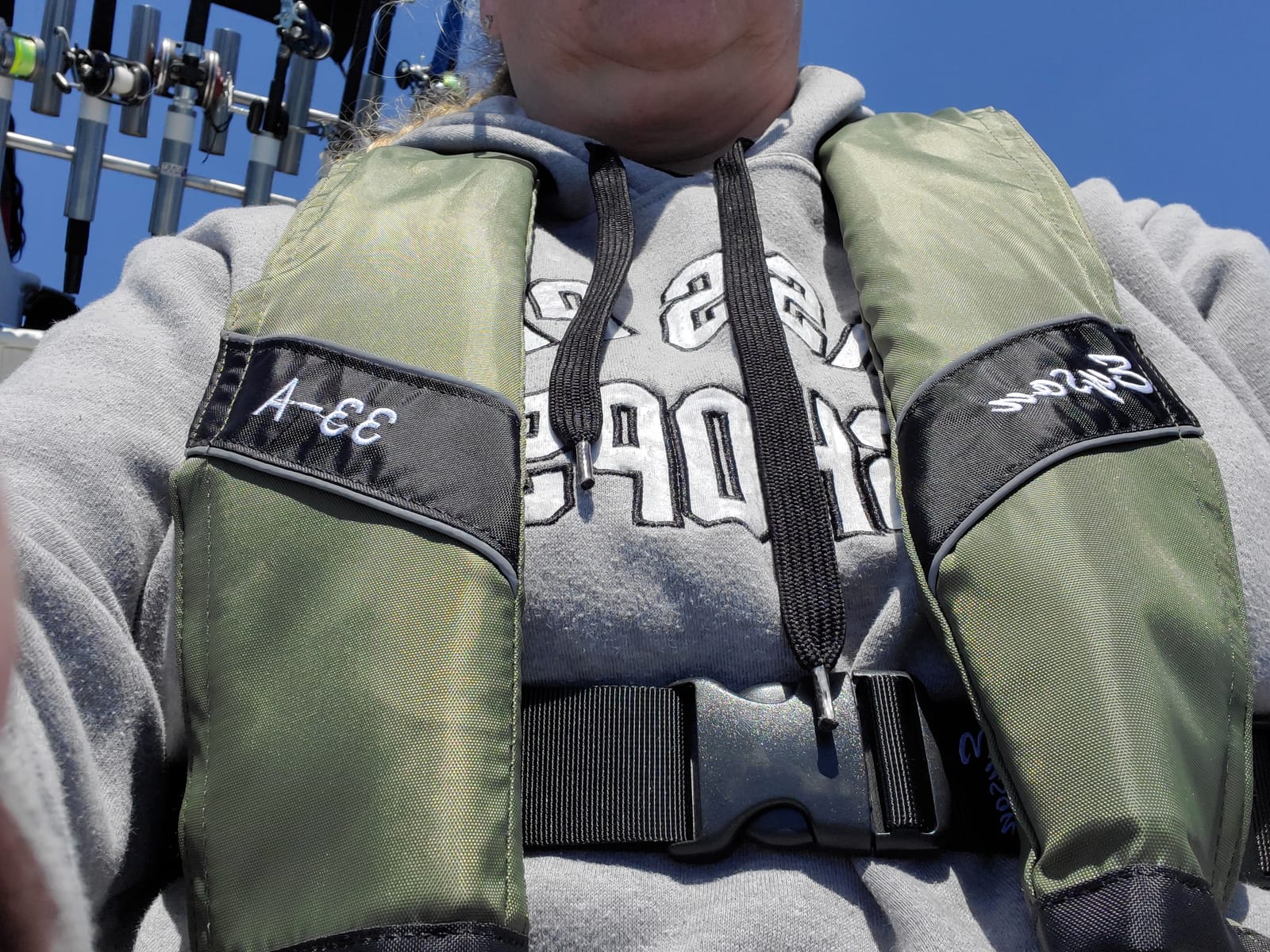
Owners running above 300 pounds say the fit holds and the vest does not ride. Several reviewers buy it as a cooler alternative to foam kayaking PFDs, and one reports that it inflated in about three seconds after their boat swamped and capsized.
The neoprene lining and polyester Oxford cover are functional rather than refined. The cover resists tears and punctures, which is the property that matters, and a back-up oral inflation tube sits on one side for a second path to buoyancy.
Once inflated it holds air well, with one owner reporting four hours of manual inflation without meaningful loss. That is a property of the seam construction and the TPU bladder, and it means a slow rescue or a tow back to the dock is not a race against deflation.
Who this vest suits
It suits larger adults and anyone with a long torso who finds a 30-to-52-inch vest restrictive. It is a good warm-water paddling and fishing choice, and the washable, quick-drying build suits a boat that gets rained on.
For anyone who cannot easily find a vest in their own dimensions, the 29-to-62-inch range is the headline feature and the reason this model keeps earning repeat buyers.
Where it falls short
It falls short on finish. The neoprene and polyester build is fine for freshwater and inshore use but is a step below marine-grade shells in abrasion resistance over a hard life on a trailered boat.
The kill-switch hook sits on the side some owners do not prefer, and you will need 33 gram cylinders as a steady consumable. With 768 reviews the owner history is solid but not deep.
5. Eyson Inflatable Life Jacket Basic Manual
Eyson Inflatable Life Jacket Life Vest Basic Manual (639 Green Camouflage Manual)
- Simple
- light and quick to don and doff
- 150 newton buoyancy at the entry level
- 33g CO2 cylinder and green clip make it reusable
- Back-up oral tube on the left side
- Manual only with no water-activated trigger
- Cylinder must be repurchased after each deployment
- Lighter construction than marine-grade vests
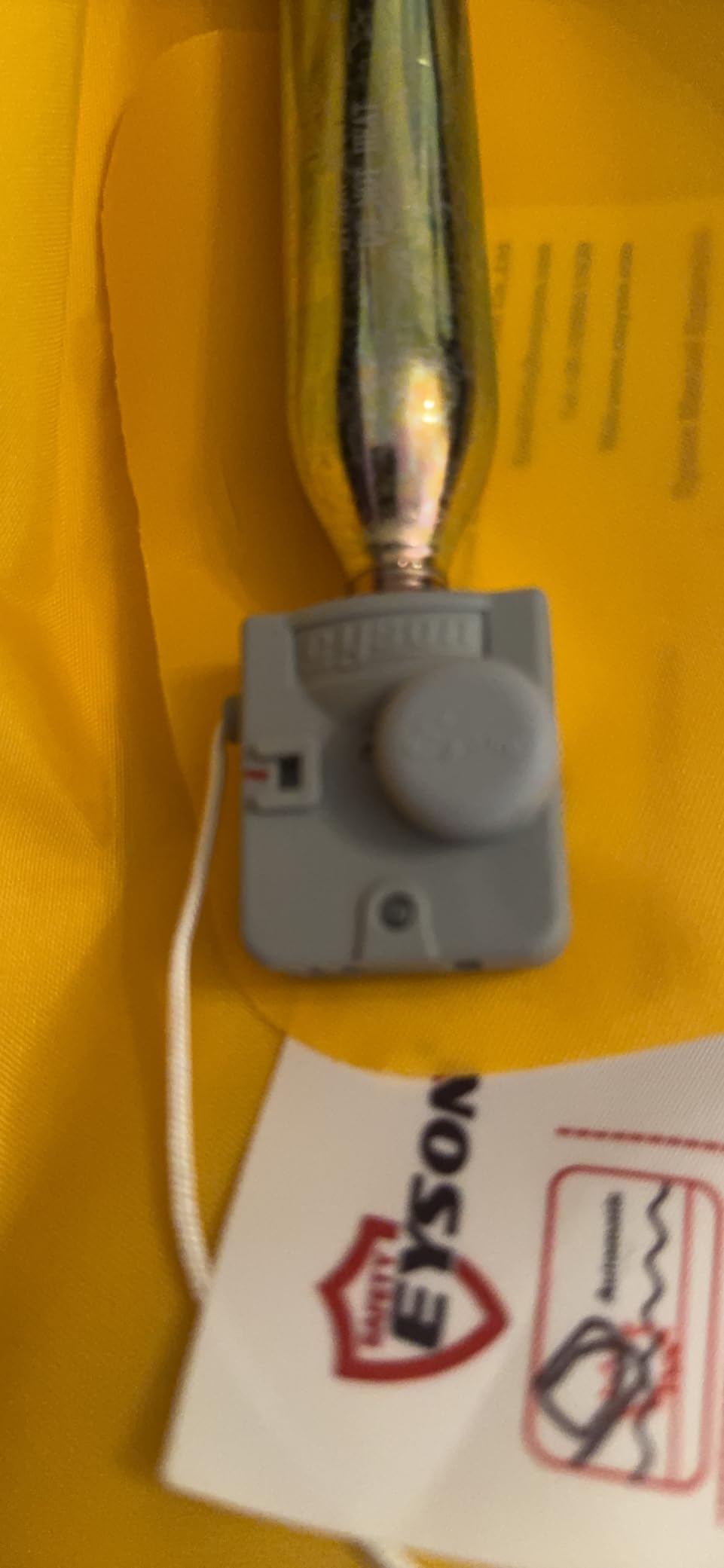
The Basic Manual does one job with no complication. You pull the cord, the 33 gram cylinder fires, the bladder inflates in about three seconds and you have 150 newtons of buoyancy. That is the entire mechanism.
It is a straightforward entry into inflatable PFDs and it holds a 4.6 owner rating across 765 reviews, which is not the profile of a disposable product. The neoprene, nylon and polyester build is light, and the adjustable chest strap fits most adults up to 330 pounds.
Buyers pick it for flat water, inshore fishing and warm-weather boating where heat, not immersion, is the main problem. A foam vest in July is a punishment; this is a belt-flat layer most people will actually put on.
The polyester Oxford outer cover resists tears and punctures, which matters more than the material list suggests. A vest that abrades through on a trailer hitch or a dock edge has failed in the place that matters most.
Who this vest suits
It suits first-time inflatable buyers, freshwater anglers and anyone who wants a straightforward manual mechanism they can test and rearm without learning a conversion system. The oral inflation tube gives a backup path if the pull cord is jammed.
If your boat is on a lake or a sheltered bay and you are a confident swimmer, the simplicity is a genuine advantage. There is less to fail and less to service.
Where it falls short
It falls short the moment the water is cold, rough or the crew might be knocked unconscious. Manual-only activation is the deciding limitation, and it is not a small one.
Construction is lighter than premium marine-grade vests, so expect to replace it sooner if it lives on a sun deck. You will also buy a fresh 33 gram cylinder after every use, so the low entry price is partly spent on consumables.
6. BLUESTORM Arcus 40 Automatic Inflatable PFD
BLUESTORM Arcus 40 Automatic Inflatable PFD Life Jacket for Adults w/Manual Ripcord | US Coast Guard (USCG) Approved Life Vest (Hi Vis)
- 40 lbs is the highest buoyancy in this roundup
- Type II approval is rated to turn the wearer face-up
- Quick burst zipper stays secure then opens fast
- 3D mesh at shoulders back and waist for airflow
- CO2 cylinder must be replaced after every deployment
- Higher cost than the rest of the group
- Smaller review base for long-term feedback
The Arcus 40 is the maximum-buoyancy option here and the only Type II on the list. Forty pounds of buoyancy is about two and a half times a Type III foam vest, and the Type II label means it is approved to turn most wearers face-up.
That combination is what offshore and heavy-weather sailors ask for. If your realistic scenario involves being knocked down in a seaway with cold water and a delay before anyone sees you, this is the model that addresses the actual failure mode rather than the comfortable one.
Construction is a nylon shell over a polyester outer with a mesh lining, a wide neck opening, a soft breathable collar and 3D mesh through the shoulders, back and waist. The wide neck is a comfort feature as much as a fit feature: it stops the vest riding up into your jaw over a long watch.
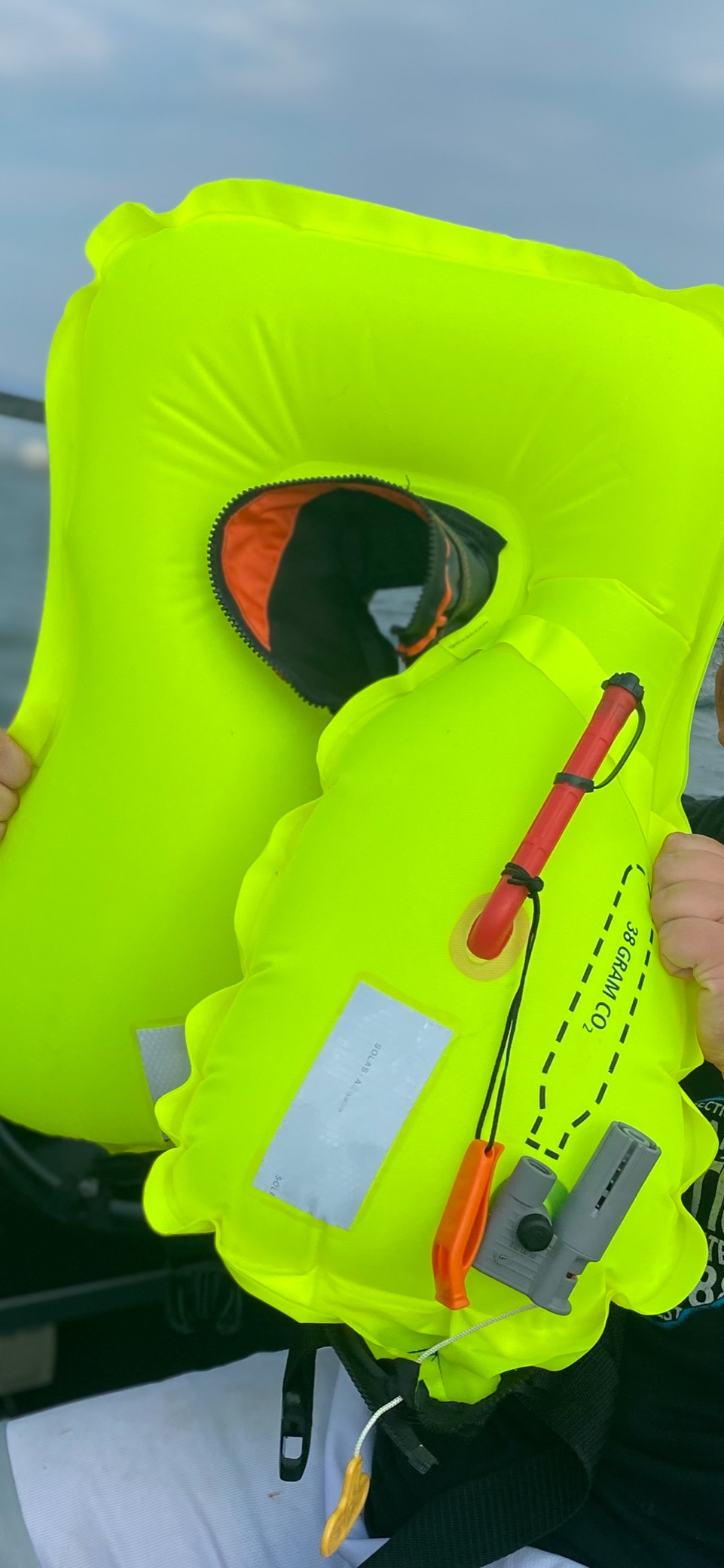
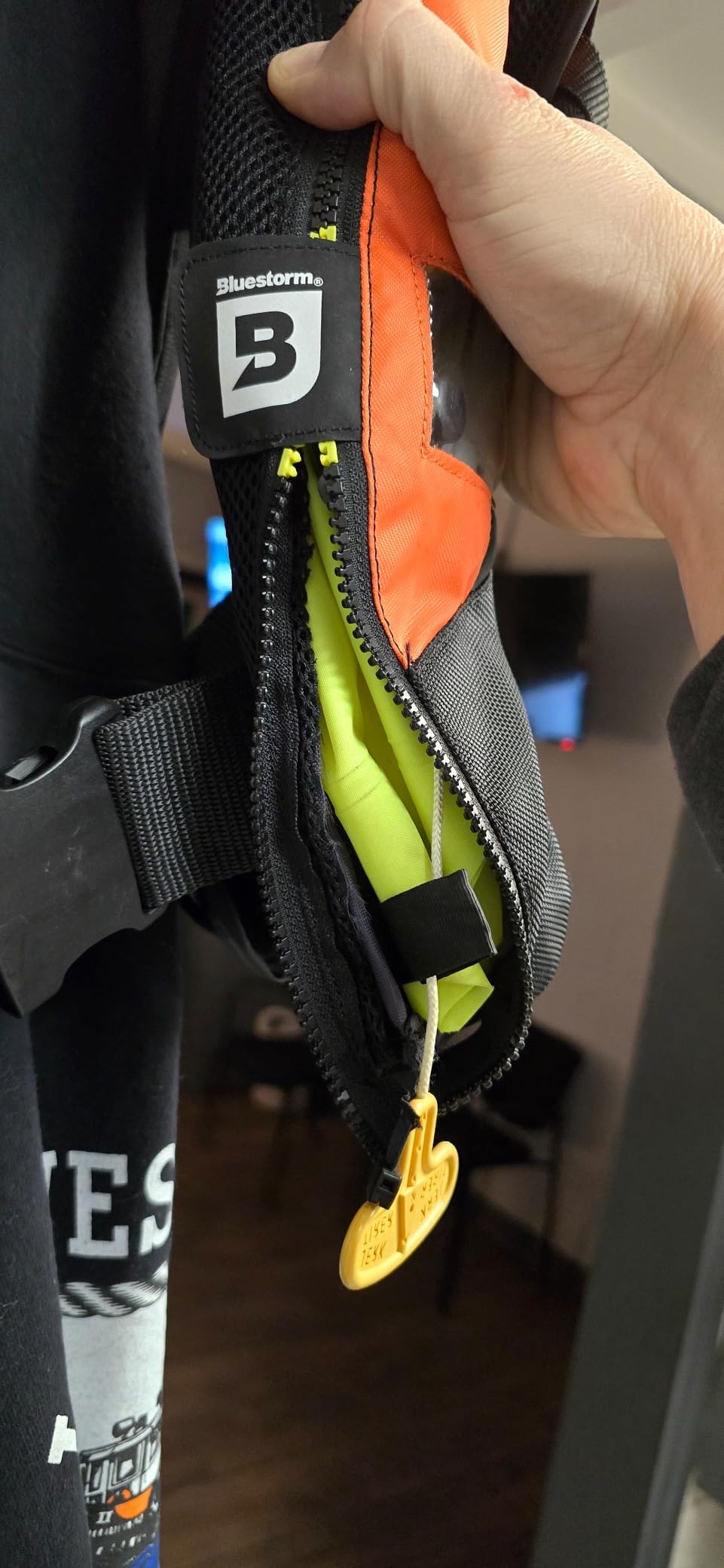
The quick burst zipper is the detail worth understanding. It holds firmly during heavy fishing and boating movement, then gives way quickly when the bladder inflates, so you get security without a fastener that traps a partly inflated vest around your chest.
Dual side adjusters take chests from 30 to 56 inches, which generally covers adult sizes S through XXL. That is a broader range than most of the group and it does it without sacrificing the coverage that makes a Type II useful.
Owners note that the 40 pounds of buoyancy and the mesh panels keep it wearable in heat, which is the usual objection to high-coverage vests. The trade is cost and a smaller body of long-term owner feedback, with 164 reviews behind it.
Who this vest suits
It suits offshore sailors, cold-water boaters and anyone boating further from help than a fifteen-minute tow. The face-up turning rating is the reason to choose it, since an unconscious person floating face-down is the scenario that ends fatalities.
It is also the right pick for larger wearers who need both more flotation and a wide fit range. 30 to 56 inches with XXL coverage handles a broad crew.
Where it falls short
It falls short on the water on a hot day, on long walks to a launch and for anyone who simply wants a low-profile belt. Forty pounds of reserve is overkill on a sheltered lake in July, and you are paying for capability you may never use.
With 164 reviews, the long-term durability record is thinner than the Onyx models. If you are unsure, that is a reason to buy a serviceable brand with easy rearming rather than to avoid the extra buoyancy entirely.
7. Eyson Inflatable Life Jacket Highly Visible Automatic
Eyson Inflatable Life Jacket Life Vest PFD Highly Visible Automatic (Red)
- High-visibility colorway is easy to spot in low light
- Automatic inflation in about 5 seconds with no user action
- Light and easy on and off
- Oral inflation tube included
- CO2 cylinder and bobbin must be replaced after each use
- Owner rating of 4.4 which is the lowest in this group
- Manufacturer publishes no model number or material breakdown
The differentiator here is visibility, and on a dark water at dusk that is not a minor feature. The high-visibility colorway is chosen for low-light and active watersports conditions, where a rescuer scanning the water is looking for contrast rather than a shape.
Mechanically it is a straightforward automatic vest. A 33 gram CO2 cylinder and bobbin fire on immersion and the bladder inflates in about five seconds, delivering 150 newtons for adults up to 330 pounds. That is a slightly slower deployment than the Eyson Slim, and slightly shorter than the 3-to-5-second models in this roundup.
It is light, easy to don and washable, which is what you want from a vest that lives in a wet locker and comes out on demand.
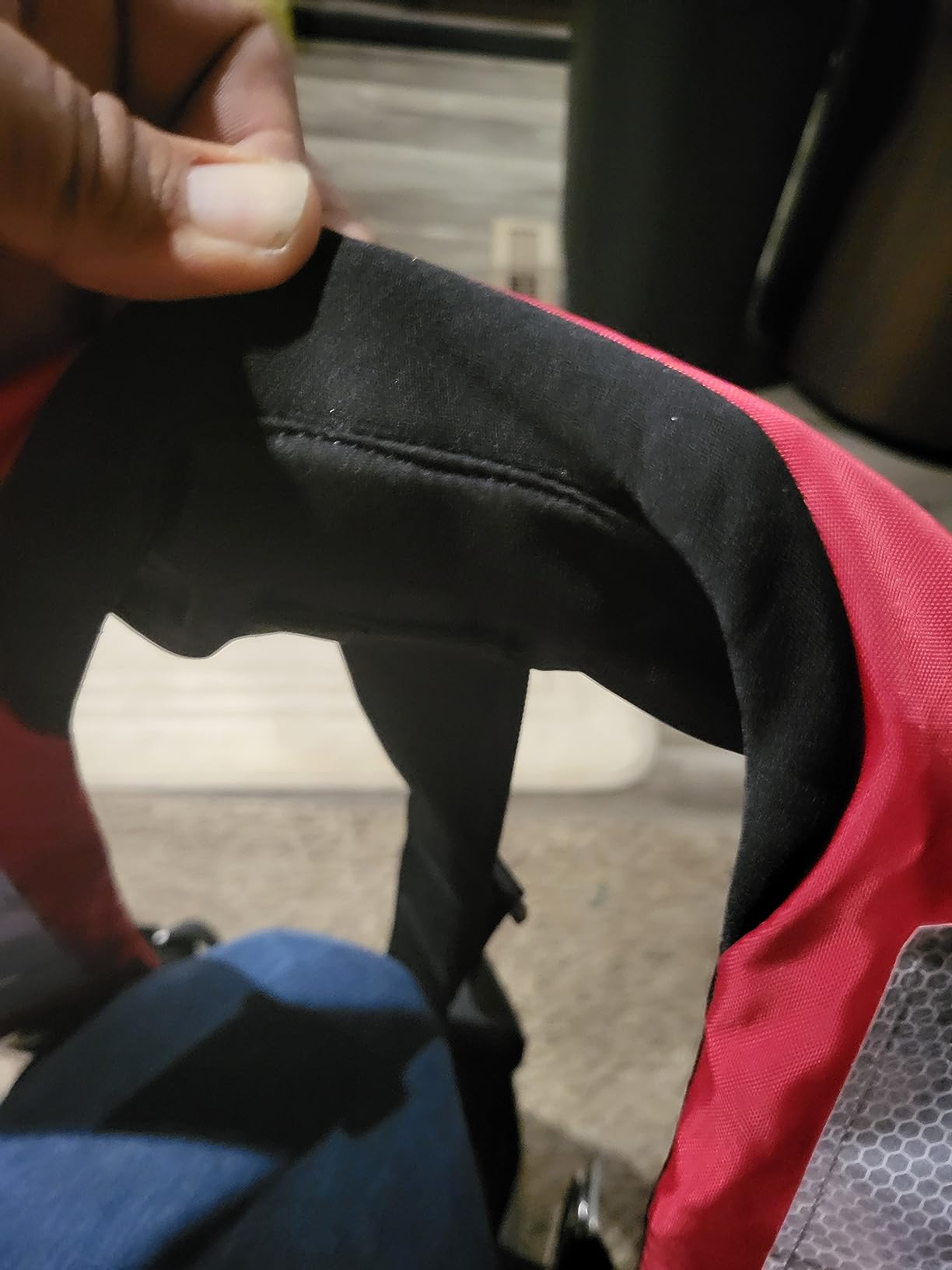
Buyers value the hands-free inflation. There is no cord to find under layers and no handle to grab while you are already cold and low on energy, so the inflation is not dependent on fine motor control at the worst possible moment.
Its category position is also worth noting. It sits in the top tier of life jacket sales rankings in this group, which tells you the demand is real rather than a listing artifact.
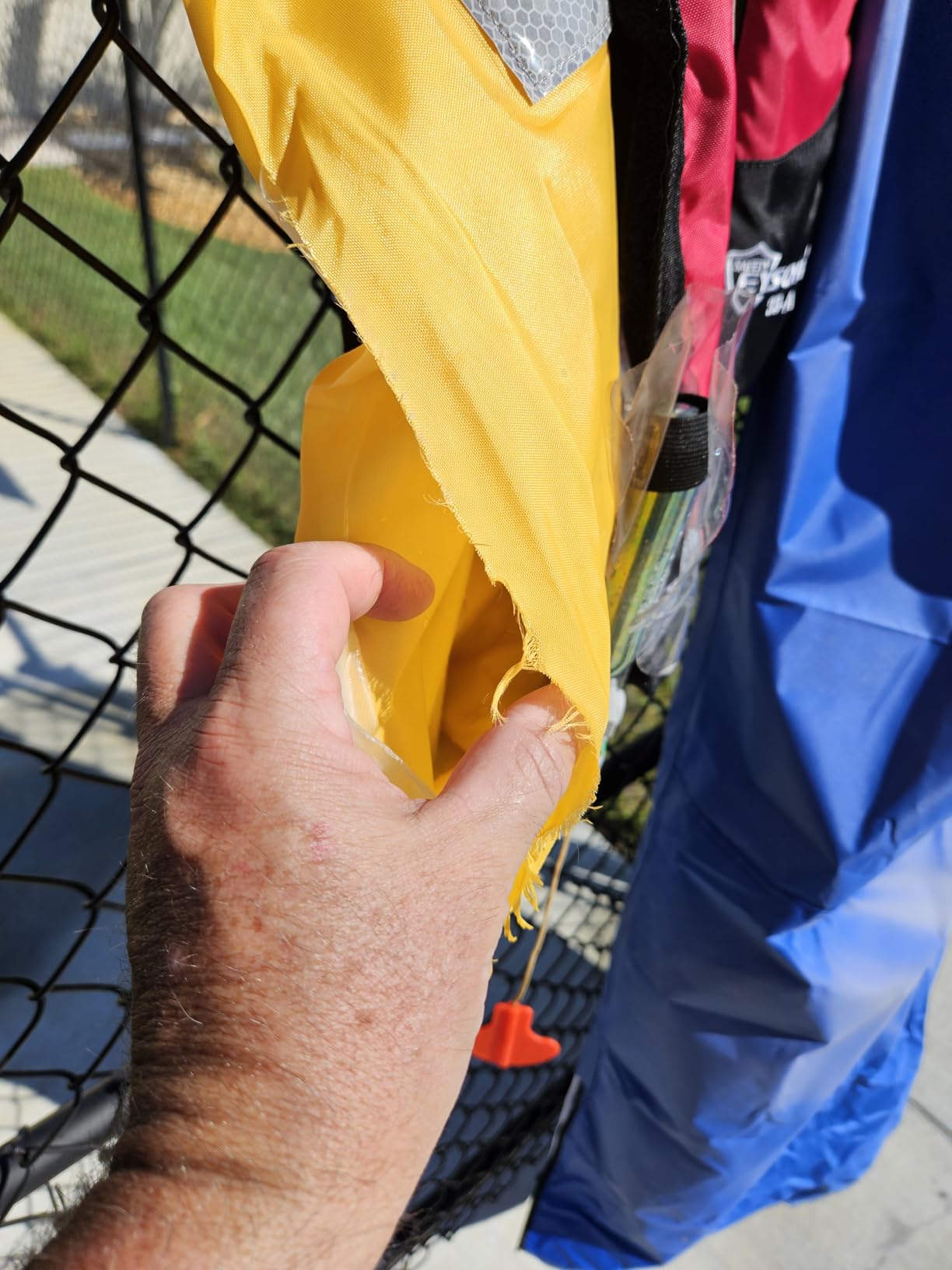
The honest weakness is the specification. The manufacturer does not publish a model number or a material breakdown, so you are buying on the colorway and the inflation system rather than on a documented build. At a 4.4 owner rating, it is the lowest-rated model here, and we would not put it at the top of a shortlist.
Who this vest suits
It suits anyone boating at first light, last light or in an area with poor light, and it suits crews who want automatic inflation without the bulk of a foam layer. Anglers working low-light water will get more from the colorway than from extra buoyancy.
It is a reasonable secondary or guest vest too, for a crew member who will not fuss with a manual pull cord and does not need a Type II face-up rating.
Where it falls short
It falls short on documentation. Without a published model number or fabric specification you cannot compare it properly against the rest of the field, and that matters for a device that is supposed to save your life.
The 4.4 owner rating is the lowest here, and the five-second inflation window is the longest automatic deployment in this group. For offshore work, we would pick a vest with clearer certification and a faster inflation.
8. BLUESTORM Cirro 26 Automatic/Manual Inflatable PFD
- Packs small enough for portaging and backcountry trips
- Long shell keeps the waist belt sitting low
- Works in both automatic and manual modes
- Cool and light in warm weather
- No manual-only conversion cap included in the box
- CO2 cartridge is a recurring cost for every deployment
- Awkward to return once a cartridge is installed
The Cirro 26 is the same buoyancy and type label as the Cirrus26 in a longer shell, and that shell is the whole point. The extended cut keeps the waist belt sitting low on the body, which is what stops the vest riding up during a long day of paddling or hiking.
It is USCG approved as a Type V PFD with Type III performance and provides 26 pounds of buoyancy, roughly double a standard Type III foam vest. Inflation is automatic on submersion from a replaceable CO2 cylinder, with a jerk cord and oral tube as backups. A cylinder is included.
The polyester shell is light and cool, and owners specifically call out how small it compresses. That makes it the pick here for anyone who has to carry a PFD with camping gear, portage a kayak or stow flotation in a small boat compartment.
Review volume is the honest limitation. With 125 written reviews this is the thinnest owner record in the group, and the difference in shell length between the Cirrus26 and the Cirro 26 is subtle enough that a first-time buyer would be well served by reading both before choosing.
Who this vest suits
It suits kayakers, canoeists and anyone doing backcountry water travel where every gram and every litre of pack space counts. The long shell also works well for crew wearing layers, since the belt sits below where a jacket hem rides.
For small-boat owners, the combination of 30-to-56-inch chest coverage and a low-sitting belt makes it comfortable on a bench seat for a full day.
Where it falls short
It falls short on included accessories. Unlike competing brands, the manual-only conversion cap is not in the box, and several buyers had to source one separately before using the vest for shore work or hunting.
Return friction is the other recurring complaint. Once a CO2 cartridge is fitted the item is awkward to return or restock, so test it thoroughly before you commit. With 125 reviews the owner record is also the thinnest in this roundup.
9. Mustang Survival M.I.T. 100 Auto Activated PFD
- Highest owner rating in this roundup at 4.9
- 500 denier Cordura shell built for hard use
- Inflator inspection window shows the cell status
- Orally inflatable in three to four breaths as backup
- USCG approval only so not legal on Canadian waters
- Rearm kits are a recurring cost and testing uses one
- Higher cost than the entry-level models
The Mustang M.I.T. 100 carries the highest owner rating in this roundup at 4.9, and the reason is not subtle. It is light enough to wear constantly, it does not hold heat, and owners with larger bodies, including one at 6 foot 2 inches and 240 pounds, report a genuinely comfortable fit.
Buoyancy is 26 pounds, about 1.5 times a regular foam PFD, and the cell inflates automatically on immersion. The Membrane Inflatable Technology cell is the piece that matters here: it provides full buoyancy, and an inspection window lets you check the unit status rather than guessing.
The outer shell is 500 denier Cordura, the most abrasion-resistant fabric in this group by a wide margin. On a boat that lives on a trailer or in a salt-spray environment, that is the difference between a vest that looks good after five seasons and one that frays.

Owners describe it as the vest they actually leave on all the time, which is the central advantage of the whole inflatable category. Full range of motion for fishing and boating is a specific and commonly praised detail, and the oral inflation tube takes only three to four breaths to add buoyancy.
One reviewer credits the vest with saving a family member on a river. Deployment stories are rare in product reviews, and when they appear they usually tell you more about a device than any specification does.
Two limits are worth stating clearly. This is a USCG approval only, with no Transport Canada label, so it is not legal for use on Canadian waters. And rearms run a real ongoing cost, with one kit consumed by every pool test you do.
Who this vest suits
It suits owners who want one automatic inflatable they will wear every time they step aboard, regardless of weather. Larger adults get a fit that many slimmer vests cannot offer, and the 500 denier shell suits hard use and salt water.
It is also the right choice if the inspection window matters to you. Being able to confirm the inflator is armed and the cartridge is live is a genuine safety benefit on a boat that sits unattended for weeks.
Where it falls short
It falls short on certification scope. If you boat in Canada you need a Transport Canada approved label, and this vest does not carry one.
It also falls short on owner history volume, with 220 reviews, and on value for occasional users. If you go out twice a year on a sheltered lake, the premium buys capabilities you will not exercise.
10. Owntop Manual Inflatable Belt Pack
Owntop Inflatable Swim Vest for Adults, Low Profile Manual Inflate Belt Pack, Buoyancy Aids Swim Jacket Waist for Kayak, Fishing, Paddle Sports, Camo Blue
- Belt format keeps the chest clear for casting
- CO2 cylinder included so it works out of the box
- Weighs under 1 lb and stows in a small compartment
- Reflective strip and emergency whistle included
- Manual only with no water-activated trigger
- 24g cylinder must be repurchased after each use
- No Transport Canada label so not legal on Canadian waters
The Owntop belt does something the Onyx M-16 does not: it ships with the CO2 cylinder in the box. Open the package, thread the cord and the 24 gram cylinder is already there, so there is no first rearming purchase before you can test it.
Buoyancy is up to 100 newtons, roughly 22 pounds, and inflation takes about five seconds from a pull cord. The fabric is 300D Oxford with TPU, which is a sensible marine-weight shell, and the reflective strip and emergency whistle add visibility and signalling for a device that is otherwise easy to lose in a cockpit.
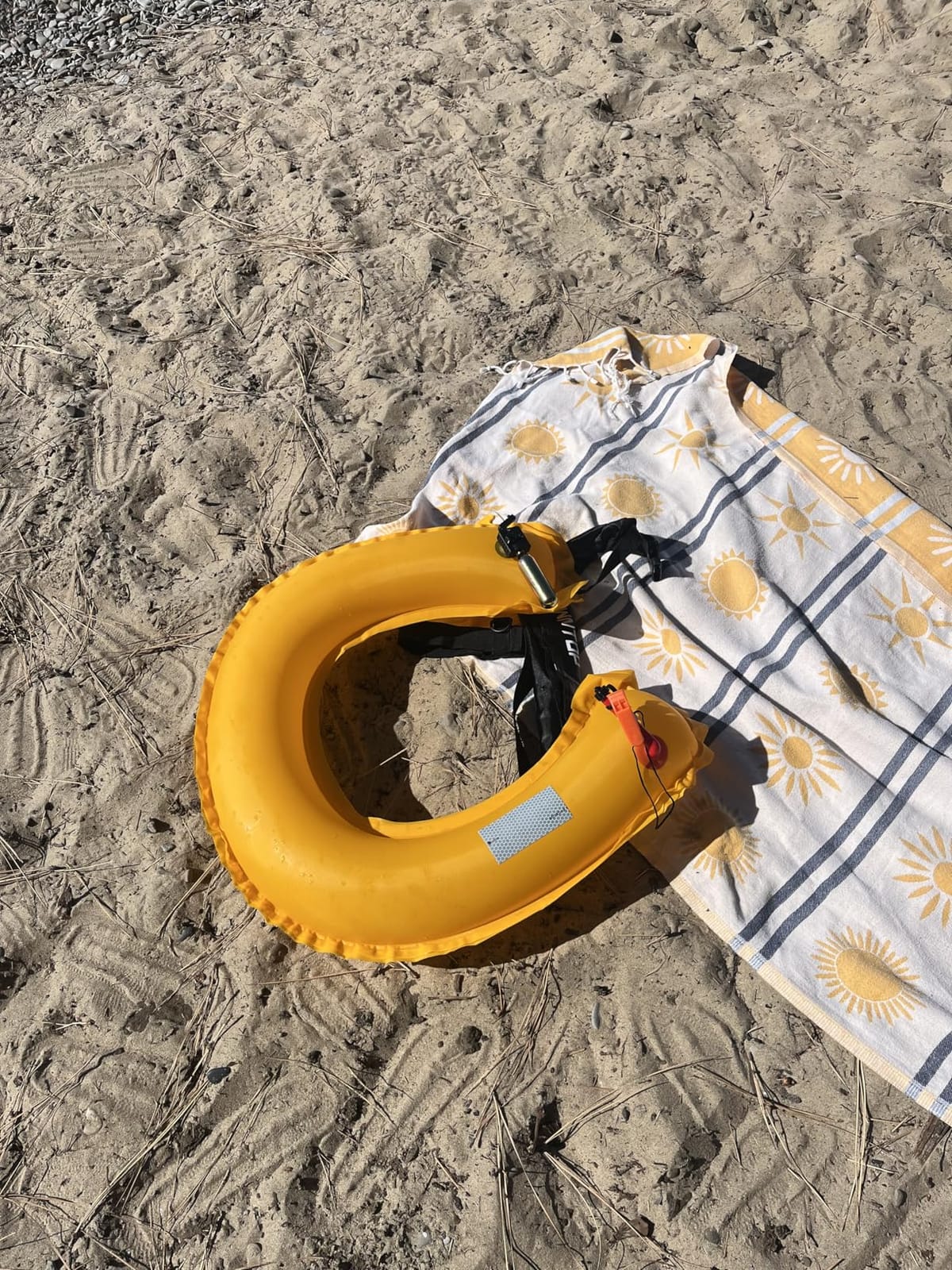
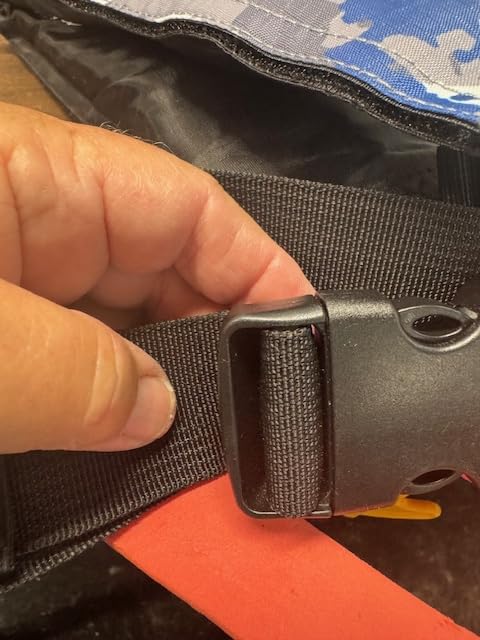
Waist fit runs from 25 to 43 inches for adults 16 and older over 80 pounds. That is a narrower band than the Onyx belt, and it is the main reason we did not rank it higher despite the attractive feature set.
With 191 reviews the owner record is credible, though much thinner than the two Onyx models, and the same caveat about 24 gram cylinder availability outside the US applies here as it does to every belt pack in this roundup.
Who this vest suits
It suits stand-up paddleboarders, kayak anglers and small-boat skippers who want a clear chest for casting and paddle strokes. The included whistle and reflective strip are genuinely useful for a low-visibility activity in low light.
It also suits owners who want a stowable spare. At under a pound it packs into a small dry bag or a boat compartment without ceremony.
Where it falls short
It falls short on waist range. If you are outside 25 to 43 inches, the Onyx M-16 with its 52-inch capacity is a better fit and a better-reviewed product.
It is manual-only, so it will not deploy on water impact, and it carries no Transport Canada approval label, which makes it illegal to wear in Canadian waters. Once the cylinder is installed, returns also become difficult.
Buying Guide: How to Choose an Inflatable PFD?
Choosing an inflatable life vest comes down to four decisions in order: how the vest inflates, how much buoyancy you carry, how it fits, and how you will service it. Get those right and the model choice almost makes itself.
Automatic, manual or both
Automatic models fire when a water-activated element dissolves on submersion. You do nothing, which is the point if you might be injured or unable to move. The tradeoff is a mechanism that has to stay dry in storage, because a damp compartment in a humid locker can trigger it without any water involved. This is the single most common complaint we see about automatic inflatables.
Manual models fire when you pull a cord or a handle. Nothing can fire by accident, they are cheap to service, and they are perfectly adequate for anyone conscious and able to reach the handle. They are the wrong choice for a person who could be knocked unconscious, for non-swimmers, and for unsupervised children.
Combination A/M models let you choose per outing, which is why the Onyx A/M-24 leads our comparison. Many manufacturers also supply a manual-only conversion cap for shore work and spray-prone lockers.
How much buoyancy you actually need
Buoyancy is usually printed in pounds for US-approved models and in newtons for models sold on European specifications. One newton is about 0.225 pounds, so 150 newtons works out to roughly 33 pounds of buoyancy.
As a practical rule, add your body weight plus the weight of what you are wearing, and choose a vest rated for at least that total. Every model here is approved for adults over 80 pounds, with listed maximums between 330 and 350 pounds. If you are near the top of a range, move up a size or a buoyancy class rather than stretching the fit.
For most adult boating, anything from 17 to 26 pounds is adequate on protected water. Below 18 pounds, plan for conditions where you will be in the water briefly. Above 30 pounds, you are buying margin for offshore and cold water, and the added bulk is a real daily cost.
Fit and sizing, including larger and smaller wearers
Measure your chest at the fullest point and compare it to the stated range, then check that you fall inside the approved weight band as well. A vest that fits in the range but is too loose will ride up over your head when you inflate it, which is the most common sizing complaint on owner reviews.
Universal adult is a real category with a real limit. The ranges here run from 25 inches at the waist to a 62-inch chest. If your chest falls outside every range you have found, do not compensate by tightening straps; look for a model that spans your measurement.
For a slimmer wearer, chest shape matters as much as chest size. A vest with a stretch back panel and adjustable side straps will contour better than one with fixed webbing. For a wider wearer, prioritize the side adjusters and the maximum approved weight over cosmetic slimness.
Layering is the other sizing trap. Wearing an inflatable over a fleece or foul-weather jacket adds both weight and depth to your chest measurement. Either size up or choose a belt pack, which sits at the waist and is unaffected by what you are wearing on top.
Comfort features that decide whether you wear it
The most valuable feature on any PFD is the one that makes you keep it on. A neoprene collar stops neck chafing on long days, mesh backing and 3D mesh panels move air and wick moisture, and a low profile matters more than most buyers expect.
A wide neck opening stops the collar riding into your jaw. A long shell keeps the waist belt low on the body. Memory foam and quick-dry fabric help on hot days. None of these are safety features, but all of them decide whether the vest is worn or left hanging on the console.
Tether and harness integration for sailing
Sailors should think about how the PFD meets the rest of the safety system. A crotch strap or thigh strap stops a belt pack from riding up over your head in a capsize, which is the specific failure that catches inexperienced crews.
Look for a D-ring or attachment point you can clip a tether to, and confirm that the PFD can be worn over a sailing harness without preventing the harness from doing its job. A vest that interferes with a harness is a harness that does not work, and a belt pack is usually the easier fit over one.
If you sail solo or offshore, prioritise a Type II with a face-up turning rating. A person who is unconscious and floating face-down is far harder to find than one who is face-up, and that is the entire argument for the higher buoyancy class.
Cold water and hypothermia
An inflatable PFD provides buoyancy. It does not provide heat. In water below about 60 degrees Fahrenheit, a swimmer has a limited window before core temperature becomes the emergency, and a vest does not extend it.
Approach cold water as a system: a suitable PFD, a thermal layer or dry suit underneath, a hood, a whistle, a light and a plan to get out of the water quickly. More buoyancy helps you stay organised and face-up while you work on all of those.
One common mistake is wearing a bulky jacket over a low-profile inflatable and assuming the layers will help. The PFD must sit close to the body to work as designed, and loose layers over the bladder can interfere with strap tension and chest closure.
Maintenance, rearming and lifespan
Treat rearming as routine servicing, not a repair. After any deployment you need a fresh CO2 cartridge and a new bobbin or paper element, and the cost of that consumable is the real ongoing expense of an inflatable. Budget for cylinders and bobbins every year whether or not you deploy.
Pool-test an automatic vest once a season and again before a long trip. Check the inflator indicator window or the red and green status insert, confirm the cartridge is not expired, and confirm the pull cord runs freely. Manual-only units need the cylinder date check and a zip inspection.
Store every inflatable in a dry, ventilated locker with the inflator protected from moisture, and do not leave a vest in a hot car or in direct sun for long periods. Owners report five to seven years of real-world life with proper care, which is shorter than a foam vest but a good return for a device that is actually worn.
Wearing versus carrying the law
Boat operators must carry a wearable PFD for every person aboard, and many state waters change the rule from carry to wear. On waterways where children and certain operators must wear a PFD at all times, an uninflated inflatable counts only if it is actually being worn.
That nuance matters with inflatables in particular. A compliant inflatable that sits folded in a locker has not satisfied a wear requirement. Check the rule for the specific water body you are on, and treat a vest you forget at the dock as no vest at all.
Frequently Asked Questions
Do inflatable life vests work?
Yes. An inflatable PFD contains a sealed air chamber that inflates from a CO2 cartridge when a pull cord is pulled or when a water-activated element dissolves on submersion. Inflated models deploy in three to five seconds and provide between 17 and 40 pounds of buoyancy depending on the model. A vest only works if you are wearing it, which is why inflatables are popular for long days on deck.
Which inflatable lifejackets are USCG-approved?
Every inflatable in this roundup carries a US Coast Guard approval label. The Onyx A/M-24, the Onyx M-16, the BLUESTORM Cirrus26, the BLUESTORM Cirro 26 and the BLUESTORM Arcus 40 all print USCG approval on the shell, and the Eyson and Owntop models carry US-style inflatable approvals. Check the label inside the garment because some manufacturers place it on the inner panel.
How much buoyancy does a 200 lb person need?
Choose a vest rated for your body weight plus the weight of your clothing, so a 200 lb adult in a jacket should target a vest approved for at least 200 lb. For context, the Onyx M-16 provides 17 pounds of buoyancy and rises to 26.5 pounds with oral inflation, the Onyx A/M-24 provides 22.5 pounds, the BLUESTORM 26-pound models provide 26 pounds and the Arcus 40 provides 40 pounds.
Which inflatable belt PFD is the best?
The Onyx M-16 is the strongest belt option in this roundup. It weighs 7.2 ounces, clips its inflation handle to the belt to prevent snagging, includes a back-up oral inflation tube, holds a 4.7 owner rating across 2670 reviews and fits waists up to 52 inches. The Owntop belt is a good alternative if you want the CO2 cylinder included in the box.
Who makes the best inflatable life vest?
For general boating the Onyx A/M-24 is the most complete option because it converts between automatic and manual inflation. For maximum buoyancy and a face-up turning rating the BLUESTORM Arcus 40 leads. For all-day comfort and shell durability the Mustang M.I.T. 100 has the highest owner rating in this group at 4.9, with a 500 denier Cordura shell.
How reliable are inflatable life vests?
They are reliable when they are serviced. Automatic models that sit in humid lockers can fire without any water involved, which is the most common complaint from owners. Pool-test annually, check the inflator indicator window, confirm the CO2 cartridge is not expired and keep the bobbin sealed in dry storage. Owners report five to seven years of real-world life with proper care.
What are the best life jackets for offshore sailing?
For offshore sailing choose a high-buoyancy model with a face-up turning rating, such as the BLUESTORM Arcus 40, which is a USCG Type II PFD with 40 pounds of buoyancy and turns most unconscious wearers face-up. Add a crotch strap so a belt pack cannot ride up in a capsize, and confirm the vest can be worn over a sailing harness without interfering with it.
How long do inflatable life jackets last?
With proper care owners report five to seven years of real-world service. The shell is usually the first thing to fail, and abrasion from a trailer or dock hardware wears the fabric faster than saltwater does. Replace the CO2 cartridge and bobbin every year whether or not you have deployed the vest, and replace the whole device if the bladder or seams lose shape.
Can inflatable life jackets be reused after inflation?
Yes, but only after rearming. After any deployment you must fit a new CO2 cartridge and a new bobbin or water-activated element, then reset the inflator. Without that step the vest is a used device with no working inflation mechanism. The Onyx A/M-24 uses Rearming Kit 1352, the Onyx M-16 uses Kit 1370 and the BLUESTORM models use a 24 gram CO2 re-arm kit.
What is the difference between a life jacket and a PFD?
There is no difference. Personal flotation device is the formal term used by the US Coast Guard, and life jacket and life vest are the everyday names for the same object. The terms that do matter on a label are the type, either Type I through Type V, and the buoyancy rating in pounds or newtons.
Final Verdict: The Best Inflatable Life Vests for Boating
The best inflatable life vests for boating in 2026 come down to what kind of water you actually use. On the Onyx A/M-24 for general boating, because it is the only vest here that gives you automatic inflation on open water and manual-only inflation in flat calm with a cap that ships in the box, backed by more owner reviews than any other model in this roundup.
Take the Onyx M-16 if you want something so light you forget it is on, and the BLUESTORM Arcus 40 if your passages take you past the sight of land and you want a Type II that turns you face-up. The Mustang M.I.T. 100 is the one to buy if you intend to wear the same vest every day and want the most durable shell and the highest owner rating in the group.
Whatever you choose, buy the cartridges and bobbins in the same order, pool-test once a season, store the inflator dry, and confirm the wear rule for the water you are on. A PFD only works while it is on your body.