
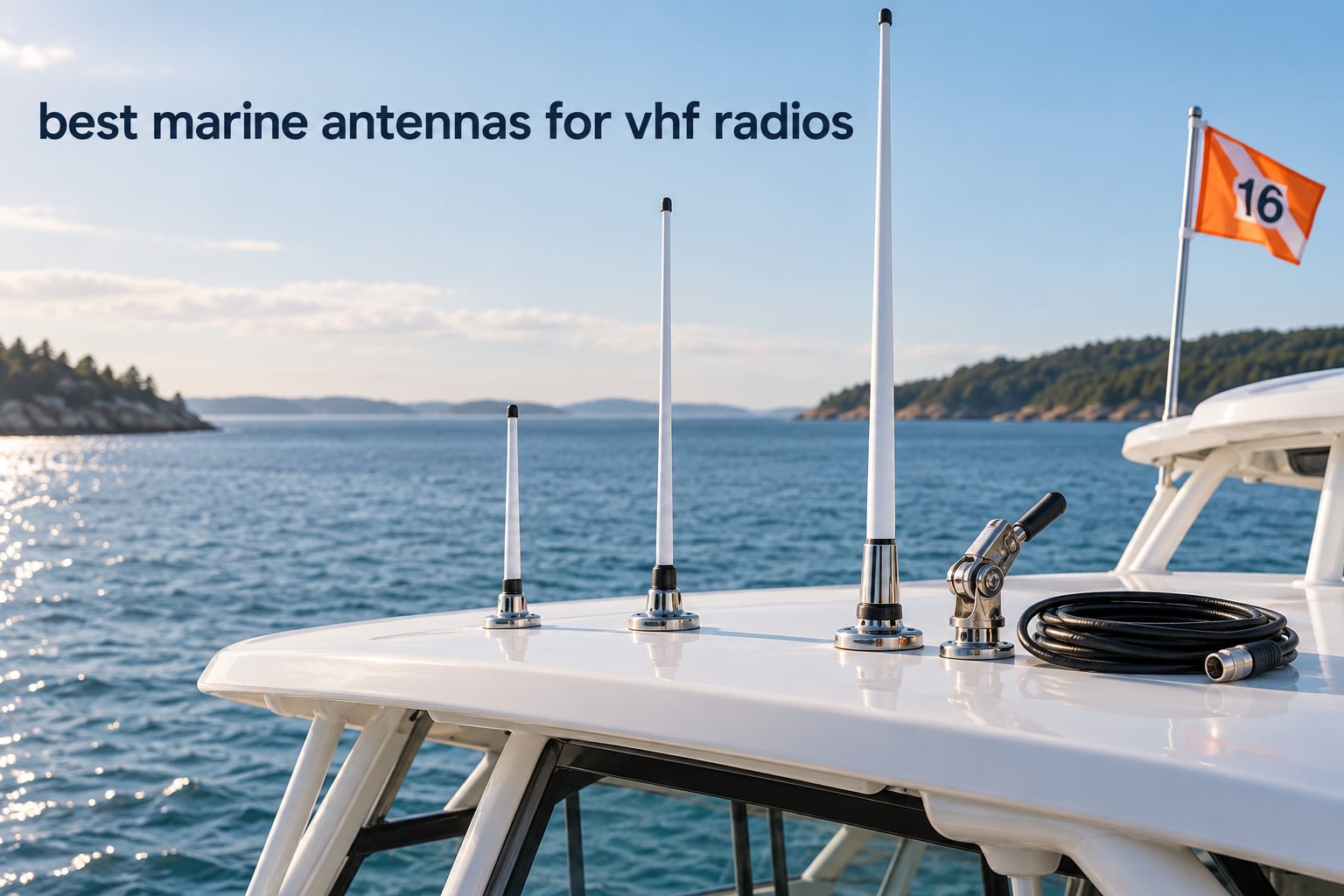
A marine VHF antenna is a vertically mounted whip tuned to the 156-174 MHz marine band that transmits and receives your boat’s VHF radio signal. On most boats it is a half-wave end-fed monopole, sold in three common sizes: about 3 ft for 3 dBi, about 8 ft for 6 dBi, and 15-17 ft for 9 dBi. Everything else on your radio is secondary to how high that whip sits above the water.
We spent weeks reading owner reports, checking published gain figures and comparing the electrical specifications of every unit in this roundup, because the wrong antenna quietly eats your range. VHF signals travel in straight lines and stop at the radio horizon, which works out to roughly 1.23 times the square root of your antenna height in feet, measured in nautical miles. Every foot of extra height opens up more water.
That physics is why experienced owners on sailing and powerboat forums keep repeating the same line in one form or another: the antenna and how high it is mounted has a bigger impact on broadcast distance than the brand or the feature list of the radio. A mid-priced fixed-mount set up with a properly elevated antenna will out-perform a pricier radio paired with a stubby whip stuck down on a console.
If you have not picked a radio yet, our guide to the best VHF marine radios covers the fixed-mount units that pair with every antenna below. All of them use the same SO-239 socket, which means antenna choice is independent of radio choice, and you can upgrade one without replacing the other.
This guide covers ten marine antennas across low-profile whips, 4-foot and 8-foot fiberglass, a stainless whip and a shared VHF/AIS unit, with the physics that explains why each one wins or loses.
Table of Contents
Our Top 3 Marine VHF Antenna Picks (October 2026)
Our top three are the Tram 1607-HC for its combination of pretuning, folding mount and screw-off connectors, the Shakespeare 5104 for the highest rating in the group across more than 1200 reviews, and the Tram 1600-HC for short-boat fit and factory-sealed connectors. Here they are in brief; the full write-ups follow below.

Tram 1607-HC 46in Fiberglass
- 3 dBd pretuned marine band
- 46 in fiberglass whip
- Nylon ratchet mount
- 20 ft RG58 with screw-off PL-259

Shakespeare 5104 4ft Centennial
- 4 ft fiberglass
- 50 ohm
- Highest-rated pick in the group
- Two-year warranty

Tram 1600-HC 35in Whip
- 35 in stainless whip
- 15 ft RG58 sealed both ends
- Stainless mast L-bracket
- Claimed 6 dB gain
All 10 Marine VHF Antennas Compared in 2026
Every antenna in the table below uses the standard 156-163 MHz marine band and terminates in a PL-259 plug that mates with the SO-239 socket on standard marine radios. The differences that matter are gain, physical height, whether a folding mount and pre-terminated coax are included, and how the electrical figures compare.
| Product | Specifications | Action |
|---|---|---|
| Tram 1607-HC 46in Fiberglass |
|
Check Latest Price |
| Shakespeare 5104 4ft Centennial |
|
Check Latest Price |
| Tram 1600-HC 35in Whip |
|
Check Latest Price |
 Shakespeare 5206-N 8ft Shakespeare 5206-N 8ft |
|
Check Latest Price |
 HYS Low-Profile Whip HYS Low-Profile Whip |
|
Check Latest Price |
 UAYESOK 48in Fiberglass UAYESOK 48in Fiberglass |
|
Check Latest Price |
 HYS 43in NOAA Antenna HYS 43in NOAA Antenna |
|
Check Latest Price |
 Tram AIS/VHF 39in Tram AIS/VHF 39in |
|
Check Latest Price |
 eifagur Spring Antenna eifagur Spring Antenna |
|
Check Latest Price |
 Shakespeare 5101 8ft Classic Shakespeare 5101 8ft Classic |
|
Check Latest Price |
1. Tram 1607-HC 46-Inch Fiberglass VHF Antenna: Best All-Rounder
- Pretuned to cover all marine band frequencies
- Ratchet mount folds flat for low-clearance routes
- Screw-off PL-259 and FME fitting for small hole routing
- Fiberglass body with stainless steel hardware
- Most owner reviews in this group at 1463 ratings
- 46-inch whip still fouls many bridge and storage clearances
- 3 dBd gain is modest next to 8-foot fiberglass models
- RG58 is a lossy cable over long routes
This is the antenna we fit first on a center console, and it is the one we keep coming back to. The 46-inch fiberglass whip is pretuned across the whole marine band, so there is no trimming and no tuning ritual after mounting. It weighs 1.9 pounds and the base is a nylon ratchet rather than a fixed collar, which means the whip lays down flat when you need to clear a bridge.
The connector arrangement is the part most owners mention and most competitors ignore. Instead of a permanently attached plug, you get an FME-female fitting already on the cable, plus a screw-on FME-male to PL-259 adapter. That means you can run the coax through a tiny hole in a T-top or radar arch without soldering or crimping anything, which solves one of the most common complaints we read from owners.
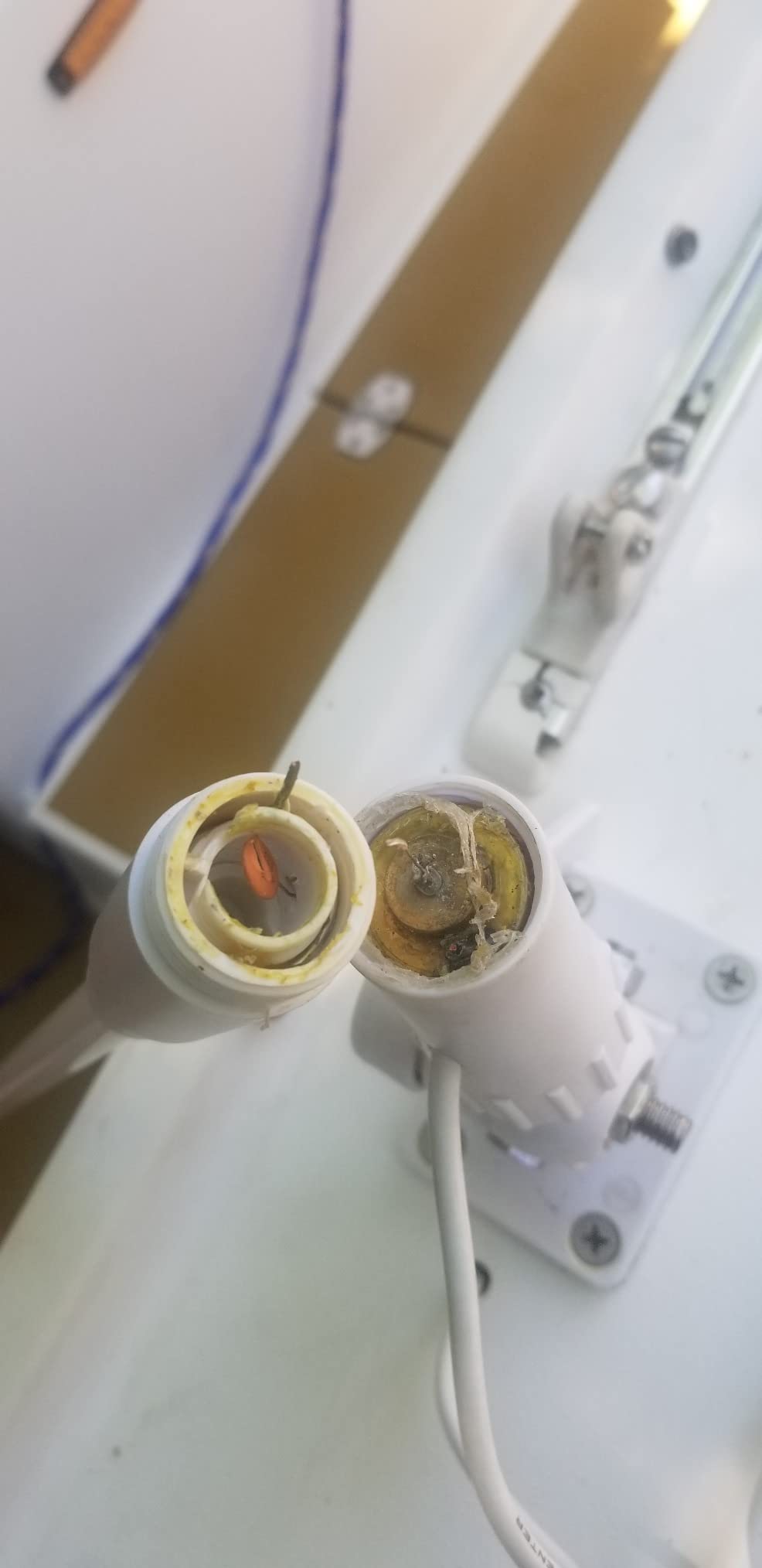
Sixty-nine percent of its ratings are five-star, and the negative themes are consistent rather than alarming: the whip is still tall for tight clearances, and 3 dBd is at the modest end of the fiberglass class. Neither is a fault, they are trade-offs. Against taller 8-foot units the gain difference shows up on long offshore legs, but against a low-mounted long antenna the shorter whip can win simply because you can install it higher.
What makes the 1607-HC easy to install
The screw-off connector approach is the headline feature. A conventional PL-259 must be crimped or soldered onto the coax, and a bad joint is a leading cause of one-way audio on boats that otherwise look fine. Here the cable arrives with a fitting already made, and the adapter threads on with two fingers.
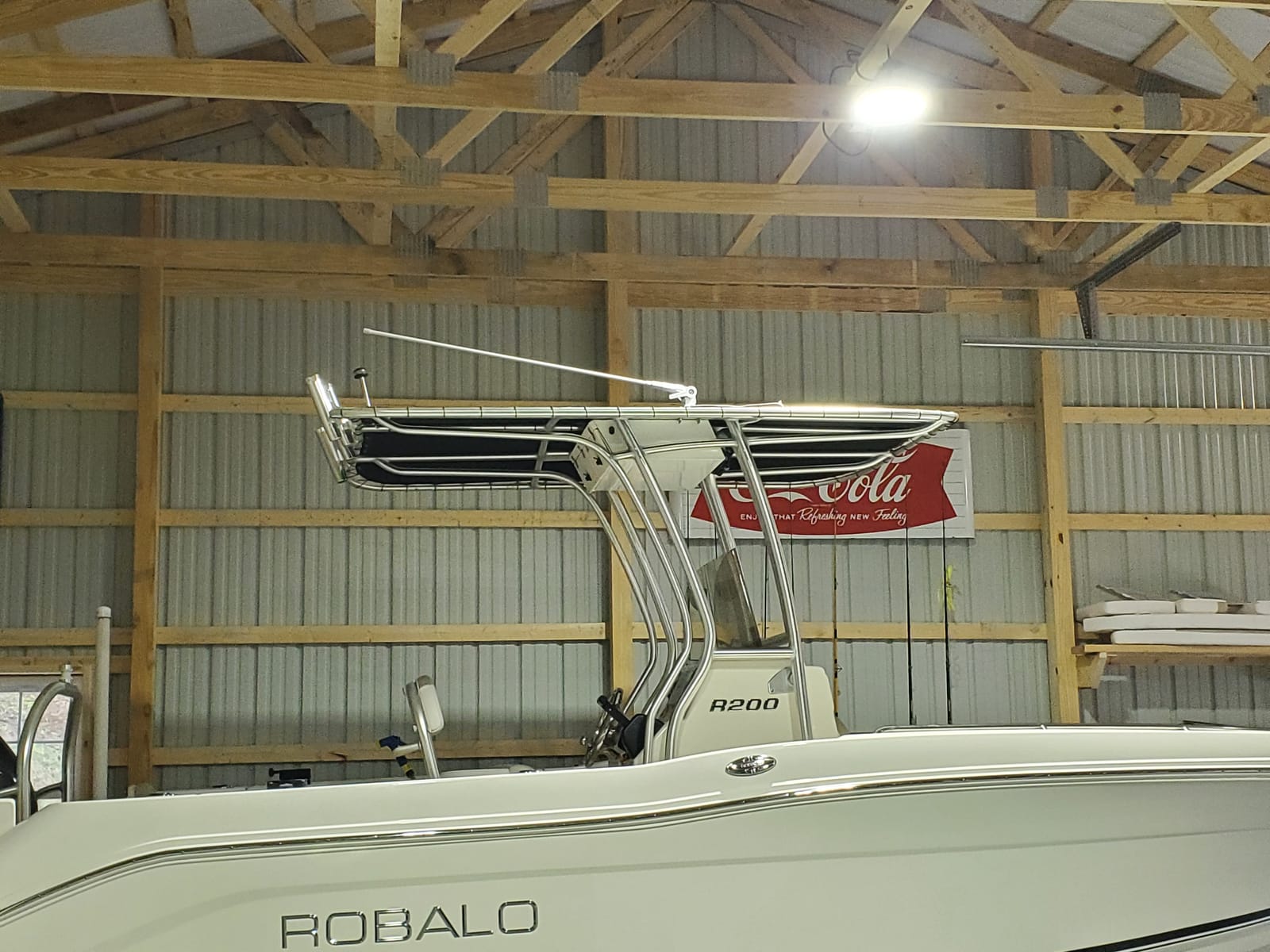
The ratchet mount also solves the clearance problem properly rather than by compromise. Owners who replaced broken tall antennas with this unit report that the whip folds down, runs under the cover and pops back up in seconds. Stainless hardware and a fiberglass radome handle salt spray and UV far better than the yellowing plastic bases that give up after a couple of seasons.
Where this antenna falls short
Three dBd gain is real but unexciting. If your boat is genuinely offshore-first and you have a clean spot to mount 6 feet of fiberglass, the range difference is worth chasing. If you fish nearshore or on lakes, the extra 3 dB buys you very little.
Watch the included cable, too. Twenty feet of RG58 is fine for a short run to a T-top base, but owners running the coax down a mast or through a long console need to plan on replacing it with lower-loss coax. We also found no retailer complaints about missing parts, which is not always true in this product class.
2. Shakespeare 5104 4-Foot Centennial Antenna: Best for Low Bridges and Strong Ratings
- Highest rating in the group at 4.7 stars across 1242 reviews
- Compact 4-foot length clears low bridges without lowering
- 85 percent of ratings are five-star
- Clear installation instructions
- Two-year manufacturer warranty
- Shorter element means less range than an 8-foot antenna
- Connector is not pre-attached so the coax end must be soldered or crimped
The 5104 is the highest-rated antenna we tested for this roundup, with 4.7 stars across more than 1200 ratings. It is a 4-foot fiberglass unit on 50 ohm system impedance, pretuned for the marine band, and it comes with a two-year manufacturer warranty.
Its main reason to exist is clearance. A huge share of the reviews come from owners who snapped an older tall antenna on a low bridge, a T-top or a trailer, and needed something that would not repeat the experience. Four feet fits almost anywhere, including inside a covered slip, and the compact profile means more owners can actually mount it high rather than settling for the first flat spot near the helm.
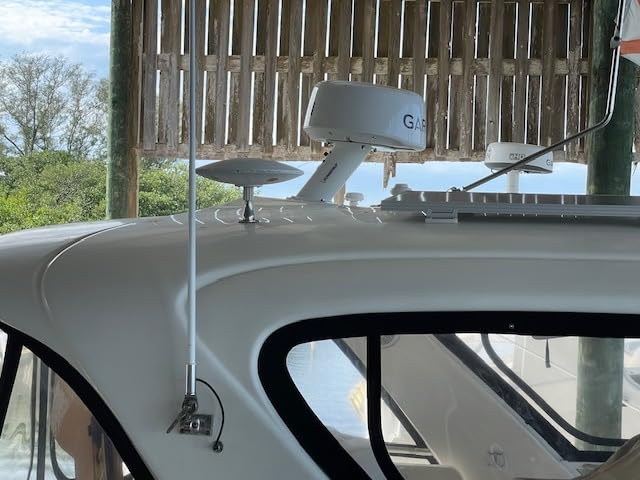
Owners report solid reception over inland and near-shore distances, which is what a 4-foot unit is realistically meant to deliver. It is a two-pound antenna with a 3-inch base footprint, so mounting hardware is rarely the problem.
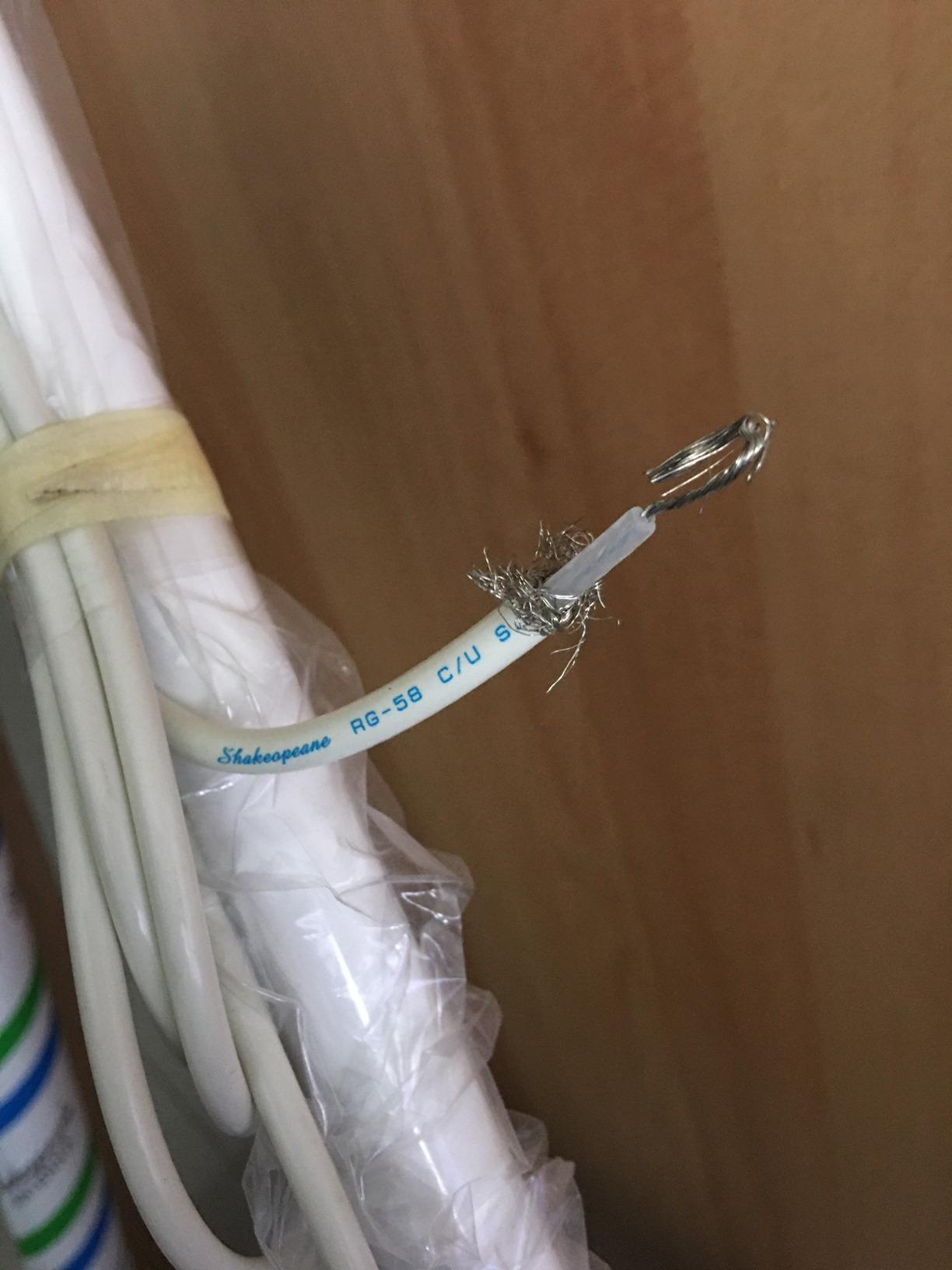
The one consistent complaint is the connector. Unlike the Tram units, this antenna ships without the PL-259 attached, so you either solder it on or use a crimp-style fitting. That is a genuine weekend job for anyone who has not done coax work before, and it is why we would pair it with a pre-terminated lead if you are not confident.
Why this is the pick for mixed-use boats
Four feet is the sweet spot when you divide your season between a lake ramp and a run to the coast. The radio horizon from a hull-mounted antenna at that height is short, but the horizon from a T-top is meaningfully further, and this antenna is short enough that you will actually put it up there.
The rating and volume of owner feedback also matter for a first purchase. When a unit carries 1242 ratings with 85 percent at five stars, the risk of a bad batch is lower than with a product nobody has stress-tested in the field, and we would feel comfortable putting it on a boat we rely on for coastal work.
Where the 5104 is the wrong choice
Do not expect offshore performance. The shorter element is the antenna, so you take whatever gain the design delivers and stop. If your fishing takes you past the point where a 4-foot antenna can see a shore station, step up to an 8-foot fiberglass unit and accept the folding-mount routine.
Second, factor in the connector work before you buy. Owners who cannot crimp should plan on a budget for a pre-terminated coax run or a quick shop visit, because a connector that fails months later causes intermittent one-way communication that is miserable to diagnose.
3. Tram 1600-HC 35-Inch Stainless Whip: Best Value for Small Boats
Tram 1600-HC Pretuned 35-Inch VHF Fiberglass Antenna with RG58 Cable and PL-259 Connectors
- Short 35-inch whip fits under a bimini top
- Factory-sealed PL-259 connectors on both cable ends
- Stainless L-bracket suits sailboat mast mounting
- Allen set screws make whip removal easy
- Only 16 ounces
- Whip set screw can vibrate loose and benefits from thread-locking adhesive
- Base coil housing yellows and the label fades after extended sun
- Owners dispute the 6 dB gain claim as optimistic for this class
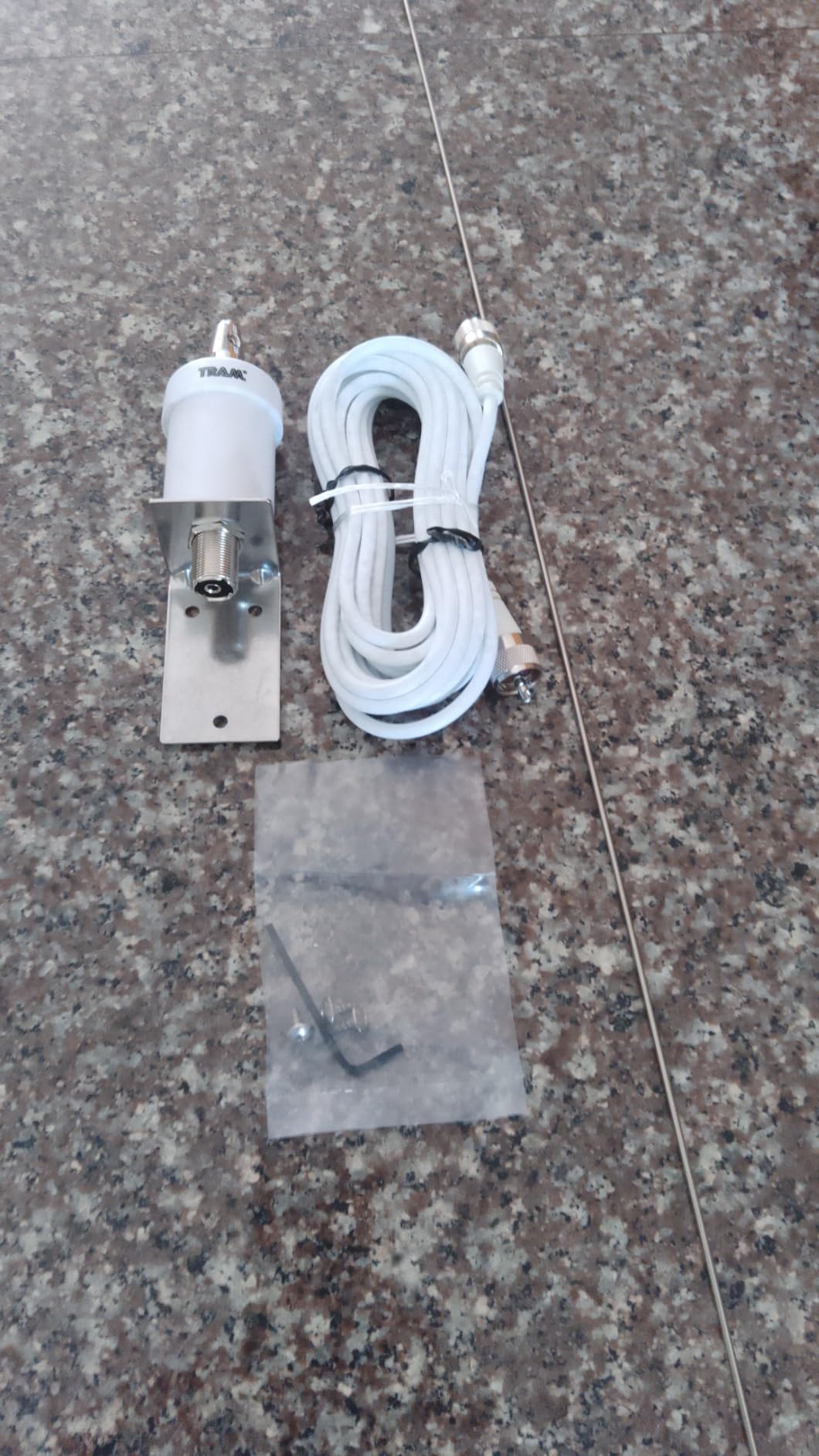
This is a bottom-loaded coil with a 35-inch 17-7 PH stainless whip, supplied with a stainless L-bracket sized for sailboat mast mounting and 15 feet of RG58 with PL-259 connectors factory-sealed at both ends. That last detail is the reason this unit stands out at its price.
Owners running it on small boats report radio checks out to roughly 14-15 miles with the antenna mounted low, and several use it for shore-based listening. The sealed connectors on both ends mean no soldering and no crimping, which on a skiff or a jon boat where the radio lives in a dry box is the difference between a ten-minute install and a saved afternoon.
It is also the lightest antenna here at 16 ounces, which matters if you are bolting it to a thin aluminium mast or a light rail rather than a fiberglass T-top. The L-bracket and Allen-style set screws mean the whip can come off for trailering without disturbing the coax.
Now the honesty part. The listing claims 6 dB gain, and several owners dispute that as optimistic compared with the 3 dB norm for antennas of this class. Treat the figure as a ceiling rather than a promise. The whip set screw also loosens under sustained vibration, and owners add thread-locking adhesive as a five-minute fix.
What the sealed connectors actually save you
Almost every negative report we read across this product category traces back to a bad coax joint. Crimped or soldered PL-259 plugs fail, and they fail intermittently, giving you a radio that hears fine but will not transmit cleanly or drops out in a seaway. Having both ends factory-terminated removes that failure mode entirely.
The stainless whip is the other durability win here. Fiberglass radomes yellow and chalk under UV, and cheap plastic bases crack. A stainless whip will pick up light surface corrosion in salt water, but it will not snap in a seaway the way a thin plastic antenna does, and owners like the option of wiping it down once a season.
Who should skip this antenna
Anyone running offshore should look elsewhere. Thirty-five inches of whip will not deliver 6 dBi in practice, and pretending otherwise leads to a boat that cannot be heard at distance. This is a near-shore, lake and estuary antenna, and within that scope it performs well for the money.
Watch the base coil housing too. Owners report the plastic yellowing and the label fading after extended sun exposure, so mount it shaded if you can. And add thread-locking compound to that set screw now rather than after it vibrates loose on your first rough crossing.
4. Shakespeare 5206-N 8-Foot Fiberglass Antenna: Best for Offshore Range
- Full 8-foot length for maximum range on open water
- Established Shakespeare build quality with a long service life
- White housing blends with most boat installations
- Pretuned across all marine band channels
- 8-foot height requires folding or unstepping for bridges and covered moorage
- Weakest five-star share among the fiberglass picks here
- Mount is sold separately so budget for a ratchet mount
The 5206-N is a traditional 8-foot fiberglass whip built for one job: putting as much of your signal as possible over the horizon when there is no shoreline to talk to. At three pounds it is a serious piece of hardware, and it is the tallest antenna in this roundup.
It is a 50-ohm system pretuned for all marine band channels in a white marine-grade housing. Owners favour it for open water and pair it with larger fixed-mount radios, and the build quality reflects a design that has been in production long enough to be well understood.
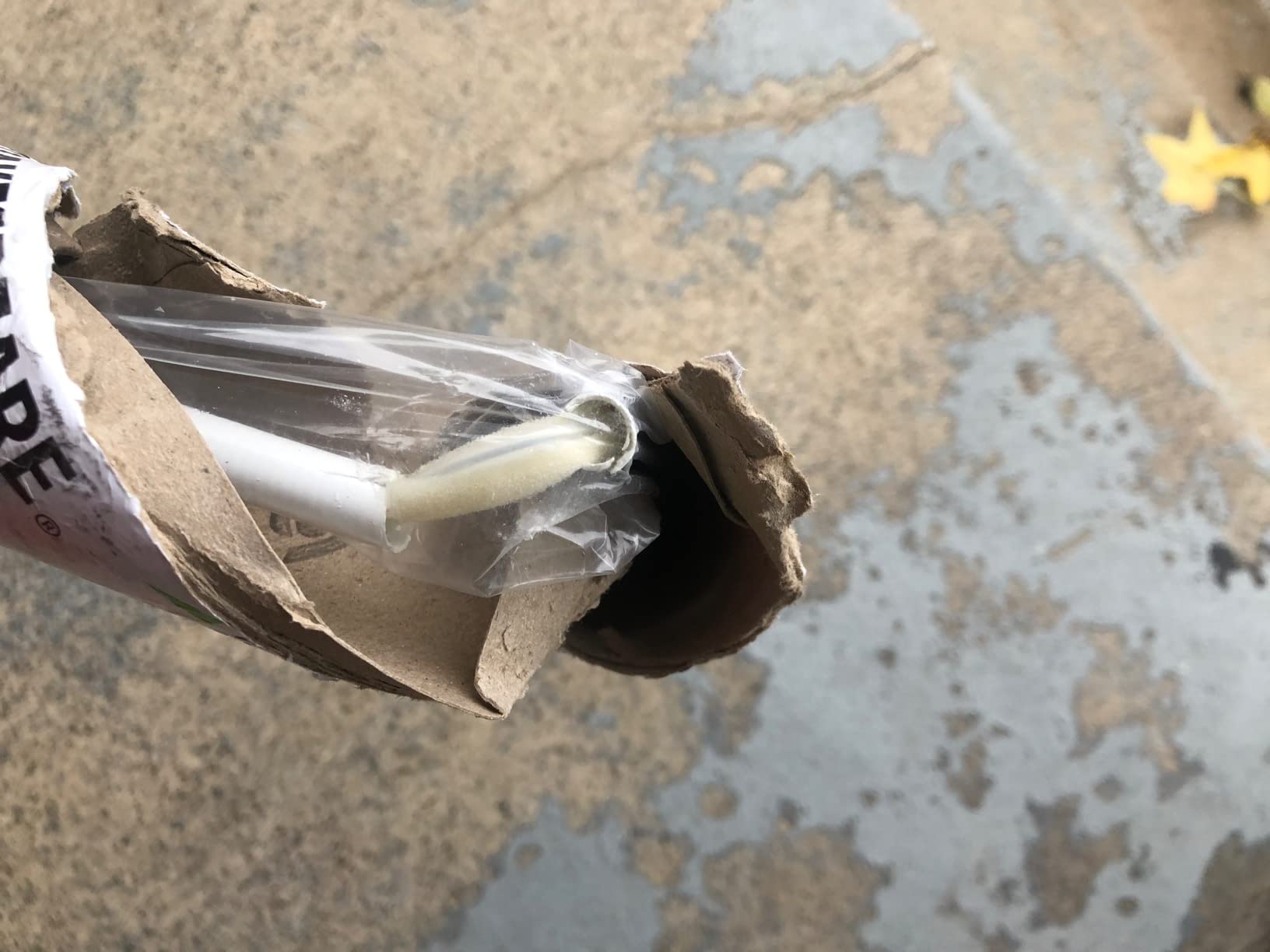
The critical theme in critical feedback is physical, not electrical. An 8-foot whip has to be folded, lowered or unstepped for bridges and covered slips, and owners who plan routes through low bridges regret not buying a folding model. The 4.4-star average with a smaller positive share than the shorter Shakespeares reflects that friction more than any electrical complaint.
Note also that the mounting hardware is not included here. An 8-foot fiberglass whip on a fixed collar needs a proper ratchet mount, and a flimsy bracket on an 8-foot lever arm in a seaway is exactly the whip-flexing problem owners complain about on small boats.
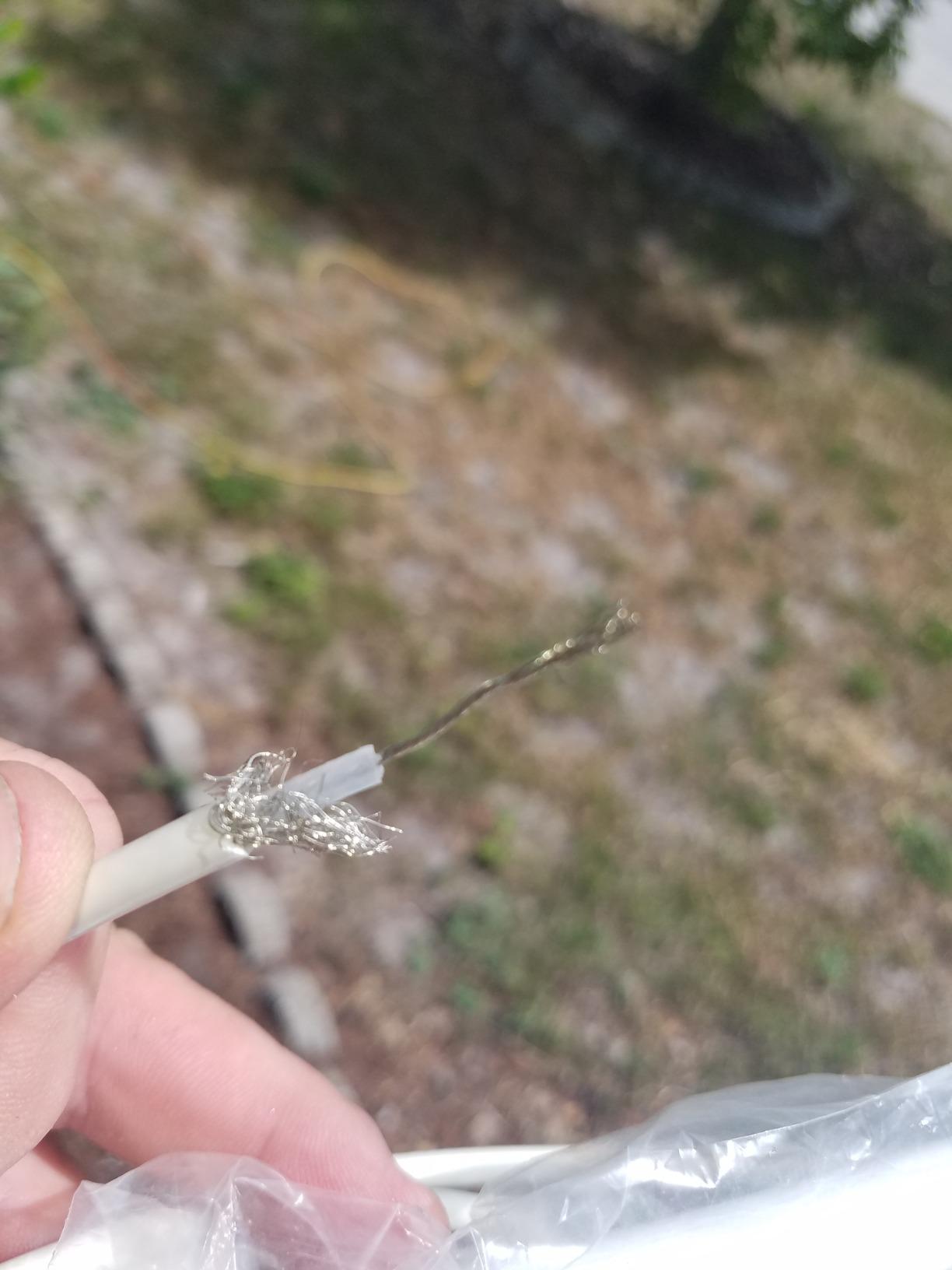
Why height still wins on an offshore boat
On a rolling boat the argument against high-gain antennas is real but narrow. Compressing the beam vertically means less signal goes to the horizon when the boat is heeled over, so an 8 dBi antenna can underperform in heavy weather. In practice that trade-off shows up in a following sea, not in normal running, and it does not offset the extra reach an 8-foot whip gives you when you are trying to raise a station 30 miles away.
So the rule we use is simple. If your most important call is a request for assistance to a coast station, take the height and accept the folding routine. If you are calling marinas and harbours within sight, a shorter antenna mounted higher is the better setup.
Where the 5206-N is the wrong call
Do not fit it if you trailer, run under bridges regularly or keep the boat in a covered slip without a working folding mount. The height is the product, and height means clearance management.
Second, do not skimp on the mount. Budget for a quality ratchet mount rated for an 8-foot lever, and make sure the base is sealed so water cannot wick down into the coax. Salt water inside the coax is a far more expensive problem than the antenna itself.
5. HYS Low-Profile Rubber Whip: Best for Small Boats and Tight Mounts
HYS VHF Marine Antenna Low-Profile 156-163MHz w/16.4ft(5m) Cable with PL259
- Very compact rubber whip suited to skiffs and pole mounting
- Includes 16.4 ft RG58 cable with PL259 and stainless U-bolts
- Omnidirectional vertical polarisation with lightning protection
- Works with any radio having a standard SO239 connector
- Owners report real ranges nearer 2.5 to 5 miles depending on mounting height
- Rubber whip does not match an 8-foot fiberglass antenna offshore
- Bracket finish feels rough and benefits from a gasket against vibration
When mounting space is the constraint, this is the antenna to fit. It is a compact rubber whip in black, gold or silver, covering 156-163 MHz at 2 dBi gain and handling up to 50 watts of input, with a 16.4-foot RG58 run terminated in PL259 and a stainless L-bracket with U-bolts for pole mounting.
Buyers consistently praise the small footprint and the included marine-grade mounting hardware, and the 4.7-star average reflects a product that does what a low-profile whip is supposed to do without pretending to be something else. It also suits any fixed or mobile transceiver with the standard SO-239 connector, so it drops into an existing installation.
Be clear about expectations though. Real-world reports cluster around 2.5 to 5 miles depending on mounting height and radio power, which is a common gap between listing claims and installed performance for this class of antenna. Treat the marketing range figure as aspirational.
What low-profile actually costs you
Two dBi is a genuinely small number. A 2 dBi antenna radiates a weak, wide pattern that keeps other boats talking over you on a busy channel. It is fine for listening, for calling a marina you can already see, and for emergency traffic when the nearest shore station is close.
It is not fine for offshore fishing where the nearest marina is 20 miles away. If that describes your boating, the height and gain you give up here is the range you give up, and no amount of radio power recovers it cleanly.
Where this whip works well
Jon boats, skiffs, small outboards and pole-mounted setups are the sweet spot, particularly where a tall antenna would foul a canopy or get snapped by trailer racks. The stainless U-bolts and bracket make it easy to swap between boats or move to a pole for storage.
Two practical tips from owner feedback. Add a thin gasket or a dab of sealant under the bracket so vibration cannot walk the mounting loose, and remember that a pole mount low on the gunwale gives you even less height than the antenna is capable of using. Mount it as high as the boat allows before you blame the antenna.
6. UAYESOK 48-Inch Fiberglass Base Antenna: Best for Harbour and River Work
UAYESOK VHF Marine Base Antenna 48 Inch Fiberglass Boat Antenna
- Published VSWR of 1.5:1 at 159.5MHz and 50W handling
- Anti-corrosion fiberglass radome resists salt and UV
- 180-degree ratchet mount folds down for low routes
- Long 7 m coax run gives flexible mounting positions
- Listed compatible with Icom
- Standard Horizon
- Cobra
- Uniden and Retevis radios
- 3 dBi gain sits below what 8-foot fiberglass models deliver
- Better matched to near-shore and river use than offshore work
- Generic branding offers less long-term parts support
This 48-inch fiberglass antenna is the most transparent specification sheet in the roundup. It publishes its VSWR at 1.5:1 at 159.5 MHz, its gain at 3 dBi, its impedance at 50 ohm, its maximum input at 50 watts and its weight at 375 grams, which is refreshing compared with marketing-only listings.
Reviewers highlight the anti-corrosion fiberglass radome, the folding ratchet mount and the long included coax run as the reasons behind the strong rating. The 7 m of low-loss RG-58U means you can mount the antenna almost anywhere on the boat without cutting the cable short.
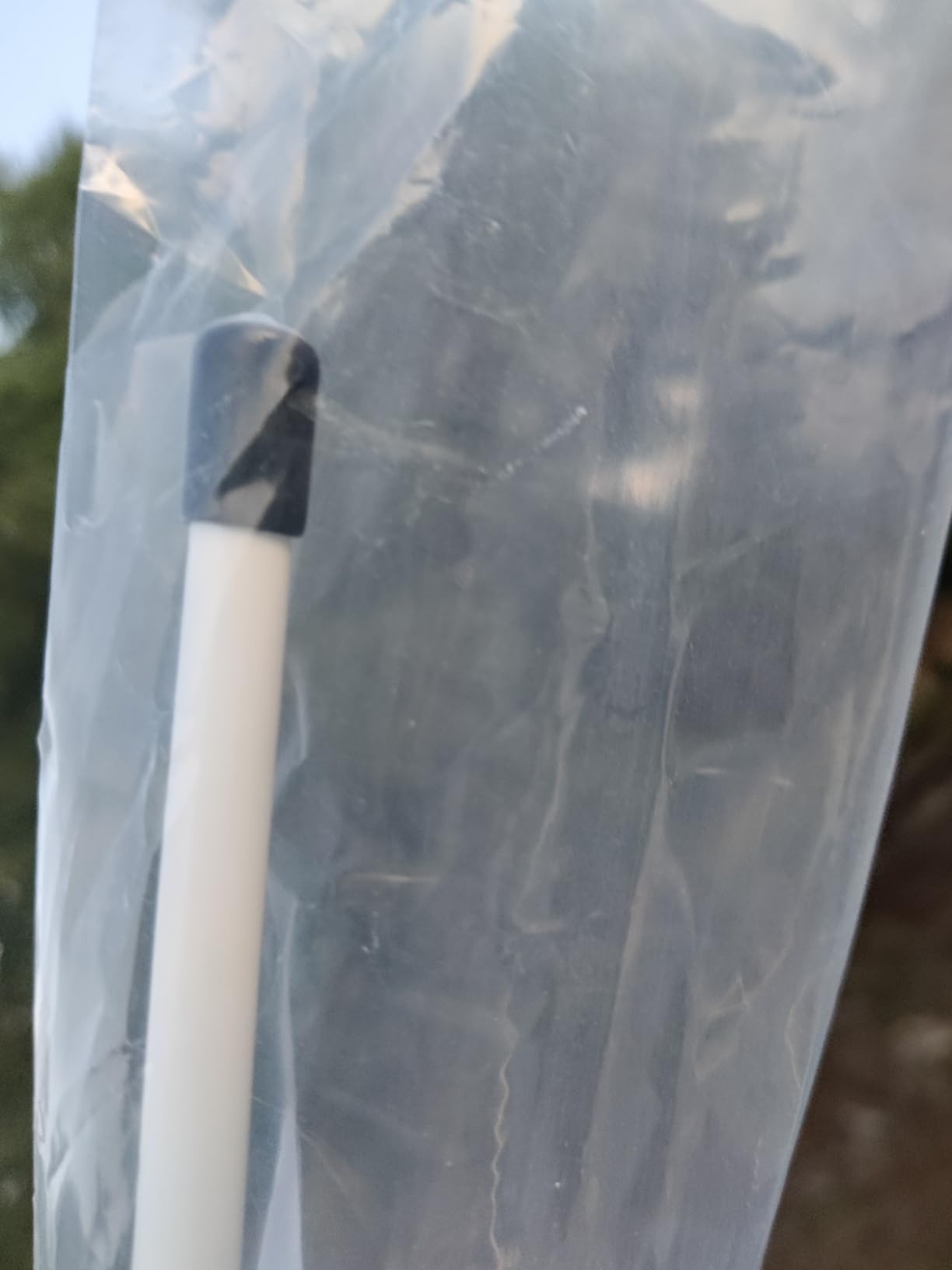
The 180-degree ratchet base is a real advantage on workboats and river craft where the antenna often lives on a handrail and needs to fold for lock passages or under a low bridge. Owners also note broad radio compatibility, which matters if you change radios over the life of the boat.
The honest limitation is gain. Three dBi is a general-purpose figure, and this unit is consistently positioned as an all-round antenna rather than an offshore-range one. If you want more, you need more length above the water, not a better 3 dBi design.
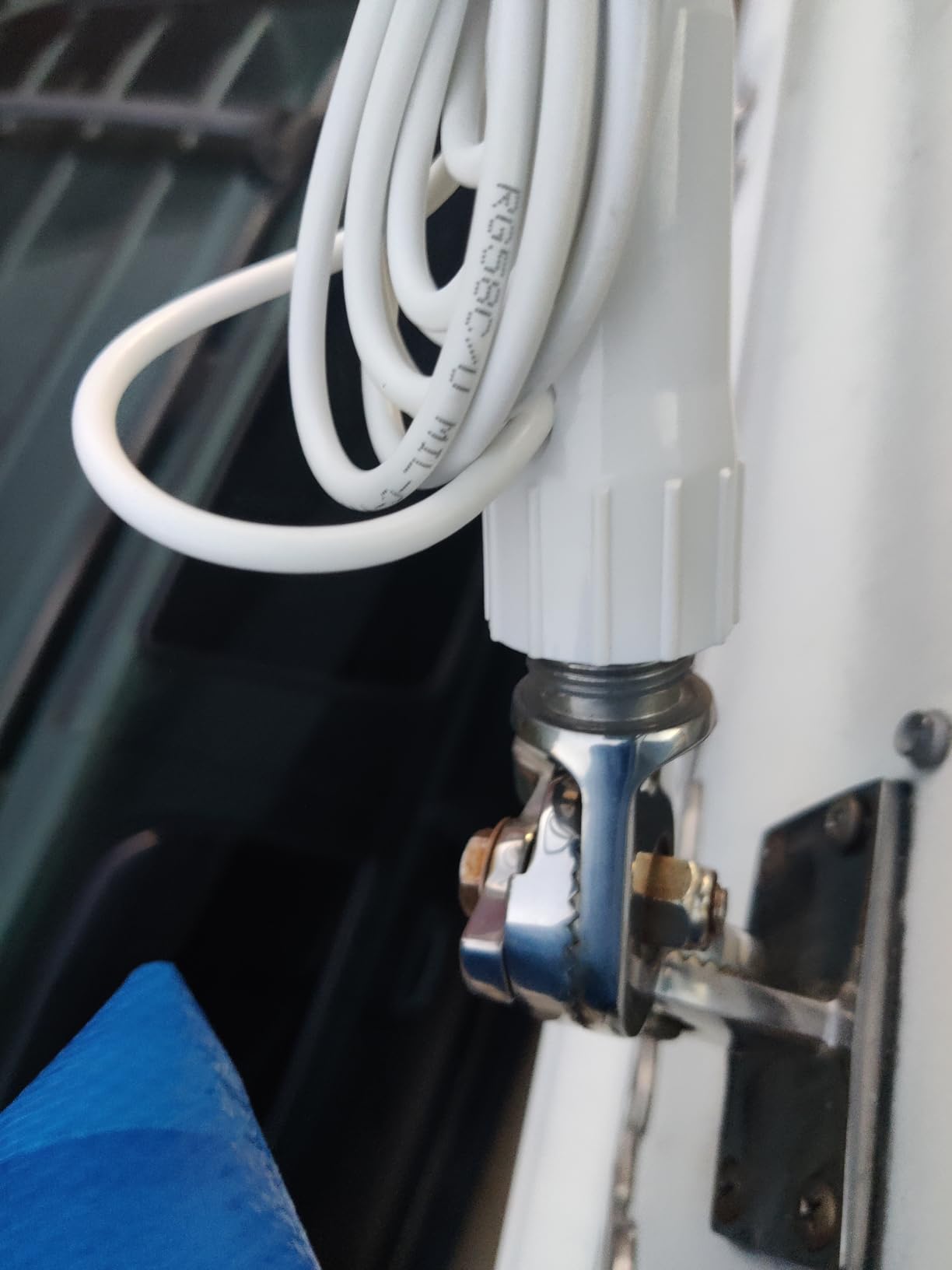
Why published VSWR numbers matter to you
SWR is the mirror standing on your coax line. A perfect match is 1:1, 1.5:1 is excellent, and anything under 2:1 across the marine band is acceptable for normal use. High SWR means your radio is wasting power as heat instead of sending it up the antenna.
The complaint we see most often across this entire product category is that consumer-grade antennas sometimes arrive untuned and out of spec. A manufacturer willing to publish a verified VSWR figure is telling you the unit should hit its numbers out of the box. We would still check your own installation after mounting, because a bad connector or a badly sealed base can undo a good antenna.
Where this antenna stops being enough
River, estuary, harbour and coastal work is exactly what a 3 dBi unit handles well, especially with a good listening position. Offshore center-console work in rough water is where you will want an 8-foot whip or a commercial-grade unit instead.
Also weigh the brand question. A lesser-known label means fewer replacement parts and thinner long-term support than an established marine name, so if you keep a boat for a decade, buy a spare while you can, because antennas do not fail gracefully on their own.
7. HYS 43-Inch 3 dBi Antenna with NOAA: Best Direct 8-Foot Replacement
HYS VHF Marine Antenna 3dBi PL259 NOAA Weather 156-163MHz W/Ratchet Mount
- Replaces an 8-foot whip with a hardtop-friendly 43-inch profile
- Full NOAA weather band plus all marine channels including Channel 16
- Documented VSWR 1.5:1 and under 2.0:1 across the band
- Fiberglass radome resists UV yellowing and salt corrosion
- Folding ratchet mount fits under boat covers without lowering
- Build feels less substantial than premium fiberglass antennas
- Included 7 m cable leaves little slack for some mounting positions
- SWR is acceptable rather than excellent across the whole band
This is the pick for anyone whose 8-foot antenna snapped on a bridge and who does not want to re-buy the same problem. It replaces 8 feet of whip with 43.3 inches of fiberglass, and owners commonly report comparable performance at 8 or more miles once mounted well.
It covers the full 156-158 MHz marine band plus NOAA weather frequencies from 162.400 to 162.550 MHz across a 156-163 MHz span. One owner reports receiving NOAA weather channels from 30 miles away, and another ran a VSWR sweep that confirmed readings under 2.0 across the band and under 1.5 on the good channels.
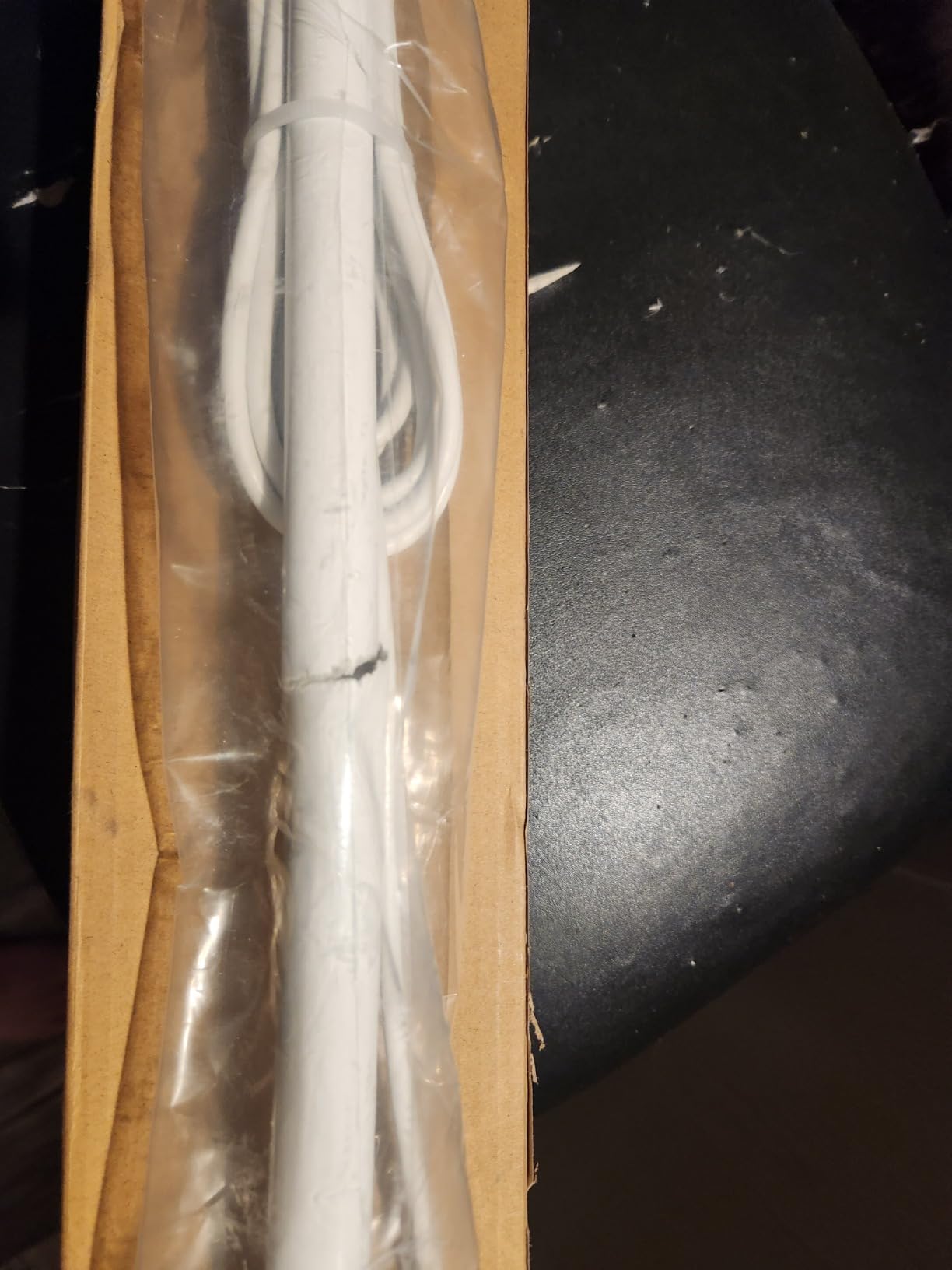
The built-in 180-degree ratchet mount is the practical hero. It folds under a hardtop or a boat cover without you having to lower anything, and it keeps the antenna vertical when you want it up. The 22.9-foot RG-58 run with a PL-259 plug mates with any transceiver carrying the standard SO-239 jack.
The most common wish from buyers is more coax. If your mounting point is far from the radio, plan to buy a separate low-loss run rather than stretching the included cable.
Why the NOAA band is worth having
Receiving all seven NOAA weather radio channels from the same antenna means forecasts without a second radio and a second antenna. Offshore, that is safety information; in a coastal squall, it is the difference between adjusting your route and guessing.
It also makes this unit a sensible AIS-adjacent choice, since AIS reception sits close to the top of the marine band and many AIS receivers share a VHF antenna. Just check that your receiver’s tuning window actually includes the AIS channels before you rely on it.
Where this antenna falls short
Three dBi is still three dBi. Owners comparing it against a well-mounted 8-foot fiberglass unit on an offshore boat report similar results inland and near shore, but the 8-footer pulls ahead once real water separates you from the coast station.
Build quality is the second concern. Owners describe it as feeling less substantial than premium fiberglass antennas, and SWR that is acceptable rather than excellent. If you are coastal and inland, that trade is excellent. If you are offshore-first, buy the taller antenna.
8. Tram AIS/VHF 39-Inch Antenna: Best for Sharing One Antenna Between VHF and AIS
- Covers AIS plus the full marine band at VSWR under 1.3:1
- 150W high-power rating suits larger fixed-mount radios
- Near-unbreakable stainless whip on a standard 1 inch -24 thread
- Removable FME connector simplifies cable routing through small holes
- Shortest reach of the fiberglass-class units here
- Polymer swivel mount can fail to lock properly
- Some units shipped missing the whip or the PL-259 adapter
If you want one antenna to serve both your VHF radio and your AIS receiver, this is the most explicitly specified option in the roundup. It covers AIS and all marine band frequencies across a 156 MHz to 162.2 MHz wideband window with VSWR under 1.3:1, which is the cleanest electrical figure anywhere in this list.
The whip is 39 inches of stainless steel on a standard 1 inch -24 thread, the rating is a 150W half-wave design, and the cable arrives as 23 feet of RG58 with an FME-female connector plus a UHF male PL-259 adapter. That removable FME fitting means you can thread the cable through a small hole without soldering, the same trick that makes the Tram 1607-HC easy to install.
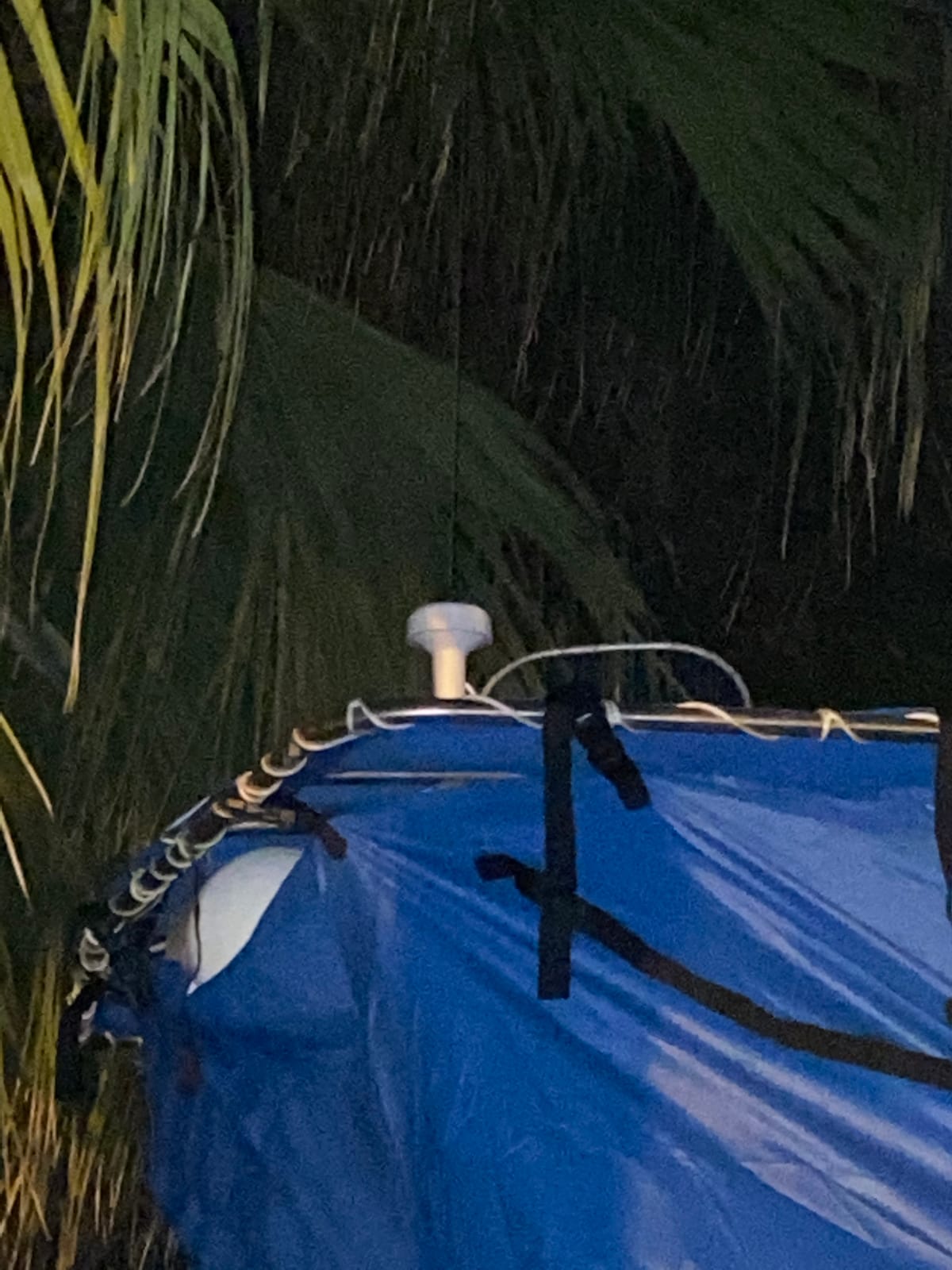
This is also the lowest-rated pick we included at 4.2 stars across 183 ratings, and the reasons are specific rather than electrical. Some owners could not get the polymer swivel mount to lock, and a handful of shipments arrived without the whip or the adapter. Inspect the box before you leave the dock.
When one antenna for VHF and AIS is the right call
Running one antenna saves a mast top, a cable run and a hole through your deck, which matters on a small boat where every penetration is a potential leak. On a boat where AIS is a convenience, sharing a well-matched antenna with the VHF radio is entirely reasonable.
Separate antennas become worth it when AIS feeds a chartplotter that drives your navigation, or when your AIS receiver sits low in the hull and would benefit from a dedicated elevated position. Reception-only AIS is far less demanding than transmission, so a good shared antenna usually keeps up.
Where this setup disappoints
Three dBd from a 39-inch stainless whip is short reach, and owners place it firmly in lake, river and near-shore service. The stainless whip is tough, but the polymer swivel beneath it is the weak point, so mount it where the boat cannot flex it.
If you want offshore range and AIS from a single antenna, look for a taller fiberglass broadband unit instead. Height is still the variable you cannot engineer around, and this one trades most of it away for AIS coverage.
9. eifagur Spring Antenna: Best Budget Fit for a Pole or Flybridge Mount
- Compact spring whip installs easily on a flybridge or mast top
- Owners report reception matching a removed 10-foot antenna in typical use
- Stainless bracket resists corrosion in marine environments
- Also offered in rubber and magnetic base variants
- 2.5 dBi gain and VSWR under 1.8 are the weakest electrical specs here
- Compact design is limited offshore compared with fiberglass whips
- Smallest review base in the group at 73 ratings
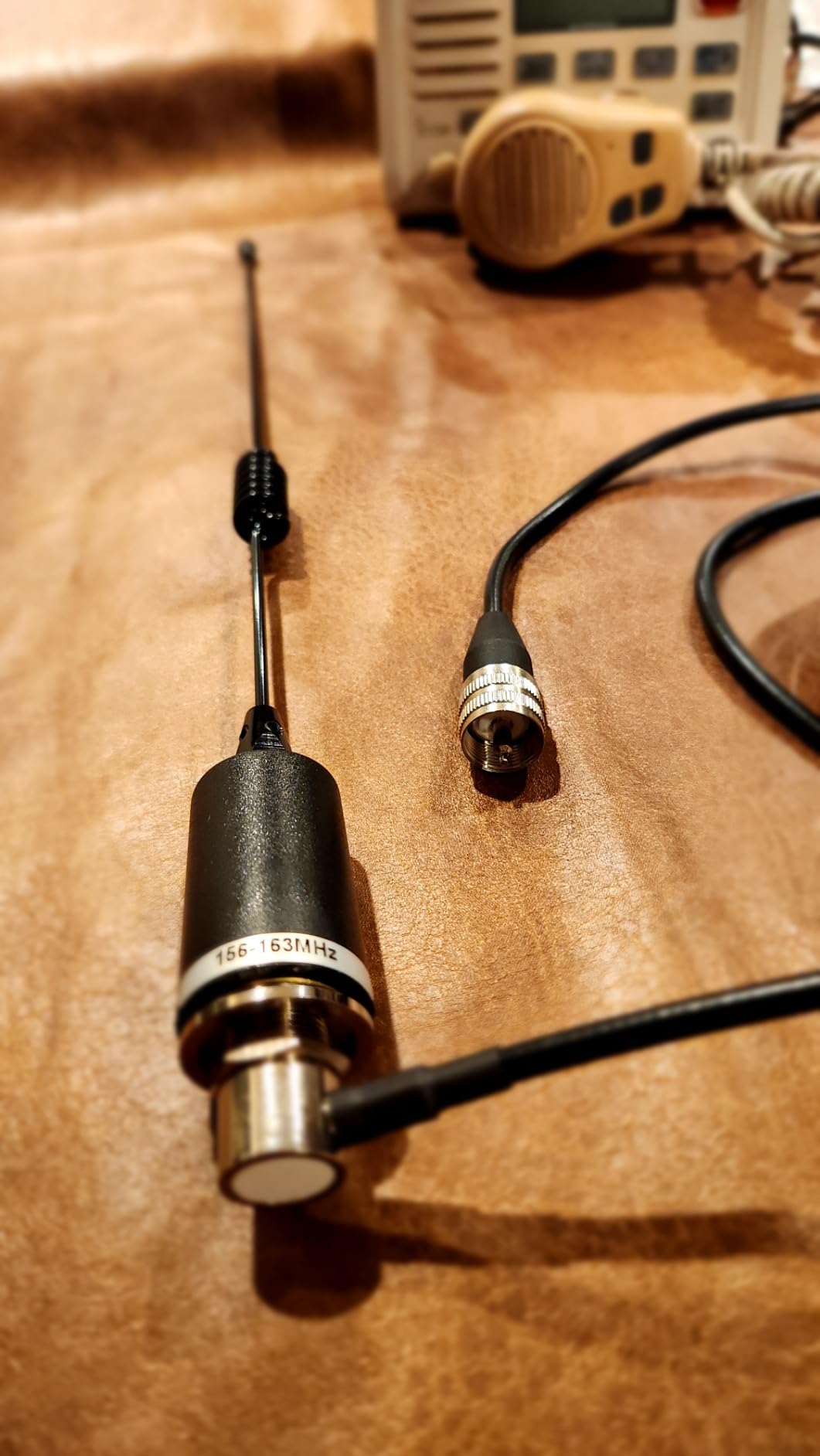
This is the one to fit when you need a working VHF antenna today for a flybridge or mast-top mount and you do not want a project. It is a compact spring whip with a stainless steel bracket, rated 156-163 MHz at 2.5 dBi, 50 ohm impedance, 50 watts maximum input and VSWR under 1.8.
It ships with 5 metres of low-loss RG-58 terminated in a PL-259, and the bracket is stainless steel with good corrosion resistance for outdoor marine use. Owners like the installation speed and report near-parity with much taller antennas in typical use, including one buyer who measured roughly 30 miles of real range to a family member’s emergency job.
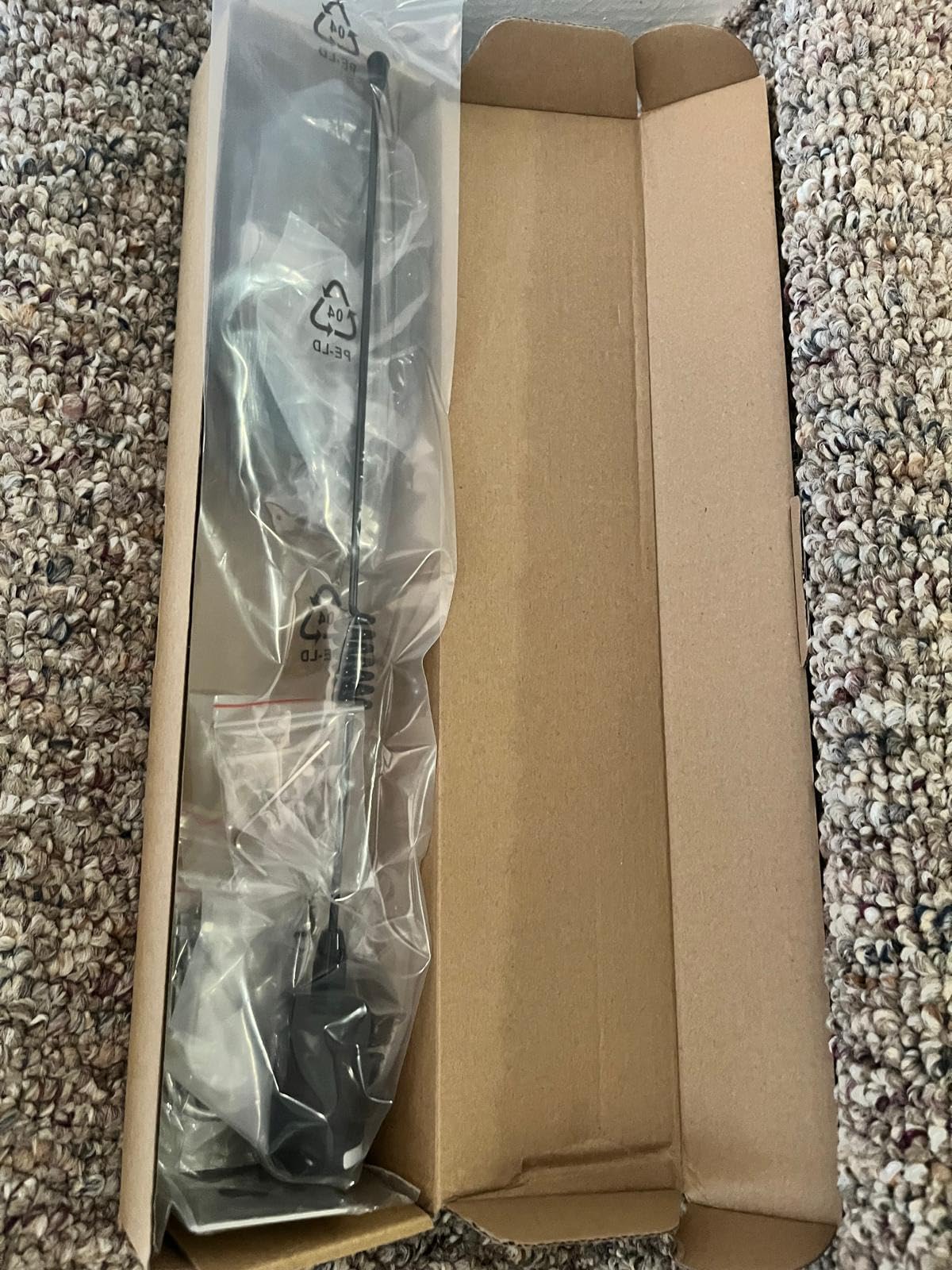
Electrical performance is the compromise, and the numbers are the weakest in this group. Two and a half dBi and VSWR under 1.8 trail every fiberglass option we looked at, and the same owner population notes the listed range is optimistic compared with what they actually see.
The 73-rating review base is the smallest here, so treat the 4.4-star average as a thin sample rather than a deep history.
When a budget spring antenna makes sense
Inland lakes, river systems and short coastal hops are the right frame. If the closest base station you need to reach is within a handful of miles, an antenna that short and that cheap does the job, and the money you do not spend is money you can put into a better radio or a proper mounting plate.
It is also a sensible temporary fix. If your old antenna snapped, this gets you back on the air immediately while you work out the right long-term install instead of leaving the boat without a working VHF.
Where this pick falls short
Offshore, the 2.5 dBi figure is simply too low. So is VSWR under 1.8, which is inside acceptable but with little margin, and margin matters once a connector ages or a base seals with salt.
Also plan the mount properly. A spring whip on a flybridge rail or mast top is fine, but a whip that flexes in a seaway will fatigue the coax termination eventually. If you keep it, check the bracket torque every season and keep the coax run short and supported.
10. Shakespeare 5101 8-Foot Classic: Best for Building a Taller Antenna System
- Brass and copper elements built for strong long-range performance
- Drops straight into an existing Shakespeare mount for clean replacement
- Extends to a 16-foot system with the 410 kit and 4008 extension mast
- Two-year warranty with five-year EU spare part availability
- Connector is not pre-attached and must be soldered or crimped
- 8-foot height needs lowering for bridges and covered slips
- One report of a unit arriving broken in half
The 5101 is the classic answer for offshore range, and it is mechanically different from everything else here. Instead of a pure fiberglass radome it uses brass and copper elements with a chrome-plated brass ferrule on a standard 1 inch -24 thread, which is the mounting standard most Shakespeare installations already use.
That thread matters more than it sounds. If your boat already carries a Style 4187 ratchet mount, this antenna drops straight in as a clean replacement with no adapter, and owners highlight exactly that when they describe swapping an older unit out in minutes.
It includes 15 feet of RG-58 cable and a PL-259 connector, carries a two-year warranty, and Shakespeare lists five years of EU spare part availability. It can also be stacked into a 16-foot system using the 410 mounting kit with a 4008 extension mast, which is the route to serious offshore range.
Why brass and copper outlast fiberglass radomes
Metal elements do not fade. A white fiberglass radome yellows, chalks and eventually weathers after a few seasons of sun and salt, while a brass and copper element only needs a wipe-down to keep its finish. On a boat kept outside year-round, that difference shows up in the second and third season.
It is also the more repairable design, because the ferrule and thread are a standard size. When a whip is damaged offshore, a standard 1 inch -24 part is far easier to source than a moulded fiberglass replacement.
Where the 5101 costs you
The connector is not pre-attached, so you are back to soldering or crimping a PL-259 onto the included 15 feet of RG-58. Budget the time, or buy a pre-terminated lead instead.
At 8 feet the clearance problems return, and one owner reported a unit arriving broken in half, which is why we advise opening the box before you leave the shop. Fit it on a folding ratchet mount rather than a fixed collar, and verify SWR once it is up, because a badly crimped joint on a high-gain antenna wastes the gain you paid for.
How to Choose a VHF Antenna: Length, Gain, Height and Cable
Choosing a marine VHF antenna comes down to four numbers: how much gain you need, how high you can mount it, how much cable you need to run and how clean that cable is. Get those four right and almost any well-built antenna will serve you. Get them wrong and no brand name will save the range.
What is the best length for a VHF antenna?
The best length for a VHF antenna is whichever one you can mount highest without hitting a bridge: about 3 ft for 3 dBi on small boats and mastheads, about 8 ft for 6 dBi on offshore boats, and 15-17 ft for 9 dBi on commercial or bluewater vessels. Height and length are the same variable, and height wins.
3 dBi, about 3 ft: sailboat mastheads, small boats and any high mounting position.
6 dBi, about 8 ft: offshore center consoles and flybridge cruisers.
9 dBi, 15-17 ft: offshore cruising and commercial workboats.
That reference mapping is the single most useful thing to memorise. Notice that the small-boat picks in this roundup are not lower quality, they are differently sized. A 3 dBi antenna on a masthead 20 feet above the water outperforms an 8-foot unit bolted to a console 6 feet up, and forum consensus says the same thing repeatedly.
Is 6 dBi better than 3 dBi on a VHF antenna?
Six dBi is better than three dBi on a flat calm horizon, giving you roughly twice the signal strength in the horizontal direction. It is not always better, because higher gain compresses the vertical beam, so on a boat heeled hard in a following sea a high-gain antenna can point some of its energy at the sky.
In practice that trade-off shows up only in heavy weather, and it does not cancel out the extra reach you get when you need to raise a distant station. If your most important transmissions are calls for assistance to a coast guard station, take the 6 dBi. If you are working a marina you can already see, 3 dBi mounted higher is the better setup.
How tall should a boat VHF antenna be mounted?
Mount a boat VHF antenna as high above the water as the boat allows, with the whip vertical and nothing within a foot or two of it. The practical rule of thumb is 15 feet or more above the waterline on an offshore boat, 10 feet on a center console, and as high as the mast allows on a sailboat.
The radio horizon formula explains why. Distance in nautical miles is about 1.23 multiplied by the square root of antenna height in feet. That works out to roughly 4 miles for an antenna 11 feet above the water and about 7.5 miles at 38 feet, so a modest gain in real height returns a real gain in miles. Owners who repositioned an existing antenna higher report instant improvement with no hardware change at all.
What is the best marine VHF antenna cable?
The best marine VHF antenna cable is LMR-400 or RG-8U for runs over about 20 feet, and RG-8X is a reasonable middle ground. RG-58 is the cable most budget antennas ship with, and at VHF frequencies it loses around 4.5 dB per 100 feet, which is a large slice of your signal.
RG-58, about 4.5 dB per 100 ft: very short runs under 10 ft only.
RG-8X, about 2.5 dB per 100 ft: typical T-top and console runs.
RG-8U or LMR-400, about 1.3 dB per 100 ft: masthead and long cable runs.
Two rules make this easy. Every connector in the chain costs roughly 0.1 to 0.5 dB, so fewer joints beat cheaper ones, and pre-terminated cables with factory-made PL-259 plugs are worth paying for. Keep the bend radius at least five times the cable diameter, run the cable as straight as possible, and seal every deck penetration with self-amalgamating tape or coax seal.
What is the best base antenna for VHF and UHF radio?
For a base station that needs both VHF marine and UHF land mobile, the answer is a broadband antenna covering roughly 70-130 MHz alongside the marine band, or a wideband marine unit such as the Tram AIS/VHF in this roundup. Broadband units trade a few dB of peak gain for the ability to handle both bands from one antenna.
On a boat the trade is usually not worth it unless you genuinely want one antenna for both, because a dedicated marine broadband antenna tuned to 156-162 MHz will outperform a shared wideband unit on the marine band. On shore, where space is cheap and UHF coverage matters, broadband is the sensible default.
Do I need a separate AIS antenna?
No, not in most cases. AIS reception sits close to the marine VHF band and is receive-only, so a good VHF antenna such as the Tram AIS/VHF or the HYS units in this roundup will feed both your radio and an AIS receiver fine. Run a second antenna only if your AIS feeds a chartplotter driving navigation, or if your VHF antenna sits low and an elevated AIS antenna would hear targets the first one misses.
The reason owners end up with two anyway is usually cable run, not electrical need. Sharing one antenna means one coax, one hole and one connector; two antennas mean two clean penetrations and two connectors to keep dry.
How to get better VHF signal: an install checklist
You can improve VHF signal substantially without buying anything. Follow these six steps in order and most weak-range complaints disappear.
Mount the antenna higher. This is the single biggest win and it is free if you move the existing unit to a T-top or radar arch.
Mount it vertically, with no metal structure touching or immediately beside the whip, since nearby metal detunes the antenna.
Use low-loss coax such as RG-8X or LMR-400 for anything beyond a short run, and never trust thin RG-58 for a mast run.
Minimise connectors. Prefer a pre-terminated cable with a screw-on PL-259 adapter over a hand-crimped plug.
Seal every deck penetration with self-amalgamating tape or coax seal, and add a gasket under the antenna base.
Verify SWR after installation. Below 2:1 is acceptable, below 1.5:1 is excellent, and anything higher means fixing the connection, not changing the radio.
If reception is still weak after those steps, the problem is usually a high-SWR antenna, a corroded connector or an untuned unit, all of which are covered by the owner complaints we flagged above. It is rarely the radio.
One last safety note that costs nothing: whatever you spend on antenna height, carry a PLB or EPIRB. Antenna performance improves your routine and emergency voice range; a personal locator beacon is the thing that gets found.
Frequently Asked Questions
What is the best length for a VHF antenna?
The best length is whichever one you can mount highest without hitting a bridge. About 3 ft gives 3 dBi and suits sailboat mastheads and small boats, about 8 ft gives 6 dBi for offshore center consoles, and 15-17 ft gives 9 dBi for bluewater and commercial workboats.
What is the best marine VHF antenna cable?
LMR-400 or RG-8U is best for runs over about 20 feet, RG-8X is a good middle ground, and RG-58 loses roughly 4.5 dB per 100 ft at VHF so it is only sensible for very short runs. Every extra connector also costs about 0.1 to 0.5 dB, so fewer joints matter.
How to get better VHF signal?
Mount the antenna higher first, then mount it vertically away from metal, use low-loss coax for anything beyond a short run, minimise connectors, seal every deck penetration, and verify SWR after installing. Below 2:1 is acceptable and below 1.5:1 is excellent. Height is usually the biggest win.
How tall should a boat VHF antenna be mounted?
As high as the boat allows, with the whip vertical and clear of nearby metal. Aim for 15 feet or more above the water on an offshore boat, about 10 feet on a center console, and the highest practical point on a sailboat mast. Radio horizon is about 1.23 times the square root of height in feet.
Do I need an AIS antenna separate from VHF?
Usually not. AIS sits close to the marine VHF band and is receive-only, so a good VHF antenna feeds both a radio and an AIS receiver without trouble. Run a separate one only if your AIS drives a navigation chartplotter, or if a dedicated elevated position would hear targets your VHF antenna misses.
Conclusion: Which Marine VHF Antenna Should You Buy in 2026?
The Tram 1607-HC is our best marine antenna for VHF radios overall, because it pretunes across the whole band, folds flat for low bridges and arrives with screw-off connectors so you do not have to crimp coax. If you need the highest-rated unit with the deepest owner history, take the Shakespeare 5104 for its 4.7 stars across 1242 ratings.
For small boats, the Tram 1600-HC or the HYS low-profile whip solves the clearance problem honestly. For offshore range, the Shakespeare 5206-N or the 5101 with brass and copper elements puts height on the boat, and for a shared VHF and AIS setup the Tram AIS/VHF covers both at VSWR under 1.3:1.
Whatever you choose, mount it as high as you can, keep the coax run short and low-loss, and check SWR after installation. That habit is worth more than any brand on the label. Our guide to the best VHF marine radios covers the sets to pair with it, and our picks for hand crank radios are worth considering as a backup on passage.