
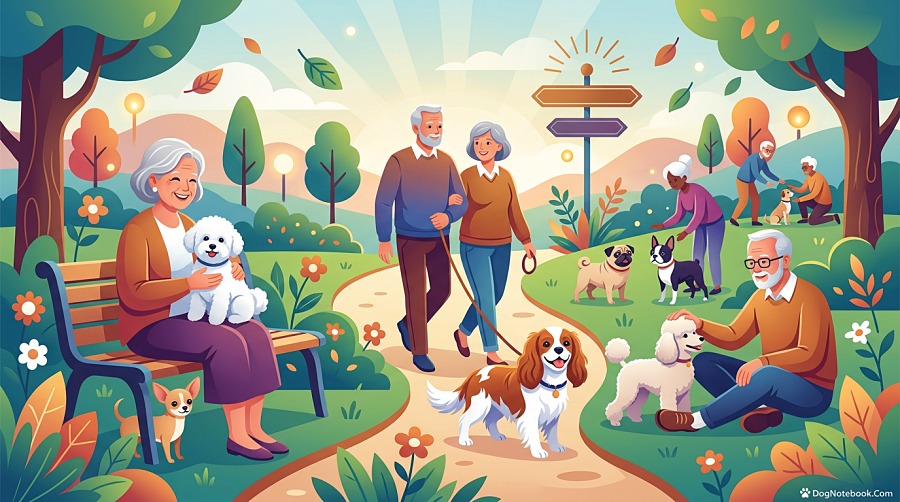
Bringing a dog into your life during retirement can be one of the most rewarding decisions you ever make. Studies consistently show that dog ownership lowers blood pressure, reduces stress, and adds purpose to daily routines. But not every breed is a natural fit for older adults, and choosing the wrong one can turn what should be a joyful companionship into a source of frustration.
The best dog breeds for seniors and retirees share a few common traits: manageable size, calm to moderate energy levels, gentle temperaments, and relatively straightforward grooming needs. I have spent time researching breed characteristics, reading through countless owner experiences on forums, and comparing what top veterinarians and organizations like the AKC recommend for older adults. The result is this guide, built to help you find a dog that fits your life, not the other way around.
In this article, I will walk you through ten breeds that consistently earn high marks from senior owners, break down which dogs match specific retirement lifestyles, and cover the practical things you should think about before bringing a dog home. Whether you live in a cozy apartment, travel frequently, or prefer quiet evenings at home, there is a breed on this list that will feel like the right companion.
Table of Contents
Best Dog Breeds for Seniors and Retirees: What Makes a Good Match
Before diving into individual breeds, it helps to understand what separates a senior-friendly dog from one that might be a handful. The right breed for a retiree usually checks several boxes:
- Size: Small to medium breeds (under 35 lbs) are easier to manage, lift into a car, and handle on a leash.
- Energy level: Low to moderate exercise needs that match your physical capabilities, typically 20 to 45 minutes of daily activity.
- Temperament: Calm, affectionate, and eager to please, not reactive or prone to excessive barking.
- Grooming: Manageable coat care that does not require expensive professional visits every few weeks.
- Trainability: Willingness to learn basic commands and adapt to household routines.
- Lifespan: A longer expected life (12+ years) so you can enjoy many years together.
These criteria come directly from what senior dog owners on forums like r/dogs and r/AskDogOwners say matters most. Size and manageability are the top priorities, followed closely by exercise requirements that match the owner’s physical ability.
Top 10 Dog Breeds for Seniors and Retirees
Here are ten breeds that consistently earn the highest recommendations from veterinarians, breed clubs, and senior dog owners themselves.
1. Cavalier King Charles Spaniel
The Cavalier King Charles Spaniel is arguably the quintessential companion dog for retirees. Weighing just 13 to 18 pounds, these dogs are small enough to curl up in your lap but sturdy enough for a gentle walk around the neighborhood. Their defining trait is an incredibly sweet, gentle disposition. Cavaliers form deep bonds with their owners and are content whether you are watching television together or strolling through a park.
Grooming needs are moderate. Their silky coat requires brushing a few times a week to prevent tangles, but they are not high-maintenance compared to breeds with more elaborate coats. Exercise needs are modest: 20 to 30 minutes of daily activity keeps them healthy and happy. With a lifespan of 12 to 15 years, a Cavalier can be a loyal friend through a significant portion of your retirement.
One thing to be aware of: Cavaliers can be prone to heart conditions, specifically mitral valve disease. Choosing a reputable breeder who health-tests their dogs is important, and regular veterinary checkups are a must.
2. Poodle (Miniature and Toy)
Poodles come in three sizes, and the Miniature (10 to 15 pounds) and Toy (4 to 6 pounds) varieties are ideal for seniors. Their standout feature is a hypoallergenic coat that sheds very little, making them one of the best choices for older adults with allergies or who simply want less fur around the house.
Poodles are also among the most intelligent dog breeds, which makes training straightforward and enjoyable. They learn commands quickly and thrive on mental stimulation, so puzzle toys and short training sessions keep them engaged. Exercise needs are moderate: a 30-minute walk plus some indoor playtime is usually sufficient.
Their coat does require professional grooming every 4 to 6 weeks, which is an ongoing cost to factor in. However, many owners find this worthwhile for the breed’s combination of brains, adaptability, and affection. Miniature Poodles typically live 12 to 15 years.
3. Shih Tzu
If you want a dog whose primary goal in life is to sit beside you, the Shih Tzu deserves serious consideration. Weighing 9 to 16 pounds, these dogs were bred specifically to be companions, and it shows. They are friendly, loyal, and remarkably content with minimal exercise. A short daily walk and some indoor play is all they need.
Shih Tzus are excellent apartment dogs because they are relatively quiet and adapt well to smaller living spaces. Their long coat can be kept in a shorter “puppy cut” to reduce grooming demands, which many senior owners prefer. With that shorter clip, brushing once or twice a week is enough.
They can live 10 to 16 years and tend to be healthy overall, though their flat faces mean they can struggle in very hot weather. If you live in a warm climate, keep outdoor activities to cooler parts of the day.
4. Bichon Frise
The Bichon Frise is a cheerful, curly-coated little dog that rarely meets a stranger it does not like. Weighing 12 to 18 pounds, Bichons are hypoallergenic, making them another strong option for allergy sufferers. Their merry disposition is genuinely infectious, and many owners describe them as natural mood boosters.
Exercise needs are low to moderate. A couple of short walks and some playtime each day keeps a Bichon satisfied. They are also highly trainable and eager to please, which makes them a good choice even if you have never owned a dog before.
Grooming is the main consideration. Their curly coat needs regular brushing (daily is ideal) and professional trimming every 4 to 6 weeks. Many Bichon owners opt to learn basic trimming at home to reduce costs. Their lifespan is impressively long at 14 to 15 years on average.
5. Greyhound
This one surprises people. Greyhounds are large dogs, typically 60 to 70 pounds, but they are famously known among owners as “couch potatoes.” A Greyhound’s idea of a perfect day involves a short walk or a quick sprint in a fenced area, followed by hours of sleeping on a soft bed. On Reddit forums, Greyhound owners consistently describe them as the calmest large breed they have ever lived with.
Retired racing Greyhounds are available through rescue organizations, and they often come already leash-trained and accustomed to a routine. They are gentle, quiet, and rarely bark, which makes them surprisingly good apartment dogs despite their size. Their short coat requires almost no grooming.
The main things to keep in mind: Greyhounds have thin skin and low body fat, so they need soft bedding and a coat in cold weather. Their lifespan is 10 to 14 years. If you want a large, calming presence without high energy demands, a retired racer is hard to beat.
6. Havanese
The Havanese is a sturdy little dog weighing just 7 to 13 pounds, and it brings a wonderful balance of companionship and moderate activity. What makes the Havanese special for seniors is its adaptability. These dogs are just as happy playing indoors as they are going for a walk, meaning their exercise needs can be met even if your mobility is somewhat limited.
They are highly social dogs that bond closely with their owners, and they are known for being exceptionally gentle with people of all ages. Their silky coat can be kept long or clipped short, with the shorter style requiring far less maintenance. Regular brushing a few times per week is sufficient with a shorter cut.
Havanese dogs are also among the more trainable small breeds, responding well to positive reinforcement. They live 14 to 16 years on average, which means they can be a companion for many years of retirement.
7. French Bulldog
The French Bulldog has become one of the most popular breeds in the country, and for good reason when it comes to senior suitability. Under 28 pounds, Frenchies are compact, sturdy, and famously low-energy. A brief walk and some indoor play covers their exercise needs. They are also comedians at heart, constantly making their owners laugh with their silly expressions and antics.
French Bulldogs are excellent apartment dogs because they do not need a yard and are relatively quiet. Their short coat requires minimal grooming, just occasional brushing and regular face-fold cleaning to prevent skin irritation.
The trade-off: Frenchies are a brachycephalic (flat-faced) breed, which means they are sensitive to heat and can have breathing difficulties. They are not the right choice for someone who lives in a hot climate without air conditioning. Their average lifespan is 10 to 12 years, which is somewhat shorter than other breeds on this list.
8. Maltese
For seniors who want a truly portable companion, the Maltese is hard to top. These tiny dogs weigh under 7 pounds, making them easy to carry, bring along on errands, or travel with. Despite their small size, Maltese dogs are spirited and affectionate, with personalities that far exceed their stature.
Exercise needs are very low. A short daily walk and some indoor play is more than enough. They are excellent lap dogs that are perfectly content cuddling for hours. Their long white coat can be kept in a shorter clip for easier maintenance, requiring only weekly brushing in that style.
Maltese dogs are generally healthy and can live 12 to 15 years. The main consideration is their fragility at very small sizes, so they are best suited for households where they will not be accidentally stepped on or handled roughly by visiting grandchildren.
9. Beagle
The Beagle is a great option for seniors who want a slightly more active companion. Weighing 20 to 30 pounds, Beagles are sturdy, friendly, and love being around people. They have a joyful, social nature that makes them wonderful family dogs and equally good companions for couples in retirement.
Beagles do need moderate exercise, typically 30 to 45 minutes of daily activity. If you enjoy daily walks and spending time outdoors, a Beagle will happily keep pace. They are relatively low-maintenance in terms of grooming, with their short coat needing only weekly brushing.
One thing to know: Beagles follow their noses, and they can be vocal. If you live in an apartment with thin walls or have close neighbors, their baying might be an issue. They live 12 to 15 years and are generally healthy, though they can be prone to weight gain if overfed.
10. English Cocker Spaniel
The English Cocker Spaniel is one of the most adaptable breeds on this list, and that quality makes it stand out for seniors. Weighing 26 to 34 pounds, Cocker Spaniels have an interesting trait: they tend to match their owner’s energy level. If you want to take a long walk, they are enthusiastic. If you prefer a quiet afternoon at home, they are content to snooze at your feet.
This breed is deeply affectionate and loyal, forming strong bonds with their people. They are moderately active, needing about 30 minutes of daily exercise, and they enjoy having a job to do, whether that is carrying a toy around the house or learning a new trick.
Grooming needs are higher than some other breeds on this list. Their beautiful coat requires regular brushing and professional grooming every 6 to 8 weeks. Their lifespan is 12 to 14 years. If you are willing to handle the grooming, an English Cocker Spaniel offers a wonderful combination of companionship and versatility.
Matching Your Dog to Your Retirement Lifestyle
Breed traits matter, but so does your daily routine. The best dog for you depends heavily on how you spend your time. Here is how to think about matching breeds to different retirement lifestyles.
For the Homebody: Calm Breeds for Relaxed Days
If your ideal day involves reading, gardening, and quiet evenings at home, focus on breeds with naturally low energy. The Cavalier King Charles Spaniel, Shih Tzu, Maltese, and French Bulldog are all content with minimal activity and plenty of lap time. These breeds will happily keep you company on the couch without demanding a three-mile hike.
For the Active Retiree: Breeds That Love Walks and Outings
If you stay active with daily walks, hikes, or trips to the park, consider breeds that enjoy being on the move. The Beagle, English Cocker Spaniel, Poodle, and Greyhound all appreciate regular outdoor activity. A Poodle in particular will enjoy learning new things during your outings, while a Beagle will turn every walk into a scent-driven adventure.
For the Traveler: Portable and Adaptable Companions
Retirees who spend time traveling need a dog that is small, calm in new environments, and easy to transport. The Maltese, Havanese, Bichon Frise, and Toy Poodle are all excellent travel companions. Their small size means they fit comfortably under an airline seat, and their adaptable nature helps them settle quickly in new places.
For Apartment Dwellers: Breeds That Thrive in Smaller Spaces
Living in an apartment or condo does not rule out dog ownership. The French Bulldog, Shih Tzu, Maltese, and Cavalier King Charles Spaniel are all well-suited to smaller living spaces. They are relatively quiet, do not need a yard, and get enough exercise from indoor play and short walks. Greyhounds are also surprisingly good apartment dogs despite their size, thanks to their calm indoor demeanor.
Key Considerations Before Choosing Your Dog
Once you have narrowed down your breed options, take time to evaluate these practical factors before making a final decision.
Exercise requirements: Be honest with yourself about your physical capabilities. A dog that needs 45 minutes of brisk walking twice a day may not be realistic if you have joint issues or limited mobility. Choose a breed whose exercise needs match what you can comfortably provide every day, not just on your best days.
Grooming needs and budget: Professional grooming costs range from $40 to $100 per session depending on your area and the breed. Breeds like Poodles and Bichon Frises need grooming every 4 to 6 weeks, while short-haired breeds like the French Bulldog and Beagle require only basic at-home care. Factor this into your monthly budget.
Lifespan and commitment: Dogs are a long-term commitment. A puppy obtained at age 70 could need care well into your eighties. Consider whether you have a plan for the dog’s care if your circumstances change. Some retirement communities even have pet care provisions.
Climate: Brachycephalic breeds like the French Bulldog and Shih Tzu struggle in extreme heat. Thick-coated breeds like the Havanese may be uncomfortable in hot, humid climates. Match the breed to where you live.
Why Adopting an Older Dog Can Be the Best Choice
One of the most overlooked options for senior dog seekers is adopting an adult or senior dog from a rescue. Puppies are adorable, but they demand enormous time, energy, and patience for house training, socialization, and behavior shaping. For many retirees, an adult dog makes far more sense.
Adult dogs from shelters and rescues often come already house-trained, leash-trained, and socialized. You know their full-grown size, their temperament is established, and many rescue organizations specifically evaluate dogs for senior household compatibility.
There is also something deeply meaningful about giving an older dog a second chance at a loving home. Senior dogs in shelters are frequently passed over in favor of puppies, yet they have so much love to give and are often the calmest, most grateful companions you will find. Organizations like the AKC and the ASPCA both encourage seniors to consider adult dog adoption as a practical and compassionate choice.
If you are concerned about health issues, many rescues provide full veterinary histories, and some even offer post-adoption support. Adopting a 5- or 6-year-old dog means skipping the exhausting puppy phase entirely and gaining a settled, well-mannered friend from day one.
FAQs
What is the easiest dog breed for the elderly?
The Cavalier King Charles Spaniel is widely considered the easiest breed for elderly owners. They are small (13-18 lbs), have low to moderate exercise needs, possess a naturally gentle temperament, and are content being lap dogs. Other easy-care options include the Shih Tzu, Maltese, and French Bulldog, all of which require minimal exercise and are eager to please their owners.
What is the nicest calmest dog breed?
Several breeds earn top marks for calm temperaments, but the Cavalier King Charles Spaniel, Greyhound, and Shih Tzu consistently rank among the calmest. Greyhounds in particular are known as indoor couch potatoes despite their athletic build. Cavaliers are naturally sweet and gentle, while Shih Tzus were bred specifically to be calm companions.
Should a 75 year old get a dog?
Yes, absolutely, as long as you choose a breed that matches your physical abilities and lifestyle. Dog ownership offers real health benefits for seniors, including lower blood pressure, reduced stress, increased daily activity, and decreased loneliness. The key is selecting a manageable breed and considering an adult dog rather than a puppy so you skip the demanding training phase.
What is the best dog breed for a 70 year old woman?
The best breed depends on her lifestyle, but the top recommendations are the Cavalier King Charles Spaniel, Havanese, Maltese, and Toy Poodle. These breeds are small, affectionate, easy to handle, and have moderate exercise needs. For a woman who enjoys walking, a Miniature Poodle or English Cocker Spaniel adds a bit more energy. For someone who prefers quiet companionship, a Maltese or Shih Tzu is an excellent match.
Finding Your Perfect Companion
Choosing the right dog breed is a personal decision, and there is no single breed that works for every senior or retiree. The best approach is to honestly evaluate your daily routine, your physical abilities, your living space, and your budget. Then match those factors to a breed whose needs you can meet consistently, not just on your best days.
I encourage you to visit local shelters, talk to breed-specific rescues, and spend time with adult dogs before deciding. Meeting a dog in person tells you more than any article can. The right dog is out there waiting, and the best dog breeds for seniors and retirees are the ones that fit naturally into the life you already love living.