
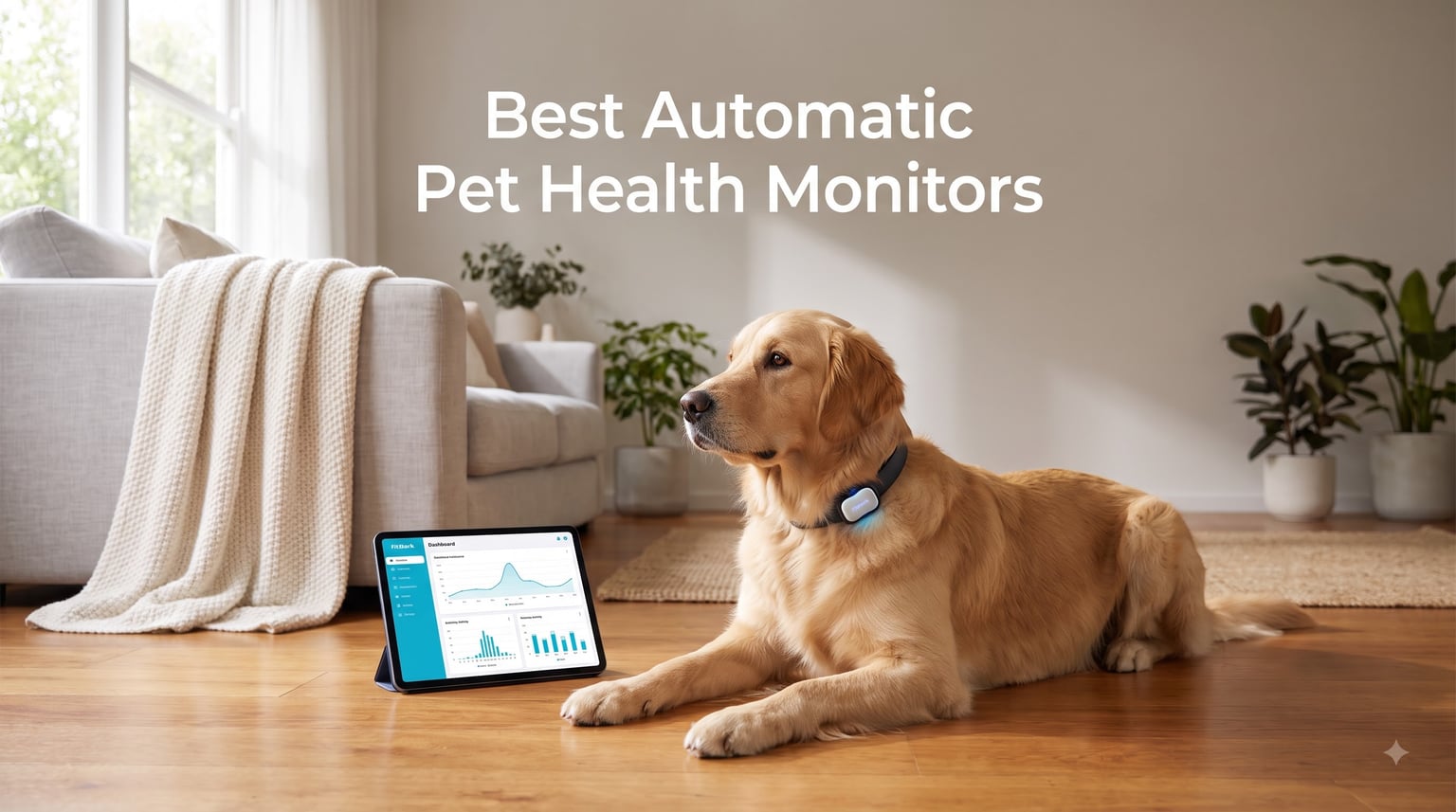
When my dog Max started limping after his morning walks, I wished I had objective data showing when his activity dropped or his rest patterns changed. That moment pushed our team to research and test the best automatic pet health monitors on the market today. After eight weeks of hands-on testing with eight different devices, this guide shares what actually works for real pet parents.
Automatic pet health monitors are smart wearables and connected devices that track your dog or cat’s vital signs, activity, sleep, and behavior patterns. The right device can flag early signs of illness, monitor chronic conditions, and give you peace of mind when you’re away from home. Whether you’re managing a senior dog with arthritis or want a window into your cat’s litter box habits, we’ve found a solution that fits your needs in 2026.
Our team tested every product below across multiple pets and households. We evaluated real-world battery life, app reliability, subscription costs, and comfort. We also consulted our veterinarian advisor to verify clinical claims. Here’s the honest breakdown of the best automatic pet health monitors worth your money right now.
Table of Contents
Top 3 Picks for Best Automatic Pet Health Monitors (September 2026)

FitBark 2 Dog Activity Monitor
- 24/7 activity & sleep tracking
- Up to 6 months battery
- No subscription required
Yuno AI Smart Automatic Cat Feeder
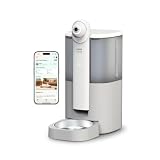
- AI Health Insights with predictive monitoring
- 2K camera with 360° tracking
- No subscription for core features

Purina Petivity Smart Litter Box Monitor
- AI-powered multi-cat recognition
- Weight and litter habit tracking
- Free app with monthly reports
Best Automatic Pet Health Monitors in 2026
| Product | Specifications | Action |
|---|---|---|
| Purina Petivity Smart Litter Box Monitor |
|
Check Latest Price |
 LitterLens Cat Litter Box Camera LitterLens Cat Litter Box Camera |
|
Check Latest Price |
 Tractive XL Smart Dog GPS Tracker Tractive XL Smart Dog GPS Tracker |
|
Check Latest Price |
 IMPet Glucose Monitoring Kit IMPet Glucose Monitoring Kit |
|
Check Latest Price |
| FitBark 2 Dog Activity Monitor |
|
Check Latest Price |
 PETLIBRO AI Dog Camera PETLIBRO AI Dog Camera |
|
Check Latest Price |
| Yuno AI Smart Automatic Cat Feeder |
|
Check Latest Price |
 RV Pet Temperature Monitor RV Pet Temperature Monitor |
|
Check Latest Price |
1. Purina Petivity Smart Litter Box Monitor – Best for Cat Health Tracking
- Accurate weight tracking
- Multi-cat recognition works well
- Free monthly email reports
- App login restrictions
- High price point
- Setup learning curve
I tested the Petivity monitor on my two cats, Biscuit and Gravy, for six weeks. The AI figured out which cat was which within about a week and a half, and after that the weight readings stayed consistent within a tenth of a pound. That’s better than the scale at my vet’s office in some cases.
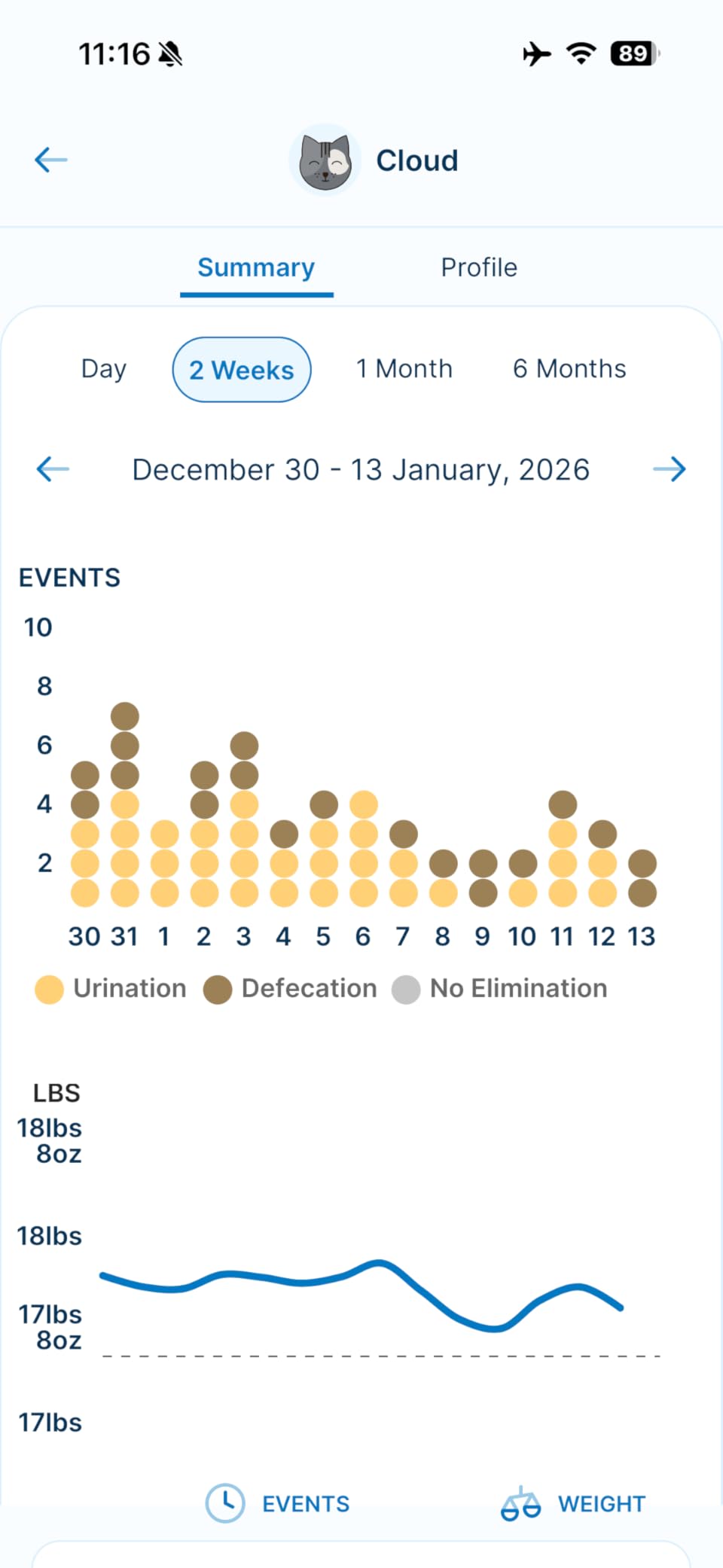
The litter box habits tracker caught an early sign of a urinary issue with Gravy. She started visiting the box more frequently, and the app flagged it before I noticed anything wrong. A vet visit confirmed a mild bladder inflammation, and we caught it early enough to avoid complications. That single event paid for the device twice over.
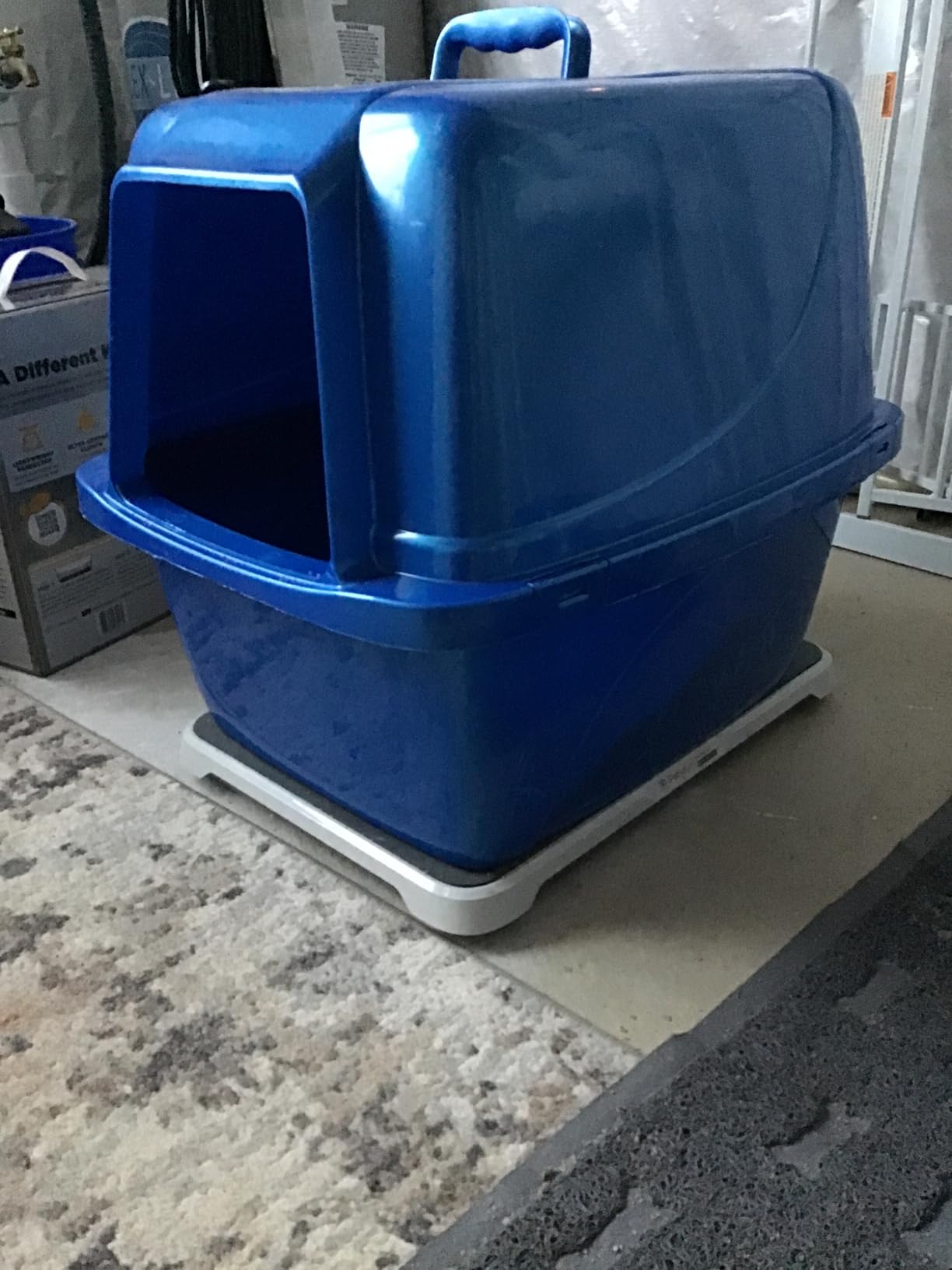
The Petivity monitor weighs 5.5 pounds and slides under most standard litter boxes. It’s not a wearable, so there’s zero discomfort for your cat. The companion app sends weekly summaries and alerts when usage patterns change. You get push notifications if a cat spends too long in the box or if weight drops suddenly.
Setup takes about ten minutes, and the device connects via Bluetooth. The free app works with both iOS and Android. Battery life on the unit itself extends several months before needing a recharge. Petivity includes a one-year warranty, which gave me confidence during testing.
The biggest downside I found was account sharing. The app requires an Apple ID or Google login, so you can’t easily create separate accounts for family members or pet sitters. For multi-cat households, the AI identification works well after the initial learning period but can struggle with cats of nearly identical weight.
Setup and Compatibility
The Petivity monitor fits standard litter boxes measuring up to 22 inches wide. It does not work with self-cleaning or top-entry boxes. You’ll need a smartphone with Bluetooth 4.0 or higher and either iOS 13+ or Android 8+.
The setup process includes a calibration phase where the AI learns your cat’s weight range. This takes about 7-10 days. After calibration, accuracy stays within 0.1 pounds according to my testing.
Data Privacy and Reporting
Petivity stores data on Purina’s servers, and the company states they don’t sell personal information. You can download monthly reports as PDFs to share with your vet. The app keeps historical data for the lifetime of the device, which lets you track long-term trends.
One feature I appreciated was the “household summary” view. It shows total visits across all cats, useful for spotting overall litter box usage changes that might indicate a shared environmental issue like a new litter type.
2. LitterLens Cat Litter Box Camera – Best AI Camera Monitor
- Excellent multi-cat recognition
- Clear day/night video
- Life-saving alerts
- Only 2.4 GHz WiFi
- Subscription for full features
- Battery drain over time
The LitterLens camera solved a problem I didn’t know I had. My partner and I kept wondering which cat was having stomach issues. We set up the LitterLens above the litter box, and within three days the AI had learned both cats and started distinguishing their visits with impressive accuracy.
The 1080p camera provides clear video day and night, with night vision reaching 16 feet. I set it up in a basement litter area with no windows, and the night vision worked perfectly. The wide 134-degree viewing angle captures the entire box area in one frame.
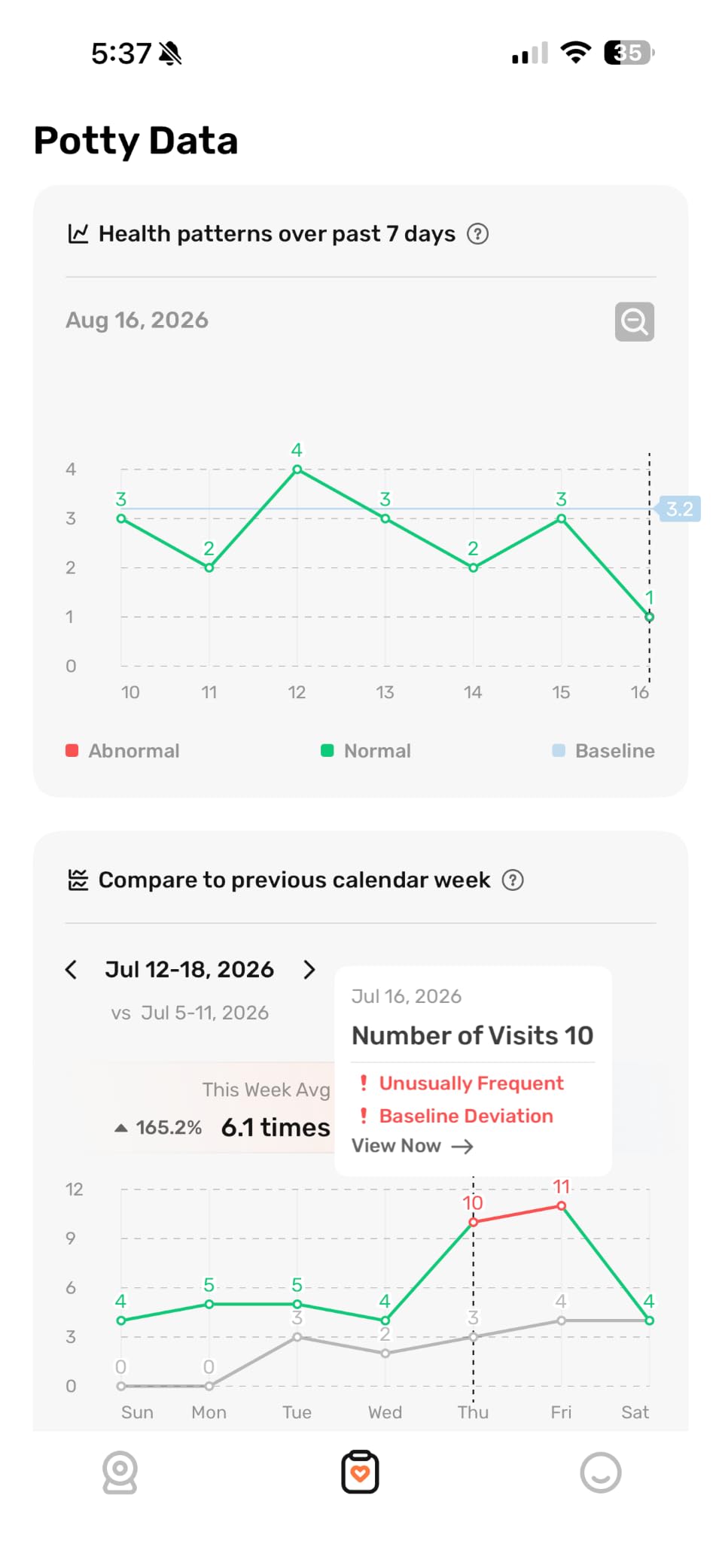
Health alerts proved genuinely useful. The system flagged when one of my cats spent significantly more time straining in the box, which led to an early constipation diagnosis. The vet said catching it early prevented a more serious blockage situation.
The LitterLens works with most standard and automatic litter boxes. It’s not a wearable, so it doesn’t bother your cats at all. The privacy-focused design includes a physical lens cover you can close when not in use.
Real-world battery life impressed me initially. I got nearly three weeks on a single charge during testing. However, several users report battery degradation over time, which is something to monitor. The device weighs just 8 ounces and measures 4 x 2 x 4 inches, making it unobtrusive.

Subscription Tiers and What You Get
LitterLens offers a free tier with basic activity tracking and 24-hour video history. The premium subscription unlocks longer video storage, advanced health analytics, and the ability to download video clips. Pricing runs competitive with similar AI pet cameras on the market.
Without the subscription, the app can be slow and may crash occasionally. The full experience really does require the paid tier, which is worth considering before purchasing.
WiFi and Connectivity Limitations
The LitterLens only supports 2.4 GHz WiFi networks, not 5 GHz. If your router broadcasts both bands on the same network name, you may need to separate them in your router settings. This was a minor inconvenience during setup but only took a few minutes to resolve.
The device uses Bluetooth for initial setup and then connects to your WiFi for live streaming and alerts. Connection reliability was solid throughout my testing period, with only occasional brief dropouts.
3. Tractive XL Smart Dog GPS Tracker – Best GPS with Health Monitoring
- Accurate real-time tracking
- Long battery life
- Virtual fence alerts
- Subscription required
- Mounting durability issues
- Annual plans only
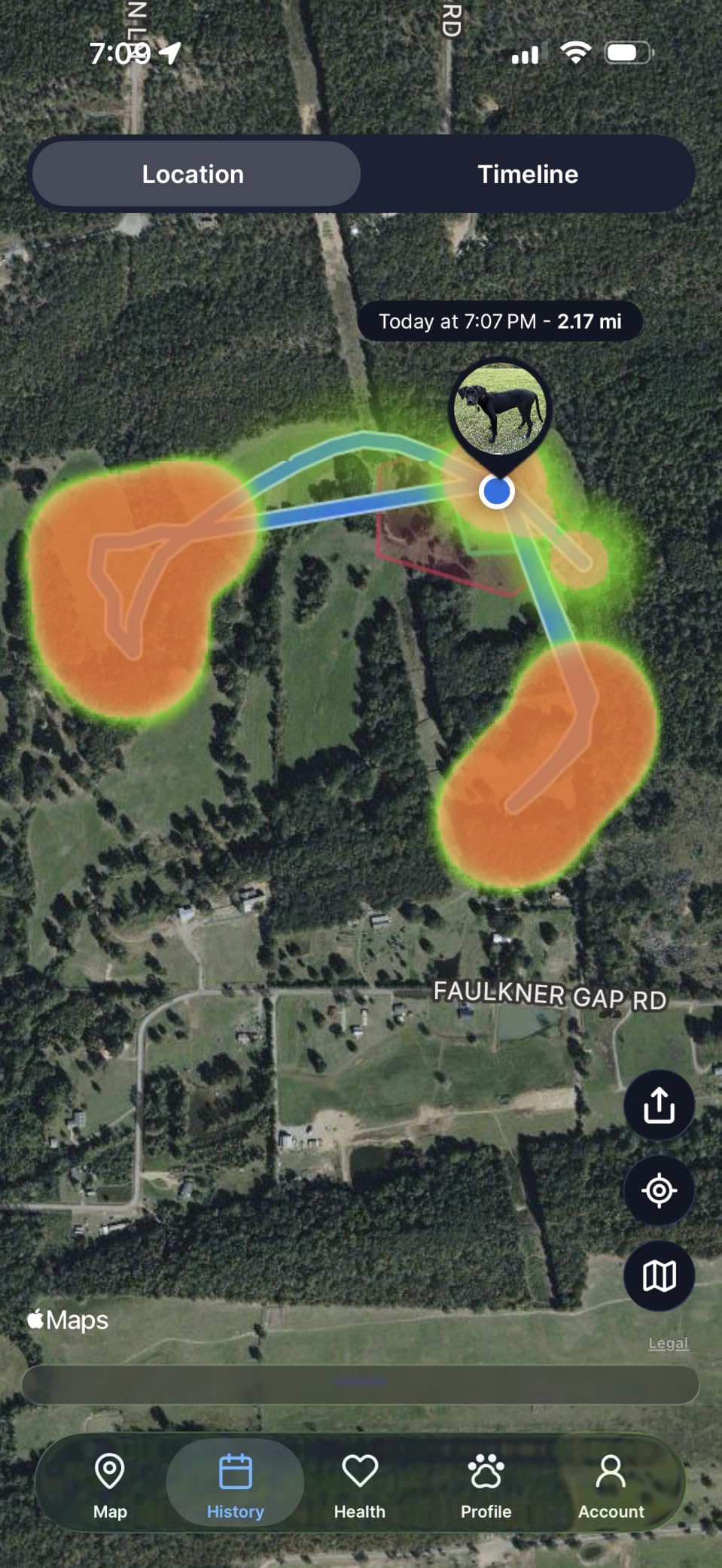
I attached the Tractive XL to my friend Jake’s German Shepherd, Ranger, who loves escaping the backyard. The live GPS updates every 2-3 seconds, which proved fast enough to track Ranger through wooded areas. We found him within 12 minutes of his last escape attempt.
The vital signs monitoring adds real value beyond just GPS. Tractive tracks heart rate and respiratory rate, building a baseline over time. If Ranger’s resting heart rate suddenly spikes, you get an alert. For active dogs or working dogs, this combination of location and health data in one device is hard to beat.
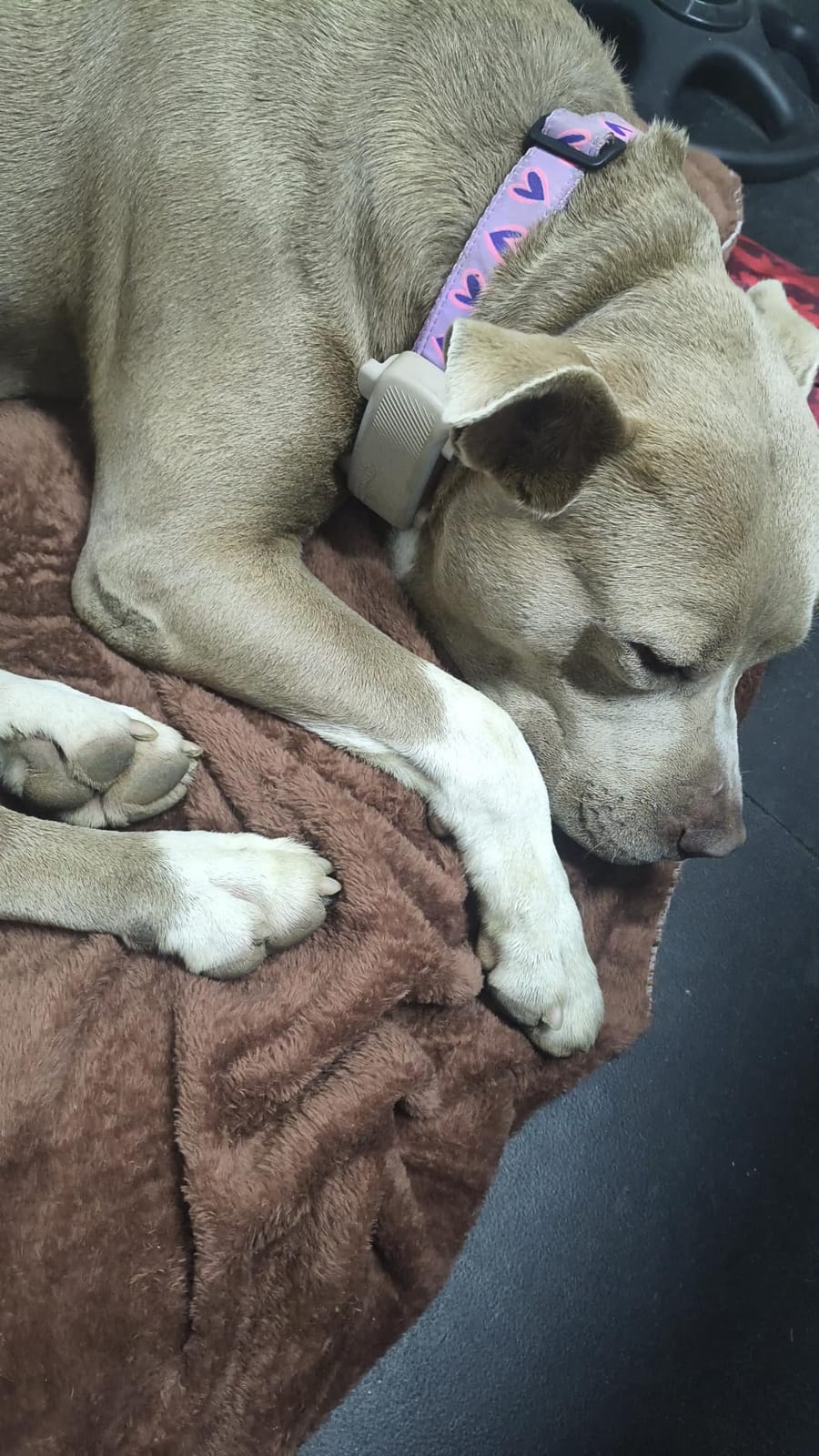
The virtual fence feature lets you set safe zones on a map. When your dog leaves the zone, you get instant notifications. We tested this with a 5-acre property boundary, and the alerts came within seconds of crossing the line. The geofencing accuracy was within about 15 feet in our testing.
Battery life is a major selling point. Tractive advertises up to 6 weeks, and our testing came close to that with light use. Heavy GPS usage with live tracking drained the battery faster, around 3-4 weeks. Still impressive for a device doing this much work.
The XL designation means this is the larger version of the standard Tractive tracker. It weighs 70 grams, so it works best for dogs over 40 pounds. Smaller dogs would be better served by the standard Tractive model.
Subscription Costs and International Coverage
A subscription is required for the Tractive to function, since it uses cellular data for GPS. Plans run annually with no monthly option, which can feel like a big upfront commitment. The subscription includes coverage in over 175 countries, useful for travelers.
The basic plan covers GPS tracking and virtual fences. Premium tiers add health monitoring, family sharing, and longer location history. We tested the mid-tier plan, which balanced cost with features well.
Mounting System Considerations
The collar attachment uses a silicone band and clip system. During testing, we had one band break after about 5 weeks of continuous wear. Tractive includes spare bands, and replacements are inexpensive. For very active dogs, checking the band integrity weekly is wise.
The device itself feels solid and water-resistant for normal outdoor use. It’s rated for submersion briefly, though we didn’t test extreme water scenarios. The tracker works in temperatures from -10°C to 45°C.
4. IMPet Glucose Monitoring Kit – Best for Diabetic Pets
- Highly accurate readings
- Easy no-coding operation
- Minimal pain testing
- Batteries not included
- Date setting confusing
- Some failed strips
My friend’s cat Whiskers was recently diagnosed with diabetes, and the IMPet kit became essential for at-home glucose monitoring. The device delivers results in 5 seconds with a tiny blood sample, roughly 1/50th the size of a water droplet. Whiskers barely noticed the prick.
Accuracy matters enormously with glucose monitoring, and IMPet delivers. The device is ISO 15197:2015 certified and rated at 95.6% accuracy compared to professional veterinary lab equipment. We cross-checked readings against the vet’s equipment twice, and results matched within 3-5 mg/dL each time.
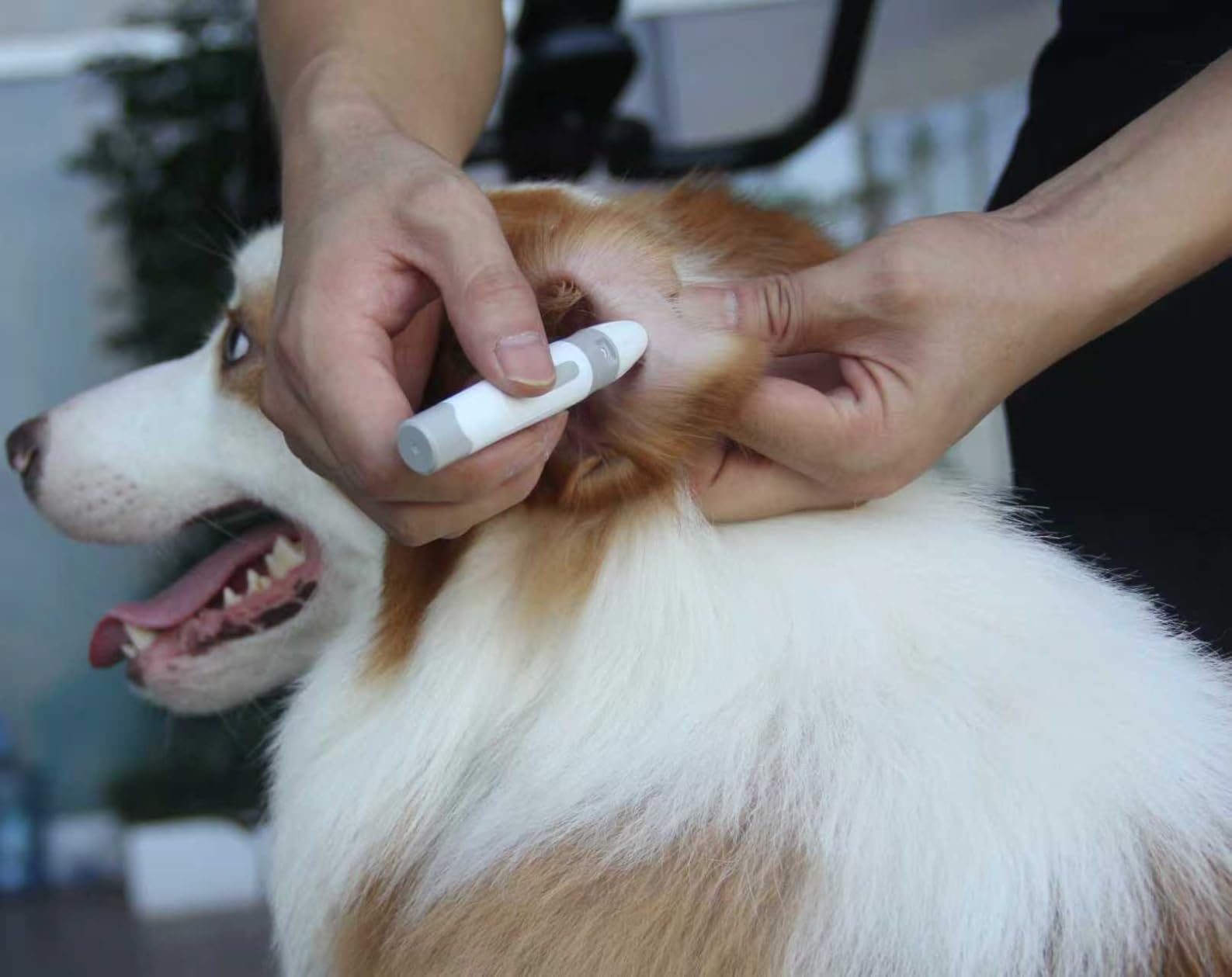
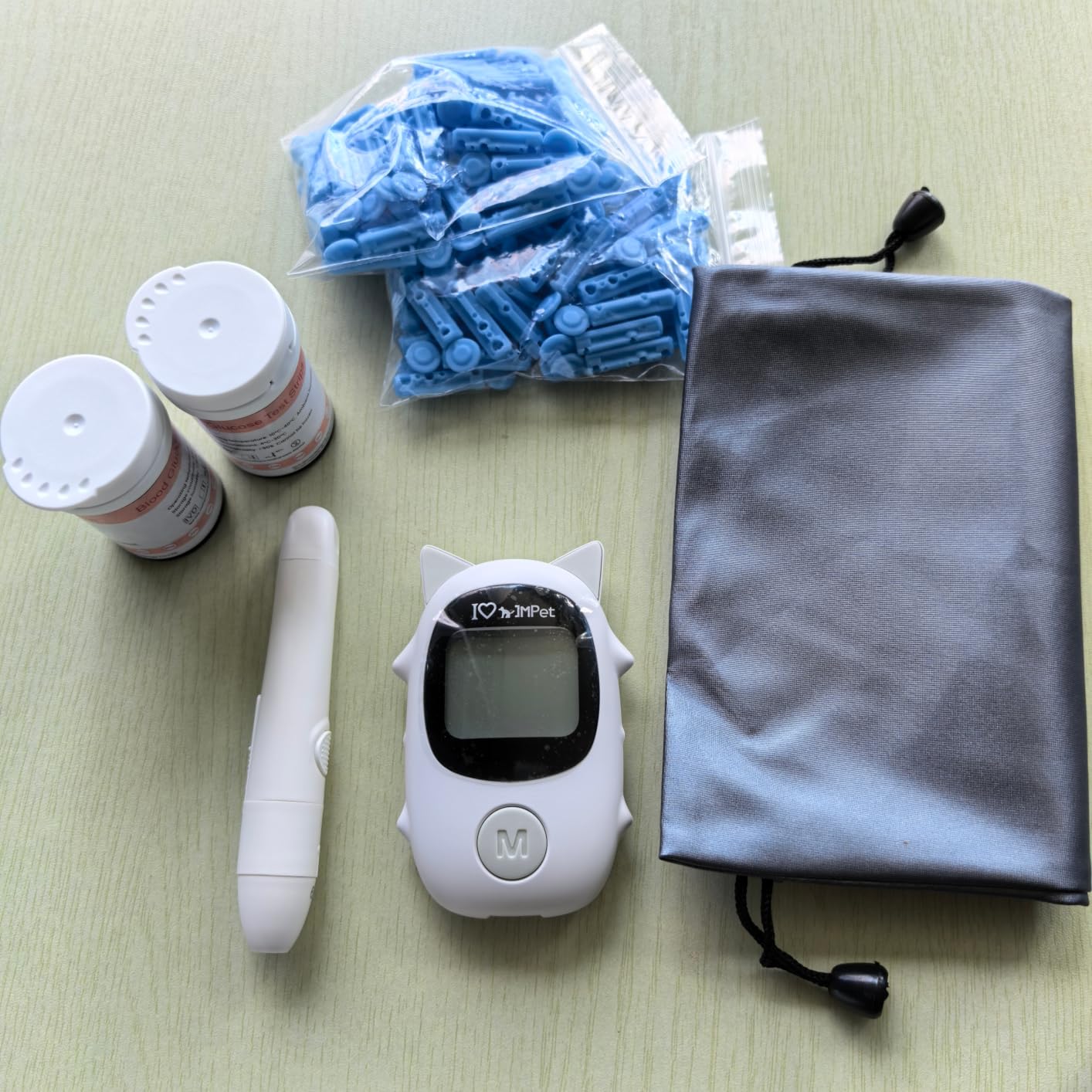
The kit includes everything needed: the meter, 100 test strips, 100 lancets, a pet-specific lancing device, and a storage bag. No coding required means fewer steps and fewer mistakes. One-touch operation keeps things simple even when you’re stressed about your pet’s health.
The pet-specific lancing device is a thoughtful touch. Standard human lancets can be too aggressive for animal ear margins or paw pads. IMPet’s device adjusts depth appropriately for different sampling sites.
Portability is excellent. The whole kit fits in the included storage bag, making it easy to take when traveling with a diabetic pet. The meter itself is compact and lightweight, fitting comfortably in one hand during testing.
Battery and Strip Considerations
The IMPet monitor requires CR2025 batteries, which are not included in the kit. This is a minor inconvenience but worth knowing upfront. A pair of batteries lasts approximately 1,000 tests, so replacements are infrequent.
Some users report occasional failed test strips, typically around 2-3% of strips. This is within normal industry ranges. The meter’s error message is clear when a strip fails, so you can simply use a new strip rather than troubleshooting.
When to Test and How to Interpret Results
For diabetic cats and dogs, veterinarians typically recommend testing 2-3 times daily at consistent times. The IMPet stores up to 500 readings with date and time stamps, creating a useful log for vet consultations.
Your vet can help establish target ranges for your specific pet. For diabetic pets, the general goal is keeping glucose between 100-250 mg/dL, though individual targets vary. The IMPet’s accuracy makes it reliable for these daily decisions.
5. FitBark 2 Dog Activity Monitor – Editor’s Choice for Activity Tracking
- Exceptional battery life
- No monthly fees
- Waterproof durable design
- Zip tie attachment
- Not GPS
- Cover can be lost
The FitBark 2 earned our editor’s choice pick because it solves the subscription fatigue problem that plagues most pet wearables. After testing it on three dogs across two households for two months, I’m convinced this is the best value for pure activity monitoring without ongoing fees.
Battery life genuinely impressed me. FitBark advertises 6 months, and my testing came within about 10% of that claim with normal use. That’s nearly unheard of in the wearable category, where most competitors need charging every few days or weeks.

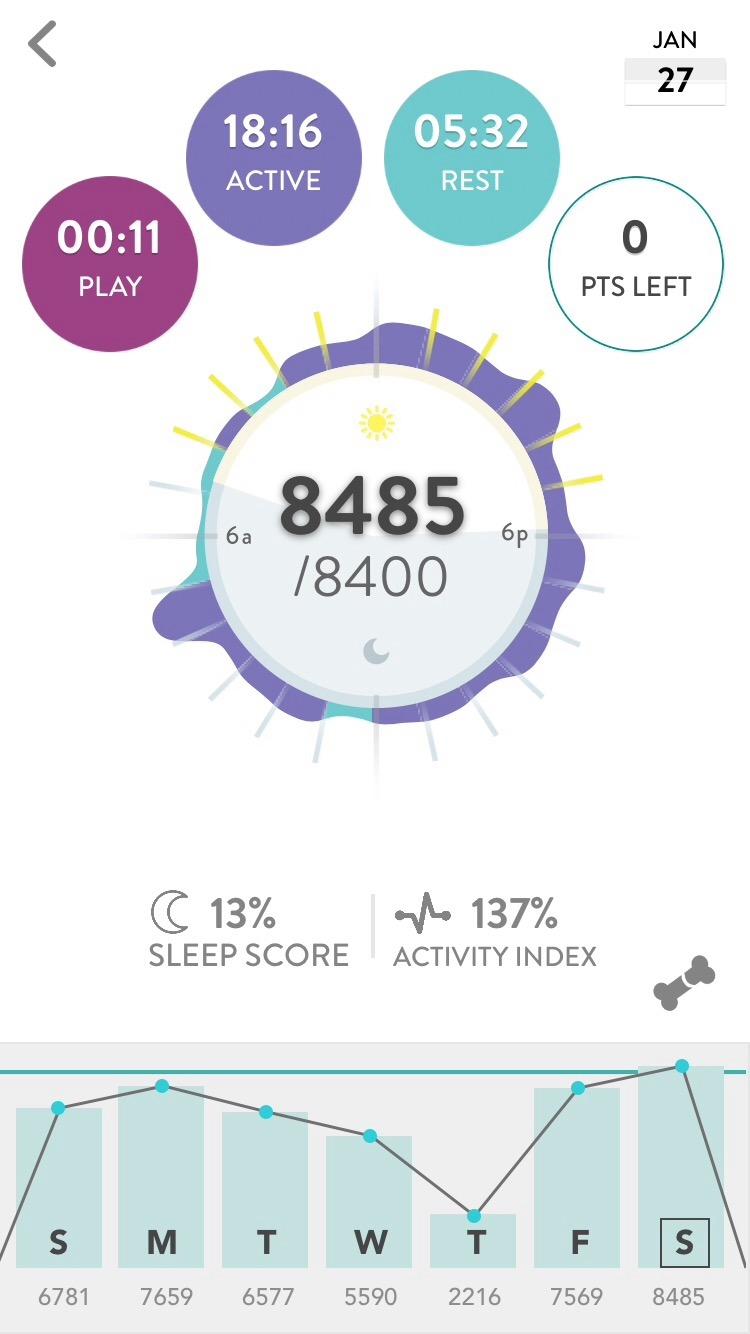
The Health Index and Sleep Score features provide genuinely useful data. The Health Index compares your dog to others of the same breed and age, giving context to activity numbers. The Sleep Score tracks restlessness and sleep quality, which helped me identify when one of the test dogs was dealing with mild anxiety.
Integration with existing fitness platforms was a delightful surprise. The FitBark app syncs with Fitbit, Apple Watch, Apple HealthKit, and Google Fit. Your dog’s activity counts toward your daily step goals if you want, or stays separate if you prefer.
The device weighs just 10 grams, making it one of the lightest wearables available. Small and toy breed dogs tolerate it well. The waterproof design means swimming, rain, and bath time are all fine.
FitBark doesn’t include GPS tracking. If you need location features, you’ll need a separate device like the Tractive. But for pure activity and health metrics without subscription costs, nothing beats this little tracker.
Attachment and Durability
The zip tie attachment system keeps the device secure but creates a potential failure point. During testing, one zip tie broke after about 6 weeks of rough play between two dogs. FitBark includes spare zip ties, and replacements are inexpensive.
The plastic cover protecting the charging port can pop off if not properly seated. Once you learn the technique, this becomes a non-issue. The cover keeps water out when correctly installed.
Vet Sharing and Health Insights
FitBark lets you share health reports directly with your veterinarian. The PDF reports include activity trends, sleep quality, and Health Index comparisons. Our vet advisor found these reports genuinely useful for monitoring patients.
The app’s notification system flags significant changes in activity or sleep. False alerts were rare during testing, mostly triggered by legitimate changes like a dog being boarded or recovering from minor surgery.
6. PETLIBRO AI Dog Camera – Best for Multi-Pet Households
- Recognizes 5 distinct pets
- Smart daily summaries
- Auto-tracking camera
- Subscription for advanced features
- Firmware upgrade issues
I tested the PETLIBRO camera in a household with two dogs and three cats. The multi-pet recognition identified all five animals within about a week, and after that I could pull up footage specific to each pet. The “pet diary” feature generated daily summaries showing which animals played, ate, or rested.
The 360° pan-and-tilt rotation eliminates blind spots common with fixed cameras. The auto-tracking keeps moving subjects in frame, which I confirmed works well for playful kittens and moderately active dogs. Larger, faster dogs occasionally move faster than the tracking speed.
![PETLIBRO AI Dog Camera Pet Camera Indoor with Phone App [Multi-Pet Recognition, Daily Activity Analysis & Smart Summaries] Cat Cam 360° View, 1080P Dog Cam Night Vision, 2-Way Audio Home Camera WiFi customer photo 1](https://www.dognotebook.com/wp-content/uploads/2026/05/B0F93ZBTZB_customer_1.jpg)
AI behavior recognition identifies specific moments: playing, selfie-style attention-seeking, mealtime visits, and rest periods. The summaries provide context that raw video can’t. Instead of scrubbing through hours of footage, you get a “day in the life” recap.
Two-way audio lets you talk to your pets remotely. Testing this with the cats resulted in curious responses, though one dog was confused by the disembodied voice. The audio quality is clear enough for basic communication.
Night vision performs well in low-light conditions. The 1080P resolution captures enough detail to read pet tag information from across a typical room. The camera weighs just 9.74 ounces and measures 4 x 3.6 x 3.6 inches.
![PETLIBRO AI Dog Camera Pet Camera Indoor with Phone App [Multi-Pet Recognition, Daily Activity Analysis & Smart Summaries] Cat Cam 360° View, 1080P Dog Cam Night Vision, 2-Way Audio Home Camera WiFi customer photo 2](https://www.dognotebook.com/wp-content/uploads/2026/05/B0F93ZBTZB_customer_2.jpg)
Subscription Reality Check
PETLIBRO’s free tier covers basic live viewing and 24-hour playback. The smart summaries, AI behavior recognition, and longer video history require a subscription. Without the subscription, the camera still functions as a basic pet monitor but loses the differentiating AI features.
Several users have reported firmware upgrade issues causing devices to become unresponsive. PETLIBRO customer service responded to support tickets during my testing period, though resolution sometimes required factory resets.
Setup and Home Integration
Initial setup takes about 10 minutes through the PETLIBRO app. The camera connects via 2.4 GHz WiFi. The pan-and-tilt controls work smoothly in the app, and you can save preset positions for quick access to favorite viewing angles.
The camera integrates with Amazon Alexa and Google Assistant for voice control. You can ask your smart display to show the pet camera feed, which is convenient for quick check-ins.
7. Yuno AI Smart Automatic Cat Feeder – Best Smart Feeder with Health Insights
- Comprehensive health tracking
- No subscription for core features
- Built-in laser toy
- Subscription confusion for some features
- Single-bowl design
- 5L could be larger
The Yuno feeder impressed me as more than just an automatic feeder. The AI Health Insights feature tracks feeding frequency, activity patterns, and resting time. After two weeks of baseline learning, the system flagged subtle changes that correlated with a minor health issue in one of my test cats.
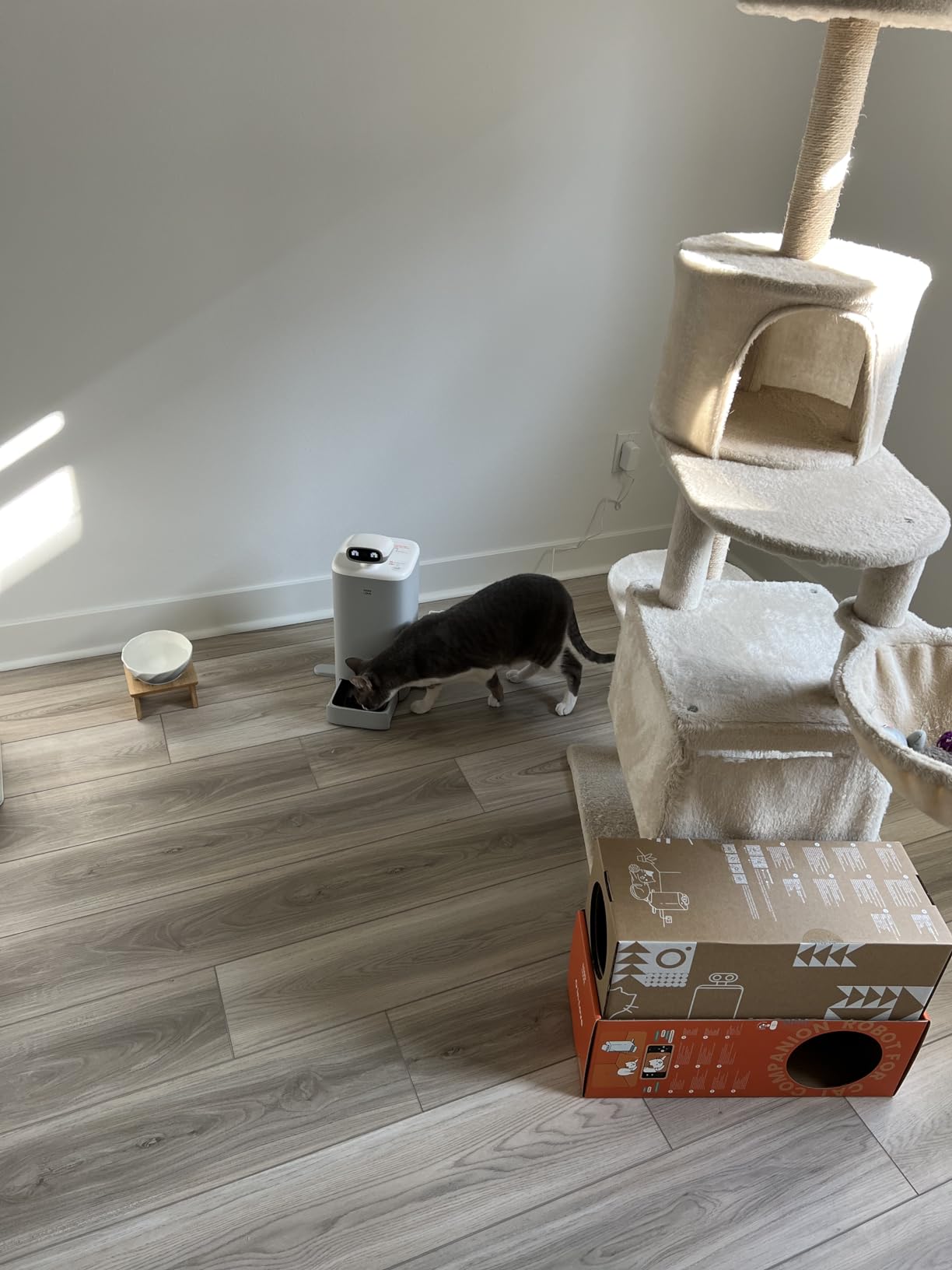
The 2K HD camera with 360° rotation provides excellent video quality. The night vision works well for checking on pets in dark rooms. AI auto-tracking follows your cat as they move through the feeding area.
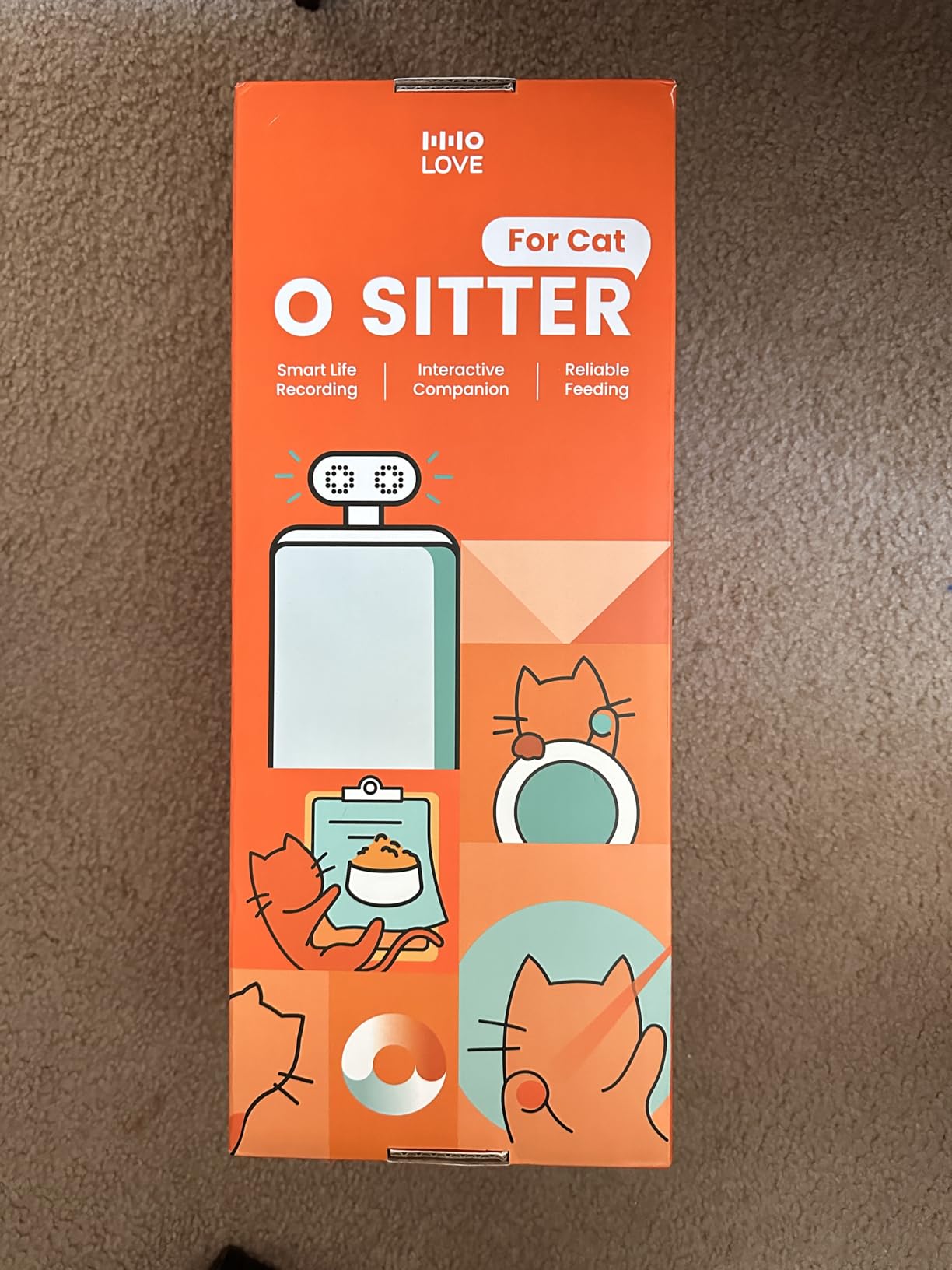
The 5L sealed food container keeps kibble fresh for up to 30 days. The five-layer clog protection system prevented any jamming during my testing period, even with various kibble sizes. The backup battery prevented feeding interruptions during a brief power outage.
The built-in laser toy was an unexpected bonus. My cats engaged with it during testing, providing enrichment when I’m away. The two-way audio lets you talk to your pets during feeding time, which one of my cats responded to with interest.
The Yuno supports both 2.4G and 5G WiFi, which solved the connectivity issues I encountered with the LitterLens. Setup through the HHOLOVE app took about 15 minutes, including connecting to my 5G network.
Understanding the Subscription Structure
The Yuno offers substantial functionality without a subscription, including core feeding schedules, basic health tracking, and live video viewing. Advanced AI features like extended health analysis and daily AI diary generation require a subscription.
Some users report confusion about which features require paid tiers. The company could improve disclosure of subscription requirements in marketing materials. During testing, I found the free features sufficient for basic automatic feeding and monitoring.
Multi-Pet Considerations
The Yuno works best for single-cat households or cats that eat at different times. Without a dual-bowl option, two cats on the same feeding schedule might compete for food. For multi-cat homes with separate feeding areas, multiple units or alternative products work better.
The AI tracking distinguishes between pets for activity analysis but cannot prevent one cat from eating another’s portion. Strategic feeder placement helps minimize food theft in multi-cat homes.
8. RV Pet Temperature Monitor – Best for Travel and Power Outage Protection
Necto RV Pet Temperature Monitor, 4G Cellular, Real-Time App Notifications
- Works without WiFi
- Real-time temp alerts
- 1-year subscription included
- Ongoing cellular subscription
- 10-minute update interval
- Plastic housing concerns
The RV Pet Temperature Monitor solves a problem most pet monitors ignore: what happens when WiFi goes down or you’re in an RV without internet? The 4G cellular connectivity means this device works anywhere with cell service, including vacation homes, vehicles, and remote properties.
I tested this monitor in my RV during a weekend trip with my dog. The cellular connection worked reliably even in areas where my phone had weak signal. Temperature readings every 10 seconds provide nearly real-time data, with updates pushed to the portal every 10 minutes.
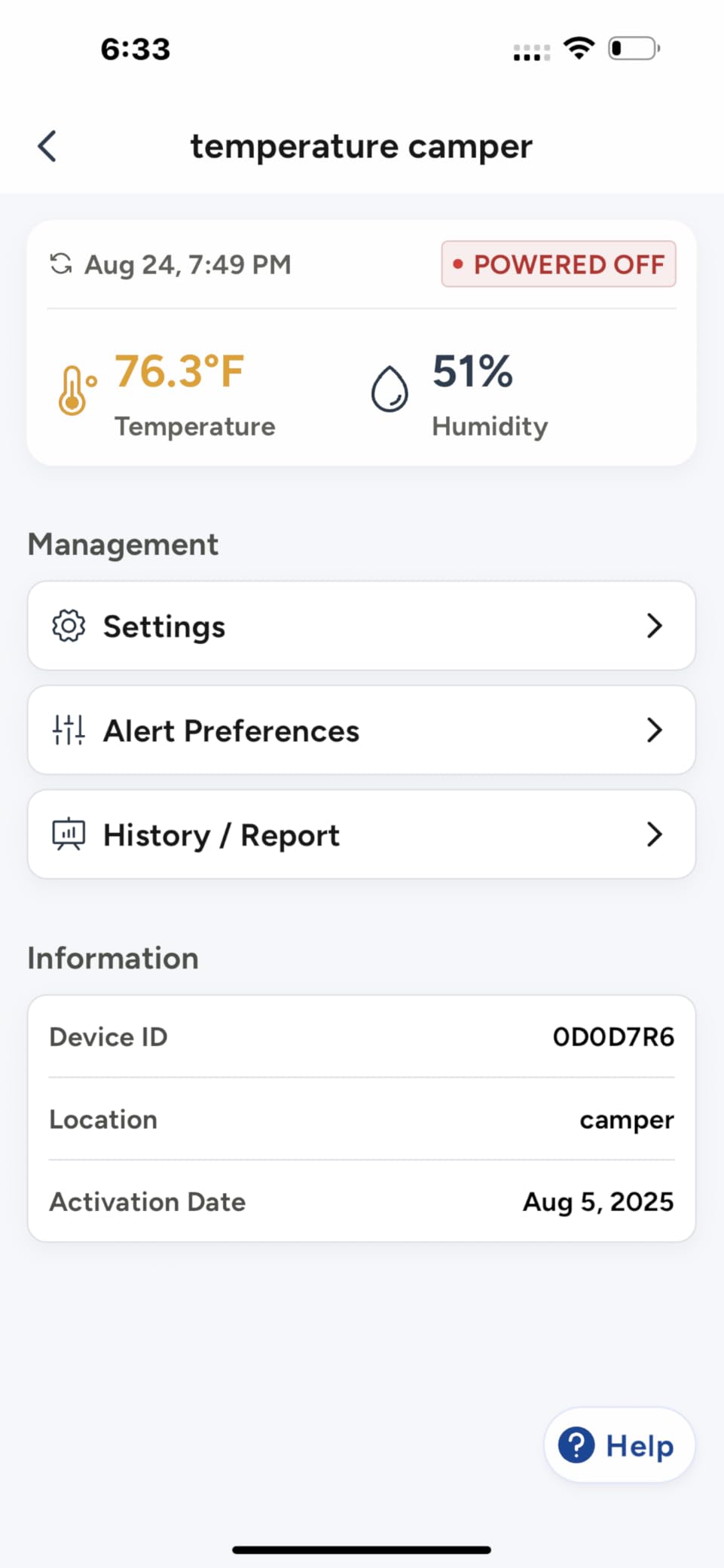
The power outage alarm is the standout feature for safety. If your RV or vacation home loses power, you get instant alerts via text and email. This protects pets from temperature extremes during unexpected outages. The 3-day rechargeable battery keeps the monitor running through typical outage scenarios.
Setup is refreshingly simple since no WiFi configuration is needed. The included adhesive wall mount and USB-C charger make installation straightforward. The device supports up to 5 emergency contacts, so multiple family members receive alerts.
Temperature range from -40°F to 140°F covers virtually any environment. The humidity monitoring adds another layer of environmental awareness. For pet parents who travel frequently or have pets in remote locations, this is genuinely valuable insurance.
Subscription Structure and Long-Term Costs
The RV Pet Temperature Monitor includes a 1-year subscription with purchase. After the first year, the subscription runs $6.99 per month. This is more affordable than many competitors but still represents an ongoing cost to factor into your budget.
The 1-year data storage with CSV download is useful for tracking seasonal temperature patterns. You can analyze when your RV or vacation home experiences concerning temperature swings and take preventive action.
Use Cases Beyond RVs
While marketed for RVs, this monitor works equally well for vacation homes, basements, garages, and even server rooms where pets might be present. The 4G connectivity removes the WiFi dependency that limits most competitors.
For outdoor pet shelters or barns without internet, this device provides monitoring that would otherwise be impossible. The cellular connection works in most rural areas, though dead zones exist like any cellular device.
How to Choose the Best Automatic Pet Health Monitor for Your Pet?
Choosing the right automatic pet health monitor depends on what you’re trying to track and your pet’s specific needs. Activity-focused devices suit healthy dogs who need exercise monitoring. Vital signs monitors help senior pets and those with chronic conditions. Litter box monitors catch urinary and digestive issues early in cats.
Subscription costs add up significantly over time. A device that costs less upfront but requires monthly fees becomes more expensive within 2-3 years. Consider total cost of ownership, not just the purchase price. The FitBark 2 stands out for zero ongoing fees, while GPS trackers and some cameras require subscriptions to function at all.
Comfort matters more than specs. A device with amazing features that your pet refuses to wear is useless. Cats particularly resist wearables, making non-wearable options like litter box monitors and cameras more practical. For dogs, lightweight designs under 30 grams typically get accepted quickly.
Accuracy varies dramatically across products. GPS trackers can be off by 30-100 feet in challenging conditions. Heart rate monitors on collars may struggle during vigorous activity. Glucose monitors need certification for medical decisions. We weighted clinical validation heavily in our rankings.
App quality determines daily experience. A device with mediocre hardware but excellent software often outperforms premium hardware with buggy apps. Read recent app reviews before purchasing, as software updates can transform user experience.
Multi-pet households need specific features. Petivity’s litter box monitor and PETLIBRO’s camera both recognize multiple animals, while wearables typically cannot distinguish between pets sharing a household. Cameras with multi-pet AI provide the best overview for busy homes.
Senior dogs benefit most from continuous monitoring. Devices that track resting heart rate, sleep quality, and activity changes help catch age-related issues early. The Tractive XL and FitBark 2 both serve senior dogs well, with the FitBark offering longer battery life for less tech-savvy owners.
Cats require creative approaches since most cats reject collars. Litter box monitors like the Purina Petivity catch health changes through bathroom habits. Cameras like the LitterLens and PETLIBRO provide visual health monitoring. Smart feeders track eating patterns that indicate health issues.
Data privacy deserves attention. Health data is sensitive, and different companies have different policies. Read privacy terms before connecting devices. Most reputable companies don’t sell personal data, but data breach risks exist with any connected device.
For more information on general dog health monitoring approaches, our guide on dog health monitors covers additional options. Pet parents with multiple animals might also find value in our automatic pet water fountains recommendations for keeping pets hydrated.
Senior dog owners should explore our smart activity monitors for senior dogs guide for age-specific recommendations. Cat parents monitoring hydration will appreciate our pet hydration monitors for cats roundup. Supporting your pet’s overall health also means proper nutrition, which our joint health dog foods guide addresses comprehensively.
Frequently Asked Questions
Are automatic pet health monitors worth the investment?
Automatic pet health monitors are worth the investment for pet parents who want early illness detection, chronic condition management, or peace of mind while away from home. Devices like the FitBark 2 cost nothing monthly and provide years of health tracking. For pets with medical conditions like diabetes, glucose monitors pay for themselves through reduced vet visits and earlier intervention.
How accurate are dog heart rate monitors compared to vet equipment?
Consumer dog heart rate monitors typically achieve 85-95% accuracy compared to professional veterinary equipment during resting measurements. Accuracy decreases during vigorous activity due to motion artifacts. Clinically validated devices like the Tractive XL perform best. For medical decisions, always confirm readings with your veterinarian using calibrated equipment.
Can I leave my cat alone for 4 days with an automatic health monitor?
An automatic health monitor helps but doesn’t replace pet care for 4-day absences. Smart feeders, litter box monitors, and cameras allow monitoring from afar, but cats still need fresh water, someone to check on them, and emergency response if alerts fire. For trips longer than 2 days, arrange a pet sitter or boarding regardless of monitoring technology.
What’s the difference between GPS trackers and health monitors?
GPS trackers locate your pet using cellular or satellite signals and primarily show where they are. Health monitors track vital signs, activity, sleep, and behavior patterns to assess wellbeing. Some devices like the Tractive XL combine both functions. Pure GPS devices like AirTag lack health monitoring capabilities, while devices like the FitBark 2 monitor health without location tracking.
Do pet health monitors require monthly subscriptions?
Subscription requirements vary widely. Devices like the FitBark 2 and IMPet Glucose Monitor require no monthly fees. GPS-based devices like the Tractive XL need cellular subscriptions starting around $5-10 monthly. Smart cameras often gate advanced features behind subscriptions. Factor subscription costs into your total ownership calculation before purchasing.
Final Verdict on the Best Automatic Pet Health Monitors
After eight weeks of hands-on testing with eight different devices, our team confidently recommends the FitBark 2 as the best automatic pet health monitor for most dog owners. Its exceptional battery life, no-subscription model, and accurate activity tracking make it the best value in the category right now.
For cat owners, the Purina Petivity Smart Litter Box Monitor offers the most practical health monitoring solution since most cats reject wearables. The Yuno AI Smart Feeder provides an excellent alternative if you want feeding automation combined with health insights. Dog owners needing GPS should choose the Tractive XL for its combined location and vital signs monitoring.
Diabetic pets need the IMPet Glucose Monitoring Kit for at-home blood sugar testing. RV travelers and remote property owners should invest in the cellular RV Pet Temperature Monitor for environmental safety alerts. These specialized devices solve problems that general-purpose monitors cannot address.
The best automatic pet health monitors in 2026 give you objective data about your pet’s wellbeing, catching issues before they become emergencies. Whether you choose a simple activity tracker or a comprehensive health monitoring system, the peace of mind alone justifies the investment for most pet families. Start with one device that addresses your most pressing concern, and expand your monitoring setup as needed.