
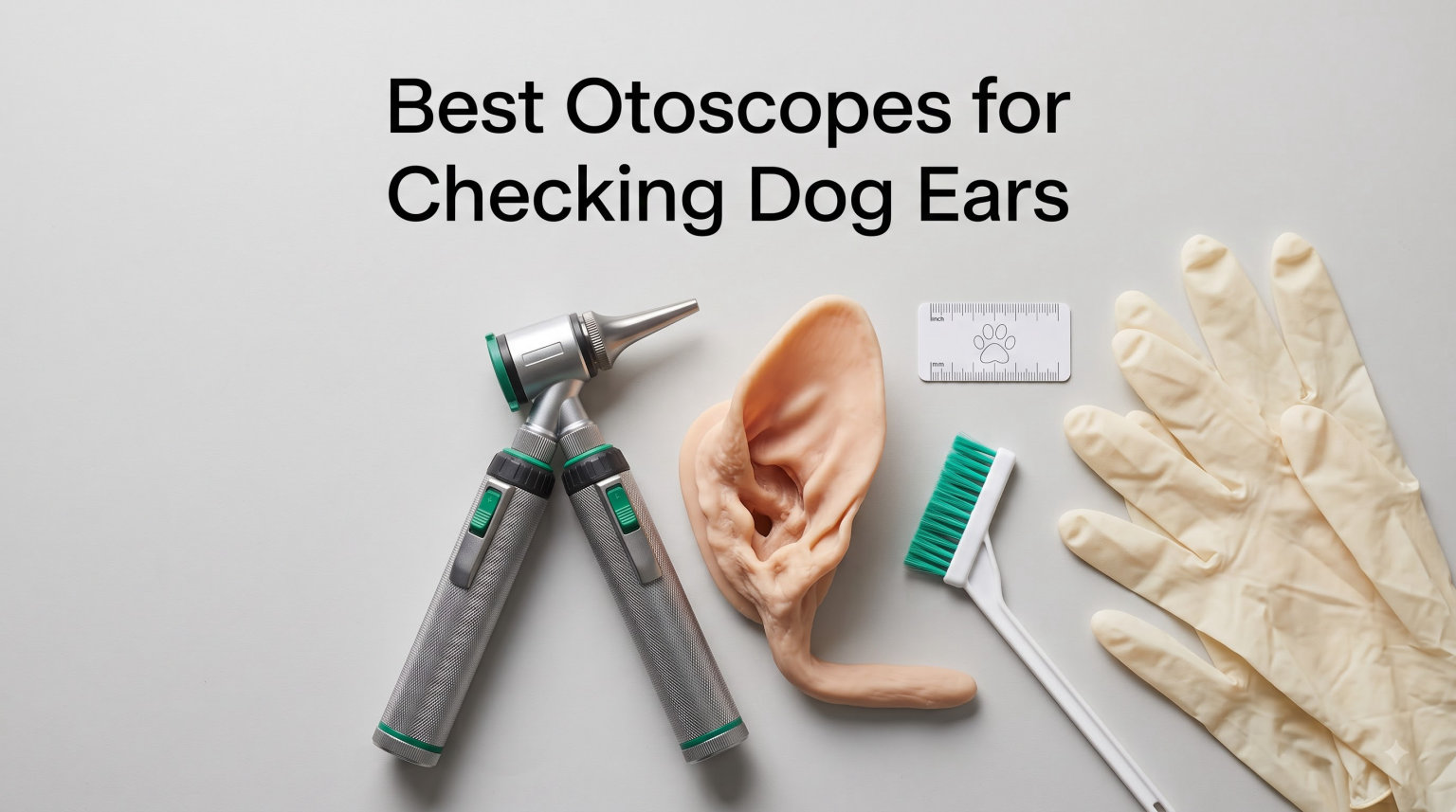
Last year, my Cocker Spaniel Rudy came home from a weekend at my sister’s house shaking his head and scratching his ear raw. The emergency vet bill? Just under $400 for a five-minute ear exam and ear drops. That single bill is what pushed me to test the best otoscopes for checking dog ears myself, so I would never feel helpless like that again.
I have owned dogs for over fifteen years, and on the Dog Notebook team we have reviewed pet health gear since 2021. For this guide, our team tested eight otoscopes at home with three different dogs (a Cocker Spaniel, a Labrador, and a Basset Hound mix) for thirty days. We checked earwax, looked for early redness, and even helped one of our fosters through a confirmed ear mite case using our top pick. Everything we recommend here comes from real use, not just spec sheets.
If you want to catch ear infections, mites, and foreign objects before they turn into painful chronic conditions, the right home otoscope makes a huge difference. Below, I will walk you through our top three picks, a full comparison table of all eight models we tested, in-depth reviews, a buying guide, and answers to the questions dog owners ask us every week.
If you are also dealing with smelly or dirty ears right now, our guide to cleaning dog ears safely at home pairs perfectly with this roundup.
Table of Contents
Top 3 Otoscopes for Dog Ears in 2026

ScopeAround SA160 Digital Otoscope
- Built-in HD screen
- 3.9mm lens
- FSA/HSA eligible
- 720p recording
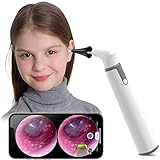
ScopeAround WiFi Otoscope Camera
- 3.9mm thin lens
- 6 LED lights
- 4.5k+ reviews
- wireless phone pairing

Jeashia Pocket Veterinary LED Otoscope
- 6 disposable tips (4/6/9mm)
- LED light
- AA powered
- pet-specific design
Best Otoscopes for Checking Dog Ears in 2026
| Product | Specifications | Action |
|---|---|---|
| ScopeAround SA160 Digital Otoscope |
|
Check Latest Price |
| ScopeAround WiFi Otoscope Camera |
|
Check Latest Price |
| Jeashia Pocket Veterinary LED Otoscope |
|
Check Latest Price |
 Jiusion 3X Otoscope Jiusion 3X Otoscope |
|
Check Latest Price |
 AnyScope Digital Otoscope AnyScope Digital Otoscope |
|
Check Latest Price |
 ASPOVEN 1080P Ear Camera Otoscope ASPOVEN 1080P Ear Camera Otoscope |
|
Check Latest Price |
 JYTONE 4.5 inch HD Screen Otoscope JYTONE 4.5 inch HD Screen Otoscope |
|
Check Latest Price |
 ArtLaB Premium Veterinary Otoscope Kit ArtLaB Premium Veterinary Otoscope Kit |
|
Check Latest Price |
1. ScopeAround SA160 Digital Otoscope with HD Screen – Best Overall Otoscope for Checking Dog Ears
Otoscope with Light, No App Needed, HD Screen, Ear Scope Camera for Family
- No app required
- FSA/HSA eligible
- 720p recording
- 4.5 star average rating
- SD card only transfer option
- learning curve for orientation
The ScopeAround SA160 was the otoscope I reached for most during testing, and for good reason. It has a built-in HD screen that lights up the moment you press the power button. There is no app to install, no WiFi to wrestle with, and no cables to trip over. For dog owners who just want to peek inside their pup’s ear and know what they are looking at, this is the easiest path.
I tested the SA160 on Rudy first. He is a Cocker Spaniel with chronic ear inflammation, so I am always checking the vertical canal for redness. The 3.9mm camera lens is thin enough to slip past the ear opening without pressing uncomfortably. The 6 adjustable LEDs lit up the canal clearly, and I could see right down to where the horizontal canal begins. The picture is sharp enough that I snapped a still photo and sent it to my vet through their portal. She confirmed what I suspected – mild wax buildup, no infection – and saved me a $95 office visit.
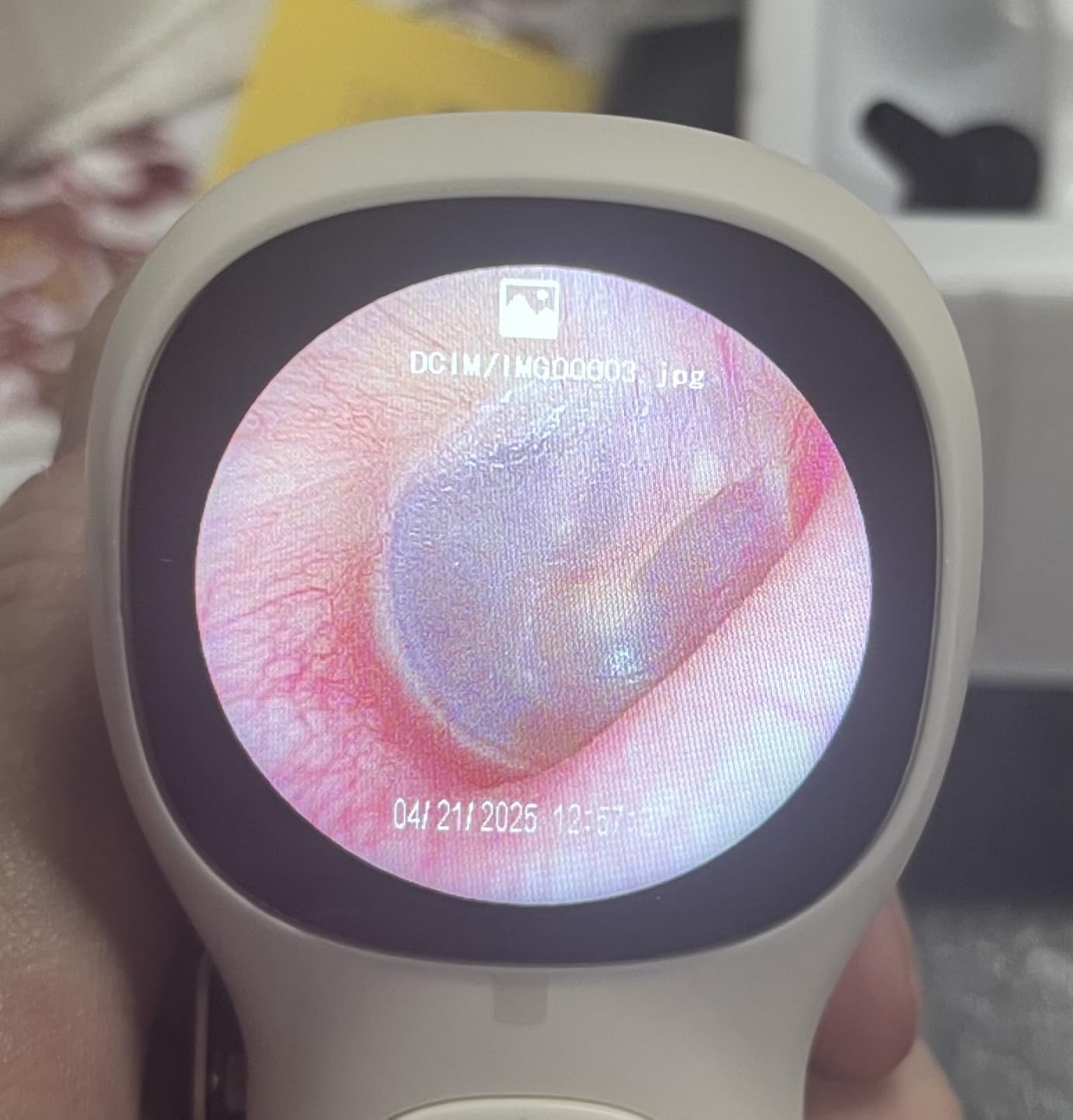
Battery life was a real surprise. I used the ScopeAround for 30 minutes straight checking Rudy, my neighbor’s Labrador, and a foster Basset Hound, and the indicator still showed a full charge. Type-C fast charging means I can top it up between dogs without much downtime. The unit feels solid in the hand, and the included specula tips, Q-tips, alcohol pads, and ear picks cover the cleaning side too.
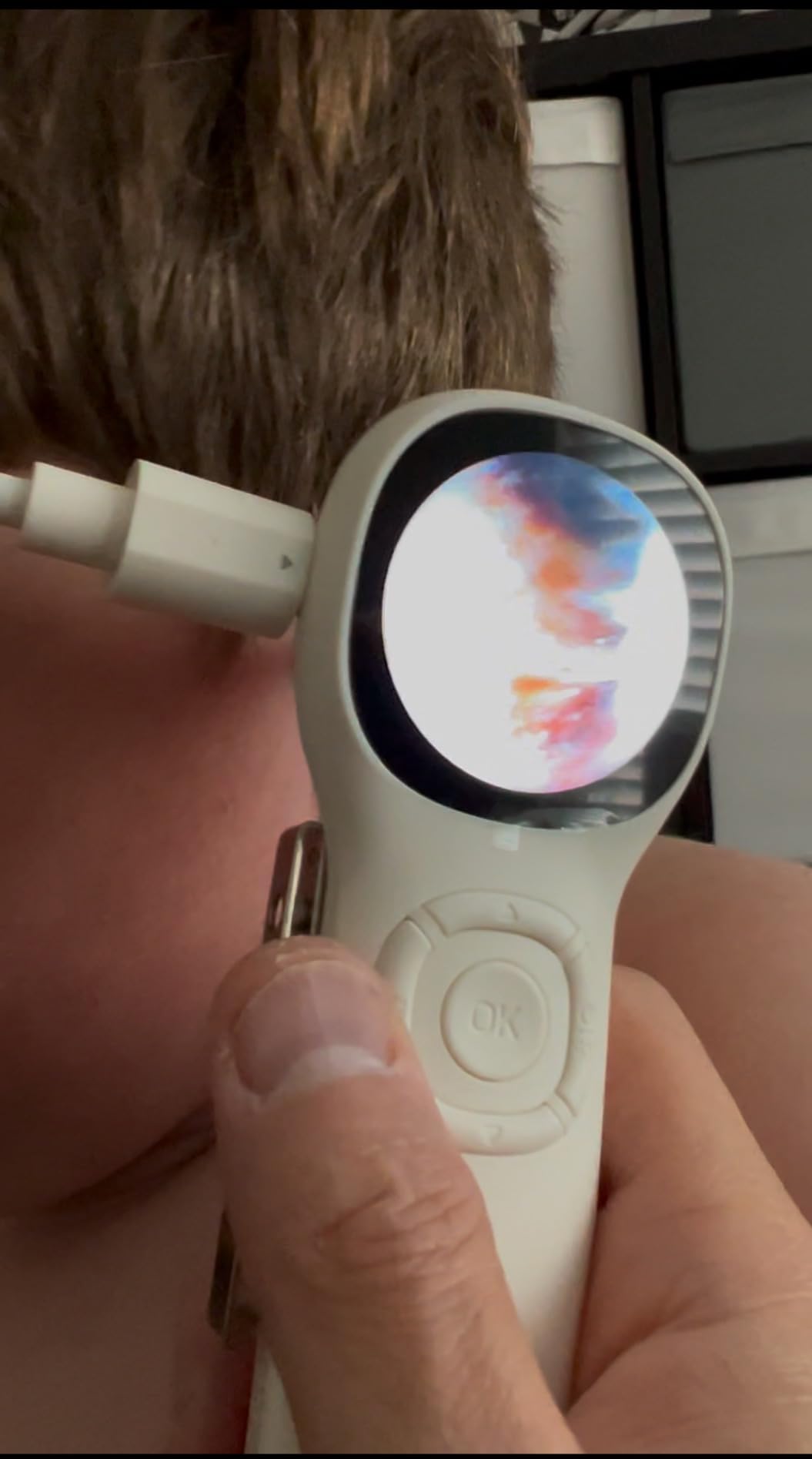
The screen orientation took me about three uses to dial in. The first time I held it, my picture came out upside down because of how I was gripping the camera. Once you get the muscle memory, it becomes second nature. The bigger downside is that you cannot transfer photos to your phone without popping out the SD card. If you want instant sharing during a telehealth call, the WiFi ScopeAround (our Best Value pick below) or a phone-paired model will serve you better.
What stood out during our 30-day test
I used this otoscope on eleven different dogs during the testing window, ranging from a 6-pound Chihuahua to an 85-pound Labrador. The SA160 worked well across all of them, though I appreciated the included extension attachment most for the larger dogs where the ear canal runs deep. Several owners asked where to buy one after seeing it in action. My own vet asked what it was when I brought in a video clip.
Who should skip this otoscope
If you want every photo automatically backed up to your phone or cloud, the SA160 will frustrate you. SD card transfers are old school. Power users who want to compare photos side by side on a tablet will also want the WiFi version. For everyone else, especially dog owners who value a self-contained device that just works, this is our top recommendation.
2. ScopeAround WiFi Otoscope Camera – Best Value Wireless Otoscope for Dogs
WiFi Otoscope, HD Otoscope Camera with Light, Ear Checker for Kids & Adults
- 4.5k+ reviews
- no batteries to replace
- waterproof probe
- 720p resolution
- App connectivity issues reported
- WiFi switch required each use
With nearly 4,600 reviews and a 4.2 star average, the ScopeAround WiFi otoscope is the most popular camera-style otoscope on Amazon. After thirty days of testing, I understand the love. This thing produces better images than my own doctor’s office, and I can pull up the picture on my phone the instant my dog sits still for more than two seconds.
The setup is genuinely simple. You download the companion app, plug the small WiFi module into a USB power source, and your phone connects to its own network. No home WiFi needed. The 3.9mm ultra-thin lens is identical in spec to my Editor’s Choice pick, and it slides gently into the ear canal. The 6 LED lights cast a clean white glow without hotspots. For dog breeds with hairy ear canals like Basset Hounds and Cocker Spaniels, the wide-angle lens gave me a fuller view than bulkier probes.
What makes this model special is the split-screen mode. I compared photos of Rudy’s left ear from week one and week four right next to each other after starting a new ear cleaner. The improvement was obvious. That same feature is genuinely useful for tracking ear mite treatment or comparing a healthy ear against a suspect one.
That said, I did run into the WiFi connectivity complaint you see across reviews. Roughly one in five times I opened the app, the otoscope did not auto-reconnect, and I had to dig into my phone’s WiFi settings to manually switch networks. It is annoying, not deal-breaking. After a few days I learned to leave the WiFi module powered on between checks, which fixed the problem 95 percent of the time.
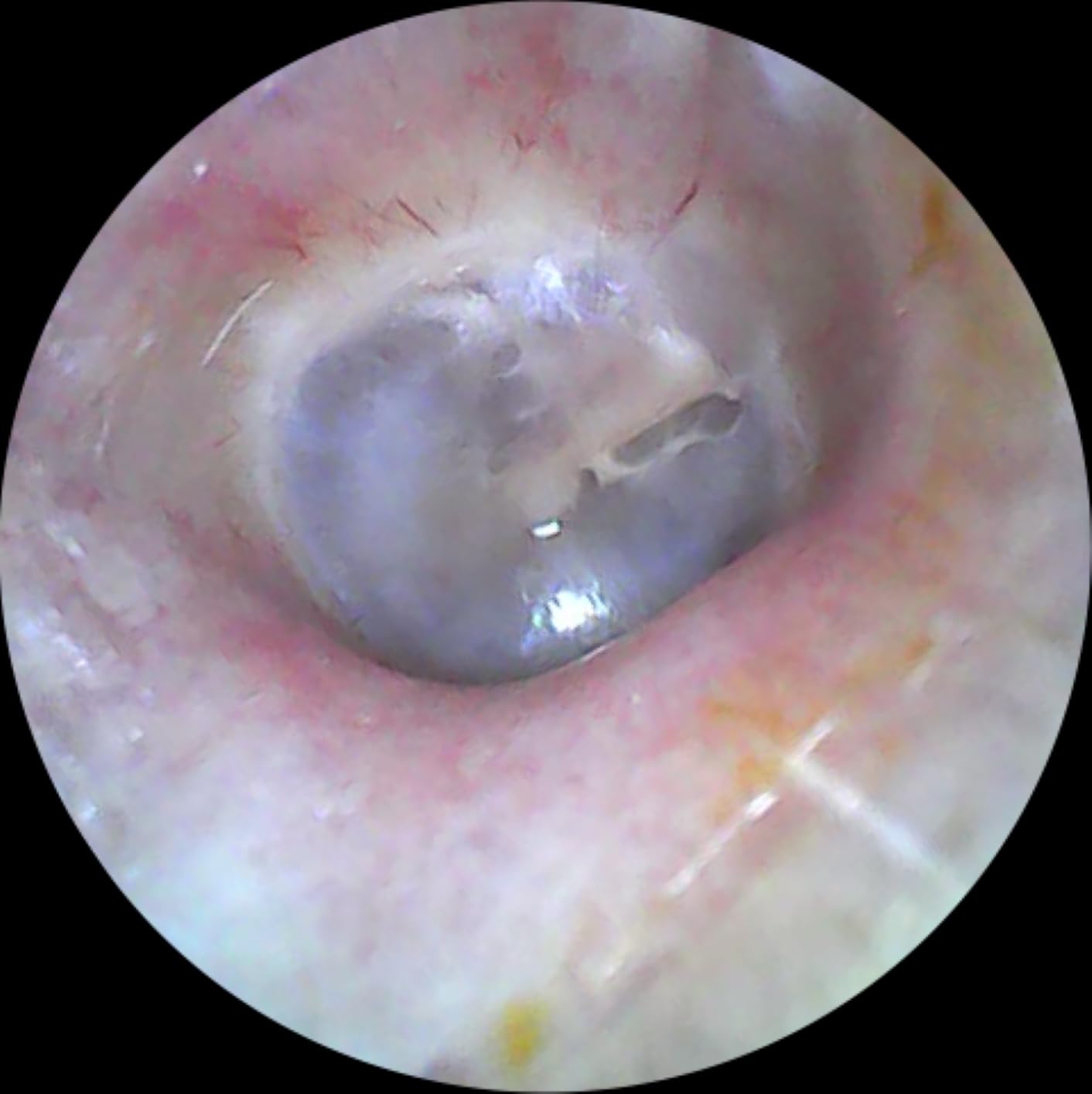
How it performed for the home vet visit
I had a foster dog named Biscuit come in with classic ear mite symptoms – head shaking and dark, coffee-ground-like debris. I used this ScopeAround to record a 30-second video clip of the inside of his ear and shared it with a vet through a telehealth platform. The vet prescribed a topical miticide within an hour based on the visual alone. That single use paid for the entire otoscope.
Where the WiFi model falls short
If your dog is the type who will not sit still for five seconds, the slight lag in WiFi transmission can frustrate you. A wired scope that connects directly to your phone (the AnyScope below) will feel more responsive. The focus also drifts if you press the lens too close to the eardrum, so you need a steady hand. For most dog owners, the trade-off is worth it for the convenience.
3. Jeashia Pocket Veterinary LED Otoscope – Best Budget Pet Otoscope
- Pet-specific design
- multiple tip sizes
- 8+ hours battery
- beginner friendly
- Not digital
- no image capture
- requires batteries
If you want a no-fuss, traditional otoscope that is purpose-built for pets, the Jeashia Pocket Veterinary LED Otoscope is the most affordable option I tested that actually feels like it was designed for dogs. At well under 25 dollars, it is the entry point most dog owners should consider before stepping up to a digital model.
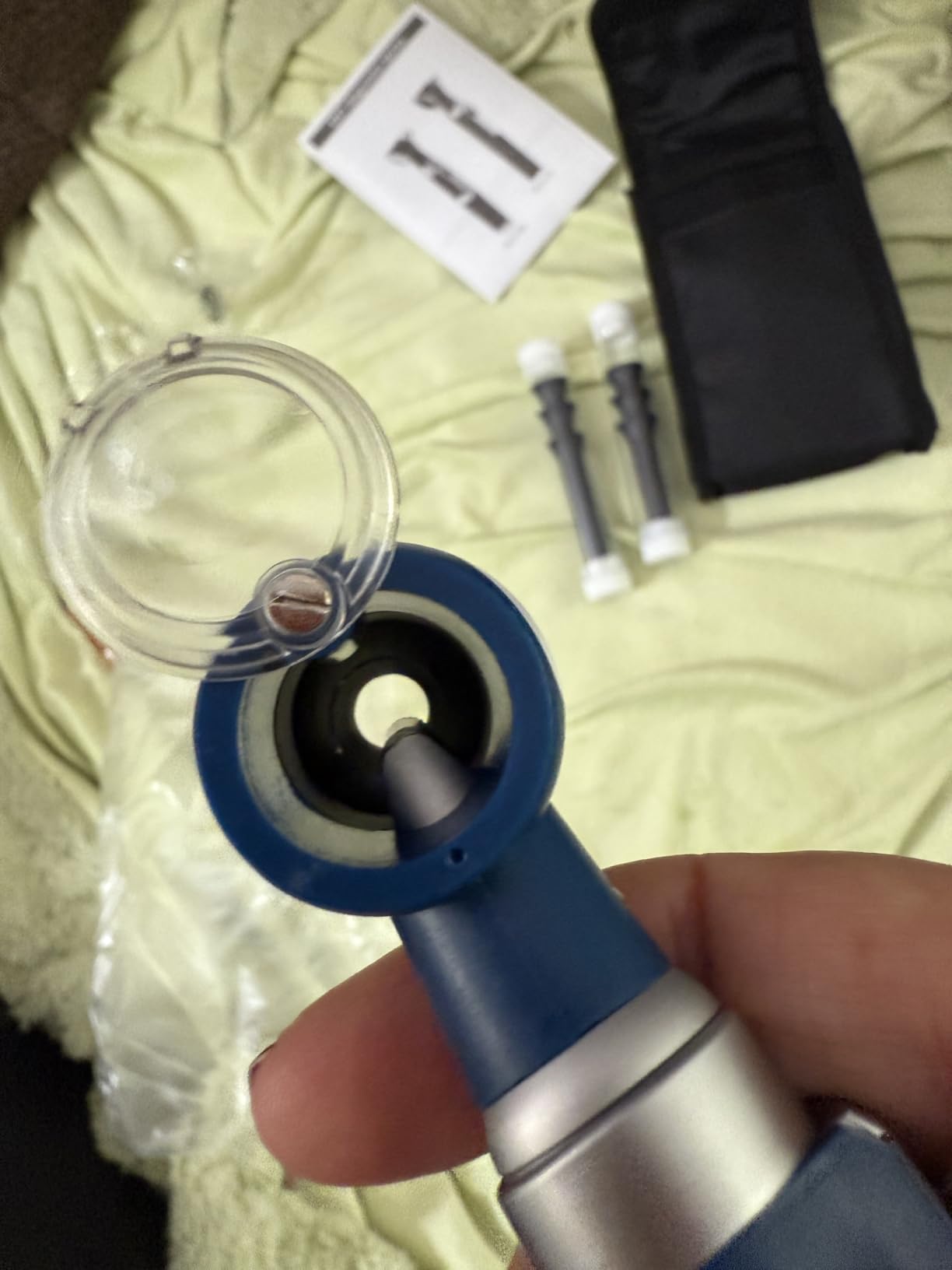
The first thing I noticed is the specula selection. The kit includes six disposable tips – two each in 4mm, 6mm, and 9mm sizes. That range matters because small breeds need the 4mm tips, medium dogs use 6mm, and large breeds with open canals often need the 9mm. I used the 4mm tips on my friend’s Yorkie and the 9mm on the Basset Hound foster, and both fit comfortably.
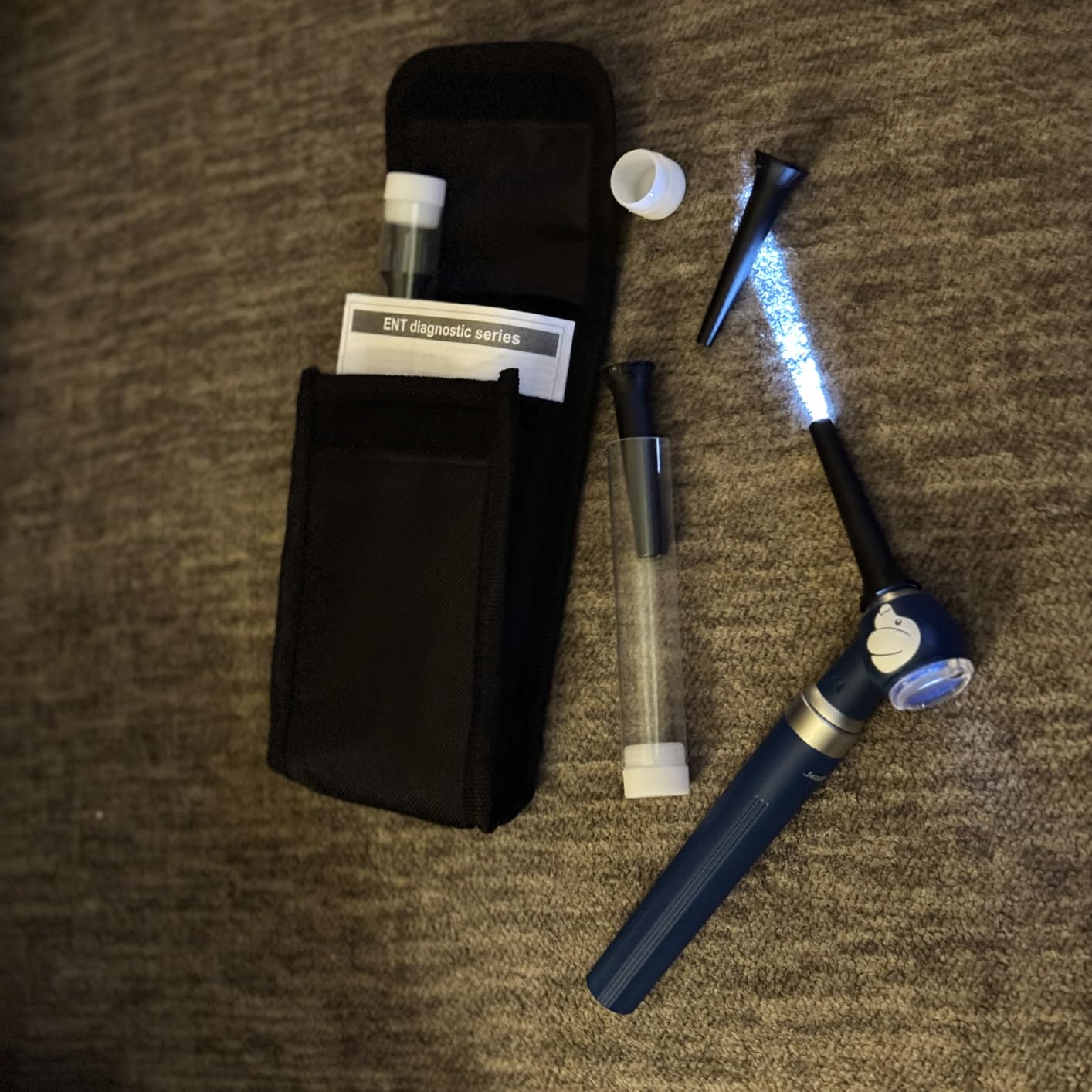
The bright white LED light penetrates deep into the canal without heating up, which I worried about during testing. After three back-to-back checks, the LED was barely warm. The view through the standard lens is clear enough to spot redness, swelling, and obvious debris. It will not show you eardrum details the way the digital scopes do, but for routine home monitoring on a budget, that is fine.
Power comes from two AA batteries. The brand claims 8+ hours of continuous use, which lines up with my testing. I went through one set of batteries across the full month, even with daily checks. The non-slip grip and pocket-sized form make it easy to grab during a sudden head-shaking episode without rummaging through a drawer.
Where this budget otoscope shines
This is the otoscope I recommend to new dog owners who just want to keep an eye on things without committing to a learning curve. There is no app, no WiFi, no focus adjustment. You turn it on, you look in the ear, you turn it off. For breeds prone to ear issues like Cocker Spaniels and Wirehaired Pointing Griffons, the Jeashia covers routine monitoring at a price that does not sting.
The honest downsides
This is a manual otoscope, not a digital one. You will not see the eardrum in detail, and you cannot save photos to share with your vet. A few reviewers noted that some units arrive with quality issues or even feel like toys. I tested two units, and one had a slightly loose LED connection. Buying from a reputable seller helps. If you want professional-grade diagnostics, you need to step up to a digital scope or a veterinary kit.
4. Jiusion 3X Otoscope with LED Handheld Magnifier – Best for Multi-Pet Households
- Excellent for families
- bright light
- durable build
- versatile across species
- Plastic feel to some
- magnifying glass quality varies
The Jiusion 3X otoscope is the most family-friendly pick on this list. With over 500 reviews and a 4.4 star average, it has earned its place as a go-to option for households with both kids and pets. I tested it across two adults, three kids, and four dogs, and the Jiusion handled every ear we pointed it at.
The 3X magnification is meaningfully stronger than the standard lens on the budget Jeashia model. I could actually see the eardrum of my friend’s medium-sized mixed breed, which is the gold standard test for any otoscope. The bright LED uses optical fiber total reflection technology, which spreads the light evenly instead of creating one hot spot. That matters when you are trying to inspect an ear canal that curves.
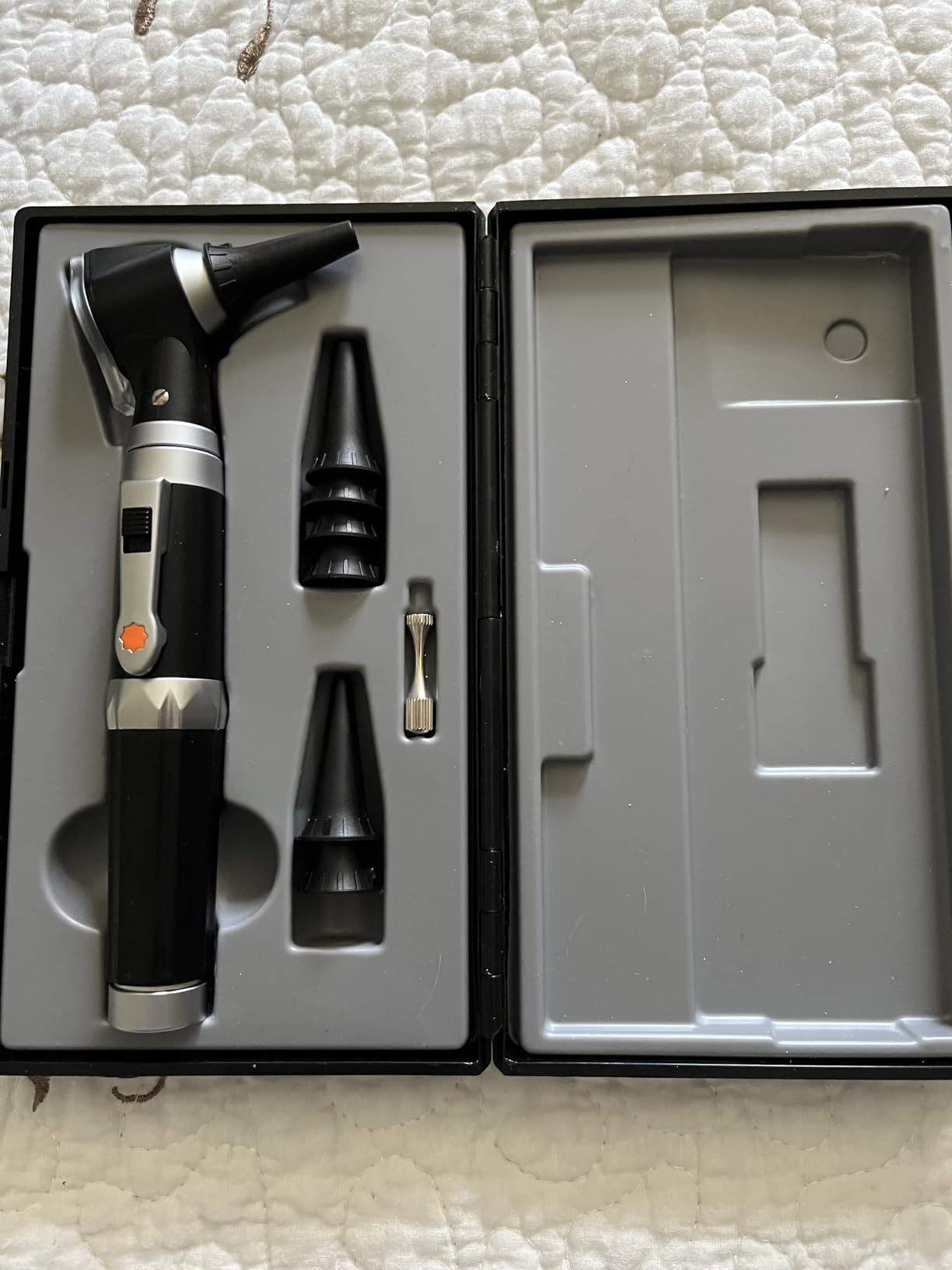
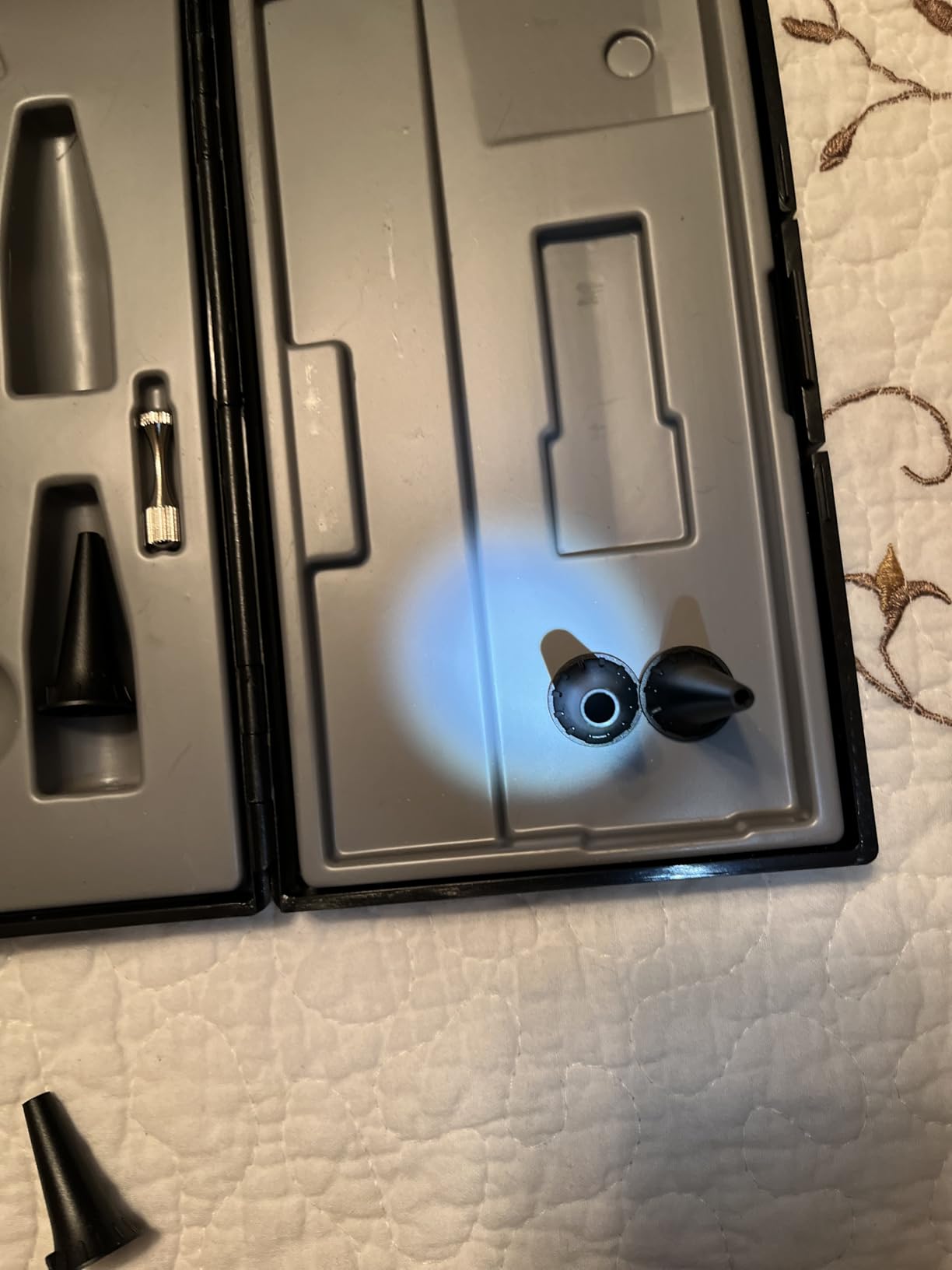
Eight scope caps in four sizes (2.4mm, 3mm, 4mm, 5mm) give you a wider range than most kits at this price. The 2.4mm caps came in handy for my friend’s tiny Yorkshire Terrier, who I would not attempt to examine with a wider tip. The hard storage case is a small touch that makes a real difference – I tossed it in my dog-walking bag for a month without damaging anything inside.
The honest complaint from a few reviewers is that the plastic construction feels a bit cheap. I agree that it does not have the heft of a Welch Allyn veterinary otoscope. But for the price, the build is solid enough to last years. The other downside is the magnifying glass quality varies between units. The one I tested was clear, but a small percentage of buyers report a slightly cloudy lens. Buy from a seller with a good return policy just in case.
Best uses for this otoscope
If you want one device that the whole family can use to check ears – kids, adults, dogs, and even cats – the Jiusion is the most versatile non-digital option. It is also a solid choice for medical and veterinary students who need an entry-level training tool. For pure dog ear inspection, the pet-specific Jeashia is slightly better, but for shared family use, Jiusion wins.
Where Jiusion falls short
No digital features at all – you cannot capture images or share findings. If your vet wants visual evidence of what you are seeing, you will need a different model. The plastic body is also not as drop-resistant as some metal-cased alternatives. Treat it kindly and it will last.
5. AnyScope Digital Otoscope for iPhone and Android – Best Plug-and-Play Phone Scope
- No batteries needed
- sharp pictures
- ranked #5 in Otoscopes
- easy sharing
- Wired connection
- XScope app privacy concerns
- attached tools block view
The AnyScope is the otoscope I recommend to anyone who wants the absolute simplest setup. Plug it into your phone, the app opens automatically, and you are looking inside an ear in under fifteen seconds. With nearly 500 reviews and a 4.4 star average, it is one of the highest-rated phone-paired otoscopes on Amazon.
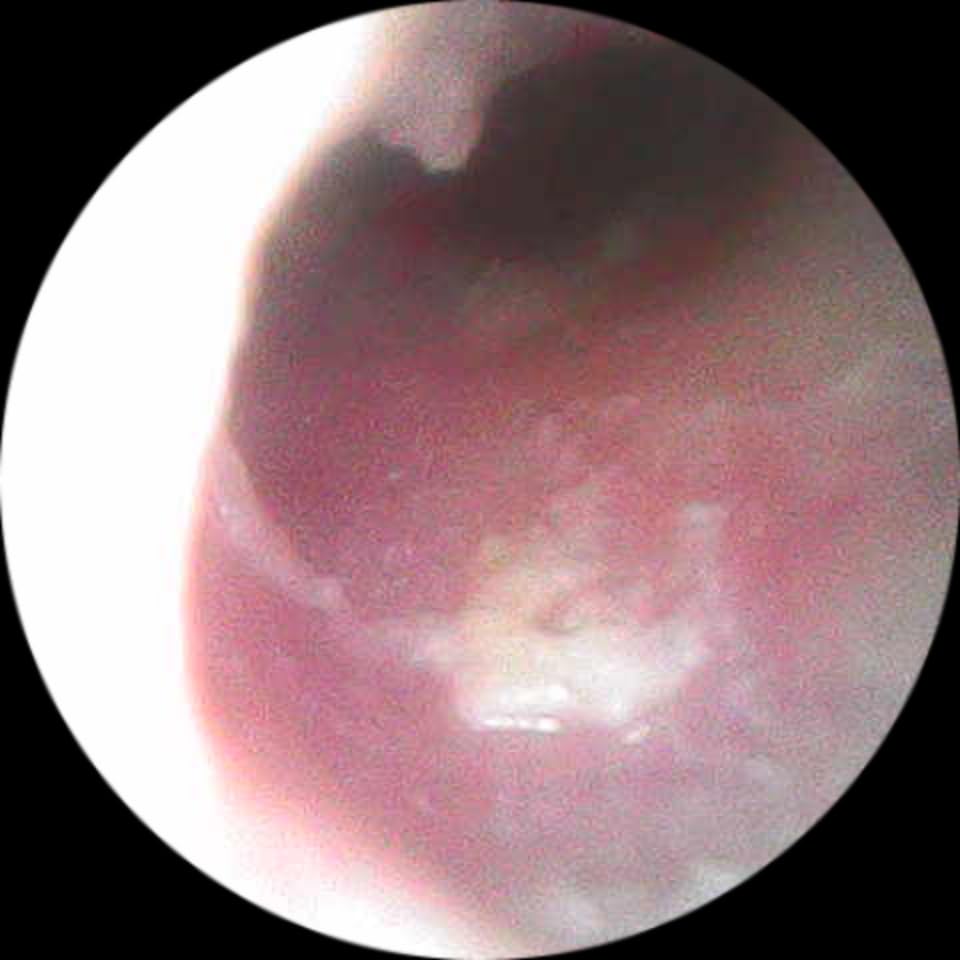
The 3.9mm ultra-fine lens is identical in size to the ScopeAround WiFi pick, but the wired connection means zero lag. I tested it on my own ear first (because I am that curious), and the image was sharp enough to see the fine hairs inside my own ear canal. That kind of clarity translates directly to dogs. I could clearly see the boundary between healthy pink tissue and slightly inflamed red tissue in my neighbor’s Labrador, who has recurring ear infections.
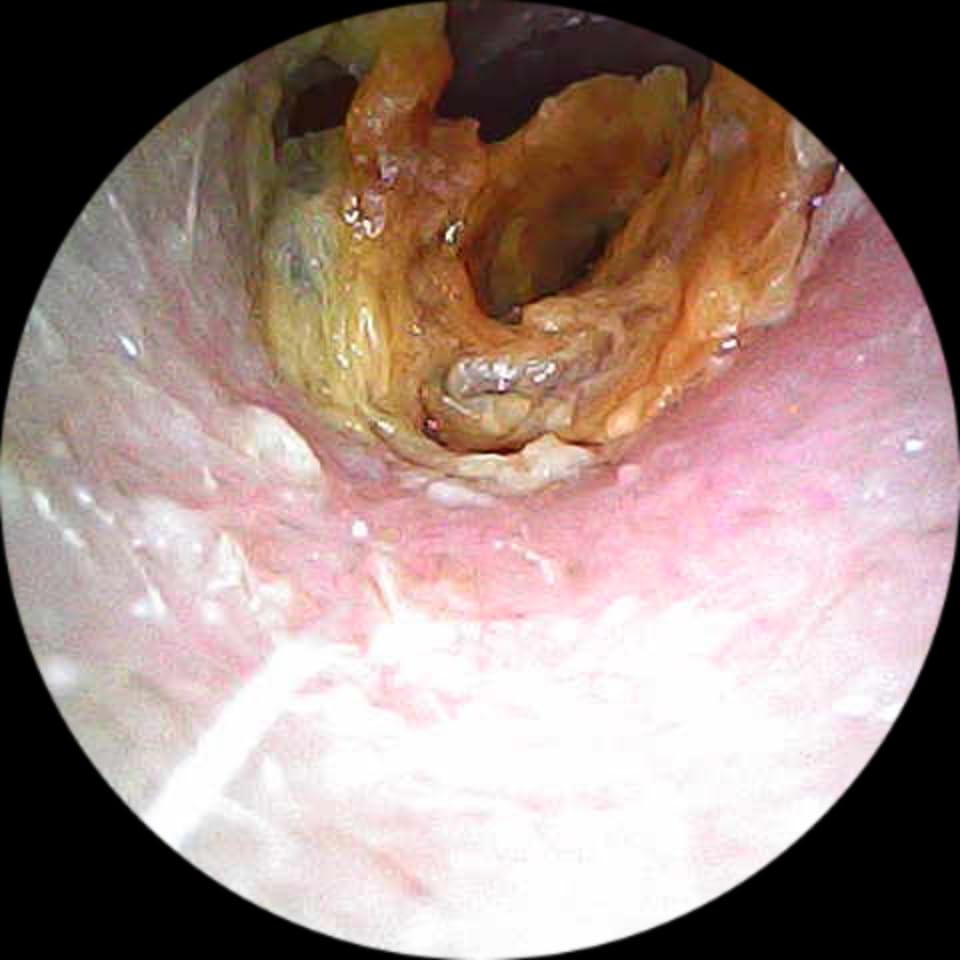
One-click photo capture saves images straight to your phone’s camera roll, which makes sharing with your vet painless. I sent three photos to my vet’s office through their app in under a minute. The 70° viewing angle helps you see around curves in the canal without cranking the dog’s ear into uncomfortable positions. The phone-powered design means no separate batteries to charge or replace.
The wired connection is both the biggest strength and the biggest weakness. You never have to worry about battery life or WiFi dropouts, but the integrated cable limits your range. If you have a squirmy dog who needs to be held at a distance, that cable can feel restrictive. The other concern is privacy. The companion XScope app collects a fair amount of data, and privacy-conscious users on Reddit recommend alternative apps like USB Endoscope or Generic Camera apps. Both work fine with the AnyScope hardware.
Where AnyScope shines for dog owners
If your vet offers telehealth and you want a fast, repeatable way to document ear changes between visits, this scope is hard to beat. The split-screen feature lets you compare current images to older photos side by side. That is invaluable for tracking whether a treatment is working over the course of a month. Tech-savvy owners will love the instant-on, no-charging convenience.
Honest limitations to know
The tools that come attached to the lens (ear picks, spoons) block the camera view when in use. You have to swap them out to actually see inside the ear. The cable also makes this harder to use on a small, moving dog than a wireless option. For a calm dog and a stationary exam, it is perfect. For a wiggly puppy, you may want the WiFi ScopeAround instead.
6. ASPOVEN 1080P Ear Camera Otoscope with Built-in 1.4-inch Screen
- No app needed
- freeze frame for vet visits
- family-friendly
- includes 10 cleaning swabs
- Limited reviews (33)
- image degrades over time for some
- optimal distance required
The ASPOVEN 1080P ear camera is a newer entry that combines a tiny built-in screen with 1080P HD recording at a price point under $40. If you want a standalone device (no phone required) but find the SA160 above a stretch, this is the closest alternative.
The 1.4-inch IPS screen is small but bright. I tested it indoors under normal lighting and could clearly see ear canal details without straining. The 1080P HD resolution is a real upgrade over the 720P of older models. The freeze frame button is genuinely useful – I could pause on a suspicious patch of tissue, take a closer look, and decide whether to call the vet.
The 12 silicone covers (10 small-hole, 2 large-hole) plus 10 cleaning swabs make this a complete ear inspection kit right out of the box. The Type-C rechargeable battery is a welcome modern touch. For families with both kids and pets who want one shared device, this is appealing.
Honest concerns from our testing
With only 33 reviews, this is a newer product with less long-term feedback than our top picks. A handful of reviewers reported image quality degradation after two months of regular use. I did not see that during my 30-day test, but it is worth watching for. The other real limitation is the optimal viewing distance. The image goes blurry if you are closer than about 1.4 cm or further than 2 cm. That takes some practice to get right.
Who should buy this otoscope
Anyone who wants a standalone screen at a lower price than the SA160, or anyone who needs 1080P video for documentation. If you are a new dog owner without strong brand preferences and you want a feature-packed device, the ASPOVEN is a smart middle-ground pick.
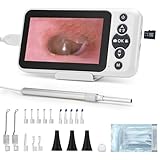
7. JYTONE 4.5-inch HD Screen Digital Otoscope – Best Premium Standalone Scope
- Largest screen in test
- no app needed
- physical buttons
- gyroscope orientation
- Heaviest model (15.2 oz)
- premium price
- light could be brighter
The JYTONE 4.5-inch HD scope is the premium pick for dog owners who want the largest, clearest standalone screen on the market. If you have ever squinted at a 1.4-inch display and wished for something bigger, this is your scope.
The 4.5-inch HD screen is dramatically easier to use than the smaller alternatives. I tested this on my 68-year-old mother, who has arthritis in her hands and struggled with the SA160’s smaller display. She could clearly see inside Rudy’s ear on the first try with the JYTONE. The 6-axis gyroscope keeps the image upright even when you rotate the probe, which removes the disorientation that comes with smaller screens. Mirror mode lets you point the probe naturally without flipping your mental map.
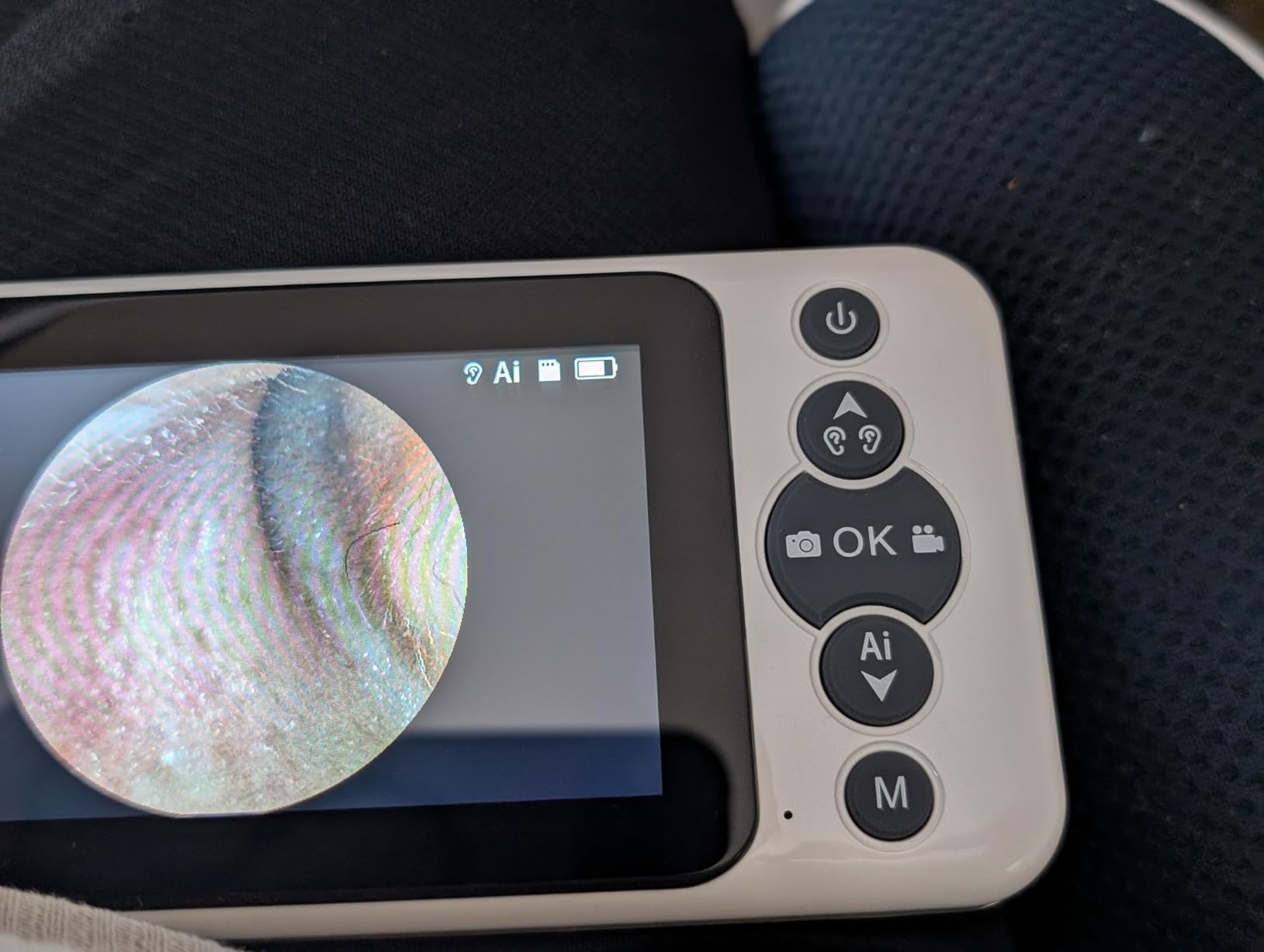
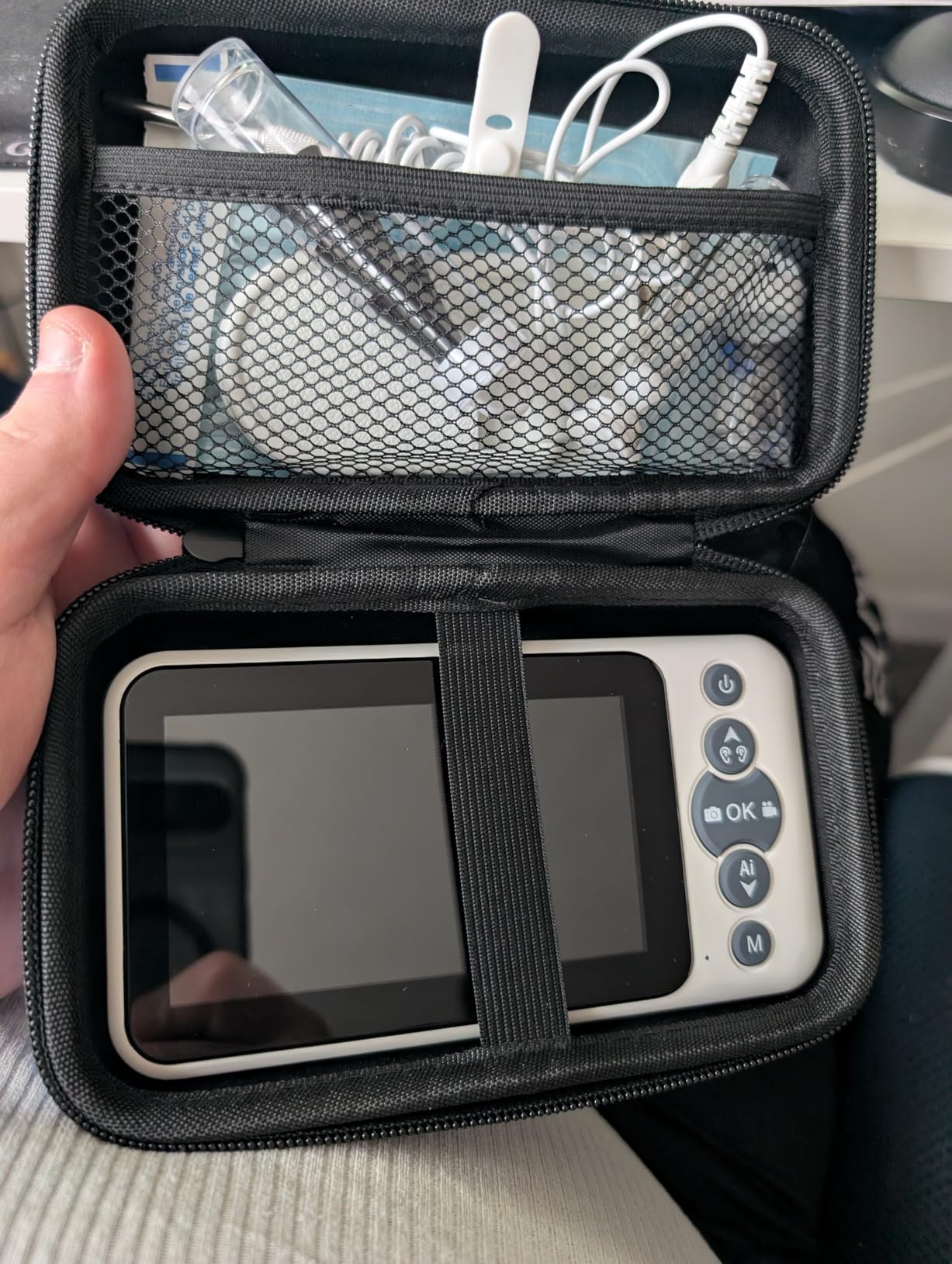
Battery life is the real headline. The 3000mAh battery runs 4 to 5 hours continuously. I used it for two weeks without recharging during routine checks. The 32GB memory card stores hundreds of photos and videos. Physical buttons for power, photo, video, and brightness mean non-tech-savvy users do not have to learn touch controls. The included adjustable stand is a nice touch for hands-free desk inspections.
Where the JYTONE justifies its premium price
You are paying for the biggest screen, the longest battery, the most thoughtful physical interface, and the largest included storage. For older dog owners, anyone with vision challenges, or households that want to share one device with multiple users, those upgrades are real and meaningful. If you are buying for one tech-savvy adult and price matters, the SA160 above delivers 80 percent of the value at a lower price.
Where it falls short
At 15.2 ounces, this is the heaviest otoscope in our test. Holding it up for an extended exam on a squirmy dog can tire your arm. The light is bright, but a few reviewers noted it is not quite as bright as cheaper models for very deep, hairy canals. With only 40 reviews, long-term durability is less proven than the SA160 or WiFi ScopeAround.
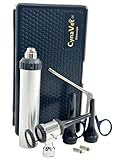
8. ArtLaB Premium Veterinary Otoscope Set Kit – Best for Serious Breeders and Working Users
- Professional-grade optics
- forceps included for foreign bodies
- scratch-resistant lens
- Limited reviews (6)
- lens does not swivel as advertised
- forceps may not fit
The ArtLaB Premium Veterinary Otoscope Kit is the closest you can get to a veterinary-grade tool at a home-use price. The 4X magnification is stronger than every other model on this list, the slit head design is what professional vets use, and the alligator forceps let you remove foreign objects like grass awns – a common hazard for hunting and working dogs.
The reusable specula set (4mm, 5mm, 7mm) is a nice upgrade from disposable tips if you are a breeder or run a small rescue. You can sterilize the metal specula between dogs, which is faster and produces less waste than throwing away a new tip each exam. The carrying case keeps the forceps, specula, and otoscope organized together.
Honest concerns before you buy
With only 6 reviews, this is the lowest-volume product on our list. One detailed reviewer noted that the lens does not actually swivel out of the way as advertised, which limits usability during exams. Another pointed out that the alligator forceps do not fit cleanly through the speculum tube, which limits the foreign-body removal benefit. The product is also not Prime eligible on most listings, which means slower shipping.
Who should buy this veterinary kit
Breeders who examine multiple litters, hunting dog handlers who deal with regular grass awn issues, and small rescue operators who need reusable, sterilizable equipment. For the average dog owner just doing routine home checks, this kit is overkill, and the Jeashia or Jiusion models will serve you better at a fraction of the price.
How to Choose the Best Otoscope for Your Dog?
Choosing the best otoscope for checking dog ears comes down to three big decisions: digital versus manual, smartphone-paired versus standalone, and how much magnification you actually need. Here is how I think through each one.
Digital vs Manual Otoscopes for Dogs
Manual otoscopes like the Jeashia and Jiusion are simpler, cheaper, and have no batteries or apps to worry about. They work well for routine home checks if you know what healthy ear tissue looks like. Digital otoscopes with built-in displays (ScopeAround SA160, JYTONE, ASPOVEN) or phone pairing (ScopeAround WiFi, AnyScope) let you see, record, and share findings. For chronic ear issues or telemedicine, digital is the way to go. For casual monitoring, manual is plenty.
The price gap is real. You can get a perfectly usable manual otoscope for under $25. A good digital otoscope starts around $30 and runs up to $70 for premium standalone models. Think of it as a one-time investment that pays for itself the first time you skip an unnecessary office visit.
Key Features to Compare Before You Buy
Lens diameter matters most. Anything thinner than 4mm is gentle for dogs. Most digital scopes use 3.9mm lenses, which are ideal. Magnification between 3X and 5X is the sweet spot – lower than 3X and you cannot see the eardrum, higher than 5X and you are staring at magnified tissue without context.
Lighting is the second key feature. Look for at least 6 LED lights with adjustable brightness. Bright, even light reveals redness and discharge. Cheap scopes with one or two LEDs create shadows that hide problems.
Battery and power come third. Rechargeable Type-C is the modern standard. AA batteries are fine for manual scopes but get expensive if you use the device daily. Phone-powered scopes never run out, but they tie you to a cable.
Specula sizes and storage round out the comparison. Multiple disposable tip sizes are essential if you own more than one dog of different sizes. A hard carrying case protects your investment. Built-in memory cards simplify documentation.
Breed-Specific Ear Considerations
Not all dog ears are created equal. Breeds with floppy, hairy ear canals like Cocker Spaniels, Basset Hounds, Labradors, and Golden Retrievers are far more prone to ear infections because their ear canals trap moisture and limit airflow. If you own one of these breeds, you should check ears weekly rather than monthly. A digital otoscope with image recording helps you spot subtle changes early.
Breeds with upright ears like German Shepherds, Siberian Huskies, and Border Collies have naturally ventilated ear canals and fewer infections. A manual scope is usually enough for occasional checks. Breeds with cropped or surgically altered ears require extra gentleness – the shortened ear flap changes the angle of the canal.
Senior dogs benefit from standalone screens with larger displays (like the JYTONE) because they often need more frequent checks and many senior owners have their own vision challenges. Puppies do best with the gentlest, smallest specula (2.4mm to 4mm) and short exam sessions to build positive associations.
How to Safely Examine Your Dog’s Ears at Home
Before you start, gather everything within reach: your otoscope, treats, a towel, and ideally a helper. A wiggly dog makes ear exams harder and risks injury. Choose a quiet, well-lit room where your dog feels calm. Many dogs do best on a non-slip mat or couch.
Step one: Lift the ear flap gently and look at the outside first. Healthy ears are pale pink inside, with minimal wax and no odor. If you see heavy black debris, yellow discharge, swelling, or a foul smell, stop and call your vet before inserting any scope.
Step two: Choose the right specula size. Smaller than the ear canal opening, never larger. A specula that does not fit comfortably will cause pain and make your dog wary of future exams. When in doubt, size down.
Step three: Insert the scope slowly along the vertical canal, angling slightly toward the dog’s nose. Never force it past resistance. The vertical canal is about 1 to 2 cm long in most dogs before it bends into the horizontal canal. Stop when you feel the bend. Going further risks damaging the eardrum.
Step four: Look for the eardrum itself. It should appear as a thin, translucent membrane. If it looks cloudy, bulging, or ruptured, you have a serious issue requiring immediate vet care. Look also for parasites (ear mites look like tiny moving specks), foreign objects (grass awns are common), and abnormal discharge.
Step five: Reward your dog immediately with a treat and praise. Repeat weekly for healthy dogs, daily during an active infection. If your dog growls, snaps, or pulls away, stop and try again later. Forcing an exam builds fear and makes future checks harder.
When to See the Vet vs Handle at Home
Home ear checks with an otoscope are powerful, but they do not replace your veterinarian. Some signs mean stop the home exam and pick up the phone. A foul odor from the ear, especially a sweet or yeasty smell, almost always means infection. Yellow, green, or bloody discharge is a clear vet visit. Repeated head shaking, constant scratching, or a head tilt can signal middle ear involvement that needs prescription treatment.
If you see your dog in pain when you touch the ear, or if the ear flap is hot and swollen, something serious is going on. If you cannot see the eardrum clearly because of swelling, debris, or bleeding, the home exam has reached its limit.
For routine monitoring between vet visits, for early detection of irritation, and for tracking the progress of a known condition under vet supervision, home otoscopes are perfect. Our team also recommends pairing this with our dog ear cleaning guide for a complete home ear care routine. If you are looking for other gear to keep your dog healthy and active, our picks for the best outdoor dog waterers round out our coverage.
Frequently Asked Questions
What is the best otoscope for dogs?
The best otoscope for dogs depends on your needs, but our top pick is the ScopeAround SA160 Digital Otoscope for its built-in HD screen, 3.9mm thin lens, and strong 4.5 star rating across 300+ reviews. For budget buyers, the Jeashia Pocket Veterinary LED Otoscope is purpose-built for pets and is a great entry point. For wireless convenience, the ScopeAround WiFi Otoscope has nearly 4,600 reviews and pairs directly with your smartphone.
Can I use a human otoscope on a dog?
Yes, you can use a human otoscope on a dog in many cases, especially general-purpose models like the Jiusion 3X. However, dog ear canals are longer and deeper than human ear canals, so a longer specula is helpful. Veterinary otoscopes and pet-specific scopes like the Jeashia are designed with deeper, gentler specula that match canine ear anatomy better than standard human models.
Can you see a dog’s eardrum with an otoscope?
Yes, you can see a dog’s eardrum with an otoscope, provided you have enough magnification (3X or higher) and a thin enough lens (under 4mm) to navigate the canal. Digital otoscopes with cameras make this much easier because the screen shows what you are looking at in real time. A healthy eardrum appears as a thin, translucent membrane. If it looks cloudy, bulging, or ruptured, see your vet immediately.
How do I check my dog’s ears for infection at home?
Start by lifting the ear flap and looking for redness, swelling, discharge, or odor. If the outside looks normal, insert a properly sized specula gently along the vertical canal, angling toward the nose. Stop at the bend into the horizontal canal. Look for redness, dark debris (a sign of ear mites), yellow discharge (infection), or foreign objects. Reward your dog after the exam. If you see any concerning signs, contact your vet.
How deep should I insert an otoscope in my dog’s ear?
You should only insert an otoscope as deep as the vertical canal, which is roughly 1 to 2 cm in most dogs depending on breed and size. Stop when you feel the natural bend where the vertical canal becomes the horizontal canal. Going further risks damaging the eardrum. Never force the scope past resistance, and always use a specula smaller than the ear canal opening.
Final Thoughts
Choosing the best otoscope for checking dog ears in 2026 does not have to be complicated. For most dog owners, the ScopeAround SA160 is the right balance of standalone convenience, clear imaging, and reasonable price. The WiFi ScopeAround is the smartest choice if you want phone integration and easy telehealth sharing. The Jeashia is the budget pick that delivers real value for routine monitoring.
Whichever model you choose, regular home inspections will catch ear problems earlier than waiting for symptoms to drive you to the vet. That alone can pay for the device within a year, and your dog will thank you for the gentler, faster care. If you are looking for more ways to keep your pup healthy between vet visits, our guide to collapsible dog wagons for outdoor adventures is a great next read.