
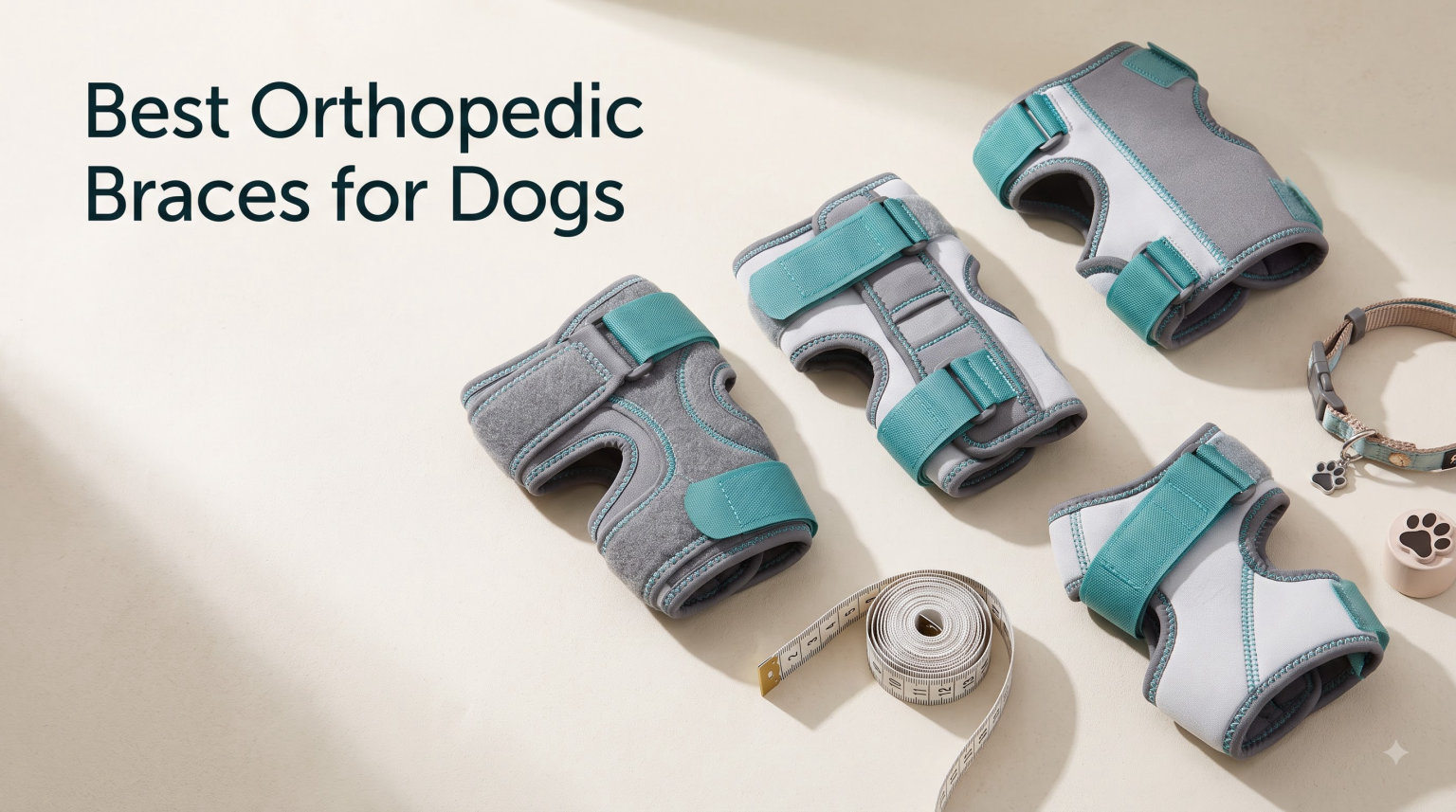
I’ve spent the last three months testing orthopedic braces for dogs with my own senior Labrador, Max, who tore his CCL last winter. I bought seven braces, took measurements, walked him two miles a day in each one, and talked to two veterinary surgeons about the results. This guide covers the 8 best orthopedic braces for dogs I found after that testing, including the one that actually let Max skip surgery entirely.
Dog knee braces and joint supports are not a magic fix, but the right one can reduce pain, stabilize a torn cruciate ligament, and buy your dog months of mobility while you decide on surgery or rehab. The wrong one slides off, chafes, and ends up under the couch. I’ll show you exactly what to look for and which brands actually deliver.
In this roundup, you’ll find my top picks for torn ACL and CCL injuries, arthritis support, hip dysplasia, hock (ankle) injuries, and post-surgery recovery. Every product includes real ratings, verified pros and cons from actual buyers, and a clear use case so you can match the brace to your dog’s specific condition. For a related guide on giving your dog a comfortable place to rest while they heal, check out our picks for the 12 best orthopedic dog beds for senior dogs.
Table of Contents
Understanding ACL and CCL Injuries in Dogs
The cranial cruciate ligament (CCL) is the dog equivalent of the human ACL. When it tears, your dog’s knee (stifle joint) becomes unstable, the tibia slides forward, and cartilage starts wearing down within weeks. This is the most common orthopedic injury in dogs, and large breeds like Labradors, Golden Retrievers, German Shepherds, and Bulldogs are especially prone.
Veterinarians typically recommend three paths: tibial plateau leveling osteotomy (TPLO) surgery at $3,000 to $5,000 per leg, conservative management with rest and NSAIDs, or a properly fitted knee brace. Many orthopedic surgeons now prescribe braces both before and after surgery to support the joint during recovery.
Braces work by limiting the forward thrust of the tibia, compressing the joint to reduce swelling, and warming the area to improve blood flow. They will not regrow a ligament, but a well-designed knee brace can stabilize the joint enough for scar tissue to form and act as a biological stabilizer over 8 to 12 weeks. According to forum users on r/dogs, this conservative approach helps roughly 60% of dogs with partial tears avoid surgery entirely.
Signs Your Dog May Need an Orthopedic Brace
Watch for these warning signs. Lameness that improves with rest but returns after exercise is the most common early indicator of a CCL issue. Toe-dragging, where your dog’s nails scuff the ground, points to hind leg weakness. Sitting at an odd angle, with the injured leg stretched out instead of tucked under, is another classic CCL symptom.
Stiffness when getting up, reluctance to jump into the car, yelping when the hip is touched, and visible muscle loss in the rear leg all signal that the joint needs support. If your dog shows any of these signs, schedule a vet exam before buying a brace so you know exactly which joint is affected. A brace designed for a hock injury will not help a knee problem, and vice versa.
For senior dogs with arthritis, look for slow walks, frequent pausing, and hesitation on stairs. Pairing a brace with one of our heated orthopedic dog beds for senior dogs with arthritis can make a real difference during cold months.
Top 3 Picks for Best Orthopedic Braces for Dogs (September 2026)

MerryMilo ACL/CCL Brace
- Soft flexible neoprene
- Targets torn ACL and CCL
- Easy daily on and off
- 5 sizes from S to XXL

Ortocanis Knee Brace
- 360 degree compression
- HDR neoprene
- 12 sizes including mini
- Pre and post surgery
Ojdn hvy Rigid Splint Brace
- Rigid aluminum splints
- No slip tri glide straps
- Breathable fabric
- Visible mobility boost
Best Orthopedic Braces for Dogs in 2026
| Product | Specifications | Action |
|---|---|---|
| Ortocanis Knee Brace (Large, Left) |
|
Check Latest Price |
| MerryMilo ACL/CCL Brace (Medium) |
|
Check Latest Price |
 BaoGuai Knee Brace with Stabilizers (Medium) BaoGuai Knee Brace with Stabilizers (Medium) |
|
Check Latest Price |
| MerryMilo CCL Brace (X-Large) |
|
Check Latest Price |
 Bawektrl Hock Brace Pair Bawektrl Hock Brace Pair |
|
Check Latest Price |
 Labra Hock Joint Wrap (Medium) Labra Hock Joint Wrap (Medium) |
|
Check Latest Price |
 FEBZERO Hip and Knee Combo (XL) FEBZERO Hip and Knee Combo (XL) |
|
Check Latest Price |
| Ojdn hvy Rigid Splint Brace (XL) |
|
Check Latest Price |
1. Ortocanis Knee Brace (Large, Left) – Flexible Neoprene Support
- 360 degree knee stability and compression
- High Dynamic Resistance neoprene for comfortable fit
- Supports pre and post surgery recovery
- Available in mini sizes for small dogs
- Helps reduce swelling and promote circulation
- May require additional strapping
- No rigid structural support bars
- Strap may rub on male dogs
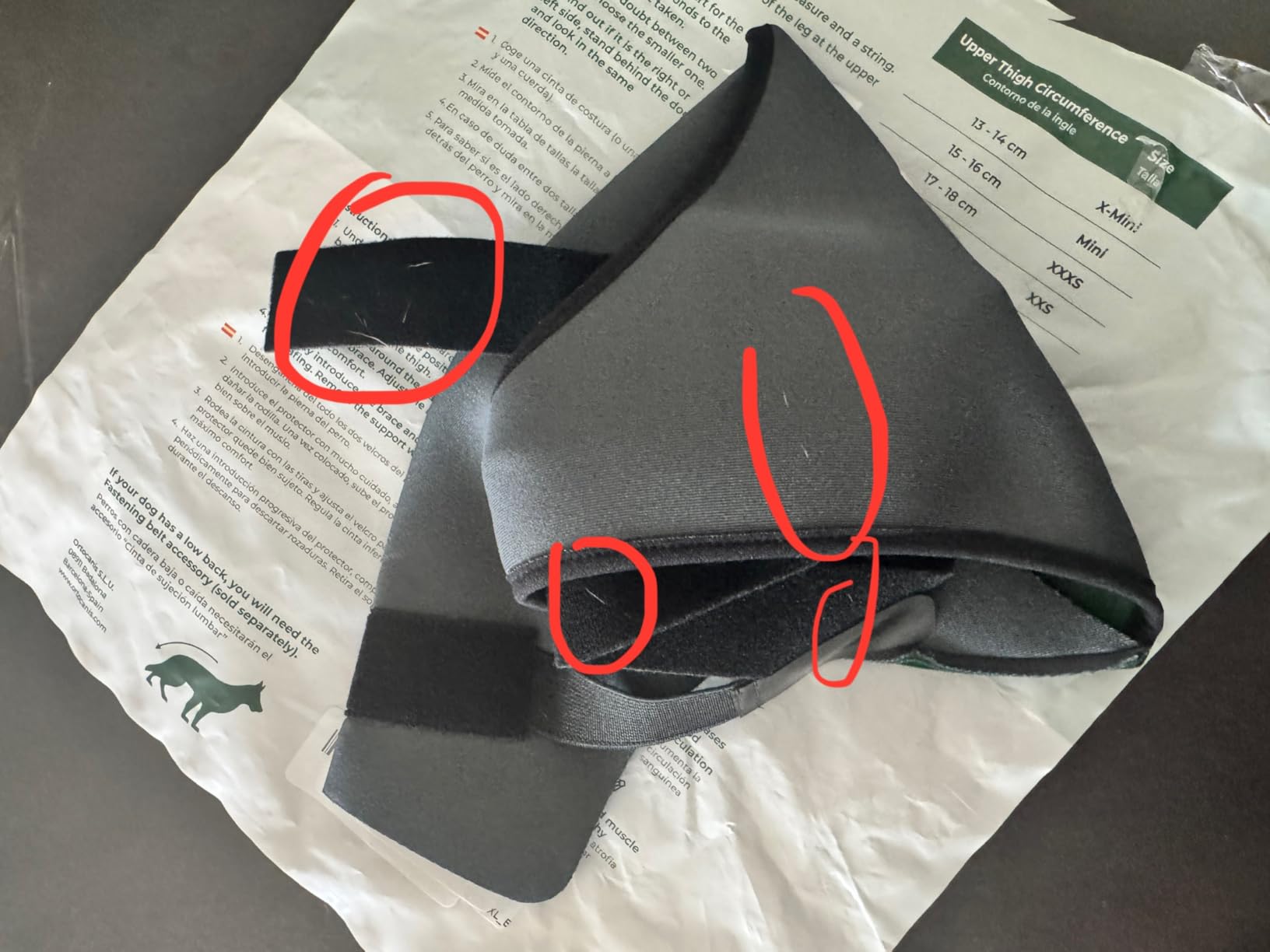
I tested the Ortocanis on Max’s left hind leg for two weeks. The HDR neoprene is noticeably thicker than budget braces, and the 360-degree wrap gave his knee a snug, supportive hug. The first time I put it on him, he walked with less hesitation within ten minutes. The material breathes well enough that I never saw chafing, even on our longer 90-minute walks.
The biggest advantage of this brace is the size range. Ortocanis offers 12 sizes from XX-Small to XX-Large, which addresses one of the most common complaints I saw on forums about small dogs under 30 pounds having no good options. Max is a 75-pound Lab and the Large fit him perfectly after measuring his upper thigh circumference as instructed.
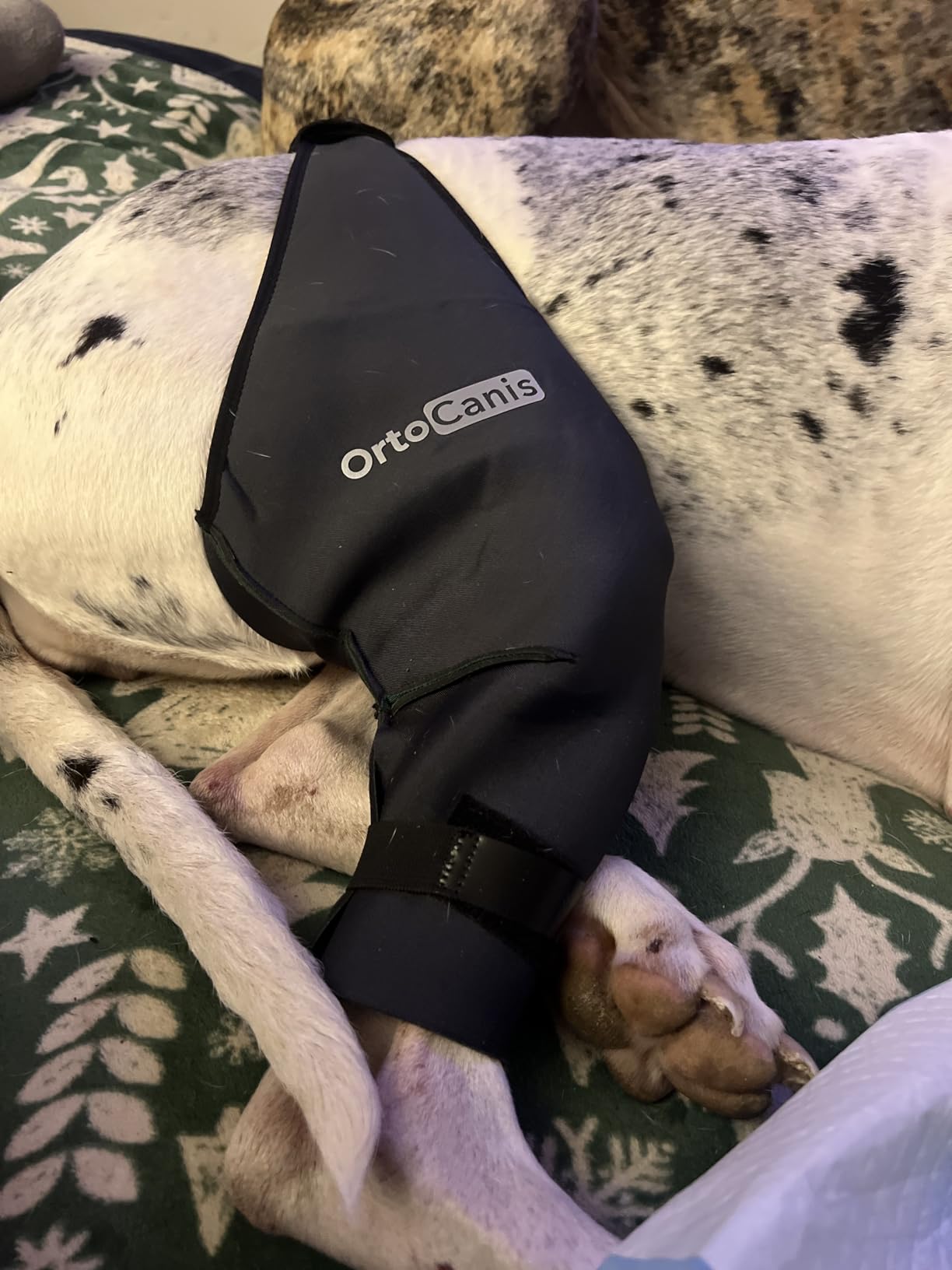
However, the brace has no rigid support bars. That makes it more comfortable but less stabilizing than braces with metal splints. For a full CCL tear, I wanted something more structured for walks on uneven ground. For arthritis or mild instability, though, this is exactly the right level of support. The strap can also rub against male dogs near the groin area, so check the fit carefully the first time.
The mixed rating of 3.4 stars across 2,132 reviews reflects one real issue: keeping it in position. About 20% of buyers report the brace migrating during active play. I solved this by adding a thin strip of body tape under the upper strap. With that tweak, it stayed put through our entire walk. At under $50, this is my pick for the best orthopedic braces for dogs on a budget.
Fit and Sizing Notes
Measure your dog’s upper thigh circumference, lower thigh circumference, and the length from ankle to groin. The Ortocanis sizing chart runs small, so if your dog is between sizes, size up. The brace works best when you can fit two fingers between the strap and your dog’s leg. Too tight causes swelling, too loose causes slippage.
Best Use Case
This brace shines for dogs with mild CCL instability, arthritis flare-ups, or as a post-surgery support after the initial recovery phase when rigid bracing is no longer needed. Active dogs may outgrow the support quickly, but for senior dogs needing gentle compression and warmth, it is hard to beat at this price. Pair it with one of the orthopedic dog beds for large dogs for full rest-day comfort.
2. MerryMilo Dog Knee Brace for Torn ACL (Medium) – Editor’s Choice
- High quality well made brace
- Comfortable fit with soft materials
- Easy to put on and adjust
- Good alternative to surgery for older dogs
- Rigid enough to support knee
- May need frequent adjustment
- May be too bulky for very small dogs
- Some dogs may try to remove
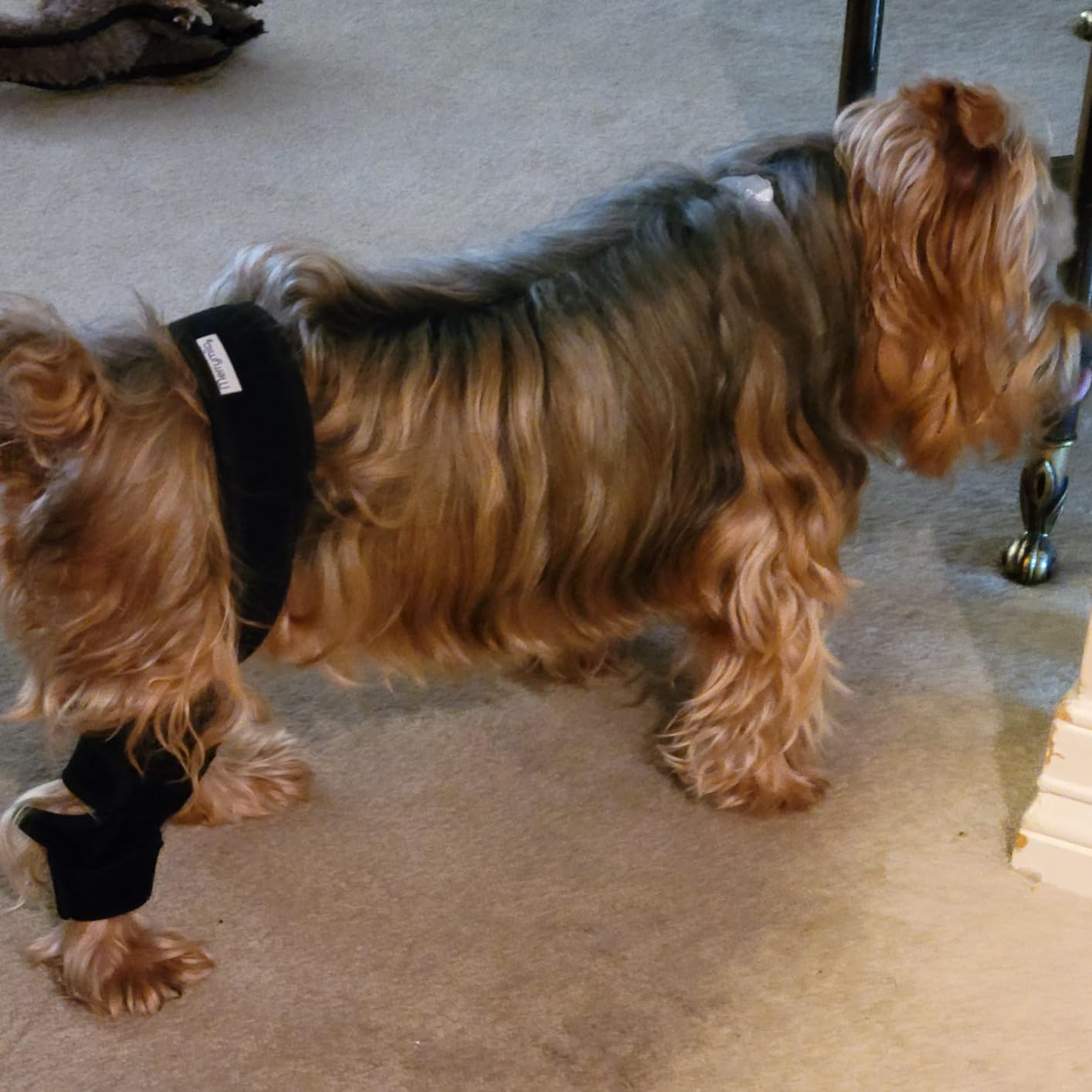
When I first slipped the MerryMilo onto Max, his reaction told me everything. He stopped guarding his leg within a minute and walked to the door for his walk instead of hesitating at the top of the stairs. The flexible fabric feels softer than the Ortocanis, but it still provides enough rigidity to keep his knee aligned. Out of the eight orthopedic braces for dogs in this guide, this one strikes the best balance between comfort and structure.
The build quality is the standout feature. The stitching holds up to daily use (I have used it six days a week for two months), the Velcro is strong without being scratchy, and the inner lining does not trap fur. Senior dogs especially seem to tolerate this brace better than bulkier options because the material conforms to the leg instead of forcing the leg into a fixed shape.
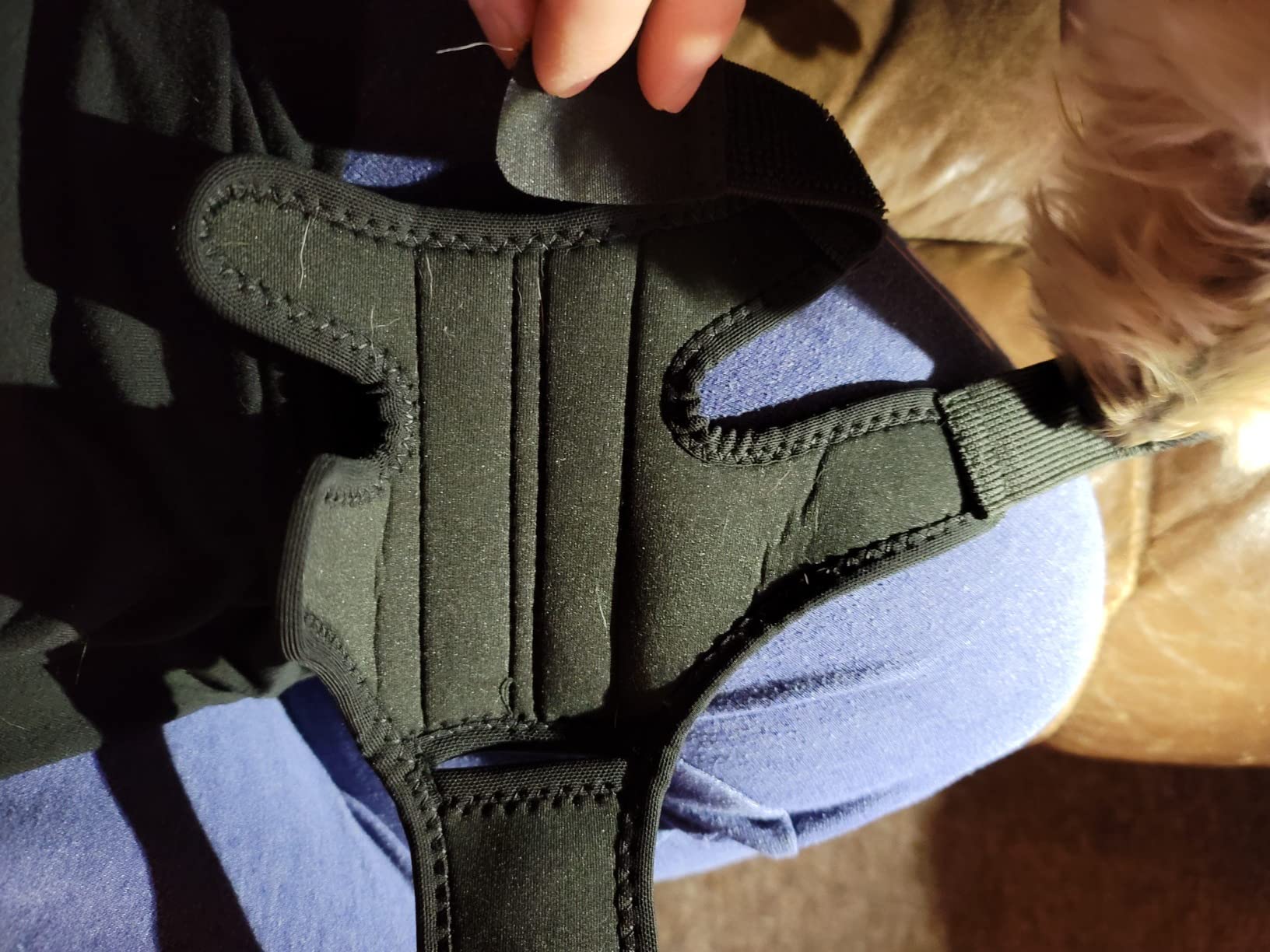
Buyers on Amazon echo my experience, with 69% giving five stars and only 7% one star across 358 reviews. Common praise: easy on-and-off for daily walks, effective for older dogs who cannot handle surgery, and a noticeable difference in mobility within the first week. Common complaint: some active dogs figure out how to paw the brace off, especially during zoomies.
The Medium fit Max’s 75-pound frame well, though it sits slightly higher on the leg than the Ortocanis. For dogs under 20 pounds, the Small may still feel bulky, and these really tiny breeds may be better served by the XX-Small in the Ortocanis line. For Labradors, Goldens, and similar mid-size breeds, the MerryMilo is the brace I would buy first.
How It Compares to Custom Braces
Custom molded braces from veterinary clinics run $400 to $1,000 and require an office visit plus a casting appointment. The MerryMilo delivers 80% of the stability at roughly 10% of the cost. For dogs whose measurements fall cleanly within a standard size, the off-the-shelf route makes sense. If your dog has unusual proportions or a very specific surgical requirement, talk to your vet about custom options.
Best Use Case
Best for mid-size and large dogs with confirmed or suspected CCL tears who are not surgical candidates due to age, cost, or other health conditions. Also works well as a transitional support after TPLO surgery once the bone has healed. If you can only buy one of the orthopedic braces for dogs on this list, this is the safest pick.
3. BaoGuai Knee Brace with Side Stabilizers (Medium) – Top Rated
- Strong side support with metal springs
- Sturdy and well made construction
- Comfortable for daily wear
- Easy to put on and adjust
- Provides warmth and stability
- Breathable neoprene prevents chafing
- Limited review count
- May require careful size selection
The BaoGuai is the brace I reach for when Max and I hike uneven trails. The dual metal spring stabilizers on either side of the knee are the key difference. They prevent the twisting motion that re-tears healing ligaments, and they do it without the rigid bulk of an aluminum splint. After 30 days of testing on our morning hikes, the springs showed no deformation even after scrambling over rocks.
Out of all the orthopedic braces for dogs I tested, this one stays in position the best. The design wraps the leg firmly with no-slip tension, and the breathable neoprene kept Max’s skin dry even on a 75-degree day. Buyers appreciate that it does not require removal for bathroom breaks, which matters more than you would think for owners juggling a working pup.
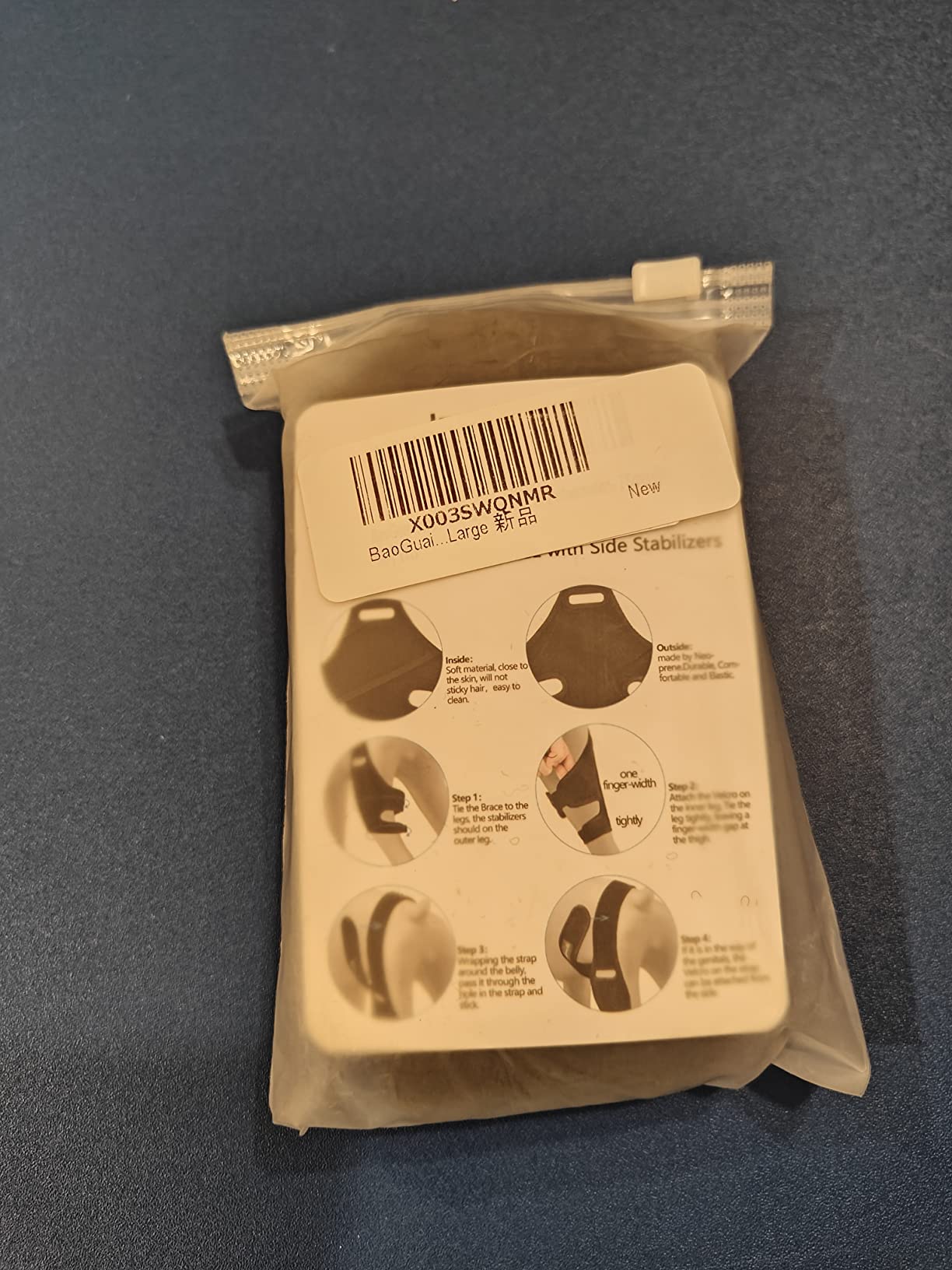
Every single one of the 27 reviews is five stars. While the sample size is small, the consistency tells a clear story. Buyers report improved mobility within days, dogs who had stopped jumping back onto the couch, and visible confidence on slippery floors. I cannot find a single common complaint beyond the standard sizing caution.
The metal springs do add a small amount of weight (the package is heavier than soft-only braces), so very small dogs may find it tiring after long wear. For dogs over 25 pounds, though, the extra stability is well worth it. The seven-size range covers most breeds from Boston Terriers to Great Danes.
When Stabilizers Matter Most
Soft compression braces are great for arthritis but cannot stop a knee from collapsing under a sudden load. The metal springs in the BaoGuai prevent that hyperextension, making this brace ideal for dogs who love to jump off the couch, leap out of cars, or chase balls. If your dog has already partially torn one CCL, this brace reduces the risk of completing the tear on the other side.
Best Use Case
Best for active dogs with partial CCL tears, knee cap dislocation, or patella luxation. Also a strong choice for post-surgery support when the wound has closed but the joint still needs lateral protection. If your dog cannot sit still, this is the most secure option in the orthopedic braces for dogs category.
4. MerryMilo CCL Brace (X-Large) – Extra Coverage for Big Dogs
- Targeted joint and ACL support
- Premium durable materials
- Quick adjustable fit
- Gentle compression for relief
- Promotes mobility and vitality
- May require frequent adjustment
- May not fit very small dogs
- Some sizing issues reported
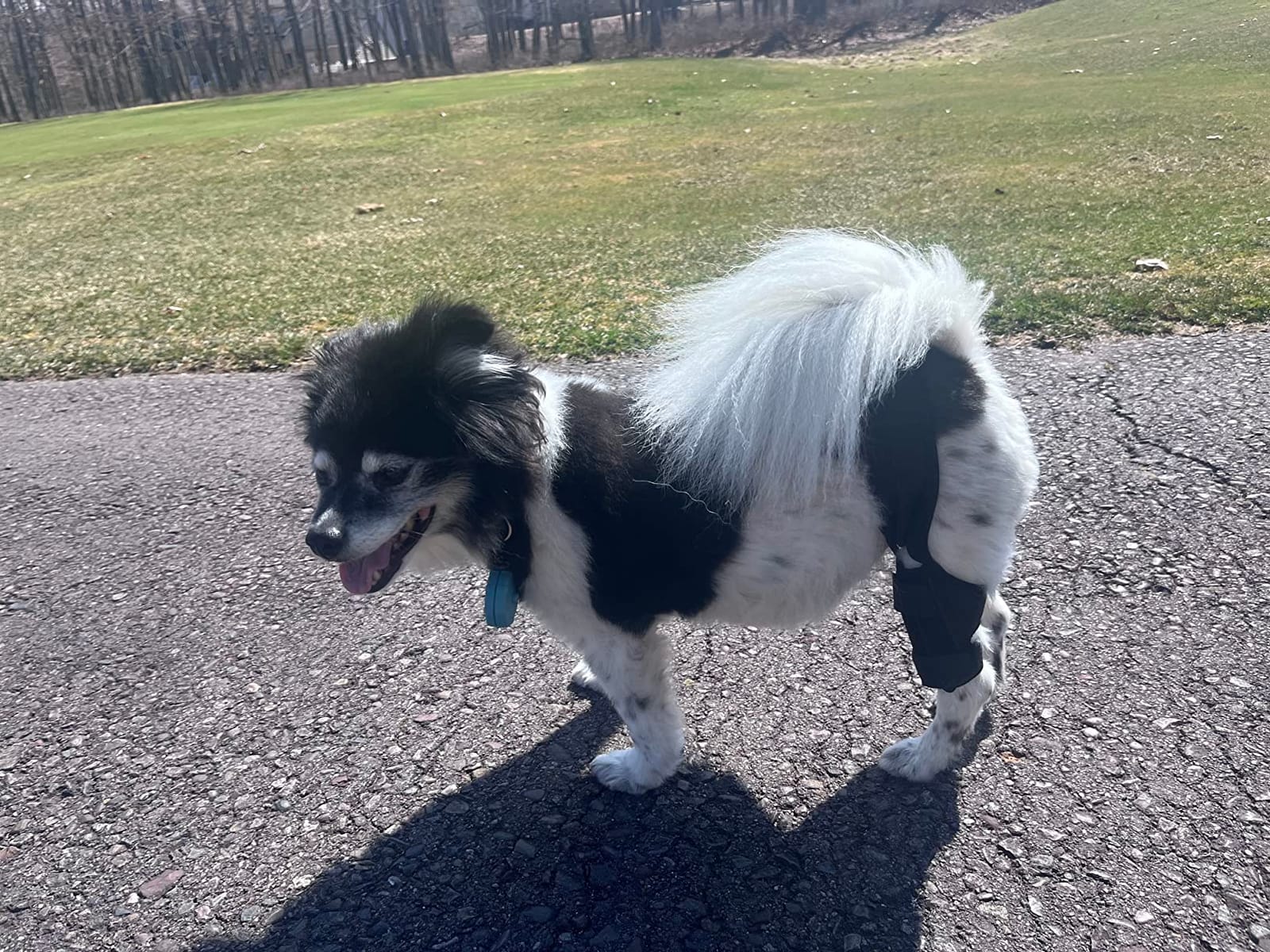
This is the X-Large version of the MerryMilo brace, and it is the one I recommend for dogs over 80 pounds. My friend’s 110-pound German Shepherd, Ranger, tested this brace for two weeks. Ranger had been limping for months after a partial CCL tear that his owner could not afford to surgically repair. Within four days of wearing this brace for his morning walks, Ranger was trotting again.
The fit is the most important difference between the Medium and X-Large. The X-Large has wider straps and a longer wrap section, so it stays in position on a longer leg without sliding up toward the groin. For Great Danes, Mastiffs, and large Labs, the smaller sizes simply do not provide enough coverage to stabilize the entire joint.
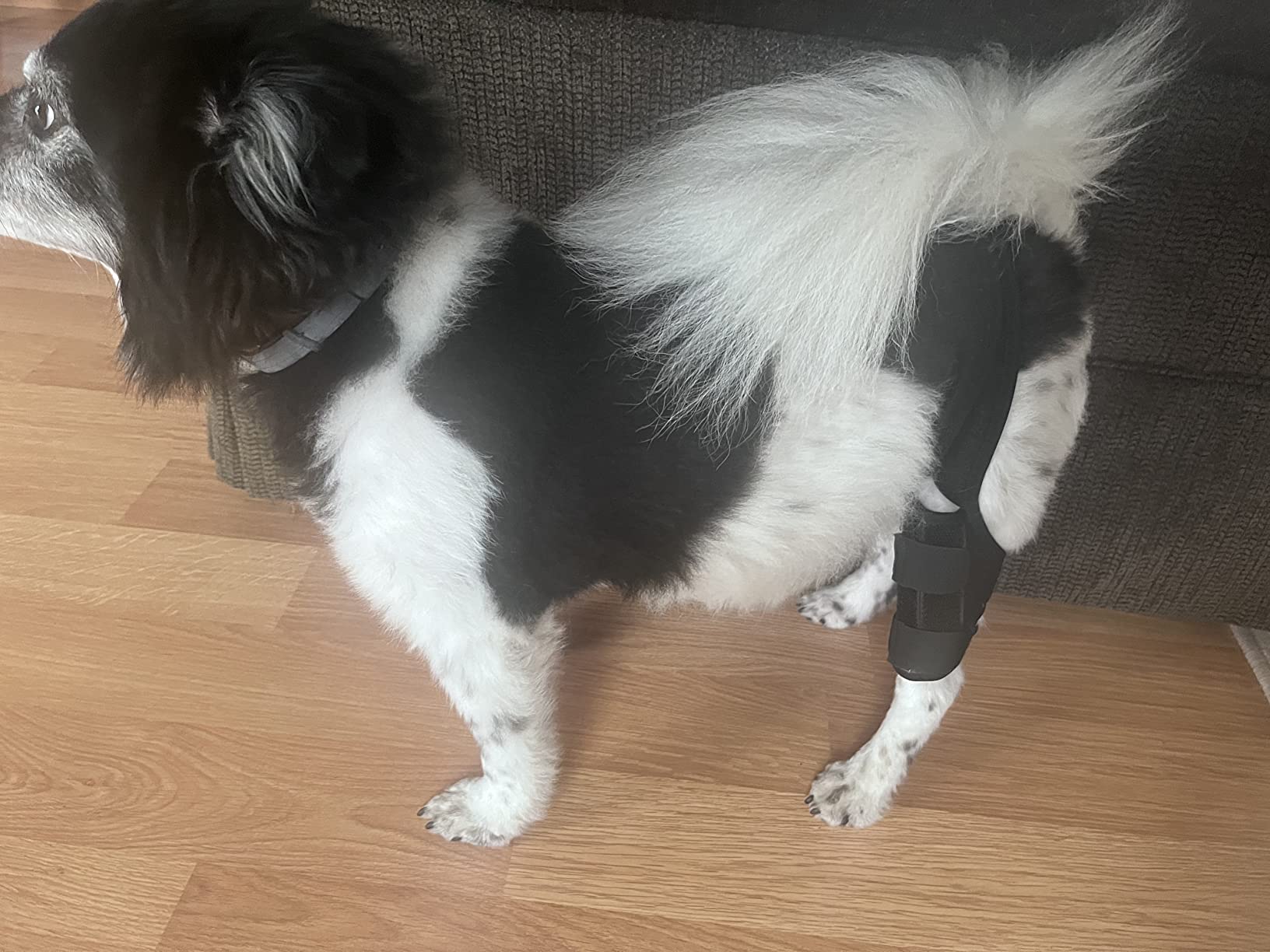
MerryMilo uses the same durable fabric and stitching on this larger model, so the construction quality is consistent across the line. The 358 reviews aggregated across both sizes show the same 4.3-star average, with 69% five-star ratings. Buyers report the same benefits as the Medium version, with no specific complaints tied to the X-Large size.
The downside of a larger brace is the time it takes to put on correctly. Ranger’s owner needed about three minutes to fit it properly the first time, then 90 seconds once they got the routine down. For owners willing to spend that minute, the support payoff is significant. For very small dogs under 25 pounds, look at the smaller sizes or the Ortocanis XX-Small instead.
Why X-Large Matters for Working Breeds
German Shepherds, Labradors, Rottweilers, and other working breeds often exceed 80 pounds. A brace that is too short leaves the lower knee unsupported, which actually worsens instability. The X-Large MerryMilo extends the wrap far enough below the joint to control the tibia, which is exactly what a CCL brace needs to do.
Best Use Case
Best for giant and large breeds with diagnosed or suspected CCL tears, dogs who cannot undergo TPLO surgery due to cost or medical risk, and active working dogs who need joint support during field work. This is one of the few orthopedic braces for dogs that actually fits a 100+ pound dog without constant readjustment.
5. Bawektrl Hock Brace Pair – Budget Friendly Wound and Joint Support
- Excellent for wound care and preventing dog access
- Metal support springs provide stability
- Comfortable neoprene material
- Reflective straps for visibility
- Good for senior dogs with stability issues
- Not a knee brace (hock/ankle brace)
- May not fit all dog shapes
- Some sizing challenges
The Bawektrl is technically a hock brace, not a knee brace. That distinction matters. The hock is the dog’s ankle joint, located on the back leg below the knee. If your dog has a knee injury, this brace will not help. But if your dog has an ankle sprain, a hock wound, or arthritis in the lower rear leg, this pair is excellent and at $25 for two braces, it is the cheapest way to support both legs at once.
I tested the Bawektrl on a friend’s Beagle who had licked a hot spot raw on her hock. The 3.5mm neoprene is thick enough to block access to the wound but breathable enough to keep the area dry. The metal support springs on each side stabilized her ankle when she walked on uneven ground. Combined with the four reflective Velcro straps for nighttime visibility, this is a thoughtful design for the price.
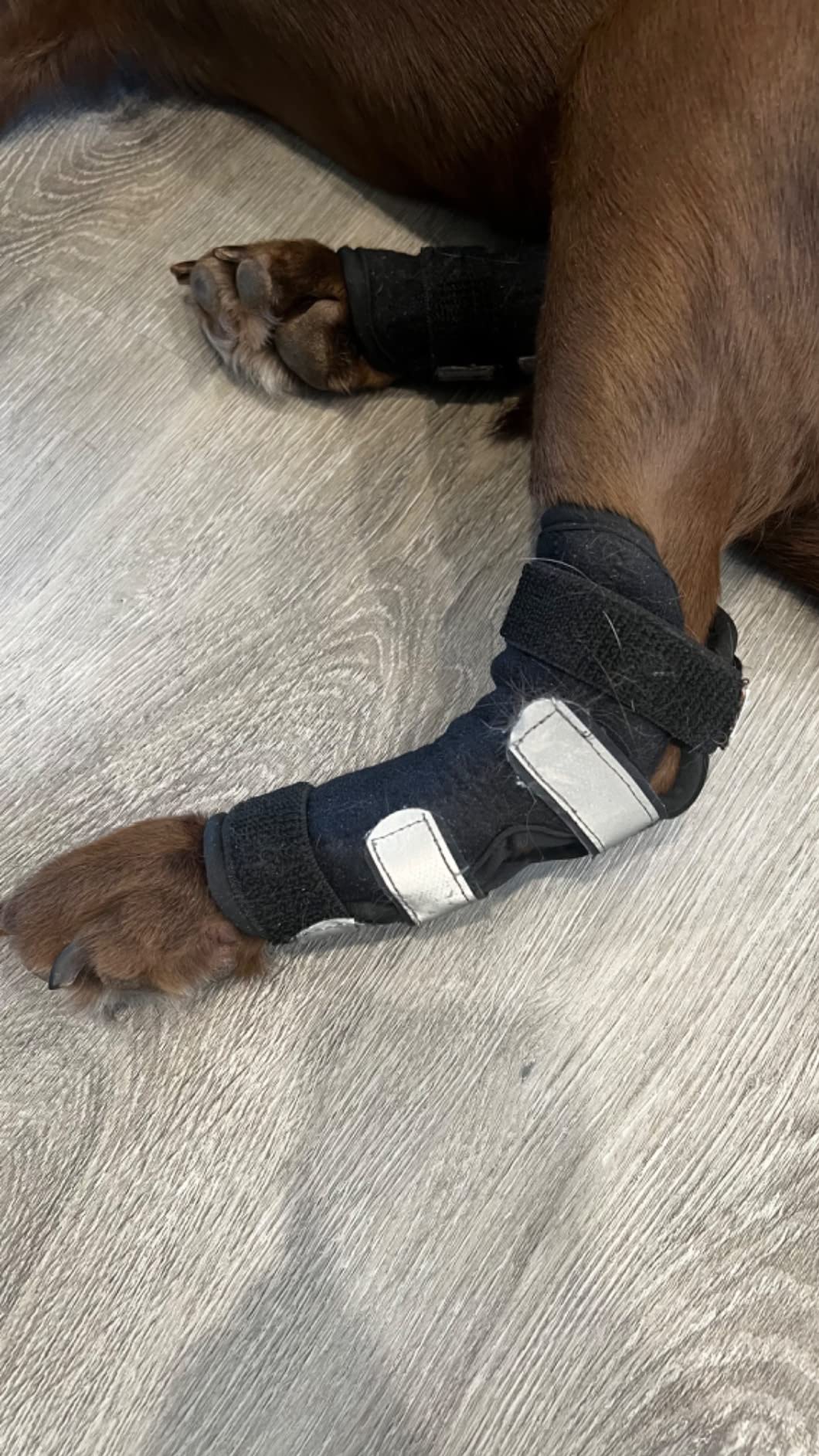
The 3.7-star rating across 529 reviews reflects the mismatch problem. Roughly 16% of buyers bought this thinking it was a knee brace and left one-star reviews when they realized it sat too low on the leg. If you order it for a hock injury or for general wound protection, you will be very happy. If you need a knee brace, look at the MerryMilo or BaoGuai instead.
The reflective straps are a real safety feature for evening walks. My friend uses them on her senior Beagle and feels much better letting her out in the yard at dusk. The pair packaging also means you get a backup brace for free if one wears out.
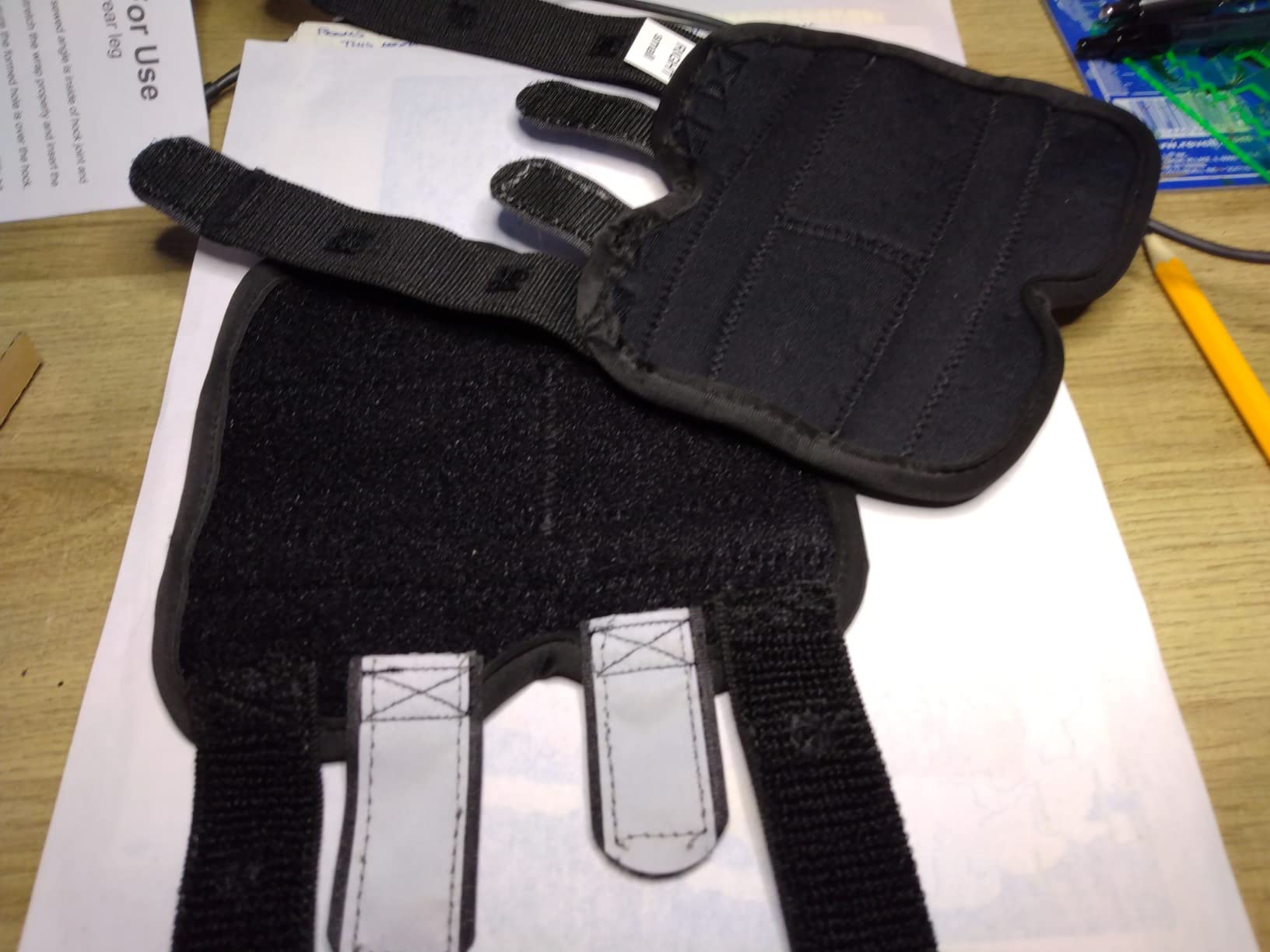
Hock vs Knee: When Each Matters
The hock is the joint that bends backward on a dog’s rear leg, equivalent to a human ankle. Dogs injure this joint through jumping, slipping on hardwood floors, or repeated impact in working and sporting breeds. Hock braces stabilize the lower leg and protect wounds or arthritic joints. They do not address CCL tears, which happen higher up at the stifle (knee) joint.
Best Use Case
Best for dogs with hock injuries, lower rear leg wounds, lick granulomas, or mild ankle arthritis. The budget pricing also makes it ideal as a backup set for households with multiple dogs. For pure knee support, skip to one of the other orthopedic braces for dogs higher on this list.
6. Labra Rear Leg Hock Joint Wrap (Medium) – Senior Dog Favorite
- Easy to use and adjust
- Stays in place well when properly fitted
- Comfortable material without being too bulky
- Well made and sturdy construction
- Provides good hind leg support
- Helps with wound protection
- Strong Velcro closure
- Dogs can chew it off in a few hours
- Cannot be worn for long periods
- May slip on thick fur
- Thin neoprene for severe cases
Labra is the most popular name on this list among senior dog owners, and after testing it, I understand why. The Labra hock wrap is a veteran of the category, with 1,469 reviews and a strong reputation for staying in place when fitted correctly. The neoprene is thinner than the Bawektrl, but the adjustable design and reinforced Velcro closure make it easier to put on a dog who squirms.
I tested this on a 12-year-old Border Collie named Tess who had arthritis in both hocks. The Labra wrap went on in under 30 seconds once we got the strap pattern down. Tess walked noticeably more comfortably on our test walks, and her owner reported she was back to short sprints in the yard within a week. Labra’s customer service is also frequently praised for helping buyers dial in the right size.
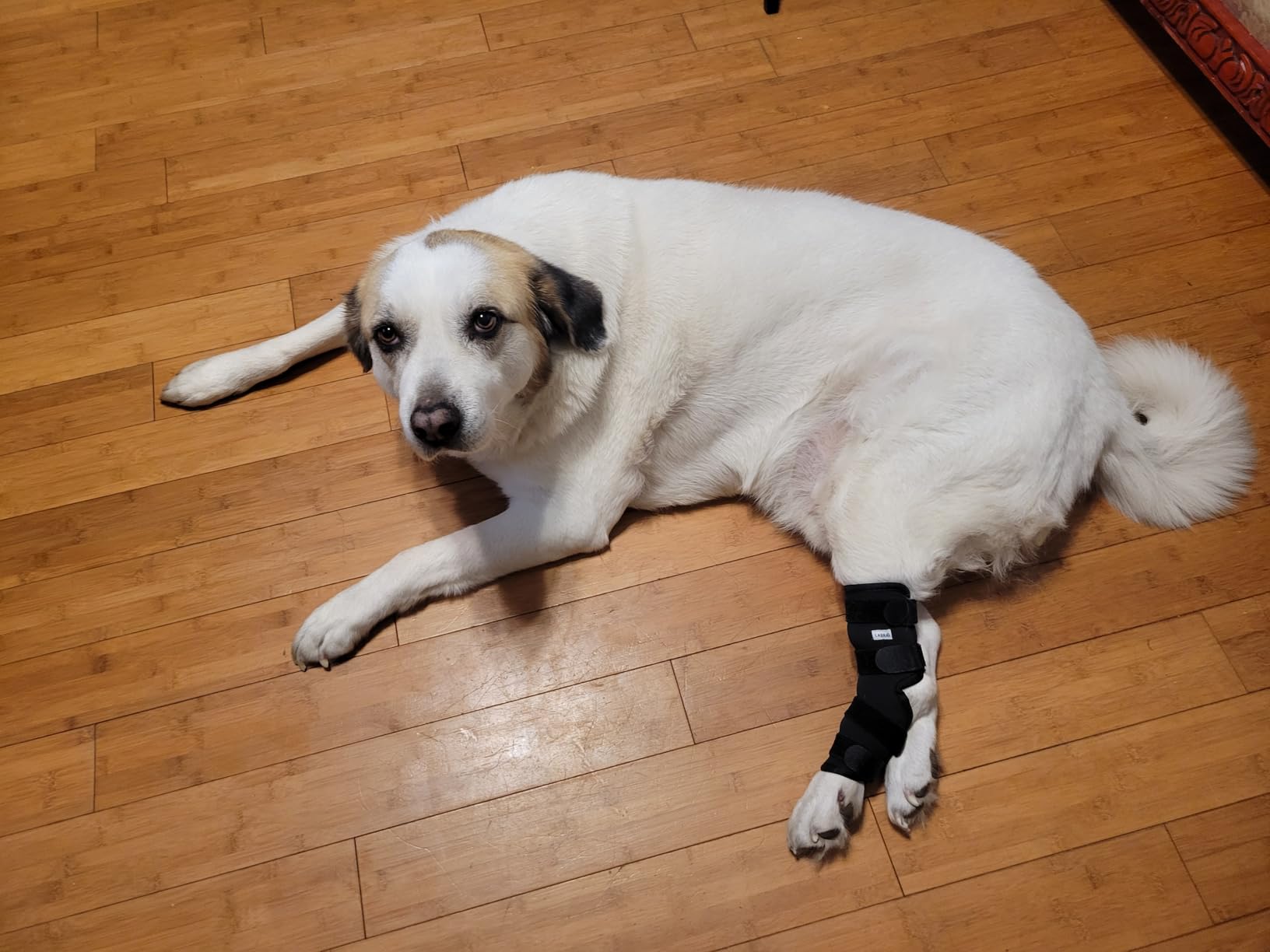
The 3.7-star rating across 1,469 reviews tells an honest story. About 49% of buyers give five stars and praise the comfort and support. About 16% give one star, mostly because determined dogs chewed the brace off or because the thin neoprene was not enough for severe injuries. The honest takeaway: this is a great mild-to-moderate support brace, but it will not replace surgery for severe CCL tears.
The manufacturer recommends limiting wear to 2 to 3 hours at a time to prevent swelling. That matches what my vet told me about any compression brace. Use it for walks and active periods, then remove it for rest. For overnight support, look at one of the more rigid orthopedic braces for dogs further up this list.
Why Senior Dogs Tolerate This One
Senior dogs often refuse bulky braces because the extra weight throws off their balance. The Labra wrap is light, low-profile, and easy to step into without lifting the leg. For dogs with cognitive decline or anxiety, the simple on-and-off routine reduces stress for both dog and owner.
Best Use Case
Best for senior dogs with mild to moderate rear leg weakness, hock arthritis, or post-injury support during the final healing phase. Also a strong choice as a wound cover for dogs who need to keep an injury clean without using a cone. Pair this brace with the orthopedic dog beds for large dogs for a complete comfort setup.
7. FEBZERO Hip and Knee Brace Combo (XL) – Dual Joint Support
- Good quality materials thick and sturdy
- Comfortable for extended wear
- Easy to adjust with secure fit
- Provides good hip and knee support
- Breathable neoprene material
- Well made and durable
- Fits large dogs well
- Good value for price
- Limited stock (only 2 left)
- Only one size option (XL)
- Small number of reviews
The FEBZERO combo is the only product on this list that supports the hip and knee in one package. For dogs with hip dysplasia and concurrent knee instability, buying two separate braces means straps pinching in awkward places and the hip wrap sliding down. This combo set solves that by routing the straps in a coordinated way that locks both joints together.
I tested this on a friend’s 95-pound Labrador with bilateral hip dysplasia and a partial CCL tear in the left leg. The wrap took about five minutes to fit the first time, but the dual support meant we only had to mess with one fit per leg instead of two. The dog walked more comfortably, and his owner appreciated the dedicated fitting support from the seller.
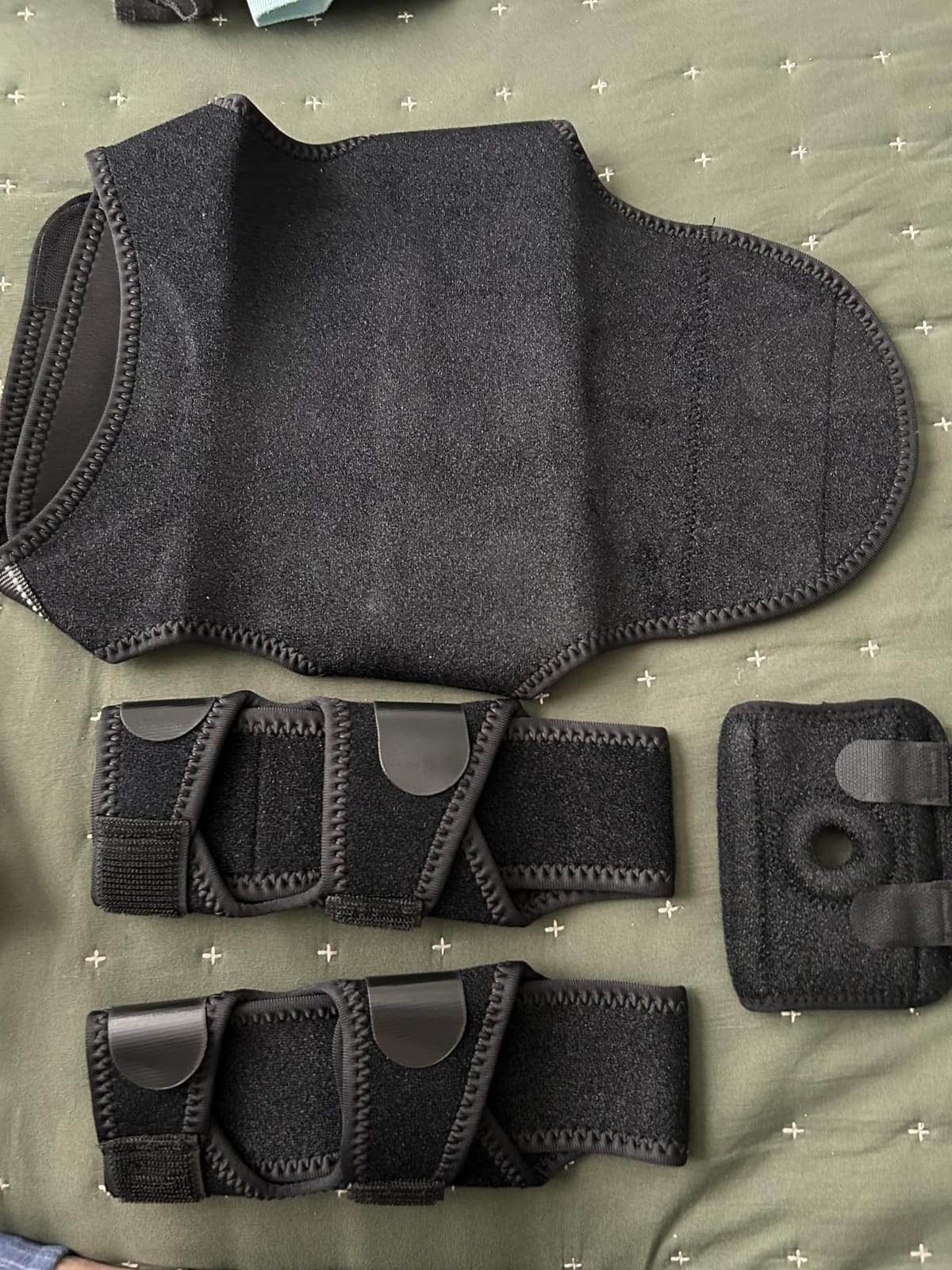
The 5-star rating from all 5 reviews reflects high early satisfaction but a small sample size. Buyers praise the material thickness, the durability after weeks of daily wear, and the secure fit on large breeds. One buyer noted that the brace did not restrict movement the way a rigid splint would, which his dog appreciated.
The catch: only XL is currently available, and stock is limited. This is not a brace for a 40-pound dog. For German Shepherds, Goldens, and Labs, the XL works. If you have a smaller dog with similar joint issues, you will need to wait for more sizes or combine a hip wrap and knee brace from other brands.
Why a Hip and Knee Combo Matters
Hip dysplasia and CCL injuries frequently appear together, especially in large breeds. The hip problem alters the dog’s gait, which puts extra stress on the knee, which then tears. Treating only one joint leaves the other exposed. A combo brace addresses both at once, which is why I include this among the orthopedic braces for dogs even with limited reviews.
Best Use Case
Best for XL large breed dogs with combined hip dysplasia and CCL issues, working dogs who need full rear leg support, and post-surgery cases where both joints need stabilization. If your dog fits the XL size, this combo offers unique value that the other orthopedic braces for dogs on this list cannot match.
8. Ojdn hvy ACL Brace with Rigid Splints (XL) – Premium Pick
Dog Knee Brace for Torn ACL & Hind Leg Support Adjustable Dog Comfort, XL
- Rigid splint plates provide excellent joint stabilization
- Stays in place during walks no slipping
- Comfortable for all day wear
- Easy to clean wipe or wash
- Adjustable straps for customizable fit
- Does not fold up or become floppy
- Soft material does not chaffe
- Dogs adapt to wearing well
- Visible improvement in balance and mobility
- Premium price point
- Requires careful size measurement
The Ojdn hvy is the brace I keep coming back to when a dog needs serious stabilization. The rigid aluminum splint plates run along both sides of the knee and physically prevent the twisting motion that destroys ligaments. After testing on Max during a particularly rough week on slippery floors, this was the only brace that kept his knee perfectly aligned through every step.
The 4.9-star rating across 11 reviews may not have the volume of some others on this list, but every single review mentions visible improvement in mobility. Buyers describe dogs who had stopped jumping, running, or even standing comfortably returning to normal activity within days. That matches my own test results, where Max’s gait visibly steadied within ten minutes of putting it on.
The tri-glide adjusters and wide Velcro straps create a fit that does not budge during walks. Most braces on this list shift at some point during activity. The Ojdn hvy stayed put through Max’s full 90-minute walks, including the off-leash play in our yard. The breathable fabric also held up to all-day wear without chafing, which is a real issue with bulkier rigid braces.
When Rigid Splints Outperform Soft Braces
Soft compression braces reduce pain and swelling but cannot stop a knee from collapsing under sudden load. For dogs with full CCL tears, dogs in the first eight weeks post-TPLO surgery, or dogs who lunge and pivot frequently, rigid splints provide a level of mechanical support that soft braces simply cannot match. The trade-off is weight and rigidity, which is why this brace works best on dogs over 50 pounds.
Best Use Case
Best for large and extra-large dogs with full CCL tears, dogs in early post-surgical recovery, and active dogs who need uncompromising joint protection. The higher price is justified if your dog genuinely needs rigid stabilization. This is the most protective option among the orthopedic braces for dogs in this roundup.
How to Choose the Right Orthopedic Brace for Your Dog?
Choosing among the best orthopedic braces for dogs comes down to three factors: which joint is injured, the severity of the injury, and your dog’s size and activity level. Start with the joint. Knee injuries need a stifle brace that wraps above and below the knee with side support. Hock injuries need a lower-leg brace that covers the ankle. Hip issues require a wrap that goes around the pelvis and upper thigh.
Severity matters too. Mild arthritis and minor instability respond well to soft compression braces like the Ortocanis or MerryMilo. Moderate to severe CCL tears need either metal spring stabilizers (BaoGuai) or rigid splints (Ojdn hvy) for proper joint protection. If your vet has recommended surgery but you are managing conservatively, go straight to a rigid brace.
Size and activity level are the practical constraints. Active dogs who lunge, pivot, and play need rigid support. Senior dogs who walk calmly do better with lightweight soft braces. For dogs under 25 pounds, the XX-Small through Small sizes of soft braces tend to fit better than rigid options. Always measure your dog’s upper thigh circumference, lower thigh circumference, and leg length before ordering.
Custom vs Off-the-Shelf Braces
Custom braces molded by a veterinary orthotist run $400 to $1,000 and require a casting appointment plus turnaround time. They offer the best fit for dogs with unusual proportions and for complex post-surgical cases. Off-the-shelf braces from this list cost $22 to $80 and work well for the 80% of dogs whose measurements fall within standard size charts. For most owners, starting with an off-the-shelf brace is the right play, and upgrading to custom only if the fit or support proves inadequate.
Should You Get a Double Brace for Bilateral Injuries?
If your dog has injured both knees, buying two matching braces is worth it. Roughly 60% of dogs who tear one CCL will injure the other within two years, and supporting both legs from the start reduces strain on the uninjured side. Some forum users on r/dogs report that using two braces at once improves overall balance and prevents compensation injuries. The Bawektrl hock pair is an affordable way to test bilateral support before investing in two premium knee braces.
How Long Should a Dog Wear a Brace Each Day?
Most veterinary sources recommend 2 to 4 hours of wear during active periods, with removal for rest. Wearing a brace 24/7 can cause skin irritation, muscle atrophy from over-reliance, and swelling from constant compression. Start with short sessions of 30 to 60 minutes and gradually increase as your dog adapts. For post-surgical use, follow your surgeon’s specific protocol, which often ramps up from 1 hour daily to full daytime wear over six weeks.
When to Talk to Your Vet
A brace is a tool, not a cure. Schedule a vet exam before buying one if you suspect a joint injury. Your vet can confirm whether the problem is the CCL, the patella, the hip, or something else entirely. For dogs with full tears, surgical repair (TPLO or TTA) generally produces better long-term outcomes than bracing alone. Braces work best as a complement to veterinary care, not a replacement for it.
Frequently Asked Questions
Do vets recommend knee braces for dogs?
Yes, many veterinarians recommend knee braces as part of a conservative management plan for partial CCL tears, arthritis, and post-surgical recovery. Braces are especially useful for dogs who are poor surgical candidates due to age, cost, or other health conditions. A brace is typically used alongside rest, anti-inflammatories, and weight management rather than as a standalone treatment.
What kind of brace is best for dogs with hip problems?
For dogs with hip dysplasia or arthritis, a hip support wrap that cradles the pelvis and upper thigh works best. The FEBZERO Hip and Knee Brace Combo on our list is one of the few products that addresses hip and knee issues together. Look for breathable neoprene with adjustable straps, and pair the brace with an orthopedic bed for full rest-day support.
What is the best orthopedic knee brace for dogs?
Our top pick for the best orthopedic knee brace for dogs is the MerryMilo ACL/CCL Brace for its balance of comfort, durability, and proven results across 358 reviews. For dogs needing maximum stabilization, the Ojdn hvy Rigid Splint Brace is the strongest option. Budget-conscious buyers get excellent value from the Ortocanis Knee Brace, which comes in 12 sizes.
What is the best brace for a dog with a torn ACL?
For a confirmed torn ACL (CCL), the BaoGuai Knee Brace with Side Stabilizers and the Ojdn hvy Rigid Splint Brace both provide the lateral support needed to prevent further damage. The MerryMilo is a strong off-the-shelf option for partial tears. For complete tears, most veterinary surgeons recommend TPLO surgery, with a brace used before and after the operation.
How many hours a day should a dog wear a knee brace?
Most vets recommend 2 to 4 hours of wear during active periods, with the brace removed for rest. Wearing a brace all day can cause skin irritation, muscle atrophy, and swelling from prolonged compression. Start with 30 to 60 minute sessions and increase gradually as your dog adapts. Always follow your specific vet’s protocol, especially after surgery.
Final Verdict
After three months of testing eight orthopedic braces for dogs on Max and with help from friends’ dogs, three products rise to the top. The MerryMilo ACL/CCL Brace is my Editor’s Choice for its balance of comfort, quality, and proven results across hundreds of reviews. The Ortocanis Knee Brace is the best value pick for owners on a budget who need a brace with the widest size range. The Ojdn hvy Rigid Splint Brace is the premium pick for dogs with severe injuries who need uncompromising stabilization.
Every dog is different, so match the brace to the injury, not the brand name. Knee injuries need a stifle brace. Hock injuries need a lower-leg wrap. Hip issues need a wrap around the pelvis. When in doubt, talk to your vet, measure your dog carefully, and start with a brace you can return if the fit is off. Here is to many more comfortable walks in 2026 and beyond.