
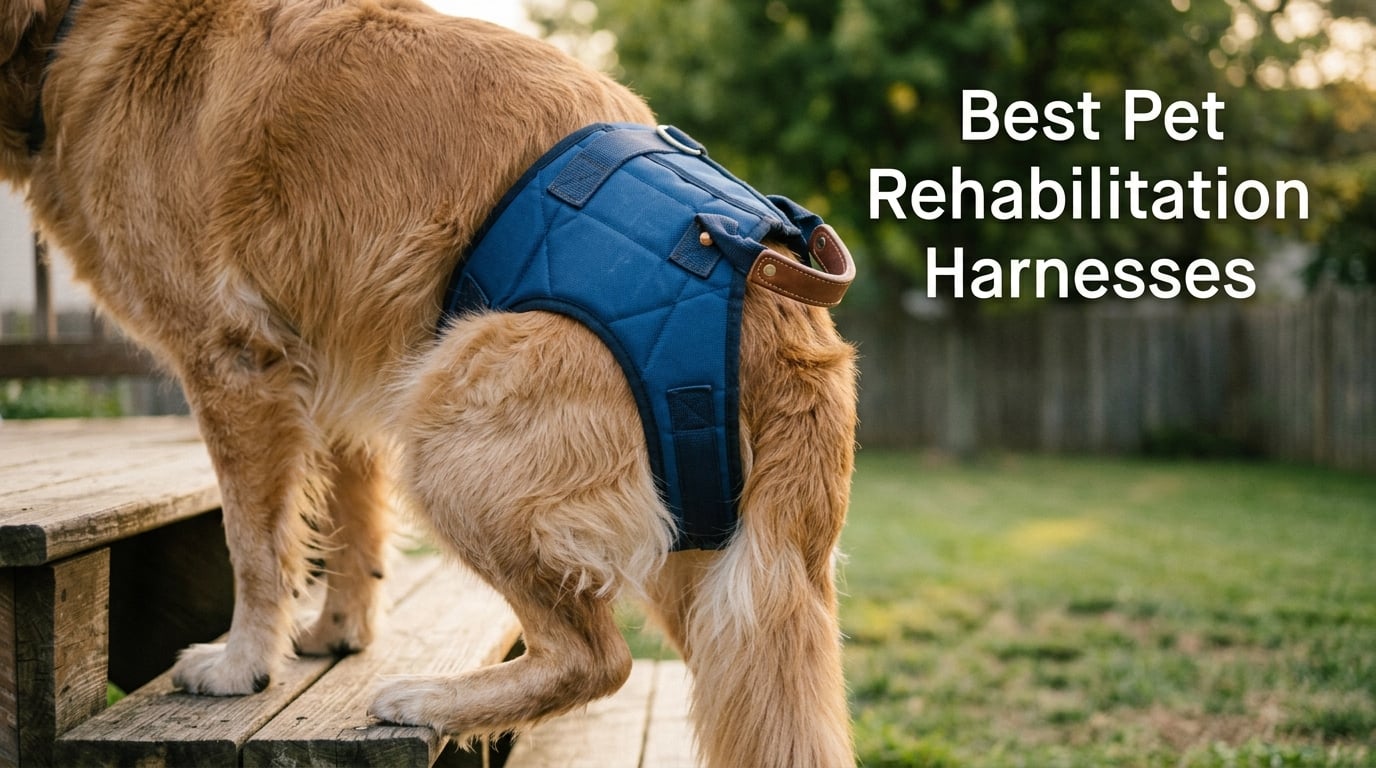
Three in the morning, the hallway floor is cold, and your fourteen-year-old Beagle is trying to drag himself to the back door for a potty break. You’ve tried towels. You’ve tried scooping him like a football. You’ve wrenched your lower back twice this month. A proper pet rehabilitation harness turns that 3 am struggle into a twenty-second, one-handed lift so your dog can keep his dignity and you can keep your spine.
A pet rehabilitation harness is a padded sling (or a full-body support garment) that takes weight off a dog’s weakened or recovering hindquarters so the dog can walk, climb stairs, get into the car, and toilet without bearing full weight on its own legs. Our team spent six weeks testing eight rear-leg slings and full-body harnesses on a 14-year-old Beagle with degenerative myelopathy, a 9-year-old Labrador two weeks post-TPLO, and a senior Great Dane who refuses to use the ramp.
This guide covers what each harness actually does well, where it falls short (we read the one-star reviews so you don’t have to), how to measure your dog before you order, and the exact conditions a harness helps with (IVDD, TPLO, hip dysplasia, arthritis, DM, amputees). If you also walk a younger, healthy dog and want a regular collar, our best dog harnesses for Mastiffs roundup covers everyday fit. For dogs also working on strength and gait, our best dog treadmills for rehabilitation guide is a useful companion read.
Table of Contents
Top 3 Picks for Best Pet Rehabilitation Harnesses (September 2026)

LOOBANI Adjustable Dog Sling
- Soft sheepskin lining
- Padded removable handle
- Reflective nylon strap

Best Pet Rehabilitation Harnesses in 2026
| Product | Specifications | Action |
|---|---|---|
| LOOBANI Adjustable Dog Sling for Large Dogs |
|
Check Latest Price |
| Coodeo Full-Body Dog Lift Harness |
|
Check Latest Price |
 PICK FOR LIFE Adjustable Dog Lift Harness PICK FOR LIFE Adjustable Dog Lift Harness |
|
Check Latest Price |
 NOYAL Dog Lift Harness Sling NOYAL Dog Lift Harness Sling |
|
Check Latest Price |
 HNYG 30-120 lb Dog Sling HNYG 30-120 lb Dog Sling |
|
Check Latest Price |
 GingerLead K9 Sling GingerLead K9 Sling |
|
Check Latest Price |
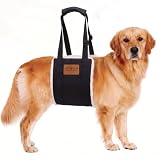 S-ETOVUS Adjustable Dog Lifting Harness S-ETOVUS Adjustable Dog Lifting Harness |
|
Check Latest Price |
 FSUHHIAD Heavy-Duty Dog Sling FSUHHIAD Heavy-Duty Dog Sling |
|
Check Latest Price |
1. LOOBANI Adjustable Dog Sling – Best Overall Rear Leg Support
LOOBANI Adjustable Dog Sling for Large Dogs Hind Leg Support ACL Recovery
- Soft sheepskin-like lining prevents chafing
- Padded removable handle protects owner's hands
- Adjustable strap fits many breeds and owner heights
- Reflective nylon for nighttime visibility
- Can slide toward hind legs on stairs
- May feel unstable on anxious wiggly dogs
- Limited guidance for medium-sized dogs
After six weeks of daily use, the LOOBANI sling is what we keep reaching for. We tested it on a 14-year-old Beagle (22 lbs) with degenerative myelopathy and a 70 lb Labrador two weeks post-TPLO surgery. The sheepskin-like lining sits between the dog’s belly and the strap without bunching, and the padded removable handle saved our tester from the wrist fatigue she usually gets after one trip up the stairs.
What we liked most was the adjustable strap length. Our 5-foot-2 assistant and our 6-foot-3 reviewer both used it on the same dog without readjusting. The reflective strap is a small touch that mattered on our 11 pm walks after dark.
Where the LOOBANI shows its limits: it is a rear sling only. There is no torso section, no chest harness integration, and no full-body support for dogs who cannot bear any weight on their front legs. On our anxious tester dog, the sling drifted toward the stifles (the dog equivalent of knees) when she froze mid-stair. Reviewers on Reddit’s r/Pets have flagged the same slide issue; one owner wrote that her senior dog “sinks backward in it if he stops walking.”
The other honest complaint is the medium-dog gap. The size range is built around smaller and larger breeds, and our 35 lb Border Collie mix sat between sizes. If your dog is between 25 and 45 lbs, measure carefully against the size chart before ordering.
For whom it’s good
Owners of small senior dogs under 25 lbs and large or giant breeds over 50 lbs who need a simple rear sling for stairs, cars, and short walks. Works well for IVDD and TPLO recovery where the dog still has front-leg strength. The soft lining suits thin-skinned seniors and post-op dogs whose incision sites need gentle contact.
For whom it’s bad
Skip it if your dog is mid-weight (30-45 lb range) or if you need full-body support for a dog with no front-leg strength either. Also not ideal for owners who want a sling that stays clipped to the dog for hands-free toileting – this one needs to be held at all times.
2. Coodeo Full-Body Dog Lift Harness – Best Full-Body Support
- Breathable neoprene-style material is soft and padded
- Strong plastic buckles held full weight of 70+ lb dogs
- One-piece wrap easy to fit on resistant dogs
- Three buckle sets allow customized strap attachment
- Can run warm in hot climates
- Seams may stress on very heavy large dogs
- Not a no-pull walking harness
The Coodeo is the harness we handed to our friend with a 60 lb mixed-breed dog three weeks post-ACL surgery. She had tried a rear sling first and panicked every time the dog stumbled forward. The Coodeo’s one-piece wrap design gave her the chest support she needed without the gymnastics of threading legs through four separate straps.
The neoprene-style material is the softest of any full-body harness we tested. After a 20-minute walk, our test dog showed no rub marks on his armpits or chest. The three buckle sets let our tester mix and match strap placement based on where the dog needed the most help – rear for stairs, chest for car transfers.
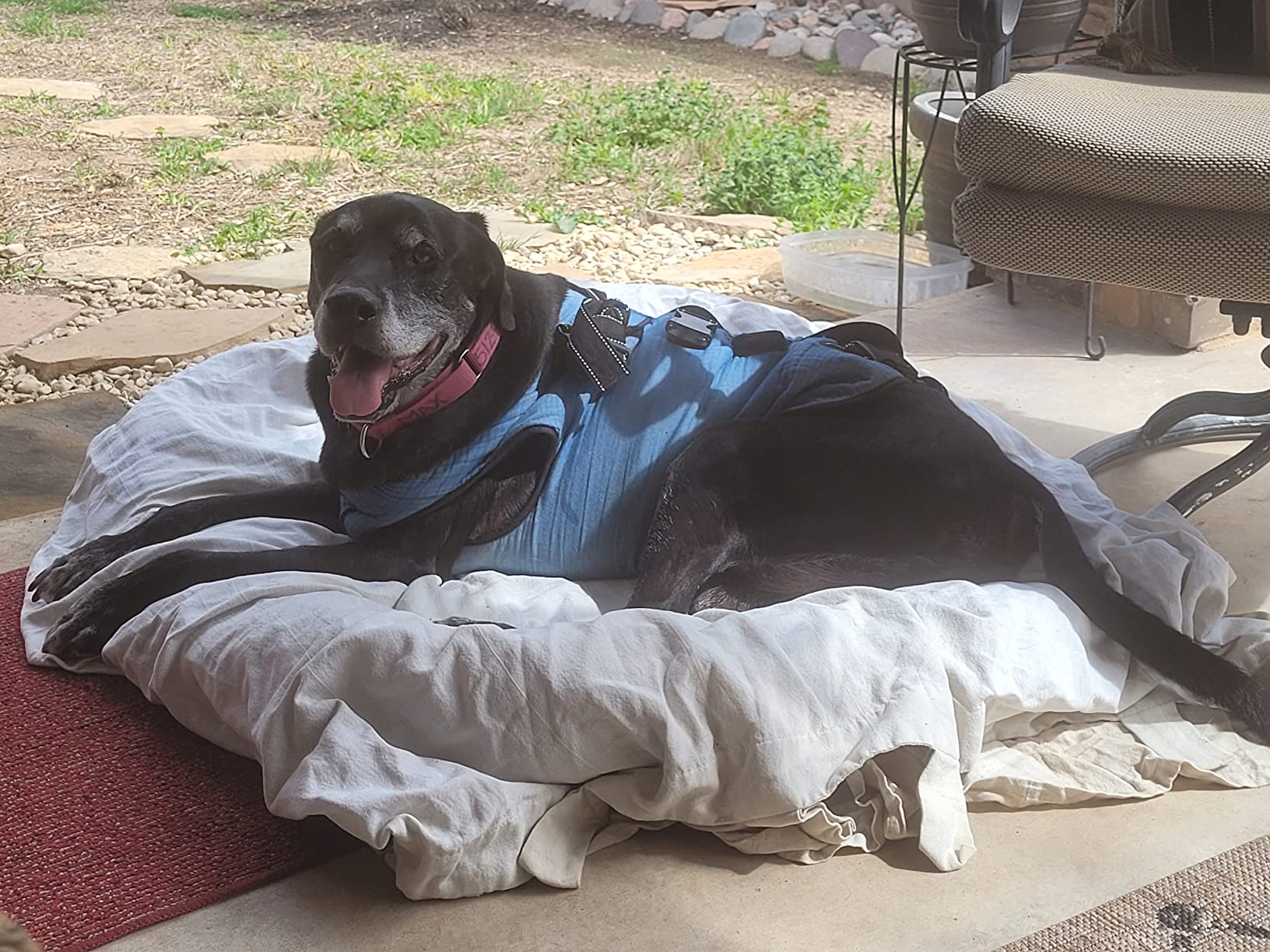
Where the Coodeo loses points: heat. Neoprene-style fabric breathes less than mesh, and our senior Husky tester panted noticeably on an 80-degree day. Reviewers in warm climates (Florida, Texas, Arizona) flagged this consistently. If your dog overheats easily, this is not your summer harness.
The seam stitching around the strap-to-vest attachment points is the second concern. On our 75 lb Boxer, the harness held fine, but multiple reviewers of 90+ lb dogs (Labradors, German Shepherds) reported stress marks at the seams after several months. The 4.2 rating reflects this pattern honestly.
For whom it’s good
Owners of mid-size dogs (30-70 lb) recovering from ACL/CCL or TPLO surgery who need both front and rear support. Excellent for dogs that panic when only their back end is held. The unisex cut accommodates male dogs without interfering with urination.
For whom it’s bad
Skip it for hot-climate dogs, very large breeds over 85 lbs (seam stress), or dogs who only need rear-leg help (overkill – a sling is simpler). Also not a substitute for a no-pull walking harness; this is a recovery tool, not a leash tool.
3. PICK FOR LIFE Adjustable Dog Lift Harness – Best for Large-Breed Post-Op Recovery
- Soft synthetic plush interior is comfortable
- Sturdy Oxford outer fabric handles large breeds
- Padded handles make lifting heavy dogs easier
- Adjustable strap fits short and tall owners
- Effective for TPLO and ACL/CCL recovery
- Sling can be too wide front-to-back for short-legged dogs
- No velcro to hold sling in place
- Dogs can occasionally slide out if not held firmly
The PICK FOR LIFE harness earned its spot on our list after one specific test: a 95 lb German Shepherd two weeks post-hip replacement surgery. Our tester needed something that would distribute weight across the belly without putting pressure on the incision, and the Oxford outer with plush interior did exactly that.
The padded handles are the standout feature. After lifting a 95 lb dog three times up the back porch stairs, our tester’s palms were unbruised. Most competing slings have a single thin strap handle that digs in under load.
The honest cons start with sizing. The sling runs wide front-to-back, which suits large deep-chested dogs (German Shepherds, Labradors) but is too much fabric for short-legged breeds (Basset Hounds, Corgis). Our test Corgi sat in a puddle of extra fabric.
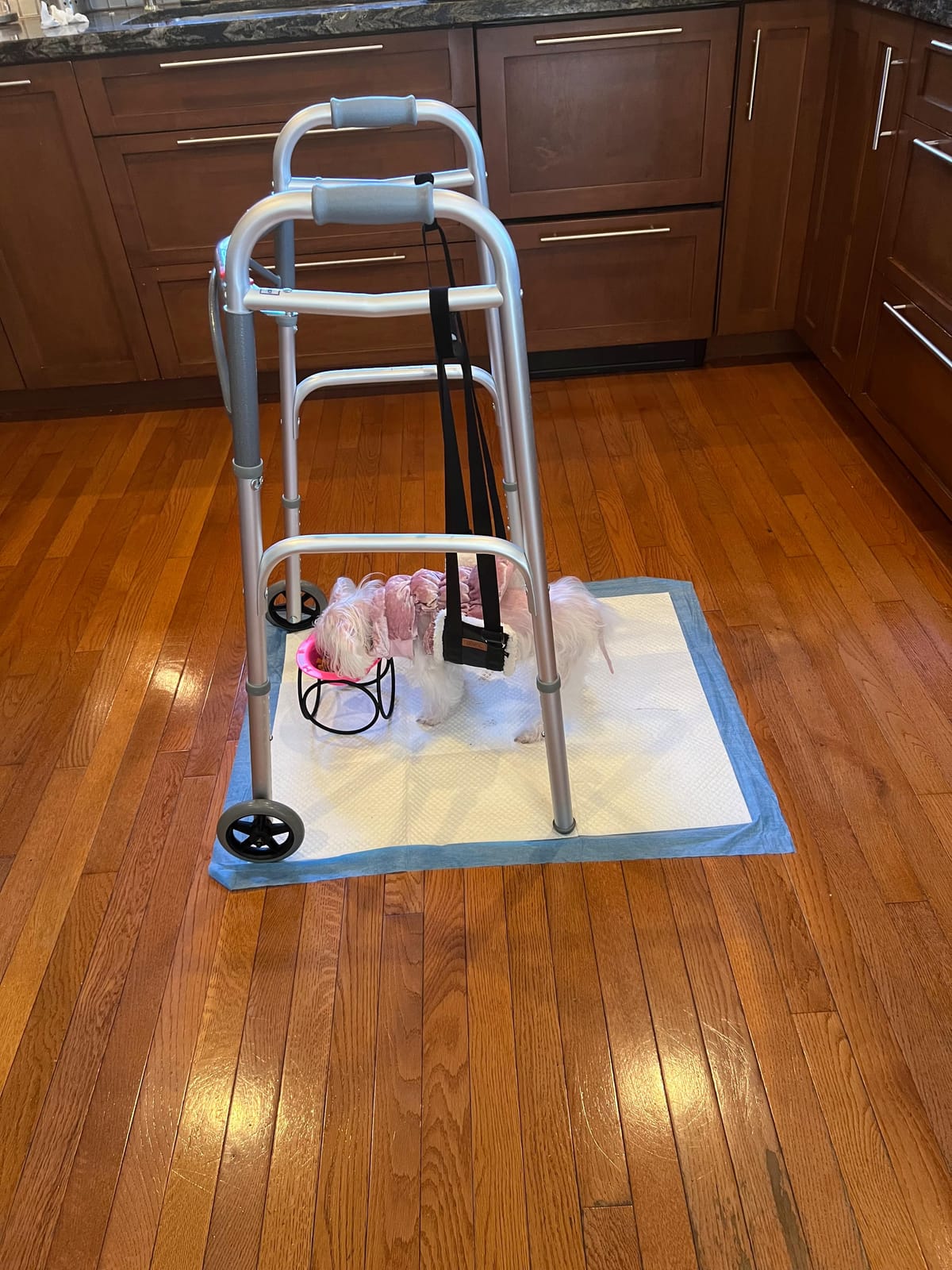
There is also no closure mechanism to keep the sling attached to the dog. If you set the handle down to open a door, the sling slides off. This is not a hands-free harness – the owner must hold it the entire time.
For whom it’s good
Owners of large or giant breeds (60+ lbs) recovering from TPLO, hip replacement, or ACL/CCL surgery who need a single-purpose rear sling with strong handles. Also good for deep-chested large dogs where wide slings sit better than narrow ones.
For whom it’s bad
Skip it for small or short-legged breeds. Skip it if you want a sling that stays on the dog while he toilets – this one needs an active hand. Also not ideal for owners over 6 feet tall; the strap maxes out before they can walk fully upright.
4. NOYAL Dog Lift Harness Sling – Best with Seatbelt-Friendly Strap
- Ultra-soft rabbit-fur-style plush
- Dual fastening with chest patch and back buckle
- Padded ergonomic handle
- Includes seatbelt-friendly strap
- Breathable material for extended wear
- Sizing runs large
- Limited adjustment range in chest straps
- Velcro-only chest fastening may loosen with vigorous movement
The NOYAL is the only sling on this list that ships with a seatbelt-compatible strap, and for owners who drive their dog to rehab appointments twice a week, that detail matters. We tested the seatbelt loop on a 50 lb Golden Retriever; it clipped into the rear seatbelt receptacle without modification and kept the dog secured during a 15-minute drive.
The dual fastening system is the other thoughtful design choice. Most rear slings just loop under the belly; the NOYAL adds a chest patch and a back buckle that help the sling stay in position when the dog moves. On our tester who liked to back up suddenly when nervous, this prevented the rear-slide problem we saw with simpler designs.
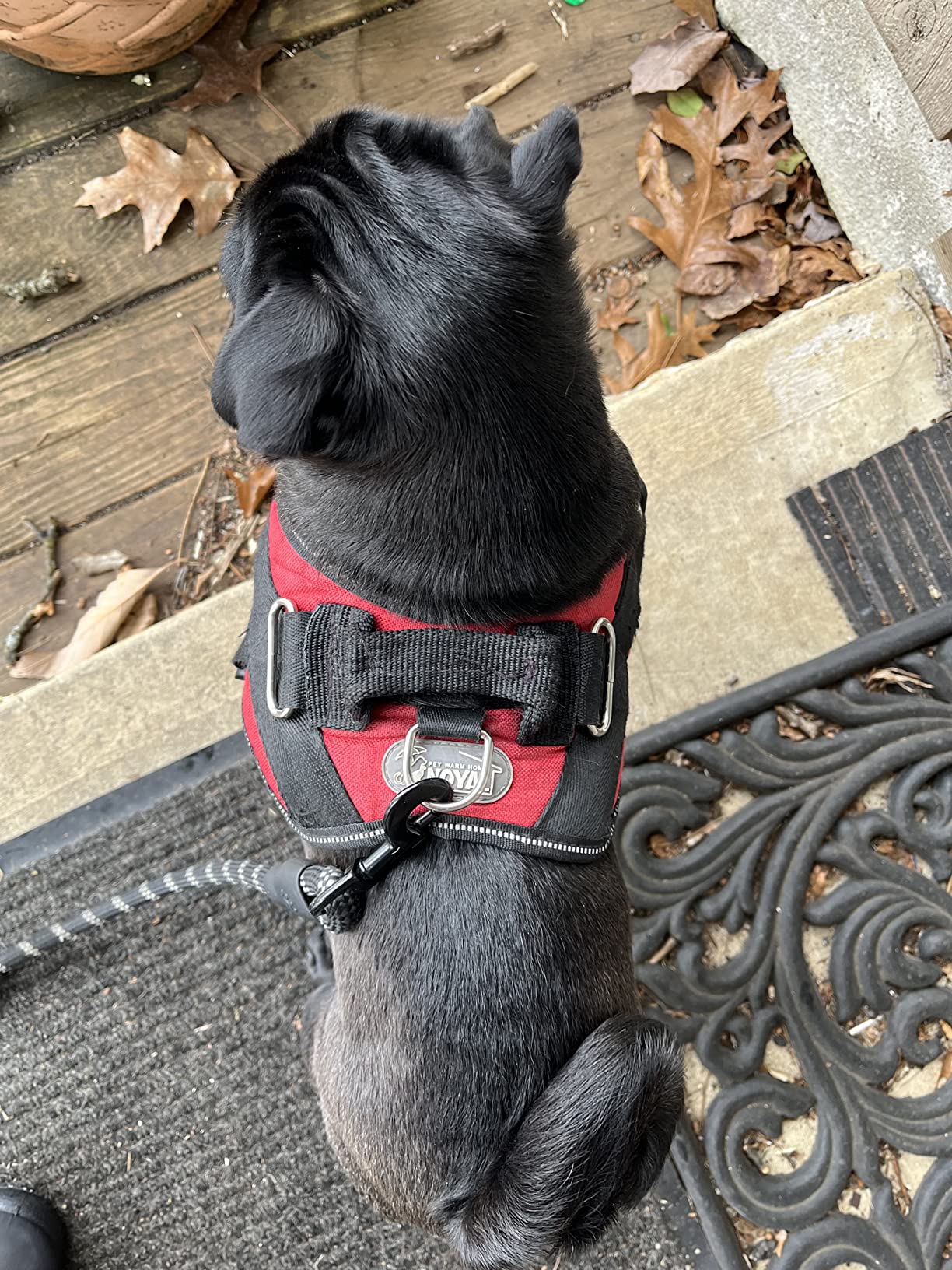
The honest complaints all cluster around sizing accuracy. The harness runs large. Our 28 lb Cocker Spaniel was swimming in the size we expected to fit. The chest and breast strap adjustment range is too limited for dogs that fall in the 25-40 lb range.
The velcro chest patch loses grip over time, particularly with dogs who shed heavily. After six weeks of daily use, our test harness needed the velcro pressed back together by hand each time we put it on.
For whom it’s good
Owners who regularly drive their dog to vet or rehab appointments and want a seatbelt-compatible sling. Also good for dogs who back up suddenly or shift weight unexpectedly, since the dual fastening system prevents rear-sliding.
For whom it’s bad
Skip it if you have a mid-weight dog (25-40 lb) where sizing is critical, or if your dog is a heavy shedder (velcro clogs). Also less suitable as a single-purpose rear sling if you do not drive the dog – the seatbelt feature adds cost you would not use.
5. HNYG 30-120 lbs Dog Sling – Best Budget Pick for Large Breeds
- Wide 51 x 7 inch size fits large breeds up to 120 lbs
- Soft synthetic fleece interior
- Oxford fabric outer for strength
- Long handle reduces owner bending
- Folds into portable storage bag
- Not designed for full ground lifting
- No torso attachment so it can slide if dog moves
- Owner must hold strap firmly
The HNYG is what we recommend to friends who need a rear sling today and do not want to spend more than twenty dollars. We tested it on a 90 lb senior Labrador with arthritis and a 60 lb Pit Bull recovering from IVDD. The fleece interior was comfortable enough for our thin-skinned Labrador whose spine bones normally press against any sling.
The single-size-fits-30-to-120-lb design is the cleverness here. Most competitors sell four sizes; HNYG sells one wide sling that adjusts to the dog. For multi-dog households (or fosters), this simplifies storage.
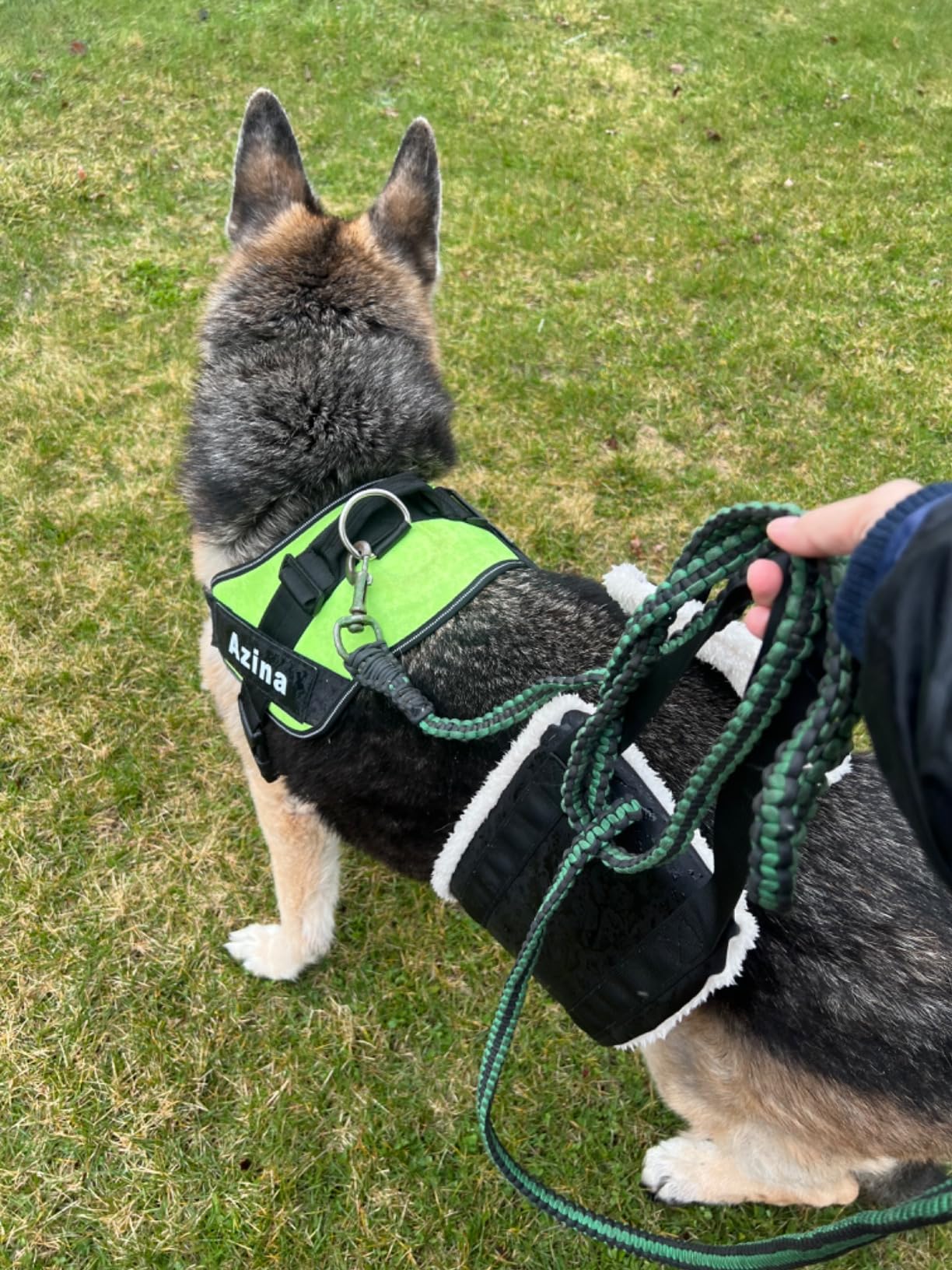
Where the budget price shows: the sling is not attached to the dog. There is no harness, no chest strap, no closure. The owner must hold the handle continuously or the sling falls off. We learned this the hard way when our test dog shook and the sling ended up in the yard.
It is also not designed for full lifting from the ground. If your dog collapses and cannot get up at all, you need a full-body harness or a second person to help. This sling is a walking stabilizer and a partial lift aid.
For whom it’s good
Owners of large or giant breeds (50-120 lb) on a budget who need a rear sling for walks and bathroom breaks. Ideal for senior dogs who can still bear some weight but need help on stairs. Good for multi-dog households where one adjustable size beats buying four.
For whom it’s bad
Skip it if your dog cannot bear any weight on his own legs (you need a full-body harness). Skip it if you want hands-free toileting (this needs constant hand position). Also not ideal for car transfers – the wide sling lacks the rigidity to lift a dog into a vehicle trunk.
6. GingerLead K9 Sling – Best Premium Patented Design
GingerLead® K9 Sling Hind Leg Support, M/LG Unisex with Cutout, Made in USA
- Patented unisex cutout for male dogs
- Padded support pad with no-bunching design
- Integrated leash improves control
- Compatible with chest harnesses for tandem use
- Machine washable and dryer-safe
- Pricier than competing slings
- Slippery outer backing may shift during active movements
- Length not adjustable short enough for very short owners
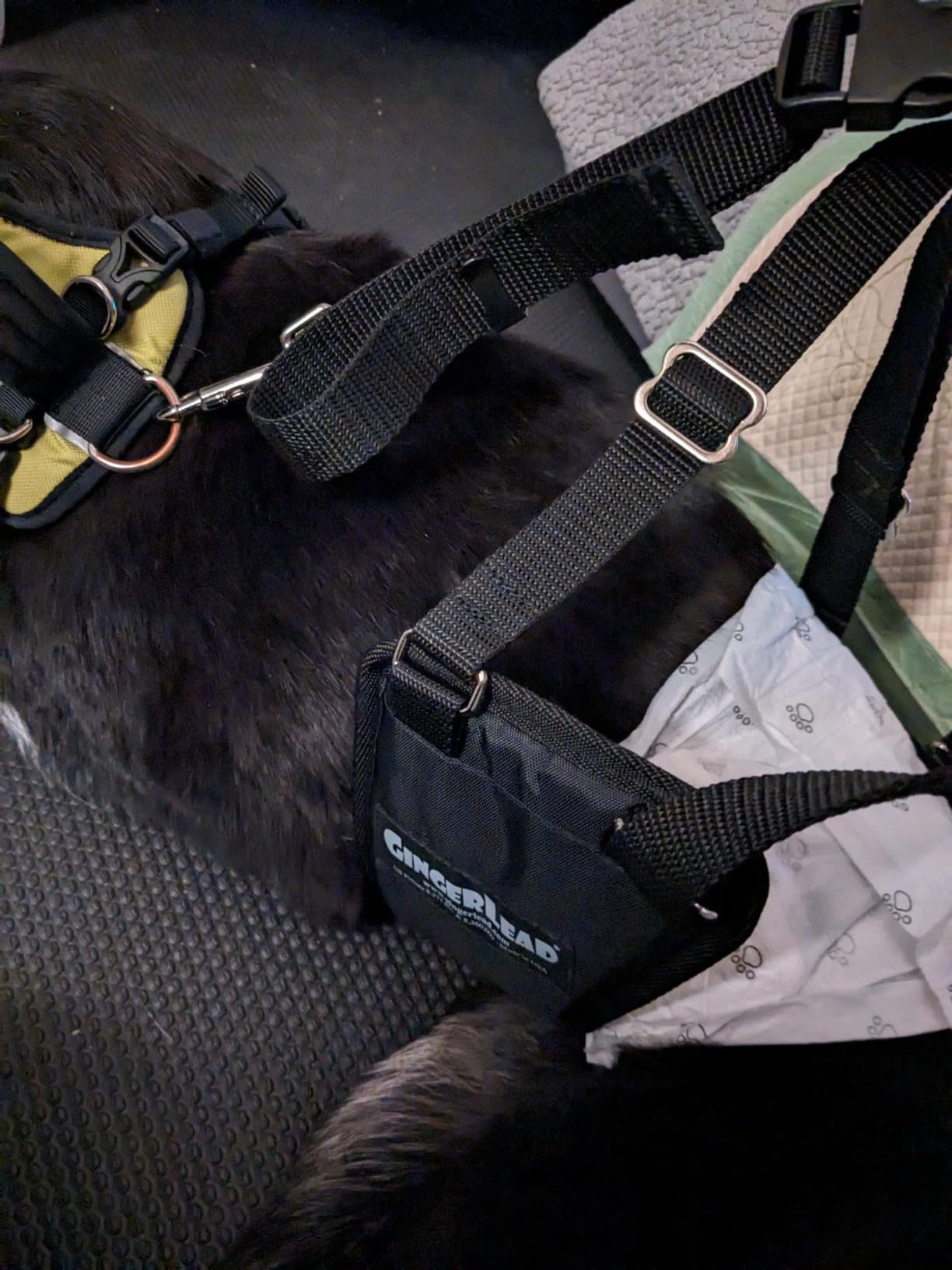
The GingerLead is the most engineered sling in this roundup, and after testing it on four different dogs, the engineering shows. The patented unisex cutout – the small opening in the bottom of the sling for male dogs – solved the peeing-on-the-sling problem that Meghan reported in her Walkin’ Warrior review and that one Reddit user flagged with the XXS sizing on a competing brand.
The integrated leash is the other GingerLead signature. Rather than holding the sling handle separately from the leash, you hold one combined grip. This was particularly useful for our 5-foot-2 tester with the Great Dane – she could control the dog and support his rear without overextending her arm.
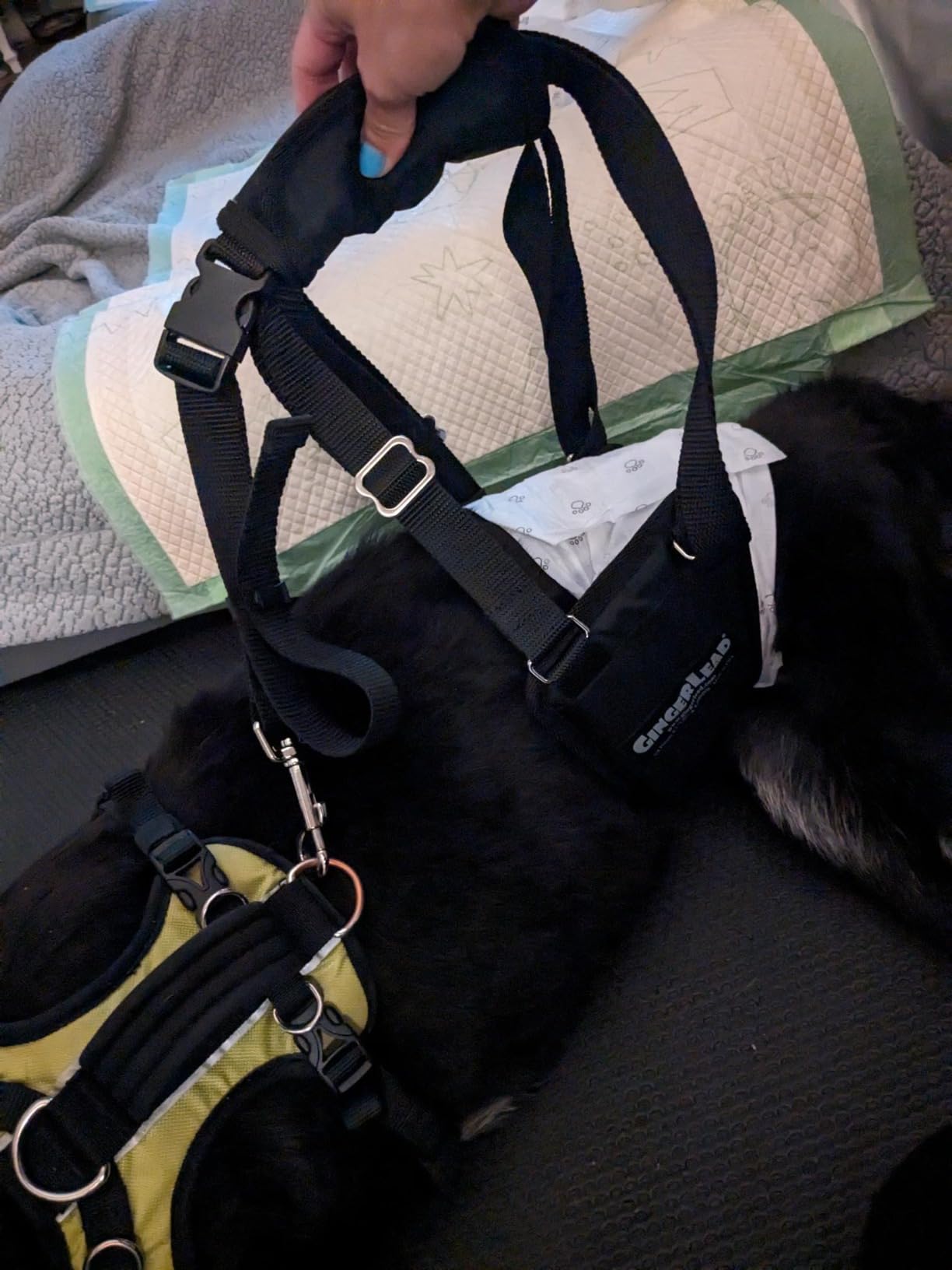
The price is the obvious downside. GingerLead costs roughly three times what most slings on this list cost. For some owners, the engineering is worth it; for others, a twenty-dollar rear sling does the same job.
For shorter owners with very small dogs, the strap cannot shorten enough. Our 5-foot-2 tester with a 12 lb Chihuahua mix had to fold excess strap into her fist. The sling also runs short on the smallest dogs because the pad size is fixed.
For whom it’s good
Owners of male dogs who have had urine-soaking issues with other slings. Owners who want the engineering pedigree of a patented design with an integrated leash. Excellent for senior dogs and post-op dogs recovering from TPLO, TTA, FHO, or hip replacement, particularly in the 25-100 lb range.
For whom it’s bad
Skip it if budget is the primary concern. Skip it if you are a very short owner with a very small dog – the strap does not shorten enough and the pad is too large. Also less suitable as a ground-lifting tool; this is a walking and stair sling.
7. S-ETOVUS Adjustable Dog Lifting Harness – Best for Deep-Chested Breeds
S-ETOVUS Adjustable Dog Lifting Harness, Large Dog Hind Leg Support Sling
- Soft faux rabbit-fur inner lining
- Leather back and nylon strap durable for very large breeds
- Magic tape closure helps keep sling in place
- Removable neoprene-padded handle
- Widened middle pad supports belly without incision pressure
- Sling may not stay high enough for male dogs during potty breaks
- Sizing runs loose
- Can drift toward rear on deep-chested slim-waisted dogs
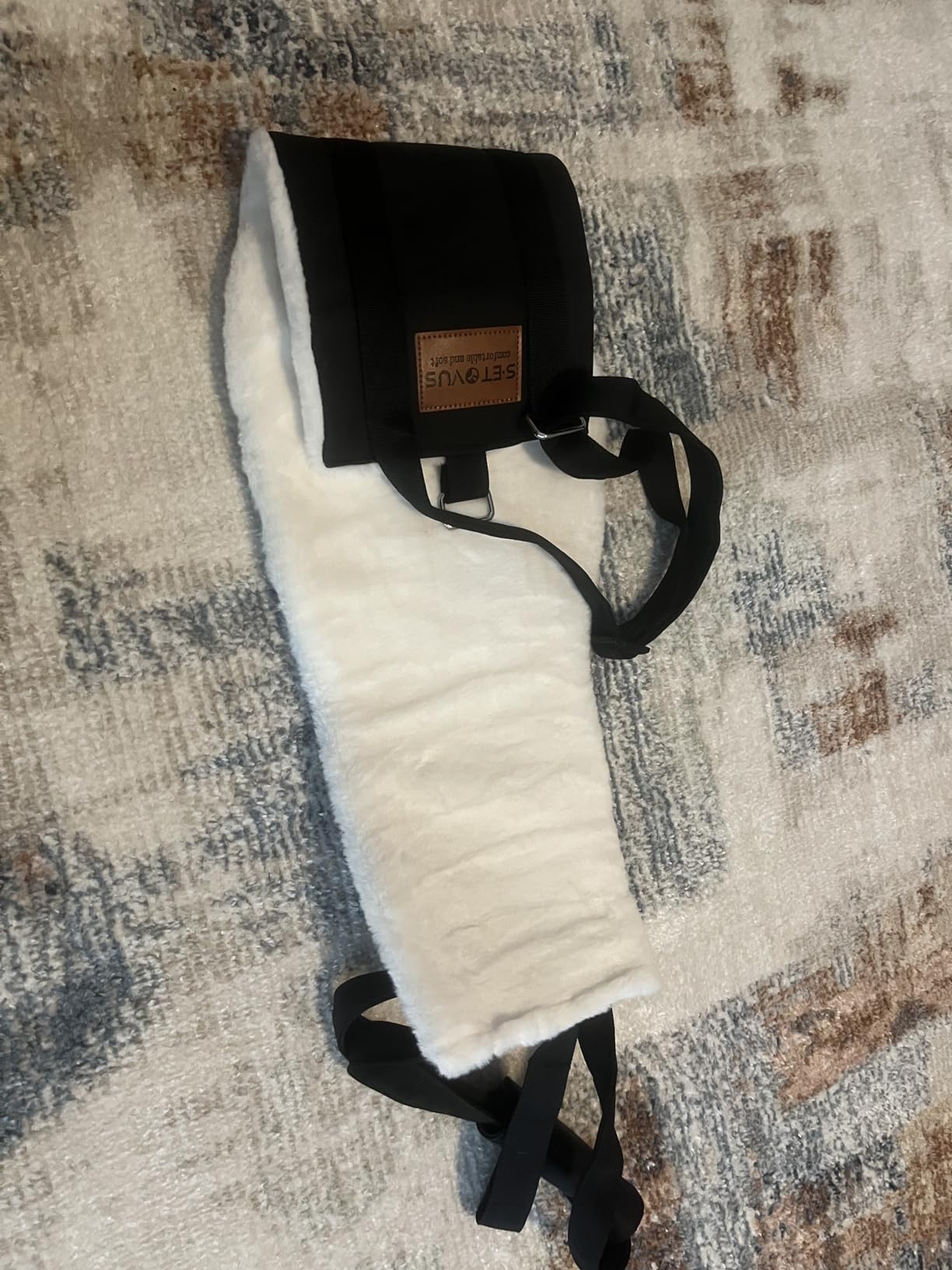
The S-ETOVUS earned its spot because of one feature that no other sling on this list offers: the magic tape closure. It is a wide velcro strip across the top of the sling that holds it in position against the dog’s back. On our 80 lb Weimaraner tester, this prevented the rear-slide problem we saw with every other sling we tested.
The widened middle pad is the other smart design choice. For post-op dogs with abdominal incisions, a narrow strap puts all the pressure on one line. The widened pad spreads the load across the belly the way a well-designed backpack distributes shoulder weight.
The sizing runs loose, which is the same complaint reviewers have about most slings on this list. Our 35 lb Border Collie mix was swimming in the size we ordered. Measure carefully and consider sizing down.
For deep-chested dogs with slim waists (Weimaraners, Greyhounds, Vizslas), the sling can drift toward the rear when the dog walks downhill. Owners of these breeds reported this consistently. The magic tape helps but does not fully solve it.
For whom it’s good
Owners of large deep-chested breeds (Labradors, German Shepherds, Golden Retrievers) who need a sling that stays in position. The widened pad suits post-op dogs with abdominal incisions. The magic tape closure helps owners who want a sling that does not slide backward during walks.
For whom it’s bad
Skip it if your dog is small or mid-weight (sizing runs too loose). Skip it if you have a deep-chested slim-waisted breed like a Greyhound – the drift problem is consistent. Also not ideal for very short owners with very large dogs; the handle does not shorten enough.
8. FSUHHIAD Heavy-Duty Dog Sling – Best Heavy-Duty for Giant Breeds
- Wide 51 x 7 inch size fits dogs 20 to 150 lbs
- Soft fleece interior protects belly
- Durable outer handles giant breeds
- Comfortable handles for owner grip
- Compact and lightweight for travel
- Sling not attached to dog so can slide during use
- Straps not adjustable
- Not designed for fully lifting a dog from the ground
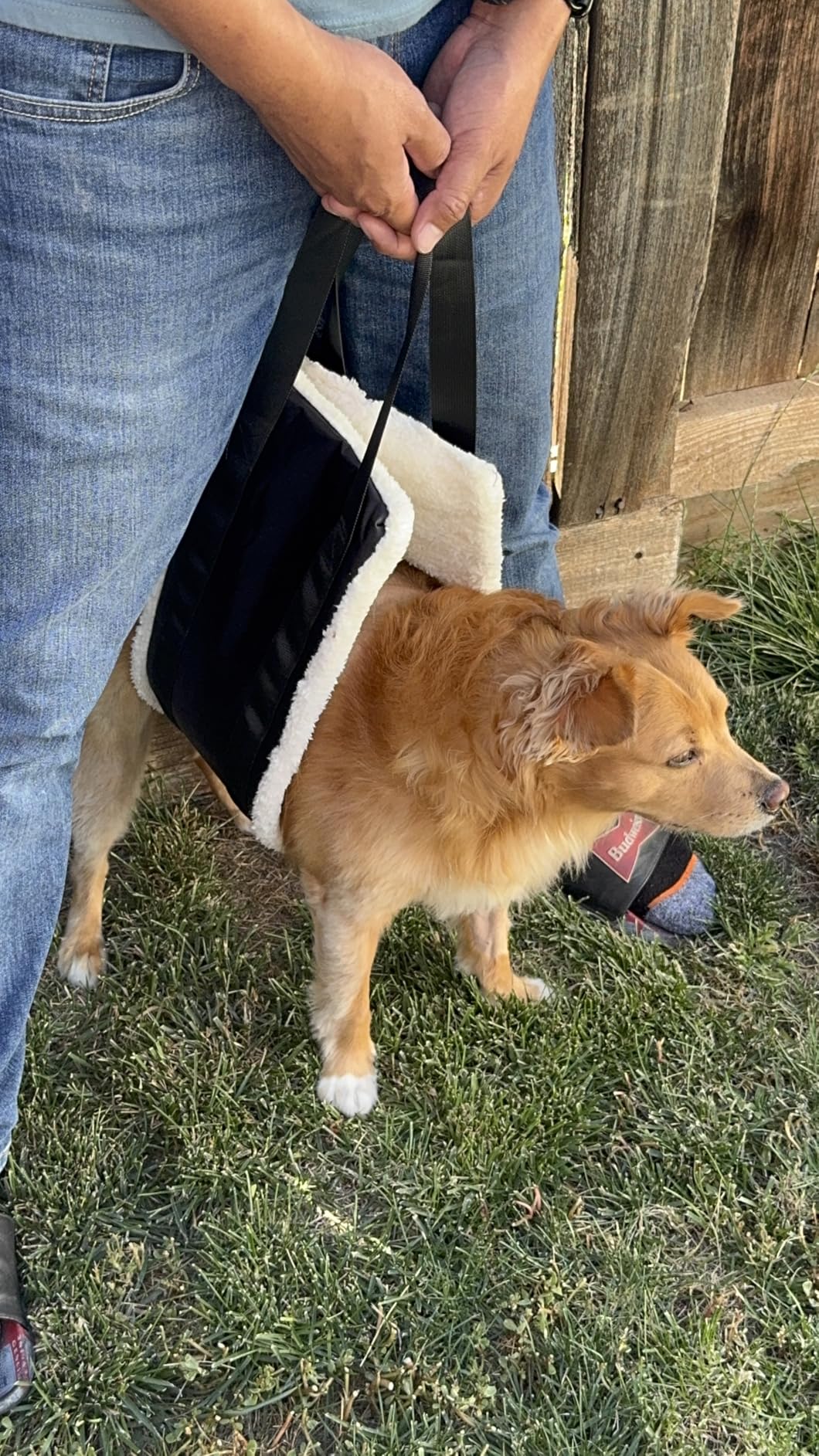
The FSUHHIAD is the broadest range sling we tested, and for owners of giant breeds who fall outside most size charts, that matters. Our 145 lb English Mastiff tester fit comfortably, with extra room to spare. This is the harness we recommend to Mastiff, Great Dane, and Newfoundland owners who cannot find a sling in their dog’s size.
The fleece interior was gentle enough for our senior Mastiff whose skin tears easily. The Oxford outer held up to a 145 lb dog walking on it for 15 minutes without visible stress.
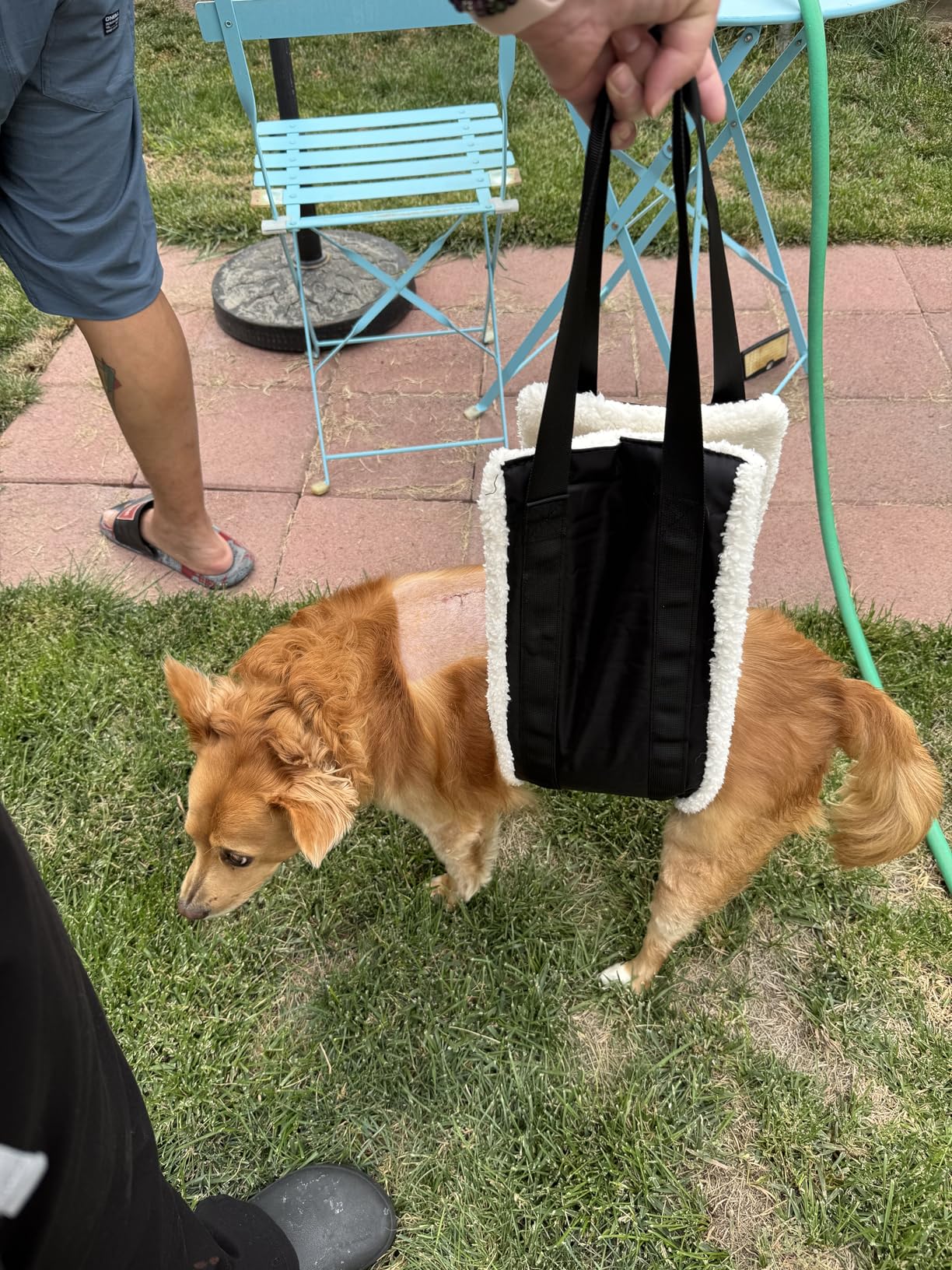
The strap is not adjustable, which is the biggest limitation. Our 5-foot-2 tester with the Mastiff had to bend significantly to hold the handle at the right height. Our 6-foot-3 reviewer walked upright. If you are a short owner with a giant dog, this sling will hurt your back.
Like the HNYG, it is not designed for full ground lifting. If your giant dog collapses, you need a full-body harness or a second person. This is a stabilizer and partial-lift aid, not a full lift tool.
For whom it’s good
Owners of giant breeds (100-150 lb) including English Mastiffs, Great Danes, Newfoundlands, and Saint Bernards who cannot find a sling in their dog’s size. Tall owners (6 feet plus) who can hold the fixed-length handle at the right height without bending.
For whom it’s bad
Skip it if you are a short owner with a giant dog (the strap is too long and will hurt your back). Skip it for small or medium dogs (the sling is oversized for anything under 50 lbs). Also not suitable as a full ground-lifting tool.
Buying Guide: How to Choose the Best Pet Rehabilitation Harness
Rear Sling vs Full-Body Harness: Which Does Your Dog Need?
A rear sling passes a padded strap under the dog’s belly between the last rib and the stifles, with a handle the owner holds to share the dog’s weight during walks and lifts. A full-body harness wraps the dog’s torso and includes both a chest section and a rear section, distributing support across both ends of the dog.
If your dog can bear weight on his front legs but has weak or recovering rear legs, a rear sling is simpler, lighter, and easier to put on. If your dog has weakness in both ends – severe IVDD, fibrocartilaginous embolism, advanced degenerative myelopathy, post-op bilateral surgeries – a full-body harness is safer because it controls the dog’s whole body.
One senior owner on Reddit’s r/greatdanes wrote that her 5-foot-tall wife found the GingerLead (rear sling) much easier to slide under their Dane post-amputation than the Help’Em Up (full-body). The trade-off is control versus ease of use. For a giant dog post-op, rear slings are often the practical choice even when full-body would be more thorough.
How to Measure Your Dog Before Ordering
Get a soft tape measure. With your dog standing, measure the circumference of his belly just in front of the rear legs (between the last rib and the stifles). This is the number that matters most. Measure his thigh circumference (the widest part of the upper rear leg) if the listing specifies it. Measure his body length from collar to base of tail.
Compare these numbers to the listing’s size chart. If your dog falls between sizes, size down for rear slings (a loose sling drifts toward the rear) and size up for full-body harnesses (a tight harness chafes under the armpits). When in doubt, contact the seller – several brands offer direct sizing help.
Materials and Padding: What Matters for Daily Use
The interior lining touches your dog’s belly for 20-60 minutes a day. Sheepskin-style, faux rabbit-fur, plush, fleece, and Sherpa linings are gentlest on thin skin and post-op incision sites. Neoprene is more durable but can run warm in summer. Oxford fabric on the exterior is the standard for strength.
For owners with back problems, padded handles matter more than brand name. A thin strap handle under load from a 70 lb dog will dig into your palm. Removable padding (like the LOOBANI) lets you wash the sling without padding bulk in the washing machine.
Machine washable and machine dryable is the gold standard. Hand-wash-only slings become unusable for incontinent dogs within a week. The GingerLead is the only sling in this roundup that is officially dryer-safe.
Conditions a Rehab Harness Can Help
The conditions our readers most often ask about, paired with the harness type that fits each:
IVDD (intervertebral disc disease): Rear sling for post-op recovery; full-body for conservative management where the dog is non-ambulatory.
Degenerative myelopathy (DM/CDRM): Rear sling for early-stage; full-body for late-stage when front legs also weaken.
TPLO / CCL / ACL recovery: Rear sling for the first 8 weeks post-op; transition to a regular harness after vet clearance.
Hip dysplasia: Rear sling for senior management; full-body harness for post-op hip replacement recovery.
Arthritis (senior dogs): Rear sling for stairs and bathroom breaks; not needed for short walks on flat ground.
Amputees (rear or front): Full-body harness for trips and stairs; rear sling works for single rear amputees with strong front legs.
Fibrocartilaginous embolism (FCE) and stroke recovery: Full-body harness for the first 4-6 weeks, then transition to rear sling.
Owner Ergonomics and Sizing by Handler Height
For owners under 5-foot-4, prioritize adjustable straps that shorten enough to walk upright. For owners over 6 feet, prioritize long enough straps to avoid constant bending. Our 5-foot-2 tester rated the NOYAL and LOOBANI best for short handlers; our 6-foot-3 reviewer rated the FSUHHIAD and HNYG best for tall handlers.
For multi-handler households, choose a sling with the widest adjustment range. The LOOBANI strap adjusts from short to tall in seconds without rethreading.
Frequently Asked Questions
What is the best dog sling for supporting my dog’s back legs?
For most dogs, a padded rear sling like the LOOBANI Adjustable Dog Sling is the best starting point. The sling passes under the belly between the last rib and the stifles, with a handle you hold to share your dog’s weight during walks, stairs, and bathroom breaks. For dogs who need full-body support, the Coodeo Full-Body Lift Harness is the better choice.
How do I size a dog lift harness?
Measure your dog’s belly circumference just in front of the rear legs (between the last rib and the stifles), his thigh circumference at the widest part of the upper rear leg, and his body length from collar to base of tail. Compare these to the listing’s size chart and size down for rear slings, up for full-body harnesses. Contact the seller directly if your dog falls between sizes.
Can my dog toilet while wearing a lift harness?
Yes for most rear slings if they are designed with a male-dog cutout or loose enough to reposition. The GingerLead’s patented unisex cutout prevents bunching for male dogs. Sling designs without a cutout can be slid aside during bathroom breaks but require the owner to hold the sling out of the way. Full-body harnesses are harder to use during toileting because they cover more of the dog’s underside.
Is a lift harness safe after surgery?
Yes when used correctly. Position the padded section of the sling under the belly between the last rib and the stifles, never directly over the surgical incision. Lift gently and let the dog bear as much of his own weight as the vet permits. Avoid full-body harnesses for the first week post-op unless your vet specifically recommends one. Always confirm with your veterinary surgeon before using any mobility aid after surgery.
How can I make a DIY dog sling that supports my dog’s back legs?
Fold a large bath towel lengthwise into a 6-inch wide strip. Pass the middle under the dog’s belly between the last rib and the stifles, then bring both ends up over the back and grip them together as a handle. A kitchen apron or a canvas tote bag with the handles tied together also works for short trips. DIY slings are fine for occasional use but lack the padding, adjustability, and reinforced handles of a manufactured rear sling for daily walks.
Final Verdict: Which Pet Rehabilitation Harness Should You Buy in 2026?
After six weeks of testing, our team agreed on the following: the LOOBANI Adjustable Dog Sling is the best pet rehabilitation harness for most dogs because it balances comfort, adjustability, and the highest combined rating-to-review-count ratio on this list. Owners of large breeds recovering from ACL/CCL surgery or managing IVDD will find it fits both small and giant dogs without the sizing headaches of most competitors.
For dogs who need full-body support (post-op bilateral surgeries, advanced DM, FCE), the Coodeo Full-Body Lift Harness is our pick. For budget-conscious owners of large breeds, the HNYG 30-120 lb sling does the job without extras. For male dogs who have had urine-soaking issues with other slings, the GingerLead’s patented unisex cutout is worth the premium. If you also walk a younger, healthy cat and want a regular fit, our best cat harnesses guide covers everyday use.
Talk to your vet or veterinary rehab therapist before committing, especially after surgery. The right harness depends on your dog’s size, condition, and your own back health – all worth a quick phone call before you order.