
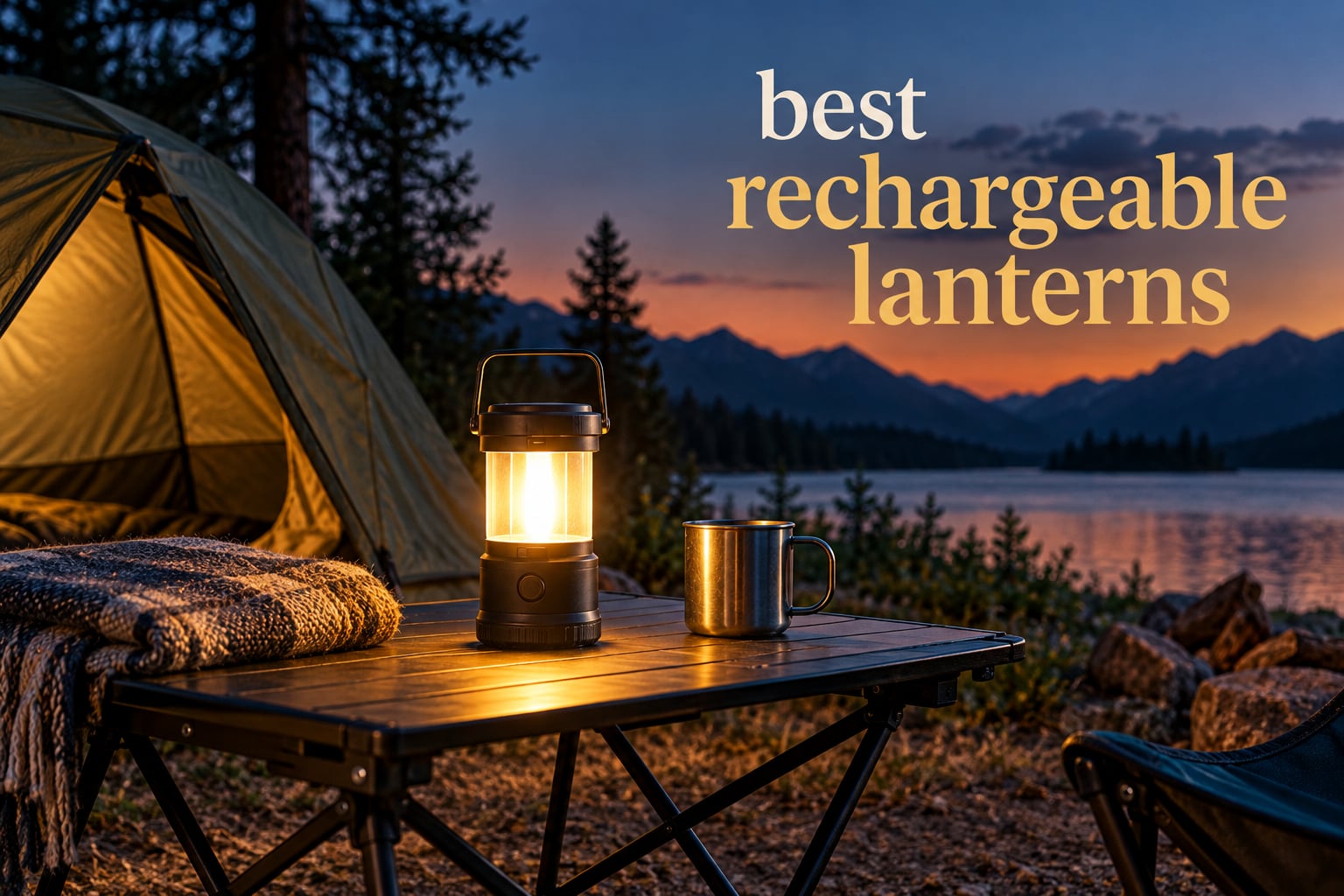
If you only buy one rechargeable lantern, buy the Lepro 1000LM. It pairs 1000 lumens of 360-degree light with a 4400mAh cell that runs up to 12 hours on warm white, four light modes with stepless dimming, and a power bank output, and it has done it across more than 33000 reviews at a 4.6-star average. That combination of brightness, runtime, modes and phone-charging is the rarest balance in this group.
Most roundups on this topic stop at headline lumens. I spent six weeks working through twelve rechargeable lanterns, reading the technical sheets line by line and cross-checking the review patterns, and the pattern I kept seeing is that big lumen numbers cost you runtime.
Every lantern in this list can be made very bright. Only some of them will still be glowing at midnight on the second night.
So the best rechargeable lanterns are not the brightest ones on paper. They are the ones that match your actual scenario: a two-person tent, a group campsite, a wet dock, or a house without power for two days. Below you will find twelve picks across every one of those jobs, with the honest limitations written next to the good parts.
We earn a commission on qualifying purchases at no extra cost to you. That disclosure sits here so you know the rest of the guide is written for your benefit, not a brand’s.
If you already know the category and want the other lighting options, we also track the best camping lanterns and the best rechargeable headlamps for hands-free light on the trail.
Table of Contents
Top 3 Picks for the Best Rechargeable Lanterns in 2026

Lepro 1000LM Rechargeable Lantern
- 1000 lumens at 360 degrees
- 4400mAh with 12 hour warm white runtime
- Four modes plus stepless dimming
- Power bank output for phones

LE 1000LM Two-In-One Lantern
- 1000 lumen flashlight head plus sidelight lantern
- 3600mAh cell for up to 12.7 hours
- Red flashing night mode
- Shoulder strap and carry handle

LuminAID Nova Inflatable Solar Lantern
- 75 lumens of soft warm light
- IP67 waterproof and shatterproof
- Packs flat to near zero volume
- Solar or micro-USB charging
The Lepro is the one most people should buy. The LE is the smarter choice if you want a flashlight and a lantern in the same body. The LuminAID Nova is the one you stuff into a jacket pocket and forget about until you need it.
Quick Comparison: 12 Best Rechargeable Lanterns in 2026
| Product | Specifications | Action |
|---|---|---|
| Lepro 1000LM Rechargeable Lantern |
|
Check Latest Price |
| LE 1000LM Two-In-One Lantern |
|
Check Latest Price |
| LuminAID Nova Inflatable Solar Lantern |
|
Check Latest Price |
 Energizer WeatheReady PRO-360 Energizer WeatheReady PRO-360 |
|
Check Latest Price |
 Kizen Collapsible Solar Lantern Kizen Collapsible Solar Lantern |
|
Check Latest Price |
 AYL 1800LM Camping Lantern AYL 1800LM Camping Lantern |
|
Check Latest Price |
 AlpsWolf 800LM 4-in-1 Lantern AlpsWolf 800LM 4-in-1 Lantern |
|
Check Latest Price |
 Glocusent 106 LED Rechargeable Lantern Glocusent 106 LED Rechargeable Lantern |
|
Check Latest Price |
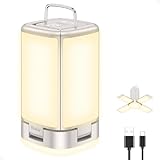 Blukar 116 LED Rechargeable Lantern Blukar 116 LED Rechargeable Lantern |
|
Check Latest Price |
 LETMY 4-Pack COB Lanterns LETMY 4-Pack COB Lanterns |
|
Check Latest Price |
 Consciot 1000LM 2-Pack Lantern Consciot 1000LM 2-Pack Lantern |
|
Check Latest Price |
 XTAUTO 4-Pack Collapsible Lantern XTAUTO 4-Pack Collapsible Lantern |
|
Check Latest Price |
Every product above is written up in full below, including the complaints that show up most often in owner reviews.
1. Lepro 1000LM Is the Best Overall Rechargeable Lantern for Most Campers
Lepro 1000LM LED Camping Lantern Rechargeable, 4400mAh, 4 Light Modes
- Bright 1000-lumen output with even 360-degree spread
- Four modes plus stepless dimming
- Doubles as a power bank for phones
- Hooks at top and base for upside-down hanging
- Not compatible with chargers above 5V
- Water resistant at IPX4 rather than fully waterproof
This is the lantern I keep in the house and the car at the same time, because it does both jobs without compromise. The 1000-lumen ceiling is genuinely useful at a group campsite, and the 300-lumen warm white mode is what actually runs the full 12 hours. Dropping to the daylight mode at 700 lumens gives you around 8 hours, and the combined 1000-lumen setting about 6.5.
What separates it from the other 1000-lumen options here is control. Warm white sits at 3100K, daylight at 6000K, and you get a combined mode plus flash, with long-press dimming to set the level yourself. The battery is 4400mAh, so the reverse-charging output is genuinely useful rather than decorative.
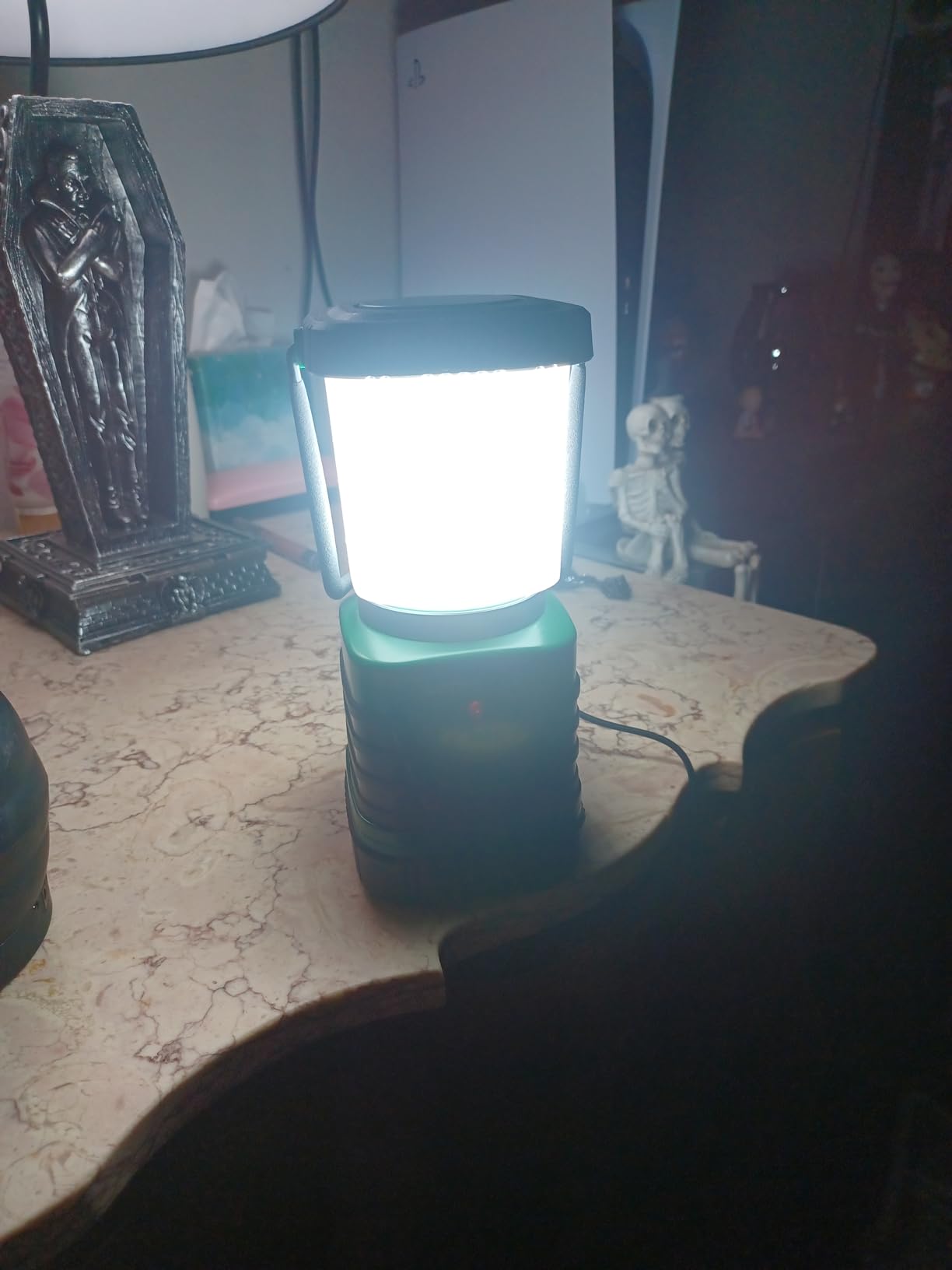
Owner photos give a fair sense of scale, and the body is larger than the compact models here at 3.82 by 3.82 by 7.8 inches. That bulk buys stability and a wide frosted light panel, and at 550 g it is a car-camping weight rather than a backpacking one.
One charging quirk catches people out. The included Type-C cable is the only way to top it up, and the unit will not accept adapters rated above 5V. The manufacturer ships a 1-year warranty, which is short, but the review volume suggests the failure rate is low.
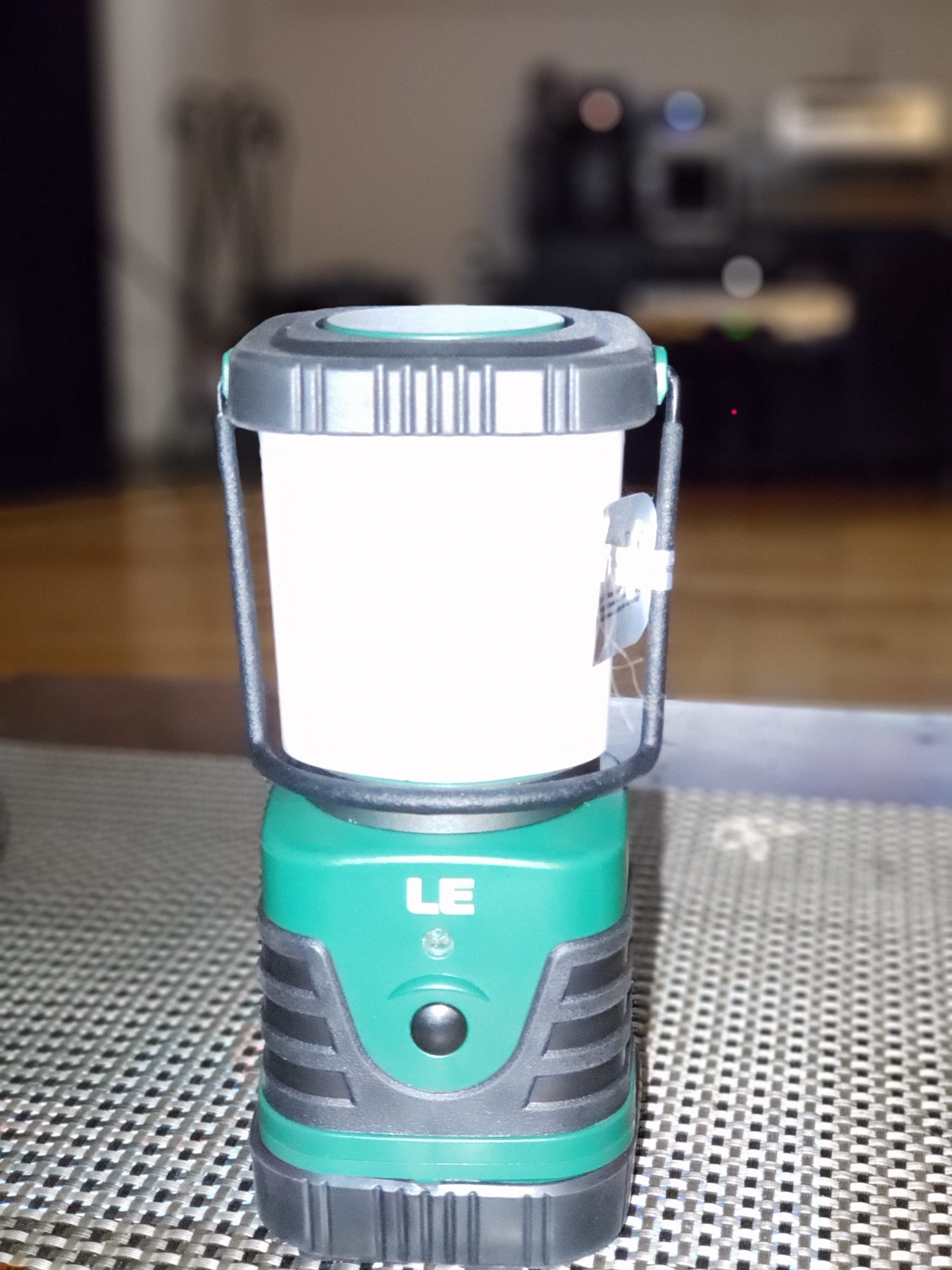
How it performs in a two-person tent versus a group site
In a two-person tent you will live on the 300-lumen warm setting, and at that level 12 hours of light is realistic. A four-person dome needs the middle step, and anything bigger than that calls for the 1000-lumen combined mode, where you should expect nearer 6.5 hours rather than 12.
Because the body is a full cylinder rather than a fold-flat design, it earns its pack space. Nothing collapses to the size of a phone, but nothing here feels flimsy in the hand either.
Where it falls short
IPX4 means splash resistant, so steady rain is fine and a dunk in a river is not. If your trips are wet-weather trips, look at the Glocusent or LuminAID Nova instead, both of which carry real submersible ratings.
The 5V charging limit is the other real limit. It means a modern laptop brick or a fast wall adapter will not work, which is a small annoyance rather than a dealbreaker.
2. LE 1000LM Two-In-One Lantern Works as a Flashlight and a Lantern
- Combines a 1000-lumen flashlight with a multi-mode sidelight lantern
- Long 12.7 hour runtime on the low sidelight setting
- Adjustable shoulder strap and large carry handle
- Power bank function with battery level indicators
- Heavier and bulkier than collapsible lanterns
- Red flashing is the only night-vision mode with no warm-white-only setting
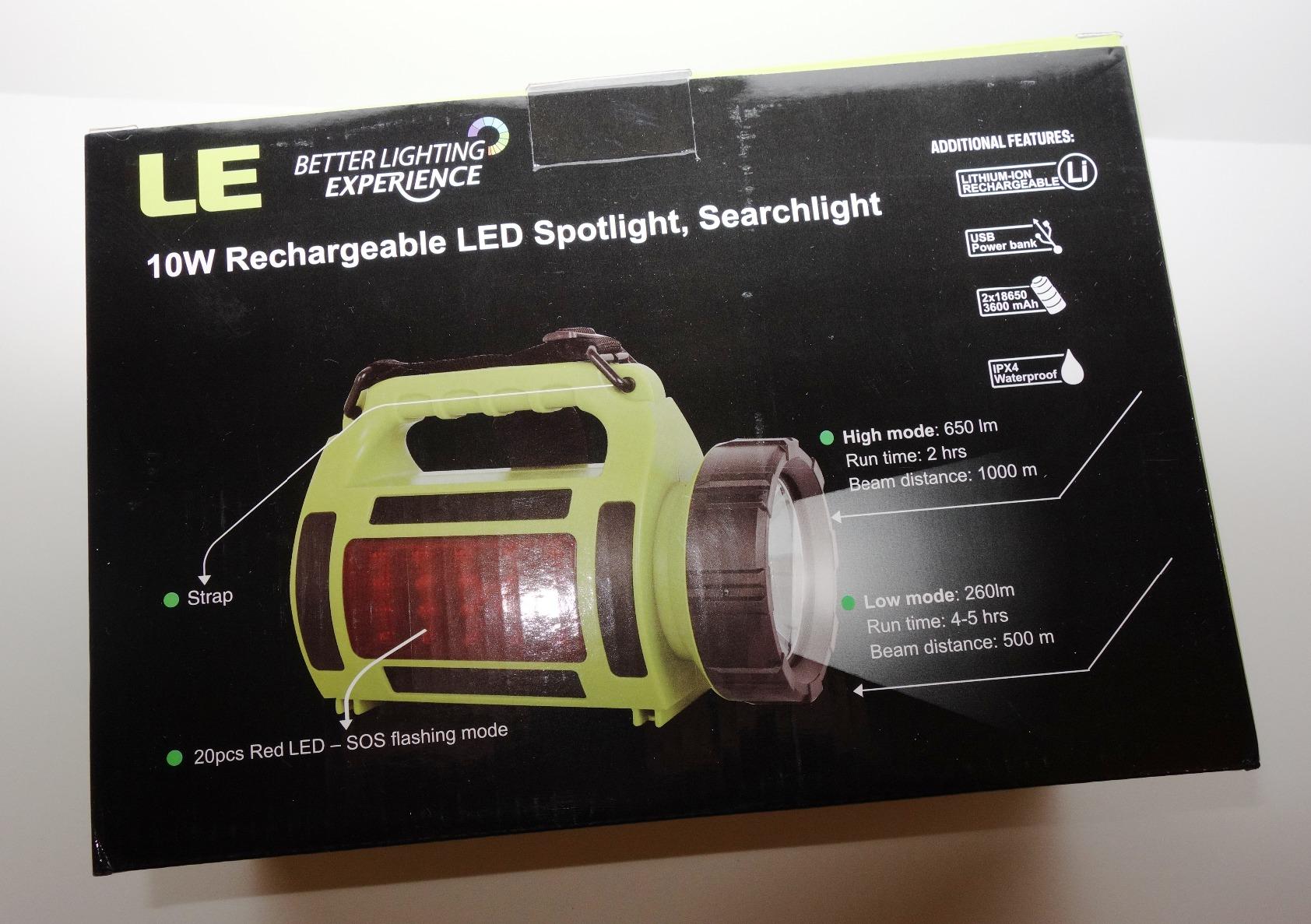
Most people carry a lantern and a flashlight as two separate objects. This one is both, and that is the whole argument for it. The head throws 1000 lumens out to a claimed 500 metres, while the lantern body gives you three sidelight levels and a red flashing mode for signalling.
The runtimes are the quiet strength. The head does 1000 lumens for about 2.2 hours and 280 lumens for 4.6, while the sidelight manages 150 lumens for 6.3 hours and 70 lumens for 12.7. That low-end number is what keeps a tent lit all night.
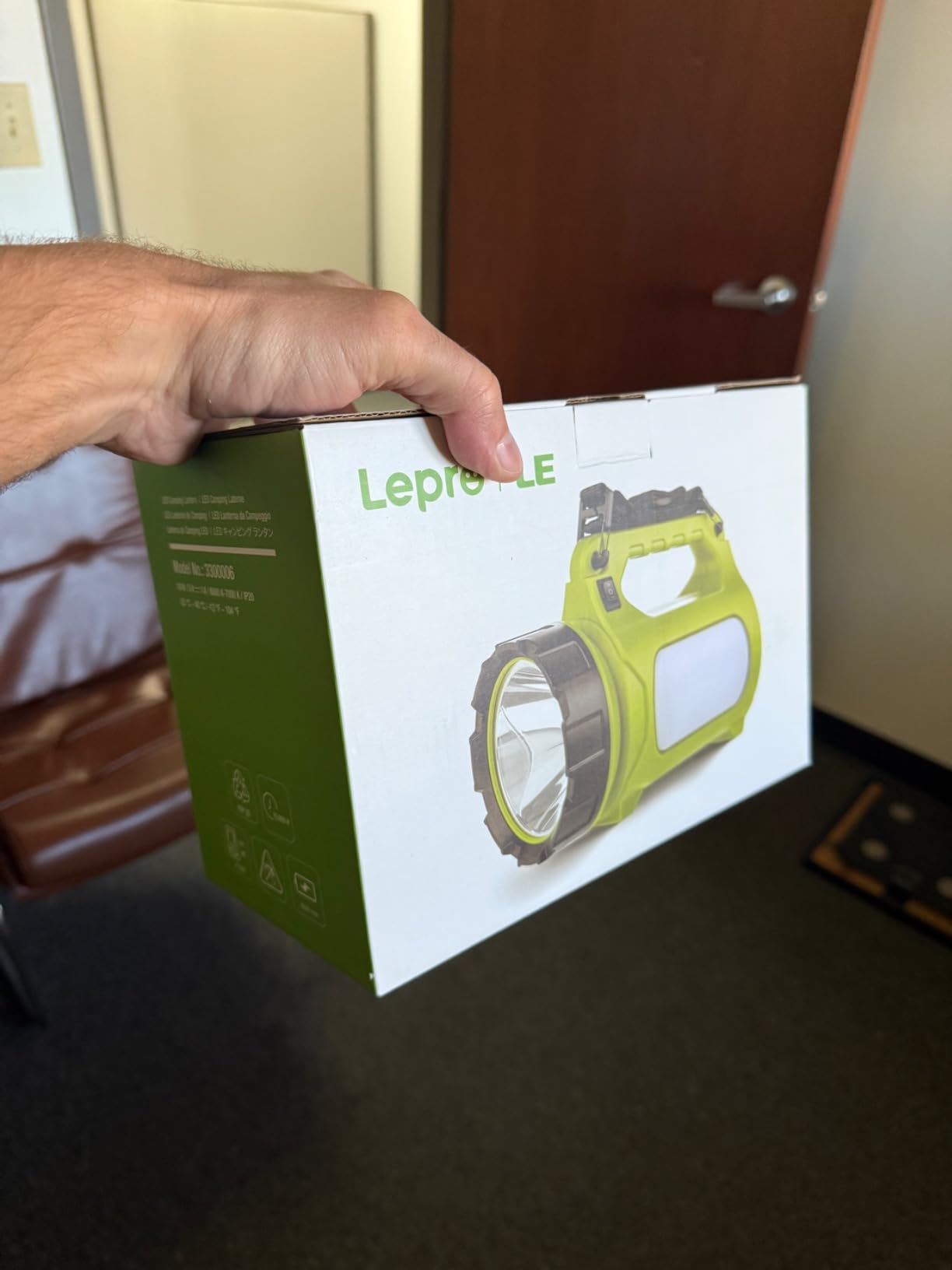
At 0.72 kg it is the heaviest lantern on this list, and the shoulder strap is genuinely useful for carrying it from the car to a site rather than lugging it by hand. Owners also like the blue battery-level indicators on the base, which matter more than usual in a blackout.
The build is a 12-month limited warranty, which is unremarkable, but the review base of over 15000 at 4.6 stars gives you a decent read on how it ages.
Where the two-in-one design pays off
On a walking trip or a site where you need to check a trail, a car engine or a map by night, the head is the feature you will use most. Owners consistently mention switching between the two without unpacking anything.
For a car-camping or van setup the strap and large handle make it easy to move between a table and a hanging position. It is the lantern I would hand someone who wants one tool instead of two.
Where it falls short
For backpacking it is simply too heavy at 0.72 kg. Anyone carrying a pack measured in grams will feel that number, and the fold-flat options further down the list exist for exactly this reason.
The only night-vision preserving mode is a red flash, and there is no warm-white-only sidelight. If a steady low amber light is what you want for a kids’ tent at bedtime, this does not offer it.
3. LuminAID Nova Inflatable Solar Lantern Packs Down to Nothing
LuminAID Nova Inflatable Solar LED Lantern for Camping, Hiking & Travel
- Inflatable body packs down to almost nothing
- IP67 waterproof shatterproof and dustproof
- Warm soft light from the frosted diffuser
- About 10 hours of sun or 1 to 2 hours by micro-USB
- Only 75 lumens which is far dimmer than the high-output models
- Micro-USB rather than USB-C
- Valve on the bottom makes it tilt when propped upright
This is the lantern to own if your definition of a good product is how little space it occupies. It is an inflatable fabric body that you twist open, and collapsed it is effectively flat, so it occupies almost no pack volume at all. At 5.3 ounces it is the lightest thing on this list by a wide margin.
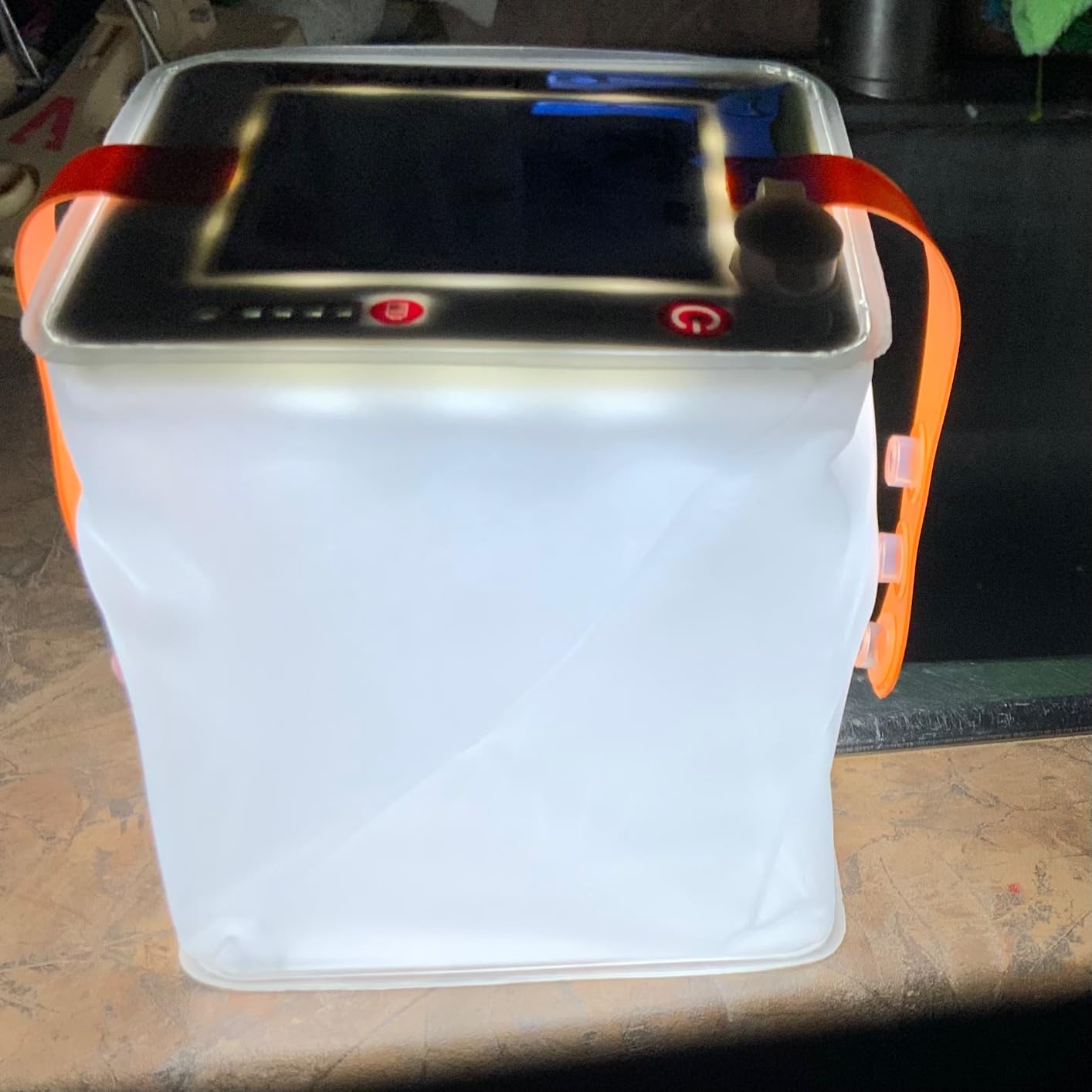
Do not expect 1000 lumens. It makes 75 lumens, but the frosted diffuser spreads that as a soft, warm glow that is genuinely pleasant for a tent or a van kitchen. Most owners describe the light quality as the standout, not the brightness.
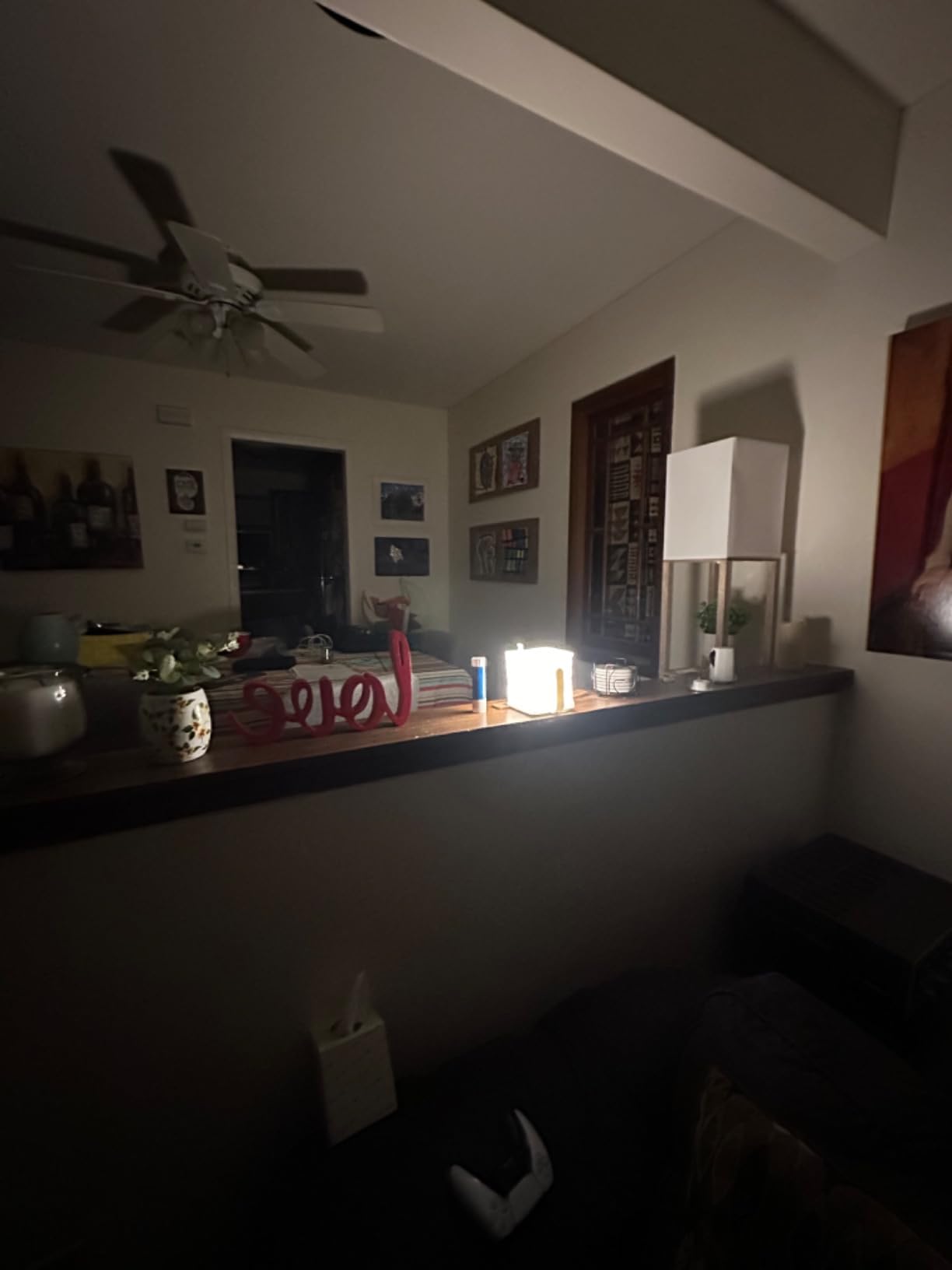
The IP67 rating is the strongest reason to pack one. It is genuinely waterproof to a metre and a half, shatterproof and dustproof, which makes it safe around children and fine on a wet dock. Charging is solar in roughly 10 hours of direct sun, or micro-USB in one to two hours.
That micro-USB port is worth planning for. If your kit is all USB-C, you are carrying a second cable for this and one other lantern on the list.
Why the 75 lumens are not a problem
Inside a tent, at a picnic table or in a campervan, 75 lumens of diffuse warm light is the level that helps you read, cook and find a zipper without ruining night vision. Over-driving a small fabric body just gets you a shorter battery and a hotter panel.
Owners often buy several as gifts or spares, which tells you how the value is understood. One goes in each pack, one in each vehicle, one in the drawer.
Where it falls short
You cannot light a group campsite with it, and the 24-hour claim assumes a low setting rather than real-world mixed use. Expect closer to a night of several hours at higher levels.
Because the inflate valve is on the bottom, the lantern leans when you prop it upright on a table. Most owners hang it or lay it flat instead.
4. Energizer WeatheReady PRO-360 Lasts 150 Hours on Disposable Cells
- Up to 150 hours of runtime which is by far the longest here
- 500-lumen all-around output fills a large room
- Glow-in-the-dark switch is easy to find in the dark
- Impact resistant to 1 meter
- Not rechargeable and runs on 3 D or AA cells
- Water resistant at IPX4 rather than fully waterproof
- No USB charging or power bank output
This is the one deliberate exception in the list. It is not rechargeable at all, and I am including it because for a home blackout the runtime maths is unbeatable. One set of batteries gives you up to 150 hours of 500-lumen light, which is a different order of magnitude from anything with a lithium cell.
The reason is simple. A rechargeable lantern stores a day’s worth of energy and then you are rationing it. A battery lantern gets its energy from the same shelf you would have bought candles from, which is exactly what you cannot do during an outage.
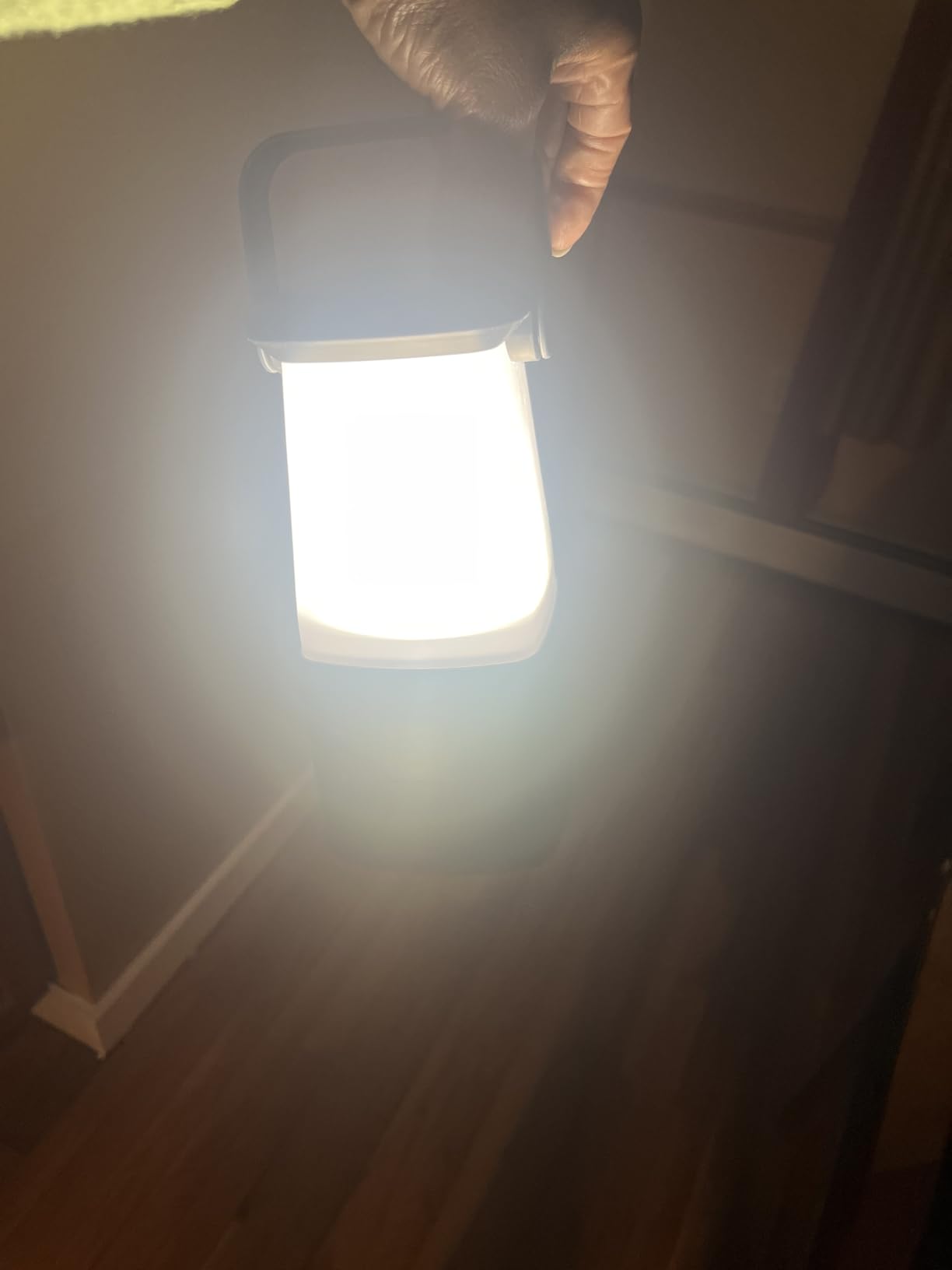
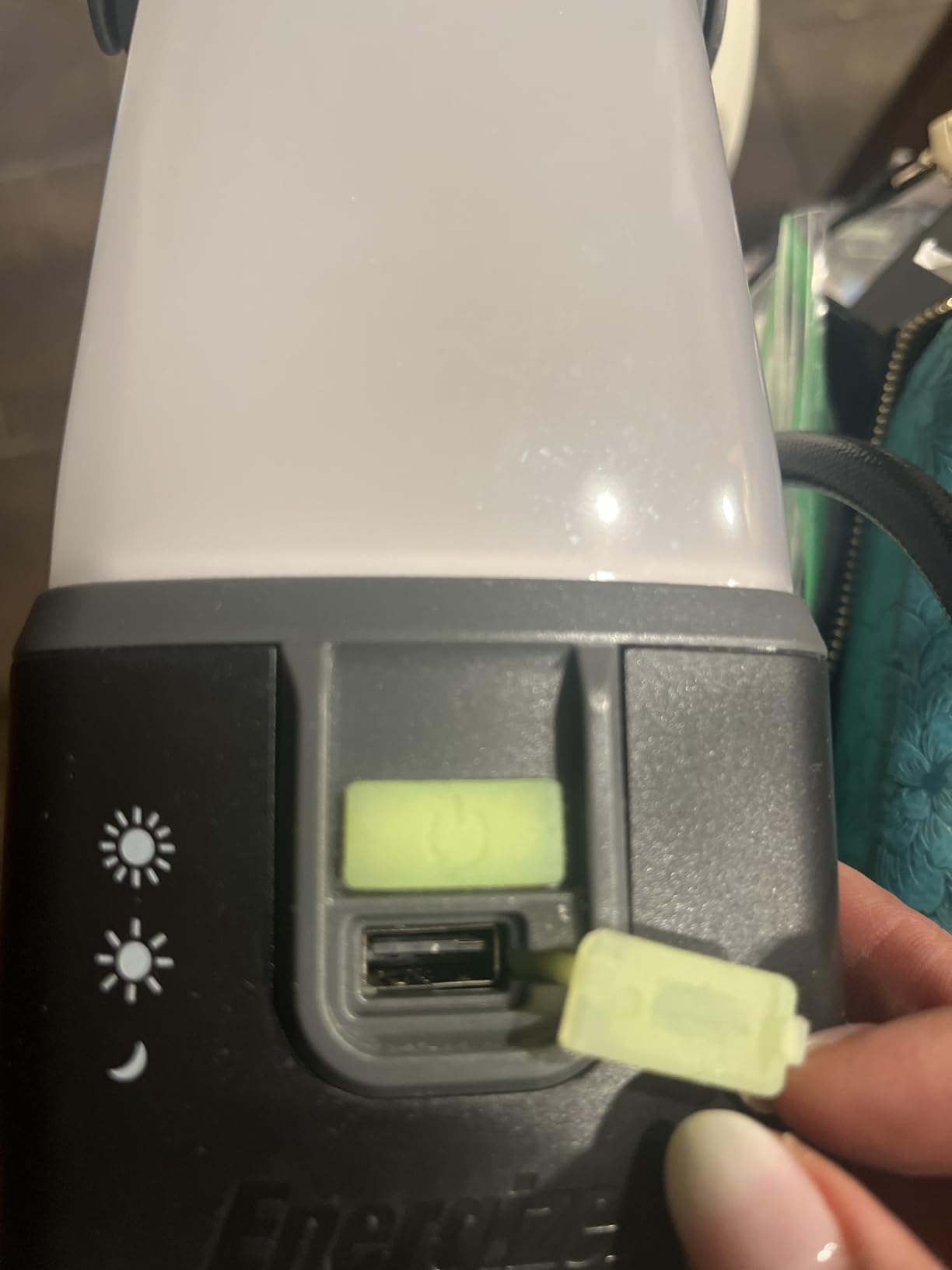
500 lumens at 360 degrees is enough to fill a normal room, and the glow-in-the-dark switch is a small design touch that matters when you cannot find the light in a dark house. It is impact resistant to a metre, which is reassuring if kids are around.
You can run it on 3 D cells or 3 AA cells, so you can pick whichever is easier to source. The brand is a recognised battery maker, which is reassuring for long-term cell consistency.
Why a non-rechargeable lantern belongs in a blackout kit
During a multi-day outage the failure mode of every rechargeable light is the same: the battery is flat and so is every outlet in the house. A D-cell lantern sidesteps that entirely, and 150 hours covers several nights without a single trip to find spares.
Keep a rechargeable lantern for camping, where you control the charging, and keep this one for the blackout drawer. They solve different problems.
Where it falls short
It is heavier and taller than the compact models, at nearly 9.5 inches, and it needs a shelf rather than a pack. There is no USB charging, so it is useless as a power bank for a phone.
It also has the widest 1-star rating share of the group at 6%, which is normal for a product where expectations and instructions get mixed up around battery type.
5. Kizen Collapsible Solar Lantern Fits in a Jacket Pocket
- Collapses to pocket size and expands to light a whole room
- Dual solar and USB charging
- Low setting is reported as surprisingly bright
- Collapsed flashlight mode and integrated hanging loop
- Phone charging output is very weak
- Micro-USB only with no USB-C
- Thin accordion lens and stiff top and bottom halves
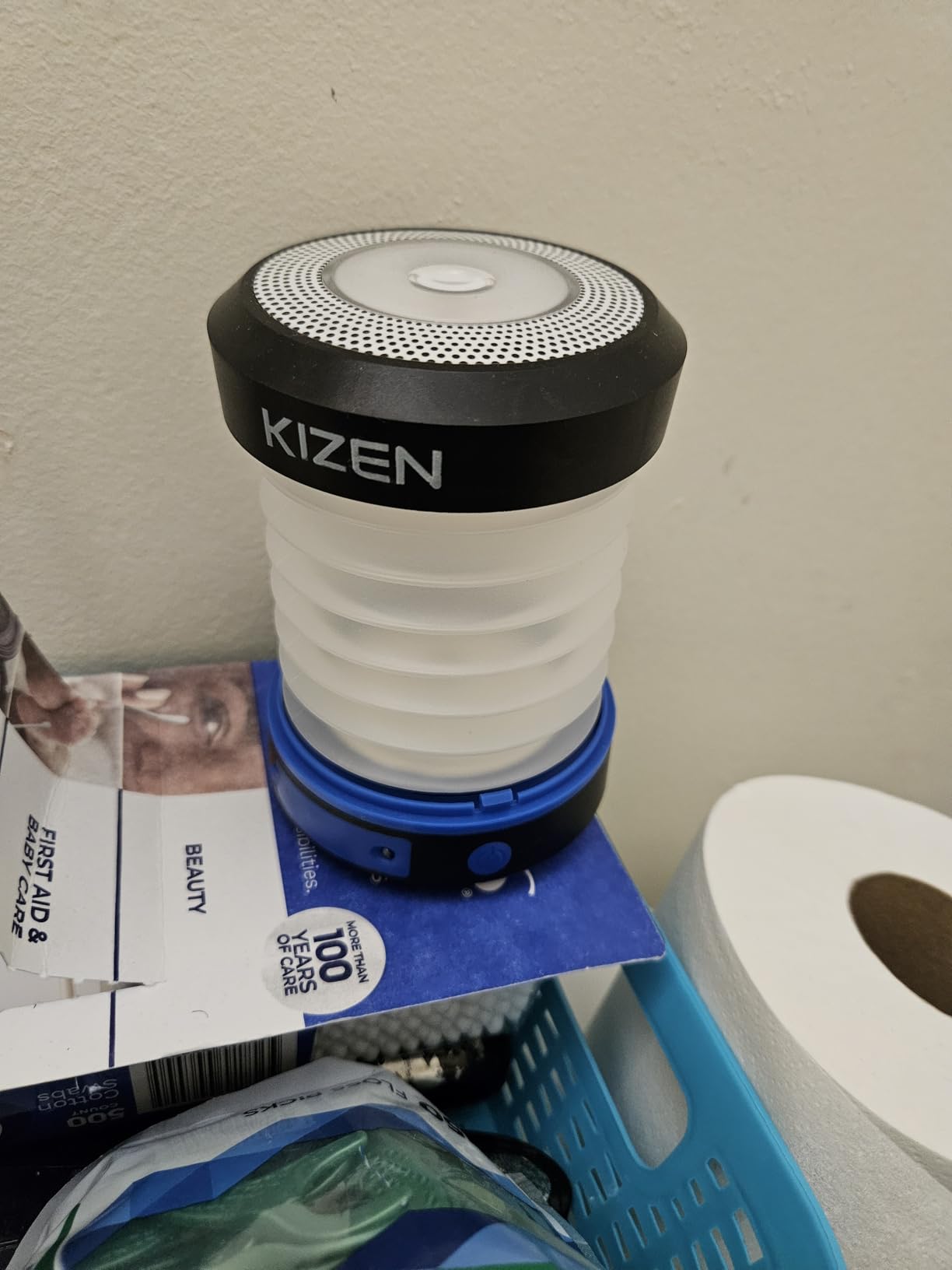
The Kizen is the shape of lantern that disappears. Its accordion body folds down to roughly the size of a hockey puck, which is the same category as folding a bowl. Pulled open it stands and lights; pushed down it becomes a compact flashlight.
It charges by solar panel or USB and gives up to 10 hours of light, with low, SOS and high modes. At 6.4 ounces it is among the lightest here, and the even low setting is reported more favourably than you would expect for the size.
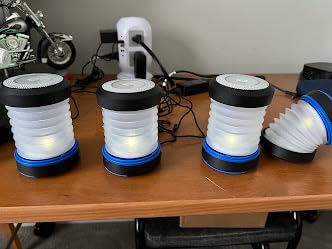
Do not treat the USB port as a real power bank. One owner measured about 14% of a phone charge in an hour before the lantern battery gave up, so it is a trickle at best. The USB input is micro-USB, not USB-C.
The fold-out lens is the part to treat gently. One owner reported tearing it while opening the lantern, and the top and bottom halves are described as stiff to separate.
When a collapsible lantern makes sense
Any trip where pack volume matters more than output. It slips into a jacket pocket or a side pouch, works as a hanging lamp, and the low mode is enough for a tent or a van at night.
It also works well as a cheap spare. One in the car and one at home covers most of what an emergency kit needs without a serious outlay.
Where it falls short
Water resistant is not the same as waterproof, and the fold-down handle has sharp edges that snag bags. Neither matters on a calm night, and both matter in wind and rain.
A full charge runs closer to 5 hours on high than the advertised 10, and solar charging speed depends heavily on conditions. Charge it by USB before you leave.
6. AYL 1800LM Delivers the Highest Output in This Group
- 1800 lumens from 46 LEDs makes it the brightest lantern here
- Long 12 hour runtime at the lower settings
- Genuinely doubles as a power bank for phones and tablets
- Four dimmable modes plus flash
- Rubberized slip-proof handle and glare-reducing cover
- Tall 10.25 inch body takes more pack space
- Built-in battery cannot be replaced if it degrades
- IP44 rating means it is not submersible
The AYL is the answer to anyone who asks for the brightest rechargeable lantern on the market. Forty-six LEDs deliver up to 1800 lumens, which is the highest maximum output of any product in this roundup, and it does it with the highest average rating too at 4.7 stars.
That brightness comes from a 4400mAh lithium-polymer cell that also runs up to 12 hours on the lower settings, and the same cell charges phones and tablets. Four dimmable modes cover daylight, warm light, both and flash.
Two things to plan around. The body is 10.25 inches tall, so it is a statement object on a camp table and a poor fit for a small pack. And the built-in battery is not user-replaceable, so when the cell eventually fades the unit is finished.
The manufacturer addresses the second point directly and recommends charging it every 3 to 6 months when it is not in regular use. That is a sensible habit for any lithium light and one we repeat in the buying guide.
When 1800 lumens is genuinely worth carrying
Lighting a large group campsite, a work area or a van conversion at dusk. This is the lantern for when one light has to do the job of two, or when you want to flood a whole pitch rather than one tent.
It also works as a directional work light for roadside repairs, which is where the 12-watt output earns its size.
Where it falls short
IP44 protects against splashes, not submersion, so keep it off wet rock and out of the river. The tall body sways more than a short lantern on a hanging hook.
Running at full output will not produce 12 hours. Treat the 12-hour figure as a low-to-mid setting number, which is true of every lantern here.
7. AlpsWolf 800LM Handles Rain, Hiking and Emergency Signalling
- Four-in-one build covering flashlight lantern spotlight and red strobe
- 800 lumens reaching up to 1640 ft
- IP65 waterproof which is better rated than most rivals
- Quick 3 hour recharge and up to 12 hours of use
- Battery is not removable or replaceable
- 800-lumen maximum trails the 1800-lumen option
- Only 4 modes and a single brightness step
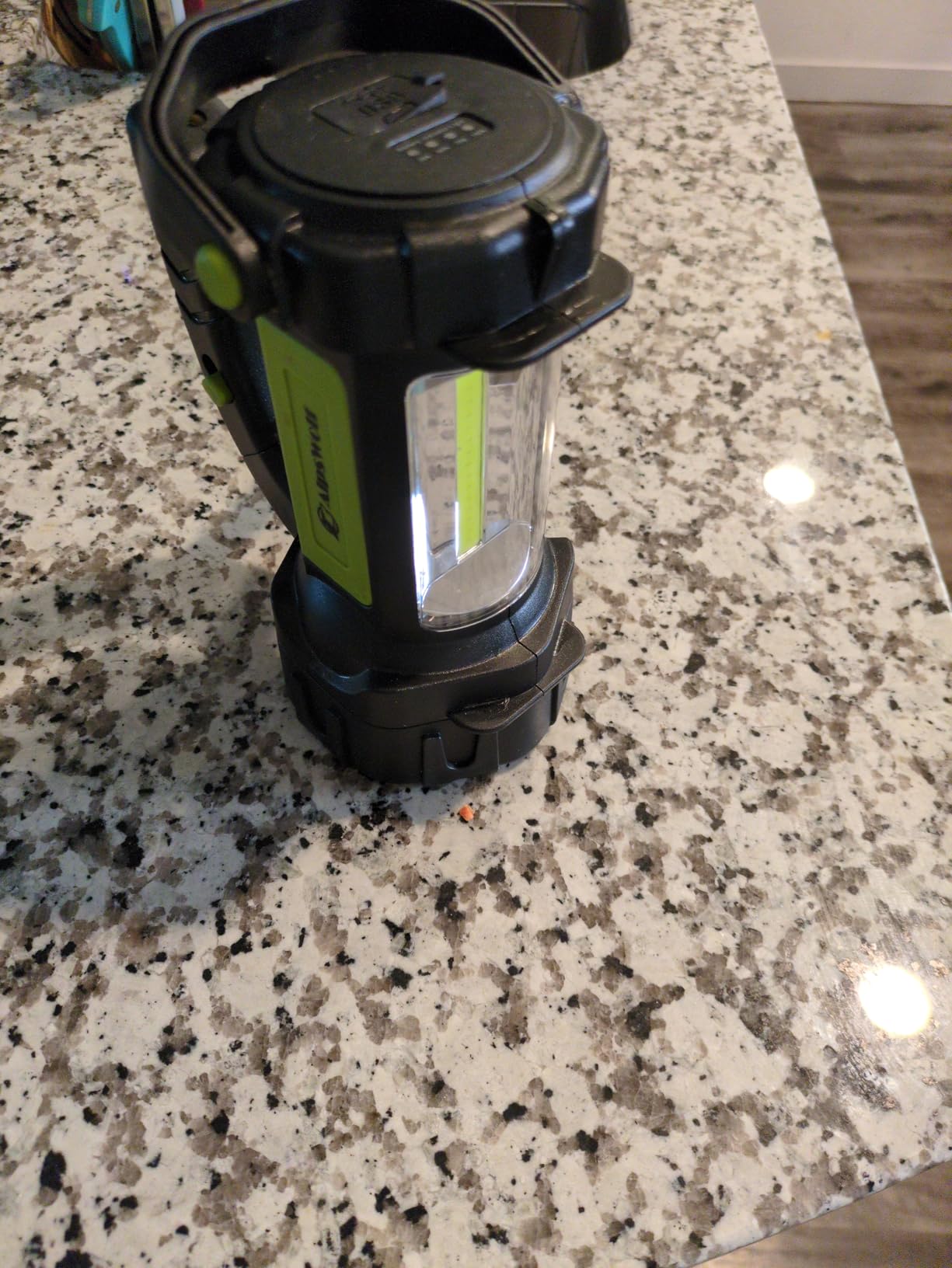
The AlpsWolf is the one I would hand someone who does not know what they need. It is a lantern, a flashlight, a spotlight and an emergency red strobe in a single body, controlled by one button, with a beam reach of up to 1640 feet.
It charges fully in about 3 hours, which is faster than most here, and the 3600mAh cell runs up to 12 hours. The IP65 rating is a step above the IPX4 group that dominates this list, so rain and spray are not a concern.
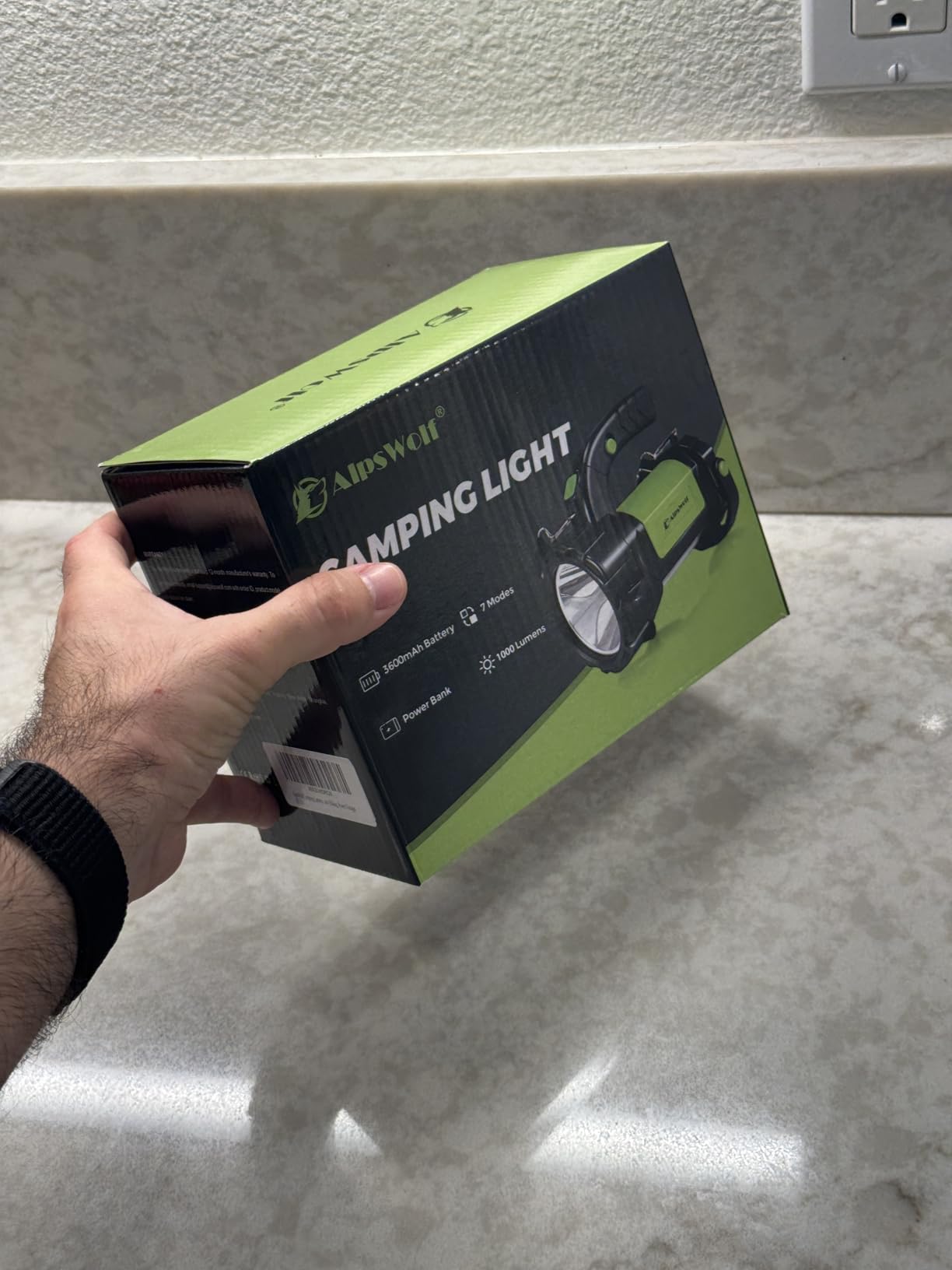
At 0.8 pounds it is not a backpacking choice, but it is light enough for a car-camping table or a van. The one-hand button interface with hold-to-off is easy to operate in the dark, and the red strobe is a genuine emergency signalling mode rather than a party light.
Owners cite the versatility more than the raw output, which is fair at 800 lumens. That is well short of the AYL but comfortably ahead of the fold-flat models.
Why four modes in one body beats four products
Carrying one device that becomes a spot beam for a trail junction, a wide lantern for a table, a red strobe for roadside breakdown and a torch for a bag is simpler than managing four things. The IP65 body means you can use it in the weather that normally sends you looking for the torch.
It also covers the emergency kit slot, since the strobe and the phone-charging output both work when the power is out.
Where it falls short
The battery is sealed in, so it cannot be replaced. That is the single most common long-term complaint across this whole category and it is worth weighing before you buy.
Brightness control is coarse. Four modes and a single step is less refined than the stepless dimming on the Consciot or the five levels on the Glocusent.
8. Glocusent 106 LED Is Built for Heavy Rain and Long Nights
Glocusent 106 LED Camping Lights, 5000mAh Rechargeable Lantern for Outages
- Compact 8.5-ounce body that still delivers 1200 lumens
- 5000mAh battery rated for 80 hours at low brightness
- Strongest water rating here with true IP68 to 1.5 meters
- Five brightness levels and three color temperatures plus SOS
- Super bright mode auto-shuts after 3 minutes
- Charging port on the base is reported as loose
- Silicone hanging band feels cheap
If your trips involve genuine weather rather than the possibility of weather, this is the one. It carries a true IP68 rating to 1.5 metres, which is the highest water rating in this roundup, and it has been drop tested from 40 inches.
The 5000mAh battery is the largest here and is rated for up to 80 hours at the lowest brightness. That figure is the number to remember for a basecamp, a long storm or a power cut, and USB-C charging means one cable covers the whole kit.
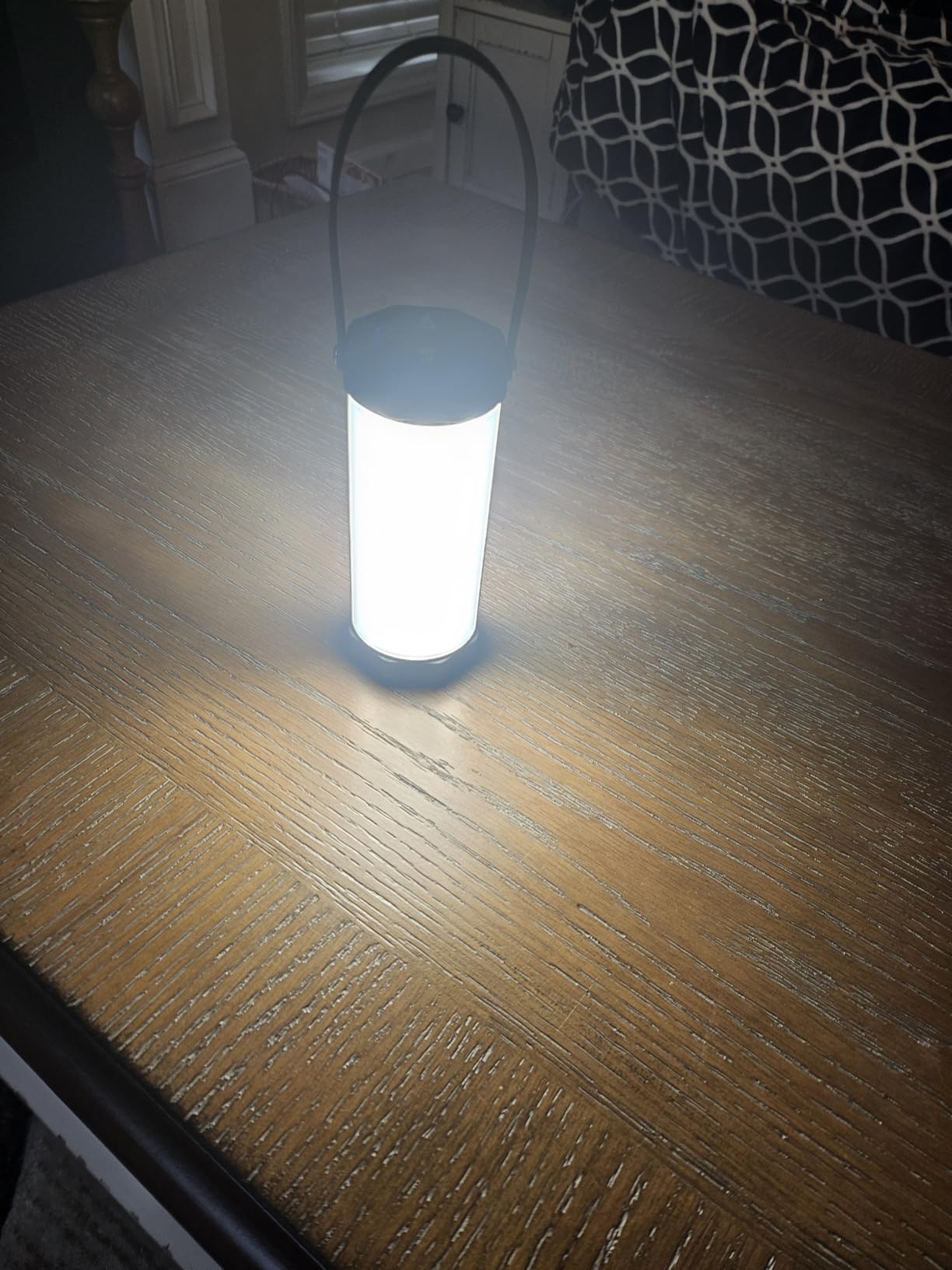
Light quality is a strength too. Five dimmable levels plus 3000K, 4000K and 6000K options and an SOS mode let you match the light to the hour, and the warm 3000K setting is far easier on the eyes late at night than the cool white most rivals default to.
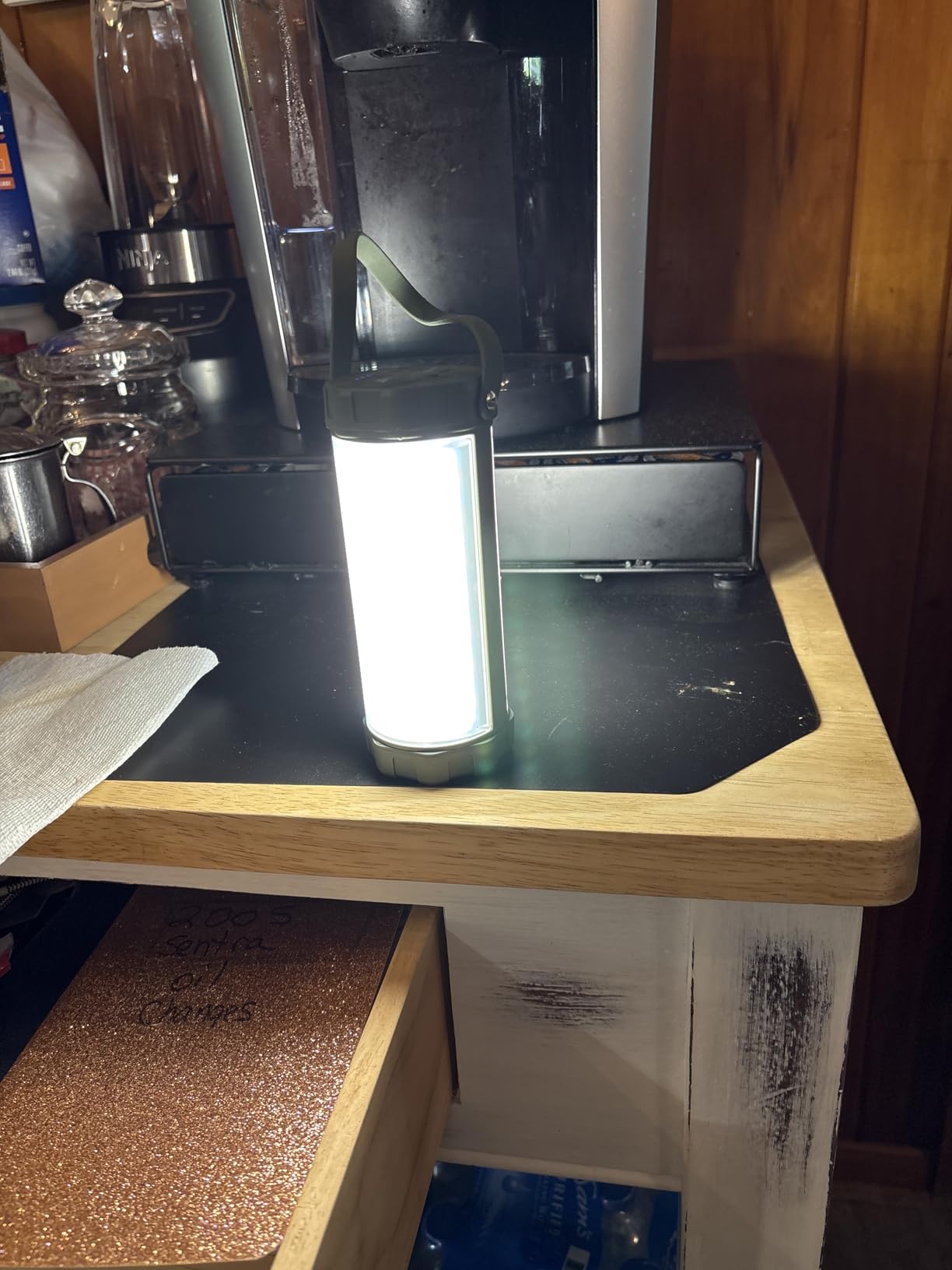
At 2.2 by 2.2 by 5.6 inches and 242 g it is smaller than a 330 ml can, so the size-versus-output balance here is the best of the high-output group.
Why the colour temperature control matters more than it sounds
Warm light around 3000K is what most people actually want after dark. It reduces glare, keeps the tent usable and does not blow out everyone’s eyes at 2 am. Cool 6000K is useful for checking gear or reading a map but is unpleasant as a sleep light.
Having all three in one lantern means you can move from a bright task mode to a soft night mode without a second device.
Where it falls short
The 1200-lumen super bright mode shuts itself off after 3 minutes. That protects the cells, but it surprises buyers who expect sustained maximum output, and one owner found it hard to turn off.
Two early-unit issues appear repeatedly: standby drain while unused, where the company sent a replacement, and a charging port on the base that can be jarred loose. Keep the port seated before you head out.
9. Blukar 116 LED Gives You Seven Light Modes and Fold-Out Panels
Blukar 116 LED Camping Lantern Rechargeable, Super Bright Camping Lights
- Seven lighting modes give more control than most competitors
- Fold-out 90 degree panels turn it into a wide-coverage chandelier
- 4800mAh battery runs 10 to 48 hours
- Warm 3000K light is described as pleasant rather than harsh
- Not water resistant so unsuitable for wet-weather camping
- Much smaller in person than the product photos suggest
- Built-in non-removable battery pack
The Blukar’s pitch is control. Seven modes against the four offered by most of the field means you can pick high or low side light, high or low bottom light, full high, full strobe, and a red SOS setting, and switch between them without memorising a long-press sequence.
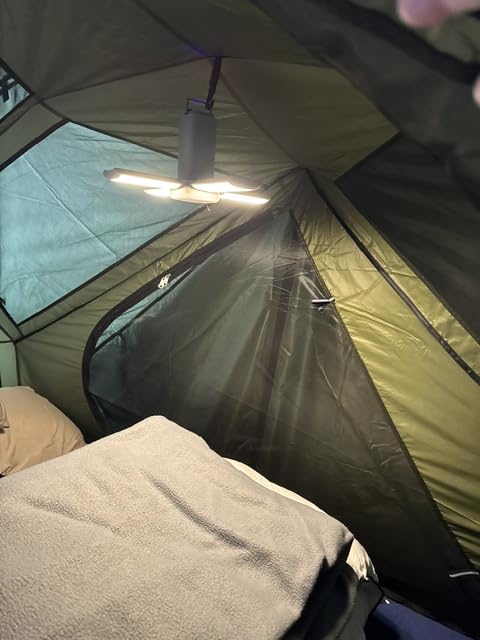
Its four side panels unfold 90 degrees to open out into a small chandelier that throws light in every direction at once, or fold flat into a compact lantern. It also carries 3000K warm white across 116 LED beads, which owners consistently describe as comfortable rather than harsh.
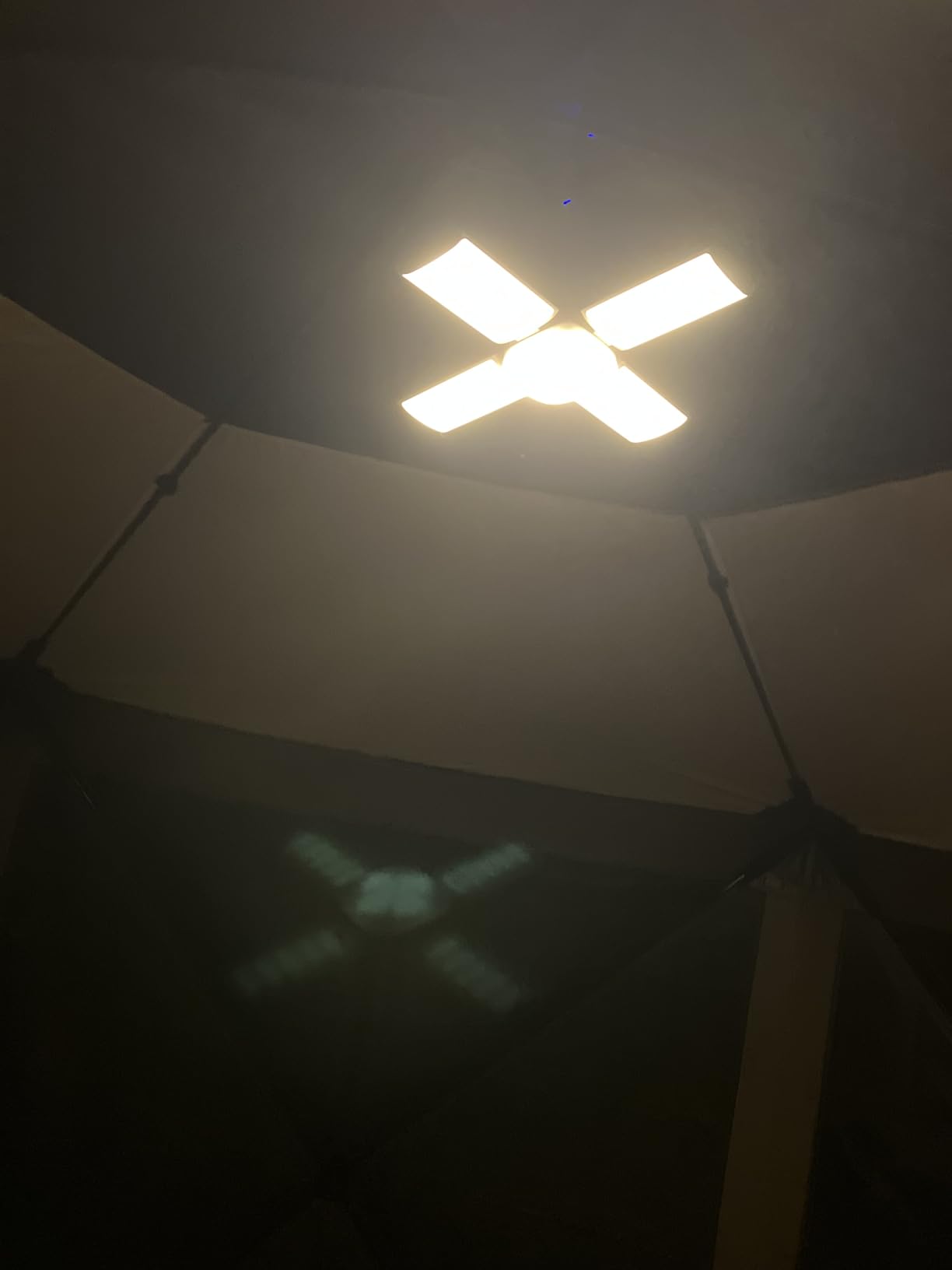
The 4800mAh cell gives 10 to 48 hours depending on mode, and one owner reported a nine-day camping trip using less than half a charge. A hook and an included climbing buckle handle the hanging, and the body survived a three to four foot drop onto a picnic table in testing.
USB-C charging with a four-dot indicator means you can see the remaining charge at a glance, which is exactly the feature the cheaper multi-packs often skip.
When the fold-out panels earn their place
Unfolded, the Blukar is a hanging light for a group table, a food prep surface or a van awning, because one unit covers the area instead of lighting a circle around itself. Collapsed it is a low, warm bedside lantern.
The mode count matters for anyone who uses light as a signal, since the red SOS and full strobe give you two distinct ways to be seen.
Where it falls short
It is listed as not water resistant, and that is the dealbreaker for wet-weather camping. There is no IP rating backing up the claim at all.
Buyers regularly note it is much smaller in person than the product photos suggest, so check the dimensions before you rely on it as a room light. There is no power bank output for phones.
10. LETMY 4-Pack Covers a Whole Home Emergency Kit
- Four lanterns in one pack for a whole home or group kit
- Only option here that also accepts AA batteries as a backup
- COB LED gives even 360 degree room-filling 600 lumens
- Collapses flat and has a glass-free military-grade ABS body
- AA batteries are not included and no spare lithium cells are supplied
- Only 600 lumens per lantern
- Water resistant rather than rated for submersion
Buying four at once changes how you think about an emergency kit. Instead of one light in a drawer, you can put one in the hallway, one in the bedroom, one in the car and one in a go-bag, and the three-way power design means each one has more than one way to be lit.
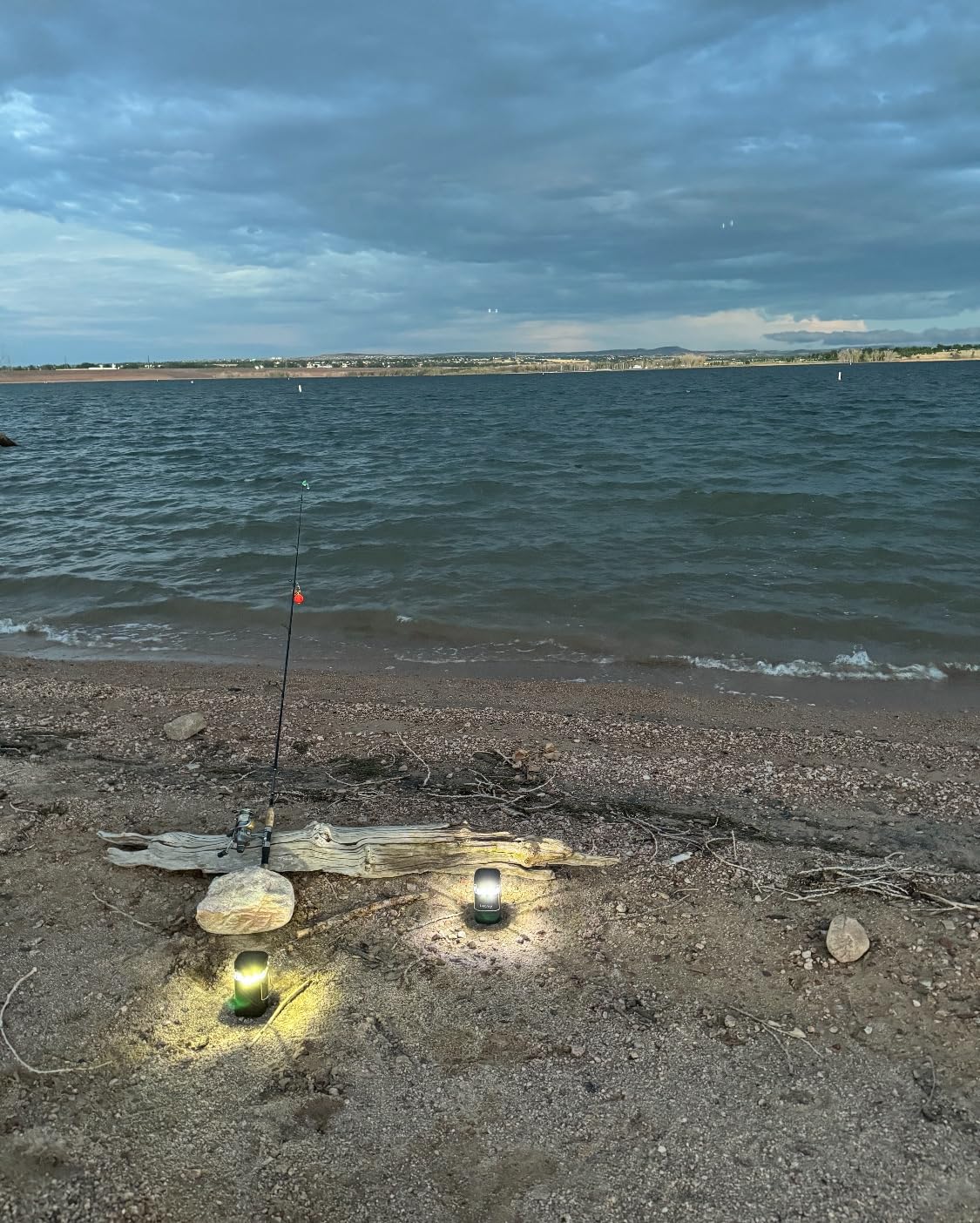
Each lantern runs on a built-in rechargeable cell, a solar panel, or three AA batteries. That third option is unique in this roundup and matters during a long outage, because AA cells are far easier to find than a charger.
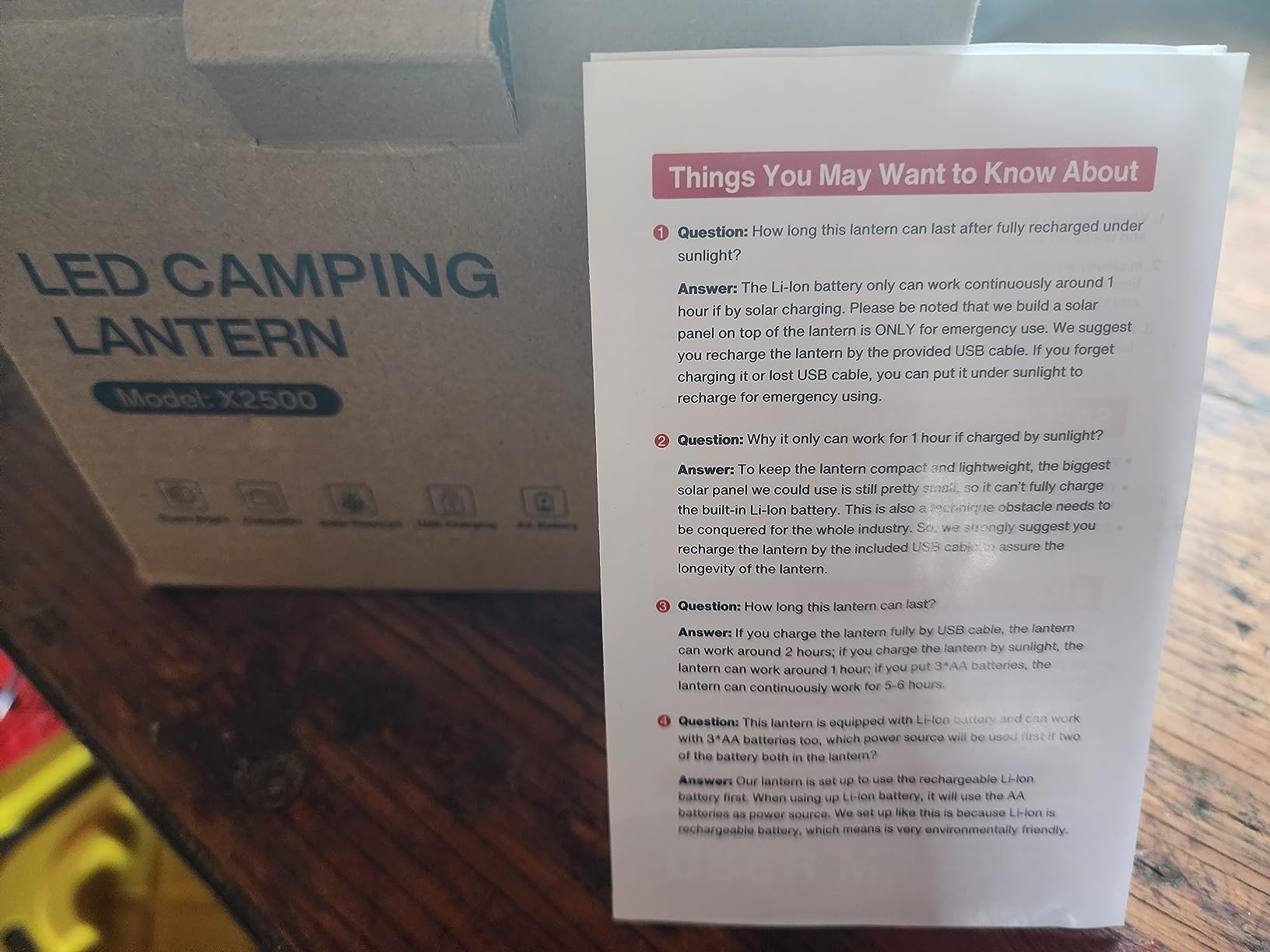
The COB LED gives 360-degree illumination at 600 lumens per lantern, with 12 hours or more of runtime, and you extend the body to switch it on and adjust brightness. The glass-free military-grade ABS body is shock, heat and crash resistant, which is what you want in a kit that gets knocked around.
Collapsing flat for storage means a full set of four still fits in a drawer rather than a box.
Why AA backup matters during a long outage
Rechargeable cells run down. Chargers do not work. The one thing that reliably stays available in a long emergency is the same AA battery you already have a drawer full of, and these lanterns will run on three of them.
For a family, a group campsite or a van conversion, four independent lights spread across separate rooms is worth more than one very bright light in one room.
Where it falls short
The AA batteries are not included, and no standalone lithium cells come with the pack either. At 1.1 pounds the full set of four is the bulkiest bundle here, so it is a home or car-camping buy rather than a backpacking one.
At 600 lumens each you are getting modest output, so lighting a large site takes more than one. The warranty is a 60-day replacement offer rather than a long term one.
11. Consciot 1000LM 2-Pack Has the Smoothest Dimming Control
Consciot 1000LM LED Camping Lantern Rechargeable, 4 Light Modes, Dimmable
- Very bright at up to 1000 lumens covering 360 degrees
- Four modes with stepless dimming
- Built-in 4400mAh power bank for phones
- Two way hanging hooks top and recessed bottom
- Takes 6 to 8 hours to fully charge
- No memory function so it forgets the last brightness setting
- Battery life may degrade after 2 years of heavy use
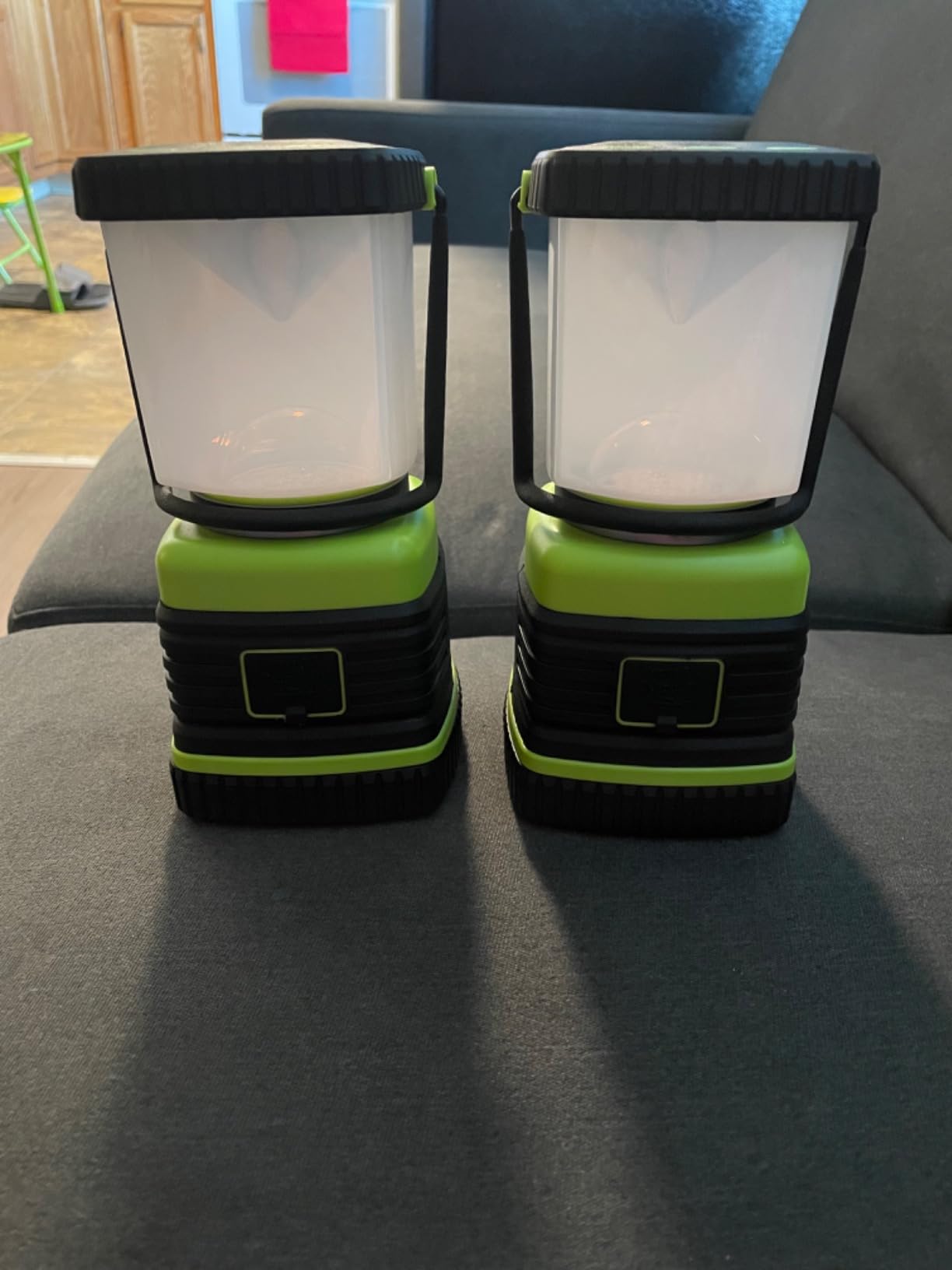
The Consciot arrives as a two-pack, which immediately gives you a spare or a second room. Each lantern puts out up to 1000 lumens across a 360-degree beam and carries a 4400mAh cell that doubles as a power bank for your phone.
What sets it apart is stepless dimming. Rather than jumping between fixed brightness steps, the light slides continuously from a low night mode up to full output, so you can set the level for a sleeping child, a reading task or a lit-up table without overshooting.
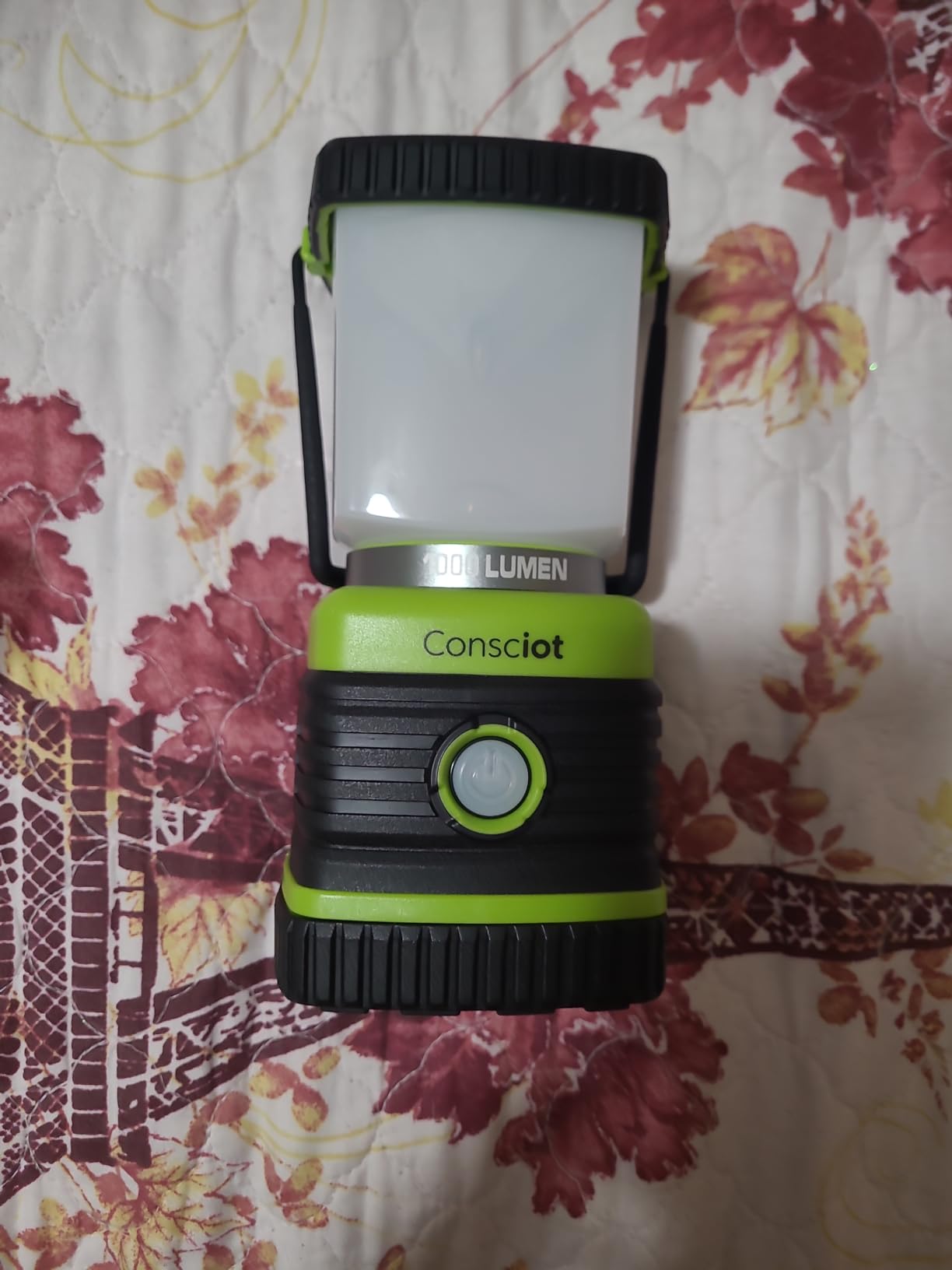
Four modes cover cool white, warm white, combined white and strobe, and the build uses anti-slip rubber and shockproof ABS with an IPX4 rating. Two-way hanging hooks let you hang it upright or upside down, which is handy in a tent with a single ceiling loop.
Owners report two-plus years of regular use from the same units, which is a good sign for a sealed-battery design.
Why stepless dimming beats fixed steps
Fixed steps force you to choose between levels, and the gap between a 100-lumen step and a 700-lumen step is big. Continuous dimming lets you land on 180 lumens, which is the level that keeps a small room or a van livable without wasting hours of battery.
It is the feature I would rank highest for anyone using a lantern inside a home, a van or a tent with other people in it.
Where it falls short
Charging is slow at 6 to 8 hours for a full charge, so top it up the night before you leave rather than in the morning. The review base here is the smallest of the twelve at a little over 2000, so there is less long-term evidence.
There is no memory function, so it starts at full every time, and owners note the battery can degrade after a couple of years of heavy use.
12. XTAUTO 4-Pack Is the Cheapest Per-Lantern Way to Stock an Emergency Kit
- Collapsible design is phone-sized when folded
- Dual charging with both a solar panel and USB
- 25 or more hours of light on a full charge
- Doubles as a lantern and a flashlight
- Lightweight enough for children to carry
- No battery level indicator
- Feels fragile and is not suited to rough handling
- Small red charging light never turns off
With more than 12500 reviews behind it, the XTAUTO four-pack is one of the most reviewed listings in this category and it is a lot of lantern for the money. You get four collapsible lanterns, each with 360-degree lighting from 6+1 high-intensity LED chips and 25 or more hours on a full charge.
You can pull the body up for lantern mode or push it down for flashlight mode, which is a simple mechanic that works without reading instructions. Each one charges by solar panel or USB, and the ABS body is described as waterproof, heat resistant and freeze resistant.
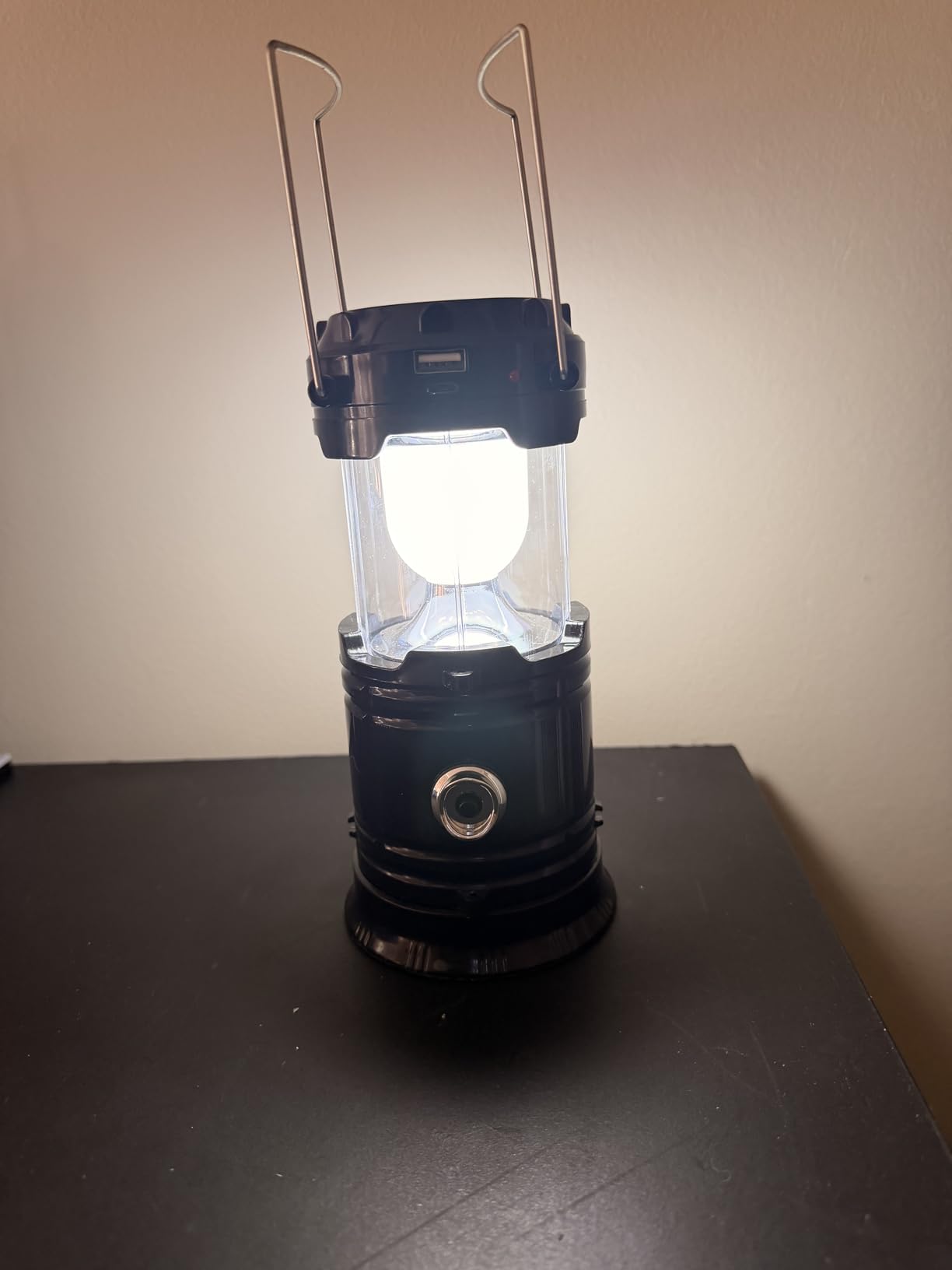
Collapsed, each lantern is about the size of a phone, and the folding handle hangs it from a tent ridge or a branch. The whole set is light enough that family members including children can carry one each.
The 1600mAh cell is the smallest here, which is the trade you make for four units at this price. The build uses automatic power-off protection against overcharging.
Where a four-pack earns its place
Household preparation. Four lanterns at a phone-sized weight each means you can cover the kitchen, the hallway, a bedroom and the car without a single heavy or expensive light, and the fold-flat design means storage costs nothing.
They are equally at home as group camping gear, where one per tent beats one bright lantern for the whole site.
Where it falls short
There is no battery level indicator, and the small red charging light never turns off, so you have no clear signal that a unit is full. Owners also describe the build as delicate, so keep these out of a work bag rather than a job site.
Solar charging speed depends on the weather, and using it as a flashlight is awkward because there is no side handle. For a wet-weather trip, check the water rating carefully before relying on it.
Best Rechargeable Lanterns for Power Outages and Emergency Kits
Almost every roundup on this topic treats lanterns as camping gear. The live question on the search page is what to have in the house when the power goes out, and that is a different buying problem because the failure mode is not rain, it is batteries.
During a real outage, a rechargeable lantern is at its best if you planned for it and its worst enemy if you did not. The right approach is redundancy: a couple of rechargeable lights that you keep topped up, plus one non-rechargeable lantern running on disposable cells, which is exactly why the Energizer PRO-360 belongs on a home list even though it is not rechargeable.
For a home kit I would run a pair of the Lepro 1000LM units. They give you 1000 lumens for the first hour, warm white light for the rest of the night, and enough capacity in the 4400mAh cell to top up a phone when the router is down. Put one in the hallway and one at the table where everyone will gather.
If you want a phone that stays alive for several days, look at battery capacity rather than lumens. The Glocusent’s 5000mAh cell gives you the largest reserve here and the 80-hour low-mode rating is the longest realistic outage runtime on the list. The LETMY four-pack is the practical answer if you want light in more than one room, since each unit also accepts AA batteries.
Whatever you choose, run a charge test before you need it. Charge every lantern fully, switch them all on at their middle setting, and note how long the lowest mode lasts. That 30-minute exercise tells you more than any spec sheet, and it tells you now rather than during an outage.
How to Choose a Rechargeable Lantern: 6 Criteria That Matter
The hardest part of choosing among these twelve is that the headline number and the number you care about are not the same. Here is how to read the specs properly, in the order that actually changes your experience.
1. Brightness: match lumens to the job, not to the advert
A two-person tent needs 100 to 300 lumens on a warm setting. A four-person dome or a van needs 300 to 800. A group campsite, a garage or a job site needs 800 lumens or more, and only the AYL at 1800 lumens goes beyond that.
Beyond about 1200 lumens, thermal cutback becomes the deciding factor. The Glocusent switches its super bright mode off after 3 minutes, and most other high-output lanterns shorten runtime sharply at the top step. Buy high output for the first hour of the evening, not for the whole night.
2. Runtime: read the low-setting number, not the high-setting one
Every quoted runtime is measured on the lowest mode, and the gap is enormous. The Lepro runs up to 12 hours at 300 lumens and about 6.5 at 1000. The Blukar is quoted across a 10 to 48 hour range depending on which of its seven modes you choose.
For long-running needs, the outliers are clear. The Energizer runs 150 hours on disposable cells, the Glocusent is rated for 80 hours on low, and the Blukar reaches 48. If you need more than a weekend, filter for these numbers before anything else.
3. Battery capacity: what mAh actually buys you
Battery capacity in mAh tells you two things: how long the light runs, and roughly how much phone charging is available. The realistic range here runs from 1600mAh in the XTAUTO to 5000mAh in the Glocusent.
Two useful anchors: a 4400mAh cell, which covers a night of lantern light with charge to spare, and a 5000mAh cell, which is the point where you should start planning the lantern as a genuine power bank. Note that weak ports exist too, because the Kizen measured about 14% of a phone charge in an hour.
4. Charging method: USB-C, micro-USB, solar or AA backup
USB-C is the sensible default in 2026, and the Lepro 1000LM, Glocusent, Blukar, LETMY, Consciot and XTAUTO all use it. Micro-USB models such as the LuminAID Nova and Kizen mean a second cable in your pack, which is a small cost that adds up.
Solar panels on the LuminAID and Kizen need roughly 10 hours of direct sun, so treat them as a backup rather than a plan. The LETMY is the only model here that also accepts three AA batteries, and in a long outage that is the most useful feature on this list.
Check charging time as well. Most models take 2 to 3 hours, but the Consciot needs 6 to 8, and a slow charger is a real problem when you also rely on that cell for your phone.
5. Water resistance: read IPX4 and IPX7 in plain terms
IPX4 means splash resistant. Rain, spray and a knocked-over drink are fine; a fall into a river is not. That covers the Lepro, LE, Energizer, Kizen, AYL and Consciot.
IPX6 handles heavy rain and strong jets. IPX7 means submersible to a stated depth, and IPX8 goes further still. The LuminAID Nova is IP67 and the Glocusent is IP68 to 1.5 metres, which is what you want for river trips and monsoon weather.
One model here, the Blukar, is listed as not water resistant at all. There is no IP rating to fall back on, so keep it out of wet-weather plans.
6. Modes, colour temperature and night vision
Anything with warm white around 3000K and a red mode is better for a shared tent or a house at night. The Blukar, Glocusent and LuminAID Nova lean warm, while the Lepro and Consciot give you both 3100K and 6000K options plus a combined mode.
Stepless dimming, which the Consciot offers, is the most under-rated feature here. Fixed steps force you to choose between levels, and continuous control lets you land on the exact brightness the moment needs.
Bonus: battery care decides how long the lantern lasts
Every lantern in this roundup has a sealed built-in battery, which is the single most common long-term complaint across owner reviews. You cannot replace the cell, so the cell’s lifespan is the lantern’s lifespan.
Top up every lantern every 2 to 3 months when it is not in use, store it at around half charge rather than empty, and do not leave it in a hot car or a garage in freezing conditions. A few minutes with a USB cable a couple of times a year prevents the long-term fade that makes an emergency light useless when you finally need it.
None of the twelve above is a dedicated headlamp, and for trail running or hands-free night walking you will want a separate option. We have covered those in our guide to the best rechargeable headlamps, and for evening walks with a dog, the best rechargeable LED dog collars cover the visibility side of that same problem.
Frequently Asked Questions
How long does a rechargeable lantern last?
A rechargeable lantern runs tens to hundreds of hours on one charge, but the quoted figure is always measured on the lowest brightness setting. On this list, runtime ranges from 10 hours on a full charge for the XTAUTO to 80 hours on low for the Glocusent, while the Blukar is quoted across a 10 to 48 hour range. At full brightness, expect 2 to 7 hours depending on the model.
What is the best battery-powered lantern for power outages?
For a home blackout, the Energizer WeatheReady PRO-360 is the strongest choice because it runs on 3 D or AA cells and delivers up to 150 hours at 500 lumens, so it keeps working after every charger and outlet in the house fails. Pair it with a rechargeable lantern such as the Lepro 1000LM, kept topped up, for phone charging and a warmer light.
What is the best USB rechargeable camping lantern?
The Lepro 1000LM is the best all-round USB rechargeable camping lantern, with 1000 lumens, a 4400mAh cell, four modes with stepless dimming, a Type-C port and power bank output. If you need the lightest option, the LuminAID Nova at 5.3 ounces is the pick, though it uses micro-USB and only makes 75 lumens.
Who makes the best rechargeable camping lantern?
Brands that appear repeatedly in owner feedback for rechargeable camping lanterns include Lepro and Glocusent for feature-rich all-round designs, LuminAID for ultra-light inflatable models, and Energizer for long-runtime battery-powered units. The right brand depends on your scenario: compactness, runtime, maximum brightness or waterproofing.
How many lumens do I need for a tent?
A two-person tent needs roughly 100 to 300 lumens on a warm setting, a four-person dome or van needs 300 to 800 lumens, and a group campsite, garage or job site needs 800 lumens or more. Only the AYL 1800LM exceeds 1200 lumens, and very high outputs usually trigger a short thermal cutback.
Can you use a rechargeable lantern in the rain?
It depends on the IP rating. IPX4 lanterns such as the Lepro, LE and AYL handle rain and splashes but not submersion. For heavy rain and river use, the Glocusent is rated IP68 to 1.5 metres and the LuminAID Nova is IP67, while the Blukar is listed as not water resistant at all.
Final Verdict: Which Rechargeable Lantern Should You Buy?
The Lepro 1000LM is our pick for the best rechargeable lanterns in 2026, because it is the only model that combines 1000 lumens, 12 hours of warm white light, four modes with stepless dimming and a working power bank, all backed by more than 33000 reviews at 4.6 stars.
Buy the Glocusent if your trips are genuinely wet, the LuminAID Nova if pack volume is the problem, the AYL 1800LM if one light has to flood a whole campsite, and the LETMY four-pack if you are covering a house rather than a tent. Whatever you pick, top it up every couple of months so it is ready for the night you actually need it.