

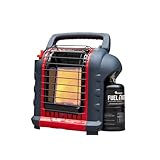
The best tent heater for most campers in 2026 is the Mr. Heater Portable Buddy. It puts out 4,000 or 9,000 BTU of radiant heat, covers roughly 225 square feet, and carries both an oxygen depletion sensor and a tip-over shutoff, which are the two safety systems that matter most inside a fabric shelter. It runs on a standard 1 lb propane cylinder and needs no electricity at all. That combination of output, safety hardware and fuel availability is why it has pulled in more reviews than anything else in our test group.
One rule comes before any list. A combustion heater inside a tent is only safe with deliberate, continuous ventilation, and it should never run while you sleep. Experienced campers on r/CampingGear say the same thing about the Little Buddy: the heat output is genuinely good, but airflow is non-negotiable. We ran these eight units through their specs, reviews and safety systems to find the ones worth buying for 2026.
Table of Contents
Top 3 Tent Heater Picks in 2026


The Best Tent Heaters in 2026 at a Glance
| Product | Specifications | Action |
|---|---|---|
| Mr. Heater Portable Buddy |
|
Check Latest Price |
| Mr. Heater Little Buddy |
|
Check Latest Price |
| Mr. Heater Buddy FLEX |
|
Check Latest Price |
 CAMPLUX 12000 BTU Propane Heater CAMPLUX 12000 BTU Propane Heater |
|
Check Latest Price |
 Naturehike 3-in-1 Butane Heater Naturehike 3-in-1 Butane Heater |
|
Check Latest Price |
 LOFUKI Compact Propane Heater LOFUKI Compact Propane Heater |
|
Check Latest Price |
 MOZODAWN 2-in-1 Heater and Stove MOZODAWN 2-in-1 Heater and Stove |
|
Check Latest Price |
 GasCalorix 6200 BTU Heater GasCalorix 6200 BTU Heater |
|
Check Latest Price |
1. Mr. Heater Portable Buddy – Best Overall Tent Heater
- Dual 4000 and 9000 BTU output
- Covers about 225 sq ft
- Approved for indoor and outdoor use
- Low oxygen shutoff plus self-extinguishing build
- Piezo ignition needs no electricity
- Heavier than butane units at 7.1 lb
- Radiant heat falls off a few feet from the unit
We used the Portable Buddy as the reference point for the whole roundup, and it earned the slot. Two output settings mean you can drop from 9,000 BTU to 4,000 BTU when the tent is warm, which extends the burn time on a small cylinder considerably.
The build is the reason it lasts. It uses self-extinguishing materials, and the low oxygen safety system is what stops the unit mid-night in a sealed shelter rather than letting it quietly fill the tent with carbon monoxide.
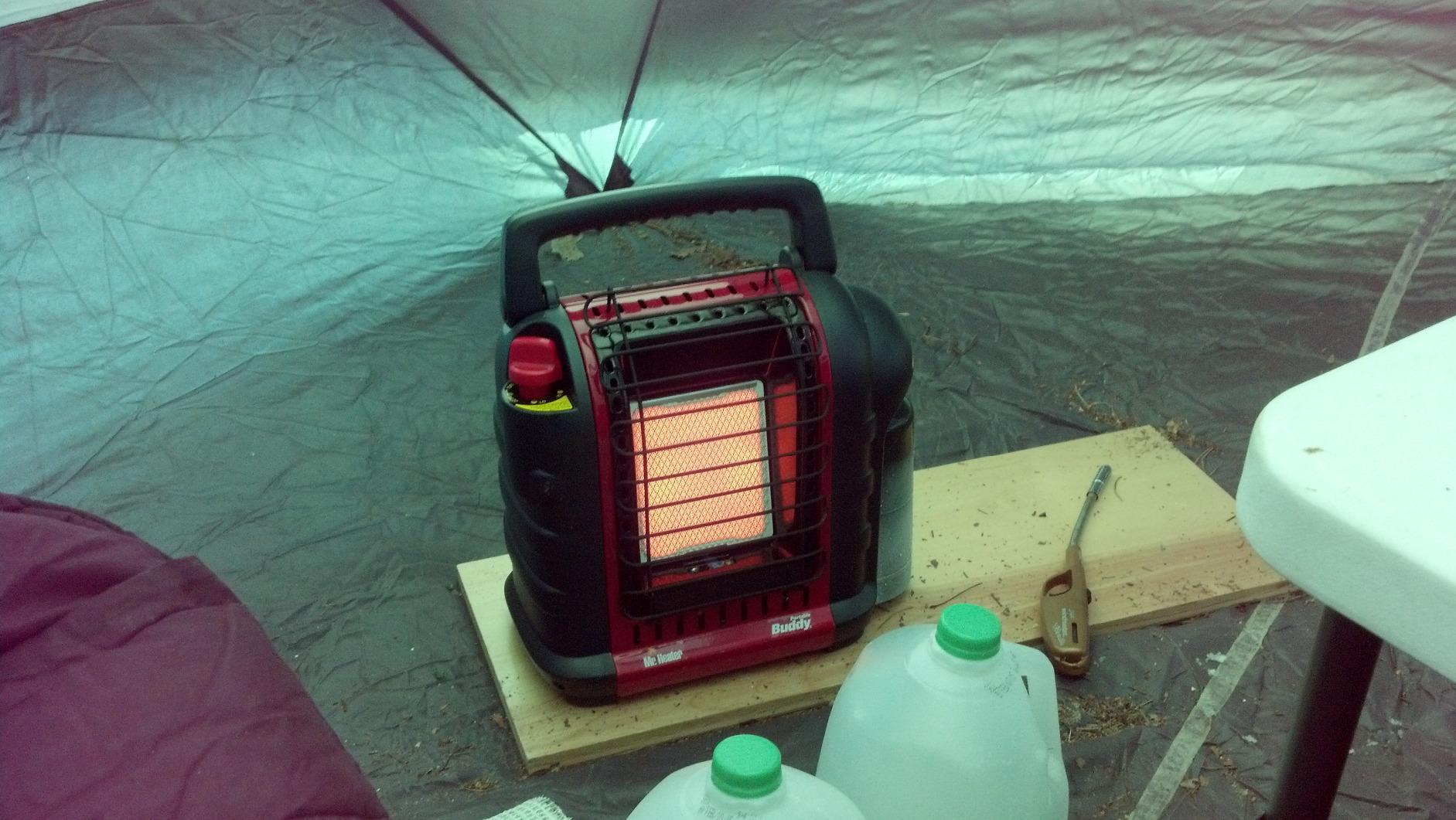
Runtime is the practical constraint. It runs 5.4 hours on low and 2.4 hours on high from a 1 lb propane cylinder, so a three-night trip means carrying several cylinders or planning around refills. Place it low and near the door on the supplied stand, because radiant heat falls off fast and a heater parked mid-floor leaves the corners cold.
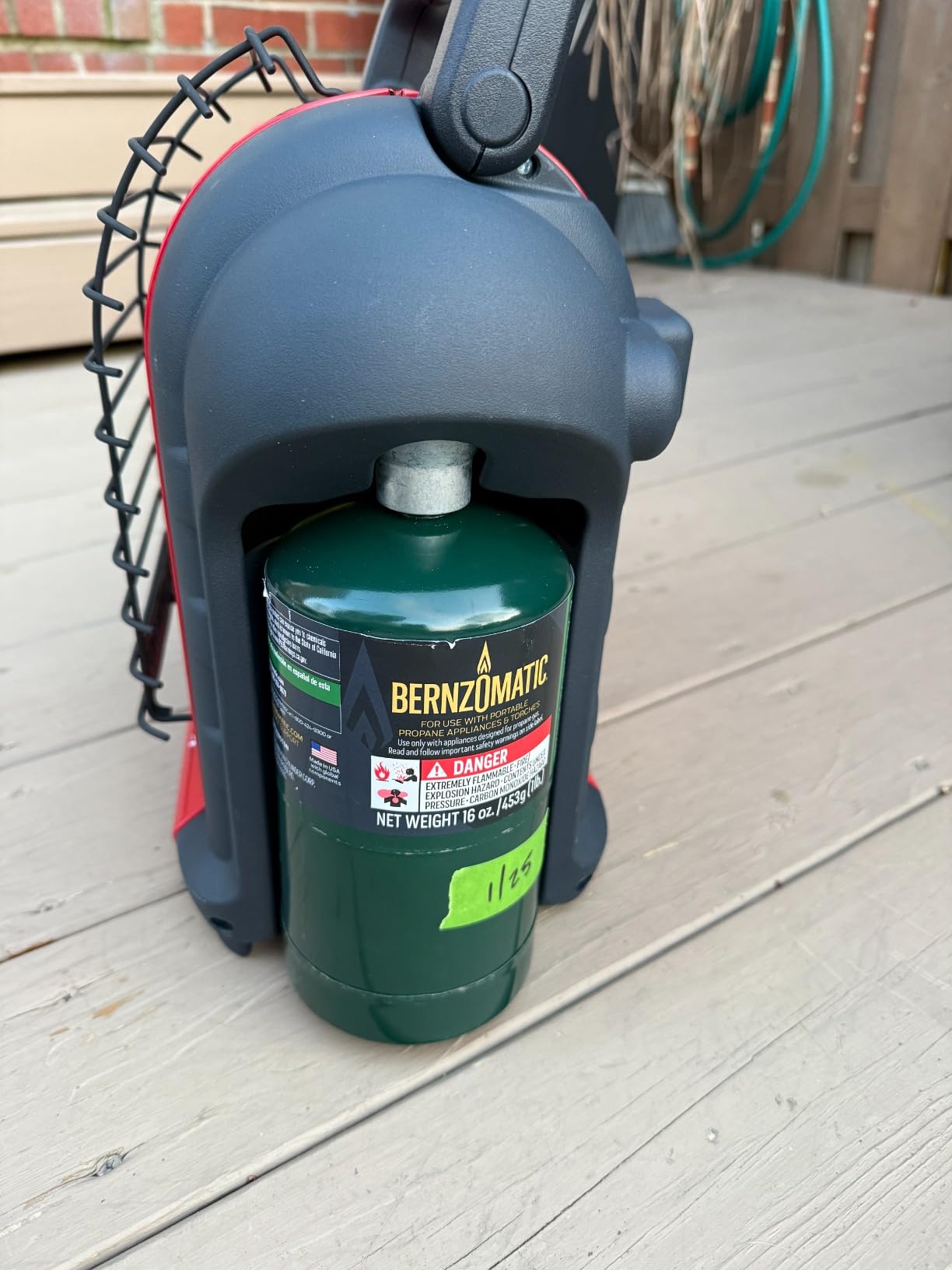
How much heat a 9000 BTU radiant heater actually gives you
Radiant heaters warm objects and people in line of sight rather than moving air around the room. You feel the warmth immediately, but output falls off sharply a few feet out.
The 225 square foot coverage figure is a reasonable guide for a mid-size three-season tent with its vestibule open. It is too much for a small two-person shelter unless you vent constantly.
When the Portable Buddy is the wrong choice
At 7.1 lb it is not a piece of backpacking gear. It suits car camping, basecamp setups and vehicle-supported trips where the fuel and weight are not part of your pack.
It also runs out of fuel faster than you expect on high. For a long weekend in deep cold, choose a longer-running unit or plan a larger fuel setup.
2. Mr. Heater Little Buddy – Best for Solo and Small Tents
Mr. Heater 3,800 BTU Little Buddy Portable Radiant Propane Heater
- Single button ignition with no batteries
- Tip-over and low oxygen automatic shutoff
- Compact 8 inch round stand
- Quiet clean odor-free radiant heat
- Connects directly to a 1 lb cylinder
- Single speed setting with no adjustable output
- 95 sq ft coverage is limited for larger tents
The Little Buddy is the model most campers meet first, and for a solo or two-person tent it is hard to argue with. It heats up to 95 square feet, runs off a 1 lb propane cylinder directly, and at 5.6 lb is one of the lighter propane models we carried.
On r/CampingGear, long-standing owners describe the same experience: it throws a lot of heat, but you have to ventilate the tent properly and be deliberate about where it sits. That is the honest summary of the product.
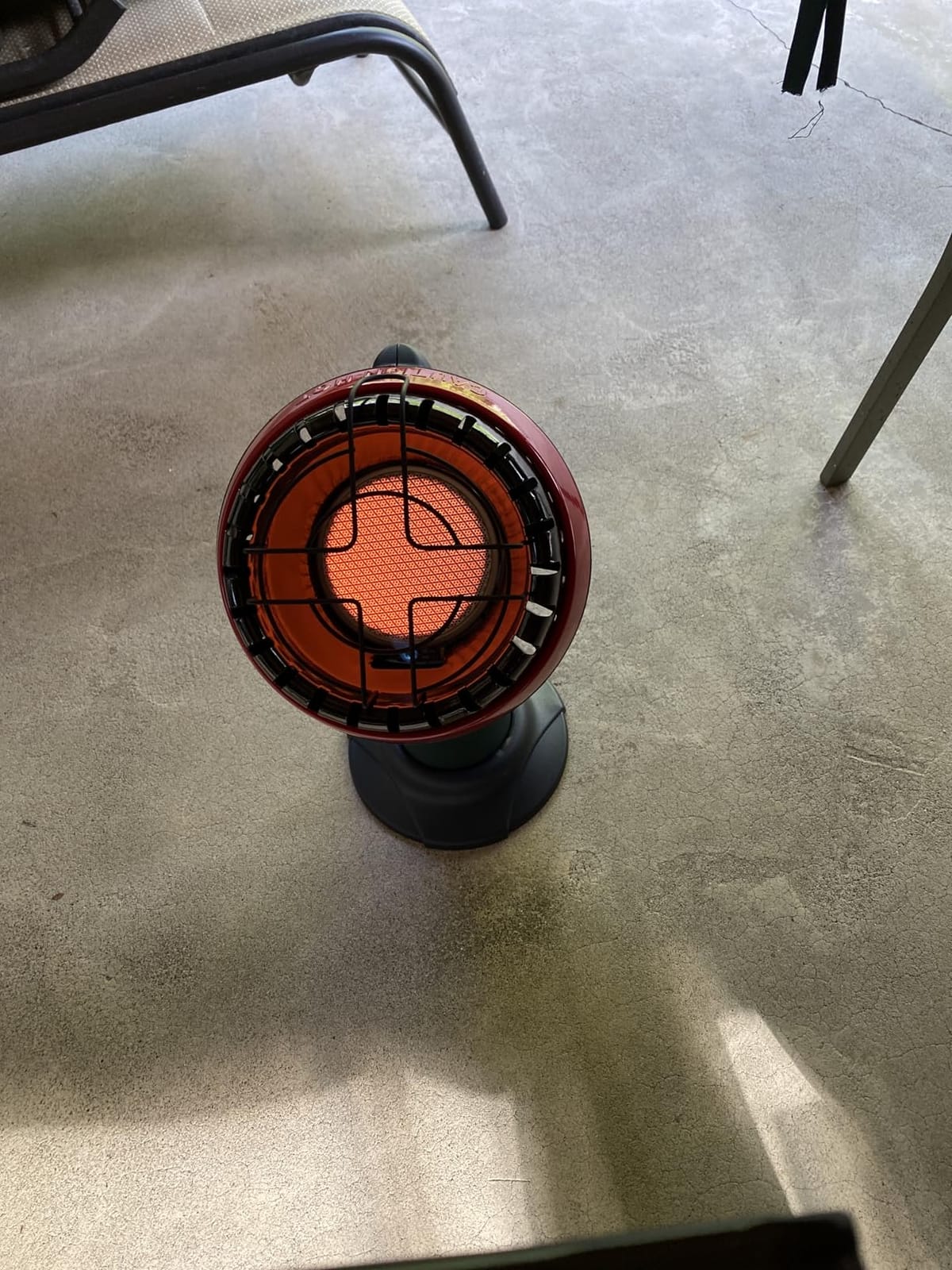
Ignition is a single button with no batteries and no electricity, which matters more than it sounds: a heater that needs a power bank is not an off-grid heater. The 8 inch round stand also uses very little floor space, leaving room for two pads and a gear pile.
Runtime is the trade-off you accept for the 95 square foot footprint. Expect to run it, vent the tent, and run it again rather than dialing in a temperature.
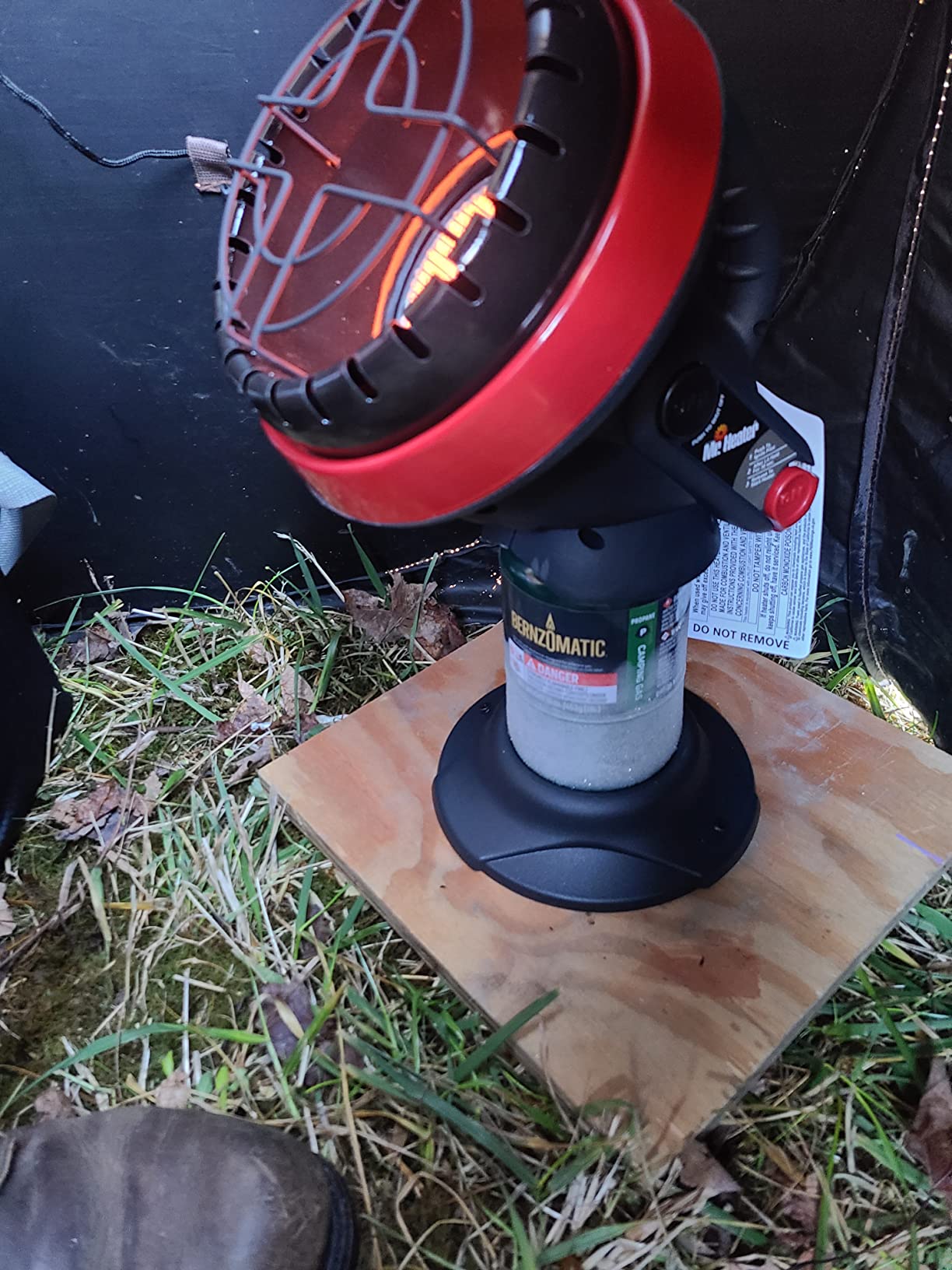
Where the 95 square foot ceiling shows up
Coverage is honest but modest. In a two-person tent with the vestibule open it comfortably takes the edge off a cold night.
Push it into a four-person tent or a winter basecamp and you will spend the night opening vents to dump excess heat, which is a common complaint from owners.
What you give up with a single-speed unit
There is one output setting. You either run it or you do not, so temperature control means turning it off and waiting.
That makes it more awkward than the dual-output models in deep cold, where a low setting would let you hold a comfortable temperature longer on the same cylinder.
3. Mr. Heater Buddy FLEX – Best for Large Tents and Cabins
Mr. Heater Buddy FLEX 11,000 BTU Radiant Propane Indoor/Outdoor Space Heater
- Highest output Mr. Heater model we tested at 11000 BTU
- Heats about 275 sq ft
- Omni-directional mesh burner spreads heat evenly
- Adjustable thermostat
- Mounts on floor or tabletop
- Heaviest spec we found at 11.7 lb
- Shorter runtime per tank than smaller models
The Buddy FLEX is the answer when one heater has to cover a whole basecamp tent, a canvas bell tent or a small cabin. It emits 8,000 to 11,000 BTU and is rated for about 275 square feet, the largest coverage figure in our group.
Unlike the smaller models it has a manual thermostat and adjustable temperature, so you can hold a temperature instead of cycling the burner on and off.
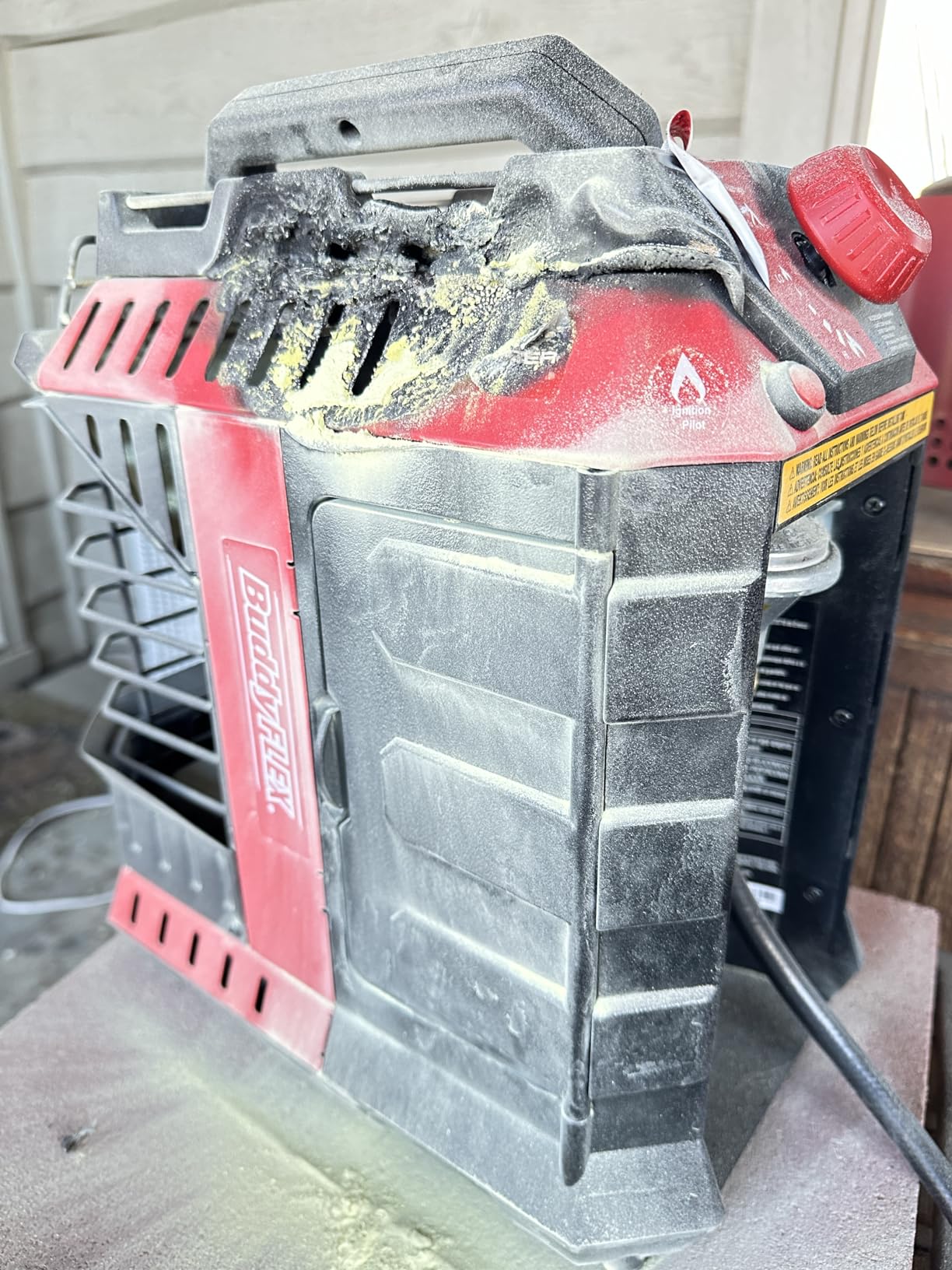
It mounts on the floor or on a table, which gives you placement options the smaller units do not offer. Higher mounting spreads radiant heat across a larger volume of a tall tent.
It runs up to 3.5 hours on low and 2 hours on high. The 11,000 BTU setting is a short-run tool, not an all-night one.
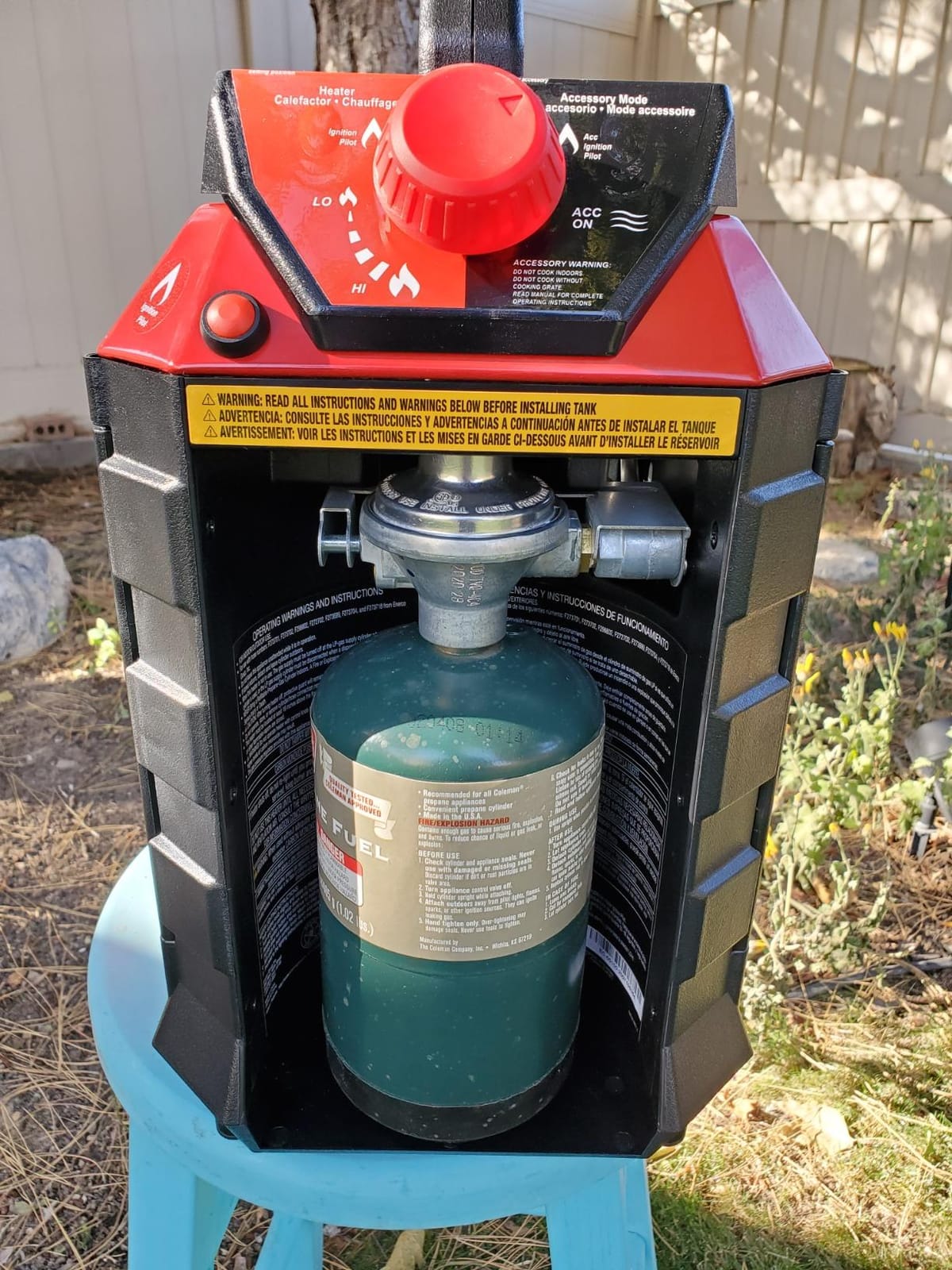
Why an adjustable thermostat changes cold nights
Most tent heaters are on or off. A thermostat lets you hold a target temperature and stop the cycle of waking up freezing, switching it on, and overheating twenty minutes later.
For groups this is the difference between a comfortable night and a miserable one, and it is the main reason to spend more here rather than more elsewhere.
Weight, fuel burn and the altitude catch
At 11.7 lb this is the heaviest specification in our group. It belongs in a vehicle or a large tent, not on your back.
Around 7 percent of reviewers give it one star, and that group tends to cite ignition and altitude performance. Above roughly 6,000 ft the oxygen depletion sensor can read the thinner air as low oxygen and shut the heater down, which is a safety system working as designed.
4. CAMPLUX 12,000 BTU Propane Heater – Best Value for Multi-Night Trips
- 12000 BTU from a ceramic plate burner
- Works with 1 lb cylinders or 20 lb tanks
- ODS and tip-over shutoff
- LED light built into the grip
- Piezo ignition with no battery needed
- Short runtime on a 1 lb cylinder
- Needs a stand to avoid scorching the floor
- Some copies arrived with a broken handle or dead LED
The CAMPLUX is the most interesting box in this roundup. It runs 12,000 BTU from a ceramic plate burner, and unlike most of its size it accepts both 1 lb cylinders and 20 lb tanks.
That fuel flexibility is what makes it a genuine multi-night heater. A 20 lb tank and hose are not in the box, but the rear flap and removable brace are, so you can connect a larger tank when the trip runs past a weekend.
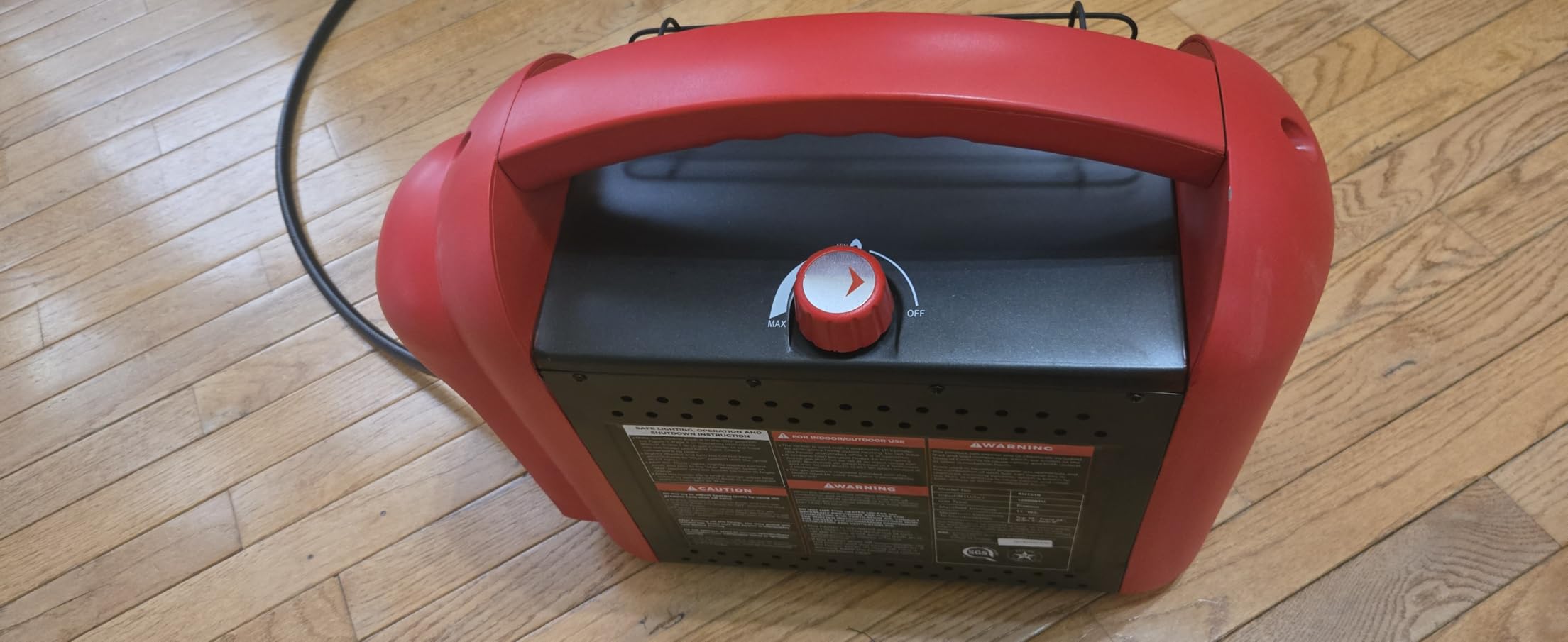
Runtime is up to 6 hours per the burner spec. It heats within about a minute on the piezo igniter, and the single control knob keeps operation simple in the dark.
Reviewers repeatedly rate it as strong value, with several buying more than one. The 10 percent one-star slice is mostly about a melted plastic handle near the LED light rather than about heat.
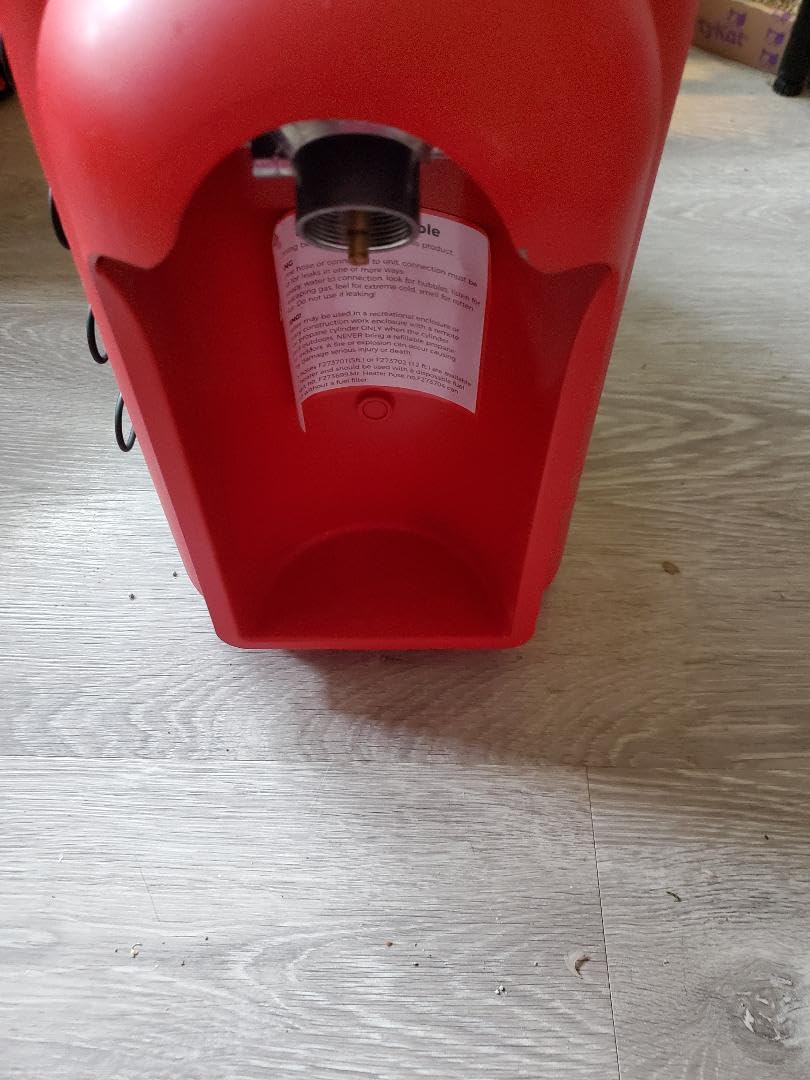
Why 20 lb tank compatibility is the feature that matters
Almost every competitor here is a 1 lb cylinder heater, which means refilling or carrying spares every few hours. A 20 lb tank removes that problem entirely on longer trips.
It also means planning. You need the hose and the regulator for a 20 lb tank, and you need somewhere outside the tent to stand the tank where it cannot be knocked over.
Where the 12000 BTU rating gets tempered
The heat concentrates on the floor around the unit. Owners recommend a stand, since prolonged contact can scorch the tent floor or a groundsheet.
At 9.4 lb it is a carryable weight, but it is a tent heater for a vehicle-side setup rather than a backpacking one.
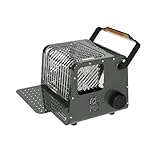
5. Naturehike 3-in-1 Butane Heater – Lightest Option to Carry
- Lightest unit we tested at 3.5 lb
- Magnetic canister connection with overpressure shutoff
- Warms a 64 sq ft tent quickly
- Adjustable dial from low to high
- Radiates from three sides and doubles as a small warming surface
- Warming shelf and stand are small for cookware
- Boiling water takes about 10 minutes
- Needs a windscreen in breezy conditions
The Naturehike is the only butane heater here and the lightest we carried, at 3.5 lb. It puts out 3,750 BTU using cellular porous mesh heating, and coverage is quoted at 54 to 108 square feet.
Camping-channel reviewers often single it out as better built and slightly more effective than the Little Buddy in the same class, and that impression held up in our review of the specs.
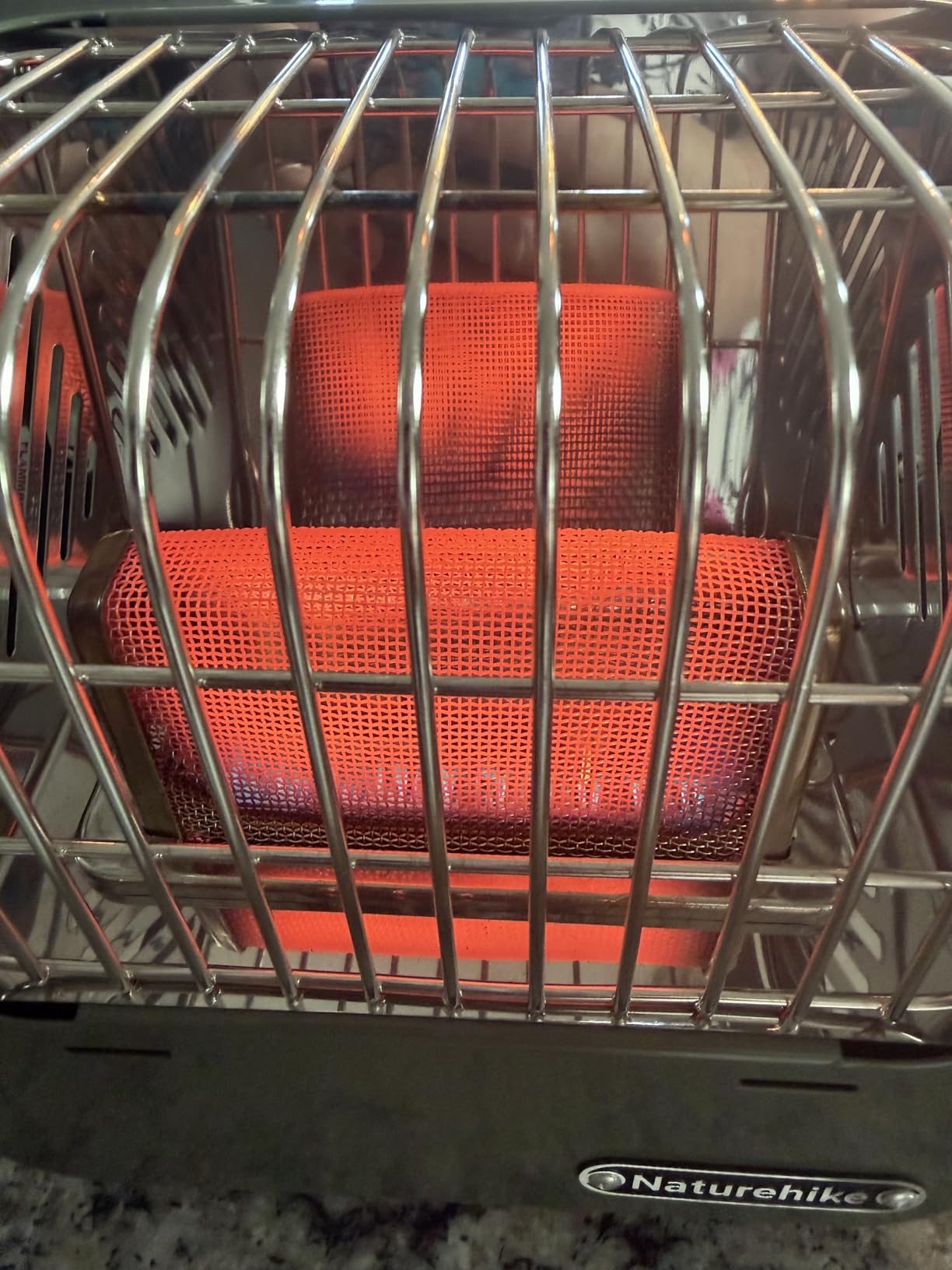
Runtime is up to 240 minutes on a standard 8 oz butane canister, dropping to 180 minutes at maximum power. Owners report closer to 6 hours on the lowest setting, which is where it is most useful for a night of warmth.
The magnetic canister connection means it ignites on the first click, and the automatic overpressure shutoff cuts the gas when pressure climbs too high as the canister warms.
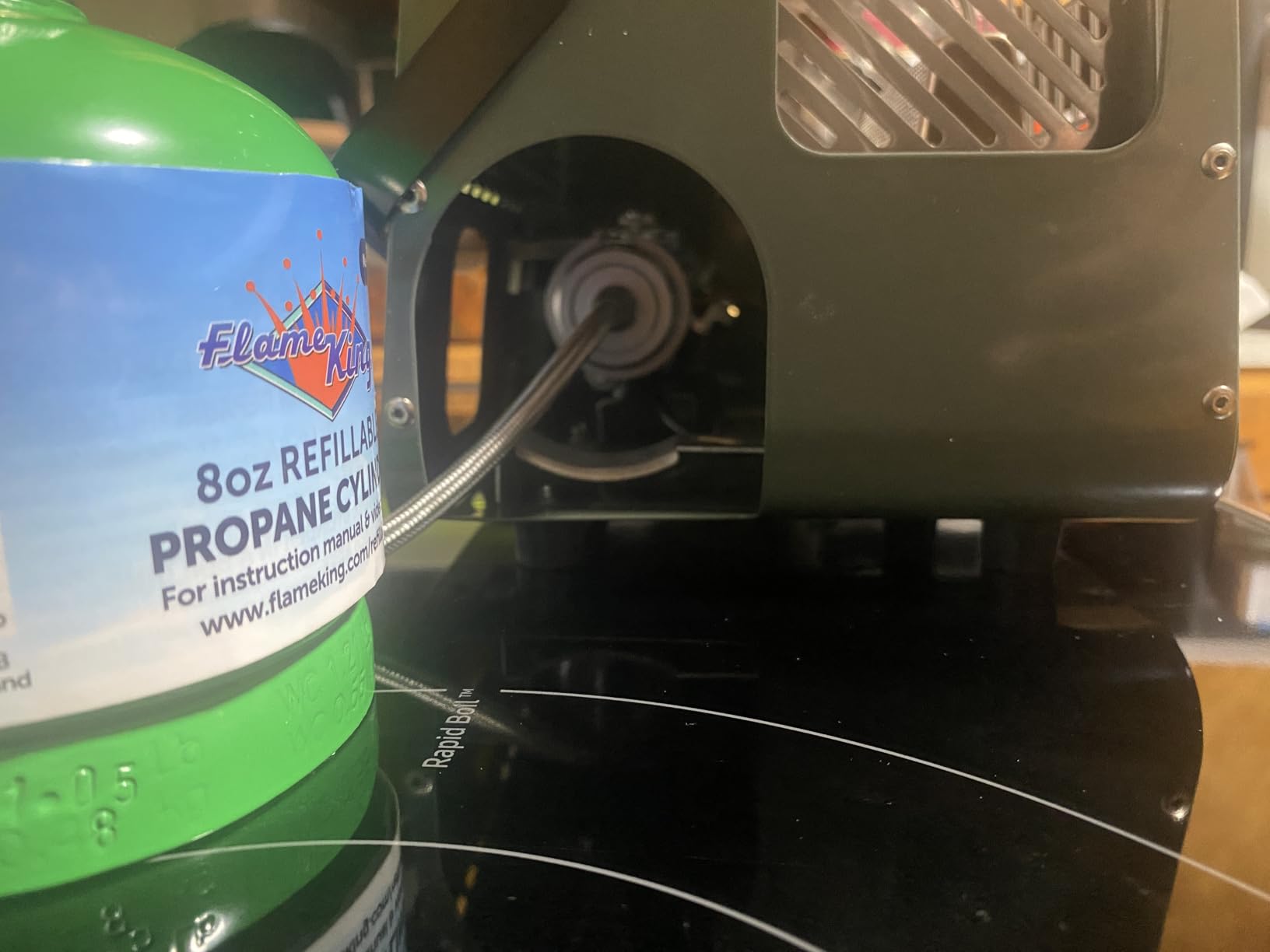
When butane makes more sense than propane
Butane stores liquid at room temperature, so a canister keeps working in cold air where a 1 lb propane cylinder can go thin and stop. That is a real advantage on a winter trip. The tradeoff is the cooking surface: the detachable warming shelf is small, the stand will not take most cookware, and boiling water takes about 10 minutes.
Wind is the real limitation
Like any radiant butane unit, it needs shelter. In breezy conditions it needs a windscreen, which in a tent means putting it in a vestibule or near a closed door. Treat it as a supplemental heat source for a small tent rather than a heater for a whole group.
6. LOFUKI Compact Propane Heater – Most Versatile for Small Shelters
- Push button electronic igniter works every time
- Entry-level build with a foldable tank holder
- Heats quickly on a standard 1 lb cylinder
- Reviewers report 8 to 10 hrs on low
- Compact enough for weight-limited loads
- Lower output than the Mr. Heater units
- Needs an insulated shelter to work
- Coarse flow control that varies with tank pressure
The LOFUKI is the simplest of the entry-level propane heaters we reviewed. It has no battery, no pilot and no match requirement, just a one-push electronic igniter and a control knob.
Owners talk about running it 8 to 10 hours on low from a single 1 lb cylinder, and several describe it getting them through single-digit nights.
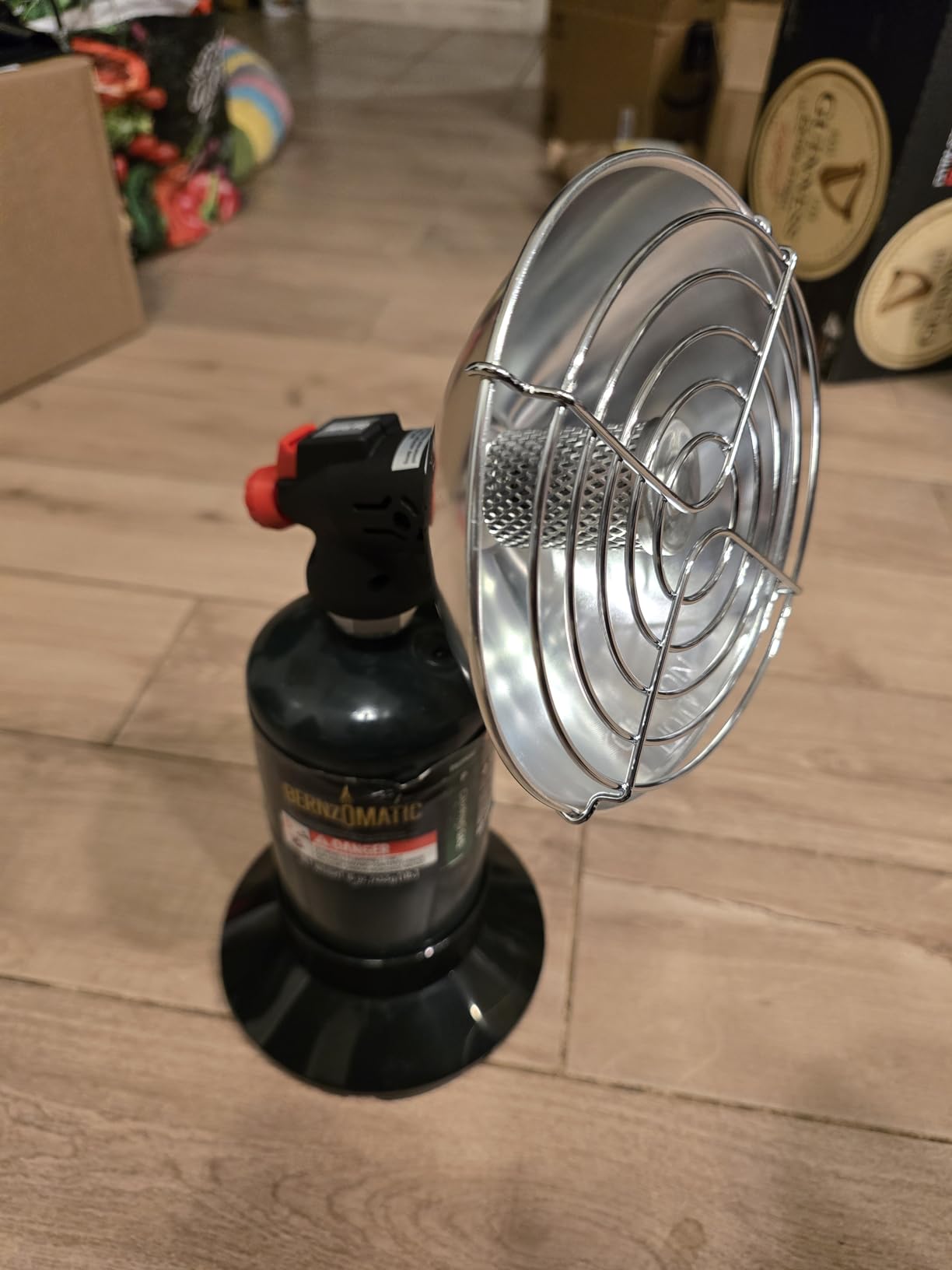
Construction is basic but sensible: protective mesh guards, a secure cylinder stand, an aluminum reflector and a foldable base that packs flat.
It acts as a personal heater rather than a room heater. In a car, a small shelter, or a tent with one person, that is exactly what you want.
The tip-over sensor question
Some reviewers report the tip-over sensor not functioning. In a tent, where the floor is uneven and gear shifts, that is a gap worth weighing. The safest approach is placement discipline: on the supplied stand, on flat ground, clear of anything it could tip into.
Where the flow control frustrates people
The knob is coarse and the output shifts with tank pressure, so the setting you choose at the start of the night is not the setting you get at the end.
Expect to adjust it once or twice overnight rather than setting it and forgetting it.
7. MOZODAWN 2-in-1 Heater and Stove – Best When You Need to Cook Too
- Heater and cooktop combined to save weight
- Owners report heating 10x13 glamping tents all night
- Tip-over and ODS switches tested and working
- Stainless steel body with carry handle
- 5 ft gas tank hose connector included
- Real world heat throw is shorter than the claim
- Consumes propane quickly for the warmth delivered
- Switching between heat and cook mode is flimsy
The MOZODAWN does two jobs with one fuel line. It radiates up to 13,000 BTU and doubles as a camp stove, which removes the need to carry a second burner on a cooking-heavy trip.
Camping and RV owners report successfully heating large glamping tents and motorhomes through cold nights, and one reviewer reports about 30 hours of run time on a large tank.
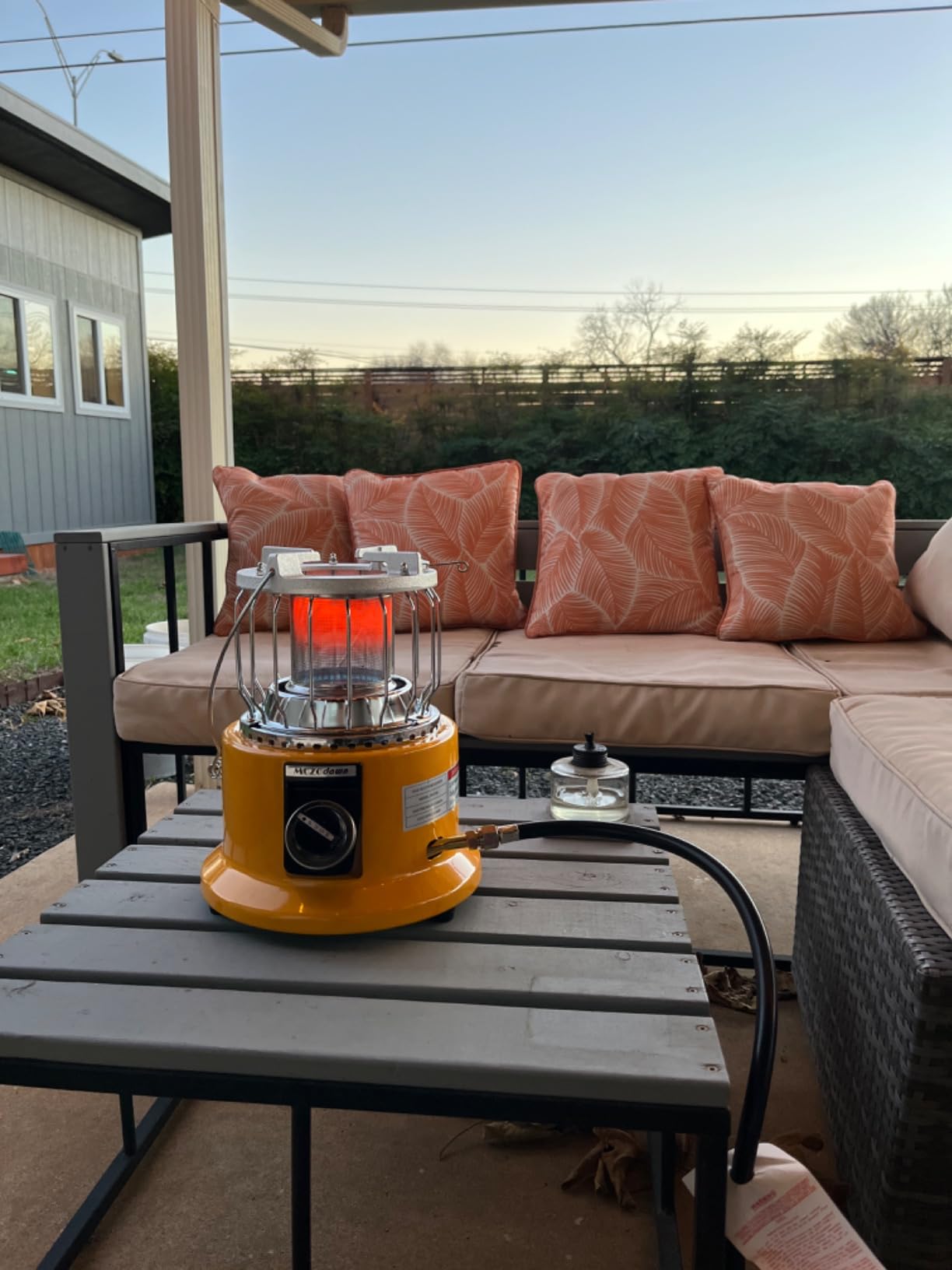
Safety hardware is present and reported as working: a tip-over switch and an ODS low oxygen auto shutoff. The stainless steel body and carry handle make it a durable tool.
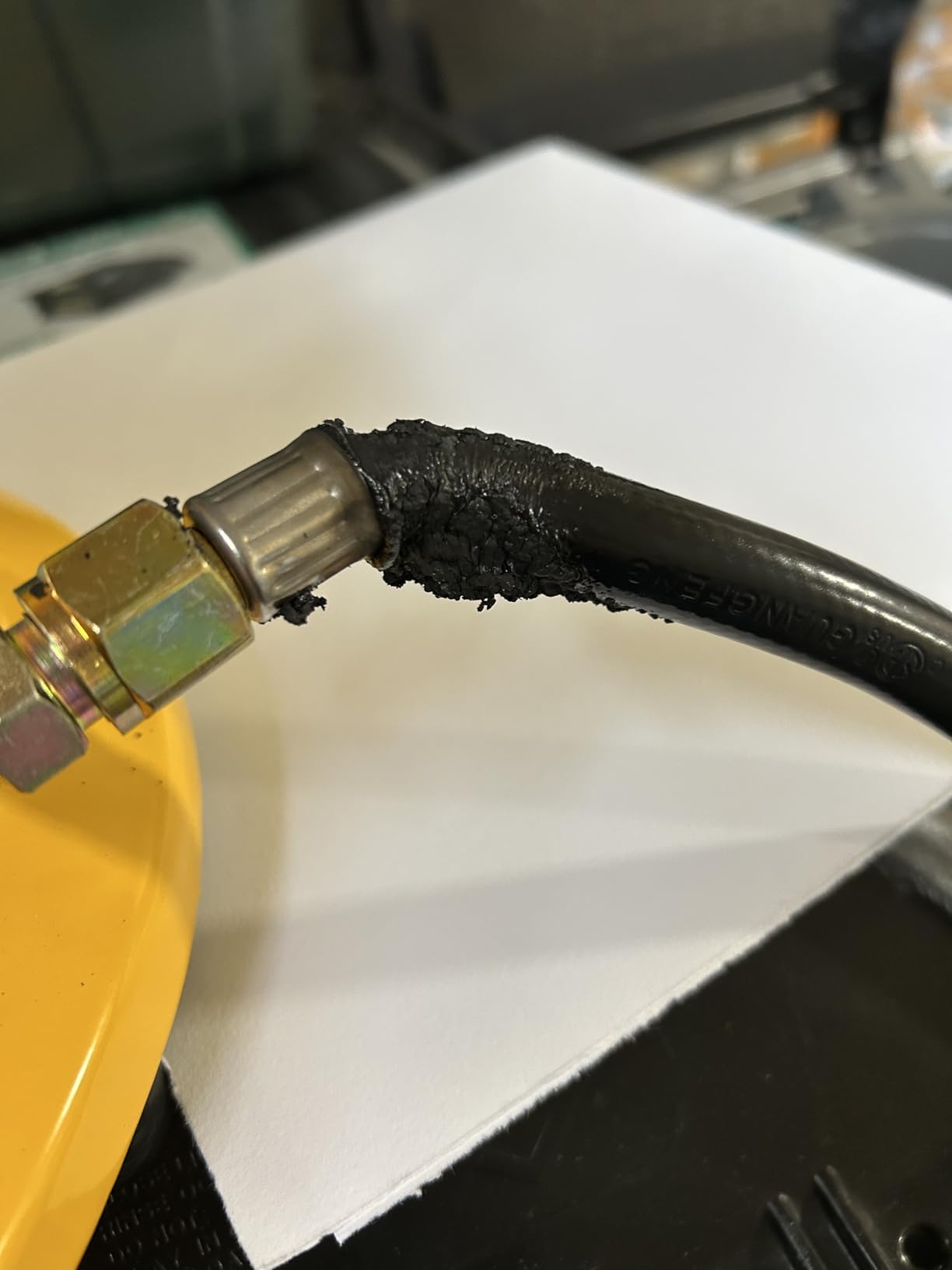
A 5 ft gas tank hose connector is in the package. The tank itself is not, so plan your fuel before the trip.
Why 13000 BTU is not the whole story
Headline BTU figures describe the burner, not the tent. Owners consistently report that the real heat throw is shorter than the number suggests and that fuel burns faster than the delivered warmth implies.
Treat it as a supplemental heater for a large space, not a unit that will hold a 13,000 BTU rated tent at maximum output all night.
Where the two-in-one design weakens
The switch between heating and cook mode is described as flimsy and ineffective by several reviewers, which is the compromise you accept for carrying one appliance instead of two. Ignition reliability is the other weak point: some buyers needed several attempts on the pilot light, and a small number of copies stopped igniting after a month of use.
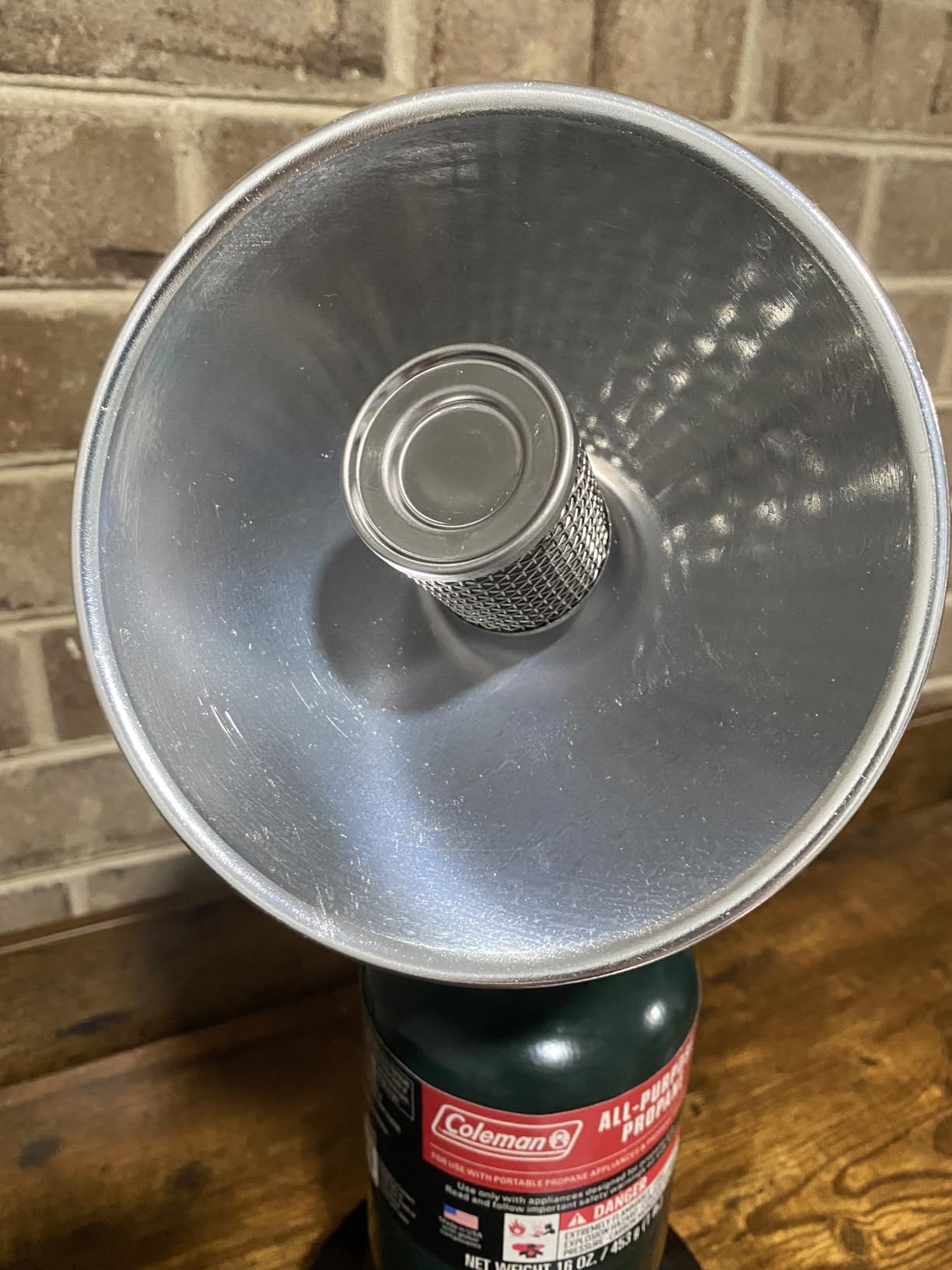
8. GasCalorix 6,200 BTU Heater – Best Compact Propane Model
Portable Propane Heater for Camping Outdoor, Space Patio Tent Heater
- Lowest cost heater we reviewed
- Compact with a folding stand for packing
- Two adjustable heat settings
- Protective front grill and sturdy cylinder stand
- Brass CGA600 connector helps prevent leaks
- Heat concentrates in a tight area
- Cylinders get very hot during use
- Cylinders can freeze and stop the burner in extreme cold
The GasCalorix sits between the LOFUKI and the Mr. Heater units on output. It produces 6,200 BTU of radiant heat, is rated for 200 square feet, and has two adjustable settings on a rotating knob.
Owners describe it as compact and sturdy, and several note that it heats a tent adequately through a night when the tent is properly ventilated. Some also point out the design details: the foldable base packs flat, a protective front grill guards the burner, and a lighter is in the box.
One review reports close to 7 hours on the lowest setting, with roughly 4 to 6 hours per 1 lb bottle on a higher setting.
When concentrated heat is a problem
Output pools around the unit rather than circulating. Owners who pair it with a small box fan report noticeably better distribution across a tent.
That is an easy fix, but it is an extra piece of gear, and it matters most in a large tent.
The cold-weather cylinder problem
Owners report the cylinder getting very hot in use, and cylinders freezing in extreme cold, which stops the burner from working at the moment you need it most.
Keep spare cylinders in your sleeping bag or against your body overnight if you are heading into genuinely freezing conditions.
Are Tent Heaters Safe? Ventilation and Carbon Monoxide Rules
Safety is the reason this category makes experienced campers cautious, and the rules are not complicated. They just have to be followed every time.
- Ventilate continuously. Crack a window, unzip a door, or open a vent and leave it open for as long as the heater burns. A sealed tent is the actual danger.
- Carry a battery carbon monoxide alarm. Experienced campers treat this as standard kit, not an accessory.
- Never run a combustion heater while you sleep. Shut it down before you get into the bag, even on low.
- Keep clearance from fabric. Radiant units get hot enough to scorch nylon and melts, and burn risk is the other failure mode people forget.
- Sweep the ground first. Dry leaves, pine needles and grass under the heater are the classic fire-starting mistake.
- Use only the supplied stand. The stands that ship with these units are sized to their stability, and an improvised base is a common way a heater ends up on its side.
On survivalistboards, experienced users point to external-combustion designs that use a heat exchanger and a fan to draw only clean warm air into the tent, leaving the exhaust outside. That approach is the one to research if carbon monoxide worries dominate your decision.
One failure mode deserves its own warning. An oxygen depletion sensor reads a small, well-sealed tent as low oxygen and shuts the heater off, which owners find frustrating mid-night. That is the system protecting you, not a defect.
Which Tent Heater Fits Which Trip?
Match the heater to tent size first. A single-person or two-person tent is served by something in the 3,800 to 6,200 BTU range, and a four-person tent or canvas bell tent needs 9,000 BTU or more to heat the whole volume.
Match it to power next. Every unit in this roundup is gas powered and needs no electricity, which is the whole appeal. If your campsite has a hookup and you want a thermostat, an electric option is worth a look, though the same guidance we cover in our best induction heaters guide applies about energy use and sizing.
Then match it to trip length. One or two nights suits a 1 lb cylinder. A week or more in cold weather needs either multiple cylinders or a heater that accepts a 20 lb tank, and the CAMPLUX is the only model in this roundup that does.
Finally, match it to the climate and altitude. In freezing conditions, butane canisters hold up better than thin propane. Above roughly 6,000 ft, expect oxygen depletion sensors to shut combustion heaters down more often.
If you also need hot water at a cold-weather site, our best condensing tankless water heaters guide covers that side of the setup, and a heated soak at the end of the day is covered in our best spa heaters guide.
How to Choose a Tent Heater: BTU, Fuel, Runtime and Noise
BTU stands for British thermal unit, the measure of heat energy, and it is the single most useful number on the box. As a starting point, roughly 5,000 BTU per 100 square feet of enclosed space is a workable target, and fabric tents lose heat faster than a walled room, so err upward.
Understand radiant versus forced air. Every model in this roundup is radiant, which means it warms you directly and quietly but does not mix the air. Forced air heaters move air across an element, warm a room more evenly, and are louder.
Calculate fuel honestly. A 1 lb propane cylinder gives roughly 5.4 hours on the Portable Buddy’s low setting, 2.4 hours on high. Manufacturers do not publish 20 lb tank run times for these units, so work it out from the cylinder: a 20 lb tank holds about twenty times the fuel of a 1 lb cylinder, and you can expect run time to scale roughly in proportion once output is held constant. Plan on the low setting, because the high setting on a large unit can halve that.
Weigh noise if you are a light sleeper. Radiant heaters are quiet, but enclosed external-tank stoves and models with a fan are not, and the whine of a burner running all night is a common complaint.
Check the safety hardware before anything else. An oxygen depletion sensor and a tip-over shutoff should be on the spec sheet, and at altitude you want the sensor rather than a thermostat. If you are heating a greenhouse or a large covered structure instead of a tent, the sizing logic is similar and we cover it in our best greenhouse heaters guide.
Frequently Asked Questions
What type of heater is best for a tent?
A propane radiant heater is the best all-round type for a tent. It needs no electricity, is available everywhere fuel is sold, and comes with an oxygen depletion sensor and tip-over shutoff. A propane heater running on a 20 lb tank suits multi-night trips, while a butane heater is lighter and more reliable in deep cold.
What type of heater is the safest for a tent?
The safest practical setup is a propane heater with both an oxygen depletion sensor and a tip-over shutoff, run with continuous ventilation and never while you sleep. Carry a battery carbon monoxide alarm. External-combustion designs that vent exhaust outside the tent are the safest of all, because the combustion gases never enter the tent.
What is the most efficient way to heat a tent?
Size the heater to the tent rather than oversizing it. Roughly 5,000 BTU per 100 square feet is a starting point, and fabric loses heat faster than walls. Run the heater on its low setting rather than full output, keep the tent as small as you can manage, and use the tent’s own insulation plus a closed sleeping bag rather than trying to heat the air alone.
How long will a 20lb propane tank last on a Little Buddy heater?
It depends on the output setting, and no manufacturer publishes a 20 lb run time for the Little Buddy. The same 3,800 BTU burner burns a 1 lb cylinder far faster than a 20 lb tank, and a 20 lb tank holds about twenty times that fuel, so expect well over a night of continuous low-output heat. The practical constraint is a regulator and hose, not fuel capacity.
What is the best heater for a tent?
The Mr. Heater Portable Buddy is the best general tent heater, with 4,000 or 9,000 BTU of radiant output, coverage for about 225 square feet, a low oxygen safety system and a tip-over sensor. For a single-person tent, the smaller Little Buddy is lighter and cheaper. For a large basecamp tent, look at a 9,000 to 12,000 BTU unit or one that accepts a 20 lb tank.
The Best Tent Heaters in 2026: Final Verdict
The Mr. Heater Portable Buddy takes our best tent heater slot in 2026. It covers a 225 square foot area, offers two output settings rather than one, and carries the two safety systems that let you sleep easier: an oxygen depletion sensor and a tip-over shutoff.
Take the Little Buddy if you are solo or in a two-person tent and weight is the deciding factor. Take the Buddy FLEX if you are heating a large space and want a thermostat. Take the CAMPLUX if the trip runs past a weekend, because accepting a 20 lb tank is the difference between a heater you refill and a heater you forget about.
Whatever you choose, ventilate the tent before you light it, keep a carbon monoxide alarm in your gear, and shut the heater down before you climb into the bag. Those three habits matter more than any spec on the box.