
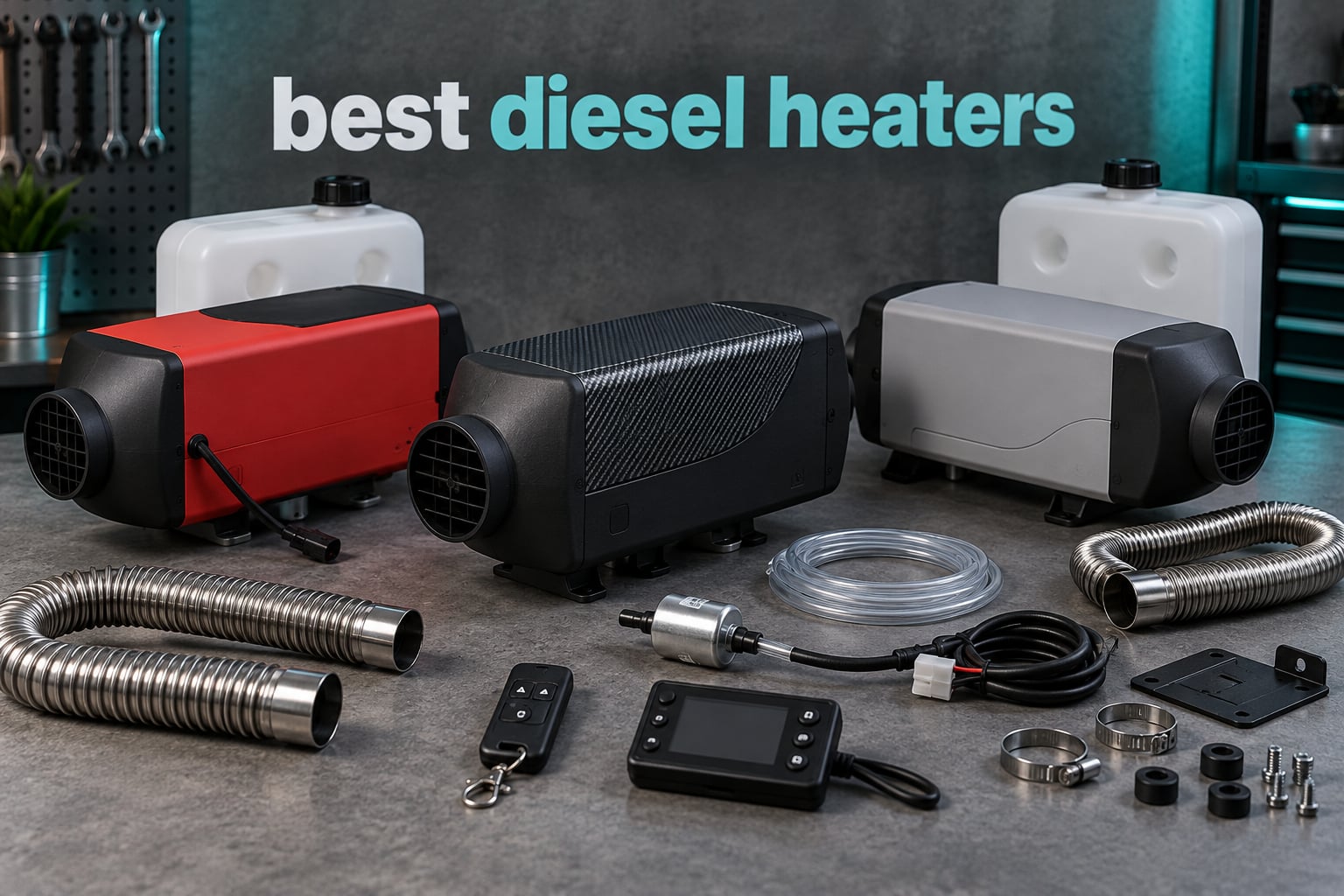
What brand diesel heater is best? For most van, camper and boat builds the honest answer is a Webasto Air Top 2000 STC or Espar Airtronic S2 installed properly, because they modulate down cleanly, have real parts behind them and start every cold morning without drama. If your build is seasonal or you want something you can carry to a campsite, a proven all-in-one budget heater is the sensible second choice.
Is a 2kW diesel heater enough? Yes, for an insulated van, a teardrop, a truck camper or a rooftop tent, a 2kW diesel heater is usually enough, and the van-dweller consensus is that a smaller heater beats a bigger one. Oversized 5kW and 8kW all-in-one heaters short-cycle in a small space, which means soot on the heat exchanger, a glow plug that fouls early and a burner that wears out faster. That single idea shapes every pick below.
Our team spent weeks comparing the ten heaters in this roundup against the specs real owners report, the fuel burn they measure at a realistic low setting, and the battery their setup actually has. We are not installers for any of these brands, and we do not claim bench measurements we did not take. What we did was read thousands of owner reviews, compare every published figure, and cross-check the failure patterns described on van, expedition and marine forums.
The category splits cleanly in two. One group is all-in-one budget heaters with a 5L or 15L tank bolted to the side, a 12V plug, a remote and a colour display. The other is component heaters, sold without a tank, that a fitter mounts permanently and feeds from your vehicle’s own fuel line. We cover ten of the first group here, and the buying guide explains honestly when the second group is worth the money.
If you are also upgrading other parts of a build, our guides to the best induction heaters and the best condensing tankless water heaters cover the other two systems almost every van conversion needs.
Table of Contents
Top 3 Picks for the Best Diesel Heaters in 2026

Our shortlist logic is simple. The VEVOR CY-32 takes the main slot because it has more verified owner feedback than anything else in the group and the fuel range sits at a sensible 0.18 to 0.36 L/h. The LF Bros N2 is the one to buy if you want to run the same heater off a wall outlet in a garage as well as a vehicle battery. The VEVOR XMZ-D1 takes third place because its Bluetooth app and its rated 18,045 ft altitude compensation are genuinely useful in mountains.
All 10 Diesel Heaters Compared in 2026
| Product | Specifications | Action |
|---|---|---|
 VEVOR 8KW All-in-One VEVOR 8KW All-in-One |
|
Check Latest Price |
 LF Bros 5KW 12V/24V/110V LF Bros 5KW 12V/24V/110V |
|
Check Latest Price |
| VEVOR 8KW with Bluetooth App |
|
Check Latest Price |
 LF Bros 5KW Compact with Timer LF Bros 5KW Compact with Timer |
|
Check Latest Price |
 VEPURLT 8KW with 15L Tank VEPURLT 8KW with 15L Tank |
|
Check Latest Price |
 VEVOR 8KW with CO Alarm VEVOR 8KW with CO Alarm |
|
Check Latest Price |
 Triclicks 12V All-in-One Triclicks 12V All-in-One |
|
Check Latest Price |
 LF Bros 5KW Plateau Model LF Bros 5KW Plateau Model |
|
Check Latest Price |
 WAYSKA 5KW with 15L Tank WAYSKA 5KW with 15L Tank |
|
Check Latest Price |
 BougeRV 5KW All-in-One BougeRV 5KW All-in-One |
|
Check Latest Price |
A note on the kW column. The advertised wattage is a fuel-to-heat ceiling, not a sustained figure at a useful low setting, and for a small insulated space that ceiling is irrelevant because you will never reach it. The fuel consumption range is the more useful number, because the low end of that range is what your heater will actually draw all night.
1. VEVOR 8KW All-in-One Diesel Heater – the Most-Reviewed Budget Performer
- Largest owner base in this group with 1974 reviews
- Quick 10 minute warm-up
- Low 0.18 L/h at minimum
- Works under 9843 ft altitude
- Must be primed before the first start
- Instructions rely on online videos
- Fuel pump ticking audible on low settings
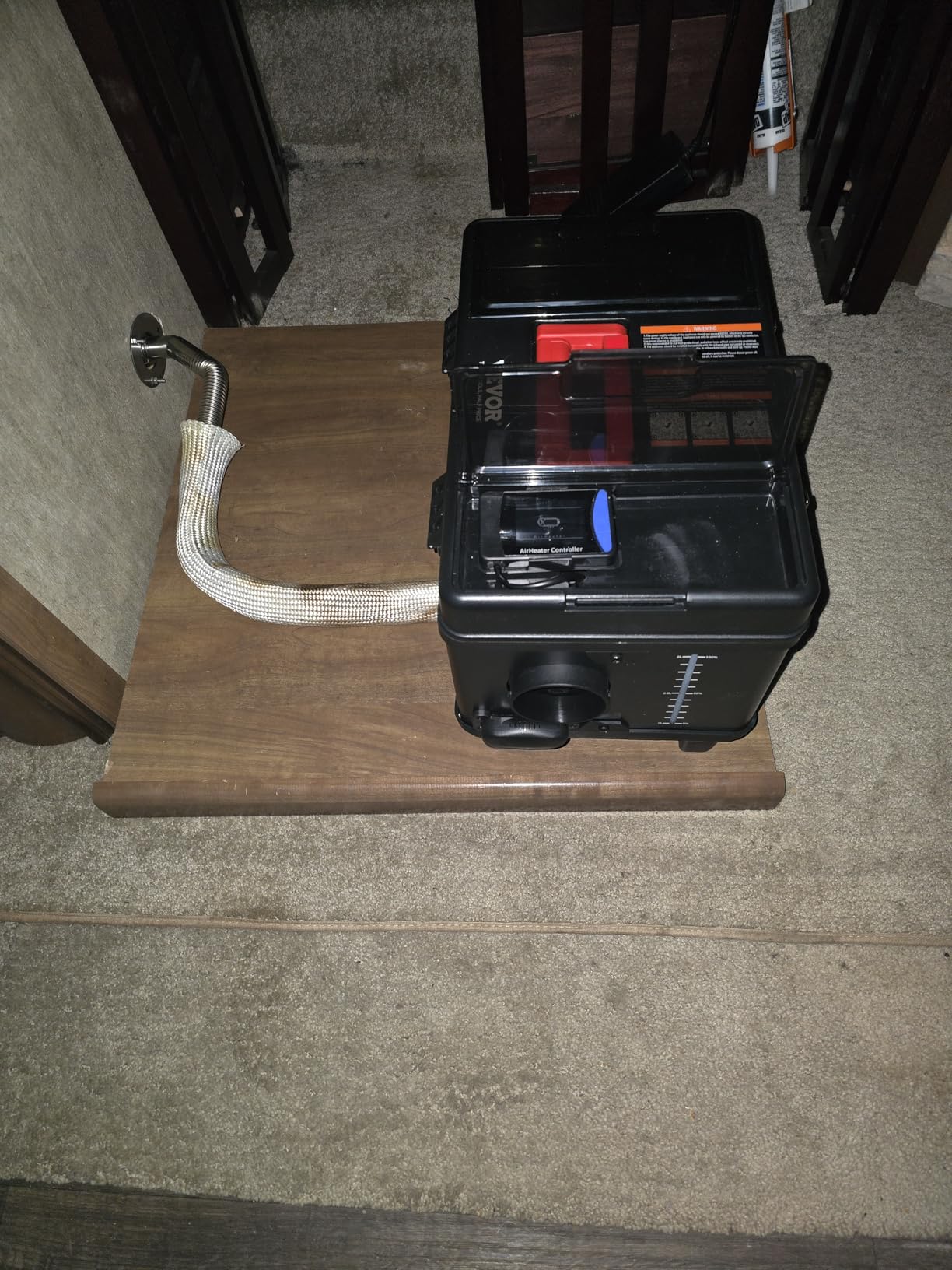
The VEVOR CY-32 is the heater most owners in this group have actually lived with, and that volume of feedback is exactly why it leads our list. Owners describe a fast warm-up of roughly ten minutes, fuel use close to half a cup per hour at full output, and a fan that becomes background noise once the space is up to temperature. It weighs 18.19 pounds and measures 16.34 by 7.09 by 16.14 inches, so it fits behind a seat or under a platform without a rebuild.
Its 5L tank and 0.18 to 0.36 L/h range mean a night of moderate heat costs you around a gallon. Combustion efficiency is listed at 90% or better, and the ceramic igniter is the part that makes cold-morning starts reliable. Owners like the 98ft remote and the LCD adjustment from 32 to 104F, and the fuel gauge on the side saves you from lifting the lid to check.
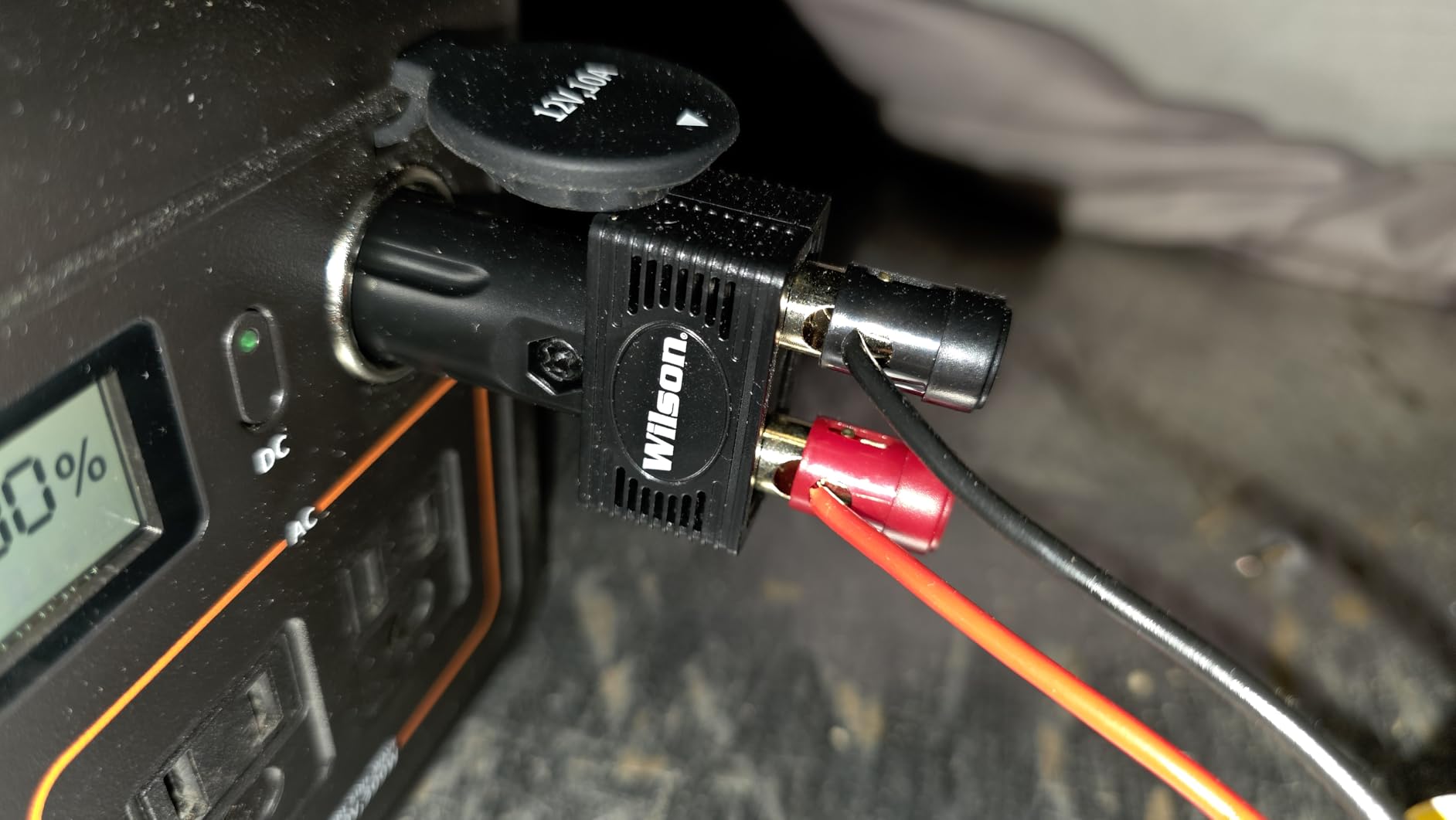
The honest weakness is documentation. Reviews repeatedly say the paper instructions are thin and that setup ended up being a video tutorial. The second recurring theme is priming: several owners report the unit will not fire on the first attempt until the fuel pump is primed, which catches out a lot of first-time owners in cold weather.
There is also a small but real group of owners whose heaters keep heating at reduced output instead of shutting down at setpoint, which points to a control board or thermostat fault. Several of those buyers describe contacting VEVOR support and running into slow troubleshooting. If you are installing this in a van, treat the exhaust as a fire-rated pipe: it runs hot enough to scorch, and it must terminate outside the living space.
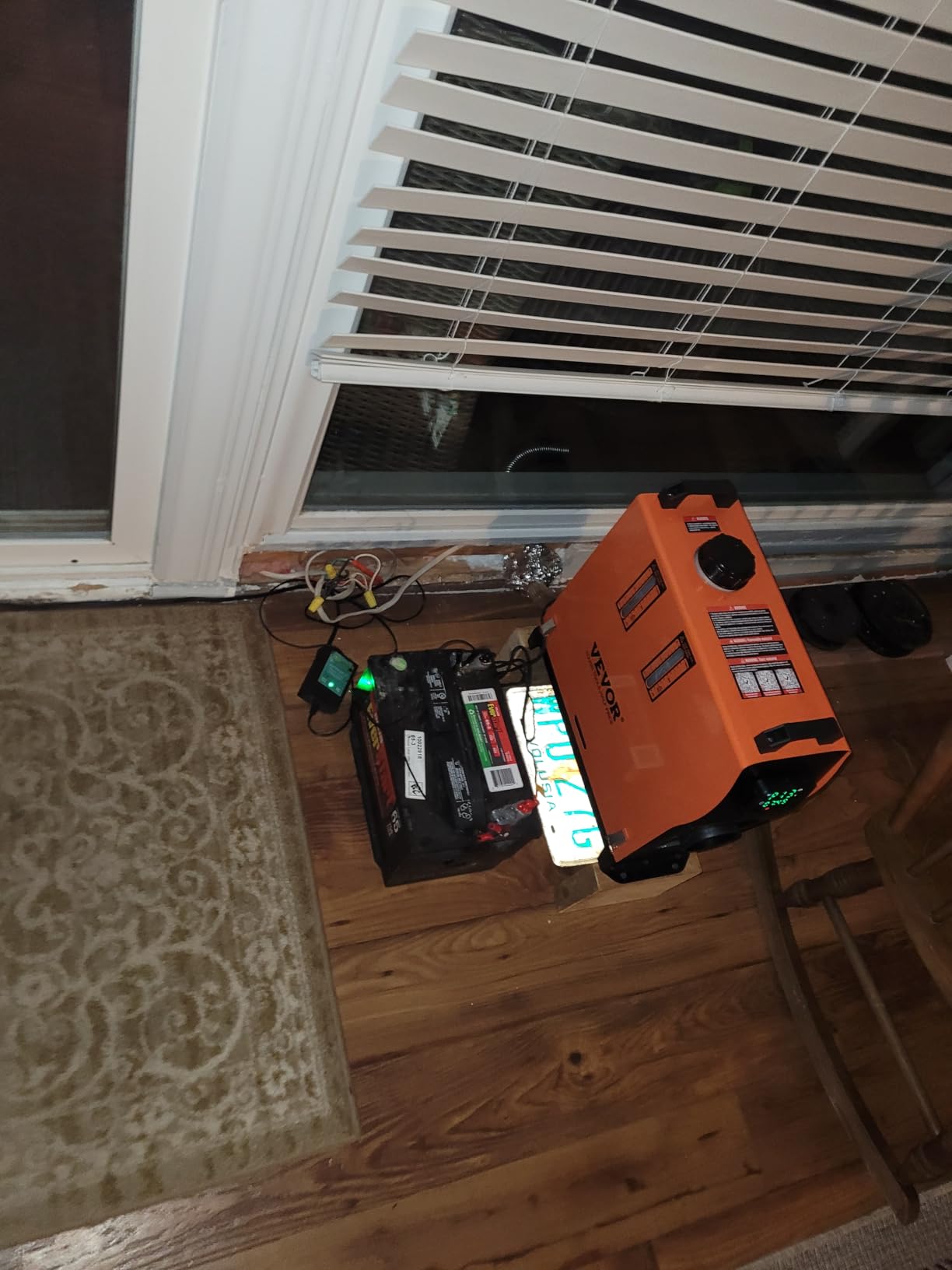
Check the exhaust and fuel cap before your first cold night
Almost every modification these owners describe is about the same two parts. The exhaust pipe runs extremely hot and needs proper shielding and a clean route outdoors, and several owners added a longer exhaust run to reclaim heat that was escaping straight out of the pipe. The leak-proof fuel cap is a genuine improvement over earlier budget models, but owners still wrap the cap area and keep it off bare metal in a wooden-trimmed interior.
Whether this is right for a battery-only setup
This heater draws 3 amps according to the listed specification once running, which is modest. The glow plug start is the heavier moment, and several owners describe adding an air filter and extending the warm air ducting to get more heat into the space per amp. For overnight running on a lithium bank, owners report a 100Ah battery handling a moderate night with solar input during the day.
2. LF Bros 5KW 12V/24V/110V Diesel Heater – the Best Multi-Voltage Workhorse
- Runs on 12V 24V or mains via included transformer
- Steady output across the stated BTU range
- Pre-paired 100ft remote
- Threaded fuel cap resists spillage
- Bottom-exit exhaust needs the unit raised on blocks
- Fuel line runs close to the hot exhaust
- Vague instructions and confusing controller programming
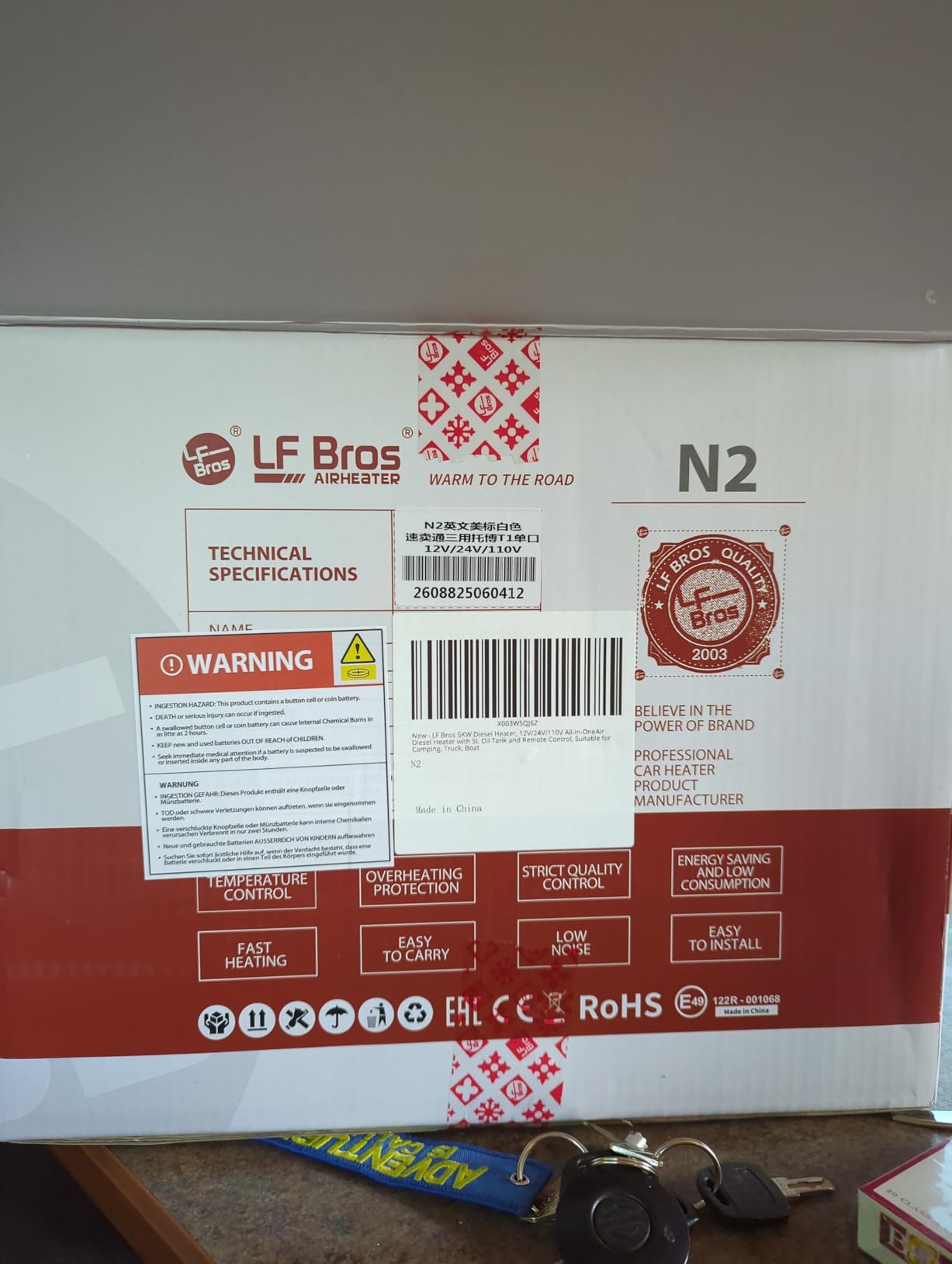
The LF Bros N2 is the pick for anyone who wants one heater for two jobs. Because it ships with a 110V transformer, the same box heats a van from a house battery in the field and warms a workshop off a wall outlet at home. Several owners use it exactly that way, moving it between a garage, a rooftop tent and a caravan over a season.
Output is listed at 5 kW across a 4700 to 17000 BTU range, with fuel use from 0.18 to 0.53 L/h and coverage of 215 to 269 sq ft. It works from -40F to 104F, and the internally threaded fuel cap is a small design touch that matters more than it sounds: owners driving rough roads report no diesel coming out where a simple push cap would have leaked.
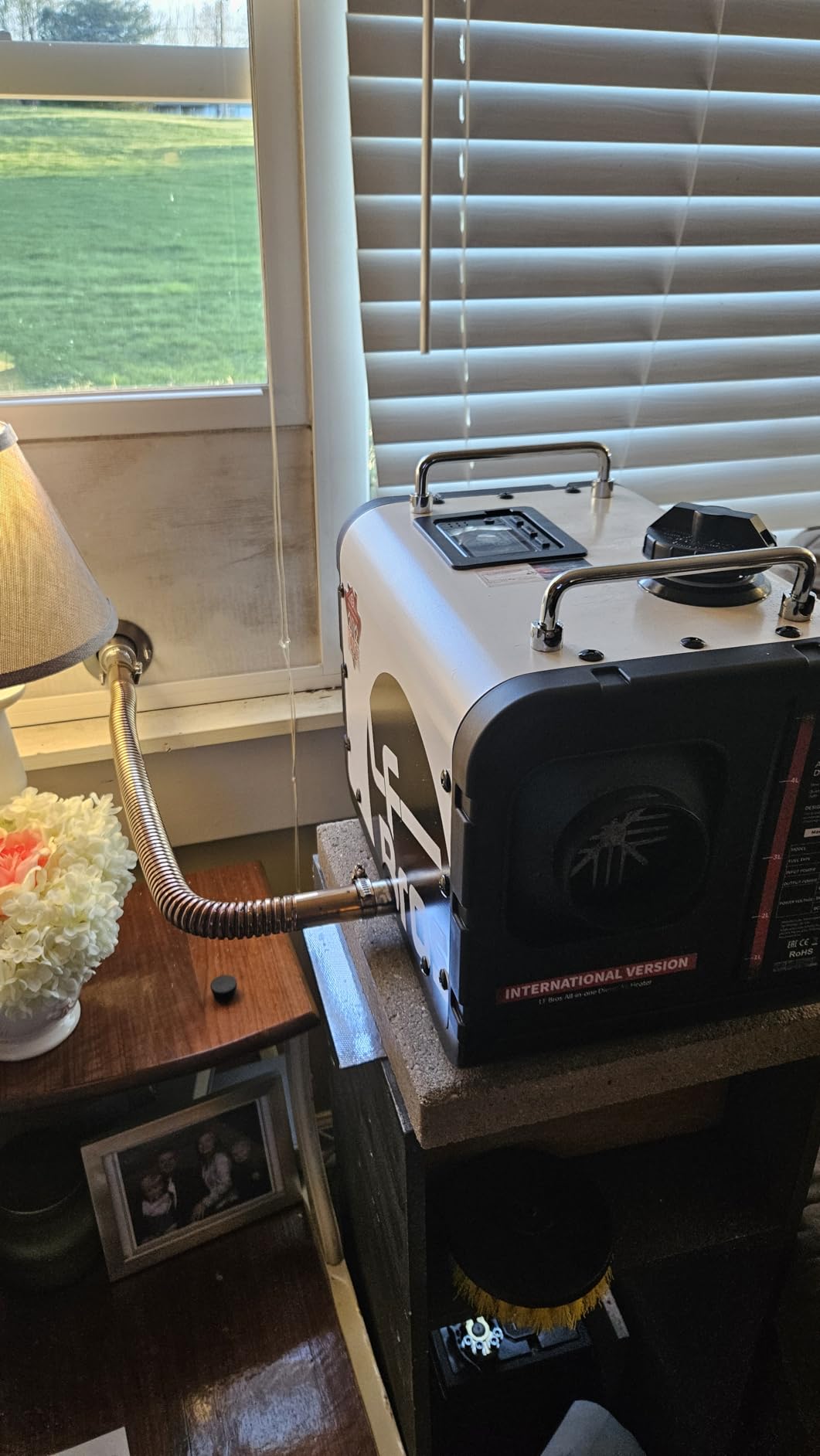
Reviewers consistently describe this unit as quieter than competing budget heaters once the fuel pump primes, and they praise the LCD switch for showing clear operating status. Customer service is credited with resolving setup and timer problems quickly, and a German-language manual is included alongside the English one. Foam-protected packaging doubles as somewhere to store the unit over summer.
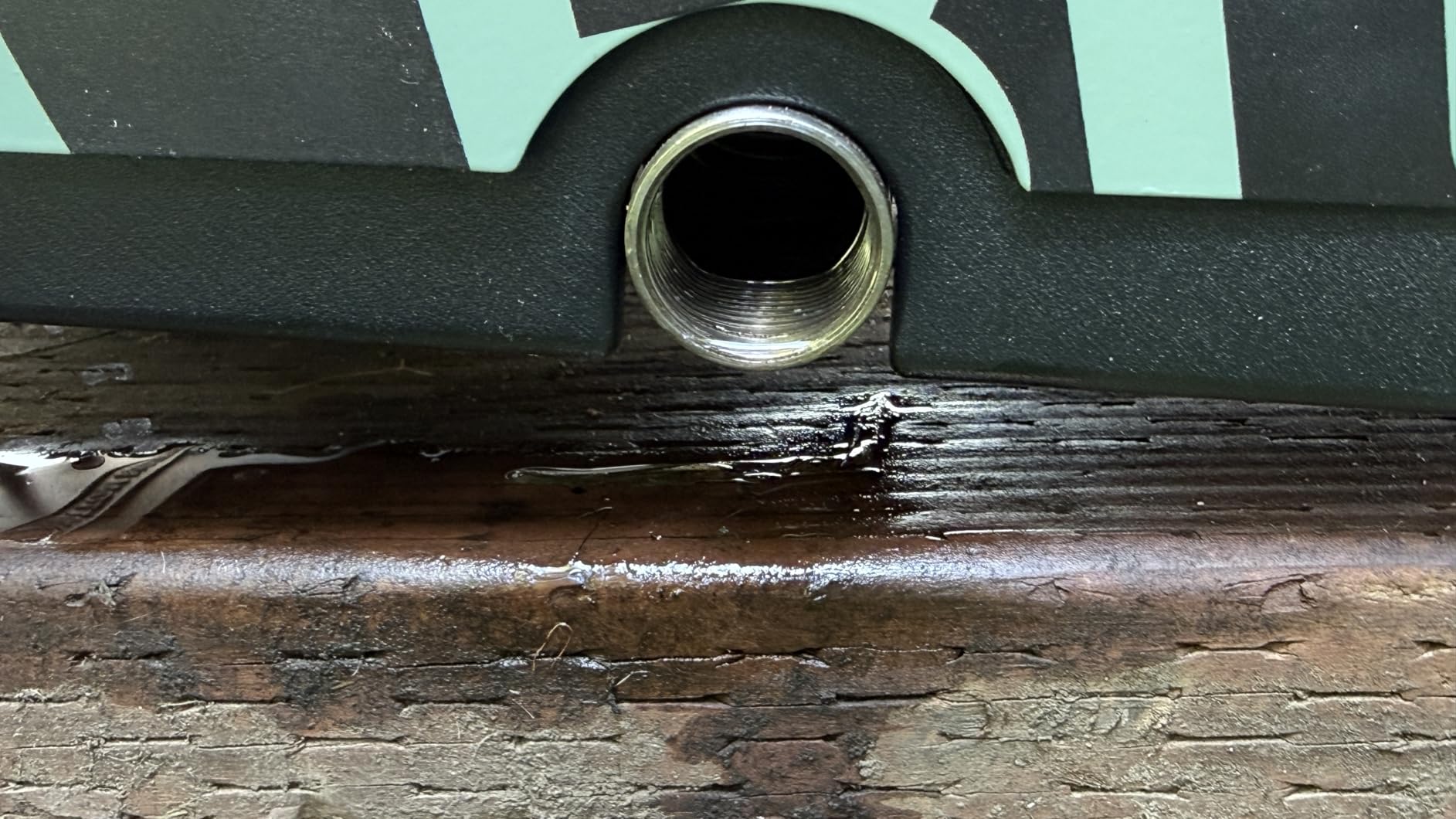
There is a physical quirk to plan around. The exhaust exits from the underside, so the unit has to sit on blocks or a raised platform to clear the ground, and the fuel line runs close to that outlet. Owners heat-wrap the line or move it, and several fit a better muffler than the supplied one. In thermostat mode the unit steps down to its lowest output rather than cycling off, and a few owners report an error code at the lowest setting that clears at higher fan speeds.
Where the mounting decision actually matters
Raising the unit is not optional, and doing it well is the single change that separates a clean install from a smelly one. Build a small sealed platform so the underside outlet has clearance, keep the fuel line on the cool side, and route the exhaust through a fire-rated sleeve wherever it passes near timber or fabric. Owners who did this report no complaints about odour or heat in the cabin.
How this compares on noise and control
Against the VEVOR models, the N2 is the more forgiving one on low settings, where reviewers say the fan masks the fuel pump. The pre-paired remote works out of the box at 100ft, which matters if you mount the unit outside the heated space. The programming for the LCD controller takes an evening to learn and the documentation will not walk you through it, so budget that time before your first cold morning.
3. VEVOR 8KW Diesel Heater with Bluetooth App Control
- Three control methods including a working Bluetooth app
- Automatic altitude compensation to 18045 ft
- 5L tank stretches between fills
- No drilling to install
- Some units need fuel pump priming first
- Limited documentation
- Exhaust runs very hot and must be vented outside
The VEVOR XMZ-D1 is the model to choose if you spend time above treeline. Its automatic altitude compensation is rated to 18,045 ft, and owners in mountain and winter camping report that this is the feature they value most. It does not require manual fuel timing changes when you climb, which is the failure that strands people in cold weather.
Heat arrives in roughly ten minutes through a sandblasted aluminum heat exchanger, and the temperature range runs from 46.4F to 96.8F. Fuel use spans 0.16 to 0.62 L/h from the 5L tank, giving up to eight hours of continuous heat, and overheat protection trips at 518F. Control works three ways: Bluetooth app out to 98ft, a 32ft remote and the on-unit panel.
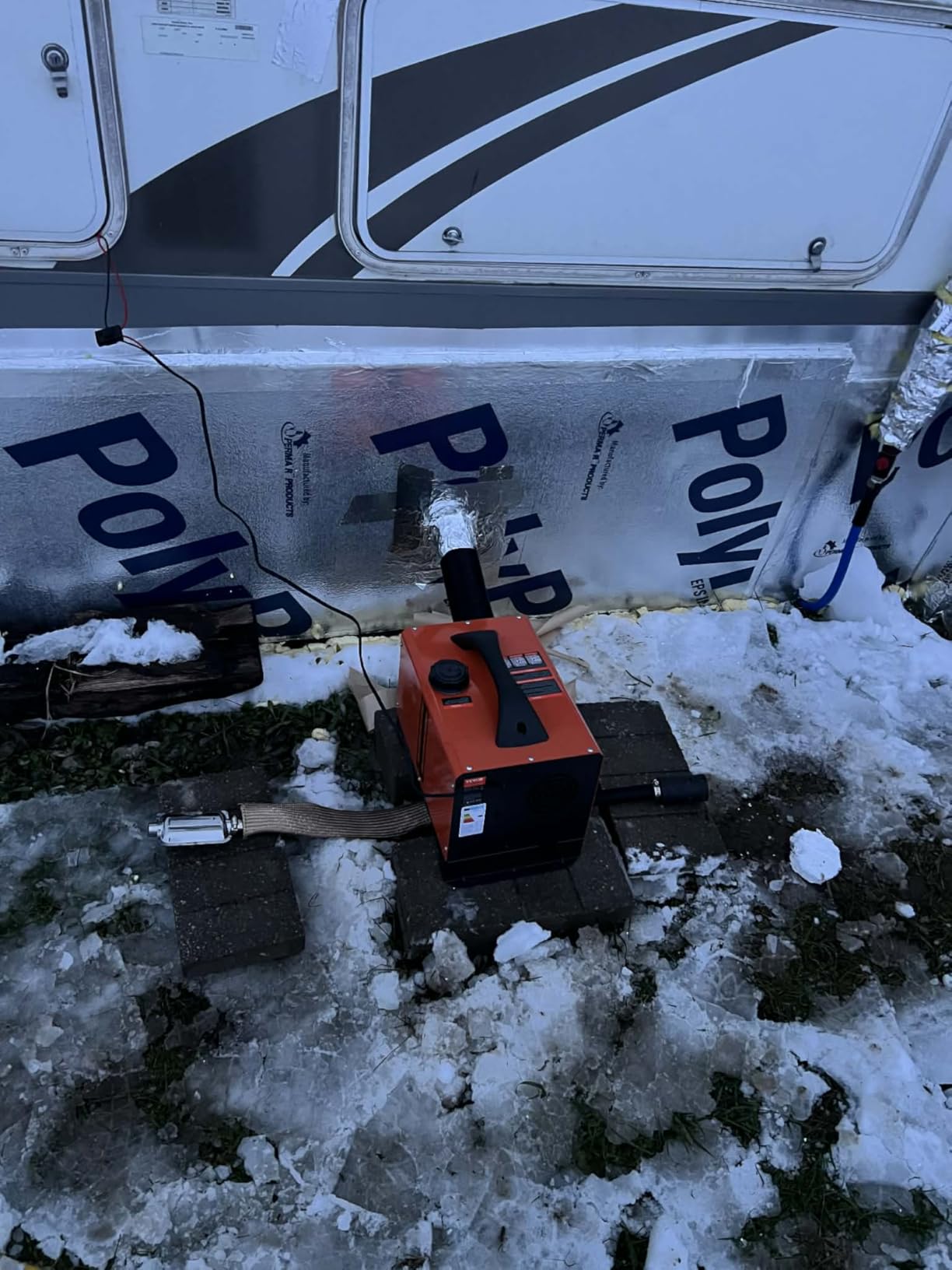
Because this is a large owner community, aftermarket parts and a body of repair knowledge exist for it, which is a real advantage over the smaller brands. The all-in-one design means no separate tank and no drilling the vehicle floor, so it suits a rental or a build you want to keep reversible.
The recurring complaints match the other VEVOR units: priming the fuel pump before the first start, thin documentation that pushes you to community videos, and a fuel pump you can hear on low settings until the fan masks it. The exhaust runs very hot and has to be vented outside the heated space, which is true of every heater in this roundup.
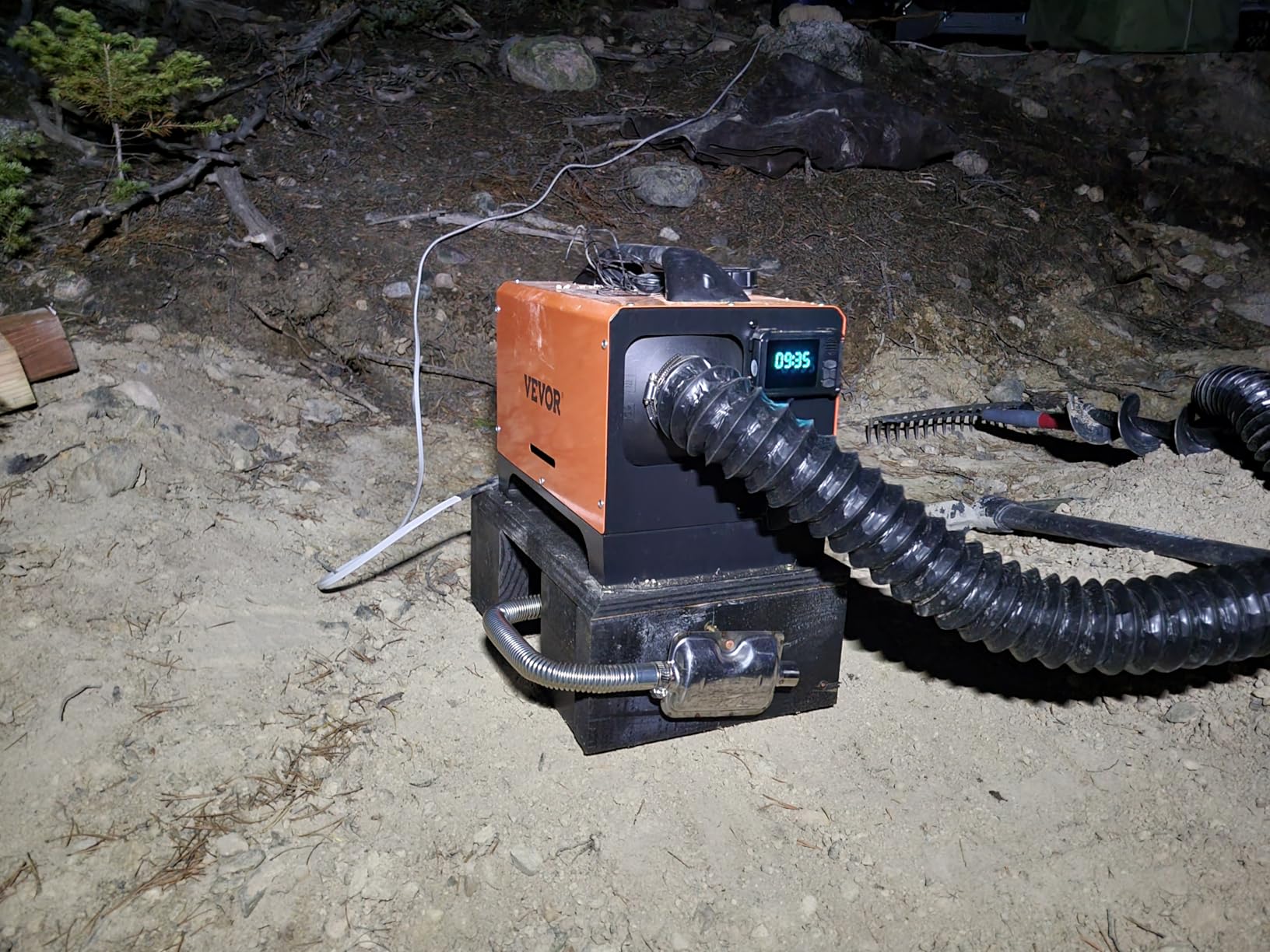
Whether the app earns its place in a cold-start emergency
App control is a convenience, not a safety net. Owners value being able to start a preheat from bed or from a tent, but the pairing is the part that fails most often, and it is worth learning the on-panel and remote controls before you need them in the dark. Set the preheat and timer in the app, then confirm the same functions work from the panel.
What the wide fuel range means for a small space
That 0.16 to 0.62 L/h spread is a warning as much as a spec. The top of the range belongs to a genuinely large uninsulated space, and forcing a small van to sit at the top of it is how short-cycling and soot start. Used sensibly, the bottom of the range is an efficient overnight burn, and the 5L tank covers most nights without a refill.
4. LF Bros 5KW Compact Diesel Heater with 24-Hour Timer
LF Bros 110V/12/24V 5KW Diesel Heater with Timer, Compact Diesel Air Diesel
- Quiet fuel pump once warmed up
- 24-36 hours on one 5L tank at low settings
- Compact footprint for tight installs
- Six-way electrical protection
- Bottom-exit exhaust needs raising
- Low quality included muffler
- Display temperature locked to Celsius
The LF Bros N4 solves a problem the bigger LF Bros does not: space. At a 13.6 by 6 by 15 inch footprint and 16 pounds, it fits where a full-size box will not, and several buyers describe comparing more than twenty models before landing on it. For a small van, a canopy or a boat cabin, footprint is a real constraint rather than a detail.
The 24-hour programmable timer is the standout for overnight use, letting you set single or multiple heating periods instead of guessing. Output is 5 kW across 4700 to 17000 BTU at 0.18 to 0.53 L/h, with the same working range of -40F to 104F. It also runs on 12V, 24V or 110V through the included transformer.
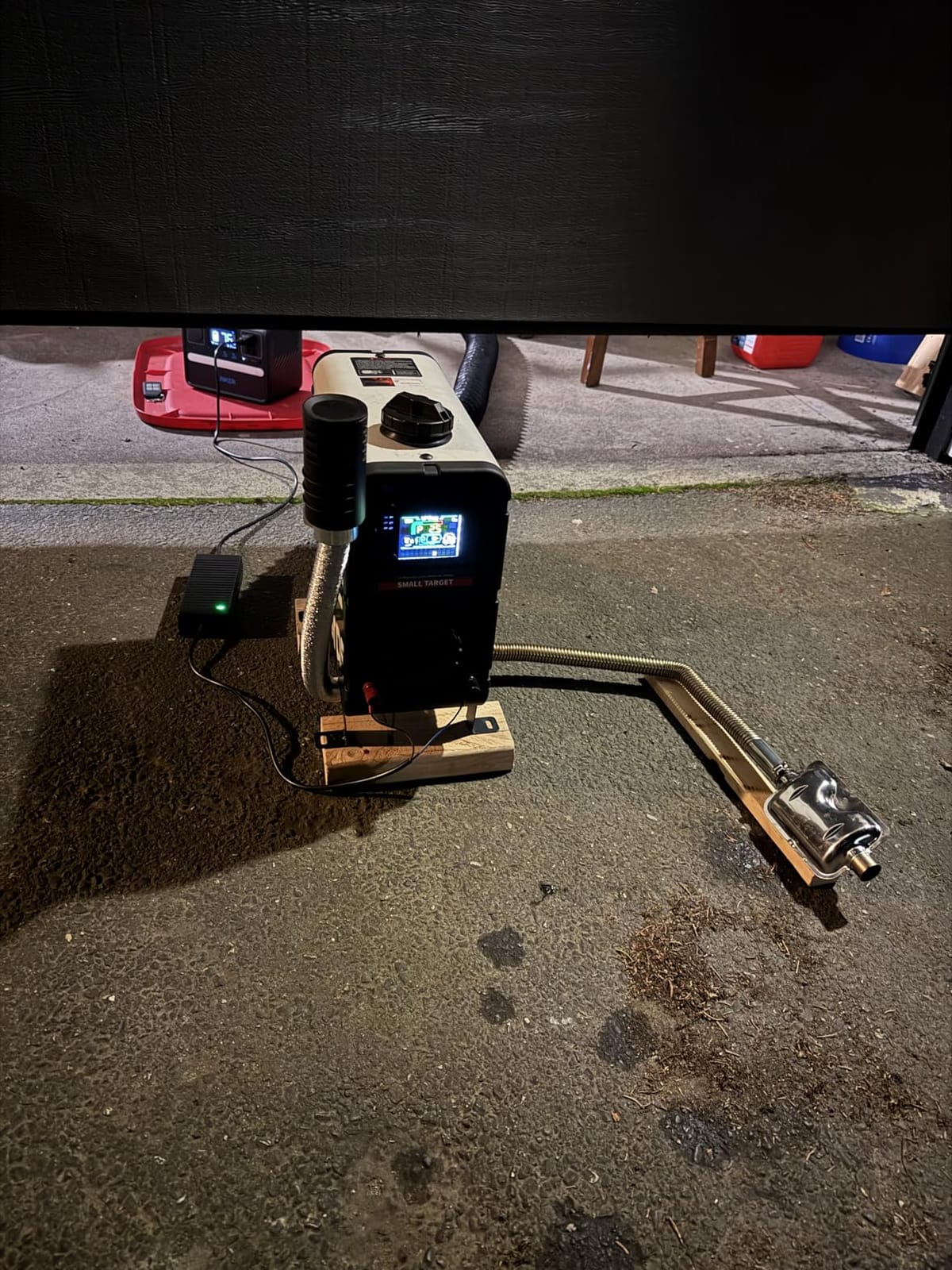
Owners praise the fuel pump as the quietest in the budget class, and many report 24 to 36 hours of run time from a single 5L tank on low settings. The six-way electrical protection covering overheat, short circuit, overvoltage, overcurrent, reverse connection and surge is unusually thorough for this tier, and bracket-style feet keep the body clear of the mounting surface.
Nearly every reviewer describes a modification: raising the unit to clear the bottom-exit exhaust, replacing the supplied muffler, adding a longer exhaust run, or fitting an air filter. Documentation is the most repeated weakness, with missing diagrams and confusing timer programming, though customer support is credited with sorting the timer out. The display temperature appears locked to Celsius, and one report describes the included power supply capacitors failing shortly after the first run.
Whether a 24-hour timer is worth the programming effort
Yes, if you heat on a schedule. The timer lets a build come up before you wake rather than running all night at a low setting, and that is both a fuel saving and a battery saving. The programming is genuinely confusing from the manual alone, so allow an hour with the panel in your hand before you rely on it overnight.
How it handles a long unattended burn
Long low-setting runs are where this heater earns its rating, and the quiet pump matters most between midnight and 5am when a ticking fuel pump is the difference between sleeping and not. Treat the low-quality supplied muffler as a consumable and fit a proper one, and keep the fuel line wrapped away from the hot underside outlet.
5. VEPURLT 8KW Diesel Heater with 15L Tank
- 15L tank gives long runtime between refills
- Included muffler reduces exhaust noise
- Automatic abnormal-condition shutdown
- Low emissions meeting Euro IV
- Hot exhaust needs careful shielding
- Sparse documentation
- 2020 design with no app connectivity
The VEPURLT VPH-F3 is the one to pick if refilling is the part you hate. Its 15L tank is three times the capacity of most units in this roundup, and at 0.2 to 0.5 L/h that is multiple nights of heat from one fill. For a bus, a boat, a motorhome or a workshop where the heater runs daily, capacity is the feature that matters.
It runs at 8 kW on 12V with an operating range of 10 to 12V and 20 to 32V, so it also suits 24V trucks. Working temperature is -40C to +50C with the fuel pump rated to -40C, and the ceramic ignition plug vaporises fuel for fast ignition. Automatic control shuts the unit down if it detects abnormal conditions.
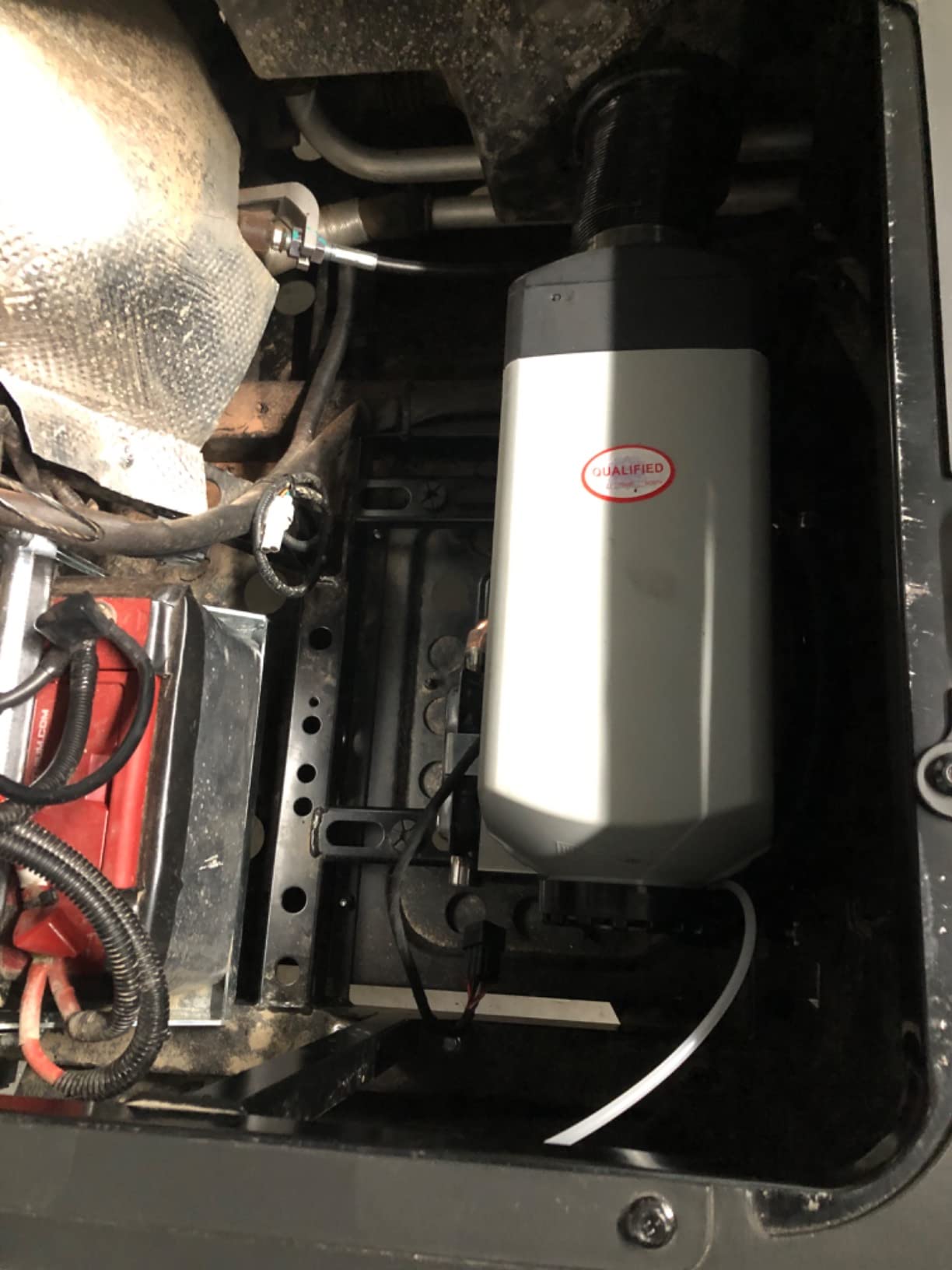
The included muffler is a real addition: owners cite it as the reason exhaust noise is manageable, and the noise reduction measures are part of why this unit reads as more considered than most budget boxes. The LCD thermostat monitor with remote control lets you set fuel, power and temperature independently, which is more control than most competitors offer.
Where it falls down is documentation, which owners describe as bullet-point specification text with no install guidance or priming instructions, and the design dates from an earlier generation with no app connectivity. The 13% share of one-star reviews points at installation and venting rather than the heater failing to produce heat. Several owners report the exhaust pipe hot enough to start a fire if it passes through timber, and a CO detector is essential in any enclosed vent run.
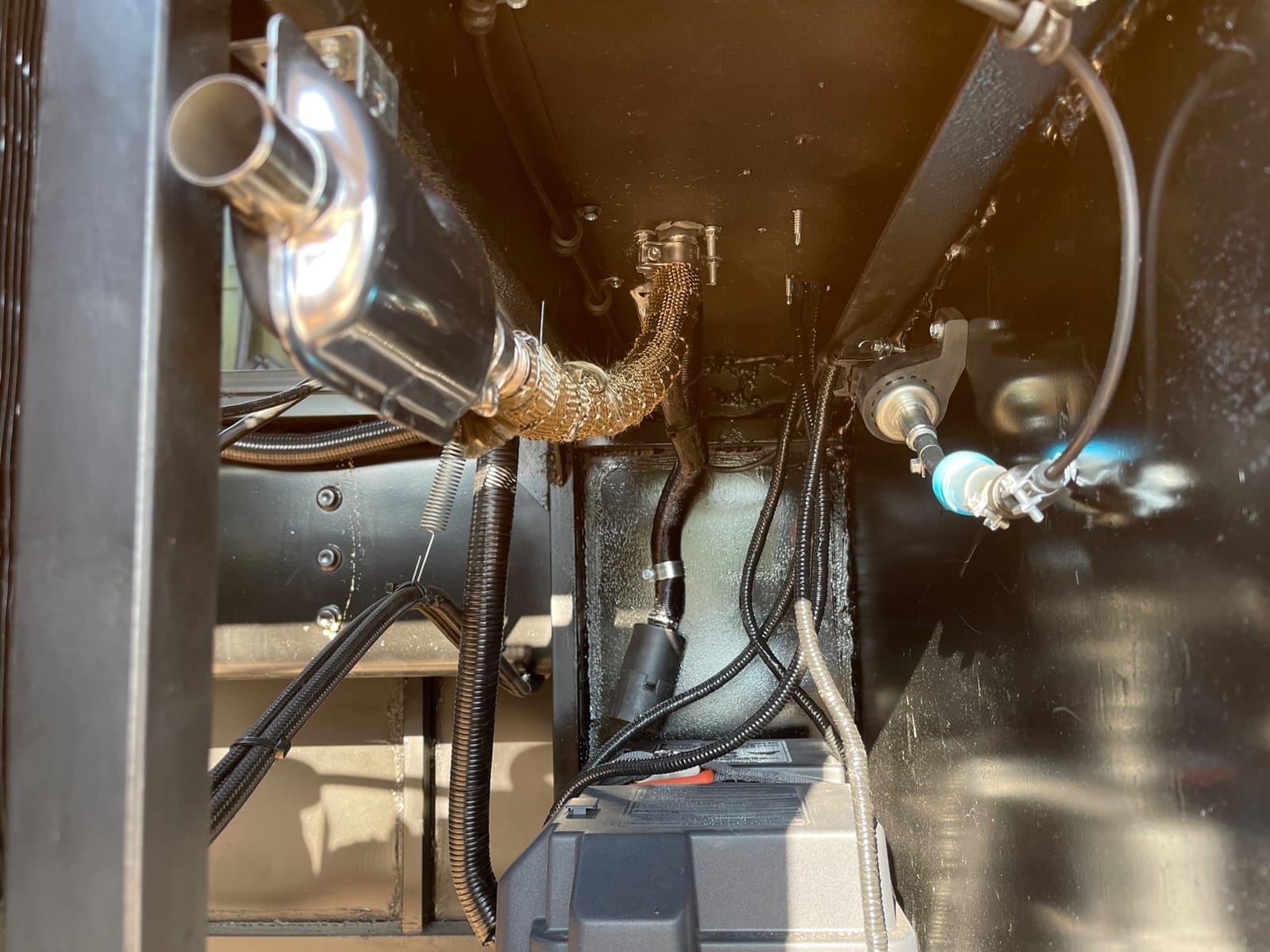
How to install an exhaust that will not start a fire
With a 15L tank you are likely mounting this permanently, which makes exhaust routing the whole ball game. Run the pipe through a fire-rated sleeve wherever it crosses timber, keep the outlet outside the enclosed volume, and fit the CO alarm at sleeping height rather than near the floor where cold air pools. Owners who did this report no problems at all.
What the large tank really buys you
It buys convenience, not extra heat. The output is the same class as the 5kW budget boxes, so this is still a case of matching a modest heater to a modest space. The advantage shows up on multi-day trips and in cold regions where you do not want a fuel bottle in your sleeping compartment, and where a single fill covers the whole forecast.
6. VEVOR 8KW Diesel Heater with Built-In CO Alarm
- Built-in CO alarm is a genuine safety upgrade
- Three control options including a working app
- Quietest rated noise in the group
- Plug-and-play wiring options
- Needs a battery or power station to start
- Exhaust runs very hot
- Nearly 20 pounds is too heavy to carry far
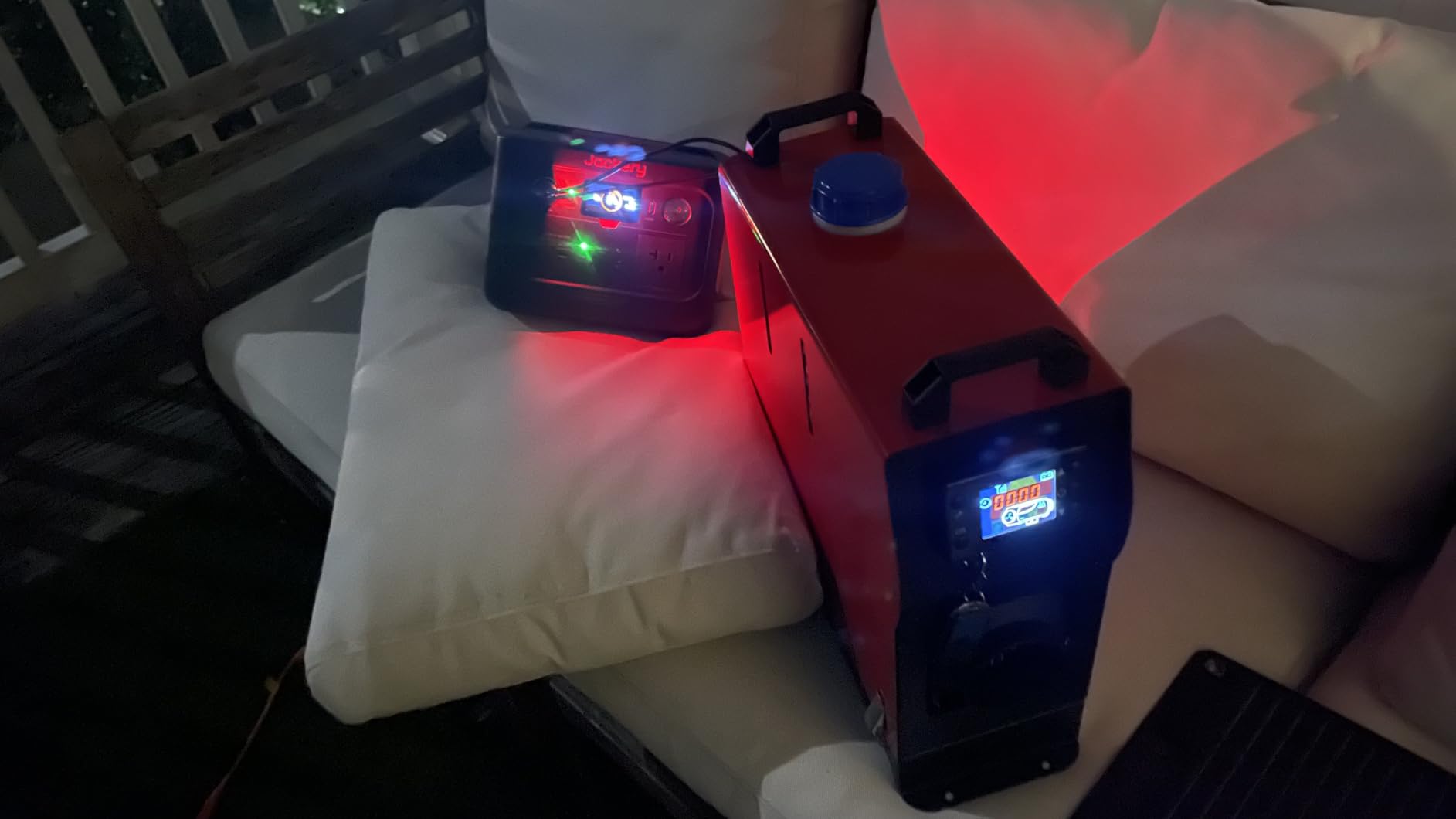
This VEVOR XMZ-TB20 is the newest unit in the roundup and the only one with a carbon monoxide alarm built into the body. It monitors levels continuously and can alert you or shut the burner down. On its own that would make it the safety pick, and for anyone running a heater inside a metal van or a boat cabin it simplifies the safety case considerably.
Combustion efficiency is listed at 96% or better, higher than the 90% figure on the older VEVOR, and fuel use is 0.18 to 0.4 L/h. The body is die-cast A380 aluminum with a ceramic igniter, and the muffler and fuel pump are rated for operation at 75 dB or less, the only published noise figure we found in this roundup. Control works through Bluetooth app, remote and display panel.
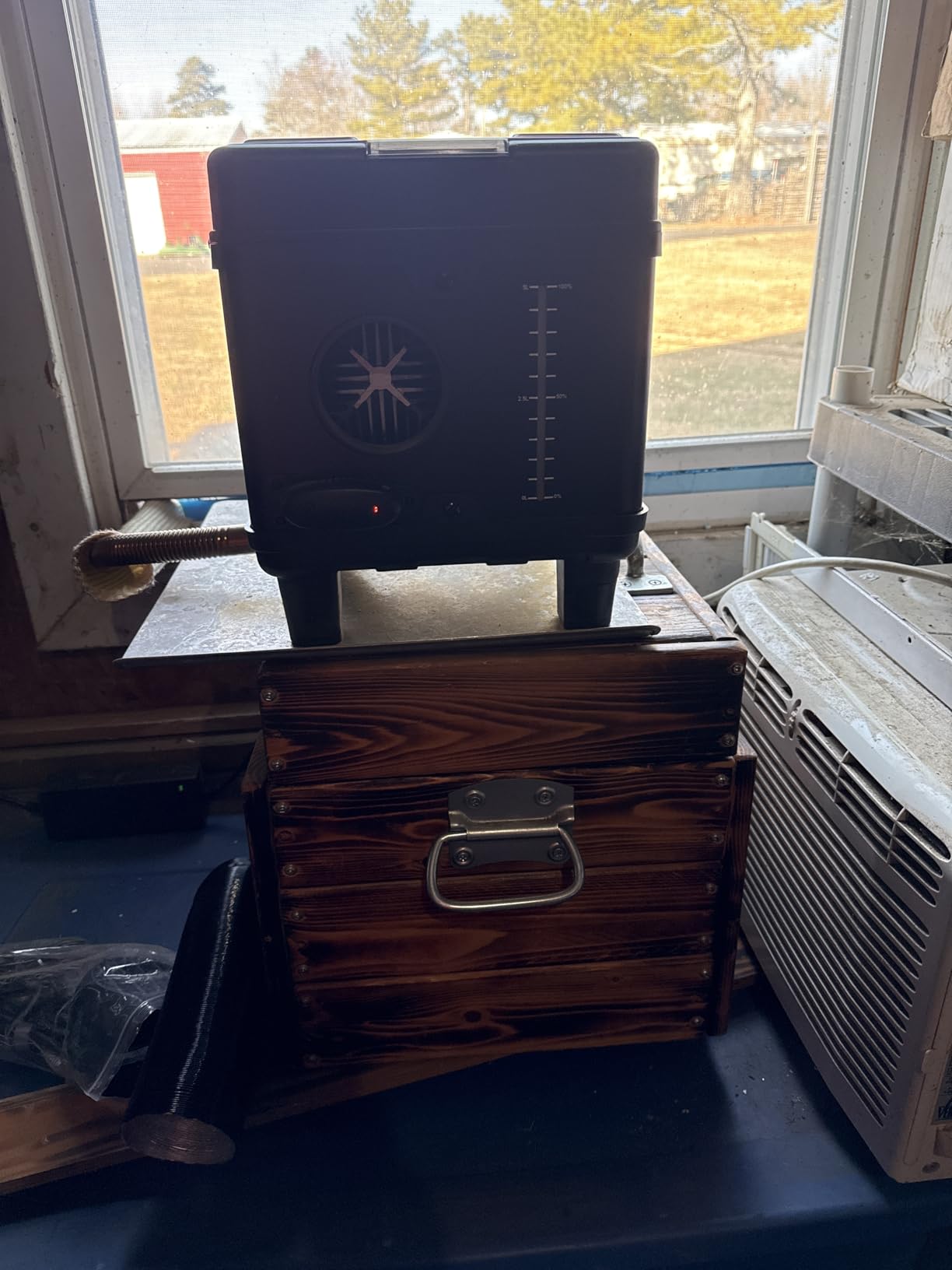
Wiring is flexible: DC 12-24V through either an adapter or direct DC wiring, so it can run from an outlet, a vehicle battery or a power station. Owners rate it as noticeably more positive than the brand’s older models, with 69% of reviews at five stars and only 6% at one star, which suggests fewer control board and thermostat complaints than the earlier boxes.
The practical catch is power. Startup needs a real source, typically a battery bank or a power station, not a thin accessory lead. At 19.8 pounds it is also one of the heavier units, which rules it out for anyone carrying heat to a tent on foot. The exhaust still runs very hot and must be routed outside, and setup documentation is thin, particularly for the app pairing.
Whether a built-in alarm replaces a standalone detector
Do not let it. A unit-mounted alarm is a useful backstop, but a standalone CO alarm at sleeping height, tested regularly and with a display you can check at a glance, is the standard advice. Fitting both costs little and the built-in alarm does not know about a leak in an intake run or a bad exhaust seal elsewhere in the system.
How it fits a build running off a power station
This is the unit for that setup. The dual wiring options mean you can plug it into a power station, a battery bank or a vehicle outlet without cutting anything, and the 0.18 to 0.4 L/h range keeps consumption honest at the low setting. Owners report that startup is the heaviest draw, so size the power source for the glow plug, not the running load.
7. Triclicks 12V All-in-One Diesel Heater for Garages and Workshops
- Holds a camper at 60-70F in low-teens nights
- Effective heat for the money
- Compact slim profile that is easy to store
- Simple design that is straightforward to service
- Plastic housing gives off a persistent smell
- Loose factory screws can cause smoke or backfire
- Easy to tip over
- Installation kit is basic
The Triclicks is the entry point here, and owners report it holding a camper at 60 to 70F during deer season when nights were in the low teens. One owner ran it for about 60 hours on 2.5 gallons of diesel in a 500 sq ft garage. That is a level of real-world output from the entry-level unit in the roundup, and it explains the 4.2 rating on 171 reviews.
It uses a 5L integrated tank, runs from -40C to 50C, and the remote switch handles preheating with adjustable fuel amount, temperature and fan speed. At 19.14 pounds with a slim 16.14 by 6.3 by 15.75 inch body, it is easy to wall mount and just as easy to move between a truck, a boat and a shed.

Two issues account for most of the one-star share. The plastic housing gives off a smell that owners say does not burn off, and some heaters arrive with loose blower and burner screws inside, which has caused smoke and backfire. Several owners tear heaters down, tighten every fastener, improve the clamps and add rubber pump isolation, and that solves both the noise and the reliability concern for them.
Other gripes include a thin fuel tank and cap, a unit that is easy to tip over, and an exhaust pipe hot enough to ignite wood. One owner’s exhaust started a fire on a wooden shed wall, which is the single most important safety note in this whole roundup. The output is dry and odour-free when the exhaust is properly vented, so the smell complaint is a housing issue rather than a combustion one.
Check the internal fasteners before the first run
If you buy this one, open it up before you power it. A ten-minute check of the blower and burner screws, the clamps on the intake and exhaust, and the rubber mounting of the fuel pump prevents the backfire and the ticking that owners otherwise live with. It also tells you how the previous owner treated the unit if you buy used.
Where the value case holds and where it does not
The value case holds for a shop, a shed, a garage preheat or a seasonal camper where heat output is the only thing you care about. It does not hold for a van you sleep in, because the plastic housing odour and the lack of a CO alarm are poor trade-offs when the unit runs next to your head all night. Mount it in a workshop and enjoy the economics; keep it out of the sleeping space.
8. LF Bros 5KW Plateau Model Built for High Altitude
- Altitude compensation works without adjustment
- Nearly silent fuel pump
- Detachable controller places the thermostat inside the tent
- Delivers heat down to -20F
- Power ports sit close to the hot air discharge
- Diesel odour at the heat vent on startup
- Thermostat mode drops to 1.4 kW rather than cycling off
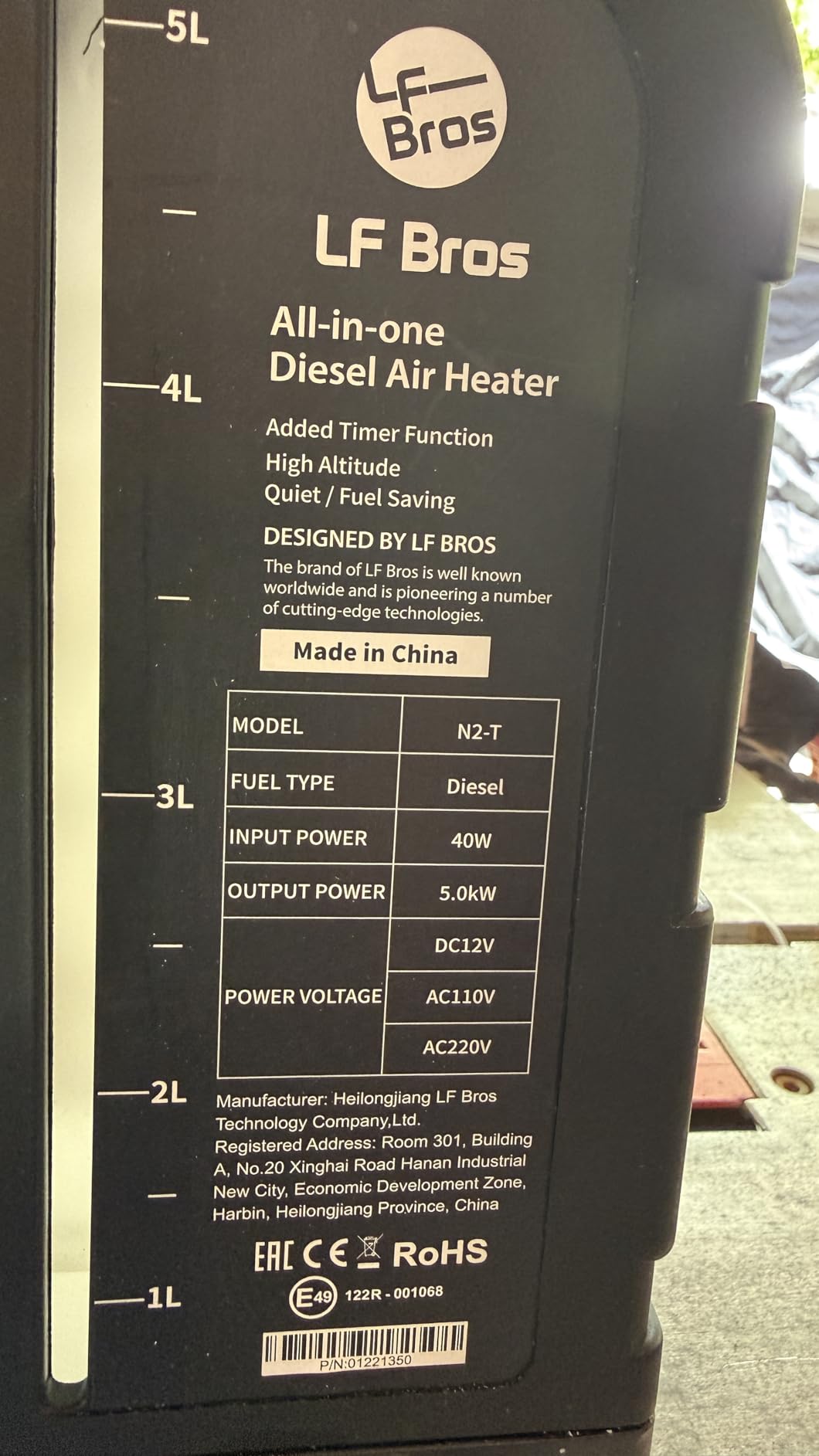
The LF Bros N2-T is the high-altitude specialist, tested at 17,000 ft, and owners confirm the plateau-mode compensation genuinely works above 8,000 ft without fuel timing changes. That is the specific problem a Webasto or Espar solves with expensive hardware, and this unit addresses it directly at a fraction of the installed cost.
It uses an aviation grade plug and an antifreeze power cord for extreme cold, and several buyers report full-night sleep on low or high settings down to -20F. The detachable T4 LCD controller is the feature we would highlight: pull the panel off, run the cable to the tent or cab, and keep the thermostat where you can read it. Fuel use sits at 0.18 to 0.53 L/h from the 5L tank.
Start-up diesel odour bleeding into the heated air outlet drives most of the one-star share, and some buyers say it never fully resolves. The included hard metal exhaust joining piece does not fit as described, the directions reference diagrams that do not exist and contradict each other, and thermostat mode never fully shuts off, dropping to 1.4 kW instead, so a tight space can overshoot its set temperature.
Several owners switched from cheaper VEVOR units specifically because of repeated modification and failure, and support is repeatedly commended for issuing refunds and replacements. At 28 pounds it is the heaviest unit here, and it has no Bluetooth connectivity, which is a strange omission at this level. The fuel window is also hard to read accurately.
What the 1.4 kW floor means for a small tent
A thermostat that never switches off is a real design choice, not a bug. In a large space 1.4 kW is a sensible floor that keeps the burner ticking over gently, but in a small tent it will overshoot your set temperature. If you use this in a rooftop tent, set the controller outside the sleeping area so the warm air is not measured at your head.
Whether the altitude claim changes the buying decision
If your winter trips are above 8,000 ft, this claim is the whole reason to buy it. Thinner air means less oxygen for combustion, and a heater that has not compensated will run rich, soot up and eventually stop. Owners report no manual adjustment needed, which removes the most common high-altitude complaint we read about. If you stay at sea level, other heaters in this roundup handle your conditions.
9. WAYSKA 5KW Diesel Heater with 15L Tank and Quiet Fan
WAYSKA Diesel Heater 12V, 15L Tank, Diesel Air Heater 5KW, Muffler, Diesel Parking Heater with LCD Monitor & Remote Control for Trucks, Trailer, Boat and Motor-Home
- 15L tank supports long runs between refills
- Multiple noise reduction measures including a muffler
- Ceramic spark plug for quick ignition
- Plateau thermostat usable above 5500 ft
- Weakest average rating in this group at 4.0
- Hot muffler and exhaust need shielding
- Sparse documentation
- No app or Bluetooth connectivity
The WAYSKA is the entry-level 15L tank heater, and its 4.0 rating across 158 reviews is the lowest average in this roundup. That still makes it good value for the capacity, and most owners who bought it consider it worthwhile. It suits a boat, a motorhome, a trailer or a caravan where you want long runs between refills on a simple machine.
It delivers 5 kW at 0.2 to 0.5 L/h from a 15L tank, works from -40C to +50C with the fuel pump rated to -40C, and the ceramic spark plug vaporises fuel for quick ignition and complete combustion. The plateau-version thermostat is rated for areas above 5,500 ft, which covers most of the populated western United States.
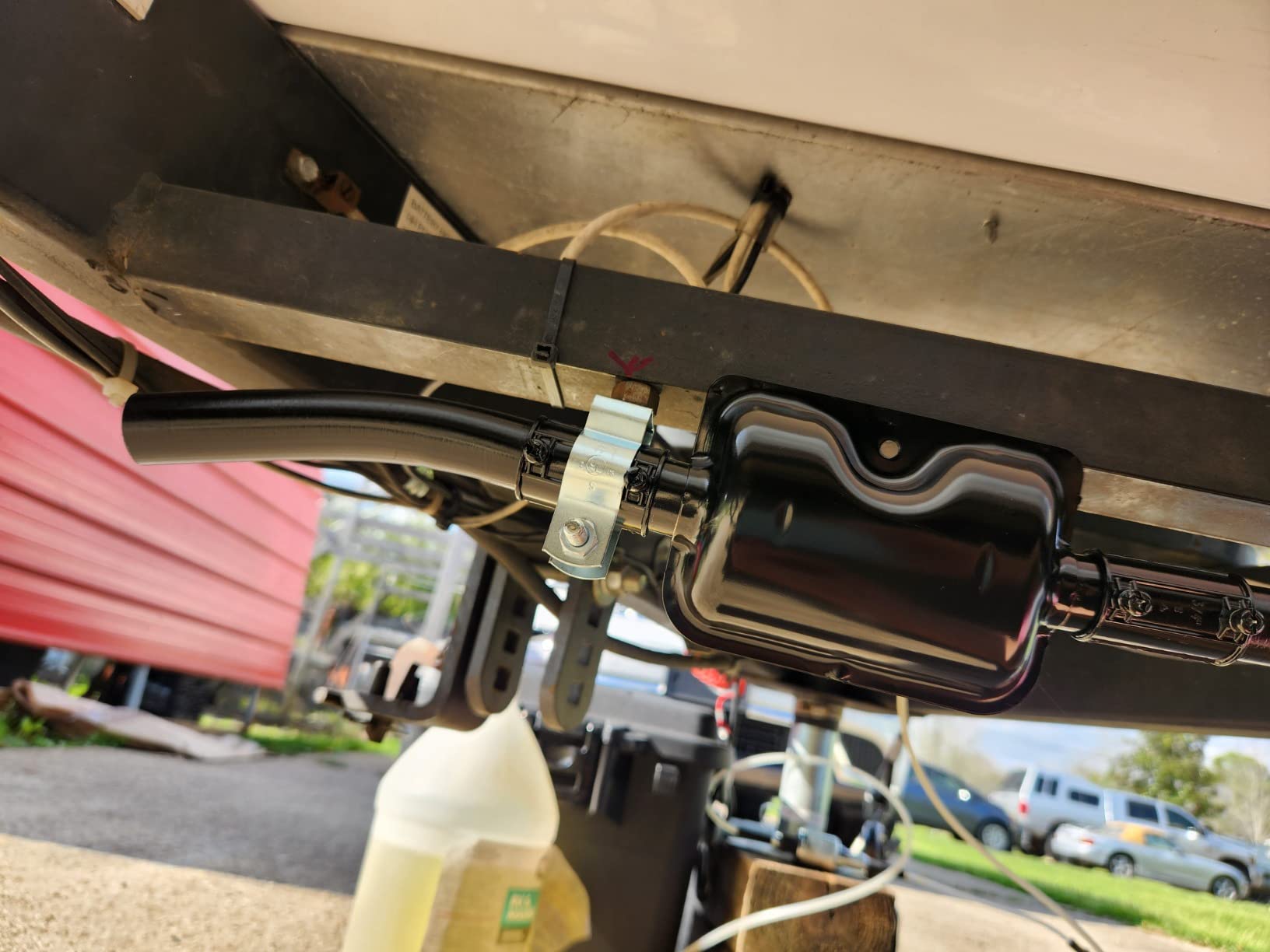
Noise reduction is the well-executed part. This unit combines blower speed control, a silent fan, a low-frequency pulse fuel pump and a muffler, and that stack is what owners mention first. On marine forums we read, this is the feature that decides the purchase, because engine spaces and boat cabins amplify hum that a van build simply absorbs.
The one-star share comes down to installation rather than heating. Several owners report needing to modify the mounting and reroute the exhaust, and as with every 15L tank heater here, the exhaust pipe runs hot enough to be a fire risk if it passes through timber. Documentation is sparse and specification-style, and there is no app or Bluetooth connectivity at all.
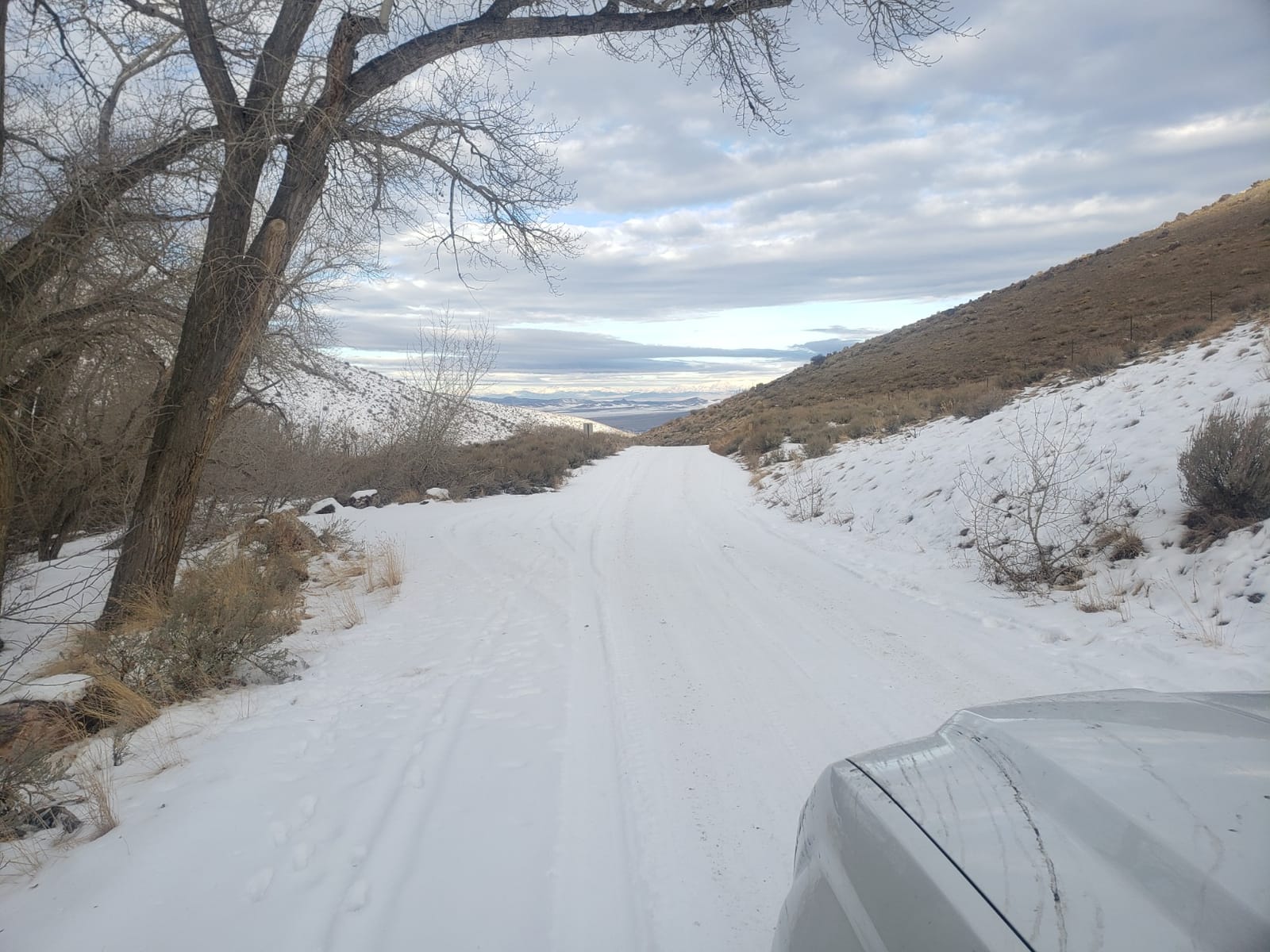
How this compares with the VEPURLT on noise
Both large-tank heaters include a muffler, but the WAYSKA adds blower speed control, a silent fan and a low-frequency pulse pump on top, and owners describe the result as noticeably quieter at low output. If your heater will sit in a boat cabin or a hard-sided trailer where sound carries, that difference justifies this model over the VEPURLT.
Whether a 5 kW heater makes sense in a boat
For a small cabin, yes, and the 15L tank means you are not carrying a jerry can. The plateau thermostat rating to 5,500 ft is irrelevant at sea level, so buy this for the capacity and the noise work, not for the altitude. The lower output rating than the 8kW boxes is not a disadvantage here: a modest heater in a small cabin is exactly the sizing we recommend.
10. BougeRV 5KW All-in-One Diesel Heater with Stainless Steel Body
BougeRV 5KW Diesel Heater, 5L All-in-One Portable Air Diesel Parking Heater
- Stainless steel housing rather than plastic
- Very quiet with a genuinely silent fuel pump
- XT60 quick release and under 2 minute assembly
- Conservative on battery and fuel on low
- Supplied exhaust pipe is narrow and clogs with soot
- Threaded exhaust connection is not smooth
- Fuel level window reads full when empty
The BougeRV is the build-quality pick, and it is the only stainless steel body in the group. At a 4.4 rating across 106 reviews, with 80% of buyers at five stars, it has the strongest satisfaction percentage of any heater here even though its review base is the smallest. Owners consistently say it feels better made than the plastic-bodied competitors.
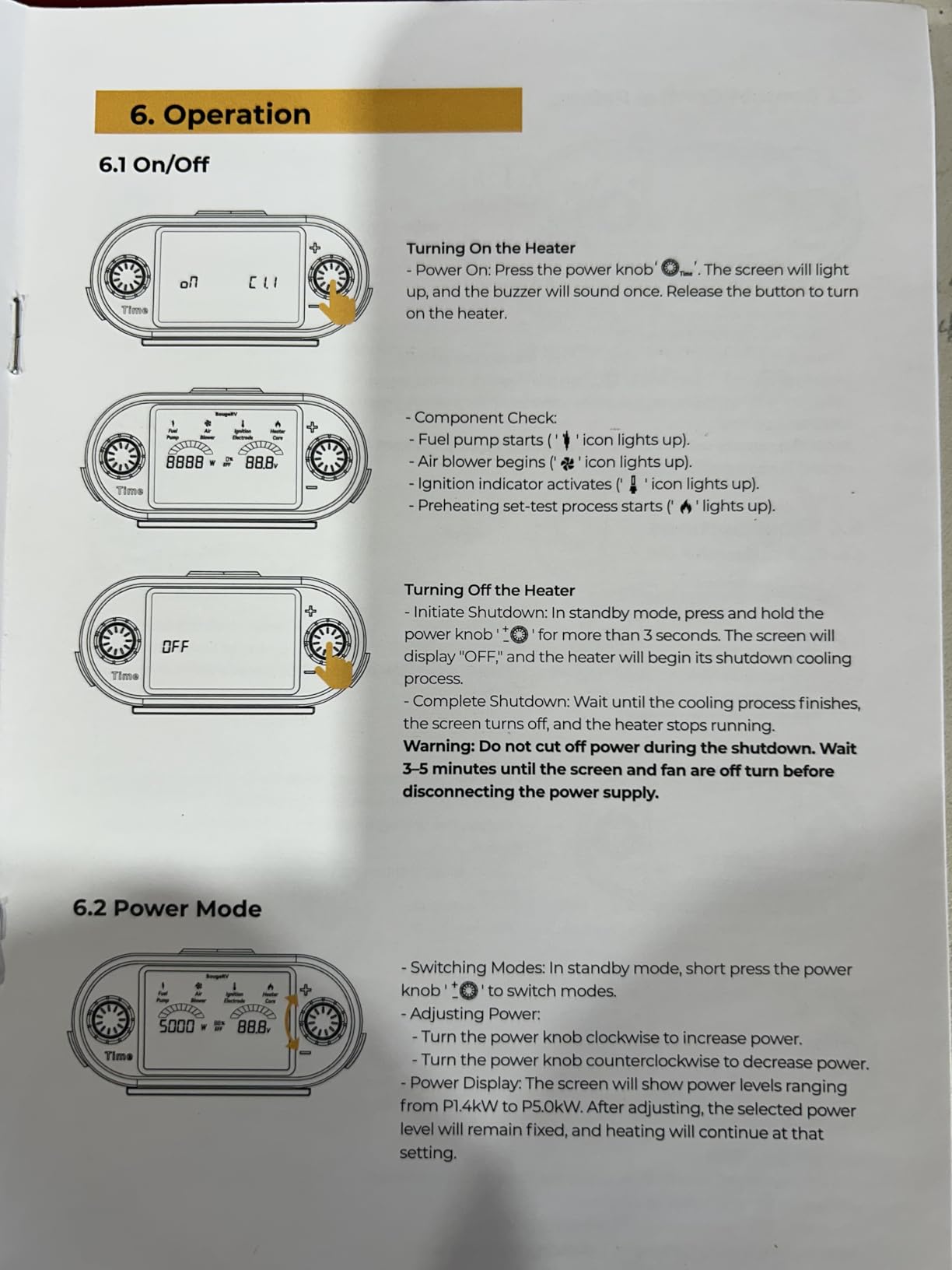
It warms 307 cubic feet in about eight minutes, runs at 0.18 to 0.53 L/h from a 5L tank for 11 to 27 hours of runtime, and the body is 15.3 by 9.7 by 12.4 inches. Assembly takes under two minutes with the threaded exhaust pipe and foldable handle, and the 3.XT60 quick-release connector means fast breakdown between trips. App control handles preheat and timer settings, and it works from a cigarette lighter, direct wires or adapters.
Off-grid owners report running it on solar with 12V power and getting all-night heat from a 100Ah battery, and several describe the fuel pump as genuinely silent rather than merely quiet. Safety covers overheat, voltage and short circuit, and the company provides two years of technical support, which is more than most sellers in this category offer.
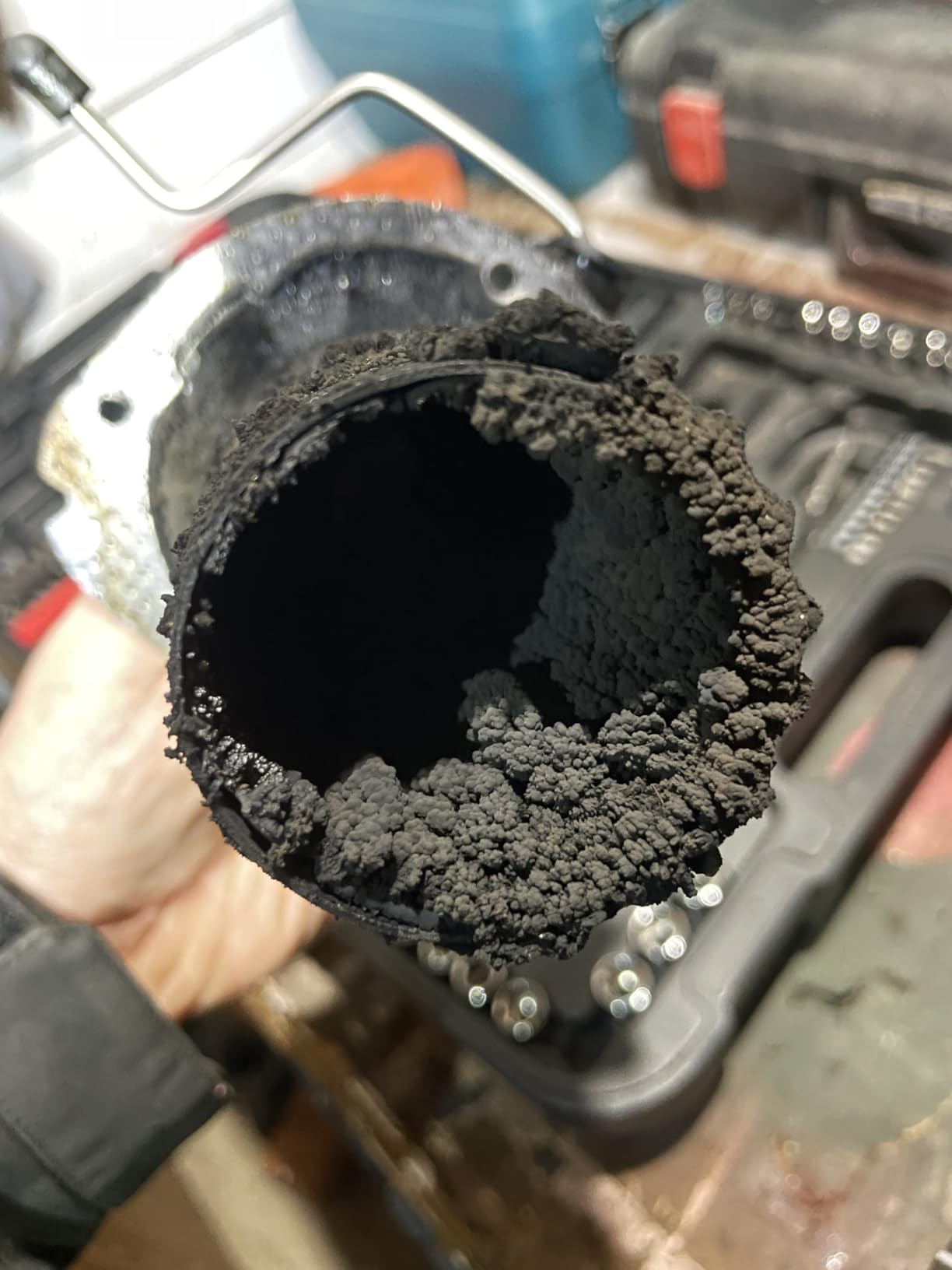
The serious complaint is the supplied exhaust pipe. Owners report it is too narrow, clogs with soot within days, and can allow exhaust fumes to leak back through the heat outlet. Replace it with a larger bore pipe as a first job. The threaded exhaust connection is also described as not smooth, assembly is fiddly, the fuel window reads as partly full when empty, and the protruding exterior panel is easy to damage.
Replace the exhaust pipe before anything else
Every owner complaint about soot and fume leakage traces back to the bore of that pipe, not to the burner. Swapping it for a wider pipe is a ten-minute job and it changes the safety profile of the whole unit. Fit the original only for a first test in the open, never in a closed van or cabin where fumes can recirculate.
Whether the build quality justifies a premium
For a build you intend to keep, yes. A stainless body and a threaded fuel cap that does not leak resist the corrosion and vibration that eat plastic tanks, and the XT60 quick release makes the unit genuinely portable between vehicles rather than permanently installed. If you are replacing it every season, the plastic options will serve you fine for less money.
How to Choose a Diesel Heater That Fits Your Build?
Every mistake we saw in the forums traces back to the same question: how big a heater does this space need? The answer is almost always smaller than the box says, because heat loss scales with the size of the space and the quality of its insulation, not with the peak wattage of the burner.
How big a diesel heater do you need?
Match the heater to the shelter, then subtract for insulation. An insulated van conversion or a teardrop with 30mm of polyiso and a fan heater covering the living area is a small load. A bare metal van shell, a pickup canopy or a canvas wall tent is a much larger load because you are heating the metal structure as well as the air. Rooftop tents and teardrops need very little, which is why forum users describe a 2kW as the perfect size when they can find one.
Our team has one rule: pick the smallest class that comfortably holds your set temperature, then stop. If you can hold 65F on the low setting at 1am, you have the right heater. If you are pinned to maximum output all night in a small space, you are oversized, and the consequences are the soot, noise and wear described in the failure section below.
Understanding the kW label
One kW equals 3,412 BTU/hr, and the label is the theoretical maximum at maximum fuel flow. Real output depends on the fuel-to-heat ceiling of the burner, and budget units routinely quote a peak figure far above what they can sustain efficiently. The 8kW claim on a box is not a promise that it can push 8kW into your living space continuously.
The number worth comparing is the minimum sustained output, the modulation floor, because that is what you run overnight. A unit that steps down gracefully to a low, efficient burn is better for a van than a unit with more peak power and a poor floor. Several heaters in this roundup do not publish a modulation floor at all, which is itself informative about where they sit in the market.
Fuel burn and battery draw by size
Across the budget all-in-one heaters here, published fuel consumption runs from 0.16 to 0.62 L/h, and the low end of each range is the number that matters for overnight running. The listed amperage for the VEVOR CY-32 is 3 amps running on 12V, and once the glow plug finishes its one to three minute start, running draw on a comparable unit sits in the 0.5 to 3 amp band.
Startup is the moment that catches people out, because the glow plug pulls 100 to 120W, which is 8 to 10 amps at 12V, before the burner lights. A 100Ah lithium bank will cover a moderate night at low setting with sensible solar input, but it will not cover a full night at maximum output with none. If your build relies on the heater overnight, budget solar and a battery that can absorb the start surge.
Budget all-in-one or name-brand installed unit?
This is the question forum users ask most, and it deserves a straight answer. A Webasto Air Top 2000 STC or an Espar Airtronic S2 D2L costs several times more than any heater on this list and requires a fuel line, a mounting bracket, ducting and a competent install. In return you get a well-characterised modulation range, published service data, a parts network and a heater that holds a set temperature without chasing it.
The all-in-one boxes win on nothing but cost, convenience and the fact that they can be moved between vehicles in minutes. The honest trade is against a mid-life failure. A name-brand unit failing at 3am off-grid is the nightmare scenario, and it is the most common reason owners keep a cheap unit as a backup. If you can accept a modification or two and a season of learning, the budget unit is defensible. If you cannot accept a night in the cold with a dead heater, buy the installed unit and fit a second small heater as insurance.
Are Chinese diesel heaters any good? Mechanically, mostly. The burners, ceramic plugs and heat exchangers in this roundup produce genuinely usable heat, hold set temperature reasonably well once tuned, and cost a fraction of an installed kit. What they lack is documentation, consistent factory assembly quality, spare part availability and in most cases a carbon monoxide alarm. They are good enough for a shop, a garage preheat or a seasonal camper. For a van someone sleeps in, they are only as good as the install you give them.
The failure modes budget heaters share
Common problems with budget diesel heaters cluster into four groups, and every one appears in owner reviews across this roundup. Short-cycling happens when a heater is oversized for the space or the thermostat cannot modulate, and the result is rich combustion, soot on the glow plug, worse atomisation and a shorter burner life. Soot buildup follows from the same cause plus long periods at low output with a cold heat exchanger.
Controller and thermostat faults show up as heaters that keep heating at reduced output instead of shutting down, or restarting repeatedly because the supply voltage sits below what the unit expects. Documentation failures are the fourth group: priming procedures are missing, error codes are unexplained, and the first-start experience is where most frustration lives. Prime the fuel pump on every unit that asks for it, and learn the local error codes before you need them.
Safety: carbon monoxide, exhaust routing and clearance
Are diesel heaters safe in a van? Yes, with correct installation, and the failure mode is always the same: exhaust routed into or too near the space you occupy. Four rules cover it. Mount a battery CO alarm at sleeping height, because cold air and carbon monoxide both pool low, and test it on a schedule you will actually keep.
Route the exhaust pipe outside the enclosed volume through a fire-rated sleeve wherever it crosses timber, and never run it through a wall cavity. Keep the pipe and the muffler well clear of anything combustible, which matters most in the timber-trimmed interiors of older vans and boats. Do not rely on the heater alone in a space you sleep in, and never leave one running unattended in an enclosed area where fumes can recirculate. If a heater fails, the backup plan matters more than the purchase price.
Two related categories worth knowing about: our best greenhouse heaters guide covers fixed heating for glazing, and where a diesel heater competes with a fixed install, the fixed unit wins on efficiency and safety. If the space you are heating is a permanent room rather than a vehicle, our best baseboard heaters roundup is the other fixed-heat route to weigh.
Frequently Asked Questions
What brand diesel heater is best?
For a permanent van or boat install, a Webasto Air Top 2000 STC or Espar Airtronic S2 D2L gives the steadiest temperature control, the best documented modulation and a real parts network. For a seasonal or portable build, a proven all-in-one heater such as the VEVOR CY-32 gives comparable heat for a fraction of the installed cost.
Is a 2kW diesel heater enough?
Yes, for an insulated van, teardrop, truck camper or rooftop tent. The van-dweller consensus is that a smaller heater beats a larger one, because 5kW and 8kW units short-cycle in a small space, which causes rapid soot buildup on the heat exchanger and faster mechanical wear. Buy the smallest heater that holds your set temperature on the low setting.
What is the best all-in-one diesel heater?
The VEVOR 8KW All-in-One leads our list, with the most verified owner feedback in the group, a 5L integrated tank and fuel use of 0.18 to 0.36 L/h. The LF Bros 5KW is the pick if you want to run it off mains as well as 12V, and the BougeRV 5KW is the strongest build quality with a stainless steel body.
What diesel heater puts out the most heat?
By advertised peak wattage the 8kW all-in-one units in this roundup are the highest, and the VEPURLT adds a 15L tank for long high-output runs. In practice the useful number is sustained output at a low setting, because that is how a heater runs overnight. A 5kW unit matching your space will always beat a larger unit forced to short-cycle.
What size diesel heater do I need?
Match the heater to your shelter and subtract for insulation. Insulated vans, teardrops and rooftop tents need very little. Bare metal van shells, pickup canopies and canvas wall tents are the heaviest loads because you heat the structure too. Pick the smallest class that holds your set temperature on the low setting rather than the largest class that fits.
How much fuel does a diesel heater use per hour?
Across the all-in-one heaters reviewed here, published consumption runs from 0.16 to 0.62 litres per hour depending on output. Most owners report close to a gallon for a night of moderate heat. The low end of each published range is the figure that matters, because that is the setting a heater holds overnight.
What are the common problems with Chinese diesel heaters?
Four clusters come up repeatedly: short-cycling from oversizing, which soots the glow plug and shortens burner life; soot buildup on the heat exchanger from long low-output runs; controller and thermostat faults that leave a heater heating at reduced output or restarting on low supply voltage; and poor documentation, including missing priming steps and unexplained error codes.
Is it cheaper to run a diesel heater or a propane heater?
Per hour, diesel is usually cheaper to run than propane for the same heat output, and diesel needs no open flame and no external gas bottle. The cost difference narrows in mild weather where a small electric heater is sufficient. The bigger cost difference is installation: a diesel heater needs a fuel line and a mount, while propane needs a bottle and regulator.
The Best Diesel Heater for Your Build
After working through ten of them, the best diesel heaters in 2026 are the ones that match your space rather than the ones with the biggest number on the box. The VEVOR 8KW All-in-One is the safest general choice, with the widest owner base and a fuel range that suits an overnight burn. The LF Bros 5KW wins if you want one heater for a vehicle and a workshop, and the BougeRV 5KW is the one to buy if you plan to keep it for years.
Fit the smallest heater that holds your set temperature on the low setting. Prime the pump, route the exhaust through a fire-rated sleeve to the outside, keep it clear of timber and fabric, and put a CO alarm at sleeping height. Get those four things right and almost any heater on this list will keep you comfortable all winter.