
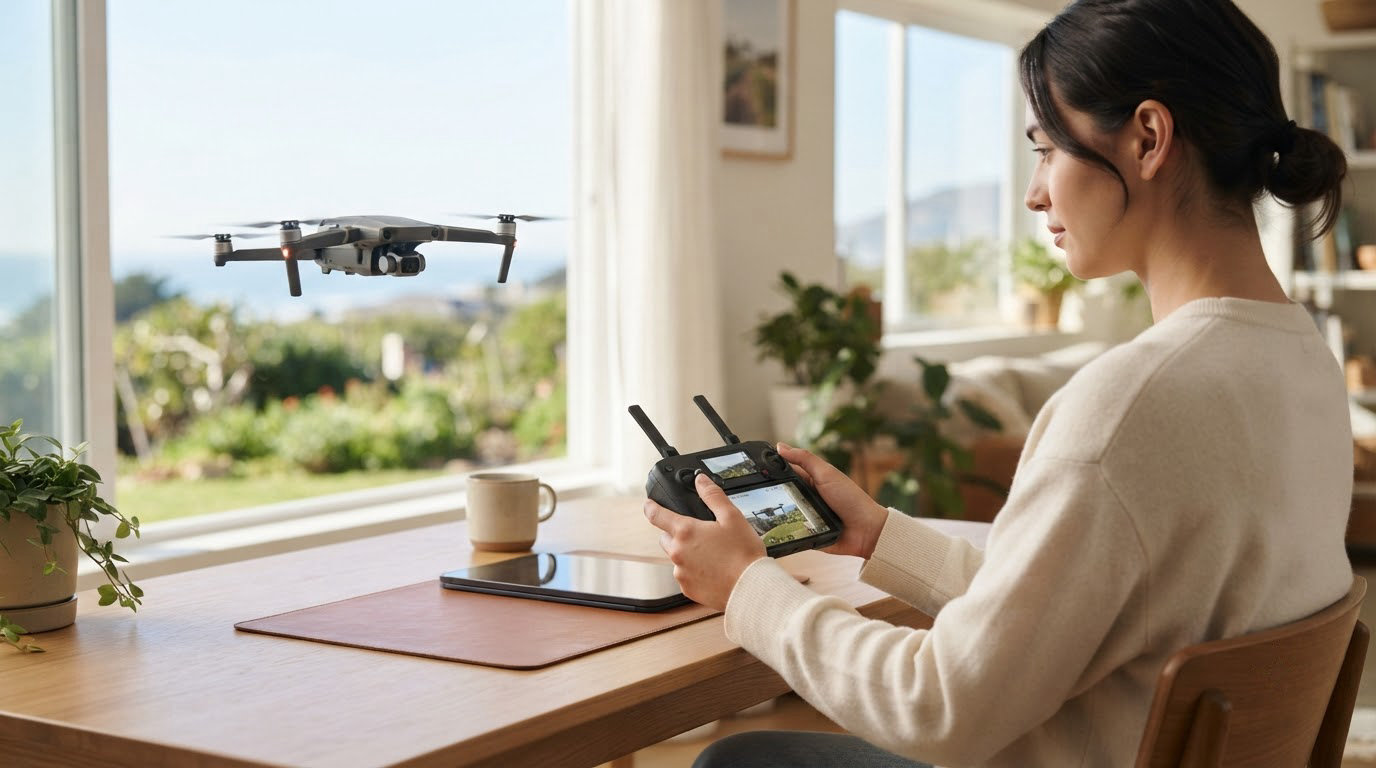
The DJI Mic Mini leads these picks for the October sale because it pairs a 4.7 rating across more than 24,000 owner reviews with the smallest transmitter weight in the lineup at 10 g per unit. Two others suit different buyers: the DJI Osmo Pocket 3 is the stronger all-round vlogging camera, and the DJI Osmo Action 5 Pro is the pick when your footage happens underwater or in bad weather.
Prime Big Deal Days runs October 6-7, 2026, and most of these offers need a Prime membership. Everything below is a pick worth watching, not a promise that a price will hold, so treat the buttons as the only reliable place to check the current figure.
Table of Contents
Our Top 3 Picks for Best Amazon Prime Big Deal Days DJI Deals (October 2026)

Best Amazon Prime Big Deal Days DJI Deals Compared
| Product | Specifications | Action |
|---|---|---|
 DJI Mic Mini DJI Mic Mini |
|
Check Deal Price |
 DJI Osmo Pocket 3 DJI Osmo Pocket 3 |
|
Check Deal Price |
| DJI Osmo Action 5 Pro |
|
Check Deal Price |
 DJI Mic 3 DJI Mic 3 |
|
Check Deal Price |
 DJI FPV Remote 3 DJI FPV Remote 3 |
|
Check Deal Price |
 DJI RS 5 Combo DJI RS 5 Combo |
|
Check Deal Price |
 DJI Avata 2 DJI Avata 2 |
|
Check Deal Price |
 DJI Flip Combo DJI Flip Combo |
|
Check Deal Price |
 DJI Neo 2 Combo DJI Neo 2 Combo |
|
Check Deal Price |
 DJI Goggles 3 DJI Goggles 3 |
|
Check Deal Price |
How We Chose
We compared the specs that actually separate DJI gear from its rivals: sensor size, video modes, flight or runtime figures, transmission range, weight and what sits in the bundle. We also read the owner reviews on Amazon and weighed the ratings, all checked in October 2026.
1. DJI Mic Mini: Editor’s Choice for Vlogging Audio
- 10 g transmitter that disappears on a shirt
- Two noise-cancelling levels plus auto limiting
- 48 h total runtime from the charging case
- Plugs straight into Osmo cameras with no receiver
- No hardware mute button so muting means powering down or using the app
- No small pouch for the transmitters alone
At 10 g per transmitter, the Mic Mini is the piece you forget you are wearing. That is the whole pitch for anyone shooting a talking-head video and hating the look of a mic clipped to a collar. The set weighs 178 g and the transmitters clip on magnetically with a grip that feels precise rather than fiddly.
Owners report clean, detailed sound with two noise-cancellation settings, Basic and Strong, and a 70 dB signal-to-noise ratio. Automatic limiting catches peaks before they clip, which matters when a subject suddenly raises their voice mid-sentence.
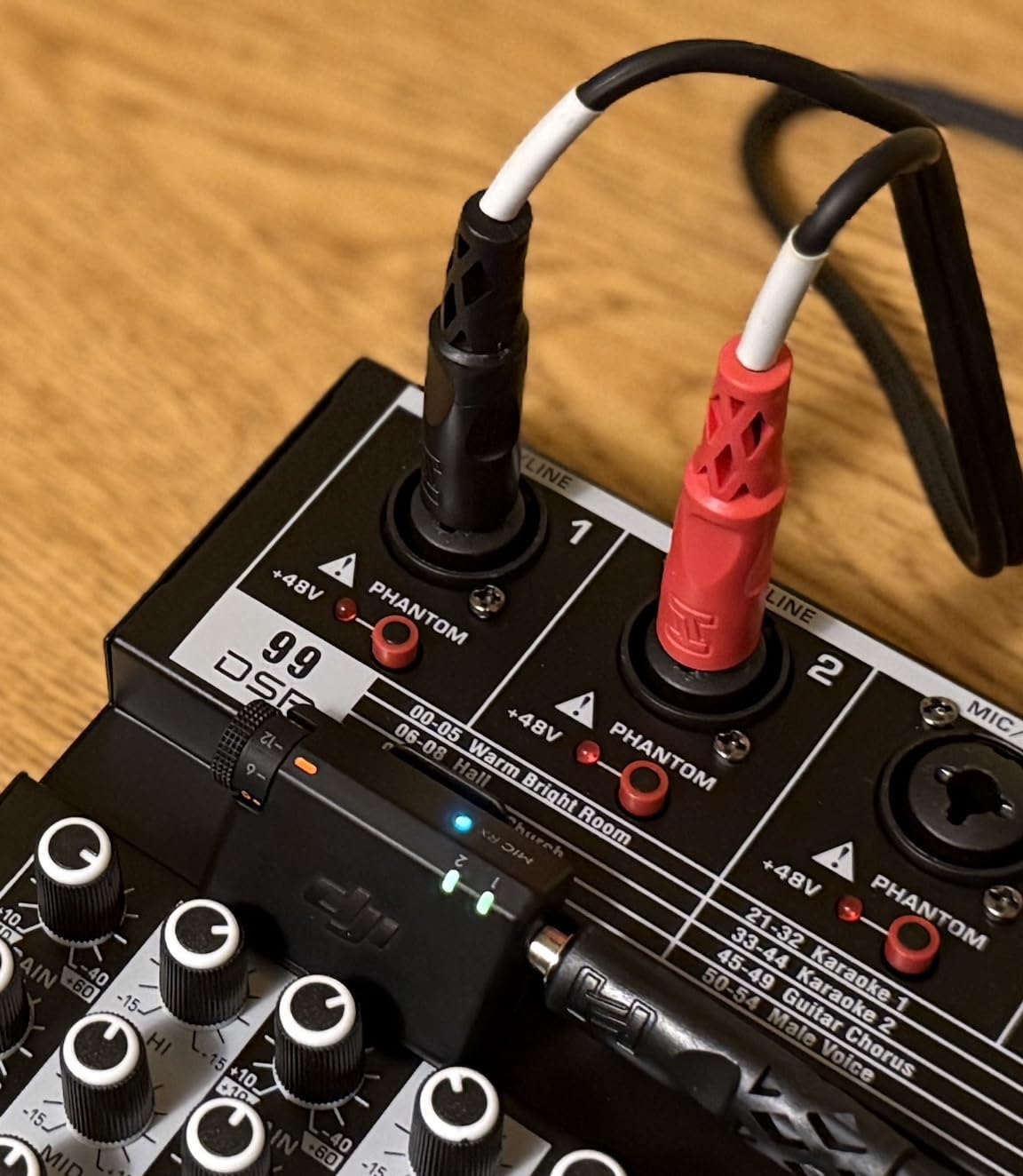
The 400 m maximum transmission range holds up in open outdoor work, and 48 hours of total runtime across the two transmitters and receiver means a multi-day shoot charges once. If you own a Pocket 3 or an Action 5 Pro, OsmoAudio connection removes the receiver entirely.
Two complaints come up again in the reviews. There is no mute switch on the microphone body, so you either power it down or reach for the app. And there is no small case for just the transmitters, which means the full charging case rides along even when you only need the lavs.
Compared with the DJI Mic 3 further down this list, the Mic Mini is the simpler, lighter option. The Mic 3 handles four transmitters and 32-bit float backup, which is the right call for a panel discussion, but it is more gear to manage when you are filming alone. For a solo creator, the Mic Mini does the job with less fuss.
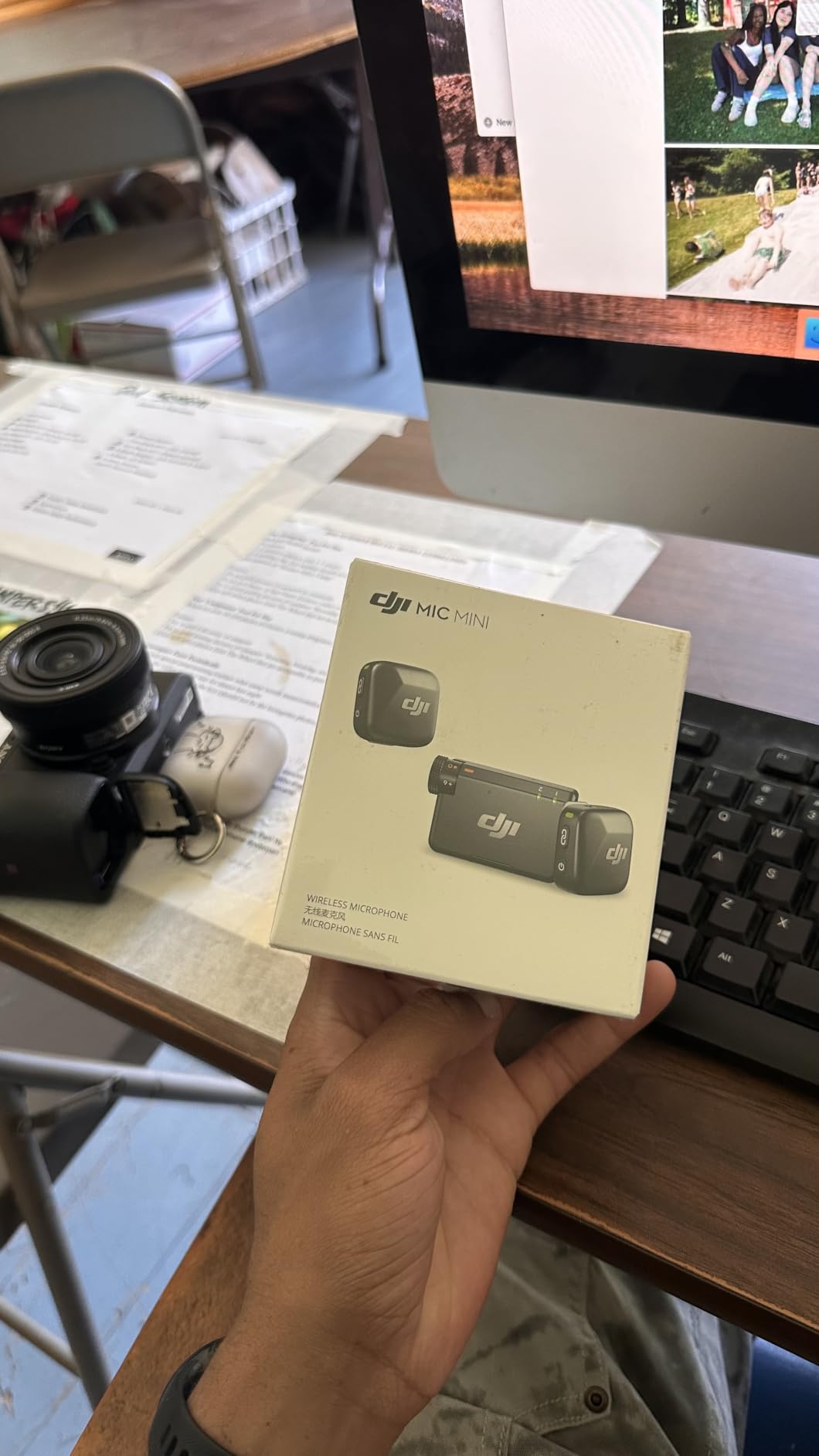
The frequency response runs 20 Hz to 20,000 Hz with 48 kHz sampling, so it captures more headroom than a basic wired lavalier if you are grading later.
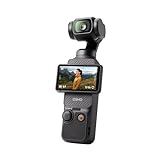
2. DJI Osmo Pocket 3: Best Value
- Large 1-inch sensor for a camera this size
- 3-axis mechanical gimbal smooths walking shots
- Rotating 2-inch screen for self-recording
- ActiveTrack 6.0 holds a face in frame
- Gimbal has no hard lock so the axes can swing open when powered off
- Must be activated in the DJI app before the fifth use
- No built-in storage so a microSD card is required
The Pocket 3 is the reason most people can stop thinking about whether a compact camera is a real compromise. A 1-inch CMOS sensor records 4K at 120fps and still holds up indoors, which is where smaller sensors usually fall apart.
Its 2-inch rotating touchscreen is the feature people bring up second. Flip the screen forward and framing yourself is a matter of pressing one button, with no extra accessory involved. The 3-axis mechanical gimbal handles the walking footage that an action camera would stabilise electronically and slightly softer.
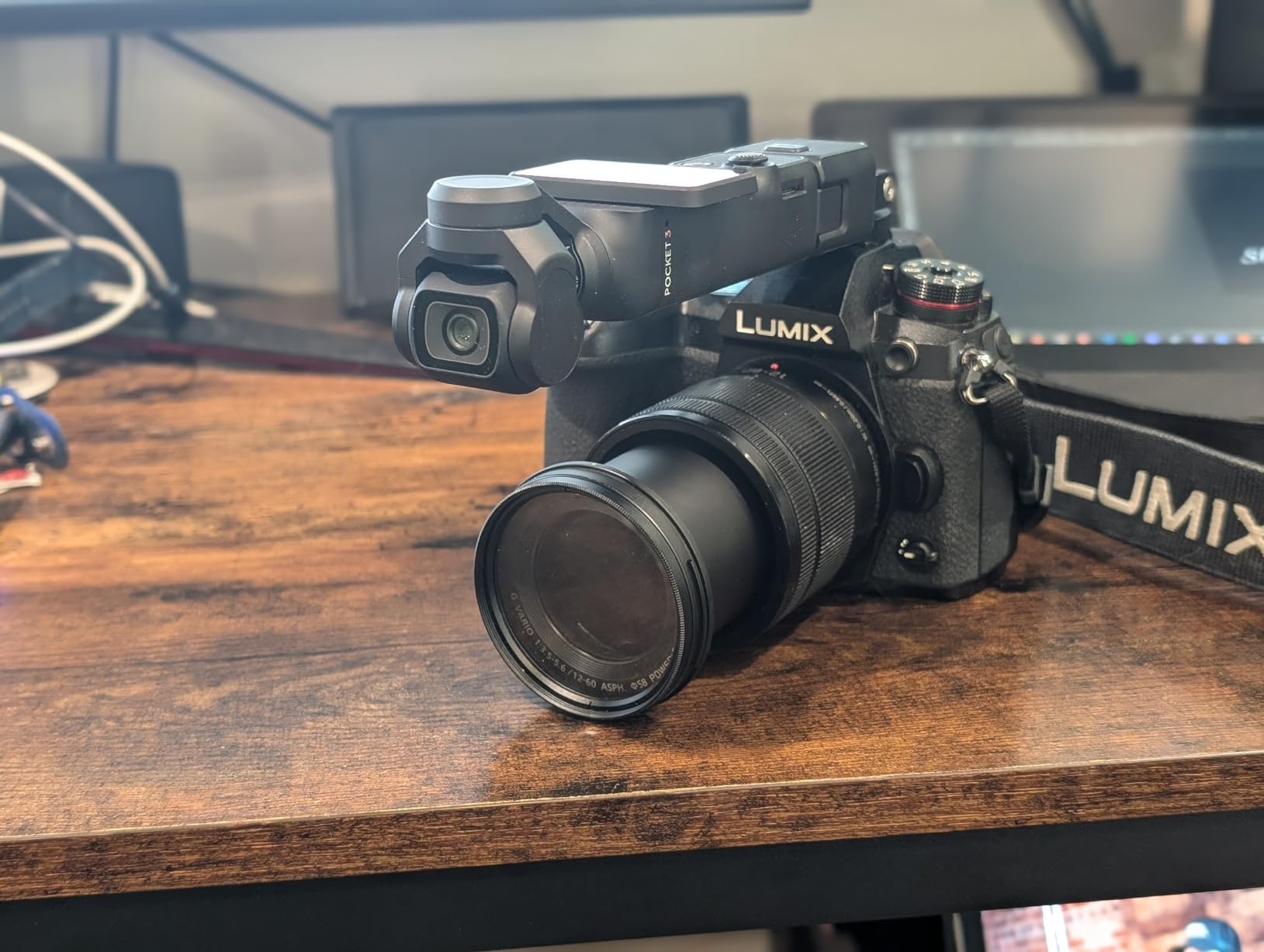
For vloggers the runtime is the quiet advantage: 166 minutes of average battery life covers a full shooting day without a mid-day swap. Storage is a microSD V30 or U3 card, and D-Log M gives 10-bit color if you edit in a proper timeline.
The trade-offs owners mention are mechanical rather than electronic. The gimbal has no hard lock, so the axes can swing open after you power the unit down, and the supplied cover is a separate piece that does not fully enclose the body. The camera also has to be registered in the DJI app before the fifth use or it will not operate, which catches people out more often than you would think.
Against the Osmo Action 5 Pro, the choice is simple. The Action is waterproof to 20 m and survives a drop; the Pocket 3 has the better sensor and a mechanical gimbal. If your shooting happens on dry land, this is the better camera. Set something on a wrist mount with a bare camera in mind, and you have lost the case that arrives with the Action 5 Pro bundle.
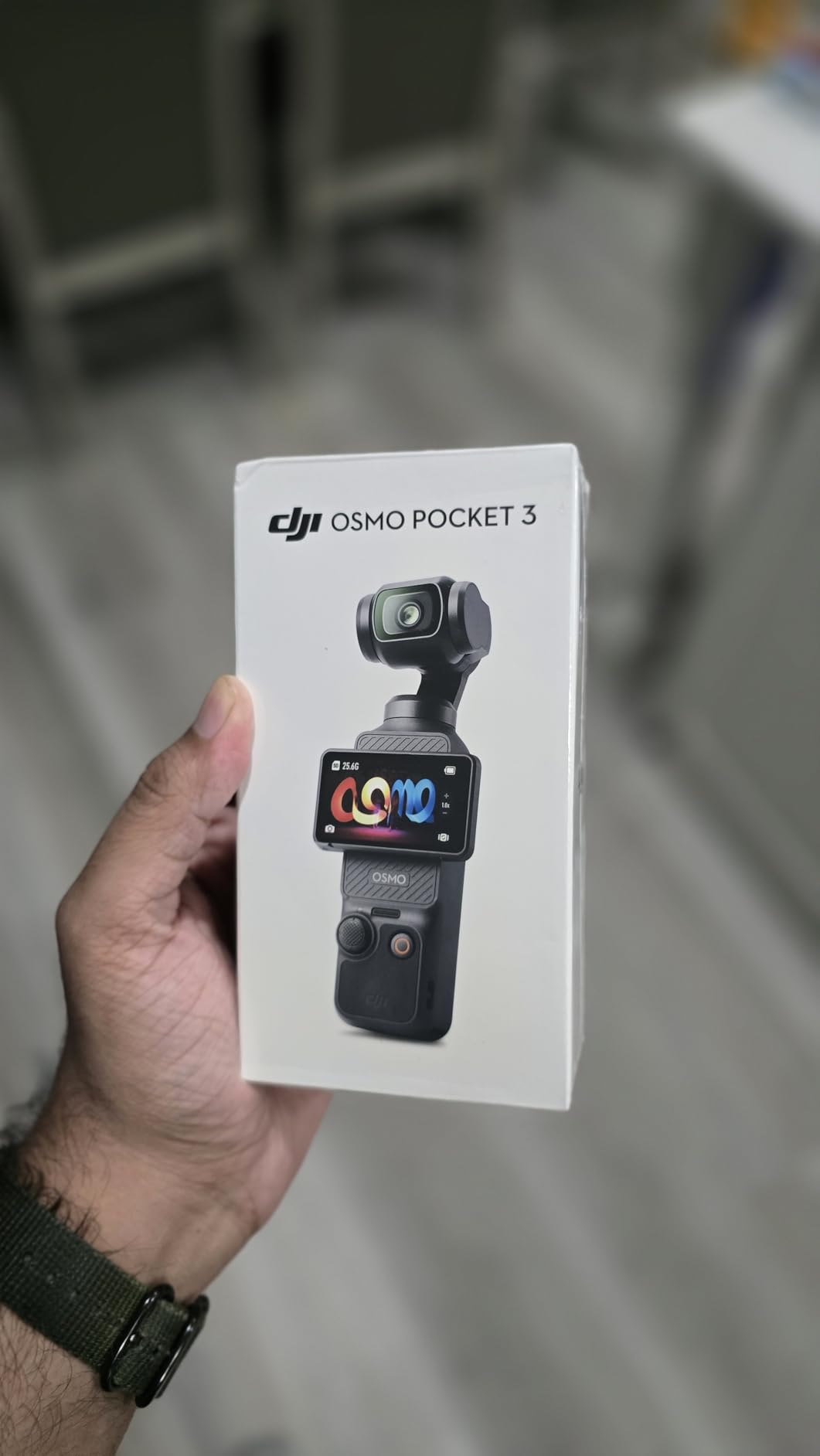
Skip it if: you film in rain, surf or snow. Heat also builds during extended 4K at 120fps, so long high-frame-rate clips need breaks.
3. DJI Osmo Action 5 Pro: Best for Action Shooting
- 1.3-inch sensor with 2.4 micron pixels and 13.5 stops of dynamic range
- IP68 waterproof to 20 m with no housing
- Up to 4 hours per 1950 mAh battery
- Dual OLED screens for front and rear framing
- Runs warm around the lens on long recordings
- RockSteady crops roughly 15-20 percent of the frame
- No official webcam mode
Dual ultra-bright OLED screens, one front and one rear, remove the guesswork from mounting this on a helmet or chest strap. You can frame yourself without turning the camera around, which is the single biggest reason action cameras get returned.
The 1/1.3-inch sensor uses 2.4 micron pixels and carries 13.5 stops of dynamic range. In practice that is what keeps a backlit outdoor scene from turning the sky white while the subject goes dark. 360-degree HorizonSteady rolls the horizon level even when the frame is tilted well past what editing software would correct cleanly.

Waterproof to 20 m with no housing means you can leave the dive housing in the drawer. Batteries last up to 4 hours per 1950 mAh cell, dropping to 3.6 hours at minus 20 degrees Celsius, and the mounts work with most GoPro-style accessories if you already own that ecosystem.
Owners are less enthusiastic about three things. The body runs warm around the lens during long takes, the field of view is narrower than the leading competition, and enabling RockSteady crops roughly 15-20 percent of the frame, so you lose edge detail as well as width. Long recordings also split into roughly 4 GB files that need stitching afterwards.
Where it beats the Osmo Pocket 3 is durability, not image quality. The Pocket 3 sensor is a full inch and its gimbal is mechanical, so it wins in controlled indoor conditions. Put this one in the water or in a backpack on a rocky trail and it is the safer buy.

Good to know: this listing is a bundle with two extra batteries, a 64 GB microSDXC card and a 58-in-1 accessory kit, so the box contents differ from a standard single-body kit. Check the bundle line before you order.
4. DJI Mic 3: Best for Interviews
- Up to four transmitters with eight receivers and four-channel output
- 32-bit float internal recording as a backup of every take
- Dual-band anti-interference holds the link steady in busy venues
- Adaptive gain control manages levels across a wide speaking range
- The multi-channel options add complexity for solo recording
- Heavier and larger than the Mic Mini at 221 g
When more than one person speaks, the Mic 3 stops being an upgrade and starts being the right tool. It supports up to four transmitters with eight receivers and four-channel output, so a panel discussion routes to separate audio tracks instead of one crowded mix.
The detail that matters most on a paid shoot is 32-bit float internal recording. Every take is stored on the transmitter itself, so a clipped or badly levelled recording has a recoverable copy even when the wireless link drops. Adaptive gain control handles the jump from a whisper to a raised voice without you riding the gain.
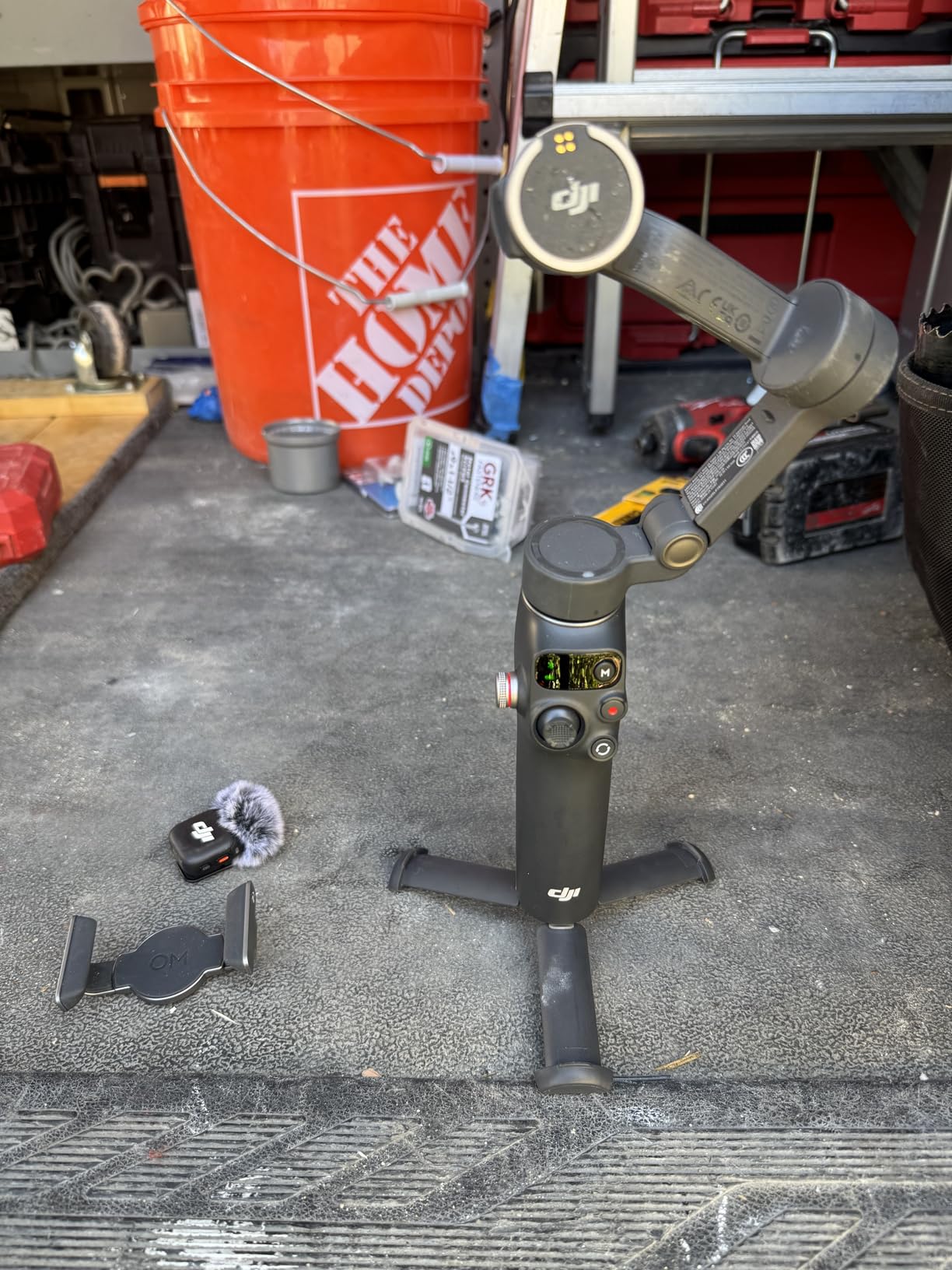
Two transmitters and one receiver give up to 28 hours of total use with the charging case, and dual-band anti-interference keeps the transmission steady in crowded venues where cheaper single-band systems falter. Three voice tones and two noise-cancelling levels give you on-device fixes without an app.
The reservation in the reviews is honest: the feature set is built for multi-speaker recording, and solo users describe it as more complexity than they need. At 221 g for the set it is also the larger of the two DJI microphone options here, though the 3.5 mm jack and USB Type-C outputs mean it also feeds a conventional camera rig.
Reach for the DJI Mic Mini instead if you film alone. It is smaller, has the same noise-cancelling idea at two levels and lasts longer on a charge, and at this point in the list it is the one to watch if your videos are one person talking to a phone.
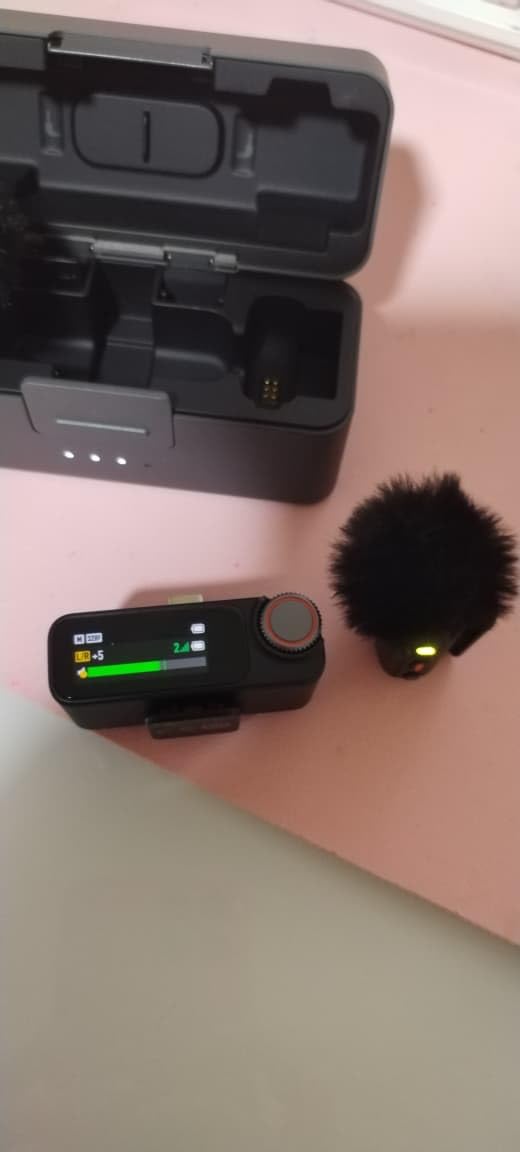
Good to know: the connectors cover 3.5 mm and USB Type-C, so this set works with mirrorless bodies and recorders that have no USB port for audio.
5. DJI FPV Remote 3: Best for FPV Upgrades
- Built for O4 video transmission with an integrated antenna design
- Control sticks extended by 2 mm for one and two-finger grip
- Manual mode opens up advanced flying beyond Sport
- Adjustable stick tension with an included screwdriver
- Works only with DJI drones and DJI FPV goggles so it is not a universal controller
- Manual mode still rewards pilots who have trained on rates elsewhere
There are seven buttons and a joystick layout, and the sticks are 2 mm longer than the previous controller. That extra length is not a spec-sheet detail: it is what allows single-finger control without the stick feeling cramped, and pilots moving up from an older remote notice it immediately.
Weight is 0.24 kg, lighter than the controller it replaces, and the operating time is longer as a result. The bigger addition is the Manual mode. Where older DJI controllers offered Normal and Sport, Manual exposes the rates a trained pilot actually wants, which matters for racing lines and tight indoor courses.
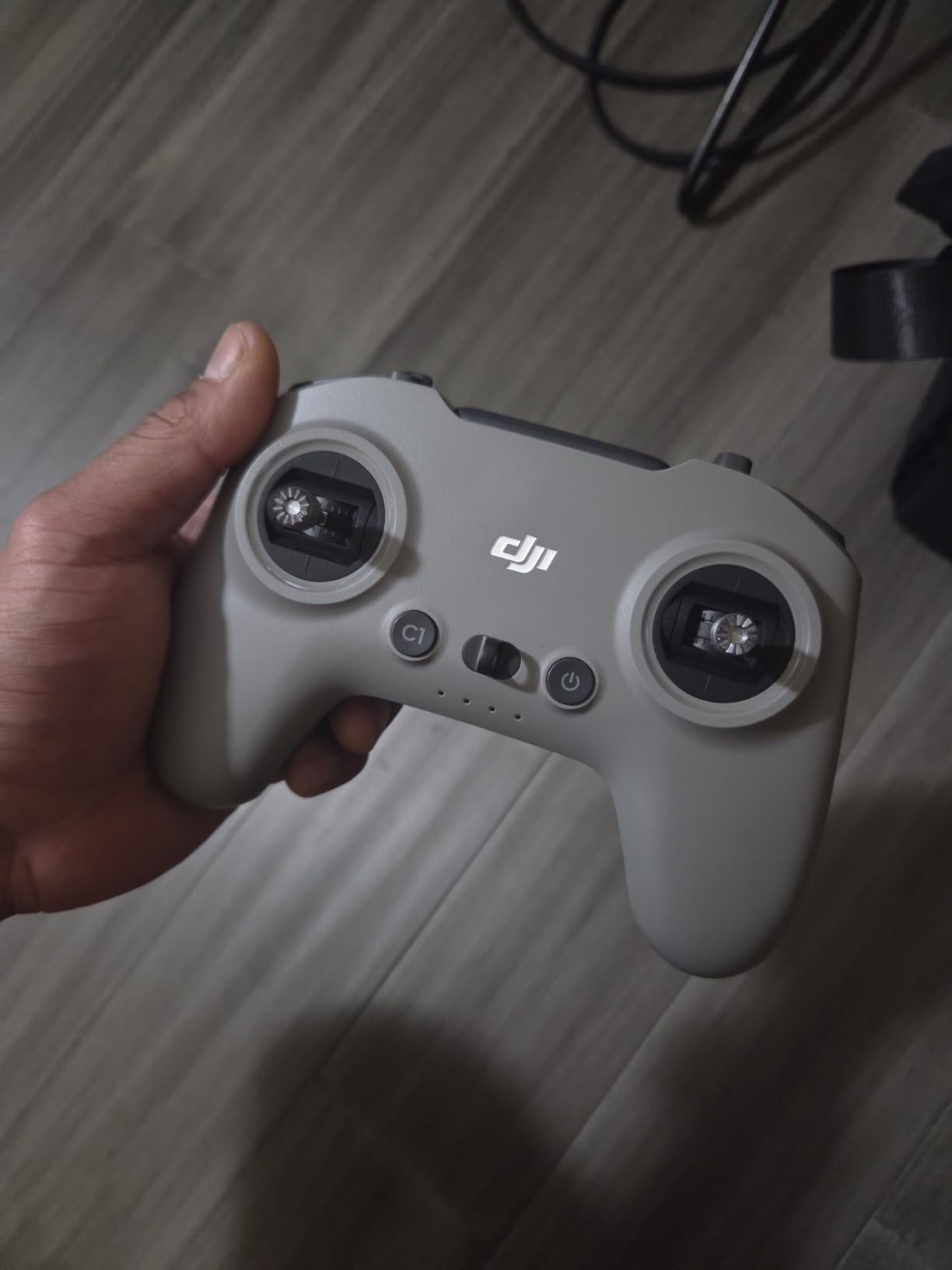
Stick tension is adjustable with a screwdriver included in the box, a small detail that lets you match the feel to your grip. The controller is listed at up to 13000 m of maximum range and works with the DJI Neo, Avata 2, O3 Air Unit, O4 Air Unit and O4 Air Unit Pro, and it pairs with the Liftoff, Uncrashed, DCL and The Drone Racing League simulators so you can practise indoors first.
The limitation is a closed ecosystem. This controller drives DJI drones and DJI FPV goggles only, so it will not bring a non-DJI aircraft into the fold. If you already fly something else, this is not the upgrade path.
Pair it with the DJI Goggles 3 later in this list for a matched O4 setup, and remember the Avata 2 bundle already ships the RC Motion 3. Buy this controller if you want manual stick rates on those builds rather than motion control alone.
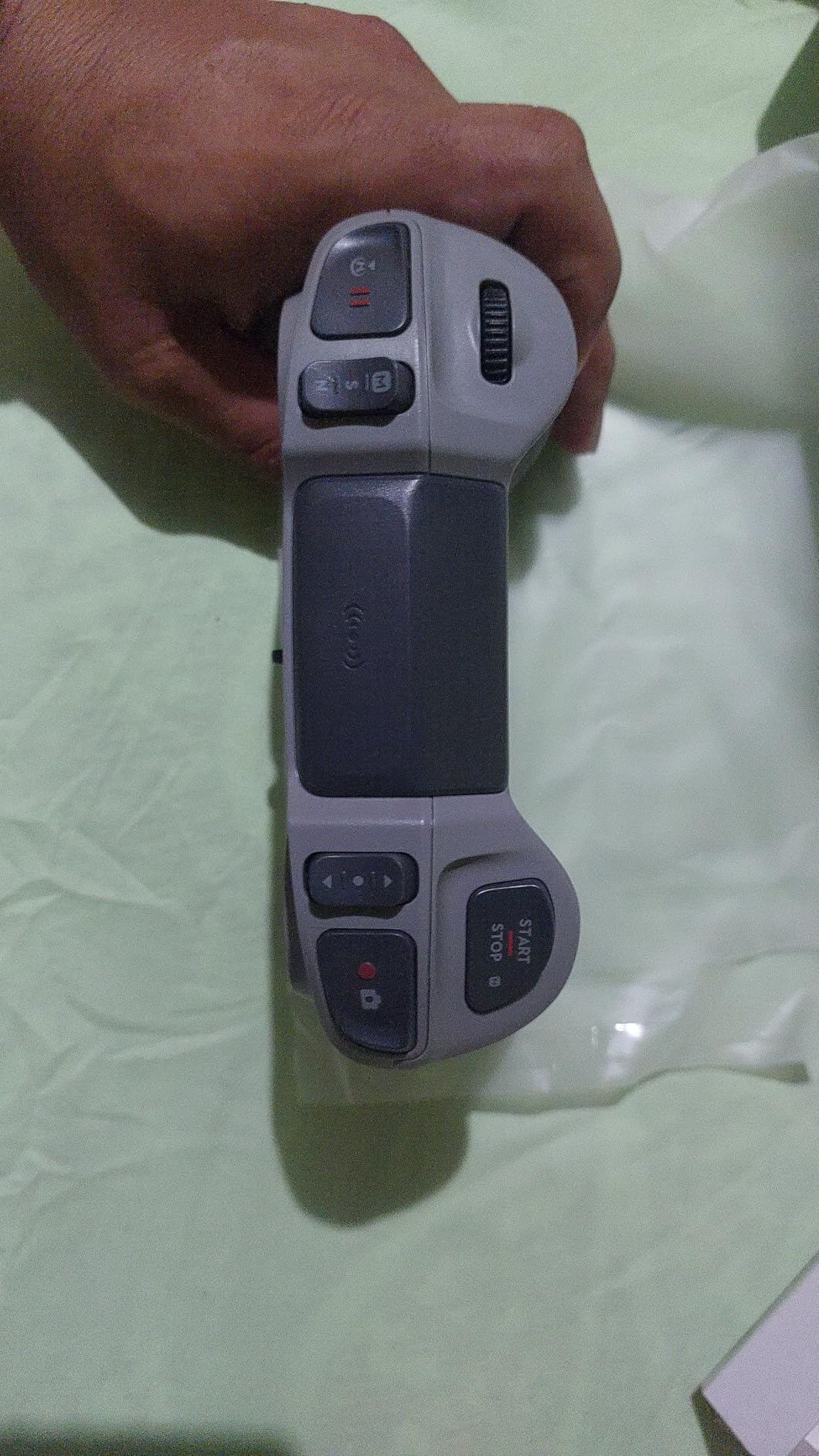
Good to know: the stick tension ships adjustable, so give it a flight or two before deciding the feel is wrong for your grip.
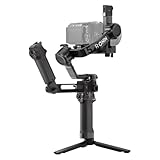
6. DJI RS 5 Combo: Best for Camera Stabilization
- Tracking module frames a person and vehicle or pet from the touchscreen
- Electronic briefcase handle enables one-handed low-angle shots
- Second-generation automated axis locks deploy and store instantly
- Per-axis fine-tuning knobs with Teflon interlayers for smooth balance
- The Ronin app is no longer on Google Play and must be sourced from DJI directly
- Large and heavy next to compact travel gimbals
The RS 5 is a full-size three-axis gimbal for cameras you already own. The listing covers Canon, Sony, Nikon and Fujifilm bodies, and the combo adds the pieces that normally get sold separately: an Enhanced Intelligent Tracking Module, an electronic briefcase handle, a quick-open tripod and a BG33 battery grip.
Deployment speed is the upgrade owners notice first. Second-generation automated axis locks let the gimbal store and open ready to shoot, so there is no rebalancing ritual at the start of a take. Each axis arm also has a fine-tuning knob with a Teflon interlayer for smooth adjustment when a lens shifts the balance.
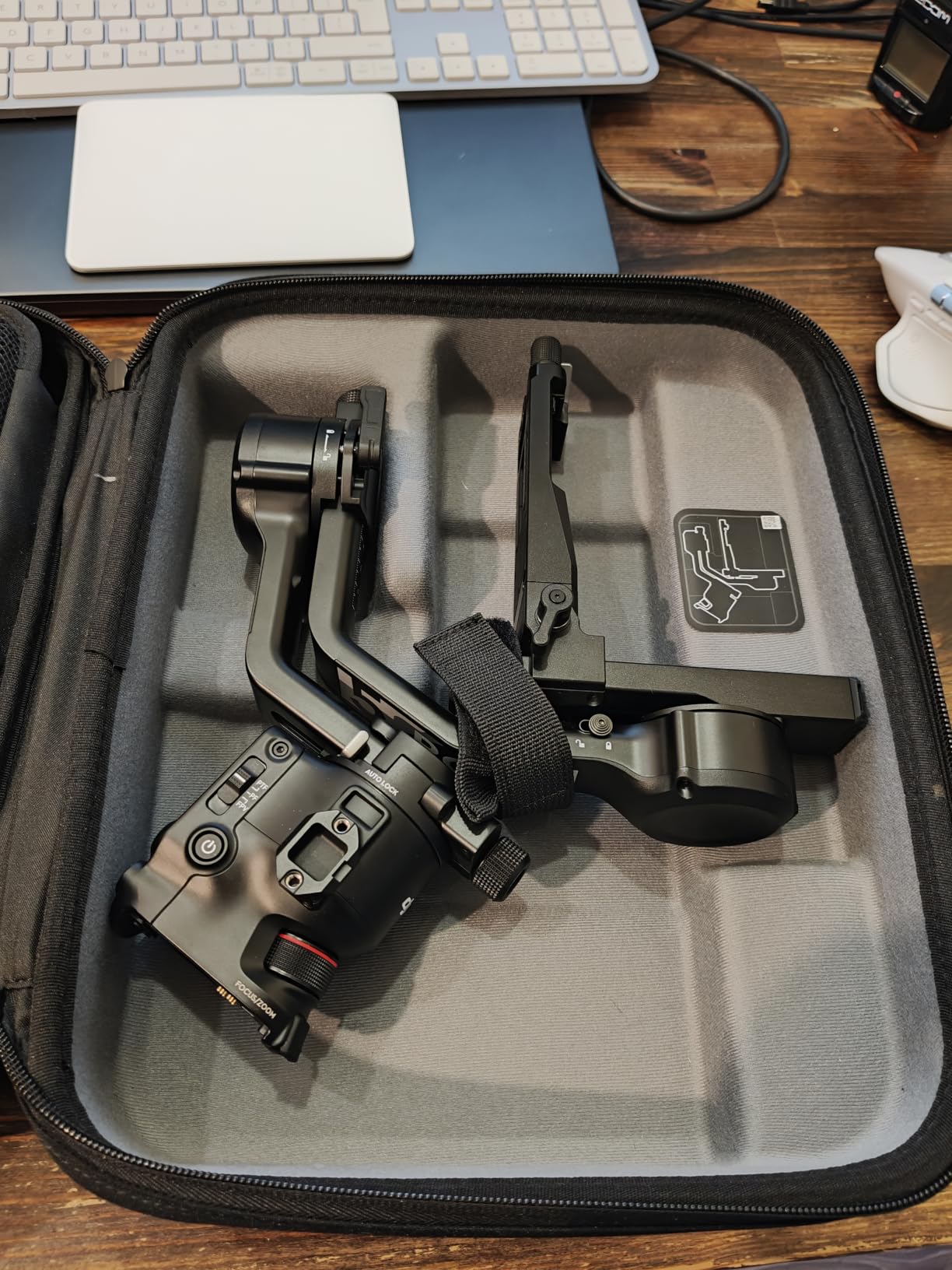
Charging is 60 percent faster with a runtime of up to 14 hours, and a Z-axis indicator gives immediate balance feedback on the 1.8-inch screen. The tracking module handles a person, a vehicle or a pet, and the briefcase handle is what makes low-angle single-handed work possible rather than theoretical.
There is one real setup friction point: the DJI Ronin app is no longer available through the Google Play Store, so it has to be downloaded from DJI directly. At 1.62 kg and 8.79 by 7.57 by 16.49 inches unfolded, it is also large next to a pocket-size travel gimbal.
Compare it with the Osmo Pocket 3 earlier on. The Pocket 3 is 179 g and self-contained, which is what you want for a vlog. The RS 5 earns its size when you are stabilising a full-frame body with a zoom lens, and no built-in camera comes close.
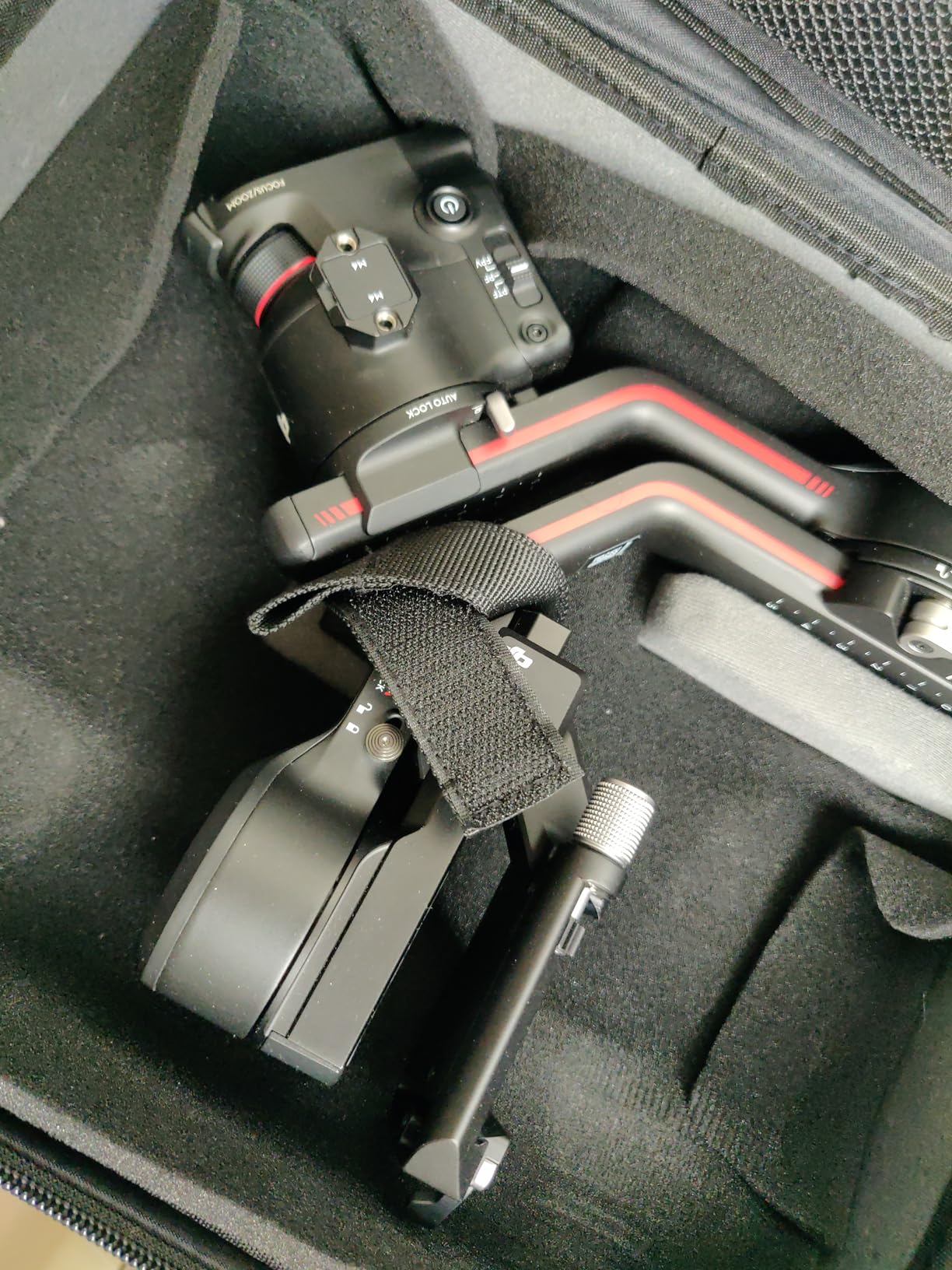
The gimbal folds to 24.7 by 11.6 by 25.9 cm, so measure your bag before committing.
7. DJI Avata 2: Best for FPV Beginners
- Goggles 3 and RC Motion 3 controller included in the combo
- One-touch flips and rolls and 180-degree drifts without training
- Integrated propeller guards make close and indoor flying safer
- Two-way charging hub balances three batteries at once
- Real-world flight time runs nearer 15-20 minutes per battery
- Motion controller cannot yaw the drone while it is stationary
- Video to the goggles degrades under dense tree cover
First-person view used to mean goggles, a motion controller and a charging hub bought separately. The Avata 2 Fly More Combo puts all three in the box with the aircraft, three intelligent batteries, a sling bag and spare propellers, which is why it works as an entry point rather than a parts project.
The 1/1.3-inch sensor records 4K at 60fps and 2.7K at 120fps across a 155-degree field of view. The pause function air-brakes the drone mid-air, and that one control does more for a new pilot than any amount of theory. Built-in propeller guards let you fly close to people and indoors without the usual caution.
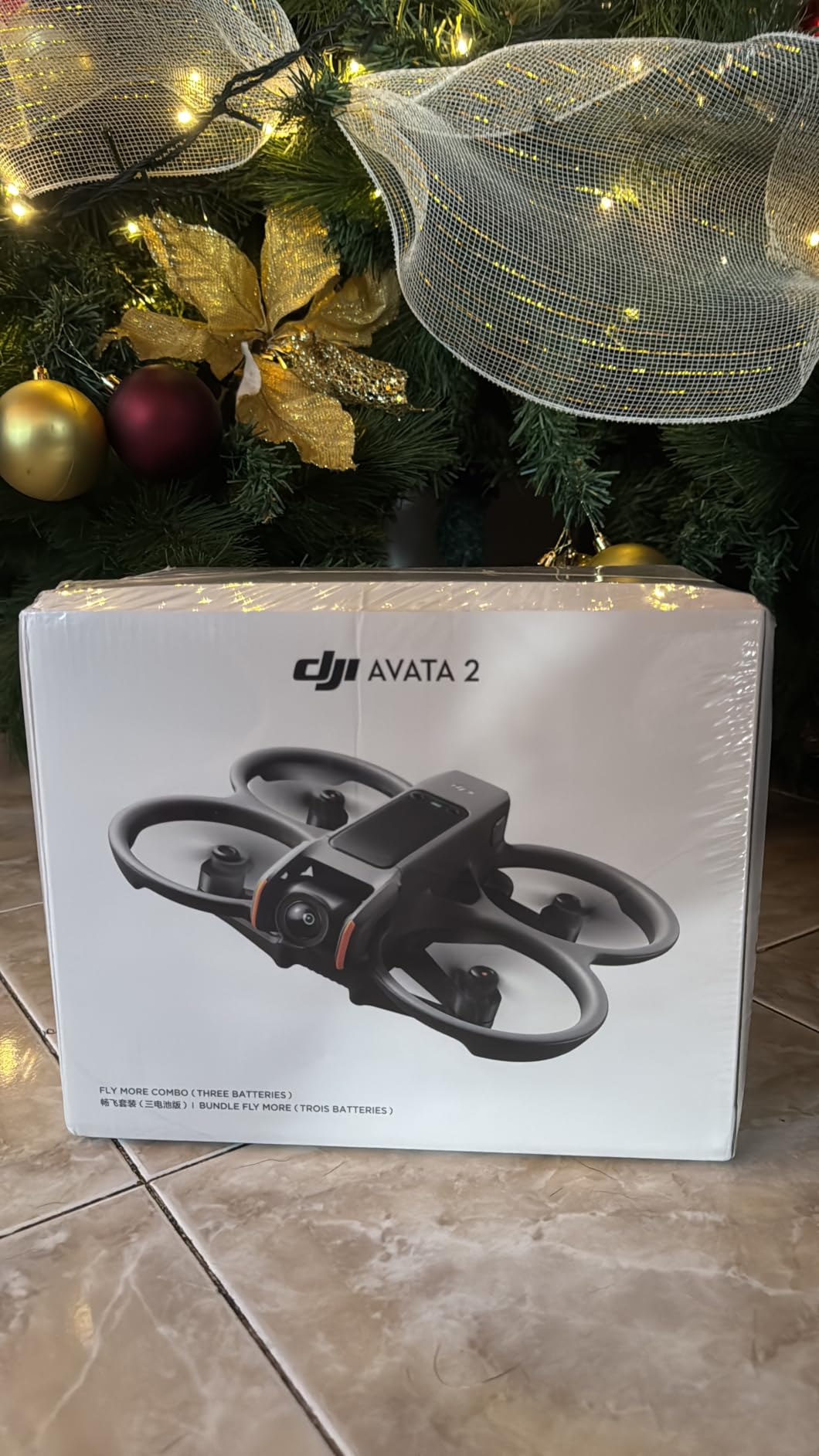
The two-way charging hub balances power across all three batteries, so a session starts with a full set rather than two cells and a wait. Gimbal and camera carry a 12-month warranty, as does the main controller.
Owners are blunt about the limits. Real-world flight time is closer to 15-20 minutes per battery, the motion controller cannot yaw the aircraft while it sits still, and the video feed to the goggles degrades under dense tree cover. Flying in Manual mode also needs a separate RC controller, which is not in this bundle.
If you want a drone that flies itself for scenic video rather than through a set of goggles, the DJI Flip Combo later in this list is the calmer option. The Avata 2 is for the days you actually want to look through the headset.
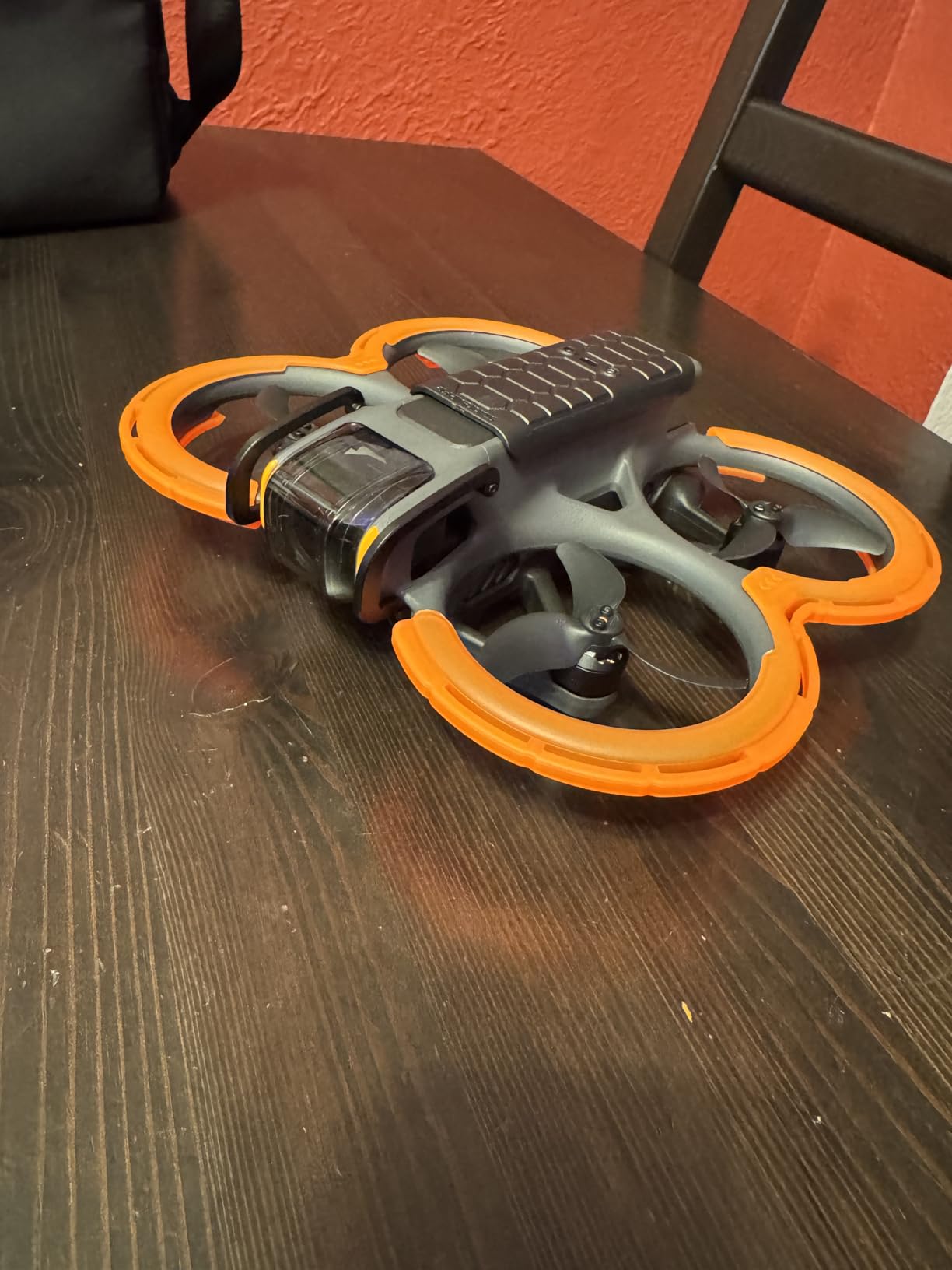
Two things worth knowing before a long session: the goggles show a narrower field of view than competing FPV headsets, and there is no compass or heading display in the view.
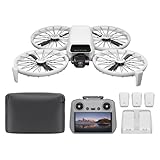
8. DJI Flip Combo: Best for Travel Drones
- Full-coverage carbon fiber propeller guards for close flying and indoors
- RC 2 controller has a built-in high-brightness screen so no phone is needed
- Aircraft sits under 249 g for US registration and Remote ID purposes
- Folds down for travel
- Struggles to hold position in wind
- Top speed and flight time trail the Mini Pro line
- Return to home is less accurate than on DJI Pro-series drones
The Flip is the one on this list you can fly near other people without a raised eyebrow, because the propeller guards wrap the whole aircraft in carbon fiber. Owners report it survives minor crashes well, which is exactly what you want from a first drone.
The RC 2 controller has a built-in high-brightness screen, so there is no phone in the loop and no second screen to worry about while filming. The 1/1.3-inch CMOS sensor records 4K at 60fps with HDR, and subject tracking plus intelligent flight modes make moving shots repeatable for a beginner.
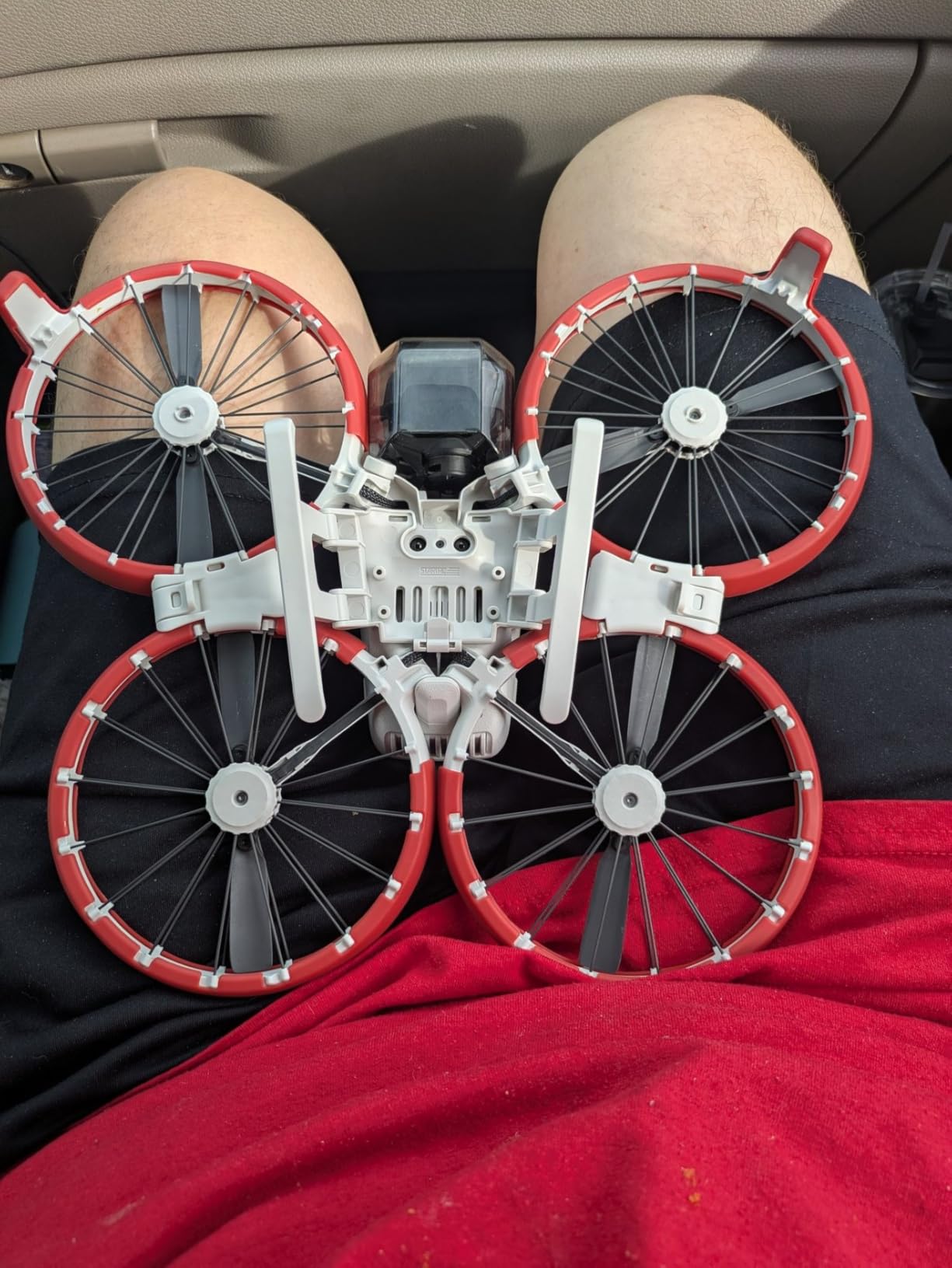
At under 249 g the aircraft sits below the US FAA registration and Remote ID threshold, which removes paperwork from the buying decision entirely. Listed flight time is up to 31 minutes per battery, and the combo includes three intelligent batteries, a parallel charging hub, a shoulder bag and three spare propeller pairs. Transmission runs 13 km on O4.
The guards are also the reason for the compromises. Owners report it struggles to hold position in wind, and top speed and endurance both trail the Mini Pro line because the guards add drag. Return to home is less accurate than on DJI Pro-series drones, and the RC 2 screen has no internet connection, so offline map areas have to be downloaded in small strips before you leave.
Compared with the DJI Neo 2 Combo, both are sub-250 g machines with guards, but the Flip flies the bigger sensor and a folding body. The Neo 2 is the one to buy when bag space matters more than sensor size.
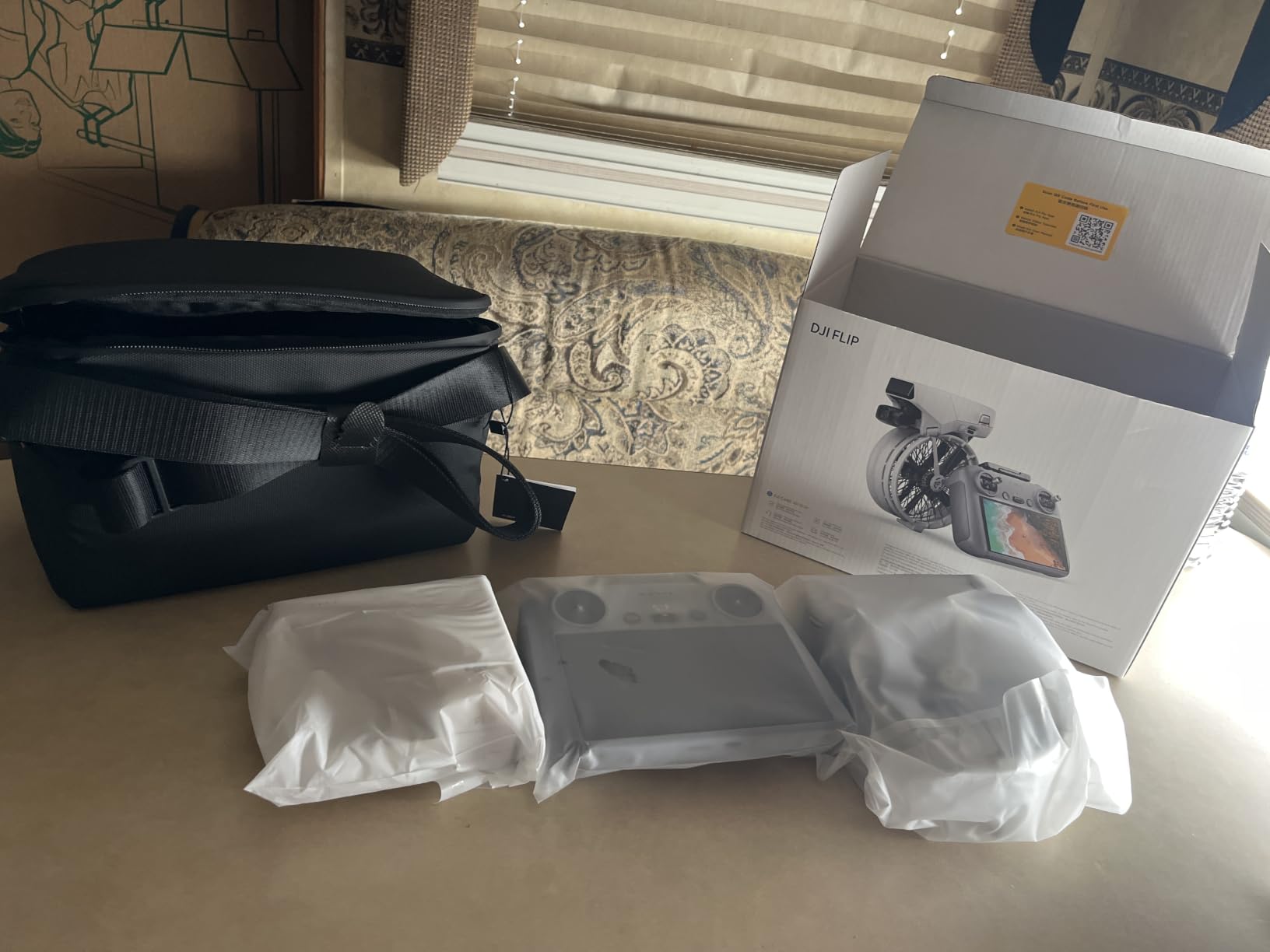
The DJI Fly app is not available through Google Play for this model, so download it from DJI before your first flight rather than discovering it at the field.
9. DJI Neo 2 Combo: Best for Tiny Travel Drones
- Only 151 g with full-coverage propeller guards for travel and indoor use
- Palm takeoff and landing plus gesture and voice control
- Omnidirectional obstacle sensing with a proximity radar display
- 49 GB internal storage and a digital transceiver for live video
- Real per-battery flight time of roughly 10-17 minutes
- Weak low-light and night performance
- Body is not foldable and no case is included
At 151 g with full-coverage guards, the Neo 2 is the smallest aircraft here. It launches from your palm, lands the same way, and answers gesture and voice commands, which makes it the least intimidating drone to hand to someone who has never flown one.
It is also the most capable small drone in the lineup. ActiveTrack holds a subject at speed, including while cycling, omnidirectional obstacle sensing feeds a proximity radar display, and 49 GB of internal storage means 4K footage saves to the aircraft before you have even landed.
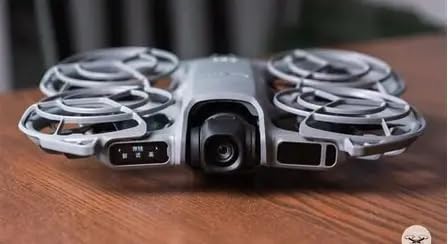
Video is 4K at 60fps with 4K at 100fps slow motion on a 2-axis gimbal, and the combo adds the RC-N3 controller, a digital transceiver, three batteries, a charging hub and propeller guards. Transmission reaches 10 km.
The list of limitations is long and worth reading before you commit. Real flight time runs roughly 10-17 minutes per battery, low-light and night performance is weak, obstacle avoidance is not fully reliable during fast side-on tracking, and the body does not fold with no case included. Internal storage also fills quickly with 4K, and no USB power adapter is included, which caps charging speed.
Against the DJI Flip Combo, the Neo 2 wins on size and palm-launch convenience while the Flip wins on sensor, folding body and battery endurance. Neither is a strong night flyer, so plan shoots around daylight.
Good to know: the body does not fold and no case is included, so budget for a padded compartment in whatever bag you already carry.
10. DJI Goggles 3: Best for FPV Viewing
- 1080p Micro-OLED screens with up to 100 Hz refresh and TUV low blue light certification
- Diopter adjustment from -6.0 to +2.0 D suits both nearsighted and farsighted pilots
- Integrated headband battery removes tangled cables
- Real View PiP shows surroundings without taking the goggles off
- Only works with newer DJI drones and controllers and not with Mavic 3 or older RC controllers
- No HDMI input and no carrying case included
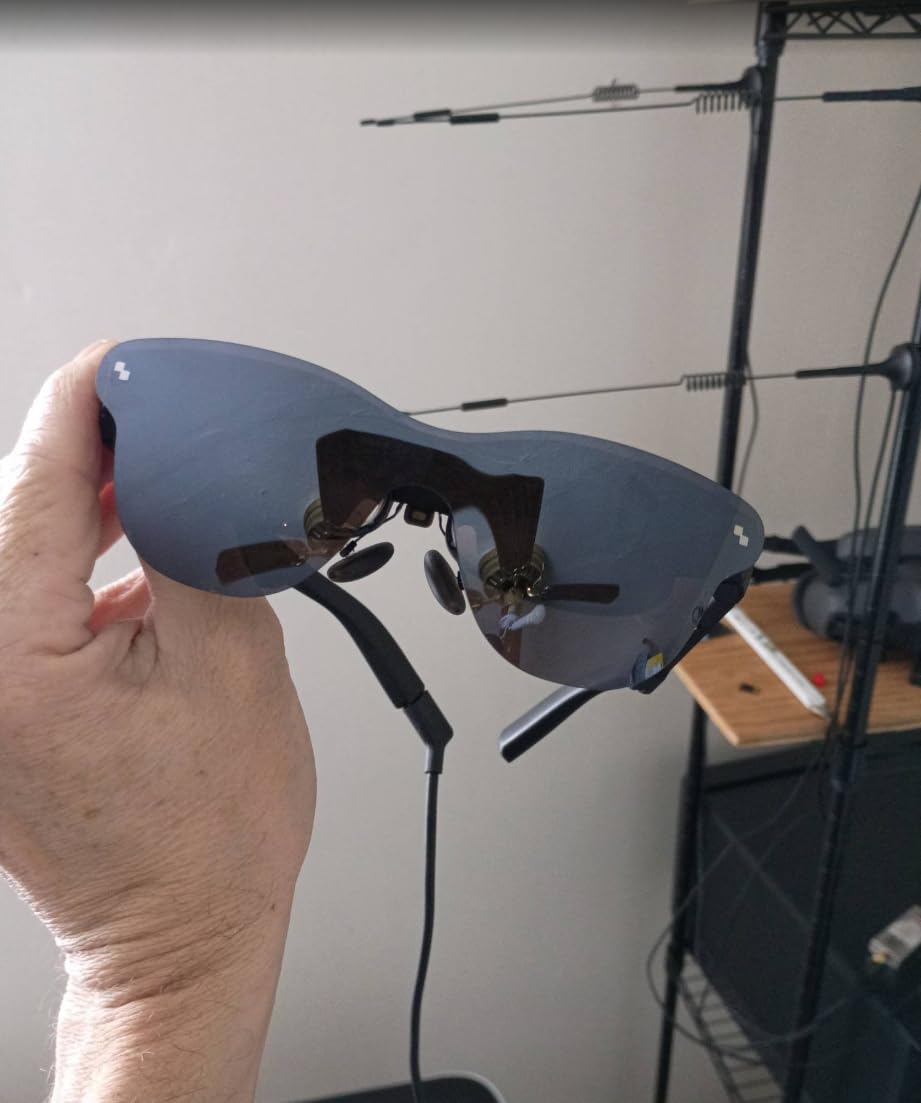
Long FPV sessions are a face-contact problem before they are a video problem, and pilots rate these as the most comfortable headset in the DJI range. The 1080p Micro-OLED panels run at up to a 100 Hz refresh rate and carry TUV Rheinland low blue light certification, which matters on a long evening flight.
The diopter adjustment spans -6.0 to +2.0 D, so you can correct your vision inside the headset rather than squinting into prescription inserts. The headband battery is integrated, which is the reason there are no cables draped over your head mid-flight, and one-tap defogging clears a lens fogged by your own breathing on a hot day.
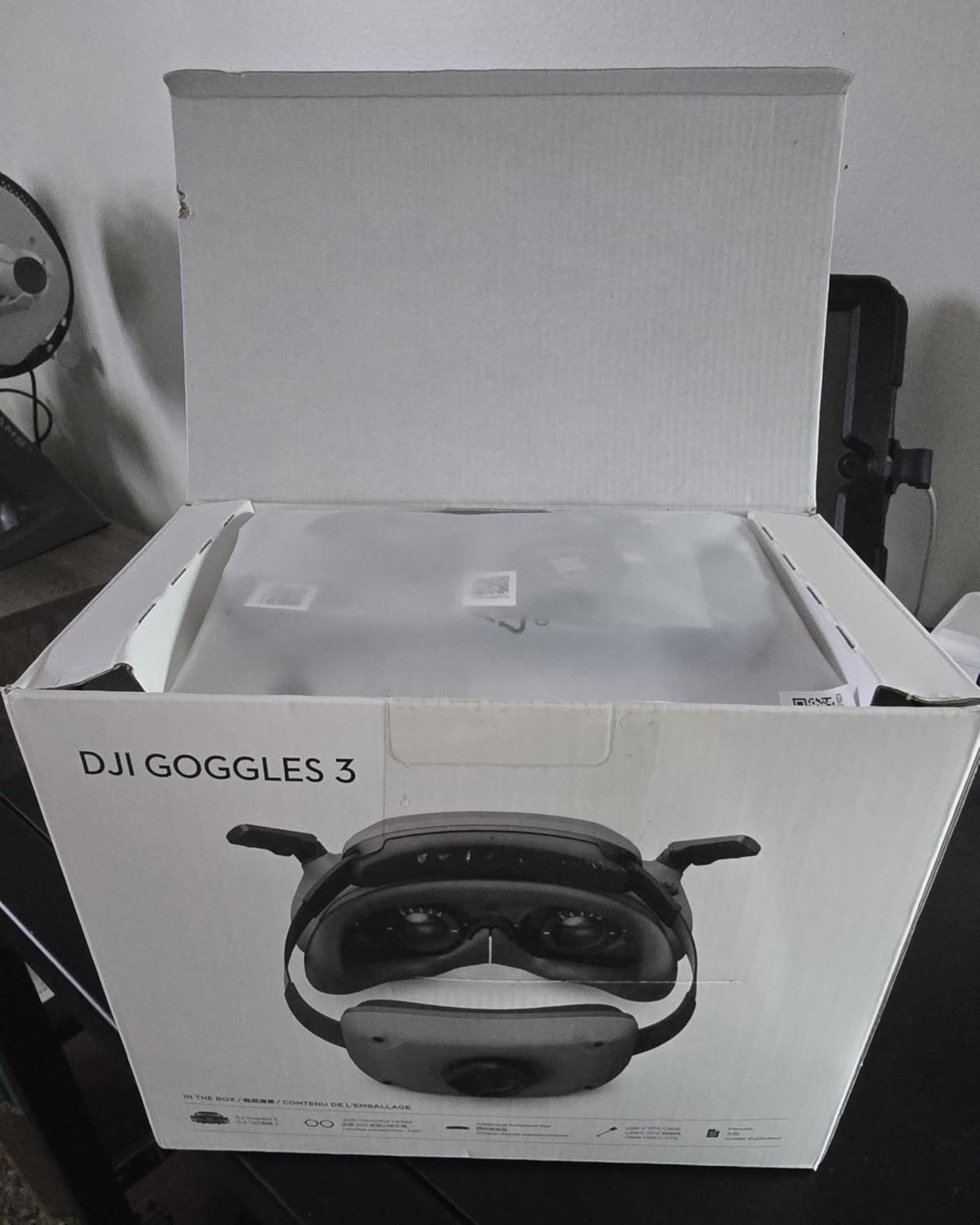
Real View PiP shows your surroundings without removing the headset, useful before a takeoff when you want to check the area. Operating time is about three hours, and Wi-Fi streaming sends the view to the DJI Fly app. The box includes corrective lenses, an extra forehead pad, foam padding and a USB-C cable.
Compatibility is the constraint. These goggles do not work with Mavic 3, RC Motion 2 or FPV Remote Controller 2, which narrows them to newer DJI drones. There is no HDMI input, no carrying case, and pilots report the firmware update process is awkward to follow. Turning the goggles on can also switch off the RC 2 screen.
Note that the Avata 2 Fly More Combo earlier in this list already includes these goggles and the RC Motion 3. Buy them separately only if you already fly a different O3 or O4 aircraft.
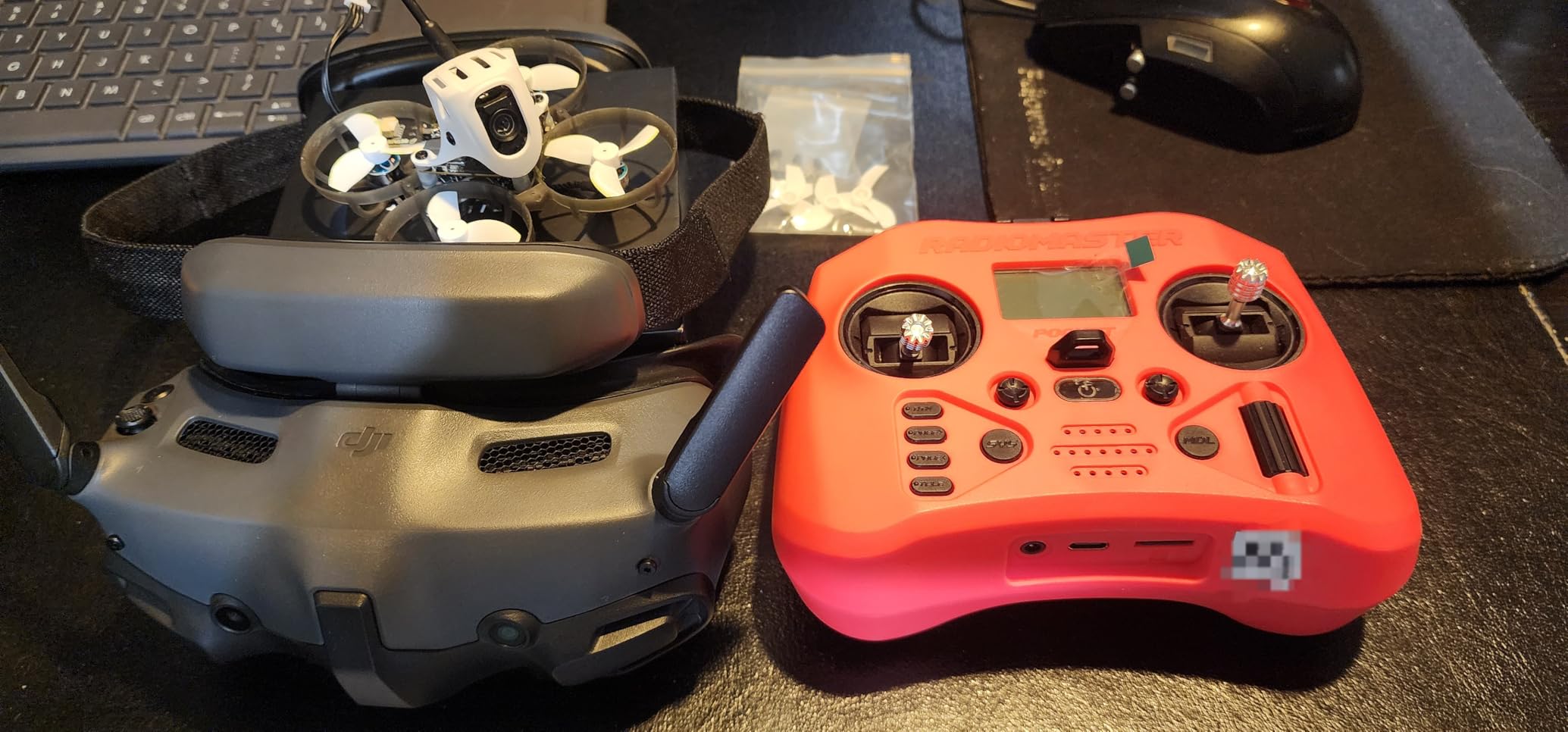
Good to know: set the diopter adjustment before your first flight rather than mid-session, and keep the spare forehead pad for longer evening sessions.
How to Choose DJI Gear During Prime Big Deal Days
Choose the Right Product Type
Start from how you shoot, not from the discount. A talking-head video needs audio, so the DJI Mic Mini for one person or the DJI Mic 3 for a panel. Movement near water or on a bike points at the Osmo Action 5 Pro. Walking-and-talking footage belongs to the Osmo Pocket 3, and first-person view needs a drone with goggles bundled, which is the Avata 2.
Compare Camera and Video Specifications
Sensor size is the number that changes the look of your footage. The Pocket 3 carries a 1-inch CMOS, while the Action 5 Pro and the Flip and Avata 2 drones use 1/1.3-inch sensors. For frame rates, the Pocket 3 records 4K at 120fps, the Action 5 Pro prioritises a 1950 mAh battery for up to 4 hours, and the drones settle for 4K at 60fps with HDR.
Assess Flight Performance and Range
Range figures are the easy part. The Flip and the Avata 2 are listed at 13 km, the Neo 2 at 10 km. Flight time needs more scepticism: the Flip claims up to 31 minutes per battery, but pilots regularly report 25-28 minutes in real use, and the Avata 2 lands nearer 15-20 minutes. A sub-250 g aircraft such as the Flip or the Neo 2 also keeps you clear of US FAA registration and Remote ID requirements.
Consider Portability and Stabilization
Weight decides what you can carry on a trip. The Neo 2 at 151 g and the Mic Mini at 10 g per transmitter disappear into a bag, the Osmo Pocket 3 at 179 g fits a pocket, and the RS 5 at 1.62 kg does not. For stabilization, a built-in 3-axis mechanical gimbal smooths walking shots more softly than electronic stabilization, which is the Pocket 3 advantage over the Action 5 Pro.
Check Battery and Accessory Compatibility
Count batteries before you commit. The Avata 2, Flip and Neo 2 all arrive as three-battery bundles, so a two-way or parallel charging hub matters. Audio and video choices interconnect too: the Pocket 3 and Action 5 Pro connect directly to DJI Mic transmitters over OsmoAudio, and the RS 5 Combo covers Canon, Sony, Nikon and Fujifilm bodies with 3.5 mm and USB Type-C options on the Mic 3.
How to Shop DJI Deals During the Sale
Check the generation code in the listing title, because DJI reuses model names across years and the prices differ. Confirm the bundle contents line, since a Fly More Combo with three batteries and a charging hub is not the same item as a standard single-body kit. Look at the seller name and the fulfilment details on the listing, and prefer an offer fulfilled by Amazon or by a DJI-authorized reseller over an unnamed third-party marketplace seller. Most offers also need a Prime membership and the figures shift through both days of the event, so re-check the listing before you pay.
- Match the product type to the shoot: audio, action, vlogging, drone or gimbal
- Compare sensor size and frame rate before the discount matters at all
- Treat claimed flight time as a ceiling and budget roughly 20 percent less
- Count the batteries in the bundle, not just the aircraft
- Verify the exact generation, bundle contents, seller and shipper on the listing
- Confirm app availability for your model before the purchase, not after
Frequently Asked Questions
When does Amazon Prime Big Deal Days run in 2026?
Amazon Prime Big Deal Days runs October 6-7, 2026, a two-day window that Amazon has confirmed. Offers open at the start of October 6 and many of them change through both days, with the more popular DJI items often shifting again on the second day. Check a listing more than once if you are undecided.
Does Amazon Prime membership affect access to these offers?
Most offers during Prime Big Deal Days require a Prime membership, and a free trial counts toward that requirement. A handful of offers run for everyone, but the wider selection of DJI drones, Osmo cameras, microphones and gimbals is tied to the membership. If you are not a member yet, starting a trial before the event is the simplest route.
What should I know about Best Amazon Prime Big Deal Days DJI deals?
These picks are the DJI products worth watching during the October 6-7, 2026 event, chosen on the specs that separate them: sensor size, video modes, flight and runtime figures, weight, bundle contents and owner ratings. Nothing here is a confirmed discount. Offers shift through both days, so treat the product buttons as the only accurate place to check the current figure.
Which kinds of DJI products usually see the deepest sale reductions?
Entry and mid-range drones, the Osmo Pocket and Osmo Action camera lines, and wireless microphone kits have historically seen the largest reductions during this event, because they run as high-volume Amazon listings with several sellers competing. First-person view kits and larger gimbal bundles tend to move less, partly because fewer sellers carry them. Verify the live figure before deciding either way.
Are heavily reduced marketplace offers always sold by Amazon?
No. A large reduction does not tell you who is selling the item. On a listing page, check the seller and fulfilment details, and prefer an offer fulfilled by Amazon or by a DJI-authorized reseller over an unnamed third-party marketplace seller. The same caution applies to condition, so confirm whether the unit is new rather than returned or refurbished.
Final Verdict: Best Amazon Prime Big Deal Days DJI Deals
Buy the DJI Mic Mini, our Editor’s Choice, if you film alone and want audio that disappears on a shirt. For a camera that handles a whole vlog day, the DJI Osmo Pocket 3 (Best Value) pairs a 1-inch sensor with a 3-axis mechanical gimbal. The DJI Osmo Action 5 Pro (Best for Action Shooting) is the one to watch when water or weather is part of the plan.
Pick the DJI Neo 2 Combo (Best for Tiny Travel Drones) on a strict bag-size budget, the DJI Flip Combo (Best for Travel Drones) if you want a screen controller and a folding body, and the DJI Avata 2 (Best for FPV Beginners) if goggles and a motion controller in the same box is what you are after. Serious multi-speaker shoots belong with the DJI Mic 3 (Best for Interviews), existing full-frame cameras with the DJI RS 5 Combo (Best for Camera Stabilization), FPV upgrades with the DJI FPV Remote 3 (Best for FPV Upgrades) and long viewing sessions with the DJI Goggles 3 (Best for FPV Viewing).
When the event opens on October 6-7, 2026, check the sold-by and ships-from lines, confirm the bundle contents, and use the buttons here to see the current figure rather than trusting a headline reduction.