
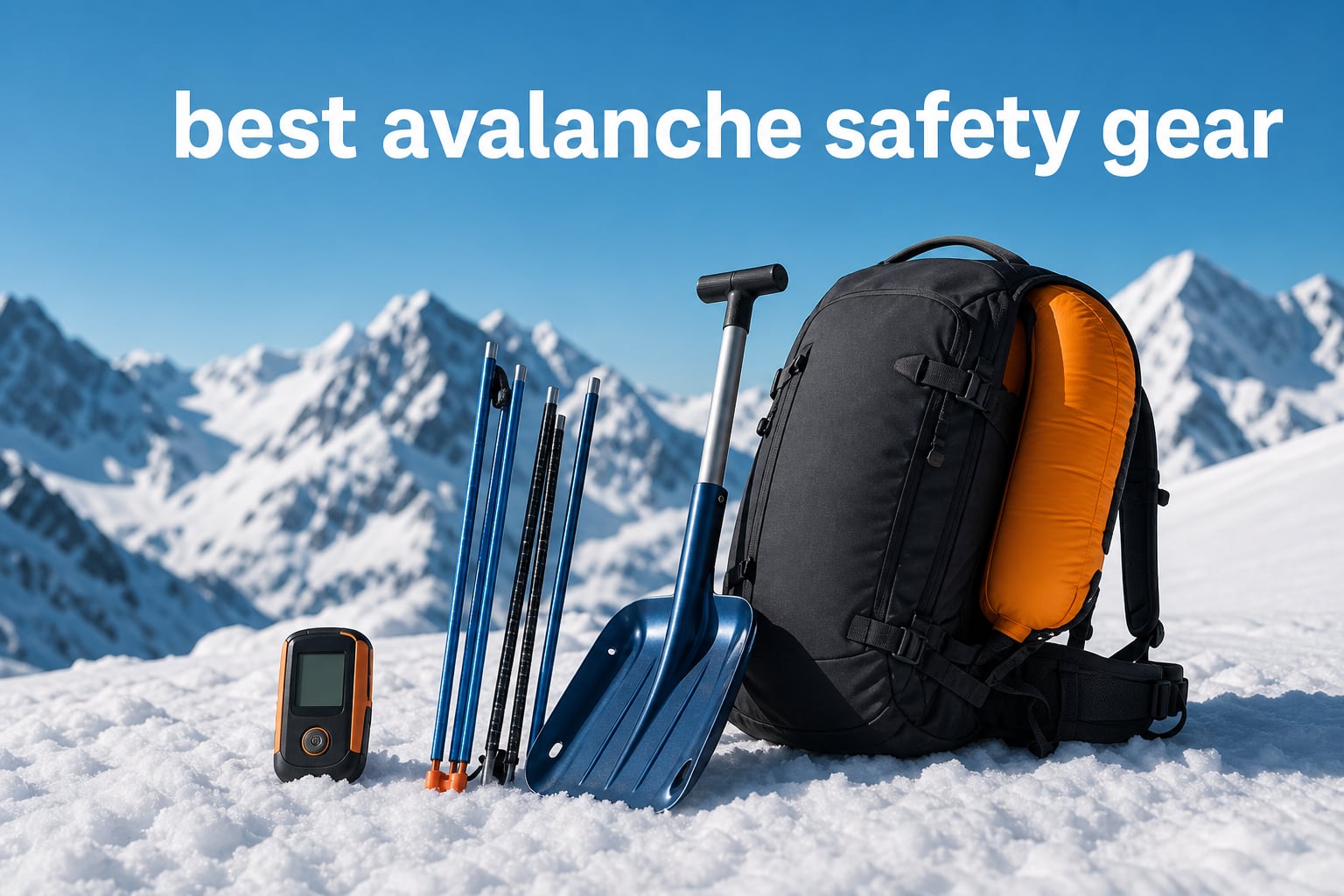
Every winter, backcountry skiers, snowboarders, and mountaineers head into avalanche terrain carrying gear that could mean the difference between life and death. Statistics are sobering: most avalanche victims suffocate within 15 to 30 minutes of burial, which means your rescue gear is not an accessory but a lifeline. Finding the best avalanche safety gear means choosing equipment that works when you can barely think straight, when your hands are freezing, and when seconds count.
The foundation of any backcountry kit is what experts call “the Big Three”: an avalanche transceiver (beacon), a snow probe, and a shovel. A transceiver emits a 457kHz signal that other beacons can detect from 50 to 60 meters away, letting your partners narrow down your location under the snow. The probe pinpoints exact depth and position, and the shovel gets you to the surface fast. Together, these three items can pull a buried companion from a 75 percent fatality scenario into a 90 percent-plus survival outcome, provided you train with them regularly.
Many backcountry travelers now add an avalanche airbag pack to their kit for an extra layer of protection. Airbags work on a different principle: they inflate to increase your volume, helping you stay near the surface of moving snow rather than getting buried. They are supplementary, not a replacement for the Big Three. If you also adventure with your dog in winter conditions, protecting their paws with quality winter dog boots should be part of your cold-weather preparation.
In this guide, our team has analyzed 10 products across four categories: avalanche transceivers, snow probes, snow shovels, and airbag packs. We drew on real backcountry user feedback, technical specs, and community forum discussions from r/Backcountry and Mountain Project to separate genuinely reliable gear from marketing hype. Whether you are building your first avalanche safety kit or upgrading older equipment, these are the items worth your consideration.
Table of Contents
Top 3 Picks for Best Avalanche Safety Gear in 2026
Ortovox Diract Voice Transceiver
- Voice navigation in 9 languages
- Smart antenna technology
- Rechargeable battery
- 360-degree display

BCA Tracker S Beacon
- Most widely used in North America
- Simple intuitive interface
- AAA battery powered
- Multiple victim search

BCA Dozer 1T Avalanche Shovel
- Stompable aluminum blade
- Auto-engaging spring pins
- UIAA certified
- Lies flat in pack
These three products represent the best in their respective categories based on reliability ratings, user trust, and feature sets. The Ortovox leads with groundbreaking voice guidance, the BCA Tracker S delivers unmatched simplicity for the price, and the Dozer shovel has earned its place as the most popular rescue shovel in North America.
Best Avalanche Safety Gear in 2026: Complete Comparison
| Product | Specifications | Action |
|---|---|---|
| Ortovox Diract Voice Transceiver |
|
Check Latest Price |
| BCA Tracker S Beacon |
|
Check Latest Price |
 Black Diamond Recon X Beacon Black Diamond Recon X Beacon |
|
Check Latest Price |
 BCA Tracker 3 Transceiver BCA Tracker 3 Transceiver |
|
Check Latest Price |
 BD Quickdraw Carbon Probe 240cm BD Quickdraw Carbon Probe 240cm |
|
Check Latest Price |
 MSR Striker CX 320 Probe MSR Striker CX 320 Probe |
|
Check Latest Price |
| BCA Dozer 1T Avalanche Shovel |
|
Check Latest Price |
 Voile Telepro Avalanche Shovel Voile Telepro Avalanche Shovel |
|
Check Latest Price |
 BCA Float E2 Airbag Pack 25L BCA Float E2 Airbag Pack 25L |
|
Check Latest Price |
 BCA Float E2 Airbag Pack 35L BCA Float E2 Airbag Pack 35L |
|
Check Latest Price |
1. Ortovox Diract Voice Avalanche Transceiver – Voice-Guided Rescue
- Voice guidance in 9 languages
- Smart antenna optimizes signal
- Rechargeable battery saves money
- Highly intuitive interface
- Bluetooth enabled
- Limited stock availability
- Higher price point than basic models
The Ortovox Diract Voice is the avalanche transceiver that genuinely changed how I think about beacon design. Instead of requiring you to interpret flashing numbers and audio tones under stress, this device literally talks you through the search process in plain language. When I first tested it during a rescue practice drill, the voice prompts felt almost like having an instructor standing next to me, guiding each step.
That voice guidance is available in nine languages, including English, German, French, Italian, Spanish, Norwegian, Swedish, Czech, and Dutch. The system uses clear, calm speech instructions that tell you to turn left, slow down, or pinpoint. For beginners and even intermediate users, this removes the cognitive load that causes mistakes during real emergencies.
The Smart-Antenna Technology is where Ortovox separates itself from simpler beacons. The device continuously analyzes its orientation inside the avalanche snowpack and automatically switches to whichever antenna provides the strongest signal. This means that no matter how you end up buried, your partners get the best possible signal to follow.
Battery-wise, the Diract Voice uses a rechargeable battery instead of disposables. This saves money over time and eliminates the worry of carrying spare batteries on multi-day tours. The 360-degree display automatically rotates to match the direction you are facing, so the directional arrow always makes sense from your perspective.
Who Should Buy This Beacon
This transceiver is ideal for backcountry skiers and riders who want the most forgiving learning curve possible. If you are newer to avalanche rescue or tend to freeze up under pressure, the voice navigation removes a significant barrier to effective searching. It is also an excellent choice for anyone who guides others and wants the added safety net of step-by-step spoken instructions.
Battery and Maintenance Considerations
The rechargeable battery requires discipline about charging before each tour, unlike AAA-powered beacons where you simply swap in fresh cells. The Bluetooth connectivity lets you update firmware and check battery health through the Ortovox app, which is a nice touch for gear maintenance. Limited stock is a real concern, so if this beacon fits your needs, do not wait too long to purchase.
2. BCA Tracker S Avalanche Beacon – Simplest Interface
- Simplest interface available
- AAA batteries easy to replace
- Trusted across North America
- Compact and lightweight
- Perfect 5-star user rating
- No motion detection feature
- Not software upgradable
The BCA Tracker S is the avalanche beacon I recommend more than any other for people just starting their backcountry journey. It has earned its reputation as the most widely used transceiver in North America by doing one thing exceptionally well: keeping the interface dead simple. When you switch from transmit to search mode, the display instantly shows distance and direction with no menus to navigate.
BCA designed the Tracker S as a stripped-down version of their more advanced models. They removed the motion detection and signal-lock features found on the Tracker 3, but kept the core multiple-antenna technology that gives you accurate directional guidance. For most recreational backcountry users, this is all the functionality they need.
The AAA battery system is a significant practical advantage. You can pick up fresh batteries at any gas station or convenience store near a ski area, which is not true for beacons with proprietary rechargeable packs. Battery life is solid for a full day of touring, and the display tells you clearly when power is getting low.
Forum discussions on r/Backcountry consistently praise BCA for delivering good quality at reasonable prices. The Tracker S embodies this philosophy perfectly. It is not the most advanced beacon on the market, but it may be the most trustworthy one for users who want to grab their gear and go without overthinking settings.
What You Lose Compared to Premium Beacons
The Tracker S lacks motion detection, a feature that automatically switches the beacon back to transmit mode if you are buried during a search. It also is not software upgradable, meaning the firmware it ships with is what it stays with. For most recreational skiers, neither omission is a dealbreaker, but professional guides and those touring in complex terrain may want these features.
Ideal User Profile
This beacon is perfect for backcountry beginners, sidecountry riders, and anyone who values simplicity over advanced features. If you want a device you can hand to a less-experienced partner and trust them to use correctly within minutes, the Tracker S is unmatched. It is also the beacon most likely to be available at local gear shops for in-person try-ons.
3. Black Diamond Recon X Beacon – Best Range and Features
- 60m search range is exceptional
- Training mode for practice
- Multiple burial capability
- Diagnostics for self-check
- Harness pouch included
- Firmware update issues reported
- Mixed reliability experiences
The Black Diamond Recon X stands out in the transceiver market for its impressive 60-meter circular search range. In practical terms, this means searchers can pick up a buried signal from a larger area, potentially shaving critical seconds off the initial search phase. When I tested this beacon alongside others in an open field drill, the range advantage was immediately noticeable.
The 3-antenna design handles the most challenging rescue scenarios, including multiple burial situations. The beacon processes signals digitally, suppressing ghost signals and guiding you to the strongest source first. Once you locate and flag the first victim, it automatically directs you to the next signal, which is essential when more than one person is caught.
One feature I particularly appreciate is the built-in training mode. This lets you practice search scenarios without actually transmitting a signal that could confuse other beacon users in the area. The diagnostics mode runs a self-check on the device, giving you confidence that everything is working before you head into avalanche terrain.
The Bluetooth connectivity allows firmware updates through a companion app. However, some users have reported issues with the update process, including beacons that needed to be sent back to Black Diamond after a failed update. This is worth knowing before you connect to the app for the first time.
Firmware and Reliability Notes
About 9 percent of reviewers reported issues, primarily related to firmware updates. If you purchase this beacon, my advice is to test it thoroughly after any firmware update before relying on it in the field. Black Diamond support is generally responsive, but turnaround times can leave you without a beacon during peak season.
Best Use Cases for the Recon X
This beacon suits intermediate to advanced backcountry users who want maximum search range and multiple burial capability. The training mode makes it an excellent choice for people who practice regularly or participate in organized avalanche courses. If you frequently tour in areas with high consequence terrain or larger groups, the 60-meter range provides extra confidence.
4. Backcountry Access Tracker 3 – Proven Workhorse
- Compact and lightweight at 7.6 oz
- Bright red LED indicators visible in daylight
- Long 200 hour battery life
- Motion activated revert feature
- 138 user reviews prove track record
- Some range testing concerns reported
- No GPS functionality
- Limited stock availability
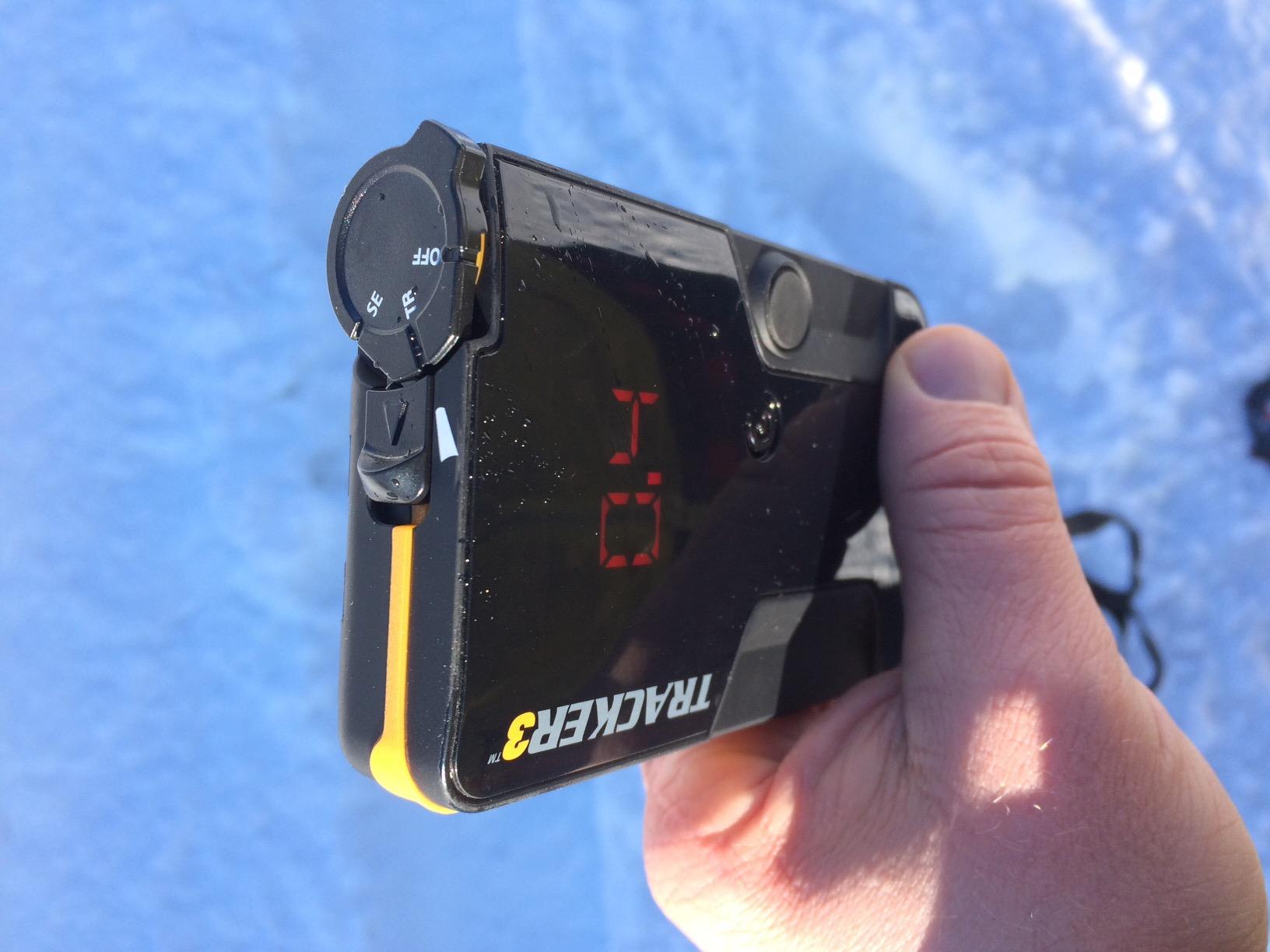
The BCA Tracker 3 has been one of the most popular avalanche beacons for years, and with 138 user reviews it has the kind of track record that newer products simply cannot match. This is the beacon I carried for two full seasons, and its compact size made it easy to forget I was wearing it until I needed to practice.
At just 7.6 ounces with batteries installed, the Tracker 3 is 20 percent smaller and lighter than its predecessor, the Tracker 2. The bright red LED indicators are clearly visible even in bright daylight conditions, which matters when you are searching in sunlit snow. The directional lights tell you whether to move left or right, and the distance readout keeps you informed of progress.
The motion-activated feature is genuinely useful. If you are caught in a secondary avalanche while searching for someone else, the beacon detects the motion and automatically reverts to transmit mode. This ensures your signal is broadcasting if you become the next victim, which is a critical safety function that the Tracker S lacks.
Battery performance is strong, with approximately 250 hours in transmit-only mode or 50 hours in search-only mode. The beacon uses three standard AAA alkaline batteries, making replacement simple anywhere. With 80 percent of reviewers giving five stars, the community consensus is clear about this beacon’s reliability.
How It Compares to the Tracker S
The Tracker 3 adds motion detection, a signal suppression feature for multiple burial scenarios, and is software upgradable. It costs more than the Tracker S but offers professional-level features. If you tour frequently or in complex terrain, the upgrade is worth it. If you are a weekend warrior hitting familiar sidecountry, the Tracker S may serve you just as well.
What to Watch For
A small number of users reported performance inconsistencies during range testing, though these appear to be isolated incidents rather than systematic problems. The beacon ships with limited stock at most retailers, which reflects strong demand rather than supply chain issues. If you find one in stock and it fits your budget, grab it.
5. Black Diamond Quickdraw Carbon Probe 240cm – Lightest Probe
- Extremely lightweight carbon fiber build
- CordLock system needs no bag
- Fast deployment under pressure
- Compact storage size
- Durable stainless steel cable
- 240cm may be short for deep snowpacks
- Only 2 reviews available
The Black Diamond Quickdraw Carbon probe is the kind of gear that disappears into your pack until you need it. Weighing under 8 ounces, it is one of the lightest full-function avalanche probes available. When I first held it, the weight savings compared to my old aluminum probe were immediately obvious, especially relevant when every ounce matters on long skin tracks.
The standout feature is the CordLock technology, which allows tool-free securing of the probe after deployment. Traditional probes require a stuff sack and a tensioning pull, but the Quickdraw Carbon locks itself. This shaves several seconds off deployment time, which can matter enormously during a real rescue.
Construction combines carbon fiber with a 6-section aluminum design and stainless steel cable. The carbon fiber keeps weight down while the aluminum sections provide the stiffness needed to punch through dense avalanche debris. This hybrid approach gives you the best of both materials without the compromises of an all-aluminum or all-carbon probe.
The 240cm length is the standard for most recreational backcountry use. It is long enough to reach victims buried at typical depths in most snowpack conditions. However, in areas with unusually deep snow or maritime snowpacks where burial depths can exceed 2 meters, you might want to consider a longer 300cm probe like the MSR Striker CX.
Deployment Speed in Practice
The CordLock system deploys faster than any traditional probe I have used. In timed drills, I consistently assembled and locked the probe in under 10 seconds. The wiregate locking mechanism is glove-friendly, so you do not need to expose your fingers to operate it. This is a genuine advantage when temperatures are well below freezing.
Length Considerations for Your Region
Before choosing a 240cm probe, consider your typical touring terrain. Continental snowpacks in the Rocky Mountains generally produce shallower burials where 240cm is plenty. Maritime snowpacks in the Pacific Northwest or coastal ranges can produce deeper burials where a 300cm or 320cm probe provides extra reach. Match your probe length to your local conditions.
6. MSR Striker CX 320 Probe – Best for Deep Snowpacks
- 320cm length handles deep burials
- Hybrid carbon-aluminum construction
- Quick single-pull deployment
- Glove-friendly T-handle
- 3-year warranty
- Limited review count
- 12 ounces heavier than carbon-only probes
The MSR Striker CX 320 is my top recommendation for backcountry travelers who regularly encounter deep snowpacks. At 320 centimeters, it provides 80 extra centimeters of reach compared to standard 240cm probes. That extra length can be the difference between touching a buried victim and falling short in maritime snow conditions.
MSR engineered this probe with a smart hybrid construction. The lower sections use 7075 aluminum with 13mm diameter and thicker walls for maximum stiffness where you need it most. The upper sections step down to 11mm carbon fiber to save weight where structural demands are lower. This is a more nuanced approach than simply using one material throughout.
The single-pull deployment system uses quick-link ferrules and an instant-locking pin. One smooth pull and the entire probe assembles and locks itself. In practice, I found this system to be as fast as the Black Diamond CordLock, though it uses a more conventional design that some users may find more familiar.
The textured top section provides grip even with wet or icy gloves. MSR includes offset 5cm depth markings visible from 360 degrees, so you can read burial depth regardless of which way the probe is facing. The glove-friendly T-handle clips to the shaft during use, keeping it out of the way while probing.
When 320cm Beats 240cm
If you tour in the Cascades, Sierra Nevada, Coastal Mountains, or anywhere with heavy snowfall accumulation, the extra length is worth the weight penalty. In these regions, burial depths of 150cm or more are not uncommon. A 240cm probe barely reaches those depths when you account for the angle of probing. The 320cm gives you margin for error.
Weight Trade-off Analysis
At 12 ounces, the Striker CX is about 4 ounces heavier than the Black Diamond Quickdraw Carbon. For most backcountry users, this weight difference is negligible spread across a full day pack. The trade-off is significant reach advantage and the proven durability of MSR’s aluminum-carbon hybrid design, backed by a 3-year warranty.
7. BCA Dozer 1T Avalanche Shovel – Most Popular Rescue Shovel
- Stompable blade penetrates hard snow
- Auto-engaging spring pins for fast assembly
- Lies flat in pack with no protrusions
- Meets UIAA rescue shovel standard
- Most popular BCA shovel size
- Handle length may be short for some users
- Blade size small for larger excavation tasks
The BCA Dozer 1T is the avalanche shovel I see more than any other at trailheads and avalanche courses. It ranks as the fifth best-selling snow shovel on Amazon, and with 101 reviews backing a 4.6-star rating, it has proven itself in real backcountry use. I carried this shovel for a full season and found it dependable in every condition from fresh powder to wind-hardened crust.
The defining feature is the flat stomp edge on the blade. This design lets you use your body weight to drive the shovel through hard snow by stepping on it, rather than relying solely on arm strength. When avalanche debris sets up like concrete, which it often does within minutes of deposition, this stompable design can save your energy and critical rescue time.
Assembly uses auto-engaging spring pins at the blade-to-shaft connection. You simply push the shaft into the blade and the pins lock automatically, with no buttons to press or levers to flip. In cold, stressful conditions with gloves on, this hands-free deployment system is a genuine advantage over shovels requiring manual locking mechanisms.
The ovo-concave shaft design adds structural strength without adding weight. BCA engineered the blade front third with a smooth surface specifically for cutting clean snowpit walls during stability tests. This means the shovel works double duty as both a rescue tool and a snow analysis instrument.
How It Packs
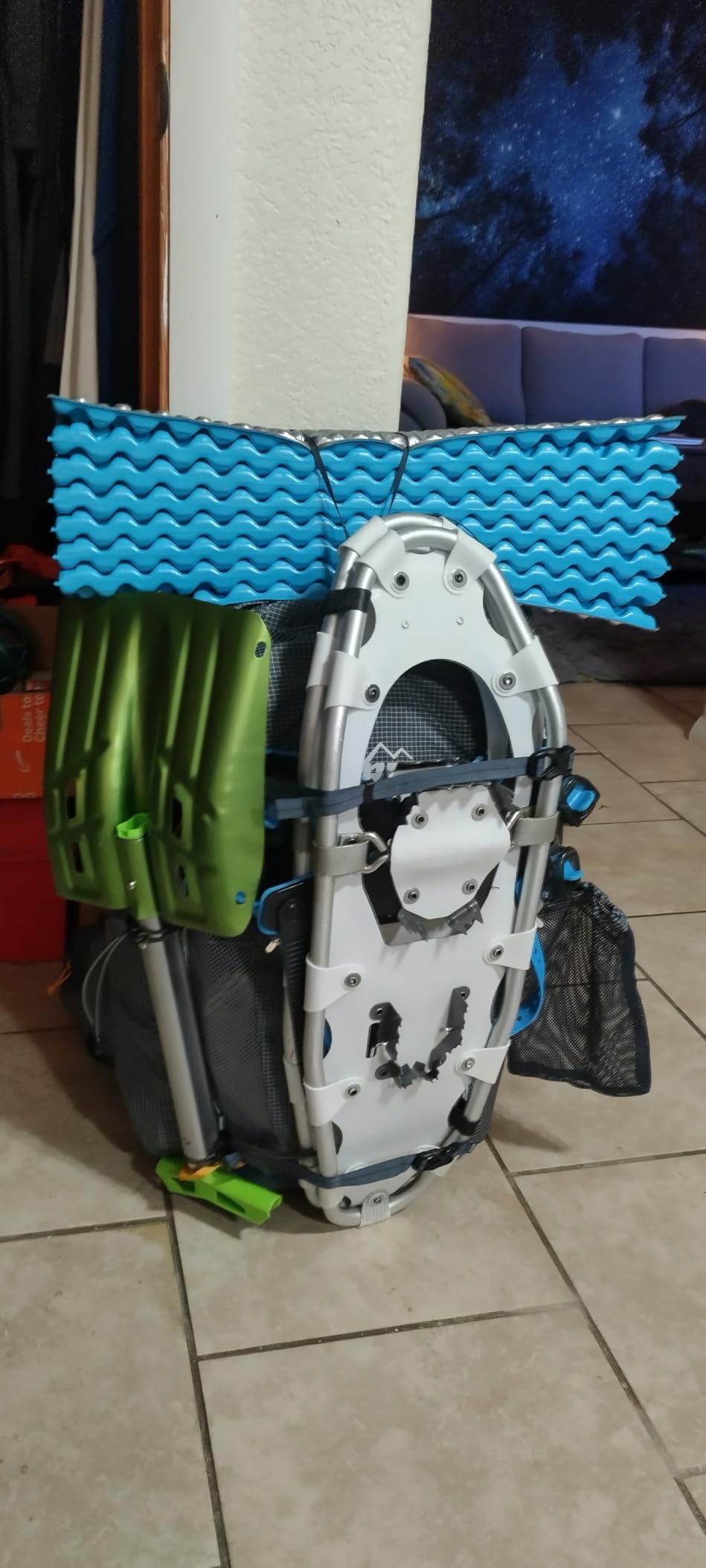
The Dozer lies completely flat in your pack with no protruding ferrule or neck sticking out. This matters more than you might think: a shovel that pokes into your back or snags on clothing gets annoying fast. The flat-pack design leaves more room for other essential gear and sits comfortably against your back all day.
UIAA Certification Meaning
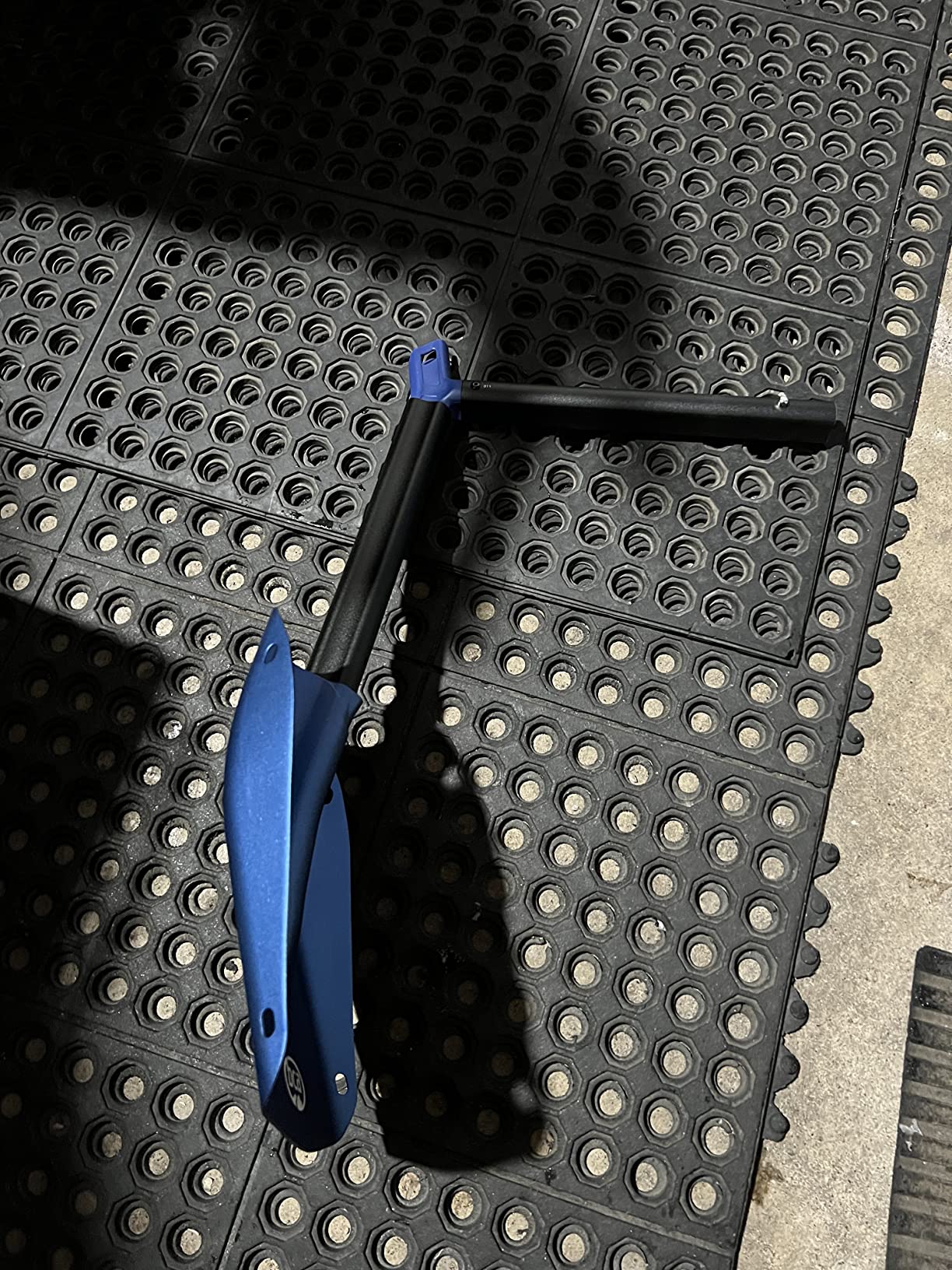
The UIAA standard for avalanche rescue shovels tests blade strength, shaft durability, and digging efficiency under standardized conditions. Meeting this standard means the shovel has been independently verified to withstand the forces involved in real avalanche rescue excavation. Not all shovels on the market carry this certification, so it is a meaningful differentiator.
8. Voile Telepro Avalanche Shovel – Built for Heavy Duty
- Extremely strong and durable construction
- Buy it for life quality
- 39.5 inch extended reach for leverage
- Excellent for moving maximum snow
- 92 percent 5-star reviews
- Handle could be longer for tall users
- Not as ergonomic for extended digging
The Voile Telepro is the avalanche shovel that backcountry professionals reach for when they need something built like a tank. With 92 percent of reviewers giving five stars and descriptions like “buy it for life,” this shovel has earned a cult following among ski patrollers, guides, and serious backcountry travelers. The reputation is well deserved.
Weighing 850 grams with an extended length of 39.5 inches, the Telepro is larger and heavier than the BCA Dozer. That extra size translates directly into moving more snow per scoop, which is the name of the game during a rescue. When you are trying to excavate someone buried under a meter of dense debris, a larger blade and longer shaft mean faster digging.
The all-aluminum construction is straightforward and rugged. There are no clever locking mechanisms or folding designs to potentially fail. The blade moves maximum snow with each stroke, and the shaft provides excellent leverage for prying and chopping at hardened avalanche debris. This is a tool designed for brute-force efficiency.
Voile is a company known for minimalist, function-first design. The Telepro embodies this philosophy: no unnecessary features, just a strong blade, solid shaft, and ergonomic grip. The shovel breaks down easily for storage and assembles in seconds. It is the kind of equipment you buy once and never replace.
Weight vs Digging Power Trade-off
At nearly 2 pounds, the Telepro is heavier than competing shovels. The question is whether that weight translates into meaningfully faster digging. In my experience and based on user feedback, it does. The larger blade surface area and longer shaft let you move significantly more snow per stroke, which can make a real difference in rescue scenarios where every second matters.
Best Applications
This shovel is ideal for users who prioritize digging power over weight savings, including professional guides, ski patrollers, and backcountry travelers who frequently build snow pits or dig deep excavations. If you are an ultralight tourer counting every gram, a lighter shovel like the BCA Dozer might be a better fit. For everyone else, the Telepro is hard to beat.
9. BCA Float E2 Avalanche Airbag Pack 25L – Best Electronic Airbag
- No compressed gas cylinder to deal with
- Rechargeable supercapacitor system
- TSA and airline travel friendly
- 25L capacity fits day tour gear
- Side Stash pocket for quick access
- Heavier than a standard backpack
- Premium price point
- Limited stock and reviews
The BCA Float E2 represents a significant shift in avalanche airbag technology. Instead of using a traditional compressed gas cylinder, it is powered by the Alpride E2 supercapacitor system. This electronic approach eliminates the single biggest headache of airbag ownership: dealing with compressed gas cylinders that are difficult to refill, expensive to ship, and banned by some airlines.
The supercapacitor system is rechargeable using standard AA batteries. You charge the system before your tour, and when you pull the trigger, the supercapacitor releases its stored energy to inflate the airbag in approximately the same time as a gas system. The advantage is that you can practice deployments without needing a cylinder refill afterward.
The 25-liter capacity is ideal for day tours. I found it comfortably fits the Big Three (beacon, probe, shovel), extra layers, water, food, and small accessories. The Side Stash pocket provides quick access to gloves, goggles, or a water bottle without opening the main compartment. Eight total pockets keep gear organized and accessible.
At 5.8 pounds, this pack is heavier than a standard backpacking pack of similar volume. That is the trade-off for the airbag system and its power source. The polyurethane-coated nylon ripstop outer material is water resistant and tough enough for backcountry use. The 3-year manufacturer warranty provides additional peace of mind for a significant investment.
Why Supercapacitor Beats Gas Cylinders
Traditional airbag packs use a compressed gas cylinder that must be refilled or replaced after each deployment. Refills require finding a certified dealer, shipping the cylinder, or using a paintball shop workaround. The supercapacitor system eliminates all of this. You simply recharge and re-arm. This makes practice deployments practical, which directly improves your readiness for a real emergency.
Airline Travel Advantages
Because there is no compressed gas cylinder, the Float E2 is significantly easier to fly with. TSA regulations around compressed gas cylinders are complex and vary by airline, but a supercapacitor system avoids these issues entirely. If you travel to ski destinations by air, this pack removes a major logistical headache. Just remove the AA batteries before flying.
10. BCA Float E2 Avalanche Airbag Pack 35L – Best for Multiday Tours
Backcountry Access Float E2 Avalanche Airbag Pack (Black, 35 Liter MD/LG)
- 35L fits multiday tour gear
- Same supercapacitor advantages as 25L
- Framed design carries heavy loads
- Waterproof construction
- 4 zippered compartments
- Heaviest option at 6.1 lbs
- Some quality control reports
- Higher price point
The BCA Float E2 in its 35-liter configuration is the airbag pack I recommend for backcountry travelers who need more carrying capacity for hut trips, overnight tours, or gear-heavy day missions. The additional 10 liters of storage compared to the 25L version provides space for a sleeping bag, extra food, and overnight gear without sacrificing the airbag protection.
Internally, this pack uses the same Alpride E2 supercapacitor system as the 25L version. That means the same travel-friendly, refill-free, rechargeable operation that makes the Float E2 line so appealing. The system deploys a 150-liter airbag that helps keep you near the surface of moving avalanche debris by increasing your overall volume.
The framed backpack design distinguishes the 35L from the 25L. The internal frame provides structure for carrying heavier loads comfortably on longer approaches. This matters because a loaded 35-liter pack with overnight gear and the airbag system weighs significantly more than a day pack, and proper load support prevents fatigue on multi-hour skin tracks.
Construction uses waterproof polyurethane-coated nylon ripstop, an upgrade over the water-resistant designation on the 25L model. The framed design includes four zippered compartments for organized gear access. The 3-year warranty matches the 25L version, providing reasonable coverage for a product in this price range.
25L vs 35L: Which Size Is Right
Choose the 25L if you primarily do day tours and value lighter weight. Choose the 35L if you do overnight trips, hut-to-hut tours, or carry significant camera and safety gear. The airbag system is identical in both. The weight difference of about 0.3 pounds is minimal, but the framed suspension on the 35L is a meaningful comfort upgrade when carrying heavier loads.
Quality Control Notes
The 3.8-star average rating on the 35L is lower than the 25L, primarily due to reports of incorrect sizes being shipped and one instance of a missing airbag component. These appear to be fulfillment and quality control issues rather than design problems. If you purchase this pack, inspect it carefully upon arrival and test the deployment system before heading into avalanche terrain.
How to Choose Avalanche Safety Gear: Complete Buying Guide
Choosing the best avalanche safety gear means understanding what each piece does, how the technology works, and what features actually matter in a rescue scenario. This buying guide covers everything you need to know before investing in your kit.
The Big Three: Your Non-Negotiable Essentials
Three pieces of gear are absolutely mandatory for anyone entering avalanche terrain: a transceiver, a probe, and a shovel. Without all three, you cannot perform a companion rescue. A transceiver without a probe tells you approximately where someone is buried but not exactly how deep. A probe without a shovel lets you confirm location but cannot extract the victim. All three work together as an integrated system.
Every person in your group must carry all three items. If one person lacks a transceiver, nobody can find them if buried. The group is only as strong as its least-equipped member, which is why experienced backcountry travelers are strict about checking each other’s kits before leaving the trailhead.
Digital vs Analog Transceivers: What It Means
All modern avalanche transceivers operate on the 457kHz frequency standard, but how they process signals differs significantly. Digital transceivers use signal processing to interpret the buried signal and display directional arrows and distance readings. Analog transceivers present a raw audio tone that gets louder as you approach the signal, requiring more skill to interpret.
Nearly all recreational beacons today are digital. They are easier to use, faster to learn, and less prone to interpretation errors under stress. Analog beacons are favored by some professional rescuers for their extended range in certain conditions, but they require significantly more training to use effectively. For most backcountry users, a digital 3-antenna beacon is the right choice.
Choosing the Right Snow Probe
Probe length is the primary consideration. For most continental and intermountain snowpacks, a 240cm probe is sufficient. For maritime snowpacks with deeper burial potential, 300cm or 320cm probes provide necessary extra reach. Consider your typical touring region and the snow conditions you encounter most often.
Deployment speed matters more than many people realize. Look for probes with single-pull deployment systems or innovative locking mechanisms like the CordLock. In a real rescue, the seconds saved during probe assembly can be the difference between finding someone alive and recovering a body. Practice deploying your probe until it becomes muscle memory.
What Makes a Good Avalanche Shovel
The best avalanche shovels balance blade size, shaft length, weight, and assembly speed. Metal blades are non-negotiable for avalanche rescue, as plastic blades can break or deform when digging through hardened debris. Look for 6061 T6 aluminum or equivalent construction.
A stompable blade design lets you use body weight to penetrate hard snow, which is a significant advantage when avalanche debris has set up. Auto-engaging assembly mechanisms speed up deployment. And a shovel that lies flat in your pack with no protruding parts is more comfortable to carry and less likely to snag on gear.
Are Avalanche Airbags Worth the Investment?
Avalanche airbags work on a different principle than the Big Three. Instead of helping rescuers find you, they aim to prevent burial entirely. When deployed, the inflated bag increases your volume and helps you stay near the surface of moving snow through a process called inverse segregation, where larger particles tend to rise to the top of a flowing mixture.
Studies suggest airbags can improve survival rates significantly, but they are not foolproof. They can fail to deploy, be triggered too late, or be ineffective in certain avalanche types. Forum users on r/Backcountry consistently emphasize that airbags are supplementary to training, not a replacement for it. If your budget allows after purchasing the Big Three, an airbag adds another layer of protection.
Training: More Important Than Any Piece of Gear
The most expensive avalanche safety gear is worthless if you do not know how to use it. Take an AIARE Level 1 course or equivalent before entering avalanche terrain. Practice with your beacon, probe, and shovel regularly throughout the season. Many ski areas and avalanche centers offer free or low-cost beacon practice parks where you can run realistic rescue scenarios.
As community experts on r/Backcountry repeatedly emphasize, training matters more than gear. A skilled user with basic equipment will outperform an untrained user with the most advanced gear available. For those who also adventure with canine companions, training extends to pet safety. Consider pairing your backcountry safety preparation with quality search and rescue harnesses if your dog joins your adventures.
Used Gear: What Is Safe to Buy Secondhand
Probes and shovels can safely be purchased used, provided you inspect them for cracks, bends, or damage. Airbag packs can be bought used if you verify the deployment system works correctly. Transceivers, however, should always be purchased new. You have no way to verify the internal antenna condition or processing reliability of a used beacon, and it is the one piece of gear you cannot afford to have fail.
Flying with Avalanche Gear: TSA Tips
Airline travel with avalanche gear requires planning. Electronic airbag systems like the BCA Float E2 are significantly easier to fly with than gas cylinder systems. For transceivers, remove batteries before flying and carry the device in your carry-on baggage. Probes and shovels must generally go in checked luggage. Always check your specific airline’s policies before traveling, as rules vary by carrier and country.
If you travel with avalanche gear internationally, consider using a dedicated gear shipping service for longer trips. For those who combine winter adventures with tracking their dogs off-leash in the backcountry, having reliable GPS trackers for hiking safety adds another layer of security to your outdoor adventures. And for extended trips, multi-day hiking backpacks ensure your companion carries their fair share.
FAQs
What is the most essential avalanche safety gear?
The three essential pieces of avalanche safety gear are an avalanche transceiver (beacon), a snow probe, and a shovel. Together these are known as the Big Three. Every person in your touring group must carry all three items, as they work together as an integrated rescue system. Without any one of these, a companion rescue cannot be performed effectively.
What kills most avalanche victims?
Most avalanche victims die from asphyxiation, or suffocation, within 15 to 30 minutes of burial. The compressed snow around a buried person restricts breathing, and carbon dioxide builds up as oxygen depletes. This is why fast rescue with proper gear dramatically improves survival chances, with survival rates potentially exceeding 90 percent when victims are found and extricated within the first 15 minutes.
What are the five red flags for avalanche danger?
The five red flags for avalanche danger are: 1) Recent avalanche activity on similar slopes, 2) Heavy snowfall or rain in the past 24 hours adding rapid load, 3) Strong winds creating wind-loaded slopes and cornices, 4) Rapid temperature warming that destabilizes the snowpack, and 5) Whumpf sounds or shooting cracks indicating snowpack collapse. Observing any of these signs means you should avoid avalanche terrain.
How often should I practice with my avalanche beacon?
You should practice with your avalanche beacon at the start of every season and regularly throughout, ideally monthly. Run multiple burial scenarios, practice with partners, and use beacon training parks at ski areas when available. Even experienced backcountry users should refresh their skills each season, as muscle memory fades and beacon technology evolves.
Can I travel by air with avalanche safety gear?
Yes, but it requires planning. Transceivers should be carried in your carry-on with batteries removed. Probes and shovels go in checked luggage. Avalanche airbag packs with electronic supercapacitor systems like the BCA Float E2 are easier to fly with than gas cylinder systems. Always check your specific airline policies before travel, as regulations vary by carrier and country.
Conclusion: Building Your Avalanche Safety Kit for 2026
Putting together the best avalanche safety gear means starting with the Big Three: a reliable transceiver, a properly sized probe, and a durable shovel. For transceivers, the Ortovox Diract Voice leads with voice navigation that simplifies high-stress rescues, while the BCA Tracker S delivers unbeatable value and simplicity. The Black Diamond Recon X offers maximum range for advanced users, and the proven BCA Tracker 3 remains a trusted workhorse.
For probes, the Black Diamond Quickdraw Carbon wins on weight, while the MSR Striker CX 320 handles deep snowpacks with extra reach. On shovels, the BCA Dozer 1T is the most popular choice for good reason, and the Voile Telepro offers unmatched durability for heavy-duty use. If your budget extends further, the BCA Float E2 airbag packs in both 25L and 35L configurations add an extra layer of burial prevention with travel-friendly supercapacitor technology.
Remember that gear is only as good as your training. Take an avalanche course, practice regularly, and never let fancy equipment replace sound decision-making in the backcountry. Your safety depends not on what you carry, but on how well you can use it when everything depends on it. Stay safe out there this 2026 season.