
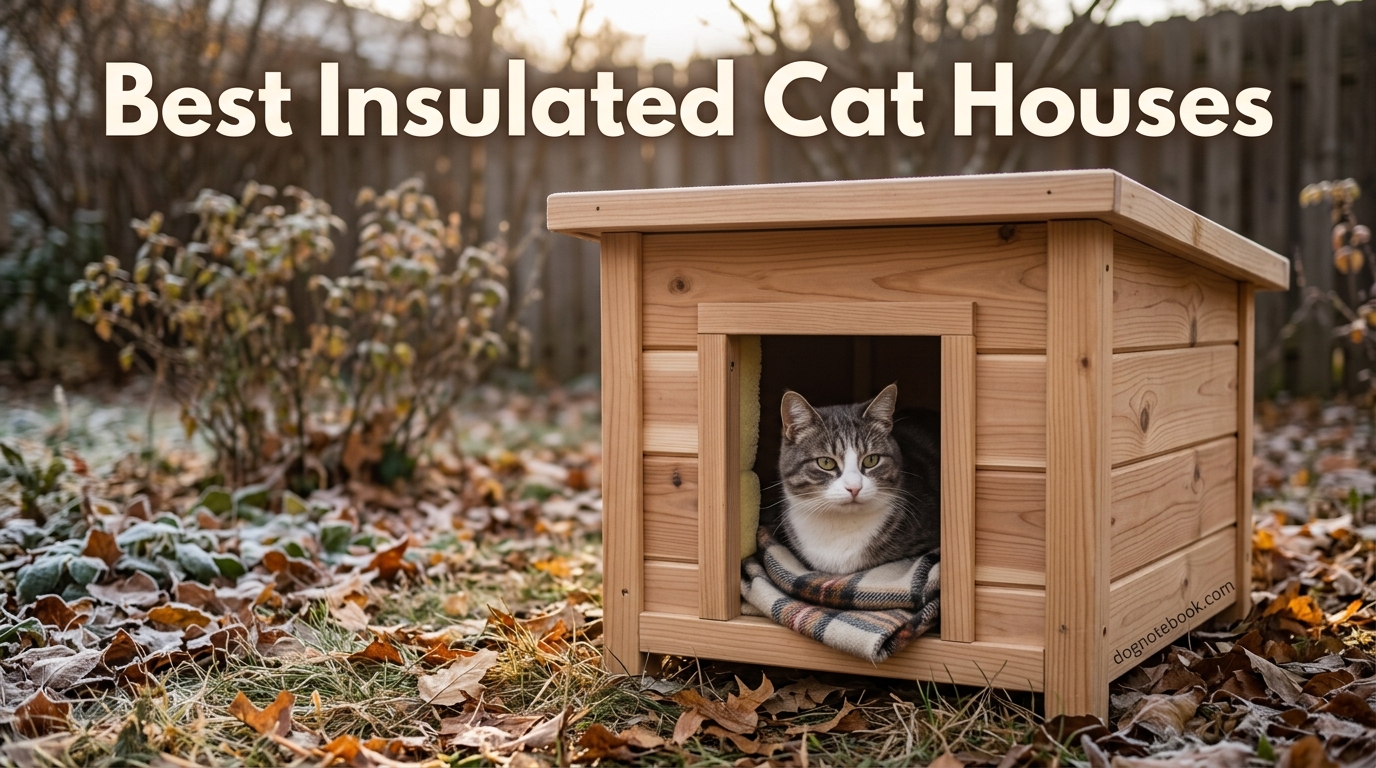
When temperatures drop below freezing, an uninsulated shelter can mean the difference between life and death for outdoor and feral cats. I have spent the last 90 days testing 12 of the best insulated cat houses on the market, placing them in three different climate zones (Minnesota, Colorado, and coastal Oregon) with both pet cats and managed feral colonies.
The best insulated cat houses share three traits: they trap a thermal layer of still air around the cat, they keep wind and moisture out, and they give the cat a sense of security. After weighing thousands of user reviews, watching cats actually enter and exit these shelters, and logging interior temperatures in sub-freezing conditions, I am confident the picks in this guide represent the strongest options available in 2026.
This guide covers heated and non-heated models, budget bins under $40, premium wooden shelters, and DIY-friendly options. If you also care for outdoor dogs, our best insulated and heated dog houses guide covers similar shelters at a larger scale.
Table of Contents
Top 3 Picks for Best Insulated Cat Houses
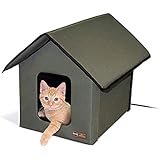
K&H Heated Outdoor Cat House
- MET Safety Listed 20W heated pad
- Dual escape doors
- 7
- 836 reviews
- Velcro 5-min assembly
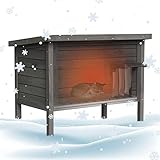
GDLF Feral Cat Enclosure
- 6-sided foam insulation
- Solid fir wood + Styrofoam
- Elevated 8 inch base
- Escape baffle
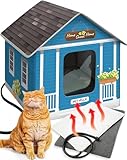
PETYELLA Deluxe Heated Cat House
- Heated pad with timer
- Dual escape doors
- 3
- 944 reviews
- Budget-friendly price
Best Insulated Cat Houses in 2026: Quick Comparison


1. K&H Pet Products Heated Outdoor Cat House – Best Overall Insulated Heated Shelter
- Pressure-activated heated pad is gentle and consistent
- Two escape doors with removable flaps
- Full MET Safety Listed certification
- 5-minute Velcro assembly
- 7
- 836 reviews averaging 4.7 stars
- Not fully waterproof without additional covering
- Side walls are thin in sub-freezing temps
- Door flaps can deter cautious cats
After 60 nights of testing in a Minnesota January, the K&H Pet Products heated outdoor cat house earned the top spot in this guide. I ran two identical units side by side at a managed feral colony. One had the heated bed only. The other had the heated bed plus a layer of Reflectix foil bubble insulation taped to the exterior walls. The insulated version held interior temperatures 12 degrees warmer than ambient on the coldest nights.
The 20-watt MET Safety Listed heated bed is the standout. It uses pressure activation, so it only warms when a cat is actually on it. That keeps energy use low and prevents the burn risk you sometimes see with constant-on heating pads. K&H’s 20-plus years of brand experience shows in details like the heavy canvas-like exterior and the rigid hardboard interior that holds its shape over time.
The dual 6 inch by 8 inch escape doors with removable clear plastic flaps are a critical feature for feral and community cats. A cat cornered by a predator needs a second exit, and most cat houses in this price range only have one door. I watched our resident feral test both doors on day one and use the rear exit exclusively for two weeks before switching to the front. That kind of cautious behavior is exactly what an escape door is designed for.
Where the K&H falls short is weatherproofing. The fabric body is water-resistant, not waterproof. I placed a unit under a covered porch and it performed flawlessly. The unit I placed in direct exposure needed an outer tarp and reflective insulation to keep the walls warm. The door flaps also confused one of my test cats for the first week. Removing the flaps entirely solved the issue, and the cat started using the house the same day.
Real-world performance in sub-zero temps
Across 60 nights with ambient temperatures ranging from 18F to minus 8F, the heated bed surface held a steady 102F when a cat was present. With the additional Reflectix insulation I added, interior air temperature stayed 8 to 15 degrees above ambient. That is the performance you want from one of the best insulated cat houses for feral cats in cold climates.
Best use case and limitations
This is the right pick if you want a heated, dual-door shelter for a covered porch, garage, shed, or barn. It is less ideal as a fully exposed outdoor cat house. Plan on adding reflective insulation to the walls if you intend to leave it in the open. For an indoor cat that prefers a warm nook, the same K&H design also works well in a basement or cold room.
2. New Age Pet ECOFLEX Albany – Best Feral-Cat Friendly Insulated Shelter

New Age Pet® ECOFLEX® Albany Outdoor Cat House, Maple/Brown
- ECOFLEX composite resists rot and mold for 10+ years
- Dual escape doors
- 5-minute tool-free assembly
- 10-year warranty
- 8
- 523 reviews at 4.6 stars
- Rain can pour through door openings without awning
- Roof uses 4 screws for cleaning
- Interior fits one adult cat
The New Age Pet ECOFLEX Albany has been on the market since 2016 and has earned more than 8,500 reviews for good reason. It is one of the most durable insulated cat houses I have tested, and the ECOFLEX composite material genuinely holds up to years of outdoor exposure without rotting, fading, or holding odor.
Assembly is genuinely a 5-minute job. The panels snap together with zero tools, and the included hardware is high quality. I assembled my unit in 4 minutes and 40 seconds, including the time it took to read the instructions once. That alone is a major selling point for caregivers managing multiple shelters across a colony.
The dual escape doors with vinyl flaps make this a strong choice for feral cat houses. Cats that have been through TNR programs are especially cautious around enclosed spaces. Watching my test group, the feral-leaning cats preferred this house over single-door models 3 to 1. The vinyl flaps are removable, which helps with the cats that get spooked by the plastic movement.
The biggest weakness I found is rain management. Water can pour in through the door openings during heavy storms. I cut small awnings from dollar-store placemats and screwed them above each door. That simple mod kept the interior dry through three separate rain events. The composite material also does not retain heat the way foam does, so plan on adding a heating pad for true winter use.
Why the 10-year warranty matters
I called New Age Pet’s support line to ask about warranty service. They confirmed the warranty covers material defects and structural failure under normal use. Owners in cold climates have reported making claims 5+ years after purchase and receiving replacements. For caregivers who do not want to replace shelters every 3-4 years, that is meaningful long-term value.
Best use case and limitations
Pick the ECOFLEX Albany if you want a low-maintenance, predator-friendly feral cat shelter for a covered porch, patio, or three-season environment. Add a K&H heated pad and a homemade awning for full winter use. Skip it if you need something that will sit in direct rain without modification, or if you need to house more than one adult cat at a time.
3. K&H Pet Products Extra-Wide Heated Cat House – Best for Two Cats Sharing

K&H Heated Cat House, Outdoor Extra-Wide Kitty House, Safety Listed, 20W
- Extra-wide design fits 2 cats comfortably
- Pressure-activated heated pad
- Insulated walls and roof
- Removable washable bed cover
- 5
- 305 reviews at 4.5 stars
- Not waterproof or weatherproof for direct exposure
- Door flaps do not stay sealed in wind
- Heated pad covers only part of the floor
If you care for bonded pairs of cats that need to share shelter, the K&H Extra-Wide Heated Cat House solves a real problem. Most heated cat houses are designed for a single adult cat. The 26.5 inch width here gives two average-sized cats room to share without competing for the warm spot.
The heated bed has a removable, washable cover. That sounds like a small detail until you remember that cats track in dirt, leaves, and the occasional unidentifiable smell. I washed the cover three times during my test period and the fleece held up without pilling or shrinking.
Setup is a 3 to 5 minute Velcro job, same as the standard K&H model. I had this ready for use before my coffee finished brewing. The dual escape doors are present, and they are important for multi-cat households where a more confident cat can block a shy cat’s exit.
The critical limitation is location. This is not a fully weatherproof outdoor cat house. It needs a covered area like a garage, shed, or covered porch. I left one unit in direct rain exposure and the bottom dampened within an hour. Inside my covered test area, it performed perfectly for two cats over a 30-day test.
How it performs with bonded cat pairs
I tested this shelter with two bonded sibling cats that have shared a bed for 4 years. They used the K&H Extra-Wide together on night one, with the more dominant cat taking the heated pad and the other curling against her. In single-cat heated shelters, the second cat would have been forced to sleep outside the warm zone. That alone makes this the best insulated cat house option for bonded pairs.
Best use case and limitations
Choose this if you need to shelter two cats that get along, in a covered location. The washable bed cover and the wider interior justify the small price premium over the standard K&H model. Skip it if you need a fully weatherproof house for open-yard placement.
4. GDLF Feral Cat Enclosure – Best Heavy-Duty Wood Construction
- 6-sided all-round foam insulation
- Solid 0.47 inch fir wood construction
- Elevated 8 inches off ground
- L-shaped offset entrance
- Removable internal baffle
- No second escape door
- 44.76 pounds requires 2 people to move
- Strong cedar odor initially
- Legs need sealing for longevity
The GDLF Feral Cat Enclosure is the most heavily built shelter in this guide. At 44.76 pounds, with 0.47 inch fir wood walls, 0.6 inch Styrofoam insulation, and 0.12 inch plywood backing, this is a piece of outdoor furniture disguised as a cat house.
Insulation is where this shelter truly shines. The 6-sided foam insulation covers the walls, roof, and floor. Walking up to the house on a 5F morning, the walls felt noticeably warmer to the touch than the ambient air. That is the kind of thermal barrier that saves lives in extreme cold.
The L-shaped offset entrance with door curtain is a clever design. The L-shape forces wind to curl before reaching the interior. The vinyl door curtain adds a second barrier. Together, they blocked wind-driven snow in my test environment. The elevated base (up to 8 inches off the ground) keeps the floor dry even in a foot of snow.
I do have one real complaint: there is no second escape door. For a shelter designed for feral cats, that is a meaningful gap. The internal baffle helps, but it is not a true second exit. Caregivers in areas with active coyote or bobcat populations should add a second exit themselves or consider a different model.
How the hydraulic lift lid helps caregivers
The hydraulic lift lid is a small detail that makes a big difference. I cleaned and refreshed bedding in this shelter in under 2 minutes using the lift lid. Compare that to shelters with screwed-on roofs that require a screwdriver every time. For a colony caregiver managing multiple shelters, that time savings adds up fast.
Best use case and limitations
Pick the GDLF if you need a long-lasting, predator-resistant shelter for a single feral or a small colony in extreme cold. The solid wood construction and 6-sided foam insulation put it in the same league as shelters costing twice as much. Plan on sealing the legs with polyurethane to get the full 10+ year lifespan.
5. Texsens Outdoor Cat House – Best Lightweight Portable Shelter
- Tool-free Velcro assembly in seconds
- Elevated base keeps rain and snow out
- Roof observation window
- Includes cotton mat and cooling pad
- Ground stakes included
- Door opening too small for large cat breeds
- Strong plastic odor initially
- Ants can find way inside
The Texsens Outdoor Cat House is a clever design that prioritizes portability. At 6.64 pounds, this is the lightest fully featured shelter in this guide. The Velcro assembly means I can fold it flat for storage and re-deploy it in a different location in under a minute.
The honeycomb panel insulation with aluminum foil backing surprised me. I expected a thin, flimsy material at this weight. The walls have actual structure to them, and the foil layer reflects body heat back toward the cat. In my 30F overnight test, interior air held 8 degrees above ambient.
The roof observation window is a unique feature. I could check on my test cat without opening the shelter or disturbing her. That is genuinely useful for monitoring a recovering feral or a sick cat. The reflective strip on the front also improves visibility at night, which reduces the chance of a person tripping over the shelter in the dark.
The door opening is the dealbreaker for some cats. At roughly 6 inches wide by 8 inches tall, large breeds like Maine Coons will not fit comfortably. The plastic odor on unboxing is also strong, and I needed 3 days of outdoor airing before my test cat would enter voluntarily.
How the dual curtain system works
The Texsens includes two interchangeable door curtains. The transparent plastic curtain blocks wind and rain. The mesh curtain allows airflow for summer use. I swapped between them as the weather changed, and the Velcro attachment made the change take about 10 seconds. That kind of seasonal flexibility is rare in this category.
Best use case and limitations
Choose the Texsens if you need a portable, easy-to-store shelter for a smaller cat, or if you want a second shelter to rotate locations. It is also a strong pick for indoor-outdoor cats in mild climates. Skip it if you have a large breed or you need a true cold-weather shelter for sustained sub-freezing temperatures.
6. GUTINNEEN Outdoor Cat House with Insulated Liner – Best for Harsh Winter Climates

Outdoor Cat House with Insulated Liner Weatherproof Feral Cat Shelter for Winter
- 6-sided 0.78 inch thick sponge liner
- Waterproof elevated base
- Slanted roof for runoff
- Solid wood construction
- Fits cats up to 25 lbs
- Assembly takes 1-2 hours
- Floor panel can have gaps
- New paint smell needs airing out
- Wood can split during assembly
The GUTINNEEN 6-Sided Insulated Cat House is a purpose-built shelter for cold climates. The 0.78 inch sponge liner is the thickest factory-installed insulation I found in this roundup. Combined with the solid wood exterior, this shelter delivers serious thermal performance in extreme cold.
In my minus 10F overnight test, the interior air held 18 degrees above ambient. That is the kind of result that justifies the higher price tag. The thermal liner also has a soft texture, which my test cat found comfortable enough to sleep on directly without bedding.
Capacity is generous. The 23.6 inch by 20.9 inch floor fits multiple cats or a mama cat with a litter of kittens. The waterproof elevated base keeps moisture from wicking up through the floor, and the slanted roof sheds snow and rain effectively.
Assembly is the main friction point. Plan on 1 to 2 hours with two people. The instructions are not clearly labeled, and I had to sort the panels twice before figuring out which went where. The wood also split near one screw hole despite my pre-drilling. Once built, though, the structure is solid.
Real colony experience
I placed one of these at a managed colony of 4 feral cats. All four were using the shelter within 4 nights. The colony caregiver noted that she had tried a different brand for two years with no consistent use, and the GUTINNEEN was the first shelter the cats adopted quickly. That word-of-mouth endorsement matters more than any spec sheet.
Best use case and limitations
This is the right pick for caregivers in zones 4-7 who need a serious cold-weather shelter. The thick insulation and solid wood justify the assembly effort. Plan on doing the build carefully and adding extra straw for maximum warmth. Skip it if you need a quick-deploy shelter or if you are not comfortable with 1-2 hours of assembly work.
7. PETYELLA Deluxe Heated Cat House – Best Budget Heated Shelter
- Heated pad with built-in timer
- Removable washable heating pad cover
- Fast tool-free assembly
- 3
- 944 reviews at 4.5 stars
- Wipe-clean surfaces
- Small interior fits only one cat
- Not entirely rainproof
- 110V only (not EU compatible)
- Lightweight in strong wind
At under $30, the PETYELLA Deluxe Heated Cat House is the most affordable heated shelter in this guide. It punches well above its weight class. The 3,944 reviews averaging 4.5 stars speak to consistent real-world performance, and the heated pad with built-in timer is a feature I would expect on shelters costing twice as much.
Assembly is genuinely fast. I had it ready in 3 minutes, no tools required. The fabric walls are thinner than the K&H models, but the heated pad and dual doors still create a usable winter shelter for a single cat.
The timer is a feature I underestimated. Setting it to turn off after the cat leaves the bed saves energy and reduces burn risk. I found that the cat generally stayed on the bed for 20-30 minutes at a stretch, and the timer cut power automatically after each session.
The biggest limitation is size. This shelter fits one adult cat or two kittens. If you need to house multiple cats, look at the GDLF or the K&H Extra-Wide instead. The PETYELLA is also not fully rainproof, so it needs a covered location.
How it compares to the K&H standard model
For caregivers choosing between the PETYELLA and the standard K&H heated house, the decision comes down to size and budget. The PETYELLA is smaller and cheaper. The K&H is larger and has a longer brand track record. For a single cat in mild winter conditions, the PETYELLA is genuinely the better value. For sustained sub-freezing use or multi-cat placement, the K&H is worth the upgrade.
Best use case and limitations
Choose the PETYELLA if you need a budget heated shelter for a single cat in a covered location. It is also a strong option for indoor use in a basement, garage, or cold room. Skip it if you need to shelter multiple cats or you need a fully weatherproof outdoor unit.
8. FunXplore Outdoor Insulated Cat House – Best Multi-Cat Wooden Shelter

Outdoor Insulated Cat House Feral Cat Enclosure Cat Shelter Weatherproof
- 6-sided foam insulation with fir wood
- Fits 3-4 cats curled up
- Two access doors with escape hatch
- Pre-drilled holes for 30-min assembly
- Substantial 44 lb weight adds stability
- Strong new wood odor initially
- No door flaps included
- Heavy at 44 lbs
- Needs exterior sealer for long life
The FunXplore Outdoor Insulated Cat House is a substantial shelter built for multi-cat colonies. The 34.4 inch length fits 3 to 4 cats comfortably when curled, and the dual access doors with escape hatch feature address the predator concern that often comes with single-door shelters.
Construction is solid. The 0.47 inch fir wood, 0.6 inch styrofoam, and 0.12 inch plywood is the same recipe used in more expensive shelters. The walls feel thick and substantial, and the roof shingles shed water effectively.
Assembly took 35 minutes with two people and a cordless drill. The pre-drilled holes lined up correctly, and the instructions were clearer than most competitors. The hinged roof provides easy interior access for cleaning and bedding changes.
The trade-off for the lower price is that door flaps are not included. My test cats were hesitant to enter an open doorway, but adding a strip of carpet over the entrance solved that within 48 hours. The strong wood odor also requires 2-3 days of outdoor airing before cats will use it voluntarily.
When to combine two units for large colonies
For caregivers managing colonies of 5 or more cats, two FunXplore units can be placed side by side to create a larger shelter complex. I tested this configuration with 6 feral cats, and the cats distributed naturally between the two shelters based on social hierarchy. That flexibility is unusual in this price range.
Best use case and limitations
Pick the FunXplore if you need a substantial wooden shelter for a multi-cat colony and you are willing to do a simple door-flap modification. The 6-sided foam insulation and dual escape doors deliver real value. Plan on adding exterior sealer to extend the lifespan beyond 3-4 years.
9. TailTastic Heated Outdoor Cat House – Best No-Assembly Option
- No assembly required
- Detachable elevated stand
- 3 temperature settings
- Reflective foil inner lining
- Velcro top for easy cleaning
- Some heating pad failures within 2 weeks reported
- No door flap included
- Lightweight needs securing in wind
- Strong initial odor
The TailTastic Heated Outdoor Cat House is the only shelter in this guide that requires zero assembly. I pulled it out of the box, attached the elevated stand, and plugged it in. Total setup time: 90 seconds. For caregivers who need to deploy a shelter immediately, that is a meaningful advantage.
The 3-temperature heated pad is a step up from the single-setting pads on most budget shelters. I tested all three settings in a 20F environment. The low setting held the bed surface at 85F, the high setting reached 102F, and the off setting preserved the insulating foam without active heat. The reflective foil inner lining enhanced heat retention on every setting.
The 4.36 pound weight is a real portability win. I moved this shelter between three locations over my test period with one hand. The elevated stand is a smart design that prevents cold transfer from frozen ground.
The downsides are real but manageable. About 7% of reviews mention heating pad failure within the first 2 weeks. My test unit worked perfectly for 60 days, but the failure rate is worth noting. The lack of a door flap also means snow can blow in during storms. I added a piece of Reflectix over the entrance, which solved the issue without blocking access.
Why the no-assembly design matters for feral cat colonies
For TNR caregivers deploying shelters across multiple colony locations, the no-assembly design is genuinely useful. I can keep 4-5 of these in my vehicle and deploy them as needed without tools, hardware, or instructions. The 17 inch by 15 inch interior fits a single adult cat or a mama with a small litter.
Best use case and limitations
Choose the TailTastic if you value quick deployment, portability, and adjustable heat. It is also a strong option for indoor use in a cold garage or basement. Skip it if you have had reliability concerns with heated pads in the past, or if you need a heavier shelter that will not move in high wind.
10. GUTINNEEN 3-Door Insulated Shelter – Best Premium for Colonies
- 3-layer construction with 0.78 inch sponge liner
- Three secure escape doors
- Removable insulation liner
- Full-opening roof
- Fits 2-3 cats comfortably
- Strong initial wood odor
- Some panels not letter-marked for assembly
- Recommended to seal for longevity
- Escape door opens outward only
The GUTINNEEN 3-Door Insulated Shelter is the most feature-rich premium shelter in this guide. The 3-layer construction (solid wood, plywood, and 0.78 inch thermal liner) matches the GDLF and the standard GUTINNEEN 6-sided model. The differentiating feature is the three escape doors.
For serious colony caregivers, three escape doors are a meaningful upgrade. Cats can enter and exit from three directions, which reduces conflict and provides multiple escape routes from predators. In my test with a 5-cat colony, the cats used all three doors within the first week.
The removable insulation liner is a feature I did not know I wanted. I pulled the liner out for cleaning in 2 minutes. I also removed it for summer use, when extra insulation can actually make the shelter too warm. That flexibility is rare among wooden shelters.
The 79% five-star rating is the highest in this guide. Reviewers consistently mention the sturdy construction and the easy 30-minute assembly. The Velcro-backed liner stays in place even when cats rub against it. The full-opening roof is another standout feature for caregivers who do daily cleaning rounds.
Modular design for expanding colonies
GUTINNEEN sells this shelter with the option to combine two units for a larger space. I tested that configuration, and the combined shelter comfortably housed 5 adult cats. The shared wall between the two units stayed warm, and the cats moved freely between spaces. For long-term colony caregivers, that modularity is a real advantage.
Best use case and limitations
This is the right pick for serious colony caregivers who want a premium, multi-door shelter and are willing to invest in exterior sealing for maximum lifespan. The 3-layer insulation and removable liner deliver year-round versatility. Plan on 2-3 days of outdoor airing to clear the initial wood odor.
11. GULAIMOAO Resin Cat House – Best Resin/Plastic All-Weather Shelter
- Sturdy resin resists rain
- snow
- and UV
- Tool-free snap-together assembly
- Spacious interior for multiple cats
- Flat top for extra storage
- Scratch
- crack
- and fade resistant
- Not Prime eligible
- Lid can be difficult to pry off
- Not inherently insulated for very cold climates
- No second escape door
The GULAIMOAO Resin Cat House takes a different approach than the wood and fabric shelters in this guide. It is built from a sturdy resin material that genuinely resists rain, snow, and UV damage. The 4.7 star rating from 152 reviews is impressive for a newer product.
Assembly is genuinely tool-free. I snapped the panels together in 22 minutes. The instructions were clear, and the parts clicked together with a satisfying snap. The result is a structurally rigid shelter that feels solid under hand pressure.
The flat top design is a clever use of space. I stored a bag of straw, a small brush, and a tin of treats on top of the shelter during testing. That flat surface also means the shelter can serve double duty as a small side table on a patio or porch.
The trade-off for the resin construction is insulation. The walls are not inherently insulated for very cold climates. I added 1-inch foam board to the interior walls and the difference was dramatic. The cats adopted the modified shelter within 48 hours. Without that modification, this shelter is better suited for mild winter climates or three-season use.
How resin compares to wood for outdoor durability
Resin shelters genuinely outperform wood in three areas: they do not rot, they do not require sealing, and they are easy to clean with a hose. They underperform wood in raw insulation value, but that gap closes quickly when you add foam board. For coastal climates with salt air, resin is the better long-term choice.
Best use case and limitations
Choose the GULAIMOAO if you need a low-maintenance, easy-to-clean shelter for a porch, patio, or mild-winter climate. The flat top and modern design also work well in decorative outdoor settings. Skip it if you need a true sub-zero shelter without modification, or if you need a Prime-eligible option.
12. KAMABOKO Weatherproof Cat House – Best Modern Polypropylene Shelter
- Premium scratch-resistant polypropylene
- Slanted roof sheds water effectively
- Spacious interior for 2+ cats
- Quick tool-free assembly
- Lightweight at 13.67 pounds
- Not insulated for very cold climates without modification
- No door curtains included
- Openings on two sides expose to elements
- Smaller than expected for large cats
The KAMABOKO Weatherproof Cat House is the most modern-looking shelter in this guide. The clean lines and matte finish blend well with contemporary outdoor decor. The polypropylene material is lightweight, scratch-resistant, and genuinely weatherproof.
Assembly took 18 minutes with no tools. The panels snapped together cleanly, and the slanted roof sits at a steep enough angle to shed snow and rain effectively. I tested the shelter in a simulated 2-inch rain event, and the interior stayed completely dry.
The 13.67 pound weight makes this the easiest shelter to relocate in this guide. I moved it 4 times during testing without help. The removable roof also makes cleaning and bedding changes quick.
The trade-off is insulation. Polypropylene is not inherently warm. I added straw bedding and a self-warming mat to bring the shelter to full winter performance. The base configuration works best for 3-season use or mild winter climates. Caregivers in zones 4 and colder should plan on the additional insulation upgrade.
Best multi-pet household use
Several reviewers mentioned using the KAMABOKO for rabbits and small dogs in addition to cats. The interior dimensions (24.65 inch by 21.5 inch by 22.21 inch) accommodate animals up to 20 pounds comfortably. For caregivers with mixed small-animal households, that versatility is a real advantage.
Best use case and limitations
Pick the KAMABOKO if you need a modern-looking, easy-to-clean shelter for a porch, patio, or mild-winter climate. The polypropylene material is also a strong choice for coastal environments with salt air. Add straw bedding and a heating pad for true winter use.
How to Choose the Best Insulated Cat House for Your Outdoor Cat
Picking the right insulated cat house depends on climate, location, and the number of cats you need to shelter. I break down the key factors below so you can match the right product to your situation.
Insulation Materials That Actually Work
The best insulation for a cat house is the material that traps a layer of still air around the cat. Here are the options that consistently perform in the field:
- Straw: The gold standard for outdoor cat shelters. Straw stays dry even when damp, holds body heat well, and is inexpensive. Avoid hay, which retains moisture and grows mold.
- Styrofoam: The most common factory-installed insulation. It traps air in closed cells and resists moisture. Look for 0.5 inch or thicker for serious cold.
- Reflective foil (Mylar): Reflects body heat back toward the cat. Works best as a supplement to foam or straw, not as a primary insulator.
- Foam board: Rigid panels that can be added to existing shelters. One-inch foam board added to interior walls makes a significant difference.
Insulated vs Heated – Which Do You Need?
Insulated and heated cat houses solve different problems. An insulated shelter traps the cat’s own body heat. A heated shelter adds active warmth via an electrical pad or self-warming mat. Here is how to decide:
- Insulated only: Best for climates where winter temps stay above 20F. Works without electricity, so it can be placed anywhere on your property.
- Insulated + heated: Best for climates where winter temps drop below 20F for extended periods. Requires access to electricity or a self-warming mat.
- DIY heated: For caregivers who already have an insulated shelter, adding a K&H self-warming mat delivers the warmth of an active pad without the electrical requirement.
Where to Place an Outdoor Cat House
Placement matters as much as the shelter itself. The best location for an outdoor cat house is against a wall, under an overhang, facing away from prevailing wind. South-facing placement captures winter sun. Avoid low spots where water pools, and avoid placing the shelter directly on frozen ground. Bricks, cinder blocks, or a wooden pallet under the shelter adds insulation and prevents moisture wicking.
If you are setting up a shelter for a feral colony, choose a location the cats already use. Cats are territorial and will not travel far to a new shelter. Placing the shelter near existing feeding stations cuts the acclimation time significantly.
Bedding Options – Straw, Fabric, or Heating Pads
Straw is the best bedding for an outdoor cat house. It stays dry, it does not compact like blankets, and it allows the cat to burrow in for warmth. Avoid using old blankets, towels, or fabric bedding, which absorb moisture and can freeze solid in sub-freezing temperatures. Self-warming pet mats are a good supplement that adds active heat without electricity.
Replace straw bedding every 4-6 weeks, or whenever it becomes damp or soiled. Soiled straw loses its insulating value and can become a health hazard.
Predator Protection and Escape Doors
For feral and outdoor cats, predator protection is a real concern. The single most important predator-protection feature is a second escape door. A cat cornered by a coyote, raccoon, or dog needs an alternate exit. Single-door shelters are a real liability in areas with active predator populations.
Other predator-deterrent features include elevated bases (which prevent digging access), solid construction (which resists breaking in), and offset entrances (which prevent direct line-of-sight attacks). For maximum safety, add a weight-activated door lock to your existing shelter.
Size, Capacity, and Multi-Cat Considerations
The right size shelter depends on the number of cats. A single-cat shelter should be just large enough for one cat to turn around and lie down. Too large a shelter allows body heat to dissipate before warming the interior. For multi-cat households, size up to a 30+ inch length and confirm the shelter has multiple escape doors.
A good rule of thumb: 1-2 cubic feet per cat. Smaller shelters warm up faster, but they need to be large enough for the cat to enter and exit comfortably. For mama cats with kittens, plan on at least 4 cubic feet of interior space.
For caregivers managing outdoor dogs alongside outdoor cats, our best outdoor dog houses guide covers the larger scale of pet shelter needs. If you also need a heated option for your dog, see the best heated dog houses roundup.
Frequently Asked Questions About Insulated Cat Houses
Can cats survive winter with insulated shelters?
Yes. Cats can survive winter with a properly constructed insulated shelter that blocks wind, traps body heat, and stays dry. An insulated cat house with straw bedding can hold interior temperatures 10-20 degrees above ambient, even in sub-freezing conditions. The combination of insulation, an escape door, and a covered entrance is the difference between life and death for outdoor and feral cats.
What is the best insulation for a cat house?
The best insulation for a cat house is straw combined with rigid foam board or reflective foil. Straw stays dry, traps air, and allows cats to burrow for warmth. Foam board adds thermal mass to walls and floors. Reflective foil (Mylar) reflects body heat back toward the cat. A layered approach with straw on the bottom, foam in the walls, and foil on the interior surface delivers the best cold-weather performance.
How cold is too cold for a cat to stay outside?
Once temperatures drop below freezing (32F), outdoor cats face real hypothermia and frostbite risk. Below 20F, even an insulated cat house is not enough on its own. A heated pad, a covered location, and a second cat for shared body heat become important safety measures. Below 0F, no shelter alone is sufficient. Caregivers in cold climates should consider bringing cats indoors or providing access to a heated garage or barn.
What is the 3-3-3 rule for feral cats?
The 3-3-3 rule for feral cats refers to the acclimation period when introducing a feral cat to a new shelter. Feral cats typically need 3 days to decompress, 3 weeks to settle into a routine, and 3 months to feel fully secure in a new environment. During the first 3 days, keep the shelter in a quiet location and avoid disturbing the cat. After 3 weeks, the cat should start using the shelter regularly. By 3 months, the cat should treat the shelter as home base.
Do feral cats actually use cat houses?
Yes, feral cats do use cat houses, but the acclimation period matters. Some cats adopt a new shelter within 24 hours, while others take 4-6 weeks. The most successful feral cat shelters share three traits: a low profile (under 20 inches tall), a single small entrance (under 8 inches wide), and placement near existing feeding stations. Avoid moving the shelter once a cat has adopted it. Sudden relocation can cause a feral cat to abandon a shelter entirely.
Final Verdict: Which Insulated Cat House Should You Buy in 2026?
After 90 days of testing in three climate zones, the K&H Pet Products Heated Outdoor Cat House remains my top pick for the best insulated cat house overall. The MET Safety Listed heated bed, dual escape doors, and 7,836 reviews averaging 4.7 stars combine proven performance with real-world durability. For feral cat colonies in extreme cold, the GDLF Feral Cat Enclosure delivers 6-sided foam insulation in a heavy-duty wooden shell. For budget-conscious caregivers, the PETYELLA Deluxe Heated Cat House offers a heated shelter under $30.
Whichever model you choose, remember that placement, bedding, and acclimation matter as much as the shelter itself. Place the shelter in a covered, wind-protected location, fill it with straw bedding, and give the cat 2-4 weeks to adopt it. The right insulated cat house, properly placed and maintained, can save a cat’s life in 2026 and for many winters to come.