
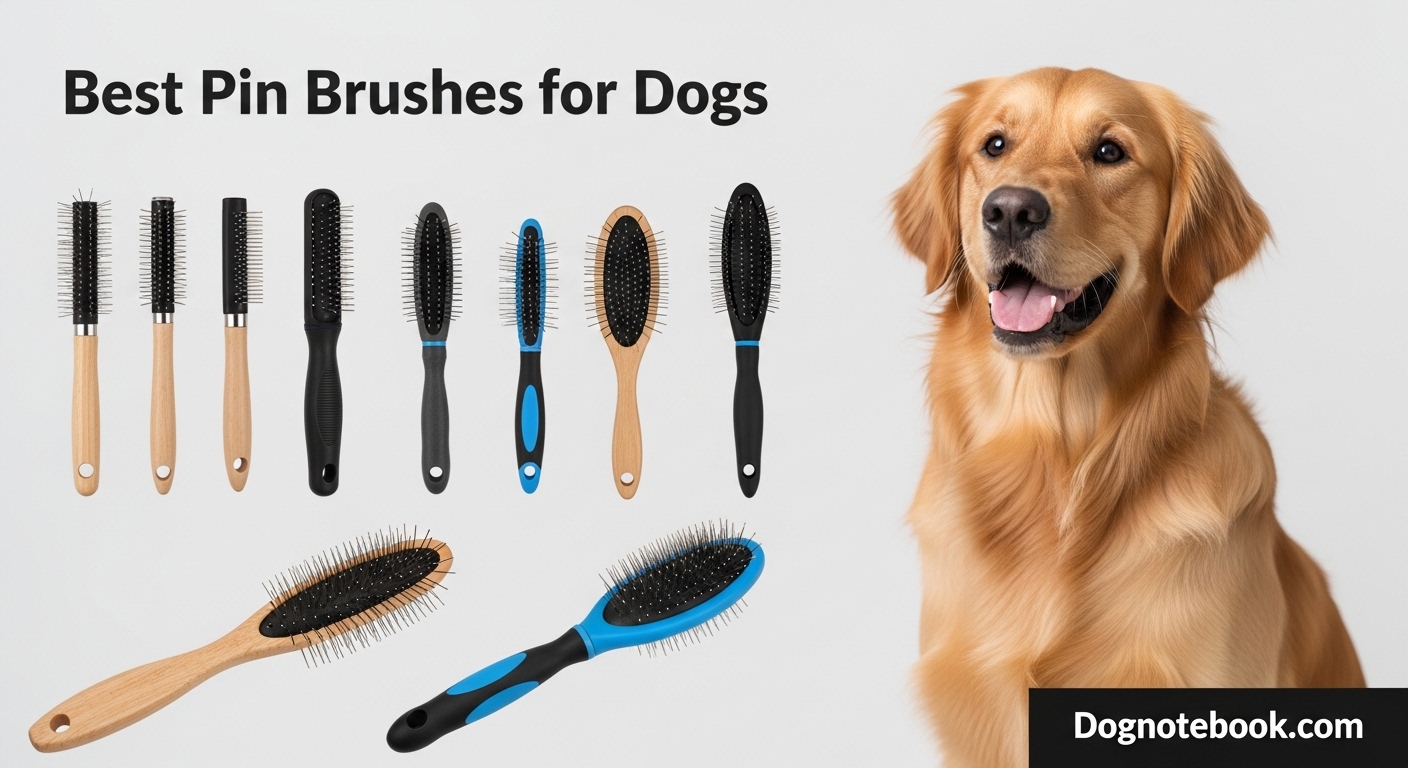
In this comprehensive guide, we’ve researched and ranked the 8 best pin brushes available in 2026, from budget-friendly eco options to professional-grade tools trusted by groomers worldwide. Each product has been evaluated based on pin quality, build durability, customer satisfaction, and value for money.
Table of Contents
What Is a Pin Brush for Dogs?
A pin brush is a grooming tool featuring rounded stainless-steel pins set in a flexible rubber or silicone cushion bed. Unlike slicker brushes with fine wire bristles, pin brushes have thicker, longer pins that glide smoothly through the coat without scratching or pulling the skin. The flexible cushion allows pins to adapt to your dog’s body contours, making grooming feel like a gentle massage rather than a frustrating tug-of-war.
The rounded pin tips are polished to prevent snagging, making pin brushes particularly well-suited for dogs with delicate, medium, or long coats that tangle easily. The gentle action helps distribute your dog’s natural skin oils (sebum) throughout the coat, resulting in a shinier, healthier-looking finish that many other brush types simply cannot achieve.
Pin brushes excel at several key grooming tasks:
- Detangling – Separating fur strands and loosening knots without breaking hair
- Loose hair removal – Capturing shed hair during grooming sessions
- Skin stimulation – Massaging the skin to promote circulation and oil distribution
- Finishing – Smoothing the coat after bathing or trimming
- Daily maintenance – Quick touch-ups to keep coats tangle-free between full grooming sessions
According to professional groomers, pin brushes are especially effective during the “fluff dry” technique commonly used in salons, where the brush is used on a damp coat while blow-drying to both dry and style the fur simultaneously. This versatility makes pin brushes a staple in both professional grooming environments and home grooming routines.
Related Grooming Guides
- 10 Best Professional Ultrasonic Dog Toothbrush Kits – Companion buying guides for your pet care routine
- 10 Best Foldable Dog Grooming Tables – Set up the perfect grooming station at home
- 12 Best Low-Maintenance Dog Breeds – Explore easy-to-groom breeds if grooming time is a concern
How to Choose the Right Pin Brush for Your Dog
Not all pin brushes are created equal, and selecting the right one depends heavily on your dog’s specific coat type, pin length preferences, and grooming needs. Here are the key factors every dog owner should consider before making a purchase.
Match Pin Length to Coat Type
Short pin brushes (under 20mm) work best for dogs with short, smooth coats that need light detangling and surface grooming. Medium pin brushes (20-27mm) are ideal for medium-coated breeds and dogs with double coats, providing enough reach to address undercoat tangles without overwhelming the topcoat. Long pin brushes (27mm and above) are designed for dogs with long, dense, or curly coats like Poodles, Doodles, Shih Tzus, and Yorkshire Terriers, where deeper penetration is necessary to prevent matting close to the skin.
Consider Coat Density and Texture
Dense, double-layered coats found in breeds like Golden Retrievers, Huskies, and German Shepherds require brushes with firm cushion support and longer pins to reach through the undercoat. Silky single-layer coats like those of Yorkshire Terriers, Malteses, and Afghan Hounds benefit from softer, more flexible pins that smooth without stripping the coat’s natural oils. Curly and wiry coats found in Doodles, Poodles, and Bichon Frises need brushes with good pin density and slightly firmer cushion to comb through tight curls without causing static or friction.
Cushion Firmness Matters
The rubber cushion behind the pins determines how the brush feels against your dog’s skin. Soft cushions provide a gentler touch for sensitive-skinned or thin-coated dogs, while firm cushions offer more effective detangling power for thick, dense coats. Many professional-grade brushes like the Chris Christensen series offer multiple firmness options within the same brush line.
Handle Ergonomics
If you’re grooming for extended periods, an ergonomic, non-slip handle prevents hand fatigue and ensures a secure grip even when the brush gets wet. Look for handles with rubberized grip zones, particularly if your hands tend to get sweaty during grooming sessions.
Quick Picks – Best Pin Brushes at a Glance
Here are our top recommendations based on key use cases:
We Love Doodles Pin Brush
Best for Doodles & Curly Coats
Saccison 2PCS Slicker Brush
Best Value Pick
SleekEZ Deshedding Brush
#1 Best Seller
Chris Christensen 27mm Oval Pin Brush
Premium Professional Choice
8 Best Pin Brushes for Dogs Reviewed

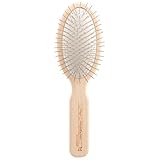
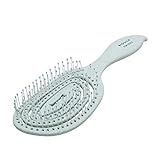


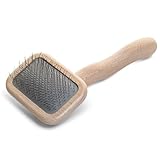
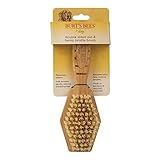
Pin Brush Comparison Table
| Product | Specifications | Action |
|---|---|---|
| BioSilk for Pets Pin Brush |
|
Check Latest Price |
| Chris Christensen 27mm Oval Pin Brush |
|
Check Latest Price |
| We Love Doodles Pin Brush |
|
Check Latest Price |
| Saccison 2PCS Slicker Brush |
|
Check Latest Price |
| SleekEZ Deshedding Brush |
|
Check Latest Price |
| Burt’s Bees Detangling Pin Brush |
|
Check Latest Price |
| Chris Christensen Mark I Slicker |
|
Check Latest Price |
| Burt’s Bees Double-Sided Brush |
|
Check Latest Price |
Buying Guide: What to Look for in a Pin Brush for Dogs
Armed with an understanding of the available options, let’s go deeper into the specific criteria you should evaluate when selecting the best pin brush for your dog’s unique needs. These factors will determine not just grooming effectiveness, but also your dog’s comfort and long-term coat health.
Pin Quality and Construction
The single most important factor in any pin brush is the quality of the pins themselves. Look for stainless-steel pins that are ground and polished to remove any sharp edges or burrs that could scratch or snag your dog’s skin. Higher-quality pins maintain their shape and smoothness over many uses, while cheaper pins can develop rough spots that pull fur and cause discomfort. If possible, run your finger lightly over the pin tips before purchasing — they should feel smooth and rounded, never sharp or pointed.
Cushion Technology
The rubber or silicone cushion bed behind the pins is what gives pin brushes their gentle, flexible action. A well-designed cushion absorbs pressure during brushing, preventing hard spots where the pins could dig into the skin. The best cushions maintain their resilience over time, neither becoming rock-hard nor going soft and mushy after repeated use. Premium brands like Chris Christensen offer different cushion firmnesses within their product lines, allowing groomers to match the cushion to the specific coat type being worked on.
Pin Length and Spacing
Pin length should correspond to your dog’s coat depth. Short pins (under 20mm) are best for short to medium coats and surface grooming. Medium pins (20-27mm) handle most medium-length and double coats effectively. Long pins (27mm+) are essential for dogs with long, dense, or curly coats where you need to reach through to the skin level to prevent matting. Pin spacing also matters — wider spacing works well for sparse or fine coats, while denser spacing is better for thick, heavy coats that need more thorough coverage.
Handle Design and Ergonomics
Grooming sessions can last 15 minutes to over an hour depending on your dog’s coat condition, which makes handle ergonomics critically important. A comfortable, non-slip grip reduces hand fatigue and ensures you maintain control of the brush throughout the session. Look for handles with rubberized or textured grip zones, particularly if you tend to groom with wet hands or in humid conditions. The handle shape should feel natural in your hand — some prefer paddle-style handles while others like traditional brush-style grips.
Durability and Long-Term Value
While it’s tempting to reach for the cheapest option, a quality pin brush is an investment that pays dividends over time. Professional-grade brushes from brands like Chris Christensen may cost 3-4 times more than budget options, but they also last correspondingly longer and maintain their performance through hundreds of grooming sessions. When evaluating cost, consider the cost-per-use rather than just the upfront price — a $40 brush that lasts three years is better value than a $10 brush that needs replacing every few months.
Breed-Specific Considerations
Certain breeds have specific grooming requirements that should influence your brush choice. Doodle and Doodle mixes (Goldendoodles, Labradoodles, Bernedoodles) benefit from brushes designed specifically for curly coats, like the We Love Doodles Pin Brush with its gold-plated pins. Show breeds with long, flowing coats like Yorkshire Terriers, Afghan Hounds, and Shelties need long pins with firm cushion support to maintain their elaborate coat styles. Small toy breeds require proportionally smaller brush heads to groom efficiently without overwhelming their frames.
Pin Brush vs Slicker Brush: Which Is Right for Your Dog?
While both pin brushes and slicker brushes are used for detangling, they serve different purposes and suit different coat types. Pin brushes have rounded, finger-like pins in a flexible cushion, making them ideal for dogs with long, silky, or curly coats. They gently detangle without scratching the skin and are excellent for distributing natural oils. Slicker brushes have fine, short wire bristles and are better suited for removing dense undercoat, mats, and heavy tangles in thick double-coated breeds. Many groomers recommend having both: a pin brush for regular maintenance and detangling, and a slicker brush for addressing heavy mats and undercoat buildup.
Signs You Need a New Pin Brush
Even the best pin brushes wear out over time. Watch for these signs that it’s time to replace your brush: pins that are bent, rusted, or no longer spring back into position; a cushion that has become hard, cracked, or misshapen; rust or corrosion on the pin tips or brush head; and decreased grooming effectiveness where the brush no longer glides smoothly through the coat. Replacing a worn brush promptly prevents unnecessary coat damage and ensures your grooming sessions remain comfortable for your dog.
Pin Brush Maintenance and Care
Extend the life of your pin brush with regular maintenance. After each use, remove trapped hair from the pins using a comb or your fingers while the cushion is still flexible. Periodically wash the brush with mild soap and warm water to remove accumulated oils and dead skin cells, then allow it to air dry completely before storing. Avoid leaving pin brushes in direct sunlight or extreme temperatures, as this can degrade the rubber cushion over time. With proper care, a quality pin brush should provide years of effective service.
Frequently Asked Questions
Are pin brushes good for all dog breeds?
Pin brushes are most beneficial for dogs with medium to long coats, silky coats, and curly coats. Breeds like Yorkshire Terriers, Shih Tzus, Maltese, Cavalier King Charles Spaniels, Golden Retrievers, and Doodles tend to respond very well to pin brush grooming. However, pin brushes are generally not recommended for short-haired breeds with tight, smooth coats (like Beagles or Boxers) where a bristle brush or rubber curry brush is more appropriate. Wire-haired breeds also typically require different grooming tools designed for their specific coat texture.
How often should I use a pin brush on my dog?
For dogs with medium to long coats that are prone to tangling, brushing with a pin brush 3-4 times per week is ideal for maintaining a healthy, tangle-free coat. During periods of heavy shedding or for dogs with particularly dense coats, daily brushing may be necessary. For dogs with lighter coats or less tendency to mat, once or twice weekly is typically sufficient. Consistent brushing not only prevents painful tangles and mats but also distributes natural skin oils, promotes circulation, and gives you a chance to check for skin issues, lumps, or parasites.
What’s the difference between a pin brush and a slicker brush for dogs?
Pin brushes feature rounded, finger-like stainless-steel pins set in a flexible cushion, designed for gentle detangling and coat smoothing without skin irritation. Slicker brushes have fine, short wire bristles arranged in a dense grid, designed for more aggressive removal of loose undercoat and stubborn mats. Pin brushes are generally better for finishing, daily maintenance, and dogs with delicate or silky coats. Slicker brushes are better suited for heavy shedders, dense double coats, and breaking up significant tangles. Many professional groomers recommend having both tools in your grooming kit.
Can a pin brush damage my dog’s coat?
When used correctly, pin brushes should not damage your dog’s coat. The rounded, polished pin tips are specifically designed to glide through fur without catching or pulling. However, damage can occur if the brush pins are bent, rusted, or worn, if you brush too aggressively on sensitive areas, or if you use a brush with pins that are too long or firm for your dog’s specific coat type and skin sensitivity. Always brush in the direction of hair growth, use gentle strokes, and avoid applying excessive pressure. If your dog shows signs of discomfort during brushing, check your technique and inspect the brush for damage.
What brushes do professional dog groomers actually use?
Professional groomers consistently report using premium brush brands like Chris Christensen, Andis, and JW Gripsoft for their grooming work. Within these brands, pin brushes (particularly the Chris Christensen Oval Pin Brush in various pin lengths) are among the most commonly recommended tools for dogs with long, silky, or curly coats. Slicker brushes are widely used for undercoat work, and rubber curry brushes are popular for massage and short-coat grooming. Many professional groomers build their kits around a small selection of high-quality tools rather than many inexpensive ones, prioritizing durability and consistent performance.
How do I stop my dog from hating brushing?
Start young if possible — puppies who are introduced to gentle brushing early in life generally accept it as a normal part of routine care as adults. Keep early sessions short (even just 2-3 minutes) and always end on a positive note with treats and praise. Use a gentle brush that doesn’t pull or snag, and avoid brushing sensitive areas like the ears, groin, and armpits until your dog is relaxed. Never force brushing on a resistant dog — instead, build positive associations gradually. If your adult dog suddenly resists brushing, check for underlying issues like skin irritations, cuts, or matting that may be causing pain. Consult your veterinarian if brushing resistance is new or unusual for your dog.
How long should a quality pin brush last?
A well-made professional-grade pin brush from a reputable brand should last 3-5 years with regular use and proper maintenance. Budget brushes or those used heavily may need replacement more frequently, potentially every 1-2 years. The key indicators of a brush reaching end-of-life are: pins that are bent, corroded, or no longer spring back; a cushion that has permanently compressed or cracked; and a noticeable decline in grooming effectiveness. Investing in a quality brush initially will almost always result in lower total cost over time compared to repeatedly replacing cheaper alternatives.
Our Final Recommendation
After thoroughly researching and comparing 8 top-rated pin brushes for dogs, our top recommendations by category are:
- Best Overall: Chris Christensen 27mm Oval Pin Brush — the professional-grade quality that groomers trust
- Best for Doodles & Curly Coats: We Love Doodles Pin Brush — specialized gold-plated design that actually works on dense curls
- Best Value: Saccison 2PCS Slicker Brush — two professional-quality tools for under $14
- Best Eco-Friendly: Burt’s Bees Double Sided Brush — sustainable materials with genuine 2-in-1 functionality
- Best for Small Dogs: Chris Christensen Mark I Slicker — premium quality scaled for smaller breeds
- Best Seller: SleekEZ Deshedding Brush — 34,000+ reviews prove real-world effectiveness
Whether you have a long-coated show dog, a shedding giant, or a curly Doodle, there is a pin brush on this list designed to meet your needs. The most important thing is to match the brush to your dog’s specific coat type, invest in quality over quantity, and maintain a consistent grooming routine. Your dog deserves a comfortable grooming experience, and the right pin brush makes all the difference.