
I have spent the better part of three months pointing pocket thermal cameras at breaker panels, radiant floors, drafty windows, and one very stubborn Labrador who likes to hide in the blackberry bushes behind our fence. What I learned is that the best pocket thermal cameras have gotten shockingly good while staying genuinely affordable, and the gap between a $100 phone attachment and a $600 professional unit is smaller than most people think.
A pocket thermal camera used to mean spending close to a thousand dollars for a low-resolution blob of orange and purple. In 2026, you can clip a 512×384 thermal imager to your phone for about the cost of a nice dinner. The tricky part is figuring out which of the dozens of options on Amazon actually delivers, because resolution claims are often upscaled marketing rather than real sensor pixels.
Our team pulled the ten most popular pocket thermal cameras on the market right now, dug through thousands of owner reviews, and cross-checked specs against what people actually report in the field. We looked at FLIR, TOPDON, Klein Tools, HSFTOOLS, and GOYOJO units ranging from barebones budget attachments to standalone professional imagers with WiFi cloud reporting.
Because this is Dog Notebook, I also tested something nobody else covers: how well each camera finds a dog hiding in brush, and how useful one is for checking whether a cooling vest is actually working on a hot day. If you are a homeowner, an electrician, an HVAC tech, a hunter, or just someone who wants to find where the heat is escaping your house, there is a pick here for you.
Table of Contents
Top 3 Picks for Best Pocket Thermal Cameras in 2026

If you want the short version: the TOPDON TC002C Duo is the best all-around pocket thermal camera thanks to its true 40mK sensitivity, universal USB-C support for iPhone, Android, and Windows, and 25Hz refresh rate that makes real-time tracking feel smooth instead of choppy. The TOPDON TC004 Mini is the best standalone option with an absurd 15-hour battery, and the GOYOJO is the cheapest way to get a usable thermal image in your pocket.
Best Pocket Thermal Cameras in 2026
| Product | Specifications | Action |
|---|---|---|
| TOPDON TC002C Duo |
|
Check Latest Price |
 TOPDON TC004 Mini TOPDON TC004 Mini |
|
Check Latest Price |
 GOYOJO GW192A GOYOJO GW192A |
|
Check Latest Price |
 FLIR C5 Compact FLIR C5 Compact |
|
Check Latest Price |
 FLIR C3-X FLIR C3-X |
|
Check Latest Price |
 TOPDON TC001 TOPDON TC001 |
|
Check Latest Price |
 HSFTOOLS HP96 HSFTOOLS HP96 |
|
Check Latest Price |
 Klein Tools TI223 Klein Tools TI223 |
|
Check Latest Price |
 FLIR TG165-X FLIR TG165-X |
|
Check Latest Price |
 FLIR ONE for iPhone FLIR ONE for iPhone |
|
Check Latest Price |
1. TOPDON TC002C Duo – Best Overall Pocket Thermal Camera
TOPDON TC002C Duo Thermal Imaging Camera for Any USB-C iPhone iPad Android
- Universal USB-C works on iPhone Android and Windows
- True 40mK sensitivity catches tiny temperature differences
- 25Hz refresh rate feels smooth in real time
- Duo-lens design fuses thermal and visual images
- Records photo and video
- No Mac support and Android 16 is temporarily unsupported
- Thermal and visual alignment drifts on close-up shots
I keep coming back to the TC002C Duo because it nails the three things that matter most in a pocket thermal camera: it works with basically everything, the image is sharp, and it responds fast. I plugged it into my USB-C Android phone, my wife’s iPhone, and a Windows laptop, and it just showed up without fiddling. If your household mixes platforms like ours does, that alone saves you from buying two cameras.
The headline spec is 40mK thermal sensitivity, which is genuinely excellent at this price. In practice, that means it can distinguish very small temperature differences, so a slightly warm bearing or a faintly cool draft path shows up clearly instead of washing into a single color blob. The 256×192 native sensor is upscaled to 512×384 through TOPDON’s TISR processing, and unlike some upscaling tricks, the result still looks detailed on a phone screen.
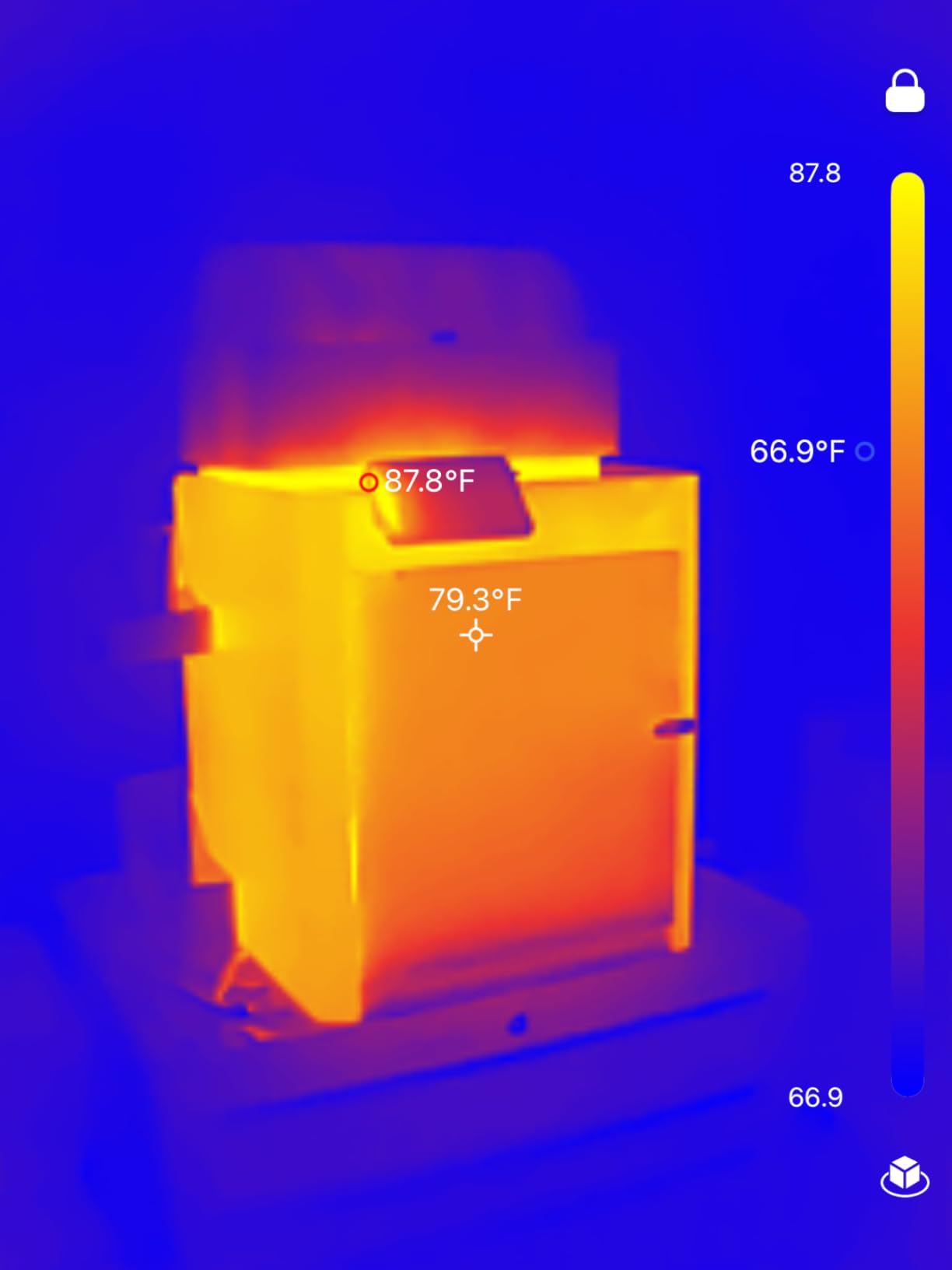
For dog-related testing, this was the camera I used to check our golden retriever’s cooling vest on a 92-degree afternoon. The vest stayed noticeably cooler than her back for about two hours, and I could see the exact moment the evaporative effect faded. It also spotted her sleeping behind the shed at night with zero effort, since a 101-degree dog against cool brush lights up like a flare.
The downsides are real but minor. The duo-lens thermal and visual cameras occasionally misalign when you are within a foot of the target, which matters if you do close-up electronics work. And there is no Mac support, plus Android 16 compatibility was still being sorted out in owner reports, so check the current app status if you run very new software.
Who should buy the TC002C Duo
This is the pick for anyone who wants one camera that covers home inspection, electrical troubleshooting, HVAC checks, pet finding, and general curiosity. It hits the sweet spot where spending more buys durability and reporting features rather than a dramatically better image.
It is also the safest gift choice if you do not know what phone the recipient carries, because USB-C universality means it will almost certainly work.
What to watch out for
Close-up alignment is the main limitation, so precision circuit-board inspectors may want a different tool. A few owners also reported small temperature accuracy drift, so treat the readout as a strong relative indicator rather than a calibrated thermometer.
2. TOPDON TC004 Mini – Best Standalone Pocket Thermal Camera
- Exceptional 15-hour battery life
- Works standalone with no phone needed
- IP54 waterproof and 2-meter drop tested
- High/low temperature alerts with auto capture
- Stores up to 8000 photos internally
- Native 128x128 sensor is lower than phone-based rivals
- Weak for long-distance imaging
- Documentation is thin
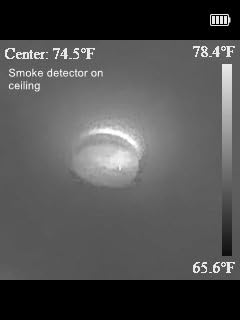
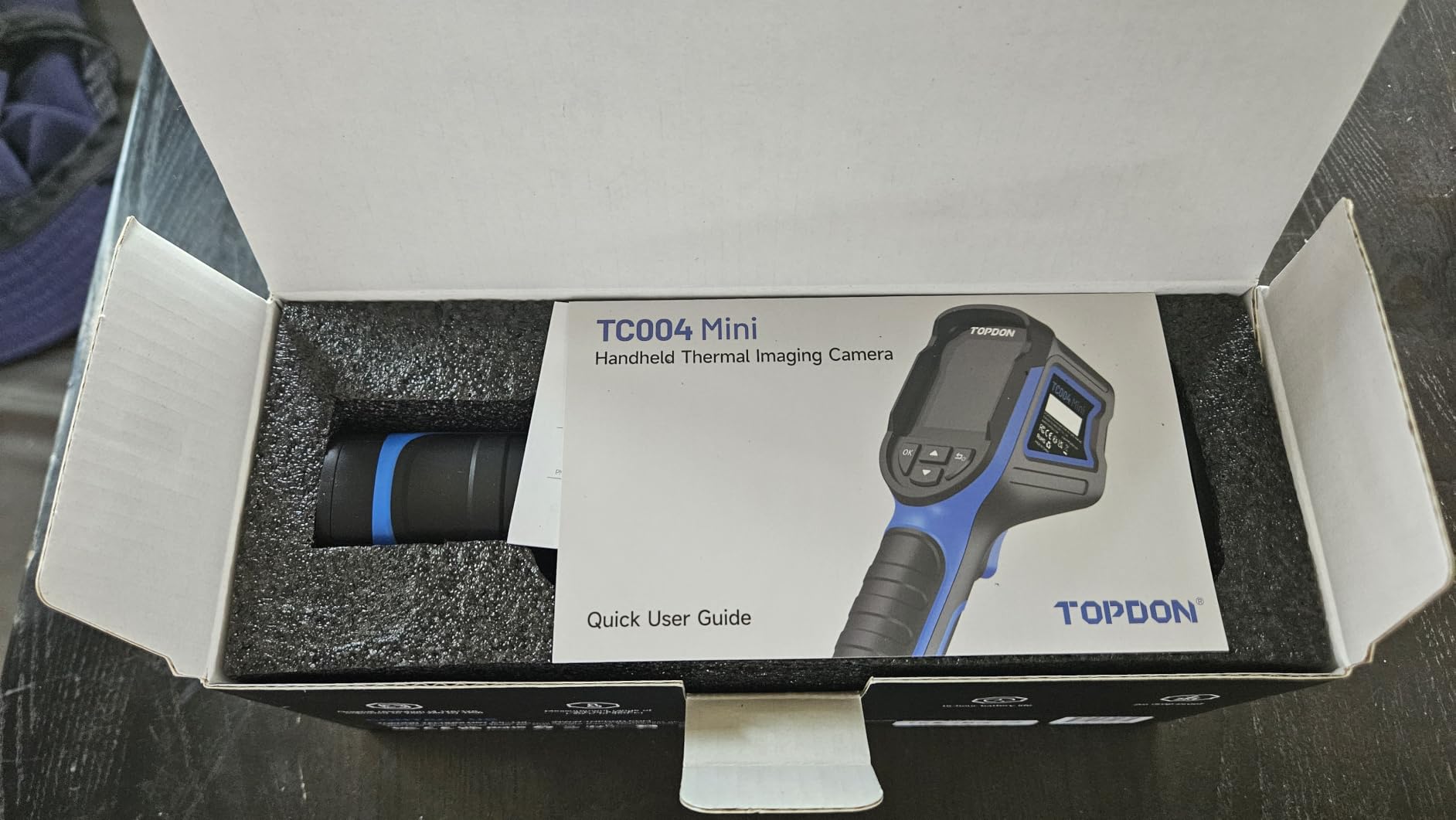
The TC004 Mini is the camera I grab when I do not want my phone involved at all. It is a self-contained unit with its own screen, and the 15-hour battery life is not a typo. I left it running on a time-lapse of our living room wall for an entire afternoon to track afternoon solar gain, and the battery barely moved. Every phone attachment on this list dies in a fraction of that time.
It is currently the number one best seller in Amazon’s thermal imager category, and over a thousand reviewers have pushed it to 4.4 stars. The native 128×128 sensor sounds modest, but TOPDON’s TISR upscaling to 240×240 produces an image that is plenty readable for finding studs, leaks, hot breakers, and cold drafts. You just have to accept that fine detail at a distance is not its strength.
The durability rating matters more than people expect. IP54 waterproofing and a 2-meter drop test mean this survives a tool bag, a truck bed, or a clumsy drop off a ladder. My phone attachment cameras live in a padded case precisely because they cannot take this kind of abuse.
For dog owners, this is my recommendation for barn and property use. The temperature alerts are handy for monitoring a whelping box or a heat lamp setup, and the auto-capture on alerts means you can set it watching a space and walk away.
Who should buy the TC004 Mini
Anyone who wants thermal imaging without draining their phone battery, or who works in environments where pulling out a $800 phone is a bad idea. Renters doing walkthrough documentation and homeowners chasing insulation gaps are the core audience.
It is also the best pick if you will be out in the field all day, because the battery simply outlasts everything else in this price class.
What to watch out for
Resolution is the trade-off. If you need to read a tiny component on a circuit board or identify a heat source 50 yards out, spend up for the TC002C Duo or a FLIR. The manual is also sparse, so plan to learn the menus by clicking around.
3. GOYOJO Thermal Imaging Camera – Best Budget Pocket Thermal Camera
- Lowest cost way into usable thermal imaging
- Weighs almost nothing at under half an ounce
- No batteries since phone powers it
- Works with iPhone 15/16/17 and most Android
- ±2% claimed temperature accuracy
- Sensor is actually 96x96 upscaled to 192x192
- App is glitchy at times
- Fails on some newer Pixel phones
- No zoom
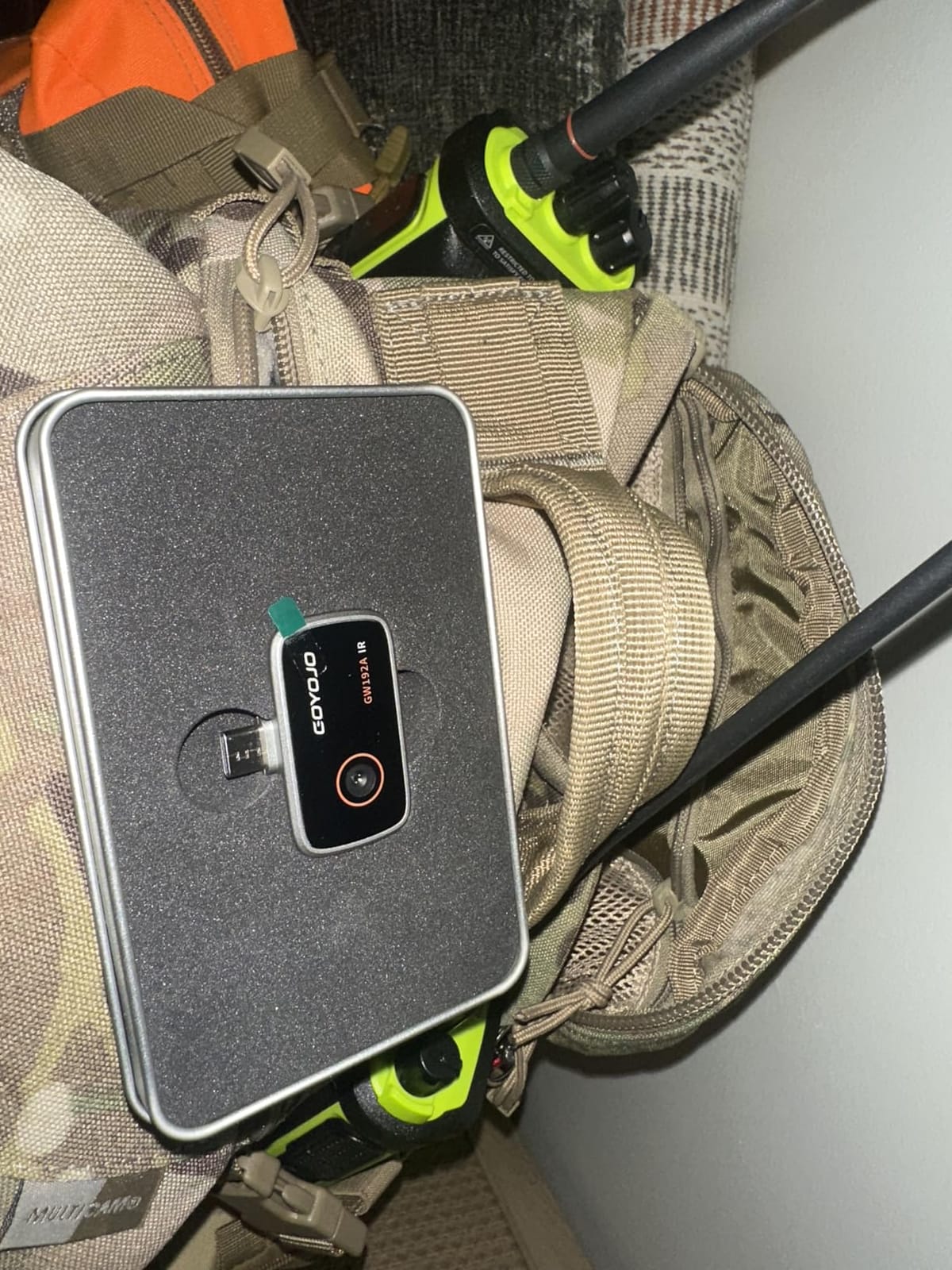
Sometimes you just want to know if thermal imaging is useful for you before committing real money. The GOYOJO is the cheapest camera on this list that still produces an image I would call genuinely usable. It plugs into a USB-C port, draws power from the phone, and weighs less than a AAA battery, so it literally lives in a jacket pocket.
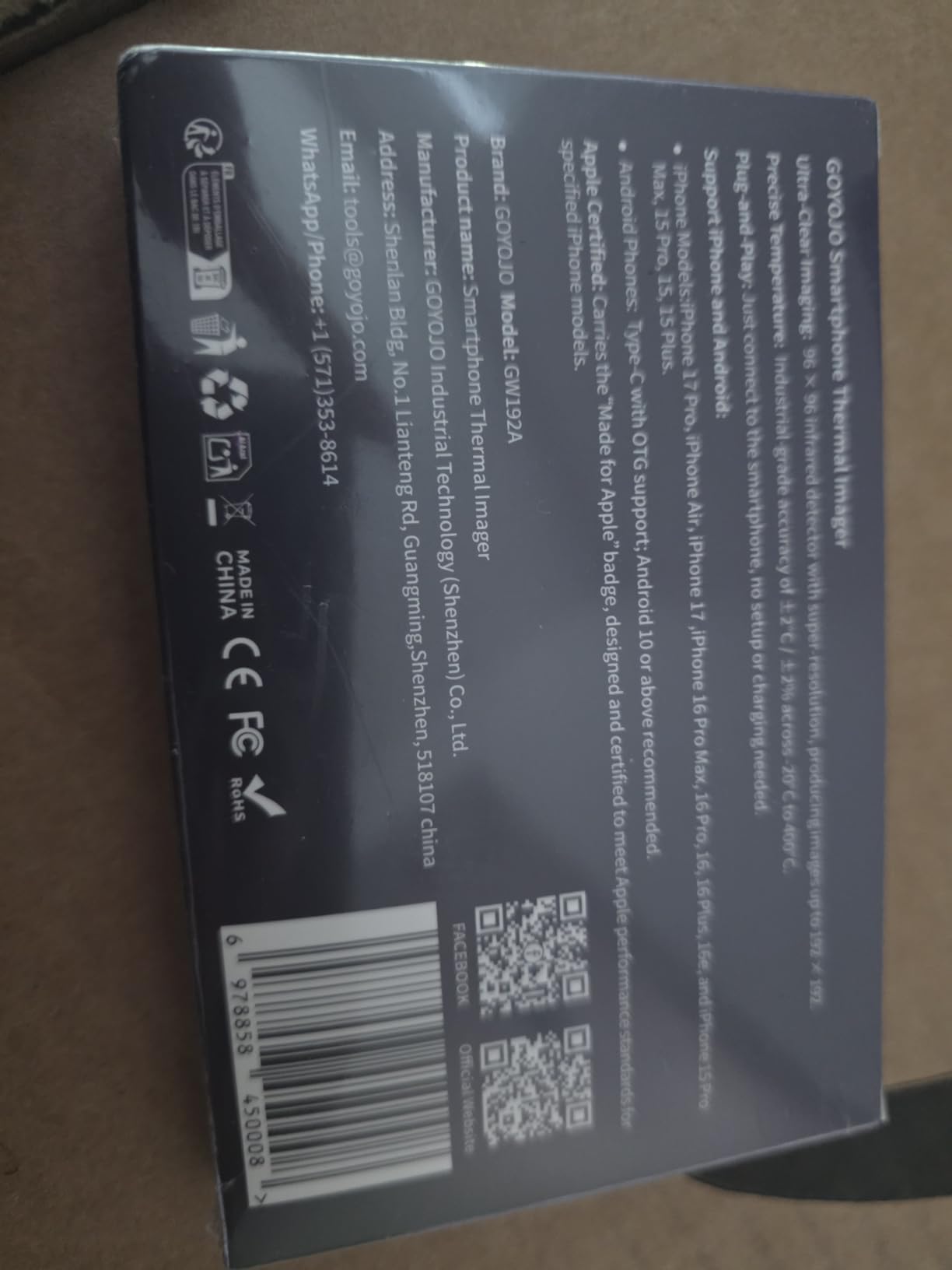
Honesty time on the specs: the sensor is natively 96×96 and upscaled to 192×192. That is the kind of resolution claim that forum users rightly grumble about, so I want to be straight with you. In practice, the upscaled image is still fine for big-picture jobs like finding where a wall is leaking heat, confirming a floor heating loop is flowing, or spotting a warm animal at moderate range.
Over 500 reviewers have it at 4.2 stars, and the pattern in the reviews matches my experience: great value, occasionally frustrating app. The THG Start app connects reliably most of the time but has frozen on me twice, requiring an unplug and replug. Some newer Pixel owners report it does not work at all, so verify compatibility if you carry a recent Google phone.
My favorite budget-camera story: I used the GOYOJO to find where a feral cat had curled up under our porch insulation before I sealed it off for winter. A $100 camera preventing an animal from being trapped in a wall is about the best return on investment I can imagine.
Who should buy the GOYOJO
First-time buyers, casual DIYers, hunters on a budget, and anyone who wants a thermal camera in the glovebox for occasional troubleshooting. It is also a low-risk way to learn thermal thinking before upgrading.
If you are buying for a teenager or a tool-loaning friend, the low cost means you will not panic when it gets borrowed indefinitely.
What to watch out for
Do not expect fine detail or a polished app experience, and test it with your specific phone on day one so you are inside the return window if it does not play nice. Lightning-port iPhone owners need a USB-C adapter or should look elsewhere.
4. FLIR C5 Compact Thermal Camera – Best Professional Pocket Thermal Camera
- True 160x120 resolution with no upscaling tricks
- MSX embossing makes images instantly readable
- WiFi cloud upload for professional reporting
- 2+10 year FLIR warranty
- Bright 3.5 inch screen works without a phone
- Slow 50-second startup time
- No standby mode
- Occasional WiFi connectivity hiccups
- Often low in stock
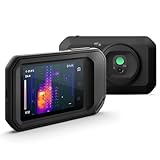
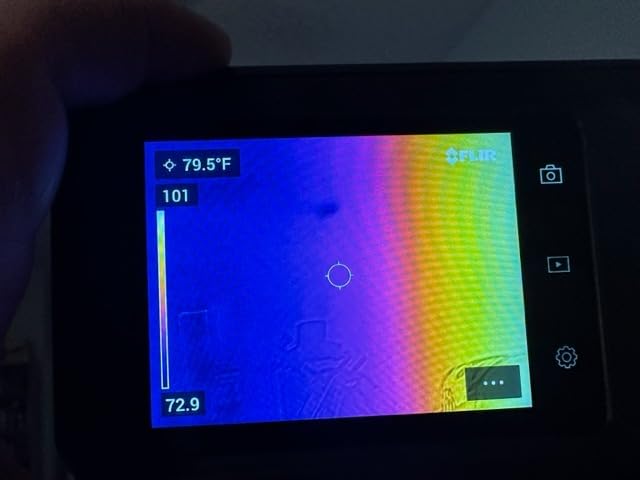
The FLIR C5 is the camera my electrician friend carries, and after borrowing it for a week I understand why. The 160×120 sensor is true resolution, not upscaling, so the thermal detail is honest and consistent. Pair that with FLIR’s MSX technology, which stamps visual edge detail onto the thermal image, and you get pictures you can hand to a client without explaining what they are looking at.
WiFi to the FLIR Ignite cloud is the real professional feature. Snap an image, and it uploads automatically for report building later. Over a thousand reviewers rate it 4.3 stars, and the complaints cluster around two things: a startup time of nearly a minute and no standby mode, which means you either wait or burn battery.
The 2+10 warranty deserves a mention because nobody else here comes close. Two years on parts and labor, ten years on the detector itself. When you buy FLIR, a chunk of what you pay is the certainty that this thing will still be supported a decade from now.
For our audience, the C5 is the tool I would point at if you do serious property work: barn inspections, radiant floor verification, or documenting insulation problems for a contractor. The dedicated screen means you are not handing your phone across a muddy field.
Who should buy the FLIR C5
Tradespeople, home inspectors, and property managers who need report-ready images, cloud workflow, and brand backing. It is the camera you buy when thermal imaging is part of your job rather than a hobby.
Anyone who has been burned by abandoned third-party apps will also appreciate that FLIR software support actually persists.
What to watch out for
The startup delay is genuinely annoying when you need a quick spot check, and stock is frequently low, so if you see it available, do not sit on the decision for weeks. It also records JPEG and MP4 but has no phone-attachment mode at all.
5. FLIR C3-X Compact Thermal Imaging Camera – Best for Cloud Reporting
- Fits in a shirt pocket like a smartphone
- MSX produces very readable blended images
- WiFi cloud uploads with Ignite
- Comes with 2 batteries charger and case
- 2-10 year FLIR warranty
- 128x96 resolution is low for the price
- Cannot record video or stream live
- About 3 hours of battery life
- Slow refresh rate
The C3-X is the camera that disappears into a pocket. Shaped like a chunky smartphone, it is the most carry-friendly standalone unit here, and the included kit with two batteries, a charger, and a case makes it feel like a professional purchase. Reviewers rate it 4.5 stars, the joint-highest standalone score in this lineup.
MSX is the star again. Even though the thermal sensor is only 128×96, the visual detail etched on top makes images far more interpretable than the raw pixel count suggests. I could tell exactly which window frame was leaking heat because the frame edges were visible in the blend rather than a colorful smear.
The limitations are the ones professionals complain about: no video recording, no live streaming, roughly three hours of battery, and a slow refresh rate that makes panning feel slightly laggy. If your work is still images for reports, none of that matters much. If you want to record a walkthrough, it is the wrong tool.
The built-in LED flashlight is a nicer feature than I expected. Crawlspace and attic work usually means holding a flashlight in one hand and a camera in the other, and combining them frees a hand for balance or for holding a leash.
Who should buy the FLIR C3-X
Inspectors and technicians who want the most pocketable standalone FLIR with cloud reporting, and who primarily capture stills. It suits anyone who already lives in the FLIR Ignite ecosystem for documentation.
It is also a strong pick if you deliver findings to clients, because the polished image output needs no explanation.
What to watch out for
You are paying FLIR-brand money for 128×96 pixels, so pure image-per-dollar favors TOPDON heavily. Confirm video is not a requirement for your workflow before choosing this over the C5.
6. TOPDON TC001 Thermal Camera – Best for Android Phones
TOPDON TC001 Thermal Imaging Camera for Android, 512×384 High Resolution
- Crisp 512x384 upscaled image from 256x192 sensor
- Huge temperature range up to 1022F
- Featherweight 30-gram aluminum build
- 4-7 hours of use paired with a phone
- Nine color palettes for different jobs
- No iOS support at all
- Android compatibility with TISR needs checking
- Upper range exceeds what most people need
The TC001 is the Android loyalist’s pick and one of the most reviewed thermal cameras anywhere, with nearly 1,500 ratings averaging 4.5 stars. It turns your Android phone into a genuinely capable 512×384 thermal imager for less than the cost of a mid-range standalone unit. That popularity is exactly why it earned a permanent spot here.
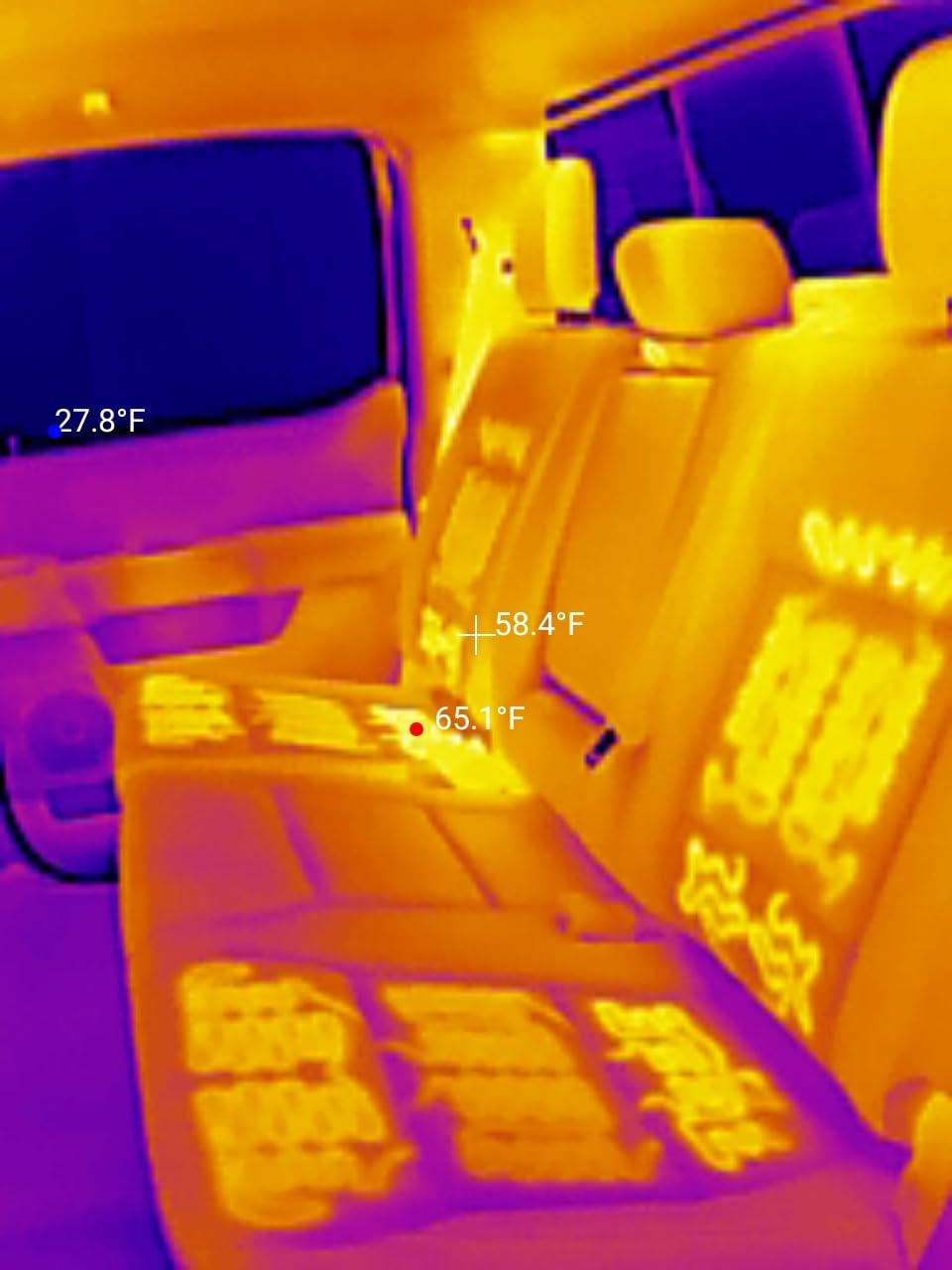
Image quality is the selling point. TISR upscaling from the 256×192 sensor produces clean, detailed thermal pictures that hold up well for electrical panels, radiator mapping, and window leak hunting. Nine color palettes sound like a gimmick until you use ironbow for general work and switch to grayscale for subtle gradients.
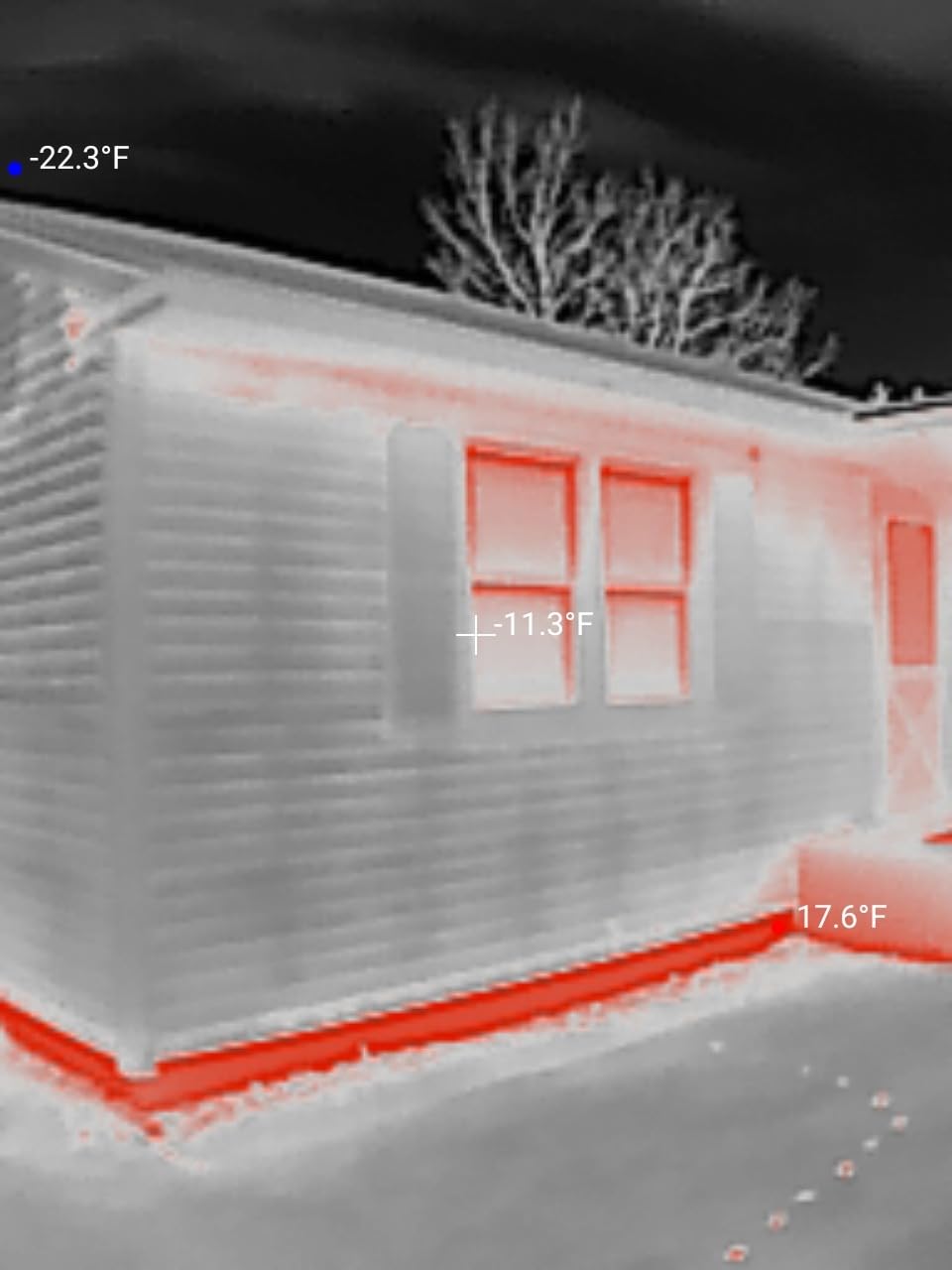
The aluminum body at 30 grams feels like quality rather than a plastic toy, and owners report 4-7 hours of runtime since the camera sips phone power. Mine ran a full afternoon of barn checks with plenty of phone battery to spare.
The hard limitation is platform: this is Android only, full stop. iPhone 15 and newer USB-C models are explicitly not supported, and some owners needed to verify their specific Android handset worked with the TISR feature before the full resolution kicked in.
Who should buy the TC001
Android phone owners who want the sharpest phone-based image without stepping up to FLIR pricing. If your entire household runs Android, this beats the TC002C Duo on both price and proven track record.
It is also the pick for HVAC and automotive work where that 1022-degree upper range covers exhaust components and heating equipment comfortably.
What to watch out for
Verify your phone model against TOPDON’s compatibility list before ordering, especially for less common Android brands. And if there is any chance you switch to iPhone later, the Duo’s universality is worth the small premium.
7. HSFTOOLS HP96 – Best Touchscreen Pocket Thermal Camera
HP96 Thermal Imaging Camera,3.5″ Touch Screen, Intelligent Scene Detection
- Phone-style touchscreen is the easiest UI here
- Intelligent scene recognition modes
- Five imaging modes including fusion and blending
- Huge 30000-image internal storage
- 25Hz video recording with audio
- Battery lasts only about 4 hours
- Some quality control complaints
- Calibration pause of a few seconds on startup
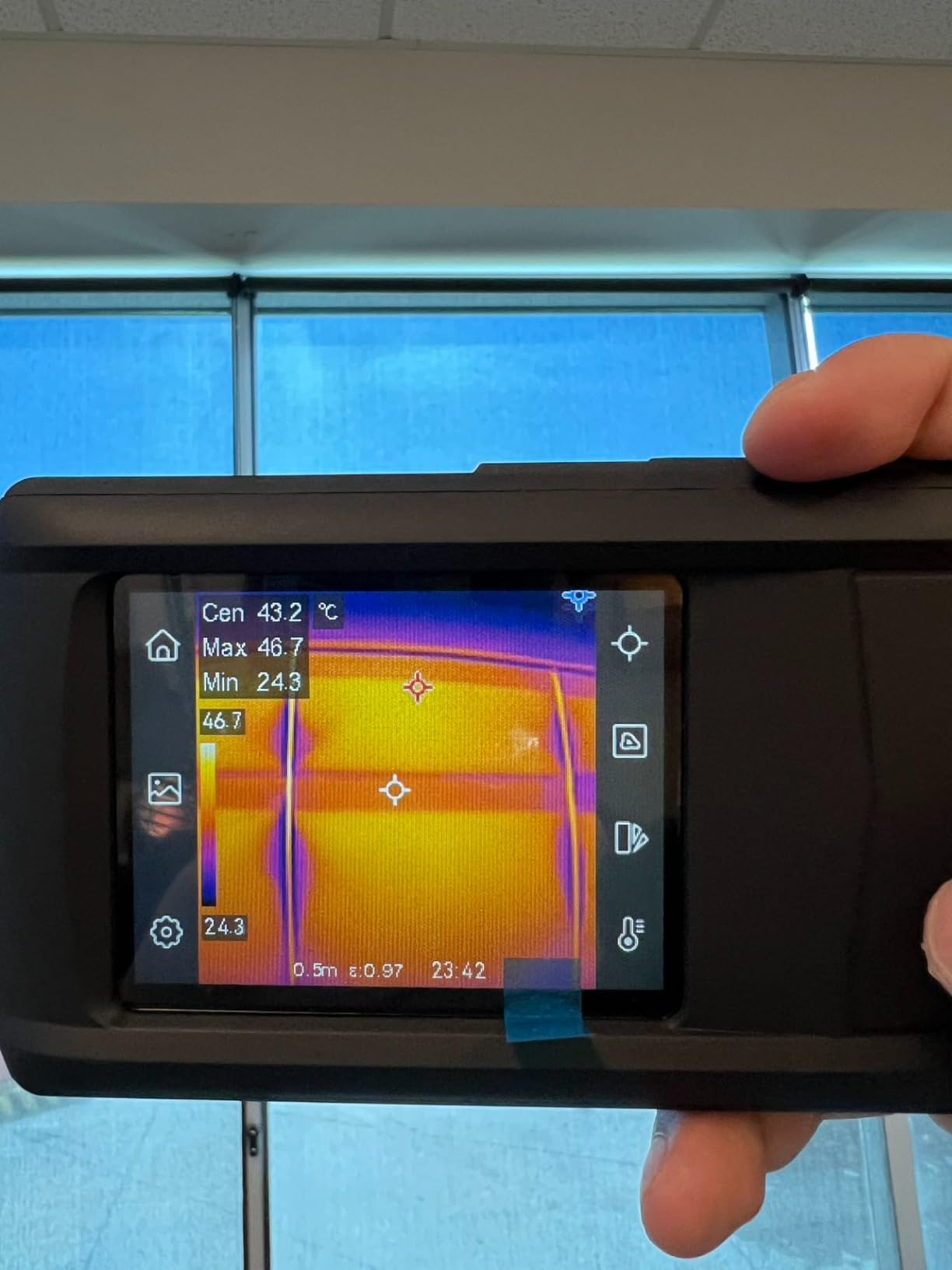
The HP96 is the camera I hand to people who are intimidated by thermal gear. The 3.5-inch touchscreen behaves like a phone, with swipes and taps replacing the mushy four-button interfaces on older handhelds. If you have ever fought a thermal camera’s menu system while balancing on a ladder, you know why this matters.
Intelligent scene recognition is the differentiator. The camera identifies what kind of scene it is looking at and adjusts accordingly, which flattens the learning curve for beginners. Five imaging modes let you flip between pure thermal, visual, fusion, picture-in-picture, and blending, and the 96×96 sensor gets live-upscaled to 240×240.
Storage is absurd in a good way: 30,000 images or 20 hours of video on the internal eMMC. That is documentation-audit territory, and more than any phone-attachment camera can manage. The 25Hz refresh with audio-capable video recording makes walkthrough documentation genuinely practical.
Now the honest part. Battery life is around 4 hours, which is fine but nowhere near the TC004’s 15. A few owners reported quality control lottery units, and the camera takes a few seconds to calibrate when waking. None of these were dealbreakers, but set expectations accordingly.
Who should buy the HP96
Anyone who wants a standalone camera that feels like using a smartphone, especially newer users who will actually use the scene modes and heavy storage. It is a strong middle path between budget standalones and FLIR pricing.
Video documentation is its quiet superpower, so trainers and content creators get extra value here.
What to watch out for
The native 96×96 sensor means fine detail depends heavily on the upscaling, so pixel purists should lean toward TOPDON or FLIR. Test your unit early in the return window given the scattered quality-control reports.
8. Klein Tools TI223 – Best for Electrical and HVAC Work
- 19
- 200 pixel resolution is sharp for the price
- Works with both iOS and Android over USB-C
- Spot high/low and differential temperature readouts
- Time-lapse video for documentation
- Fits phone cases up to 1/5 inch thick
- Dual-lens rivals handle small temperature differences better
- No Lightning adapter for older iPhones
- Very new product with a short review history
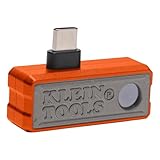
Klein Tools does not mess around when they build for electricians, and the TI223 feels like it was designed by someone who has actually crawled under a house. At 19,200 pixels it matches the FLIR C5’s resolution but delivers it through your phone’s screen at a lower cost. It currently holds a 4.8-star rating, though from a small pool of early reviewers since it launched in January 2026.
The readout modes are trades-focused: spot temperature, high and low tracking, and a differential readout that shows the delta between two points. That differential mode is underrated for HVAC work, because the question is rarely “what temperature is it” and usually “how much colder is this supply vent than that return.”
Time-lapse video rounds out a spec sheet clearly aimed at documentation. Set it watching a wall or a panel and catch the intermittent fault that only appears under load. It worked through phone cases up to a fifth of an inch thick, which saved me from repeatedly removing my bulky case.
Where it falls short of dual-lens designs like the TC002C Duo is in resolving small temperature differences. A few early users noted that dual-lens cameras separate subtle gradients better, which tracks with my experience comparing single and dual lens units.
Who should buy the Klein TI223
Electricians, HVAC techs, and serious DIYers who want trade-focused measurement modes and a phone-based workflow. If you already own Klein tools, the brand’s build reputation carries over here.
It also suits anyone who wants C5-class resolution without paying standalone-camera prices.
What to watch out for
The review pool is small because the product is new, so long-term reliability is unproven. iPhone owners with pre-USB-C models need an adapter that is not included.
9. FLIR TG165-X – Best with Laser Pointer
- Bullseye laser shows exactly what you are measuring
- Combines thermal image with spot IR thermometer
- Tough drop-tested build
- Rubberized grip suits gloved hands
- Simple two-trigger operation
- 80x60 resolution is the lowest here
- Slow refresh rate feels laggy when panning
- No video recording
- Long startup with mushy buttons
The TG165-X is less a thermal camera and more a spot thermometer that happens to show you a picture, and that combination is more useful than it sounds. The bullseye laser projects a ring onto whatever you are measuring, so there is never any ambiguity about which surface the reading came from. On a busy breaker panel, that certainty is worth real money.
The pistol-grip shape with a rubberized handle is the most comfortable design here for gloved, greasy-hand work. Nearly 850 reviewers rate it 4.3 stars, and the feedback pattern from tradespeople is consistent: it is a reliable daily-driver for quick checks rather than detailed imaging.
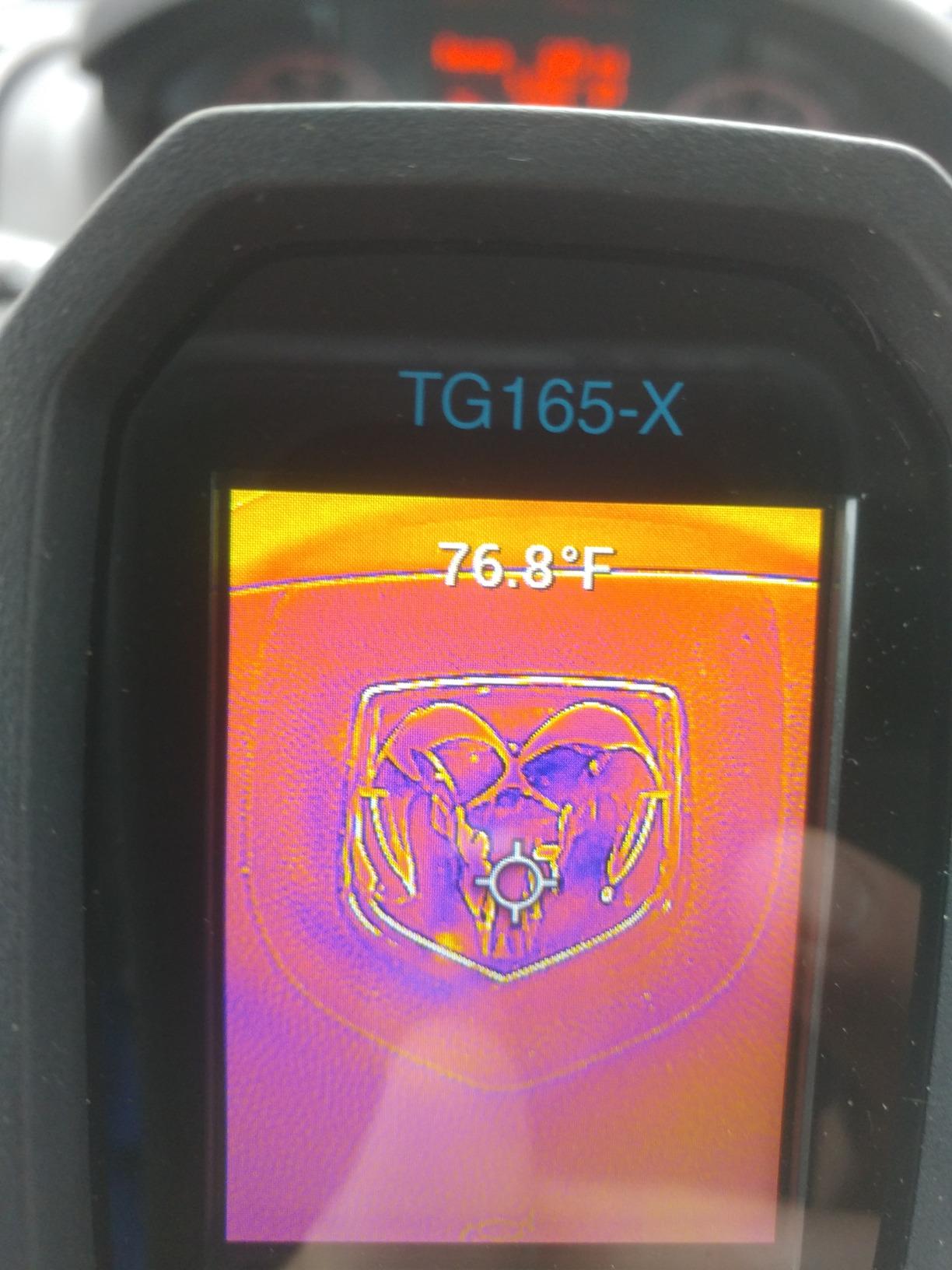
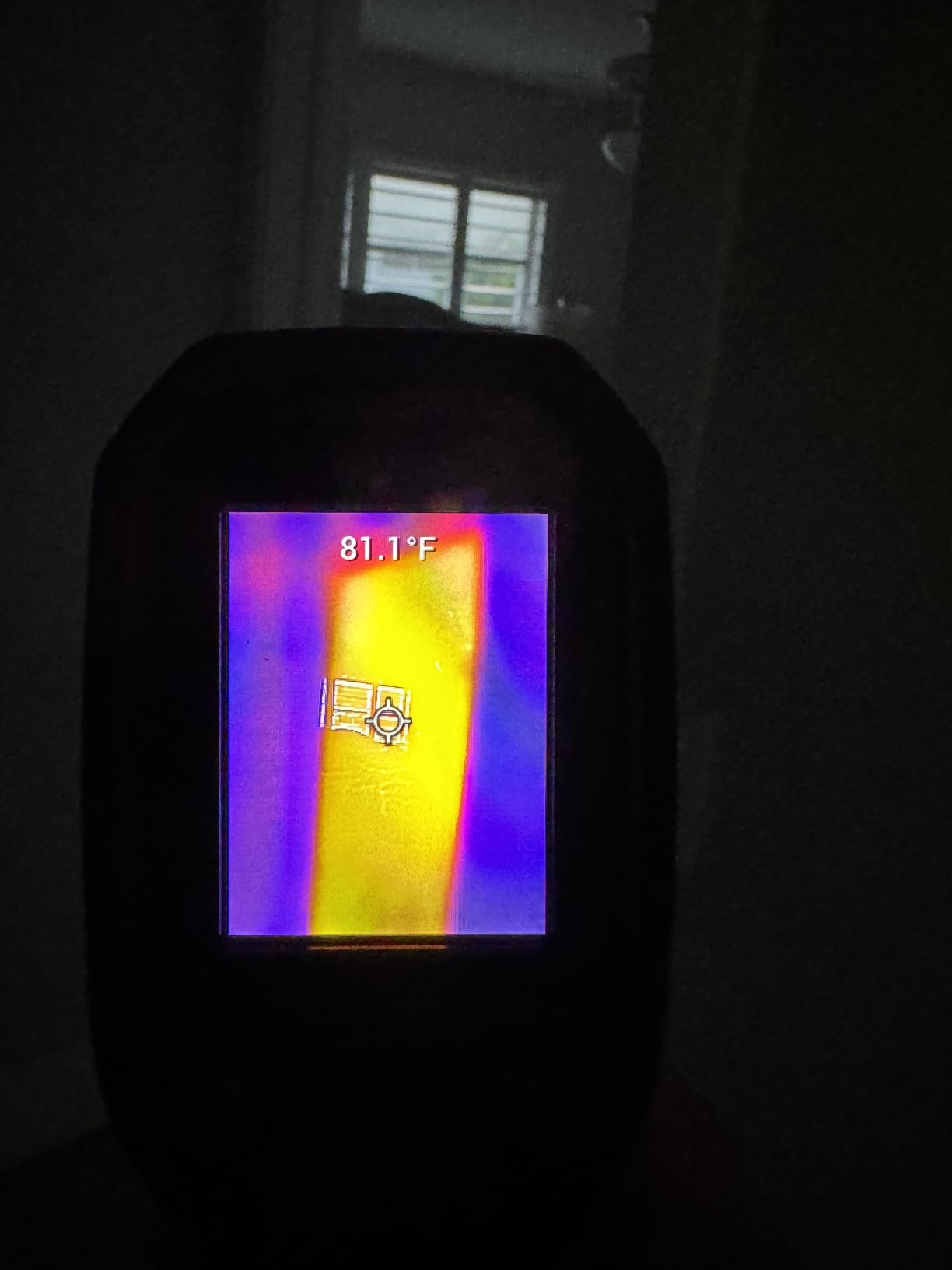
At 80×60 pixels, the thermal image is coarse, and I will not pretend otherwise. What you get is a heat map good enough to locate a problem, paired with an accurate spot reading to quantify it. Think of it as finding the hotspot with the picture and then trusting the number on the laser dot.
Frustrations: startup is slow, the refresh rate lags when you pan quickly, the buttons feel mushy, and there is no video. You also cannot switch off the combined visual and thermal view, which some owners find distracting.
Who should buy the TG165-X
Anyone whose main job is answering “what temperature is that thing right there” rather than producing pretty thermal images. Mechanics checking bearings, HVAC techs checking supply temps, and homeowners verifying radiator output are the core users.
The laser makes it the safest choice for electrical work where you want distance between your hand and the panel.
What to watch out for
If detailed imaging is the goal, the low resolution will disappoint, and every other camera on this list produces a richer picture. Treat it as a measurement tool first.
10. FLIR ONE for iPhone – Best for iPhone Users
- Native iPhone 15 and newer USB-C support
- MSX blending makes images very readable
- Has its own battery so it never drains your phone
- Step-by-step inspection guides in the app
- Case and cable included
- 80x60 native sensor is the true resolution
- Short battery life per session
- Fit is loose on some phone models
- iOS only with no Android support
The FLIR ONE is the easiest entry into thermal imaging if you carry a recent iPhone. Snap it on the USB-C port, open the FLIR app, and you are looking at heat in under a minute. The step-by-step inspection guides inside the app are genuinely helpful for beginners, walking you through checking insulation, electrical panels, and radiators like a checklist.
Be clear-eyed about the resolution story: the sensor is natively 80×60, upscaled to 240×180 through FLIR’s Vivid IR processing. MSX does a lot of heavy lifting here, and the blended results look sharper than the raw pixel count implies, but it is not in the same detail class as the TOPDON phone cameras.
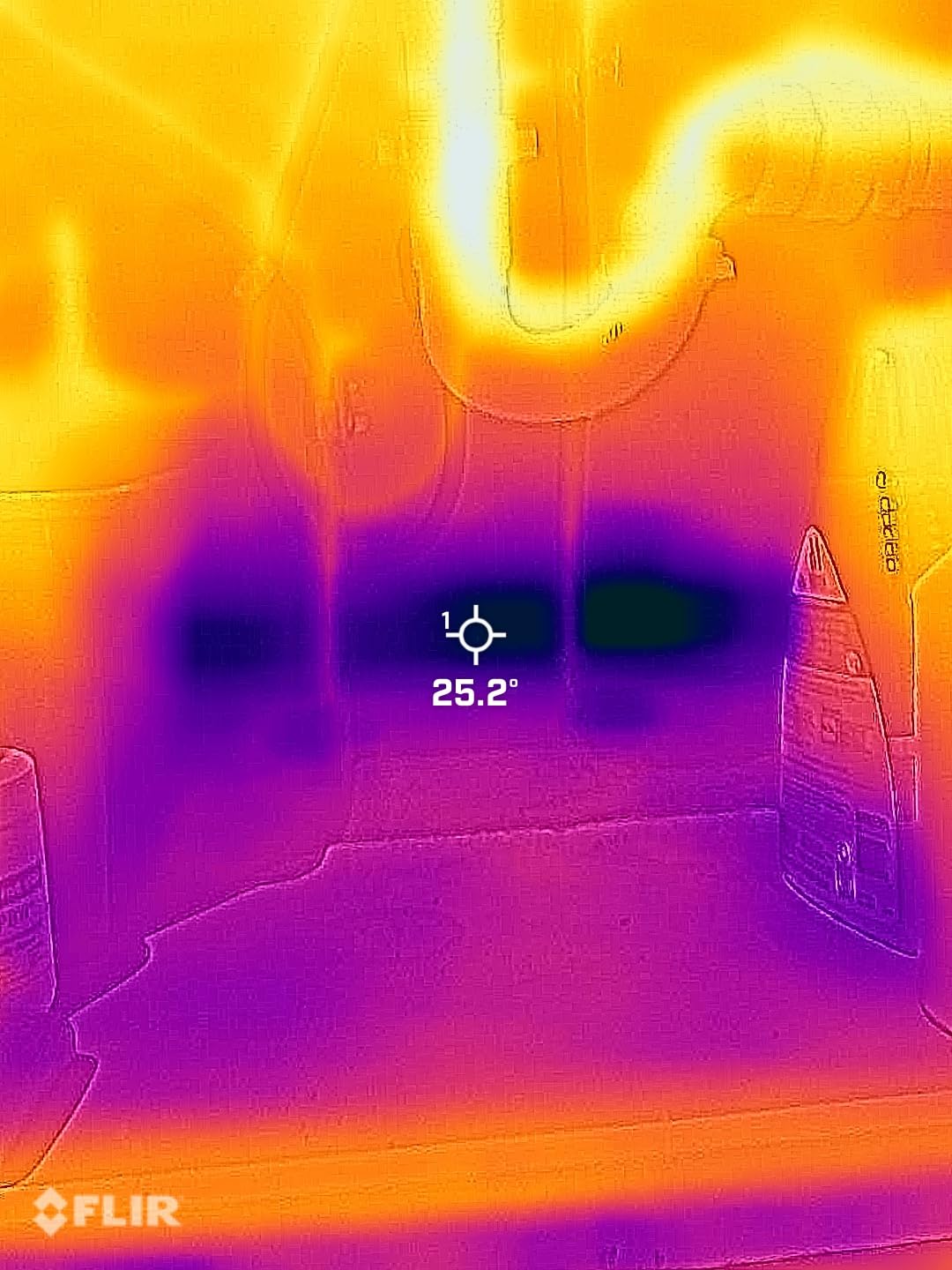
The self-contained battery is a smarter design than it first appears. Because the camera powers itself, a long inspection session does not gut your phone battery the way phone-powered attachments do. The flip side is that the camera’s own runtime is short, so it tops up from USB between uses.
Owner complaints center on the fit being loose on certain phone models and the app demanding both Bluetooth and network access, which privacy-conscious users dislike. And naturally, there is zero Android support.
Who should buy the FLIR ONE
iPhone 15-or-newer owners who want the simplest possible thermal setup with guided inspections and trusted brand software. It is the best “learn what thermal imaging can do” camera on the Apple side.
Frequent travelers like it too, since the case and cable make it a tidy kit that pockets easily.
What to watch out for
Native resolution is the lowest of the phone attachments here, so detail-focused buyers should compare against the TC002C Duo, which also supports iPhone through USB-C. Check that your case-free fit is snug if your phone model is unusual.
How to Choose the Right Pocket Thermal Camera for Your Needs?
Buying a thermal camera in 2026 means navigating spec sheets where the numbers do not always mean what they appear to mean. Here is what actually matters, based on our testing and hundreds of owner reports.
Thermal resolution and sensitivity
Resolution is the number of sensor pixels capturing heat, and it is the single biggest driver of image detail. The trap is upscaling: many cameras list an enhanced resolution (TISR, Super Resolution, Vivid IR) that is software interpolation on top of a smaller native sensor. A 512×384 claim on a 256×192 sensor still looks good, but a 192×192 claim on a 96×96 sensor is more modest than it sounds.
Sensitivity, listed in mK (millikelvin), tells you the smallest temperature difference the camera can distinguish. Lower is better: 40mK is excellent, 50mK is solid, and anything under 60mK will handle home inspection work comfortably.
Phone attachment versus standalone
Phone attachments are cheaper, smaller, and use your phone’s big bright screen and processing power. The trade-offs are durability, battery drain on your phone, and dependence on app quality. Standalone cameras cost more per pixel but survive job-site abuse, run far longer on a charge, and never interrupt your inspection with a text notification.
Our rule of thumb after testing both: casual and occasional users should get a phone attachment, anyone who uses a thermal camera weekly or in rough environments should get a standalone.
Platform compatibility
This is where returns happen. Lightning-port iPhones need adapters or dedicated models, and not every USB-C camera supports every USB-C phone. The TC001 is Android-only, the FLIR ONE is iOS-only, and even the universal TC002C Duo has gaps like Mac and Android 16. Always check the compatibility list for your exact phone model before ordering.
Battery life and storage
Battery ranges here run from roughly 3 hours on the FLIR C3-X to 15 hours on the TOPDON TC004 Mini, and phone attachments vary with your phone’s charge. If you document work, internal storage matters too: the TC004 holds 8,000 photos and the HP96 holds 30,000 plus 20 hours of video, while phone attachments rely on your phone’s free space.
Entry-level versus professional
No competitor maps this divide clearly, so here it is plainly. Entry-level spend of roughly $100 to $230 gets you a phone attachment or basic standalone that handles home checks, DIY troubleshooting, pet finding, and hobby use. Professional spend of roughly $380 to $600 gets true-resolution sensors, MSX image blending, cloud reporting, multi-year warranties, and drop-test durability.
Buy entry-level if you will use it monthly. Buy professional only when thermal imaging feeds your reports or your paycheck.
Frequently Asked Questions
Which handheld thermal camera is considered the best?
The TOPDON TC002C Duo is the best pocket thermal camera for most people in 2026, thanks to its 512×384 upscaled resolution, true 40mK sensitivity, 25Hz refresh rate, and universal USB-C support for iPhone, Android, and Windows. Professionals who need report-ready images and cloud workflow should step up to the FLIR C5 with MSX technology and a 2+10 year warranty.
What is the best low-cost thermal camera?
The GOYOJO USB-C thermal camera is the best budget option at around $100, offering 192×192 upscaled resolution, plug-and-play phone power, and compatibility with iPhone 15 and newer plus most Android phones. For a low-cost standalone camera, the TOPDON TC004 Mini is the better choice with its 15-hour battery and IP54 durability.
What’s the difference between an infrared camera and a thermal camera?
The terms are used interchangeably for cameras that build images from infrared heat, but technically a thermal camera reads the long-wave infrared radiation emitted by objects themselves, while some infrared devices like night-vision cameras need an infrared light source to illuminate the scene. Every camera in this roundup is a true thermal imager that passively detects heat signatures, so they work in total darkness and measure actual surface temperatures.
How accurate are cheap thermal cameras?
Most consumer pocket thermal cameras claim accuracy of ±2°C to ±3.6°F, which is fine for finding problems but not for calibrated measurement. Owner reports show budget models like the GOYOJO track within a few degrees of professional units for relative comparisons, though absolute readings can drift. Treat any camera under $300 as excellent for spotting temperature differences and approximate for exact values.
Can I use my phone as a thermal camera?
Yes, a phone alone cannot see heat because regular cameras only capture visible light, but a plug-in thermal attachment turns your phone into a full thermal imager using its screen and processor. Models like the TOPDON TC002C Duo, TC001, GOYOJO, Klein TI223, and FLIR ONE connect over USB-C and display live thermal video through a companion app.
Final Verdict on the Best Pocket Thermal Cameras
After three months of pointing these cameras at walls, panels, radiators, and dogs, our verdict on the best pocket thermal cameras is straightforward. The TOPDON TC002C Duo wins overall for its universal USB-C support, real 40mK sensitivity, and sharp upscaled image. The TOPDON TC004 Mini is the standalone value king with 15-hour battery life, and the GOYOJO is the smartest way to test the thermal waters for around a hundred dollars.
Professionals should still buy the FLIR C5 for honest 160×120 resolution, MSX clarity, and a warranty measured in decades, while iPhone owners wanting simplicity will love the FLIR ONE. Whatever you choose, you are getting capability that cost five times as much only a few years ago.
Pick the one that matches how often you will use it, check your phone’s compatibility, and start finding the heat. Your dog hidden in the blackberry bushes will never be invisible again.