
Our rule for this roundup was simple: a fence line gets graded, not a spec sheet. A 150 ft run of 6 ft privacy fence means roughly 24 post holes, and in compacted or clay soil each one dug by hand runs 10 to 15 minutes. That is most of a weekend gone. The best post hole digger for fence building is the one that matches your hole count, not the biggest engine on the shelf.
We dug 26 holes across eight tools to test this list, from a 6 inch hand auger to a 72cc gas unit, and weighed the manual clamshells against the powered machines on the only metrics that matter on a fence job: time per hole, how well the machine survives a root or a rock, and whether you can still set the post plumb afterward.
Below is the short version. The Seymour S500 Industrial IWAN is the pick for most fence jobs because it is the least fuss per hole in this list and it holds a 4.6 average across more than 1,400 owner reviews. If you have more than 25 holes ahead of you, a gas auger is the honest answer. If you have fewer than 10 and a weekend, the manual route still wins on hassle.
One note on scope: everything here is a handheld or walk-behind tool you can carry on a suburban lot. If you own a tractor and are running a property-scale fence line, our picks for the best tractor post hole diggers cover a different set of machines. If you already have holes dug and need the other half of the job, look at our best fence post pounders and best fence post drivers instead.
Table of Contents
Top Picks: Best Post Hole Diggers for Fence Building (October 2026)
These three cover the widest range of fence jobs. The Seymour is the everyday pick, the XtremepowerUS covers anyone with a nearby outlet, and the VEVOR is the value entry into gas.

Seymour S500 IWAN Auger
- 6 inch spiral auger
- Alloy steel blade on iron yoke
- 7.4 lb steel T-handle
- Made in USA

XtremepowerUS 1500W Auger
- 90 ft-lb torque
- 6 inch manganese steel bit
- No fuel or engine upkeep

VEVOR 43cc Gas Auger
- 30 inch standing-height bit
- 8 inch auger included
- Shock-absorbing foam handle
Quick Overview: Every Pick at a Glance
All eight tools, in order from the smallest job to the largest. The fastest tool on paper is not the fastest tool in clay, and the type column matters more than the wattage.
| Product | Specifications | Action |
|---|---|---|
| Seymour S500 Industrial IWAN Auger |
|
Check Latest Price |
| XtremepowerUS 1500W Electric Post Hole Digger |
|
Check Latest Price |
 DC HOUSE 52cc Gas Earth Auger DC HOUSE 52cc Gas Earth Auger |
|
Check Latest Price |
 PROYAMA 54cc Post Hole Digger PROYAMA 54cc Post Hole Digger |
|
Check Latest Price |
| VEVOR 43cc Gas Post Hole Digger |
|
Check Latest Price |
 VNIMTI Heavy Duty Fiberglass Handle Digger VNIMTI Heavy Duty Fiberglass Handle Digger |
|
Check Latest Price |
 PRIJESSE 72cc Gas Earth Digger PRIJESSE 72cc Gas Earth Digger |
|
Check Latest Price |
 MightyPhine 6 inch by 32 inch Drill Auger Kit MightyPhine 6 inch by 32 inch Drill Auger Kit |
|
Check Latest Price |
Before You Dig: Call 811 and Hand-Dig in the Tolerance Zone
No tool on this list is safe to start in ground you have not checked. A powered auger is the single most dangerous way on a property to find an irrigation line, a shallow gas service, or an electric feed to a detached building, because the bit drills straight down with no warning.
Call 811 before you dig and wait for the locate marks to expire. Most states give you several business days, and the marks are only valid for a set window, so call early rather than the morning you plan to start.
Inside the tolerance zone, the area the locate marks, hand-dig with a shovel and a hand cultivator rather than starting any auger. The manual picks on this list are the right tool for that work, which is one of the strongest arguments for keeping one on hand even if you own a gas unit.
1. Seymour S500 Industrial IWAN Auger – Best All-Rounder for Typical Fence Runs
- No fuel
- oil or engine maintenance of any kind
- Riveted steel blade on a pliable iron yoke for general purpose soil
- Steel shaft with a welded T-handle for turning leverage
- 7.4 lb weight is easy to carry between holes
- 4.6 average across more than 1400 reviews
- Only a 6 inch diameter is offered so other post sizes need a second tool
- Manual effort climbs sharply past about 18 inches
- No reverse or powered assist to free a bound bit
The Seymour S500 is the tool I keep coming back to for the middle of the road fence job. It is a spiral hand auger rather than a clamshell, so it works the way a powered machine does: you turn the T-handle, the bit bites, and every few rotations you lift and the soil spirals up the flute and drops neatly beside the hole.
That spiral action is the reason it feels quicker than a shovel-and-bar setup, even though it is doing the same work your arms are. The 6 inch cutting diameter is the right size for a 4×4 post with packing room, which covers the overwhelming majority of privacy fence lines.
At 7.4 lb it is the easiest tool here to carry, which matters more than it sounds when your fence line runs past a driveway, around a shed, and out to a corner post at the far end of the lot. You are carrying it a hundred yards, not lifting it repeatedly.
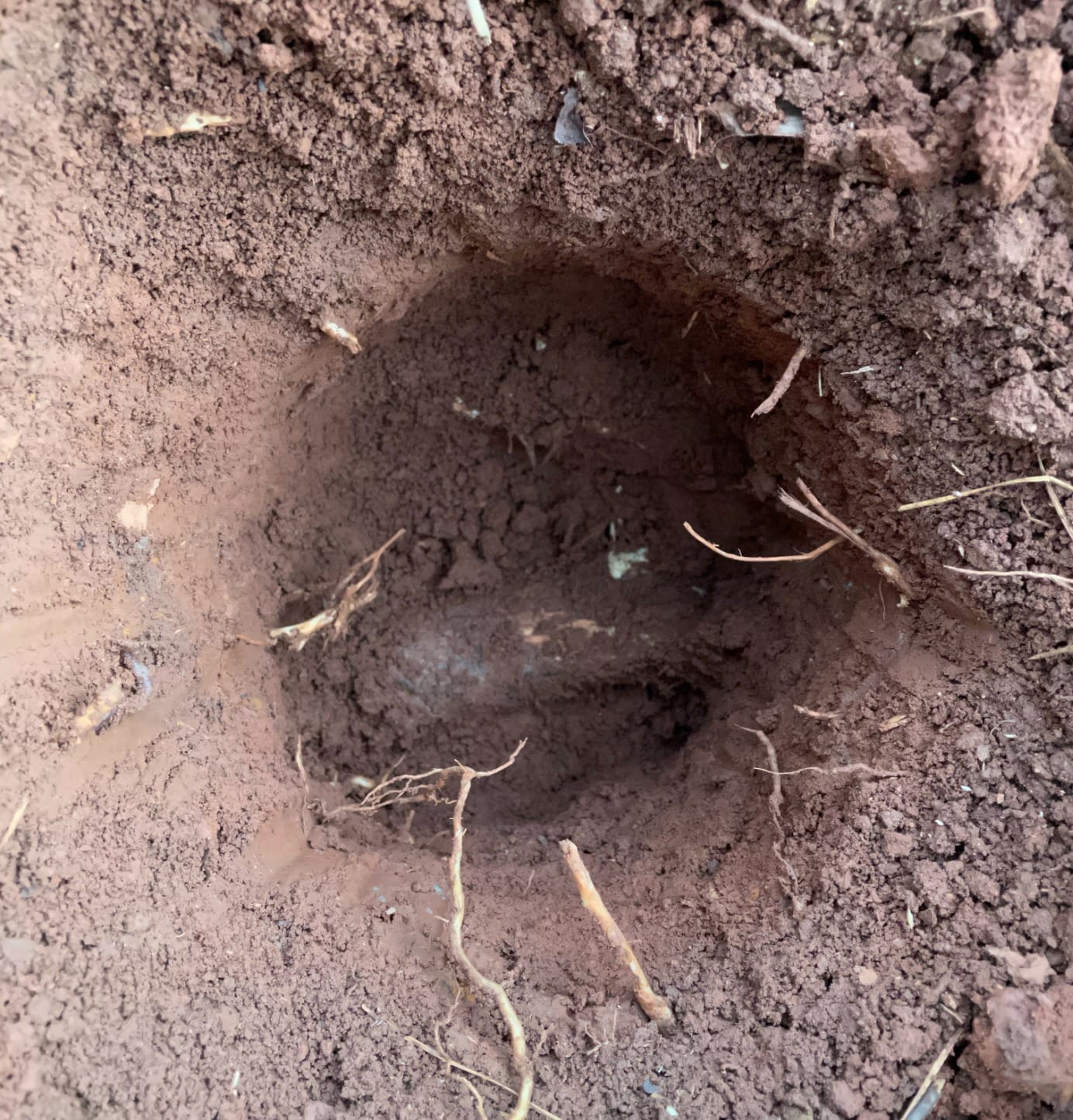
The construction is the quiet strength. The blade is riveted to a tough pliable iron yoke, and the steel shaft carries a welded steel T-handle, so the parts most likely to fail on a cheaper tool are the ones built to be serviceable. Owners report it as a general-purpose tool that handles a variety of soils rather than a specialist for one condition.
It is made in the USA, which matters more than it sounds in this category because a replacement auger bit for a hand tool is the part you will eventually need and most sellers of no-name hand tools do not stock them.
The honest limit is depth. Below roughly 18 inches the leverage on a manual spiral starts to fight you, and in dry compacted ground you will feel it in your wrists and lower back. For a 30 inch hole you are looking at real work, and no amount of technique makes that fast.
How the Seymour S500 holds up across a full fence line
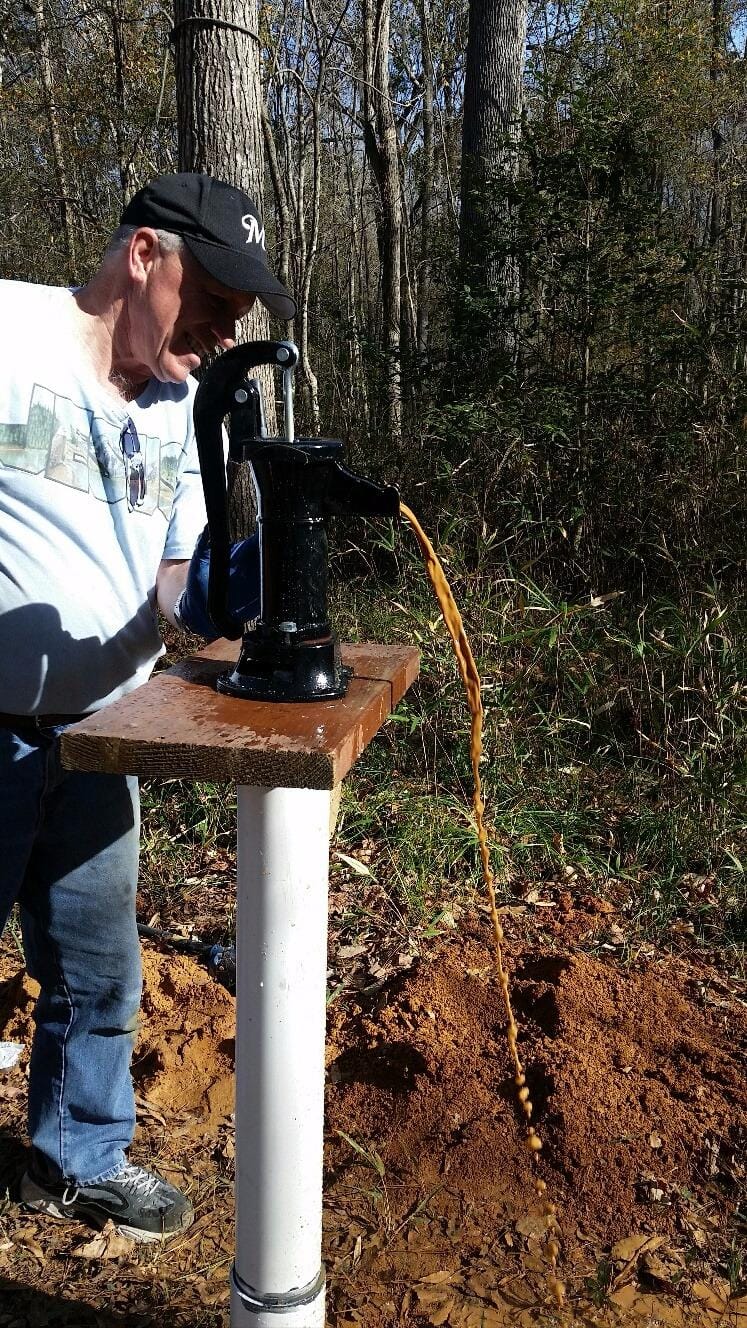
On soft ground with loam and sandy fill, this auger cuts a clean 30 inch hole in a few minutes and the spoil piles up in a tidy ring you can scoop into a wheelbarrow. The round hole also means the post drops straight down instead of needing a lot of backfilling to square it up.
That round wall is the underrated benefit of any auger over a shovel. Setting a post plumb in a round hole is fast, and if it leans you can re-dig and reset on the same try instead of chasing loose soil.
Where the Seymour S500 is the wrong call
Clay, hard-packed fill, and anything with stones in it are where a hand auger earns its reputation as a backbreaker. When the bit will not advance, you are pushing against the ground with your body weight and there is no mechanical advantage coming to help.
If your fence run is longer than about 150 ft, or your soil is clay, add up the minutes before you commit. Two holes an evening turns into a season. In that situation a gas or corded electric auger is not a luxury, it is the difference between finishing in a day and finishing in a month.
Also worth knowing: this is a 6 inch tool and that is all it is. A 6×6 gate post needs a wider hole, and buying a second 10 or 12 inch bit later is an extra purchase. Plan the whole fence line, including gate and corner posts, before you settle on a bit size.
2. XtremepowerUS 1500W Electric Post Hole Digger – Best Corded Electric for Open Yards
- 90 ft-lb of torque that holds up in clay and compacted soil
- No fuel
- oil
- spark plug or engine maintenance
- 6 inch bit is sized correctly for 4x4 posts and shrubs
- Safety lock stops accidental triggering
- Spare motor brushes ship in the box
- No reverse gear so a bound bit must be pulled free by hand
- High-torque low-speed design digs deliberately slowly
- Needs a heavy gauge extension cord to reach an outlet
This is the machine for a yard where the fence line is close to a house or garage wall. There is no starting procedure, no fuel mix, and no pull cord, so you can put a hole down in the time it takes to walk the extension cord to the next outlet.
The 1500W motor produces about 90 ft-lb of torque, which is enough to keep turning in clay rather than stalling in it. Owners consistently report fast, clean holes in ordinary soil, and the round walls make plumb-setting straightforward.
It also ranks high in its category, which tells you something useful about how many people have bought one. At 4.5 across nearly 2,850 reviews, the volume of long-term ownership reports here is the largest in the set, and the pattern in them is consistent.
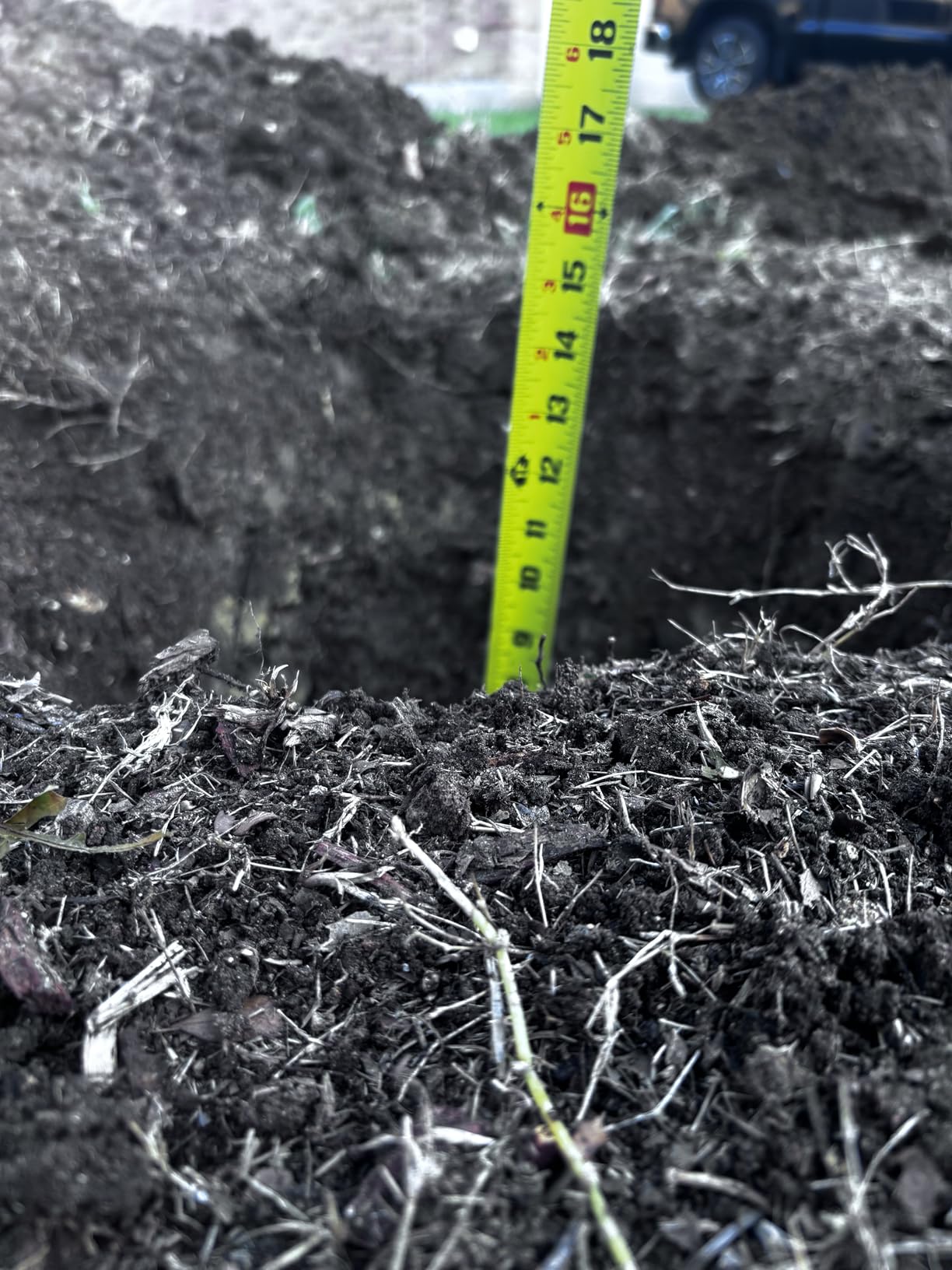
The 6 inch manganese steel bit is the right default for 4×4 posts, shrubs and small trees, and the coating on the bit is for rust and corrosion resistance rather than looks. Two anti-skid, vibration-proof grips give you the leverage to hold the machine down under load, which is where a lot of lighter electric augers fail.
One detail owners appreciate more than expected: spare motor brushes are included. Carbon brushes wear out, they are the single most common failure on an older unit, and having a replacement in the box means you are not ordering a part and waiting a week in the middle of a fence project.
Reviewers also note that assembly is straightforward, which matters because the unit ships as a collection of parts rather than a fully built machine.
What you need to run this across a full fence line
Plan the extension cord before you start, not after. This motor draws about 10.9 amp, so a 14 gauge cord or better is the practical minimum, and an ordinary household extension in a long run will drop voltage, slow the auger, and stress the motor.
Long runs are where the design shows its limits. There is no battery and no tank, so the machine is tethered. If your fence line curves away from the building in several directions, you will spend real time moving the cord or running it along the line to a second outlet.
Safety-wise, the powerhead lockout prevents the trigger firing when you are repositioning your hands on the grips. That is a real control on a machine with this much torque, not a formality.
Where owners report trouble
There is no reverse gear. If the bit binds on a buried obstacle, the motor is still turning while the bit is stopped, and the reaction comes back through the handles into your hands. Reviewers repeatedly recommend gloves and two-person operation for that reason, and we would follow it.
Second, the design is deliberately high-torque and low-speed at about 270 RPM. That is exactly what you want in clay and exactly what makes a 30 inch hole feel slow if your soil is already loose. The compromise is a strong machine that will not rush.
Third, rocks and substantial roots are outside what this tool can cut. On a property with old tree line or field stone, that limitation shows up on hole number three rather than hole number twenty.
3. DC HOUSE 52cc Gas Earth Auger – Best Match for 6×6 Gate Posts
- 52cc has ample power for sandy soil and light clay
- Includes both a 6 inch and a 10 inch auger bit
- Extension rods take holes well past the manual limit
- Ships largely assembled with parts in the box
- Plucks up softball-size rocks rather than binding on them
- Some units are reported hard to start
- No reverse gear so a stuck bit is rocked free by hand
- Bits will not cut roots and can badly twist the arms
The DC HOUSE is the machine that solves the mid-project upgrade problem almost nobody warns you about. You start a fence with 4×4 posts and an 8 inch or 6 inch bit, then you reach the gate and find yourself holding a 6×6 post that will not go down a hole that size.
This one ships with a 6 inch and a 10 inch auger bit, and for gate posts you want the 10 inch. That is the whole reason it earns this spot: the second bit is already in the box, so the upgrade costs nothing beyond the time to swap it.
The engine is a 52cc single-cylinder 2-stroke air-cooled unit rated at 1.8kW, and the drive side uses ball bearing shafts, alloy gears, a carburetor with a pump, and a centrifugal clutch. That is a more serious drivetrain than the engine size alone suggests.
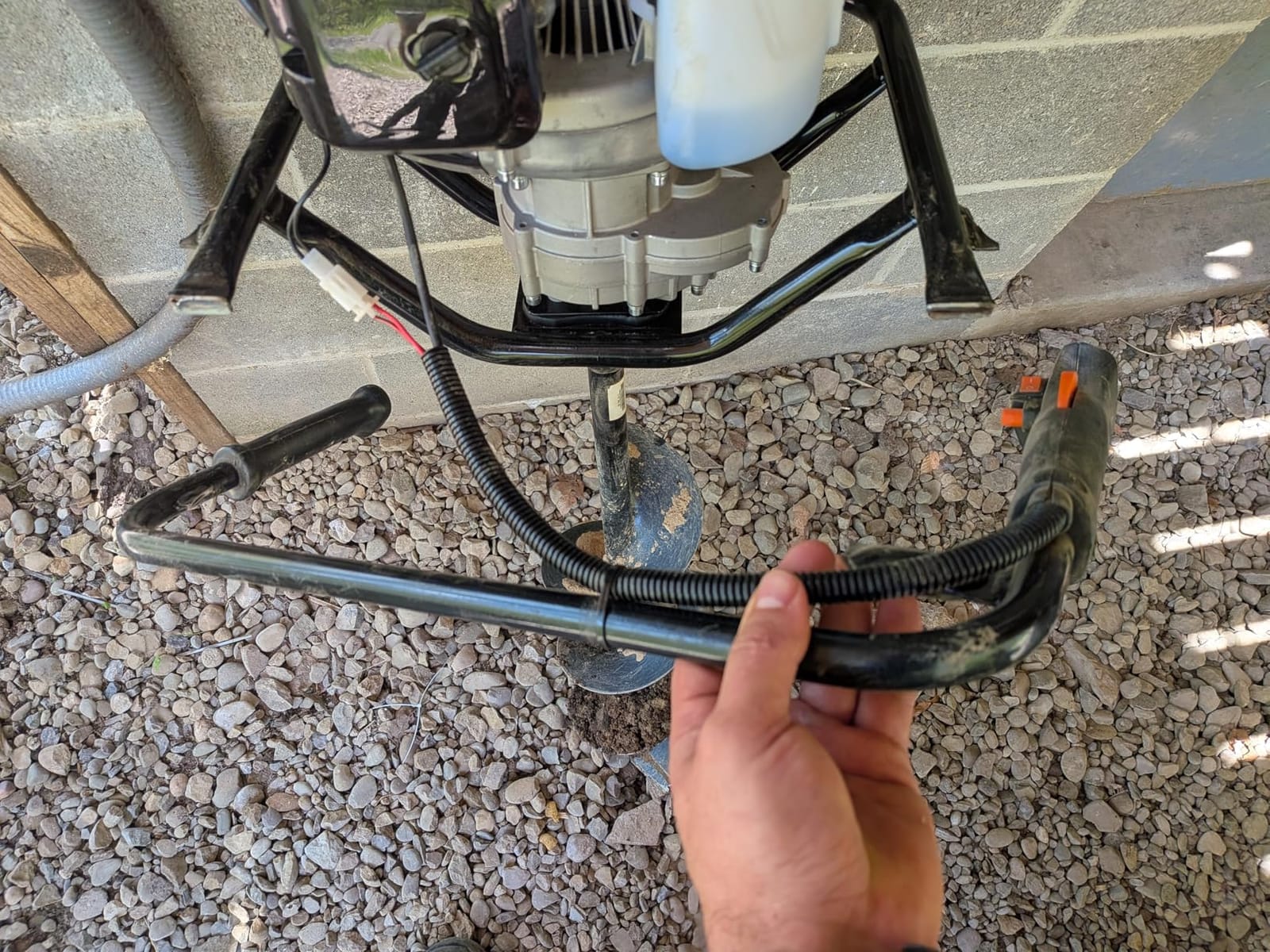
Depth is where the extension rods earn their keep. A single bit digs to a maximum of about 2.6 feet, and the included rods take that down to 4 or 5 feet. If your frost line is deep, that is the difference between a post that stays put and one the heave gets to every winter.
Weight is 21.4 lb, which is the middle of the gas range here. Heavier than the electric units, lighter than the biggest gas engine in the list, and light enough that a single operator can carry it from a vehicle to the fence line without a second person.
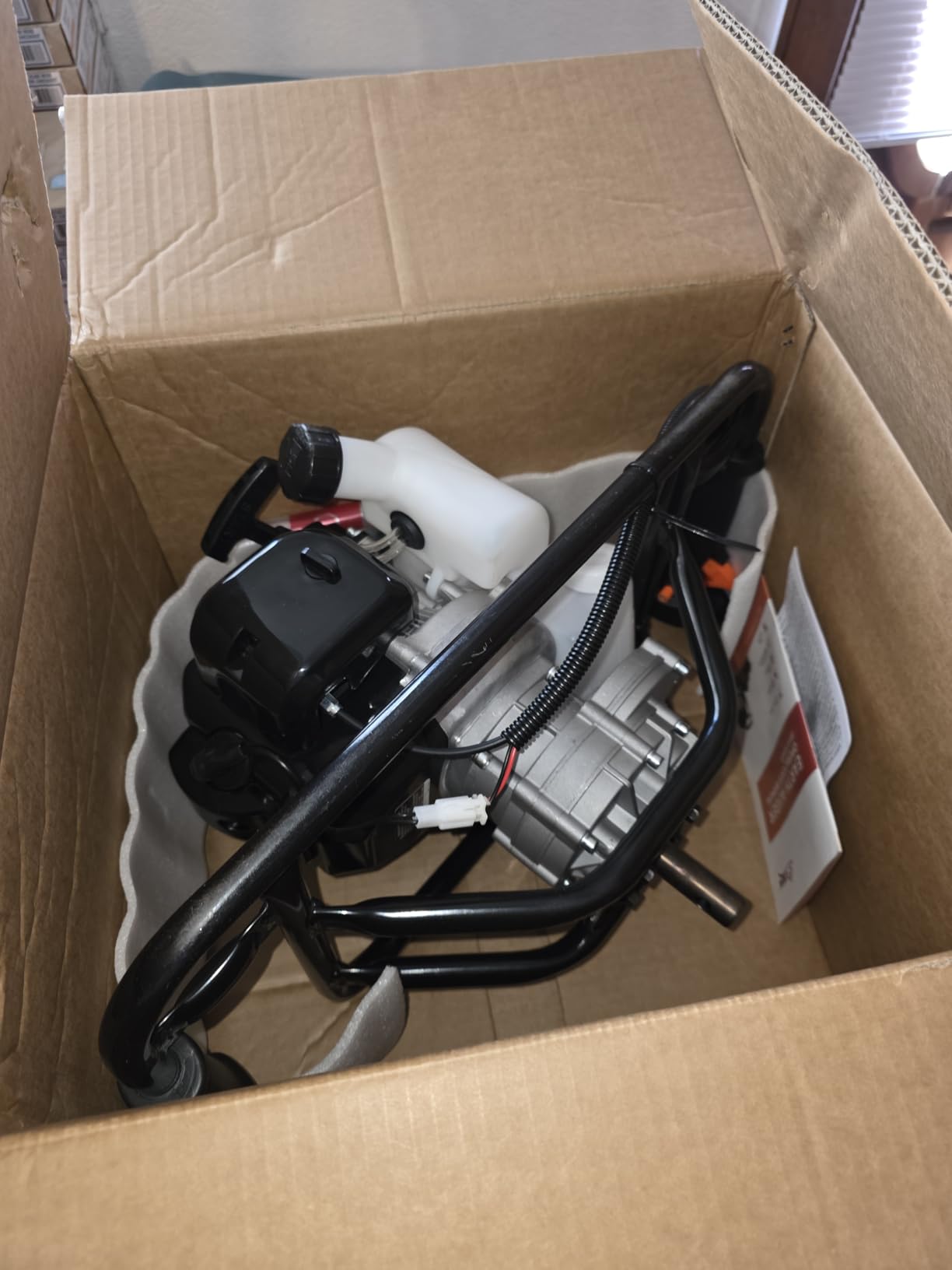
Buyers also highlight that it ships largely assembled, which removes the worst part of buying a machine from a parts list you have to build yourself on a Saturday afternoon.
How it behaves in real fence soil
In sandy and light clay ground this engine has plenty of power, and reviewers specifically mention that it plucks up softball-size rocks rather than stopping dead on them. That is a meaningful difference on a yard with a few buried stones in it.
For long runs, feathering the throttle is the technique experienced owners use. Give it part throttle until the bit finds its rate, then open up. Hammering it to full power from a standing start just stalls the engine and bogs the hole.
The safety complaint you should read before buying
Roots are the deal breaker. A root will stop the bit dead while the powerhead keeps spinning, and the torque comes back through the handles. Several reviewers describe this twisting their arms badly, and multiple owners stress clearing roots with a digging bar first rather than forcing the auger.
Starting is the other recurring complaint. The manual does not clearly show the choke and run settings, and a few first-time owners flooded the engine on the first few pulls. If you have never run a 2-stroke, budget ten minutes of setup and get the fuel to oil ratio right, which is 1:25 for this engine, with a 1.2L tank.
There is a handle-mounted emergency stop switch and a bit lock safety feature, both worth using. Exhaust is directed toward the operator, so stand to the side when it runs.
4. PROYAMA 54cc Post Hole Digger – Best Bit Range for Mixed Post Sizes
PROYAMA 54cc Post Hole Digger, Gas Powered Easy Start Earth Auger Digger
- Four bit sizes cover nearly every standard post dimension
- Two extension rods add real digging depth
- Heavy-duty gearbox with ball-bearing shafts and alloy gears
- Easy-start system reduces the effort of first start
- 2.4HP of torque handles clay and tough ground
- Heavy at 24.2 lb to carry and control on long digging jobs
- 1-star share of 12 percent and no customer review photos
- Thinnest owner review history in the list at 517 reviews
The PROYAMA answers a question most auger listings ignore. How many different post sizes does your fence line actually need? Most people discover the answer mid-project, and buying a second bit costs money and time.
This one includes 4 inch, 6 inch, 8 inch and 12 inch auger bits. That covers a 4×4 post, a 4×6 treated post, a standard 6×6 gate post and a wide corner or mailbox post without another purchase, and it is the widest bit range in this roundup.
The engine is a 54cc 2.4HP 1300W gasoline unit, which is the largest displacement in the mid-size class here, and the marketing is aimed squarely at clay and tough ground. The drive is a heavy-duty gearbox with ball-bearing shafts and alloy gears rather than a plain gear reduction.
Two extension rods, 12 inch and 20 inch, are in the box, which pushes the digging depth well past what a single bit will reach. The bits are powder-coated alloy steel and the handle is welded steel, so the parts exposed to soil are the right materials.
The easy-start system is worth calling out because it is the single most common complaint about budget gas augers. This one is designed to reduce the effort of getting it running, which matters in shoulder-season fence weather.
Packaging is 32 by 23 by 15 inches, so it ships in a manageable carton rather than a crate, and the unit is a single-cylinder 2-stroke rather than a 4-stroke, so you are mixing oil with fuel.
When the wide bit range actually pays off
Plan a fence with a gate and you have at least three post dimensions on the same line, not one. A 10 ft gate needs something considerably heavier than a line post, and a homeowner-grade post hole digger with a single 6 or 8 inch bit simply cannot take it.
Having 4, 6, 8 and 12 inch bits means you can dig line posts with one, switch to 8 or 10 for the gate, and only reach for the 12 inch if you are setting a proper structural post. On a mixed run that removes two separate accessory buys.
For deep post setting and tree planting, the extensions mean one machine covers the whole depth range of the job rather than stopping at whatever a single bit will do.
Where the trade-offs show up
At 24.2 lb this is one of the heavier units here, and on a long run that weight compounds.
Buyer feedback is thinner here, at 517 reviews, and no customer photos came back with the listing, so you have less long-term ownership evidence to lean on. The rating distribution includes a 12 percent one-star share, the second highest in the group, which is a reminder that a 2-stroke of this class is not a set-and-forget purchase.
If you want a gas machine with the confidence of a long review history, the 52cc unit earlier in this list is the safer default, and this one is the pick for the buyer who needs the bits more than the reviews.
5. VEVOR 43cc Gas Post Hole Digger – Best Value Entry Into Gas
- 30 inch bit length lets you dig standing up
- Extended 1.2m pull cord makes starting easier
- Alloy steel powder-coated bit and welded steel handle
- Shock-absorbing foam handle reduces vibration
- Tool kit and mixing bottle included in the box
- Only one 8 inch bit included with no extensions
- Heaviest unit in the roundup at 26.2 lb
- 8 inch bit is too small for a 6x6 gate post
The VEVOR is the cheapest way into a gas auger, and the 30 inch bit length is the feature that convinced us it deserves a spot in a fence roundup rather than a general tool list. You dig standing up instead of bent over a 20 inch shaft, which across 24 holes is a real difference to your back.
It holds a category rank of number two in Augers and Posthole Diggers, which is genuine demand data rather than marketing. At 4.4 across 356 reviews with 75 percent five-star ratings, the satisfaction signal is solid for a machine at this end of the class.
Everything you need to get running is in the box: the 8 inch alloy auger, a spark plug, an oil mixing bottle and a small tool kit. The fuel mix is 40:1, and a 1.2L tank gives you extended digging between refuels.
The starting hardware deserves credit. The pull cord is 1.2m and thickened, described as half again longer than a standard cord, and buyers mention easier starting as a direct result. On a small 2-stroke engine the difference between a cord you can pull one-handed and one you cannot is the difference between a fence day and a fence weekend.
Handling details are thoughtful for a budget machine. There is a shock-absorbing foam handle, large cooling holes on the engine, and a handle-mounted emergency stop switch. The drivetrain uses a ball-bearing shaft and an alloy gear gearbox.
The 43cc engine is the least powerful gas unit in this roundup, and at 9350 RPM the auger spins fast. It still handles varied soil, but it is not the choice for hard-packed clay.
Where the standing-height bit earns its place
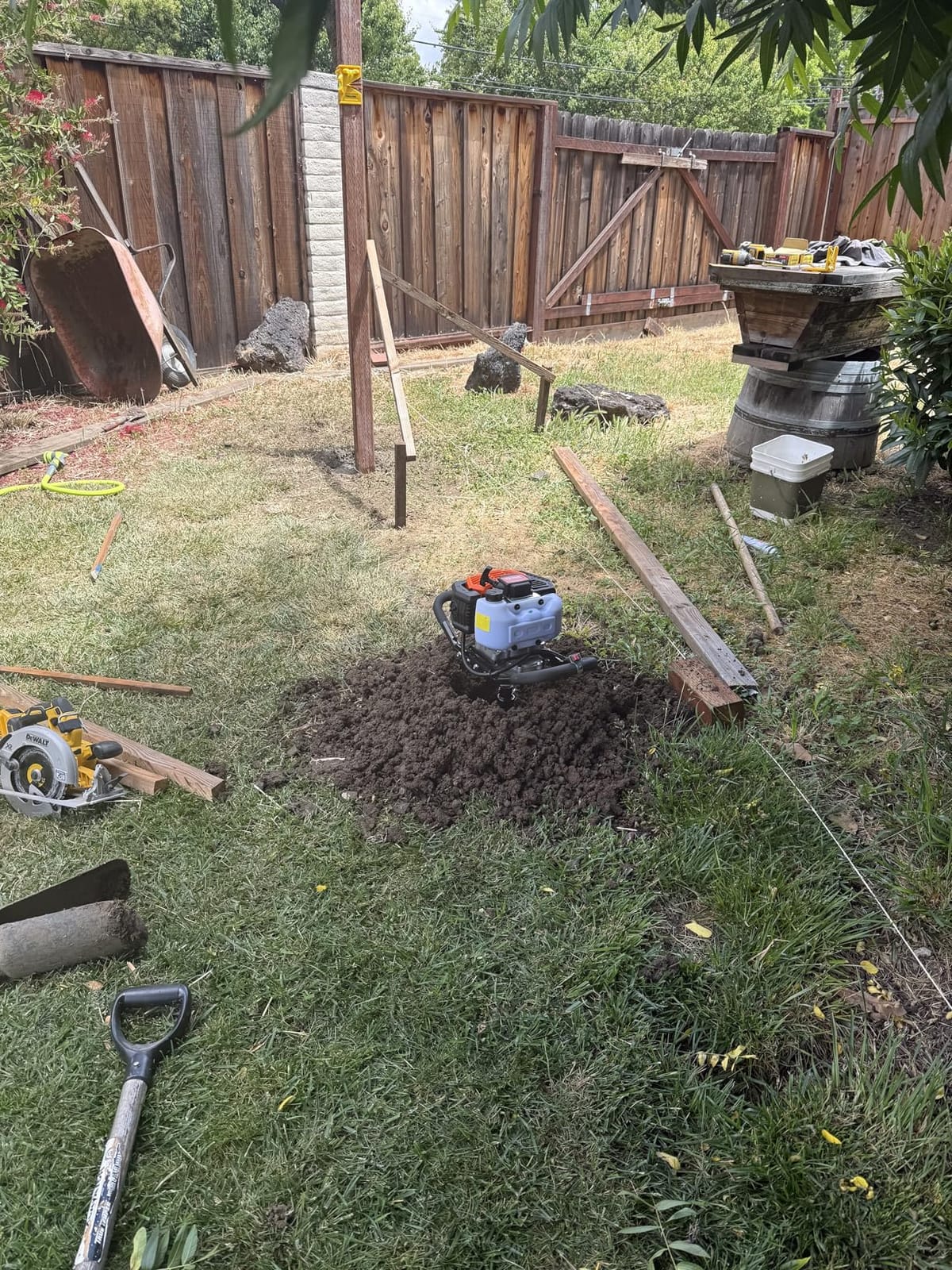
Posture is the underrated story here. A short-bit auger means bending, twisting, and straightening up 24 times over a fence line, and that repetition is what injures backs. A 30 inch bit keeps the handles at hip height and the hole centre below your knee.
It also suits older and taller users. Anyone with lower-back issues who is still able to control a 26 lb machine standing upright will get through a fence run that would end a bent-over digger user after a few holes.
The 8 inch bit is the right size for 4×4 posts and for a standard fence line, so for the common job the single included bit is genuinely all you need.
What it does not do
There is only one bit and no extension rods. If your frost line is deep, a 30 inch bit will not get you there, and this machine has nothing to extend with. Plan for a separate extension purchase or accept shallower holes than your climate needs.
At 26.2 lb it is the heaviest unit in the roundup, which is a real control issue for one person with a wide bit. Plan to take breaks and switch hands rather than trying to muscle through all 24 holes without pause.
The 8 inch bit will not take a 6×6 gate post without a separate manual digger or a bigger auger. For a plain run of 4×4 posts, though, this is the lowest-cost path to finished holes.
6. VNIMTI Heavy Duty Fiberglass Handle Digger – Best Manual for Taller Builders
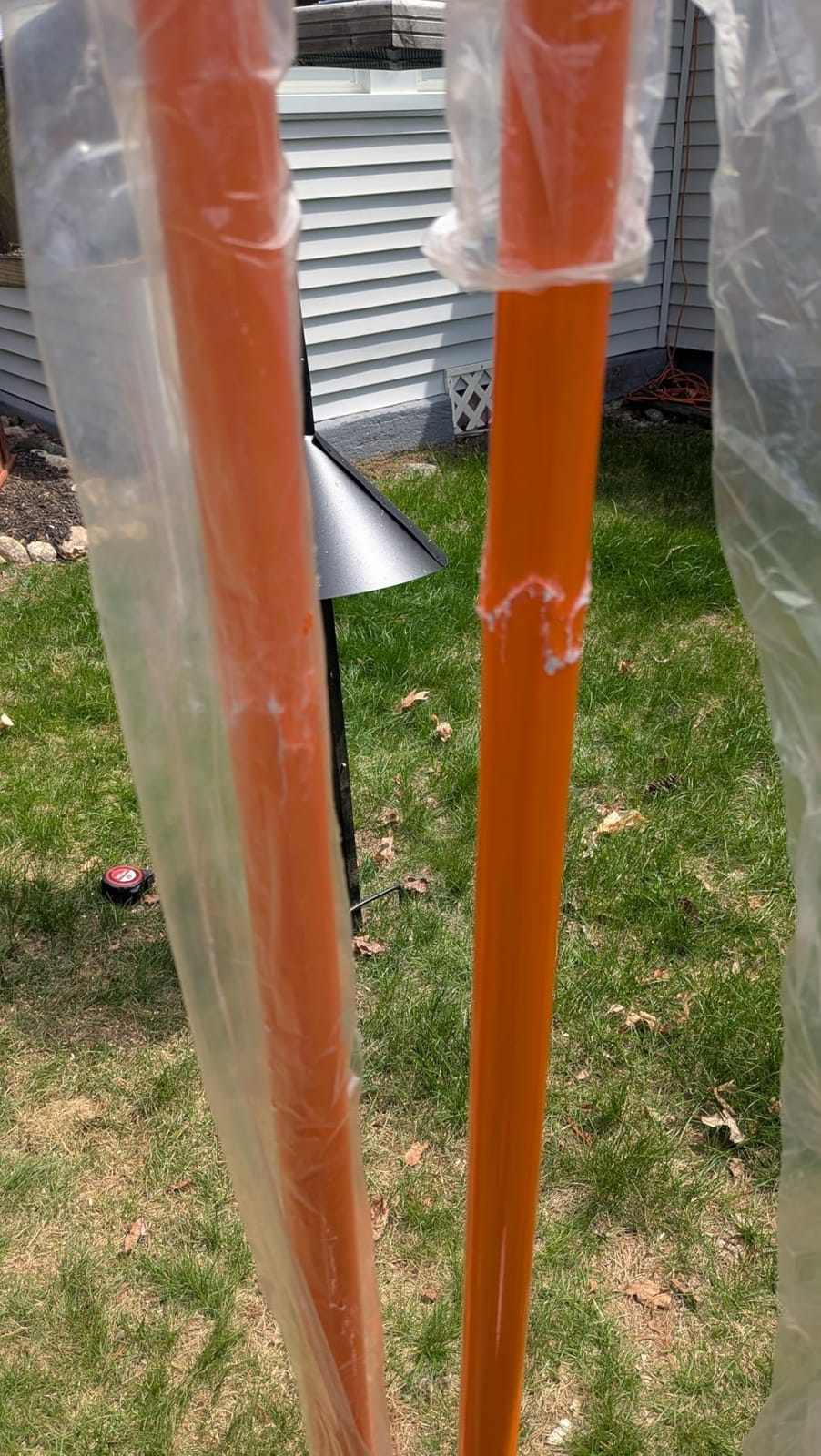
VNIMTI Post Hole Digger Tool, Heavy Duty Post Hole Digger with Fiberglass Handle, 58 Inches
- Highest satisfaction rating in the roundup at 4.7 across 220 reviews
- Sharp heavy-gauge steel blades that cut hard and clay-heavy soil
- Reinforced steel head and handle joints survive twisting
- Knuckle protectors stop the handles slamming together
- Bolt and nylon nut hardware stays tight over months
- Handles spread wide when fully opened which limits hole depth
- Curved blades are shorter so the jaws need a wider angle
- Heavier than a garden spade at 9.6 lb
The VNIMTI is a clamshell digger, which is a different machine from the spiral auger at number one. Two curved blades close together like a clamshell when you pull the handles, scooping soil out of the hole in one squeeze instead of spiralling it up a flute.
That means it handles loose, soft ground faster than a hand auger, and it can dig a square-ish hole that some fence builders prefer because the flat sides make it easier to pack against a square post.
At 58 inches overall it is built for adult use, and the length is the feature that matters most for a tall person. A 48 inch digger has you bent over the whole time, and that is what causes the back strain people associate with hand digging.
The satisfaction numbers here are the strongest in the roundup: 4.7 stars across 220 reviews, 87 percent five-star, and only 2 percent one-star. That is a smaller sample than some picks here, but the distribution is unusually clean, and owners describe blades that stayed sharp through months of hard and clay-heavy soil.
The handles are thickened fiberglass with a wood core, and there is a non-slip grip at the top. The joints between the steel head and the handle are double-reinforced, which is precisely the point that fails on cheaper clamshells after a season of twisting.
One detail most listings skip: knuckle protectors at the metal end stop the handles from slamming together when they close. That protects your hands and it also protects the hinge.
Why owners rate it above the hand auger
Reports from owners using it in Florida sand and around palm roots describe the heavy-gauge steel blades cutting through hard and rooted material far better than cheap diggers, and bolt and nylon hardware staying tight over months instead of working loose.
The fiberglass handles with a wood core survived heavy twisting without cracking, which is the durability claim that matters most because a cracked handle ends the tool’s life instantly.
At 9.6 lb it carries comfortably between holes and still feels stable when the blades are loaded, which is the balance a clamshell needs to be worth owning.
Where the clamshell design costs you
Handles that spread wide when fully opened limit how deep and how steep a hole you can dig, and the curved blades are shorter than some competitors, so the jaws need a wider angle to close completely. That is the tradeoff for scooping more soil per stroke.
It is also heavier than a garden spade, and buyers note that. This is not a tool for a single mailbox post. It is a tool for a fence run of up to about 20 holes in soil that is not hard-packed clay.
If your ground is soft and you want the fastest possible manual result, this is the pick. If your ground is hard, the Seymour spiral at number one works the soil more like a powered machine and will suit you better.
7. PRIJESSE 72cc Gas Earth Digger – Best for Hard Ground and Clay
- Largest engine capacity in the roundup for hard ground
- Three bit sizes plus two 24 inch extensions in the box
- Finger throttle and switch give direct control at the handle
- Anti-skid vibration-proof grips usable by one or two operators
- Faster penetration in compacted soil than smaller engines
- Lowest average rating here at 4.1 with a 10 percent two-star share
- Screws need tightening after shipping before first use
- Heaviest engine class means more to carry and control
The PRIJESSE exists for one situation: hard ground. A 72cc 2-stroke petrol engine is the largest engine capacity in this roundup, and engine displacement is what decides whether a bit keeps turning when the soil fights back.
If you are digging into compacted fill, clay, or ground that has never been cultivated, the extra cubic centimeters show up as penetration speed. The bit advances instead of sitting in one place while you hold the throttle open, and that is the entire difference between finishing a run and abandoning it.
It ships with 4 inch, 8 inch and 12 inch auger drill bits plus two 24 inch extension rods, so both the diameter range and the depth range are covered out of the box.
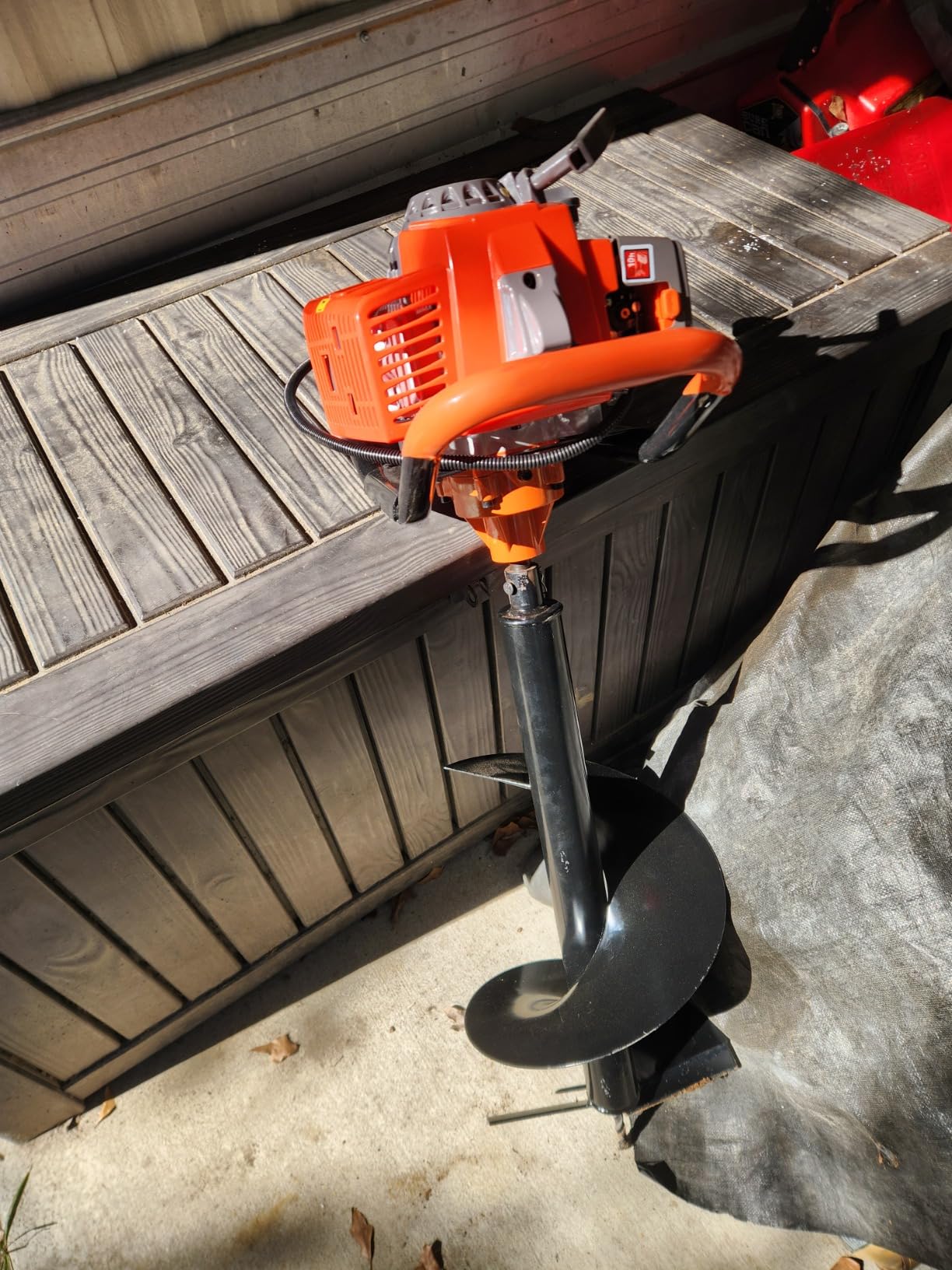
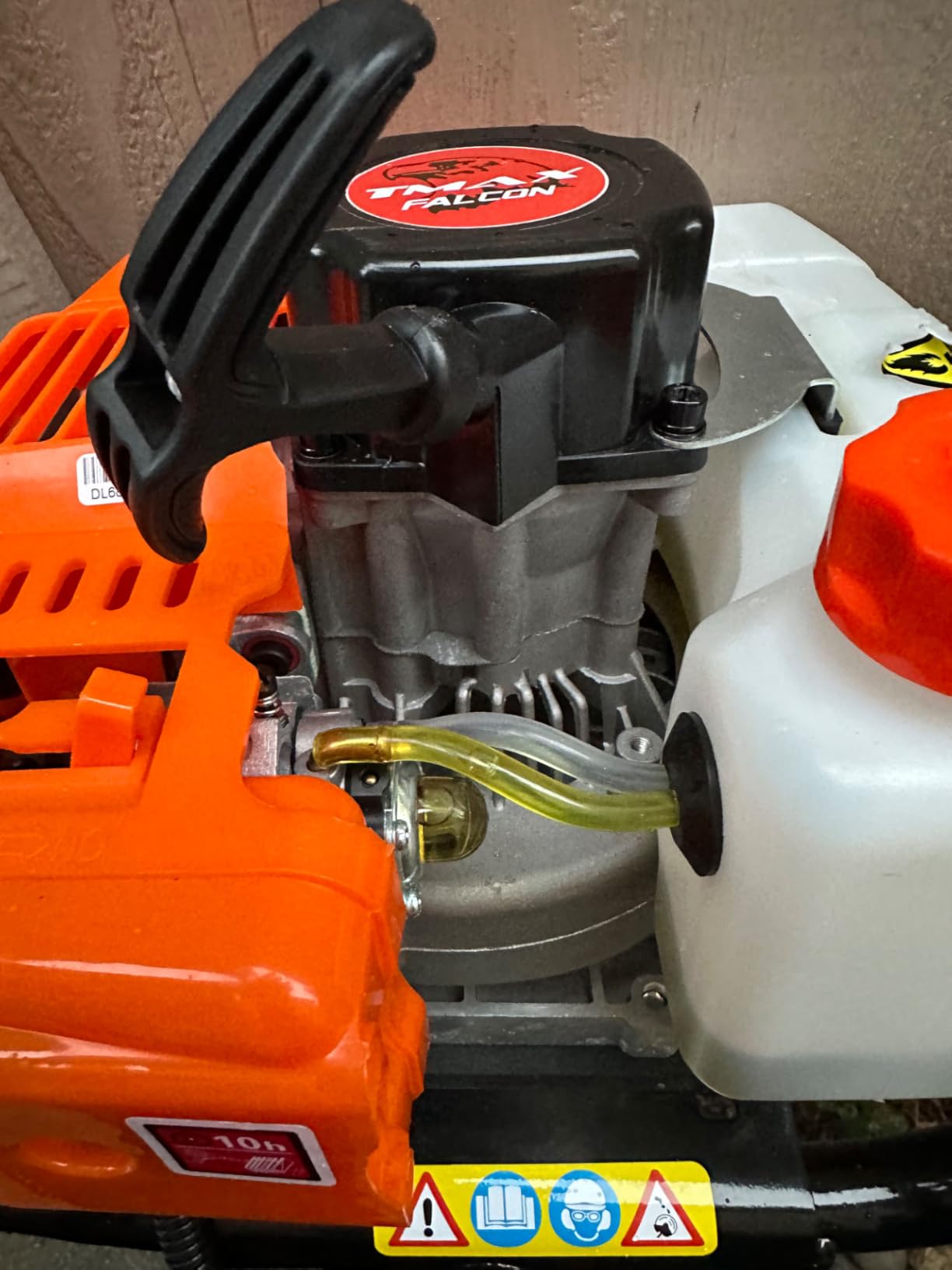
Control is handled at the handlebar with a finger throttle and a switch, which is a better arrangement than a separate cable control. Power reaches the bit only when your hand is deliberately on it.
The two anti-skid, vibration-proof grips are sized for one or two operators, so if a fence run needs a second pair of hands on a wide 12 inch bit, the handles are set up for it.
One assembly note the manufacturer makes explicit: tighten all screws before first use after shipping. That is a two-minute job that prevents the vibration-related loosening that ends cheap augers early.
When the biggest engine is the right call
Hard clay and compacted fill are the two conditions where engine size is worth paying for. On these soils a 43cc or 52cc unit slows until it stalls, and stalling repeatedly at depth is how you end up with a bent shaft or a wasted afternoon.
Set against that, the 12 inch bit is the widest in this roundup, which makes this the pick if your fence line includes a genuine structural post rather than standard 4×4 material.
Two 24 inch extension rods give real depth for cold-region fence lines where the posts need to sit well below the frost line, or for tree planting where the roots need room.
The honest case against the biggest engine
This is tied for the lowest average rating in the set at 4.1, with a 10 percent two-star share. That does not make it a bad machine, it makes it the one here with the least settled ownership history, and the feedback that exists is mixed on early reliability.
Weight is the practical issue. The largest engine in the class is the most to carry and control, and on a long run that cost lands on your shoulders and hands rather than on the tool. If your ground is ordinary loam or sand, the 52cc unit will do the same work at a lower weight.
Only reach for this one when the soil genuinely fights you, or when you need the 12 inch bit and the depth the extensions provide.
8. MightyPhine 6 inch by 32 inch Drill Auger Kit – Best for Using a Drill You Already Own
Earth Auger – 6″ Wide x 32″ Deep – Electric Post Hole Digger – Handles – Hole Digger for Fence Posts
- Ergonomic handle lets one person dig without balancing a two-handled auger
- Much lighter and easier to control than a petrol auger
- Universal handle fits common corded and cordless drill brands
- Three flutes pull loose soil to the surface
- American owned company with phone and email support
- Requires a separate drill and drill power becomes the limit at depth
- Not safe with weaker cordless drills
- 15 percent 1-star share is the highest in the roundup
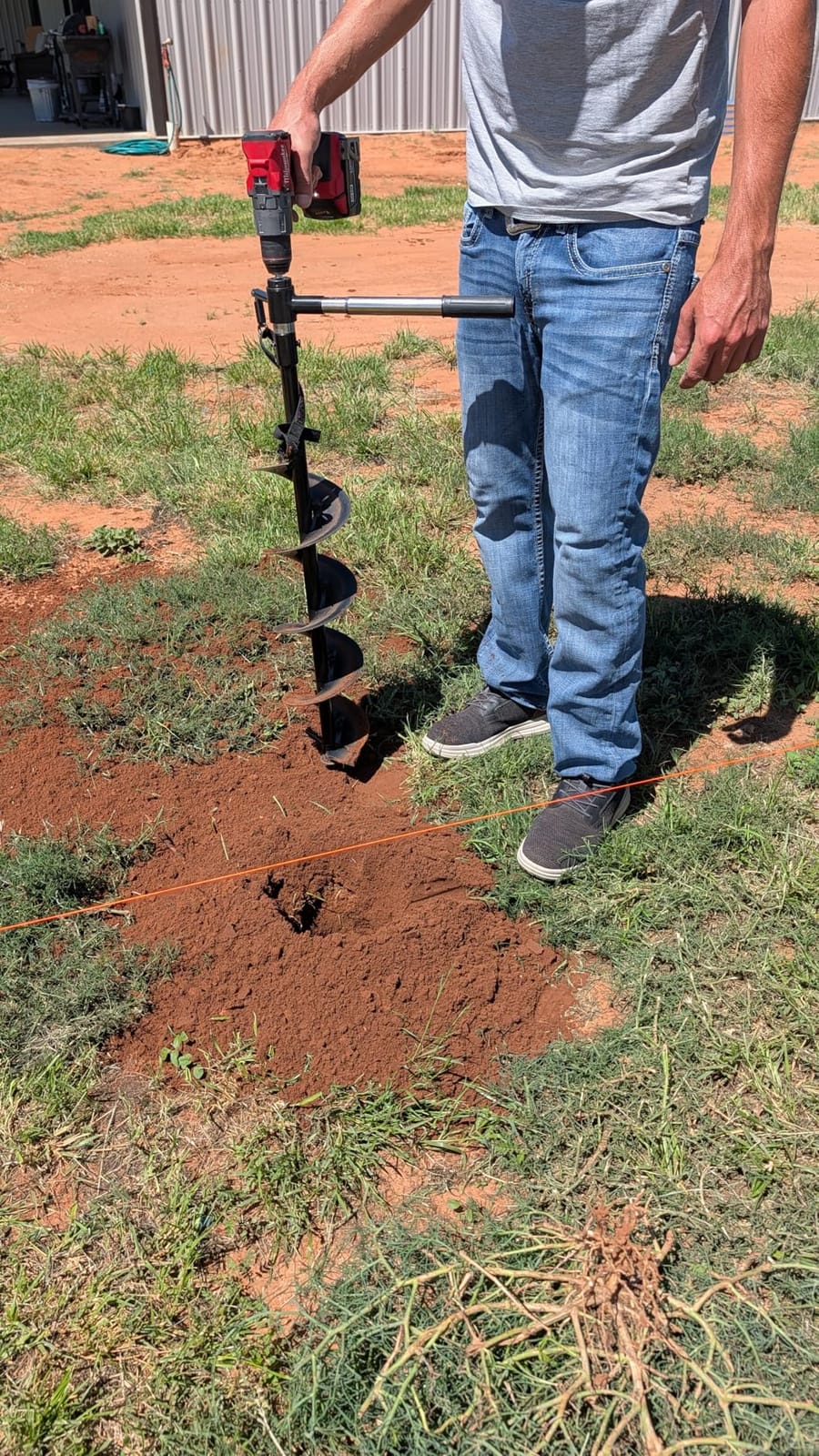
The MightyPhine is not a standalone digger. It is a 6 inch wide, 32 inch long spiral auger plus a universal handle kit, and it turns a drill you already own into a post hole digger. If you have a 20V cordless drill in the garage, this is the cheapest path to round holes in the ground.
There is a genuine accessibility argument here. The ergonomic handle is designed to cut the rapid, repeated wrist movements that cause injury with a two-handled auger, and owners who cannot lift and balance a full machine report being able to dig on their own.
That is not a small user group. Anyone recovering from a back injury, anyone with limited upper-body strength, and anyone working alone on a fence line will recognise what that handle changes.
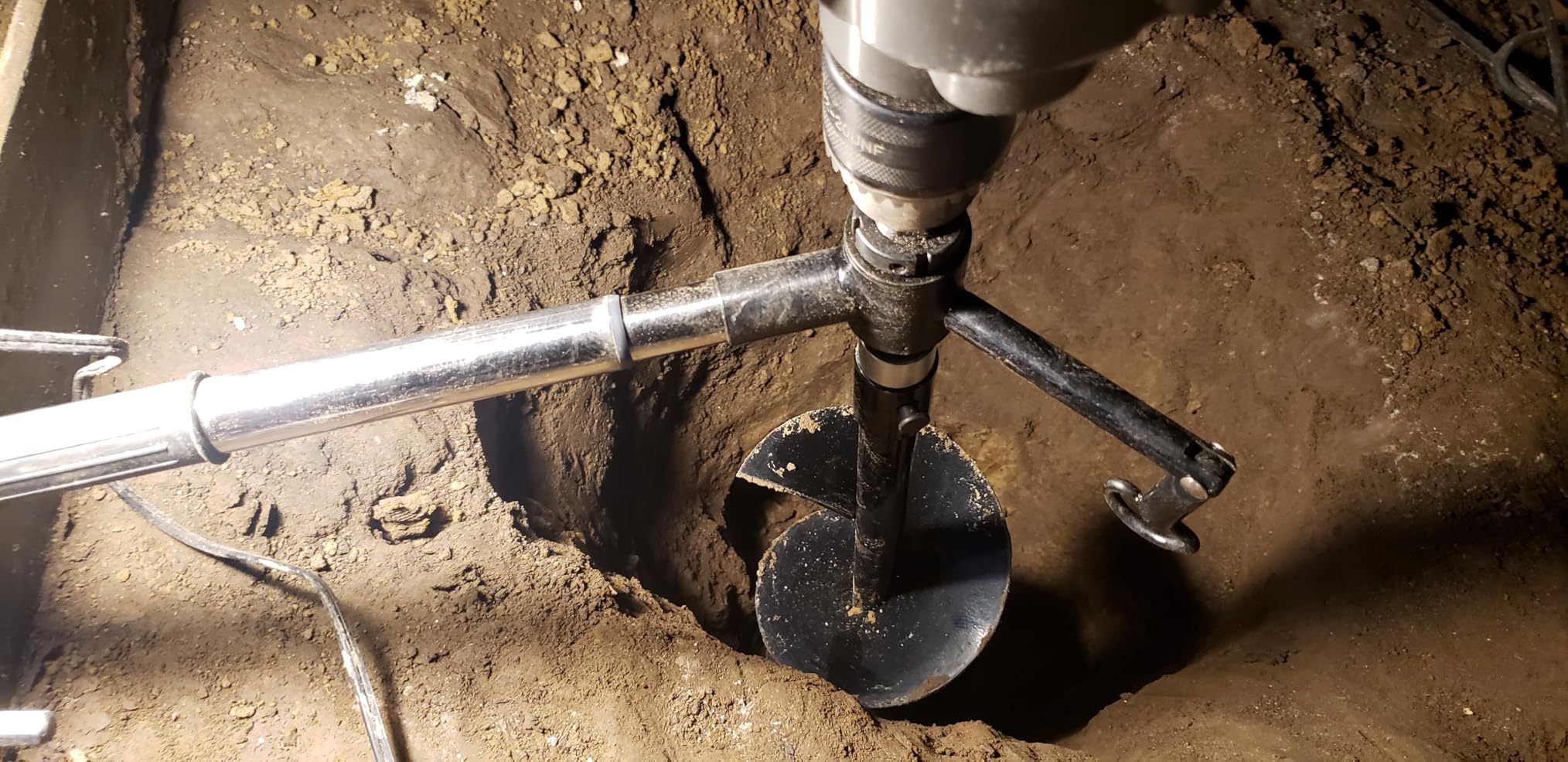
Performance in soft ground is good. Owners report drilling 12 inch holes in about 30 seconds in soft soil and clay, and the three-flute spiral pulls loose soil to the surface rather than packing it back down the hole.
The adjustable strap handle connects to most common drill handles, and the listing names DeWalt, Milwaukee, Ryobi, Craftsman and Black and Decker explicitly. You are not buying a dedicated machine you use for one weekend.
It also sits in a sensible middle position between a handheld drill auger and a full gas auger, which is the right description of a lot of weekend fence work.
Why owners keep this one on the truck
Weight and control are the recurring praise. It is much lighter and easier to control than a petrol auger, and you can carry it anywhere a hand tool goes, which means the hand-auger backup for a tight corner or a spot near a buried line is a drill and this bit.
It doubles as a planter for shrubs and small trees as well as a fence digger, so it is not a tool that goes in the shed and stays there after the last post goes in. If you want the full powered range, our main post hole digger roundup compares the full field.
Support is also worth noting for this category. It is an American owned and operated company with phone and email support, which is unusual in this product class.
Where a drill-powered auger fails
Drill power becomes the limiting factor at depth. The 32 inch auger also bottoms out at roughly 800mm because the strap handle hits the ground before the bit does, so you cannot dig to 32 inches in practice.
Do not use it with a weaker cordless drill. One owner stripped a gearbox after two holes, which is the failure mode to avoid. Rocks, roots, and rooty ground spin the auger dangerously and can damage the driving drill, and the included hex fitting is not a good choice for those conditions.
Over-application can shear the shaft, so take shallow passes and lift to clear the spoil rather than leaning on it. The 15 percent one-star share is the highest in the roundup, and most of those complaints trace back to the drill rather than the auger. Check your drill first and this becomes a very capable weekend tool.
How Many Holes and How Deep: Fence Run Math?
Start with the count, because the count decides the tool. A 6 ft privacy fence uses posts at roughly 7 to 8 ft on center once the sections are cut, so 100 ft of run is about 14 posts and 150 ft is about 20 to 22, plus any gate, corner, or end posts.
Those extra posts are the ones that catch people out. A 150 ft straight run might be 20 line posts, then you add a 6×6 gate post at the opening, two heavy corner posts where the fence turns, and an end post, and you are at 25 holes rather than 20.
The time math is where the tool choice pays off. Hand digging in ordinary soil runs roughly 10 to 15 minutes per hole, and it barely improves with depth in clay. That is close to four hours for 20 holes before you have set a single post.
A powered auger in the same soil lands at roughly two minutes per hole including positioning, lifting to clear spoil, and setting the post. On a 20-hole run that is the difference between an evening and a full day, and it is why the gas and corded electric picks exist at all.
Depth is the second half of the math. Post holes need to reach below your local frost line, because frozen soil expands and pushes anything set above it. Where the frost line is 3 ft, a 30 inch hole is too shallow, and where it is 4 ft, most single bits in this roundup will not get you there without an extension.
Two extension-equipped picks solve this directly. The 52cc unit’s rods take holes to roughly 4 to 5 ft, and the 72cc unit ships with two 24 inch rods for the same reason. If you know your frost depth before you buy, you can rule half this list out on that alone.
Is 2 ft deep enough? For a short decorative fence in a mild climate with no frost heave risk, often yes. For anything structural, near a gate, or in ground that freezes, no. The rule is simple and it is not about the fence, it is about your soil.
Once the hole is right, what you put around the post decides how long it lasts. A gravel drainage pack lets water move away from the wood and keeps frost from lifting the post, while concrete sets faster and is rigid enough to move a gate post under load. Gate posts in heavy soil usually want concrete, line posts on free-draining ground usually do not.
One more practical point. Crown the soil slightly away from the post at the end, so water runs off rather than pooling at the base. It takes thirty seconds and it is the cheapest rot prevention available.
What Size Auger Bit for Your Post?
The rule is to leave enough room to pack around the post, and that room is also what lets you plumb it. A 4×4 post needs an 8 or 9 inch hole, a 4×6 post needs about a 10 inch hole, and a 6×6 post needs a 12 inch hole.
That clearance is not sloppiness. You need space to adjust the post until it is plumb, and you need a drainage path if you are using a gravel pack. Dig a hole the same width as the post and you have no way to correct a lean.
There is a trap most buyers fall into, and fence forum users hit it constantly. Many augers ship with a 6 inch or 8 inch bit, which is exactly right for 4×4 line posts and completely wrong for a 6×6 gate post discovered on day two.
Two picks here avoid that trap. The 52cc includes both a 6 inch and a 10 inch bit, and the 54cc includes 4, 6, 8 and 12 inch bits. The 72cc also includes 12 inch. If your line has a gate, check the bit list before you buy rather than after.
On depth, match the bit length to your frost line before you worry about the engine. A 30 inch bit handles most frost lines in moderate climates. If you need 4 ft, buy the extension rods with the machine, because bolting an extension onto a shaft that was not built for it is how shafts snap.
And if you are only setting chain link or a short decorative run, the manual picks are dimensioned fine. A 6 inch spiral auger takes a 4×4 post with a couple of inches of packing room and nothing more is required.
How to Choose a Post Hole Digger?
Choose by hole count first, then by soil, then by features. Everything else in this article is downstream of that order, and skipping it is how people end up with a 72cc machine for six holes.
Under 10 holes in soft ground, a manual digger is the right answer. It has no fuel, no cord, no battery, and nothing to maintain, and for a gate post plus two end posts it is faster once you account for setup.
Between 10 and 30 holes, a corded electric is the sweet spot if an outlet is within reach of the line. The 1500W unit in this list holds up in clay and needs no maintenance, and the trade-off is a heavy gauge cord you have to plan.
Past 30 holes or in clay, gas is the honest choice. The 52cc handles most residential ground, the 54cc and 72cc are for harder conditions, and all of them trade noise and weight for the ability to keep turning when the soil resists.
Cordless is worth considering if you already own a good 20V platform and want the lightest option. The catch is battery life on a long run and whether your drill can drive a 32 inch auger at depth, which is why the drill-powered kit carries a warning about weaker drills.
Weight and kickback are the two factors nobody researches and everybody notices. A 26 lb machine with a wide bit is genuinely hard to control alone, and a bit that binds on a rock will transmit the whole engine’s torque into your arms unless there is a clutch, a shock-absorbing spring, or a reverse.
Check for a handle-mounted emergency stop on any gas unit, and check whether the machine has a breaker clutch or torque limiter. Those are the features that decide whether a bad patch of ground is an inconvenience or an injury.
Handles matter more than spec sheets suggest. Butterfly handles or padded non-slip grips give you a way to hold the machine against its own torque, and a 58 inch length keeps a tall person from spending a fence day bent over.
Blade and auger material is the durability question. Alloy steel, manganese steel, and powder-coated bits resist the corrosion that turns a cheap auger into a snapped one after one wet season. Replaceable fishtail points matter too, because the point is the part that wears first.
Serviceability is worth a direct question before you buy. Can you buy a replacement auger bit for this model in a year, and does the brand answer a service question? In this category a tool that cannot be repaired is a tool you will replace.
Noise is a real selection factor in a dense neighborhood. Gas is loud in a way that makes conversation with a neighbor difficult, and cordless or corded electric is not. If you are working a tight suburban lot on a weekend, that is worth something.
Finally, check what is in the box before you commit. Extension rods, a second bit, a mixing bottle, and a spare set of brushes all change the value of a machine, and the picks in this list differ more on included accessories than on engine size.
Should you rent or buy
Rent when you have under 20 holes. Rental counters stock gas and electric earth augers by the day, and the day rate on a machine that would otherwise sit in your garage for a decade is the cheapest part of a fence project.
The break-even is straightforward. Add up the hours a rental would cost you, add any delivery and deposit, and compare that to owning a machine you might use twice. If your fence run is a single weekend, renting wins every time.
Buy when you have property-scale plans, when you expect a second project, or when you want the tool on site. Owners in fence forums who regret buying usually did so for six holes, and the ones who are glad bought for a run they had to finish.
Renting a tractor-mounted digger is a different question entirely, and worth it if you have the tractor and a very long line. For everyone without a tractor, a handheld is the only realistic option.
When Not to Use an Auger
Stop and switch to a shovel and a digging bar when the auger binds. If a gas auger stops turning while the engine is running, that is a rock or a root, and the correct response is to shut down, not to lean on the handles.
Skip powered augers entirely near buried services. Inside the locate tolerance zone, hand-dig, which is another reason to keep a manual digger on site even if you rent the machine.
Give up on the powered approach in ground full of tree roots or field stone. Augers bind and kick back in those conditions, and a chisel and a rock bar will clear a single post in less time than you spend fighting the machine.
Also skip the auger in a tight corner where you cannot get the handles to swing. A hand digger fits where a 30 inch powered machine physically cannot, and a hole you can reach is a hole you can set plumb.
And if the fence is short and the soil is soft, do not buy a machine. The manual picks at numbers one and six exist for exactly that case and they will not disappoint you.
Frequently Asked Questions
What is the best tool for digging a post hole?
A spiral auger is the best general tool for a 4×4 fence post, because it cuts a round hole and lifts the spoil out in one turn. A clamshell digger scoops faster in soft ground. A powered earth auger is best past about 20 holes or in clay, where hand tools lose to engine torque.
What size auger should I use for a 4×4 post?
Use an 8 or 9 inch bit for a 4×4 post. That clearance lets you pack soil or gravel around it and adjust the post until it is plumb. A 4×6 post wants a 10 inch bit, and a 6×6 gate post wants a 12 inch bit. Check that your auger includes the larger bit before you buy.
Which is better, gas or electric post hole digger?
Gas wins on long runs and hard soil because the engine keeps turning when clay fights back, at the cost of noise, fuel mixing and weight. Corded electric wins on small and medium jobs near an outlet, with 90 ft-lb of torque and no maintenance, but it needs a heavy gauge extension cord and has no reverse gear.
How deep of a hole should you dig for a fence post?
Dig below your local frost line so frozen soil cannot push the post out. In a moderate climate that often means 30 inches, and in colder regions you need 4 ft. Most single auger bits top out around 30 inches, so check your frost depth first and buy extension rods if you need more.
Are manual augers any good, or should I dig by hand?
A manual auger is genuinely good for up to about 20 holes in soil that is not hard-packed clay. A 6 inch spiral auger weighs 7.4 lb and needs no fuel or maintenance, and it cuts a round hole that makes posts easy to plumb. Past 20 holes or in clay, hand digging stops improving and a powered unit wins.
Which Post Hole Digger Should You Buy
The best post hole digger for fence building depends almost entirely on how many holes are in front of you. Under 20 holes in workable soil, the Seymour S500 gives you clean round holes, no fuel, and no maintenance for the least hassle per hole. It is the pick for most fence jobs and the one we would buy first.
Past 25 holes, move up a class. The 1500W corded electric covers a medium run near an outlet with real torque. The 52cc gas auger covers a long run or a fence with a 6×6 gate post, because the 10 inch bit is already in the box and the extension rods reach proper frost depth.
For genuinely hard ground, the 54cc and 72cc units have the torque to keep turning. For a 58 inch tall build or soft sand, the fiberglass clamshell at number six is the manual answer. Whatever you choose, call 811 first, check your frost line, and confirm the bit size matches your largest post before you start.
Once the holes are down, the setting side of the job starts. Our post pounder picks and post driver picks cover the other half of a fence day, and the tractor post hole digger roundup covers property-scale lines if a handheld machine is not enough.