
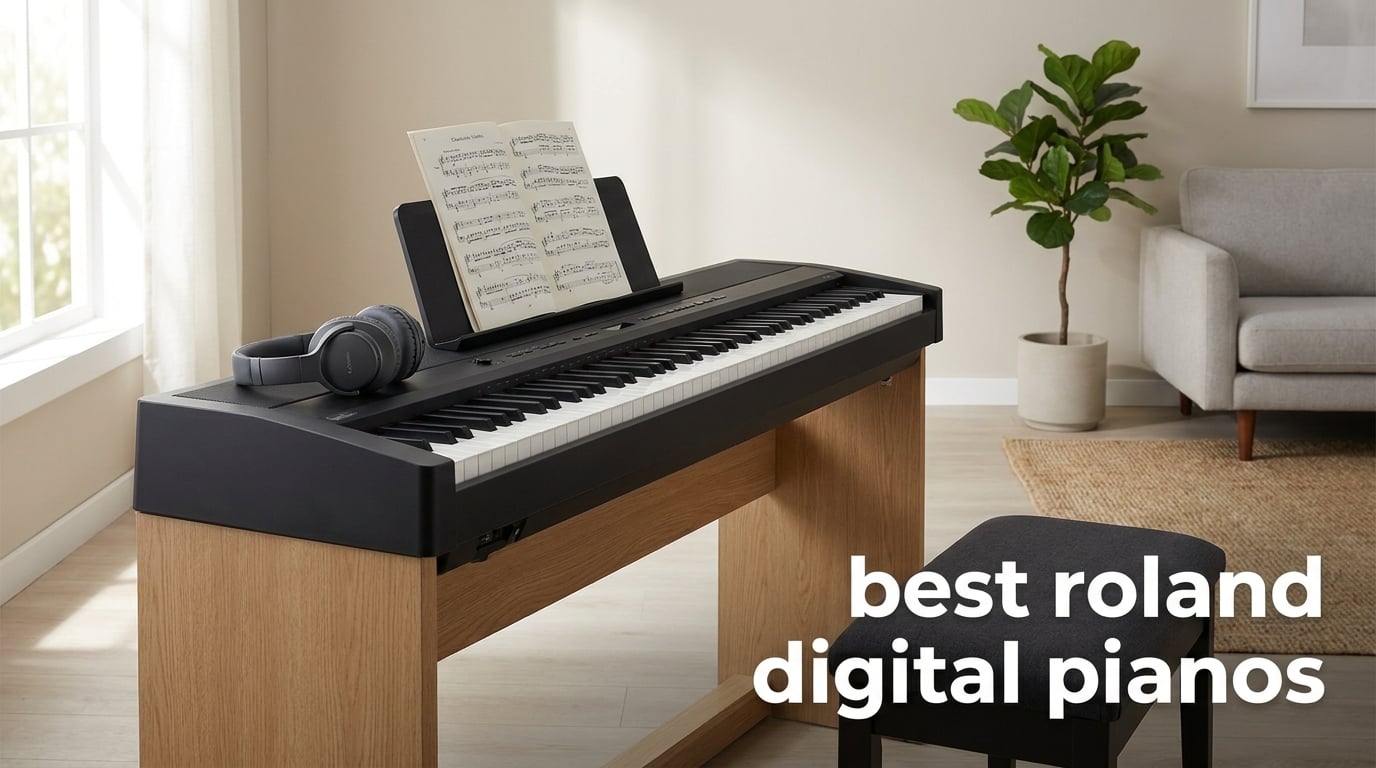
Finding the right digital piano can feel overwhelming with so many models on the market. Roland has built a reputation for producing some of the most authentic-feeling and best-sounding digital pianos available, whether you need a portable stage instrument or a stately home console.
Our team spent weeks researching and comparing the full Roland lineup to bring you this guide to the best Roland digital pianos in 2026. We examined everything from the entry-level FP-10 to the grand piano-styled GP-3, testing key action, sound engines, connectivity, and real-world usability.
What sets Roland apart is their commitment to authentic piano feel. Their PHA-4 and PHA-50 keyboard actions use progressive hammer mechanisms with escapement that closely mimic an acoustic grand. Combined with their SuperNATURAL and PureAcoustic sound engines, these instruments deliver a playing experience that satisfies even classically trained pianists.
We also considered what real owners say. Forum discussions on Reddit’s r/DigitalPiano repeatedly highlight Roland’s key feel as a top priority, with one user calling their six-year-old RP401 “the best piano I have ever played.” That kind of long-term satisfaction tells us these instruments are built to last.
If you are transitioning from an acoustic piano, you want a digital instrument that does not fight your technique. Roland addresses this with graded hammer action that feels heavier in the bass and lighter in the treble, just like the real thing. Their ivory-feel key surfaces add to the tactile authenticity that makes practice enjoyable.
In this article, you will find detailed reviews of eight Roland models, a side-by-side comparison table, a buying guide covering the key specs that matter, and answers to the most common questions buyers have. Whether you are a beginner shopping for your first piano or a professional upgrading your stage rig, we will help you find the right match.
Table of Contents
Top 3 Roland Digital Pianos in 2026


After testing the full range, three models stood out for different reasons. Here is a quick summary of our top recommendations before we dive into the detailed reviews.
Roland FP-30X (Editor’s Choice) hits the sweet spot between features and playability. It uses the PHA-4 Standard keyboard with Progressive Hammer Action and escapement, giving you a remarkably authentic touch. The SuperNATURAL Modeling sound engine delivers rich, expressive piano tones through a 22-watt stereo speaker system. Bluetooth audio and MIDI connectivity means you can stream songs to play along with or connect to learning apps wirelessly.
Roland FP-10 (Best Value) gives you the core Roland experience at the most accessible point in the lineup. It shares the same SuperNATURAL Piano sound engine as higher models and uses the same PHA-4 keyboard with Progressive Hammer Action. The built-in speakers are surprisingly capable for practice, and Bluetooth MIDI lets you connect to the Roland Piano Partner 2 app for lessons. At 27 pounds, it is also one of the most portable options.
Roland GP-3 (Premium Pick) delivers a genuine grand piano experience without the maintenance of an acoustic. This low-profile grand features an 88-note hammer-action keyboard with escapement and ivory-feel materials, powered by Roland’s Organic piano sound engine. The custom stereo speaker system fills a room, and the polished cabinet makes a visual statement.
Whether you need something portable for gigs, a compact console for your apartment, or a centerpiece for your living room, one of these three will serve you well. Read on for the full comparison and detailed reviews of all eight models.
All 8 Roland Digital Pianos in 2026
| Product | Specifications | Action |
|---|---|---|
 Roland FP-10 Roland FP-10 |
|
Check Latest Price |
| Roland FP-30X |
|
Check Latest Price |
 Roland FP-60X Roland FP-60X |
|
Check Latest Price |
 Roland FP-90X Roland FP-90X |
|
Check Latest Price |
 Roland F107 Roland F107 |
|
Check Latest Price |
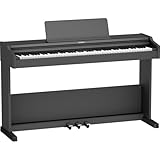 Roland RP107 Roland RP107 |
|
Check Latest Price |
 Roland RP701 Roland RP701 |
|
Check Latest Price |
| Roland GP-3 |
|
Check Latest Price |
This comparison table gives you a quick look at every model we reviewed. Use it to compare keyboard types, sound engines, and key features side by side before diving into the individual reviews below.
Each Roland model targets a specific player and use case. The FP series offers portability for stage and studio work, while the RP and F series bring traditional cabinet styling for home use. The GP-3 stands apart as a full grand piano design. Pay attention to the keyboard action type and sound engine, as these two factors have the biggest impact on your playing experience.
1. Roland FP-10 — Best Budget Portable Piano for Beginners
- Authentic SuperNATURAL Piano tone
- PHA-4 Progressive Hammer Action
- Bluetooth MIDI connectivity
- Built-in speakers
- Twin Piano mode for lessons
- 27 pounds may feel heavy
- Limited features vs higher FP models
I have recommended the FP-10 to more first-time buyers than any other digital piano, and the reasons come down to two things: authentic key feel and the SuperNATURAL Piano sound engine. For an entry-level instrument, Roland did not cut corners on the playing experience.
The PHA-4 keyboard with Progressive Hammer Action gives you weighted keys that respond to your touch with real nuance. Play softly and the tone is gentle; dig in and the sound opens up. The ivory-feel key surfaces have a textured finish that prevents slipping during long practice sessions.
I particularly like the Twin Piano mode, which splits the keyboard into two identical pitch ranges side by side. This is perfect for lessons where a teacher and student sit together. The included DSP-2 sustain pedal and music stand mean you have everything you need right out of the box.
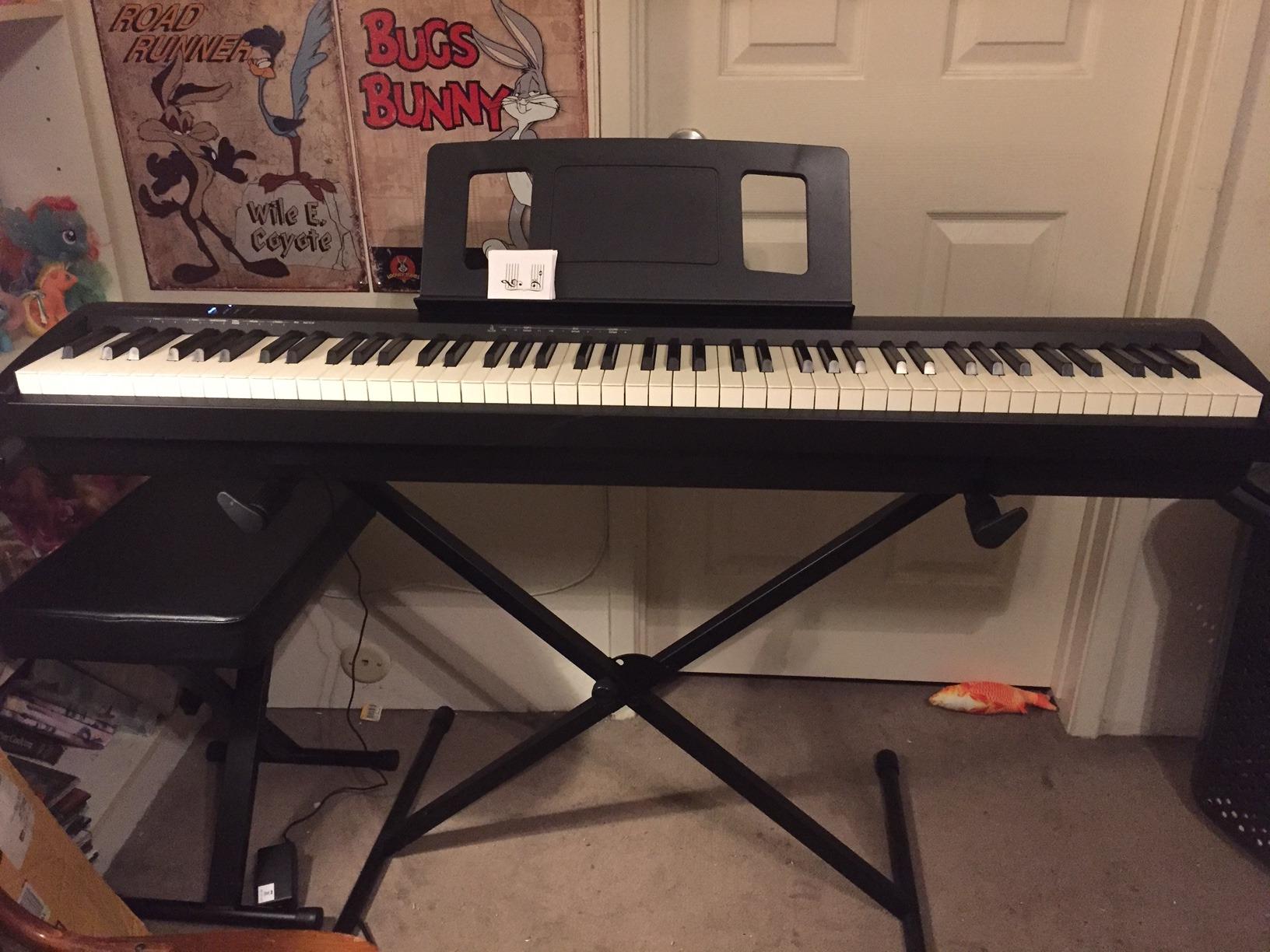
On the connectivity front, the FP-10 offers Bluetooth MIDI and USB MIDI, so you can hook it up to GarageBand, a DAW, or the free Roland Piano Partner 2 app. The app adds rhythm training, flash card games, and song playback that make practice more engaging for beginners.
The built-in speakers deliver enough volume for home practice, though they lack the depth and projection you get from the larger FP-60X or FP-90X speaker systems. For serious listening sessions, I recommend plugging in a good pair of headphones through the 3.5mm jack.
At 27 pounds, the FP-10 is portable enough to carry to lessons or small gigs. You will want a sturdy stand for stationary use, and Roland offers a matching KSC-10 stand and KPD-70 three-pedal unit as optional accessories.
Who This Piano Fits Best
The FP-10 is ideal for beginners and returning players who want authentic Roland key feel without paying for features they may not use yet. If you are taking lessons, practicing with headphones, or learning through apps, this model covers all the essentials. Students who plan to upgrade later will develop proper technique on the PHA-4 action, making the transition to a higher-tier piano seamless.
It is also a strong choice for parents buying a first piano for children. The durable build and simple interface mean there is less to go wrong, and the Twin Piano mode supports parent-child learning sessions right away.
What to Consider Before Buying
The FP-10 has a more basic feature set than the FP-30X, with fewer onboard tones and a simpler speaker system. It supports Bluetooth MIDI but not Bluetooth Audio streaming, so you cannot play songs from your phone through the piano’s speakers wirelessly.
The included pedal is a simple switch pedal rather than a continuous damper with half-pedal support. If you advance to repertoire that requires nuanced pedaling, you may want to upgrade to a dedicated damper pedal. The FP-10 also lacks the onboard effects and Piano Designer customization found on higher models.
2. Roland FP-30X — The All-Rounder Most Players Should Buy
- PHA-4 keyboard with escapement
- SuperNATURAL Modeling engine
- 22W stereo speakers
- Bluetooth audio and MIDI
- Dual headphone outputs
- Higher cost than FP-10
- Basic onboard tones
When friends ask me which Roland digital piano to buy, the FP-30X is usually my answer. It occupies that ideal middle ground where you get meaningful upgrades over the FP-10 without jumping into professional pricing territory.
The biggest difference is the keyboard. The FP-30X uses the PHA-4 Standard keyboard with Progressive Hammer Action and escapement, which adds a subtle mechanical click that mimics the feel of an acoustic piano’s action. This might seem minor on paper, but experienced players notice it immediately. The escapement gives you more control over repeated notes and delicate passages.
Sound comes from the SuperNATURAL Modeling engine, which goes beyond sampling to create piano tones dynamically based on your playing intensity and speed. The result is a more living, breathing sound that responds expressively to your touch in ways that static samples simply cannot match.
The 22-watt stereo speaker system produces a fuller, richer sound than the FP-10’s speakers. It is loud enough to fill a medium-sized room for practice and small gatherings. For quieter sessions, dual headphone outputs let two people listen simultaneously, which is great for duet practice or teacher-student lessons.
Bluetooth is a standout feature here. Unlike the FP-10, the FP-30X supports both Bluetooth MIDI and Bluetooth Audio. This means you can stream music from your phone or tablet directly through the piano’s speakers and play along. It also connects to the Roland Piano app for sound customization, recording, and practice tools.
Onboard effects let you shape your sound with reverb, chorus, and other processing options. The Piano Designer function, while more limited than on the FP-60X and FP-90X, still lets you adjust elements like string resonance and key noise to personalize your tone.
Best Use Cases
The FP-30X excels as a do-everything home piano. It works for beginners who want room to grow, intermediate players who need a reliable practice instrument, and even small venue performances when paired with an external amplifier. The portability factor means you can take it to rehearsals or recording sessions without much hassle.
I have seen this model used in home studios as a MIDI controller, in living rooms as a family practice piano, and even on small stages with the line output running through a PA. Few pianos in this category offer that kind of versatility.
Connectivity and App Integration
With Bluetooth Audio, Bluetooth MIDI, USB-to-Host, and USB-to-Device connectivity, the FP-30X integrates with virtually any setup you might have. You can record MIDI directly into a DAW, connect to iOS learning apps wirelessly, or use the USB port to save and load settings.
The Roland Piano Every Day app adds daily practice features including a calendar tracker, built-in songs, and one-touch recording. The app integration is smooth and genuinely useful rather than a gimmick. Combined with the Skoove online piano lessons included with purchase, you get a complete learning ecosystem.
3. Roland FP-60X — Professional Features in a Portable Package
- SuperNATURAL Piano expression
- PHA-4 Standard keyboard
- 26W stereo speakers
- Piano Designer customization
- Bluetooth audio and MIDI
- Heavy at 42.6 pounds
- Limited stock availability
The FP-60X bridges the gap between home practice pianos and stage instruments. I have seen gigging musicians choose this model when they need professional sound quality and connectivity but do not want the bulk of the FP-90X.
At its core is the SuperNATURAL Piano sound engine, delivering the same rich tonal palette that Roland is known for. What sets the FP-60X apart is the Piano Designer function, which gives you deep control over the piano sound. You can adjust individual note characteristics, hammer noise, string resonance, and cabinet behavior to dial in your ideal tone.
The PHA-4 Standard keyboard provides consistent, responsive action across all 88 keys. While it shares the same action as the FP-30X, the more powerful sound engine and speaker system make the playing experience feel more substantial and engaging.
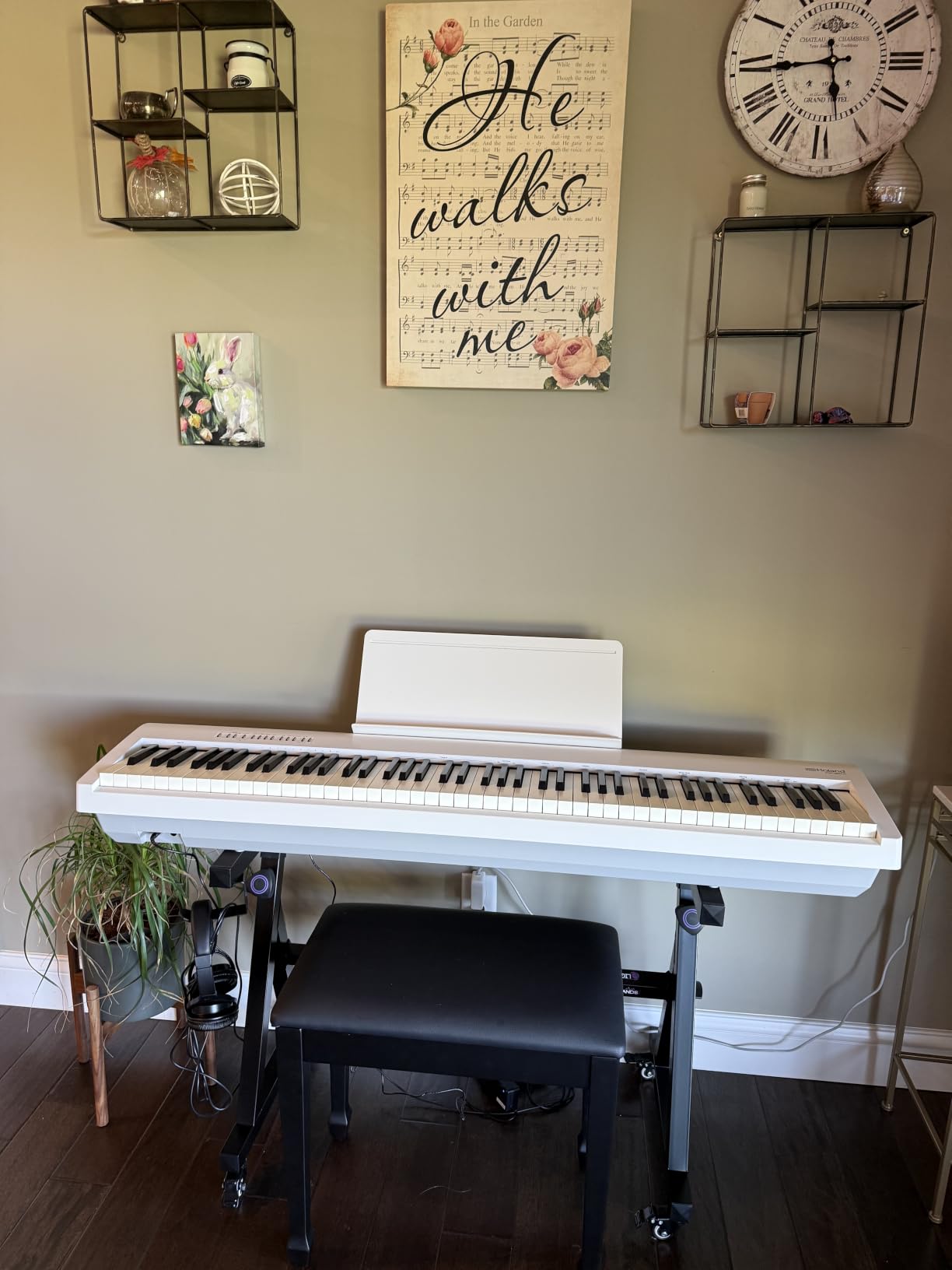
The 26-watt stereo speaker system is a significant step up from the FP-30X. It produces clearer highs, warmer lows, and better overall projection. I found it more than adequate for home use and small performances without needing external amplification.
One feature that surprised me is the microphone input with vocal effects. This turns the FP-60X into a mini performance system, letting you sing through the built-in speakers with reverb and other effects. It is a feature typically found on much more expensive stage pianos and adds real utility for worship leaders and solo performers.
The curated onboard tones go beyond piano to include electric pianos, organs, strings, and synth sounds. These cover a wide range of musical genres and make the FP-60X versatile enough for bands, church settings, and studio work.
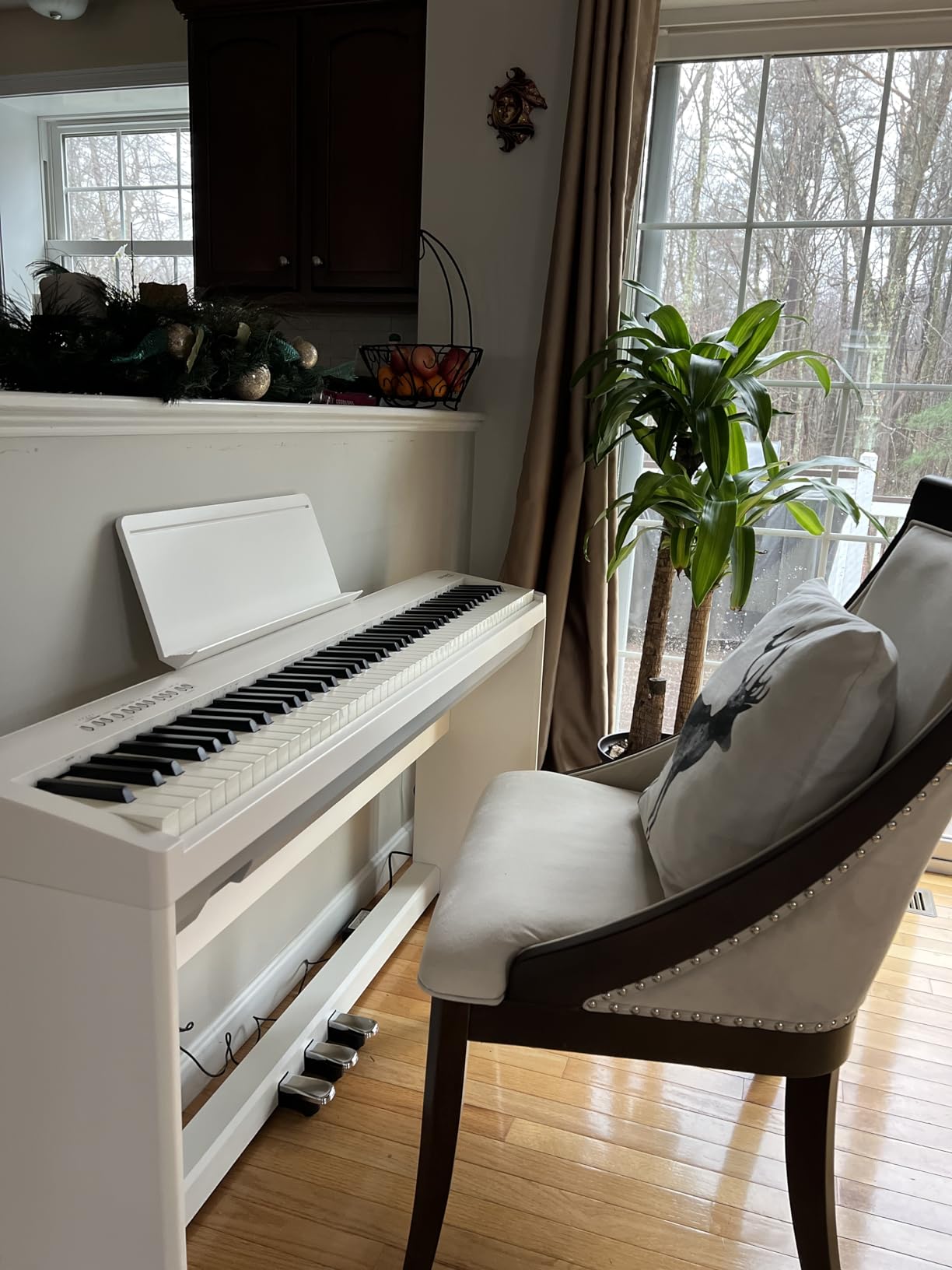
Stage Versus Home Use
While marketed as a portable piano, the FP-60X weighs 42.6 pounds, which makes it less casual to transport than the FP-10 or FP-30X. For stage use, you will want a sturdy X-stand or Z-stand that can handle the weight and the force of expressive playing.
At home, it works beautifully on a dedicated furniture stand where the speakers can project freely into the room. The Piano Designer and onboard tones make it equally suited for studio recording and content creation, where having multiple high-quality sounds in one instrument saves time and space.
Sound Customization Options
The Piano Designer is the star feature here. You can fine-tune the tone of each individual note across the keyboard, adjust resonance parameters, and save custom configurations to recall later. Combined with the onboard effects and curated tone library, the FP-60X gives you sound-shaping tools that most portable pianos simply do not offer.
Bluetooth audio and MIDI keep you wirelessly connected to apps and recording software. The Roland Piano App and Piano Designer app both interface with the instrument, giving you visual control over parameters that would be tedious to adjust from the front panel alone.
4. Roland FP-90X — Flagship Portable Piano for Demanding Players
- PureAcoustic Piano Modeling
- PHA-50 hybrid wood keys
- 4-speaker audio system
- Piano Designer sound shaping
- Professional-grade build
- Heaviest in FP series at 69 lbs
- Premium price tier
The FP-90X is the top of Roland’s portable FP-X series, and it shows in every detail. Our team was particularly impressed by the PureAcoustic Piano Modeling engine, which represents Roland’s most advanced sound technology in a portable format.
Unlike sampled piano sounds that replay recordings, PureAcoustic Modeling calculates the piano sound in real time based on your playing. This means every nuance of your touch, from the speed of your keystrike to the pressure of your release, shapes the resulting tone. The difference is most apparent in sustained passages and soft playing, where the sound evolves naturally rather than fading statically.
The PHA-50 hybrid keyboard is the other major upgrade. It combines wood and molded material in each key, giving you the organic feel of wooden keys with the durability and consistency of synthetic components. The progressive hammer action with escapement feels remarkably close to a quality acoustic grand.
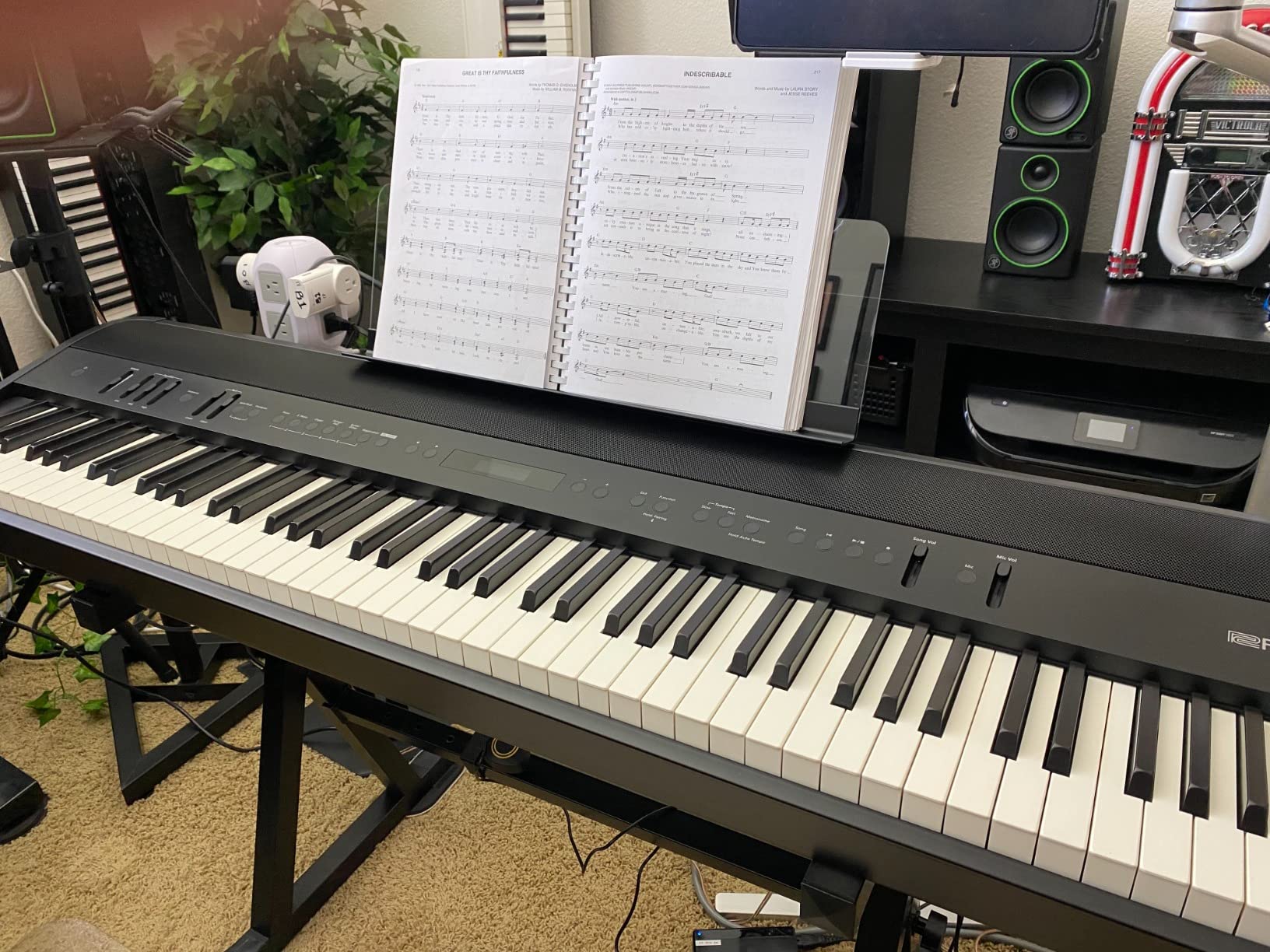
The four-speaker audio system is the most powerful in the FP series, with two 25-watt main speakers and two 5-watt tweeters. This configuration produces a wide, immersive sound field that fills a room. I was struck by how much depth and dimension the sound had compared to the two-speaker systems on lower models.
Piano Designer on the FP-90X offers the deepest sound-shaping capability in the portable lineup. You can adjust dozens of parameters, from hammer hardness to string resonance to soundboard behavior, and save multiple custom configurations for different musical contexts.
Bluetooth audio and MIDI connectivity is standard, as are dual headphone outputs with 3D ambience processing. The headphones 3D ambience adds spatial depth that makes practice feel more like playing in a real room rather than listening to a flat recording.
Professional Performance Ready
The FP-90X is built for musicians who need studio-grade sound quality in a portable format. Recording engineers appreciate the detailed, modeling-based piano tones that sit well in mixes without requiring heavy processing. Live performers benefit from the powerful speaker system and extensive sound customization options.
The line outputs make it easy to connect to a PA system or recording interface, and the USB audio interface functionality lets you send high-quality audio directly to your computer over a single USB cable. For session work and home recording, this eliminates the need for a separate audio interface.
Portability Considerations
At 69.2 pounds, the FP-90X is the heaviest piano in the FP series. It is portable in the sense that it moves from car to venue, but you will not want to carry it on public transit or up multiple flights of stairs regularly. Consider a wheeled case for transport between locations.
For stationary use, a heavy-duty stand is essential given the weight and the physical force of expressive playing. The KSC-90 stand and KPD-90 three-pedal unit transform the FP-90X into a near-console experience while retaining the option to remove the piano for gigging when needed.
5. Roland F107 — Affordable Home Console with Modern Style
- Slim modern affordable design
- SuperNATURAL Piano tone
- PHA-4 Standard 88-note keyboard
- 256-note polyphony
- Bluetooth connectivity
- No Prime shipping
- Limited stock availability
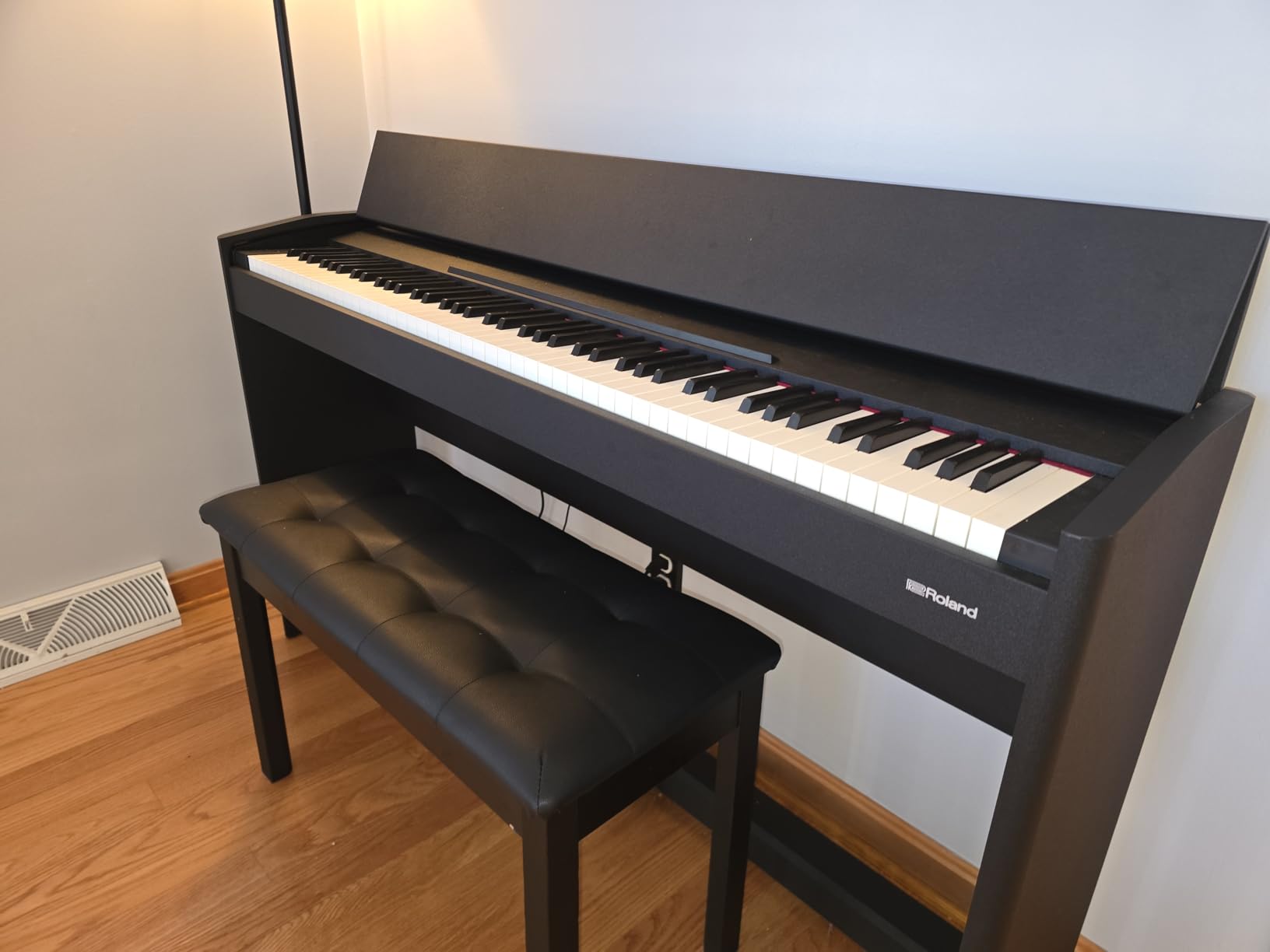
The F107 brings the design language of Roland’s award-winning F701 to a more accessible price point. I was drawn to its slim, contemporary cabinet that fits neatly into modern living spaces without dominating the room.
Under the hood, the F107 shares the same SuperNATURAL Piano technology and PHA-4 Standard 88-note keyboard found in more expensive Roland models. This means you get authentic acoustic grand piano touch and tone without compromise on the fundamentals. The 256-note polyphony ensures that even complex, fast passages with heavy sustain pedal use do not drop notes.
The keyboard has a graded action that feels slightly heavier in the bass register and lighter in the treble, mimicking the mechanical differences of acoustic piano strings. Ivory-feel key surfaces add tactile authenticity that makes playing for extended periods comfortable.
Bluetooth connectivity links the F107 to your smartphone or tablet, opening up the Roland Piano App for practice tools, song playback, and sound customization. The app interface is intuitive and adds significant value to the ownership experience.
Dual headphone jacks support simultaneous listening for lessons or duet practice. The Twin Piano mode splits the keyboard into two same-pitch ranges, ideal for teacher-student scenarios where both players need to hear the same notes.
The built-in speaker system delivers clear, balanced sound for home practice. While not as powerful as the FP-60X or FP-90X systems, it provides a satisfying listening experience in a typical room setting and benefits from the cabinet’s acoustic design.
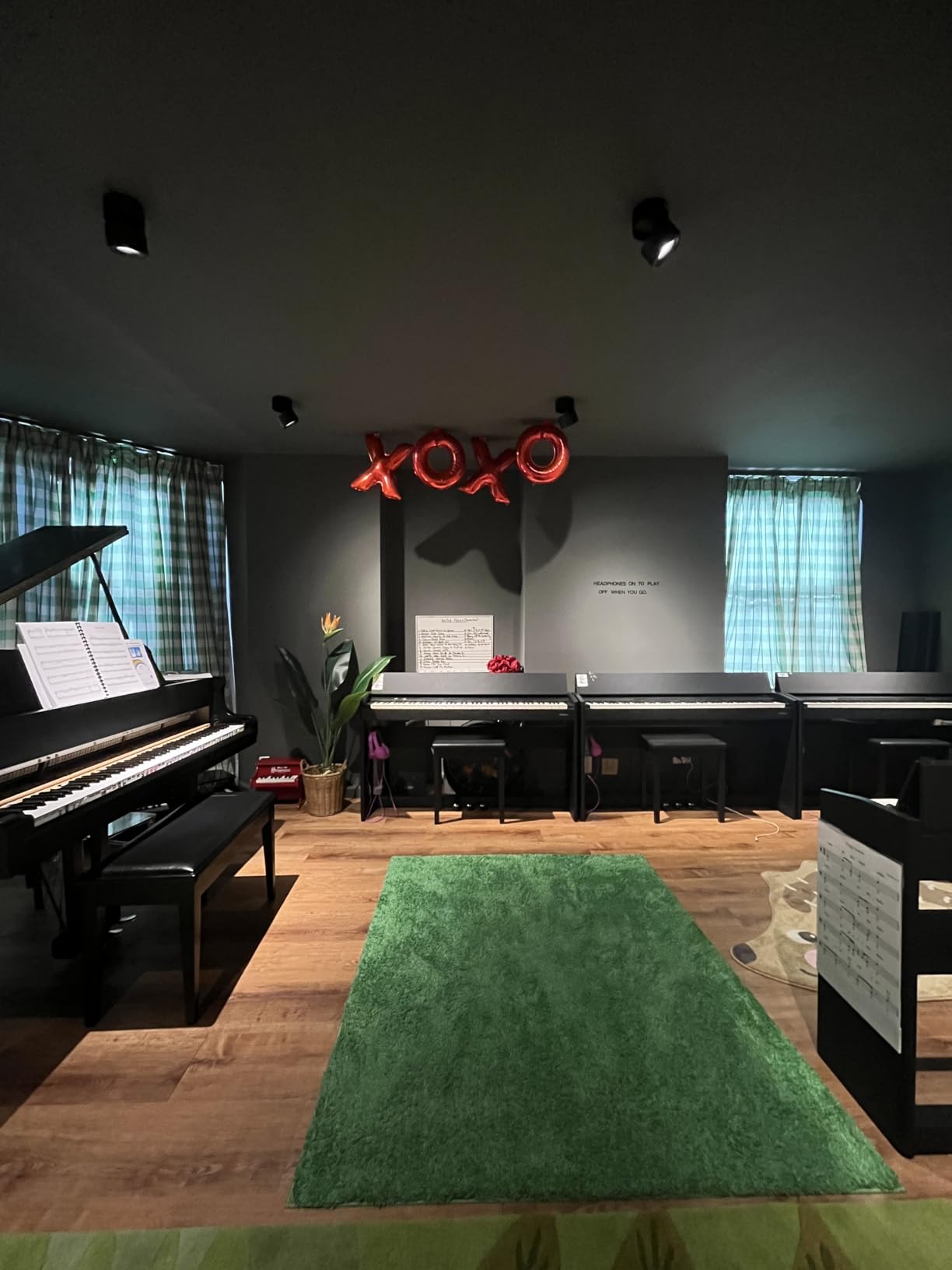
Room Aesthetics and Design
The F107’s slim profile and modern lines make it one of the most visually appealing home pianos in this category. It works well in apartments, bedrooms, and living rooms where a traditional upright might look bulky or dated. The black finish is understated and complements most interior styles.
At 119 pounds, it is heavy enough to feel stable during enthusiastic playing but light enough to reposition with help when you want to rearrange your space. The compact footprint means it can fit against a wall in a hallway or small study without obstructing traffic flow.
Learning and Practice Tools
The F107 includes Twin Piano mode, dual headphone jacks, and Roland Piano App compatibility as standard learning tools. The app provides rhythm exercises, flash cards, and a song library that covers various skill levels from complete beginner to early intermediate.
Bluetooth audio lets you stream backing tracks or lessons through the piano’s speakers, and the 256-note polyphony means you can layer sustain pedal extensively without artifacts. This combination makes the F107 particularly well-suited for families with children who are just starting their musical journey.
6. Roland RP107 — Traditional Upright Look with Modern Roland Tech
- SuperNATURAL Piano technology
- PHA-4 Standard keyboard
- 256-note polyphony
- Traditional upright styling
- Bluetooth connectivity
- Heavy at 132 pounds
- Newer product with fewer reviews
The RP107 is designed for players who want the look of a traditional upright piano with the convenience and technology of a digital instrument. I found its classic cabinet styling with traditional proportions makes it a natural fit for formal living rooms, music rooms, and studios.
Despite its traditional appearance, the RP107 is packed with modern Roland technology. The SuperNATURAL Piano engine produces rich, authentic piano tones, while the PHA-4 Standard keyboard with 88 notes provides the weighted, responsive action that Roland is known for across their lineup.
The 256-note polyphony is generous for this category. It means you can play dense, sustained passages with heavy pedal use without any notes cutting off prematurely. This is particularly important for advanced classical repertoire where complex voicings and extensive pedaling are common.
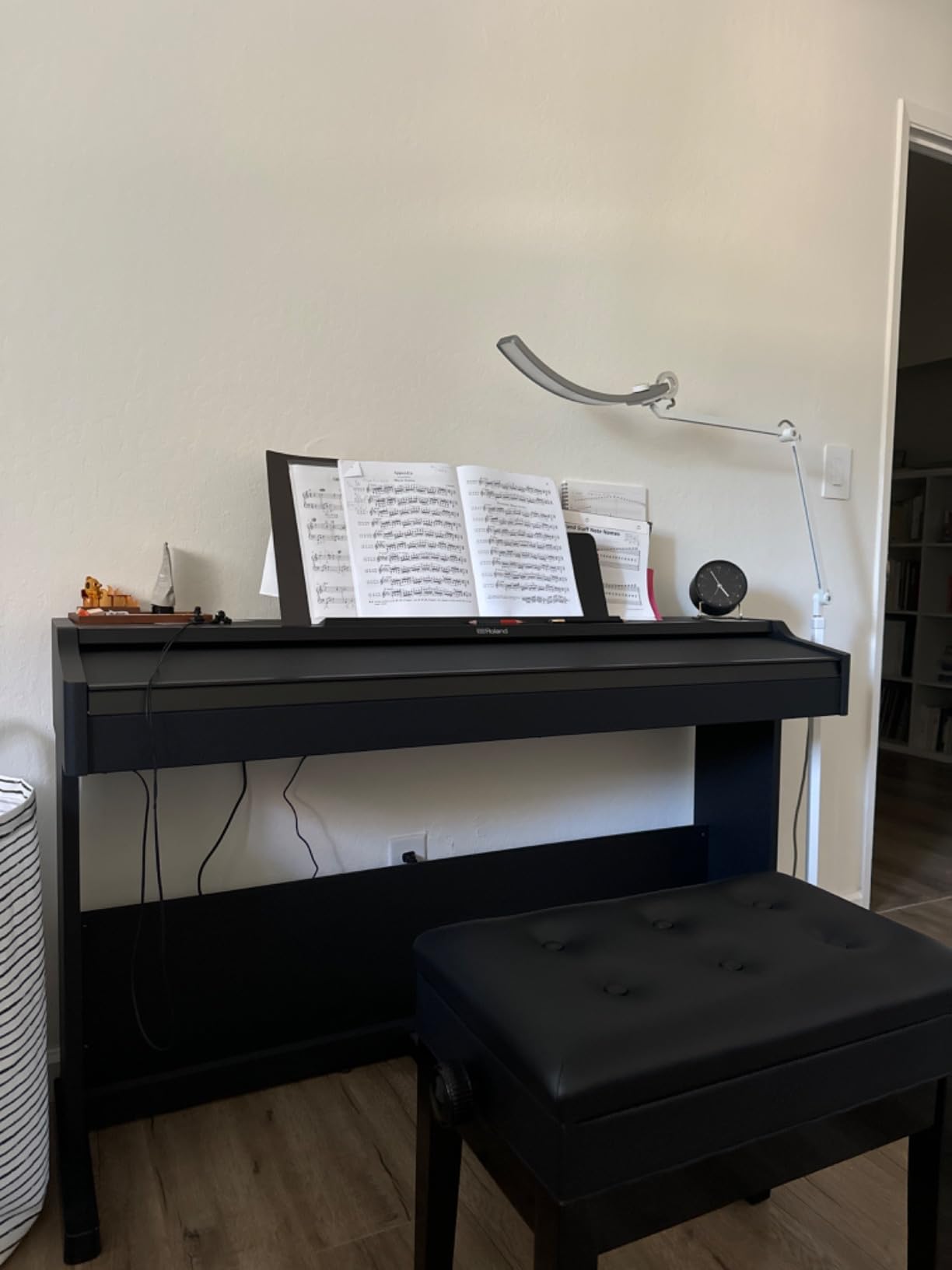
Bluetooth connectivity is built in, connecting the RP107 to the Roland Piano App on your phone or tablet. The app offers practice tools, sound adjustment, and a growing library of songs. Dual headphone jacks and Twin Piano mode make it well-equipped for lessons and shared practice.
The onboard stereo speaker system is tuned for the upright cabinet design, producing a sound that projects naturally from the instrument. The traditional cabinet shape actually enhances the acoustic properties compared to slim modern designs, giving notes more body and resonance.
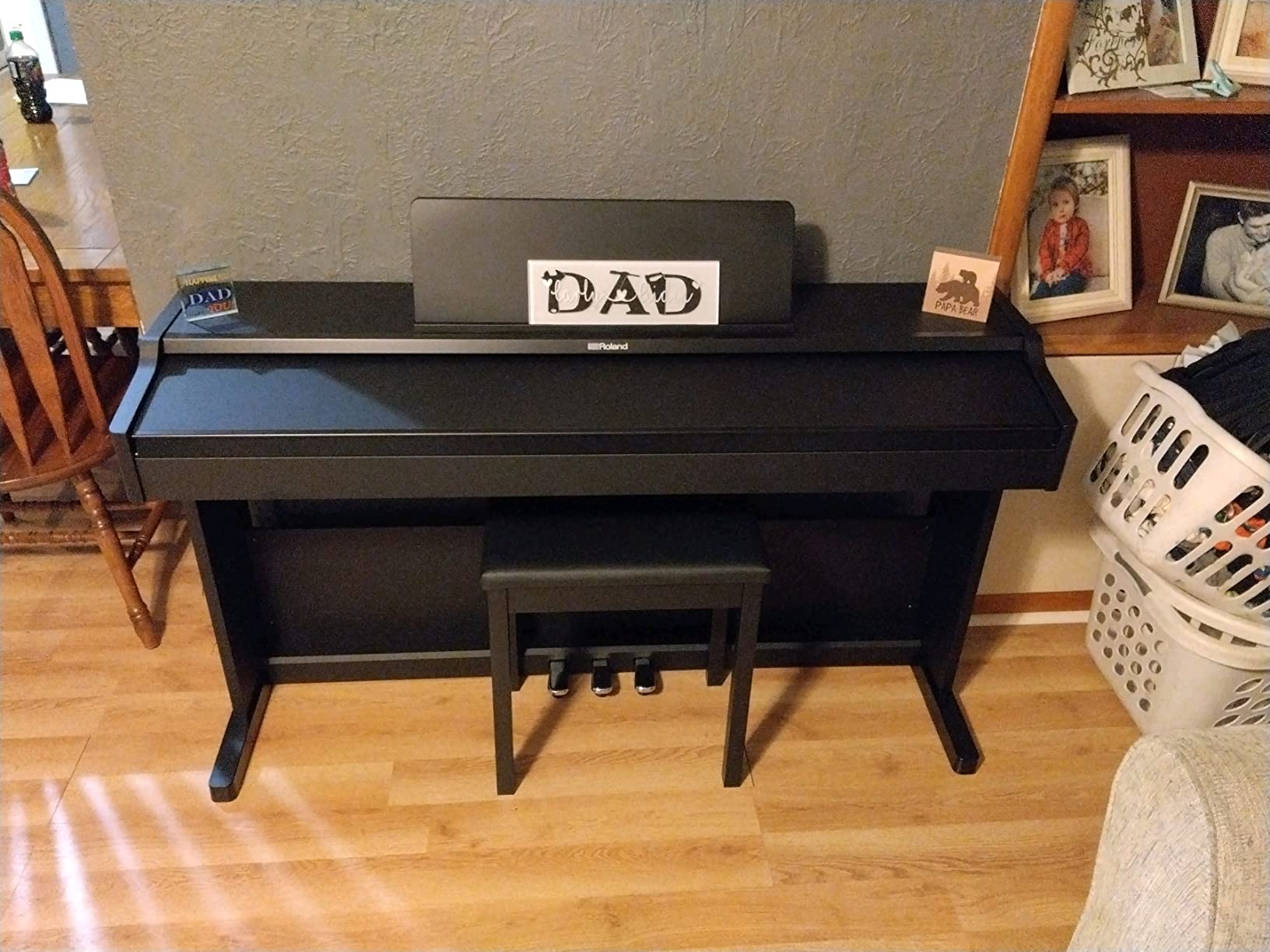
One detail I appreciate is the digital display, which provides clear feedback on settings and tones without disrupting the traditional aesthetic. It is integrated subtly into the cabinet design, appearing only when you need it and disappearing when you are focused on playing.
Space and Placement
The RP107 measures 58.5 x 23 x 22.6 inches, which is comparable to a small acoustic upright. You will need a dedicated wall space, but it is significantly more compact than a full-size acoustic piano and requires no tuning or climate control maintenance.
At 132 pounds, it is firmly a stationary instrument that stays where you set it up. Plan your placement carefully before assembly, as moving it requires two people. The traditional proportions mean it looks at home alongside other wooden furniture pieces.
Learning Features Included
With Twin Piano mode, dual headphone jacks, 256-note polyphony, and Roland Piano App integration, the RP107 is well-equipped for students at any level. The traditional styling also creates a psychological cue that this is a serious instrument, which can be motivating for beginners who want to feel like they are playing a real piano.
Bluetooth audio streaming lets you play along with recordings through the built-in speakers, and the app’s metronome and recording features support structured practice routines. For families looking for a traditional-looking piano with modern learning tools, the RP107 hits a compelling balance.
7. Roland RP701 — Elegant Home Piano with Immersive Headphone Practice
- SuperNATURAL Piano technology
- PHA-4 with Progressive Damper Action
- Headphones 3D Ambience
- Elegant classic design
- Includes bench and lessons
- Limited stock
- Higher price for home console
The RP701 sits in the middle of Roland’s home console lineup, and it is where I think the value proposition gets particularly interesting. You get a more refined cabinet design, a progressive damper action pedal, and the standout Headphones 3D Ambience feature that sets it apart from lower models.
The SuperNATURAL Piano engine is paired with the PHA-4 Standard keyboard, consistent with the rest of the mid-range Roland lineup. What elevates the RP701 is the Progressive Damper Action pedal unit, which provides continuous half-pedal control. This allows for nuanced sustain techniques that serious pianists rely on, from gentle swells to full damper engagement.
The cabinet itself is a step above the RP107 and F107 in terms of design quality. Elegant front legs, sophisticated curves, and a polished finish give it the appearance of a quality acoustic upright. It is available in multiple finishes including White, Dark Rosewood, Light Oak, and Black.
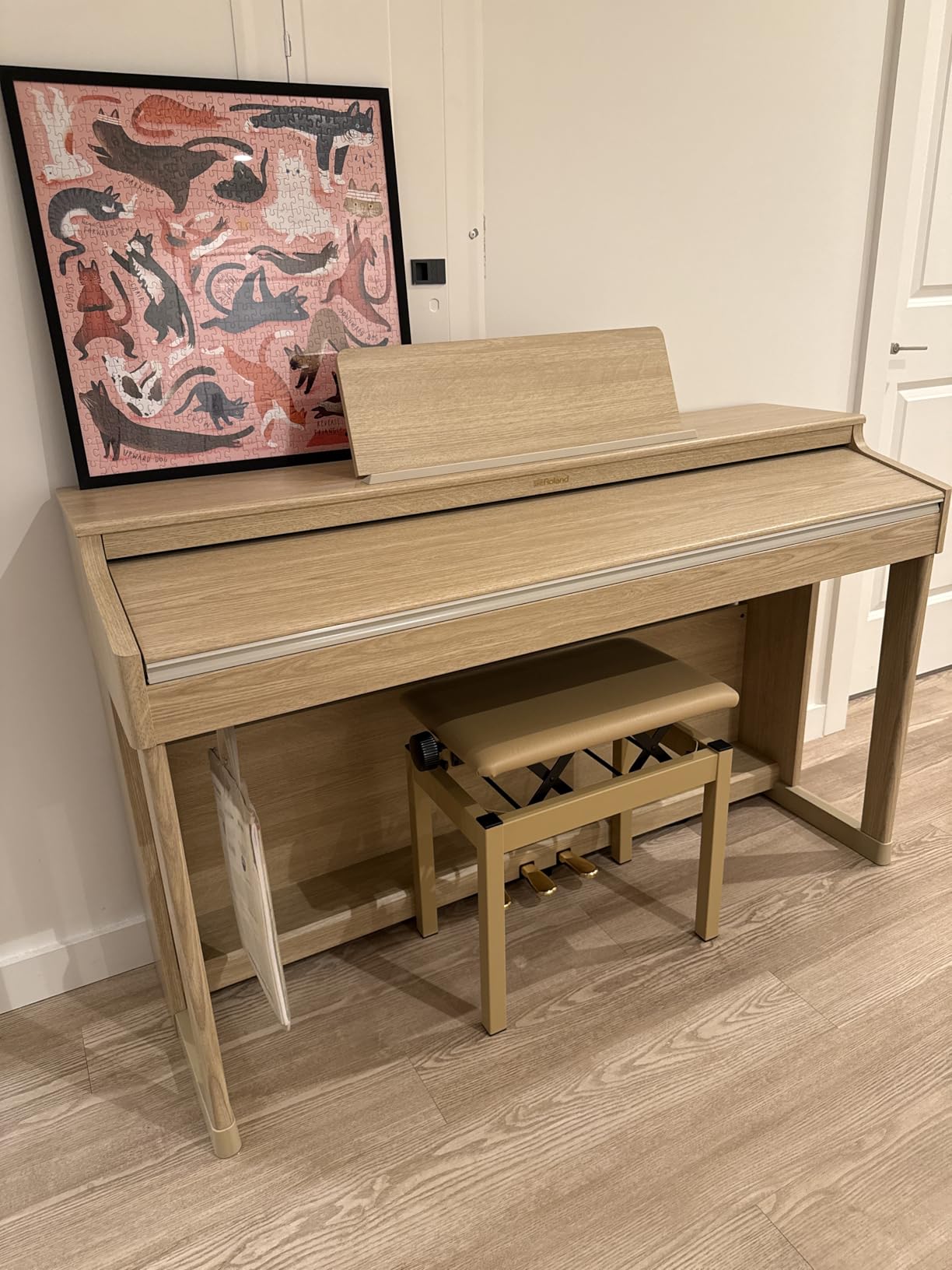
The Headphones 3D Ambience is the feature that surprised me most. When you plug in headphones, the RP701 processes the sound to create a three-dimensional spatial effect that makes it feel like you are sitting at an acoustic piano in a room. Standard headphone practice can feel flat and closed-in, but this processing adds depth and air that makes long practice sessions more enjoyable.
An intuitive hidden display uses icons rather than text, making it easy to navigate tones and settings. Bluetooth audio connectivity lets you stream music through the piano’s speaker system for play-along practice. The RP701 is also compatible with the Roland Piano Every Day app for extended functionality.
The RP701 includes a height-adjustable bench (BNC-05) and three months of free piano lessons through Pianote, adding tangible value to the package. These included accessories mean you have everything you need to start playing from day one.
Acoustic Feel and Headphone Practice
The combination of PHA-4 Standard action, progressive damper pedal, and Headphones 3D Ambience makes the RP701 one of the best home pianos for players who practice extensively with headphones. The 3D ambience processing addresses a common complaint about digital piano practice, namely that headphone sound feels unnatural and fatiguing over time.
This feature alone makes the RP701 worth considering over the RP107 for anyone who practices late at night or lives in an apartment where noise is a concern. You get the full acoustic piano experience through headphones without disturbing anyone, and the spatial processing reduces the ear fatigue that comes from flat, direct headphone monitoring.
Included Accessories
The RP701 comes as a complete package with the height-adjustable BNC-05 bench, a three-pedal unit with progressive damper action, and three months of Pianote online lessons. These additions mean you do not need to buy extras separately to get started.
The Pianote lessons are particularly valuable for players who want structured guidance from real teachers rather than self-directed app learning. The bench is sturdy and adjustable for different player heights, making it suitable for both adults and older children sharing the instrument.
8. Roland GP-3 — Compact Grand Piano for Premium Home Spaces
- Low-profile grand piano design
- Hammer-action with escapement and Ivory Feel
- Custom stereo speakers
- Organic piano sound engine
- Built-in recording
- Very limited stock
- Premium price point
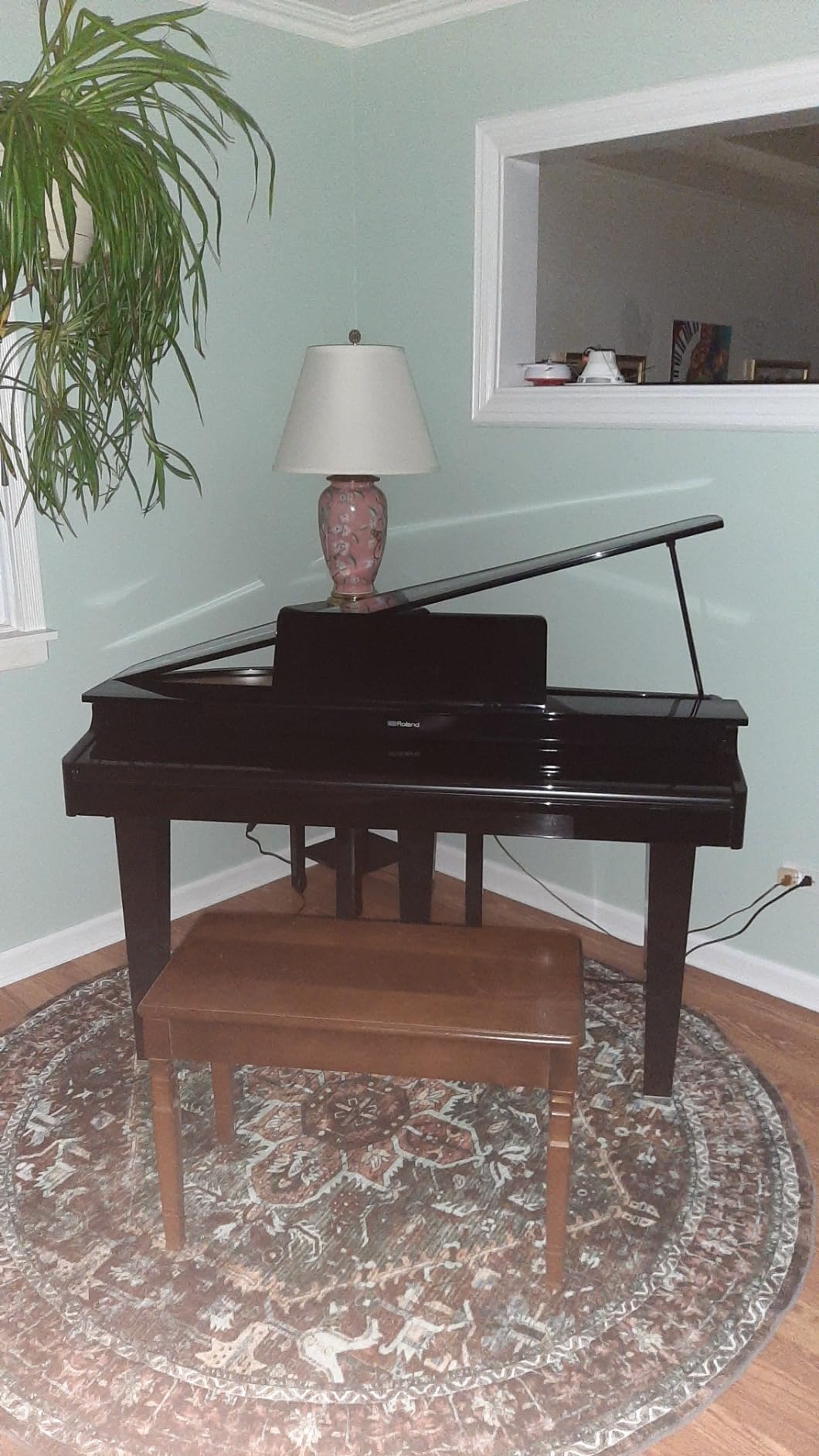
The GP-3 is the most affordable entry into Roland’s grand piano series, and it makes a striking visual statement in any room. Our team was impressed by how Roland managed to pack genuine grand piano design and sound into a footprint that fits in spaces where a traditional grand would be impossible.
The low-profile grand cabinet has a polished finish and the distinctive curved lid that defines a grand piano silhouette. At 174.6 pounds, it is substantial but far lighter than an acoustic baby grand, which typically weighs between 500 and 700 pounds and requires professional movers.
The 88-note hammer-action keyboard features escapement and ivory-feel materials, providing the authentic touch that experienced pianists demand. The graded action replicates the mechanical feel of acoustic grand piano keys, with heavier bass and lighter treble response that matches the physics of real piano strings.
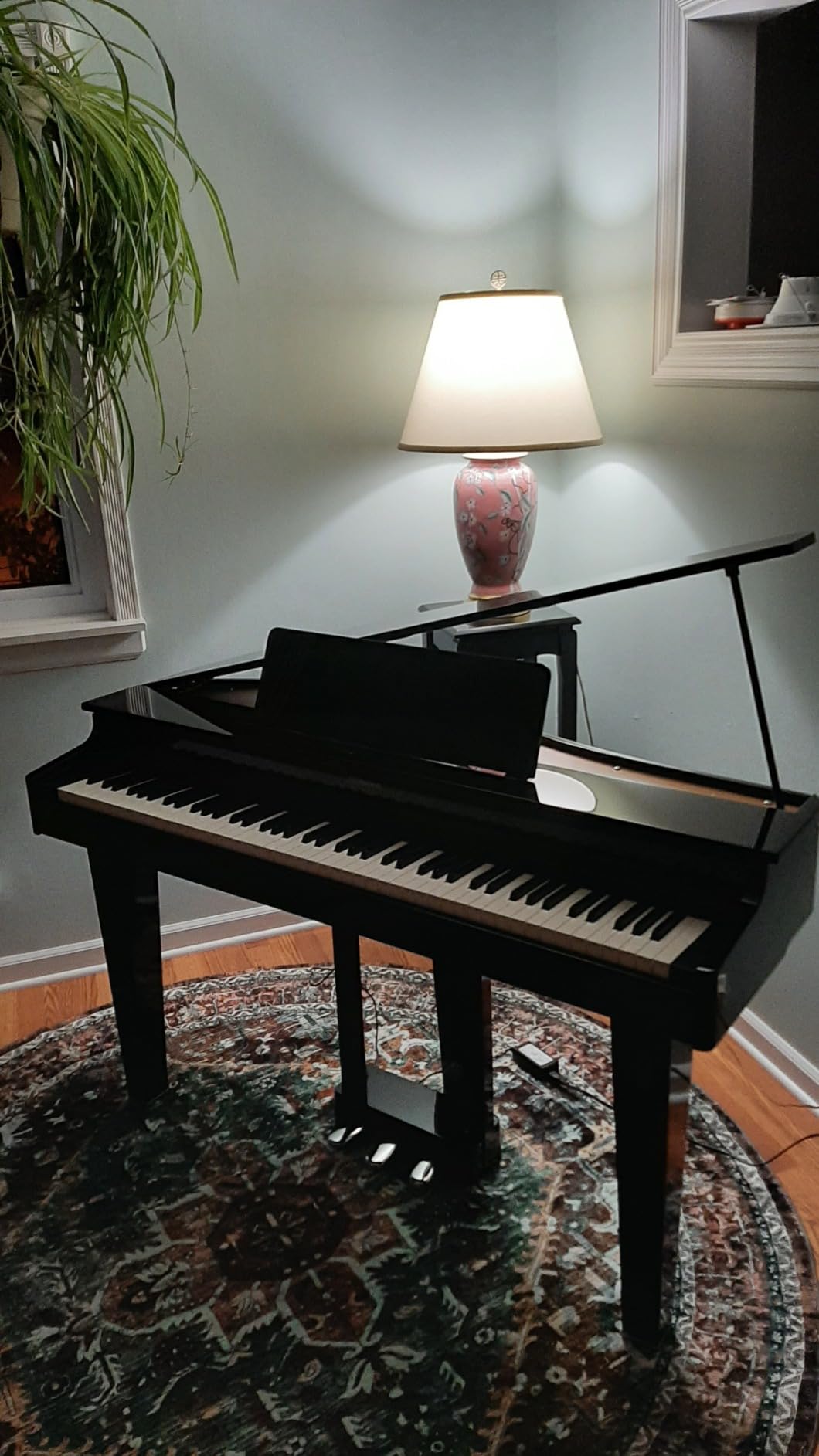
Sound comes from Roland’s Organic piano sound engine, which delivers rich, complex piano tones with natural resonance and decay characteristics. The custom stereo speaker system is designed specifically for the grand cabinet shape, using the lid and body to project sound in a way that mimics acoustic grand projection.
The three-pedal unit includes sustain, soft, and sostenuto pedals with half-pedal support. This gives you the full range of pedaling techniques used in advanced classical and jazz repertoire, going well beyond simple on-off sustain. Built-in recording capability lets you capture performances directly on the instrument without external equipment.
Bluetooth audio and MIDI connectivity keeps the GP-3 connected to your digital ecosystem. The Roland Piano App provides remote control, sound customization, and practice tools that complement the onboard features. The deep integration between the app and the piano’s internal systems feels effortless.
Grand Piano Authenticity
The GP-3 delivers on the promise of a grand piano experience in several important ways. The cabinet shape affects sound projection positively, creating a more open, room-filling sound than upright designs can achieve. Sound radiates from the open lid in a pattern that matches what you expect from a real grand.
The hammer-action keyboard with escapement provides the mechanical feedback that distinguishes grand piano playing from upright playing. Combined with the three-pedal configuration and half-pedal support, you have all the expressive tools needed for serious repertoire. For players who have only ever played uprights, the GP-3 offers a genuine grand piano experience.
Room Requirements
While more compact than an acoustic grand, the GP-3 still requires dedicated floor space. Its dimensions of 27.48 x 54.88 x 47.8 inches mean you need a room at least 6 by 8 feet to place it comfortably with seating and walking room around the instrument.
The polished finish is beautiful but shows dust and fingerprints, requiring regular cleaning to maintain its appearance. Consider the visual impact carefully, as a grand piano will be the focal point of any room it occupies. The lid can be opened to different positions to control sound projection and visual presence.
How to Choose the Right Roland Digital Piano?
Choosing from the best Roland digital pianos comes down to understanding a few key specifications and matching them to your playing style and living situation. Here is what matters most when making your decision.
Keyboard Action and Feel
The keyboard action is the single most important factor in how a digital piano feels to play. Roland uses two main action types across their lineup. The PHA-4 Standard keyboard appears in the FP-10, FP-30X, FP-60X, RP107, F107, and RP701. It features progressive hammer action with escapement and ivory-feel key surfaces that satisfy most players.
The PHA-50 hybrid keyboard, found in the FP-90X, combines wood and molded materials for a more organic, premium feel. If you are transitioning from an acoustic grand piano or play at an advanced level, the PHA-50 action is worth the investment. The GP-3 uses its own hammer-action design with escapement and ivory-feel materials tailored to the grand piano experience.
Forum discussions on Reddit consistently identify key feel as the top priority for experienced players. When choosing between models at similar price points, prioritize the keyboard action over other features like speaker power or onboard tones. You can always add external speakers or sounds, but you cannot change the keyboard feel.
Sound Engine Technology
Roland uses several sound technologies across their range, and understanding the differences helps you choose wisely. SuperNATURAL Piano is the foundation, used in the FP-10, FP-60X, RP107, F107, and RP701. It delivers rich, expressive piano tones with natural dynamic response that responds to your touch.
SuperNATURAL Modeling, found in the FP-30X, goes a step further by calculating sound in real time rather than playing back recordings. This results in more nuanced, living tones that respond to subtle playing techniques like ghost notes and partial strikes.
PureAcoustic Piano Modeling, exclusive to the FP-90X in this lineup, is Roland’s most advanced sound technology. It creates even more detailed, realistic piano sounds with complex resonance and overtone behavior that satisfies professional ears. The GP-3 uses Roland’s Organic piano sound engine, designed specifically for grand piano tonal characteristics.
Polyphony
Polyphony refers to how many individual notes a digital piano can produce simultaneously before older notes are cut off. All the models in this lineup offer capable polyphony, with the RP107 and F107 offering 256 notes of polyphony for headroom during complex passages.
Higher polyphony matters when you play dense pieces with heavy sustain pedal use, as it prevents notes from disappearing mid-phrase. For beginners playing simple melodies, 128 notes is perfectly sufficient. For advanced players working through demanding classical repertoire with layered pedaling, 256 notes provides peace of mind and prevents unwanted artifacts.
Portable Versus Home Console
Your living situation should guide the form factor you choose. Portable models like the FP series are ideal if you need to move the piano between rooms, take it to lessons, or transport it to performances. They typically require a separate stand and may need external pedal units for full functionality.
Home console models like the RP107, F107, and RP701 come as complete units with built-in stands, integrated three-pedal units, and sometimes included benches. They are stationary instruments that become part of your furniture and offer a more traditional piano experience. The RP701 even includes a height-adjustable bench and online lessons.
The GP-3 is a category of its own, offering the visual and acoustic properties of a grand piano in a compact digital format that requires no tuning, no climate control, and a fraction of the maintenance of an acoustic grand.
Connectivity Features
Modern Roland pianos include Bluetooth for wireless connectivity, but there are two types to understand. Bluetooth MIDI lets you connect to apps, recording software, and learning tools wirelessly. Bluetooth Audio lets you stream music from your phone through the piano’s speakers for play-along practice.
The FP-10 only supports Bluetooth MIDI, while the FP-30X and above support both MIDI and Audio. USB connectivity, available on all models, provides stable wired connections for direct computer recording and data storage. Dual headphone jacks on most models allow two people to listen simultaneously, which is essential for lessons.
Speaker System Quality
Speaker quality varies significantly across the lineup and directly impacts your playing enjoyment. The FP-10 has basic built-in speakers adequate for personal practice. The FP-30X steps up to a 22-watt stereo system, while the FP-60X offers 26 watts with clearer projection.
The FP-90X features a four-speaker system with dedicated tweeters for the most detailed and room-filling sound. Home console models tune their speaker systems to their cabinet designs for natural acoustic projection. The RP701 includes Headphones 3D Ambience processing for a more immersive practice experience through headphones.
The GP-3’s custom stereo system is designed to exploit the grand cabinet’s acoustic properties, producing a sound field that radiates from the open lid much like an acoustic grand. For players who perform for others at home, speaker quality should be a primary consideration.
Roland Versus Other Brands
A common question is whether Roland is better than Yamaha or Kawai. The honest answer is that all three manufacturers make excellent digital pianos, but they have different strengths. Roland is known for its modeling-based sound engines that produce organic, evolving tones and its modern connectivity features like Bluetooth Audio.
Yamaha tends to excel in sampled sound reproduction and educational features, with their CFIIIS grand piano samples being widely praised. Kawai is respected for its keyboard action quality, particularly their wooden-key actions in higher-end models. For players who prioritize sound authenticity through advanced modeling technology and modern wireless connectivity, Roland consistently leads the field.
If possible, visit a music store and play instruments from all three brands side by side. The right choice often comes down to personal preference in sound character and key feel, which is subjective and difficult to assess from specifications alone.
FAQs
Are Roland digital pianos any good?
Yes, Roland digital pianos are widely regarded as some of the best in the industry. They are known for authentic weighted keyboard actions with escapement, advanced sound modeling technology like SuperNATURAL and PureAcoustic, and modern features including Bluetooth connectivity. Professional musicians, teachers, and home players consistently praise Roland instruments for their sound quality, playability, and long-term reliability.
What is considered the best digital piano?
The best digital piano depends on your needs and budget. For most players, the Roland FP-30X offers the best balance of features, sound quality, and value. Professionals often prefer the Roland FP-90X for its PureAcoustic Modeling and PHA-50 keyboard. For home use, the Roland RP701 provides an elegant console design with immersive headphone practice. There is no single best piano, only the best piano for your specific situation and playing level.
Which digital piano is better, Roland or Yamaha?
Both Roland and Yamaha produce excellent digital pianos, and the choice comes down to personal preference. Roland is known for its modeling-based sound engines that create organic, evolving tones and its modern connectivity features like Bluetooth Audio. Yamaha excels in sampled sound quality and has a strong reputation for educational tools and reliability. If possible, try both brands in person to see which sound and feel you prefer for your playing style.
Which digital piano is closest to the real piano?
Among Roland models, the FP-90X with its PureAcoustic Piano Modeling and PHA-50 hybrid keyboard comes closest to replicating an acoustic piano experience in a portable format. The GP-3 grand piano also provides an authentic feel through its hammer-action keyboard, three-pedal unit with half-pedal support, and grand cabinet acoustics that project sound like a real grand. For the most realistic experience, these two models are the top choices in the Roland lineup.
Final Thoughts on the Best Roland Digital Pianos
Roland has earned its reputation by consistently delivering digital pianos that feel and sound authentic at every price point. Whether you choose the budget-friendly FP-10, the versatile FP-30X, or the premium GP-3 grand, you are getting an instrument built with serious musical technology and attention to detail.
For most players, the FP-30X remains the sweet spot in the lineup, offering professional features and authentic key feel without stretching into flagship territory. If budget is your primary concern, the FP-10 delivers the core Roland experience without compromise on the fundamentals that matter most. And for those who want a statement piece that transforms a room, the GP-3 brings grand piano authenticity into a manageable footprint.
The best Roland digital pianos in 2026 cover every need from first lessons to professional performances. Take time to consider your space, playing level, and connectivity needs, and you will find the right match in this lineup.