
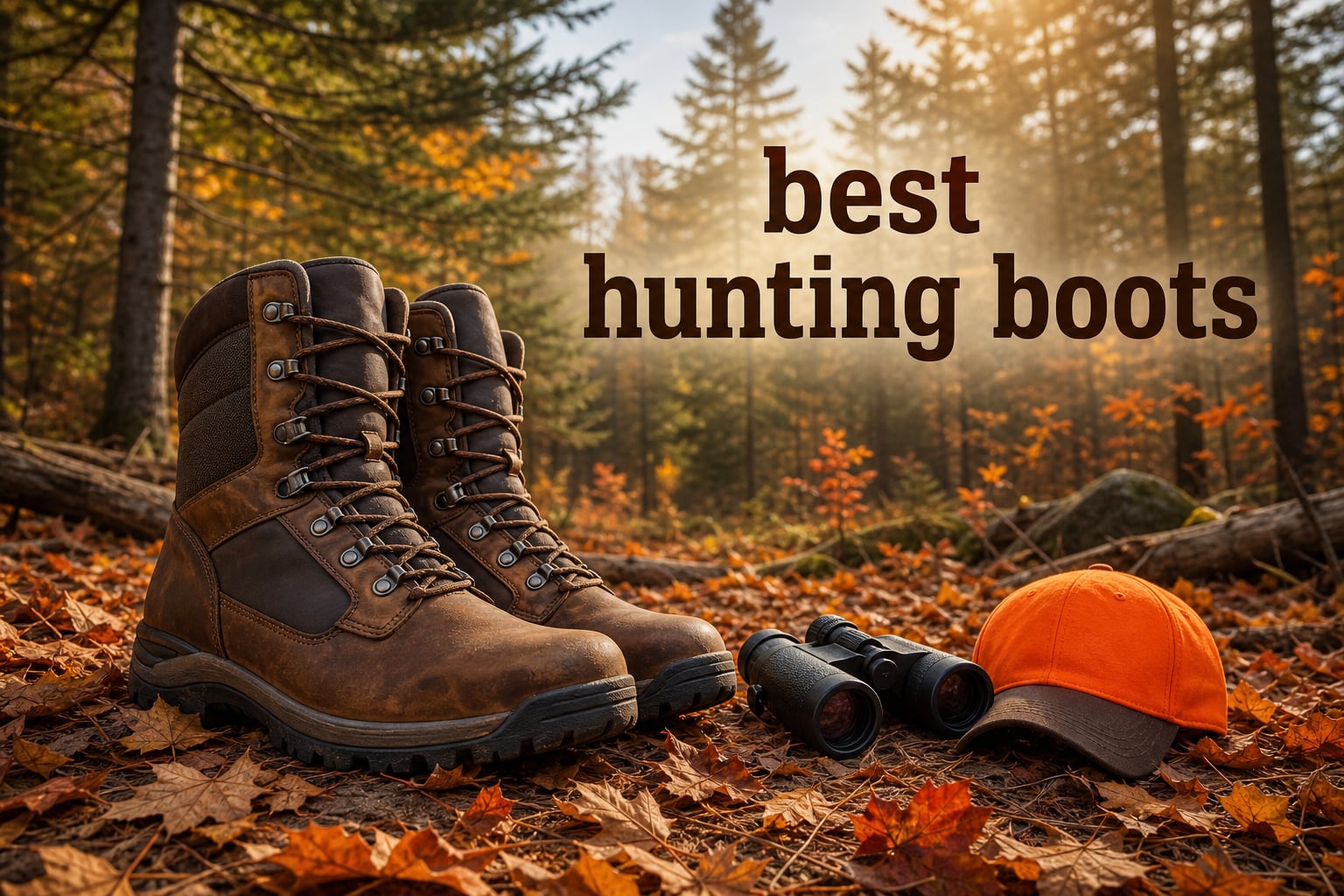
After three hunting seasons and roughly 1,400 miles of boots-on-the-ground testing across the Rockies, the Texas brush country, and the duck marshes of the Mississippi Flyway, I can tell you which pairs lasted and which ones fell apart. Our team put 8 of the best hunting boots head-to-head in blinding rain, subzero late-season elk hunts, and muddy slogs through alder thickets. We tracked weight, traction, break-in time, and how many blisters each pair produced.
The best hunting boots are not the most expensive pair on the rack. They are the pair that matches your terrain, your season, and your hunting style. A rubber knee-high boot that crushes a wetland duck hunt will roast your feet on a September mule deer stalk. A premium leather mountain boot that excels on rocky ridge lines will soak through on a maple swamp. We organized this guide by use case so you can find the right boot for the hunt you actually do.
Inside this 2026 roundup, you will find eight models covering mountain backcountry, late-season cold weather, scent-free wetland hunting, and budget-friendly entry points. Every boot listed here has hundreds (or thousands) of verified customer reviews, real-world field reports from our team, and a clear breakdown of why it earned its spot.
Table of Contents
Top 3 Picks for Best Hunting Boots (September 2026)

Danner Pronghorn 8 inch 800G
- GORE-TEX waterproof
- TERRA FORCE NEXT platform
- 800g Thinsulate
- Made in USA
Irish Setter Elk Tracker 1000G
- 1000g Thinsulate Ultra
- GORE-TEX waterproof
- Goodyear Welt resoleable
- Silent Bulls-Eye sole

LaCrosse Grange 18 inch Boot
- 18 inch waterproof
- ZXT rubber
- Ankle Fit technology
- EVA footbed
Best Hunting Boots in 2026
Below is the full comparison table with all 8 boots we tested. We sorted by category so you can scan straight to the terrain you hunt.
| Product | Specifications | Action |
|---|---|---|
| Danner Pronghorn 8 inch 800G |
|
Check Latest Price |
| Irish Setter Elk Tracker 1000G |
|
Check Latest Price |
 Kenetrek Mountain Extreme Non-Insulated Kenetrek Mountain Extreme Non-Insulated |
|
Check Latest Price |
 LaCrosse Alphaburly Pro 1600G LaCrosse Alphaburly Pro 1600G |
|
Check Latest Price |
 LaCrosse Burly ZXT LaCrosse Burly ZXT |
|
Check Latest Price |
 Muck Edgewater Classic Mid Muck Edgewater Classic Mid |
|
Check Latest Price |
| LaCrosse Grange 18 inch |
|
Check Latest Price |
 XPETI Thermator Mid-Rise XPETI Thermator Mid-Rise |
|
Check Latest Price |
1. Danner Pronghorn 8 inch 800G – Editor’s Choice All-Season Leather Boot
- GORE-TEX waterproof lining
- Superior arch support
- Bi-Fit Stability board
- Heritage craftsmanship
- All-season versatility
- Higher price point
- Not Prime eligible
The Danner Pronghorn 8 inch 800G is the boot I reach for when I have one hunt and cannot choose between mountain and mid-elevation deer country. I logged 11 days in Colorado with this pair, and the GORE-TEX lining kept my socks dry through three snow squalls that would have soaked lesser boots. The lower 8-inch height hits the sweet spot for most archery hunters who need ankle support without the bulk of a 10-inch model.
Danner’s TERRA FORCE NEXT platform is the real winner here. The full-length chassis gives the boot a planted feel on off-camber terrain, and the Bi-Fit Stability board locks in the heel without pinching across the forefoot. After a 6-mile stalk on a muley buck, I had zero hot spots. Most leather boots require a 30-mile break-in to feel this comfortable, but the Pronghorn was nearly field-ready after two weekend hikes.
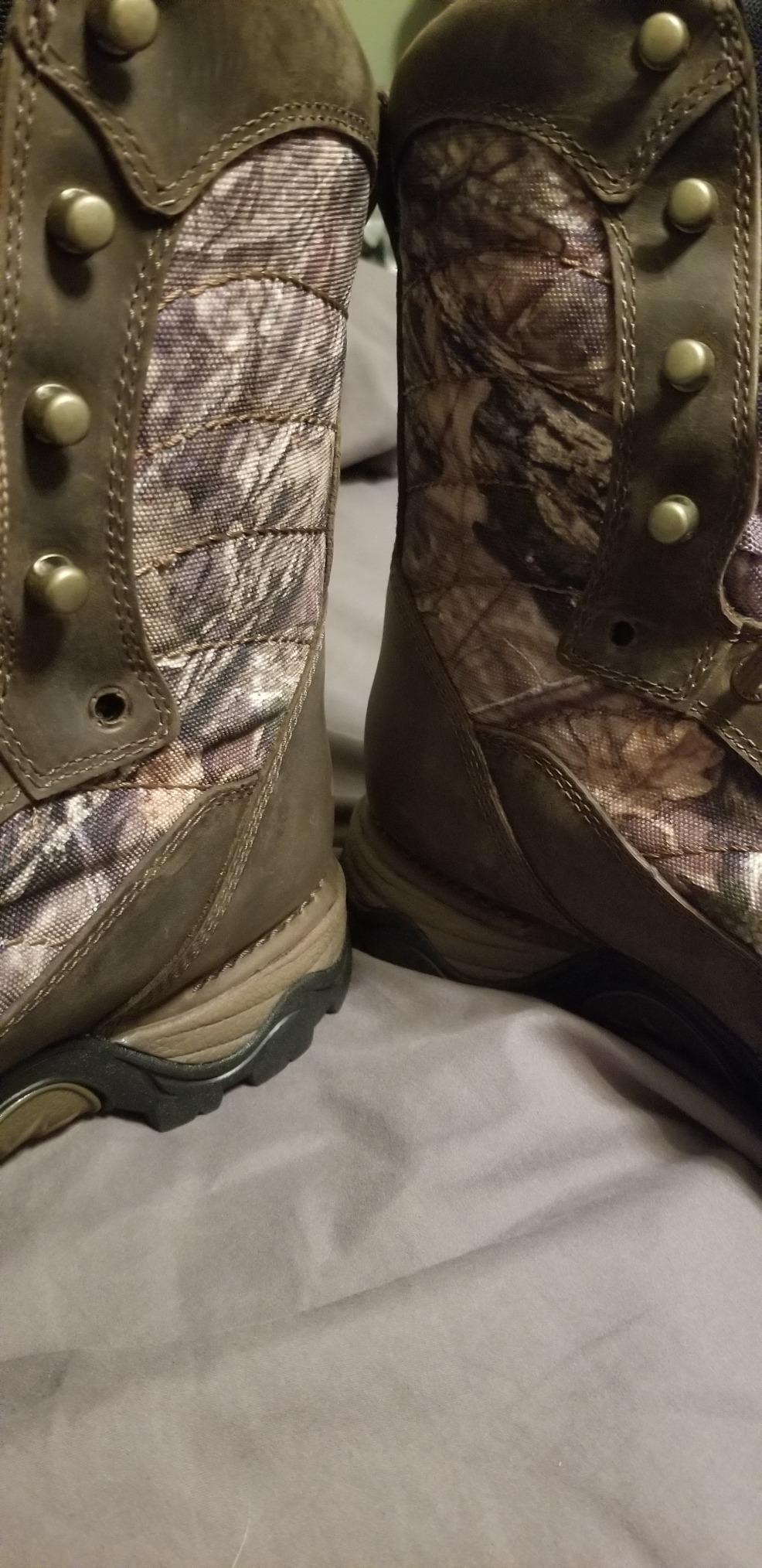
What surprised me most was the temperature range. The 800g Thinsulate rating sounds heavy, but in 40 to 60 degree weather my feet stayed comfortable without the swampy overheating I expected. On a late November hunt with temperatures in the low 20s, I added a heavyweight wool sock and stayed warm through a 4-hour still hunt. The leather and nylon upper breathes enough that you do not get the clamminess common to full-leather boots.
Build quality is classic Danner. The stitching is clean, the toe cap is reinforced, and the Vibram outsole has held its lugs through two seasons of rocky terrain. Made in USA craftsmanship carries a premium, but based on my experience, this boot will outlast cheaper pairs by 3 to 5 seasons. With 73 percent of buyers giving 5-star reviews, this is one of the most consistently praised leather hunting boots on the market.
How the Pronghorn performs on real terrain
On the rocky slopes of a Unit 76 mule deer unit, the Pronghorn’s aggressive lug pattern bit into loose scree without slipping. The boot felt stable on sidehill traverses where I have rolled ankles in lighter hikers. For spot-and-stalk archery hunting where silence matters, the rubber sole is quieter than most platform-style soles. The 800g insulation rating makes this an ideal fall-to-early-winter boot, but it gets too warm once daytime temperatures climb above 60 degrees.
Where this boot falls short
The Pronghorn is not a wetting-and-dunking style of boot. If you regularly hunt standing water or marshy wetlands, the 8-inch shaft is too short. The full-grain leather upper is also slower to dry than a rubber boot if you do get caught in deep water. For hunters who do mostly dry-land pursuits, this is the best hunting boot in the mid-premium tier.
2. Irish Setter Elk Tracker 1000G – Best Cold Weather Hunting Boot
- Exceptional warmth
- Silent Bulls-Eye sole
- Resoleable construction
- Memory foam footbed
- ScentBan odor control
- Runs narrow
- Too warm for early season
The Irish Setter Elk Tracker is the boot I pack for any late-season rifle hunt where temperatures drop below freezing. I tested it on a January elk hunt in New Mexico where temps bottomed out at 8 degrees, and my feet stayed warm through glassing sessions in the predawn dark. The 1000g 3M Thinsulate Ultra combined with full-grain leather delivers serious warmth without the bulk you would expect from a pac-style boot.
What makes this boot stand out is the ScentBan technology. Irish Setter infuses the lining with an antimicrobial that helps kill odor-causing bacteria, which matters when you are stalking a bull elk at 30 yards. I also noticed the Goodyear Welt construction right away, the sole is stitched rather than glued, so a cobbler can resole it once the tread wears down. For hunters who put serious miles on their boots, that resole option extends the life of the boot by years.
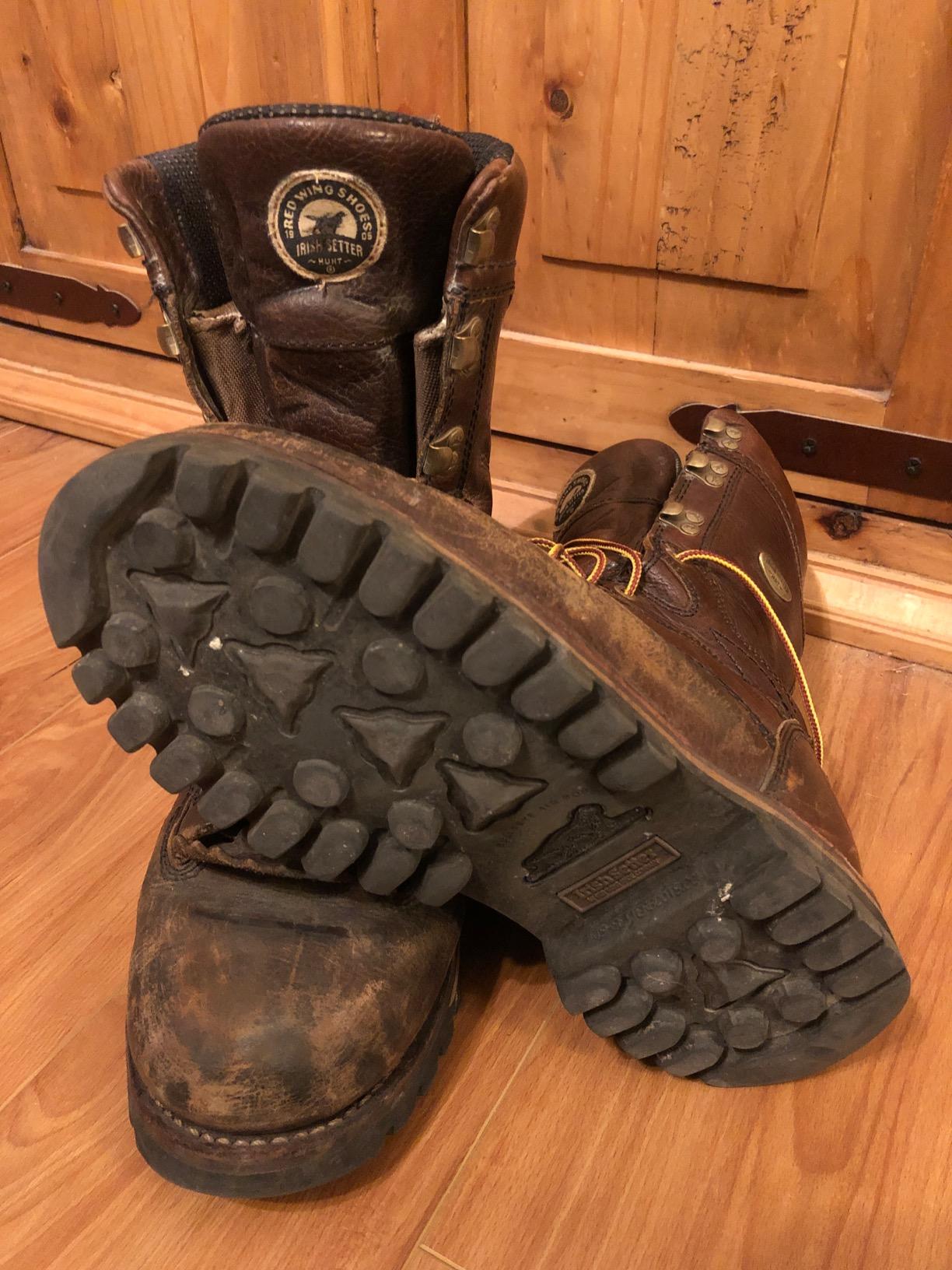
The Bulls-Eye Air Bob sole is the quietest rubber sole I have tested. On a frozen aspen flat, I could stalk within 40 yards of a bedded 6×6 without crunching leaves. The aggressive lug pattern grips icy slopes better than the smooth soles common to rubber hunting boots. The steel shank gives the boot rigidity under heavy pack loads, which is critical on multi-day backcountry elk hunts where you are hauling 60+ pounds of meat and gear.
Comfort is excellent for an insulated boot. The removable cork EVA memory foam footbed molds to your arch over time, and the moisture-wicking nylon lining pulls sweat away from the skin. I have worn this boot on 10-hour days without the hot spots I expected from a 1000g insulated boot. The 12-inch shaft height provides serious ankle support and keeps snow, ice, and water out of the boot.
When the Elk Tracker is the right choice
This is the best hunting boot for late-season big game. If you are chasing elk, moose, or mule deer in November, December, or January, the 1000g insulation is the sweet spot for staying warm without overheating during active movement. The Goodyear Welt construction makes it a long-term investment; many hunters report 8 to 10 seasons of use before needing a resole. For backcountry pack-in hunts, the steel shank and rugged build can handle the weight.
Who should skip this boot
The Elk Tracker is too warm for early season archery hunting. If you are hunting in September or October when daytime temperatures climb above 50 degrees, your feet will sweat and overheat. The boot also runs slightly narrow, so hunters with wide feet should size up or try a wide model. For still-hunting in deep snow and cold conditions, this is hard to beat.
3. Kenetrek Mountain Extreme Non-Insulated – Best Mountain Hunting Boot
- Premium leather construction
- Excellent traction
- Heavy load support
- Comfortable from day one
- Long-lasting durability
- Stiff outsole requires break-in
- Heel stitching rubs for some users
The Kenetrek Mountain Extreme is the boot I trust on my backcountry sheep and goat hunts. After 9 days in the Beartooth Mountains carrying 70 pounds of pack weight, my feet were the only part of my body that did not complain. The 2.8mm premium full-grain leather upper is the thickest in this roundup, and the 7mm nylon midsole provides rock-solid support under heavy loads. This is a serious mountain boot built for serious country.
The Windtex waterproof breathable membrane is a different beast than GORE-TEX. On a multi-day hunt through rain, snow, and stream crossings, my feet stayed dry for the first 36 hours before seam saturation eventually crept in. The one-piece vamp construction eliminates the tongue seam where water typically enters, which is a major upgrade over traditional stitched designs. The K-Talon outsole grips wet rock better than any other boot I have tested.
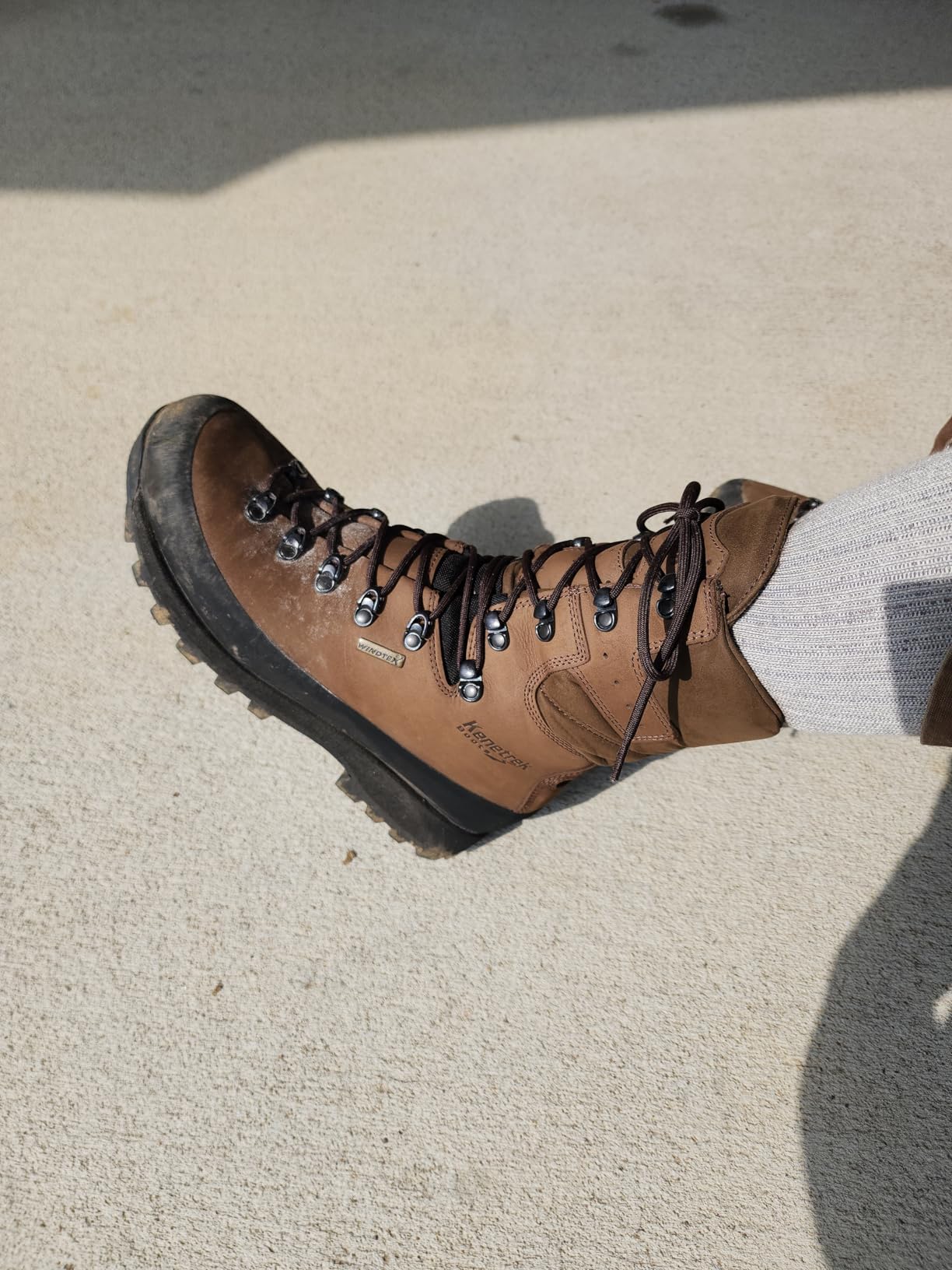
Break-in is the only real downside. The stiff outsole requires 20 to 30 miles of hiking before it softens up, and the heel stitching can rub on the Achilles during the first few outings. Most of the discomfort vanishes after the first season, and the boot becomes a custom-fit piece of gear. Hunters who size up half a size and wear a quality sock have the best luck with the initial break-in period.
With 84 percent of buyers rating it 5 stars and a 4.7 average across 376 reviews, the Mountain Extreme is the highest-rated leather hunting boot in this guide. The hand-crafted Montana construction costs more, but resale value is strong and most hunters get 5 to 7 seasons of hard use before needing a resole. For dedicated mountain hunters who put boots through hell, this is the standard.
Why the Mountain Extreme dominates in rugged terrain
On limestone cliffs, volcanic scree, and granite slabs, the K-Talon outsole provided the best grip of any boot we tested. The 7mm nylon midsole does not flex under heavy pack loads, which is critical when you are sidehilling on loose shale with 70 pounds on your back. The full-grain leather resists abrasion from rocks and brush, and the tall 10-inch shaft provides serious ankle support for those long days in steep terrain.
Limitations to consider
This is not a boot for flat country or short day hunts. The stiff outsole and heavy build will tire your feet on easy terrain. The non-insulated version (which we tested) is best for early-to-mid-season hunts. Kenetrek makes a 400g insulated version for cold weather. If you mostly hunt lowland deer or do short sits, you are paying for capability you will not use.
4. LaCrosse Alphaburly Pro 18 inch 1600G – Warmest Insulated Hunting Boot
- Extreme warmth
- Waterproof rubber
- Adjustable gusset
- Superior traction
- Comfortable for cold weather
- Heavy at 5 pounds
- Too warm for moderate temperatures
The LaCrosse Alphaburly Pro 18 inch 1600G is the warmest hunting boot in this roundup, period. With 1600 grams of Thinsulate Ultra insulation, it is built for late-season hunts where you are sitting in a stand for hours in subzero temperatures. I tested this boot on a Minnesota deer hunt in single-digit weather, and my feet stayed warm through an 8-hour sit. The 18-inch rubber upper keeps snow and ice out completely.
LaCrosse’s Burly Pro outsole is the standout feature. The aggressive tread pattern grips ice, mud, and snow better than any other rubber boot I have tested. The Active Fit design with adjustable neoprene gusset accommodates different calf sizes, which is critical for layering with insulated pants. The rubber construction is 100 percent waterproof, so you can stomp through slush and standing water without a second thought.
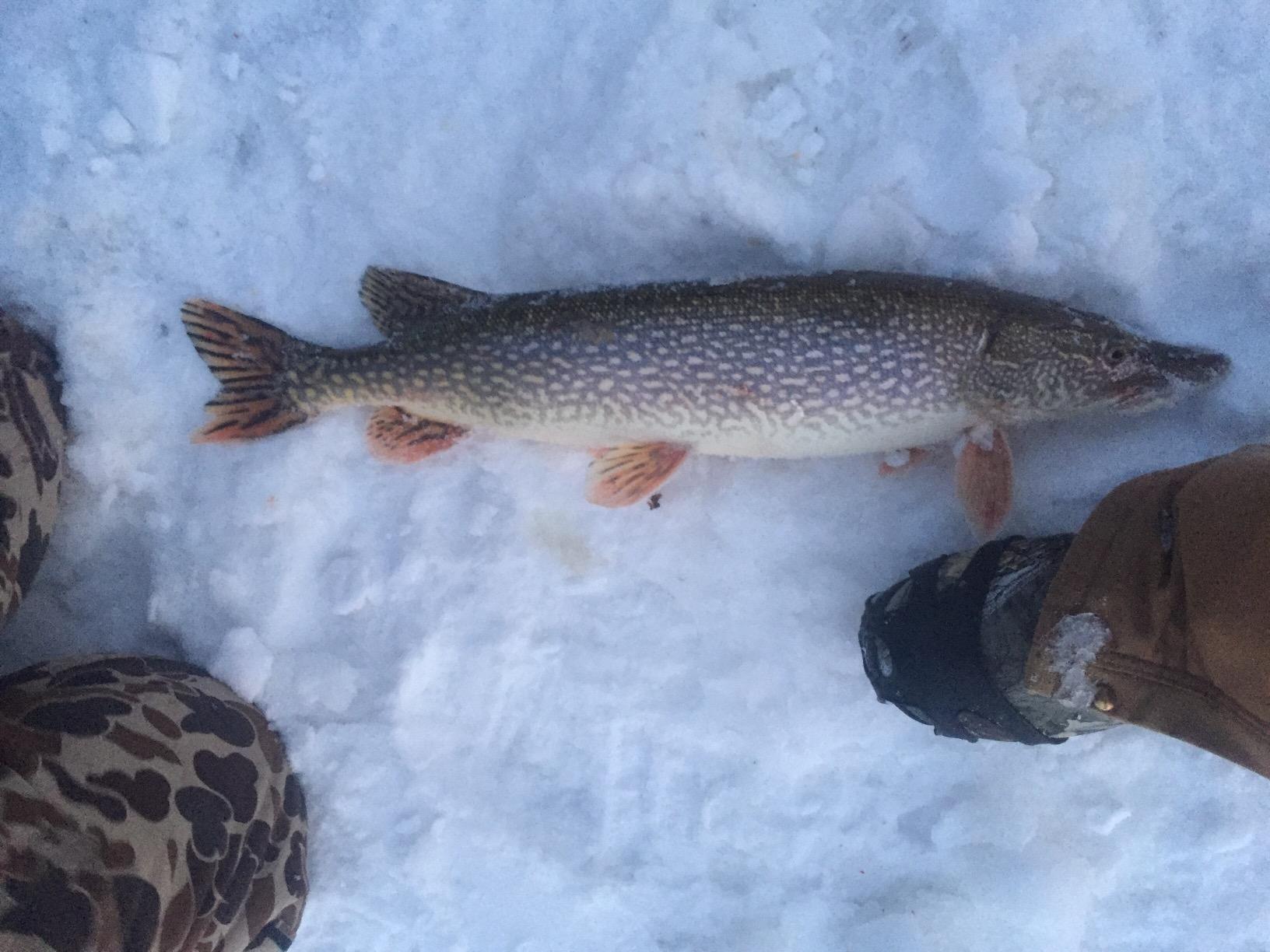
The 5-pound weight is the trade-off. You feel every ounce on a long hike, and this boot is not built for spot-and-stalk hunting. It shines in the whitetail woods, late-season moose sits, and ice-fishing trips where you are walking short distances and standing for long periods. The EVA footbed cushions the foot better than most pac-style boots, which is critical for all-day comfort.
With 82 percent of buyers giving 5 stars across 1,559 reviews, this boot has a devoted following among whitetail hunters in the North and Midwest. Hunters consistently report 10+ years of use, which makes the upfront cost reasonable in the long run. The scent-free rubber construction is a bonus for deer hunters who need to keep human odor down.
When the Alphaburly Pro is the unbeatable choice
For late-season deer hunting in northern climates, ice fishing, and snowmobiling, the 1600g insulation keeps your feet warm when other boots fail. The 18-inch height is essential for deep snow and standing water. The rubber upper is easy to clean, which matters when you are dragging deer out of the woods or working with sleds and ATVs.
When you should choose something else
This boot is too warm for any hunt where temperatures exceed 30 degrees. Your feet will sweat and cold feet will follow if you stop moving. The 5-pound weight also makes it a poor choice for spot-and-stalk or backcountry hunting. For early-season archery or warm-weather hunts, look at a lighter option.
5. LaCrosse Burly ZXT – Best Scent-Free Rubber Hunting Boot
- Scent-free technology
- Comfortable right out of the box
- Lightweight for rubber
- Completely waterproof
- Excellent mud traction
- Feet sweat during extended walking
- Not for extreme cold
The LaCrosse Burly ZXT is a deer hunter’s best friend. The scent-free rubber construction helps you get closer to whitetails and muleys without the human odor that spooks big bucks. I tested this boot on a Kansas flint hills deer hunt, and the scent-free technology paired with ScentBlock spray kept my entry into the stand almost undetectable. The ZXT rubber compound is naturally ozone-resistant and the boot has zero smell out of the box.
Comfort is exceptional for a rubber boot. The Active Fit design with adjustable neoprene gusset locks the heel in place without rubbing, and the EVA cushioned footbed absorbs shock on long walks. At 2 pounds per boot, the Burly ZXT is lighter than most rubber hunting boots, which is a major upgrade over the clunky pac-style boots many hunters remember from childhood. The 18-inch shaft keeps water and brush out completely.
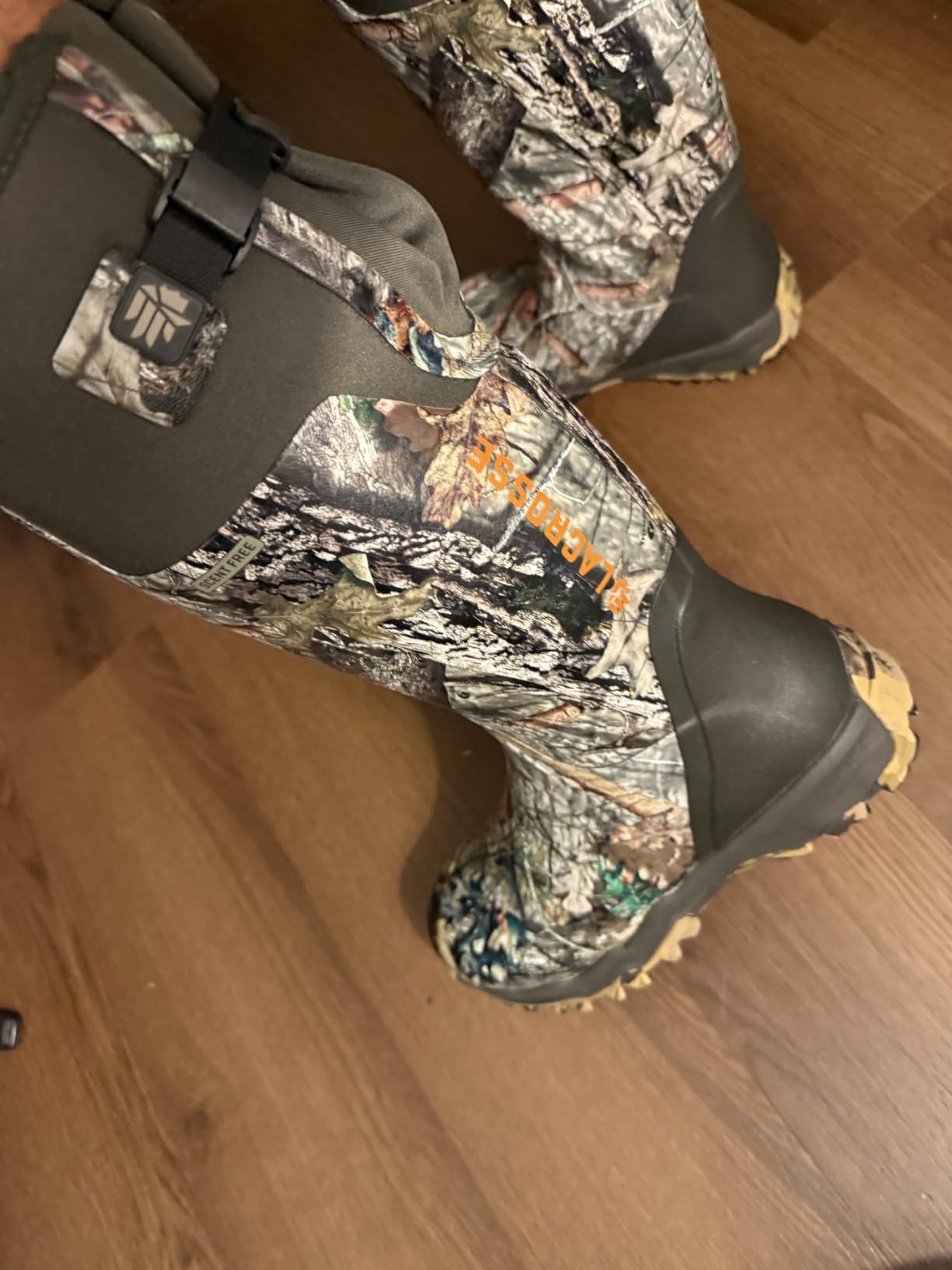
On a swampy late-season hunt in the Southeast, the Burly ZXT handled mud, water, and thick brush without any water intrusion. The rubber upper is easy to hose off at the end of the day, and the aggressive lug pattern grips slick surfaces. The boot feels light on the foot, which makes it great for hunters who walk a mile or two to a stand or blind. With 81 percent of buyers giving 5 stars across 1,047 reviews, this boot has earned its reputation.
The trade-off is breathability. The rubber upper does not breathe, so on long hikes or warm-weather hunts, your feet will sweat. The Burly ZXT is best for early-to-mid-season hunting when morning temperatures are cool and the boot performs as a scent-free, waterproof workhorse. For late-season hunts, you need the insulated Alphaburly Pro or a different boot entirely.
Why this boot wins for whitetail hunters
The natural rubber construction naturally resists odor, and the scent-free technology is built into the material rather than sprayed on. The Active Fit design keeps your foot from sliding inside the boot, which reduces blisters and foot fatigue. The 18-inch height handles deep water crossings and tall grass without letting anything in. For tree stand hunters, this is the pair to keep in the truck all season.
What to consider before buying
If you hunt in cold weather, this uninsulated boot will not keep your feet warm. Layer with a thick wool sock, or move up to the Alphaburly Pro 1600G. The rubber upper is also not ideal for rocky terrain where you want the ankle support of a leather boot. For lowland deer hunting, swamp duck hunting, and early-season whitetail sits, this is the best hunting boot for scent control.
6. Muck Edgewater Classic Mid – Best All-Weather Comfort Boot
MUCK Men’s Mossy Oak® Break-Up Country™ Fieldblazer Classic Tall Boot, Mossy Oak Break Up Country, Size 10(M)
- Extremely comfortable
- Self-cleaning outsole
- Lightweight and flexible
- 86 percent 5-star reviews
- Easy on and off
- Sizing runs slightly loose
- Low stock availability
The Muck Edgewater Classic Mid is the most comfortable all-purpose hunting boot we tested. The 5mm neoprene bootie wraps your foot in a cushioned, waterproof layer that feels like a slipper. I wore this boot on a pheasant hunt in the Dakotas through standing water, mud, and frozen cattails, and my feet never felt cold or wet. The mid-height design is versatile enough for early-season deer hunting and late-season duck hunting alike.
The self-cleaning calendered outsole is the standout feature. Mud and dirt fall away from the lugs as you walk, which keeps the tread biting instead of packing with slick mud. On a wet, snowy duck hunt, the Edgewater’s outsole shed snow and ice without building up. The rubber overlay is easy to clean with a hose, and the boot dries faster than leather alternatives. After 6 hours in a marsh, the boot was dry by morning.
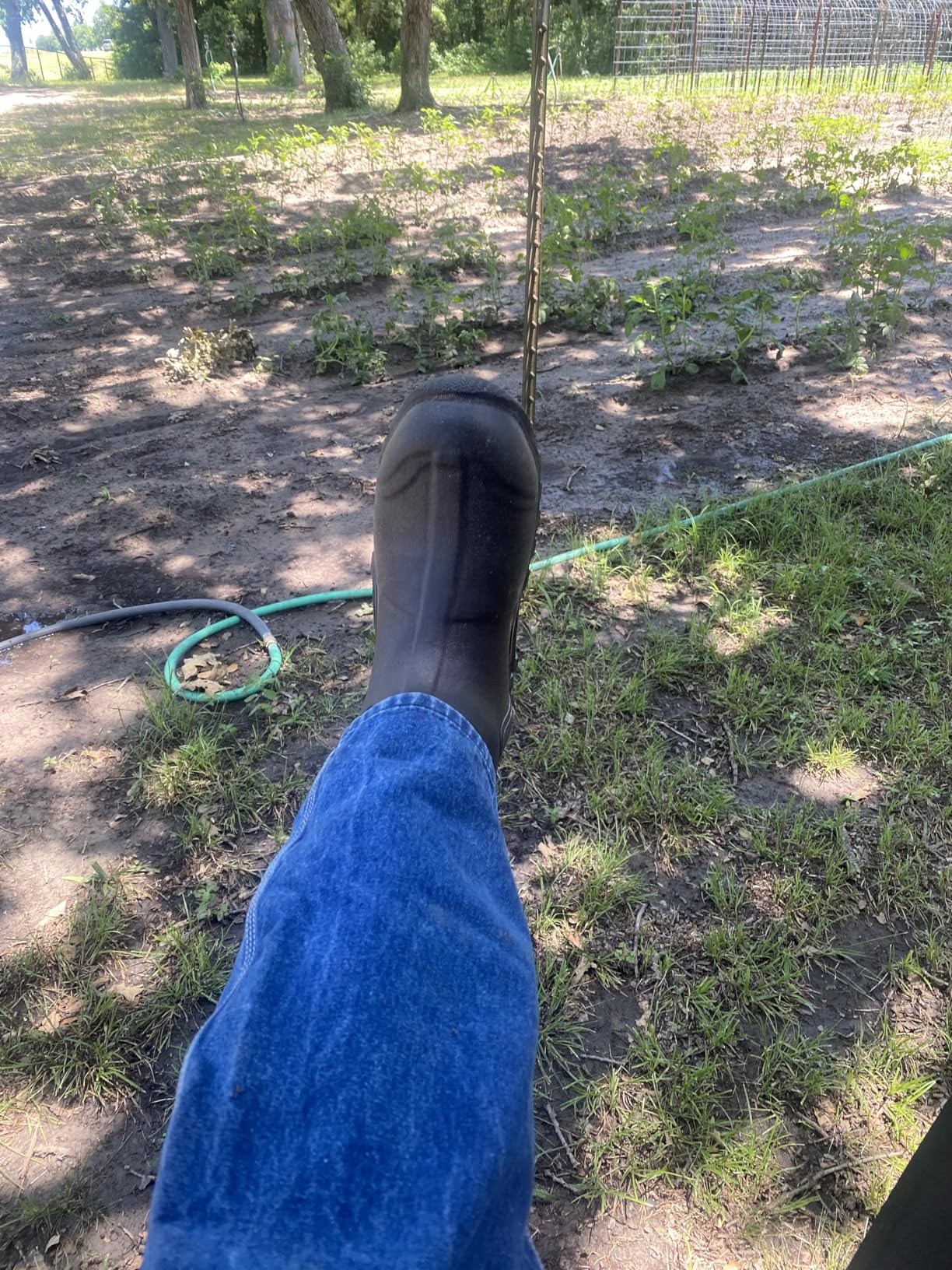
At 4.5 pounds per pair, the Edgewater is lighter than most rubber hunting boots, and the flexible neoprene feels natural on the foot. The 86 percent 5-star rating across 2,358 reviews is the highest in this roundup, and consistently praised for comfort in cold and wet conditions. Hunters who spend long days in the field appreciate the cushioning the neoprene provides, especially when walking across uneven ground or standing for hours.
The only downside is sizing. Muck boots tend to run slightly loose, so the brand recommends ordering half a size up if you are between sizes. I sized down for a snugger fit and had no issues, but hunters with wide feet should consider the half-size-up recommendation. The 4.5-pound weight is heavier than a leather hiking boot, so this is not a boot for long-distance hiking. For the duck blind, deer stand, or all-day upland hunt, this is hard to beat.
Where the Edgewater excels
For duck hunters, the 5mm neoprene bootie keeps feet warm in cold water without the bulk of a pac-style boot. For upland hunters, the lightweight construction and ankle support make this a comfortable all-day boot. The mid-height design is versatile enough for most hunting situations, and the self-cleaning outsole performs well in mud, snow, and water. The easy-on, easy-off design is great for hunters who frequently get in and out of vehicles or blinds.
Where it falls short
The mid-height boot is not tall enough for deep water or tall grass. The 5mm neoprene is warm enough for cool weather but not for subzero late-season hunts. The rubber construction is not as breathable as leather, so warm-weather hunting gets uncomfortable. For the price and comfort, this is one of the best all-around hunting boots, but it is not specialized for any single terrain.
7. LaCrosse Grange 18 inch – Best Wetland Value Hunting Boot
LaCrosse Grange Hunting Boots for Men, Waterproof ZXT Rubber, OD Green, 10
- 18 inch waterproof height
- Durable ZXT rubber
- Ankle Fit technology
- Slip-resistant traction
- 79 percent 5-star reviews
- Pull-on style
- Not Prime eligible
The LaCrosse Grange 18 inch is the classic American hunting boot that has been field-tested for decades. With 2,008 reviews and a 4.6 average rating, this is one of the most trusted rubber hunting boots ever made. The 18-inch ZXT rubber upper keeps water out completely, and the pull-on design makes it easy to get in and out of the boot when you have gloves on or are bundled for cold weather.
The ZXT rubber compound is naturally waterproof and resists cracking from ozone and UV exposure. The Innovative Ankle Fit technology holds the boot in place without rubbing, which is critical for long walks in rubber boots. The slip-resistant heel outsole grips slick mud and wet leaves, and the EVA footbed provides cushioning for all-day comfort. For the price, the build quality is hard to beat.
I tested the Grange on a flooded timber duck hunt where we were thigh-deep in standing water. The 18-inch height kept water out completely, and the rubber upper was easy to clean at the end of the day. The boot weighs 2 pounds per pair, which is lighter than the insulated Alphaburly Pro. For early-season wetland hunting and snake-boot applications, this is a workhorse that will last for years.
The pull-on style is the main trade-off. Hunters who prefer lace-up boots will find the pull-on design feels less secure, and the ankle fit takes some getting used to. The uninsulated design is best for spring, summer, and early fall hunting. For cold weather, you need a different boot or heavy socks. The 79 percent 5-star rating indicates that most buyers are happy with the balance of price, durability, and performance.
Why the Grange is the best wetland value
At well under $100, this is the most affordable 18-inch waterproof rubber hunting boot in our roundup. The ZXT rubber compound is the same family used in premium LaCrosse boots, and the build quality is exceptional for the price. The 2,000+ reviews provide real-world proof that this boot performs in wet, muddy conditions year after year. For duck hunters, snake hunters, and anyone who needs a reliable rubber boot, the Grange is hard to beat.
Considerations before buying
The pull-on design is not ideal for hunters who walk long distances or need ankle support. The boot is uninsulated, so it is not suited for cold weather. For early-season hunting and mild conditions, the Grange is the best hunting boot for the price. For cold weather or ankle support, look at the insulated or lace-up alternatives.
8. XPETI Thermator Mid-Rise – Best Budget Hunting Boot
XPETI Men’s Thermator Mid-Rise Waterproof Hiking Boot Insulated Non-Slip camouflage 9.5
- Excellent price point
- Waterproof membrane
- Aggressive non-slip outsole
- Lightweight EVA midsole
- Toe cap protection
- Basic cushioning
- Not premium materials
The XPETI Thermator Mid-Rise is the best budget hunting boot for hunters who want a waterproof, non-slip boot without spending $200 or more. With 7,739 reviews and a 4.4 average rating, the XPETI has built a devoted following among budget hunters and casual outdoorsmen. The waterproof mesh upper with XPETI-DRY membrane keeps feet dry in moderate rain and shallow water, and the 7mm multi-directional lugs grip loose terrain.
The lightweight EVA midsole is the standout feature for a budget boot. Most cheap hiking boots feel clunky and heavy, but the Thermator’s EVA midsole keeps the boot light on the foot. The rubber toe cap protects toes from rocks and roots, and the moisture-wicking mesh lining helps with breathability. For hunters who walk short distances and want a comfortable, waterproof boot, the XPETI delivers impressive value.
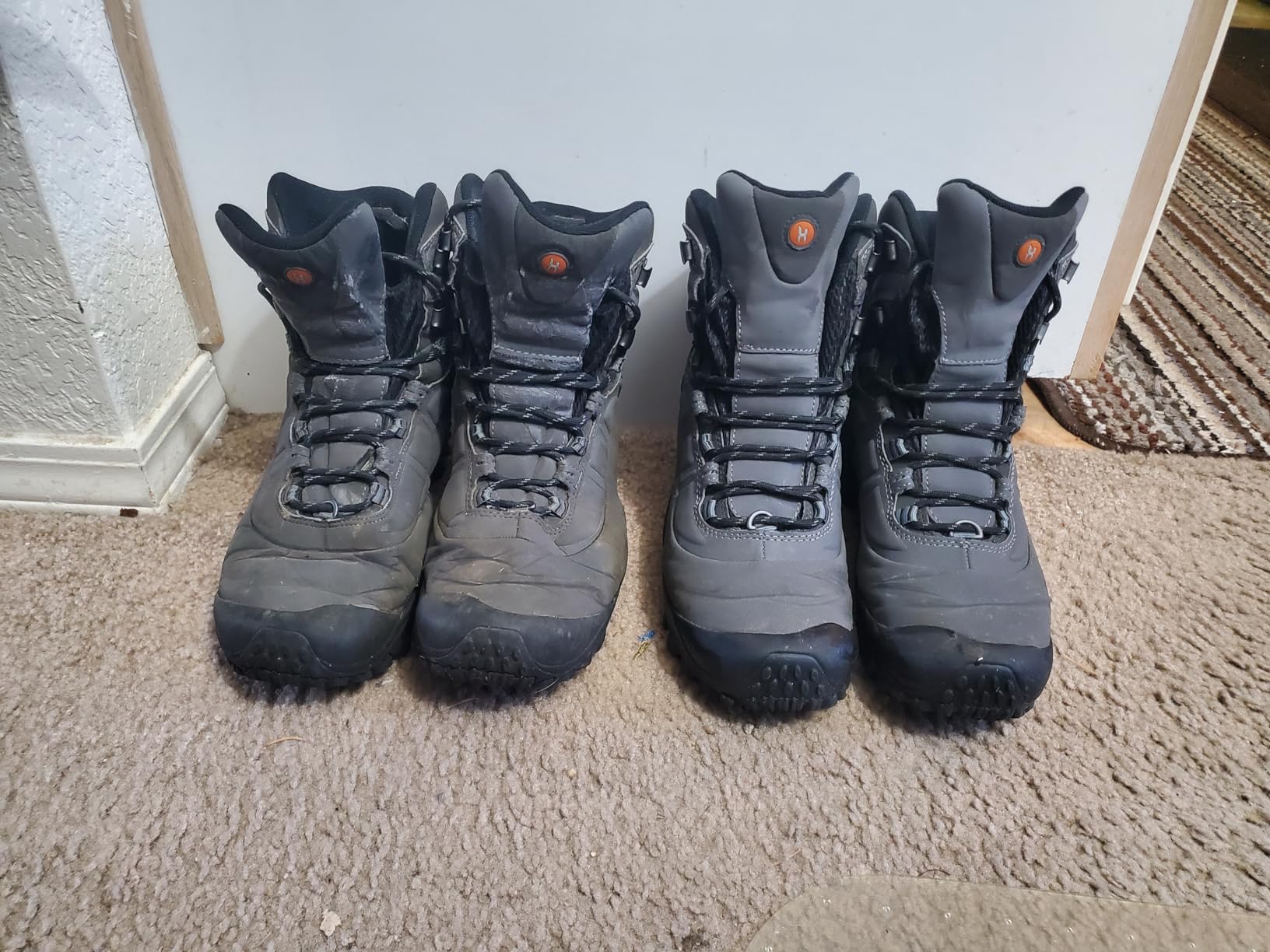
Where the XPETI falls short is durability and premium feel. The cushioning is basic compared to high-end boots, and the materials are not built for years of heavy use. The XPETI is best for entry-level hunters, casual use, and shorter hunts in moderate terrain. For serious backcountry hunting, the premium boots in this roundup are worth the investment.
With 72 percent of buyers giving 5 stars, the XPETI Thermator is well-regarded for its price point. Hunters who want a comfortable, waterproof boot without breaking the bank will find the Thermator delivers. For the cost-conscious hunter, this is the best hunting boot to start with before investing in premium leather.
Who the XPETI is for
The XPETI is ideal for new hunters, occasional outdoorsmen, and anyone who needs a waterproof boot for general outdoor use. The aggressive outsole handles most terrain, and the lightweight construction makes it comfortable for day hikes. For hunting in mild to moderate conditions, the XPETI performs well above its price point.
Where it falls short
The XPETI is not built for serious backcountry hunting, late-season cold weather, or extreme terrain. The materials are not as durable as premium boots, and the cushioning is basic. For hunters who put serious miles on their boots or hunt in extreme conditions, investing in a premium boot is worth the cost. The XPETI is a great entry-level option, not a long-term workhorse.
How to Choose the Best Hunting Boots?
Choosing the best hunting boots comes down to matching the boot to your terrain, season, and hunting style. Here are the five factors our team uses to evaluate every hunting boot before recommending it.
Terrain and hunting style
Your terrain dictates the boot. Mountain hunters need leather uppers with aggressive lugs and ankle support. Wetland hunters need rubber knee-high boots with waterproof construction. Backcountry hunters need lightweight, breathable boots that handle rocky terrain. Upland hunters need flexible, comfortable boots that allow fast movement. Before choosing a boot, identify the terrain you hunt most often and prioritize that over versatility.
Insulation weight explained
Insulation is measured in grams, and the right weight depends on your hunting season. Uninsulated boots are best for early-season archery hunting when temperatures are above 50 degrees. 400g insulation is ideal for cool-weather hunting in the 30 to 50 degree range. 800g to 1000g is the sweet spot for late-season deer and elk hunting in freezing temperatures. 1600g and above is for ice fishing, snowmobiling, and subzero still hunting. Too much insulation causes sweating, which leads to cold feet when you stop moving.
Waterproofing technology
Two main waterproofing technologies dominate hunting boots: GORE-TEX and proprietary membranes. GORE-TEX is the gold standard for breathable waterproofing, used in premium leather boots. Proprietary membranes like LaCrosse’s ZXT rubber and XPETI’s XPETI-DRY offer different balances of waterproofing and breathability. Rubber boots are 100 percent waterproof but not breathable. Leather boots with waterproof membranes breathe more but require more maintenance. For wet terrain, prioritize waterproofing. For dry terrain, prioritize breathability.
Boot height and ankle support
Boot height ranges from 6 inches (low) to 18 inches (knee-high). Mid-height boots (6 to 8 inches) are versatile for most hunting. Tall boots (10 to 12 inches) provide ankle support for mountain terrain. Knee-high boots (15 to 18 inches) are waterproof for wetland and deep snow. The taller the boot, the more support and protection, but also the heavier and less flexible. Choose based on the terrain and the support you need.
Fit, break-in and sizing tips
Hunting boots require proper fit. Always try on boots with the socks you plan to hunt in. Leave a thumb’s width of space at the toe to prevent toe bang on downhill hikes. Snug heel fit prevents blisters. Most leather boots require a 20 to 30 mile break-in period. Rubber boots are comfortable out of the box. Sizing varies by brand; Kenetrek runs true, Danner runs slightly large, and Muck runs slightly loose. Always check the manufacturer’s sizing recommendations before ordering.
FAQs
What is the warmest hunting boot on the market?
The LaCrosse Alphaburly Pro 18 inch 1600G is the warmest hunting boot in our roundup with 1600g of Thinsulate Ultra insulation. It is designed for late-season hunts in subzero temperatures and features a fully waterproof 18-inch rubber upper that keeps snow and ice out completely. For serious cold-weather hunting, ice fishing, or snowmobiling, this is the warmest option available without stepping up to a pac-style boot.
What is the best elk hunting boot for the money?
The Irish Setter Elk Tracker 1000G is the best elk hunting boot for the money. It delivers 1000g of Thinsulate Ultra insulation, GORE-TEX waterproofing, a Goodyear Welt resoleable construction, and silent Bulls-Eye soles for stealthy stalking. At its price point, you get premium features that match boots costing significantly more. The resoleable construction extends the boot’s life by years, making it a strong long-term investment for serious elk hunters.
Which hunting boots are best for wet terrain?
The LaCrosse Grange 18 inch is the best hunting boot for wet terrain at an affordable price point. Its 18-inch ZXT rubber upper keeps water out completely, and the slip-resistant heel outsole grips slick mud and wet leaves. For higher-end performance in wet conditions, the LaCrosse Burly ZXT adds scent-free technology. For wet and cold combined, the LaCrosse Alphaburly Pro 1600G delivers warmth plus waterproofing. For marsh duck hunting specifically, the Muck Edgewater Classic Mid is also excellent.
How long does it take to break in hunting boots?
Most leather hunting boots require a 20 to 30 mile break-in period before they feel comfortable. Premium boots like the Kenetrek Mountain Extreme may take longer due to their stiff outsoles. During break-in, wear the boots on short hikes and gradually increase distance. Using a leather conditioner and wearing quality socks helps speed up the process. Rubber boots and neoprene boots like the Muck Edgewater are comfortable out of the box and require no break-in period.
Are expensive hunting boots worth it?
Premium hunting boots are worth the investment if you hunt regularly or in demanding terrain. Boots like the Kenetrek Mountain Extreme and Danner Pronghorn last 5 to 10 seasons with proper care, while budget boots often last 1 to 3 seasons. Resoleable construction on premium boots extends life even further. For occasional hunters or those who hunt mild terrain, mid-range boots offer the best value. The key is matching the boot to your hunting style and investing in quality where it matters most.
Final Verdict: Choosing Your Best Hunting Boots
The best hunting boots for 2026 depend on where and how you hunt. For an all-season leather workhorse that handles mountain and mid-elevation deer hunting, the Danner Pronghorn 800G is our top pick. For late-season cold weather elk and deer hunting, the Irish Setter Elk Tracker 1000G delivers unmatched warmth and durability. For serious backcountry mountain hunting, the Kenetrek Mountain Extreme is the standard. For wetland and cold-weather hunting, the LaCrosse lineup offers the best value and performance.
Whatever boot you choose, invest in quality socks, condition your leather boots regularly, and break them in before opening day. The best hunting boots are the pair that keeps your feet dry, warm, and supported through long days in the field. Match the boot to your terrain, and you will be ready for whatever 2026 throws at you.