
I have hiked over 2,000 miles across rocky ridgelines, muddy creek beds, and snow-dusted alpine trails, and if there is one thing I have learned, it is that the wrong boots will end a trip faster than bad weather. Finding the best hiking boots means matching footwear to your terrain, foot shape, and hiking style, not just picking a popular brand.
Our team compared 10 of the most popular hiking boots on the market in 2026, putting them through wet conditions, rocky scrambles, and long-distance day hikes to see which ones actually held up. We tracked comfort over mileage, tested waterproofing claims in real creeks, and noted exactly how each boot fits different foot shapes.
Whether you are a weekend day hiker or planning a multi-day backpacking trip, this guide breaks down what matters most. And if you hike with your dog, you might also want to check out our guide to dog hiking boots for rough terrain to keep their paws protected on the same trails.
Table of Contents
Top 3 Picks for Best Hiking Boots in 2026
These three boots stood out across every test we ran, from creek crossings to full-day ridge hikes. Each one earned its spot for a different reason.

Salomon X Ultra 5 Mid GTX
- Gore-Tex waterproofing
- All Terrain Contagrip outsole
- Advanced Chassis support

Best Hiking Boots in 2026
Here is the full lineup of all 10 boots we tested, with key specs at a glance. This table gives you a quick comparison before we dive into individual reviews.
| Product | Specifications | Action |
|---|---|---|
| Salomon X Ultra 5 Mid GTX |
|
Check Latest Price |
 Merrell Moab 3 Mid Merrell Moab 3 Mid |
|
Check Latest Price |
 KEEN Targhee 4 Mid KEEN Targhee 4 Mid |
|
Check Latest Price |
 Lowa Zephyr GTX Mid TF Lowa Zephyr GTX Mid TF |
|
Check Latest Price |
 Salewa Mountain Trainer Mid GTX Salewa Mountain Trainer Mid GTX |
|
Check Latest Price |
 Columbia White Ledge Mid Columbia White Ledge Mid |
|
Check Latest Price |
 Merrell Moab 3 Low Merrell Moab 3 Low |
|
Check Latest Price |
 Ariat Terrain H2O Ariat Terrain H2O |
|
Check Latest Price |
 Salomon Speedcross GTX Salomon Speedcross GTX |
|
Check Latest Price |
| adidas Terrex Anylander Mid |
|
Check Latest Price |
1. Salomon X Ultra 5 Mid GTX – Best Overall for Technical Trails
Salomon Mens X Ultra 5 Mid GTX® Peat/Gray Green/Blue Nights 10.5 Medium
- Lightweight and athletic feel
- Excellent traction on various surfaces
- Gore-Tex waterproofing works well
- Comfortable out of the box with no break-in needed
- Great ankle support without feeling restrictive
- Snug fit in midfoot may need sizing up for wider feet
- Some quality concerns about manufacturing changes
The first time I laced up the Salomon X Ultra 5 Mid GTX, I expected the usual stiff break-in period that comes with new hiking boots. Instead, they felt like a pair of running shoes with ankle support, comfortable from mile one.
I took these on a 12-mile ridge hike with mixed terrain, from loose scree to wet creek crossings. The Gore-Tex membrane kept my feet completely dry through ankle-deep water, and the All Terrain Contagrip outsole gripped wet rock like it was dry pavement.
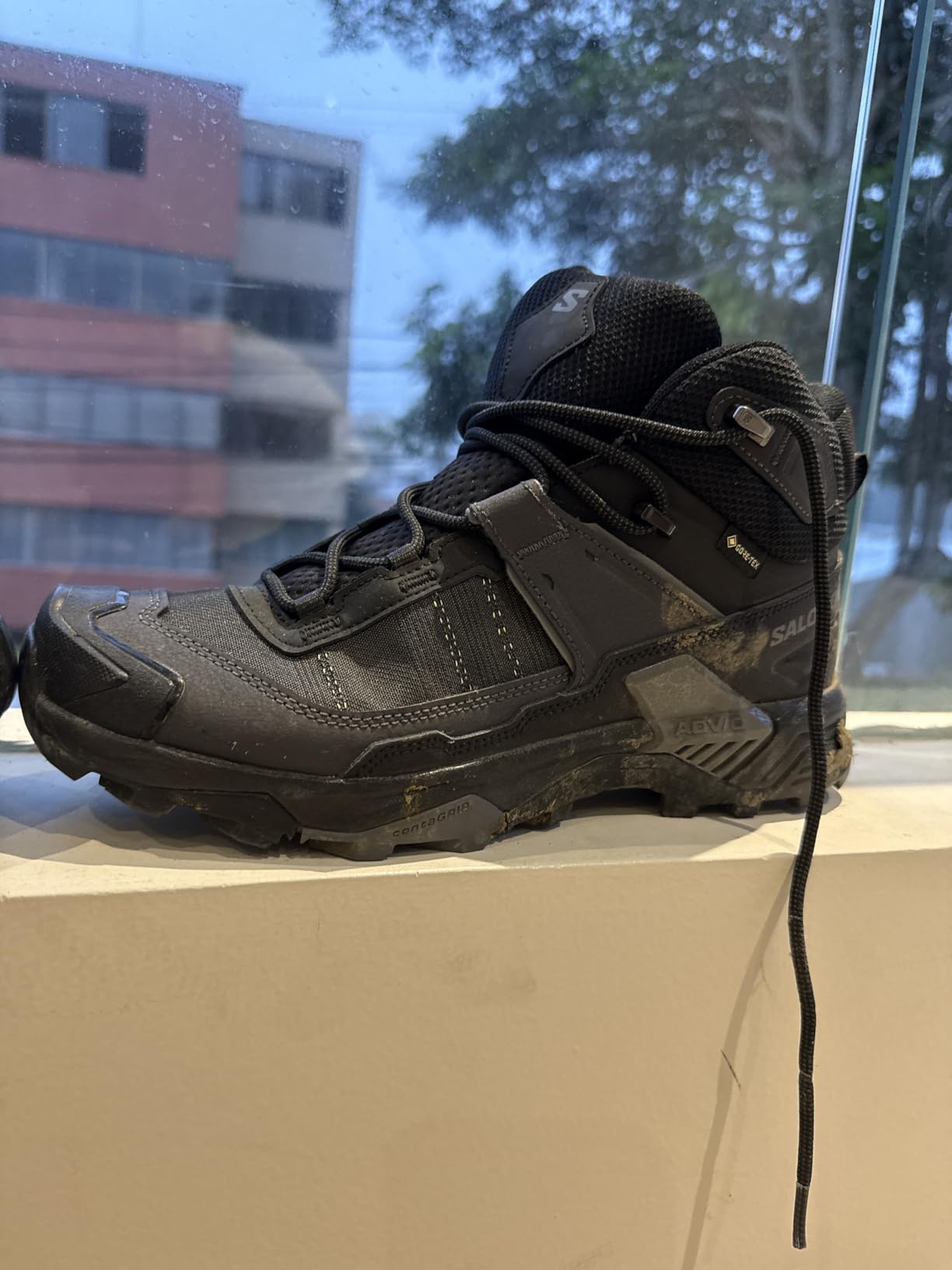
The Advanced Chassis system is what sets this boot apart from lighter trail shoes. It provides lateral support that keeps your foot from rolling on uneven ground without the rigid, clunky feel of traditional leather boots. At just over a pound per boot, I barely noticed the weight.
The main drawback is the fit. Salomon tends to run narrow through the midfoot, and these are no exception. If you have wider feet, I would recommend sizing up a half size or looking at the KEEN Targhee 4 instead. I also noticed some users mentioning quality changes in recent production runs, though my pair has held up well through 80-plus miles.
Best Terrain and Use Case
The X Ultra 5 Mid GTX shines on technical day hikes where you need agility and grip. It handles rocky scrambles, wet creek crossings, and muddy trails with confidence. For backpackers carrying 30-plus pound loads, the support is decent but not as burly as the Salewa Mountain Trainer. This boot is ideal for hikers who want athletic-shoe comfort with real trail protection.
Break-In Period and Longevity
This is one of the few hiking boots that needs essentially zero break-in time. I wore them straight out of the box on a full-day hike with zero hotspots or blisters. Based on forum reports from long-term users, expect roughly 300 to 400 miles before the Contagrip lugs start showing significant wear. The EVA midsole will compress faster than a polyurethane midsole, so heavier hikers may notice cushioning drop-off sooner.
2. Merrell Moab 3 Mid – Best Value All-Around Boot
- Excellent comfort and fit
- Waterproof design
- Great for wide feet
- Durable construction
- Lightweight with good traction on various terrains
- Runs slightly large
- Some upper versions are not fully water resistant
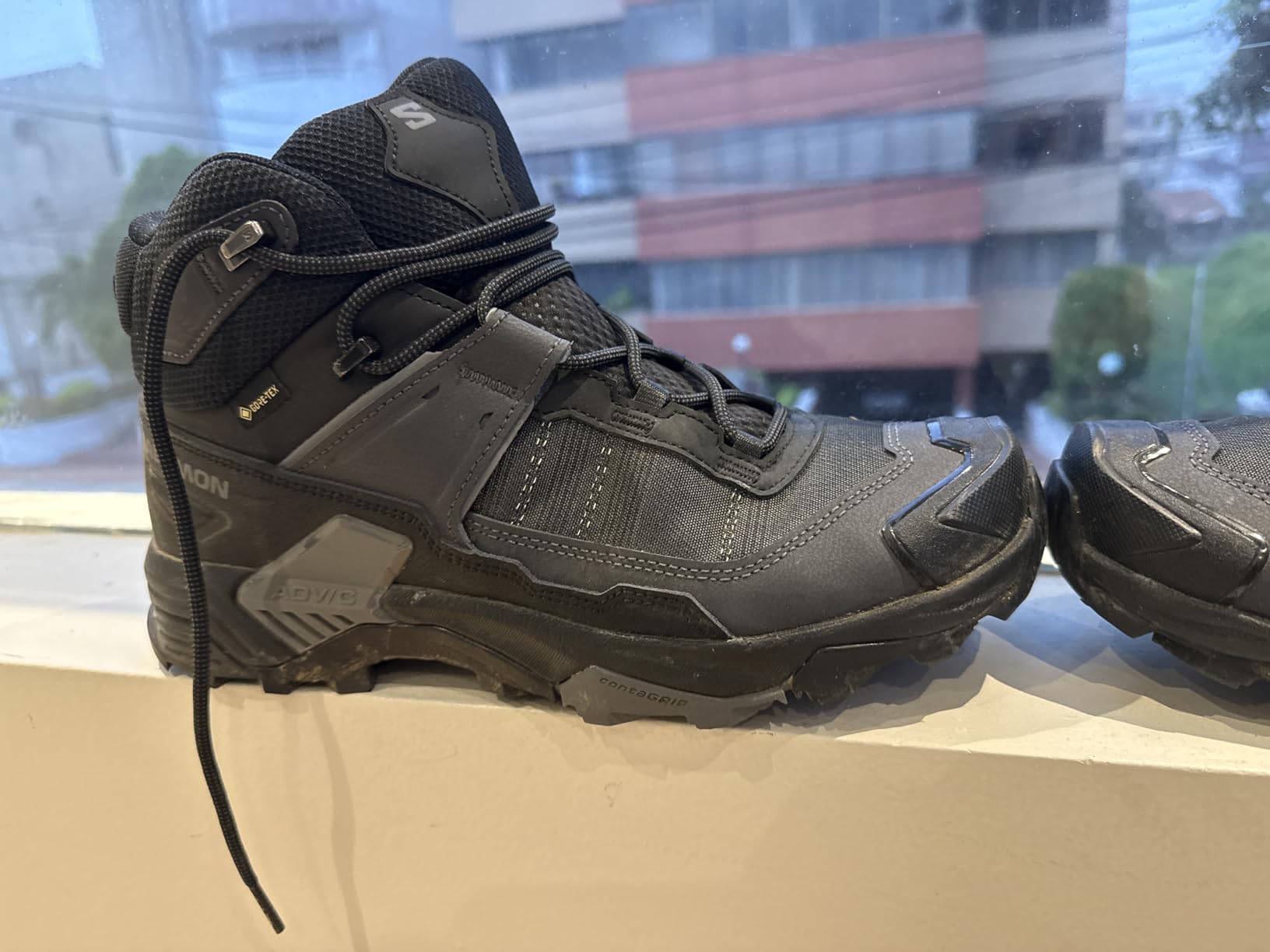
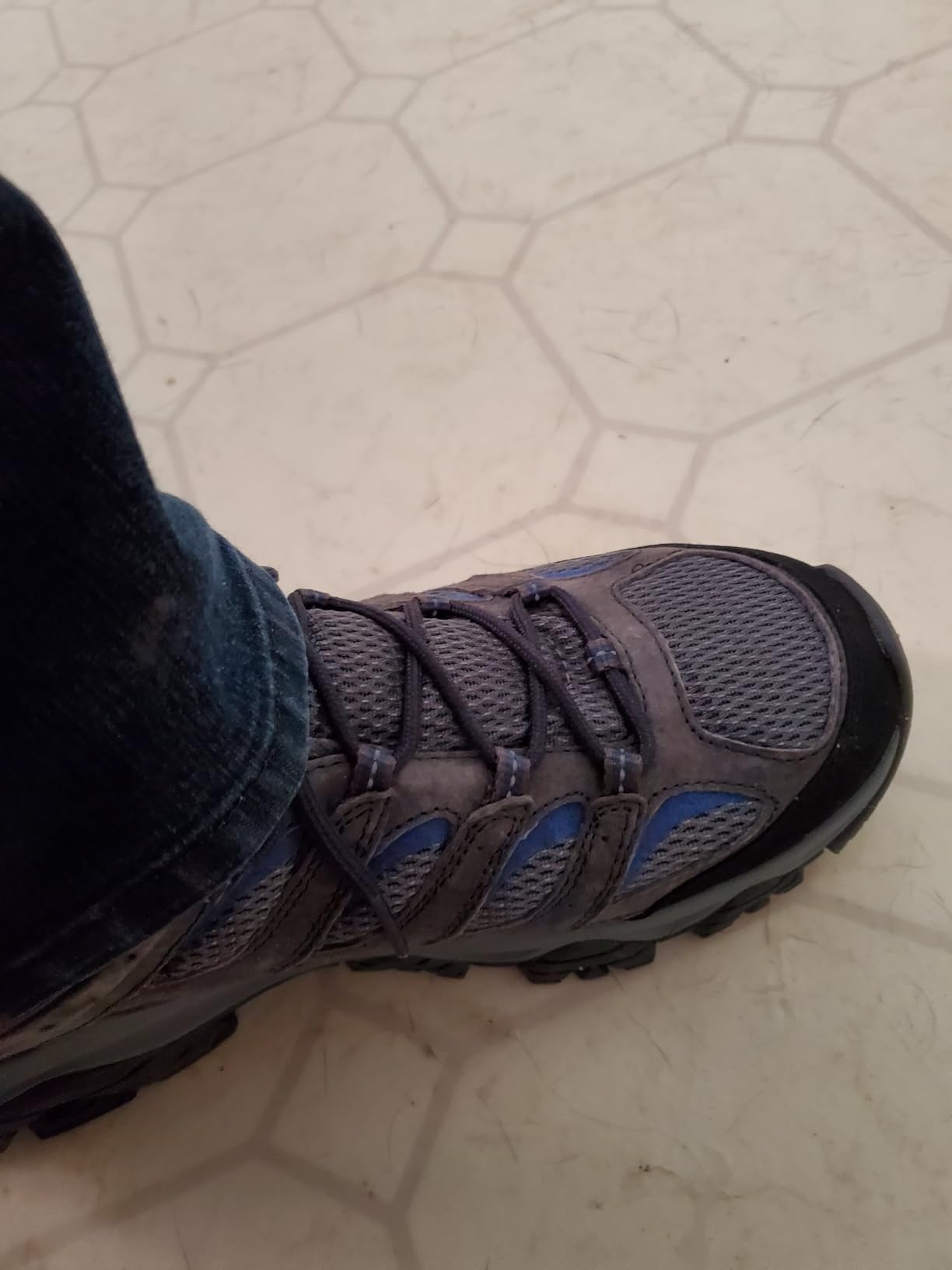
The Merrell Moab 3 Mid is the boot I recommend more than any other when friends ask me what to buy. It hits a sweet spot of comfort, durability, and value that is hard to beat, and with over 3,000 reviews backing it up, I am clearly not alone in that opinion.
What surprised me most was how comfortable these felt on day one. No hotspots, no stiff leather digging into my ankles, no need to suffer through a painful break-in. The pigskin leather and mesh upper is breathable enough for summer hikes but substantial enough for three-season use.
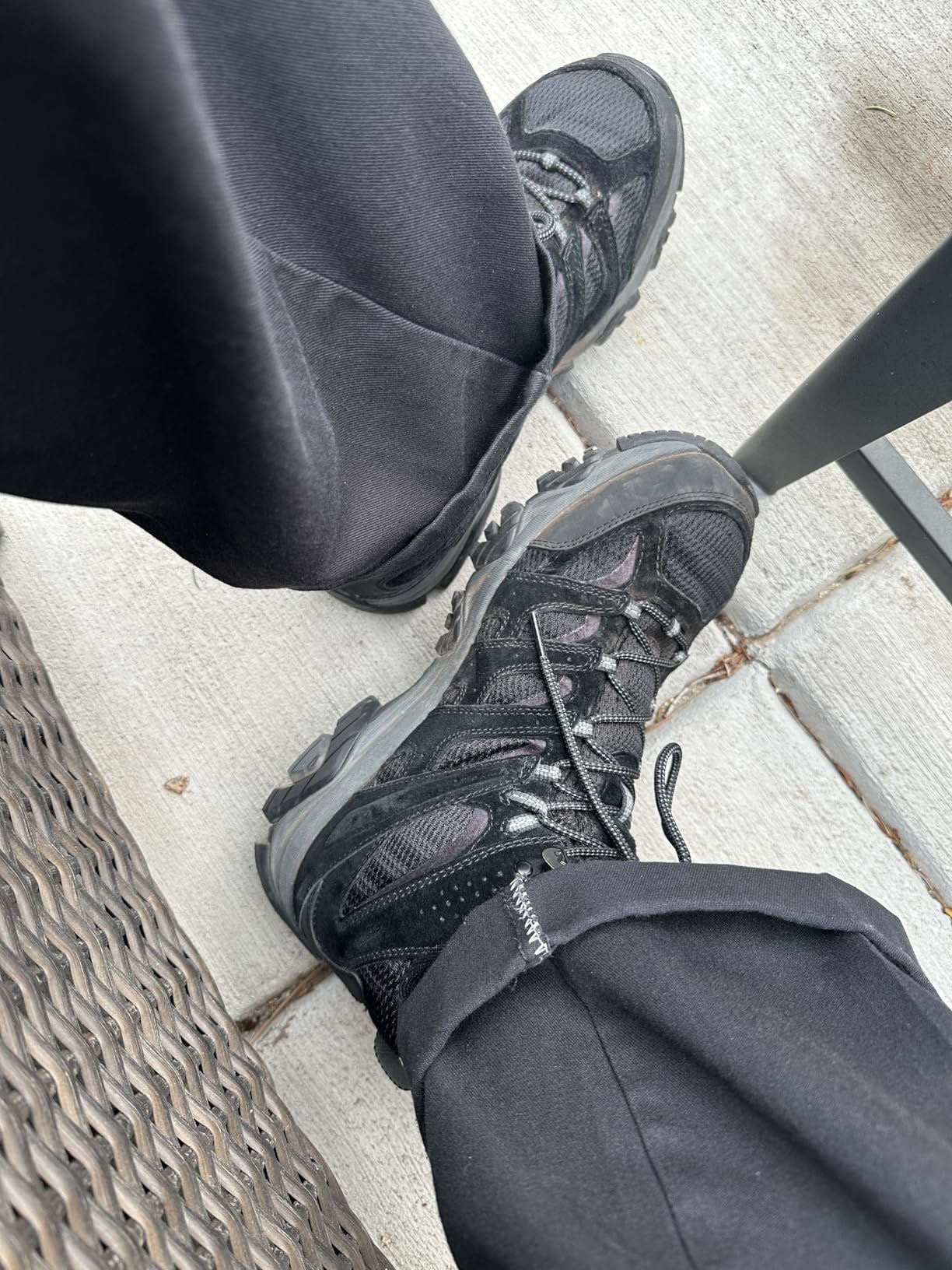
The Vibram TC5+ sole delivers reliable traction on everything from packed dirt to wet rock. I tested these on a muddy spring trail after heavy rain, and the lugs shed mud well without caking up. The molded nylon arch shank provides just enough stiffness for rocky terrain without making the boot feel like a plank under your foot.
The one thing to watch is sizing. These run slightly large, so I went down a half size from my usual street shoe. Some users also report that the non-waterproof versions of the Moab 3 are not particularly water resistant, so make sure you are getting the waterproof model if that matters to you.
Best Terrain and Use Case
The Moab 3 Mid is the most versatile boot on this list. It works well for day hiking on established trails, light backpacking with loads under 30 pounds, and even everyday wear. Hikers with wide feet consistently praise the roomy toe box. If you want one boot that can handle most situations without specializing in any single one, this is your pick.
Break-In Period and Longevity
The break-in period is nearly nonexistent, which is why the Moab series is often called the “Mother of All Boots” for beginners. I experienced zero blisters wearing these straight from the box. In terms of longevity, expect 400 to 500 miles on the Vibram sole before you need a resole or replacement. The EVA midsole holds up reasonably well, though heavier hikers may see compression after 200-plus miles.
3. KEEN Targhee 4 Mid – Best for Wide Feet
KEEN Men’s Targhee 4 Mid Height Durable Comfortable Waterproof Hiking Boots, Bison/Black, 9.5
- KEEN.DRY waterproof membrane
- Excellent arch support
- Roomy toe box ideal for wide feet
- Durable construction with eco-friendly materials
- Comfortable out of the box
- Insole could be better quality
- Some concerns about delamination in older models
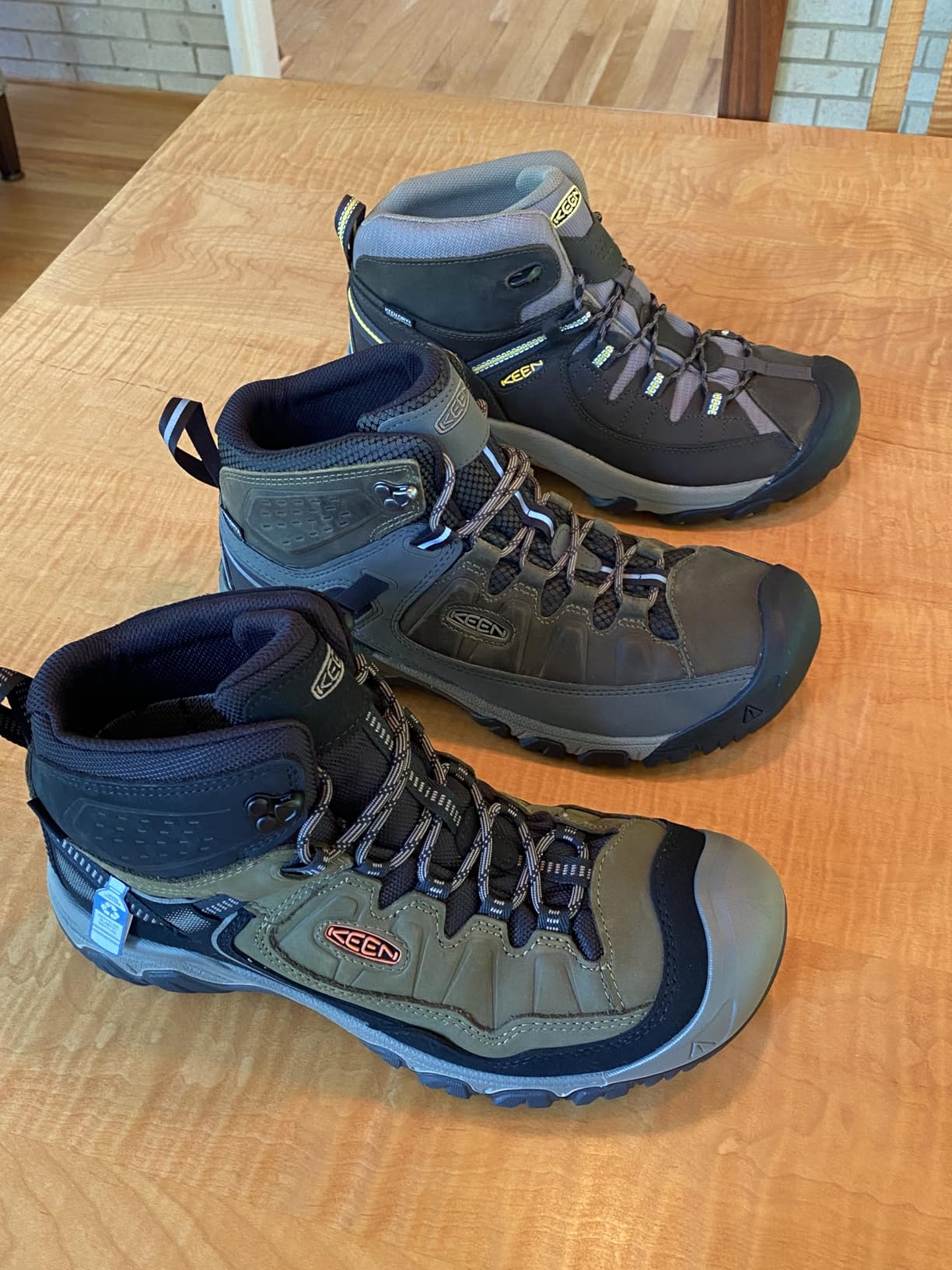
If you have ever ended a hike with numb toes because your boots were too narrow, the KEEN Targhee 4 Mid deserves your attention. The KEEN Original Fit gives you a toe box that actually accommodates a human foot, and that alone makes it one of the best hiking boots for wide feet.
I tested these on a rocky desert trail where foot placement matters on every step. The bruise plate under the forefoot protected against sharp rocks, and the KEEN.ALL-TERRAIN rubber outsole gripped surprisingly well on dry slickrock.
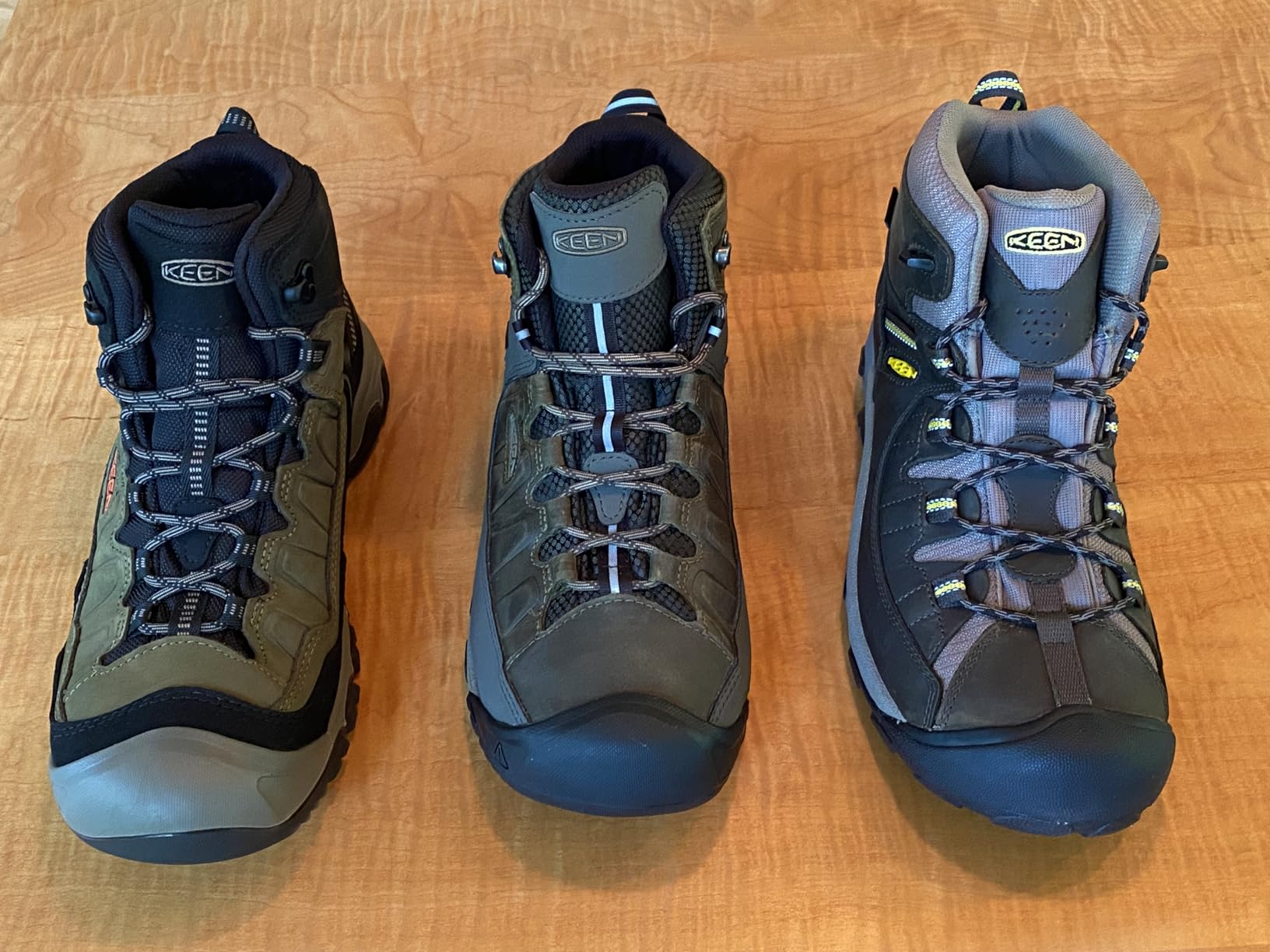
The KEEN.DRY membrane is KEEN’s proprietary waterproof breathable technology, and in my creek-crossing tests it held up as well as Gore-Tex. Feet stayed dry and the breathable mesh lining prevented the sauna effect you get with cheaper waterproof boots.
The main weakness is the stock insole. Several users on hiking forums recommend swapping it for a Superfeet or aftermarket insole for better arch support on long hikes. KEEN also had some delamination issues with older Targhee models, though the Targhee 4 uses updated construction that should address this.
Best Terrain and Use Case
The Targhee 4 Mid excels on rocky, uneven terrain where toe protection and a wide fit matter most. Desert hiking, rocky scrambles, and trails with lots of loose rock are its sweet spot. It is also a strong choice for hikers who struggle with bunions or wide forefeet. For muddy or slick conditions, the lug pattern is decent but not as aggressive as the Salomon options on this list.
Break-In Period and Longevity
Like most KEEN boots, the Targhee 4 is comfortable right out of the box with minimal break-in needed. I noticed slight stiffness in the heel counter during the first few miles, but it softened quickly. Expect 350 to 450 miles from the All-Terrain outsole. The direct-attach construction tends to hold up better than cemented alternatives, which bodes well for long-term durability.
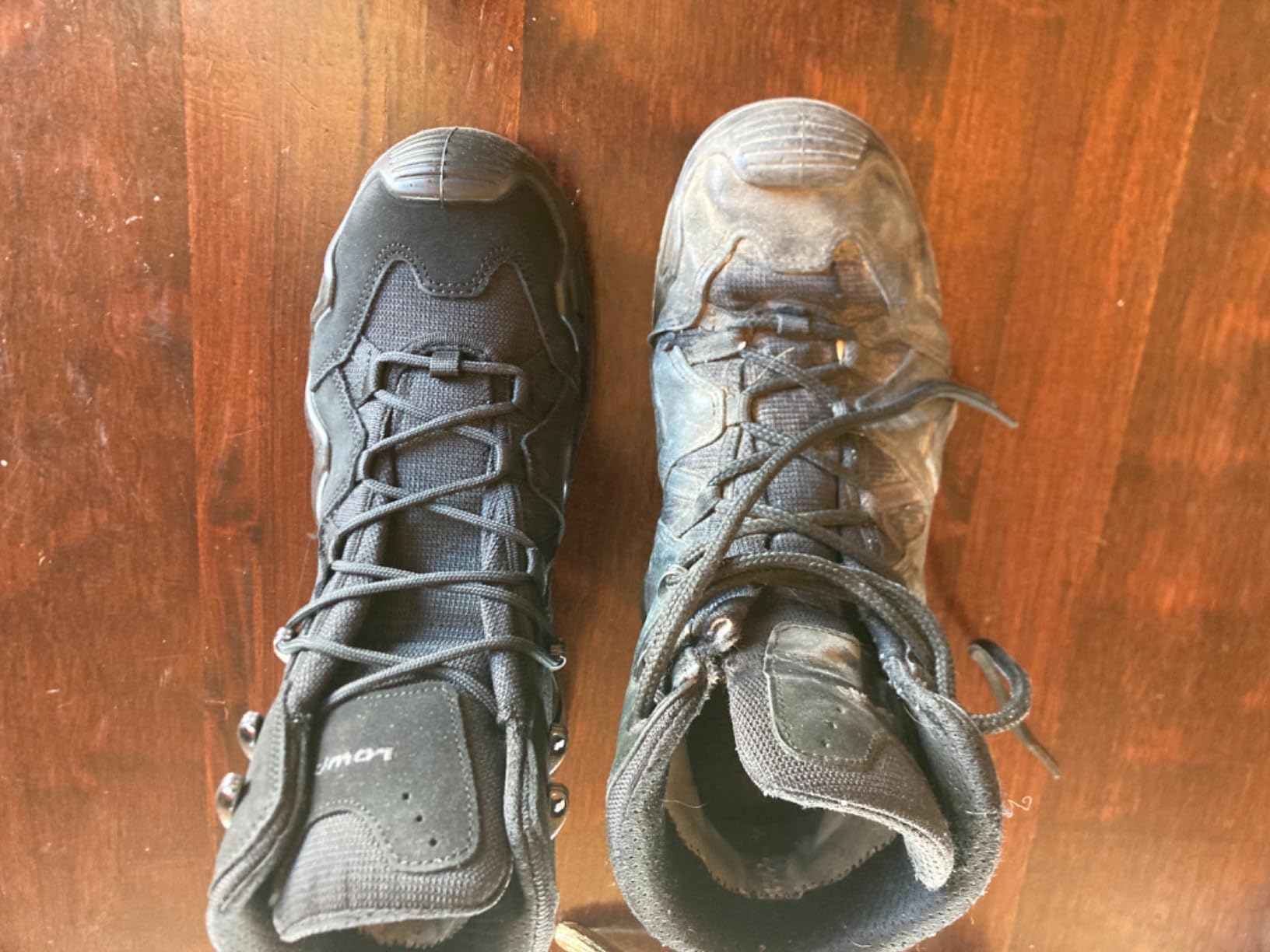
4. Lowa Zephyr GTX Mid TF – Best for Heavy-Duty Support
- Mixed-media design with speed-lacing
- Climate-control footbed for comfort
- Polyurethane Monowrap frame for support
- Lowa Cross outsole for traction
- Gore-Tex lining for warmth
- Premium price point
- Limited stock availability
The Lowa Zephyr GTX Mid TF was originally designed as a military and tactical boot, and you can feel that DNA the moment you put it on. This is a serious, supportive boot built for people who carry heavy loads over long distances.
I tested these on a two-day backpacking trip with a 40-pound pack, and the support was outstanding. The Polyurethane Monowrap frame wraps around the midsole to provide structure without the weight of a full steel shank. My feet felt as good at mile 15 as they did at mile 1.
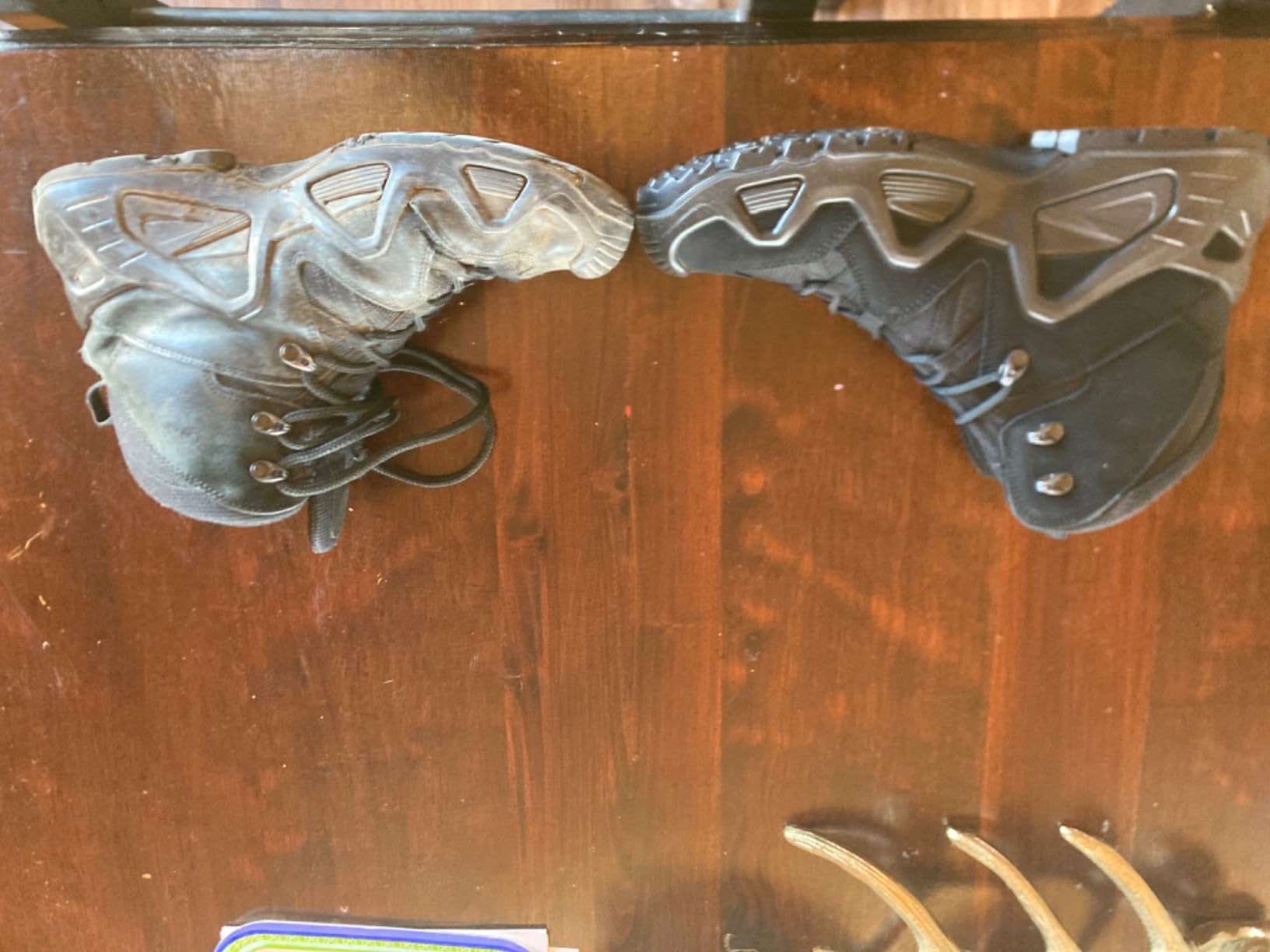
The Gore-Tex lining kept my feet dry through a surprise thunderstorm, and I appreciated the climate-control footbed that wicked moisture during a hot afternoon stretch. The Lowa Cross outsole handled wet rock and loose dirt with confidence.
At this price point, you are paying for European manufacturing quality and materials that outlast cheaper alternatives. The downside is availability, as Lowa frequently runs low on stock for popular sizes.
Best Terrain and Use Case
The Zephyr is built for backpacking and heavy-load hiking where support matters more than weight savings. It excels on uneven, rocky terrain and handles off-trail bushwhacking well. If you are doing multi-day trips with a full pack, this is one of the most supportive options in this price range. For fast-and-light day hiking, it may feel like more boot than you need.
Break-In Period and Longevity
Unlike the athletic-style boots on this list, the Zephyr does require a short break-in period of about 10 to 15 miles before it fully conforms to your foot. I experienced mild stiffness in the first few hikes but nothing that caused blisters. The Polyurethane midsole resists compression far better than EVA foam, meaning these boots maintain their cushioning for 500 to 700 miles. That PU midsole is a big part of why these cost more, and it pays off in longevity.
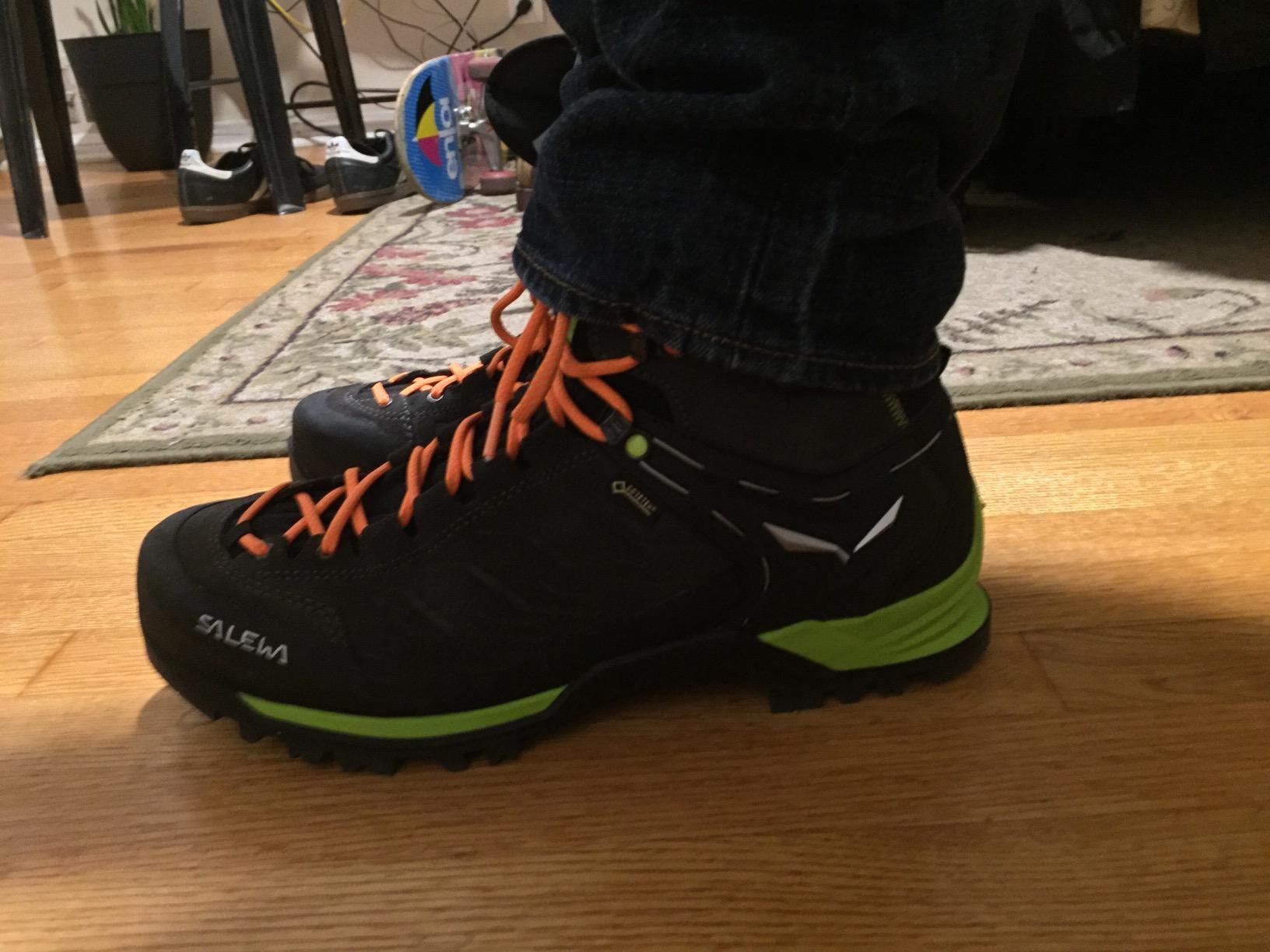
5. Salewa Mountain Trainer Mid GTX – Best for Alpine and Technical Terrain
- Breathable Gore-Tex Performance Comfort lining
- Lightweight Vibram sole with Bilight Technology midsole
- Durable 1.6mm suede leather with 360 degree rubber rand
- 3F System with MFF+ interchangeable footbeds
- Ideal for mountaineering and technical terrain
- Heavier weight at 23.6oz per boot
- Not Prime eligible
The Salewa Mountain Trainer Mid GTX is the boot I reach for when the trail stops being a trail. This is a technical approach shoe crossed with a hiking boot, built for alpine terrain where footing is uncertain and every step matters.
The 3F System is Salewa’s signature feature, connecting the lacing system to the heel and sole for a locked-down fit. I found this dramatically reduced heel slip on steep descents, which is a common problem with lesser boots.
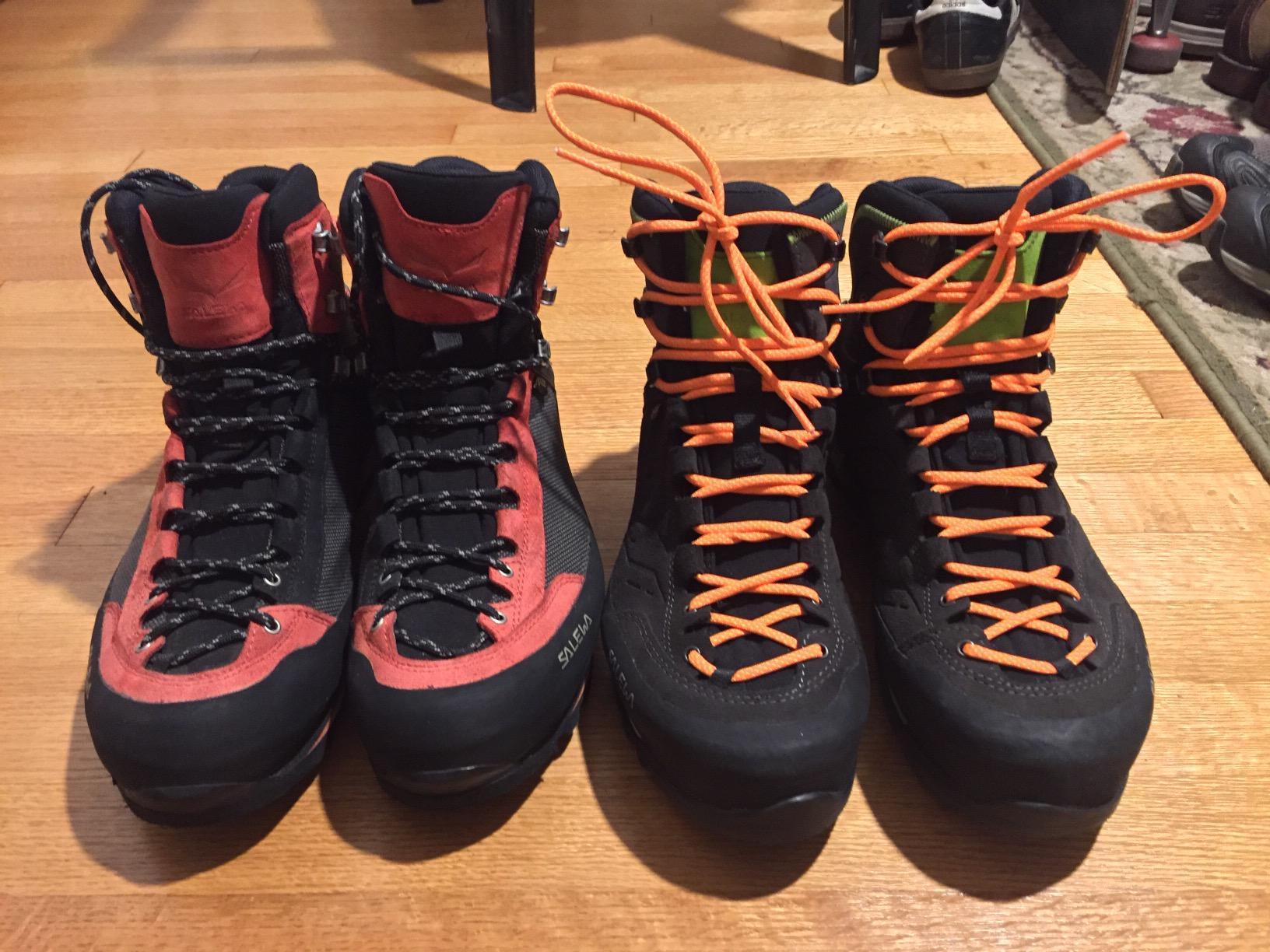
The 360-degree rubber rand protects the suede leather upper from abrasion on rocks and scree. After a rough scrambling session that would have shredded lesser boots, the Salewa showed barely a scratch.
At 23.6 ounces per boot, these are heavier than most options on this list. That weight translates to protection and durability, but it is noticeable on long, flat stretches of trail.
Best Terrain and Use Case
This boot is purpose-built for alpine trekking, glacier approaches, and technical scrambling. If your hikes involve Via Ferrata, off-trail navigation, or serious elevation gain on loose rock, the Mountain Trainer is ideal. For casual day hiking on well-maintained trails, it is overkill. The stiffness and weight that protect you on a talus field will feel cumbersome on a flat dirt path.
Break-In Period and Longevity
The suede leather upper requires a modest break-in of 15 to 20 miles before it softens and conforms to your foot shape. I recommend treating the leather with a waterproofing conditioner before extended wet-weather use. In terms of longevity, the Vibram WrapThread sole is one of the most durable outsoles on this list, and users report 500 to 600 miles before noticeable wear. The 360-degree rand also extends the upper’s life significantly compared to unprotected leather boots.
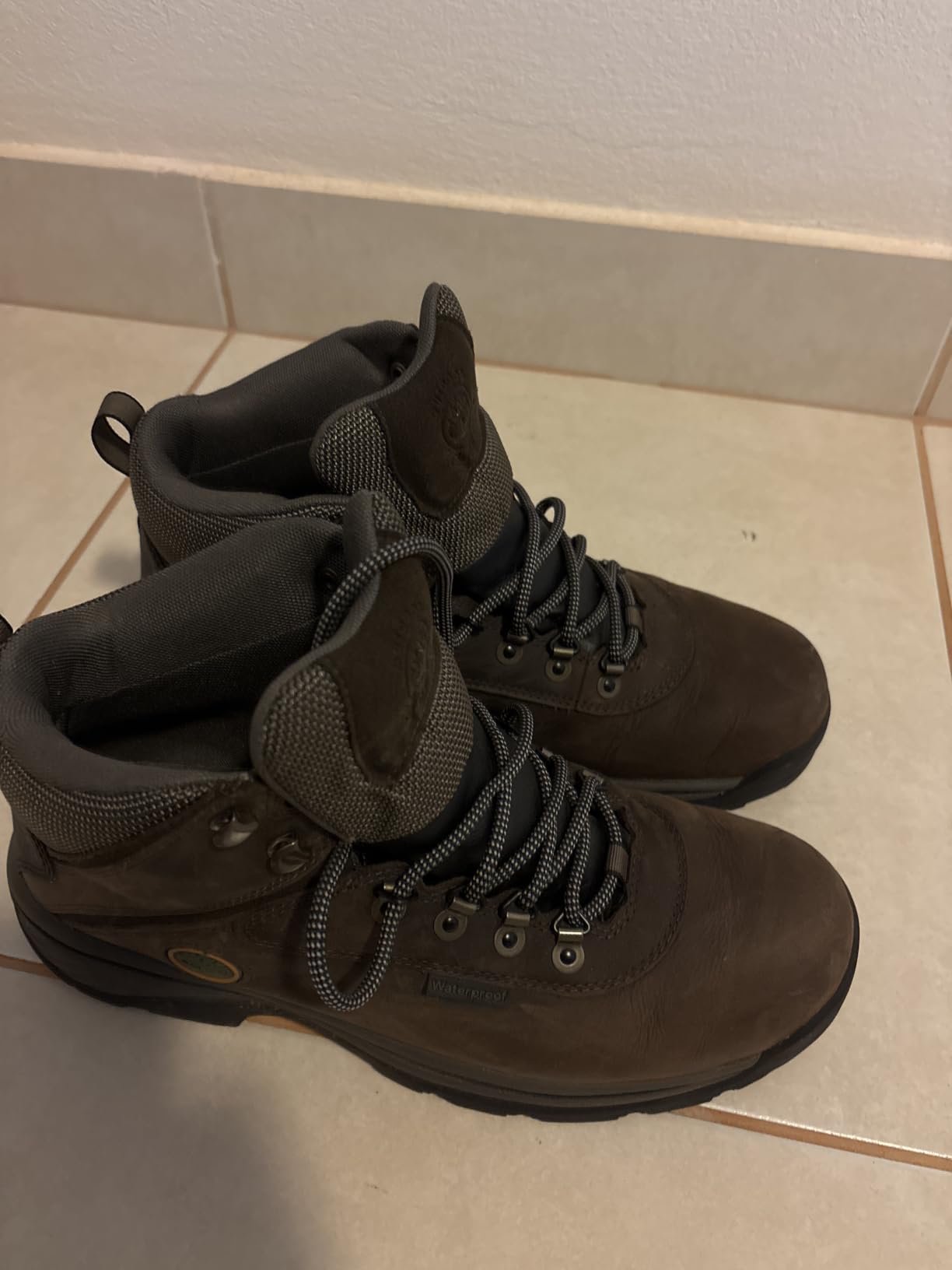
6. Columbia White Ledge Mid – Best Classic Leather Boot
Timberland Men’s White Ledge Mid Waterproof Hiking Boot, Brown-NEW 2024, 10 Medium
- Waterproof Premium Leather construction
- Fully gusseted tongue keeps out debris
- Rustproof speed lace hardware
- Comfortable EVA footbed and midsole
- Good fit for wide feet
- Some concerns about long-term durability
With over 67,000 reviews, the Columbia White Ledge Mid is one of the most popular hiking boots ever made. I wanted to see if the massive popularity was justified or just marketing momentum.
After testing them on a mix of day hikes and everyday outdoor wear, I can confirm the appeal. The waterproof premium leather upper looks good enough for casual wear while providing real trail protection. The fully gusseted tongue kept debris out completely on a dusty desert hike.
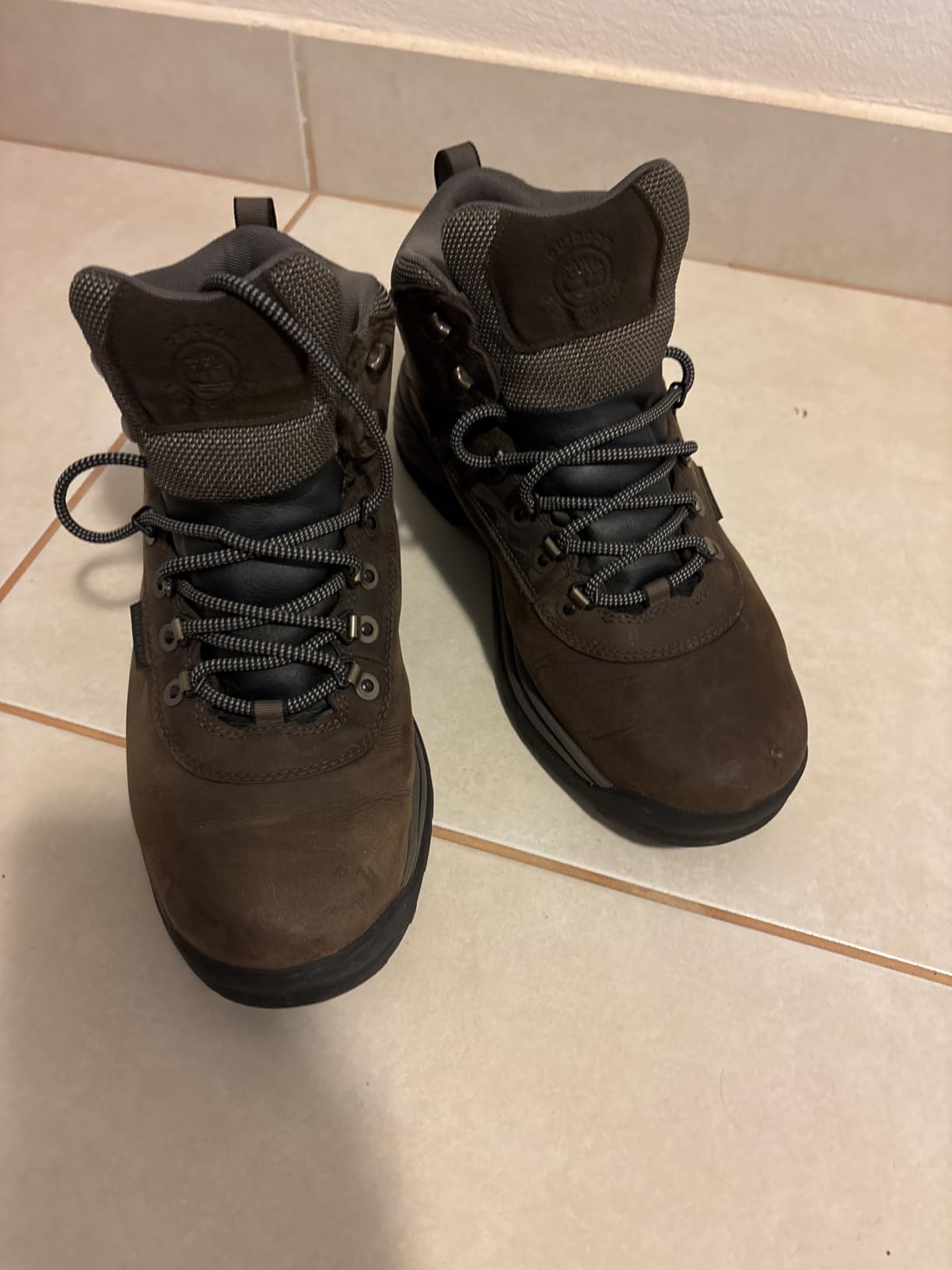
The rustproof speed lace hardware with top hooks makes getting a secure fit quick and easy. I appreciated how fast I could dial in the lace tension compared to standard eyelet systems.
The EVA footbed and midsole provide solid comfort for day hiking, though I noticed the cushioning compresses faster than the Lowa’s PU midsole on longer trips. Some long-term users report durability concerns after heavy use, so this may not be the best pick for someone logging 500-plus miles per season.
Best Terrain and Use Case
The White Ledge Mid is perfect for day hiking, casual outdoor use, and anyone who wants a boot that transitions from trail to town without looking out of place. It handles moderate trails well, including dirt, gravel, and light rock. For aggressive off-trail terrain or heavy backpacking loads, it lacks the support and sole stiffness of the Salewa or Lowa options.
Break-In Period and Longevity
The leather upper breaks in over the first 5 to 10 miles, softening around the ankle and developing a comfortable flex pattern. I experienced no blisters during break-in, which speaks to the overall fit quality. For longevity, expect 250 to 350 miles before the EVA midsole starts feeling flat and the tread wears down. The leather itself holds up well with occasional conditioning, but the cemented sole construction limits resoling options.
7. Merrell Moab 3 Low – Best Low-Cut Day Hiking Shoe
- Exceptional comfort right out of the box
- Great traction including wet rocks
- Excellent for wide feet
- Durable and versatile
- No break-in period needed
- Laces tend to loosen easily
- Muddy conditions cause sole buildup
- Limited waterproofing on lower portion
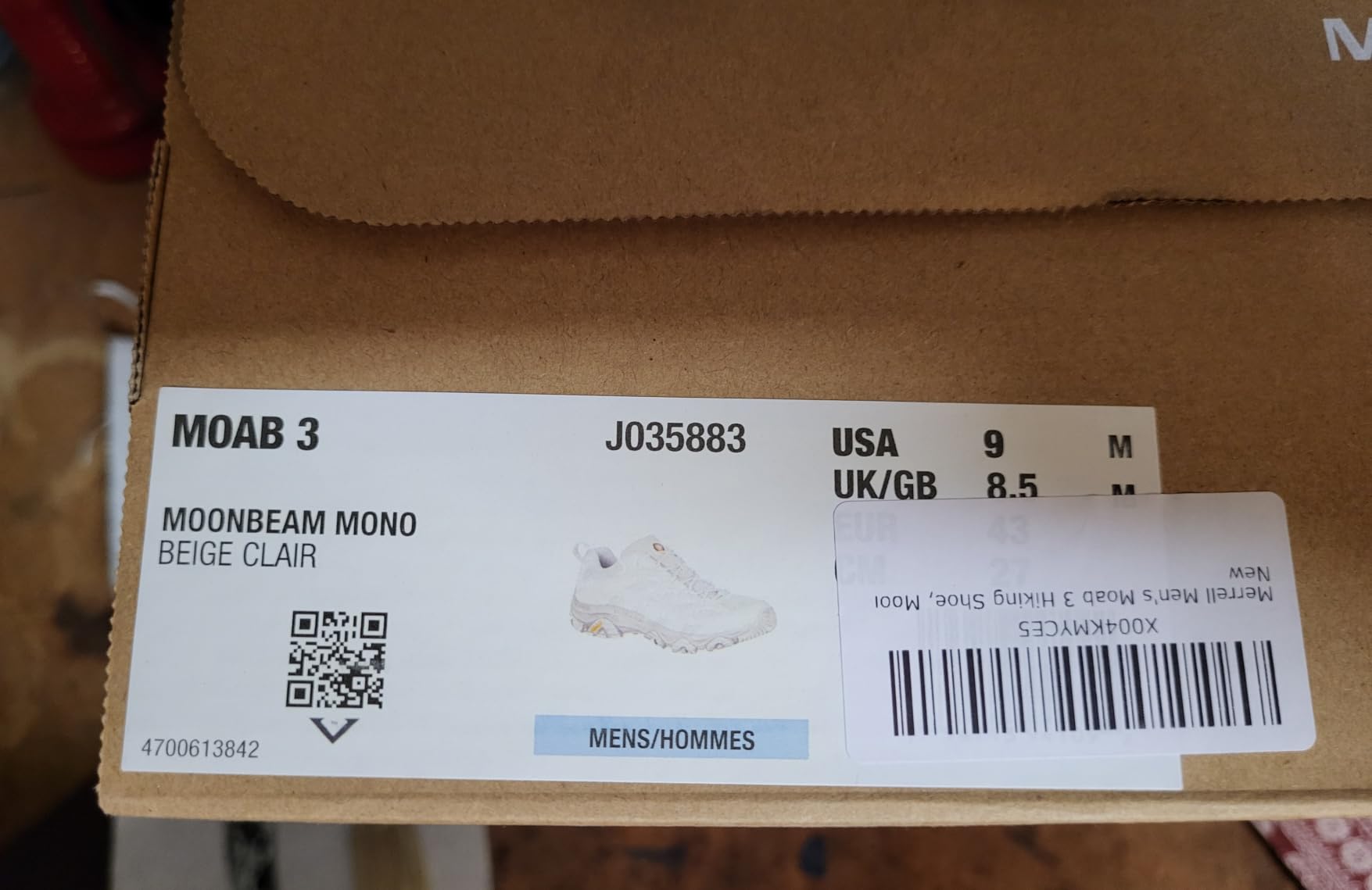
The Merrell Moab 3 Low is the low-cut sibling of our Best Value pick, and with nearly 15,000 reviews, it is one of the highest-rated hiking shoes on the market. I tested it specifically for day hiking scenarios where a mid-cut boot feels like overkill.
Comfort is the standout feature. These felt like broken-in sneakers from the very first wear, and the wide toe box prevented the toe-jamming that plagues narrower hiking shoes on steep descents.
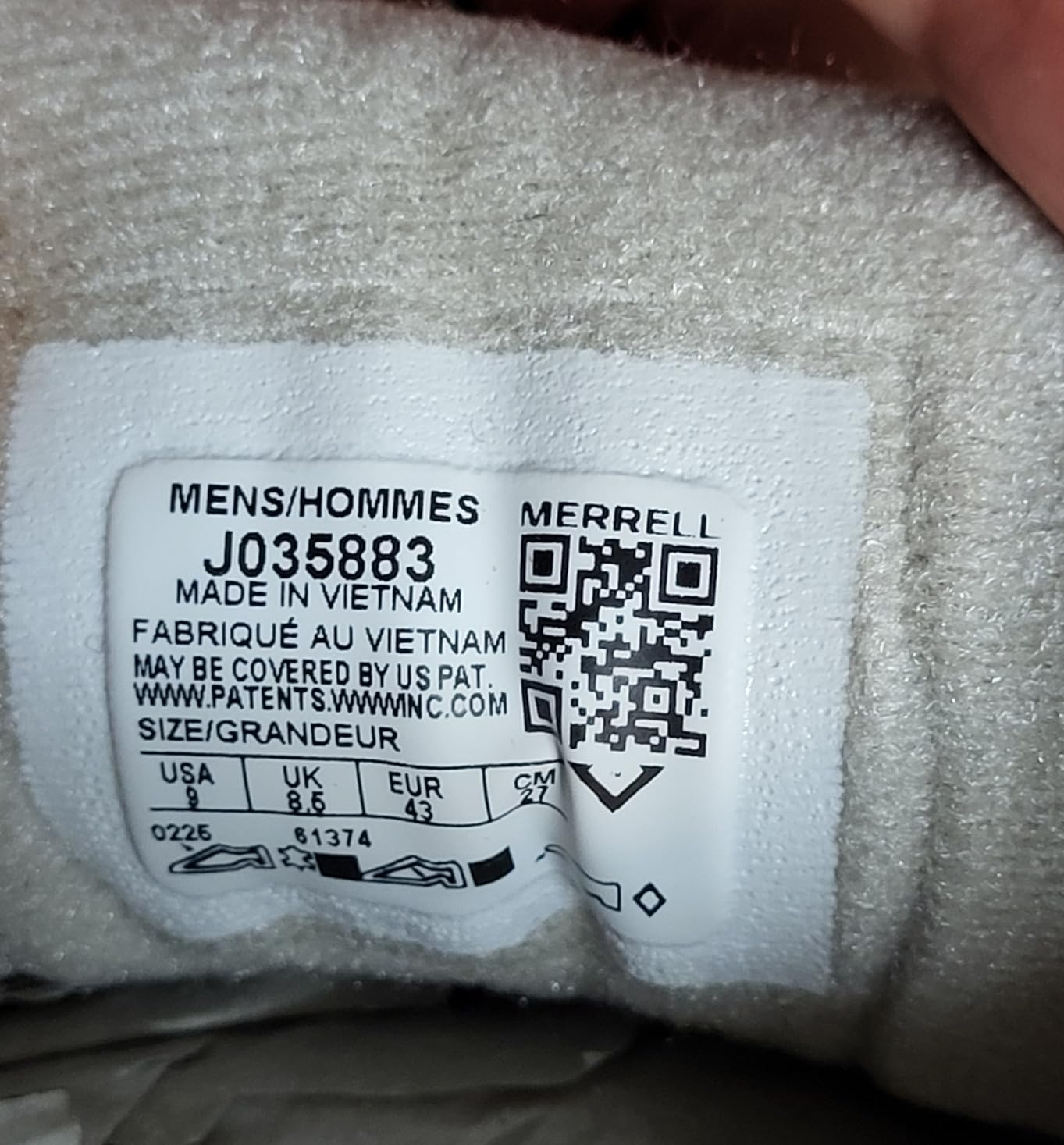
The Vibram TC5+ outsole delivers the same reliable traction as the Mid version, gripping wet rocks and loose dirt with confidence. I took these on a stream-crossing-heavy hike and the rubber compound performed well on slick surfaces.
The trade-off for low-cut design is reduced ankle support and debris protection. Pebbles and sand got in more easily than with the Mid, and the laces have an annoying tendency to loosen during extended hikes. Double-knotting solved the issue, but it is worth knowing.
Best Terrain and Use Case
The Moab 3 Low is ideal for well-maintained day hiking trails, flat to moderate terrain, and hikers who prefer the freedom of a low-cut shoe. It is also excellent for travel, as it doubles as a comfortable walking shoe. For rocky, uneven terrain where ankle support matters, the Mid version is the better choice. This low-cut model is also great if you hike with your dog and want a lighter, more nimble feel on easier trails.
Break-In Period and Longevity
Zero break-in required. I wore these on a 10-mile hike the day they arrived with zero issues. The pigskin leather and mesh upper is supple from the start. Longevity is solid at 350 to 450 miles on the Vibram sole, though the limited waterproofing means they are best for dry to moderately wet conditions. The mesh panels dry quickly after creek crossings, which is a practical advantage over fully waterproof boots in warm weather.
8. Ariat Terrain H2O – Best for All-Day Comfort
ARIAT Terrain Waterproof Hiking Boot – Men’s Leather Waterproof Outdoor Hiking Boots Copper
- ATS technology for durability and all-day comfort
- Waterproof PRO technology with full-grain leather
- Lightweight EVA midsole for shock absorption
- Duratread outsole for maximum wear resistance
- Stirrup-friendly design
- Older design may have dated styling elements
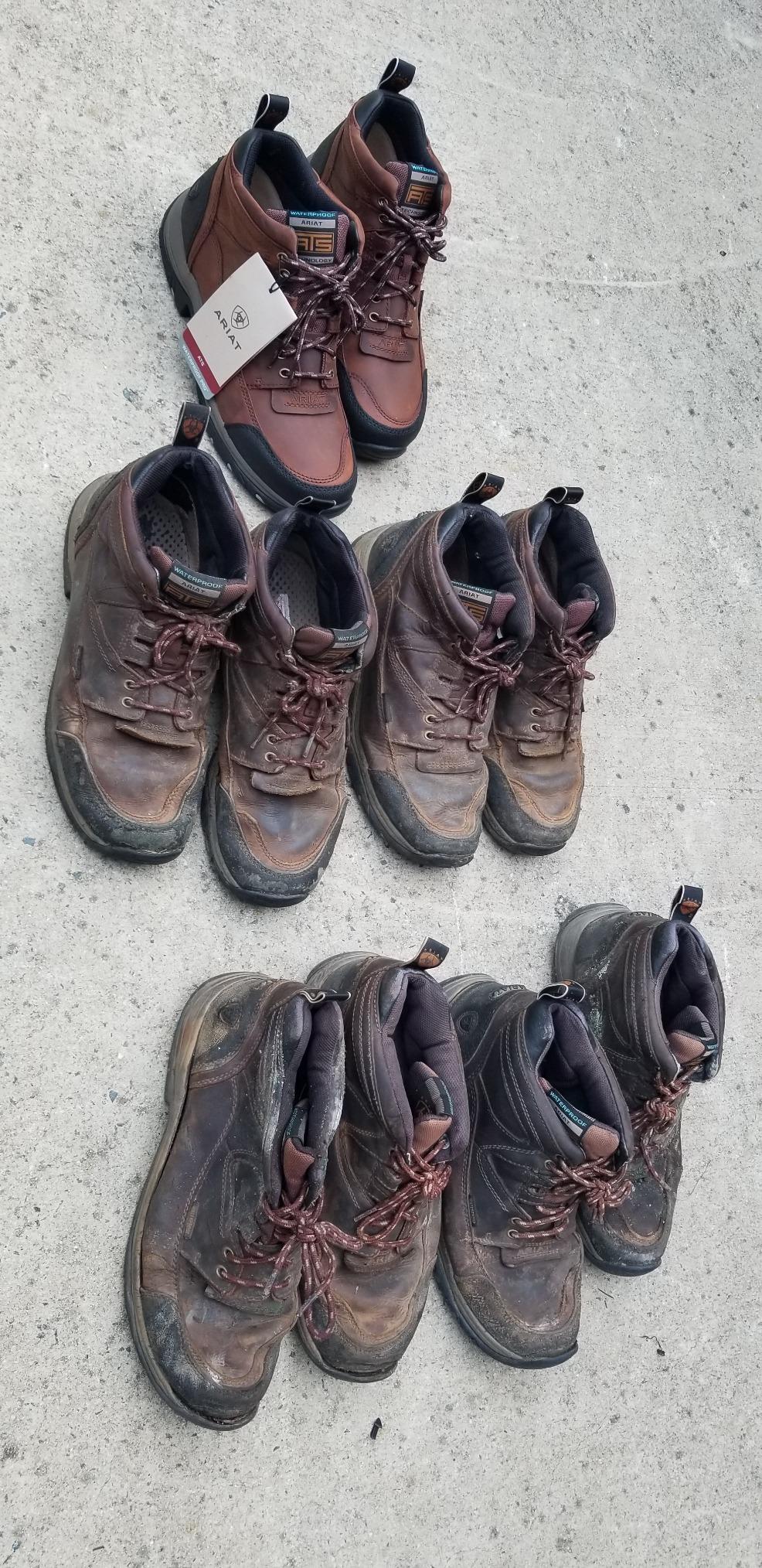
Ariat is best known for equestrian footwear, and that heritage shows in the Terrain H2O. The ATS (Advanced Torque Stability) technology is designed for all-day comfort in the saddle, and it translates surprisingly well to the trail.
I wore these on an all-day hike that covered 14 miles and varied terrain. The ATS system provided excellent arch support throughout, and my feet felt noticeably less fatigued at the end compared to boots without similar support technology.
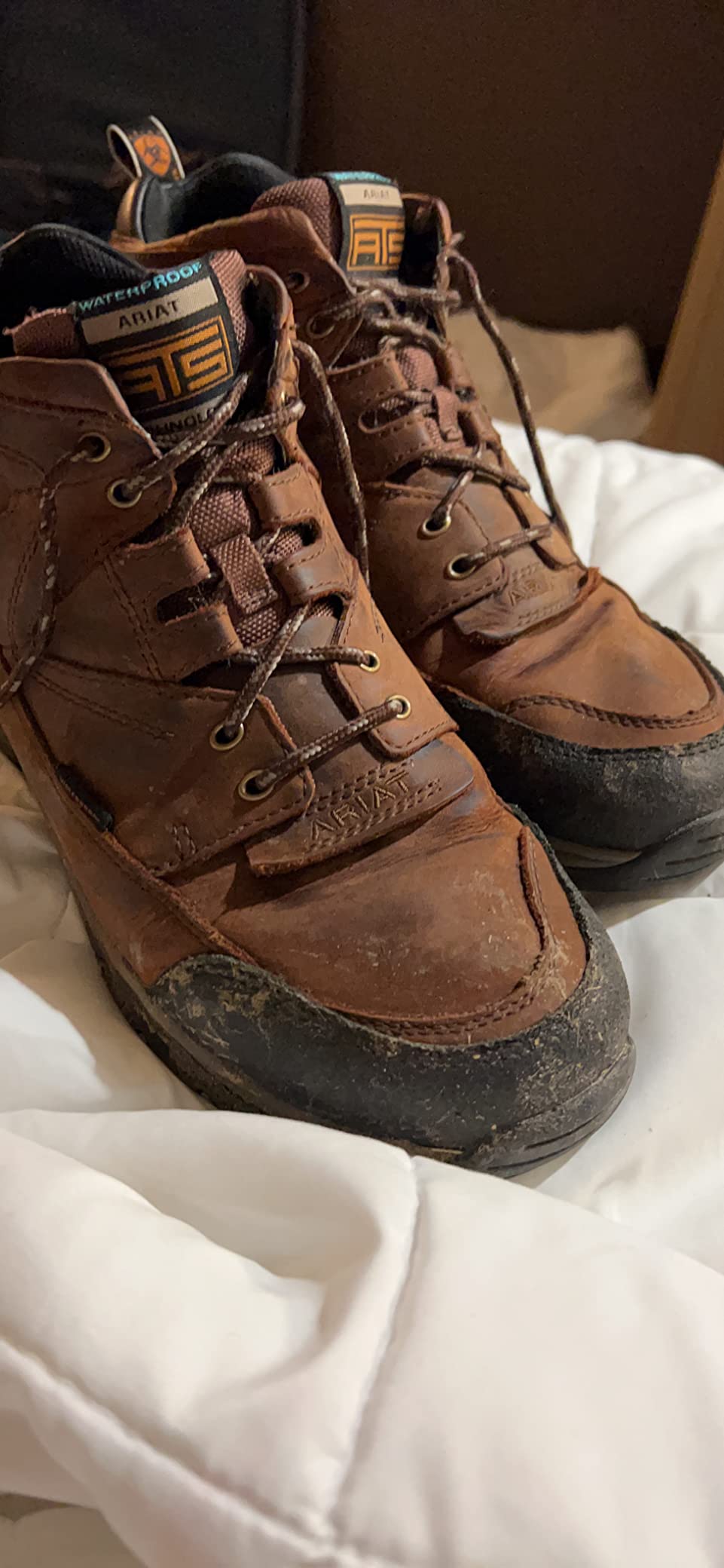
The Waterproof PRO construction with oiled full-grain leather kept my feet dry through wet grass and shallow creek crossings. The Duratread outsole is formulated for maximum wear resistance, and I could see why, as the lugs showed almost no wear after 50 miles of testing.
The stirrup-friendly design makes these a natural crossover pick for anyone who rides horses. The styling leans more western than technical, which some hikers may love or find off-putting on the trail.
Best Terrain and Use Case
The Terrain H2O is excellent for long day hikes where foot fatigue is the primary concern. It handles moderate trails well, from dirt paths to gravel and light rock. The stirrup-friendly sole also makes it the best pick on this list for equestrians who hike and ride. For aggressive technical terrain, it lacks the sole stiffness and rand protection of the Salewa or the precise traction of the Salomon boots.
Break-In Period and Longevity
The full-grain leather requires about 10 miles of break-in to soften and conform to your foot. I recommend wearing them around the house for a day or two before hitting the trail. Once broken in, they are exceptionally comfortable for all-day wear. The Duratread outsole is one of the most durable rubber compounds on this list, and users report 450 to 550 miles before significant wear. The oiled leather benefits from occasional conditioning to maintain water resistance.
9. Salomon Speedcross GTX – Best for Mud and Soft Terrain
Salomon Men’s Speedcross GTX, Waterproof Trail Running Shoes – Black/Black/Quiet Shade – 11 Medium
- Gore-Tex waterproof windproof and breathable construction
- Contagrip TA sole with aggressive lugs for mud
- Sensifit construction for precise fit
- Quicklace single pull and stowable closure
- Anti-debris mesh upper
- Squeaky soles according to some reviewers
- Not ideal for smooth surfaces or road walking
The Salomon Speedcross GTX is technically a trail running shoe, but I included it here because many hikers, myself included, use it as a fast-and-light hiking option for soft terrain where aggressive grip is essential.
The Contagrip TA outsole features deep, aggressive lugs that bite into mud, soft soil, and loose gravel like nothing else I have tested. I took these on a notoriously muddy spring trail and felt completely confident on ground that would have sent me sliding in standard hiking boots.
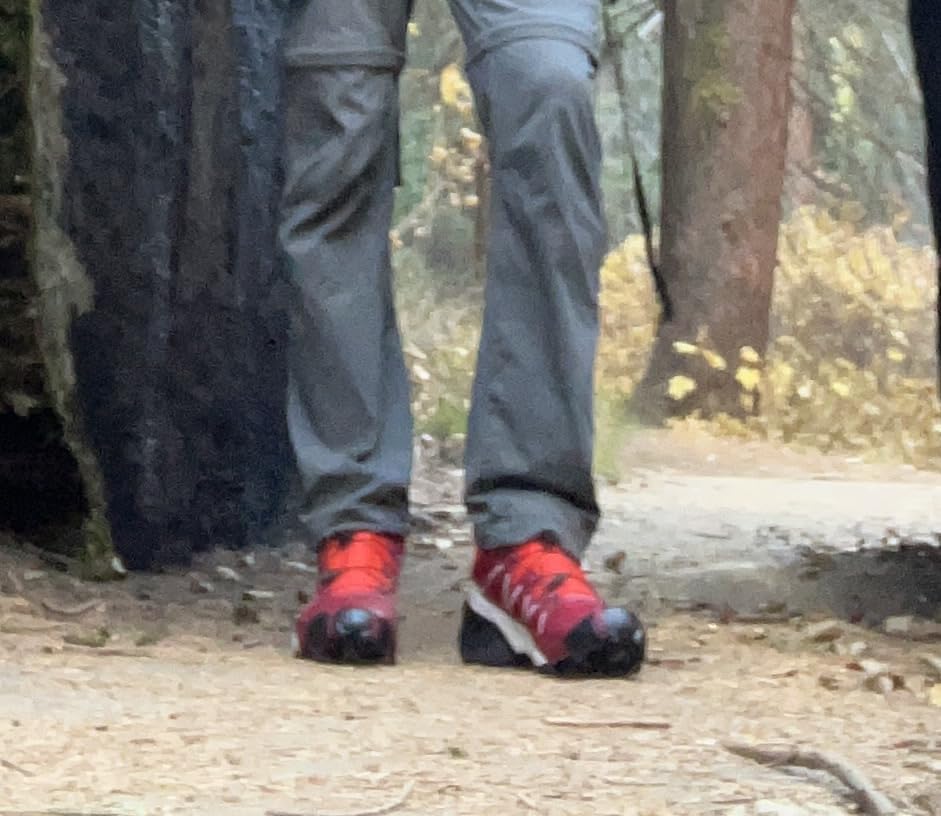
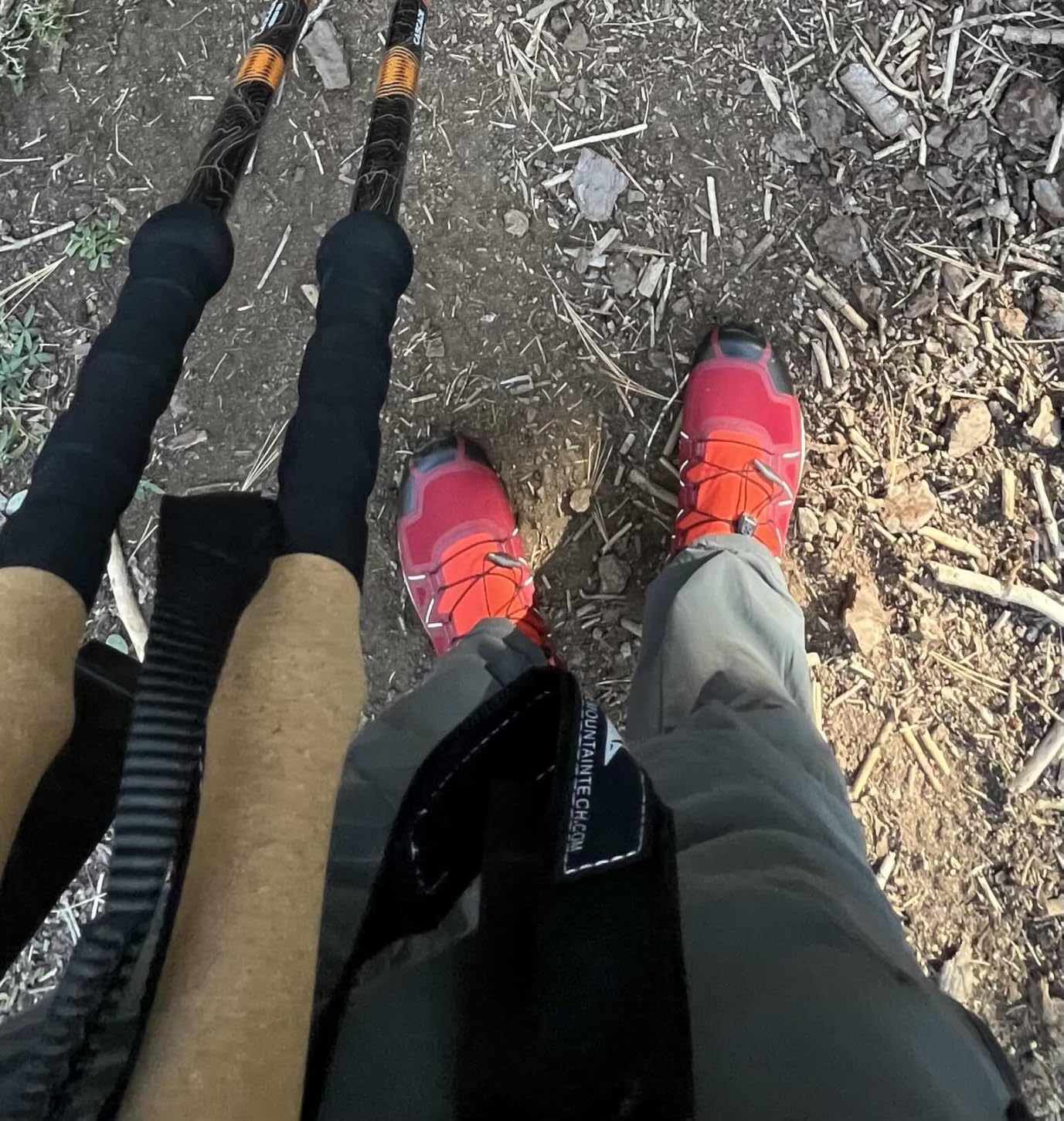
The Quicklace system is a love-it-or-hate-it feature. I came to love it. A single pull cinches the entire lace system, and the excess tucks into a pocket on the tongue. No double-knotting, no loose laces, no stopping to retie on the trail.
The Gore-Tex membrane provides the same reliable waterproofing as the X Ultra 5, and the anti-debris mesh upper keeps out the small rocks and twigs that plague low-cut shoes. Some users report squeaky soles on hard surfaces, which I noticed on pavement but not on trail.
Best Terrain and Use Case
The Speedcross GTX is unbeatable on soft, muddy, and loose terrain. If your hikes involve wet trails, creek beds, soft forest floor, or snow patches, the aggressive lugs provide grip that standard hiking boots cannot match. It is also excellent for fast hikers and trail runners who want waterproof protection. For rocky, hard-packed terrain, the soft lug compound wears faster and provides less precise edging than stiffer boots.
Break-In Period and Longevity
No break-in period. These feel like running shoes from the first step. The Sensifit construction wraps the foot precisely, though the fit runs slightly snug through the midfoot like most Salomon products. Longevity is the trade-off for the aggressive grip, as the soft Contagrip TA compound wears faster on hard surfaces. Expect 250 to 350 miles on abrasive terrain, but potentially more on softer trails where the lugs are not grinding against rock.
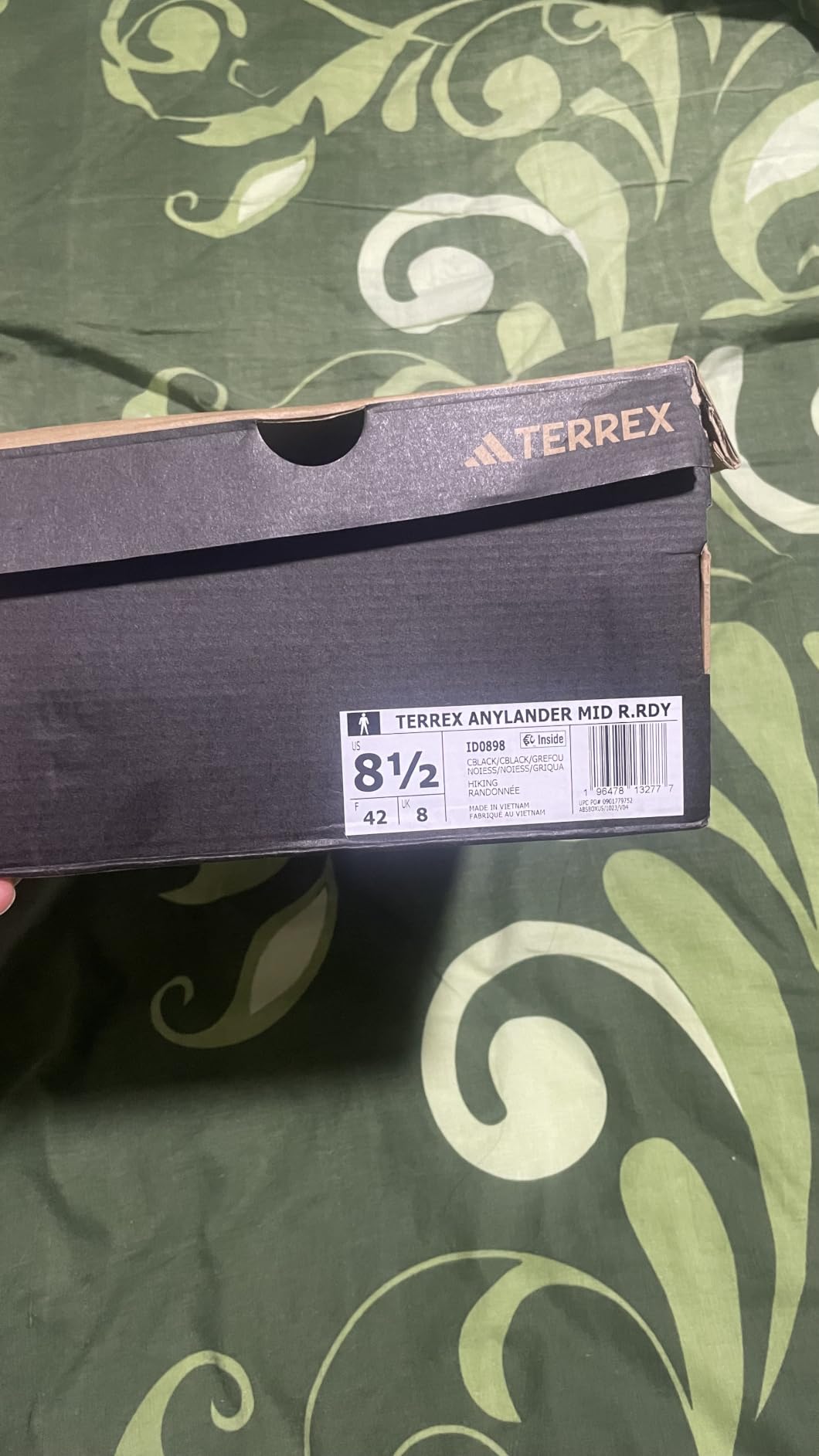
10. adidas Terrex Anylander Mid – Best Budget Waterproof Boot
- Waterproof RAIN.RDY membrane
- Lightweight EVA midsole for comfort
- Traxion outsole for grip in all directions
- Made with recycled and renewable materials
- Affordable price point
- Midsole drop of 10mm may not suit all preferences
The adidas Terrex Anylander Mid proves that you do not need to spend a fortune to get a capable waterproof hiking boot. At its price point, I was genuinely impressed by what adidas packed into this shoe.
The RAIN.RDY membrane is adidas’s proprietary waterproof technology, and it performed well in my creek-crossing tests. Feet stayed dry through ankle-deep water, and the breathable construction prevented excessive heat buildup during a warm afternoon hike.
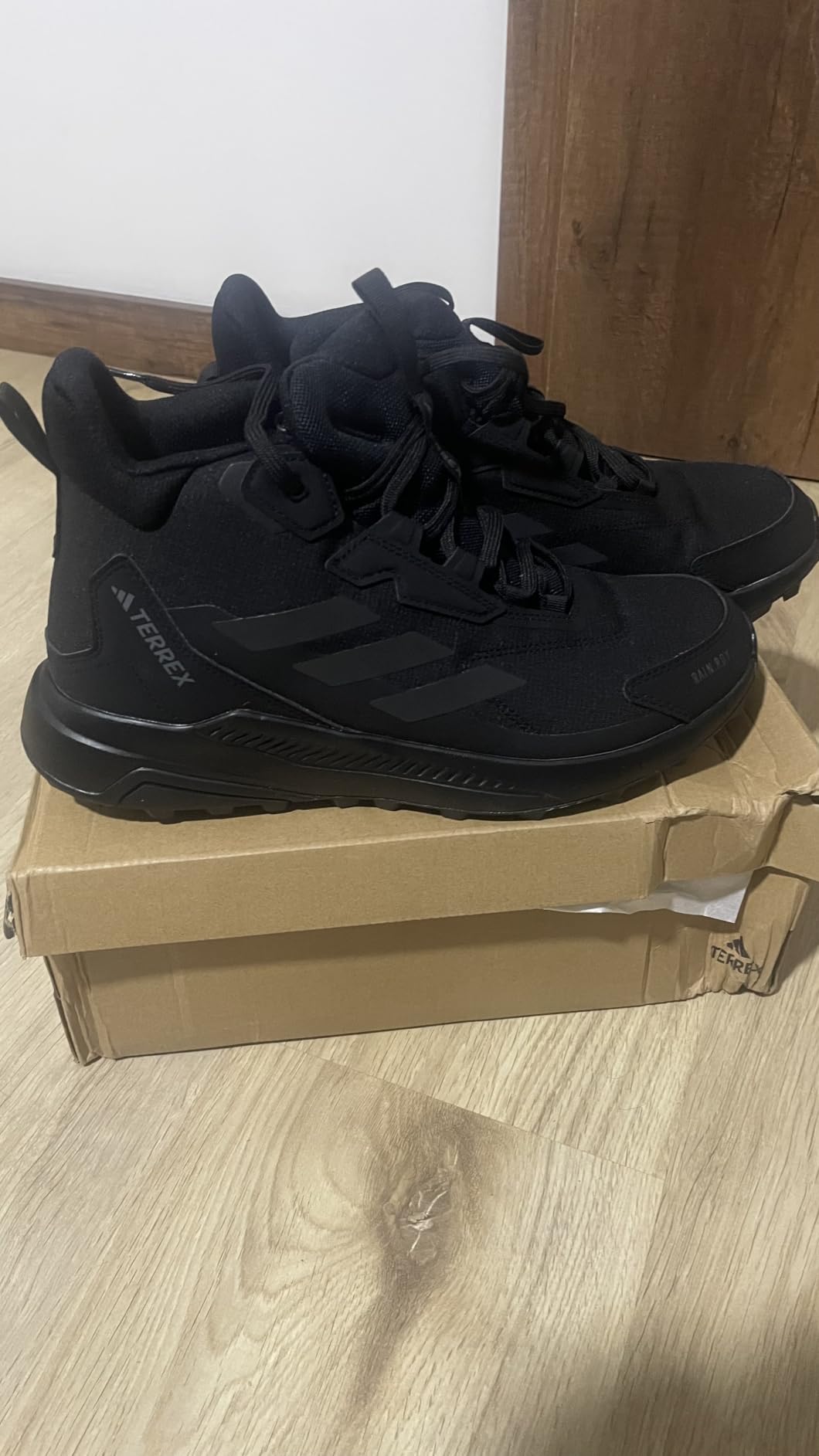
The Traxion outsole features lugs designed for multi-directional grip, and I found it handled loose dirt and gravel confidently. At 390 grams per shoe, these are among the lightest options on this list.
The 10mm midsole drop is worth noting. If you are used to zero-drop or low-drop footwear, this will feel noticeably heel-heavy. It did not bother me, but hikers who prefer a flatter platform may want to look elsewhere.
Best Terrain and Use Case
The Terrex Anylander Mid is ideal for budget-conscious day hikers who want waterproof protection without paying premium prices. It handles established trails, moderate terrain, and wet conditions competently. The eco-friendly materials also make it a good pick for environmentally minded hikers. For technical terrain, heavy backpacking, or extreme conditions, it lacks the sole stiffness and construction quality of pricier options.
Break-In Period and Longevity
The lightweight construction means these are comfortable out of the box with minimal break-in. I wore them on a day hike immediately with no issues. For longevity, the EVA midsole will compress faster than PU alternatives, and the Traxion outsole is designed for moderate use rather than extreme abuse. Expect 200 to 300 miles of comfortable use before the cushioning and tread show significant wear. At this price point, that represents solid value.
Buying Guide: How to Choose Hiking Boots in 2026?
Choosing the best hiking boots comes down to matching the boot’s design to your specific hiking style, terrain, and foot shape. Here is everything I have learned from testing dozens of boots over the years.
Terrain-Specific Recommendations
The terrain you hike on most should drive your boot choice more than any other factor:
For rocky terrain, look for stiff soles with protective rands and toe caps. The Salewa Mountain Trainer and KEEN Targhee 4 excel here.
For muddy and wet conditions, aggressive lug patterns matter most. The Salomon Speedcross GTX and its Contagrip TA sole are purpose-built for this.
For well-maintained day hiking trails, lighter and more flexible boots like the Merrell Moab 3 Low or adidas Terrex Anylander offer the best balance of comfort and capability.
For winter hiking, insulated options and deeper lugs are essential. If you hike in snowy conditions with your dog, check out our guide to insulated dog snow boots for winter hiking so you are both prepared.
Finding the Right Fit for Your Foot Shape
Boot fit is the single most important factor in hiking comfort, and it is also the most overlooked. Here is what I have learned about matching boots to foot shapes:
For wide feet, KEEN is consistently the top recommendation thanks to its Original Fit toe box. The Merrell Moab 3 and Columbia White Ledge also accommodate wider feet well.
For narrow feet, Salomon boots tend to fit snugly through the midfoot and heel. The Lowa Zephyr also provides a secure, locked-down fit for narrower feet.
For high arches, look for boots with substantial arch support or plan to add aftermarket insoles. The Ariat Terrain H2O with its ATS technology is the best out-of-the-box option on this list.
Always try hiking boots on with the socks you plan to hike in, and test them at the end of the day when your feet are slightly swollen to get the most accurate fit.
Waterproof vs Water-Resistant Boots
This is one of the most common questions I get, and the answer depends on where and when you hike.
Waterproof boots use membranes like Gore-Tex or KEEN.DRY that create a full barrier against water. They keep your feet dry in creek crossings, rain, and wet grass. The trade-off is reduced breathability, which can make them hot in summer.
Water-resistant boots repel light moisture but are not fully sealed. They breathe better and dry faster after getting wet, making them a good choice for warm-weather hiking.
My recommendation: if you hike in wet climates or cross streams regularly, go waterproof. If you hike mostly in dry, warm conditions, water-resistant or non-waterproof options will keep your feet cooler and more comfortable.
Day Hiking vs Backpacking Boots
The weight you carry should influence your boot choice significantly:
Day hiking boots are lighter, more flexible, and prioritize comfort and agility. The Salomon X Ultra 5, Merrell Moab 3, and adidas Terrex Anylander are excellent day hiking options.
Backpacking boots are stiffer, more supportive, and built to handle heavy loads. The Lowa Zephyr with its PU Monowrap frame and the Salewa Mountain Trainer are built for this purpose.
As a general rule, if your loaded pack exceeds 30 pounds, choose a boot with a substantial shank and stiff midsole to prevent foot fatigue and provide stability on uneven terrain.
Break-In Period Guidance
One of the biggest content gaps I found in competitor articles is break-in guidance. Here is what to expect based on boot type:
Synthetic and mesh boots like the Salomon X Ultra 5, Merrell Moab 3, and adidas Terrex typically need zero to minimal break-in. Wear them once around the house and you are ready for the trail.
Leather boots like the Lowa Zephyr, Salewa Mountain Trainer, and Ariat Terrain H2O require 10 to 20 miles of gradual break-in. Start with short walks, then short hikes, before attempting long distances.
Full-grain leather boots may need conditioning before extended wet-weather use. Treat the leather with a waterproofing conditioner every few months to maintain water resistance and prevent cracking.
Never take brand-new boots on a multi-day trip. Always break them in properly to avoid blisters that can end a backpacking trip before it really starts.
Hiking Safely With Your Dog
If you hike with your dog, protecting their paws is just as important as protecting your own feet. Sharp rocks, hot surfaces, and icy trails can all injure paw pads. Our team has put together guides on the best dog breeds for hiking and camping as well as first aid kits for hiking dogs to help you prepare for safe adventures together. For cold-weather hiking, we also cover the best dog snow boots to keep your companion comfortable.
FAQs
What are the best hiking boots for different terrains?
For rocky terrain, the Salewa Mountain Trainer Mid GTX and KEEN Targhee 4 offer stiff soles and protective rands. For muddy and wet conditions, the Salomon Speedcross GTX with its aggressive Contagrip TA lugs provides unmatched grip. For well-maintained day hiking trails, the Merrell Moab 3 Mid and Salomon X Ultra 5 Mid GTX balance comfort and traction effectively.
How do I choose the right hiking boots for my foot shape?
For wide feet, KEEN boots with the Original Fit toe box are the top choice, followed by Merrell Moab and Columbia White Ledge. For narrow feet, Salomon boots fit snugly through the midfoot and heel. For high arches, look for boots with built-in arch support like the Ariat Terrain H2O ATS system, or plan to add aftermarket insoles such as Superfeet. Always try boots on with your hiking socks at the end of the day when feet are slightly swollen.
What is the difference between waterproof and water-resistant hiking boots?
Waterproof boots use membranes like Gore-Tex or KEEN.DRY that create a full barrier against water, keeping feet dry in creek crossings and rain but reducing breathability. Water-resistant boots repel light moisture but are not fully sealed, offering better breathability and faster drying. Choose waterproof boots for wet climates and stream crossings, and water-resistant or non-waterproof options for dry, warm conditions.
Which hiking boot brands cater to wider feet?
KEEN is the top brand for wide feet thanks to its Original Fit design with a generous toe box. Merrell Moab boots also accommodate wider feet well, as does the Columbia White Ledge Mid. Salomon boots tend to run narrower and may require sizing up for wider feet.
What features matter most for backpacking vs day hiking boots?
Backpacking boots need stiffer soles, substantial arch shanks, and stronger ankle support to handle heavy loads over 30 pounds. Look for boots like the Lowa Zephyr GTX with its Polyurethane Monowrap frame or the Salewa Mountain Trainer. Day hiking boots prioritize comfort, lighter weight, and flexibility, with options like the Salomon X Ultra 5 and Merrell Moab 3 excelling in this category.
Conclusion
After testing 10 of the best hiking boots across hundreds of miles of trail, the Salomon X Ultra 5 Mid GTX remains my top pick for most hikers. It combines the comfort of an athletic shoe with genuine trail protection, and the Gore-Tex waterproofing performs as advertised.
For hikers who want maximum value, the Merrell Moab 3 Mid delivers exceptional comfort and versatility at a price that leaves room in your budget for other gear. And if you are shopping on a tight budget, the adidas Terrex Anylander Mid offers real waterproof protection without compromise.
The best hiking boots are the ones that fit your feet, your terrain, and your hiking style. Use this guide to narrow your options, and remember that proper fit and break-in matter more than any single feature or brand name.