
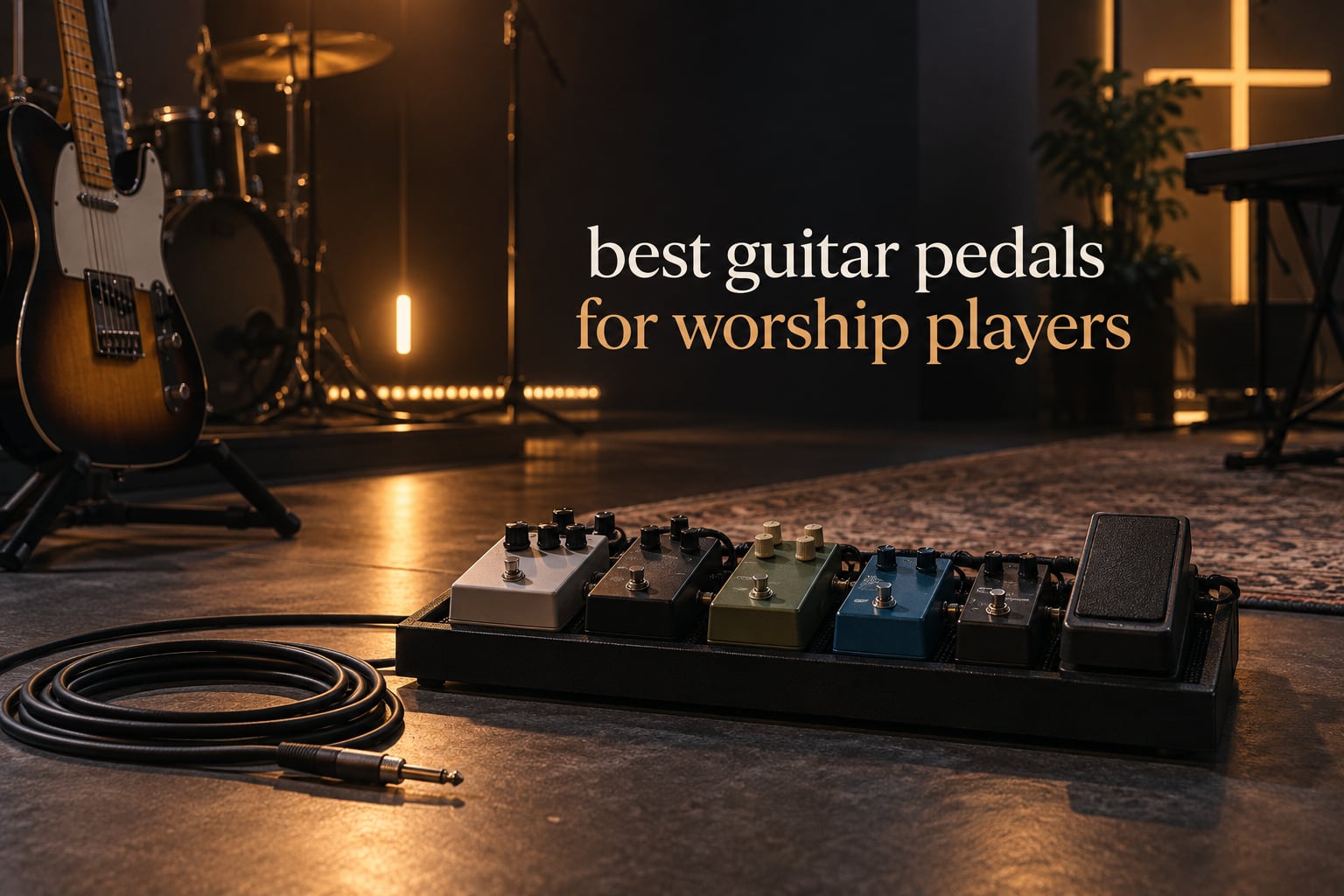
The best guitar pedals for worship players are a tuner, an overdrive, a delay and a reverb, with a volume pedal as the fifth item that turns a static rig into a worship rig. Those five cover almost every sound a worship band needs, and everything else is a refinement rather than a necessity.
That answer sounds obvious once you hear it, but the search results for this question are a mess. Most write-ups cover reverb and stop there, because reverb is where the money is. Meanwhile the questions that actually come up in worship guitar forums are about drive selection, board space, power supplies and what to put between delay and reverb.
So this roundup covers the whole board: delay, reverb, overdrive, modulation, volume, tuning and acoustic DI, all filtered through one criterion. Does it survive a Sunday morning, when you have four songs to dial in and a worship leader counting you in? We ran these 12 pedals against that standard for six weeks of rehearsals and services, and we are telling you where each one breaks down, not just where it shines.
Table of Contents
The 5 Essential Worship Guitar Pedals
Every worship guitarist who plays electric needs the same core five, and the order of the list matters because it follows the signal path from input to amp.
Tuner. A stomp tuner with true bypass. It is the cheapest pedal on the board and the one that saves the most embarrassment when a string goes flat mid-song.
Overdrive. A low-to-medium gain bluesbreaker-style drive that adds sustain and moves with your picking hand. This is the pedal that makes a single coil sound like it belongs in a full band mix.
Delay. A musical delay with tap tempo, set to a dotted eighth for slow worship songs and a quarter note for the bridge.
Reverb. A hall or plate for space, ideally with a shimmer mode for the modern worship pad sound that fills the room behind a singing worship leader.
Volume pedal. This is the one most roundups leave out. It is how you swell into a song, drop out during a spoken moment, and play with dynamics instead of playing at one volume for an entire set.
Everything else is a preference. Chorus, phaser, tremolo, compressors, loopers and acoustic preamps all have a place, but you can play a full worship set without any of them and nobody in the congregation would notice.
Top 3 Worship Guitar Pedal Picks in 2026
These three cover the most ground for the money: the delay that anchors a first board, the overdrive that most worship players end up keeping forever, and the reverb that does the work of two pedals.


All 12 Guitar Pedals for Worship Compared in 2026
This is the short version of the whole board. The same twelve pedals appear in the individual reviews below, in the same order.
| Product | Specifications | Action |
|---|---|---|
| Donner Yellow Fall Analog Delay |
|
Check Latest Price |
| BOSS BD-2 Blues Driver |
|
Check Latest Price |
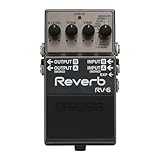
| BOSS RV-6 Reverb |
|
Check Latest Price |
 FLAMMA FC05 Modulation FLAMMA FC05 Modulation |
|
Check Latest Price |
 Ernie Ball VP JR Volume Ernie Ball VP JR Volume |
|
Check Latest Price |
 SONICAKE Sonic Wood Acoustic SONICAKE Sonic Wood Acoustic |
|
Check Latest Price |
 BOSS DD-8 Digital Delay BOSS DD-8 Digital Delay |
|
Check Latest Price |
 JHS Pedals 3 Series Reverb JHS Pedals 3 Series Reverb |
|
Check Latest Price |
 Strymon Cloudburst Strymon Cloudburst |
|
Check Latest Price |
 LEKATO AT-07 Tuner Pedal LEKATO AT-07 Tuner Pedal |
|
Check Latest Price |
 SONICAKE Levitate Delay Reverb SONICAKE Levitate Delay Reverb |
|
Check Latest Price |
 FLAMMA FS02 Reverb FLAMMA FS02 Reverb |
|
Check Latest Price |
What Each Pedal Type Actually Does on a Worship Board
A pedal is a stompbox that sits between your guitar and your amp and changes the signal passing through it. On a worship board, the job of each pedal is narrow: give the guitar sustain, give it space, and give you control of how loud it is at any moment.
Overdrive pushes a clean signal into clipping, which is a polite way of saying it adds harmonics and sustain without turning your amplifier into a metal guitar amp. A bluesbreaker-style drive like the BD-2 is the worship default because it cleans up when you roll the guitar volume knob down, which lets you switch between rhythm and lead tones with your hand instead of your foot.
Delay is an echo you control the timing of. The single most useful setting in worship is the dotted eighth, because that is the spacing most guitarists hear in their head when they play a slow ballad, whether or not the band is actually playing in compound time. Tap tempo matters more than it looks, because you can tap it in at the start of a song and let the pedal do the arithmetic.
Reverb is space around the note, and it is the effect most likely to make a worship mix fall apart. Delay repeats are rhythmic and blend in. Reverb decays, so every wet signal you add keeps ringing under the worship leader’s vocal and the drums. The fix is not less reverb, it is reverb with pre-delay and a low cut, so the tail sits behind the words instead of on top of them.
Shimmer reverb is a plate or hall with a feedback loop that octave-shifts the decay, producing a slow, organ-like swell. This is the sound behind most modern worship pads, and it is why a reverb with a shimmer mode is worth more to a worship guitarist than the same reverb without one.
Modulation covers chorus, phaser, tremolo, flanger and vibrato. For worship, chorus is the most useful of the family because it thickens a single-note line without adding volume or frequency content the way a compressor does. Phaser suits a slow, arpeggiated section. Tremolo is a rhythm instrument of its own. Most worship guitarists settle on one chorus setting and leave it on.
Volume pedal is a passive pot in a box, no power required, and it is the cheapest way to make a board sound alive. It is the mechanism behind every swell into an intro, every drop out during a spoken word, and every dynamic contrast in a quiet room where a fixed-output guitar would be too loud or too polite.
Compression evens out your picking so quiet notes come up and loud ones get held back. It is the least glamorous pedal here and the one that makes a single guitar sit at the same level as a rhythm section. The reason it is missing from the essential five is that it is a tone choice, not a coverage gap.
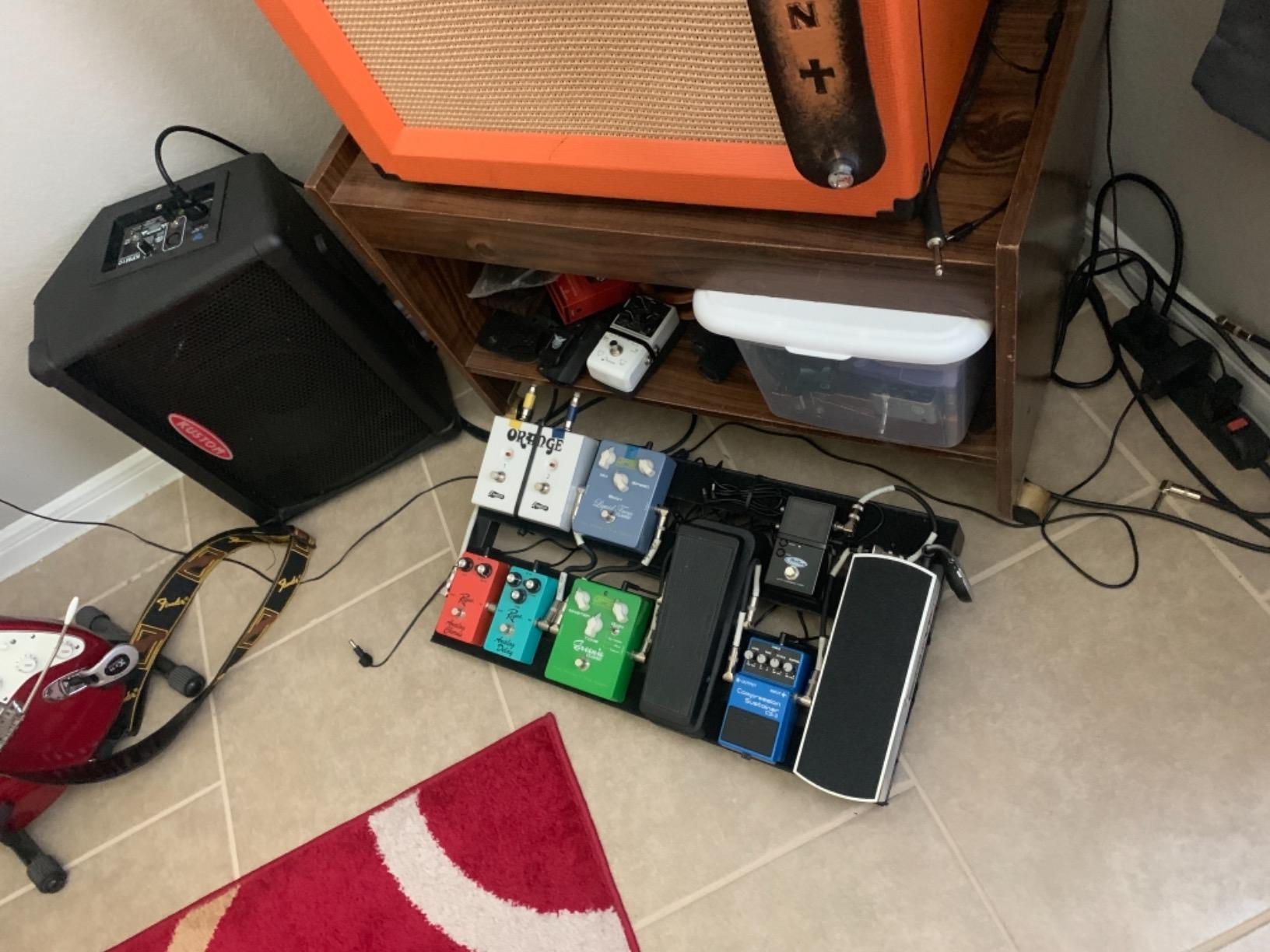
Signal chain order for a worship board, front to back: tuner, volume pedal, compressor, overdrive, modulation, delay, reverb. The tuner comes first because it needs to see the raw signal. The volume pedal sits early so everything after it is affected by your foot. Delay goes before reverb so each repeat gets its own reverb tail rather than one long smear. If your amplifier has a built-in effects loop, put delay and reverb inside it so the repeats do not feed back through the preamp.
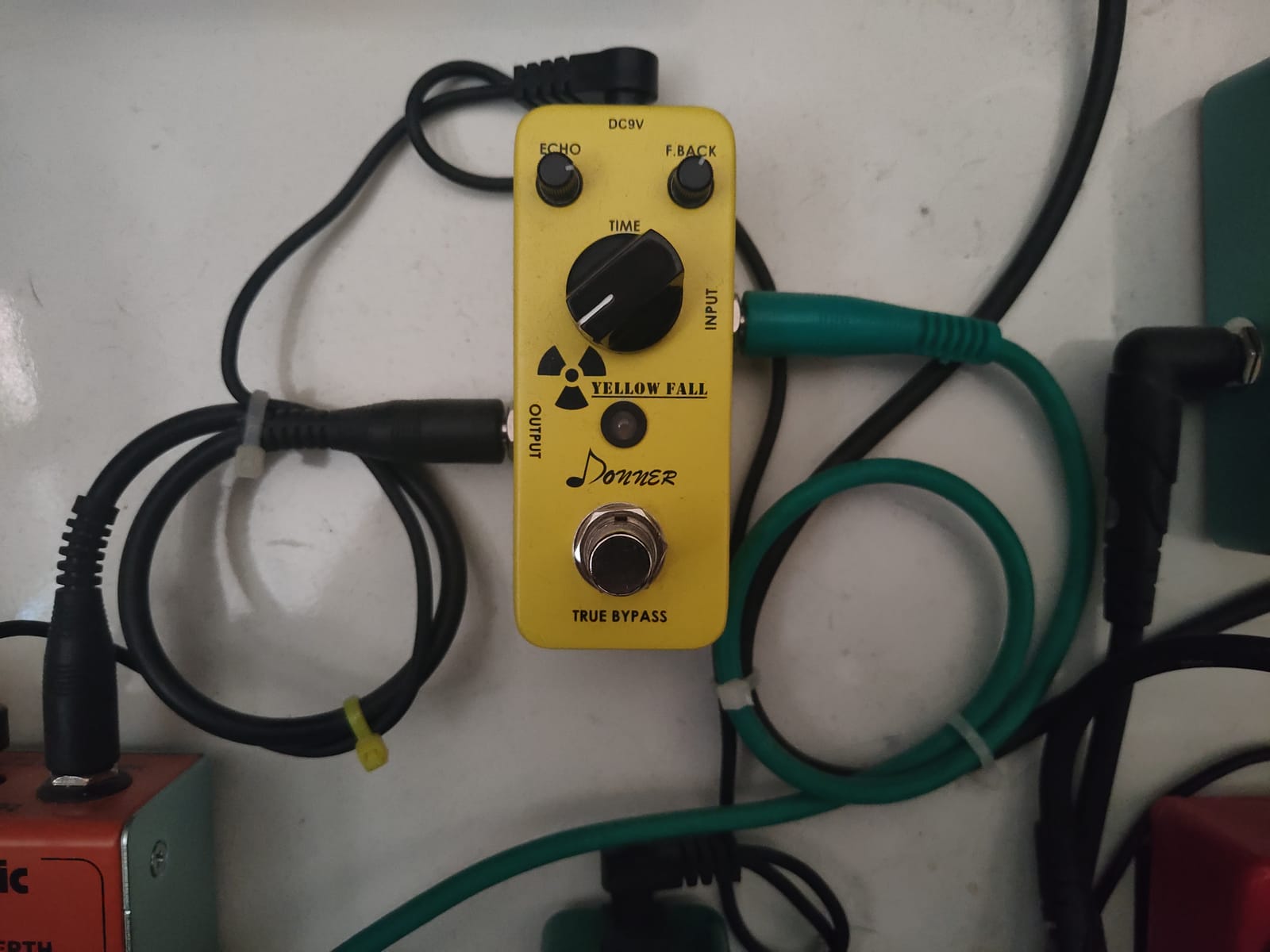
1. Donner Yellow Fall – the analog delay that anchors a first worship board
- Warm vintage repeats that sit quietly in the mix
- Wide 20-620ms delay time range
- Compact aluminium mini housing
- True bypass keeps the tone transparent
- Echo control lacks a usable taper for very subtle slapback
- Modulated character is not a pristine digital repeat
- No battery compartment in the mini housing
My first pedal was a delay, and for a worship guitarist that is still the correct order. The Donner Yellow Fall does one job and does it for very little money, which makes it the easiest way to hear how much space a song needs.
In a rehearsal room, the warm, slightly modulated repeats sat behind a clean rhythm part without fighting it. That character is the point: an analog-voiced repeat has less high-frequency hiss than a digital repeat, so it disappears into a full band mix instead of cutting through it as a separate instrument.
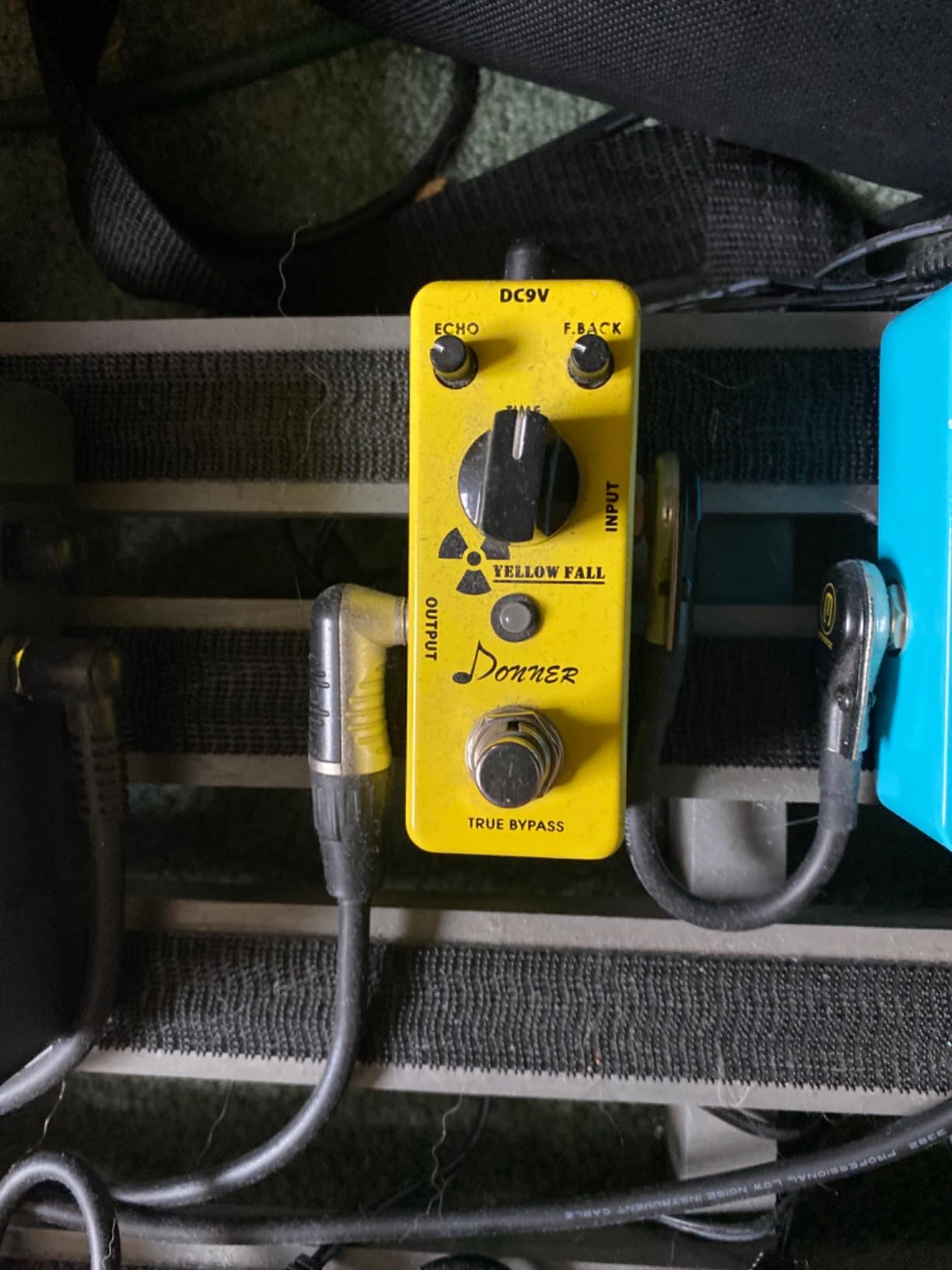
What I like most is the range. At 20ms it is a thickness effect, at 620ms it is a repeating pad under a slow worship song, and the level and feedback are on independent knobs so you can pull a long tail back to almost nothing without losing the note on the fretboard.
The switch is true bypass, so when the pedal is off it is a piece of wire. That transparency matters more than it sounds, because most worship amps are already pushing a lot of gain and a pedal that colours your signal when it is off makes the whole board feel inconsistent between songs.
Who this pedal suits
This suits a volunteer guitarist buying their first board, or anyone who plays slow songs and wants repeats that sound like tape rather than a metronome. It also works well as a second delay on a board that already has a digital delay, because the two characters sit differently in the mix.
If you play a lot of dropped tunings or very short repeat times for slapback, the modulated character is slightly wrong for you. It wants to be heard rather than felt.
Where it falls short
The echo control does not have a fine taper at the low end, so dialling in an almost-subtle slapback is fiddly. And the warm modulated voice is the opposite of what you want if your worship leader wants a clean, clear, dotted-eighth repeat for a ballad.
It also runs on 9V DC with a 36mA draw and there is no battery compartment in the mini housing, so it needs a power supply on the board. Plan for that in your supply budget from day one.
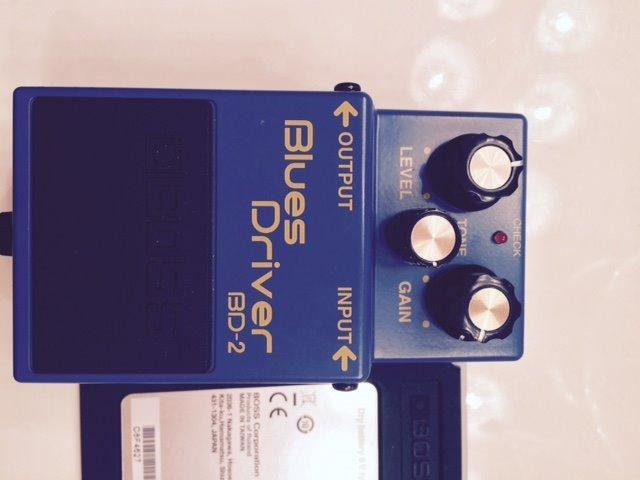
2. BOSS BD-2 Blues Driver – the transparent overdrive worship players reach for
- Warm musical overdrive that cleans up with the volume knob
- Highly responsive to picking dynamics
- Rugged compact BOSS enclosure
- Long battery life
- Pricier than most compact overdrives in the category
- Full-size stompbox footprint
The overdrive slot is where worship rigs get personal, and the BD-2 is the pedal that comes up first in almost every thread I have read. Bluesbreaker forums and worship guitar forums reach the same conclusion from opposite directions: this is the first gain stage to buy.
What made it work in rehearsal was response to the guitar volume knob. Roll the volume down and the drive cleans up into a slightly compressed clean, roll it up and you get warm sustain without the harsh top end that makes a pedal fight a worship leader’s vocal on a PA system.
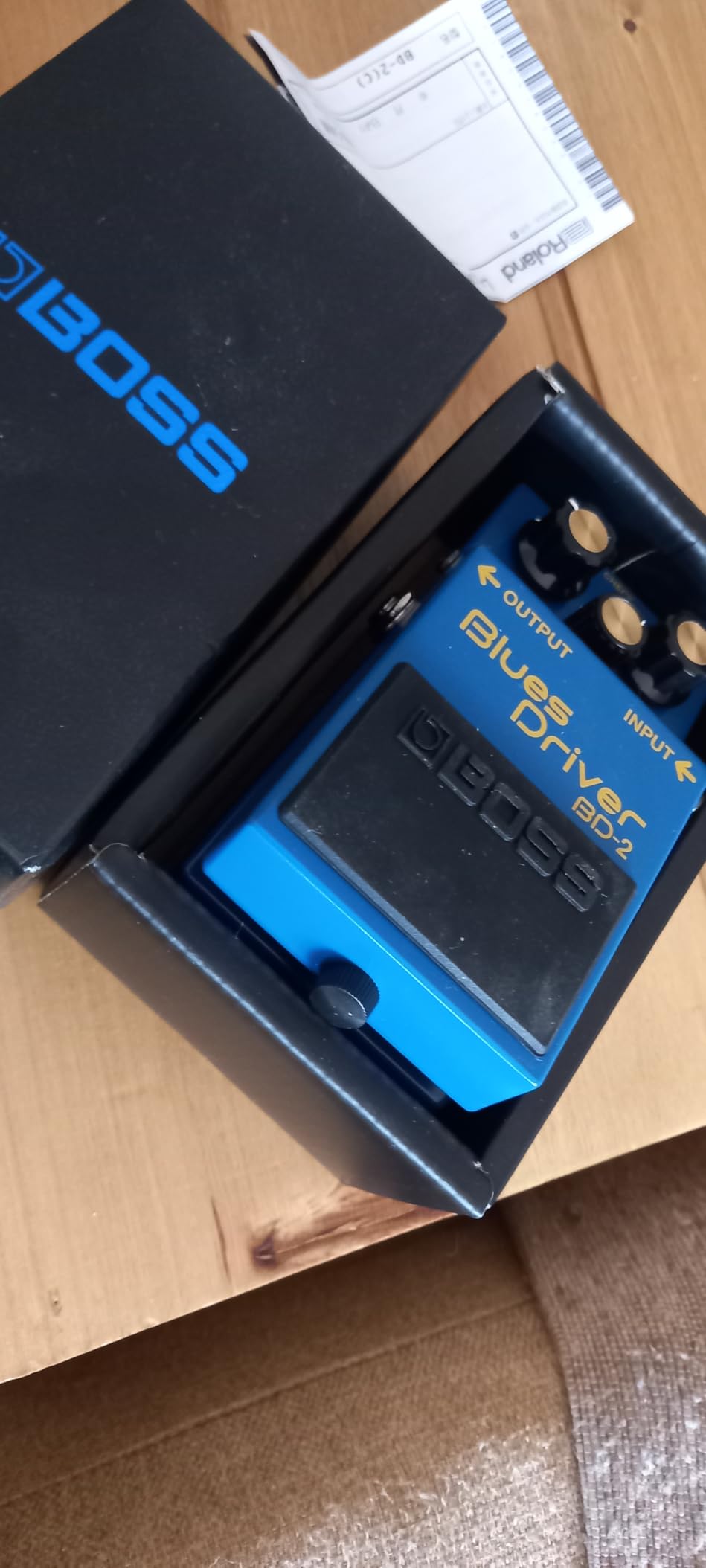
It is a three-knob pedal, which is the right amount of control for a volunteer guitarist. Tone, level and gain means you can set it once before the service and never touch it again, or you can use your hands to shape tone while playing.
The build is the other reason it lasts. BOSS enclosures have a reputation for being close to indestructible, the switch is a heavy-duty stomp, and the 13mA draw means it can run for a long rehearsal week on the same battery.
Who this pedal suits
This suits anyone whose guitar is a single coil into a clean-ish tube or hybrid amp and who needs more sustain and midrange to be heard over drums. It is the choice for players who want one sound and want it repeatable rather than a set of switching options.
It is also a good first overdrive because the gain structure is forgiving. Turn it up too far and it gets fuzzy rather than broken, which is a relief on a stage.
Where it falls short
It costs more than most compact overdrives, and if your board is being built on a volunteer stipend, that difference is real. It is a full-size stompbox, so it takes up a standard BOSS footprint rather than a mini slot.
Some reviewers find the midrange push a little forward on humbuckers. If you are playing a bridge humbucker into a bright amp, this is more saturation than you need and a lower gain setting is essential.
3. BOSS RV-6 Reverb – eight reverb modes, one expression-friendly box
- Eight musical reverb modes with only three knobs
- Shimmer and delay+reverb modes add modern textures
- Delay+Reverb mode covers two effects in one pedal
- Rugged BOSS build with five year warranty
- Dynamic mode can sound artificial on dense chords
- Runs warm and colours the tone more than a crisper digital reverb
Reverb is the effect most worship guitarists want and the one most likely to wreck their mix, because it keeps ringing after the note is gone. The RV-6 solves that with a tone control and a mode list that includes something restrained for the verse and something huge for the bridge.
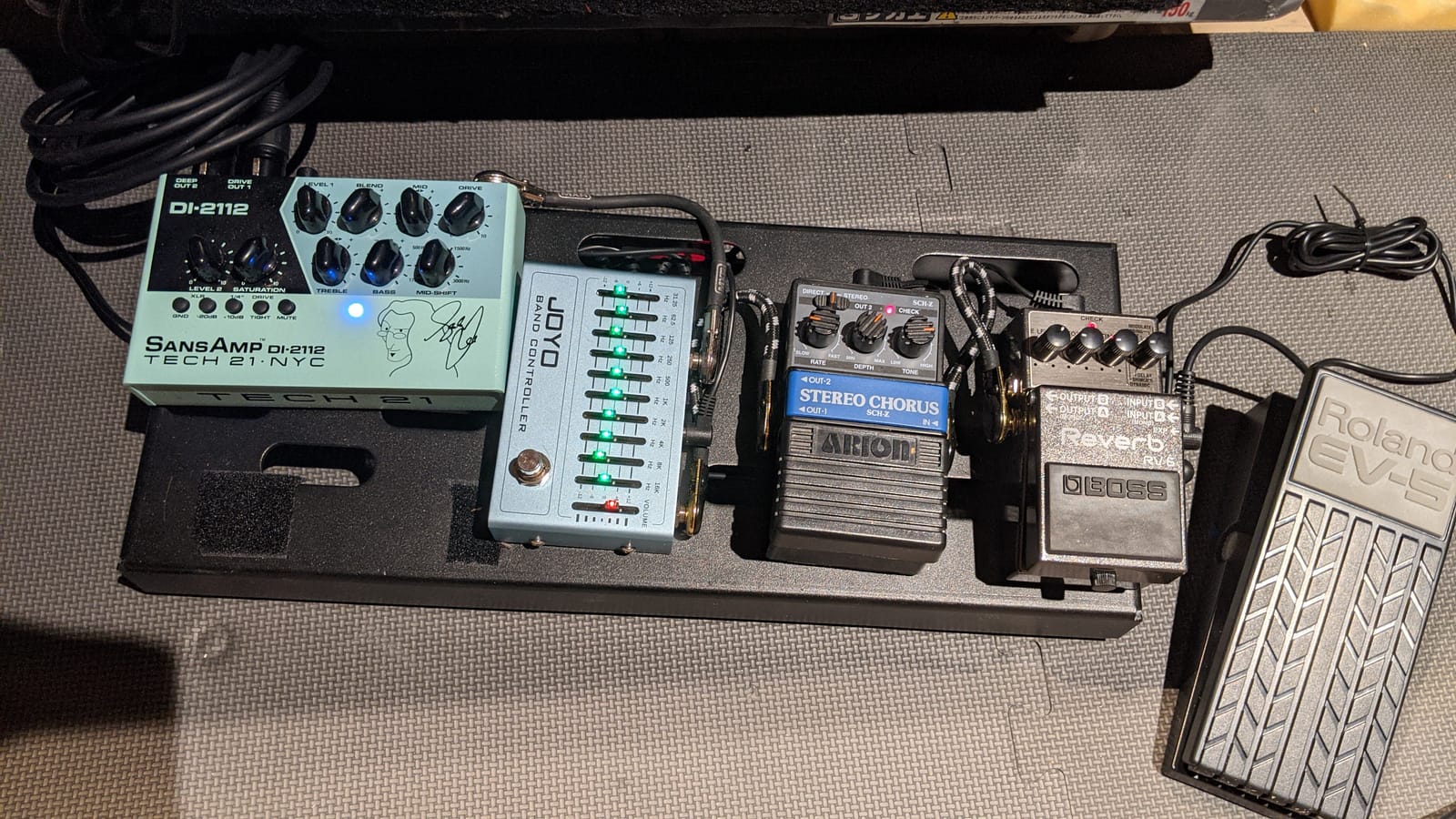
Eight modes, all reachable from the same three knobs: spring, plate, hall, room, modulate, dynamic, shimmer and delay+reverb. In a worship context I used plate for the verse, hall for the chorus, and shimmer under the pad sections where the singing worship leader is carrying the melody alone.
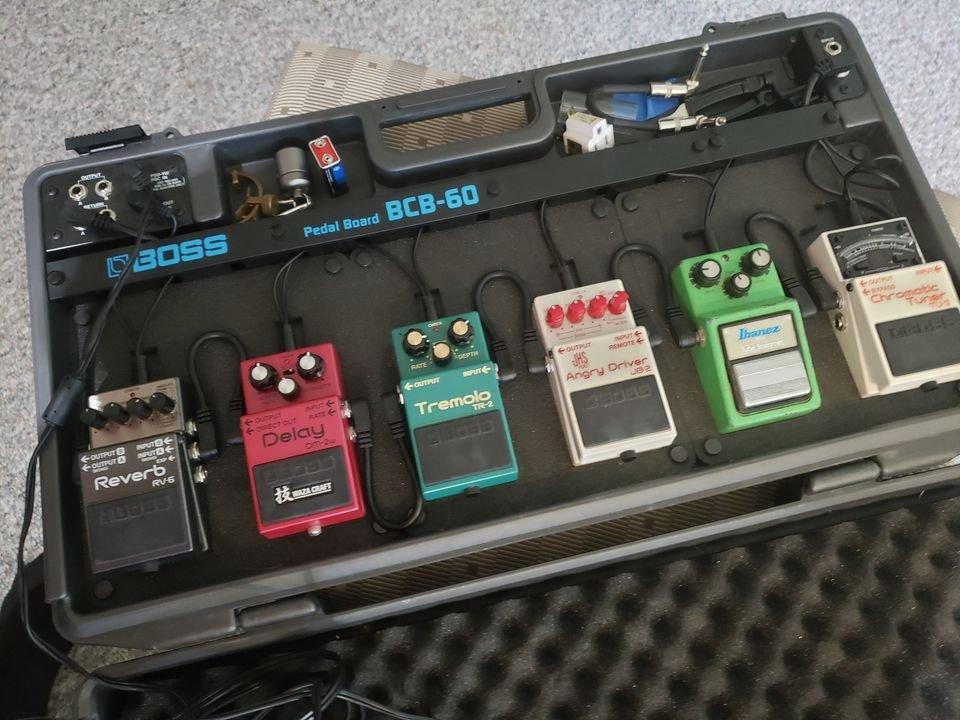
The expression pedal input is the underused feature here. Plug a volume pedal in and the effect level follows your foot, which means you can push a huge reverb tail into a bridge and pull it to nothing in a quiet verse without moving your hands off the guitar.
It also supports mono or stereo operation, so a player with two amps or a stereo recording setup can use the full width, and everyone else just runs mono.
Who this pedal suits
This suits the player who wants one reverb that covers most of the set and does not want to think about menus before a service. Three knobs means you can set it in under a minute and never touch it again.
The delay+reverb mode is genuinely useful on a tight board. If you already own a dark analog delay like the Yellow Fall, this mode gives you a wet, spacey texture without adding another enclosure.
Where it falls short
Dynamic mode is the weakest of the eight. It pushes itself into a loud signal and can sound artificial and compressed on dense chords, so it is a mode to try and probably avoid in a band context.
The 128mA draw is meaningful on a shared supply, and the warm, analog character colours the tone more than a crisp digital reverb would. If your rig is already warm, this is not the pedal to add.
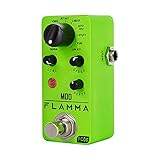
4. FLAMMA FC05 – eleven modulation types for a crowded board
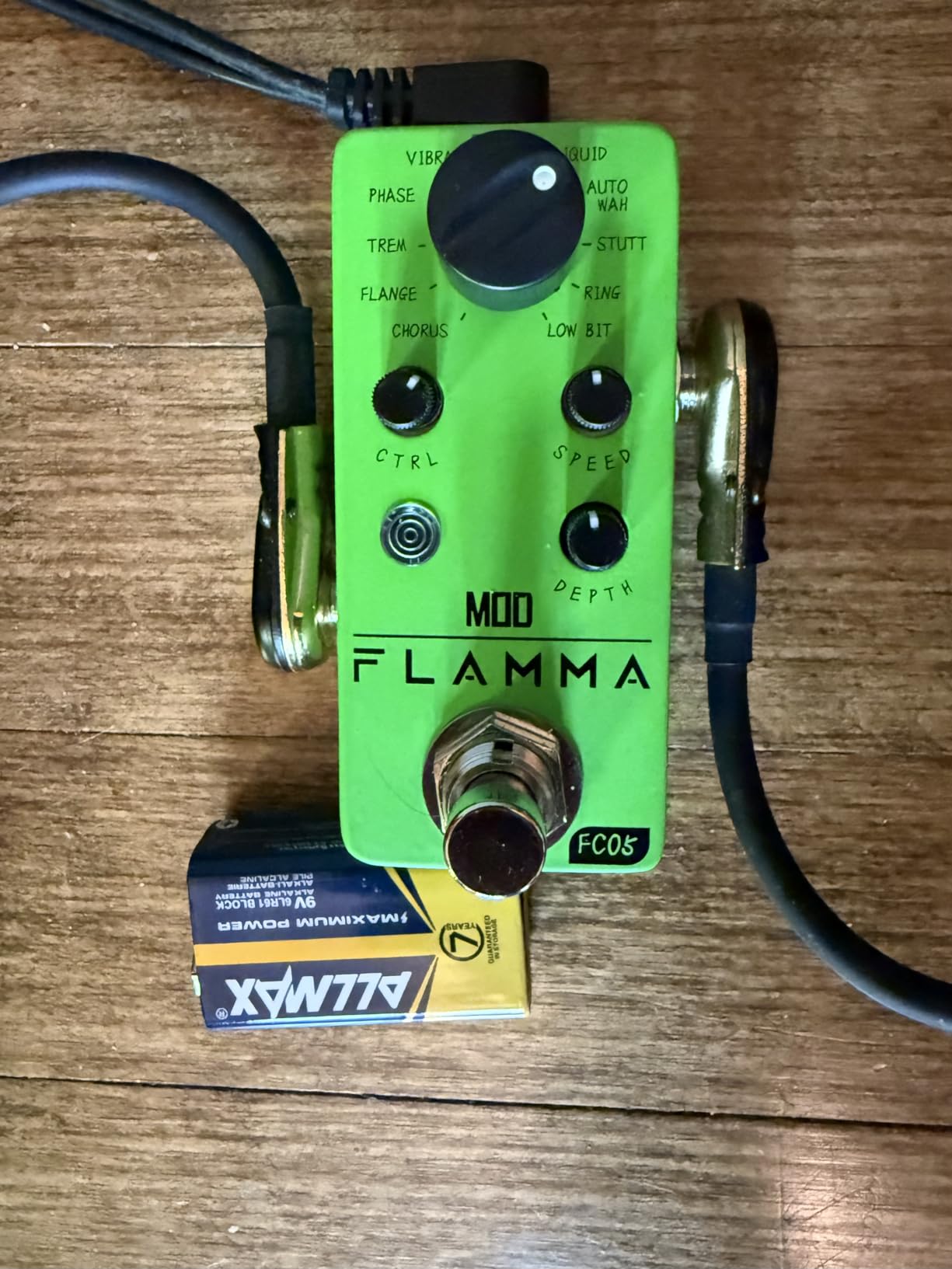
FLAMMA FC05 Modulation Guitar Pedal with Chorus Flanger Tremolo Phaser Vibrato Rotary Liquid Autowah Stutter Ring LowBit
- Eleven modulation types in one compact metal enclosure
- Depth control allows subtle chorus and phaser blends
- Chorus flanger tremolo and rotary are the most usable
- Low cost way to audition modulation sounds
- Ring mod and low bit modes are noisy and largely unusable
- Settings rarely carry between effects
- Audible hiss even when bypassed
Board space is the most common complaint in worship guitar forums, and a multi-effect modulation pedal is the cheapest answer to it. Eleven types, one slot, one knob that actually matters.
Of the eleven, roughly six are worth having: chorus, flanger, tremolo, phaser, vibrato and auto-wah. Chorus is the one I would keep on a worship board, because it thickens a single-note line without adding the low-mid energy a compressor does, and that keeps the mix clear under a vocal.
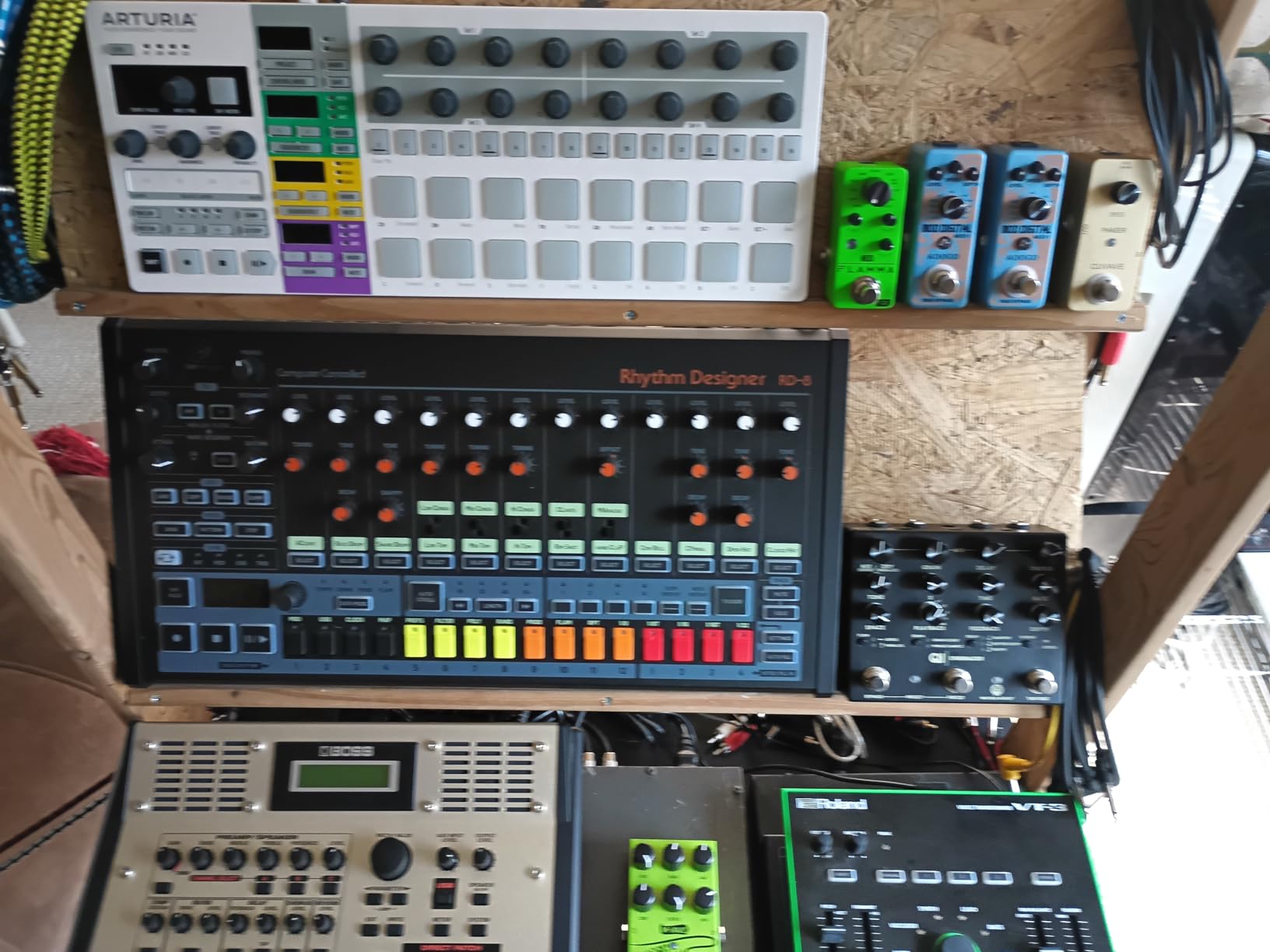
The depth and mix blend control is the difference between this being a toy and being usable. Set it shallow and the chorus sits in the background, which is exactly where worship chorus belongs. Set it wide and it becomes a lead guitar effect.
It is also a genuinely good way to audition. Plenty of worship guitarists buy a chorus, decide they do not like chorus, and then discover they love phaser. This lets you test all of them in one rehearsal.
Who this pedal suits
This suits players on a crowded board who want chorus, phaser or tremolo without giving up the space. It is also a good fit for a first-time guitarist who wants to hear what modulation sounds like before committing to a dedicated pedal.
For a worship team that plays a lot of atmospheric material, having flanger and tremolo in the same box as your chorus is genuinely convenient.
Where it falls short
There is audible hiss even when the pedal is bypassed, and on a quiet stage that noise goes straight into the PA. If you run an acoustic-electric into a PA rather than an amp, you will need a noise gate downstream.
Settings do not carry between effects, so switching modes mid-service means re-dialling. For a set-and-forget player, that is a dealbreaker, and it is why this sits in a supporting role rather than the core five.
5. Ernie Ball VP JR – the volume pedal that makes swells playable on stage
- Very smooth foot action with a full volume sweep
- Compact and lighter than full size alternatives
- Completely passive design with no tone loss
- Tuner output allows silent tuning
- Taper is back-loaded so most of the swell happens late in the travel
- Pull string is a wear item that can need replacing
- Six month manufacturer warranty
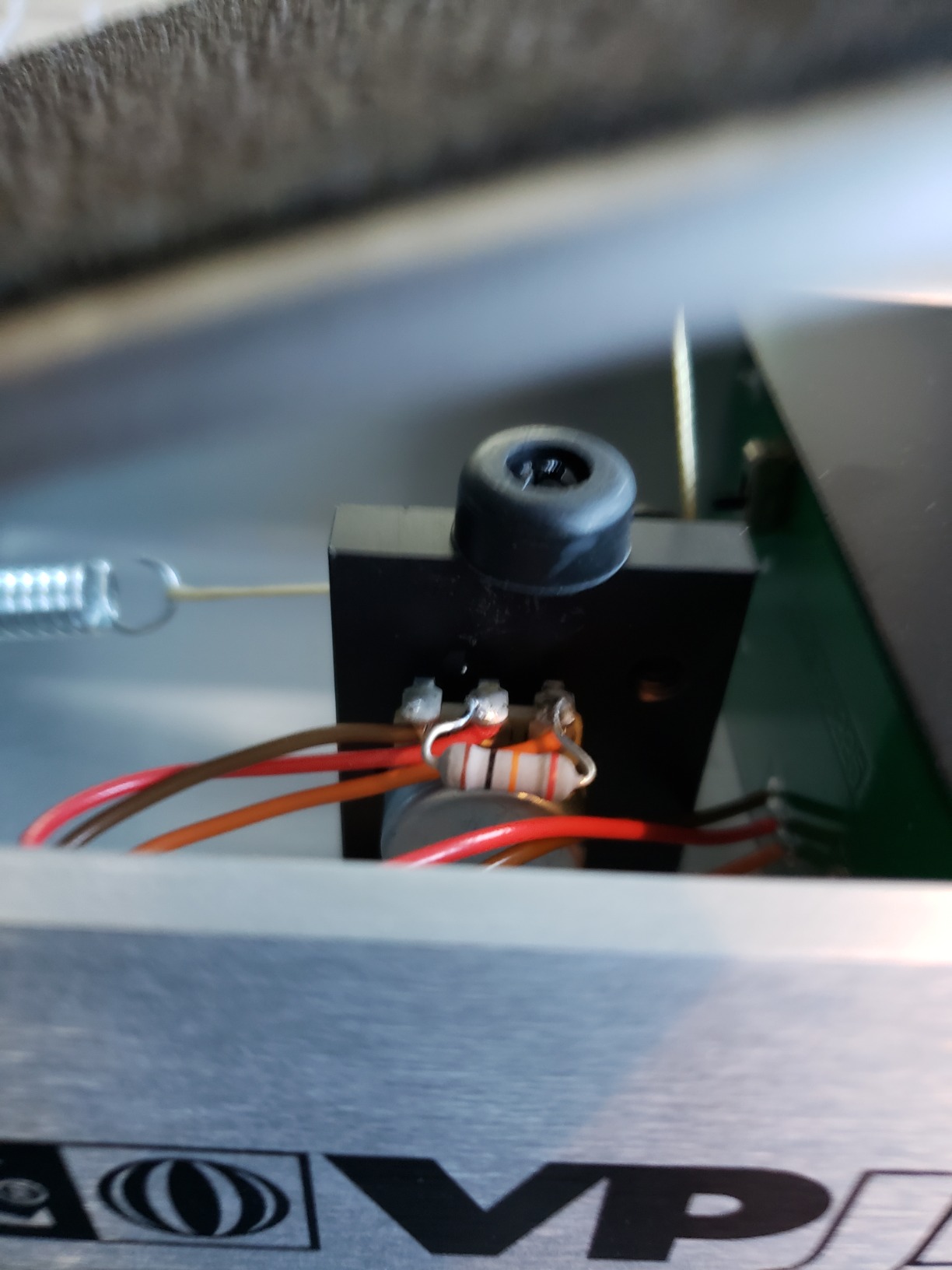
A volume pedal is the most underrated pedal on a worship board, and the VP JR is the reason. It is passive, so it needs no power, and that means it works before your first pedal, before your tuner, and before anything else on the chain.
Placed right after the guitar, it swells the entire rig, including every effect downstream. That is how you play a quiet, breathy verse with no delay and no reverb, then push the toe down for a bridge where the repeats and the wash come up together.
The build is what players respond to. The foot action is smooth across the full sweep with no scratchiness at the top end, which matters when you are trying to control dynamics with a worship band playing loudly and you need a small change to register.
The tuner output is a small detail that saves real time. With a clip-on tuner, tuning mid-song means your guitar goes silent and the congregation hears the gap. Tuner out, you feed the tuner a parallel signal, tune silently, and keep playing.
Who this pedal suits
This suits every worship guitarist, but especially anyone playing dynamics instead of a wall of sound. It is also the answer for players who want to use an expression pedal input on a reverb or delay, since it doubles as a standard passive volume control.
It is particularly useful in a quiet room or a small congregation space, where a fixed-output electric guitar is simply too loud for the verse and not loud enough for the chorus.
Where it falls short
The taper is back-loaded, so most of the swell happens in the last part of the travel. If your sound is a soft fade-in you will be fine. If you want a linear control from heel to toe, the two-position switch under the footplate is the adjustment, and it is tucked awkwardly behind the input jack.
The internal pull string is a wear item that can break and needs replacing, and the manufacturer warranty is only six months, which is the shortest of any pedal in this roundup.
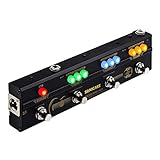
6. SONICAKE Sonic Wood – the acoustic worship box with an XLR output
SONICAKE Acoustic Pedal Guitar Effect Acoustic Pedal Multi Effects Preamp Chorus Delay Reverb Acoustic Guitar Pedal Sonic Wood with XLR Output
- One box solution for preamp chorus delay and reverb
- XLR output doubles as a direct feed to a PA or mixer
- Solid metal chassis with metal jacks
- Tap tempo and reverb tail suit live use
- Warm EQ tames thin acoustic tones
- Single-knob reverb can sound one-dimensional
- Preamp gain boost is limited
- Adds some noise with every section engaged
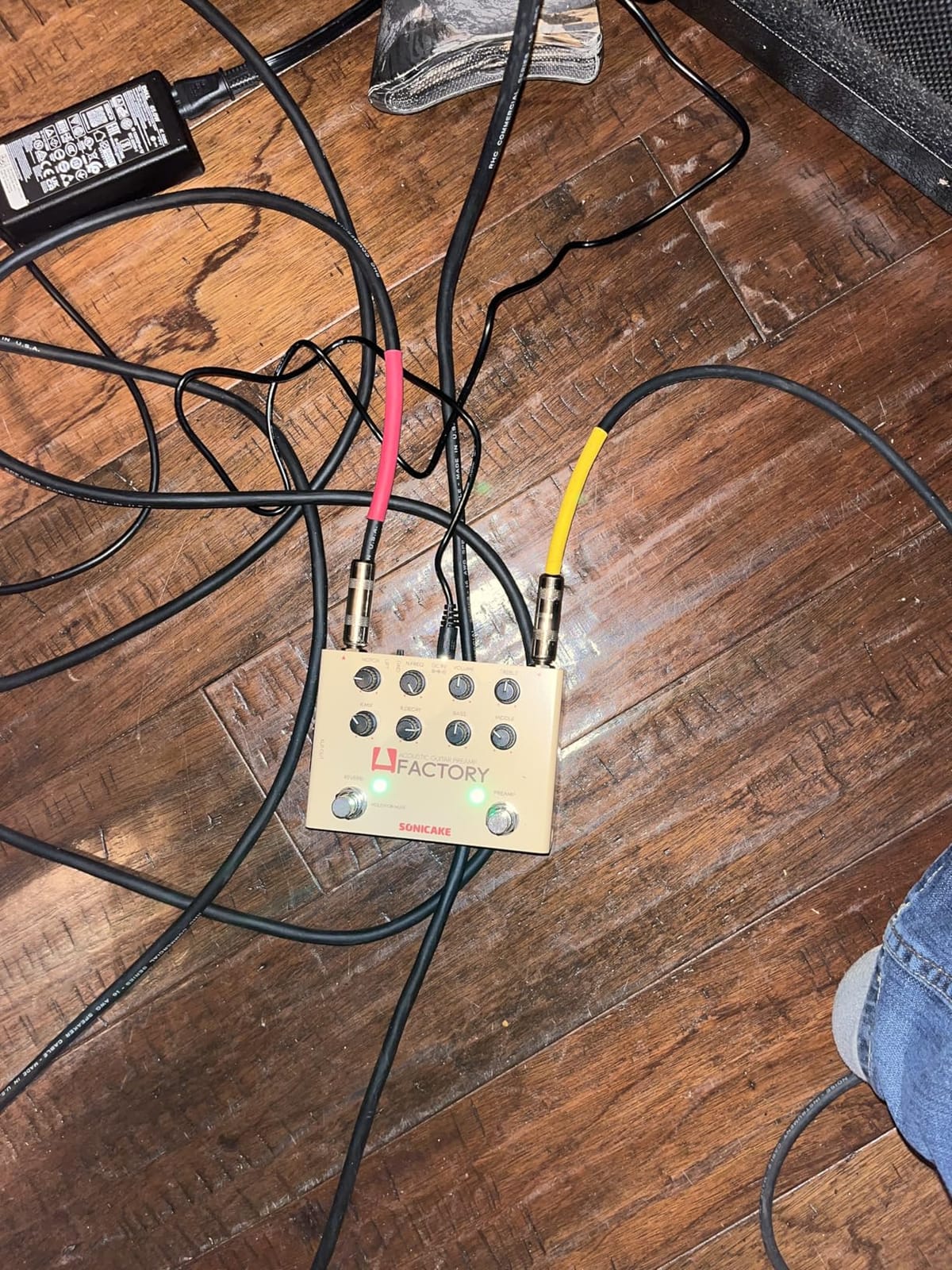
Acoustic worship rigs are the quiet gap in almost every pedal roundup, and they are a genuinely different problem. There is no amp, so the pedal has to do the amp’s job as well as the effects.
The Sonic Wood does that with a two-band analog EQ preamp that gives an acoustic guitar an amplified voice before anything else happens. For a thin or tinny acoustic, the EQ is the part that matters most, and the warm preamp voice is what turns a piezo pickup into something that sits in a band mix.
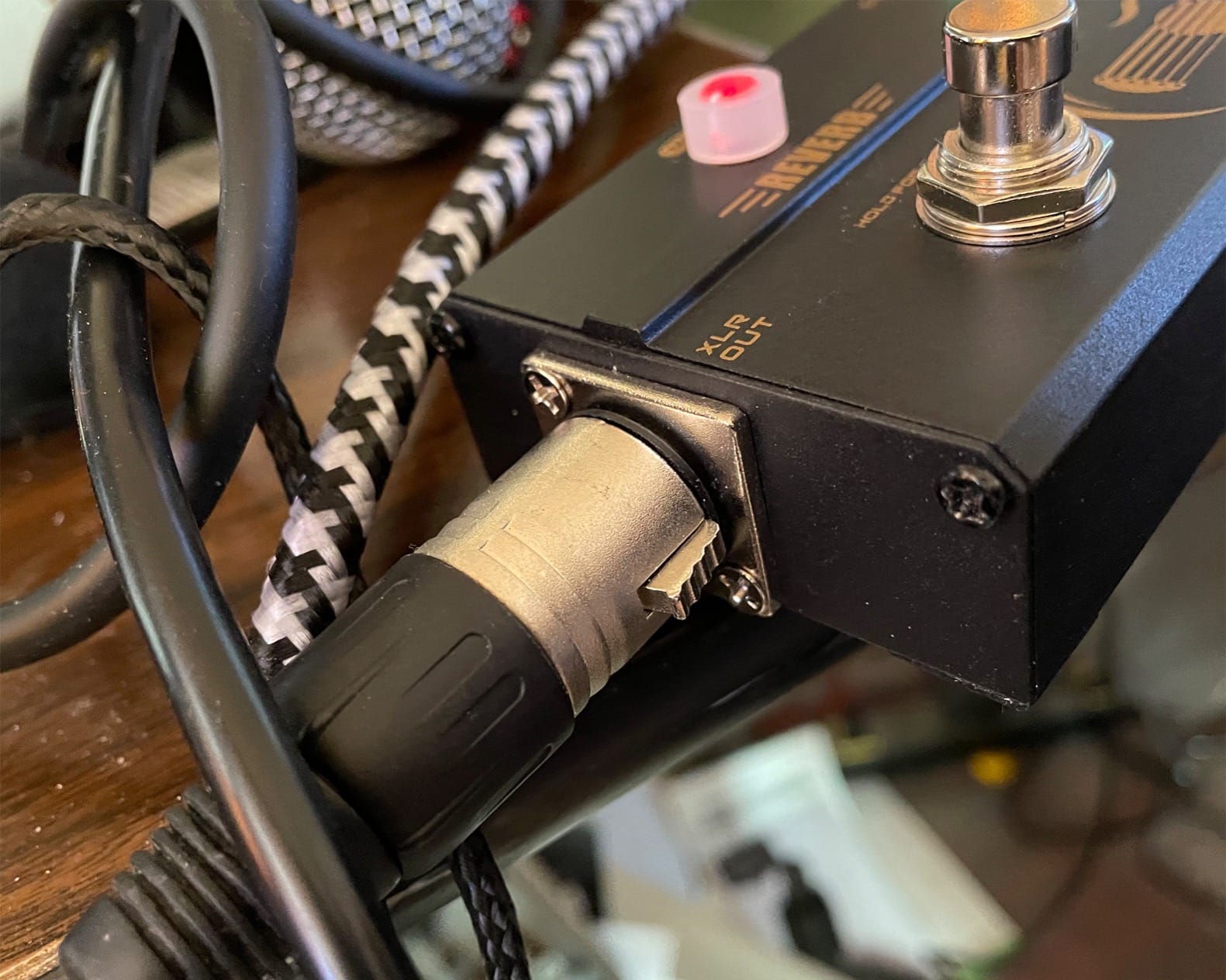
The XLR output is the feature that changes how you play. It acts as a direct box, so you can feed a PA, a mixer or an audio interface with one cable and skip the DI entirely. Chorus, delay and reverb are there with tap tempo and a tail on-off, which is a complete worship signal chain in a single enclosure.
There is also a send and return FX loop, which is unusual at this size and useful if you want to put a volume pedal or an external reverb in the middle of the chain.
Who this pedal suits
This suits the acoustic player on a worship team, especially one playing an acoustic-electric in a band rather than solo. Tap tempo for the delay and a reverb tail that rings out naturally are both practical for live use rather than studio only.
The included 9V supply is a nice touch, because acoustic players tend to be the least organised people on the team and this removes one reason to put the pedal aside.
Where it falls short
The reverb is a single knob, so it goes from subtle to overwhelming with nothing in between, and that is exactly the range a worship mix cannot afford. There is no decay control to sit the reverb behind a vocal.
With all four sections engaged at once it adds noticeable noise, and the preamp can push a bright acoustic into harsh territory. It has no built-in tuner either, which an acoustic player on stage really does need.
7. BOSS DD-8 – the delay that carries its own looper
- Eleven distinct modes covering analog digital shimmer and modulated repeats
- Built-in 40 second looper with overdubs saves board space
- Up to 10 seconds of delay time with tap tempo
- Stereo I/O and solid BOSS construction
- Mode and parameter depth means a learning curve
- Highest power draw in the compact delay category at 300mA
- Deeper menu structure than a set-and-forget player wants
The DD-8 is the delay for a player who has run out of board space and does not want a multi-effects unit. Eleven delay modes and a 40-second looper in one standard BOSS enclosure is a lot of function for one slot.
For worship specifically, the looper is the reason to own it. A worship team that plays an ambient intro, a worship leader who sings alone, or a guitar part that repeats under a spoken section can all be handled with the looper instead of a separate looper pedal.
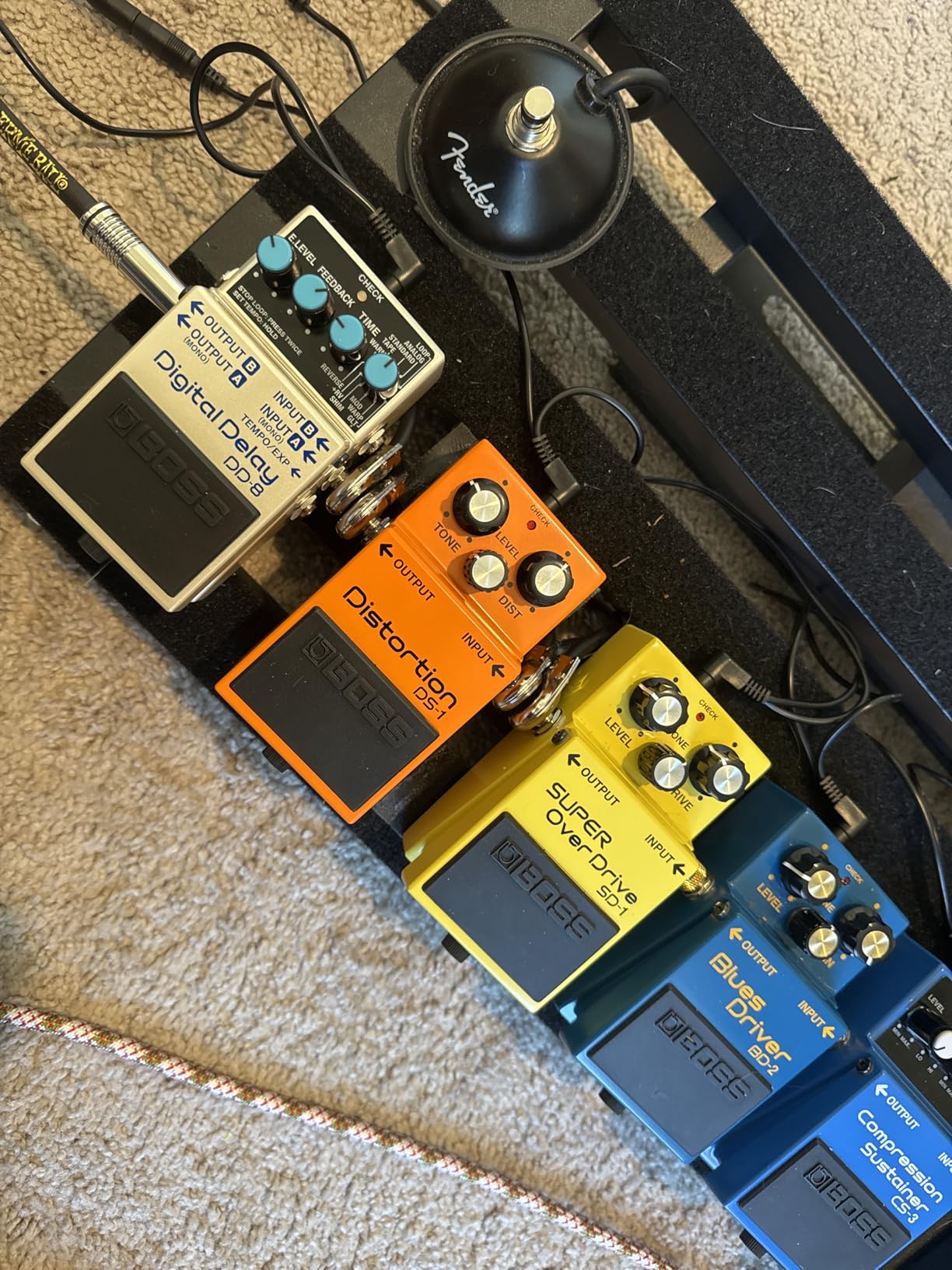
The delay modes cover the ground well. Standard digital, analog-style, tape-style, shimmer, mod and looper modes, plus Warm, plus reverb-added and GLT delay types. The Warm and reverb-added types are the ones that stay in a worship mix without fighting the worship leader’s vocal.
Up to 10 seconds of delay time with tap tempo gives you room for a long ambient wash under a prayer or a quiet outro, which is where most players run out of delay on other compact units.
Who this pedal suits
This suits the player building a complete board and who wants a delay and a looper without adding a second enclosure. Stereo in and out also makes it useful for a two-amp setup or for anyone recording a worship set.
If you play ambient material, long pads or post-rock-influenced worship, the long delay times and shimmer modes are the reason to choose this over a simpler delay.
Where it falls short
Eleven modes with multiple parameters each is a lot to learn, and learning it well takes more than a Sunday morning. For a player who wants one sound set and forgotten, that depth is friction rather than value.
The 300mA draw is the largest in this roundup and the single biggest planning factor. On a daisy-chained power supply it may not run at all, so budget for an isolated supply with headroom. We cover the arithmetic in the buying guide below.
8. JHS 3 Series Reverb – a plain, musical room-to-ambient wash
- Wide range from tight room reverb to long ambient washes
- EQ knob matches the reverb to a bright or dark rig
- Pre-delay adds musical spacing before the wash begins
- Simple control layout and low 74mA draw
- No tap tempo or preset storage
- Mono format with no stereo input or output
- Modulation character is limited compared with dedicated shimmer units
There is a kind of worship guitar player who does not want presets, does not want tap tempo and does not want to think. This is that pedal, and it is built in Kansas City, USA.
Two useful knobs. The EQ control lets you match the reverb to your rig, which matters more than most players expect: a bright amp with a dark reverb sounds like a distant room, while a dark amp with a bright reverb cuts through the mix unpleasantly.
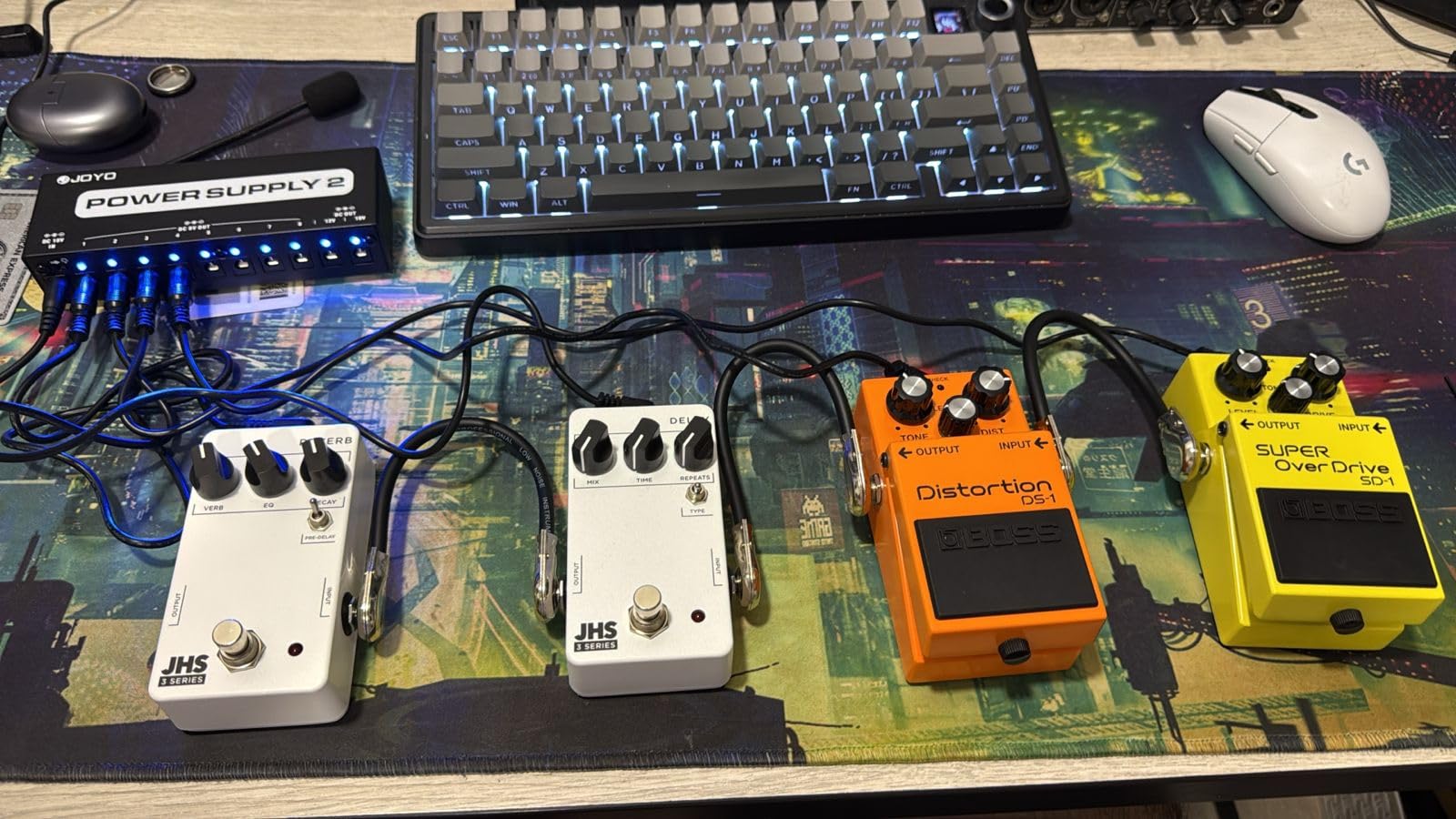
Pre-delay is the other one, and it is the control that saves this pedal in a worship mix. A short pre-delay pushes the wash behind the note, so the attack of the chord stays clear and the tail sits under the vocal instead of on top of it.
The range runs from small room sounds to long ambient washes on one knob, which covers verse-to-bridge moves without re-dialling anything.
Who this pedal suits
This suits a player who wants a single ambient reverb and values a musical, immediately playable control layout. If you play a lot of slow worship and ambient material, the long decay end of the range is the reason to want it.
The 74mA draw is one of the lowest here, which means it causes no problems at all on a shared pedalboard power supply.
Where it falls short
It is a mono pedal with no stereo input or output, so the width that makes a reverb feel large on a recorded worship track is not available. The modulation character is also limited, with none of the shimmer-style octave shifting that defines the modern worship pad sound.
There is no tap tempo and no preset storage, which is a feature if you play one reverb and a limitation if you use it as part of a layered sound.
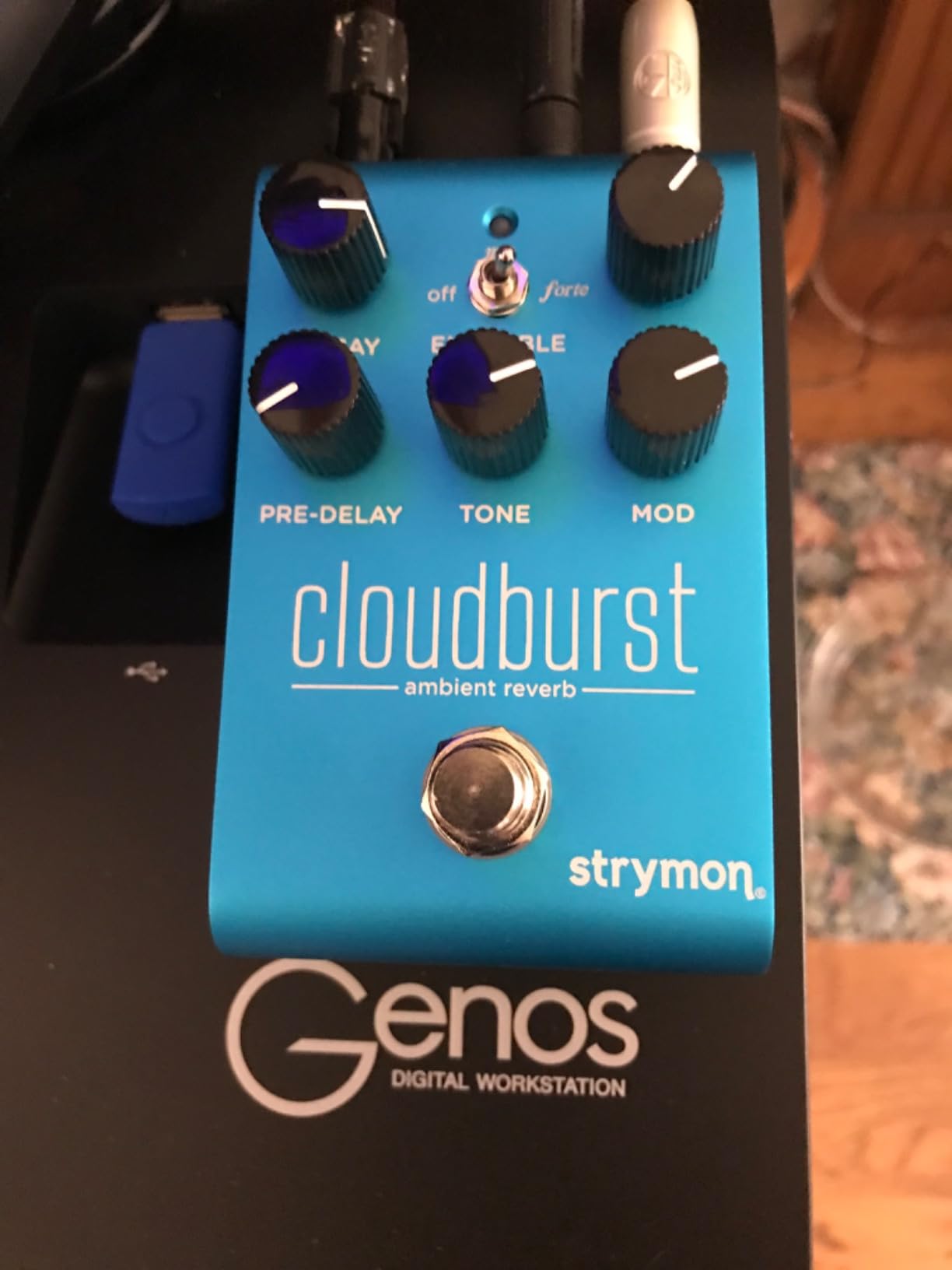
9. Strymon Cloudburst – Ensemble mode for pads and prayer moments
- Lush cinematic reverb tails
- Ensemble mode adds orchestral pad textures
- Also covers conventional room and hall reverbs
- Fits a compact footprint with top-mounted jacks
- Strong build with a two year warranty
- Highest price point in this roundup
- Ensemble mode can drown the guitar in a band mix
- No battery option and needs an external DC supply
The Cloudburst is the one pedal on this list I would describe as finishing a board rather than starting one. It is a normal reverb first, and then it is something more.
Ensemble mode is the headline. It adds an orchestral, synth-like layer under the reverb, and for a worship guitar playing a quiet intro under a singing worship leader it is the sound that makes an acoustic part sound enormous without adding volume.
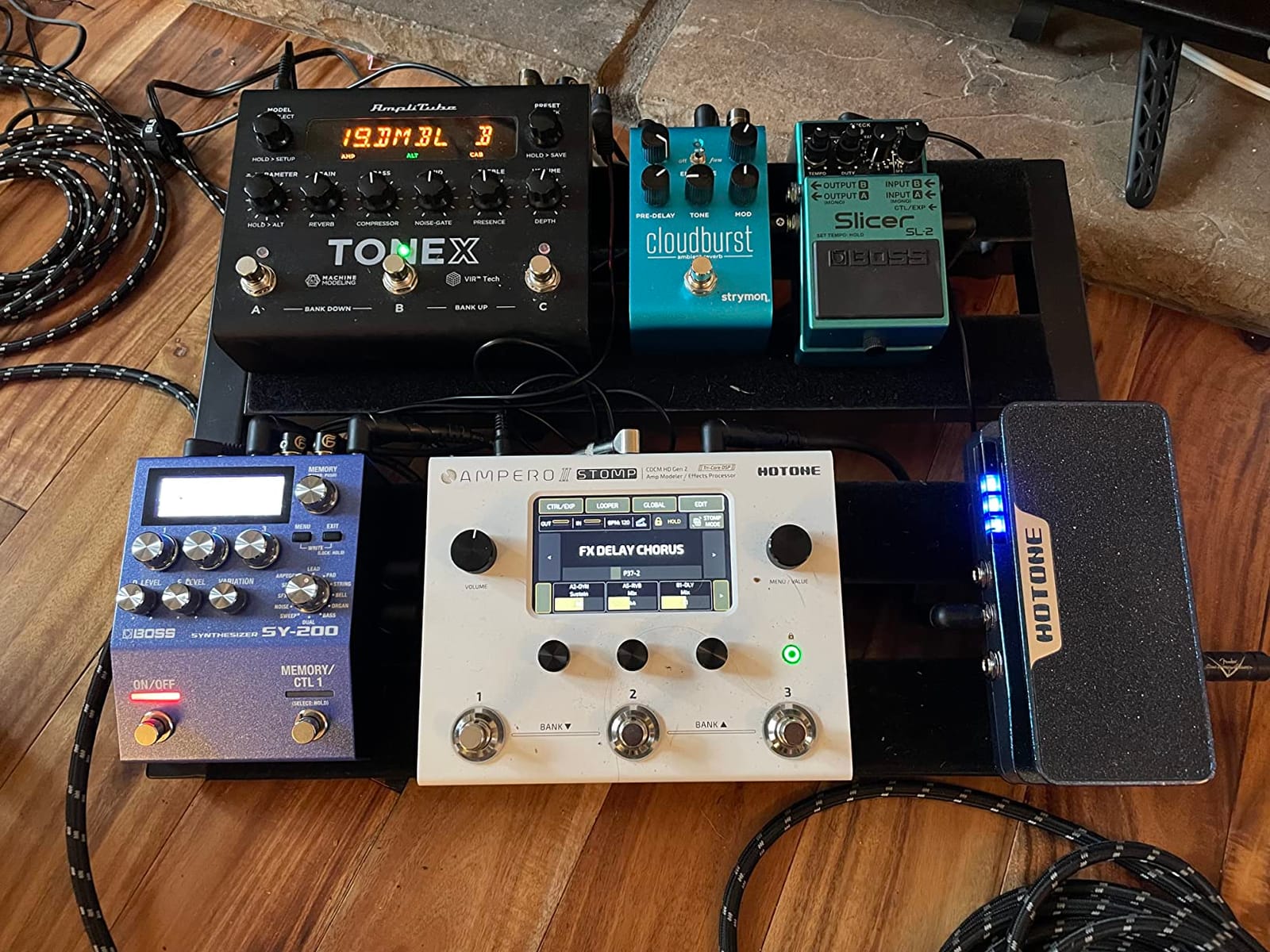
It is not only for ambient. Decay, mod, tone and pre-delay controls plus a mix control mean the conventional room and hall settings are genuinely usable, so this can be your only reverb if you want one.
The physical design is thoughtful for a pedalboard. Top-mounted jacks let you sit it tight against another pedal, and the stereo I/O with a mono and stereo switch means it works for a single amp or a stereo rig. The USB-C port is for firmware and MIDI-class control rather than audio.
Who this pedal suits
This suits the worship guitarist whose set includes ambient sections, prayer moments or instrumental interludes where the guitar is the only thing playing. It also suits acoustic players who want orchestral width without a second guitarist.
If you are playing in a large room with a decent PA, this is where the reverb and ensemble layer has room to be heard properly.
Where it falls short
It costs more than everything else in this roundup combined, and for a volunteer buying their own board that is a real decision. There is no battery option, so it needs an isolated supply on a 250mA draw.
Ensemble mode can easily drown the guitar in a band mix. Keep the mix control lower than you think, and remember the freeze function needs practice to time correctly with an external momentary footswitch.
10. LEKATO AT-07 – a stomp tuner you can read from the riser
LEKATO Guitar Tuner Pedal with True Bypass, Chromatic Tuner Pedal for Electric Guitar and Bass, Color Display Tuning Pedal with Mute, Pitch and Flat Tuning
- Colour LCD is readable on dark stages and in bright rooms
- True bypass keeps the signal clean when the tuner is off
- Small footprint leaves room for other pedals
- Calibration and flat tuning handle alternate and dropped tunings
- Needs an external 9V DC supply and does not run on batteries
- Screen is limited compared with a tuner app
- Footswitch-only control
Every worship guitarist needs a tuner, and the argument for a stomp tuner over a clip-on is that it stays in the signal path. You stomp it, the signal is muted, you tune, and you come back in without unplugging anything mid-song.
The reason this one works on a worship stage is the colour LCD. A small monochrome display at the bottom of a pedalboard is invisible under stage lighting; a colour screen angled up toward the player is readable from the riser, which is the only position that matters.
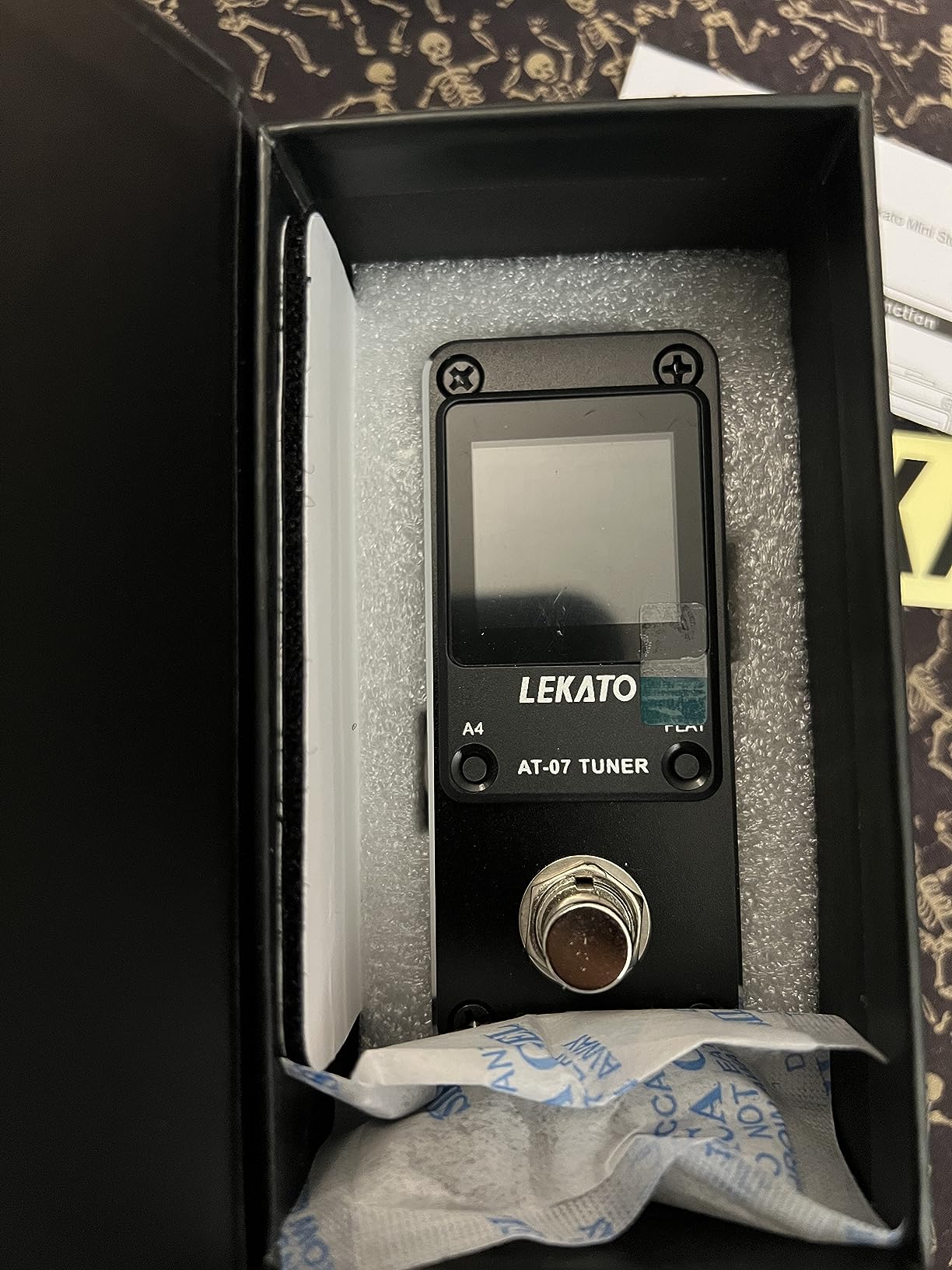
Calibration from 430Hz to 450Hz matters more than most people realise. If the worship leader tunes to a different A than your tuner assumes, every guitar in the band is a little sharp or flat all night, and your board is where you can fix it for yourself.
Flat tuning from one to four semitones covers the modern worship tuning shifts, and the roughly half a percent tolerance means the readout is fast enough to use between songs rather than only during sound check.
Who this pedal suits
This suits anyone whose board is tight on space and who tunes in unusual reference pitches or alternate tunings. The small footprint and aluminium shell mean it takes the least room of anything here.
True bypass is the right choice here. A tuner in the signal path that colours your tone when off would be a waste of a good pedal, and this does not.
Where it falls short
It needs an external 9V DC supply and has no battery compartment, so it is one more thing to power. The screen is basic next to what a phone app can do, and there is no way to adjust settings while tuning because control is footswitch-only.
It is also not the sturdiest feeling pedal of the twelve. It does its job precisely, and it does not pretend to be more than that.
11. SONICAKE Levitate – delay and plate reverb in one slot
- Delay and plate reverb in one box freeing board space
- Long 2000ms delay range with tap tempo
- Buffer bypass keeps the signal clean
- Independent dry and wet control
- Trail function lets repeats ring out naturally
- Digital reverb is less lush than a dedicated plate unit
- Some owners report digital artefacts
- Power supply not included
When a pedalboard has one slot left and you need both a delay and a reverb, a combined pedal is the obvious answer. The Levitate is the most common version of that idea, and for a worship guitarist assembling a first board it solves a real problem rather than creating one.
Delay time runs up to 2000ms with tap tempo, which is longer than most compact delays and enough for a long ambient tail under a quiet section. The trail function lets the repeats ring out when you switch it off rather than cutting dead, which is what you want at the end of a worship song.
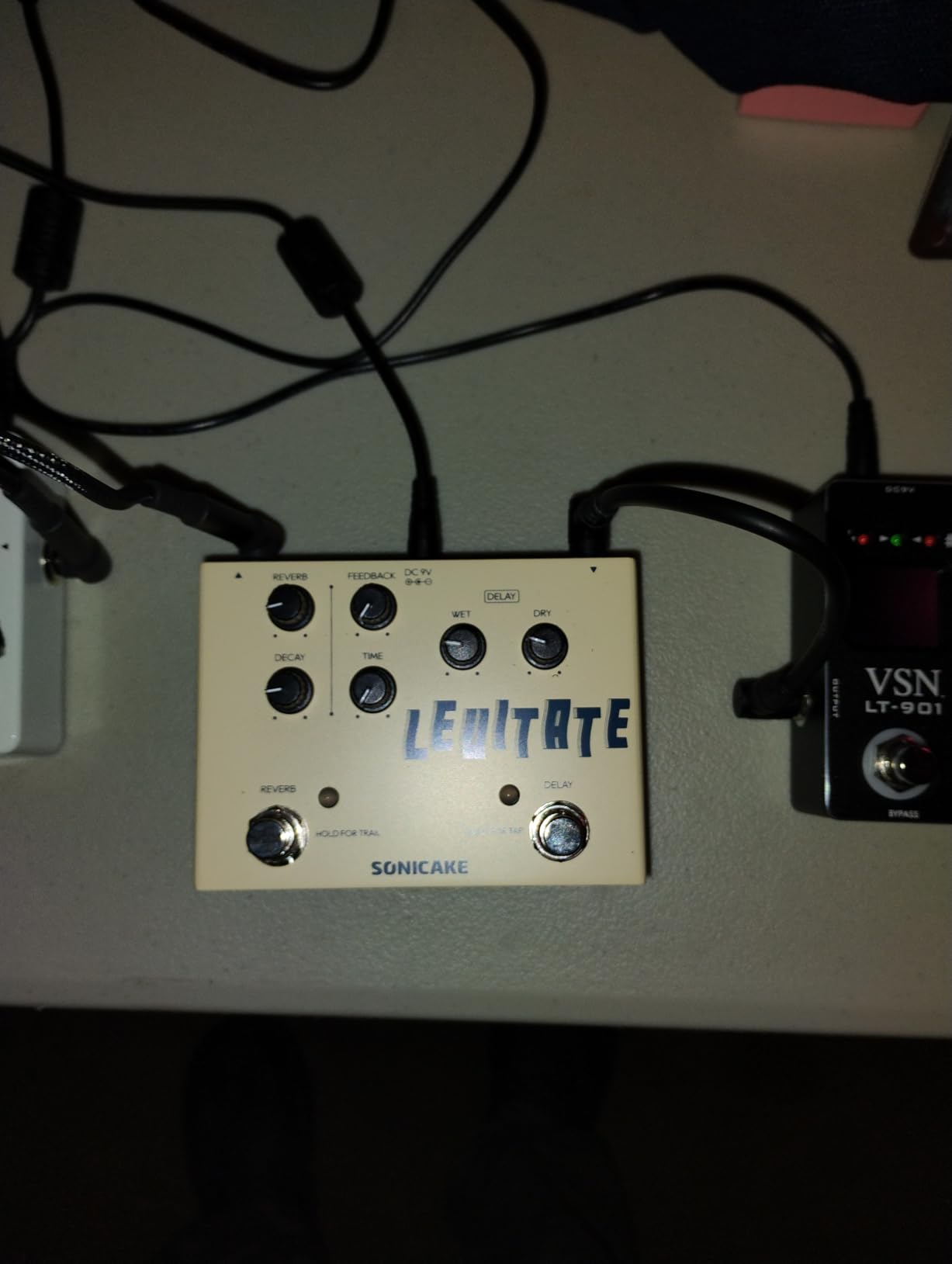
Buffer bypass is the quietly important detail. Buffered circuits keep a consistent impedance and level across the chain, which is why a board full of analog pedals can change volume when you switch them in and out. This one does not.
Independent dry and wet control means you can dial the delay and the reverb separately even though they share an enclosure, so a plate-heavy verse and a delay-heavy chorus are both reachable without re-dialling the whole pedal.
Who this pedal suits
This suits a first board, a spare board for a second guitarist, or a player whose worship team has a strict board size limit. The most common scenario in worship guitar forums is someone who needs space and reverb in a single enclosure and cannot justify two pedals.
It is also a cheap way to test whether you actually like plate reverb before spending on a dedicated one.
Where it falls short
The plate reverb is functional rather than lush, and a small number of owners report digital artefacts on dense material. If your worship set is built around ambient pads rather than rhythm parts, a dedicated reverb will sound noticeably better.
The warranty is 90 days, the shortest but one here, and the 9V supply is not included. Both are worth knowing before you rely on it as your only source of space.
12. FLAMMA FS02 – seven reverb types with savable presets and stereo I/O
FLAMMA FS02 Reverb Pedal Stereo Guitar Effects with 7 Storable Preset Slots 7 Reverb Effects Room Hall Church Cave Plate Spring Mod True Bypass Trail On
- Seven reverb types with seven savable preset slots
- True stereo input and output for two amp or recording setups
- Crisp neutral reverb that preserves guitar tone
- Trail on and factory reset are easy to reach
- Metal enclosure with a solid footswitch
- Spring mode sounds thin and digital
- Unsaved settings revert to factory presets when power cycled
- Needs a 300mA or higher supply which is not included
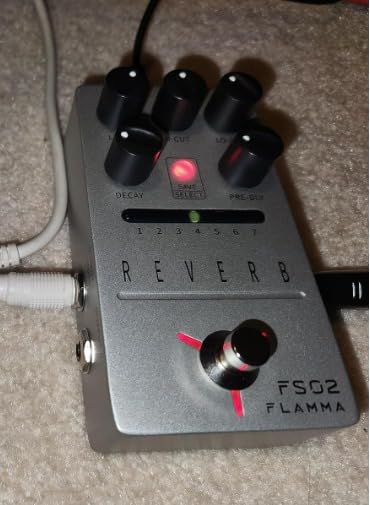
The FS02 is the pedal that surprised us most, and it is the closest thing to a one-pedal solution for a whole worship set. Seven reverb types, seven preset slots, and per-slot hi-cut, lo-cut, decay and pre-delay.
Presets matter more in worship than in any other context, because a worship set is a sequence of different dynamic levels. Dial a verse once, store it, and switch to it in a second in the middle of a song. The lo-cut and hi-cut per preset are what keep those stored settings from fighting the worship leader’s vocal.
True stereo input and output is unusual at this size. Seven types include room, hall, church, cave, plate, spring and mod, and the church and cave types are worth a look for a large room, though church can be enormous and needs a low mix setting.
The trail on function and the built-in factory reset are both thoughtful touches that usually only appear on more expensive pedals, and the buffer true bypass keeps the level consistent with analog pedals around it.
Who this pedal suits
This suits a player with a full set of different reverbs to manage, or anyone who wants to try several reverb characters without buying several pedals. The stereo I/O also makes it the right choice for a two-amp setup or a worship team recording its own services.
The neutral, uncoloured character works well for players whose amp is already warm, which is the opposite problem the RV-6 has.
Where it falls short
Unsaved settings revert to factory presets when the unit loses power, so anything you have not explicitly stored is gone. Treat the preset slots as the only place settings live.
The spring mode is thin and sounds digital rather than a real spring drip, and the 300mA power requirement with no battery option means it needs its own isolated supply. A few owners also report footswitch failures.
How to Build a Worship Pedalboard Without Wasting Money?
A worship board should be built in this order: tuner, volume pedal, compressor, overdrive, modulation, delay, reverb. Every question about signal chain order comes back to that sequence, so the only decision left is what goes in each slot.
Start with a power budget, not a pedal list. Every pedal on the list above has a published current draw, and they add up faster than most people expect. The Yellow Fall runs at 36mA, the BD-2 at 13mA, the RV-6 at 128mA, the FC05 at 150mA, the DD-8 at 300mA, the FS02 at 300mA, the JHS 3 Series at 74mA, the Cloudburst at 250mA, the Levitate at 92mA and the Sonic Wood at 120mA. That list alone is more than 1.4 amps. Add a power supply with headroom rather than a daisy chain, and check the total before you buy the second pedal, not after the fourth.
Add effects in the order the band needs them. Most worship guitarists run the same core set for months. Delay first, because it changes how a song feels most immediately, then reverb, then drive once the space is right. The order is not aesthetic, it is a cost decision made in rehearsal.
Keep mix discipline. The most common complaint about worship guitar tone is mud, and it is almost always reverb and delay rather than drive. When every guitar in the band has a wet tail, the whole mix gets thinner and louder-sounding. Lo-cut the reverb, add a little pre-delay, and turn the volume pedal down when the worship leader is speaking.
Consider a multi-effects unit if the maths does not work. A single floor unit gives you every effect in the list above with one power supply, no patching and instant recall between songs. The trade-off is real: many worship guitarists prefer pedals because a physical footswitch is something you can see and hit without looking, and because a volunteer who is new to the rig can be shown one thing instead of an entire screen. We have covered the options in more detail in our guide to guitar multi effects pedals if you are weighing that decision, and our general guitar pedal roundup covers the effects that are not worship specific.
Think about acoustic players separately. An acoustic-electric player going straight to a PA has different needs from an electric player into an amp. They need a preamp to replace the amp, a tuner, and usually delay and reverb set much more conservatively because there is no amp tone holding them together. The Sonic Wood is built for exactly that. Our picks for the rest of the worship team are in the best keyboards for worship guide, and the loopers that acoustic players lean on are covered in our looper pedal guide.
Know what not to buy. Fuzz, wah and heavily overdriven boutique pedals are almost never the right choice for a worship board. They consume board space, they add frequency content the mix does not need, and a worship set rewards clarity over character. The single most common piece of bad advice in this genre is buying a more expensive reverb before buying a tuner.
For reverb specifically, our dedicated reverb pedal roundup goes deeper on hall, plate, shimmer and spring choices if you want more detail than this guide gives.
Frequently Asked Questions
What type of overdrive pedal is best for worship?
A bluesbreaker-style overdrive is the standard for worship because it cleans up when you roll the guitar volume knob down, letting you move between rhythm and lead tones with your hand instead of your foot. The BOSS BD-2 is the most commonly recommended first gain stage. Set the gain low enough that you stay just past edge of breakup, because a full-band mix has no room for distortion.
What 5 pedals should every guitarist have?
For worship guitar specifically: a stomp tuner, a volume pedal, a low-gain overdrive, a delay with tap tempo, and a reverb with a shimmer mode. That is the minimum viable worship board and it covers a full set. A compressor and chorus are the most common next additions, but a band can play without them.
What is the best delay pedal for worship?
The best worship delay has tap tempo, independent level and feedback controls, and enough range to cover both a tight slapback and a long ambient tail. The Donner Yellow Fall is the strongest starting point on a budget, and the BOSS DD-8 covers every mode you might need plus a built-in looper. The most useful worship setting is a dotted eighth, which is what most players hear when they play a slow ballad.
Which delay pedal is best for worship music?
For a dark, warm repeat that sits behind a clean rhythm part, the Donner Yellow Fall is the answer. For a player who needs many modes, a long delay range and a looper in one enclosure, the BOSS DD-8 wins. Whichever you choose, use the trail or tail function so repeats ring out at the end of a song instead of cutting dead.
What is the best reverb pedal for worship guitar?
The BOSS RV-6 is the best all-round worship reverb, with eight modes including shimmer and delay+reverb, an expression pedal input, and only three knobs to set. The Strymon Cloudburst is best if you play ambient sections and want the orchestral Ensemble mode. The FLAMMA FS02 is best if you need several stored reverbs for a full set. Keep pre-delay and a low cut on all of them so the tail sits behind the vocal.
What is the best effect pedal for worship guitar?
There is no single best effect pedal, because the answer depends on the gap in your sound. Most worship guitarists need a tuner first, then delay, then reverb. Overdrive is the pedal that makes a single coil sit properly in a full band mix, and a volume pedal is what lets you play with dynamics during quiet passages. Buy the gap, not the hype.
Final Word on the Best Guitar Pedals for Worship Players
The best guitar pedals for worship players come down to a short, boring list that works: a tuner, a volume pedal, an overdrive, a delay and a reverb. The Donner Yellow Fall is the delay to start on, the BOSS BD-2 is the overdrive most worship guitarists end up keeping for years, and the BOSS RV-6 is the reverb that covers the most ground in the fewest knobs.
Add the Ernie Ball VP JR if you play with dynamics, the Strymon Cloudburst if your set has ambient sections, and the SONICAKE Sonic Wood if you play acoustic straight into a PA. Build the board in stages, check the power draw before you buy, and set the signal chain in the order above.
Start with the tuner and the delay. Everything else you can add when you hear the gap.