
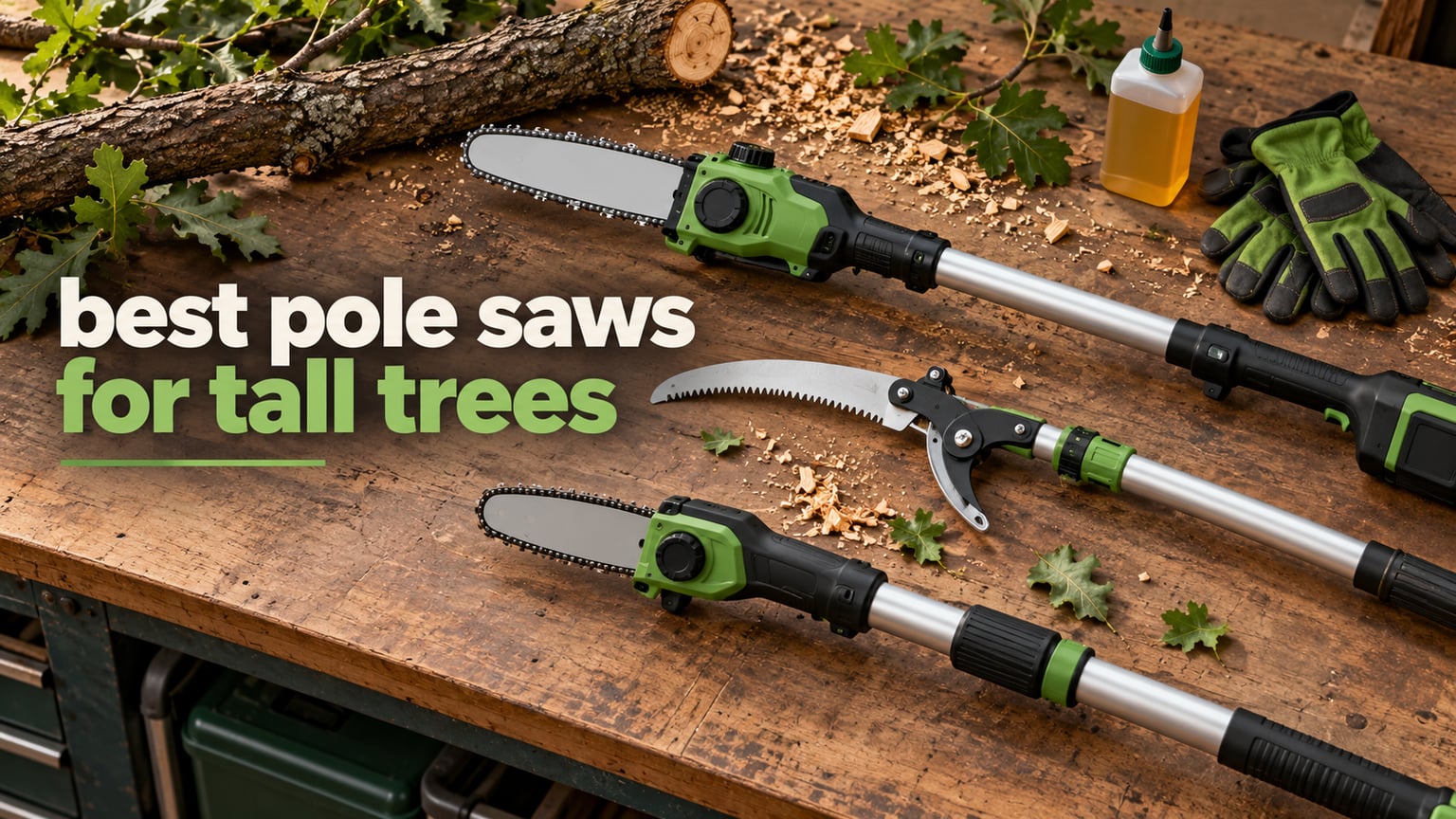
The tallest pole saw you can realistically use is a manual extendable pruner at 27 ft, and the most practical one for most homeowners is a cordless saw with roughly 16 ft of reach. That spread is where most tree work goes wrong.
Reach that matters comes from three things working together: how long the tool is, how tall you are standing under it, and how much clear ground you have to work from. A 16 ft saw puts the cutting head at about 21 ft of tree height for a 5 ft 8 in operator, but only if the shaft stays rigid at full extension. Several saws in this roundup stop behaving well past their mid-length.
This is our best pole saws for tall trees guide for 2026, covering cordless and manual saws side by side. We weighted reach, branch capacity, weight at full extension and what is actually in the box. Gas saws come up in the buying guide, but none of the twelve picks are gas, because a modern cordless now matches them on weight and handling for the kind of occasional pruning most homeowners do. If you want deeper coverage by power type, our cordless pole saw roundup and gas pole saw roundup go further.
Table of Contents
Top 3 Best Pole Saw Picks for Tall Trees in 2026
SEESII P6 Ace 2-in-1 Pole Saw
- Up to 15.5 ft reach
- 6.9 lb as a pole saw
- Two 4000mAh batteries
- 1000W brushless motor

CRAFTSMAN V20 14-Foot Pole Saw
- 14 ft reach
- 325 cuts per charge
- 6 lb assembled
- 8-inch steel bar
The SEESII takes the top slot on a 4.5 rating combined with by far the largest review base in the group, and owners describe it as one of the easiest pole configurations here to hold overhead. The Supstable earns the thick-branch slot because its 8-inch bar cuts limbs that the 6-inch saws stall on. The CRAFTSMAN V20 is the endurance pick, with a cut count per charge no other cordless here matches.
Quick Overview: All 12 Pole Saws Compared in 2026
| Product | Specifications | Action |
|---|---|---|
| SEESII P6 Ace 2-in-1 Pole Saw |
|
Check Latest Price |
 Supstable 2-in-1 Pole Saw 16 Ft Supstable 2-in-1 Pole Saw 16 Ft |
|
Check Latest Price |
| CRAFTSMAN V20 14-Foot Pole Saw |
|
Check Latest Price |
 Greenworks 40V 8-Inch Cordless Pole Saw Greenworks 40V 8-Inch Cordless Pole Saw |
|
Check Latest Price |
 VEVOR 27 Ft Manual Pole Saw VEVOR 27 Ft Manual Pole Saw |
|
Check Latest Price |
 LETYANGER 27 Ft Manual Pole Saw LETYANGER 27 Ft Manual Pole Saw |
|
Check Latest Price |
 EGO Power+ PS1001 Pole Saw EGO Power+ PS1001 Pole Saw |
|
Check Latest Price |
 Autubin 1200W 16 Ft Pole Saw Autubin 1200W 16 Ft Pole Saw |
|
Check Latest Price |
 DNLBBO 8-Inch 16 Ft Pole Saw DNLBBO 8-Inch 16 Ft Pole Saw |
|
Check Latest Price |
 Greenworks 60V 10-Inch Pole Saw Greenworks 60V 10-Inch Pole Saw |
|
Check Latest Price |
 TaskStar 8-Inch 15 Ft Pole Saw TaskStar 8-Inch 15 Ft Pole Saw |
|
Check Latest Price |
 BlumeTrec 14.5 Ft Pole Saw BlumeTrec 14.5 Ft Pole Saw |
|
Check Latest Price |
Two things in that table explain most of the split in owner reviews. Bar length drives cutting capacity far more than wattage does, and the saws that reach the farthest are not the ones that stay rigid the longest.
How Tall a Tree Can a Pole Saw Actually Reach?
Working reach is not pole length. Your working reach is the length of the tool plus your own height plus whatever your grip position adds, and the number manufacturers print is usually just the pole. A 9 ft pole held by a 5 ft 8 in operator with hands at hip height cuts at roughly 14 ft of tree height, not 9 ft.
Now subtract the drop zone, which is the part almost everyone forgets. If you are standing directly under the branch, you are standing in the landing zone for anything you cut. You want 10 to 12 ft of horizontal clearance in the direction of the cut, which usually means working from an open side of the tree rather than from the trunk.
By class, the numbers break down roughly like this. Manual pruners in the 27 ft class handle branches up around 20 ft of tree height for an average operator, and their practical limit is arm strength rather than the tool. Cordless saws with 14 to 16 ft of reach handle branches between roughly 12 and 18 ft. Fixed 11 ft class saws stop at about 10 to 12 ft of cutting height, which is only just above your own reach.
On branch diameter, the dividing line is the bar. A 6-inch bar is a limb pruner for branches up to about 2 inches. An 8-inch bar handles 4 to 5 inch limbs with patience. A 10-inch bar is where 6 to 8 inch branches fall inside the saw’s range, provided you cut through in stages rather than in one pass.
Threads on r/landscaping and greentractortalk.com make the same point from the other direction. A commenter with a 3 ft extension reports 11 ft of reach plus their own height and calls it easy to start and manageable in the hand, while another warns against adding more length because handling at the existing length is already difficult. Reach and control are a package deal.
1. SEESII P6 Ace 2-in-1 Pole Saw – Best Overall for Tall Trees
- Light weight keeps full extension manageable
- Two 4000mAh batteries allow pack swaps with no downtime
- Large review base with a tight 4.5 average
- Quick conversion between handheld and pole modes
- 6-inch bar limits it to smaller branches
- Brand-specific batteries with no cross-tool compatibility
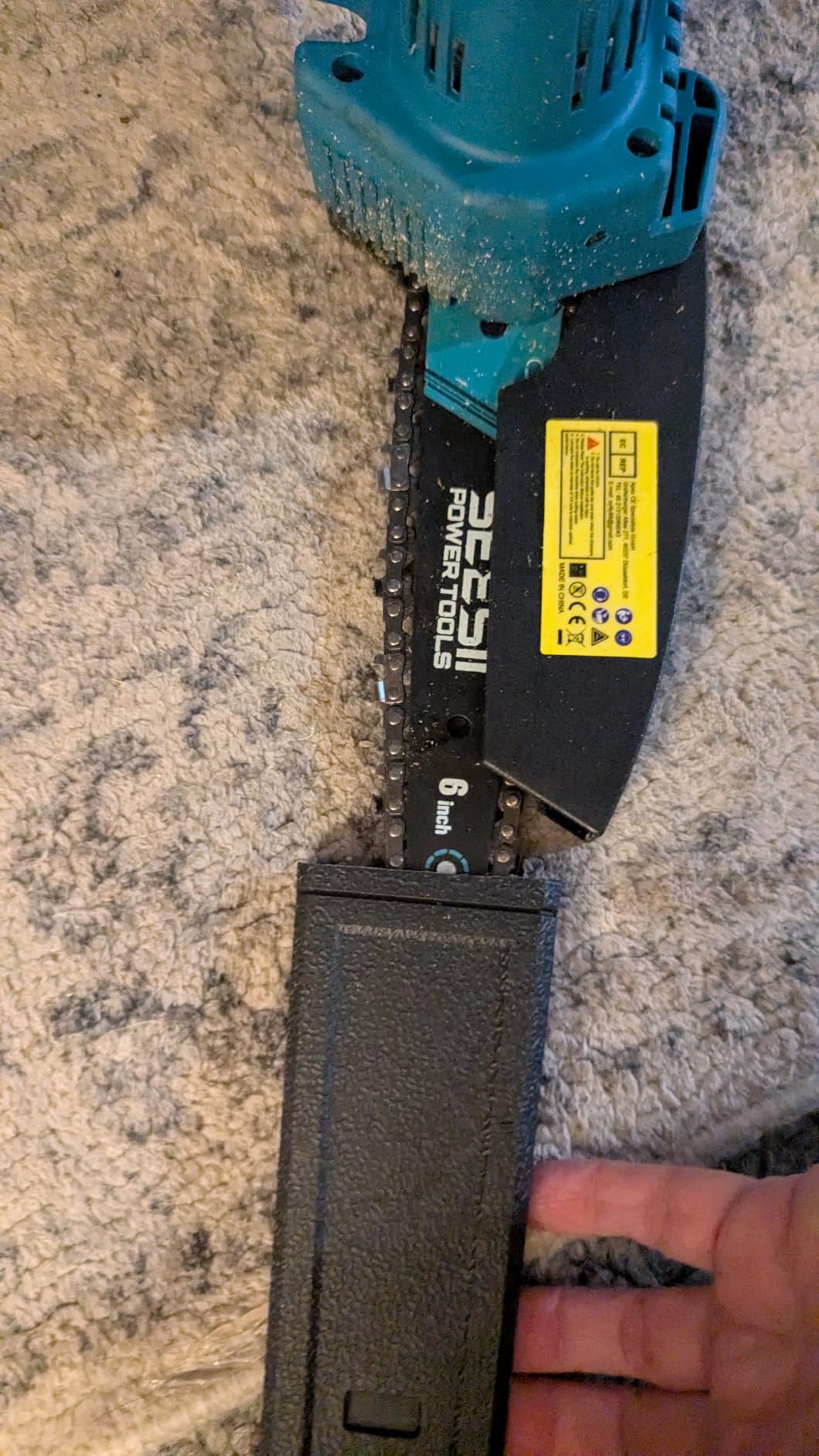
This is the saw I would hand to a homeowner who has never held a pole saw before. At 6.9 lb in pole configuration it stays manageable at the top of its extension, and the telescoping shaft runs from 4.6 ft to 9 ft for up to 15.5 ft of combined reach. For a 5 ft 8 in operator that puts the cutting head at about 14 ft of tree height, which covers the lower canopy on most residential shade trees.
Two 4000mAh packs are the reason the runtime reviews read so well. Owners report up to 120 minutes and roughly 200 cuts, and swapping a depleted pack for a charged one takes seconds. That removes the most common complaint in this category, which is the saw dying mid-branch at full extension.
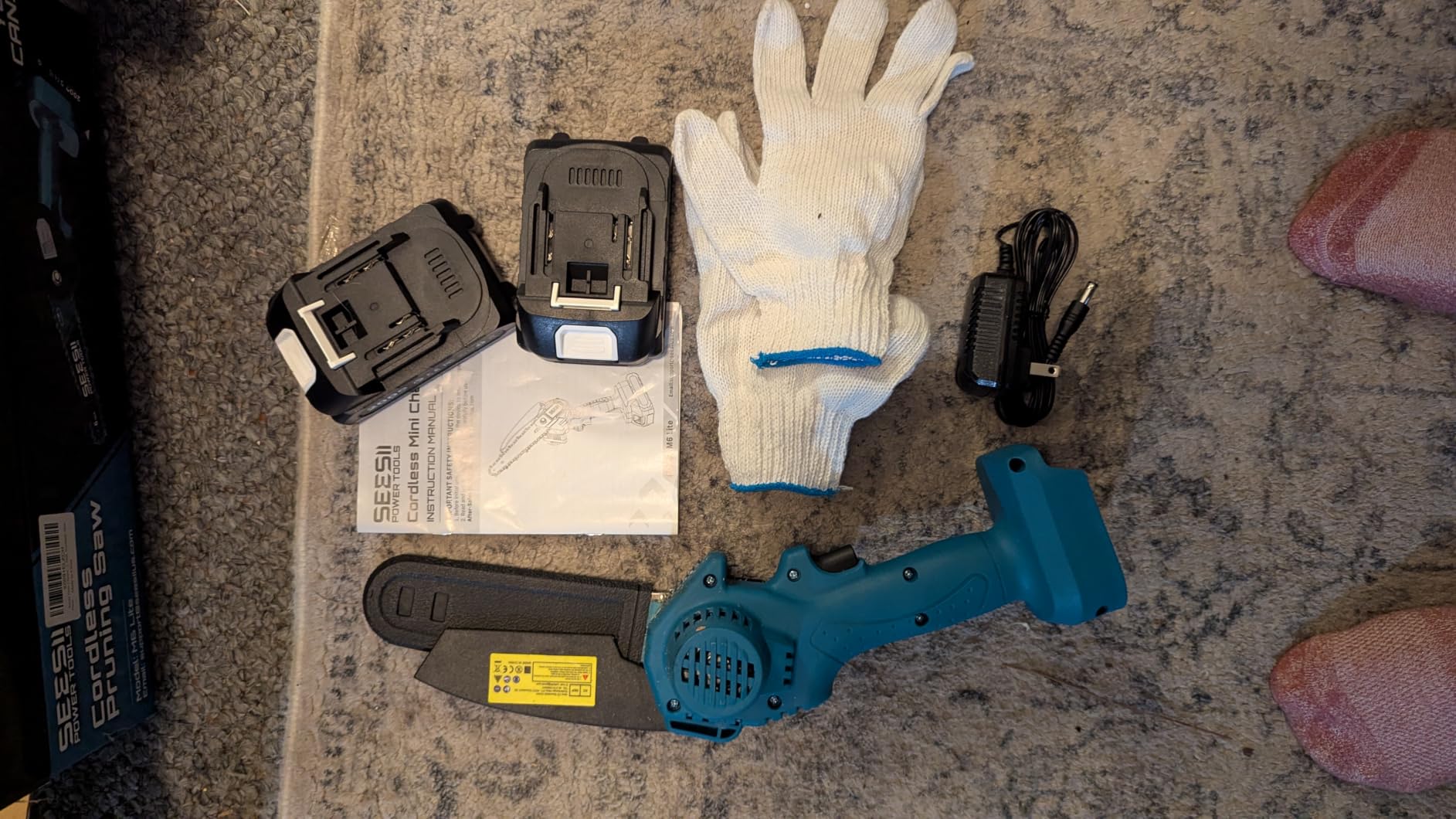
The 1000W brushless motor drives a 26 ft/s chain, and the cutting head adjusts to multiple angles so you can approach a branch from underneath rather than fighting it square on. The whole tool breaks down into a 3.4 lb handheld mini chainsaw, which is genuinely useful for the brush and low limbs you would otherwise ignore while reaching overhead.
What you give up is bar length. Six inches means the saw is built for twigs, sucker growth and branches around 2 inches, not for structural limbs. Owners describe it as ideal for overhead limb work and light pruning, and are equally clear about the limit.
What you should check before buying
Decide honestly whether your tree problem is small branches or large ones. A 6-inch bar will handle a canopy full of 2 inch limbs in an afternoon, and it will stall against a single 5 inch fork. Look at the biggest limb you want gone, not the average one.
Also confirm which battery platform you already own. The packs here are brand-specific, so the running cost only makes sense if you buy two and keep them. Tool-free oil refill and tool-free chain replacement cut the maintenance overhead, which matters more than usual on a saw you store for months between uses.
Who should skip it
If you are clearing storm debris, deadwood or anything approaching 4 inches in diameter, this is the wrong tool and you will learn that on the first branch. The 6-inch bar is a hard ceiling and no amount of battery capacity moves it.
It is also the wrong choice if you share tools across several battery platforms. Brand-locked packs mean a second charger and a second pile of batteries. Our broader pole saw roundup covers the platforms that cross over between tools better.
2. Supstable 2-in-1 Pole Saw 16 Ft – Best for Thick Branches
- Heavy limb capacity from the 8-inch bar
- Up to 100 minutes runtime on two 4000mAh batteries
- Detaches into a handheld mini chainsaw
- Gloves
- glasses
- spare chain and pole belt included
- Chain needs frequent re-tightening
- Automatic oiler consumes bar oil quickly
- Chains dull faster than premium-brand chains
The Supstable is the compromise pick, and the one I would choose for a mature tree with a mixed branch profile. You get a 16 ft telescopic reach and an 800W brushless motor driving either an 8-inch or 6-inch bar, which is a meaningful jump over every 6-inch saw in this roundup. Owners report it taking branches from thumb-size all the way past 5 inches.
At 10 lb it is heavier than the SEESII, and you feel that at full extension. What buys back the weight is the 180-degree adjustable cutting head, which lets you set the saw to approach thick limbs from an angle instead of driving straight into the bark. The 30ml oil tank has a transparent window, so you can see the level without opening the cover.

Two 4000mAh batteries give up to 100 minutes, and the box includes gloves, safety glasses, a bar lube bottle, a spare chain and a pole belt. That spare chain matters more than the spec sheet suggests, because the most repeated complaint in reviews is chain tension drifting loose mid-session and the fix being a fresh chain anyway.
The same review pattern explains the other recurring complaint: the automatic oiler runs through bar oil faster than expected, so you top it up during the job. Neither issue is a dealbreaker for a homeowner, but both argue for keeping a spare chain and a bottle of oil with the tool rather than in the shed.
What you should check before buying
Check the tool-free tensioning system in person if you can, or plan on setting the tension before the first cut. Reviews describe the chain loosening during use often enough that treating the tensioner as a mid-job control rather than a setup step is realistic.
Confirm the two-year manufacturer warranty is something you will use. Most owners never claim on a pole saw, but the warranty length is the only published signal here about build quality, and two years is shorter than the three-year coverage on the CRAFTSMAN and TaskStar kits.
Who should skip it
Skip it for commercial or high-volume cutting. Owners and the product positioning both point to light-to-medium pruning, and the review base itself notes the chains dull faster than premium-brand chains when you are working all day.
It is also the wrong tool if weight is your binding constraint. At 10 lb with a 16 ft extension, this is a saw that rewards a shoulder strap and a rest break, and homeowners with shoulder problems should look at the lighter picks instead.
3. CRAFTSMAN V20 14-Foot Pole Saw – Best for Cuts per Charge
- Up to 325 cuts per charge on the 4.0Ah pack
- Only 6 lb assembled so full extension stays manageable
- Handles dense cypress and branches over 8 inches
- Batteries shared with the wider V20 line
- 3-year limited warranty
- No automatic chain oiler so manual lubrication is required
- Pole sections feel flimsy at full extension
- Section joints loosen and need retightening
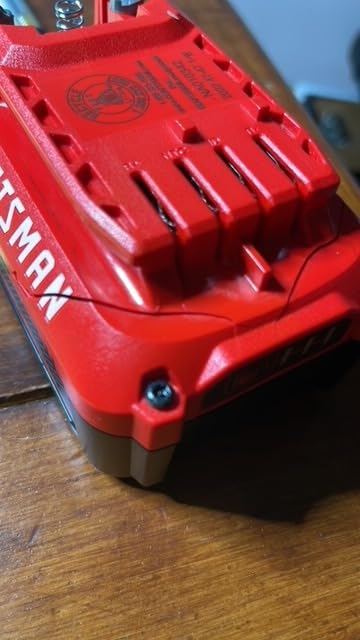
Nobody else in this roundup publishes a cut count, and that is the CRAFTSMAN’s headline advantage. A full 4.0Ah lithium-ion pack is rated for up to 325 cuts per charge, which in practice means you can work an entire property on one battery. The 8-inch high-speed steel bar and angled head handle dense cypress and, with patience, branches over 8 inches.
Weight is the other reason this one stands out. At 6 lb assembled it is light enough that the 14 ft extension stays controllable at the top of its travel, which is not something you can say about the 10 lb and 12.1 lb saws here. Several owners single out the light weight as the feature that made the difference for them.
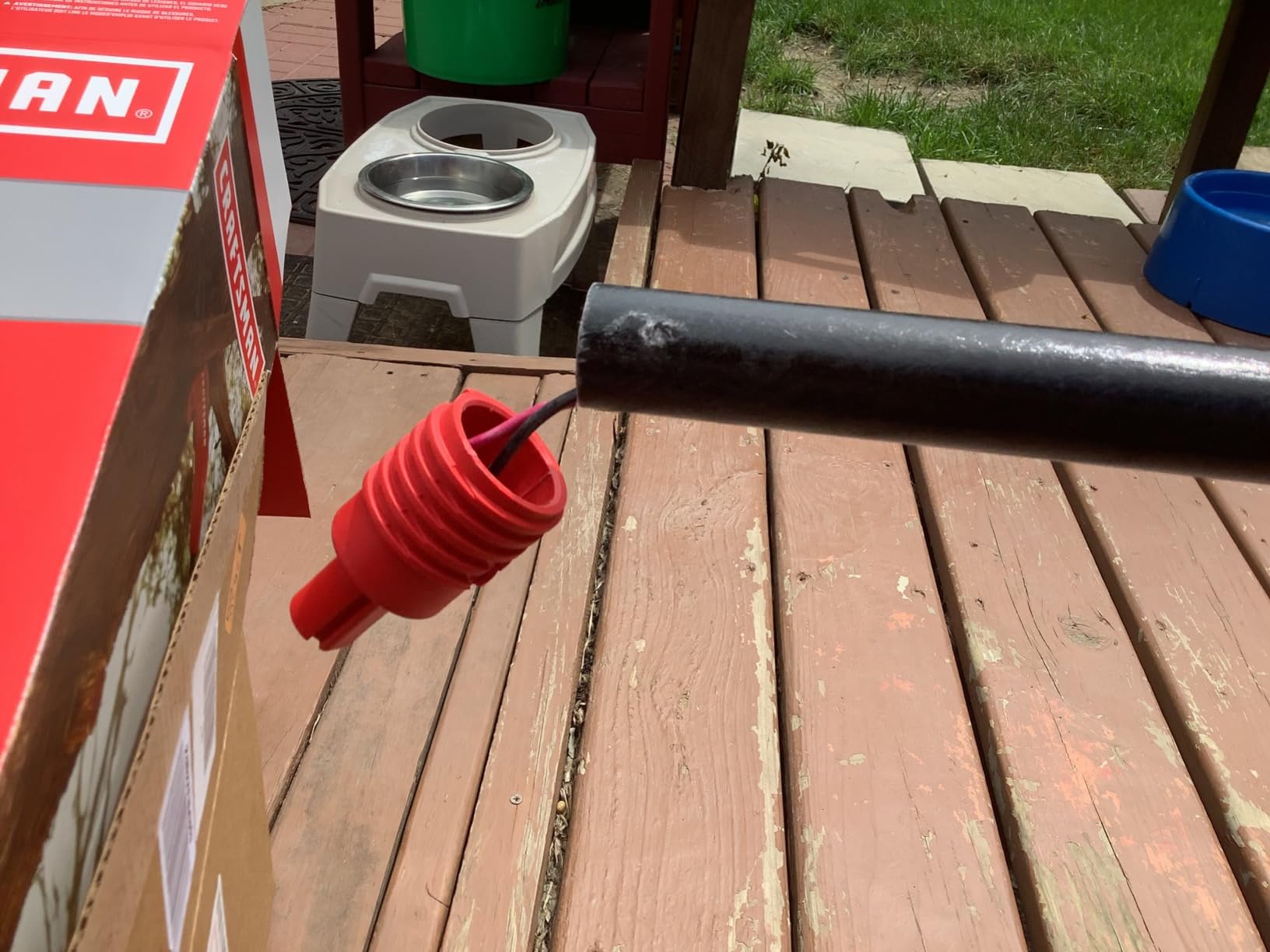
The trade-off is maintenance and rigidity. There is no automatic chain oiler, so you work with the small included oil bottle and lubricate by hand. Several owners also report the pole sections developing flex and head wobble at full extension, and section joints loosening during use.
None of that changes the fact that a joint you retighten once at the start of a job is a minor issue compared with a dead battery at 15 ft. If you accept periodic tightening, this is the most efficient saw per charge in the group.
What you should check before buying
Confirm you are already in the CRAFTSMAN V20 platform. The 4.0Ah packs are shared across the wider V20 line, and that shared cost is a large part of why the cut-per-charge figure works out so well for owners with other V20 tools.
Check that manual lubrication fits your habits. Lapsing a chain is what dulls it and what makes an automatic oiler feel like a luxury once you have used one. Replacement chain CMCZCSC8 and bar CMCZCSB8 are specified, so parts are identifiable before you need them.
Who should skip it
Skip it if the work sits at the very top of the 14 ft range. A saw that develops wobble at full extension is a poor choice when every cut is overhead at maximum reach, and this is not a tool for heavy green hedge growth where a chain saw is the wrong implement anyway.
Our cordless pole saw guide covers lighter fixed-shaft models if reach is less important than weight in your situation.
4. Greenworks 40V 8-Inch Cordless Pole Saw – Best for Rigid Shaft Value
Greenworks 40V 8-Inch Cordless Polesaw, 2.0Ah Battery and Charger Included PS40B210
- Aluminum shaft stays rigid without fiberglass sag or bounce
- 40V battery is cross-compatible with other Greenworks tools
- Handles live and dead wood up to roughly 8 inches
- Battery and charger included in the box
- 2.0Ah pack is sized for quick jobs
- Auto oiler needs the chain cover pulled to clear chips
- Saw arrives with the chain tightened too far
The Greenworks 40V is the long-standing established-brand option here, and the reason is the shaft rather than the saw. The three-piece aluminum pole stays rigid where fiberglass poles of the same length sag and bounce, and reviewers mention that rigidity more than any other single attribute.
Reach is the compromise at 11 ft maximum, which covers branches from about 8 to 10 ft of tree height. That is the tier for routine pruning of lower canopy rather than high deadwood, and it is why this saw sits fourth rather than higher on a tall-trees list.
The 40V battery is cross-compatible with other Greenworks tools, so the pack cost spreads across a whole platform rather than one product. The auto oiler works well enough that several owners recommend pulling the chain cover to clear chips rather than skipping lubrication.
What you should check before buying
Set the chain tension before the first cut. Owners consistently report the saw arriving with the chain tightened too far, which is a two-minute adjustment but an irritating first impression. Treat it as setup, not a fault.
Decide whether the 2.0Ah pack is enough. It covers light pruning comfortably, and higher-capacity Greenworks 40V packs are the obvious add-on if you already run that platform or expect long sessions.
Who should skip it
Skip it if your problem is genuinely high branches. Eleven feet of reach is not a tall-trees answer, and stretching a saw past its rated extension is how poles get damaged and people get hurt.
It is also a poor fit for green-only hedge work, since a chain saw tears hedge leaves rather than cutting them cleanly. For gas-engine options on larger jobs, our gas pole saw roundup is the right reference.
5. VEVOR 27 Ft Manual Pole Saw – Best for Maximum Reach
- Up to 27 ft reach with eight fiberglass sections
- No battery or fuel so there is no runtime ceiling
- Dual hook knives at both blade ends
- Spare blade and canvas storage bag included
- Pole flexes noticeably beyond roughly 15 to 16 ft
- Physically demanding fully extended
- Scissor head lacks bite above about half an inch
No cordless saw in this roundup goes past 17 ft, and that figure needs a separately sold extension pole, which is why this manual pruner earns a place in a tall-trees roundup at all. Eight fiberglass sections adjust from 7.3 ft to 27 ft, and there is no battery, no charger and no fuel to manage, so the only limit on a session is how long your shoulders last.
The blade is 0.05 inch Teflon-coated carbon steel with hook knives at both ends of the edge, so whichever way you orient it the cut stays in the slot. A separate Mn steel branch scissor head on an 11.5 ft rope and pulley system handles the twigs the blade is not suited to.
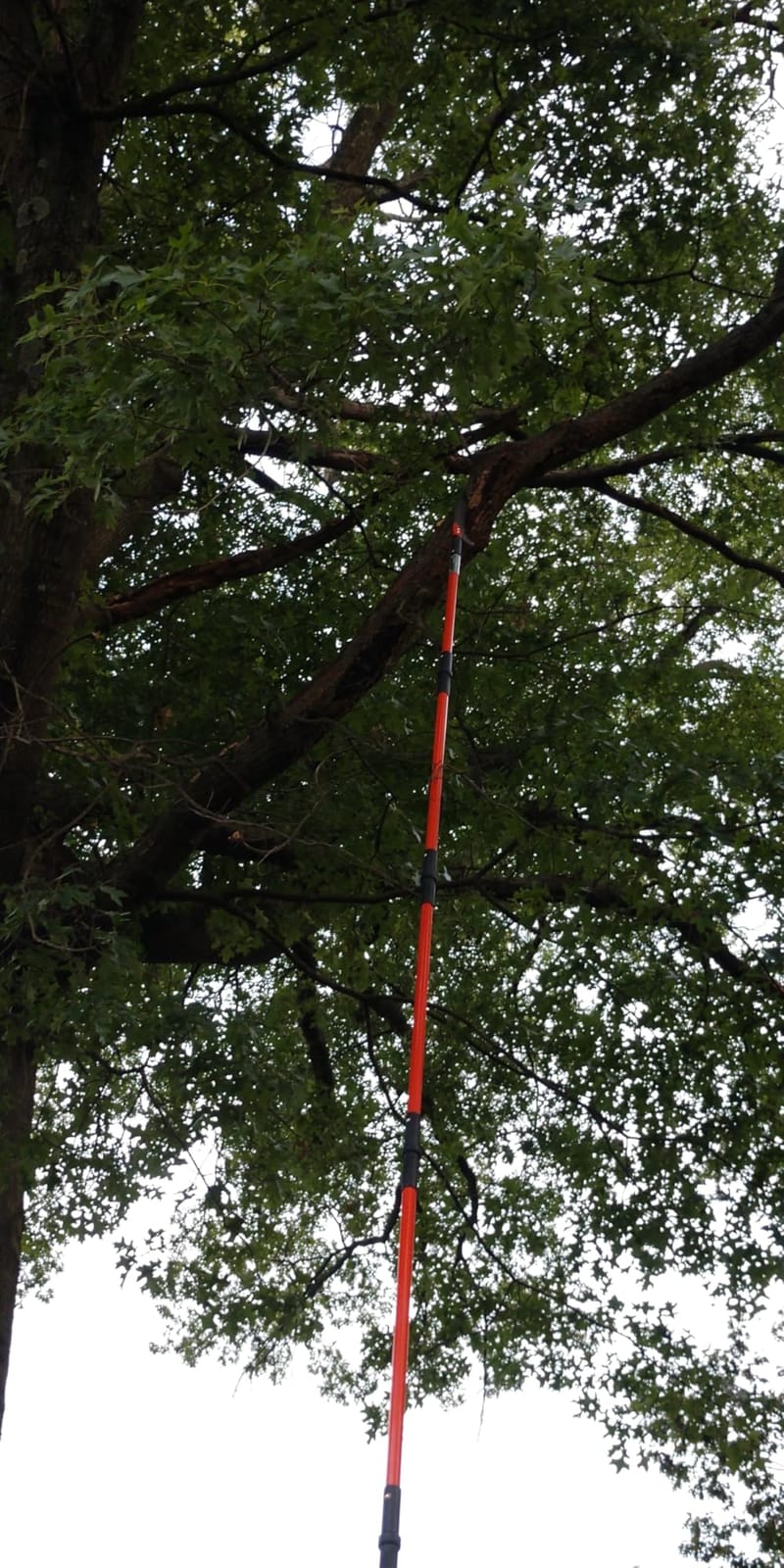
Reviews divide sharply on extension length, and the split is the honest picture. Users working at 10 to 20 ft report excellent value, sharp blades and solid section joints, with several estimating they saved hundreds against professional trimming. The one-star accounts describe the pole as a wet noodle past about 16 ft.
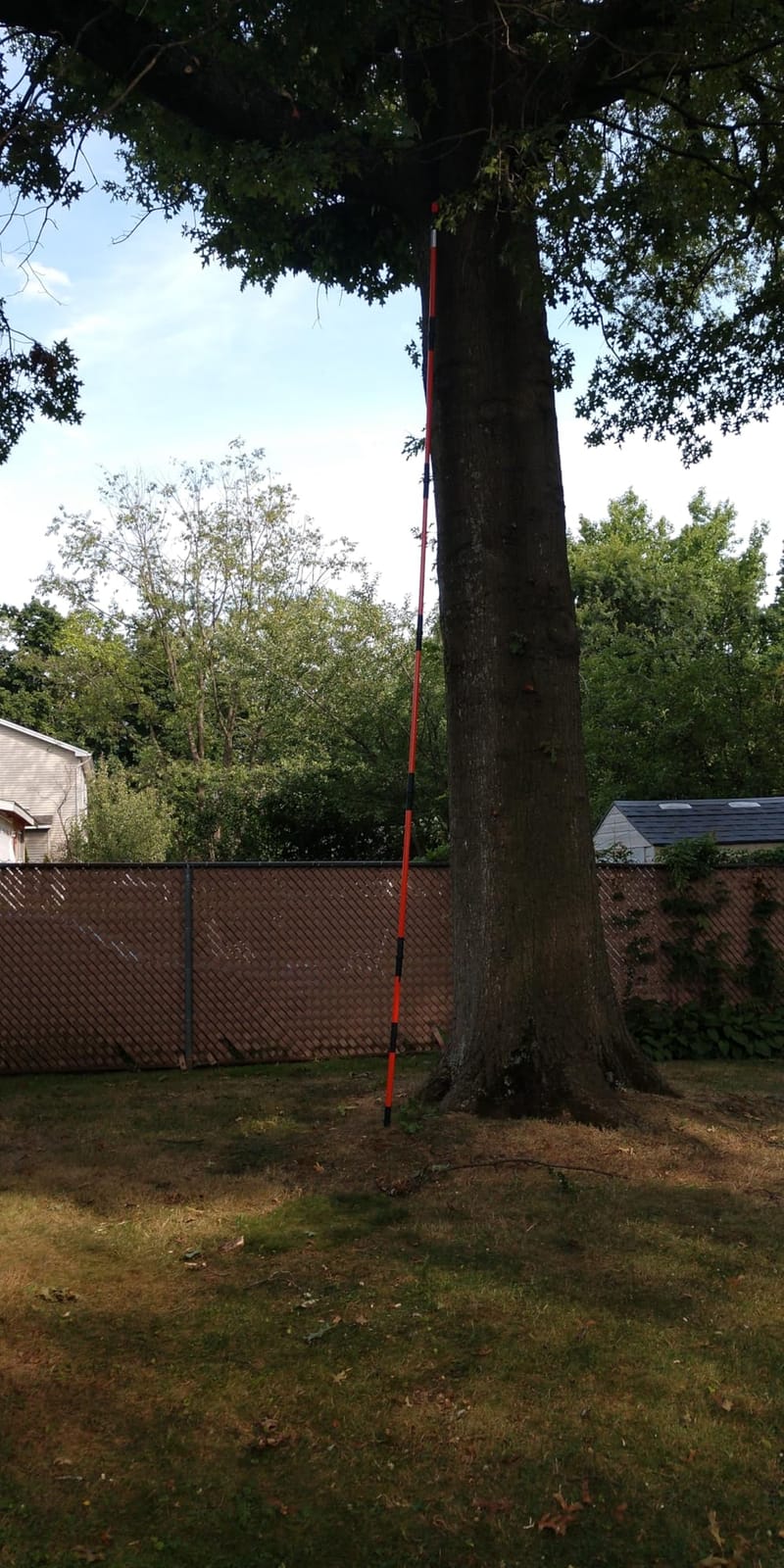
There is also a specific endurance data point worth knowing. One 55-year-old user needed about 90 minutes and multiple rests to remove a single 30 ft limb, which belongs in your planning if you are looking at the full 27 ft setting rather than the 20 ft working range.
The scissor head is the part to watch. Owners report it lacks bite on branches over about half an inch, so this is a tool for pruning cuts rather than for lopping. It works best when the blade does the removal and the scissors clear the debris afterward.
What you should check before buying
Measure the section overlap before committing. Each joint overlaps about six inches, which is what keeps the connections solid, and you want to know that before you are 20 ft up in a tree. The saw sleeve and PE storage bag are included, which matters for a 27 ft tool.
Plan your working length in advance rather than extending to maximum. Reviews are consistent that the useful range is under 20 ft and that everything above that is fighting the tool instead of using it.
Who should skip it
Skip it if you have any shoulder or back history, or if the work needs chain saw speed. Sawing a limb overhead by hand is slow, and the scissor head will not close on anything substantial.
Skip it if you want the branch to fall cleanly. A pull-stroke blade leaves a rougher cut than a powered saw, and for pruning live branches that finish matters aesthetically. A powered cordless saw is the better tool for that.
6. LETYANGER 27 Ft Manual Pole Saw – Best for 20 Ft Manual Work
7.3-27FT Extendable Long Handle Pole Saw with Blade and Branch Scissors
- 9.5 lb for the full seven-pole set
- 65 Mn alloy steel blade
- Spare saw included in the box
- High-visibility yellow finish
- Still demanding at the full 27 ft setting
- Epoxy resin rods less rigid than aluminum or carbon fiber
- Only one length configuration offered
Where the VEVOR asks you to fight the pole past 16 ft, the LETYANGER is honest about the ceiling. Seven epoxy resin poles plus the saw head and pruner head weigh 9.5 lb for the complete set, roughly 5 lb lighter than the VEVOR, and the manufacturer’s own guidance, repeated in reviews, is that 20 ft is the practical working length with back support advisable beyond that.
The blade is the upgrade that justifies the choice. 65 Mn alloy steel holds its edge better than the plain carbon steel used in cheaper pruners, and reviewers single out sharpness as the first thing they notice. A spare saw in the box is sensible insurance for a pull-stroke tool that can stick in a branch.
At 73% five-star and 5% one-star, the rating spread here is more consistent than the VEVOR’s 66% and 8%. The high-visibility yellow finish is a small thing that matters on a 20 ft pole working around a property where people and pets are present.
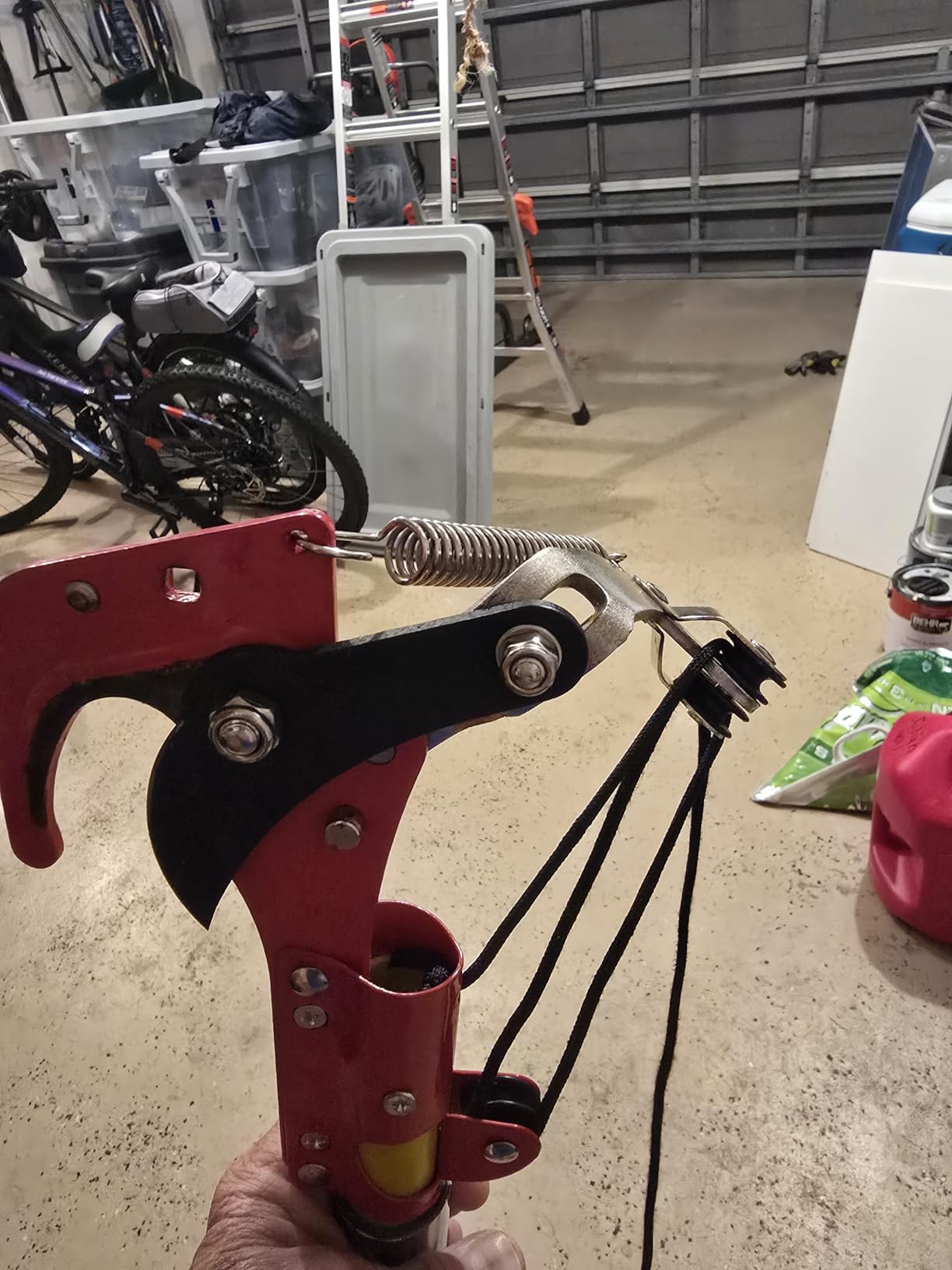
The scissor head runs off a pulley that redirects pulling force, so the same stroke cuts more effectively than a direct-pull head. It still belongs to the twig-clearing end of the job rather than the lopping end.
What you should check before buying
Decide your working length before you buy and assemble it to that length. Seven poles and a head at 9.5 lb is a tool you can hold at 20 ft. The same tool at 27 ft is a different proposition entirely, and knowing which one you need in advance avoids the disappointment the VEVOR reviews describe.
Check the joint construction on assembly. Aluminum alloy connectors and epoxy resin rods are lighter than aluminum or carbon fiber alternatives, which is a real trade of rigidity for weight rather than a free win.
Who should skip it
Skip it if you are cutting anything that needs a chain, or if speed matters. This is a precision pruning tool with a limit of roughly 20 ft of honest reach, and treating it as more than that is where the negative reviews come from.
It is also the wrong choice if you need a different length, since the manufacturer offers a single configuration. If you need something shorter, our general pole saw roundup covers fixed-length options.
7. EGO Power+ PS1001 – Best for Cutting in Shade
EGO Power+ Pole Saw for Tree Trimming, Cordless Electric Pole Saw with Telescopic LED Cut Line Indicator, Includes 56V 2.5Ah Battery and Charger – PS1001
- Only saw here with an LED cut line indicator
- Carbon fiber shaft with limited lifetime warranty
- 10-inch bar at 20 m/s chain speed
- Works with all EGO 56V ARC batteries
- Highest cost in this roundup by a wide margin
- Maximum reach needs the separately sold EP1000 extension pole
- Includes only a 2.5Ah battery
The reason to buy this one is a light. Tall-tree work happens at the top of a canopy on a bright day, and the LED cut line indicator projects the cutting path so you can see exactly where the bar will enter shaded interior branches. No other saw in this roundup has one, and it is the feature reviewers mention first.
Underneath that, it is one of the more capable cordless saws here. A 10-inch bar running 20 m/s from a brushless motor handles substantial limbs, and the telescoping carbon fiber shaft stays rigid with a limited lifetime warranty attached to it. The shaft is the part that separates a 13 ft reach that works from one that wobbles.
The catch is straightforward. It sits at the expensive end of this roundup, it includes only a 2.5Ah battery, the smallest capacity among the picks, and reaching beyond 13 ft means adding the separately sold EP1000 extension pole. Its rating profile is the strongest of the cordless group at 80% five-star with a tight spread across the remaining tiers, and for owners already invested in the EGO 56V ARC platform, that platform breadth does much of the justifying work on its own.
What you should check before buying
Add up the real cost including the extension pole if you need 17 ft of reach, and decide whether the LED indicator alone justifies it. On open-canopy work in good light, a lighter saw with a longer pole may serve you better.
Confirm which 56V ARC packs you already own. A 2.5Ah pack is fine for short pruning sessions, and the platform compatibility means larger packs drop straight in if you need a full day of cutting.
Who should skip it
Skip it if this is a single-purpose purchase for occasional use. The cost only makes sense across many cutting sessions, or if you are already deep into one battery platform.
Skip it if your tree work is in open sun where the cut line indicator is invisible and you are simply paying for a feature you will not use. In that case a 16 ft saw with a larger bar is a better use of the same money.
8. Autubin 1200W 16 Ft Pole Saw – Best for Battery Level Feedback
Brushless 2-IN-1 Cordless Pole Saw & Mini Chainsaw, 8 Inch Max Reach 16 Ft
- Rated at 1200W
- the top figure in this roundup
- LED charge display on each battery pack
- Two 4.0Ah packs give up to 120 minutes
- 8-inch bar handles thicker branches than a 6-inch model
- Brand-specific batteries with no cross-tool compatibility
- Review base smaller than the established-brand options
- 8-inch configuration in the listing shown
The LED charge display on each pack is a small feature with a real effect on tall-tree work. At full extension you cannot see or reach a battery gauge, so knowing whether you have 40% or 10% left decides whether you start that branch at all. Owners cite the readout as helping them pace work rather than running out mid-cut.
Power is a stated 1200W pure copper brushless motor driving an 8-inch bar at 26.2 ft/s. The 8-inch bar is the practical headline, since it steps up from 6-inch models to branches that are noticeably thicker.
Two 21V 4.0Ah packs give up to 120 minutes of trimming on alternating charge, and the pole extends from 4 ft to 9 ft for 16 ft maximum reach with a 0 to 180 degree cutting angle adjustment. At 6.9 lb it sits between the SEESII and the Supstable in weight.
The 67% five-star rating is solid but not exceptional, and the review base is 728, which is smaller than the established-brand picks. The trade-off buyers consistently name is the locked ecosystem: extra batteries have to come from the same seller.
What you should check before buying
Count your batteries before you commit. A dual-battery kit only pays off if you buy both, and a second pack from the same seller is not always a straightforward add-on. That is the practical cost of the platform lock.
Check the chain specification against your spares: 8 inch, quarter-inch pitch, .043 gauge, 46 links. Buying the correct replacement chain is easier when you have the numbers in front of you rather than guessing by bar length alone.
Who should skip it
Skip it if you are unsure you will use it for more than a season. The 728-review base tells you less about five-year durability than the 3000-plus review picks do, and longevity matters here because most people buy one pole saw and keep it.
Skip it if you already own batteries from a major platform. The display is genuinely useful, but it does not outweigh owning a second charger and a separate battery ecosystem for one tool.
9. DNLBBO 8-Inch 16 Ft Pole Saw – Best for Lightweight Handling
2-in-1 8 Inch Brushless Electric Pole Saws for Tree Trimming
- Lightest cordless pole configuration here at 5.69 lb
- Claimed 35 ft/s chain speed
- Shoulder strap included
- No assembly required out of the box
- Only one 4000mAh battery included
- Lowest average rating in the roundup at 4.2
- Compatible batteries are brand-exclusive
At 5.69 lb in pole configuration this is the lightest cordless saw here that still claims 16 ft of reach, and weight decides whether a 16 ft saw is usable for you at all. The 1000W brushless motor and a claimed 35 ft/s chain speed sit above most of the field, and the telescopic pole runs 5.4 ft to 9.5 ft.
Two details make it friendly for occasional use. It needs no assembly, so it is ready to work straight out of the box, and the shoulder strap is included rather than sold separately. Owners mention both more often than the wattage figure.
The compromises are real and reviewers name them. One 4000mAh battery is included, so runtime is roughly half of the dual-battery kits, and any spare has to be bought separately from the same brand. The 4.2 average with 9% one-star reviews is the lowest in this roundup, and that spread reflects the single-battery package more than the saw itself.
Automatic chain lubrication with an oil bulb is included, and the cutting head adjusts. The 3.6 lb handheld weight makes the detachable mode genuinely easy to control for brush and low limbs.
What you should check before buying
Work out whether one battery covers your typical session. It handles a short session comfortably, and buying into the platform costs more up front than the dual-battery kits, which include two packs and a charger.
Check your shoulder comfort at full extension before you rely on it. The 5.69 lb figure is the reason this saw ranks where it does, and it only holds if the strap is adjusted properly rather than hanging one-handed.
Who should skip it
Skip it if you plan a full day of cutting. A single pack with a brand-exclusive replacement is the wrong package for high-volume work, and the 9% one-star share tracks that experience closely.
Skip it if thick limbs are in scope. The manufacturer rates it for logs 4 to 10 inches in diameter, but that is a claim figure, and owner feedback on this class of saw is more reliable when you keep to 3 inches and under.
10. Greenworks 60V 10-Inch Pole Saw – Best for Heavy Branch Work
Greenworks 60V 10 in Electric Pole Saw, 2.0 Ah Battery and Charger
- Heavy limb capacity from the 10-inch bar
- 43 ft/s chain speed
- Brushless motor holds fade-free power
- Aluminum shaft resists flex at 14.5 ft
- 4-year tool and battery warranty
- Heaviest cordless pole saw here at 12.1 lb
- Smallest review base in the roundup at 157 ratings
- Narrowest platform with fewer cross-compatible accessories
If the branch is genuinely thick, bar length decides this category, and this saw carries a 10-inch bar at the top of the range here. The 60V brushless motor has 21cc gas-equivalent power, chain speed reaches 43 ft/s, and the three-piece aluminum shaft holds 14.5 ft of reach without much flex. That combination is built for limbs that stall the 6-inch and 8-inch saws.
Runtime is competitive rather than exceptional at up to 120 cuts on the 2.0Ah pack, with a full recharge in 40 minutes on the rapid charger. Push-button start, a variable speed trigger and a transparent oil window are the details that make a heavy saw workable in practice.
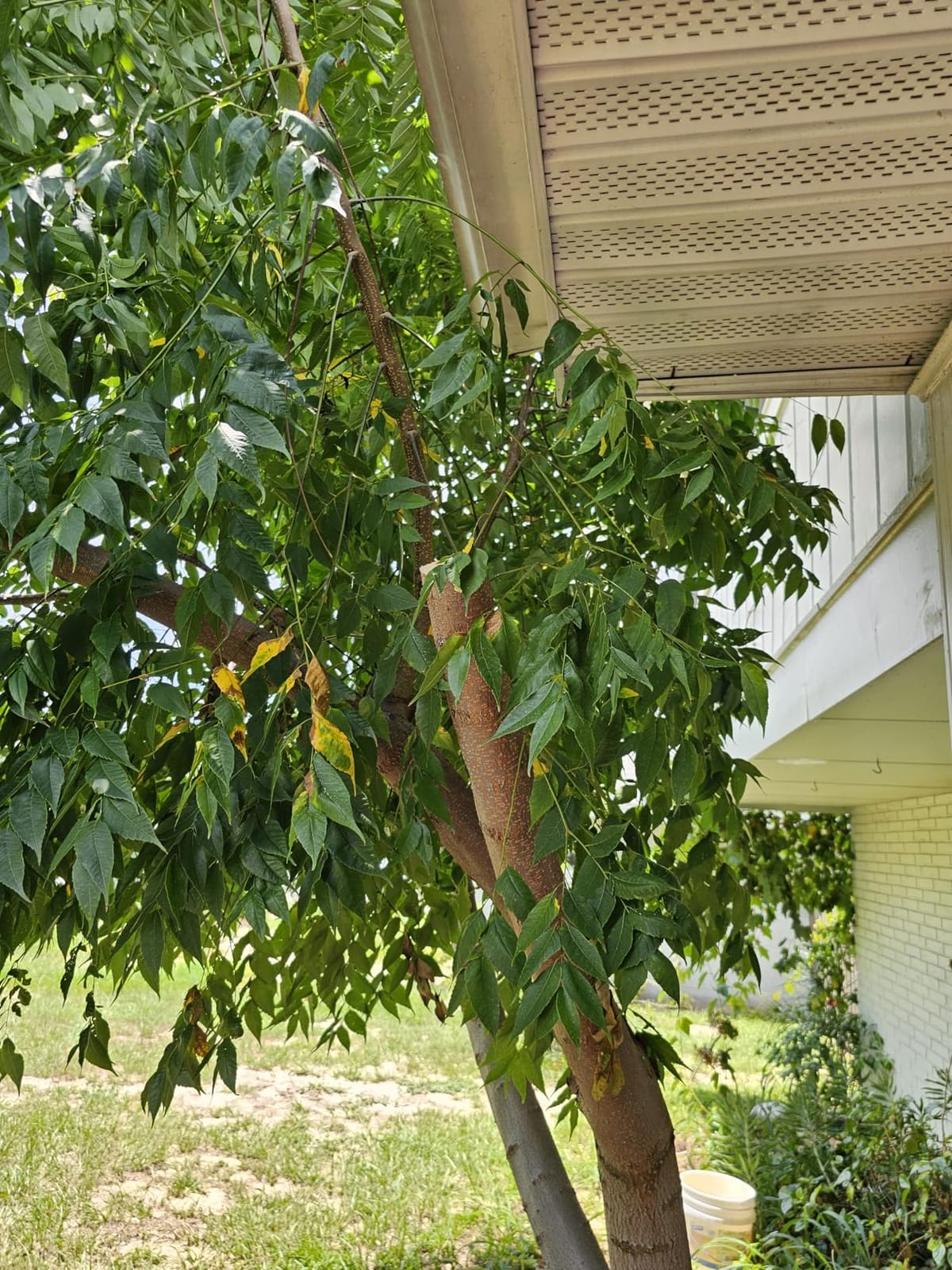
Weight is the honest cost here. At 12.1 lb this is the heaviest cordless pole saw in the roundup, and it is tiring overhead before any branch is cut. The 4-year tool and battery warranty is the longest stated coverage here and counts for something when you are weighing durability. The 157-review base is also the smallest in the group, which is what you would expect from a newer platform, so treat the specifications as credible and the long-term reliability as unproven.
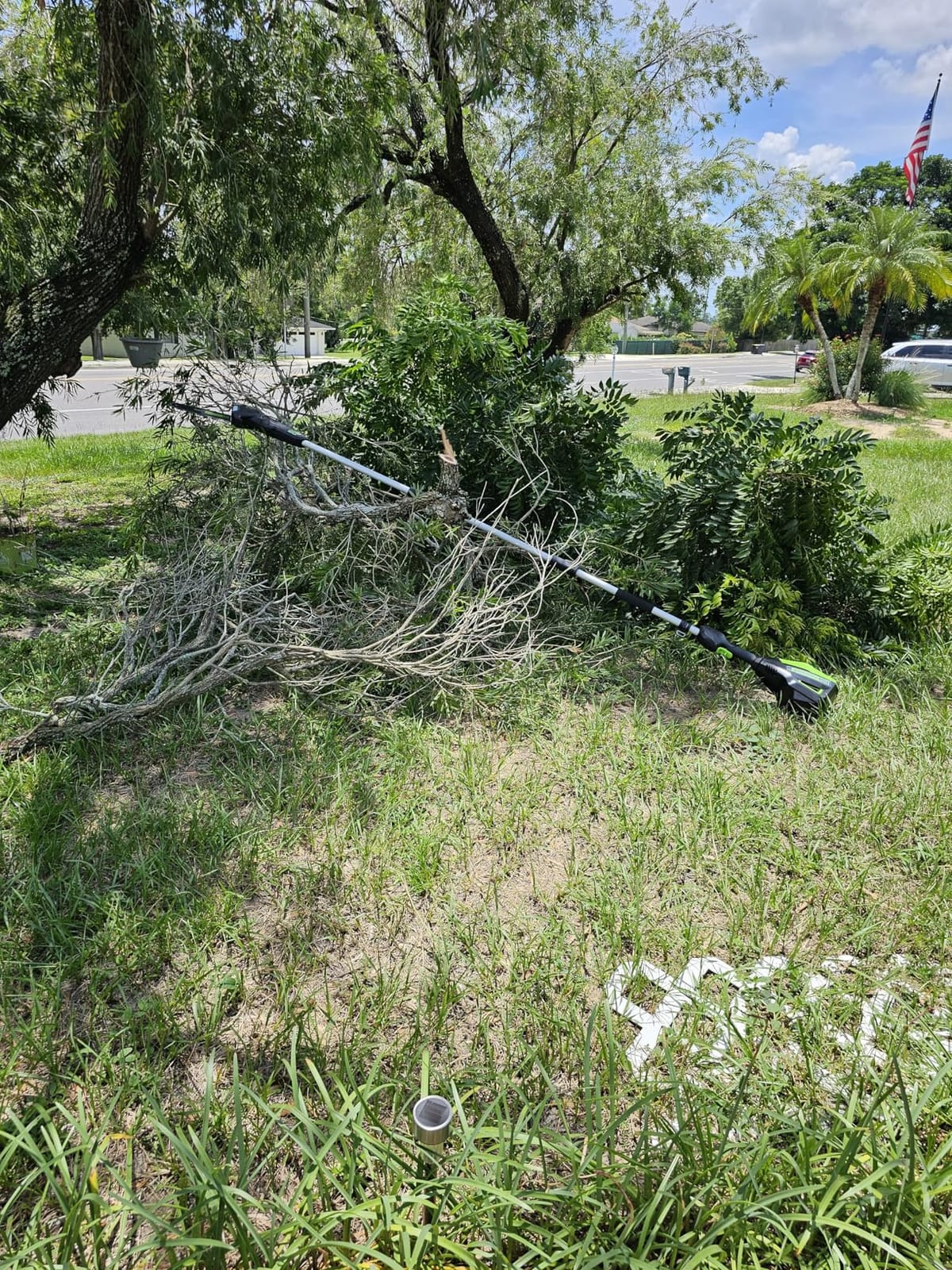
What you should check before buying
Test the weight honestly at 14.5 ft. A 12.1 lb saw is a different job from a 6 lb saw, and the branches you can reach are only useful if you can hold the saw steady at the top of the cut. Plan breaks into the session rather than pushing through shoulder fatigue.
Check the 60V platform against your existing Greenworks equipment. The 4-year warranty and 75-plus compatible products are real advantages, but 60V is a narrower base than 40V, so there are fewer accessories to pick up later.
Who should skip it
Skip it if your branches are under 3 inches. You would be carrying the heaviest saw here to do a job the 6 lb CRAFTSMAN does better and easier.
Skip it if you cannot commit to the 60V platform and expect to add tools later. If you are still deciding between power sources, our full pole saw roundup lays out the platforms side by side.
11. TaskStar 8-Inch 15 Ft Pole Saw – Best for a Complete Kit
- Two 4000mAh batteries
- spare chain
- goggles
- gloves and oil can
- 3.6 lb handheld weight
- Tool-free chain tensioning and automatic oiling
- 3-year warranty with 24-hour support response
- 15 ft reach is shorter than the 16 to 17 ft competitors
- Each battery needs 2 to 3 hours to charge
- Only 22% of ratings sit at four stars
The box bundles two 4000mAh rechargeable batteries, a fast charger, a spare chain, goggles, gloves and an oil can, which removes the most common first-session frustration of bare-tool listings, where the battery and charger are sold separately.
Mechanically it is a 1000W brushless saw with an 8-inch bar, 180-degree rotatable cutting head, automatic chain oiling and tool-free chain tension adjustment. The 4.6 to 8 ft pole gives 15 ft maximum reach, and at 7.2 lb in pole mode with 3.6 lb handheld it splits the difference between the light and heavy picks.
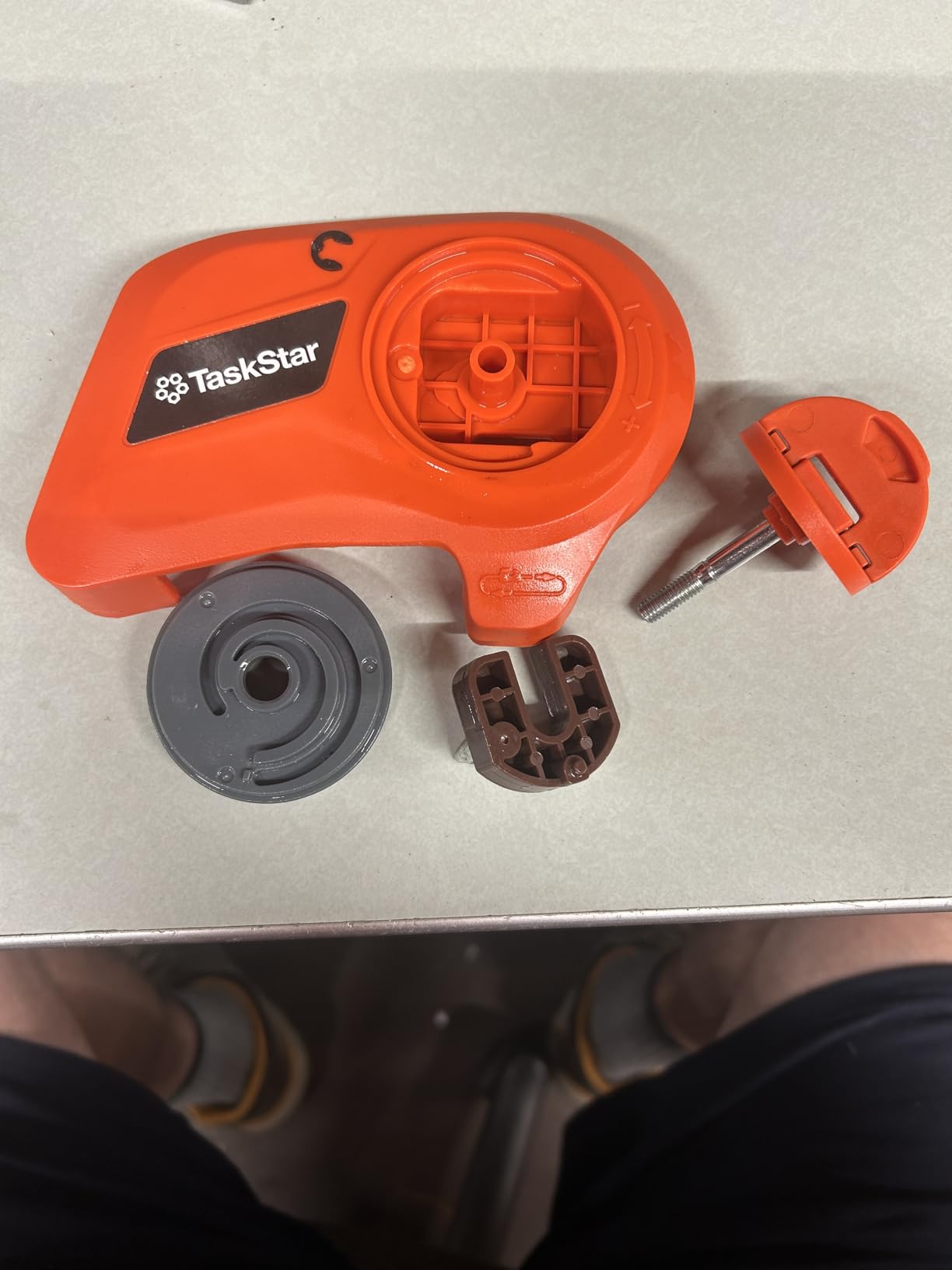
Two things to weigh against that. The 2 to 3 hour charge cycle per battery is slow for back-to-back trimming, and 15 ft is shorter than the 16 to 17 ft group, so you are giving up some canopy height for package completeness.
The rating distribution is also unusual, with 60% five-star, 22% four-star and 8% one-star. That shape usually signals a saw that does its job without excelling at anything, which is a fair description of a complete kit at an entry point.
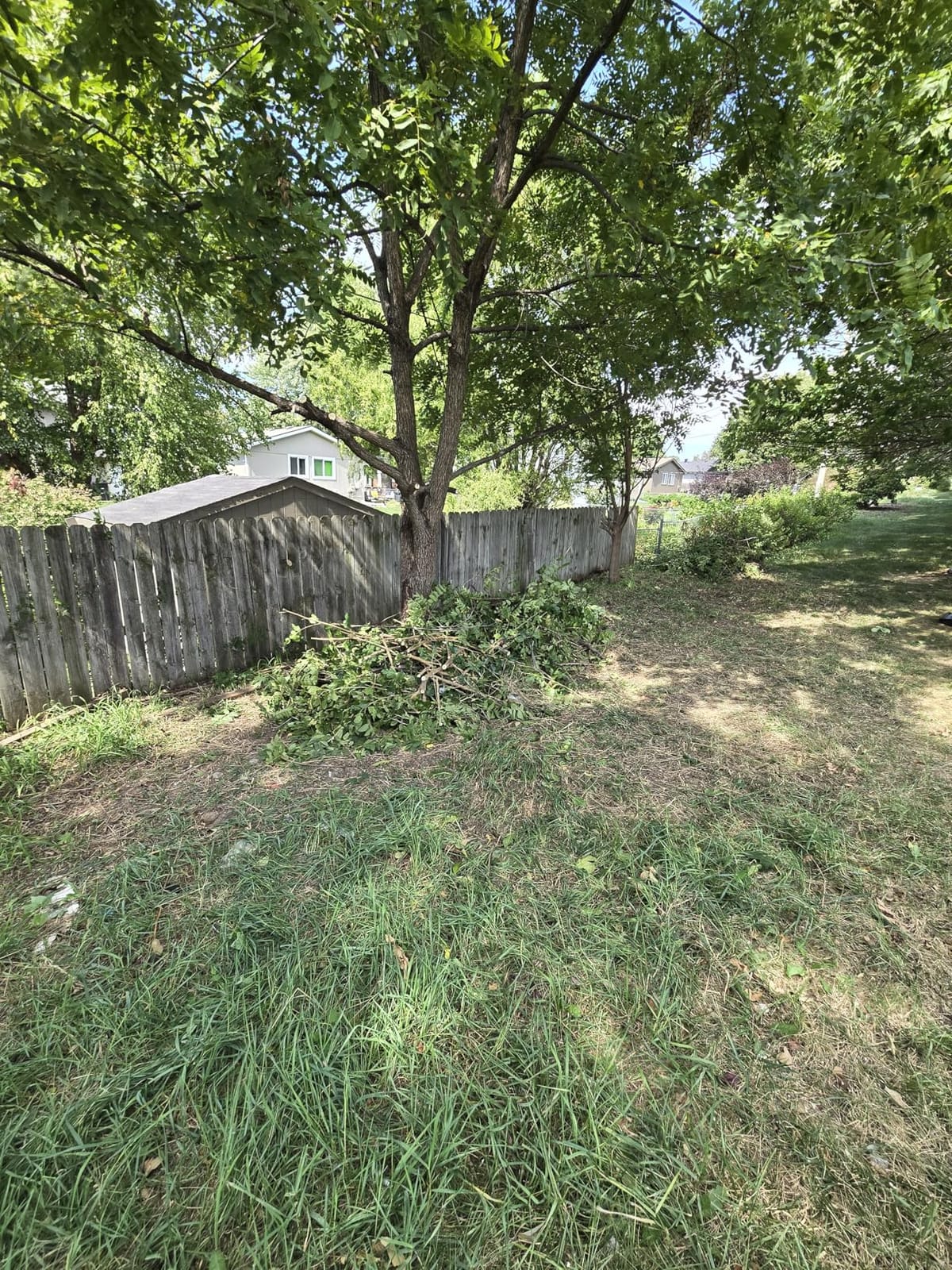
What you should check before buying
Confirm 15 ft is genuinely enough for your tree. That is a cutting height of roughly 12 to 13 ft for an average operator, which clears most lower canopy work but stops well short of the highest deadwood on a mature tree.
Check the 3-year warranty and the 24-hour support response against how you intend to use it. That coverage is meaningful for a homeowner buying their first pole saw, particularly if the pole joints are the weak point you are worried about.
Who should skip it
Skip it if you need maximum reach and already own a battery platform. The 15 ft ceiling is a real limitation, and switching platforms to reach it is a poor trade.
Skip it for commercial brush work. A 2 to 3 hour charge cycle is workable around a lunch break and frustrating across a full day of continuous cutting.
12. BlumeTrec 14.5 Ft Pole Saw – Best for Small Garden Jobs
- 72% five-star with only 3% one-star
- Three-sided Mn steel blade grips from multiple angles
- Stainless steel pole sections resist rust
- Extra screw stops the saw head loosening
- Shortest reach of the manual pruners at 14.5 ft
- No branch scissor head
- Manual sawing needs more effort than any powered option
For a garden where the problem is a hedge line and a few high shrubs rather than a mature canopy, this is the tool that makes sense. The three-sided Mn steel blade with double-sided barbs grips a branch from several directions, so thin limbs stay in the cut instead of slipping out, and the whole thing weighs about 5.2 lb in the 11-section configuration.
There is no battery, no fuel and no charging of any kind, which also means no runtime ceiling and no second battery to store. Three length options are available at 8.5 ft, 11 ft and 14.5 ft, and it works as a handheld saw at the short lengths for shrubs and hedges.
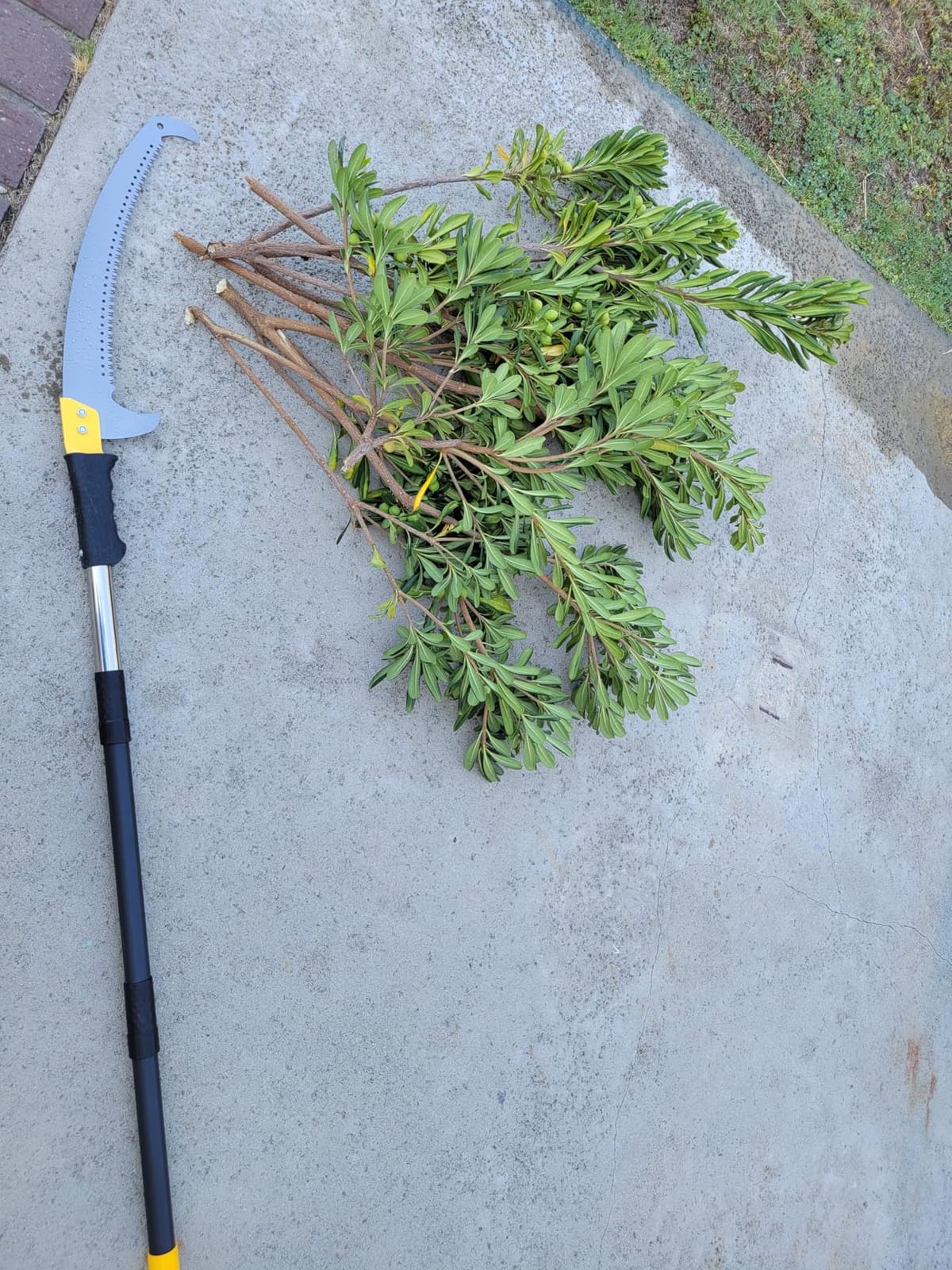
Two construction details are worth more than the spec sheet suggests. The pole sections are stainless steel with a matte powder-coated finish, which resists rust better than the plain carbon steel used in cheaper pruners, and an extra screw at the head addresses the loosening problem that is common on extendable saws.
At 72% five-star and 3% one-star, this is the most consistently rated manual pruner in the group, since only 3% of its reviewers gave it one star. The acknowledged trade-off is reach, capped at 14.5 ft against the 27 ft alternatives.

What you should check before buying
Measure your actual problem height before ordering the 14.5 ft version. Most of the benefit here comes from the shorter configurations, and 8.5 ft is the length that handles a typical garden without the weight of the full set.
Consider whether you want a scissor head. The VEVOR and LETYANGER kits both include one for clearing twigs the blade cannot reach, and this saw leaves that job to you entirely.
Who should skip it
Skip it if you have tall trees, which is the obvious caveat in a roundup with this title. At 14.5 ft this is a garden tool and nothing more, and stretching it toward real canopy work means fighting the pole.
Skip it if you are clearing dense or woody growth. Manual sawing takes real effort at height, and a powered saw covers the same work in a fraction of the time for anyone who will use it more than a few times a year. Our pole pruner guide covers the powered alternative.
How to Choose a Pole Saw for Tall Trees?
Start with reach arithmetic rather than marketing language. Measure the height of the branch you want to remove, subtract your own height, and that difference is the pole length you need. Then check the drop zone, because you should be standing 10 to 12 ft clear of where the cut limb will fall, which usually means working from the open side of the tree.
Power source matters less than it used to. The cordless saws here weigh 5.7 to 12.1 lb, run 80 to 120 minutes on a pack, and start instantly with no pull cord. Gas saws still win on sustained all-day cutting and thick hardwood, but the weight and starting effort make them a poor default for occasional pruning.
Battery platform compatibility is the single biggest long-term cost decision. Greenworks 40V and CRAFTSMAN V20 packs are shared across wider tool ranges, so a second pack spreads across many tools. EGO 56V ARC has a broad platform but a higher entry cost. The Seesii, Autubin, DNLBBO, Supstable and TaskStar packs are brand-locked.
Bar length sets cutting capacity, not wattage. A 6-inch bar manages 2 inch branches. An 8-inch bar reaches 4 to 5 inches. A 10-inch bar is where 6 to 8 inch limbs come into range, cut in stages rather than one pass. Higher wattage on a short bar does not compensate for a bar that will not take the branch.
Shaft material changes how the saw feels at full extension. Aluminum three-piece shafts stay rigid, which is why the Greenworks 40V and 60V reviews praise shaft quality. Fiberglass and epoxy resin are lighter but flex, and the manual pruner reviews are blunt about where that becomes a problem. Carbon fiber, as on the EGO, is the most rigid option here.
Weight at full extension is the specification most often left out. A saw that is light with the pole collapsed can be unmanageable at 16 ft. The reviews that matter are the ones describing control at maximum extension, not the bare tool weight.
Chain oil and tension decide how long the tool lasts. Automatic oilers reduce the work but still consume oil, and owners here report fast-draining reservoirs. Tool-free tensioning is convenient but chains still loosen during a session. Keep a spare chain and a bottle of bar oil with the saw rather than in the shed.
Finally, check kit contents. Batteries and chargers are frequently sold separately, which inflates the real cost of a bare-tool listing more than any other hidden factor. Our general pole saw roundup tracks which models include a battery and charger as standard.
When a Pole Saw Is the Wrong Tool
Do not cut anything within 10 ft of a power line, and treat any saw in that zone as unsafe regardless of what the manual says about its shaft. Only models specifically rated as dielectric should be considered anywhere near energized lines, and that is a professional decision.
Never use a pole saw from a ladder. The combination of an overhead cutting tool and an unstable platform is the fastest route to a serious fall, and a pole saw exists precisely so both feet stay on the ground. If you cannot reach it from the ground, you need a climber or an arborist.
Stop and reassess when a limb is under tension. Spring-loaded branches store energy and can snap back unpredictably, and no pole saw resolves that. Release tension with a rope or cut from a different angle, or call someone who does this work.
Wear eye and hearing protection every time, and gloves for grip. Branches shed bark, sawdust and water, and the debris does not fall straight down. Clear bystanders, pets and vehicles out of the drop zone before you pull the trigger, not after.
Know when to stop calling. Branches with hollow trunks, extensive dead cambium, cracks or fungal conks are disease or structural signals rather than a pruning task, and a professional assessment is worth more than any saw.
Frequently Asked Questions
What is the tallest pole saw you can get?
The tallest practical option is a manual extendable pole saw, which reaches up to 27 ft. The most useful cordless pole saws reach about 16 ft, which for a 5 ft 8 in operator puts the cutting head at roughly 14 ft of tree height once you add your own height and stand clear of the drop zone.
What is the best long pole saw for tree trimming?
For most homeowners the best long pole saw for tree trimming is a cordless 2-in-1 saw with an 8-inch bar and a telescoping pole reaching 15 to 16 ft. It handles branches from twig size to about 5 inches, weighs 7 to 10 lb, and gives you enough reach to clear most residential canopy without a ladder.
How thick of a tree can a pole saw cut?
It depends almost entirely on bar length. A 6-inch bar handles branches up to about 2 inches, an 8-inch bar manages 4 to 5 inch limbs, and a 10-inch bar reaches 6 to 8 inch branches if you cut through in stages. Motor wattage matters far less than the length of the bar.
Which pole saw is better, the EGO or the DeWalt?
Both are strong picks, but they suit different buyers. The EGO Power+ PS1001 has a 10-inch bar, a carbon fiber shaft and an LED cut line indicator, while a DeWalt-class platform typically prioritises weight and platform breadth. Choose EGO for cutting capacity and shaded work, or a lighter platform model for long sessions overhead.
What pole saw do professionals use?
Professionals favour established gas platforms and high-end battery saws with rigid shafts and long service life. On arborist forums, STIHL HTA 86, HTA 135 and HT 135 pole saws come up repeatedly as long-term daily tools, and Husqvarna 525 models are named often for reach. The common themes are shaft rigidity, serviceable chains and dealer support.
The Verdict: Best Pole Saws for Tall Trees
Our best pole saws for tall trees list is won by the SEESII P6 Ace, which pairs a 4.5 rating with by far the largest review base in the group and enough reach to clear most residential canopy. The Supstable is the pick when branches run thicker, the CRAFTSMAN V20 is the pick when you want maximum cuts per charge, and the VEVOR and LETYANGER manual pruners are the only picks here that go above 20 ft.
Whatever you choose, measure the branch height first, check the drop zone before you raise the saw, and keep a spare chain and a bottle of bar oil with the tool. These are our picks for the October 2026 season, with reach and capacity numbers you can check against your own tree rather than marketing claims.