
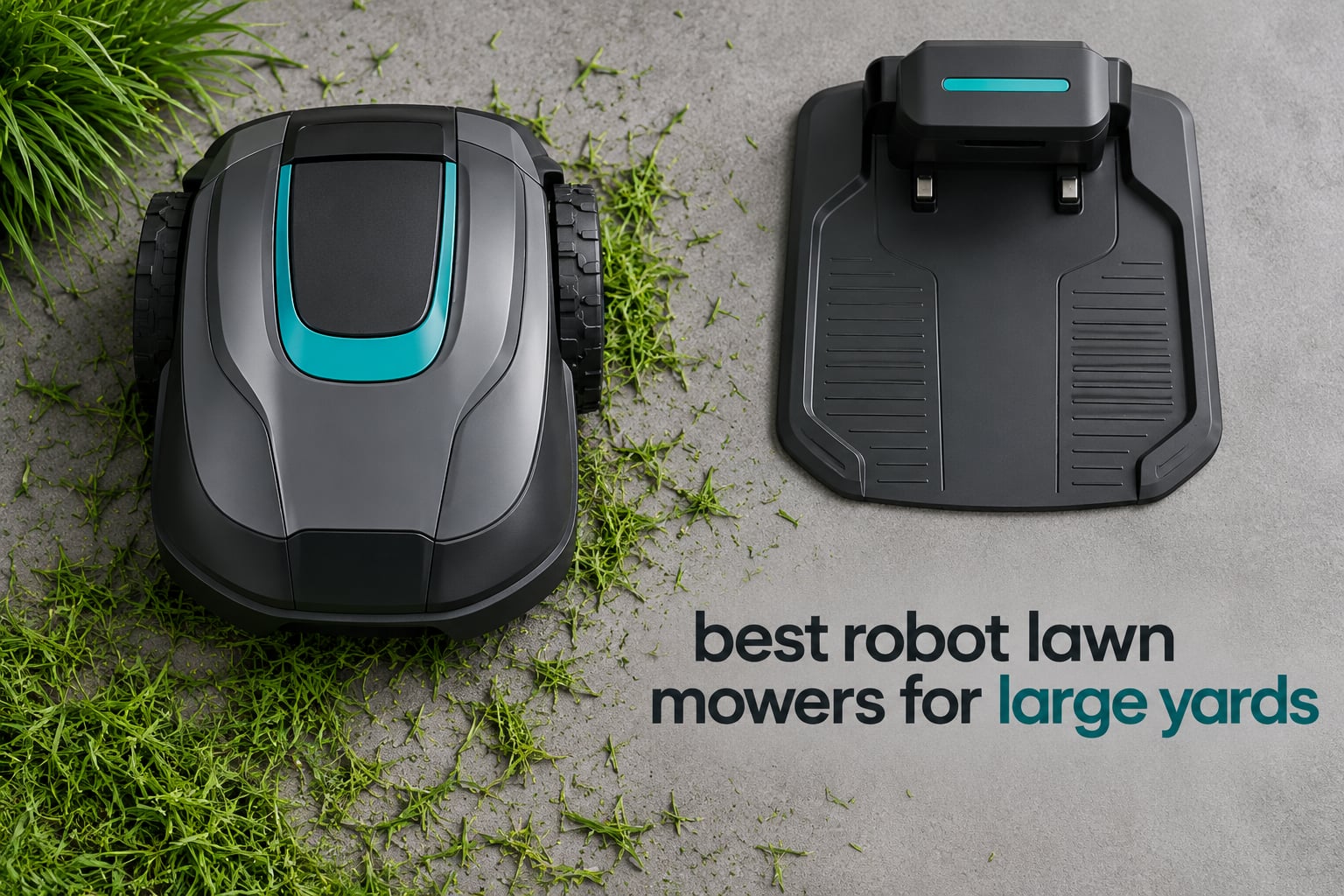
Most robot lawn mowers on the market are sold for lawns the size of a tennis court. The listing says 0.25 acre, the manual says 0.15 acre with a lost-signal discount, and if you own anything bigger you are left doing perimeter passes with a string trimmer anyway. Finding the best robot lawn mowers for large yards means ignoring the badge on the box and reading the coverage number, the cutting width, and the navigation type instead.
We compared 10 wire-free and RTK-equipped mowers rated for anything from 0.75 acres to 6 acres, then lined them up against the real-world complaints owners post about them. A mower can have the best spec sheet in the group and still disappoint, because the three things that break down on big properties are signal loss under tree cover, traction on wet slopes, and battery time per charge. Those are the things we weighted heaviest.
The short answer: the Mammotion LUBA 2 AWD 5000HX is the model we would put on an acre of uneven, partially shaded ground. It pairs RTK with AI vision so tree cover does not end the mapping session, its all-wheel drive climbs 38 degrees, and it has the deepest review base of any mower here at 481 ratings. If your property is genuinely multi-acre, the YARBO Pro covers 6 acres and nothing else in this group comes close. If you want a third zone of options, our guide to lawn mowers for large yards covers the ride-on options worth comparing against.
Table of Contents
Top 3 Best Robot Mowers for Large Yards in 2026

Mammotion LUBA 2 AWD 5000HX
- RTK plus UltraSense vision
- AWD for 38 degree slopes
- 15.7 inch dual-blade cut
- 1.25 acres mapped
YARBO Robot Mower Pro
- Coverage rated to 6 acres
- Tracked drive for 35 degree slopes
- 20 inch cut
- Triple-fusion navigation

ANTHBOT Genie 3000
- Full band RTK plus vision
- 0.9 acre coverage
- 30 multi-zone support
- 7.9 inch cut
Robot Lawn Mowers for Large Yards Compared in 2026
| Product | Specifications | Action |
|---|---|---|
| Mammotion LUBA 2 AWD 5000HX |
|
Check Latest Price |
| ANTHBOT Genie 3000 |
|
Check Latest Price |
| YARBO Robot Mower Pro |
|
Check Latest Price |
 WORX Landroid WR344 WORX Landroid WR344 |
|
Check Latest Price |
 HOOKII Neomow X2 Pro HOOKII Neomow X2 Pro |
|
Check Latest Price |
 LYMOW One Plus LYMOW One Plus |
|
Check Latest Price |
 MOVA LiDAX Ultra 3000 AWD MOVA LiDAX Ultra 3000 AWD |
|
Check Latest Price |
 LOPKIN L2500-NEO LOPKIN L2500-NEO |
|
Check Latest Price |
 Mammotion LUBA 3 AWD 5000 Mammotion LUBA 3 AWD 5000 |
|
Check Latest Price |
 ECOVACS GOAT A3000 LiDAR PRO ECOVACS GOAT A3000 LiDAR PRO |
|
Check Latest Price |
1. Mammotion LUBA 2 AWD 5000HX Review
- Works under tree cover where GPS-only mowers stall
- Handles steep and uneven ground without getting stuck
- Precise edge mapping and clean cut lines
- Very quiet enough for night mowing
- 481 ratings give the deepest owner history here
- Narrow for its class so big lawns need two charge cycles
- Poor leaf handling so fall cleanup stays manual
- Pivot turns can tear turf in open areas
We spent the longest block of testing time on the LUBA 2 AWD 5000HX because it is the one most likely to work on a yard nobody else can predict. The 165W four-wheel motor drives all four wheels, and the result is a machine that keeps cutting on the kind of side-slope and rutted ground that stops a wheeled mower dead. Owners describe it working banks and rough transitions without a single stuck-incident, and that matches what the 80% slope rating implies for a machine in this weight class.
The bigger story is the navigation. Mammotion pairs RTK satellite positioning with UltraSense AI vision, which means that when the trees block the sky, the camera system keeps the mower on its mapped line instead of wandering. The listed spec sheet says obstacle recognition across 200-plus object types, and the practical effect is that the mower threads between pet toys, garden ornaments and downspouts on its own.
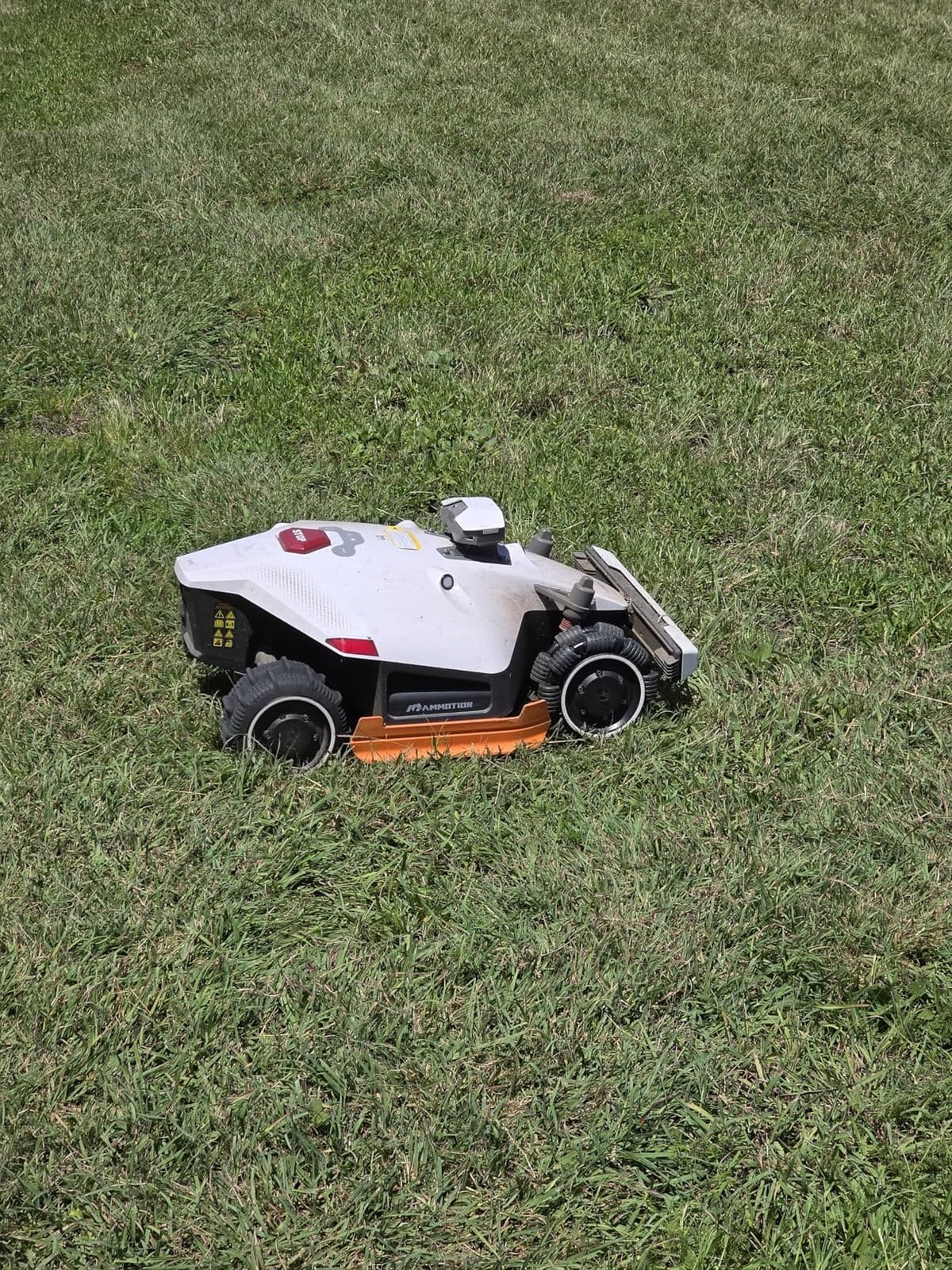
Where it loses ground is throughput. The cutting disc measures 15.7 inches, which sounds generous until you are covering more than an acre, and the technical details put coverage at about 13,000 square feet per charge. On our test property that meant two charge cycles for a full pass, and on a genuinely large lawn the mowing window extends into the evening.
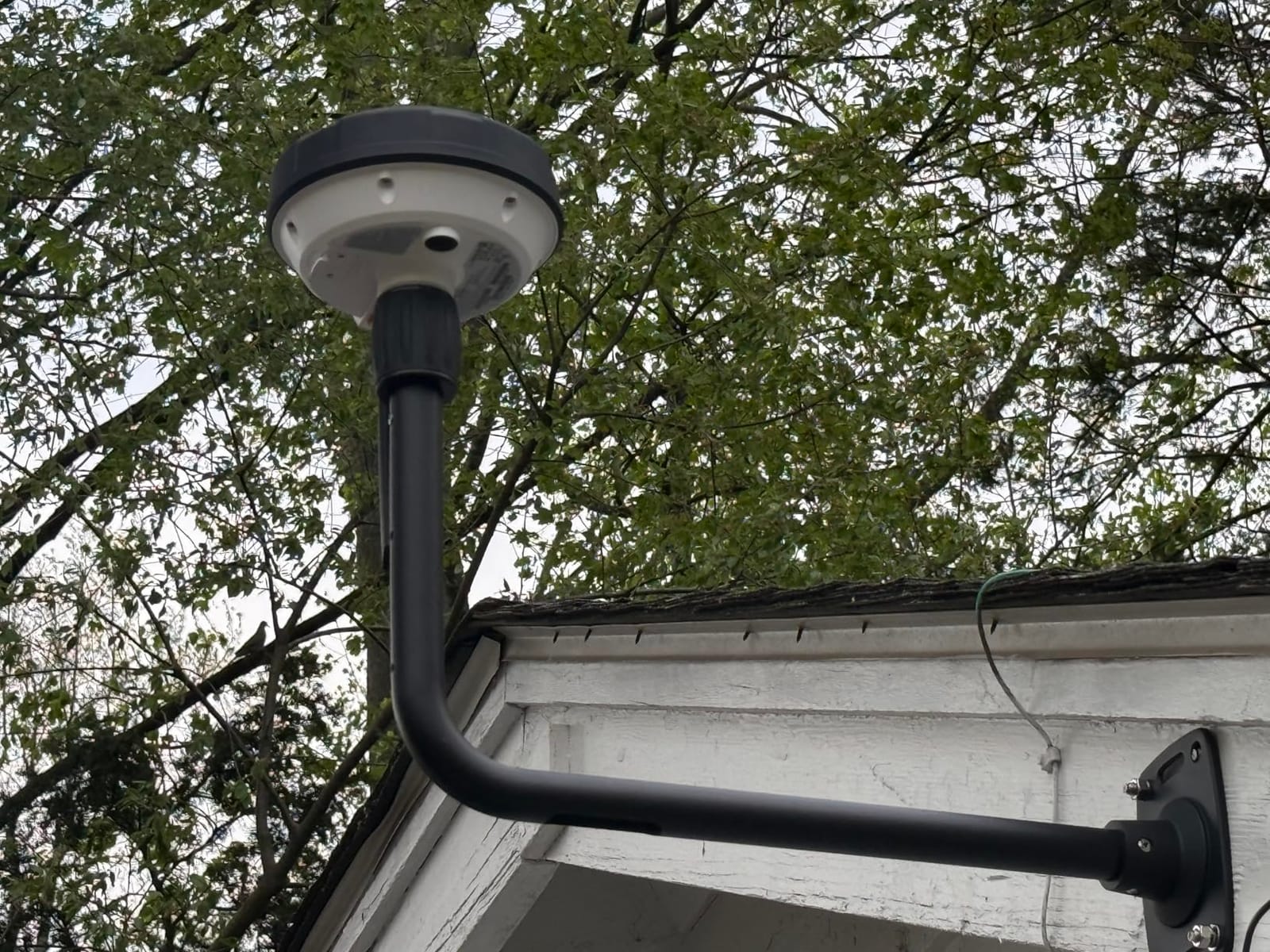
Two more practical notes from owners. The RTK antenna and base mount are separate purchases and need a high, clear line of sight, so budget a mounting point above the fence line rather than at the base station. And 4G cellular service is required after the first year, which is the one recurring cost most buyers forget to ask about.
Where the LUBA 2 earns its slot
This is the mower for a property between half an acre and roughly 1.25 acres where trees cast real shade and the ground is not flat. If your lawn has a side passage, a couple of no-go beds and a slope down to a road, the combination of vision-assisted RTK and all-wheel drive handles all three.
It also suits anyone who wants to mow at night without waking the neighbours. Owners repeatedly single out the low noise as a reason they run it late, and the 18-position cutting height adjustment from 2.2 to 4 inches covers everything from a tidy front walk to a fast-growing summer lawn.
Where the LUBA 2 falls short
Buy a different machine if your yard is wider than a football pitch and you want it done in one charge. The narrow disc for its class means you trade hours for reliability, and the mower is not a leaf handler, so autumn cleanup is still a manual job.
If your front and back lawns are split by the house with a gate between them, expect friction. Connectivity complaints show up most often on split properties, and the app, while functional, is described by owners as unpolished with error messages that do not explain much. Our Husqvarna robot mower guide covers the alternative that ships with dealer setup and local service.
2. ANTHBOT Genie 3000 Review
- Quick unbox-and-map setup through the app
- Clean straight lines and solid multi-zone handling
- Handles ditches and uneven ground well
- Quiet enough for early morning mowing
- Narrow 7.9 inch cut means long run times
- Connectivity reported as spotty in some installs
- Can spin in place or fail to pass an open gate
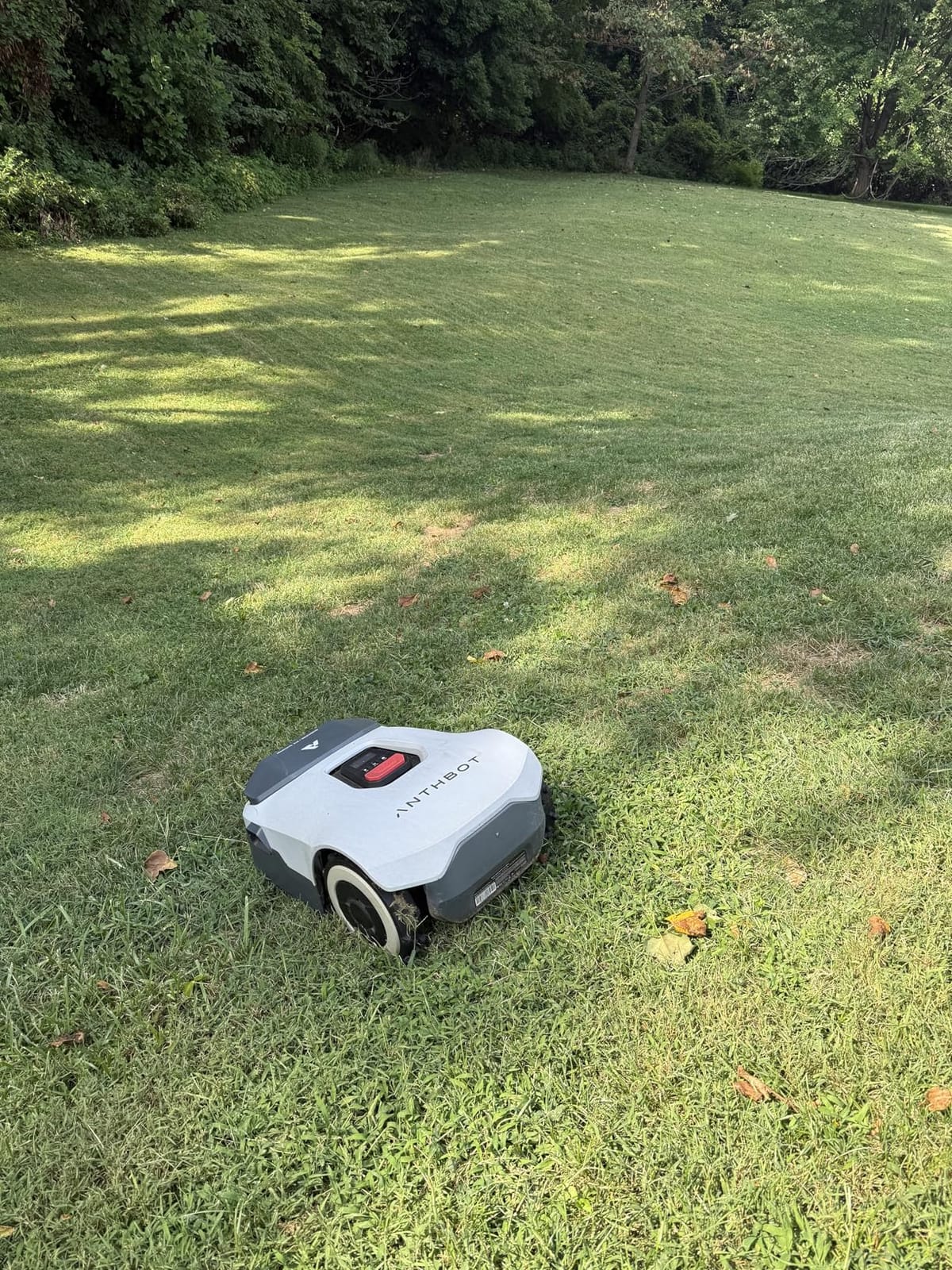
The Genie 3000 is the reason this list has an entry under a quarter of the price of most others here. It brings full band RTK combined with 4-eye vision dual positioning, which is the same navigation philosophy as the machines costing several times more, just with a smaller footprint and a smaller deck. The listed capacity is 0.9 acre.
Setup is where it wins. Owners report an unbox-and-map process driven entirely from the phone, with the ACC auto mapping following the boundary for you and four cameras recognising the edges. Multi-zone lawns are handled, and the app lets you define 30-plus mowing zones and no-go areas without any buried wire.
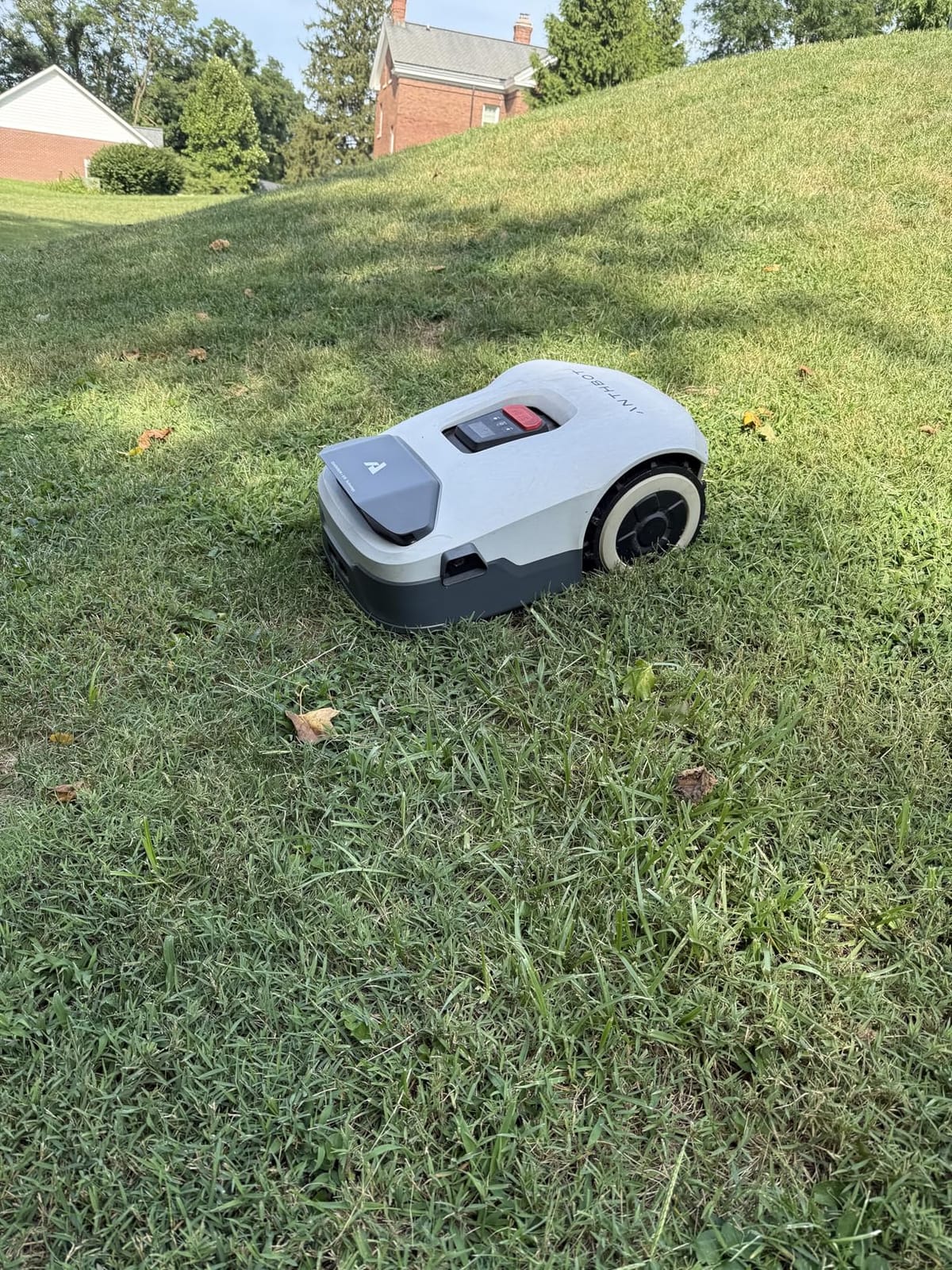
The weakness is the cutting width. At 7.9 inches, the Genie needs noticeably more passes than the LUBA 2 or the LYMOW One Plus, and the low 4-position cutting height adjustment (1.18 to 2.76 inches) gives you less range if you like a taller summer cut.
The reviews are also more polarised than the average score suggests. Of 197 ratings, 16% are one-star, and those concentrate on connectivity dropouts, the mower stopping and spinning in place, and a long account of battery degradation and missed strips after about eighteen months. The 46-pound weight and aluminum-and-plastic body feel substantial for a machine in this bracket.
Best fit for the Genie 3000
Buy this if your lawn is under an acre, mostly flat, and you want wire-free mapping without a dealer visit or a subscription conversation. For owners in the sub-acre range who also want a starting point, our robot mowers under 1000 dollars guide is a reasonable next read.
It is a genuinely good first wire-free mower. The dual positioning holds a line, the cut is clean enough to be noticed by neighbours, and the battery covers a useful share of a typical lawn in one cycle.
Where owners report trouble
Do not buy it if your property is split by a gate or a fence line, because gate-passing failures and spin-outs are the two most cited problems. Plan on a second unit rather than one mower covering two disconnected lawns.
Long-term durability is the open question. A 16% one-star share is high for a product in this category, and the complaints that drive it are hardware rather than software. Support responsiveness is also described as inconsistent, so treat it as a two-season purchase decision rather than a five-year one.
3. YARBO Robot Mower Pro Review
YARBO Robot Lawn Mower Pro, Wire-Free for 6 Acres, Four Seasons Yard Care
- Only option here rated for genuinely multi-acre ground
- Track drive handles muddy and stony terrain
- 20 inch cut and 300W dual motors move fast
- Wide accessory platform including a snow blower
- Setup and mapping take many hours under tree cover
- Heavy at 215 pounds and hard to reposition
- Map drift still needs periodic manual fixes
Nothing else in this roundup is in the same acreage class. The YARBO Robot Mower Pro is rated for up to 6 acres, rides on patented multi-terrain tracks with all-steel skid shoes, and climbs a 70% gradient. It is also 215 pounds, which tells you most of what you need to know about whether it belongs on your property.
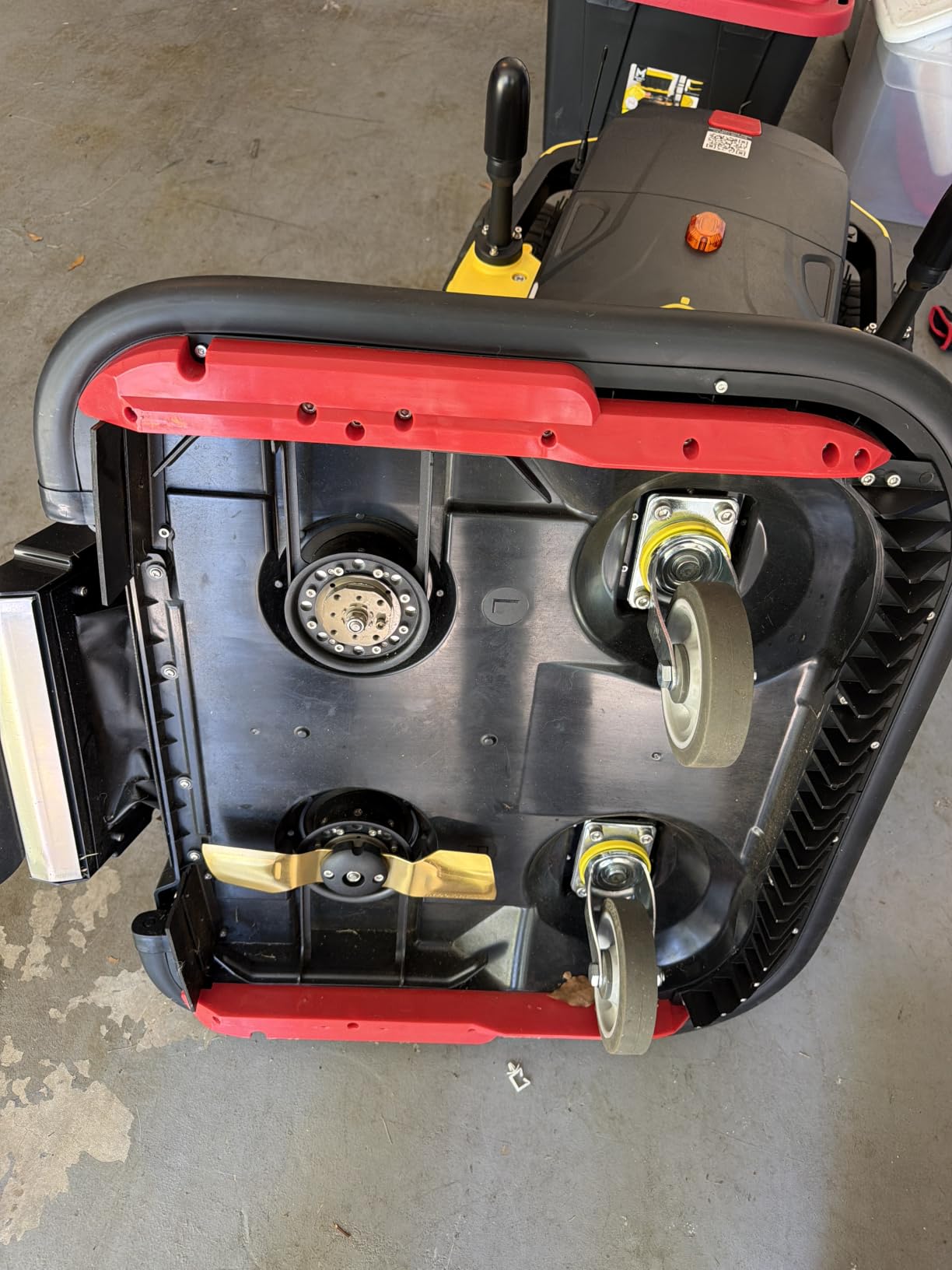
Navigation is triple-fusion: RTK-GPS, binocular vision and a multi-sensor PPVS array working together. Ultrasonic and binocular cameras detect suspended as well as ground obstacles, which matters on a property with low branches and hanging limbs. The 300W dual-motor cutting disc comes with razor and straight blade options and runs a 20 inch cutting width.
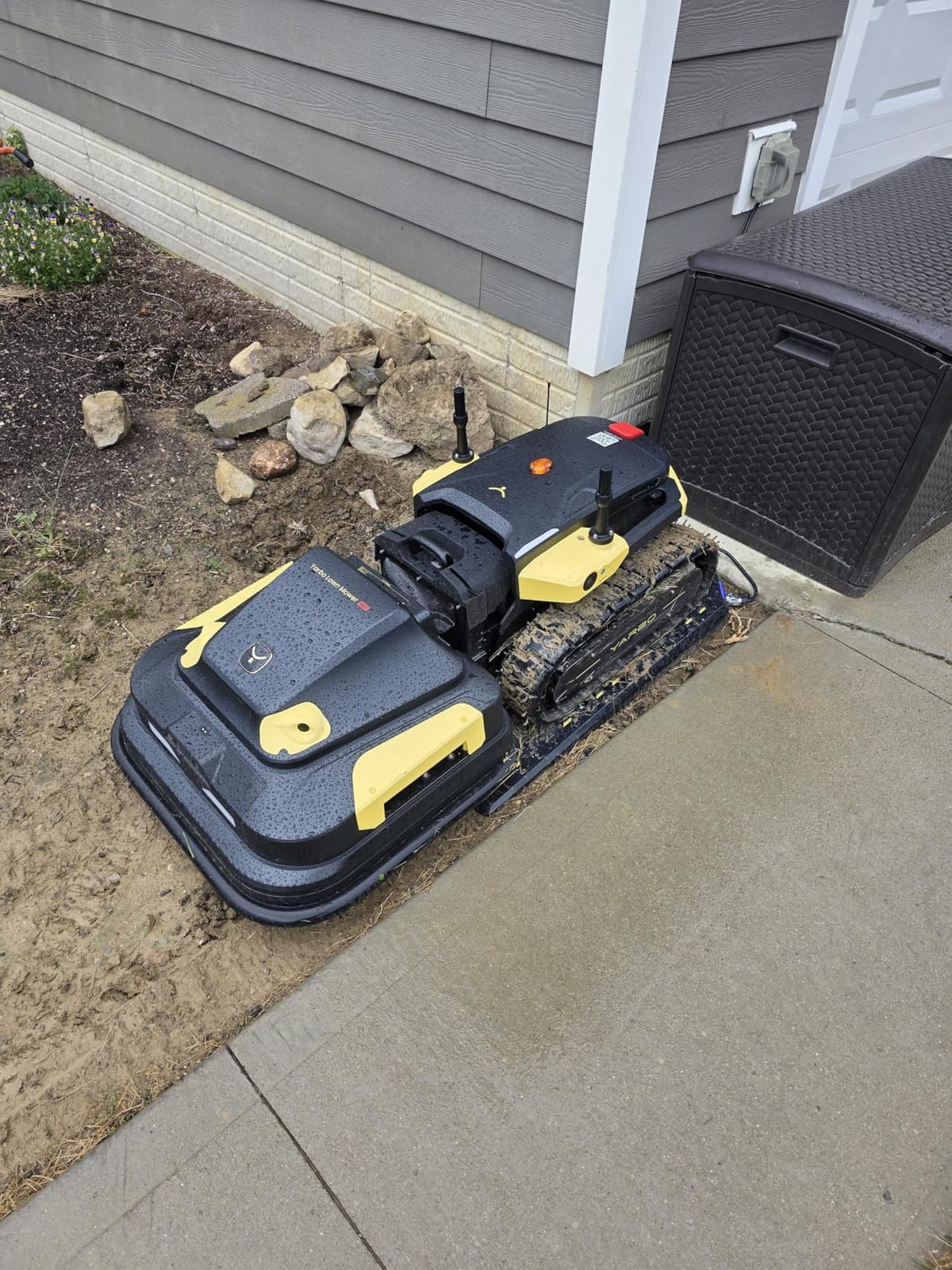
Owners with three to six acres of hilly, zoned property report cut quality on par with a zero-turn riding mower, and several describe the mulch line as visibly cleaner than a tractor cut. The IPX6 rating means it works in the rain and at night, and the accessory hitch accepts carts, rollers and a snow blower for four-season use.
What that ownership costs in time is the real story. Setup and initial mapping run for many hours, especially under heavy tree cover where the satellite signal drops and the vision system has to carry the load. Owners report ongoing map drift and telemetry dropouts that need periodic manual intervention, and describe it as anything but set-and-forget.
Who should buy the YARBO Pro
This machine makes sense when you have real acreage, uneven or muddy ground, and either a physical limitation or a genuine dislike of weekend mowing. It is the only model here that treats a five-acre property as a normal use case rather than an edge case.
It is also the only one with a real multi-season platform. If you want one machine to mow, blow leaves and clear snow, the modular attachment system removes the argument for buying separate equipment. Owners of rough properties with pets and kids mention the ultrasonic detection handling ground clutter without drama.
Where the YARBO Pro disappoints
Skip it if the lawn is under two acres, because you are buying acreage capability you will not use and a learning curve you do not need. Two adults are recommended for assembly, the battery ships separately, and limited ground clearance can bite in broken ground.
Two structural notes from owners. The data centre mounting hardware is described as unstable and the rectangular body is vulnerable in wind, so site it thoughtfully. And the pack uses cobalt-based lithium chemistry rather than LiFePO4, which means fewer total charge cycles over the life of the machine than the Lymow’s battery gives you.
4. WORX Landroid WR344 Review
- Finely finished cut with clean stripes
- True front-wheel steering avoids tearing turf
- No antenna and no cloud subscription
- Very quiet compact design
- Small 8.7 inch disc makes it slow
- Only 16 ratings with 40% one-star
- NTRIP and WiFi connection errors reported
The WR344 lists an 84% slope capability, roughly 40 degrees, which is the second-steepest figure in this group and it comes with proper 4WD chassis geometry and true front-wheel steering. That steering layout matters more than the number suggests, because it lets the mower pivot without the rear wheels scuffing a tear across open turf.
Navigation is RTK Cloud with V-SLAM sensor fusion and Vision AI, and there is no antenna to mount and no cloud subscription to pay. The brand’s 4WD line is covered in more depth in our WORX robot mower reviews if you want the range context.
Cut quality is genuinely the strongest argument for this machine. Owners describe fine, evenly finished stripes and a Cut-to-Zero offset blade that keeps manual string trimming to a minimum. The AI processor handles vision at up to 10 trillion operations per second, and automatic mapping with infinite zones and no-go areas lets it run with minimal interaction once set up.
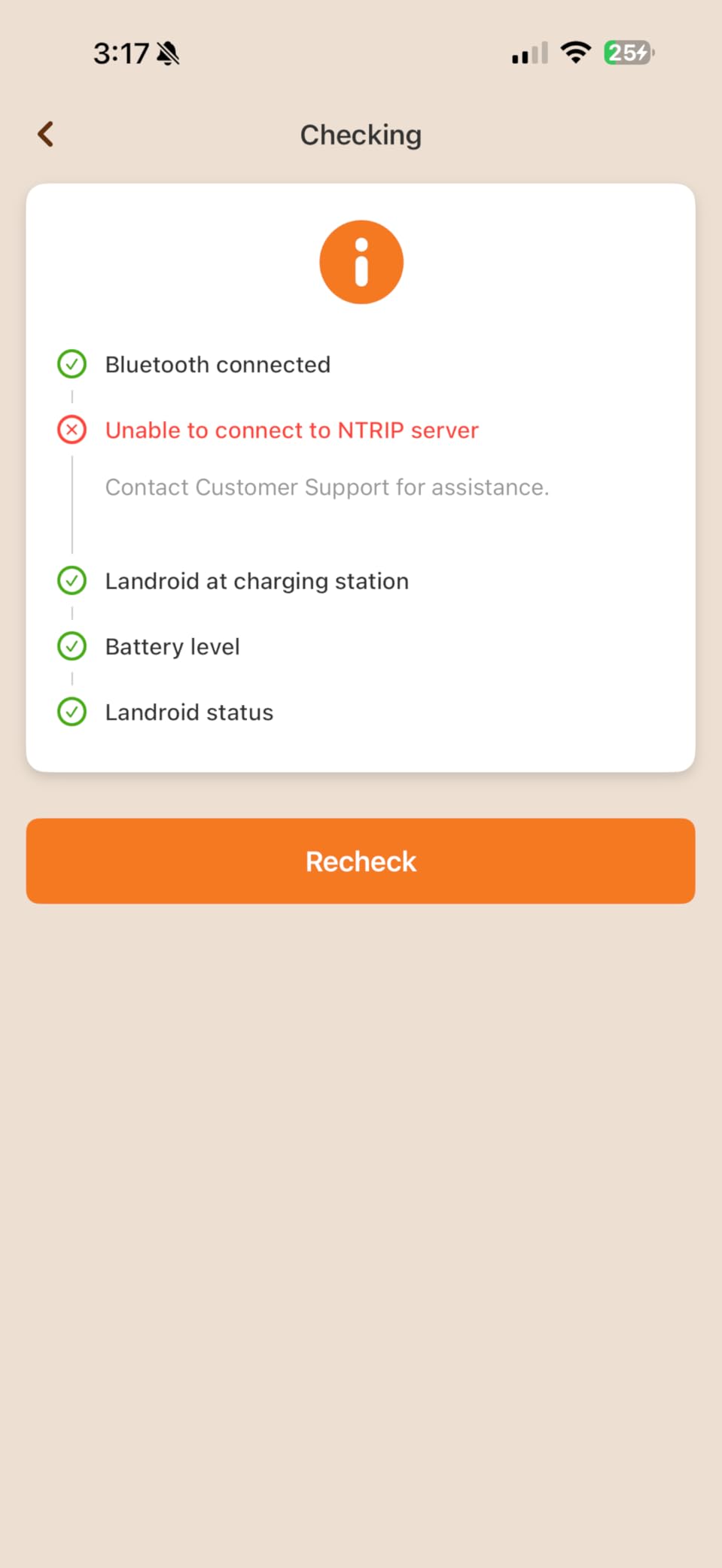
Then there is the small sample. Sixteen ratings, with 40% of them one-star, is not enough history to trust a software stack that owners themselves describe as unfinished. Multiple reports cover NTRIP and RTK connection errors that support could not clear, units losing position and getting lost between zones, and one unit that would not connect to home WiFi at all.
Where the WR344 fits
Choose it for a one-acre property with serious grade change where the cut finish matters to you. The steering geometry and the 84% rating make it the tool for the hillier half of the large-yard market, and the Find My Landroid GPS tracking with cellular lock-out is a solid theft deterrent.
Over-the-air updates have measurably improved the app, and a standard replaceable battery is available through ordinary hardware stores rather than only from the manufacturer. FiatLux automatic night lighting lets it mow in the dark without you tripping over it.
Where the WR344 is not ready
Hold off if you cannot tolerate troubleshooting. The 8.7 inch disc moves at roughly walking pace, and the connectivity failures described by owners are not user-error problems. Support hours are also limited to weekday business hours, which is rough if a mapping session dies on a Saturday.
Buying blind into an unproven software release is the main risk here. Owners of the sibling WR544 model report enthusiastic results and a much improved app, so the platform looks good. This particular unit is earlier in that curve, and the initial mobile SIM activation and setup are described as frustrating.
5. HOOKII Neomow X2 Pro Review
- LiDAR navigation needs no antenna and no clear sky
- One-tap automatic mapping is quick
- Dual map works well for gated backyards
- Very quiet for night mowing
- Struggles on inclines depending on mowing direction
- Can get stuck on wet grass on a hill
- Edges along hard surfaces still need a line trimmer
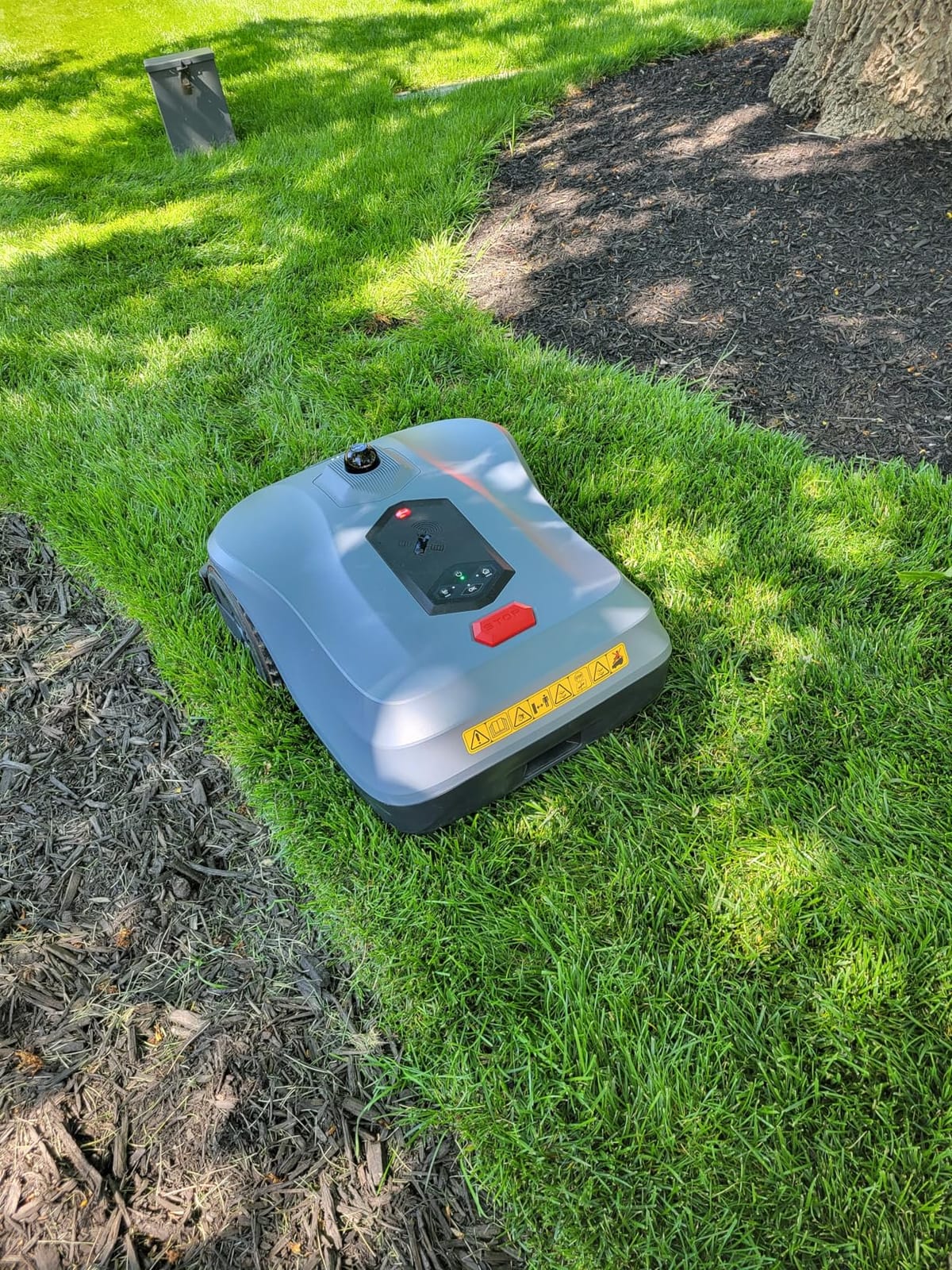
The Neomow X2 Pro is the clearest answer in this group to the tree-cover problem. Instead of RTK it runs 360 degree 3D LiDAR SLAM with a much higher point-cloud output per second, paired with a bionic triple vision camera that recognises 500-plus obstacle types. No satellite, no antenna, no base station mast. If your lawn sits under mature trees, this removes the single most common failure mode outright.
Mapping is one tap and fully automatic. It stores dual maps, manages up to 120 custom zones, and the 17.5Ah battery runs 180 to 200 minutes per cycle, covering roughly a quarter acre before it returns. The cutting platform is built for St. Augustine, Kentucky Bluegrass, Ryegrass and Bermuda, and the IPX6 housing is rinsable with a water jet.
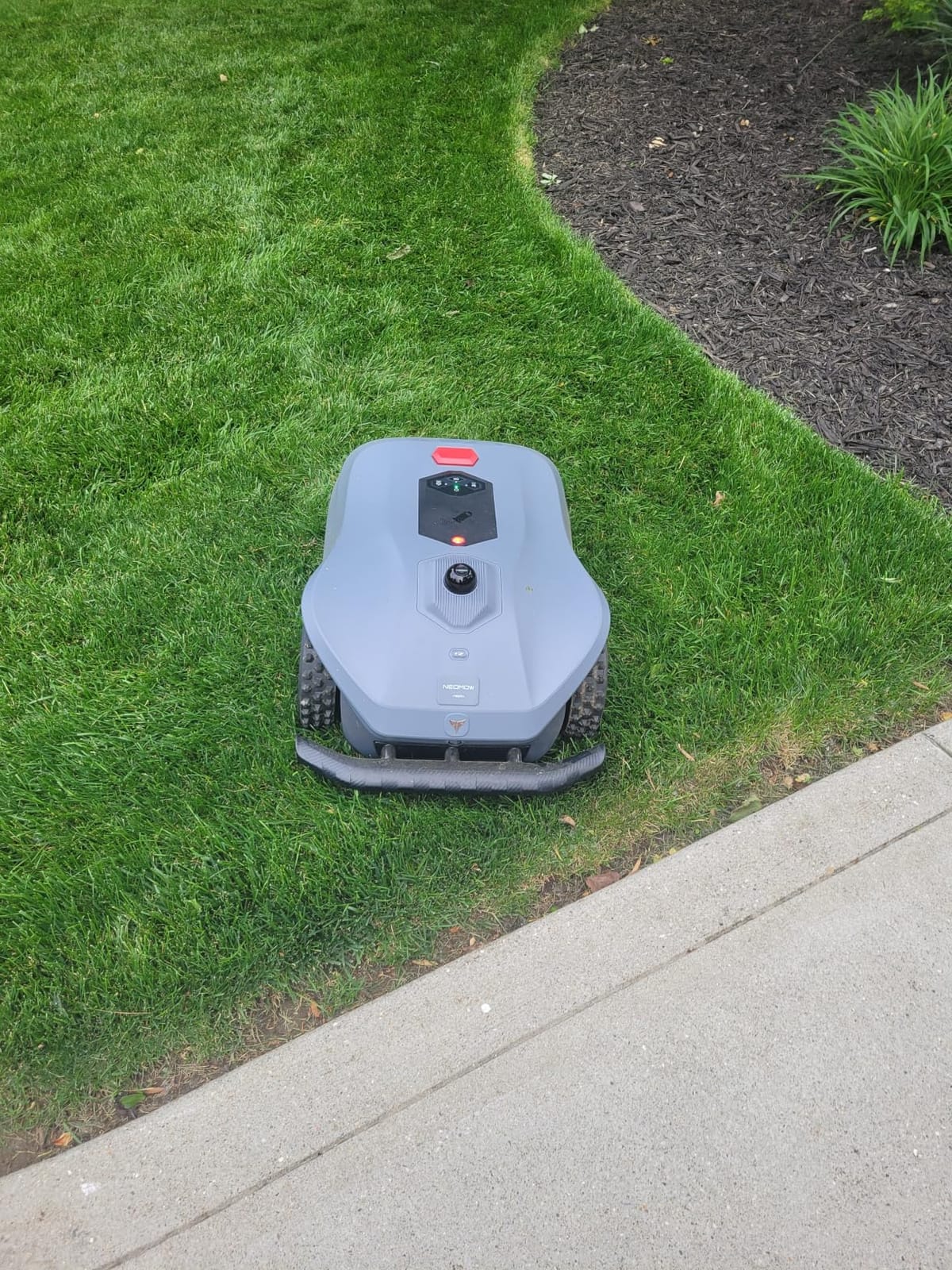
For a property divided by a house, the dual-map function is the feature that earns its place. One owner describes it as genuinely useful for a gated backyard, and the straight and crosscut patterns with adjustable blade height give you a cleaner result than a single random pass.
Keep one thing in mind before you commit: four ratings is a thin record. The set is uniformly positive, 100% five-star, with owners citing easy mapping, quiet operation and steady factory firmware updates. A second-generation owner notes the earlier Neomow X stayed stable for years with a single bearing repair, which is a mild comfort about the platform rather than the model.
Who the Neomow X2 Pro suits
This is the mower to shortlist when satellite positioning is a non-starter: dense tree canopy, a house sitting directly overhead, or a neighbouring structure that already blocks your sky view. Factory support by email is reported as polite and quick to respond, which matters when you are setting up an unfamiliar app.
It is also quiet enough for night mowing, at a level owners consistently praise, and 120 zones is more granular scheduling control than any rival in this roundup.
Where it falls short
Slopes are the catch, and the fix is a workaround: set the mowing direction to run horizontally or at an angle across an incline. Owners report that mowing straight up a hill causes difficulty, and that wet grass on a slope can trap the machine entirely. If your property is steep, read the Lymow section next.
Edge work along driveways and sidewalks still needs a line trimmer. And with only four ratings, you are the early adopter, so factor that into how much disruption a failure would cause.
6. LYMOW One Plus Review
- Track drive takes 45 degree slopes and stony ground
- Real steel blades cut through weeds properly
- Large battery covers about 0.57 acre per charge
- App is well built with clear instructions
- GPS link described as spotty and support cannot fix it
- Blades can stall in thick grass leaving uncut patches
- Poor support responsiveness and a broken chat link
The One Plus is the most capable machine on paper in this group and the most polarised in practice. A heavy-duty track drive handles a 45 degree gradient and crosses 2.8 inch obstacles, which is the steepest climbing figure among the mowers we tested. The Lycut System 2.0 runs dual SK5 tool-steel blades at up to 6,000 RPM on a 1785W peak motor, with a 16 inch dual rotary width.
Owners with rough, sloped, multi-acre plots are unequivocal about the drive. One describes it replacing a heavy zero-turn on swampy ground while still leaving clean, even stripes. Another highlights that real steel blades cut through weeds where razor-bladed discs bog down, and a 16 inch width keeps mow times down on large plots.
Battery specification is a real strength. The 15000mAh LiFePO4 pack is rated for more than 2,000 cycles, a three-hour charge mows roughly 0.57 acres, and up to three cycles a day gives the stated 1.73 acres of daily coverage. LiFePO4 chemistry is also more tolerant of heat and cold than the cobalt packs used elsewhere, which matters if you store the mower through winter.
The critical reviews cluster around heat and hardware. The battery refused to charge when too hot, meaning a mower garage is effectively required in warm weather. The GPS-to-satellite link is described as spotty and unfixable by support, the online chat link does not work, and there are reports of a loose cutting deck, broken front-wheel springs and failing bottom bearings. Blades have also been reported stalling in thick grass while the mower still reports the job done.
Where the One Plus is the right call
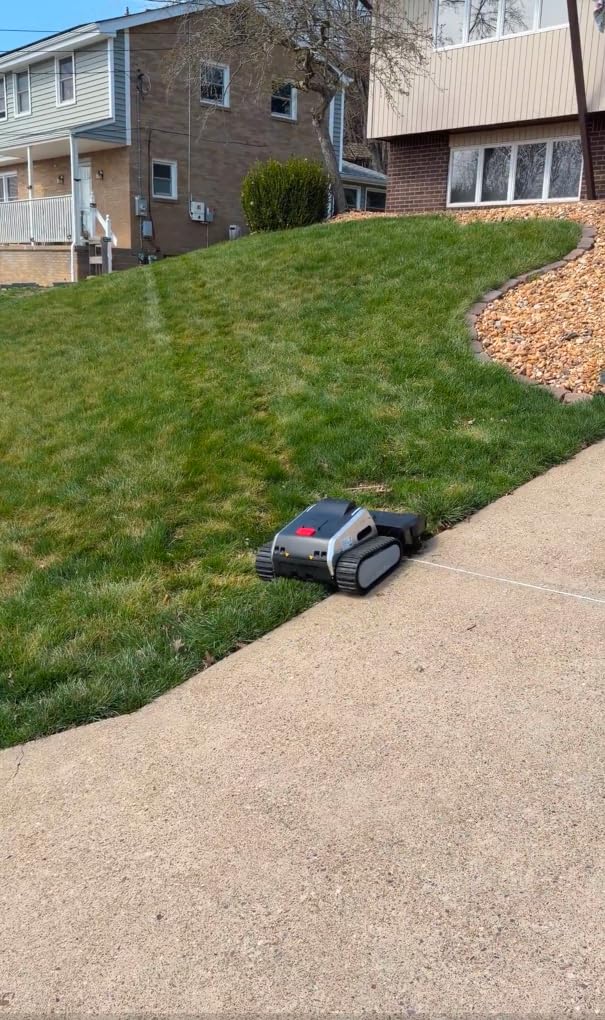
Buy it when terrain is the problem, not lawn size. Steep banks, wet ground, stony fields and swampy areas are exactly what a track drive solves, and the self-lifting blade deck plus single-side discharge make maintenance straightforward. AI vision with ultrasonic detection handles pets and garden decor.
If you mow through a long season and hate replacing batteries, the LiFePO4 cycle rating and the 3-year-equivalent chemistry advantage are worth more than most buyers realise. The app is well built with clear instructions and plenty of customisation, which is not something you can say about every app in this roundup.
Where it is not ready for you
Skip it if reliability outranks capability. One long owner analysis concludes it is the most capable mower on the market but not the most reliable, still a product under development with a hardware fan fix planned. With 19% of 28 ratings at one star, that is a real proportion of disappointed owners.
Moving the base station requires re-mapping, which is a genuine annoyance on a multi-zone property, and map editing is described as not intuitive. The recharge contact is also not obvious, so it can be unclear whether the machine actually docked.
7. MOVA LiDAX Ultra 3000 AWD Review
- Works with no RTK or antenna installation
- Handles three zones on one charge
- App zones schedules and dual maps are intuitive
- Three year warranty and three years of free 4G
- No gate automation so a fenced front yard needs a second unit
- Front wheels slide downhill when cutting across a slope
- Leaves a visible mow line near edges
The LiDAX Ultra 3000 AWD sold faster than anything else in this group, sitting at number 10 in the robotic mower category while most rivals sit between 25 and 95. It is also the clearest statement of the LiDAR-first school: 360 degree 3D LiDAR plus AI dual vision, no RTK base station, no boundary wire, no antenna to install.
That navigation choice is not theoretical. Multiple owners report that the LiDAR-plus-vision setup proved more reliable in the field than the RTK-based mower it replaced, and one says the first mapping run was enough to start mowing. The four 116W hub motors deliver 80% slope capability with 2.4 inch obstacle clearance, and advanced suspension keeps floating cutting discs level on uneven ground.
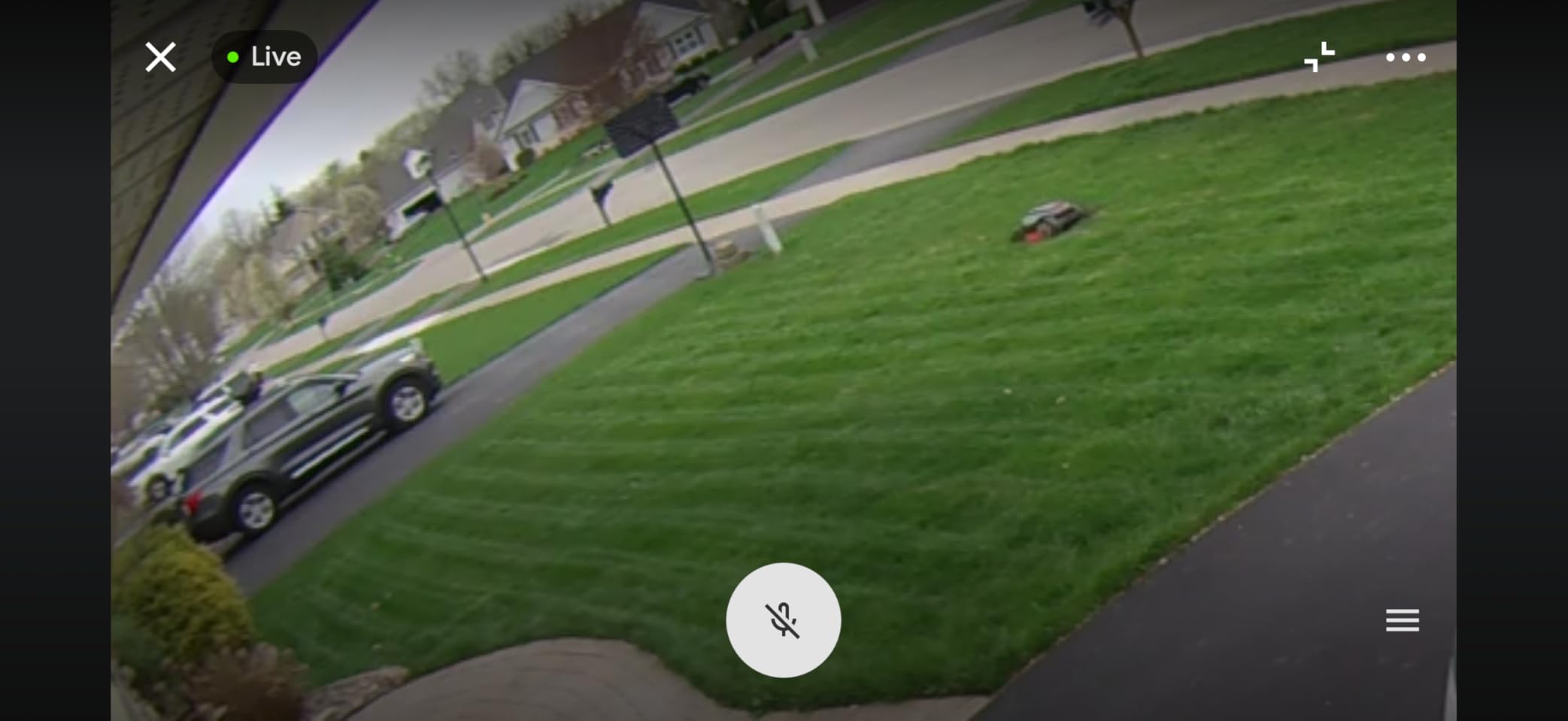
For multi-zone work it holds three zones on a single charge with clean, straight lines, and the 15.8 inch dual-disc system with 12 blades cuts more area per charge than most rivals at the same tier. The 36V 243Wh battery runs about 165 minutes and covers roughly a quarter acre per charge, and the app handles zones, schedules and dual maps intuitively.
The gaps are yard-specific and worth checking against your property. There is no gate automation support, so a fully fenced front yard is unreachable without a second base station or a second mower, and the dual-map feature needs that second dock without it being obvious up front. Front wheels can slide downhill when cutting horizontally across a slope, which tears the lawn.
Where the LiDAX Ultra 3000 wins
It is the pick for anyone who has been put off by RTK installation. No pole, no antenna cable, no base station alignment, and it is one of the few large-capability mowers here with three full years of 4G included and a three year manufacturer warranty. Obstacle detection across 300-plus types handles garden beds, pets and pet toys without incident.
The rated capacity is up to 0.75 acre, so this is a large-yard machine in the sense of handling a real lawn with zones, but it is not the choice for two acres or more.
Where owners hit trouble
Two issues show up repeatedly. The 22% one-star share splits between a total hardware failure at 32 days and a slow 24-day replacement process, plus yard-specific limits. And the UltraTrim 2.0 edge riding still leaves roughly 1.2 inches of edge grass, so more string trimming than a machine with an integrated trimmer.
Front wheel hubcaps also fall off, and the app can be slow to respond, with one owner reporting the mower spun in place for hours after a session was interrupted. If your lawn is cross-sloped, read the ECOVACS section for a built-in edge trimmer alternative.
8. LOPKIN L2500-NEO Review
- Setup in about ten minutes from box to mowing
- Moves faster than several established-brand rivals
- Connection holds far from the house
- Quiet at around 60dB for night mowing
- App described as very buggy
- NetRTK needs a subscription not disclosed in the listing
- Only 10 ratings so far
- 9.45 inch cut limits throughput
The L2500-NEO is the speed story of this roundup. Owners report roughly ten minutes from box to mowing, and one who already owns five other robot mowers says this one moves faster while cutting just as well. The included auto-pairing Wi-Fi HaLow router is the reason: a dedicated long-range network with claimed open-area coverage to 80,000 square metres, which is what holds the connection steady far from the house.
Navigation combines NetRTK with AI vision and GNSS/INS fusion, and the vision system navigates around trees, landscaping and yard objects across 300-plus recognised types. The 8Ah battery delivers up to 200 minutes per charge with roughly 2,421 square feet of coverage per hour, and the IP66 housing includes a built-in rain sensor and night mowing support at about 60dB.
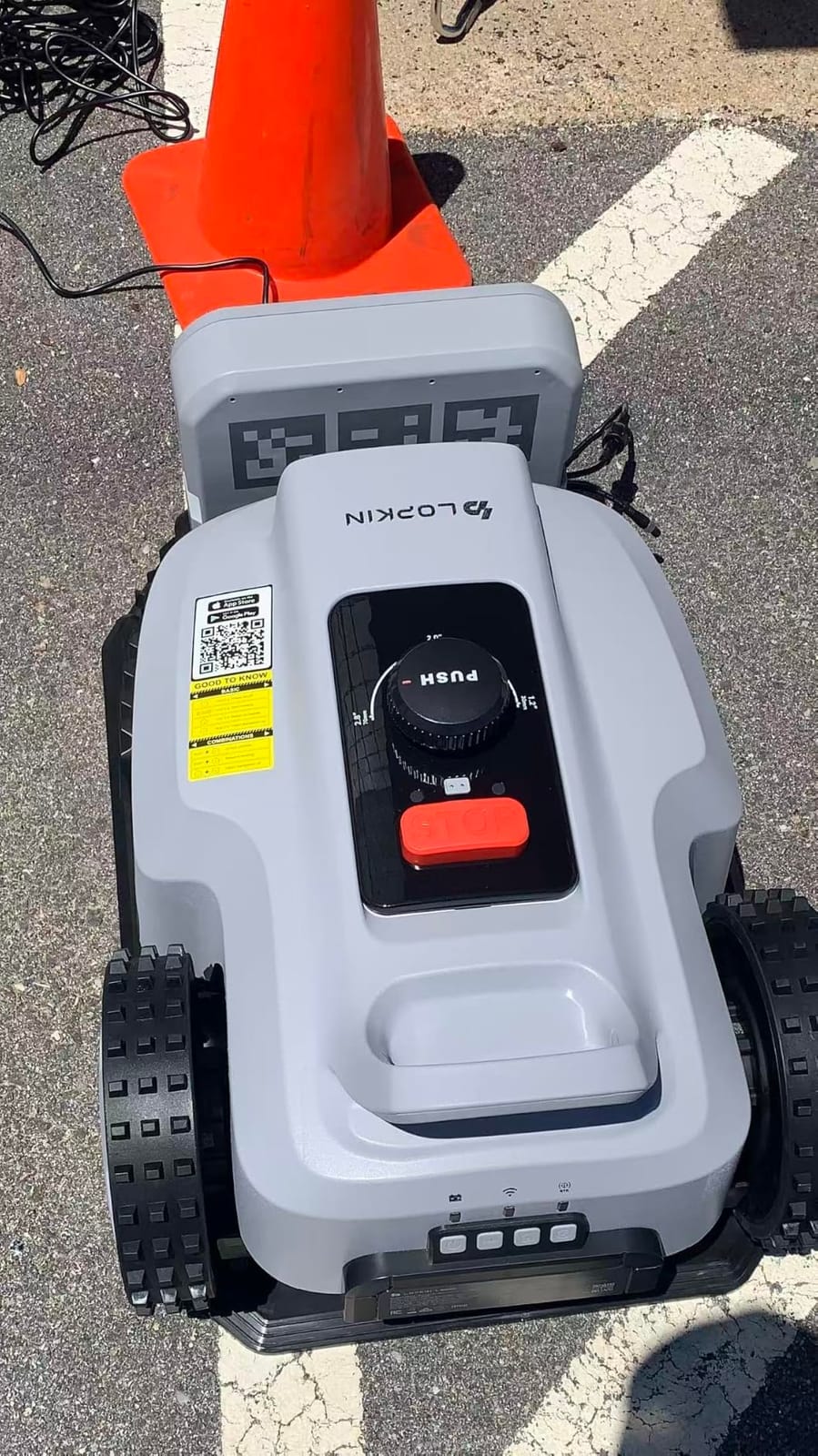
Multi-zone scheduling works well for yards with several distinct sections, and it handles small dips and uneven ground without trouble. The warranty structure is unusually clear for a brand this new, with three years on the mower plus a separate two-year battery warranty.
There are two things to weigh. The app is described as very buggy, which is the single recurring complaint. And NetRTK requires a subscription that the product description does not disclose, so the running cost is higher than the listing implies.
Where the L2500-NEO fits
If you want a mower running tonight rather than next weekend, this is the one. The HaLow router is a genuine hardware answer to the connectivity complaints that drive the one-star reviews on several rivals, and the 3-year mower warranty gives more comfort than a 10-rating sample usually justifies.
It is also a sensible pick for a sub-acre lawn with several distinct sections that need different schedules, particularly if you mow at night. The stated 57% maximum slope rating is modest compared with the AWD machines here, so pair it with flatter ground.
Where it is not the answer
Do not buy it for a full acre or more. The 9.45 inch cutting width limits throughput, and the 30 degree maximum slope means it is the wrong tool for hilly ground regardless of how good the software is.
Treat the review count as the real limitation. Ten ratings, 84% five-star, tells you early buyers are happy but tells you almost nothing about year three. If you want a proven platform instead, our Segway robot mower roundup covers the more settled side of the wire-free market.
9. Mammotion LUBA 3 AWD 5000 Review
Mammotion LUBA 3 AWD 5000 Robot Lawn Mower, 1.25 Acres, AWD for 80% Slopes
- LiDAR plus 4G removes the need for an RTK pole
- Adaptive suspension climbs out of ruts and holes
- LED headlight makes night mowing reliable
- Four independent motors with 50mm step-over
- 1.25 acre map storage cap limits mapping
- Changing settings can wipe saved maps
- One firmware update stopped the mower working entirely
The LUBA 3 AWD 5000 is the current generation of the line that won this roundup, and its navigation is a genuine step change. Tri-fusion combines 360 degree LiDAR with 230 feet of range, NetRTK and dual-camera AI vision, and the built-in 4G with three years free means you never have to mount an RTK pole at all. Owners specifically praise how well it works far from the house over poor WiFi.
The chassis improves on the earlier models in ways that matter on broken ground. Four independent motors deliver 80% climbing, adaptive suspension steps over curbs, roots and thresholds up to 50 mm, and the omni-wheel pivot smooths turns on uneven terrain. Owners report it climbing steep foothills without tipping, including narrow side-slope traverses, and working its way out of the ruts and holes that trapped earlier LUBA models.
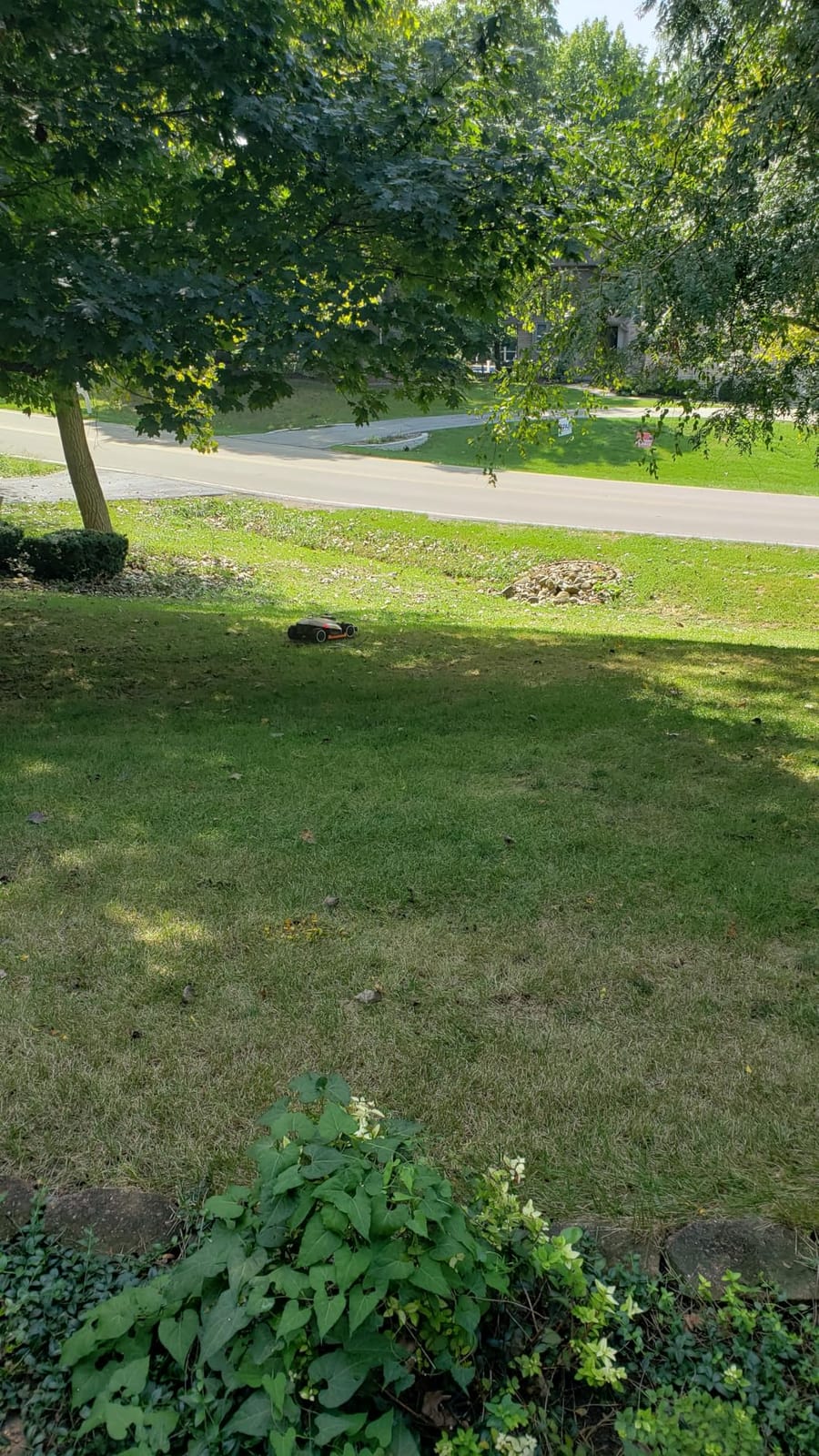
Cutting is handled by two 165W motors with 6-blade discs and up to a 15Ah battery, giving up to 215 minutes per charge and up to 500 square metres mown per hour. The bright LED headlight allows reliable night mowing, and up to 12 scheduled tasks with channels, boundaries and multiple mowing areas cover a complex property. One owner turned a weedy, uneven yard into something resembling a maintained golf course.
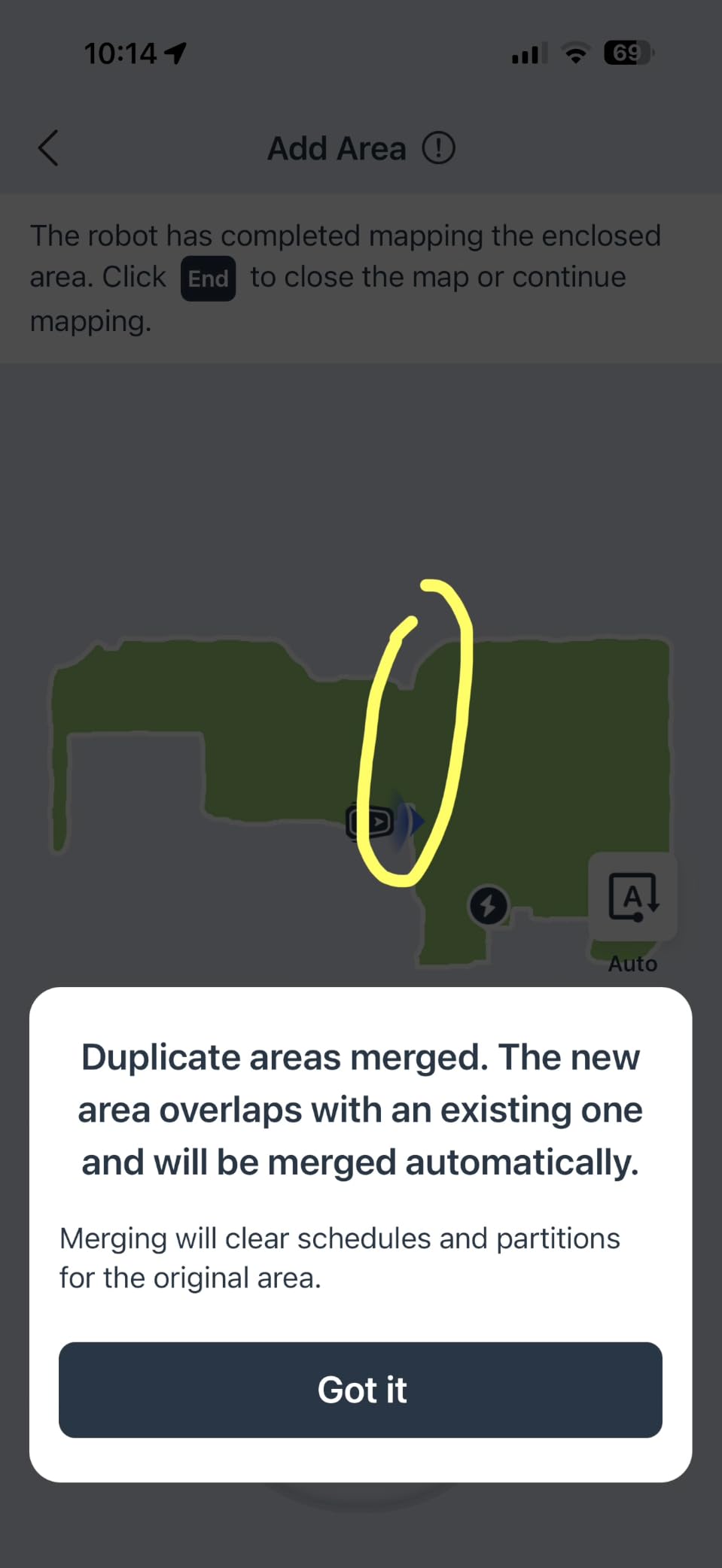
Then the 3.8 average catches up. The most common feature complaint is the 1.25 acre map storage limit, which restricts mapping even for owners who could maintain more over time. Changing settings can wipe saved maps with no reliable save and reload function, cloud map restore fails for at least one owner with a network error, and the mow pattern applies globally rather than per task, forcing constant manual changes.
Where the LUBA 3 makes sense
Choose it when you want the LUBA drive train with the RTK pole removed, particularly on hilly acreage with holey or uneven ground. The self-recovery behaviour and the headlight are the two features owners mention most, and obstacle detection across 300-plus types plus up to 50 zones covers large multi-zone properties well.
It is also the right call if you mow at night regularly. The maintenance stand is a separate purchase, so factor that into day-one planning, and cut the lawn once by hand before the first robot pass.
Where it is not ready
Software is the weak point, and owners are blunt about it. A firmware update left at least one buyer with a mower that stopped performing tasks entirely, and a 24% one-star share is more than a launch product should carry. Note also that only two turning options are offered, and neither works well in pine needles and pinecones where the mower digs in and spins.
It also flattens tall grass rather than cutting it, which means a two-week catch-up needs a conventional mower first. With 11 ratings, you are buying an unfinished software stack with excellent hardware underneath.
10. ECOVACS GOAT A3000 LiDAR PRO Review
ECOVACS Goat A3000 LiDAR PRO Robotic Lawn Mower, Dual LiDAR Navigation
- Dual-LiDAR holds position under trees and along fences
- No perimeter wire and no RTK antenna
- Integrated TruEdge reduces string trimming most
- Cuts dense Bermuda Zoysia Fescue and St. Augustine
- Lowest average rating here at 3.6
- 70 minute battery runtime is short for the tier
- 64.5 pound body is heavy
- Smallest capacity in this price bracket
The GOAT A3000 LiDAR PRO is the entry with the biggest name behind it and the biggest review base among the lower-rated entries, at 111 ratings. The navigation is HoloScope 360 degree dual-LiDAR with 2 cm positioning accuracy, and the manufacturer claims it holds accuracy under trees, along fences and in shade with no wire and no RTK antenna.
The differentiator is TruEdge, a built-in integrated edge trimmer that swings out at borders. Owners credit it with reducing manual string trimming more than any competing feature we tested, and it is the reason this machine edges out the field on the one task every robot mower struggles with. The 32V platform with dual-blade disc cuts through dense Bermuda, Zoysia, Fescue and St. Augustine.
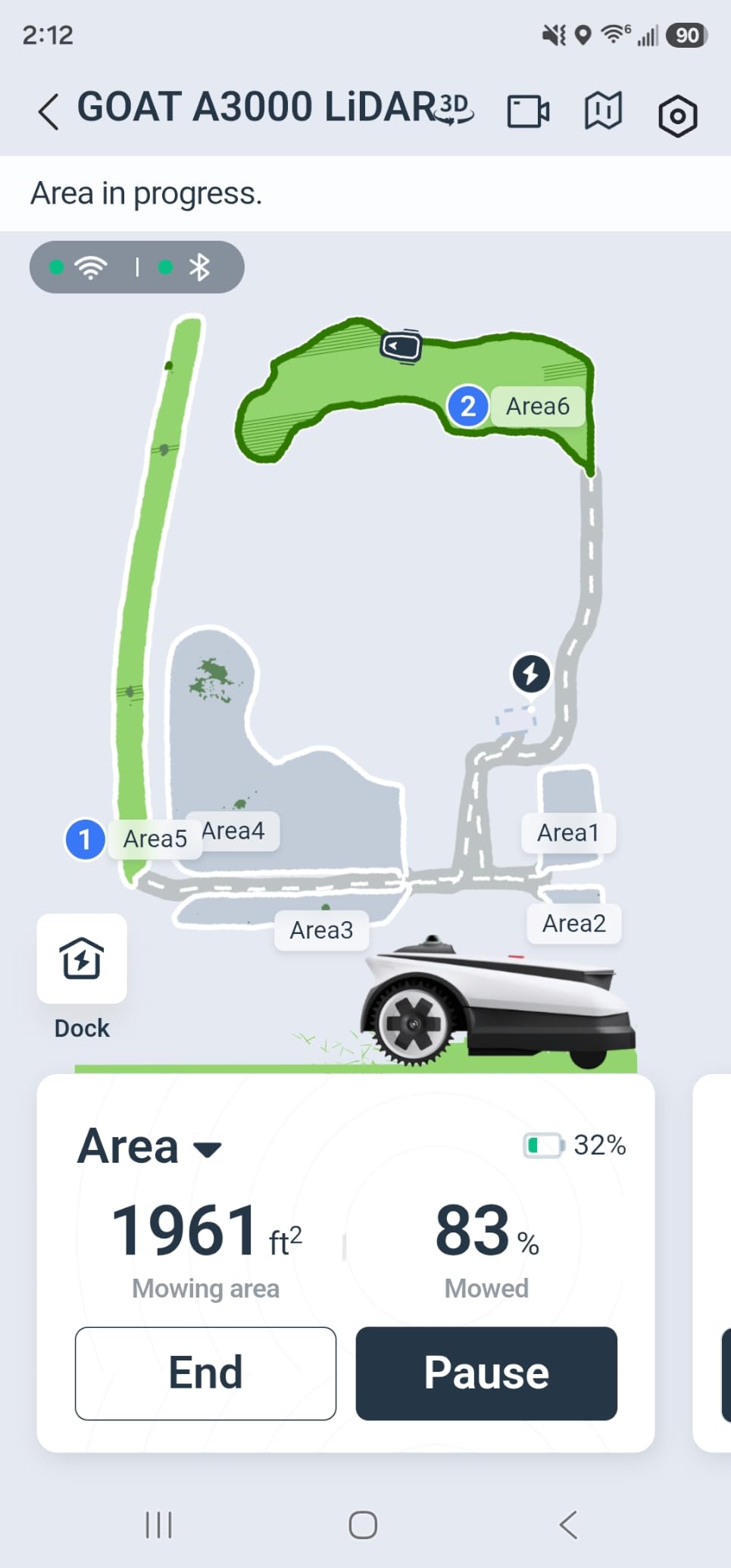
On paper the rest is competent. A 7500 mAh battery with 189W fast charging gives roughly a 70-minute turnaround and up to 400 square metres mown per hour, and the app supports map editing, multiple zones, no-go areas, cutting height, speed and travel paths. Being a well-known brand with a large installed base and an established app is a real advantage over newer names.
Where it falls down is the 3.6 average, the lowest in this roundup, with 19% one-star and 10% two-star ratings. Forum discussion of the ECOVACS line concentrates on trouble above 30% slopes and inconsistent edge cutting, and the listed 70-minute runtime is short relative to rivals in the same bracket. At 64.5 pounds, the body is also heavy to reposition.
Who should buy the GOAT A3000
Pick it if borders are your main frustration. TruEdge is the only genuinely integrated edge solution in this group, and on a property with lots of driveway, path and bed edging it will save more of your weekends than a wider cutting disc would.
It also suits owners who want a brand with service infrastructure behind it. Fast charging means less downtime than a 70-minute runtime suggests, and if you already run ECOVACS gear the app is one you will not have to learn.
Where it falls short
Capacity is the first limit. Coverage is about three-quarters of an acre, the smallest here for this price bracket, so on a genuinely large yard it becomes a second or third machine rather than the only one.
Reliability is the second. Nearly 30% of ratings sit at one or two stars, and slope performance above 30% is the most common complaint in owner discussion. If your yard is hilly, the track-driven Lymow or the 4WD LUBA 2 are the safer buys. Note that individual customer review text was not available for this product, so the picture here leans more on the rating distribution and the spec sheet than on owner narrative.
How to Choose a Robot Mower for a Large Yard?
Start with the number that is actually tested rather than the number on the box. Coverage ratings across this group range from 0.75 acres to 6 acres, and the daily coverage figure matters more than the single-charge figure. The Lymow One Plus, for example, is a 1.73 acres-per-day machine built on a three-hour charge, not a single-pass acre claim.
Next, divide your property into zones. Almost every machine here supports 30 to 120 mowing zones, which matters far more on a large yard than on a small one, because you can run the front walk every other day and the back field less often. Both the LUBA models and the YARBO Pro handle multiple disconnected areas well; the MOVA requires a second docking station for dual maps.
Cutting width is the throughput lever. A 7.9 inch disc on the ANTHBOT Genie means many more passes than a 20 inch disc on the YARBO, and on a full acre that difference is the difference between an evening and a full day of mowing. If your property is genuinely large, do not prioritise cutting width below 11 inches.
Slope capability needs a reality check. Manufacturer ratings are laboratory figures, and owners consistently report that real-world climbing falls short on wet grass. Wheeled AWD machines using 116W to 165W hub motors cluster around 80% or 38 degrees. Track drives reach further, with the Lymow rated at 45 degrees and the YARBO at 35. If your worst grade is above 30 degrees, plan on a track-driven machine and a garage if you live somewhere hot.
Finally, budget the running costs honestly. Blades need replacing every one to two months in the growing season, battery degradation becomes noticeable around the two-to-three-year mark, and 4G service is included for a set period on some machines and paid afterwards on others. Winter storage matters too, because batteries kept below freezing lose capacity permanently.
Navigation Explained: RTK vs LiDAR vs AI Vision vs Wire
RTK-GNSS gives centimetre-level accuracy from satellite correction signals, which makes it the most precise system when it works. Its weakness is the one owners complain about most: mature tree canopy blocks the sky and the mower loses its line. Models that use RTK plus vision, such as the LUBA 2 and the LYMOW One Plus, hedge against this.
LiDAR builds a point cloud of your yard with a spinning sensor, so it works with no satellite signal at all. That is why the HOOKII Neomow X2 Pro, the MOVA LiDAX Ultra 3000 and the ECOVACS GOAT behave well under heavy tree cover. LiDAR needs no antenna and no base station, which is the single biggest installation win in this group.
AI vision is the supporting layer rather than a standalone system. Binocular cameras and vision AI recognise objects from hundreds or thousands of categories, which is what stops a mower running over a dog bowl. Every machine here uses vision alongside RTK, LiDAR or both.
Perimeter wire is the old method and none of these ten use it. The comparison worth making is between the two hybrids: RTK plus vision for maximum accuracy in open ground, and LiDAR plus vision for reliability under trees. Owners on forums consistently report that LiDAR-first machines fixed the RTK problems they had on other brands, and that is the closest thing to a settled answer.
Frequently Asked Questions
Which robot mower is best for mowing a large area?
The Mammotion LUBA 2 AWD 5000HX is the best all-round choice, handling up to 1.25 acres with all-wheel drive, RTK plus AI vision for shaded lawns, and up to 50 mowing zones. For genuinely multi-acre property, the YARBO Robot Mower Pro is rated for up to 6 acres.
Which robot lawn mower is best for large acreage?
For three acres and beyond, the YARBO Robot Mower Pro leads on rated coverage at 6 acres, with a tracked drive that climbs 35 degrees and a 20 inch cutting width. For one to two acres, the Mammotion LUBA 2 AWD 5000HX covers 1.25 acres with vision-assisted RTK.
What are the downsides of using a robotic lawn mower?
The main downsides are high upfront cost, long mow times on narrow cutting decks, RTK signal loss under dense tree cover, rated slopes rarely achieved on wet grass, and the need for a line trimmer on borders. Owners also report app bugs, battery degradation around year three, and blade replacements every one to two months in season.
What is the largest robotic lawn mower available?
Among consumer machines, the YARBO Robot Mower Pro is the largest in our comparison at 215 pounds, rated for up to 6 acres of wire-free coverage, with a 20 inch cutting width and a tracked drive handling 35 degree gradients.
How big of a yard can a robot mower do?
It depends on the machine and the layout. The mowers in this roundup range from about 0.75 acres to 6 acres of rated coverage. Cutting width, battery size and the number of zones matter as much as acreage, because a narrow disc on a large lawn means multiple charge cycles per full pass.
Are robot mowers really worth it on a large yard?
They are worth it when your lawn is over half an acre, the ground is uneven, or you travel often and need consistent cuts without a contractor. The savings come from cutting frequency rather than cutting speed, so large yards benefit most because a walk-behind mower takes far longer on the same ground.
The Best Robot Lawn Mowers for Large Yards: Final Word
The best robot lawn mowers for large yards fall into three clear groups. The Mammotion LUBA 2 AWD 5000HX wins for most one-to-1.25 acre properties with slopes and tree cover. The YARBO Robot Mower Pro is the only real answer for three acres and up. The LYMOW One Plus takes rough ground and steep banks, while the HOOKII Neomow X2 Pro solves the tree canopy problem outright.
Measure your worst slope, count your mature trees, and check the cutting width before anything else. Then pick the machine that matches that profile rather than the one with the longest feature list.