
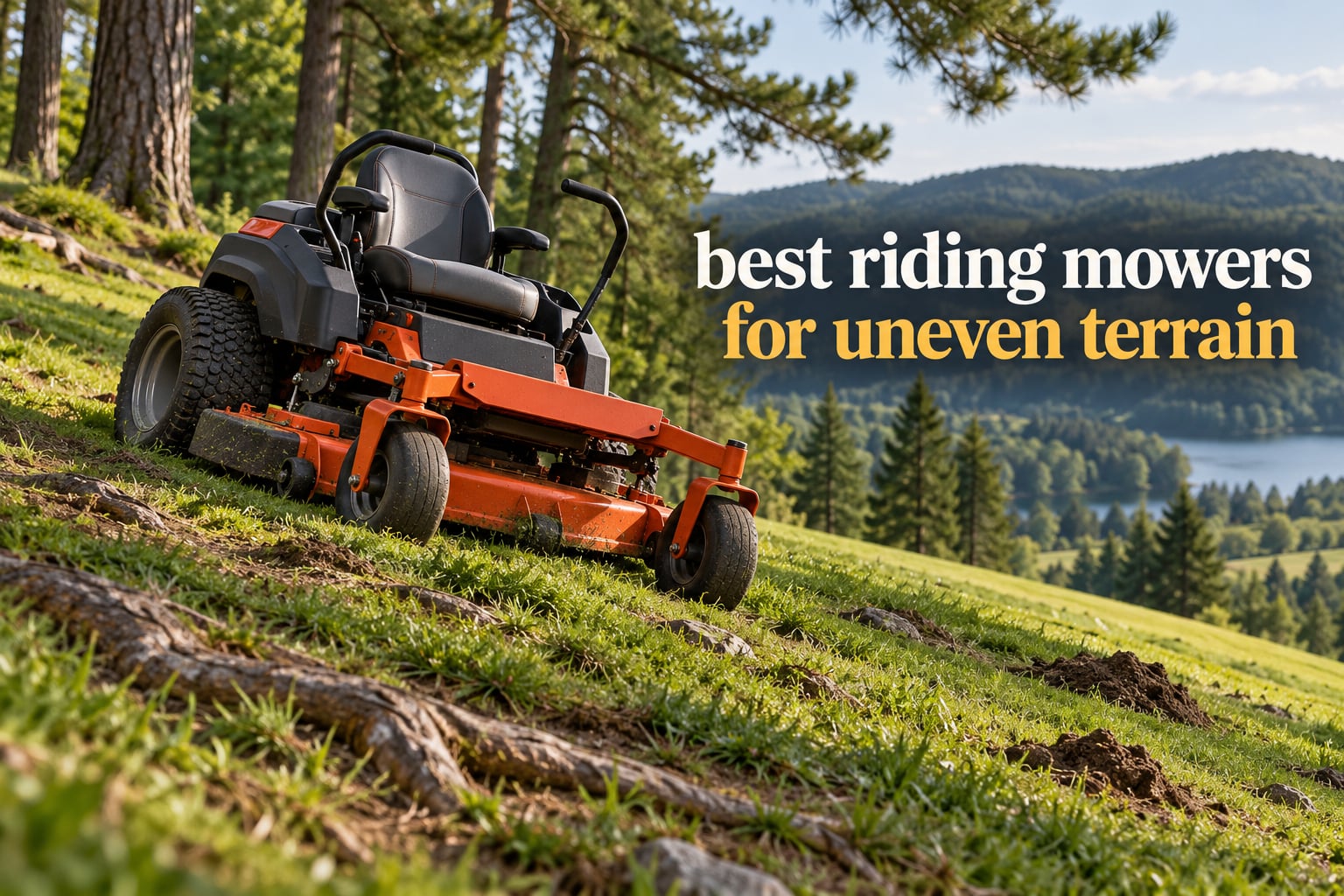
Ruts left by mole tunnels, a creek bed that runs downhill, tree roots that lift the lawn an inch at a time. Most riding mowers are built for flat, manicured turf, and the gap between those machines and a genuinely uneven yard is where owners find out how their mower really performs. We looked at the machines in detail for this guide to the best riding mowers for uneven terrain in 2026, reading the published specifications, the owner review patterns and the real numbers that decide whether a machine can hold a line on a slope.
The honest starting point is that most of the big-name terrain mowers you see advertised, the suspended-platform commercial zero-turns, are sold through dealers rather than online marketplaces. The seven units we could verify are a different kind of list: a mix of battery zero-turns, battery tractors, a small tractor and two commercial-weight gas machines. That mix actually works in your favour here, because weight, rear tire size, ground clearance and published slope ratings tell you more about rough ground than a headline horsepower number ever will.
If you want the broader picture of riding mowers first, our riding lawn mower picks and reviews covers the mainstream gas and battery riders by yard size. This one is narrower and more useful if your problem is the ground itself.
Table of Contents
Top 3 Picks for Uneven Ground (October 2026)

EGO Power+ ZT4204L 42 Inch Zero-Turn
- 620 lb chassis
- 42 inch stamped steel deck
- 2 acres per charge
- 8 MPH top speed

EGO Power+ TR4204 42 Inch Lawn Tractor
- 640 lb machine
- 20000 watt peak power
- belt-free deck
- rear tow hitch

EGO Power+ ZT5207L 52 Inch Zero-Turn
- 527 lb
- 52 inch deck
- 4 acres per charge
- 25 HP gas equivalent
Quick Picks for Bumpy, Rocky and Sloped Ground
Best overall for uneven terrain: EGO Power+ ZT4204L 42 inch zero-turn – a 620-pound chassis with a 42 inch stamped steel deck and enough torque to climb without feeling nervous.
Best value for hilly ground: EGO Power+ TR4204 42 inch lawn tractor – belt-free brushless deck, 12 height positions and a steering wheel some operators find easier than lap bars.
Best for rough, overgrown acreage: EGO Power+ ZT5207L 52 inch zero-turn – 4 acres per charge and a 52 inch deck that owners say cuts through knee-high growth other decks stall on.
Best slope-rated budget pick: Greenworks 60V riding mower – one of only two machines here with a published 15 degree slope rating, plus traction control against sliding.
Best commercial weight for stability: Ariens Zenith 60 – a 930-pound chassis with a 23.5HP Kawasaki V-Twin and the widest deck in the group at 60 inches.
Best for open acreage: Speedy 25HP zero-turn – 850 pounds, a reinforced steel frame and a 50 inch deck built for long days in open field.
Best for tight, smaller yards: GIYI 42 inch cordless lawn tractor – the 451-pound machine, the narrowest footprint and the shortest runtime in the group.
The 4 Features That Matter Most on Uneven Ground
Horsepower gets the advertising, but four other things decide whether a riding mower feels planted on rough ground or shakes itself apart. Here is what we found across the seven machines.
1. Suspension. Suspension comes in three very different forms, and the difference matters more than any spec on the list. Seat-only suspension moves the cushion on a post and does almost nothing for a rut. An operator platform suspension isolates the whole floor pan, pedals and seat from the frame. Independent deck suspension lets the mowing deck travel on its own arms. None of the seven machines publish a suspension specification, which tells you something about the segment, and it is the single most common complaint in owner reviews for this reason. Test the ride in person if you can.
2. Deck construction. A stamped steel deck is pressed from a single steel sheet and is lighter and cheaper. A fabricated deck is welded from heavier steel plate and holds its shape when a blade finds a buried rock or a mound. Every deck in this group is stamped, so on genuinely rocky ground you are trading some durability for weight and price. That is a real limitation and none of these machines fix it.
3. Rear tire size and machine weight. Larger rear tires rise over unevenness instead of transmitting it into the frame. Weight does the same thing, and it is the reason owners keep telling buyers that mass and tire size matter more than horsepower when climbing. The weight range here runs from 451 pounds to 930 pounds, which is a huge spread in how a machine behaves on a hill. Lighter machines climb but drift; heavier machines hold a line and need a trailer to move.
4. Drivetrain type and traction aids. Battery mowers deliver their power instantly with no gear steps, which is genuinely good for short steep pitches. Two machines here add traction control or a slope rating on top of that. Gas V-Twins give you long uninterrupted days and torque that fades less in wet grass, at the cost of a maintenance schedule.
All 7 Picks at a Glance (October 2026)
| Product | Specifications | Action |
|---|---|---|
| EGO Power+ ZT4204L 42 Inch Zero-Turn |
|
Check Latest Price |
| EGO Power+ TR4204 42 Inch Lawn Tractor |
|
Check Latest Price |
| EGO Power+ ZT5207L 52 Inch Zero-Turn |
|
Check Latest Price |
 Greenworks 60V Riding Mower Greenworks 60V Riding Mower |
|
Check Latest Price |
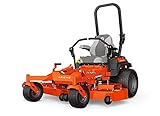 Ariens Zenith 60 Kawasaki Zero-Turn Ariens Zenith 60 Kawasaki Zero-Turn |
|
Check Latest Price |
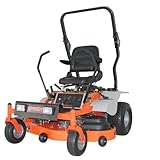 Speedy 25HP 50 Inch Zero-Turn Speedy 25HP 50 Inch Zero-Turn |
|
Check Latest Price |
 GIYI 42 Inch Cordless Lawn Tractor GIYI 42 Inch Cordless Lawn Tractor |
|
Check Latest Price |
1. EGO Power+ ZT4204L 42 Inch Zero-Turn – Best Overall for Uneven Terrain
- Quiet belt-free electric drivetrain with no fuel or oil service
- 620 pound chassis that stays planted on inclines
- Cuts up to 2 acres on four included 56V 10.0Ah batteries
- Variable speed control plus adjustable blade speed and deck height
- Cut quality reported equal to or better than older 42 inch gas riders
- Deck wash port and cross-compatible battery platform
- Deck height indicator is hard to read from the seat
- A failed firmware update can brick the mower until a service center visit
- Electronics and battery management failures reported in a second season
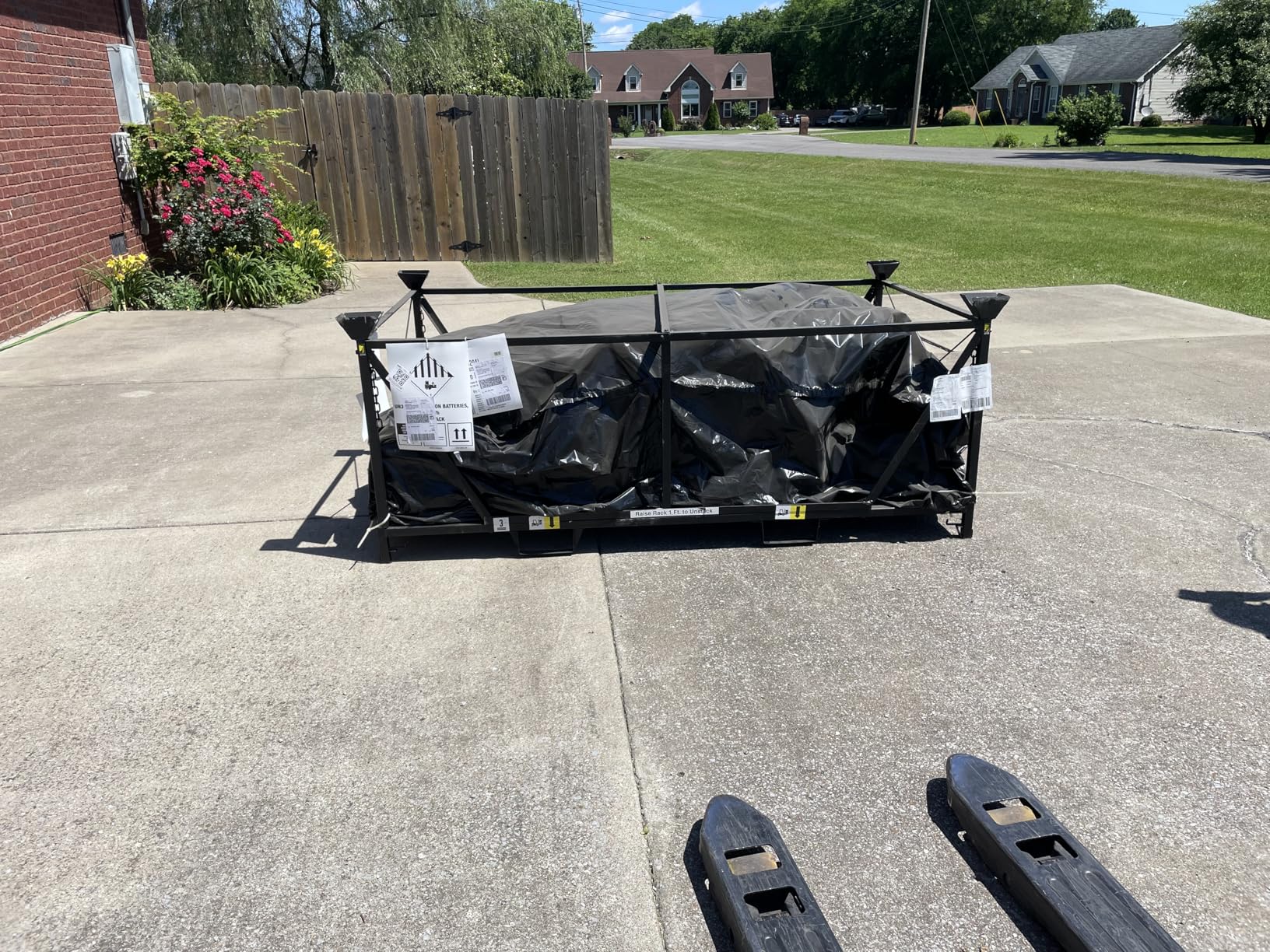
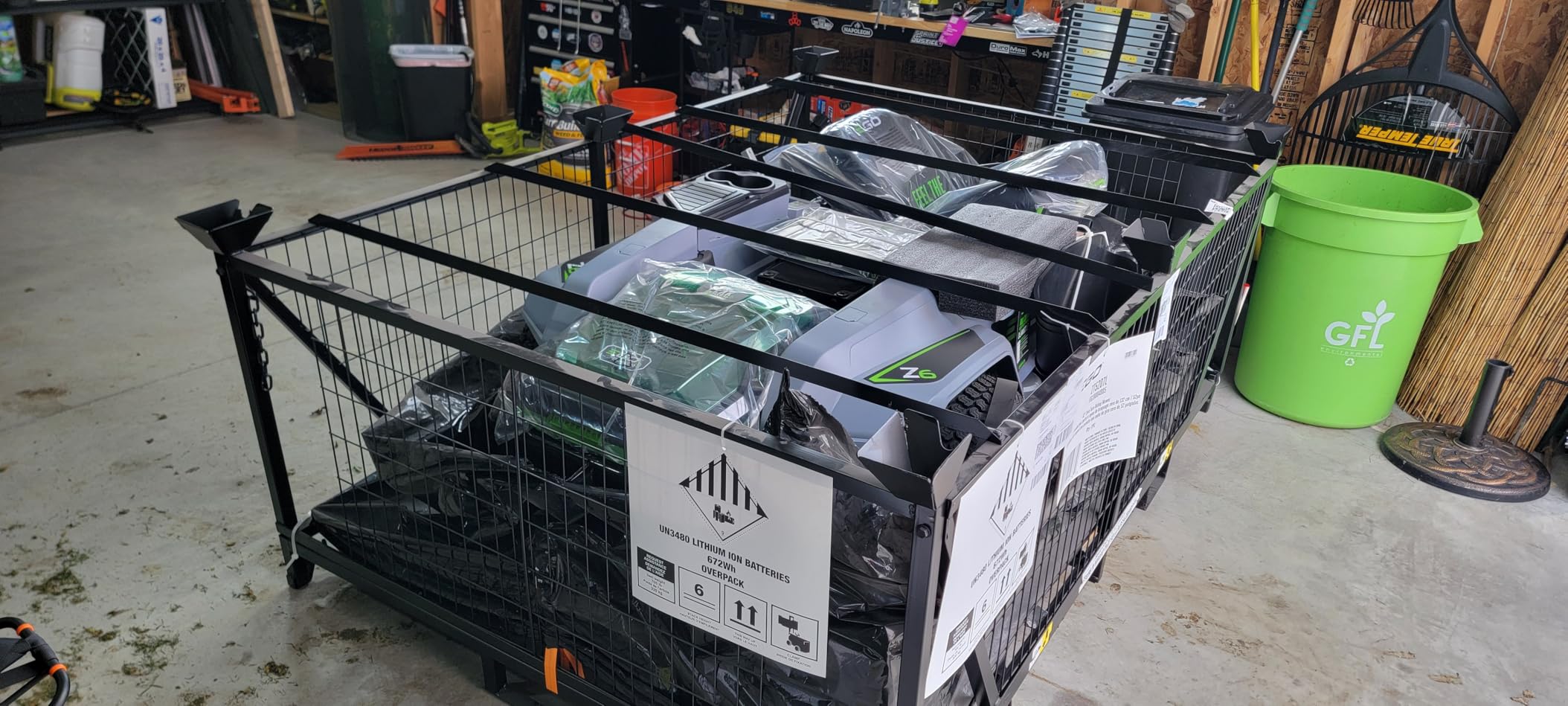
- Uncrating the steel transport crate adds hours to setup
- Real learning curve for first-time zero-turn operators
The ZT4204L is the machine we would put on the most types of broken ground, and the reason is weight. At 620 pounds it sits in the middle of this group, heavy enough that it does not drift sideways on a grade and light enough that two people can unload it. The 42 inch stamped steel deck gives you ten height positions from 1.5 to 4.5 inches, which matters when the ground itself is uneven and one pass is deeper than the last.
Power comes from four included 56V 10.0Ah ARC Lithium batteries, which EGO rates for up to 2 acres on a charge and a roughly two-hour recharge on the included wall charger. The drive side is rated at 22 horsepower gas equivalent and up to 8 MPH through three modes: Standard, Control and Sport. On rough ground the Control mode is the one you will live in.
What stands out in owner reviews is how the electric drive holds up where a gas drivetrain would be working hardest. Reviewers report that cut quality matches or beats a ten-year-old 42 inch gas TimeCutter, and that the machine works with any EGO 56V ARC Lithium battery, so the same packs charge the chainsaw and the mower. There is no gas, no oil, no spark plug and no fuel line to service, which removes the majority of the winter work a gas rider needs.
The honest knocks are real. The deck height indicator sits in a spot that is hard to read from the seated position, so you will be reaching for it. A handful of second-season owners report battery management or electronics failures that required an in-person service center visit, and one failed firmware update left a machine that would not run at all. For a machine you depend on for rough ground, that is a consideration, and it is the main reason we do not rank this first on every dimension.
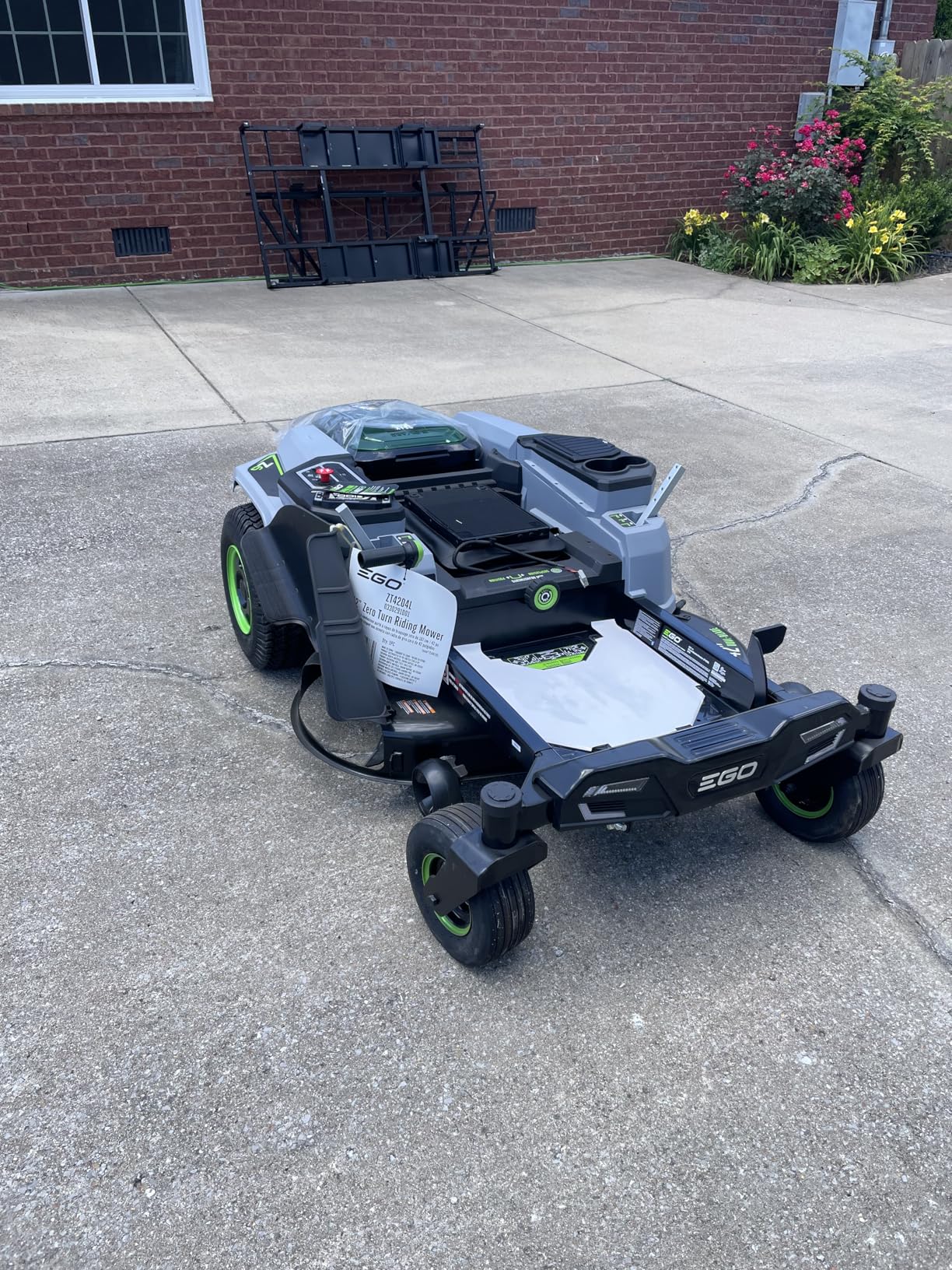
What makes it work on rough ground
Two things: the mass of the chassis and the instant, gearless throttle. On a short steep pitch there is no transmission lag to think about, so you can creep up a slope at walking pace and keep the deck engaged without bogging. The 10-position deck height also lets you lift the deck out of a rut without changing the cut on flat ground, which is a small thing that matters a lot when the lawn itself is the problem.
The stamped steel deck is the honest weak spot. It is lighter and it holds up well on roots and mole hills, but on rocky ground it is not the welded fabricated construction that commercial decks use. If your yard is genuinely stony rather than merely bumpy, treat this as a tradeoff rather than a hidden strength.
Where it falls short
Two acres per charge is a real ceiling if you have more land than that, and the four 10.0Ah packs are the reason rather than a limitation of the mower. Owners also flag setup: the machine arrives in a steel transport crate with more than twenty bolts, so budget an afternoon with two people. Add the electronics service risk and the first-time lap-bar learning curve, and this is a mower that suits a confident operator with mid-size acreage, not a first riding mower purchase.
2. EGO Power+ TR4204 42 Inch Lawn Tractor – Best Value for Hilly Ground
- Heaviest machine in the electric group at 640 pounds for planted handling on grades
- Twin brushless cutting motors remove deck belts and belt failures
- Rear tow hitch for hauling around the property
- Cruise control
- three drive speeds and three blade settings
- LED headlights
- USB port and Bluetooth included as standard
- 5-year tool warranty
- Bundled 6.0Ah batteries give less runtime per charge than 10.0Ah or 12.0Ah builds
- Peak output depends on all six battery slots being loaded
- Listed maximum cutting height of 4 inches is lower than some rivals
The TR4204 is the only conventional lawn tractor in this group, and for a sloped property that steering wheel is the whole point. Lap bars on a zero-turn are precise but unfamiliar, and a wheel gives a new operator a much clearer relationship between the front of the machine and where it is going. On a slope with trees, ditches and narrow gateways, that predictability is worth more than a tighter turning circle.
It is also the heaviest machine in the electric lineup at 640 pounds, and for uneven ground that is a feature. Heavier machines resist lateral drift going downhill and hold a line on a side grade better than lighter ones. Peak Power Technology combines up to six 56V ARC Lithium batteries for as much as 20,000 watts, which EGO rates at a 21 horsepower gas equivalent, driving it at up to 6 MPH.
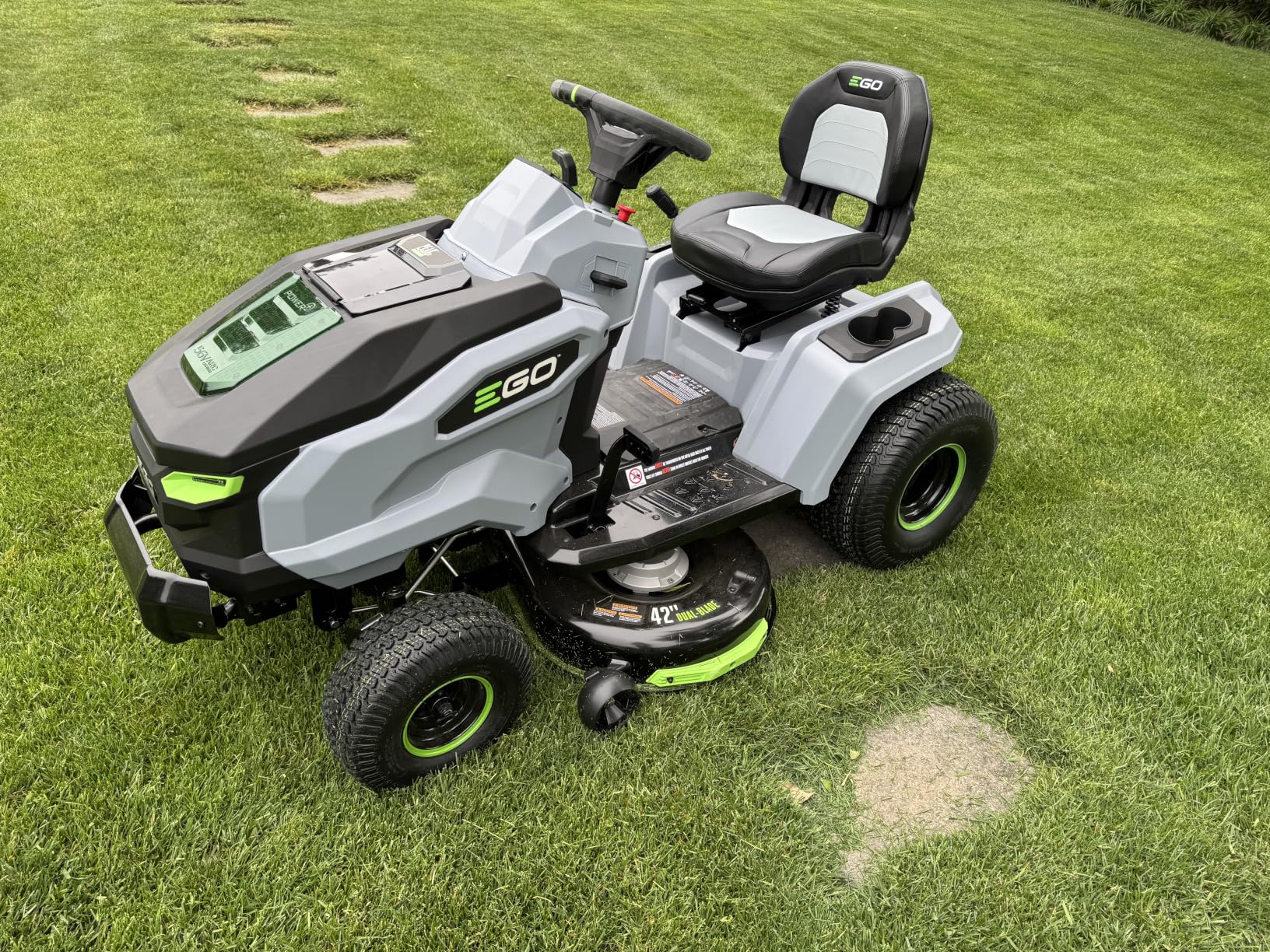
The deck is where this tractor earns its value rating. It uses dual brushless cutting motors with no belts at all, so the single most common repair on a gas tractor, a snapped deck belt, simply does not exist here. The LCD display gives you three blade settings, three drive speeds and cruise control, and the deck has 12 height positions from 1.5 to 4.5 inches, the most in the group. That granularity is genuinely useful on ground that never presents the same height twice.
It also carries the accessory list a tractor is supposed to have: a rear tow hitch, LED headlights, a USB charging port and Bluetooth. For a property with a slope and a garden bed or two, the ability to tow a cart up the hill is not a small thing.
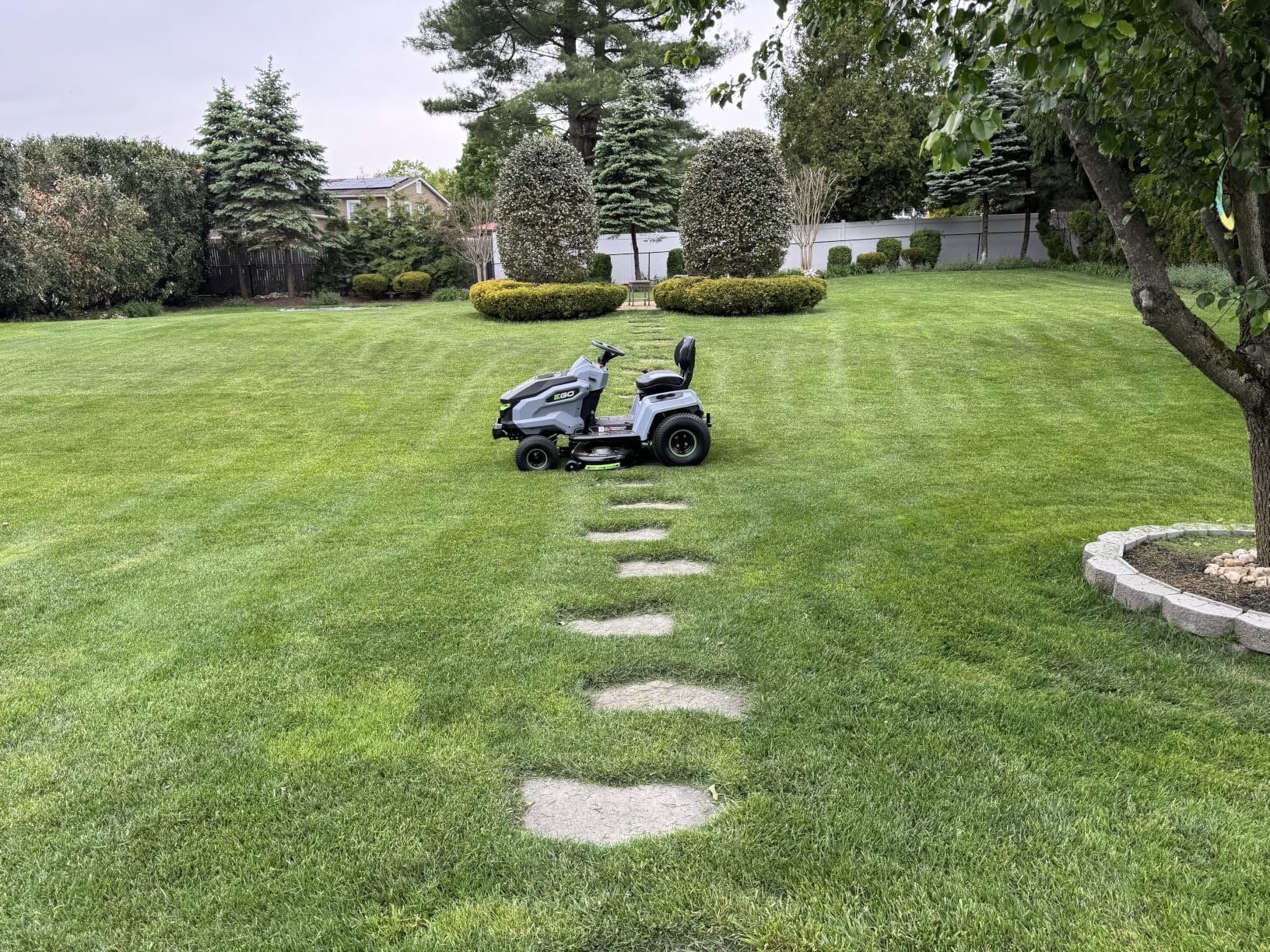
Why the tractor layout wins on slopes
A tractor spreads its weight over four wheels in a rectangle, and the rear axle carries the drive. That geometry resists the sideways creep that makes zero-turns feel twitchy on a cross-slope, and the 640-pound figure puts real momentum behind the rear tires. Owners who come from a zero-turn and switch to a tractor on hilly ground usually do it for exactly that predictability rather than for cutting speed.
Reviewers also note the deck wash port and the belt-free drive as the two things they would not go back from. There is no annual belt tension check and no pulley to seize in wet grass.
Where it falls short
The bundled batteries are the weak point. Six 6.0Ah packs cover up to 1.5 acres per charge, which is the smallest claim of the EGO machines here, and owners comparing builds wish the tractor shipped with higher-capacity packs. The full 20,000 watt figure also depends on every slot being filled, so a single missing pack changes the character of the machine. The listed maximum cutting height of 4 inches is lower than several rivals, which matters if you let grass get long between cuts.
3. EGO Power+ ZT5207L 52 Inch Zero-Turn – Best for Rough, Overgrown Acreage
- Cuts knee-high weeds and dense overgrown grass that stalls smaller decks
- Longest runtime here at up to 4 acres on six 12.0Ah batteries
- Smooth lap-bar steering and an adjustable seat that suits tall operators
- App and Bluetooth control of speed
- blade speed and cut height
- Deck wash port and cross-compatible 56V battery platform
- Crate disassembly involves more than twenty bolts
- 52 inch chassis built around a 42 inch layout so deck corners can clip obstacles
- Can bog and overheat in very thick spring growth
- Support response times reported as inconsistent
- Occasional battery
- guide wheel and flat tire failures on rough properties
Where the 42 inch ZT4204L is the balanced pick, this is the machine for land that fights back. The ZT5207L pairs a 52 inch deck with six 56V 12.0Ah batteries rated for up to 4 acres on a charge, which is the longest runtime of anything in this group by a wide margin. Peak Power Plus Technology with all six packs loaded is rated at 25 horsepower gas equivalent across a 4 to 8 MPH speed range.
At 527 pounds it is the lightest of the three EGO zero-turns, which is worth weighing against the rough-ground argument for mass. The trade is real: this machine moves over uneven ground more easily than a 620-pound tractor, and gives up some of the planted feel on a steep grade. On rolling terrain with overgrowth rather than a single steep face, that is usually the better balance.
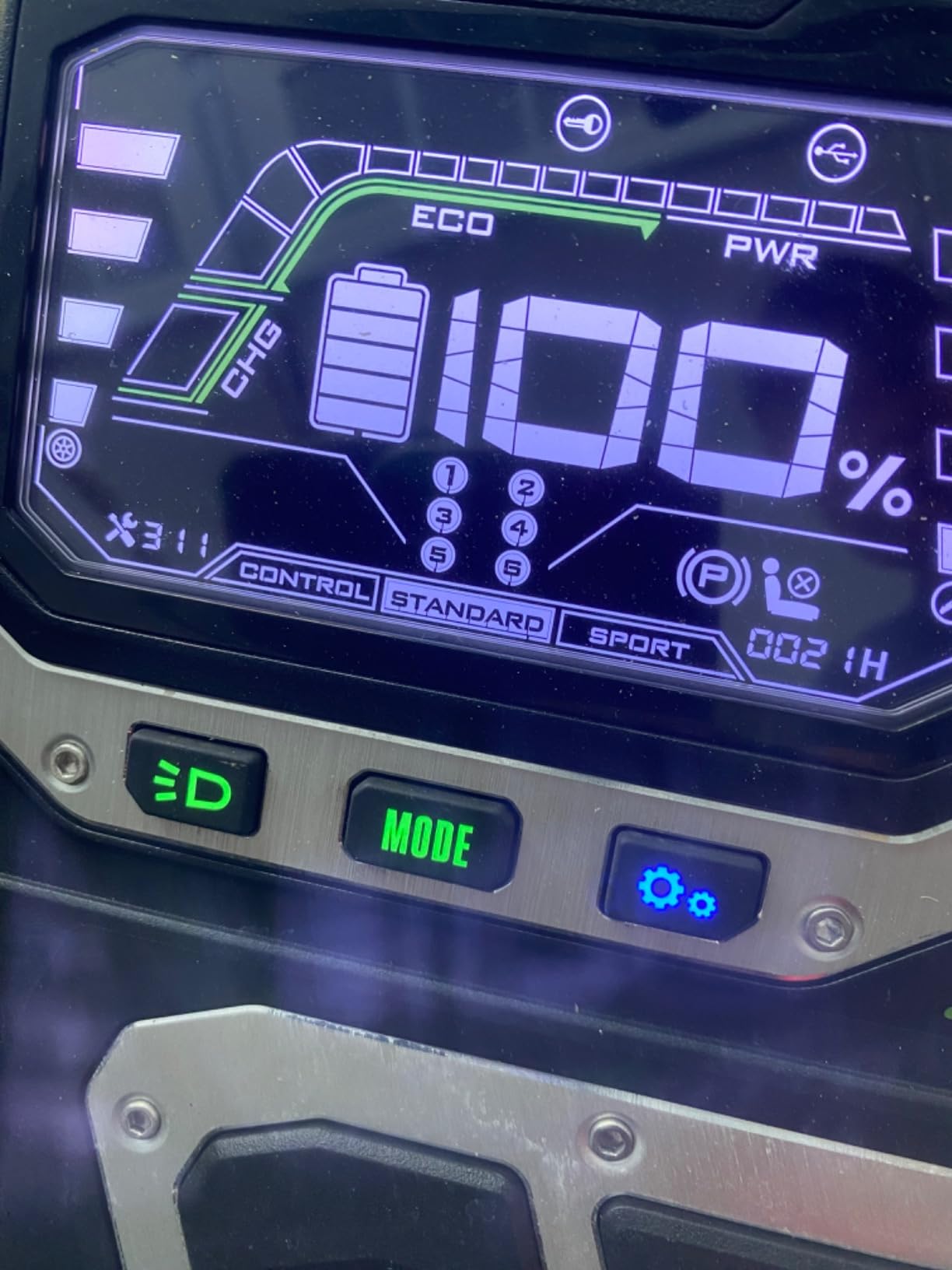
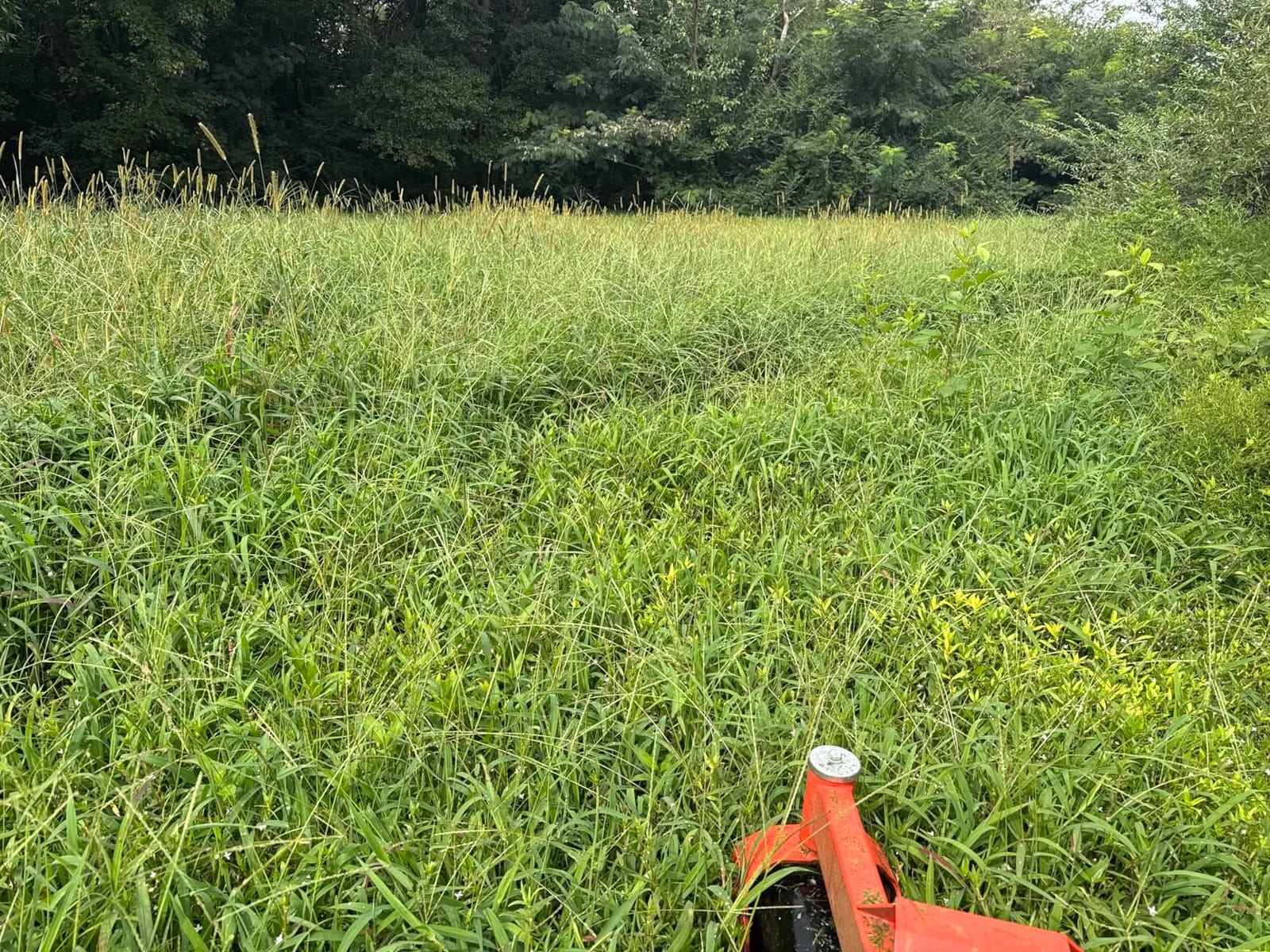
Owners with multiple seasons on this zero-turn are the most enthusiastic voices in the set, describing it as the most capable machine for large, overgrown and hilly properties, with several reporting it has outperformed gas zero-turns they replaced. The cutting ability in tall growth is the recurring theme. Owners mowing fields, trails and dense spring grass report it chewing through vegetation that stalls lesser decks, and the lap bars are described as smooth with a comfortable adjustable seat.
App and Bluetooth control over speed modes, blade speed and cutting height is a nice touch when you are dialing the deck down to skim over a rough patch rather than dig in.
Where it earns its place
Large properties where grass is regularly allowed to get tall, and where an acreage of rough ground would take a 42 inch deck most of a day. Four acres per charge changes how you plan a weekend. The 52 inch deck is the widest in the EGO zero-turn line, and the cross-compatible battery platform means existing 56V packs add range without new chargers.
Because the drive is electric, there is no drivetrain wear on the types of ground where gas machines pick up damage. That is a real advantage on stony tracks and drainage edges.
Where it falls short
The 52 inch deck sits on a chassis laid out around a 42 inch footprint, so the front corners can clip obstacles close in, which is exactly where uneven ground puts tree roots and rocks. Owners also report the deck bogging and overheating when overloaded in very thick growth, and a few note battery, guide wheel and flat tire failures on rough properties. Setup is another afternoon in the steel crate. Plan the crate, not just the mower.
4. Greenworks 60V Riding Mower – Most Versatile With a Published 15 Degree Slope Rating
- One of only two machines here with a published 15 degree slope rating
- Adaptive traction control to reduce sliding on hills
- 631 pound chassis for a planted feel in the electric group
- Belt-free brushless drive with no pulleys to clog with grass
- Compact footprint fits through narrow gates
- Rear hitch tows up to 200 lb and USB ports are on board
- Side discharge chute protector repeatedly detaches and has no positive fastener
- Chute rides on the grass at a 2.5 inch setting and catches on uneven ground
- Rough ride and vague steering feel with some loose front wheels
- Assembly needs a second person to roll the mower off the crate
- Charging cable and tool pocket contents poorly explained
Most manufacturers publish no slope figure at all, which makes this one unusual. Greenworks rates this machine for slopes up to 15 degrees with adaptive traction control working against sliding. That is a harder, more useful number than a horsepower figure, because it is the one thing that tells you whether the machine is being sold with the slope in mind.
The machine weighs 631 pounds, which puts it right alongside the EGO tractor in terms of planted handling, and it runs a 16 horsepower gas equivalent brushless motor at up to 6 MPH with constant blade tip speed. Four included 60V 8.0Ah batteries cover up to 1.25 acres, or 1920 Wh at maximum.
The cutting deck is 30 inches rather than 42, and that is the compromise that makes the rest of the package work. It is a 4-in-1 stamped steel deck with side discharge and an integrated deck wash port, and it uses SmartCut bog-resistant technology that adapts to grass conditions. A smaller deck is a genuine advantage in a yard full of tight turns and narrow lanes, where a wide deck is more likely to find a tree root.
Owners like the smooth, quiet, belt-free drive, the near-zero-turn maneuverability and the simple cleanup, and several report good results on sloped rural lawns and in Bahia grass and weeds. The four-year warranty on tool and batteries is a solid commitment for a machine at this level.
Reviewers also mention a near-universal complaint: the side discharge chute protector keeps detaching because it has no positive fastener, and once it drags it catches on uneven ground. Many owners end up mowing in slower mulching mode to avoid it. That is an irritating, fixable annoyance rather than a deal breaker, but it is the first thing to know about this mower.
Why the slope rating changes the conversation
A published 15 degree rating means the manufacturer has thought about the machine in the hands of a slope owner, and the traction control is aimed squarely at the failure mode owners worry about most, which is sliding sideways on a wet hill. Combine that with 631 pounds of mass and you get an electric mower that behaves more like a tractor on a grade than the lighter models in this group.
The 7-position single-lever height adjustment from 1.5 to 4.5 inches is quick to work with, and the deck wash port makes post-mowing cleanup on uneven ground less of a chore, since you can rinse the underside without tipping the machine awkwardly.
Where it falls short
The 30 inch deck means more passes on open ground, and the review pool is small enough that long-term durability is not well documented. Owners report a rough ride, vague steering feel and some loosening front wheels, which is worth inspecting early on. The chute protector issue, the loose front wheels and the need for two people at assembly are the three things to plan for.
5. Ariens Zenith 60 Kawasaki Zero-Turn – Best Commercial Weight on Slopes
- Heaviest machine in the group at 930 pounds for maximum stability on grades
- 23.5HP 726cc Kawasaki FX730 V-Twin with proven serviceable design
- Widest deck here at 60 inches for open acreage
- Gas drivetrain needs no charging and runs long uninterrupted sessions
- Zero-turn steering platform for tight maneuvering
- Only two ratings on record so little owner feedback on durability
- Gas engine means oil changes
- spark plugs
- air filters and fuel storage
- Heaviest machine here so trailer transport and maneuvering demand more
This is the machine to look at if slope stability is your top priority and you have a trailer. At 930 pounds it is the heaviest thing in this group by 80 pounds over the next machine, and mass is the single most reliable predictor of how a riding mower behaves on a side grade. Owners across lawn forums consistently treat weight and tire size, not horsepower, as the real answers to hills.
The engine is a 23.5HP 726cc Kawasaki FX730 V-Twin OHV, a design with a long service record because it has been in production for years. A gas V-Twin gives you a full day of work without a charger, and unlike a battery machine it does not care whether the grass is damp.
The 60 inch cutting deck is the widest here, which maximizes cut width on open acreage, and the zero-turn steering platform keeps you turning tightly around obstacles.
We want to be straight about the evidence here. There are only two ratings on record for this machine, both five stars, and no lower ratings to learn from. That is not enough owner feedback to judge cut quality, ride or long-term durability, so this pick rests on its published specification, the 23.5HP Kawasaki V-Twin and the 60 inch deck, rather than on review consensus.
That limitation is worth weighing. You are buying a commercial-class chassis with a serviceable engine, and the parts question matters more here than anywhere else in this roundup, so confirm local dealer support before you commit to a machine of this weight and size.
Why weight is the deciding factor on a hill
A 930-pound machine pushes back when you start downhill, which is the specific fear that makes people anxious mowing slopes. It is also less likely to wash out in damp grass, and with a Kawasaki V-Twin under the hood, torque stays consistent as conditions change rather than dropping as the engine heats up over a long afternoon.
The 60 inch deck does mean you need a wide, open property. On a small yard full of obstacles the deck width becomes a liability, and a zero-turn this size is a lot of machine to maneuver between trees.
Where it falls short
Three things stand out. Weight makes it the hardest machine to load, unload and transport here, and that is a real cost if you do not have a trailer. Gas means oil changes, spark plugs, air filters and fuel storage. And the deck has three height positions rather than the 10 to 12 offered by the battery machines, which is a step down in cut control on uneven ground.
6. Speedy 25HP 50 Inch Zero-Turn – Best for Open Acreage
Speedy Zero Turn Riding Lawn Mower, 25HP 803cc Engine, Commercial Grade Tractor
- 25HP 803cc gasoline engine for untethered all-day cutting
- Reinforced steel frame and deck aimed at demanding heavy-duty work
- 850 pound chassis that holds a line on grades
- 50 inch deck with the widest height range here from 1.5 to 5 inches
- High-back seat with armrests for long sessions in field work
- Only a single rating on record so no reliability history
- Generic brand name limits parts and service support
- 850 pound weight and 90 inch length make transport and tight maneuvering demanding
- Gas engine means routine oil
- filter and spark plug maintenance
The Speedy 25HP is built around one idea: a reinforced steel frame and deck, sized so the machine can absorb hits from rough field work. At 850 pounds it is the second heaviest here, and combined with a 50 inch deck and a 25HP 803cc gasoline engine, it is aimed at acreage rather than a residential lawn.
For uneven terrain, the frame and deck construction is the reason to look. Every battery machine in this group uses a stamped steel deck, which is lighter and cheaper but less tolerant of a blade finding a buried rock. A reinforced deck is the more sensible starting point when the ground is genuinely rough.
The cutting height range is the widest in the roundup, running from 1.5 to 5 inches across four positions, and the adjustable high-back seat with armrests and ergonomic control panel is specified for long sessions in rough field work.
As with the Ariens, the review evidence is thin: one five-star rating and no lower scores, so there is effectively no consensus to draw on. The case for this machine is entirely its published specification and its intended use.
What it is genuinely good for
Open fields, pasture edges and large properties with room to run a 50 inch deck. The 25HP 803cc engine gives you untethered all-day cutting with no charging downtime, and the height range means you can handle tall growth or take a light pass over a thin area with the same machine. Zero-turn steering keeps mowing time down on obstacle-filled property.
On a side grade, the 850-pound frame is the second most stable platform here, and the armrests and high-back seat help a long rough pass stay bearable.
Where it falls short
Service is the real concern. It is sold under a generic brand name, which limits parts availability and dealer support, and for a machine designed to be worked hard that is the first thing to check. The 850-pound weight and roughly 90 inch length make transport and tight maneuvering demanding, and the gas engine carries a normal oil, filter and spark plug schedule.
7. GIYI 42 Inch Cordless Lawn Tractor – Best for Tight, Smaller Yards
GIYI Electric Riding Lawn Mower, Includes (6) 40V 6.0Ah Batteries and Charger, Riding Lawn Tractor with 42″ Deck Cordless Tractor
- Lightest machine in the group at 451 pounds so it is easy to move and transport
- Published 15 degree slope rating for hilly ground
- Nine cutting height positions from 1.5 to 4.5 inches for fine work
- Belt-free brushless motor with no gas
- oil or engine maintenance
- Compact 66.5 inch length fits tight gates and paths
- Variable speed selection and a low-back seat
- Only a single rating on record so no durability track record
- 40V battery platform rather than the more common 56V or 60V packs
- 60-80 minute runtime covers the smallest yard size here
- No published warranty
- parts availability or dealer service information
This is the light end of the weight spectrum at 451 pounds, roughly 170 pounds lighter than the middle of this group, and that single number changes everything about where the machine is usable. It moves between gates, down narrow paths and onto a trailer by yourself. It is also the machine most likely to feel light going downhill, which is the trade you accept when weight is what you are optimising for.
The specifications are reasonable for small properties. Six 40V 6.0Ah lithium-ion batteries deliver 60 to 80 minutes of runtime and cover about 1.2 acres per charge, at up to 6 MPH. The 42 inch stamped steel deck has nine height settings from 1.5 to 4.5 inches, and the drive is belt-free and brushless, so there is no gas, oil or engine service at all.
It also carries a published slope rating of up to 15 degrees, the second machine here to do so. Published rating plus low weight is an unusual combination, and it is the honest reason this machine is worth a look for a small yard with a moderate hill.
Where the light weight helps
Small yards with obstacles, paths, trees and tight corners. The 66.5 inch length is the shortest here, so it fits through gates and around garden structures that a 52 or 60 inch deck will not. Nine height positions give finer control over cut on patchy, uneven ground than the three-position deck on the commercial machines.
The low-back seat and variable speed selection make short sessions more comfortable, and the belt-free brushless motor means nothing about this machine needs a winter visit apart from a battery charge.
Where it falls short
The 40V platform is less common than the 56V and 60V packs used by most of the field, so battery replacement options are narrower. The 60 to 80 minute runtime covers the smallest yard size in this group, which means this is a small-yard machine by design. There is a single rating on record, so there is no durability track record, and no warranty, parts or dealer service information is published, which for a machine used on rough ground is a real gap.
Zero-Turn vs Lawn Tractor on Bumpy Ground
This is the most common question we get, and the answer depends on which of three machine shapes you are choosing between.
Zero-turn on rough ground. Lap bars give you precise control of speed in both directions, and the tight turning circle means you spend far less time repositioning. The rear-drive layout is excellent at climbing because the driven wheels sit under the load, and the deck usually floats level regardless of how the machine is pointed, which helps on rutted ground. The trade is stability: zero-turns tend to feel more nervous on a cross-slope because of the low, wide stance.
Lawn tractor on uneven ground. A steering wheel is easier to learn and the four-wheel rectangle resists lateral drift, so tractors feel more planted on a side grade. They also carry more weight over the rear axle in this group, which helps traction. What you give up is maneuverability, and that cost is highest on a small property full of obstacles.
Heavy commercial chassis on rough ground. The two gas machines here weigh 850 and 930 pounds. That is the most stable platform for a steep face and the least pleasant to transport or to squeeze between trees. Owner’s priorities decide it.
If you are deciding between a tractor and a zero-turn for a hilly yard, the deciding question is usually how many stops and tight turns you will make. Many turns points to a zero-turn. Fewer turns, a steeper face, or a new operator points to a tractor.
Slope Ratings and Rollover Safety
Only two of the seven machines here publish a slope figure: the Greenworks 60V riding mower and the GIYI 42 inch tractor, both rated up to 15 degrees. That 15 degree figure is a real grade, not a marketing flourish, and it is the most useful number on any of these spec sheets. Everything else in this roundup has to be judged on weight and tire size instead.
Before you start on a slope, follow these steps.
1. Mow up and down the hill, never across it. Cross-slope turning is where zero-turns are most likely to go over, and it is the single most avoidable rollover risk on a riding mower.
2. Slow down before the grade and hold a steady speed through it. Sudden input on a slope is what unloads the uphill tires.
3. Mow the driest conditions you can. Damp grass reduces traction on every machine here, and it is the most common reason owners report getting partway up a hill and stopping.
4. Know your machine’s bail-out switch and keep your body weight centered. Seat-safety switches stop the drive when you leave the seat, and they are worth using on a slope.
5. Keep the speed setting low on the downhill pass. A machine that will not stop its forward travel on a grade is not a machine you want on a grade.
If your property has slopes steeper than 15 degrees, or a face where you would be uncomfortable walking a lawn mower, that is a commercial articulated or 4WD machine conversation rather than a consumer one. We would be cautious about any consumer riding mower beyond a moderate grade.
Buying Guide: Matching a Mower to Your Terrain
Assess the ground before the machine. Walk the property and note the steepest sustained face, whether you hit buried rocks or mostly roots and mole holes, and how much of the ground stays damp. A mower sized for roots and mole holes is a different purchase from one sized for ruts and washboard sections.
Weigh the machine against your trailer. The spread here is 451 to 930 pounds. A heavy commercial chassis is the most stable choice on a slope, and the least practical if you cannot load it safely.
Check whether a slope rating is published. If a manufacturer prints a degree figure and a traction aid, they have thought about the slope case. If they print nothing, weight and rear tire size are the only evidence you have.
Count your stops, not just your acres. Deck width only pays off if you have open runs. In a yard full of trees, beds and gates, a 30 or 42 inch deck will finish sooner than a 50 or 60 inch one.
Budget for the accessories you will actually need. On uneven ground you will want a deck wash port, a tow hitch and a way to raise the deck out of ruts. All three are standard or available across this group.
Set aside time for the crate. Several of these machines ship in steel transport cages with more than twenty bolts. That is an afternoon and a second pair of hands, not a two-minute unboxing.
Know when a walk-behind is the better answer. If your rough area is under half an acre, full of trees, or too steep for a safe grade, a self-propelled walk-behind or a stand-on mower gives you far more control on a slope. That is an honest answer rather than a hedge, and it is the right call for a lot of the ground this roundup is about.
One last note on the long-term view. If you want a machine expected to last ten years on rough ground, owners repeatedly name the Exmark Lazer, Scag Cheetah II, Ferris and Grasshopper lines, and those are dealer machines that sit outside what an online roundup can verify. The seven here are the models whose specifications and ownership records we could actually check.
Frequently Asked Questions
What is the best mower for uneven ground?
The best riding mowers for uneven terrain are the ones with real weight, larger rear tires and enough ground clearance to rise over irregularities rather than transmit them. Among the seven we compared, the EGO Power+ ZT4204L 42 inch zero-turn is the best overall pick at 620 pounds with a 42 inch stamped steel deck, and the Greenworks 60V riding mower is the pick if you want a published slope rating, since it is rated to 15 degrees with traction control.
What type of mower is best for rough terrain?
For rough ground, a zero-turn mower with a wide rear stance climbs well because the drive wheels sit under the load, while a lawn tractor feels more planted on side grades because of its four-wheel footprint. Heavy commercial chassis give the most stability of all. If the rough area is very small or the grade is steep, a self-propelled walk-behind is a better answer than any riding mower.
How much slope can a riding mower handle?
Most consumer riding mowers are designed for moderate grades, and only some machines publish a figure. Two of the seven we reviewed are rated to 15 degrees, the Greenworks 60V riding mower and the GIYI 42 inch cordless tractor. Above that, or on a face you would not walk a mower down, a commercial articulated or four-wheel-drive machine is the safer choice.
Should I mow a slope up and down or side to side?
Mow up and down the slope and never across it. Cross-slope turning is the most avoidable rollover risk on a riding mower, especially on a zero-turn. Also mow the slope dry if you can, since damp grass reduces traction on every machine and is the most common reason a mower stalls partway up a hill.
Do I need 4WD to mow a hilly yard?
Most of the machines here are two-wheel drive and manage moderate grades using mass and traction control instead. Four-wheel drive and articulated steering help most on severe acreage or very steep banks, and those machines are usually sold through dealers rather than online. For a typical residential slope under 15 degrees, weight and tire size do most of the work.
What riding mower has the least problems?
In this group, the belt-free brushless machines have the simplest drivetrain, since the deck belt and pulleys that cause most riding mower repairs do not exist on them. The EGO Power+ TR4204 and ZT4204L both use that layout. The recurring complaints elsewhere are setup, a detachable side discharge chute protector, and electronics faults on a small number of second-season EGO units.
Final Verdict for Uneven Ground
For most people with a bumpy or sloped property, the EGO Power+ ZT4204L 42 inch zero-turn is the right place to start. It pairs a 620-pound chassis with a 42 inch stamped steel deck, ten height positions and enough range to cover two acres per charge, and it is the strongest combination of owner rating and owner volume in this group. If you want a steering wheel and more planted handling on a side grade, the TR4204 42 inch tractor is the value pick, and if your land is large and overgrown, the 52 inch ZT5207L is the machine built for it.
For the hardest ground, weight is the honest answer. The Ariens Zenith 60 at 930 pounds and the Speedy 25HP at 850 pounds are the most stable platforms here, and both ask you to confirm parts support and trailer capacity first. And if your rough area is small and steep, a walk-behind may genuinely serve you better than anything on this list.
Our full riding lawn mower guide covers the mainstream picks by yard size if your ground is not the deciding factor, and this list is the one to come back to when it is. We updated it for 2026, and we will keep revising it as owner records build on the newer models.