
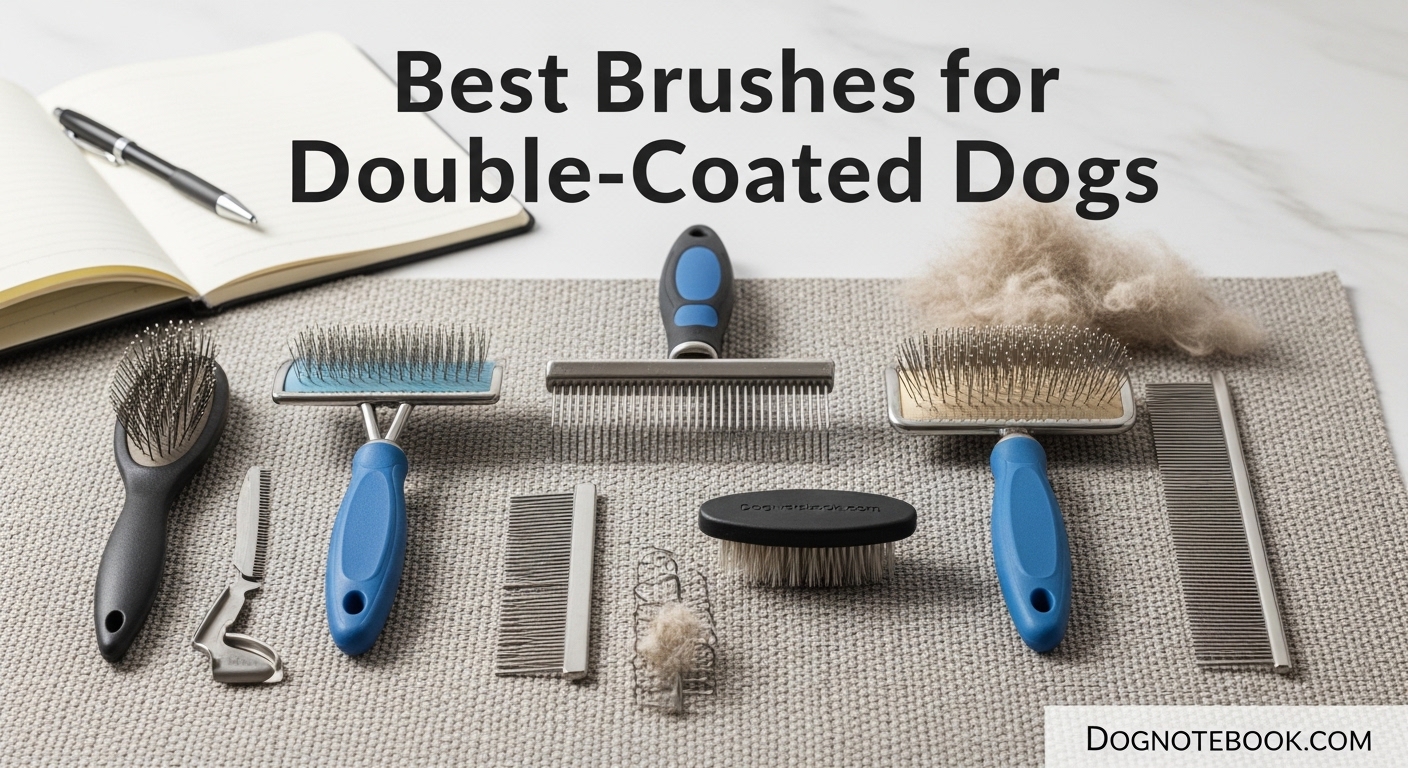
Anyone who lives with a Husky, German Shepherd, or Golden Retriever knows the struggle. Dog hair on the couch, on your clothes, floating across the floor like tumbleweeds. I have spent years testing different brushes on my own double-coated dogs, and I can tell you that using the right tool makes a night-and-day difference in how much fur ends up in your home. This guide covers the best brushes for long-haired and double-coated dogs, explains which brush does what, and walks you through exactly how to use them for maximum shedding control.
Double-coated and long-haired breeds need a completely different approach than short-haired dogs. The wrong brush will sit on the surface and barely touch the dense undercoat where most loose hair hides. The right combination of tools, used in the correct order, pulls out dead fur before it lands on your furniture. Whether you are dealing with a seasonal coat blow or just trying to stay on top of daily maintenance, this guide breaks down every brush type, technique, and recommendation you need.
We will cover six essential brush types, a step-by-step brushing technique most guides skip, breed-specific advice, and answers to the questions dog owners ask most often about grooming double-coated breeds.
Table of Contents
Understanding Double Coats: What Makes These Dogs Different
A double coat is exactly what it sounds like: two distinct layers of fur that serve different purposes. The undercoat is soft, dense, and woolly. It sits closest to the skin and acts as insulation, keeping the dog warm in winter and cool in summer. The topcoat is made up of coarse guard hairs that repel water, block dirt, and protect the skin from sun and abrasion.
Breeds like Siberian Huskies, Alaskan Malamutes, German Shepherds, Australian Shepherds, Golden Retrievers, Shelties, and Collies all have double coats. These dogs typically “blow” their undercoat twice a year, usually in spring and fall, when the soft undercoat sheds out in large clumps to make way for a new seasonal layer. During a coat blow, the amount of loose fur can be staggering. I have filled entire garbage bags from a single brushing session on my Husky during peak shedding season.
Here is the part many dog owners do not realize: you should never shave a double-coated dog. Shaving destroys the natural temperature regulation of the coat and can permanently damage the guard hairs so they grow back patchy or with altered texture. The topcoat may never fully recover. Instead of shaving, the solution for managing heat and shedding is consistent, correct brushing with the right tools.
Even between coat blows, double-coated dogs shed year-round at varying levels. The loose undercoat gets trapped beneath the guard hairs and forms tangles, mats, and hot spots if left unchecked. That trapped fur is exactly why choosing the correct brush matters so much. A surface-level brush cannot reach it, and a tool that is too aggressive can damage the guard hairs your dog needs for protection.
The Best Brushes for Long-Haired and Double-Coated Dogs: Complete Breakdown
Here is a quick overview of the six brush types every double-coated dog owner should know about:
- Slicker brush — fine wire bristles for daily detangling and general maintenance
- Undercoat rake — long teeth that reach through the topcoat to pull out loose undercoat
- De-shedding tool — a blade-style tool for heavy-duty shedding removal during coat blows
- Wide-toothed metal comb (greyhound comb) — a finishing tool to find and remove missed tangles
- Rubber curry brush — gentle rubber nubs for sensitive dogs, bath time, and oil distribution
- Grooming glove — a mitt-style option for dogs that dislike traditional brushes
Each tool serves a specific purpose, and most double-coated dogs benefit from using two or three of these in combination. I use a slicker brush, undercoat rake, and metal comb as my core trio, and I reach for the rubber curry during baths. Below, I break down each one in detail so you know exactly when and how to use it.
Slicker Brush: Your Daily Go-To for Tangles and Mats
The slicker brush is the workhorse of any grooming kit for long-haired and double-coated dogs. It features a flat or slightly curved pad covered in fine, closely spaced wire bristles. These bristles are designed to penetrate through the topcoat and gently work through the undercoat, grabbing loose fur, small tangles, and debris as they go.
For long-haired double-coated breeds like Australian Shepherds, Shelties, and Collies, a slicker brush is often the single most-used tool. It handles daily maintenance beautifully, preventing small tangles from becoming painful mats. I brush my Australian Shepherd with a slicker three to four times a week, and it keeps her coat smooth and mat-free with minimal effort.
When shopping for a slicker brush, look for one with bent or angled bristles. These glide through the coat more easily and are less likely to scratch the skin. A self-cleaning mechanism, where the bristles retract at the push of a button, is a feature I find well worth having. It saves time and keeps your hands clean during grooming sessions.
For technique, work in the direction of hair growth using gentle, steady strokes. Avoid pressing hard against the skin. The wire tips should do the work, not pressure from your hand.
If your dog has particularly sensitive skin, look for a slicker with coated bristle tips. Reddit users frequently recommend the Chris Christensen Big G slicker as a premium option worth the investment, though plenty of budget-friendly slicker brushes under $15 work well for routine maintenance.
Undercoat Rake: The Secret Weapon for Shedding Season
If I had to pick one brush that makes the biggest visible difference for double-coated dogs, it is the undercoat rake. This tool has long, straight or slightly curved metal teeth, usually about one to two inches in length, spaced far enough apart to pass through the topcoat without catching. The teeth reach deep into the undercoat and pull out the loose, dead fluff that causes most shedding in your home.
During a seasonal coat blow, the undercoat rake is indispensable. You will be amazed at how much fur comes out. I once removed enough loose undercoat from my German Shepherd in one session to fill a large shopping bag. That is fur that would have ended up on every surface in my house.
Reddit users on r/dogs and r/doggrooming consistently recommend undercoat rakes as the best value tool for the job. One popular comment I have seen multiple times: a $10 undercoat rake from a big-box store outperforms tools that cost three or four times as much. The Mars Coat King is also frequently mentioned as a great mid-range option for removing loose undercoat efficiently.
The key to using an undercoat rake safely is to work in the direction of hair growth and let the tool glide through without forcing it. If you hit a tangle or resistance, stop and switch to a slicker brush to work it out first. Forcing an undercoat rake through a mat can pull healthy guard hairs and cause discomfort.
Always use an undercoat rake on a completely dry coat for the best results. Wet fur clumps together and makes it harder for the teeth to reach the undercoat effectively. A dry coat lets the long teeth pass through cleanly and grab maximum loose fur.
De-Shedding Tools: Heavy-Duty Shedding Control
De-shedding tools, with the FURminator being the most well-known brand, use a short metal blade with fine teeth to strip loose undercoat close to the skin. They are designed for intensive shedding sessions and can remove impressive amounts of fur in a short time. Many dog owners swear by them, but there are important safety considerations to understand.
The biggest concern with de-shedding tools is that the blade can cut or damage the guard hairs if used incorrectly. Unlike an undercoat rake, which passes between the guard hairs, a de-shedding blade slices close to the skin and can inadvertently trim the topcoat. Overuse or too much pressure leads to a thinned, uneven coat.
I have seen dogs whose guard hairs were visibly damaged from aggressive FURminator use, and the coat took months to recover. If you choose to use a de-shedding tool, limit sessions to once every week or two during peak shedding season. Use light pressure and short, overlapping strokes. Stop well before the skin.
Never use a de-shedding tool on a wet coat or on areas with existing tangles and mats. For daily and weekly maintenance, an undercoat rake is a safer and more forgiving option.
The distinction between an undercoat rake and a de-shedding tool comes down to this: the rake grabs loose fur that is already free, while the de-shedding blade actively cuts and strips fur from the undercoat. Both have a place in a grooming toolkit, but the rake should be your primary tool, with the de-shedder reserved for occasional heavy-duty sessions.
Wide-Toothed Metal Comb: The Finishing Tool
After brushing with a slicker and raking out the undercoat, a wide-toothed metal comb is the tool that catches whatever you missed. Professional groomers call this the “finishing” step, and the gold standard version is known as a greyhound comb. It has both wide-spaced and fine-spaced teeth on the same comb, giving you two tools in one.
I always run a metal comb through my dog’s coat after every brushing session. It tells me instantly whether I have removed all the tangles or whether I need to go back with the slicker. The comb catches small mats hiding behind the ears, under the legs, and at the base of the tail. These are the spots where fur rubs together and forms tight knots that a brush alone can miss.
To use a metal comb effectively, start with the wide-toothed end. Work through the coat section by section, paying special attention to friction areas. If the comb catches, do not yank. Gently work the tangle out with your fingers or go back over it with a slicker brush.
Once the wide teeth pass through smoothly, you can use the fine-toothed end for a polished finish. This is especially useful on long-haired breeds where you want the coat to look smooth and well-kept. A good metal comb costs very little and lasts for years.
It is one of the most underrated tools in a dog owner’s grooming kit, but professional groomers rely on it heavily. If you only add one tool to your collection beyond a slicker brush, make it a greyhound comb.
Rubber Curry Brush and Grooming Glove: For Sensitive Dogs
Not every dog tolerates wire-bristle brushes right away. Puppies, senior dogs with thinning skin, and dogs that have had bad grooming experiences often respond better to gentler options. That is where the rubber curry brush and grooming glove come in.
A rubber curry brush has short, flexible rubber nubs that massage the skin while grabbing loose fur from the surface and light undercoat. It stimulates blood circulation and distributes natural oils through the coat, which improves shine and overall coat health. I use a rubber curry during bath time to work shampoo deep into the undercoat and to loosen dead fur before rinsing.
A grooming glove works on the same principle but fits over your hand like a mitt. The rubber surface catches loose fur as you pet your dog. For dogs that are nervous about grooming tools, the glove feels like regular petting, which helps build positive associations. It is also a great option for quick touch-ups between full brushing sessions.
Neither tool will remove heavy undercoat buildup the way an undercoat rake or de-shedding tool can. But for daily maintenance on dogs with moderate shedding, for bath time use, or for dogs with sensitive skin, they are an excellent addition to your routine. Think of them as the gentle tools in your kit rather than the heavy lifters.
How to Brush a Double-Coated Dog: Step-by-Step Technique
This is the section I wish I had read when I first got a double-coated dog. Most guides tell you which brush to buy but skip the actual technique. Brushing direction, pressure, and order of operations matter more than most people realize. Here is the step-by-step process I use, based on advice from professional groomers and years of trial and error.
Step 1: Inspect the Coat
Before you touch a brush, run your hands through your dog’s coat to feel for mats, tangles, or sensitive areas. Check behind the ears, under the front legs, the haunches, and the base of the tail. These are the most common trouble spots. Knowing where the mats are before you start helps you avoid pulling on them unexpectedly with a brush.
Step 2: Line Brush with a Slicker
“Line brushing” is the technique groomers use to reach every layer of the coat. Push a section of fur up with one hand, then brush it down in thin layers, working from the skin outward. Start at the back legs and work your way forward. This method ensures you are not just skimming the surface.
Use your slicker brush for this step, working in the direction the fur grows with gentle, steady strokes. Take your time on each section. Rushing through leads to missed tangles that tighten into mats later.
Step 3: Rake the Undercoat
Once the coat is detangled from the slicker pass, switch to your undercoat rake. Work in the same line-brushing pattern, focusing on areas where the undercoat is densest: the hips, flanks, and back. Use smooth, even strokes without applying pressure.
Let the rake’s teeth do the work. You will see loose undercoat fur coming out in clumps. Keep going until the amount of fur coming out decreases significantly. This step is where the real shedding reduction happens.
Step 4: Comb Through for Missed Spots
Take your wide-toothed metal comb and run it through the entire coat, section by section. Pay extra attention to friction areas behind the ears, under the legs, and around the tail. If the comb catches anywhere, go back with the slicker to work out the remaining tangle. When the comb passes through the entire coat smoothly, you are done with the main brushing.
Step 5: Finish with a Rubber Curry or Grooming Glove
End the session with a rubber curry brush or grooming glove. This distributes natural oils through the coat for a healthy shine and gives your dog a pleasant massage to end on a positive note. It also picks up any remaining loose surface fur.
Common Mistakes to Avoid
Brushing against the direction of hair growth can cause discomfort and break guard hairs. Always brush in the direction the coat naturally grows. Pressing too hard with any tool irritates the skin and can create brush burn, especially with wire slicker brushes.
Brushing a wet coat causes fur to clump and makes tangles worse, so always brush when dry unless you are using a rubber curry during a bath. Skipping the metal comb step means missing small mats that will tighten over time into painful clumps close to the skin.
Breed-Specific Brushing Recommendations
Different double-coated breeds have different coat textures, lengths, and shedding patterns. Here is a quick reference for some of the most popular breeds and the brushes that work best for each.
Husky and Alaskan Malamute
These northern breeds have some of the densest double coats in the dog world. They shed moderately year-round and blow their undercoat aggressively twice a year. An undercoat rake is absolutely essential during coat blows. For daily and weekly maintenance, a slicker brush handles surface tangles. Avoid de-shedding blades on these breeds, as their guard hairs are important for temperature regulation and can be easily damaged.
German Shepherd
German Shepherds are often called “German Shedders” for good reason. They shed year-round with two heavy blowing periods. The combination of a slicker brush for maintenance and an undercoat rake for heavy shedding is the most effective setup. A metal comb is essential for the longer fur around the neck, legs, and tail. Plan on brushing two to three times a week minimum.
Australian Shepherd
Aussies have longer guard hairs and a moderately dense undercoat. A slicker brush is the primary tool here because the longer topcoat tangles more easily than shorter-haired double-coated breeds. Follow with a metal comb to catch mats behind the ears and in the feathering on the legs. An undercoat rake comes out during shedding season but is not needed as frequently for day-to-day grooming.
Golden Retriever
Goldens have a softer, silkier double coat with prominent feathering on the chest, legs, and tail. These feathered areas are mat magnets and need daily attention with a slicker brush. An undercoat rake helps with the denser fur along the back and flanks. A metal comb is critical for keeping the feathering tangle-free. Pay special attention to the area behind the ears and under the front legs.
Sheltie and Rough Collie
These breeds have some of the most dramatic double coats in terms of length and volume. The long guard hairs and thick undercoat mean mats form quickly, especially behind the ears, in the “pants” on the hindquarters, and under the elbows. A slicker brush and metal comb are your primary tools.
Line brushing is especially important for these breeds because the coat is so thick that surface brushing barely touches the undercoat. Take the time to work through the coat layer by layer. It takes longer, but it is the only way to reach the loose undercoat hiding close to the skin.
Samoyed and Pomeranian
Samoyeds and Pomeranians have dense, stand-off double coats that require frequent attention. Both breeds are prone to matting if the undercoat is not regularly removed. A slicker brush is your primary daily tool for keeping the coat fluffy and tangle-free. An undercoat rake handles the bulk of shedding removal.
Line combing with a metal comb is non-negotiable for these breeds. Their dense coats hide small mats incredibly well, and by the time you can see a mat on the surface, it is already tight against the skin. Run a comb through the entire coat after every brushing session.
How Often Should You Brush a Double-Coated Dog?
Grooming frequency depends on the season, the breed, and how much shedding you are willing to tolerate in your home. Here are the general guidelines I follow and recommend.
During coat blow (spring and fall): Brush daily if possible, or at minimum every other day. This is when the undercoat is shedding out in bulk, and regular brushing removes the loose fur before it ends up everywhere. A five to ten minute daily session during these weeks prevents massive buildup.
Year-round maintenance: Two to three times per week keeps the coat in good shape for most double-coated breeds. This frequency is enough to prevent mats, remove loose undercoat, and keep the topcoat looking healthy. Breeds with longer coats like Shelties and Collies may need daily attention to prevent tangles.
Minimum acceptable frequency: Once a week. Any less than this and you are likely to develop mats that require professional attention to remove. Mats close to the skin are painful for your dog and can cause hot spots and skin infections.
Bathing frequency: Every four to eight weeks is plenty for most double-coated dogs, unless they get into something messy. Over-bathing strips natural oils from the coat and dries out the skin. When you do bathe, a high-velocity dryer makes a massive difference. It blows the loose undercoat out while the fur is wet, dramatically reducing post-bath shedding.
If you do not have a high-velocity dryer, use your rubber curry brush during the bath to loosen dead fur. Then brush thoroughly once the coat is completely dry. Never skip the post-bath brush, because bathing loosens a large amount of undercoat that will shed everywhere if left in place.
Budget vs Professional Brushes: What Is Worth the Money?
One of the most common questions I see on Reddit is whether expensive grooming brushes are actually worth it. The answer is mixed: some tools are absolutely worth investing in, while others work just as well in budget versions.
Undercoat rakes are one category where budget picks shine. A basic $10 undercoat rake from a big-box store works extremely well for most dogs. Reddit users consistently report that cheap rakes outperform tools costing three or four times as much. The Mars Coat King sits in the mid-range at around $20 to $30 and is a favorite among dog owners who want a step up from the basics.
Slicker brushes are where I recommend spending more if your budget allows. The Chris Christensen Big G slicker costs significantly more than a basic slicker, but it glides through thick coats with less effort and pulls out more loose fur per stroke. For dogs with very thick or long double coats, the difference is noticeable from the first use. That said, a $10 to $15 slicker from any pet store still works perfectly well for routine maintenance.
Metal combs and rubber curry brushes are both inexpensive and last for years. There is no real reason to splurge on these. A basic stainless steel greyhound comb and a standard rubber curry will serve you well. Save your budget for a quality slicker and undercoat rake instead.
Critical Warning: Never Shave a Double-Coated Dog
This deserves its own section because I still see well-meaning owners and even some groomers shaving double-coated dogs in summer. Shaving a double-coated dog does not keep them cooler. In fact, it does the opposite by removing the insulating undercoat that helps regulate body temperature in both hot and cold weather.
The topcoat, or guard hairs, serve as a protective barrier against sun, insects, and abrasion. When you shave them off, your dog loses that protection and becomes vulnerable to sunburn and even skin cancer. Dogs with shaved double coats are also more prone to heatstroke because the coat’s natural air-conditioning system has been destroyed.
Perhaps the most serious risk is post-clipping alopecia. In some double-coated dogs, the guard hairs never grow back correctly after being shaved. The coat may come in patchy, with a different texture, or in some cases not grow back at all in certain areas. This condition is irreversible and leaves the dog permanently exposed to the elements.
Instead of shaving, manage your dog’s comfort with regular brushing to remove dead undercoat, access to shade and fresh water, and by limiting exercise during the hottest parts of the day. A well-brushed double coat is your dog’s best defense against both heat and cold.
FAQ
What brushes are best for double coated dogs?
The five essential brushes for double-coated dogs are: a slicker brush for daily detangling, an undercoat rake for removing loose undercoat, a de-shedding tool for heavy seasonal shedding, a wide-toothed metal comb for catching missed tangles, and a rubber curry brush for sensitive dogs and bath time. Most double-coated dog owners get the best results using a slicker brush and undercoat rake as their primary tools, with a metal comb as the finishing step.
What is the best brush for a long-haired dog?
For long-haired dogs, a slicker brush is generally the single best tool because its fine wire bristles penetrate through long guard hairs to detangle the undercoat and remove loose fur. For long-haired double-coated breeds like Australian Shepherds, Shelties, and Collies, pairing a slicker brush with a wide-toothed metal comb gives you complete coverage. The slicker handles daily maintenance, and the comb catches small tangles that the slicker misses, especially behind the ears and in feathered areas.
How do groomers deshed a dog with a double coat?
Professional groomers typically follow this process: First, they blow out loose undercoat using a high-velocity dryer on a dry or slightly damp coat. Next, they use an undercoat rake or de-shedding tool to remove remaining loose fur, working in sections. They follow with a slicker brush to smooth the topcoat and remove surface hair. A metal comb checks for any remaining tangles. Finally, a bath with a deshedding shampoo loosens more undercoat, and the high-velocity dryer is used again after the bath to blow out the remaining loose fur.
How often should a double coated dog be bathed?
Most double-coated dogs only need a bath every four to eight weeks, unless they get particularly dirty or roll in something smelly. Over-bathing strips the natural oils from the coat and can lead to dry, irritated skin and increased shedding. During seasonal coat blows, a bath followed by thorough drying and brushing can help loosen and remove large amounts of dead undercoat at once. Always brush your dog thoroughly before and after a bath for the best results.
Should you shave a double-coated dog in summer?
No. You should never shave a double-coated dog. The double coat provides natural insulation that keeps the dog cool in summer and warm in winter. Shaving removes the guard hairs that protect the skin from sunburn and heat, and it can permanently damage the coat so it grows back patchy or with an altered texture. Instead of shaving, manage summer heat with regular brushing to remove dead undercoat, provide shade and water, and limit exercise during the hottest parts of the day.
Can I use a FURminator on a long-haired double-coated dog?
Yes, but with caution. The FURminator and similar de-shedding tools can be used on long-haired double-coated dogs, but they should be limited to once every one to two weeks during shedding season. Using too much pressure or brushing too frequently can cut and damage the guard hairs. For daily and weekly maintenance, an undercoat rake is a safer option that removes loose undercoat without the risk of topcoat damage. Always use a FURminator on a completely dry coat with light pressure.
Wrapping Up: The Right Brush Makes All the Difference
Finding the best brushes for long-haired and double-coated dogs is not about buying the most expensive tool on the market. It is about understanding your dog’s coat and using the right tool for the job. A slicker brush handles daily tangles, an undercoat rake pulls out the loose fur that causes most home shedding, and a metal comb catches the spots you missed. Add a rubber curry for bath time and a de-shedding tool for occasional heavy sessions, and you have a complete toolkit.
Technique matters as much as the tools themselves. Line brushing, working in the direction of hair growth, and following the correct order of operations will get you dramatically better results than random brushing with even the most expensive tool. Start with the basics: a slicker brush, an undercoat rake, and a metal comb. These three tools cover the vast majority of grooming needs for any double-coated breed.
Your dog will thank you. Regular brushing prevents painful mats, keeps skin healthy, and reduces the stress of seasonal coat blows for both of you. Pick up the right tools, follow the technique outlined above, and you will see a noticeable difference in your dog’s coat and your home within the first week.