
If you own a short-haired dog, you might think brushing is optional. After all, their coat is short, so how much shedding could really happen? I used to think the same thing with my own smooth-coated pup. Then I found fur on every surface of my house and realized that short hair does not mean low maintenance. Finding the best brushes for short-haired dogs changed my grooming routine completely, and in this guide, I will walk you through everything you need to know.
Short-haired breeds like Pit Bulls, Beagles, Labrador Retrievers, and Boxers all shed. Some shed a surprising amount. The right brush removes loose fur before it lands on your couch, stimulates your dog’s skin, and distributes natural oils for a shinier, healthier coat. Whether you are dealing with seasonal blowouts or year-round shedding, having the correct tool makes all the difference.
In this article, I cover the types of brushes that actually work on short coats, which specific tools professional groomers and dog owners recommend most, breed-by-breed guidance, step-by-step brushing instructions, and answers to the questions short-haired dog owners ask most often. I also share tips I have picked up from professional groomers and the experiences of hundreds of dog owners from forums like Reddit’s r/dogs and r/grooming communities.
Table of Contents
Why Short-Haired Dogs Need Regular Brushing
A common misconception is that short-haired dogs do not need brushing. In my experience, nothing could be further from the truth. Short-haired dogs shed just like long-haired breeds, and in some cases they shed even more. The difference is that their short, stiff hairs are harder to spot on furniture but just as annoying to clean up.
Brushing your short-haired dog does three important things. First, it removes loose and dead hair from the coat before it falls out naturally around your home. Second, it stimulates the skin and promotes healthy blood circulation, which supports coat health. Third, it distributes the natural oils across the coat, giving your dog a healthy shine and reducing dryness.
Dog owners on Reddit frequently share frustration about finding short hair embedded in clothing, blankets, and car upholstery. One user described it as “trying to clean up tiny needles.” The right brush addresses this problem at the source. Professional groomers also point out that regular brushing helps you spot skin issues early, like hot spots, lumps, or irritation that might otherwise go unnoticed under a short coat.
Even breeds marketed as “low shedding” benefit from regular grooming sessions. French Bulldogs, for example, have fine short hair that works its way into fabric. Chihuahuas, especially the smooth-coated variety, shed year-round despite their tiny size. The bottom line is that every short-haired dog owner needs a proper brushing routine and the right tools to go with it.
Types of Brushes for Short-Haired Dogs
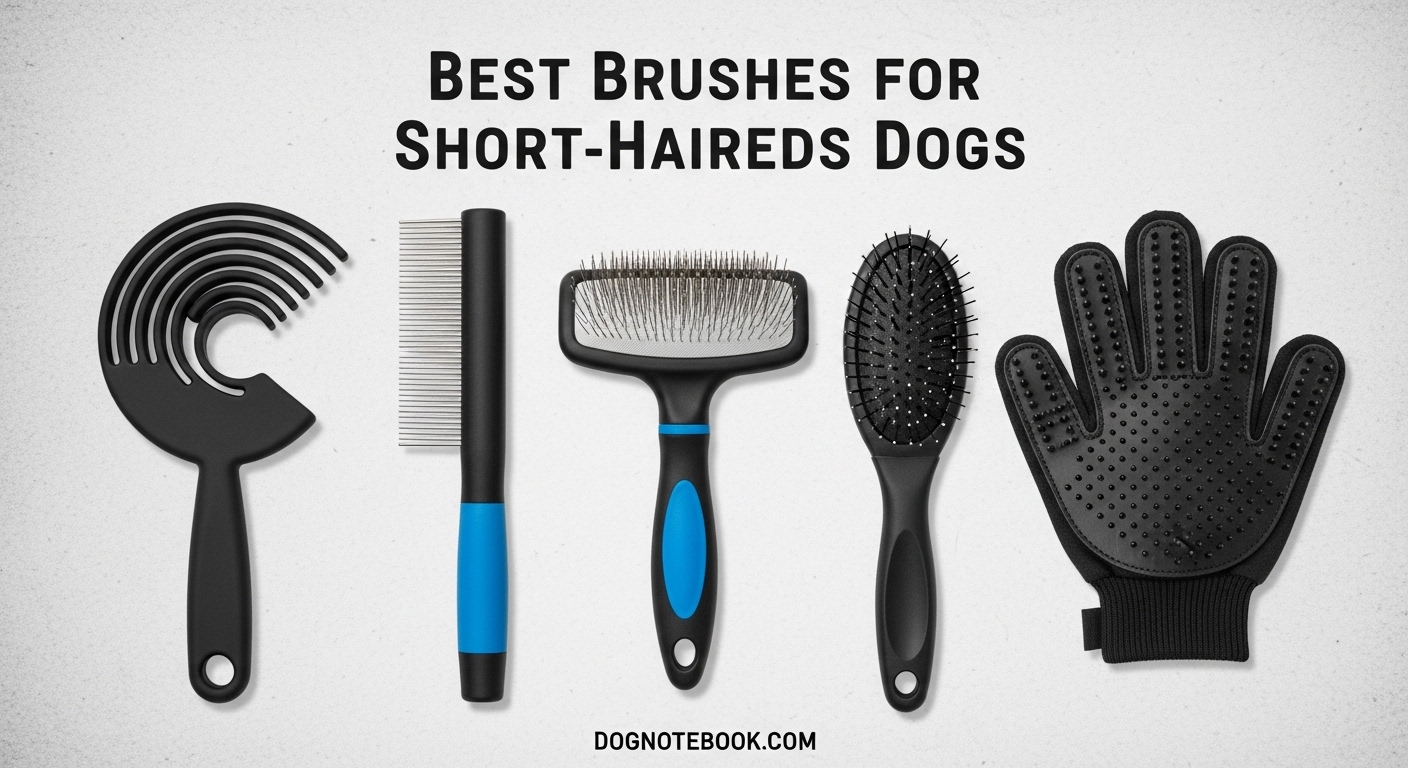
Not all dog brushes work well on short coats. The best brushes for short-haired dogs fall into a few distinct categories, each with its own strengths. Here are the four types that actually matter:
- Rubber curry brushes (like the KONG ZoomGroom) – The top choice for most short-haired breeds. Flexible rubber bristles grab loose fur through static attraction and massage the skin.
- Bristle brushes – Best for finishing and distributing natural oils across a short coat. Soft or medium bristles work without irritating the skin.
- Grooming mitts and gloves – A gentler option ideal for dogs with sensitive skin or those who are nervous about being brushed.
- De-shedding tools – Use sparingly during heavy shedding periods. Overuse on short coats can cause skin irritation.
Let me break down each type in detail so you can pick the right one for your dog.
Rubber Curry Brushes
If there is one brush that comes up again and again in professional groomer recommendations and online forums, it is the rubber curry brush. The KONG ZoomGroom in particular is what Reddit users call a “lifesaver” for short-haired dogs. I have seen threads where dozens of dog owners all agree it is the single best tool for breeds like Pit Bulls, Boxers, and Beagles.
Rubber curry brushes work through a combination of gentle friction and static electricity. The flexible rubber bristles grab loose fur and pull it away from the coat. At the same time, the rubber tips massage your dog’s skin, which promotes circulation and feels enjoyable for most dogs. Many dogs actually lean into the brushing because it feels like a massage.
One of the biggest advantages of a rubber curry brush is its versatility. You can use it dry for regular maintenance brushing, or you can use it wet during bath time to work shampoo deep into the coat and pull out loose fur simultaneously. Groomers on the r/grooming subreddit specifically mention using rubber curry brushes both in and out of the bath for maximum hair removal.
The KONG ZoomGroom is the most widely recommended model, but other rubber curry combs and brushes from brands like JW Pet and Safari work on the same principle. Look for brushes with widely spaced, flexible rubber tips rather than stiff ones.
Bristle Brushes
Bristle brushes are a solid secondary tool for short-haired dogs. They are not as effective at removing large amounts of loose fur as rubber curry brushes, but they excel at one thing: distributing natural oils across the coat. This gives your dog’s fur a healthy shine and helps condition the skin.
For short-haired breeds, choose a soft or medium bristle brush. Stiff bristles are designed for longer coats and can scratch or irritate short-haired dogs’ skin. The bristles should feel gentle against your own wrist when you press down firmly.
I recommend using a bristle brush as a finishing tool after you have done the heavy lifting with a rubber curry. A few strokes with the bristle brush smooths the coat down and spreads the natural oils from root to tip. Some owners also use bristle brushes for quick daily touch-ups between more thorough grooming sessions.
Burt’s Bees for Pets makes a well-regarded palm brush with hemp bristles that is often recommended for breeds like Dalmatians and Boston Terriers. The key is to look for natural bristles rather than synthetic ones, as they are gentler and more effective at oil distribution.
Grooming Mitts and Gloves
Grooming mitts and gloves are rubber or silicone tools that slip over your hand like a glove. One side features small rubber nubs or bristles that work similarly to a curry brush. The advantage is that grooming mitts feel more like petting to your dog, which makes them ideal for dogs that are nervous about traditional brushes.
I find grooming mitts particularly useful for dogs with sensitive skin. The nubs are typically softer and more spread out than curry brush bristles, so they provide a gentler experience. They also work well for senior dogs who may have arthritis or joint pain and need a softer touch during grooming.
The trade-off is that mitts and gloves give you less control over pressure and direction compared to a handled brush. They also cover less surface area per stroke, so grooming sessions take a bit longer. For dogs that tolerate handling well, a rubber curry brush is still the more efficient choice. But for anxious, elderly, or sensitive dogs, a grooming mitt can be a great starting point.
Some popular options include the HandsOn All-In-One Pet Bath and Grooming Glove and the DELUX PerfectPals Pet Grooming Glove. Both feature rubber nubs on one side and a soft fabric back.
De-Shedding Tools
De-shedding tools like the FURminator are designed to reach through the topcoat and remove loose undercoat hair. On short-haired dogs, they should be used carefully and sparingly. The reason is straightforward: de-shedding tools have fine metal teeth that can irritate skin if overused, especially on breeds with very short coats and little undercoat.
Dog owners on forums frequently ask whether they can use a FURminator on their short-haired dog. The answer is yes, but with caution. Use it only during peak shedding season, limit sessions to once per week at most, and apply very light pressure. If your dog’s skin looks red or irritated afterward, stop using it immediately.
For most short-haired dogs, a rubber curry brush will remove just as much loose fur as a de-shedding tool without the risk of skin irritation. Save the de-shedding tool for heavy shedders with a visible undercoat, like Labrador Retrievers during their spring and fall coat blows. If your dog has a single coat with minimal undercoat, like a Pit Bull or a Dalmatian, a rubber curry brush is all you really need.
Best Brushes for Short-Haired Dogs by Breed
Different short-haired breeds have slightly different coat textures and grooming needs. Here is breed-specific guidance to help you pick the right tool.
Pit Bulls, American Bullies, and Staffordshire Terriers
These breeds have short, single coats with minimal undercoat. A rubber curry brush is the perfect choice. The KONG ZoomGroom gets the most recommendations from Pit Bull owners because it effectively removes loose hair while being gentle on their sensitive skin. Many owners report that their Pit Bulls genuinely enjoy the massaging sensation. Brush once or twice a week for maintenance, and increase to every other day during shedding season.
Labrador Retrievers
Labradors have a short but dense double coat that sheds heavily, especially during seasonal coat blows. A rubber curry brush works well for weekly maintenance, but during heavy shedding periods, a de-shedding tool like the FURminator can help manage the volume of loose undercoat fur. Many Labrador owners use both: the curry brush for regular sessions and the de-shedding tool once a week during spring and fall.
Beagles and Dachshunds
Both breeds have short coats that shed consistently year-round. Beagles tend to have a slightly denser coat than Dachshunds. A rubber curry brush handles daily shedding well for both breeds. For Dachshunds, pay extra attention to being gentle around their long backs. A grooming mitt can be a good alternative if your Dachshund is sensitive to handling along the spine.
Boxers and Dalmatians
Boxers have very short, thin single coats, while Dalmatians have short but surprisingly dense coats that shed constantly. For Boxers, a soft rubber curry brush or a bristle brush is ideal since their skin can be sensitive. Dalmatians benefit from a firmer rubber curry brush that can get through their dense coat to pull out loose fur. Dalmatian owners often mention that consistent daily brushing is the only way to stay ahead of the shedding.
French Bulldogs and Chihuahuas
French Bulldogs have very fine, short hair that seems to work its way into everything. A soft rubber curry brush or grooming mitt works well. Chihuahuas come in both smooth-coated and long-coated varieties. Smooth-coated Chihuahuas do well with a rubber curry brush or a soft bristle brush. Both breeds are small, so a smaller-sized brush gives you better control. For senior dogs of either breed, a grooming glove provides the gentlest experience.
Senior Short-Haired Dogs
This is a topic I rarely see covered, but it matters a lot. Senior dogs often have thinner, more fragile skin and may have arthritis or joint pain that makes grooming uncomfortable. Switch to the softest brush you can find, such as a grooming mitt or a very soft bristle brush. Keep sessions shorter but more frequent to avoid fatigue. If your senior dog has trouble standing, you might want to groom them on a supportive surface. Products like the best dog grooming tables can help create a comfortable grooming setup at home for dogs that need extra support.
How to Brush a Short-Haired Dog Properly
Having the right brush is only half the equation. Technique matters too. Here is a step-by-step approach I have developed from professional groomer advice and my own experience with short-haired dogs.
Step 1: Get Your Dog Comfortable
Start by letting your dog sniff and investigate the brush. If your dog is new to brushing, associate the brush with positive experiences. Give treats, speak calmly, and keep the first few sessions short. Many short-haired dogs enjoy rubber curry brushing because it feels like a massage, but it may take a session or two for them to warm up to it.
Step 2: Brush in the Direction of Hair Growth
Always brush in the direction your dog’s hair naturally grows, which is usually from the neck toward the tail and down the legs. Brushing against the grain can be uncomfortable and is not necessary on short coats. Apply moderate pressure with a rubber curry brush. You want the bristles to make contact with the skin but not press hard enough to cause discomfort.
Step 3: Work in Sections
Start at the neck and work your way back toward the tail. Then do each side, the chest, and finally the legs. Pay extra attention to areas where shedding is heaviest, which for most short-haired dogs is the back, flanks, and rear. Use circular motions with a rubber curry brush to maximize the static effect that lifts loose fur.
Step 4: Use the Bath to Your Advantage
One of the best tips I learned from professional groomers is to brush your dog during bath time. A rubber curry brush like the KONG ZoomGroom works wonders when wet. Lather up your dog’s shampoo using the curry brush in circular motions. The combination of warm water, shampoo, and rubber bristles pulls out an incredible amount of loose fur. You will be amazed at how much hair comes out during a bath compared to dry brushing alone.
Step 5: Clean Up and Reward
After brushing, wipe your dog down with a damp cloth or your hands to remove any remaining loose fur. Give your dog a treat and some praise. Ending on a positive note makes the next grooming session easier. Clean the brush by pulling the collected hair off the rubber bristles. Most rubber curry brushes are dishwasher-safe for a thorough cleaning.
How to Choose the Right Brush for Your Short-Haired Dog
With several brush types available, picking the right one comes down to a few key factors. Here is how I think about it.
Consider Your Dog’s Coat Type
Is your dog a single-coated breed (Pit Bull, Dalmatian, Boxer) or a double-coated breed (Labrador, Beagle)? Single-coated dogs do best with a rubber curry brush as their primary tool. Double-coated dogs may benefit from having both a rubber curry brush for regular use and a de-shedding tool for seasonal coat blows.
Factor in Skin Sensitivity
Some short-haired breeds have notoriously sensitive skin. French Bulldogs, Pit Bulls, and dogs with allergies or skin conditions need the gentlest option. A soft rubber curry brush or a grooming mitt is your safest bet. Avoid anything with metal teeth or stiff bristles. If your dog has an active skin condition, check with your veterinarian before introducing a new grooming tool.
Think About Your Dog’s Temperament
Does your dog love being handled, or do they get anxious during grooming? Anxious dogs often respond better to grooming gloves because the experience feels like petting rather than brushing. You can gradually transition to a handled brush once your dog is comfortable. For dogs that enjoy grooming, a rubber curry brush offers the most efficient hair removal.
Budget and Durability
Rubber curry brushes are among the most affordable grooming tools available. They also tend to last a long time because rubber bristles do not wear out quickly. Bristle brushes vary in price depending on the quality of materials. De-shedding tools are typically the most expensive option but are only necessary for heavy shedders. For most short-haired dog owners, a single rubber curry brush covers all the bases without stretching the budget.
Multi-Dog Households
If you have multiple short-haired dogs of different breeds, a rubber curry brush is still your best all-around tool. It works on virtually every short coat type. You might add a bristle brush for finishing and a grooming mitt for any dogs that prefer a softer touch. One curry brush can serve all your dogs, which makes it a cost-effective choice for multi-dog families.
How Often Should You Brush a Short-Haired Dog?
Brushing frequency depends on your dog’s breed, coat type, and the season. Here are general guidelines that I follow.
For most short-haired breeds, brushing once or twice a week is sufficient for regular maintenance. This keeps loose fur under control and distributes natural oils across the coat. During spring and fall shedding seasons, increase brushing to three or four times per week. Heavy shedders like Labradors and Dalmatians may benefit from daily brushing during peak shedding.
Dogs with single, thin coats like Pit Bulls and French Bulldogs can get by with once-a-week brushing most of the year. Their shedding is more manageable than double-coated breeds. However, you might still want to do a quick session before vacuuming day to minimize fur around the house.
Seasonal adjustments make a real difference. In winter, when the air is dry, you might reduce brushing frequency slightly to avoid drying out the skin. In summer, when shedding increases, more frequent sessions help keep the loose fur situation under control. Pay attention to how much fur your brush collects each session. If you are pulling off less fur than usual, you can space out the sessions. If the brush is full every time, increase the frequency.
Senior dogs benefit from shorter, more frequent grooming sessions. Instead of one long weekly session, try two or three five-minute sessions spread through the week. This is easier on their joints and keeps grooming a positive experience rather than an endurance test.
FAQ
What is the best brush for a short-haired dog?
A rubber curry brush, specifically the KONG ZoomGroom, is widely considered the best brush for short-haired dogs. Its flexible rubber bristles grab loose fur through static attraction, massage the skin to promote circulation, and distribute natural oils across the coat. Professional groomers and thousands of dog owners on forums consistently recommend it as the top choice for breeds like Pit Bulls, Beagles, Boxers, and Labrador Retrievers.
Are you supposed to brush short-haired dogs?
Yes, short-haired dogs absolutely need regular brushing. They shed just like long-haired breeds, and their short stiff hairs can be even harder to clean from furniture and clothing. Brushing removes loose fur before it falls out, stimulates the skin, distributes natural oils for a healthier coat, and helps you spot potential skin issues early. Most short-haired breeds benefit from brushing once or twice per week.
Can I use a FURminator on my short-haired dog?
You can use a FURminator on a short-haired dog, but do so sparingly and with caution. The fine metal teeth can irritate skin if used too aggressively or too often. Limit use to once per week at most during peak shedding season, apply very light pressure, and stop immediately if your dog’s skin looks red or irritated. For most short-haired dogs, a rubber curry brush removes just as much loose fur without the risk of skin damage.
How do I brush a short-haired dog that hates being brushed?
Start by switching to a grooming glove or mitt, which feels like petting rather than brushing. Let your dog sniff and investigate the tool before using it. Keep initial sessions very short, just 30 seconds to a minute, and pair them with high-value treats. Gradually increase the duration as your dog builds positive associations. For especially anxious dogs, try brushing during a calm moment like after a walk or during cuddle time.
What is the difference between a curry brush and a bristle brush?
A curry brush has flexible rubber bristles or nubs that use friction and static electricity to pull loose fur from the coat. It also massages the skin and stimulates circulation. A bristle brush has rows of stiff fibers, either natural or synthetic, that smooth the coat and distribute natural oils. For short-haired dogs, a curry brush is the primary tool for removing loose fur, while a bristle brush works best as a finishing tool to add shine after curry brushing.
Wrapping Up: Finding the Right Brush for Your Short-Haired Dog
The best brushes for short-haired dogs all share one thing in common: they are designed to work with short coats rather than against them. For most owners, a rubber curry brush like the KONG ZoomGroom is all you need. It removes loose fur efficiently, massages the skin, and works both wet and dry. Add a bristle brush for finishing touches or a grooming mitt for sensitive dogs, and you have a complete short-haired dog grooming toolkit.
The key takeaway is that short-haired dogs absolutely benefit from regular brushing, and the right tool makes it a quick, enjoyable routine for both you and your dog. Start with once-a-week sessions, pay attention to how much fur you are collecting, and adjust your frequency based on the season and your dog’s individual shedding patterns. Your furniture, your clothes, and your dog will all thank you.