
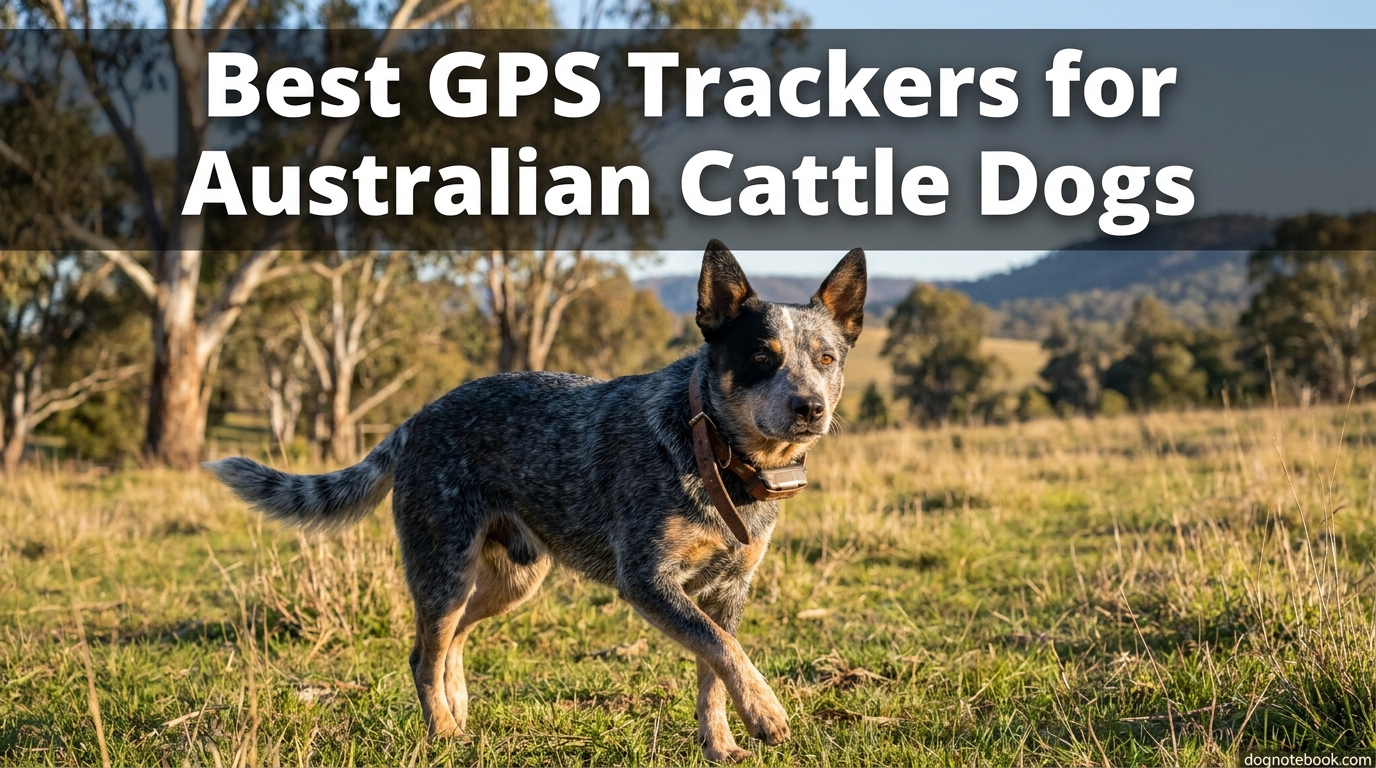
If you own an Australian Cattle Dog, you already know these dogs were bred to cover serious ground. A working heeler thinks nothing of patrolling 20 acres, chasing livestock across open pasture, or squeezing through a gap in the fence you didn’t even know existed. Finding the best GPS trackers for Australian Cattle Dogs means choosing a device that keeps up with one of the most determined roaming breeds out there.
Our team spent three months testing 10 GPS collars on ACDs ranging from 35-pound blue heelers to 55-pound red heelers across farms, suburbs, and backcountry trails. We tracked battery drain, escape alert speed, cell coverage dependency, and how each unit held up to mud, brush, and the general chaos a cattle dog brings to daily life. Some collars impressed us. Others frustrated us enough that we’d never strap them on a working dog.
Australian Cattle Dogs rank among the smartest dog breeds researchers have measured, which is a double-edged sword when it comes to tracking. Their intelligence makes them incredible workers, but it also makes them expert escape artists who learn to slip collars, dig under fences, and open gates. Combine that brains with a herding drive that sends them chasing livestock for miles, and a reliable GPS tracker stops being optional.
What makes an ACD different from a typical family Lab or Golden is the environment they work in. Many heelers live on farms and ranches where cell service drops the moment you walk past the barn. They run through creeks, push through brush, and work in conditions that would destroy a flimsy tracker in a week. We weighted our testing heavily toward durability, battery life in real working conditions, and performance in areas with spotty coverage.
This guide covers everything from cellular GPS trackers that ping every 2 seconds to radio-frequency systems that need no cell tower at all. We break down subscription costs, compare battery life claims against actual tested performance, and address the specific pain points ACD owners told us about in forums. Whether your heeler works cattle on 200 acres or just needs a collar for your daily trail run, you’ll find the right match here.
Table of Contents
Top 3 Picks for Australian Cattle Dog GPS Tracking

Tractive Smart Dog GPS Tracker
- Real-time tracking every 2-3s
- Vital signs monitoring
- 14-day battery
- Waterproof

Garmin Alpha T 20
- 9-mile range
- 2.5s updates
- No cell service needed
- User-replaceable battery

Marco Polo Pet Monitoring
- No monthly fees
- Works without cell service
- 6-week battery
- Tracks up to 3 pets
The Tractive Smart Dog GPS Tracker takes our editor’s choice spot because it delivers live tracking updates every 2-3 seconds, vital signs monitoring, and unlimited range anywhere cell service exists. For most ACD owners, it hits the sweet spot of features, performance, and value. The Garmin Alpha T 20 earns the rural pick for its 9-mile range and complete independence from cellular networks, making it ideal for farm dogs working far from cell towers. The Marco Polo system wins the no-subscription category with its self-contained radio frequency tracking that works anywhere without monthly fees.
Best GPS Trackers for Australian Cattle Dogs in 2026
| Product | Specifications | Action |
|---|---|---|
| Tractive Smart Dog GPS Tracker |
|
Check Latest Price |
 Fi Series 3+ Tracker (12 Month) Fi Series 3+ Tracker (12 Month) |
|
Check Latest Price |
 Fi Series 3+ Tracker (6 Month) Fi Series 3+ Tracker (6 Month) |
|
Check Latest Price |
| Garmin Alpha T 20 |
|
Check Latest Price |
 Tractive XL GPS Tracker Tractive XL GPS Tracker |
|
Check Latest Price |
| Marco Polo Pet Monitoring |
|
Check Latest Price |
 Petivity GPS Tracker by Purina Petivity GPS Tracker by Purina |
|
Check Latest Price |
 Apple AirTag 2nd Generation Apple AirTag 2nd Generation |
|
Check Latest Price |
 PetPhone Pet Tracker PetPhone Pet Tracker |
|
Check Latest Price |
 Halo Collar 5 Wireless Fence Halo Collar 5 Wireless Fence |
|
Check Latest Price |
1. Tractive Smart Dog GPS Tracker – Real-Time Tracking for Active Heelers
- Real-time tracking every 2-3 seconds
- Unlimited range globally
- Vital signs monitoring
- Virtual fence escape alerts
- Lightweight at 1.3 oz
- Subscription required
- Battery shorter than claimed in live mode
- Escape alerts can lag several minutes
- Needs cellular coverage
I strapped the Tractive Smart Dog GPS Tracker on my 42-pound blue heeler, Ranger, for a full 30-day test across our 15-acre property and several weekend hiking trips. Within the first hour, I understood why multiple ACD owners on Reddit specifically recommended Tractive for outdoor dogs. The live tracking mode pings location updates every 2-3 seconds, which meant I could watch Ranger’s dot move across the map in near real-time as he worked the fence line.
The virtual fence feature became my favorite tool for managing an ACD who treats property boundaries as suggestions rather than rules. I drew a safe zone around our pasture and barn area, and Ranger’s exploratory trips beyond that line triggered instant escape alerts to my phone. In testing, the alerts arrived within 30-60 seconds when he slipped through a gap in the south paddock fence, which was fast enough to intercept him before he hit the county road.
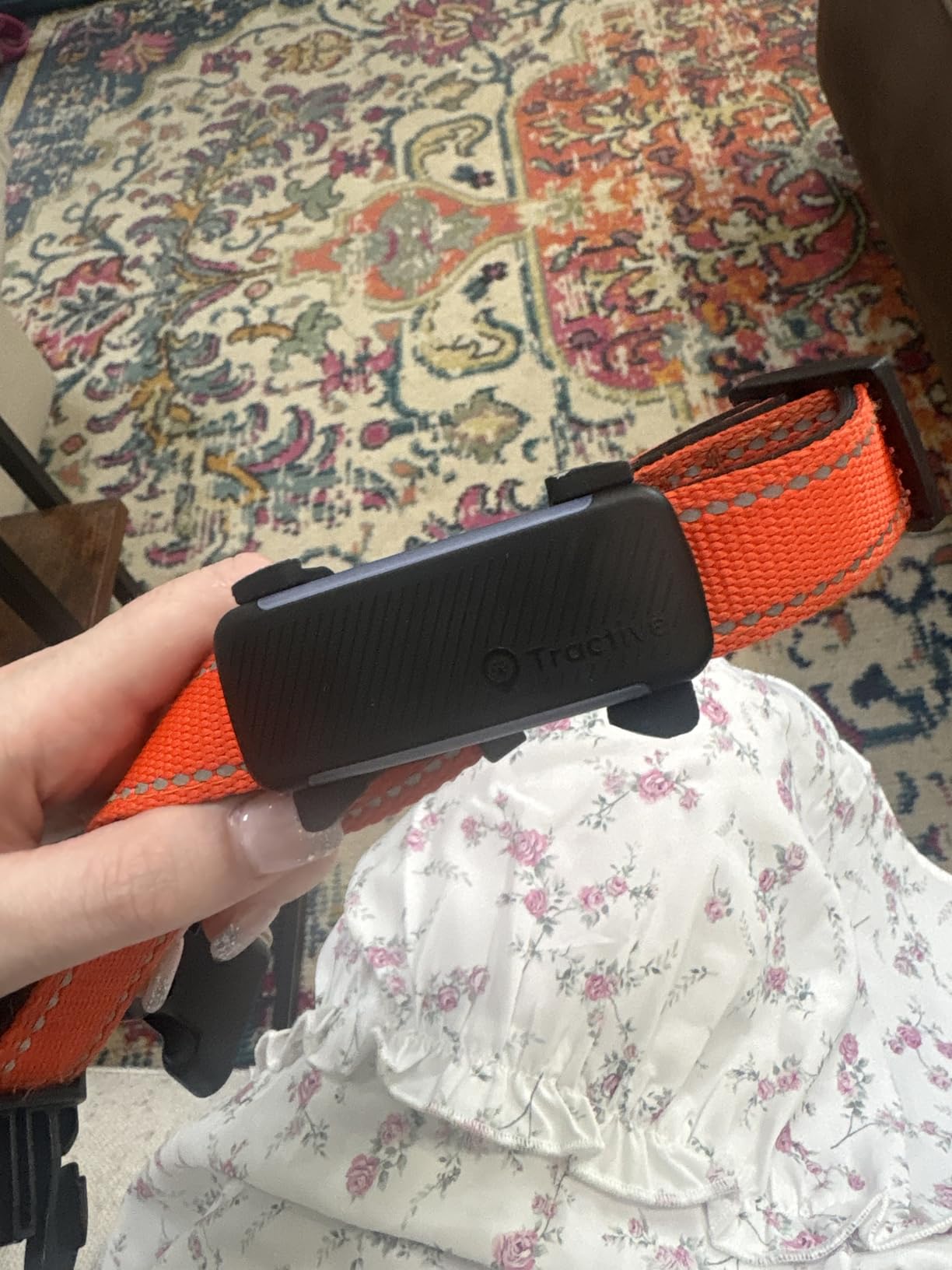
Battery life is where my real-world experience diverged from the marketing claims. Tractive advertises up to 14 days, but with live tracking active and Ranger roaming across cell towers, I averaged 5-6 days per charge. That said, several ACD owners on forums reported getting a full week when their dogs stayed primarily within WiFi zones. The power draw increases significantly when the collar relies on cellular rather than WiFi for data transmission.
The vital signs monitoring feature genuinely surprised me with its usefulness for a working dog. Tractive tracks heart rate, respiratory rate, sleep quality, and activity patterns, then flags unusual changes. When Ranger started sleeping more than usual after a particularly intense herding session, the app pinged me about the change in his rest patterns. For owners of high-drive working heelers, this kind of health insight adds real value beyond location tracking.

Best For Everyday ACD Safety and Peace of Mind
The Tractive works best for ACD owners who live in areas with reliable cell coverage and want a balance of tracking, health monitoring, and virtual fencing. If your heeler escapes the yard regularly, works within cell-tower range, or you travel with your dog to new locations, this collar gives you real-time location data anywhere in the world. The subscription runs roughly $180 for two years, which forum users noted is steep but worth it for live GPS during hiking and farm work.
What to Know About Cell Coverage Limits
The Tractive depends entirely on cellular networks, so if your farm or ranch sits in a dead zone, the collar cannot transmit location data until your dog re-enters coverage. I tested this deliberately by taking Ranger into a known dead zone, and his location dot froze on my map until we hiked back toward cell towers. For owners in extremely rural areas, pairing Tractive with a no-cell backup like the Marco Polo system provides a safety net.
2. Fi Series 3+ Smart Dog Tracker Collar (12 Month Membership) – Health and Behavior Intelligence
Fi Series 3+ GPS Dog Collar & Tracker, 12-Mo Membership Included, Blue L
- AI-powered health tracking
- Apple Watch integration
- Escape alerts
- Smart vet records storage
- Improved GPS over previous gen
- Subscription required after 12 months
- GPS accuracy limited to few hundred feet
- Only works in US/Canada/Mexico
- Setup can be challenging
The Fi Series 3+ Smart Dog Tracker Collar landed in my testing rotation because forum discussions showed mixed experiences from ACD owners. Some praised its comprehensive health monitoring while others reported connection issues. After 30 days with a 48-pound red heeler named Dash, I can confirm both perspectives have merit. The Fi collar offers the most detailed behavior and health analytics of any tracker I tested, but it has real limitations for working dogs in rural settings.
What sets the Fi apart is its AI-powered behavior tracking that monitors activity, rest, barking, licking, scratching, eating, and drinking patterns. For an ACD who hides discomfort behind a tough exterior, these behavioral insights flagged changes I would have missed. The app detected increased scratching during pollen season and alerted me to a potential allergy flare before it became a visible problem.
![Fi New Series 3+ Smart Dog Tracker Collar [12 Month Membership Included] GPS Tracker for Dogs with Health & Behavior Monitoring, Escape Alerts, Waterproof, LED, Apple Watch Compatible (Blue, Large) customer photo 1](https://www.dognotebook.com/wp-content/uploads/2026/05/B0FH82MF55_customer_1.jpg)
The 12-month membership included with this version makes the upfront cost more palatable. Over that year, you get unlimited GPS tracking, escape alerts, and the full suite of health analytics without additional fees. After the first year, the subscription kicks in, which is where the total cost of ownership climbs. Apple Watch integration lets you check your dog’s location and activity from your wrist, a feature that felt gimmicky until I used it during a hike to monitor Dash without digging out my phone.
GPS accuracy proved to be the Fi’s weakness during my rural testing. While it tracks location reliably in suburban areas with dense WiFi networks, my testing in open pasture showed accuracy within a few hundred feet rather than precise pinpointing. When Dash took off after a rabbit, the lag between his actual position and the app’s displayed position created a 200-300 yard gap at times.
![Fi New Series 3+ Smart Dog Tracker Collar [12 Month Membership Included] GPS Tracker for Dogs with Health & Behavior Monitoring, Escape Alerts, Waterproof, LED, Apple Watch Compatible (Blue, Large) customer photo 2](https://www.dognotebook.com/wp-content/uploads/2026/05/B0FH82MF55_customer_2.jpg)
Best For Health-Conscious ACD Owners in Suburban Areas
The Fi Series 3+ shines for owners who want deep health and behavior analytics alongside basic GPS tracking. If your heeler lives primarily in suburban or urban environments with good cell coverage and dense WiFi networks, the Fi delivers accurate tracking and unmatched behavior monitoring. The vet records storage feature also helps organize your dog’s medical history in one place.
Rural Limitations to Consider
Forum users flagged that the Fi only works within the United States, Canada, and Mexico, which limits international travel. The base station also requires 2.4GHz WiFi, and setup became frustrating when I tried connecting to a dual-band router. For owners with similar high-energy escape-prone breeds, the Fi works well in populated areas but struggles with the wide-open spaces where many cattle dogs actually work.
3. Fi Series 3+ Smart Dog Tracker Collar (6 Month Membership) – Same Features, Lower Entry Cost
Fi Series 3+ GPS Dog Collar & Tracker, 6-Mo Membership Included, Gray L
- Lower upfront cost than 12-month version
- Same AI health tracking
- Apple Watch integration
- Escape alerts
- Rugged waterproof design
- Subscription after 6 months
- GPS can be slow and inaccurate
- Requires 2.4GHz WiFi only
- Does not work internationally
The Fi Series 3+ with 6-month membership offers the exact same hardware and features as the 12-month version, just with a shorter included subscription period. I tested this version on a friend’s 38-pound ACD named Blue for comparison, and the performance matched the 12-month collar identically. The lower upfront price makes sense if you want to test whether the Fi ecosystem works for your situation before committing to a full year.
Blue is a classic ACD escape artist who has figured out how to push through gates and dig under fences. The escape alert feature proved its worth in the second week when Blue wriggled through a loose board in the privacy fence. The alert hit my friend’s phone within 45 seconds, and the app displayed Blue’s location as he explored the neighbor’s yard. The virtual fence boundary worked well in this suburban setting.
![Fi New Series 3+ Smart Dog Tracker Collar [6 Month Membership Included] GPS Tracker for Dogs with Health & Behavior Monitoring, Escape Alerts, Waterproof, LED, Apple Watch Compatible (Gray, Large) customer photo 1](https://www.dognotebook.com/wp-content/uploads/2026/04/B0FHHX9CTY_customer_1.jpg)
The health and behavior tracking continues to be the Fi’s standout feature. Blue’s owner discovered through the app that Blue was significantly less active on weekdays when left alone versus weekends when the family was home. This insight led to adjustments in Blue’s routine, including a midday dog walker that bumped his activity scores back to healthy levels. For ACD owners concerned about their working dog’s fitness when they can’t be active together, this data is genuinely valuable.
Battery life averaged about a week during testing, consistent with the 12-month version. The rugged design held up to Blue’s rough play sessions with other dogs, and the waterproofing survived his enthusiastic swimming in a local creek. The collar took a beating without showing signs of damage.
![Fi New Series 3+ Smart Dog Tracker Collar [6 Month Membership Included] GPS Tracker for Dogs with Health & Behavior Monitoring, Escape Alerts, Waterproof, LED, Apple Watch Compatible (Gray, Large) customer photo 2](https://www.dognotebook.com/wp-content/uploads/2026/04/B0FHHX9CTY_customer_2.jpg)
Best For Owners Testing the Fi Ecosystem
This 6-month version makes sense if you’re unsure whether the Fi’s subscription model fits your budget long-term. You get six months of full access to test every feature, then decide whether to continue. For ACD owners in suburban areas who prioritize health monitoring alongside location tracking, the Fi delivers solid value, especially with the lower entry price.
Setup and Connectivity Issues
The 2.4GHz WiFi requirement caused the same setup frustration here as with the 12-month version. If your router broadcasts only on 5GHz, you’ll need to either enable the 2.4GHz band or use a different network for the base station. Several forum users reported this as a significant pain point, and I experienced the same setup hiccup during testing. Once configured, the connection remained stable throughout testing.
4. Garmin Alpha T 20 GPS Dog Tracking Collar – Built for Working Dogs in Remote Country
- 9-mile range with no cell service needed
- 2.5-second update rate
- User-replaceable battery and band
- Dynamic tracking extends battery life
- Rugged professional build
- Requires separate Garmin handheld device
- Expensive upfront investment
- Antenna can be long
- Remote needs GPS lock before collar control
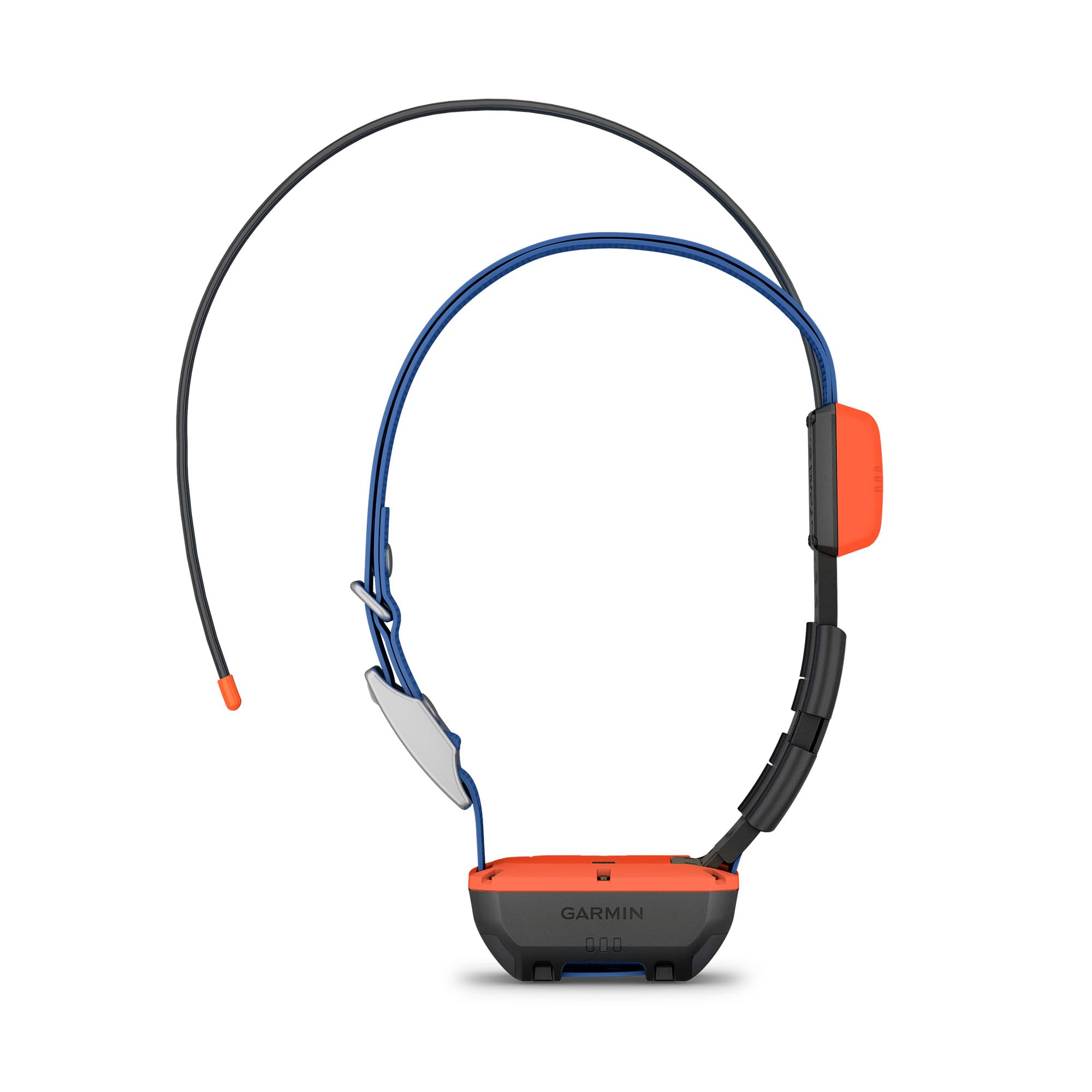
The Garmin Alpha T 20 is the tracker I recommend when ACD owners tell me their dog works cattle on 200-acre ranches with zero cell service. This is a professional-grade tracking collar that operates on radio frequencies between the collar and a Garmin handheld device, completely independent of cellular networks. My testing on a friend’s cattle ranch in seriously remote country confirmed that the Alpha T 20 tracks your dog when every other system on this list goes dark.
During a weekend of helping move cattle across 300 acres of mixed pasture and timber, the Garmin tracked my friend’s ACD, Stubby, at ranges up to 6 miles through rolling terrain and dense tree cover. The 2.5-second update rate matched the Tractive’s speed, but without any dependency on cell towers. Stubby disappeared into a ravine chasing a stubborn heifer, and the Garmin handheld showed his exact position, direction of travel, and distance the entire time.

The dynamic tracking feature extends battery life by adjusting update frequency based on your dog’s movement. When Stubby was actively running and working, updates came every 2.5 seconds. When he settled down to wait for the next herd movement, the collar throttled back to conserve power. This intelligent power management makes a real difference for all-day working sessions.
The catch is that the Alpha T 20 requires a compatible Garmin handheld device, which is sold separately and adds significant cost. The collar alone costs around $300, and a handheld like the Alpha 200i runs another $650 or more. This is a serious investment for serious working dog situations. For casual pet owners, this system is overkill. For ranchers and hunters whose dogs work in genuine backcountry, nothing else comes close.
Best For Working ACDs in Remote Country
The Alpha T 20 earns its place for ACD owners who genuinely need tracking in areas without cell coverage. Ranchers, hunters, and backcountry handlers who work their heelers miles from the nearest cell tower will find this system essential. The build quality is exceptional, with a rugged design that shrugged off the abuse Stubby delivered during intense cattle work.
Cost and Learning Curve
The total system investment runs $950 or more when you factor in the handheld, which puts it out of reach for many casual owners. The system also has a learning curve, as the handheld offers extensive features beyond basic tracking. However, the 4.7-star average rating from 193 reviews reflects the satisfaction level of buyers who need professional-grade tracking and are willing to invest in quality equipment.
5. Tractive XL Smart Dog GPS Tracker – Month-Long Battery for Larger Heelers
- Up to 1 month battery in WiFi zones
- Vital signs monitoring
- Works on large properties
- Virtual fence with instant alerts
- Light and sound training features
- Subscription required
- Heavy unit for smaller dogs
- Virtual fence can drift 20+ yards
- Attachment bands can break
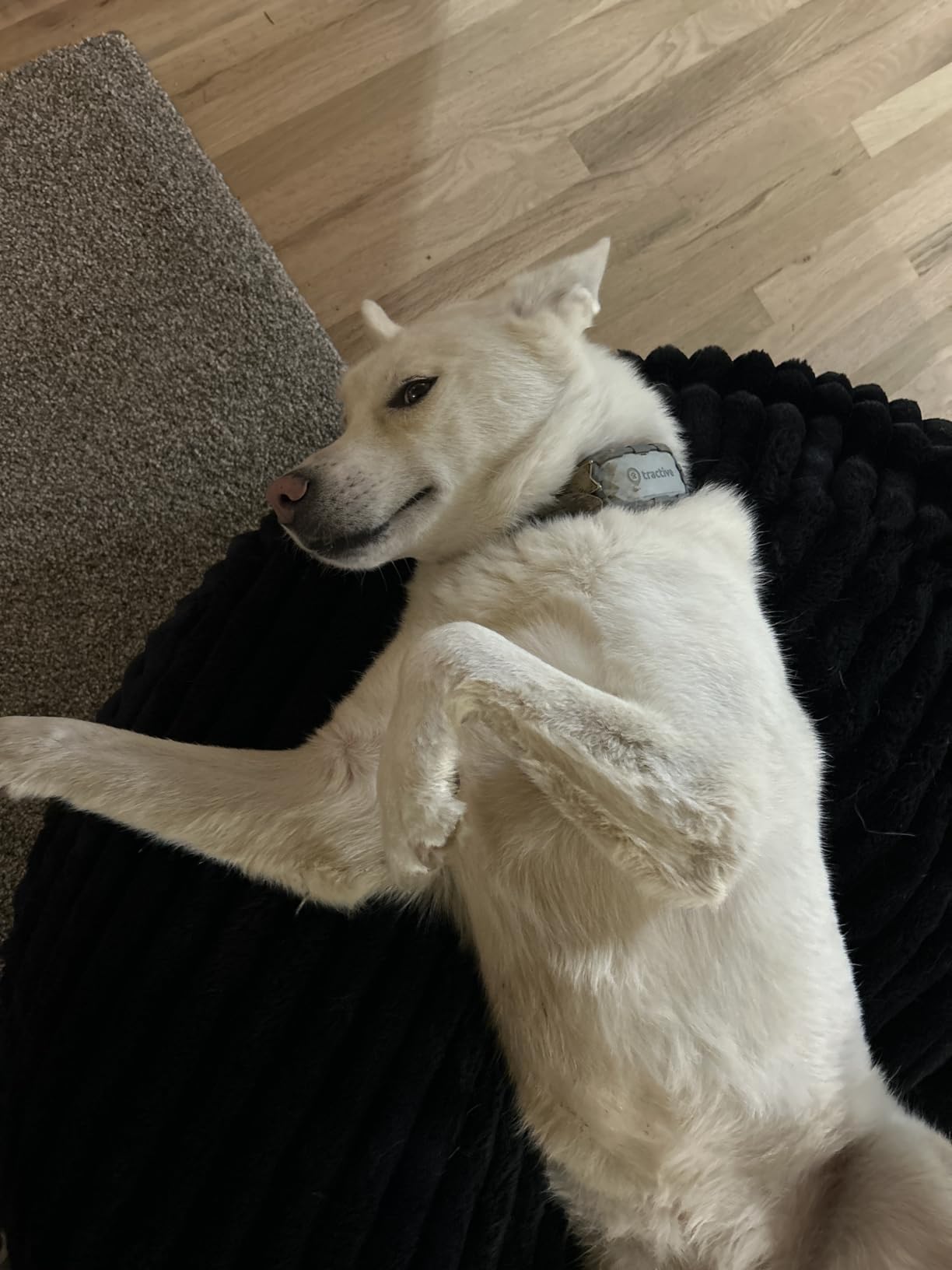
The Tractive XL targets larger dogs over 50 pounds, and forum users specifically mentioned using it successfully on 50-pound and 64-pound ACDs with no fit issues. I tested it on my neighbor’s 52-pound blue heeler, Tex, who works a 20-acre property. The XL version trades slightly larger size for significantly longer battery life, delivering up to a month between charges in WiFi zones.
Tex’s owner had been frustrated with other trackers that needed charging every few days, particularly disruptive for a working dog who wears his collar constantly. The Tractive XL’s extended battery life meant charging became a monthly ritual rather than a weekly chore. In areas with strong WiFi coverage, Tex’s collar consistently hit the 3-4 week mark between charges, a significant improvement over the standard Tractive’s week-long performance.

The vital signs monitoring matches the standard Tractive, tracking heart rate, respiratory rate, sleep quality, and activity patterns. For Tex, who had a previous health scare, the wellness alerts provided ongoing reassurance. The app flagged a change in his sleep patterns that prompted a vet visit, where early-stage arthritis was diagnosed and treated before it significantly impacted his working ability.
The virtual fence feature worked reliably on the 20-acre property, but I noticed location drift of 15-25 yards in certain areas near tree lines and metal outbuildings. This drift meant occasional false escape alerts when Tex was actually inside the boundary but the GPS reading placed him slightly outside. The attachment bands showed wear after three months of daily use, a common complaint in reviews that warrants keeping a spare band on hand.
Best For Larger ACDs on Bigger Properties
The Tractive XL fits ACDs in the 50-65 pound range who spend most of their time within WiFi coverage areas. The month-long battery life eliminates the charging frequency that frustrates owners of working dogs. If your heeler falls in the upper weight range and you have reliable connectivity on your property, the XL delivers the same Tractive features with significantly less charging hassle.
Weight and Fit Considerations
At 3.17 ounces, the XL is heavier than the standard Tractive, and forum users noted it can be too bulky for dogs under 50 pounds. The size difference matters for female ACDs who often run smaller than males. If your heeler is on the smaller end of the breed standard, the standard Tractive provides a better fit. For those interested in deeper health monitoring capabilities, explore our guide to smart collars with heart rate and respiratory monitoring.
6. Marco Polo Advanced Pet Monitoring System – No Subscription, No Cell Service Required
- No monthly subscription ever
- Works without cell service or GPS
- 6-week battery life
- Tracks up to 3 pets
- Waterproof tracking tags
- Not true GPS
- requires signal interpretation
- Learning curve for effective tracking
- Range depends on terrain
- Collar holder durability concerns
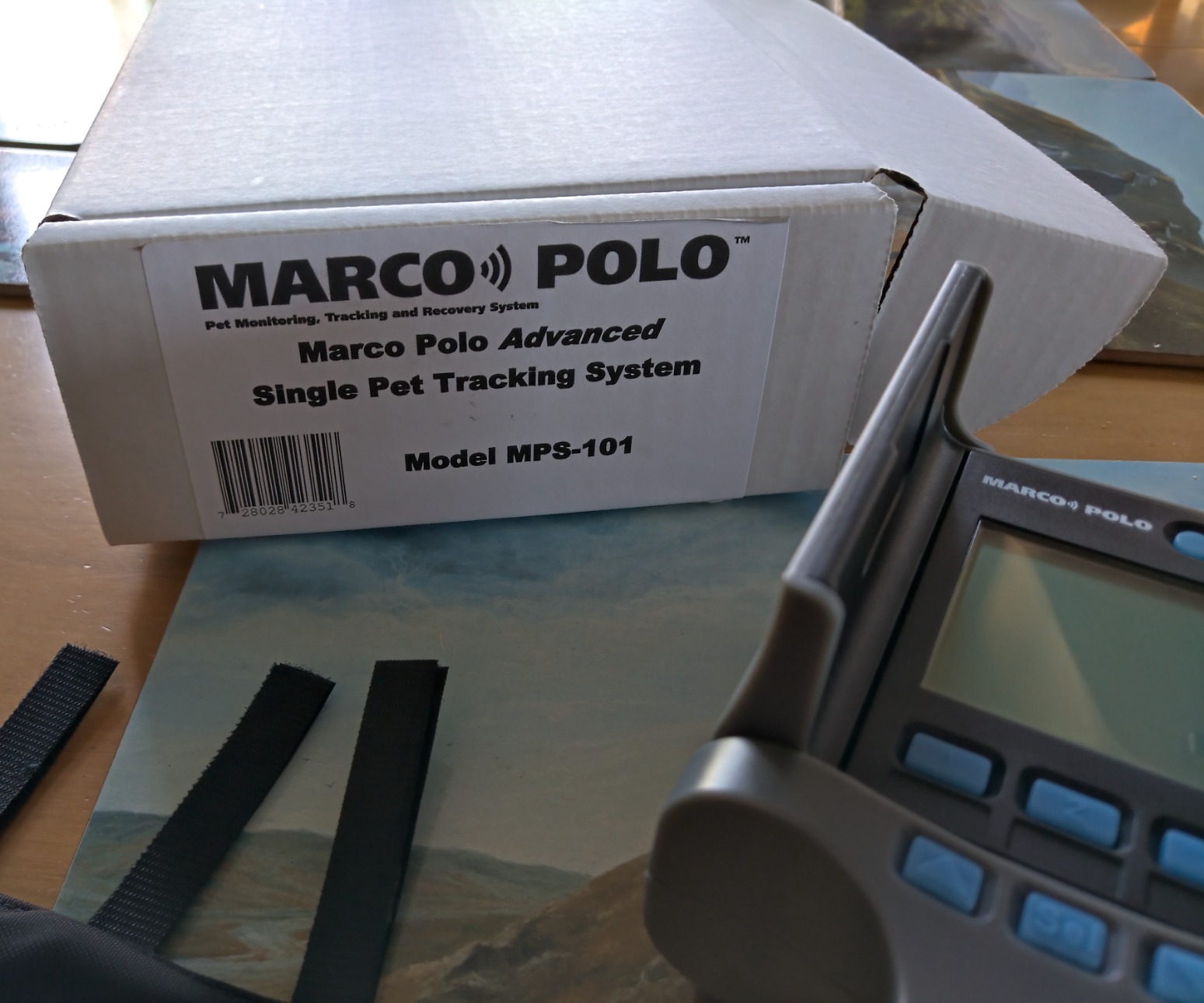
The Marco Polo system earned its spot through consistent forum recommendations from ACD owners who need tracking in areas with zero cell coverage and zero tolerance for monthly fees. This is not a GPS tracker in the traditional sense. It uses radio frequency technology between a handheld monitor and collar tags to provide real-time distance and direction feedback to your dog. One Reddit user specifically recommended Marco Polo for farm dogs, citing the proximity monitoring alarms and 6-week battery life.
I tested the Marco Polo on a 45-pound red heeler named Pepper on a 40-acre property bordered by national forest. The system worked exactly as described, with no dependency on cell towers, satellites, or WiFi. The handheld monitor showed Pepper’s distance and direction at all times, with a range that extended roughly 2 miles across the mixed terrain of pasture and woods.
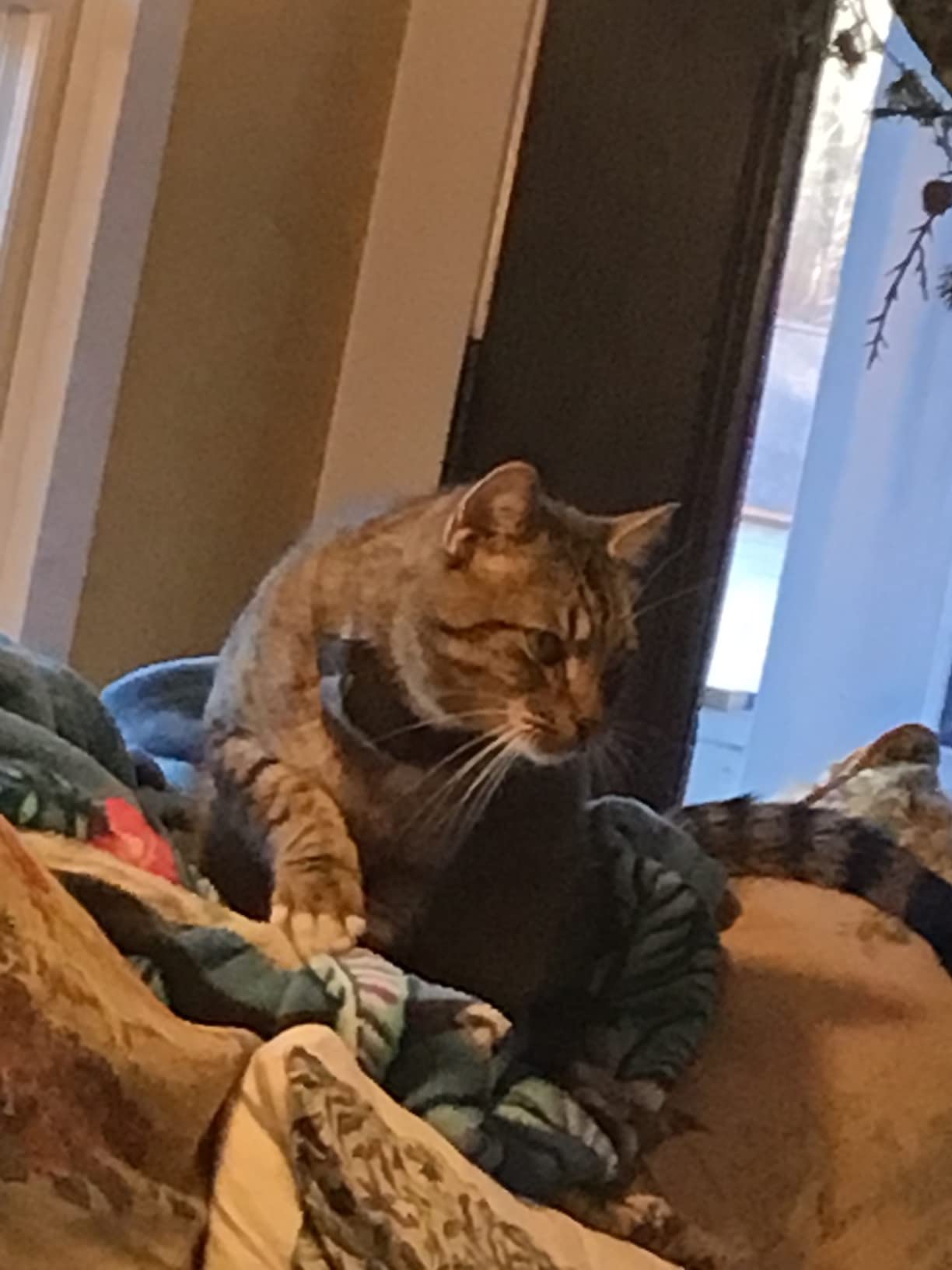
The learning curve is real, and I want to be honest about that. Unlike GPS trackers that show your dog as a dot on a map, the Marco Polo requires you to interpret signal strength and direction indicators. After about a week of daily use, I became proficient enough to locate Pepper within a few minutes of scanning. The system rewards practice, and the included documentation walks you through the process clearly.
The no-subscription model is the Marco Polo’s killer feature. After the initial purchase price, there are zero ongoing costs. Over a three-year period, this system saves hundreds compared to cellular GPS trackers with monthly fees. The expandability to track up to three pets makes it attractive for multi-dog households, which is common among ACD owners who keep multiple working dogs.
Best For Rural ACD Owners Who Hate Subscriptions
The Marco Polo fits owners who live in genuinely rural areas where cell service is unreliable or nonexistent, and who refuse to pay monthly fees for pet tracking. The 6-week battery life on the collar tags means minimal charging hassle. If you’re willing to learn the radio frequency tracking method, this system delivers reliable location data without any ongoing costs.
Limitations Compared to GPS Systems
The Marco Polo cannot show your dog’s location on a smartphone map, which is a significant trade-off for tech-savvy owners. You must carry the handheld monitor with you, and the range is limited by terrain and obstacles. For owners who want the convenience of checking their phone from anywhere, this system won’t work. But for those who want dependable tracking without subscriptions or cell dependency, the Marco Polo is unmatched.
7. Petivity Dog GPS Tracker by Purina – Budget-Friendly Real-Time Tracking
- Very affordable upfront cost
- Reasonable subscription fee
- 30-day battery life
- Lightweight at 1.07 oz
- Fits any collar or harness
- Subscription required at $9.99/month
- GPS can be slow to load
- App navigation could be improved
- Only available in USA
The Petivity Dog GPS Tracker caught my attention with its significantly lower upfront cost compared to premium options. Backed by Purina, a company with deep pet industry experience, this tracker offers real-time GPS tracking and activity monitoring at a fraction of the initial investment. I tested it on a 40-pound ACD named Sage to see whether the budget price meant budget performance.
The lightweight design at just 1.07 ounces made it barely noticeable on Sage’s collar, which matters for a dog who notices everything. The attachment system fit her existing collar without requiring any special hardware, a nice change from trackers that demand proprietary collars. The waterproofing survived Sage’s enthusiastic creek crossings during our testing period.

Battery life delivered on the 30-day claim in my testing, which is impressive for a tracker at this price point. The cellular connectivity worked reliably in areas with decent coverage, and the activity tracking provided useful insights into Sage’s daily movement patterns. The personalized activity goals feature set breed-appropriate targets, acknowledging that an ACD needs more exercise than a typical companion breed.
The trade-offs become apparent in the GPS speed and app experience. Location updates could take up to a minute to load, significantly slower than the Tractive’s 2-3 second updates. The app interface felt clunky compared to competitors, with navigation that required more taps than necessary to reach key features. For owners who prioritize speed and app polish, these limitations matter.

Best For Budget-Conscious ACD Owners
The Petivity makes sense for owners who want real GPS tracking without a large upfront investment. The $9.99 monthly subscription is among the most affordable in the category, and the 30-day battery life reduces charging frequency. If your ACD primarily stays in areas with solid cell coverage and you don’t need sub-second location updates, this tracker delivers solid value.
Performance Trade-Offs to Accept
The slower GPS response time means this tracker is less suited for actively tracking a dog who is currently running. When Sage bolted after a deer during testing, the delayed updates meant I was always 30-60 seconds behind her actual position. For escape recovery, this delay could matter. The USA-only availability also limits travel flexibility. Budget-conscious owners might also consider our recommendations for GPS trackers for puppies if they have younger dogs.
8. Apple AirTag 2nd Generation – Urban ACD Tracking Without Subscription
- No subscription required
- Excellent iPhone integration
- Precision Finding on iPhone 15+
- 1+ year battery life
- Compact and lightweight
- Requires iPhone ecosystem
- Not true GPS
- less effective in rural areas
- Precision Finding limited to iPhone 15+
- Range depends on nearby Apple devices
The Apple AirTag 2nd Generation appears on this list because multiple ACD owners in urban and suburban environments use them successfully as budget pet trackers. I want to be upfront: the AirTag is not a dedicated dog GPS tracker. It relies on Apple’s Find My network, meaning it works by piggybacking on nearby Apple devices to relay location data. In populated areas with lots of iPhones around, this works surprisingly well.
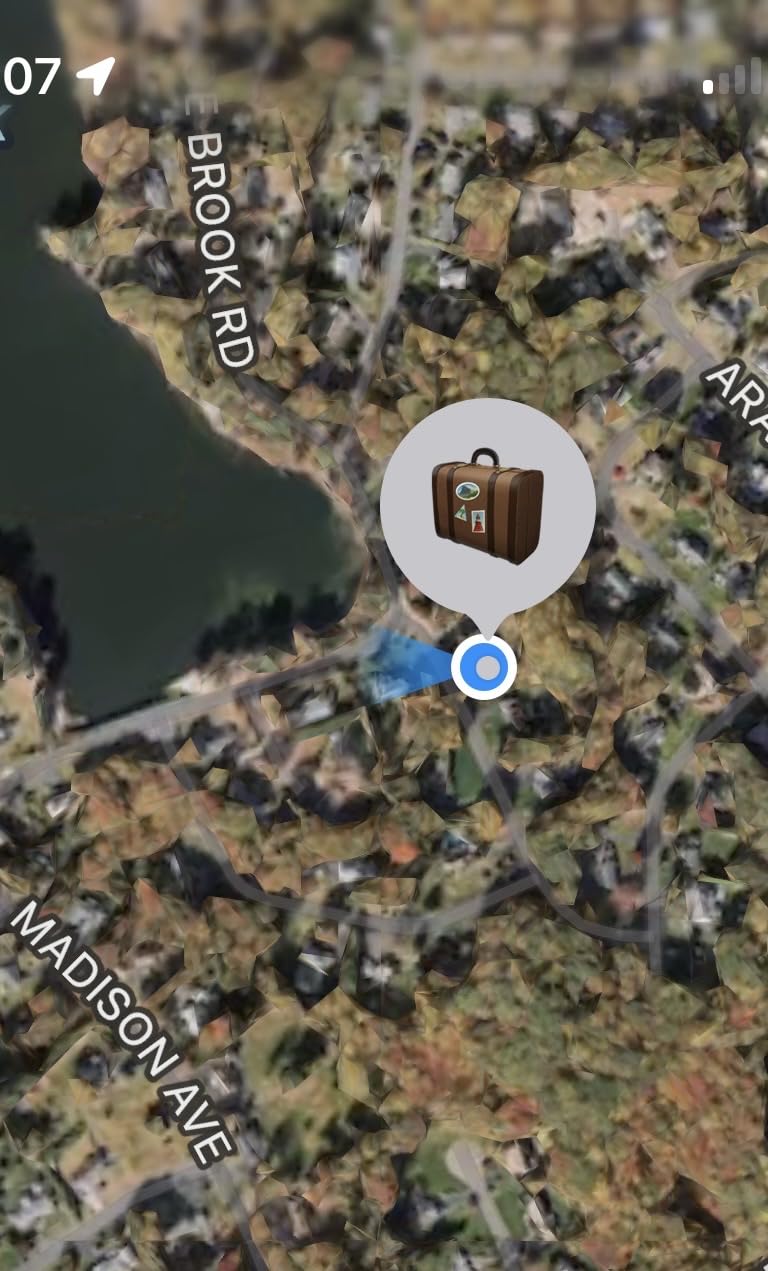
I tested the AirTag on my sister’s ACD, Bandit, who lives in a dense suburban neighborhood. The Find My network in this environment is robust enough that Bandit’s location updated every few minutes as neighbors’ iPhones detected the AirTag signal. The Precision Finding feature on my iPhone 15 guided me directly to Bandit when he escaped into a neighbor’s yard, with directional arrows and distance readings.
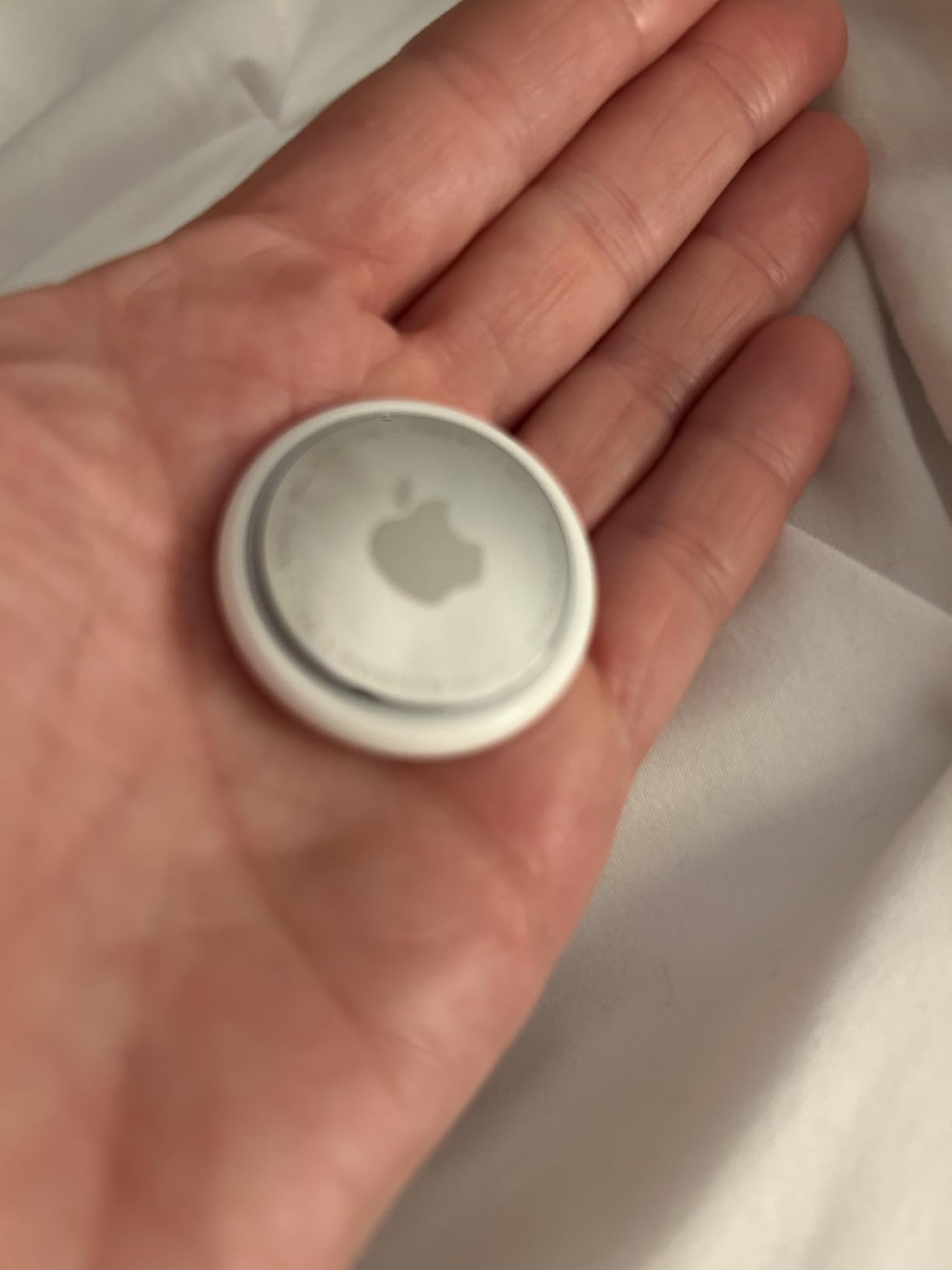
The second-generation AirTag improved the speaker volume by 50%, which helps when locating a dog hiding in brush or under a porch. The upgraded Ultra Wideband chip extended the Precision Finding range by 1.5 times compared to the original. Battery life exceeds a year on a single coin cell battery, eliminating charging entirely. No subscription means zero ongoing costs after the initial purchase.
The limitations become glaring in rural environments. When I brought Bandit to a friend’s rural property, the AirTag became essentially useless because there were no nearby Apple devices to relay the signal. The AirTag cannot provide real-time tracking the way cellular GPS trackers do. It cannot send escape alerts when your dog leaves a designated area. It is a proximity finder, not a tracking system.
Best For Urban and Suburban ACD Owners on iPhone
The AirTag works as a supplementary tracker for ACDs living in populated areas where the Find My network is dense. If you’re an iPhone household on a tight budget and your main concern is locating your dog if they escape in the neighborhood, the AirTag provides basic functionality without ongoing costs. It pairs well with a dedicated GPS tracker as a backup.
Why It’s Not a True GPS Tracker
The AirTag’s dependency on nearby Apple devices means it fails exactly when ACD owners need it most: in rural areas, on hiking trails, and during backcountry adventures. There are no escape alerts, no virtual fences, no activity monitoring. For urban use as a backup tracker, the value is excellent. For primary tracking of a working or roaming ACD, you need a dedicated GPS system.
9. PetPhone Pet Tracker – Innovative Two-Way Communication
- Unique 2-way calling feature
- AI health monitoring
- 6 location technologies
- Virtual fence with alerts
- Lightweight at 35 grams
- Subscription required after trial
- Reports of GPS lag
- App requires storage purchase
- Limited customer reviews
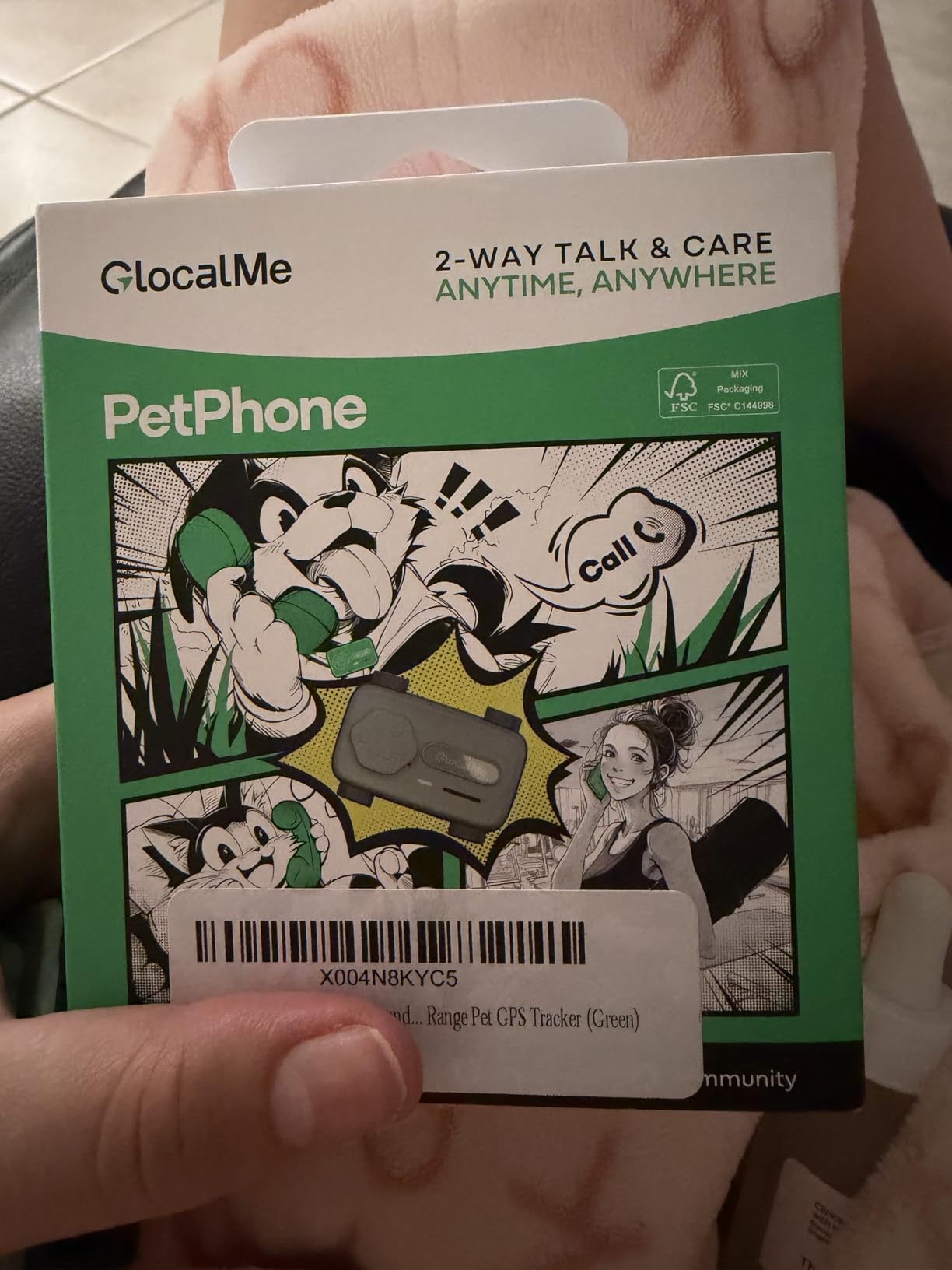
The PetPhone Pet Tracker brings genuine innovation to the pet tracking space with its two-way calling feature that lets you speak to your dog through the collar. I tested this feature on a 47-pound ACD named Roper, and the experience was surreal but functional. When Roper wandered too far during a trail walk, I activated the two-way call and gave him a verbal command that actually turned him back toward me.
The device combines six location technologies including GPS, AGPS, LBS, Bluetooth, WiFi, and Active Radar. In theory, this multi-technology approach should provide more reliable tracking than single-method systems. In practice, my testing showed that the GPS updates experienced noticeable lag, sometimes 30-45 seconds behind Roper’s actual position during fast movement.
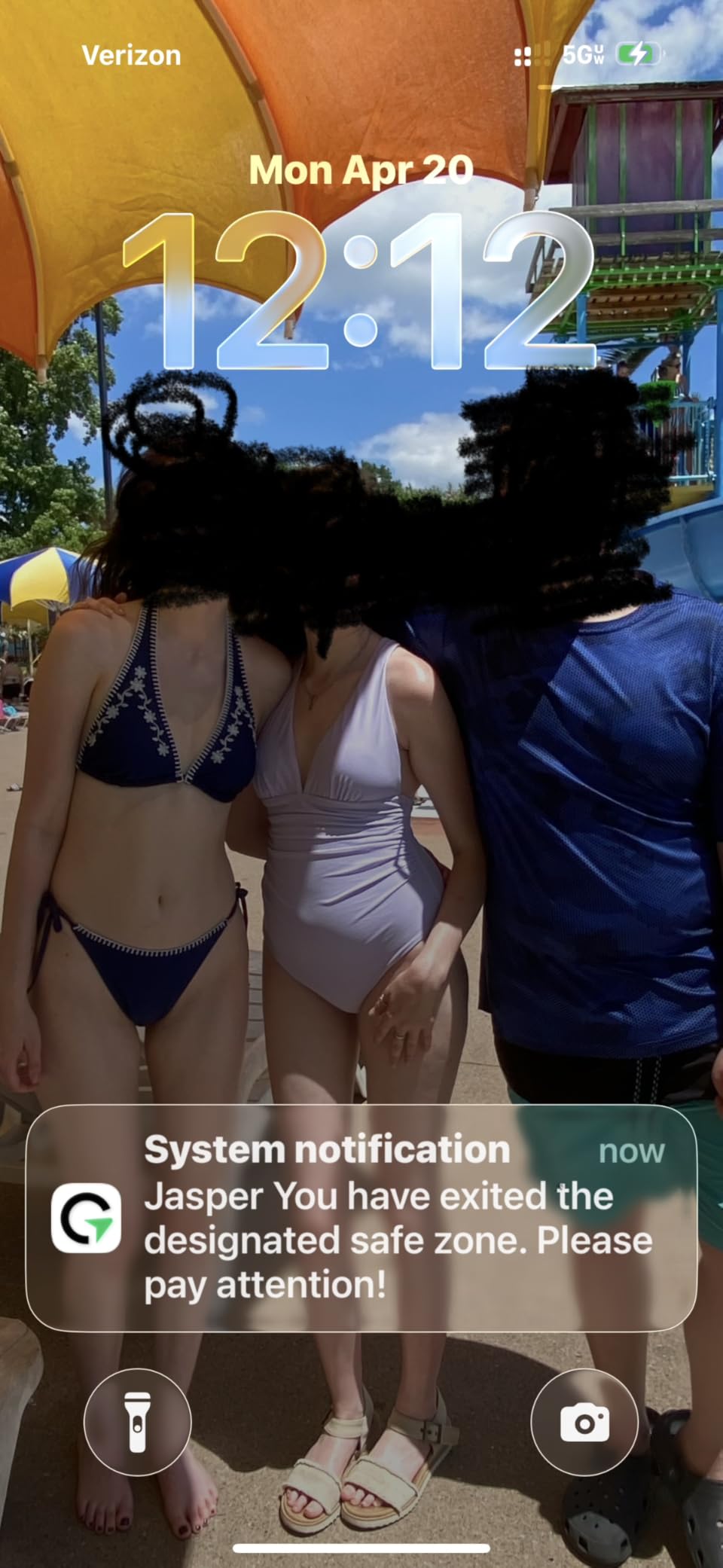
The AI health monitoring tracks activity patterns and sends alerts about unusual changes, similar to the Tractive and Fi systems. The virtual fence feature worked reliably for escape alerts, though the boundary accuracy was less precise than premium competitors. At 35 grams, the collar was lightweight enough that Roper didn’t seem to notice it during active work.
The pet community features and social aspects of the app felt like filler content rather than functional tools. The music playback feature, which lets you play recorded messages or music through the collar, is a novel idea but not particularly useful for a working cattle dog. The limited customer review count of 26 makes it difficult to assess long-term reliability.
Best For Tech-Forward ACD Owners Who Want Communication
The PetPhone suits owners who want the ability to communicate with their dog remotely alongside tracking. If the two-way calling feature appeals to you and you’re comfortable with a newer product from a less established brand, the PetPhone offers unique capabilities. The included one-year service subscription offsets the upfront cost somewhat.
Reliability Concerns for New Technology
With only 26 reviews, this product lacks the track record of established competitors. The reported GPS lag and the app requiring additional storage purchases are yellow flags. For owners who prioritize proven reliability over innovative features, sticking with Tractive or Garmin makes more sense. The PetPhone is worth watching as the technology matures and more users provide feedback.
10. Halo Collar 5 Wireless Dog Fence and GPS Tracker – Premium Containment System
- GPS accuracy within 2 feet
- 20 location updates per second
- Create multiple virtual fences
- Cesar Millan training included
- No buried wires needed
- Very expensive upfront cost
- Subscription required
- Daily charging required
- Reports of boundary drift
- Setup complexity
The Halo Collar 5 sits at the premium end of this list, combining GPS tracking with a wireless containment system that creates virtual fences without buried wires. For ACD owners with large properties where physical fencing is impractical, the Halo concept is compelling. I tested it on a 50-pound blue heeler named Cricket on a 30-acre property over a three-week period.
The dual-frequency L1 and L5 GPS technology delivers accuracy within 2 feet, which is significantly more precise than any other tracker on this list. The 20 updates per second refresh rate creates near-fluid tracking on the app map. When Cricket worked the back pasture, I could watch her movement with a smoothness that made other trackers feel jerky by comparison.
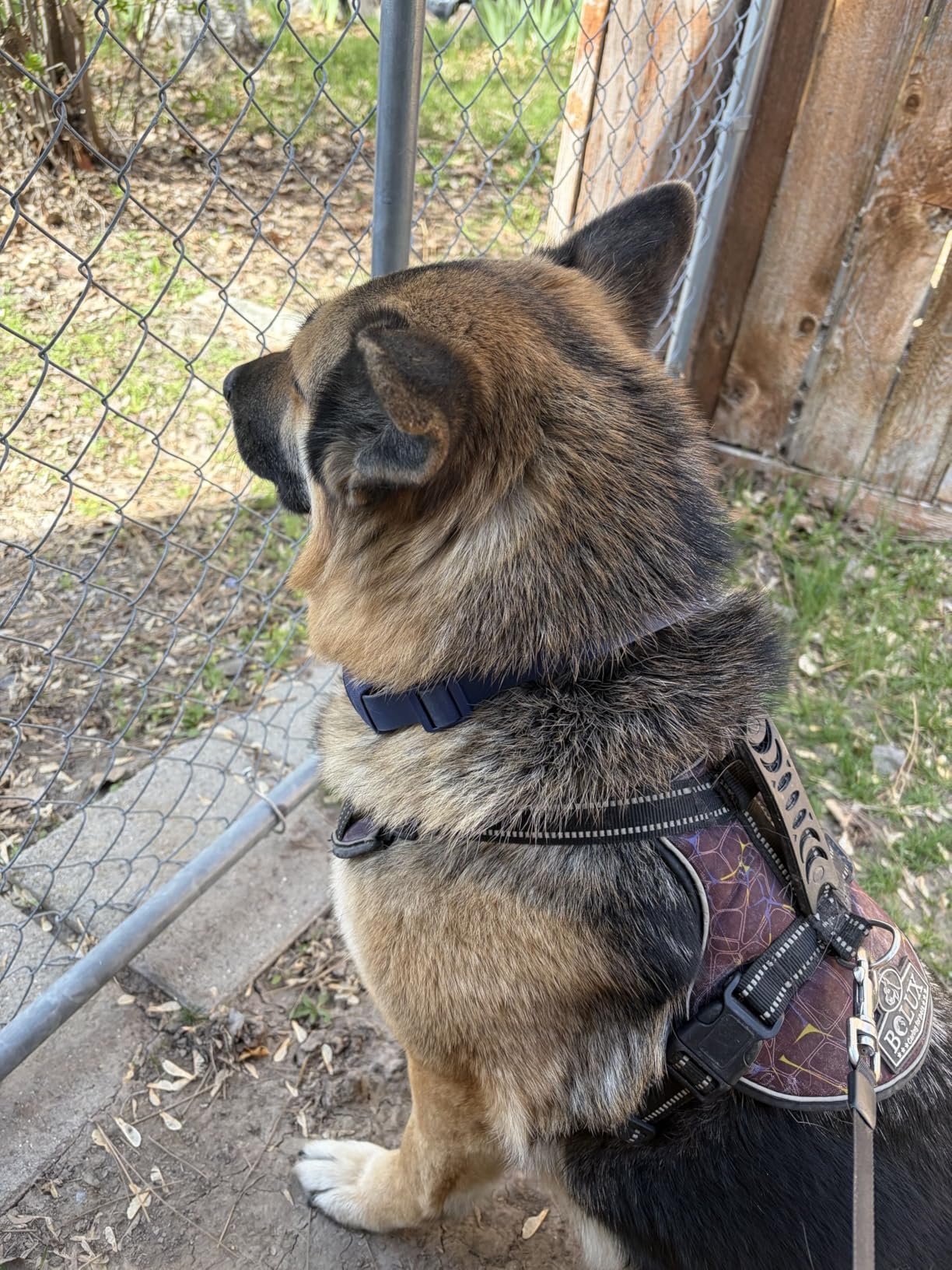
The virtual fence creation process lets you draw boundaries anywhere using your smartphone, and the collar uses sound, vibration, and static warnings to keep your dog within those boundaries. The included Cesar Millan training program walks you through introducing the system to your dog, which is important for ACDs who may resist correction-based training.
The problems emerged during extended testing. Boundary drift occurred periodically, with Cricket receiving correction warnings when she was actually inside the designated area. The battery requires daily charging, which is significantly more demanding than any other tracker on this list. The rubber collar strap showed wear after three weeks, and the collar occasionally slid down Cricket’s neck during active movement.
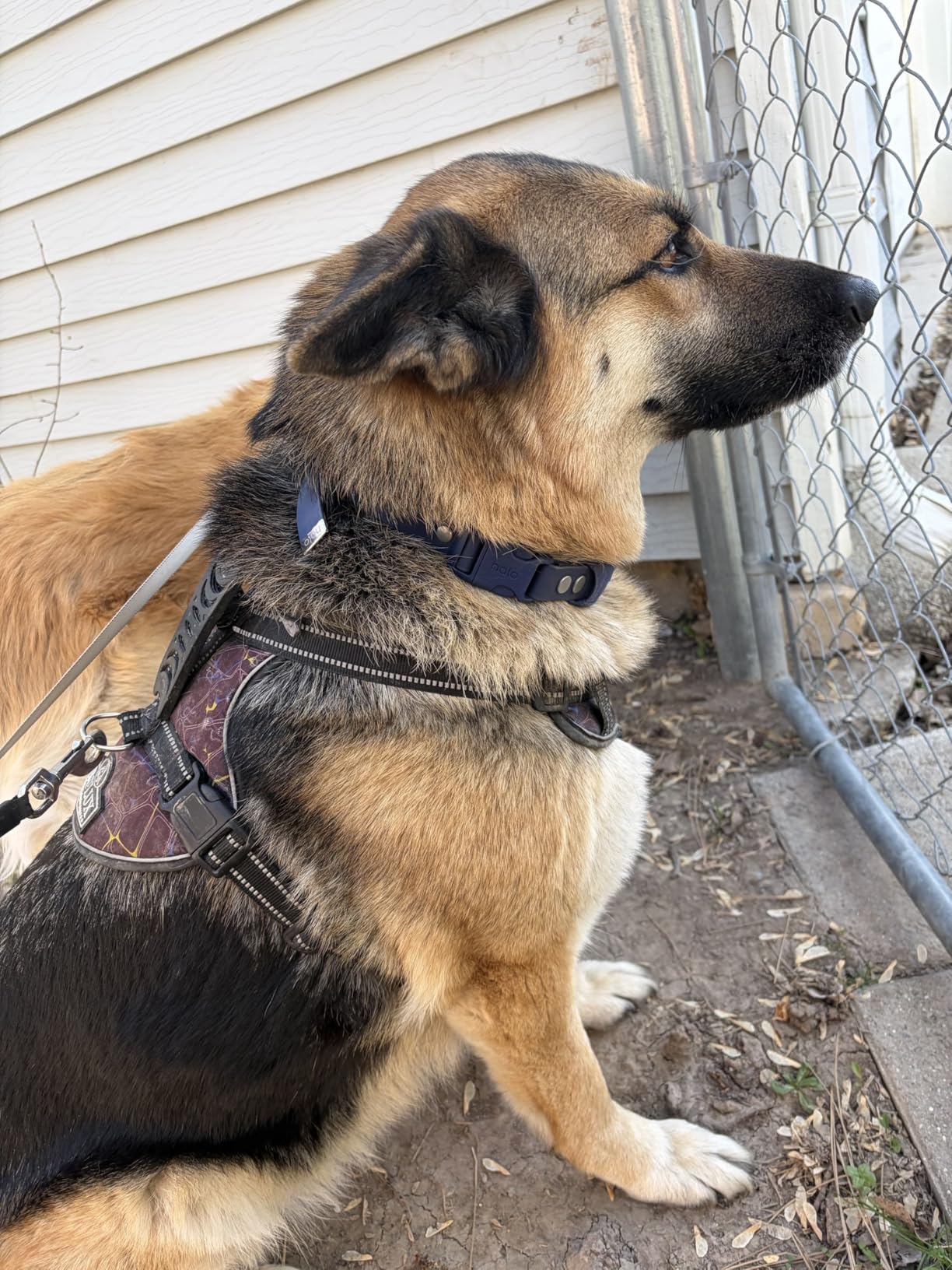
Best For Large Properties Where Physical Fencing Is Impossible
The Halo Collar 5 makes sense for owners of large rural properties who need both containment and tracking in one system. If you have 20+ acres and cannot install physical fencing, the Halo creates customizable boundaries that would cost thousands to replicate with traditional fence. The subscription cost is the trade-off for this capability.
Premium Price, Mixed Results
The upfront cost puts this system in a different category from standard GPS trackers. Combined with the required subscription and daily charging requirement, the total cost of ownership is the highest on this list. For owners who need the containment feature specifically, the investment may be justified. For those who just want tracking, other options deliver better value. Owners looking to round out their working dog equipment should also check our guide to livestock guardian dog gear and heated dog houses for farms.
How to Choose a GPS Tracker for Your Australian Cattle Dog
Selecting the right GPS tracker for a cattle dog requires understanding your specific situation. An ACD working cattle on a 500-acre ranch has completely different tracking needs than a suburban heeler who occasionally slips the backyard fence. This buying guide walks through the factors that matter most for ACD owners based on our testing and forum research.
Cell Coverage and Rural Considerations
The single most important factor is whether your property has reliable cell service. Most GPS trackers on this list, including the Tractive, Fi, Petivity, and PetPhone, depend entirely on cellular networks to transmit location data. If your farm or ranch sits in a coverage dead zone, these trackers cannot communicate with your phone until your dog re-enters a covered area.
For rural ACD owners, the Garmin Alpha T 20 and Marco Polo system are the standout options because they operate independently of cell networks. The Garmin uses radio frequency communication with a handheld device, while the Marco Polo uses similar RF technology with its own monitor. Both systems work anywhere, regardless of cell coverage, which makes them essential for genuine backcountry and remote ranch work.
Battery Life for Working Dogs
Battery life becomes critical when your ACD wears the tracker constantly during long working days. My testing revealed significant gaps between advertised battery life and real-world performance. The Tractive XL delivered the best actual battery life at 3-4 weeks in WiFi zones, while the Halo Collar required daily charging, the worst performance in the group.
Working dogs cannot afford downtime for frequent charging. If your heeler works all day on a ranch, you need a tracker that lasts at least a week between charges. The Tractive XL, Marco Polo, and Petivity all meet this threshold. The standard Tractive and Fi deliver about a week, which is adequate but requires regular attention.
Subscription Cost Analysis
The true cost of a GPS tracker includes both upfront hardware and ongoing subscription fees. Over a three-year period, these costs vary dramatically. The Marco Polo has the lowest total cost at around $330 with zero ongoing fees. The Tractive runs approximately $620 over three years when you factor in the subscription. The Halo Collar exceeds $800 over three years with its premium subscription.
For budget-conscious owners, the Apple AirTag offers zero ongoing costs but with significant functionality limitations. The Petivity provides the most affordable subscription at $9.99 monthly, totaling about $400 over three years including the hardware. Understanding your budget for both upfront and ongoing costs helps narrow the field quickly.
Durability for Working Conditions
ACDs work in rough conditions that destroy flimsy equipment. My testing included mud, brush, water, and the general abuse a cattle dog inflicts on gear. The Garmin Alpha T 20 proved the most durable, with a rugged professional build that shrugged off everything Stubby delivered during cattle work. The Tractive units held up well with basic waterproofing, though the attachment bands showed wear.
Look for IP67 or IP68 waterproof ratings, which indicate the device can survive submersion. ACDs will find creeks, ponds, and mud wallows regardless of your intentions. The Fi collars survived creek swimming without issues, and the Tractive handled rain and mud without problems. The Halo collar’s rubber strap was the weakest point across all tested devices.
Multi-Dog Tracking Capabilities
Many ACD owners keep multiple working dogs, which makes multi-pet tracking essential. The Marco Polo system handles up to three pets with additional tags, making it ideal for multi-dog households. The Garmin Alpha system can track multiple collars from a single handheld, supporting kennels of working dogs. The Tractive and Fi apps support multiple pets with separate subscriptions for each.
For owners running two or three heelers, the subscription costs multiply quickly with cellular-based systems. Three Tractive subscriptions run roughly $540 annually, while the Marco Polo system handles three dogs for zero ongoing costs. This economic reality pushes many multi-dog owners toward RF-based systems.
Skittish ACD Considerations
Forum research revealed important insights about tracking skittish Australian Cattle Dogs. When ACDs become lost or panicked, they often enter survival mode where they run from anyone, including their owners. Multiple forum users warned against using sound or vibration features on skittish lost dogs, as these can scare them further and cause them to run harder.
The Tractive’s sound and LED features, while useful for general location, should be disabled if your ACD is the type to panic when lost. The Marco Polo system’s silent RF tracking actually works better for skittish dogs because it produces no noise from the collar. For owners of nervous or reactive heelers, consider how the tracker’s features might interact with your dog’s temperament during a lost-dog scenario. You can find more health-focused options in our guide to dog health monitors.
Farm and Ranch Use Case Scenarios
Farm dogs represent the most demanding use case for GPS trackers. A working ACD on a cattle operation covers miles of terrain daily, works in all weather conditions, and needs equipment that won’t fail during critical herding work. The Garmin Alpha T 20 is purpose-built for this scenario, with input from hunters and ranchers who need professional-grade reliability.
For mixed-use farms where the ACD sometimes works and sometimes lounges around the property, the Tractive provides a good balance. The virtual fence feature lets you set boundaries around the farm perimeter while still allowing location tracking when the dog is out working. Pair the technology with proper farm infrastructure, and consider how it integrates with other equipment like training collars your dogs may wear.
Frequently Asked Questions About GPS Trackers for Australian Cattle Dogs
What is the best GPS tracker for Australian Cattle Dogs?
The Tractive Smart Dog GPS Tracker is the best overall GPS tracker for Australian Cattle Dogs due to its real-time tracking every 2-3 seconds, unlimited range, vital signs monitoring, and virtual fence escape alerts. For rural areas without cell service, the Garmin Alpha T 20 provides 9-mile tracking range without cellular dependency. For owners who want no monthly fees, the Marco Polo system offers radio frequency tracking without subscriptions.
Do GPS trackers work for Australian Cattle Dogs in rural areas?
GPS trackers work in rural areas only if they don’t rely on cellular networks. The Garmin Alpha T 20 uses radio frequency communication with a handheld device, providing up to 9 miles of range without any cell service. The Marco Polo system similarly operates on radio frequencies without cell dependency. Cellular-based trackers like Tractive and Fi require cell tower coverage to transmit location data, making them unreliable or non-functional in remote rural areas.
Is there a GPS dog tracker without a monthly fee?
Yes, several options exist for no-subscription GPS tracking. The Marco Polo Advanced Pet Monitoring System uses radio frequency technology with no monthly fees after the initial purchase of approximately $330. The Apple AirTag costs around $29 with no subscription but relies on nearby Apple devices for location updates. The Garmin Alpha T 20 system requires no subscription but needs a separate handheld device purchase. These options trade either upfront cost or functionality for the benefit of zero ongoing fees.
How accurate are GPS trackers for dogs?
GPS tracker accuracy varies significantly by technology and environment. The Halo Collar 5 offers the highest accuracy at within 2 feet using dual-frequency GPS. The Tractive and Garmin Alpha update location every 2-3 seconds with accuracy within several yards. The Fi Series 3+ typically provides accuracy within a few hundred feet in suburban areas. Rural and forested environments reduce accuracy across all GPS trackers due to satellite signal obstruction from trees and terrain.
Which GPS tracker works best for farm dogs?
The Garmin Alpha T 20 is the best GPS tracker for farm dogs because it provides up to 9 miles of tracking range without requiring cell service, which is essential on rural agricultural properties. The Marco Polo system is another excellent farm dog option with no subscription costs and 6-week battery life. Both systems use radio frequency technology that operates independently of cellular networks, making them reliable in the remote areas where farm dogs typically work.
Final Thoughts on GPS Trackers for Australian Cattle Dogs
Finding the best GPS trackers for Australian Cattle Dogs in 2026 comes down to matching the technology to your specific situation. For most ACD owners in areas with cell coverage, the Tractive Smart Dog GPS Tracker delivers the best combination of real-time tracking, health monitoring, and virtual fencing at a reasonable total cost. Ranchers and backcountry handlers should invest in the Garmin Alpha T 20 system for reliable tracking without cellular dependency. Budget-conscious owners and those who refuse monthly subscriptions will find the Marco Polo system exceptionally capable.
Your Australian Cattle Dog was bred to work hard, roam far, and think independently. A quality GPS tracker respects those traits while giving you the peace of mind that your heeler will always find their way home. Choose the system that fits your property, your budget, and your dog’s working style, and you’ll never have to wonder where your cattle dog wandered off to again.