
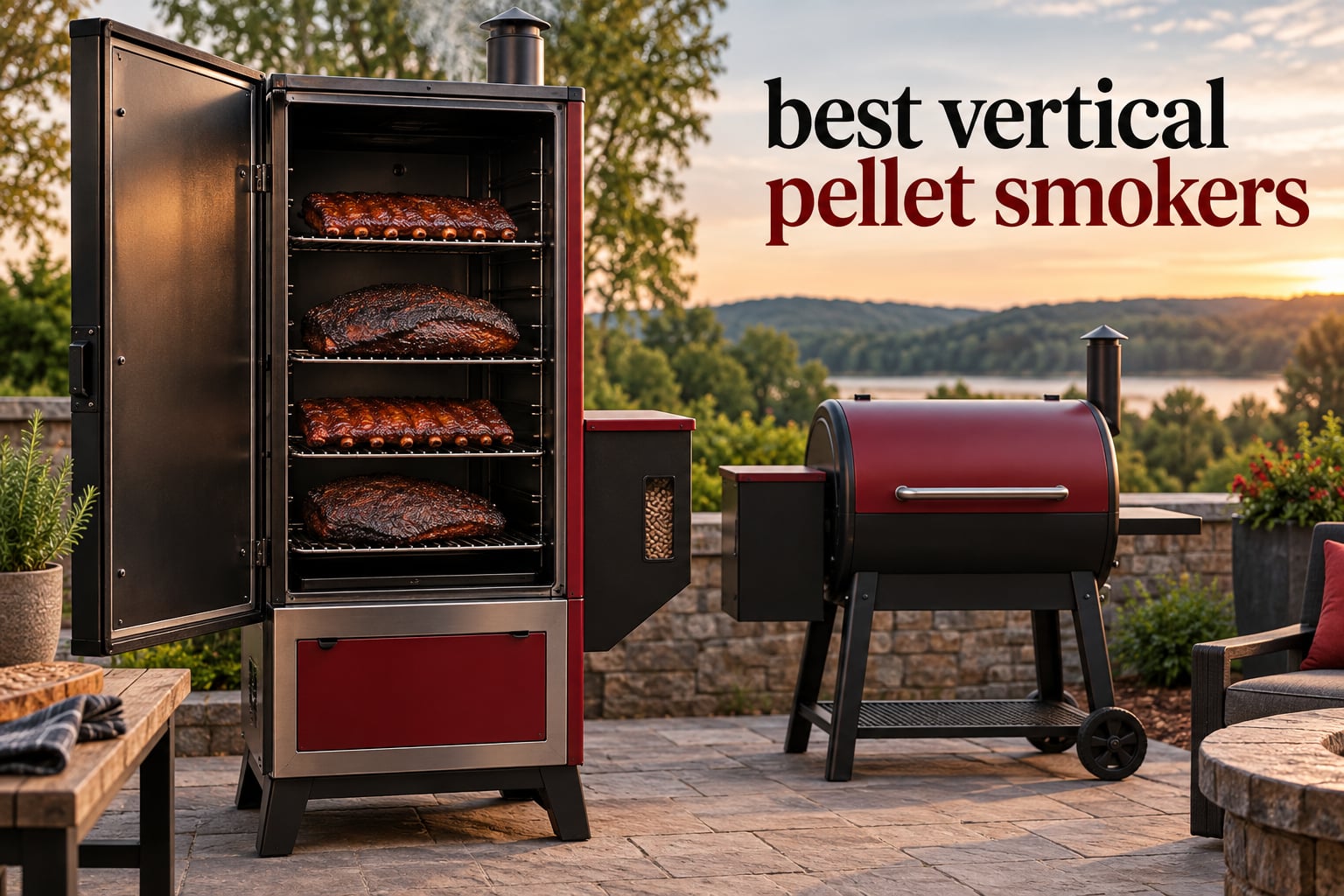
If you want one name for the best vertical pellet smokers right now, it is the Pit Boss PBV3P1. It is the only cabinet in this group with four porcelain-coated racks, 901 square inches of cooking space, a 40-plus pound hopper and a 4.5 star average across 362 owner reviews that consistently describe it as a set-and-forget cooker.
Yes, vertical pellet smokers are any good. They are the format that fixes the one weakness of a horizontal pellet grill: usable cooking volume in a small patio footprint. A cabinet stacks four to six adjustable racks in a narrow column, so heat and smoke rise past every shelf instead of sliding over a single flat grate. You can hang a whole duck, load a rack of ribs, and put a batch of jerky on at the same time without doubling your cooking footprint.
We spent the last several weeks comparing every vertical pellet smoker and cabinet-style pellet cooker we could get our hands on, reading the owner review pools line by line, and cross-checking the specifications against manufacturer listings. This guide ranks eight of them, including the two open-flame recteq pellet grill-smokers that buyers constantly compare against cabinets, so you can see the format trade-off in real numbers rather than marketing language.
Two format questions come up constantly. Are vertical pellet smokers any good? The short answer is yes, with one limitation worth naming up front: most cabinets top out at 420 or 450 degrees, so they are low-and-slow machines, not searing grills. If you want reverse-seared steaks at 750 degrees, you need a horizontal pellet grill, and we cover the best of those in our pellet grill rankings. For everything else, a cabinet is the better buy.
Table of Contents
Top 3 Picks for Best Vertical Pellet Smokers in 2026

Those three cover very different needs, and reading them as a set tells you most of what matters in this category. The PBV3P1 is the proven all-rounder: the largest review pool of any cabinet we ranked, a hopper that runs past a full day, and a control that owners say holds within 5 to 10 degrees. The recteq Bullseye is the format opposite, an open-flame horizontal grill-smoker that reaches 749 degrees and is the cheapest route into pellet cooking with real hardwood flavor.
The Navigator 3-Series is the spec-sheet winner on paper: 1,118 square inches, a 50 pound hopper and built-in WiFi with a five-year warranty. Its 3.3 star average is a warning, and the owner reports are specific enough that you should read them before ordering. We cover all of this below.
Best Vertical Pellet Smokers at a Glance
| Product | Specifications | Action |
|---|---|---|
| Pit Boss PBV3P1 Vertical Pellet Smoker |
|
Check Latest Price |
| recteq RT-B380 Bullseye Pellet Grill |
|
Check Latest Price |
| Pit Boss Navigator 3-Series Vertical Smoker |
|
Check Latest Price |
 recteq RT-380BD Bullseye Deluxe recteq RT-380BD Bullseye Deluxe |
|
Check Latest Price |
 Grilla Grills Mammoth Vertical Smoker Grilla Grills Mammoth Vertical Smoker |
|
Check Latest Price |
 Pellet Pro 2300 Vertical Smoker Pellet Pro 2300 Vertical Smoker |
|
Check Latest Price |
 Pit Boss 4-Series Digital Vertical Smoker Pit Boss 4-Series Digital Vertical Smoker |
|
Check Latest Price |
 MAISON BACKYARDS Vertical Pellet Smoker MAISON BACKYARDS Vertical Pellet Smoker |
|
Check Latest Price |
1. Pit Boss PBV3P1 Vertical Pellet Smoker – Best Overall
- Holds set temperature within about 5-10 degrees per owners
- 40+ lb hopper covers 24+ hour cooks
- Arrives nearly assembled
- Consistent results on turkey salmon ribs brisket and steak
- Control panel sits low and is awkward to read
- Built-in probe reads near the heat source
- Pellet dust builds up in the hopper
The PBV3P1 is the smoker we recommend to most people, and the reason is not a spec, it is the volume of consistent owner feedback behind it. Across 362 reviews averaging 4.5 stars, the single most repeated description is the same: it holds temperature and it produces good food. That combination is rarer than it should be in this category.
The cooking chamber is 901 square inches spread across four porcelain-coated cooking grids, with a porcelain-coated water and heat deflector included. Owners fit multiple racks of ribs, whole turkey, salmon and brisket in the same load without crowding. Four racks is fewer than the six- and ten-rack cabinets further down this list, but the usable width is wide enough that a full-size packer fits flat.
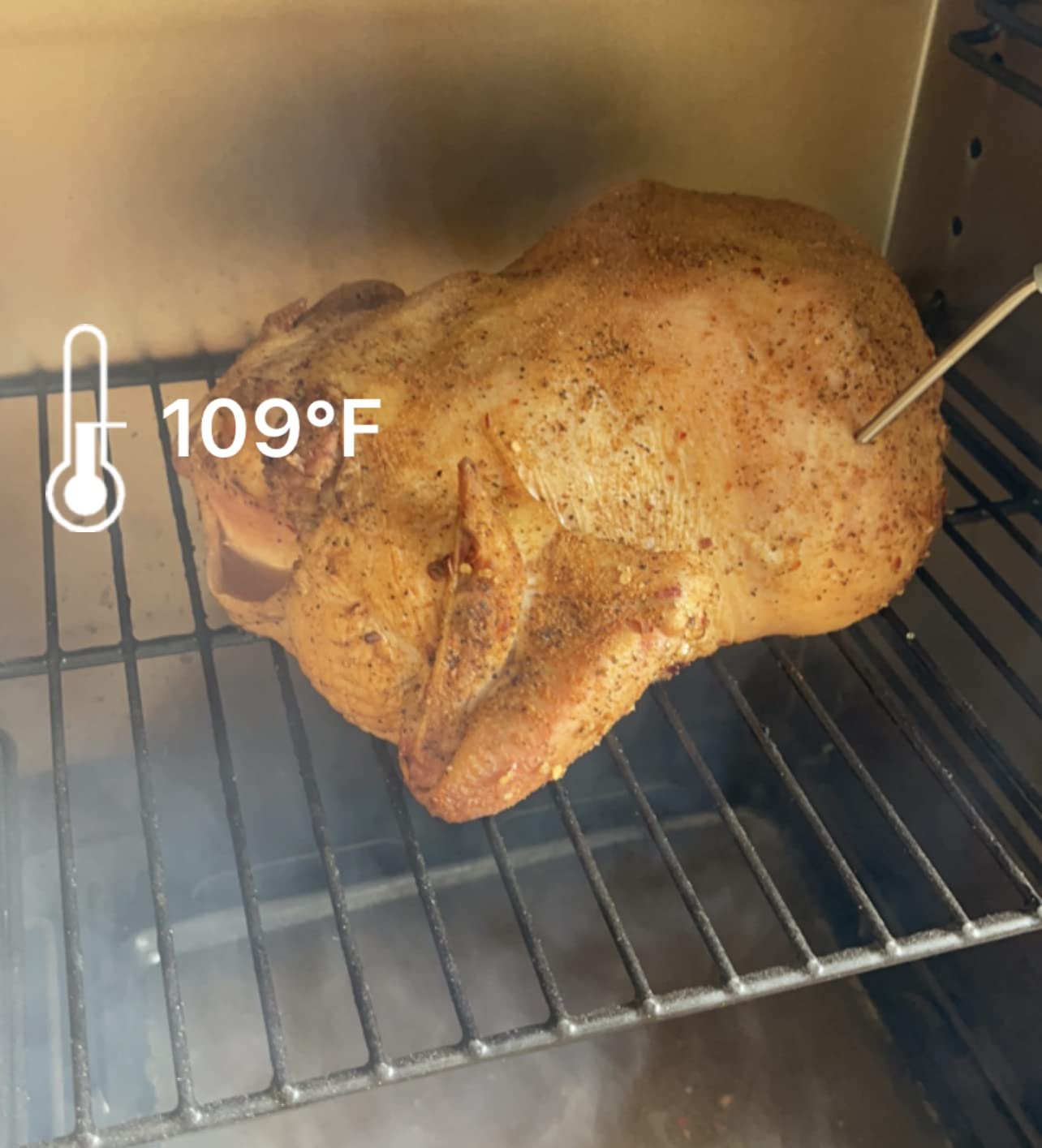
The 40-plus pound hopper with pellet purge is the feature that changes how you cook. Owners routinely report 24-plus hours of unattended burn from a single fill, which is what makes an overnight brisket or a two-day batch of ribs realistic. A 300-watt auto-start igniter with auto shut-off handles the preheat, and the fully programmable digital control runs 150 to 450 degrees.
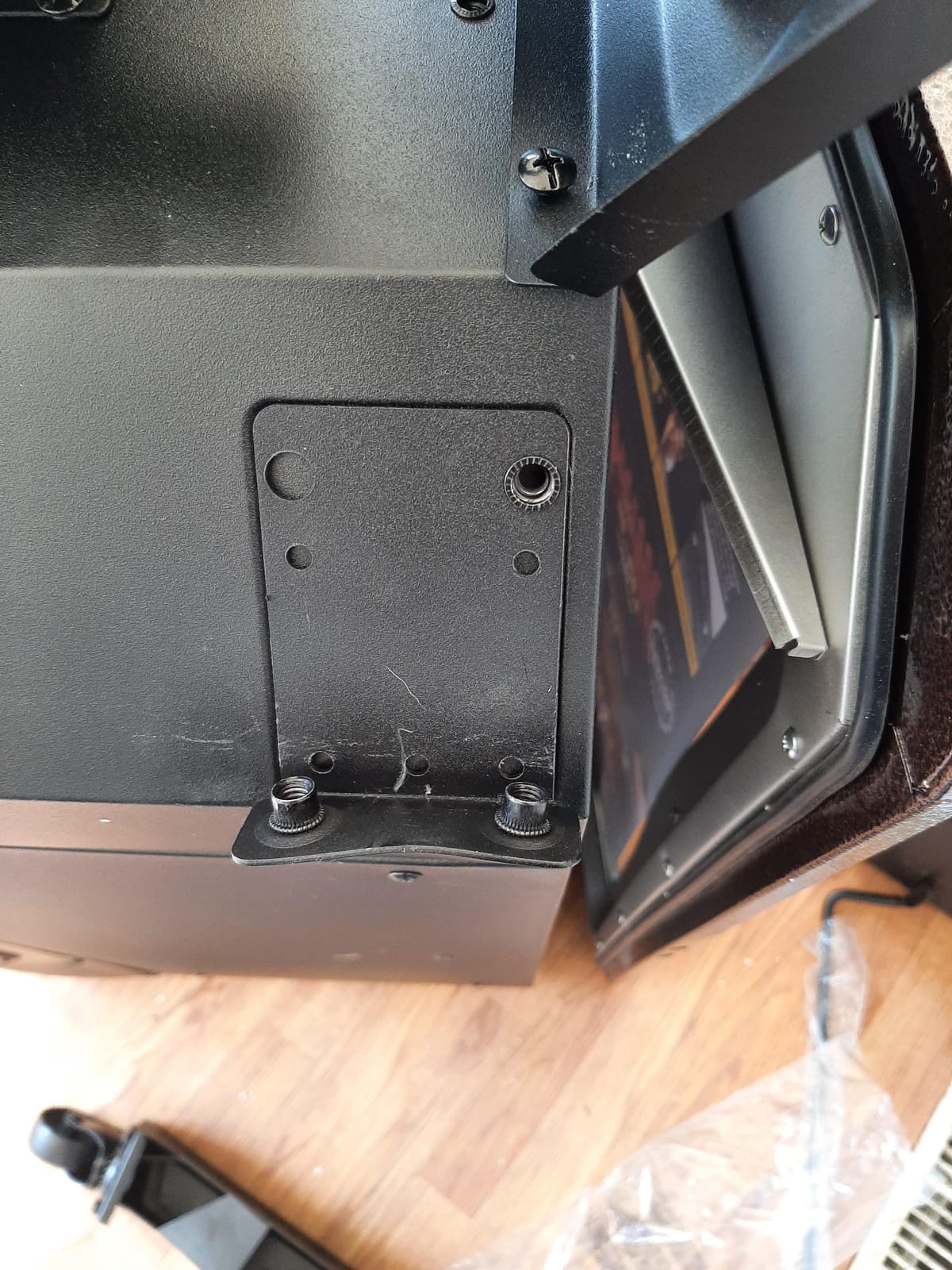
Physically it is 26 inches deep, 22 inches wide and 53 inches tall at 97 pounds, and it arrives nearly assembled. Most buyers only attach the base legs and the door handle, which is a genuine contrast to the flat-pack cabinets that take an evening. If you have read the competition’s warnings about vertical assembly, this matters.
How well does it hold temperature in cold weather?
Owners in colder climates describe steady recovery after opening the door and topping up the hopper, and the 450 degree ceiling gives you more headroom than most cabinets that stop at 420. The 40-pound hopper matters more in winter than in summer, because pellet consumption climbs when the cabinet is working against cold air and a full hopper removes one reason to open the door at all.
The honest limitation is the probe. Owners repeatedly recommend adding a separate wireless probe, because the built-in one sits close enough to the heat source that rack-level temperatures read differently from what your meat is actually experiencing. Budget for a good external probe and the accuracy question largely goes away.
Where owners report problems
The complaints are consistent and mostly cosmetic or ergonomic. The control panel sits low, so you need a stand or a chair to read it comfortably. Pellet dust accumulates in the hopper and needs sifting. Some owners found a gap in the door seal where the panels meet, and replacement internal probe parts are hard to source after a failure.
None of these touch the core function, and the rain cover issue that comes up in reviews is worth taking seriously: the hopper is not sealed, so a cover is a practical accessory. The PBV3P1 is also the older design in this group, which is exactly why it has the deepest review pool and the most proven parts support.
2. recteq RT-B380 Bullseye – Best Value Open-Flame Grill-Smoker
- Open flame pellet design gives strong smoke flavor
- Reaches 749F for real searing
- Built with more stainless than competitors in class
- Quick heat-up times owners praise
- 3.9 average with a large share of 1-star reviews
- 380 sq in is small next to any cabinet
- 15 lb hopper is modest for long cooks
We are including the Bullseye in a vertical roundup because the format comparison is the decision most buyers are actually making. If you have never smoked on pellets before, or you want one appliance that grills steaks on Tuesday and smokes ribs on Saturday, a horizontal open-flame design like this often outperforms a cabinet on both counts.
The mechanism is different in a way that matters. Instead of a convection fan pushing smoke up through a stack of racks, an open-flame pellet grill burns pellets directly across an open burn area, so you get more contact with the fire and noticeably more smoke flavor. Owners consistently praise the flavor and the speed at which it heats.
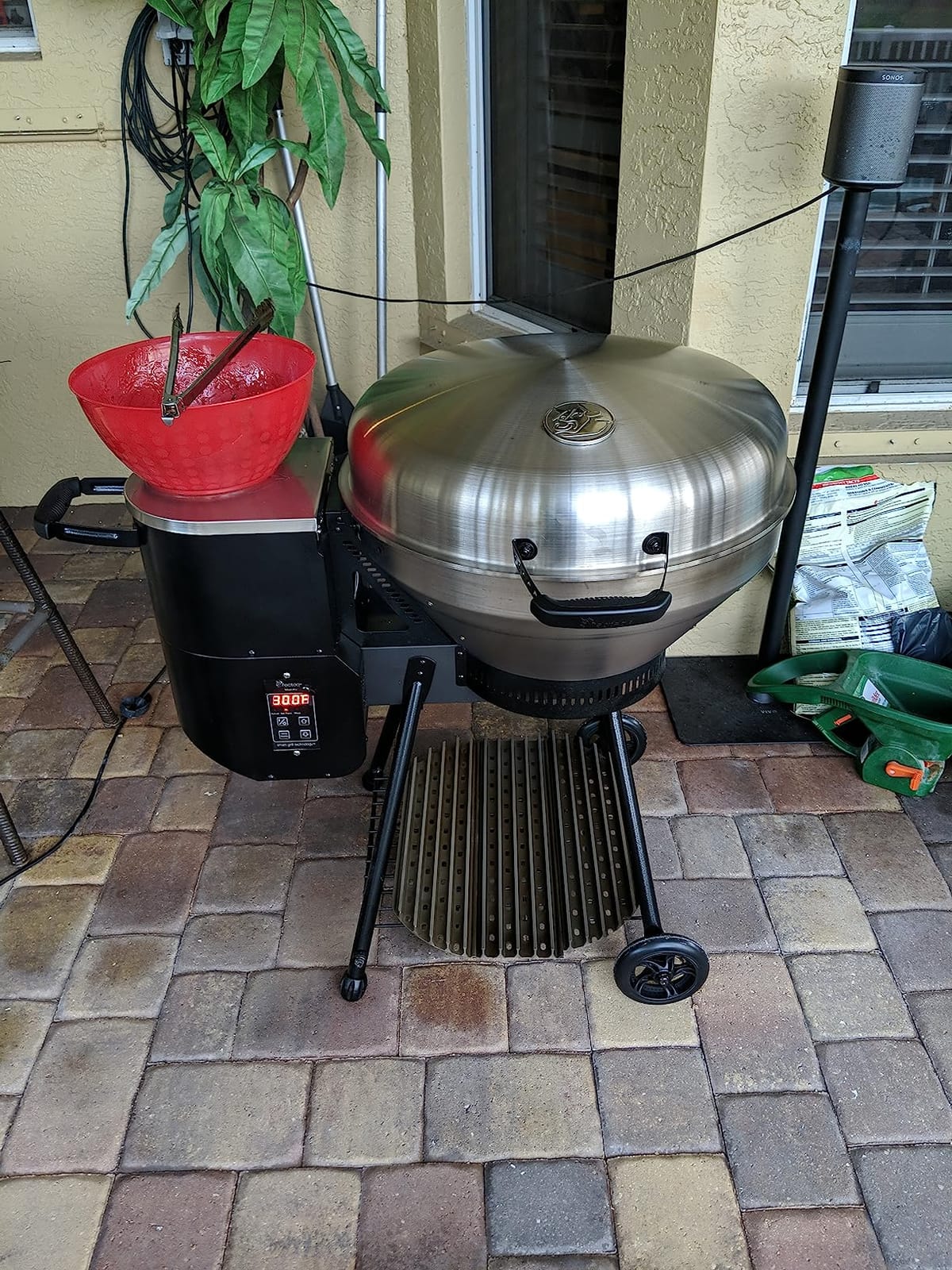
Capacity is the trade. 380 square inches fits 3 whole chickens, 4 racks of baby back ribs, 50 chicken wings or 15 bone-in pork chops. That is a real cook, but it is roughly 40 percent of the space in the PBV3P1 and about a quarter of the Grilla Mammoth further down. You cook in batches rather than in one load.
The 749 degree ceiling is the other trade in reverse. A cabinet stops at 420 or 450. This reaches searing temperatures, and recteq rates the ignition system for over 100,000 lighting cycles. The 15 lb hopper with a 22-inch stainless dome and rainproof venting is adequate for a full day of cooking but not much beyond it.
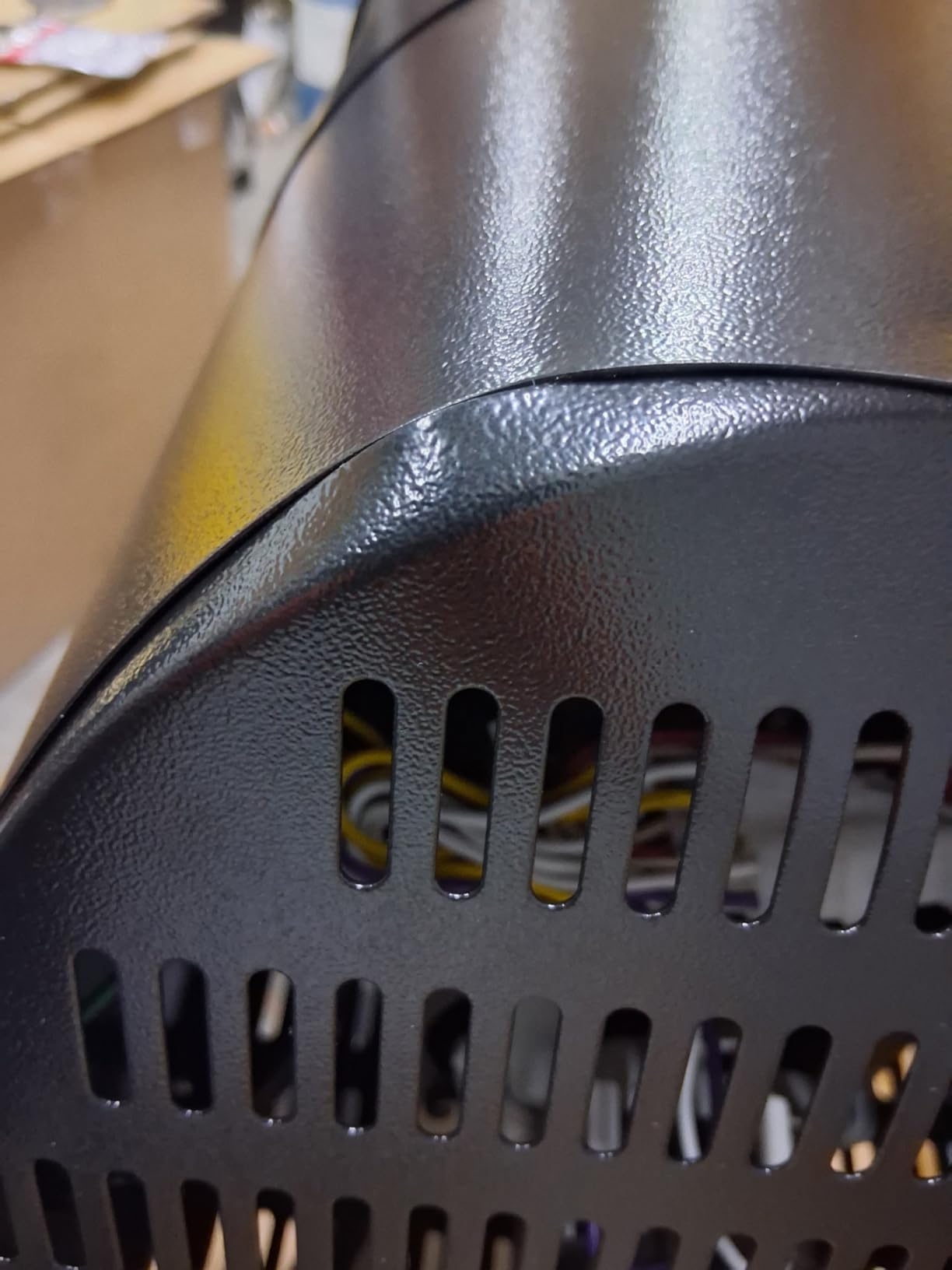
Is 380 square inches enough for a family?
For a household of four that smokes once a week, yes. The manufacturer load guide of 3 whole chickens or 4 racks of baby back ribs is a realistic full load, not a marketing stretch. If you regularly cook for 10 or more people, or you want a rack of ribs and brisket and salmon simultaneously, a cabinet is the right answer and this one will feel small quickly.
Because the grate is a single flat plane, the 380 square inches is also more usable than the same number on a cabinet. Nothing is stacked above something else, so every piece of meat sits at the same distance from the fire. That is why the flavor is a step ahead of most pellet cabinets at this price tier.
Where the 3.9 star average comes from
The rating is pulled down by a sizeable block of 1-star reviews, and the pattern in those reviews is capacity, not failure. People buy a grill-smoker expecting a cabinet and then meet a compact horizontal unit. Buyers who understand what they are getting rate it well, which is why the positive reviews focus so consistently on flavor and heat-up speed.
The build is also worth noting. Owners comment that recteq fits more stainless steel components into this class than competitors, and the unit weighs 70 pounds, which is light enough to move without a dolly. If you want the pellet format without cabinet capacity, this is the value pick in the group.
3. Pit Boss Navigator 3-Series – Best for App-Controlled Cooking
- App control for remote temperature adjustments
- 50 lb hopper for very long cooks
- Five racks give genuine loading flexibility
- Five year warranty
- Auger jams on fresh pellet bags
- Readings drift and overshoot set point
- Low 3.3 rating with about a third one-star
The Navigator 3-Series is the most capable cabinet on paper, and it is the one we would expect to work hardest for a competition cook or a small catering run. It also carries the weakest owner feedback of any product in this roundup, and the two facts are connected.
What the spec sheet promises is genuinely impressive. 1,118 square inches across five porcelain-coated steel cooking racks, a 50 lb pellet hopper, three probe ports with one probe included, a chimney exhaust with convection airflow, and a 130 to 420 degree digital range that covers jerky at the bottom and a hard sear at the top. It ships with a five-year warranty, the longest in this group alongside the Pit Boss line generally.
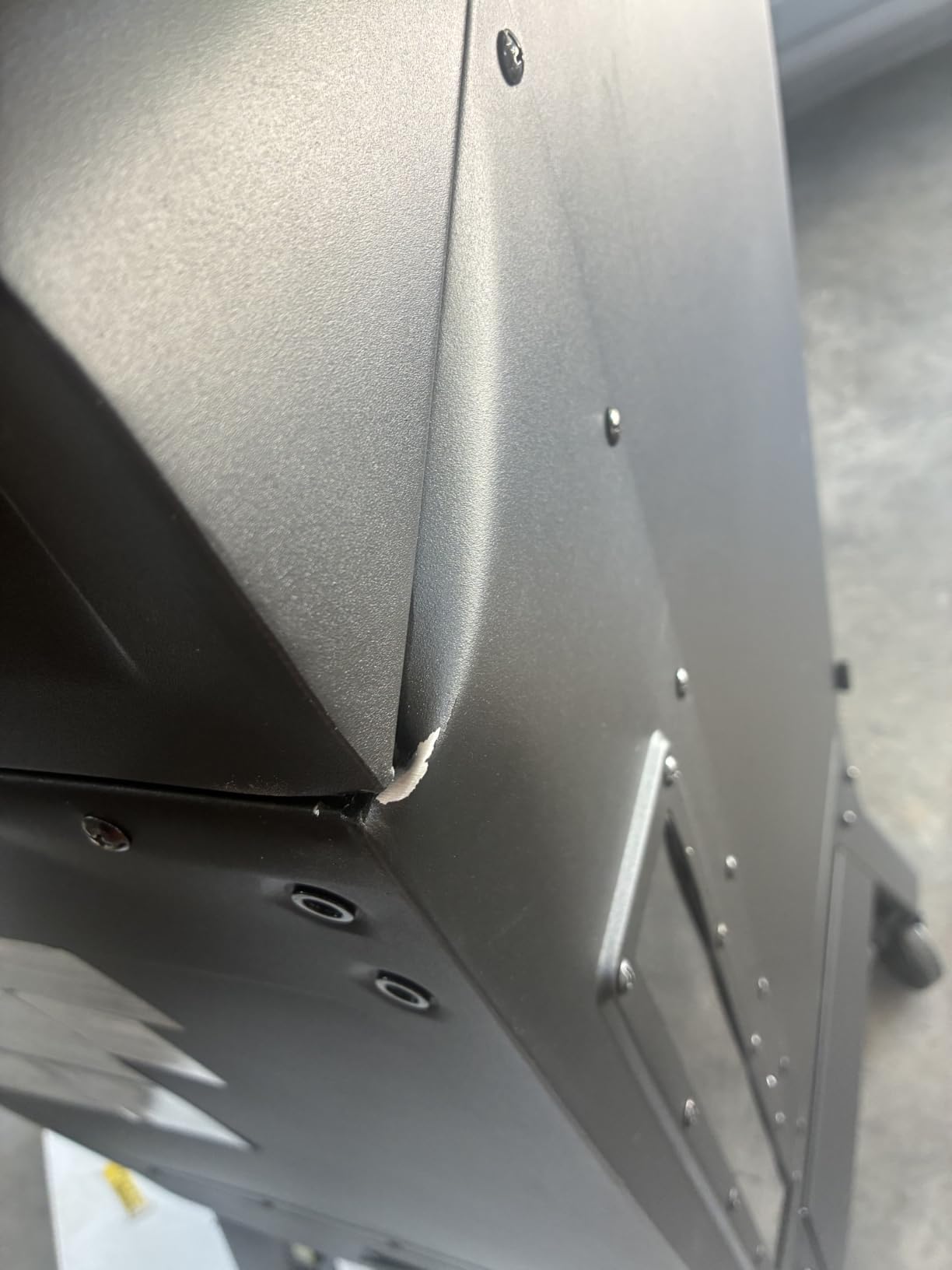
The app is the reason to look here first. Built-in WiFi and Bluetooth connect to the Pit Boss Grills app, so you can set and monitor a cook from inside on a cold morning. Owners who upgraded from a previous smoker call vertical smoking simple once they are used to it, and remote control removes most of the reason to stand next to the cabinet at all.
Now the complaints, which are specific enough to be useful. The most repeated is auger jamming when a fresh bag of pellets is started, cutting off feed and smoke output until the jam clears. This is a start-of-bag problem, not a random failure, which means you can manage it: pull the first of each new bag, and do not start a long cook on day one of a fresh delivery.
Temperature readings also drift and overshoot the set point according to owners, which is frustrating on a unit with three probe ports. And there is a block of quality control reports: an unconnected blower wire, a bent hopper, bent hardware and misaligned parts at assembly. The 3.3 star average and the roughly 35 percent one-star share come from these, not from cooking results.
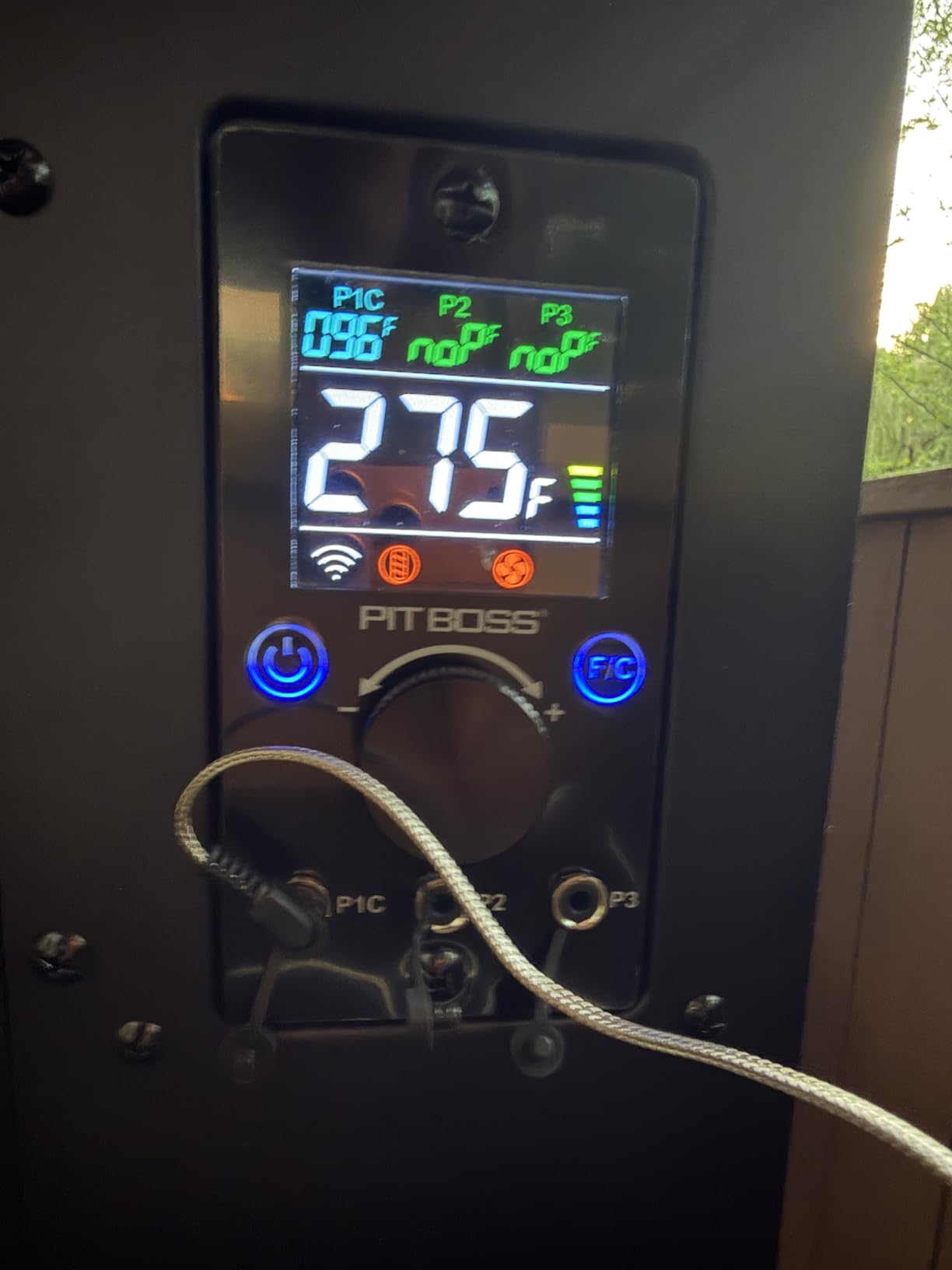
Is the 50 lb hopper worth the auger risk?
If you cook competition volume, yes. A 50 lb hopper is the difference between a two-day cook and a four-day cook, and no other cabinet in this group except the Pellet Pro comes close. For weekend cooking, it is generous but not essential, and you accept the auger risk without a big payoff.
Also consider the footprint and weight. At 127 pounds this is a substantial cabinet, and the manufacturer does not publish a dimension figure, so measure your planned space carefully before committing. The 1,118 square inches is 24 percent more than the PBV3P1, but you are paying for it in both size and a review pool of 33 that tells you less about long-term durability than you would like.
What we would want to see before recommending it
Six months of clean operation with no auger jam, and a control board revision that stabilizes the temperature readings. Right now the honest position is that the design is right and the quality control on this production run is inconsistent. If you buy it, inspect the unit on arrival before you paint or season it.
If the idea of a five-year warranty and app control is what you are shopping for, the category also has a PBV3P1 option with a far deeper support record. Our full pellet smoker rankings cover the wider market if you want alternatives outside the eight here.
4. recteq RT-380BD Bullseye Deluxe – Best for Temperature Precision
recteq Pellet Grill RT-380BD Bullseye Deluxe, WiFi Enabled Electric Pellet Smoker Grill, BBQ Outdoor, Smoke, Sear, and More
- Highest rated unit in our group at 4.9
- Owners praise temperature precision and fast heat-up
- Reaches 1000F for searing and pizza
- Responsive customer service
- App does not log temperatures across a cook
- 230 pounds is heavy to move
- Only 16 reviews for the model
The Bullseye Deluxe has the highest average rating of anything we ranked, 4.9 across 16 reviews with roughly 91 percent five-star feedback. We are including it, and we want to be clear about the size of that data set. Sixteen reviews tells you what the first owners experienced. It does not tell you what year three looks like.
The headline feature is dual-band WiFi with a PID control and an upgraded control panel, which is the combination that produces tight temperature holding rather than on-off cycling. Owners describe fast heat-up, stable holding, and a working range in the 500 to 700 degree zone for searing and wood-fired pizza.
The stated range is 200 to 1000 degrees, rated for over 100,000 lighting cycles, with an 18 lb hopper under a stainless dome with rainproof venting. It is built with more stainless steel components than other grills in its class, and at 380 square inches it holds the same load list as the standard Bullseye: 3 chickens, 4 racks of ribs or 50 wings.
What a 4.9 rating is worth to you
A lot, at this stage. When owners independently describe a unit as the best pellet grill they have used, that is meaningful signal, particularly on temperature control. PID holding is the difference between a cook that finishes on schedule and one that needs checking every 30 minutes, and that difference grows the longer the cook runs.
The catch is capacity and weight. 380 square inches is compact, and at 230 pounds this is by far the heaviest unit in the group. That weight is a fair signal of build quality, but it also means you are committing your patio real estate permanently before you know how much you will actually use it.
Where it falls short
The single most common gap owners name is the app itself. It connects and it controls, but it does not log grill and meat temperatures across a cook, so you cannot pull a temperature history the way you can with some grill apps. If you like reviewing your cooks after the fact, that matters.
There is also a data caution. Recteq has a track record of responding well to problems: owners mention replacement parts being sent after transit damage. That is a good sign, but it is a small sample. Treat this as a strong current recommendation rather than a proven long-term one, and pair it with the broader vertical smoker comparison if you are weighing a cabinet instead.
5. Grilla Mammoth Vertical Smoker – Best for High Capacity
GRILLA Mammoth Vertical Smoker with 5 Trays, High Smoke Production, Wifi Enabled Touchscreen Controller, For Smoking, Outdoor Cooking, and Grilling
- Largest cooking area in the group at over 1600 sq in
- Double wall insulation stretches a hopper fill to 50 hours
- Lipped deflector accepts wood chunks for heavier smoke
- Built in water pan for moisture and grease
- 15 lb hopper is small for 1600 sq in
- Only 16 reviews with 18 percent 1 star
- Premium price for the capacity tier
For raw capacity, the Mammoth is in a class of its own. Over 1,600 square inches of cooking space, and it accepts up to 10 steel racks or 24 S-hooks for hanging. That is the most hanging capacity of anything we ranked, and hanging is the thing cabinets do that horizontals simply cannot.
It runs 28 inches deep, 28 inches wide and 59 inches tall at 130 pounds. That height is the point: the vertical stack is tall enough to hang a whole duck, a turkey, or rows of sausage and snack sticks on hooks, which is the use case that pulls people out of the horizontal pellet grill world in the first place.
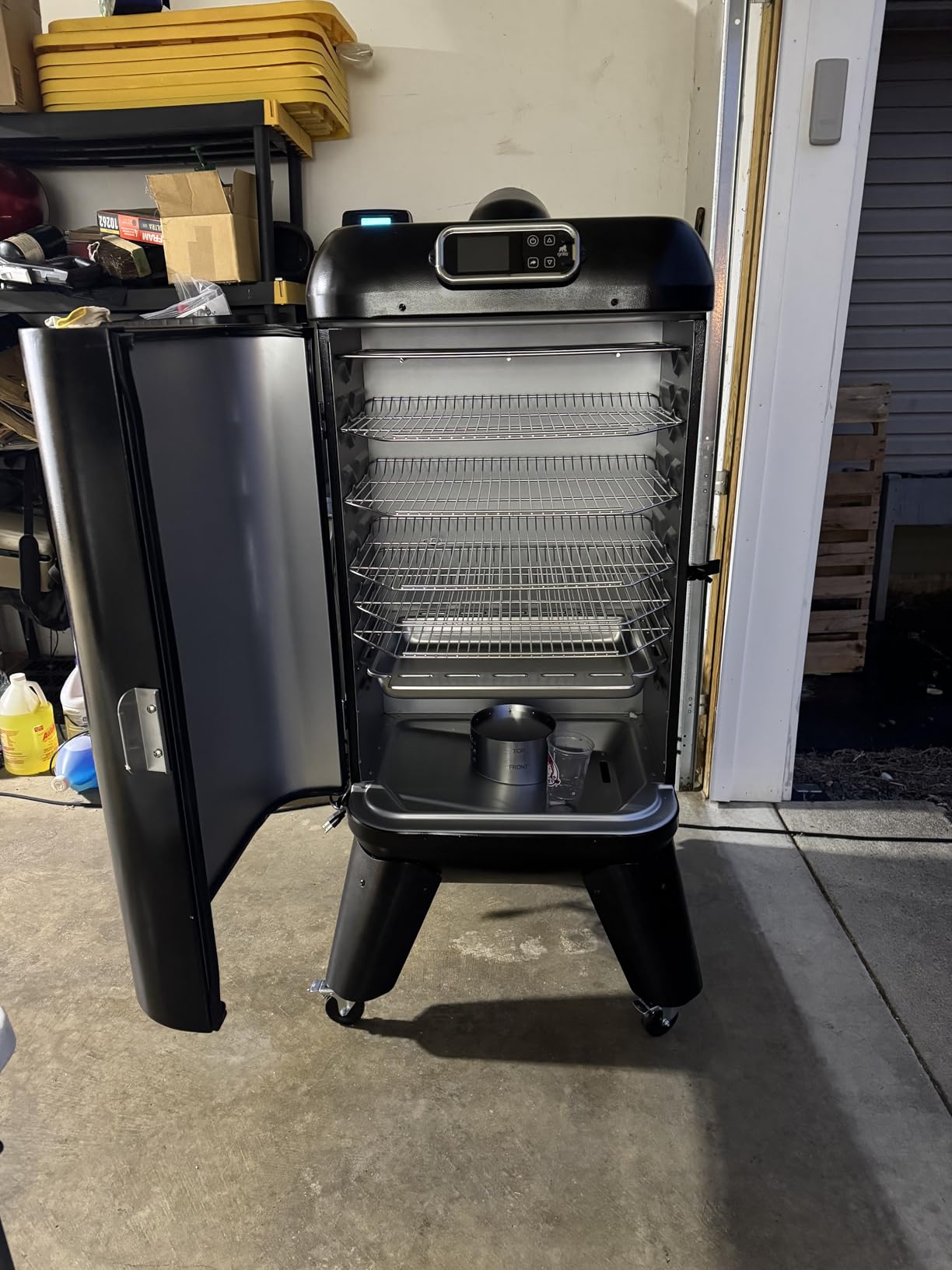
The double-wall insulation is the technical feature behind the run time. According to Grilla Grills, the cabinet burns up to 50 hours at 240 degrees on a single 15 lb hopper fill, which works out to roughly 0.3 lb per hour. That is an efficient burn, and it is why a small hopper does not defeat the huge cooking area.
Smoke production gets help from the lipped deflector, which lets you add extra wood chunks or chips on top of the pellet burn for a heavier, bark-forward profile. There is also an integrated water pan, which is the single most useful accessory in a vertical cabinet and one of the few competitors even mentions. It slows bark development, helps hold smoke ring, and gives you a grease collection point in one part.
The Alpha Connect 2.0 controller is a WiFi touchscreen with Set and Forget digital control and a free phone app. A 4-year manufacturer warranty sits in the middle of this group, shorter than the five years on the Pit Boss cabinets and longer than the three years on the entry-level units.
How much meat can 1600 square inches actually hold?
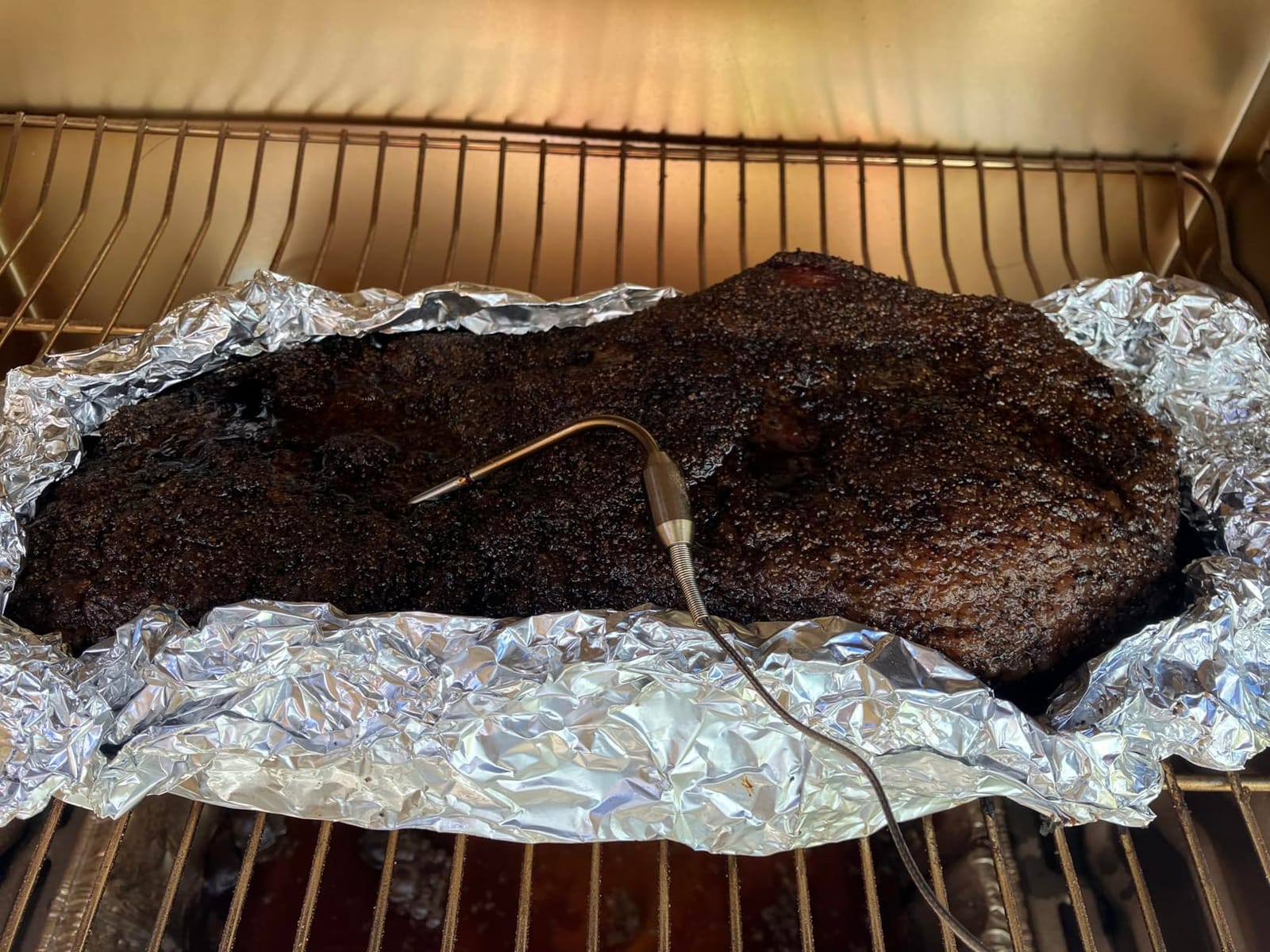
With 10 racks loaded you are looking at a genuine commercial-scale load: multiple racks of ribs, several pork butts, a brisket flat and trays of fish or vegetables, all at once. The cabinet does not need to be reloaded mid-cook, which is the operational difference between a vertical this size and a 380 square inch grill-smoker.
The trade is patience and space. 59 inches tall and 28 inches square is a large object to give up in a small patio, and a full load of 10 racks also means a long cook. If your usual weekend is three or four hours, you will use a fraction of this capacity and be cleaning a very large cabinet afterward.
What the thin review pool tells us
With 16 reviews and a 4.0 average, 62 percent of feedback is five-star and 18 percent is one-star. The positives cluster on rack count, burn duration and hands-free control. The negatives are harder to characterize because there are so few of them, and that thin data set is the main reason this is not our top pick despite winning on capacity.
Buy it if hanging capacity and loading a full cabinet in one shot are your priorities. If you want the same format with a proven support network and more reviews behind it, the PBV3P1 is the safer first cabinet.
6. Pellet Pro 2300 Vertical Smoker – Best for Bulk Loads
Pellet Pro® 2300 Vertical Pellet Smoker DOUBLE WALL Cabinet Free Cover and Convection Fan – Home Delivery
- Roughly 10 cubic feet of interior cooking space
- PID holds within about 5-10F of set point
- Double wall steel cuts temperature swings and fuel use
- Convection fan evens top to bottom spread
- Vague assembly
- some parts needed filing and re-tapping
- Heating element failed out of the box for one owner
The Pellet Pro 2300 is the one in this group that looks like a commercial smoker and cooks like one. Approximately 10 cubic feet of interior volume, three 21 by 20 inch stainless steel grates plus a seven-section rib rack, and an 18-gauge double-wall steel body. It is built for someone who cooks for a crowd every weekend rather than a household.
Temperature performance is the strong suit. Owners who get past assembly report PID control holding within about 5 to 10 degrees of set point, low pellet consumption, and results they describe as the best of any smoker they have owned. The convection fan equalizes the temperature spread from the top rack to the bottom, which matters more in a cabinet this deep than in a four-rack unit.
It measures 26 inches deep, 42 inches wide and 54 inches tall at 200 pounds, and it is the only cabinet in this roundup that includes a protective cover and home delivery. That inclusion matters at this size, and it also means the cabinet arrives at your door rather than being curbside freight.
Is it really a 10 cubic foot cabinet?
Roughly, yes, and that figure is the honest way to size it. For context, the PBV3P1 is 901 square inches across four racks. The Pellet Pro gives you three large grates and a rib rack in a body wide enough that you are not stacking everything in one column. If your metric is racks of ribs per load, this wins by a wide margin.
The 42-inch width is the catch for anyone with a small patio. This is the widest unit we ranked, and at 200 pounds it is not something you reposition alone. Measure the space and the path to it before you order, because unlike a four-rack cabinet you are not squeezing it into a corner.
Where the build quality falls short
This is the one in the group with real assembly risk. Owners report vague instructions, misaligned holes, and parts that had to be drilled, filed and re-tapped to fit. One review reports the heating element failed out of the box and needed a torch to start the first fire, and another mentions sharp grate frames that caused cuts.
The PID panel also sits very low, which owners with back problems call out specifically. And one outlier review reports rusted stainless plus grease fires during commercial duty. That is a single report and not a pattern, but on a smoker you may run in a shed or a garage, it is worth reading twice.
Budget a full afternoon for assembly and order a set of nitrile gloves. If it goes together properly, the cooking performance is genuinely the best-controlled in this group.
7. Pit Boss 4-Series Digital Vertical Smoker – Best for Small Patios
- Six adjustable racks give the most rack positions in a compact body
- WiFi and Bluetooth on a unit this small
- Removable grease cup and rear wheels
- 1650 watt heating element
- Side element barely heats the wood chip tray
- Severe heat stratification
- 3.2 rating with 39 percent one-star
On paper this is the most attractive small-format cabinet in the group: 1,320 square inches across six adjustable racks, at 19.8 by 23.2 by 47 inches and 74.6 pounds. Built-in WiFi and Bluetooth at that size is unusual. The reality is a smoker that many owners describe as an oven rather than a smoker.
The design flaw is the heating element position. It is mounted on the side, which means it heats the chamber adequately but barely heats the wood chip tray above it. Owners report little to no smoke from the chips, and the 3.2 star average with roughly 39 percent one-star reviews is the direct consequence.
There is a second issue that compounds it. Owners describe severe temperature stratification, with only the bottom rack cooking properly. On a six-rack cabinet that is a serious limitation, because the whole point of the format is that you load multiple levels at once.
The 100 to 300 degree range is well suited to low-temperature smoking and nothing more. There is no searing headroom, and no way to push bark hard at the end of a cook. The 1,650 watt element and the removable grease cup with rear wheels are genuinely good ideas, and cleanup is easier than on most cabinets.
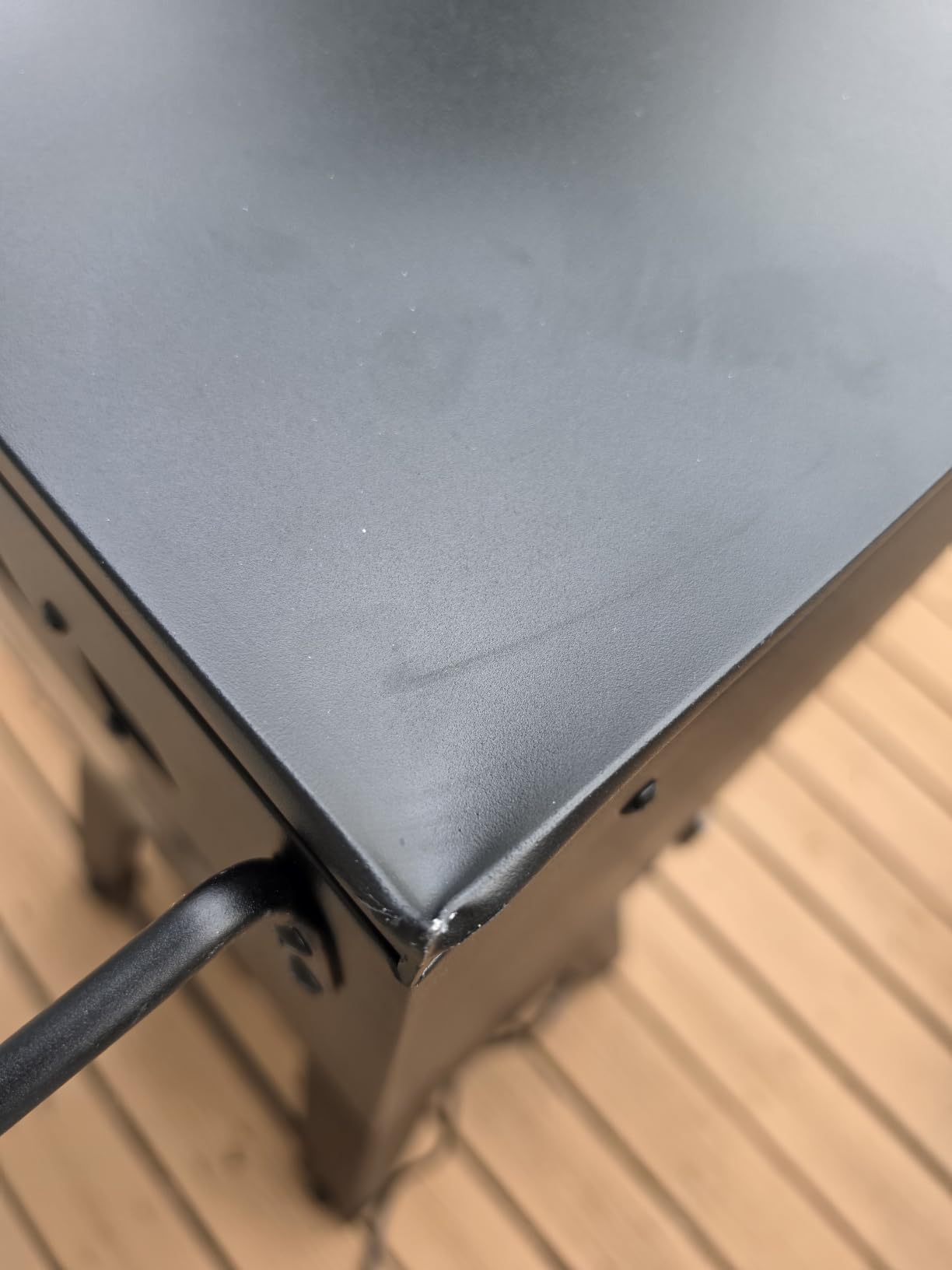
There is also a quality control signal worth weighing. Owners report the unit arriving dented so the door would not seal without repair, a wood chip tray and its rails seizing on first use, and difficult assembly. The carton is difficult for one person to handle, which matters if you are setting it up alone.
The 3-year warranty is the shortest among the cabinets we ranked that offer more than a year, which is a fair proxy for the general build standard here.
Is the small footprint worth the compromises?
If your patio is genuinely tight, the 19.8 by 23.2 inch footprint and 47-inch height are a real advantage over the 59-inch Mammoth or the 42-inch-wide Pellet Pro. Nothing else in this group stacks six adjustable racks into that footprint, and the rear wheels mean you can roll it aside when you are not cooking.
But you are trading smoke production and even heat distribution for that compactness, and in a smoker those are the two things you cannot engineer around later. Six racks that only cook evenly at the bottom is worse than four racks that cook evenly throughout, which is why the PBV3P1 remains our pick in a similar footprint class.
Who should still consider it
If you are on a strict footprint budget, want WiFi control in a small body, and primarily cook low-temperature items like ribs, pulled pork, fish and vegetables in the 225 to 275 range, you can make this work. Pair it with a smoke generator for additional smoke if you need heavier flavor, and check the door seal carefully on arrival.
Our advice for most people is to spend up to a larger cabinet once rather than buying a compact one twice. If you want more detail on fitting a grill into a small space, the compact pellet grill picks are a better use of a tight budget than a compromise cabinet.
8. MAISON BACKYARDS Vertical Pellet Smoker – Budget Pick
- Automatic pellet feed produces good results when it works
- Seller support sends replacement parts quickly
- Cover and probe included in the box
- Compact 17.3 inch depth
- Several units failed after one or two uses
- Frequent transit damage and damaged connectors
- 616 sq in is tight for large briskets
This is the entry-level vertical pellet smoker, and it exists because the format should not be out of reach. When a unit works, owners report excellent results: pulled pork, ribs, chicken and beef jerky, with an automatic pellet feed that needs no tending. The LED control panel and built-in meat probe are simple and functional.
Capacity is 616 square inches across four chrome-coated racks, with a waterproof cover included. Owners note that 616 square inches is smaller than the listing photos suggest and that it is tight for large briskets, which is worth taking at face value. Plan around smaller cuts, or use the space for multiple lower racks.
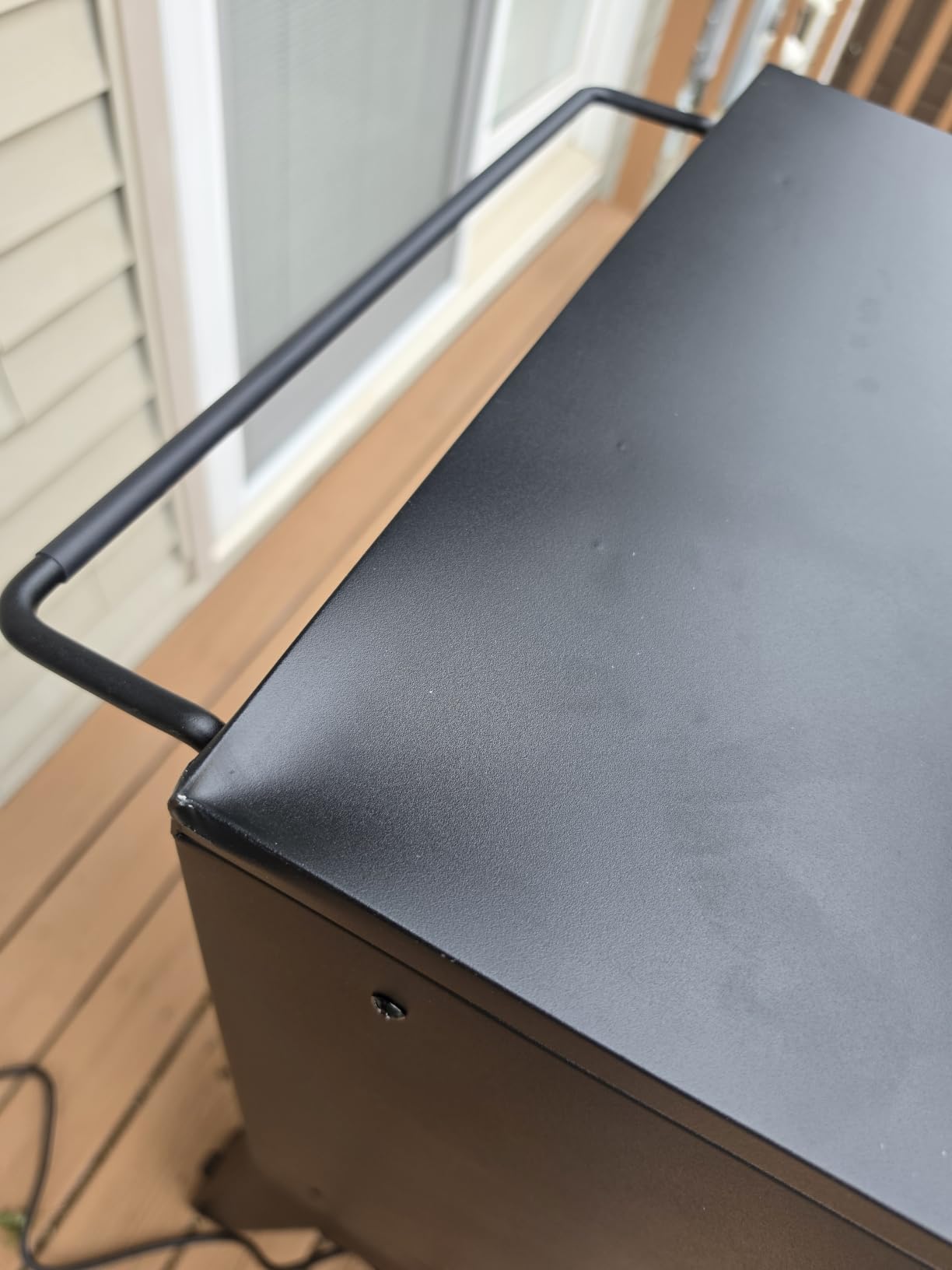
The problem is consistency. Several owners report units that failed after only one or two uses, and transit damage with damaged connectors is a recurring theme. At 44 kilograms, or about 97 pounds, it is a substantial object to receive in a carton that is often not in good shape.
Is this a reasonable first smoker?
Yes, with the right expectation. If you want to learn pellet smoking on a modest budget, learn how a hopper, an auger and a PID loop behave together, and cook a lot of ribs and pulled pork, this does all three. You will learn on a simpler machine than you would learn on, which some people prefer.
What you should not do is expect commercial durability. At 3.4 stars with roughly 20 percent one-star feedback, the quality control is inconsistent rather than bad, which means your experience will depend on whether your unit is a good example. The seller’s willingness to ship replacement parts quickly is the offsetting factor and worth weighing before you order.
Where to draw the line on quality
Inspect the unit the day it arrives and before you season it. Check the connector ends, verify the racks are not bent, and confirm the door closes and latches with even pressure around the seal. Owners who did this were far more likely to have a smooth first run.
Budget roughly two hours for assembly, which is what owners report. If you can absorb that, and you are comfortable troubleshooting a wiring connector, the support responsiveness makes this a defensible budget pick. If you want something you will not think about, the PBV3P1 costs more once and removes the doubt entirely.
Vertical vs Horizontal Pellet Smokers: Which One Do You Actually Need?
Are vertical or horizontal pellet smokers better? It depends on one question: do you need more cooking volume in a small space, or do you need searing heat? Vertical cabinets win the first question decisively. Horizontal pellet grill-smokers win the second one just as decisively. No cabinet in this roundup reaches 500 degrees, and most stop at 420, while the recteq models here reach 749 and 1,000 degrees.
The mechanism explains the temperature ceiling. A cabinet uses a fan to move air and smoke vertically past stacked racks, which is efficient at holding a steady low-and-slow temperature and inefficient at pushing concentrated heat at a single piece of meat. A horizontal grill puts a burn pot and open flame right under the food, so it makes searing and direct heat almost natural and smoke contact stronger.
What are the disadvantages of using a vertical smoker? There are five, and they are consistent across every cabinet we tested and read. First, no searing above 420 to 450 degrees, so reverse-seared steak is off the table. Second, thinner smoke flavor than a horizontal open-flame grill, because the smoke is stretched past multiple racks on its way up. Third, more heat loss when you open the door, since a tall column of hot air spills out faster than a shallow one. Fourth, a smaller single-piece load, since the width is narrower. Fifth, more maintenance surfaces, with more racks, more rack positions and a bigger grease channel to clean.
Smoke flavor is the complaint that comes up most often in owner discussions, and it is worth addressing directly rather than dismissing. The fix is real: a smoke box or lipped deflector that accepts wood chunks. The Grilla Mammoth has one built in. On other cabinets, a small separate smoke generator on the same circuit does the same job for less money than a new smoker.
The water pan question deserves its own answer because almost nobody covers it. Do you need a water pan in a vertical pellet smoker? No, but it helps more than most accessories. A pan of water slows bark development, helps a smoke ring set on fatty cuts like brisket and pork butt, and moderates the dry heat that cabinets tend to produce. The Grilla Mammoth integrates one; most others do not, and a simple tray on the lowest rack position does the same work.
Here is the rule we use. If your cooking is ribs, brisket, pulled pork, salmon, sausage and jerky, and you want to do it in batches on a small patio, buy a vertical. If your cooking is steaks, burgers, vegetables, pizza and fish, and you want one appliance for grilling and smoking, buy a horizontal pellet grill. Many owners end up with both, and that is a perfectly reasonable outcome rather than a mistake.
What to Look for in a Vertical Pellet Smoker?
1. Cook area in square inches, not rack count
Rack count is a marketing number. Cook area is the real capacity metric, and it is what determines how much meat you load. A four-rack cabinet with wide grates can beat a six-rack unit with narrow ones. In this group the range runs from 380 square inches on the recteq Bullseye to over 1,600 square inches on the Grilla Mammoth, with the PBV3P1 at 901 and the Pit Boss 4-Series at 1,320.
As a rule of thumb, count roughly 35 to 45 usable square inches per rack of pork ribs, so 900 square inches supports about two full racks of ribs plus a flat of brisket. Measure your available rack width too, because a cabinet can have plenty of total area and still be too narrow for a packer you want to cook whole.
2. Hopper capacity and realistic burn time
Hopper size determines whether a cook can run unattended overnight. The spread here is 15 lb on the recteq units, 40-plus lb on the PBV3P1, 50 lb on the Navigator 3-Series, and a 15 lb hopper on the Grilla that is stretched to 50 hours by double-wall insulation. Do not compare hopper size without comparing insulation, because those two numbers together are what matter.
Look for a pellet purge function as well. It burns off residual pellets at the end of a cook, which prevents the bitter, ashy taste that comes from old pellets smoldering in the fire bowl at the start of the next one.
3. Controller type and temperature range
A PID controller holds temperature within a few degrees by modulating the auger feed continuously. A simple on-off dial cycles between overshoot and undershoot, which costs you both fuel and bark. Every cabinet we rated with a PID controller in the spec sheet is a better buy than one without, regardless of brand.
Check the low and high ends. A 100 to 300 degree range is fine for ribs and pulled pork but rules out searing. A 130 to 420 range gives you room to finish a brisket with a hard sear. A 150 to 450 range is the most flexible. Below 150 degrees you cannot do proper jerky, and above 450 you can start searing.
4. Connectivity, and whether you will use it
WiFi and Bluetooth app control is now common in this category, and it is genuinely useful for overnight cooks. It is also the most over-marketed feature on cabinets that do not hold temperature well. App control cannot fix stratification, so check the owner reviews for temperature accuracy before you pay extra for connectivity.
Ask whether the app logs temperature history across a cook. The recteq Bullseye Deluxe connects well but does not log, and owners specifically mention that as a gap. Check probe port count too: three ports means you can run a chamber probe plus two meat probes, which is what a serious cook actually needs.
5. Warranty length as a build quality proxy
Warranty length is the most useful free signal available, because it reflects what the manufacturer expects its hardware to survive. In this group the Pit Boss Navigator 3-Series carries 5 years, the PBV3P1 sits in the same brand family, the Grilla Mammoth carries 4 years, the Pit Boss 4-Series carries 3 years, and the budget units carry the least. Longer warranty generally means a company expects fewer failures, and it also means parts will exist in five years.
Register the smoker on arrival. Nearly every manufacturer requires registration for warranty service, and it takes two minutes while you are already inspecting the unit.
6. Ash and grease management
This is where high rack counts catch up with you. Eight to ten racks means ten surfaces to scrape, plus a larger grease channel. Look for a removable grease cup, a slide-out grease tray, and an ash drawer that empties from the front. The Pit Boss 4-Series scores well here with a removable grease cup, an easy-access grease tray and rear wheels, even though the smoker itself underperforms.
A water pan counts as maintenance equipment too, since it needs filling, emptying and cleaning regularly. Budget for it.
7. Footprint, weight and assembly
Measure the cooking footprint and the path to it, not just the floor space. Cabinets are tall and top-heavy, and a 59-inch unit like the Grilla Mammoth or a 200-pound unit like the Pellet Pro needs a clear route to its final position. Rear wheels or locking casters are worth paying for if you ever need to move it.
Finally, check how much assembly is involved. The PBV3P1 arrives nearly assembled with only legs and a door handle to attach. The Pellet Pro 2300 draws complaints about vague instructions, misaligned holes and parts needing filing. A weekend afternoon saved at assembly is worth more than it sounds.
Which vertical pellet smoker is right for you?
For a first cabinet and a family cooking ribs and brisket most weekends, the Pit Boss PBV3P1. For someone who wants pellet cooking and searing in one appliance, the recteq RT-B380 Bullseye. For an app-driven overnight cook with a five-year warranty, the Navigator 3-Series, once you have read the auger reports. For a 4.9-rated precision grill with a compact body, the recteq Bullseye Deluxe. For hanging a whole duck and loading ten racks, the Grilla Mammoth. For genuine bulk volume, the Pellet Pro 2300. For the tightest patio, the Pit Boss 4-Series, with the smoke caveat understood. And for the smallest budget, the MAISON BACKYARDS unit, with inspection on arrival built into the plan.
One more note on cost per square inch, which is the number experienced buyers actually quote. A cabinet at 900 square inches and one at 1,600 square inches can sit in the same broad price band, so the larger unit is dramatically cheaper per usable inch and per rack of ribs. If your cooking is batch oriented, buy the larger cabinet. If you will cook three chickens twice a month, the smaller one is enough and you will use it more.
Frequently Asked Questions
Are vertical pellet smokers any good?
Yes, they are any good for low-and-slow cooking, and most owners describe them as the easiest pellet format to run. The fan moves heat and smoke up past every rack, so a digital controller holds temperature with little attention. The limits are a ceiling of 420 to 450 degrees, thinner smoke flavor than a horizontal grill, and a narrow width that limits single-piece cuts.
Are vertical or horizontal pellet smokers better?
Vertical pellet smokers are better for cooking volume in a small footprint, multi-rack loading, and hanging sausage or a whole duck. Horizontal pellet grill-smokers are better for searing, direct heat, and stronger smoke flavor because the flame sits under the food. Most cooks in this roundup use a horizontal for steaks and vegetables and a cabinet for ribs, brisket, salmon and jerky.
What are the disadvantages of using a vertical smoker?
The five consistent drawbacks are a 420 to 450 degree ceiling that rules out searing, thinner smoke flavor because smoke is stretched across multiple racks, faster heat loss when the tall door opens, a narrower width that limits long single cuts, and more cleaning surfaces from more racks plus a larger grease channel. Weight and footprint are also higher than a compact horizontal grill.
What is the highest quality pellet smoker?
Quality in this category is best judged by temperature holding, warranty length and build consistency. The Pit Boss Navigator 3-Series pairs 1,118 square inches and a 5-year warranty with WiFi control, while the recteq Bullseye Deluxe holds the highest owner rating at 4.9. Our overall pick is the Pit Boss PBV3P1, which pairs a 4.5 average across 362 reviews with a 40-plus pound hopper.
Is a vertical pellet smoker worth it?
A vertical pellet smoker is worth it if you cook ribs, brisket, pulled pork, salmon, sausage or jerky in loads a horizontal grill cannot hold, especially on a small patio. The stack of racks, the hanging hooks and multi-day hopper capacity are the reasons. It is not worth it if you mostly sear meat, since the cabinet format cannot reach searing temperatures.
How much meat can a vertical pellet smoker hold?
Cook area is the number that decides this, and it runs from 380 square inches on a compact grill-smoker to over 1,600 square inches on a large cabinet. As a rule of thumb, allow about 35 to 45 usable square inches per rack of pork ribs, so a 900 square inch cabinet holds roughly two full racks of ribs plus a brisket flat, while a 1,600 square inch cabinet can hold ten racks at once.
Do you need a water pan in a vertical pellet smoker?
No, but it helps more than most accessories. A pan of water slows bark development, helps a smoke ring set on fatty cuts such as brisket and pork butt, and moderates the dry heat a pellet cabinet tends to produce. The Grilla Mammoth integrates one in the cabinet. On other models, a simple tray on the lowest rack position does the same job.
What warranty do vertical pellet smokers come with?
Warranty length is a useful proxy for expected build quality. In this roundup the Pit Boss Navigator 3-Series carries 5 years, the Grilla Mammoth carries 4 years, the Pit Boss 4-Series carries 3 years, and entry-level cabinets often carry the least. A longer warranty usually means the manufacturer expects fewer failures and that replacement parts will still exist years from now.
Conclusion: The Best Vertical Pellet Smoker for Most Backyards
The best vertical pellet smokers for 2026 come down to one clear winner. The Pit Boss PBV3P1 gives you 901 square inches across four porcelain-coated racks, a 40-plus pound hopper that runs past 24 hours on a fill, a 150 to 450 degree range, and a 4.5 star average across 362 reviews that keep saying the same thing: it holds temperature and the food comes out right.
Pick the Grilla Mammoth if hanging capacity and loading a full cabinet in one shot matter more than a deep review history. Pick a recteq Bullseye if you want searing heat and a smoke flavor the cabinets cannot deliver. Pick the Navigator 3-Series for app control and a five-year warranty, after reading the auger reports. Either way, buy one cabinet and learn it properly rather than buying a compact compromise twice.
All specifications in this guide come from manufacturer listings and owner review data, and the picks were last checked in October 2026. If you want to see how these cabinets stack up against the rest of the pellet market, our 2026 best pellet smokers tested and ranked and Weber pellet grill reviews cover the formats we could not fit here.