
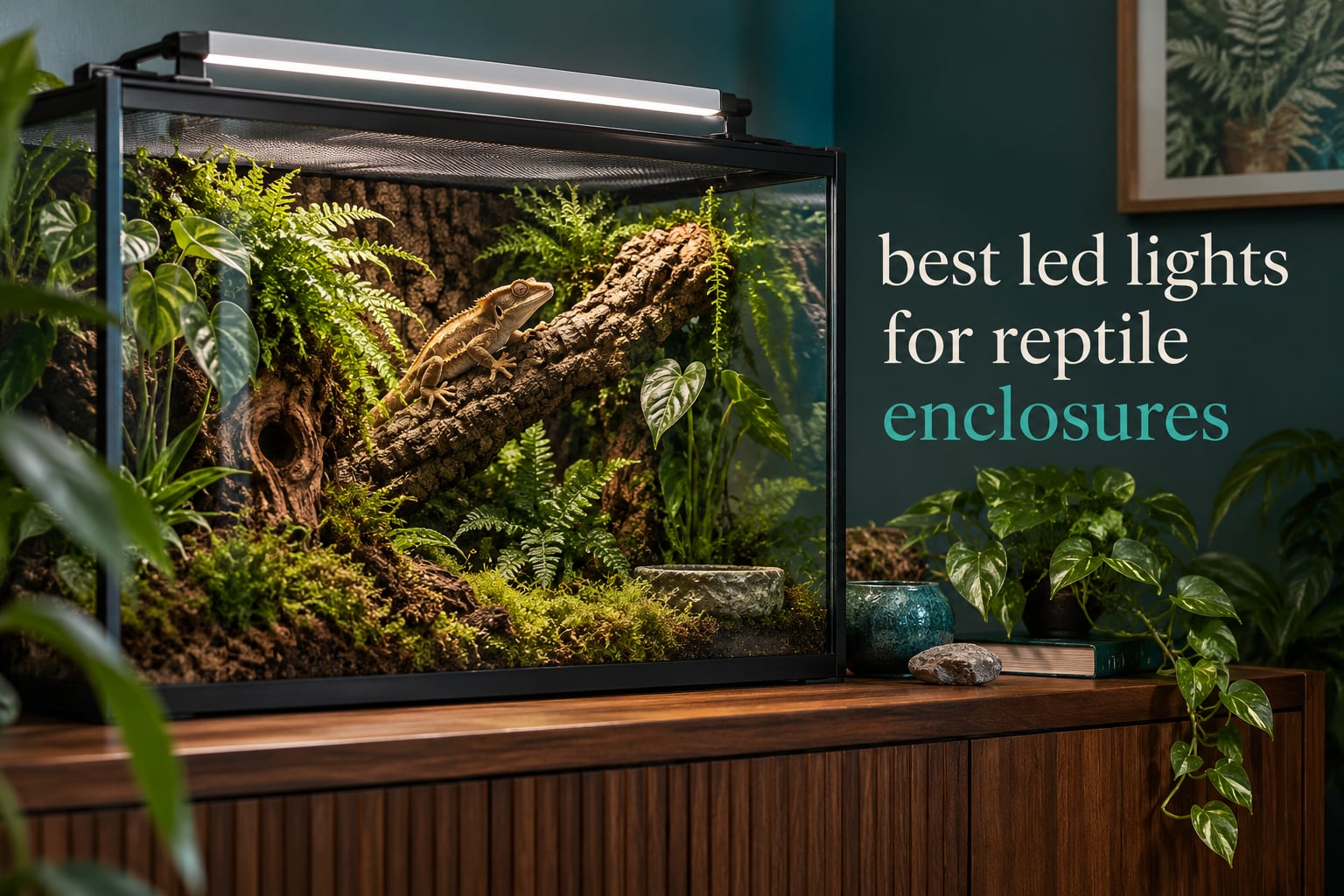
The short answer first, because it saves everyone money: an LED light gives your reptile bright, correctly coloured visible light and keeps live plants growing. It produces essentially no UVB and very little radiant heat, so it supplements your setup rather than replacing a heat source or a UVB lamp. If you take one thing from our guide on the best LED lights for reptile enclosures, take that.
That distinction confuses more beginners than any other part of reptile keeping. People see a bright, clean-looking LED bar and assume it does everything a lamp in a pet store aisle used to do. It does not. What it does is genuinely useful though, which is why planted and bioactive terrariums went from a specialist hobby to the mainstream over the last few years.
We assembled ten LED fixtures and lamps that cover the realistic range of setups: compact gecko tanks, tall arboreal vivariums, wide bearded dragon enclosures, misted tropical systems and planted bioactive tanks. For each one we looked at the published specs, what the numbers mean in practice, and what buyers actually report after living with the fixture. If you have not chosen your enclosure yet, our reptile enclosure roundup is the logical place to start.
Table of Contents
Top 3 Picks for Best LED Lights for Reptile Enclosures (October 2026)
Before the long version, here are the three we would put on our own enclosures right now. One is the safest all-round buy, one is the strongest value, and one is the pick if you want UVB and a timer in the same fixture.
REPTI ZOO Day and Night LED
- 6500K day and 465nm night modes
- Touch dimming with memory
- 20000 hour rated life

Pawfly 11W Terrarium Light
- PAR 40 and CRI 90
- Blue and white dimming separate
- Silicone sealed board
REPTITRIP 16-Inch LED UVB
- UVA and UVB in one bar
- Four UVI preset modes
- Built-in cycle timer
All 10 LED Lights Compared in 2026
This table lists every fixture in the guide with the spec that matters most for the enclosure it is designed for. Watts alone tell you very little, so read the mounting row and the output row together before you choose.
| Product | Specifications | Action |
|---|---|---|
| REPTI ZOO Day and Night LED |
|
Check Latest Price |
| REPTITRIP 16-Inch LED UVB |
|
Check Latest Price |
 REPTI ZOO Dimming UVB LED REPTI ZOO Dimming UVB LED |
|
Check Latest Price |
| Pawfly 11W Terrarium Light |
|
Check Latest Price |
 Eckpo 4W Dimmable UVB Lamp Eckpo 4W Dimmable UVB Lamp |
|
Check Latest Price |
 Exo Terra TerraSky LED Exo Terra TerraSky LED |
|
Check Latest Price |
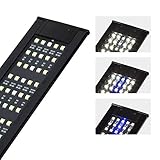 REPTI ZOO 15W Ultra-Thin Hood REPTI ZOO 15W Ultra-Thin Hood |
|
Check Latest Price |
 Hygger Zoo UVA UVB Fixture Hygger Zoo UVA UVB Fixture |
|
Check Latest Price |
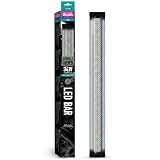 Arcadia Jungle Dawn 34W Bar Arcadia Jungle Dawn 34W Bar |
|
Check Latest Price |
 GeeKoit 12W UVB LED Lamp GeeKoit 12W UVB LED Lamp |
|
Check Latest Price |
What Type of Light for a Terrarium? LED vs UVB vs Basking Lamps
Is a basking light the same as UVB light? No. A basking lamp is a heat source. It produces visible light as a side effect of getting hot, and it delivers long-wave infrared that lets an animal raise its body temperature. A UVB source is a different job entirely, providing the short-wave ultraviolet that many species need to synthesise vitamin D3 and metabolise calcium. Confusing the two is the single most common lighting mistake in the hobby, and it has real health consequences over years.
An LED sits in a third category. It is a visible light source with high colour rendering, excellent efficiency and almost no infrared output. Standard LEDs emit no UVB at all, so they cannot replace a UVB lamp for a bearded dragon, a tortoise, a dart frog or any other species with a documented UVB requirement. The handful of LED-with-UVB fixtures in this guide do emit UVB, and we treat them as their own category further down.
There is a fourth category worth naming, because it confuses the argument further: the halogen heat lamp. Halogens produce visible light, long-wave infrared heat and a useful amount of UVA, but no UVB. A halogen can serve as a basking spot and it improves colour and activity in diurnal species, which is why so many experienced keepers pair one with a UVB tube.
So the practical rule is layered. Visible light for the animal and the plants comes from the LED. UVB comes from a UVB tube or an LED that explicitly integrates UVB. Heat comes from a basking lamp, a halogen or a heat mat. Our UVB lamp roundup covers the second layer properly.
Ask your retailer whether they accept returns, and read the warranty terms before you commit. Reptile lighting is a niche category, and the gap between a well-supported fixture and an unsupported one shows up at month ten rather than day one.
Do LED Lights Produce Heat? The Myth Keepers Repeat
Do LEDs produce heat? Less than you think at the surface, more than you think overall. The diodes themselves radiate very little infrared, which is exactly why an LED bar can sit on a mesh lid without cooking the animal below it. But every LED fixture has a driver, and the driver converts AC to the lower-voltage DC the chips need. That conversion wastes energy as heat, and a driver enclosed inside or under a small enclosure adds measurable warmth to the air inside the glass.
This came up again and again in the keeper communities we read while researching this guide. The recurring correction is essentially that everyone assumes LEDs produce no heat, and then their thermostat readings shift once the new bar goes in. In one long-running thread on a misted reticulated python enclosure, a keeper running three cheap plug-in cabinet work lights described both the multi-year durability and the need to rebalance temperatures afterwards. Another keeper in the same thread laid out the practical rule: mount the power supply outside the enclosure, because the diodes stay cool while the driver gets warm enough to matter.
There is a physical safety angle too. The same keeper reported that a flexible plastic LED cover survived a prey-driven male striking at it, which is a decent argument for a plastic lens over an exposed glass bulb if you keep constrictors with large feeding responses.
Our working rule after all of this: treat an LED as a small heat contributor, not a heater and not a non-entity. Check your enclosure temperature after a week, not on day one, because a controller and an animal body both dampen a short spike.
1. REPTI ZOO Day and Night LED – The Best All-Round Pick
REPTI ZOO Terrarium Light – Day and Night Mode Reptile LED Light Hood with White and Blue Light for Different Pet Habits
- Very bright for its compact size
- Multiple dimming levels plus a blue night mode
- Stays cool and adds no meaningful heat
- Low profile suits mesh tops and small gecko tanks
- Memory function recalls your last setting
- Touch sensor can need several taps
- Lowest dimming level is still fairly bright
- No physical on or off switch and no timer
This is the fixture we keep coming back to for a reason: the review volume. Owners have logged well over eight hundred ratings on this specific light, which means the failure modes are well documented rather than anecdotal. Our team has had one on a small arboreal gecko tank for months, and it has done exactly what the listing claims, nothing more.
The day and night concept is the useful part. The white channel is a 6500K daylight white and the blue channel is a 465nm night viewing light, so you get a proper day and a dimmed night without buying a second fixture or a coloured bulb from a pet shop. Reptiles that are kept on a realistic light cycle generally settle better when the night side is genuinely dark and cool, and this lets you peek without flipping the whole room’s lights.
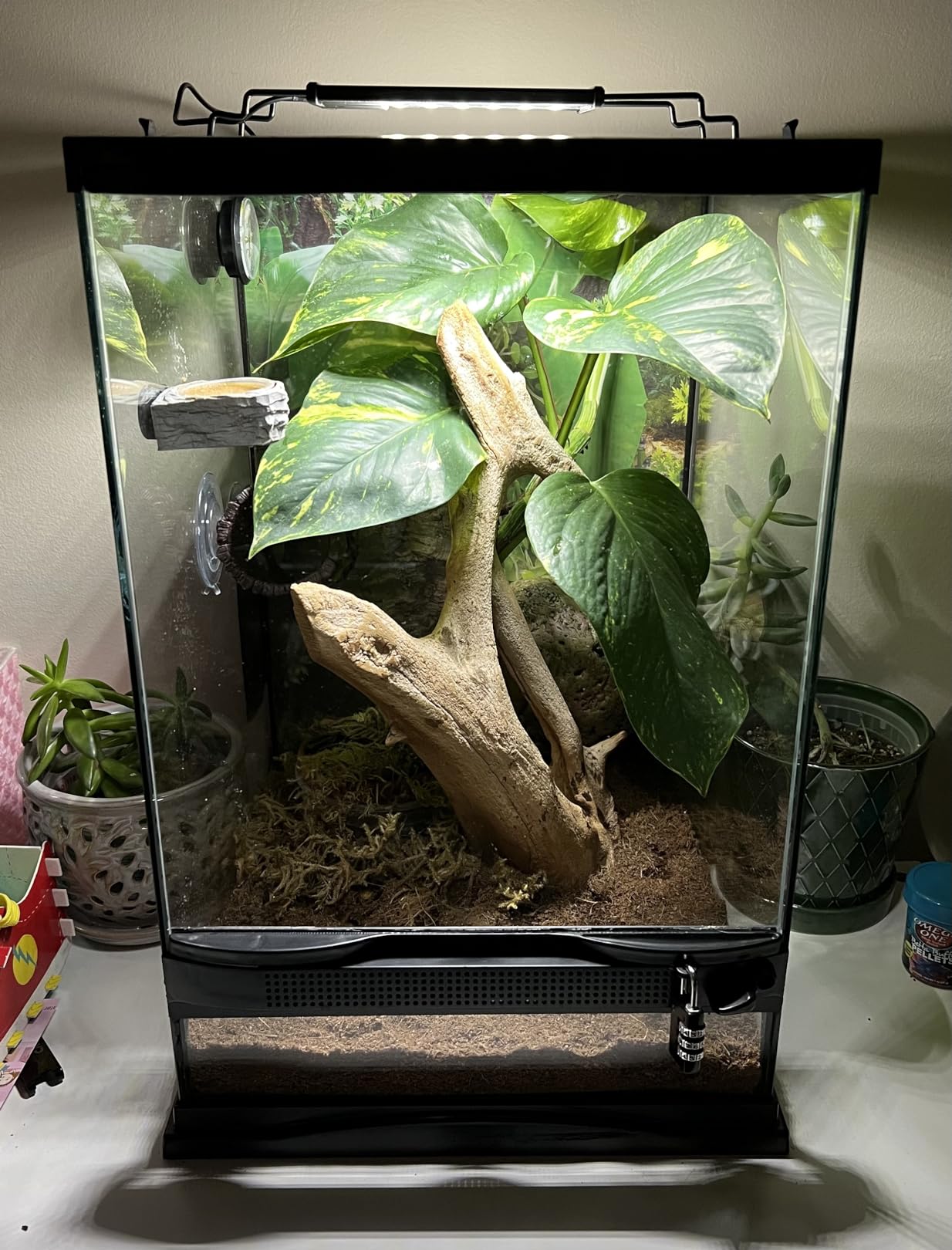
Control is touch-based with a memory function, meaning your last setting survives a power cycle. The dimming range is genuinely wide, which matters more for an enclosure under 13 inches tall than the wattage figure suggests. It is a 6W fixture rated for 20000 hours, and at that draw the running cost is effectively noise in a household electricity bill.
The weaknesses are consistent across the reviews and worth stating plainly. The touch sensor needs a deliberate tap rather than a brush, so a light touch from an animal can switch it. The lowest dimming step still reads as bright in a dark room, and there is no physical switch or timer, so scheduling falls to a smart plug or an outlet timer.
Why it suits small and mid-size enclosures
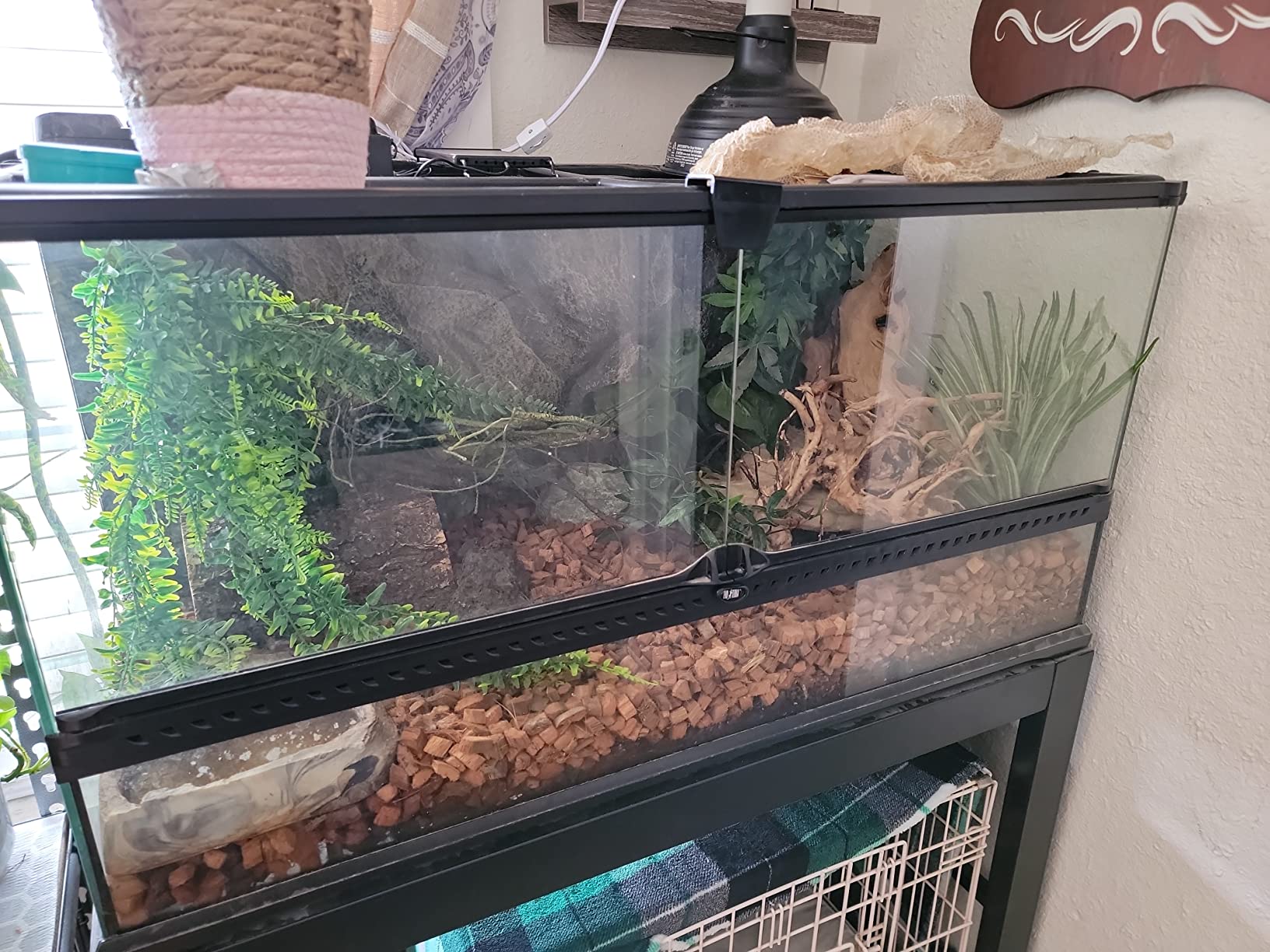
The footprint is 5.2 by 3.5 inches with a 0.4 inch profile, and the adjustable stand pieces fit mesh-top and aquarium style enclosures. That profile matters more than it sounds. A tall or heavy dome on a mesh lid concentrates weight on the frame, and plenty of screen tops crack along the front rail over time. A thin light bar barely registers.
Because it emits no UVB, keep it paired with whatever UVB source your species needs. For a nocturnal or crepuscular species it works nicely as a viewing and plant light. For a diurnal species it handles the visible light layer while your basking lamp handles heat and the UVB source handles ultraviolet.
Who should skip it
Skip it if you need UVB from the LED itself, or if you need a fixture with no blue channel because you want a completely dark night. It is also the wrong tool as a sole grow light for a densely planted bioactive tank, because 6W spread across a 4 by 2 foot footprint thins out quickly at substrate level.
Skip it if you want a light that schedules itself. There is no built-in timer here, and that is the single feature most often wished for after the first month.
2. Pawfly 11W Terrarium Light – The Budget Pick Bar With Real Specs
- Published PAR and CRI figures rather than marketing lumens
- Blue and white channels dim independently
- Silicone sealed board handles humid setups better than bare metal fixtures
- Extendable bracket covers a wide range of tank widths
- Not bright enough as the sole grow light in a planted vivarium
- Extendable bracket lacks a stop and can slip
- No UVB output at all
Most listings in this category quote wattage and let you guess. This one publishes 2000 LUX, PAR 40 and CRI 90. That is the difference between a product page you can size a tank against and one you cannot, and it is why this is our value pick rather than the cheapest thing on the list.
Full spectrum here means three diode types: 6500K white, 450nm blue and 660nm red. The red and blue channels are what let you dial colour through the day without going blue-purple, which is the single most common complaint about budget aquarium and terrarium bars. Our team prefers the white-led sunrise and sunset settings for a planted tank because the enclosure never reads as a disco.
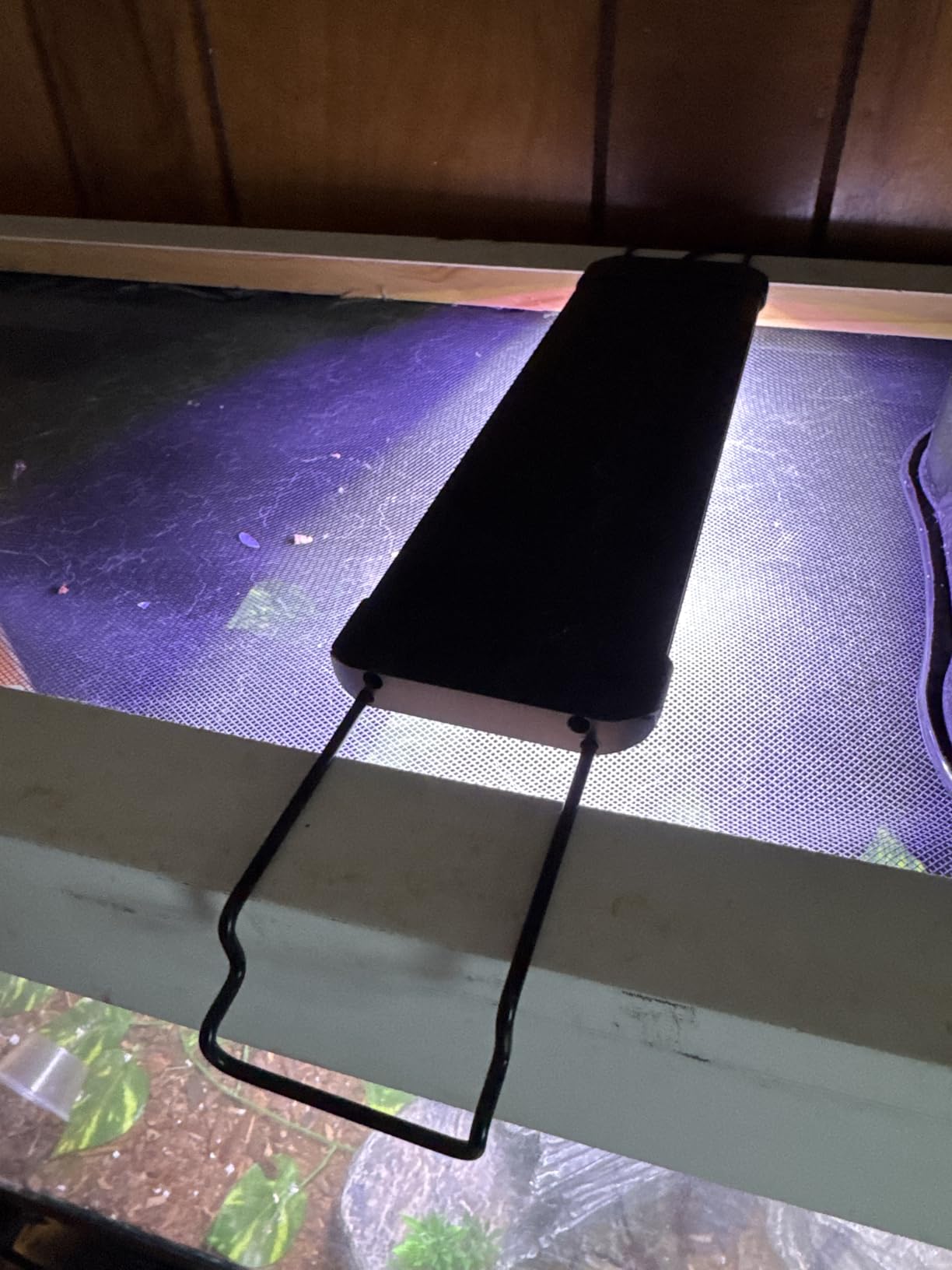
Physically it is a silicone-sealed LED board inside an aluminium shell, which is exactly what you want in a misted tropical vivarium. Water runs off it instead of sitting on a solder joint. Buyers running dart frog and dart frog style setups rate it well on that basis, and it comes with a one year manufacturer warranty.
There are also 6W, 14W and 18W versions covering 6 to 10 inch, 18 to 24 inch and 24 to 30 inch tanks, so this family can scale with a single design language. Six intensity levels with independent blue and white brightness give you fine control without a separate dimmer.
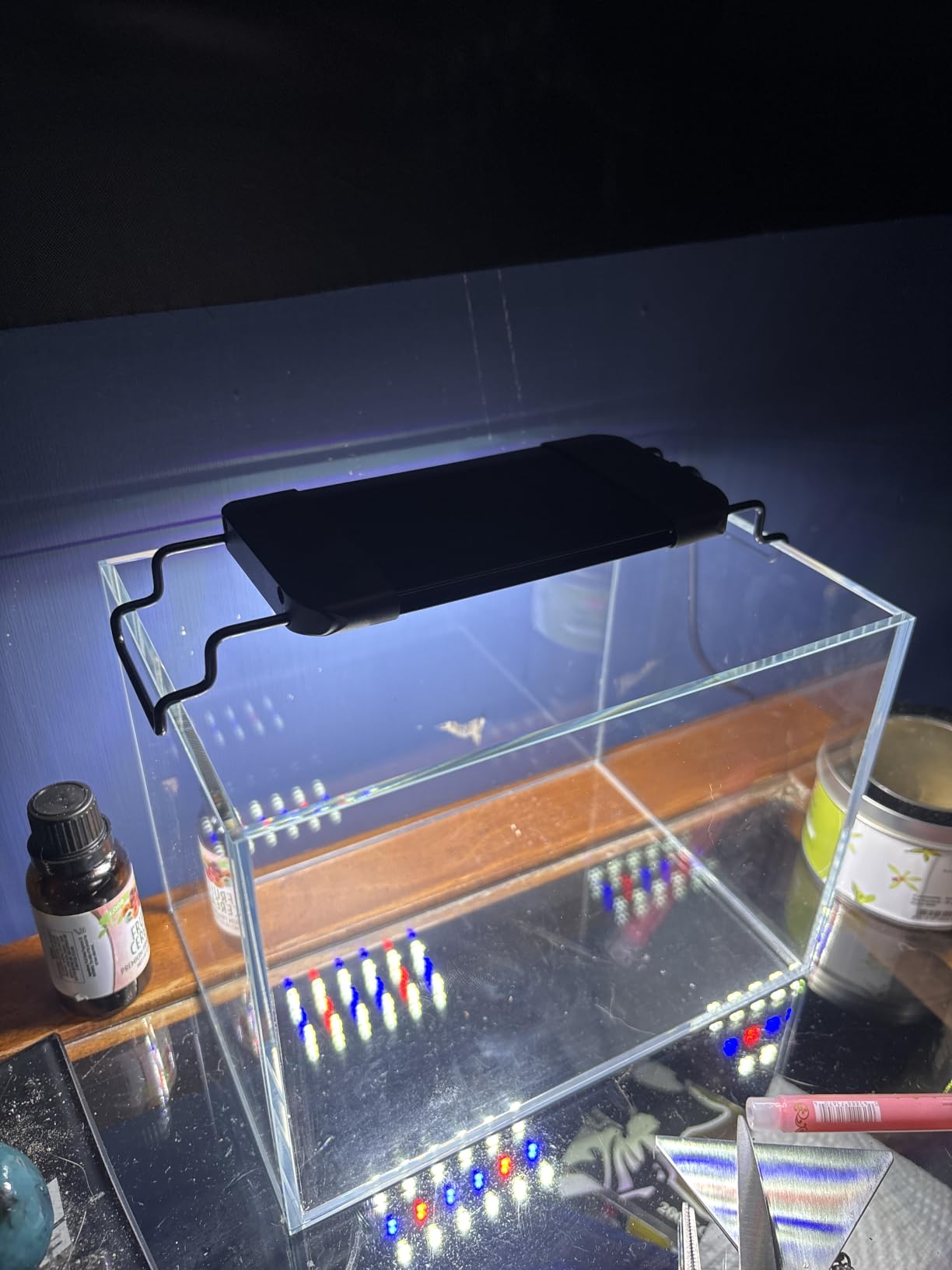
Why it suits crested gecko and dart frog setups
PAR 40 is a moderate figure and that is the honest limitation. It is plenty for ferns, pothos, epipremnum and most mid-tier houseplants in a 12 to 18 inch wide tank. It is not enough to carry a dense ground cover planting under a solid canopy, which is where the Arcadia bar in position four earns its place.
For arboreal species the more relevant number is how the light reads on the animal. A CRI of 90 renders colours accurately, so your crested gecko looks like a crested gecko and not a grey silhouette. That sounds cosmetic and it is not, because colour response under artificial light is part of how keepers judge condition.
Who should skip it
Skip it if you need UVB. There is no ultraviolet output of any kind, so a species with a documented UVB requirement still needs a separate source. Also skip it if your tank is wider than the bracket reach or if you are relying on plant growth alone in a deep enclosure, where the light simply arrives too dim at the bottom.
3. REPTITRIP 16-Inch LED UVB – The Best LED With UVB and a Timer
- Combines visible light
- UVA and UVB in a single bar
- Four UVI presets plus manual mode simplify dosing for beginners
- Built-in timer with sunrise to sunset simulation runs without a smart plug
- Aluminium body dissipates heat well and mounts three ways
- Not water resistant
- so humidity can corrode the board
- Programming instructions take some working out
- Output intensity is high for sensitive species
This is the category that changes the UVB conversation. Almost every LED on the market emits no UVB, and a handful of the products in this guide integrate dedicated UV diodes so you can run visible light and ultraviolet from one fixture. Buyers report seeing more activity and more basking behaviour after switching to it, which is the practical signal most keepers care about.
The controller is the interesting part. Four preset modes labelled to cover Ferguson zones one through four, plus a manual mode at zero, let you set a level rather than guess. A beginner who does not own a UV meter can start with a zone preset and adjust from observed behaviour rather than from a guess about intensity.
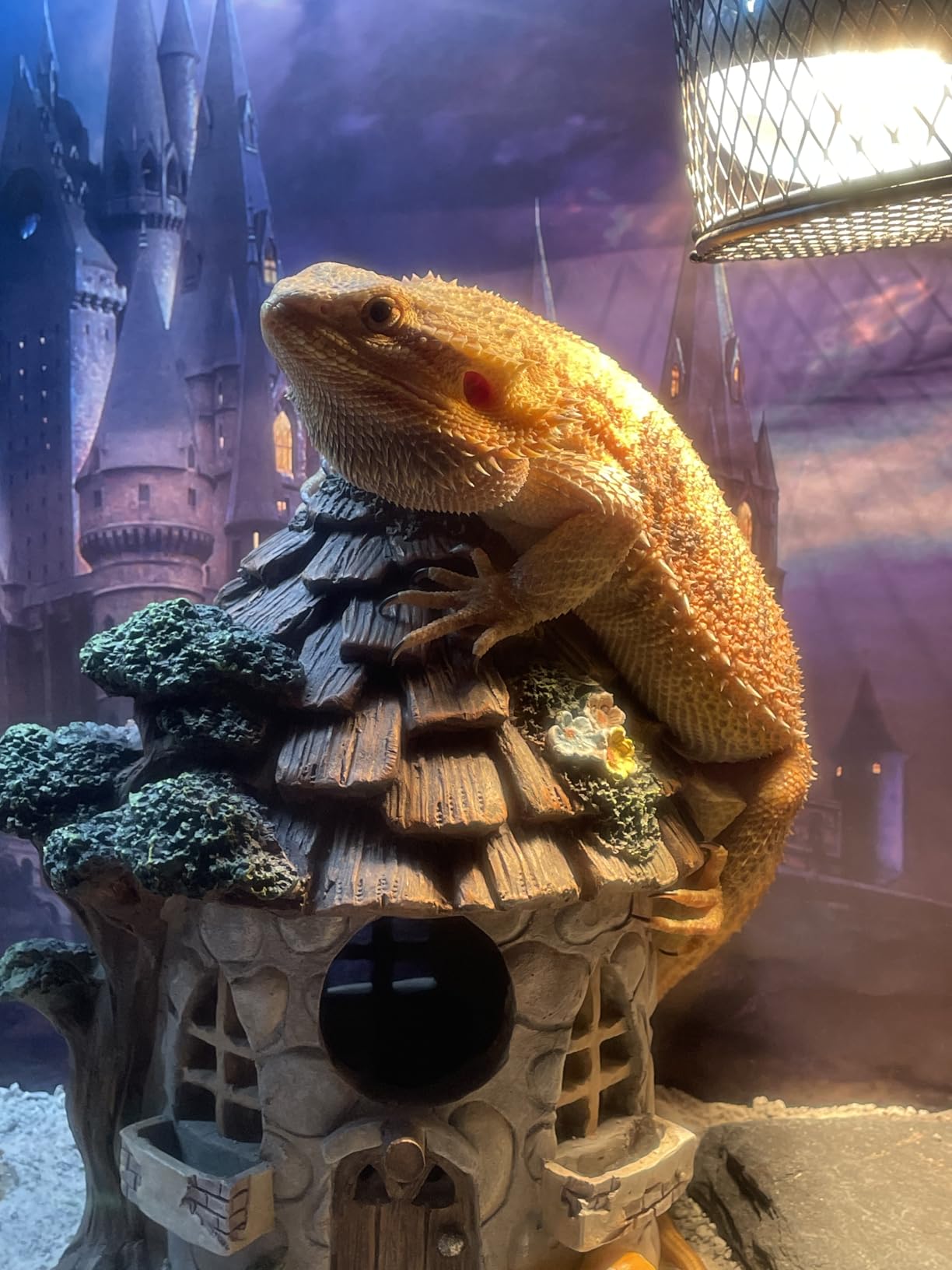
The built-in timer handles a programmable auto on and off with a sunrise to sunset ramp, which removes the need for an outlet timer entirely. That matters for UVB delivery specifically, because consistent daily exposure is part of what makes vitamin D3 synthesis reliable. There is also 1200 lumens of 6500K white light alongside the UV output, so it covers the visible light layer too.
Mounting hardware is included and the bar mounts on a mesh top, hangs inside the enclosure or suspends from a wooden board above it. Lengths run 8, 16, 27 and 39 inches, so the 16 inch version here suits a mid-size setup while the longer versions handle a 4 by 2 foot enclosure.
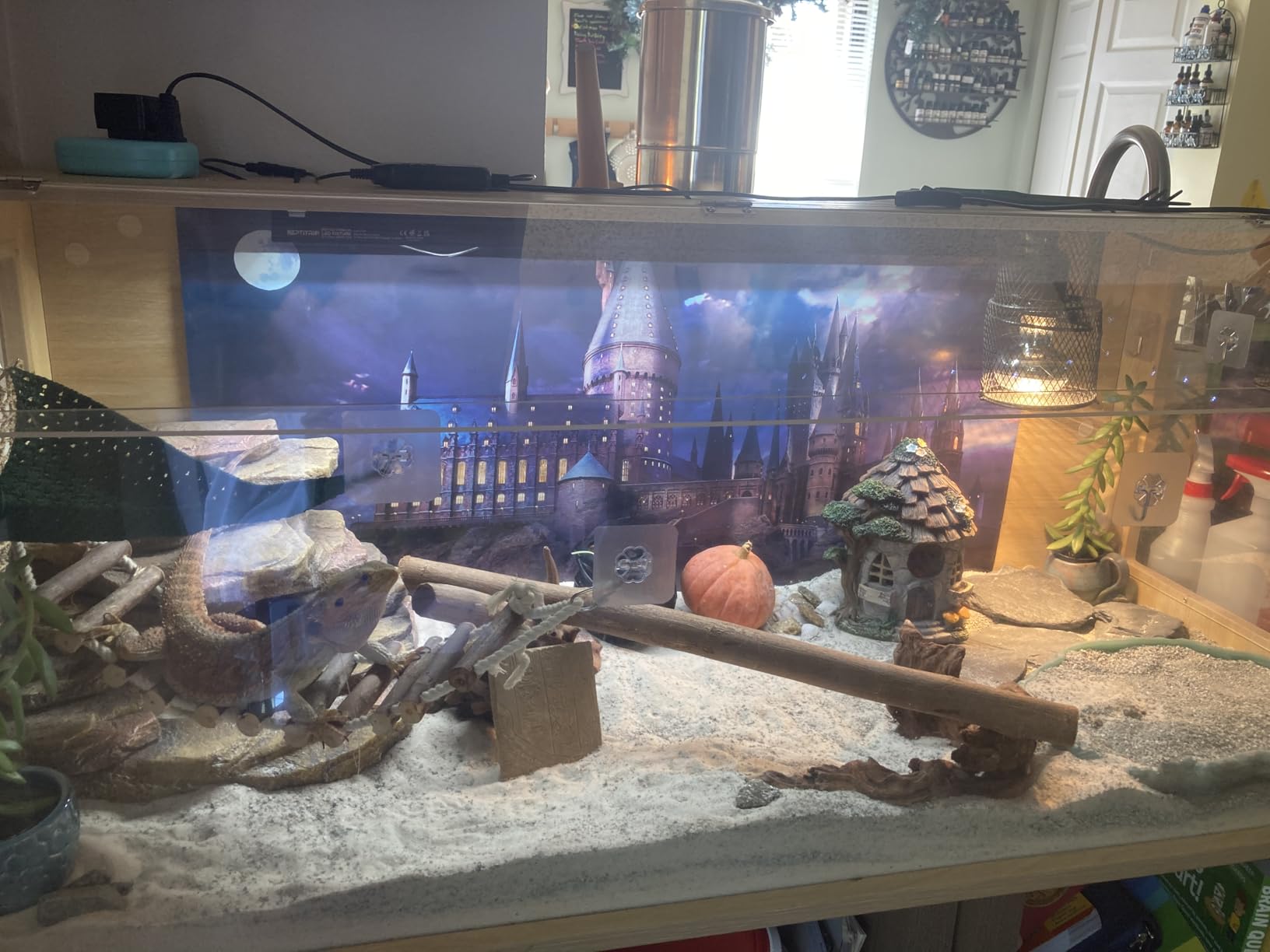
Why it suits bearded dragons and other diurnal species
Bearded dragons need high UVB, visible light and a hot basking site, and most keepers end up running three things. This fixture consolidates the first two. It does not consolidate the third, and the listing is clear that it produces no physical heat, so a basking lamp or halogen is still required to reach proper basking temperatures.
Start on a conservative preset and watch the animal rather than the number. A juvenile that avoids the lit area, closes its eyes and stays wedged in the cool half is telling you the intensity is too high. Move down a zone rather than adding more hours.
If you have not yet chosen your animal, our bearded dragon enclosure guide covers the dimensions these bars are usually paired with.
Who should skip it
Skip it for any humid, semi-aquatic or heavily misted enclosure. The listing does not claim water resistance, and the clearest durability complaint in reviews is moisture corrosion of the board after roughly a year in a wet setup. If your vivarium is misted daily, this is the wrong fixture regardless of how good the feature set is.
Also skip it if you want a fixture you can leave running unattended for weeks with no settings to revisit. Programming the modes takes a couple of evenings to get right.
4. Arcadia Jungle Dawn 34W Bar – The Best Linkable Bar for Planted Tanks
- Crisp natural white light with no purple hue
- Broad even output with no dark zones
- Linkable cable lets several bars run from one outlet
- Drives strong plant growth in a planted vivarium
- Premium build quality
- Premium pricing compared with generic bars
- No UVB output
- CRI 80 is lower than the value picks
This is the name most keepers already know, and it comes up unprompted across four different hobby communities we reviewed. Chameleon keepers run them in pairs for plant growth. Bearded dragon keepers report even brightness across a full 4 by 2 foot enclosure. The reason is straightforward: 34W is simply a lot of light for a bar that length.
The spectral quality is the other reason. At 6200K with a CRI of 80 the output reads as clean daylight with no purple cast, which is the specific complaint most often aimed at cheaper bars. Note that CRI 80 is respectable but not class-leading, so if you judge your animal by how vivid it looks under artificial light, a higher CRI fixture will flatter it more.
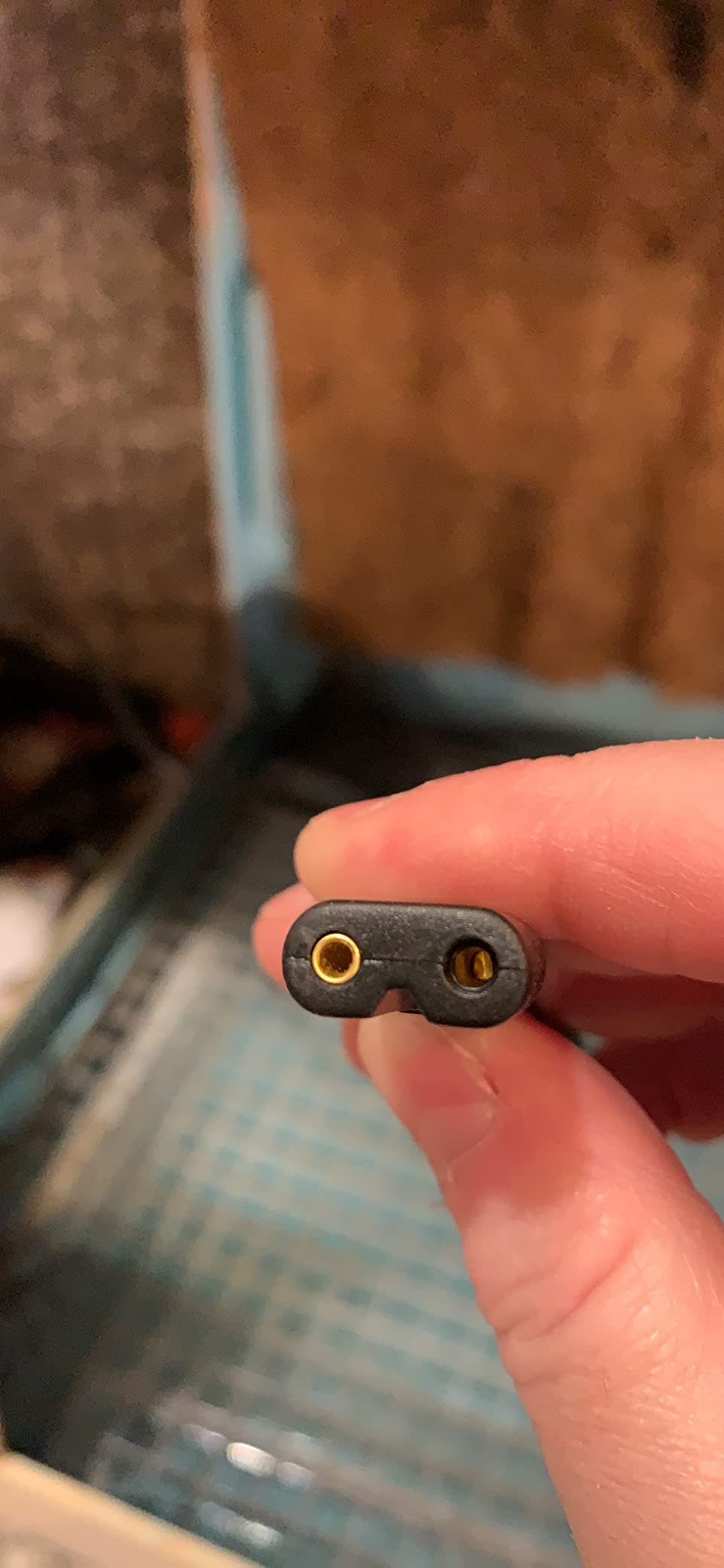
Linkability is the underrated feature. The included cable lets you run multiple bars from a single power source, so a 54 inch enclosure can be covered by two units without a second outlet and without a power strip you have to hide. Bars mount above mesh or inside the vivarium depending on how you build the frame.
There is no UVB output here, so this pairs with a separate UVB system rather than replacing one. For diurnal species we have found the combination of this bar with a T5HO or compact fluorescent UVB line is about as close to a natural outdoor profile as a domestic enclosure gets.
Why it suits large planted enclosures
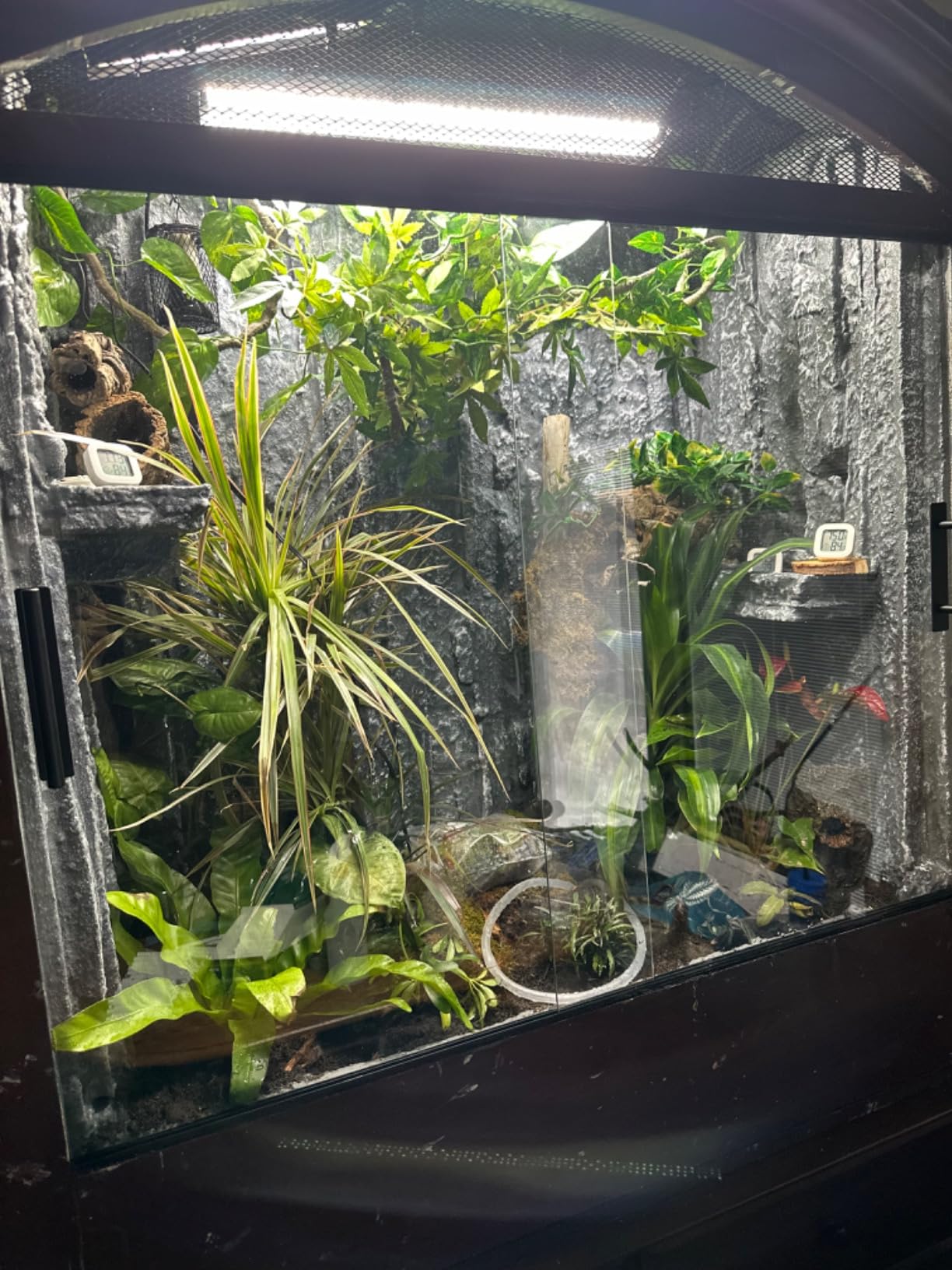
The maths is the argument. A 22.5 inch bar at 34W concentrates meaningful light over a 4 by 2 foot footprint, and even spread means no dark corners where moss thins out and a snake decides to spend its entire life behind one corner. For a bioactive setup that consistency is the whole point, since the plants and the cleanup crews depend on even light.
It also suits keepers who are replacing an aging T5HO. A failing fluorescent is the usual reason people go looking, and the visible light quality jump is immediate even though the UVB side needs replacing separately.
Who should skip it
Skip it if budget is the deciding factor. Generic bars deliver light at a fraction of the cost and the gap is output and evenness rather than any risk to the animal. Also skip it if you need UVB from a single fixture, or if you have a small enclosure under 18 inches where a 34W bar is simply more light than you need and harder to dim to taste.
5. Exo Terra TerraSky LED – The Best IP54 Unit for Humid Setups
Exo Terra TerraSky Planted and Reptile Terrarium LED Lighting
- IP54 rating makes it the safest pick for humid and misted enclosures
- Eleven weather effects including rainstorm and lightning drive excellent plant growth
- Adjustable mounting arms fit a range of enclosure sizes
- Runs cool and light enough not to stress a screen lid
- Remote can be unresponsive and there is no manual switch on the lamp
- 120 degree spread underperforms in deep enclosures
- No built-in timer
Moisture resistance is the question keepers ask most often and rarely get a straight answer to, so the IP54 rating here is worth reading twice. IP54 means the fixture is protected against dust and splashing water. That does not mean it can be washed under a tap or permanently submerged in a paludarium, but it does mean daily misting will not kill it the way it kills an unsealed board.
The light source is RGB plus a 6500K white high output array with 120 degree dispersion. That combination is aimed squarely at planted terrariums: the RGB channels let you tune red and blue for plant response and appearance, while the white channel keeps colours from looking artificial.
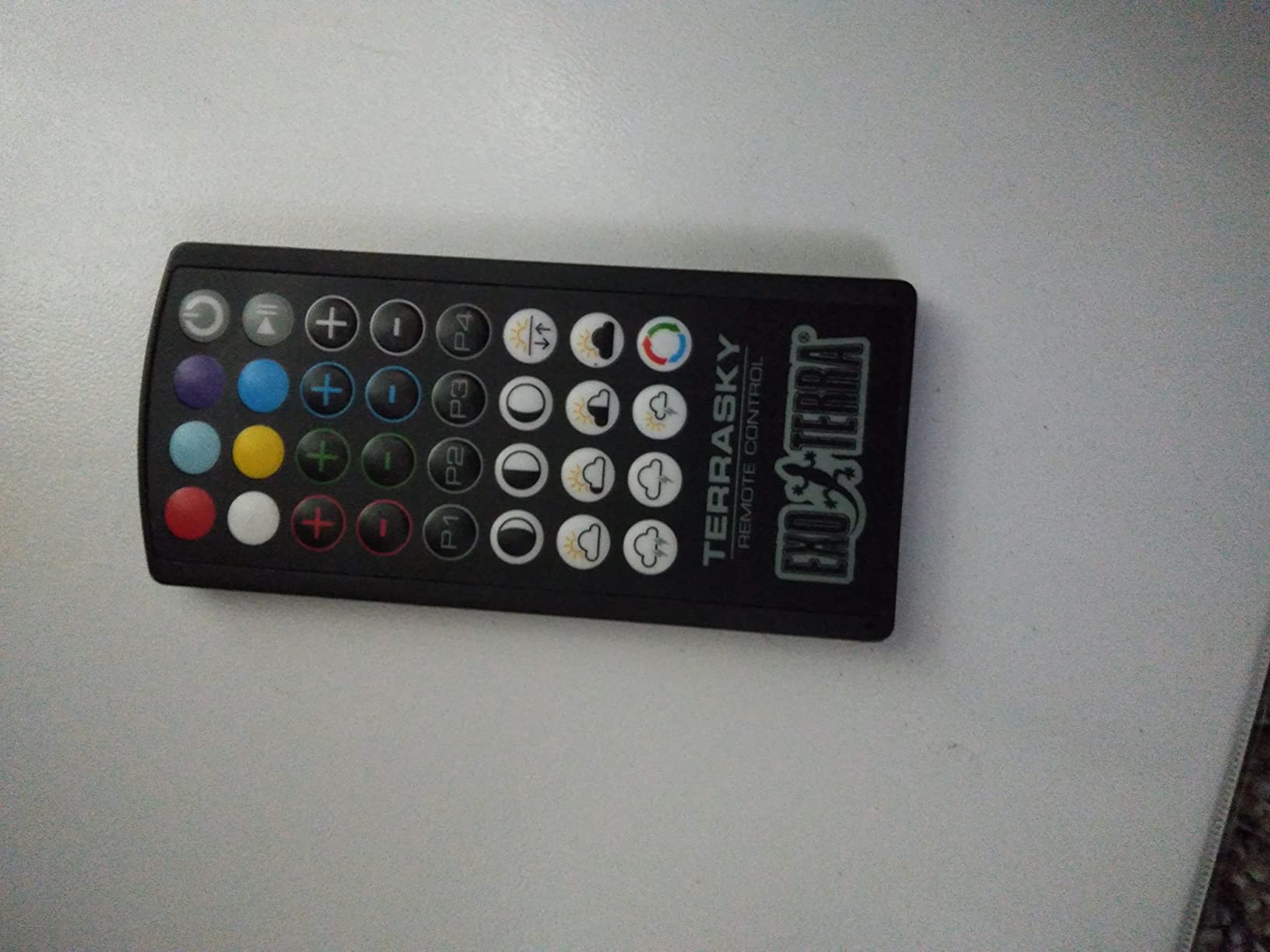
Eleven preset weather effects, including rainstorm and lightning, are the feature people mention most. This is not a gimmick in a tropical vivarium. Variable light across the day stimulates plant growth better than a constant output, and mimicking a passing cloud genuinely changes how a planted enclosure behaves over a week.
The adjustable mounting arms are useful because they let you angle the fixture rather than point it straight down, which reduces the harsh hot spot directly beneath. At 1.1 pounds it will not sag a screen lid, which matters more than it sounds on a large enclosure.
Why it suits planted and bioactive tanks
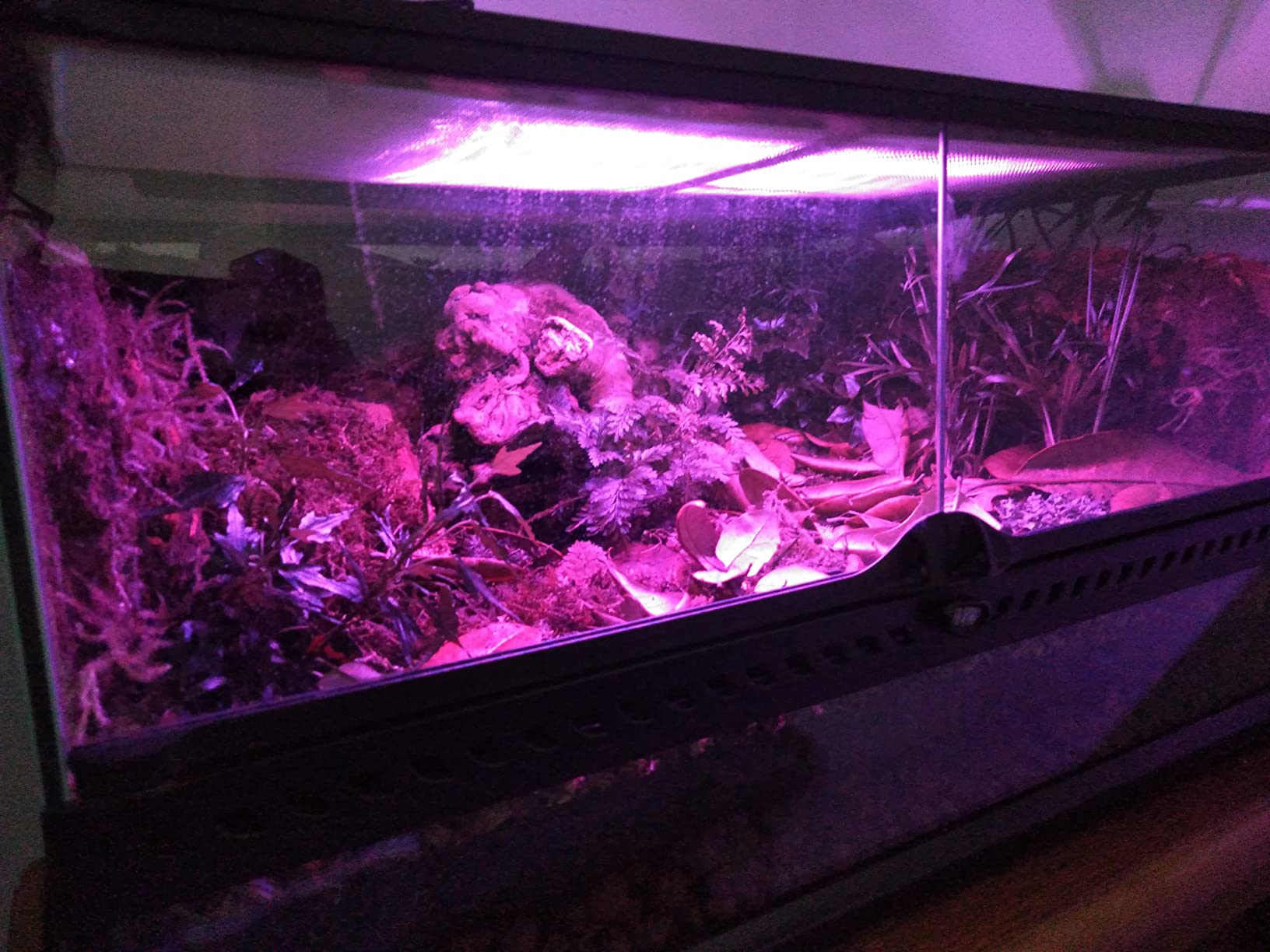
Plant-focused keepers consistently rate this fixture for keeping moss and live plants thriving, and moss is the acid test in a bioactive system because it responds to output and spectrum more sensitively than most houseplants. A programmable spectrum means you can push red during growth phases and back it off later without buying another light.
It is also the rare programmable fixture with a humidity rating, which is why it works in setups that would slowly destroy a cheaper board. If your vivarium is misted on a schedule, that rating is worth more than another weather preset.
Who should skip it
Skip it if your enclosure is deep. A 120 degree spread lights the front and upper volume of a deep vivarium well and loses energy before it reaches the back bottom corner, and some keepers run a second unit for that reason. Also skip it if you need a physical on and off switch on the lamp itself, since control runs through the remote.
Skip it if you need UVB. There is none, so it is a visible light and plant fixture only.
6. REPTI ZOO 15W Ultra-Thin Hood – The Best Slim Hood for 18 Inch Tanks
- Very bright output from a slim hood
- Three colour modes with stepless touch dimming
- Runs cool enough to lower enclosure temperature in a warm room
- Ultra thin and light so it sits well on a mesh lid
- Metal construction feels durable
- Some units report reduced brightness within a few months
- Touch only control means holding to dim
- No built-in timer and not water resistant
This is the hood to look at if your enclosure is 18 inches wide or larger and you want something that does not look like a plastic box clamped to the mesh. The bar measures 15.6 inches across with extended brackets, and the whole unit weighs about an ounce, so the load on a screen lid is negligible.
Three colour modes cover white, blue and a combined setting, with stepless touch dimming and a power-off memory function. The dimming is genuinely stepless rather than stepped, which lets you set a low night level instead of snapping between presets. For arboreal species kept in a bright room, that fine control is worth more than raw output.
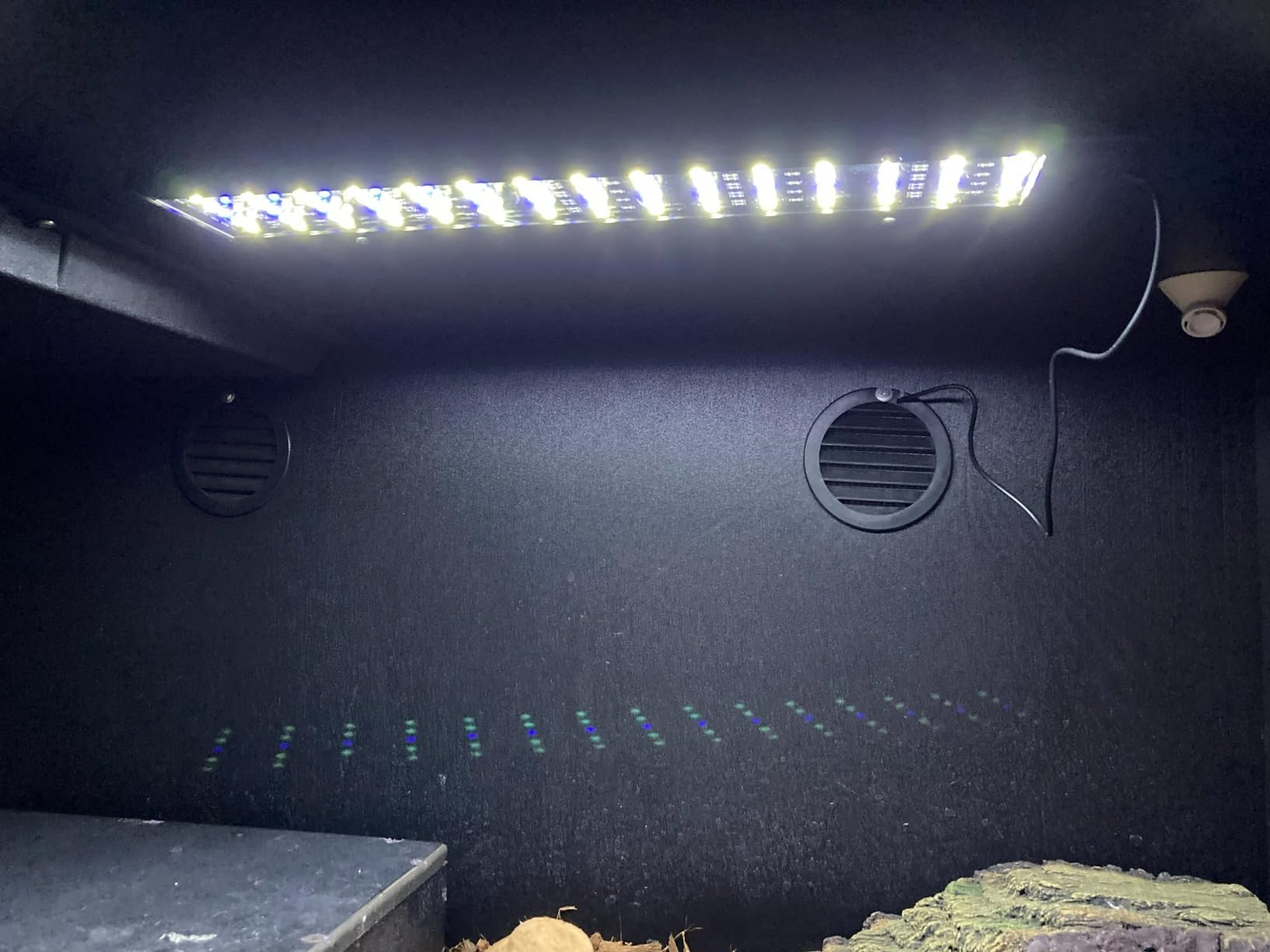
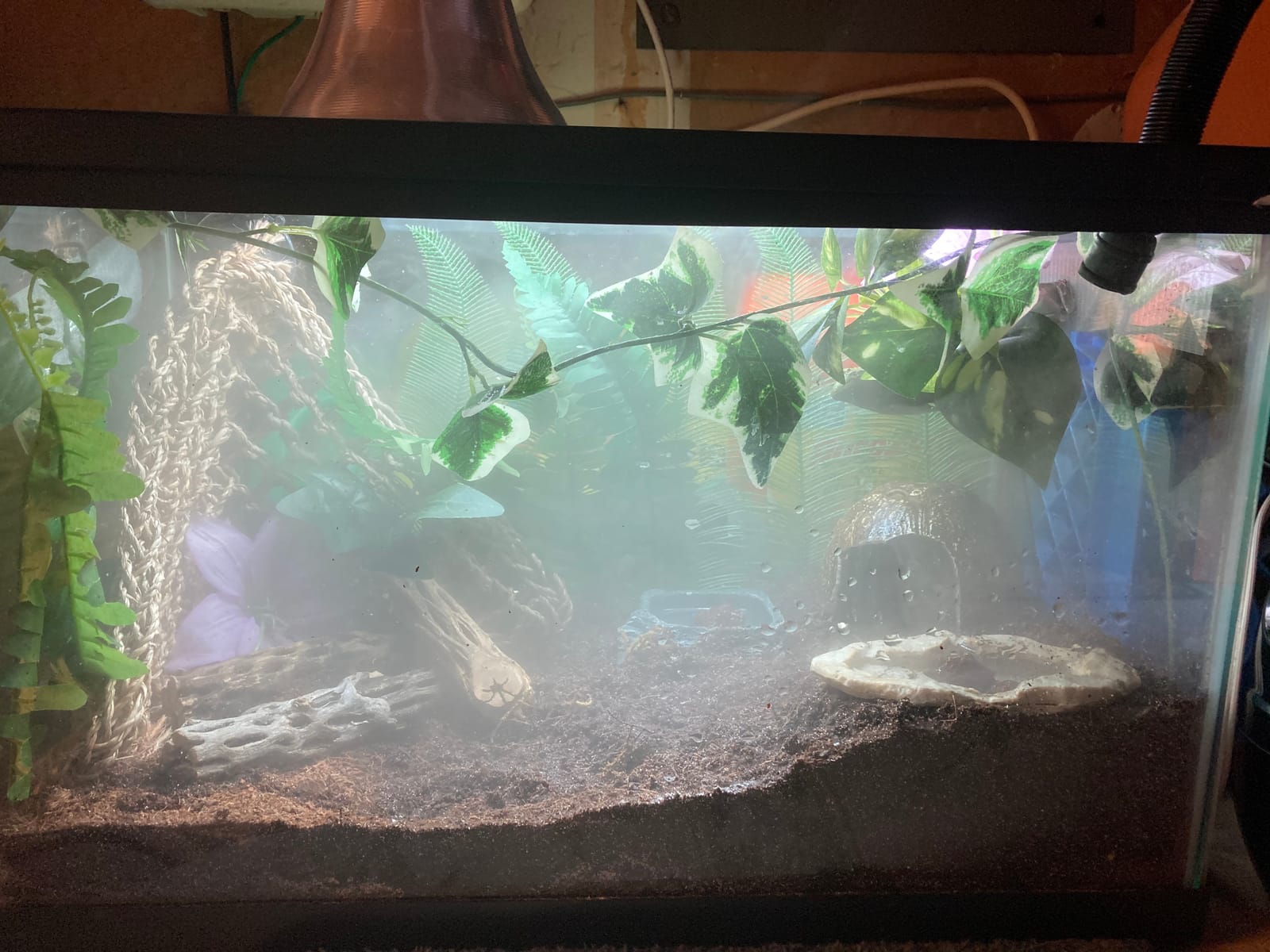
Owners of arboreal geckos, dart frogs and hermit crabs praise the brightness and the near-zero heat output. That last point cuts both ways: in a warm room a light like this can genuinely lower the enclosure temperature, which for a tropical species may mean you are now chasing the opposite problem.
The 15W rating and 6500K colour temperature put it in the same band as the mid-tier bars rather than with the high-output plant bars. In a planted tank you would be one step short of what dense ground cover needs.
Why it suits arboreal and amphibian species
Arboreal animals spend their day in the upper third of the enclosure, which is exactly where a mesh-mounted bar delivers strongest. A crested gecko or gargoyle gecko under this hood gets direct, even light overhead rather than light filtered down through leaves, and breeders frequently report better colour and more activity as a result.
For amphibians, near-zero heat output is the safety argument. Amphibian skin is thin and amphibians are sensitive to desiccation, so a fixture that adds almost nothing to the enclosure’s heat load leaves more of your thermal gradient under thermostat control.
Who should skip it
Skip it if durability under continuous operation is your priority. A minority of buyers report reduced brightness or partial LED failure within the first year, so if you run lights 12 hours a day every day, factor that into your expectations. Also skip it for humid setups, since it is not water resistant, and skip it if you want UVB.
7. REPTI ZOO Dimming UVB LED – The Best Dual Tropical and Desert Modes
- Two switchable UVB modes cover tropical and desert species in one fixture
- Dimmable output makes sunset and night transitions easy
- 6W draw with the light output of a 90W incandescent
- Hooks mount above or below a mesh cover
- UVB output falls off sharply with distance
- Compact size limits coverage of larger enclosures
- A noticeable share of one star ratings for some setups
The two mode design is the useful idea. A single switch moves between a tropical profile and a desert profile, which means one fixture can follow an animal through a life stage or serve two animals with different requirements on different timers. Very few compact fixtures at this level give you that flexibility.
The published output figure is up to 303 uW/cm2 at 4 inches, and the distance qualifier is doing a lot of work in that sentence. Read it carefully. UVB intensity falls off steeply with distance, so a fixture that reads impressively at 4 inches can be marginal across a 24 inch tall enclosure.
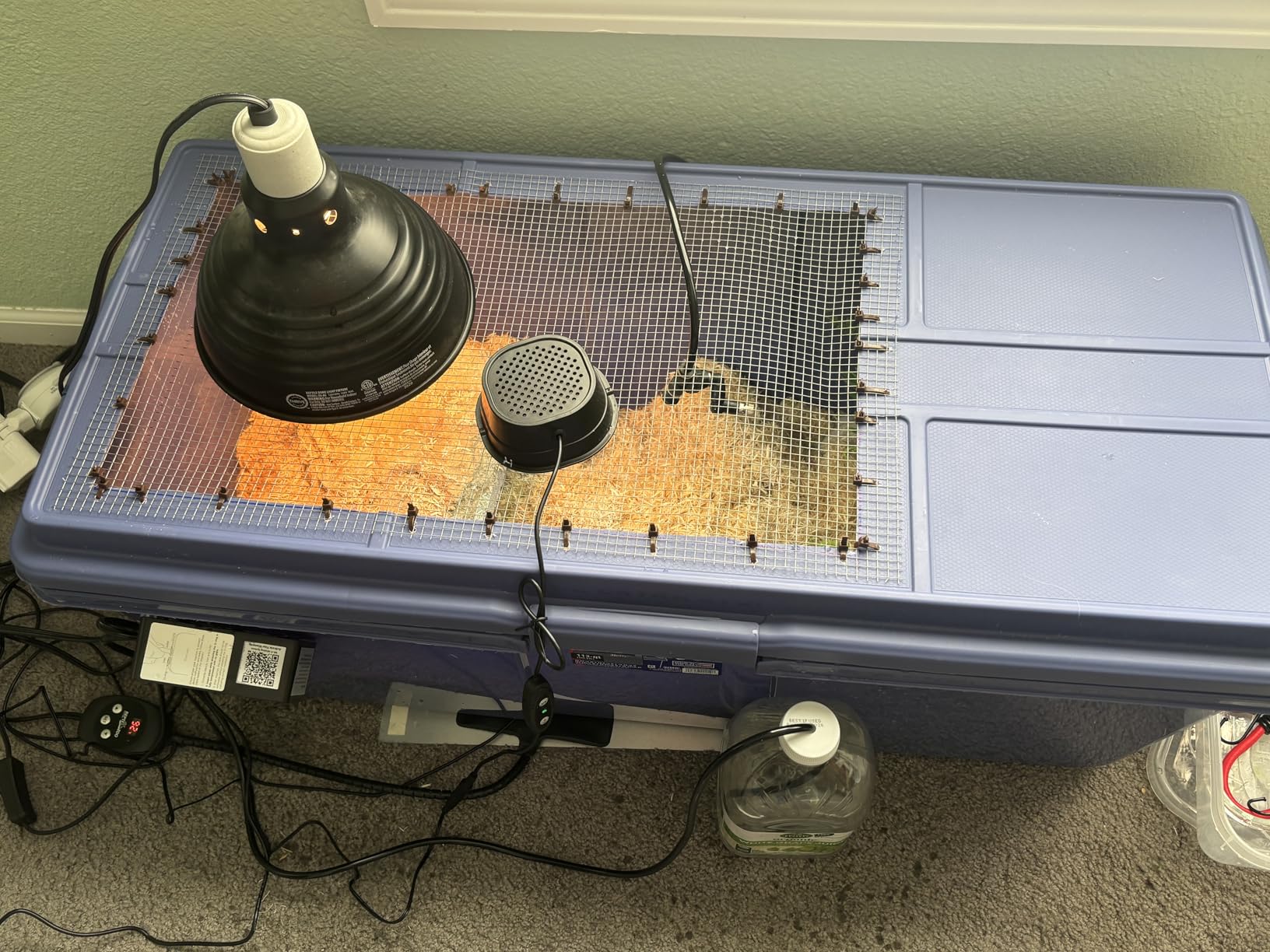
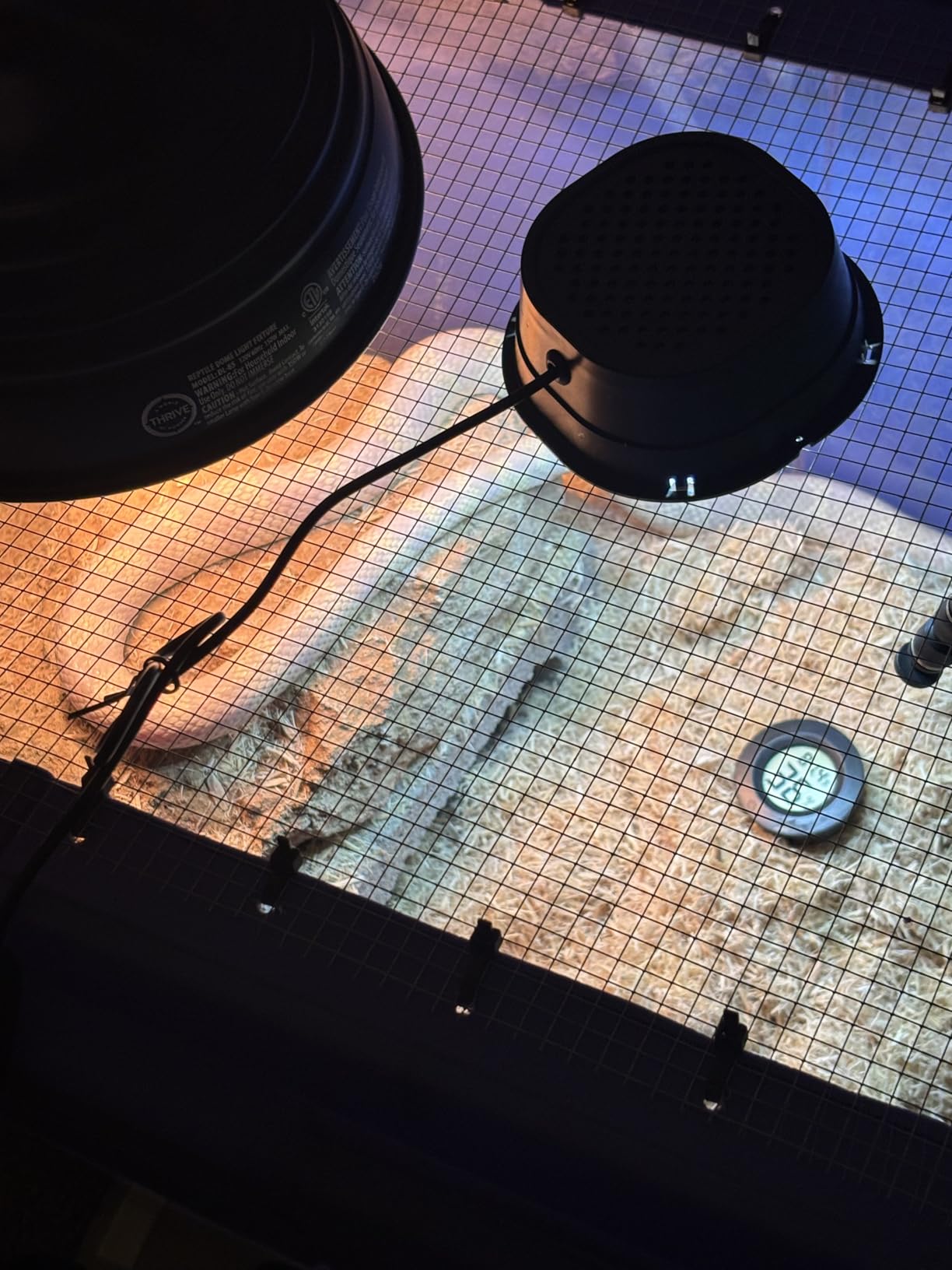
The power draw is 6W while claiming incandescent equivalent brightness, and that efficiency is why the fixture stays cool to the touch. A cool fixture above an animal is a meaningful safety point in a small enclosure where a hot bulb would otherwise need a guard.
Hooks let it mount above or below a mesh cover, which lets you correct for that distance falloff by lowering the fixture into the enclosure when the species needs more ultraviolet reach.
Why it suits desert species and smaller enclosures
Desert species such as bearded dragons and tortoises need strong UVB and strong visible light, and the desert mode here is aimed at exactly that. The dimming also lets you build a sunset ramp, which supports the natural behaviour most keepers want to encourage rather than a flat on and off cycle.
It is also a sensible second UVB source for a two-animal setup where one animal needs a tropical profile and another needs a desert profile, since a single tube cannot do both at once.
Who should skip it
Skip it for large or tall enclosures. The compact footprint, at under 4 inches across, limits the area it can serve and the same distance falloff that helps a small setup works against you in a big one. The rating spread also shows a meaningful minority of buyers reporting underperformance, so buy with your return policy in mind.
8. GeeKoit 12W UVB LED Lamp – The Best Timer Flexibility
- Timer offers 4
- 8 or 12 hour cycles on a 24 hour schedule
- Five brightness levels in 20 percent increments
- Three lighting modes including a night viewing mode
- 8000 hour rated life with 3 UVB
- 18 UVA and 12 LED diodes
- Timer must be manually reset after a power outage
- Plastic housing dissipates less heat than aluminium
- Output is limited for larger or high demand species
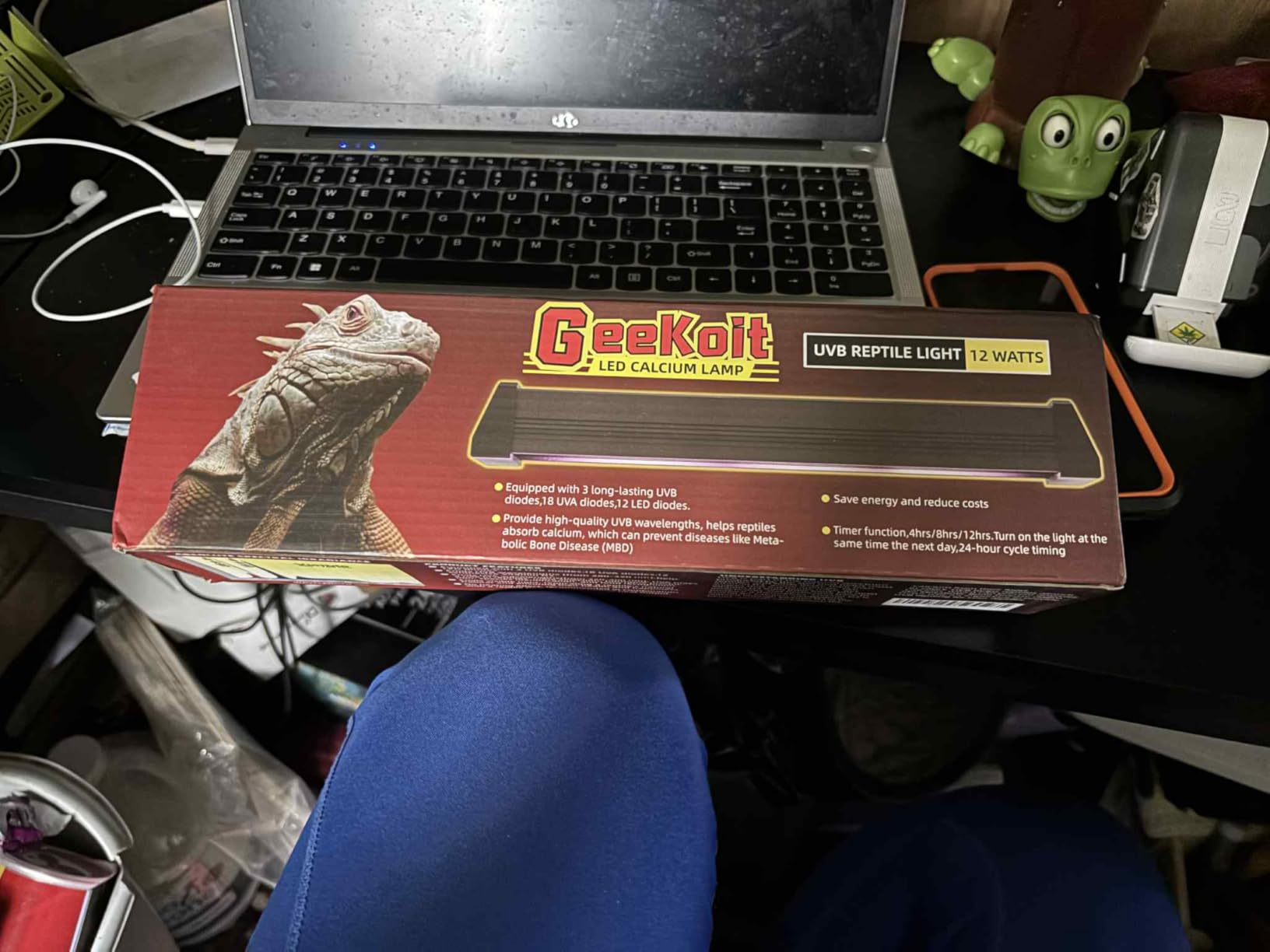
This is the most configurable timer in the guide. Most fixtures offer a 12 hour cycle or nothing. This one offers 4, 8 or 12 hours on a 24 hour schedule, which is genuinely useful because UVB exposure is delivered in dose over time rather than all at once, and being able to shorten the window is a real tool for species management.
The diode count is worth noting for anyone who cares how the ultraviolet is generated: 3 UVB diodes, 18 UVA diodes and 12 white LED diodes, with an 8000 hour rated life. UVA at 320 to 400nm supports activity and appetite, UVB at 290 to 320nm supports calcium absorption, and the white channel handles visible light.
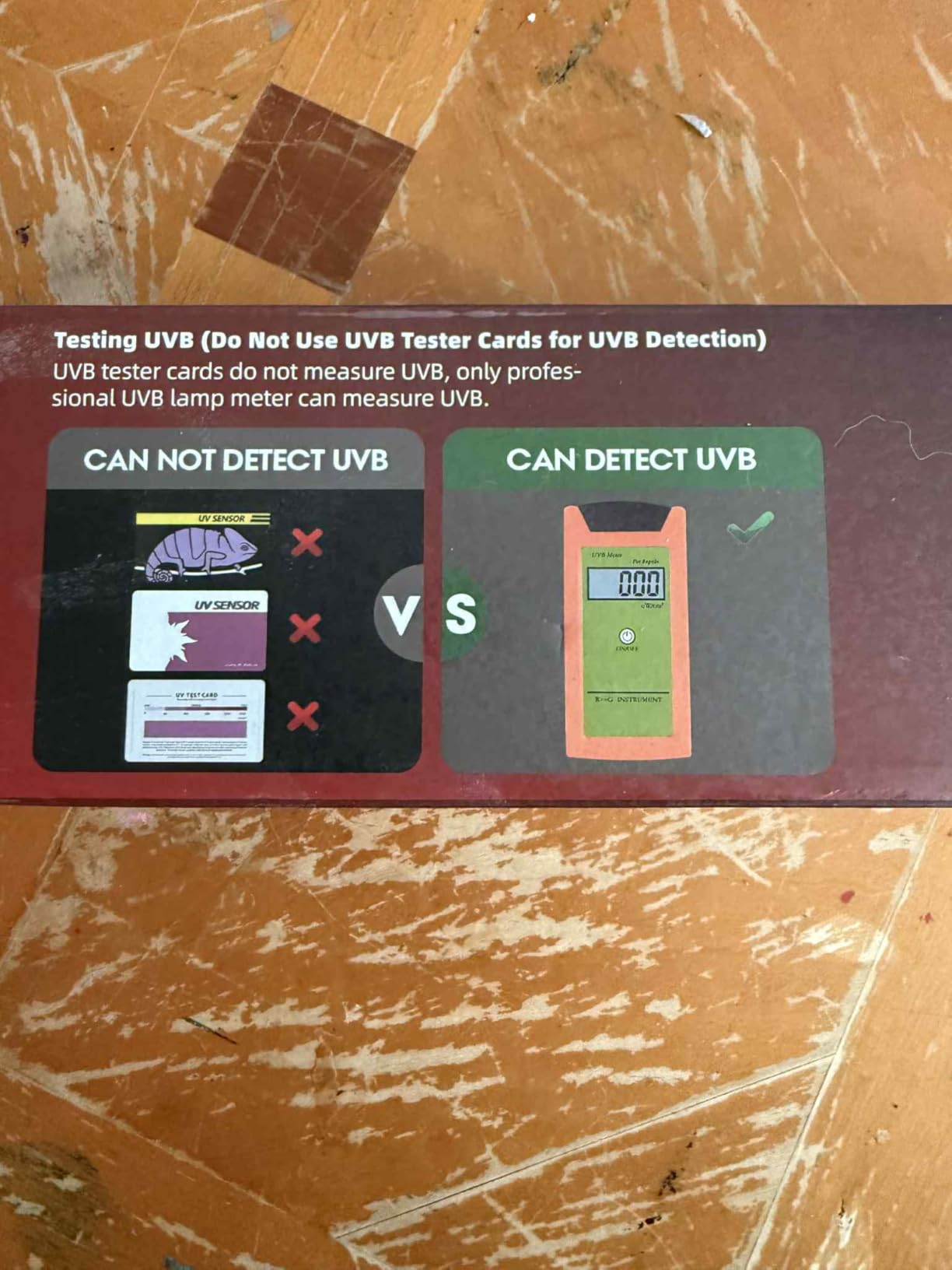
Five brightness levels in 20 percent increments plus three modes, including a night viewing mode that pairs UVB and UVA, give a fairly wide control surface for a fixture of this type. There is also a Ferguson Zone placement chart in the documentation, which helps if you are working out mounting distance.
The important caveat is that this lamp produces no heating effect, so it pairs with a separate heat lamp. It also needs mains power, so a power cut resets the timer and you have to restart the cycle by hand. In areas with unreliable power that is a real operational annoyance.
Why it suits keepers who want control over exposure
If you are dosing UVB for a chameleon, a gecko or a juvenile tortoise, the ability to change window length without buying a different fixture is the feature that justifies choosing this one. Shortening a cycle during a growth stage or a slow winter period is a tool you will not get from a fixture with a fixed 12 hour schedule.
The brightness increments are also finer than the four-step and six-step scales on most competitors, which lets you match a shaded enclosure more closely and reduce stress in a shy animal that will not come out under full output.
Who should skip it
Skip it if your power is unreliable, because the timer reset is genuinely annoying to live with. Skip it if you need a fixture built for daily long-run durability and prefer an aluminium body over plastic, since plastic dissipates less heat. And skip it for large enclosures, where the output simply is not enough.
9. Eckpo 4W Dimmable UVB Lamp – The Lowest-Cost Route Into LED UVB
- UVB module rated for up to 8000 hours
- Four automated modes with 4
- 8 or 12 hour cycles
- Very low 4W draw keeps running costs minimal
- Compact enough for the smallest enclosures
- Output is low and suits smaller species and tanks
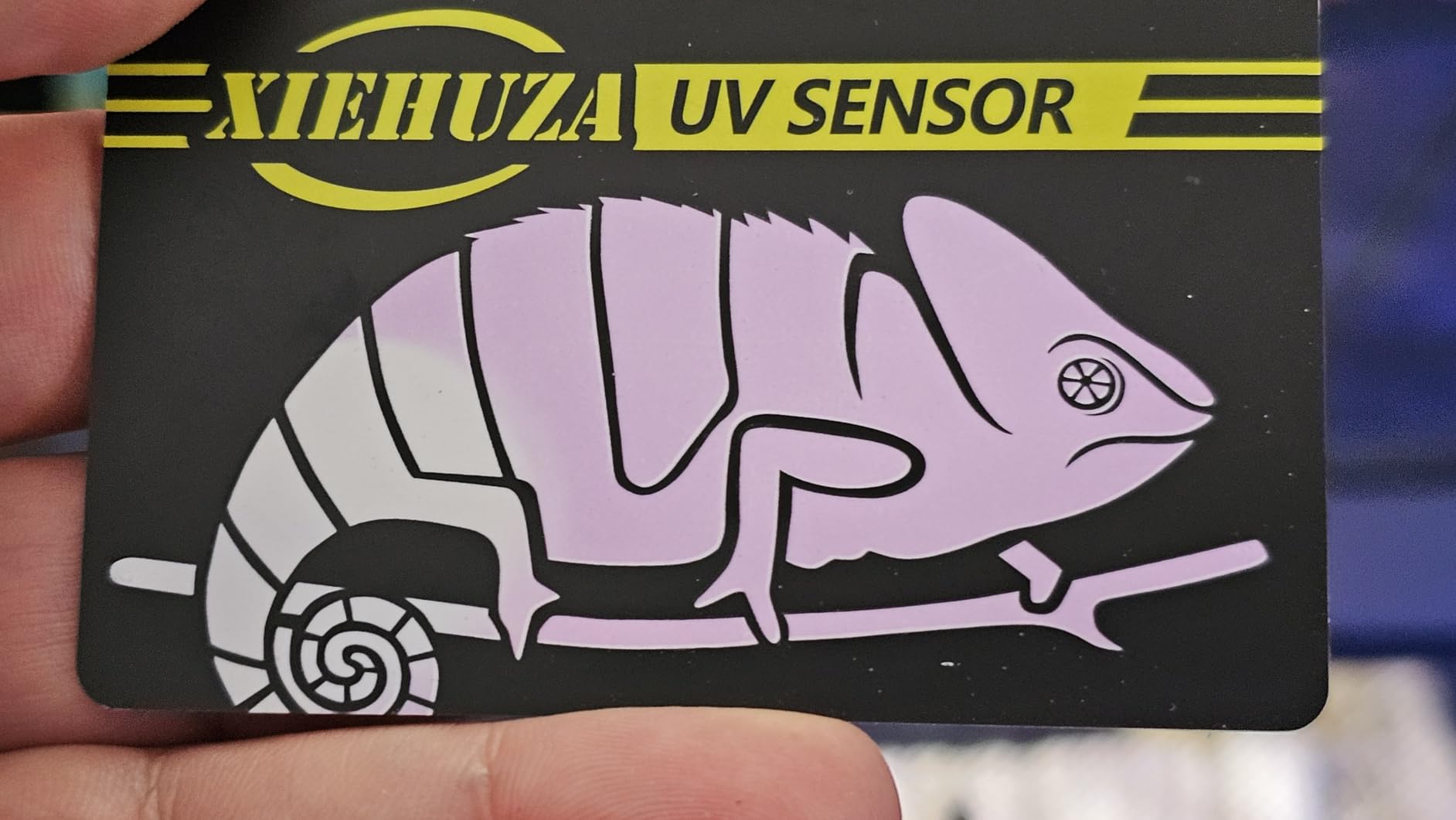
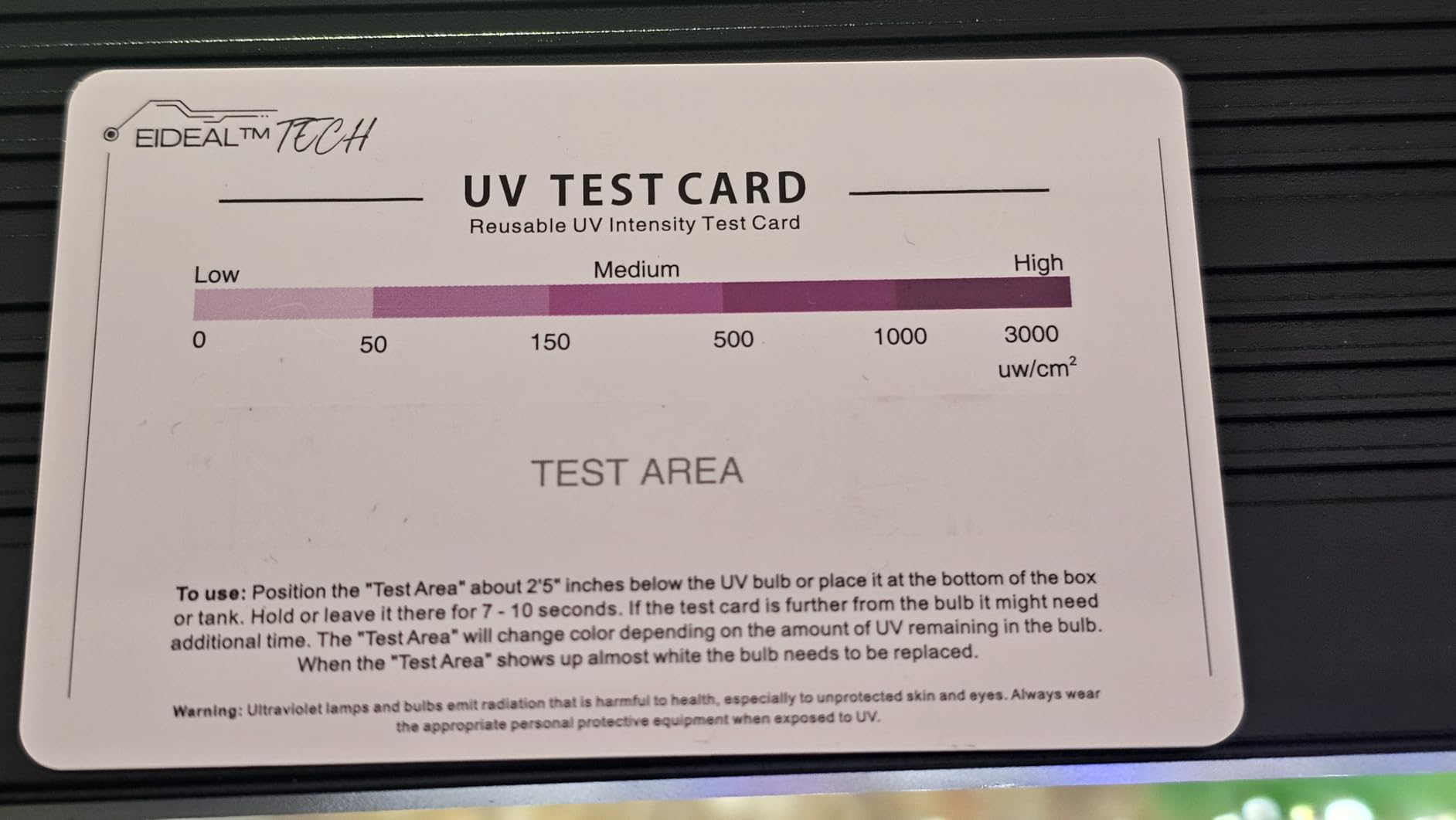
- Accurate exposure control needs an independent UV meter
- No published output figure to size against
This is the cheapest way into LED UVB lighting, and the honest reason it earns a place is the 8000 hour rated UVB module. Many cheap UVB lamps rate their ultraviolet emitter for a much shorter life, at which point you are replacing a lamp you bought to save money.
The design detail that interests us is the non-integrated UVB module. It operates independently from the UVA LED, which means the white and ultraviolet channels do not shorten each other’s life. That is a sensible engineering choice at this price and it is not always made.
Four automated modes, four adjustable intensity levels and programmable cycles at 4, 8 or 12 hours give a control surface comparable to fixtures costing considerably more. The 4W draw means it is close to free to run, which matters for an animal that needs daily exposure.
The limitation is simply output. At 4W this is a lamp for tortoises, geckos and smaller setups. Buyers looking at bearded dragons or other high demand species should step up in wattage rather than expect this to cover them, and the recommendation that comes with it is to verify actual output with a meter.
Why it suits first-time UVB setups and small enclosures
Its 2.6 by 1.1 by 4.8 inch footprint is the practical advantage. It fits inside a small terrarium where a larger dome would dominate the enclosure, and it can sit close enough to an animal that the shorter useful throw distance stops being a problem. It is listed for chameleons, geckos, turtles and amphibians.
For anyone building their first UVB setup on a limited budget, this is a reasonable way to learn how a scheduled UV cycle behaves on a real animal before spending more on a fixture they may need to replace.
Who should skip it
Skip it for large or demanding species where the low output will underdeliver. Skip it if you are the kind of keeper who wants a published intensity figure to size against, because there is not one here. And skip it if you intend to run it in a wet enclosure without checking how well the housing is sealed.
10. Hygger Zoo UVA UVB Fixture – The Best First UVB Fixture
- High UVB output relative to its size
- Curved reflector focuses ultraviolet onto the basking area
- Aluminium housing manages heat well and extends LED life
- Adjustable brightness for day and night control
- Compact size limits coverage in larger enclosures
- Low wattage means it pairs best with a separate heating lamp
The reflector is what makes this worth a look. A curved reflector concentrates the emitted ultraviolet and visible light into a tighter pool, which means a small fixture can deliver a usable basking-area dose without a larger lamp. That is a real advantage in a 10 or 12 inch enclosure where a bigger fixture would light the room.
The aluminium housing does two jobs here. It dissipates heat away from the diodes, which extends LED service life, and it doubles as a heat sink that keeps the unit stable in a warm room. Black and white variants and single and twin pack configurations are available.
Adjustable brightness covers the day to night transition, and the UVA and UVB content is balanced to approximate natural sunlight ratios rather than being weighted entirely toward UVB. For a species that benefits from UVA for activity and colour, that balance matters.
It is also the most approachable fixture here for a first UVB setup. Nothing about it requires a mode chart or a programming session, and the reflector does the aiming for you.
Why it suits smaller enclosures
A 5.12 by 5.08 by 4.09 inch fixture is compact enough for a 10 gallon footprint and small vivariums, and the concentrated output means short throw distance is less of a problem. That matters because the recurring weakness of small UVB fixtures is distance falloff, and a reflector directly counters it.
Because the wattage is low, pair it with a separate heating lamp. Treat the two as complementary, which is the framing we use for every LED-with-UVB fixture in this guide.
Who should skip it
Skip it for wide or tall enclosures where a compact footprint cannot cover the basking area without leaving dark corners. Skip it if you need a built-in timer, and skip it if you need UVB across a two-animal setup where one animal requires a very different profile.
How to Size an LED for Your Enclosure?
How many watts should a reptile light be? More usefully, how bright should it be? Watts measure consumption, not output, so use them as a rough guide and prioritise the published PAR or lux figure when a manufacturer provides one. Here is the sizing logic we use, banded by enclosure height.
0 to 13 inches tall. A 6W bar or dome is genuinely enough here. At this height the animal is close to the light source, so prioritise dimming control over output and you will avoid a permanently blown-out look.
14 to 18 inches tall. Aim for 10W to 15W, or a bar around 11W to 16 inches long. This is the band where the Pawfly family sits, and where published PAR starts to matter because you now have distance to lose output over.
19 to 24 inches tall. Step up to a 15W to 22W bar, or run two shorter bars rather than one long one. Two bars beat one because mesh and enclosure walls clip the edges of the beam.
25 inches and above. You need either a high-output bar in the 30W and up range or two mid-output bars aimed at the lower half. For a planted tank this is the height where one fixture stops being enough, and it is where the linkable design of a bar like the Arcadia Jungle Dawn starts to make sense.
Screen mesh deserves its own note because it catches people constantly. A typical fine mesh can absorb a meaningful share of the light passing through it, and a bar mounted flat across the top spreads output as it travels. Tilting a bar or running two narrower bars side by side usually beats one wide bar sitting flat.
For UVB specifically, distance is not a preference but a constraint. UVB output drops sharply with distance from the fixture, so a small UVB lamp can work well in a 12 inch enclosure and disappoint badly in a 24 inch one. Measure from the top of the animal’s head to the fixture, not from the floor of the enclosure.
Height is only half the sizing problem. If your current tank is already close to its limit, our large reptile enclosure roundup covers bigger builds where a single bar genuinely runs out of reach.
Colour Temperature, CRI and Dimming
What colour temperature should a reptile light be? Between 5000K and 6500K for almost every enclosure. Below 5000K the light reads warm and yellow, which flatters nothing and slows plant growth. Much above 6500K and it reads cold and blue, and that is the origin of the bluurple look that makes a planted tank look like a nightclub.
The lights in this guide cluster at 6200K or 6500K, which is the correct band. The Pawfly goes further and mixes in dedicated blue and red diodes so you can dial colour independently, which is how you build a sunset without going purple.
What CRI actually means: the colour rendering index describes how accurately a light source shows true colour compared with a reference. A CRI of 80 is serviceable, which is where the Arcadia Jungle Dawn sits, and 90 to 94 is where the better fixtures land. Higher CRI makes your animal’s colour, your substrate and your plants read accurately, and it is one of the most visible quality differences between otherwise similar bars.
Dimmability deserves a warning rather than a recommendation. A non-dimmable LED connected to a dimmer switch or a dimming thermostat can be permanently damaged, and the damage usually shows up months later as flickering or dead channels. Check the specification before you wire anything into a dimmer.
As a general note on panels, if you are lighting something larger than a 4 by 2 foot footprint, our LED panel roundup covers the format that scales better than bars.
Mounting Your LED and Where to Put the Driver
Can you put an LED light inside a humid, misted enclosure? Sometimes, and with care. Check for a moisture or IP rating first, because the difference between a sealed board and an unsealed one is the difference between a light that lasts years and one that corrodes in a year. Exo Terra TerraSky carries an IP54 rating and is the safest of the fixtures here for daily misting.
Where you put the power supply matters more than most buyers expect. The rule repeated by keepers who have learned it the hard way is to mount the driver outside the enclosure, above or beside it, not inside or directly beneath it. The diodes radiate very little heat but the driver runs warm, and inside a sealed enclosure that warmth becomes part of your thermal budget.
Here is the installation order we recommend, and it applies whether you are adding a bar, a dome or a panel.
Mount the fixture above the mesh or inside the enclosure first, with the brackets loose enough to adjust.
Run the cable out through the nearest rear vent or cable port and secure the driver outside the enclosure.
Aim the fixture at the front third of the enclosure rather than dead centre, since that is where your animal and your plants both sit.
Turn everything on and check for hot spots and dark corners before you tighten anything.
Recheck enclosure temperature after a full week at normal photoperiod before touching thermostat settings.
If your animal is a constrictor that strikes at fixtures during feeding, a plastic lens is a sensible choice over exposed glass, and covering the driver matters because a chewed cable is a genuine hazard.
Buying Guide – Six Things to Check Before You Buy
Six checks, in the order we would make them. None of them require a meter, and together they eliminate most disappointing purchases.
One: does the fixture emit UVB, and does your species need it? Almost no LED does. If your animal has a documented UVB requirement you either add a separate UVB source or choose one of the LED-with-UVB fixtures in this guide. Never assume a bright LED covers ultraviolet.
Two: published output, not just wattage. Look for PAR, lux or lumens. A fixture quoting PAR 40 and CRI 90 can be sized against your enclosure. One quoting only 15 watts cannot.
Three: colour temperature and CRI. Target 5000K to 6500K and CRI 90 or better. This is the difference between a naturalistic enclosure and a blue-white box.
Four: dimmability and scheduling. Dimmable means stepless or finely stepped adjustment. Scheduled means a built-in timer, because outlet timers and smart plugs fail silently and reset your photoperiod without telling you.
Five: moisture rating and driver placement. For humid or misted enclosures an IP rating is the deciding spec. For any enclosure, plan to mount the driver outside.
Six: warranty and return terms. A one year warranty and a return window you have actually read are worth more than a slightly higher output figure, because LED failures tend to show up in month eight rather than month one.
What to avoid, plainly: unbranded LED UVB lamps with no published wavelength or output figure, red and blue night bulbs sold on the long-disproven idea that reptiles cannot see red light, non-dimmable LEDs wired into a dimmer, and LED fixtures sealed inside domes where the warranty terms exclude that installation.
Frequently Asked Questions
Are LEDs enough for a reptile enclosure, or do I still need a UVB lamp?
Almost never on their own. A standard LED provides visible light and grows live plants, but emits no UVB and little radiant heat. Unless you choose one of the LED fixtures that integrates dedicated UVB diodes, you still need a separate UVB source for species that require it, plus a basking lamp or halogen for heat.
How many watts should a reptile light be?
It depends on enclosure height more than anything else. Roughly 6W works up to 13 inches tall, 10W to 15W suits 14 to 18 inches, 15W to 22W suits 19 to 24 inches, and 25 inches and above needs either a bar rated 30W and up or two mid-output bars. Check the published PAR or lux figure where one is given, because watts measure consumption rather than brightness.
Do LED lights get hot enough to matter in a reptile enclosure?
The diodes stay cool, but the driver does not. Keepers who assumed LEDs add no heat found enclosure temperatures rising once a new bar went in. Mount the power supply outside the enclosure, since a driver converts AC to DC and wastes that energy as heat, and recheck your temperatures over a full week before adjusting any thermostat.
Can LED lights grow plants in a terrarium?
Yes, provided the light reaches the planting with enough intensity. Ferns, pothos and epipremnum do well under moderate output, while dense ground cover in a deep enclosure needs a high-output bar or two fixtures. Judge by published PAR or lux at your actual mounting height, and remember that screen mesh absorbs a meaningful share of the output passing through it.
Do LED grow lights hurt reptile eyes?
Properly sized, no. Problems come from excessive intensity or from a fixture left on through the night rather than from the light type itself. Choose a dimmable fixture, run it on a photoperiod with a dark period, and watch how your animal uses the enclosure. An animal that avoids the lit area or spends the day wedged in the coolest corner is telling you the output is too high.
What color temperature should a reptile light be?
Between 5000K and 6500K for nearly every enclosure. That band reads as natural daylight without the yellow cast of lower temperatures or the cold bluish look of higher ones. Pair it with a CRI of 90 or better if colour accuracy matters to you. If your fixture has separate red and blue channels, use them for sunrise and sunset transitions instead of shifting the whole light cooler.
Conclusion
For most setups, the best LED lights for reptile enclosures come down to three picks from this guide. The REPTI ZOO Day and Night LED is the safest general choice for small and mid-size tanks, with the widest documented ownership history and genuinely useful night mode. The Pawfly 11W bar is the strongest value, because it publishes PAR and CRI figures and seals its board against moisture. The REPTITRIP 16-inch LED UVB is the one to buy when you want UVB and a timer in a single fixture.
For a large planted enclosure, move up to a high-output linkable bar and accept that it emits no UVB. For a misted tropical vivarium, prioritise a fixture with a published moisture rating and mount the driver outside. Whatever you choose, treat the LED as the visible light and plant layer of a three-layer setup, not as a replacement for heat or ultraviolet.
We update this roundup as new fixtures land and as our own setups change, so check back for 2026 revisions.