

A headphone amplifier is a small box that adds clean power to the signal feeding your headphones, so they reach a comfortable listening level with control rather than strain or hiss. It takes a line-level signal, raises the voltage and current, and drives the driver with low distortion.
That distinction matters more at home than anywhere else. In a living room or a dedicated listening corner you have mains power, space for a chain, and long sessions where fatigue shows. Our team compared ten desktop headphone amps across several months of home listening to work out which ones earn their place.
Do you actually need one? Check three things. If your headphones are 300 ohm or higher, if they are low-sensitivity planar magnetic designs, or if your source has to run its volume all the way up to get loud, you want an amp. If a laptop or phone already gets your headphones comfortably loud and clean, you do not need one.
The rest of this guide covers ten amps we would consider for a home rig, starting with the simplest way to fix a noisy computer jack and ending with the boxes that will drive demanding planars without breaking a sweat.
Table of Contents
Top 3 Best Headphone Amps for Home Listening in 2026

Fosi Audio Q4
- 24-bit/192kHz decoding
- USB optical and coaxial inputs
- Drives 16-200 ohm headphones
All 10 Headphone Amps Compared for Home Listening
| Product | Specifications | Action |
|---|---|---|
| Fosi Audio Q4 |
|
Check Latest Price |
 Douk Audio U3 Douk Audio U3 |
|
Check Latest Price |
 FiiO K11 FiiO K11 |
|
Check Latest Price |
 Fosi Audio ZH3 Fosi Audio ZH3 |
|
Check Latest Price |
 Fosi Audio SK02 Fosi Audio SK02 |
|
Check Latest Price |
 Fosi Audio K7 Fosi Audio K7 |
|
Check Latest Price |
 FiiO K13 R2R FiiO K13 R2R |
|
Check Latest Price |
 TOPPING DX5 II TOPPING DX5 II |
|
Check Latest Price |
 FiiO JadeAudio GIGAS 1 FiiO JadeAudio GIGAS 1 |
|
Check Latest Price |
 AIYIMA DAC-A2 AIYIMA DAC-A2 |
|
Check Latest Price |
1. Fosi Audio Q4 – the simple fix for a noisy source
- Plug-and-play with no driver installation
- Three digital inputs plus RCA and 3.5mm outputs
- Physical bass and treble knobs
- Compact all-metal chassis at 430 g
- 24-month warranty
- Audible hiss with low-impedance headphones
- Channel noise can differ slightly
- 3.5mm jack only with no 6.35mm option
- Volume knob also acts as the power switch
The Q4 is the box I suggest first for most people building a home setup around a computer or a TV. It has three digital inputs, analog RCA and 3.5mm outputs, and it works immediately without installing a driver on Windows or macOS. For a mixed chain of laptop, streamer and television, that flexibility is the whole point.
It drives headphones from 16 to 200 ohm and carries a 24-month warranty. The chassis is metal rather than plastic, which matters when the unit sits on a shelf next to a turntable or an amplifier that hums.
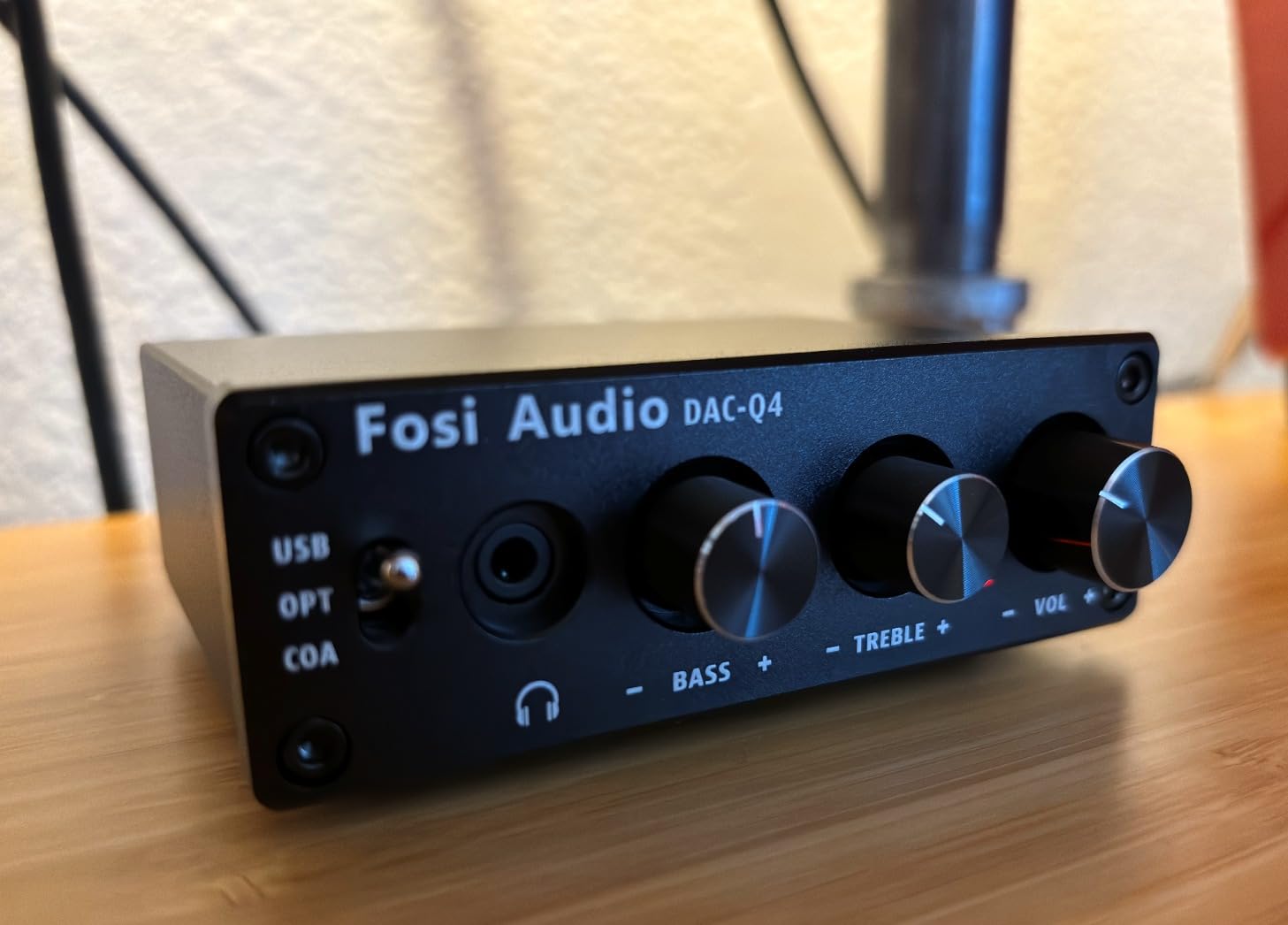
Owners treat it as a value upgrade rather than a reference component. Ratings are strong, with roughly seven in ten buyers handing over five stars, and the common theme is that movies, gaming and everyday listening all improve over a motherboard jack.
The honest limitation is noise. Listeners report a faint hiss that becomes obvious on low-impedance headphones and on very sensitive earphones, and some mention that the two channels do not carry identical noise levels. At low listening volumes on a quiet evening, that is audible.
Who the Q4 suits at home
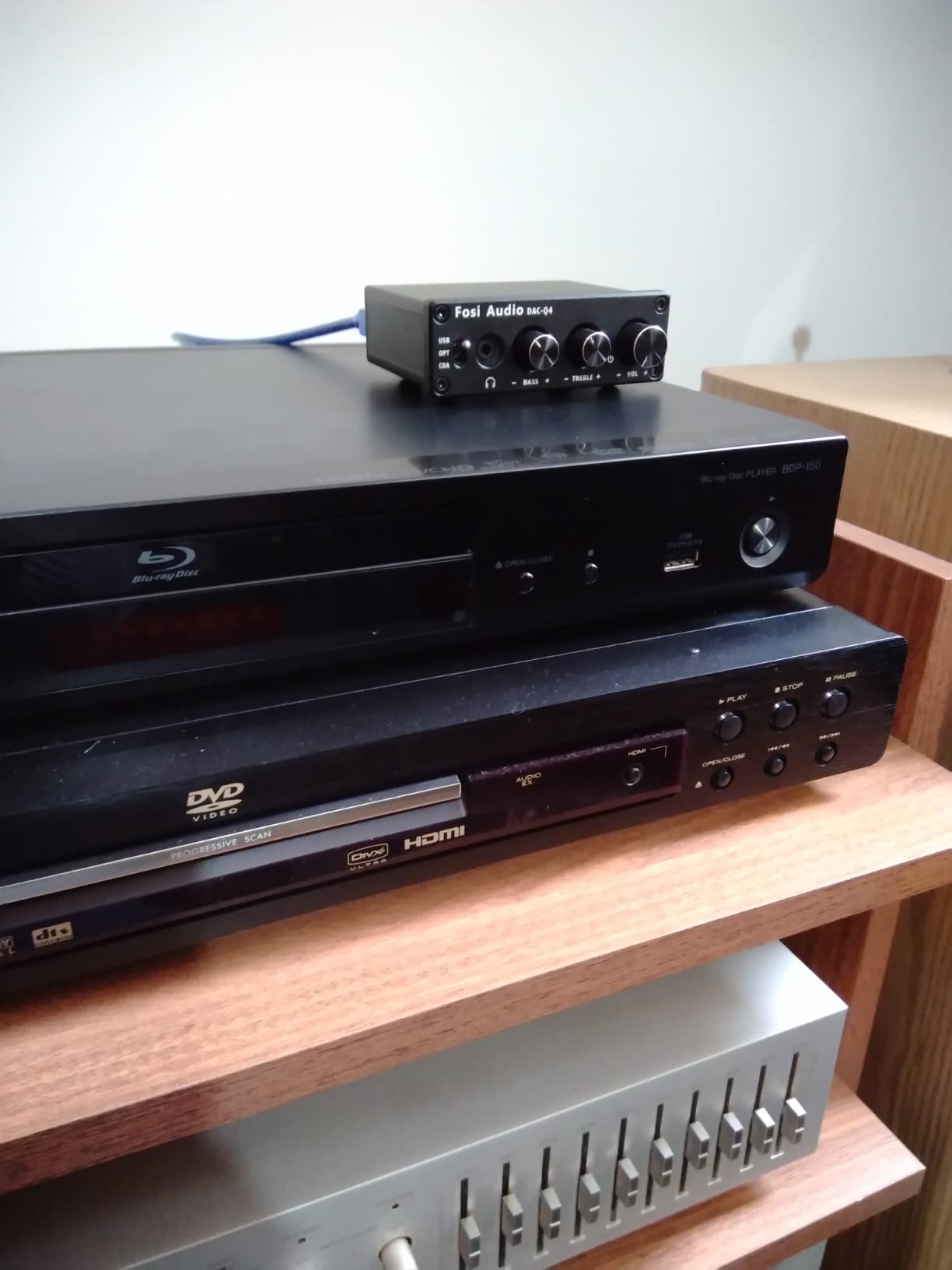
It suits anyone whose source is a PC, a TV or a basic streamer, and whose headphones sit in the mainstream range of 16 to 200 ohm. The physical bass and treble knobs are genuinely useful when different sources arrive at different levels.
It also works as the front end for a pair of powered speakers through the RCA outputs. That makes it a cheap way to build a two-box system rather than a stack of three.
Who should skip the Q4
Skip it if you listen at very low volumes in a silent room, because the noise floor is the first thing you will notice. IEM users fall into the same group, since sensitive earphones amplify hiss.
Anyone driving 300 ohm headphones will run out of clean headroom. For those, step up to a balanced desktop unit rather than adding a louder volume control.
2. FiiO K11 – balanced power without building a stack
- Balanced output drives 300-600 ohm headphones cleanly
- Switchable digital filters
- Informative display showing rate and gain
- Compact aluminium body
- Good value against two-box chains
- Menu system needs the manual to learn
- Gain must be set manually with no auto detection
- Some filter presets sound compressed or plasticky
- Desktop ASIO needs drivers installed
The K11 is the pick I keep coming back to when someone asks for a single box that covers most home headphone situations. It is a DAC and an amp together, rated at 1400mW for headphones between 8 and 350 ohm, with both 6.35mm single-ended and 4.4mm balanced outputs.
Inputs cover USB, coaxial and optical, and there are RCA line and coaxial outputs for feeding a power amp or powered speakers. Decoding runs to PCM 384kHz/24-bit and DSD256, which is far beyond what most listeners will ever throw at it.
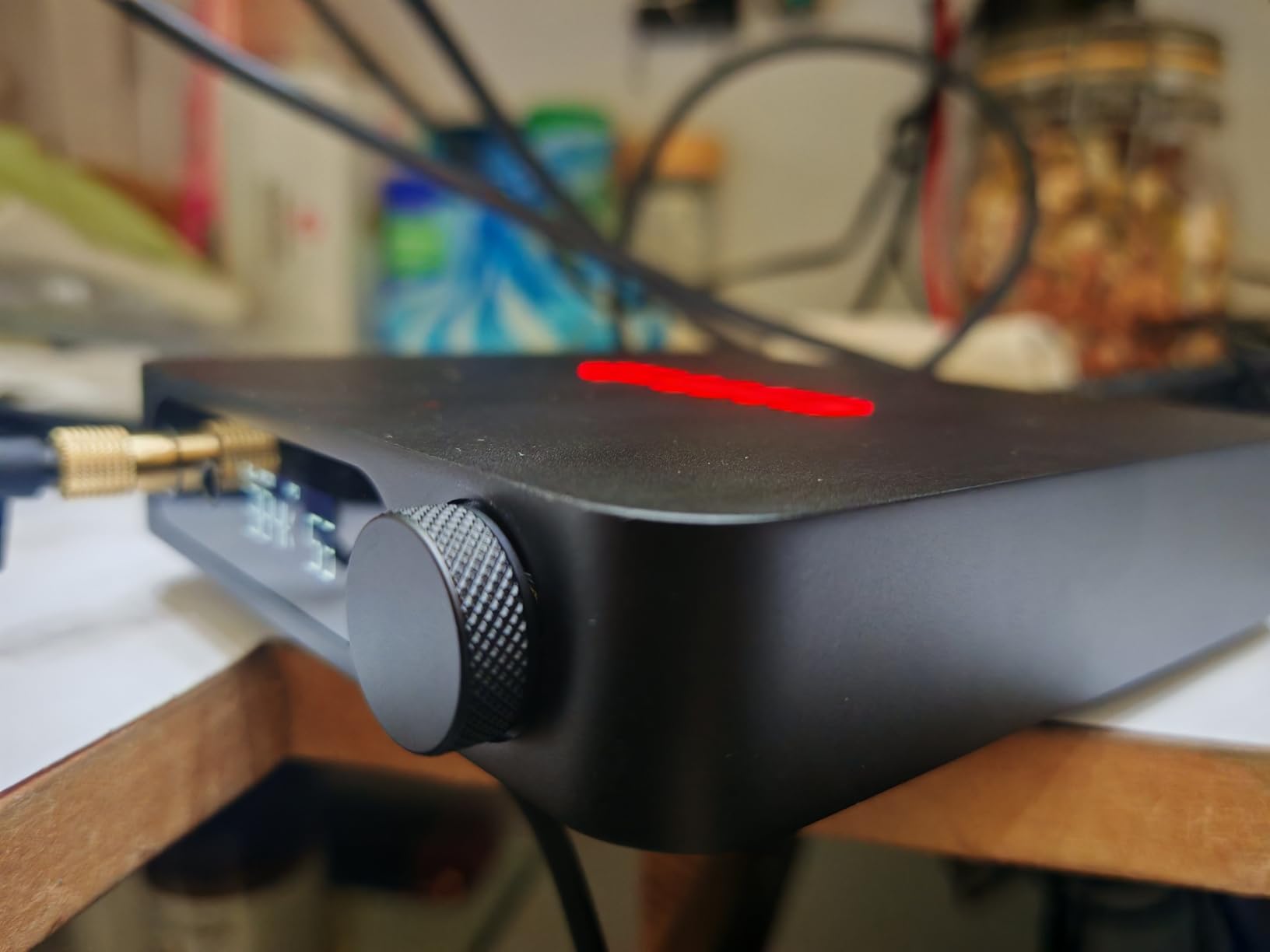
In practice the balanced jack is the reason to buy it. Plenty of owners report driving high-impedance headphones cleanly through 4.4mm, where a single-ended stage of the same size would have run out of voltage.
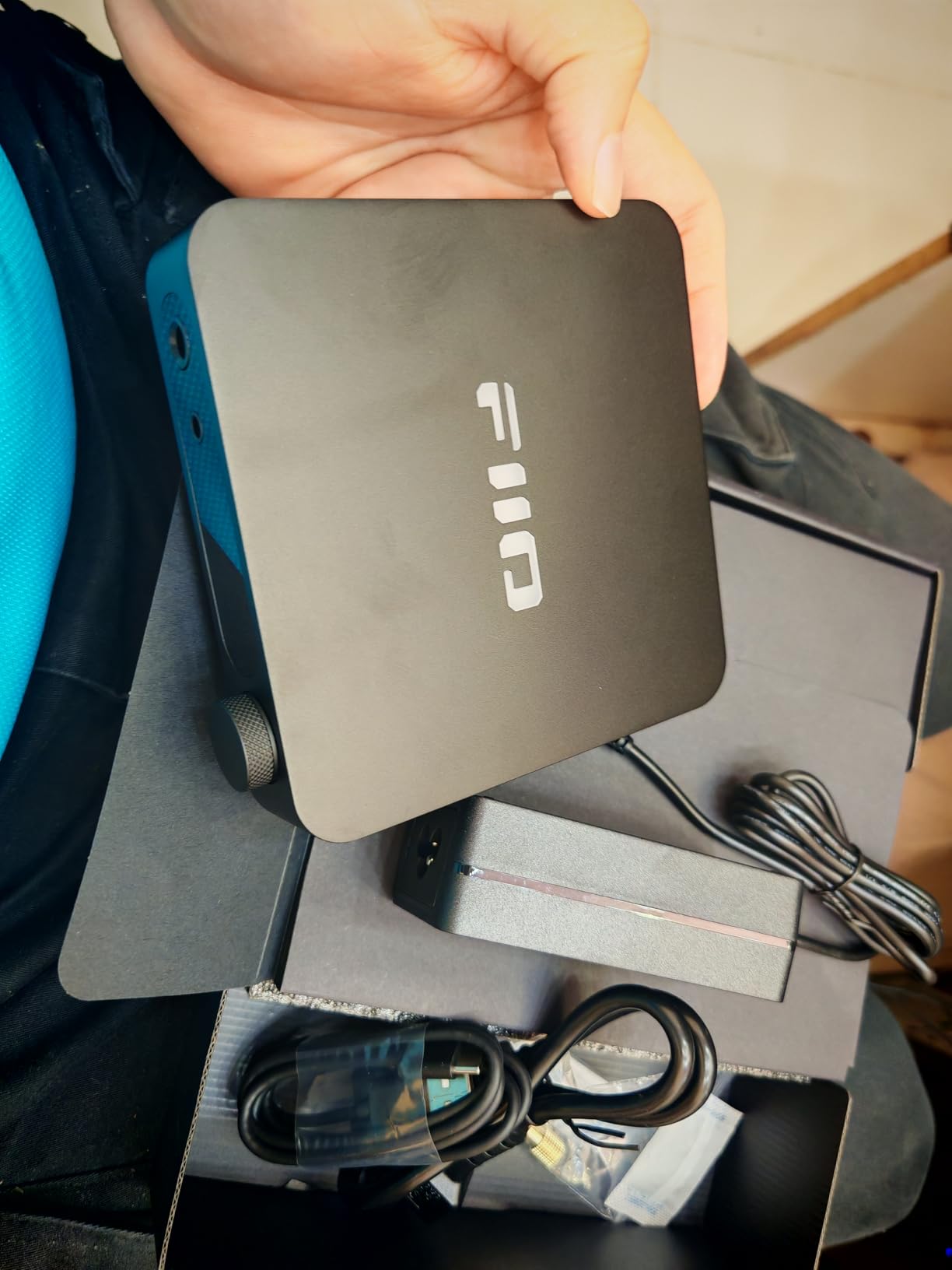
The small VA display shows sample rate, volume, gain and output mode at a glance, which saves a lot of fumbling. The case is CNC-machined aluminium and the volume control is smooth with a precise feel.
Where the K11 fits in a home chain
It works well as a single-box solution when your sources are digital. A laptop over USB plus a streamer over optical covers almost everything, and the display removes the guesswork about which mode is active.
Its balanced output also pairs naturally with balanced cables, which is the arrangement where the extra power is genuinely useful rather than cosmetic.
Where it falls short
The menu system is the most common complaint. Reviewers regularly note that learning the settings takes a manual read-through, and that gain has to be dialled in by hand because there is no impedance detection.
A few digital filter presets are described as sounding compressed or plasticky, so treat them as taste tools rather than upgrades. If you plan to run bit-perfect asynchronous audio from a desktop, expect to install drivers.
3. Fosi Audio K7 – the most power in this group
- Plenty of power for demanding planar headphones
- Crystal clarity and separation for gaming
- Premium all-metal chassis with weighted knobs
- High-resolution display with volume readout
- Clean neutral signature
- Volume knob has no hard stops and doubles as a gain toggle
- Display has poor vertical viewing angles
- Digital volume steps are coarse
- Large heavy chassis with no kickstand
- No balanced XLR output
The K7 is the amplifier I would put in front of a demanding planar. Output power is quoted at up to 2100mW, which is more than any other DAC/amp here, and it lands in the top ten best sellers list for headphone amps.
It is a full desktop hub: USB-C, coaxial, optical, Bluetooth aptX HD and LL, plus a 3.5mm microphone input. Outputs cover 4.4mm balanced, 3.5mm single-ended and RCA line out. Decoding reaches PCM 384kHz/32-bit and DSD256 on an AK4493S with XMOS XU208.
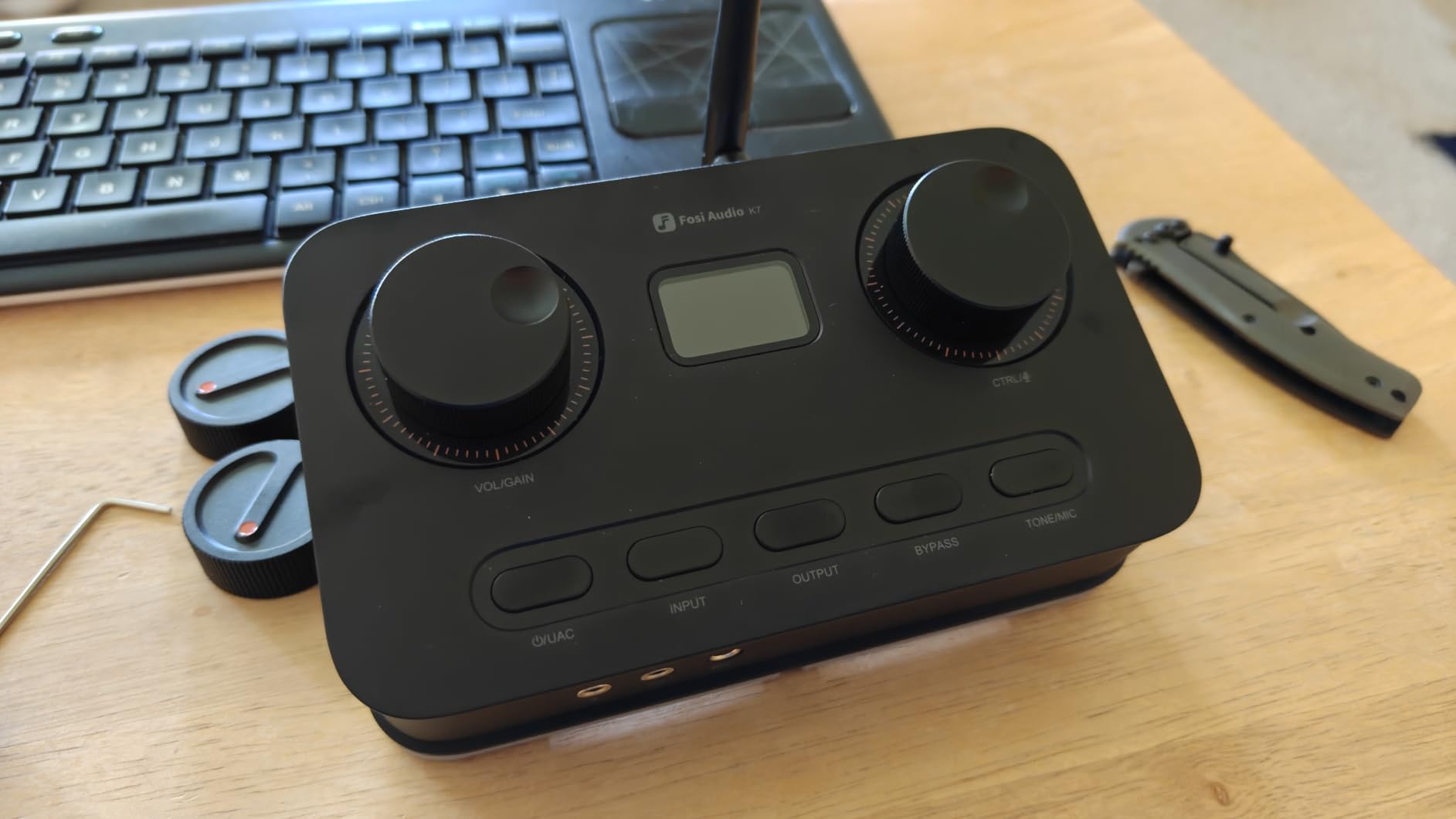
Buyers consistently single out clarity, separation and positional detail, which is why it shows up in gaming setups as often as in music setups. The signature is neutral with no obvious coloration, so it stays out of the way of whatever you are driving.
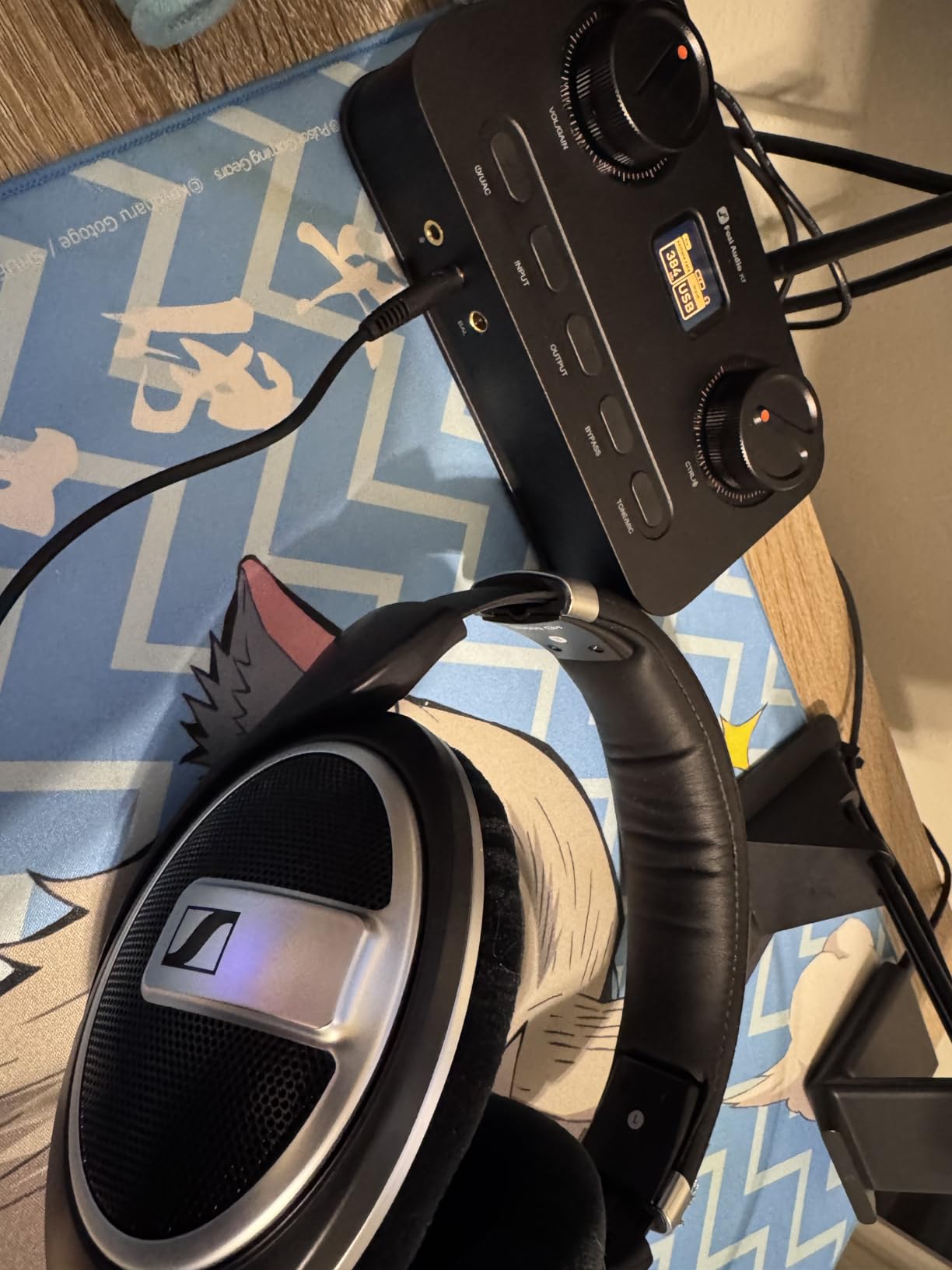
The build is where the money went. All-metal aluminium with EMI shielding, two large control knobs with real weight, five shortcut buttons and a high-resolution display that reads volume clearly.
Why this one earns a home desk spot
The combination of headphone output and RCA line out means it can sit in the middle of a chain, feeding powered speakers when nobody is on headphones. That dual role is exactly what a home setup needs.
Bluetooth support is unusual at this level. If you want to stream from a phone in the same room without a cable, aptX HD and LL are there.
The ergonomic complaints are real
Two gripes come up repeatedly. The volume knob rotates continuously with no hard stops, so its physical position tells you nothing from across the room, and pressing it toggles high gain rather than muting, which is easy to trigger by accident.
The display is also hard to read from a high angle, and there is no kickstand, so you need to place the unit where you sit slightly above it. The chassis is noticeably larger and heavier than most rivals, and the EQ stops at basic bass and treble.
4. Fosi Audio ZH3 – a DAC, amp and preamp in one chassis
- Genuinely strong balanced output for planars
- Very low noise even with sensitive IEMs
- Swappable op-amps and six filter types
- Remote control included
- Three-level gain switch for 16-300 ohm
- XLR and RCA outputs are fixed level not a variable preamp
- Only basic bass and treble EQ
- External wall-wart power supply
- Amplifier stage can sound slightly sterile
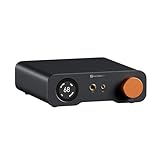
The ZH3 is the most flexible box on this list. It lists 640mW at 32 ohm single-ended and 2570mW balanced, uses an AKM4493SEQ with an XMOS XU316 and four OPA1612 amplifier chips, and decodes PCM 768kHz/32-bit plus DSD512.
Inputs are coaxial, optical, USB and RCA. Outputs are 6.35mm, 4.4mm, RCA and XLR, with 12V trigger support and a UAC mode switch for console use. A remote is included, which is rare at this size.
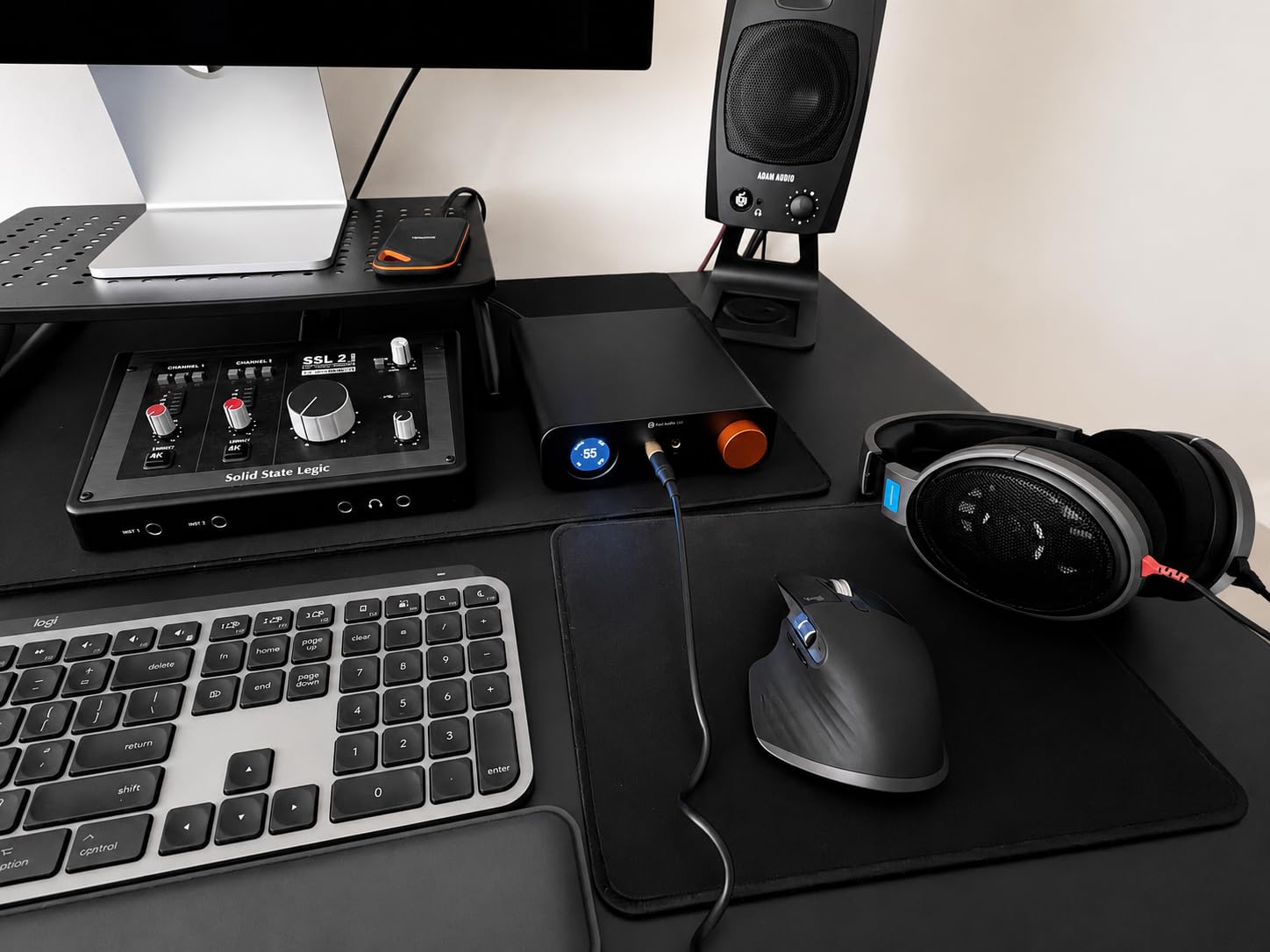
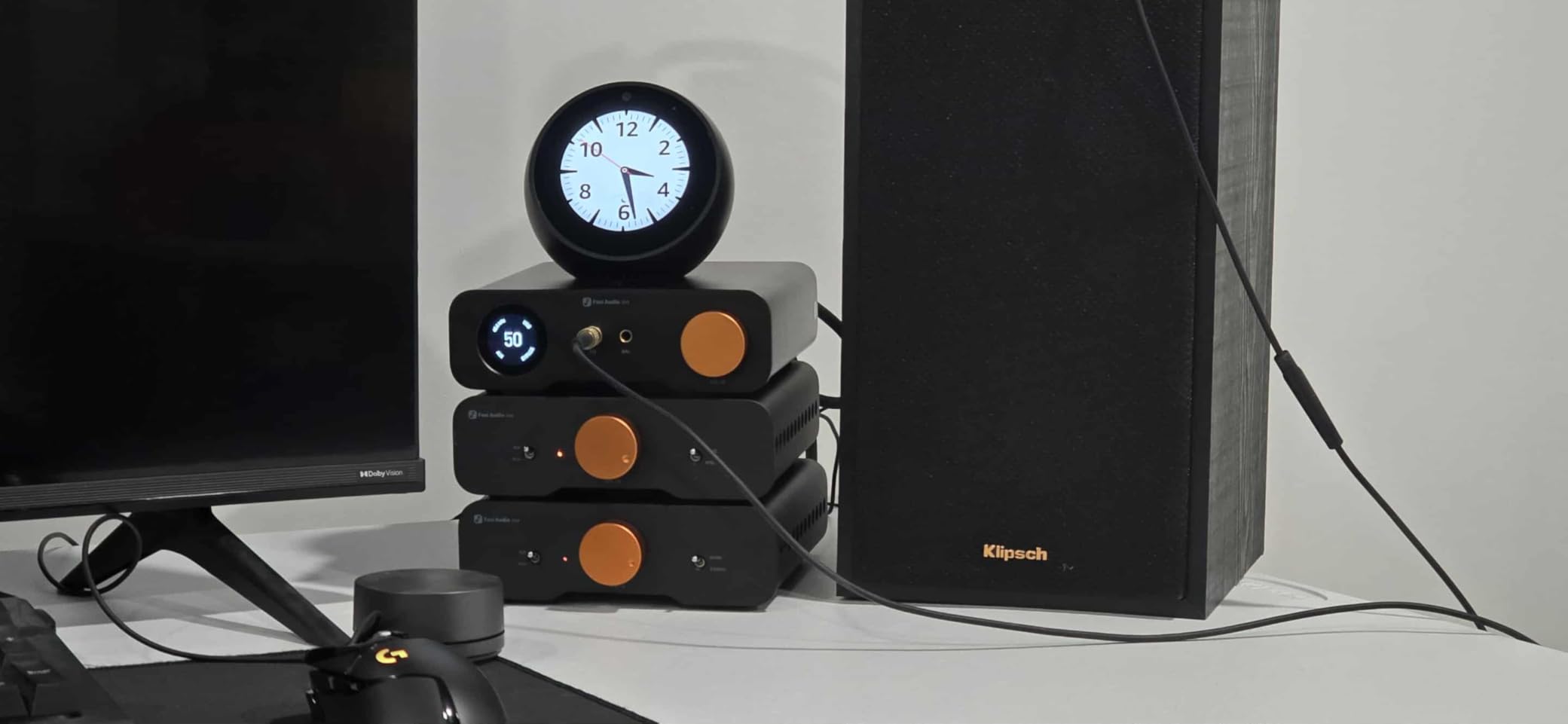
Owners treat it as a component replacer. Several reviews describe buying it specifically to consolidate a separate DAC and amp into one box, then feeding an external power amplifier from the XLR outputs.
The noise figure is quoted as low as 1.9 microvolts, and owners report no hiss with sensitive in-ear monitors. A three-level gain switch covers 16 to 300 ohm, and two op-amp sockets plus six filter types give a lot of room to adjust the character.
Where the ZH3 earns its place
It is the right box when you want one device to convert, amplify and pass signal on. Balanced output power is the headline, and reviewers report it handling demanding planars with headroom to spare.
If you enjoy tinkering, the swappable op-amps, bass and treble shaping and the bypass filter give more control than any other unit here at a comparable tier.
Watch the preamp wording
The most common complaint is specific and worth knowing: the XLR and RCA outputs are fixed line-level, not a true variable preamp. If you want to control volume downstream, that matters.
The amplifier section is also described by some owners as slightly sterile next to separate discrete amps, and the power comes from an external wall-wart brick rather than an internal supply.
5. Fosi Audio SK02 – small chassis, real balanced power
- Clean neutral sound with a low noise floor
- Balanced output handles hard-to-drive headphones
- Driver-free plug-and-play operation
- Solid CNC aluminium chassis
- Can double as a preamp for powered speakers
- Volume indication is a single small LED with no readout
- Needs USB-C power so it is not portable
- Knob has no tactile detents and doubles as mute
- Treble can read slightly bright on some headphones
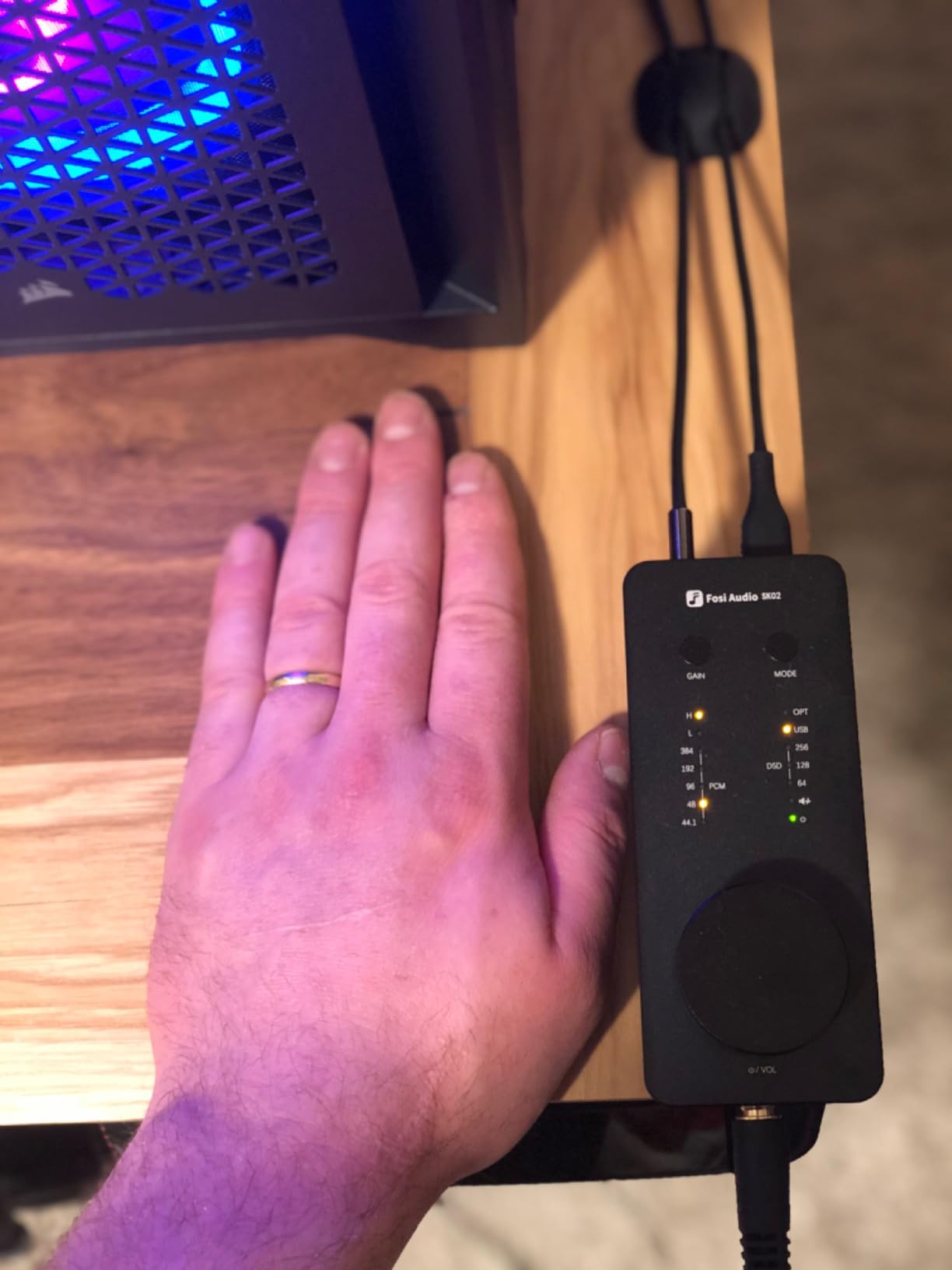
The SK02 is the box to look at if your home shelf space is tight. It is built from a single piece of CNC-machined aluminium, weighs 350 g and measures roughly the size of a deck of cards.
Inside there is an ESS SABRE ES9038Q2M with SGM8262 op-amps, quoted at up to 120dB SNR, a 3.7 microvolt noise floor and 0.001% total harmonic distortion. The 4.4mm balanced output is rated at up to 1100mW at 32 ohm.
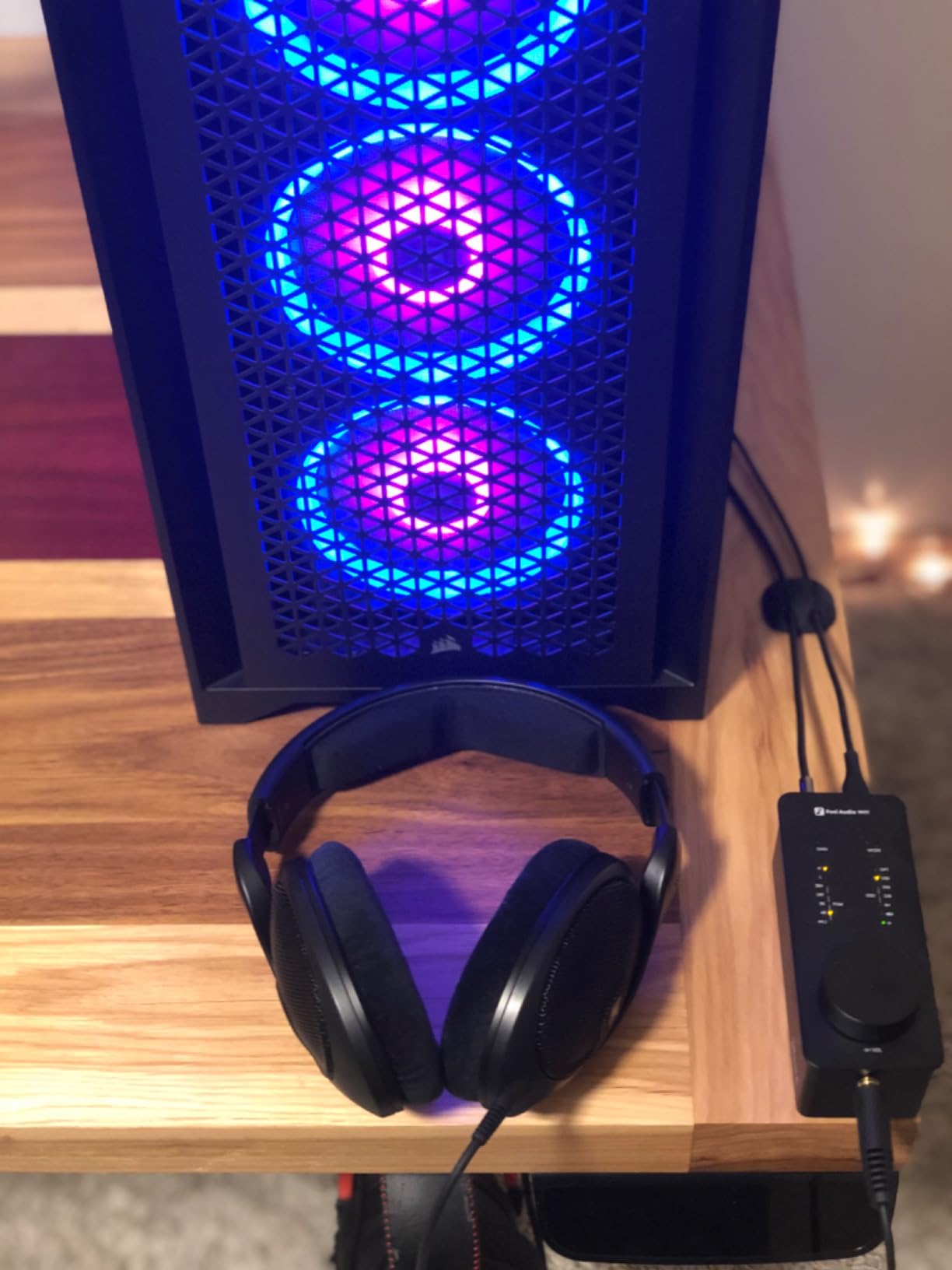
It decodes DSD256 and PCM 32-bit/384kHz and accepts USB-C and optical, with no driver installation. High and low gain buttons on the front let you match sensitive in-ear monitors with harder headphones.
Sound is described as neutral and detailed with a low noise floor at every volume setting, which is what you want in a shared room where you listen quietly at night.
Why it suits smaller rooms and shared spaces
A low noise floor is the headline advantage here. When the amp sits near a powered speaker pair in a living room, background hiss is the first thing listeners notice, and this unit keeps it down.
It also works as a preamp for active speakers or a power amplifier, so one box can serve both speakers and headphones in the same system.
The details that irritate owners
The biggest complaint is the volume indication. There is a single small LED and no numeric readout, so you are adjusting by memory rather than by sight.
It also needs USB-C power, which means it stays at a desk, and the control knob is so smooth it lacks detents while also doubling as mute and play. Some listeners find the treble linear or slightly bright depending on the headphone.
6. FiiO K13 R2R – a warm DAC with PEQ and line outputs
FiiO K13 R2R Desktop DAC & Headphone Amp, High-Fidelity 24Bit R2R DAC, Powerful 2400mW Output, LDAC Bluetooth Streaming, Dual Power Supply, 10-Band PEQ, Balanced XLR & RCA Audio Output (Black)
- Warm musical presentation that stays fatigue-free
- 2400mW balanced drives 300 ohm headphones
- 10-band PEQ with shareable presets
- LDAC Bluetooth streaming
- XLR balanced and dual RCA line outputs
- Remote buttons are loud stiff and the remote feels cheap
- Display is small and hard to read at distance
- Line-out button on the remote is easy to press by accident
- EQ setup needs the app or a browser that logs in repeatedly
- Needs five to ten minutes of warm-up
The K13 R2R is the one here I would describe as relaxing rather than analytical. It uses a self-developed four-channel fully differential 24-bit R2R converter built from 192 thin-film resistors rated to 0.1 percent tolerance.
There is a choice of non-oversampling mode or oversampling to 384kHz, output power of 2400mW, and both 4.4mm balanced and 6.35mm single-ended headphone outputs. XLR balanced and dual RCA line outputs let it feed an external power amplifier.
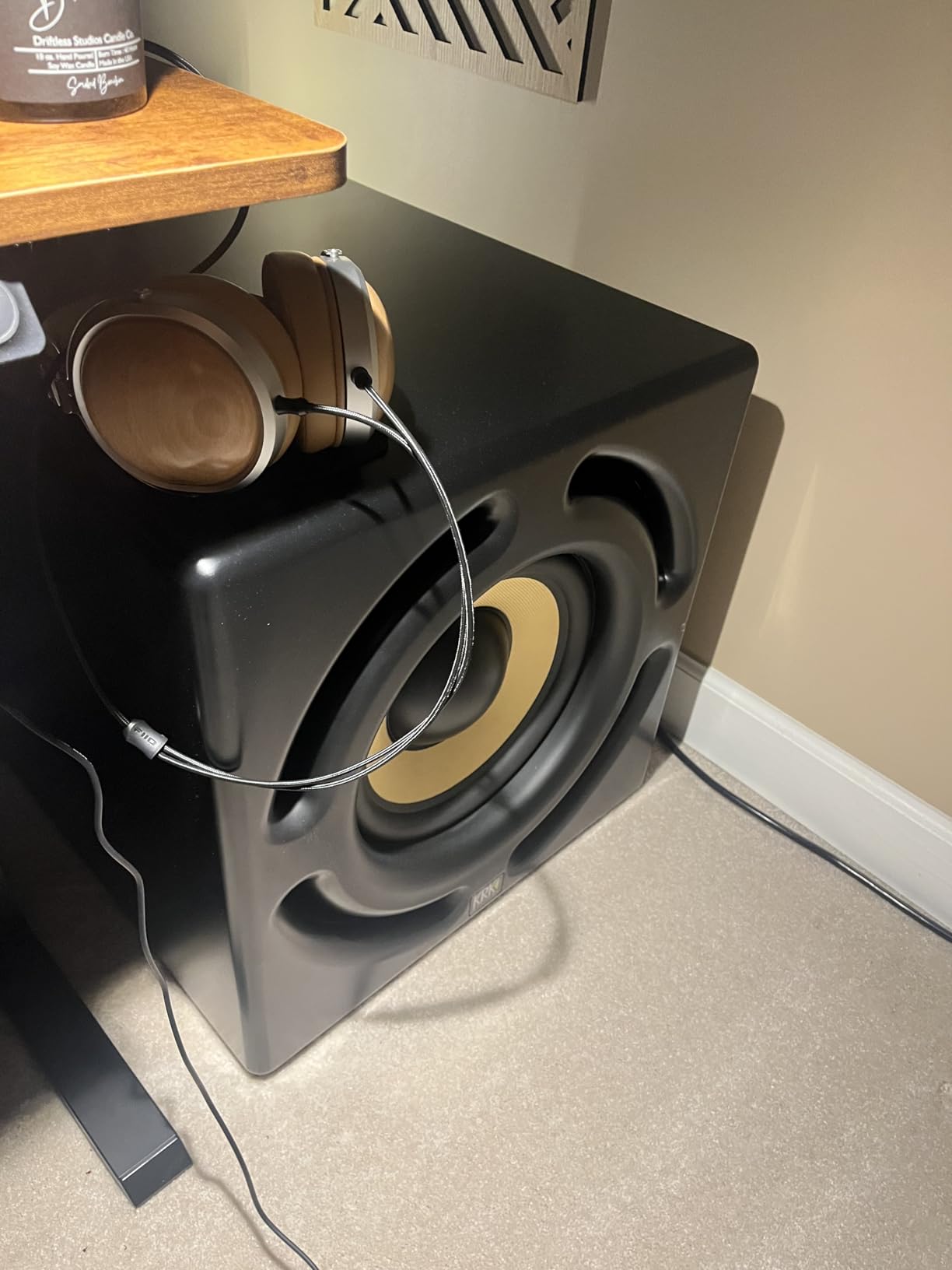
Owners repeatedly describe the sound as warm and musical with an analog-like presentation, and less fatiguing over long sessions. That is a real consideration for evening listening in a quiet room.
A 10-band parametric EQ is adjustable from the app or a web interface, with presets you can share. LDAC, AAC and SBC over Bluetooth 5.4 cover cable-free streaming, and decoding runs to PCM 384kHz/32-bit and DSD256.
Where it fits a long-session home setup
Pick it when your listening stretches past an hour and you find bright or fatiguing gear hard to stay with. Owners note it flatters warmer headphones rather than forensic ones, which is a fair description of R2R designs in general.
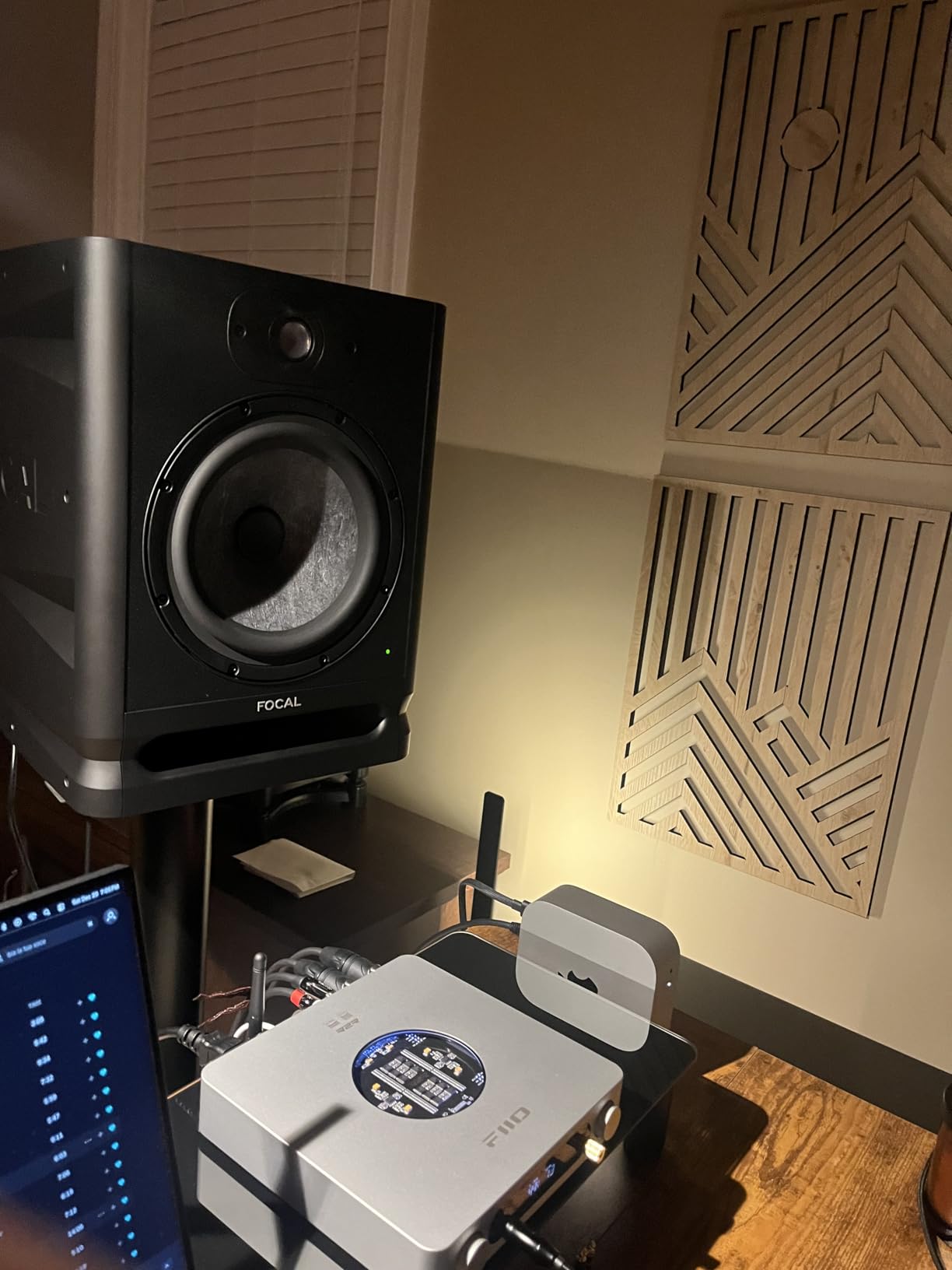
The line outputs make it a good middle component in a stack: source into the K13, out through XLR into a power amp driving speakers, with headphones on the front when you want them.
What buyers wish were different
The remote draws the most criticism. Buttons are described as loud, clicky and stiff, and the remote itself wobbles. The line-out button bypasses volume entirely and is easy to press by accident, which produces a very loud moment in an otherwise quiet room.
Configuring the EQ requires the FiiO app or a web interface that asks you to log in repeatedly, and reviewers also report needing five to ten minutes of warm-up before the full character emerges.
7. Douk Audio U3 – the budget class A option
- Metal chassis and build quality far above the price
- Plenty of clean power for high-impedance headphones
- Pluggable op-amp socket for DIY changes
- Works from a USB power bank
- Very small desktop footprint
- Very bright blue power LED in a dark room
- RCA inputs only with no digital input or line out
- Some channel imbalance at the lowest volume
- Unshielded case can pick up interference
- Power supply not included
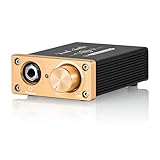
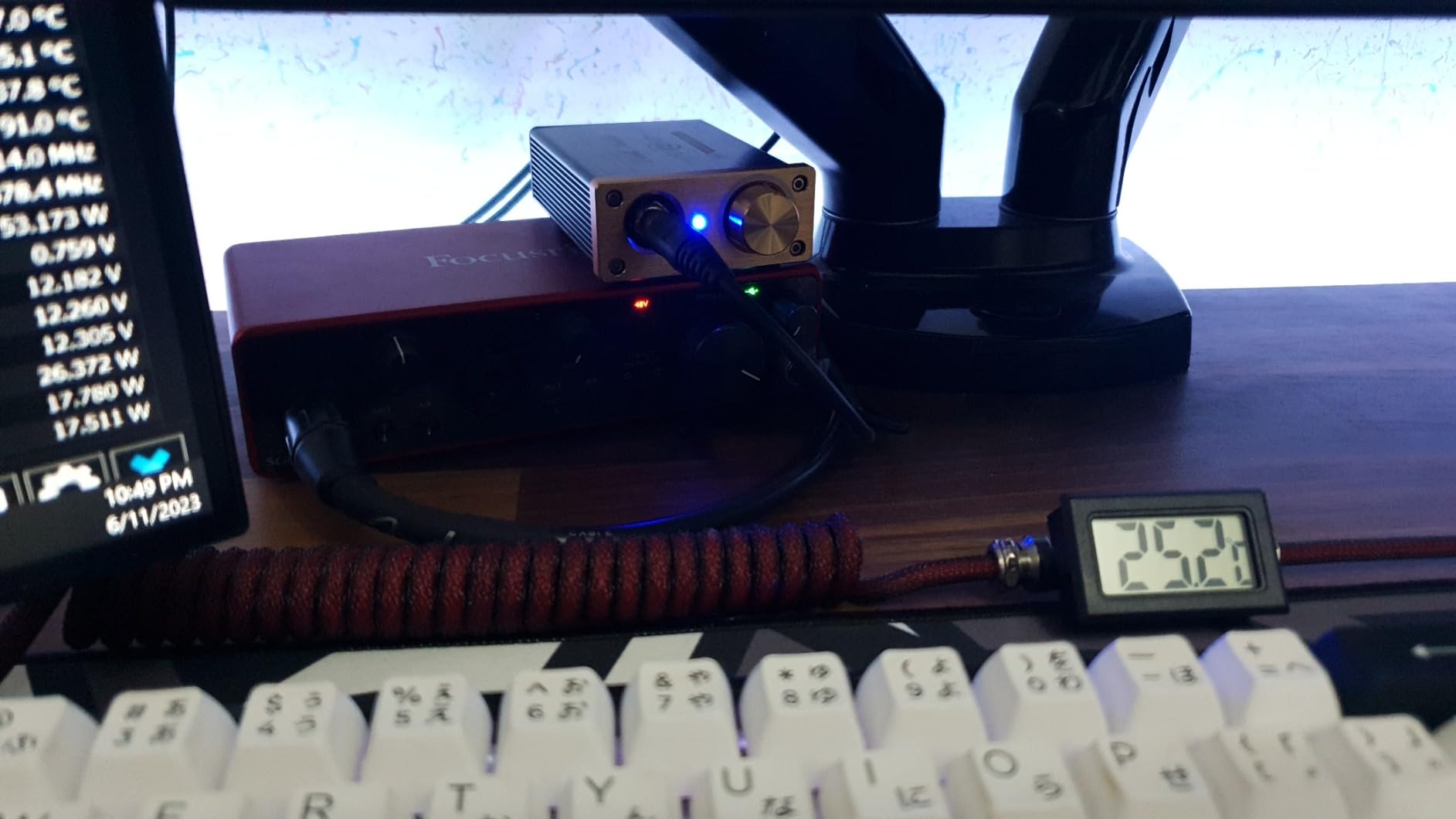
The U3 is the enthusiast hobbyist pick. It is a mini class A headphone amplifier using a TI NE5532 op-amp with a 1300 milliamp transistor current expansion stage, and it accepts a wide 5V to 20V input range.
Owners regularly list high-impedance headphones such as the HD580, HD600, HD650, K701, K702, DT880, T70 and T90 among the ones it drives well. Maximum output power is listed at 1300 milliwatts.
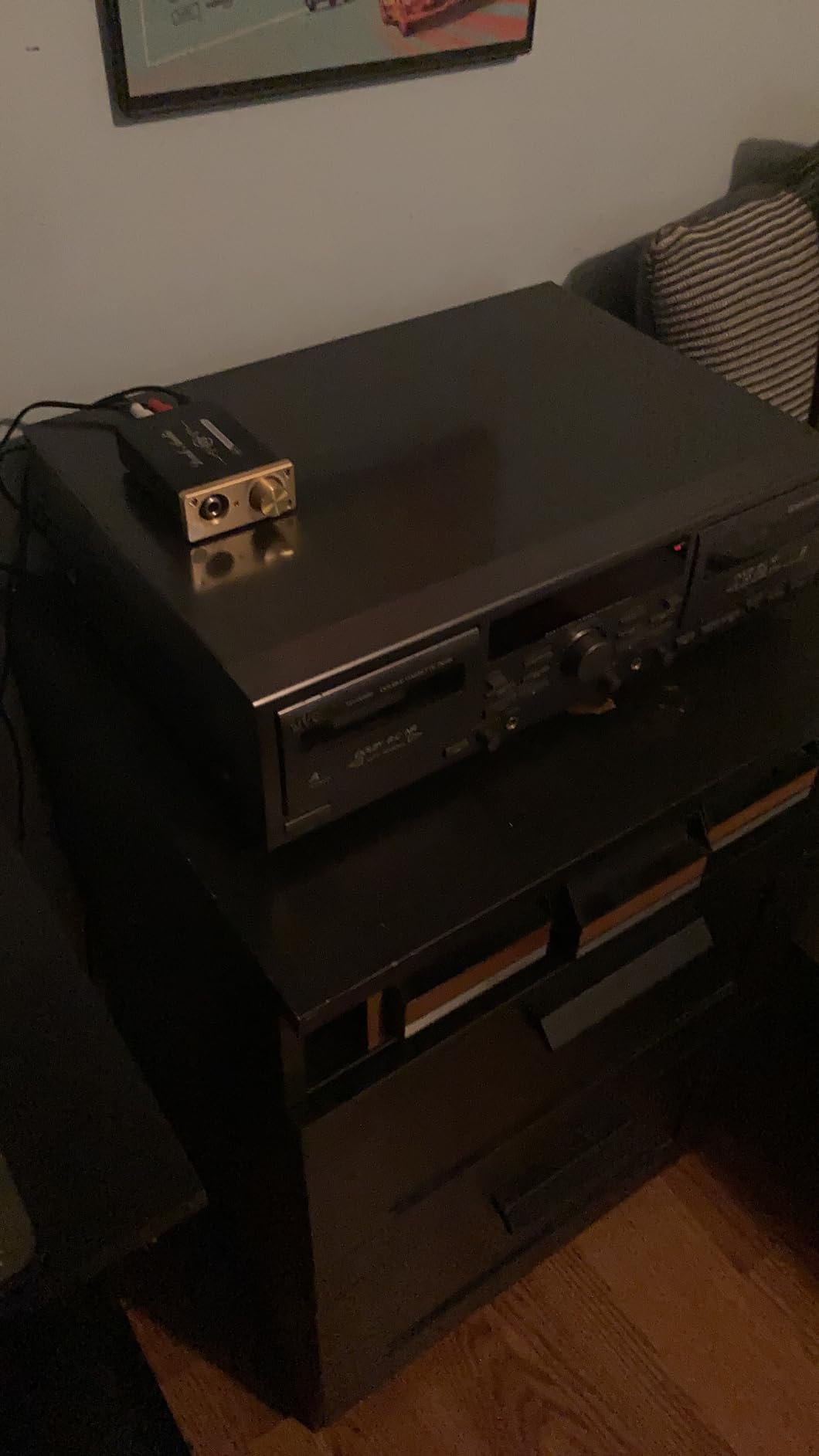
Reviewers call it the best amplifier in its bracket and say it rivals units costing several times more. The presentation is described as warm and musical with good instrument separation and precise imaging.
The op-amp socket is the reason people like it. It is a pluggable DIP design, so swapping the amplification chip is a five-minute job and a genuine reason to keep the box for years.
Why it still makes sense for home
At 5.92 ounces it takes almost no shelf space, and the wide input voltage range means it can run from a decent USB supply or a power bank. The metal case and detented volume control feel more substantial than the size suggests.
If your source is already an analog output, say from a streamer or a TV, this is the cheapest route to real voltage swing for high-impedance headphones.
Why some listeners pass
Three practical limits stand out. There are RCA inputs only, so it cannot act as a DAC and cannot pass through to speakers. The bright blue power LED is distracting in a dark room, which matters for late listening.
There is also some channel imbalance at the lowest volume positions and limited shielding, so nearby Wi-Fi or Bluetooth devices can introduce interference. You supply your own power source.
8. TOPPING DX5 II – the biggest feature list
- Transparent neutral sound with volume handled in the DAC
- Very low noise on optical and USB inputs
- Crisp colour display with VU meter and analyser
- PEQ filters Bluetooth codecs and preamp mode in one box
- Compact chassis with a well-placed volume wheel
- Single-ended power falls short of the advertised balanced figure
- QC concerns around headphone jacks and hot-swapping
- Firmware and menu quirks including language settings
- Remote is not compatible with other Topping remotes
- PEQ setup needs the Topping Tune app
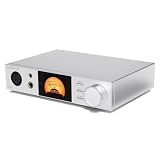
The DX5 II is the feature box of this group. It carries dual ESS ES9039Q2M DAC chips decoding PCM768kHz/32-bit and DSD512, with an XMOS XU316 handling USB and Bluetooth 5.1 including LDAC and aptX Adaptive.
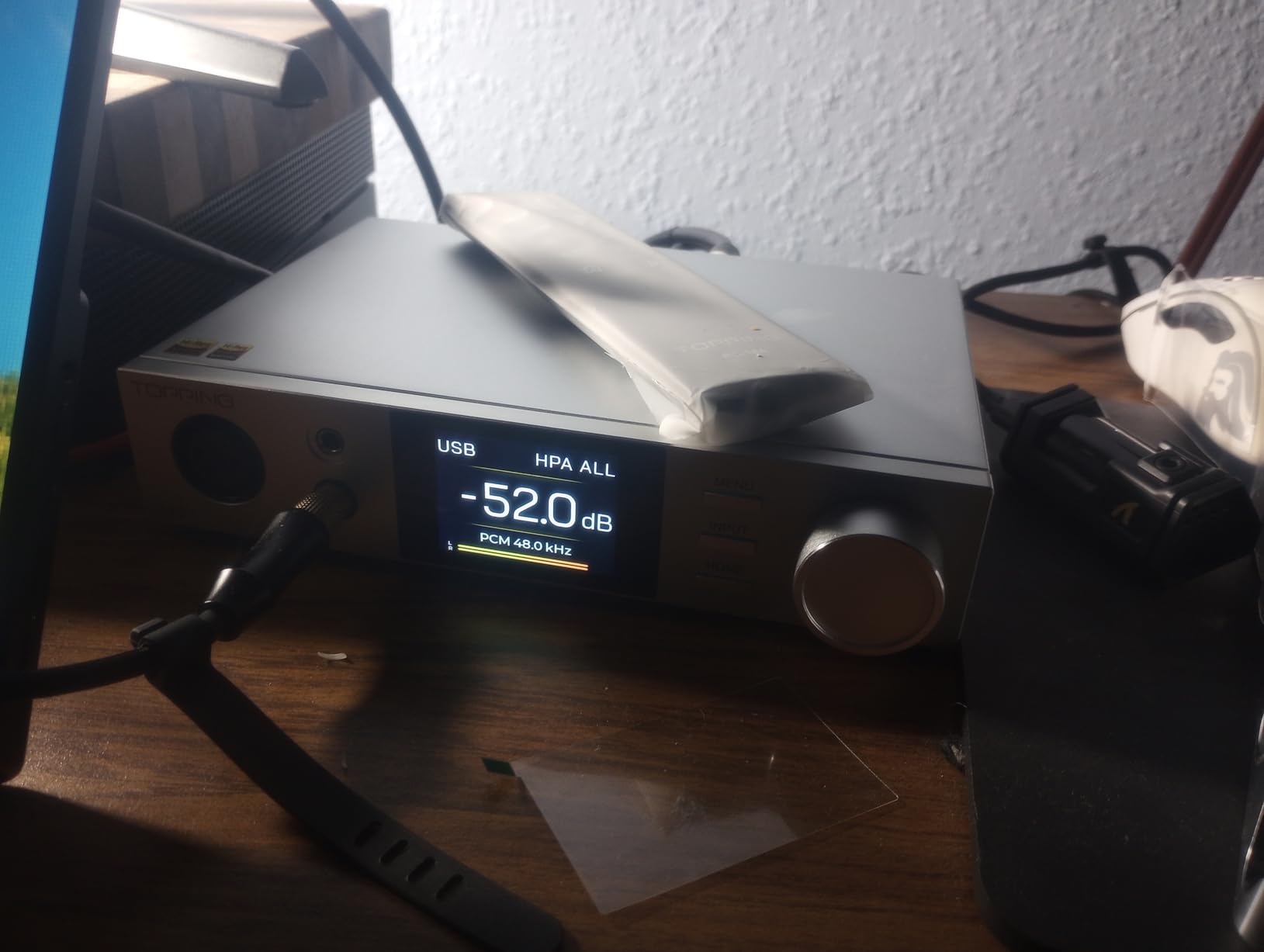
The fully balanced quad-channel headphone stage is rated at 7600mW x2, and there is a 10-band high-precision parametric EQ. Inputs cover USB, Bluetooth, coaxial and optical; outputs cover XLR, RCA, 4.4mm and 6.35mm.
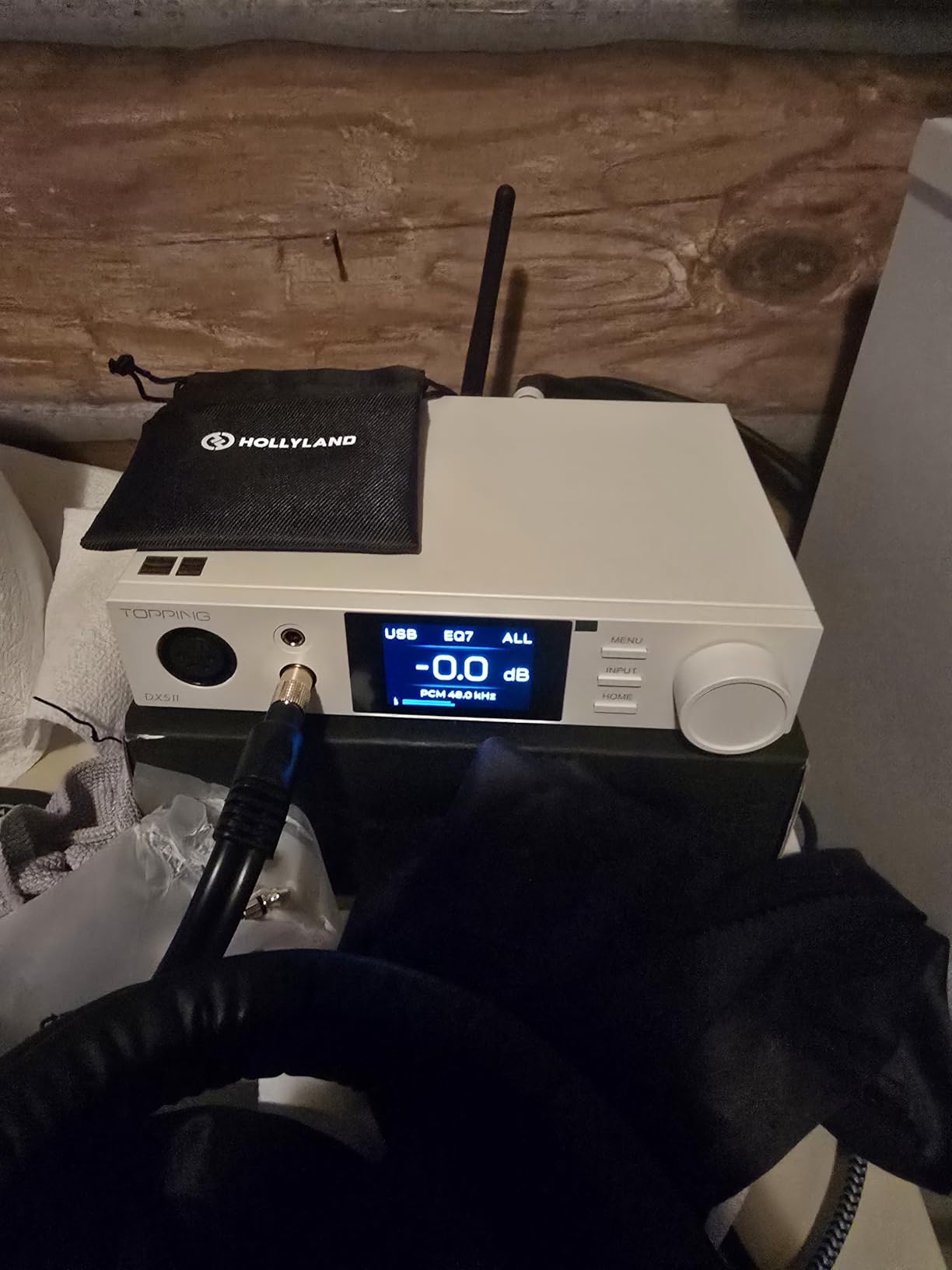
Because volume is handled in the DAC rather than after it, channel matching is excellent, and the noise floor on optical and USB is low enough that sensitive in-ear monitors stay quiet. The 2.0-inch colour display shows a bar graph analyser and a VU meter.
Preamp mode and 12V trigger in and out are the features that matter most for a home system, because they let the unit sit in front of powered speakers or an amplifier in a living room.
What makes it attractive at home
The transparency is the draw. Listeners who want the amp to disappear rather than colour the sound tend to like it, and handling volume digitally keeps the two channels matched at every step.
The feature density is unusual: Bluetooth codecs, a full parametric EQ, a proper display and preamp functionality, all in a compact metal chassis.
The complaints worth weighing
This unit has the lowest average rating in the group and a heavy share of one-star reviews, so the drawbacks are not minor. The most common is that single-ended output power falls well short of the headline balanced figure, which matters if you plan to use the 6.35mm jack with high-impedance headphones.
Reviewers also report quality control concerns around unprotected headphone jacks and hot-swapping, firmware quirks including language settings that need a reflash, and a bundled remote that does not work with other Topping remotes. Setting up the EQ requires the Topping Tune app on a PC.
9. FiiO JadeAudio GIGAS 1 – amplifier only, plenty of power
- Very high balanced output for the size
- Discrete class AB stage with low distortion
- Dual gain modes for IEMs and hard-to-drive cans
- Compact and light at 7.4 ounces
- 4.4mm balanced plus 3.5mm with mic pass-through
- Amplifier only with no DAC or digital inputs
- Balanced power drops considerably on plain 5V USB
- Much smaller review base than the established models
- No tone controls of any kind
The GIGAS 1 is different from the rest of this list because it is a pure amplifier. There is no DAC and no digital input, so it needs a separate converter or an analog source such as a streamer, desktop player or CD component.
What it does have is headroom. Output is quoted at up to 4600mW plus 4600mW through the 4.4mm balanced jack at 32 ohm, using a discrete class AB stage built from ON Semiconductor MJE243G and MJE253G transistor pairs.
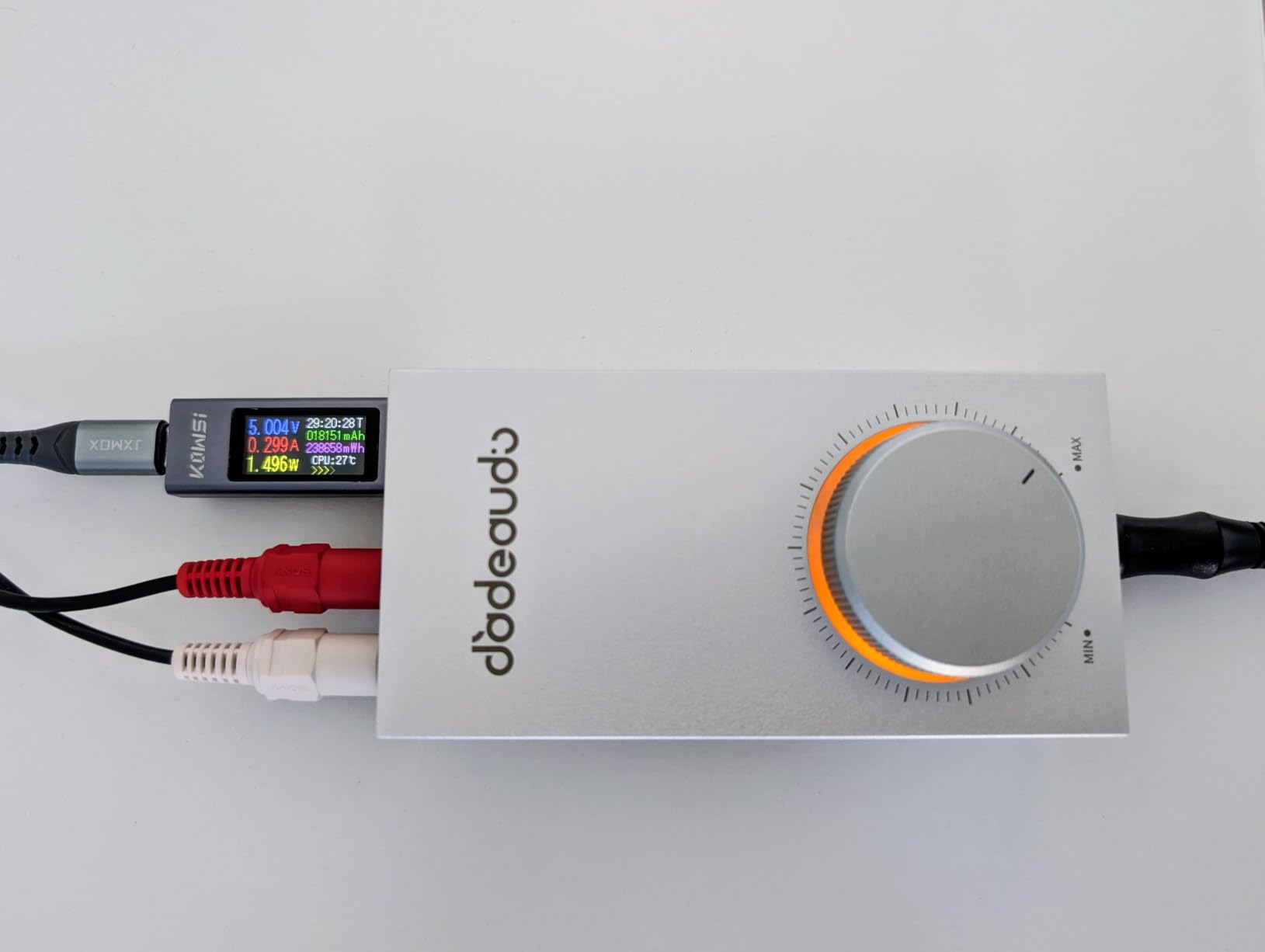
For a home system that already has a good DAC, this is a clean way to add power without buying another converter. Dual gain modes cover both sensitive in-ear monitors and power-hungry headphones, and RCA plus 3.5mm analog inputs give you source flexibility.
At 7.4 ounces and 5.2 by 2.36 by 1.57 inches it takes almost no space, which suits a side table next to a main system.
When this box makes sense
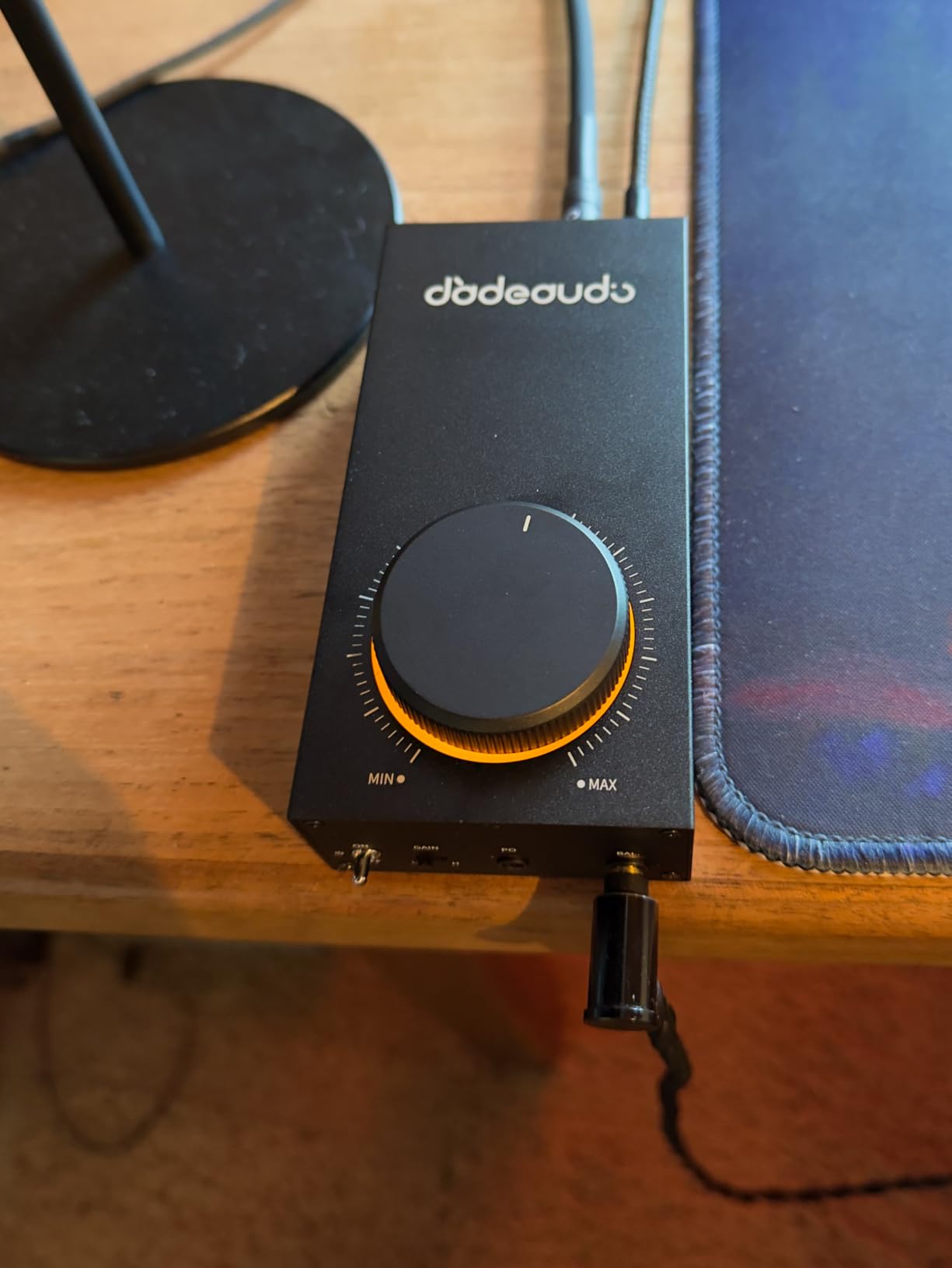
It makes sense when you already own a DAC you like, or when your source is analog and does the conversion. Owners who pair it with demanding planar magnetic headphones report the discrete stage gives low distortion and precise control.
The 3.5mm output also passes through a CTIA microphone signal, which is convenient if you use a headset.
What to know before buying
The power figure depends on how you power it. From a standard 5V USB supply the balanced output drops considerably, and you need USB-C PD at 12V to reach the headline capability. Check your supply before assuming what you are getting.
There are also no tone controls, and this model has by far the smallest review base in the group at 41 reviews, so early owner sentiment is positive but less well tested than the established models.
10. AIYIMA DAC-A2 – the cheapest repair for a noisy PC jack
AIYIMA DAC-A2 Headphone Amplifier & Desktop DAC for PC, MAC and Gaming
- Clear sound with plenty of volume for standard headphones
- Optical input removes PC and PSU interference
- Detented bass and treble pots
- Metal chassis with EMI shielding
- Plug-and-play with no drivers
- Volume pot can crackle and imbalance after a few months
- 3.5mm jack reported to fail within about a year
- Faint high-pitched whistle on USB input for some units
- No dedicated on or off switch
- Low output power next to the other units here
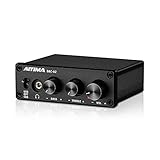
The DAC-A2 exists to solve one problem: the noisy headphone jack built into a desktop PC. Feed it optical from the motherboard and you remove the electrical noise and the hum of the power supply from the signal path entirely.
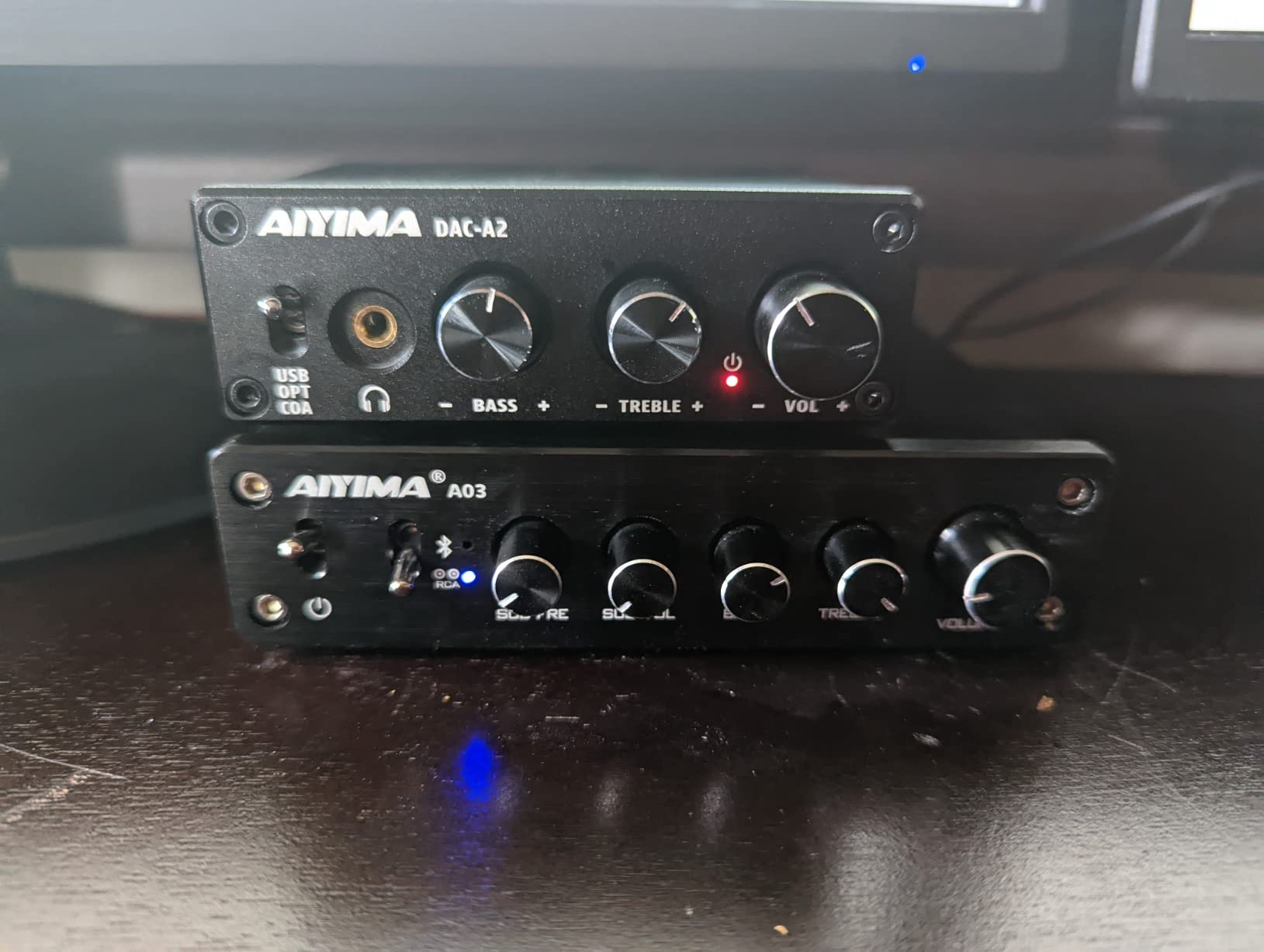
Output is 160mW RMS at 32 ohm and it drives headphones from 16 to 200 ohm. Inputs are optical, coaxial and USB, with RCA and 3.5mm analog outputs and front-panel rotary controls for bass, treble and volume.
The detented tone pots are a nice touch at this level, because a flat setting is easy to find and stays put. The chassis is metal with EMI shielding and an output protection circuit, and it needs no drivers or software.
Buyers describe clear, clean sound with more than enough volume for ordinary dynamic headphones, and roughly two thirds hand over five stars for a straightforward budget upgrade.
Where it makes sense at home
If your system is a tower PC driving a pair of powered speakers with headphones as a side activity, this is the tidy solution. Optical input, analog RCA out, and the speakers still get fed.
It also works for anyone who wants volume and tone control on a desk with basic headphones and no interest in balanced output or high impedance.
The durability complaints are the deciding factor
A meaningful share of owners report the volume pot developing loud static and crackling with channel imbalance after a few months, and some say the 3.5mm jack loses connection within about a year. That is the main reason this sits at the bottom of my list rather than higher.
There is also no dedicated on and off switch since the volume knob doubles as power, no remote, and no way to bypass the tone controls. Output power is modest next to the balanced units above it.
Do You Actually Need a Headphone Amp?
You need one if your headphones are difficult to drive and your source is weak. You do not need one if a phone or laptop already gets your headphones comfortably loud with clean, controlled sound.
Three quick signs point the same way: your source volume sits near maximum, the sound thins out or strains as you turn it up, or your headphones are rated at 300 ohm or more. Planar magnetic designs that sit in the 32 to 80 ohm range can also qualify, because many of them have low sensitivity and need voltage and current at the same time.
What about 80 ohm headphones? An 80 ohm dynamic headphone is the easiest common category to drive, and a decent laptop jack will run one without strain. Headroom matters more for quiet sources and low volume listening than for raw power, which is why some buyers add an amp purely to hear their music at a lower setting.
A note on source quality first. If your computer jack hisses, an amp with a proper digital input often fixes more than a better amplifier would, because it takes the noise out at the source. If you like building a chain, our guide to amplifier basics covers the same voltage and current basics that apply to headphone stages.
How to Match an Amp to Your Headphones?
Two numbers matter more than any other spec. Output impedance is the amplifier’s own impedance, and the widely used rule is that it should stay under one eighth of the headphone impedance. Sensitivity tells you how much voltage produces a given loudness.
High-impedance headphones of 250 to 600 ohm need lots of voltage, not lots of current. Low-impedance dynamic headphones of 16 to 32 ohm need current to keep distortion down at higher levels. Planar magnetic headphones usually sit in between and demand both.
Watch how power is quoted. A figure like 10 watts into 600 ohm is real but rarely relevant, because nobody listens to 600 ohm headphones at ten watts. What matters is usable voltage swing plus a gain setting low enough to avoid hiss on sensitive earphones.
Switchable gain is the feature that makes a unit flexible for a home collection. Low gain for sensitive in-ear monitors, high gain for a pair of 300 ohm over-ears, and you keep one box on the shelf instead of two.
DAC, Amp, or DAC/Amp Combo for a Home Setup?
A DAC converts a digital signal to analog. An amplifier adds power to that analog signal. A combo does both in one chassis, which is why most home listeners end up with one box.
Combos suit a single-purpose system where every source is digital and you want fewer cables. The SK02, K11, ZH3 and DX5 II are all built this way, and each accepts USB plus at least one optical or coaxial input.
Stacks suit a home system with several analog sources, or one where you already own a DAC you like. FiiO and Topping units with XLR and RCA line outputs are the ones that make stacking easy, and our guide to powering a room covers the speaker side of the same chain.
On community forums the recurring question is exactly this one. In threads on r/BudgetAudiophile the pattern is consistent: combos for a desk, stacks for a multi-source living room.
Balanced vs Single-Ended Output at Home
Balanced output sends the audio signal on both conductors at the same time, which cancels interference picked up along the cable and usually doubles the available voltage swing. Single-ended uses one signal conductor and a shared ground.
On these units balanced means a 4.4mm jack on the headphone side and either 4.4mm or XLR on the line side. The practical difference shows up most with high-impedance and planar headphones, where the extra voltage is what actually matters.
The community complaint worth taking seriously is that balanced outputs sometimes add nothing with short cables and a quiet digital source. That is fair when your current pair is easy to drive. It stops being fair when you move to 300 ohm headphones, where the higher power budget becomes the reason to run balanced.
For listeners curious about how tube designs differ from solid state in this role, our tube amplifier overview explains the same current and voltage trade-offs in a different format.
What Each Price Tier Actually Buys You
Below the entry tier, you are buying one thing: a cleaner signal path than the one built into your computer. Tone controls, multiple inputs and basic protection are the extras at this level.
The entry tier adds a real amplifier stage with meaningful power, usually single-ended with a 6.35mm jack. For mainstream dynamic headphones this is where most people should stop.
The mid tier brings balanced 4.4mm output, switchable gain and often digital filters or a parametric EQ. This is the sweet spot for home listening, and it is where most of the picks in this guide sit.
The upper tier adds line-level outputs, preamp modes, higher decoding rates and more display and control. Buy it for system integration and flexibility rather than for sound quality, because above this point the gains are mostly in features and headroom.
Honest advice from our side of the desk: spend on the headphones first. In a long thread on r/headphones about the best headphone amps regardless of cost, the consensus was that sound differences between competent units are subtle and mostly about headroom, control and hiss floor rather than timbre. A better amplifier cannot rescue a mediocre pair of headphones.
Home Listening Setup Checklist
Map the signal path before you buy. Computer or streamer into a digital input, digital input into the converter, converter into the headphone stage, headphone stage into your headphones. Any gap in that chain is where noise creeps in.
Set gain before volume. Start on the lowest gain that reaches a comfortable level, then step up for harder headphones. This prevents both hiss and clipping, and it is the single most useful habit for long sessions.
Leave room for a second pair. Two headphone outputs or a cheap headphone distribution box lets you rotate between a warm pair for evening listening and a brighter one for work without rewiring anything.
Give the unit mains power and airflow. These are small boxes that run warm under load, so leave clearance rather than stacking them inside a cabinet, and keep them away from a humming power transformer.
Check the return window before you commit, especially on a tube-style or op-amp-rollable unit such as the U3, where the whole point is that you will change something later.
Frequently Asked Questions
Do I need a headphone amp for home listening?
You need one if your headphones are 300 ohm or higher, are low-sensitivity planars, or if your source volume runs near maximum to get loud. If a laptop or phone already reaches a comfortable level with clean sound, you do not need one. Home listening usually justifies an amp because it lets you turn the source down, which lowers noise.
What is the best headphone amp to get started with?
The Fosi Audio Q4 is the simplest starting point, with USB, optical and coaxial inputs, RCA and 3.5mm outputs and support for 16-200 ohm headphones. It runs without drivers and adds tone controls. If you want balanced output and more power, the FiiO K11 is the better long-term buy for a home desk.
Do I need a separate DAC with a headphone amp?
Only if your sources are digital and you want more flexibility than one box offers. A combo unit handles conversion and amplification together, which keeps the chain short. Buy separate boxes when you already own a DAC you like, or when several analog sources need feeding through fixed line outputs.
Are balanced headphone outputs worth paying for?
They are worth it when you drive high-impedance or low-sensitivity headphones, because a 4.4mm balanced stage typically provides noticeably more voltage swing than a 6.35mm single-ended stage of the same size. For easy-to-drive dynamic headphones on a quiet digital source, the difference is often negligible.
What specs matter when matching an amp to high-impedance headphones?
Look at output impedance first and keep it under roughly one eighth of the headphone impedance. Then check power quoted into the same impedance as your headphones, confirm switchable gain exists, and treat figures like 10 watts into 600 ohm as largely irrelevant. Check the noise floor too if you listen at low volume.
Does a headphone amp improve soundstage or timbre?
An amp does not change the character of the sound. It changes how much clean power is available, so underpowered listening sounds strained, thin or distorted, and the improvement comes from removing that strain. In a long thread on r/headphones, listeners described differences between competent amps as subtle and mostly about headroom and hiss floor.
Can using a headphone amp damage my hearing?
An amp cannot damage your hearing any more than the source it replaces. Volume level and listening duration are what matter, and a powerful amp makes it easier to turn things up too far. Start at a low gain setting, keep the level moderate, and take regular breaks.
Is a headphone amplifier the same as a guitar amplifier?
No. A guitar amplifier is built to reproduce instrument output and drive speakers, while a headphone amplifier is a small line-level stage designed to drive low-impedance earphones quietly and accurately. They share electrical principles but nothing else.
Does 80 ohm mean better headphones?
No. Ohms measure impedance, not quality. An 80 ohm headphone is among the easiest to drive and a good laptop jack will run one without strain. Higher impedance needs more voltage, not better sound, which is why 300 ohm and 600 ohm pairs usually benefit from an amp.
Final Verdict for Home Listening in 2026
For most people, the Fosi Audio Q4 solves the biggest home listening problem, which is a noisy source and no volume control. If your headphones reach 300 ohm or you want balanced output, move to the FiiO K11, which we rated as the best value in this roundup.
Planar magnetic and 600 ohm headphones belong with the Fosi Audio K7 or the Fosi Audio ZH3, and the ZH3 makes the most sense when you want one box to act as converter, amplifier and source for speakers. Warm, fatigue-free listening is the FiiO K13 R2R’s territory, and the TOPPING DX5 II only makes sense if you will use its preamp mode and Bluetooth codecs.
Whatever you pick, buy the headphones first and set gain before volume. That habit will get you more than the upgrade most people reach for next.