
Short answer: the best laptop cooling pads for gaming are the ones that seal against the underside of your chassis and force air through the intake vents already built into the machine. A three-fan open-mesh pad such as the havit HV-F2056 is the safest all-round buy, a sealed turbo blower like the IETS GT500 is the choice for heavy sustained loads, and a multi-fan mesh stand like the LIANGSTAR six-fan pad is the cheapest way to stop a mid-range laptop from throttling.
Below I break down all twelve, plus the noise and fitment details nobody else covers.
Most buyers misread what a cooling pad is for. A pad is not a second set of fans pointed at your laptop’s lid. It is a duct, and air only does useful work on a gaming laptop when it arrives under the chassis, meets the intake path, and pushes through the heat sink rather than sliding out from under the edges. That is why a single large 200 mm fan can outperform six small fans, and why the two premium picks on this list both use sealed foam gaskets.
Thermal throttling is the real cost. When a gaming laptop gets hot, the processor and GPU drop their boost clocks, and you lose frame rate precisely when you need it most. Frame rate stability matters more in a long session than a peak number measured in the first ten minutes, and a pad that holds clocks steady is worth more than one that shows a dramatic temperature reading for a few seconds. I compared twelve pads across fan architecture, size fitment, noise, ports and measured cooling claims, and these are the ones worth your money in 2026.
Table of Contents
Top 3 Best Laptop Cooling Pads for Gaming in 2026

havit HV-F2056
- Three ultra-quiet fans
- Two adjustable height settings
- Metal mesh grip surface


LIANGSTAR 6-Fan Pad
- Six fans with two speed switches
- 0.4 inch slim profile
- Three height settings
All 12 Gaming Laptop Cooling Pads Compared in 2026
| Product | Specifications | Action |
|---|---|---|
| havit HV-F2056 |
|
Check Latest Price |
| TECKNET Cooling Pad |
|
Check Latest Price |
| LIANGSTAR 6-Fan Pad |
|
Check Latest Price |
 KLIM Ultimate RGB KLIM Ultimate RGB |
|
Check Latest Price |
 AIMIUZI 6-Fan Pad AIMIUZI 6-Fan Pad |
|
Check Latest Price |
 KeiBn 2-Fan Cooler KeiBn 2-Fan Cooler |
|
Check Latest Price |
 llano V12 llano V12 |
|
Check Latest Price |
 llano V10 llano V10 |
|
Check Latest Price |
 KYOLLY 13-Fan LCD Pad KYOLLY 13-Fan LCD Pad |
|
Check Latest Price |
 IETS GT500 IETS GT500 |
|
Check Latest Price |
 IETS GT600 RGB IETS GT600 RGB |
|
Check Latest Price |
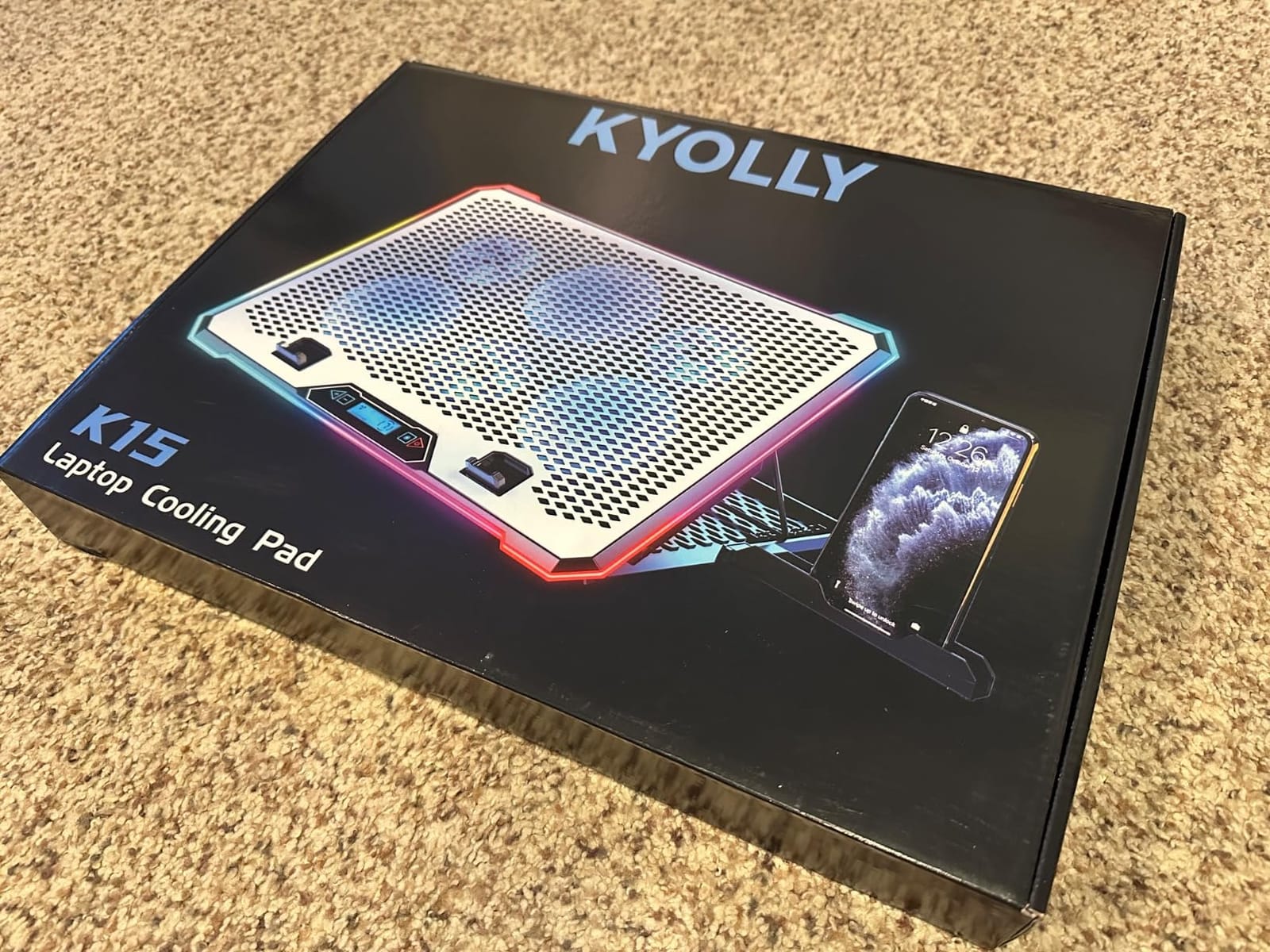
 KYOLLY Aluminium 6-Fan KYOLLY Aluminium 6-Fan |
|
Check Latest Price |
Why Gaming Laptops Overheat and What a Cooling Pad Can Fix
A gaming laptop packs a desktop-class processor and graphics card into a thin chassis, sharing heat pipes between them. Everything the machine generates has to leave through the same vents, and a large share of that heat comes off the CPU die and GPU surface straight down into the base rather than out the back.
Sustained gaming pushes both parts to their limits for hours. When they get hot, the firmware cuts clocks, and the result is the pattern every owner recognises: fine performance for ten minutes, then stutter as the machine settles into a lower and lower ceiling. Dropping the temperature a few degrees moves the thermal ceiling up, which is why frame rate stabilises even when the headline number barely moves.
A cooling pad works by giving that bottom airflow somewhere to come from. Open-mesh pads circulate room air under the chassis and typically buy a few degrees. Sealed designs trap the air instead, raising the pressure under the vents so more of it is forced through the intake path. Both help. Only one of them helps a lot.
1. havit HV-F2056 Laptop Cooling Pad for 15.6-17 Inch Laptops
- Near-silent three-fan airflow
- Metal mesh surface grips the laptop
- Two height settings double as an ergonomic stand
- Extra USB port and dedicated power switch
- Cools so well the internal fan rarely spins up
- USB-A to USB-A power cable only
- Some units develop a rattling fan bearing
- Blue LED cannot be switched off
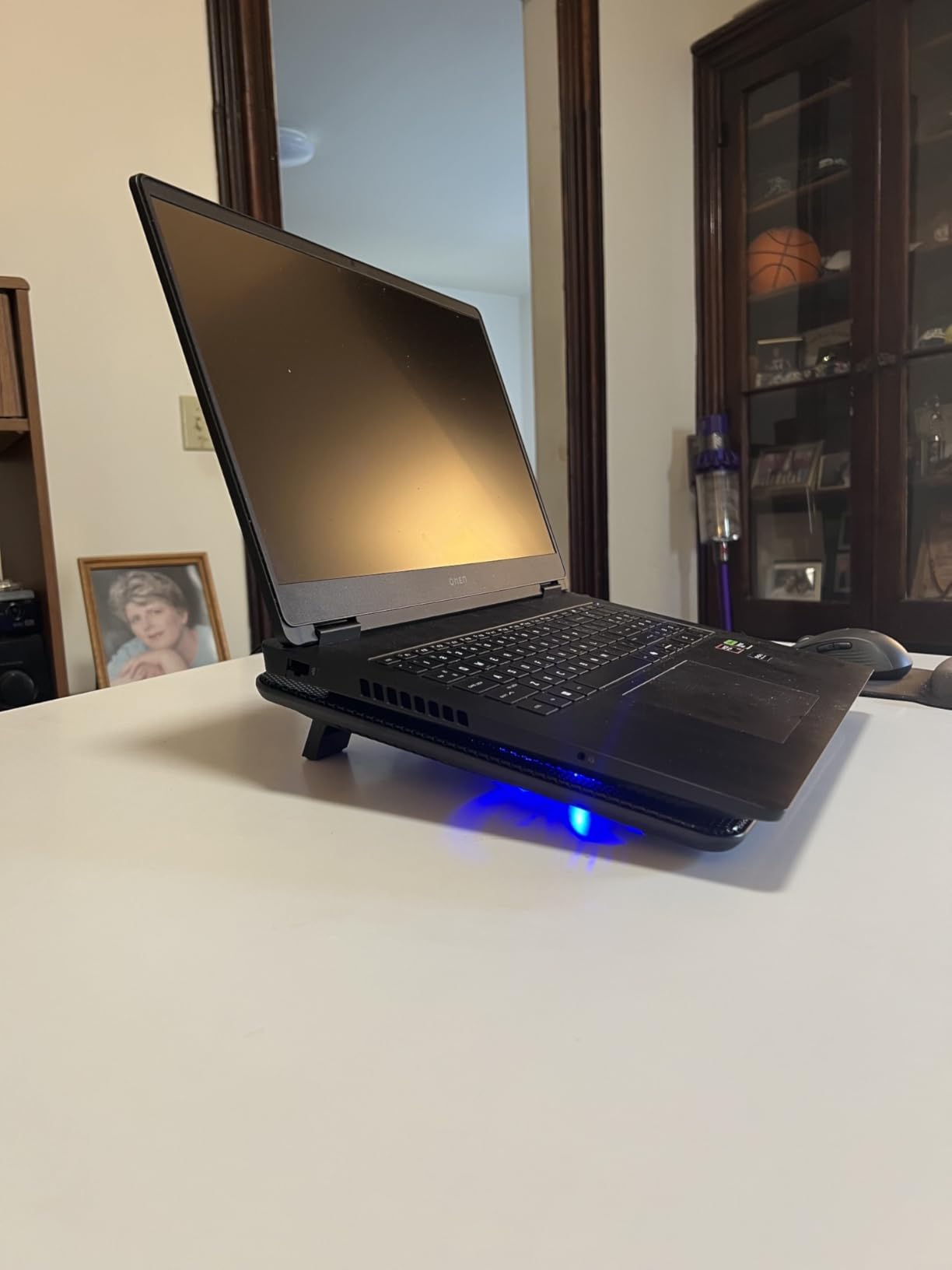
This is the pad I recommend to anyone who will not read the rest of this guide. Three fans, a metal mesh deck and a 697 g body that fits in a bag without thinking about it. It handles 15.6-inch machines and most 17-inch chassis without the overhang you get with slim pads, and it doubles as a stand with two height settings, which is often worth more than the cooling itself over a long session.
With over 45,000 reviews averaging 4.5 stars, the pattern is consistent. Owners report the laptop’s own fan rarely spins up under normal workloads, and multiple international reviewers put the temperature reduction in the 8-15 degree range. The three fans are described as quiet enough that people forget the pad is running, which is unusual for a three-fan design at this size.
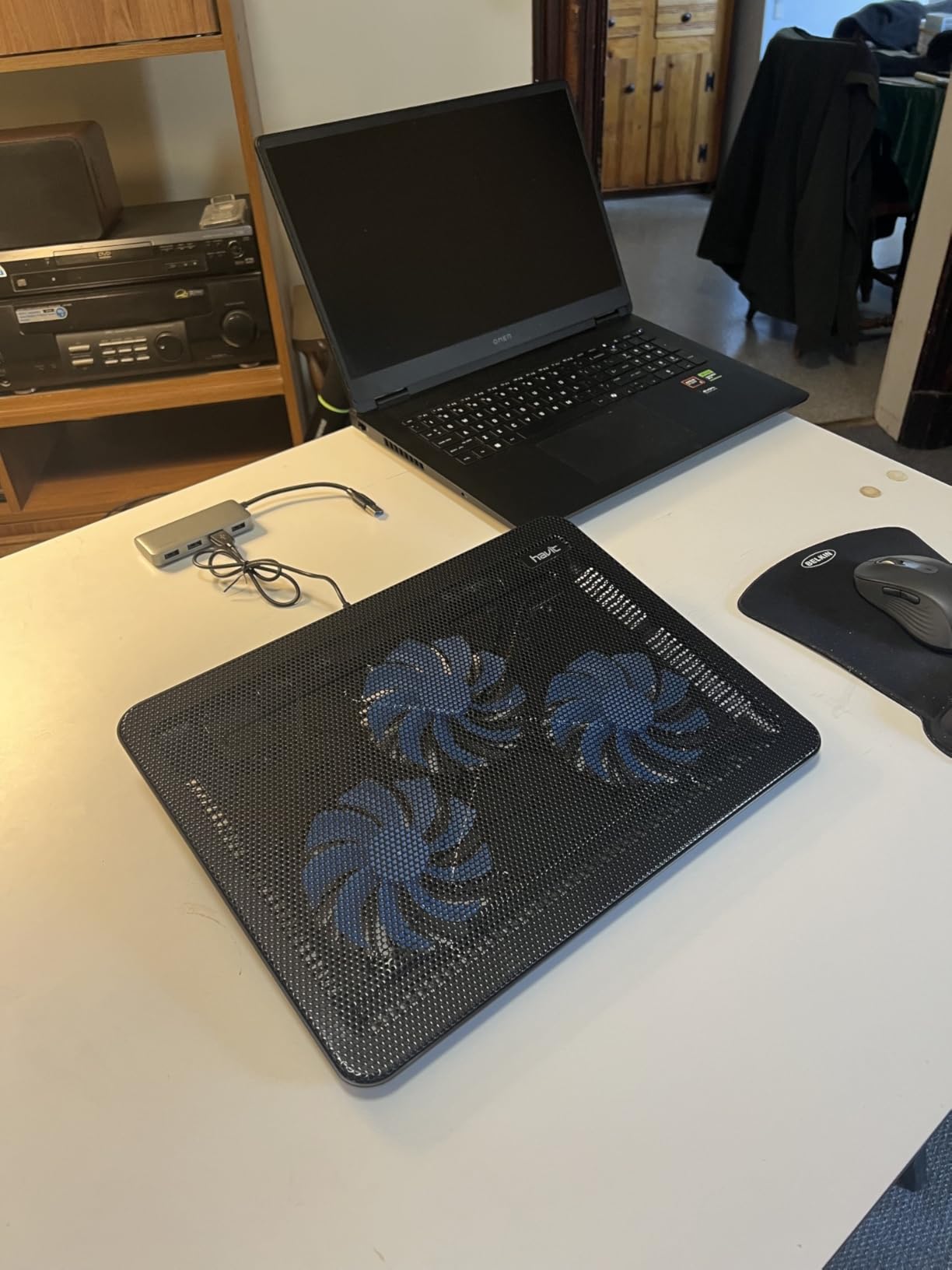
It is not a sealed blower, so do not expect the temperature drops the premium turbo designs deliver. For a laptop that throttles after two hours, this pad takes the edge off. For a laptop that holds its own but runs hot and loud, it makes the session noticeably more comfortable. Multiple owners also report the internal fan staying quiet, which tells you the pad is doing real work at the intake.
There are tradeoffs worth knowing before you order. The power cable is USB-A to USB-A, so a USB-C-only machine needs an adapter. The blue activity LED cannot be turned off, which is irritating in a dark room. A minority of units develop a rattling bearing within a year, and the rubber feet can detach with heavy long-term use, letting the laptop creep forward.
Is the havit HV-F2056 quiet enough for headset gaming?
Yes. It is one of the quietest pads here, and users routinely report forgetting it is running. If you play late at night in a shared room with a headset on, this is the tier where noise stops being a problem. The premium blowers on this list are several times louder, and that difference is the single biggest reason they are not the default recommendation.
Its two height settings also make it a genuinely ergonomic stand rather than a flat tray, which matters more for a long evening than most people expect. If your laptop already sits at a comfortable angle, the cooling is the main draw.
When is the havit HV-F2056 not enough?
It is not enough for sustained 100 percent CPU professional workloads, and several owners say so directly. A 17-inch desktop replacement rendering a 3D scene for an hour will still throttle, because three small open-mesh fans cannot force enough air through a sealed intake path.
It is also not ideal if you need USB-C only. Check which charging and data port your laptop uses before buying, and pick up an adapter if it is USB-C. Otherwise this pad is the low-risk choice for the widest range of gaming laptops.
2. TECKNET Laptop Cooling Pad for 12 to 17 Inch Laptops
TECKNET Laptop Cooling Pad, Portable Slim Laptop Cooler for 12″-17″ Laptops
- Effective against bottom intake vents
- Very quiet in normal room ambience
- Slim and light for travel
- Dual USB ports free one for a mouse
- Support responds quickly and extends warranty on registration
- USB-A to USB-A only
- Laptop can slide on the shallow surface
- Limited benefit under heavy sustained load
The TECKNET is the one I suggest when budget matters and the laptop is a 15.6-inch machine rather than a 17-inch desktop replacement. Three 1200 RPM fans sit under a metal grate on a plastic base, and the combination of a 4.5-star average across nearly 9,000 reviews and a low profile makes it a safe recommendation for most people.
Owners report precipitous temperature drops within minutes for everyday workloads, and the fans are described as inaudible against normal room noise. The dual USB ports are genuinely useful: one powers the pad, the other takes your mouse, which solves a real problem on thinner laptops with only two ports.
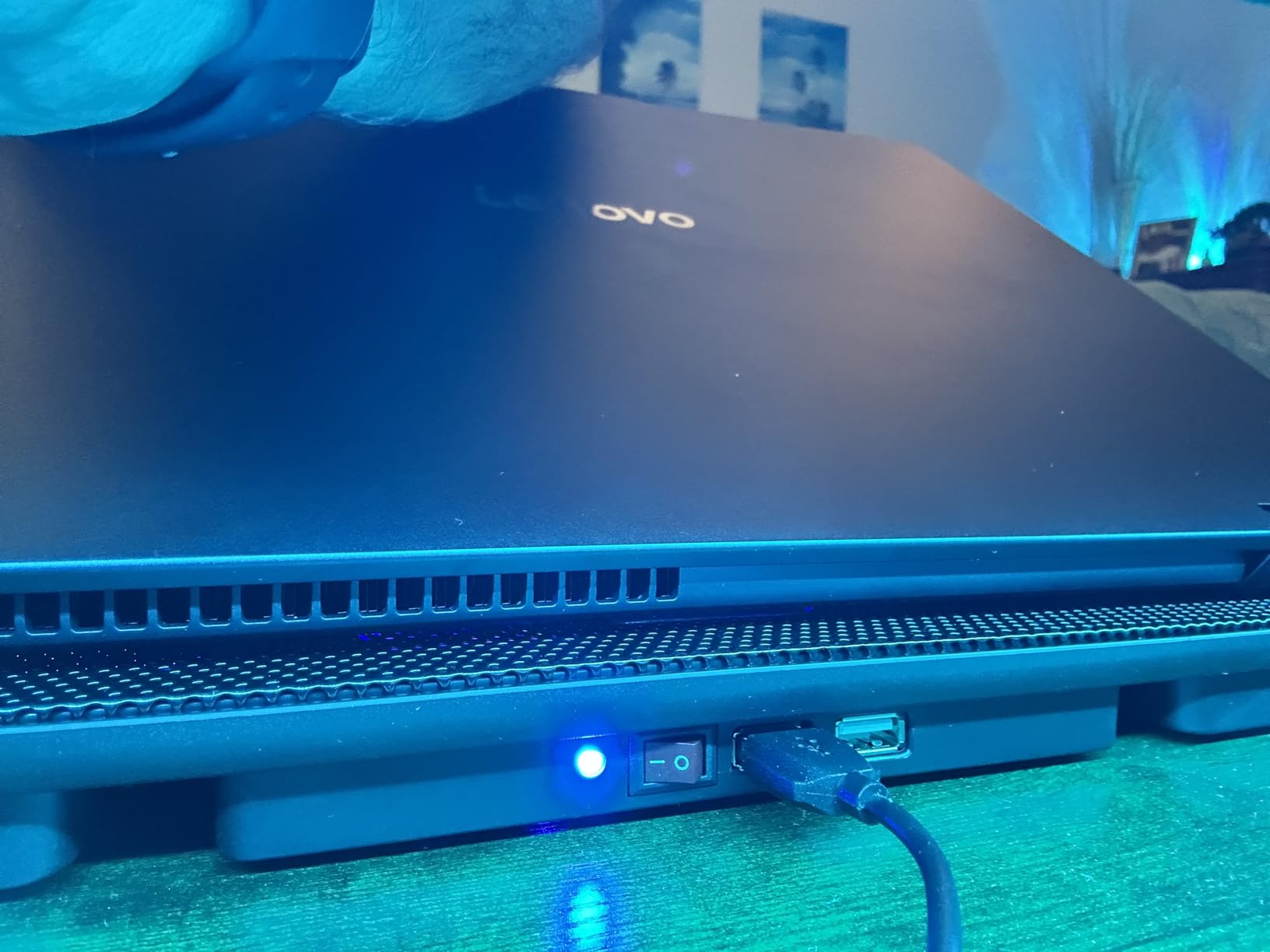
Where it falls short is sustained heavy gaming or rendering. Several reviewers are explicit that the benefit shrinks once the CPU and GPU sit at 100 percent for a long stretch, which is exactly the scenario a gaming pad is supposed to solve. There is also a recurring note about the laptop sliding forward on the shallow trough, so keep a finger on it during a fast-paced session.
The USB-A to USB-A cable is the other repeat complaint, and one owner had to power the pad from an external battery before it worked at all. The blue LED indicators also cannot be disabled. None of these are serious, but all three come up often enough to plan around.
Does the TECKNET pad work on a 17-inch gaming laptop?
It fits, with room to spare at the sides. The question is whether the cooling is meaningful at that size. A 17-inch chassis has a much wider intake area and higher heat output, and three 1200 RPM fans do not cover that demand well. Owners of 17-inch machines report the pad helps at idle and light use but loses its effect under load.
For a 15.6-inch machine, or a 14-inch compact gaming laptop, the same pad makes much more sense. The cooling effort is matched to the heat being produced, and that is where the good reviews come from.
Is the TECKNET pad worth it for a thin modern laptop?
Frequently, yes. Newer laptops ship with improved bottom intakes, and lifting the chassis onto a raised surface already accounts for a few degrees. The TECKNET adds airflow on top of that lift, which is why reviewers who measured a lot of gain reported it as a modest improvement of a few degrees rather than a dramatic one.
If your laptop is still under warranty and does not throttle, spend the difference on something else. A [laptop backpack for travel](https://www.dognotebook.com/best-laptop-backpacks/) or a proper case is the better investment for a machine that already behaves.
3. LIANGSTAR 6-Fan Ultra Slim Cooling Pad for 12 to 17 Inch Laptops
- Six fans spread airflow across the full underside
- Very quiet for a six-fan layout
- 0.4 inch profile is easy to carry
- Three height settings with a hidden stand
- Anti-skid base and baffles keep the laptop stable
- USB-A to USB-A cable
- Two separate fan switches are confusing
- Many small fans move less air than one large fan
The LIANGSTAR is the pick if your priority is a low profile and a low outlay. At 0.4 inch thick it disappears into a sleeve, and six fans running together or as two independent groups give you more control than most pads twice the size. It suits 12 to 17.3 inch laptops, so almost nothing on the market is out of range.
Over 8,600 reviews at 4.4 stars describe it as a dependable budget pad. The strengths owners repeat are quiet operation suitable for shared rooms, even airflow across the underside, and a base that does not let the laptop slide. The fold-out stand gives three height settings without adding bulk.
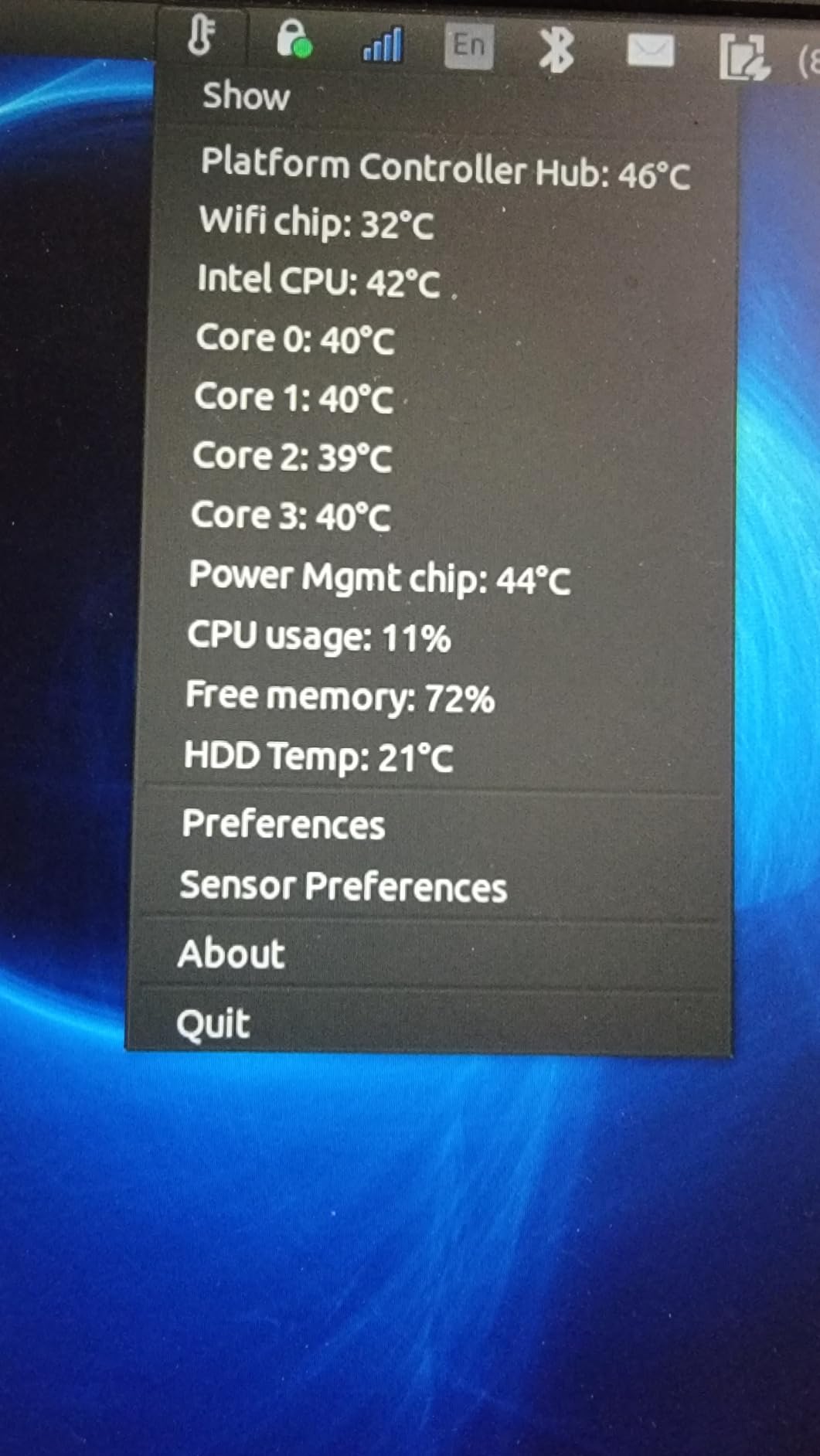
The honest limitation is physics. Six small fans spread across a surface do not move the total volume of air that one large-diameter fan moves, so this pad delivers a gentler breeze than its fan count suggests. It is a lift plus airflow rather than forced air, and it will not rescue a badly throttling machine.
Two separate fan-speed switches also take a minute to understand, and the USB-A cable again rules out USB-C-only laptops without an adapter. The one-year warranty is standard for the category.
Is the LIANGSTAR pad good for a 15.6-inch gaming laptop?
Yes, that is its sweet spot. A 15.6-inch chassis has a concentrated intake area, and the wide even airflow from six fans covers it without needing to force air through a tight path. Owners of 15.6-inch gaming laptops report the laptop’s own fan running less often, which in practice means better sustained frame rates.
For a 17.3-inch machine I would choose a single large fan or a sealed blower instead, since the wider chassis has more surface to cover and more heat to shift.
Does the slim profile hurt cooling?
A little. A 0.4 inch body has less clearance under the chassis than a taller stand, and clearance is part of what lets air reach the intake. In practice the difference shows up only in heavy sustained loads, where the taller pads pull ahead.
For anyone who games away from a desk, portability is worth more than the last few degrees. At this thickness you can use the same pad in a dorm room, a cafe and on a train without thinking about it, and a padded [laptop backpack](https://www.dognotebook.com/best-laptop-backpacks/) keeps the whole setup protected between those sessions.
4. KLIM Ultimate RGB Cooling Pad with 200 mm Fan
Ultimate RGB Laptop Cooling Pad with LED Rim, USB Powered, Up to 17 Inch
- Large fan cuts CPU and GPU temps by 10 to 30 degrees
- Very quiet even at full speed
- Four inclination levels with a front stopper
- Covers 10 to 17.3 inch laptops
- RGB rim with 5 effects and 7 colors
- Plastic front retainer feels flimsy
- Unusual dual USB-A cable
- RGB brightness cannot be fully disabled
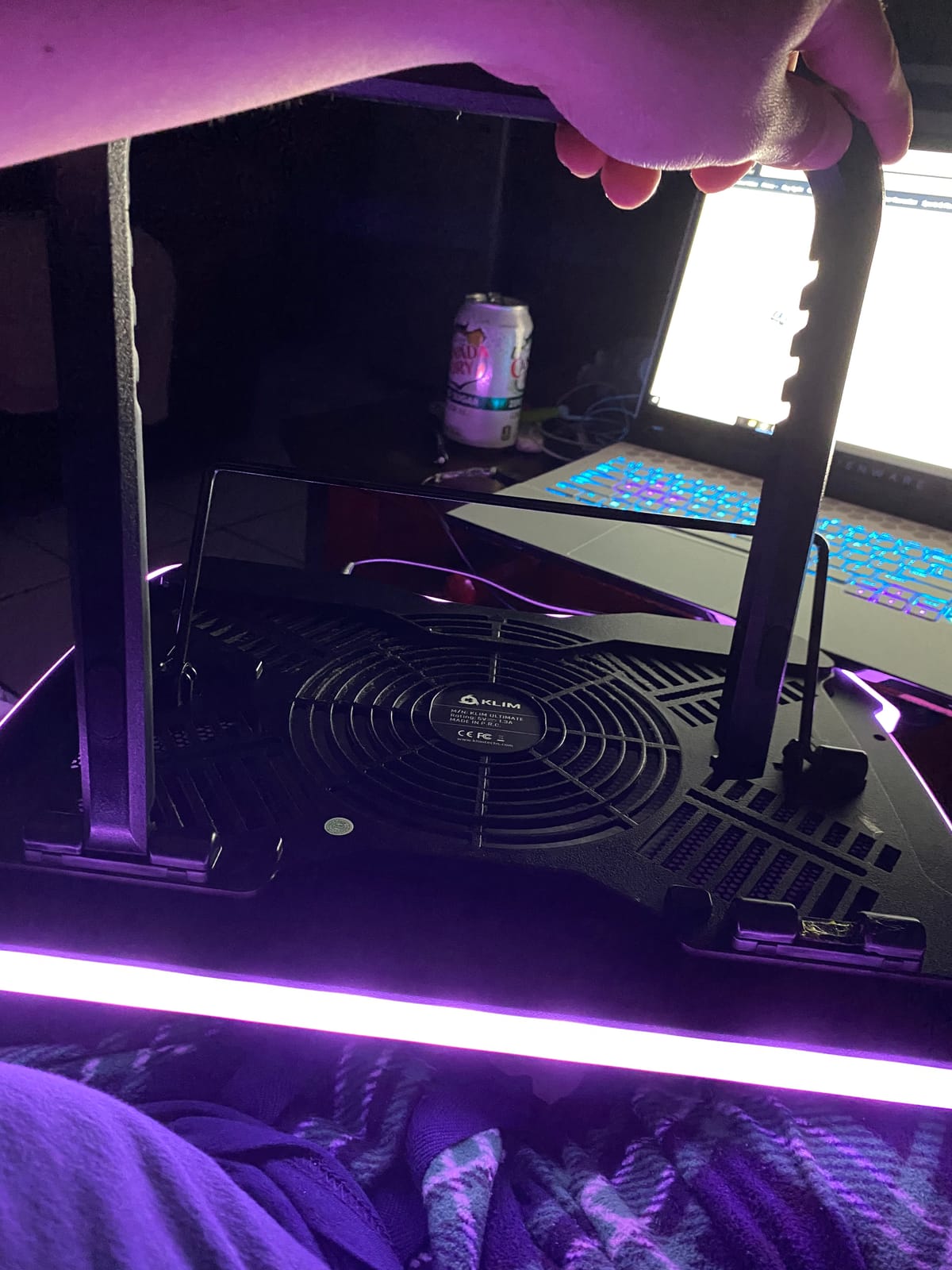
The KLIM Ultimate inverts the usual rule about fan count. One 200 mm fan moves substantially more air than three small ones, and owners repeatedly measure 10 to 30 degree reductions with the laptop’s internal fans staying disengaged. It is also the quietest capable pad here, which is a rare combination at this level of performance.
Coverage runs from 10 inch up to 17.3 inch, so a 17-inch desktop replacement sits fully on the deck with no overhang. Four inclination levels and a front stopper hold a heavy machine at any angle, and the 5-year warranty is the longest on this list by a wide margin.
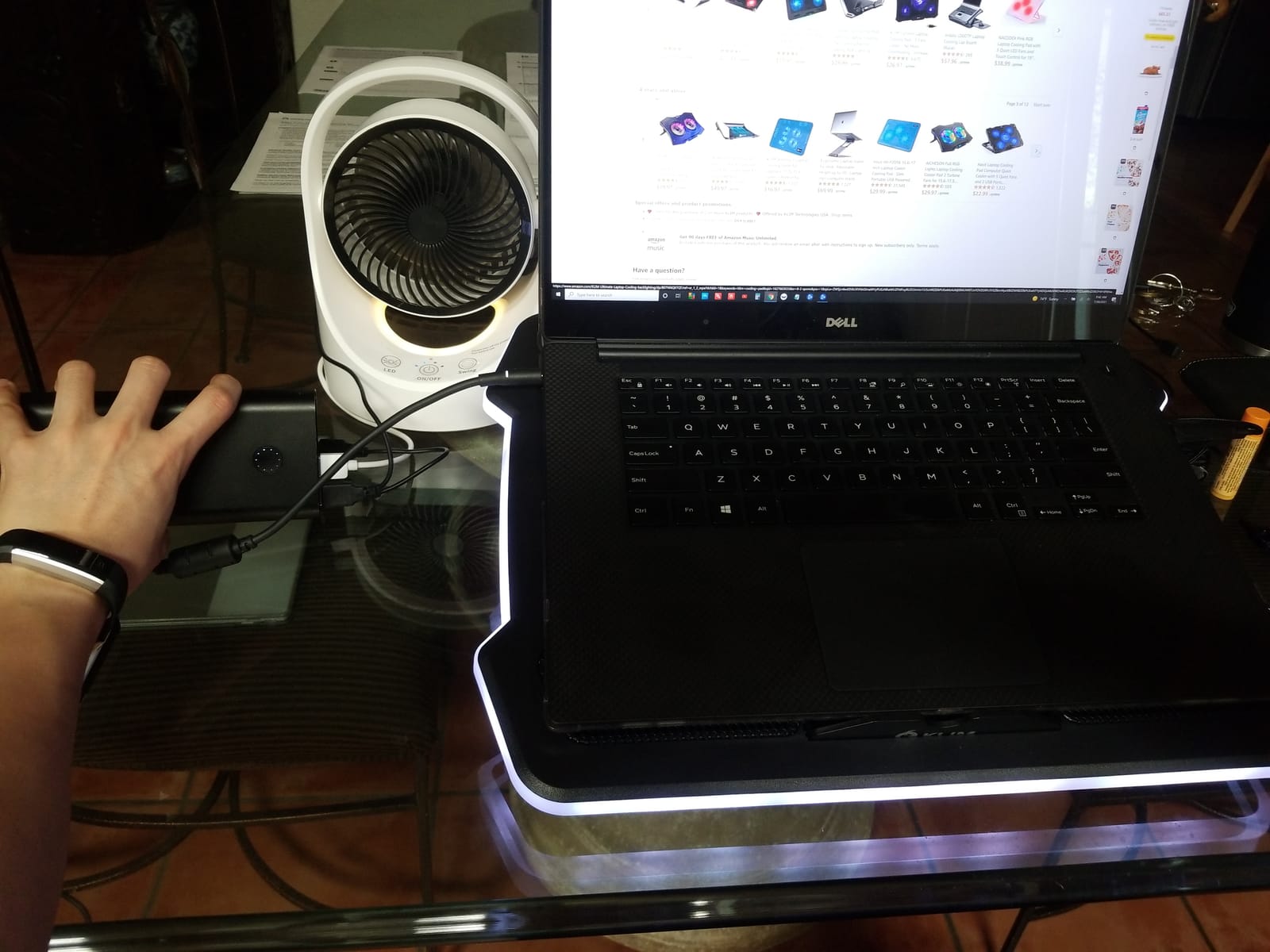
The catch is that 750 RPM is low. The large diameter is doing the work, and some buyers who expected a turbo blower report it is not enough for sustained heavy gaming on high-end machines. Think of it as a strong, silent airflow generator rather than a pressure device.
Two smaller annoyances recur. The plastic front retainer feels flimsy for a heavy laptop at steep angles, and the supplied cable ends in two USB-A plugs with an odd coaxial connector at the pad end. RGB lighting is bright and cannot be fully switched off without opening the unit.
Is the KLIM Ultimate the best pad for a 17.3-inch gaming laptop?
For size fitment, yes. It is one of the few pads here with a deck wide enough for a full 17.3-inch chassis, and the 0.98 kg weight plus metal grid keeps a heavy machine stable. The 16.73 by 12.4 inch footprint leaves a little margin at the rear, which matters for stability.
For raw performance on a throttling 17-inch machine, the sealed blowers further down this list pull harder. Choose KLIM if your 17-inch laptop runs warm but rarely throttles, and choose a blower if it genuinely drops frames.
Why does the 5-year warranty matter on a cooling pad?
Because fan bearings and plastic frames are what fail, and electronics in this category are not built to the same standard as a monitor. A 5-year warranty means the manufacturer expects the motor and the frame to outlast several laptop upgrade cycles. Community members repeatedly single this out as the reason to trust the brand over a cheaper lookalike.
The five-year spare-part availability is registered in the product data too, so replacement parts should exist long after a cheaper pad would have been returned. That is a real difference when you keep gaming laptops for years.
5. AIMIUZI 6-Fan Cooling Pad with 7 Height Levels
- Seven height levels give the best clearance range here
- Two gear switches control 3 or 6 fans
- Foldable baffle stops the laptop sliding
- Large metal mesh surface
- Dual USB ports plus a hidden phone holder
- Six small fans move less air than one large fan
- Fixed phone holder is awkward with thick cases
- USB-A to USB-A connection
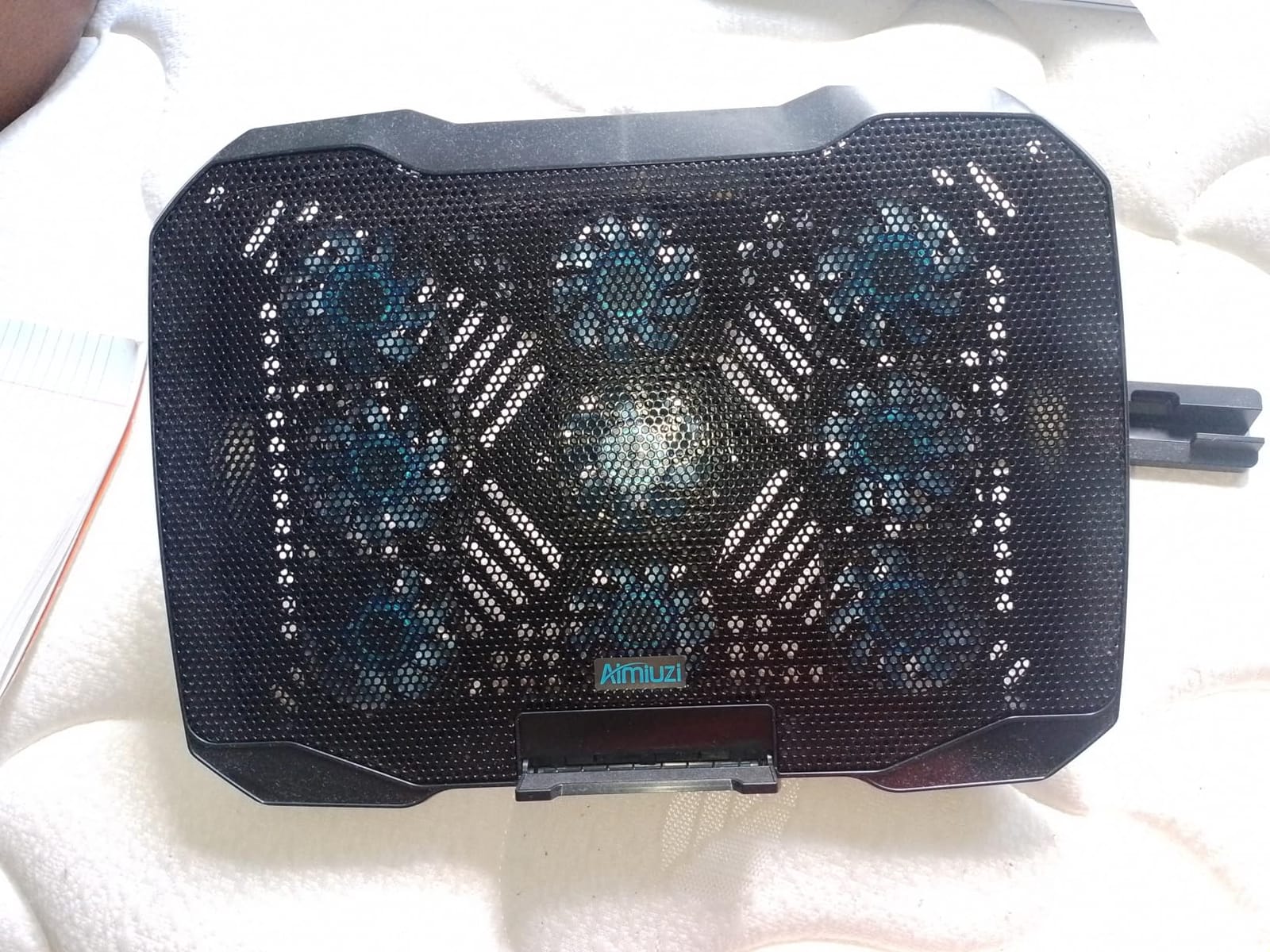
The AIMIUZI stands out for one thing: seven height levels. Every other adjustable pad here offers two to five, and clearance under the chassis is directly tied to how much air reaches the intake. On a laptop with side and rear exhausts, raising the base meaningfully opens the whole underside.
Just over 4,200 reviews at 4.4 stars praise the quiet six-fan output, the wide height adjustment, and the foldable baffle that stops a heavy gaming rig sliding forward. Two gear switches let you run three fans or all six, which is a simple way to trade noise for cooling.
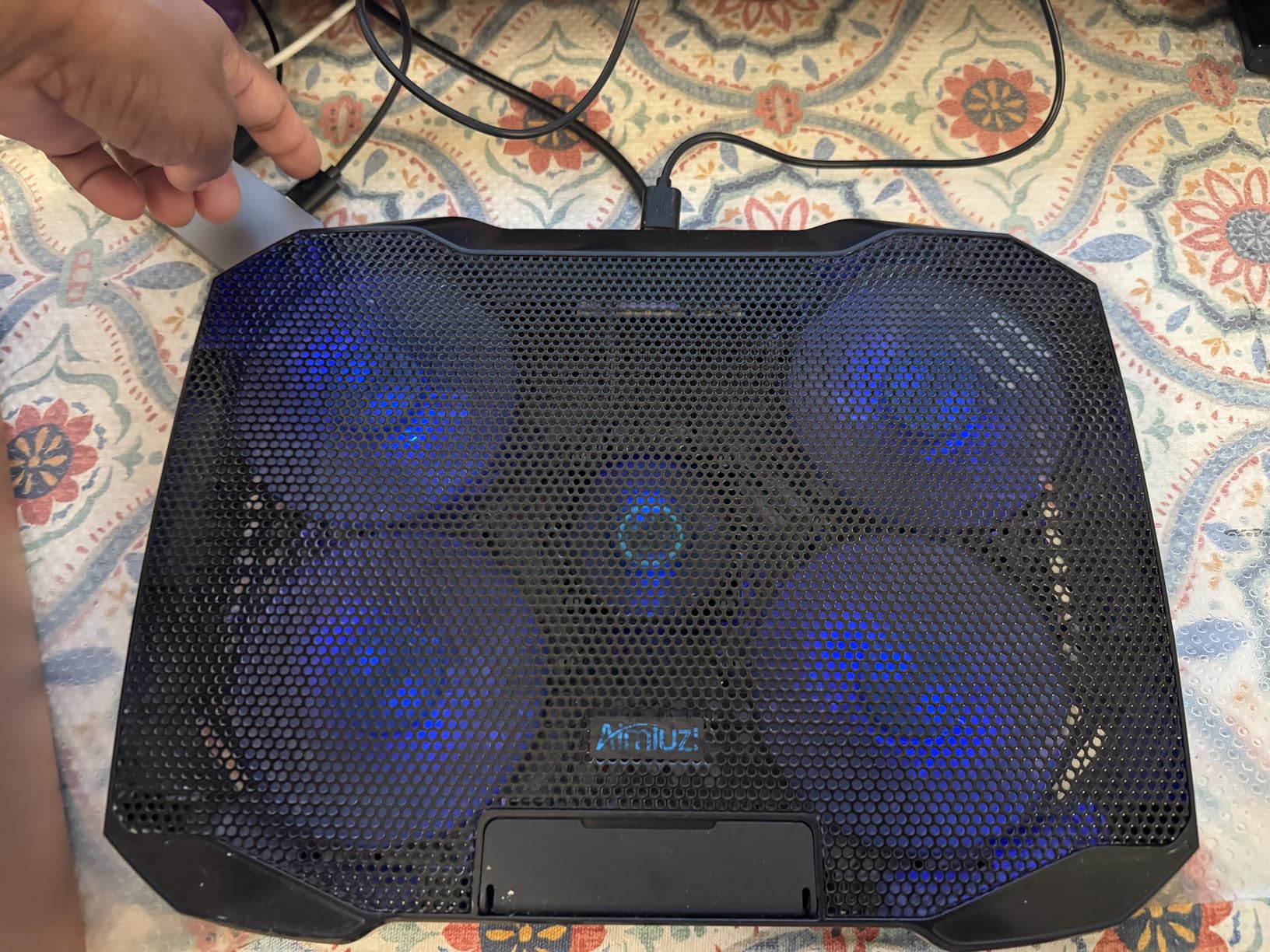
As with any six-fan mesh design, the airflow is gentle rather than forceful. Reviewers describe the result as steady and even, not aggressive, and the side phone holder only works for phones without thick protective cases. The USB-A connection is the same limitation seen across this price band.
It fits 12 to 17 inch laptops from the usual major brands, so fitment is not a concern. The metal mesh surface is a genuine step up from the all-plastic decks used by cheaper pads and helps with heat dissipation as well as grip.
Why does height adjustment matter more than fan count?
Because a laptop on a flat desk has its underside pressed close to the surface, and the intake gap is small. Raising the chassis restores the natural intake gap, which on its own accounts for several degrees. Seven levels let you find the angle that also suits your posture, rather than settling for the two positions a cheaper pad offers.
Owners who switched from a flat pad to this one report the change is more noticeable than the fan specification suggests. If you also spend hours at a desk, the ergonomic benefit is a genuine second win.
Will the AIMIUZI pad help a laptop that already throttles?
It will help somewhat, but it is the wrong tool for that job. Gentle even airflow and good clearance reduce heat, yet they do not force high-pressure air through a tight intake path the way a sealed turbo blower does. Expect steadier frame rates rather than a dramatic temperature change.
If your laptop drops frames after an hour in a demanding game, look at the sealed designs further down before settling here. If it just runs warm and the fan is audible constantly, this pad is more than enough.
6. KeiBn 2-Fan Gaming Laptop Cooler for 10 to 15.6 Inch Laptops
KeiBn Laptop Cooling Pad, Gaming Laptop Cooler 2 Fans for 10-15.6 Inch Laptops, 5 Height Stands, 2 USB Ports (S039)
- Excellent value with measured 5 degree improvements
- Very quiet at maximum speed
- Sturdy baffles hold a heavy laptop well
- Two USB 2.0 ports free a laptop port
- One owner reports three years of reliable use
- No on/off switch and no fan speed control
- Flimsy side phone holder
- Airflow is gentle rather than forceful
The KeiBn is the cheapest credible way to lift a laptop off a surface, and the reviews treat it exactly that way. One long-term owner measured around 5 degrees lower CPU and GPU temperature, which is the same result you get from a passive stand, and they are candid that spending several times more does not change the outcome on a machine that is not overclocked.
Around 3,700 reviews at 4.4 stars agree the fans stay quiet even at maximum speed, the height adjustments and baffles hold a laptop firmly, and the metal mesh top feels more premium than the price suggests. Two USB 2.0 ports let a mouse share the laptop’s single port.
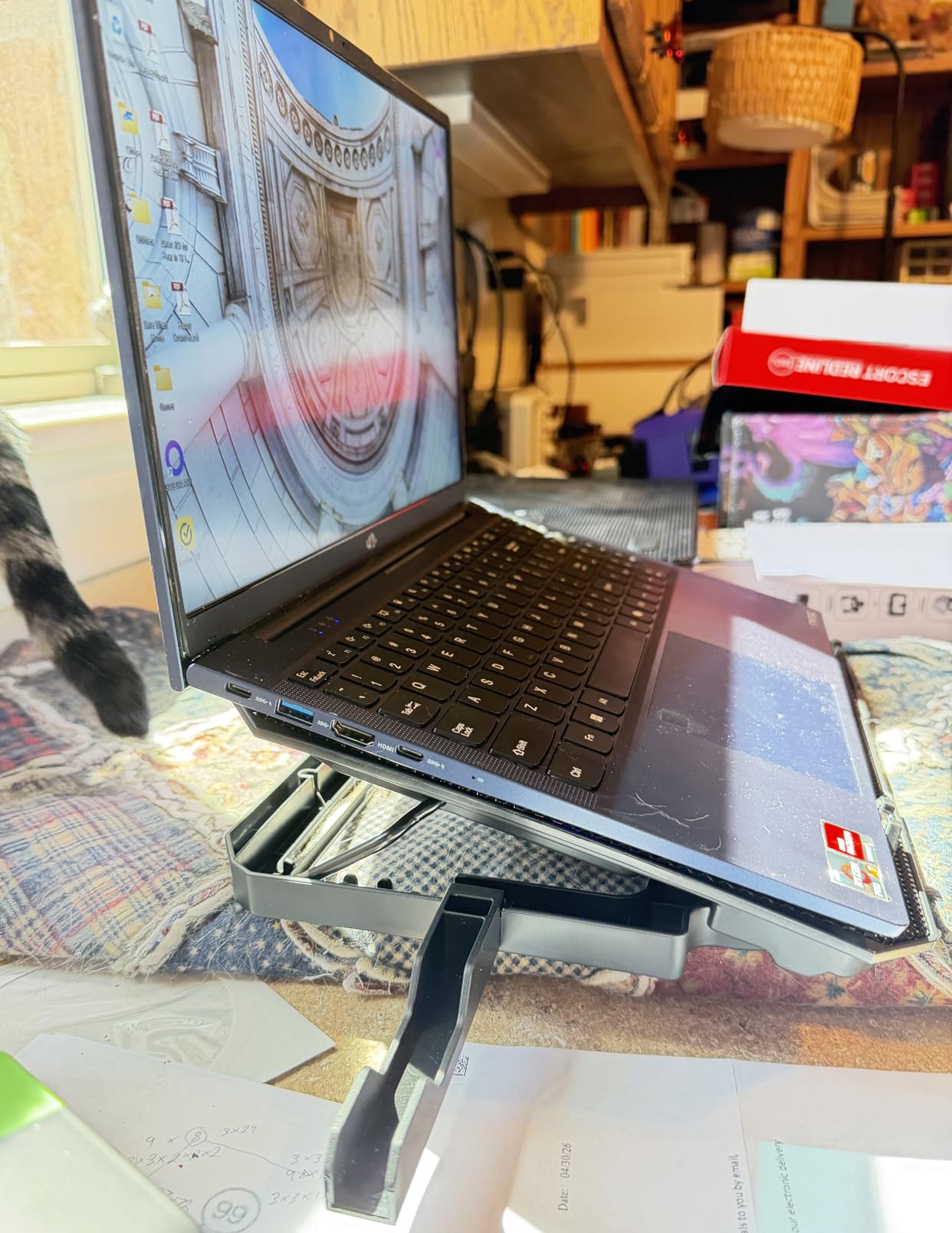
Two constraints are worth reading before you buy. There is no dedicated on/off switch and no fan speed control, so the pad runs at a single setting, and the side phone holder is flimsy plastic that does not fit phones with thick cases. The USB-A cable is again the standard limitation at this level.
Size is the bigger one. This pad is rated for laptops up to 15.6 inch, so a 16-inch or 17-inch chassis will overhang. It is a strong pick for a compact 14-inch or 15.6-inch gaming laptop, and the wrong shape entirely for a desktop replacement.
Is the KeiBn cooler enough for a 14-inch gaming laptop?
Yes, comfortably. A 14-inch chassis has the smallest intake area of any gaming laptop, and it produces less heat than a 17-inch machine, so a modest two-fan airflow at good clearance is proportionate to the job. Compact gaming laptops in this class tend to run well once the underside has air under it.
If the laptop is 15.6 inch, it is still the right size, though the margin for a heavy workload is thinner. Check the rated size before ordering if you are unsure of your chassis diagonal.
What is a cooling pad worth if it only matches a laptop stand?
That is the honest framing for this tier, and it is why community consensus puts the threshold for a real upgrade far higher. A pad is worth it when it does something a stand cannot: force air through a tight intake path under sustained load. Everything below that threshold is a comfort and ergonomic purchase, priced accordingly.
The KeiBn is priced as a comfort purchase, and it delivers that well. Buy it as an inexpensive raised stand with a fan attached, not as a fix for throttling.
7. llano V12 Gaming Laptop Cooling Pad
llano V12 Gaming Laptop Cooling Pad Laptop Cooler Laptop Cooling Fan Stand
- Sealed foam chamber with large turbo fan gives focused cooling
- Scroll wheel gives instant airflow adjustment
- Three USB 2.0 ports turn the pad into a hub
- Removable high-density dust filter
- RGB with 10 modes and memory function
- Bulky 1.8 kg footprint for travel
- Noise reaches 70 dB at higher speeds
- Hub ports are data only and cannot charge
The llano V12 is where the sealed-blower principle becomes obvious. A 5.5 inch turbo fan sits inside a foam-sealed chamber, so almost no air escapes around the edges and the pressure forces it up through the laptop’s existing intake pathway. Owners report substantial cuts to CPU and GPU temperatures during rendering and gaming, and the 15.6 to 19 inch range covers nearly every desktop replacement.
Over 2,200 reviews at 4.4 stars also single out the practical additions. Three USB 2.0 ports solve the port shortage on thick gaming laptops, the scroll wheel gives genuinely precise airflow control, and the removable high-density dust filter protects the laptop’s internal fans over years of use.
Noise is the cost. The pad is rated at 70 dB or less, and reviewers describe it as loud at higher speeds. In a shared room that is a real drawback, though it is a fair trade for the cooling you are getting in a machine that is otherwise throttling.
The 1.8 kg body and 2.7 inch height also make it the bulkiest pad here. It is a desk accessory, not a travel one, and the hub ports are data-only so you cannot charge a phone from them. A few buyers at this level question the build quality relative to the price, which is a fair criticism of the category at large.
Is the llano V12 worth it for a heavily throttling 17-inch laptop?
This is the pad that changes the outcome for a genuinely throttling machine. Sealing the air volume means the intake path receives far more air than open mesh can deliver, and 15.6 to 19 inch coverage means a full-size desktop replacement sits properly on the deck rather than hanging off the edge.
If your laptop drops from a locked 165 FPS to something unstable after 40 minutes of a demanding game, this is the class of pad that fixes it. If it merely runs warm, you are paying for cooling you will not notice.
Is the V12 too loud for a shared room?
At higher fan speeds, yes, it is audible in a way the open-mesh pads are not. The scroll wheel helps because you can drop the speed to the point where the laptop’s own fans handle the remainder, which is usually the quietest configuration for a room with other people in it.
If you always wear a headset, noise matters much less. If you play late at night next to someone sleeping, look at the KLIM or the IETS GT500 instead, both of which trade some peak cooling for a lower noise floor.
8. llano V10 RGB Gaming Laptop Cooling Pad
llano V10 Gaming Laptop Cooling Pad, RGB Laptop Cooler Stand Laptop Fan
- Pure copper motor turbo fan spins to 3500 RPM
- Physical buttons are far easier than touch controls
- Foam inserts help 13 and 14 inch laptops seat snugly
- Removable dust filter and dual USB-A and USB-C ports
- Works with laptops using liquid metal compound
- Loud at high fan speeds
- Only three tilt levels
- Lower review volume than the established names
The llano V10 is the same sealed idea as the V12 in a smaller frame, and for many buyers it is the better fit. A 4.72 inch turbo fan with a pure copper motor reaches 3500 RPM, the buttons are physical rather than capacitive, and foam inserts let 13 and 14 inch machines sit snugly on the flat contact surface.
At 719 reviews and 4.5 stars it sits among the highest-rated pads in this group, though the volume is lower than the established names. Reviewers value the tactile buttons, the removable dust filter, and the unusual inclusion of both a USB-A and a USB-C port, which solves the adapter problem that runs through the rest of this list.
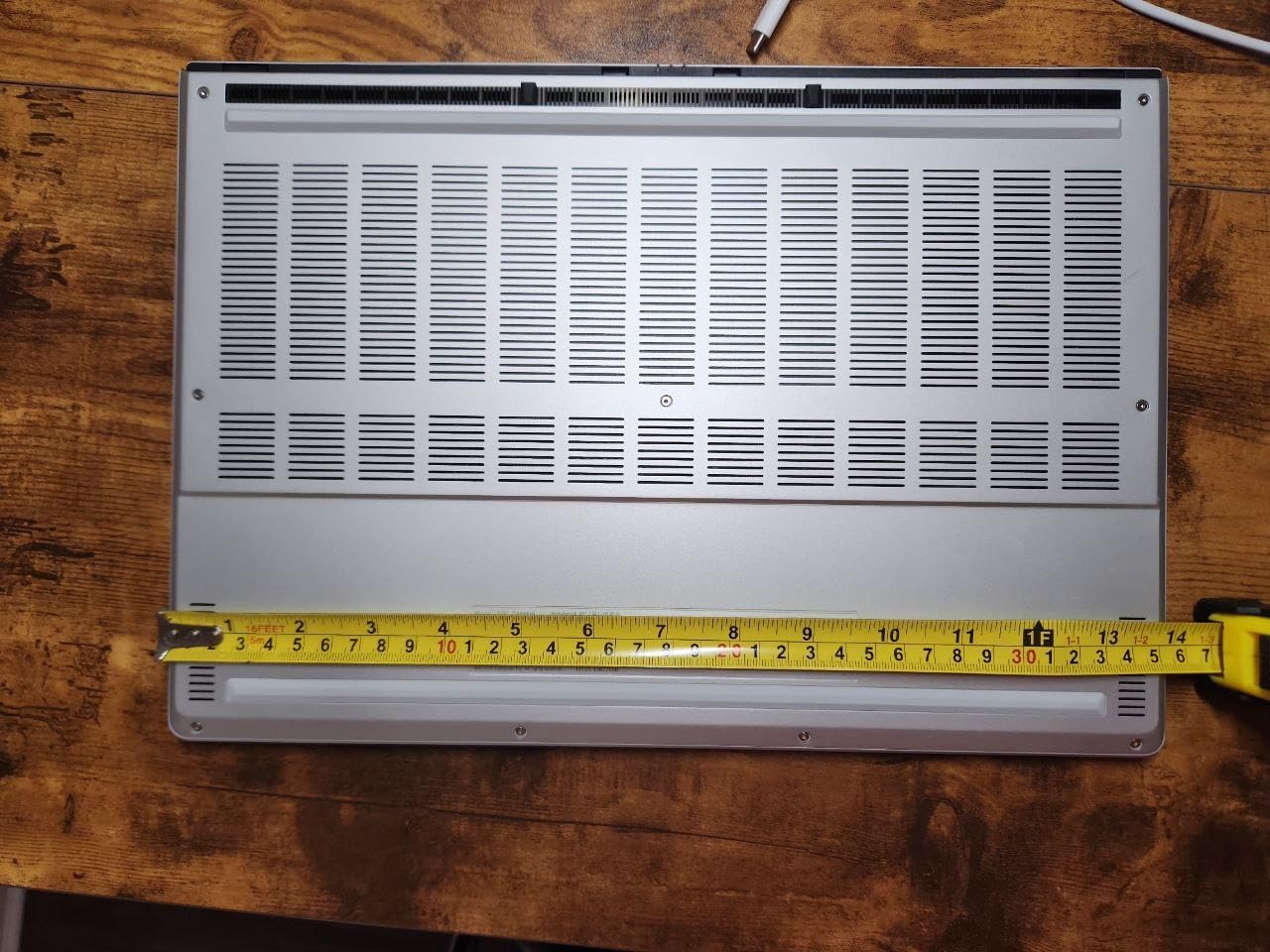
There is one caveat worth weighing. The V10 sits below the V12 in the same lineup, so the V12 is the logical purchase if you want the larger fan, three tilt angles and three hub ports instead of two. The V10 makes the more sense when the physical buttons or the USB-C port matter most to your setup, and when your chassis is smaller than 17 inch.
It is also loud at high fan speeds, and three tilt levels is less adjustment than most rivals offer. The smaller 14.8 by 11.4 inch deck suits 13 to 17.3 inch laptops, so check fitment for a 17-inch chassis before ordering.
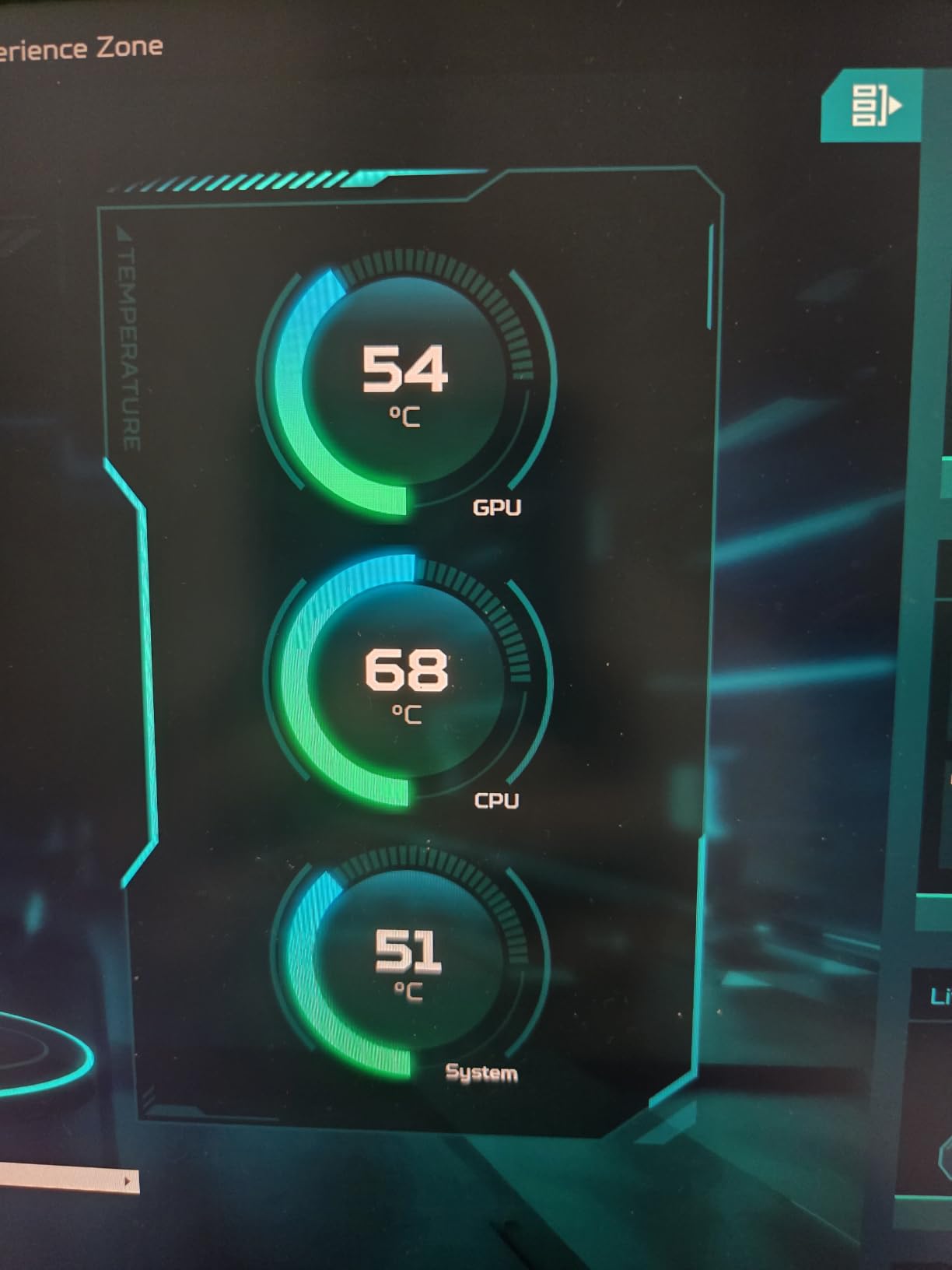
Why do physical buttons matter on a cooling pad?
Because you adjust a cooling pad mid-game, often with the screen dimmed and one hand on the mouse. Capacitive panels need a deliberate press and occasionally misread a wet or dusty surface, while a physical button always registers. Several owners single this out as the reason they prefer the V10 over a cheaper touch-controlled pad.
It is a small feature that only matters if you use it often, and the USB-C port is the more practical of the two advantages for anyone on a modern laptop.
Is a 3500 RPM turbo fan loud enough to ruin a session?
At the top of the range, reviewers describe it as loud, and that is the honest answer. A turbo fan spinning fast is a different sound from six small mesh fans, more of a rising whirr with some mechanical character. The mitigation is the same as on the V12: dial it down and let the laptop’s own fans take the remainder.
For a headset player, this matters very little. For late-night play in a quiet room, choose a large-diameter slow fan instead.
9. KYOLLY 13-Fan LCD Cooling Pad for 15 to 21 Inch Laptops
- Widest laptop fitment here at 15 to 21 inch
- LCD screen shows cooling status
- Nine tilt angles from 10 to 45 degrees
- RGB with 10 modes and memory
- Non-slip base works on laps
- beds and uneven desks
- Heavier and bulkier than slim three-fan pads
- Many small fans give gentle airflow
- Noisier than a low-count design at maximum settings
The KYOLLY 13-fan is the feature-maximiser in this roundup and the widest fitment of any pad here, running from 15 inch all the way to 21 inch. That makes it the rare option that can hold an oversized workstation-class laptop, and the 1.59 kg base with a non-slip underside stays steady even on a bed or a sofa.
Around 900 reviews at 4.3 stars focus on the LCD readout, which shows cooling status so you can adjust settings without guessing, and the nine tilt angles between 10 and 45 degrees, which genuinely reduce neck strain across different seating positions. The built-in silicone phone holder is a nice touch for streaming setups.
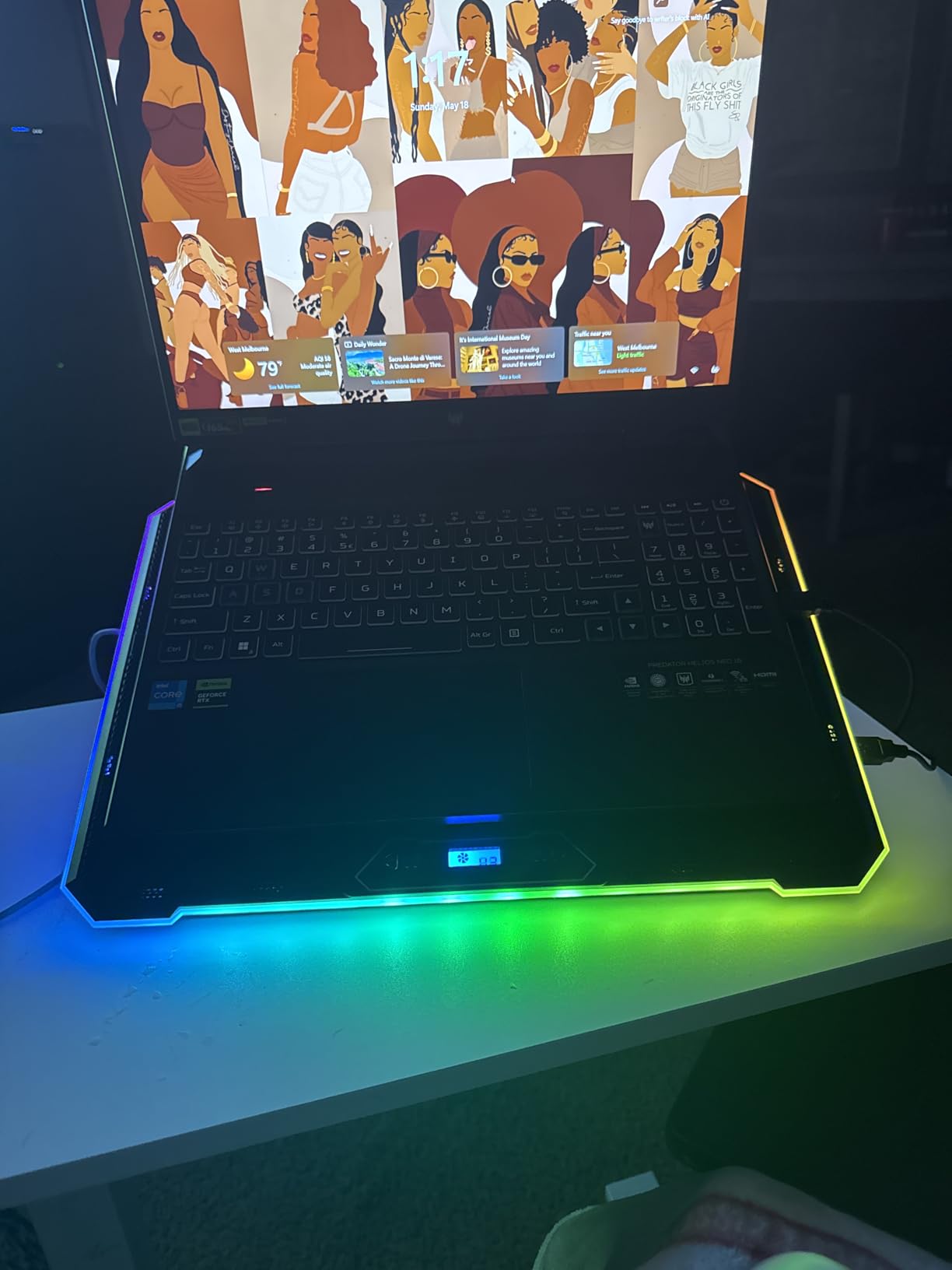
Thirteen fans also means more noise at maximum settings than a low-count design, and the same physics limit as the six-fan pads: many small fans move less total air than one large turbo fan. Airflow per fan is mild, so this is a broad, gentle cooling surface rather than a forced-air device.
It runs off the laptop’s own USB port, so no separate power supply is needed, but that also means the pad is drawing from the machine it is cooling. The bulk and weight make it a poor travel companion compared with the slim pads on this list.
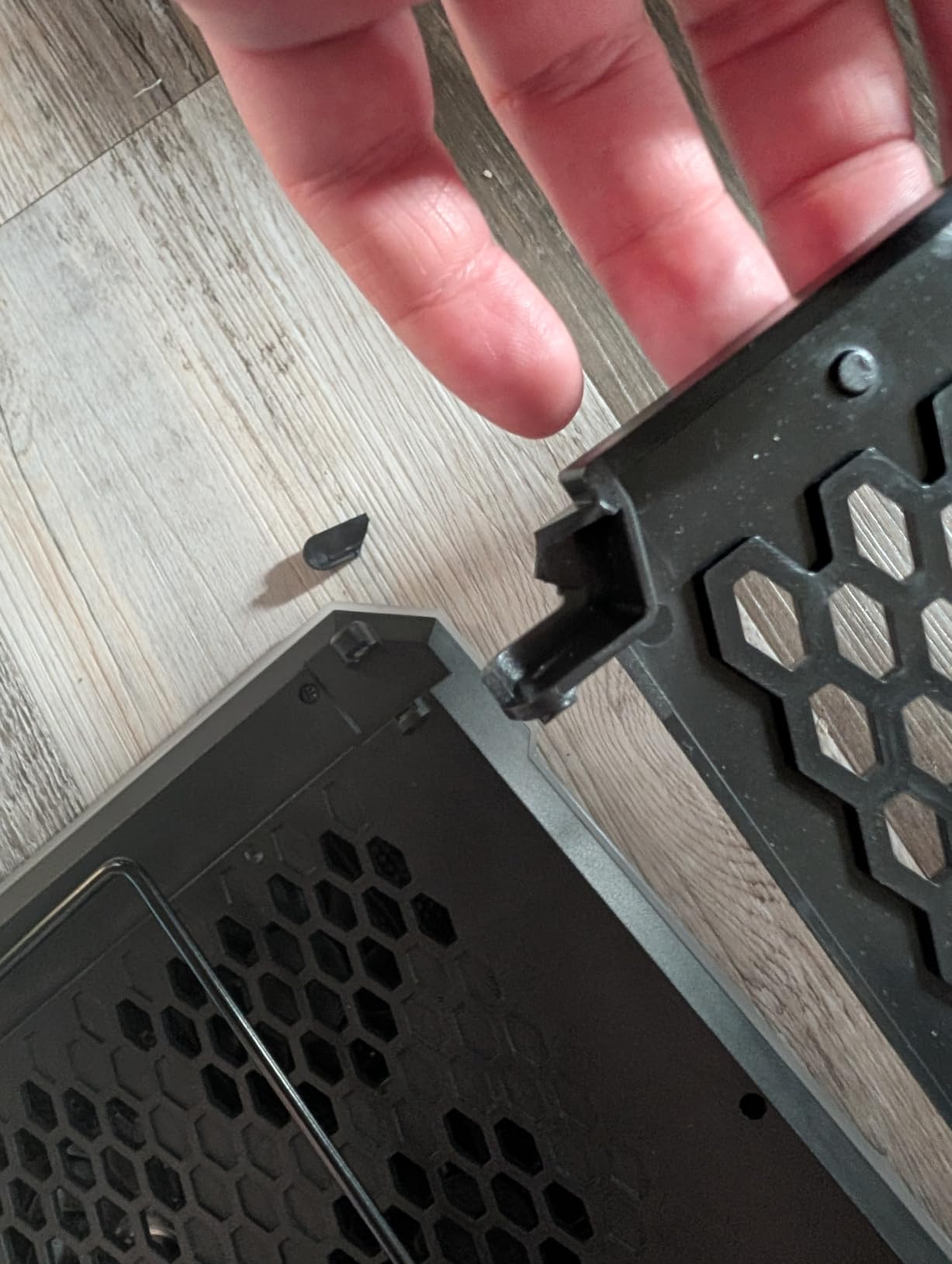
Does the LCD screen actually help during gaming?
Yes, more than it sounds like it should. A cooling pad is the one piece of hardware you adjust mid-session, and seeing the current state means you are not climbing under the desk or tilting the laptop to check an LED. For someone who plays with the laptop off to one side, that is a small feature that removes a small annoyance.
It is also a memory function, so the last fan and lighting setting returns after a restart. That matters more for streaming and recording sessions where the setup gets rebuilt regularly.
Is this the right pad for a very large laptop?
It is one of the few. A 15 to 21 inch range covers oversized workstation and desktop-replacement machines that smaller pads cannot physically support. The nine tilt angles also mean a heavy machine can be set to a usable angle rather than lying flat.
What it will not do is replace a sealed blower on a machine that throttles. If your large laptop is stable and just warm, this is a good ergonomic and aesthetic solution. If it drops frames, pair the size coverage with a sealed design instead.
10. IETS GT500 Turbo-Fan Cooling Pad with Sealed Foam
- Sealed foam delivers measurable 10 to 20 degree reductions
- Infinitely variable speed dial trades noise against cooling
- Runs from its own power adapter
- Bottom intake design suits rear-exhaust laptops
- Dust filter and rubber isolation feet included
- Noisy across the range with a resonant motor sound
- Short included power cord
- Single-layer dust filter
- Needs bottom intake vents to work at all
The IETS GT500 is the community favourite for a reason. Around 626 reviews at 4.4 stars credit it with consistently large, verifiable temperature drops on gaming and workstation laptops, frequently in the 10-20 degree range and occasionally well beyond. The sealed foam adapts to the laptop shape across a 13 to 17.3 inch range, which is why it suits so many different chassis styles.
The infinitely variable 0 to 4200 RPM dial is the feature owners mention most. You can run it low for browsing and high for a boss fight, which turns a fixed-noise device into one that adapts to the session. It runs from its own power adapter rather than drawing from the laptop, and the bottom air intake design avoids heat backflow on rear-exhaust machines.
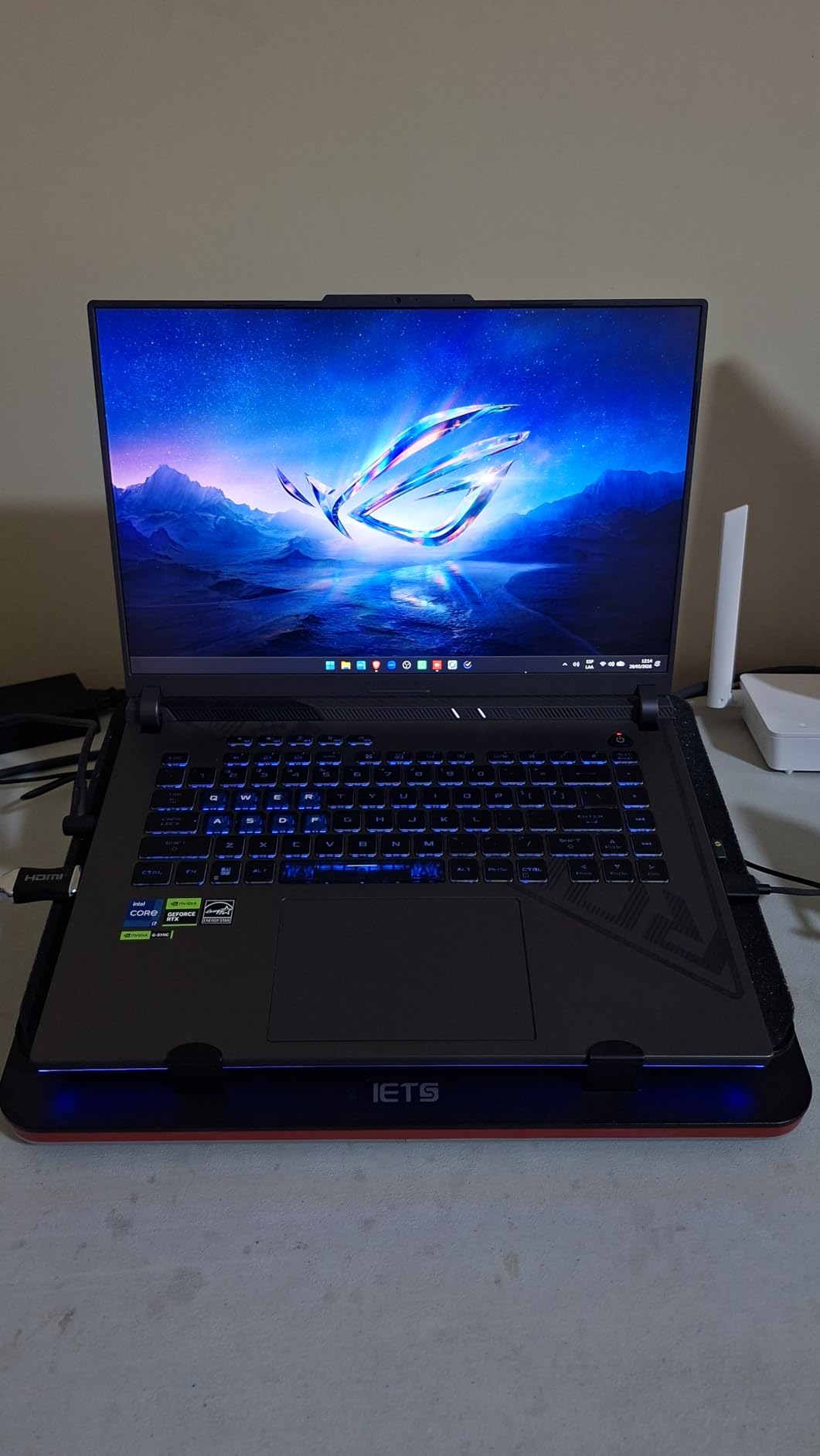
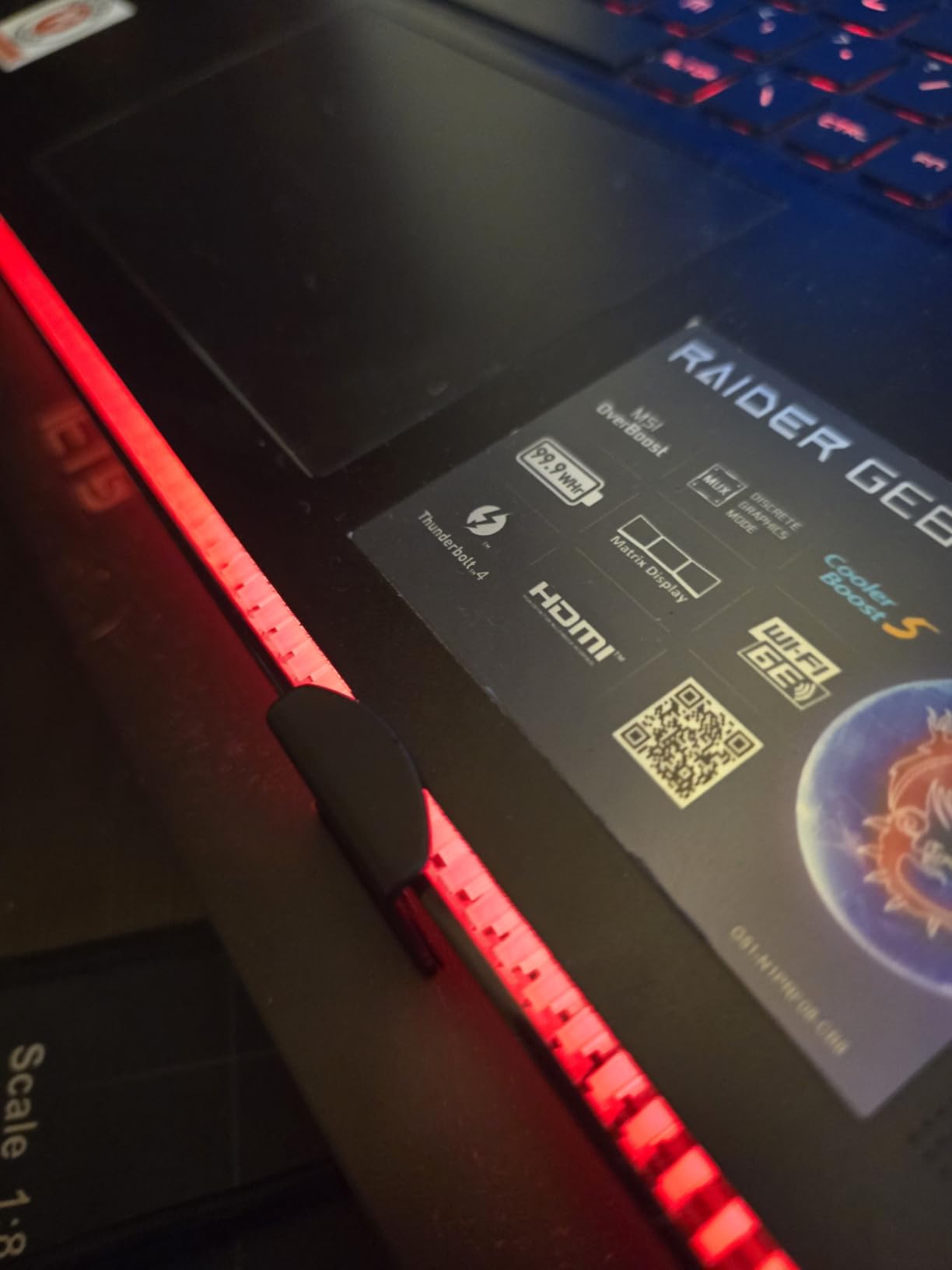
Noise is the dominant complaint, and it is a fair one. The pad reaches 55 dB at top speed, and several reviewers describe a resonant, mechanical character in the motor rather than a smooth whirr. The rubber isolation feet on the legs help dampen vibration transfer into the desk.
Also worth knowing: the dust filter is single-layer and lets fine dust through, the included power cord is short, and the mostly plastic construction raises durability questions for rough long-term use. It needs bottom intake vents to do anything at all, so check your chassis first.
Is a 4200 RPM turbo fan too loud for gaming?
At full speed, yes for most people, which is exactly why the dial matters. Nobody runs this at maximum for a whole evening. The useful range sits in the middle, where it holds clocks steady during a demanding game and you can back it off between matches. Members of gaming laptop communities consistently describe that middle setting as the reason the pad works for them.
For a headset player it is a non-issue. For a shared room, the large-diameter slow fans on this list are the better compromise.
Does the IETS GT500 work on a rear-exhaust laptop?
Yes, and this is a specific engineering answer. The bottom air intake design means air is drawn in underneath and pushed through the chassis rather than blown at the back, so a laptop that exhausts rear and side vents does not have the pad fighting its own exhaust. A lot of gaming laptops exhaust at the rear only, and that is where the design earns its reputation.
It still requires usable bottom intake vents, so a chassis with sealed or very restricted intake will see far less benefit. That is the single most important thing to check before buying any pad.
11. IETS GT600 RGB Cooling Pad with 5.5 Inch Turbo Fan
- Largest cooling gains in the category with drops up to 60 degrees F reported
- Metal body outlasts plastic competitors
- Magnetic sealed foam repositions for different laptop sizes
- Front control panel with a display screen
- USB hub ports placed away from mouse hand
- 7 height brackets and adjustable front stop
- Loud at high speed though acceptable with headphones
- Bulky because of the fan size
- Foam seal does not suit every chassis
- Adapter plug type may not fit non-US outlets
The GT600 is the most capable pad here and the most demanding. A 5.5 inch turbine fan generates 71.9 MmH2O of wind pressure inside a metal body sealed with magnetic foam, and the review data shows the largest temperature drops in the category, with measured reductions of 10 to 20 Celsius on heavy loads and one report of roughly 60 degrees F on a high-end workstation laptop.
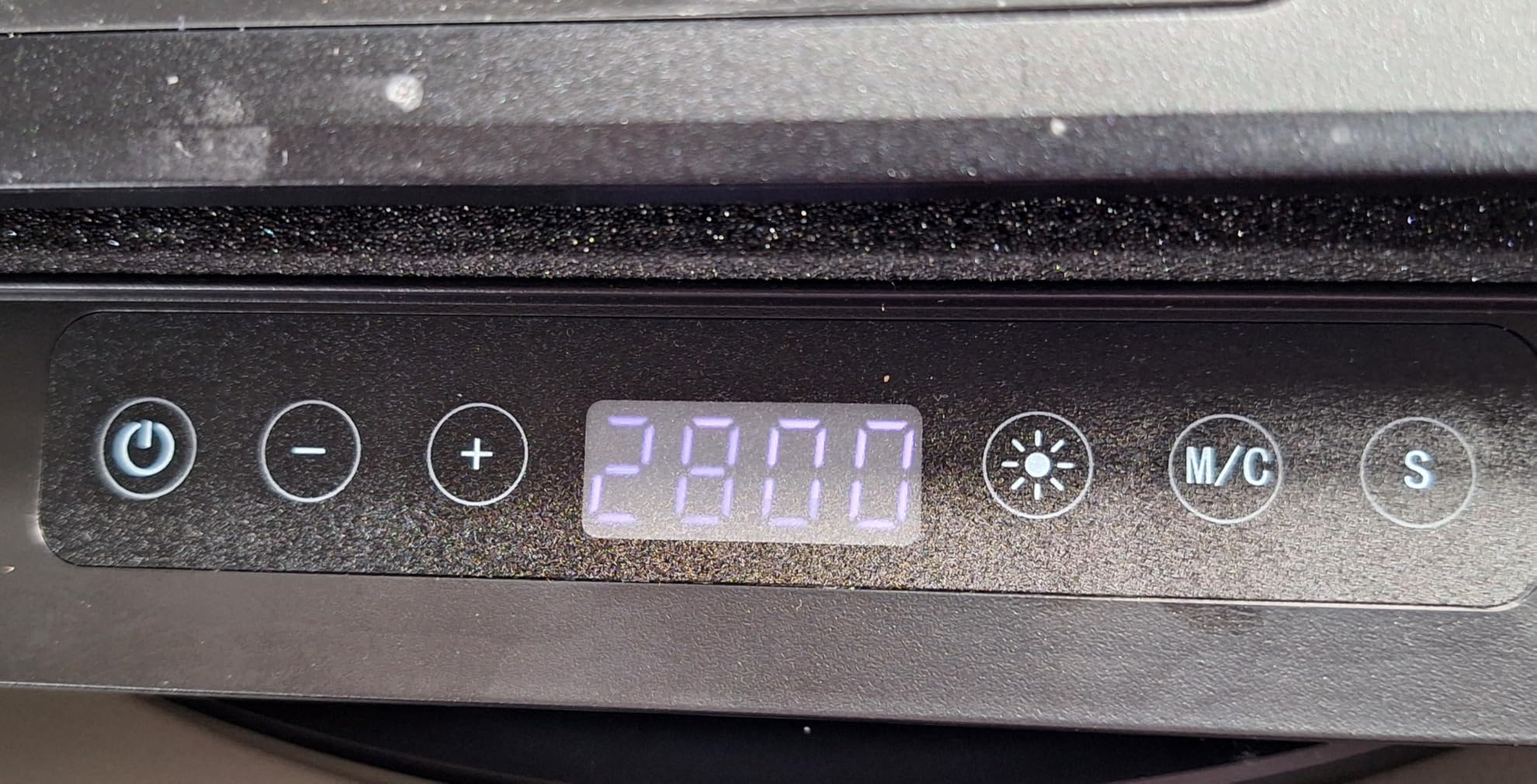
About 393 reviews at 4.5 stars back that up. Owners consistently praise the metal chassis, the magnetic airtight foam that repositions for different laptop sizes, and the front control panel with its display screen. The three USB hub ports sit on one side, away from a right-handed mouse, which is a small decision that shows someone has used this on a desk.
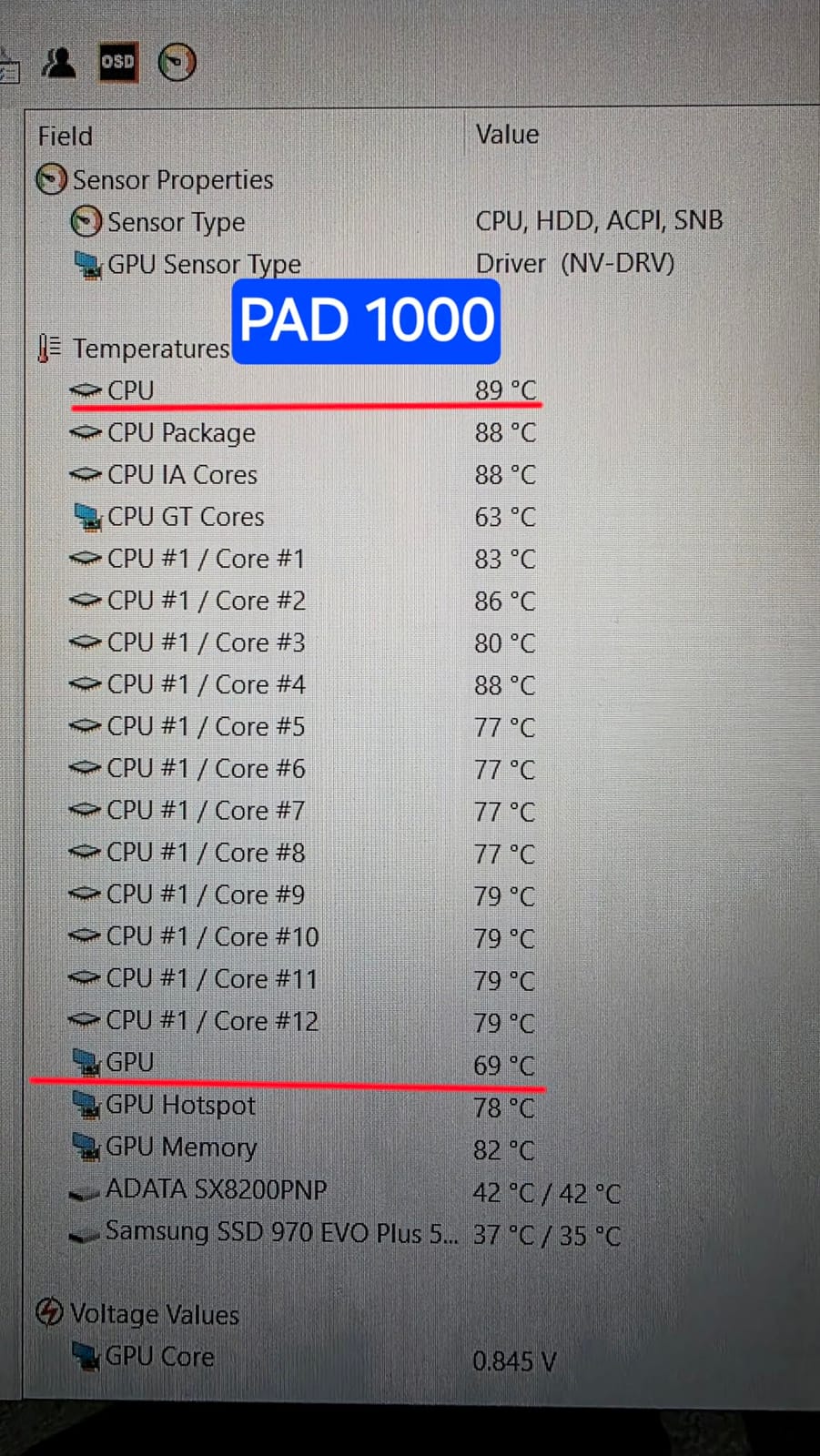
There are real caveats. The foam seal does not form a consistent fit on every chassis, particularly some 14 inch models, and coverage runs 14.1 to 19.3 inch so a 13 inch laptop is out of range. The dust filter needs periodic washing or replacement, and the bundled adapter plug type may not match non-US outlets.
It is also bulky, at 2.9 lb and nearly 3 inches tall, and it reaches 65 dB at top speed. The metal body is the reason it will still be here in five years; the size is why it lives on a desk.
What size laptop does the GT600 actually fit?
Rated for 14.1 to 19.3 inch machines, with an adjustable front stop and seven height brackets handling large chassis. The 15.75 by 12.28 inch deck fits a 17.3 inch gaming laptop comfortably, and the range extends far enough to cover the oversized desktop replacements that no other pad here accommodates.
A 14 inch machine is the awkward case. It is inside the rated range, but reviewers report the foam seal not forming a consistent fit on some 14 inch chassis, which reduces the airtight advantage that makes this design work. For 14 inch, choose a smaller-frame option.
Is a metal body worth paying for on a cooling pad?
It is worth paying for on longevity. Fans are the part that wears out, and metal frames, metal grilles and metal fasteners tolerate heat cycles and knocks better than the plastic used across most of this category. The GT600 is one of the few pads here built this way, and it is rated at 2.9 lb because of it.
The thermal argument is secondary. The panel is not a heatsink, but a rigid chassis keeps the fan mounted square to the duct, and a stable seal is what preserves the pressure that makes this design effective.
12. KYOLLY Aluminium Alloy 6-Fan RGB Cooler with LCD Screen
- Full aluminium panel resists warping and degradation
- 4 port hub includes USB 3.0 and a charging port
- LCD with memory function survives reboots
- Nine height angles from 10 to 45 degrees
- One owner measured around 10 degrees of improvement
- Plastic bottom panel and hinges can crack under heavy laptops
- Front LED panel fails after about two weeks
- Advertised 10 RGB modes are closer to 7
- USB 3.0 speeds measure below the claim
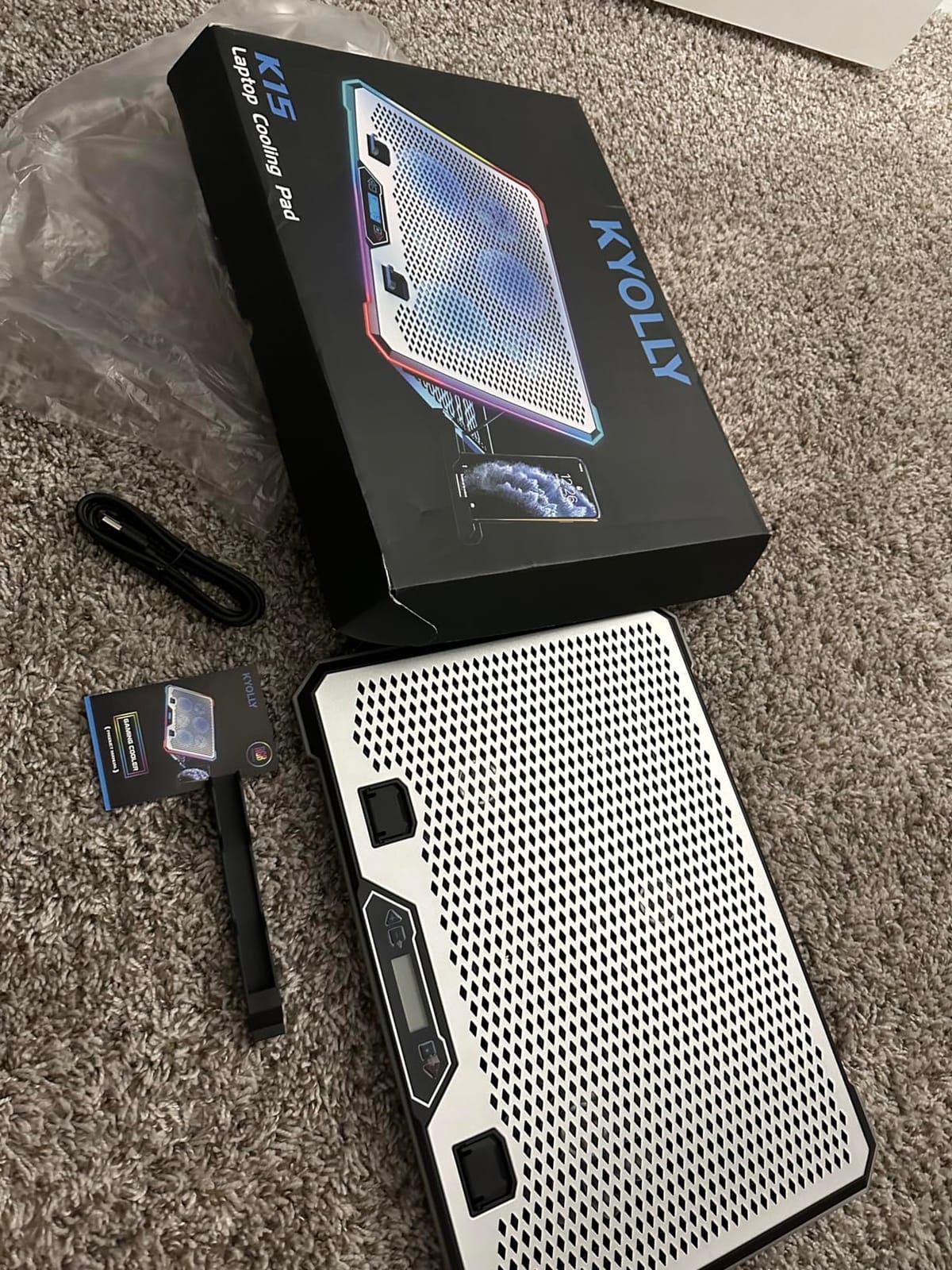
The KYOLLY aluminium model is the only pad here with a full metal top panel, and users notice. The aluminium resists the warping and plastic degradation that shows up on cheaper pads after a year of heat cycles, and the 16.7 by 11 inch deck with nine height angles fits laptops from 10 inch up to 21 inch while supporting heavy machines.
Its port selection is the best in the roundup: one USB 3.0, two USB 2.0 and a dedicated charging port, which is the first setup here that can charge a device. One owner measured roughly 10 degrees of cooling in an A/B comparison, and the LCD retains its fan and lighting settings across reboots.
Durability is the dividing issue and reviewers are blunt about it. Multiple owners report the plastic bottom panel or hinges cracking under a heavy laptop within weeks, and one reports the front light panel failing early with no reset option. An aluminium top with a plastic base is the compromise, and on a heavy 17-inch machine it is the wrong trade.
There are also marketing gaps worth flagging: the advertised 10 RGB modes are closer to 7 distinct effects, USB 3.0 speeds measure below the promised figure, and the power port sits on one side only, which can interfere with a right-handed mouse. Noise measures higher than the stated 18 dB.
Is this aluminium cooler strong enough for a 17-inch gaming laptop?
That depends on the weight of the laptop and how long you keep it. A 15.6 inch machine is well within what the panel handles, and a 17-inch chassis works initially. The recurring reports of cracked bottom panels and hinges come from owners running heavier desktops on it, so the failure mode is predictable rather than random.
If your laptop is 17 inch and heavy, an all-metal pad like the GT600 is the safer purchase. If it is 15.6 inch, the aluminium panel here will outlast the competition with no concern.
Is the four-port USB hub worth choosing a pad for?
For a gaming laptop, frequently. Thick gaming laptops often have two or three ports, and a streaming setup needs a USB 3.0 port for an external drive, a port for a capture card and somewhere to charge. This is the only pad here that covers all three, including USB 3.0 and a dedicated charging port.
The catch is the measured USB 3.0 throughput, which reviewers report as below the stated figure. If you are moving large files to and from an external drive daily, test it before you commit.
How to Choose a Laptop Cooling Pad for Gaming?
Sealed blower or open mesh: which design actually moves heat
This is the decision that matters more than anything else on this page, and it explains most of the price spread. An open-mesh pad circulates room air under the chassis. It is cheap, quiet, and worth a few degrees, because the lift alone already provides much of that gain. Community consensus treats these as barely better than a passive stand.
A sealed blower wraps a foam gasket around the underside so the air cannot escape sideways. Pressure builds under the vents and forces air through the intake path into the heat sinks, which is where the 10 to 20 degree results come from. The IETS GT500, the IETS GT600, the llano V12 and the llano V10 all do this. The trade is noise, bulk and a dedicated power source.
Where the fan count gets misleading: six small fans spread across a deck do not move the total volume of air that one large-diameter fan does, and reviewers consistently report the multi-fan pads as gentle rather than forceful. The KLIM Ultimate proves the point from the other direction, using a single 200 mm fan to outperform much larger multi-fan arrays.
Match the pad to your laptop’s vent layout and size
Check three things. First, the rated maximum laptop size: the KeiBn stops at 15.6 inch, the havit and TECKNET reach 17 inch, and the KYOLLY 13-fan reaches 21 inch. A pad smaller than your chassis overhangs and wobbles, which is a stability problem before it is a cooling one.
Second, bottom intake vents. Look at the underside of your laptop and confirm there is an open intake area. A sealed-blower design does very little if the intake is restricted, and that is a hardware fact, not a quality judgement. The IETS pads are built specifically for rear-exhaust designs where the bottom intake is the only path in.
Third, how the laptop is powered. Most pads on this list use a USB-A to USB-A cable, which rules out USB-C-only machines without an adapter. The llano V10 and the KYOLLY aluminium model both include USB-C, which matters if your laptop has no USB-A port at all.
Noise, dBA and headset gaming
Community consensus treats noise as the number one deal-breaker, and the published figures explain why. The llano V12 is rated at 70 dB or less, the IETS GT600 at up to 65 dB, and the IETS GT500 at up to 55 dB. The open-mesh pads are not given dBA figures at all, which is itself informative.
The practical rule: if you always wear a headset, the turbo blowers are the right call and loudness costs you nothing. If you play late at night in a shared room, choose a large-diameter slow fan such as the KLIM Ultimate, whose owners describe it as quieter than the laptop’s own fans even at full speed, and a light [cooling weighted blanket](https://www.dognotebook.com/best-cooling-weighted-blankets/) over your lap will do more for a hot room than any pad. If you are somewhere in between, the infinitely variable dial on the GT500 lets you choose your own compromise.
Raise the budget and colour is not a feature, it is a light source pointed at your desk. The KYOLLY and KLIM pads are the most convincing examples of RGB done well, and both offer a mute control or memory function.
When a cooling pad is not worth buying
Plenty of gaming laptops do not need one. Recent ASUS, MSI, Clevo and Lenovo models have improved intake and exhaust designs, and owners frequently report that a well-vented machine never needed a pad. Community consensus is blunt: most pads are marginally better than a stand, and you have to spend well past the budget tier for a result that is substantially better.
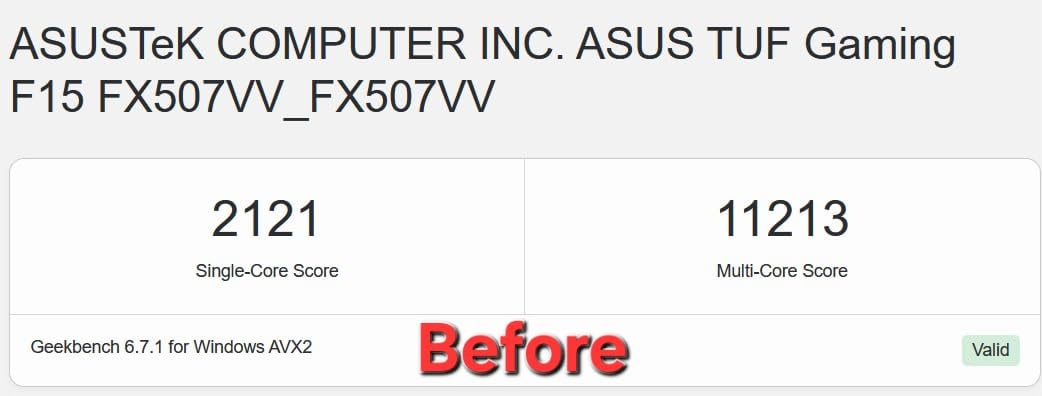
Before buying anything, try the free test. Prop the laptop on a book so the intake has clearance and play your heaviest game for an hour. If frame rates hold steady and temperatures look normal, a pad will add very little. If it throttles badly, note whether the internal fan is the problem or the intake is, because that tells you which design to buy.
Other options compete for the same money. A plain aluminium or wooden laptop stand gives you the lift for a fraction of the cost. Undervolting or tuning the fan curve reduces heat generation outright, which is often the better fix for a laptop that throttles at low load. Repasting addresses a specific problem with aged thermal compound. And if you travel with the machine, a good [laptop backpack](https://www.dognotebook.com/best-laptop-backpacks/) matters more for its life than any pad.
Frequently Asked Questions
Do cooling pads help gaming laptops?
Yes, but the amount depends entirely on the design. Open-mesh multi-fan pads typically lower temperatures by only a few degrees, which is barely better than a raised stand. Sealed designs that wrap a foam gasket around the underside, such as the IETS GT500, the IETS GT600 or the llano V12, force high-pressure air through the laptop’s existing intake path and commonly produce 10-20 degree reductions with far more stable frame rates.
What is the best cooling pad for a gaming laptop?
The havit HV-F2056 is the best all-round choice for most gaming laptops, combining three quiet fans, a 15.6 to 17 inch metal mesh deck and two height settings. For a desktop replacement that genuinely throttles, the IETS GT500 is the better answer, because its sealed foam and 4200 RPM turbofan force air through the intake path rather than just circulating it underneath.
Is it worth buying a laptop cooling pad?
It is worth it if your laptop throttles under sustained gaming load, and marginal if it does not. Community consensus puts the threshold for a pad that is substantially better than a laptop stand well into the premium tier. Before buying, raise the laptop on a book for an hour and see whether frame rates hold. If they do, spend the money on a stand or on travel gear instead.
What is the best cooling station for a gaming laptop?
The best cooling station for a gaming laptop is the llano V12, which pairs a 5.5 inch sealed turbo fan with a three-port USB hub, a removable dust filter and a scroll wheel for precise airflow control across 15.6 to 19 inch chassis. The IETS GT600 is the alternative for machines up to 19.3 inch, with a metal body and magnetic sealed foam.
Are laptop cooling pads loud?
It depends on the design. Open-mesh pads with three or six small fans are typically near-silent, and the KLIM Ultimate is quiet even at full speed despite its large 200 mm fan. Sealed turbo blowers are louder: the IETS GT500 is rated at up to 55 dB, the IETS GT600 at up to 65 dB and the llano V12 at 70 dB or less at higher speeds.
Which Gaming Laptop Cooling Pad Should You Buy?
Start with the havit HV-F2056 if you want the safest general answer: three quiet fans, a deck that fits 15.6 to 17 inch chassis, and 45,000 owners confirming it works. If your laptop is compact or you play on a budget, the LIANGSTAR six-fan pad gives you the same gentle benefit for less and slides into a bag at 0.4 inch thick.
If your machine genuinely throttles, stop buying open-mesh designs. The IETS GT500 is the pick, because its sealed foam and 4200 RPM turbofan do something a stand cannot, and the infinitely variable dial lets you control how much noise you accept. The llano V12 adds a three-port USB hub and dust filter for a thicker chassis, and the IETS GT600 is the answer for machines up to 19.3 inch.
Before you order any of them, raise your laptop on a book and play your heaviest game for an hour. If frame rates hold, you do not need a pad. If they do not, buy the one that matches your vent layout, and check the noise rating against your room. That is how you get the best laptop cooling pads for gaming working for your machine rather than for a spec sheet in 2026.