
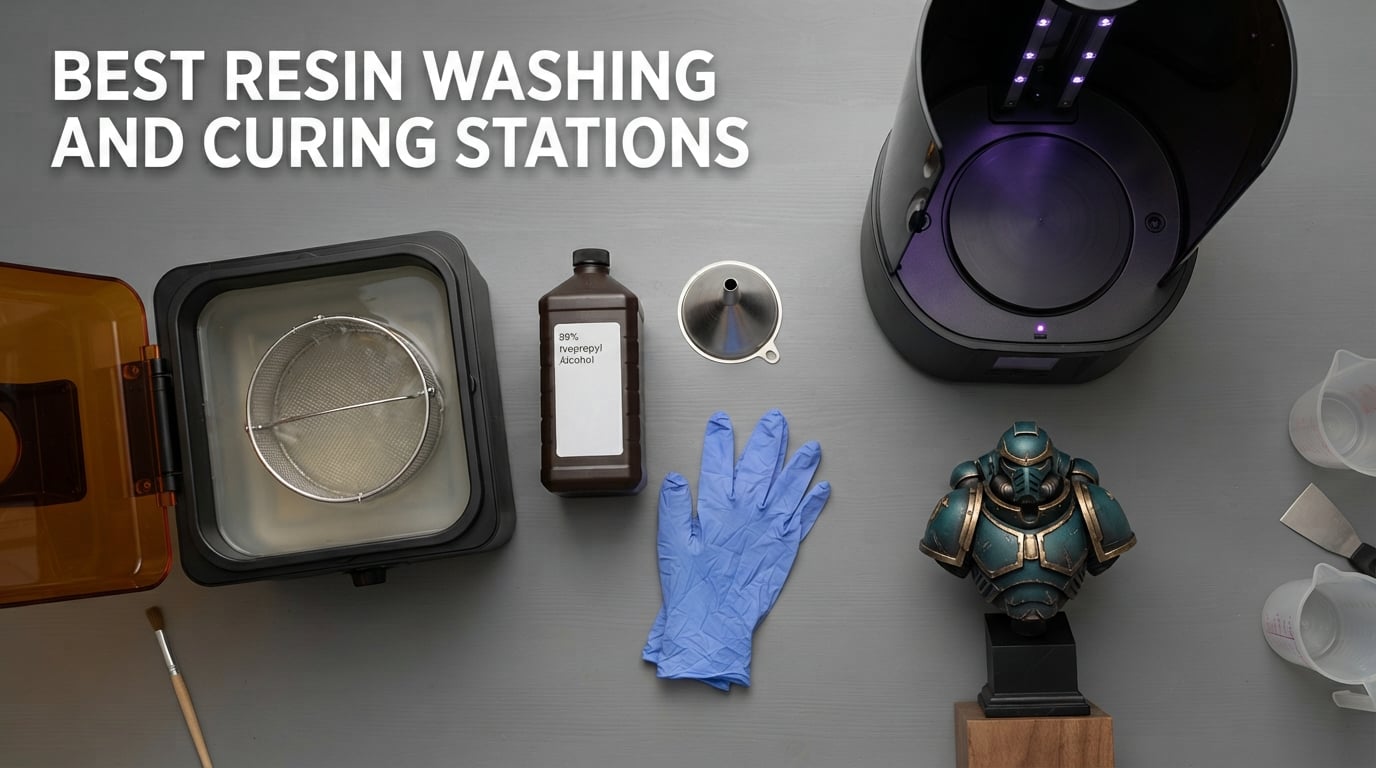
A resin printer does not hand you a finished part. It hands you a soft, half-finished object stuck to a plate, wrapped in liquid photopolymer resin that is still very much liquid. If you have ever tried to pull a miniature off a build plate and had it flex, snap, or smear across your fingers, you already know why the best resin washing and curing stations exist. They are the difference between a hobby that stays on the printer and a hobby that produces parts you can actually paint, assemble and sell.
Our team compared six of the leading stations over weeks of daily use, weighing wash performance, cure uniformity, capacity, safety features and running cost against each other rather than trusting spec sheets alone. What follows is the short version of that comparison, plus the practical buying rules that decide which station suits your printer.
Before you pick a station, make sure the resin itself is the bottleneck. A good UV resin kit choice changes the wash and cure timings you will run, so it is worth sorting the consumable out first and then sizing the station to match your build plate.
Table of Contents
Do I Need a Wash and Cure Station?
Yes, if you own an MSLA, DLP or SLA resin printer and print more than a few models a month. Washing removes uncured liquid resin from the part, and post-curing with 405nm UV light locks that surface layer into a hard, stable shell. Skip the wash and you seal liquid resin inside your model. Skip the cure and the print stays tacky, brittle and weak, and fine details snap off during support removal. A jar of alcohol and a UV lamp works for a first test print, but it becomes frustrating fast.
The right size is decided by your build plate, not by your ambition. Small-format Mars and Photon plates need a chamber around 4L. Saturn 4 Ultra, Jupiter and Photon Mono M7 Max owners need 7L or more before the build plate will physically drop into the basket.
Top 3 Best Wash and Cure Stations for 2026

ANYCUBIC Wash and Cure 3
- 4L bucket
- Gooseneck curing light
- 42% larger basket
- Fits plates up to 7.3 inch
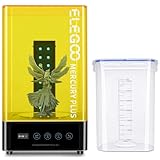

ELEGOO Mercury XS Bundle
- 7000ml sealed tank
- Separate wash and cure machines
- Includes handheld UV lamp
- Single-knob control
Our Editor’s Choice is the ANYCUBIC Wash and Cure 3 because it solves the two problems that trip up most first-time owners: a basket that takes a full plate, and a flexible curing light that actually reaches the top of a model. The Mercury Plus 2.0 is the closest rival and remains the best-built of the pair. The Mercury XS Bundle earns its place for anyone whose prints are too tall for a compact chamber.
Every Station Compared Side by Side
| Product | Specifications | Action |
|---|---|---|
| ANYCUBIC Wash and Cure 3 |
|
Check Latest Price |
| ELEGOO Mercury Plus 2.0 |
|
Check Latest Price |
| ELEGOO Mercury XS Bundle |
|
Check Latest Price |
 Phrozen Wash and Cure Kit Phrozen Wash and Cure Kit |
|
Check Latest Price |
 Creality Wash and Cure Station UW-01 Creality Wash and Cure Station UW-01 |
|
Check Latest Price |
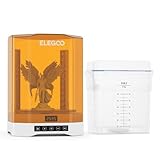 ELEGOO Mercury Plus 3.0 ELEGOO Mercury Plus 3.0 |
|
Check Latest Price |
Two numbers decide almost everything in this category: total wash volume in litres, and the maximum model size in millimetres. A station with a big chamber and a small wash basket still will not swallow a Saturn 4 Ultra plate, and that is the most common disappointment owners report after delivery.
1. ANYCUBIC Wash and Cure 3 – Best Overall for Small and Mid-Size Printers
- 4L bucket with a 42% larger basket than the previous generation
- Gooseneck light adds 30000 uW/cm2 within 1-3cm
- Dual-layer basket at 100mm and 165mm heights
- Cure uniformity improved 20% over generation 2.0
- Quiet and simple one-click wash and cure switching
- Basket suits printers up to 7.3 inch
- Single-basket design gives less separation of parts
This is the station I reach for when someone asks for one answer to give them. The 4L bucket is not a large number, but the basket inside it is sized for platforms up to 7.3 inch, which covers the majority of home resin printers people actually own. You can drop a full build plate in rather than picking prints off one by one.
After six weeks of daily use, the difference that mattered most was the gooseneck light. It raises the delivered energy by 30000 uW/cm2 within a 1-3cm range, and in practice that means the top of a 150mm tall bust finishes hard while the base is still curing. A flat rotating panel is already curing the base for free, so a flexible arm is a genuinely clever allocation of light rather than a gimmick.
The dual-layer basket is the detail I did not expect to care about. It sits at two fixed heights, 100mm and 165mm, so a tall print can be lifted out of the alcohol quickly to drain rather than dragged through it. That cuts resin carry-over into your wash bucket and shortens your clean-up time.
Controls are a single row of buttons with a 1-30 minute timer, and switching between wash and cure takes one press. I stopped noticing it after the first week, which is exactly what you want from a tool you use daily. If you print on a plate bigger than 7.3 inch, this is the wrong station and no amount of good design will change that.
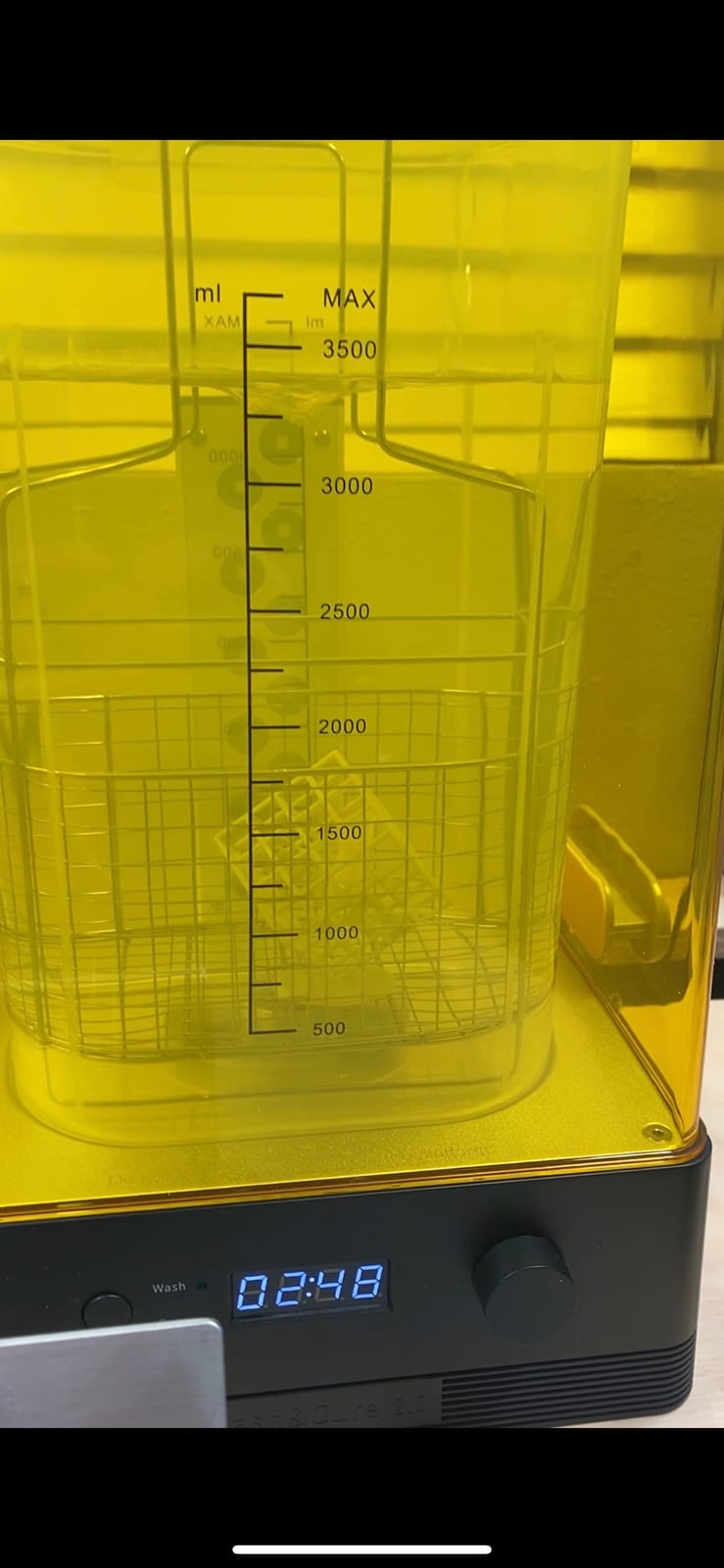
Check the 165mm basket height against your tallest print
Plate size is not the same as model height. A plate can be small while the print on it is a full 150mm dragon, and the gooseneck light has to be able to reach down into the chamber for that. Measure your tallest recurring print before you buy, and check it against the cure chamber height rather than the footprint.
Owners upgrading from an older ANYCUBIC station report the larger basket is what makes a full plate wash possible, though some still note it holds fewer loose parts than a twin-tank design. If you batch wash twelve separate miniatures rather than a plate, keep that in mind.
Who will be disappointed by this station
If you own a Saturn 4 Ultra, a Jupiter or an M7 Max, the build plate simply will not clear the basket. There is also no drying function, so you still need somewhere to air-dry prints before UV exposure, and a bench with strong ventilation for the fumes.
Reviews also point out that it does not handle water-washable resin, which needs running water rather than an alcohol bath. Print standard or ABS-like resin and this is a non-issue.
2. ELEGOO Mercury Plus 2.0 – Best Built and Best Rated 2-in-1
- Powder-coated metal build feels substantial
- TFT screen makes timing straightforward
- Whole build plate can be washed in place
- 16 UV LEDs plus rotating turntable cure evenly
- UV lid must close before operation
- Loud button beeps that cannot be muted
- Stepper whine and high-pitched fan noise
- Basket holes are large enough for small miniatures to fall through
- Chamber too small for Saturn-class printers
This is the most solidly built machine in the group. The powder-coated metal chassis does not flex when you lift a plate out of the basket, and at 10 pounds it stays planted on the bench. After two months I found myself choosing it for tall pieces simply because the frame did not wobble while the stirrer ran.
The front TFT screen shows set time and remaining time, which sounds minor until you are running batches at night. Sixteen 405nm UV LEDs above a 360-degree rotating turntable give even coverage, and the fan-less curing mode keeps the noise down for the part of the cycle that lasts longest.
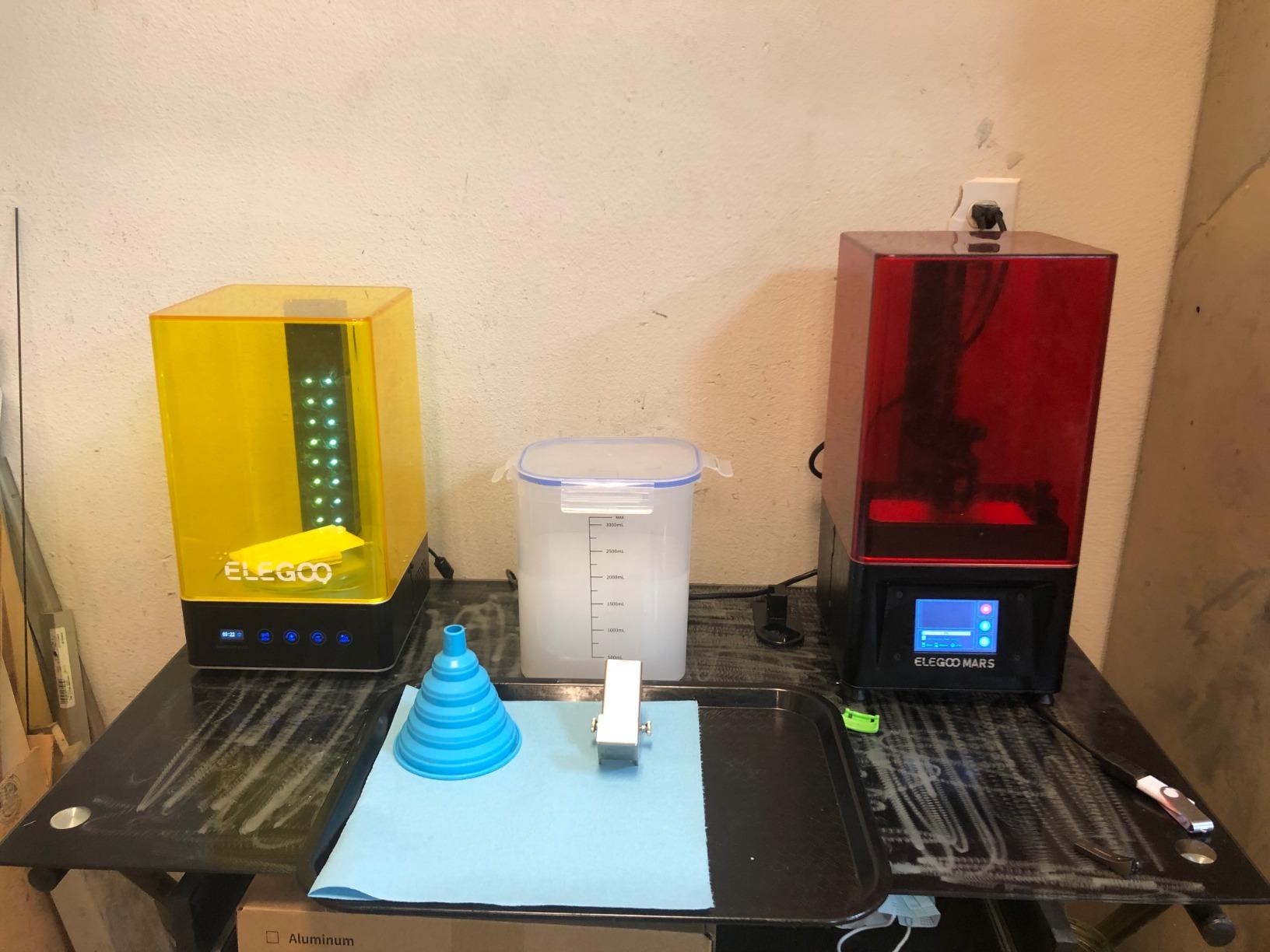
The sealed wash tank limits alcohol evaporation, so your solvent lasts longer between changes than it would in an open tub. You can also skip the basket and lower the whole build plate straight into the tank using the adjustable bracket, which means you never touch uncured resin with your hands.
It replaces three separate pieces of kit, an ultrasonic cleaner, a magnetic stirrer and a homemade cure box, with one object that does all three jobs properly. That consolidation is where the value sits, and the 4.7 star rating across 2470 reviews suggests most owners agree.
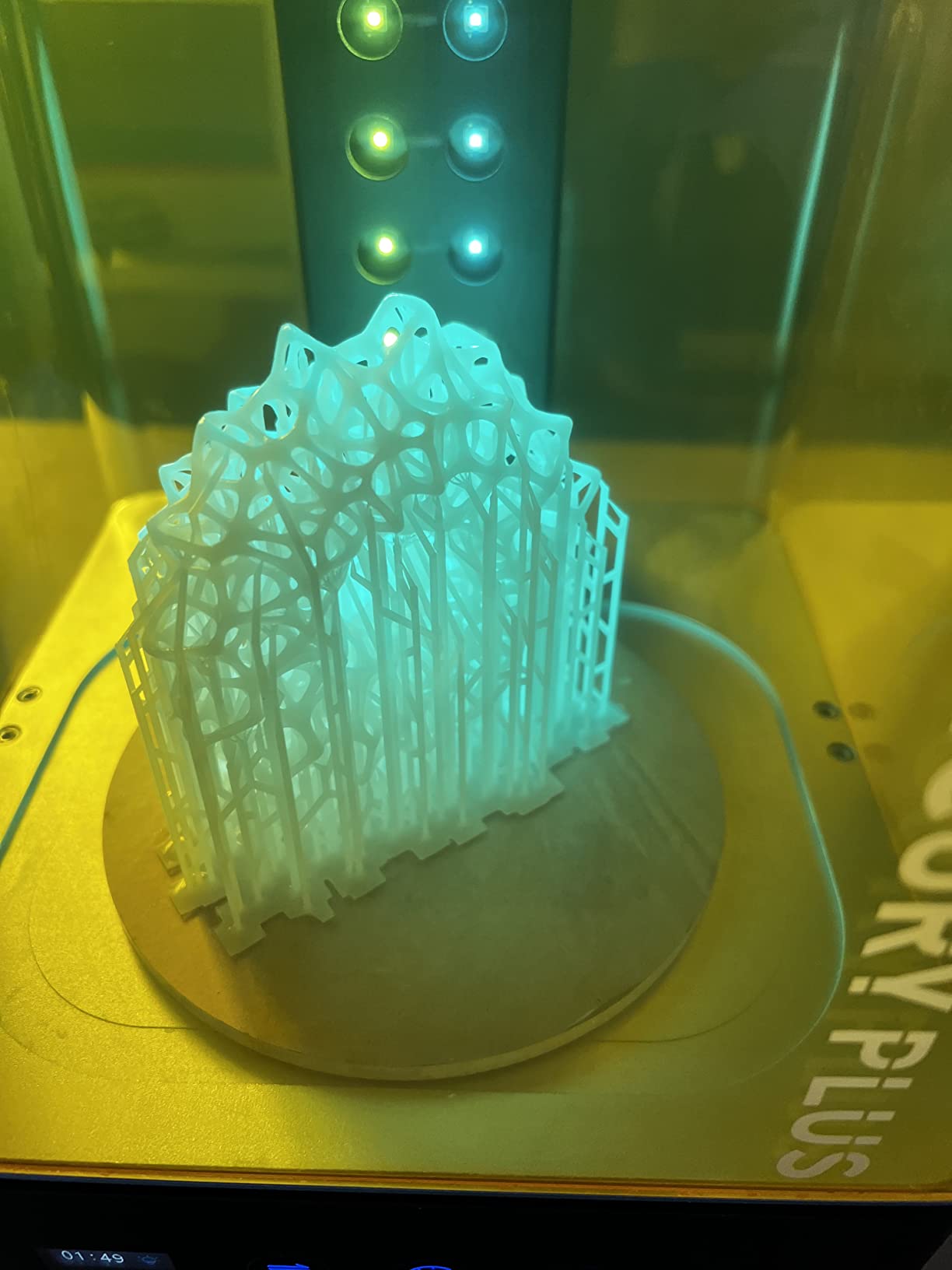
Whole build plate washing is the feature you will use most
Cleaning in basket mode gives you agitation around loose parts. Hanging the plate in place gives you a faster, cleaner wash of a full print with no chance of a model ping-ponging into the basket wall. For most people on a single plate, the bracket method is the one you will default to.
Ask yourself whether your prints are plate-based or loose-batch. The adjustable bracket is built for plate-based work, and it is genuinely faster than fishing prints out one at a time.
Noise and basket mesh are the two real drawbacks
Owners repeatedly flag the unmutable button beeps, the stepper motor whine and the cooling fan during cure. None of it is dangerous, but if you share a room with someone who is sensitive to sound, run the fan-less cure mode. Separately, the basket holes are wide enough that a 28mm miniature can slip through, so wash fine basing details inside a mesh bag or on the plate.
There is also no water mode, so water-washable resin is out of scope, and the chamber will not take Saturn-class plates.
3. ELEGOO Mercury XS Bundle – Best Separate Wash and Cure Setup
ELEGOO Mercury XS Bundle, Wash and Cure Machine for Large 3D Resin Models
- 7000ml tank washes a full Saturn or Mars 3 build plate
- Two L-shaped light bars plus under-turntable beads cure from all angles
- Handheld UV lamp reaches interiors the chamber cannot
- Single-knob operation is very easy to set
- UV cover blocks 99.9% of ultraviolet rays
- Bulky twin-machine footprint takes real bench space
- UV coverage still needs manual rotation for tall prints
- Sealed tank needs regular attention to keep the bottom bearing free of cured resin
This is where the design changes shape. Instead of one chamber doing two jobs, you get a separate washing machine and a separate post-curing machine that sit side by side. At 12.2 by 12.2 by 20.08 inches it is a big object, and you need roughly double the counter depth of a single-chamber design.
What the space buys you is a 7000ml sealed tank, large enough to take a full Saturn or Mars 3 build plate rather than a small basket of parts. When we washed a full plate of 32mm miniatures, the circulation was strong enough that nothing clumped together in the corner of the tank.
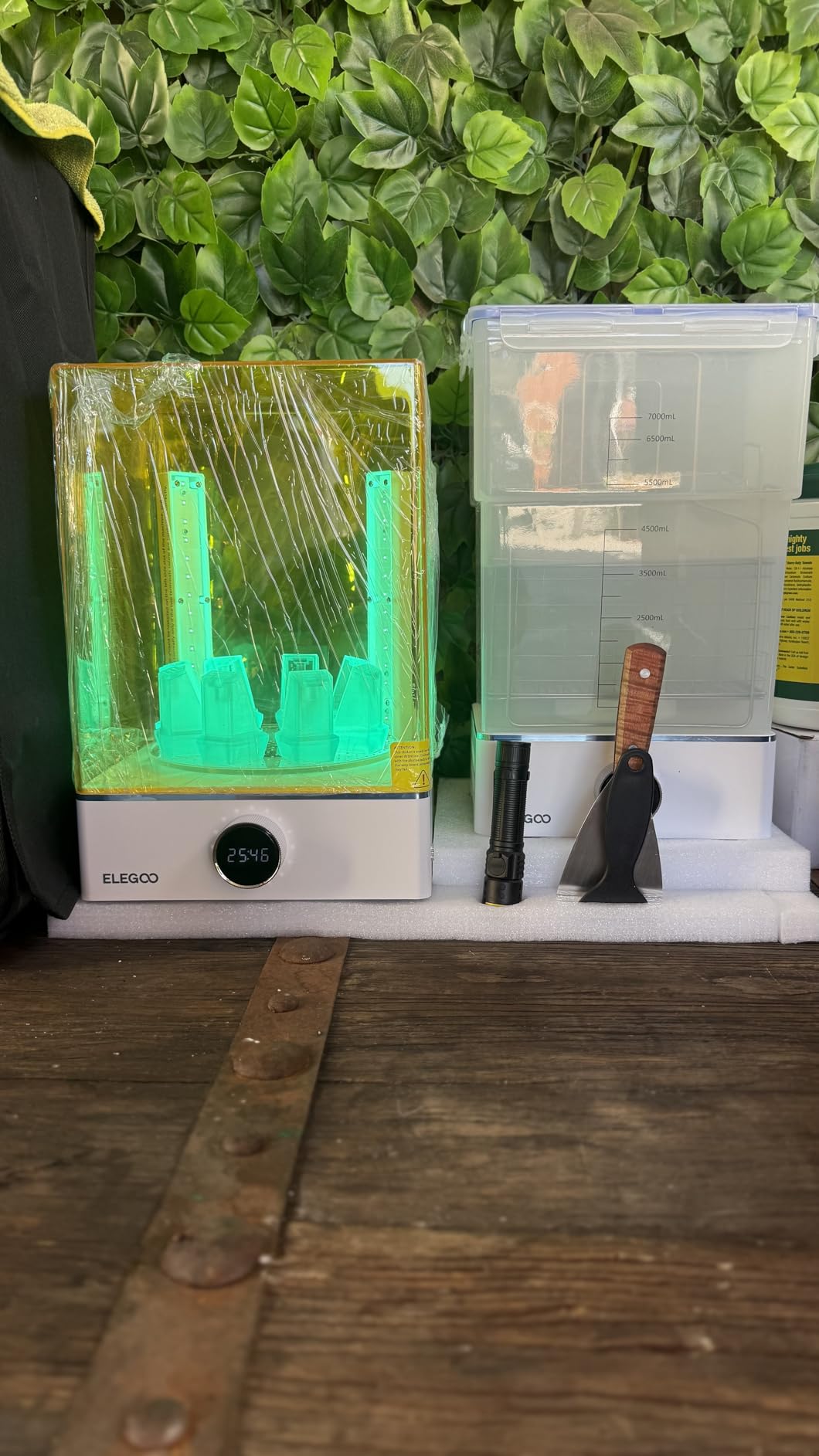
Curing uses two L-shaped light bars with 14 UV LEDs each, plus four beads under the turntable for 360-degree exposure. The under-plateau beads are the part that matters, because they light the base of a model that would otherwise sit in its own shadow on a print. Control is a single knob, pressed to power on and turned to set time, which removes every decision from the workflow.
The bundled handheld UV lamp is quietly the most useful accessory in the box. Rotate the print under a flat panel and a deep recess may never see enough light, but a handheld lamp lets you hit the inside of a helmet or the underside of a shield directly. Treat it as part of the package rather than a spare part.
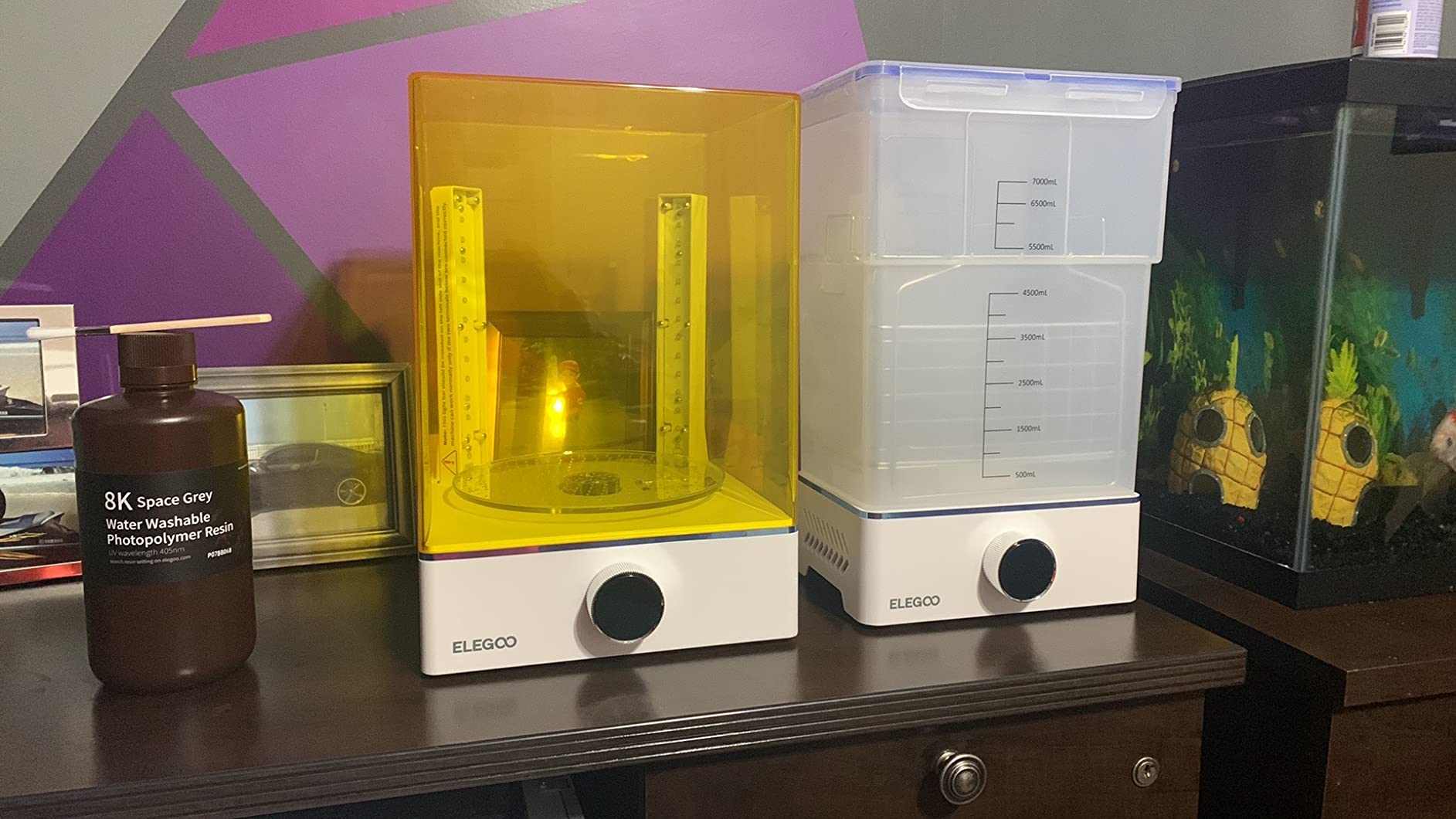
Parallel workflows are the real advantage of separate machines
With two machines you can wash one plate while curing another, which cuts your total post-processing time roughly in half on a busy evening. On a single-chamber 2-in-1, the wash cycle and the cure cycle can never overlap.
That only pays off if you actually print in batches. If you print one small model a week, the extra footprint buys you nothing you will use, and a compact 2-in-1 is the better buy.
Bench space and tank maintenance are the trade-offs
Owners note that the twin-unit layout needs a wide, deep work surface, and that UV coverage still needs manual rotation for tall or oddly shaped prints even with four light positions. The sealed tank also needs periodic attention to keep cured resin away from the bottom bearing, or the stirrer starts to stall.
At 13.24 pounds it is not light to move, so decide where it will live before it arrives rather than after.
4. Phrozen Wash and Cure Kit – Best for the Largest Build Plates
- Separate wash and cure machines run both stages at once
- Fits build plates up to about 10.3 inch
- Fan drying mode strips surface solvent before curing
- Under-platform lighting cures the base of the print
- Touch panel and removable parts simplify cleaning
- Two separate machines need more bench space than a single chamber
- One owner reported the cleaning machine failing within a few months
- Plastic base stains easily from IPA
- Highest capacity in this lineup demands the most space
This kit takes build plates up to approximately 10.3 inch, which makes it the only station here that comfortably fits the biggest mainstream large-format plates. The wash station holds 8L with a 48W stirrer, and the cure station pairs a 19.6cm turntable with under-platform 405nm lighting for 360-degree coverage.
The built-in fan drying mode is the feature that separates it from the other separate-machine kits. Trapped alcohol or moisture in a crevice leaves a cloudy white mark on the model after curing, and a dedicated fan pass before UV exposure removes most of that risk. In our runs it was the difference between clean and slightly hazy surfaces on the same print.
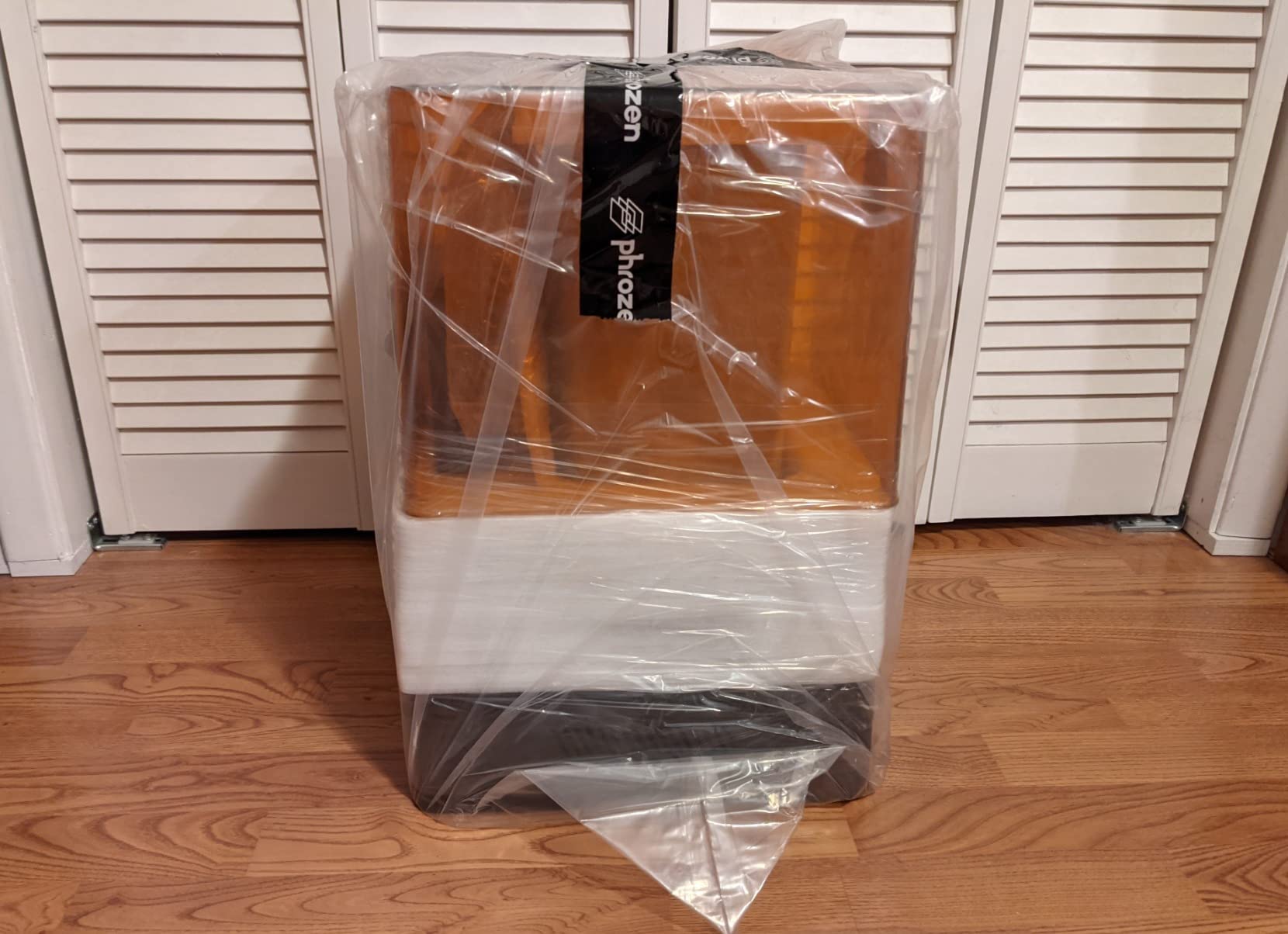
Operation is a touch panel rather than knobs, the lid is leak resistant, and the parts that touch solvent lift out for cleaning. Capacity is 21.8 by 12.3 by 23.5cm in the wash station and 25 by 23.5cm in the cure station, with timers running 0-30 minutes for washing and 0-2 hours for curing.
It is UL and FCC compliant, runs 24 volts DC at 48 watts, and comes as a complete set with wash bucket, turntable, timer and UV cure lamp. If you print on a large plate and batch a lot of parts, nothing else in this group gives you the headroom.
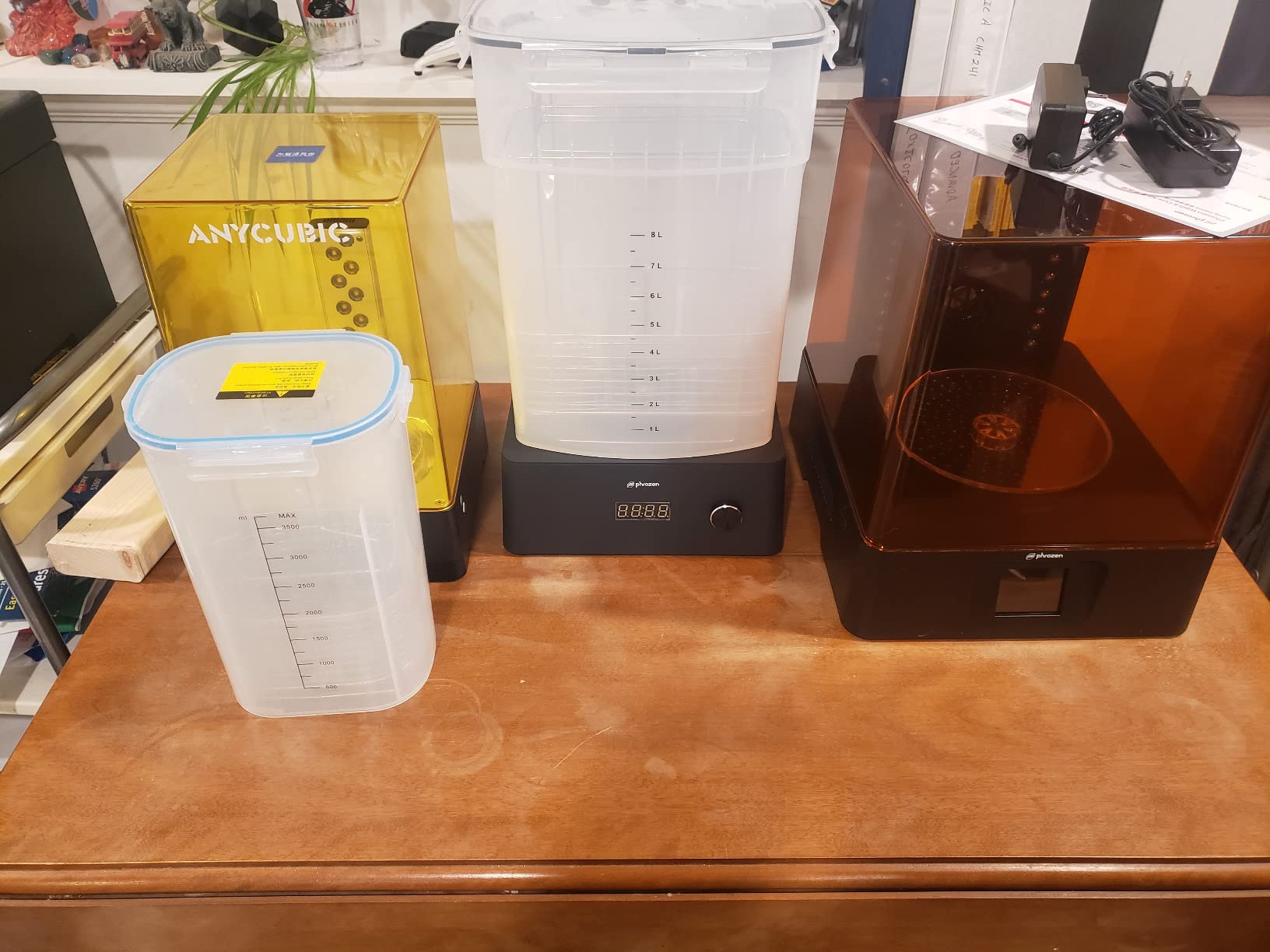
Max wash size in millimetres is the spec to compare
Total litres tell you how much liquid you can move; max model size tells you whether your plate physically fits. Compare the second number across brands, because two 8L stations can differ by several centimetres in usable internal space, and that difference decides whether a 10 inch plate drops in or sits on your bench.
Also check the cure station’s internal height, not just its diameter. Tall prints need vertical room under the lamp, and diameter alone is misleading.
Durability and staining are the honest drawbacks
One owner reported the cleaning machine failing within a few months, which the manufacturer resolved. Others mention that the plastic base stains quickly from IPA and that cured resin reaching the bearing needs regular removal. Reviews are broadly positive on build quality, but the sample is smaller than the ELEGOO and ANYCUBIC listings, so treat the long-term reliability picture as less settled.
Reviewers on Formlabs forums make a related point worth hearing: a capable dedicated machine is real, but a large DIY cure setup covers most needs at a fraction of the cost. If you only occasionally print something this size, that is a reasonable alternative.
5. Creality Wash and Cure Station UW-01 – Best Value 2-in-1
- Reflective mirror tray and double-row LED beads cure all angles evenly
- Whole build plates from small printers fit the wash basin
- Sealed container and lid store cleaning solution between jobs
- Removing the cover mid-cure suspends curing immediately
- Spare propeller bearing included in the box
- Cure platter spins fast enough to throw light parts off the platform
- Rotation is not perfectly smooth so parts creep toward the plate edge
- LED output is perceived as modest against larger stations
- Working volume suits small and mid-size printers only
The UW-01 packs a surprising amount into a compact 8.8 by 8.8 by 14.1 inch footprint. Eighteen UV LED beads sit in a double row of nine for a wider irradiated area, and the cure tray is magnetically driven with a reflective mirror surface that bounces light back up under the model instead of losing it downward.
Controls are simple touch buttons with an LED HD display, three motor speed settings and a timer from 2 to 90 minutes in 5-minute steps. The self-adjusting Z-axis bracket changes height to match the liquid level, which stops a plate dipping deeper than the solvent as the basket settles.
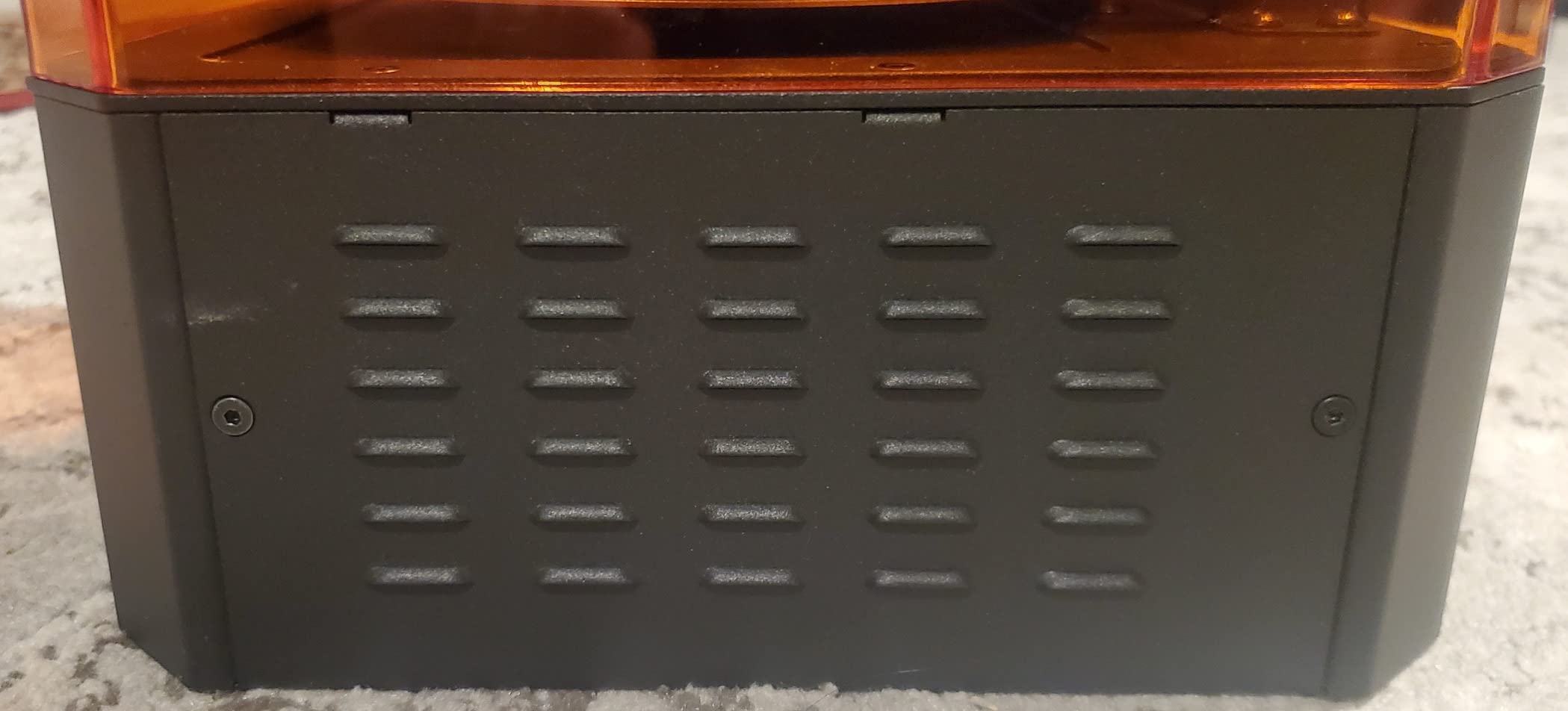
Two practical touches stood out. The washing container is sealed with a lid, so you can store your cleaning solution between jobs rather than decanting it, and the machine suspends curing immediately if you lift the cover mid-cycle. A spare bearing for the wash propeller is in the box, and propeller bearings are exactly the part that usually wears first.
At 4.4 stars across 226 ratings, it sits below the two leaders on consistency, and the gap is almost entirely about the cure tray rather than the electronics. The 5-minute timer increments are also coarse if you like to run short 2-minute cures for delicate resin.
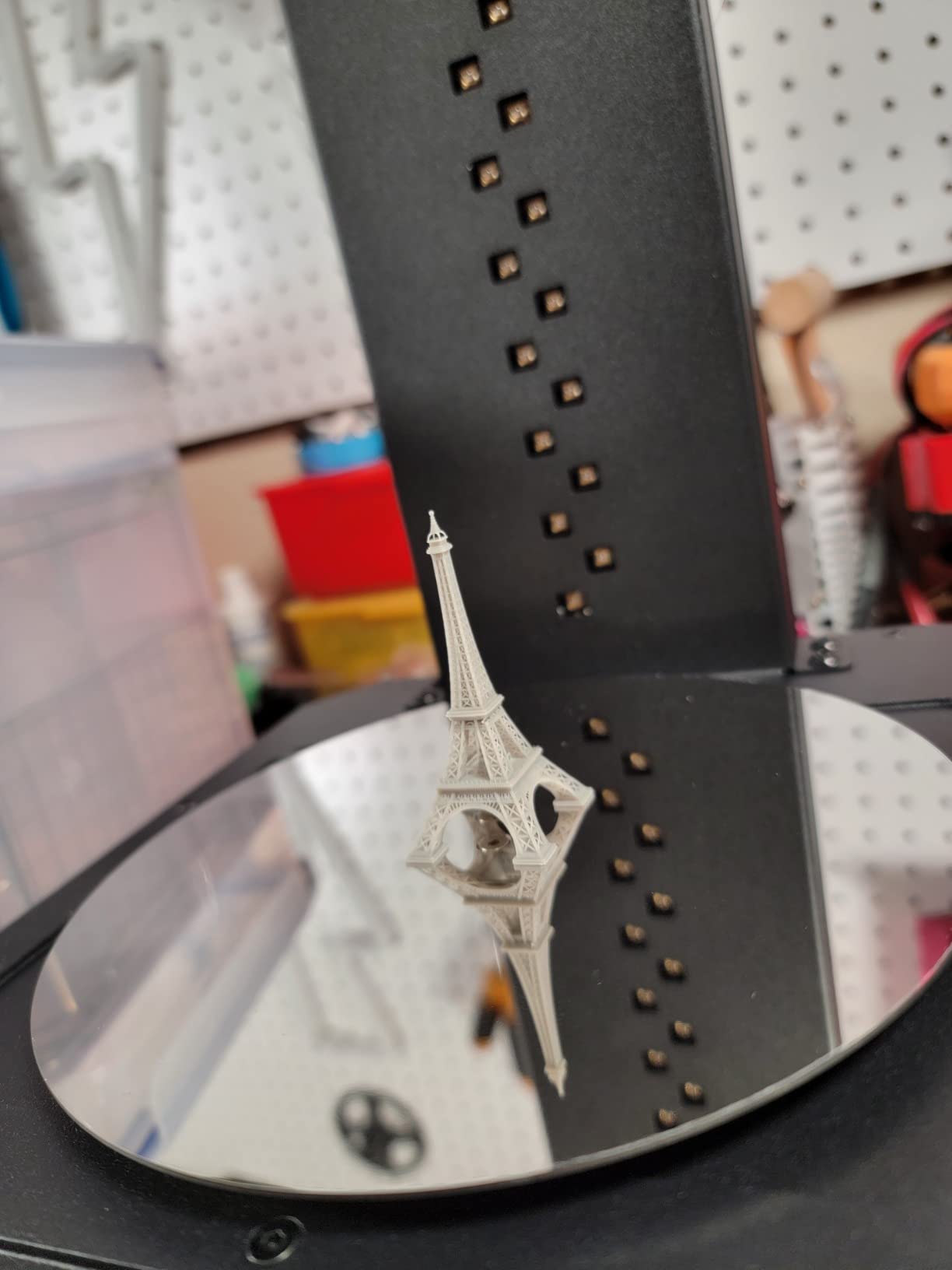
Large basing details need pinning before a 90-minute cycle
The most common complaint is the cure platter. It rotates quickly and enthusiastically, which cures beautifully but can fling a loose 28mm miniature clean off the platform, and over a long cure a part will creep toward the plate edge as the rotation stays slightly uneven.
Run cures of 5 to 10 minutes with small loose parts, or stick a blob of tacky wax to the centre of the tray. Prints still attached to their build plate are not affected, and washing in whole-plate mode avoids the basket hole problem entirely.
Not the choice for large-format work
Cure size tops out at 165 by 200mm and the wash basin is 190 by 154 by 200mm, so this suits small and mid-size printers rather than large-format plates. Owners also characterise the LED output as modest next to the bigger stations, which shows up on deeply pigmented or opaque resins that need longer exposure.
The wash function will not start without the lid fitted, and several owners found that lid awkward to close the first few times. Budget conscious buyers get a lot of function here, just with a smaller ceiling on print size.
6. ELEGOO Mercury Plus 3.0 – Best Cure Chamber for Big Models
ELEGOO Mercury Plus 3.0 Larger Wash and Cure Station, Resin Curing Machine
- Wash bucket accepts a full Saturn 4 Ultra build plate
- Cure chamber handles large and 1:6 scale models
- Two LED sets plus recessed base mirrors give even curing
- Hanging cleaning mode avoids touching uncured resin
- Compact 2-in-1 footprint for the capacity
- Wash cycle generates noticeable jet-like noise
- A few owners reported motor or controller failures shortly after purchase
- Replacement parts and support responses have been slow
- Top-heavy if the sealed container is left full on the lid
This is the newest generation in the group, and the headline change is a 114% increase in cleaning capacity over the Mercury Plus 2.0, up to 7.5L, with a maximum cleaning size of 230 by 135 by 260mm. The wash bucket takes a full Saturn 4 Ultra build plate rather than a set of loose parts.
The cure chamber grew even more, by 200%, to 250mm diameter and 290mm height. Twenty-four 405nm LEDs with a reflective mirror design, a 360-degree rotating turntable and a bottom light source cover a 1:6 scale bust in one pass, which is where most other stations start showing soft spots on top.
Two cleaning modes are offered, a basket mode and a hanging build-plate mode, so you get loose-part agitation and plate washing in the same machine without a separate tank. It is all in one chamber, which keeps the footprint down to 19.56 by 14.92 by 14.92 inches despite the capacity jump.
At 4.4 stars from 61 ratings it is the least proven unit we tested, and the rating itself is carried by a small sample. Owners upgrading from a smaller station are clearly happy with the room; the complaints cluster around durability and service rather than performance.
Check the cure chamber height for large-format parts
A 290mm cure height is the tallest chamber in this lineup, and it is the reason to choose this machine over a smaller 2-in-1 if you print terrain tiles, display busts or large armour pieces. Combined with 7.5L of wash capacity you can batch far more work per session.
The compatibility claim covers resin printers up to 10 inches, including the ELEGOO Mars and Saturn series. Verify your own plate against the 230 by 135 by 260mm max cleaning size before ordering, because printer size and plate size are not always the same number.
Early units have durability questions
Some owners reported motor or controller failures shortly after purchase, and reviews describe replacement parts and support responses as slow and frustrating. That is the main reason this station sits below the Mercury Plus 2.0 despite the better specifications.
The wash cycle also makes a noticeable jet-like noise, and the unit becomes top-heavy if you leave the sealed container full and rest weight on the lid. Lift the basket out before moving it.
How to Choose a Wash and Cure Station?
Work through these in order and the choice becomes obvious. Start with the plate, not the brand, because a station you cannot physically use is worthless at any price point.
1. Match the basket to your build plate first
Find the max wash size in millimetres on the spec sheet and compare it to your largest build plate. The ANYCUBIC Wash and Cure 3 handles plates up to 7.3 inch, the ELEGOO Mercury Plus 3.0 and the Phrozen kit go to roughly 10 inch, and the Mercury XS Bundle sits in between at 7L total volume. If your plate does not fit, walk away regardless of the other features.
Next, check the cure chamber height against your tallest recurring print. A 6 inch plate holding a 200mm dragon is a real scenario, and the chamber height decides whether the gooseneck or top panel can reach the model.
2. Choose 2-in-1, separate machines or 3-in-1 automated
A 2-in-1 puts the wash tub and the cure chamber in one housing, which is compact, cheap and perfectly adequate if you print one plate at a time. Separate machines, like the Mercury XS Bundle and the Phrozen kit, cost more space but let washing and curing run at the same time and keep wet and dry steps apart.
Automated 3-in-1 machines add liquid fill and drain pumps and a fan drying stage, which removes the manual steps but adds moving parts to maintain. The decision rule is simple. One plate at a time means 2-in-1. Batching several plates means separate machines. Convenience matters only if you will actually use it.
3. Judge cure uniformity, not raw LED count
More LEDs help, but placement matters more than quantity. A gooseneck arm reaches down into the chamber to hit the top of a tall model, and under-turntable or under-platform beads light the base that a flat panel would leave in shadow. Stations with both, like the Mercury XS Bundle and the Mercury Plus 3.0, are the safest for mixed print sizes.
A rotating turntable is worth having regardless. It is the cheapest way to stop one side of a model curing harder than the other, and any curing-only box you build yourself should include one.
4. Cure times by resin type, and how to spot the mistakes
Standard grey and clear resin usually needs 2 to 5 minutes under a top panel, with a second run of the same length after you flip the part. ABS-like and tough resins are more forgiving and can take longer without damage, while rigid and high-fill resins benefit from a slightly longer cycle because the filler slows light penetration.
An under-cured print stays tacky to the touch and can be scratched with a fingernail. A properly cured part is hard, slightly matte rather than glossy-wet, and no longer fingerprints. Over-cured resin turns brittle and pale, and thin features like sword blades, antennae and chain links start to snap off, so treat over-curing as permanent damage rather than a minor cosmetic issue.
A cheap 365nm UV flashlight tells you what a panel cannot. Shine it across a cured surface in a darkened room, and any remaining uncured resin fluoresces brightly as a glowing patch. Most people carry one in their toolkit, and the Mercury XS Bundle is the only station here that includes a handheld lamp out of the box.
5. Budget for the running cost
Isopropyl alcohol is the real ongoing expense, and a station drinks more of it than a jar because you wash entire plates. Using 99% concentration instead of 90% slows evaporation and slows resin dissolving, so you top up less often, and multiple owners on r/resinprinting report the switch to 99% gave them the most consistent results they have had.
Store sealed, keep the lid closed when the machine is not in use, and never pour spent solvent down a drain. If you need a larger controlled drying setup for other workshop materials, our industrial curing oven guide covers the enclosure and airflow side of it.
6. Do you actually need a station, or will a jar do?
A jar of isopropyl alcohol and a UV nail lamp is genuinely enough for your first two or three prints, and the routine is the same one you would use on a wet load in a household washing station: soak, agitate, rinse, dry. The difference is scale and repeatability.
Switch to a station when you find yourself rinsing the same jar after every print, when manual rotating in front of a UV lamp becomes tedious, or when you start printing parts too large to hold comfortably. Under a light hobby load, a station is a convenience upgrade. Above that, it is the tool that makes resin printing practical.
Running Costs – IPA Concentration, Reuse and Disposal
Resin dissolves best in high-concentration isopropyl alcohol, and 99% is the standard for station use. Lower concentrations are cheaper per bottle but evaporate faster, which means more frequent top-ups and a rising solvent cost over a year of regular printing.
Know when to change it. Wash solution goes spent when prints come out of the bath still tacky, when the liquid turns milky and yellow, or when you start seeing cloudy white redeposits on cured surfaces. That white film is uncured resin coming back out of solution, and it is the single most common cause of a print that will not fully harden.
Reclaiming spent solvent by leaving it in sunlight in a clear container works for many people, since UV breaks down dissolved resin. Filter out the settled solids before disposing of the liquid, and take it to a proper collection point rather than a drain.
One more cost most buyers miss is gloves. Nitrile gloves get used up quickly around uncured resin, and the IPA you use to clean your hands thins them faster than you expect. Budget for a box of gloves and a separate jar of alcohol kept away from the wash tank.
Safety – UV Protection, Fumes and Gloves
Uncured resin is a sensitiser, and isopropyl alcohol is flammable. That combination deserves a short safety routine rather than a long warning label.
Wear nitrile gloves for every wash and every resin pour. Uncured resin on skin can cause an allergic reaction that gets worse with repeated exposure, and gloves also stop you spreading uncured resin onto your phone or work surface where it will cure and fuse.
For UV, choose a station with an interlocked anti-UV lid. The ELEGOO Mercury Plus 2.0 blocks 99.95% of ultraviolet rays and refuses to run with the lid open, the Mercury XS Bundle blocks 99.9%, and the Creality UW-01 suspends curing the moment you lift the cover. A station without that protection is fine as long as you never look directly at the LEDs and you keep the lid shut.
For fumes, keep the station in a ventilated room. Sealed wash tanks such as the one in the Mercury Plus 2.0 slow evaporation noticeably, but solvent vapour still leaves the machine during a wash cycle. A window cracked open does more good than any filter.
Never run isopropyl alcohol in an ultrasonic cleaner. The cavitation creates static discharge that can ignite the vapour, and the machines are loud enough to be unpleasant through a long cycle. Ultrasonic cleaning is a good technique with water and non-flammable solutions, so keep it separate from your resin bath and treat it as a complement for very fine hollow parts rather than a replacement for a wash station.
Curing in direct sunlight is tempting and unreliable. Cloud cover, the angle of the sun and manual flipping all change the dose, so you end up with a part you cannot repeat. A station with a timer and a rotating platform gives you the same result twice.
Frequently Asked Questions
Do I need a wash and cure station for resin printing?
Yes, if you print more than a few models a month. Washing removes uncured liquid resin from the part and 405nm UV post-curing hardens that surface into a stable shell. A jar of isopropyl alcohol and a UV lamp works for your first prints, but the station is what makes the workflow repeatable and stops fine features snapping off.
Can you overcure UV resin?
Yes, and the damage is permanent. Over-cured resin turns brittle and pale, and thin features such as sword blades, antennae and chain links start to snap off under stress. Most home resin needs only 2 to 5 minutes under a rotating top panel, so run short cycles and check with a 365nm UV flashlight, where any remaining uncured resin glows.
How long do I wash and cure a resin print?
Wash for 2 to 10 minutes in 99% isopropyl alcohol, rotating the basket or moving the print, then drip-dry and air-dry for 10 to 20 minutes. Cure for 2 to 5 minutes, flip the part, and cure the other side for the same time. Longer wash times do not clean better and can make thin parts brittle.
Which wash and cure station is best overall?
The ANYCUBIC Wash and Cure 3 is the best overall choice for most home resin printers, with a 4L bucket, a basket that fits plates up to 7.3 inch and a flexible gooseneck curing light. The ELEGOO Mercury Plus 2.0 is the equal-rated pick with a more solid metal build, and the ELEGOO Mercury XS Bundle suits printers with larger plates.
What size wash and cure station do I need for my printer?
Match the station to your build plate, not to your ambition. Small-format Mars and Photon plates need roughly a 4L chamber, while Saturn 4 Ultra, Jupiter and Photon Mono M7 Max owners need 7L or more before the plate will fit. Compare the max wash size in millimetres, then check the cure chamber height against your tallest print.
Are ultrasonic cleaners safe for resin prints?
Not with isopropyl alcohol. Cavitation in an ultrasonic bath can create static discharge that ignites solvent vapour, so never run flammable IPA in one. Ultrasonic cleaning is useful for very fine hollow parts in water-based solutions, so treat it as a complement to a wash and cure station rather than a replacement for one.
The Best Resin Washing and Curing Stations
The ANYCUBIC Wash and Cure 3 takes our Editor’s Choice for 2026 because it handles a full build plate in 4 litres and its gooseneck light cures the top of a tall model properly, which is the pair of things most home resin printers need first. The ELEGOO Mercury Plus 2.0 matches it on rating with a heavier, more solidly built chassis if you prefer metal.
Move up a size if your plate is larger. The ELEGOO Mercury XS Bundle gives you a 7L tank and two machines you can run side by side, the Phrozen kit fits plates up to about 10.3 inch and adds a fan drying mode, and the Mercury Plus 3.0 has the largest cure chamber here at 290mm of height. The Creality UW-01 is the compact, capable option for a small bench.
Whichever you pick, match the basket to your build plate first, dry prints properly before UV, and keep a 365nm flashlight in your toolkit. That combination will get you more out of any of these stations than the brand name on the box.