
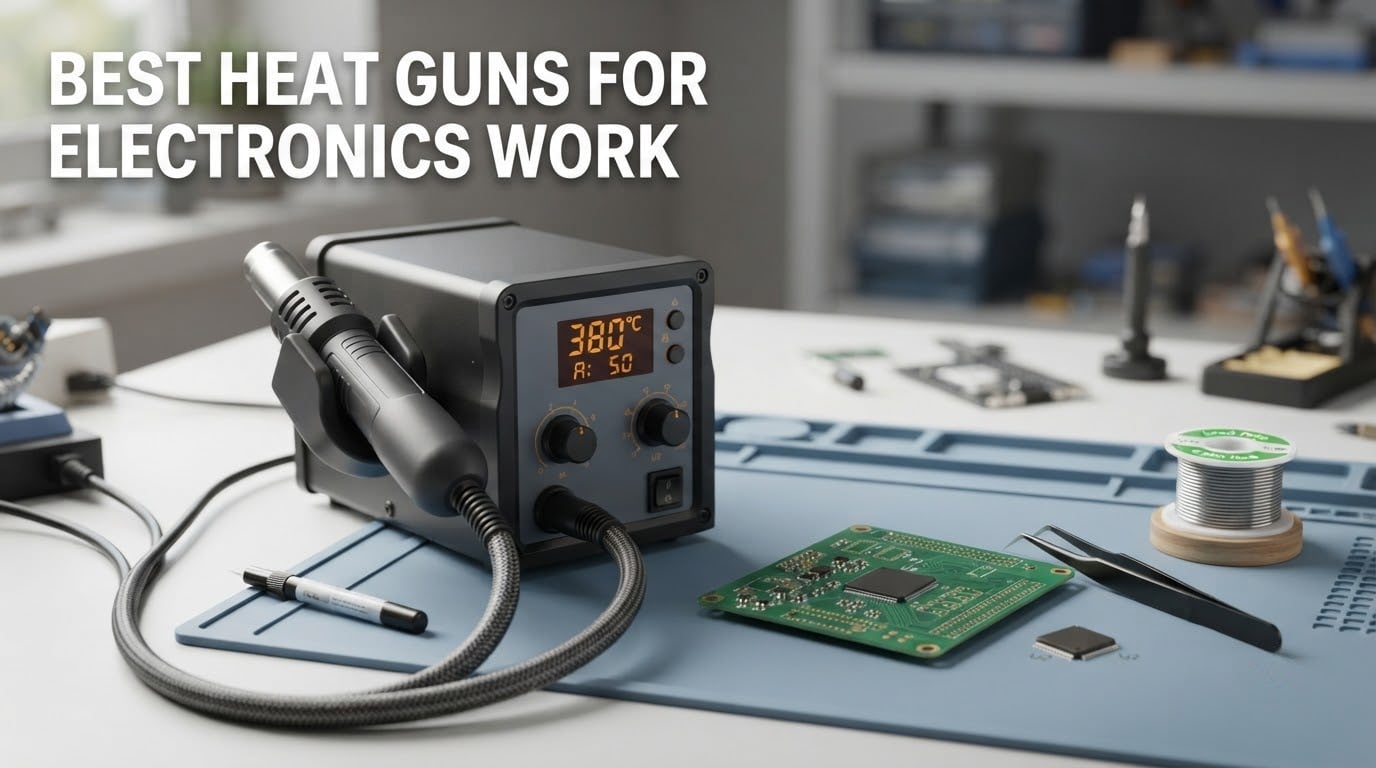
The best heat guns for electronics work split into two very different groups, and buying the wrong one is the single most common mistake we see at the bench. A variable-temperature craft gun with a dial and interchangeable nozzles is the right tool for heat shrink tubing, cable jackets, softening battery adhesive and opening plastic housings. A hot air rework station with PID temperature control, adjustable airflow and a detachable wand is the right tool for removing SMD parts, reflowing QFP and QFN packages, and any work on a populated circuit board where one blown capacitor ruins the repair.
Our answer in one line: pick the SEEKONE 1800W variable temperature gun if heat shrink and general heat work is most of your list, and pick the YIHUA 862BD+ 2-in-1 station if you intend to desolder and reflow board components. Everything in between on this list sits at a specific rung of that ladder, and we explain where each one belongs.
We spent weeks putting these ten tools through the same routine: dial in a temperature, run a nozzle at 3 to 5 cm from a scrap board, and watch how the airflow behaves when a 0402 resistor sits three millimetres from the target. That is the test that matters, because heat guns do not damage boards with heat alone. They damage boards with uncontrolled airflow and unpredictable temperature. Our general-purpose picks, in case you want the wider view, are covered in our heat gun roundup, and the soldering-side tools are in our desoldering gun guide.
One thing to say up front, because it is the question people ask first: yes, you can use a normal heat gun for electronics, but only for the jobs where the gun is not supposed to be precise. Shrinking tubing, softening adhesive, warming a stiff connector, opening a case that clips. The moment the work becomes a desoldering job, you need a station with airflow control, a real nozzle and a temperature that holds steady rather than a switch with two positions.
Table of Contents
Top 3 Picks for Electronics Work in 2026

SEEKONE 1800W Variable Temp
- Rheostat dial 122F to 1202F
- Two airflow modes
- Four nozzles
- Overheat protection
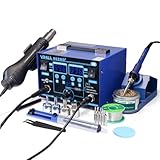
YIHUA 862BD+ 2-in-1 Station
- PID control 20ms cycle
- 75W iron plus hot air wand
- All-in-one rework kit
- ESD safe design
WEP 882D Compact 2-in-1
- Compact 2-in-1 body
- PID on both channels
- Hot air 212F to 896F
- Two solder spools included
These three cover the majority of what people actually buy a heat gun for. The SEEKONE dial gun wins on control per dollar and on ownership volume, with more than 38k owner ratings behind it. The YIHUA 862BD+ is the one we reach for the moment a QFP needs to come off a board, because airflow and temperature are separately adjustable and the kit covers everything else on the bench. The WEP 882D does the same job in a much smaller box, which matters when your bench is a shelf.
Quick Comparison of the 10 Picks in 2026
| Product | Specifications | Action |
|---|---|---|
| SEEKONE 1800W Variable Temperature Heat Gun |
|
Check Latest Price |
| YIHUA 862BD+ 2-in-1 Soldering and Hot Air Station |
|
Check Latest Price |
| WEP 882D Compact 2-in-1 Hot Air Station |
|
Check Latest Price |
 BLACK+DECKER HG1300 Dual Heat Heat Gun BLACK+DECKER HG1300 Dual Heat Heat Gun |
|
Check Latest Price |
 YIHUA 959D Digital Hot Air Rework Station YIHUA 959D Digital Hot Air Rework Station |
|
Check Latest Price |
 SEEKONE HG886 Two Temperature 1800W Heat Gun SEEKONE HG886 Two Temperature 1800W Heat Gun |
|
Check Latest Price |
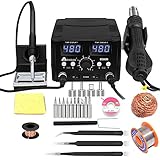 MYPOUOS 8588D 750W 2-in-1 Station MYPOUOS 8588D 750W 2-in-1 Station |
|
Check Latest Price |
 YIHUA 8786D I 2-in-1 Hot Air and Soldering Station YIHUA 8786D I 2-in-1 Hot Air and Soldering Station |
|
Check Latest Price |
 Wagner Spraytech HT1000 Dual-Temperature Heat Gun Wagner Spraytech HT1000 Dual-Temperature Heat Gun |
|
Check Latest Price |
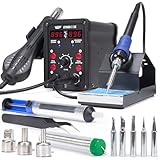 WEP 8786D-I SE 2-in-1 Hot Air Soldering Station WEP 8786D-I SE 2-in-1 Hot Air Soldering Station |
|
Check Latest Price |
1. SEEKONE 1800W Variable Temperature Heat Gun – the Control You Get From a Dial
SEEKONE 1800W Heat Gun Variable Temp 122℉-1202℉ for Crafts, Shrink Wrap
- Fine rheostat temperature control across the whole range
- Reaches 1202F in 1.5 seconds
- Four nozzles: deflector
- two concentrator
- one reflector
- Overheat protection for element and circuit
- No built-in stand for set-down
- Handle switch couples airflow mode to the temperature band
This is the gun we hand to someone who has never used a heat gun before. A rheostat dial from 122F to 1202F means you can bring heat onto a wire harness at a genuinely modest temperature, then push the same tool up to 1202F for a stubborn enclosure without switching tools. That range is wider than any of the two-setting guns on this list, and the difference matters on a bench where a nylon housing sits 2 cm from the wire you are shrinking.
The second mode switch on the handle is the sleeper feature. Mode I moves air at 190 to 210 L per minute for fine work, Mode II moves 250 to 500 L per minute when you need to move a lot of heat through a larger area fast. Choosing between them is the closest thing a craft gun offers to the airflow control a rework station gives you.

Heat-up is genuinely quick: the 1800W element is specified to reach 1202F in 1.5 seconds, and owners consistently describe it as ready before they have set up the board. The four included nozzles are the standard deflector, two concentrator and reflector patterns, which covers shrink tubing, directing heat at a stubborn joint, and spreading heat over a wide area so you do not scorch what is next to it.
There is overheat protection on the element and the circuit, which matters more for electronics work than most people expect, because a blocked nozzle or a resting barrel is the usual way craft heat guns burn out. Build your technique around the nozzles rather than around distance, and this gun rewards that.
When this gun earns its place on an electronics bench
Heat shrink tubing, adhesive softening, cable jacket re-terminating, warming a stiff connector before mating, and post-processing printed parts are all jobs where airflow control is a bonus rather than a requirement. The dial is the whole story here. You can creep up on a temperature and watch the tubing shrink evenly instead of shrinking from the middle out and pinching the conductor.
If you do phone or console work, this is still a legitimate tool for screen separation and battery adhesive, provided you keep the concentrator nozzle moving and you keep the board on a heat-resistant surface. What it should not be asked to do is lift a fine-pitch IC.
Where it will frustrate you
There is no built-in stand, so you need somewhere safe to put it down. On a busy bench that becomes a repeated small annoyance, and it is the single most common reservation in owner feedback.
Because the airflow switch also selects the temperature band, heat and flow are not independently adjustable. On a populated board that is a real limitation: you cannot drop the airflow while holding the same temperature, which is exactly the move you need when a neighbouring component starts to lift.
2. YIHUA 862BD+ 2-in-1 Station – the Most Complete Bench Setup
YIHUA 862BD+ SMD ESD Safe 2 in 1 Soldering Iron Hot Air Rework Station °F /°C with Multiple Functions
- Working temperature in about 30 seconds
- Stable repeatable temperature across C/F memory presets
- All-in-one kit includes nozzles
- tips
- solder
- tweezers
- pump and IC extractor
- Out-of-box temperature offset needs calibration
- Fixed AC cord is not modular
- Small hot air connector pins can bend when docking
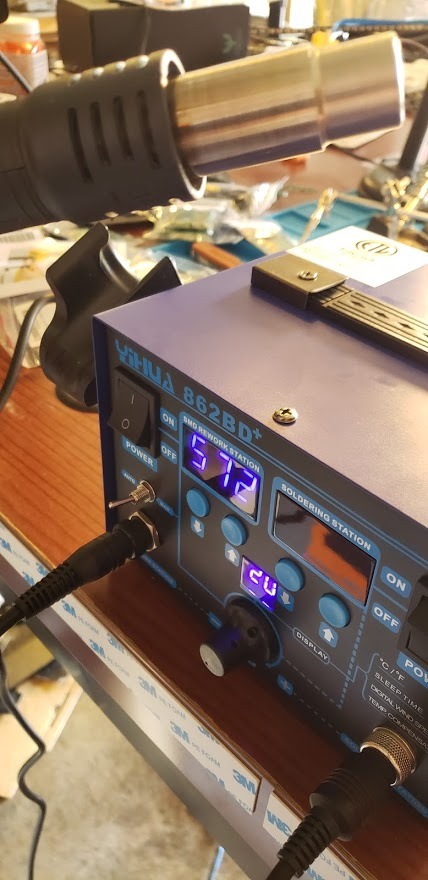
When people ask which of the best heat guns for electronics work can actually remove a QFP without drama, this is the one. It is a full rework station rather than a craft gun, and the difference shows up in the two controls that matter at a board: a hot air temperature setting that holds, and a separate airflow setting you can back off while the temperature stays put.
The PID loop samples every 20 milliseconds, which is what keeps the delivered temperature repeatable between runs rather than drifting as the element ages. That is the kind of behaviour you cannot get from a two-position craft gun at any wattage, and on lead-free work with a narrow melting window it is the difference between a clean removal and pads lifting with the component.
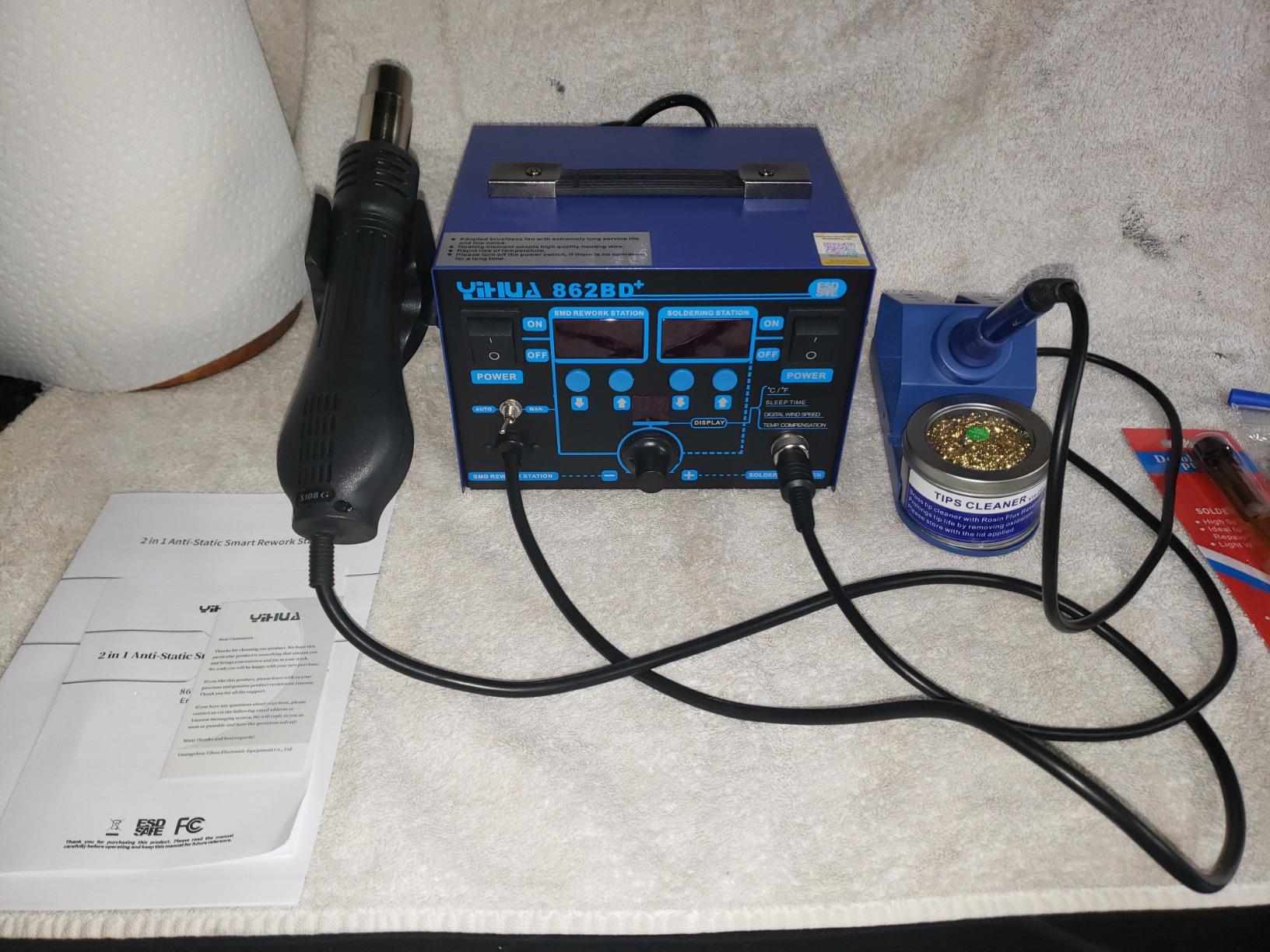
The kit is genuinely complete: hot air nozzles, iron tips, a spool of lead-free solder, a solder sucker, ESD-safe tweezers, an iron holder with brass wool, a sponge and an IC extractor. Owners who buy this rarely need a second purchase before their first board, which is the quiet reason it has accumulated more than two thousand ratings.
Both the hot air gun and the soldering iron detach into safety receptacles, so if a wand fails you replace that part rather than the whole station. A sleep mode is included, so you can let the box idle down between jobs instead of leaving full heat on an unattended bench.
Why we chose a station for board-level work
The airflow control is the reason. A 0402 resistor sitting next to the part you are removing is a component that a blast of hot air will send across the bench, and recovering it means fishing under a desk. On this station you dial airflow down and let the temperature do the work, which is the technique that keeps neighbouring parts where they belong.
The 75W iron channel also means one box covers rework and soldering rather than two. For a hobby bench moving from a starter station to something better, that consolidation is the point.
What to fix before you trust the display
Owners report a small out-of-box temperature offset, so check the hot air reading against an external probe the first time and note the difference. This is normal on budget stations and easy to compensate for once you know the number.
Two smaller things to plan around: the AC cord is fixed rather than modular, and the hot air connector pins are small enough to bend if you force the wand into the socket. Dock it straight, and keep a spare wand mindset if you work rough. The body is also larger than the compact 2-in-1 units, so give it bench space.
3. WEP 882D Compact 2-in-1 – the Smallest Full Station
- Very small footprint for a full two-function station
- PID control on the iron and the hot air gun
- Kit includes two solder spools
- five tips and three nozzles
- Single memory channel limits saved settings
- Compact body is less stable on a busy bench
If your electronics bench is a shelf, a laptop repair corner or a shared table, the footprint of the station is a real buying criterion. At 3.54 by 5.9 by 2.28 inches this is the smallest complete 2-in-1 unit in our list, and it does not give up the feature that separates a station from a craft gun: PID on both the iron and the hot air channel.
Hot air runs 212F to 896F with variable air volume, the iron runs 392F to 896F, and both channels have their own display and switch on the front. For a first station that combination is everything you need, because the two ranges cover shrink work on the low end and lead-free rework on the high end without a second tool.
The included kit is one of the more complete ones for a compact body: two spools of solder wire, five soldering tips, three hot air nozzles, brass wool, tweezers and a desoldering pump. For a first station that is everything needed to start reworking and desoldering without a second order.
Owners frequently name the tiny footprint as the reason they chose it, and the calibrated PID behaviour as the reason they stayed. At 1.1 kg it stays put on a bench better than a bigger box, which is worth more than it sounds when you are working close to a board.
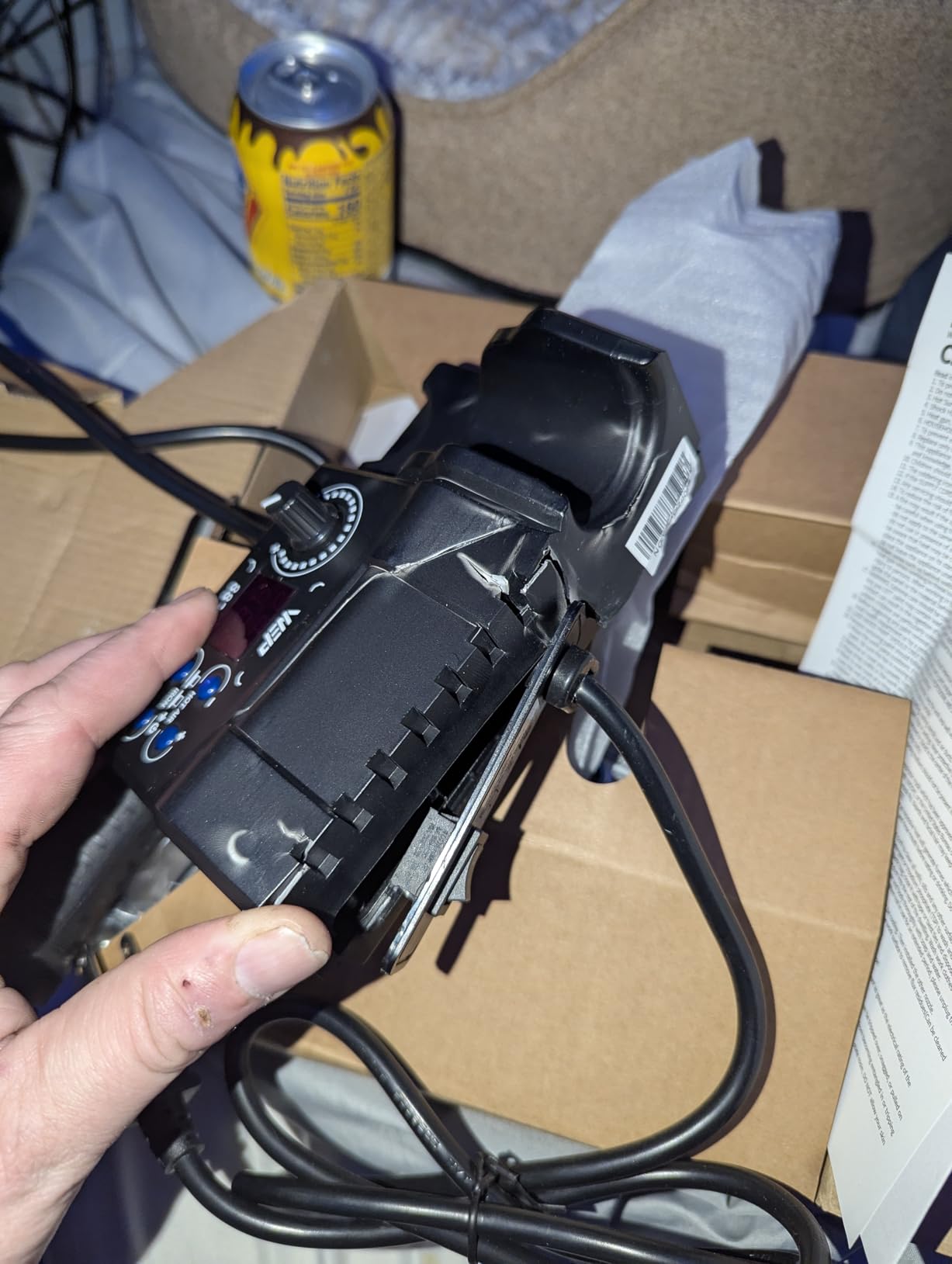
Best fit for a small or shared workspace
If you are working on one board at a time, doing repairs rather than production, the box takes up about the space of a paperback and gives you the airflow control you need for SMD work. The variable air volume knob is what protects neighbouring small components during a removal.
It is also a sensible first station: a beginner learning to remove an SOIC or a small QFN needs temperature and airflow they can dial, not a professional airflow gun they cannot afford to experiment with.
What you give up for the size
There is a single memory channel, so every job means setting the temperature and airflow again. If you run the same profile all day, you will feel that.
A small chassis is also less stable on a bench that gets knocked. Give it a flat spot, and expect a hot air gun that wants to be parked in its holder rather than balanced on the panel.
4. BLACK+DECKER HG1300 – the Simple Two-Speed Bench Gun
BLACK+DECKER Heat Gun for Crafts, Corded, Dual Heat Settings up to 1000 Degrees, 1350 Watt (HG1300)
- Two-year limited warranty from an established brand
- 739g body reduces hand fatigue
- Built-in stand for safer cooldown
- Two fixed temperature settings with no fine adjustment
- Not a precision instrument for board-level electronics work
This is the appliance to buy when the job list is heat shrink, softening a cable jacket and general bench heating, and nothing on it involves lifting a component. Dual settings at 750F and 1000F, 1350W of power and a body that weighs 739 grams. That is a light gun you can hold one-handed for a long harness build without your wrist complaining.
The lower setting is the one to use around electronics. 750F is plenty to collapse heat shrink tubing, and staying on the lower step keeps the risk of cooking a neighbouring insulation jacket down. The 1000F step is for stubborn adhesives and larger plastic parts.
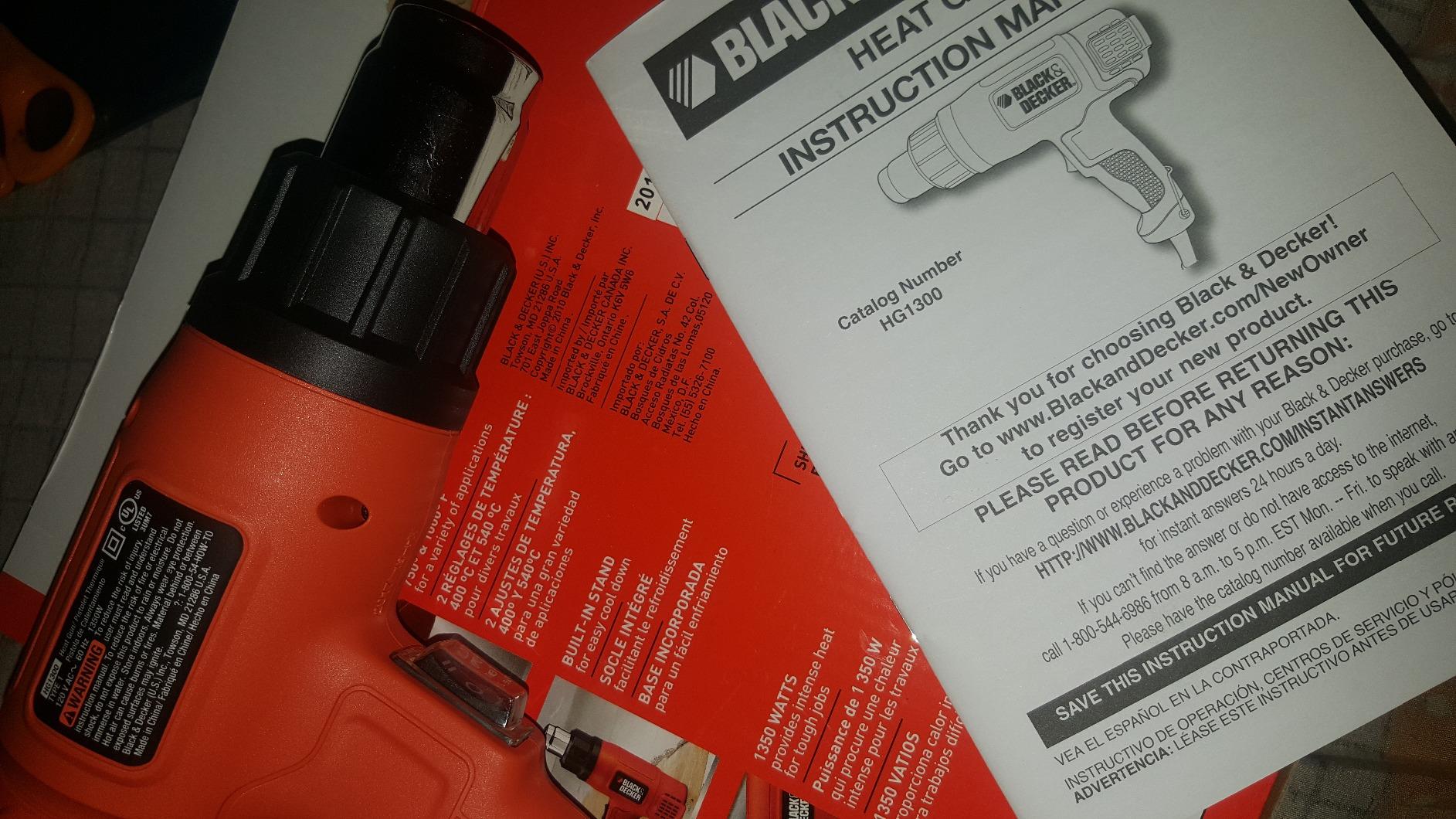
Two details make it better on a bench than most two-setting guns. The side handle gives you the grip angle you want when you are working close to a board, and the built-in stand means the gun has a safe place to cool instead of lying on its side where it can scorch your bench.
A two-year limited warranty from an established brand also removes a worry that hangs over cheaper imports, and at this weight it is the gun we are most likely to leave on a bench permanently rather than put away between sessions.
The honest case for a two-setting gun
Most electronics heat work is heat shrink, and heat shrink does not need variable temperature, it needs roughly the right temperature. For that job a simple, reliable, light gun with a stand is a better tool than a feature-rich one you set incorrectly.
If you also do cable work and enclosure opening, this covers all of it. We keep one on the bench for exactly those jobs and reach for a station when the board comes out.
Where the simplicity stops helping
There is no fine adjustment between 750F and 1000F. When a heat shrink ratio is high, or the insulation nearby has a low temperature rating, you have no way to split the difference and you must move the gun instead.
It is simply not a precision instrument. There is no PID behaviour, no airflow control and no calibration, so treat it as a heating tool and keep board-level rework off it.
5. YIHUA 959D – Three Memory Channels for Repeat Profiles
- Three presets store temperature and airflow pairs
- 120L per min of air at up to 932F
- Brushed aluminum panel wipes clean after flux work
- Fast reheat when the gun is lifted from the holder
- Hot air only with no soldering iron channel in the box
- Larger chassis than integrated 2-in-1 stations
This is a dedicated hot air station rather than a combined box, and that design choice is what buys it the three memory channels. If you run the same board job every week, you set temperature and airflow once for each of three profiles, press a button, and the station returns to that combination instead of making you rebuild it each time.
Airflow is specified at up to 120 L per minute at a stabilised 932F, and the temperature range covers 100C to 932F. That combination of volume and top-end temperature is aimed at larger rework: heat sinks, larger packages, shielding cans and the thermal work around a power supply board.
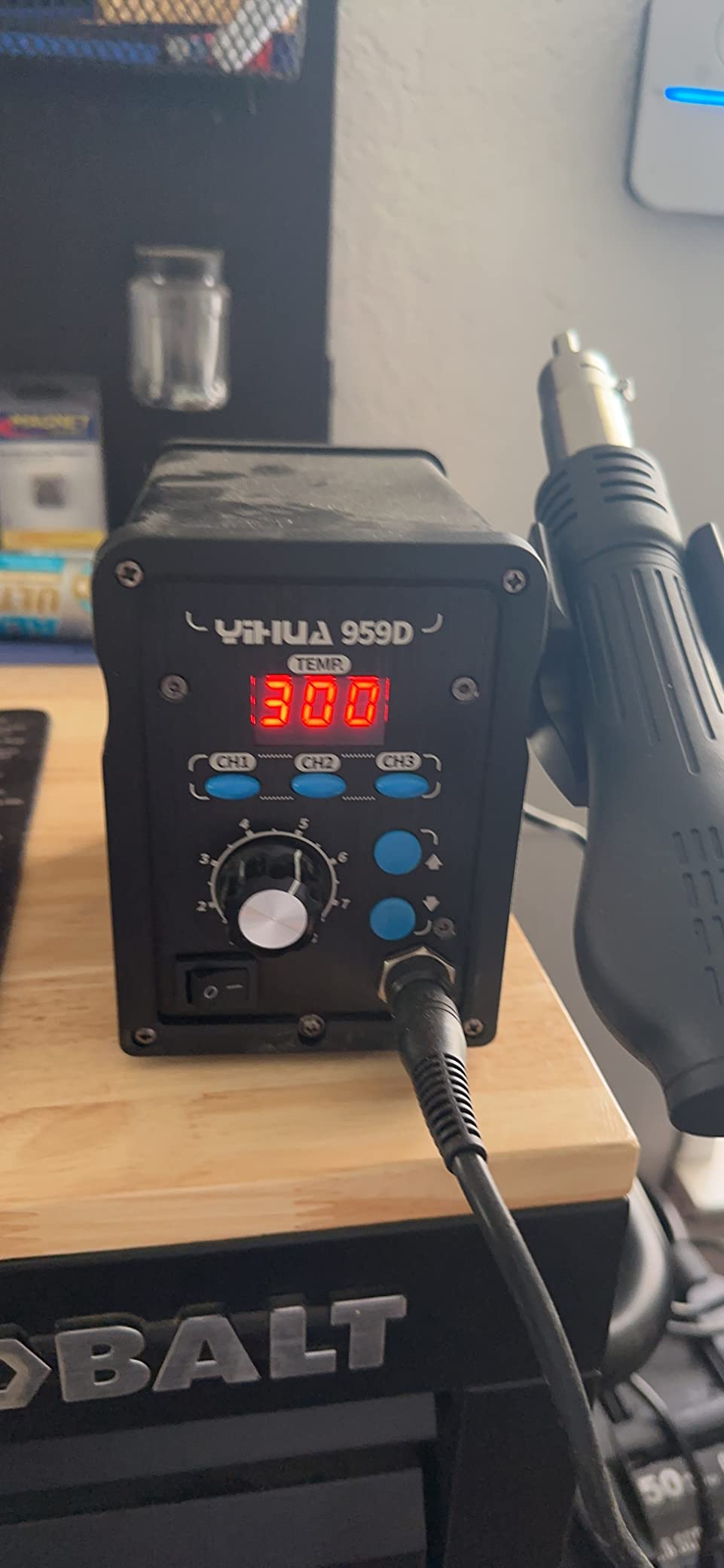
Owners highlight fast reheat when the gun is lifted from its holder, which is a practical detail on a busy bench. The brushed aluminum control panel is a nice touch for a hot air tool because it resists scorch marks and wipes clean after flux and rosin work.
The box ships with a detachable hot air gun, a heat-resistant work mat, tweezers and hot air nozzles, so the working surface is covered as well as the tool. Working on a heat-resistant mat rather than a bare bench is a simple habit that protects both the board and the surface underneath it.
Who this is built for
Someone who already has a soldering station and wants dedicated rework capability, or someone doing larger thermal jobs where volume matters more than a tight footprint. Presets also help beginners, because they can re-run a known-good profile instead of learning the airflow curve from scratch.
If you run the same board every week, the three memory channels are the argument for buying this over a compact 2-in-1 with a single channel. You are buying repeatability, not power.
What you need to add
There is no soldering iron channel in the box, so you need a separate iron or station for through-hole work. If your work is mixed, that is an extra purchase to plan for.
The chassis is larger than the integrated 2-in-1 units at 12.01 by 8.35 inches, so check the bench space before ordering. Verify the reading with a probe if you need an accurate profile, since the PID response is not the tightest of the group.
6. SEEKONE HG886 – Built for Packing and Field Kits
SEEKONE Heat Gun 1800W with 1112℉&752℉ 2 Temperature Settings for Crafting
- UL certified with built-in overheat protection
- Two airflow levels at 250 and 500 L per min
- Low-flow 752F mode is the right setting around electronics
- Two fixed temperature settings only
- Anti-rust coating produces smoke on first use
The two modes here are defined by airflow as much as heat: 752F at 250 L per minute and 1112F at 500 L per minute. That low-flow, lower-heat combination is the useful one around electronics, and it is a good match for heat shrink on a harness where you are worried about scorching adjacent insulation.
At 1800W it is UL certified, tested around fire-resistant materials, and it has built-in overheat protection that shuts the element down. That certification is worth more in a workshop than it first appears, because it is a documented test rather than a claim in a listing.
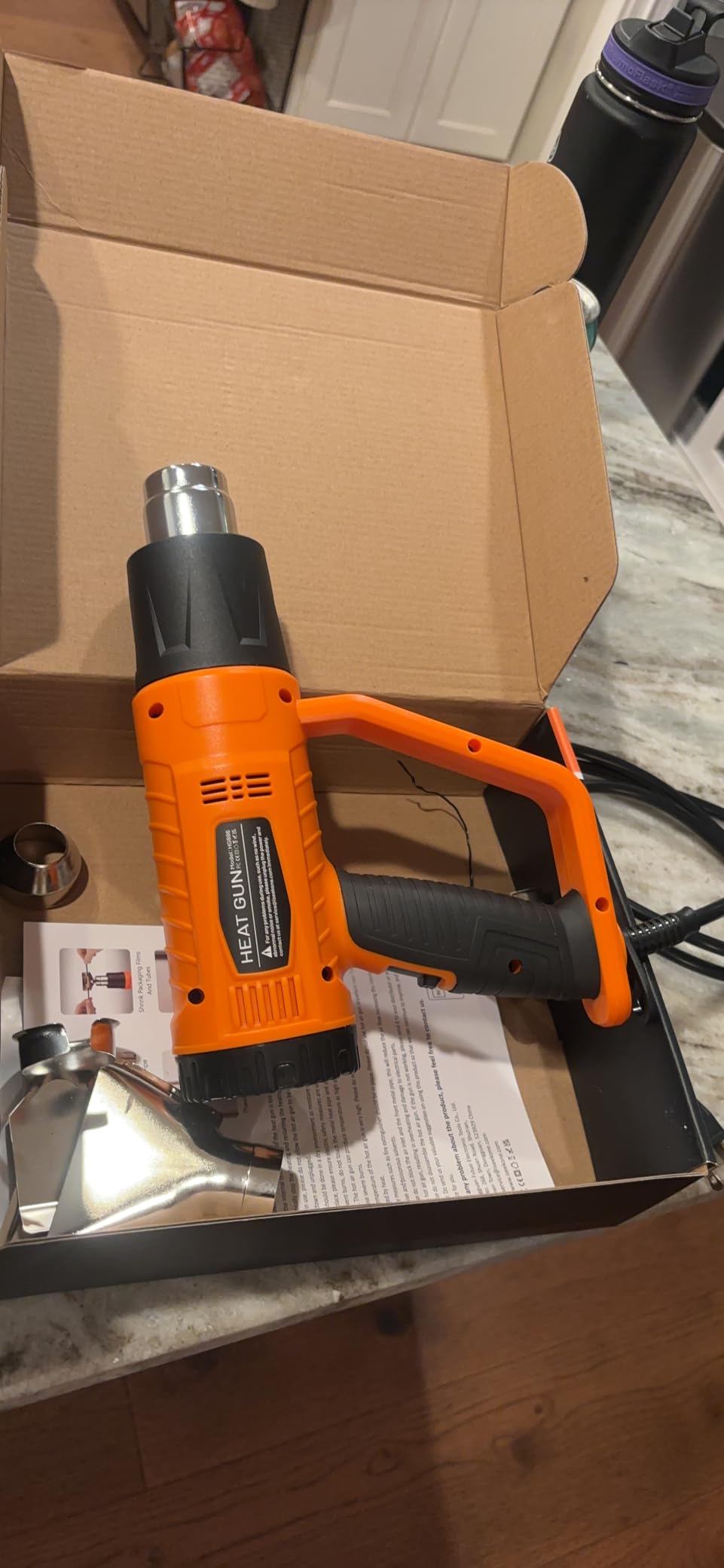
The 752F setting is also the one that reduces the number of things that can go wrong near a board. A lower temperature and a quarter of the airflow means less energy to transfer to a neighbouring component, and less force to scatter a loose part that is not yet soldered down.
Where the SEEKONE 1800W dial gun wins is mid-range work: the jump from 752F straight to 1112F leaves no useful step between shrink tubing and a stubborn enclosure, so you control it with distance and movement instead.
Where it fits in an electronics workflow
Heat shrink tubing, cable dressing, connector work and general case softening. If your work is packing and harness work rather than board rework, this is a strong fit and the safety certification gives you confidence around plastic and fabric-adjacent materials.
The lower mode is also the correct tool for warming a sealed enclosure before opening it, because the 250 L per minute airflow moves less air than the high step and will not scatter loose parts on a bench.
What to know before you fire it up
Temperatures are limited to two fixed settings, so there is no fine adjustment within a band. If a job sits between the two, you control it with distance and movement instead.
There is smoke and a burning smell on the first use from the anti-rust coating on the heating core. Owners describe it as normal, and it fades after the first few minutes, but run the first cycle outdoors or well ventilated so you know it is not a fault.
7. MYPOUOS 8588D – the Fastest Kit to Get Working
MYPOUOS 2 IN 1 750W LED Digital Soldering Station Hot Air Gun Rework Station Electric Soldering Iron For Phone PCB IC SMD BGA Welding SET 110V (8588D SET1)
- Ready to work in roughly 10 seconds
- Ceramic core element runs more consistently than mica core designs
- Complete kit for soldering
- desoldering and rework
- Blue LED display is hard to read in direct light
- Bundled consumables are low quality
- All-plastic iron handle with no insulating collar
Heat-up speed is the headline here. Owners put this station at roughly 10 seconds from cold to working, and a two-function 750W box that is ready before you have chosen a nozzle removes the usual friction of setting up a new station.
Temperature range is 100C to 480C, which is 212F to 896F, held within a 2C tolerance on paper, and settings step in 1C increments. The ceramic core hot air element is the detail we would highlight: ceramic cores are generally more consistent than mica core designs as they age.
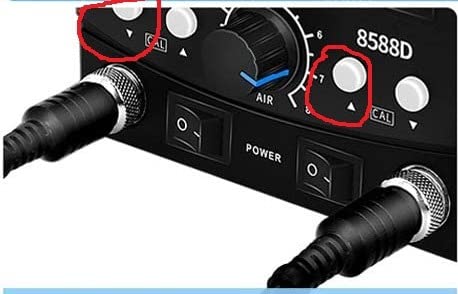
The dual blue LED displays and 1C setting resolution are the practical wins here. A 1C step is finer than most stations at this price, and it means you can land close to the 320C window for leaded removal without overshooting into lead-free territory on the next job.
The kit list is long: nozzles, tips, tweezers, an IC puller, a stand, a solder sucker, solder wire, a sponge and a cleaning ball. It is a complete first station in a single box.
A sensible first rework setup
For a beginner this covers the whole loop: iron for through-hole, hot air for surface mount, and consumables already in the box. A first station should be easy to get running and hard to break, and fast heat-up with a wide temperature range is a good foundation.
It runs on 110V, and the dual switches let you leave the iron off when you only need hot air, which saves both tip life and heat.
The rough edges to plan around
The blue LED display suffers glare in direct light, and on a bright bench the reading is harder to read than the white displays on some competitors. Angle the station away from the window.
The bundled consumables are the weak point: solder wick, brass puff and spare tips are entry-level. The all-plastic iron handle without an insulating collar is worth knowing too. And some owners find the displayed temperature reads low, so verify it with a probe before you trust a solder profile.
8. YIHUA 8786D I – the Biggest Tip and Nozzle Bundle
- Ten soldering tips and four hot air nozzles included
- Precision PID control with fast temperature compensation
- Compact 5.8 by 3.9 inch body
- Single-channel design with no saved presets
- Bundled tips are entry-level in durability
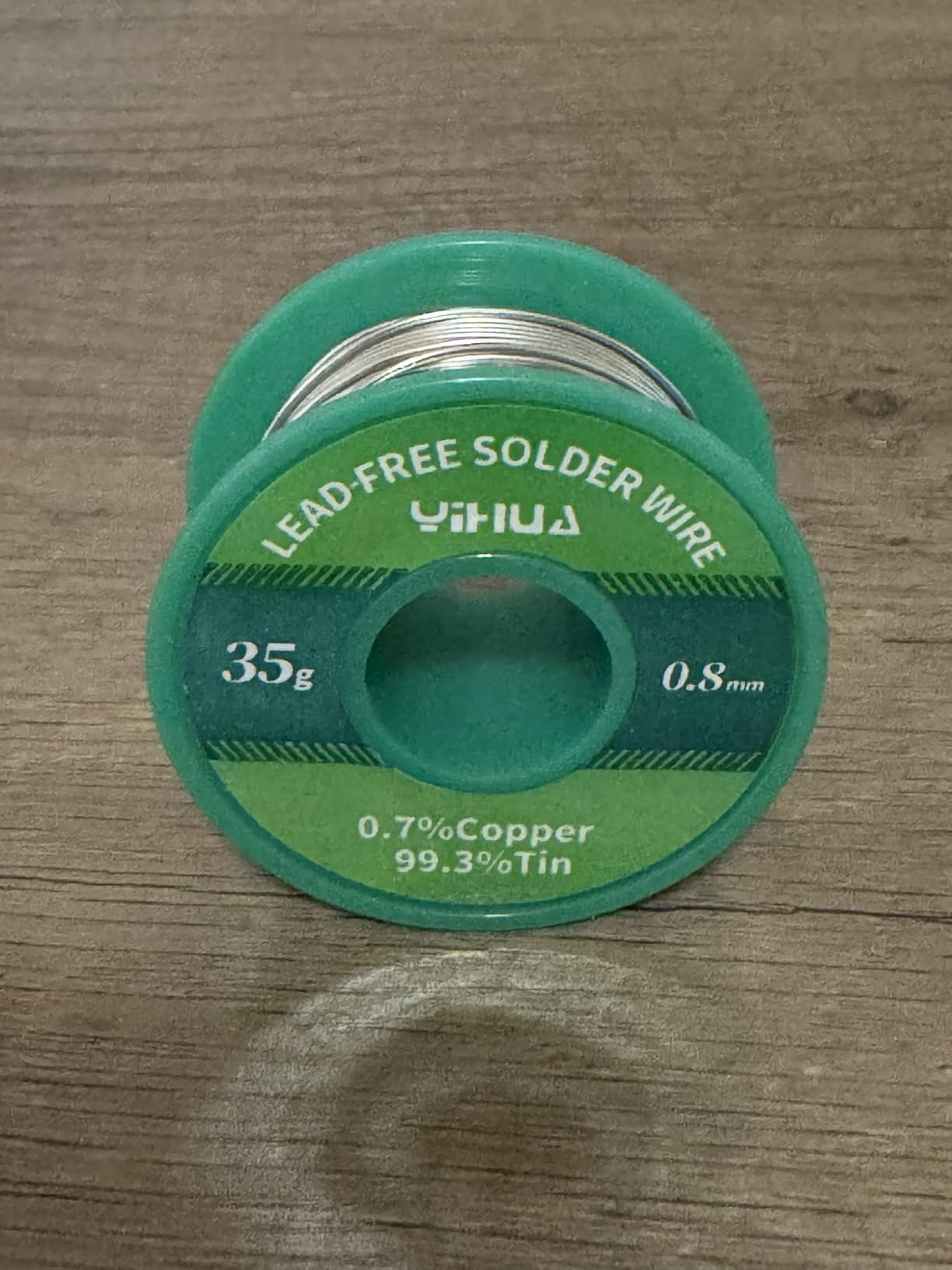
Ten soldering tips and four hot air nozzles is the largest consumable count in this list, and if you like having every shape on hand for a mixed repair bench, that is the headline. The station itself is a two-function design with a dual display, dual power switch and a precision PID program with fast temperature compensation.
That fast compensation is what keeps the delivered temperature steady after the gun is moved around, and the iron runs 392F to 896F, which covers leaded through the lead-free range in one tool. The hot air channel reaches 896F too, so the lower end of that range is well suited to shrink tubing and adhesive work.
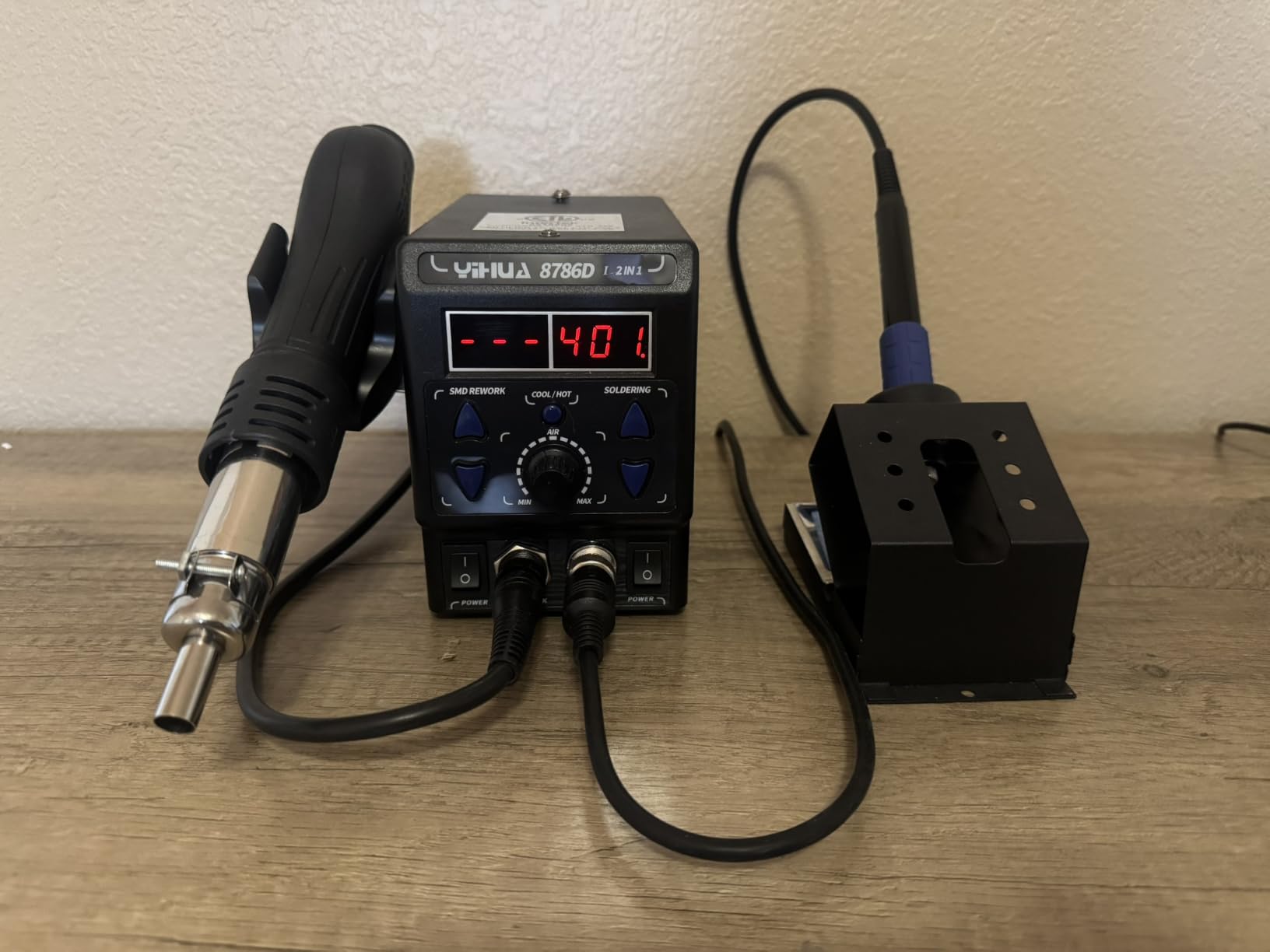
Two safety features stand out. The design is ESD safe and anti-static, which matters if you are handling CMOS parts with the station powered, and fail-safe protection cuts heating power if the airflow fails. That second one is a genuine protection: a blocked blower on a hot air gun can destroy the element in minutes.
The body is compact at 5.8 by 3.9 by 5.3 inches, and it is UL standard compliant, so it suits a North American bench without a step-down transformer.
Where the accessory count pays off
A repair bench that handles varied work ends up with a tip for each job: fine and medium chisels, a knife tip for SMD drag soldering, a wide tip for through-hole joints, and hot air nozzles in several diameters. Having them from day one avoids ordering individual tips and waiting for them.
The fast PID compensation also makes this a good choice for anyone who repeats the same solder profile, because the delivered temperature is more repeatable between runs.
Where it falls short
It is a single-channel design, so there are no presets to store between jobs. Every time you start, you set temperature and airflow again. For someone who runs the same board repeatedly, that is a real annoyance.
The bundled tips, while numerous, are entry-level in durability. Expect to replace a fine knife tip sooner than the chassis, and note that a broader consumable range is not the same as higher quality.
9. Wagner Spraytech HT1000 – Three Nozzles and Focused Heat
Wagner Spraytech HT1000 Kit Dual-Temperature Heat Gun with 3 Nozzles
- Edge protector nozzle for work next to finished surfaces
- Flare and concentrator nozzles for directed heating
- Heats up quickly and holds consistent output
- Lightweight with a comfortable grip for longer sessions
- Only two temperature settings
- 1200W is light for large surface areas
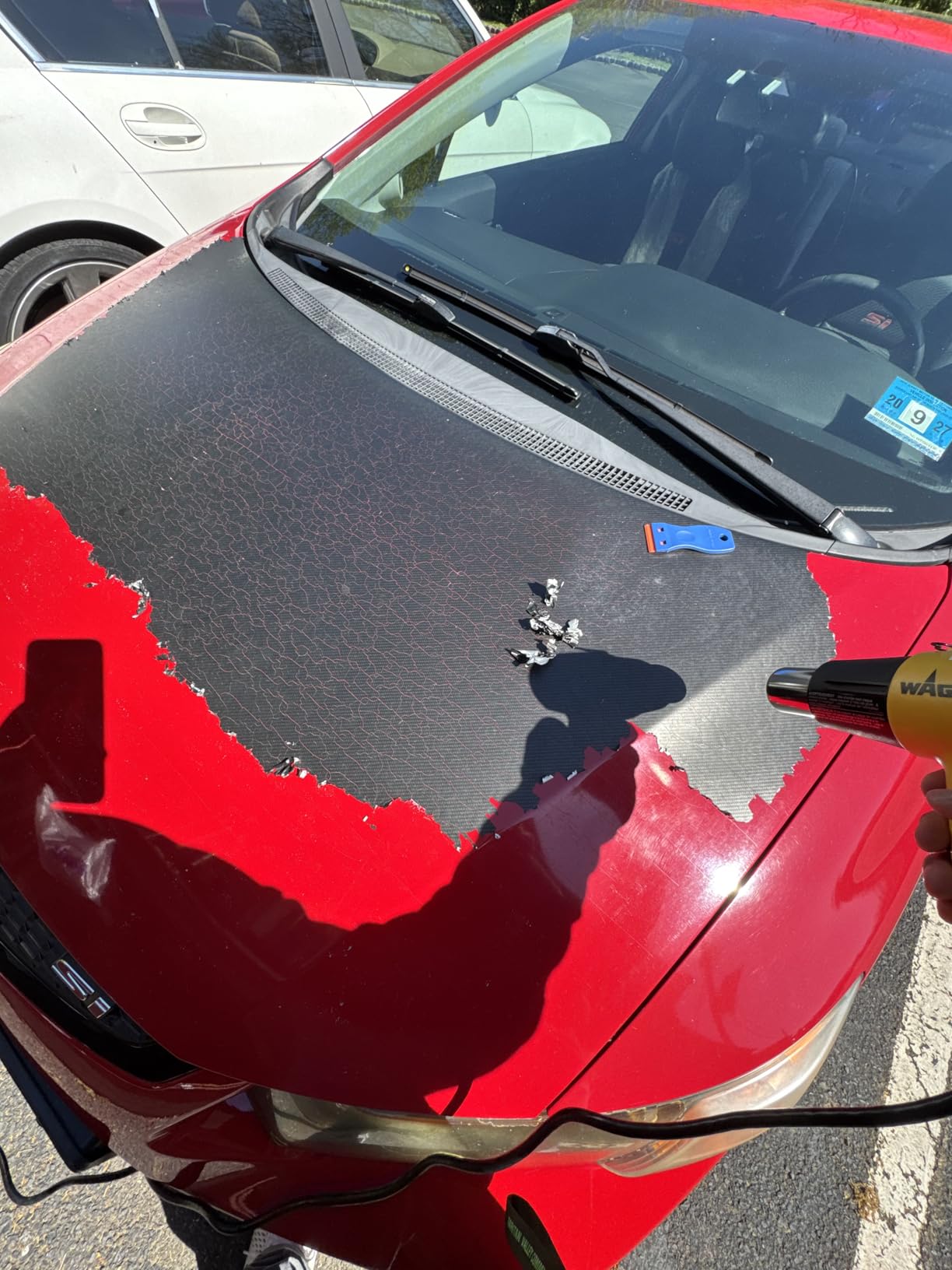
The edge protector nozzle is the reason this gun earns a place on an electronics bench. When you are heating a sealed connector, a glued enclosure edge or a panel seam, that nozzle deflects the hot air along the surface rather than letting you scorch the neighbouring material, and it is included in the kit rather than sold separately.
The other two included nozzles are a flare nozzle and a concentrator, so the box covers heat shrink, directed heating and joint work. At 1200W the output is enough for small to medium jobs on connectors, tubing and light plastic, and owners note it holds consistent output once it has come up to temperature.
The nozzle is corrosion resistant, which is the part of a heat gun that usually degrades first around electronics work. Flux residue, solder splatter and repeated heat cycles take a normal steel nozzle apart faster than they take the body, so a treated nozzle is a sensible thing to have on a tool you use daily.
At 8.5 by 9.5 by 2.75 inches the body is light with a comfortable grip for longer sessions, and the fact that all three nozzles are in the box means you can change the pattern without a second order.
Best used for
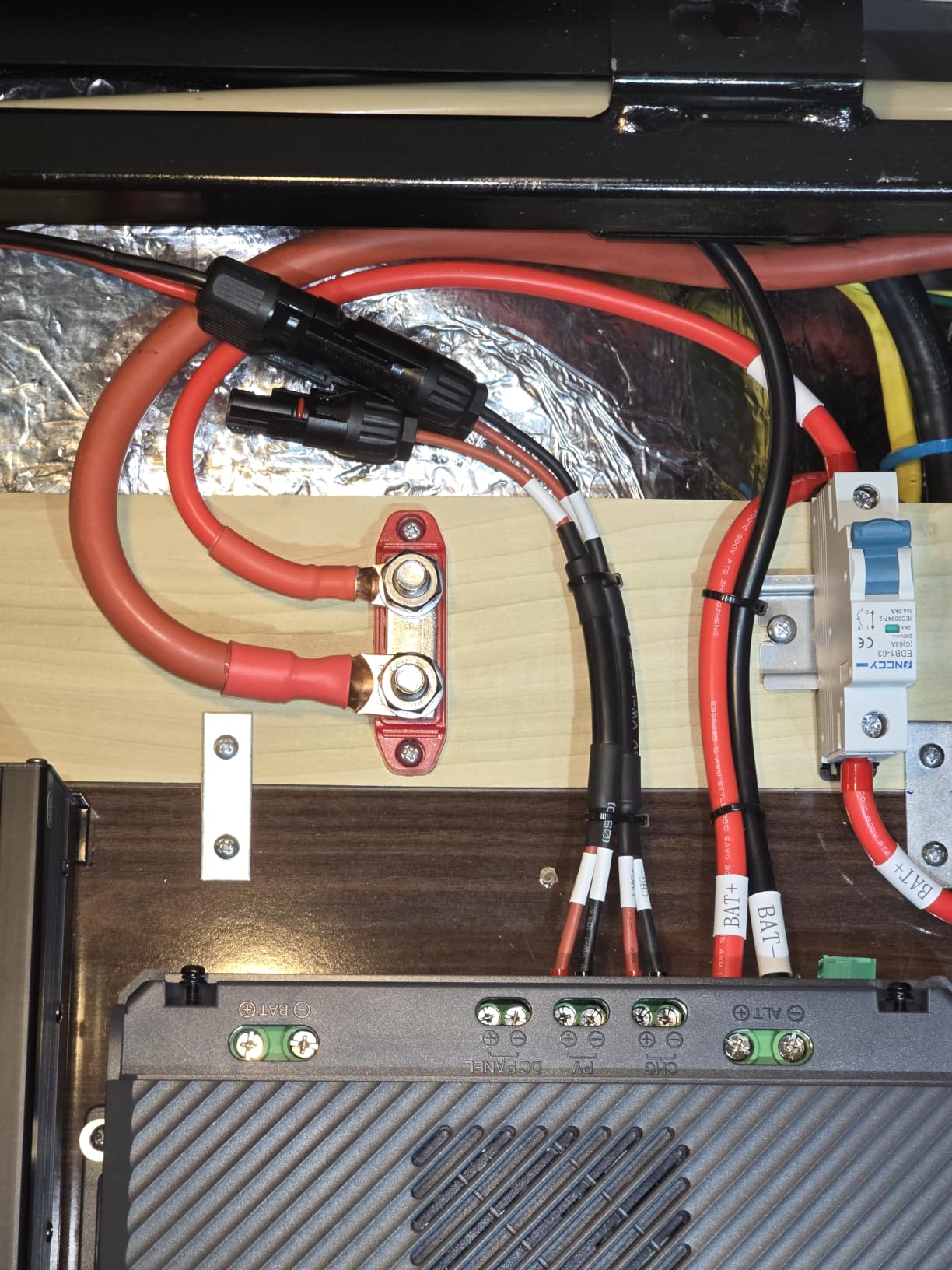
Heat shrink on harnesses, connector and strain relief work, and anything where the heat needs to arrive on a line rather than across an area. The three nozzles make it easy to change the pattern when you move from a cable to a panel edge.
If you work on plastic housings or casings, the edge protector and corrosion resistant nozzle let you repeat the job without the plastics warping as quickly as a cheaper gun would.
What to know
Only two temperature settings, at 750F and 1000F, so fine adjustment is done with distance and movement. That is workable for shrink work and unreliable for board work.
The 1200W output is underpowered if you need to heat a large area quickly, because you end up holding the nozzle further back to compensate, which widens the cone. If your work is confined to small electronics items, that is a fair trade for the nozzle set.
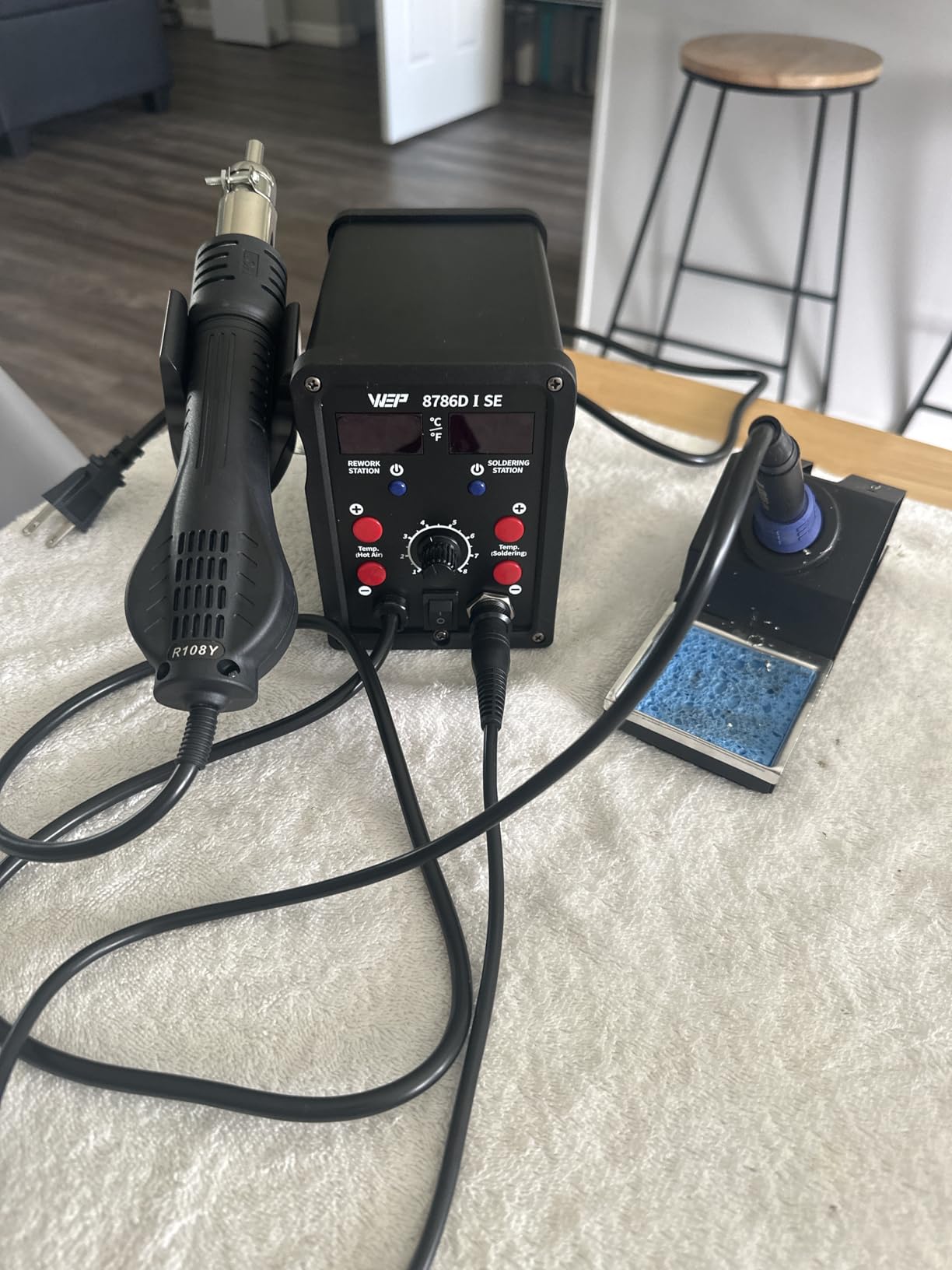
10. WEP 8786D-I SE – a Light-Duty Two-Function Station
- Adjustable air volume helps keep small parts on the board
- Digital readouts with individual power switches
- Lightweight and compact for a two-function station
- Weak iron heat transfer on large components
- Some supplied tips do not fit the storage rack
This is a 2-in-1 station for light work, and the honest way to describe it is a hobby-grade box rather than a shop tool. Hot air runs 212F to 896F with PID stabilisation, airflow is adjustable, and both channels have digital readouts and their own power switches.
The 10-minute sleep mode on the iron is included, so the box takes care of itself between short jobs. The airflow adjustment is the feature to appreciate, because it lets you lower the blast while working next to small surface mount parts.
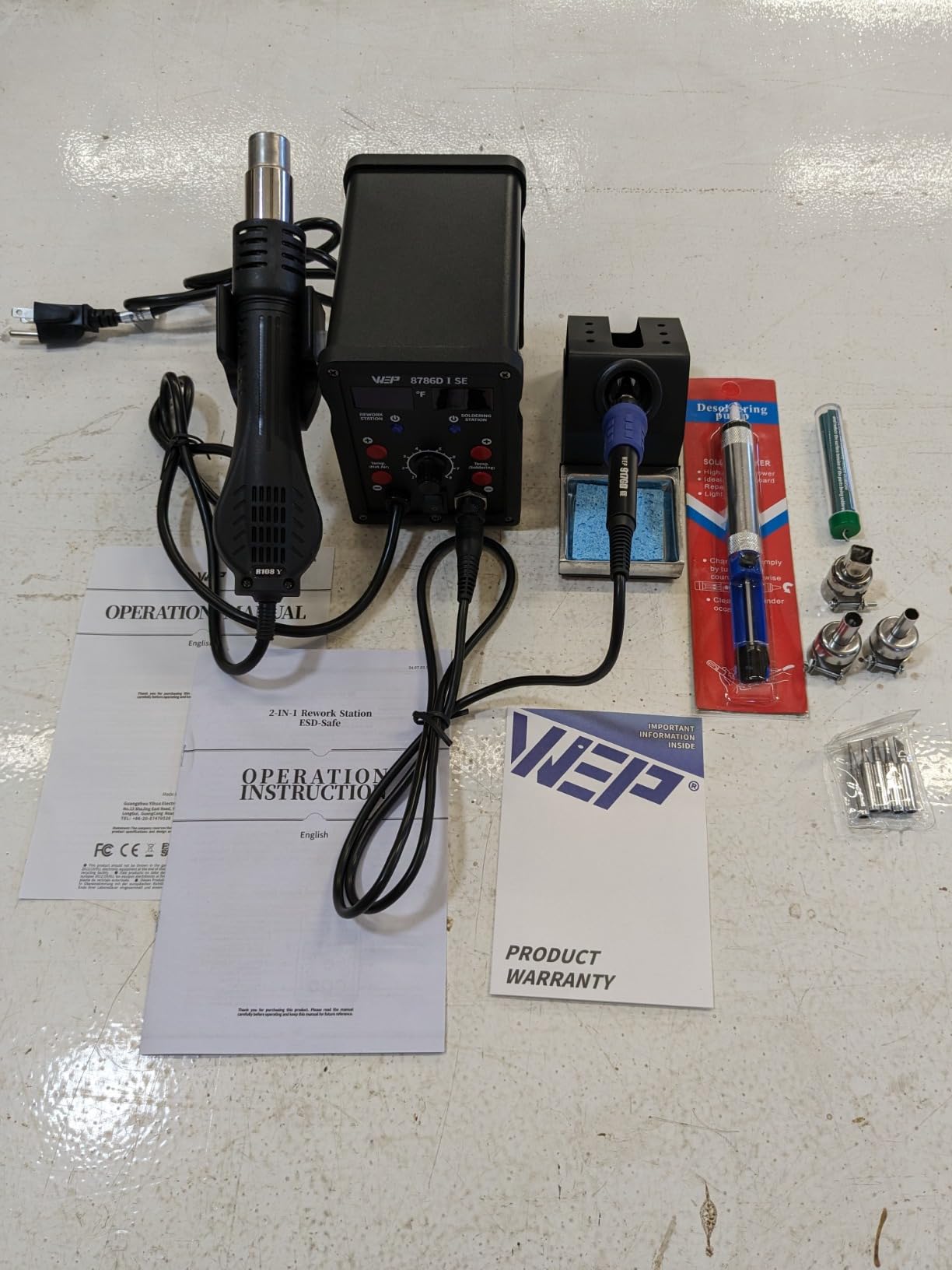
Owners describe quick heat-up and steady temperature control, and the body is light at 1.69 kg with a compact 5.91 by 3.94 by 5.12 inch footprint. The kit includes lead-free solder wire, five soldering tips, three hot air nozzles, tweezers and a desoldering pump.
It is a straightforward first or second station for someone moving up from a craft gun and not yet ready for a larger chassis, and the digital readouts make it easy to confirm what is actually set.
Where it is comfortable
Small rework, connector cleaning, light desoldering, and learning SMD work. The digital displays are clear, the controls are uncomplicated, and beginners report that the instructions were easy to follow once they found the conversion controls for Celsius and Fahrenheit.
For anyone whose board work is mostly heat shrink and occasional small component swaps, this covers the job at a sensible weight.
Where it falls down
Heat transfer to the iron tip is weak on large components and thick copper, so you end up running a higher set temperature to compensate. On big ground pads and power devices, expect slower work.
There are also small quality issues: some supplied tips do not fit the storage rack, and one hot air nozzle nut was reported improperly tapped. Check the fit before you rely on the rack, and keep the nozzle nut snug rather than forced.
Heat Gun vs Hot Air Rework Station: Which One Do You Actually Need?
This is the decision that saves people money, and the answer is simpler than the marketing makes it sound. A heat gun is a heating appliance. A hot air rework station is an instrument. If you need to control airflow and hold a temperature steady while you work on a board, you need the instrument.
Use a craft heat gun for heat shrink tubing, cable jackets, softening battery adhesive, opening clipped housings, and warming a stiff connector. These jobs do not need a measurement, they need heat. Every gun on this list handles them; the variable dial models handle them best.
Use a hot air rework station for anything that involves desoldering, reflowing or re-seating a component. The reason is physical: a station concentrates a controlled volume of air through a nozzle sized to the part, so the heat arrives evenly across a package. A craft gun blows a wide cone across the board, and that cone hits neighbouring parts at the same time.
A useful rule: if you would be upset to lose the board if the part flew off, use a station. If you would shrug, the gun is fine. The failure mode we see most often with craft guns is a 0201 or 0402 component launching across the bench when the airflow is too high, and no amount of careful technique fully prevents it without an airflow control you can dial back.
How to Choose a Heat Gun for Electronics Work?
Temperature control and range
Two fixed settings is the single biggest limitation on this list. A dial or a digital readout lets you work at 300F for shrink tubing and 500F for adhesive without guessing, and it lets you compensate for a gun that reads high or low. If your list includes board work at all, treat variable control as close to mandatory. Wide range matters too, because you want the low end low enough for delicate insulation and the high end high enough for stubborn adhesives.
Airflow is the part that ruins boards
This is the criterion most guides skip. Stations give you an airflow control independent of temperature, which means you can lower the blast while holding heat on the target. That single control is what separates a rework station from a craft gun on a populated board. Nozzles matter here too: match the nozzle diameter to the package so the hot air lands on the part rather than beside it. For very fine work, a digital microscope makes the difference between a clean lift and a torn pad.
Wattage and heat-up time
Wattage tells you how much heat the tool can move, and heat-up time tells you how quickly it reaches it. Between 1200W and 1800W covers the craft gun range well. Stations in this list are quoted by function rather than wattage, but a larger chassis generally means a faster heat-up and a higher airflow ceiling. A gun that reaches temperature in 10 to 30 seconds saves real time across a day of rework.
Nozzles and nozzle sizing
Check what is in the box before you plan a nozzle order. A concentrator focuses heat for one spot, a deflector spreads it over a wider area, and an edge protector shields the surface next to your work. As a rough sizing guide for rework: a small concentrator for 0402 and 0603 parts and SOT-23 packages, a mid nozzle for SOIC and small QFN, and a wide nozzle matched to the footprint for QFP, larger QFN and BGA work. A nozzle wider than the part wastes airflow on the board around it.
ESD safety and certification
ESD safe means the chassis and soldering iron tip are grounded so static does not travel into the board you are working on. CMOS parts, memory chips and many analog ICs are destroyed by voltages you cannot feel. If you are handling loose, unprotected components, a grounded station is worth real money. Certification matters too: UL or ETL listing is a documented safety test rather than a marketing line, and it tells you the overheat and airflow protection has been checked by someone other than the seller.
Safety features that actually matter
Overheat protection, an airflow fail-safe that cuts heating power when the blower stalls, standby cooling in the holder, a real cooldown cycle after power-off, and a sleep mode are the features that decide whether a tool survives daily use. A sleep mode is not a gimmick: it protects tips and elements between jobs, and at a bench you leave set up all day it is the difference between a tool that lasts and one that does not.
Corded, cordless, and where the work happens
Every tool here is corded, and that is worth weighing if you do field work. Battery heat guns exist and suit technicians working away from an outlet, but they usually mean accepting less control or a different tool class. If most of your work is at a bench with a mat, a bench power supply and an extractor, corded is the right answer, and a station will serve you better than a portable gun. If you are constantly at a customer site, plan for cordless as a separate purchase rather than a compromise on your bench station.
What to avoid
Avoid guns with no bundled nozzles, because you will end up ordering them anyway and the fit is rarely as good. Avoid guns with no overheat protection, and avoid guns with no cooldown behaviour, because a hot element that never cools cooks itself. Avoid anything without a documented temperature range. And avoid buying a craft gun for desoldering work, which is the most expensive mistake in this category because the gun will be useless for the job you bought it for.
Temperature Cheat Sheet by Task
Every gun on this list covers 750F to 896F at minimum, so the ranges below are all reachable. What changes between tools is not the top end but whether you can land on the number you need without overshooting.
Heat shrink tubing and wire jackets: 200 to 300C. Use the lower setting on a two-setting gun, or dial low on a variable gun, and move the nozzle along the tube. Shrink from the middle outward and you will trap air and get a bubbled sleeve.
Battery adhesive and display adhesive: 100 to 150C and hold. Low and slow, with long stretches between passes. This is where a craft gun on its lowest setting is the right tool and a hot air station is overkill.
Leaded solder removal: 320 to 350C. Lead melts at a lower temperature, so less heat is needed and the window is wider. This is the most forgiving removal job.
Lead-free solder removal: 350 to 380C. Lead-free melts at a higher temperature and has a narrower working window, so a station with PID control pays off here, since the delivered temperature needs to stay consistent while you work.
Conformal coating removal: 350 to 400C, used in short bursts with tweezers, and never on a board where a neighbouring part has already been removed and left pads exposed.
SMD component removal on QFP, QFN and BGA packages: 350 to 400C at the nozzle, with low-to-medium airflow and the nozzle matched to the package. This is the job that requires a station rather than a gun.
One technique note that applies to all of them: keep the gun moving, hold a 3 to 5 cm standoff, work at a slight angle rather than straight down, and work on a heat-resistant mat. Holding a still nozzle over a board is what lifts pads, not the temperature setting alone.
Frequently Asked Questions
What is the best hot air gun for electronic repair?
For board-level repair, the best hot air gun is a rework station with PID temperature control and airflow that you can adjust independently of heat. A station such as the YIHUA 862BD+ gives you a 75W soldering iron, a detachable hot air wand and a full accessory kit in one box. If your work is only heat shrink and adhesive, a variable-dial craft gun is the better and cheaper tool.
Can you use a normal heat gun for electronics?
Yes, for a limited set of jobs. A normal two-setting heat gun is fine for heat shrink tubing, cable jackets, opening a clipped plastic housing, and softening battery adhesive at its lower setting. It is not suitable for desoldering or reflowing surface mount parts, because you cannot control airflow or hold temperature steady, and a blast of hot air can launch small components off the board.
Which brand of heat gun is considered the best?
It depends on the tier. Hakko and JBC set the professional benchmark, and members of the electronics community treat units like the Hakko 808 as the reference point. Atten, WEP and Yihua deliver genuine rework capability at entry and mid levels. Wagner and BLACK+DECKER cover general heat work well. SEEKONE covers craft and heat shrink work with plenty of control for the money.
What is the best heat gun for cell phone repair?
For screen and battery work, a variable-temperature craft gun on a low setting with a concentrator or edge protector nozzle is the right tool, moved constantly and kept at a 3 to 5 cm standoff. For board-level work on a phone, such as removing a charging port or shielding, use a rework station with a small nozzle and low airflow. Never hold either tool still on the board, and work over a heat-resistant mat.
What is the best heat gun for heat shrink tubing?
The best heat gun for heat shrink tubing is a variable-temperature model rather than a two-setting gun, so you can shrink tubing without cooking the insulation beside it. The SEEKONE 1800W is a strong example, with a dial from 122F to 1202F, two airflow levels and four nozzles. If you want the simplest option, the BLACK+DECKER HG1300 and Wagner HT1000 both work well on their lower setting.
What type of heat gun is best for shrink packing?
Shrink packing usually means larger commercial jobs, so this list is not the right fit. For cartons and bags, a pistol-grip heat gun with a wide deflector nozzle and a high airflow figure is what you want, running flat across the film while moving continuously. For the small parts found in electronics, a variable-temperature gun with a concentrator or edge protector nozzle gives far better control.
What is a good heat gun for electronics?
A good heat gun for electronics comes down to your task. For heat shrink, cable work and adhesive, pick a variable-dial craft gun such as the SEEKONE 1800W. For desoldering and reflowing, pick a hot air rework station with PID control and adjustable airflow, such as the YIHUA 862BD+ or the compact WEP 882D. Many benches end up owning one of each.
One last piece of bench advice before you buy anything. If you are building out a bench rather than replacing a single tool, look at the supporting kit as well as the heat source. Our guides to wire strippers and oscilloscopes cover the other half of the workflow, and a fume extractor matters more than most buyers expect once you are working hot air over fluxed boards all afternoon.
Conclusion: Which Heat Gun Should You Buy?
If you want one answer to the best heat guns for electronics work question, take the SEEKONE 1800W variable temperature gun. The dial, the two airflow levels and four nozzles cover heat shrink, cable work and adhesive, and more than 38k owner ratings make it the most proven tool on this list.
For board-level work, buy the YIHUA 862BD+ as your station, and add the WEP 882D if you need a second unit in a small space. The BLACK+DECKER HG1300 and Wagner HT1000 are the sensible simple choices for pure heat shrink work, and the YIHUA 959D is the one to pick when you need saved profiles and higher airflow for larger packages. Buy the right category, keep the gun moving, and check the reading with a probe before you trust it.