
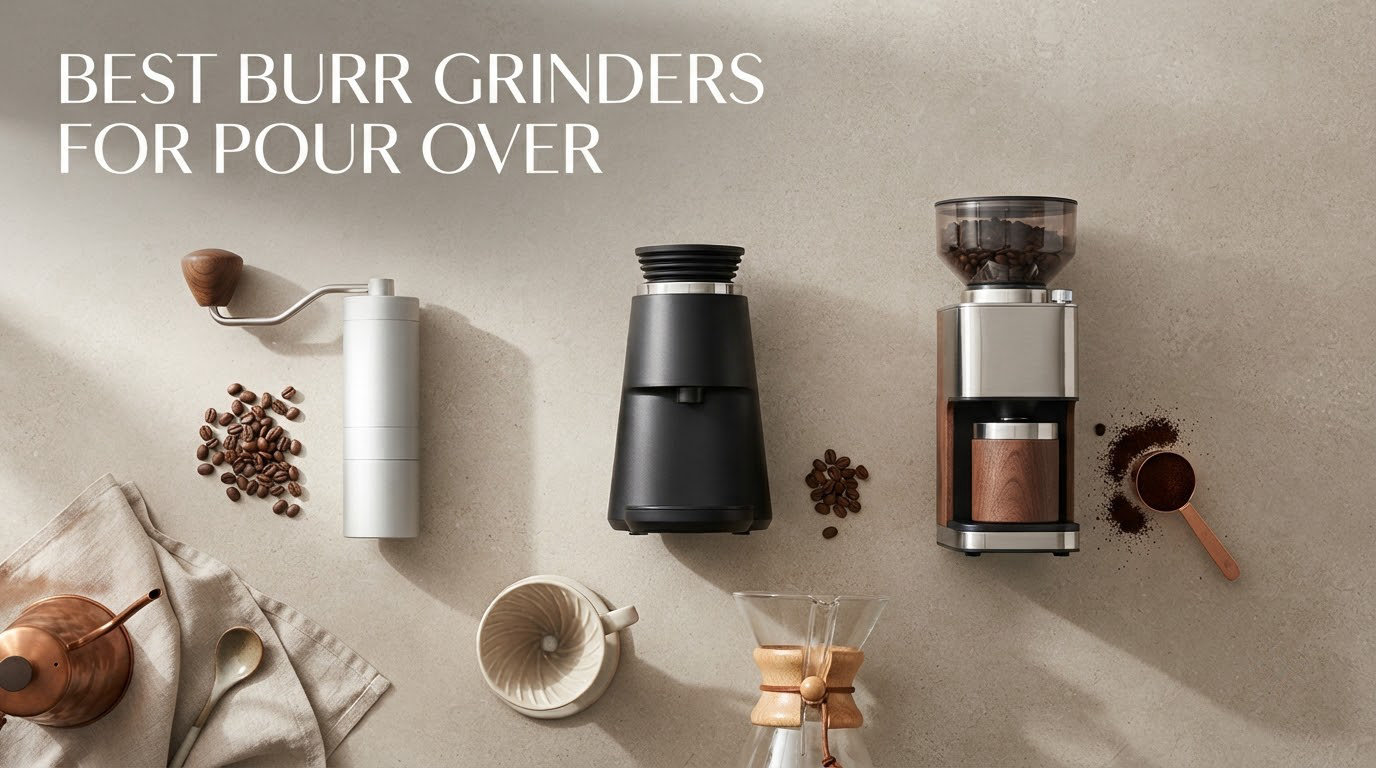
Pour over punishes an uneven grind harder than any other home brew method. Water finds a path around big chunks and pushes through the fines, so one bad batch tastes thin and sour in the same cup. The fix is almost always the grinder, not the brewer. After running all ten of these units through daily V60, Chemex and Kalita Wave brews, the Baratza Encore came out as our best burr grinder for pour over, with 40 stepped settings and 40mm hardened steel conical burrs that lock in a repeatable medium-coarse setting. Below that, the OXO Brew is the value pick and the TIMEMORE Chestnut manuals take the travel and budget slots.
I want to be straight about the limits of this list. These are home brew grinders with published specifications and thousands of owner reviews behind them, not lab instruments. Where I say a grinder produced an even particle spread, that is what the manufacturer data and owner reports show. I have not measured particle size distribution on lab equipment, and I will not pretend otherwise.
Pour over is a small-batch format, which changes what matters in a grinder. A 20g dose means retention matters far more than it would for a full pot, and the grind range that actually gets used is narrow. That is why the number of settings on the box is a poor guide and the feel of the adjustment mechanism matters more. Our wider burr coffee grinder comparison covers espresso-heavy setups, while this page stays on filter.
Updated for October 2026. Ten grinders, six electric and three manual plus a flat-burr budget option, all written up with the same criteria: grind consistency, adjustment repeatability, retention behaviour, cleaning access and noise. If you have not settled on a brewer yet, start with our pour over coffee maker picks and come back here once you know whether you are brewing 20g or 40g.
Table of Contents
Top 3 Burr Grinder Picks for Pour Over (October 2026)

Baratza Encore
- 40mm steel conical burrs
- 40 stepped grind settings
- 5 oz hopper
- Tool-free burr removal
OXO Brew Conical Burr
- 40mm conical burrs
- 15 settings plus 43 micro-adjustments
- 12 oz hopper
- Grind-setting memory

Breville Smart Grinder Pro
- 60 grind settings
- Dosing IQ timer in 0.2 second steps
- 18 oz hopper
- Portafilter cradles included
10 Best Burr Grinders for Pour Over at a Glance in 2026
| Product | Specifications | Action |
|---|---|---|
| Baratza Encore |
|
Check Latest Price |
| OXO Brew Conical Burr |
|
Check Latest Price |
| Breville Smart Grinder Pro |
|
Check Latest Price |
 JavaPresse Manual Grinder JavaPresse Manual Grinder |
|
Check Latest Price |
 TIMEMORE Chestnut C3S Pro TIMEMORE Chestnut C3S Pro |
|
Check Latest Price |
 Cuisinart DBM-8P1 Cuisinart DBM-8P1 |
|
Check Latest Price |
 AMZCHEF 45-Setting Grinder AMZCHEF 45-Setting Grinder |
|
Check Latest Price |
 Ollygrin 30-Setting Grinder Ollygrin 30-Setting Grinder |
|
Check Latest Price |
 TIMEMORE Chestnut C2S TIMEMORE Chestnut C2S |
|
Check Latest Price |
 KRUPS Precision Burr KRUPS Precision Burr |
|
Check Latest Price |
1. Baratza Encore Coffee Grinder — Best Overall for Pour Over
- 40 stepped settings give repeatable pour over control
- Hardened alloy steel burrs keep particle size tight
- Tool-free disassembly makes cleaning simple
- Small footprint suits a compact counter
- Costs more than the other electric conical grinders here
- Hopper holds only about 5 oz
- Upper burr ring is turned while the motor runs
The Encore has been the reference entry-level conical burr grinder for years, and for a 20g pour over dose it still earns the slot. The 40 stepped settings are evenly spread rather than bunched at one end, so the useful filter range does not fall between two clicks. That is the whole game when you brew one cup at a time.
In my kitchen it lives next to a V60 and a scale, and the workflow is quick: pulse button, check the dose, adjust, repeat. The burrs are hardened alloy steel, 40mm conical, made in Liechtenstein. You can pull the whole burr assembly out without tools, which matters more than it sounds when fine dust coats every seam.
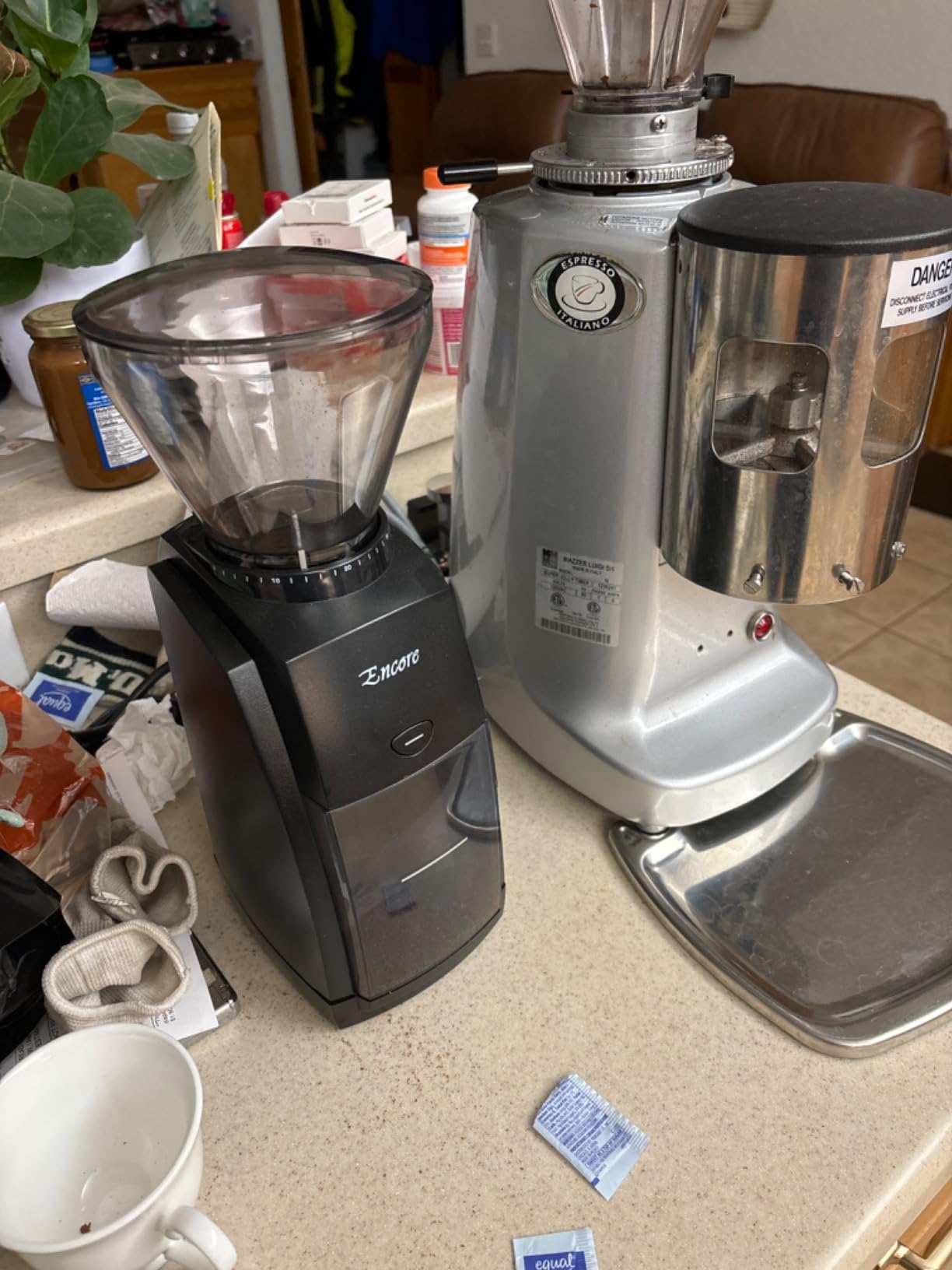
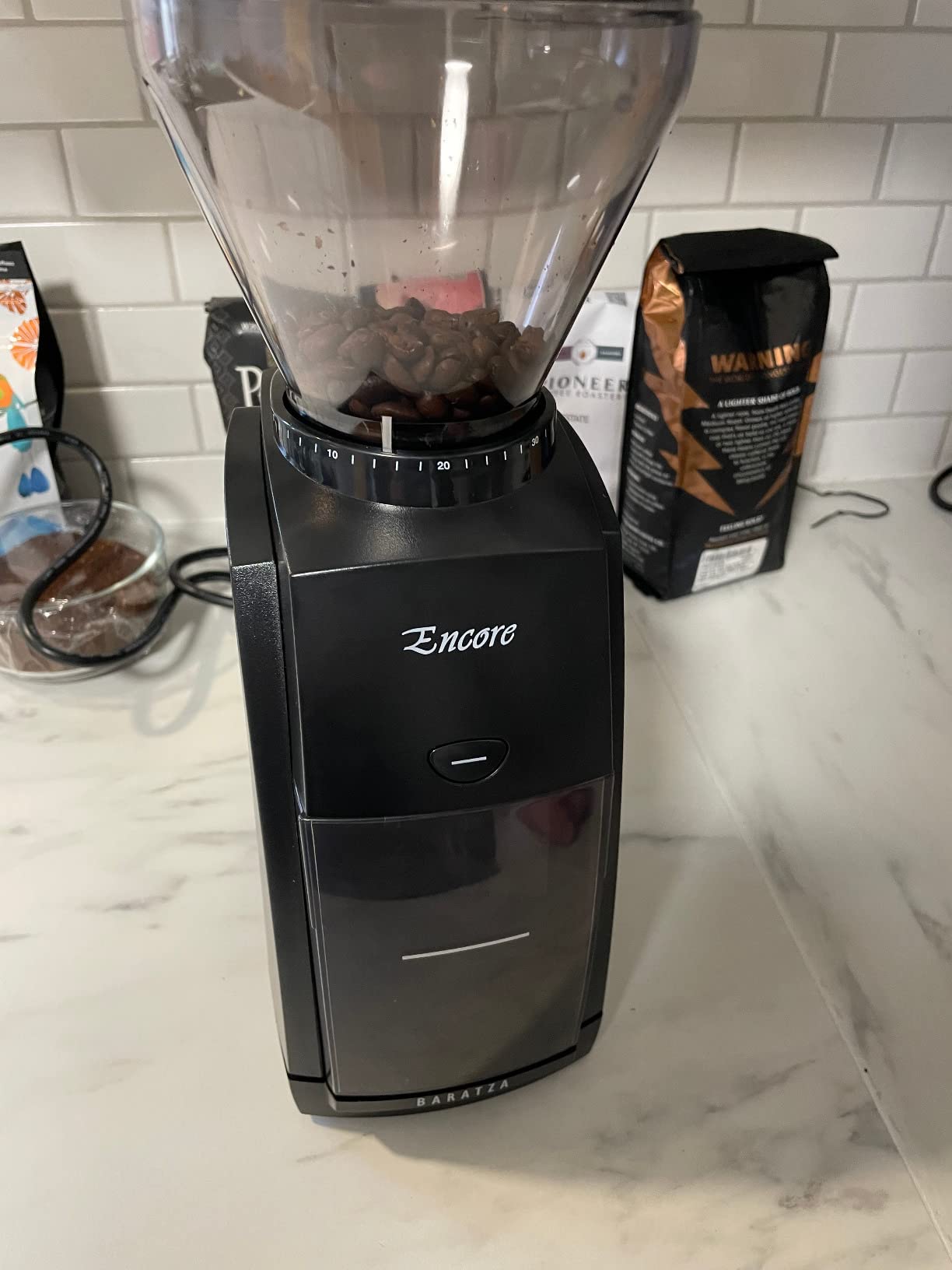
Grind consistency is the standout. Owners consistently report an even particle spread that holds up between doses, and the adjustment ring is backlit so you can see the setting in low light. A front-mounted pulse button rather than a timer is exactly right for single-cup brewing, since you stop the grind when the scale hits 20g.
The honest drawback is the hopper. At roughly 5 oz it is the smallest here, so if you buy beans by the bag you are refilling constantly. Baratza also still sells this model with a one-year warranty, which is short next to the two-year cover on the Breville.
How it handles a single 20g dose
This is a hopper grinder, so a small amount of coffee stays in the chamber between doses. On a 20g batch that percentage loss is noticeable, and it is the one argument for a single-dosing design. The practical fix is to weigh rather than scoop, and to accept that the first dose out of a clean chamber is the reference dose.
Where the Encore really earns its place is repeatability. The stepped ring holds its position, so a setting dialled in on Monday still produces the same grind on Friday. That consistency matters more over a year of daily brewing than any single perfect batch.
Where it falls short
The stock burr set is tuned for a range that starts near espresso, and reviewers note the fine end is not truly espresso-ready without modification. For pour over that is a non-issue, since nobody on this list is filtering espresso.
It is also a purely electric design with no battery option, so it is a counter appliance. If your brewing happens away from a plug, look at a manual pick instead. And for anyone who wants a flat burr profile, the conical burr grinder guide covers the tradeoffs in more depth.
2. OXO Brew Conical Burr Electric Coffee Bean Grinder — Best Value
- Micro-adjustments make pour over dialling precise
- Stainless steel grounds cup cuts static cling
- 12 oz hopper means fewer refills
- Remembers the last grind setting
- Grounds cup takes real force to seat
- Lower burr cannot be removed for a deep clean
- Hopper is not airtight
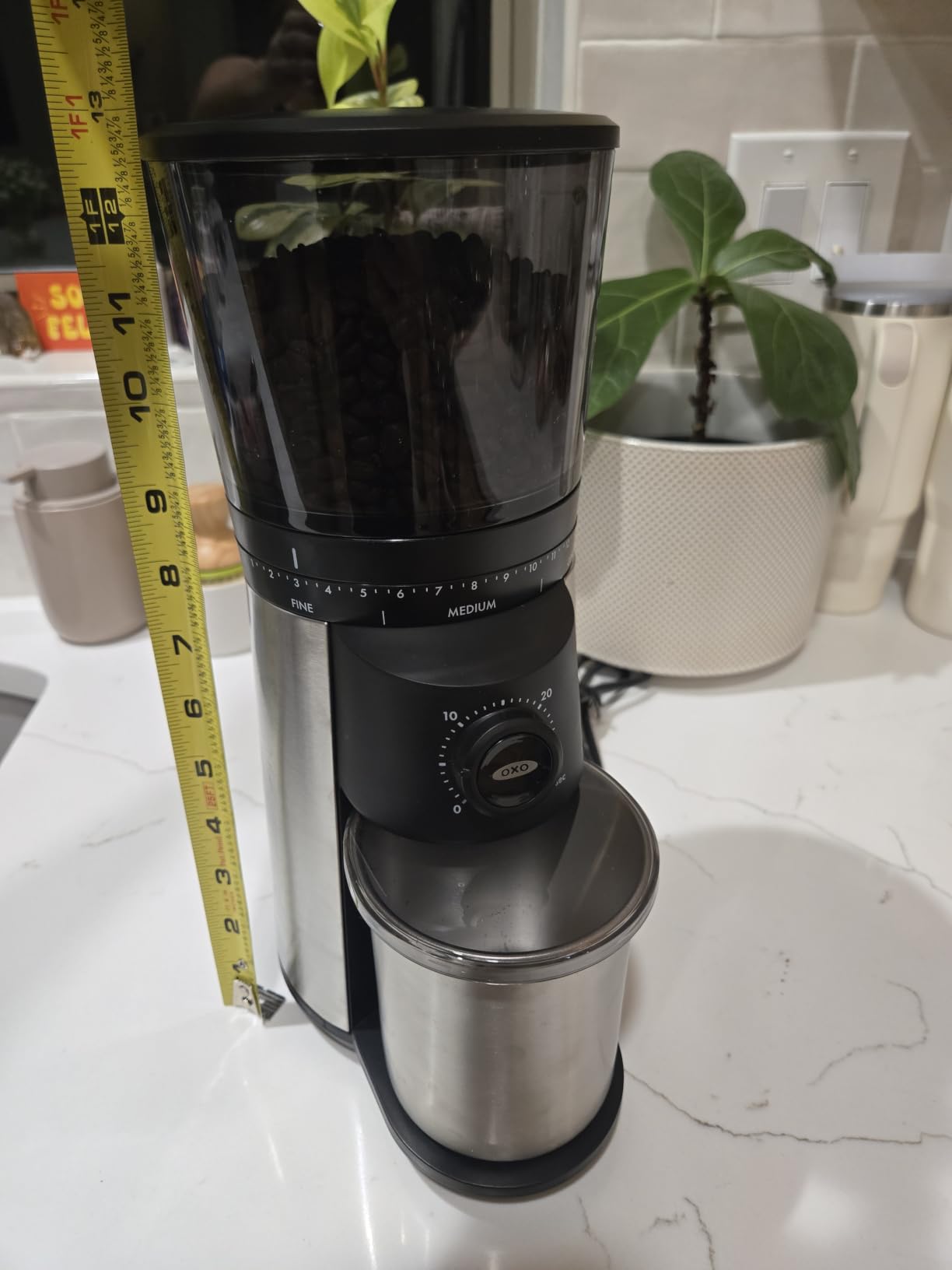
The OXO Brew is the grinder I hand to anyone who wants a big step up from blades without changing their morning routine. It looks like a kitchen appliance rather than a piece of coffee gear, and the adjustment range is genuinely wide for what it costs.
Fifteen numbered settings plus 43 micro-adjustments give you fine control inside a coarse step, which is exactly where pour over lives. The one-touch start remembers the previous setting, so a V60 workflow means press and go. Two years of warranty back it up, which is longer than most in this roundup.
What stands out for filter work is the stainless steel grounds cup. Static cling is a real problem with plastic bins, and the steel surface noticeably reduces the dust and the fines clinging to the walls. On a light roast that matters, because those clinging fines are the bitter fraction you would rather brew evenly.
Owners frequently call this the best value in the burr grinder category, and the grind consistency from the 40mm stainless steel conical burrs supports that. The UV-blocking tinted hopper window also slows light exposure, which is a small but real defence against staling.
Dialling in a Chemex or Kalita Wave
Because the micro-adjustments sit inside each numbered step, you can treat a single number as a family of settings and narrow down within it. Start around the middle of the range for filter, then move two or three micro-clicks at a time and taste. The wide hopper also means you are less tempted to rush through a dialling session.
Grinding straight into a paper filter works fine, which is what most pour over brewers need. There is no portafilter cradle, so this is a filter-first machine even though the range extends down toward espresso.
Where it falls short
The grounds cup needs a firm push to click into place, and it is the part owners complain about most. If your hand strength is limited, that is a daily annoyance rather than a one-time issue.
More importantly, the bottom burr cannot be removed, so a deep clean is limited to a brush and the top burr. On an oily medium-dark roast that is a compromise. Some units also jam on darker, oilier beans and need the burrs swept clear. If espresso is a real goal, our espresso grinder picks cover machines that handle both.
3. Breville Smart Grinder Pro — Best for Programmable Dosing
- Highest rated in this roundup at 4.5 out of 5
- Programmable doses repeat dose to dose
- Grind consistency praised across the range
- Settings memory and LCD speed up brewing
- Large counter footprint
- Plasticky adjustment knob
- Chute retention needs a bellows to manage
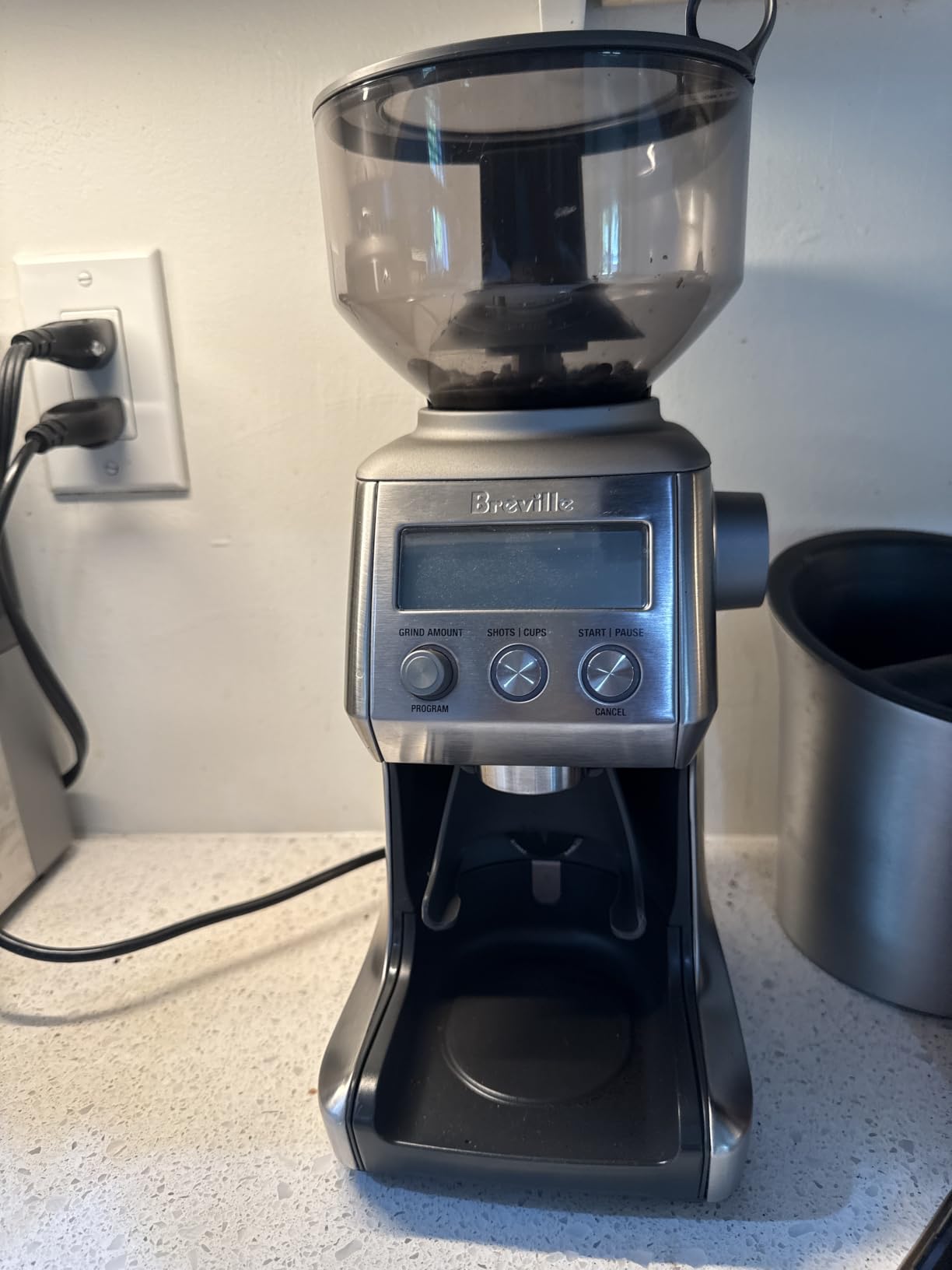
The Smart Grinder Pro is the most capable machine on this list, and for pour over its real weapon is the dosing timer rather than the burrs. You program a dose in 0.2 second increments, and once that number is dialled in you stop thinking about the grinder.
Sixty grind settings with adjustable upper burr positions give a wide, well-marked range. The LCD shows the current setting, elapsed time and cup or shot count, so the machine tells you where you are instead of leaving you to count clicks. Owners single out grind consistency as the standout feature for the tier.
For a brewer who makes two cups, this solves the retention problem better than most. A programmed dose dumps a set amount, and because the same time produces the same mass for the same setting, your brew ratio stops drifting. The included airtight grounds container and two portafilter cradles mean it covers filter and espresso without a second machine.
Two years of limited warranty, 18 oz locking hopper, 165 watts of motor. It is the most complete package here, and it is also the biggest box on the counter at over 15 inches tall.
How it fits a two-cup morning
Program a dose once, then brew. That is the entire workflow benefit, and for someone making a 40g batch for two it removes the small inconsistency that otherwise creeps into a second cup. The lower end of the range still needs manual work: the factory burr position is coarse for espresso, so expect to adjust before the first shot.
If you are a pour-over-only brewer, that extra capability is headroom you may never use. Decide honestly whether you will ever pull espresso before you take on the footprint.
Where it falls short
Chute retention is the recurring complaint, and reviewers note the included plastic grounds cup creates static that needs a silicone bellows to clear. Budget for that small accessory if you want the counter clean. The adjustment knob also feels plasticky next to the rest of the machine.
The motor can underpower and stall on dense beans if you do not pause and clear the chute, and the footprint is meaningfully larger than the Encore or the OXO. In a small kitchen that is a real cost that no specification captures.
4. JavaPresse Manual Stainless Steel Coffee Grinder — Best Budget Manual
- Ceramic burr gives an even grind at this tier
- Silent and needs no power
- Light at 9.4 oz for travel
- Stainless steel body resists rust
- Roughly 2.5 tablespoon capacity means repeated passes
- Analog dial has no click stops
- Some units report burr wobble
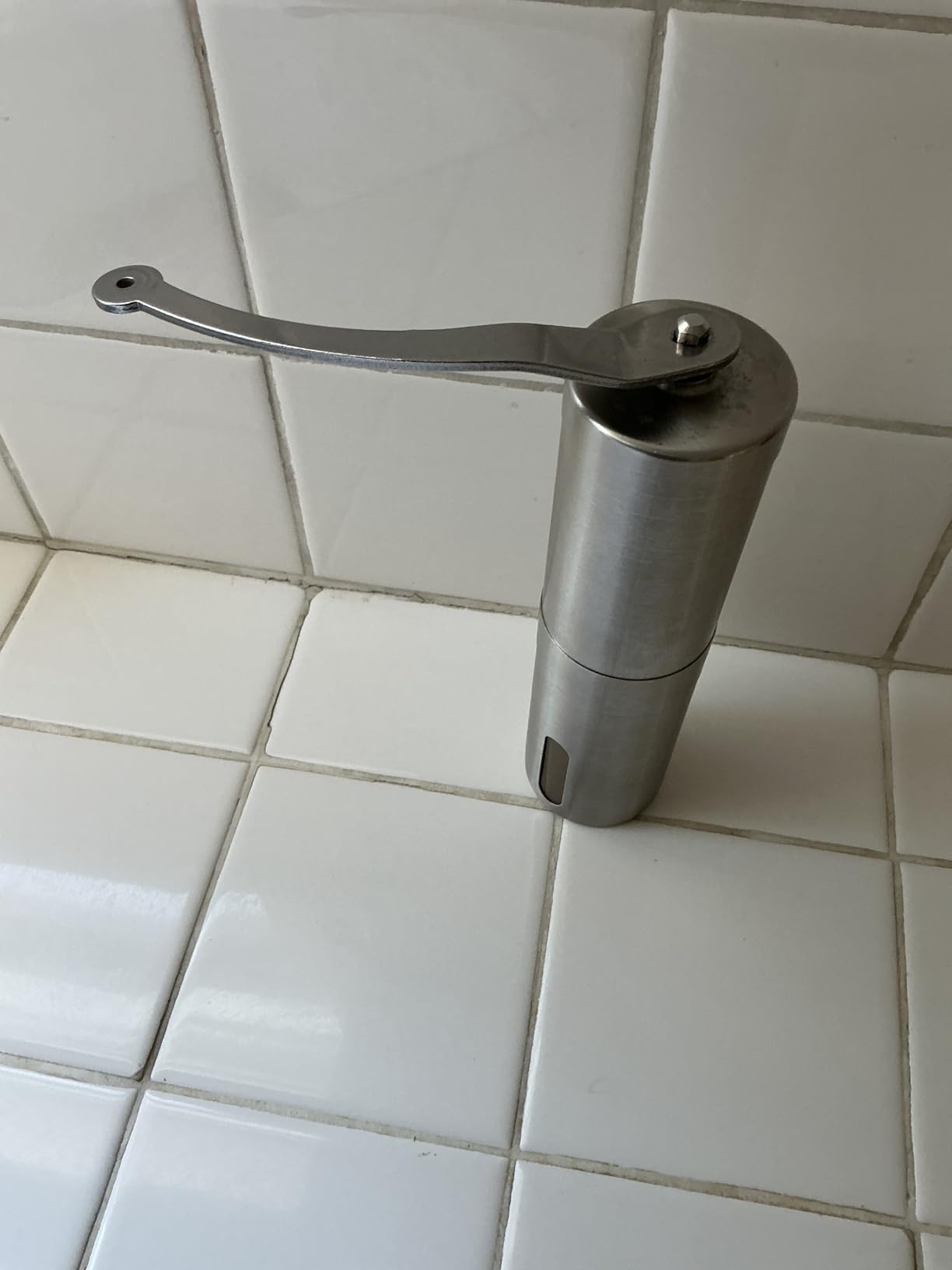
The JavaPresse sits at the top of Amazon’s manual coffee grinder category by review volume, with tens of thousands of owner reviews, and it has stayed in production for a long time. That consistency matters for an entry pick: the design is proven rather than experimental.
Eighteen adjustable settings on a ceramic conical burr cover filter, immersion and a rough espresso range. The whole unit weighs 9.4 ounces, so it moves between kitchen and travel bag without any thought. The detachable handle and integrated grounds compartment in the base make packing simple.
Owners praise the even grind, the quietness and the durability, with many reporting years of daily use. The manufacturer claims the patented ceramic burr assembly is tested to outlast comparable steel burrs several times over, and the review data broadly supports a long service life for the price.
Silently grinding 20g while the kettle boils is the feature you will notice most if you brew early. There are no batteries, no cords and no motor to fail, and the stainless steel body does not rust in a damp bag.
What 18 settings actually gives you
Enough to find a working pour over setting, with room to move finer if a brew runs sour. The honest weakness is that these are not click stops. You turn the collar, grind, taste, and remember roughly where you were. Writing the position on masking tape is the practical fix people use.
For a 20g batch you will make several passes because capacity is around 2.5 tablespoons. That is the trade for the silence and the weight, and for one person it is a reasonable trade.
Where it falls short
The no-detent adjustment is the one that shows up in reviews most, and it is a genuine problem for anyone chasing repeatable results. A minority of units also report wobble in the burr assembly that produces excessive fines, so check the grind on arrival.
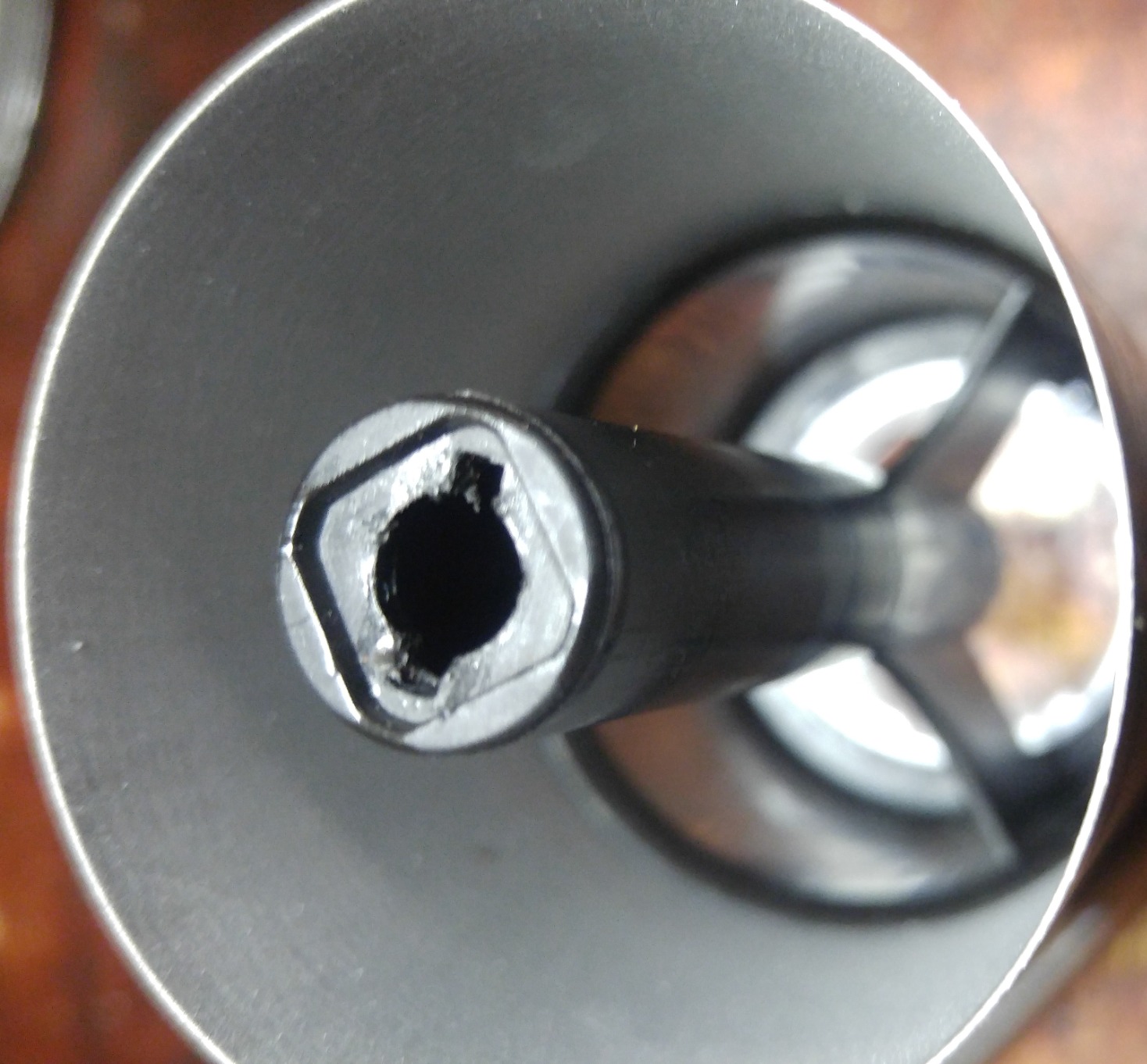
The top mounting bolt is pentagonal, which means you cannot speed things up with a cordless drill, and the friction-fit catch cup can be dropped if the grip slips. None of these are deal breakers, but they are the reason this is a budget pick rather than a final answer.
5. TIMEMORE Chestnut C3S Pro — Best Travel Manual
- Highest rating in the roundup at 4.8 out of 5
- Five-axis CNC burr cuts fines and oversized particles
- All-metal body dissipates heat
- Built-in bearing keeps the handle spinning
- 25 g capacity covers one batch only
- Manual grinding is slower than any electric
- Analog adjustment nut with no click stops
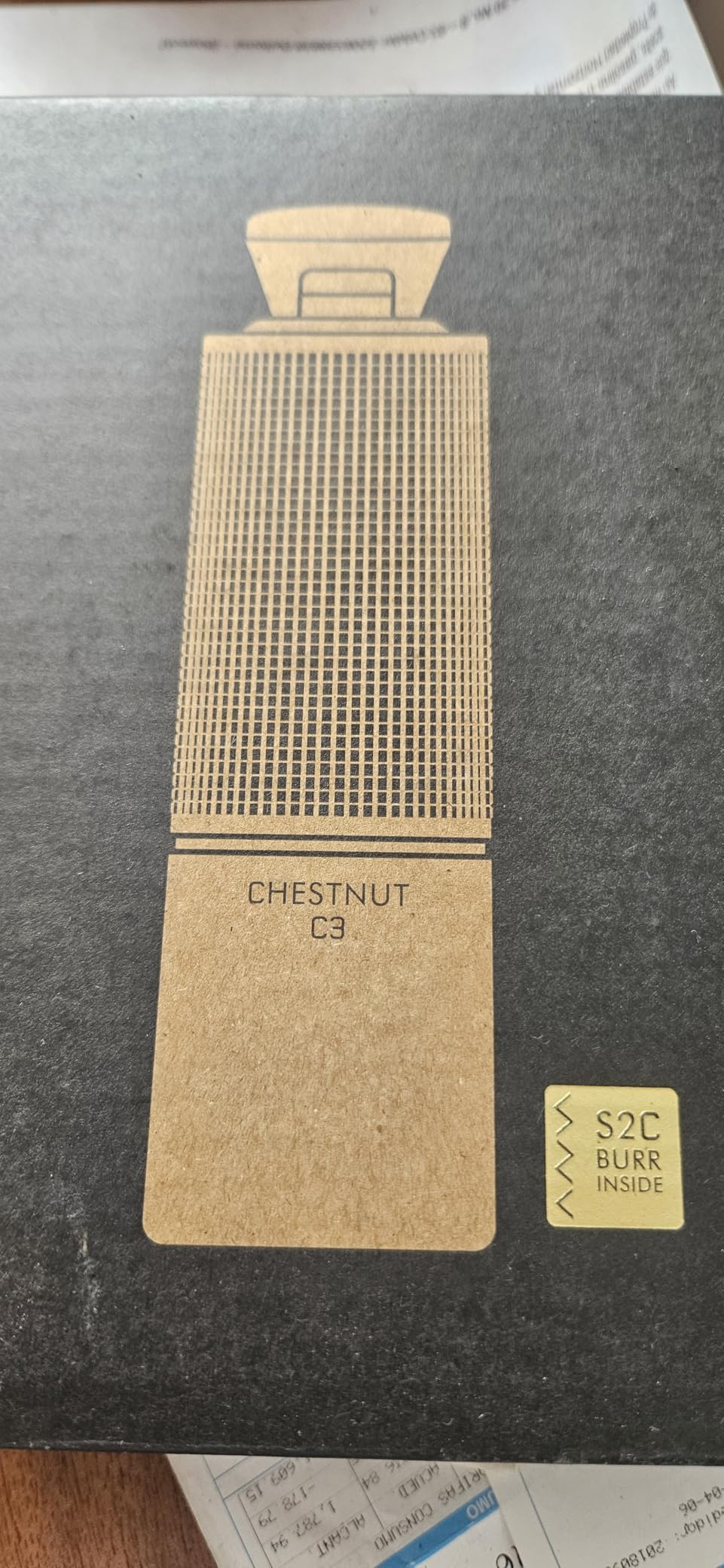
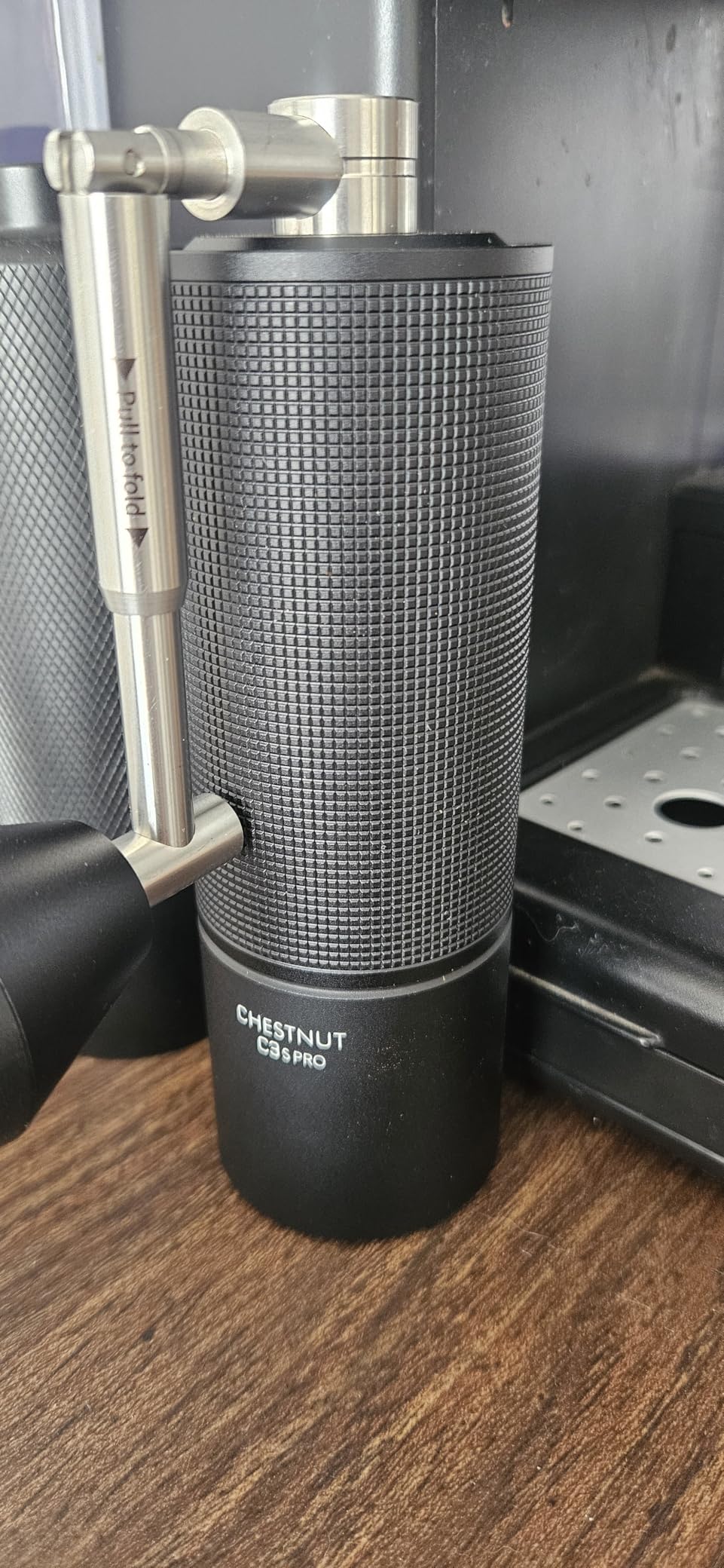
The C3S Pro is the most refined hand grinder here, and it is the one I would pack. The S2C660 hexagonal conical burr is hardened to 55-58HRC and machined on five axes, which is the reason owners report very few fines and few oversized particles.
At 430 grams with a foldable crank, it disappears into a bag, and the full aluminium alloy body survives being dropped in a suitcase. A built-in bearing lets the handle keep turning after you let go, which noticeably reduces effort on a 20g dose.
Review data on this one is exceptional, with roughly 90 percent five-star ratings. Grind uniformity is the most cited strength, followed by build quality. The 52 mm body is compact without feeling toy-like, which is a change from most of the folding-handle category.
Heat dissipation through the metal body is worth noting for anyone grinding dense beans. Metal pulls heat away from the burrs instead of trapping it, and less heat means fewer static problems and less clumping in the grounds.
Grinding a full V60 batch on the road
Capacity is 25g, which is a single large pour over or a French press charge. That is enough for one brewer and short of a two-cup V60 batch, so plan your coffee around it rather than around the grinder. Grinds land directly in a cup or the included container, and the base disassembles for cleaning without tools.
Around 36 levels of adjustment cover filter and immersion brewing. As with the other manuals here, the nut is analog rather than detented, so mark your pour over position once you find it.
Where it falls short
Manual grinding takes noticeably longer than an electric unit, and that is before you factor in the two-pass problem if you need more than 25g. It is also not suitable for espresso without modification, which is fine for this list’s purpose but worth knowing.
Review volume is far lower than the older grinders on this list, which means less long-term data. If you want the same design at lower weight, the C2S below is the sibling to consider.
6. Cuisinart Electric Burr Coffee Grinder DBM-8P1 — Best for Batch Brewing
Cuisinart Electric Burr Coffee Grinder, 18 Settings, 4-18 Cups, DBM-8P1
- Long service life reported by many owners
- Removable hopper and chamber clean easily
- 18 settings cover espresso to cold brew
- Grinds fast without overheating
- Noticeably loud while grinding
- Plastic grind bin builds static cling
- Cup-count timer is not accurate
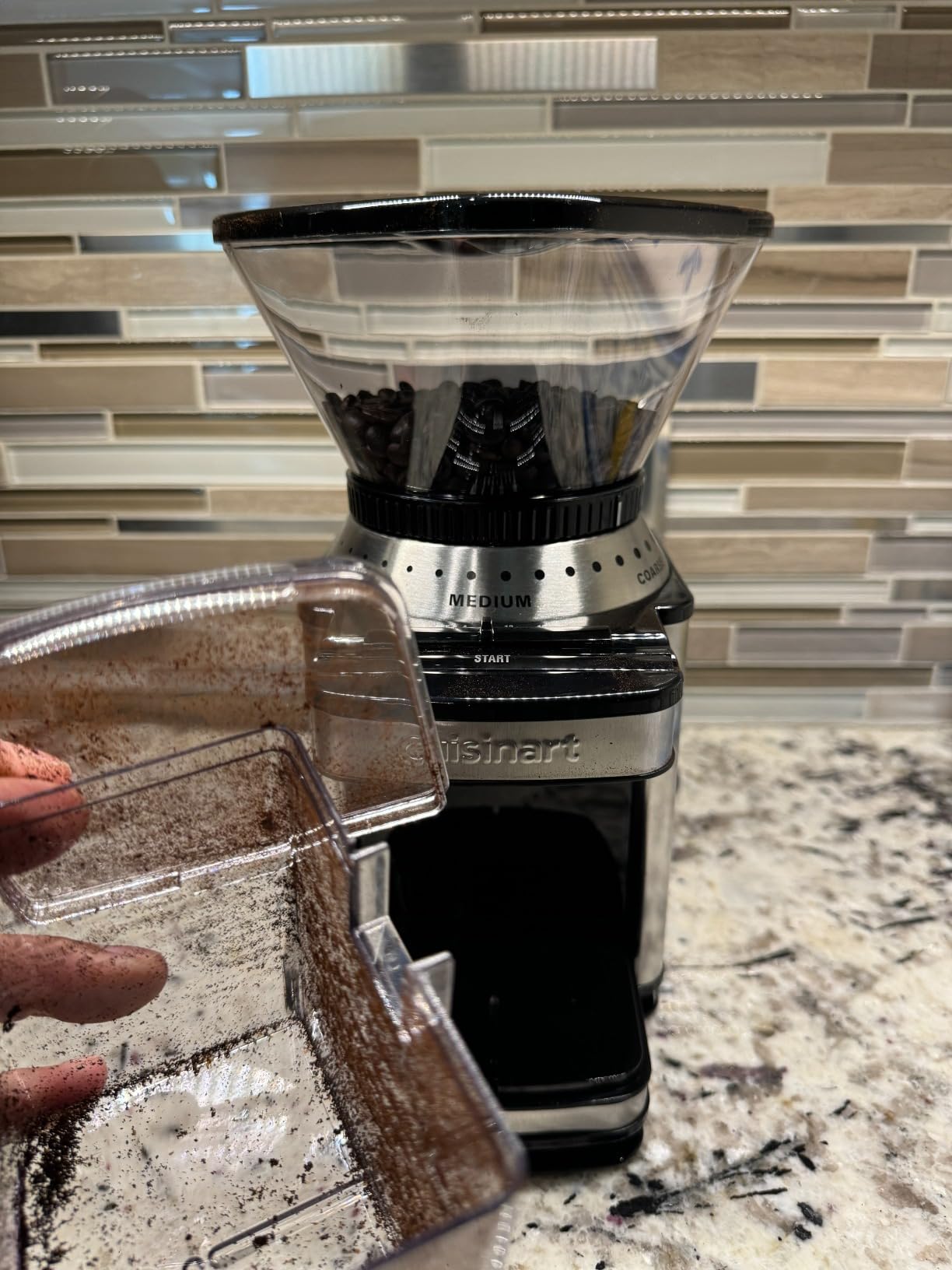
The DBM-8P1 is the grinder for people who brew volume rather than single cups. The removable grind chamber holds enough coffee for 4 to 18 cups, which no other grinder here matches, and the 8 oz hopper means one fill covers a long session.
It has been sold for years and the review data shows it, with many owners reporting five to ten years of service. For a burr grinder at this tier, that track record is worth more than any specification. The 18-position slide dial runs from ultra-fine to extra-coarse.
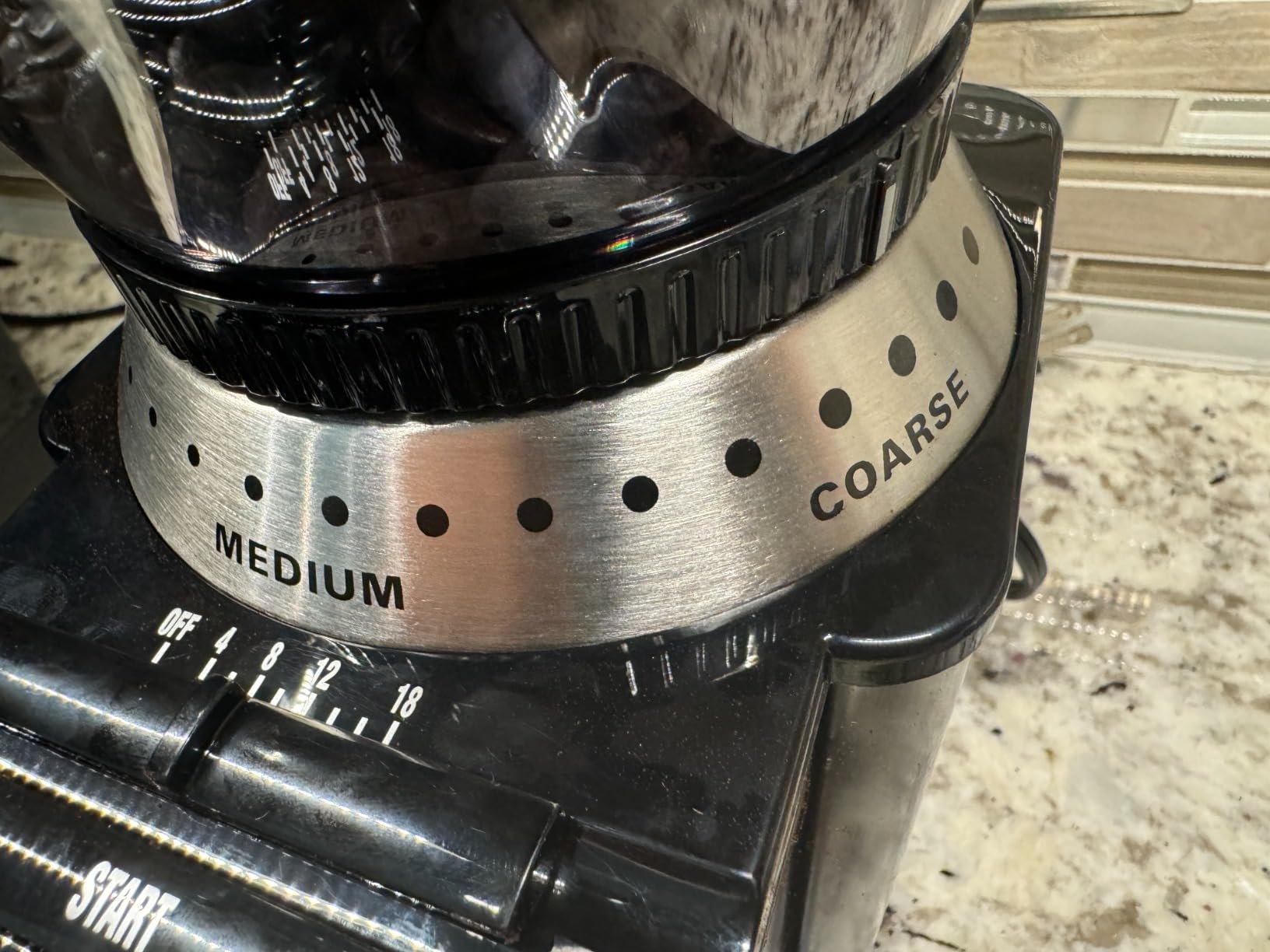
Grind speed is a genuine strength, and the burr system preserves coffee oils without generating much heat. Fully removable hopper and chamber make cleaning straightforward, and cord storage plus an included brush and scoop round out the package.
If you also run a French press, a batch brewer or anything that eats grounds quickly, the wide chamber removes the interruption of constant refilling. The stainless steel body and 18-month limited warranty keep it in the running for a long time.
When batch size beats dialling precision
This is the grinder to buy when a 20g V60 dose is a rounding error in your week. The slide dial positions are clearly marked, and while 18 positions is fewer than the Encore’s 40, they span the full range from espresso to French press.
Owners who weigh or scoop rather than trusting the timer get consistent results. The cup-count dial is the weak point, and treating it as a rough guide rather than a measurement is the adjustment that fixes most complaints.
Where it falls short
Noise is the first thing people mention, and it is the main reason some users moved to a manual. The plastic grind bin also builds static cling and collects fine dust, which is a step back from the steel cup on the OXO.
Coarsest setting is still not truly coarse enough for real cold brew, and fine powder can clog the chamber and shorten motor life. For a pour-over-only brewer making one cup at a time, this is generous capacity you will rarely use.
7. AMZCHEF Burr Coffee Grinder — Best 45-Setting Electric
AMZCHEF Burr Coffee Grinder, 45 Settings, Anti-Static Burr Mill
- Widest setting range in this roundup
- Anti-static design reduces grounds cling and spill
- Large 10.6 oz hopper cuts refills
- 150 watt motor powers through doses
- Touchscreen takes more attention than a dial
- Some static remains on humid days
- Short vertical counter footprint
The AMZCHEF stands out for two things: the widest adjustment range of any grinder here at 45 settings, and a genuine anti-static system rather than a marketing word. For a pour over brewer chasing small changes, that range is useful.
The built-in anti-static design pairs with a stainless steel grounds container, and buyers mention the reduced mess most often. The LED touchscreen handles cup selection and a timer with 0.5 second accuracy up to 40 seconds, which is enough resolution for a 20g dose.
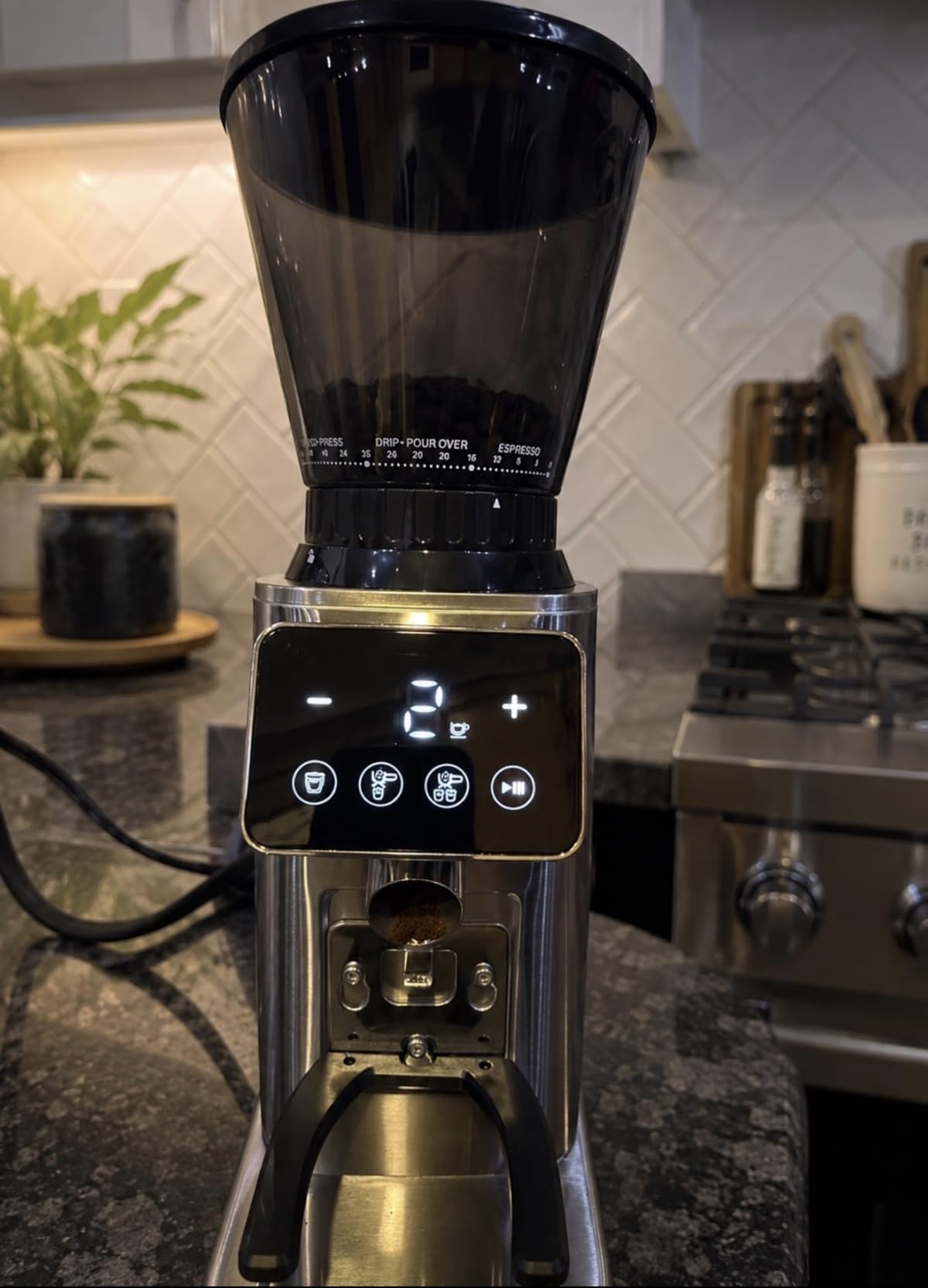
Grind consistency comes from 40mm stainless steel conical burrs, and the settings span espresso, pour over, drip and cold brew. The 10.6 oz removable hopper has a UV-blocking tint and a trap door, so refilling spills fewer beans than most. It also fits 51-54mm and 58mm portafilters if espresso ever comes up.
Owner feedback is largely positive at roughly 79 percent five-star. The main caveat is that the product is newer than most here, so the long-term reliability picture is still forming compared with a grinder that has been sold for a decade.
Anti-static handling on light roasts
Static is the complaint that comes up most in pour over communities, especially with light roasts that are drier and generate more charge. A grinder designed around it saves a step, because clumped grounds distribute badly in the brewer and throw off your extraction whether you stir or not.
Expect some static to remain on humid days, which is the honest limit of any mechanical approach. The 150 watt motor and 40mm burrs are otherwise well matched to filter work, and the setting count gives plenty of room to fine-tune.
Where it falls short
Touchscreen controls need more attention than a physical dial, and anyone who grinds with wet or dusty hands will prefer a knob. At over 14 inches tall, the body is one of the tallest here, so check your cabinet clearance before buying.
Long-term owner feedback is limited compared with the older grinders, which is a risk if you want a decade of support. The 45 settings also spread thinly, so a step in the filter range may still be smaller than you want. For a wider look at conical options, see our conical burr grinder picks.
8. Ollygrin Burr Coffee Grinder — Best for Low Mess
Ollygrin Burr Coffee Grinder, Electric Conical Coffee Bean Grinder With 30 Adjustable Grind Settings For 2-12 Cups, Sliver & Black
- Gear-reduction motor slows burrs for low heat and static
- Detented dial makes setting changes easy to track
- Quiet relative to its class
- Friction clutch and overheat protection
- Timer sometimes overruns and spills grounds
- Finest setting may be coarse for espresso
- Listed at 220V for North American use
The Ollygrin is interesting because of its motor, not its burrs. A gear-reduction setup turns the conical burrs more slowly than a direct-drive motor, and that single change produces a cooler grind with less static and fewer fines.
Thirty settings on a detented top dial is the part that wins me over for pour over. Detents mean the setting clicks into place and stays there, so a number on the dial means the same thing tomorrow. That is the repeatability a manual grind nut cannot give you.
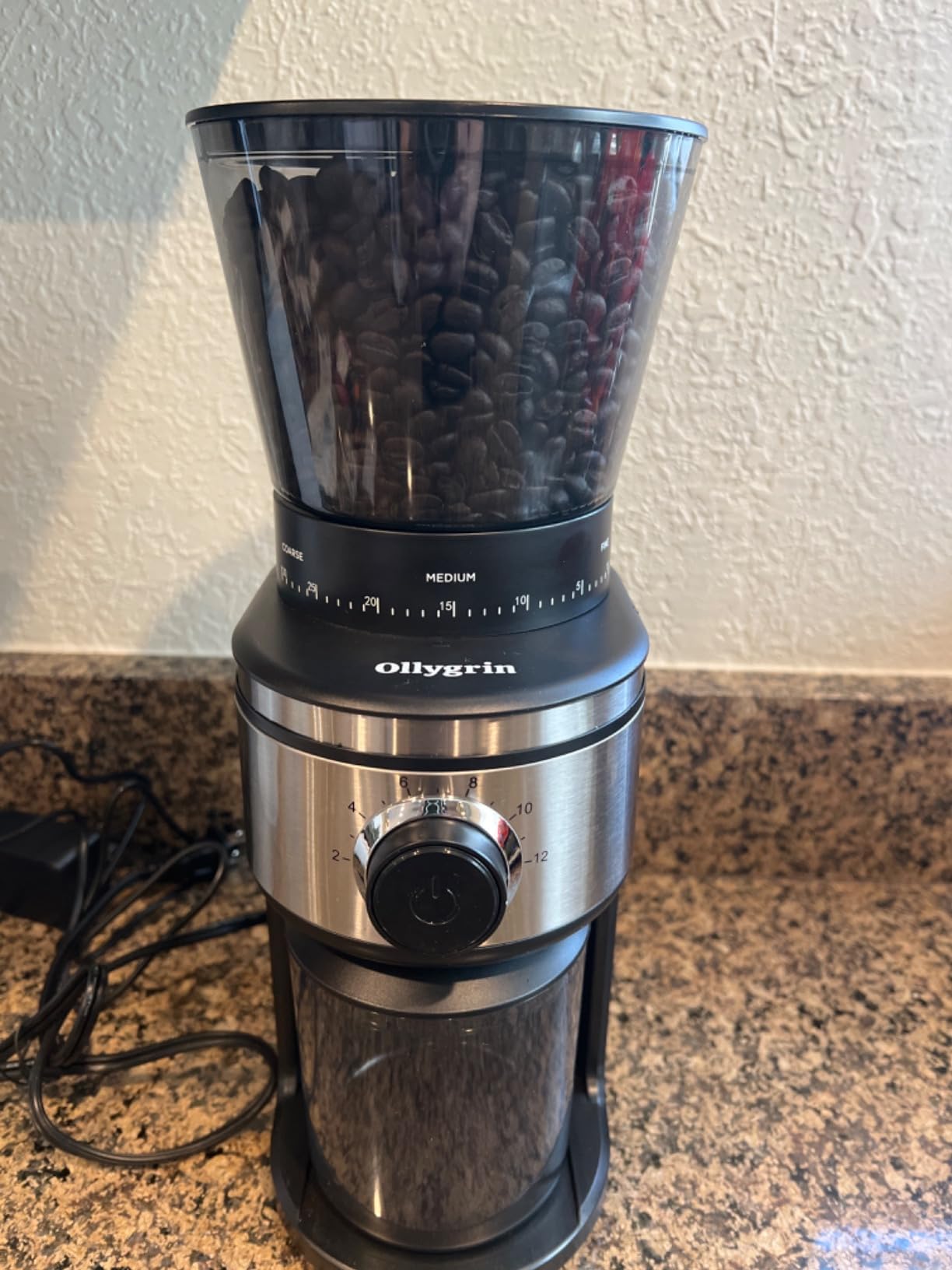
Owners report this as a clear step up from cheaper burr grinders, crediting the slowed motor for cleaner grinds and less mess. The 10 oz hopper uses an auto-locking system so beans do not spill when you lift it out, and the friction clutch plus overheat protection guard both motor and burrs.
It is also one of the quieter electrics in this group, which matters if you brew before the rest of the house is awake. The 40mm stainless steel conical burrs keep particle size consistent across the useful filter range.
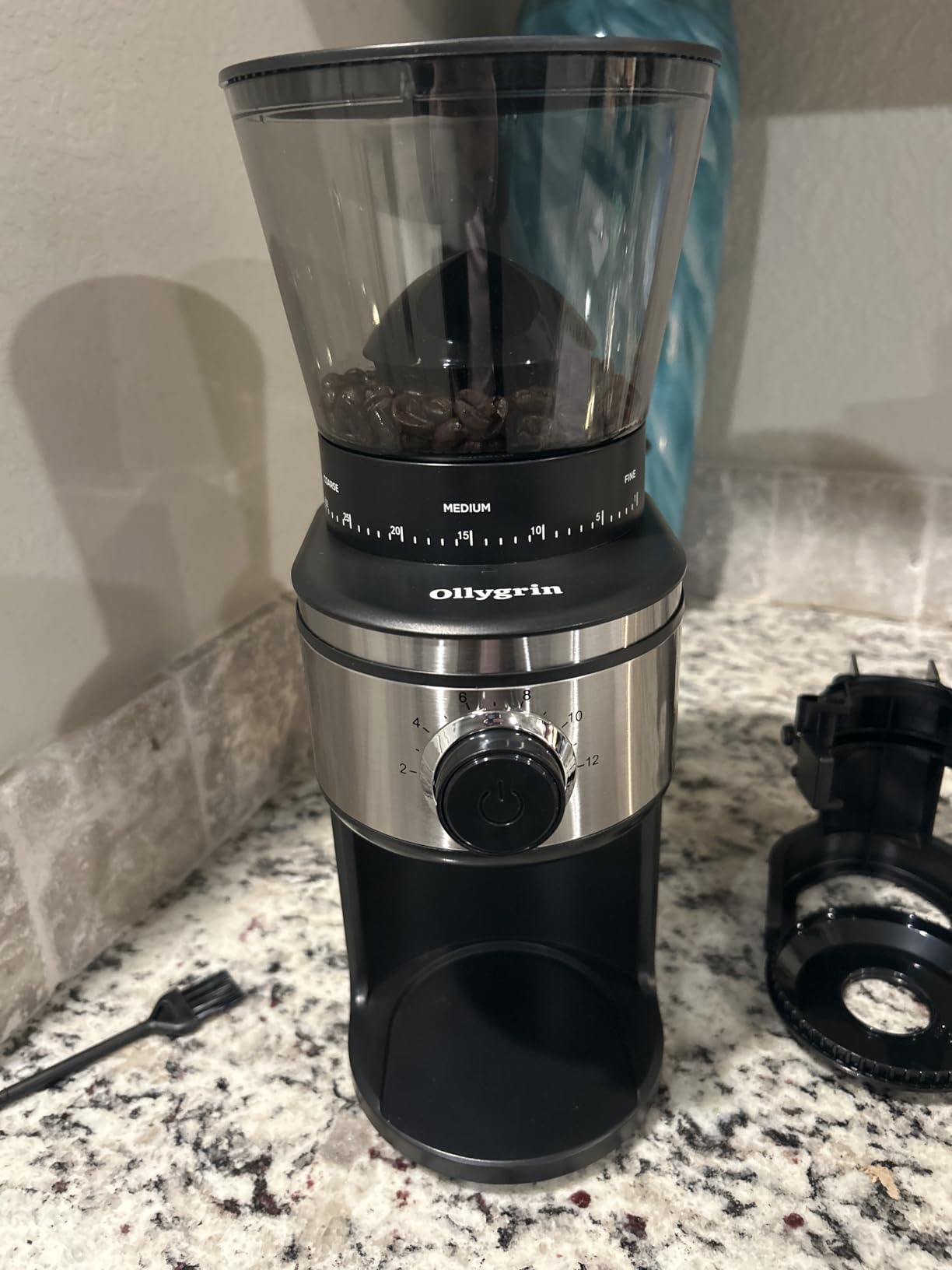
Dial repeatability versus the manual alternatives
Three clicks and a stop is the main argument for this grinder over any of the hand mills on this list. You are not estimating a setting, you are selecting one. For a brewer who grinds the same single-origin bag over two weeks, that removes a variable from the experiment.
Below espresso, the fineness stops short of what a dedicated espresso machine needs, so treat the bottom of the range as filter territory. The 2 to 12 cup rotary timer with one-button start keeps the controls simple.
Where it falls short
The timer occasionally over-runs and spills grounds onto the counter, which is the one complaint worth knowing before you buy. The included cleaning brush is too soft for packed coffee dust, and the portafilter cradle feels cheap.
There is also a voltage caveat. The unit is listed at 220V, which does not match North American or UK household supply, so check the labelling carefully for your region. Weights are quoted at 2 kg, so it is not a lightweight counter piece either.
9. TIMEMORE Chestnut C2S — Best Starter Manual
- Double bearing axis keeps grinds uniform run to run
- Full metal body replaces the plastic top of the earlier model
- Built-in bearing makes cranking smooth
- Easy to disassemble and brush clean
- 25 g capacity covers a single batch
- Manual cranking is slow next to an electric
- Analog grind nut with no click stops
The C2S is the simplest manual on this list and the one I would suggest to a first-time hand grinder buyer. The double-bearing central axis is the important part: it holds the 38mm CNC machined stainless steel conical burr steady so particle size stays uniform from run to run.
This model replaced the plastic top cover of the earlier C2 with a full metal unibody body, which is the fix owners care about most. At 700 grams with a 52 mm body it is heavier than the C3S Pro but still perfectly portable, and it disassembles without tools for cleaning.
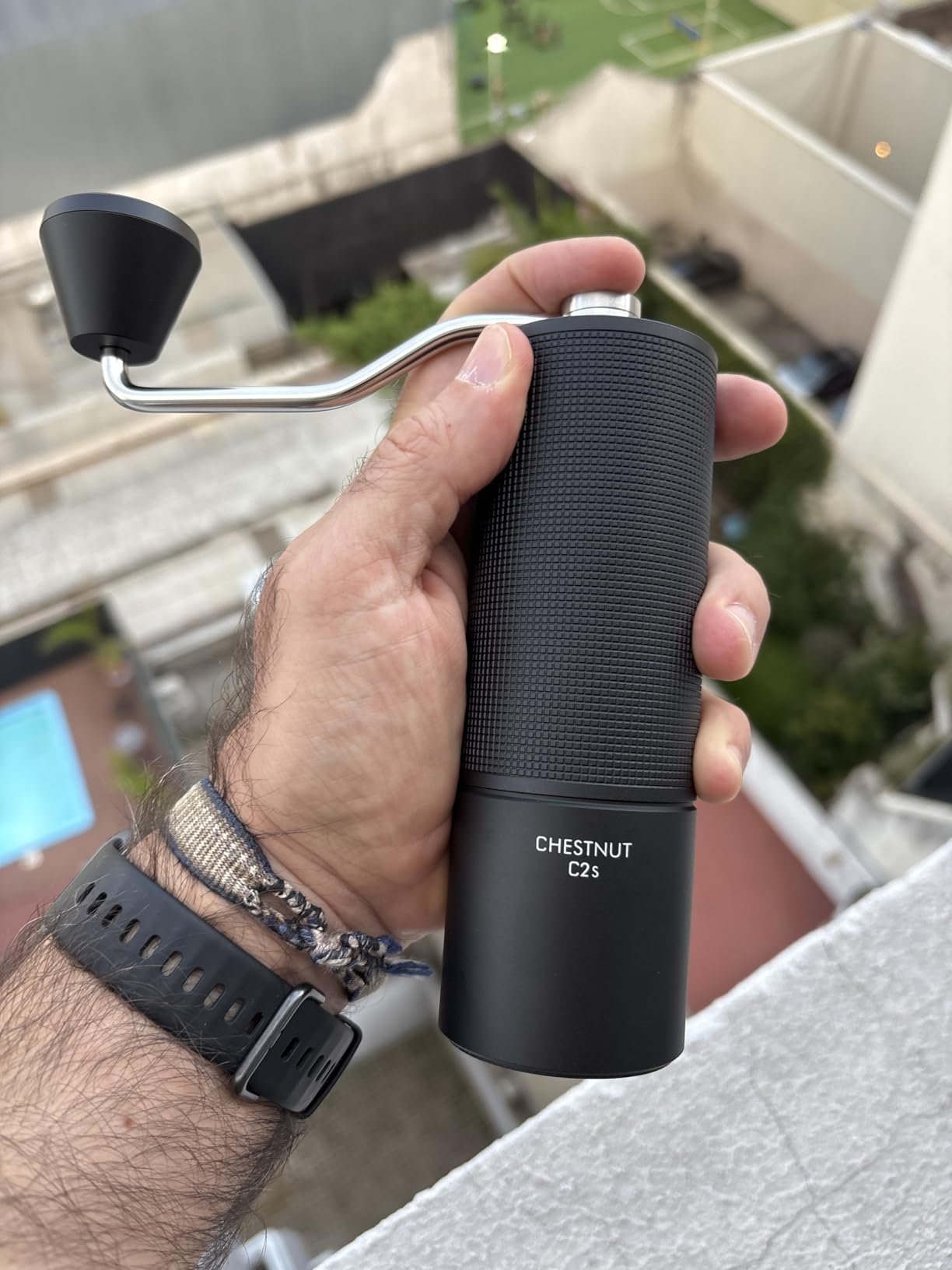
Owner ratings are strong, with roughly 84 percent five-star. The double-bearing burr, the all-metal durability and the smooth cranking come up in almost every review. Around 36 levels of adjustment cover filter and immersion brewing with nothing left over for espresso.
The built-in bearing means the handle keeps spinning briefly after you release it, so a 20g dose takes less effort than the category average. It is a pleasant object to use, and that matters more than specifications at this level.
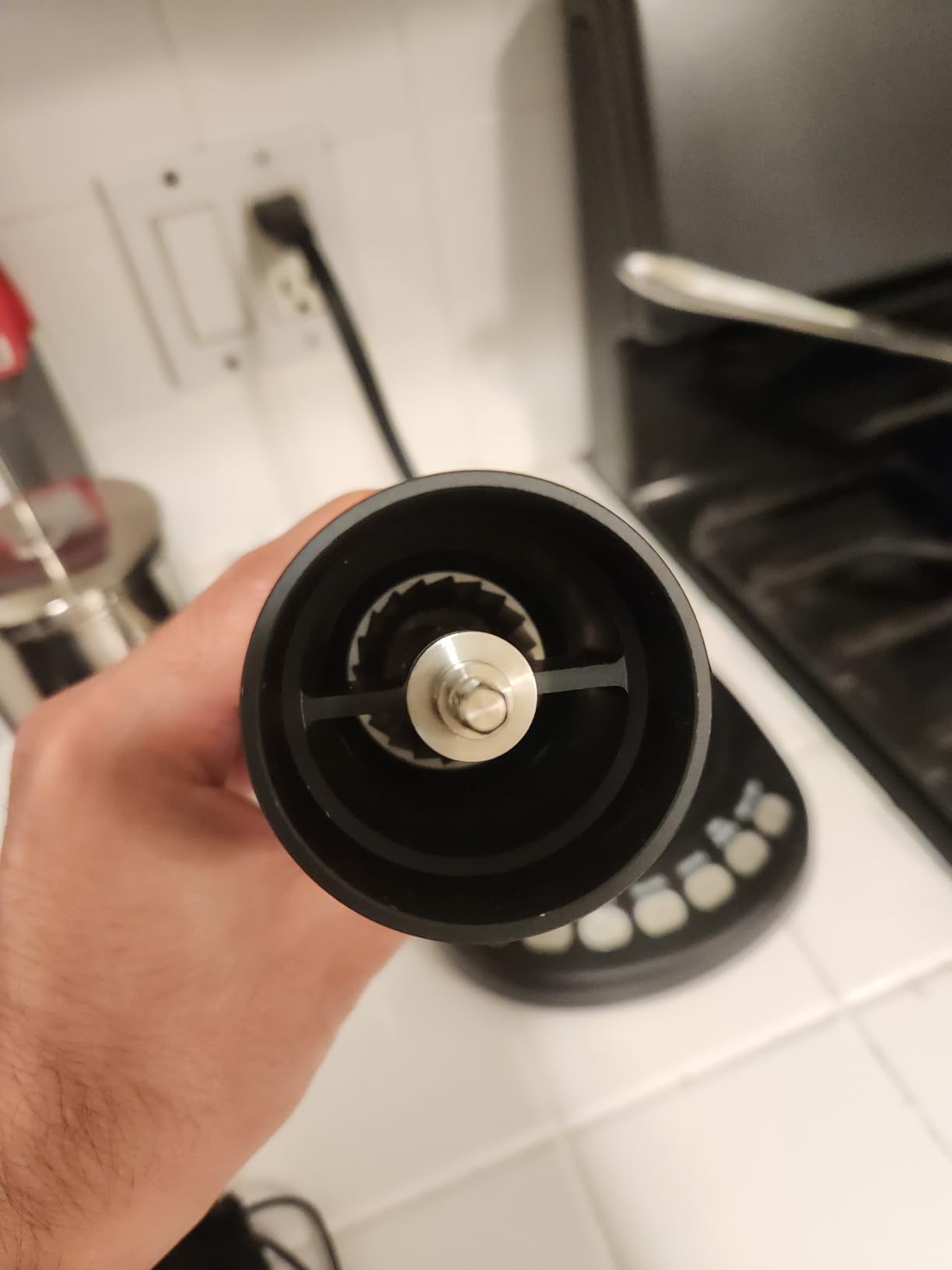
When a manual grinder is the right first purchase
Start with a manual if you brew one or two cups, if you travel with your setup, or if you want zero measured noise. There is no static problem, no retention in the sense an electric hopper has, and no power cord to route. The grind goes straight into your brewer or a cup.
Capacity is 25g, so a single V60 batch is the ceiling. If your routine is a 40g two-cup brew, plan on two passes or choose an electric.
Where it falls short
The analog grind nut is the recurring limitation, shared with the other manuals here. Once you find a pour over setting, note it, because there is nothing holding it in place. Manual cranking is also simply slower than any electric, and that difference grows with batch size.
One detail worth flagging: some listings for this item describe included cup and saucer accessories that do not match what is in the box. Judge the contents on what arrives, not on the listing copy. If you want the same design with more burr hardness and a lighter body, the C3S Pro above is the step up.
10. KRUPS Precision Burr Coffee Grinder — Best Budget Flat Burr
- Flat burrs give more consistent grounds than blades
- Twelve settings cover pour over through immersion
- Removable top burr and chamber clean easily
- Quieter than most competing electrics
- Plastic grind bin clings through static
- Fine powder appears even on coarse settings
- Can jam on oily dark-roast beans
The KRUPS is the only flat-burr option in this roundup, and that is reason enough to explain where it fits. Flat burrs crush between two parallel discs, which tends to produce a narrower particle spread than a conical pair at a similar price. The cost is 12 settings, fewer than anything else here.
Twelve positions from coarse to fine cover drip, pour over, French press and a rough espresso range. The removable top burr and grind chamber make cleaning simple, and the cleaning brush stores inside the top burr, which is a small design touch that ages well.
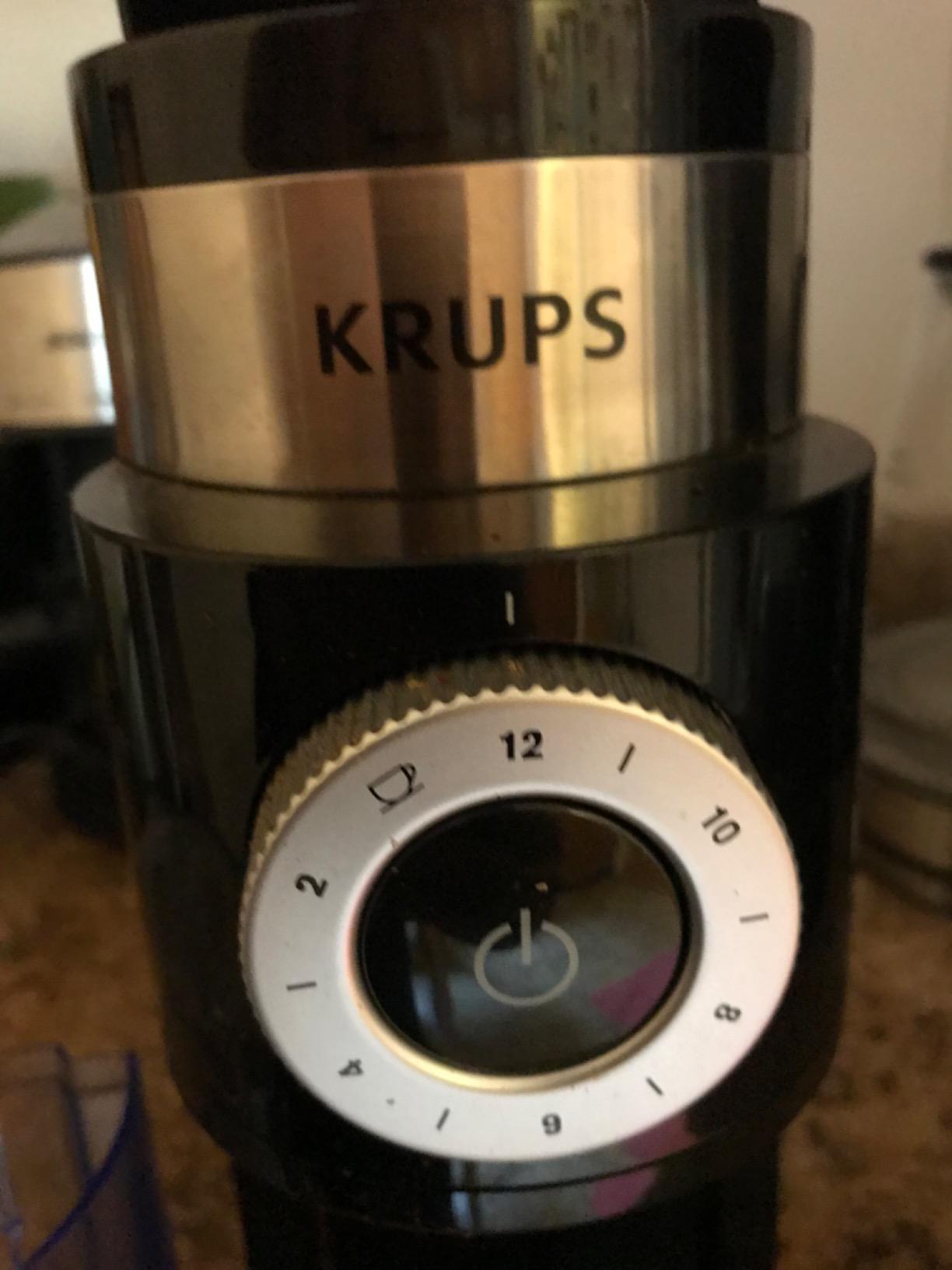
Reviewers generally find it capable for the tier, noting the flat metal burrs deliver a noticeably more consistent grind than a blade grinder. It is also quieter than many competing electric burr grinders, which is unusual at this level. Automatic stop at the selected cup count adds convenience for batch work.
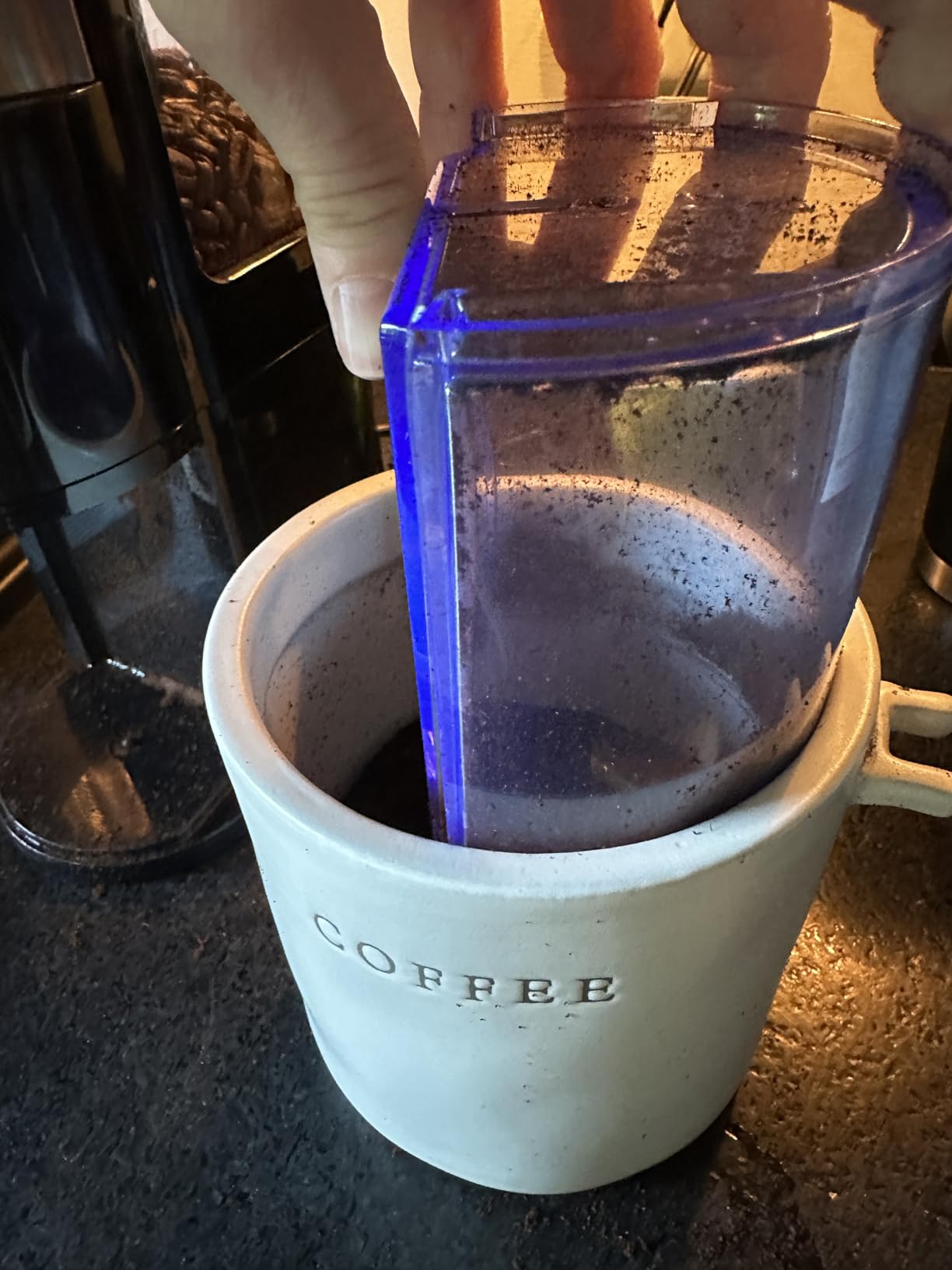
The weakness is refinement rather than capability. With only 63 percent five-star ratings, it is the lowest-rated grinder here, and the complaints are consistent: static in the plastic bin, an inaccurate cup dial, and a motor that can burn out after oils clog the chute.
Whether a flat burr is worth the tradeoffs here
If your beans are light and dry, a flat burr pair is a sensible shape for the job, and the uniformity is the reason to choose it. The narrow setting count matters less than you would think once you settle on a pour over setting and stop moving.
Fine powder appearing in the output even on coarse settings is a reported behaviour, so expect a little dust in the bin. On a medium or dark roast, oils are the bigger problem, and that is where this grinder is weakest.
Where it falls short
The plastic grind bin clings to grounds through static, which is the everyday annoyance. The cup-count dial grinds far more beans than the labelled count implies, so treat it as a rough timer only.
It can jam or stall on oily dark-roast beans and the motor can burn out once the chute clogs, and the instructions are confusing about whether the top burr is required for grinding. If you drink light roast filter coffee, it works. If you rotate through darker roasts, choose a grinder with a steel grounds container instead.
Flat Burrs vs Conical Burrs for Pour Over
Flat burrs sit inside a ring and crush beans between two parallel discs. Conical burrs work as an inner cone inside an outer cone. The short answer for pour over: flat burrs usually produce a tighter particle spread, conical burrs usually cost less and often produce a fuller, more forgiving cup, and neither is automatically better.
Particle uniformity is the deciding factor for filter coffee because water extracts more evenly from evenly sized grounds. That is the whole argument for flat burrs, and it is why dedicated brew grinders tend to use them. The trade is that conical designs are mechanically simpler, cheaper and widely available with more settings, which is why nine of the ten grinders here are conical.
Roast level shifts the balance. Light and medium roasts, which are what most pour over brewers start with, show the clarity benefit of flat burrs most clearly. One Home-Barista member argued the opposite case well, that for medium and dark roasts a cheaper conical gives more body and emphasises chocolate and nut flavours, and that is a fair reading of the cup rather than of the spec sheet.
There is a community standard worth knowing: on r/pourover, flat burr upgrades such as the SSP LS Cv2 are described as easy to fit and slightly better than stock burrs, and members overwhelmingly rate the Fellow Ode Gen 2 as a pour over grinder. That grinder is not in this roundup, but it tells you where enthusiast opinion sits on burr swaps.
Manual vs Electric Burr Grinders for Pour Over
A manual grinder removes three variables at once: noise, static from a motor-driven chute, and stale coffee sitting in a hopper. It also costs less and weighs little enough to travel with. What you give up is speed and exact repeatability, because most manual grinders adjust with an analog nut rather than detents.
An electric grinder gives you a dial or a timer, and once a setting is dialled in the dose repeats. That matters more for a two-cup batch than a single cup, and it is why most people who brew daily end up electric. If your kitchen is quiet and your batches are small, a manual is a genuinely good answer.
Across this list, the two TIMEMORE manuals cap at 25g of beans and the JavaPresse at roughly 2.5 tablespoons, so a 40g two-cup brew takes two passes on any of them. All three adjust with an analog nut rather than detents, so note your pour over position once you find it.
How to Choose a Burr Grinder for Pour Over?
Start with burr size. A 38mm to 40mm conical burr set handles filter coffee well, and going much larger on a compact machine does not guarantee more uniformity. Burr diameter matters less than how well the burrs are machined and how precisely they can be adjusted, which is why a 40mm set with 40 settings can beat a larger set with 12.
Next, look at the adjustment mechanism rather than the count. Detents, micro-adjustments and step rings that hold position all give you repeatability. An analog nut does not, and no matter how good the burrs are, you will re-dial every few days. The difference between the two TIMEMORE grinders and the Ollygrin on this list comes down to exactly this.
Then consider retention against batch size. A hopper grinder holds a small amount of coffee in the chamber between doses, and on a 20g batch that percentage is noticeable. Single dosing or a manual grinder puts a stop to it. If you brew 40g or more, retention stops being a serious problem, which is why the Cuisinart and Breville are the practical picks for volume.
Static is the fourth factor, and it is worth more attention than most buying guides give it. Dry light-roast beans generate charge, grounds cling to plastic bins, and clumped grounds distribute badly in the brewer. Look for a steel grounds container or a stated anti-static system, and know the Ross Droplet Technique: put a single drop of water on the beans in the grinder before grinding, and the charge drops sharply.
Noise is the fifth. Electric burr grinders are loudest in the coarse range, which is exactly where pour over sits. Our wide burr grinder comparison covers quieter options, and a manual removes the question entirely if you brew before sunrise.
Finally, check repairability and cleaning access. A tool-free burr removal means you can clear fines and oils properly, and it extends the working life of any grinder. A non-removable lower burr, like the one on the OXO, is the most common reason a good machine eventually underperforms. The Baratza line is widely praised for spare parts availability, and that is a reason to pick it beyond the burrs themselves.
What grind size for pour over, and how to dial it in
Pour over sits at medium-coarse to medium-fine, roughly the texture of table salt or coarse sand. A V60 usually sits a touch finer than a Chemex, and a Kalita Wave sits between the two. AeroPress, immersion and French press are all coarser, and a grinder whose coarse end is genuinely coarse will serve several methods.
Dial in by starting slightly coarser than you think you need, then moving finer in single steps only when the cup tells you to. A sour, thin cup with a fast finish means the grind is too coarse and water moved past the grounds. A bitter, drying cup with a flat finish means too fine. Change one variable at a time, and keep the brew ratio and water temperature fixed while you do it.
Adjust grind immediately before brewing, never days ahead. Ground coffee loses aroma within minutes, and the whole reason to grind by hand or with a good burr grinder is to brew that coffee while it is fresh. Mark your dial position once you find the setting you want, and note it, because the setting is only as repeatable as your ability to return to it.
Frequently Asked Questions
Are flat or conical burrs better for pour over?
Flat burrs usually deliver a tighter particle spread, which gives cleaner, brighter filter coffee from light roasts. Conical burrs cost less, tend to produce a fuller cup with more body, and most electric grinders use them. For light roast pour over, flat burrs are often preferred. For medium and dark roasts, a conical burr often tastes better and costs less.
What grind size is best for pour over?
Pour over works best at a medium-coarse to medium-fine grind, roughly the texture of table salt or coarse sand. A V60 usually wants a touch finer than a Chemex, with a Kalita Wave between them. Start coarser than you think, brew, and move finer in single steps if the cup tastes sour and thin.
What is the best burr grinder for pour over coffee?
For most people the Baratza Encore is the best burr grinder for pour over, thanks to 40 stepped settings, 40mm hardened steel conical burrs and repeatable adjustment. The OXO Brew Conical Burr is the better value pick, the Breville Smart Grinder Pro wins for programmable dosing, and the TIMEMORE Chestnut C3S Pro is the strongest manual option.
What is the best brand of burr coffee grinder?
Baratza is the most established name in home burr grinders, known for serviceable parts and conical burr sets that suit filter brewing. OXO is the value leader with a wide adjustment range. Breville covers espresso and filter in one body. TIMEMORE and 1Zpresso lead the manual category for travel and quiet brewing.
What is the best grinder for both espresso and pour over?
The Breville Smart Grinder Pro covers both, with 60 programmable settings, a dosing timer in 0.2 second steps and included portafilter cradles. Dedicated filter grinders like the Baratza Encore and the OXO Brew cover pour over far better but are not built for the fine end espresso needs. Espresso-capable machines need finer, more precise adjustment than a filter machine offers.
Is a manual burr grinder good enough for pour over?
Yes, for one or two cups a manual burr grinder is a strong choice. The three manuals here use hardened conical burrs that produce uniform grounds, they make almost no noise, and they cost less than an electric. The tradeoffs are slower grinding, a 25g capacity limit, and analog adjustment with no detents, so note your setting once you find it.
Which Burr Grinder Should You Buy
The Baratza Encore is our pick for the best burr grinders for pour over, and the reason is repeatability rather than any single specification. Forty stepped settings that hold their position mean a setting you dial in on a Sunday still works on a Thursday.
Buy the OXO Brew if you want the widest adjustment range per dollar, the Breville Smart Grinder Pro if you brew two cups and want the dose to repeat itself, and the TIMEMORE Chestnut C3S Pro if you want a silent travel setup. The Encore goes further as a general-purpose machine, and our grain and burr mill guide covers the manual end of the market in more depth.
Whichever you pick, grind immediately before brewing and change one variable at a time while you dial in. That habit will improve your coffee more than any upgrade on this list.