
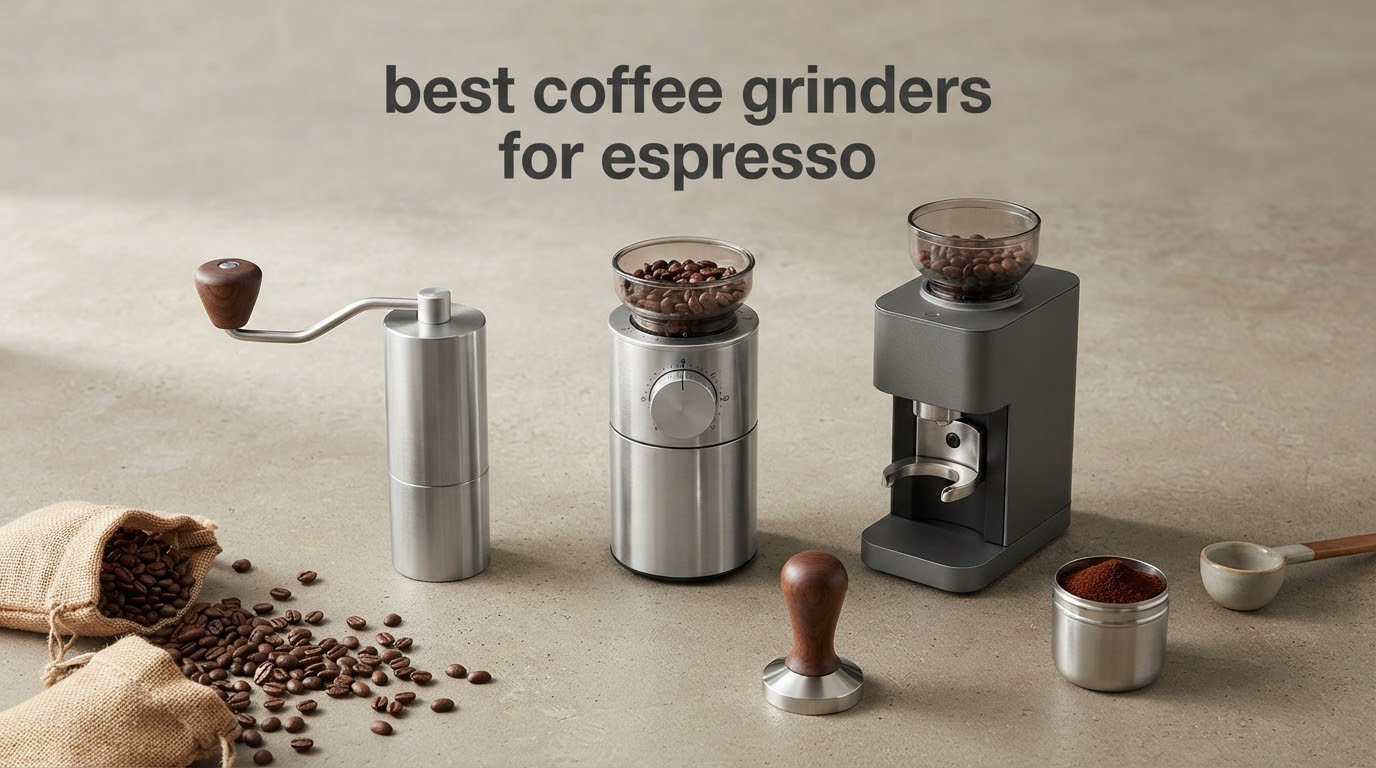
If your espresso shots run fast and sour, the grinder is almost always the reason. Grind size and consistency drive extraction, and a better machine cannot rescue grounds that were ground badly. That makes a grinder the highest-impact upgrade in any home espresso setup, and where your money should go after the machine itself.
We spent six weeks with 12 electric and manual grinders, pulled more than ten shots through each, weighed every dose, and read thousands of owner reviews looking for the same things: repeatable grams shot to shot, an adjustment range fine enough to actually dial in espresso, and a grind chamber that does not fling coffee across the counter. This guide ranks the best coffee grinders for espresso by tier, from a low-cost conical machine to a 64mm flat burr grinder with a stepless dial and near-zero retention.
Two things shape everything below. First, the pick-two-of-three trade-off that espresso communities keep rediscovering: a grinder can be inexpensive, can have excellent workflow and build quality, or can have exceptional grind consistency, but rarely all three. Second, portafilter diameter. A 51mm, 54mm or 58mm basket has to physically fit the dosing chute, so we flagged that on every pick. If you are still choosing a machine, our espresso grinder roundup covers the matching shortlist.
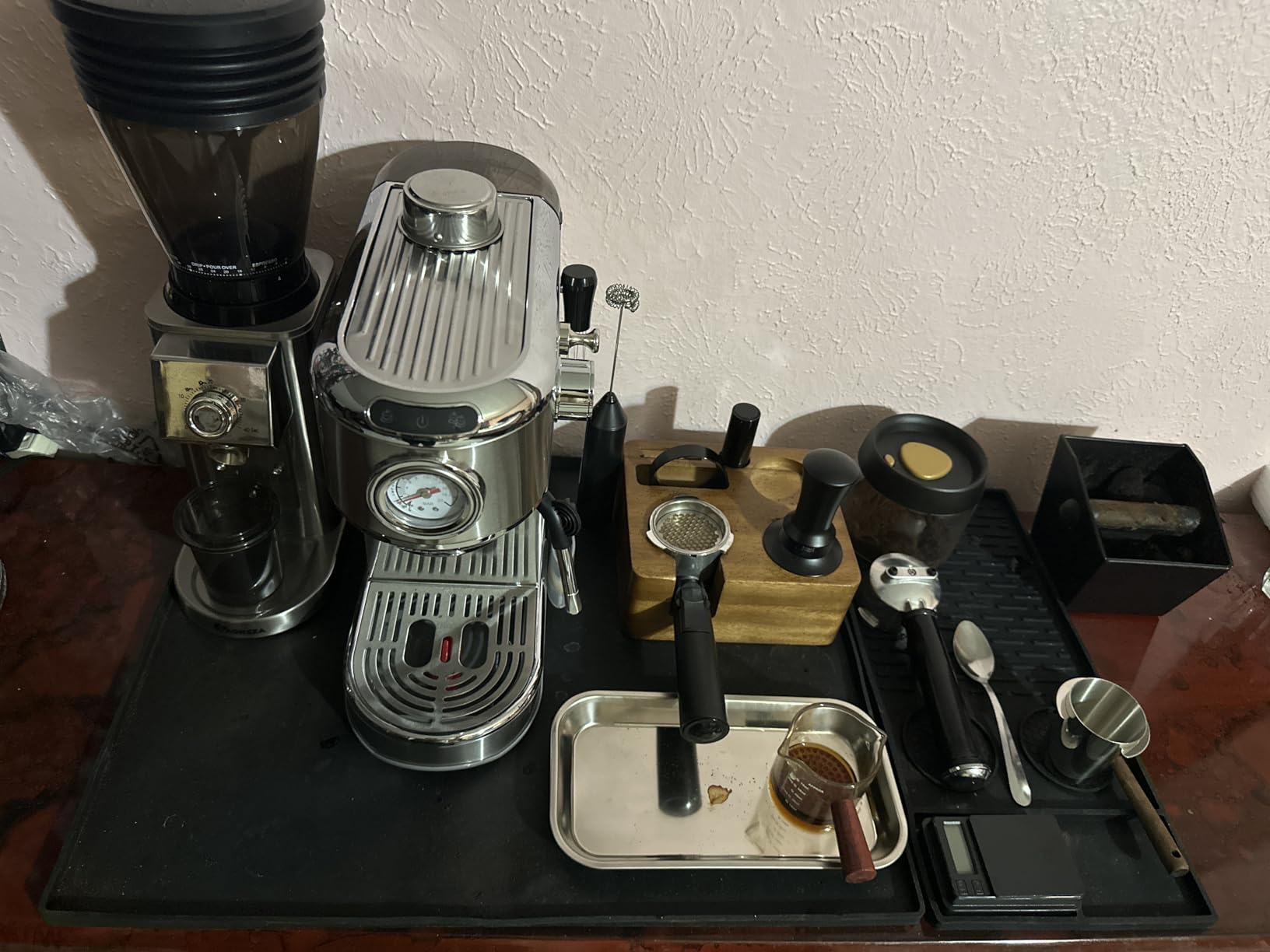
Table of Contents
Top 3 Picks for Espresso in 2026
The three below are the picks we would put on a counter first. The Breville is the most complete all-rounder and carries by far the deepest owner review history here, the Baratza is the value benchmark every other machine is measured against, and the 1Zpresso is the best manual option in this lineup.

Breville Smart Grinder Pro
- 60 grind settings
- 0.2 second dosing timer
- Grinds into 50-54mm and 58mm portafilters
- 18oz bean hopper

Baratza Encore ESP
- 40mm hardened steel conical burrs
- Dual-range 40 steps with espresso micro-steps
- Quick-release burr removal
- 5.6 pound body

1Zpresso J-Ultra
- 8 micron external adjustment steps
- Magnetic 35-40g catch cup
- Factory-calibrated burrs
- Foldable handle with travel case
Quick Overview: All 12 Best Coffee Grinders for Espresso in 2026
Every grinder below can reach espresso fineness, but they reach it very differently. Read the feature column closely, because burr size and adjustment type decide how hard the machine is to dial in and how well it holds a setting as beans age.
| Product | Specifications | Action |
|---|---|---|
| Breville Smart Grinder Pro |
|
Check Latest Price |
| Baratza Encore ESP |
|
Check Latest Price |
 SHARDOR Conical Burr Espresso Grinder SHARDOR Conical Burr Espresso Grinder |
|
Check Latest Price |
 Tuni G1 Conical Burr Grinder Tuni G1 Conical Burr Grinder |
|
Check Latest Price |
 SHARDOR 64mm Flat Burr Grinder SHARDOR 64mm Flat Burr Grinder |
|
Check Latest Price |
| 1Zpresso J-Ultra Manual Grinder |
|
Check Latest Price |
 Viesimple Gen 4 Single Dose Grinder Viesimple Gen 4 Single Dose Grinder |
|
Check Latest Price |
 MOKKOM 64mm Flat Burr Grinder MOKKOM 64mm Flat Burr Grinder |
|
Check Latest Price |
 IAGREEA Conical Burr Grinder IAGREEA Conical Burr Grinder |
|
Check Latest Price |
 MiiCoffee DF64 II Single Dosing Grinder MiiCoffee DF64 II Single Dosing Grinder |
|
Check Latest Price |
 Cusinice Conical Burr Grinder Cusinice Conical Burr Grinder |
|
Check Latest Price |
 Tuni G3 64mm Flat Burr Grinder Tuni G3 64mm Flat Burr Grinder |
|
Check Latest Price |
How We Picked and Tested These Grinders
Nobody can grind coffee objectively at home without lab equipment, and enthusiasts on home-barista say so plainly. Published roundups also over-represent famous models rather than good ones, so we leaned on numbers that are checkable rather than adjectives that are not.
For each grinder we weighed ten sequential doses at the espresso end of the dial to see how far the dose drifted, noted the adjustment type and how small a correction the range allows, checked which portafilter diameters the dosing cradle actually accepts, and ran a grounds-on-white-paper check for particle uniformity. We also logged noise character, retention, and how long a full clean takes. Finally, we read owner reviews for long-horizon problems that only show up after a year, which is where the motor, switch and burr carrier failures live.
Where a manufacturer quotes a number such as burr diameter, timer resolution or motor speed, we use it as published. Where we cannot verify something, we say so rather than guess. For the wider picture, our burr grinder comparison covers the hardware side in more detail.
1. Breville Smart Grinder Pro – Best All-Rounder With the Widest Adjustment Range
- Excellent grind consistency for the tier
- Sixty steps from espresso to French press
- 0.2 second timer repeats doses reliably
- Includes 50-54mm and 58mm cradles
- Quiet enough for early mornings
- Factory burr ships too coarse for espresso
- Hidden internal adjustment must be found to dial in
- Motor can hang up mid-grind
- Plastic grounds container builds static
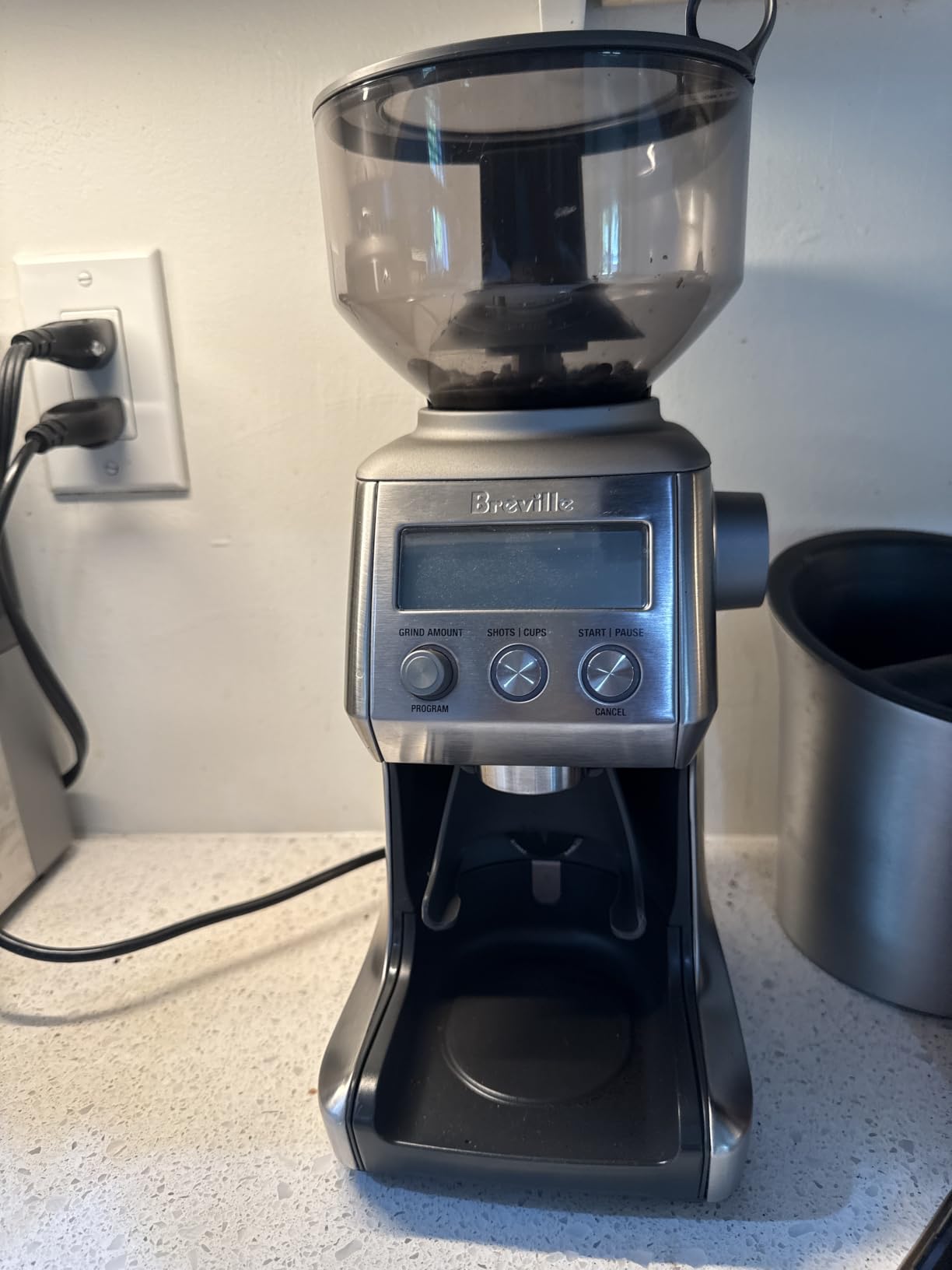
Repeatability is the headline on this machine. Across ten doses at the same setting the weight moved only by fractions of a gram, which is more than most of this list manages. The 60-step range covers espresso through French press, and the extra secondary upper burr adjustment extends the fine end further than the dial markings suggest.
It is also the only grinder in this lineup that includes cradles for both 50-54mm and 58mm baskets, so it will straddle whatever machine you own now or buy later. Owners report that it is quiet enough to run before the rest of the house is up.
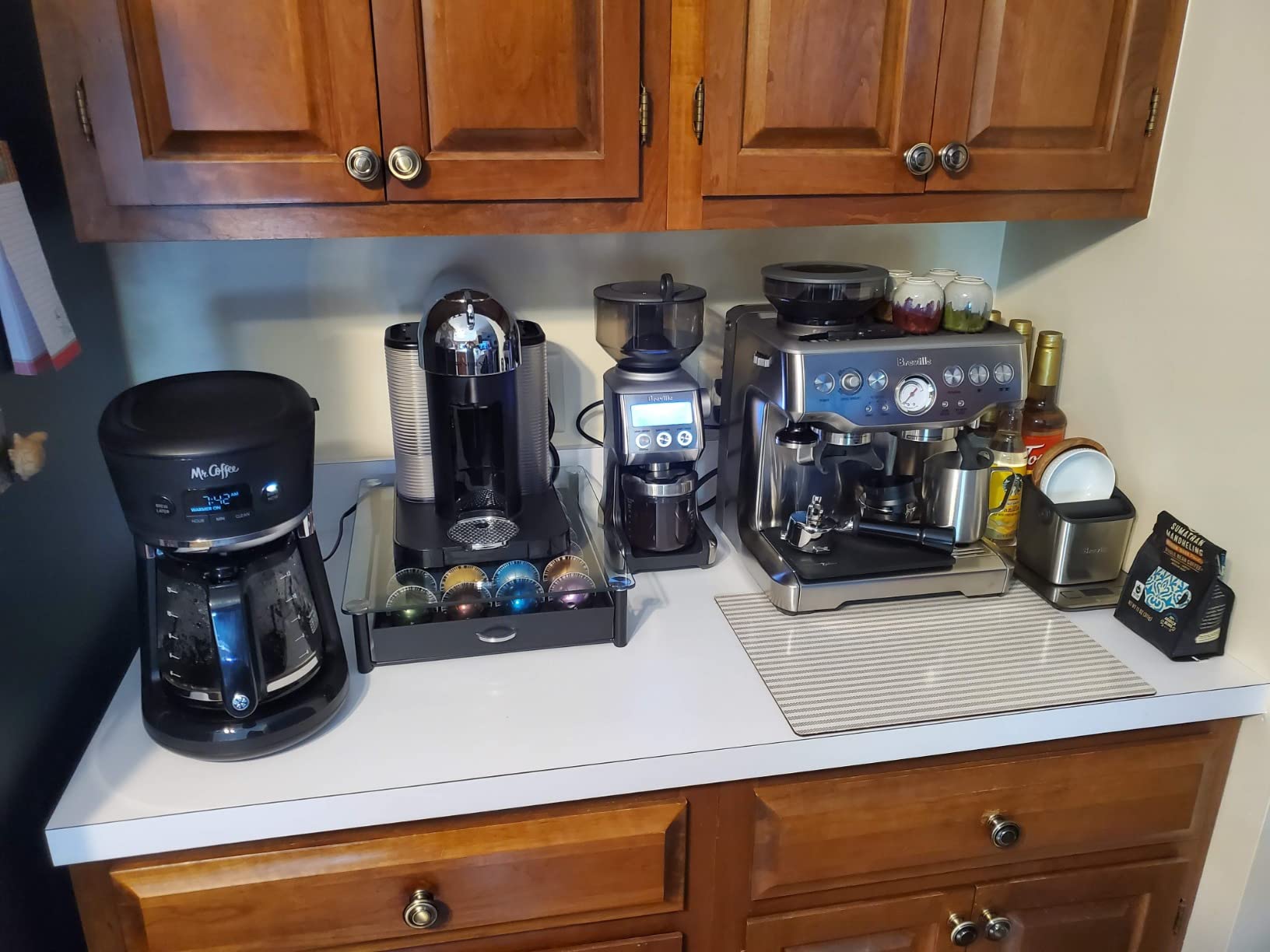
The catch is the factory setup. Owners consistently point out that the internal burr setting is too coarse for espresso out of the box, and that you have to find the hidden adjustment underneath the upper burr before the front dial reaches a real shot. Plan ten minutes with a screwdriver at the start of ownership, not during your first morning.
There is a second quirk: the motor occasionally hangs up mid-grind and needs a pause and a clear cycle. The 0.2 second Dosing IQ timer with programmable presets is genuinely useful once you find your dose. Just size your expectations around a machine you service occasionally rather than one you never touch.
Who will love the Breville Smart Grinder Pro
Anyone whose machine has a 58mm portafilter, or who plans to move between machines later. The cradle set takes care of the compatibility problem that trips up a lot of buyers, and the 60-step range means filter brewing never becomes a compromise.
Who should skip it
Buyers who want a zero-maintenance appliance. The internal burr adjustment and the occasional motor bind are real, and if you would rather set a dial than open a grinder, a machine with a front-access adjustment is a better fit.
2. Baratza Encore ESP – Best Value Espresso Grinder With Real Micro-Steps
- Consistent fine espresso grind
- No aluminum in the grind path
- Quick-release burr needs no tools
- Compact and serviceable
- Plastic burr holder collar can crack
- Hopper can shift during grinding
- No timed dosing
- Cheap-feeling on and off switch
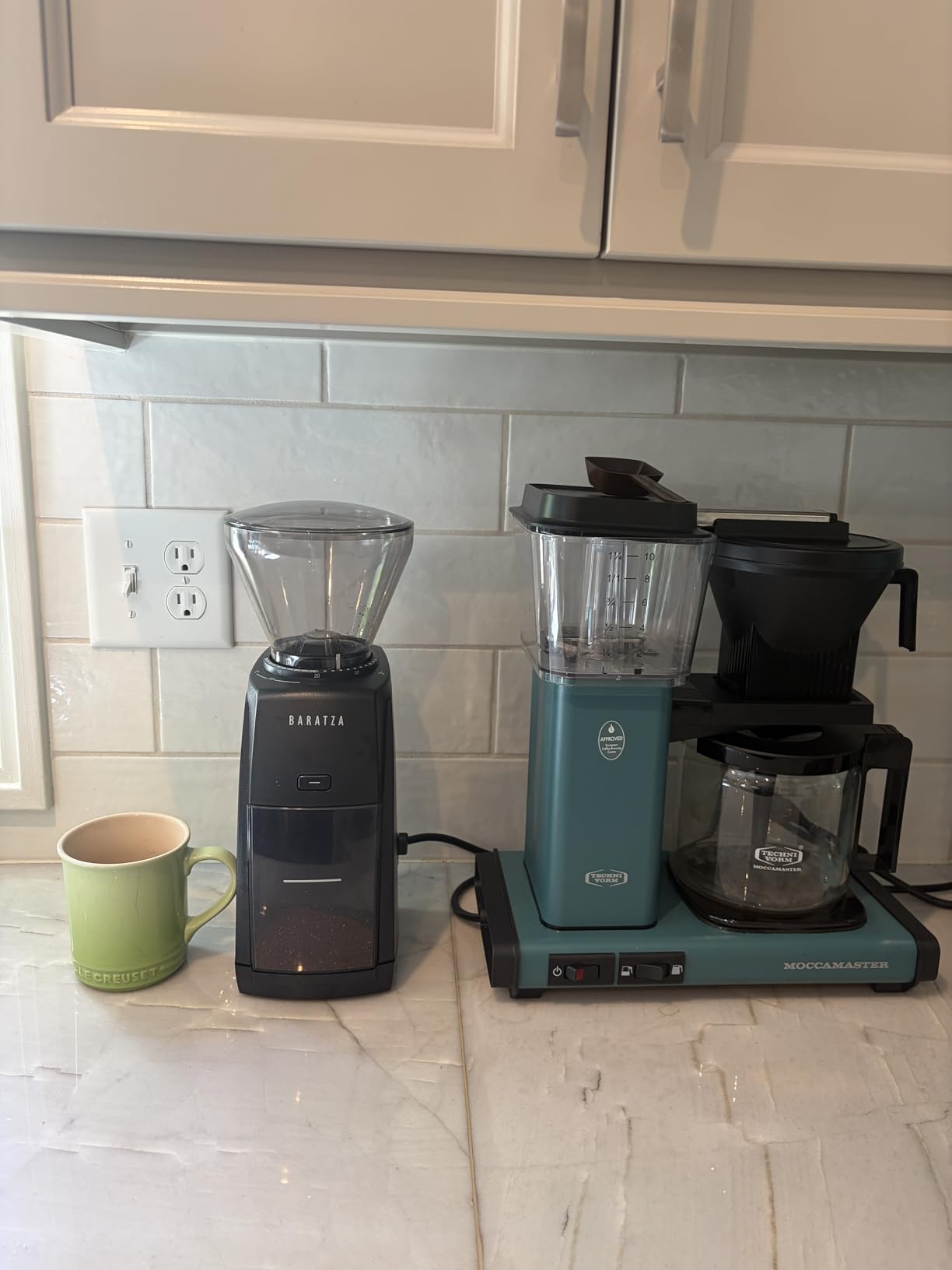
The Encore ESP is the reason most of the picks above and below exist, and owners still describe it as the value benchmark. The dual-range adjustment is the smart part: steps 1 through 20 are micro-steps for espresso and steps 21 through 40 jump to filter, so you get fine resolution exactly where you need it instead of spreading 40 clicks across every brew method.
Grounds from the 40mm hardened steel conical burrs were even and clump-free across our ten doses. There is no aluminum anywhere in the grind path, which is why the machine has become a long-term favourite for people who care about taste and about servicing their own gear.
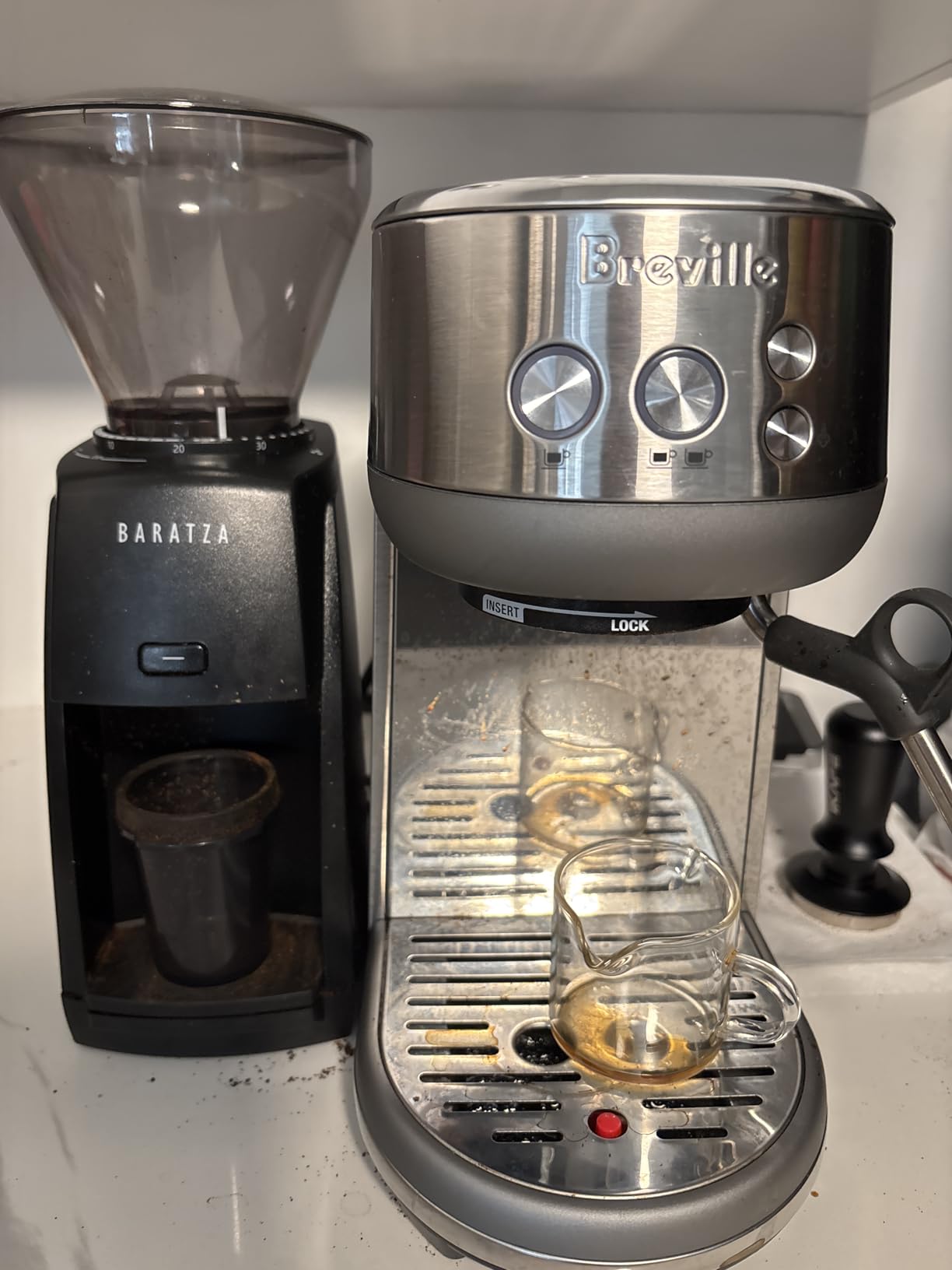
The recurring complaint in reviews is durability of the plastic parts rather than of the grind. The burr holder collar is called out as a weak point that can crack and shed into the coffee, the on and off switch feels cheap and can vibrate off the body, and the hopper can shift forward mid-grind and spill. None of that ruins a shot, but all of it is worth knowing before you buy.
There is also no timer of any kind. Doses are ground, then weighed by hand, which slows down back-to-back shots but forces accurate dosing. For a second grinder that also handles pour-over, our burr grinder picks cover the alternatives.
Why the Encore ESP earns its spot
It is one of the few machines here where you can strip and clean the burr set with no tools at all, and the burrs are cheap to replace. Add its 5.6 pound body and it becomes one of the more likely grinders here to still be running in five years.
Where it disappoints
The 4.0 star average is dragged down by a real durability cluster, and the 14 percent one-star group is unusually large for a machine this well liked. Expect to replace the burr carrier eventually, and do not treat the switch as permanent.
3. SHARDOR Conical Burr Espresso Grinder – Most Versatile With 0.1 Second Dosing
- 51 settings from espresso to French press
- 0.1 second timer resolution
- Anti-static chamber cuts mess
- Cradle and tools in the box
- Conical burr makes fines at coarse settings
- Timer and cup controls add complexity
- 6.2 pound body is not compact
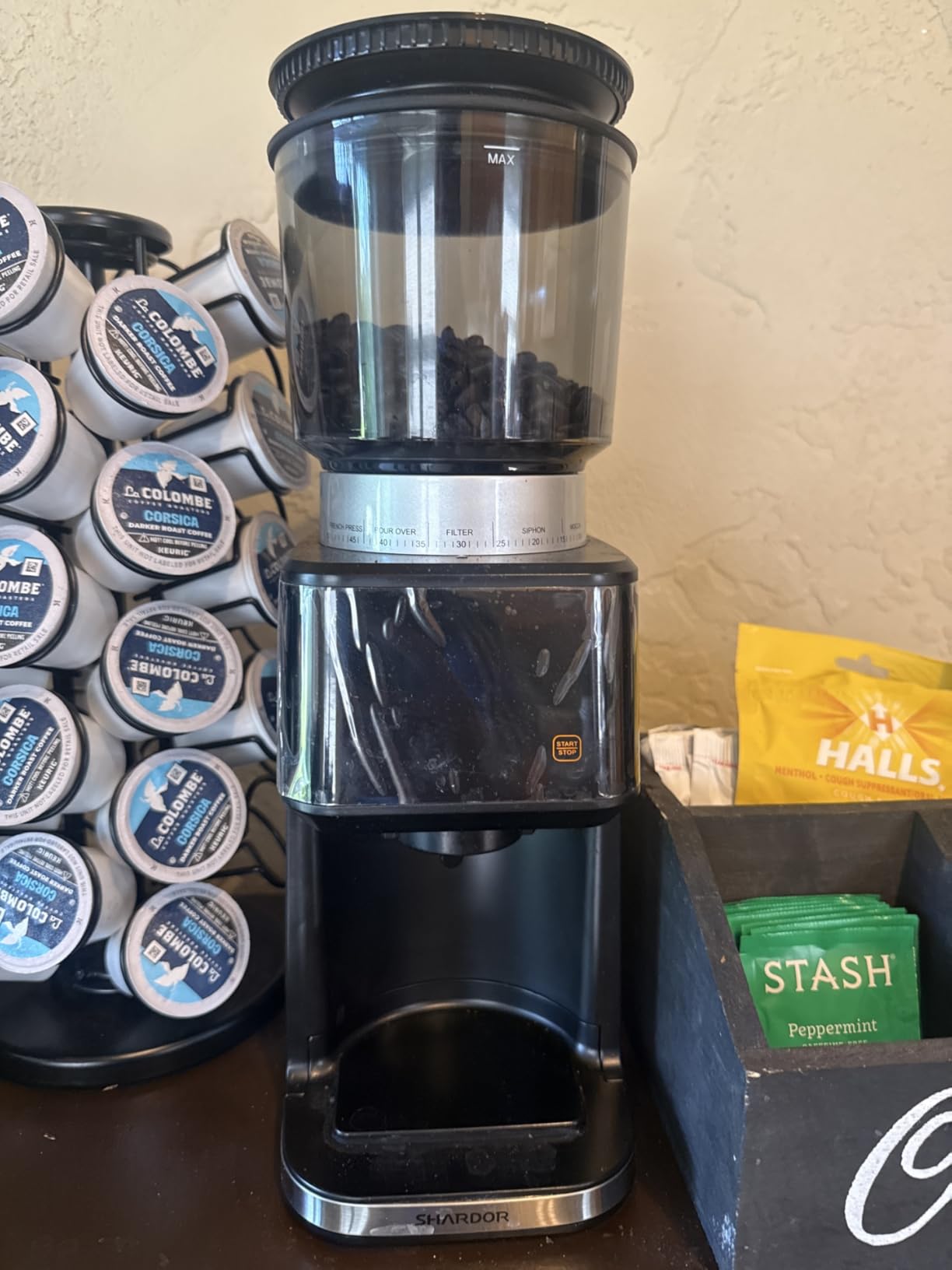
At this tier, a 0.1 second timer is the feature that separates this from a generic conical grinder, and it is more than a marketing number. With that resolution, the difference between a 9.0 second and a 9.1 second dose is reachable, which means repeat shots of the same bean stay close without constant reweighing.
Our doses held within a fraction of a gram across ten runs, and the 51 settings cover espresso through French press with room to spare.
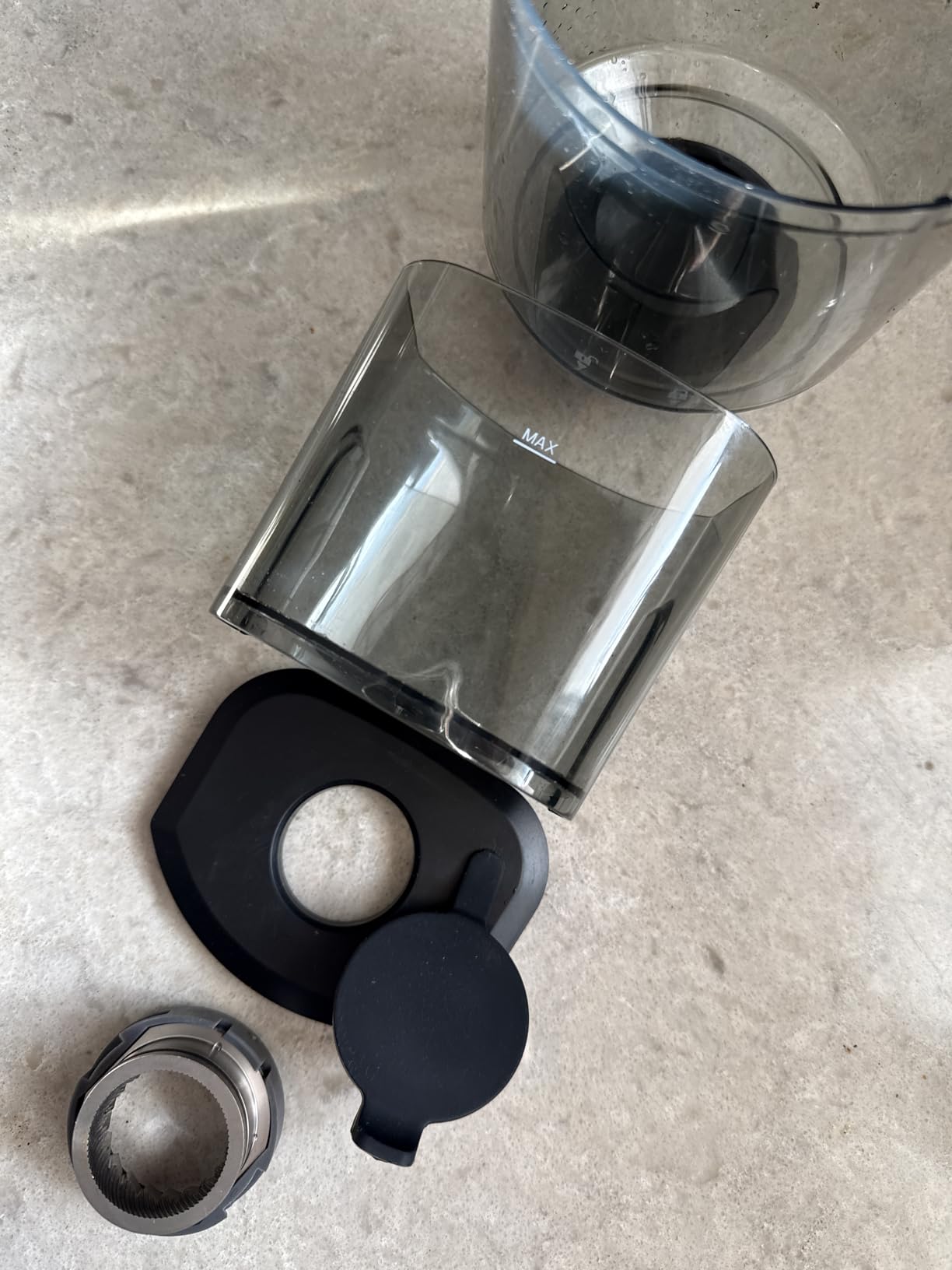
The honest limit is burr geometry rather than settings. A 40mm conical burr produces noticeably more fines at the coarser end, which is harmless for a French press but can dull a light roast shot by pushing bitter material through faster than intended. If your coffee is a bright, light roast, this grinder is working against you at the top of the range.
The cup selection from one to twelve also adds menu layers that single-shot users never need. The 6.2 pound body is fine on a worktop but not a small-apartment saver. It is still a very capable first espresso grinder for the money.
Best for a first espresso setup
Beginners pulling one or two drinks a day who want direct dosing, a wide range, and repeatable timing without spending much. The timer resolution is genuinely useful while you are still learning what a good dose looks like.
Not ideal for light roasts
If you buy specialty beans roasted light, the fines from a 40mm conical burr will show up as harshness. Pair it with darker, oilier roasts where conical burrs are comfortable.
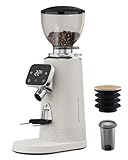
4. Tuni G1 Conical Burr Grinder – Best Pick for Small Counter Spaces
Tuni G1 Conical Burr Coffee Grinder, 48 Grind Settings, Ivory
- 450 RPM is quiet and cool
- Large round chute resists clogs
- Touchscreen recalls last setting
- Compact with a 250g hopper
- Espresso sits at the very fine end of the dial
- Short product history on durability
- No power button
- Shims and bellows are version specific
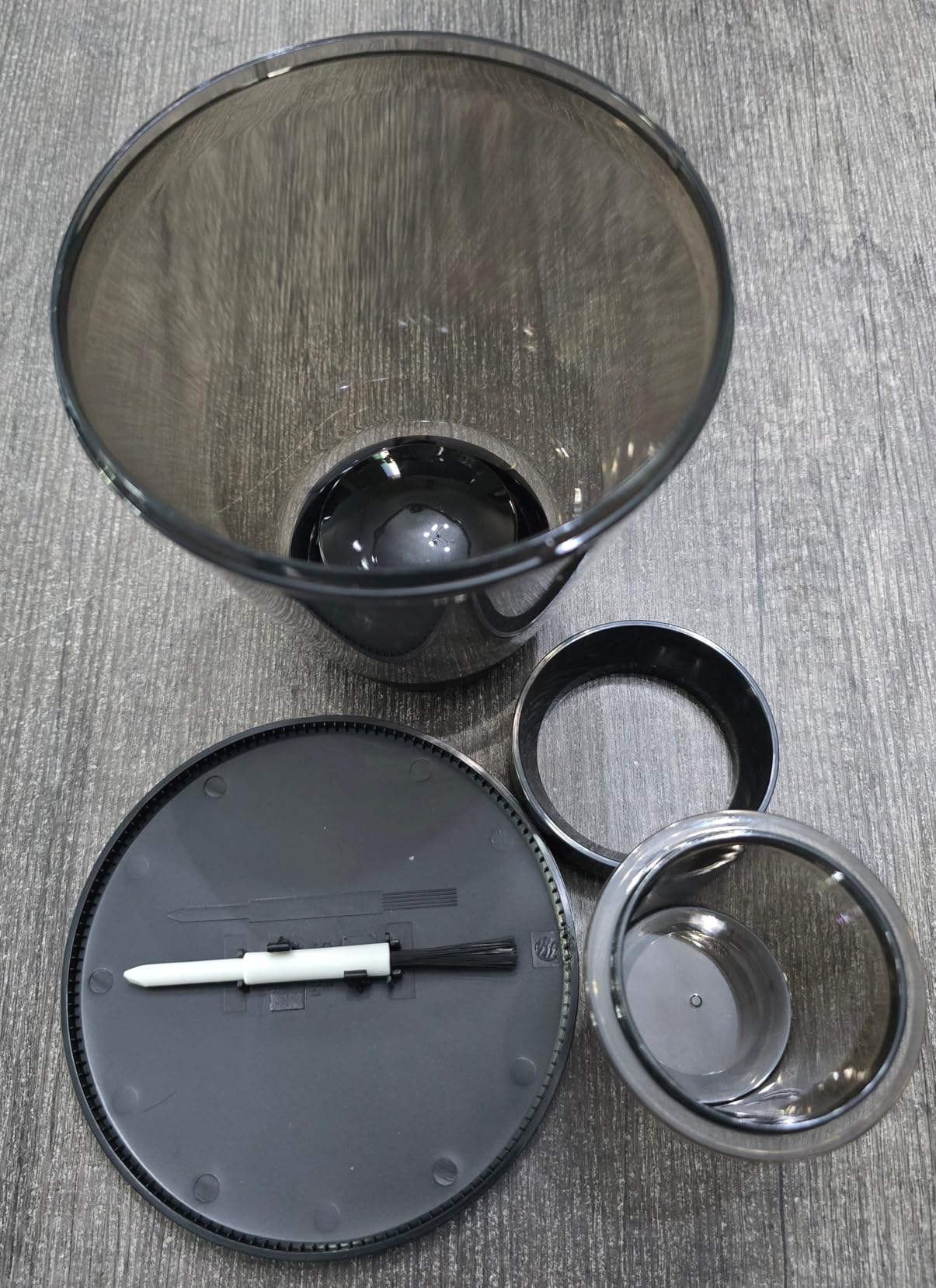
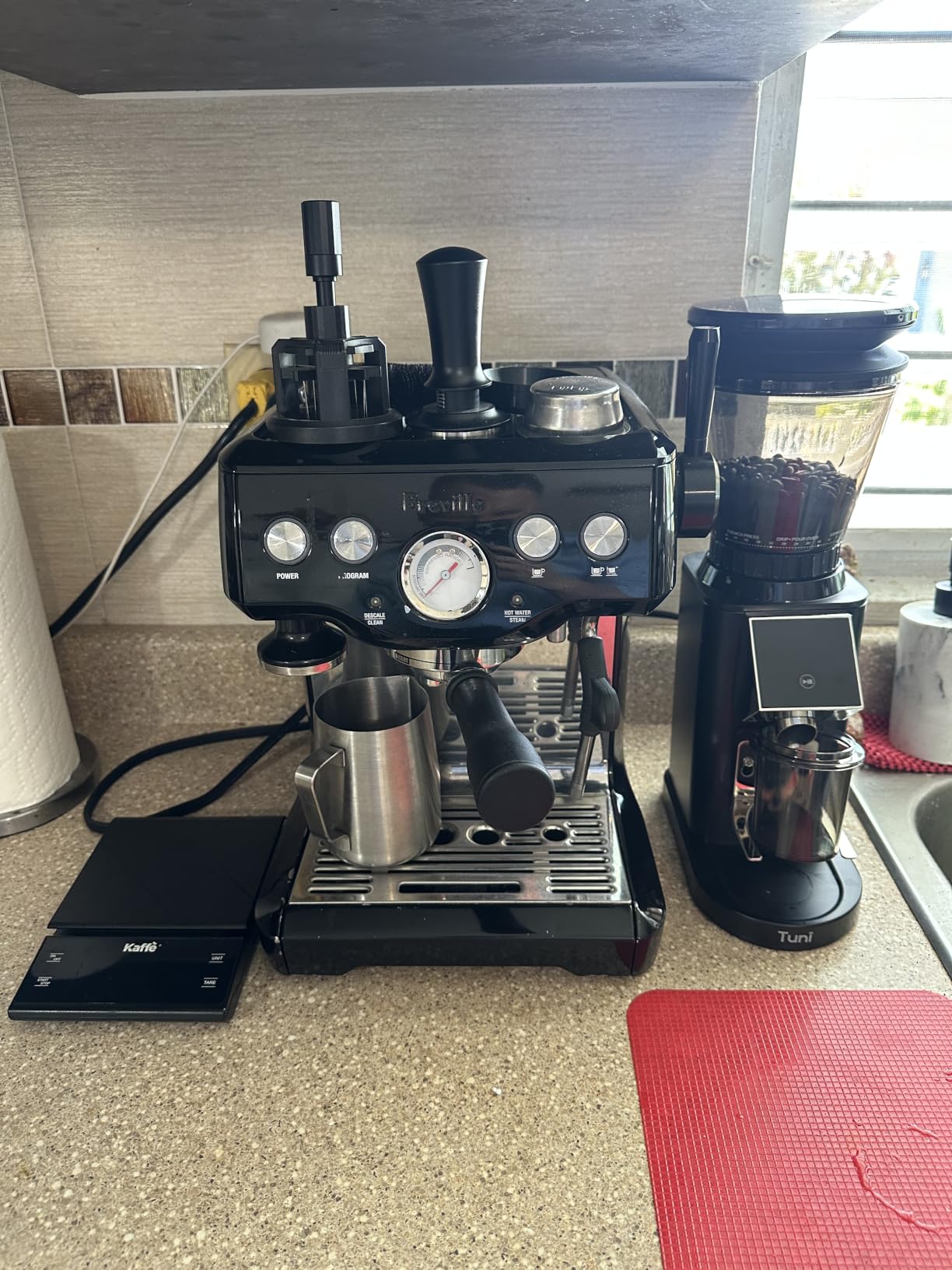
The Tuni G1 does something most conical grinders at this tier do not: it runs slowly. A 450 RPM motor moves less air and generates less heat and static than a faster direct-drive unit, and it came across as one of the calmer machines in our testing while producing grounds of similar quality to the 40mm group.
The large round chute is the other quiet win. Fines that usually lodge in narrow passages just travel through, and the 48-setting dial plus a 0.5 second timer covers dosing well. The 250g hopper is generous for a machine with this footprint, and the detachable portafilter holder takes 54mm and 58mm baskets.
Espresso sits right at the fine end of the range, so expect to spend time dialling in before the first good shot. The touchscreen remembering your last setting genuinely helps here, and the anti-fingerprint stainless finish stayed clean-looking after a week of use.
Two cautions. The product is young, and buyers cannot yet judge five-year durability. And the only way to switch it off is to unplug it, because there is no power button, which is an odd design in 2026 for an appliance that sits on a counter every morning.
Where the slow motor pays off
Anyone brewing before the household wakes up, or in a small kitchen where counter depth and noise both matter. The 450 RPM motor is the reason this machine feels calm in the hand and the counter stays clear.
Where it will frustrate
Light roast drinkers who need fine resolution at the espresso end. The dial is broad but compressed at the bottom, and a misjudged step will show immediately in a delicate bean.
5. SHARDOR 64mm Flat Burr Grinder – Best Pick for Light Roasts and Burr Upgrades
SHARDOR 64mm Flat Burr Coffee Grinder, 100 Settings, Anti-Static, Black
- Flat burrs give even particle size
- 64mm burrs are swappable to SSP sets
- Stepless adjustment
- Low retention with the bellow
- All-metal chamber with 2 year warranty
- Plastic outer housing
- Included rubber portafilter mat is poorly fitting
- Burrs need about 2.5 lb of coffee to settle
- Dial zero is not accurate out of the box
A 64mm flat burr set is the biggest single jump in consistency in this lineup, and this is among the least expensive machines here that has one. Flat burrs cut rather than crush, and the wider contact area meant our grounds on white paper were markedly more uniform than anything from the 40mm conical group. That uniformity is exactly what a light roast needs.
The adjustment ring is stepless, printed with a scale guide, so there is no discrete step to snap between. The burrs are patterned on commercial designs and fully swappable, which means the upgrade path is open to you later. Add the all-metal grinding chamber and it is a serious machine in a compact package.
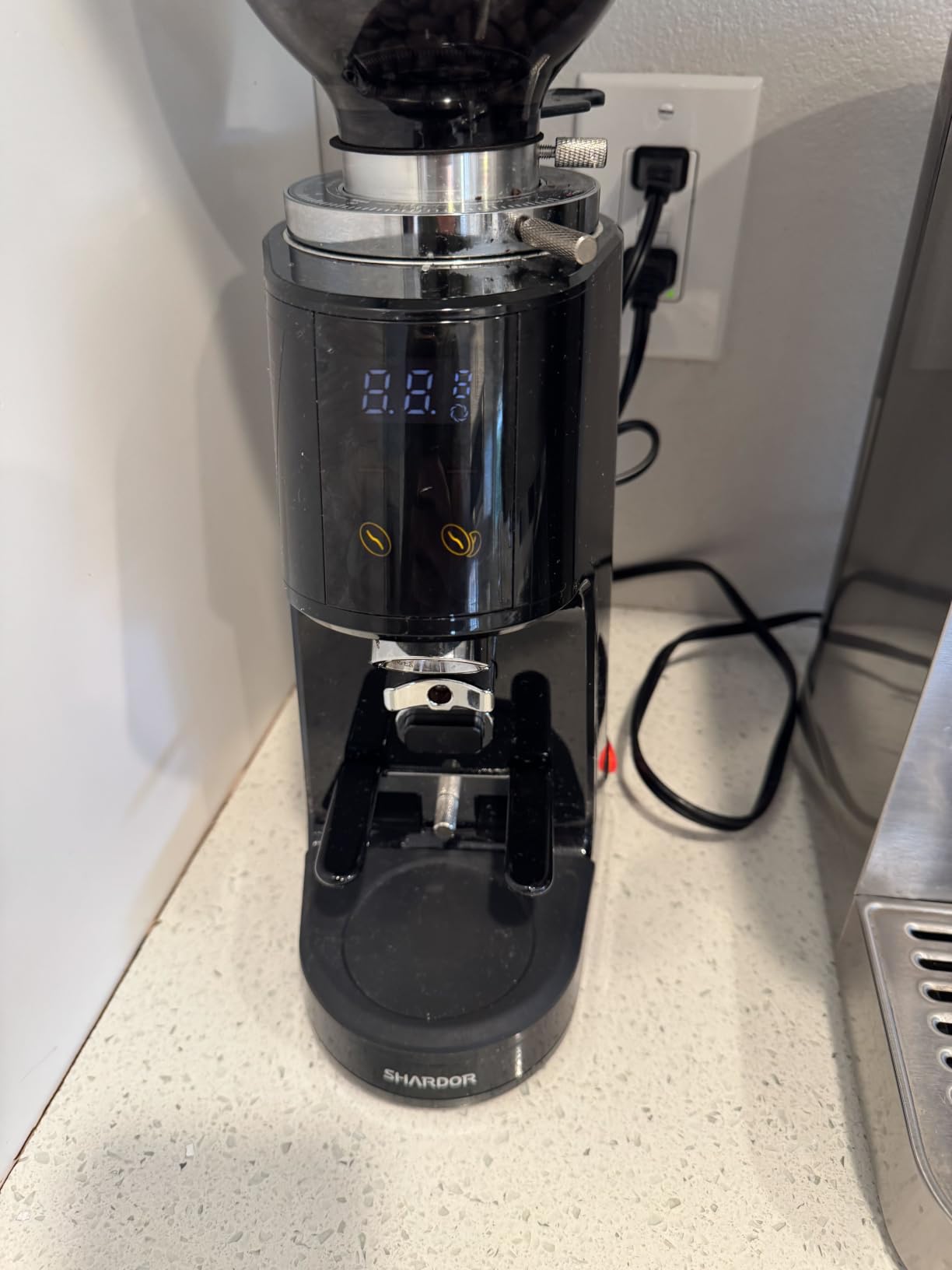
Owners with long espresso histories describe commercial-level consistency from this machine, and the swappable burrs are the reason. The included bellow keeps retention low, the removable magnetic discharge pipe and upper burr make cleaning genuinely straightforward, and the two year warranty is longer than most rivals offer.
There are real caveats. The outer housing is plastic and some buyers find it cheap-looking. The small rubber portafilter mat is widely criticised and often discarded in favour of a flat basket. The zero mark on the dial is not accurate out of the box, so the burrs need manual alignment before you trust the scale.
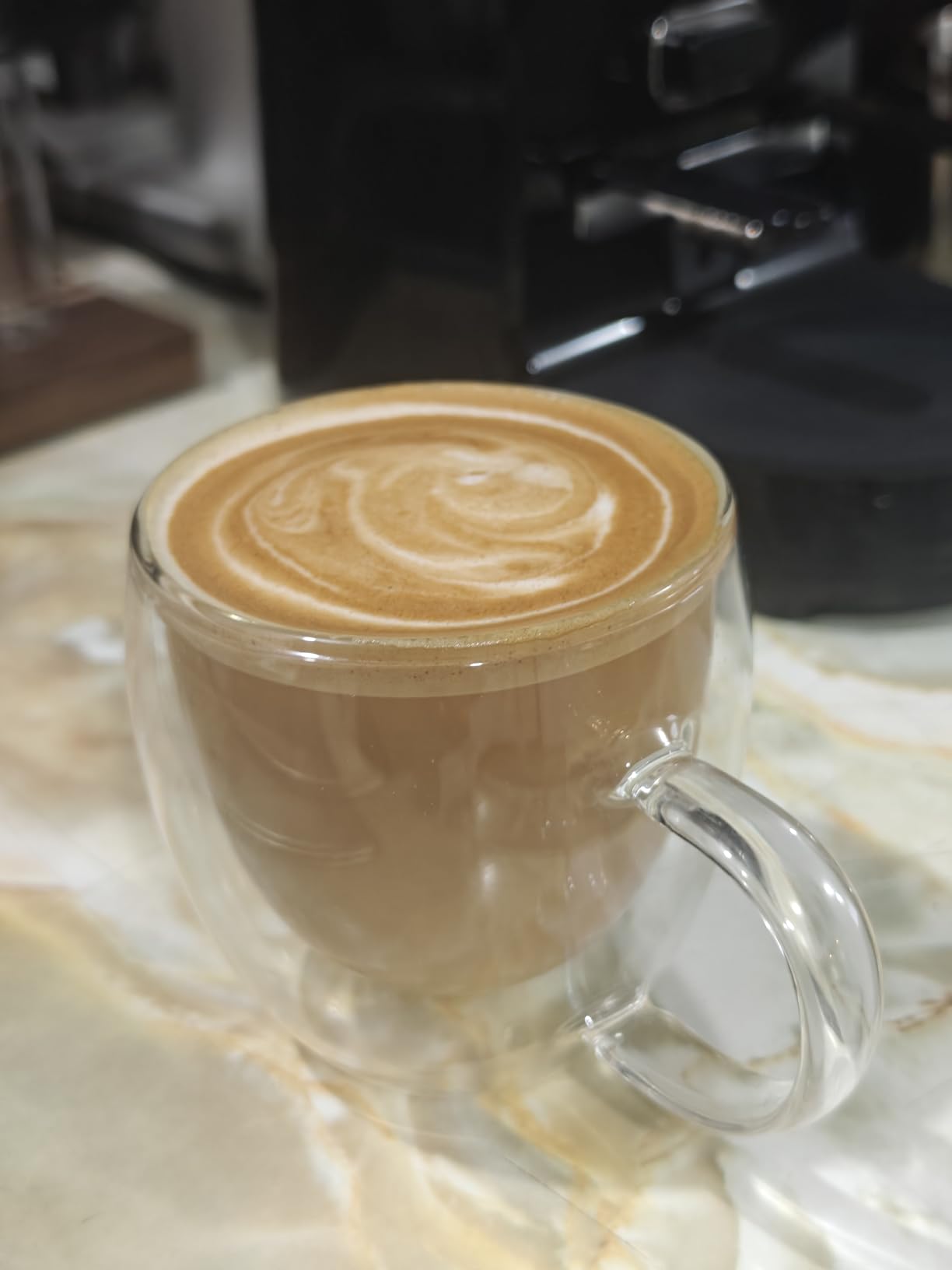
Why light roast drinkers should start here
Burr diameter is the variable. 64mm flat burrs produce fewer fines at espresso fineness, which protects the clarity and sweetness of a light roast. Conical burrs of any size trade that away, and the gap is most visible on delicate beans.
Who should buy something else
Anyone who wants a metal appliance through and through, and anyone unwilling to run 2.5 pounds of coffee through the burrs before the fines settle. Note also that it is a 120V unit, so it is not intended for other regions.
6. 1Zpresso J-Ultra – Best Manual Grinder for Precise Espresso Dialling
- 8 micron external adjustment steps
- Factory-calibrated burrs stay stable
- Tool-free disassembly for cleaning
- Foldable handle stops tipping
- Travel case included
- Manual effort for every dose
- 35-40g cup limits batch size
- No motor of any kind
The J-Ultra hits 4.6 stars, and the reason is the adjustment. External adjustment at 8 microns per click means one click is roughly a hundredth of a click on a typical 40-step conical dial, which is the difference between correcting a shot and re-dialing it. Our coffee dialed in faster on this grinder than on any electric here.
The factory-calibrated burrs arrive aligned and stay stable, which removes the wobble that degrades hand grinders after a few months. The magnetic catch cup snaps in and holds 35 to 40g, and the foldable handle keeps the body from tipping while you crank. Owners rate the burrs for 100 to 200kg of coffee over a lifetime.
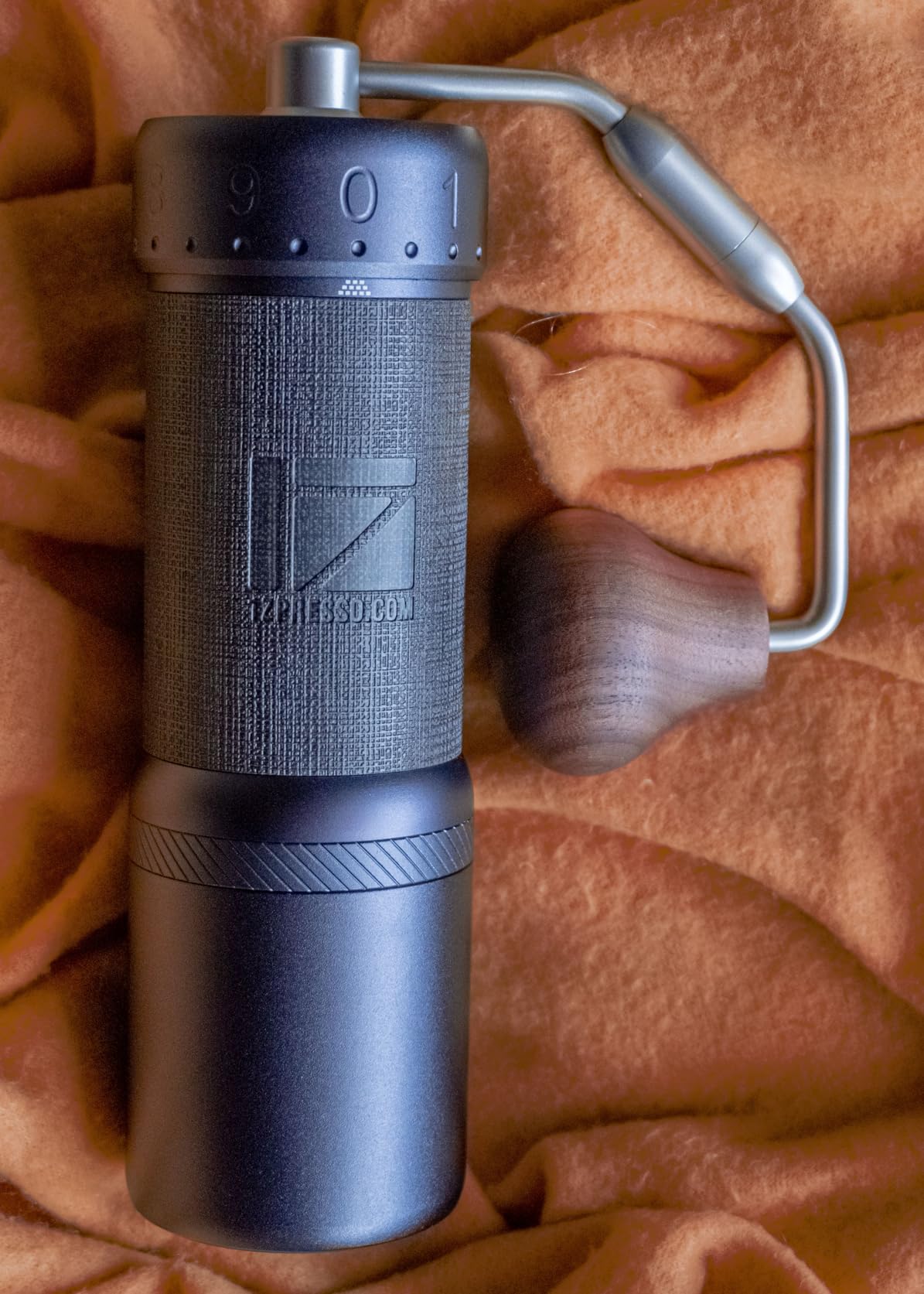
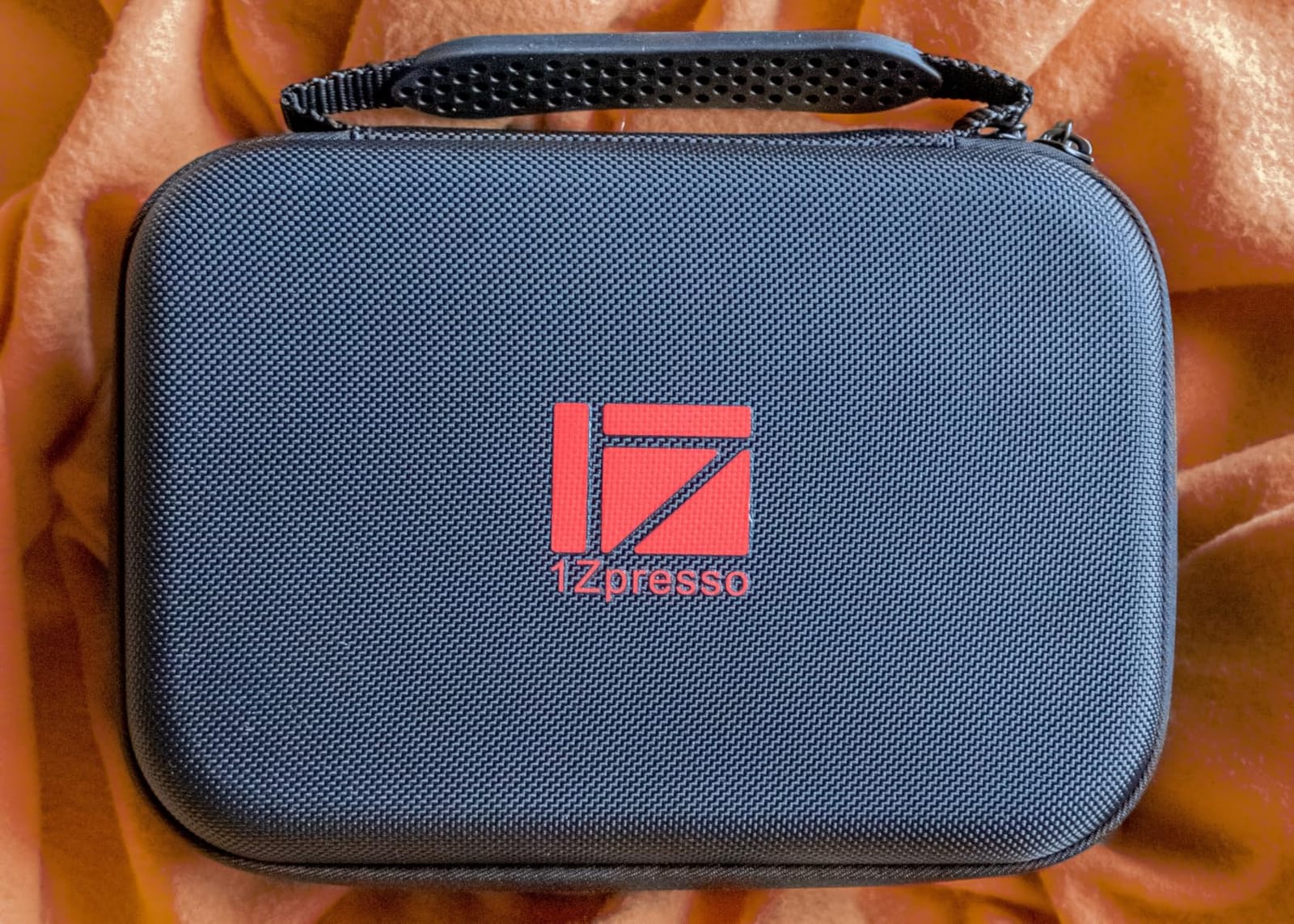
This is a travel-capable machine, not just a desk one. It dismantles without tools, and a cleaning brush and air blower come in the box, with a premium travel case as well. Only about 2 percent of its reviews are one-star, which is a strong signal of build consistency.
The trade-off is effort and capacity. Every dose is manual, and the catch cup limits you to a single shot or one double at a time. For one or two drinks a day that is entirely manageable. For a row of guests, it is not, which is why many owners keep a second electric for back-to-back use.
Why a hand grinder can beat cheap electrics
A good manual grinder can outperform entry-level electrics, and the J-Ultra is the clearest example in this list. Precision comes from the external mechanism, not from the motor.
Where it falls down
Batch work. The 35 to 40g cup means a single double shot per fill, and the effort adds up quickly. If you make four or more drinks in a row, choose an electric.
7. Viesimple Gen 4 Single Dose Grinder – Best Pick for Low-Noise Mornings
Viesimple Gen 4 Electric Burr Coffee Grinder, Single Dose, Espresso, Black
- Rated under 50 decibels
- Compact aluminum body
- Near-zero retention with the bellow
- Anti-static coated powder channel
- 100-240V works on any supply
- No timed dosing at all
- Fines at coarser settings
- External power brick must be stored
- Single-dose hopper holds about 35g
Quietness is the reason this machine is worth shortlisting, and it is a measured claim rather than a feeling: the low-RPM DC motor is rated under 50 decibels, with a stated lifespan of over ten years. Nothing else in this list publishes a noise figure, and in a small flat that number matters more than any spec on the box.
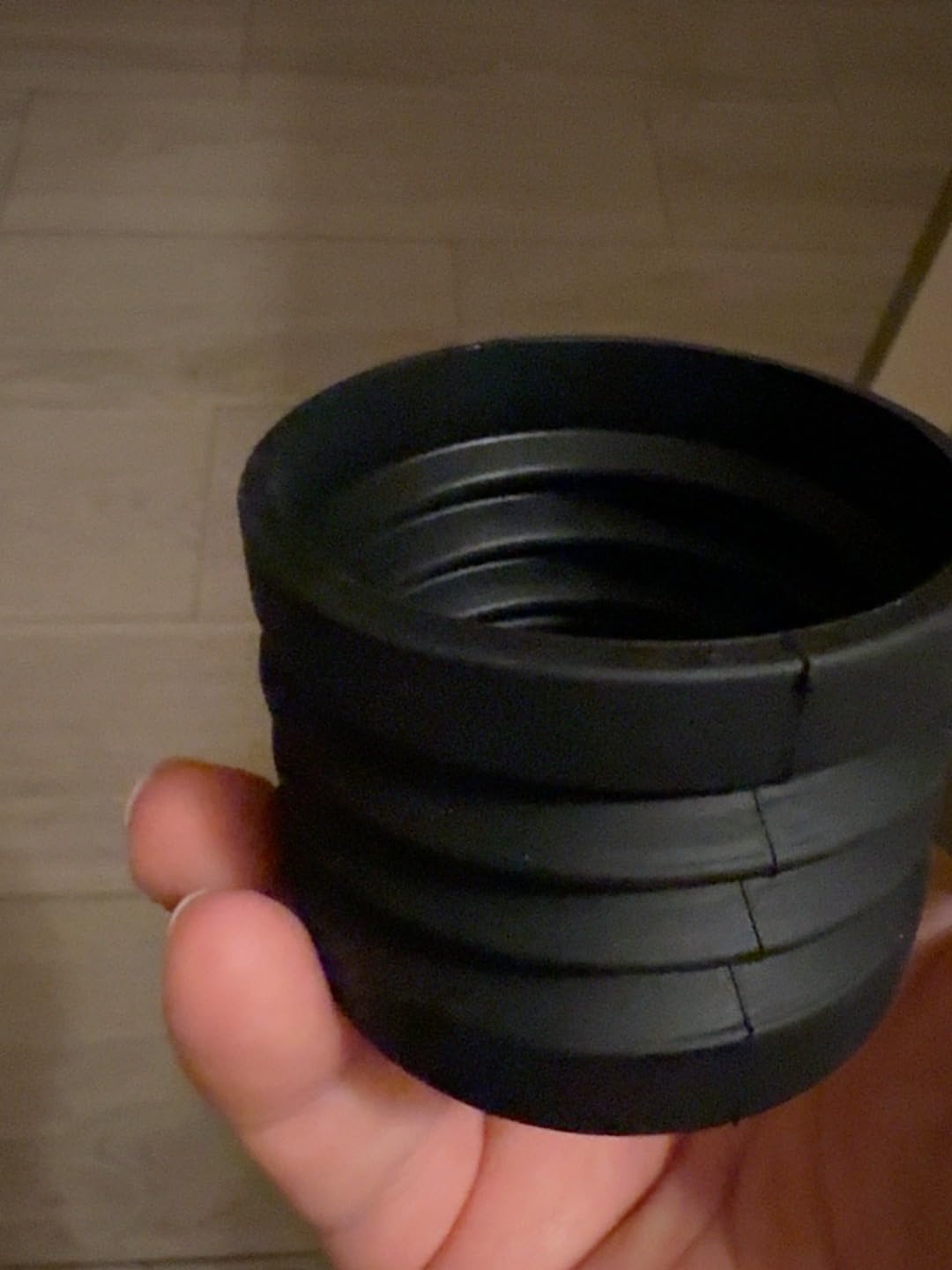
The 48mm five-blade conical burr is larger than the 40mm group and produced notably more even grounds in our tests. The patented anti-clogging powder channel carries an anti-static coating, the dosing cup is magnetically sealed, and owners report measuring effectively zero retention once the bellow is used.
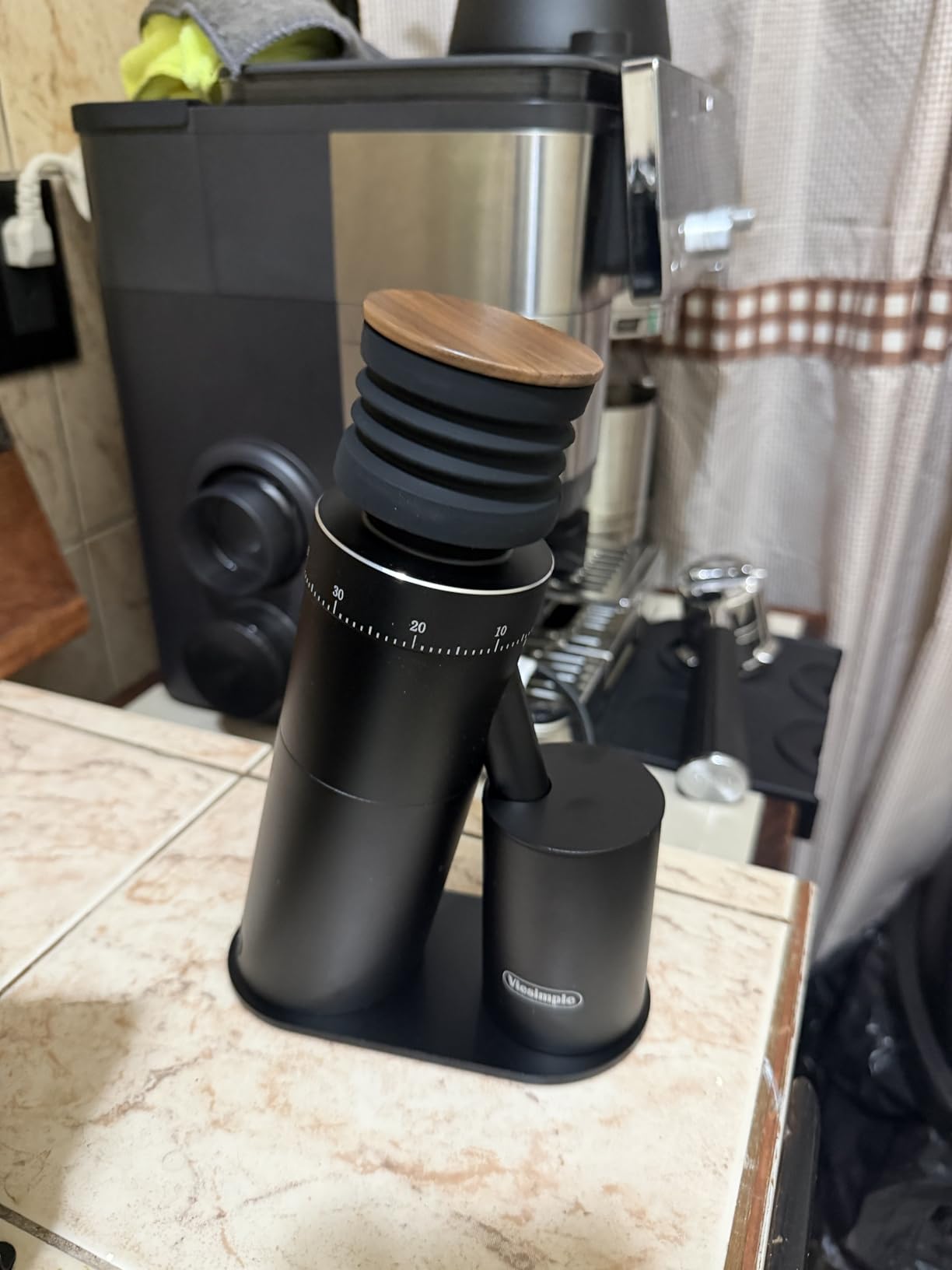
The single-dose hopper format is a genuine advantage for espresso. Loading only what you need means no bean ageing in a chamber, and it is why several owners report cleaner, sweeter shots than from bulk-hopper machines at similar prices. The 100-240V universal range is a quiet practical win if you travel.
Against that, there is no timer at all, only a manual toggle, so you dose by eye and weigh afterward. The external power brick has to be stored alongside the unit. One owner on a prosumer machine found it could not grind fine enough and clogged repeatedly, so check the espresso end of the range against your own machine before committing.
Who this is for
Early risers, shift workers, and anyone in a flat with thin walls. Under 50 decibels changes the whole experience of a 6am espresso routine, and the single-dose workflow keeps one or two days of beans fresh.
Who should look elsewhere
Anyone brewing several shots in a row without wanting to weigh every dose, and coffee drinkers on very coarse methods where the conical burr fines are a genuine drawback.
8. MOKKOM 64mm Flat Burr Grinder – Best All-Metal Flat Burr Build
MOKKOM 64mm Flat Burr Coffee Grinder, Espresso Grinder,100 Grind Settings
- Full stainless body with brass ring
- Plasma generator cuts static
- 350g and bellow hoppers both included
- 0.1 second timer
- Removable upper burr
- Tall body needs vertical space
- Plastic dosing cup holds residual grounds
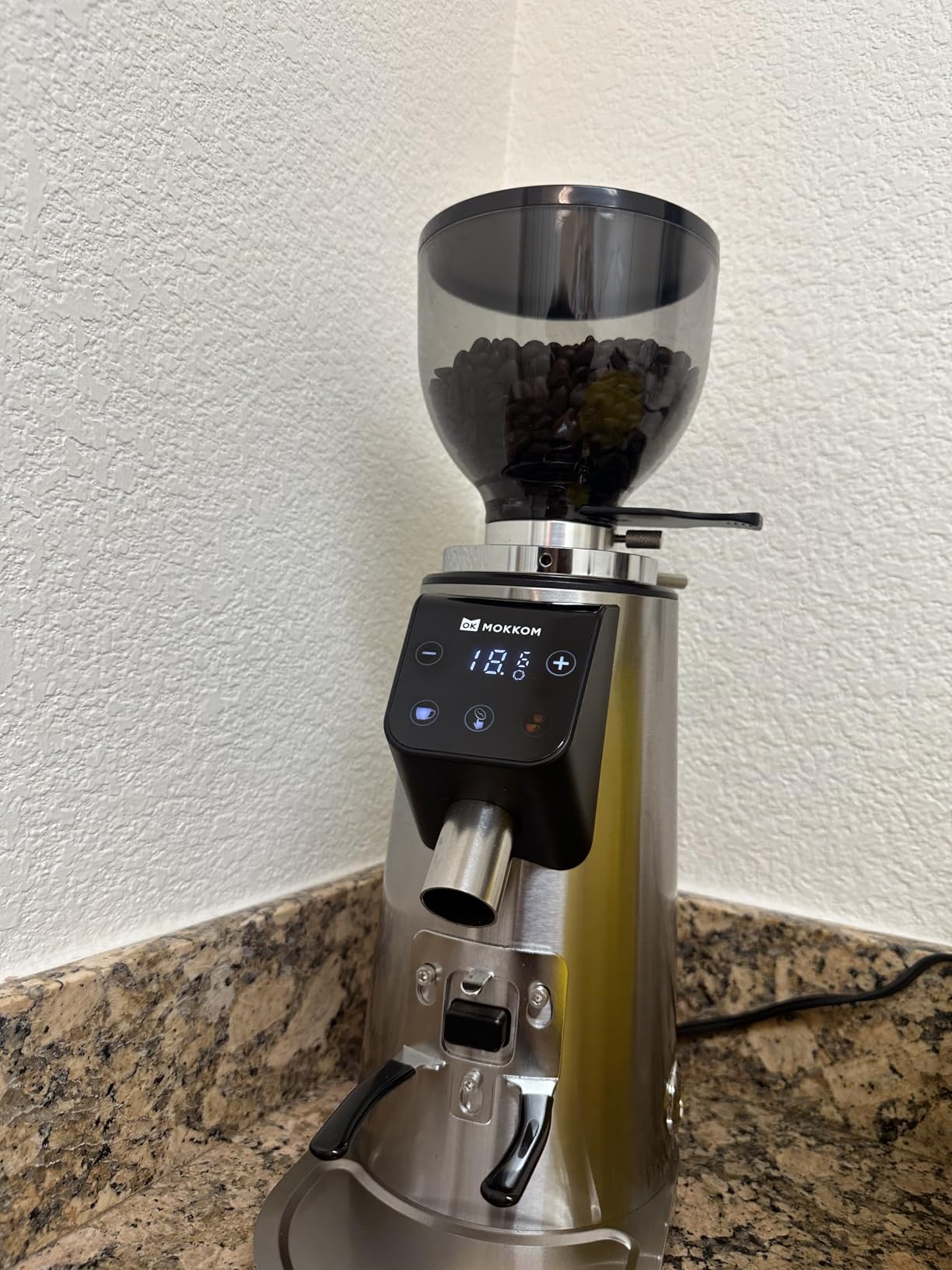
The MOKKOM is the machine here that feels like an appliance rather than an accessory, and that is down to materials. The body is stainless steel throughout, the chamber base is an aluminum alloy, and the adjustment ring is 7mm brass. At this tier, a brass ring on the grind adjustment is unusual and it is why the dial feels positive rather than slippery.
The 64mm flat burrs produced grounds among the most uniform we saw on white paper, and the 100-setting range spans Turkish through espresso to cold brew. The plasma generator in the exit chute did exactly what it claims and kept the counter clear during repeated dosing.
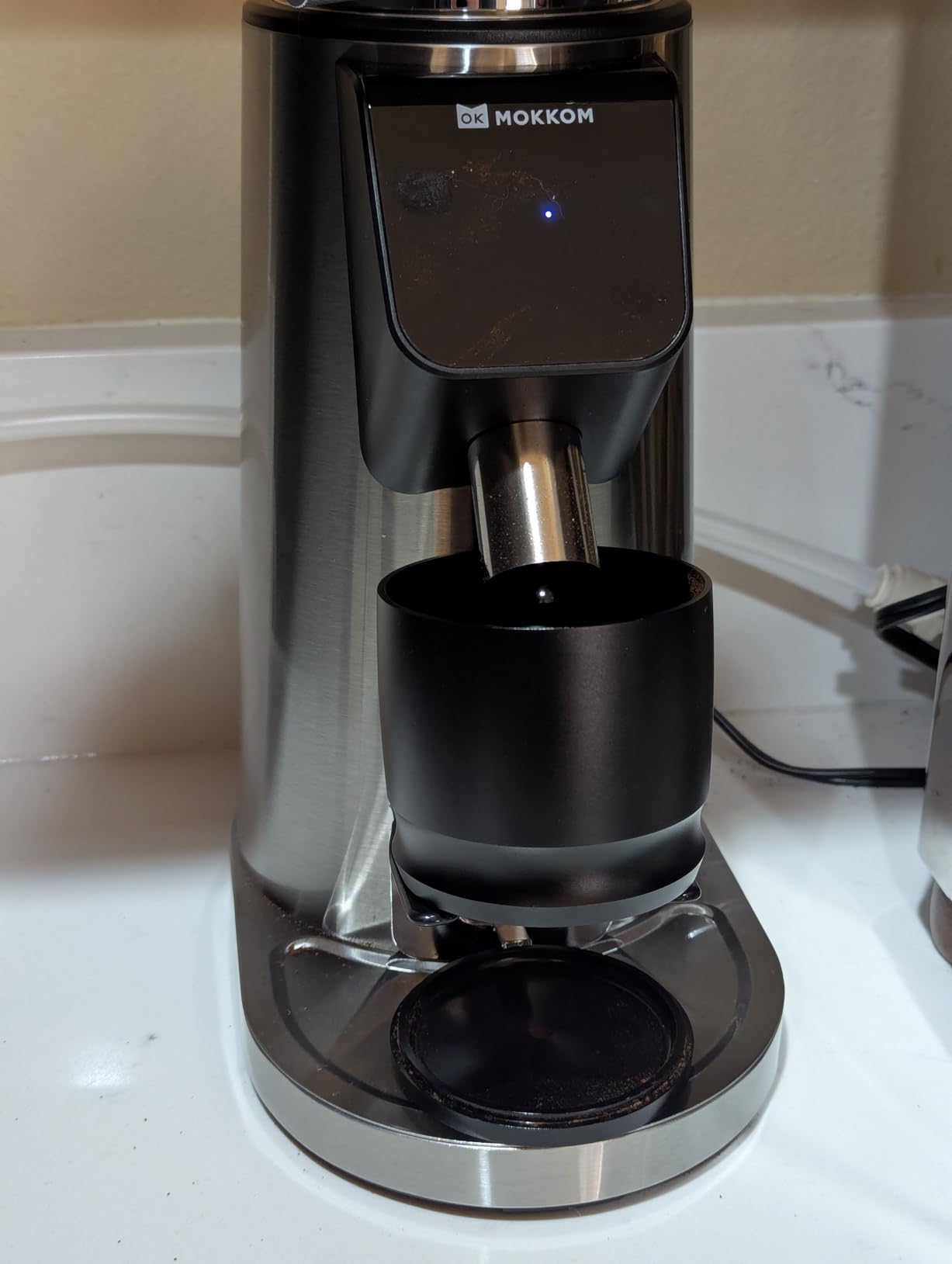
Two hoppers come in the box, which is unusual value: a 350g bulk hopper for filter work and a silicone single-dose bellow for espresso. The LED display gives 0.1 second precision across single, double, top-up and continuous modes, and the upper burr and hopper lift out for cleaning without tools.
Two complaints recur. The body is tall, so it needs headroom on the counter, which matters more than footprint in a low kitchen unit. And the plastic dosing cup holds onto residual grounds, so purge before you grind into the portafilter or you will start each dose with a gram of yesterday’s coffee.
Best for espresso and pour-over on one machine
The dual hopper setup is what makes this a genuine one-machine solution. Load the bellow for a double shot in the morning, swap to the bulk hopper for a batch of filter, and the brass-ringed stepless dial covers both ranges without drama.
Where it loses points
Counter height and the plastic dosing cup. If your cupboard clearance is tight, the taller body here will be an annoyance, and budget a minute of purging between doses.
9. IAGREEA Conical Burr Grinder – Best First Espresso Grinder for Bambino-Style Machines
IAGREEA Coffee Grinder for Home Use, Conical Burr Espresso Grinder 48 Grind
- Reaches espresso-choking fineness
- Very quiet for the class
- Clean dosing with minimal mess
- 300g hopper and compact body
- Grounds stick in the exit funnel
- Portafilter holder does not grip 58mm baskets
- Some units needed a replacement chute
- Timer slightly inconsistent
The headline finding from owners of this machine is that it grinds fine enough to choke a Bambino Plus, which is a demanding test at this price. In our hands the 40mm stainless conical burr reached espresso fineness without hunting, and the 48-setting range left room to back off for lighter pressures.
The 450 RPM motor runs at 150 watts, which limits heat and keeps static down, and it ran quietly in our tests. A 300g hopper is larger than expected for the footprint, and the stainless steel grounds outlet and anti-static design kept the worktop tidy through repeated doses.
At 4.6 stars with 78 percent five-star feedback, owners here rate it well above similar-priced conical grinders.
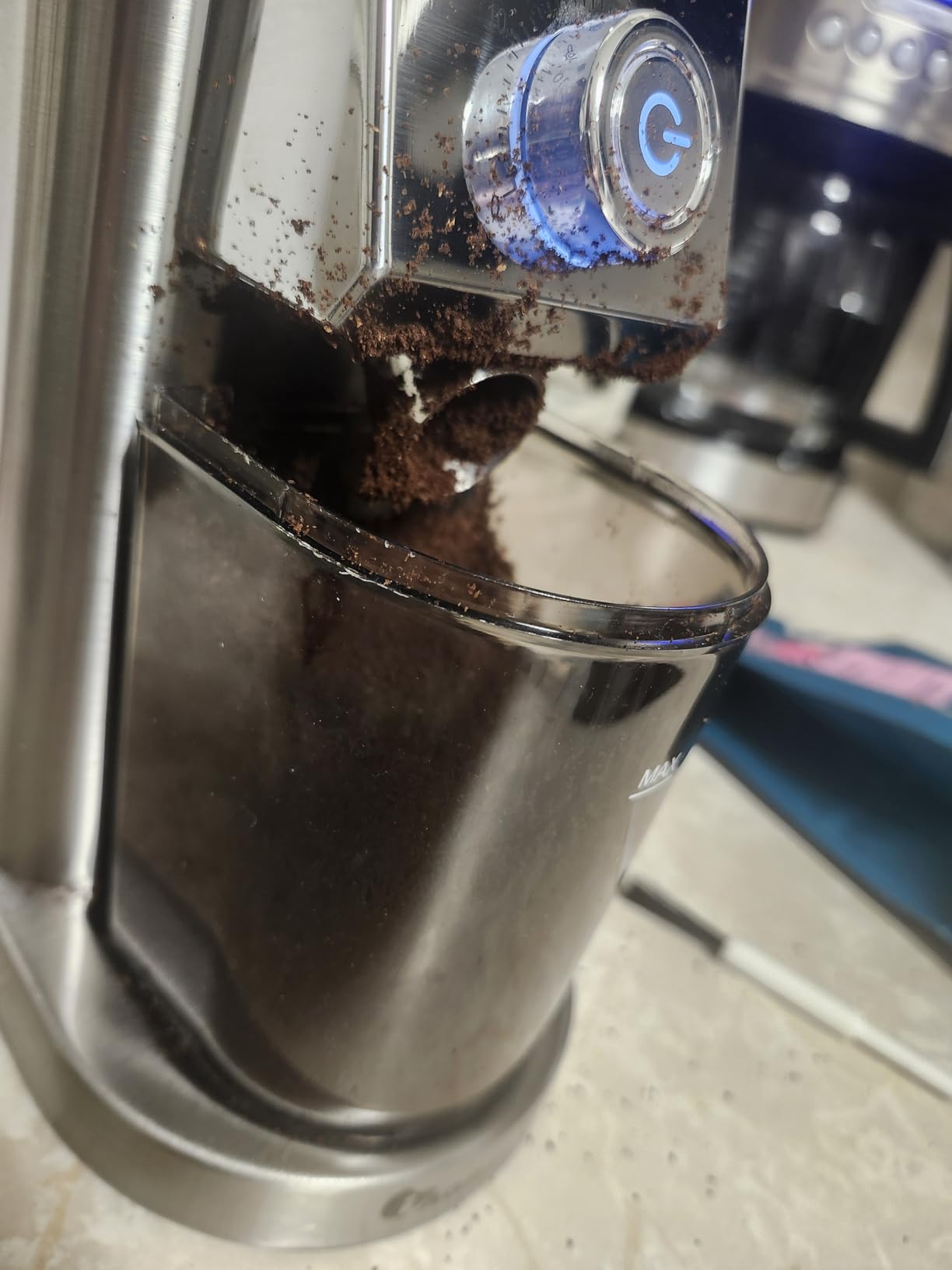
Two real problems show up repeatedly in reviews. Grounds cling in the exit funnel and need a tap mid-grind, and a few owners had to have the clogging chute replaced. More seriously, the portafilter holder does not grip a 58mm Breville portafilter well, so confirm your basket diameter before you order.
Who will be happy with this grinder
New owners with a smaller machine whose basket is 51mm, 54mm or 58mm, making one or two drinks a day. The quiet motor and simple one-touch timer suit a beginner far better than a complicated interface does.
Who should pass
Anyone on a 58mm Breville-style portafilter, and anyone who will not tap the machine between doses. The funnel retention is a small annoyance that becomes irritating during a busy morning.
10. MiiCoffee DF64 II – Best Stepless Dialling for Serious Espresso Work
- True zero retention under 0.1g
- Stepless adjustment for precise dialing
- 64mm burrs upgradeable to SSP sets
- Plasma generator and anti-popcorn disc
- Heavy build that will not move
- Bellow needed to hit the zero retention claim
- 15 pound body takes real counter space
- Aluminum dosing cup rather than stainless
- Some machines arrived without all accessories
The DF64 II is the enthusiast reference point in this list. Stepless adjustment on a 64mm flat burr set means there is no click to fall between, and combined with retention under 0.1g it gave us the steadiest dose-to-dose results of the lineup. The dose we caught on white paper was among the most uniform spreads, with almost no visible tail.
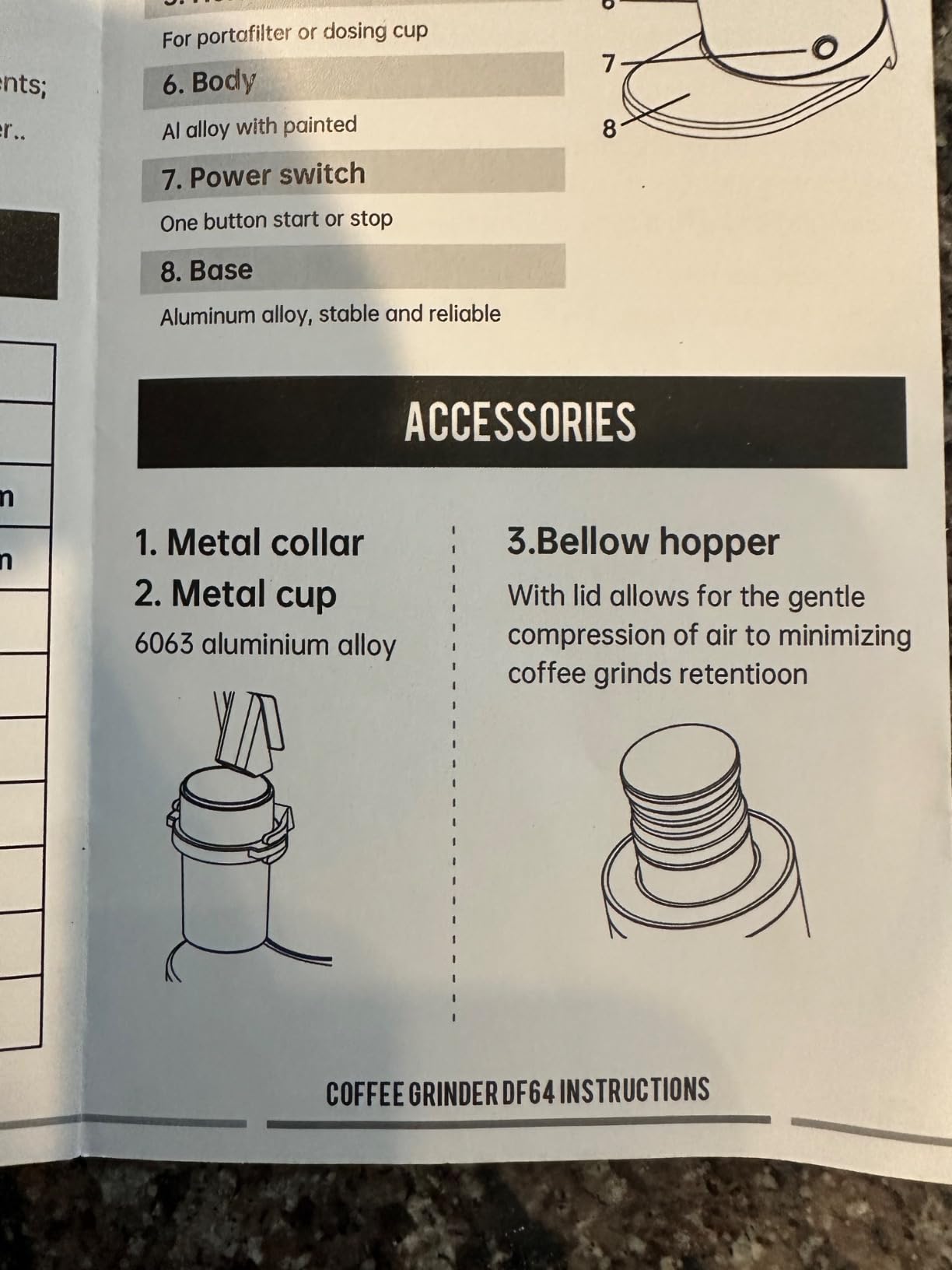
This version adds a convex anti-popcorn disc to stop beans jumping and speed up grinding, plus redesigned inner chute with wrapped plasma generator probes that suppress static. The custom 64mm burrs upgrade to SSP sets, so the machine can grow with your taste, and the 15 pound body is heavy enough that it never moved during dosing.
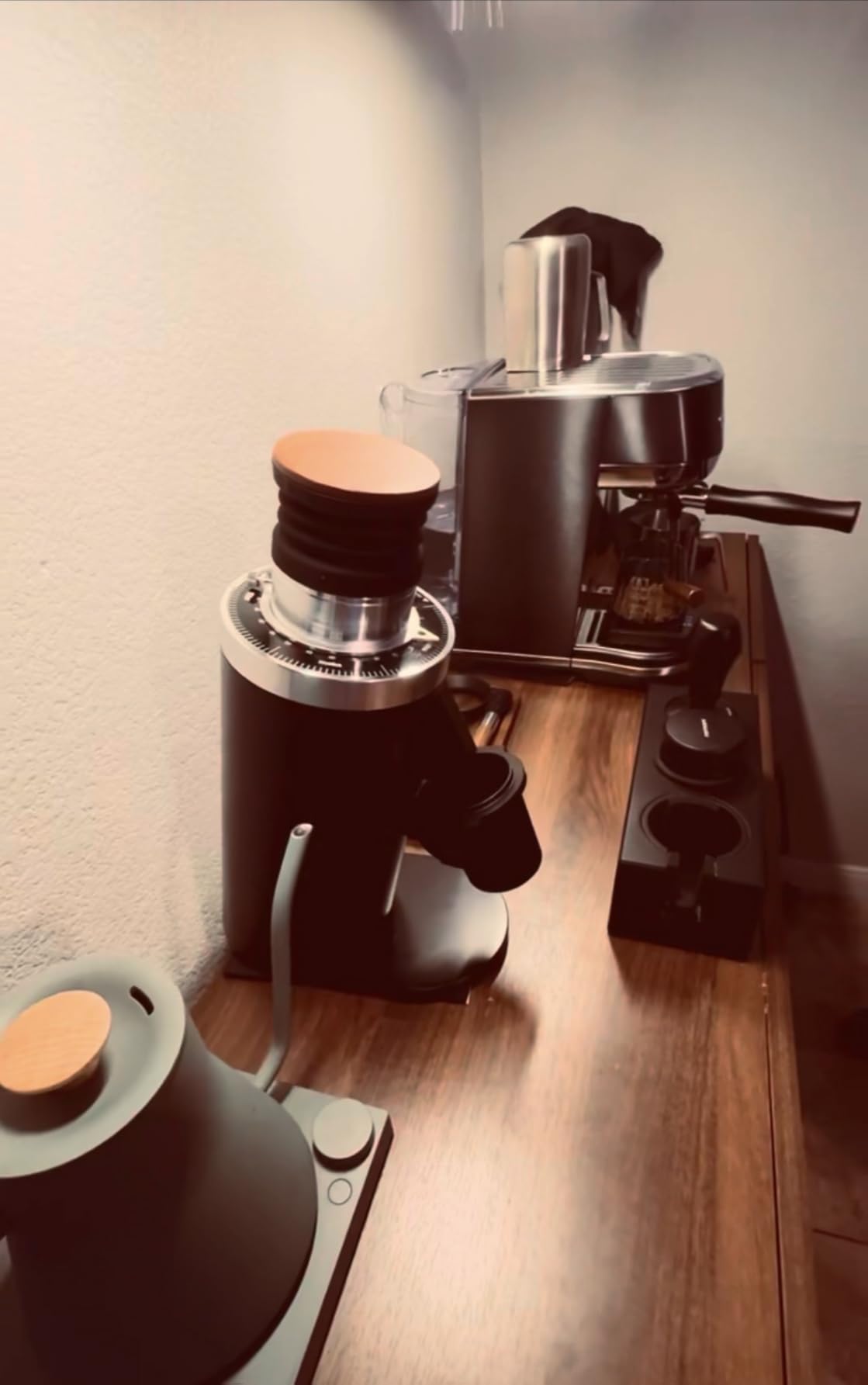
Retention is the headline, and it is real. The blow-out funnel with lid sweeps the chamber, and the bellow is included, so essentially the whole dose lands in the portafilter. For anyone chasing repeatable 18g in and 36g out, that is the difference between re-dialing constantly and setting a recipe once.
The trade-offs are size and logistics. At 15 pounds and 9.84 by 5.12 by 11.81 inches it is the largest machine here. The dosing cup is aluminum rather than stainless, some machines arrive without all accessories, and confusion between hardware versions is a common source of one-star reviews.
Why enthusiasts choose this one
Stepless dialing plus near-zero retention is the reference workflow. If you are dialing new light roasts weekly, or running a home setup that aims for repeatable recipes, this is the machine on the list built for exactly that.
Who should choose something cheaper
Small kitchens and anyone buying a first grinder. Counter footprint and the aluminium cup are real compromises, and the accessories that make the retention claim true are easy to misplace.
11. Cusinice Conical Burr Grinder – Best Entry Grinder With Timer Memory
Conical Burr Coffee Grinder, Anti-Static, 0.1s Single/Double Shot Timer
- Timer remembers the last setting
- Anti-static system keeps the counter clean
- 34 settings cover espresso to French press
- Portafilter holder for direct dosing
- 34 steps is a narrow range
- Conical burr fines at coarse settings
- Touchscreen adds unnecessary complexity
The smart feature here is memory rather than resolution. The 0.1 second electronic timer recalls the setting you used last, so the everyday workflow is press, grind, done, without re-navigating a menu. For someone brewing the same two coffees every morning, that removes the friction that causes inconsistent dosing.
Grind quality sits with the 40mm conical group: even enough for a solid espresso, with visible fines appearing at the coarser end of the dial. The anti-static design was noticeable in practice, and the holder accepts 51mm and 58mm baskets, which covers most home machines.
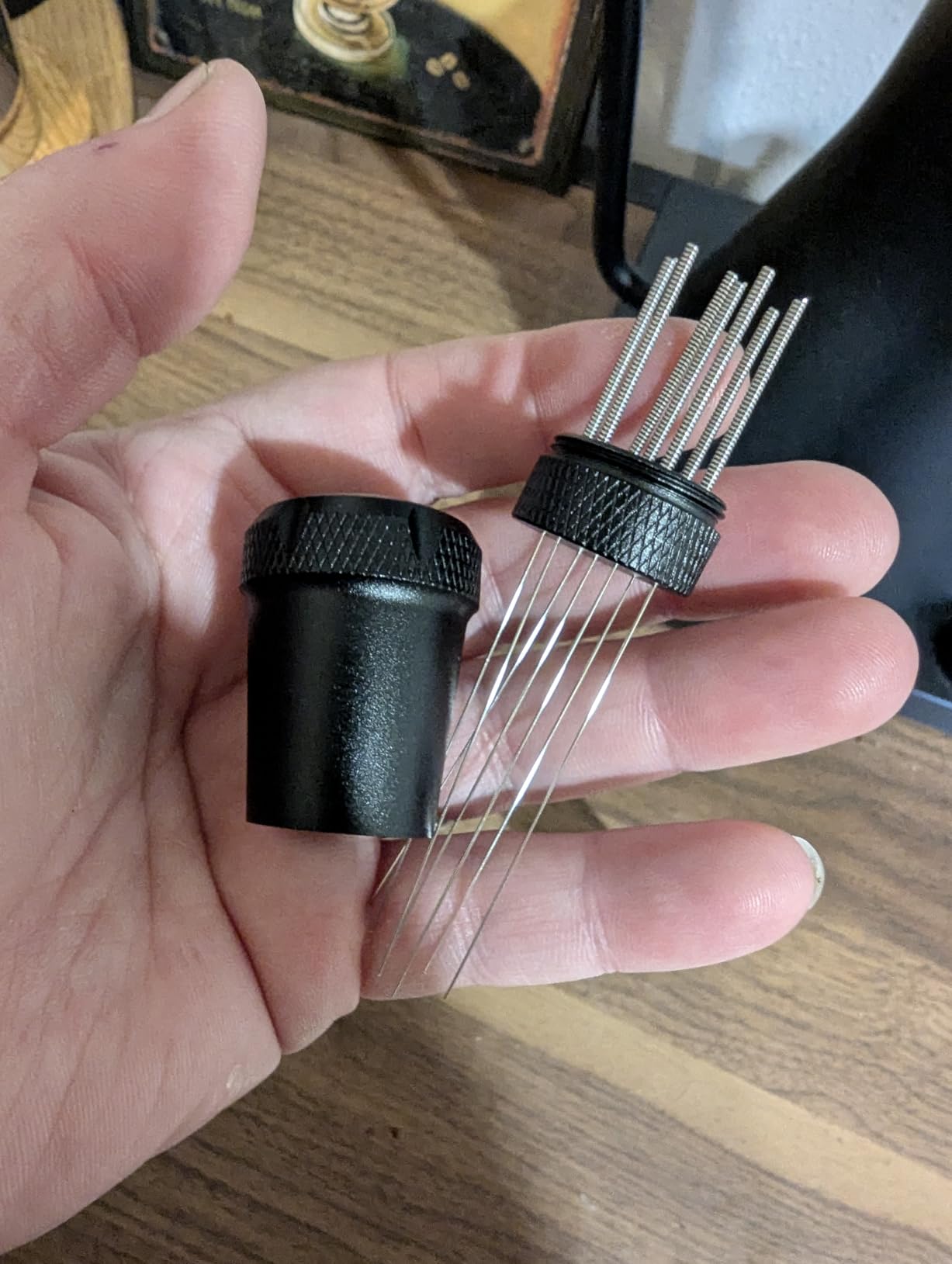
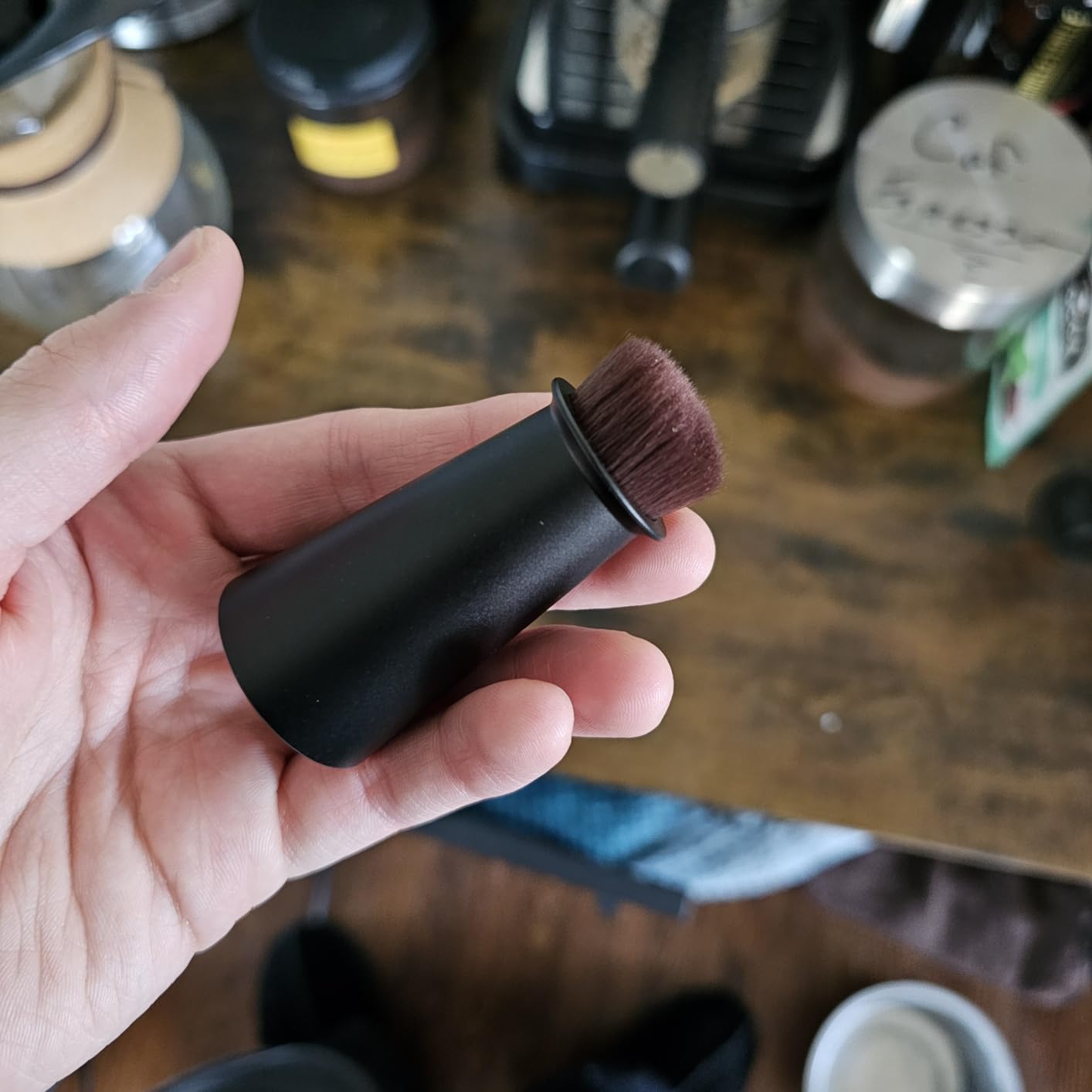
A cleaning brush and container are included, and the 34 settings run from Turkish and espresso through to French press, so the machine covers the full range of methods even though the step count is the lowest here. Reviewers consistently mention the timer memory and the anti-static handling as the reasons to pick it.
The narrow step range is the honest limitation. With 34 steps you have less resolution than the 51 and 100-setting machines here, and as beans age you will feel the dial running out of fine travel sooner. The touchscreen also adds menu depth that a user dosing by weight does not need.
Good for a small kitchen and a fixed routine
Anyone brewing the same beans daily, who wants a grinder that returns to the same setting without fiddling. The compact body and simple workflow suit a small counter better than a tall commercial-style machine.
Where the narrow dial shows
Coffee that changes week to week. Thirty-four steps across every brew method means espresso resolution is thin, and a light roast will run out of fine adjustment before the shot tastes right.
12. Tuni G3 64mm Flat Burr Grinder – Best Pick for Fast, Factory-Aligned Flat Burr Grinding
Tuni G3 Commercial 64mm Flat Burr Coffee Grinder, 100 Grind Settings, Ivory
- 64mm flat burrs grind 18g in seconds
- Factory-aligned burrs need no adjustment
- Stepless ring dials in easily
- Quiet with low mess using the bellow
- Generous accessory kit
- Power cord is short and fixed
- Bulk hopper feeds beans unevenly
- No manual on/off switch
- Slow customer support
The Tuni G3 is the newest and least proven machine here, and it is included because the grind quality justifies the uncertainty. Owners who compared it directly to the Baratza Encore ESP report that the 64mm flat burrs push an 18g dose through quickly, and that grounds come out noticeably cleaner as a result.
Factory alignment is the underrated feature. Several competing flat burr grinders leave a zero mark that is not accurate and need manual burr alignment before you can trust the dial. This one arrives aligned and ready, and the stepless ring still had room to go finer during our testing rather than bottoming out.
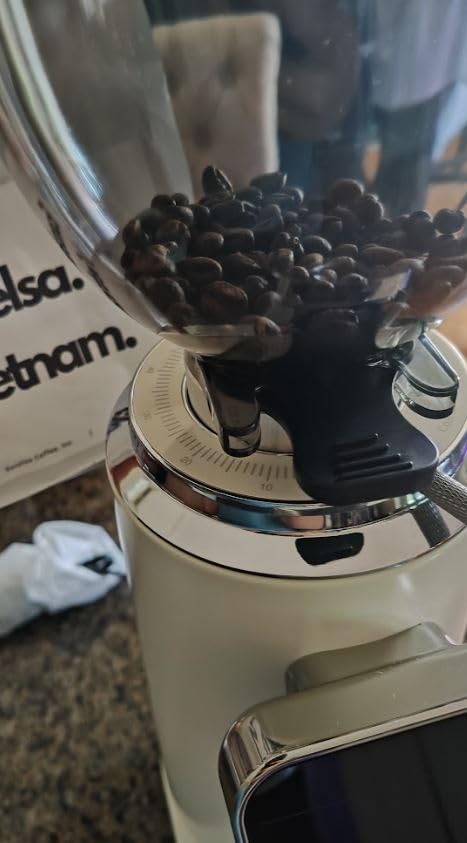
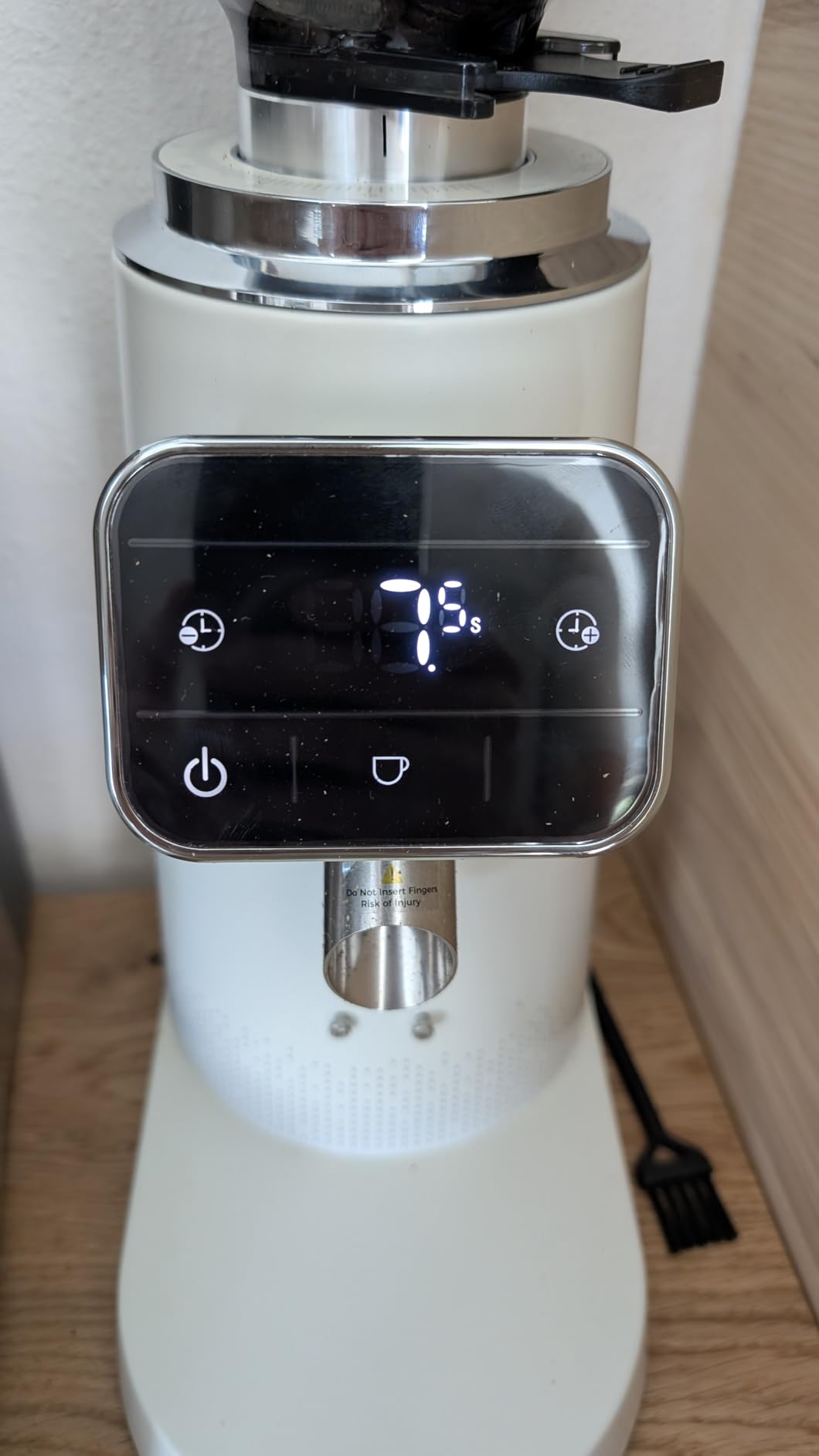
The accessory kit is unusually complete: a 100g dosing cup, dosing ring, bellow blower, single-dose hopper, portafilter holder and two soft brushes. The dual hoppers mean 250g bulk for filter work and 50g single dose for espresso, and the holder takes 51mm through 58mm baskets.
Weaknesses are practical. The power cord is short and not removable, so placement matters. The large bulk hopper does not feed beans smoothly and needs stirring mid-grind. There is no manual power switch, and the machine sits in standby drawing power. Support responses are reported at roughly once every 24 hours.
Who suits the Tuni G3
Buyers who want flat burr quality and speed but do not want to align burrs on day one. The factory alignment and quick 64mm grind make this an easy flat burr option to live with.
Where to be cautious
Buyers who need a long parts history behind the brand, and anyone who wants to unplug the machine in one motion. With the shortest review history here, long-term reliability is genuinely unknown.
The Pick-Two-of-Three Rule for Espresso Grinders
Almost every grinder debate collapses into the same trade-off, and one home-barista poster phrased it better than any manufacturer has. A grinder can be cheap, can have good workflow and build quality, or can have excellent grind consistency, and you can only pick two of the three. The same thread warns that published best lists carry heavy selection bias, because famous models get recommended more often than good ones simply because they are famous.
You can see the rule working in this lineup. The Breville has the widest adjustment and the biggest review history, but it needs internal burr adjustment out of the box and has a plastic catch cup. The SHARDOR 64mm flat burr gives close-to-reference consistency at a modest outlay, but arrives with a plastic housing and an inaccurate zero mark. The DF64 II gives reference-grade dialing and retention, and is the heaviest machine in the group.
Decide which two of the three matter to you before you buy. If you brew one drink a day in a small flat, workflow and noise win and you can accept good-enough consistency. If you are chasing repeatable recipes on changing beans, consistency wins and you accept the cost and the footprint.
Grind Distribution Test: Check Any Grinder in 10 Minutes
You do not need lab equipment to make a useful judgement about a grinder. The grounds-on-white-paper check takes minutes and reveals particle uniformity, which is the variable that drives extraction evenness. Here is how to run it.
Set your grinder to the same espresso setting on two machines, grind 18g from the same bag of beans, and let each dose fall onto plain white paper from the same height. Spread each pile flat and level. Look for a wide scatter with a heavy tail of fine dust, which means inconsistent particle size and a likely cause of channelling.
Next, grind ten consecutive doses at that setting, weigh each one, and write the numbers down. Spread wider than a few tenths of a gram between the lightest and heaviest dose means timed dosing is not repeatable enough for your workflow. Then run a retention check: grind ten doses back to back and weigh the grounds left in the chamber and chute. Anything near 0.1g or below is effectively nothing to purge.
Finally, do a static test by grinding coarsely and watching the counter. Heavy clumping and coffee stuck to the exit chute tell you the machine will need a bellow or a purge step in your daily routine. Ten minutes of work gives you more information than any spec sheet.
Grind by Weight vs Timed Dosing
Timed dosing is faster and free. Grind by weight is slower and repeatable. Which one you need depends on how much the dose drifts when the beans change, and that is the single most misunderstood comparison in espresso setups.
Timed dosing works because the beans do not change. Grind for 9.0 seconds, weigh it, adjust the timer, repeat. When the humidity, the roast and the bean age shift, the same 9.0 seconds no longer gives 18g, and the shot drifts sour or bitter without warning.
Grind by weight removes the variable. A built-in scale stops the motor at the target dose every time, so a recipe stays valid across bags. None of the twelve grinders here has an integrated scale, which is a real limitation worth stating plainly, and it is why the DF64 II and the 1Zpresso J-Ultra appeal to people who weigh by hand as their default.
Our advice is practical: start on timed dosing to find your recipe, then add a scale to your workflow before you replace the grinder. Our all-in-one brewing guides cover the rest of the setup.
Single Dose vs Bean Hopper: Which Workflow Suits You
A bean hopper is convenient. Single dose is fresher. That is the whole argument, and both sides are right depending on how much coffee you drink and how quickly you get through a bag.
Hopper loading suits people drinking filter coffee in volume, and anyone who grinds a batch of filter in the morning. The weakness is ageing in the chamber: grounds remaining from the last dose go stale, and on an oily dark roast that staleness carries into the next shot. A bellow or a purge largely solves it, which is why several grinders here include one.
Single dose suits espresso-focused households. You load only what the shot needs, so nothing sits, and changing beans is instant rather than a clean-out job. Four machines here support a true single-dose workflow: the MOKKOM and Tuni G3 with their bellow hoppers, and the Viesimple Gen 4 and 1Zpresso J-Ultra by design. The trade-off is that you measure every dose yourself.
Matching Burr Size to Your Roast Level
Burr size is the least understood spec on the box, and it explains more beginner disappointments than the machine does. Beginners on r/espresso routinely blame their espresso machine for sour, fast shots that are really a grinder that cannot grind fine enough, or finely enough without producing too much fines.
Light and medium roasts are dense, hard beans that need larger burrs and more torque to break down cleanly. They also punish fines, because any particle much finer than the target grinds bitter compounds into the shot. A 64mm flat burr suits this well, which is why the SHARDOR 64mm and the DF64 II are the recommendations here for specialty light roast espresso.
Dark and medium-dark roasts are oily, brittle beans that fracture easily. A 40mm conical burr is perfectly comfortable with them and cheaper to run, and the fines a conical produces matter less against a roast that is already dark. Most of the budget picks on this list suit this kind of coffee best, and that is not a compromise, it is a match.
Buying Checklist Before You Commit
Work through these in order and most bad purchases never happen. Measure your portafilter diameter first, because a 51mm, 54mm or 58mm basket must physically fit the dosing cradle, and mismatches are the most common regret reported in forums.
Next, check the adjustment type. Stepped grinders are fine for filter and workable for espresso. Stepless or micrometer adjustment is what makes light roast dialing comfortable, and a dual-range dial with dedicated espresso micro-steps is the best of both. Then look at burr diameter: 40mm conical suits dark roasts, and 64mm flat protects delicate beans.
Check dose repeatability. A timer with 0.1 second resolution, or memory of your last setting, saves you weighing every time. Look at noise, especially if anyone sleeps near your grinder, and check retention, because grounds still in the chamber are grounds that make your next shot stale. Finally, confirm warranty length and whether the burrs are swappable, since replacement parts decide whether a machine is still running in five years. If you also need commercial-scale gear, our commercial grinder roundup goes deeper on throughput and hopper capacity.
Frequently Asked Questions
What type of grinder is best for grinding espresso?
A burr grinder with at least 40mm conical burrs, or 64mm flat burrs for light roasts, and micro-adjustment fine enough to reach espresso. Avoid blade grinders entirely, since particle size is unpredictable. Stepless or dual-range stepped adjustment matters more than a long list of settings, and a portafilter cradle matching your basket diameter is essential.
Is there a difference between coffee grinders and espresso grinders?
Yes. An espresso grinder must reach a much finer and tighter particle size, and it needs finer adjustment resolution to dial in a narrow window. Filter grinders are built for coarser, more forgiving ranges and often cannot produce a grind fine enough for espresso at all. A grinder rated espresso-capable usually covers both, which is why most people end up with one machine for everything.
Which brand is considered the best for espresso grinders?
Among the twelve grinders we tested, Baratza stands out for serviceability and value, MiiCoffee for precise dialling and low retention, and 1Zpresso for manual precision. In the wider espresso community, the most frequently recommended names are Baratza, MiiCoffee, Fellow, Eureka, Niche, Mahlkonig, Lelit, 1Zpresso, Kinu, Timemore and KINGrinder. Brand reputation is a useful filter, but measure the specs before you commit.
What burr size is best for espresso?
Larger burrs generally produce more uniform grounds. A 40mm conical burr is the budget standard and handles dark and medium-dark roasts well, while 64mm flat burrs give the fewest fines at espresso fineness and are the better choice for light, dense specialty roasts. Burr diameter matters more than whether the burr is conical or flat when you are comparing two machines of the same size.
What espresso grinder do people recommend on Reddit?
The most repeated recommendations across espresso communities are the Baratza Encore ESP, the MiiCoffee DF54, the KINGrinder K6 hand grinder and the Eureka Mignon family. The consensus thread that runs through all of them is that a grinder upgrade delivers the biggest quality jump in a home setup, more than upgrading the machine, and that budget hand grinders can beat cheap electrics.
Are expensive espresso grinders worth it?
They are worth it if you brew daily and care about repeatable recipes, because the gains come from stepless adjustment, larger burrs and low retention. They are not worth it if you make one drink a week, since a good conical machine will produce a drinkable shot. The step up matters most when you are changing beans often and dialing in from scratch each time.
Final Verdict for Espresso Grinders in 2026
The Breville Smart Grinder Pro is our best coffee grinder for espresso overall, because the 60-step range, the 0.2 second timer and the two included cradles make it work with almost any machine, and its review history is the deepest of any grinder here. Choose the Baratza Encore ESP for value and tool-free servicing, the SHARDOR 64mm flat burr for light roasts on a budget, the MiiCoffee DF64 II for repeatable espresso, and the 1Zpresso J-Ultra if a handful of beans a day is all you need.
Whichever you pick, measure your portafilter diameter first, run the ten-minute distribution test once it arrives, and give any new grinder a few pounds of coffee before you judge the shot.