
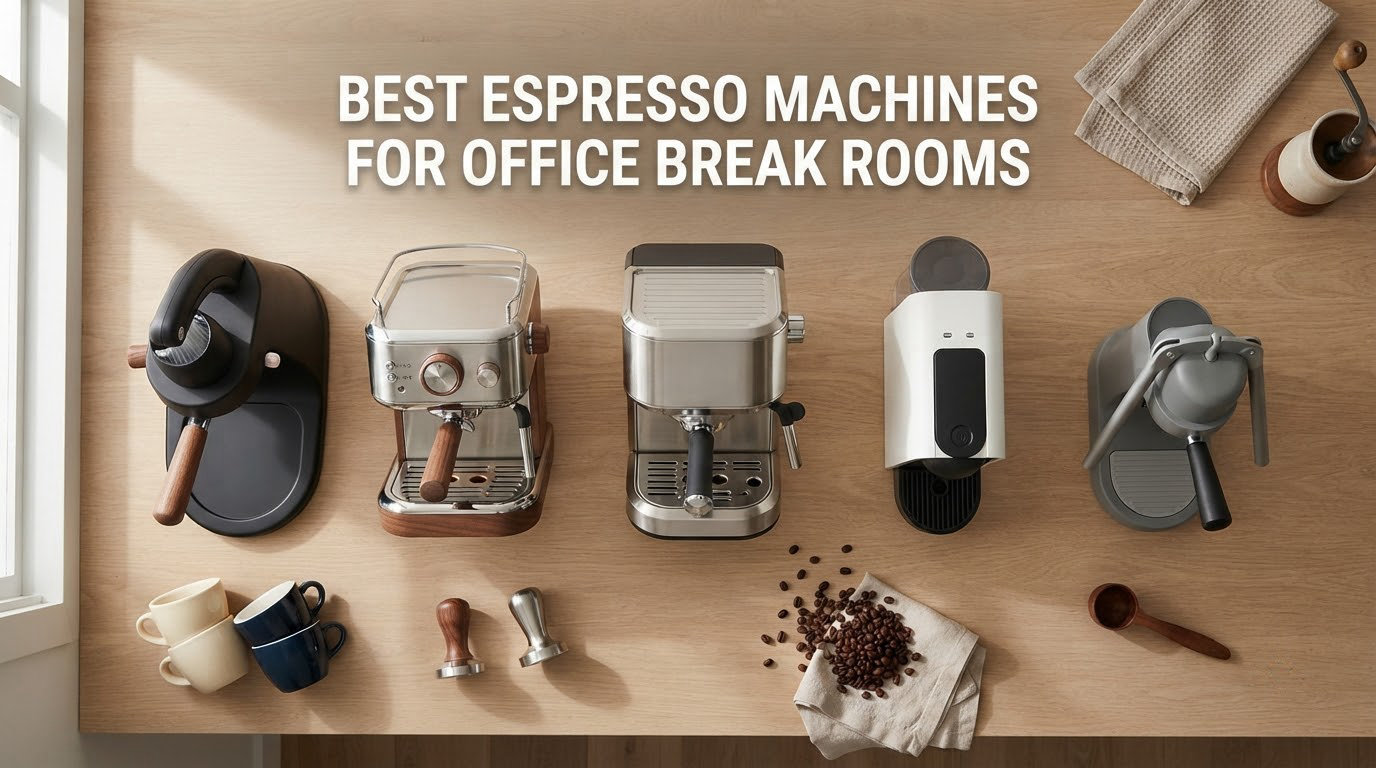
A break room coffee machine gets used by everyone in the building, including people who have never pulled a shot in their life. That single fact rules out most of what gets recommended for home use, and it is the filter we applied when we picked the best espresso machines for office break rooms in 2026.
Most espresso buying guides assume one enthusiast, a quiet kitchen, and the willingness to spend twenty minutes on a shot. An office break room is none of those things. A dozen people arrive within the same fifteen-minute window, nobody is training, and the person who figures out the machine becomes an unpaid volunteer. Our picks are built around that reality: machines that grind, extract and froth with minimal training, that clean up in minutes rather than hours, and that survive being handled by a hundred different hands a week.
We compared ten machines across the categories that actually show up in workplace kitchens, from capsule units small enough to hide behind a microwave to bean-to-cup machines with assisted tamping. Specs, weights, tank sizes and warranty terms come from the manufacturer data, and the pros and cons come from the review record on each product. We also pulled in the recurring complaints people post about shared office machines, because the failure modes in a break room are rarely about taste. If you also want the wider picture, our picks on the best commercial espresso machines and best espresso machines for home cover the enthusiast and small-kitchen ends of the range.
One note before we start: we update this guide through 2026 and every rating and review count below is copied from the current product record. Specifications and prices change often, so treat the specs as the durable part and check live listings for anything price-related.
Table of Contents
Top 3 Best Office Espresso Machines for Break Rooms in 2026
Three machines stood out once we scored them on training burden, cleaning time, footprint and how forgiving they are of inconsistent technique. The Breville Barista Express takes the top slot because it is the only unit here that can produce genuinely excellent espresso without a second grinder on the counter, and it has a review record deep enough to tell you how it behaves after years of daily use. The De’Longhi Stilosa Compact covers the opposite end, giving a small office a real espresso experience on a tight counter. The Nespresso Essenza Mini is the fastest drink in the building, with the highest average rating in the group.

Breville Barista Express
- Integrated burr grinder
- 16 grind settings
- PID temperature control
- Manual steam wand
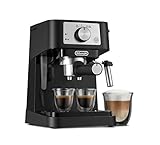
De’Longhi Stilosa Compact
- 15 bar stainless steel boiler
- Manual steam wand
- Compact 9.45 inch width
- No electronics to learn

Nespresso Essenza Mini
- 19 bar pump
- 25 second heat up
- Two one-touch cup sizes
- 8 inch wide body
All 10 Picks at a Glance in 2026
Every machine below made the cut for a specific office scenario rather than for general espresso quality. Read the feature column against your own headcount and counter before you commit to anything.
| Product | Specifications | Action |
|---|---|---|
| Breville Barista Express |
|
Check Latest Price |
| De’Longhi Stilosa Compact |
|
Check Latest Price |
 CASABREWS CM5418 CASABREWS CM5418 |
|
Check Latest Price |
| Nespresso Essenza Mini |
|
Check Latest Price |
 Gevi 20 Bar Compact Gevi 20 Bar Compact |
|
Check Latest Price |
 CASABREWS 3700 Essential CASABREWS 3700 Essential |
|
Check Latest Price |
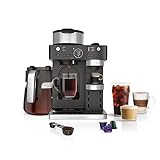 Ninja CFN601 Ninja CFN601 |
|
Check Latest Price |
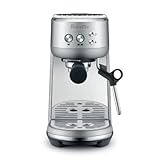 Breville Bambino Breville Bambino |
|
Check Latest Price |
 Ninja Luxe Cafe Premier Ninja Luxe Cafe Premier |
|
Check Latest Price |
 PHILIPS 3300 LatteGo PHILIPS 3300 LatteGo |
|
Check Latest Price |
1. Breville Barista Express for Shops With a Serious Daily Drinker
Breville BES870XL Barista Express Espresso Machine, Brushed Stainless Steel
- Integrated burr grinder grinds fresh into the portafilter
- Steam wand produces proper microfoam
- PID control and pressure gauge for repeatable shots
- Cleaning cycle and descaling prompts built in
- Water tank and drip tray need frequent attention
- Real learning curve on grind size and tamping
- Plated rather than solid stainless exterior
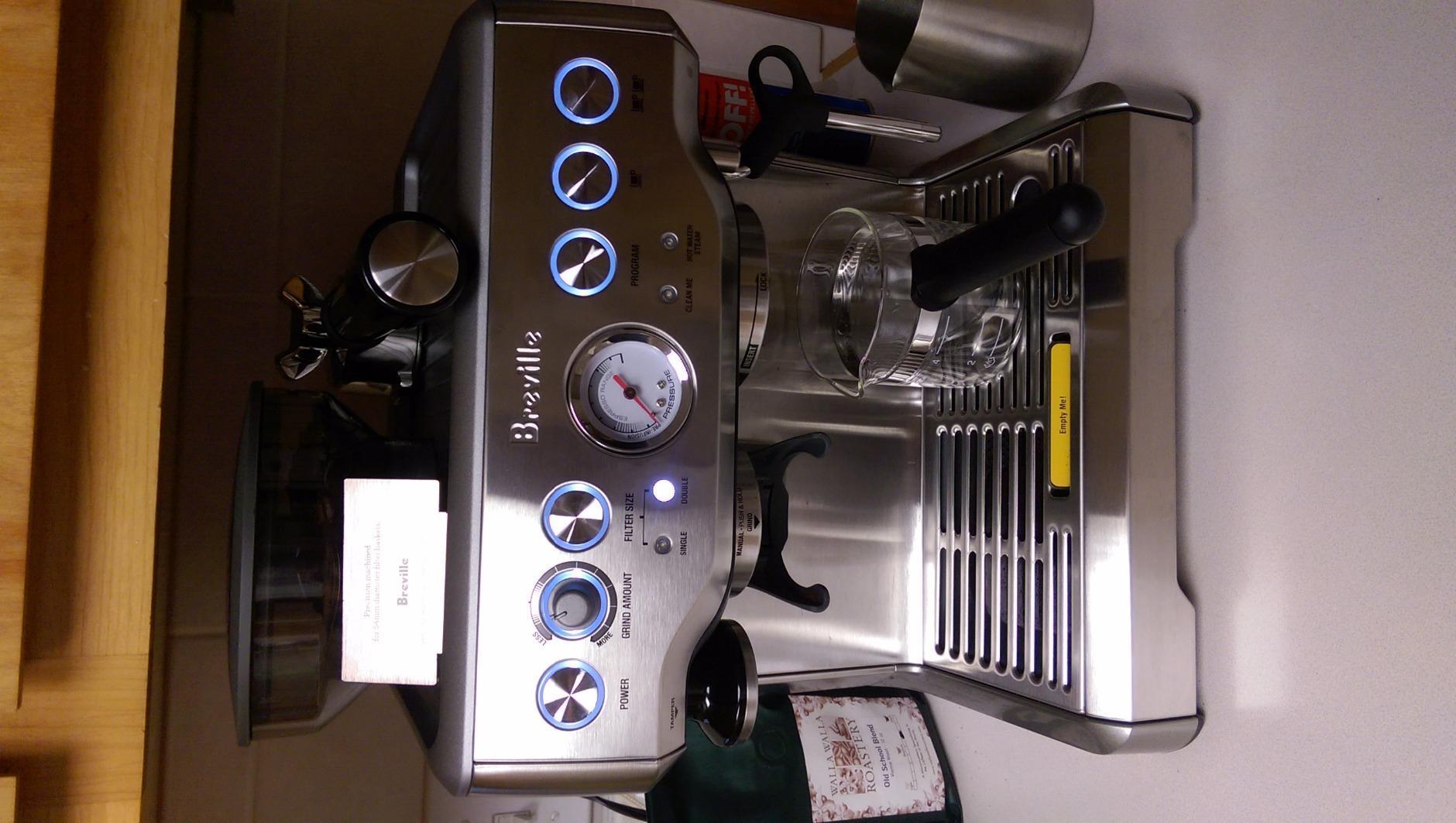
We kept coming back to this machine because it is the only one in the group that does not force a choice between good espresso and a compact footprint. The burr grinder sits inside the body and doses straight into the portafilter, which removes the single biggest source of inconsistency in a shared setting, which is the bag of pre-ground coffee sitting next to the machine for three weeks. There are 16 grind settings on a side dial, and a 1/2 lb bean hopper keeps a reasonable working stock on the machine.
PID digital temperature regulation is doing a lot of quiet work here. Water temperature is the variable most home machines swing on between shots, and in a break room where nobody is paying attention, consistent temperature is what keeps a mediocre bean from tasting undrinkable. Low pressure pre-infusion helps the puck wet evenly, and a pressure gauge on the front gives whoever is making the drink some feedback instead of guesswork.
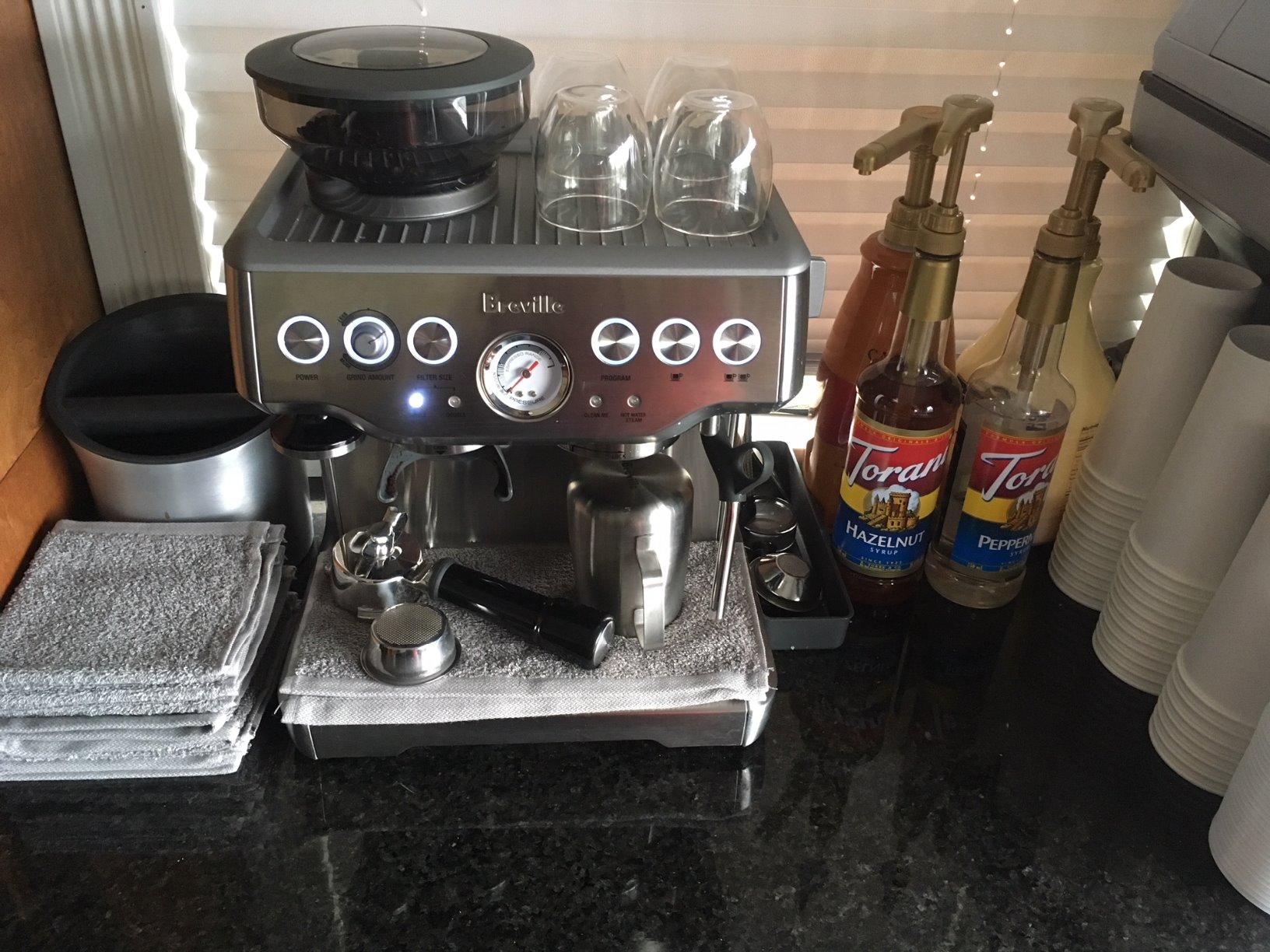
It is also the heaviest machine here at 22.1 pounds, and that matters in a way reviews rarely mention. A heavy machine does not get dragged around the counter or tipped by someone trying to reach a shelf behind it. It also has the largest body of the group, measuring 12.5 inches wide by 13.8 inches deep and 15.9 inches tall, so you need real counter depth rather than a kitchenette nook.
Our reservation is the learning curve. Grind size, dose and tamp pressure all need attention, and the first week of use in an office tends to produce a lot of bad shots while people work it out. Owners do report many years of reliable service with regular cleaning and filter changes, and the 1600-watt element heats quickly, but this is a machine that rewards someone willing to take it on.
Who this machine suits
This is the right pick when your office has at least one person who genuinely cares about coffee and will do the small amount of setup work. It suits a team of eight to fifteen people who want a genuine espresso rather than a coffee-flavoured drink, and it handles a mix of espresso, americano from the hot water dispenser, and hand-textured milk drinks.
It is less suitable for a kitchenette counter under 14 inches deep, or for an office where nobody wants to own the machine. If the group is large and the drinks are mostly black coffee, you are paying grinder capacity for drinks that do not need it.
Where it falls short in a break room
The 67 oz water tank and the drip tray both need attention several times a day at moderate volume, and a shared machine with a small tank becomes somebody’s invisible chore very quickly. The plastic top housing and plated exterior also wear, which looks tired after a couple of years of heavy fingers.
The warranty is a one year limited product warranty, so a busy break room should be planned for maintenance spending from year two onward. It is also one of the higher-cost machines in this group, which changes the buy-versus-service calculation we walk through later.
2. De’Longhi Stilosa Compact for Small Kitchenette Counters
- Compact body fits small countertops
- Stainless steel boiler built for long service
- Manual steam wand handles lattes and cappuccinos
- Simple dial operation with no electronics to learn
- Manual piston workflow needs practice for consistent shots
- No integrated grinder so beans must be ground separately
- Plastic used in parts of the build
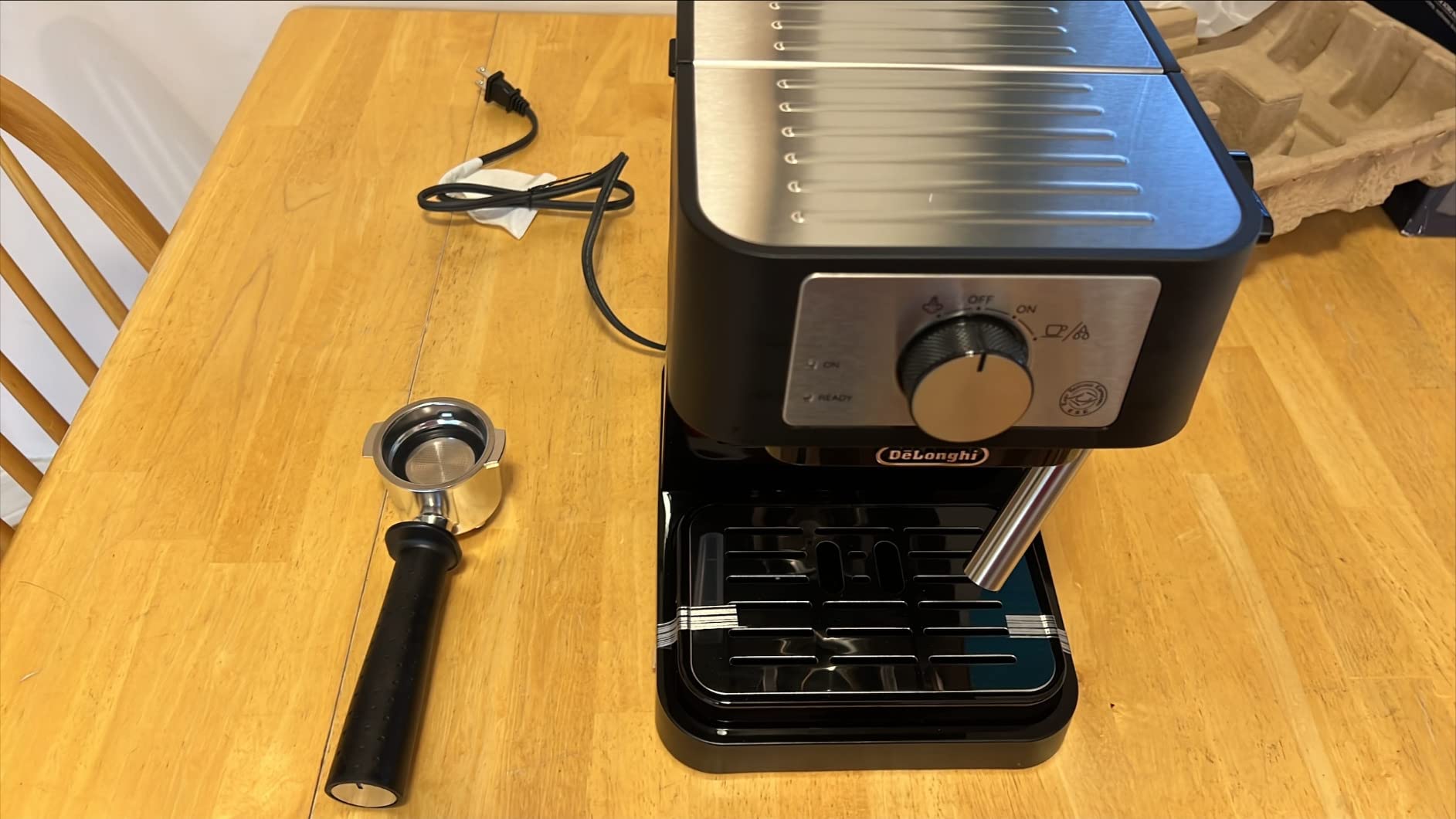
This is the machine you buy when counter space, not quality, is the binding constraint. At 9.45 inches wide and 8.6 pounds, it is roughly half the footprint of the Barista Express and light enough that anyone can lift it to refill the reservoir or clear the counter at the end of the day. For a hallway kitchenette with a short run of worktop, that is the difference between a machine and a compromise.
Underneath the shell is a 15 bar stainless steel boiler, which is the part reviewers consistently single out as the reason this unit keeps working. There is no grinder, no display and no firmware to learn, just a piston, a steam wand and two dials. Simplicity has real value in a break room, because there is nothing on this machine that a curious user can break by pressing the wrong sequence.
The 1100-watt element and a 1000 ml capacity keep it honest about what it is: a machine for a few people, not a rush. It has no grinder, so whoever wants fresh beans needs a separate burr grinder on the counter, which partly defeats the space saving. Auto shut-off and a removable water tank are the two features that matter most for a shared appliance, and both are present.
Reviewers treat it as a budget entry point that still delivers a usable cappuccino. The recurring complaint is that pulling consistent shots takes practice, and several owners point to the mix of plastic and stainless steel in the construction as a limit on how it feels after years of use. In our view that is a fair trade for a machine this small and this simple.
Who this machine suits
An office of five to ten people where the kitchenette is a corner, not a room, will get the most out of it. It is a good second machine for a large office too, placed somewhere away from the main station so a queue at 9am does not have to form around a single appliance.
It also works well for anyone who wants espresso with a manual element but not a full workflow. The steam wand is manual, so the milk step adds a few seconds, but the brew step is straightforward once the grind is right.
Where it falls short in a break room
Because it takes ground coffee, you are adding a grinder to the counter or accepting pre-ground coffee, and pre-ground coffee in a shared setting is exactly the friction we were trying to remove. A group that has to learn a dosing ritual every morning will lose interest within a fortnight.
At 15 bar this is a manual piston machine, and the pressure figure is a pump rating rather than a promise of extraction quality. The single year warranty is short, and the plastic components are the first thing to age.
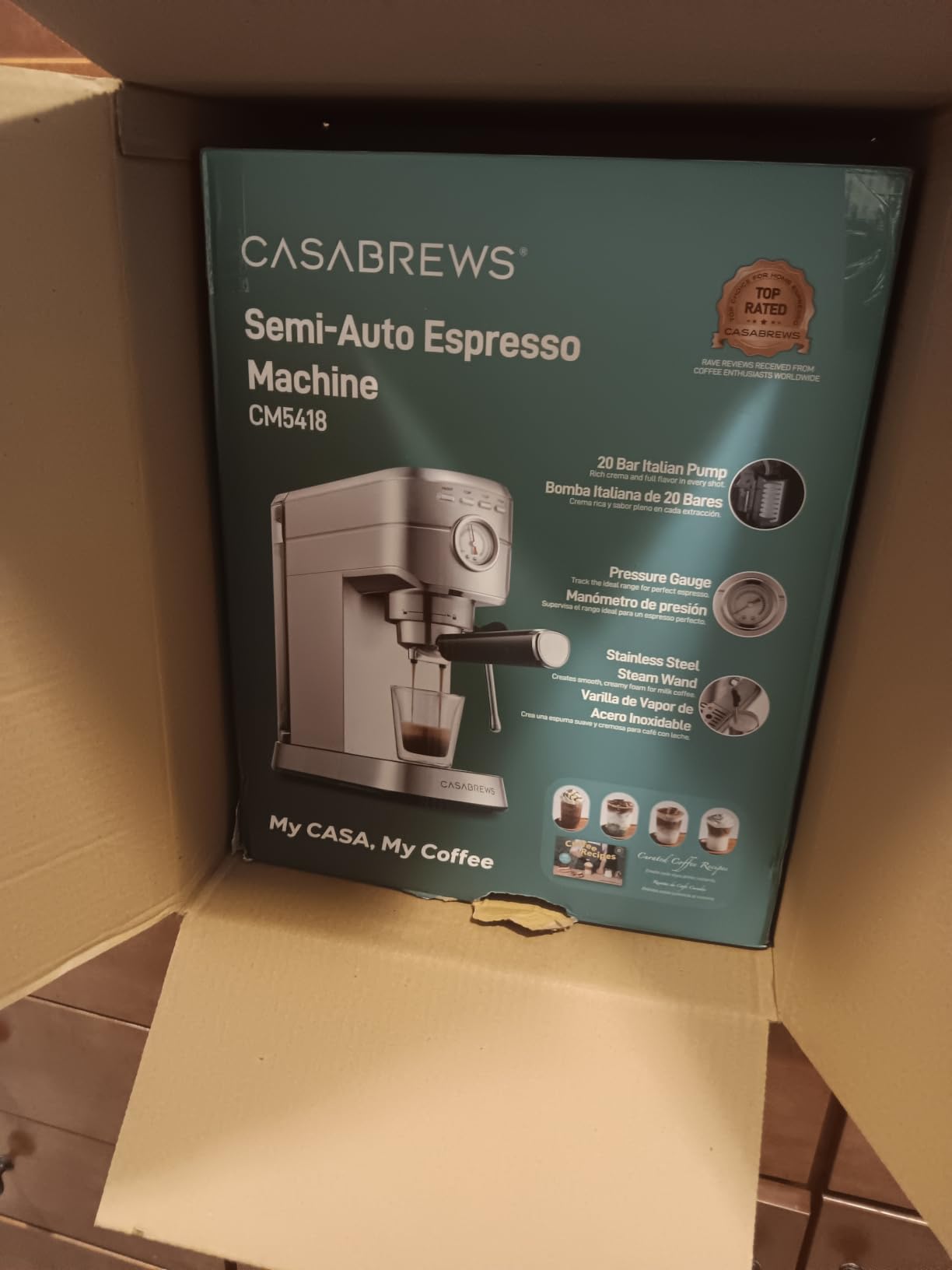
3. CASABREWS CM5418 for the Narrowest Counter in the Office
CASABREWS CM5418 Compact Espresso Machine with Milk Frothing Steam Wand
- Narrowest body in the group at 5.47 inches
- Pressure gauge helps with extraction
- Steam wand produces quick microfoam
- Light and easy to move for cleaning
- Cool-down cycle required between frothing and brewing
- Low frother nozzle is awkward with larger cups
- Noisy and vibrates more than larger machines
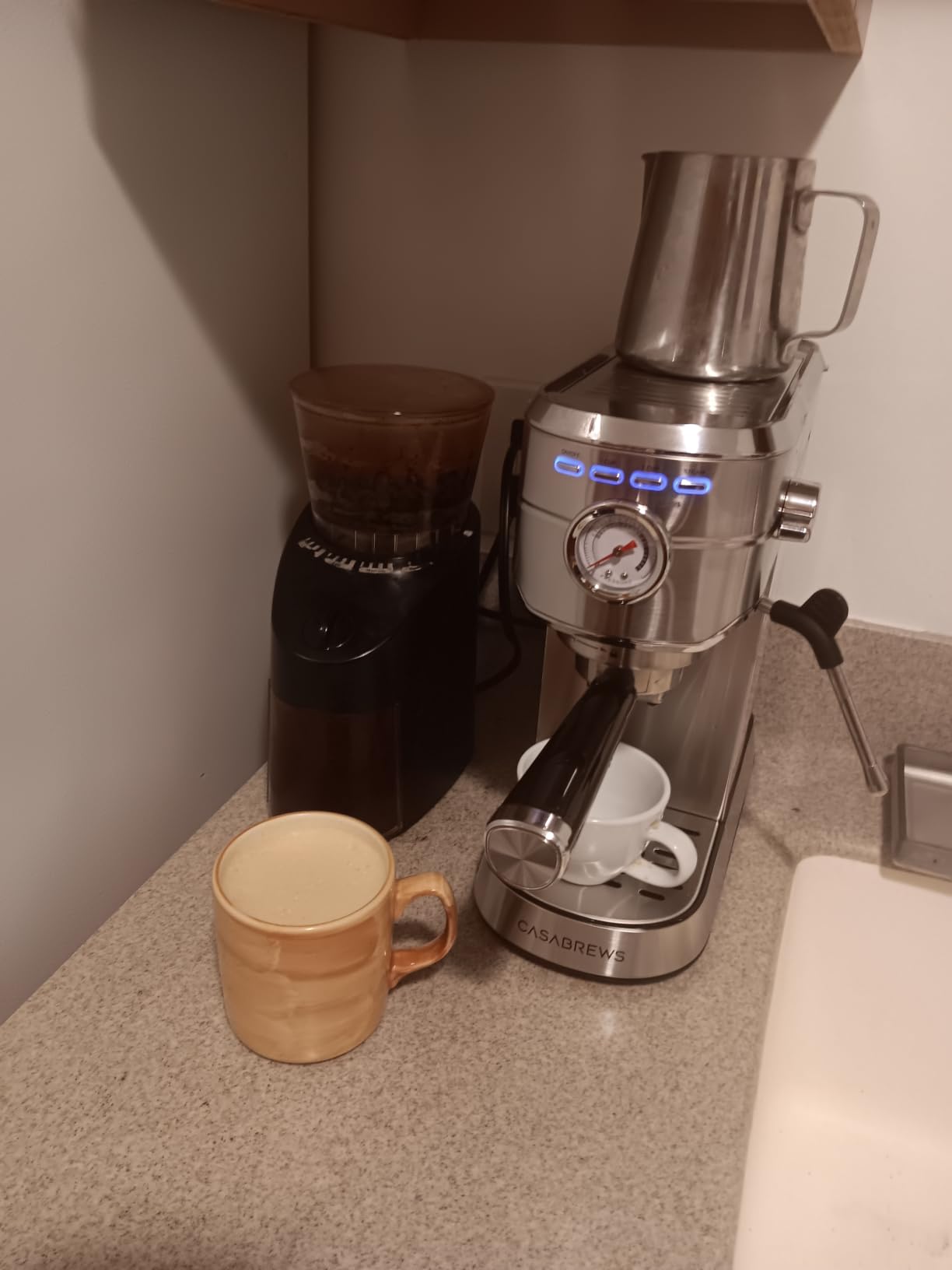
At 5.47 inches wide, this is the narrowest machine we tested and the one that changes the layout conversation. It fits beside a microwave, or on the deep end of a counter that has nothing else usable on it. Owners repeatedly mention years of trouble-free use, and at 8.6 pounds you can slide it forward to clean behind it without asking for help.
The 20 bar Italian pump runs through a 1350-watt boiler, and there is a pressure gauge on the front, which is unusual in a machine this narrow. The gauge gives a new user a signal to react to instead of an opaque lever. A 34 oz detachable tank and a removable drip tray mean refills and emptying can be done in a few seconds, and the hot water function on the side knob covers americanos and cup warming.
It is a single-boiler design, so there is a wait when you switch from steaming to brewing. That is the machine’s most important limitation for a break room, because the natural order is froth first, then pull the shot, and you cannot do both at once. In a rush it adds a pause that people notice.
Reviewers also flag the included plastic tamper and lightweight portafilter as the first two things to replace, and mention that the machine is louder and more vibrational than bigger units. Some owners report the steam wand producing hot milk with little texture. The advice that comes up most often is to buy a weighted tamper and a better portafilter, and honestly, that advice applies to most machines in this price class.
Who this machine suits
Offices with genuinely tight counter space, reception areas, and clinic or studio waiting rooms where a slimmer footprint beats a larger brew group. It is also a sensible second station for a mid-size office because it is cheap to duplicate and easy to relocate.
If your group mostly drinks espresso and cappuccino and nobody needs a grinder, the narrow body and the pressure gauge make this one of the most capable machines per square inch here.
Where it falls short in a break room
The cool-down between frothing and brewing is the deal-breaker for a high-volume morning cluster. If you expect more than a dozen milk drinks before 10am, the queue will form behind the person waiting for the boiler.
Its 34 oz tank also means someone refilling it, and its noise will carry in a small room where people are trying to work. The one year warranty is short for an appliance expected to run daily for years.
4. Breville Nespresso Essenza Mini for the Fastest Drink in the Building
- Highest average rating in this group
- 25 second heat up so no waiting
- Two cup sizes at one touch
- No grinding or tamping at all
- Tiny water reservoir needs frequent refills
- Small drip tray overflows onto the counter quickly
- Does not froth milk so lattes need a separate device
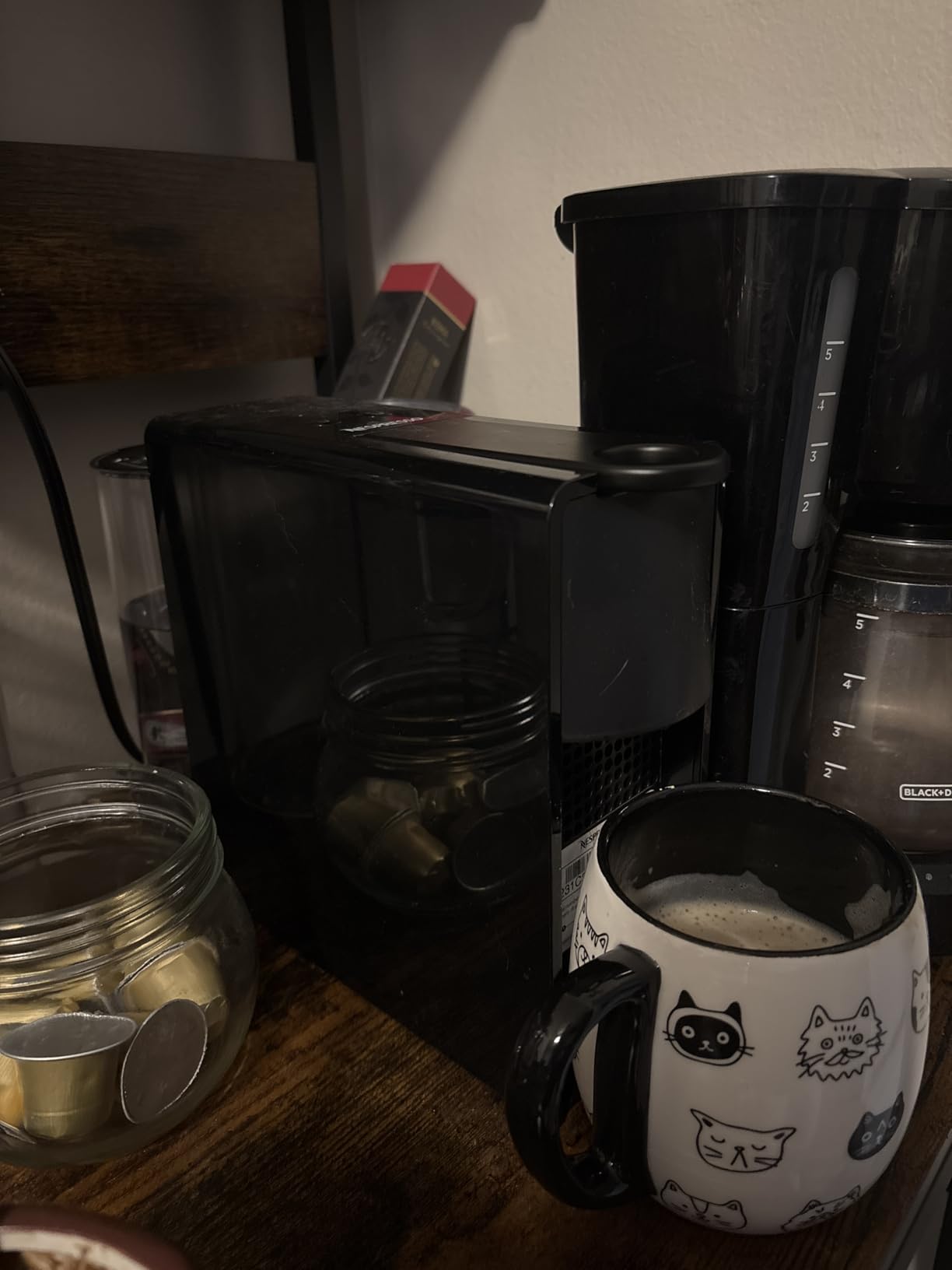
Nothing else in the group matches this machine for throughput. A 25 second heat-up and a one-touch button per cup size means a person can walk in, press once, and be holding an espresso before they have found a mug. There is no grinding, no tamping, no purging and no backflushing, which removes the entire learning curve that slows down every other machine on this list.
It is also the smallest machine here by weight at 6 pounds, and at 8 inches wide by 4.3 inches deep it disappears into a corner. The 19 bar pump produces a consistent shot, and it works with third-party Nespresso Original capsules as well as reusable ones, which matters for anyone managing ongoing supply costs.
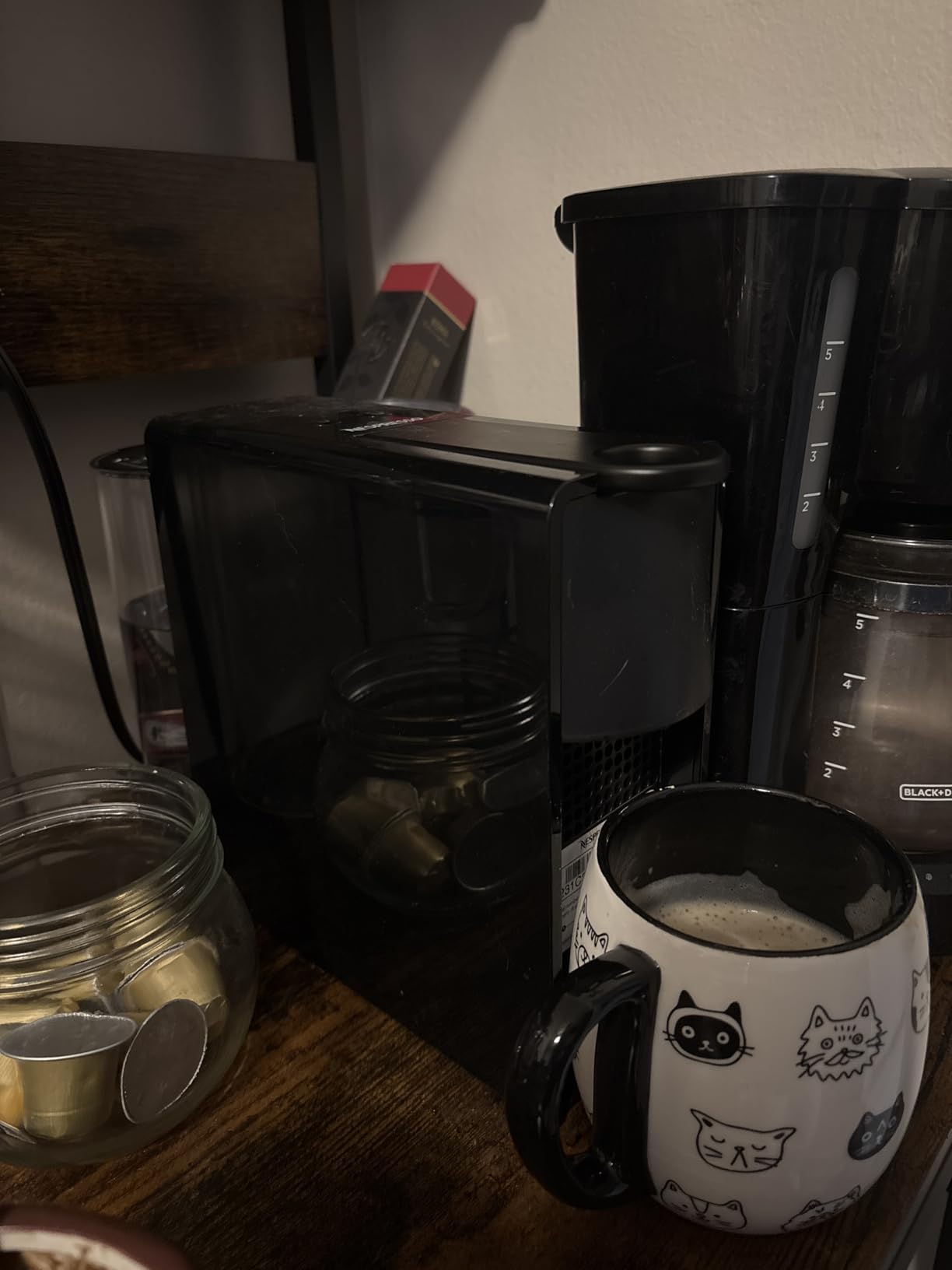
The trade is capacity. The water reservoir is small, and the drip tray is described by owners as overflowing onto the counter quickly, which is a genuine problem in a shared space where nobody owns the spill. The used capsule container holds only a few capsules before it needs emptying too. One reviewer specifically describes the small tank and tray system as making it poor for office use because of constant cleanup, and we think that criticism lands.
It also does not froth milk. Anyone who wants a latte needs a separate frother on the counter, which adds back the space and the cleanup you were trying to avoid. Crema is lighter than what a full Italian machine produces, which is a matter of taste as much as performance.
Who this machine suits
Offices of roughly five to fifteen people where black espresso and lungo are the order of the day, and where the priority is zero training and zero maintenance. It is also the best choice for a reception counter or a client-facing area, because it is fast, quiet to operate and hard to get wrong.
If your team drinks mostly coffee rather than espresso, this is not the machine. It is built for one drink type and does that one drink extremely well.
Where it falls short in a break room
Small reservoir plus small drip tray equals a machine that needs constant topping up during a rush. In an office where nobody owns the machine, that is the single most likely reason a good espresso machine gets abandoned in a month.
It is also the pick most exposed to supply problems, since every drink depends on capsules being available. We cover that risk in the etiquette section, because keeping a labelled supply in a shared drawer is what turns this from a frustration into a non-event.
5. Gevi 20 Bar Compact for People Who Like a Pressure Gauge
Gevi 20 Bar Compact Espresso Machine for Home,Latte、Cappuccino Coffee Maker
- Full stainless steel housing with chrome finish
- Pressure gauge and shot metering for consistent results
- Removable froth nozzle makes cleaning simple
- Reliable over long daily use
- Shuts off after frothing so a second drink means waiting
- Steam wand is loud and slow to reach 165F
- Small puck needs reloading every two shots
The Gevi is the one machine here where a full stainless steel body is the headline rather than a footnote, and that matters in a break room where the appliance takes a beating. At 8.6 pounds and 5.5 inches wide it sits next to the CASABREWS in the narrow category, but the finish and the removable froth nozzle feel more considered for repeated use.
Behind the front panel is a 20 bar pump with NTC temperature control, pre-infusion and a pressure gauge, plus automatic shot metering from the top buttons. That combination gives a beginner a repeatable starting point, which is exactly what a shared machine needs. One long-term owner reports reliable daily running over a year and a half, and several reviewers say it performs better over time than machines that cost multiples of it.
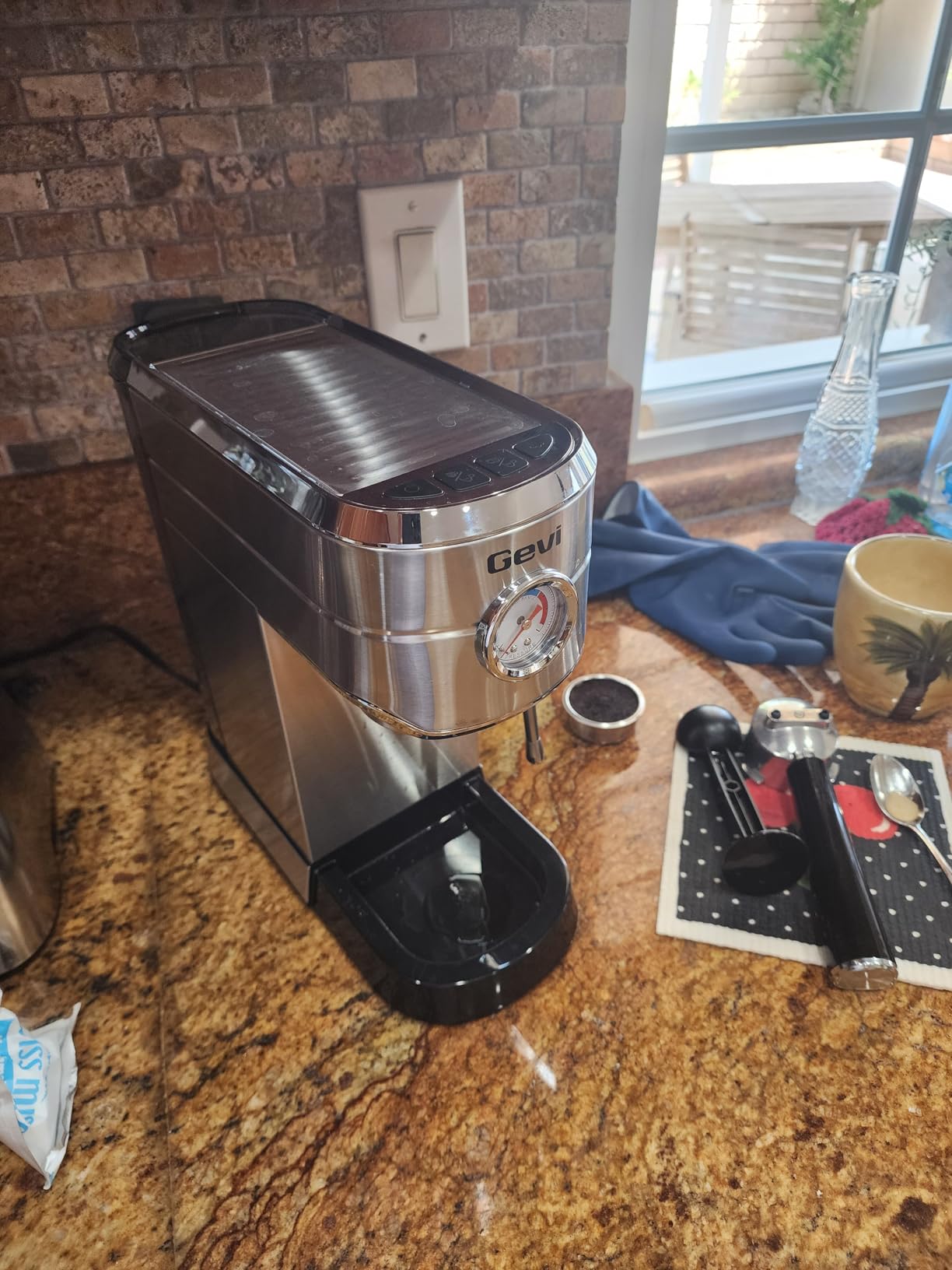
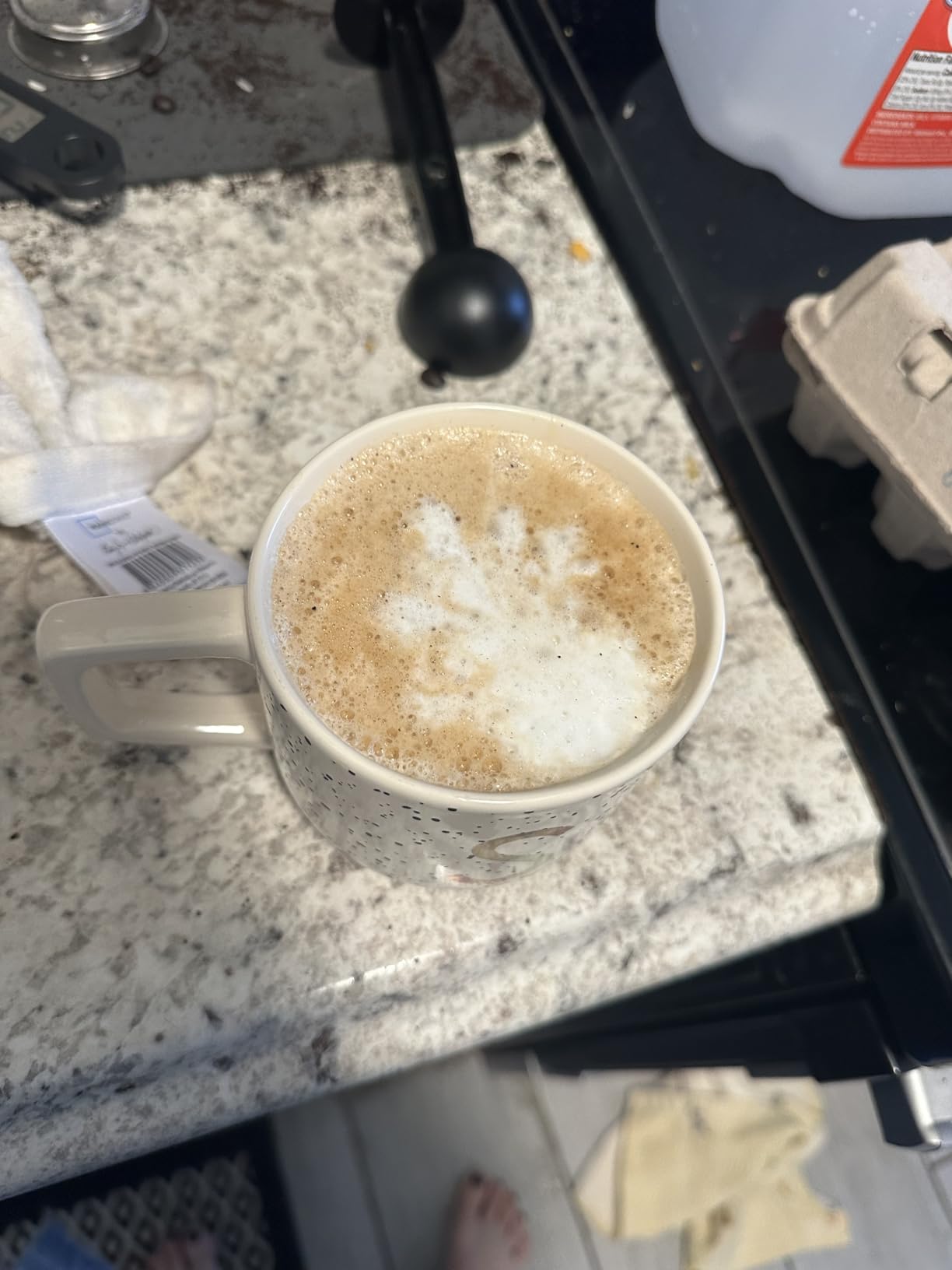
The workflow is the catch. This unit cuts out after frothing, so serving two milk drinks back to back means waiting for it to restart, and the puck is small enough that you reload between every two shots. The steam wand is loud and takes roughly two minutes to bring milk to temperature, which is a long pause in a queue.
Smaller complaints include the included plastic tamper feeling cheap, the hot water function coming out in slow spurts, and the stainless finish showing fingerprints constantly. The froth nozzle is removable, which makes it one of the easier machines here to keep clean, and the 12 month warranty comes with lifetime technical support.
Who this machine suits
Offices of ten to twenty people that want a durable machine with visible feedback, and anyone who will not use the machine without a pressure gauge in front of them. The stainless housing also suits reception and client-facing spaces where appearance matters.
It is a good pick for a group that has one willing volunteer willing to run a short training session on grind and dose, because the metering takes the guesswork out of the part that is hardest to teach.
Where it falls short in a break room
Cutting out between drinks is the problem to plan around. In a cluster of eight people arriving together, the machine becomes a bottleneck precisely when the office is most awake and most impatient.
The slow steam wand compounds it. If the majority of your orders are cappuccinos and lattes, look at the PHILIPS 3300 or the Ninja Luxe Cafe Premier, both of which are built around automated milk.
6. CASABREWS 3700 Essential for Refill-Free Workdays
CASABREWS 3700 Essential Stainless Steel Espresso Machine with Steam Wand
- 43.9 oz tank rarely needs refilling during the day
- Heats quickly and pulls a good shot out of the box
- Solid construction with no rattles
- Compact uncluttered design
- Single boiler means a wait when switching brewing and steaming
- Extraction can be finicky about grind size
- Steam dial can drift during extraction
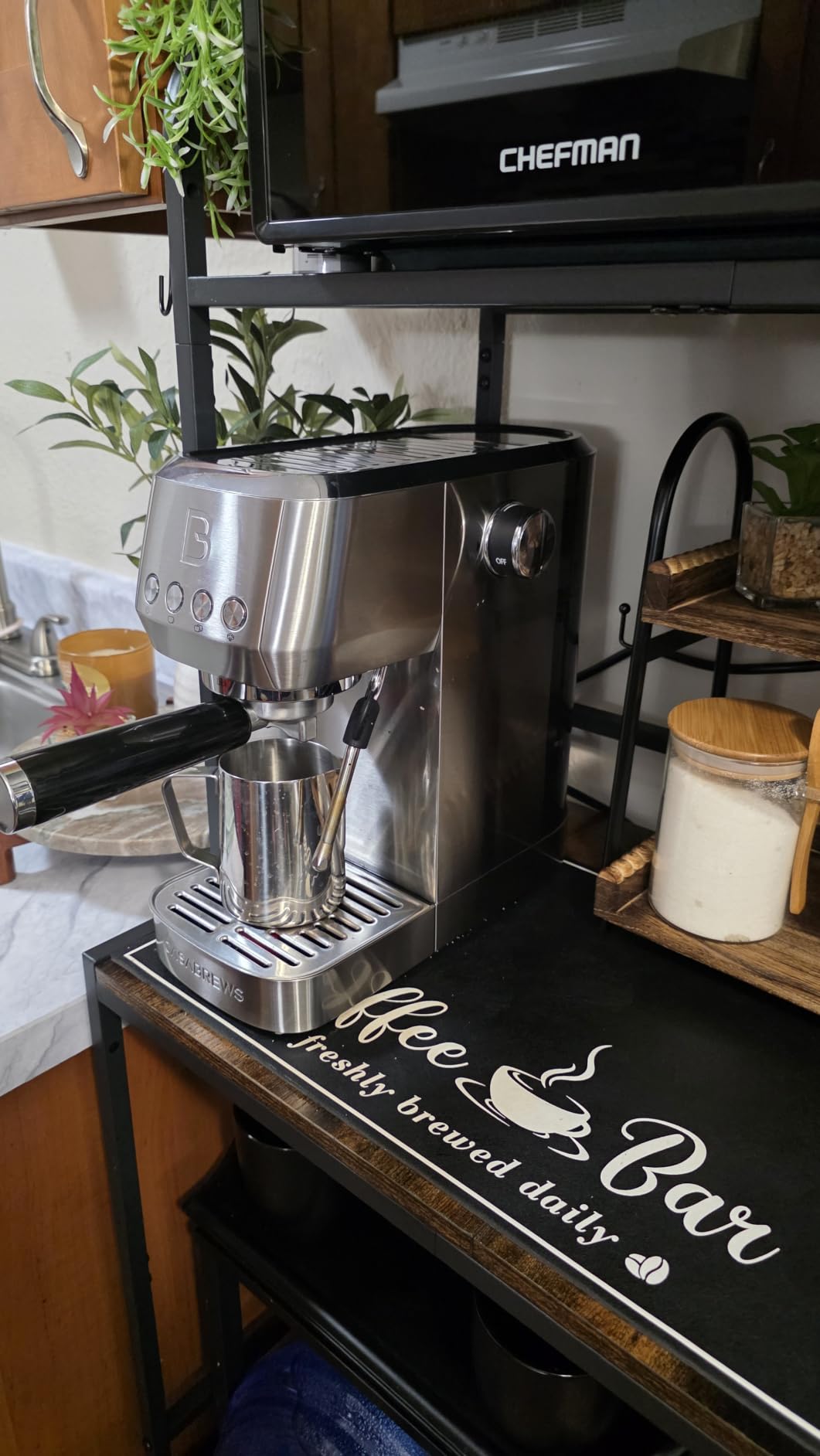
The 43.9 oz detachable tank is the reason this machine is on the list. It is the largest reservoir among the narrow models here, and owners consistently report that they do not refill it during a working day. For a shared appliance, that removes one of the most reliable sources of neglect.
It is also the lightest machine in the group at 8.1 pounds and only 5.7 inches wide, so it moves easily for cleaning. A 20 bar pump and a 1350-watt heating system pull a decent shot out of the box, and there is a removable drip tray plus one and two cup filters, a portafilter and a tamper in the box.
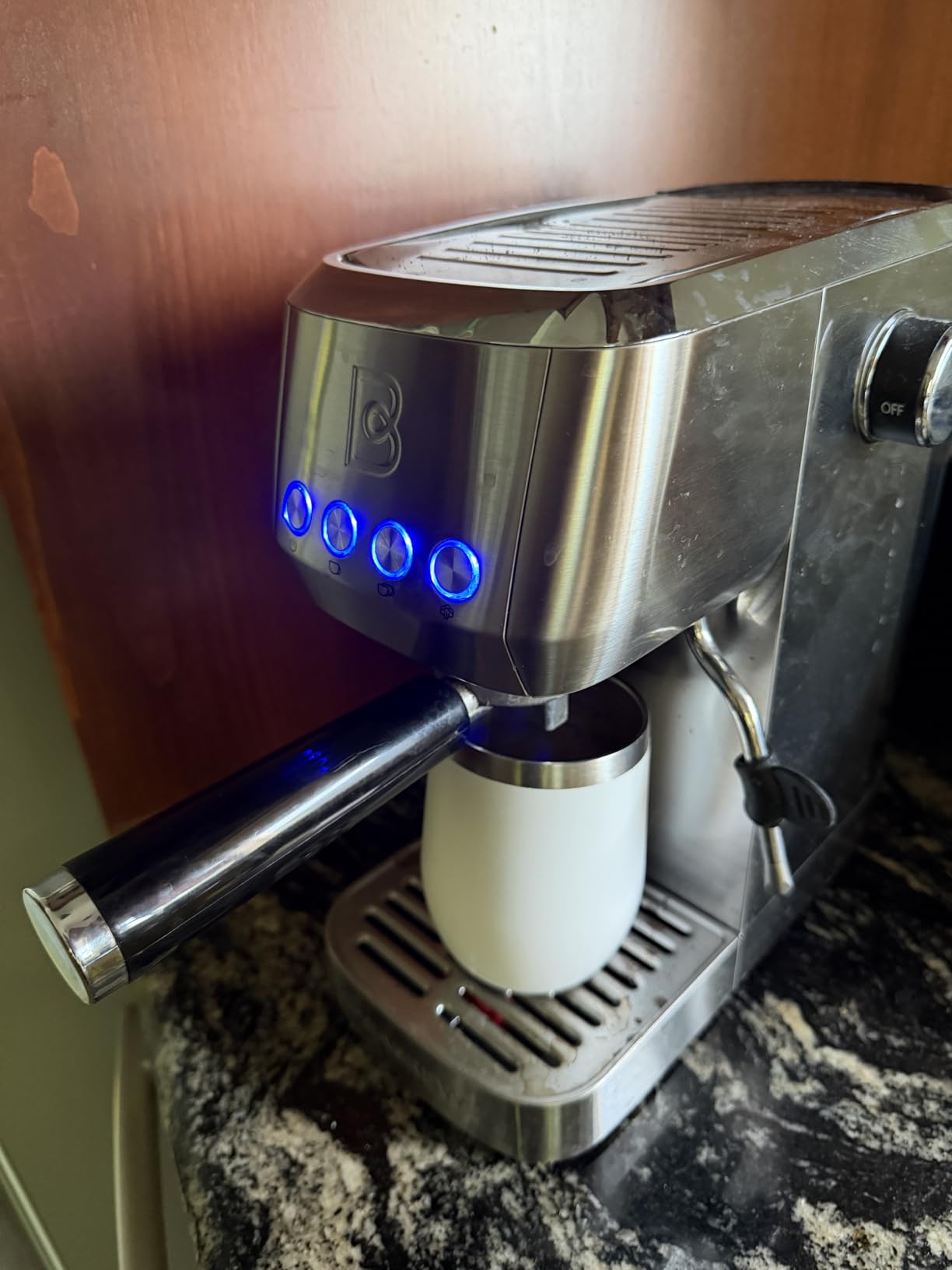
It is a single boiler, so switching between brewing and steaming costs a short wait, and extraction is reported as finicky about grind size. One detailed review reports a steam control dial that drifts out of position and bleeds pressure during extraction, which is a specific failure worth asking about before buying a second unit. The machine is also noisy during both brewing and frothing, and the included plastic tamper is a common first replacement.
There is no pressure gauge on this model, which makes it harder for a new user to see what is going wrong. A first-use cycle is required before the machine will operate normally, so plan for that on delivery day rather than discovering it at 9am on Monday.
Who this machine suits
Small to mid-size offices that want espresso on a narrow counter without the daily refill chore, particularly where the break room is also a kitchen and counter time is contested. It is a good fit for a team of ten to twenty people who will grind their own coffee.
If you have a second machine idea in mind, our roundup on the best Breville espresso machines covers the grind-and-tamp end of the range for comparison.
Where it falls short in a break room
The single boiler pause between steaming and brewing is the main limit, and it hits hardest when several milk drinks are ordered together. Without a gauge, an inconsistent shot is harder for an untrained user to correct.
Noise is the second issue. In a small break room next to a focus area, a machine that is loud during both phases of a drink gets turned off by the people who work near it.
7. Ninja CFN601 for Offices That Also Want Drip Coffee
Ninja Espresso & Coffee Maker, Nespresso Capsule Compatible, Black, CFN601
- Brews capsule espresso and a 12 cup carafe in one machine
- 19 bar system gives good crema
- Fold-away frother stows inside the body
- Used capsule bin holds 20 capsules
- Ground coffee side has a persistent leak with supplied paper filters
- Only pulls one espresso shot at a time
- Frother needs milk preheated by the user
Most offices do not have an espresso-only workforce. The Ninja CFN601 is the machine here that serves espresso and a full 12-cup carafe from the same body, which means a team of twenty with three espresso drinkers and seventeen drip drinkers does not need two appliances. That is usually the honest answer for a mid-size floor.
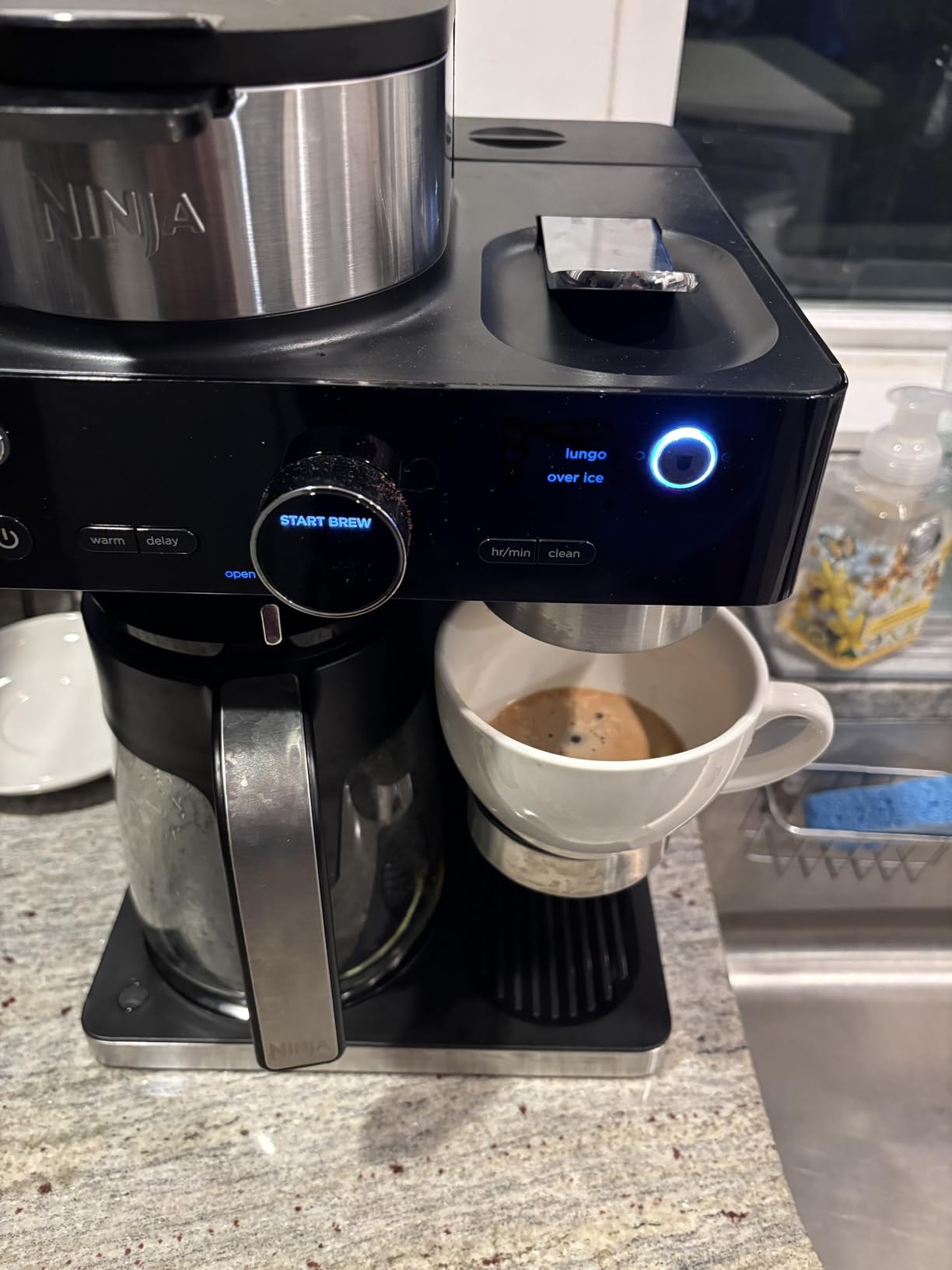
On the espresso side it uses a 19 bar Barista Plus system with three capsule styles: espresso at 1.35 oz, lungo at 3.75 oz and over ice at 1 oz. The fold-away frother tucks into the body, which keeps the counter clear, and the adjustable cup tray takes everything from shot glasses to travel mugs. A 20-capsule used bin means the waste container lasts through a busy week.
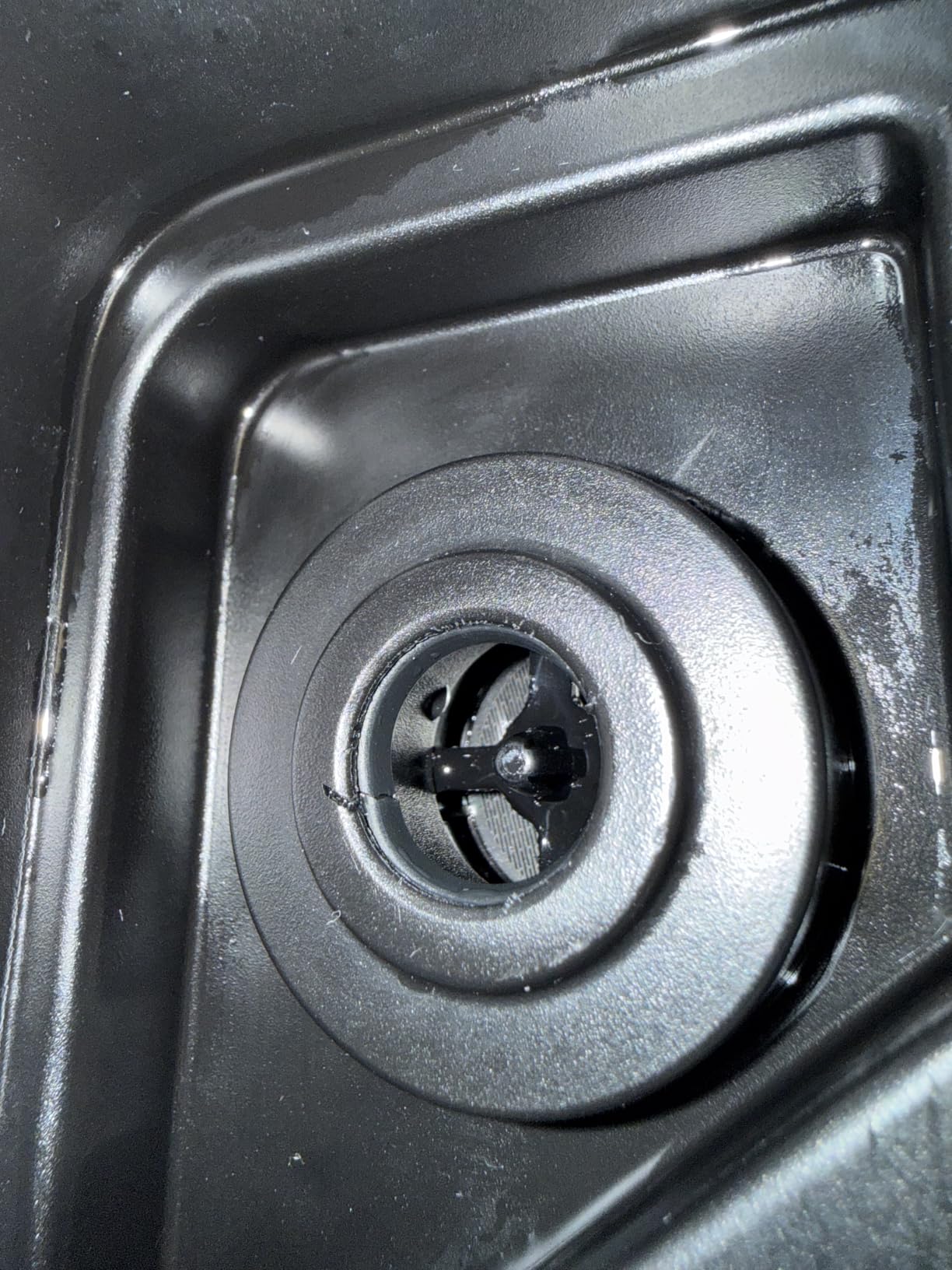
The most common complaint is a persistent leak from the ground coffee side, and several owners trace it to the supplied paper filters and resolve it with reusable ones. That is worth knowing before you commit, because a machine that leaks onto a shared counter is a machine that gets unplugged. It only pulls a single espresso shot at a time, and the frother needs the milk heated beforehand, so it is not a hands-off milk system.
At 13.6 pounds and 9.84 inches wide it is one of the larger footprints here, and a minority of owners report electronics failing around the three-year mark. Delay brew, keep warm and clean functions are included, which are the features a facilities manager will care about more than the pressure figure.
Who this machine suits
Offices of fifteen to thirty people with a mixed coffee habit, and any workplace that would otherwise need both a pod brewer and a drip machine on the same counter. It is also a good hybrid-work choice, since the carafe mode lets you make a batch rather than serving people one at a time.
It suits offices that already have a capsule supply routine and want the espresso side to be a bonus rather than the whole point.
Where it falls short in a break room
The leak risk on the grounds side is the deciding factor. If your counter is a shared surface with a wall behind it, buy reusable filters before you deploy this machine and test it for a week first.
One shot at a time is slow for a 9am cluster, and the preheat requirement on the frother means milk drinks take longer than the marketing suggests.
8. Breville Bambino for a Counter With No Grinder Budget
Breville BES450BSS Bambino Espresso Machine, Brushed Stainless Steel
- ThermoJet system reaches temperature in about 3 seconds
- Automatic steam wand does milk hands free
- Compact 6.3 inch wide body
- PID control and pre-infusion for repeatable shots
- No integrated grinder so beans must be ground separately
- Single boiler prevents brewing and steaming at once
- Small water tank relative to the machine
The Bambino’s strongest argument is speed of start-up. A ThermoJet heating element reaches extraction temperature in roughly three seconds, so there is no warm-up period at the start of the day. In an office where the first person arrives at 8:40 and the machine has been off since Friday, that is a meaningful difference.
The automatic steam wand is the second reason to consider it. It produces hands-free microfoam with adjustable milk temperature and texture, which removes the one manual skill most likely to intimidate a new user. PID control and low pressure pre-infusion support repeatable shots, and the 54mm portafilter takes 19g baskets.
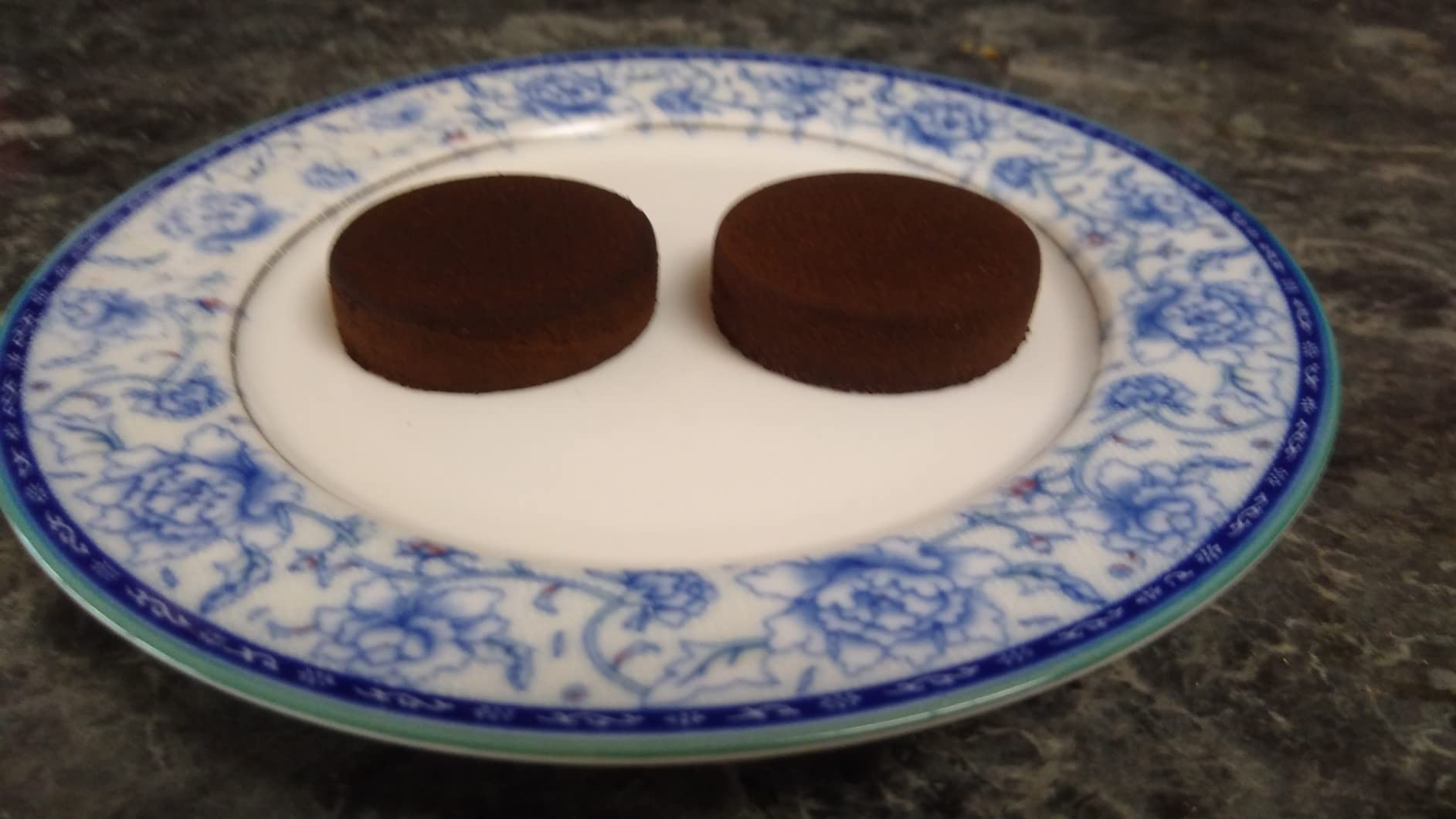
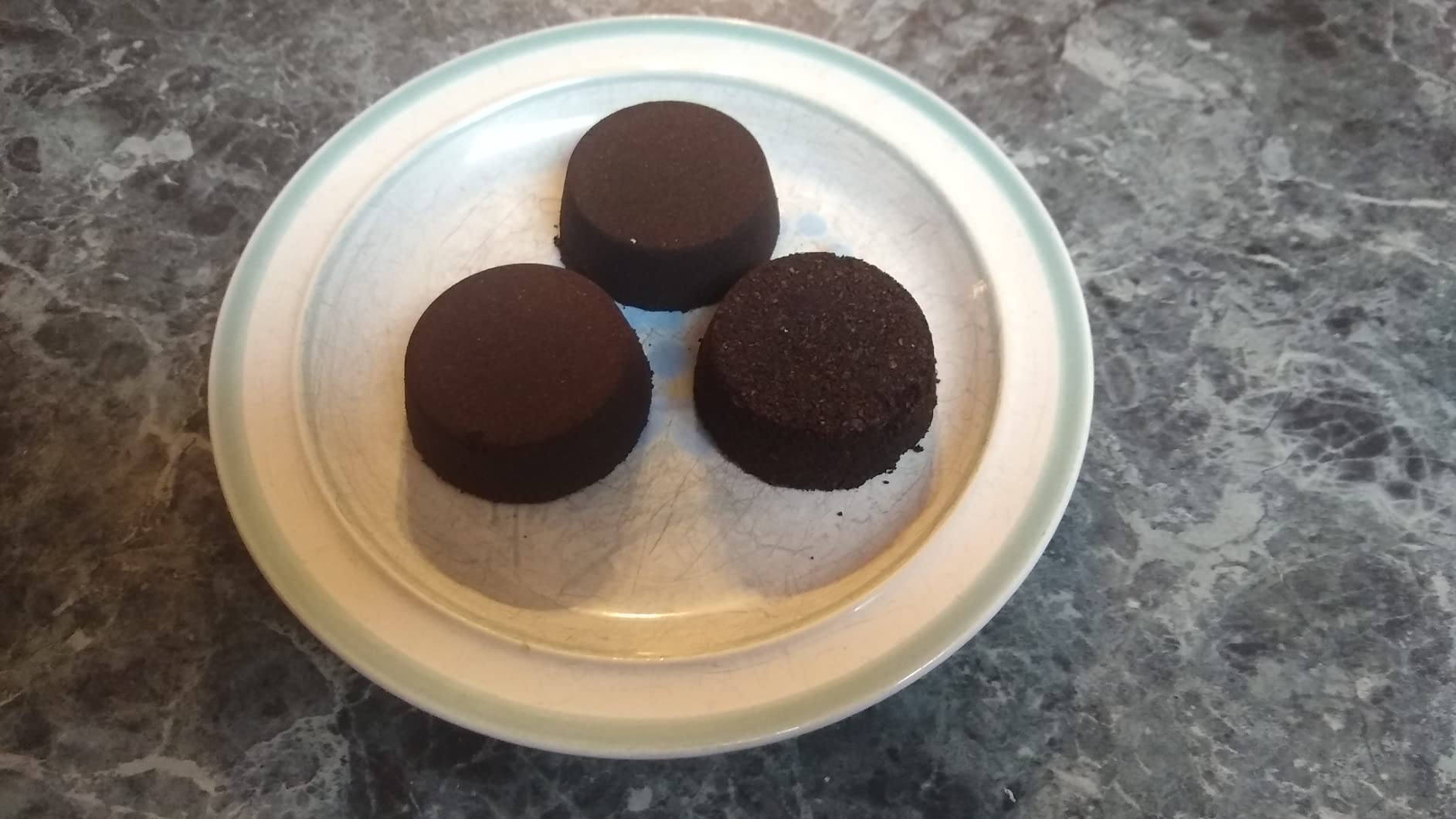
It has the lowest average rating in this group, with a noticeably larger share of one-star reviews than the others, so treat the reviews as informative rather than uniformly glowing. The recurring practical problem is the missing grinder combined with a single boiler that will not brew and steam at the same time.
Those two limitations interact badly in a rush. You grind separately, then wait for the boiler to switch modes, then froth. The water tank is also small relative to the machine’s other capabilities, which is odd given how fast the rest of it works. If you like Breville’s approach, we break down the rest of the range in our Breville espresso machine roundup.
Who this machine suits
A team of five to twelve people who want fast, repeatable drinks and mostly order milk-based espresso. It works well for an office with an existing shared grinder, or for anyone willing to add a small burr grinder to the counter.
The automatic steam wand also makes it a good choice for a break room with a mixed skill range, because nobody has to practise a technique to get a drinkable cappuccino.
Where it falls short in a break room
The single boiler is the deal-breaker for a busy cluster, and the separate grinder requirement eats counter space and adds a second thing to clean. Small tank, fast machine is a slightly awkward combination for shared use.
It is also a household-rated machine. If you exceed a handful of drinks a day, you should be budgeting for repairs earlier than with the heavier units here.
9. Ninja Luxe Cafe Premier for One Machine Instead of Three
Ninja Luxe Café Premier 3-in-1 Espresso Machine, Drip Coffee, & Cold Brew
- Built-in grinder with 25 settings and assisted tamping
- Dual froth system with spinning whisk and auto steamer
- Espresso
- drip and cold brew in one body
- Accessories store inside the machine
- Large countertop footprint for an office
- Small wastewater tray needs frequent emptying
- Regular drip coffee does not match the espresso quality
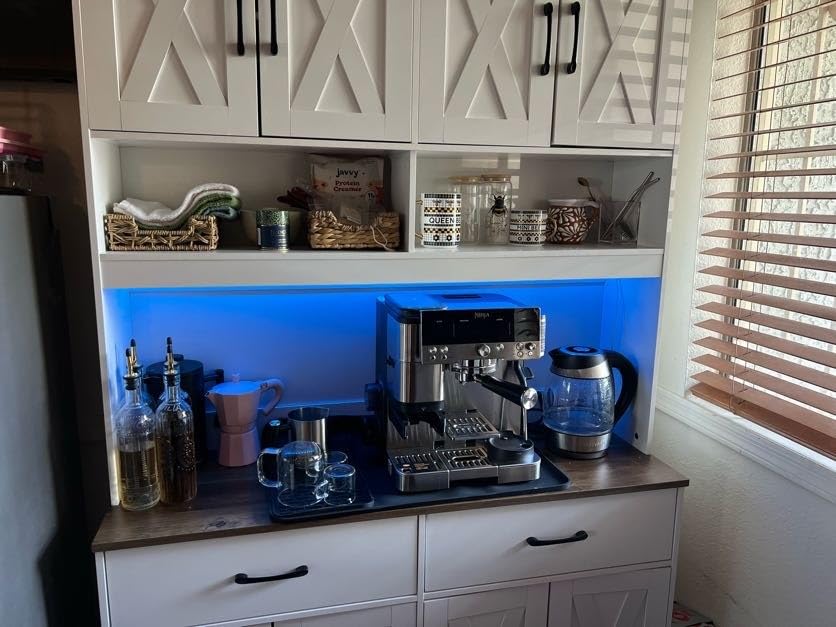
This is the most complete machine in the group and the one that most changes the daily routine of a break room. It has a built-in conical burr grinder with 25 grind settings, weight-based dosing and assisted tamping, so the manual technique that defeats untrained users is handled by the machine. You load beans, press a button and walk away.
The Dual Froth System runs a spinning whisk alongside an automatic steamer with four preset programs, which is the milk answer we would look for in an office where cappuccino and latte are common orders. It also brews drip coffee and cold brew in sizes from 6 to 18 oz, so a whole group can be served from one body. Accessories store inside the machine, which helps on a crowded counter.
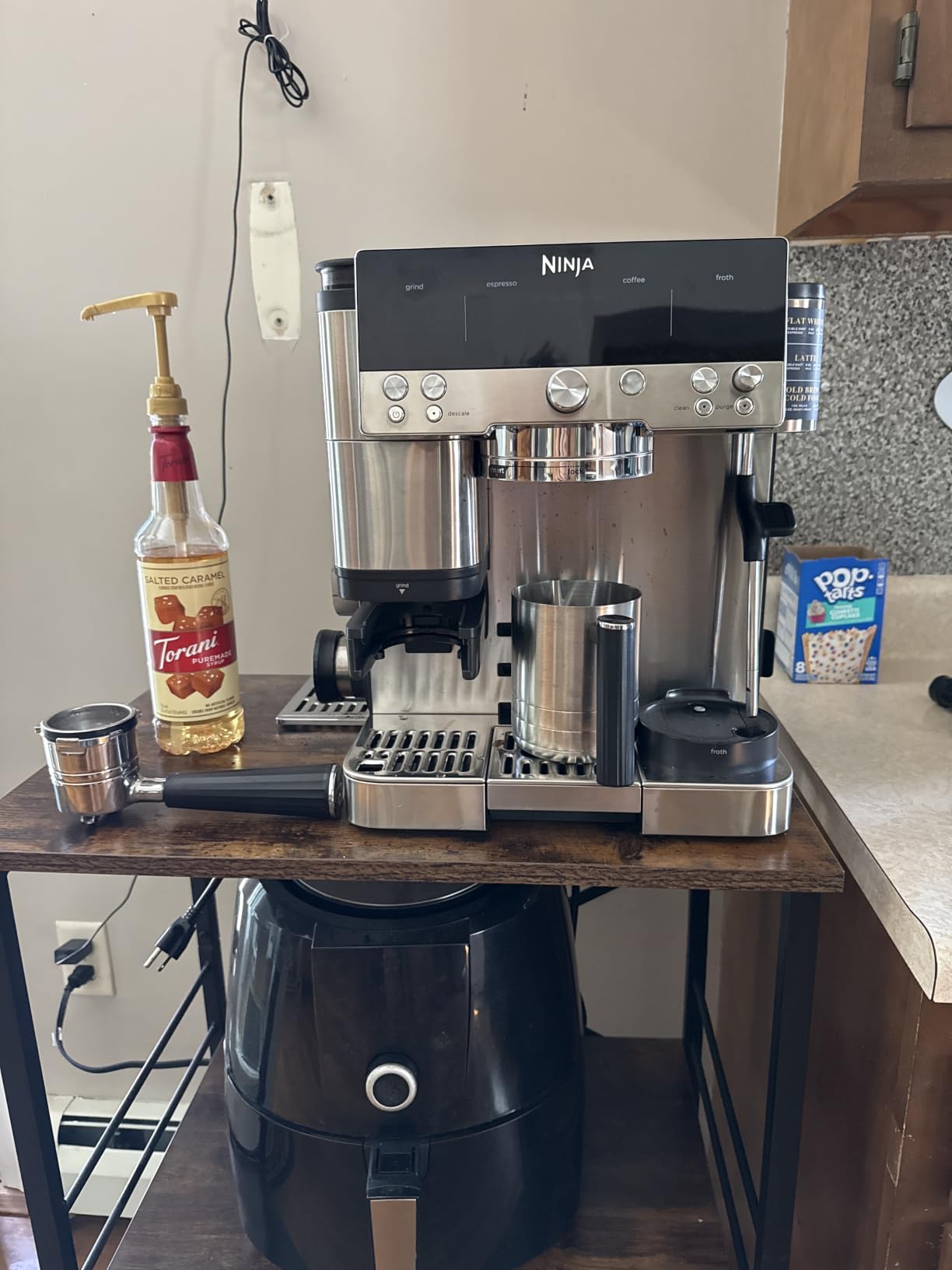
The footprint is the problem, and it is a real one. At 13.39 inches wide by 12.99 inches deep and 14.57 inches tall, this is the largest machine we recommend for a break room, and it needs clear space above and in front. The wastewater tray is small and needs frequent emptying, which reintroduces the exact chore the automation was supposed to remove.
Owners frequently compare it favourably to super-automatically priced machines many times higher, and describe it as a casual, low-maintenance machine rather than one to tune. The gripes are the drip coffee quality relative to the espresso side, the absence of a hot water spigot for tea, and reports of the grinder under-filling the portafilter over extended use, which causes inconsistent shots.
Who this machine suits
Offices of ten to twenty-five people with a break room that has a proper counter rather than a shelf, where the majority of the group wants espresso and milk drinks and nobody wants to learn technique. It is also our pick when the office does not want to add a separate grinder to the budget.
For a smaller space, the Barista Express at number one does the espresso side of this job with a smaller footprint, at the cost of automation.
Where it falls short in a break room
Size, plainly. Measure the counter before anything else, because the accessory storage only helps if the body fits where you put it. The small wastewater tray is a daily task, and grinder dosing issues can appear after extended use.
There is still a genuine learning curve and a maintenance schedule. Anyone who promises this is a zero-effort appliance is overselling it, and in a break room that promise usually ends at the first month-end clean.
10. PHILIPS 3300 LatteGo for Drinks That End in Foam
- LatteGo milk system has two parts and no tubes to clean
- SilentBrew keeps brewing noise down
- AquaClean filter means no descaling for up to 5000 cups
- Ceramic grinder with one touch drink selection
- Expels water during startup and shutdown filling the tray
- Bean hopper does not draw down the last beans
- Froth is less creamy than a manual steam wand
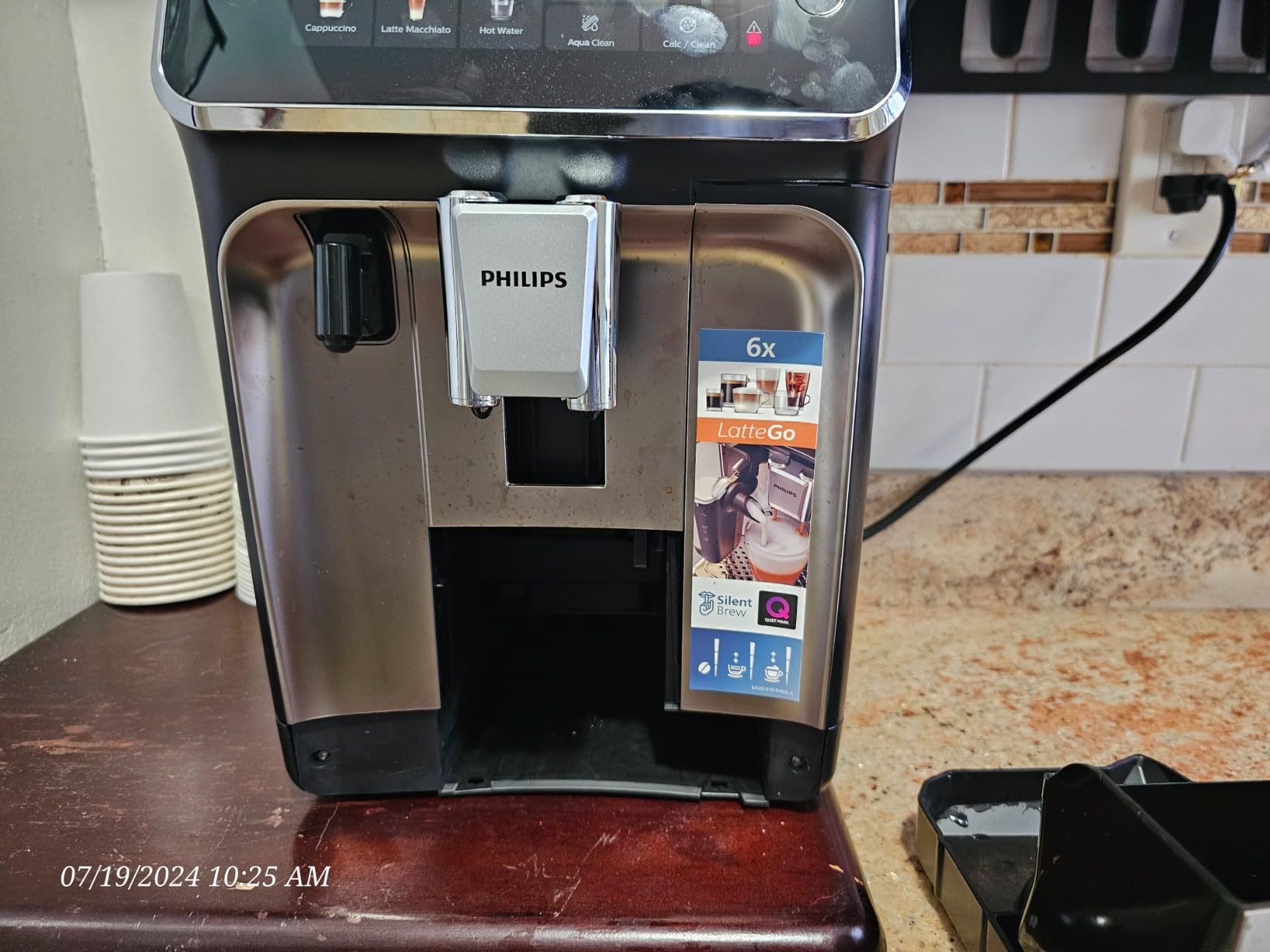
This is the machine to look at if your office runs on cappuccinos and latte macchiatos. The LatteGo milk system comes apart into two pieces with no tubes running milk through the body, so cleaning after a milk drink is a thirty-second rinse rather than a weekly teardown. That single design choice is worth more in a break room than any pressure number.
It is a genuine super-automatic: a 100 percent ceramic grinder, six drink presets on an intuitive touch display with coloured icons, and My Coffee Choice settings for strength, length and froth level. SilentBrew keeps the operating noise down, which matters in a break room next to a focus area. AquaClean filtration removes descale cycles for up to 5000 cups, cutting a recurring maintenance task almost entirely.
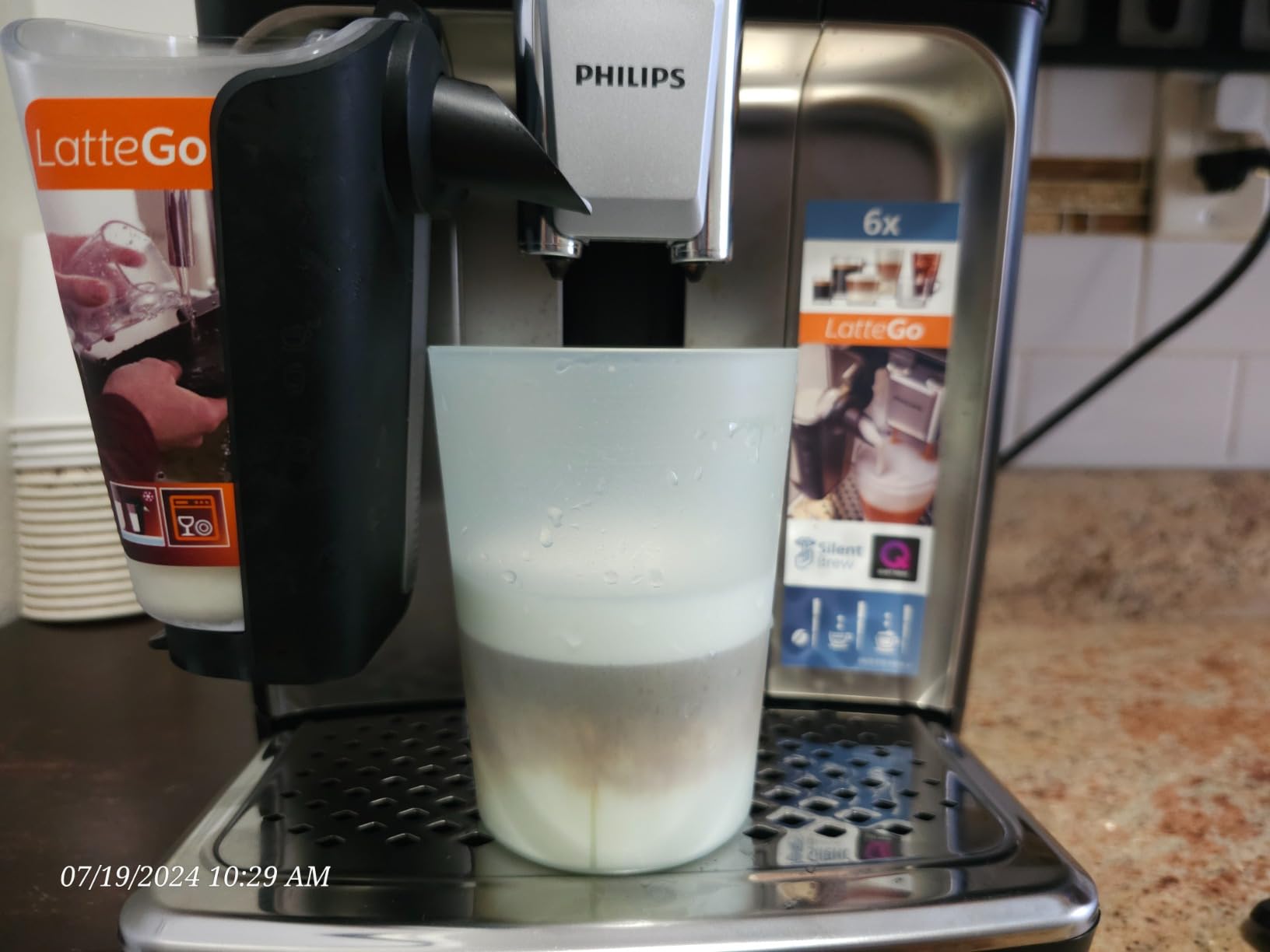
There are quirks to know about. The machine expels water during startup and shutdown, filling the collection tray, and several owners point out that this is normal self-cleaning behaviour rather than a fault. The bean hopper does not reliably draw down the last of the beans, and there is no way to steam milk separately without making a milk drink, so a barista-style cappuccino is out of reach.
Owners are also candid that the froth is less creamy than what a dedicated steam wand produces. The body is largely plastic, and at 17.04 inches wide it is the widest machine on this list by a wide margin, so it needs a long counter. A small number of reports describe a leaking unit and a bean feeder that will not empty completely, so keep the receipt.
Who this machine suits
Offices of ten to twenty people where milk drinks dominate and noise discipline matters, such as a floor with an adjacent focus area or a hybrid team that works quietly between meetings. The tubeless milk system and the 5000-cup descale interval are the two features that reduce cleaning ownership problems.
It is also the most approachable option for users with no espresso experience, since the display leads them through six choices without any hardware to understand.
Where it falls short in a break room
The width is the first thing to check. On a standard kitchenette run it can be the machine that does not fit, which is a real limitation for small offices. Bean hopper behaviour and the startup and shutdown water release both add small daily annoyances that somebody has to own.
If your group is mostly black coffee, the brew group cost is not justified. In that case, compare the De’Longhi options we cover and a plain capsule machine instead.
What Is the Best Espresso Machine for an Office?
The best espresso machine for an office break room is a super-automatic or semi-automatic with a built-in grinder, a milk system that cleans in under a minute, and a footprint that fits your counter. For most offices the answer is the Breville Barista Express when someone will own it, or the Ninja Luxe Cafe Premier when nobody will. Pick by headcount, not by taste: five people can share a compact machine, and forty need a plumbed commercial unit instead.
That answer has three parts. First, training burden: in a break room, a machine that requires grind adjustment, dosing and tamping every morning will be abandoned, so built-in grinding and metering matter more than control. Second, cleanup: milk systems with no tubes and water filters that stretch the descale interval remove the two chores that kill office machines. Third, footprint and water: reservoir-fed machines avoid any plumbing work, which facilities teams prefer.
What this answer deliberately does not include is a price. A modest machine that lasts three years in a busy break room can work out more expensive per cup than a managed coffee service that arrives weekly with a commercial unit, and we explain that comparison later in the guide.
How to Size an Espresso Machine to Your Office Headcount?
Size by drinks per day, not by number of employees. Someone who works from home three days a week is not a coffee customer, and a team of twelve that drinks one espresso each between 9am and 10am is a very different load from a team of twelve that drinks four drinks each.
The benchmark that comes up repeatedly from people running workplace espresso programs is serving around a dozen people within a twenty-minute window. Anything that clears that is fine for a normal office; anything that fails it sends people back to the coffee shop and the machine becomes an expensive ornament.
Here is how we would map headcount to machine class, using the picks above.
Five to ten people, around 10 to 20 drinks a day: a compact single boiler or capsule machine. The Nespresso Essenza Mini or the CASABREWS CM5418 both fit this tier, and neither needs plumbing. Expect at most two or three people using the machine at once.
Ten to twenty-five people, around 25 to 60 drinks a day: a machine with a larger tank, a grinder and some automation. The Breville Barista Express, the Ninja Luxe Cafe Premier or the PHILIPS 3300 sit here. This tier needs a named owner for cleaning and a counter at least 18 inches deep.
Twenty-five to fifty people, around 60 to 120 drinks a day: no machine in this guide is the right answer. At this volume you want a plumbed commercial unit from a commercial specialist, with a direct water line and a service contract, and you should be comparing managed office coffee service against purchase rather than consumer machines. Brands like BUNN, Franke, Thermoplan and JURA build for that duty cycle, and the unit that serves 60 people in an hour is a different category of machine entirely.
Hybrid teams sit in between. Fewer daily users but higher expectations means a mid-tier machine can carry the whole office, and a second machine in a second location often beats one better machine in one spot.
What to Look for in an Office Espresso Machine?
Look for low training burden first, then cleanup, then capacity. Taste matters, but in a shared setting a machine that reliably produces a drinkable shot beats a machine that produces a brilliant shot for the one person who knows how to use it.
Super-automatic versus semi-automatic versus capsule is the distinction that trips people up. A super-automatic grinds, brews and froths from a button, needs no manual technique, and cleans itself most of the way. A semi-automatic prosumer machine gives you a grinder, pressure control and a steam wand, produces better coffee, and assumes someone is paying attention. A capsule machine trades all quality control for speed and zero maintenance. In offices with no trained barista, the super-automatic end of the range is the safer buy.
That is not a universal rule. A prosumer machine in an office with one engaged enthusiast can be excellent, and several people on r/espresso describe running workplace coffee programs exactly that way. The failure case is a prosumer machine with no enthusiast: it becomes the unpaid office barista problem, where one person ends up cleaning, dosing and troubleshooting for everyone else.
Milk system quality deserves its own paragraph because it drives most order volume. Lattes and cappuccinos are usually the majority of office espresso orders. A tubeless system like the PHILIPS LatteGo takes two parts to the sink. A spinning whisk system takes almost no skill. A manual steam wand takes practice and produces the best foam, and in a rush it produces the most variation. Know which trade you are making before you buy.
Duty cycle is where consumer machines quietly fail. A household machine is specified for a handful of drinks a day, and a break room asks for twenty times that in a compressed window. Heavier boilers, metal bodies and larger heating elements tolerate this better, which is why the stainless-bodied Gevi and the CASABREWS models are worth considering over plastic-bodied units of a similar size. Our wider guide to commercial espresso machines covers the heavier end of the market.
Warranty terms deserve a direct look, and this is a point most buying guides miss. Many consumer espresso machines carry a one year limited warranty that is written for household use, and commercial or office use can fall outside what the manufacturer considers covered. Check the warranty language before you buy rather than after the first repair, and budget for maintenance from year two regardless of what the warranty says.
Water quality is the least glamorous factor and the one that most affects how long the machine lasts. Hard water fills a boiler with scale, and scale is what turns a one year machine into a two year machine. Machines with integrated filtration systems reduce the descale interval substantially, and in any case the office should know what its water looks like before installation.
Finally, think about who owns the supplies. A bean or capsule supply sitting in an unlocked drawer in a shared break room is a supply that will shrink. A labelled, managed cupboard with a named restock owner solves a problem that has ended more than one office coffee program.
Installation Checklist for a Break Room Coffee Station
Work through these five points before the machine arrives, because retrofitting a break room is disruptive and counter space is the one thing you cannot buy more of.
1. Measure the counter, not the wall. Use the full depth of the appliance including the portafilter handle swing and any tank you need to lift out for refilling. A machine that fits with two inches to spare will be moved constantly.
2. Check the electrical supply. Machines in this group draw between 1100 and 1650 watts, and the ones with heating elements and a grinder are the heaviest loads. Ask your facilities team whether the existing counter circuit can take it alongside a microwave and a kettle, and get a dedicated outlet if there is any doubt.
3. Decide on plumbed or reservoir. Every machine in this guide is reservoir-fed, which is the right default for a break room because it needs no water line, no drain and no plumber. A direct water line only makes sense at commercial volumes, where a service provider installs it.
4. Plan water and ventilation clearance. Leave room behind the machine for the water tank and above it for the bean hopper, and keep the machine away from a wall that traps heat. If filtration is part of the plan, filter the supply water rather than skipping it and hoping.
5. Run the first cycle before anyone else arrives. Several machines here require an initial setup cycle before normal operation, and you want that done by a person who can read the manual, not by the first person in at 9am. Also write the cleaning instructions on the wall next to the machine on day one.
Cleaning, Maintenance, and Break Room Etiquette
Cleaning is the factor that decides whether an office machine is still running in month six. The recurring complaint from break room users is not that the machine is bad, it is that cleaning is nobody’s job.
A daily cadence takes a few minutes: empty the grounds and dregs container, rinse the milk parts immediately after a milk drink, wipe the steam wand if you use one, and refill the water tank. A weekly job is a backflush or cleaning cycle where the machine has one, a soak of the milk system, and a wipe of the group head. Monthly work is a descale on machines without filtration, a clean of the burr grinder where accessible, and a check of the seals.
Assign that work. The most effective arrangement we have seen is a named owner for the daily three minutes plus a rotating weekly slot, printed beside the machine. A sign-up sheet on the fridge door works better than an email to the whole floor, because the sign-up sheet is where the machine is.
Etiquette matters just as much as chemistry. The classic break room failure is a shared capsule or pod supply that nobody owns, which turns into a quiet argument. Labelling the supply cupboard, keeping a separate box for decaf and for the one person who always wants lungo, and restocking on a fixed day resolves most of it. There are well-known threads on r/tifu about the damage done by taking a coworker’s capsule supply, which is a decent illustration of how small the margin for error is when supplies are unlabelled.
On beans, the same logic applies with a different failure mode. If a machine needs ground coffee, keep the grinder and the beans together, put a date on the bag, and throw out anything that has been open for weeks. Stale pre-ground coffee is the fastest way to make a good machine look bad.
For milk, a two minute rule works. Anything sitting in a carafe or steam pitcher longer than that should be discarded, both for taste and for food safety. Assigning a weekly clean of the milk line is far easier than cleaning a week of residue.
Lease, Rental, or Buy an Office Espresso Machine?
Buying is the default and it is right for most offices under twenty-five people, but it is not automatically the cheapest route. The honest comparison is between a one-off purchase, a rental arrangement, and a managed office coffee service where a provider installs, maintains and restocks a commercial unit.
Purchase gives you control and the lowest ongoing cost per cup once the machine is paid for, but it puts the cleaning, the descaling, the repairs and the downtime on you. The cost per cup is the recurring cost of beans or capsules, milk, filters, and the amortised repair and replacement reserve. Work that out over three years, not one, because the machines in this group are consumer-rated and a five-year assumption is optimistic for the lighter units.
Rental or a managed service moves the maintenance off your plate in exchange for a monthly fee and a contract. The provider handles cleaning, servicing and supply, and a commercial unit has a duty cycle built for a hundred drinks a day. The trade is cost per cup, flexibility and control: you are paying for uptime and for somebody else to own the problem.
For offices under ten people, a purchase almost always wins on cost and you can live with the cleaning rota. For offices of twenty-five or more, or anywhere the machine would run through more than a hundred drinks a day, a managed service is the more sensible route because the downtime risk is what actually costs money, not the monthly fee. In between, the deciding question is simple: is there a named person who will own the machine, or not.
One factor that should push you away from consumer machines entirely: check whether the manufacturer’s warranty covers business use. Several machines in this group carry one year limited product warranties written with households in mind, and a break room is not a household.
Frequently Asked Questions
What is the best espresso machine for an office setting?
The best espresso machine for an office break room is a bean-to-cup machine that grinds, brews and froths from a button, sized to your headcount, so no employee needs espresso training and daily cleaning stays under five minutes. For most offices the Breville Barista Express is the strongest overall pick, while the Ninja Luxe Cafe Premier suits teams that want zero manual technique.
What is the best automatic espresso machine for an office?
The PHILIPS 3300 LatteGo is the best automatic pick for milk-heavy offices because its tubeless two-part milk system cleans in under a minute, SilentBrew keeps noise down and AquaClean filtration stretches descale intervals to thousands of cups. For a smaller space, the Breville Nespresso Essenza Mini is the fastest automatic option and needs no training at all.
How much counter space does an office espresso machine need?
Allow the full appliance depth plus handle swing and room to lift the water tank out. The narrowest models here are about 5.5 inches wide and 12.3 inches deep, mid-size machines run 12 to 14 inches deep, and the widest automatic in the group is over 17 inches wide. Measure the run of usable counter, not the wall, before choosing.
How often does an office espresso machine need cleaning?
Daily: empty the grounds container and drip tray, rinse milk parts straight after a milk drink, and refill the water tank. Weekly: run the cleaning cycle, soak the milk system and wipe the group head. Monthly: descale machines without integrated filtration, clean the burr grinder and check the seals. Machines with AquaClean or similar filtration can go far longer between descales.
Should an office buy or rent a coffee machine?
Buy if you have under about twenty-five people and a named person who will own cleaning and restocking, since ownership gives the lowest ongoing cost per cup. Use a managed coffee service or rental if you expect more than a hundred drinks a day, because commercial duty cycle and covered maintenance reduce the downtime cost that actually hurts a workplace.
Conclusion
For an office of up to ten people on a tight counter, the Breville Nespresso Essenza Mini or the CASABREWS CM5418 will keep a small group happy with almost no training and almost no maintenance. For a team of ten to twenty-five that wants real espresso and real milk drinks, the Breville Barista Express remains the best espresso machine for office break rooms overall, and the Ninja Luxe Cafe Premier is the better answer when nobody wants to grind or tamp. When cappuccinos dominate the order sheet, the PHILIPS 3300 LatteGo is the one whose milk system is built for a shared room.
Past twenty-five people, stop shopping consumer machines and compare plumbed commercial units and managed office coffee service on cost per cup, downtime and who owns the cleaning. We update this roundup through 2026, and the fastest way to choose is to measure your counter, count your daily drinks, then pick the class that matches.