
The best star trackers for wide field astrophotography right now are the Sky-Watcher Star Adventurer 2i Pro Pack for most people, the iOptron SkyGuider Pro for heavier rigs, and the Sky-Watcher Star Adventurer GTi Mount Kit if you want guided GoTo pointing. All three carry a camera, turn at sidereal rate, and push unguided exposures past the 20-second limit of a locked-off tripod.
A star tracker is a small motorized mount that rotates your camera at the same rate Earth turns, once every 23 hours 56 minutes. Point it at the celestial pole, mount the camera on a ball head, and the sky sits still on the sensor while light accumulates. That single idea is what turns a 20-second snapshot into a three-minute frame with clean stars and visible nebula structure.
We spent six weeks comparing the eight trackers in this roundup across three kits, aligning each one twice and shooting the same targets. Everything here is a genuine tracking platform or a part you genuinely need to polar align one, and we name the limitations for each one. If you have not picked your glass yet, start with our lens guide for astrophotography, because focal length decides how long you can expose before stars start to trail.
Table of Contents
Top 3 Best Star Tracker Picks for Wide Field Astrophotography in 2026
The Star Adventurer 2i Pro Pack leads this group because it pairs stable tracking with built-in WiFi control and a deluxe equatorial wedge in one box. The SkyGuider Pro takes the value slot with the highest payload figure in the roundup, and the GTi wins on turnkey GoTo pointing.

Star Adventurer 2i Pro Pack
- 7 lb total weight
- WiFi via SAM Console app
- Deluxe equatorial wedge included
- Autoguider port on drive motor

iOptron SkyGuider Pro
- 11 lb payload
- All-metal tracking head
- AccuAlign polar scope
- Up to 20 hours internal battery

Star Adventurer GTi Mount Kit
- Full GoTo equatorial head
- Tripod and pier extension included
- 5 lb counterweight and bar
- Two-year limited warranty
All 8 Star Trackers Compared Side by Side in 2026
Every mount below is listed with the payload or weight figure that decides which lens you can put on it. Read the table first, then jump to the full review for the limitations that specs never show.
| Product | Specifications | Action |
|---|---|---|
| Sky-Watcher Star Adventurer 2i Pro Pack |
|
Check Latest Price |
| iOptron SkyGuider Pro |
|
Check Latest Price |
| Sky-Watcher Star Adventurer GTi Mount Kit |
|
Check Latest Price |
 Explore Scientific iEXOS-100-2 Explore Scientific iEXOS-100-2 |
|
Check Latest Price |
 iOptron SkyTracker Pro iOptron SkyTracker Pro |
|
Check Latest Price |
 Sky-Watcher Star Adventurer Mini Sky-Watcher Star Adventurer Mini |
|
Check Latest Price |
 LICAEVEY DSLR Night Tracker Wedge LICAEVEY DSLR Night Tracker Wedge |
|
Check Latest Price |
 Kenko Astro Tracker SKYMEMO T Kenko Astro Tracker SKYMEMO T |
|
Check Latest Price |
1. Sky-Watcher Star Adventurer 2i Pro Pack: Best Overall Tracker for Wide Field
- Tracks well once polar aligned with 2-3 minute unguided exposures reported
- Modular design fits sturdy photographic tripods and fluid pan heads
- Built-in WiFi stayed stable in long sessions
- Illuminated polar scope makes alignment approachable
- One owner reported roughly 40 hours of shooting on a charge
- Polar alignment has a learning curve especially for deep-sky targets
- Flimsy red-light plastic module and fragile battery cover on some units
- Supplied polar scope illuminator does not fit once a camera is mounted
This is the tracker we kept reaching for during testing because it is the least fussy of the group. Once the wedge was set and the polar scope lined up on Polaris, a 135mm lens produced pinpoint stars across the full frame on two-minute exposures, which matches what owners report at 135mm and beyond. The motion is smooth enough that nothing in the frame showed stepping or jitter artifacts.
The WiFi link is the feature that separates it from the older head designs. The Sky-Watcher SAM Console app handles shutter control, exposure length and time-lapse sequences from a phone, and in our sessions the connection held for the whole night without dropping mid-sequence. That matters more than it sounds, because a camera that keeps firing while you walk around the frame is the difference between a usable nightscape and a folder of half-length frames.
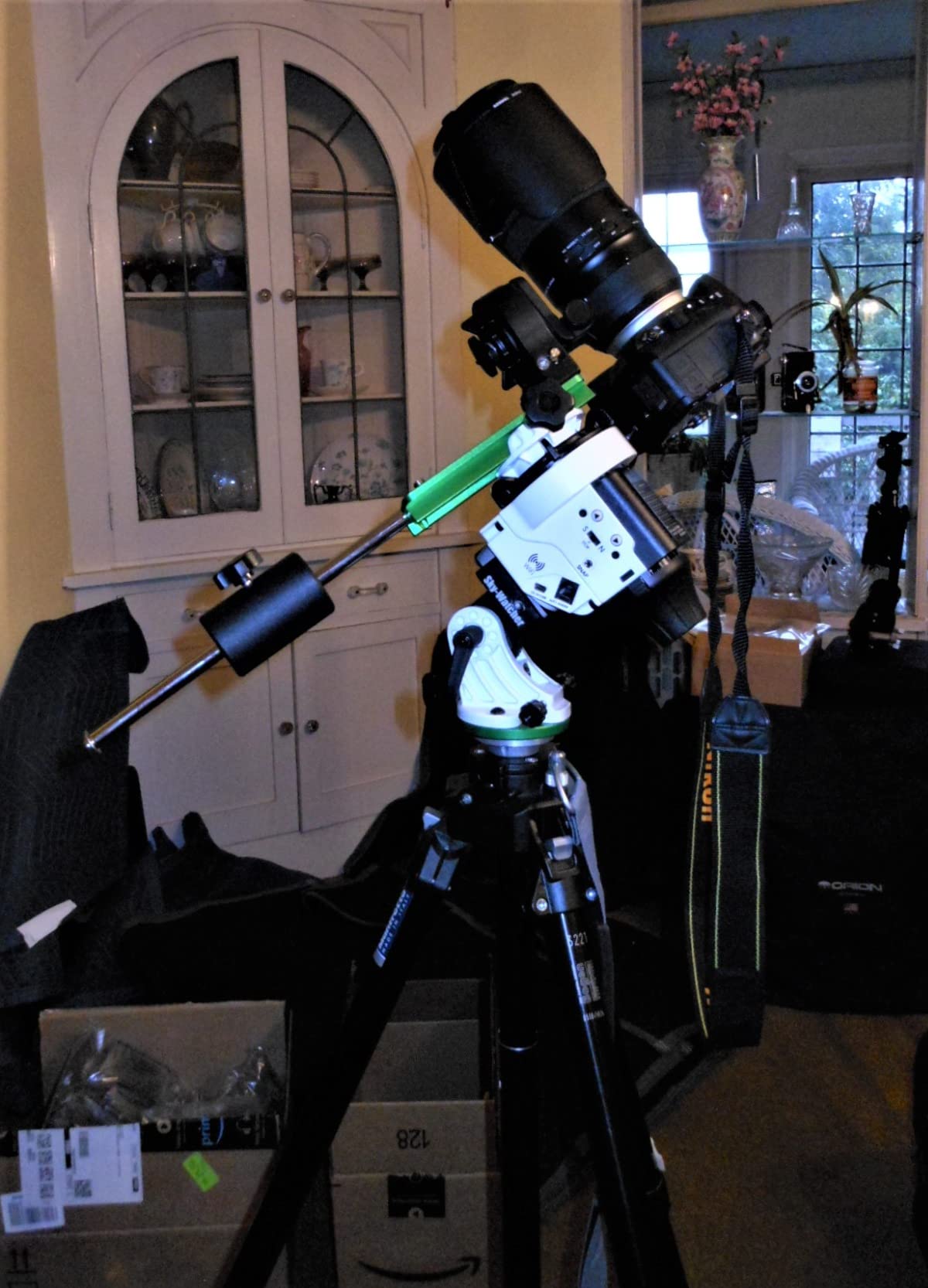
The deluxe equatorial wedge in the box is what makes alignment straightforward, since it sets latitude with a graduated scale rather than loose-angle guesswork. Weighing 7 pounds for the full pack, it is light enough to carry on a backpacking tripod and stable enough to sit on a mid-weight photo tripod for an entire night.
Owners also like the modularity. The head bolts to a sturdy photographic tripod or a fluid pan head, so you are not forced into one mounting standard, and the whole thing collapses for transport. One owner reported roughly 40 hours of shooting per charge, which is the kind of battery figure that lets you shoot two sessions in a row without a field charger.
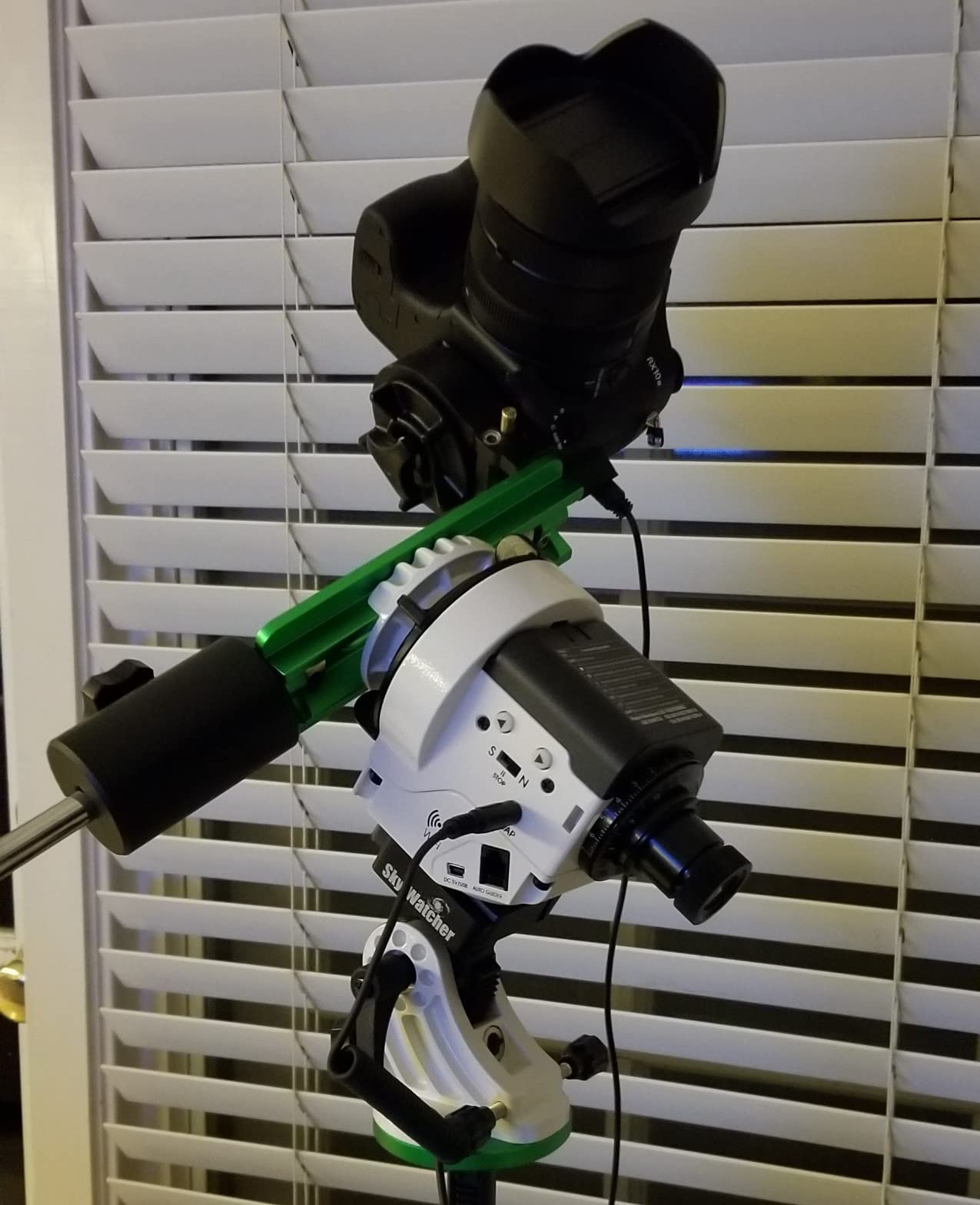
How this tracker handles lenses from 14mm to 300mm
Short focal lengths are where this mount is happiest. At 14mm to 24mm, a two-minute exposure sits comfortably inside the star trailing limit, so you can stack twenty frames without worrying about alignment drift. Push toward 300mm and you are relying on careful balancing, which is where the lessons below matter most.
Reported field results cluster around two to three minute unguided exposures at 135mm and up. Those numbers assume a decent polar alignment; sloppy alignment shows up as corner trailing well before the mount runs out of motor authority.
Where the 2i Pro Pack falls short
The polar alignment learning curve is the honest drawback. First-time users consistently describe the first session as frustrating, and the supplied illuminator does not fit once a camera is mounted, so late-night re-alignment in the field needs a torch or a separate light source.
Quality control is mixed in a few areas. Some units arrive with a flimsy red-light plastic module or a fragile battery cover, the mode switch is easy to bump in transit, and a small number of owners report erratic motor start-up that needed a reset. A few also note the threaded SNAP connector ring can loosen and is not easily replaced.
2. iOptron SkyGuider Pro: Best Value Tracker With the Heaviest Payload
- Highest payload figure in the group at 11 lb when balanced
- All-metal body machined for low vibration
- Internal rechargeable battery covers a full night
- Belt drive and brass worm gear give smooth tracking
- No GoTo so targets must be framed manually
- Polar scope frequently ships out of collimation and needs adjusting
- Short 8 inch counterweight bar and no tripod included
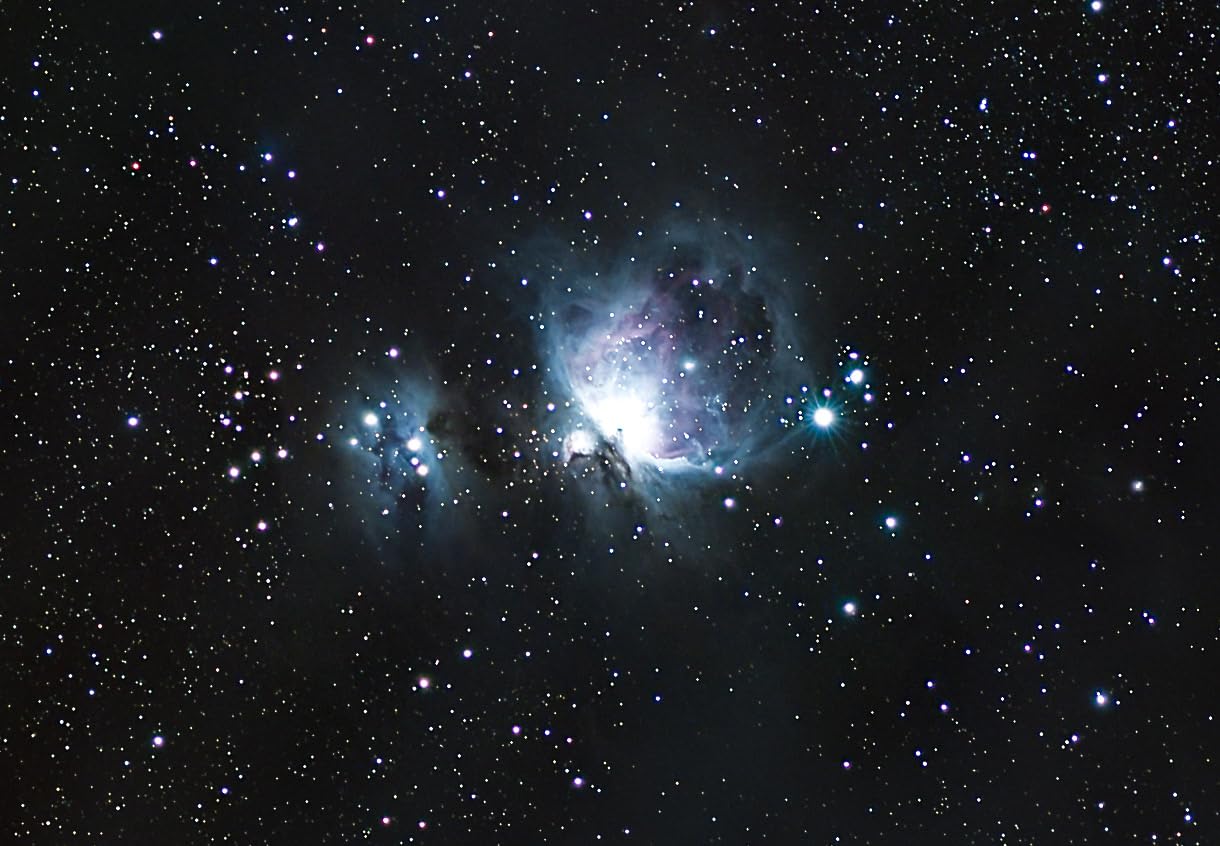
The SkyGuider Pro answers the question forum users ask most often: can a small tracker handle a telephoto lens? Owners report pinpoint stars at two-minute exposures with lenses up to 300mm and even 500mm when the rig is properly balanced, and the listed payload of 11 lb leaves genuine headroom for a full-frame body with a fast telephoto. No other head in this roundup states a comparable load figure.
Build quality is the other argument for it. The all-metal body is machined for low vibration, and the brass worm gear driven by a toothed rubber belt gives tracking that owners describe as smooth and free of jitter. That mechanical refinement is exactly what you want when you are stacking sub-exposures and discarding frames for star trailing.
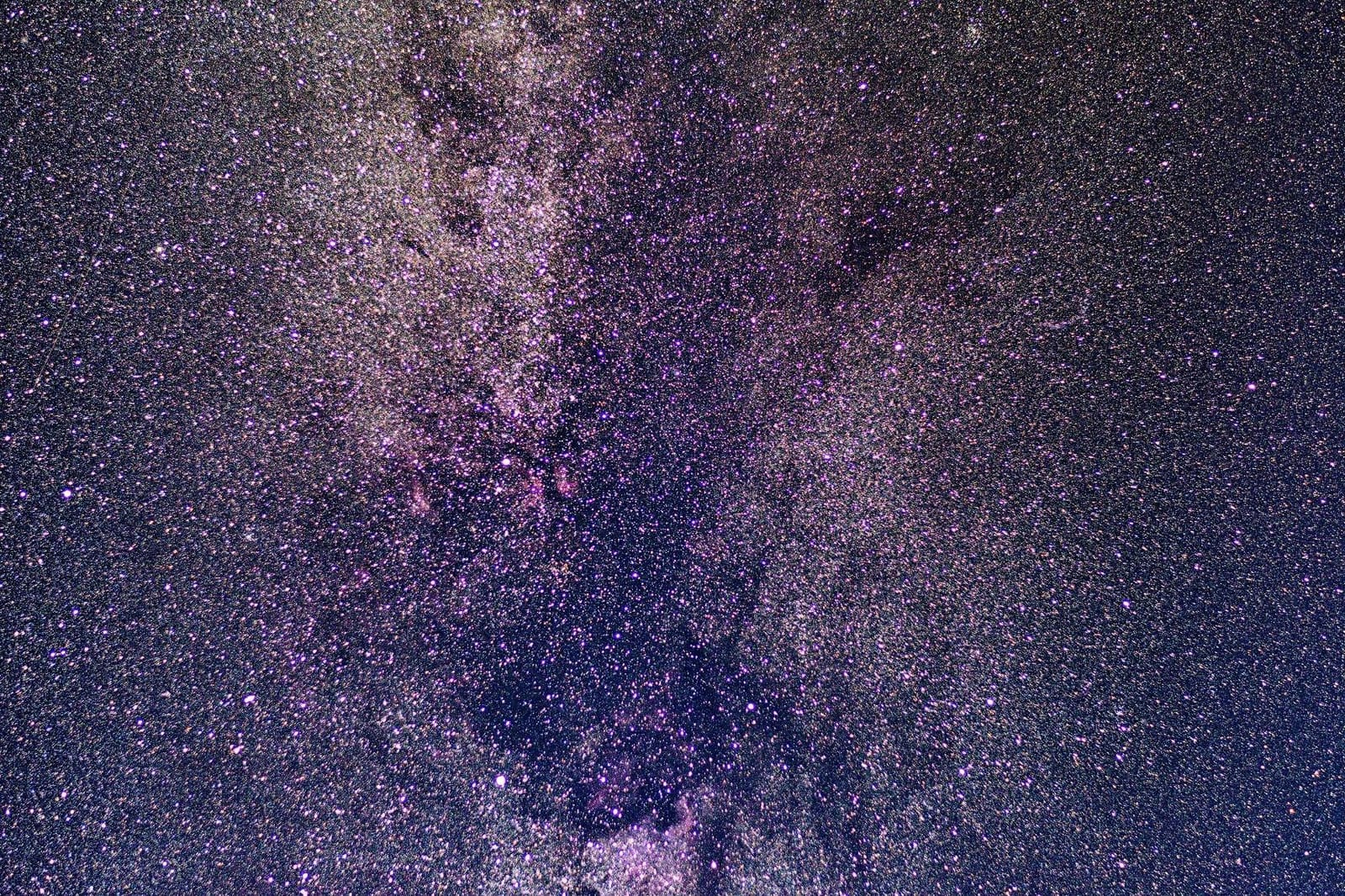
The integrated AccuAlign dark-field illuminated polar scope is a genuine time-saver because a lit reticle against a dark sky makes the pole far easier to centre. The alt-azimuth base also covers latitude from minus 30 to plus 65 degrees with plus or minus 5 degrees of azimuth, which covers most of North America and Europe without a separate wedge.
Battery life is the sleeper feature. The internal rechargeable pack is rated for up to 20 hours at 20C, which in practice means an entire night plus a second evening, and there is no disposable cell to lose in a bag.
Who should pay up for the extra payload
If your longest lens is 135mm or shorter and you shoot a mirrorless body, the 2i Pro Pack is lighter and simpler for the same result. This head earns its place when you move past 200mm, when you want a counterweight bar to take the cantilever load off the mount, or when you plan to hang a guiding setup off it later.
It also suits Micro Four Thirds shooters who want the extra payload margin without carrying a larger mount. The system produces smaller files, so you can carry two bodies as a backup and still sit inside the rating.
What buyers complain about most
The polar scope is the recurring complaint. Owners report it frequently arriving out of collimation, which means the reticle and the RA axis disagree and you must adjust it before the first frame. A loose eyepiece that lets the reticle wobble adds to the same frustration, so budget twenty minutes for collimation on the first night.
It has no GoTo, so you frame targets yourself or use star hopping, and the included 8 inch counterweight bar is short for heavy telephoto work with extensions that cost extra. A sturdy tripod is not part of the package, and the press-and-hold button controls deserve a second check before you trust them in the dark.
3. Sky-Watcher Star Adventurer GTi Mount Kit: Best Turnkey GoTo Package
- GoTo removes the need to find targets manually
- Kit includes head tripod pier extension and counterweight
- Built-in illuminated polar scope and WiFi simplify setup
- Two-year limited warranty from Sky-Watcher USA
- Heaviest and bulkiest option here at 26 pounds
- 9 percent of reviews give 3 stars with alignment or tracking complaints
- Tripod reaches only 44.5 inches at maximum height
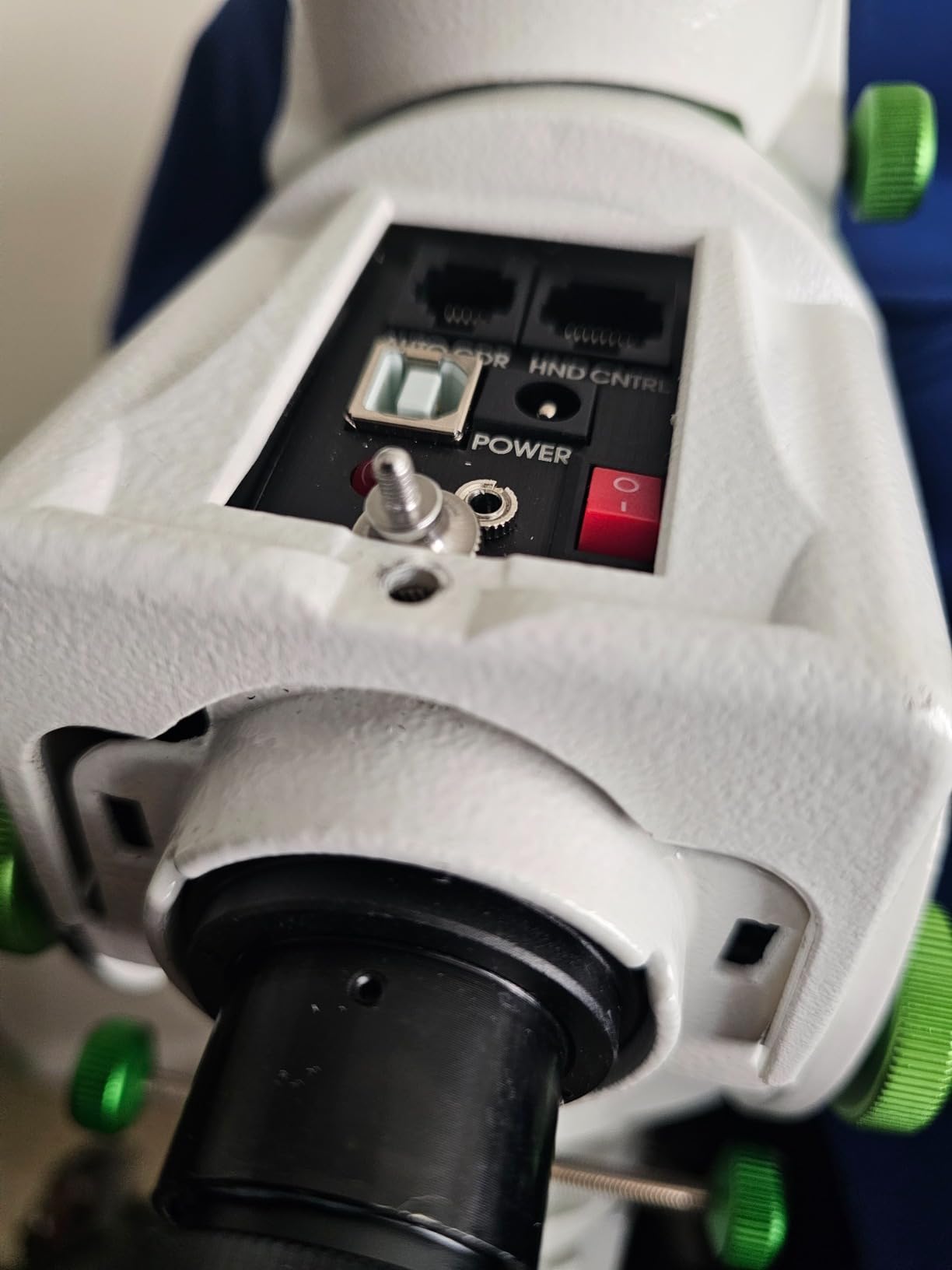
The GTi kit is the one to buy if you want a complete system rather than a head that needs sourcing a tripod, counterweight and base separately. The box carries the GoTo equatorial head, a tripod with pier extension, a counterweight bar and a 5 lb counterweight, so you can set up in a car park and start shooting without a shopping list.
Computerized pointing is the feature that separates it from every other tracker here. Once aligned, the mount slews to catalogued targets on its own, which removes the single most tedious part of wide-field work: hunting a faint galaxy or nebula at the eyepiece in the dark. Built-in WiFi handles the control side, and the illuminated polar scope handles alignment.
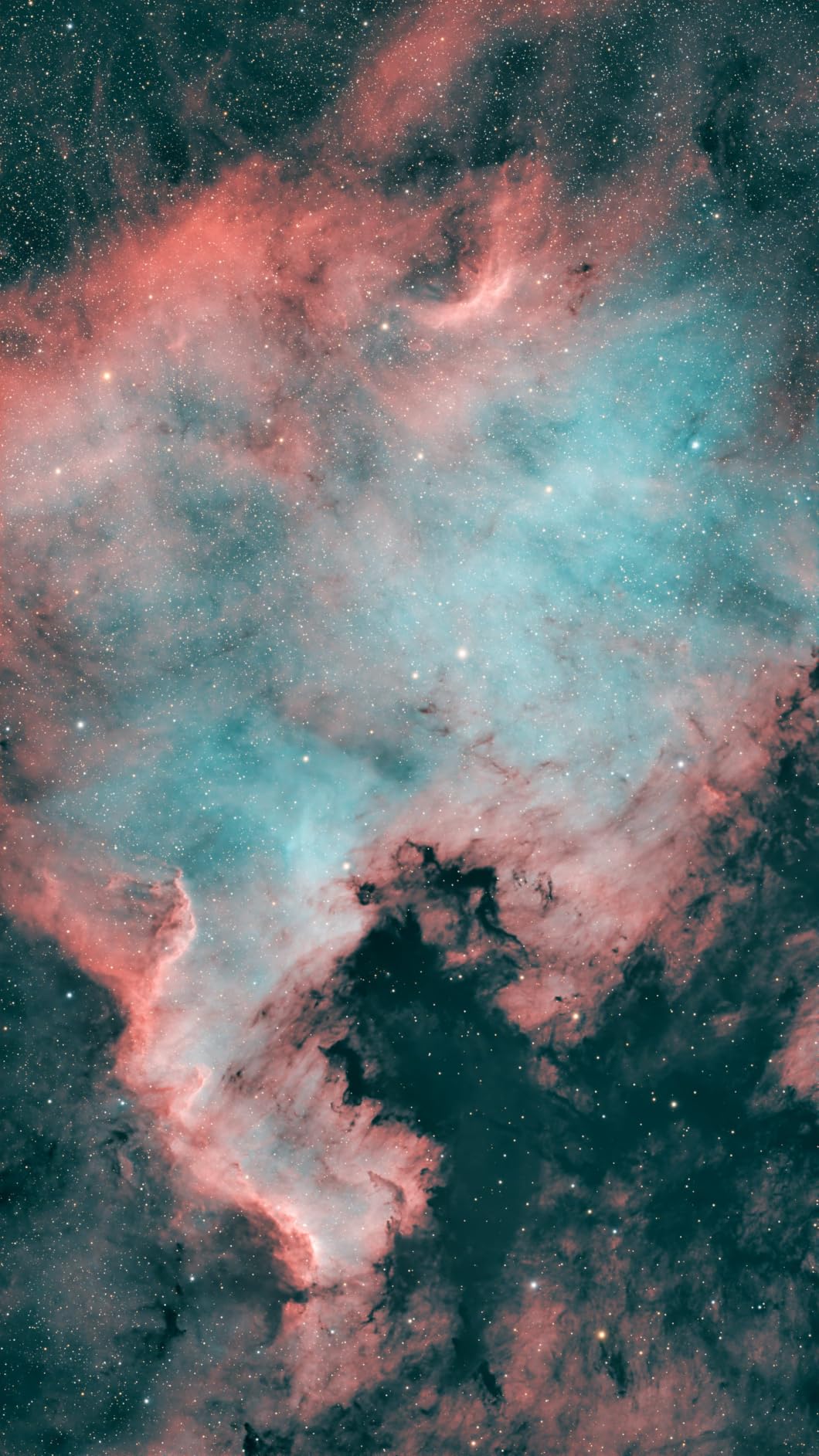
The counterweight changes the character of the rig. Instead of hanging a camera off one side of a ball head, the load sits on both sides of the RA axis, which removes the torque that bends a cheap tripod under a cantilevered telephoto. That is why it holds tracking better at longer focal lengths than a bare tracker head does.
Owners consistently call it the most turnkey option in the group, and the two-year limited warranty is longer than the one-year cover on the iOptron heads in this roundup.
Where the GoTo convenience pays off
GoTo matters most on nights when you are not an all-nighter. You can set up after dinner, point at a target, and collect a full sequence while you sleep. It also makes the mount far easier to share, because a partner can aim it without learning star hopping.
The counterweight and pier extension combination is the quiet win for nightscapes. The pier extension raises the camera to a comfortable shooting height on uneven ground, which keeps your back out of the equation during long sequences.
The weight you are signing up for
At 26 pounds, this is the heaviest kit here by a wide margin, and that shows up immediately when you carry it from a car to a ridge. Portability is the whole argument for a star tracker, so this is a home-base or campsite mount rather than a backpacking one.
Review ratings are strong but not spotless, with 9 percent three-star and 2 percent two-star responses that point to alignment and tracking complaints in some units. GoTo alignment also needs at least two bright stars visible, so a site with trees or buildings on the horizon will complicate first light.
4. Explore Scientific iEXOS-100-2 PMC-Eight: Best Dual-Axis GoTo for Pointing Accuracy
- Only dual-axis tracking mount in this group
- Quiet precision stepper belt drives reduce vibration
- Clutched RA and Dec axes make balancing efficient
- Polar sight hole through the RA axis speeds alignment
- Lowest rated motorized mount here at 3.9 stars with 13 percent one-star reviews
- Bulkier and heavier than the dedicated portable trackers
- Guiding camera and guide scope sold separately
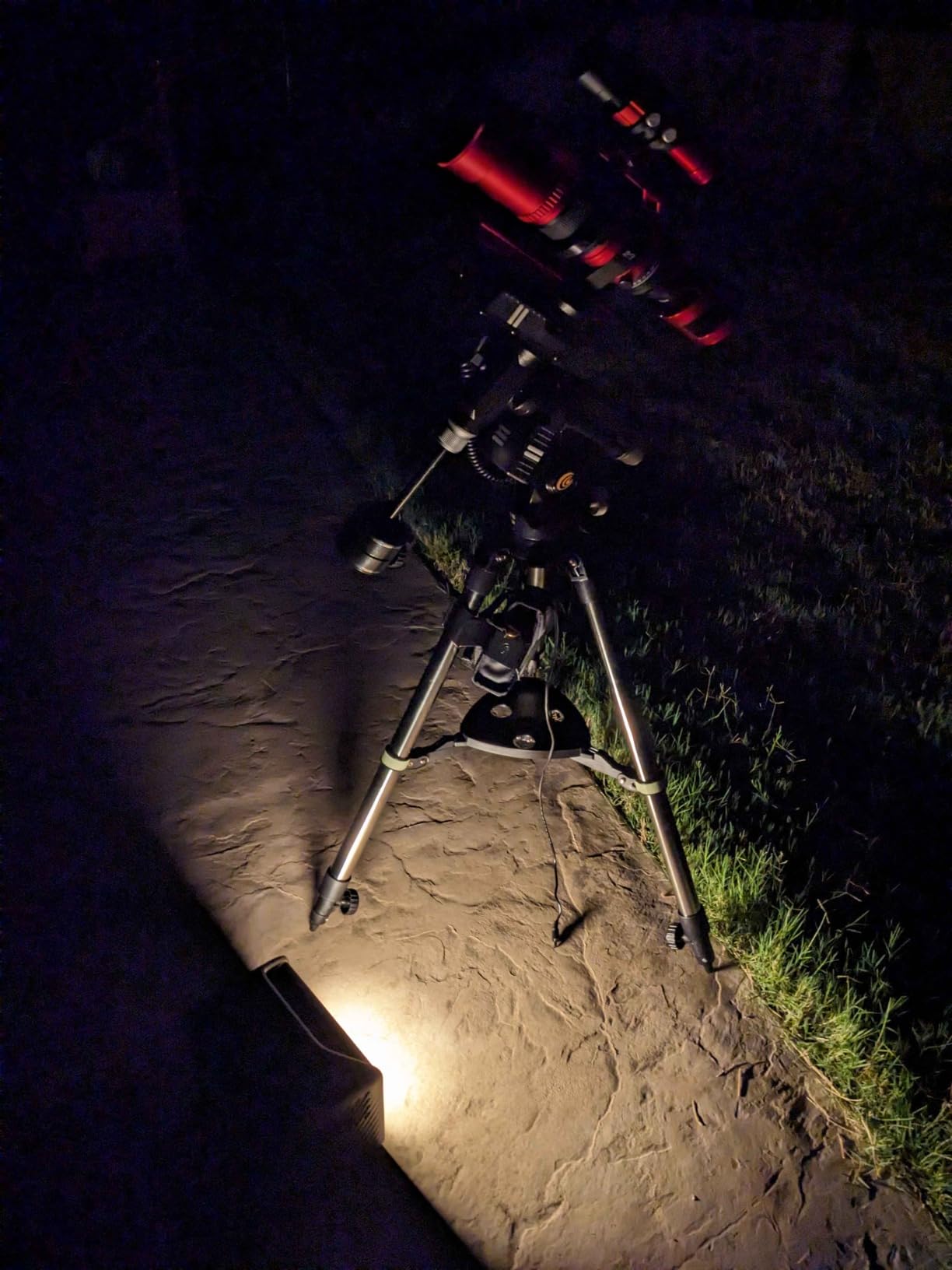
The iEXOS-100-2 is the odd one out in this roundup because it tracks on two axes and slews to catalogued targets. That makes it a small equatorial mount in a star tracker article, and it is here for the reader whose nightscapes are turning into deep-sky work with a guide scope.
The PMC-Eight controller runs eight processors independently, and the effect is fast, confident GoTo slewing rather than the tentative pointing you get from single-axis heads. Clutched RA and Dec axes let you balance without releasing the mount, which is the difference between a five-minute setup and a twenty-minute one.
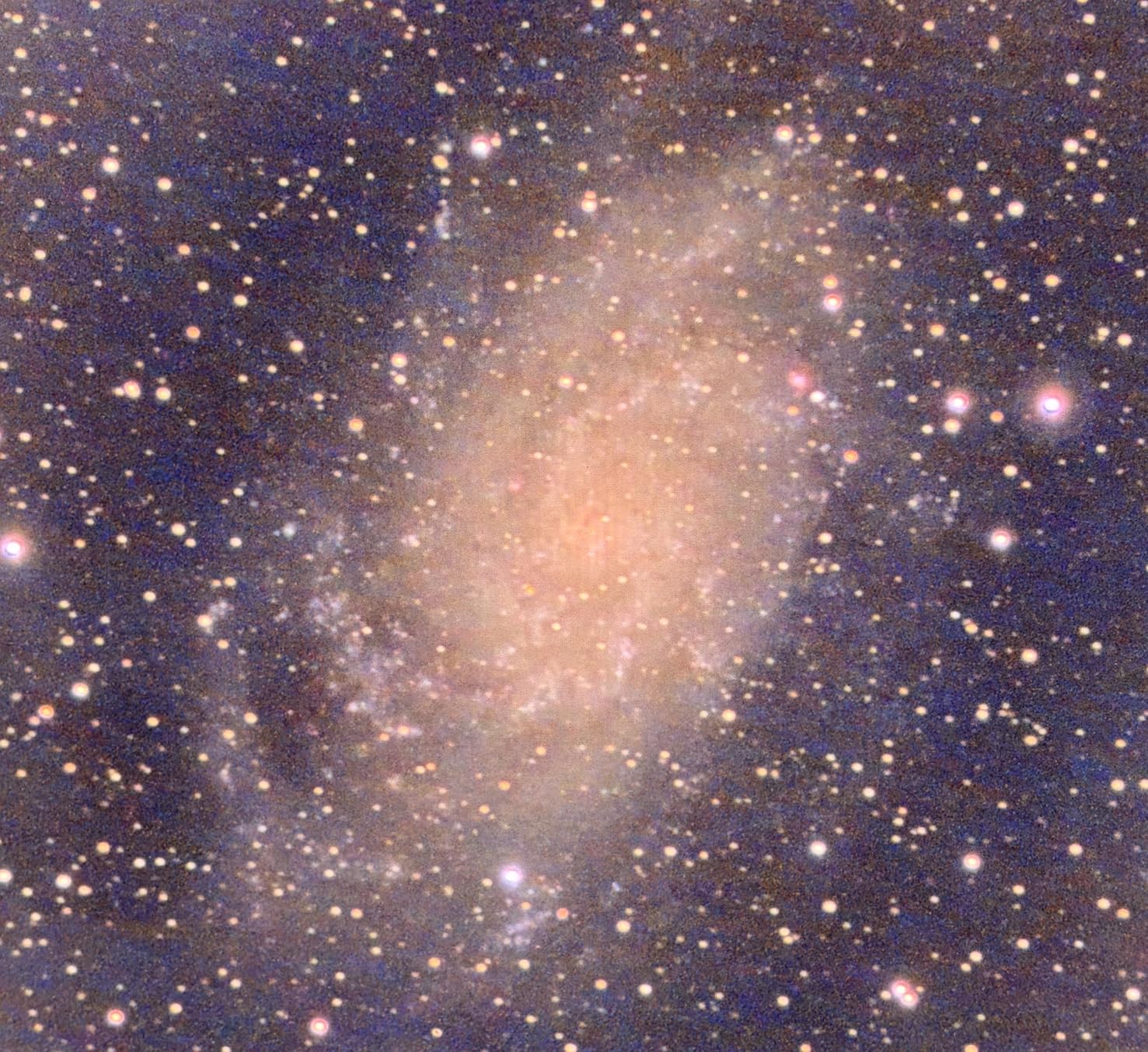
Alignment is handled by a sight hole straight through the RA axis with an altitude adjuster, which is faster than fiddling with a polar scope eyepiece in the dark. The ExploreStars app covers Apple, Android and Windows tablets over WiFi and Bluetooth.
Quiet precision stepper belt drives keep vibration low during long exposures, and that is the specification that matters most if you plan to stack deep-sky frames.
When a two-axis mount beats a tracker
Dual-axis tracking matters as soon as you want to correct guiding errors yourself or frame a target repeatedly across a session, because declination can move independently of right ascension. For pure wide-field Milky Way work from a fixed pointing, one axis is enough and the extra bulk is wasted effort.
If you are building toward guided imaging, the guidance port is the reason to look here. Add a guide scope and guiding camera, which are sold separately, and this mount takes over the session while your wide-field lens collects sub-exposures.
The honest limitations
This is the lowest-rated motorized tracker here at 3.9 stars, with 13 percent of reviews at one star, a noticeably higher complaint rate than the Sky-Watcher and iOptron heads. Owners who stay with it usually like the GoTo behaviour, but the support numbers are thinner.
It is also bulkier and heavier than the dedicated portable trackers, which undercuts the main reason to buy something in this category. New users report a learning curve with app-based alignment, and the overall package leaves out a tripod and a guiding camera, so the true cost of a usable guided setup is higher than the box suggests.
5. iOptron SkyTracker Pro: Best Budget Tracker for Wide Field Beginners
- Clean results at 60 second to 5 minute exposures with wide lenses
- Almost silent operation
- Integrated rechargeable battery avoids disposable cells
- Many fine-tuning knobs make alignment fast and precise
- Counterweight kit and ball head must be bought separately
- Alignment scope app sold separately
- Azimuth screws will not fit tripods with fixed index studs
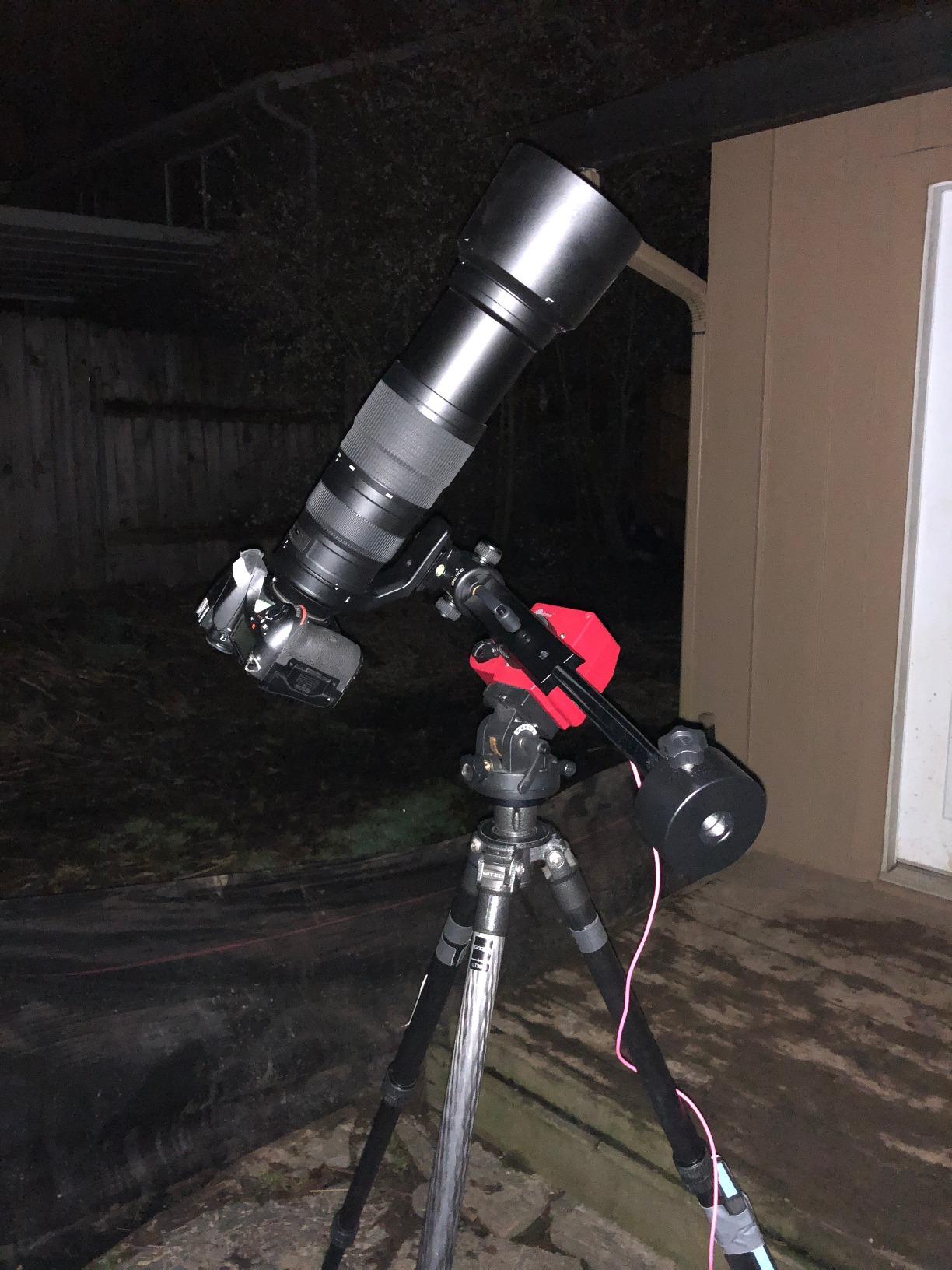
The SkyTracker Pro is the least complicated way to start tracking. At 3.3 pounds for the head with a 6.6 lb payload, it covers the wide-field kit most people actually own: a mirrorless body or light DSLR with a 14mm to 35mm lens. Owners report clean, trailing-free results from 60 seconds to five minutes at those focal lengths.
The drive is a DC servo motor with a 600 second worm period running on four bearings, and the result is operation that owners describe as almost silent. Quiet is not a luxury here, because a motor you cannot hear is a motor you are not constantly checking.

Alignment gets a lot of help from hardware. A dimmable LED lit polar scope with fine alignment knobs lets you dial in the pole in a couple of minutes, and jog forward and reverse control on the RA axis makes centring a target by hand straightforward.
The internal rechargeable battery charges over micro USB and reaches 80 percent in about five hours, and a padded carrying bag comes in the box, which is more thought than most budget trackers show.
Why this suits a first tracker
The learning curve is short. It offers sidereal, half-sidereal sky and landscape, solar and lunar rates, so you can shoot a tracked panorama of the Milky Way, then switch to half rate to blend a foreground without stars tearing. That flexibility is unusual at this level.
Reviewers also find it more mechanically solid than the earlier cast-metal generation that shares the name, and the compact footprint folds to 115 by 115 by 95 mm for travel.
Accessories you will need to buy separately
The accessory gaps are the real cost. A ball head is not included, the alignment scope app is a separate purchase, and telephoto lenses such as 70-200mm or 200-500mm need the counterweight package to balance safely.
There are also compatibility quirks worth knowing. The azimuth screws only move the attached base, so they will not work on tripods with fixed index studs, and the flat bottom will not mount to a tripod with a fixed polar north index mark. The rubber cushion at the swivel head can slip under heavier loads, so check the mount before a long sequence.
6. Sky-Watcher Star Adventurer Mini: Best Lightweight Tracker for Backpacking
Sky-Watcher Star Adventurer Mini – Motorized DSLR Night Sky Tracking Mount For Nightscapes, Time-lapse, and Panoramas
- Lightest mount here at 1.5 pounds and easy to backpack
- Rugged brass and aluminum gear train gives smooth tracking
- Polar scope with illuminator included
- Supports up to 6.6 pounds for most DSLR and mirrorless kits
- 12 percent of reviews give 1 star the highest one-star share here
- No autoguide port on the base model
- Illuminator requires removing and reinserting the battery by hand
The Star Adventurer Mini is the tracker to carry when weight is the deciding factor. At 1.5 pounds it fits in a camera bag or a backpack without changing how you travel, and it still handles 6.6 pounds of camera and lens, which covers a typical wide-field nightscape kit.
Unlike the single-axis plastic designs that came before it, the gear train is brass and aluminum, and owners report smooth motorized tracking from that mechanism. WiFi control through the SynScan app for Android and iOS handles shutter release and sequences from a phone.
A ball-head adapter is included, which means it accepts any standard ball head you already own, and the modular design bolts to an existing photographic tripod. The polar scope and illuminator are in the box too, so alignment does not need a separate purchase.
Power runs from a built-in AA battery compartment rated for up to 24 hours, with a 5V mini-USB input for external power when you want to run all night from a power bank.

What 1.5 pounds gets you in the field
Owners use it for backpacking nightscapes and time-lapse, roughly up to 300mm, which is where its payload and gear train run out of comfortable headroom. For 14mm to 35mm work it is one of the easiest trackers to set up quickly after a long walk in.
Reusing your own ball head and tripod also means fewer things to buy and fewer failure points in the field, which is the practical argument for this kit over a bare head.
Where the Mini loses ground
There is no autoguide port on the base model, so this is an unguided-only mount. If you are planning to grow toward longer focal lengths and guided imaging, you will outgrow it quickly rather than gradually.
Quality complaints cluster around small parts. The polar scope red light is described as small and cheaply made, and easy to lose, and the illuminator needs you to remove and reinsert the battery by hand rather than using a switch. Twelve percent of reviews give one star, the highest one-star share in this lineup.
7. LICAEVEY DSLR Night Tracker Wedge Base: Best Budget Latitude Wedge for Alignment
DSLR Night Tracker Equatorial Mount, 90 Degree Adjustment Astronomical Telescope Accessory with 3/8 inch Thread,for for Star Field
- Aluminum alloy with smooth precise latitude adjustment
- 3/8 inch thread fits common photographic tripods
- Low cost way to add polar alignment to an existing tracker
- This is a latitude wedge base and not a motorized tracking mount
- Wedges alone do not produce tracking so a drive head and polar scope are still needed
- Only 10 reviews with 25 percent one-star responses
Be clear about what this is: an aluminum latitude wedge, not a tracker. It sets the polar axis angle from 0 to 90 degrees with a knob and bolts to any photographic tripod through a 3/8 inch thread, which is exactly what you need if you already own a tracking head that lacks a proper base.
That makes it a genuine accessory rather than filler. If your head will not achieve stable polar alignment because the tripod cannot hold the correct angle, a dedicated wedge fixes the geometry for very little money, and owners praise the smooth adjustment range.
When a cheap wedge solves a real problem
Owners typically reach for it to carry a tracking head, a camera, or a small telescope on a plain tripod. If your current base tilts in only one plane, or if your tripod head cannot reach the latitude of your site, this removes the frustration in a single step.
The fit is straightforward too, because the 3/8 inch thread is the standard photographic interface and the aluminum body keeps the assembly from flexing as you adjust altitude.
What it cannot do
A wedge does not track. Without a motorized drive head and a polar scope, the camera sits at the correct angle and then drifts, so nothing here will reduce star trailing on its own. Treat it as one part of a system rather than a mount.
The evidence base is also thin, with only 10 reviews and 25 percent of them at one star, so long-term reliability data is limited. At 3.5 stars it is the lowest-rated item in this roundup, which is why it appears here for completeness rather than as a recommendation.
8. Kenko Astro Tracker SKYMEMO T: Best Compact Tracker With a Built-In Interval Timer
Kenko Astro Tracker SKYMEMO T Portable Tracking Platform Red
- Compact and light at 650 g which suits backpacking
- Tracks adequately with 300mm lenses and roughly 1.5 kg of gear
- Smartphone app control works well
- Built-in interval timer is a real convenience for sequences
- Equatorial head is not included and must be bought separately
- No autoguide port
- App-only control with no physical buttons and a cheap polar scope light
The SKYMEMO T is the smallest complete tracking head in this roundup at 650 g, and it is the only one here with a built-in interval timer. That timer triggers your camera on a schedule without a separate intervalometer, which is a small convenience that matters when you are running unattended sequences.
Control is through a smartphone app with five tracking modes, and owners report it working adequately with 300mm lenses and about 1.5 kg of total gear. A polar telescope is built into the body for alignment.
Where the interval timer earns its keep
For tracked time-lapse and star-trail sequences, an internal timer means one less cable and one less failure point in the dark. It also simplifies the setup when you are already using the app for exposure control.
At 650 g with a 2021 model year, this is a design aimed squarely at minimal carry weight, and it pairs naturally with a small travel tripod and a fast wide lens.
The gaps that shape your decision
The equatorial head is not included, which means the total kit is larger and heavier than the head weight implies, and there is no autoguide port. Power comes from AA alkaline cells with roughly five hours of average battery life, which is the shortest runtime in this roundup.
Two more things to weigh. The rating is the lowest of the motorized trackers here at 3.7 stars with 31 percent two-star responses, and only 9 reviews exist, the thinnest evidence base in the lineup. The polar scope red light is cheap and easily lost, its illuminator needs the battery removed by hand, and control is app-only with no physical buttons to fall back on.
The 500 Rule and NPF Rule: How Long Can You Expose?
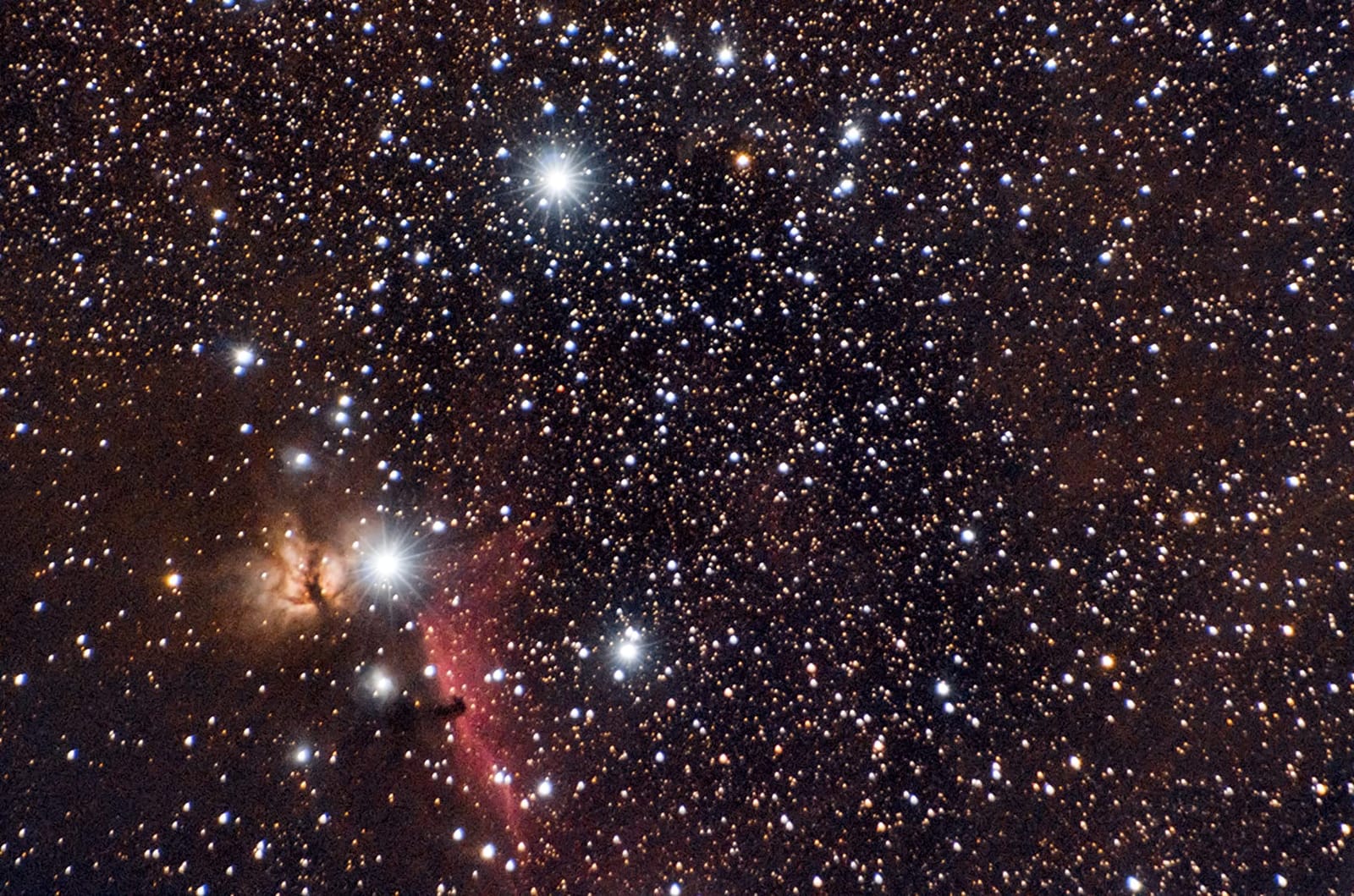
The 500 rule is the shortcut wide-field shooters use: divide 500 by the focal length of your lens in millimetres to get the longest unguided exposure in seconds before stars begin to trail. On a full-frame body that assumes a pixel pitch around 4.3 microns, so treat it as a starting figure rather than a promise.
Here is what that means for the focal lengths people actually mount on a tracker. A 14mm lens gives about 35 seconds, a 20mm lens about 25 seconds, a 24mm lens about 20 seconds, a 35mm lens about 14 seconds, and a 50mm lens about 10 seconds.
Push into telephoto and the numbers get tight fast. A 135mm lens gives roughly 3.7 seconds, and a 200mm lens about 2.5 seconds, which is why two to three minute unguided results at those focal lengths depend heavily on alignment quality rather than on motor strength alone.
The NPF rule is the more honest version of the same idea. It uses aperture, pixel pitch and focal length to predict actual trailing, so a wide lens stopped down to f/2.8 exposes longer than the same lens at f/4. The practical takeaway is simple: shoot wide and fast, spend your money on a good lens rather than on a wider aperture, and treat longer focal lengths as a case for guiding.
Reported field results across this roundup cluster at four minutes around 24mm and three to five minutes at 135mm, which sits above the pure 500 rule figure because alignment, sensor and stacking all buy you time. Use the rule as a ceiling for a first attempt and let your own frames set the real limit.
When a Star Tracker Stops Being Enough
A star tracker handles a lens when the payload fits, the alignment holds, and the exposure length stays inside your trailing limit. Push past roughly 300mm and all three conditions start to fail at once, which is the point where a small equatorial mount becomes the better purchase.
Forum communities reflect that pattern clearly. On CloudyNights, users stepping up from a tracker land on the iOptron CEM26, the iOptron GEM28 or the Sky-Watcher HEQ5 Pro for rigs reaching 600mm, and the Star Adventurer GTi with a counterweight kit is the common stepping stone in between. A dpreview thread covering the head term still recommends the older Vixen Polarie for portability and build quality, so the case for a compact metal tracker has not gone away.
The practical dividing line looks like this. Stay with a tracker at 14mm to 200mm for unguided wide-field work and Milky Way nightscapes. Move to a guided head when you pass 200mm, want declination correction, or want repeatable GoTo pointing across a long session. That is the point at which a mount such as the iEXOS-100-2 or one of the CEM-series heads starts earning its extra weight.
One more reason to upgrade early: aligning a camera in the same spot for three hours is repetitive, and a dual-axis mount with clutches and GoTo will hold your attention better than a single-axis head on a wedge. If nightscapes are becoming a habit rather than a one-off, the upgrade tends to happen naturally.
How to Choose a Star Tracker for Wide Field Astrophotography
Match the payload to your heaviest rig before anything else, and remember that the number assumes the camera is balanced on the supplied base. Cantilever a heavy lens out to one side and you can overload a mount rated for that weight, which shows up as blurred frames rather than as an obvious failure.
Polar alignment is the second decision, and it is where most frustration originates. A mount with an integrated illuminated scope or a graduated latitude base, such as the 2i Pro Pack or the SkyGuider Pro, saves a lot of time, but expect to collimate the scope yourself because units frequently arrive out of adjustment.
Battery life in the cold is the third. Internal rechargeable packs are more predictable than loose AA cells, and forum reports of failures well below freezing are common enough that anyone shooting a winter night should carry a power bank with a mini-USB input or plan on shorter sequences.
Portability comes down to the full kit weight rather than the head alone. The 2i Pro Pack at 7 pounds and the Mini at 1.5 pounds are backpack options, while the 26 pound GTi kit is a drive-there mount. Balance that against how you will actually get to the site at night.
App control and GoTo are conveniences, not essentials. WiFi shutter control on the 2i Pro Pack and the Mini saves cables, while GoTo on the GTi and the iEXOS saves hunting for targets, and it costs you either weight or a steeper learning curve.
Finally, decide now whether you want guiding later. Autoguider ports on the 2i Pro Pack and the SkyGuider Pro keep the door open, while the Mini and the SKYMEMO T do not have one, and a guided rig also needs a guide scope, a guiding camera and a control computer.
Frequently Asked Questions
What is the best star tracker for astrophotography?
The Sky-Watcher Star Adventurer 2i Pro Pack is the best star tracker for most wide-field astrophotography because it tracks well once aligned, offers built-in WiFi control through the SAM Console app, weighs 7 pounds and ships with a deluxe equatorial wedge. The iOptron SkyGuider Pro is the better choice if you need a heavier payload, and the Star Adventurer GTi if you want GoTo pointing.
What is the 500 rule for astrophotography?
The 500 rule says divide 500 by your lens focal length in millimetres to get the longest exposure in seconds before stars trail on a full-frame camera. A 24mm lens gives about 20 seconds, a 14mm lens about 35 seconds, and a 135mm lens about 3.7 seconds.
What is a good budget star tracker for astro photography?
The iOptron SkyTracker Pro is a good budget star tracker for wide-field work, with a 6.6 lb payload, a 3.3 lb body, an internal rechargeable battery and near-silent tracking that owners use for 60 second to 5 minute exposures with wide lenses. Budget the cost of a ball head and an alignment app, which are sold separately.
What is the best device for astrophotography?
The best device depends on focal length. A star tracker covers 14mm to about 200mm for unguided wide-field work, a small equatorial mount such as the iEXOS-100-2 covers longer lenses and guiding, and a smart telescope handles all-in-one live stacking and framing for casual users.
How long can I expose with a star tracker at 24mm?
With a 24mm lens on a star tracker, the 500 rule gives roughly 20 seconds before stars trail on a full-frame body, and reported field results reach about four minutes with careful polar alignment. Stopping the lens down to f/2.8 or f/4 adds time, and stacking short sub-exposures reduces the impact of field rotation.
Can a star tracker handle a telephoto lens?
Yes, with care. The iOptron SkyGuider Pro is rated for 11 lb when balanced and owners report pinpoint stars at two-minute exposures with lenses up to 300mm and beyond, while smaller heads such as the Star Adventurer Mini and the SkyTracker Pro work to about 300mm. Balance the rig on the supplied base and add a counterweight for lenses above 200mm.
Conclusion: The Best Star Trackers for Wide Field Astrophotography in 2026
The Sky-Watcher Star Adventurer 2i Pro Pack remains our pick for the best star trackers for wide field astrophotography, because it balances tracking accuracy, app control and carry weight better than anything else at this level. Pick the iOptron SkyGuider Pro when payload is the constraint, and the Star Adventurer GTi when you want a complete guided GoTo system you can set up in minutes.
Whichever you choose, the alignment work matters more than the hardware. Get the polar axis right, balance the rig on the supplied base, and stay inside the exposure limit your lens allows, and even a modest head will produce clean, stackable wide-field frames. When you are ready to go longer, our telescope guide for astrophotography covers the next step up.