
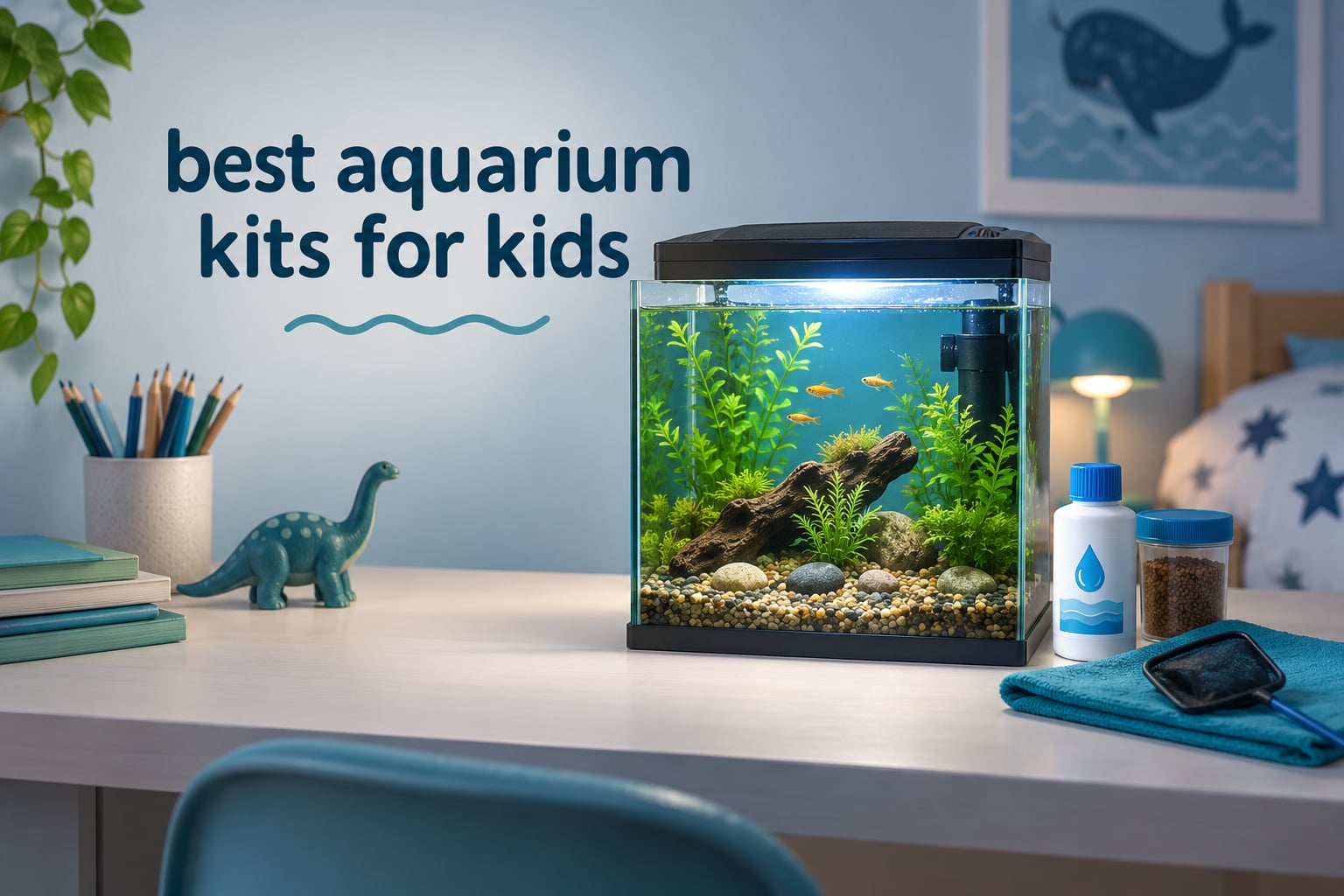
Most parents who buy a fish tank for a child want the same two things: something the kid will still care about in month three, and something that will not turn into a science experiment in smelly ammonia on the first forgotten weekend. Those two goals rule out most of the novelty tanks on the shelves right now. Here are the best aquarium kits for kids we would actually put in a child’s room, ranked after comparing tank size, filter strength, lighting, noise level, setup time and how forgiving each one is when care slips.
The short answer: the Marineland Portrait Glass LED 5-Gallon is the best all-round pick for a first child, the Aqueon 10-Gallon Starter Kit is the best first setup because it is the only one that includes a heater and thermometer, and the Koller Products 5-Gallon kit is the best value thanks to a 45 GPH filter and a 30-LED light with a timer.
An aquarium starter kit is a bundled package: the tank, a filter with one cartridge, an LED light, a lid or hood, and sometimes a heater. It is cheaper and simpler than sourcing each part separately, but the box is almost always missing the things that actually keep fish alive: water conditioner, a liquid test kit, gravel, and livestock. We list what is missing for every kit below so you can budget for it.
We also flag something the marketing rarely admits. A tank sold as cycled or pre-conditioned is not cycled. The filter media arrives dormant, and ammonia from the first fish still has to be processed before the water is safe. We explain the timing in the cycling section further down, because getting it wrong is the number one reason a child’s first aquarium collapses in week two.
All eight kits below were compared on the same criteria and updated for 2026. Prices change constantly, so use the buttons to check current pricing rather than the figures you may remember from elsewhere.
Table of Contents
Top 3 Best Aquarium Kits for Kids in 2026
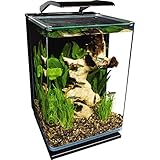
Marineland Portrait 5-Gallon
- 5-gallon glass tank with rounded corners
- Hidden 3-stage filtration
- Daylight and moonlight LED modes
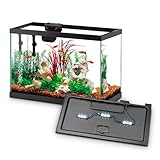
Aqueon 10-Gallon Starter Kit
- 10-gallon glass rectangle
- Includes 50W heater and thermometer
- SmartClean filtration with EcoRenew cartridge

Koller 5-Gallon LED Kit
- 5-gallon one-piece plastic tank
- 30-LED light with timer and memory
- 45 GPH internal power filter
All 8 Aquarium Kits at a Glance (October 2026)
| Product | Specifications | Action |
|---|---|---|
| Marineland Portrait Glass LED 5-Gallon Kit |
|
Check Latest Price |
| Aqueon 10-Gallon Starter Kit with SmartClean |
|
Check Latest Price |
| Koller Products 5-Gallon LED Kit |
|
Check Latest Price |
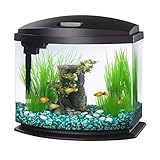 Aqueon MiniBow 5-Gallon Starter Kit Aqueon MiniBow 5-Gallon Starter Kit |
|
Check Latest Price |
 Tetra ColorFusion 3-Gallon Starter Kit Tetra ColorFusion 3-Gallon Starter Kit |
|
Check Latest Price |
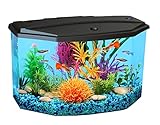 Koller Products 3-Gallon Starter Kit Koller Products 3-Gallon Starter Kit |
|
Check Latest Price |
 Tetra Color Complete 20-Gallon Fish Tank Kit Tetra Color Complete 20-Gallon Fish Tank Kit |
|
Check Latest Price |
 Tetra Bubbling LED 1-Gallon Starter Kit Tetra Bubbling LED 1-Gallon Starter Kit |
|
Check Latest Price |
1. Marineland Portrait Glass LED 5-Gallon Kit – Best Overall for Kids
Marineland Portrait Glass LED Aquarium Kit, 5 Gallons, Hidden Filtration,Black
- Highest rated kit here at 4.4 with 10100 reviews
- Glass stays clear and resists scratching
- Filter is fully concealed so the view is uninterrupted
- Daylight and moonlight modes give a real day-night cycle
- Sliding glass canopy makes feeding easy
- Hidden filter is harder to reach for cleaning
- Canopy gap can let small fish jump out
- Rite-Size Z cartridges are a recurring cost
- Heavy glass is awkward for a child to move
This is the kit we put at the top of the list for one reason: it has the highest rating and by far the largest review base of anything we tested, which means its weak spots are well documented rather than a surprise. Owners consistently describe the rounded-corner glass silhouette as furniture rather than equipment, which matters when the tank lives in a bedroom or a shared family room.
The filter is the part that changes the character of the tank. Instead of a visible power filter hanging in the corner, the 3-stage filtration system is concealed, so the water column stays open on every side. That also means cleaning it takes longer, since you reach around the canopy rather than lifting a cartridge out in plain sight.
What is in the box: the 5-gallon glass aquarium with rounded corners, the LED lighting with daylight and moonlight modes, the concealed 3-stage filter, and the sliding glass canopy. What is not in the box: a heater, a thermometer, water conditioner, gravel, plants and any fish. For a tropical species you will need to budget for a small heater before day one.
The one recurring complaint worth acting on is the gap at the top of the canopy. Small fish such as guppies and neon tetras are jumpers, and several owners report finding them on the floor. Keep the water level a centimetre or so below that gap and it stops being an issue.
The 16-pound weight is the other factor for a family. This is not a tank a seven-year-old can lift to change the water, so plan the water-change routine as an adult job with your child assisting, rather than expecting independent child care.
What a child can realistically do with this kit
Feeding and observing are firmly in reach for a child aged five and up. The sliding canopy means food goes in quickly without lifting the whole top, which keeps the routine short enough to survive a school morning.
Water changes and filter rinsing are adult tasks here, largely because of the glass weight and the concealed filter housing. A child can be taught to watch the thermometer strip and note the reading, which teaches the habit without asking them to lift 16 pounds of wet glass.
Where it falls short for a child’s tank
The missing heater is the biggest gap. Compared with the Aqueon 10-Gallon further down, this kit leaves you buying two of the most important pieces of tropical fish equipment yourself.
The concealed filter also works against you on a strict weekly water-change schedule in a small tank. If the child loses interest for a fortnight, serviceability matters more than looks, and here serviceability is the trade-off you accept.
2. Aqueon 10-Gallon Starter Kit – Best for a Complete First Setup
- Most complete bundle of the eight tested
- Only kit that includes a heater and thermometer in the box
- Glass resists scratching better than plastic tanks
- Preset heater holds its temperature setting accurately
- Quiet enough for a living space
- Filter intake can catch small fish and shrimp
- Flow is strong for bettas without a diffuser
- Bright hood is a poor match for planted tanks
- Stick-on thermometer is inaccurate
- Heavy glass tank is hard for a child to move
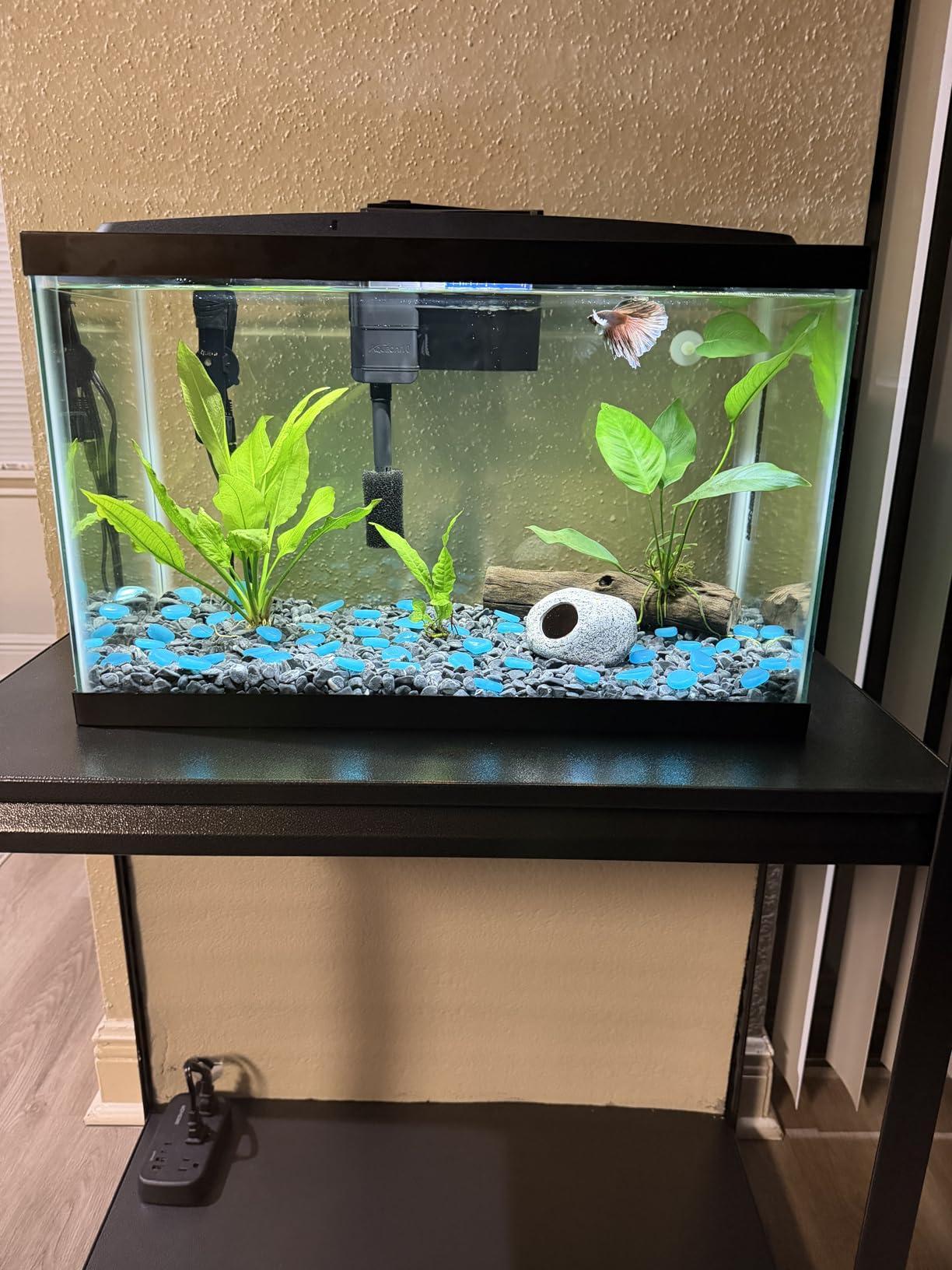
If you want a child to be able to set up a tank on their birthday morning without a second shopping trip, this is the one. It is the only kit in the group that arrives with a preset 50W heater, a thermometer, a fish net, fish food and water conditioner already in the box alongside the tank, hood and filter.
That completeness matters more than it sounds. Every other kit in this roundup leaves you buying a heater before the water can hold tropical temperatures, and most leave out the conditioner too, which is the single item a beginner is most likely to forget.
Ten gallons is the right size for a child, and the reason is water stability rather than fish preference. In an r/Aquariums thread on setting up a tank for a child, hobbyists kept pointing out that larger tanks are easier to maintain because ammonia and temperature swing less week to week. Ten gallons sits in the band that community consensus recommends for a first keeper.
Two things to plan for. The SmartClean intake is a genuine pre-filter sponge, so any betta, guppy fry or shrimp in this tank needs a sponge fitted over the intake within the first day. And the stick-on thermometer that comes in the box is widely reported as inaccurate, so treat it as decoration until you buy a real one.
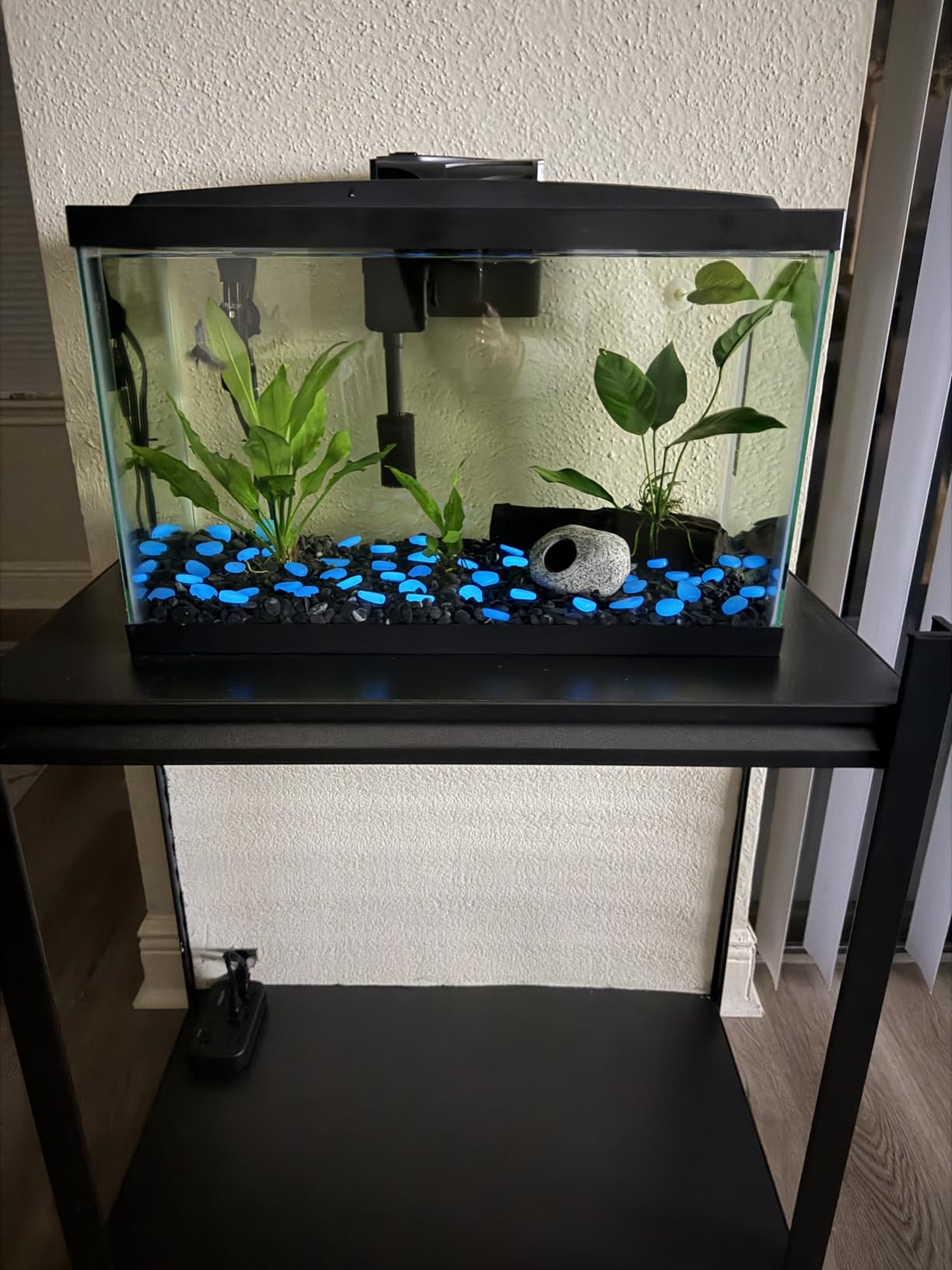
What is not included: substrate, plants, decor and fish. Also worth knowing is that the hood is bright, which several owners warn against if you plan to keep a betta sorority or any heavily planted setup.
How well this kit survives a school holiday
Ten gallons of water dilutes mistakes better than three or five, which is the practical reason this kit handles a week of missed water changes better than the smaller options in this list.
Filter cartridges are a recurring extra cost, and the EcoRenew media is the piece most likely to need replacing first. Put a reminder in the calendar for cartridge changes rather than waiting for the flow to visibly drop.
Where it falls short for a child
At 17.35 pounds empty, this is not a tank a child should be moving around. Pick a permanent spot and a stand that can carry the filled weight, and get the stand right before the tank goes in.
A minority of owners report pump or filter failures after several months of use. That is worth knowing when you buy, because the SmartClean housing is not a cheap part to replace, and the small-motor failures tend to appear rather sooner than they would on a simpler filter.
3. Koller Products 5-Gallon LED Kit – Best Value
- 45 GPH flow is one of the stronger filters in this size class
- 30-LED light has four modes plus a timer and memory
- One-piece plastic has no silicone seams to leak
- Arrives fully assembled for a young owner
- Multi-angle shape gives viewing from several sides
- Plastic scratches and clouds with use
- Filter cartridges are a recurring cost
- No gravel plants heater or conditioner
- Lid design can let small fish jump out
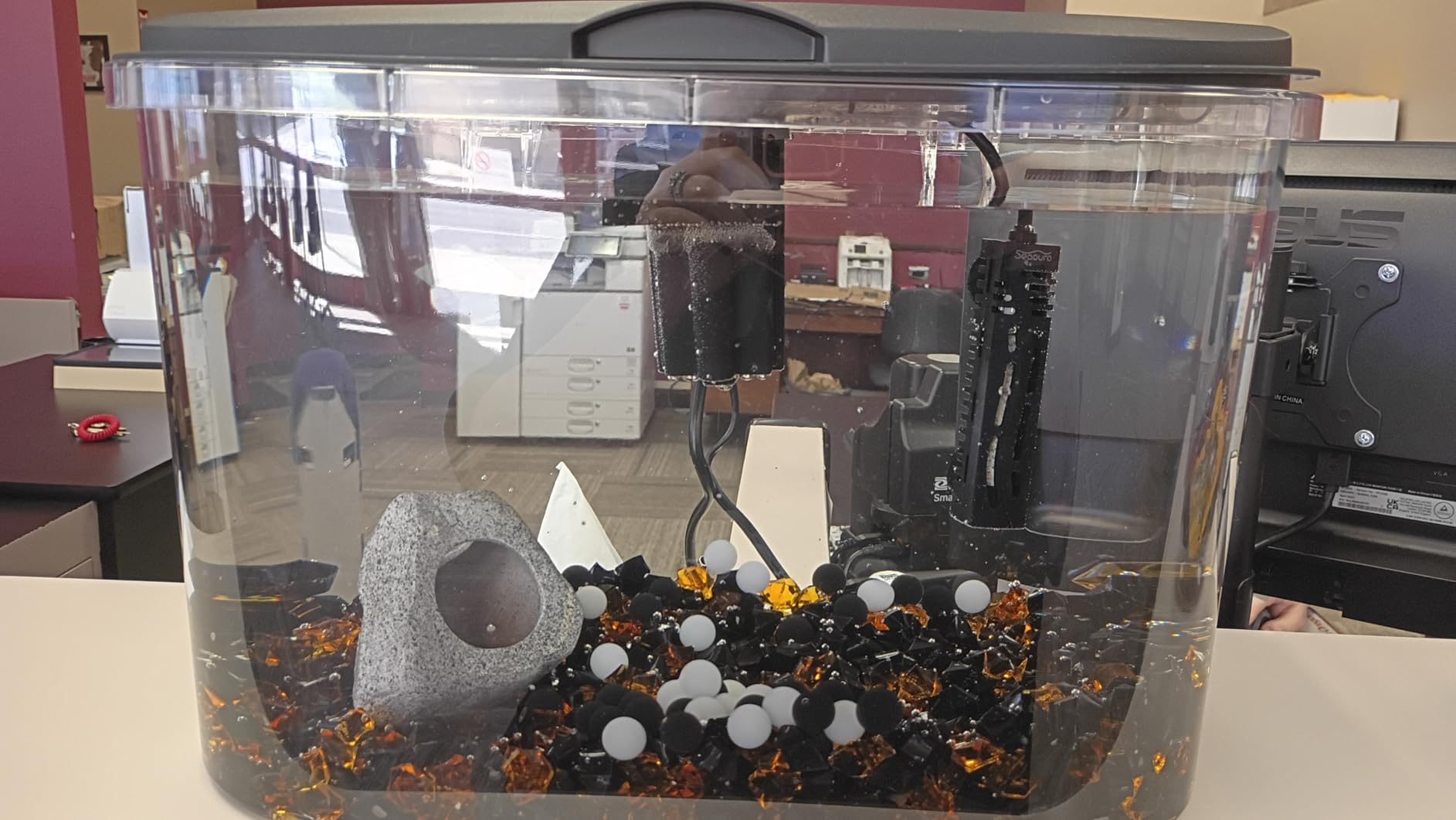
The Koller 5-gallon is the kit we would hand to a child who wants to do the setup themselves. It arrives fully assembled, the filter is already fitted, and the light has a touch button with a timer, so there is no daily on-and-off chore to remember.
Filtration is where this kit pulls ahead of its size class. A 45 GPH internal power filter moves real water for a 5-gallon tank, and owners repeatedly single it out as capable of handling a messier setup without the water going foul. Compare that with the 25 GPH filter in the 3-gallon Koller two sections down.
The lighting is the other headline. Thirty LEDs with white, warm, blue and white-blue modes, plus a 2, 4 or 8-hour timer with memory, means the tank keeps a consistent light cycle even when nobody is home to remember it.
What is in the box: the aquarium, LED lighting, internal power filter, one premium filter cartridge and instructions. What is not in the box: gravel, plants, heater, water conditioner, lid and fish. You are buying four things before the water goes in.
The one-piece impact-resistant plastic body is a genuine advantage in a child’s room. With no silicone seams there is no leak point, and the material does not shatter into dangerous shards if it takes a knock, which is the argument plastic tanks make against glass.
Why parents pick this one over a glass tank
The trade is clarity and longevity against safety. One-piece plastic will never match glass for scratch resistance, but it will not fail catastrophically, and at 4.8 pounds empty a child could help move it if the stand needs repositioning.
Reviewers do report scratching and some clouding over time, particularly if the tank is cleaned with an abrasive sponge. A soft cloth and a rinse of plain water keep it looking clear much longer.
Where it falls short for a child
The lid is the practical weak point. Several owners report small fish jumping out through the lid design, so the same advice applies as with the Marineland: keep a lid gap in mind and check the water level after every cleaning.
Like most kits at this size, it holds one betta, a pair of shrimp or a very small group comfortably. If your child wants a proper school of tetras, this tank is the wrong shape of purchase and the 20-gallon further down is the right one.
4. Aqueon MiniBow 5-Gallon – Best for Bettas and Shrimp
- Genuinely all-in-one box with conditioner and food samples
- SmartClean filter makes water changes fast for a young caregiver
- Acrylic is lighter and less prone to cracking than glass
- Elevated base gives a clean furniture-friendly look
- Sized for bettas shrimp and other small fish
- 5-gallon capacity limits stocking
- Acrylic walls scratch and haze over time
- LED hood output is modest for planted setups
- Replacement cartridges bought separately
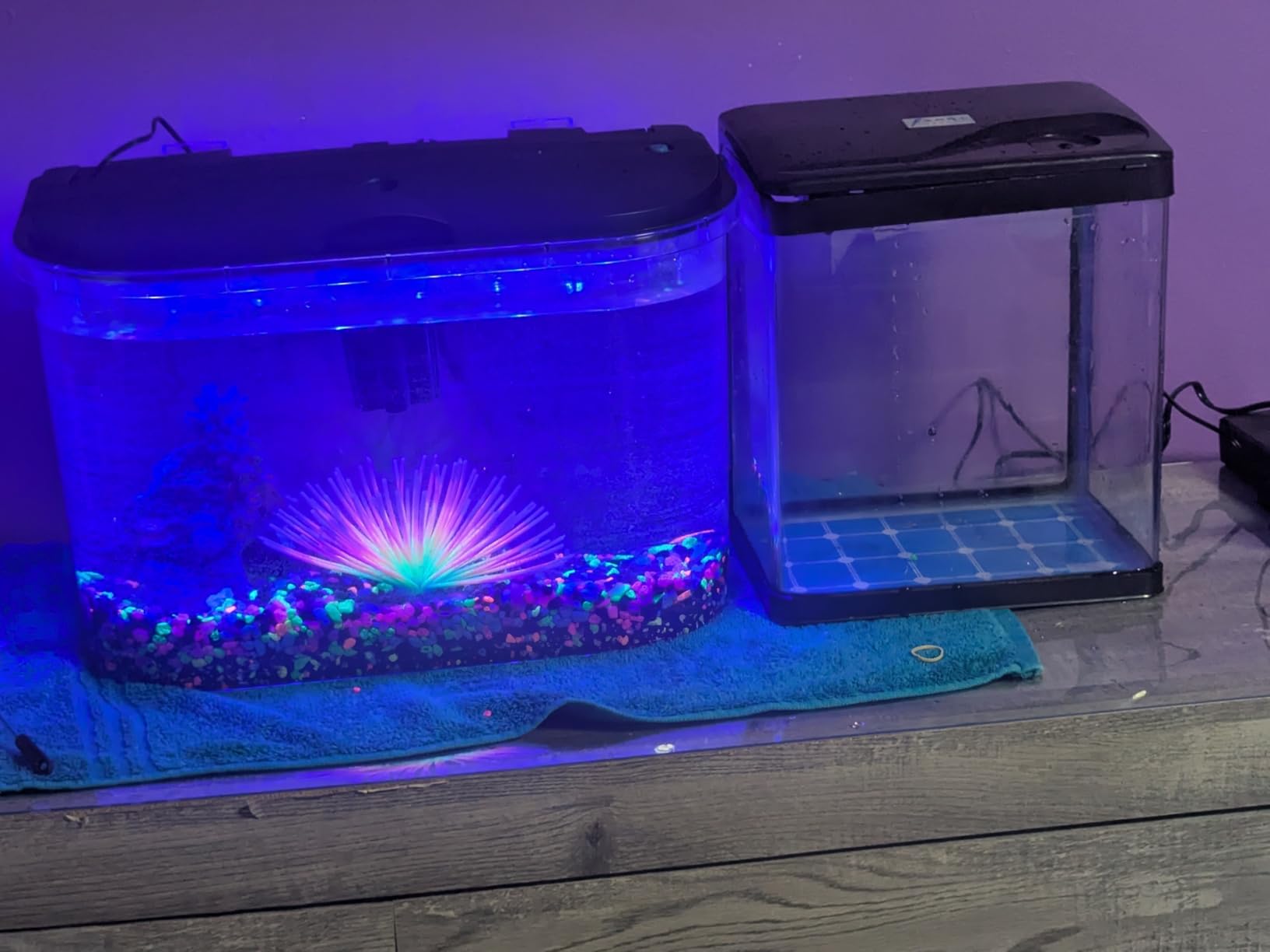
The MiniBow is built around one idea: make the water change fast. The SmartClean power filter is designed so a partial change takes under two minutes, which is the difference between a routine a child will actually repeat and one that gets skipped.
It is also one of only two kits in this group where the box genuinely contains enough to start. The aquarium, LED hood, elevated base, filter, water conditioner and food samples all arrive together, so a child can go from unboxing to filled tank without a second errand.
The elevated base design is worth more than it sounds. It lifts the tank visually off the desk surface and hides the filter hardware, so the tank looks like a small display object rather than a box of equipment on a child’s bedroom desk.
What is not included: heater, thermometer, gravel, plants and fish. Acrylic also means you will wipe it down carefully, because reviewers note it scratches and hazes with use, and haze makes a small tank look worse faster than a scratched glass one.
What kind of fish this tank is actually built for
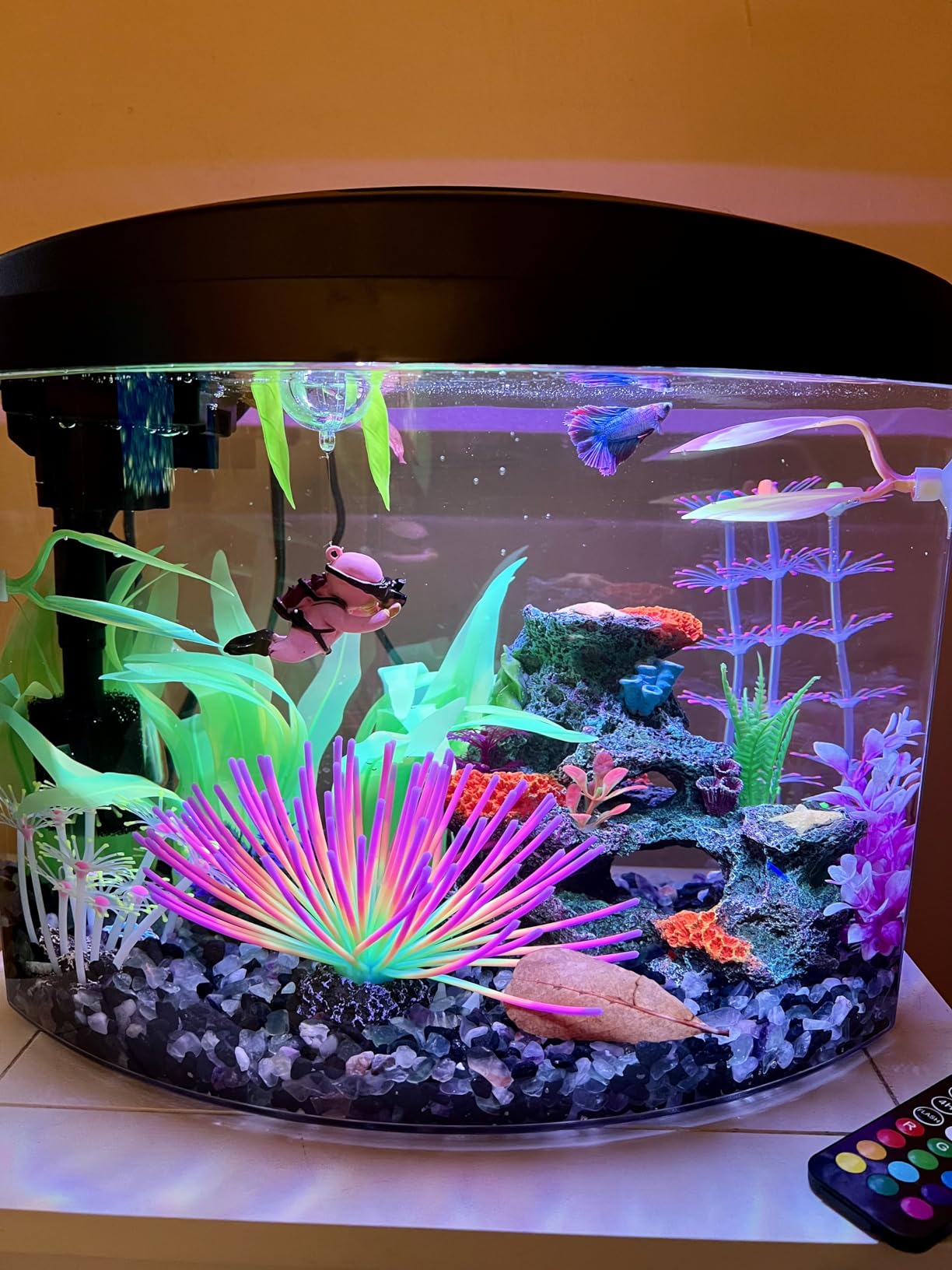
A single betta, a pair or trio of shrimp, or a couple of very small fish. That is the honest capacity of a 5-gallon, and choosing livestock to match it is where most first tanks go wrong.
Guppies are the answer most often given in aquarium forums when parents ask what to put in a child’s first tank. They are active, visible, hardy, and tolerant of the small volumes and small mistakes that come with a beginner keeper.
Where it falls short for a child
The lighting is modest. Multiple owners note it is not bright enough for a heavily planted aquarium, so a child who wants a planted tank with live plants should look at a kit with a stronger hood instead.
Filter refills are the ongoing cost most families miss. Cartridges are sold separately, and on a kit where the filter is doing the heavy lifting for a young caregiver, that cartridge is the piece you will replace most often.
5. Tetra ColorFusion 3-Gallon – Best for Colorful LED Displays
- Half-moon shape gives a 180-degree panoramic view
- Colour-changing LED disc works as a night light
- Air pump flow is adjustable with included knobs
- Compact footprint fits a desk or nightstand
- Complete kit with filter cartridge pump lights and tubing
- Plastic walls scratch and show swirl marks
- No on-off switch so lights must be unplugged
- Bubbling disc floats unless weighted down
- Lid can drop in if not aligned
- Marketing photos show accessories that are not included
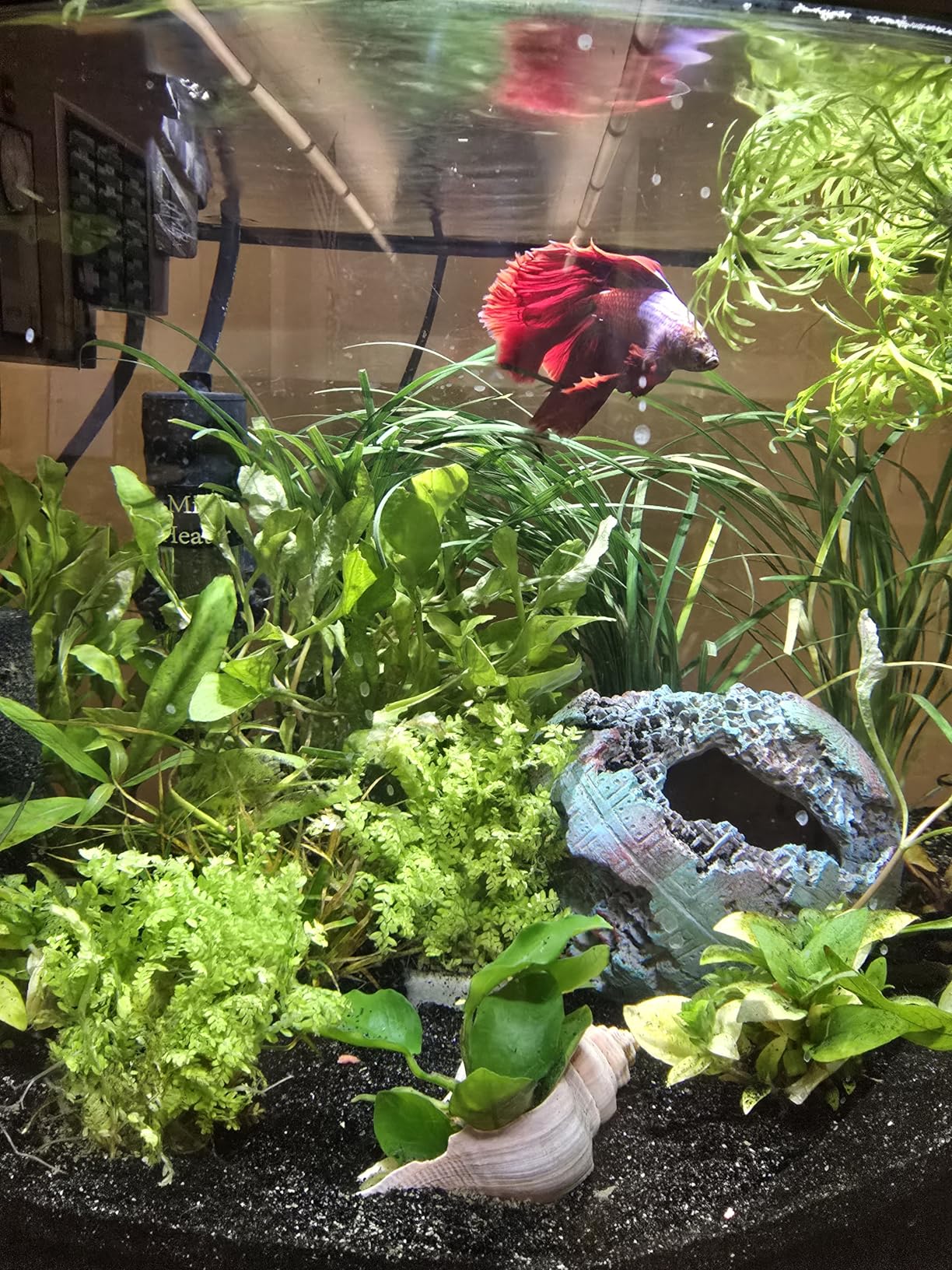
Ask a child to choose a tank and they will choose the lights. The ColorFusion’s bubbling disc cycles through a rainbow of LED colours and pushes a curtain of bubbles up the curved half-moon panel, and it is genuinely the most eye-catching display in this roundup.
The half-moon shape is the quieter selling point. It gives roughly 180 degrees of viewing, so from a desk the fish are visible from more angles than in a rectangular tank of the same footprint, which matters for a child who watches the tank rather than maintaining it.
One air pump drives both the bubbling disc and the internal Tetra Whisper filter, and the included knobs let you throttle the output back toward filtration when the bubbles get excessive. That is a sensible design in a small tank where the bubble curtain can take up a lot of space.
What is not included: gravel, plants, decor and water conditioner, even though the marketing photography shows all of them. A reviewer should assume nothing is in the box beyond the tank, hood, pump, filter, cartridge and tubing. The 1-pound empty weight is genuinely light for a child to handle.
What makes this display good for a young child
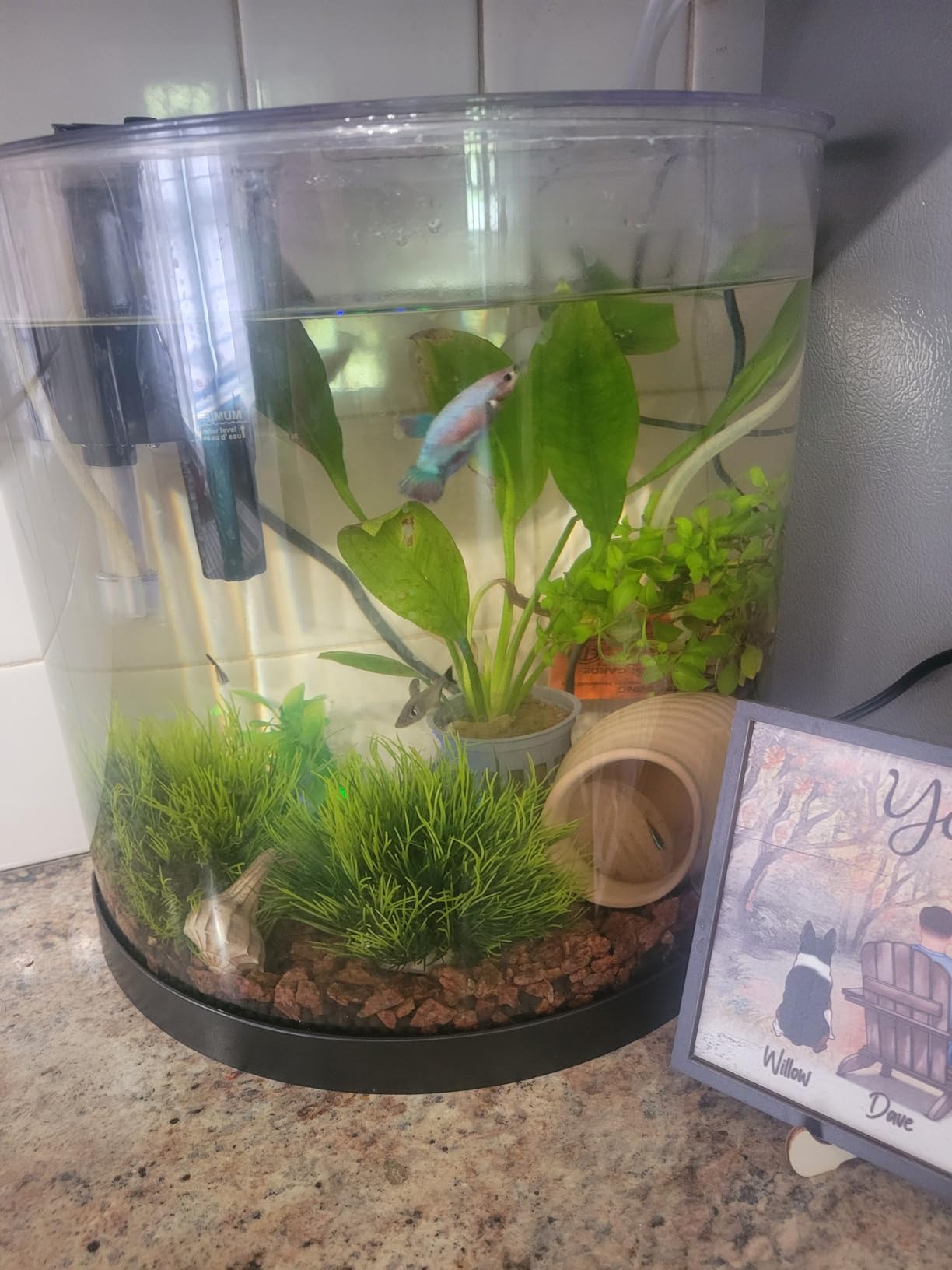
The light doubles as a night light, and that quiet visual pull is often what keeps a five-year-old interested during the first fortnight, which is exactly the window when most tanks are abandoned.
At 6.88 by 12.5 by 12.9 inches it fits a computer desk or a nightstand without rearranging the room, and it is quiet enough for either of those spots.
Where it falls short for a child
Three practical issues stack up. There is no on-off switch, so the light runs until it is unplugged. The bubbling disc floats unless you weight it with gravel or rock. And the plastic walls scratch, which shows swirl marks quickly on a curved panel viewed this close.
Reviewers also note the tank bows slightly when full and is not rated for larger fish, and that the lid can drop into the water if it is not aligned perfectly. Treat it as a display tank for one betta or a couple of shrimp, not as a small community tank.
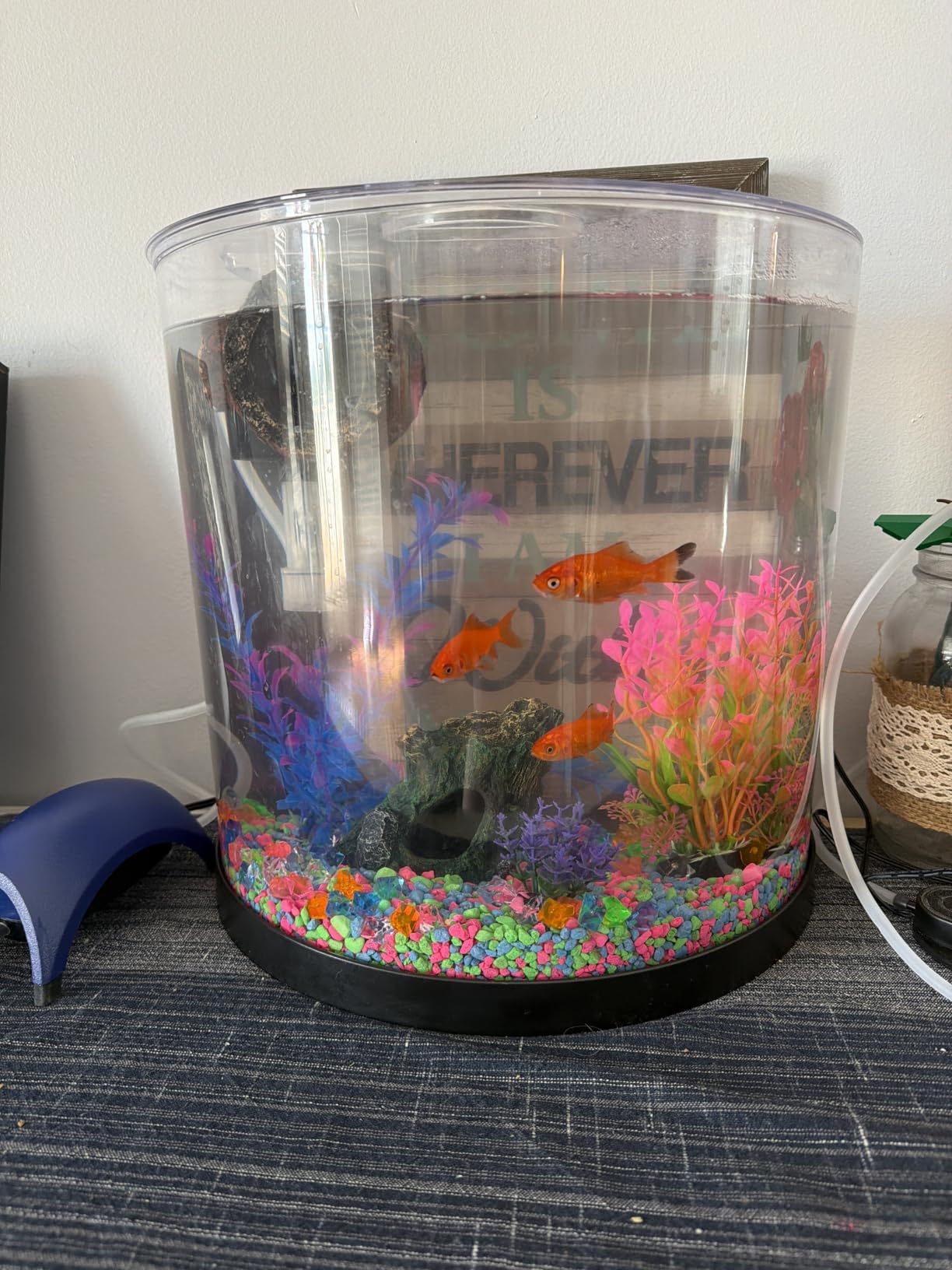
6. Koller Products 3-Gallon Starter Kit – Best for a Bedroom
- Documented operation below 35 dB
- Built-in light timer removes a daily manual task
- Four LED modes to match the fish and plants
- Compact footprint for a desk or bedroom surface
- Clear one-piece plastic body with no leak seams
- 25 GPH flow is modest for the volume
- Plastic scratches and clouds over time
- No heater gravel plants or conditioner
- Small capacity limits stocking
Noise is the reason this kit makes our list, and it is a reason no competitor on page one addresses. This tank is documented as operating below 35 dB, which makes it the safest pick for a child’s bedroom or a room where the tank sits near a bed.
The second quiet feature is the light timer. It can be set for 2, 4 or 8 hours with automatic next-day repeat, so the light runs on a fixed schedule and the child does not have to remember to switch it off. For a bedroom at night that matters more than most buyers expect.
The LED hood offers four modes: daylight white, warm white, blue and blue-white. A child can match the light to the time of day or to what is in the tank, which keeps the aquarium interesting rather than static.
What is in the box: the 3-gallon aquarium, LED hood, built-in power filter and one filter cartridge. What is not: heater, gravel, plants, water conditioner, thermometer and fish. At 4.2 pounds empty it is light enough for a child to help carry, though not to lift full.
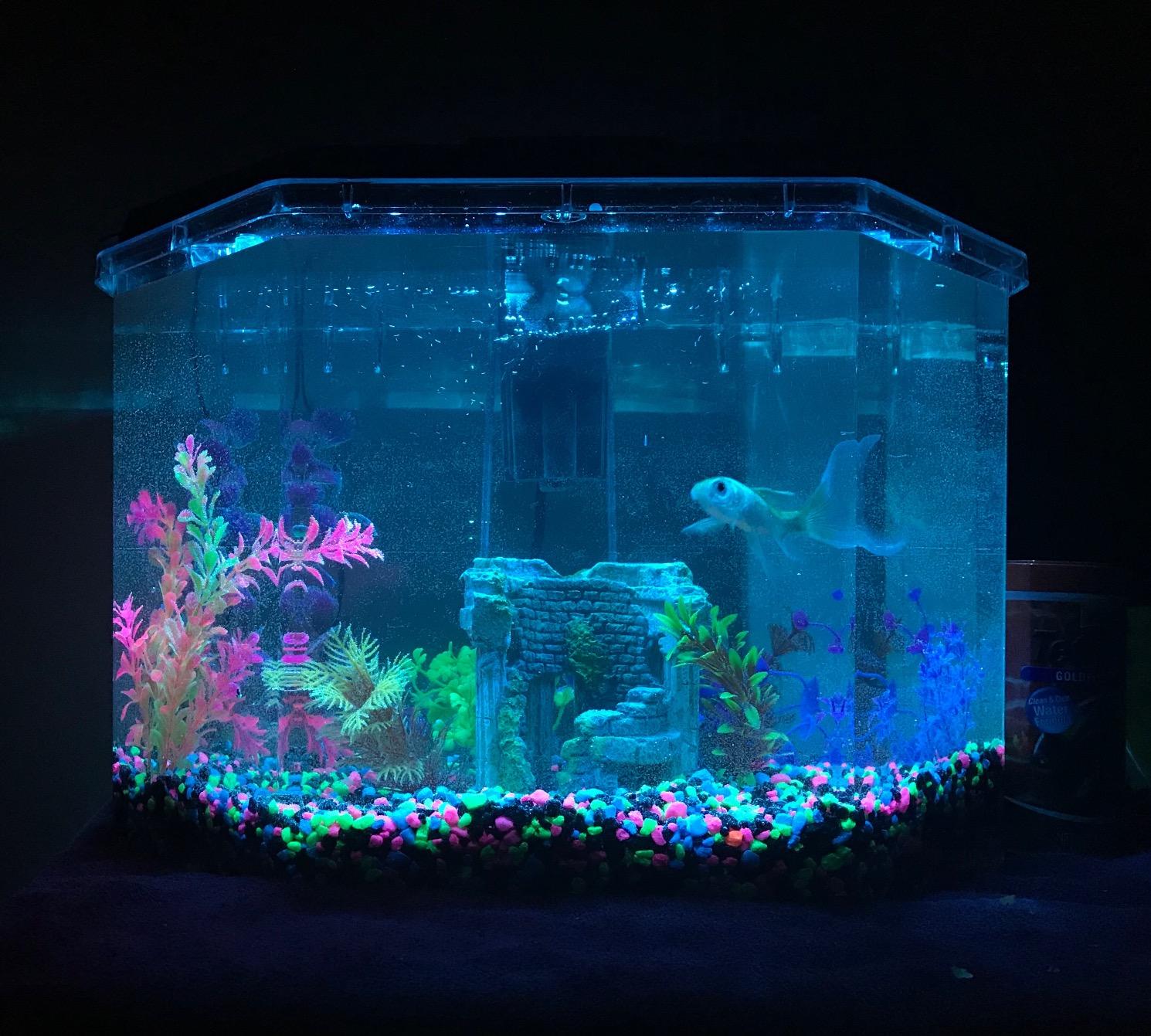
Which fish suit a 3-gallon tank
A betta, ornamental shrimp, or a small pair of cichlids. Owners describe this volume as suitable for single-species small fish rather than a school, and that is the honest limit.
Keep the water line below the hood gap and be aware that a 3-gallon tank swings temperature and ammonia faster than a 10-gallon. If your child is away at a residential camp for two weeks, this tank needs a sitter who will change the water.
Where it falls short for a child
The 25 GPH filter flow is the main limitation. It is a modest circulation for the volume, which means water changes come round more often than the timer suggests.
Everything else is the usual small-tank trade: scratch-prone plastic, a capacity that closes off stocking options, and a box that does not contain a heater. If the child outgrows one fish quickly, step up to a 5-gallon rather than adding a second fish to this one.
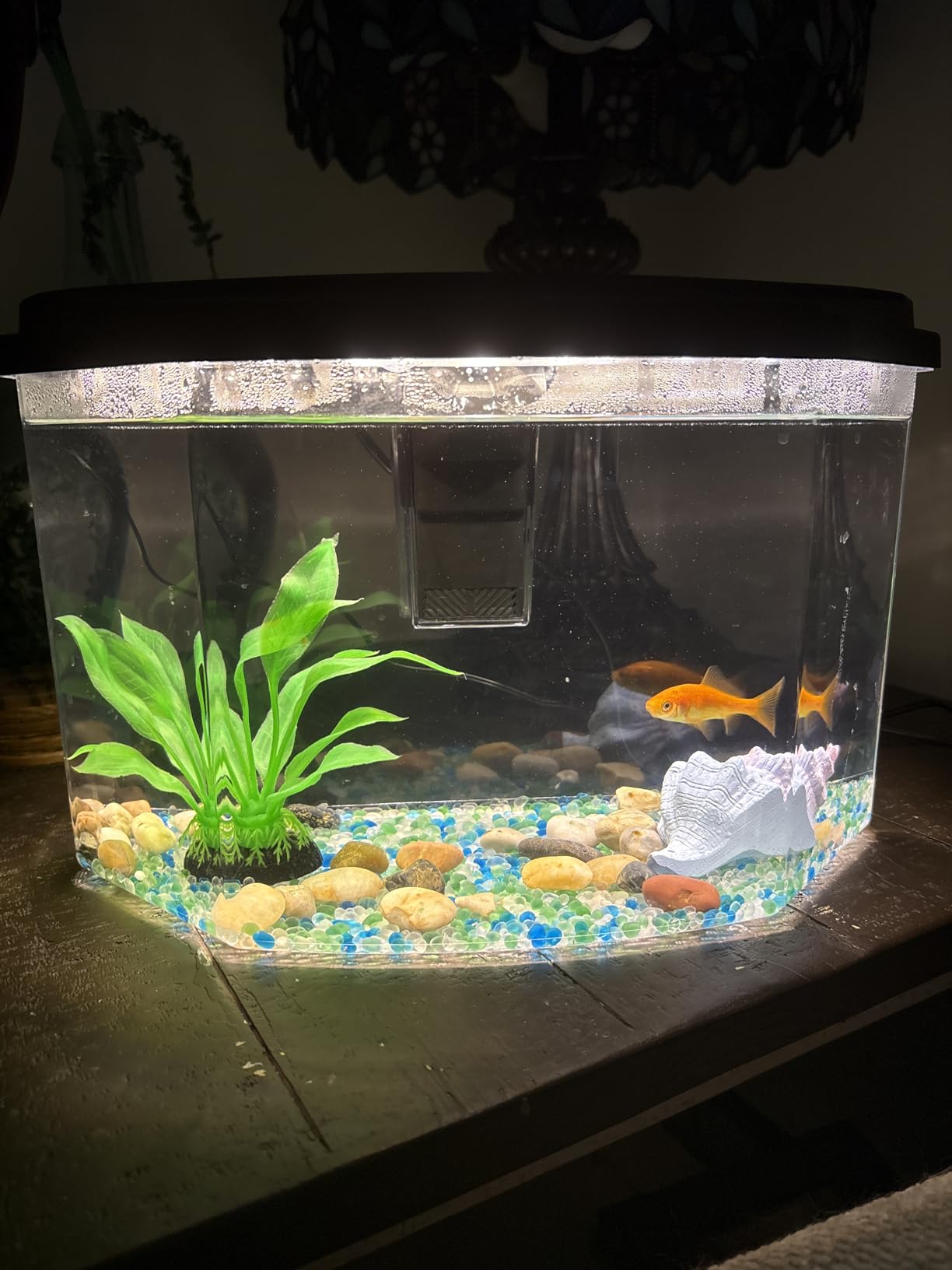
7. Tetra Color Complete 20-Gallon – Best for a Group of Fish
Tetra Color Complete 20 Gallon Fish Tank Kit for Freshwater, Saltwater Fish
- Only kit here large enough for a proper group of tropical fish
- Colour-changing LED can be paused on any colour
- Includes heater filter net conditioner and food
- Artificial plants and a swaying anemone in the box
- Whisper filter sound is described as relaxing
- Whisper filter is louder than the name suggests
- LED bar cannot go on a standard timer
- Several owners report light bar failures
- Tall shape is awkward on a standard stand
- Lid does not close fully
- Heaviest option at 34.35 pounds
This is the upgrade path. It is the only kit in the group big enough for a school of tropical fish, and it is the one to buy if you already know a child will want a community tank rather than a single pet.
Twenty gallons buys stability. The forum consensus is consistent on this point: larger tanks are easier to maintain because the water chemistry moves slowly and a missed water change is a smaller percentage of the volume. At this size a two-week holiday is survivable with a sitter who feeds once.
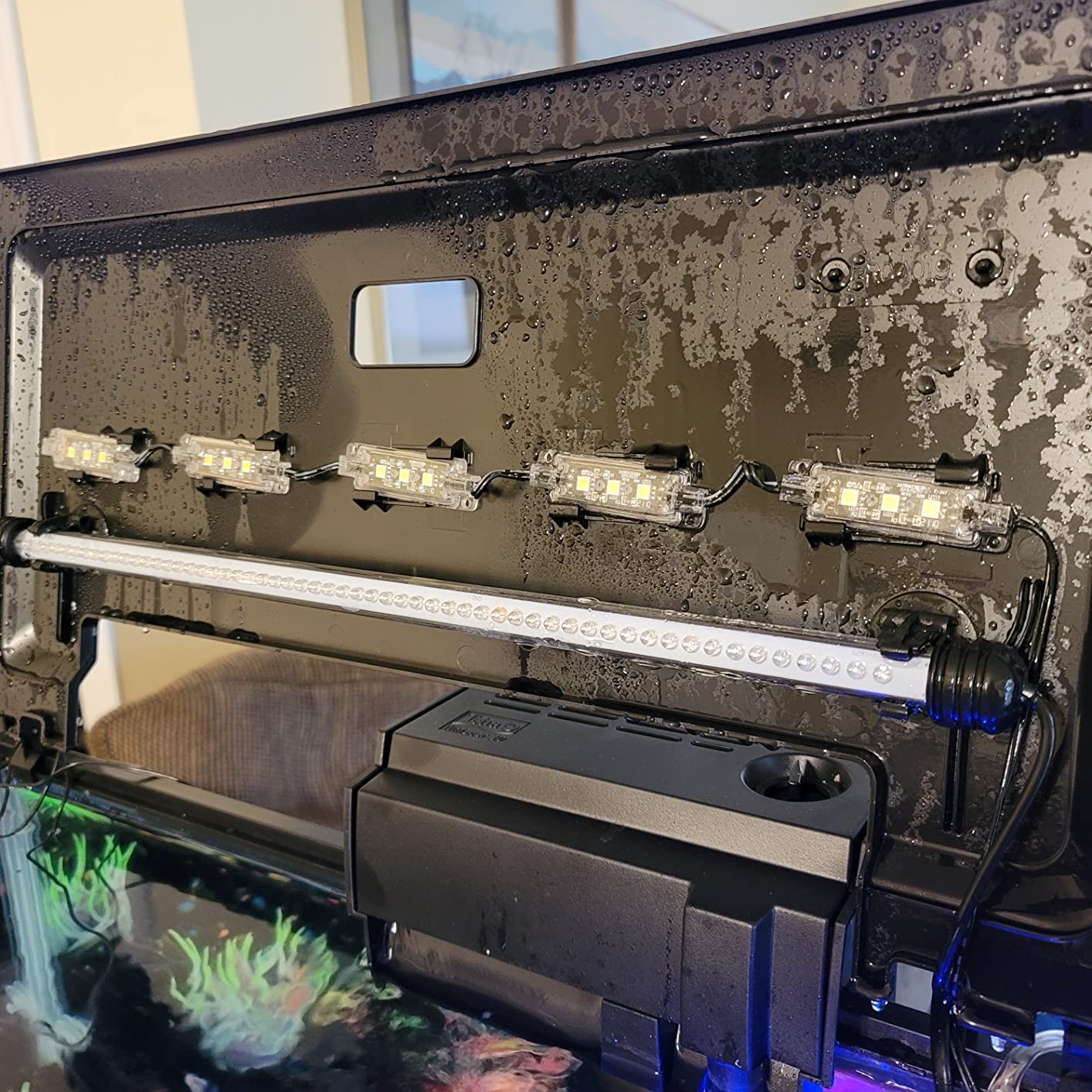
The box is well filled for its size. It includes the 20-gallon glass aquarium, hood, a preset UL heater sized for the tank, the Whisper 20 filter with low and high flow settings, two Wonderland plant multipacks and a silicone blooming white anemone that sways with the filter current. The colour-changing LED can be paused on any colour, which is the detail most owners mention first.
What is not included: gravel, a background panel and any additional decor. Those are the missing pieces on a kit this size, and gravel alone is a meaningful addition because the filled weight depends on it.
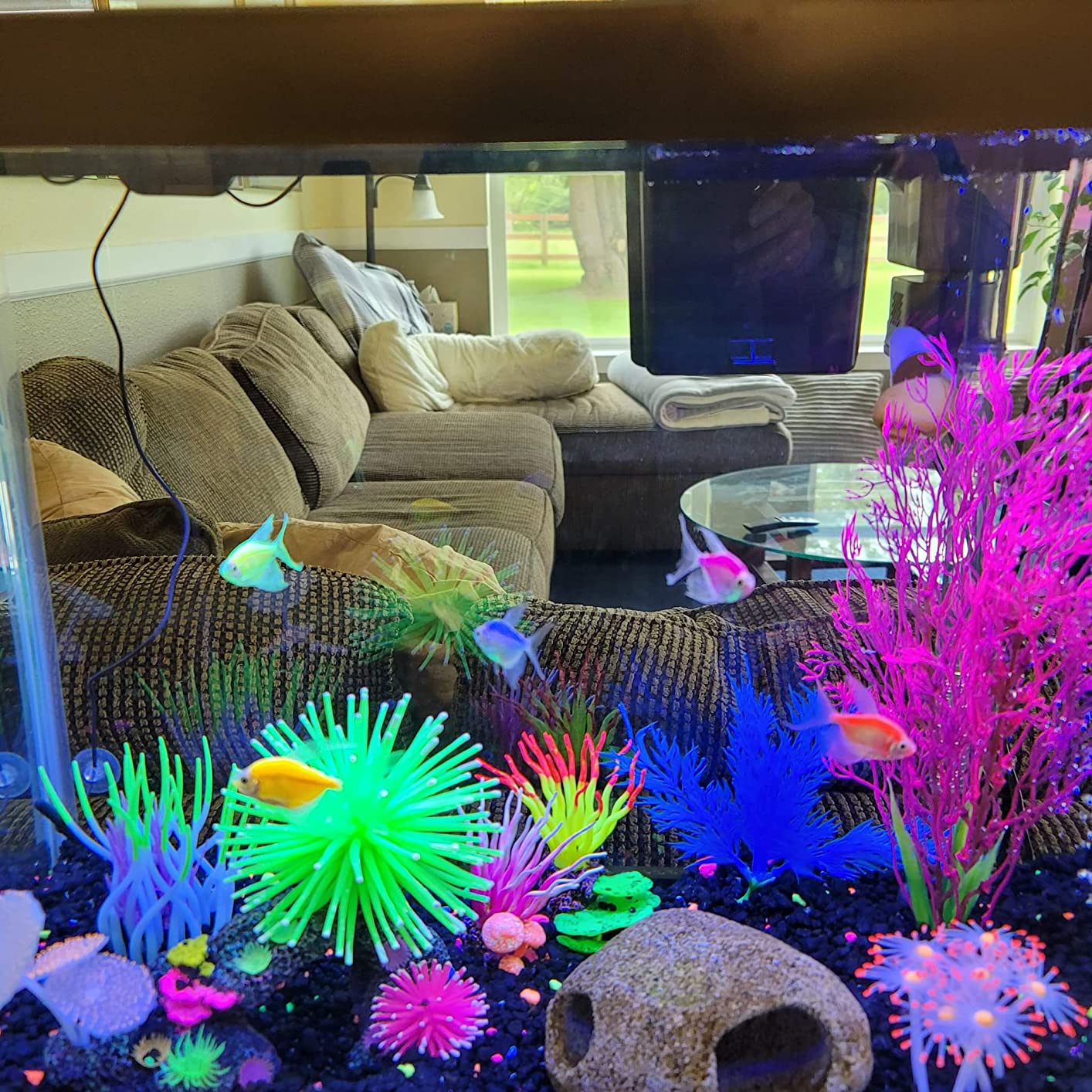
Who should buy the 20-gallon and who should not
Buy it for a child aged 10 or older who will be the one logging temperatures and feeding on a schedule. The size is forgiving, the included heater removes the most common first mistake, and the group of fish is what makes it feel like a real aquarium.
Skip it for a younger child or a small apartment. At 34.35 pounds empty and with a tall profile, this tank needs a purpose-built stand and a floor or cabinet that can carry the filled weight. It is not a tank a child will move.
Where it falls short
The Whisper filter is louder than its name suggests and starts humming if it is not cleaned often enough. On a tank this size that is a real maintenance commitment, and the child has to be the one making it.
Two further complaints recur. The colour-changing light cannot be put on a standard timer because the switch is on the fixture, and the lid does not close fully, so it does not stop evaporation or small fish escapes. Several owners also report the LED bar failing within months.
8. Tetra Bubbling LED 1-Gallon – Budget Pick
- Very compact for a desk nightstand or shelf
- Colour-cycling LED makes an attractive display
- Clear lid with a filter cutout and feeding hole
- Filter height adjusts to low water levels
- Single air pump throttled toward filtration or bubbles
- Air pump vibrates and buzzes on bare surfaces
- No check valve included if the pump sits above the tank
- Bulky airline tubing fills much of the tiny interior
- Usable volume is about one gallon
- No decor plants or gravel in the box
The Bubbling LED is the cheapest way to put a real, living aquarium on a child’s desk, and at 9053 reviews it is one of the most examined products in this category. It is a genuine single-betta tank rather than a novelty toy.
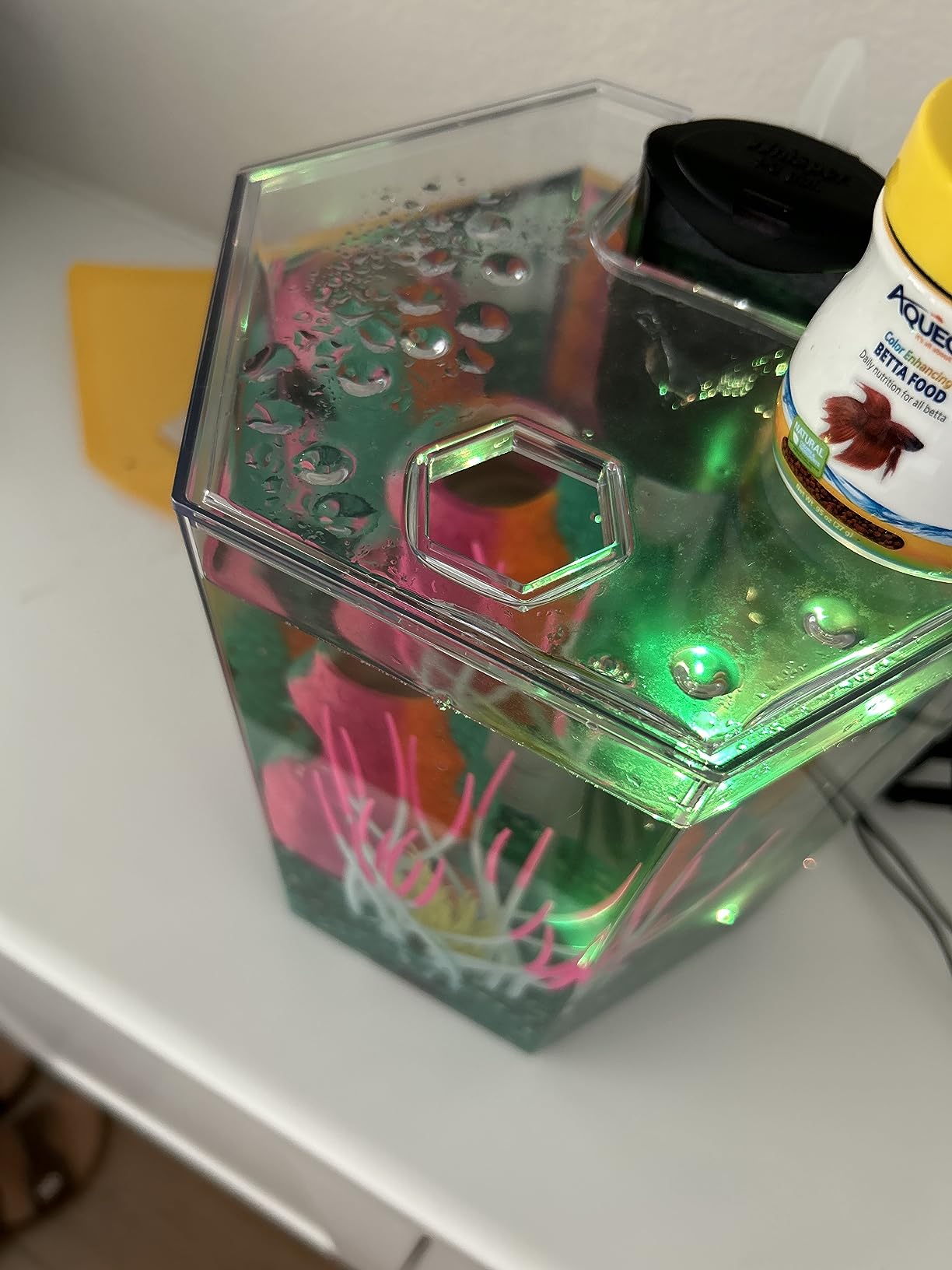
The lid is better than it looks. It has both a filter cutout and a feeding hole, so a betta cannot jump out, and the filter height slides in its clip to suit a low water level, which is the kind of adjustment that usually costs extra on kits this size.
What is in the box: the hexagon aquarium, canopy, air pump, LED bubbling disc, the internal Tetra Whisper filter and a cartridge. What is not: heater, thermometer, decor, plants, gravel, water conditioner and fish.
Two setup notes matter here. A check valve is not included, and you need one if the air pump sits above the tank. And the airline tubing is bulky relative to a 1-gallon interior, so route it along the back rather than across the viewing panel.
Is one gallon enough for a child to learn with
It is enough for one betta and nothing more. Owners are clear that the usable volume is genuinely about a gallon, which suits a single fish and does not suit a school.
As a teaching tank it works well for feeding and observation, and the colour-cycling LED gives a child a reason to look at it daily. As a first aquarium with any intention of adding fish later, plan to replace it within a year.
Where it falls short
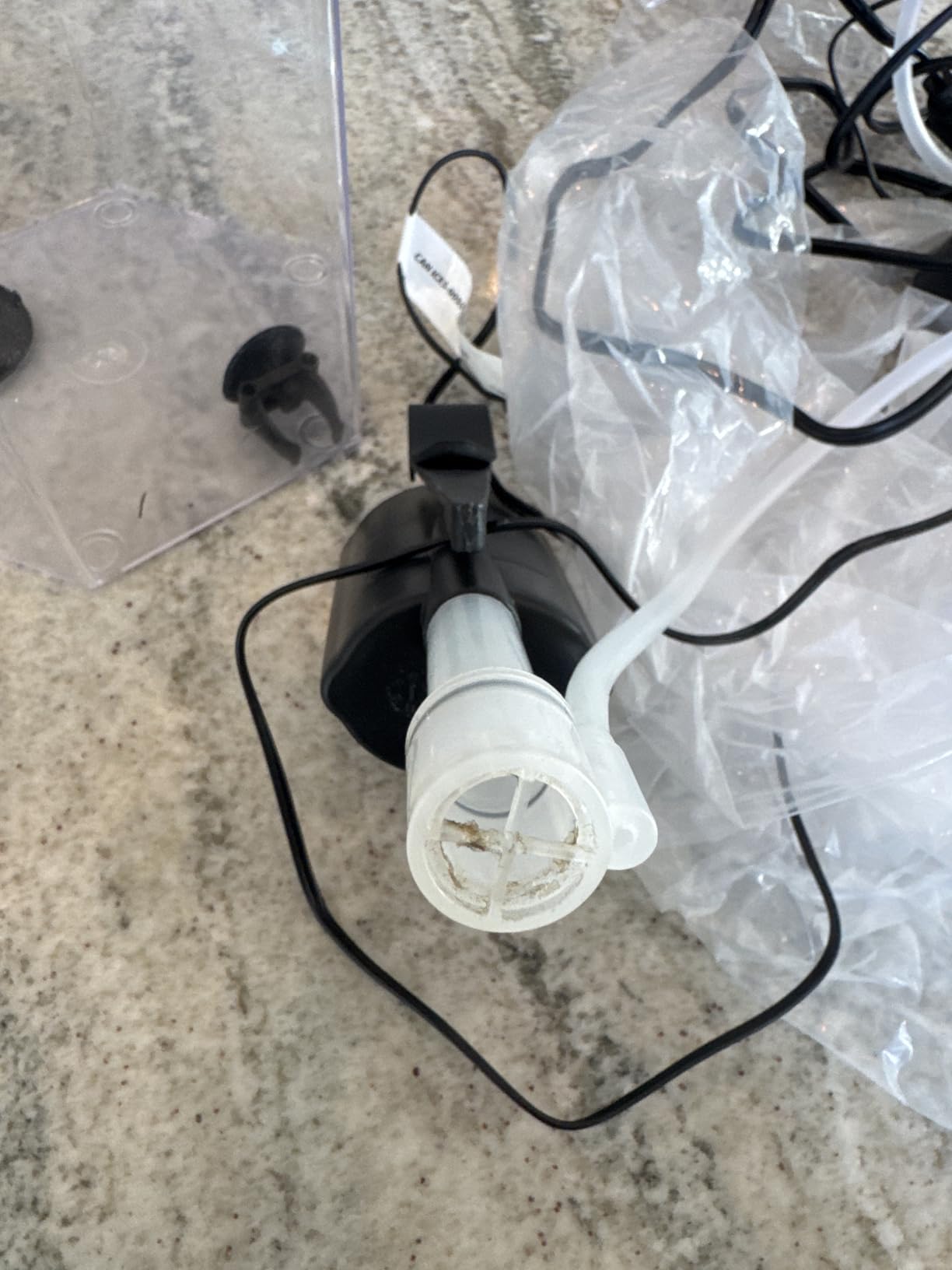
The air pump is the main problem. Reviewers describe it vibrating and buzzing noticeably, especially on a bare desk surface, which makes it a poor choice for a bedside table even though the tank itself is quiet enough.
The thin plastic also needs carrying with two hands once it holds water, and the assembly instructions are widely reported as poorly written or missing. Plan to set it up with your child rather than handing it over alone.
How We Picked: The EASE Scorecard
Every kit here was judged on the same seven criteria, chosen because they are the ones that decide whether a child’s first aquarium is still running in month three. We weighted tank size and filter strength highest, because those two determine how much beginner error the tank can absorb.
Tank size: bigger volume means slower ammonia and temperature swings, so a missed water change hurts less.
Filter quality: measured in gallons per hour against the tank volume, since a weak filter is the most common cause of a foul tank.
Lighting: brightness for viewing, plus any timer that removes a daily manual task.
Noise level: whether the pump is quiet enough for a bedroom or a desk near a bed.
Assembly time: whether a child can build it with adult supervision, or whether it arrives ready to fill.
Durability: glass and one-piece plastic resist a knock differently, and one matters more in a playroom.
Kid-proofing: lid security, splash control and how much of the care routine a child can actually reach.
We also scored completeness, which is why the Aqueon 10-Gallon ranks so highly despite a slightly lower review base than some rivals: it is the only kit that includes a heater and thermometer. For a first setup, the things missing from the box cost more time and more dead fish than the tank itself.
What Size Tank a Child Can Actually Maintain
Parents almost always want the smallest tank, because a smaller tank feels more manageable and costs less. Aquarium hobbyists say the opposite, and the mechanism is water stability rather than preference: in a 10-gallon tank, the same missed water change produces a smaller ammonia spike than in a 1-gallon tank, and the filter has more water to work with.
Ages 5 to 7: 3 to 5 gallons. One betta or a few shrimp. The care routine is feeding and observing, with an adult on water changes.
Ages 8 to 11: 5 to 10 gallons. A pair of small species or a slightly larger group. This is the band most parents should aim at.
Ages 12 and up: 10 to 20 gallons. A real school, real feeding logs, and a child who is ready for a weekly water-change habit.
For capacity, a 24 by 12 by 12 inch tank holds about 3456 cubic inches, which works out to roughly 15 US gallons before gravel and equipment take up space. Retailers usually list that footprint at 14 to 15 gallons.
One shape note for parents shopping stands: a long tank is easier to view and easier to stock than a tall one of the same volume. Fish also swim across the front of a long tank rather than up and down a narrow column, which is what makes a child keep watching.
Glass vs Plastic for a Child’s Room
Glass is clearer and far more scratch-resistant, and it will look new for years. Plastic and acrylic will not shatter if a ball or a shoulder hits the tank, and they weigh far less, which matters if an adult needs to move it. Both scratch. Both haze over time if cleaned with anything abrasive.
The honest summary from reviewers is that acrylic and plastic scratch sooner and look worse once they do, while glass is unforgiving if it is dropped. In a bedroom with no sports equipment and a stand that keeps it out of reach, glass wins on appearance. In a playroom, on a bunk-bed desk, or anywhere the tank could be knocked, the one-piece plastic Koller and the acrylic Aqueon MiniBow are the safer purchase.
Whichever you choose, the plastic water-test vials matter more than people expect. Glass vials break when dropped, so pick a liquid test kit with plastic vials if a child will be doing the testing. Our picks for that are in the roundups on aquarium water test kits and aquarium test kits.
First Fish That Survive a Child’s Care Level
Choose the fish that tolerate the mistakes, not the fish that look most impressive in a shop tank. For a child’s first aquarium the recurring forum answer is guppies: active, visible, hardy and tolerant of small volumes and small mistakes.
One betta: the easiest first fish, and the right answer for every 1-gallon and 3-gallon kit in this roundup. They need a heater and still water, not a group.
Guppies: the most recommended first fish for children. Choose all one sex if you do not want a growing population.
Neon tetras and platies: better in 10 gallons or more, and they need a group to behave normally.
Ornamental shrimp: forgiving, quiet and very watchable, but they are food for anything larger in the tank.
Colourful fish do not automatically mean a marine tank. The bright fish a child points at in a shop are usually freshwater tetras and guppies, which is good news, because a marine system needs equipment and care far beyond what a starter kit provides.
The Nitrogen Cycle Step Nobody Tells Parents About
A filter houses beneficial bacteria that convert toxic ammonia into less harmful nitrate. That bacteria needs time and a food source to establish, and this is the step where most children’s first tanks fail.
Marketing that calls a tank cycled or pre-conditioned is usually describing an already-established filter media. It does not remove the wait for a new tank, and fish added on day one to a tank that has not cycled is the single most common cause of an early death. In r/Aquariums discussions, experienced keepers are consistent that the practical route for a child is a fishless cycle: set the tank up, dose the water as instructed, and let the bacteria build without livestock.
Your first 30 days look like this:
Day 1: assemble, rinse substrate, fill with conditioned water, switch on the filter and heater. No fish.
Days 2 to 21: test ammonia and nitrite with a liquid kit. Add a small pinch of plain fish food each day to feed the bacteria.
Around day 21 to 28: when both readings read zero, add the first fish, one or two at a time.
Month 2 onward: partial water change weekly, filter media rinsed in old tank water, never in tap water.
Budget for the extras the kit does not contain: a water conditioner, a liquid test kit, gravel, and the fish themselves. If you want a wider range of aquarium kits by tank size and setup type, our general aquarium starter kit roundup covers the categories a child’s first tank does not need.
What Is Not in the Box
This is the list no competitor publishes, and it is the one that decides whether a child’s aquarium survives. Read it before you buy, not after.
Water conditioner: absent from every kit here except the Aqueon MiniBow and the two larger Aqueon and Tetra bundles. Tap water chlorine and chloramine will injure fish and kill the bacteria in your filter.
Heater: missing from every kit except the Aqueon 10-Gallon and the Tetra 20-Gallon. Tropical fish need a stable temperature.
Liquid test kit: in no kit. Test strips are a rough substitute. Beginners on aquarium forums are pointed toward API, Salifert or Lamotte kits with plastic vials.
Gravel, plants and decor: in no kit. The marketing photos show them, which is the single most misleading habit in this category.
Fish: never included, and you should not add them on day one.
Add a stand for anything above 5 gallons. A 10-gallon filled with gravel pushes past 100 pounds, and hobbyists are firm that tanks over 10 gallons need a purpose-built stand rather than a shelf.
What to Do When Your Child Loses Interest
Interest drops, and that is normal rather than a failure. Forum threads show the pattern clearly: a teenager’s 140-litre tank sat with no water change for two months. The fix is not a reprimand.
Downsize the routine, not the fish. Move to a weekly partial change on a timer, and keep the water change the same day each week.
Put the tank on a timer. Kits with a light timer handle the daily task without a child present.
Assign a backup caretaker. School holidays and residential trips are the two windows where tanks usually die. A neighbour with a written schedule beats good intentions.
Ask what changed. A single dead fish, a cloudy tank or a smelly filter is a fixable problem, not a loss of interest.
Plan the upgrade early. If the child wanted a school of fish and you bought a betta tank, the interest loss is a sizing problem you can correct.
If the tank grows past what a child can maintain, our picks for large aquarium kits and planted aquarium kits cover the step up, including the stands and lighting that a bigger tank needs.
Frequently Asked Questions
What is the best beginner fish tank for kids?
The Marineland Portrait Glass LED 5-Gallon is our top pick because it combines the highest rating in this roundup with fully concealed 3-stage filtration and daylight and moonlight lighting. For a first setup that includes everything needed, the Aqueon 10-Gallon Starter Kit is the strongest choice, since it is the only kit here that ships with a heater and thermometer. For the best value, the Koller Products 5-Gallon has a 45 GPH filter and a 30-LED light with a timer.
What is the recommended size for a first fish tank?
Ten gallons is the recommended size for a child who will help with care, because more water dilutes ammonia and temperature swings and forgives a missed water change. Three to five gallons works for a younger child with one betta or a few shrimp, but every mistake happens faster in that volume. Twenty gallons is the right size once the child is old enough to run a weekly water-change habit and wants a group of tropical fish.
What is included in an aquarium starter kit?
A typical aquarium starter kit contains the tank, a filter with one cartridge, an LED light and a lid or hood. Some kits add a heater, thermometer, fish net, food samples and water conditioner, but that is uncommon. Gravel, plants, decor, a liquid test kit and the fish themselves are almost never included, and the marketing photographs frequently show all of them.
What is the easiest fish tank to set up for a beginner?
The easiest kits are the ones that arrive fully assembled with the filter already fitted and the light on a timer. The Koller Products 5-Gallon and 3-Gallon both ship assembled with a touch-button light and a 2, 4 or 8-hour timer, so there is no daily on-and-off task. If you want the fewest extra purchases rather than the fewest steps, the Aqueon MiniBow and the Aqueon 10-Gallon include water conditioner in the box.
Do fish prefer long or tall tanks?
Long tanks suit fish better than tall tanks of the same volume. Most fish in home aquariums swim along the front glass rather than up and down the column, so a long tank shows more fish and more behaviour. A long tank also sits more stably on a standard stand and is far easier for a child to view from the front of a desk.
How big is a 24 x 12 x 12 tank?
A 24 by 12 by 12 inch tank holds 3456 cubic inches, which converts to roughly 15 US gallons before gravel, rocks and equipment take up space. Retailers list tanks of that footprint at a 14 to 15 gallon capacity. Filled, a tank of that size is heavy enough to need a purpose-built stand.
How long does it take to cycle a fish tank?
A fishless cycle usually takes three to four weeks, which is why a pre-cycled tank still needs time before fish go in. Set the tank up with conditioned water, run the filter and heater, and add a small pinch of plain fish food each day to feed the bacteria. Test ammonia and nitrite until both read zero, then add the first fish, one or two at a time.
Are acrylic or glass fish tanks better for kids?
Glass is clearer and far more scratch-resistant, so it looks new for years, but it will shatter if it takes a hard knock. Acrylic and one-piece plastic will not break into dangerous shards and weigh much less, which matters in a playroom or on a high desk, though both scratch sooner. If the tank is on a stand out of reach in a bedroom, glass looks better; if a ball or a shoulder is a realistic risk, plastic is the safer choice.
The Verdict: Which Aquarium Kit Wins
The Marineland Portrait Glass LED 5-Gallon is our pick as the best aquarium kits for kids category leader in 2026. It has the strongest rating and review base we tested, the filter disappears out of sight so the tank reads as furniture, and the dual lighting modes give a child a reason to look at it every day.
Pick the Aqueon 10-Gallon instead if you want one box and one trip, because it is the only kit here with a heater and thermometer included. Pick the Koller Products 5-Gallon for the strongest filter and the most useful light timer at a mid-tier outlay. And buy the extras nobody puts in the box: conditioner, a liquid test kit with plastic vials, gravel, and the patience to finish the nitrogen cycle before any fish go in.